

In His Name, the Most High
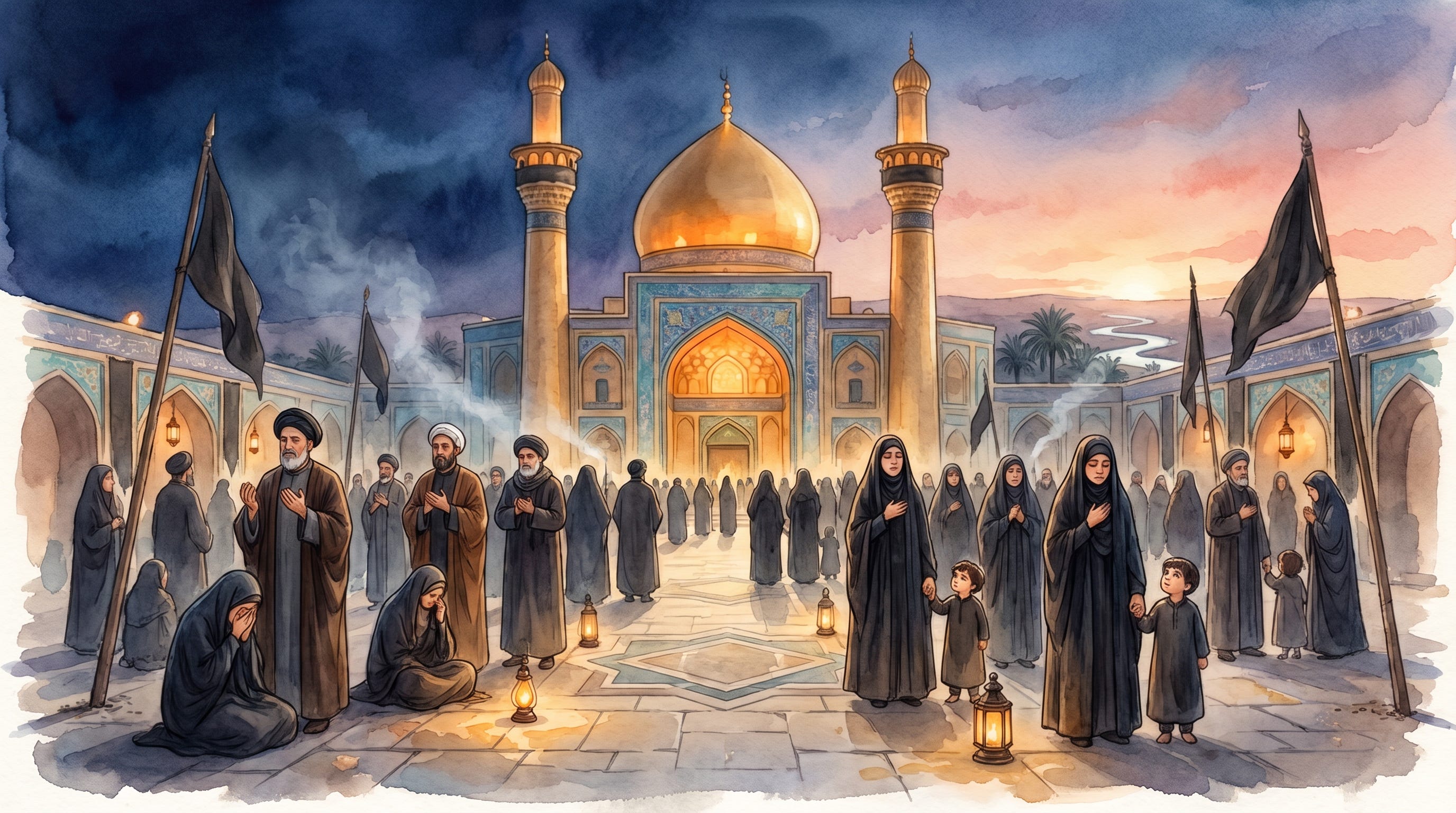
اَلسَّلاَمُ عَلَيْكَ يَا أَبَا عَبْدِاللَّهِ
وَعَلَى الْأَرْوَاحِ الَّتِي حَلَّتْ بِفِنَائِكَ
عَلَيْكُمْ مِنَّا جَمِيعًا سَلاَمُ اللَّهِ أَبَدًا مَا بَقِينَا وَبَقِيَ اللَّيْلُ وَالنَّهَارُ
وَلا جَعَلَهُ اللَّهُ آخِرَ الْعَهْدِ مِنَّا لِزِيَارَتِكُمْ
اَلسَّلاَمُ عَلَى الْحُسَيْنِ
وَعَلَى عَلِيِّ بْنِ الْحُسَيْنِ
وَعَلَى أَوْلَادِ الْحُسَيْنِ
وَعَلَى أَصْحَابِ الْحُسَيْنِ
Peace be upon you, O Aba Abdillah (O Husayn),
and upon the souls who have gathered in your courtyard.Upon you, from us all, is the peace of God—forever,
for as long as we remain and as long as night and day endure.And may God never make this our last pledge to visit you.
Peace be upon al-Husayn,
and upon Ali, son of al-Husayn,
and upon the children of al-Husayn,
and upon the companions of al-Husayn.— Adapted from Ziyarat Ashura
Video of the Sermon (Majlis/Lecture)
This is a video of the sermon, the maqtal — lamentation — referenced in this session can be found here.
Introduction
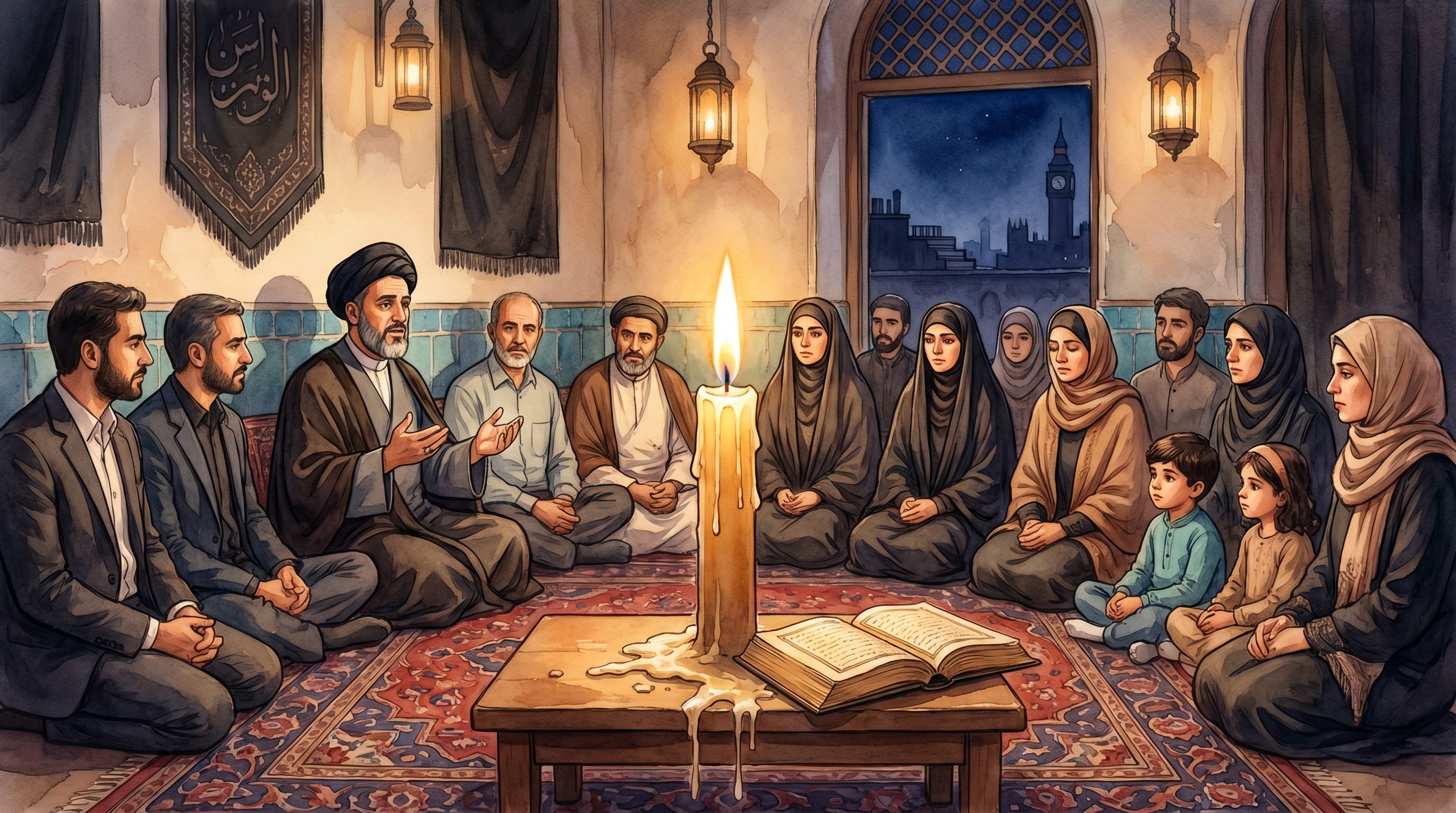
With the month of Muharram upon us, and the first ten days being commemorated as the days of Ashura — wherein the grandson of the Prophet Muhammad — peace be upon him, his family, and his righteous companions, along with his companions and family, were martyred on the plains of Karbala — it has been deemed important that we discuss a subject over the course of these ten days, and continue this during the five nights of Arbaeen (the commemoration of the fortieth day after the martyrdom of Imam Husayn).
Tonight we begin from where we are — in a world that has changed, in a month that has always demanded more from us than tears.
We speak from the present, but we speak to the eternal.
The subject of this year’s series is contained in one word:
Shahada.
In Arabic, this word carries three meanings in a single breath —
Witness, Testimony, and Martyrdom.
The Greek word martys, from which our English word martyr descends, does the same work: it simply means witness.
Every tradition that has met God has sensed this connection.
What we will show across fifteen nights is that Islam — and specifically the understanding rooted in the Qur’an and the teachings of the Imams — peace be upon them — preserves the fullest meaning of this word:
That to die for the truth and to testify to the truth are not two separate acts, but one continuous vocation.
The martyred scholar Ayatollah Murtadha Motahhari — may God rest his pure soul — gives us the metaphor that will hold this series together.
In his book The Martyr, he writes:
«شهدا شمع محفل بشریتاند؛ سوختند و محفل بشریت را روشن کردند. اگر این محفل تاریک میماند هیچ دستگاهی نمیتوانست کار خود را آغاز کند یا ادامه بدهد.»
“The martyrs are the candles of society. They burn themselves out and illuminate society. If they do not shed their light, no organisation can shine.”
— Shaheed Motahhari, The Martyr, Collected Works, Volume 17
Every session returns to this:
The candle, the lamp, the light that feeds on itself to feed the world.
The Truthful and the Witnesses — the Qur’anic Foundation
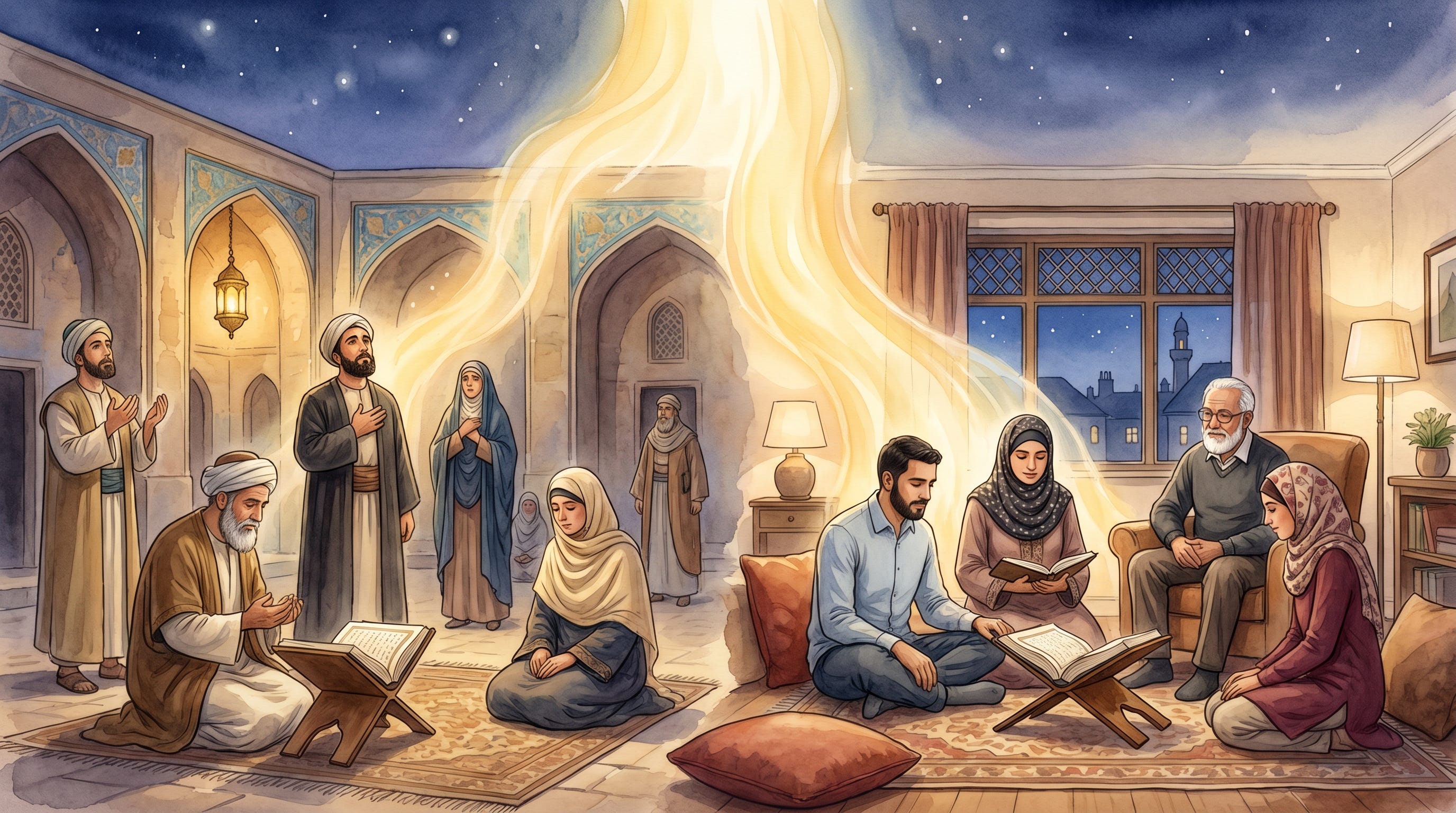
The Qur’an opens our path tonight with a verse from Surah al-Hadid:
وَالَّذِينَ آمَنُوا بِاللَّهِ وَرُسُلِهِ أُولَٰئِكَ هُمُ الصِّدِّيقُونَ وَالشُّهَدَاءُ عِندَ رَبِّهِمْ ۖ لَهُمْ أَجْرُهُمْ وَنُورُهُمْ
“And those who believed in God and His Messengers — they are the truthful and the witnesses in the sight of their Lord. They shall have their reward and their light.”
— Qur’an, Surah al-Hadid (the Chapter of Iron) #57, Verse #19
Notice what this verse does.
It joins two words together — al-siddiqun, the truthful, and al-shuhada’, the witnesses — and it makes them one class.
It does not say the truthful are one group and the witnesses are another.
It says: those who believed are the truthful and the witnesses.
To be truthful and to be a witness are, in the grammar of the Qur’an, the same station.
And notice what it does not do.
It does not restrict the word shuhada’ to those killed on a battlefield.
It applies the word to those who believed.
Every believer, this verse tells us, has within them the station of the witness.
Whether that witnessing takes the form of a life given on a plain in Iraq, or a life lived with quiet conviction in a suburb of Manchester, is a question of degree — not of kind.
That is our starting point tonight.
The word itself — what it means, what it asks of us, and what we have done to it.
A Word That Has Lost Its Weight
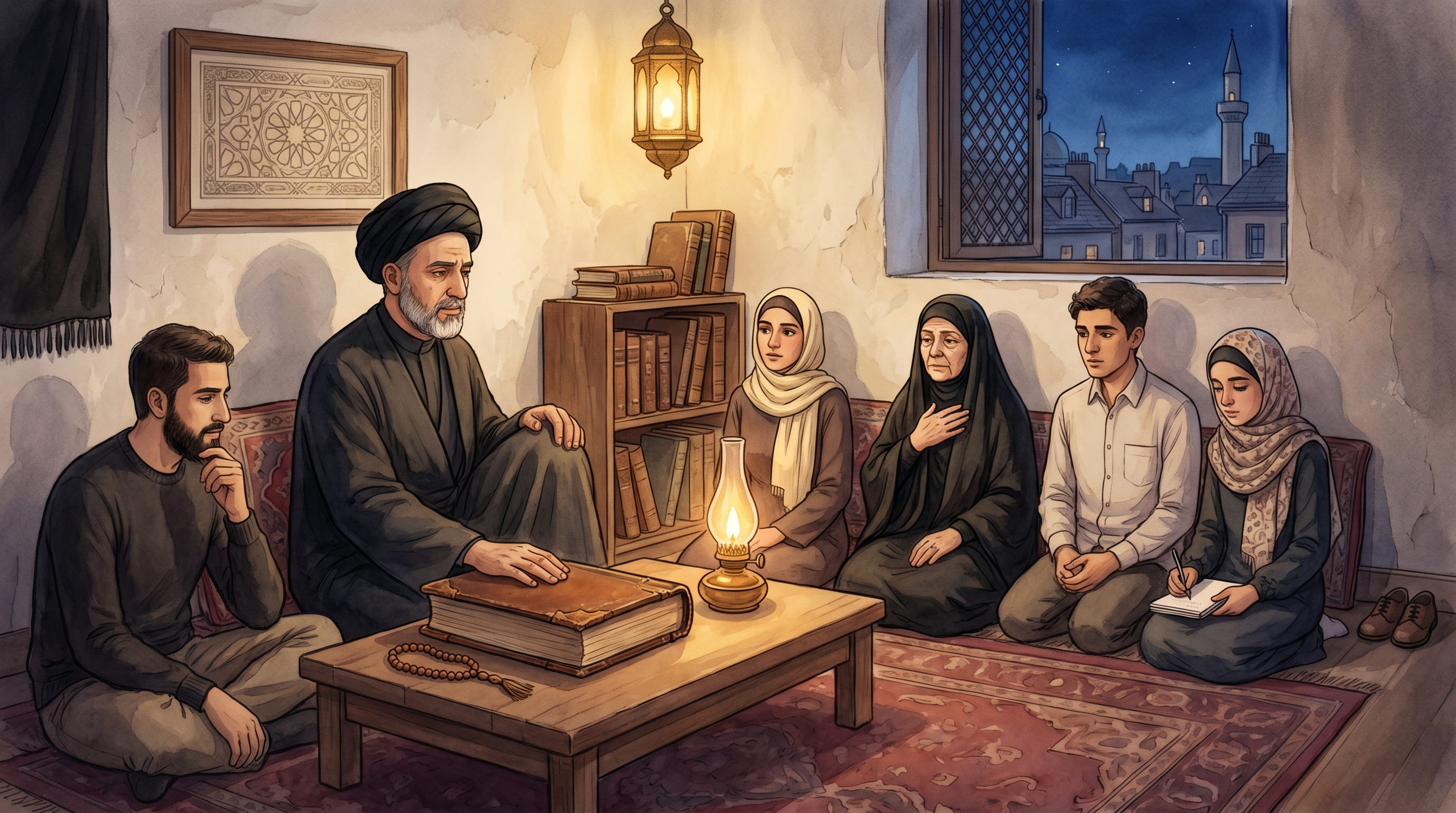
This is Muharram.
In a few nights we will be weeping — and we should weep.
But before we weep, we must understand what we are weeping for.
If we weep for a victim, we have wept for the wrong thing.
If we weep for a witness, we have begun to understand.
We say shaheed in every supplication.
We say it in every ziyarat (salutation).
We say it in every Muharram.
We say “the Master of Martyrs” — Sayyid al-Shuhada’ — and we mean Imam Husayn — peace and blessings be upon him.
But if someone in this room tonight were to stop and ask us — what does the word martyr actually mean?
Not what it makes you feel.
What it means — could we answer?
The honest answer, for many of us, is that we are not sure.
We know the feeling the word produces.
We know the grief.
We know the reverence.
But the meaning — the theology of the word, the reason the Qur’an uses it, the distinction it draws and the obligation it places — has, over time, drifted away from us.
We have been left with a sound, a sacred sound, but one whose weight we have quietly set down without noticing.
Tonight we pick it up again.
And we pick it up by going back — not to Karbala, not yet — but to the very first person who earned the word.
A person our own tradition has, in a quiet way, almost forgotten.
In our majalis, across the Shia world, we rarely speak of Abel (Habil).
We tell his story in children’s books, perhaps, and then we move on.
The first witness in the history of the earth — the first human being to stand where Imam Husayn — peace and blessings be upon him — would one day stand, and to say what Imam Husayn would one day say — and we have let him slip quietly out of our rotation.
Tonight we bring him back.
Because if we cannot see Abel for what he was, we will not see Imam Husayn for what he was either.
And the whole of this series begins there.
What the Qur’an Actually Says About Abel
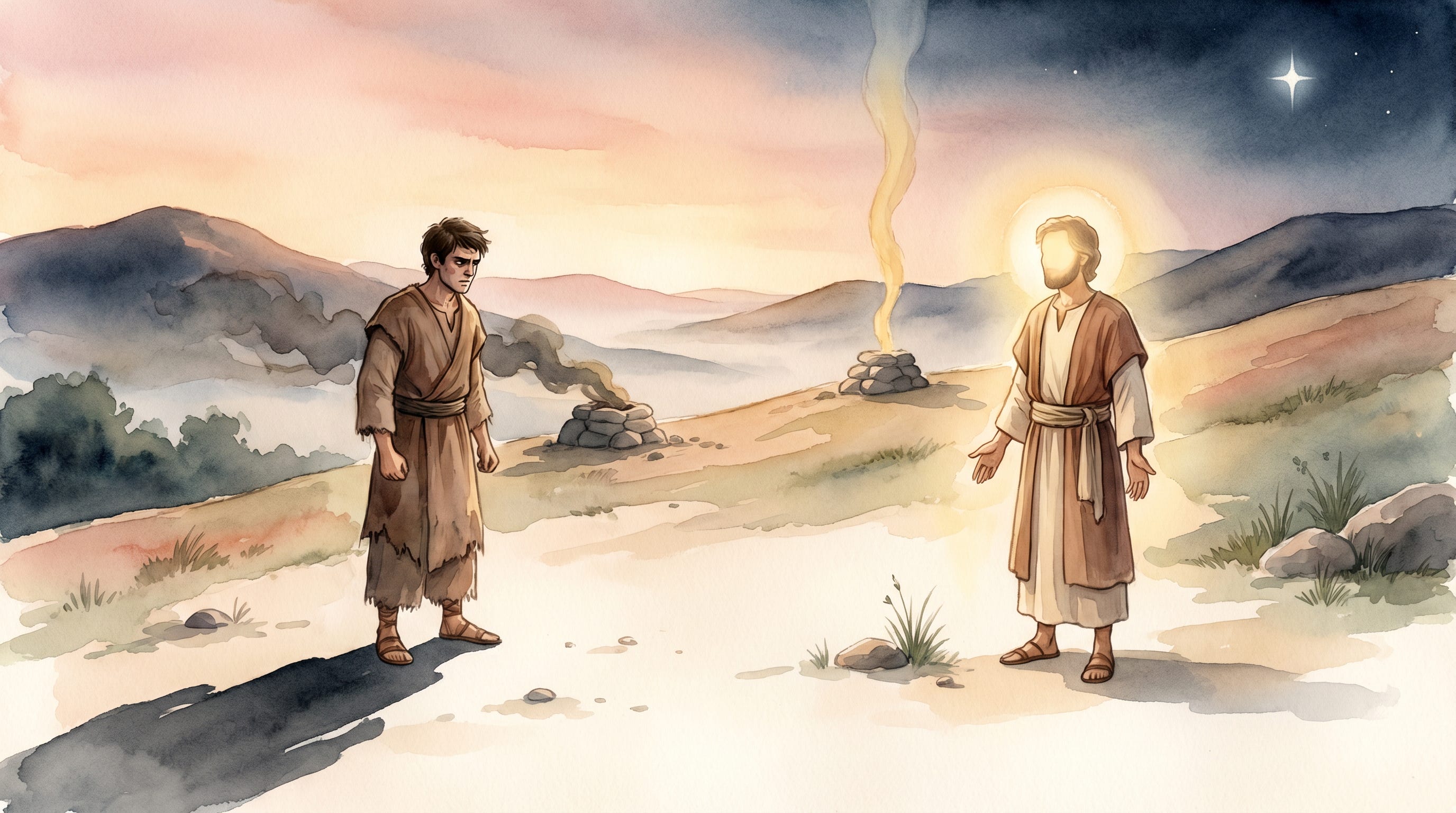
Let us open the Book.
Surah al-Ma’idah — the Chapter of the Table Spread — Chapter 5, verses 27 to 31.
Let us read what the Qur’an actually says about the first witness.
Not what we think it says, not what we remember from childhood, but what it actually says.
وَاتْلُ عَلَيْهِمْ نَبَأَ ابْنَيْ آدَمَ بِالْحَقِّ إِذْ قَرَّبَا قُرْبَانًا فَتُقُبِّلَ مِنْ أَحَدِهِمَا وَلَمْ يُتَقَبَّلْ مِنَ الْآخَرِ قَالَ لَأَقْتُلَنَّكَ ۖ قَالَ إِنَّمَا يَتَقَبَّلُ اللَّهُ مِنَ الْمُتَّقِينَ
لَئِن بَسَطتَ إِلَيَّ يَدَكَ لِتَقْتُلَنِي مَا أَنَا بِبَاسِطٍ يَدِيَ إِلَيْكَ لِأَقْتُلَكَ ۖ إِنِّي أَخَافُ اللَّهَ رَبَّ الْعَالَمِينَ
“Recite to them the story of the two sons of Adam, in truth. When each of them offered a sacrifice, it was accepted from one of them and was not accepted from the other. He said: ‘I will surely kill you.’ He said: ‘God accepts only from the God-fearing.’”
“If you stretch out your hand to kill me, I will not stretch out my hand to kill you. I fear God, the Lord of all creation.”
— Qur’an, Surah al-Ma’idah (the Chapter of the Table Spread) #5, Verses 27 to 28
These are the first recorded words of the first witness.
They deserve to be read slowly.
Notice what the Qur’an does here.
It does not name the two brothers.
The tradition names them — Abel (Habil) and Cain (Qabil) — but the Qur’an calls them simply “the two sons of Adam.”
The story is universal before it is particular.
It belongs to every human being before it belongs to any one community.
And notice what the Qur’an preserves.
It does not give us a description of the killing.
It does not dwell on the violence, the method, the blood.
What it preserves are Abel’s words.
That is the Qur’anic move — the Book records what Abel said, not merely what happened to him.
And what he said is a testimony — a shahada in the fullest sense of the word.
Two sentences.
“I will not stretch out my hand to kill you.”
And:
“I fear God, the Lord of all creation.”
The first is a refusal.
The second is the reason for the refusal.
Together they form the first act of witness in human history.
Abel is not passively dying.
He is actively testifying.
He knows what is coming — his brother has just told him, plainly, “I will surely kill you” — and his response is not to flee, not to fight, not to beg, but to testify.
To state, in the face of his own death, where he stands and why.
This is not the language of a victim.
This is the language of a witness.
What Allamah Tabataba’i Sees in Abel’s Words
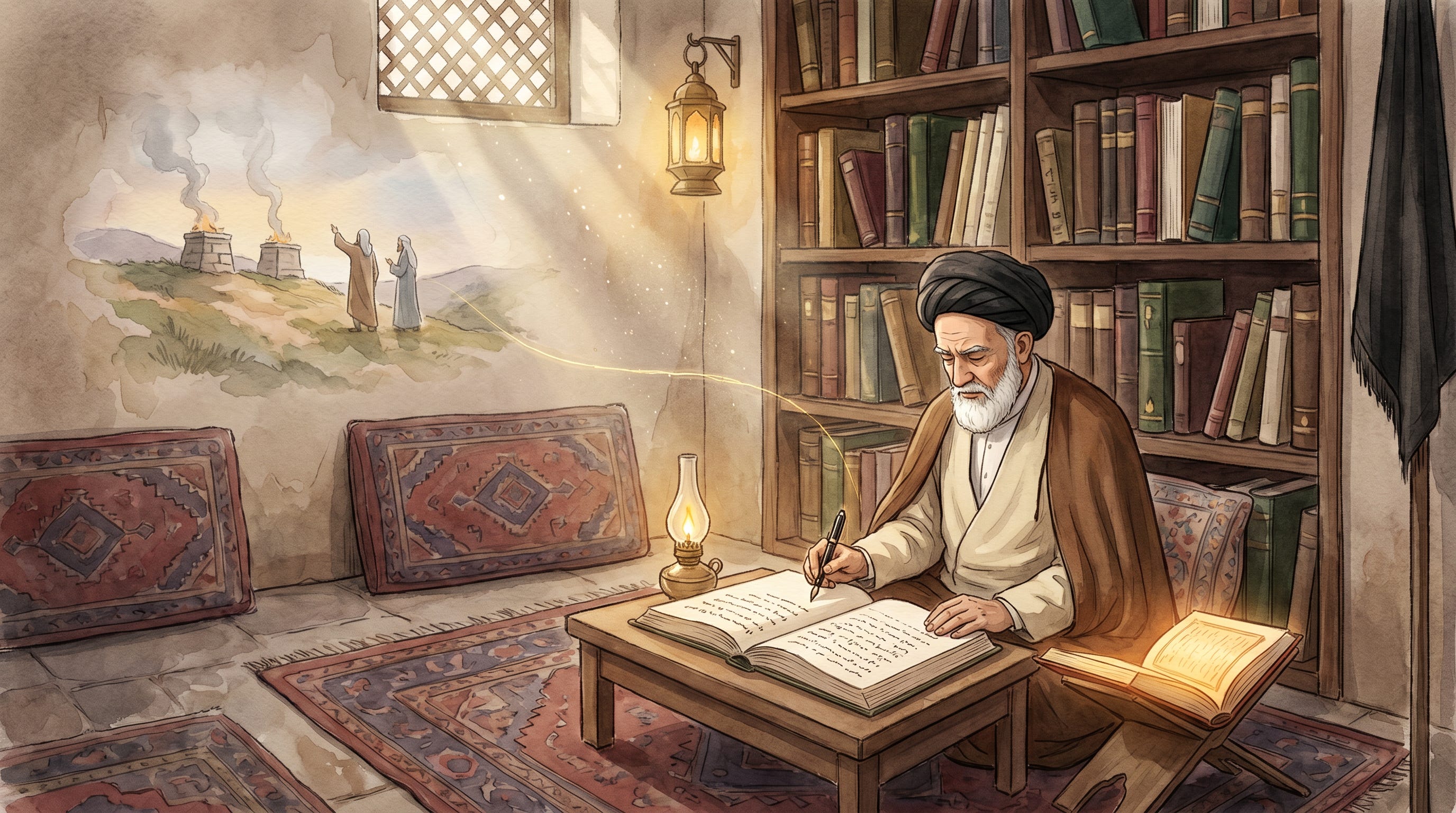
Allamah Sayyed Muhammad Husayn Tabataba’i - may God rest his pure soul, in his monumental commentary on the Qur’an, al-Mizan fi Tafsir al-Qur’an, pauses on Abel’s words and draws out something our pulpits have rarely noticed.
He observes that God quotes Abel’s statement —
“I fear God, the Lord of all creation”
— without rebuttal.
The Qur’an does not correct him, does not qualify the claim, does not add a caveat.
It lets the words stand.
And Allamah Tabataba’i points to another verse to explain why this matters:
إِنَّمَا يَخْشَى اللَّهَ مِنْ عِبَادِهِ الْعُلَمَاءُ
“Only those endowed with knowledge truly fear God among His servants.”
— Qur’an, Surah Al-Fatir (the Chapter of the Originator) #35, Verse 28
The logic is precise:
If the Qur’an confirms that Abel feared God, and if the Qur’an elsewhere states that only those with knowledge truly fear God, then God has implicitly confirmed that Abel was a man of knowledge — not merely an innocent victim, but a conscious, knowing witness whose testimony was rooted in understanding.
Allamah Tabataba’i writes:
و كفى له علماً ما خاطب به أخاه الباغي عليه من الحكمة البالغة و الموعظة الحسنة فإنه بيّن عن طهارة طينته و صفاء فطرته: أن البشر ستكثر عدتهم ثم تختلف بحسب الطبع البشري جماعتهم فيكون منهم متقون و آخرون ظالمون، و أن لهم جميعاً و لجميع العالمين رباً واحداً يملكهم و يدبر أمرهم، و أن من التدبير المتقن أن يحب و يرتضي العدل و الإحسان، و يكره و يسخط الظلم و العدوان و لازمه وجوب التقوى و مخافة الله على الإنسان و هو الدين.
“The victim’s talk with his unjust brother is enough to show the extent of his knowledge; you will find in it deep sagacity, wisdom and good sermon. He showed with his clean disposition and pure nature that human race was bound to multiply, and their bands would contain individuals of diverse characters, some would be pious, others unjust and transgressors. However, there is one Lord Who is their Owner and the Owner of all the worlds and He manages their affairs. It is an aspect of His perfect management that He likes and loves justice and beneficence, dislikes and hates injustice and transgression. It follows that man must fear God and acquire piety — and this is religion.”
— Allamah Tabataba’i, al-Mizan fi Tafsir al-Qur’an, Volume 10, Pages 120–121 (Commentary on Surah al-Ma’idah 5:27–32)
In other words, Abel’s two sentences in the field are not the words of a frightened man hoping to avoid a fight.
They are a theological argument.
Abel is saying:
There is a Lord, He is watching, and I will not wage war against His Lordship by raising my hand against my brother.
That is not passivity — it is the deepest form of action available to a human being.
It is testimony.
And Allamah Tabataba’i makes one more crucial point that our community should hear.
He addresses directly the objection that some have raised: that Abel was weak, that he should have fought back, that his acceptance of death was a form of surrender.
The Allamah’s answer is exact:
و هو لم يقل لأخيه حينما كلّمه: إنك إن أردت أن تقتلني ألقيت نفسي بين يديك و لم أدافع عن نفسي و لا أتقي القتل، و إنما قال: ما كنت لأقتلك. و لم يُذكر في الآية أنه قُتل و لم يدافع عن نفسه على علم منه بالأمر.
“He had not said, ‘I shall not defend myself and shall let you do whatever you want to do with me’; he had only said, ‘I do not wish to kill you.’ The verse does not say that he was killed and knowingly did not defend himself.”
— Allamah Tabataba’i, al-Mizan fi Tafsir al-Qur’an, Volume 10, Page 121
Abel refused to kill.
He did not refuse to live.
The distinction is everything.
A victim submits.
A witness refuses to become the mirror of his oppressor — refuses to answer violence with violence, murder with murder — while standing his ground on the only ground that matters: I fear God.
This is precisely the station Imam Husayn — peace and blessings be upon him — will occupy at Karbala, and it is the station this series will return to again and again.
The Witness Who Changed the Heart of His Killer
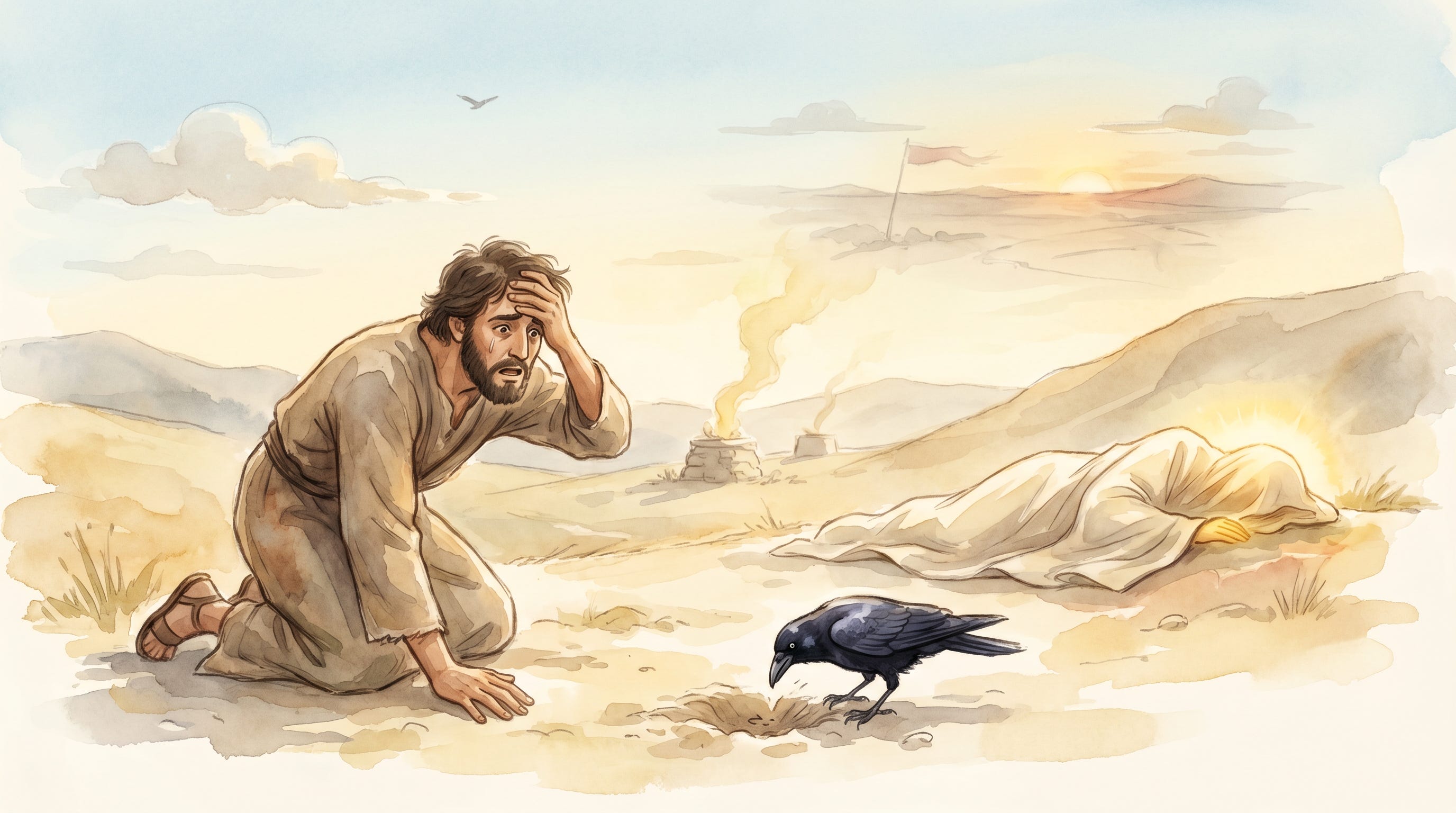
The Qur’an continues:
فَطَوَّعَتْ لَهُ نَفْسُهُ قَتْلَ أَخِيهِ فَقَتَلَهُ فَأَصْبَحَ مِنَ الْخَاسِرِينَ
فَبَعَثَ اللَّهُ غُرَابًا يَبْحَثُ فِي الْأَرْضِ لِيُرِيَهُ كَيْفَ يُوَارِي سَوْءَةَ أَخِيهِ ۚ قَالَ يَا وَيْلَتَا أَعَجَزْتُ أَنْ أَكُونَ مِثْلَ هَٰذَا الْغُرَابِ فَأُوَارِيَ سَوْءَةَ أَخِي ۖ فَأَصْبَحَ مِنَ النَّادِمِينَ
“Then his soul prompted him to kill his brother, so he killed him, and he became of those who are lost.
Then God sent a crow, scratching at the ground, to show him how to cover the body of his brother. He said: ‘Woe to me! Am I not even able to be like this crow and cover the body of my brother?’ And he became of those who regret.”
— Qur’an, Surah al-Ma’idah (the Chapter of the Table Spread) #5, Verse 30 to 31
Here is the heart of our first point tonight, and it is a point that will carry us through the entire series.
The Qur’an tells us that Cain regretted.
The first witness changed the heart of his own killer.
Consider what this means.
When a person is merely killed — when they are simply a body on the ground, a victim of someone else’s rage or jealousy or political convenience — the killer walks away.
The killing is absorbed into history as a crime, and the world moves on.
The victim is mourned, perhaps, but the mourning is pity, not transformation.
But when a person testifies — when they stand where they stand and say “I fear God” and refuse to raise their hand — the killing becomes something the killer cannot digest.
It sits in him.
It works on him.
He cannot walk away cleanly.
He is, in the Qur’an’s words, “of those who regret” — not because he is a good man, not because he has repented in the full sense, but because the witness was too bright for his eyes to close against.
This is the mechanism of true witness.
It is not the dying that does the work.
It is the testimony in the dying.
Abel’s death did not save Abel — Abel is already saved; the Qur’an tells us God accepted his offering before the killing ever took place.
Abel’s death changed Cain.
And that is what every true witness since has done: changed the killer, changed the onlooker, changed the world that watched and could not look away.
When Imam Husayn — peace and blessings be upon him — stood at Karbala millenia later, the same mechanism was at work.
Yazid’s soldiers killed him — but the killing did not end the matter.
It began it.
The testimony of Imam Husayn — his words, his refusal, his consciousness — sat in the heart of every witness and every killer on that field, and it has been working on the world ever since.
Every tear shed for Imam Husayn in every Muharram in every century is evidence that the witness is still doing its work.
The candle is still burning.
And it began with Abel, in a field, on a day the sky was still young.
Abel’s witness is foundational — the first moral refusal in human history, spoken by a prophet’s son in a world still learning the meaning of justice.
Imam Husayn’s witness is culminative — the same refusal, but now spoken by the leader of a community, under state violence, with strategic clarity and communal consequence.
The continuum is real: both say “I fear God” and refuse to kill.
But the historical weight is not the same.
We honour Abel by seeing him as the root.
We honour Imam Husayn by seeing him as the fruit — and by tasting what that fruit demands of us now.
The Word Itself — Shahada and Martys

There is a reason the same word carries both meanings in both languages, and it is not an accident.
In Arabic, the root sh-h-d (ش-ه-د) gives us shahida, to witness; shahada, testimony and the declaration of faith; shahid, witness and martyr; shuhada’, witnesses and martyrs.
The same root, the same breath.
To witness and to die for the truth are not two separate things in the Arabic language — they are one word seen from two angles.
In Greek, martys (μάρτυς) means simply witness.
The early Christians used it for those who testified to Christ with their lives — and from that Greek word, through Latin, we received our English word martyr.
It means, literally, one who witnesses.
This is not decoration.
This is not a curiosity of comparative linguistics.
This is the foundation of everything we will do for the next nine nights.
If we can hold this one truth — that shaheed means witness, and that the dying is subordinate to the witnessing, not the other way around — then we will not make the mistake our own pulpits have been making for generations.
And that mistake is the subject of our next section.
The Preacher’s Failure
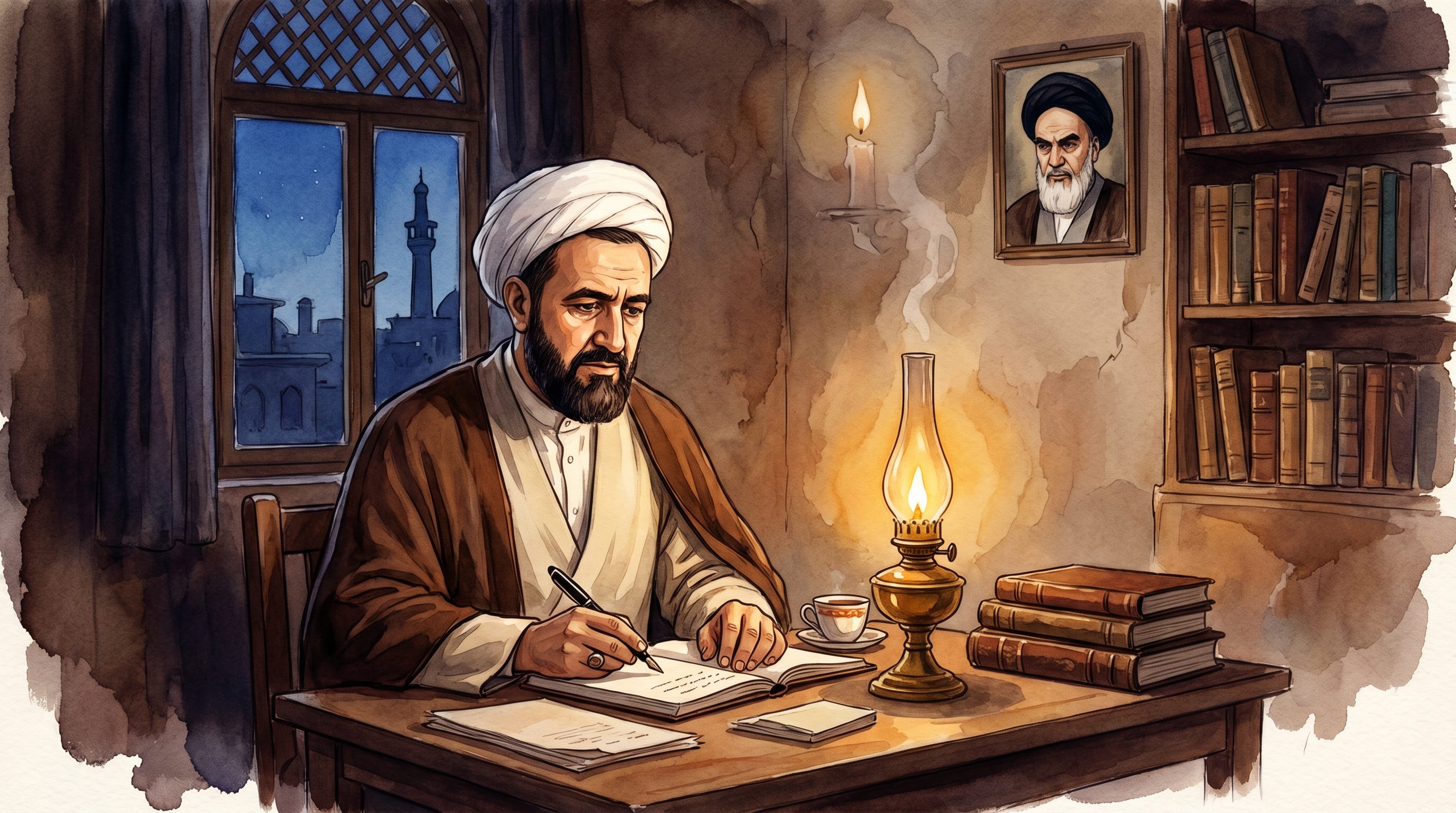
We come now to a difficult subject, and we come to it through the voice of a man who paid for his clarity with his life.
Shaheed Ayatollah Murtadha Motahhari — may God rest his pure soul — was born in 1919 in Fariman, in the northeast of Iran.
He studied under Allamah Tabataba’i — may God rest his pure soul — the same scholar whose commentary we have just been reading — and under Imam Khomeini — may God rest his pure soul.
He was a philosopher, a jurist, and a teacher.
He could speak to a room of university students in Tehran and to a room of seminary scholars in Qom with equal clarity and equal respect.
He was, in every sense of the word Shaheed Motahhari himself would have recognised, a witness: a man whose life was spent testifying to a truth he knew would cost him.
He was assassinated on 1 May 1979, shot on the street in Tehran by the Furqan group — a fringe organisation that murdered several of the most luminous minds of the early Islamic Revolution.
He died that night.
He left behind a body of work that this series will lean on more heavily than any other single source, and the book we turn to now — The Martyr — is the spinal text of tonight’s session.
Shaheed Motahhari asks a question that every person in this room should sit with:
What is the basis of the sanctity of martyrdom?
And he answers it by showing us, first, what martyrdom is not.
Five Kinds of Death
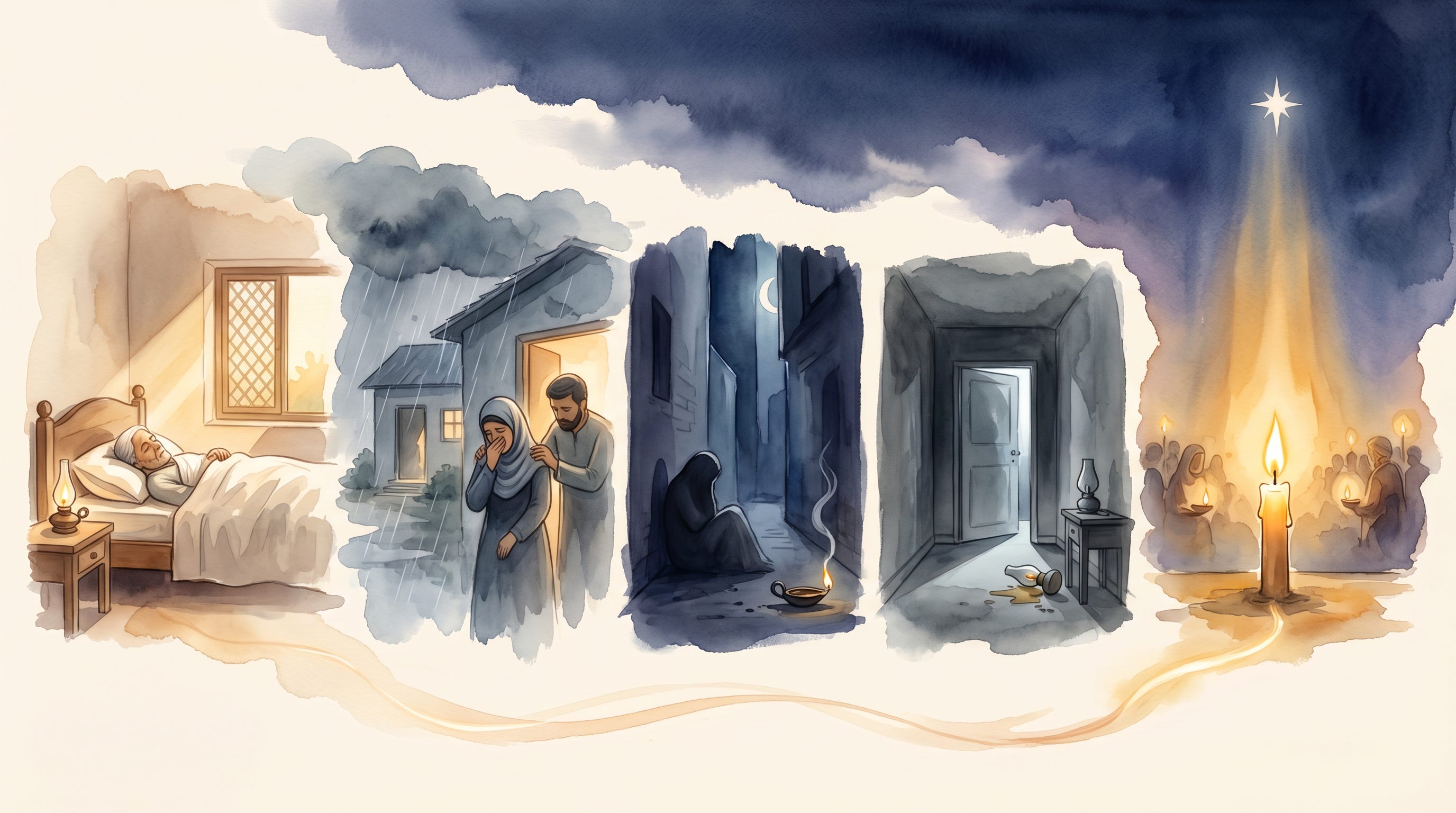
Shaheed Motahhari identifies five categories of death, and the distinction between them is the distinction between everything we have been saying tonight and everything our pulpits have been getting wrong.
We will return to these categories in full depth in Session 3 of this series, but tonight we must name them, because without them the rest of the argument does not hold.
«ما میدانیم که مرگ چند نوع است.»
“We know that there are several kinds of death.”
— Shaheed Motahhari, The Martyr, Collected Works, Volume 17
The first is natural death (marg-e tabiʿi):
«شخصی عمر طبیعی خود را به پایان میرساند و به طور طبیعی میمیرد. این گونه مرگها عادى تلقى مىشود، نه افتخارآمیز است و نه ملامتخیز.»
“A person lives out their natural lifespan and dies of old age. This type of death is considered ordinary; it brings neither glory nor moral blame, and does not cause profound shock.”
— Shaheed Motahhari, The Martyr, Collected Works, Volume 17
The second is premature or accidental death (marg-e ittifaqi / ghayr-i ʿadi):
«مرگی که در اثر بیماریها، یا حوادث و سوانحی از قبیل زلزله و سیل رخ میدهد. این مرگ موجب تأسف است و نوعی «نفله شدن» جان تلقی میشود.»
“Death resulting from illnesses or natural disasters and accidents — like earthquakes or floods. While it carries no moral blame, it is seen as a tragic loss, a ‘wasting’ of life, bringing deep sorrow to those left behind.”
— Shaheed Motahhari, The Martyr, Collected Works, Volume 17
The third is death as a victim of crime (marg-e jina’i):
«مرگهایی که پای یک جنایت در کار است و مقتول بیتقصیر است. تأسفآور و رقتبار است، اما تحسینبرانگیز و افتخارآمیز نیست، زیرا مقتول دخالتی در آن نداشته است.»
“Death where the person is the innocent victim of a crime, killed due to another’s malice, hatred, or greed. It is shocking and pitiable, but because the victim had no active, voluntary choice in the matter, it is not a matter of theological pride or glory.”
— Shaheed Motahhari, The Martyr, Collected Works, Volume 17
The fourth is death that is itself a crime (margi ke khod jinayat ast):
«مرگهایی که خود آن مرگها جنایت است، از قبیل خودکشیها. اینگونه مرگها نفله کردن و هدر دادن خود است که بدترین مرگهاست.»
“Deaths where the act of dying is itself a crime or a sin, such as suicide. This is a deliberate and completely unjustified destruction of the self — the worst kind of death.”
— Shaheed Motahhari, The Martyr, Collected Works, Volume 17
The fifth is martyrdom (shahadat):
«مرگی که انسان با توجه به خطرات احتمالی، فقط به خاطر هدفی مقدس و در راه خدا (فی سبیل الله) از آن آگاهانه استقبال کند. این تنها مرگی است که از حیات برتر و مقدستر است.»
“A death that a person consciously, voluntarily, and knowingly embraces for a sacred, divine purpose — in the way of God. This is the only type of death which is higher, greater and holier than life itself.”
— Shaheed Motahhari, The Martyr, Collected Works, Volume 17
Two elements define the fifth.
Not one — two.
The life is offered for a cause.
And the offering is made consciously.
Both are necessary.
Without the cause, it is merely a death.
Without the consciousness, it is merely an accident.
Only when both are present — the sacred cause and the full awareness of what one is doing — does the death become a witness, a shahada, a candle that lights the room.
The Indictment
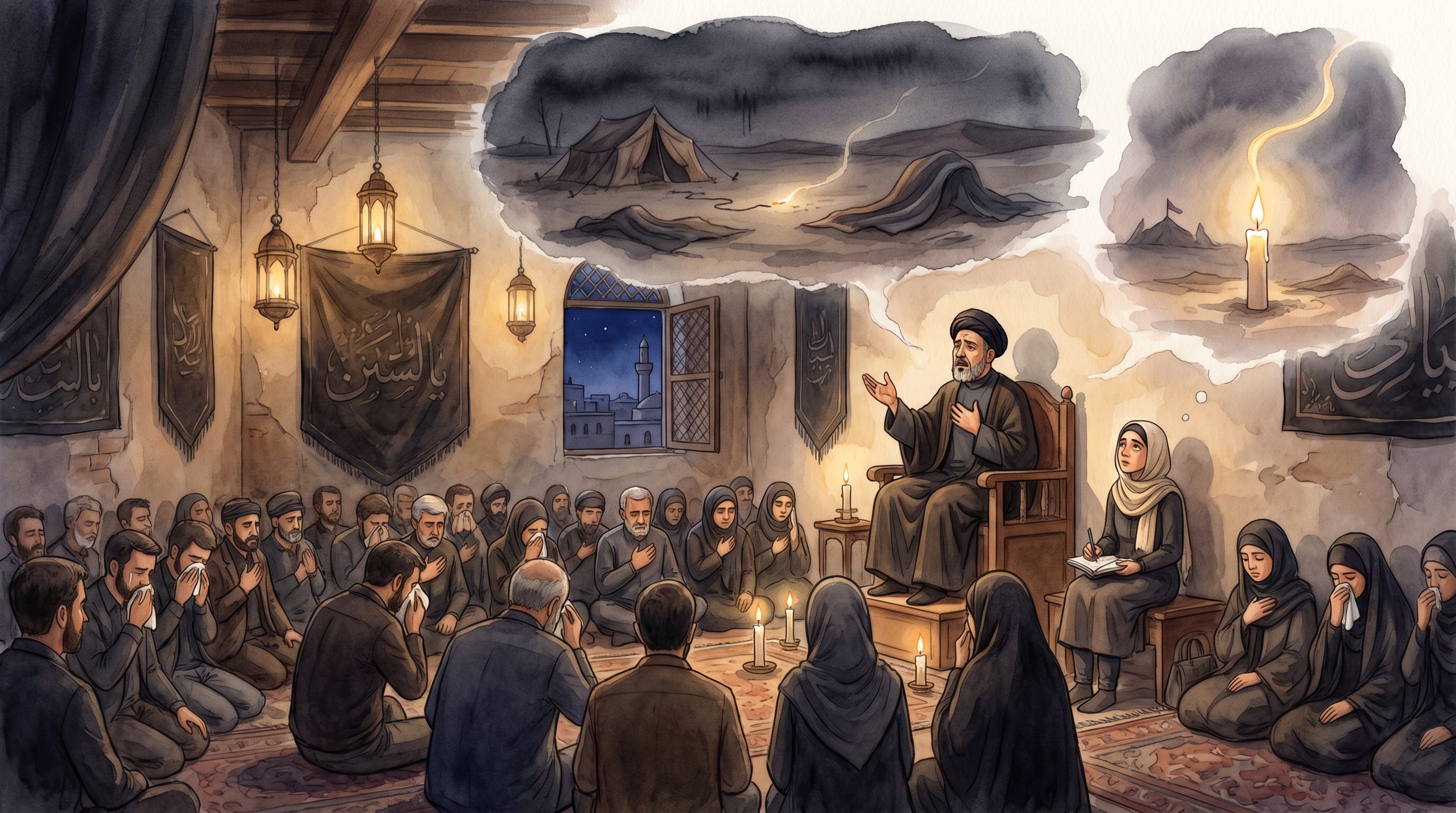
Now Shaheed Motahhari turns his gaze — and it is a loving gaze, but an unflinching one — upon our own community.
Upon our preachers.
Upon our pulpits.
Upon the way we have been telling the story of Karbala for generations.
«متأسفانه بیشتر ذاکرینی که قصه کربلا را نقل میکنند، امام حسین(ع) را سید الشهداء میخوانند؛ ولی تحلیل و بررسی دقیقی از مسأله شهادت ندارند. ماجرا را چنان تصویر میکنند که گویا او جان خود را بیهوده از دست داده است.»
“It is regrettable that most of the preachers who narrate the story of Karbala call Imam Husayn the Master of Martyrs — and yet they have little analytical insight into the question of martyrdom. They describe the events in such a way as though he lost his life in vain.”
— Shaheed Motahhari, The Martyr, Collected Works, Volume 17
Read this sentence again.
Let it sit in the room.
The same error a modern listener might make about Abel —
“he was a victim of his brother’s jealousy”
— is the error our own pulpits have been making about Imam Husayn for generations.
He was a victim of Yazid’s cruelty.
He was unjustly killed.
How sad.
How terrible.
Let us weep.
That is not what Imam Husayn was.
That is not what Abel was.
That is not what any true witness has ever been.
Shaheed Motahhari continues:
«بسیاری از مردم ما بر امام حسین(ع) به خاطر مظلومیتش گریه میکنند. آنها افسوس میخورند که او قربانی خودخواهی یک قدرتطلب شد، کسی که خونش را بدون هیچ تقصیری ریخت. اگر واقعاً مسأله به همین سادگی بود، امام حسین فقط یک انسان بیگناه شناخته میشد که ظلم بزرگی در حقش شده است؛ اما نمیتوانست شهید نامیده شود، چه رسد به اینکه سید الشهداء باشد.»
“Many of our people mourn Imam Husayn for his innocence. They regret that he was a victim of the selfishness of a power-hungry man, who shed his blood through no fault of his. Had the fact been really so simple, Imam Husayn would have been regarded only as an innocent person to whom great injustice was done, but he could not have been called a martyr, let alone his being the Master of Martyrs.”
— Shaheed Motahhari, The Martyr, Collected Works, Volume 17
This is the heart of the indictment.
When we mourn Husayn as a victim — when we reduce the events of Karbala to a tragedy that happened to a good man — we place him in Shaheed Motahhari’s third category: criminal death.
We are saying something terrible happened to someone who did not deserve it.
And that is true, as far as it goes.
But it does not go far enough.
It does not go anywhere near far enough.
Imam Husayn is not in the third category.
He is in the fifth.
He is a conscious witness.
He knew what was coming — he told his companions so, plainly, on the night before Ashura.
He chose not to give allegiance.
He chose to stand.
He chose to testify.
His opponents wanted him to pledge his hand to Yazid, and he, knowing fully well the consequences, refused.
He regarded it as a great sin to remain silent at that moment.
The difference between the third category and the fifth is the difference between a victim and a candle.
A victim is an object of pity.
A candle is a source of light.
And when the preacher on the pulpit describes Karbala as though Imam Husayn simply “lost his life” — as though something happened to him, rather than something he chose — the preacher turns the Master of Witnesses into a victim.
And a victim cannot light a room.
This is not a call to stop weeping.
The Prophet — peace and blessings be upon him, his family and righteous companions — wept for Husayn before Husayn was even born.
The Imams wept.
The Qur’an commands us to remember.
Tears are not the problem.
Tears without understanding water the soil; understanding without tears leaves it barren.
We need both.
What Shaheed Motahhari warns against is not grief — it is grief that stops at grief, that does not ask:
What did this witness choose, and what does that choice ask of me?
Tabyeen — The Call for Clarity
Shaheed Motahhari wrote this in the 1960s and 1970s.
He was killed for it — among other things — in 1979.
But his warning was not only for his generation.
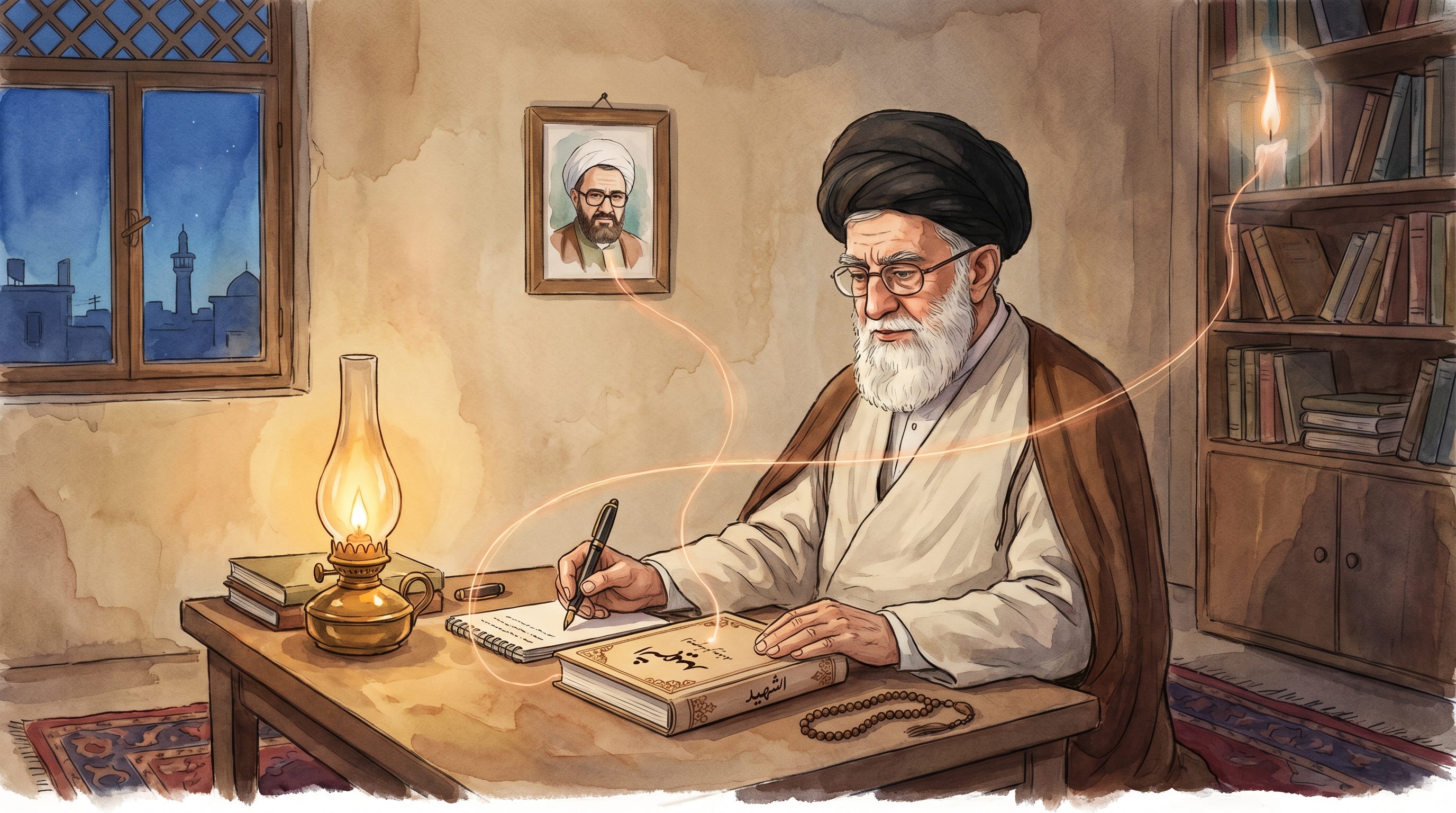
Our martyred Leader, Imam Sayyed Ali Khamenei — may God rest his pure soul — carried this warning forward for over four decades.
Tabyeen — clarification — was his defining call to the scholars, the preachers, the community.
Those who attended last year’s series on Tabyeen in this very room will remember:
Imam Khamenei said, in language that echoed Shaheed Motahhari directly, that if the pulpit does not clarify, the pulpit becomes a tool of confusion.
If Muharram mourning does not produce understanding, it produces sentimentality.
And sentimentality, in the face of a Yazid, is useless.
We are in the first Muharram since his martyrdom.
That is not a coincidence of the calendar.
It is a responsibility.
We owe it to both of them — Shaheed Motahhari the teacher and Shaheed Khamenei the guardian — to speak from this pulpit tonight with the clarity they demanded.
When we reduce the righteous dead to victims, we cut ourselves off from the covenant they died to extend to us.
This is the disease Shaheed Motahhari diagnosed.
This is the disease Shaheed Imam Khamenei spent his entire life trying to cure.
And the cure begins with one honest admission: we have been saying a word we did not understand.
Tonight we have begun to understand it.
The Pact We Make Tonight
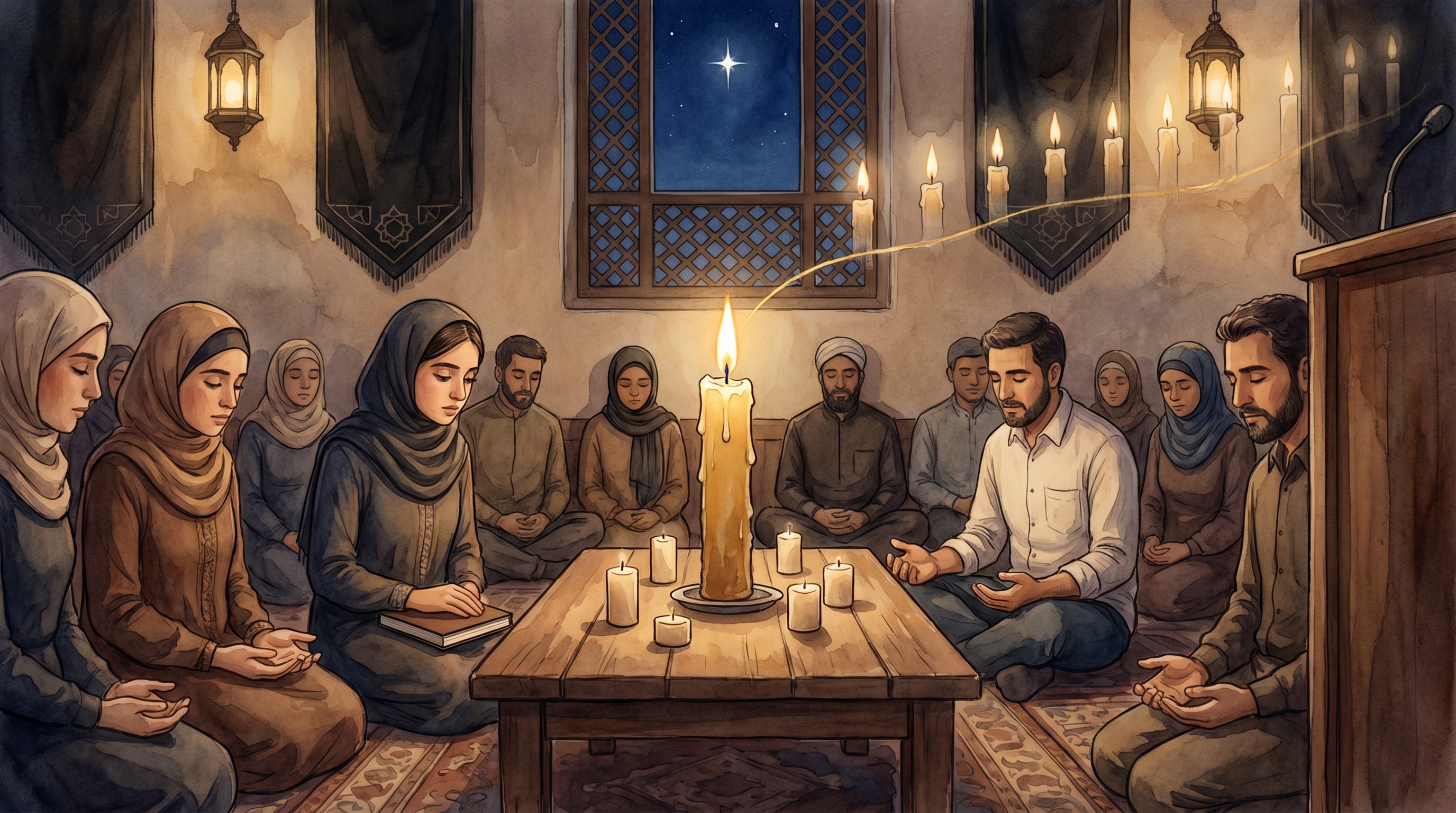
We have said a great deal this evening.
We have read the Qur’an on Abel.
We have listened to Allamah Tabataba’i explain what Abel’s words actually meant.
We have heard Shaheed Motahhari name the five kinds of death and show us the chasm between the third and the fifth — between the victim and the witness.
We have heard his indictment of the preacher who turns Imam Husayn into a victim.
And we have remembered that this is the first Muharram since the martyrdom of the man who spent his entire life trying to cure us of that very error.
Now I am going to ask something of you.
It is a small thing, and it is the hardest thing I have ever asked from this pulpit.
For the next nine nights — from tonight until the night of Ashura — I ask you not to use the word shaheed unless you can say, to yourself, what it means.
Not what it makes you feel.
Not the emotion it conjures.
What it means.
If you cannot define it, do not say it.
Carry the silence instead.
Let the silence ask you the question you have been avoiding.
And over the next nine nights, we will fill that silence together — with the prophetic chain that runs from Abel to Imam Husayn, with the theology of Shaheed Motahhari and the sociology of Dr Ali Shariati, with the Christian witness and the revolutionary one, with the counterfeits and the corruptions, until we reach the tenth night and stand at the grave of Imam Husayn — peace and blessings be upon him — knowing exactly what the word means and exactly what it asks of us.
This is not a rebuke.
This is a promise.
By the time we reach Ashura together, the word will have its weight back.
And the weight of that meaning will change the way you weep.
The Road Ahead
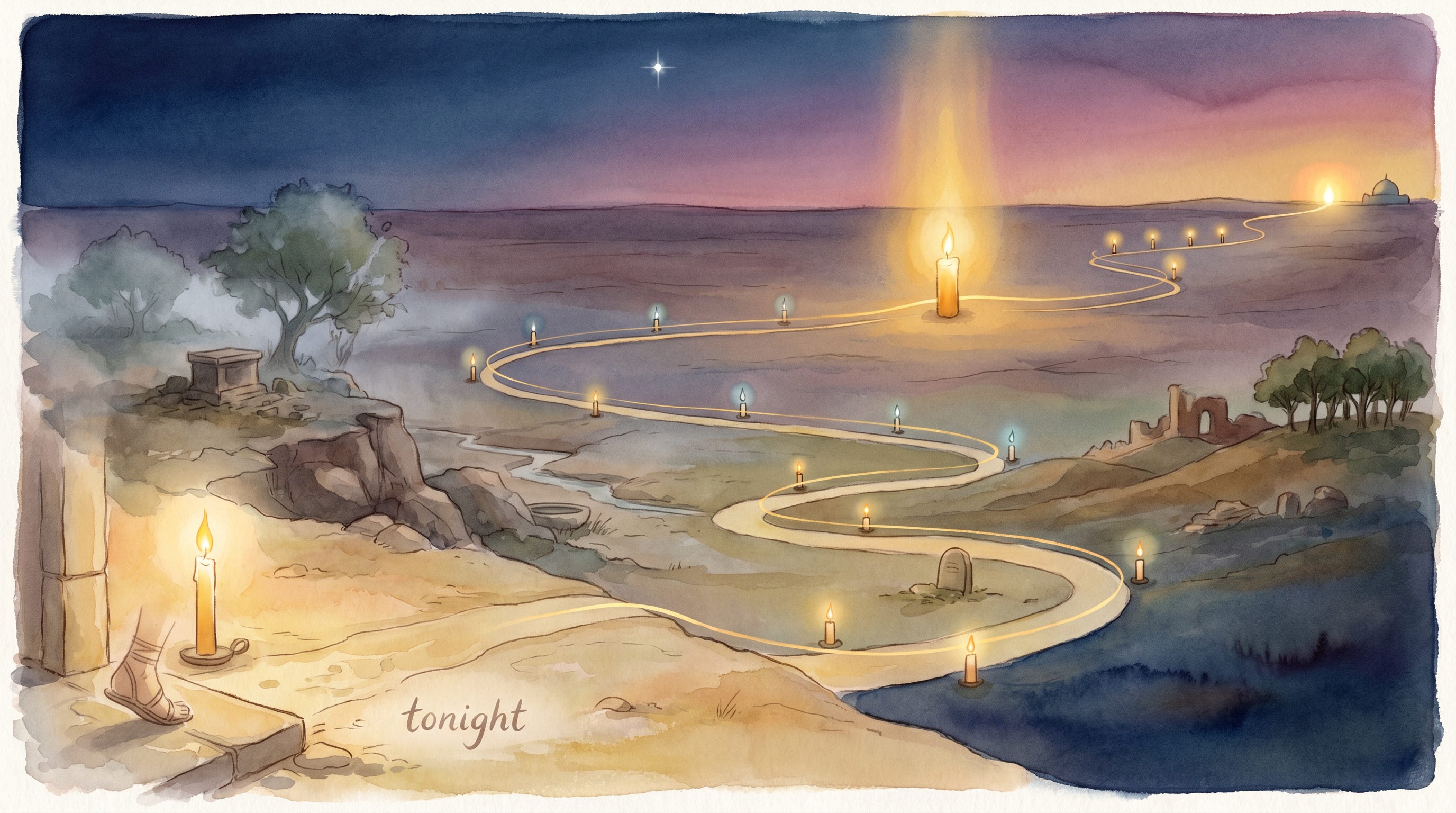
Let me tell you briefly what is coming, so that you can walk into tomorrow night knowing where we are going.
Tonight we recovered the word at its root.
Abel.
The Qur’an.
The first testimony.
Tomorrow night we trace the chain.
Every prophet who wept before Imam Husayn wept.
Every witness who testified before Karbala testified.
John the Baptist (Yahya), whose blood the narrations tell us boiled in a basin until Imam Husayn’s blood fell beside it.
Zechariah (Zakariyya), who was sawn through a tree.
Abraham (Ibrahim), who laid his son on the stone.
The oldest covenant on earth — the one every soul made before it entered a body:
“Am I not your Lord?
Yes — we bear witness.”
Night three: Shaheed Motahhari’s full framework — the five kinds of death, explored in the depth they deserve.
Imam Husayn did not die.
He gave.
And between death and giving is everything.
Nights four and five: the revolutionary reading of Dr Ali Shariati, and the Christian witness — how other traditions have sensed this same connection, and where they converge with ours and where they part.
Nights six through nine: Fanon and the revolutionary without God.
Vietnam and the anti-colonial witness.
Japan and the aesthetic of the noble death.
And the counterfeits — the false martyrdoms that have stolen the word and dressed themselves in it.
Night ten — Ashura.
The climax.
The witness of Imam Husayn — peace and blessings be upon him, in the fullness of what that word means, after nine nights of preparation.
And then, after the break, five nights of Safar leading to Arbaeen: the witness after the witness.
Sayyedah Zaynab — peace and blessings be upon her.
Imam Sajjad — peace and blessings be upon him.
The frontiers we hold.
The martyrs of our own lifetime.
And the covenant that is renewed every morning.
That is where we are going.
Tonight is the first step.
The Question to Carry Home
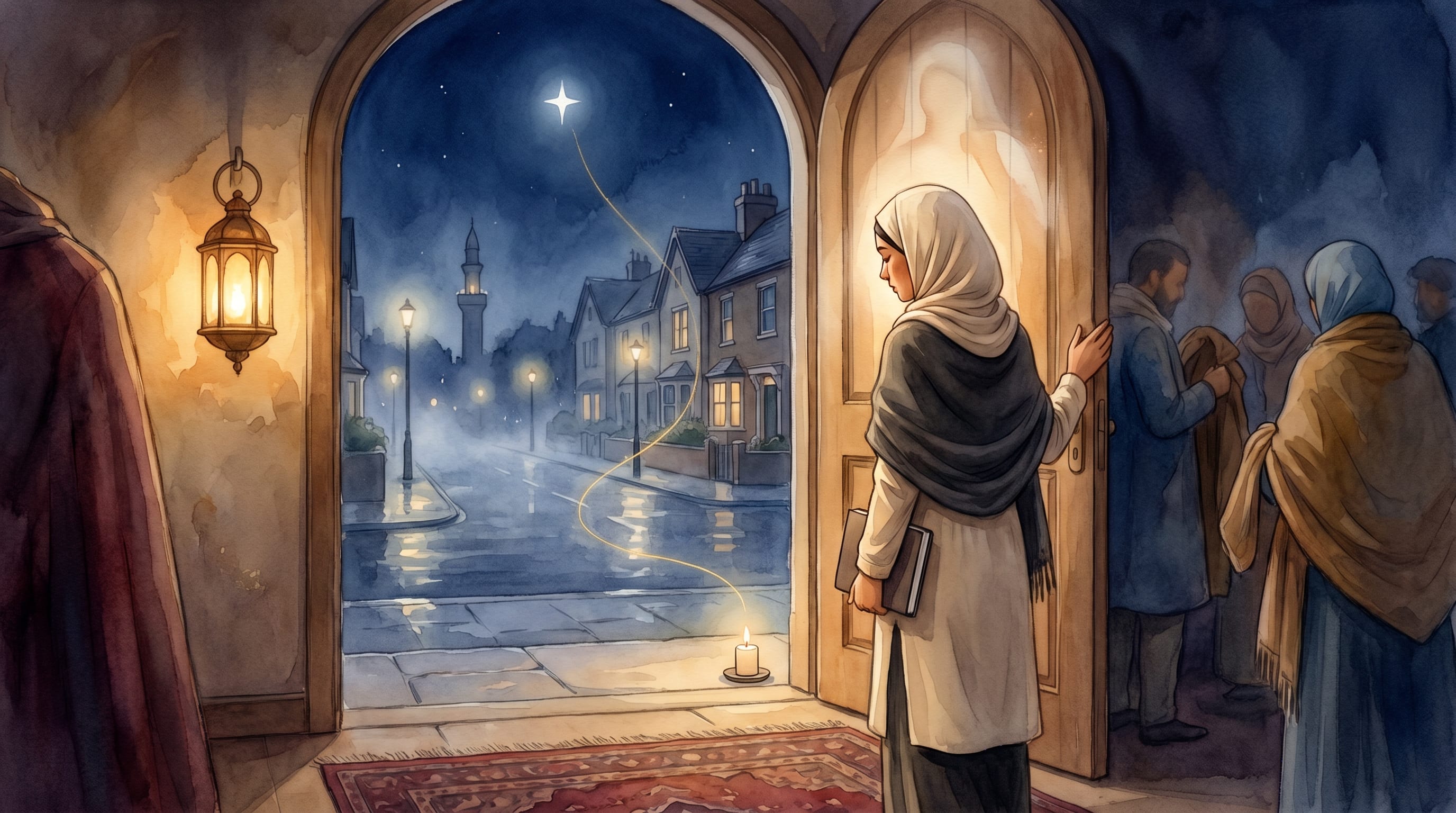
Between tonight and tomorrow night, I ask you to sit with one question.
It is a small question.
It takes no research.
It requires no Arabic.
It asks only that you be honest with yourself.
The question is this:
When I have said “shaheed” in my life — have I meant it, or have I just said it?
If the answer is “I have just said it,” then you are exactly where you should be at the beginning of this series.
That is not a failure.
That is an honest starting point.
And an honest starting point is the only foundation strong enough to hold ten nights of Muharram.
If the answer is “I have meant it,” then I ask you — gently, respectfully — to sit with a harder question:
What did I mean?
And we will check your answer, and mine, against the Qur’an, against Shaheed Motahhari, against the Imams — peace and blessings be upon them, against the blood on the ground at Karbala, over the nights that follow.
Every tear shed for Imam Husayn as an unjustly killed man — instead of as the Master of Witnesses who chose his death — is a tear that has not yet understood him.
The tears are not wrong.
But the tears, alone, are not enough.
Tonight we have given Abel back what our tradition owes him — his station.
And we have begun to recover a word that our community has been saying without understanding for too long.
Now we give the rest of the hour to the one who has never left us.
The voice you are about to hear speaks from behind the veils of the occultation.
It speaks in a tongue this room knows — plain English, ancient cadence — and it speaks of the first witness, the first blood the earth had ever known, and a question the Unseen has been asking this creation since the beginning.
Listen.
Segue to Maqtal (Lamentation)
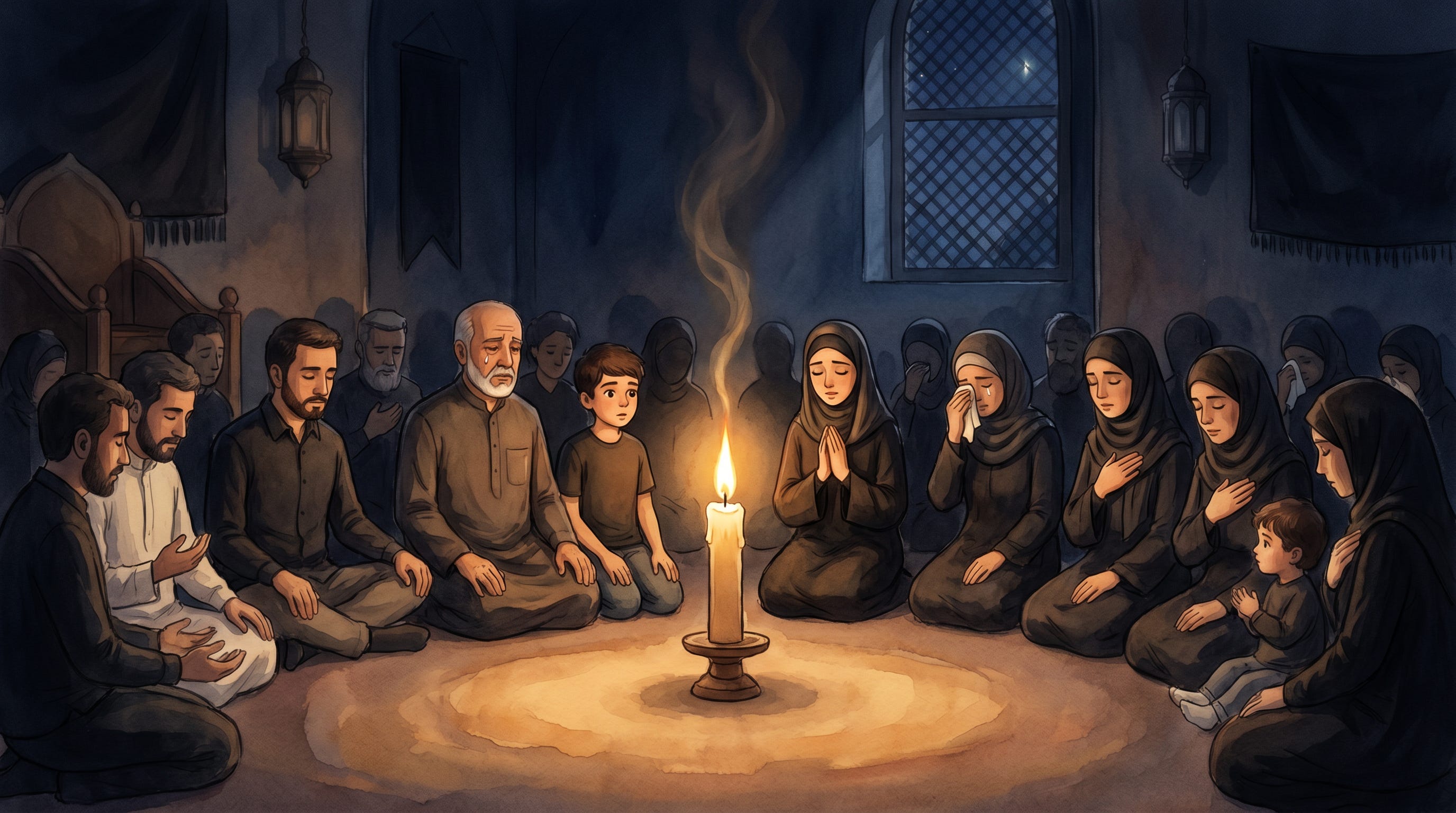
Maqtal (Lamentation) for the First Night of Muharram 2026/1448
Supplication
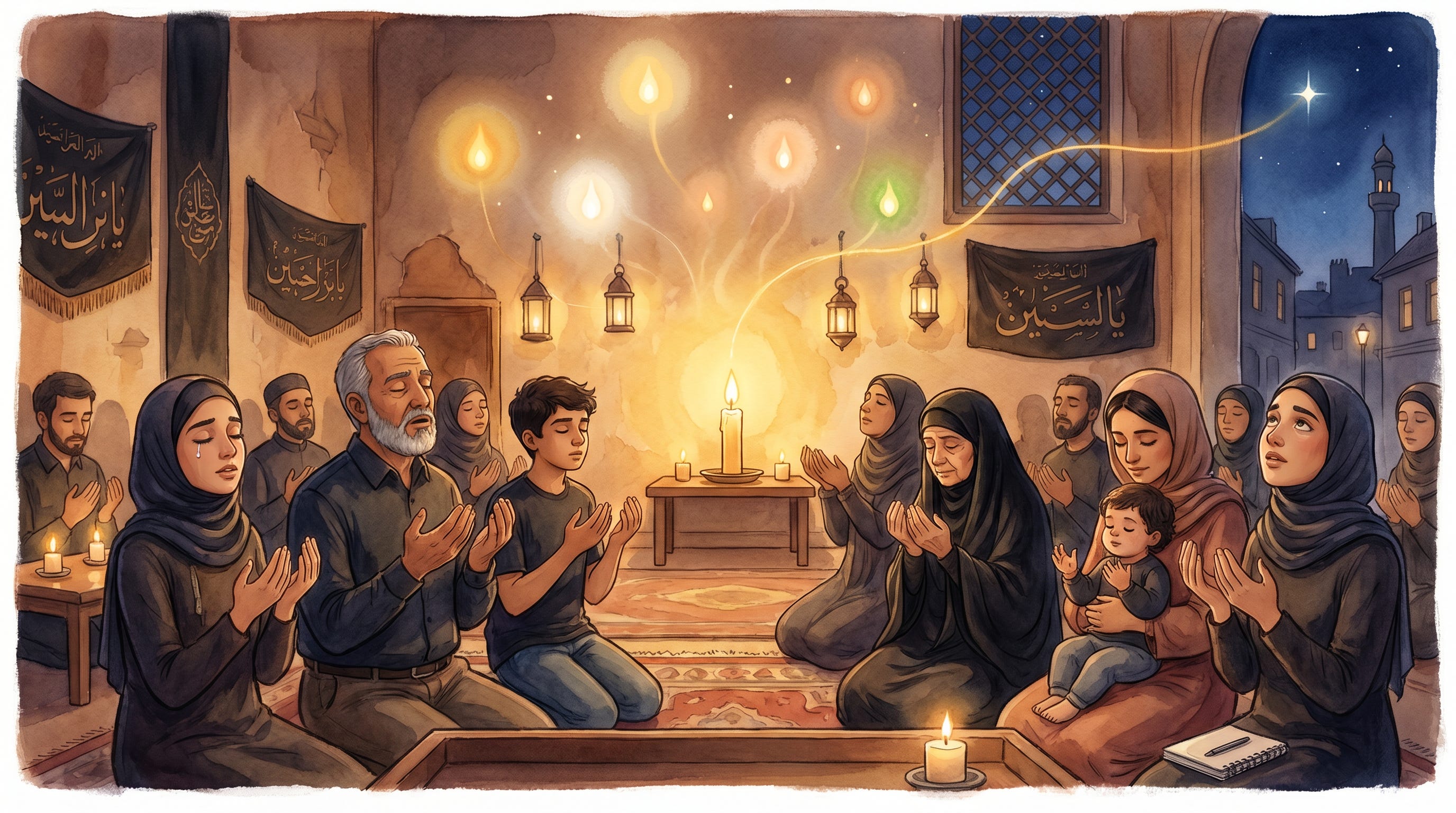
Peace be upon Abel, the first witness.
Peace be upon Muhammad, the seal of the prophets.
Peace be upon Ali, the commander of the faithful.
Peace be upon Sayyedah Fatima, the mother of her father’s grief and her father’s joy.
Peace be upon Husayn, the master of witnesses.
Peace be upon the Imam of our age, who remembers.
Peace be upon you all, and upon your houses, and upon the candle that was lit tonight and that will not be put out.
O God — You Who have no beginning and no end, You Who were before the before and will be after the after, You Who created the heavens and the earth and what lies between them, and Who created us from a single soul and from that soul its mate, and spread from the two of them a multitude of men and women — we turn to You tonight at the opening of this Muharram, and we have no Lord but You, and no refuge but Your door, and no words that are worthy of You except the ones You Yourself have taught us.
We begin by praising You.
All praise belongs to You — the praise of those who know You and the praise of those who are still learning to know You.
You are the First Cause and the Final Return.
You are the Light of the heavens and the earth.
You are the One Who sent the prophets, raised the witnesses, and preserved the chain from the first morning of creation until this hour.
Everything we have spoken of tonight — the witness, the testimony, the candle, the chain — is Yours.
It comes from You.
It returns to You.
And we are only servants standing in the light You chose to shed.
O God — we send our condolences and our congratulations tonight to Your beloved Prophet Muhammad — peace and blessings be upon him, his family, and his righteous companions — on the arrival of this month.
Condolences, because this is the month in which his grandson — the light of his eye, the joy of his heart, the one he lifted on his shoulders and called the master of the youth of Paradise — will be slain on a plain in Iraq, thirsty, surrounded, with the bodies of his children and companions around him.
And congratulations, because that grandson’s witness has not ended — it has burned for fourteen centuries and it is burning now, in this room, in this hour, and it will burn until the day You raise him and seat him beside You, and the whole of creation sees what the witnesses always knew.
O God — we send our condolences and our congratulations to our father Adam and our mother Eve — peace and blessings be upon them both.
Condolences, because they were the first parents on this earth to lose a child to murder — and no parent, from that day to this, has ever fully understood what was taken from them in that field.
And congratulations, because the son they lost was not lost.
He was the first witness.
He was the first candle.
And the chain that began with his blood has produced Imam Husayn, and Sayyedah Zaynab, and the seventy-two, and every righteous soul that has stood where the world told them to kneel.
Their son Abel is at the head of a caravan they could not have imagined — and what a caravan it is.
O God — we send our peace to the Imam of our Age, the Proof of Your existence on Your earth, the Hidden One, the Awaited One, the son of Hasan al-Askari — peace and blessings be upon them both, and may You, our beloved Lord, hasten his return.
We have heard his voice tonight — or as close to his voice as our English tongue can carry.
We know he watches.
We know he waits.
We know that he carries within him the memory of every witness from Abel to this hour, and that not one drop of blood, not one tear, not one refusal to bow has been forgotten by him.
We ask You to hasten his appearance.
We ask You to make us worthy of it.
And we ask You — until that day — to keep us among those who carry the candle he has entrusted to us, and who do not set it down.
O God — we send our peace tonight to Imam Husayn — peace and blessings be upon him, the Master of Witnesses, the heir of Adam, the heir of Abraham, the heir of Muhammad, the one in whom every testimony before him was gathered and completed.
We greet him with the greeting of those who are beginning to understand — not those who have arrived, but those who have taken the first step.
We say to him tonight what the Ziyarat teaches us to say:
Peace be upon you, O Aba Abdillah.
We did not fully understand the word we have been calling you by.
Tonight we have begun.
And we will not stop until we do.
O God — accept from us this first night.
We came to You with a word we had been using without understanding.
We leave tonight with the first thread of its meaning in our hands.
We ask You to keep the thread in our grip — over the nine nights that follow, through the break, through the five nights of Safar, until Arbaeen — so that when we stand at the grave of Your proof on the fortieth day, we stand as witnesses, not as onlookers.
O God — You are everything.
You were everything before the field, and You were everything after it.
You were everything before the blood, and You are everything now.
The witness testifies to You.
The candle burns for You.
The chain runs toward You.
And we — Your servants, Your poor, Your hoping, Your stumbling, Your trying — we have nowhere to go but to You, and no one to ask but You, and no words that are enough except the ones You have placed on the tongues of Your friends:
إِنَّا لِلَّهِ وَإِنَّا إِلَيْهِ رَاجِعُونَ
“We belong to God, and to Him we return.”
— Qur’an, Surah al-Baqarah (the Chapter of the Cow) #2, Verse 156
And we repeat your promise, an eternal promise for Justice, and a warning for the wrongdoers:
وَسَيَعۡلَمُ ٱلَّذِينَ ظَلَمُوٓاْ أَيَّ مُنقَلَبٖ يَنقَلِبُونَ
And the wrongdoers will soon know at what goal they will end up.
— Qur’an, Surah al-Shu’araa (the Chapter of the Poets) #26, Verse 227
And we add, from the depths of everything we have learned tonight:
حَسْبُنَا اللَّهُ وَنِعْمَ الْوَكِيلُ
“God is sufficient for us, and He is the best of guardians.”
— Qur’an, Surah Aal Imran (the Chapter of the Family of Imran) #3, Verse 173
Amen, O Lord Sustainer of the Universes.
Amen, O Most Merciful of the Merciful.
And from Him alone is all ability, and He has authority over all things.
Salam alaikum I want to thank all who put up this work, in sha Allah ayarakum Allah. Beautiful and it has a lot of knowledge. I have been translating some parts to Spanish. I was wondering if the videos and audio could be dubbed into Spanish, with artificial intelligence, so people can hear them. There are a lot of Shia who are Spanish speaking in Argentina, Spain, Colombia, Venezuela and most countries in Latin America. Thanking you in advance for your cooperation.