

In His Name, the Most High
اَلسَّلاَمُ عَلَيْكَ يَا أَبَا عَبْدِاللَّهِ
وَعَلَى الْأَرْوَاحِ الَّتِي حَلَّتْ بِفِنَائِكَ
عَلَيْكُمْ مِنَّا جَمِيعًا سَلاَمُ اللَّهِ أَبَدًا مَا بَقِينَا وَبَقِيَ اللَّيْلُ وَالنَّهَارُ
وَلا جَعَلَهُ اللَّهُ آخِرَ الْعَهْدِ مِنَّا لِزِيَارَتِكُمْ
اَلسَّلاَمُ عَلَى الْحُسَيْنِ
وَعَلَى عَلِيِّ بْنِ الْحُسَيْنِ
وَعَلَى أَوْلَادِ الْحُسَيْنِ
وَعَلَى أَصْحَابِ الْحُسَيْنِ
Peace be upon you, O Aba Abdillah (O Husayn),
and upon the souls who have gathered in your courtyard.Upon you, from us all, is the peace of God—forever,
for as long as we remain and as long as night and day endure.And may God never make this our last pledge to visit you.
Peace be upon al-Husayn,
and upon Ali, son of al-Husayn,
and upon the children of al-Husayn,
and upon the companions of al-Husayn.— Adapted from Ziyarat Ashura
Video of the Majlis (Sermon/Lecture)
We Have Returned
Last night, a voice reached us across fourteen centuries — the voice of the sister, Sayyedah Zaynab, peace and blessings be upon her, the witness-after-the-witness, who took a captive’s chains and turned them into a pulpit, and would not let the empire name what it had done.
We left her standing in the throne room of Damascus, unbroken.
And we left ourselves with a question that her standing forces upon anyone who hears it.
She did the thing.
But what does her doing of it ask of us?
That is where tonight begins.
Because it would be the easiest thing in the world to admire Sayyedah Zaynab the way one admires a mountain — from a great distance, with no thought of climbing it.
To say: how extraordinary she was, how far beyond us, and to go home unchanged.
And the entirety of last night was an argument against exactly that comfort.
The road she walked is our road.
The station she reached is the far end of a path that runs under our own feet, tonight, in this room.
So tonight we ask the most practical question in our religion:
What is the form of witness that is actually available to me?
Not the witness of the one who falls at the sword — most of us will never be asked for that.
Not even the witness of the sister in the tyrant’s court — few of us will ever stand in a throne room.
What is the witness available to the ordinary believer, in an ordinary life, in a city far from any battlefield?
And the answer our tradition gives has a name, and it is the most available grade of witness there is.
It is called murābaṭa — the holding of a line.
The keeping of a post.
And the night’s whole argument, stated plainly before we begin, is this:
The frontier is not a line on a map.
It is the seam between the oppressor and the oppressed, on God’s whole earth — and you are already standing at one.
There is a text that opens this for us — a supplication that millions of believers recite, and almost none have been shown what they are actually saying.
It is the twenty-seventh supplication of the Sahifa Sajjadiyyah, the book of Imam Zayn al-Abidin, peace and blessings be upon him — the very Imam whose chained young figure we watched take the pulpit in Yazid’s court last night.
It is called Duʿāʾ Ahl ath-Thughūr — the Supplication for the People of the Frontiers.
Tonight we open it.
And I want you to notice where we are beginning, because it is not an accident.
Our broadcast tonight carries the full supplication, recited in Arabic with the translation — so I will not walk you down it line by line.
Instead I want to open its concepts: to teach the load-bearing ideas that a believer recites a hundred times without ever being told what they hold.
And we begin with its very first petition.
After the blessing on the Prophet and his family, the Imam asks:
اللَّهُمَّ صَلِّ عَلَى مُحَمَّدٍ وَآلِهِ، وَحَصِّنْ ثُغُورَ الْمُسْلِمِينَ بِعِزَّتِكَ، وَأَيِّدْ حُمَاتَهَا بِقُوَّتِكَ، وَأَسْبِغْ عَطَايَاهُمْ مِنْ جِدَتِكَ.
“O God, send Your choicest blessings on Muhammad and his Family — and fortify the frontiers of the Muslims through Your might, and support their protectors through Your strength, and lavish upon them gifts through Your wealth.”
— Imam Zayn al-Abidin, al-Sahifa al-Sajjadiyya, Supplication 27 (Du’a Ahl al-Thughur)
Fortify the frontiers of the Muslims.
Hold that line in your mind — the frontiers of the Muslims — because before this night is over we will watch it turn into something you did not expect.
And we are not the first to begin here.
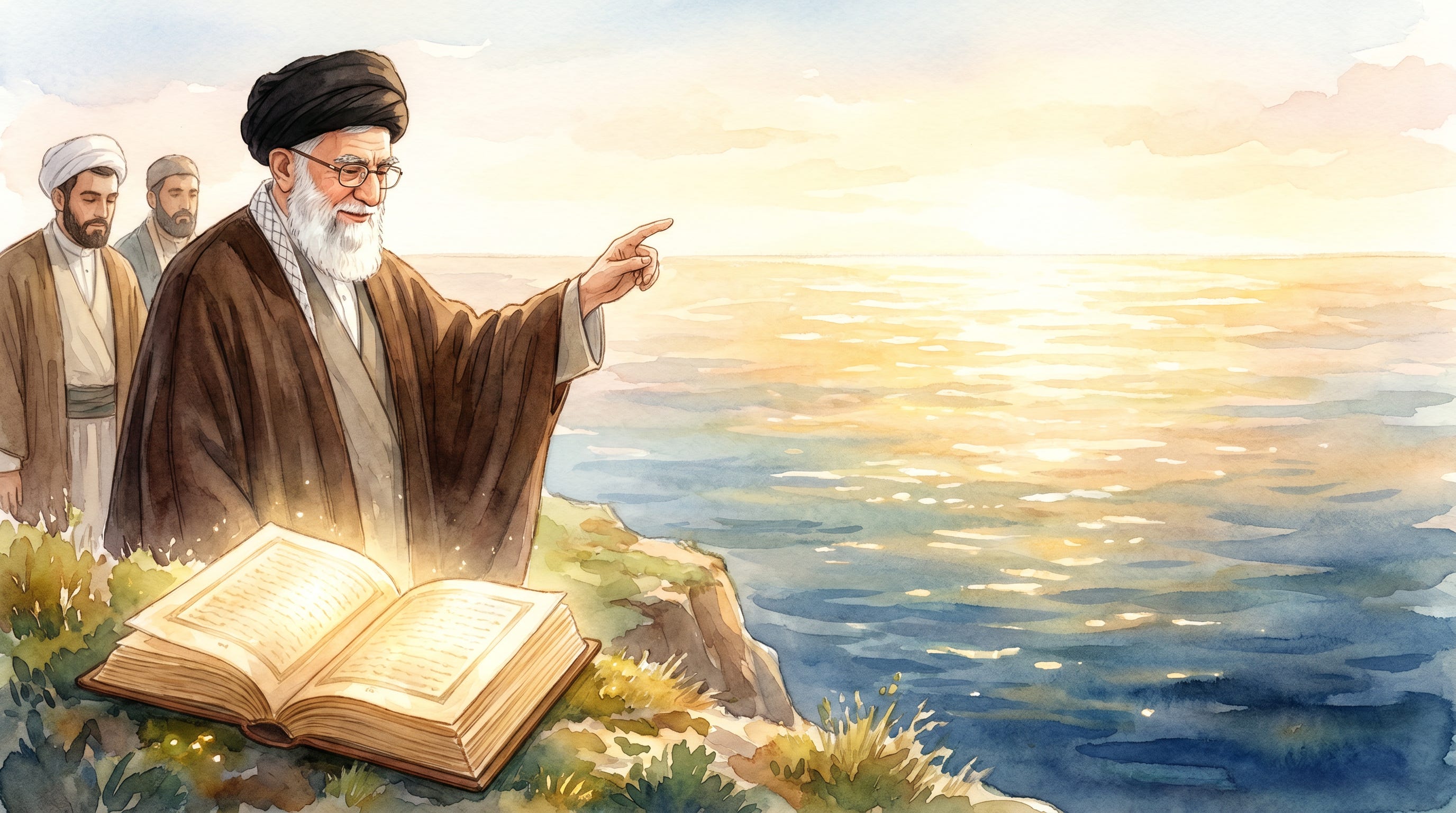
In our own age, when the martyred Wali al-Faqih wanted to point the community at the deep ocean of the Ahl al-Bayt’s teaching, he reached for this exact supplication.
On the official record of his office, Imam Sayyed Ali Khamenei, may God rest his pure soul, led with this very line —
O God, fortify the frontiers of the Muslims through Your might
— and he called the Sahifa Sajjadiyyah by a name worth remembering:
«صحیفهٔ سجادیه، اقیانوس بزرگ معارف اسلامی است.»
“The Sahifa al-Sajjadiyya is the great ocean of Islamic teachings.”
— Imam Sayyed Ali Khamenei, published on the record of his office, 23 February 2017
We begin, in other words, exactly where the Imam of our own age pointed.
And the first thing the prayer asks for — listen — is not a wall.
The Fortress Is Not the Wall
The Man In The Cell Who Wrote A Curriculum
To understand what this supplication is, you have to understand the condition of the man who wrote it.
Imam Zayn al-Abidin, peace and blessings be upon him, came off the field of Karbala the one surviving man of the House — and into thirty-four years of life under the heel of the Umayyad state.
He was watched.
Every word he spoke in public was carried back to Damascus.
The open teaching that his grandfather the Commander of the Faithful had done from the pulpit of Kufa was, for him, simply not possible; a teaching circle that looked political would have ended in his death and the end of the line.
So look at what he did.
He took the one form of speech a tyranny cannot easily ban — because to ban it is to be seen banning a man from talking to God — and he poured the whole curriculum into it.
He taught through supplication.
The Sahifa Sajjadiyyah is doctrine encrypted in prayer: theology, ethics, statecraft, the whole inner architecture of the faith, smuggled past the censor inside the one medium the censor could not touch.
It is the prayer that had to carry a curriculum, because the man who wrote it was not allowed to teach.
And here is the thing I want you to feel before we go a step further: this supplication, the Prayer for the Frontiers, is its own subject.
A man under occupation, forbidden to hold the line in the open, holds it in a prayer.
The text does not merely talk about holding a line under occupation.
It is the act of holding a line under occupation.
Keep that in your mind.
We will return to it, because by the end of tonight it will turn out to be exactly what we are doing in this room.
What A Frontier Really Is
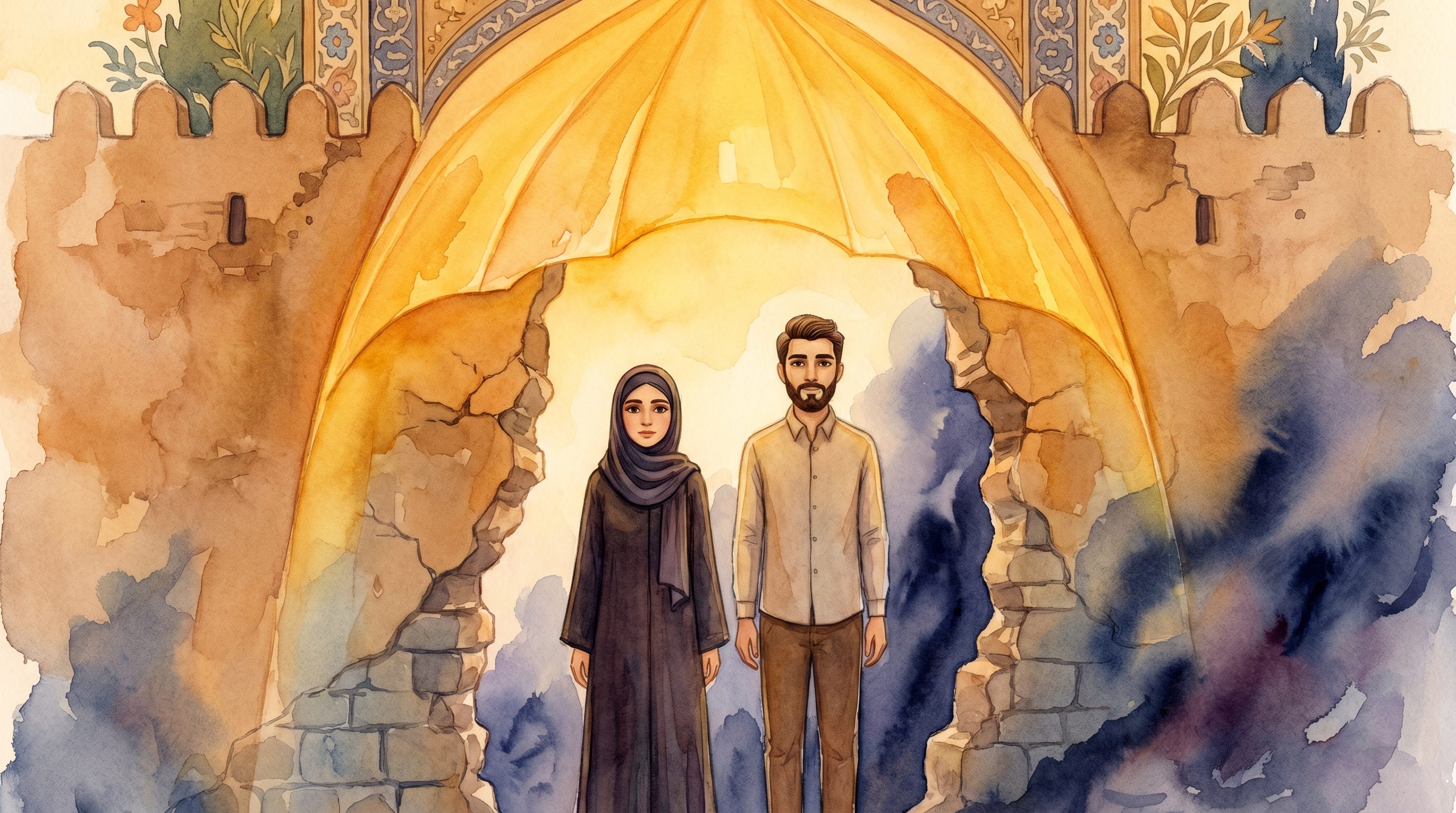
Now, what is a frontier?
What is a thaghr?
Our scholars are precise about this, and the precision is the doorway to everything.
The most celebrated classical commentary on the Sahifa — the Riyāḍ al-Sālikīn of Sayyed Ali Khan al-Madani — opens the word for us.
Thughūr, he says, is the plural of thaghr; and a thaghr is the vulnerable place, the gap, the point through which the enemy is feared to enter.
And then he gives the image that the Imam himself chose.
The word thaghr is the same word the Arabs use for the mouth — because the mouth is the opening through which a thing passes into the interior of the body.
The frontier is the mouth of the land.
It is the breach in the wall through which what is outside gets in.
الثغور جمع ثغر، وهو الموضع الذي يُخاف منه هجوم العدو، وسمي ثغراً لكونه كالثلمة في الحائط... وسأل تحصينها بعزته تعالى، لأن كل حصن غير حصانته تعالى فهو عُرضة للانهدام، وكل عز غير عزه فهو ذل واستسلام.
“Al-thughūr is the plural of thaghr, which refers to the vulnerable location from which an enemy attack is feared. It is called a thaghr — a gap, a mouth — because it is like a breach in a wall... And he asked for their fortification through His Might, because every fortress other than His fortification is prone to collapse, and every might other than His might is, in truth, humiliation and surrender.”
— Sayyed Ali Khan al-Madani, Riyāḍ al-Sālikīn fī Sharḥ Ṣaḥīfat Sayyid al-Sājidīn, vol. 4
Hear what he just did to the whole idea of a frontier.
The Imam did not pray build them a higher wall.
He prayed fortify them through Your might — because every fortress that is only a fortress will fall.
The true fortress is not the wall.
The true fortress is the care of God.
The stone is necessary; the stone is never sufficient.
A people can have the highest walls on earth and be utterly defenceless, and a people can have no wall at all and be a fortress — if the might they are tied to is His.
And there is the word the whole night turns on.
The one who holds the thaghr is called a murābiṭ.
And murābiṭ comes from the root rabt — to tie, to bind, to tether.
The frontier-guard is, by the very name, the one who is tied to the seam.
The one who has bound himself to the line and will not be pulled off it.
Hold that word — the one who is tied — because at the very end of tonight, a man of our own lifetime is going to define it for us in a letter to his daughter, and you will hear this same root come back.
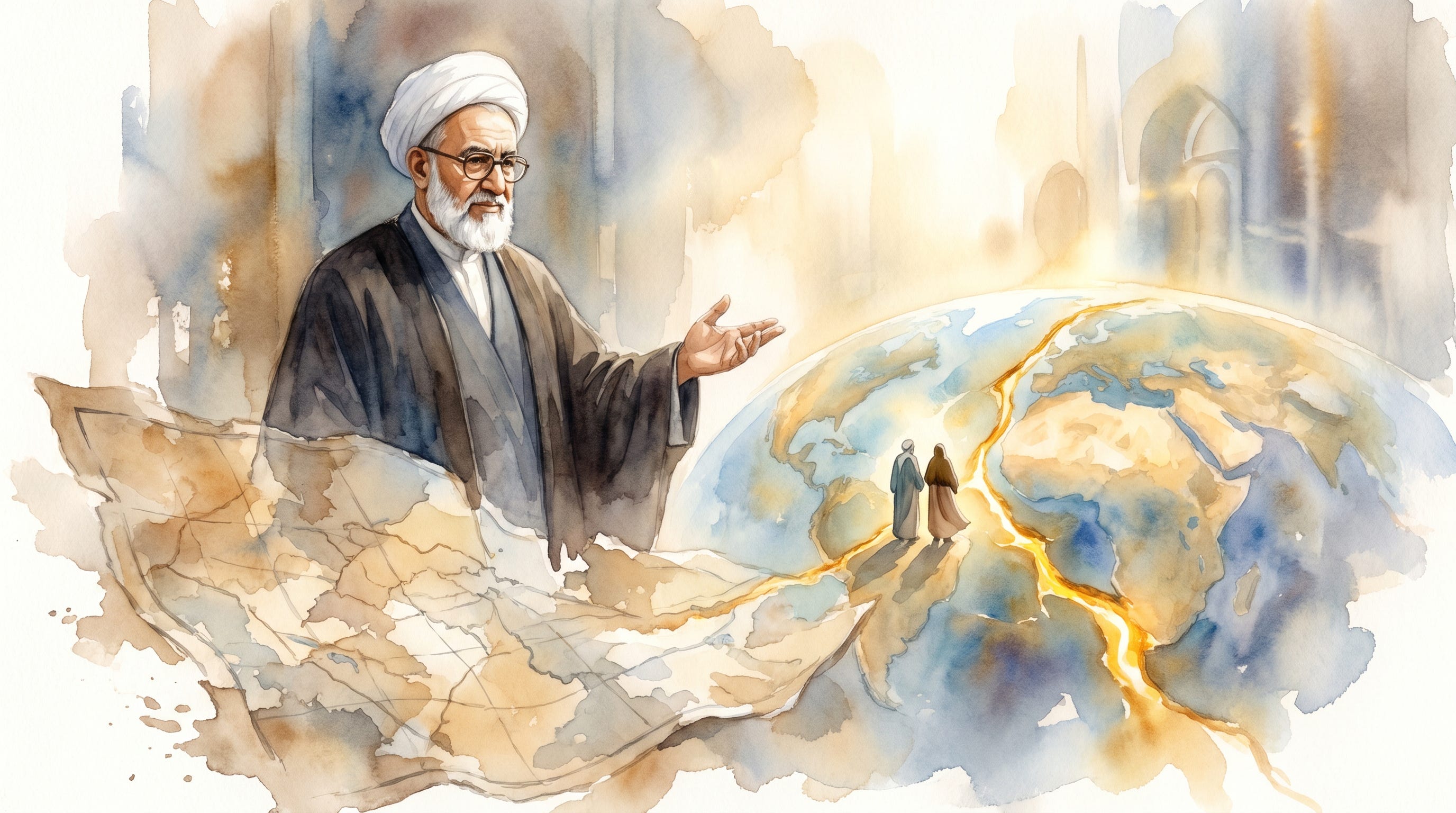
Now watch what our scholars do with this.
Shaheed Ayatullah Murtadha Mutahhari, may God rest his pure soul, in his study Jihad, takes the idea of a frontier and refuses to let it stay on a map at all:
مرزهای اسلامی، مرزهای جغرافیایی و خطکشیهای روی نقشه نیستند؛ بلکه مرزهای عقیدتی و ایدئولوژیکاند... اگر تمام زمین برای خداست، پس مرز واقعی، خط فاصل بین «حق» و «باطل» است، هر کجای این کره خاکی که باشد.
“The borders of Islam are not geographical boundaries, lines drawn on a map; they are creedal and ideological frontiers... If the whole earth belongs to God, then the true frontier is the dividing line between truth and falsehood — wherever on this earth it may fall.”
— Shaheed Mutahhari, Jihad
There it is.
The true frontier is the line between truth and falsehood, wherever it falls.
We were promised, at the start, that we would watch the word “frontier” turn from a place into a condition.
It has just begun to turn.
The Battle Before The Battle
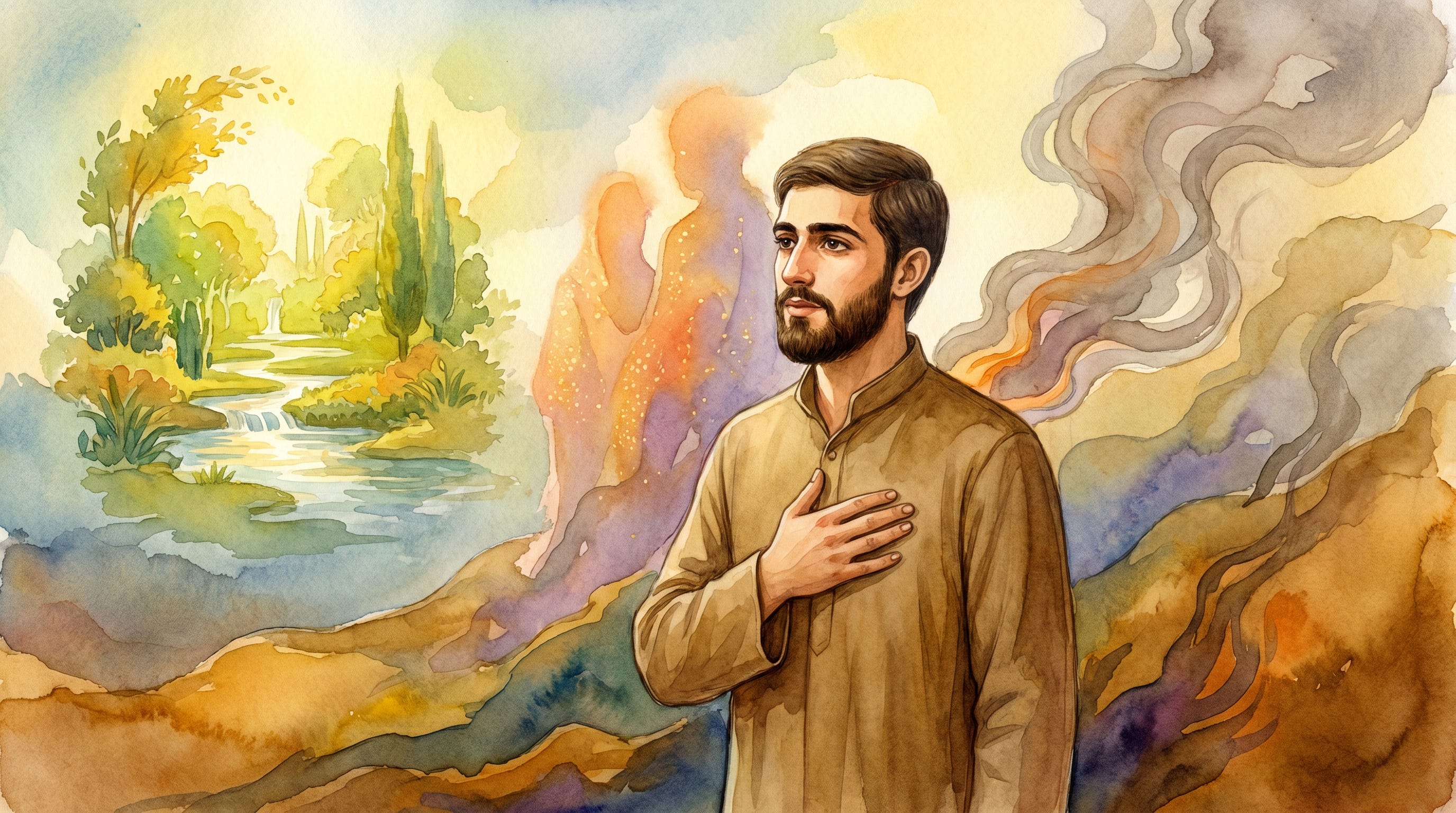
And the very first frontier the supplication asks God to secure is not on any border at all.
It is inside the chest of the one holding the line.
This is the thesis verse — the heart of the whole prayer.
Imam Zayn al-Abidin, peace and blessings be upon him, asks God, for the defenders, this:
وَأَنْسِهِمْ عِنْدَ لِقَائِهِمُ الْعَدُوَّ ذِكْرَ دُنْيَاهُمُ الْخَدَّاعَةِ الْغَرُورِ، وَامْحُ عَنْ قُلُوبِهِمْ خَطَرَاتِ الْمَالِ الْفَتُونِ، وَاجْعَلِ الْجَنَّةَ نُصْبَ أَعْيُنِهِمْ.
“And make them forget, when they meet the enemy, to remember this cheating and delusive world of theirs; and erase from their hearts the thought of its enchanting possessions; and place the Garden before their eyes.”
— Imam Zayn al-Abidin, Du’a Ahl al-Thughur
Look at the order of operations.
Before the sword meets the sword, before a single arrow flies, the Imam asks God to clear the world out of the defender’s heart.
Why?
Because he is naming, with the precision of a physician, the actual reason men break and run.
They do not flee because the enemy is strong.
They flee because there is something in their own hearts that they are still holding on to — a life, a comfort, a possession, a future — and the moment the fight threatens that thing, the thing pulls them backward off the line.
The outer line is held by first winning an inner one.
And he names the specific poison: khaṭarāt al-māl al-futūn — the whispering thought of seductive wealth.
Imam Sayyed Ali Khamenei, may God rest his pure soul, lingered on exactly this phrase when he taught this supplication, and what he drew out of it is the whole inner theology of the frontier:
«وامحُ عن قلوبهم خطرات المال الفتون»... الفتنة لا تعني دوماً الفتنة في المجال الاجتماعي. فالأسوء منها الفتنة في قلب الإنسان. إذا فتحتم للقلب طريق حب المال وحياة التشريفات والجاه والجلال، فلن يقف عند حد معين.
“’Erase from their hearts the whisperings of seductive wealth’... Fitna does not always mean strife in the social arena. The worst fitna is the one inside the human heart. If you open to the heart the road of the love of wealth, and of a life of prestige and rank and grandeur, it will not stop at any limit.”
— Imam Sayyed Ali Khamenei, in his lessons on the Supplication of the Frontiers
The worst fitna is the one inside the heart.
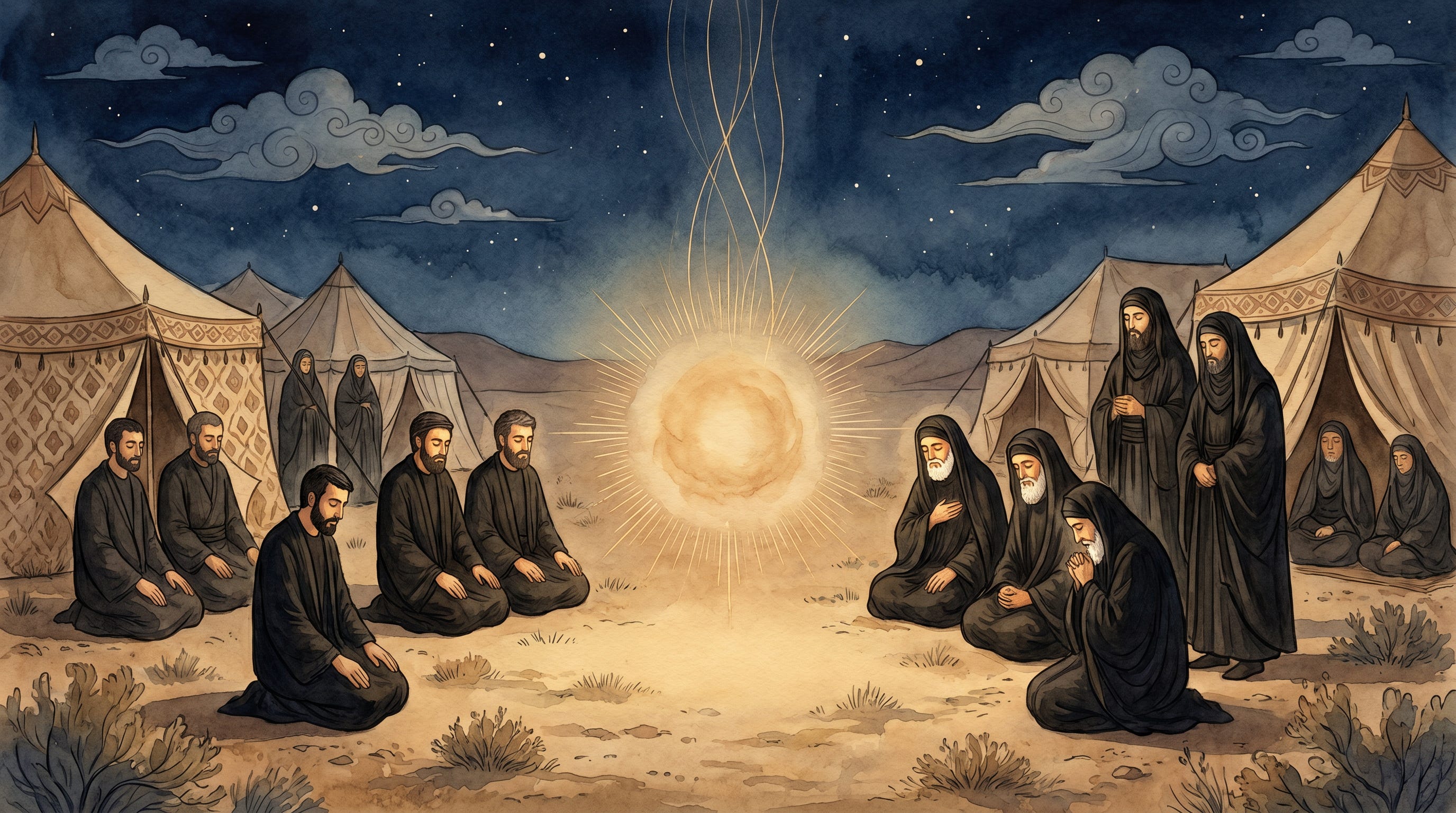
This is what we have called, every single night of this series, the greater jihad — jihad al-akbar — living inside the lesser.
The companions of Imam Husayn, peace and blessings be upon him, did not win their battle on the morning of Ashura.
They won it the night before, when each of them, offered his life and his leave to go, conquered the small voice in his own chest that wanted to live.
By the time they faced the swords, the inner frontier was already held.
That is what the supplication is asking God to do for every guardian of every line: win the battle in the heart, and the battle on the border is half-won already.
What The Wall Is Guarding
So the frontier is first an inner thing.
But there is one more question, and it is the hinge on which the entire night swings:
What is the frontier guarding?
What is so precious that God is asked to fortify the very mouth of the land to keep it safe?
Listen to the Imam’s own answer.
It is the most important sentence in the supplication:
وَفَرِّغْهُمْ عَنْ مُحَارَبَتِهِمْ لِعِبَادَتِكَ، وَعَنْ مُنَابَذَتِهِمْ لِلْخَلْوَةِ بِكَ، حَتَّى لَا يُعْبَدَ فِي بِقَاعِ الْأَرْضِ غَيْرُكَ، وَلَا تُعَفَّرَ لِأَحَدٍ مِنْهُمْ جَبْهَةٌ دُونَكَ.
“And give them respite from their fighting, that they may worship You; and from their warfare, that they may be alone with You — so that none be worshipped in the regions of the earth except You, and no forehead of theirs be rubbed in the dust for less than You.”
— Imam Zayn al-Abidin, Du’a Ahl al-Thughur
That no forehead be rubbed in the dust for less than You.
That is what the frontier is for.
Not soil.
Not a flag.
Not the borders of a state.
The whole reason a line is held, the whole reason a wall is raised, is so that somewhere behind it a human forehead can still go down to the ground before God alone — so that the prostration stays free.
The frontier exists to keep the sujūd safe.
The frontier exists to keep the prayer safe.
War is asked for here only so that fighting may cease into worship; the enemy is broken only so that the prayer-mat is protected.
The destination is not conquest.
The destination is the forehead on the ground.
And the forehead on the ground — stop and feel this, because it is the seam where this whole night ties back to everything we have done — the forehead on the ground is itself the witness.
The body’s own shahada.
When you prostrate, your whole frame says, with no words, there is no god but God.
So the frontier exists to keep the witness safe.
The line is held so the testimony can keep being made.
That is why this is not a detour into military history.
Murābaṭa — the holding of the line — is a grade of shahada.
It is the witness who guards the place where witness happens.
A Word About The Hard Lines
Now, before we go on, I have to do something honestly, because this supplication contains lines that are hard, and on a recording that will be clipped and shared I would rather you heard them explained by someone who loves you than weaponised by someone who does not.
Further into the prayer, the Imam asks God, against the enemy army, for terrible things — that their wombs be made barren, that no rain fall on their land, that nothing grow from their soil.
People read those lines and recoil, and some read them and then hand them to our enemies as proof of what we are.
So hear what those lines are, plainly.
This is the language of war-imprecation against a combatant aggressor, in the genre of its age, when siege-war was total and a prayer against an army was a prayer against its capacity to make war.
It is baraʾa — disavowal of an oppressing power — and it is never baghḍ, hatred of a people as such.
And we do not know this by softening the words; we know it because the supplication itself tells us its own aim, in the very verse we just read: the point is not the enemy’s ruin.
The point is that the prostration be made safe.
Every hard line in the prayer is capped by that purpose.
Break the army’s power — so that a forehead can go to the ground in peace.
And our jurists have a name for this.
Ayatullah Shaykh Mohsen Araki, our respected teacher, writing on the jurisprudence of jihad, draws from this very supplication a principle:
إنّ الدعاء يؤسس لقاعدة «الفقه الحدودي» في الجهاد؛ فالجهاد ليس فوضى مقدسة، بل هو نظام أخلاقي مقيد.
“This supplication founds the principle of the ‘jurisprudence of limits’ in jihad: jihad is not sacred chaos — it is a bounded ethical order.”
— Ayatullah Shaykh Mohsen Araki, on the jurisprudence of war in the Sahifa
Jihad is not sacred chaos.
It is bounded.
It has limits a believer may not cross even against an enemy who is crossing all of his.
That is the answer to the lie that says all resistance is just terror dressed up as faith.
Keep it short, keep it clear, and we move on — because the prayer does.
Why We Do Not Name the Nations
And there is one more honest thing to say, and then we turn the corner.
In its original, eighth-century form, this supplication named specific nations who pressed on the frontiers of the Muslims in the Imam’s own day.
The form we recite — and the form on our broadcast tonight — does not carry that list.
It keeps, instead, the Imam’s own universal clause, spoken in the same breath:
الَّذِينَ تَخْفَى أَسْمَاؤُهُمْ وَصِفَاتُهُمْ، وَقَدْ أَحْصَيْتَهُمْ بِمَعْرِفَتِكَ، وَأَشْرَفْتَ عَلَيْهِمْ بِقُدْرَتِكَ.
“...those whose names and attributes are concealed, but whom You have counted through Your knowledge, and overseen through Your power.”
— Imam Zayn al-Abidin, Du’a Ahl al-Thughur
Why do we keep this clause and not the old list?
For four reasons, and they matter.
First — and this is the cleanest — we add not one word of our own; the universalising clause is the Imam’s, in the very same supplication.
Second: the nations he named were examples, the aggressor-powers of his moment; and many of those very peoples entered Islam, in their millions, in the centuries after — to freeze the list would be to betray the Imam’s own meaning, because the prayer was never against a bloodline, only against a state of enmity.
Third: this universalised form is not our invention; it is the form approved by the Wali al-Faqih, broadcast on the channels of the resistance, and recited by men whose names we honour — among them the reciter Hajj Husayn Ghareeb, may God rest his soul, who recited the Prayer for the Frontiers for the believers of Lebanon, and who then became one of the People of the Frontiers himself.
Martyred in the Israeli strike on the Dahiyeh, in the southern suburb of Beirut, on the evening of the eighth of October 2024, with members of his own family — in the same dark weeks that took Sayyed Hassan Nasrallah, may God rest his pure soul.
A reciter of the Prayer for the Frontiers, fallen on a frontier — the thesis of this very night made flesh, in our own time.
And fourth, beneath all of it: God’s knowledge is the filter, and God’s justice is the judge.
The prayer hands the naming to the One who counts what we cannot — whom You have counted through Your knowledge.
It never targeted a name.
It targeted a state of enmity, and left the rest to God.
Hold that principle — name the enmity, never the people — because we are going to need it twice more before the night is done.
So this is where Point one lands.
The frontier is first inner, and its purpose is worship.
“The frontiers of the Muslims” was never about soil.
It is the guarding of the place where the forehead may still go down to God alone.
Hold that — hold it — because tomorrow’s headlines will try very hard to tell you it was about soil.
And the moment you believe them, you will start looking for your frontier in the wrong place entirely.
The Line Runs Through Every People
The Question We Actually Live Inside
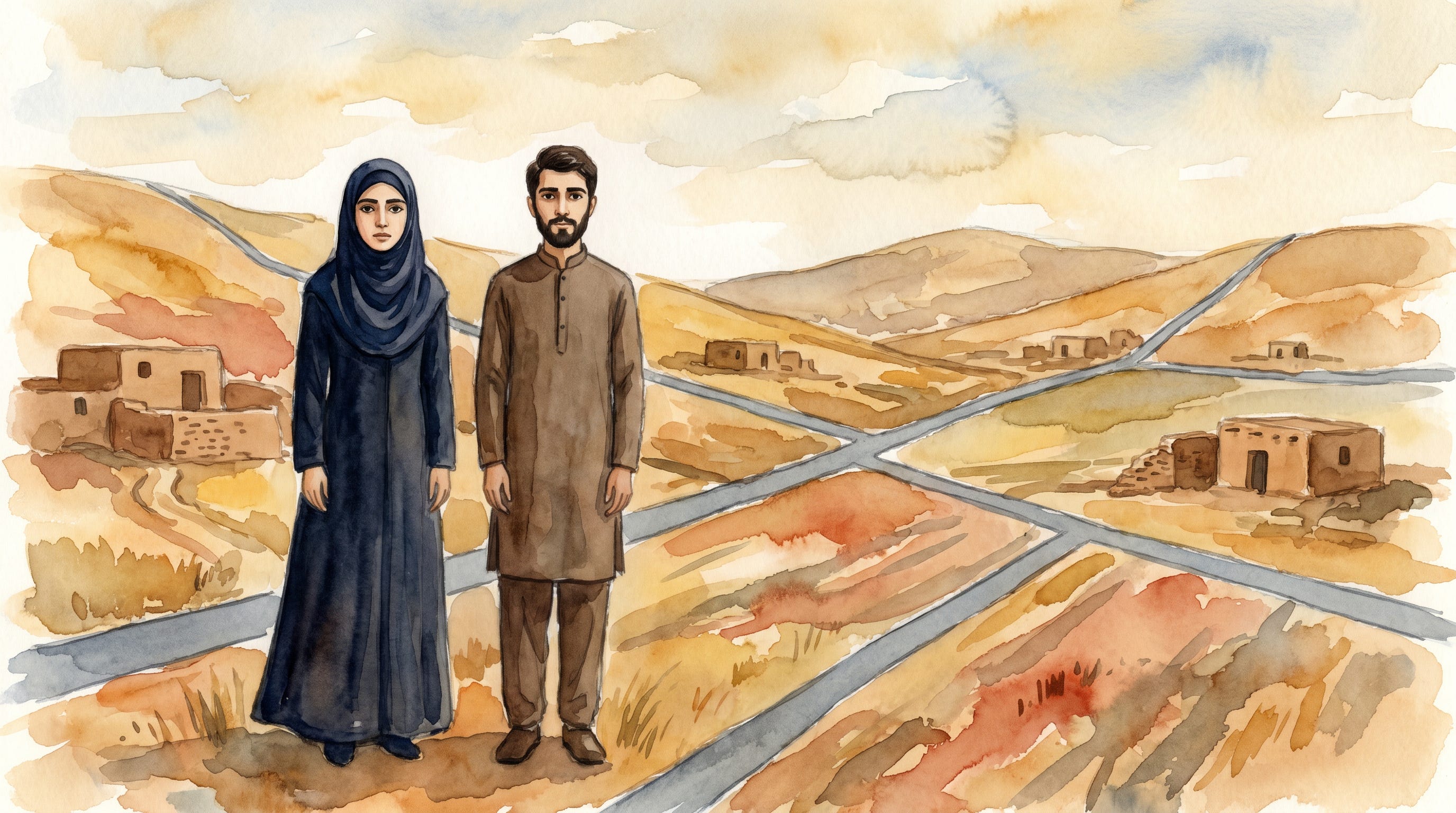
Here is the question I can feel forming in the room, because it is the honest one.
If the frontier is not soil — then what about the borders we actually live inside?
We are not citizens of “the frontier of truth and falsehood.”
We carry passports of real countries, with real lines on the map.
Are the Muslim lands the frontier, then?
Is the border of Iraq, of Lebanon, of Iran, of Pakistan, the thaghr the supplication means?
And — the question underneath the question, the one the diaspora carries quietly — who drew those borders in the first place?
Let me not pretend the confusion isn’t real.
Let me clear it.
And to clear it, I have to show you who last sat in a room and presumed to draw a living people on a map.
The Ones Who Presumed To Own Us
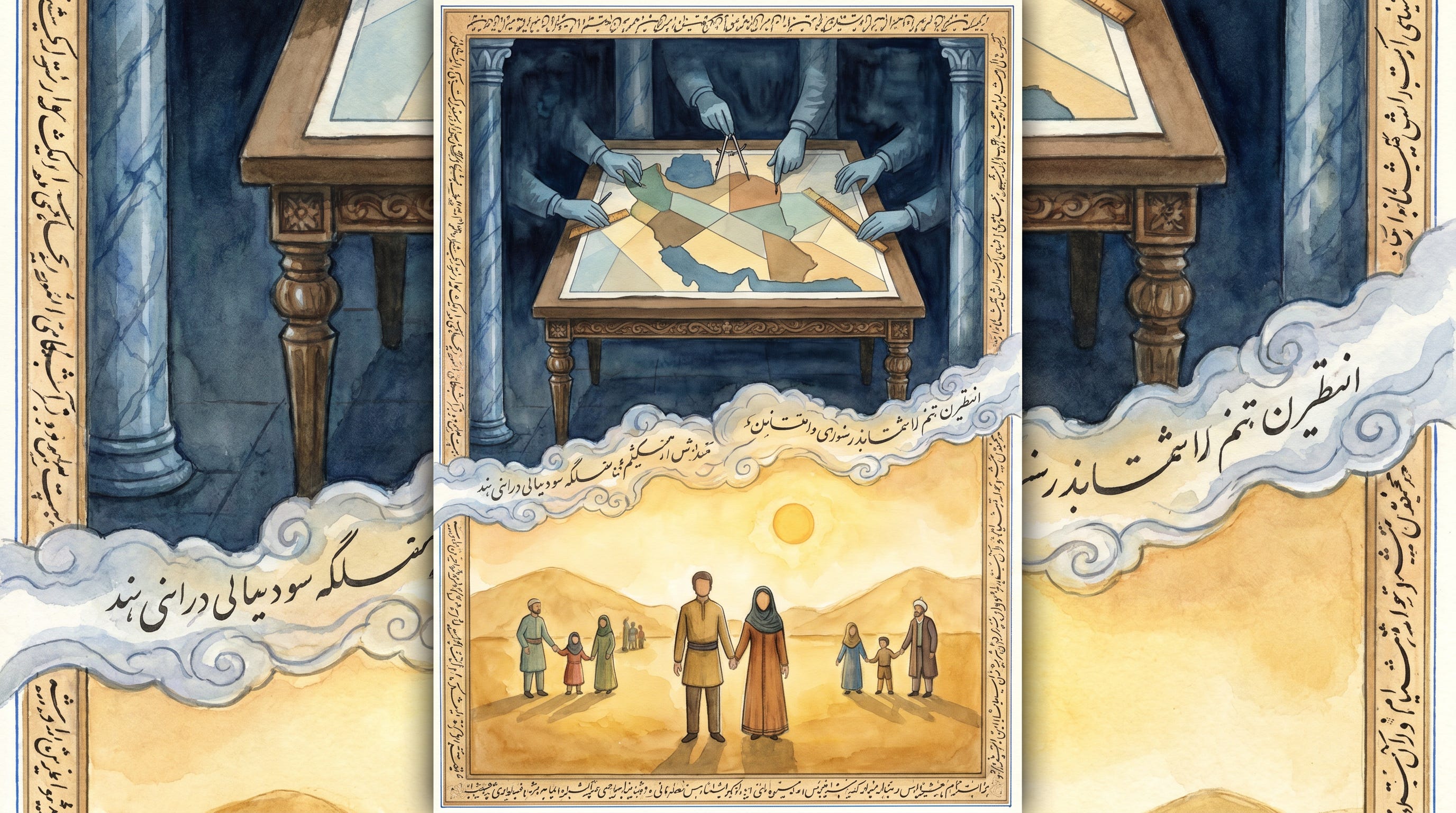
In the middle of the First World War, two men — one British, Sir Mark Sykes; one French, François Georges-Picot — sat down, in secret, with the assent of the Russian Tsar, and divided the Arab lands of the dying Ottoman Empire between their two empires.
A blue zone for France, a red zone for Britain, spheres of influence carved across peoples who were never asked and never told.
It was concluded in an exchange of letters in May of 1916.
And it sat inside a knot of three contradictory promises made in the same few years:
Britain had promised the Arabs an independent state to get them to rise against the Ottomans; then Britain and France secretly agreed to take those same lands for themselves; and then, in the Balfour Declaration of November 1917, Britain promised a national home in Palestine — a land already promised to one people and already carved up by two empires and inhabited by a third who were never consulted.
Three promises, to three parties, over one land — and not one of them compatible with the others.
The Arabs learned of the secret carve-up only because the Russian revolutionaries found the treaty in the Tsar’s archives and published it to the world in November 1917.
Now — and this is where we keep our own discipline, the discipline we demand of everyone else — I am not going to hand you the popular myth, because the popular myth is half false and a half-false weapon breaks in your hand.
The myth says:
Two Europeans drew the straight lines of the modern Middle East with a ruler, and that is why the region is broken.
And the honest history is that Sykes–Picot did not draw today’s borders; most of its lines did not survive; the actual borders came later, through other conferences, and some of them followed older Ottoman administrative lines, not European whimsy.
The exact cartography is overstated.
But hear what survives the correction — because it is more damning, not less.
The lines moved; the arrogance did not.
The scandal of Sykes–Picot was never the precise geometry.
It was that the fate of millions was decided in secret, in European capitals, over their heads, as spoils — for oil, for routes, for empire — by men who never once asked the people whose lives they were trading.
They did not draw our borders with a ruler.
They presumed to own us.
They treated a living people as property to be divided.
And that — the presumption that a people can be owned and parcelled out — that has a name in the Book of God, and we will reach it before this point is done.
This — the whole long story of how a faith and a people take root in the world without being carved up or erased — is a road we are opening properly as a weekly series, on Saturdays; the details will published at truthpromoters.com.
Tonight is only the doorway.
But I cannot leave the doorway without one correction that saves the whole argument from becoming the very sin it is diagnosing.
The Frontier Runs Through London Too
Because here is the trap, and we must not walk into it.
The instant you say “the British did this,” you have replaced one collective blame with another.
You have taken the sin of judging a whole people — the sin that was done to us — and you have simply turned it around and aimed it back.
That is not justice.
That is the same crime in a mirror.
So hear the truth, which is more uncomfortable and more liberating than the slogan.
Empire was not “the British.”
Empire was a clique and its companies.
The spearhead of it was the chartered corporation — the English East India Company, with its own private army, ruling India for profit; the Dutch East India Company before it.
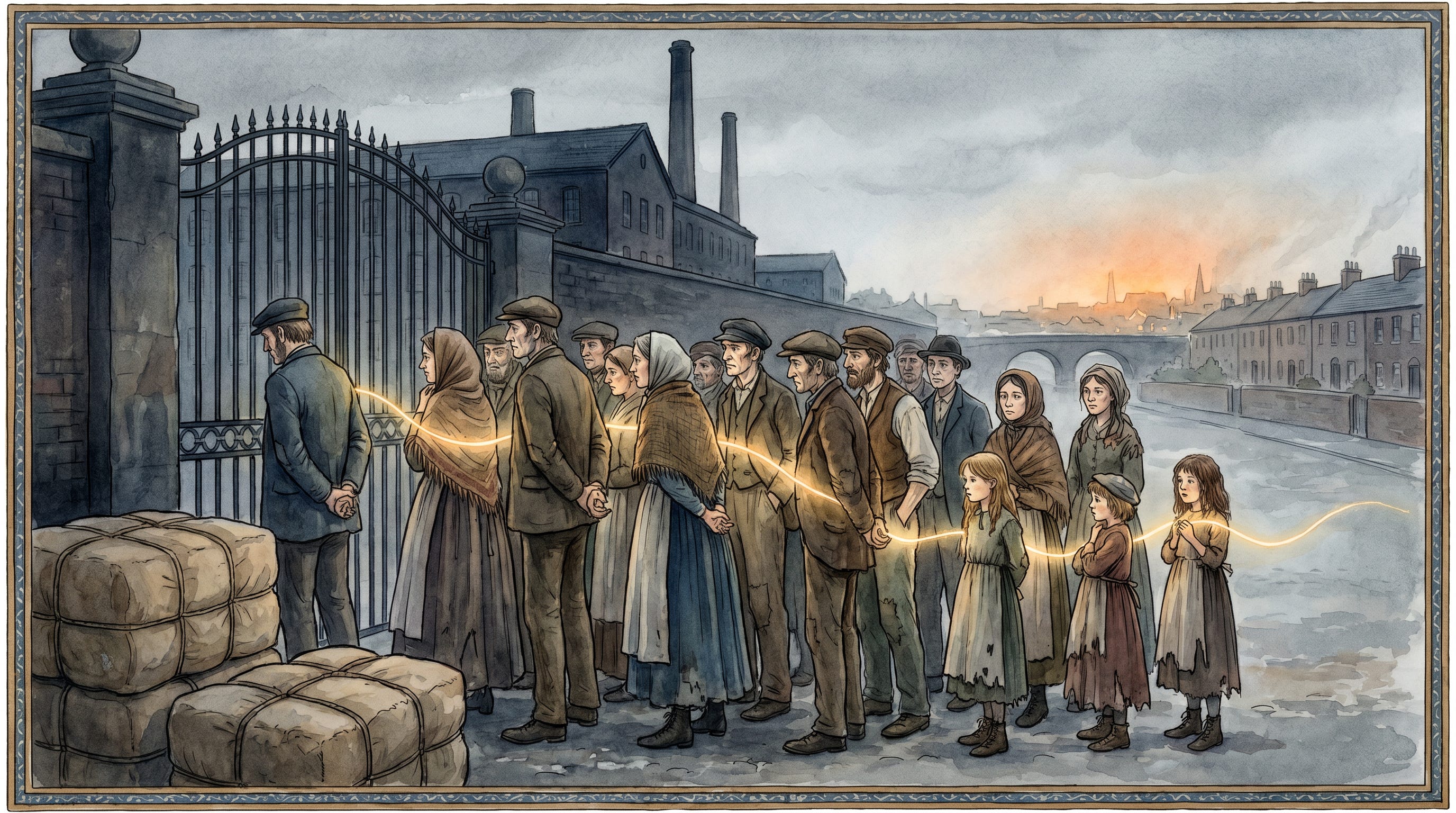
The decisions that bled India and Java were taken by shareholders and directors and a tiny political-financial elite — not by the weavers of Lancashire or the farmhands of Devon, most of whom never saw a penny of the plunder and many of whom were being ground into the dirt at home in the very same decades.
And let me give you the one fact that breaks the binary forever.
When the American Civil War cut off raw cotton, the mills of Lancashire closed and the workers starved — unemployment near sixty per cent, families facing eviction.
And those starving English workers, in their hunger, refused to touch the slave-picked cotton of the Confederacy — because they knew the last hands on that cotton were the hands of slaves, and they would not buy their own bread with another man’s chains.
The English working poor, in the depths of their own hunger, chose solidarity with the enslaved over their own survival.
There is no cleaner refutation of “the British were the oppressors” than that.
They were, so many of them, the oppressed — and they still reached for justice.
The Irish, in the same century, were London’s own colonial victims, food exported out of their country while a million of them starved.
History will not give you a clean line between the guilty nations and the innocent ones.
And this is not merely good manners.
It is doctrine.
God says, in His Book:
وَلَا تَزِرُ وَازِرَةٞ وِزۡرَ أُخۡرَىٰ
“...and no bearer of burdens shall bear the burden of another.”
— Qur’an, Surah al-Anʿam (the Chapter of the Cattle) #6, Verse 164
Collective guilt is forbidden to us.
We may not lay the sins of the elite upon the people.
Which means the oppressor is never a nation and never a race; the oppressor is a system — the system the Qur’an calls istikbār, arrogance-made-into-power — and that system has citizens in every land, including ours.
And the oppressed, likewise, are found in every land — in Lancashire and in Ireland as surely as in Baghdad or Gaza.
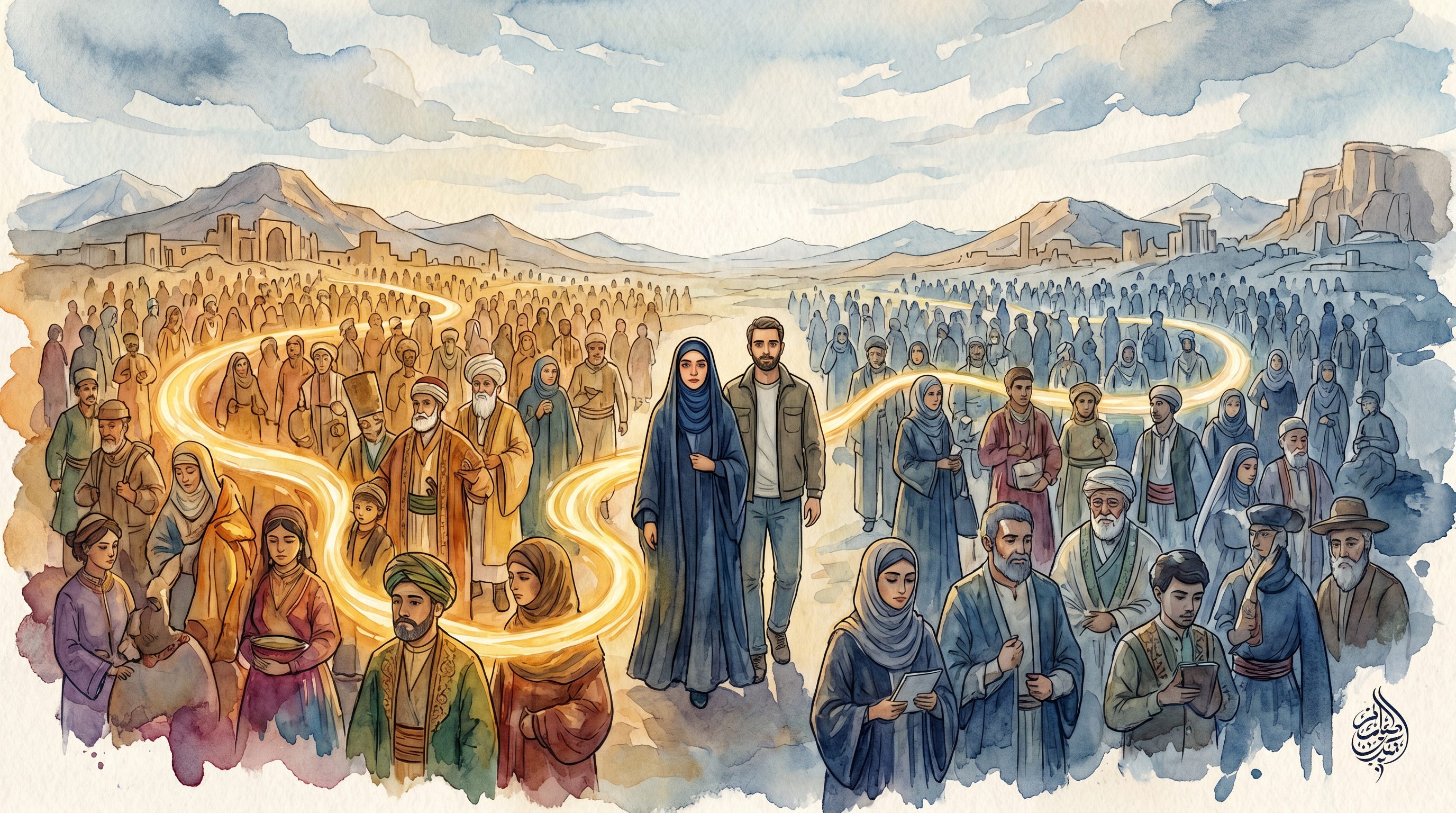
The frontier is the seam between oppressor and oppressed — and it runs through London as surely as it runs through Karbala.
It does not run between peoples.
It runs through every one of them.
Who Actually Holds The Line
So if the frontier is not a national border, and the oppressor is not a people but a system — then who, today, actually holds the line?
Who are the People of the Frontiers in our own age?
And the answer, most of the time, is not a soldier at all.
Listen to a hadith of Imam Ja’far al-Sadiq, peace and blessings be upon him — a hadith that takes the whole vocabulary of this supplication and moves it off the battlefield entirely:
عُلَمَاءُ شِيعَتِنَا مُرَابِطُونَ فِي الثَّغْرِ الَّذِي يَلِي إِبْلِيسَ وَعَفَارِيتَهُ، يَمْنَعُونَهُمْ عَنِ الْخُرُوجِ عَلَى ضُعَفَاءِ شِيعَتِنَا، وَعَنْ أَنْ يَتَسَلَّطَ عَلَيْهِمْ إِبْلِيسُ وَشِيعَتُهُ.
“The scholars among our Shīʿa are the frontier-guards — the murābiṭūn — stationed at the frontier that faces Iblīs and his defiant ones. They prevent them from coming out against the weak among our Shīʿa, and they prevent Iblīs and his followers from gaining mastery over them.”
— Imam Ja’far al-Sadiq; al-Ṭabarsī, al-Iḥtijāj, vol. 1, p. 358; also Biḥār al-Anwār, vol. 2, p. 6, no. 13
Stop and hear what the Imam just did.
He took the word murābiṭūn — frontier-guards, the men of the thaghr — and he gave it to the scholars.
To the teachers.
To the ones who clarify, who explain, who do tabyeen.
The frontier that they hold is the one that faces Iblīs himself, and their post is to keep him from getting at the weak.
The weapon on that frontier is not the sword.
It is the pen, the tongue, the clear word that keeps a believer from being overrun by confusion and despair.
And I want to say the obvious thing out loud, because it is the meta-beat the whole night has been building toward: that is what is happening in this room, right now.
When we stand here and clarify what a supplication actually says, when we take a hard verse and explain it before someone weaponises it, when we refuse the lie and name the system — that is murābaṭa.
The teacher doing tabyeen is a border-guard on the frontier that faces Iblīs.
The sermon is enacting its own thesis.
We are standing at the very frontier we are describing.
And once you see it, you see the line-holders everywhere, and almost none of them carry a rifle.
The jurists of Najaf who kept the lamp of guidance lit under every dynasty that came and went above them.
The scholars of Qom who rebuilt what tyranny burned.
The doctor who stays in Gaza when every reason in the world says leave.
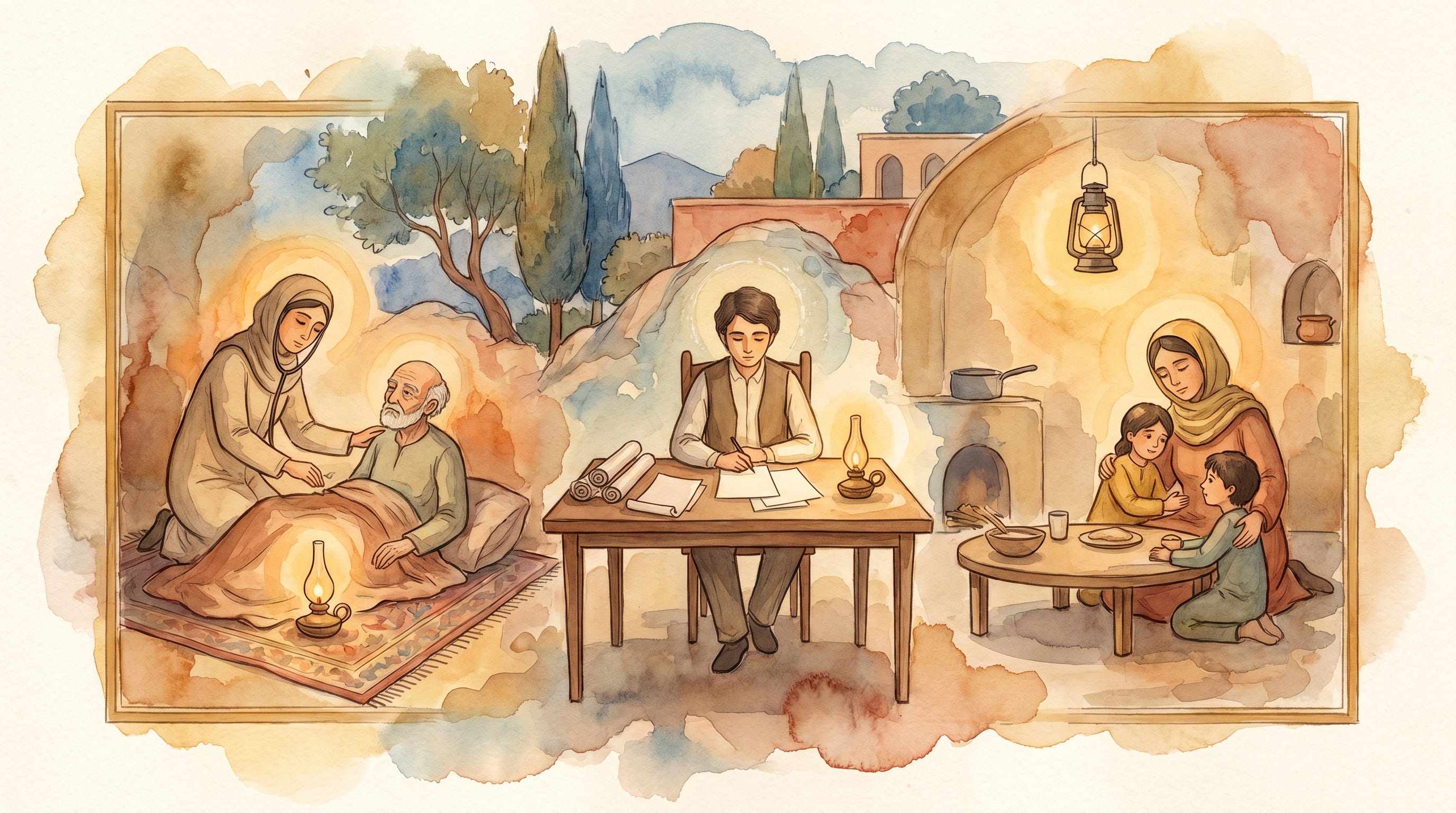
The journalist who files the story that no one will buy and that costs her everything.
The mother who will not let her children quietly drift away from the Ahl al-Bayt — who holds that line, at her own kitchen table, year after unthanked year.
Every one of them is tied to a seam.
Every one of them is a murābiṭ.
The frontier-guard of our age is rarely a soldier.
He is, far more often, a person holding a line that no one is filming.
The Fortress And The Breach
But I have to stop here and be honest, because the hadith of Imam al-Sadiq is a double-edged thing, and the wrong people love to pick it up.
If the scholar is the frontier-guard, then we are owed a question — and it is not an optional one: which scholar?
Because the turban is not the frontier, and the title is not the wall.
The robe does not make a man a guard, any more than a uniform makes a man a soldier.
Our tradition is exact about what a scholar of God actually is, and it is not the man who has learned to perform as one.
Imam Musa al-Kadhim, peace and blessings be upon him, gave us the measure — and notice that he reaches for the very same image this whole night has been built on, the fortress:
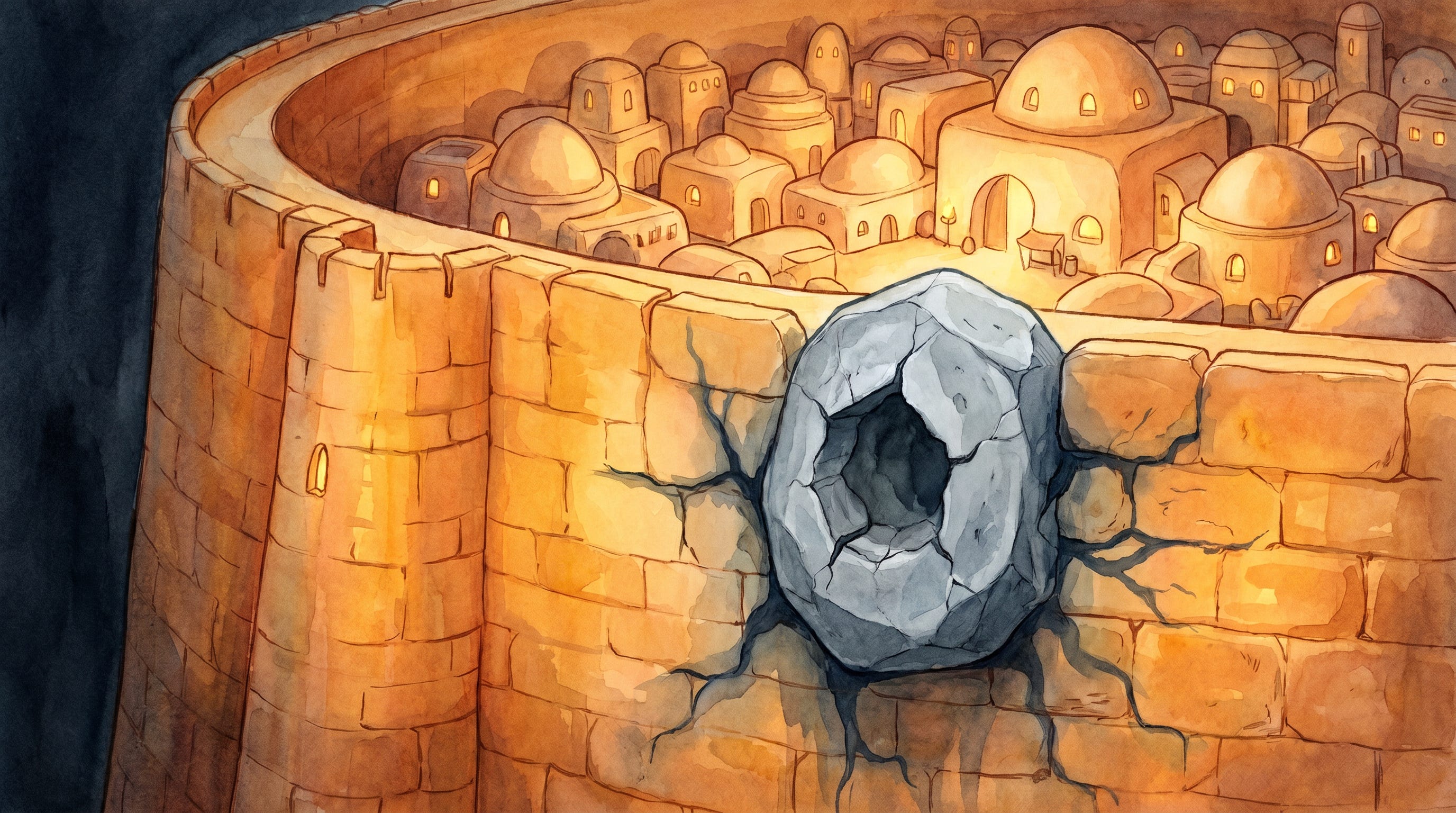
إِذَا مَاتَ الْمُؤْمِنُ الْفَقِيهُ ثُلِمَ فِي الْإِسْلَامِ ثُلْمَةٌ لَا يَسُدُّهَا شَيْءٌ، لِأَنَّ الْمُؤْمِنِينَ الْفُقَهَاءَ حُصُونُ الْإِسْلَامِ كَحِصْنِ سُورِ الْمَدِينَةِ لَهَا.
“When a believing jurist dies, a breach is opened in Islam that nothing can fill — for the believing jurists are the fortresses of Islam, like the fortress of a city’s wall for it.”
— Imam Musa al-Kadhim; al-Kulayni, al-Kafi, vol. 1, the Book of the Excellence of Knowledge
Hear both halves of that.
The true scholar is a fortress — the wall that stands between the people inside and everything outside that means them harm.
And when one of them is lost, a breach is opened that nothing can fill.
Now put those two halves together and you arrive at the thing we must say out loud tonight: a wall with a rotten stone in it is more dangerous than no wall at all — because the people behind it believe they are protected, and they are not.
The imposter in the scholar’s robe is not a harmless disappointment.
He is a breach that everyone has mistaken for the wall.
And our masters did not flinch from naming him.
Imam Khomeini warned the students of the seminary — the very ones who would one day climb pulpits like this one — in the starkest words he had:
فَإِنَّ هَذَا الْعِلْمَ لَيْسَ كَسَائِرِ الْعُلُومِ... وَهَذَا الْعِلْمُ إِمَّا حُجَّةٌ لَكَ أَوْ عَلَيْكَ. فَإِنْ لَمْ تُزَكِّ نَفْسَكَ، كَانَ هَذَا الْعِلْمُ حُجَّةً عَلَيْكَ، وَيَكُونُ وَخِيمَ الْعَاقِبَةِ عَلَيْكَ وَعَلَى أُمَّتِكَ.
“This knowledge is not like the other sciences... this knowledge is either a proof for you or a proof against you. If you do not purify your soul, this knowledge becomes a proof against you, and its consequence is dire — for you, and for your community.”
— Imam Khomeini, Forty Hadith (Sharh-e Chehel Hadith), the exposition of the hadith on seeking knowledge
A proof against you — and dire for your community.
The knowledge of God is not inert.
Carried by a man who has not purified the self that carries it, it does not sit harmlessly in his head; it curdles.
It becomes a weapon turned the wrong way round.
Ayatullah Misbah-Yazdi used to teach that this kind of claimant is more dangerous than an ordinary sinner — because the open sinner only harms himself, while the hollow scholar hollows the religion out from the inside, in front of the very people who trust him most.
And Ayatullah Jawadi-Amoli named exactly how the damage is done:
عدّهاى مشغول درس و بحث هستند، الفاظى را حفظ كردهاند، امّا اين الفاظ از گزند هواى نفس در امان نمانده است. اين مىشود حجاب اكبر. چنين كسى فتوا مىدهد، سخنرانى مىكند، كتاب مىنويسد، امّا خود را نديده و نشناخته. از اينرو، گفتارش مبدأ حركت نيست، بلكه ايجاد شبهه و تاريكى مىكند.
“Some are busy with study and discussion; they have memorised the words — but the words have not been kept safe from the assault of the lower self. This becomes the greatest veil. Such a person issues verdicts, gives lectures, writes books — yet has never seen or known his own self. And so his speech is not a source of movement toward God; it produces only confusion and darkness.”
— Ayatollah Jawadi Amoli, Shariat dar Ayeneh-ye Maʿrifat (Sharia in the Mirror of Gnosis)
His speech produces only confusion and darkness.
That is the breach, in motion.
A young person walks into the majlis already struggling — already half-asking, in the dark, whether any of this is even true — and they hear a man on the minbar reach for a weak, brittle argument, and they watch it snap in front of them.
And do you know what they conclude?
Not that the speaker was weak.
They conclude that the religion was.
The guard who was supposed to defend the frontier of that young person’s faith has, with his own untrained hands, handed the enemy the breach.
Let me put it the way a soldier would understand it, because it is the cleanest way to say it.
No general in his right mind takes a man who has barely survived basic training and sends him to hold the line at the front.
Not because the man is wicked — he may be brave, he may even be sincere — but because an untrained body at the frontier is a liability.
He will do one of two things.
He will spend his own life for nothing, wastefully, in the first hour.
Or — and this is worse — he will break under the first real pressure and give up the position: reveal where the line is thin, surrender the password, hand the enemy the very gap he was stationed there to close.
To march the untrained to the front is not zeal.
It is a betrayal of every soldier standing behind him.
And the frontier of faith is no different.
To climb this pulpit and speak in the name of the family of the Prophet, peace and blessings be upon him, his family and his righteous companions, without the long and painful training of the self and the sciences both, is to walk an untrained soldier onto the most important wall there is.
We were warned about this on our night of discernment — do not pursue that of which you have no knowledge — al-Isra, the Chapter of the Night Journey; the verse that told us the eye, and the ear, and the heart will each be questioned.
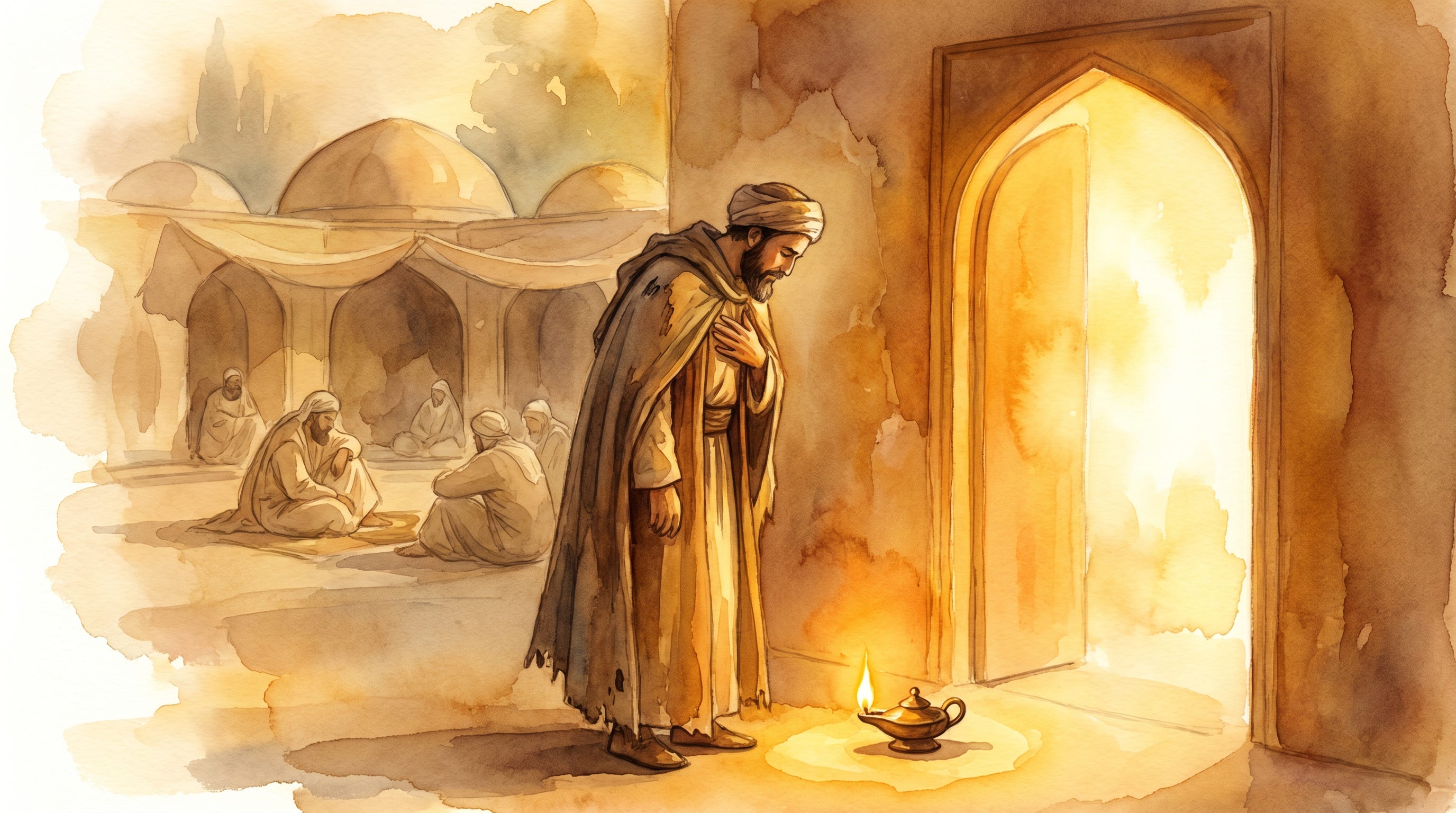
And there is one test — a single, clean test — that tells the guard from the imposter, and it is not how much a man knows.
It is what his ego will let him say.
The Commander of the Faithful, Imam Ali, peace and blessings be upon him, gave it to us in four words:
قَوْلُ لَا أَعْلَمُ نِصْفُ الْعِلْمِ.
“Saying ‘I do not know’ is half of knowledge.”
— Imam Ali; Ghurar al-Hikam wa Durar al-Kalim
The true guard can say it — I do not know; let me return to the books — because he fears God more than he fears the silence in the room.
The imposter cannot, because his standing, and very often his living, depends on the performance that he has every answer.
The willingness to say I do not know is not the scholar’s weakness.
It is the proof that he is actually standing at the frontier, and not just dressed for it.
And now — because I have stood here tonight and called the scholar a frontier-guard, and it is me standing on this minbar — let me be the very first to stand under this measure, or I have understood nothing I have said.
The hadith of the Imam is not a medal that any of us pins on his own chest.
It is a weight, and a fear, and a prayer.
To stand in this place is to be answerable for every word spoken in it — and the most honest sentence I can give you is the Commander of the Faithful’s: that where I do not know, I am bound to say so, and go back and learn.
So do not hear me exempting the one who is speaking.
Hold me to this.
Hold every one of us who climbs to this place to it.
And pray that God makes us worthy of the trust, and keeps us from ever becoming a breach in the very wall we have spent the whole night describing.
The frontier is held by the one who trembles at the responsibility of it — and it is lost by the one who has learned to enjoy it.
The Weapon No One Will Livestream
Which brings us to the fighter’s first weapon — and it turns out to be the same weapon as the scholar’s and the mother’s.
Even for the one who does carry iron, the supplication asks God for something inward before anything outward.
Of the individual warrior, the Imam prays:
وَاعْزِلْ عَنْهُ الرِّيَاءَ، وَخَلِّصْهُ مِنَ السُّمْعَةِ، وَاجْعَلْ فِكْرَهُ وَذِكْرَهُ وَظَعْنَهُ وَإِقَامَتَهُ فِيكَ وَلَكَ.
“And remove from him hypocrisy, and purify him from the seeking of fame; and make his thinking, and his remembrance, his going forth and his staying still — all of it in You and for You alone.”
— Imam Zayn al-Abidin, Du’a Ahl al-Thughur
Purify him from the seeking of fame.
Before God is asked to make the warrior brave, God is asked to make him sincere — to strip out the part of him that wants to be seen being brave.
Ayatullah Jawadi-Amoli draws the order of it out exactly:
در منطق صحیفه، سرباز توحیدی پیش از آنکه مسلح به آهن باشد، باید مسلح به اخلاص باشد.
“In the logic of the Sahifa, the monotheist soldier — before he is armed with iron — must be armed with sincerity.”
— Ayatullah Jawadi-Amoli, Rahīq-e Maʿrifat (commentary on the Sahifa)
Armed with sincerity before iron.
And here is the line I want to leave with you from this whole point, the one that ties straight back to the false, aestheticised witness we spent earlier nights tearing down: the truest witness is the one no one will ever livestream.
The mother at the kitchen table.
The scholar at the desk at three in the morning.
The soldier who effaces his own name so the cause can keep its face.
The frontier most faithfully held is almost always the one with no camera on it.
Pharaoh’s Verb
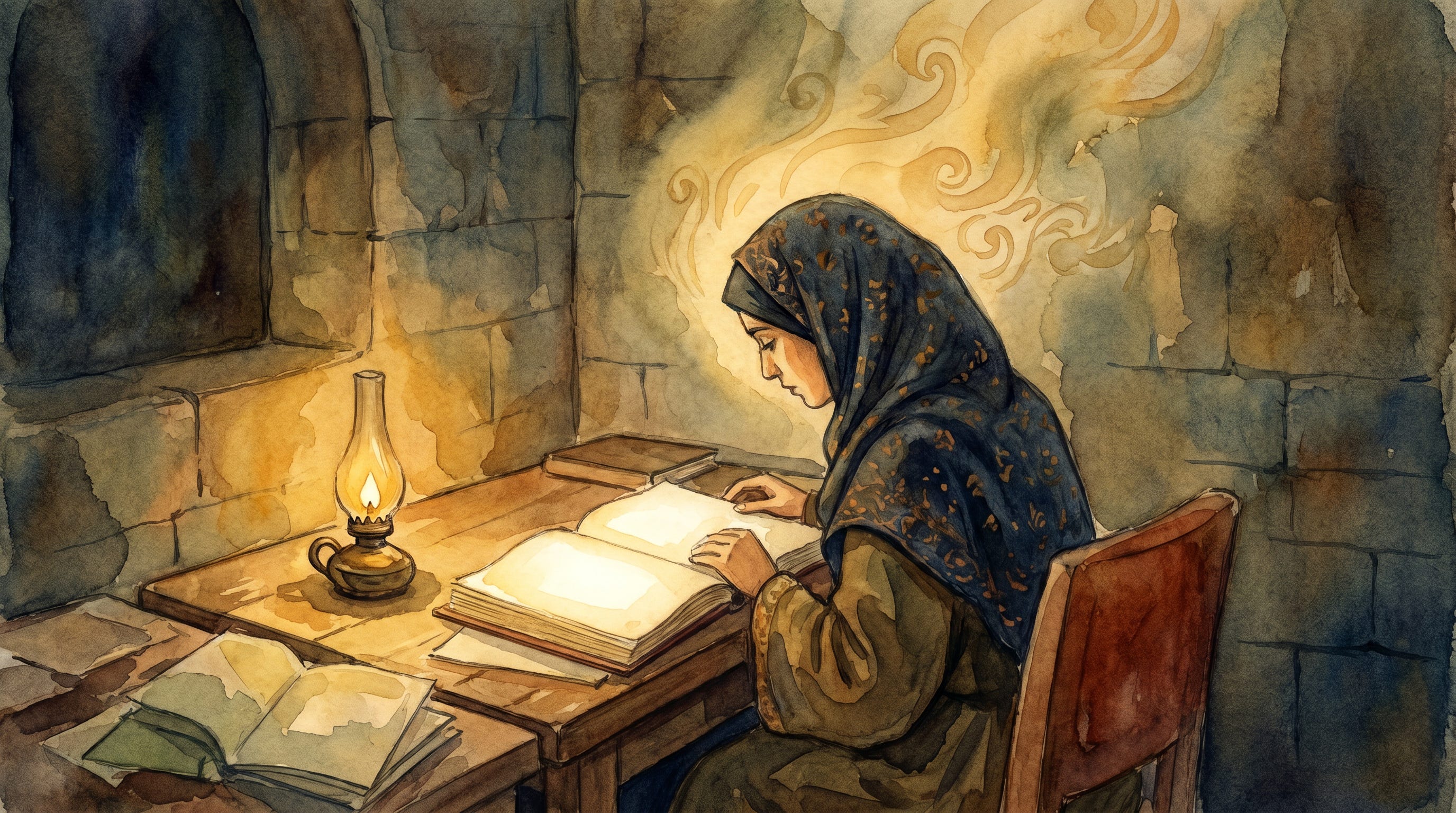
So we have moved the frontier off the map and into the heart, into the home, into the scholar’s frontier against Iblīs — Satan.
But there is still a frontier on the actual earth — a real seam between real oppressors and real oppressed — and now I can give it its true name, because the Book of God names the method of every tyrant who has ever drawn a people on a map to own them.
It is Pharaoh’s method.
Listen to how God describes him:
إِنَّ فِرۡعَوۡنَ عَلَا فِي ٱلۡأَرۡضِ وَجَعَلَ أَهۡلَهَا شِيَعٗا يَسۡتَضۡعِفُ طَآئِفَةٗ مِّنۡهُمۡ يُذَبِّحُ أَبۡنَآءَهُمۡ وَيَسۡتَحۡيِۦ نِسَآءَهُمۡۚ إِنَّهُۥ كَانَ مِنَ ٱلۡمُفۡسِدِينَ
“Indeed, Pharaoh exalted himself in the land, and made its people into factions — oppressing a group among them, slaughtering their sons and sparing their women. Indeed, he was of the corrupters.”
— Qur’an, Surah al-Qasas (the Chapter of the Narrations) #28, Verse 4
Three things in one verse, and watch them land on everything we have said.
ʿAlā fī al-arḍ — he exalted himself in the land: that is istikbār, the posture of the arrogant power, the self that sets itself above.
Jaʿala ahlahā shiyaʿan — he made its people into factions: that is divide-and-rule itself, the fracturing of a people so they cannot unite against the throne.
And yastaḍʿifu ṭāʾifatan — he kept a group of them weak: that is the deliberate manufacturing of the mustaḍʿafīn, the oppressed.
Exalt yourself over a land.
Fracture its people into fearful factions.
Keep the pieces weak.
That is Pharaoh’s verb.
And Sykes–Picot is that verb turned into a treaty.
Divide-and-rule has a Quranic name — and it is Pharaoh’s.
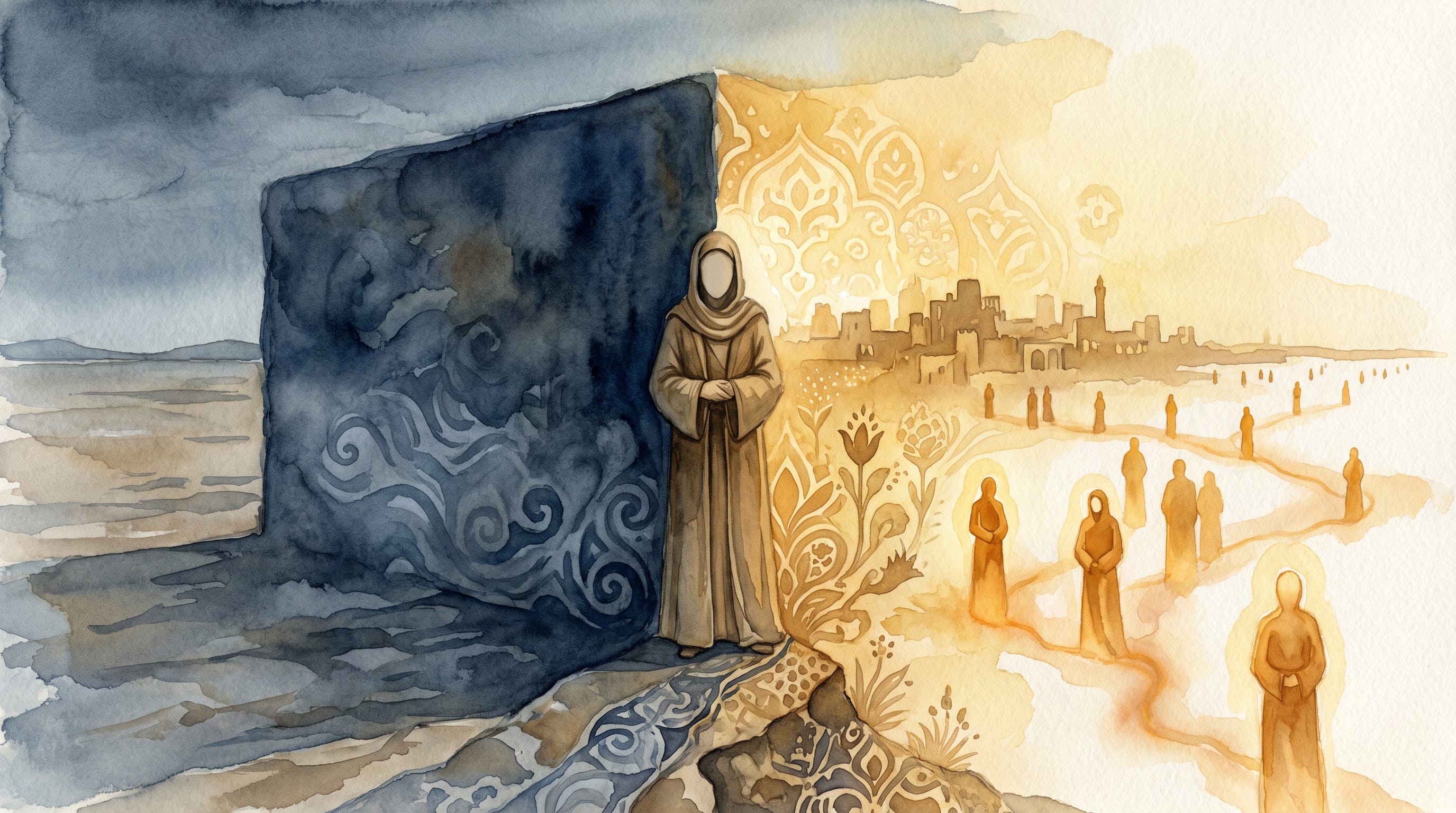
So the real frontier is exactly what we said at the start: not a national border, but the seam between the mustakbir and the mustaḍʿaf — the oppressor and the oppressed — wherever on the earth it falls.
Allamah Tabataba’i, in al-Mizan, says it with full force:
والحدود الحقيقية فيها ليست حدوداً سياسية رسمها الطغاة، بل هي الحدود التي تفصل بين «حزب الله» و«حزب الشيطان». فكلما وُجد مستضعف يقاوم طاغوتاً، فقد تحقق «الثغر» في أعمق معانيه.
“The true boundaries of the earth are not the political lines drawn by tyrants, but the boundaries that separate the Party of God from the party of Satan. So wherever an oppressed one resists a tyrant, there the frontier — the thaghr — is actualised, in its deepest sense.”
— Allamah Tabataba’i, al-Mīzān fī Tafsīr al-Qurʾān, under Surah al-A’raf 7:128
And Imam Khomeini took the same truth and gave it the name our whole series carries:
امروز هر کجا که ظلمی هست و مظلومی در برابر ظالم ایستاده است، آنجا کربلاست و آنجا ثغر اسلام است.
“Today, wherever there is oppression, and an oppressed one stands against the oppressor — there is Karbala, and there is the frontier of Islam.”
— Imam Khomeini, on the philosophy of Ashura (Sahifa-yi Nur)
Every land where the oppressed stands against the oppressor is Karbala — is the frontier of Islam.
The line runs through every people.
And it runs through yours.
You Are Already At A Frontier
The Reward Handed To Those Who Never Fight
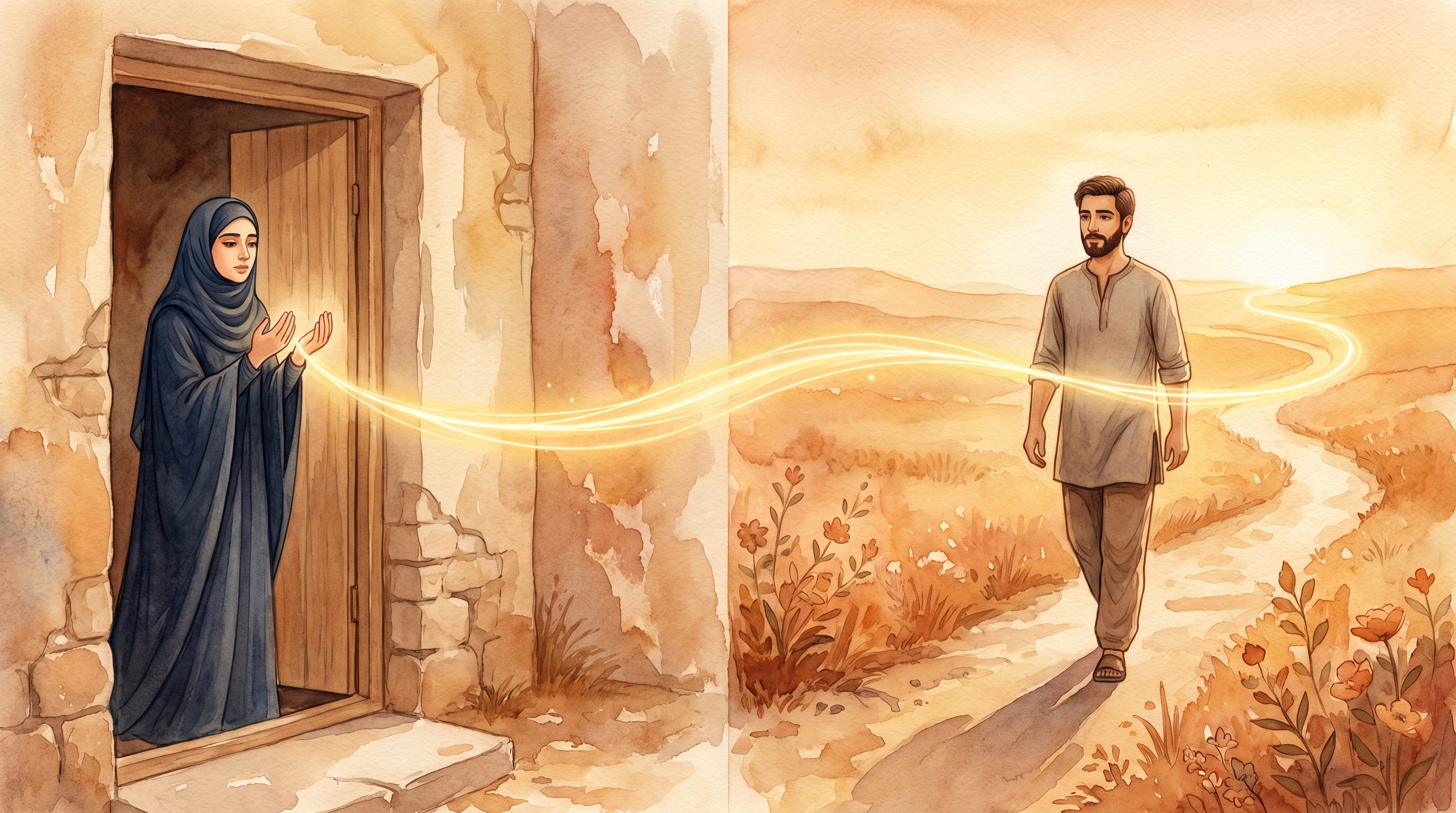
And now the supplication turns, at its very end, and does the most tender thing in it.
Having prayed for the army, and for the single warrior, Imam Zayn al-Abidin, peace and blessings be upon him, turns to everyone else — to all the people who will never stand on a battlefield in their lives — and he hands them the reward of the frontier anyway.
Hear who he names.
The one who takes a fighter’s place at home.
The one who looks after the family the fighter left behind.
The one who gives a little of his wealth.
The one who guards a fighter’s honour in his absence.
And — listen to this one — the one who only made a supplication for him.
Of all of these, the Imam prays:
أَوْ أَتْبَعَهُ فِي وَجْهِهِ دَعْوَةً، أَوْ رَعَى لَهُ مِنْ وَرَائِهِ حُرْمَةً، فَأَجْرِ لَهُ مِثْلَ أَجْرِهِ وَزْنًا بِوَزْنٍ، وَمِثْلًا بِمِثْلٍ.
“...or sends a prayer after him as he sets out, or guards his honour in his absence — then grant him the like of the warrior’s own reward, weight for weight, and like for like.”
— Imam Zayn al-Abidin, Du’a Ahl al-Thughur
Weight for weight.
Like for like.
The one who only prayed is given the same reward as the one who fought.
And then the Imam goes further still — to the very edge of what God’s mercy will do.
He turns to the believer who wanted to go, who intended the whole of it with his heart, and was simply prevented — by weakness, by poverty, by some accident of fate that kept him seated when his soul was already on the road:
فَاكْتُبِ اسْمَهُ فِي الْعَابِدِينَ، وَأَوْجِبْ لَهُ ثَوَابَ الْمُجَاهِدِينَ، وَاجْعَلْهُ فِي نِظَامِ الشُّهَدَاءِ وَالصَّالِحِينَ.
“...then write his name among the worshippers, and make the reward of the strugglers fall due to him, and place him firmly in the ranks of the martyrs and the righteous.”
— Imam Zayn al-Abidin, Du’a Ahl al-Thughur
Place him among the ranks of the martyrs and the righteous.
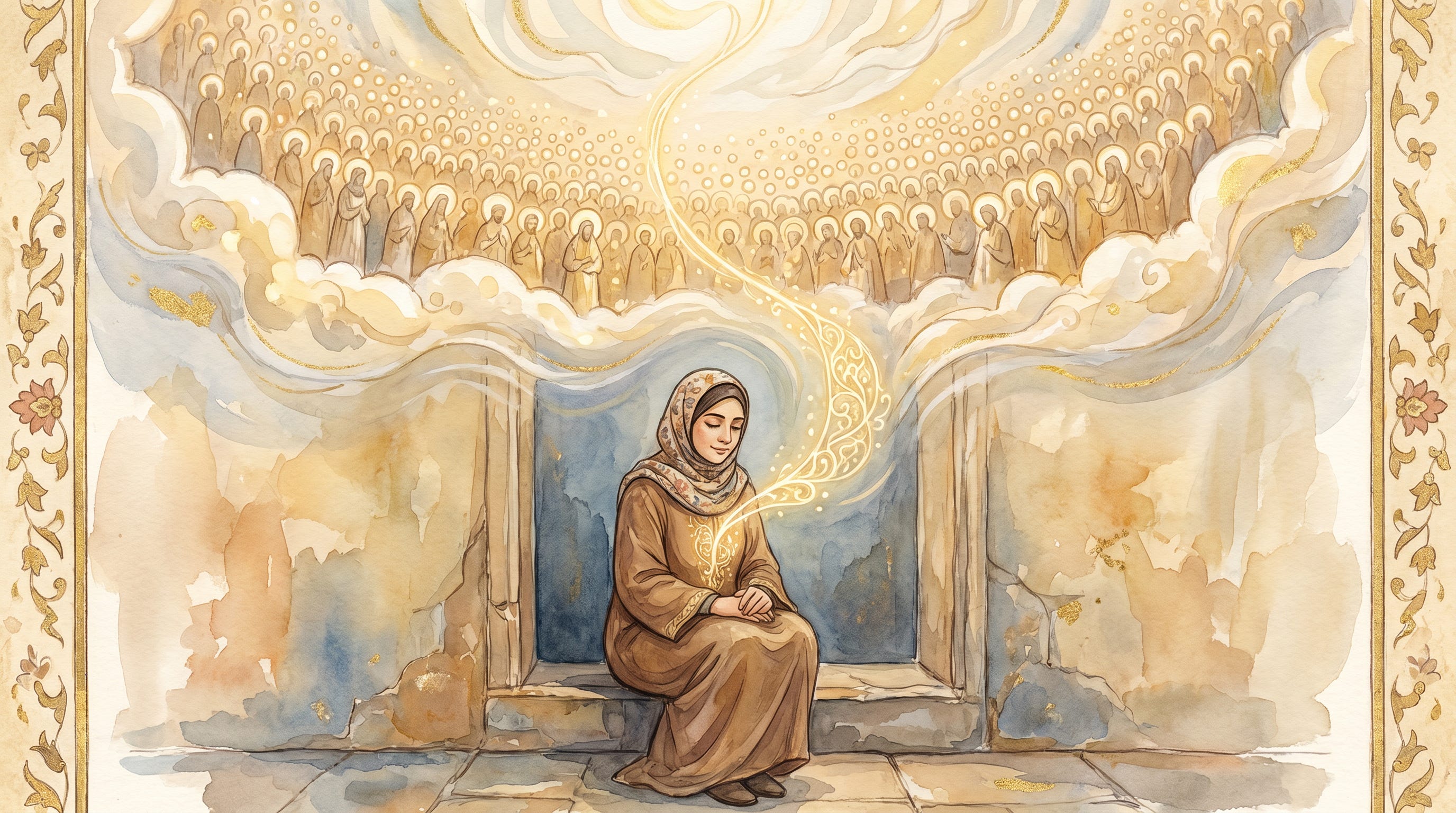
The man who never lifted a sword, who was kept from the field, who carried the whole of it only in his intention — God writes his name in the register of the shuhadāʾ.
Among the witnesses.
Among the grades of witness — the very taxonomy this whole series has been climbing, the grades we will name one by one tomorrow night.
So understand exactly what the supplication has just told you.
Intention is the witness.
The grade is God’s to assign.
You do not have to die to be counted among those who bore witness.
You have to be willing — truly willing, with the whole of your heart — and then to hold the line that is given to you.
Hold that.
It is the seed of everything tomorrow night will be.
Your Frontier, Named
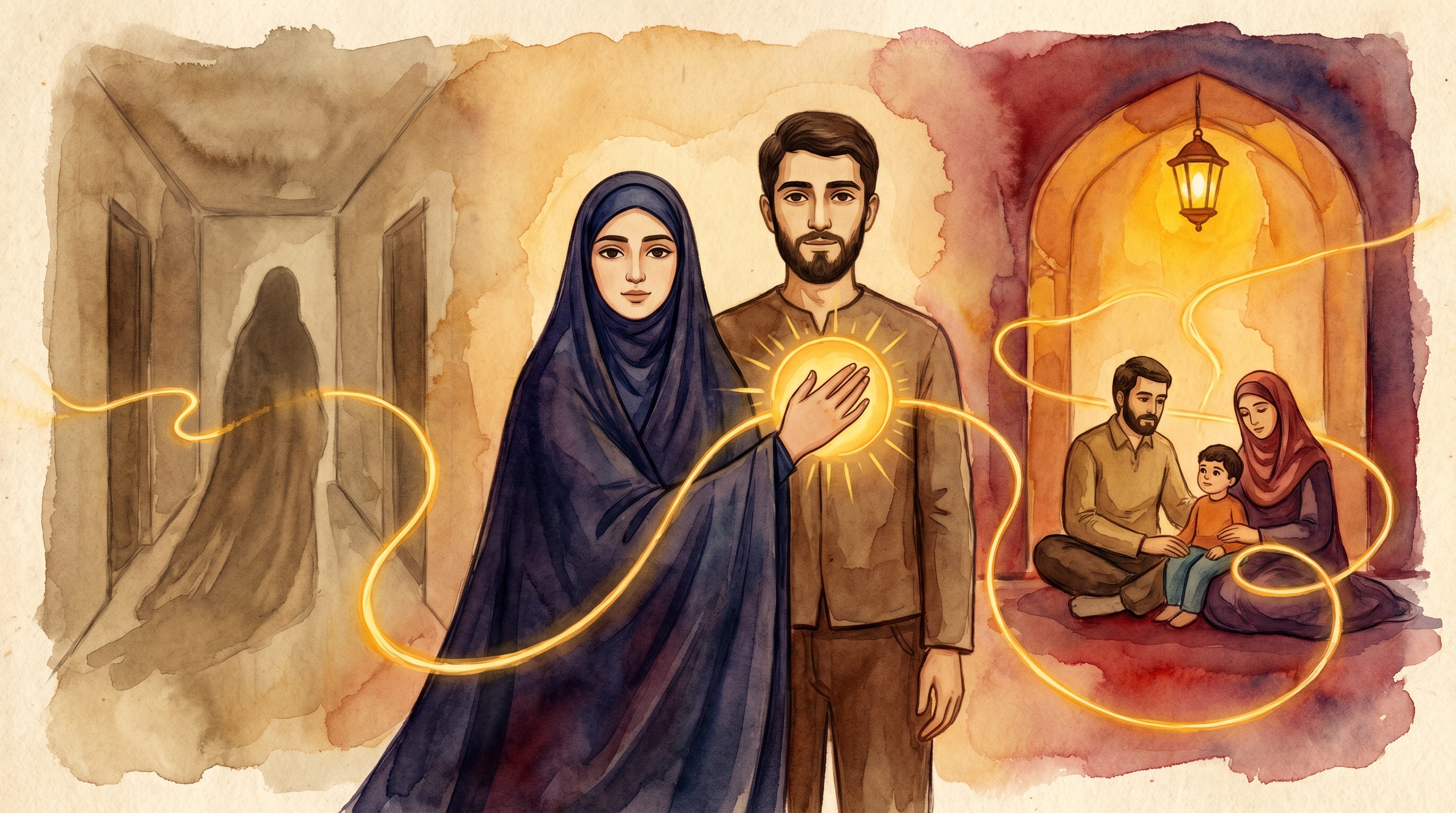
Because here is the application, and I want it to land on each of you personally.
You may never see a battlefield.
You may never set foot in a Muslim-majority land.
And the supplication has just told you, in the Imam’s own words, that this changes nothing about your standing — if you are holding the frontier that is actually yours.
And you are already stationed at one.
Let me name yours.
There is the workplace — the meeting, the corridor, the group chat — where a thing is said about Islam, or about the oppressed, that you know to be a lie, and where the easy thing—the infinitely easier thing—is to let it stand and keep your comfort.
That is a thaghr.
Your dignity is being tested at it this week.
There is the home — the dinner table, the bedtime, the long ordinary years — where your children will either come to love the Ahl al-Bayt or quietly drift away from them, and where the line is held not in one heroic moment but in ten thousand unwitnessed ones.
That is a thaghr.
It may be the most important one you will ever hold.
And there is the heart — your own chest — where, every single day, truth and falsehood fight the quiet war we opened this whole night with.
That is the first thaghr, the one the supplication began with, and it is the only one that is always under attack.
Du’a Ahl ath-Thughur is not a museum-piece about eighth-century border forts.
It is a supplication that Imam Zayn al-Abidin, peace and blessings be upon him, wrote for you — for the believer in the city, far from any war, who did not know he was already standing at a frontier, and already a guardian of it.
To Know, Or To Divide
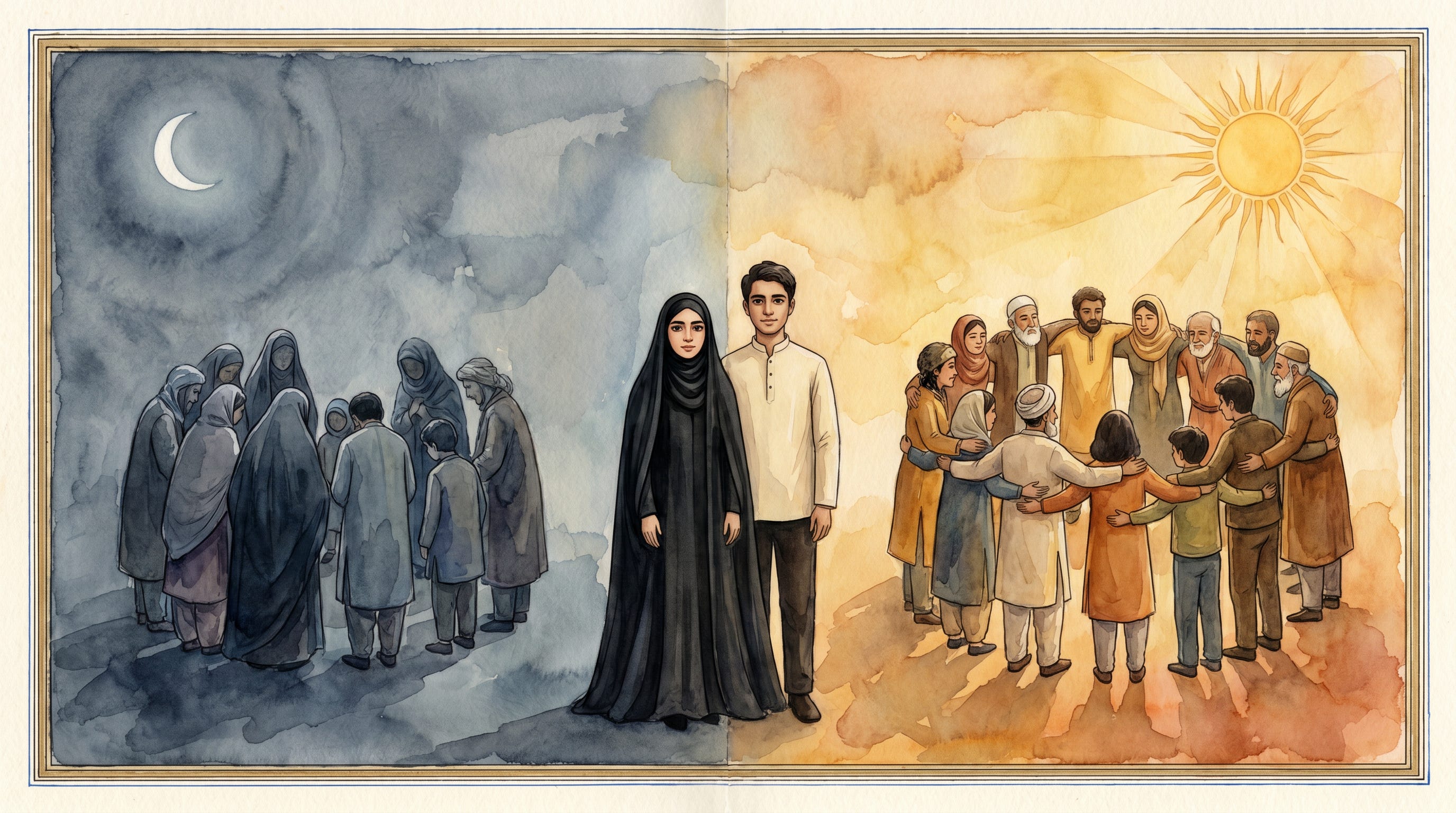
But there is a frontier inside the community itself, and it is the one we are losing most quietly, and the Book of God set the whole battle for it in a single contrast — a contrast that is the moral climax of this entire night.
Remember Pharaoh’s verb:
Jaʿala ahlahā shiyaʿan — he made the people into factions, to divide them.
Now hear what God says He made us into, and why:
يَـٰٓأَيُّهَا ٱلنَّاسُ إِنَّا خَلَقۡنَٰكُم مِّن ذَكَرٖ وَأُنثَىٰ وَجَعَلۡنَٰكُمۡ شُعُوبٗا وَقَبَآئِلَ لِتَعَارَفُوٓاْۚ إِنَّ أَكۡرَمَكُمۡ عِندَ ٱللَّهِ أَتۡقَىٰكُمۡ
“O mankind, We created you from a male and a female, and made you into peoples and tribes — that you may know one another. Indeed, the most honoured of you before God is the most God-conscious of you.”
— Qur’an, Surah al-Hujurat (the Chapter of the Apartments) #49, Verse 13
Hold the two verses side by side and feel the blade between them.
Pharaoh makes one people into shiyaʿan — factions, to divide and weaken.
God makes humanity into shuʿūb wa qabāʾil — peoples and tribes — li-taʿārafū — that they may know one another.
The very same human diversity.
The opposite purpose.
God’s diversity is an invitation; the tyrant’s diversity is a weapon.
The difference between the two is the entire difference between Karbala and the throne.
And the only ranking God will allow is the one He names in the very next breath — not nation, not tribe, not bloodline, but atqākum: the most God-conscious.
Every other hierarchy is Pharaoh’s.
The First Othering
So what is this knowing, this taʿāruf?
It is the heart of the whole matter, so be exact about it.
To know another is to learn from them, to love them, to respect them, and — this above all — to shield them.
To see a brother’s weakness and guard it, because you have your own weaknesses, and he is guarding yours.
And there is a counterfeit of taʿāruf, an inversion of it, and it has an author.
To learn a brother’s weakness in order to defeat him — to study another only to find the seam where you can break him — that is the satanic reading of li-taʿārafū.
And I mean satanic with full precision, because the first act of othering-by-origin in all of creation was Iblīs’s — Satan’s.
Commanded to bow to Adam, he refused, and gave his reason:
قَالَ أَنَا۠ خَيۡرٞ مِّنۡهُ خَلَقۡتَنِي مِن نَّارٖ وَخَلَقۡتَهُۥ مِن طِينٖ
“He said: I am better than him. You created me from fire, and You created him from clay.”
— Qur’an, Surah al-A’raf (the Chapter of the Heights) #7, Verse 12
I am better than him — my origin is higher than his.
That is the first supremacy.
Every racial caricature, every “those people,” every dehumanising trope that has ever been used to make a war easier or an occupation cleaner — every one of them descends from anā khayrun minhu.
Supremacy-by-substance is Satanic in the most literal sense the word allows.
And it is the exact inversion of taʿāruf: where God says know one another, Satan says rank yourself above the other.
Where God says shield your brother’s weakness, Satan says use it.
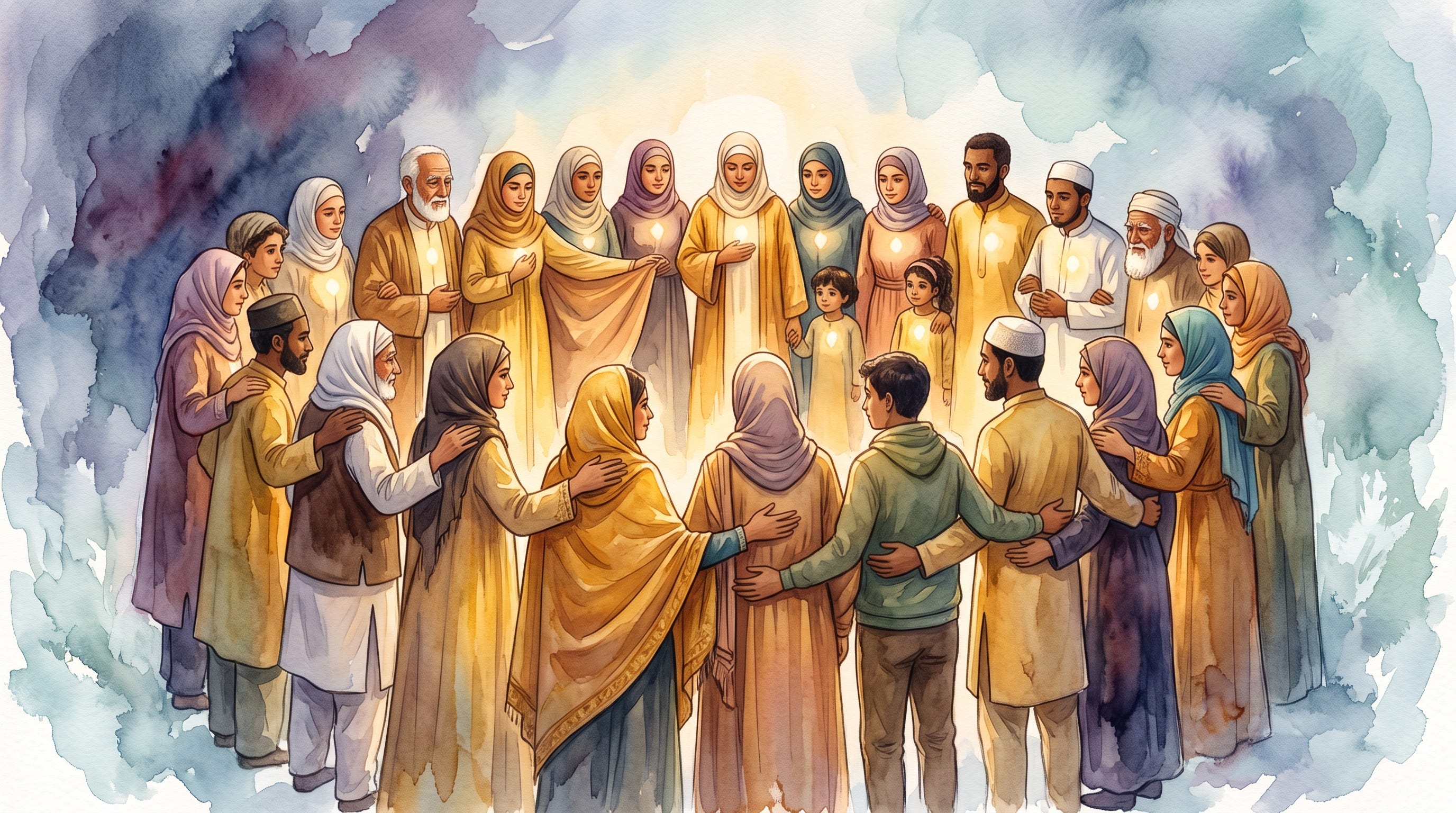
So here is the believer’s answer, and it is a communal jihad, not a solitary one: shield your brother’s weakness, and he will shield yours.
That single practice ties the two struggles of our whole tradition together — the greater jihad, in which each of us guards the frontier of his own nafs, and the lesser jihad, in which the community together guards its outer frontier.
A people who shield one another cannot be divided.
And a people who have been taught to see each other as weaknesses to exploit have already been conquered, before a single soldier arrives.
Divide-and-rule wins precisely when taʿāruf fails.
But I have to stop on that word — shield — because it hides a trap; the same whisper that tells one man to use his brother's weakness will tell the next to cover it.
So let me be exact about what the shield is, and is not.
Guardians, Not Accomplices
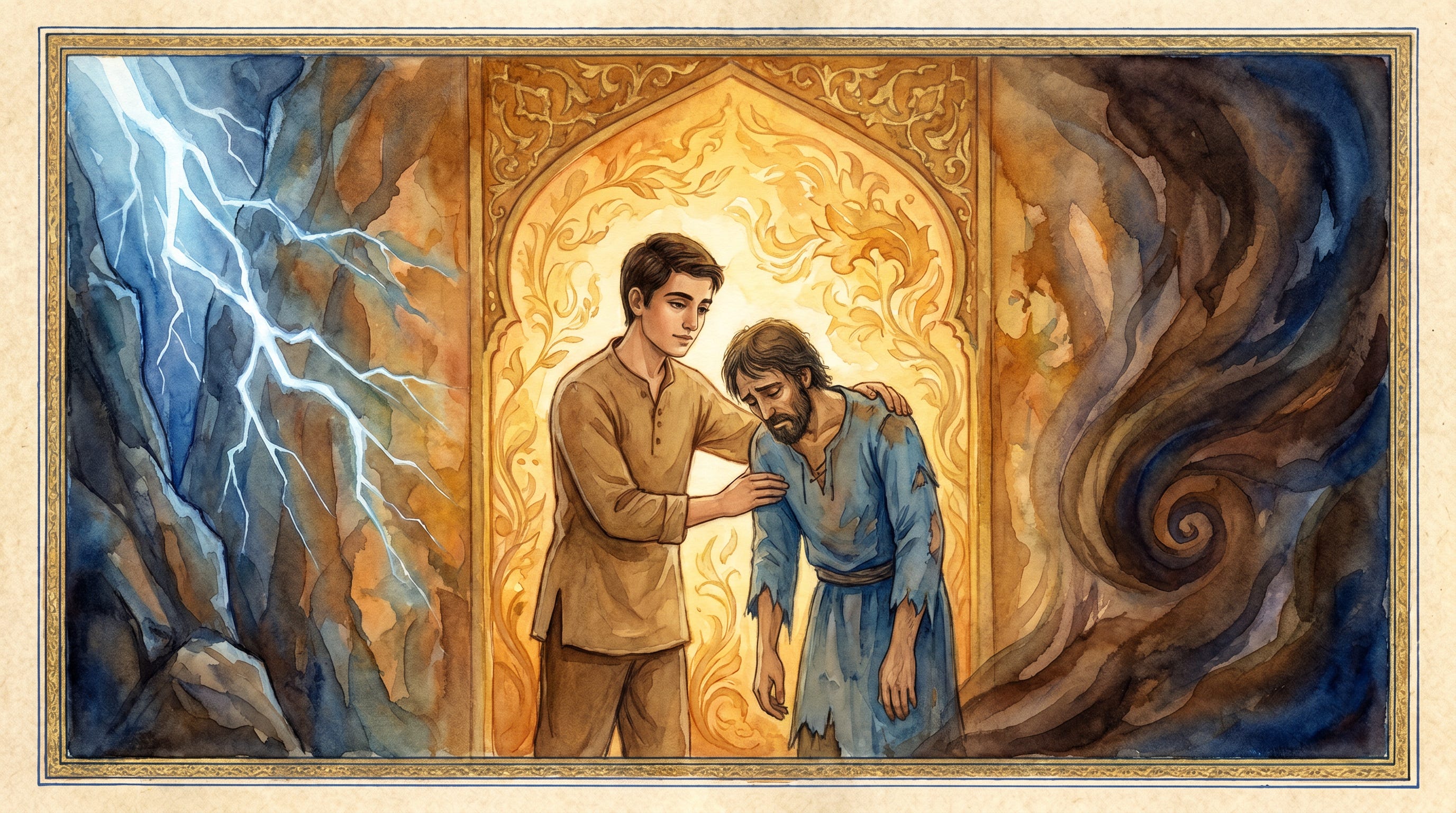
Because there are two ways to betray a brother, not one.
The first we have named: to take his weakness and break him with it.
The second wears the mask of love — to take his wrong and cover it; to call silence “loyalty” and complicity “brotherhood.”
And the satanic whisper is just as content to hand you the second as the first.
Either one breaches the wall.
So hear what shielding actually is, in the Book’s own words.
God describes the believers like this:
وَٱلْمُؤْمِنُونَ وَٱلْمُؤْمِنَٰتُ بَعْضُهُمْ أَوْلِيَآءُ بَعْضٍ ۚ يَأْمُرُونَ بِٱلْمَعْرُوفِ وَيَنْهَوْنَ عَنِ ٱلْمُنكَرِ وَيُقِيمُونَ ٱلصَّلَوٰةَ وَيُؤْتُونَ ٱلزَّكَوٰةَ وَيُطِيعُونَ ٱللَّهَ وَرَسُولَهُۥٓ ۚ أُو۟لَٰٓئِكَ سَيَرْحَمُهُمُ ٱللَّهُ ۗ إِنَّ ٱللَّهَ عَزِيزٌ حَكِيمٌ
“And the believing men and the believing women are allies — awliyāʾ — of one another: they enjoin what is right and forbid what is wrong, and they establish prayer, and give the alms, and obey God and His Messenger. Those — God will have mercy upon them. Indeed, God is Mighty, Wise.”
— Qur’an, Surah al-Tawbah (the Chapter of Repentance) #9, Verse 71
Look at what the verse does.
It calls the believers awliyāʾ of one another — guardians, protectors, the closest of allies — and then, in the very same breath, it tells you what that guardianship is made of: they enjoin the right and forbid the wrong.
So to be your brother’s walī is, by God’s own definition, to forbid his wrong — not to enable it.
A shield that covers a brother’s sin is not a higher form of wilāya; it is the death of it.
A people who cover one another’s wrong are not the believers of this verse — they are its mirror-image, the ones the same Surah had described a few lines before: those whose bond commands the wrong and forbids the right.
The same closeness; the opposite content.
The believer’s bond forbids the wrong.
The hypocrite’s bond hides it.
And God forbids the covering outright.
In the same breath in which He commands us to help one another toward good, He bars its opposite:
وَتَعَاوَنُوا عَلَى ٱلْبِرِّ وَٱلتَّقْوَىٰ ۖ وَلَا تَعَاوَنُوا عَلَى ٱلْإِثْمِ وَٱلْعُدْوَٰنِ ۚ وَٱتَّقُوا ٱللَّهَ ۖ إِنَّ ٱللَّهَ شَدِيدُ ٱلْعِقَابِ
“And help one another toward righteousness and God-consciousness, but do not help one another toward sin and aggression. And be mindful of God; indeed, God is severe in penalty.”
— Qur’an, Surah al-Ma’idah (the Chapter of the Table Spread) #5, Verse 2
To shield a brother’s ongoing wrong is not sitr, the noble covering of a fault; it is taʿāwun ʿalā al-ithm — helping one another to sin — which is mudāhana, the flattering compromise our ethicists count among the diseases of the soul.
To cover the sin is to share in it.
Then what do we do?
The Messenger of God, peace and blessings be upon him, his family and righteous companions, gave us the rule in one sentence:
انْصُرْ أَخَاكَ ظَالِمًا أَوْ مَظْلُومًا. قِيلَ: يَا رَسُولَ اللَّهِ، نَصْرُهُ مَظْلُومًا عَرَفْنَاهُ، فَمَا نَصْرُهُ ظَالِمًا؟ قَالَ: تَحْجُزُهُ عَنِ الظُّلْمِ، فَإِنَّ ذَلِكَ نَصْرُهُ.
“Help your brother, whether he is an oppressor or oppressed.” It was said: “Messenger of God, we know how to help him when he is wronged — but how do we help him when he is the wrongdoer?” He said: “You restrain him from his wrongdoing. That is how you help him.”
— The Messenger of God, transmitted by Imam Ali; Nahj al-Balagha, Saying 271
You restrain him from his wrongdoing — that is your help.
So if a brother is — God forbid — wronging his wife, or his child, or anyone God has placed within reach of his hand — to shield him is to stop him.
Being stopped is his rescue; a man left to his oppression is a man you are watching walk toward the Fire and calling it kindness.
To cover that is not mercy.
It is to hold the rope while he hangs his own soul.
And hear this with full clarity, because it is exactly where the danger lives: the one he is wronging is your brother — your sister — too, and the wronged hold the first claim.
Our jurists draw the line precisely here.
The covering of faults is for a private failing between a servant and his Lord — a ḥaqq Allāh, God’s own right, which God Himself loves to veil.
It is never a licence over the ḥaqq al-nās, the right of the wronged.
Where there is a victim, protecting that victim and seeing justice done outranks the covering of the one who harmed them — and to “shield” an oppressor at the expense of the oppressed is not sitr at all; it is ẓulm wearing a borrowed cloak.
The cry of the mustaḍʿaf — the men, the women, and the children who call out for a protector — does not fall silent because the one who wronged them shares our name.
And none of this — none of it — licenses humiliation.
That is the first ditch, and we do not leap into it to escape the second.
Our tradition makes the believer the mirror of his brother: a mirror shows you your face truthfully, but it never announces your blemish to the room.
You go to him in private, the fault carried in your hand like a gift, never thrown from your tongue in the crowd.
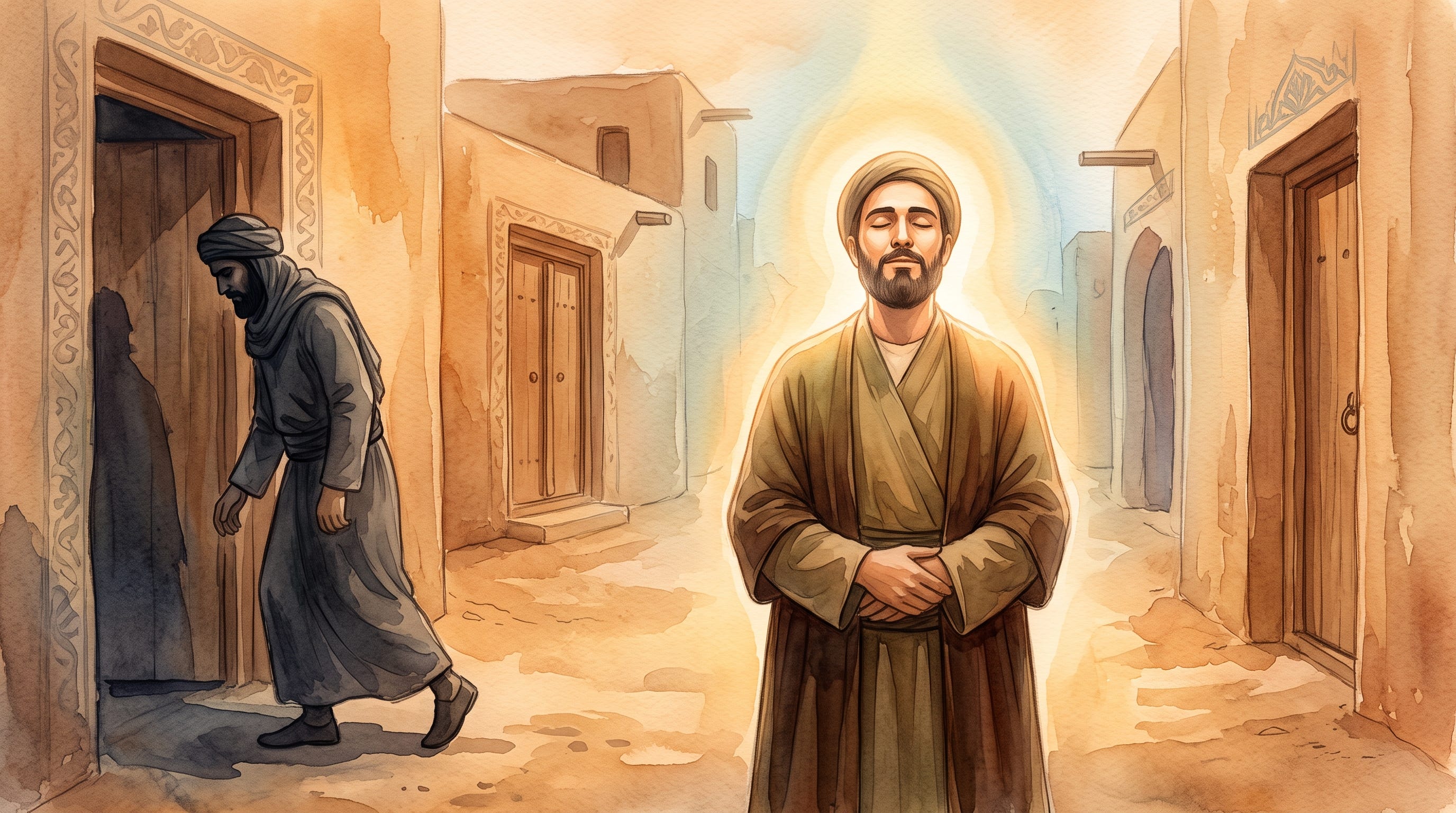
The ethical handbook of our seminaries gathers both duties into a single line — conceal his fault from the eyes of others, counsel him in secret, and bear the hurt that comes of it, patiently, for as long as it takes, seeking nothing but his guidance and his rescue.
ستر عورات المؤمنين من أشرف الخصال، والواجب على المؤمن إذا اطلع على عيب من أخيه أن يستره وينصحه سراً ولا يفضحه، بل يبالغ في النصح والإرشاد ويتحمّل الأذى طلباً لهدايته ونجاته.
“Concealing the faults of the believers is among the most noble of traits. It is obligatory upon the believer, when he discovers a fault in his brother, to conceal it, advise him privately, and not expose him. Rather, he must exert himself in counselling and guiding, and bear the harm (that may come) in seeking his guidance and salvation.”
— Muḥammad Mahdī al-Narāqī, Jāmiʿ al-Saʿādāt, vol. 2, p. 301 (bāb satr ʿawrāt al-muʾminīn).
And what of the consequence — when the wrong was real, and a price must be paid?
Here our tradition shows us its most astonishing picture of what brotherhood-unto-reform can look like.
There was a man in Kufa, in the days of the Commander of the Faithful, peace and blessings be upon him, whose hand the Imam’s own justice had cut for a theft.
He went out into the street holding the severed hand — and a Kharijite agitator, Ibn al-Kawwā, saw a wound to harvest, and came to turn him bitter against Ali: who did this to you?
And the man answered:
وَمَا لِي لَا أُثْنِي عَلَيْهِ وَقَدْ خَالَطَ حُبُّهُ لَحْمِي وَدَمِي؟ وَاللَّهِ مَا قَطَعَهَا إِلَّا بِحَقٍّ أَوْجَبَهُ اللَّهُ عَلَيَّ مِمَّا يُنْجِينِي مِنْ عِقَابِ الْآخِرَةِ.
“Why should I not praise him, when love for him has mingled with my flesh and my blood? By God, he did not cut it off except by a right that God had made binding upon me — by which He delivers me from the punishment of the Hereafter.”
— The man of Kufa, to Ibn al-Kawwā; al-Majlisi, Biḥār al-Anwār, vol. 40; retold by Shaheed Mutahhari, Jādhibah wa Dāfiʿah-ye ʿAlī (The Attraction and Repulsion of Ali)
He bore the consequence, and it did not embitter him — it healed him.
The justice that fell on him, he received as a hand reaching down to pull him out of a far worse fire.
And the agitator who came to weaponise his wound left empty-handed — because a heart that has truly returned to God cannot be recruited by the dividers: not by Ibn al-Kawwā, not by Muʿāwiya’s men, not by anyone.
Shaheed Mutahhari reads the whole scene as a scale that weighs the soul: Imam Ali is the criterion of human nature — the sound heart takes no offence at his justice even as it falls, because Imam Ali is nothing but the truth made flesh.
That is reform through consequence: we do not spare our brother the price; we walk beside him while he pays it, and we help him carry it home to God.
The door of the frontier is not shut to the one who has fallen — it is shut only to the one who refuses to rise.
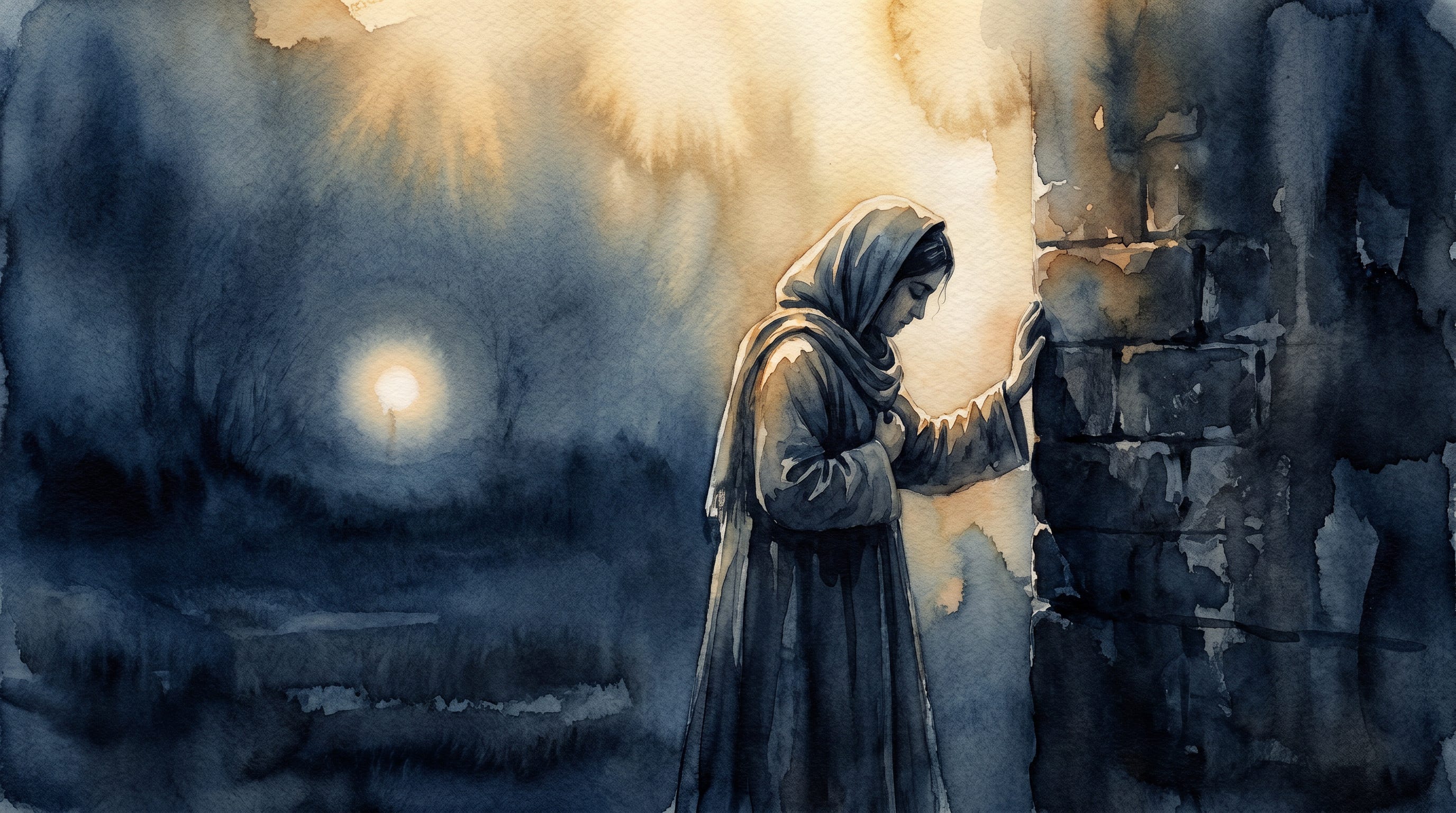
And now the hardest turn, the one that keeps all of this honest: the first wall I am charged to guard is my own.
Before I am my brother’s guardian, I am my own — and the murābiṭ who would die before he let an enemy breach the line must not be the one standing there, in the dark, quietly loosening its stones himself.
The prophets showed us this. Moses, at the well, with no human eye upon him, turned first upon himself:
قَالَ رَبِّ إِنِّي ظَلَمْتُ نَفْسِي فَٱغْفِرْ لِي فَغَفَرَ لَهُۥ ۚ إِنَّهُۥ هُوَ ٱلْغَفُورُ ٱلرَّحِيمُ
“He said: My Lord, I have wronged myself, so forgive me — and He forgave him. Indeed, He is the Forgiving, the Merciful.”
— Qur’an, Surah al-Qasas (the Chapter of the Narrations) #28, Verse 16
Rabbi innī ẓalamtu nafsī — my Lord, I have wronged my own soul.
It is the very confession we place on our own tongues every Thursday night in the Du’a of Kumayl.
The honest frontier-guard does not only ask where is your brother? — he turns and asks where am I?
He holds himself to the wall first; and only the one who will forbid the wrong in his own chest has earned the right to forbid it, gently, in his brother’s.
So the shield is not the sword that exposes, and it is not the blanket that hides.
It is the hand that catches a falling brother and pulls him back toward God — guarding his dignity from the crowd, refusing his wrong to his face, protecting whomever he has wronged, and walking with him, through every consequence, all the way home.
To forbid a brother’s wrong is to bear witness to the truth; to cover it is to bear false witness at his side.
And that — all of it — is what we have been asking, every single night of this series, when we ask Where is your brother?
Not only is he safe — but is he whole; is he upright; and if he has fallen, will I be the one who helps him rise?
Naming The System, Never The People
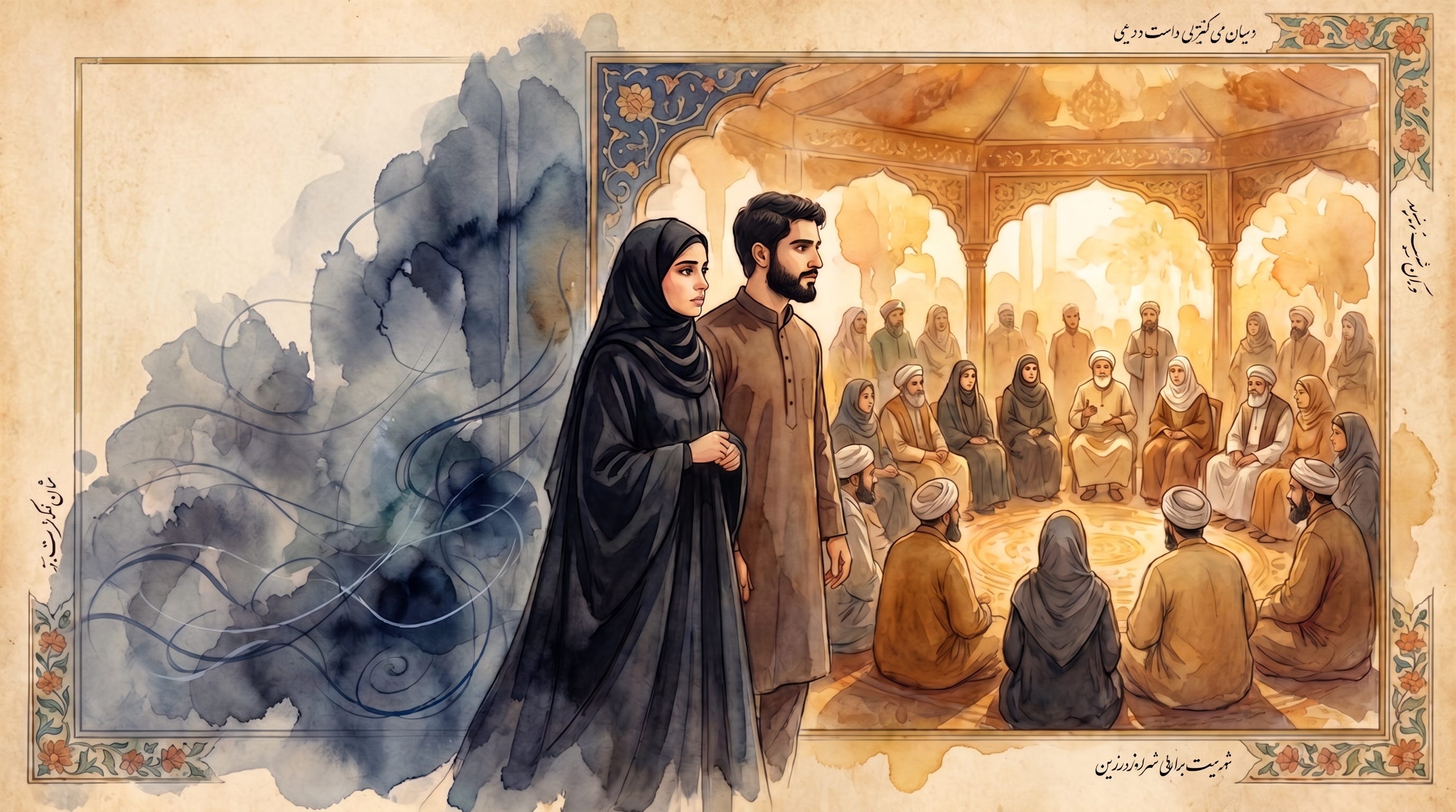
And this is where I have to say one hard thing plainly, and then guard it carefully.
The manufactured fear of a whole people — the slow drip of caricature until a group becomes a standing object of dread — is not an accident and not a natural prejudice.
It is a technique.
It is Pharaoh’s strategy in modern dress: fracture the people, give the frightened crowd a “them” to hate, so that their anger lands on a vulnerable neighbour instead of on the power that is actually bleeding them.
The scapegoat protects the powerful.
That is the oldest trick there is.
But the moment we name that technique, we are standing on the edge of the very cliff we have been warning about all night — because the technique’s favourite payoff is always, in the end, to blame a people.
So here is the guard-rail, said as clearly as I can say it, and it is the same principle from Point one come back for the third time: name the system, refuse the master-plot, never blame a people.
Name istikbār — the documented coordination of elites and corporations and states, which is fair and sober analysis.
But do not reach for the single hidden cabal that secretly runs all of history — because that is unfalsifiable, and because it is the very engine of the othering we are diagnosing; it has been used to manufacture hatred against whole peoples, and to reach for it would be to commit, in the same breath, the exact sin we are condemning.
It would always, in the end, blame a people — and no bearer of burdens bears the burden of another.
We will clear this wreckage properly — the whole machinery of the manufactured “other,” and the manufactured fear of Islam itself — in that same Saturday series; the details, again, will be at truthpromoters.com.
Tonight, only the naming.
Because the cure is not more naming of enemies.
The cure is li-taʿārafū.
The Inheritance Of The Earth
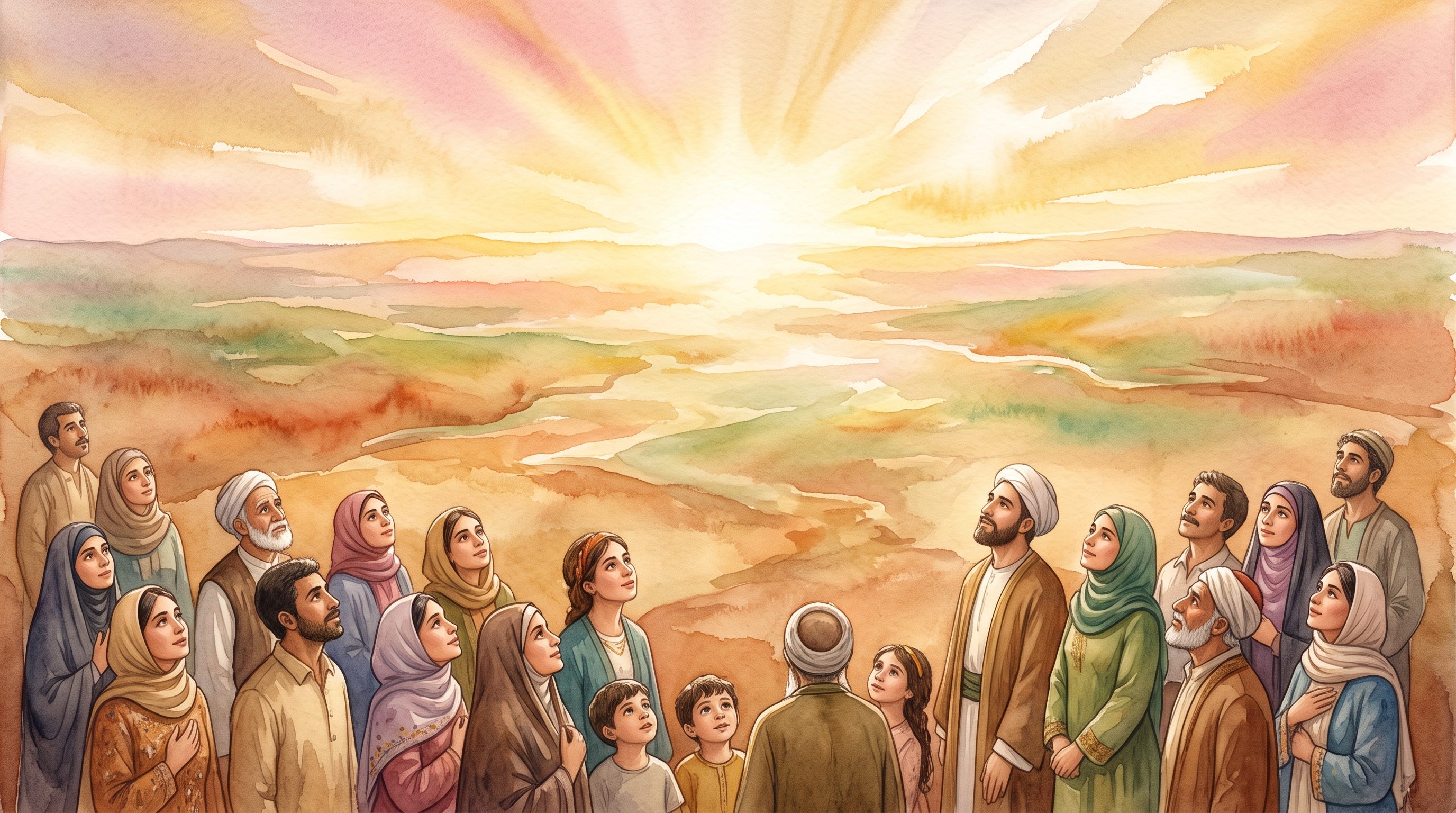
So let me close this point by lifting your eyes, the way the Book lifts them.
The tyrant fractures the map and calls it his.
And God answers, in the same Chapter where He named Pharaoh’s method, with a promise:
وَنُرِيدُ أَن نَّمُنَّ عَلَى ٱلَّذِينَ ٱسۡتُضۡعِفُواْ فِي ٱلۡأَرۡضِ وَنَجۡعَلَهُمۡ أَئِمَّةٗ وَنَجۡعَلَهُمُ ٱلۡوَٰرِثِينَ
“And We desired to bestow favour upon those who were oppressed in the land, and to make them leaders, and to make them the inheritors.”
— Qur’an, Surah al-Qasas (the Chapter of the Narrations) #28, Verse 5
The mustaḍʿafīn — the very group the Pharaoh of every age keeps weak — them God wills to make into aʾimmah, leaders, and al-wārithīn, the inheritors.
And this rests on the deepest deed of all, the one Moses spoke to his own frightened, oppressed people when they could see no way through:
إِنَّ ٱلۡأَرۡضَ لِلَّهِ يُورِثُهَا مَن يَشَآءُ مِنۡ عِبَادِهِۦۖ وَٱلۡعَٰقِبَةُ لِلۡمُتَّقِينَ
“Indeed, the earth belongs to God; He bequeaths it to whom He wills of His servants — and the final outcome belongs to the God-conscious.”
— Qur’an, Surah al-A’raf (the Chapter of the Heights) #7, Verse 128
The earth belongs to God.
Not to the men in the room in 1916.
Not to any empire that has ever drawn a line on it.
The tyrant fractures the map; God promises the fractured the inheritance of the whole of it.
And that promise is not a metaphor and not a consolation — it is a destination, fulfilled in the end under the Imam of the Age, the Master of our time, may our souls be his ransom and may God hasten his return, when the last frontier between the oppressor and the oppressed is finally closed, and the earth is handed, at last, to those who held its lines for nothing but the love of God.
That is where this road is going.
We will stand at its end together, God willing, on the last of these nights.
And until then — until that dawn — we hold the line.
Which is exactly what a man of our own lifetime did.
And he told his daughter how.
The Man Who Tied Himself To God
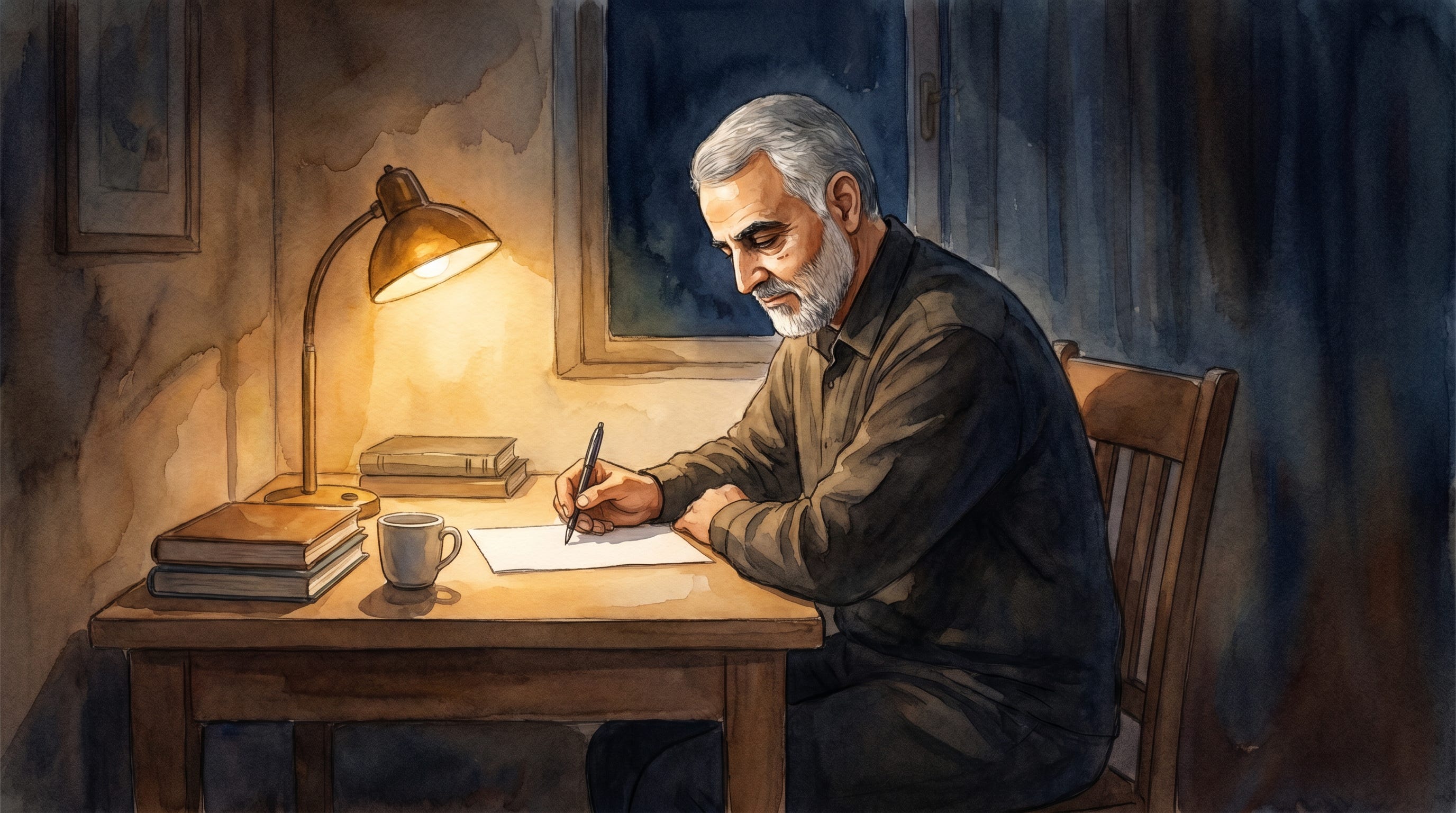
We have spent the whole night on a word — murābiṭ, the one who is tied to the frontier, from the root rabṭ, to bind.
I promised you, near the beginning, that a man of our own lifetime would come and define that word for us.
Here he is.
And he defined it not in a lecture or on a battlefield, but in a private letter to his daughter, Fatema.
Hajj Qasem Soleimani, may God rest his pure soul, sat down to tell his child why he had chosen the path he had chosen.
And he began not with politics, but with the most honest question a human being can ask:
من دیدم هر کس در این عالم راهی برای خود انتخاب کرده است... من دیدم چه راهی را میبایست انتخاب کنم... از خود پرسیدم اولاً طول این راه چقدر است، انتهای آنها کجاست، فرصت من چقدر است، و اساساً مقصد من چیست؟ دیدم من موقتم و همه موقت هستند.
“I saw that everyone in this world has chosen a path for himself... I looked to see which path I ought to choose... and I asked myself: first, how long is this path? Where is its end? How much time do I have? And, fundamentally, what is my destination? I saw that I am temporary, and that everyone is temporary.”
— Hajj Qasem Soleimani, letter to his daughter Fatema; published by the office of the Supreme Leader as “Why Do I Fight?” (Chera Mi-jangam?), 9 January 2021
I am temporary, and everyone is temporary.
That is where a man of the frontier begins — not with what he can hold, but with the knowledge that he holds nothing for long.
And from there he reasons his way past the one thing that pulls every guardian off his line — the very thing the supplication asked God to erase, khaṭarāt al-māl al-futūn, the whispering of seductive wealth.
Listen to how completely he had cleared it:
دیدم تجارت بکنم، عاقبت آن عبارت است از مقداری سکه براق شده و چند خانه و چند ماشین. اما آنها هیچ تأثیری بر سرنوشت من در این مسیر ندارد.
“I saw that if I went into commerce, its outcome would be a quantity of shiny coins, a few houses, a few cars — but those have no effect whatsoever on my destiny upon this path.”
— Hajj Qasem Soleimani, “Why Do I Fight?”, 9 January 2021
Shiny coins, a few houses, a few cars — no effect on my destiny.
There is Block C of the supplication, lived.
The world cleared out of the heart, so that nothing could pull him off the line.
But then comes the most extraordinary turn in the letter — and it is the whole of tonight in a single sentence.
Because he tells Fatema that he had thought, instead, of simply living for them — for his children, whom he loved past bearing — and he found that even that love could not cure his fear, the dread of loss, the terror of a hardship befalling them.
And so he reached for the only thing that could:
دیدم من باید به کسی متصل شوم که این مهمِّ مرا علاج کند، و او جز خداوند نیست.
“I realised that I had to tether myself — to bind myself — to Someone who could cure me of this; and He is none other than God.”
— Hajj Qasem Soleimani, “Why Do I Fight?”, 9 January 2021
I had to tether myself to God.
Hear the word. Muttasil — bound, tied, connected.
The murābiṭ is, by the meaning of his very name, the one who is tied — and Hajj Qasem tied himself not to a border, not to a cause, not even to the children he adored, but to God.
That is the secret of the frontier, handed from a father to his daughter, in plain words she could keep.
The guardian of the line is not the one with the strongest grip on the world.
He is the one who has let go of the world entirely and bound himself to the One who made it.
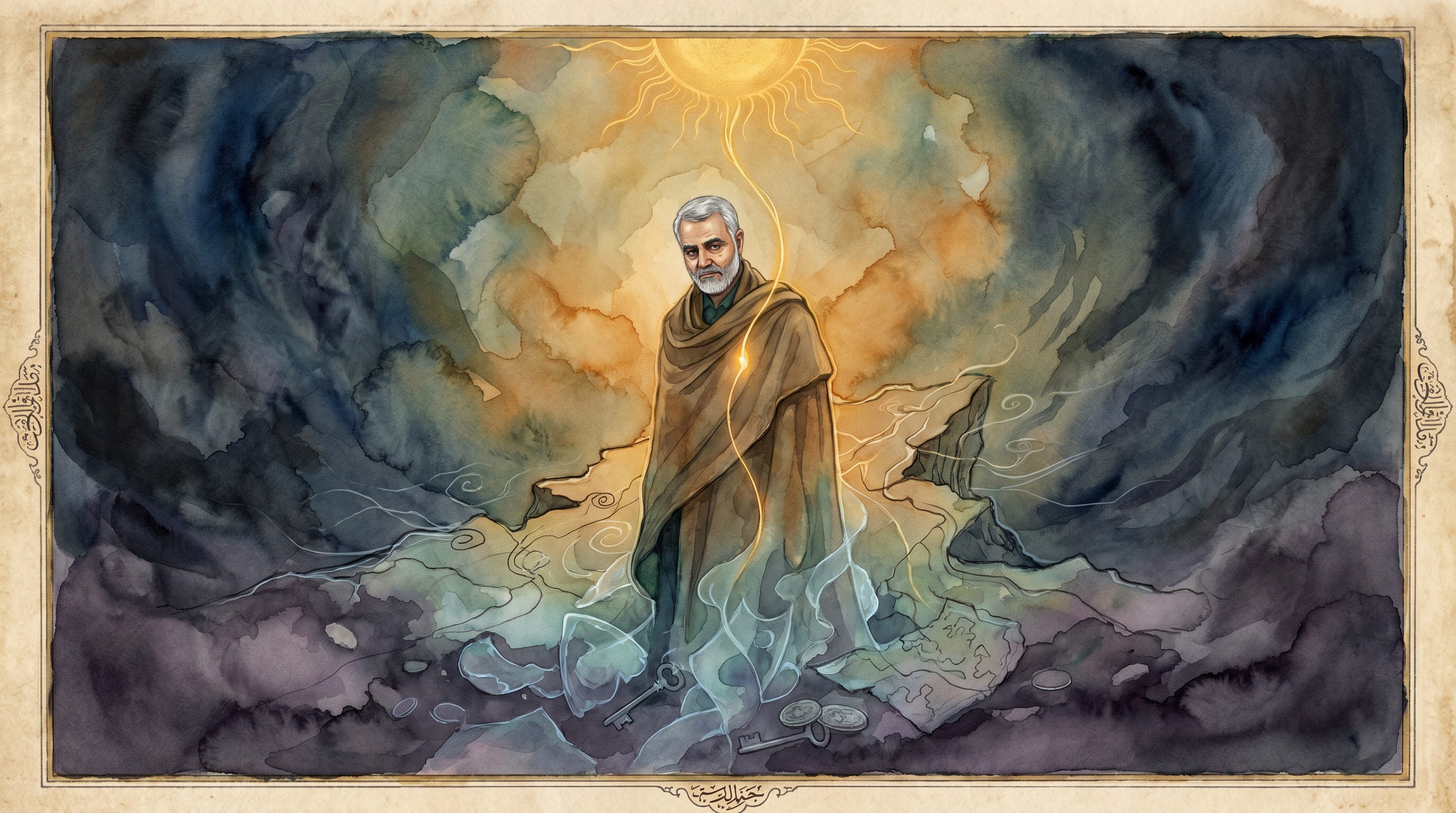
The frontier-guard of our own lifetime defined murābaṭa in a letter to his child — and the definition was:
Be tied to God, and to nothing else.
That is the same watchfulness — the salt-in-the-eyes wakefulness — we spoke of on the night of his teacher’s vigil.
A heart so tied to God that nothing the world offers and nothing the world threatens can move it from its post.
That is the Prayer for the Frontiers, walked, in our own years, by a man who knew exactly what he was doing when he stood at the seam between the oppressor and the oppressed and would not step back from it.
The Pact We Make Tonight
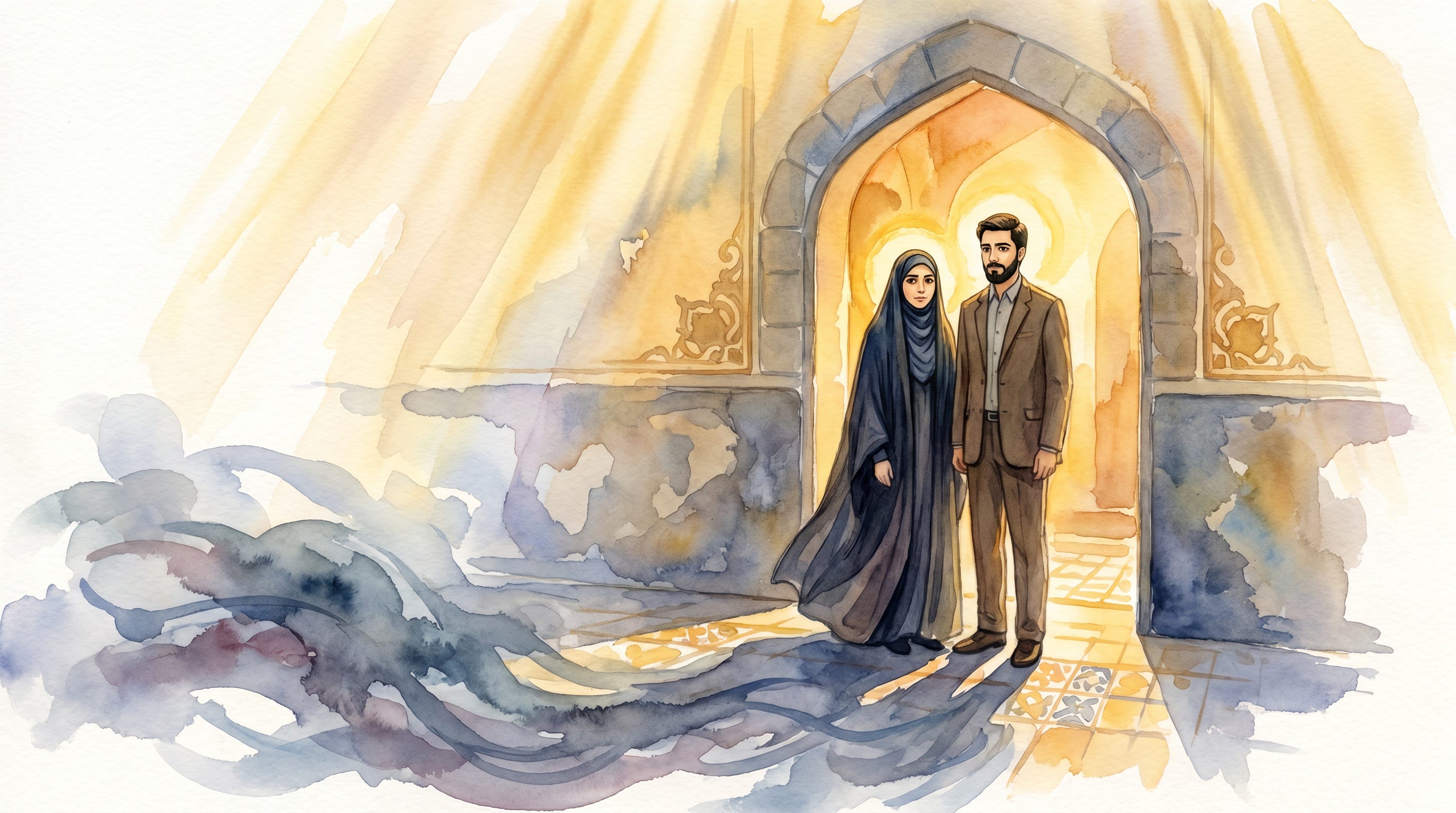
So let me ask you to leave tonight with the line in your hands, not just in your eyes.
The first thing: find your frontier, and admit it is yours.
It is not in Iraq and it is not on a map.
It is the room where the lie is comfortable and the truth is costly — your workplace, your timeline, your dinner table.
It is the home where your children are learning to love and follow the Ahl al-Bayt, or not.
It is, before all of these, your own heart, where the quiet war runs every day.
You are not the audience of the Prayer for the Frontiers.
You are its subject.
Name your thaghr, and stand at it.
The second thing: hold the line the way the household held it — by knowing, not by dividing.
When you are handed the easy hatred of a whole people, refuse it.
Name the system, never the people.
Shield your brother’s weakness, and trust him to shield yours.
Li-taʿārafū — that you may know one another — is not a soft sentiment; it is the frontier itself, and we lose it the moment we let ourselves be recruited into anyone’s manufactured fear.
And the third thing, the one the supplication ends on, so we will too:
You do not have to fall to be a witness — but you must be willing.
The one who only intended, and was prevented, is written among the martyrs and the righteous.
Intention is the witness; the grade is God’s.
So be willing — truly, with the whole of your heart — and then hold whatever line is actually given to you, for nothing but the love of God, where no one is filming.
Every day is Ashura. Every land is Karbala.
And every believer, tonight, is standing at a frontier he had not named.
Tomorrow night, the road to Arbaeen turns into its darkest room.
We will go down into the ruins of Sham, to a child in a dungeon — to the smallest of the household, and to the grades of witness that a child can carry — and we will ask what it means that the testimony was kept even there, even by her.
A Child in the Dungeon.
But that is tomorrow.
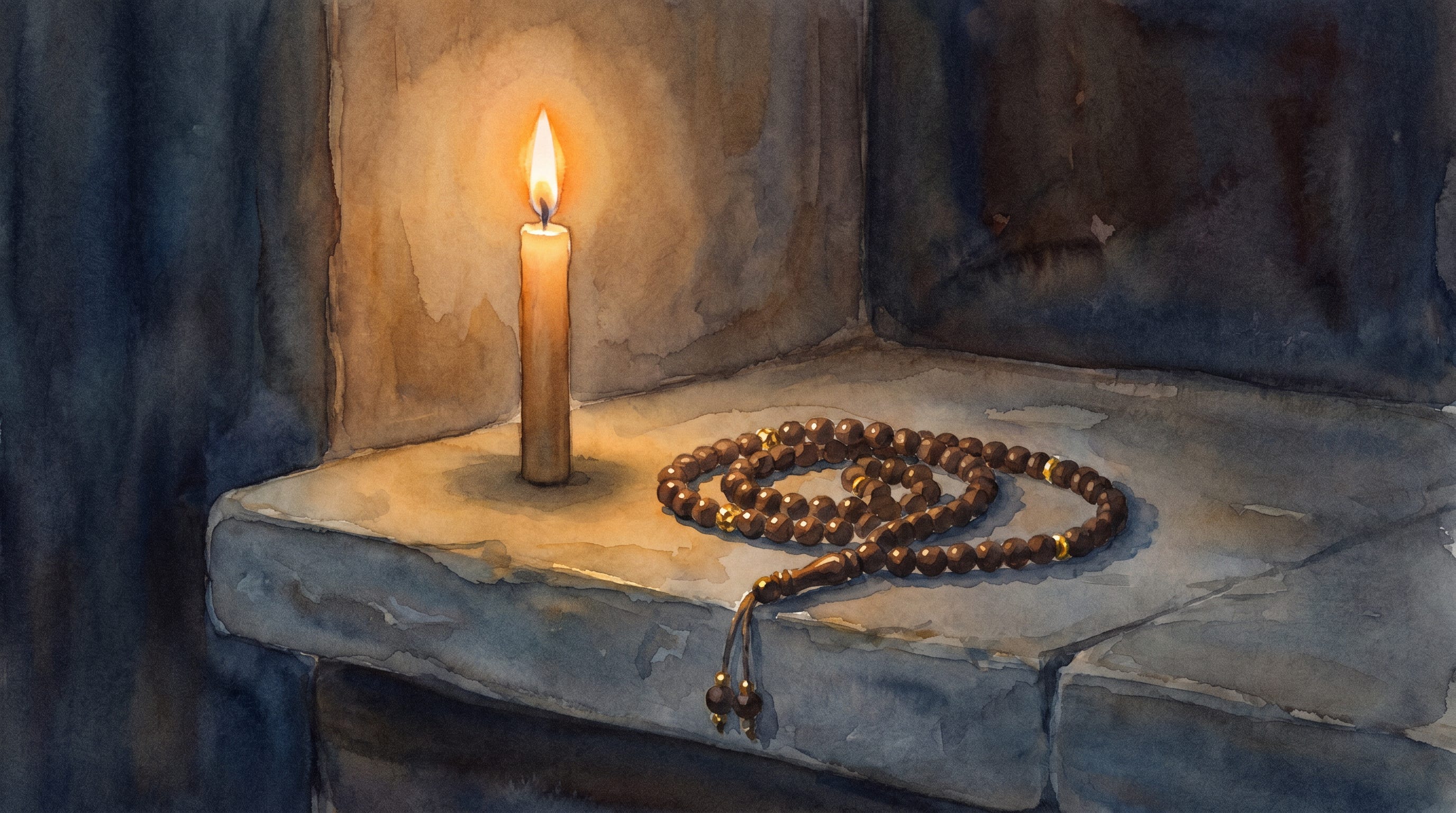
Tonight, there is one more voice — the one in whose lineage the man who wrote our supplication stands, and in whose lineage we stand.
It was his voice that carried us through ten nights of Muharram and broke at the trampling; last night, at the sound of his aunt’s words, it began to find its feet.
Tonight he tells us of his grandfather — Ali, the son of Husayn, Zayn al-Abidin, peace and blessings be upon him — the one survivor of the men, who, when he could no longer raise a sword, raised his hands, and hid a whole doctrine of holding the line inside a supplication.
Beside the candle tonight there is one small thing laid on the grey stone: a chain of prayer-beads — a tasbīh — resting beside the taper.
The line-holder’s quiet weapon.
The worship that holds when nothing else can.
Look at it while you listen.
And then — listen to the voice.
But let me say plainly what it is, so that no one mistakes it for what it is not.
What you are about to hear is not a man reciting; and it is not — God forbid the claim — the voice of the Imam himself, for no living soul has heard his true voice.
It is an imagining of that voice: his words, the words of the one who watched and who remembers, carried to you in clear English by the means of our own age, so that they might reach the heart directly — as though he were speaking to you, plainly, from behind the veil.
Take it as a vessel only — a humble reaching-toward him, never a standing-in-his-place.
May God forgive us the presumption of it, and accept the love that reaches.
Segue To Maqtal (Lamentation)
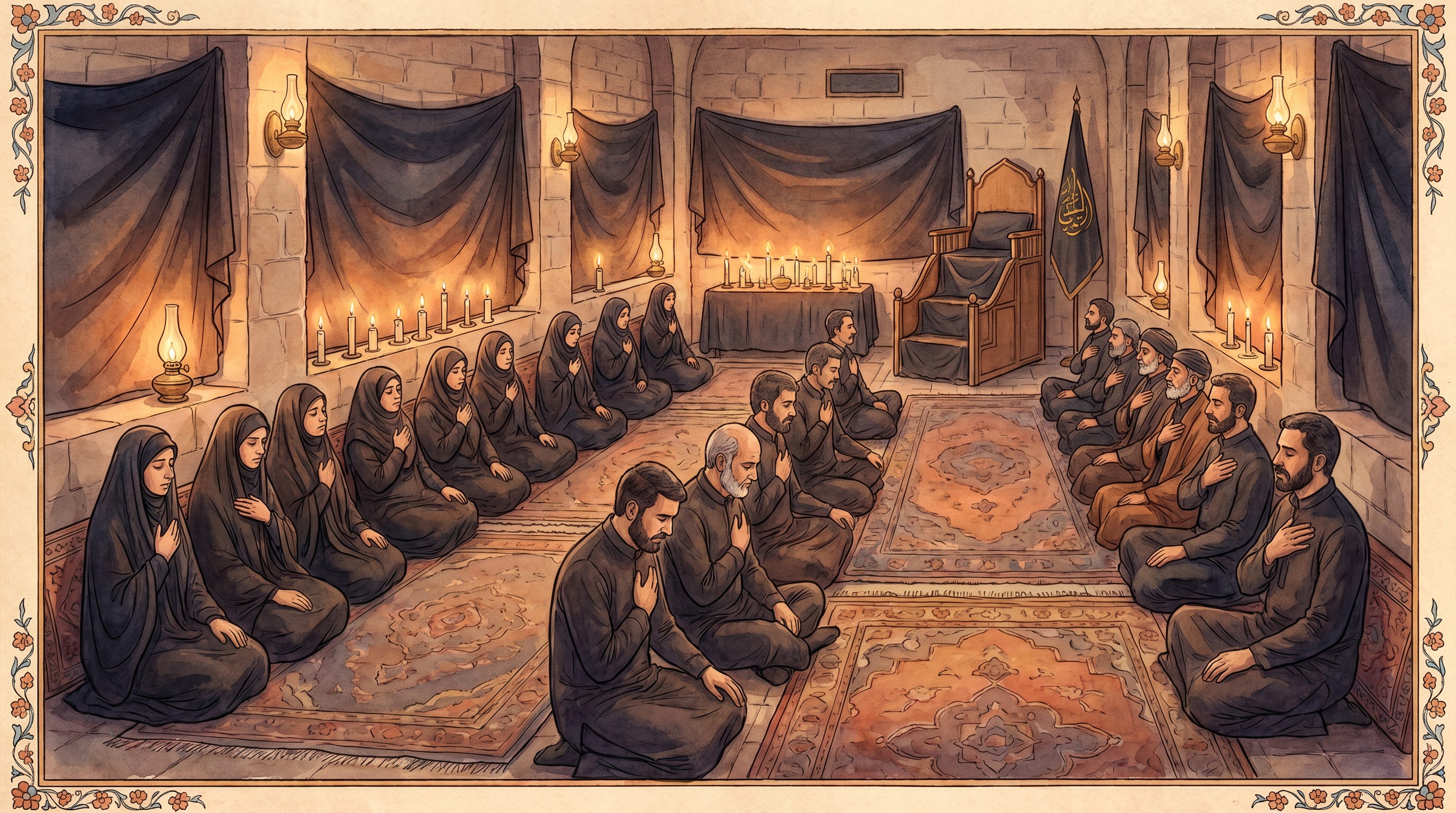
Maqtal (Lamentation) for the Second Night of Arbaeen 2026/1448
Supplication
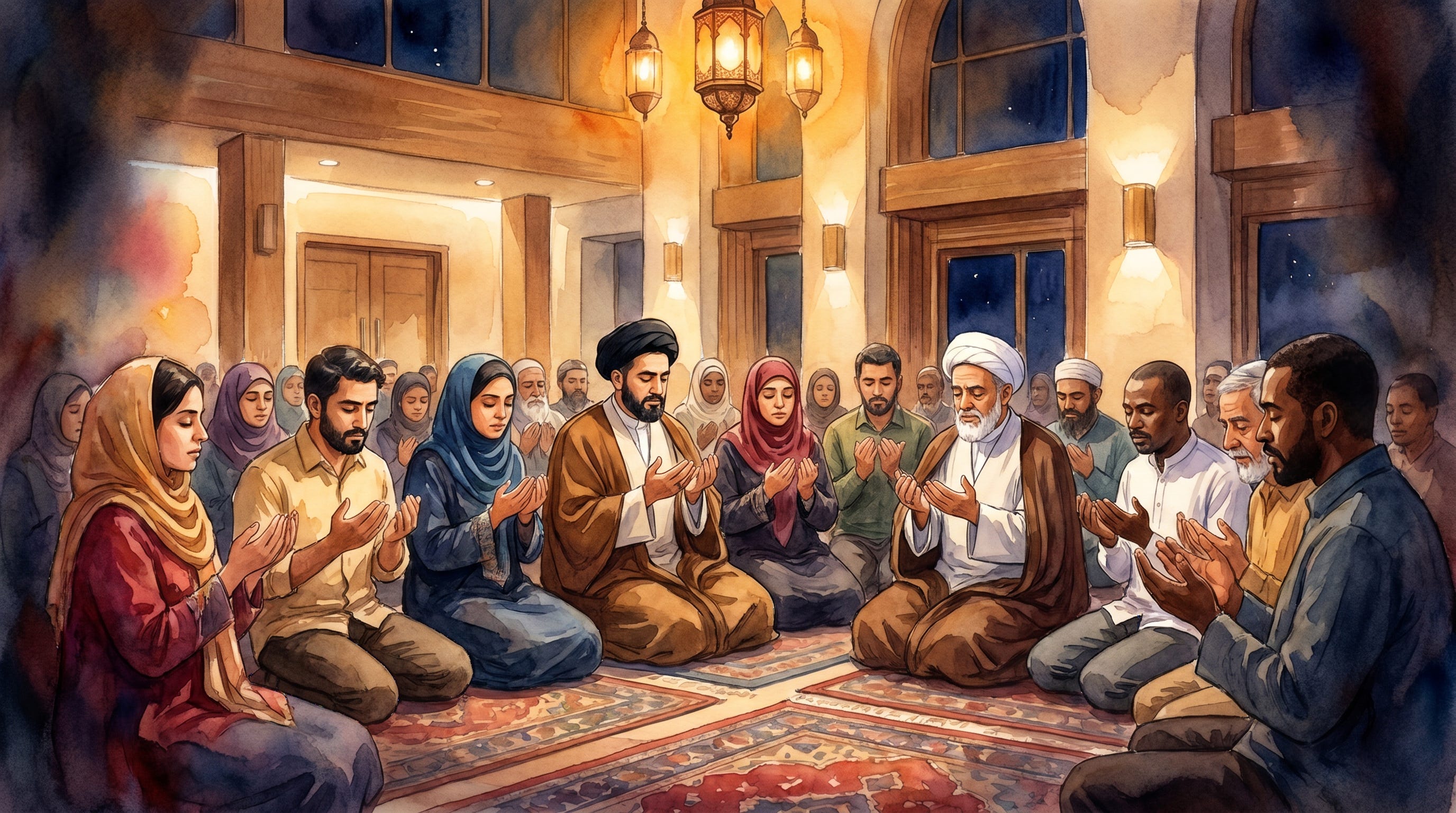
Peace upon Abel, the first witness of the earth, who would rather be killed than kill.
Peace upon every soul, in every age and every land, who has ever been driven from their home, or kept weak in it, only for saying: our Lord is God.
O God — we have nowhere to go but Your door, and no one to ask but You, and no words enough except the ones You have placed on the tongues of Your friends.
O God, send Your peace and Your blessings upon Your final Messenger Muhammad, and upon his pure family, and upon his righteous companions.
And send Your peace upon the prophets of every house — upon Adam, and Noah, and Abraham, and Ishmael and Isaac, and Moses and Aaron — who told his frightened, oppressed people that the earth belongs to God and the outcome belongs to the God-conscious — and David and Solomon, and John the Baptist and Zechariah, and Jesus son of Mary — and upon every one of them whose name we know and whose name only You know.
O God — this is the night of the prayer he could not say aloud.
Send Your peace upon our master Ali ibn al-Husayn, Zayn al-Abidin, peace and blessings be upon him: the one survivor of the men of Karbala, whom You kept alive to keep the line; who held the frontier of guidance from a bed of chains; who, forbidden to teach in the open, hid the whole of the religion inside his whispered prayers, and taught Your servants — in the Prayer for the Frontiers — how every one of them is a guardian of a line.
O God, teach us to hold the line as he held it.
O God, send Your peace upon our master Husayn, the Master of Witnesses; and upon his father Ali, the Commander of the Faithful; and his mother Sayyedah Fatima al-Zahra; and his brother Imam Hasan; and his aunt and his sister, Sayyedah Zaynab, whose standing taught his grandson’s grief how to stand; and upon al-Abbas, and Ali al-Akbar, and Qasim, and the suckling Ali al-Asghar, and every companion who fell on that field — peace and blessings be upon them all.
O God — and the longer return is always to the chain that runs from Husayn, through the Imams of guidance, to the Imam of our Age, may our souls be his ransom and may You hasten his return — to whom the inheritance of the earth, in truth, belongs.
O God — and upon those of our own age who tied themselves to You and held the seam between the oppressor and the oppressed, and were taken for it.
In this first Arbaeen since the martyrdom of our beloved Imam Sayyed Ali Khamenei, send Your peace upon him, and welcome him into Your nearness with Your prophets and Your martyrs.
Send Your peace upon Sayyed Hassan Nasrallah, who was promised the meeting and kept it; and upon Sayyed Abbas al-Musawi, and his wife Sayyedah Siham and their little son Sayyed Husayn.
Upon Shaykh Ragheb Harb, who taught the south to refuse the occupier’s hand.
Upon Hajj Qasem Soleimani, who tethered himself to You and to nothing else, and who told his daughter so; and Hajj Abu Mahdi al-Muhandis, who fell with him under the one strike; and Hajj Imad Mughniyeh, who effaced his own name so the cause could keep its face.
And upon Hajj Husayn Ghareeb — the reciter of the Prayer for the Frontiers who became one of the People of the Frontiers — and the members of his family who were taken with him.
O God — may Your mercy and Your peace rest upon their pure souls, and may You raise their stations, and gather them with the ones they loved.
O God, send Your peace upon the young men and the children of the resistance of every land — of Palestine, and Lebanon, and Iraq, and Yemen, and Syria, and Bahrain — the doctors who would not leave, the teachers who would not lie, the mothers who would not let go, every guardian of a frontier no camera ever found.
Peace upon every child of Gaza pulled from the rubble; peace upon every one whose name only You remember — and we know that You remember each.
O God — and for those who still remain, we ask You for their protection.
Preserve for us Imam Sayyed Mujtaba Khamenei, the Wali al-Faqih of our time — may God protect him — strengthen him, guide him, and keep him firm upon the path until the appointed hour.
And protect, O God, every righteous scholar and every faithful leader of guidance who remains, every murābiṭ stationed at the frontier that faces Iblīs — shield them from the daggers of the shadow, and keep them standing in the light.
O God — hasten the return of the Imam of our Age. Make us of his helpers, of his soldiers, of those who, when he calls, are already standing — already at our posts.
ٱلَّذِينَ إِذَآ أَصَٰبَتۡهُم مُّصِيبَةٞ قَالُوٓاْ إِنَّا لِلَّهِ وَإِنَّآ إِلَيۡهِ رَٰجِعُونَ
“Those who, when disaster strikes them, say: Indeed we belong to God, and indeed to Him we return.”
— Qur’an, Surah al-Baqarah (the Chapter of the Cow) #2, Verse 156
And we repeat Your promise — an eternal promise for the patient, and a warning for the wrongdoers:
وَسَيَعْلَمُ ٱلَّذِينَ ظَلَمُوٓاْ أَىَّ مُنقَلَبٖ يَنقَلِبُونَ
“And those who do wrong will come to know to what a [bitter] end they will return.”
— Qur’an, Surah al-Shu’arā (the Chapter of the Poets) #26, Verse 227
And our trust, in the holding of every line, is in Him alone:
حَسۡبُنَا ٱللَّهُ وَنِعۡمَ ٱلۡوَكِيلُ
“God is sufficient for us, and He is the best of guardians.”
— Qur’an, Surah Aal Imran (the Chapter of the Family of Imran) #3, Verse 173
Amen. O Most Merciful of the Merciful.
Amen. O Lord Sustainer of all of Creation.
And our final call is that all praise belongs to God, the Lord of the worlds; and may His peace and blessings be upon Muhammad and his pure household.
And from Him alone is all ability and He has authority over all things.