

In His Name, the Most High
اَلسَّلاَمُ عَلَيْكَ يَا أَبَا عَبْدِاللَّهِ
وَعَلَى الْأَرْوَاحِ الَّتِي حَلَّتْ بِفِنَائِكَ
عَلَيْكُمْ مِنَّا جَمِيعًا سَلاَمُ اللَّهِ أَبَدًا مَا بَقِينَا وَبَقِيَ اللَّيْلُ وَالنَّهَارُ
وَلا جَعَلَهُ اللَّهُ آخِرَ الْعَهْدِ مِنَّا لِزِيَارَتِكُمْ
اَلسَّلاَمُ عَلَى الْحُسَيْنِ
وَعَلَى عَلِيِّ بْنِ الْحُسَيْنِ
وَعَلَى أَوْلَادِ الْحُسَيْنِ
وَعَلَى أَصْحَابِ الْحُسَيْنِ
Peace be upon you, O Aba Abdillah (O Husayn),
and upon the souls who have gathered in your courtyard.Upon you, from us all, is the peace of God—forever,
for as long as we remain and as long as night and day endure.And may God never make this our last pledge to visit you.
Peace be upon al-Husayn,
and upon Ali, son of al-Husayn,
and upon the children of al-Husayn,
and upon the companions of al-Husayn.— Adapted from Ziyarat Ashura
Video of the Sermon (Majlis/Lecture)
This is a video of the sermon, the maqtal — lamentation — referenced in this session can be found here.
Introduction
Last night we recovered a word.
We said: martyr does not mean victim.
It means witness.
We traced it back to its root — to a field outside Eden, to a man named Abel (Habil), peace and blessings be upon him, who stood where Imam Husayn, peace and blessings be upon him, would one day stand and said what Imam Husayn would one day say:
“I will not raise my hand against you. I fear God, the Lord of all creation.”
We heard Allamah Tabataba’i explain that Abel’s words were not the words of a frightened man but a conscious, knowing testimony.
And we heard Shaheed Motahhari indict the preacher who turns the Master of Witnesses into a victim by narrating Karbala as though Imam Husayn simply lost his life in vain.
Tonight we go deeper.
Not to another field, but to before the field.
To before the body.
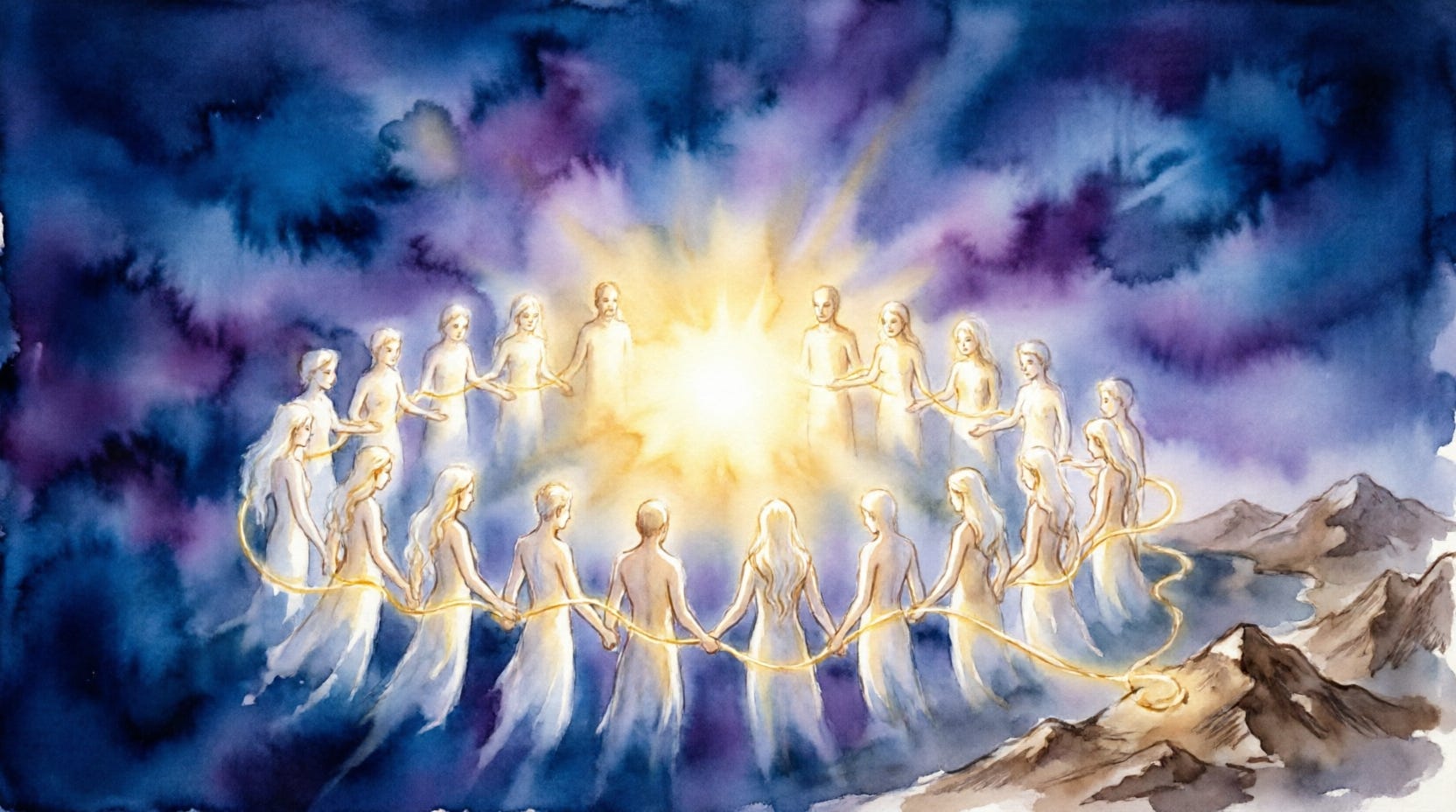
The Qur’an tells us that every soul, before it was given a body, was gathered before its Lord and asked one question.
And every soul answered.
And that answer — spoken in a language older than any language — is the oldest shahada in all of existence.
The Oldest Testimony — Before the Body, Before the World
وَإِذْ أَخَذَ رَبُّكَ مِن بَنِي آدَمَ مِن ظُهُورِهِمْ ذُرِّيَّتَهُمْ وَأَشْهَدَهُمْ عَلَىٰ أَنفُسِهِمْ أَلَسْتُ بِرَبِّكُمْ ۖ قَالُوا بَلَىٰ ۛ شَهِدْنَا ۛ أَن تَقُولُوا يَوْمَ الْقِيَامَةِ إِنَّا كُنَّا عَنْ هَٰذَا غَافِلِينَ
“And when your Lord took from the Children of Adam — from their loins — their descendants, and He made them bear witness over themselves: ‘Am I not your Lord?’ They said: ‘Yes indeed! We bear witness.’ This, lest you should say on the Day of Resurrection, ‘Indeed we were unaware of this.’”
— Qur’an, Surah al-A’raf (the Chapter of the Heights) #7, Verse 172
Read this verse slowly, and let it settle.
It describes something that happens at the root of every human existence. God gathered every soul that would ever live, and He asked them a question.
Not a question of doctrine.
Not a question of law.
A question of recognition:
“Am I not your Lord?”
And every soul answered:
balā — shahidnā. “Yes indeed — we bear witness.”
That answer — shahidnā, “we bear witness” — is the same root, the same word, the same act that Abel performed in the field, that every prophet after him carried, and that Imam Husayn completed at Karbala.
The word shahida — to witness — appears here not as a human invention, not as a religious obligation imposed from outside, but as the first thing every soul ever said.
Before the body.
Before the cradle.
Every soul has already testified.
Allamah Tabataba’i, in his commentary on this verse in al-Mizan, identifies three events:
God separated the Children of Adam from one another, drawing them out as individual souls;
He made each witness over themselves — not over one another, not over a doctrine, but over their own nature; and He asked them:
“Am I not your Lord?”
Allamah Tabataba’i writes:
و الغرض من إشهادهم على أنفسهم أن يشاهدوا من أنفسهم ما أراد الله أن يشاهدوه، حتى يشهدوا بما شاهدوه كلما سُئلوا عنه.
“God’s purpose was that they may witness His Lordship, so that they would testify to it whenever questioned about it.”
— Allamah Tabataba’i, al-Mizan fi Tafsir al-Qur’an, Volume 16, Pages 195–197 (Commentary on Surah al-A’raf 7:172–174)
The verse, Allamah Tabataba’i explains, is not describing a historical event that happened once and was forgotten.
It is describing the permanent condition of every soul.
Every human being carries within them, whether they know it or not, the testimony they gave before they were born.
The question of this life — the question of this Muharram — is whether we remember it.
The question is not whether you are a witness; you already are one, by the testimony you gave before you were born.
The question is whether you remember, and whether you honour what you said.
The Imprint of the Covenant — What the Fitrah Carries
The Qur’an gives us a second verse that completes the picture:
فَأَقِمْ وَجْهَكَ لِلدِّينِ حَنِيفًا ۚ فِطْرَتَ اللَّهِ الَّتِي فَطَرَ النَّاسَ عَلَيْهَا ۚ لَا تَبْدِيلَ لِخَلْقِ اللَّهِ ۚ ذَٰلِكَ الدِّينُ الْقَيِّمُ وَلَٰكِنَّ أَكْثَرَ النَّاسِ لَا يَعْلَمُونَ
“Set your face toward the religion in natural devotion — the nature made by God in which He has made mankind. There is no altering of God’s creation. That is the upright religion, but most people do not know.”
— Qur’an, Surah al-Rum (the Chapter of the Romans) #30, Verse 30
The word here is fitrah — the innate nature, the original disposition.
It is the imprint of the covenant.
Every child is born with it.
It is the reason a human being, even one who has never heard the word shahada, who has never set foot in a mosque, feels within themselves a pull toward the truth and a revulsion from injustice.
That pull is not culture.
It is not upbringing.
It is the echo of balā — “yes” — still reverberating in the chest from before the body was made.
The Imams teach that the covenant of 7:172 is not a one-time event locked in pre-eternity.
It is the foundation of what it means to be human.
Abdullah ibn Sinan asked Imam al-Sadiq, peace and blessings be upon him, about the verse of the fitrah.
The Imam answered:
قال: هي الإسلام. فطرهم الله حين أخذ ميثاقهم على التوحيد، قال: أ لست بربكم؟ و فيه المؤمن و الكافر.
“It is submission (islam). God shaped them according to monotheism (tawhid) when He took their covenant, saying: ‘Am I not your Lord?’ — and this included both the believers and the disbelievers.”
— Imam al-Sadiq, peace and blessings be upon him, narrated by Abdullah ibn Sinan; al-Kafi, also cited in Allamah Tabataba’i, al-Mizan fi Tafsir al-Qur’an, Volume 16, Page 222
The fitrah — the innate nature every child is born with — is the covenant.
Not a memory of the covenant.
The covenant itself, written into the very structure of what it means to be human.
And every time a believer pronounces the shahadatayn —
“I bear witness that there is no god but God, and I bear witness that Muhammad is the Messenger of God”
— they are not inventing a new testimony.
They are remembering the one they already gave.
Every time you say ashhadu — “I bear witness” — you are echoing a voice older than your body, older than your parents, older than the earth itself.
This is what makes witness universal.
It is not a Muslim invention.
It is a human inheritance.
And it is why, when we trace the chain of witnesses tonight through the prophets, every tradition that has met God will be found producing witnesses — because every soul that has ever lived made the same testimony before it was born.
The Prophetic Chain of Grief
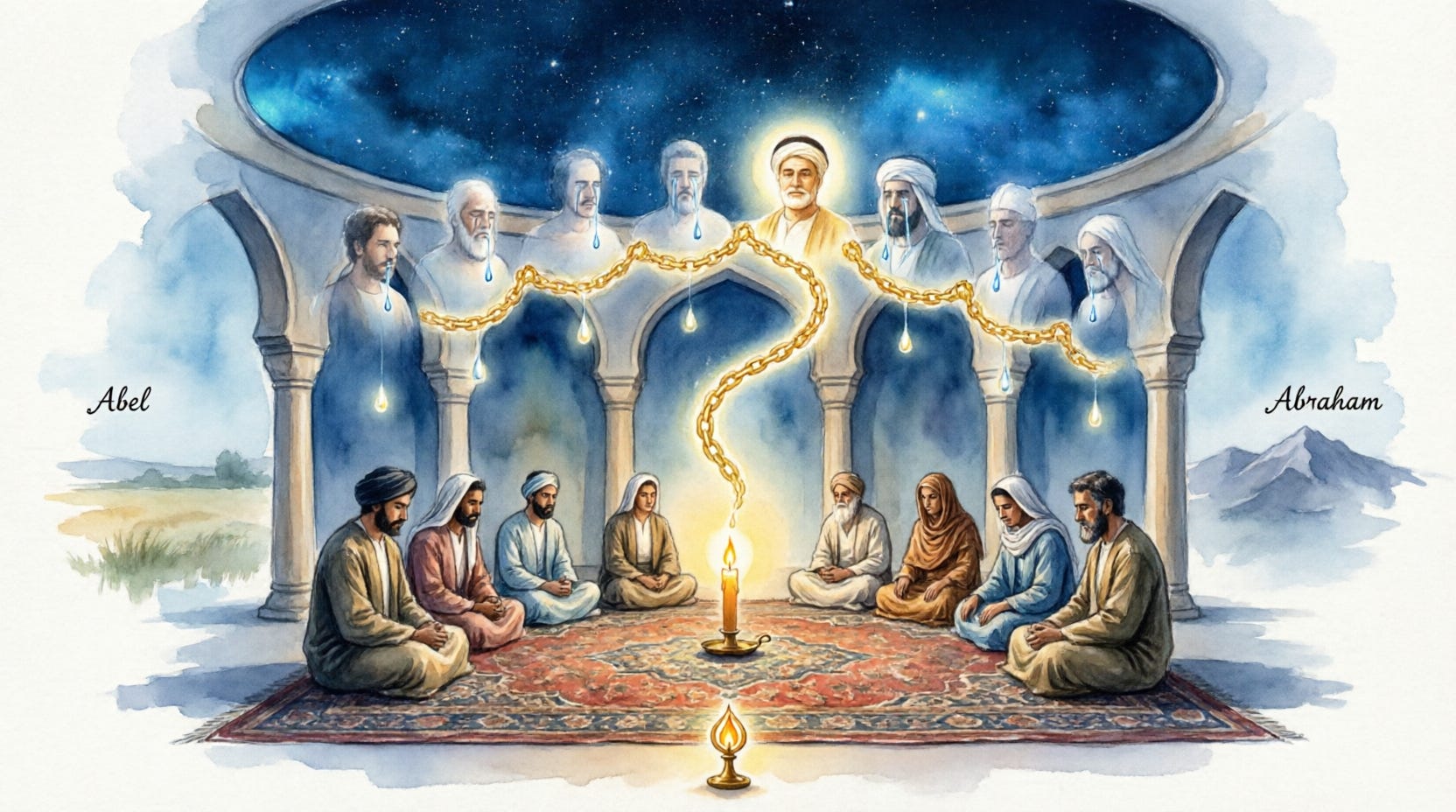
The covenant is universal.
Every soul has said it.
But God did not leave the testimony to echo alone in ordinary hearts.
He sent prophets to remind them.
And what we find, when we look at those prophets carefully, is that they were not only reminding.
They were weeping.
The chain of witnesses from Abel to Imam Husayn is not a metaphor.
It is, in the theology of the Ahl al-Bayt, a literal inheritance.
Each prophet inherited the covenant, carried it, testified to it, and in many cases suffered for it.
And woven through this chain is a thread of grief that runs from the first prophet to the last, and from the last prophet to his grandson.
We will trace eight links tonight — enough to feel the weight of the chain, enough to understand that when we weep for Imam Husayn, we are not the first to weep.
Abel — the Link We Established Last Night
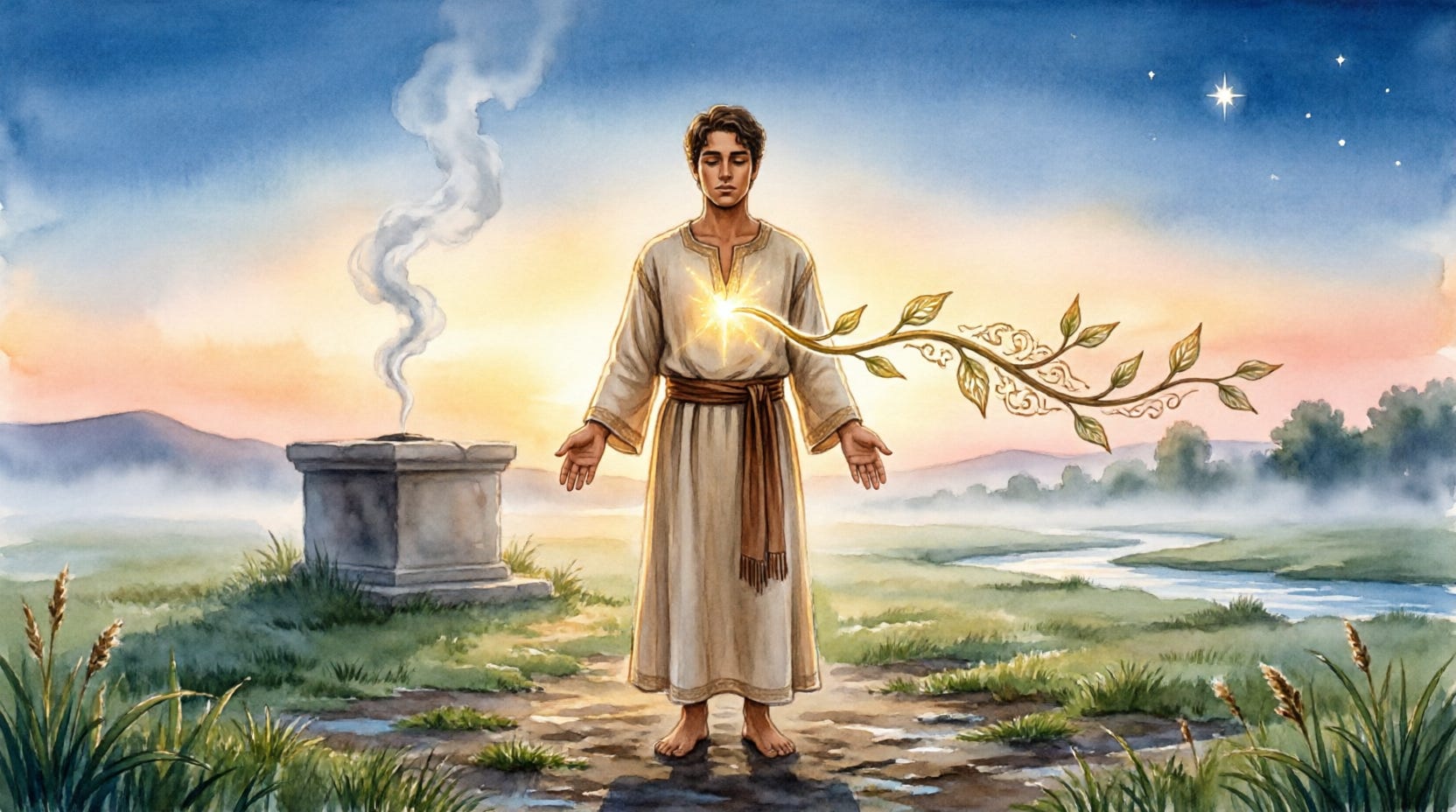
We begin where we ended. Abel— peace and blessings be upon him, stands at the head of this chain.
He is the first witness.
His testimony —
“I will not raise my hand against you; I fear God, the Lord of all creation”
— is the seed from which every testimony after him grows.
We spent the whole of last night with him.
Tonight he stands in his place at the beginning, and we walk forward.
Noah — the Father Who Could Not Save the Son Who Would Not Listen
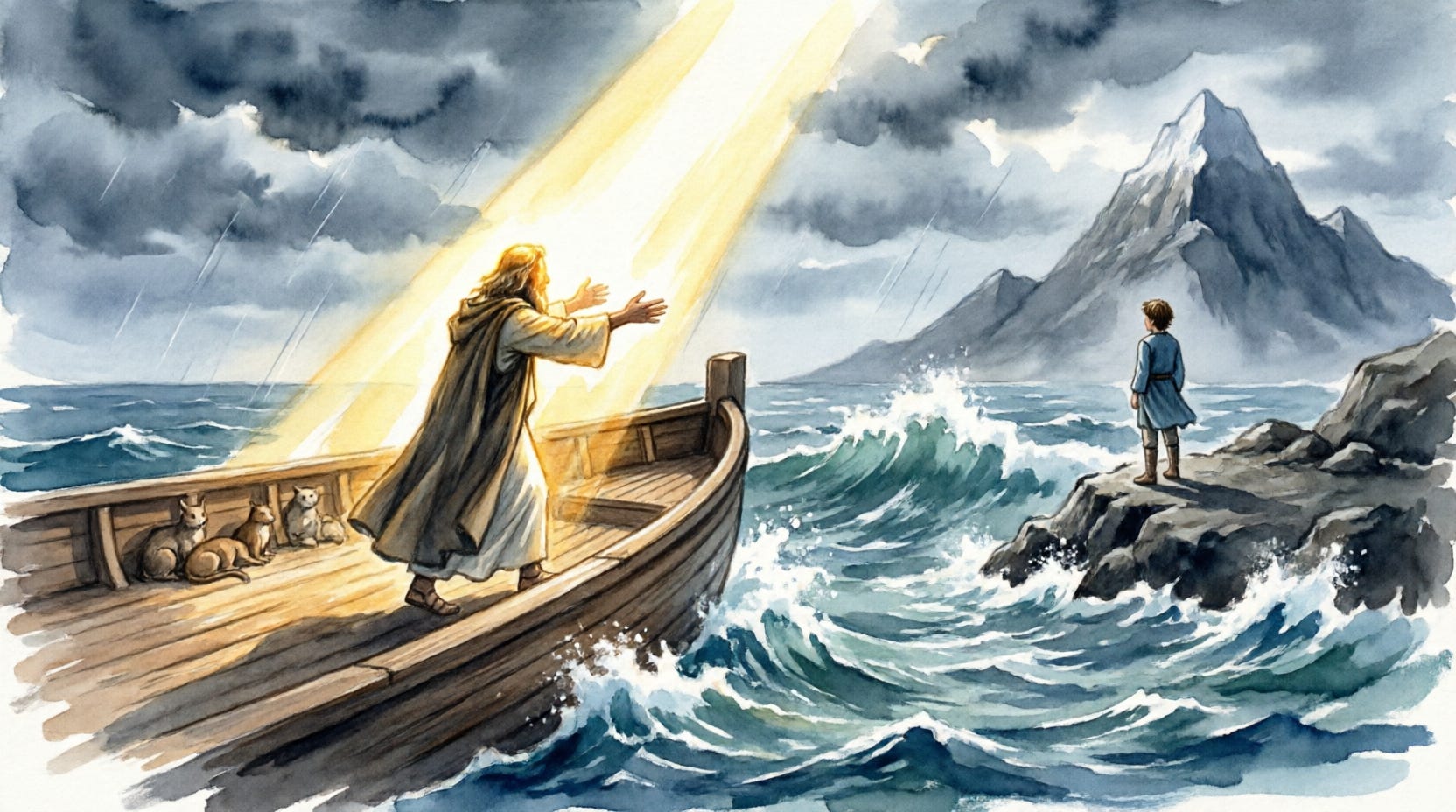
The Qur’an preserves one of the most painful moments in the history of prophethood:
وَنَادَىٰ نُوحٌ ابْنَهُ وَكَانَ فِي مَعْزِلٍ يَا بُنَيَّ ارْكَب مَّعَنَا وَلَا تَكُن مَّعَ الْكَافِرِينَ قَالَ سَآوِي إِلَىٰ جَبَلٍ يَعْصِمُنِي مِنَ الْمَاءِ ۚ قَالَ لَا عَاصِمَ الْيَوْمَ مِنْ أَمْرِ اللَّهِ إِلَّا مَن رَّحِمَ ۚ وَحَالَ بَيْنَهُمَا الْمَوْجُ فَكَانَ مِنَ الْمُغْرَقِينَ
“And Noah called to his son, who was standing apart: ‘O my son! Board with us, and do not be with the disbelievers.’ He said: ‘I will take refuge on a mountain; it will protect me from the water.’ Noah said: ‘There is no protector today from the decree of God, except for those on whom He has mercy.’ And the waves came between them, and he was among those who drowned.”
— Qur’an, Surah Hud (the Chapter of Hud) #11, Verses 42–43
Noah is a witness who was answered with a flood — and who lost a child to the refusal of the truth.
The grief here is not the grief of persecution.
It is the grief of the father who stands on the Ark with the truth in his hand and watches his own son choose the mountain instead.
The mountain that will not save him.
Allamah Tabataba’i pauses on this in al-Mizan.
Noah, he explains, was one of the ulul-’azm, the resolute — the highest rank of prophethood.
He had just witnessed the full manifestation of God’s lordship in the flood.
And yet — driven by what Allamah Tabataba’i calls “a deep longing and sorrow for his son” — he called out to God:
و إنما حمله على ذلك شدة الشوق و الحنان إلى ابنه كما يدل عليه تعبيره بالنداء فإن النص لم يقل: سأل أو قال أو دعا بل نادى و هو من ضراعة المبتلى المدهوش.
“Driven by a deep longing and sorrow for his son, Noah raised his voice to God in supplication. The text does not say he ‘asked’, ‘said’, or ‘prayed’, but rather he ‘called out’ — which reflects the outcry of a desperate person facing intense distress.”
— Allamah Tabataba’i, al-Mizan fi Tafsir al-Qur’an, Volume 20, Page 54
And God’s answer was devastating:
قَالَ يَا نُوحُ إِنَّهُ لَيْسَ مِنْ أَهْلِكَ ۖ إِنَّهُ عَمَلٌ غَيْرُ صَالِحٍ
“He said: ‘O Noah, indeed he is not of your family. Indeed, he is unrighteous conduct.’”
— Qur’an, Surah Hud (the Chapter of Hud) #11, Verse 46
The son who chooses the mountain over the truth has severed himself from the family of the prophet by his own choice.
The family of the witness, Allamah shows us, is not defined by blood alone.
It is defined by righteousness.
A son who carries the blood of a prophet but refuses the truth has placed himself outside the covenant — and the waves will not spare him for the name he carries.
This is the first note in the prophetic chain of parental grief — the grief that runs all the way to the Prophet Muhammad, peace and blessings be upon him, his family, and his righteous companions, weeping over the dust of Karbala.
The prophets do not only suffer at the hands of distant strangers.
They suffer at the hands of those who were close enough to know the truth and chose the mountain instead.
And the principle Noah’s son teaches us — that the covenant must be carried, not merely inherited — is so important that we must pause on it before we continue.
The Covenant Is Not a Birthright
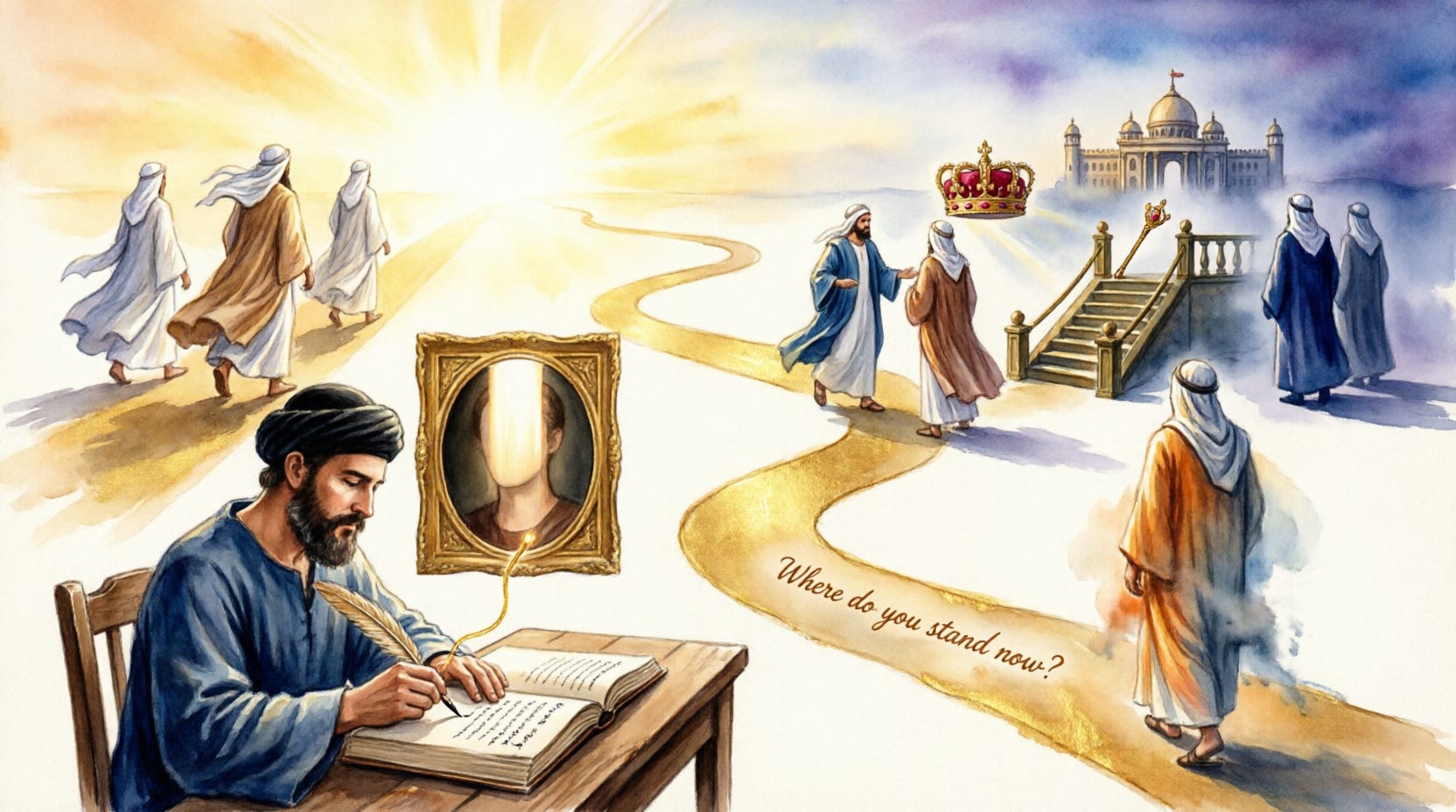
Noah’s son teaches us something our community must carry:
the covenant is not a birthright.
It is not a passport stamped once and valid forever.
It is not a guarantee earned by proximity to a prophet, by a famous ancestor, or by a glorious past.
It is a daily, active struggle — what the tradition calls jihad al-nafs — and the moment that struggle is abandoned, the covenant is forfeit, regardless of who your father was.
The scholars of the Hawza discuss this under the heading of ruyesh-ha and rizesh-ha — new growths and fallouts.
In every generation, the community produces people who grow toward the truth and people who fall away.
And the fall is not always dramatic.
Sometimes it is the slow, quiet erosion of a man who was once close to the truth and let the world pull him away, one compromise at a time.
Imam Khomeini distilled this principle into a single sentence in his last will and testament:
«ملاک، حال فعلی افراد است.»
“The criterion for evaluating anyone is their current state.”
— Imam Khomeini, Wasiyyat-nama (Last Will and Testament)
Not their history.
Not their lineage.
Not the battles they once fought or the company they once kept.
Their current state.
Where they stand now.
This is the lesson of Noah’s son — and it is the lesson of Karbala.
At Karbala itself, the Banu Hashim — the Prophet’s immediate clan and direct household — stood entirely with Imam Husayn.
Not one of them crossed.
But those connected to the Prophet and his household through the broader tribe of Quraysh, through companionship, and through tribal marriage — some of them stood in the army that killed him.
Consider Sa’d ibn Abi Waqqas — one of the earliest companions of the Prophet, peace and blessings be upon him, his family, and his righteous companions, counted among the Prophet’s maternal uncles by tribal right through the Banu Zuhrah, the clan of the Prophet’s mother.
The Shia biographical authority Sayyed Muhsin al-Amin confirms it:
«بنو زهرة أخوال النبي صلى الله عليه وآله لأن آمنة أمه منهم.»
“The Banu Zuhrah are the maternal uncles of the Prophet (peace and blessings be upon him and his family), because his mother Aminah was from them.”
— Sayyed Muhsin al-Amin, A’yan al-Shia
And yet Sa’d’s son, Umar ibn Sa’d, was the man who commanded the army that killed Imam Husayn — the man who ordered the first arrow shot.
Or consider Shimr ibn Thil-Jawshan, with tribal ties to Imam Ali’s household through the Banu Kilab — the same tribe as Sayyedah Umm al-Banin, the mother of al-Abbas.
On the day of Ashura, Shimr approached the camp and offered safe conduct to al-Abbas and his full brothers, calling them his “nephews” in the tribal sense.
Al-Abbas, peace and blessings be upon him, rejected the offer with a fierceness that has echoed for fourteen centuries.
The tribal ties were real.
The covenant had been broken — and blood without covenant saves no one.
And consider the Umayyads themselves.
Yazid and Imam Husayn shared the same Qurayshi blood — both descending from Abd Manaf, whose twin sons Hashim and Abd Shams founded the two rival branches of the tribe.
Some have tried to use this to reduce Karbala to a “family dispute,” a quarrel between cousins over who should rule.
This is not a misunderstanding.
It is a distortion — the oldest trick in the book of the one who mutilated Hamza at Uhud.
Karbala was not a family quarrel.
The shared blood between Imam Husayn and Yazid makes it something far more devastating: it makes it the proof that blood, lineage, tribe, and name mean nothing — nothing — when the covenant is broken.
And consider, perhaps most powerfully, the case of Zubayr ibn al-Awwam — a man Imam Khamenei used as the defining example of this principle.
Zubayr was the Prophet’s cousin, known as the “Sword of Islam.”
He defended Imam Ali at the very first hour after the Prophet’s passing, protesting at Saqifah against those who seized the caliphate.
And yet, decades later, at the Battle of Jamal, Zubayr drew his sword against the same Ali he had once defended.
The world had worked on him.
The desires had crept in.
The covenant had been abandoned — not in a single dramatic moment, but in the slow accumulation of compromise and ambition.
Imam Khamenei explained this with a clarity that cuts to the bone:
«هرکسی در مقابله با شخصیتی مثل جناب زبیر، یا جناب طلحه، دچار تردید میشد. این زبیر کسی بود که در زمان پیامبر، جزو شخصیتها و برجستهها و پسر عمّهی پیامبر و نزدیک به آن حضرت بود. حتّی بعد از دوران پیامبر هم جزو کسانی بود که برای دفاع از امیرالمؤمنین، به سقیفه اعتراض کرد. بله؛ «حکم مستوری و مستی همه بر عاقبت است»! خدا عاقبت همهمان را به خیر کند. گاهی اوقات دنیا طلبی، اوضاع گوناگون و جلوههای دنیا، آنچنان اثرهایی میگذارد، آن چنان تغییرهایی...»
“Anyone would have faced doubts when confronting a personality like Zubayr or Talha. This Zubayr was someone who, during the time of the Prophet, was among the prominent personalities, the Prophet’s cousin, and close to him. Even after the Prophet’s era, he was among those who protested at Saqifah in defence of the Commander of the Faithful. Yes — ‘the verdict on piety and intoxication is based entirely on the final end’! May God make all of our ends good. Sometimes worldliness, various circumstances, and the allurements of the world leave such impacts, such changes...”
— Imam Khamenei, Friday Prayer Sermon, 1999
And in a later address, he crystallised the principle:
«برخورد قاطع امیر مومنان با طلحه و زبیر، نمونه ای تاریخی از ضرورت توجه به حال کنونی افراد در هرگونه قضاوت و ارزیابی است.»
“The decisive confrontation of the Commander of the Faithful with Talha and Zubayr is a historical example of the necessity to focus on the current state of individuals in any judgment and evaluation.”
— Imam Khamenei, Address of 4 June 2010
Noah’s son chose the mountain.
Zubayr chose the world.
Umar ibn Sa’d chose the governor’s promise of a province.
Shimr chose the wrong army.
And in each case, the blood they carried, the names they bore — none of it saved them.
The criterion, as Imam Khomeini told us, is the current state.
And the question the covenant asks, every morning, is the question it has been asking since before the body was made:
where do you stand now?
Abraham — the Blade That Did Not Fall
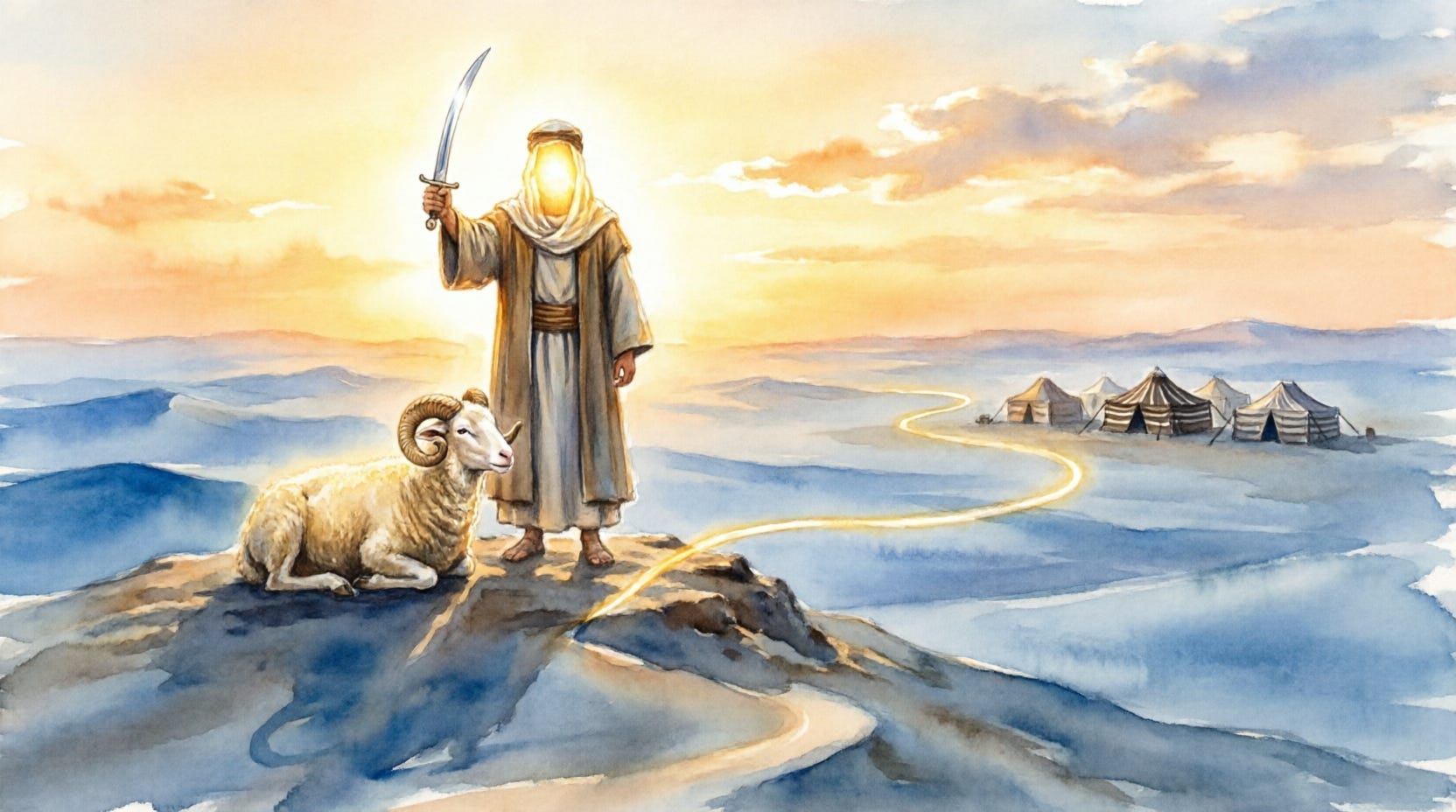
Abraham (Ibrahim), peace and blessings be upon him, carries the covenant more explicitly than any prophet before the final Messenger.
He surrendered everything — homeland, father’s house, comfort, safety — for the sake of the testimony he had made before he was born.
And it is Abraham who gave the covenant its most famous spoken form:
قُلْ إِنَّ صَلَاتِي وَنُسُكِي وَمَحْيَايَ وَمَمَاتِي لِلَّهِ رَبِّ الْعَالَمِينَ لَا شَرِيكَ لَهُ ۖ وَبِذَٰلِكَ أُمِرْتُ وَأَنَا أَوَّلُ الْمُسْلِمِينَ
“Say: my prayer, my sacrifice, my living, and my dying are all for God, the Lord of all creation. He has no partner. This is what I have been commanded, and I am the first of those who submit.”
— Qur’an, Surah al-An’am (the Chapter of the Cattle) #6, Verses 162–163
My prayer, my sacrifice, my living, and my dying — all for God.
This is the covenant of 7:172 spoken aloud in the voice of a prophet.
When every soul said “Yes — we bear witness” before the body was made, this is what the “yes” meant.
Abraham is not inventing a new commitment.
He is remembering the oldest one — the one written into his fitrah — and speaking it where the world can hear it.
And it is this same declaration that Imam Husayn will embody at Karbala.
Imam Husayn does not merely quote Abraham.
He is Abraham’s covenant fulfilled.
The blade that was stayed on the mountain — the son who was ransomed — the blood that was deferred: all of it arrives at the plain of Karbala.
God ransomed Ishmael with “a great sacrifice”:
وَفَدَيْنَاهُ بِذِبْحٍ عَظِيمٍ
“And We ransomed him with a great sacrifice.”
— Qur’an, Surah al-Saffat (the Chapter of Those Ranged in Rows) #37, Verse 107
What is this “great sacrifice” — this dhibh ‘adhim?
On the surface, the historical meaning is the heavenly ram God sent to replace Ishmael on the stone.
But the narrations of the Ahl al-Bayt take us deeper.
The most explicit comes from Imam Ali al-Rida, peace and blessings be upon him, recorded by Shaykh al-Saduq.
When God ransomed Ishmael, Abraham felt a pang of grief — not relief, but grief — because he wished he could have experienced the ultimate test, so that he might attain the highest reward of patience.
God then initiated a profound exchange:
«فَأَوْحَى اللَّهُ عَزَّ وَ جَلَّ إِلَيْهِ: يَا إِبْرَاهِيمُ مَنْ أَحَبُّ خَلْقِي إِلَيْكَ؟ فَقَالَ: يَا رَبِّ مَا خَلَقْتَ خَلْقاً هُوَ أَحَبُّ إِلَيَّ مِنْ حَبِيبِكَ مُحَمَّدٍ... قَالَ: فَذَبْحُ وَلَدِهِ ظُلْماً عَلَى أَيْدِي أَعْدَائِهِ أَوْجَعُ لِقَلْبِكَ أَوْ ذَبْحُ وَلَدِكَ بِيَدِكَ فِي طَاعَتِي؟ قَالَ: يَا رَبِّ بَلْ ذَبْحُهُ عَلَى أَيْدِي أَعْدَائِهِ أَوْجَعُ لِقَلْبِي. قَالَ: يَا إِبْرَاهِيمُ فَإِنَّ طَائِفَةً تَزْعُمُ أَنَّهَا مِنْ أُمَّةِ مُحَمَّدٍ سَتَقْتُلُ الْحُسَيْنَ ابْنَهُ مِنْ بَعْدِهِ ظُلْماً وَ عُدْوَاناً كَمَا يُذْبَحُ الْكَبْشُ... فَجَزِعَ إِبْرَاهِيمُ لِذَلِكَ وَ تَوَجَّعَ قَلْبُهُ وَ أَقْبَلَ يَبْكِي. فَأَوْحَى اللَّهُ عَزَّ وَ جَلَّ إِلَيْهِ: يَا إِبْرَاهِيمُ قَدْ فَدَيْتُ جَزَعَكَ عَلَى ابْنِكَ إِسْمَاعِيلَ لَوْ ذَبَحْتَهُ بِيَدِكَ بِجَزَعِكَ عَلَى الْحُسَيْنِ وَقَتْلِهِ، وَأَوْجَبْتُ لَكَ أَرْفَعَ دَرَجَاتِ أَهْلِ الثَّوَابِ عَلَى الْمَصَائِبِ، وَذَلِكَ قَوْلُ اللَّهِ عَزَّ وَجَلَّ: {وَفَدَيْناهُ بِذِبْحٍ عَظِيمٍ}»
“God revealed to him: ‘O Abraham, who among My creation is most beloved to you?’
He replied: ‘O Lord, You have not created anyone more beloved to me than Your beloved, Muhammad.’
God asked: ‘Would the unjust slaughter of his son at the hands of his enemies ache your heart more, or you slaughtering your own son with your hands in obedience to Me?’
Abraham said: ‘O Lord, his slaughter at the hands of his enemies aches my heart more.’
God said: ‘O Abraham, a group claiming to be from the nation of Muhammad will unjustly slaughter his son Husayn after him, just as a ram is slaughtered.’
Abraham was deeply grieved, his heart ached, and he began to weep.
Then God revealed to him: ‘O Abraham, I have ransomed your grief over your son Ishmael — had you slaughtered him with your own hands — with your grief over Husayn and his murder.
And I have obligated for you the highest degrees of those rewarded for afflictions.
And that is the word of God: And We ransomed him with a great sacrifice.‘”
— Imam Ali al-Rida (peace and blessings be upon him), narrated in Shaykh al-Saduq, Uyun Akhbar al-Rida, Volume 1, Chapter 17, Hadith 1. Also in Bihar al-Anwar, Volume 44, Page 225.
God is telling Abraham: the blade was stayed not because the test was cancelled, but because it was deferred — to a greater sacrifice, a greater grief, a greater witness.
The ram was the placeholder.
The dhibh ‘adhim — the great sacrifice — is Imam Husayn.
Ayatollah Jawadi-Amoli observes that whenever God uses the word ‘adhim in the Qur’an, it denotes a weight beyond ordinary human comprehension —
the Throne is ‘adhim,
the Prophet’s character is ‘adhim,
the Day of Judgement is ‘adhim.
A physical ram cannot bear the word in the divine vocabulary.
The great sacrifice must hold cosmic, eternal weight:
«حسین بن علی (علیه السلام) ذبیح الله و ذبح عظیم است، زیرا هر چه داشت در راه خدا فدا کرد.»
“Husayn ibn Ali (peace and blessings be upon him) is the Slaughtered of God and the Great Sacrifice, because he sacrificed absolutely everything he possessed in the way of God.”
— Ayatollah Jawadi-Amoli, Hamaseh va Irfan (Epic and Mysticism)
Ayatollah Makarem-Shirazi places this in its exegetical frame: the Qur’an carries both a zahir — apparent meaning — and a batin — inner depth.
The apparent meaning is the ram on the stone.
The inner depth is Imam Husayn.
Both are true.
God placed in a single sentence the ram and the grandson, the mountain and the plain, the blade that was stayed and the blood that would fall.
And Imam Khamenei distilled it into one line:
«امام حسین (علیه السلام) همان ذبح عظیمی است که اسلام را بیمه کرد.»
“Imam Husayn (peace and blessings be upon him) is that very Great Sacrifice that insured the survival of Islam.”
— Imam Khamenei, Addresses on the Philosophy of Ashura
Abraham’s blade did not fall so that Imam Husayn’s blood could fall.
The chain of witness is a chain of deferred blood.
The covenant Abraham spoke aloud —
“my prayer, my sacrifice, my living, and my dying are all for God”
— is the covenant Imam Husayn honoured with his life.
John the Baptist — the Blood That Boiled, and the Blood That Is Still Boiling
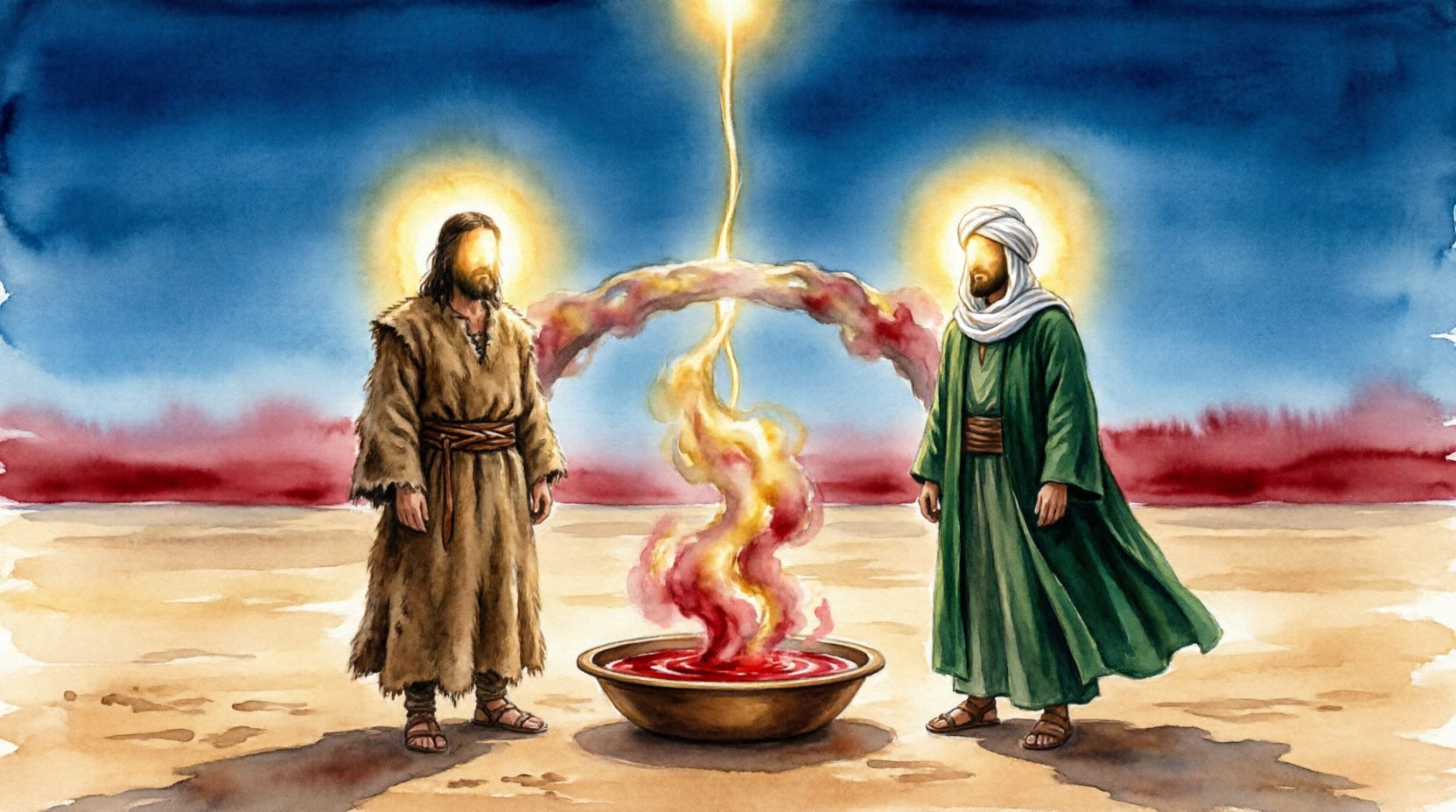
John the Baptist (Yahya), peace and blessings be upon him, is one of the prophets the Qur’an names with a particular tenderness:
يَا يَحْيَىٰ خُذِ الْكِتَابَ بِقُوَّةٍ ۖ وَآتَيْنَاهُ الْحُكْمَ صَبِيًّا وَحَنَانًا مِّن لَّدُنَّا وَزَكَاةً ۖ وَكَانَ تَقِيًّا وَبَرًّا بِوَالِدَيْهِ وَلَمْ يَكُن جَبَّارًا عَصِيًّا وَسَلَامٌ عَلَيْهِ يَوْمَ وُلِدَ وَيَوْمَ يَمُوتُ وَيَوْمَ يُبْعَثُ حَيًّا
“’O John! Hold firmly to the Book.’ And We granted him wisdom while yet a child, and tenderness from Us and purity, and he was God-fearing, and dutiful to his parents, and he was not insolent or disobedient. And peace be upon him the day he was born, and the day he dies, and the day he is raised again to life.”
— Qur’an, Surah Maryam (the Chapter of Mary) #19, Verses 12–15
John was a prophet-martyr — beheaded at the order of a king for refusing to issue a religious endorsement for a marriage that violated the law of God.
He could have been silent.
He chose to speak.
And the sword answered him.
The connection between John and Imam Husayn is not one we have drawn.
Imam Husayn drew it himself, on the road to Karbala.
Imam Zayn al-Abidin, peace and blessings be upon him, narrates:
«خَرَجْنَا مَعَ الْحُسَيْنِ (عليه السلام) فَمَا نَزَلَ مَنْزِلًا وَلَا ارْتَحَلَ مِنْهُ إِلَّا ذَكَرَ يَحْيَى بْنَ زَكَرِيَّا وَقَتْلَهُ، وَقَالَ يَوْماً: مِنْ هَوَانِ الدُّنْيَا عَلَى اللَّهِ أَنَّ رَأْسَ يَحْيَى بْنِ زَكَرِيَّا أُهْدِيَ إِلَى بَغِيٍّ مِنْ بَغَايَا بَنِي إِسْرَائِيلَ.»
“We journeyed with Husayn (peace and blessings be upon him), and he did not halt at any station, nor depart from it, except that he remembered Yahya ibn Zakariyya and his murder. And one day he said: ‘From the insignificance of this world to God is that the head of Yahya ibn Zakariyya was gifted to a prostitute from among the prostitutes of the Children of Israel.’”
— Imam Zayn al-Abidin (peace and blessings be upon him), narrated in Ibn Qulawayh al-Qummi, Kamil al-Ziyarat, Chapter 28, Hadith 2. Also in Ibn Tawus, al-Luhuf.
Imam Husayn saw his own martyrdom in the mirror of John’s.
Every stop on the road to Karbala, he thought of the prophet beheaded for refusing to endorse the unlawful — and he knew he was walking the same road, toward the same sword.
Ayatollah Jawadi-Amoli draws the parallel:
«سرّ شباهت یحیی بن زکریا و حسین بن علی (علیهما السلام) در این است که هر دو قربانی طغیان و هوسرانی حاکم زمان خود شدند. یحیی (علیهالسلام) حاضر نشد فتوای باطلی برای ازدواج نامشروع پادشاه بدهد، و حسین (علیهالسلام) نیز حاضر نشد حکومت باطل یزید را امضا کند. خون هر دو جوشید تا باطل را رسوا کند.»
“The secret of the resemblance between Yahya ibn Zakariyya and Husayn ibn Ali is that both became victims of the rebellion and lust of the rulers of their time. Yahya refused to issue a false religious edict for the unlawful marriage of the king, and Husayn likewise refused to sign off on the false government of Yazid. The blood of both boiled in order to disgrace falsehood.”
— Ayatollah Jawadi-Amoli, Hamaseh va Irfan (Epic and Mysticism) / Shekoofeh-haye Ashura (Blossoms of Ashura)
And the narrations preserve an astonishing detail.
After John was killed, his blood boiled in a basin and would not settle.
It boiled until God sent the army of Nebuchadnezzar — Bukhtanasar — to slaughter seventy thousand of the transgressors among whom John’s blood had been shed.
Then, and only then, did John’s physical blood settle.
But the narrations draw a further distinction.
God revealed to the Prophet Muhammad, peace and blessings be upon him, his family, and his righteous companions:
«إِنِّي قَتَلْتُ بِيَحْيَى بْنِ زَكَرِيَّا سَبْعِينَ أَلْفاً، وَإِنِّي قَاتِلٌ بِابْنِ ابْنَتِكَ سَبْعِينَ أَلْفاً وَسَبْعِينَ أَلْفاً.»
“I took retribution for Yahya ibn Zakariyya with seventy thousand, and I shall take retribution for the son of your daughter with seventy thousand and seventy thousand.”
— Shaykh al-Saduq, Ilal al-Shara’i, Volume 1, Page 226. Also in Kamil al-Ziyarat.
The retribution for Imam Husayn is double.
And the narrations tell us something more: John’s physical blood settled when the earthly retribution was carried out.
But Imam Husayn’s blood has not settled.
It is still boiling — in the veins of history, in the hearts of the believers, in the justice that has not yet been fully enacted — and it will not settle until the Imam of the Age, may our souls be his ransom and may God hasten his return, rises to exact the ultimate retribution.
The sky itself marks this distinction.
The Imams teach:
«لَمْ تَبْكِ السَّمَاءُ إِلَّا عَلَى يَحْيَى بْنِ زَكَرِيَّا وَالْحُسَيْنِ بْنِ عَلِيٍّ (عليهما السلام).»
“The sky has never wept for anyone except for Yahya ibn Zakariyya and Husayn ibn Ali (peace be upon them both).”
— Kamil al-Ziyarat, Chapter 28. The Imams explain that the “weeping of the sky” was a blood-red redness at the horizons.
Two witnesses.
A prophet of resistance, and an Imam of resistance.
Two heads severed.
And the sky wept for both — because these two bloods, and only these two, carried a weight the heavens could not bear in silence.
Shaheed Motahhari takes this from the historical to the living.
The blood of the witness, he teaches, does not spill on the ground and vanish:
«خون شهید هدر نمیرود، خون شهید به زمین نمیریزد. خون شهید هر قطرهاش تبدیل به صدها قطره و هزارها قطره، بلکه به دریایی از خون تبدیل میگردد و در پیکر اجتماع وارد میشود... خون اباعبدالله از جوشش نیفتاد و تا قیامت میجوشد.»
“The blood of the martyr is not wasted; the blood of the martyr does not spill onto the ground. Every drop of the martyr’s blood turns into hundreds and thousands of drops, indeed into an ocean of blood, and enters the body of society. The blood of Aba Abdillah has not stopped boiling, and it will continue to boil until the Day of Resurrection.”
— Shaheed Motahhari, Hamaseh-ye Husayni (The Husayni Epic), Volume 1, Chapter on the Logic of the Martyr
John’s blood boiled and was settled by an earthly army.
Imam Husayn’s blood boils and will not be settled until the Imam of the Age returns.
That is the difference between a prophet-martyr and the Master of Martyrs.
And that is why the sky, which has wept for no one else, wept for both — because both bloods belong to the same chain, and the second is the completion of the first.
Zechariah — the Tree That Opened, and the Prophet Who Wept Before Karbala Existed
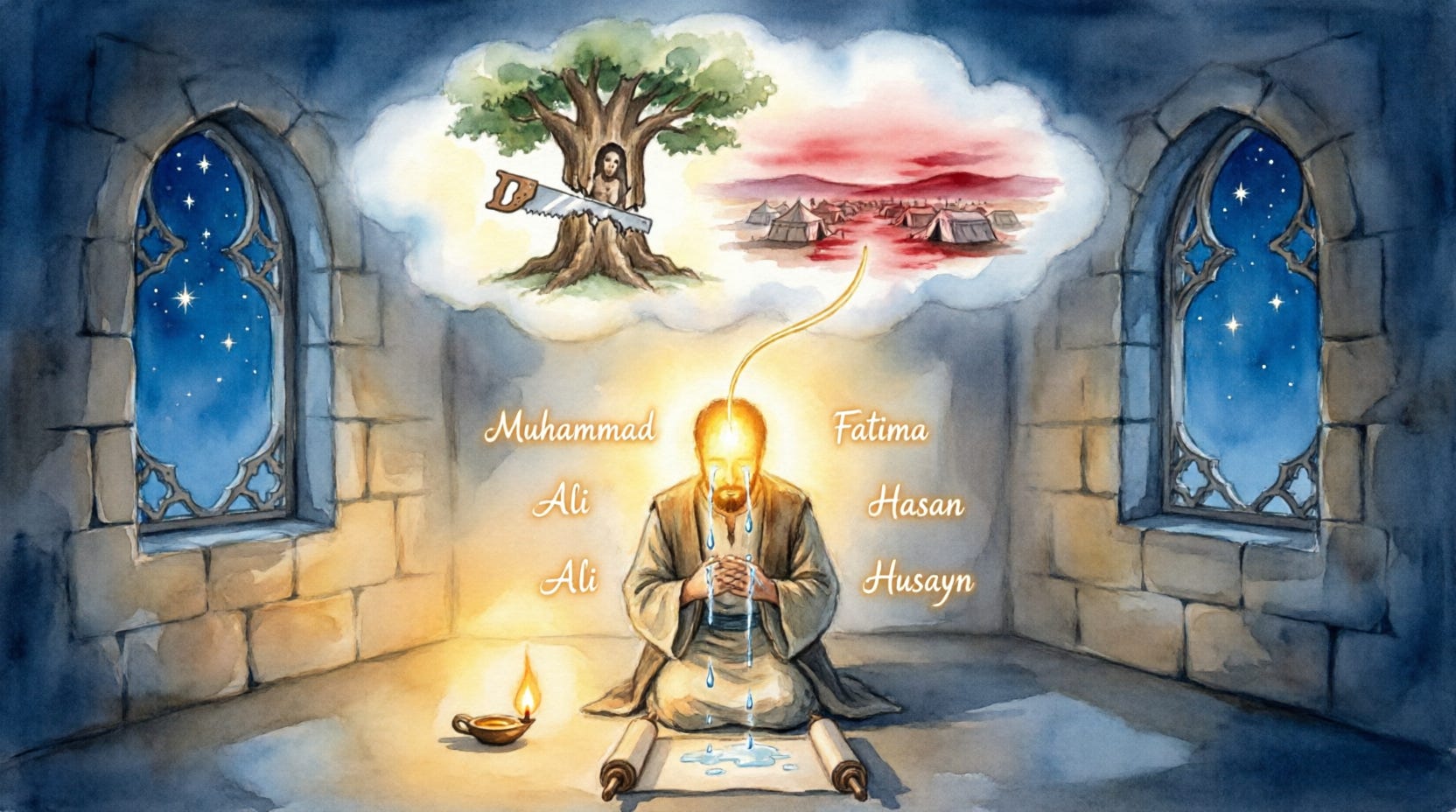
Zechariah (Zakariyya), peace and blessings be upon him, was John’s father — and Mary’s guardian, the man who raised the mother of Jesus in the temple.
His martyrdom is one of the most haunting in the prophetic chain.
When the soldiers came for him, a tree split open and received him inside — the very creation of God offering sanctuary to the Proof of God.
But Iblis — Satan — caught the hem of Zechariah’s garment and left it hanging from the bark:
«فَانْشَقَّتْ لَهُ شَجَرَةٌ فَدَخَلَ فِيهَا، فَبَقِيَ هُدْبُ ثَوْبِهِ، فَجَاءَ الشَّيْطَانُ فَأَخَذَ بِهُدْبِ ثَوْبِهِ فَقَالَ [لِلْجُنُودِ]: هَذَا هُدْبُ ثَوْبِهِ قَدْ دَخَلَ فِي هَذِهِ الشَّجَرَةِ، فَدَعَوْا بِالْمِنْشَارِ فَقَطَعُوا الشَّجَرَةَ بِنِصْفَيْنِ وَقَطَعُوهُ مَعَهَا.»
“A tree split open for him and he entered it, but the hem of his garment remained outside. Satan came, took hold of the hem of his garment, and said to the soldiers: ‘This is the hem of his garment; he has entered this tree.’ So they called for a saw and sawed the tree in half, and they sawed him along with it.”
— Qutb al-Din al-Rawandi, Qisas al-Anbiya (Stories of the Prophets), Page 221. Also in Shaykh al-Mufid’s al-Amali.
The tree opened and could not save him.
The creation of God offered sanctuary, and the enemy of God betrayed it.
Zechariah is the witness who finds shelter and is found anyway — sawn through the trunk that tried to hide him, his blood running through the wood.
But there is a dimension to Zechariah’s story that binds him to Karbala more directly than perhaps any other prophet in the chain.
Sa’d ibn Abdullah al-Ash’ari met the Awaited Imam, may our souls be his ransom and may God hasten his return, in Samarra, and asked him about the opening letters of Surah Maryam —
Kaf-Ha-Ya-Ayn-Sad.
The Imam revealed that these letters are a coded prophecy of Karbala, disclosed to Zechariah.
When Gabriel taught Zechariah the names of the Prophet’s household — Muhammad, Ali, Fatima, Hasan, Husayn — at the mention of the first four, Zechariah found consolation.
But at the name of Husayn, something broke in him:
«فَقَالَ زَكَرِيَّا: يَا رَبِّ مَا لِي إِذَا ذَكَرْتُ أَرْبَعَةً مِنْهُمْ تَسَلَّيْتُ بِأَسْمَائِهِمْ مِنْ هُمُومِي، وَإِذَا ذَكَرْتُ الْحُسَيْنَ تَدْمَعُ عَيْنِي وَتَثُورُ زَفْرَتِي؟ فَأَوْحَى اللَّهُ تَبَارَكَ وَتَعَالَى إِلَيْهِ عَنْ قِصَّتِهِ... فَلَمَّا سَمِعَ ذَلِكَ زَكَرِيَّا لَمْ يُفَارِقْ مَسْجِدَهُ ثَلَاثَةَ أَيَّامٍ وَمَنَعَ فِيهِنَّ النَّاسَ الدُّخُولَ عَلَيْهِ، وَأَقْبَلَ عَلَى الْبُكَاءِ وَالنَّحِيبِ... وَكَانَ يَقُولُ: إِلَهِي أَتُفَجِّعُ قُرَّةَ عَيْنِ خَيْرِ خَلْقِكَ بِوَلَدِهِ؟ إِلَهِي أَتُنْزِلُ بَلْوَى هَذِهِ الرَّزِيَّةِ بِسَاحَتِهِ؟»
“Zechariah said: ‘O Lord, why is it that when I mention four of them, I find consolation in their names, but when I mention Husayn, my tears flow and my sighs rise?’ So God revealed to him the story of Husayn. When Zechariah heard this, he did not leave his sanctuary for three days, forbade people from entering upon him, and devoted himself to weeping and wailing. And he would say: ‘O my God! Will You afflict the apple of the eye of the best of Your creation with his son? O my God! Will You bring the trial of this calamity to his courtyard?’”
— Shaykh al-Saduq, Kamal al-Din wa Tamam al-Ni’mah, Volume 2, Page 461. Also in Bihar al-Anwar, Vol. 14, p. 178 and Vol. 44, p. 223.
Three days.
Three days locked in his sanctuary, weeping, refusing to see anyone — shattered by the knowledge of what would happen to a grandson of a Prophet who had not yet been born, on a plain that had not yet been named, in a month still centuries away.
Ayatollah Jawadi-Amoli draws from this narration a principle that holds the entire chain together:
«گریه انبیا پیش از وقوع حادثه عاشورا، همچون گریه زکریا (علیهالسلام)، نشان میدهد که حادثه کربلا یک حادثه مقطعی در سال ۶۱ هجری نبود، بلکه یک حقیقت تکوینی و فرازمان است که همه اولیای الهی با آن پیوند دارند.»
“The weeping of the prophets prior to the occurrence of Ashura, such as the weeping of Zechariah, demonstrates that the event of Karbala was not an isolated, historical incident in the year 61 AH. Rather, it is an ontological and trans-historical reality with which all the friends of God are deeply connected.”
— Ayatollah Jawadi-Amoli, Tafsir Tasnim and Shekoofeh-haye Ashura (Blossoms of Ashura)
Karbala is not bound by the year 61.
It stretches backward through the prophets just as surely as it stretches forward through the believers.
Zechariah wept for it centuries before it happened.
We weep for it fourteen centuries after.
And the weeping is the same weeping — because the event is not historical. It is, as Ayatollah Jawadi-Amoli says, ontological.
It is woven into the structure of creation itself.
And Grand Ayatollah Bahjat — may God rest his pure soul, whose mystical connection to the tragedy of Ashura was renowned among the scholars of Qom, placed this in its widest frame:
«عزاداری و گریه بر سیدالشهدا (علیهالسلام) از زمان حضرت آدم و انبیاء سلف از جمله حضرت زکریا (علیهالسلام) تأسیس شد. این اشکها، راه اتصال به رحمت واسعه الهی است.»
“Mourning and weeping for the Master of Martyrs — peace and blessings be upon him — was established from the time of Prophet Adam and the preceding prophets, including Prophet Zechariah — peace and blessings be upon him. These tears are the pathway connecting one to the all-encompassing mercy of God.”
— Grand Ayatollah Bahjat, Rahmat-e Wasi’eh (The Boundless Mercy)
The tears are not a ritual we invented.
They are a practice the prophets established.
And when we weep tonight, we are not starting something.
We are joining something — a river of grief that has been flowing since before the body was made, and that will not stop until the Imam of the Age rises and settles what the prophets could not.
Jesus — the Witness from the Cradle, the Weeper at Karbala, and the Proof Against Those Who Would Silence Him
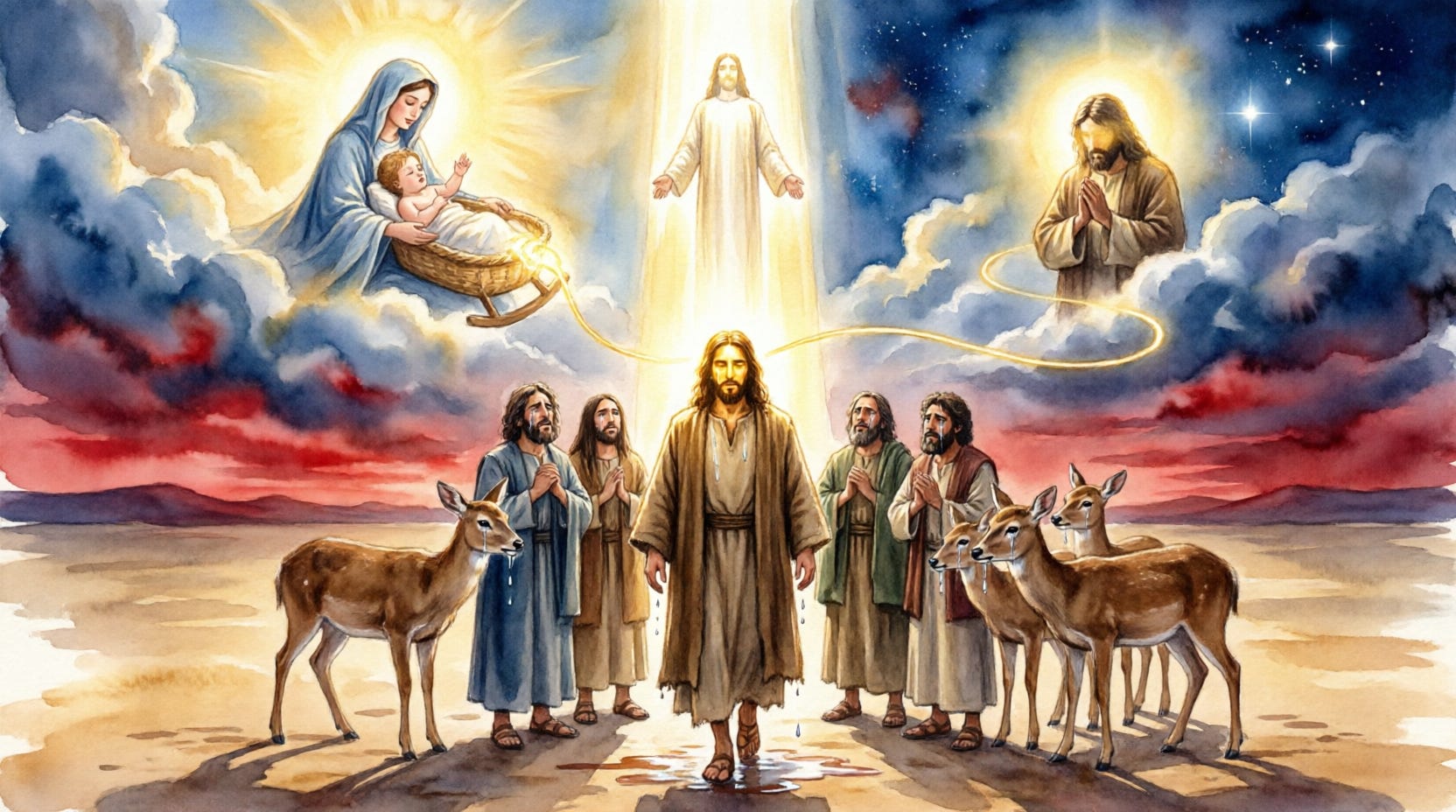
If Zechariah wept for Imam Husayn before Jesus was born, Jesus himself wept for Imam Husayn on the very ground where it would happen.
The narrations tell us that Jesus passed through Karbala — known then as Nainawa — with his disciples, saw a herd of deer gathered and weeping, and stopped with them:
«مَرَّ عِيسَى (عليه السلام) وَمَعَهُ الْحَوَارِيُّونَ بِكَرْبَلَاءَ، فَرَأَوْا بِهَا ظِبَاءً مُجْتَمِعَةً تَبْكِي... فَبَكَى عِيسَى وَبَكَى الْحَوَارِيُّونَ وَلَمْ يَدْرُوا لِمَ بَكَى وَلِمَ بَكَتِ الظِّبَاءُ. فَقَالُوا: يَا رُوحَ اللَّهِ وَكَلِمَتَهُ، مَا يُبْكِيكَ؟ قَالَ: هَذِهِ أَرْضٌ يُقْتَلُ فِيهَا فَرْخُ الرَّسُولِ أَحْمَدَ... وَتُرْبَتُهَا أَطْيَبُ مِنَ الْمِسْكِ لِأَنَّهَا طِينَةُ السِّبْطِ الشَّهِيدِ.»
“Jesus (peace and blessings be upon him) and his disciples passed by Karbala, and they saw a herd of deer gathered there, weeping. So Jesus wept, and the disciples wept, though they did not know why he wept nor why the deer were weeping. They asked: ‘O Spirit of God and His Word, what makes you weep?’ He said: ‘This is a land where the beloved descendant of the Messenger Ahmad will be killed... and its soil is sweeter than musk because it is the clay of the Martyred Grandson.’”
— Allamah Majlisi, Bihar al-Anwar, Volume 44, Page 252. Originating from Shaykh al-Saduq’s Amali and Kamal al-Din.
The infant who testified from the cradle grew up to walk across Iraq and bear witness to a martyrdom that was still six centuries away.
The deer knew.
The earth knew.
And Jesus knew.
Jesus (Isa), peace and blessings be upon him, is unique in this chain in three ways.
First, his testimony began before he could walk.
Mary brings the infant to her people.
They accuse her.
And the newborn child, still in her arms, speaks:
قَالَ إِنِّي عَبْدُ اللَّهِ آتَانِيَ الْكِتَابَ وَجَعَلَنِي نَبِيًّا وَجَعَلَنِي مُبَارَكًا أَيْنَ مَا كُنتُ وَأَوْصَانِي بِالصَّلَاةِ وَالزَّكَاةِ مَا دُمْتُ حَيًّا وَبَرًّا بِوَالِدَتِي وَلَمْ يَجْعَلْنِي جَبَّارًا شَقِيًّا وَالسَّلَامُ عَلَيَّ يَوْمَ وُلِدتُّ وَيَوْمَ أَمُوتُ وَيَوْمَ أُبْعَثُ حَيًّا
“He said: ‘I am a servant of God. He has given me the Book and made me a prophet. He has made me blessed wherever I may be, and He has exhorted me to pray and give charity as long as I live, and to be good to my mother. And He has not made me insolent or wretched. And peace be upon me the day I was born, and the day I die, and the day I am raised again to life.’”
— Qur’an, Surah Maryam (the Chapter of Mary) 19, Verses 30–33
His very first act on this earth is shahada — testimony.
Before he can stand, he bears witness.
The fitrah we spoke of earlier — the covenant written into every soul before the body — in Jesus it breaks through in the first hours of life.
As Ayatollah Jawadi-Amoli teaches, the cradle-testimony was not merely to exonerate his pure mother — it was the establishment of the hujjah, the proof.
The truth of religion does not wait for physical maturity.
It speaks when it must.
Second, his people attempted to kill him.
The leaders of the Children of Israel intended to crucify him.
The intent was there.
The crime was attempted.
But God intervened:
وَمَا قَتَلُوهُ وَمَا صَلَبُوهُ وَلَٰكِن شُبِّهَ لَهُمْ ۚ وَإِنَّ الَّذِينَ اخْتَلَفُوا فِيهِ لَفِي شَكٍّ مِّنْهُ ۚ مَا لَهُم بِهِ مِنْ عِلْمٍ إِلَّا اتِّبَاعَ الظَّنِّ ۚ وَمَا قَتَلُوهُ يَقِينًا بَل رَّفَعَهُ اللَّهُ إِلَيْهِ
“They did not kill him, nor did they crucify him, but it appeared to them so. And those who differ over it are in doubt about it. They have no knowledge of it except the following of conjecture. And they did not kill him, for certain. Rather, God raised him into His proximity.”
— Qur’an, Surah al-Nisa’ (the Chapter of Women) #4, Verses 157–158
God did not let the testimony end.
He preserved the witness by raising him beyond the reach of those who would silence him.
Ayatollah Makarem-Shirazi connects this directly to the Imam of the Age:
«خداوند او را از چنگال دشمنان رهایی بخشید و به سوی خود بالا برد تا به عنوان یک شاهد و گواه زنده، در آخرالزمان بازگردد و بر حقانیت مسیر پیامبر خاتم و اهلبیت او گواهی دهد.»
“God delivered him from the clutches of his enemies and raised him toward Himself so that, as a living witness and testifier, he will return at the End of Times to bear witness to the truthfulness of the path of the Seal of the Prophets and his Household.”
— Ayatollah Makarem Shirazi, Tafsir Nemouneh (Commentary on Surah al-Nisa 4:157–158)
Jesus was not raised to end his testimony.
He was raised to reserve it — to preserve the living witness for the day he returns to pray behind the Mahdi.
The raising is not a withdrawal.
It is a deferral — the same divine logic we saw in Abraham’s blade, stayed not because the sacrifice was cancelled but because it was deferred to a greater hour.
Third — and this connects everything tonight — Jesus himself describes his role in the language of witness.
In Surah al-Ma’idah, he addresses God directly:
وَكُنتُ عَلَيْهِمْ شَهِيدًا مَّا دُمْتُ فِيهِمْ ۖ فَلَمَّا تَوَفَّيْتَنِي كُنتَ أَنتَ الرَّقِيبَ عَلَيْهِمْ
“I was a witness (shahid) over them as long as I was among them. But when You took me up, You were the watchful one over them.”
— Qur’an, Surah al-Ma’idah (the Chapter of the Table Spread) #5, Verse 117
Jesus uses the word shahid — witness — for himself.
He is telling God:
I testified as long as I was there. When You raised me, the testimony passed from my tongue to Yours.
He is a prophet who names himself a witness — who uses the very word that is the title of our series.
Listen also to the line that runs from Jesus’s cradle-testimony to Karbala.
From his mother’s arms he said:
“Peace be upon me the day I was born, and the day I die, and the day I am raised again to life.”
Three moments of peace — birth, death, and resurrection.
Imam Ali al-Rida explains why only these three are named:
«إِنَّ أَوْحَشَ مَا يَكُونُ هَذَا الْخَلْقُ فِي ثَلَاثَةِ مَوَاطِنَ: يَوْمَ يُولَدُ وَيَخْرُجُ مِنْ بَطْنِ أُمِّهِ فَيَرَى الدُّنْيَا، وَيَوْمَ يَمُوتُ فَيُعَايِنُ الْآخِرَةَ وَأَهْلَهَا، وَيَوْمَ يُبْعَثُ فَيَرَى أَحْكَاماً لَمْ يَرَهَا فِي دَارِ الدُّنْيَا. وَقَدْ سَلَّمَ اللَّهُ عَزَّ وَجَلَّ عَلَى يَحْيَى فِي هَذِهِ الثَّلَاثَةِ الْمَوَاطِنِ وَآمَنَ رَوْعَتَهُ… وَقَدْ سَلَّمَ عِيسَى ابْنُ مَرْيَمَ عَلَى نَفْسِهِ فِي هَذِهِ الثَّلَاثَةِ الْمَوَاطِنِ.»
“Indeed, the most terrifying moments for this creation are in three places: the day one is born and emerges from his mother’s womb to see the world; the day one dies and witnesses the Hereafter and its people; and the day one is resurrected and sees laws he never saw in the abode of the world. And God, the Mighty and Exalted, granted peace to John in these three places and secured his fear. And Jesus, son of Mary, granted peace to himself in these three places.”
— Imam Ali al-Ridha — peace and blessings be upon him, narrated in Shaykh al-Saduq, Uyun Akhbar al-Rida, Volume 1, Chapter 25, Hadith 3. Also in al-Khisal.
These are the three moments when the soul is most exposed — most alone with what it has done and what it must face.
And for both John and Jesus, God grants peace precisely there.
The witness who has testified truthfully is not abandoned at the threshold.
Peace meets him where terror meets everyone else.
And the same three moments define every link in this chain — including Imam Husayn, whose birth was wept over by the Prophet, whose death was the pivot of human history, and whose raising on the Day of Judgement is a promise every believer carries.
And we must not leave Jesus without correcting a misconception — the idea that he was a purely passive figure who offered no resistance.
Imam Khamenei addressed this directly:
«عیسی بن مریم (علیهالسلام) مظهر ایستادگی در برابر ظلم و فساد بود. پیامبران الهی نیامدند فقط نصیحت کنند؛ آمدند تا به عنوان شاهد بر اعمال مستکبران، با آنها مبارزه کنند.»
“Jesus, son of Mary (peace be upon him), was the manifestation of resistance against oppression and corruption. The divine prophets did not come merely to offer advice; they came to struggle against the arrogant powers in their capacity as witnesses over their actions.”
— Imam Khamenei, Statements on the birth anniversary of Jesus Christ / New Year addresses (khamenei.ir)
Jesus is, in the Qur’anic understanding, a shahid — and a witness is not one who stands by and observes.
A witness is one who testifies, who confronts, who stands where the world tells him to kneel.
Jesus did this from the cradle.
He did this at Karbala, weeping over ground that would not receive its blood for another six centuries.
And he will do it again when he returns at the End of Times to pray behind the Imam of the Age.
Hamza — the Lion of Uhud, and Where the Enemy Line Becomes Visible
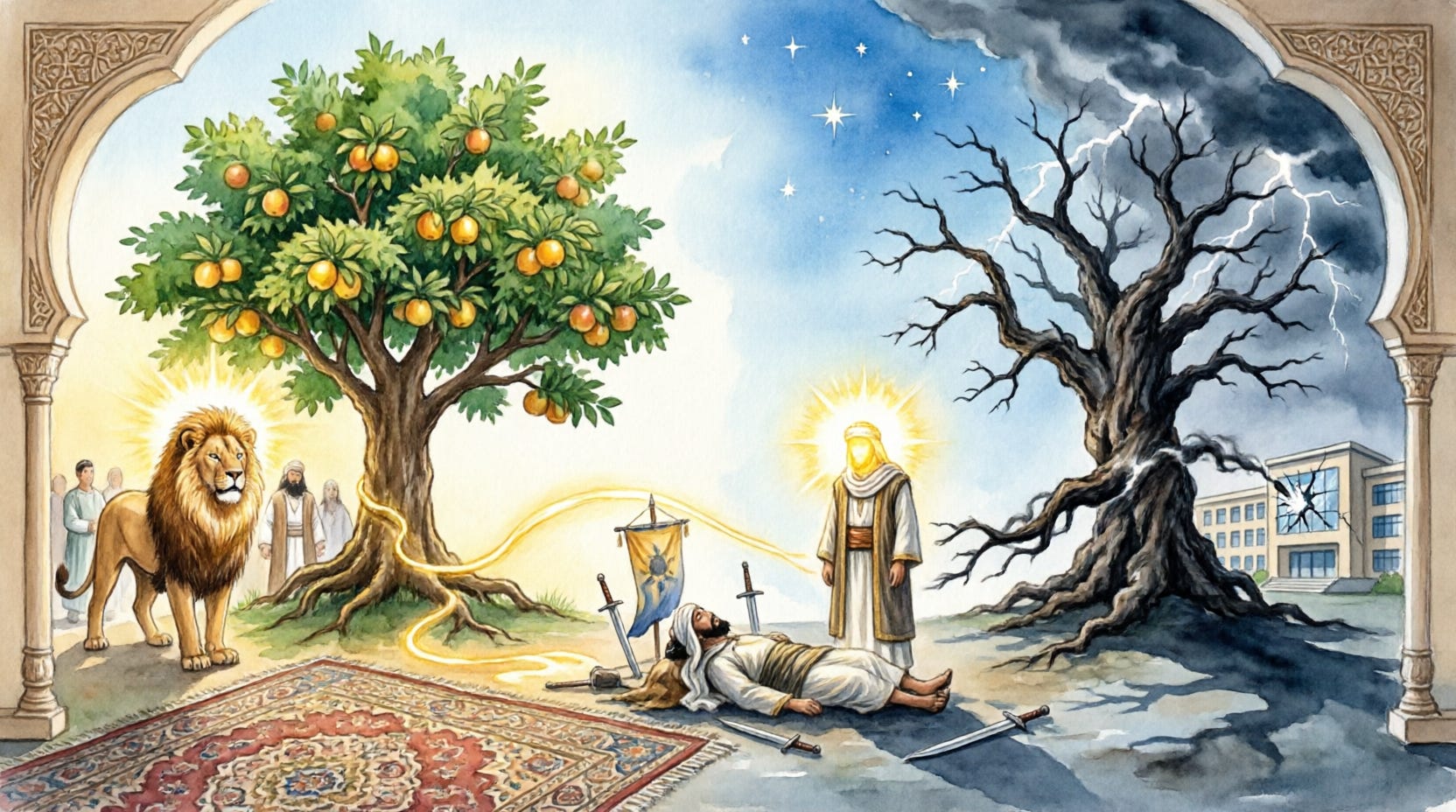
We move now from the prophets to the household.
Hamza ibn Abd al-Muttalib, peace and blessings be upon him — the Prophet’s uncle, the Lion of God.
He was killed at the Battle of Uhud.
And what was done to him after his death is one of the moments in the history of Islam that the Prophet never forgot.
Shaykh al-Mufid records the scene in al-Irshad:
«فَلَمَّا وَقَفَ عَلَيْهِ رَسُولُ اللَّهِ (صَلَّى اللَّهُ عَلَيْهِ وَآلِهِ) رَآهُ قَدْ مُثِّلَ بِهِ... فَبَكَى رَسُولُ اللَّهِ (صَلَّى اللَّهُ عَلَيْهِ وَآلِهِ) وَقَالَ: لَنْ أُصَابَ بِمِثْلِكَ أَبَداً، وَمَا وَقَفْتُ مَوْقِفاً قَطُّ أَغْيَظَ إِلَيَّ مِنْ هَذَا الْمَوْقِفِ.»
«وَ بَقَرَتْ هِنْدُ عَنْ كَبِدِ حَمْزَةَ فَلاكَتهَا فَلَمْ تَسْتَطِعْ أَنْ تَسِيغَهَا فَلَفَظَتْهَا.»
“When the Messenger of God (peace and blessings be upon him and his family) stood over him, he saw that he had been mutilated. So the Messenger of God wept and said: ‘I shall never be afflicted with a loss like yours, ever. And I have never stood in a place that outrages me more than this place.’ And Hind had cut open the liver of Hamza and chewed it, but she was unable to swallow it, so she spat it out.”
— Shaykh al-Mufid, al-Irshad, Volume 1, Pages 85–86. Also in Bihar al-Anwar, Volume 20.
The Prophet stood over his uncle’s mutilated body and said he had never been more outraged.
Hind bint Utba — the wife of Abu Sufyan — had cut open Hamza’s chest, torn out his liver, and chewed it.
She could not swallow it.
But the hatred that made her try — that hatred was passed down through the choices of those who came after her, and it did not stop.
And here, for the first time in this series, the line of the oppressor becomes visible — not as a line of blood, but as a line of choice.
Hind is the wife of Abu Sufyan.
Abu Sufyan is the father of Muawiyah.
Muawiyah is the father of Yazid.
The woman who chewed the liver of the Prophet’s uncle at Uhud is the grandmother of the man who ordered the killing of the Prophet’s grandson at Karbala.
Three generations.
Same house.
Same hatred — chosen, accepted, and renewed, by each in turn.
But here we must be careful, because the principle we set out earlier in this sermon cuts in both directions.
We said: blood does not save a person.
Noah’s son carried the blood of a prophet and chose the mountain.
Sa’d ibn Abi Waqqas’s son commanded the army that killed Imam Husayn though his father had been a companion of the Prophet.
The covenant must be carried, not inherited.
The mirror of that principle is just as binding: blood does not condemn a person either.
Yazid is not damned because he is Hind bint Utba’s grandson.
Yazid is damned because, given the same choice his grandmother had made between the truth and the throne, he made her choice again.
The Qur’an names the principle with absolute clarity:
وَلَا تَكْسِبُ كُلُّ نَفْسٍ إِلَّا عَلَيْهَا ۚ وَلَا تَزِرُ وَازِرَةٌ وِزْرَ أُخْرَىٰ
“And no soul earns anything except against itself; and no bearer of burdens shall bear the burden of another.”
— Qur’an, Surah al-An’am (the Chapter of the Cattle) #6, Verse 164
No soul is born condemned.
No soul is born saved.
The Umayyad line itself proves this.
From the same family that produced Muawiyah and Yazid, God brought forth Umar ibn Abdul Aziz — the Umayyad caliph who, when he came to the throne two generations later, ended the cursing of the Commander of the Faithful from the pulpits, restored Fadak to the family of Sayyedah Fatimah, peace and blessings be upon her, and tried — within the limits of what one man can do against accumulated injustice — to repair what his forefathers had broken.
The same blood.
The opposite choice.
And on the day of Karbala’s aftermath, inside Yazid’s own palace, another voice rose against him — and it was not Sayyedah Zaynab’s first.
It was his own wife’s.
Her name was Hind, but not the Hind who had chewed the liver at Uhud.
This Hind was Hind bint Abdullah ibn Amir ibn Kurayz, married to Yazid himself.
al-Tabari preserves the moment in his Tarikh:
فَسَمِعَتِ الْحَدِيثَ هِنْدُ بِنْتُ عَبْدِ اللَّهِ بْنِ عَامِرِ بْنِ كُرَيْزٍ وَكَانَتْ تَحْتَ يَزِيدَ بْنِ مُعَاوِيَةَ، فَتَقَنَّعَتْ بِثَوْبِهَا وَخَرَجَتْ وَقَالَتْ: يَا أَمِيرَ الْمُؤْمِنِينَ، أَرَأْسُ الْحُسَيْنِ بْنِ فَاطِمَةَ بِنْتِ رَسُولِ اللَّهِ؟ قَالَ: نَعَمْ، فَأَعُولِي عَلَيْهِ وَابْكِي عَلَى ابْنِ بِنْتِ رَسُولِ اللَّهِ وَصَرِيحَةِ قُرَيْشٍ، عَجَّلَ عَلَيْهِ ابْنُ زِيَادٍ فَقَتَلَهُ، قَتَلَهُ اللَّهُ.
“Hind bint Abdullah ibn Amir ibn Kurayz, who was married to Yazid ibn Muawiya, heard the news. She covered herself with her garment, came out, and said: ‘O Commander of the Faithful — is this the head of al-Husayn, the son of Fatimah, daughter of the Messenger of God?’ He said: ‘Yes — then wail for him and weep for the grandson of the Messenger of God and the pride of Quraysh. Ibn Ziyad hastened against him and killed him — may God destroy him for it.’”
— al-Tabari, Tarikh al-Rusul wa al-Muluk, Volume 5, Page 465. Also recorded in Allamah Majlisi, Bihar al-Anwar, Volume 44, Pages 323–325, Hadith 37; Shaykh Abbas al-Qummi, Nafasul Mahmum, Page 179; Sayyid ibn Tawus, al-Luhuf; Sibt ibn al-Jawzi, Tadhkirat al-Khawass.
Let that sit.
Yazid’s own wife, in his own public court, addressing him as Amir al-Mu’minin — and then in the same breath naming, to his face and to his ministers, what he had done to the grandson of the Messenger of God.
The lamentation tradition has preserved the longer arc of her witness — that she rushed into the court bareheaded in grief, that she went afterward to Sayyedah Zaynab and the captive women begging forgiveness for her position of comfort while the Prophet’s family was in chains, and that she opened the palace of Yazid itself as the first house of formal mourning for the Master of Witnesses.
Aza — mourning — under the very roof of the man who had ordered the killing.
The Qur’an gives us the archetype for this kind of witness — the woman of faith who lives inside the house of the tyrant and refuses, in her own person, to be part of his tyranny:
وَضَرَبَ اللَّهُ مَثَلًا لِّلَّذِينَ آمَنُوا امْرَأَتَ فِرْعَوْنَ إِذْ قَالَتْ رَبِّ ابْنِ لِي عِندَكَ بَيْتًا فِي الْجَنَّةِ وَنَجِّنِي مِن فِرْعَوْنَ وَعَمَلِهِ وَنَجِّنِي مِنَ الْقَوْمِ الظَّالِمِينَ
“And God presents an example for those who have believed: the wife of Pharaoh, when she said: ‘My Lord, build for me near You a house in Paradise, and save me from Pharaoh and his deeds, and save me from the wrongdoing people.’”
— Qur’an, Surah al-Tahrim (the Chapter of Prohibition) #66, Verse 11
Hind bint Abdullah, in the palace of Damascus, stands in the same theological station as Asiya, the wife of Pharaoh, in the palace of Egypt — and I want to be clear that this parallel is the speaker’s reading, my reading, of the structural rhyme:
The believing woman inside the house of the oppressor, asking God for a different house.
One roof.
Two trees.
The same blood Yazid carried, his own wife refused.
The same lineage Muawiyah passed down, Umar ibn Abdul Aziz two generations later spent his caliphate trying to repair.
Lineage proposes; the covenant disposes.
This is why Sayyedah Zaynab, peace and blessings be upon her, when she stood in that same court — as Yazid sat striking the lips of her brother’s severed head with his cane — and identified him by his grandmother’s crime, was not making a claim about his genealogy.
She was making a claim about his choice.
She was telling him: you had every chance to refuse what your fathers built.
Your own wife refused it.
Your own kinsman, two generations after you, will refuse it.
You chose to extend it.
The mouth that chewed the liver and the mouth that strikes the severed head are the same mouth not because they share blood — they share willingness:
«وَكَيْفَ يُرْتَجَى مُرَاقَبَةُ مَنْ لَفَظَ فُوهُ أَكْبَادَ الْأَزْكِيَاءِ، وَنَبَتَ لَحْمُهُ مِنْ دِمَاءِ الشُّهَدَاءِ؟ وَكَيْفَ يَسْتَبْطِئُ فِي بَغْضِنَا أَهْلَ الْبَيْتِ مَنْ نَظَرَ إِلَيْنَا بِالشَّنَفِ وَالشَّنَآنِ؟»
“And how could anyone hope for the safeguarding of the religion from one whose mouth spat out the livers of the pure ones, and whose flesh grew from the blood of the martyrs? And how could one who looks at us, the Household, with such visceral hatred and malice, be anything but relentless in his enmity toward us?”
— Sayyedah Zaynab, peace and blessings be upon her, sermon in the court of Yazid in Damascus. Recorded in Ibn Tawus, al-Luhuf (Sighs of Sorrow), Page 104. Also in al-Tabarsi, al-Ihtijaj.
“Whose mouth spat out the livers of the pure ones.”
Sayyedah Zaynab is naming, in Yazid, the choice he has remade.
He is not Hind bint Utba’s grandson by accident; he is her grandson by election.
The hatred did not flow into him through his veins — it was offered to him, and he accepted it, and he made it his own.
The scholars of the Hawza speak of this confrontation as the meeting of two trees: the shajarah tayyibah — the Good Tree of prophecy — and the shajarah mal’unah — the Cursed Tree named in the Qur’an itself.
The Umayyad regime, in its political form, was the historical face of the cursed tree.
But the trees are not genealogical categories.
They are categories of choice.
A soul born among the Banu Hashim can plant itself in the cursed tree by its conduct.
A soul born among the Umayyads — like Umar ibn Abdul Aziz — can plant itself in the good tree by its repentance.
The line is not in the blood.
It is in what each generation chooses to do with the blood it inherits.
Shaheed Motahhari explains that Yazid did not view Karbala as a contemporary political event.
He viewed it as the final settling of an inherited score — not an inheritance of genealogy, but an inheritance of grievance, freely chosen and freely renewed:
«یزید در دربار خود با صراحت اشعاری خواند که نشان میداد کینه او، کینه بدر و احد است. بنیامیه از روز اول با رسالت پیامبر کینه ورزیدند، و عاشورا انتقام جاهلیت ابوسفیان و هند از اسلام پیامبر و علی بود.»
“In his court, Yazid explicitly recited poetry demonstrating that his hatred was the inherited hatred of Badr and Uhud. The Umayyads harboured enmity against the mission of the Prophet from the very first day, and Ashura was the revenge of the ignorance (Jahiliyyah) of Abu Sufyan and Hind against the Islam of the Prophet and Ali.”
— Shaheed Motahhari, Hamaseh-ye Husayni (The Husayni Epic), Volume 1
Ashura was not a political dispute.
It was the revenge of a pre-Islamic hatred that had never truly accepted Islam — forced underground by the Prophet’s victory at Mecca, biding its time under Abu Sufyan’s reluctant conversion, resurfacing under Muawiyah’s political cunning, and reaching its full, unveiled expression in Yazid’s court.
Imam Khamenei framed this with the clarity of a man who had spent his life fighting the same line:
«ماجرای عاشورا، رویارویی دو فرد نیست؛ رویارویی دو جریان و دو خط تاریخی است. خطی که از بعثت آغاز شد و خطی که از کینههای ابوسفیان و هند جگرخوار ریشه گرفت و در وجود یزید به اوج خباثت خود رسید.»
“The event of Ashura is not a confrontation between two individuals; it is the confrontation of two historical currents and two lines. A line that began with the Prophetic mission, and a line that took root in the malice of Abu Sufyan and Hind the Liver-Eater, reaching the absolute peak of its wickedness in the existence of Yazid.”
— Imam Khamenei, Addresses on the Philosophy of Ashura (khamenei.ir)
Two lines.
Two trees.
And the confrontation between them has not ended.
It did not end at Uhud.
It did not end at Karbala.
It did not end in the court of Yazid.
It continued — through every century, through every land where the line of the oppressor has struck at the line of the witness.
And in our own lifetime, on the 28th of February 2026, when American missiles fell on a school in the city of Minab in Iran during the month of Ramadan — the name of that school was Shajarayeh Tayyabah.
The Good Tree.
The very tree the Qur’an names as the tree of prophecy.
One hundred and sixty-five children of the Good Tree — boys and girls both, though many of the narratives quietly forget the young boys martyred in at least equal numbers — were buried beneath the rubble of a building that bore the name of the tree their enemies have been trying to cut down since the day Hind chewed the liver of Hamza at Uhud.
The chain of the witness is one chain.
The chain of the oppressor is one chain.
They have never stopped meeting.
The Prophet Muhammad — the One Who Already Knew
We arrive at the last link before Imam Husayn himself — and it is the heaviest.
The narrations record the moment with unbearable precision.
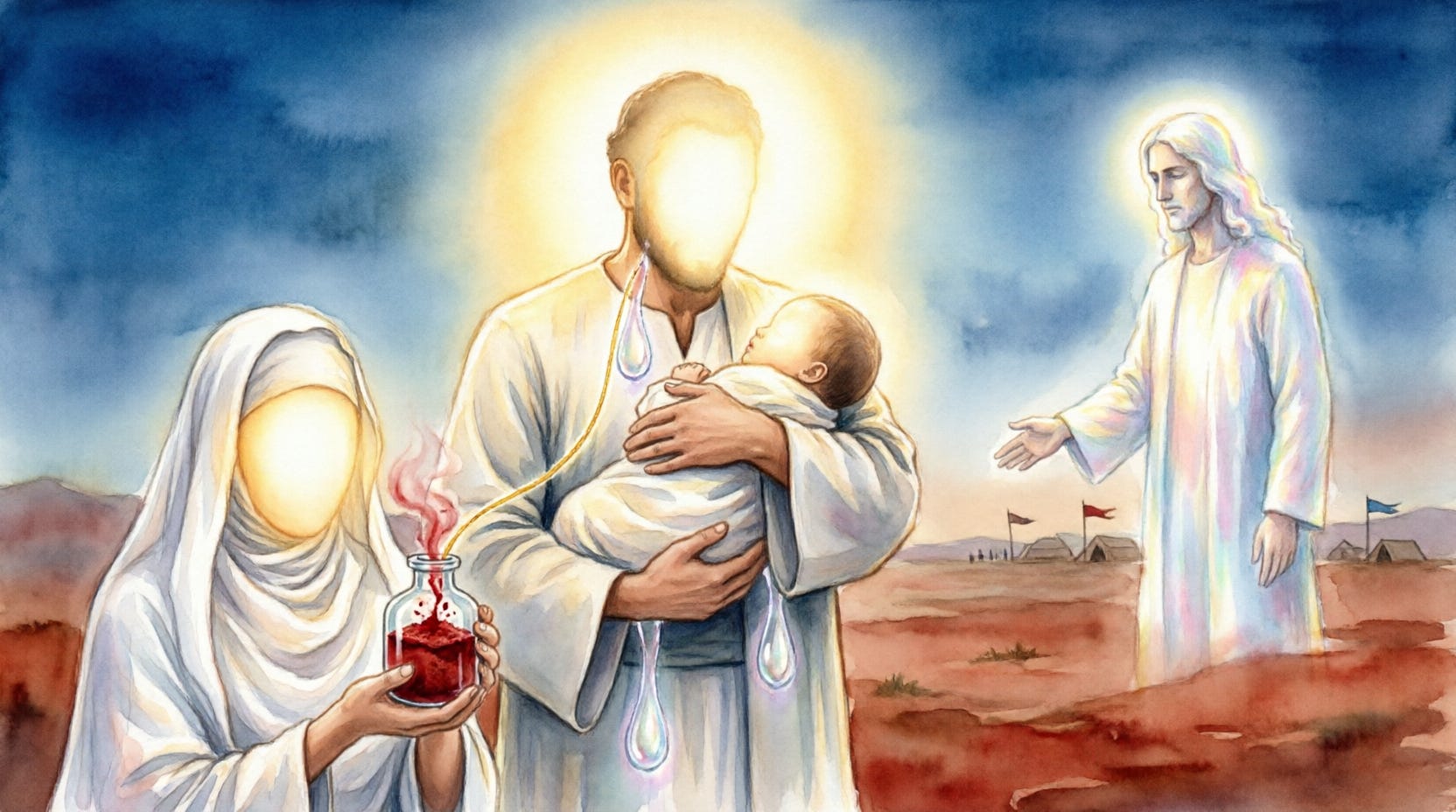
The infant Imam Husayn entered upon the Prophet, peace and blessings be upon him, his family, and his righteous companions, while revelation was descending.
Gabriel was present.
And Gabriel spoke:
«دَخَلَ الْحُسَيْنُ بْنُ عَلِيٍّ (عليهما السلام) عَلَى رَسُولِ اللَّهِ (صلى الله عليه وآله) وَهُوَ يُوحَى إِلَيْهِ... فَقَالَ جَبْرَئِيلُ: يَا مُحَمَّدُ، إِنَّ أُمَّتَكَ سَتَقْتُلُ ابْنَكَ هَذَا مِنْ بَعْدِكَ. ثُمَّ أَوْمَأَ جَبْرَئِيلُ بِيَدِهِ إِلَى طَفِّ كَرْبَلَاءَ فَأَتَاهُ بِتُرْبَةٍ حَمْرَاءَ... فَبَكَى رَسُولُ اللَّهِ (صلى الله عليه وآله).»
“Husayn ibn Ali (peace be upon them both) entered upon the Messenger of God (peace and blessings be upon him and his family) while revelation was descending upon him. Gabriel said: ‘O Muhammad, indeed your community will kill this son of yours after you.’ Then Gabriel gestured with his hand toward the plain of Karbala and brought him a red earth. And the Messenger of God wept.”
— Shaykh al-Mufid, al-Irshad, Volume 2, Page 130. Also recorded in Ibn Qulawayh’s Kamil al-Ziyarat.
The Prophet held the earth.
Red-brown earth from a plain his grandson had not yet seen, in a land his grandson had not yet walked, soaked with a blood that had not yet been shed.
And he wept — not after the event, but before it.
The Prophet mourned his grandson while the grandson was still an infant in his arms.
Then he gave the earth to his wife, Umm Salamah, and instructed her:
«أَعْطَاهُ لِأُمِّ سَلَمَةَ وَقَالَ: اجْعَلِيهَا فِي زُجَاجَةٍ فَلْيَكُنْ إِلَيْهَا نَظَرُكِ، فَإِذَا صَارَتْ دَماً عَبِيطاً فَقَدْ قُتِلَ الْحُسَيْنُ... فَلَمَّا كَانَ يَوْمُ عَاشُورَاءَ نَظَرَتْ إِلَى الزُّجَاجَةِ بَعْدَ الزَّوَالِ فَإِذَا هِيَ دَمٌ عَبِيطٌ فَصَاحَتْ وَبَكَتْ.»
“He gave it to Umm Salamah and said: ‘Place it in a glass bottle and keep your eyes upon it. When it turns into fresh blood, Husayn has been killed.’ When the Day of Ashura arrived, she looked at the glass bottle after the time of noon, and behold — it was fresh blood. So she cried out and wept.”
— Shaykh al-Saduq, al-Amali, Assembly 24, Hadith 2. Also recorded in Majlisi’s Bihar al-Anwar, Volume 45, Page 89.
Umm Salamah kept the bottle.
She kept it through the years — through the death of the Prophet, through the caliphates, through the decades of waiting.
And on the tenth of Muharram, 61 AH, after the time of the noon prayer — the very hour the narrations tell us Imam Husayn fell — the earth in the bottle turned to fresh blood. And she cried out, because she knew.
Ayatollah Jawadi-Amoli pauses on the earth itself — the turbah — and draws out what it means that the soil responded:
«تربت کربلا از همان روزی که جبرئیل آن را برای پیامبر آورد، قداست یافت. جوشش خون از تربت در دست امسلمه، نشان میدهد که همه کائنات، حتی خاک، بر شهادت ولیّ خدا آگاه و عزادارند.»
“The earth of Karbala attained its sanctity from the very day Gabriel brought it to the Prophet. The boiling of blood from the earth in the hands of Umm Salamah demonstrates that the entirety of creation, even the soil itself, is aware of and mourns the martyrdom of the Friend of God.”
— Ayatollah Jawadi-Amoli, Shekoofeh-haye Ashura (Blossoms of Ashura)
The earth knew.
The deer at Karbala knew when Jesus walked past.
The sky wept and turned red at the horizon when John and Imam Husayn were killed.
The creation of God is not indifferent to the blood of the witnesses.
It responds — because the witnesses are the proof of God on His earth, and when the proof bleeds, the earth bleeds with it.
And the Prophet’s tears — the tears he shed over the red dust while his infant grandson was still in his arms — those tears are not merely historical.
They are, as the scholars of our tradition teach us, the origin of the tears we shed tonight.
Ayatollah Misbah-Yazdi explains:
«گریه پیامبر اکرم (صلی الله علیه و آله) بر سیدالشهدا قبل از وقوع عاشورا، نشاندهنده این است که عزاداری برای امام حسین یک واکنش عاطفیِ صرف به یک حادثه تاریخی نیست، بلکه یک سنت الهی و نبوی است. پیامبر با این گریه، مسیر هدایت امت را تا قیامت نشانه گذاری کرد.»
“The weeping of the Noble Prophet (peace and blessings be upon him and his family) for the Master of Martyrs before the occurrence of Ashura demonstrates that mourning for Imam Husayn is not a mere emotional reaction to a historical event; rather, it is a divine and prophetic tradition. With these tears, the Prophet marked the path of guidance for the community until the Day of Resurrection.”
— Ayatollah Mohammad-Taqi Misbah-Yazdi, Azarakhshi Digar az Aseman-e Karbala (Another Lightning from the Sky of Karbala)
The Prophet’s weeping was not a human moment of weakness. It was a sunnah — a prophetic practice, established by divine command, marking the path for every generation that would come after.
When we mourn Imam Husayn, we are not inventing a ritual.
We are following the Prophet, who mourned first, who mourned before anyone else could, who mourned while holding the very child he was mourning for.
And Imam Khamenei gave this inheritance its most beautiful expression:
«این اشکی که شما برای حسین بن علی (علیهالسلام) میریزید، متصل به همان اشکی است که پیامبر اعظم (صلی الله علیه و آله) در مدینه ریخت. این اشک، سلاح برنده شیعه در طول تاریخ است.»
“This tear that you shed for Husayn ibn Ali (peace and blessings be upon him) is connected to the very tear that the Great Prophet (peace and blessings be upon him and his family) shed in Medina. This tear is the sharp weapon of the Shia throughout history.”
— Imam Khamenei, Addresses to the eulogists and preachers during Muharram (khamenei.ir)
The tear that falls in your eye tonight for Imam Husayn — it was in the Prophet’s eye first.
It was placed in a glass bottle by Umm Salamah.
It turned to blood on the day the blood was shed.
And as Imam Khamenei tells us, the tear you shed tonight is connected directly — not metaphorically, not symbolically, but connected — to the tear the Prophet shed in Medina while holding his infant grandson against his chest.
It was kept, and carried, and passed down through the centuries — through the prophets who wept before, through the believers who wept after, through every Muharram and every majlis and every heart that has ever broken for the son of Sayyedah Fatima — until it reached you, tonight, in this room.
The Weight of the Chain
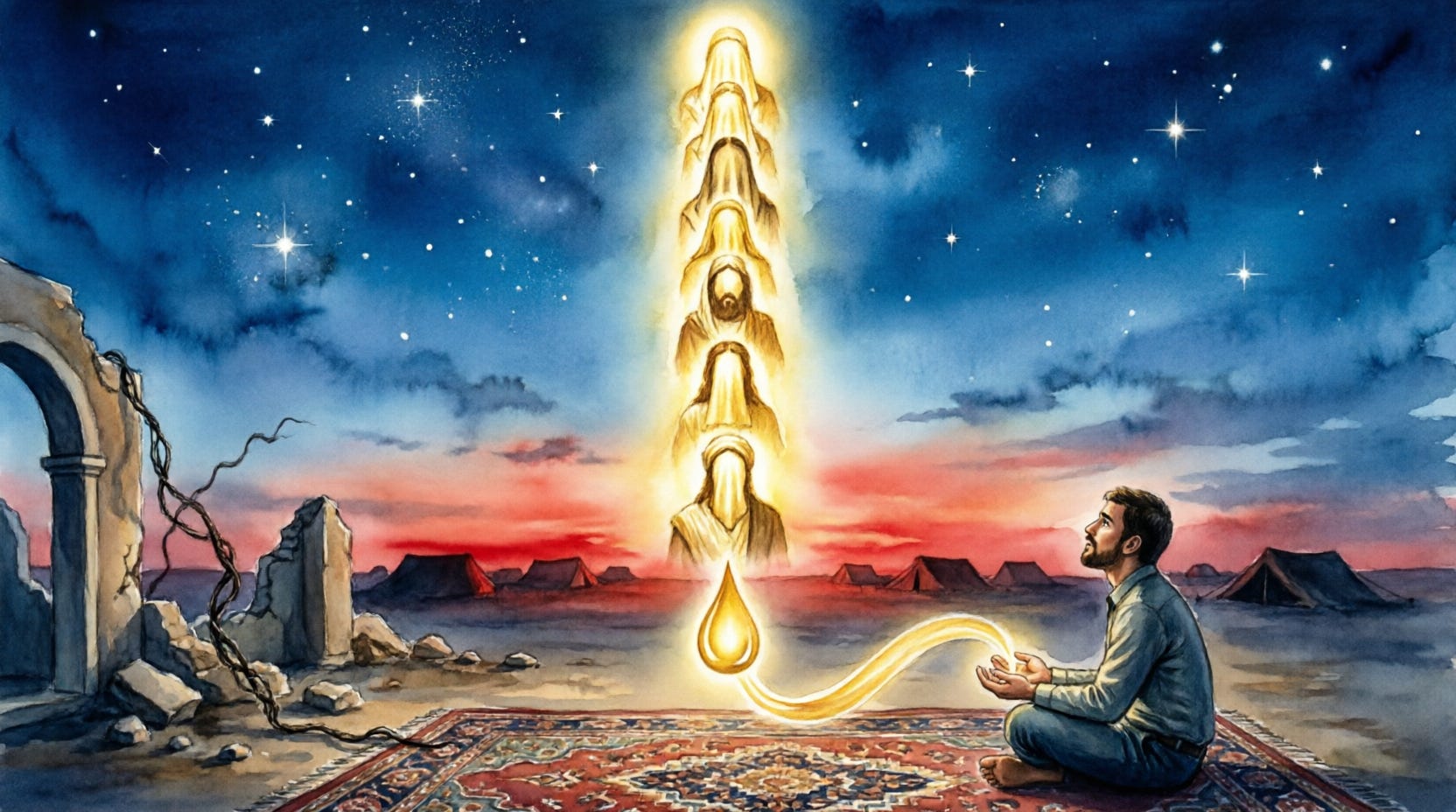
Eight links.
Eight prophets and righteous souls.
Eight forms of witness, eight forms of grief — and running through all of them, two threads that have never stopped.
The first thread is the chain of the witness.
Abel testified in the field.
Noah called from the Ark and learned that the covenant is not a birthright — that a son who carries the blood of a prophet but refuses the truth has chosen the mountain.
Abraham spoke the covenant aloud — my prayer, my sacrifice, my living, my dying are all for God — and God deferred the blood from the mountain to the plain of Karbala, ransoming his grief with a grief greater than his own.
John was beheaded for refusing to endorse the unlawful, and his blood boiled until retribution was sent.
Zechariah was sawn through the tree that tried to protect him, and he wept for three days when God told him what would happen to Imam Husayn.
Jesus testified from the cradle before he could walk, wept at Karbala before the blood was shed, and was raised by God to be reserved as a living witness for the End of Times.
Hamza was mutilated at Uhud, and the Prophet stood over his body in the heaviest grief of his life.
And the Prophet himself held the red earth of Karbala, gave it to Umm Salamah in a glass bottle, and wept for a grandson who was still an infant in his arms.
The second thread is the chain of the oppressor.
Hind chewed the liver at Uhud.
Her grandson Yazid ordered the killing at Karbala.
And Sayyedah Zaynab stood in Yazid’s court and told him to his face: your mouth spat out the livers of the pure ones, and your flesh grew from the blood of the martyrs.
The Good Tree and the Cursed Tree — the shajarah tayyibah and the shajarah mal’unah — have been growing side by side since the first day, and they have never stopped bearing their respective fruit.
The school in Minab that bore the name of the Good Tree — where boys and girls alike were learning to read before missiles buried them — was struck in our own lifetime.
The two lines have never stopped meeting.
Karbala is not an isolated event.
As Ayatollah Jawadi-Amoli told us tonight, it is an ontological and trans-historical reality with which all the friends of God are deeply connected.
The prophets wept for it before it happened.
The sky wept for it when it did.
Imam Husayn’s blood is still boiling in the veins of history and will not settle until the Imam of the Age rises.
And the tear in your eye tonight — as Imam Khamenei taught us — is connected directly to the tear the Prophet shed in Medina.
Not one tear has ever been shed for Imam Husayn that was not first shed by a prophet.
The grief is older than we are.
The chain is longer than we knew.
The covenant that binds us to it is not a birthright — it is a daily struggle, and the criterion, as Imam Khomeini told us, is our current state.
The responsibility of the heir is to mourn with the seriousness of those who know what they carry — and to stand where the covenant asks them to stand, every morning, without the luxury of assuming that yesterday’s standing is enough.
The Inherited Tear — and the Responsibility of the Heir
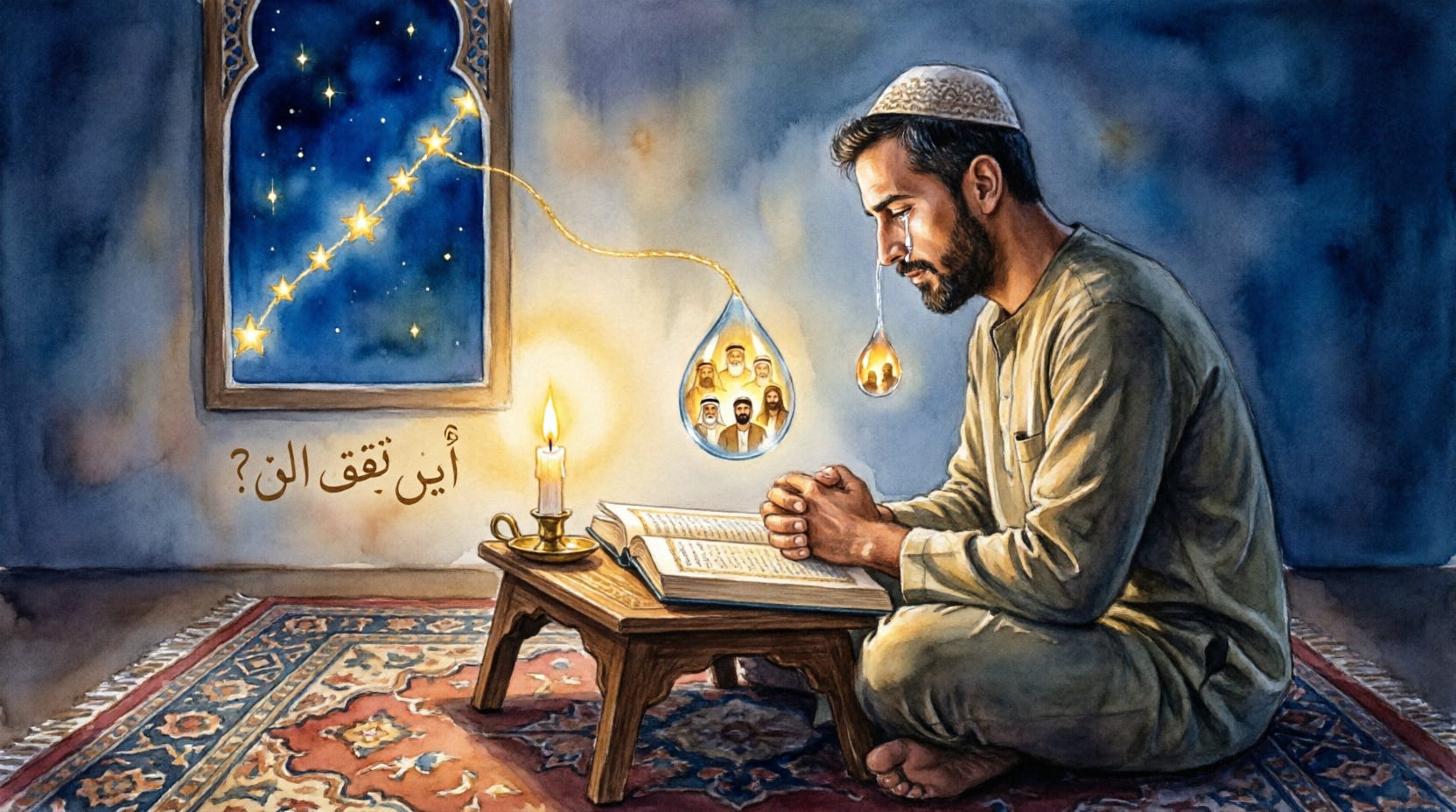
We have traced the chain.
We have heard the prophets weep.
We have seen Abel testify in the field, Noah lose his son to the mountain, Abraham’s blade stayed and its blood deferred, John’s blood boil in a basin, Zechariah sawn through the tree that tried to save him, Jesus weep at Karbala six centuries before the blood fell, Hamza mutilated at Uhud by the grandmother of the man who would order the killing at Karbala, and the Prophet himself hold the red earth of his grandson’s grave while the grandson was still an infant in his arms.
Now we must ask:
what does this chain ask of us?
Not in the abstract.
Not as theology.
What does it ask of us — tonight, in this room, in this city, in this Muharram?
What the Inheritance Demands
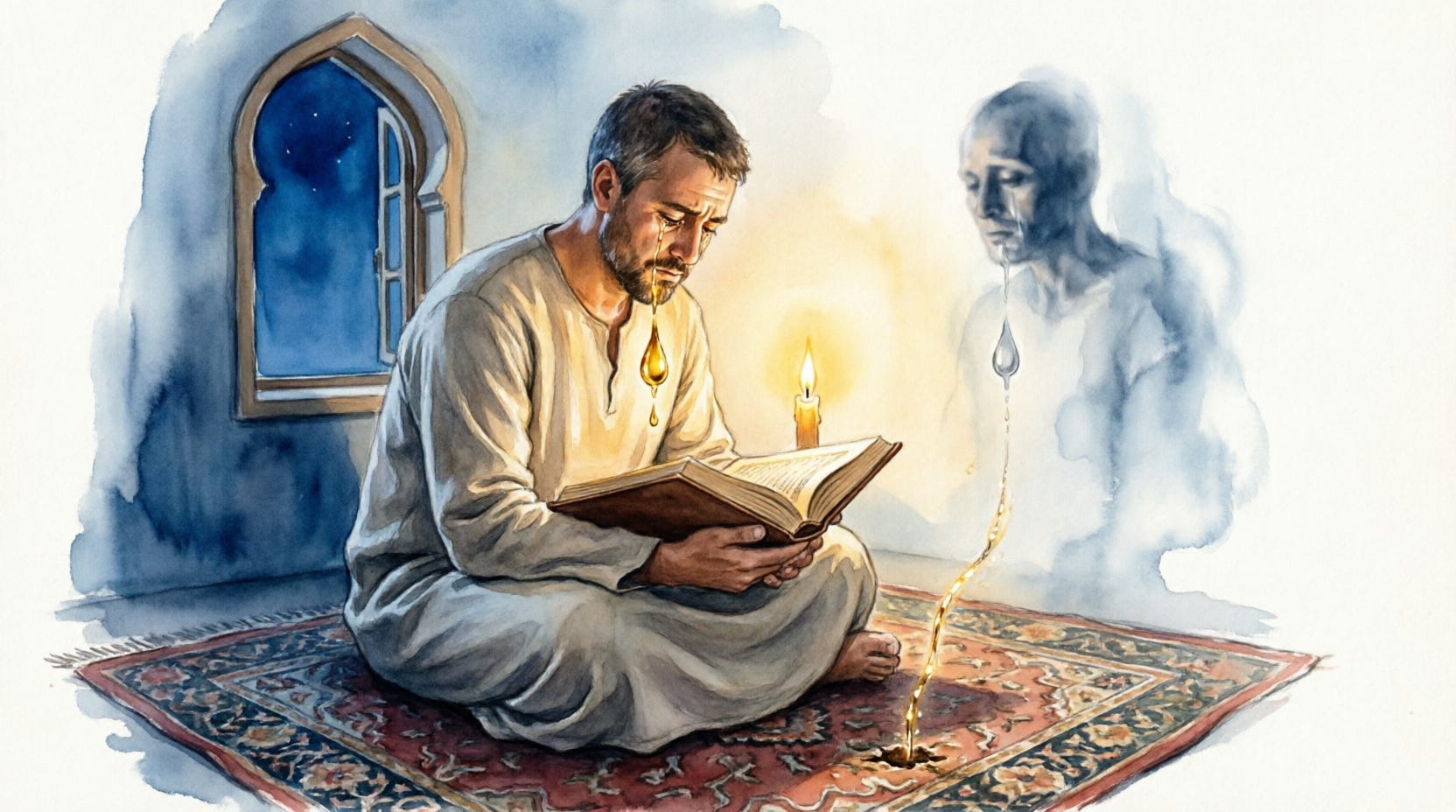
If the tear is inherited — if what we carry into Muharram is not our own private grief but the grief of a chain that runs from Adam to the Imam of our Age — then mourning is not optional, and it is not casual.
It is a covenant responsibility.
This is why Imam Khamenei spoke so insistently, across forty-five years of leadership, about the quality of mourning, not only its quantity.
It is not enough to weep.
The question is:
what are you weeping for?
If you weep as an heir who understands the chain — who knows that the tear in your eye was in the eye of Zechariah, and John’s mother, and the Prophet himself — then your tear is a continuation of the prophetic grief and it has weight in the heavens.
If you weep as a spectator who has wandered into someone else’s sorrow, your tear is sincere but it is disconnected from the covenant — and a disconnected tear, over time, becomes a ritual without a root.
Last night we made a pact.
We said we would not use the word shaheed without understanding what it means.
Tonight we add a second commitment:
we will not shed the tear without understanding whose tear it is.
The Ziyarat and the Chain
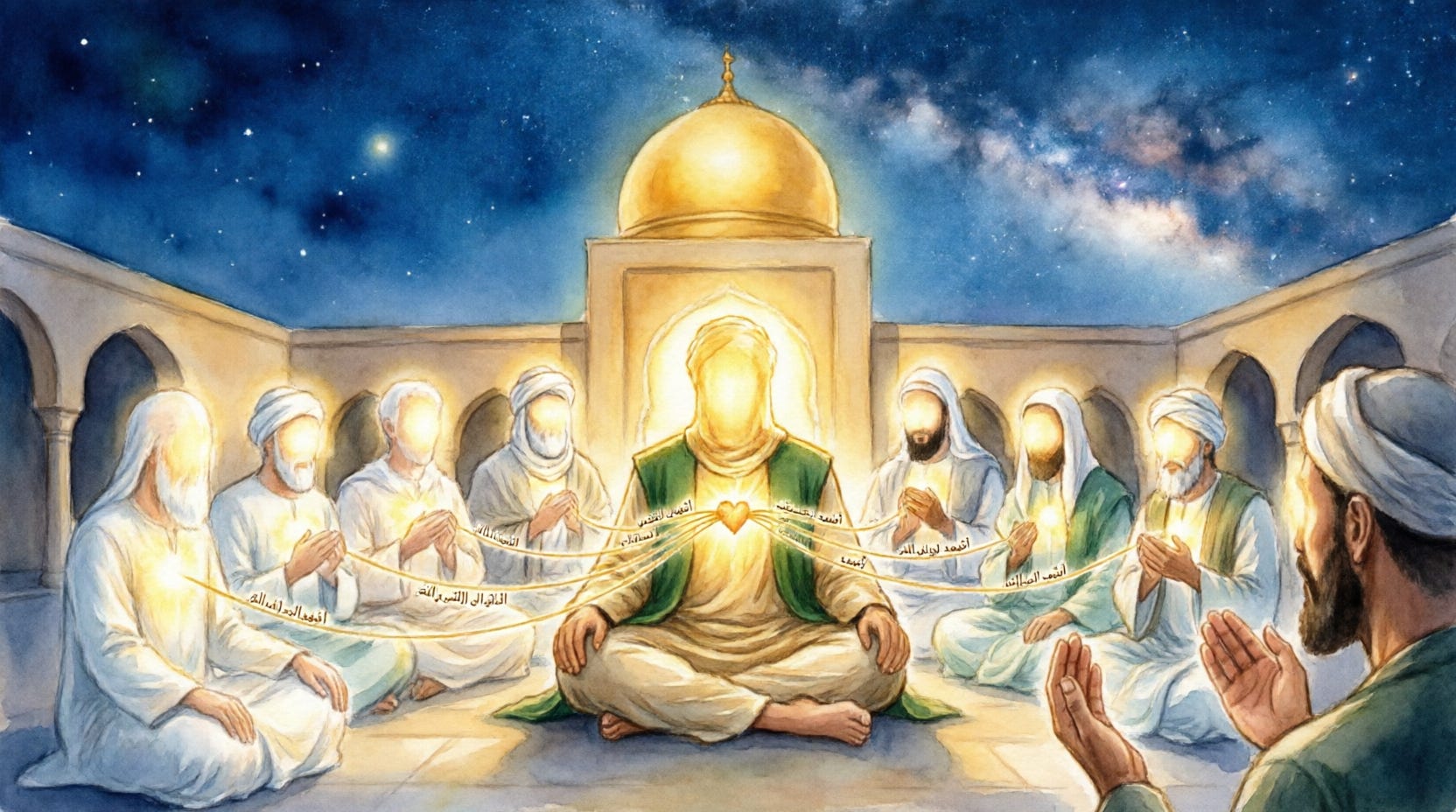
The Ziyarat of Ashura — the greeting we recited at the opening of this session and will recite at the opening of every session — begins with peace upon Imam Husayn
“and upon the souls who have gathered in your courtyard.”
Those souls are the chain.
When we greet Imam Husayn, we greet the inheritor of Abel, of Abraham, of John, of Zechariah, of Jesus, of Hamza, of the Prophet.
We greet the one in whom every previous testimony was gathered and completed.
If we do not understand the chain, we do not understand the greeting.
The Ziyarat of Warith — the Ziyarat of the Inheritor — makes this explicit.
It opens by greeting Imam Husayn as the heir of Adam, the heir of Noah, the heir of Abraham, the heir of Moses, the heir of Jesus, the heir of Muhammad, peace and blessings be upon them all.
That is not decorative language.
It is a theological claim — the same claim we have been tracing tonight across eight links and eight prophets.
Imam Husayn’s witness is the sum of every witness before him.
And our greeting of Imam Husayn is our acknowledgement that we understand the sum.
When we say
“Peace be upon you, O heir of Adam”
in the Ziyarat of Warith, we are saying: we know you are Abel’s heir.
We know the testimony began in a field outside Eden and ended on a plain in Iraq.
We know the chain.
And when we say
“Peace be upon the souls who have gathered in your courtyard”
in the Ziyarat of Ashura, we are not only greeting the seventy-two companions who fell at Karbala.
We are greeting every soul in the chain — every prophet who wept, every witness who testified, every link that carried the covenant forward from the day God asked “Am I not your Lord?” and every soul answered “Yes — we bear witness.”
The Question to Carry Home Tonight
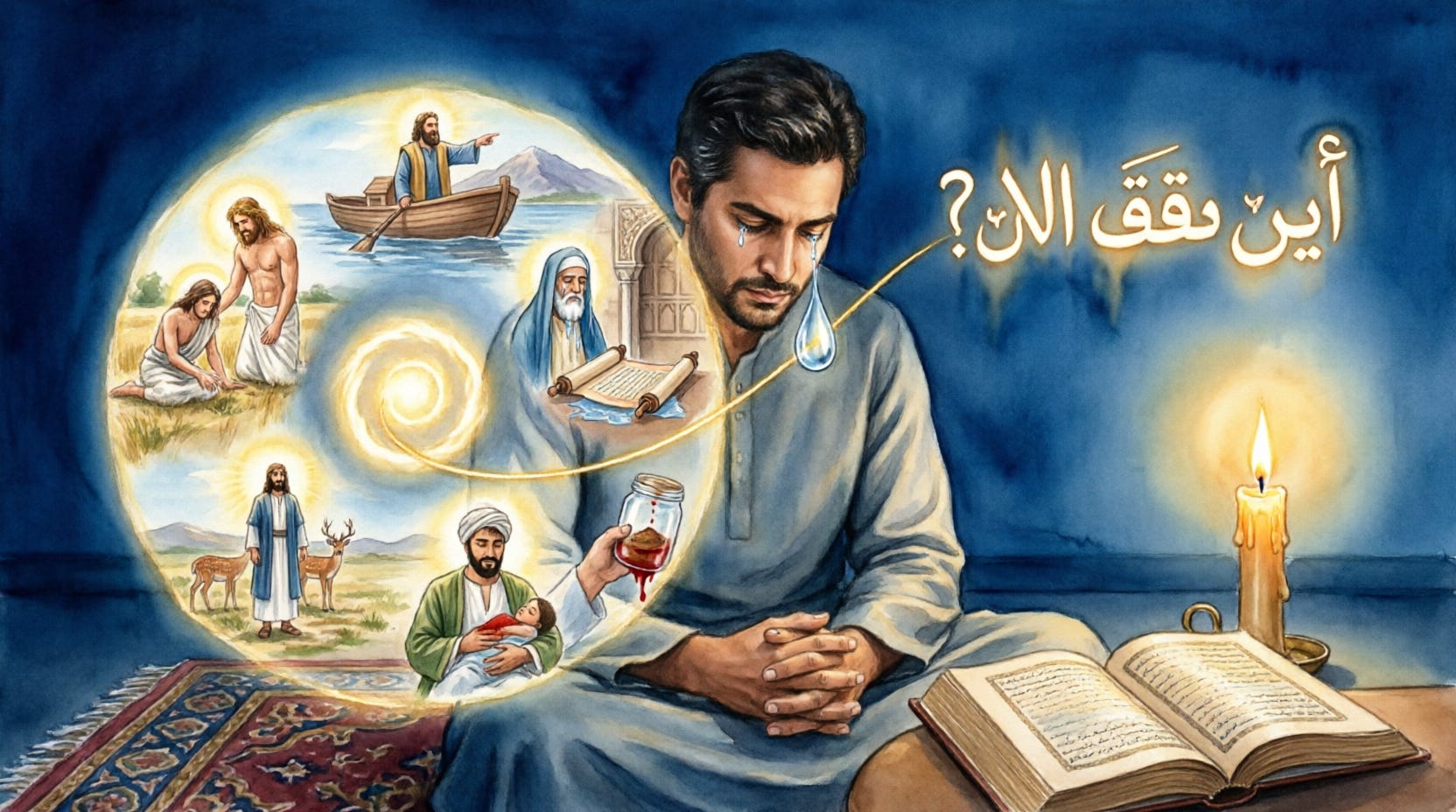
Last night we asked:
when I have said “shaheed,” have I meant it?
Tonight we add a second question:
when I have wept for Imam Husayn — have I known whose tears I was shedding?
If the answer is “I did not know,” then tonight has given you the beginning of the knowledge.
The tear is not yours alone.
It was not born in your chest tonight.
It was placed in the chain long before you arrived.
It was wept by Adam over Abel.
It was wept by Noah over a son who would not board.
It was wept by Zechariah for three days in his sanctuary when God told him what would happen.
It was wept by Jesus on the ground of Karbala while the deer around him wept.
It was wept by the Prophet over a handful of red-brown dust while his infant grandson lay in his arms.
It was kept in a glass bottle by Umm Salamah.
And it was given to you — to all of us — as an inheritance, which means it comes with the responsibility of an heir.
Mourn with the seriousness of those who know what they carry.
Do not waste the inheritance.
Do not let the tear fall without knowing where it came from.
And do not imagine — as we said last night, and as we will say every night of this series — that the word shaheed or the tear for Imam Husayn belongs to you because you happen to have been born into this community.
It does not belong to you by birthright.
It belongs to you by covenant.
And the covenant, as Imam Khomeini told us, is measured by your current state — not by your past, not by your lineage, not by the tears you shed last year.
The question the covenant asks you tonight is the question it has been asking since before the body was made:
Where do you stand now?
Tomorrow night we enter the theology proper — through the sharpest Shia thinker of the modern age on the subject of martyrdom, Shaheed Motahhari, and his five kinds of death.
We will ask: if Imam Husayn is the culmination of all this witness, what kind of death was his?
And the answer to that question will change the way we see everything we have mourned for.
Now we give the rest of the hour to the one who has never left us.
Every prophet we have named tonight was weeping before Imam Husayn was born.
Listen now for the tear that was in their eyes.
Segue to Maqtal (Lamentation)
Maqtal (Lamentation) for the Second Night of Muharram 2026/1448
Supplication
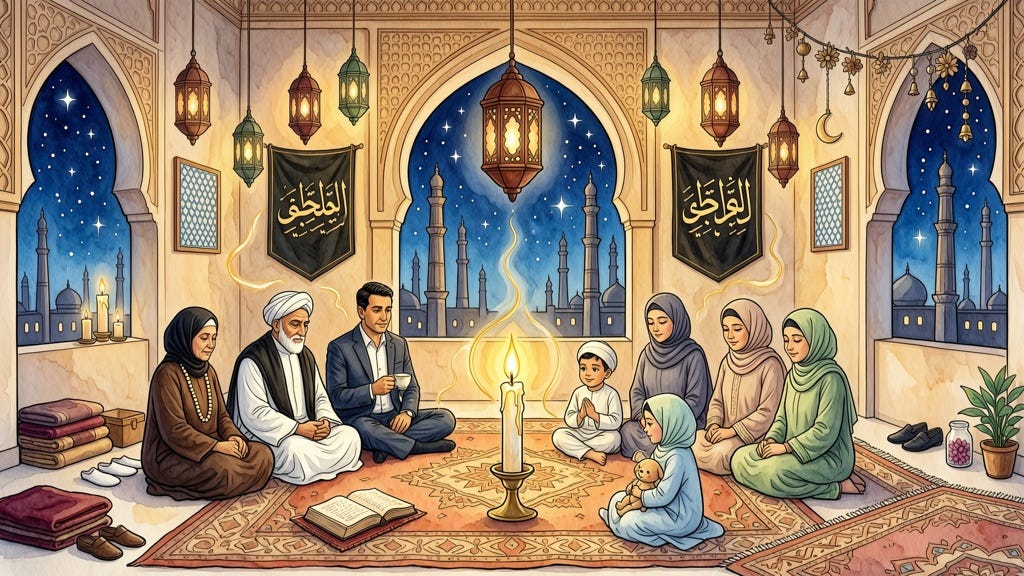
Peace be upon Abel, who testified first.
Peace be upon the prophets, who wept before us.
Peace be upon the Prophet Muhammad, who held the dust and knew.
Peace be upon Umm Salamah, who kept the bottle.
Peace be upon Husayn, the heir of them all.
Peace be upon the Imam of our Age, who remembers.
Peace be upon you all, and upon your houses, and upon the tear that was inherited tonight and that will not be wasted.
O God — You Who gathered every soul before the body was made and asked us one question, and every soul answered “Yes — we bear witness” — we return to You tonight having traced the chain You laid.
We did not lay it.
You did.
From the covenant before time to the field of Abel, from the Ark of Noah to the mountain of Abraham, from the basin of John to the tree of Zechariah, from the cradle of Jesus to Uhud, from the red earth in the Prophet’s palm to the glass bottle on the shelf of Umm Salamah — the chain is Yours.
Every link is Yours.
And we are only servants trying to understand what You wove.
We send our condolences and our congratulations tonight to our father Adam and our mother Eve, peace and blessings be upon them both — condolences for a son lost in a field, and congratulations for a chain that began with his blood and has not stopped.
We send our condolences and our congratulations to our forefather Noah, peace and blessings be upon him — condolences for a son who chose the mountain, and the prayer that You teach us, through his grief, that the covenant is not a birthright but a daily struggle.
We send our condolences and our congratulations to and peace to Abraham, peace and blessings be upon him — condolences for a blade that was stayed and a blood that was deferred, and congratulations that his words — my prayer, my sacrifice, my living, my dying are all for God — were spoken again at Karbala by his grandson’s grandson, and will be spoken again when the Imam of the Age rises.
We send our peace to John the Baptist and his father Zechariah, peace and blessings be upon them both — the prophet beheaded for one sentence of truth, and the prophet sawn through the tree that tried to hide him.
Their blood is in the chain.
Their grief is in our tears tonight.
We send our peace to Jesus son of Mary, peace and blessings be upon him — who testified from the cradle, who wept at Karbala while the deer wept around him, who was raised by God as a living witness to be reserved for the End of Times.
His testimony is not finished.
He will return.
We send our condolences and our congratulations to our Master, the Prophet Muhammad, peace and blessings be upon him, his family, and his righteous companions — condolences for the red earth that was placed in his palm while his grandson was still an infant in his arms, and congratulations that the tear he shed in Medina has not dried.
It is still falling, tonight, in this room, in every room where believers gather to remember his grandson.
We send our peace to Umm Salamah, may God be pleased with her — who kept the bottle, who waited, who watched the dust turn to blood, and who cried out the sentence the women of the Prophet’s house have always cried: they have killed Husayn.
We send our peace to Imam Husayn, peace and blessings be upon him — the heir of Adam, the heir of Abraham, the heir of Muhammad — in whom every testimony before him was gathered and completed.
We greet him tonight with a greeting that is beginning to understand the chain.
We are not there yet.
But we are closer than we were last night.
We send our peace to the Imam of our Age, may our souls be his ransom and may God hasten his return — who carries the memory of every link, who remembers every drop of blood in every basin, who watches from behind the veils and waits for the day the blood of his grandfather will finally be settled by his own hand.
O God — we send our peace to Hamza, the Lion of Uhud, in whose body the line of the oppressor first showed its teeth.
And we send our peace to every witness of our own age who has stood where Hamza stood and said what Abel said: Shaheed Motahhari, Ayatollah Beheshti, Sayyed Muhammad Baqir al-Sadr and Bint al-Huda al-Sadr, Imam Sayyed Ali Khamenei, Hajj Qasem Soleimani, Hajj Imad Mughniyeh, Hajj Abu Mahdi al-Muhandis, Sayyed Hassan Nasrallah — may God rest their pure souls and raise their stations.
And we send our peace to the children of Minab — boys and girls — who were buried beneath the Good Tree, and to the children of Gaza, whose blood has joined the basin that has been boiling since Abel.
And may the distance of God’s mercy fall upon every hand that has cut, from the first to the last.
O God — You are the one Who asked the question before time.
You are the one Who received the answer from every soul.
You are the one Who laid the chain, link by link, from Abel to this hour. Everything we have spoken of tonight is Yours.
The covenant is Yours.
The chain is Yours.
The tear is Yours — and You placed it in our eyes, through the eyes of the prophets, so that we might carry it forward until the Imam You have appointed rises to settle what has not yet been settled.
Accept this tear from us tonight.
It is not ours. It is the inherited tear — passed down from Adam, from Abraham, from the Prophet himself.
We return it to You as heirs who are beginning to understand what they carry.
إِنَّا لِلَّهِ وَإِنَّا إِلَيْهِ رَاجِعُونَ
“We belong to God, and to Him we return.”
— Qur’an, Surah al-Baqarah (the Chapter of the Cow) #2, Verse 156
And we repeat your promise, an eternal promise for Justice, and a warning for the wrongdoers:
وَسَيَعۡلَمُ ٱلَّذِينَ ظَلَمُوٓاْ أَيَّ مُنقَلَبٖ يَنقَلِبُونَ
And the wrongdoers will soon know at what goal they will end up.
— Qur’an, Surah al-Shu’araa (the Chapter of the Poets) #26, Verse 227
And we add, from the depths of everything we have learned tonight:
حَسْبُنَا اللَّهُ وَنِعْمَ الْوَكِيلُ
“God is sufficient for us, and He is the best of guardians.”
— Qur’an, Surah Aal Imran (the Chapter of the Family of Imran) #3, Verse 173
Amen, O Lord Sustainer of the Universes.
Amen, O Most Merciful of the Merciful.
And from Him alone is all ability, and He has authority over all things.