

In His Name, the Most High
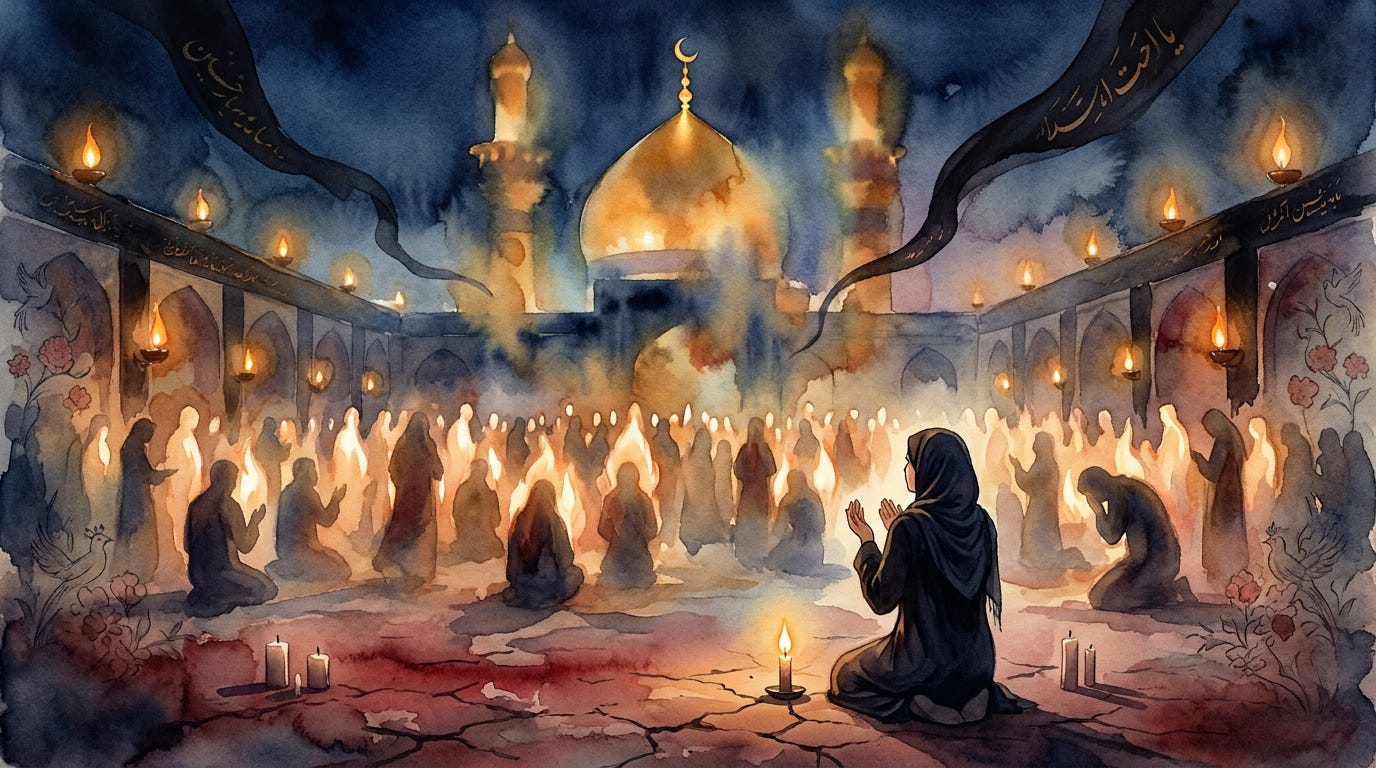
اَلسَّلاَمُ عَلَيْكَ يَا أَبَا عَبْدِاللَّهِ
وَعَلَى الْأَرْوَاحِ الَّتِي حَلَّتْ بِفِنَائِكَ
عَلَيْكُمْ مِنَّا جَمِيعًا سَلاَمُ اللَّهِ أَبَدًا مَا بَقِينَا وَبَقِيَ اللَّيْلُ وَالنَّهَارُ
وَلا جَعَلَهُ اللَّهُ آخِرَ الْعَهْدِ مِنَّا لِزِيَارَتِكُمْ
اَلسَّلاَمُ عَلَى الْحُسَيْنِ
وَعَلَى عَلِيِّ بْنِ الْحُسَيْنِ
وَعَلَى أَوْلَادِ الْحُسَيْنِ
وَعَلَى أَصْحَابِ الْحُسَيْنِ
Peace be upon you, O Aba Abdillah (O Husayn),
and upon the souls who have gathered in your courtyard.Upon you, from us all, is the peace of God—forever,
for as long as we remain and as long as night and day endure.And may God never make this our last pledge to visit you.
Peace be upon al-Husayn,
and upon Ali, son of al-Husayn,
and upon the children of al-Husayn,
and upon the companions of al-Husayn.— Adapted from Ziyarat Ashura
Video of the Sermon (Majlis/Lecture)
This is a video of the sermon, the maqtal — lamentation — referenced in this session can be found here.
Introduction
Two nights of foundation.
On the first night we recovered a word.
We said:
Martyr does not mean victim.
It means
Witness.
We returned to Abel (Habil), peace and blessings be upon him — the first witness in human history, the one our own majalis had quietly set aside — and we read his words in the Qur’an:
لَئِن بَسَطتَ إِلَيَّ يَدَكَ لِتَقْتُلَنِي مَا أَنَا بِبَاسِطٍ يَدِيَ إِلَيْكَ لِأَقْتُلَكَ ۖ إِنِّي أَخَافُ اللَّهَ رَبَّ الْعَالَمِينَ
“If you stretch out your hand to kill me, I will not stretch out my hand to kill you. I fear God, the Lord of all creation.”
— Qur’an, Surah al-Ma’idah (the Chapter of the Table Spread) #5, Verse 28
Two sentences.
A refusal and the reason for the refusal.
The first act of witness in the history of the earth.
On the second night we went deeper — before Abel, before the body, before the first morning of the first world.
We stood at the primordial covenant, the moment the Qur’an describes in Surah al-A’raf:
وَإِذْ أَخَذَ رَبُّكَ مِن بَنِي آدَمَ مِن ظُهُورِهِمْ ذُرِّيَّتَهُمْ وَأَشْهَدَهُمْ عَلَىٰ أَنفُسِهِمْ أَلَسْتُ بِرَبِّكُمْ ۖ قَالُوا بَلَىٰ ۛ شَهِدْنَا ۛ أَن تَقُولُوا يَوْمَ الْقِيَامَةِ إِنَّا كُنَّا عَنْ هَٰذَا غَافِلِينَ
“And when your Lord took from the Children of Adam — from their loins — their descendants, and He made them bear witness over themselves: ‘Am I not your Lord?’ They said: ‘Yes indeed! We bear witness.’ This, lest you should say on the Day of Resurrection, ‘Indeed we were unaware of this.’”
— Qur’an, Surah al-A’raf (the Chapter of the Heights) #7, Verse 172
“Am I not your Lord?”
And every soul answered:
“Yes — we bear witness.”
We traced the chain of that covenant through the prophets — from Abel through Noah, Abraham, John the Baptist, Zechariah, Jesus, Hamza, and the Prophet Muhammad (peace and blessings be upon him, his family, and his righteous companions) — and we saw that Karbala did not begin at Karbala.
The chain of witnesses is older than Islam, older than the prophets, older than the children of Adam.
It is the covenant God made with the soul before the body was made.
Tonight we enter the Islamic theology of martyrdom itself — its definitions, its categories, its precision.
And we do it through the sharpest Shia theologian of the modern age on this subject: the martyred scholar Ayatollah Murtadha Motahhari — may God rest his pure soul.
The Qur’an opens our path tonight with a verse from Surah Aal Imran:
وَلَا تَحْسَبَنَّ الَّذِينَ قُتِلُوا فِي سَبِيلِ اللَّهِ أَمْوَاتًا ۚ بَلْ أَحْيَاءٌ عِندَ رَبِّهِمْ يُرْزَقُونَ
“Do not think of those slain in the way of God as dead; rather, they are alive with their Lord, being provided for.”
— Qur’an, Surah Aal Imran (the Chapter of the Family of Imran) #3, Verse 169
Read this verse carefully, because it is the theological spine of tonight.
The Qur’an does not say:
Do not grieve for them.
It says:
Do not think of them as dead.
The error the verse is correcting is not an error of emotion.
It is an error of thinking — an error of category.
And if we place Imam Husayn — peace and blessings be upon him — in the wrong category, we will mourn him wrongly.
We will mourn a victim instead of honouring a witness.
And that, as Shaheed Motahhari teaches us tonight, is precisely the disease that has afflicted our pulpits for generations.
Shaheed Motahhari told us on Night 1 that the martyrs are the candles of society.
On Night 2 we traced the line of candles through the prophets.
Tonight we examine the candle itself — what it is made of, why it burns the way it does, and what distinguishes its light from every other kind of going out.
Five Ways to Leave This World
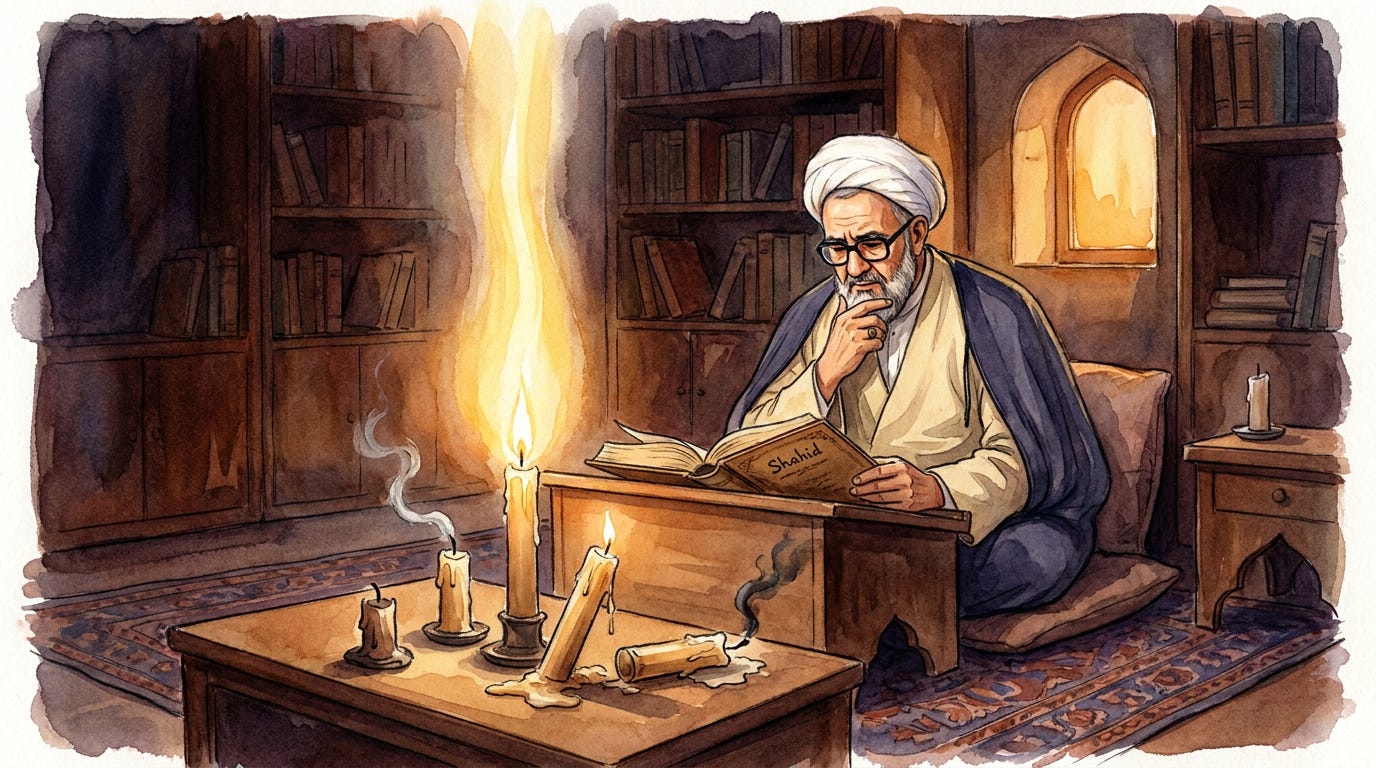
Shaheed Motahhari does not begin with emotion.
He begins with thought.
He insists — and this is one of his most important contributions to the theology of martyrdom — that we cannot mourn well if we do not think well.
A preacher who cannot distinguish between kinds of death will tell the wrong story about Imam Husayn.
A mourner who cannot make the distinction will shed tears for the wrong reason.
In his book The Martyr he puts the question directly:
«ما باید جواب بدهیم که مقصود از شهید چیست و شهادت چیست؟ و اولاً مقصود از مرگ چیست؟ مرگها چند نوع است؟»
“We must answer the question: what is meant by a martyr, and what is martyrdom? And first of all — what is meant by death? How many kinds of death are there?”
— Shaheed Motahhari, The Martyr, Collected Works, Volume 17
That question —
How many kinds of death are there?
— is the door we walk through tonight.
And Shaheed Motahhari answers it with a taxonomy: five kinds of death.
Five ways a human being can leave this world.
Four of them are, in the Qur’an’s language, death.
One of them is not.
The First Kind: Natural Death
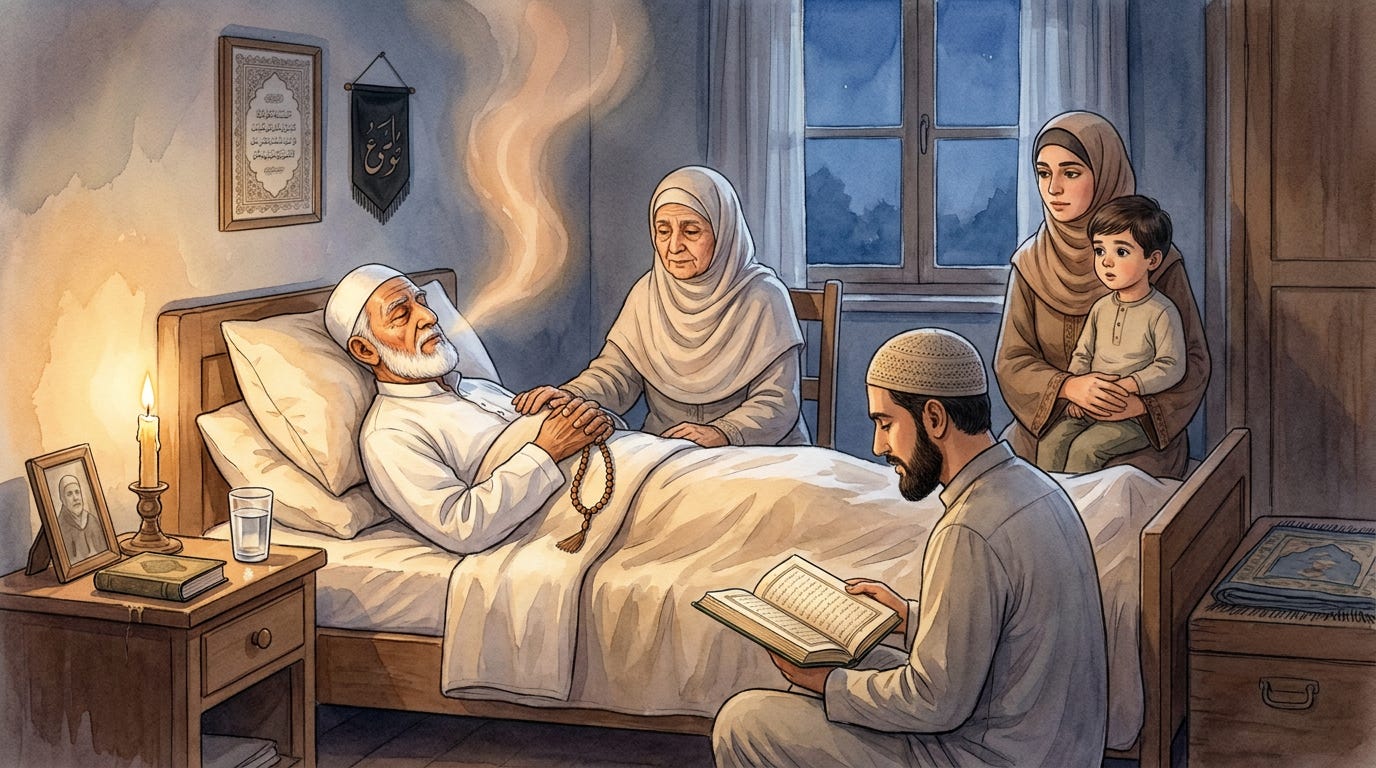
«مرگ طبیعی، همان مرگی است که انسان عمر خود را به سر میبرد و میمیرد.»
“Natural death is the death in which a person reaches the end of their life and dies.”
— Shaheed Motahhari, The Martyr, Collected Works, Volume 17
The life that reaches its appointed term — what the Qur’an calls ajal, the fixed moment — and ends.
Neither a matter of pride nor shame.
It is the ordinary conclusion of the ordinary human span.
The soul returns to its Lord.
The body returns to the earth.
The account is settled by God.
No theology of witness is needed to explain a natural death.
It is, as Shaheed Motahhari says, simply the way that God made the world:
Every living thing reaches its term.
The Second Kind: Accidental Death
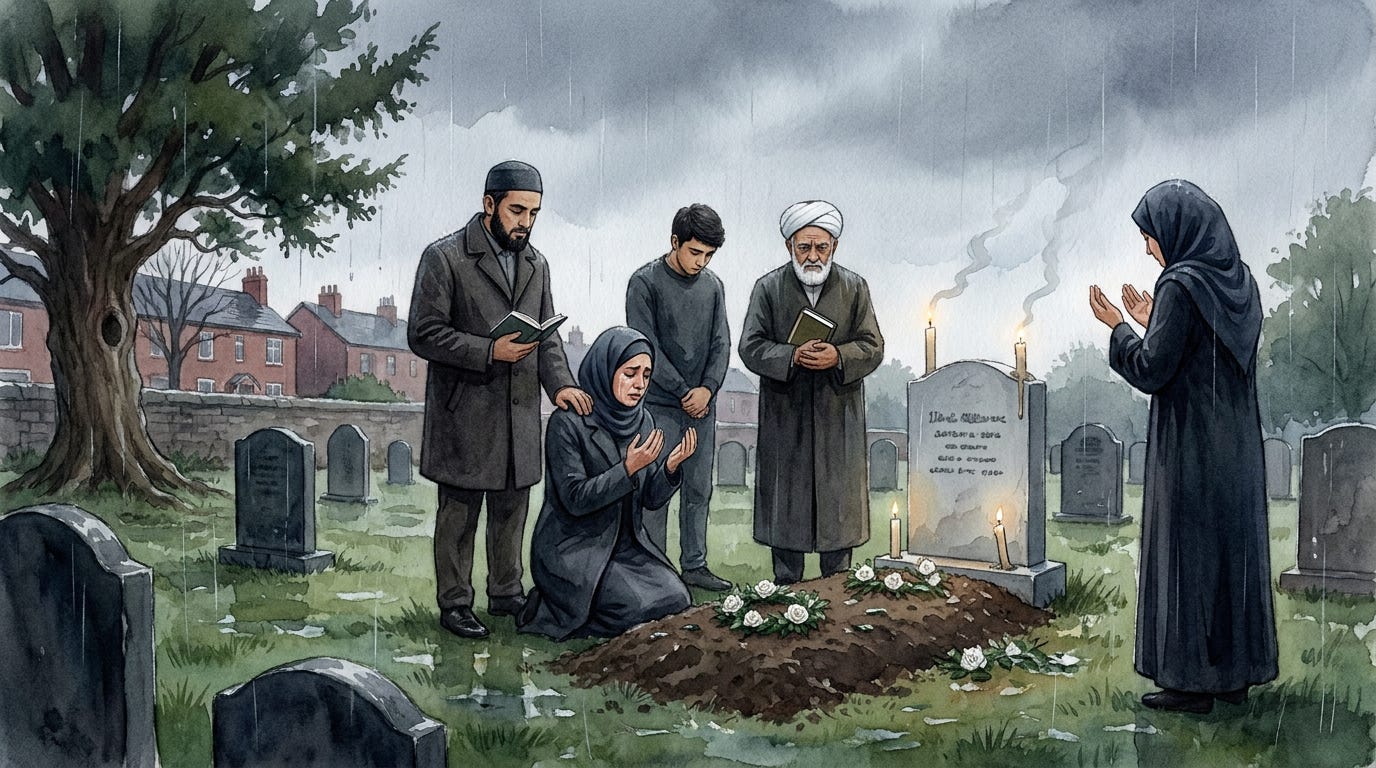
«مرگهایی که زودرس و پیش از موعد طبیعی باشد: ممکن است در اثر بیماری یا حوادث پیشآمده باشد.»
“Deaths that are premature, before the natural term — they may occur as a result of illness or of events that befall a person.”
— Shaheed Motahhari, The Martyr, Collected Works, Volume 17
Disease, disaster, the fall that was not anyone’s fault.
A life ended before its natural term — prematurely.
Shaheed Motahhari calls this a matter of sorrow.
The community mourns, the family grieves, but there is no agency in it.
No one chose it.
No one willed it.
It is, in theological terms, a test for the survivors — a call to patience, to reliance on God, to the acceptance that our plans are not God’s plans — but it is not a testimony from the one who died.
The accidental death does not carry a message.
It carries a silence.
The Third Kind: Criminal Death
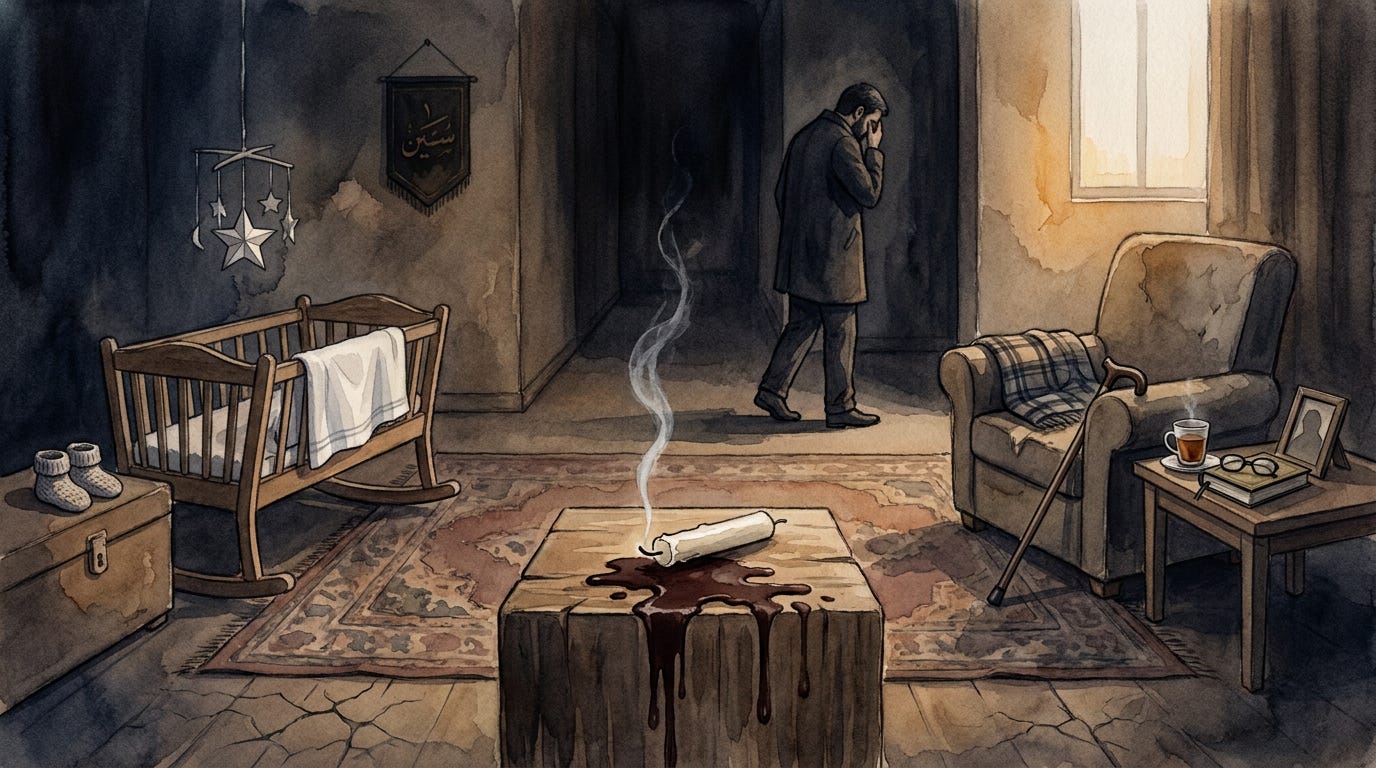
«مرگهایی که پای یک جنایت در کار است و مقتول بیتقصیر است. تأسفآور و رقتبار است، اما تحسینبرانگیز و افتخارآمیز نیست، زیرا مقتول دخالتی در آن نداشته است.»
“Death where the person is the innocent victim of a crime, killed due to another’s malice, hatred, or greed. It is shocking and pitiable, but because the victim had no active, voluntary choice in the matter, it is not a matter of theological pride or glory.”
— Shaheed Motahhari, The Martyr, Collected Works, Volume 17
A person unjustly killed.
A victim.
And here we must pause — because this is the category that must be distinguished, sharply and precisely, from the fifth.
In a criminal death, a person’s life is taken from them against their will.
The killer bears the sin.
The victim bears the injustice.
But — and this is the critical point that Shaheed Motahhari insists on — the victim has not given anything.
Something has been taken from them.
The agency belongs to the murderer, not to the murdered.
The victim’s death tells us about the criminal, not about the victim.
And to call the victim a witness — to use the word shaheed for someone whose life was taken without their consent and without their choice — is to use the word wrongly.
This matters because it is the mistake our own community has made about Imam Husayn — peace and blessings be upon him — for generations.
We will return to this in a moment.
And we must name what the modern world has added to this category — forms of criminal death that our own century has normalised.
The unborn child whose life is ended before it has drawn its first breath — an act that every Abrahamic faith has, for most of its history, understood as a wrong against the most defenceless human being imaginable.
And the dying patient whose life is ended by what is called “assisted suicide” — dressed in the vocabulary of compassion, but in the judgement of every serious religious tradition, a collapse of the duty of care into the convenience of the strong.
Both are forms of criminal death.
Both are the third category.
Our tradition does not look away from them, and neither will this series.
The Fourth Kind: Self-Murder
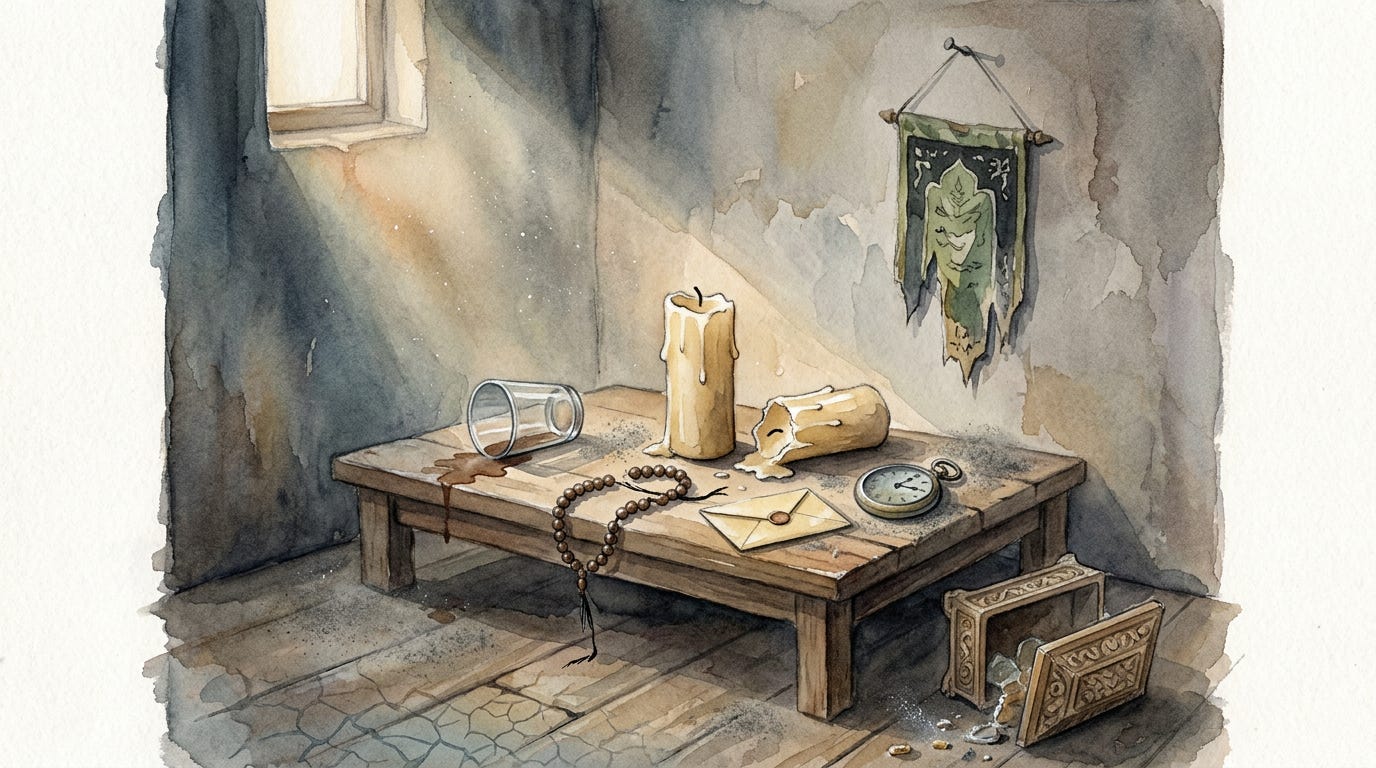
«خودکشی. اینکه خود انسان، خودش را از بین ببرد.»
“Self-murder — that a person destroys themselves.”
— Shaheed Motahhari, The Martyr, Collected Works, Volume 17
Suicide — the reckless death of a person whose own negligence or despair ends them.
Shaheed Motahhari names this the gravest form of wasted life, because the killer and the victim are the same soul — and God has not given any of us ownership of our own lives to throw away.
The Qur’an is direct:
وَلَا تَقۡتُلُوٓاْ أَنفُسَكُمۡۚ إِنَّ ٱللَّهَ كَانَ بِكُمۡ رَحِيمٗا
“Do not kill yourselves; indeed God is merciful with you”
— Qur’an, Surah al-Nisa (the Chapter of the Women) #4, Verse 29
The life you carry was entrusted to you by God.
To destroy it — whether in a single act of violence against yourself, or in the slower violence of negligence, addiction, or self-abandonment — is to break a trust you did not have the right to break.
And this is the category that the modern world most frequently confuses with martyrdom.
A suicide bomber is not a witness.
A person who throws their life away for a cause they have not examined is not bearing testimony.
They have committed the fourth kind of death while claiming the fifth, and the community that celebrates them has compounded the tragedy.
We will examine this confusion in detail when we come to Session 9 — the session on the counterfeits, the false claims to witness.
For now it is enough to name the line clearly:
Self-destruction is the opposite of witness.
The Fifth Kind: Martyrdom — Bearing Witness with One’s Life
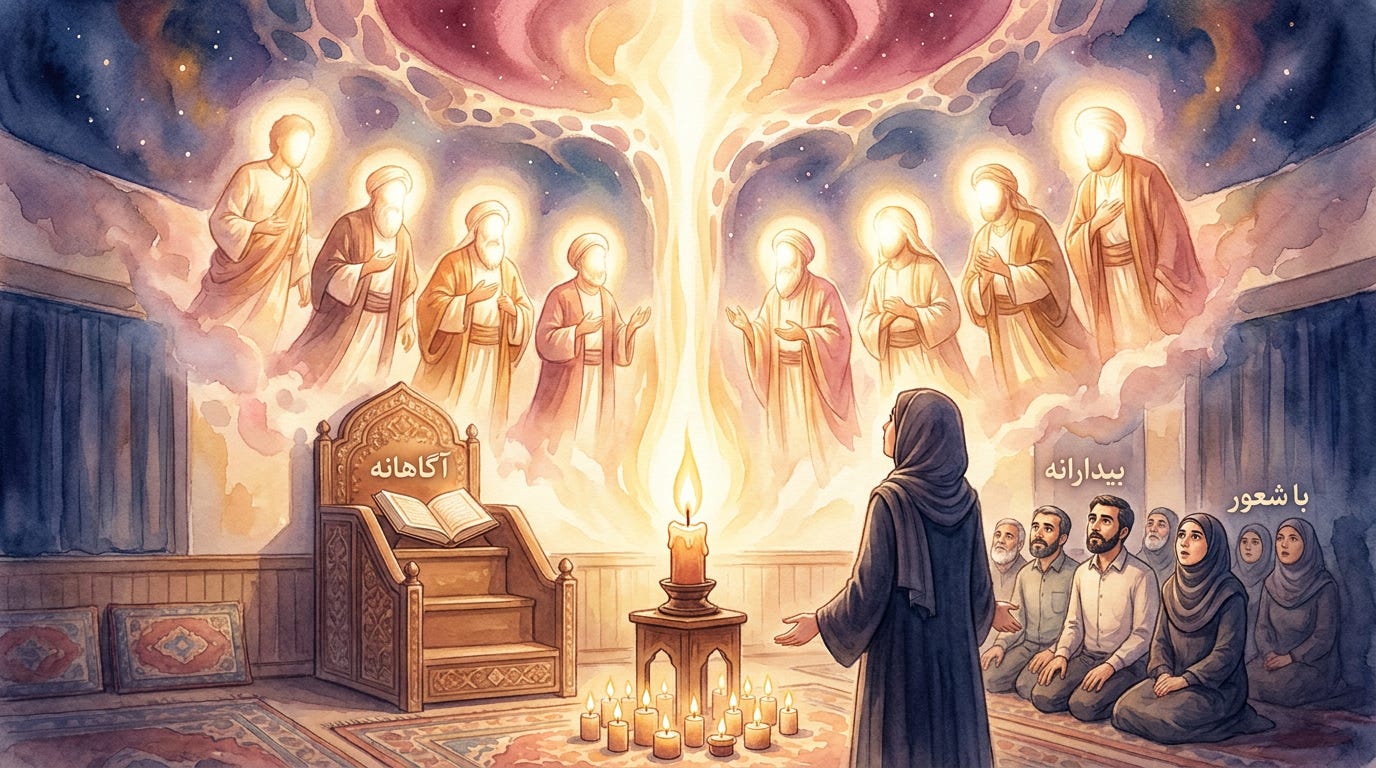
«شهادت یک مرگ خاص است. شهادت اینست که انسان از همه چیز خود میگذرد، جان خود را فدا میکند — آگاهانه، بیدارانه، با شعور.»
“Martyrdom is a special kind of death. Martyrdom is that a person parts with everything they have, sacrifices their life — consciously, wakefully, with awareness.”
— Shaheed Motahhari, The Martyr, Collected Works, Volume 17
Here it is.
The fifth kind.
The one the Qur’an says is not death at all.
And Shaheed Motahhari identifies its two inseparable elements with precision.
First: a life offered for a sacred cause.
Not any cause — a cause rooted in the covenant with God, in the worship of the One, in the defence of truth and justice as God has defined them.
The cause must be sacred.
If it is not, the death may be brave, it may be moving, it may be politically consequential — but it is not shahada.
It is not bearing witness to God.
It is bearing witness to something less than God.
Second: the offering made consciously.
With full awareness of the cost.
The witness knows what is coming, and walks toward it.
He does not stumble into it.
He is not ambushed by it.
He is not manipulated into it by men who care more about their own power than about his soul.
He gives.
Consciously, wakefully, with awareness.
These three words in Shaheed Motahhari’s Farsi — āgāhāneh, bīdārāneh, bā sho’ūr— are not synonyms placed for emphasis.
They are three distinct conditions:
Āgāhāneh — with knowledge.
The witness knows the theology.
He knows why he is standing where he is standing.
Bīdārāneh — awake.
The witness is not drugged by ideology, not numbed by propaganda, not swept along by a crowd.
His eyes are open.
Bā sho’ūr — with consciousness.
The witness has reflected.
He has weighed.
He has chosen.
If any one of these three is absent — if the person does not know why, or is not awake to what is happening, or has not consciously chosen — then the death may be tragic, may be unjust, may be worthy of grief, but it is not Category 5.
It is not what the Qur’an means when it says:
Do not think of them as dead.
The Living Witness — Shaheed Before the Body Falls
And here we must pause to say something that Shaheed Motahhari’s taxonomy implies but does not say in so many words — something our own generation has been shown so clearly that we have no excuse for missing it.
In Surah al-Ahzab, God says:
مِنَ الْمُؤْمِنِينَ رِجَالٌ صَدَقُوا مَا عَاهَدُوا اللَّهَ عَلَيْهِ ۖ فَمِنْهُم مَّن قَضَىٰ نَحْبَهُ وَمِنْهُم مَّن يَنتَظِرُ ۖ وَمَا بَدَّلُوا تَبْدِيلًا
“Among the believers are men who have been true to their covenant with God. Among them are those who have fulfilled their pledge — and among them are those who are still waiting. And they have never changed in the least.”
— Qur’an, Surah al-Ahzab (the Chapter of the Confederates) #33, Verse #23
Read the architecture of this verse.
It names two groups within one station — those who have fulfilled their pledge, and those who are still waiting — and it seals them both with the same verdict:
They have never changed.
The one who has already given his life and the one who is still standing, still carrying the covenant, still walking toward the field — both are witnesses.
Both have been true to their covenant.
The Qur’an does not wait for the body to fall before it calls them sadaqū — truthful, faithful, proven.
The station is entered at the moment of the offering, not at the moment of death.
If the fifth kind of death is defined by two conditions — a sacred cause and a conscious offering — then the witness does not begin at the moment of physical death.
It begins at the moment of the offering.
A person who has given their life to the cause of God, who walks into danger again and again with full knowledge and full consciousness, who carries the wounds of that choice in their body and does not turn back — that person is already a witness.
They are already shaheed.
The body has not yet fallen, but the offering has already been made.
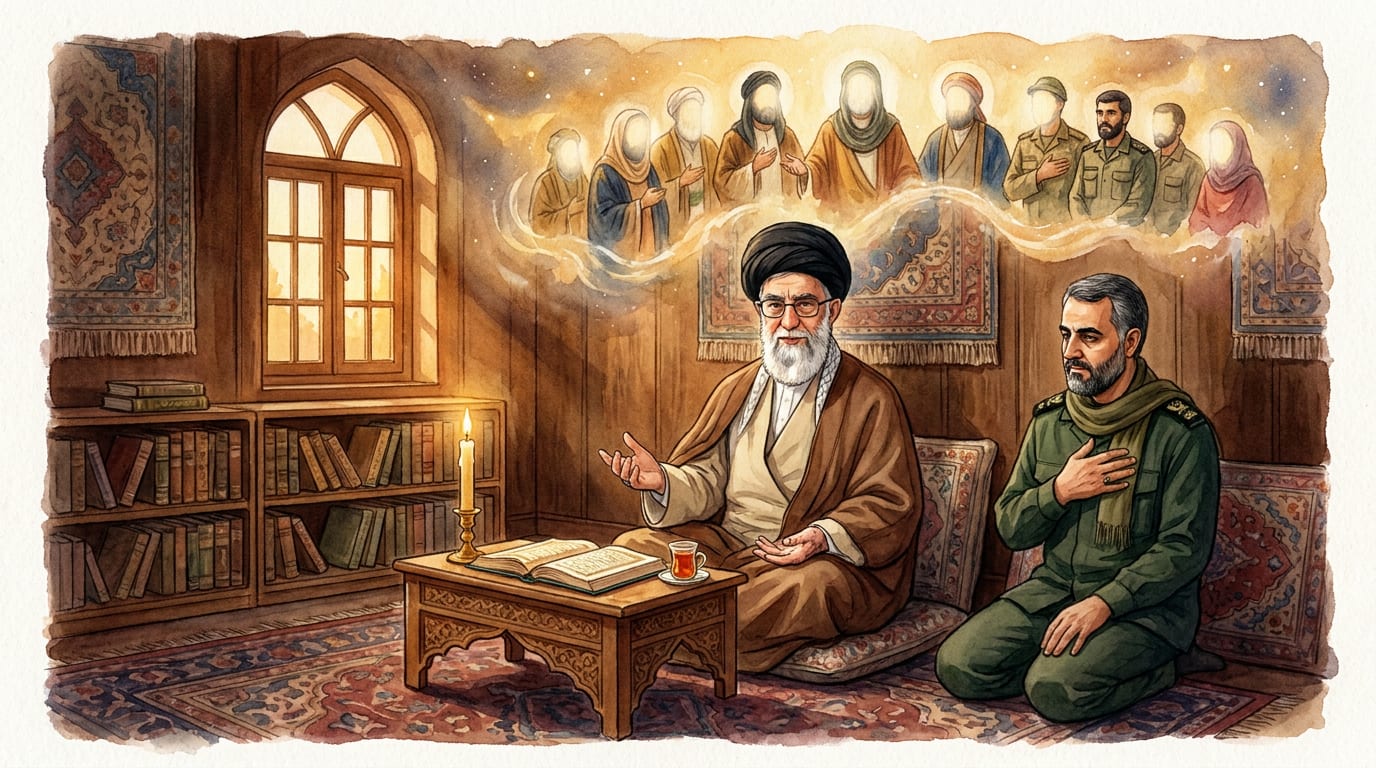
The martyr, Imam Sayyed Ali Khamenei — may God rest his pure soul — understood this with a clarity that comes from having lived it.
In 1981, barely two years after the victory of the Islamic Revolution, he was targeted in an assassination attempt — a bomb concealed in a tape recorder placed at a lectern where he was speaking.
The blast destroyed his right hand and severely damaged his right arm.
He carried that wound for the remaining forty-five years of his life.
It never healed.
He never regained the use of his hand.
And it never changed his stance by a single degree.
He stood where he stood — before the Revolution, during the Sacred Defence, through the sanctions, through the threats, through every letter sent from every empire that asked for his hand or his head — and he did not move.
He was a living witness, a living shaheed, long before February of this year (2026).
And he recognised the same station in others.
Years before the martyrdom of Hajj Qasem Soleimani — may God rest his pure soul — when Hajj Qassem was still a living commander, still walking into the field, still coming home — Shaheed Imam Khamenei addressed him directly and said:
«خود شما هم که آقای سلیمانی باشید در نظر ما شهیدید. شما شهید زنده هستید. بله، شما هم شهیدید. شما بارها در میدان جنگ به شهادت رسیدید.»
“You yourself, Mr. Soleimani, are a martyr in our eyes. You are a living martyr. Yes, you too are a martyr. You have attained martyrdom many times on the battlefield.”
— Imam Khamenei, addressing Hajj Qasem Soleimani at the Grand Congress Commemorating Commanders and 8,000 Martyrs of Kerman, Sistan & Baluchestan, and Hormozgan provinces, 1376 SH / 1997 CE. Archived at farsi.khamenei.ir, speech-content ID 47021.
And years later, visiting Kerman again, he expanded the point into a theological principle:
«…و چه آنهایى که به جبهههاى جنگ رفتند و خطر را پذیرفتند و جان خودشان را کف دست گرفتند و همهى نیروى خودشان را صرف کردند، اما خداى متعال خواست اینها زنده بمانند و برکاتشان براى کشورشان و دنیاى اسلام ادامه پیدا کند. سردار سلیمانى هم ایثارگر است، او هم یک شهید است… این سرداران، شهید زندهاند؛ به شرطى که این راه را ادامه دهند.»
“…And those who went to the fronts of war and accepted the danger, who held their lives in the palms of their hands and spent all their strength — but God the Most High willed that they remain alive, so that their blessings may continue for their country and for the world of Islam. Commander Soleimani too is one who gives of himself; he too is a martyr… These commanders are living martyrs — on condition that they continue this path.”
— Imam Khamenei, visit to Kerman province, meeting with families of martyrs, 1384 SH / 2005 CE
Read that condition:
On condition that they continue this path.
The station of the living martyr is not a title that is given once and kept forever.
It is a station that is maintained by continuing to walk the road.
The moment a person stops — the moment they compromise, turn back, trade the covenant for comfort — they have left the station.
The living witness is not someone who stood once.
The living witness is someone who is still standing.
In our view, you are a martyr.
Present tense.
While the man was still breathing, still commanding, still walking into the field.
And:
You have attained martyrdom many times.
Not once — many times.
Every time Hajj Qassem walked onto a battlefield with the consciousness of why he was there and the knowledge of what it might cost him, he was performing the act of shahada.
The physical death on the 3rd of January 2020 was the last of many martyrdoms — not the first.
This is why the fifth kind of death is not really about death at all.
It is about the state of having given.
And that state can be entered — and re-entered — while the heart is still beating.
And we see this in our own time, in our own cities.
The men and women who have stood publicly against the genocide in Palestine — who have spoken when silence was easier, who have marched when staying home was safer, who have refused to look away when looking away was the price of comfort — some of them are now being prosecuted by Western governments whose positions have been shaped, unmistakably, by the lobbying machinery of the very regime carrying out the genocide.
These people have not been killed.
But they have offered something — their careers, their reputations, their legal safety, their peace of mind — consciously, wakefully, with awareness, for a cause rooted in the covenant with God.
They are living witnesses.
And our tradition has a word for them. It is the same word.
Why This Distinction Is Everything
Imam Husayn — peace and blessings be upon him — is not the third category.
He is the fifth.
And the difference between the two is everything.
When we mourn Imam Husayn as a victim — as a man who was unjustly killed, whose death was a tragedy inflicted on him by others — we are placing him in Category 3.
We are making him the same as any innocent person killed by a tyrant.
And that is not only historically inaccurate; it is, in Shaheed Motahhari’s language, a betrayal of his witness.
Because Imam Husayn was not killed.
Imam Husayn gave.
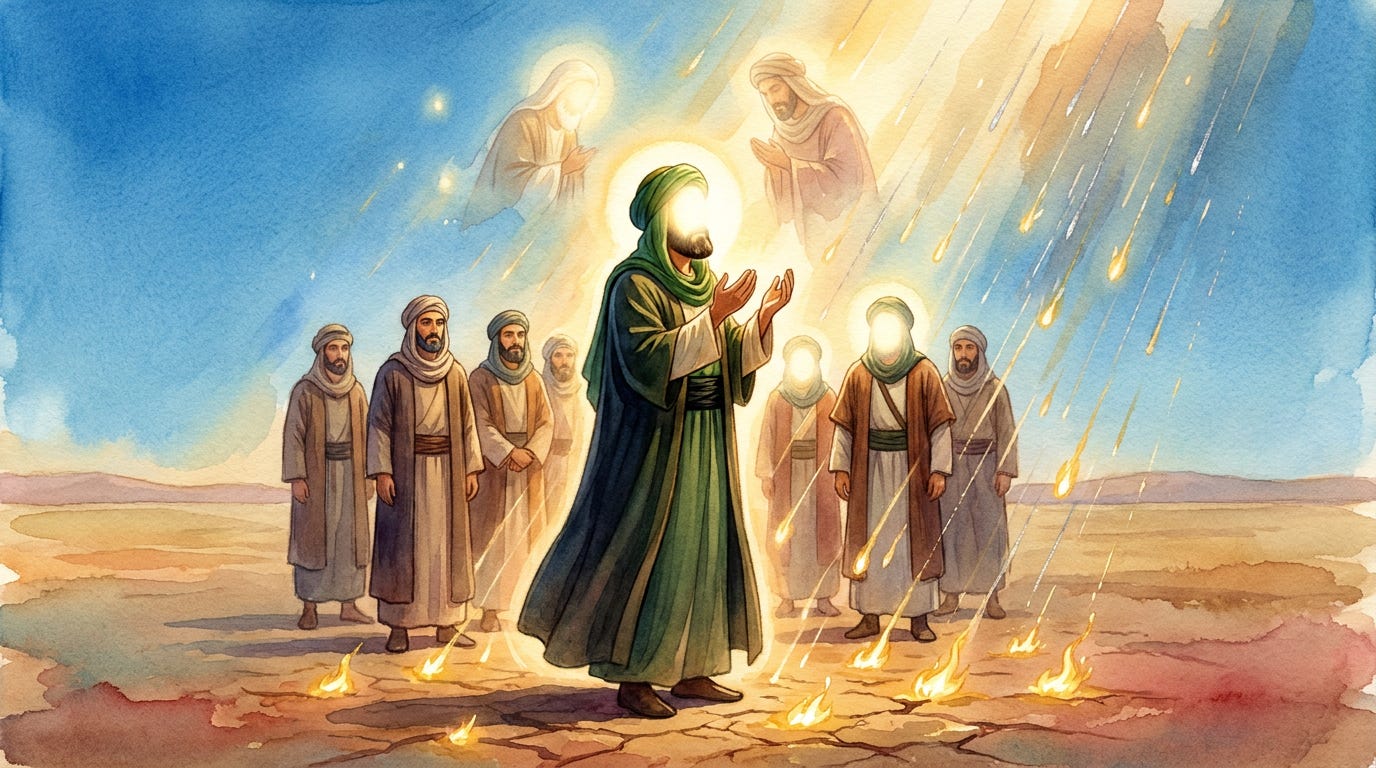
He walked toward Karbala with open eyes.
He told his companions — on the night of Ashura, hours before the battle — that they could leave, that the enemy wanted only him, that the darkness would cover their departure and no one would blame them.
And not one of them left.
He prayed the noon prayer in the middle of the battlefield while arrows were falling around him.
He did not lose his life.
He invested it.
The difference between Category 3 and Category 5 is the difference between a person who has something taken from them and a person who gives something away.
Between death and giving is everything.
And that “everything” — that gap between the victim and the witness — is the space in which the whole theology of this series lives.
And the Qur’an has told us plainly what to do with this distinction.
It said:
وَلَا تَحْسَبَنَّ الَّذِينَ قُتِلُوا فِي سَبِيلِ اللَّهِ أَمْوَاتًا ۚ بَلْ أَحْيَاءٌ عِندَ رَبِّهِمْ يُرْزَقُونَ
“Do not think of those slain in the way of God as dead; rather, they are alive with their Lord, being provided for.”
— Qur’an, Surah Aal Imran (the Chapter of the Family of Imran) #3, Verse 169
Do not think of them as dead.
The verse is a command — a correction of the thinking, not of the feeling.
You may weep.
You should weep.
But do not think of them as dead.
Because the one who gives is not dead.
The one who gives is alive with their Lord, being provided for.
And if we place Imam Husayn in Category 3 — if we think of him as a man who was killed — we have dishonoured the very verse we recite.
The Candle of Society
In the first two sessions, we quoted Shaheed Motahhari’s candle metaphor briefly and moved on.
Tonight we stay with it — because this metaphor is not decoration.
It is a theological argument.
«شهدا شمع محفل بشریتاند؛ سوختند و محفل بشریت را روشن کردند. اگر این محفل تاریک میماند هیچ دستگاهی نمیتوانست کار خود را آغاز کند یا ادامه بدهد.»
“The martyrs are the candles of society. They burn themselves out and illuminate society. If they do not shed their light, no organisation can shine.”
— Shaheed Motahhari, The Martyr, Collected Works, Volume 17
What does a candle do?
It consumes itself.
The wax melts.
The wick burns down.
The candle does not survive the light it gives.
And yet — and this is Shaheed Motahhari’s point — the candle is not the victim of its own burning.
It is the purpose of its own burning.
A candle was made to give light.
When it gives light, it is not being destroyed.
It is being fulfilled.
This is what distinguishes the witness from the victim.
The victim is destroyed.
The witness is fulfilled.
The victim’s death is a loss to the world.
The witness’s death is a gift to the world.
And the metaphor goes further.
Look at what happens in the room when the candle is lit.
Other people can see.
Other people can read.
Other people can find their way.
The candle did not light the room for itself — it cannot see its own light.
It lit the room for everyone else.
This is the martyr’s prerogative, which Shaheed Motahhari names with a sentence that should stay with us for the rest of this series:
We are indebted to the martyrs; they are not indebted to us.
When we greet Imam Husayn and say peace be upon you, we are not doing him a favour.
We are acknowledging a debt we can never repay — because he burned so that we could see.
«شهید با خون خود از جامعه آبیاری کرده است.»
“The martyr has irrigated society with his blood.”
— Shaheed Motahhari, The Martyr, Collected Works, Volume 17
A candle that illuminates.
Blood that irrigates.
Two metaphors for the same reality:
The witness gives so that others may grow.
And the community that receives the light, that grows in the irrigated soil, owes its growth to the one who gave.
This is why the theology of witness is not a theology of death.
It is a theology of life — the life that comes into the world when the candle burns, the crop that rises when the blood waters the earth.
The Scholar Who Was Himself the Candle
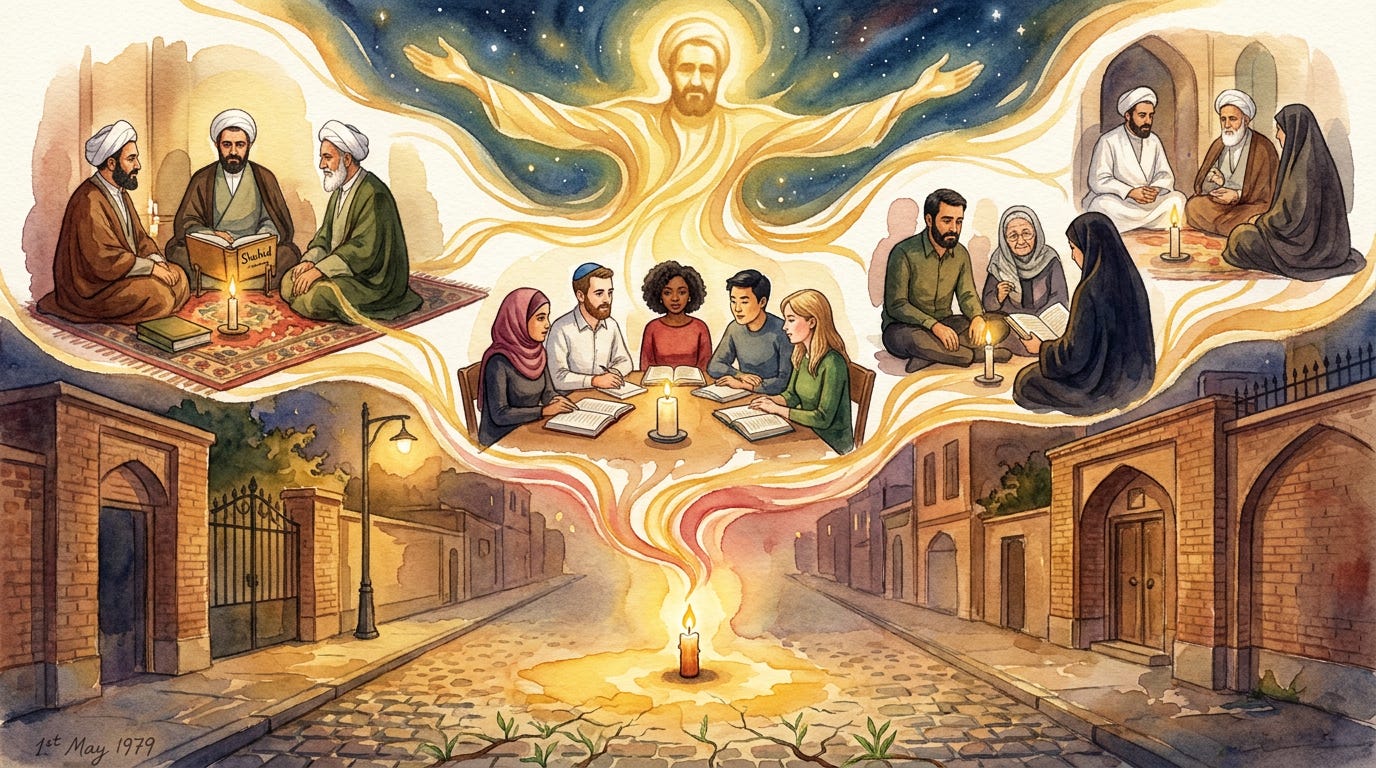
There is a painful honesty in the fact that the man who wrote these words — the man who gave us the theology of the candle — was himself killed for writing them.
Shaheed Ayatollah Murtadha Motahhari — may God rest his pure soul — was assassinated in Tehran on the 1st of May 1979, barely three months after the victory of the Islamic Revolution.
The group that killed him — an organisation called Furqan — targeted precisely the scholars who were building the intellectual foundations of the new Islamic society.
They killed the candle-maker.
Shaheed Motahhari — may God rest his pure soul — had spent a lifetime maintaining — in the classroom, in the mosque, in his books, and on the revolutionary committees of 1978 and 1979 — that Islam demanded thought, not merely obedience; clarity, not merely zeal.
He had insisted that the theology of martyrdom must be understood, not merely felt.
He had written the very taxonomy we are studying tonight — five kinds of death, and the fifth is the only one that is not death — because he knew that a community which cannot tell the difference between a victim and a witness will eventually stop producing either.
And for this clarity, for this insistence that the word must mean what it means, he was shot in the head on a Tehran street.
And yet — and this is the theology in action — his death did not extinguish his work.
It amplified it.
The book we are studying from tonight, The Martyr, has been translated into dozens of languages.
It is studied in the hawzas of Qom and Najaf, in universities, in seminaries, in study circles, in communities like ours — in English, in this city, on this night.
The candle was extinguished — and the light went further than the candle ever could have imagined.
His assassination is the proof of the theology he wrote.
The ones who killed him thought they were putting out a light.
What they did was plant a seed.
And the seed has grown into a forest — and we are standing in that forest tonight, reading by the light he gave.
The Beginning of a Quest — Talab
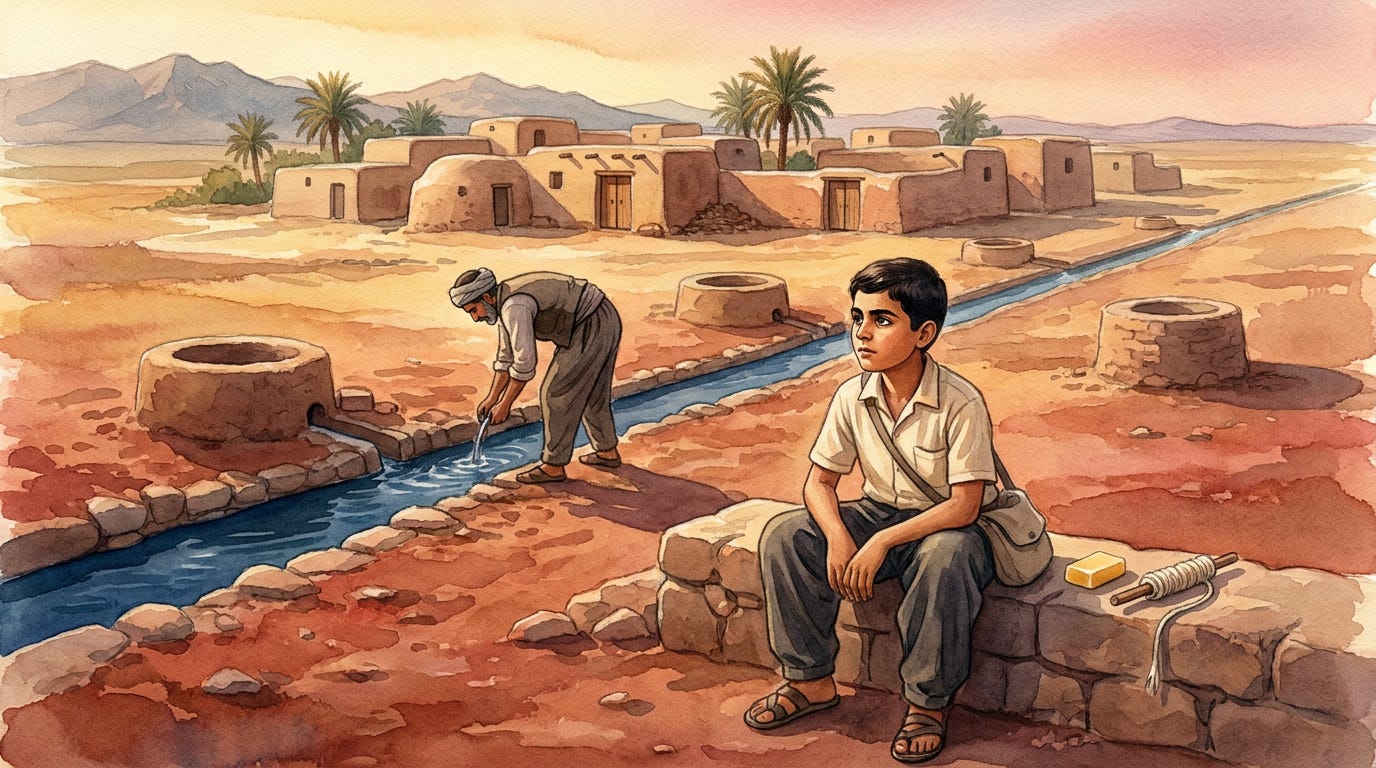
But a candle does not ignite itself.
Before the flame, there is the wick—and before the wick, the restless hands that shape it.
For Hajj Qasem, that shaping began not with a weapon, but with a question.
We have already met Hajj Qasem Soleimani — may God rest his pure soul — tonight — in the words of Imam Sayyed Ali Khamenei — may God rest his pure soul, who called him a living martyr while the man was still breathing, still commanding, still walking into the field.
We have seen where the road led.
Now we trace where it began — not with a battlefield, not with a command, but with a question.
A restlessness.
A refusal to accept that the world was as broken as it looked.
In the south-east of Iran, in a province called Kerman, in the years before the Islamic Revolution, a young man was growing up in a village called Qanat-e Malek.
His family were not scholars.
His father was a farmer — a man who worked with water, not with books.
There was no library on the corner.
But there was something in the young man that would not sit still — a hunger that the village could not feed and that the regime of the Shah could not explain away.
He was asking questions.
Why is there so much injustice?
Why do the powerful get to stay powerful?
Why does no one stand up?
His name was Qasem — the same Qasem whom Imam Khamenei would one day look at and say:
You are a martyr in our eyes; you are a living martyr.
But between the boy in the village and the commander who was already shaheed before the missile struck, there is a road — and tonight, on the night Shaheed Motahhari’s taxonomy gives us the vocabulary for what that road produces, we ask:
Where does it begin?
It begins long before the death itself.
It begins with a question.
It begins with a refusal to stop asking.
The Persian mystical tradition — the tradition that Shaheed Motahhari — may God rest his pure soul himself was steeped in, and that runs like an underground river through the whole of Shia thought — calls this first stage talab: the Quest.
The great Shaykh Farid al-Din Attar of Nishapur — the thirteenth-century poet and mystic who gave the Persian-speaking world one of its most enduring allegories of the soul’s journey toward God — names it in his masterwork The Conference of the Birds as the first of seven valleys the soul must cross before it reaches its Lord.
Mawlana Jalal al-Din Rumi — the poet-scholar of Konya whose Masnavi has been called the Qur’an in the Persian tongue, and who drew his deepest inspiration from the teachings of the Ahl al-Bayt — peace and blessings be upon them — names the same restlessness in his own way.
It is the soul that wakes up and cannot go back to sleep.
It is Abel refusing to raise his hand, not because someone taught him not to, but because something inside him already knew.
It is the fitrah — the covenant we traced on Night 2 — stirring in the chest.
We will return to Hajj Qassem.
His story will walk through this series in the stages the Persian mystics mapped: talab, the quest, tonight; then love, then knowledge, then witness.
But tonight the lesson of talab is simply this:
The candle does not begin to burn on the day it is lit.
The wax was already forming.
The wick was already being wound.
And for Hajj Qassem, as for Imam Husayn, as for Abel — the giving began long before the giving was visible.
The Failure of the Storytelling Preacher
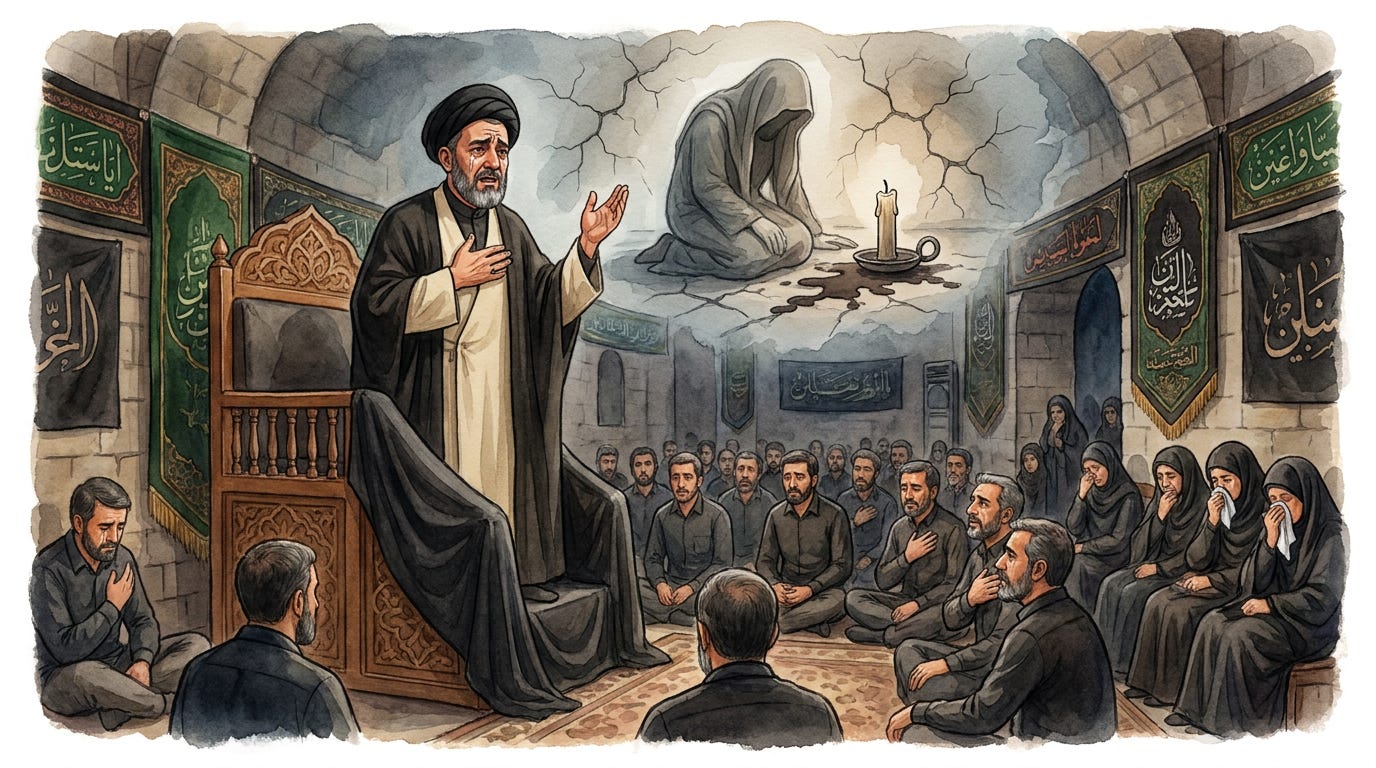
So the taxonomy stands.
Five kinds of death, and the fifth is a gift, not a loss. And this brings us — with the full weight of the categories behind us — back to the critique we introduced in Session 1.
The critique that holds this entire series accountable.
The critique that Shaheed Motahhari levelled at his own community, at his own preachers, at his own tradition — not because he did not love them, but because he loved the truth more:
«اغلب واعظینی که قضیه کربلا را نقل میکنند، حسین بن علی را سیدالشهدا مینامند و حال آنکه تحلیل کمی درباره مسئله شهادت ندارند. طوری واقعه را شرح میدهند که گویا حسین بن علی مفت و مسلّم کشته شده، بیخودی کشته شده.»
“Most of the preachers who narrate the story of Karbala call Imam Husayn the Master of Martyrs — and yet they have little analytical insight into the question of martyrdom. They describe the events in such a way as though Husayn ibn Ali lost his life in vain, for nothing.”
— Shaheed Motahhari, The Martyr, Collected Works, Volume 17
Now we can hear this with the categories in front of us.
What Shaheed Motahhari is saying is that these preachers — well-intentioned, often sincere, sometimes deeply moved by what they are telling — are describing a Category 5 death as though it were a Category 3.
They are describing a gift as though it were a theft.
They are describing the candle as though it had been accidentally knocked over and crushed.
And the effect on the congregation is devastating.
When the story is told as a tragedy inflicted on Imam Husayn — rather than as a witness offered by Imam Husayn — the congregation mourns a victim.
They feel sorrow.
They feel anger at the injustice.
But they do not feel the obligation.
Because a victim does not place an obligation on you — a victim only places an obligation on the one who victimised them.
But a witness — a witness who has given — places an obligation on everyone who receives the light.
If you sit in a room that a candle has lit, you owe the candle.
If you walk in a world that Imam Husayn’s witness has illuminated, you owe Imam Husayn.
Three Errors of the Uninstructed Mourner
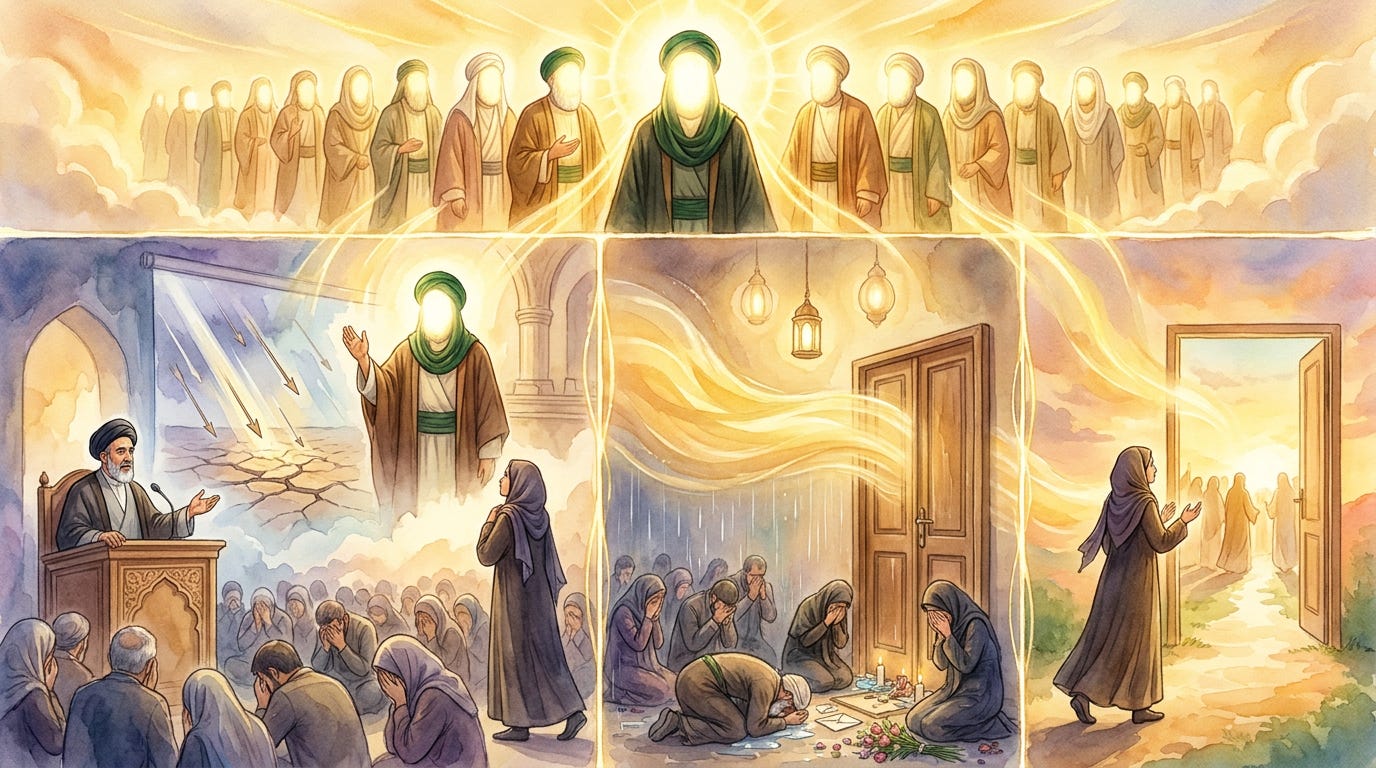
Drawing from Shaheed Motahhari’s critique, let us name three common errors — three ways the story is told wrongly — so that we can avoid them for the rest of this Muharram.
The first error:
Reducing Imam Husayn to his suffering.
The preacher who spends forty minutes on the thirst, the arrows, the heat, the blood, the cries of the children — and two minutes on why Imam Husayn went to Karbala in the first place.
This is the Category 3 error.
The narration centres the crime committed against Imam Husayn, not the testimony Imam Husayn came to give.
The result is a congregation that feels sadness but does not know what the sadness is for.
The suffering is real.
The thirst was real.
The arrows were real.
The children’s cries were real.
We do not deny any of it, and we will stand in the middle of it on the tenth night.
But when the suffering becomes the whole of the story, we have lost the story.
The suffering was the cost of the testimony.
It was not the testimony itself.
The testimony was the twelve words spoken in a hall in Medina — the words we will hear in tonight’s maqtal — and everything after those words was the world’s response to a man who would not be moved.
The second error:
Making the mourning the end.
The preacher who treats the tears as the destination.
Shaheed Motahhari — may God rest his pure soul — was explicit — the tears are sacred, but they are not the destination.
They are the door.
In The Martyr, he writes:
«اسلام با اینکه به گریه بر میّت (میّت عادی) چندان روی خوشی نشان نداده است، مایل است که مردم بر شهید بگریند، زیرا شهید حماسه آفریده است و گریه بر شهید، شرکت در حماسه او و هماهنگی با روح او و موافقت با نشاط او و حرکت در موج اوست.»
“Although Islam does not look favourably upon weeping for an ordinary deceased person, it desires that people weep for the martyr — because the martyr has created an epic, and weeping for the martyr means participating in his epic, harmonising with his spirit, affirming his zeal, and moving with the wave he has set in motion.”
— Shaheed Motahhari, The Martyr, Collected Works, Volume 17
Read that last phrase again:
Moving with the wave he has set in motion.
The tears are not the end.
They are the entry into the wave.
They are what carries you forward — into the epic the martyr created, into the spirit the martyr left behind.
But if the tears stop at the door, if the mourning never becomes movement, then we have wept without entering the wave.
And a wave that no one enters breaks on an empty shore.
The Prophet himself — peace and blessings be upon him, his family, and his righteous companions — wept for Imam Husayn before Imam Husayn was born, as we traced on Night 2.
The tears are prophetically endorsed.
But the door they open leads to a question:
Now that you have wept, what will you do?
If the answer is “nothing — I have wept, and I will weep again next year,” then the mourning has not completed its circuit.
It has stayed at the door.
And a door that stays shut is just a wall.
Shaheed Imam Khamenei — may God rest his pure soul — taught this for decades.
He identified three elements in the movement of Imam Husayn — and insisted that all three must be present in any gathering that claims to honour him:
«سه عنصر در حرکت حضرت ابیعبداللَّه (ع) وجود دارد: عنصر منطق و عقل، عنصر حماسه و عزت، و عنصر عاطفه… صِرف پرداختن به عاطفه و فراموش کردن جنبهی منطق و عقل که در ماجرای حسینبنعلی (ع) نهفته است، کوچک کردن حادثه است. […] مجلس عزای حسین علیهالصّلاةوالسّلام، مجلسی است که باید منشأ معرفت باشد.»
“There are three elements in the movement of Aba Abdillah — peace and blessings be upon him: the element of logic and intellect, the element of epic and honour, and the element of emotion… Merely paying attention to emotion and forgetting the aspect of logic and intellect that is embedded in the event of Husayn ibn Ali — peace and blessings be upon him — is a belittlement of the event. […] The mourning gathering for Husayn — peace and blessings be upon him — is a gathering that must be a source of understanding and awareness (ma’rifat).”
— Imam Khamenei; first part from his address to clerics and preachers on the eve of Muharram, 5 Bahman 1384 / 25 January 2006; concluding sentence from his address to clerics in Kohgiluyeh and Boyer-Ahmad, 17 Khordad 1373 / 7 June 1994
Three elements: logic, epic, and emotion.
Not one.
Not two.
Three.
And the mourning gathering — the majlis — must be a source of ma’rifat, of understanding.
He called this tabyeen — clarification — and it was the subject of our entire series last year.
The tears without the understanding are an act of sympathy.
The tears with the understanding are an act of worship.
Both are human.
But only the second is shahada.
Only the second is a continuation of the chain.
The third error:
Disconnecting Karbala from the rest of the year.
The preacher who makes Muharram an island.
Ten nights of intensity, and then silence until next year.
But if Imam Husayn’s witness is Category 5 — if it is a conscious, ongoing gift to the world — then the light does not turn off on the eleventh of Muharram.
The candle does not burn for ten days and then go out.
It burns permanently.
The obligation it places on the living is permanent.
And the preacher who packs Karbala away on the shelf until next Muharram has reduced the candle to a seasonal decoration — something we bring out once a year, admire, weep over, and then put away.
The great exegete, jurist, teacher and scholar Ayatollah Jawadi-Amoli — may God protect him — has taught — in his seminal work Hamaseh va Erfan (Epic and Mysticism) and in his lecture series Shokoufayi-e Aql dar Partov-e Nehzat-e Husayni(The Blooming of Intellect in the Light of the Husayni Movement) — that Karbala is not a historical event confined to the past.
It is an ontological and existential reality.
In his own words:
«عاشورا تنها یک حادثه تاریخی محصور در گذشته نیست، بلکه یک حقیقت تکوینی و وجودی مستمر است.»
“Ashura is not merely a historical event confined to the past; it is a continuous ontological and existential reality.”
— Ayatollah Jawadi-Amoli, Hamaseh va Erfan (Epic and Mysticism), Esra Publications; See also Tafsir-e Tasnim, Volumes 12–13, where he develops the takwini (ontological) dimensions of sacred history.]
And in his commentary in Tafsir-e Tasnim, he takes the point further:
«اگر آن دید بلند را نداشتی، مقطعی و موضعی فکر کردی؛ میگویی این مصیبت سخت است، چرا کربلا شده… ولی اگر آن سعه رحمت مطلقه و مصلحت عالیه را ببینید، میبینید که کربلا در جای خود حق است… کربلا در جای خود، (إِنَّ اللَّهَ شَاءَ أَنْ يَرَاكَ قَتِيلاً) حق است؛ البته نسبت به ما تلخ است، ولی در کلّ نظام، حق است.»
“If one lacks that elevated vision and thinks in fragmented, localised terms, one asks: ‘Why did Karbala happen? Why this severe tragedy?’ But if you perceive the expanse of absolute mercy and supreme divine wisdom, you see that Karbala — in its proper place — is haqq (truth, reality)… Karbala, in its place — ‘Indeed, God willed to see you slain’ — is haqq. To us it is bitter, but within the total cosmic system, it is truth.”
— Ayatollah Jawadi-Amoli, Tafsir Tasnim
Haqq.
Truth.
Reality.
Not a tragedy that happened once and ended.
A truth embedded in the structure of existence — bitter to us, but haqq in the total system God has made.
And if it is haqq — if it is permanent, ontological, woven into the fabric of creation — then it cannot be confined to ten nights a year.
The choice Imam Husayn made is always being made — by someone, somewhere, in some form.
And every time we reduce it to a once-a-year commemoration, we have denied what the Qur’an told us plainly:
وَلَا تَحْسَبَنَّ الَّذِينَ قُتِلُوا فِي سَبِيلِ اللَّهِ أَمْوَاتًا ۚ بَلْ أَحْيَاءٌ عِندَ رَبِّهِمْ يُرْزَقُونَ
“Do not think of those slain in the way of God as dead; rather, they are alive with their Lord, being provided for.”
— Qur’an, Surah Aal Imran (the Chapter of the Family of Imran) #3, Verse 169
They are alive with their Lord.
Not were alive, once, in the past.
Are alive.
Present tense.
Now.
What the Informed Mourner Carries Home
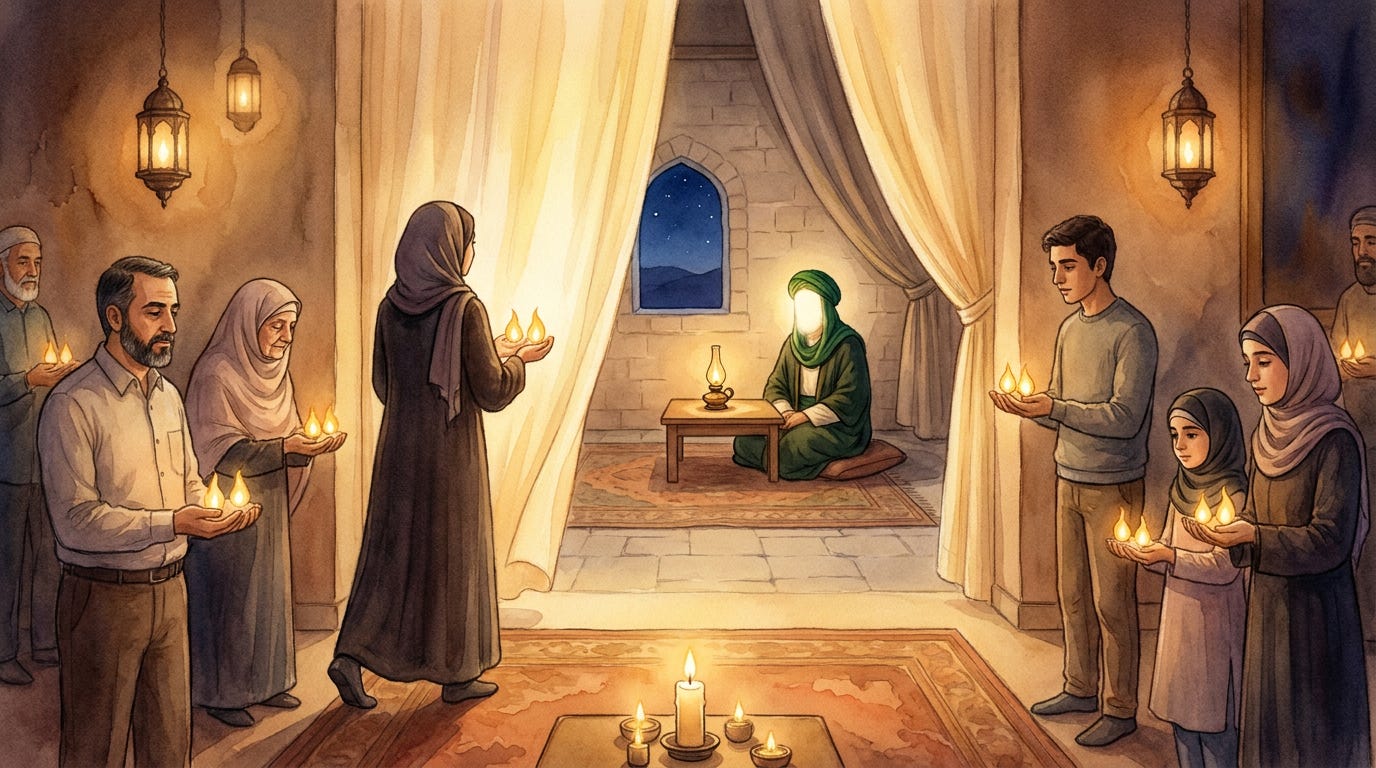
If we have heard Shaheed Motahhari correctly tonight — if the taxonomy has done its work — then we walk out of this hall carrying something we did not carry in.
We carry a test.
Two questions that we can apply to every death we hear called “martyrdom,” every claim to witness, every use of the word shaheed:
Was the cause sacred — rooted in the covenant with God?
Was the choice conscious — made with full awareness of the cost?
If the answer to both is yes, we are looking at the fifth kind of death.
We are looking at the candle.
If the answer to either is no, we are looking at something else — something that may be tragic, may be honourable, may be deeply moving, but is not what the Qur’an means when it says:
Do not think of them as dead.
We will apply this test in full when we come to Session 9 — the session on the counterfeits, the false claims to witness.
For now, carry it.
And we carry one more thing.
The knowledge that the fifth kind of death has already begun in the life that precedes it.
The candle was being formed before it was lit.
The wax was being poured.
The wick was being wound.
In Abel, it was the fitrah that refused to raise a hand.
In the young Qasem from Kerman, it was the question that would not stop asking itself.
And in Imam Husayn — it was the night in Medina, the walk to the governor’s hall, and twelve words spoken quietly across a lamplit table.
Tonight we hear those twelve words.
Not on the battlefield — not yet.
In a hall, in a city, at night.
Segue to Maqtal (Lamentation)
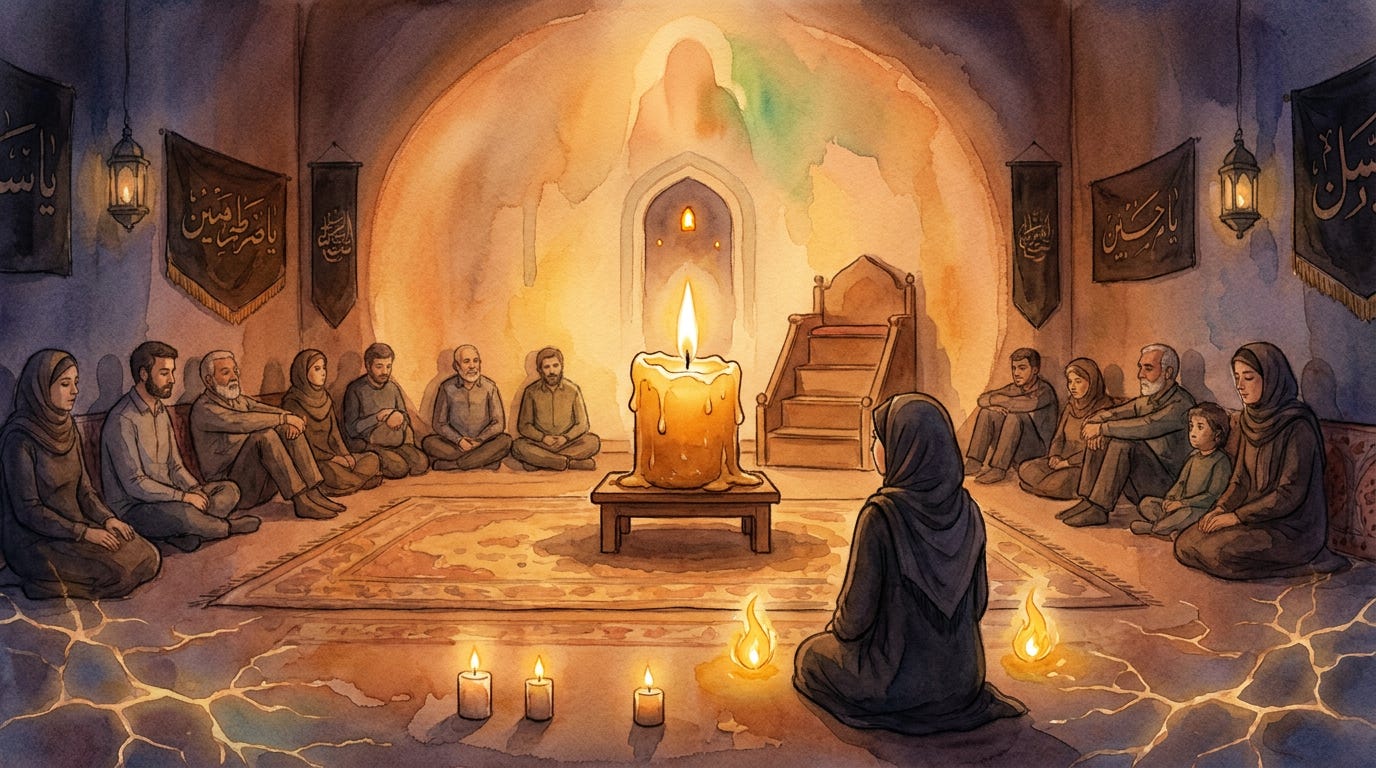
Maqtal (Lamentation) for the Third Night of Muharram 2026/1448
Supplication
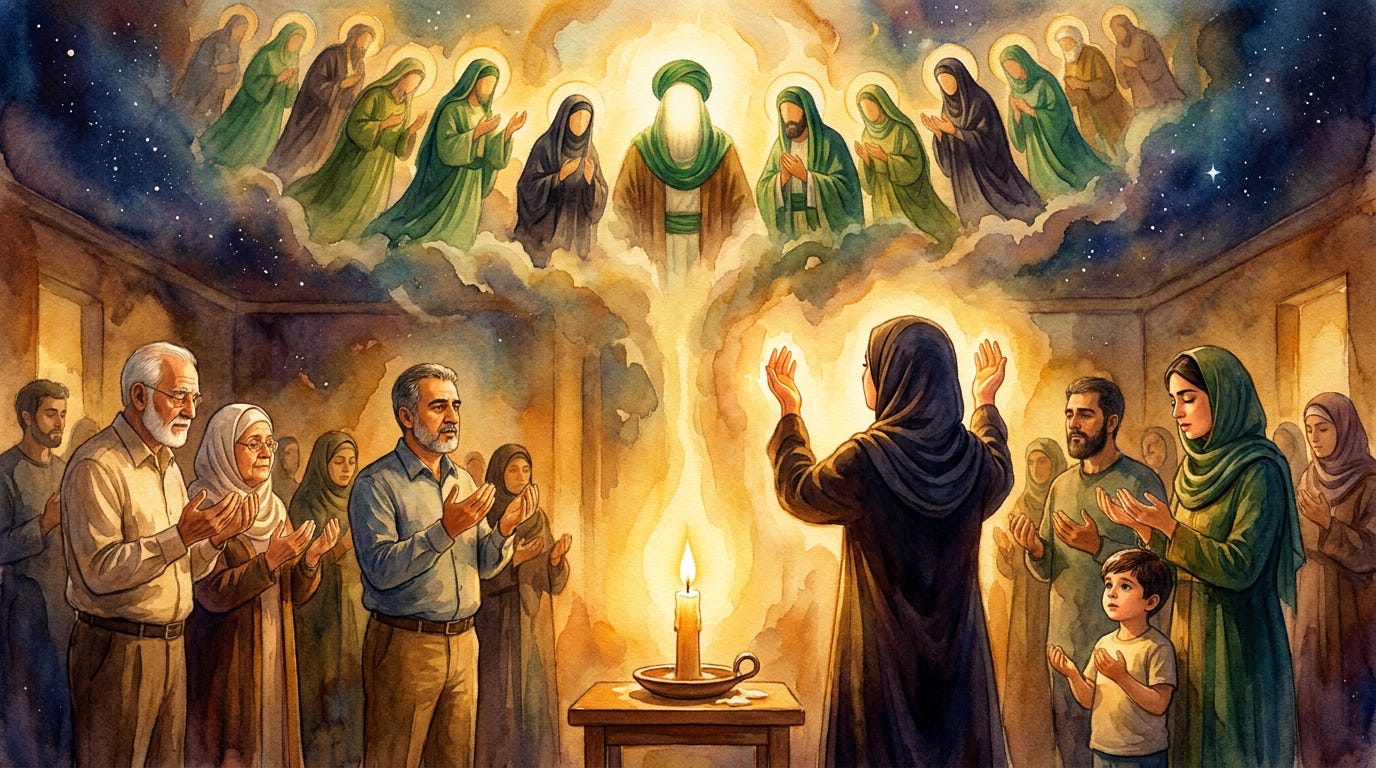
Peace be upon Abel, who testified first.
Peace be upon the prophets, who carried the covenant and wept.
Peace be upon Shaheed Motahhari, who gave us the light to see by.
Peace be upon Husayn, who gave.
Peace be upon the Imam of our Age, who remembers.
Peace be upon you all, and upon your houses, and upon the candle that burns tonight — the candle that is not a fate, but a gift — and that will not be put out.
O God — You Who told us do not think of them as dead, You Who made the fifth kind of death the only one that is not death at all, You Who created the candle and the wick and the match and the room, and Who created the night so that the candle would have something to illuminate — we turn to You tonight on this third night of Muharram, and we have no Lord but You, and no refuge but Your door, and no teacher but the ones You have sent to teach us.
O God — we send our condolences and our congratulations tonight to Your beloved Prophet Muhammad — peace and blessings be upon him, his family, and his righteous companions — condolences for a grandson who would walk out of his city before dawn, who would stand at his grandfather’s grave and say goodbye, who would leave the streets his grandfather had walked and never return to them — and congratulations for a grandson who, when the letter came and the demand was made, did not hesitate for the time it takes to draw a breath.
He said twelve words.
He walked out.
And the road that began that night has never reached its end — because the one who walked it is alive with his Lord, being provided for, and the road he opened is still open, and we are walking it tonight.
O God — we send our peace to the martyred scholar Shaheed Ayatollah Murtadha Motahhari — may You our Lord rest his pure soul — the teacher who gave us the taxonomy, who sat in a classroom and said how many kinds of death are there? and would not let his students go home until they could answer, who loved the truth more than he loved the approval of the crowd, who was shot on a street in Tehran for the crime of clarity, and whose blood irrigated the very ground we are standing on tonight.
His candle was extinguished by the hand of a criminal.
His light is brighter now than it was on the day he was killed.
We see by it tonight.
We will see by it tomorrow.
And the ones who put it out are forgotten — but the book they tried to silence is in our hands, and we are reading it aloud.
O God — we send our peace to Imam Husayn — peace and blessings be upon him — the one who stood in the hall of Walid and spoke twelve words that contained the whole of the religion:
Someone like me does not give allegiance to someone like him.
The one who walked out of the city of his grandfather with the sword of his God under his cloak.
The one who left his mother’s house, his grandfather’s grave, the streets that knew his name — and did not look back, because the road ahead was the road You had laid, and the witness ahead was the witness You had asked for, and the candle was already lit.
O God — we send our peace to the women of his house, who heard the answer that night and did not object.
Not one.
Our lady, Sayyedah Zaynab — peace and blessings be upon her, who knew what the road would cost and chose the road.
Our lady Sayyedah Sakinah.
Our lady Sayyedah Ruqayyah.
The wives and the sisters and the daughters who packed what could be packed and left what could not be left and walked into the night beside the one who had said what needed to be said.
Their silence that night was its own kind of testimony — and we greet it.
O God — we send our peace to the young man from Kerman — Hajj Qasem Soleimani — may You O our Lord, rest his pure soul — who began with talab, with the quest, with the question that would not stop asking itself.
The farmer’s son from a village with no library who looked at the world and said:
This is not right. This is not what God made. This can be changed.
The candle was already forming in him before anyone knew it was a candle.
The wax was already being poured.
And the road that he would walk — from Kerman to Karbala, from the quest to the witness — is the same road Imam Husayn walked out of Medina.
He did not know it yet.
But the fitrah knew.
The covenant knew.
And You, Who placed the covenant in every soul before the body was made, knew.
O God — we send our peace to Imam Sayyed Ali Khamenei — may You our beloved Lord rest his pure soul — who said the twelve words in the tongue of February, in the rooms of an empire that thought itself permanent, to the Yazids of his century who thought themselves untouchable — and was paid the price that Imam Husayn was paid.
The sentence is one sentence.
The refusal is one refusal.
And between the two mouths that spoke it — the mouth in Medina and the mouth in Tehran — stand fourteen centuries, and a chain of witnesses so long that the pen cannot write every name on the roll, though the One behind the veils knows every one.
O God — we send our peace to the Imam of our Age — may our souls be his ransom, and may You O beloved Lord, hasten his return — who carries every candle, who remembers every wick, who knows the taxonomy better than any teacher, because he is the living proof of the fifth kind of death: the one who has not died, because the witness is not finished, because the chain is still being forged, and the permission has not yet been given, and the three hundred and thirteen have not yet gathered at the threshold.
O God — accept from us this third night.
We came to You with a word that had begun to mean something.
Tonight You have given it a taxonomy — five kinds of death, and only one of them is alive.
We ask You to keep the test in our hands — sacred cause, conscious choice — over the seven nights that remain until Ashura, through the break, through the five nights of Safar, until Arbaeen — so that when we stand at the grave of Your proof on the fortieth day, we stand as informed mourners, not as uninstructed ones.
As witnesses, not as spectators.
O God — You are the one Who made the candle and the night.
You are the one Who asked every soul:
Am I not your Lord?
You are the one Who said:
Do not think of them as dead.
We are trying to obey.
We are trying not to think of them as dead.
We are trying to think of them as alive — alive with You, being provided for, burning still, giving light still, illuminating the room we are sitting in right now.
Help us see by their light.
And do not let us set the candle down.
إِنَّا لِلَّهِ وَإِنَّا إِلَيْهِ رَاجِعُونَ
“We belong to God, and to Him we return.”
— Qur’an, Surah al-Baqarah (the Chapter of the Cow) #2, Verse 156
And we repeat your promise, an eternal promise for Justice, and a warning for the wrongdoers:
وَسَيَعۡلَمُ ٱلَّذِينَ ظَلَمُوٓاْ أَيَّ مُنقَلَبٖ يَنقَلِبُونَ
And the wrongdoers will soon know at what goal they will end up.
— Qur’an, Surah al-Shu’araa (the Chapter of the Poets) #26, Verse 227
And we add, from the depths of everything we have learned tonight:
حَسْبُنَا اللَّهُ وَنِعْمَ الْوَكِيلُ
“God is sufficient for us, and He is the best of guardians.”
— Qur’an, Surah Aal Imran (the Chapter of the Family of Imran) #3, Verse 173
Amen, O Lord Sustainer of the Universes.
Amen, O Most Merciful of the Merciful.
And from Him alone is all ability, and He has authority over all things.