

In His Name, the Most High
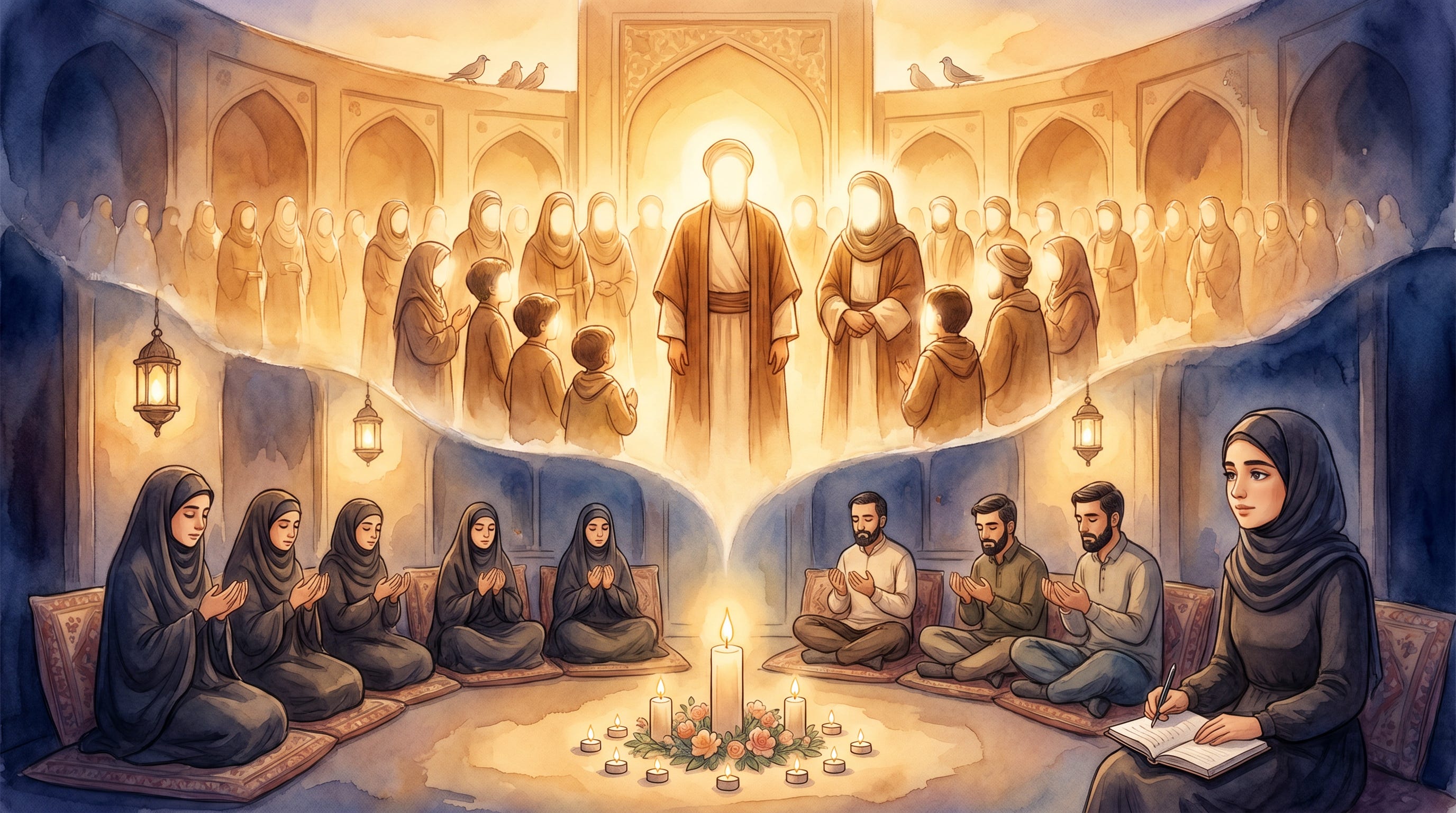
اَلسَّلاَمُ عَلَيْكَ يَا أَبَا عَبْدِاللَّهِ
وَعَلَى الْأَرْوَاحِ الَّتِي حَلَّتْ بِفِنَائِكَ
عَلَيْكُمْ مِنَّا جَمِيعًا سَلاَمُ اللَّهِ أَبَدًا مَا بَقِينَا وَبَقِيَ اللَّيْلُ وَالنَّهَارُ
وَلا جَعَلَهُ اللَّهُ آخِرَ الْعَهْدِ مِنَّا لِزِيَارَتِكُمْ
اَلسَّلاَمُ عَلَى الْحُسَيْنِ
وَعَلَى عَلِيِّ بْنِ الْحُسَيْنِ
وَعَلَى أَوْلَادِ الْحُسَيْنِ
وَعَلَى أَصْحَابِ الْحُسَيْنِ
Peace be upon you, O Aba Abdillah (O Husayn),
and upon the souls who have gathered in your courtyard.Upon you, from us all, is the peace of God—forever,
for as long as we remain and as long as night and day endure.And may God never make this our last pledge to visit you.
Peace be upon al-Husayn,
and upon Ali, son of al-Husayn,
and upon the children of al-Husayn,
and upon the companions of al-Husayn.— Adapted from Ziyarat Ashura
Video of the Sermon (Majlis/Lecture)
This is a video of the sermon, the maqtal — lamentation — referenced in this session can be found here.
Introduction
Three nights of foundation.
On the first night we recovered a word.
We said:
martyr does not mean victim.
It means
witness.
We returned to Abel (Habil) — peace and blessings be upon him — the first witness, the first refusal — and we read the covenant written in his two sentences:
لَئِن بَسَطتَ إِلَيَّ يَدَكَ لِتَقْتُلَنِي مَا أَنَا بِبَاسِطٍ يَدِيَ إِلَيْكَ لِأَقْتُلَكَ ۖ إِنِّي أَخَافُ اللَّهَ رَبَّ الْعَالَمِينَ
“If you stretch out your hand to kill me, I will not stretch out my hand to kill you. I fear God, the Lord of all creation.”
— Qur’an, Surah al-Ma’idah (the Chapter of the Table Spread) #5, Verse 28
“I will not stretch out my hand to kill you. I fear God, the Lord of all creation.”
On the second night we went deeper — before Abel, before the body, before the first morning of the first world.
We stood at the primordial covenant, the moment God asked every soul:
“Am I not your Lord?”
And every soul answered:
“Yes — we bear witness.”
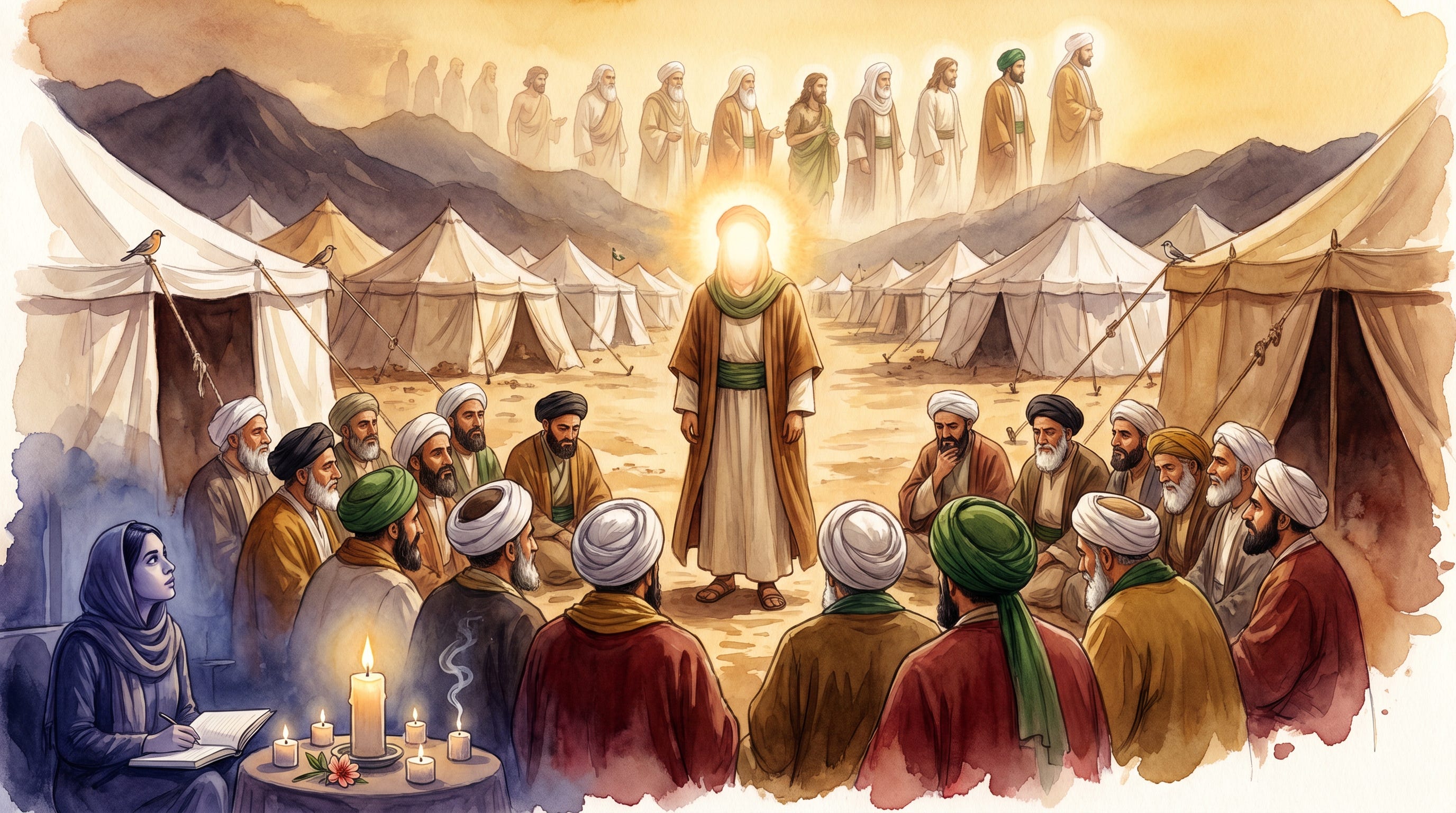
We traced that covenant through the prophets — from Abel through Noah, Abraham, John the Baptist, Zechariah, Jesus, Hamza, and the Prophet Muhammad — peace and blessings be upon him, his family, and his righteous companions — and we saw that Karbala did not begin at Karbala.
The chain of witnesses is older than Islam, older than the prophets, older than the children of Adam.
On the third night, Shaheed Ayatollah Murtadha Motahhari — may God rest his pure soul — gave us the theology.
Five kinds of death — and only one of them is not death at all.
Natural death: the life that runs its course.
Accidental death: the life cut short by calamity.
Criminal death: the life taken unjustly.
Self-murder: the life thrown away.
And then the fifth — martyrdom: the life given, consciously, wakefully, with awareness, for a sacred cause.
We said: Imam Husayn is not the third category.
He is the fifth.
And between the two — between having something taken from you and giving something away — is everything.
Tonight, a shift.
Tonight we hear the voice of Imam Husayn himself.
Not yet on the plain.
Not yet under the swords.
Before all of that — before the caravan, before the road, before even his departure from Mecca — Imam Husayn — peace and blessings be upon him — stood at Mina during the Hajj and delivered a sermon to the scholars and the elites of the Islamic world.
He looked at the men who held the knowledge, who carried the respect, who walked with the bearing of kings in the cities of the Muslims — and he told them, with the precision of a surgeon and the grief of a grandson, exactly what had gone wrong.
And what had gone wrong was not that they did not know the truth.
What had gone wrong was that they knew it and said nothing.
This is the Khutba of Mina — recorded in Tuhaf al-Uqul, the collection of sermons and aphorisms of the Imams — peace and blessings be upon them — compiled by al-Hasan ibn Ali ibn al-Husayn ibn Shu’bah al-Harrani, and expounded by Imam Khomeini — may God rest his pure soul — in his lectures on governance.
And alongside Imam Husayn’s voice tonight, we hear two modern voices — two scholars who, fourteen centuries later, looked at their own societies and found exactly the same disease the Imam had already diagnosed.
Dr Ali Shariati — may God rest his pure soul — the sociologist, the revolutionary thinker, the man who shared cafés with Frantz Fanon in Paris and came home to Iran and asked what all of it meant for Imam Husayn.
And Shaheed Motahhari, carrying forward from last night — because these two thinkers were colleagues, friends, and ultimately both killed for the same cause.
Shaheed Motahhari gives us the theology of what a martyr is.
Dr Shariati gives us the sociology of what a martyr does to the world that survives him.
They saw the same illness from two angles — Shaheed Motahhari from the seminary, Dr Shariati from the lecture hall.
Tonight we bring them together.
The Qur’an opens our path tonight with a verse from Surah al-Ahzab:
مِنَ الْمُؤْمِنِينَ رِجَالٌ صَدَقُوا مَا عَاهَدُوا اللَّهَ عَلَيْهِ ۖ فَمِنْهُم مَّن قَضَىٰ نَحْبَهُ وَمِنْهُم مَّن يَنتَظِرُ ۖ وَمَا بَدَّلُوا تَبْدِيلًا
“Among the believers are men who have been true to their covenant with God; some of them have fulfilled their vow, and some are still waiting — but they have never changed.”
— Qur’an, Surah al-Ahzab (the Chapter of the Allied Forces) #33, Verse 23
We used this verse in Session 3 to open the Living Witness section.
Tonight it returns as the structural verse for the whole session — because everything tonight, from the Khutba of Mina to Dr Shariati’s question, is about the relationship between those who have fulfilled their vow and those who are still waiting.
The verse holds both halves of the equation in a single breath: the ones who gave and the ones who have not yet changed.
And the question this session puts to us is the question Dr Shariati made famous, but which Imam Husayn asked first:
Now that you know, what will you do?
Imam Husayn’s Diagnosis — The Khutba of Mina and the Three Silences
Sixty years have passed since the migration of the Prophet — peace and blessings be upon him, his family, and his righteous companions.
Everything the revolution built has been hijacked.
The companions of the first generation — the ones who fought at Badr, at Uhud, at Khandaq — have either been killed, exiled, bought, or silenced.
Imam Ali — peace and blessings be upon him — has been murdered.
Imam Hassan — peace and blessings be upon him — has been poisoned.
The Umayyad court has weaponised the vocabulary of the faith itself — the Qur’an is on their spears, the pulpits are in their pockets, the word jihad has become a tool for their wars of expansion, and the religious authorities have been conscripted into a theology of fatalism that tells the people:
Whatever happens is the will of God; you cannot protest, you cannot resist, you can only endure.
And before any modern thinker tried to explain what went wrong — before Dr Shariati, before Shaheed Motahhari, before any lecture hall or revolutionary pamphlet — Imam Husayn himself stood at Mina and gave the diagnosis.
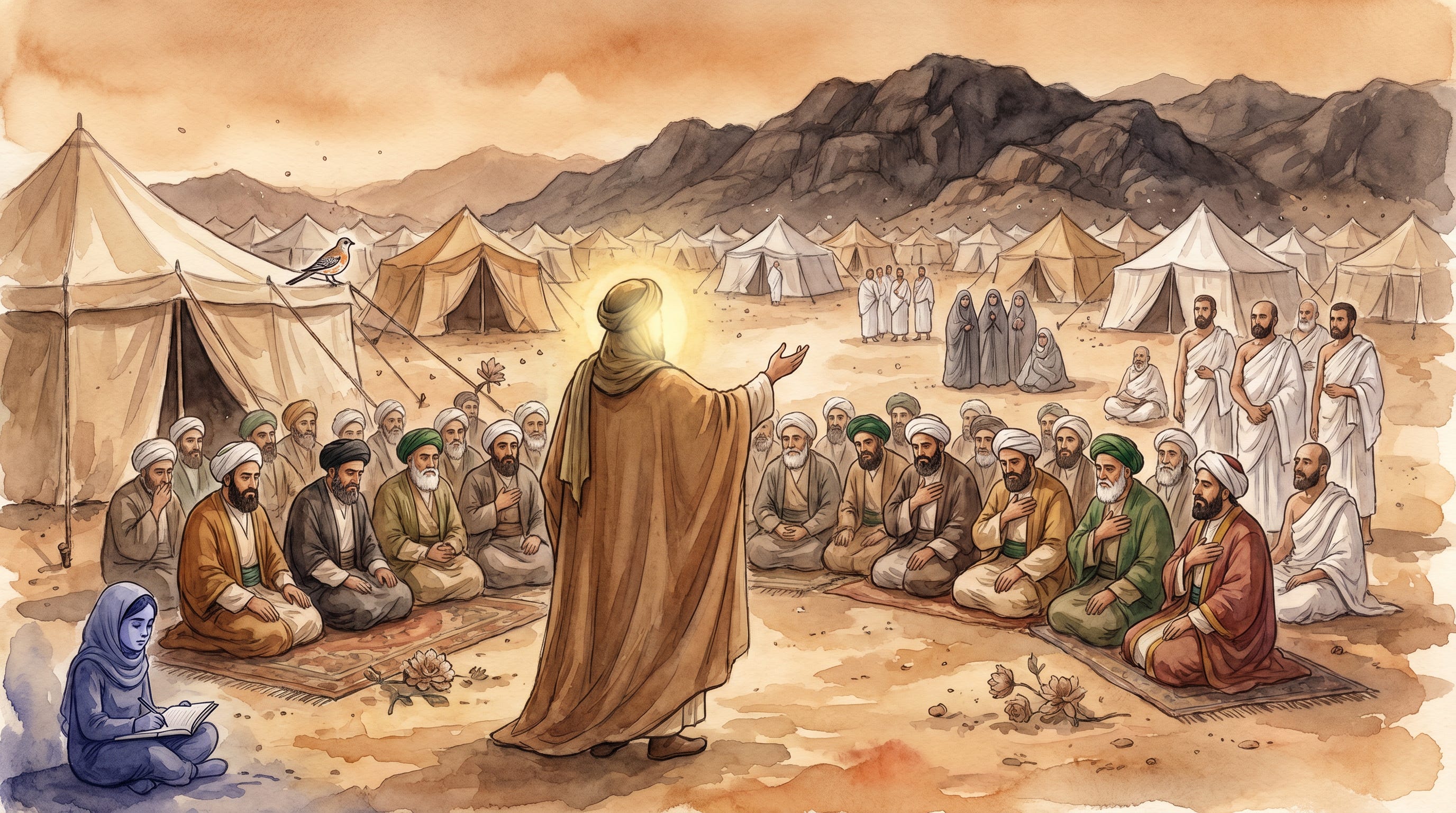
Mecca was full of pilgrims.
They had come from across the Islamic world for the Hajj.
And there, at Mina, Imam Husayn — peace and blessings be upon him —turned to the scholars and the elites and spoke directly to them.
Not in private.
In public.
To the men who held the knowledge.
To the men the people looked up to.
To the men who carried the respect of the community and walked with the bearing of kings.
The Rebuke
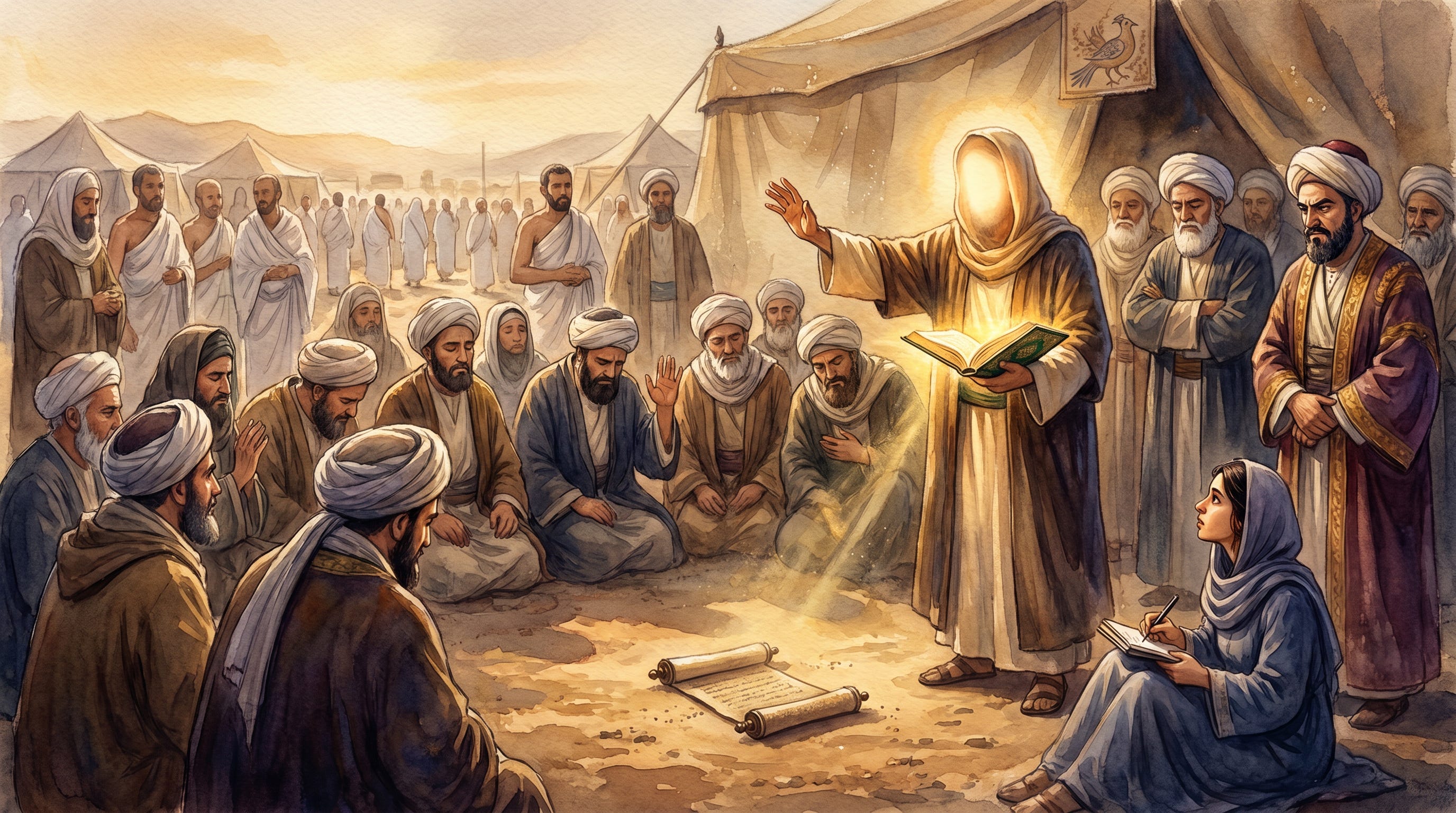
He began by citing three Qur’anic verses — and listen to the choice of verses, because the choice itself is the argument.
The first: Surah al-Ma’idah, verse 63 — God rebuking the rabbis for failing to forbid sinful speech and the consumption of what is unlawful:
لَوْلَا يَنْهَاهُمُ الرَّبَّانِيُّونَ وَالْأَحْبَارُ عَن قَوْلِهِمُ الْإِثْمَ وَأَكْلِهِمُ السُّحْتَ ۚ لَبِئْسَ مَا كَانُوا يَصْنَعُونَ
“Why do the scholars and rabbis not forbid their sinful talk and consumption of what is unlawful? Truly what they have done is evil.”
— Qur’an, Surah al-Ma’idah (the Chapter of the Table Spread) #5, Verse 63
The second: Surah al-Ma’idah, verses 78–79 — those among the Children of Israel who were cursed by the tongues of David and Jesus, son of Mary:
لُعِنَ الَّذِينَ كَفَرُوا مِن بَنِي إِسْرَائِيلَ عَلَىٰ لِسَانِ دَاوُودَ وَعِيسَى ابْنِ مَرْيَمَ ۚ ذَٰلِكَ بِمَا عَصَوا وَّكَانُوا يَعْتَدُونَ ﴿٧٨﴾ كَانُوا لَا يَتَنَاهَوْنَ عَن مُّنكَرٍ فَعَلُوهُ ۚ لَبِئْسَ مَا كَانُوا يَفْعَلُونَ ﴿٧٩﴾
“Cursed by the tongue of David and Jesus, son of Mary, are those among the Children of Israel who disbelieved, on account of their rebellion and transgression. They did not prevent each other from committing vile and corrupt acts; what they did was abominable.”
— Qur’an, Surah al-Ma’idah (the Chapter of the Table Spread) #5, Verses #78–79
The third: Surah al-Tawbah, verse 71:
وَالْمُؤْمِنُونَ وَالْمُؤْمِنَاتُ بَعْضُهُمْ أَوْلِيَاءُ بَعْضٍ ۚ يَأْمُرُونَ بِالْمَعْرُوفِ وَيَنْهَوْنَ عَنِ الْمُنكَرِ وَيُقِيمُونَ الصَّلَاةَ وَيُؤْتُونَ الزَّكَاةَ وَيُطِيعُونَ اللَّهَ وَرَسُولَهُ ۚ أُولَٰئِكَ سَيَرْحَمُهُمُ اللَّهُ ۗ إِنَّ اللَّهَ عَزِيزٌ حَكِيمٌ
“The believing men and women are friends and protectors of each other; they enjoin the good and forbid the evil; they perform the prayer and pay the alms and obey God and His Messenger. Upon them God shall have mercy; God is Almighty, All-wise.”
— Qur’an, Surah al-Tawbah (the Chapter of Repentance) #9, Verse #71
Three verses.
All about the same thing: the duty to speak when the truth is being violated.
And all directed at the same category of people: not the ordinary believer, but the scholars, the leaders, the ones who carry the knowledge and therefore carry the responsibility.
Then Imam Husayn turned the Qur’an toward the men standing in front of him.
You have earned the respect of the people, he told the scholars, because they expect you to uphold the laws of God.
They honour you on account of your learning.
They seek your intercession.
You walk in the streets with the majesty of kings and princes.
But you have neglected the rights of the oppressed and the lowly.
You have pursued your own interests.
You have not spent your wealth or risked your lives for the sake of the One Who gave you life.
And then comes the core of the diagnosis — a sentence that should be written on the wall of every seminary, every pulpit, every community centre, every institution that claims to serve God.
Imam Husayn says to the scholars:
وَأَنْتُمْ تَرَوْنَ عُهُودَ اللَّهِ مَنْقُوضَةً فَلَا تَفْزَعُونَ وَأَنْتُمْ لِبَعْضِ ذِمَمِ آبَائِكُمْ تَفْزَعُونَ وَذِمَّةُ رَسُولِ اللَّهِ صَلَّى اللَّهُ عَلَيْهِ وَآلِهِ مُحْتَقَرَةٌ
“You see the covenant enacted with God being violated and trampled underfoot, yet you show no anxiety. When it comes to the covenants enacted with your own fathers, you become greatly disturbed and anxious if they are only violated in part. But the pledges you have given to the most noble Messenger are a matter of complete indifference to you.”
— Imam Husayn, Khutba of Mina; Tuhaf al-Uqul, al-Harrani
Read the architecture of that rebuke.
Imam Husayn is not accusing the scholars of being ignorant.
He is accusing them of something far worse:
They know what is right.
They know the covenant is being violated.
But they care more about their own family’s honour than about the honour of God.
When their personal interests are threatened, they are fierce.
When God’s covenant is trampled, they are indifferent.
They have privatised their conscience.
They have made religion a personal affair — something that protects their family name, their inheritance, their tribal standing — while the public covenant, the covenant with God and with the Messenger, is left to die in the streets.
And then comes the sentence that seals the diagnosis:
وَتَتَمَنَّعُونَ بِالْمُدَاهَنَةِ عِنْدَ الظَّلَمَةِ
“You purchase your safety from the oppressive ruling powers with flattery, cajolery, and compromise.”
— Imam Husayn, Khutba of Mina; Tuhaf al-Uqul, al-Harrani
This is not ignorance.
This is not even cowardice alone.
This is a transaction.
The scholars have made a deal.
They have exchanged their silence for their comfort.
They have sold the covenant for a quiet life.
Why They Were Silent: Three Reasons
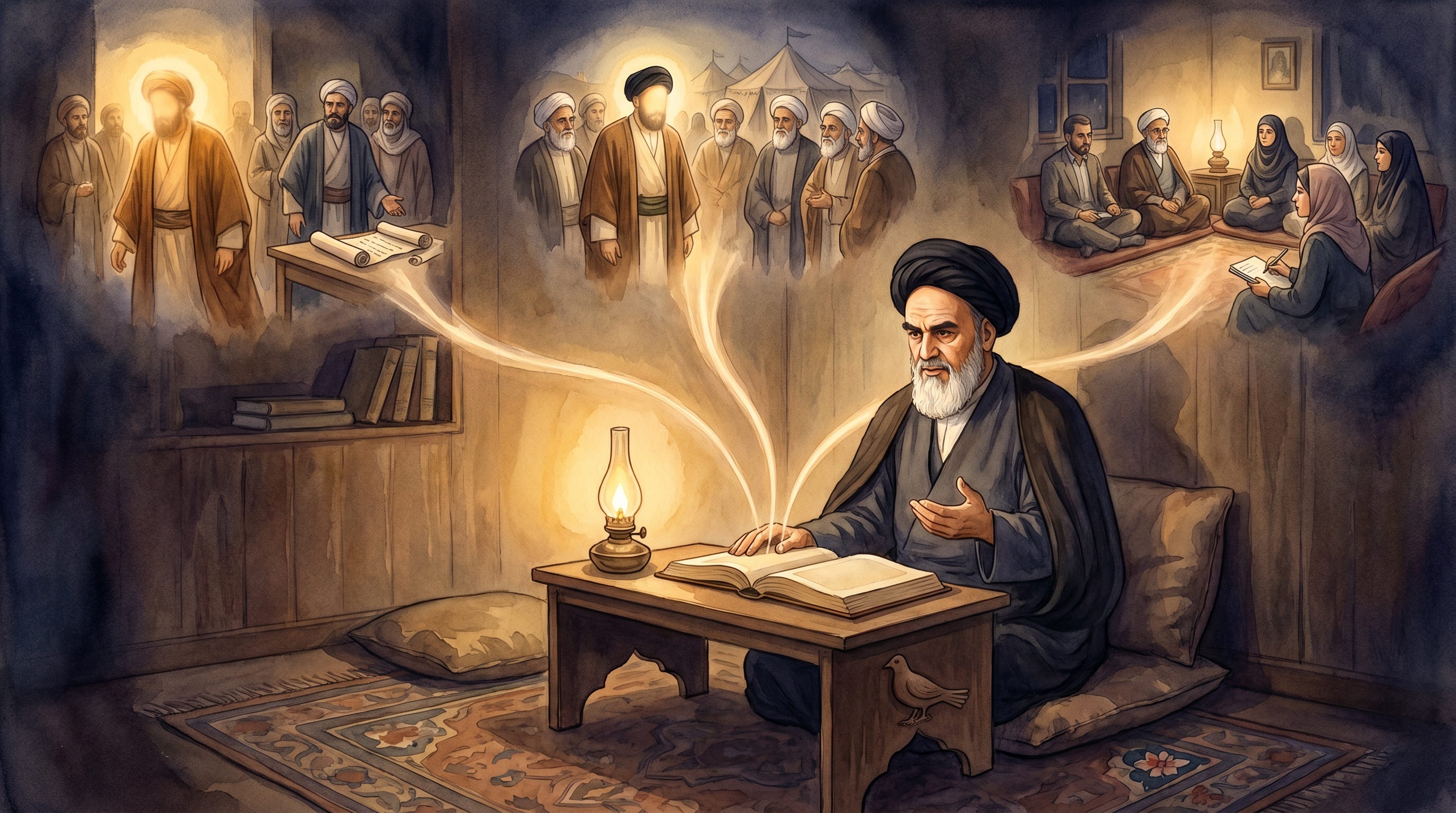
The Khutba of Mina, together with Imam Khomeini’s exposition of it in his lectures on governance, gives us three reasons for the scholars’ silence — three reasons that applied when Muawiyyah tore up the treaty with Imam Hassan — peace and blessings be upon him, three reasons that applied in the year 60 after the Hijrah, and three reasons that apply in our communities in 2026.
The First Reason: Fear
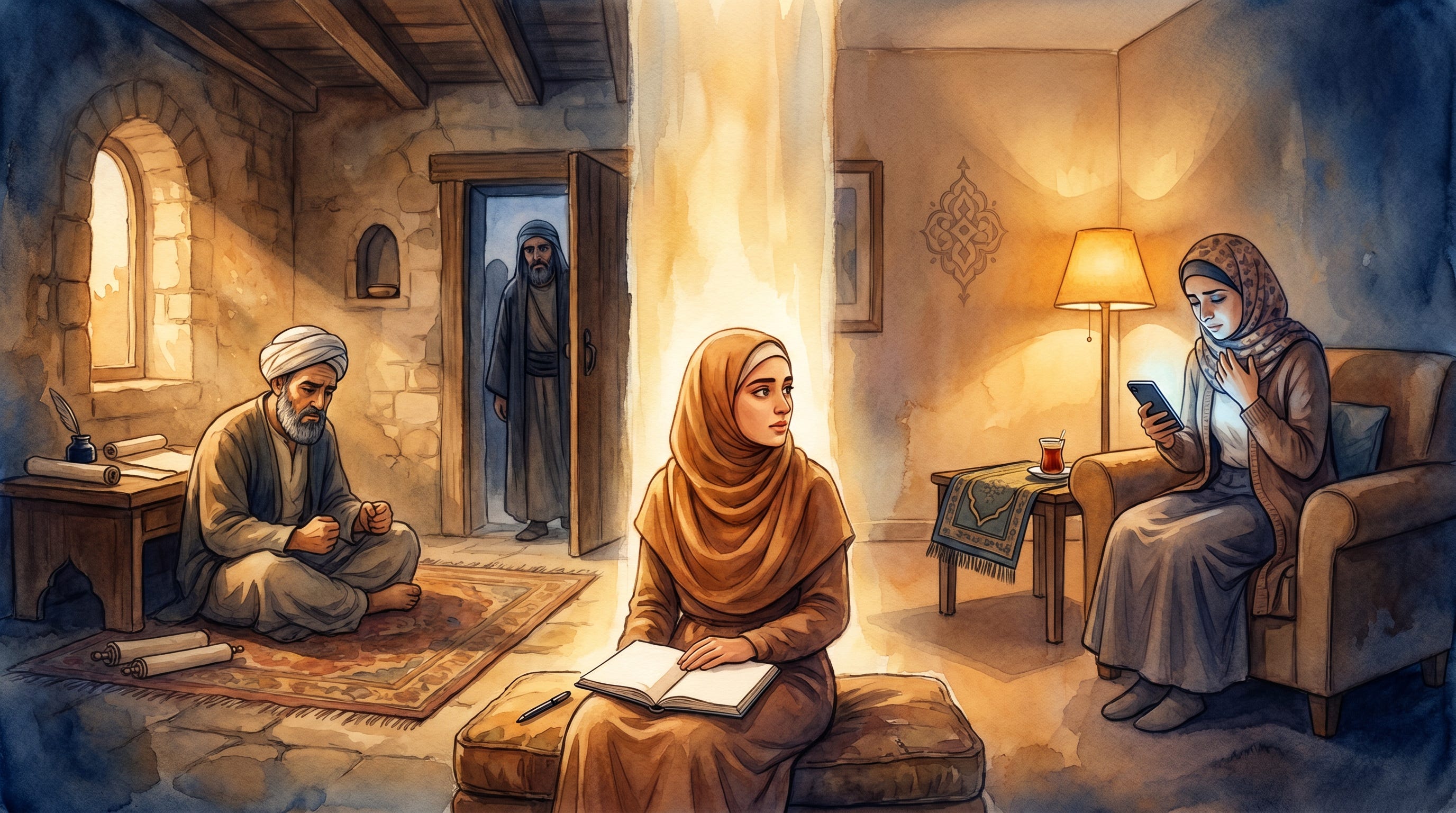
The first reason: fear.
Imam Husayn says in the Khutba that what enabled the oppressors to gain control of government was the scholars’ fleeing from death and attachment to this life:
فَرَارُكُمْ مِنَ الْمَوْتِ وَإِعْجَابُكُمْ بِالْحَيَاةِ الَّتِي هِيَ عَنْكُمْ زَائِلَةٌ
“Your fleeing in panic from death and your attachment to the transitory life of this world.”
— Imam Husayn, Khutba of Mina; Tuhaf al-Uqul, al-Harrani
This is the oldest and most human reason for silence.
If I speak, I will suffer.
If I object, I will lose my position, my income, my safety, my life.
In the seventh century, this fear was of the sword — Muawiyyah’s intelligence apparatus, the Umayyad secret police, the real and present danger of assassination or exile for anyone who challenged the state.
The scholars knew that Muawiyyah had tore up the treaty with Imam Hassan.
They knew it was wrong.
But speaking meant dying, or at the very least, losing everything.
In the modern West, the sword has been replaced by softer instruments, but the structure of the fear is identical.
The academic who will not publish findings that contradict the institution that funds her research.
The imam who will not address a controversial truth because the board of trustees controls his contract and his housing.
The journalist who self-censors because she has watched what happens to careers that cross certain lines.
The employee who sees something wrong in the organisation and calculates, quietly, that the mortgage is more important than the principle.
The social media user who knows what is true about Gaza, about the genocide, about the complicity of the governments under which they live — and who posts nothing, says nothing, because they have seen what happens to the accounts and the careers and the social circles of those who do.
The fear is not of death — it is of professional death, social death, reputational death.
But the silence it produces is the same silence Imam Husayn rebuked at Mina.
The structure has not changed in fourteen centuries.
Only the instruments have.
The Second Reason: Comfort and Co-option
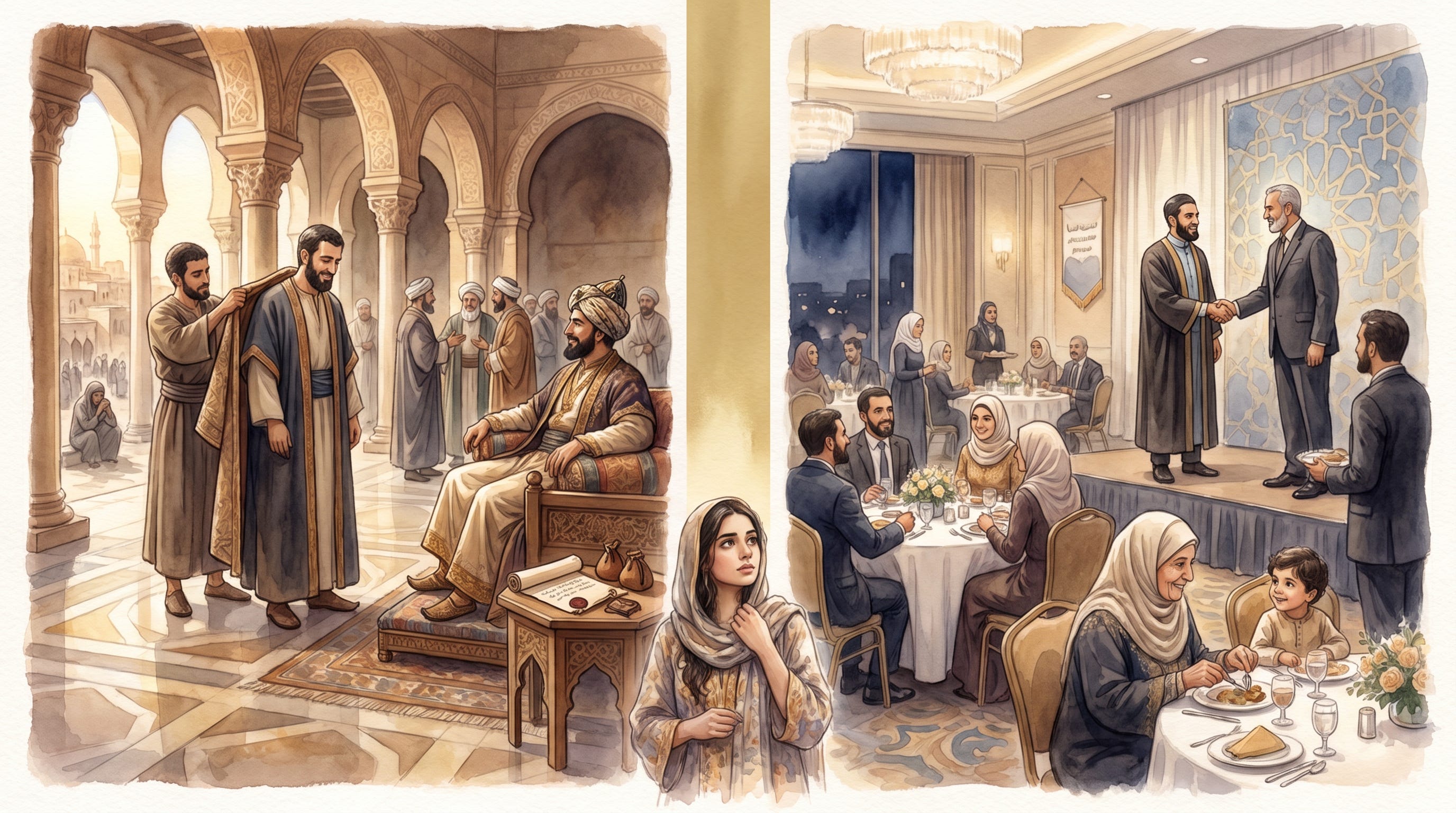
The second reason: comfort and co-option.
The Khutba is devastating on this point.
The scholars, Imam Husayn says, purchase their safety from the oppressive ruling powers
“with flattery, cajolery, and compromise.”
Imam Khomeini’s exposition makes it sharper still — he analyses why the rabbis and scholars condemned in the Qur’anic verses were silent, and gives two reasons:
إمّا أشخاصِ طَمَعکاری بودند که از ظالمین بهرهمند میشدند و برای ساکت ماندن مزد میگرفتند، و إمّا ترسوهای سستعنصری بودند که از آنها میترسیدند
“Either they were covetous persons who profited materially from the oppressors, accepting payment to keep quiet, or they were faint-hearted cowards who were afraid of them.”
— Imam Khomeini, Hukumat-e Islami (Islamic Government / Wilayat al-Faqih)
Their silence was not reluctant.
It was transactional.
They had been bought.
When Muawiyyah tore up the treaty with Imam Hassan — peace and blessings be upon him, many of the scholars said nothing because they had already been given their price.
Land grants.
Stipends.
Positions.
Access to the court.
A seat at the table.
The cost of speaking was the loss of all of it.
And so they chose comfort.
Not because they believed Muawiyyah was right — they knew he was wrong.
But they had calculated, as every bought man in every century has calculated, that the wrong they were living with was more tolerable than the disruption of naming it.
In the modern West, this is the think-tank funded by the weapons manufacturer that produces research supporting the next intervention.
It is the religious leader who softens his message because the donors who fund the community centre’s expansion prefer a quieter Islam — an Islam of charity galas and interfaith breakfasts, not an Islam that names the oppressor.
It is the community organisation that will not criticise a government whose grants it depends on — because the grant pays for the youth programme, and the youth programme is important, and the government is powerful, and surely we can do more good from the inside.
It is the influencer who will talk about mindfulness and self-care and the five pillars but will never, never say the thing that would cost them their audience.
The silence is not fearful.
It is comfortable.
They have made a deal, and they are keeping their end of it.
And the tragedy is that they often believe — sincerely believe — that they are doing good.
That the charity gala justifies the silence.
That the youth programme excuses the compromise.
That the interfaith breakfast makes up for the truth that was not spoken at the interfaith breakfast.
The Qur’an has a name for this condition:
قُلْ هَلْ نُنَبِّئُكُم بِالْأَخْسَرِينَ أَعْمَالًا ﴿١٠٣﴾ الَّذِينَ ضَلَّ سَعْيُهُمْ فِي الْحَيَاةِ الدُّنْيَا وَهُمْ يَحْسَبُونَ أَنَّهُمْ يُحْسِنُونَ صُنْعًا ﴿١٠٤﴾ أُولَٰئِكَ الَّذِينَ كَفَرُوا بِآيَاتِ رَبِّهِمْ وَلِقَائِهِ فَحَبِطَتْ أَعْمَالُهُمْ فَلَا نُقِيمُ لَهُمْ يَوْمَ الْقِيَامَةِ وَزْنًا ﴿١٠٥﴾
“Say: Shall We inform you of the greatest losers in respect of their deeds? Those whose efforts have been wasted in this life, while they thought that they were acquiring good by their works. They are those who have denied the signs of their Lord and the meeting with Him, so their deeds have come to nothing — and on the Day of Resurrection We shall assign no weight to them.”
— Qur’an, Surah al-Kahf (the Chapter of the Cave) #18, Verses 103–105
The greatest losers are not the ones who did nothing.
They are the ones who were busy — sincerely busy, productively busy — doing the wrong thing, and believed with all their hearts that they were doing good.
The charity gala.
The youth programme.
The interfaith breakfast.
All of it real work, all of it genuinely meant — and all of it, in the scales of God, weightless, because the one thing that needed to be said was never said.
The Third Reason: The Narrowing of Moral Vision
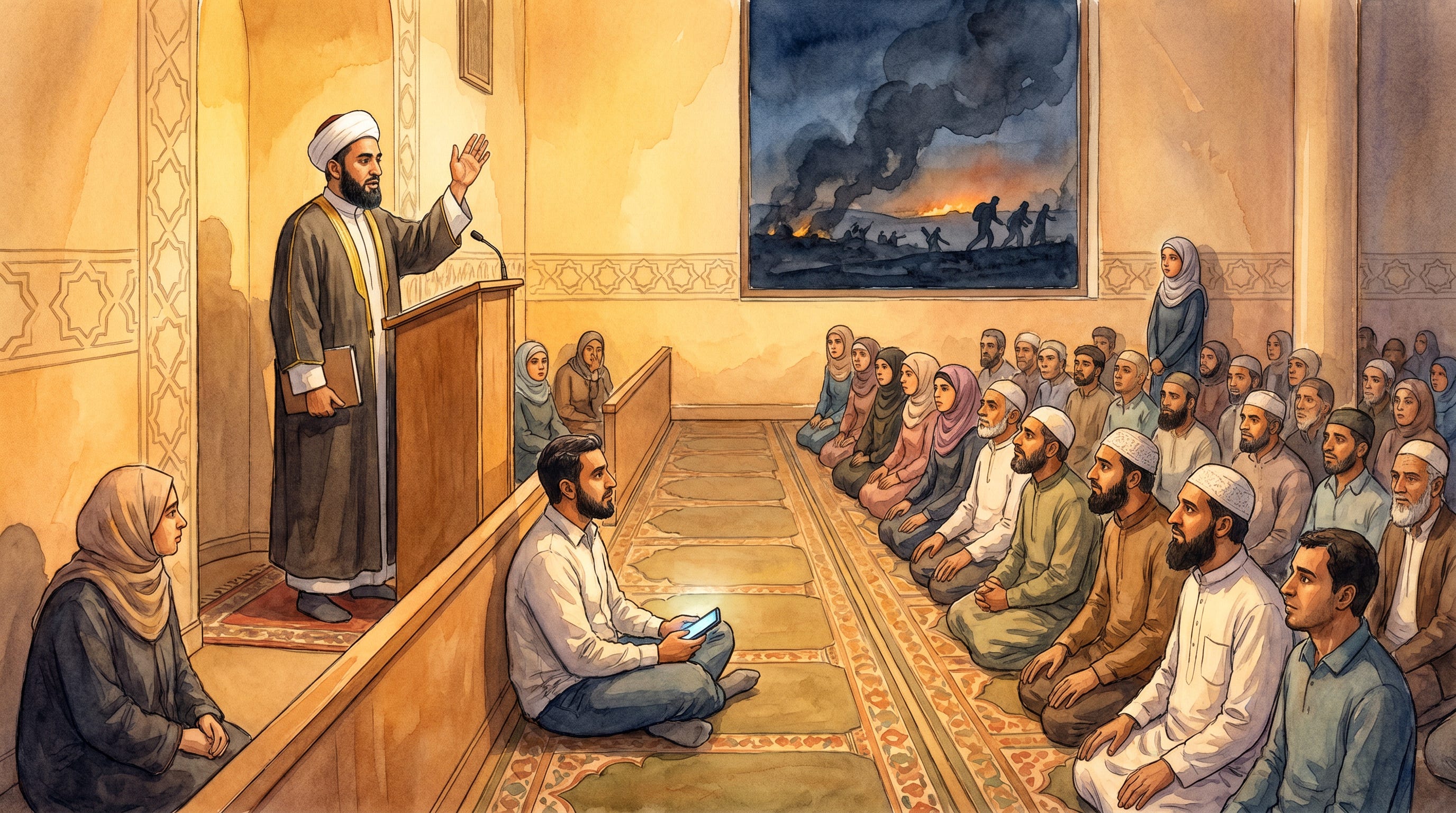
The third reason: the narrowing of moral vision.
This is Imam Khomeini’s most brilliant observation on the Khutba — and it is the reason that requires the most care tonight, because it is the reason that most of us will recognise in ourselves.
Imam Khomeini — may God rest his pure soul — observes that the scholars — both in Imam Husayn’s time and in his own — had restricted the duty of enjoining good and forbidding evil to trivial, personal, ritual matters:
ما امر به معروف و نهی از منکر را محدود کردهایم به یک سلسله امور فردی جزئی… خیال میکنیم منکراتی که مأمور به مبارزه با آنها هستیم فقط همانهایی است که در زندگی روزمره با آن مواجه میشویم. مثلاً اگر در اتوبوس کسی آهنگ بگذارد، یا صاحب قهوهخانه کار خلافی بکند، یا کسی وسط بازار در ماه رمضان غذا بخورد… اینها را منکر میدانیم. در حالی که از منکرات بزرگتر کاملاً غافلیم
“We have restricted enjoining the good and forbidding the evil to a narrow category of trivial, individual affairs… We have the idea firmly in our heads that the instances of evil we are called upon to combat are only the things we encounter in everyday life. For example, if someone plays music on the bus, or the owner of a coffee house does something wrong, or someone eats in the middle of the bazaar during Ramadhan… we regard all these things as instances of evil we must denounce. Meanwhile, we remain totally oblivious to far greater evils.”
— Imam Khomeini, Hukumat-e Islami (Islamic Government / Wilayat al-Faqih)
Someone plays music on the bus.
Someone eats publicly during the month of Ramadhan.
Someone’s dress code does not meet the standard.
These are the evils the scholars could see and were willing to address — small, personal, safe targets.
The kind of correction that costs nothing and offends no one powerful.
Meanwhile — meanwhile — the structural, systemic, civilisational evils went completely unaddressed.
The theft of public wealth.
The corruption of governance.
The oppression of entire populations.
The propaganda that rewrites the truth.
The complicity of entire nations in the bombing of hospitals and the starvation of children.
Not because the scholars did not know about these things — but because addressing them would have required the courage that the first two reasons had already eroded.
Fear had made them cautious.
Comfort had made them compliant.
And the narrowing of moral vision was the final stage — the stage where the cautious, compliant man convinces himself that his duty really is as small as he has made it.
Imam Khomeini puts it with a precision that cuts across centuries:
بعضیها دایرهٔ فکرشان از مسجدی که در آن نشستهایم فراتر نمیرود. وقتی «أکل سُحت» میشنوند فقط یاد بقّال سرگذر میافتند که — نعوذ بالله — کمفروشی میکند. از انواع مهمتر أکل سحت که غارت اموال ملتهاست هیچ خبر ندارند
“The range of thought of some people is confined to the mosque we are now sitting in and is incapable of extending any further. When they hear the expression ‘consumption of what is forbidden,’ they can only think of some corner grocer who is — God forbid — selling his customers short. They never think of the whole range of more important forms of ‘consuming what is forbidden,’ of the plunder of entire nations’ wealth.”
— Imam Khomeini, Hukumat-e Islami (Islamic Government / Wilayat al-Faqih)
They can see the small wrong in front of them.
They cannot see — or will not see — the enormous wrong around them.
In the modern West, this is the community that will argue passionately about the permissibility of a wedding DJ but will say nothing — absolutely nothing — about a genocide being broadcast live on their phones.
It is the community leader who can issue a twenty-page ruling on the correct method of slaughtering an animal but cannot find a single paragraph about the slaughter of human beings being carried out with the weapons, the money, and the diplomatic cover of the government whose passport he carries.
It is the narrowing of moral imagination to the personal and the ritual while the political and the structural go unaddressed — not because they do not matter, but because addressing them would require the kind of courage that the community stopped cultivating the moment it chose comfort over covenant.
The Diagnosis Complete
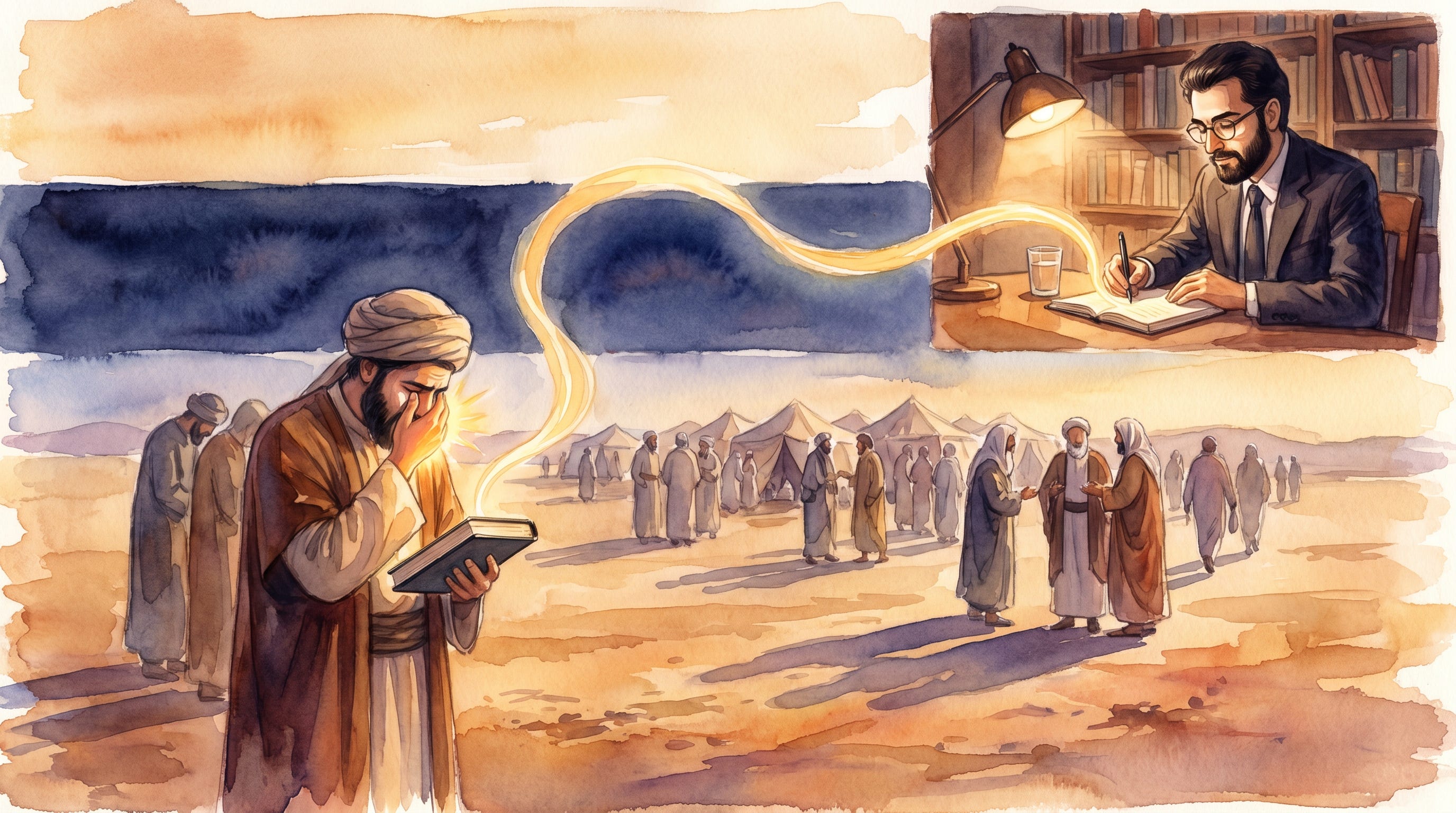
These three — fear, comfort, and the narrowing of moral vision — are the reasons the scholars were silent when the treaty with Imam Hassan — peace and blessings be upon him — was broken.
They are the reasons the elites stood by as the Umayyad court hijacked the vocabulary of the faith, turned jihad into a tool for imperial expansion, and replaced the governance of justice with the governance of the tribe.
And they are the reasons Imam Husayn stood at Mina and wept — not for himself, but for a community that had the knowledge but not the will to act on it.
Imam Husayn named the disease.
Fourteen centuries later, a young sociologist in Tehran and Paris would ask the same question the scholars at Mina had already dodged:
“What should be done?”
And this is where Dr Ali Shariati — may God rest his pure soul — enters — because fourteen centuries later, in Martyrdom: Arise and Bear Witness, Dr Shariati looked at his own society — Iran under the Shah — and found exactly the same disease Imam Husayn had already diagnosed.
The same fear.
The same co-option.
The same narrowed moral vision.
And he framed it as a single devastating question — the question that haunted every aware Muslim in the year 60 after the Hijrah:
“What should be done?”
And everyone had an answer.
Dr Shariati catalogues them — and here, tonight, we must listen carefully, because these answers have not gone away.
They are given in our century too, in our cities, in our own community, every day.
Fatalists
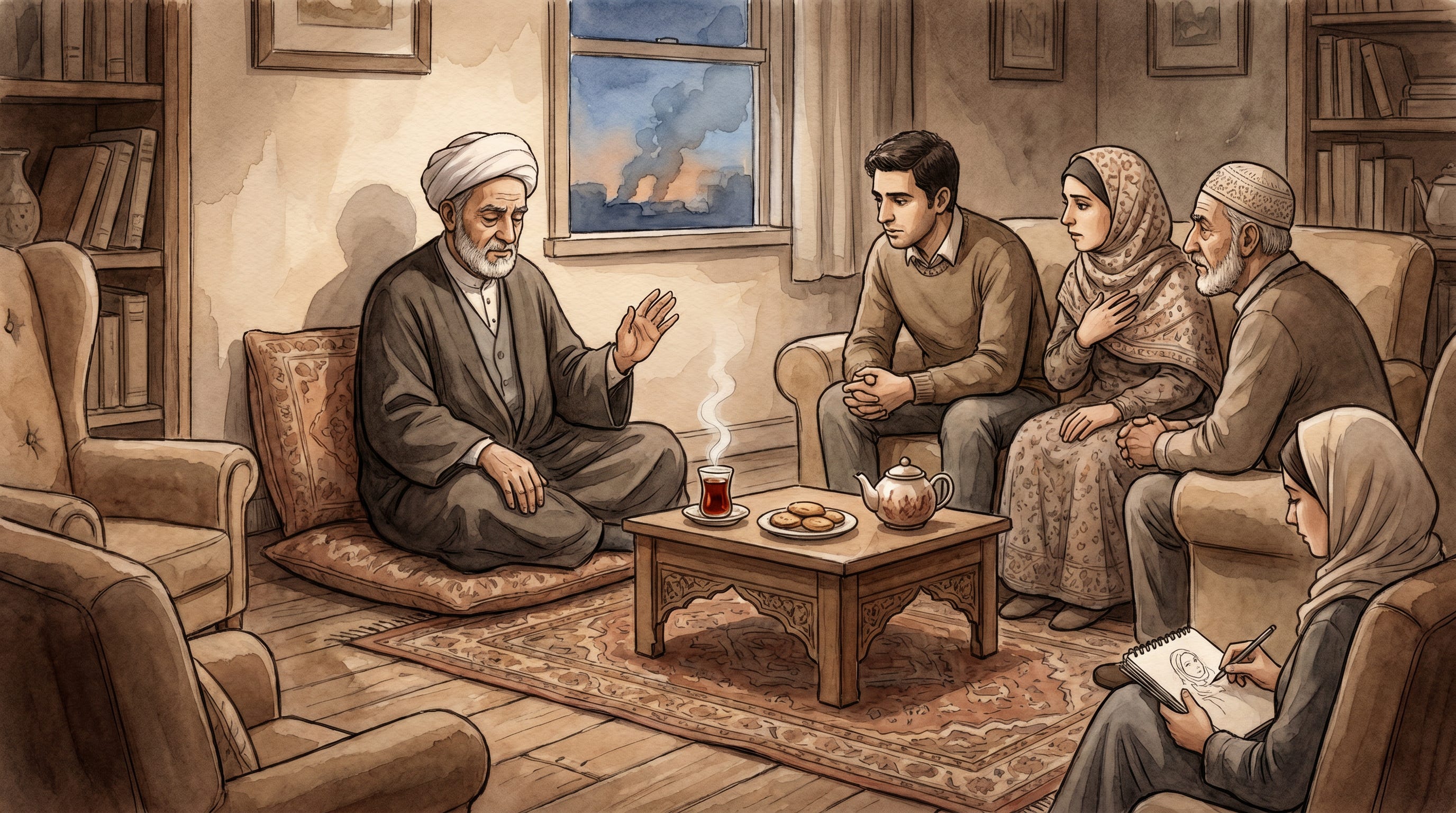
The fatalists say:
“Nothing.
Whatever has occurred will continue to occur in accordance with divine wisdom.
God wishes it to be this way.
You must be satisfied with what has been given to you.”
This is the cancer of a misused theology of divine decree — a theology that takes real Qur’anic concepts like tawakkul (reliance on God) and qadr (the measure of God) and twists them into a permission slip for doing nothing.
It is the theology of every person who has ever watched injustice and said:
“It is not for me to judge.”
The Pious Retreaters
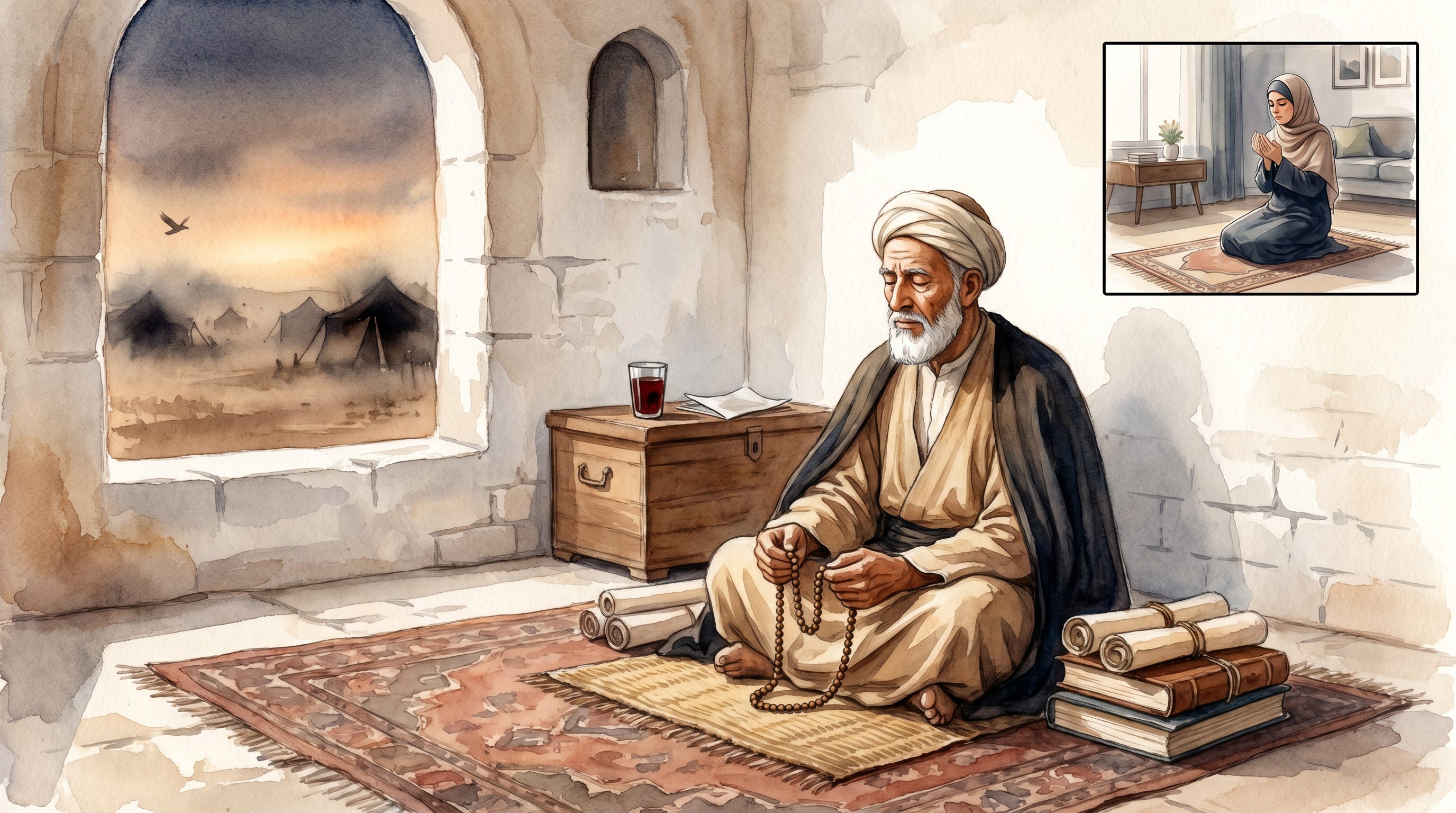
The pious retreaters say:
“Withdraw.
Pray.
Fast.
Seek nearness to God through worship.
Paradise has eight doors — jihad is only one key, and it is the hardest.
Why not use a safer key?”
Dr Shariati names this with a surgeon’s precision:
It is the path of Abdullah ibn Umar — the son of the second caliph, a man of great personal piety, who refused to join any side in the civil wars, who prayed while others bled, and who died comfortable and old while the grandchildren of the Prophet were being killed.
He was, by every outward measure, a devout man.
And by the measure of the covenant, he was the third silence made flesh.
The Pragmatists

The pragmatists say:
“Adapt.
The Umayyad state is expanding Islam’s borders.
Mosques are being built.
The call to prayer is heard in new cities.
Join the system, work from within, reform what you can.”
This is the voice of every generation’s reasonable collaborator — the one who can always find a reason to make peace with power.
The one who says:
Yes, it is imperfect, but look at the alternative.
The one who confuses the expansion of the brand with the preservation of the truth.
The Intellectualists
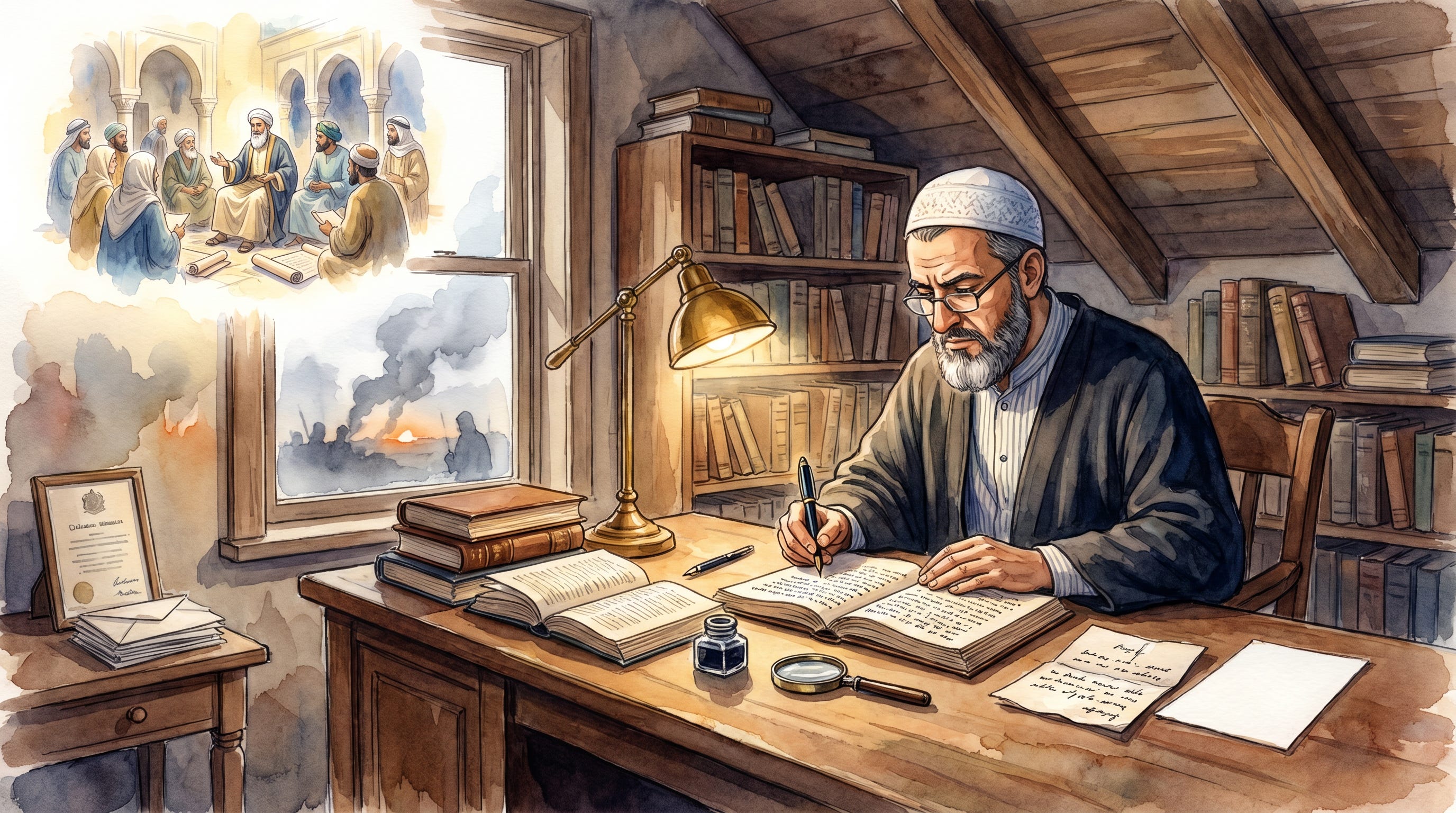
The intellectualists say:
“Study.
Build schools of thought.
Preserve the tradition in books.
This is not the time for confrontation — it is the time for scholarship.”
Dr Shariati acknowledges that this, in Imam Jafar al-Sadiq’s time — peace and blessings be upon him, became the right strategy — the Imam himself turned the seminary into the battlefield, because the moment demanded it.
But for Imam Husayn, sixty years after the Prophet, it is not yet time for that.
The memory of Islam is still close enough to be rekindled by action.
And the ones calling for scholarship over confrontation are, in many cases, simply dressing the pragmatist’s bargain in the scholar’s robes.
The One Man Who Says “Yes”
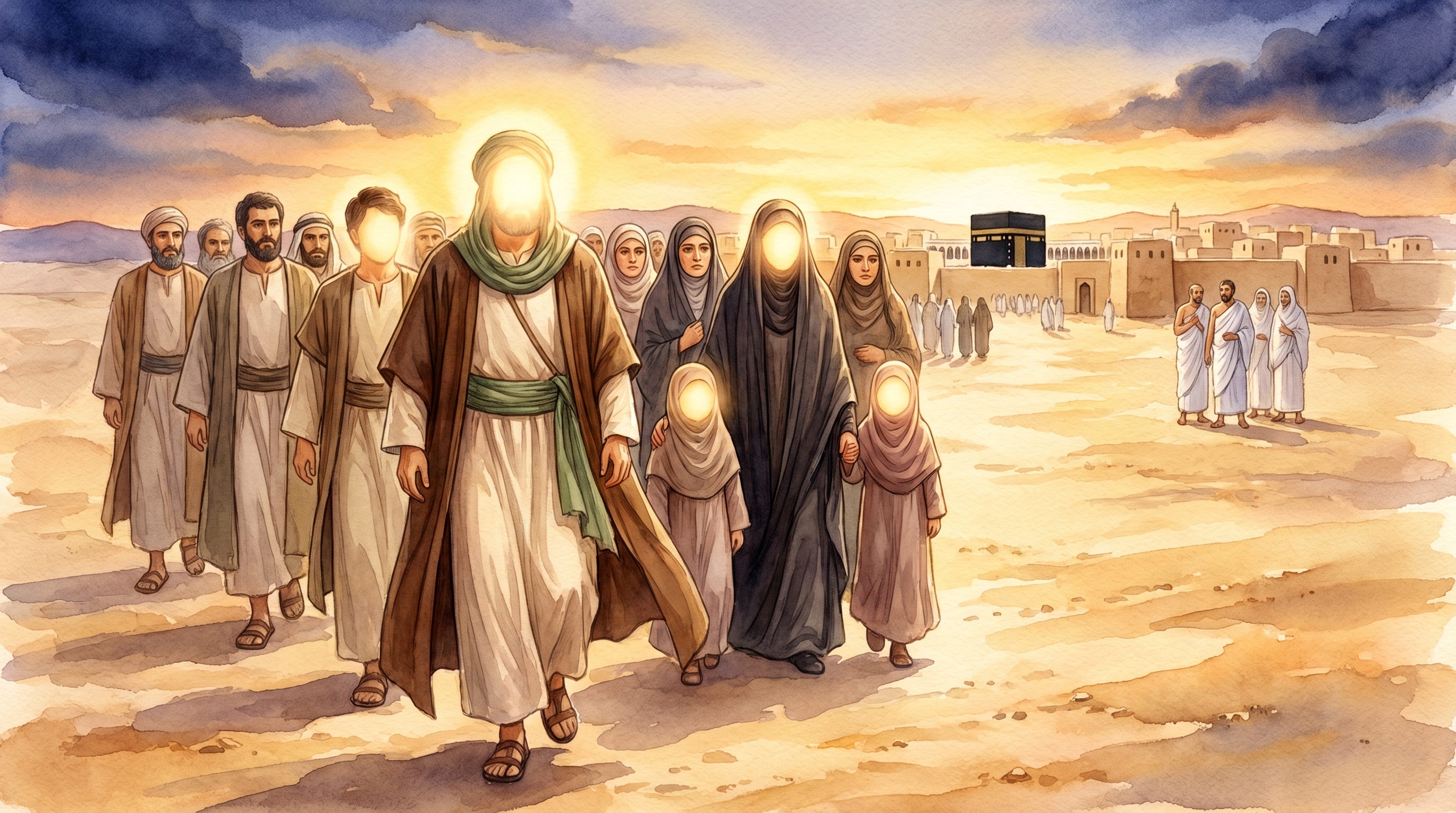
And then there is one man — one lonely man — who says:
“Yes.”
Imam Husayn — peace and blessings be upon him — says yes.
Not because he has an army.
Not because he has a plan for victory.
Not because the odds are in his favour.
This is not the third death.
This is the fifth: a life given, wakefully, with awareness.
Dr Shariati insists on this point with everything he has:
Imam Husayn’s responsibility comes from his awareness, not from his ability.
He is the most aware man alive.
He is the grandson of the Prophet.
He carries the covenant in his blood.
And because he is aware — because he knows what the truth is and knows what the lie is — he is responsible.
And responsibility that comes from awareness cannot be deferred to a more convenient season.
He had already told the scholars at Mina what they needed to do.
He had cited the verses.
He had named the disease.
He had given the prescription:
Do not submit to oppression; such submission is worse than oppression itself.
And they had not done it.
They had listened, and they had nodded, and they had gone home and continued to purchase their safety with flattery, cajolery, and compromise.
And so he walked.
He walked out of Medina.
He walked out of Mecca — foregoing the Hajj itself, because the regime had sent soldiers disguised as pilgrims to assassinate him in the sacred precincts, and he would not allow the sanctity of the House of God to be violated by the spilling of his blood within it.
He walked toward Kufa — openly, publicly, with his family and his household — because the man who knows cannot pretend not to know.
This is the first lesson of tonight:
The duty to bear witness does not wait for favourable conditions.
The scholars at Mina had favourable conditions — they had the knowledge, they had the respect, they had the numbers.
And they said nothing.
Imam Husayn had none of those things — no army, no allies, no assurance of anything but the road ahead and the God above it.
And he said yes.
The Shahada of the Tongue and the Shahada of the Life
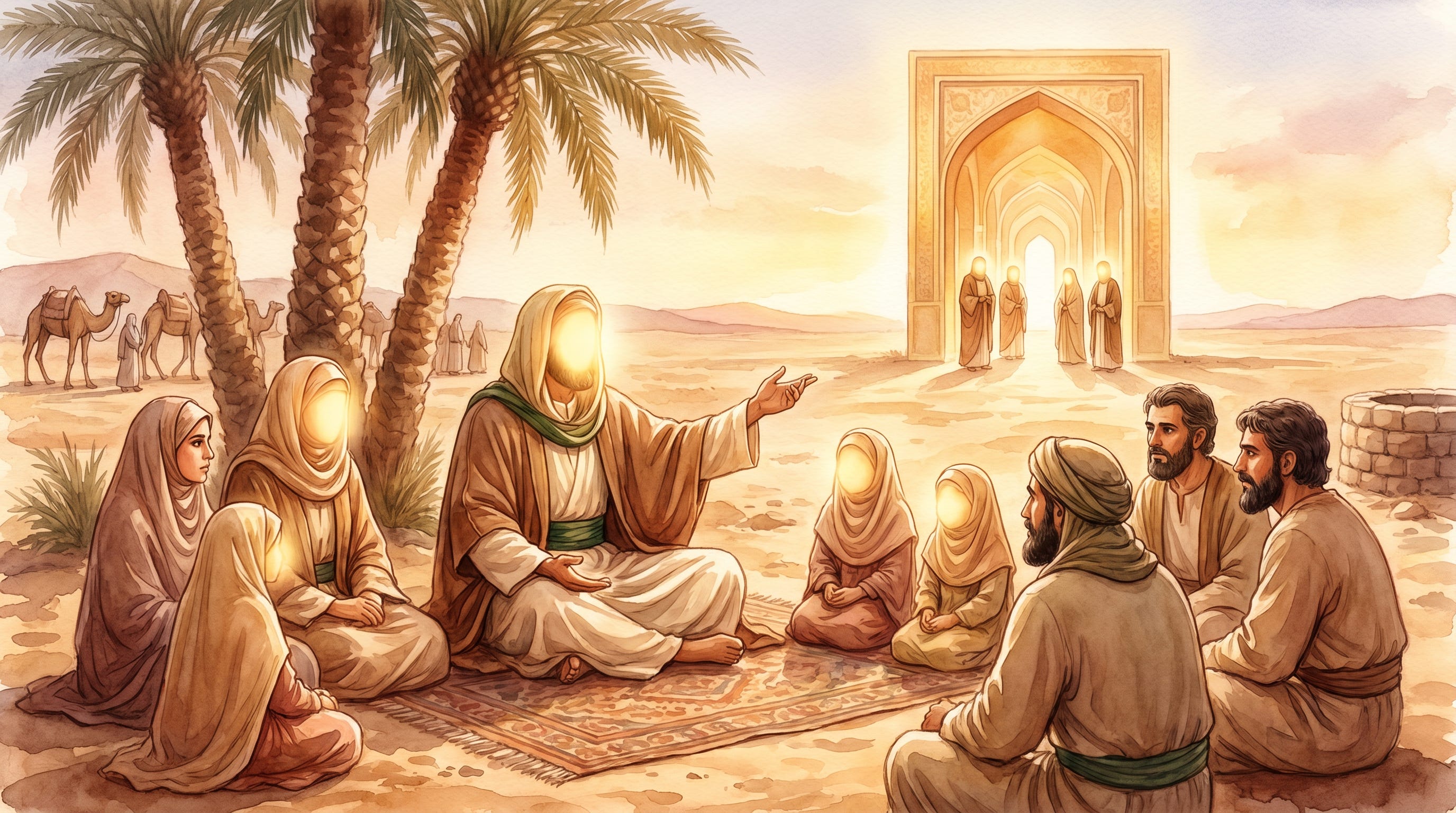
And now we come to the heart of tonight — the distinction that this entire series is built around, named at last in its clearest form.
In Arabic, shahada means both testimony and witness.
Every Muslim begins their faith with a shahada of the tongue:
La ilaha illa Allah, Muhammad rasul Allah
There is no god but God, and Muhammad is His messenger.
That declaration is the door.
You say it, and you enter.
But Imam Husayn’s entire movement — his entire life — is the demonstration that the door is not the house.
Entering is not inhabiting.
Declaring is not being.
There are two kinds of shahada.
The Shahada of the Tongue
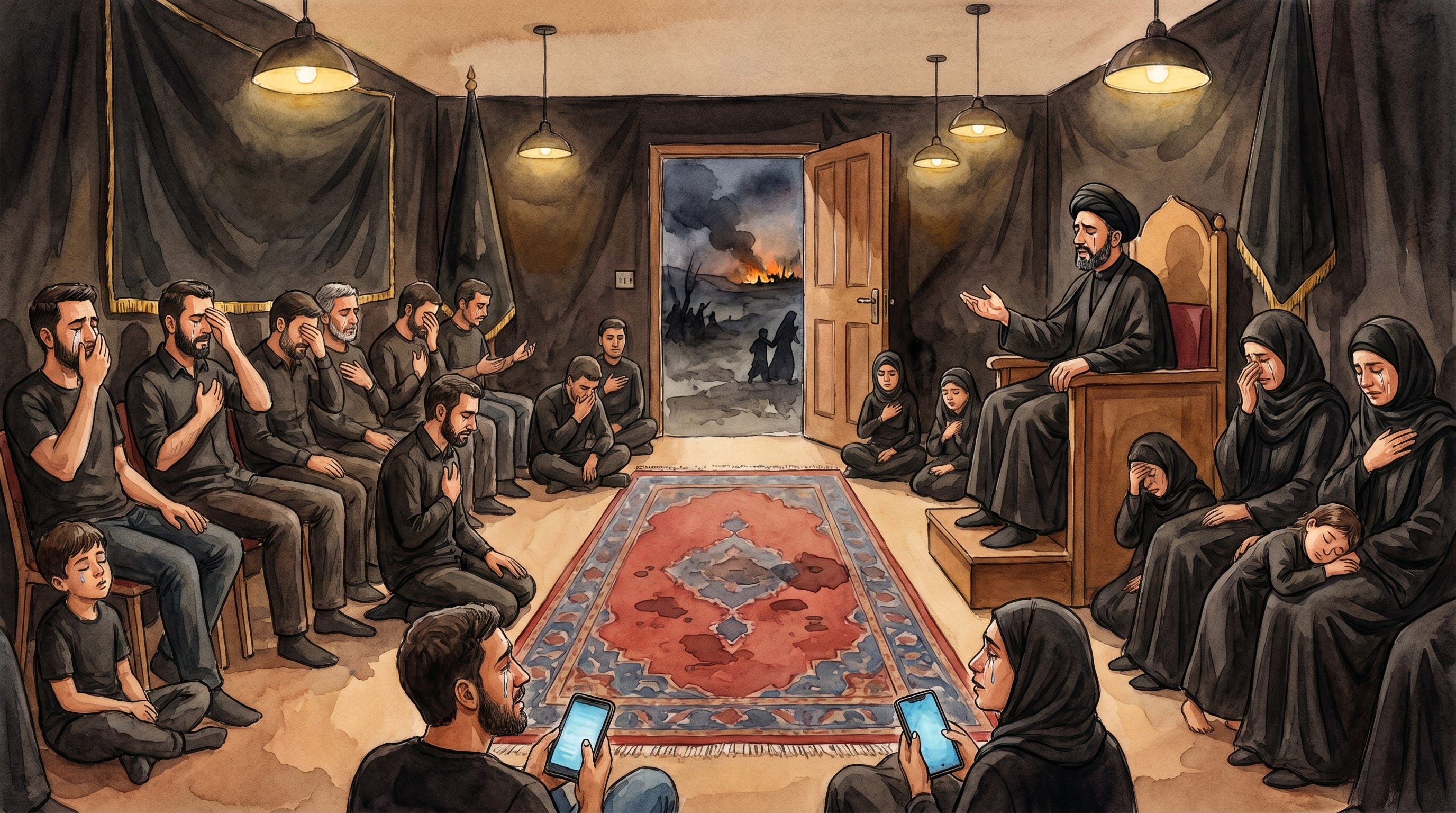
The shahada of the tongue is the faith of declaration.
It says the words.
It attends the gatherings.
It wears the right symbols.
It can recite the right phrases at the right moments.
It mourns beautifully.
It identifies — proudly, loudly, sincerely — with the tradition.
It will tell you, if you ask, that it loves Imam Husayn, that it weeps for Imam Husayn, that it will never forget Imam Husayn.
But when the tradition makes a demand that would cost something — when the “yes” that Imam Husayn said requires a “yes” from the one who claims to follow him — the shahada of the tongue falls silent.
Because identification, by itself, carries no cost.
You can identify with Husayn without ever making a single choice that Husayn would recognise.
The Shahada of the Life
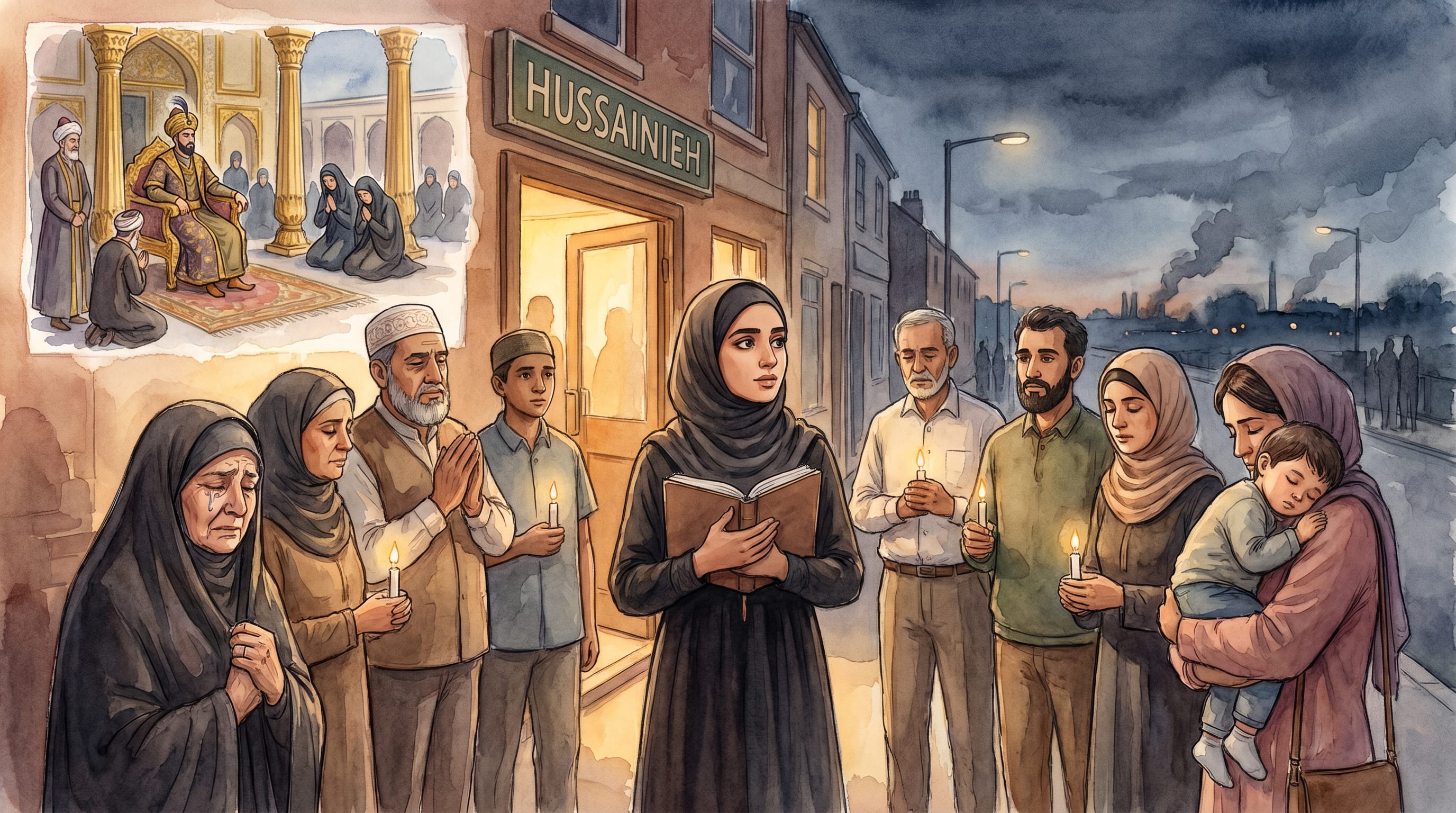
The shahada of the life is the faith of commitment.
It is what Imam Husayn demonstrated.
It is what he asked for at Mina.
It is what the scholars at Mina had the knowledge to give — and refused to give because of fear, comfort, and the narrowing of their moral vision.
The shahada of the life does not require death.
It requires cost.
It requires that when the moment comes — the moment when the truth is on one side and the comfortable lie is on the other — you choose the truth, even when it would be easier and safer and more profitable to say nothing.
Dr Shariati, in his famous distinction between Tashayyu’-e Alawi — the Shi’ism of Ali — and Tashayyu’-e Safawi — the Shi’ism of the Safavids — was getting at exactly this, in the language of his time and his audience.
When a dynasty in sixteenth-century Iran adopted Shi’ism as a state religion, it kept the mourning but removed the commitment.
The tears remained, but the demand was drained.
Karbala became something to remember rather than something to continue.
The people wept every Muharram — and then went home and lived as though Imam Husayn had never asked them for anything.
The shahada of the tongue without the shahada of the life.
But this is not a disease confined to one dynasty or one century.
It is available wherever the faith becomes a culture rather than a covenant.
Wherever the identity replaces the commitment.
Wherever the label —
I am a Muslim, I am a Shia, I am a follower of Husayn
— is spoken with the tongue but not written with the life.
The Theological Guardrail
And here we must tread carefully — because Dr Shariati wrote as a polemicist and we speak as a pulpit.
His critique, and ours tonight, is not of mourning itself.
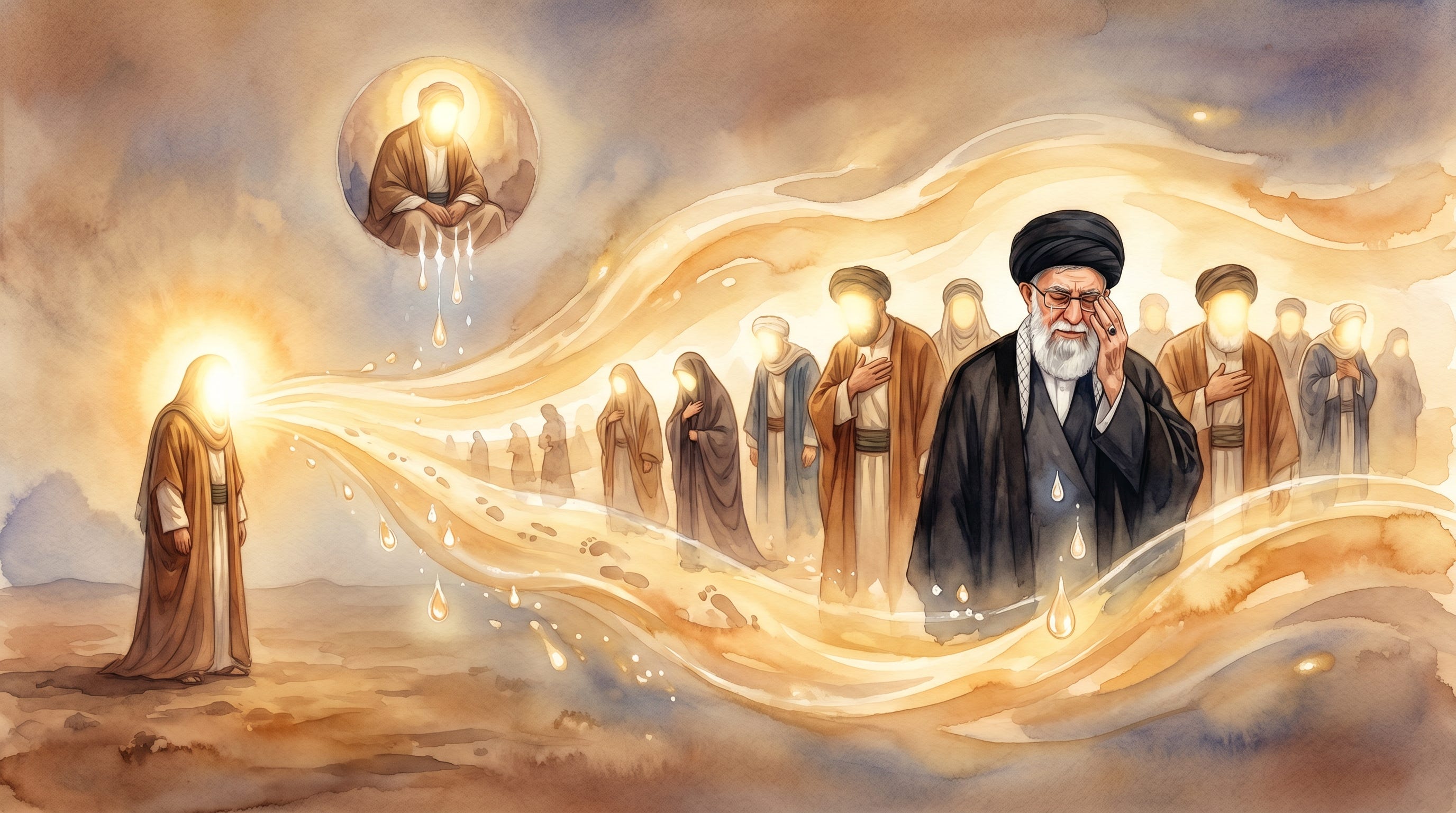
Our tradition holds, and the martyr, Imam Sayyed Ali Khamenei — may God rest his pure soul — emphasised throughout his leadership, that the tears for Imam Husayn are themselves an act of worship.
The hadith on this is clear, the practice of the Imams — peace and blessings be upon them — is clear, the scholars are unanimous:
Weeping for Husayn is good.
It is endorsed by the Prophet — peace and blessings be upon him, his family, and his righteous companions — himself — he wept for Imam Husayn before Imam Husayn was born, as we traced on Night 2.
What we are warning against tonight is mourning that ends with the tears.
Mourning that becomes its own purpose.
Mourning that produces a community which can cry beautifully for ten nights in Muharram and then spend the other eleven months of the year in exactly the state of fatalism and pragmatism that the four voices of “Nothing” offered to Imam Husayn.
Shaheed Motahhari told us last night — in words we must hear again tonight:
اسلام، با اینکه با گریه بر میت عادی چندان روی خوشی نشان نداده است، مایل است که مردم بر شهید بگریند؛ زیرا شهید حماسه آفریده است و گریه بر شهید، شرکت در حماسهی اوست، هماهنگی با روح اوست، موافقت با نشاط اوست، و حرکت در موج اوست.
“Islam, despite not having shown much enthusiasm for weeping over an ordinary deceased person, desires that people weep for the martyr — because the martyr has created an epic, and weeping for the martyr means participating in his epic, harmonising with his spirit, affirming his zeal, and moving with the wave he has set in motion.”
— Shaheed Murtadha Motahhari, The Martyr (also in Hamasa-ye Husayni)
Read that last phrase:
Moving with the wave he has set in motion.
The tears are not the end.
They are the entry into the wave.
They are what carries you forward — into the epic the martyr created, into the demand the witness left behind.
But if the tears stop at the door, if the mourning never becomes movement, then we have wept without entering the wave.
And a wave that no one enters breaks on an empty shore.
The Convergence of Two Voices
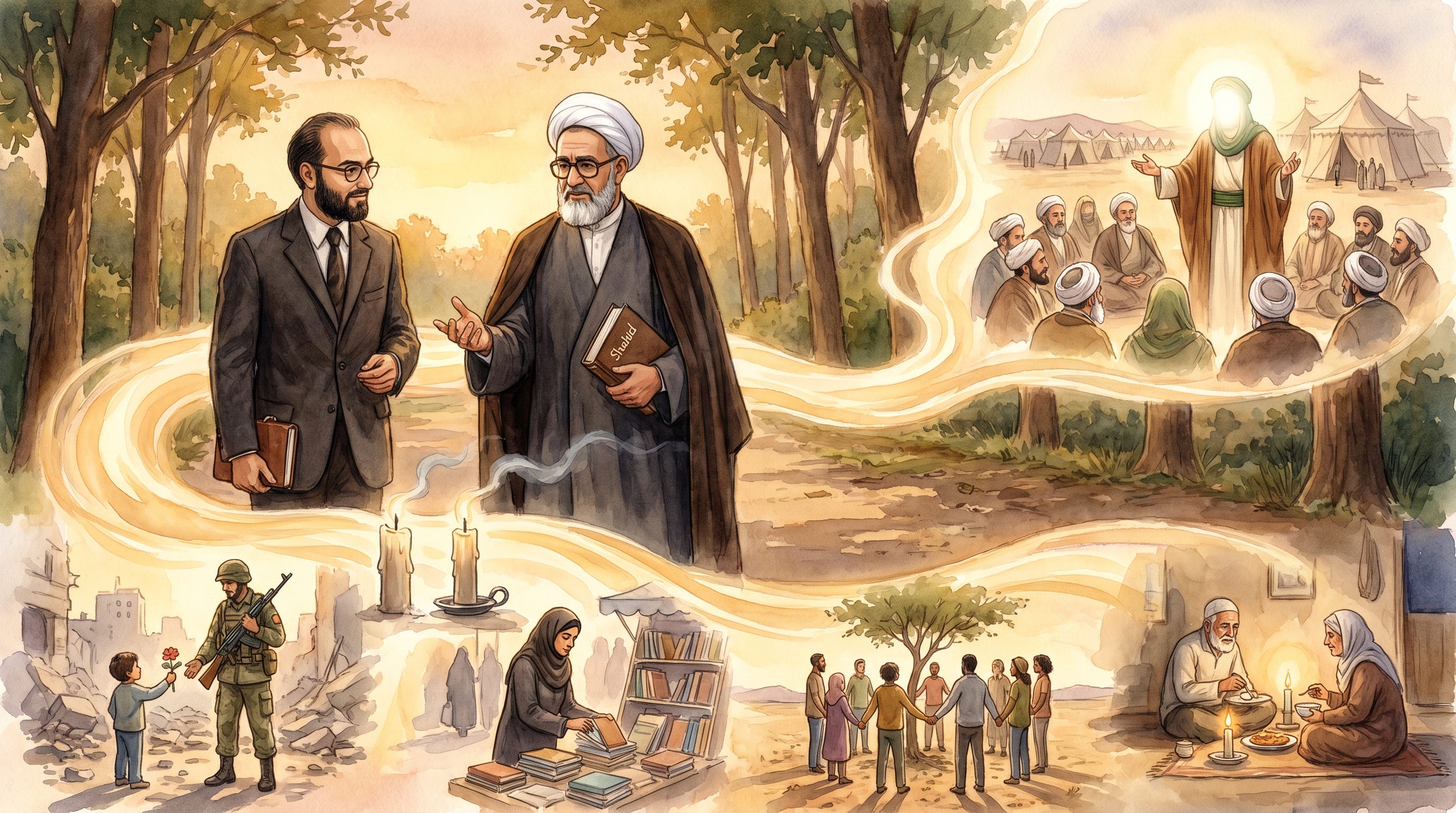
And here we bring together the two modern voices of tonight — because they were seeing the same disease from two different positions, and together they give us a clarity that neither provides alone.
Shaheed Motahhari’s critique — from last night — is theological.
The preacher who tells the story of Karbala as though Imam Husayn lost his life in vain, who reduces the Master of Martyrs to a victim, who centres the suffering and removes the agency — that preacher is draining the witness of its power.
He is turning Category 5 into Category 3.
He is turning the gift into a theft.
Dr Shariati’s critique is sociological.
The community that mourns Imam Husayn without being changed by the mourning — that weeps in Muharram and then lives the rest of the year as though the weeping carried no obligation — that community is performing the shahada of the tongue while abandoning the shahada of the life.
They have made of Karbala a seasonal event rather than a permanent covenant.
The preacher who turns Imam Husayn into a victim is doing in the sermon what the domesticated tradition does in the culture: draining the witness of its demand.
Shaheed Motahhari names it in the theology.
Dr Shariati names it in the sociology.
And behind both of them, standing at Mina, Imam Husayn had already named it in the Qur’an — fourteen centuries before either of them was born.
They were colleagues.
They were friends.
They were both killed for the same cause — Shaheed Motahhari by an assassin’s bullet in Tehran, Dr Shariati in exile in England, under circumstances that remain disputed but that his community has never doubted.
Two candles extinguished.
Two lights that went further than the candles ever imagined.
The second lesson of tonight:
The measure of authentic mourning is not the intensity of the tears but the depth of the commitment that follows them.
If we weep for Imam Husayn tonight — and we should weep for Imam Husayn tonight — then the test of the weeping is what we do tomorrow.
Not the grand gestures.
Not the theatrical sacrifice.
What we do at the kitchen table, in the workplace, in the school, in the group chat, in the quiet moment when no one is watching and the choice is between the comfortable lie and the inconvenient truth.
كُلُّ يَوْمٍ عَاشُورَاء، وَكُلُّ أَرْضٍ كَرْبَلَاء
“Every day is Ashura, and every land is Karbala.”
— Al-Qutayfi, Al-Rasail al-Ahmadiyyah, Volume 2, Page 273
— Al-Amin, Ayan ash-Shia, Volume 1, Page 620
This sentence — attributed in various forms to different Imams, and carried into the modern world by Dr Shariati more than anyone — does not mean that every day is dramatic.
It means that every day contains the same choice Imam Husayn faced:
Say yes, or say nothing.
Every Day Is Ashura — What It Means in 2026
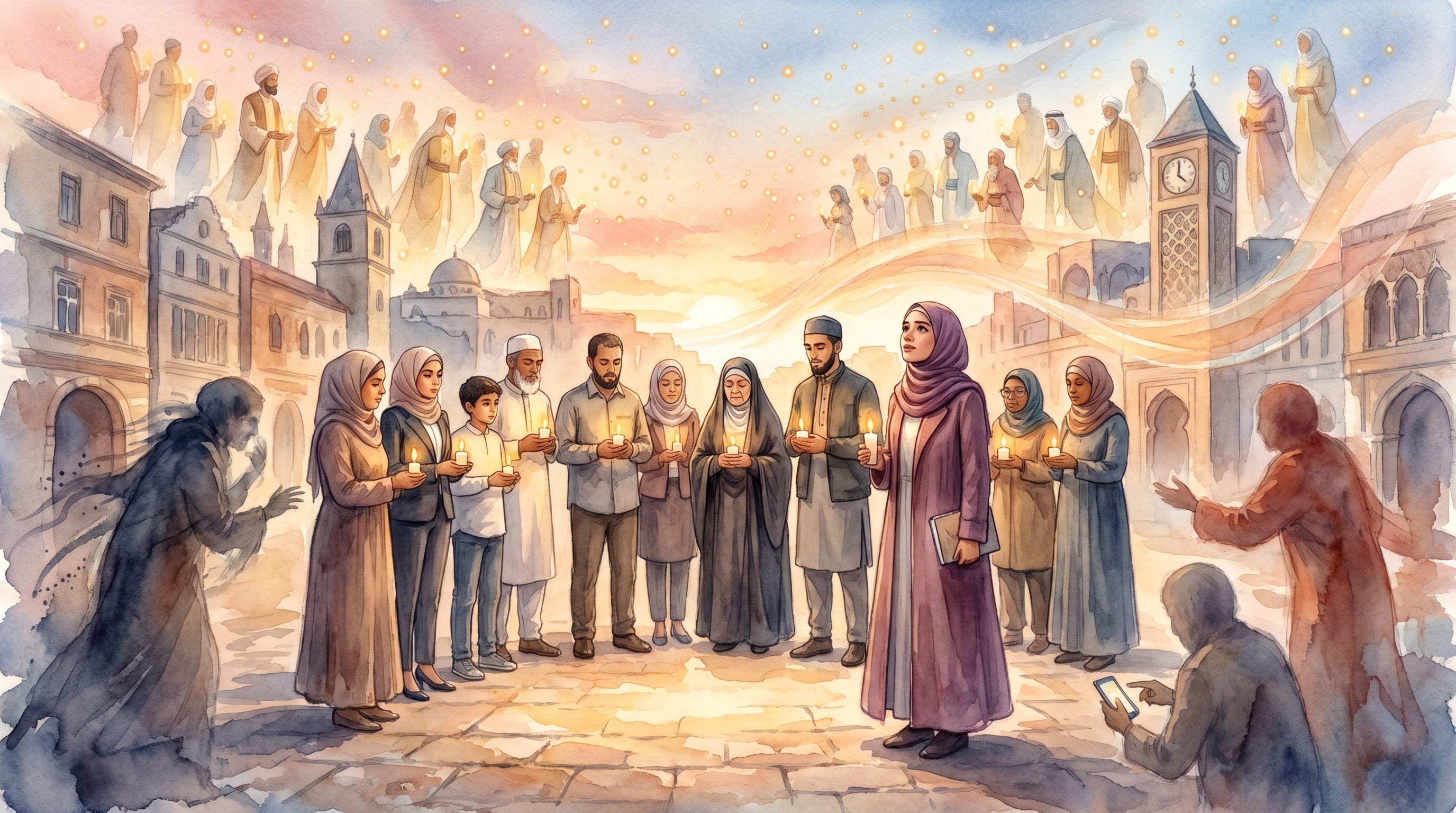
What does it mean —
“Every day is Ashura, every place is Karbala”
— for someone sitting in Rochdale, in London, in Dearborn, in Toronto, in Sydney, in 2026?
It does not mean we romanticise sacrifice.
It does not mean we walk around with a martyr complex.
It does not mean we compare our inconveniences to the suffering of the household of the Prophet — peace and blessings be upon them.
It means this: the structure of Imam Husayn’s choice is available to every one of us, every day.
The structure is simple.
There is a truth.
There is a falsehood dressed as normality.
There is a cost to naming the truth.
And there is a voice — inside you, or around you, or both — saying:
“Nothing. Don’t. It’s not worth it. Adapt. Be realistic. Be quiet.”
That structure is Karbala.
And it is everywhere.
When a teacher in a British school refuses to pass along a curriculum she knows is misleading her students — and pays for it with difficulty — she is saying yes in the same structure Imam Husayn said yes.
She is choosing the shahada of the life.
When a doctor will not turn away from the patient who cannot pay — and absorbs the cost — he is refusing the pragmatist’s bargain.
He is refusing to purchase his comfort at the expense of the covenant.
When a mother raises her children with conviction in a culture that rewards assimilation and punishes distinctiveness — that is the shahada of the life.
That is a woman who has decided that the identity she gives her children will not be an empty label but a lived commitment.
When a journalist refuses to smooth the copy and files the story that will not sell — that is a small act of shahada, of bearing witness.
It may cost her nothing more than an argument with an editor.
But the shape of the choice is the same.
When a young Muslim in a Western university refuses to apologise for their tradition, and refuses to be silent about Gaza, and does so without cruelty, without self-righteousness, with the clarity and the sadness and the steel that the tradition has taught them — they are standing where Imam Husayn stood.
They are facing the three silences: fear whispers, comfort beckons, and their moral vision is being narrowed for them by a culture that wants them to care only about their grades and their careers and their personal brand.
And the choice they make — to speak or not to speak, to stand or not to stand — is the same choice the scholars at Mina refused to make.
None of these people will die for it.
Most of them will not even be noticed.
But the choice has the same shape.
And the shape is what matters.
Because the shape is the covenant.
And here we must say something about the universality of this — because the shahada of the tongue and the shahada of the life are not categories that belong to Muslims alone.
They belong to every human being who has ever faced the choice between naming the truth and saying nothing.
The covenant at Surah al-A’raf was made with every soul:
وَإِذْ أَخَذَ رَبُّكَ مِن بَنِي آدَمَ مِن ظُهُورِهِمْ ذُرِّيَّتَهُمْ وَأَشْهَدَهُمْ عَلَىٰ أَنفُسِهِمْ أَلَسْتُ بِرَبِّكُمْ ۖ قَالُوا بَلَىٰ ۛ شَهِدْنَا
“And when your Lord took from the children of Adam, from their loins, their descendants, and made them bear witness against themselves: ‘Am I not your Lord?’ They said: ‘Yes indeed, we bear witness.’”
— Qur’an, Surah al-A’raf (the Chapter of the Heights) #7, Verse 172
That covenant was made with every soul.
The duty of witness does not begin at the mosque door and end at the mosque gate.
It extends to every place where a human being is confronted with a truth that has a cost.
We said on Night 1 that martyr means witness — and the word belongs to Greek before it belongs to Arabic.
We will see, in later sessions, that the chain of witnesses includes people who never said
La ilaha illa Allah, Muhammad rasul Allah
There is no god but God, and Muhammad is His messenger.
— people who bore witness with their lives in languages the Qur’an was not revealed in, for a truth they recognised by a different name, under a covenant they may not have known they had signed.
The shahada of the life is wider than Islam.
It is as wide as the soul.
But tonight we speak to ourselves.
Tonight we speak to the community that carries the name of Imam Husayn and claims the grief of Karbala.
And the question is not whether we weep — we weep.
The question is whether the weeping has taught us anything.
Whether the shahada we carry is the shahada of the tongue or the shahada of the life.
Whether we are the scholars at Mina or the man who spoke to them.
Return to the Verse
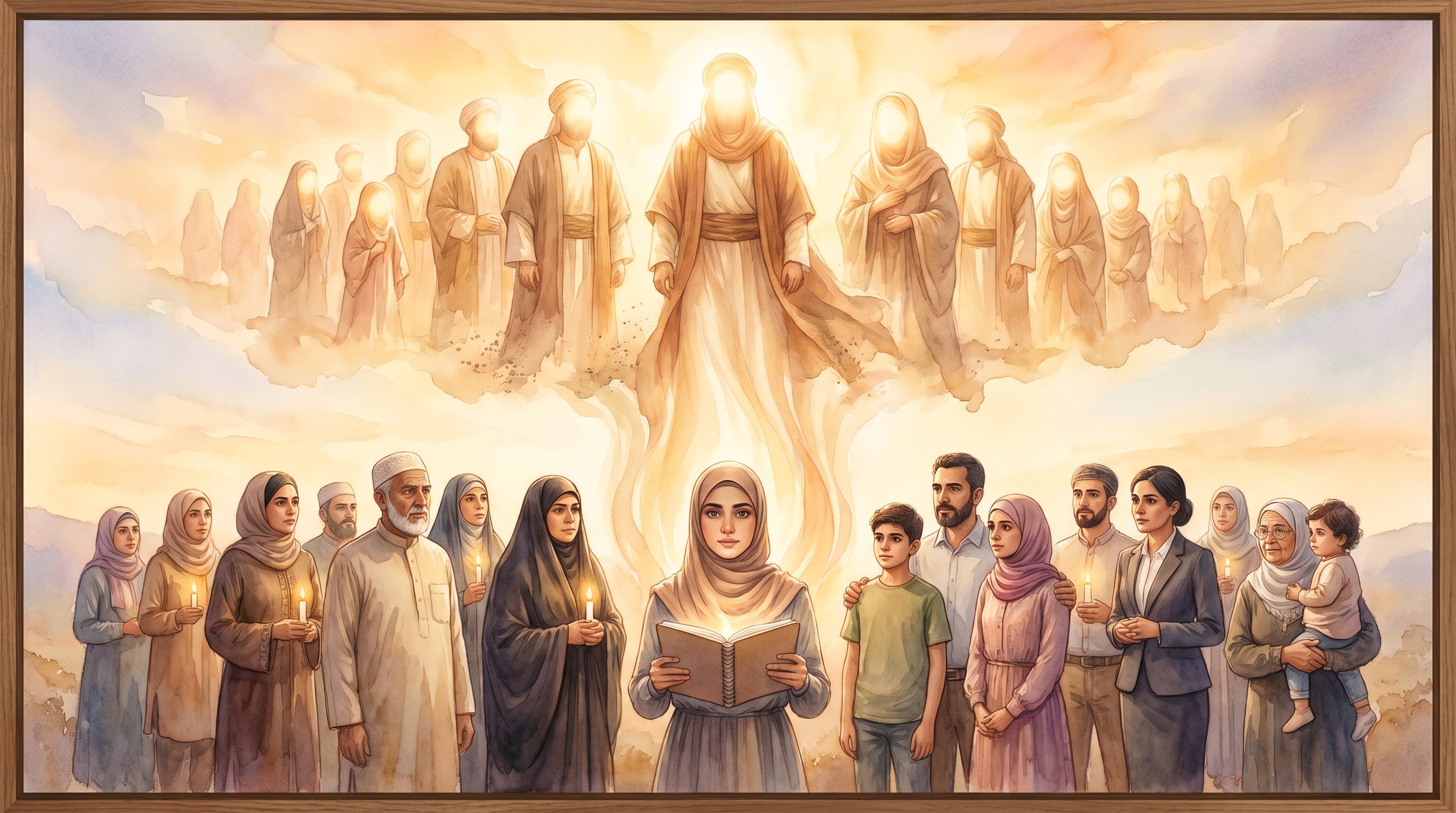
And here we return to the verse we opened with tonight:
مِنَ الْمُؤْمِنِينَ رِجَالٌ صَدَقُوا مَا عَاهَدُوا اللَّهَ عَلَيْهِ ۖ فَمِنْهُم مَّن قَضَىٰ نَحْبَهُ وَمِنْهُم مَّن يَنتَظِرُ ۖ وَمَا بَدَّلُوا تَبْدِيلًا
“Among the believers are men who have been true to their covenant with God; some of them have fulfilled their vow, and some are still waiting — but they have never changed.”
— Qur’an, Surah al-Ahzab (the Chapter of the Allied Forces) #33, Verse 23
The ones who fulfilled their vow are the martyrs.
The ones who are still waiting are us.
And the condition — the one condition that holds the whole verse together — is:
They have never changed.
The waiting is not passive.
The waiting is a form of readiness.
The waiting is the refusal to change, to adapt, to compromise, to say “Nothing” when the truth requires a “Yes.”
Imam Husayn diagnosed the disease at Mina.
Dr Shariati catalogued the four voices of “Nothing.”
Shaheed Motahhari built the theology of the gift.
And all three of them are pointing to the same verse, the same covenant, the same question:
Have you changed? Or are you still waiting — still standing — still carrying the “Yes” that the covenant demands?
The Call to the Congregation
The call to the congregation tonight is this:
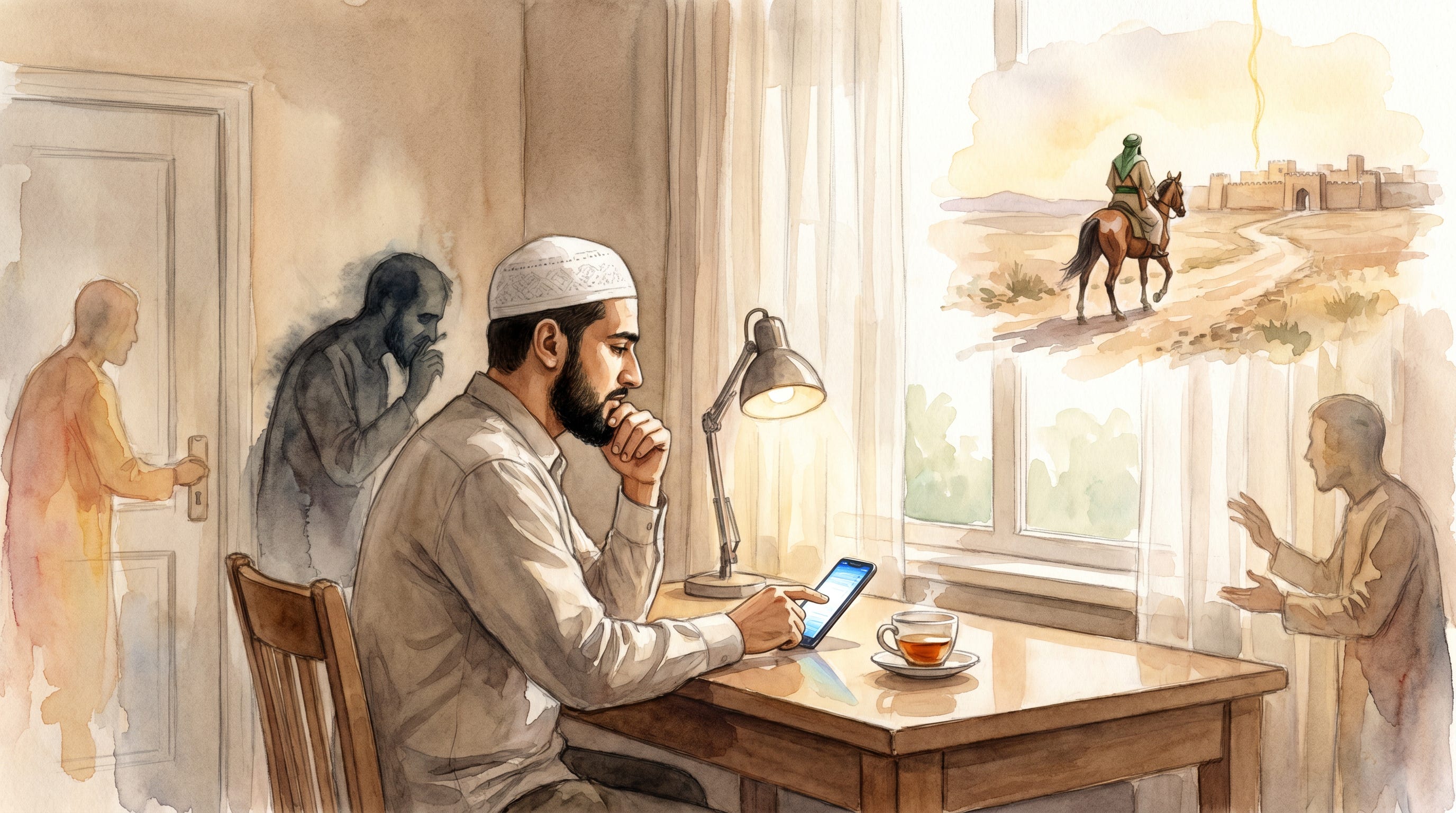
Between tonight and tomorrow night, find one place in your life where you have been saying “Nothing” — where you have been choosing the fatalist’s answer, or the pragmatist’s answer, or the retreater’s answer — and say “Yes.”
Not dramatically.
Not publicly.
Not in a way that invites admiration or sympathy.
Just once.
Just one place where the three silences have held you — fear, comfort, the narrowing of your vision — and break one of them.
See what it costs.
See whether the cost is worth it.
And now — tonight — we hear what happened when one young man said “Yes” in a city called Kufa.
Muslim ibn Aqil, the ambassador, the cousin, who carried the covenant into a city of eighteen thousand promises — and what the city did to him.
We remember what happens when the “Yes” is carried into a city that has already forgotten its own name.
Segue to Maqtal (Lamentation)
Maqtal (Lamentation) for the Fourth Night of Muharram 2026/1448
Supplication
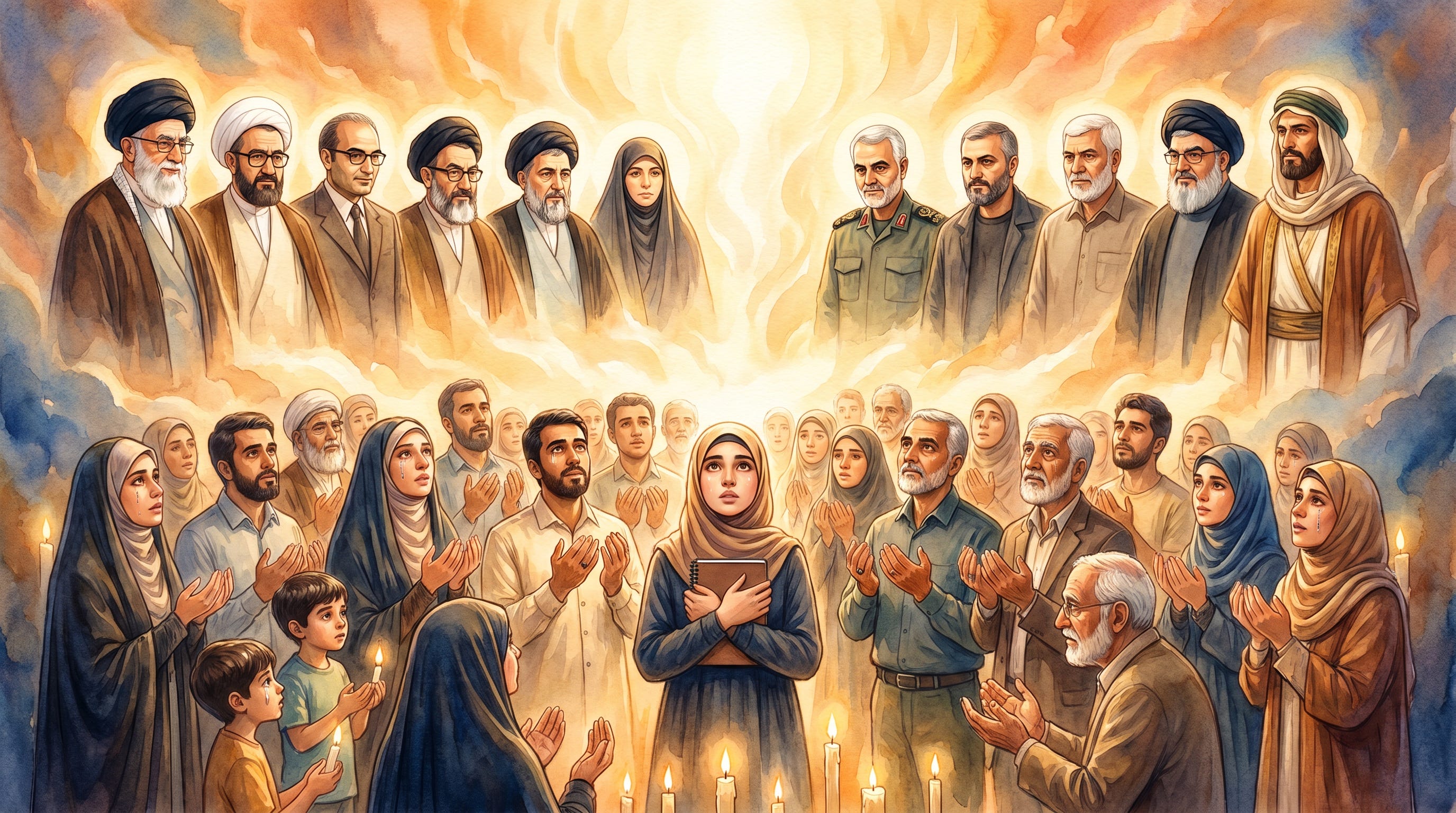
Peace be upon Abel, who testified first.
Peace be upon the prophets, who carried the covenant and wept.
Peace be upon Shaheed Motahhari, who gave us the theology of the gift.
Peace be upon Dr Shariati, who gave us the sociology of the demand.
Peace be upon Husayn, who stood at Mina, spoke the truth, and then became it.
Peace be upon Muslim, the ambassador, who carried the “Yes” into a city of broken promises.
Peace be upon the Imam of our Age, who watches, and remembers, and waits.
Peace be upon you all, and upon your houses, and upon the choice you will make between tonight and tomorrow — the choice between the shahada of the tongue and the shahada of the life.
O God — You Who sent Husayn to Mina before You sent him to Karbala, You Who gave the diagnosis before You prescribed the treatment, You Who told the scholars what they owed before they had the chance to claim they did not know — we turn to You tonight on this fourth night of Muharram, and we have no Lord but You, and no refuge but Your door, and no teacher but the ones You have sent to teach us.
O God — we send our condolences and our congratulations tonight to Your beloved Prophet Muhammad — peace and blessings be upon him, his family, and his righteous companions — condolences for a grandson who stood at Mina and spoke to men who should have already been standing where he stood, who rebuked the scholars not because he enjoyed the rebuke but because someone had to say what they refused to say — and congratulations for a grandson who, when the scholars would not act, did not sit down.
He walked.
He said “Yes.”
And the “Yes” he said has echoed in every century since, and we are still hearing it tonight.
O God — we send our peace to Imam Husayn — peace and blessings be upon him — the one who diagnosed the disease at Mina, who named the three silences before anyone gave them a name, who told the scholars to their faces that they had purchased their safety with flattery and compromise, and who, when the medicine he prescribed was refused, became the medicine himself.
He did not wait for the scholars to agree.
He did not wait for the consensus to form.
He walked out of Mecca with seventy-two souls and a covenant that would not bend, and the world has not been the same since.
O God — we send our peace to Dr Ali Shariati — may You O Lord rest his pure soul — who found the same disease fourteen centuries later in the lecture halls of Paris and the mosques of Tehran, who loved the tradition enough to criticise what had been done to it, who asked the question —
“What should be done?”
— and answered it with his life.
He died in exile, far from the revolution he had helped to imagine.
But the question he asked has outlived every regime that tried to silence it, and we are asking it tonight.
O God — we send our peace to Shaheed Ayatollah Murtadha Motahhari — may You O our Lord, rest his pure soul — the teacher who saw the same illness from the seminary, who gave us the theology of the candle and the taxonomy of the five deaths, and who was killed for the clarity he brought to a community that preferred its grief unexamined.
His candle was extinguished on a Tehran street.
His light is brighter now than it was on the day he was killed.
We see by it tonight.
O God — we send our peace to Muslim ibn Aqil — peace and blessings be upon him — the ambassador, the first “Yes” of the caravan, who walked into Kufa with the covenant in his hand and found eighteen thousand promises that broke before the morning.
We heard his story tonight in the maqtal.
He was the first to learn what the shahada of the life costs when the city chooses the shahada of the tongue.
And he held the covenant until the covenant took his life.
O God — we send our peace to Hani ibn Urwa — peace and blessings be upon him — who opened the one door that stayed open when every other door in Kufa had closed, and who paid for that hospitality with his life.
May every door that opens for the truth in this world be remembered as the door of Hani.
O God — we send our peace to the scholar-martyrs who continued the “Yes” in their own centuries — Shaheed Ayatollah Muhammad Beheshti, Ayatollah Sayyed Muhammad Baqir al-Sadr and Sayyeda Bint al-Huda — may You O our beloved Lord rest their pure souls — who said yes in classrooms, in courtrooms, in prisons, when every voice around them was saying “Nothing.”
O God — we send our peace to the commanders of the caravan — Hajj Qassem, Hajj Emad, Hajj Abu Mahdi, Sayyed Hassan — may You, O our beloved Lord, rest all of their pure souls — who said yes on frontiers the pragmatists told them to abandon, who carried the shahada of the life into deserts and mountain passes and cities where the three silences held every other tongue.
O God — we send our peace to the martyr Imam Sayyed Ali Khamenei — may You rest his pure soul — who carried the “Yes” for forty-six years and never changed.
Who stood where the scholars at Mina should have stood — at the pulpit, before the powers, with the covenant in his throat — and spoke.
Who was the shahada of the life in a century that preferred the shahada of the tongue.
And who joined the chain of his forefather Imam Husayn in the language of February, in the rooms of an empire that had written its own version of Muawiyyah’s letter, and had received the same answer.
O God — we send our peace to the Imam of our Age — may our souls be his ransom, and may You O our beloved Lord, hasten his return — who carries every witness, who remembers every silence, who knows the three reasons better than any teacher, because he watches them play out in every city, in every century, in every community that says “Nothing” when the covenant requires a “Yes.”
And may the mercy of God be distant — a long, eternal, unappealable distance — from every scholar who has ever stood at a Mina of their own century and said nothing.
Upon every preacher who has narrowed the covenant to the width of his own comfort.
Upon every leader who has purchased safety with flattery and compromise and called it wisdom.
Upon every city that has pledged its loyalty and then closed its doors — from Kufa to every capital that has, in our own time, promised justice and delivered silence.
إِنَّا لِلَّهِ وَإِنَّا إِلَيْهِ رَاجِعُونَ
“We belong to God, and to Him we return.”
— Qur’an, Surah al-Baqarah (the Chapter of the Cow) #2, Verse 156
And we repeat your promise, an eternal promise for Justice, and a warning for the wrongdoers:
وَسَيَعۡلَمُ ٱلَّذِينَ ظَلَمُوٓاْ أَيَّ مُنقَلَبٖ يَنقَلِبُونَ
And the wrongdoers will soon know at what goal they will end up.
— Qur’an, Surah al-Shu’araa (the Chapter of the Poets) #26, Verse 227
And we add, from the depths of everything we have learned tonight:
حَسْبُنَا اللَّهُ وَنِعْمَ الْوَكِيلُ
“God is sufficient for us, and He is the best of guardians.”
— Qur’an, Surah Aal Imran (the Chapter of the Family of Imran) #3, Verse 173
Amen, O Lord Sustainer of the Universes.
Amen, O Most Merciful of the Merciful.
And from Him alone is all ability, and He has authority over all things.