

In His Name, the Most High
Introduction and Recap
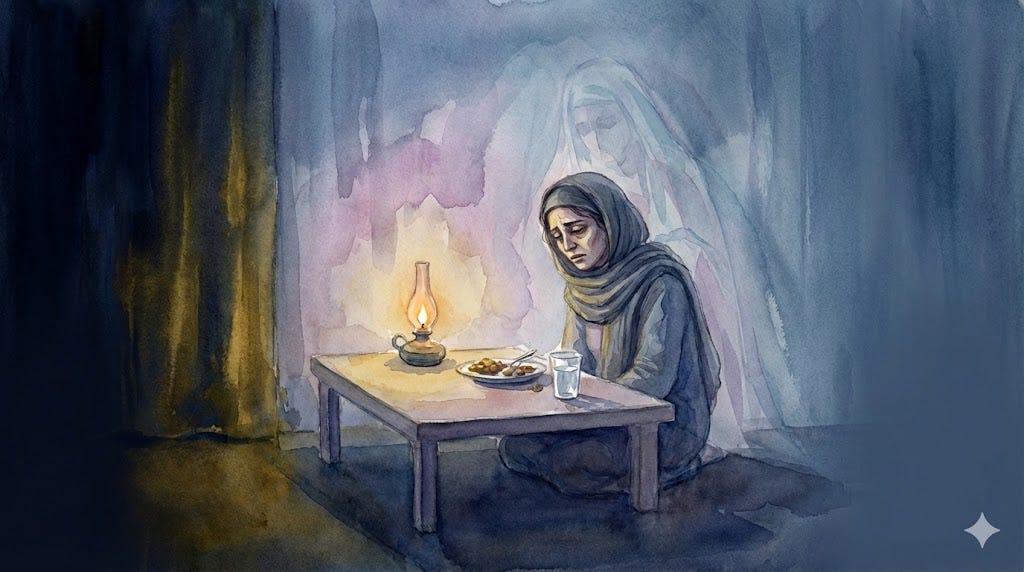
We have to be honest with each other tonight.
You are tired.
We are three weeks into the Month of Ramadhan, and the initial rush is long gone.
The sweetness of the first nights — the electric hush of that first Dua Iftitah, the tears that came so easily in the early sajdahs, the feeling that this year would be different — has given way to something flatter, heavier, less glamorous.
Your sleep is wrecked.
Your patience is thinner than it has been all year.
Your body has adjusted to the hunger, but your soul has not adjusted to what the hunger is doing to it.
And somewhere inside you — maybe in the car or the train on the way home, maybe this afternoon during the long stretch before maghrib, maybe at 3am when the alarm went off for suhoor and every cell in your body screamed no — a voice said:
Why am I doing this to myself?
Good.
That voice — the voice that wants the routine back, the comfort back, the autopilot back — is the most important voice in this session tonight.
Because that voice has a name.
And tonight, we are going to name it.
Let me tell you where we are.
In Session 1, we left.
We named the house of the ego and we walked out of it.
In Session 2, we cleaned.
We scrubbed the mirror of the heart, limb by limb, layer by layer.
In Session 3, we ate.
We sat down at the Banquet of God and discovered that the food on the table was not bread but Ma’rifah — Divine Knowledge — and that the dignity on offer was not social respect but Karamah: the original station of the human being, restored.
And between last week and tonight, the calendar gave us a gift.
On the 15th of this blessed month, we marked the birth of Imam Hasan al-Mujtaba — the eldest grandson of the Prophet, born into the month of hunger, named by God Himself.
The Karim of the Ahl al-Bayt.
The man who gave and gave and gave until generosity itself learned its name from him.
Hold that for a moment.
Because there is something in it that matters for tonight.
Imam Hasan is the fruit of the man we are going to speak about this evening.
He is the son of Imam Ali.
The product of Ali’s training, Ali’s discipline, Ali’s lifetime of breaking the self so that something greater could grow in its place.
The most generous human being in history did not appear from nowhere — he was raised by the most rigorously trained soul who ever lived.
Tonight, we go to the source.
Tonight, we meet the trainer.
Three weeks of receiving.
Three weeks of being given: an invitation, a cleansing, a feast.
And now the bill arrives.
Because here is what the masters of the path tell us — what Allamah Tabatabai teaches in his extraordinary manual for the spiritual traveller, the Lubb al-Lubab — and it is the one thing that nobody wants to hear at three weeks in:
The food does not stay in you automatically.
The mirror does not stay clean on its own.
The door you walked through in week one has a gravitational pull so powerful that unless you actively, deliberately, painfully break the force that keeps dragging you back through it, you will wake up on Eid morning exactly where you were on the last day of Sha’ban.
And that force — the real enemy, the true jailer, the thing that has kept you locked inside yourself for years and decades and perhaps your entire life — is not what you think it is.
It is not desire.
It is not anger.
It is not even sin.
It is habit.
Video of the Majlis (Sermon/Lecture)
Audio of the Majlis (Sermon/Lecture)
Movement 1: The Greatest Idol
The Idol You Cannot See
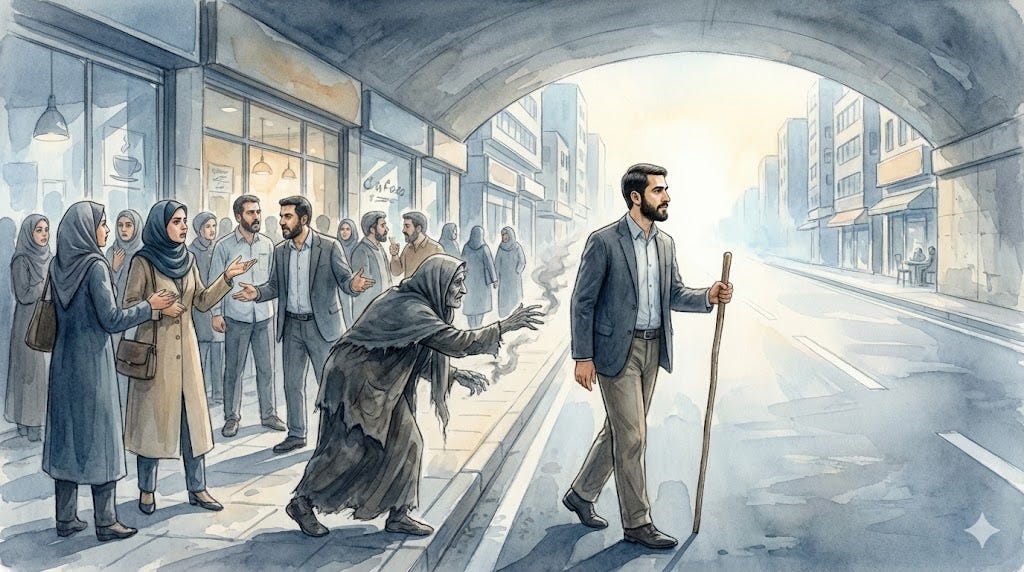
Let me take you into the text.
Allamah Tabatabai — one of the greatest scholars of the twentieth century, a man who mastered philosophy, exegesis, and the spiritual path with equal rigour — wrote a small, devastating book called Lubb al-Lubab — “The Innermost Essence” — a manual for the spiritual wayfarer.
It is not long.
It does not waste words.
And in its section on the Great Migration — al-Hijrah al-Kubra — it says something that should stop every one of us in our tracks.
The salik — the spiritual traveller — must migrate.
Not just from sin.
Not just from disobedience.
But from something far more deeply embedded:
From the habits and customs — al-’adat wa al-rusum — that block the path to God.
چون سالک به مرتبۀ ایمان اکبر رسید باید مهیّای هجرت کُبریٰ گردد، و آن هجرت به تن است از مخالطۀ اهل عصیان و مجالست اهل بغْی و طغیان و أبناءِ روزگار خوّان، و هجرتِ به دل است از مودّت و میل به ایشان، و هجرت به تن و دل معاً است از عادات و رسوم و متعارفه و اعتباریّات و مقرّراتی که سالک را از راه خدا بازمیدارد و مانع و عائق سفر او میگردد، چه عادات و رسوم از مهمّات بلاد کفر است.
“When the wayfarer has reached the station of the Greater Faith, he must prepare for the Great Migration (Hijrat al-Kubra). This is a migration of the body — from mixing with the people of disobedience and sitting with the people of transgression and tyranny. And it is a migration of the heart — from affection and inclination toward them. And it is a migration of both body and heart together — from the habits, customs, conventions, and established norms that hold the wayfarer back from the path of God and become obstacles to his journey. For habits and customs are among the vital concerns of the lands of disbelief.”
— Allamah Tabatabai, Lubb al-Lubab, Section: Hijrat al-Kubra
And then Allamah does something extraordinary.
He gives examples.
Not of dramatic sins.
Not of theft or murder or open rebellion against God.
He gives examples of social habits.
The habit of always speaking in a gathering — because silence would make you look ignorant.
The habit of sitting at the head of the room — because that is where important people sit.
The habit of flattery — because people call it good manners.
The habit of caring what others think of your standing, your reputation, your image.
And he says: the traveller must close his eyes to all of this.
He must divorce this old hag — that is his phrase, blunt as a hammer — and migrate from the world of illusion and convention into the open air of truth.
Allamah Tabatabai writes:
در اجتماع مادّی، انسان مقیّد به رسوم و عادات وهْمی و خیالی است که اهل دنیا عادت به آن دارند و سود و زیان و محاورات و معاشرتها و ردّ و بَدلهای خود را بر اساس آن استوار میکنند. مثلاً عادت بر آن جاری شده که در مجلس مذاکره و مباحثۀ عِلمی اگر کسی زبان در دهان نهاد و مُهر خاموشی بر دهان زده سخنی نگوید او را به نادانی منسوب میکنند. مثلاً یا عادت بر این جاری شده که در نشستن در صدر مجلس، به تفاهت عمل میآورند، و قعود و جلوس در صدر را علامت بزرگی، و تقدّم در ورود و خروج از مجلس را نشانۀ عظمت میگیرند، و چربزبانی و تملّق را دلیل بر مردمداری و حُسن خُلق تلقّی میکنند، و خلاف اینها را نشانۀ حقارت و کمارزشی و نبود موقعیّت و شخصیّت و سوء خلق.
سالک باید به توفیق الهی و امداد رحمانی از تمام اینها چشم بپوشد و از این عالم خیال و وَهْم هجرت کند و این عجوزه را سهطلاقه نماید. در این متارکه باید سالک از هیچ نیرویی بیم و هراس نداشته باشد، و از مذّمت مردم نهراسد، و از ملامت و نکوهش افرادی که دادِملقب خود را اهل فضل و دانش میکنند باک نداشته باشد.
“In material society, the human being is bound by customs and habits — illusory and imaginary — to which the people of the world are accustomed, upon which they build their dealings, conversations, and social exchanges. For example, habit has established that in a gathering of scholarly discussion, if someone places his tongue in his mouth and seals his lips with the stamp of silence, they attribute ignorance to him. Or habit has established that regarding seating at the head of a gathering, they compete eagerly — they consider sitting at the head a sign of greatness, precedence in entering and leaving a sign of eminence, flattery and smooth speech as proof of good character, and the opposite of all these as signs of lowliness and worthlessness.
The wayfarer must, by Divine grace and God’s merciful aid, close his eyes to all of these things, migrate from this world of illusion and fancy, and irrevocably divorce this old hag. In this act of severance, the wayfarer must have no fear or dread of any force whatsoever, must not be frightened by people’s censure, and must not be concerned by the blame of those who style themselves people of learning and knowledge.”
— Allamah Tabatabai, Lubb al-Lubab, Section: Hijrat al-Kubra (continued)
And then he names the price.
He narrates from al-Kafi, via Imam al-Sadiq, peace be upon him, from the Prophet himself:
«أَرْكَانُ الْكُفْرِ أَرْبَعَةٌ: الرَّغْبَةُ وَالرَّهْبَةُ وَالسَّخَطُ وَالْغَضَبُ»
“The pillars of disbelief are four: desire, fear of people, displeasure, and anger.“
— The Prophet Muhammad; narrated in al-Kafi (Shaykh Al-Kulayni), via Imam al-Sadiq; cited in Lubb al-Lubab (Allamah Tabatabai)
Fear of people.
That is the pillar he unpacks.
Rahbah — the fear of what people will say, what people will think, the dread of being mocked or marginalised for refusing to play the game.
Allamah Tabatabai says this fear is interpreted as fear of contradicting the customs and illusory conventions of people.
And it is a pillar — not a symptom, not a side-effect — a pillar of kufr.
Read that again.
The habit of doing what everyone else does because you are afraid of what they will say if you stop — this is not a minor spiritual blemish.
It is a structural support of disbelief.
و رَهبَت در آن به رهبت از مردم تفسیر شده است در مخالفت عادات و نوامیس وهمیّۀ آنها. و محصَّل کلام آنکه سالک باید از جمیع آداب و عادات و رسوم اعتباریّۀ اجتماعی که سدّ راه خدا هستند دست بردارد.
“And rahbah therein has been interpreted as fear of people — specifically in the matter of contradicting their habits and illusory conventions. The upshot is that the wayfarer must abandon all the social customs, habits, and conventional norms that block the path to God.”
— Allamah Tabatabai, Lubb al-Lubab, Section: Hijrat al-Kubra (continued)
And the ‘urafa — the mystics — they have a word for the person who breaks free of this.
They call him majnun.
Mad.
Because the person who has genuinely migrated from social habit looks insane to the world.
He has no familiarity with people’s customs.
He pays no attention to their praise or blame.
Their disapproval does not frighten him.
Their approval does not warm him.
He moves through the world untouched by the force that keeps everyone else locked in formation.
و عرفاء این را به تعبیر جنون مینمایند. زیرا مجنون به رسوم و عادات مردم آشنایی ندارد و به آنها وقع نمیگذارد و مدح و ذمّ آنها را به دیدۀ بیاعتنایی مینگرد و از حرکت و قیام آنها بر علیه او خوف و وحشت به خود راه نمیدهد و تغییر روش در خود نمیدهد.
“And the mystics (’urafa) express this as junun — madness. For the madman has no familiarity with the customs and conventions of people, pays them no regard, looks upon their praise and blame with the eye of indifference, and does not allow fear or terror at their opposition to enter himself, nor does he change his course on their account.”
— Allamah Tabatabai, Lubb al-Lubab, Section: Hijrat al-Kubra (continued)
The Idol Behind the Idol
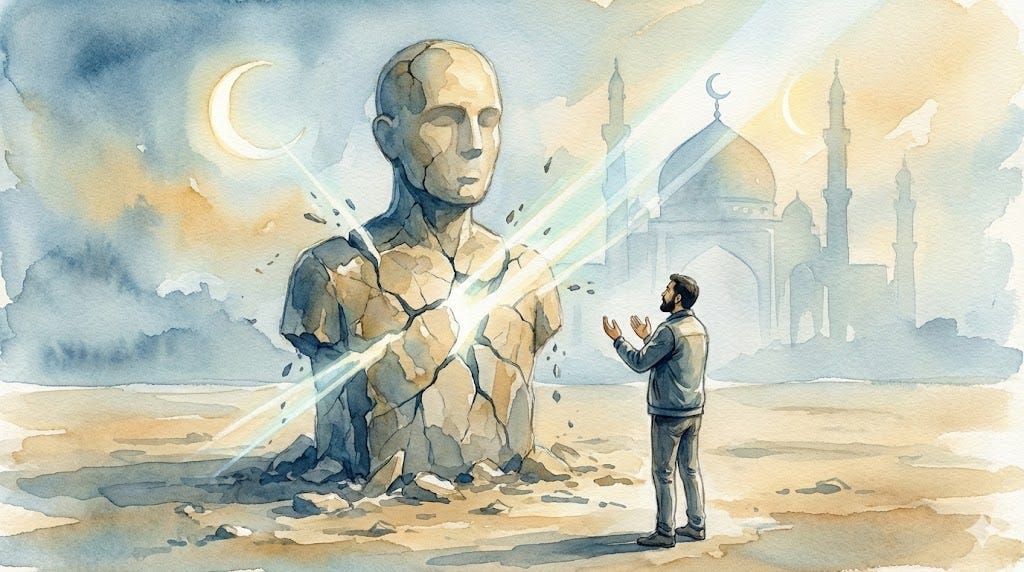
But Allamah Tabatabai goes deeper.
Because habits are only the outer ring of the cage.
At the centre is something worse.
After the Great Migration comes the Jihad al-Akbar — the Greater Struggle.
And what is the enemy in that struggle?
Not the world outside.
The enemy is the nafs.
The self.
چون سالک به توفیق حضرت ربّانی به هجرت موفّق گردید و از عادات و رسوم پای درکشید، در قدم بعدی میدان جهاد اکبر مینهد و آن عبارت است از محاربه با جنود شیطان.
“When the wayfarer, by the grace of the Lord, succeeds in the migration and withdraws his foot from habits and customs, in the next step he enters the battlefield of the Greater Jihad — and that consists of warfare against the armies of Satan.”
— Allamah Tabatabai, Lubb al-Lubab, Section: Jihad al-Akbar
And Allamah reaches for a hadith that should shake us to our foundations:
«أَعْدَى عَدُوِّكَ نَفْسُكَ الَّتِي بَيْنَ جَنْبَيْك»
“Your most dangerous enemy is your own self — the one between your two sides.“
And then, the line that gives this session its name:
«النَّفْسُ هِيَ الصَّنَمُ الأَكْبَر»
“The self is the Greatest Idol.“
The Sanam al-Akbar.
The Idol that stands behind all other idols.
The one that Abraham — the Friend of God, the breaker of idols, the man who walked into the fire — could not break on his own.
Abraham, who smashed every idol in the temple, turned to God and prayed:
«وَاجْنُبْنِي وَبَنِيَّ أَن نَّعْبُدَ الْأَصْنَامَ»
“And keep me and my sons far from worshipping idols.”
— Qur’an, Surah Ibrahim (the Chapter of Prophet Abraham) #14, Verse 35
If Abraham needed to ask for protection from idol-worship — Abraham, who is the very definition of the idol-breaker — then what does that tell you about the idol in question?
It tells you that this is not a statue of stone.
This is not something you can smash with a hammer and walk away from.
This is the idol you are.
The idol you have been building and polishing and worshipping every day of your life without knowing it.
The self.
The nafs.
The collection of habits, preferences, comforts, routines, and unquestioned assumptions that together form the structure you call “me.”
And the Prophet himself — the most perfected human being who ever lived — sought refuge from it:
«اللَّهُمَّ إِنِّي أَعُوذُ بِكَ مِنَ الشِّرْكِ الْخَفِيّ»
“O God, I seek refuge in You from the hidden shirk.“
— Prophet Muhammad; cited in Lubb al-Lubab (Allameh Tabatabai)
Allamah writes in Lub al-Lubab:
مخفی نماند که در این موقع سالک به واسطۀ آنچه از خود مشاهده میکند ممکن است او را اعجاب و انانیّت درگیرد و بزرگترین دشمن جانی و قتّال او که نفس خود اوست با او روبرو گردد، چنانکه در حدیث وارد است که: أَعْدَى عَدُوِّكَ نَفْسُكَ الَّتِي بَيْنَ جَنْبَيْك. و اگر در این حال عنایت ربّانیّه او را انقاذِ نکند به کفر اعظم مبتلا میشود. و به همین کفر اشاره فرمودهاند که: النَّفْسُ هِيَ الصَّنَمُ الأَكْبَر. این بتپرستی بود که حضرت ابراهیم علیه السلام از آن به خدا التجاء نموده و دوری آن را از خدا طلبید: وَاجْنُبْنِي وَبَنِيَّ أَن نَّعْبُدَ الْأَصْنَامَ. چه پرظاهر است که حضرت خلیل ـ الرحمن پرستش اصنام مصنوعه غیر متصوّر است. و همین شرک است که حضرت رسول اکرم صلّی الله علیه و آله به آن پناه به خدا برد و عرض کرد: اللَّهُمَّ إِنِّي أَعُوذُ بِكَ مِنَ الشِّرْكِ الْخَفِيِّ.
پس سالک باید به یاری و مدَد الهی به تصدیق نیستی خود اذعان به عجز و ذلّت و عبودیّت نموده و انانیّت را دوربرد تا کفر اعظم دامن او را درنگیرد و به اسلام اعظم موفّق آید.
“Let it not remain hidden that at this stage, by virtue of what the wayfarer observes in himself, he may be seized by self-admiration and ego-centricity, and his greatest mortal enemy — which is his own self — will confront him, as the hadith states: ‘Your most dangerous enemy is your own self, the one between your two sides.’ And if Divine care does not rescue him in this state, he will be afflicted with the greatest disbelief. To this very disbelief they have alluded when they said: ‘The self is the Greatest Idol.’ This was the idol-worship from which Ibrahim sought refuge in God and asked God to keep him far: ‘And keep me and my sons far from worshipping idols.’ For it is plainly evident that the worship of manufactured idols is inconceivable for the Friend of the All-Merciful. And this is the very shirk from which the Noble Messenger sought refuge in God and said: ‘O God, I seek refuge in You from the hidden shirk.’
Then the wayfarer must, with Divine aid and assistance, affirm his own nothingness, submit to his own incapacity and lowliness and servitude, and cast away ego-centricity — so that the greatest disbelief does not seize him, and he may attain the Greatest Submission (Islam al-A’zam).”
— Allamah Tabatabai, Lubb al-Lubab, Section: Islam al-A’zam
Hidden shirk.
Not the shirk of bowing to a statue.
The shirk of making yourself the unacknowledged centre of your own worship.
The shirk of performing every prayer, observing every fast, reciting every du’a — while the real object of your devotion, the thing you actually serve and protect and refuse to disturb, is your own comfort.
Your own routine.
Your own habits.
This is the Idol of Habit.
And the Month of Ramadhan was designed to smash it.
Breaking in the Horse
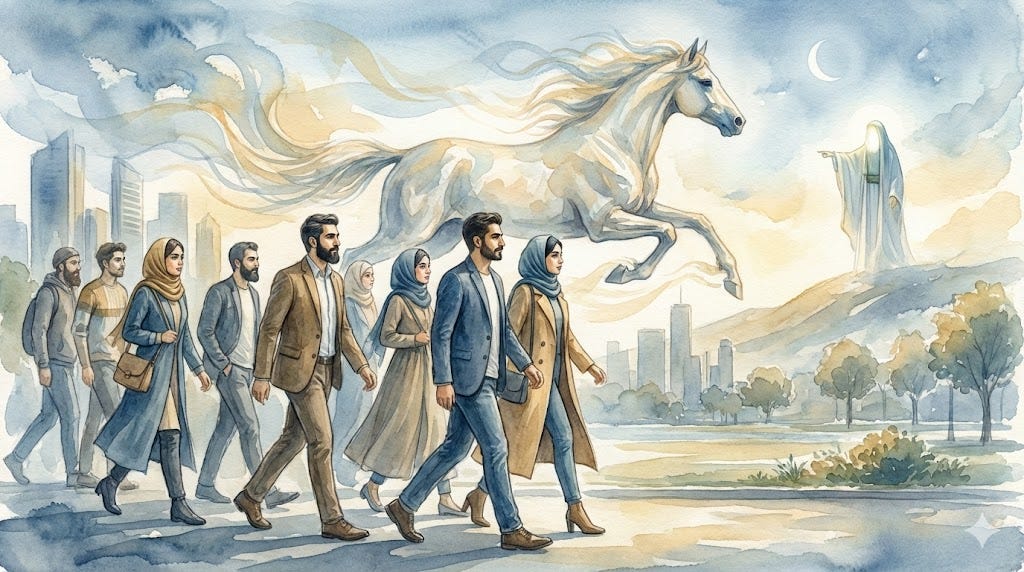
So how do you break an idol you cannot see?
An idol you are?
Here is where we turn to the Imam — the master of the path, the Commander of the Faithful, the man who trained his soul more rigorously than any human being in history after the Prophet.
In his famous Letter — documented in the Nahj al-Balagha — Imam Ali, peace be upon him, describes his own relationship with his soul.
And the word he uses is not “purification.”
It is not “punishment.”
It is not “suppression.”
It is Riyadah.
«وَ إِنَّمَا هِيَ نَفْسِي أُرَوِّضُهَا بِالتَّقْوَى لِتَأْتِيَ آمِنَةً يَوْمَ الْخَوْفِ الْأَكْبَرِ وَتَثْبُتَ عَلَى جَوَانِبِ الْمَزْلَقِ»
“It is only my self — I am training it through taqwa, so that it may come safely on the Day of the Great Fear, and hold firm on the edges of the slippery path.”
— Nahj al-Balagha, Letter 45
Arudduha.
I am training it.
The word comes from the same root as Riyadah — the training of a horse.
Not the killing of a horse.
Not the starving of a horse into submission.
The breaking in of a wild, magnificent, powerful animal so that it can be ridden.
Do you hear the difference?
The ego — the nafs — is not your enemy in the way that an invader is your enemy.
It is your enemy in the way that an unbroken stallion is your enemy: dangerous ,not because it is evil, but because it is powerful and undisciplined.
The nafs has appetites, drives, passions, energy.
It wants.
It wants intensely.
And that wanting is not a flaw — it is the engine of your entire spiritual life.
Without desire, you would never move toward God.
Without passion, you would never cry in du’a.
Without hunger, you would never seek the food that was on the table in Session 3.
The problem is not that the horse has power.
The problem is that the horse is running the show.
You do not wake up for suhoor because the horse does not want to be woken.
You do not guard your tongue because the horse wants to speak.
You do not lower your gaze because the horse wants to look.
You do not give charity because the horse wants to keep.
Every time you default to habit — every time you do what is comfortable instead of what is true — the horse is riding you.
And Imam Ali — the man who was content with two loaves of barley, who slept on the ground, who said
“Shall I be content to be called Commander of the Faithful and not share with people the hardships of the world?”
— that man did not hate his nafs.
He trained it.
Day by day.
Fast by fast.
Prayer by prayer.
Until the horse came safely on the Day of the Great Fear.
That is what the Month of Ramadhan is for.
Not to kill the nafs.
Not to starve it into silence.
But to take the reins.
To say:
I decide when we eat.
I decide when we speak.
I decide when we sleep and when we rise.
For thirty days, the horse learns that there is a rider.
And the rider learns that the horse, once trained, can carry him further and faster toward God than he ever imagined.
This is the sacrifice that liberates.
You are not giving up food.
You are giving up control of yourself to yourself — giving up the autopilot, the unconscious drift, the thousand small surrenders to habit that together constitute a life lived asleep.
And the moment you take the reins — the moment you choose suhoor over sleep, silence over gossip, generosity over hoarding, the hard prayer over the skipped prayer — in that moment, the idol cracks.
Not all at once.
Not dramatically.
One hairline fracture at a time.
But it cracks.
Movement 2: The Chain of Inheritance — What the Trained Soul Receives
What Fasting Actually Produces

We have named the idol.
We have seen the horse.
We have heard Imam Ali describe the training.
But now we must ask the question that every person in the middle of the Month of Ramadhan needs answered — the question that the exhausted, sleep-deprived, patience-shattered body is screaming:
What is this for?
What does the sacrifice actually produce?
Because if the answer is just “discipline” — if the entire purpose of the Month of Ramadhan is to prove to yourself that you can endure discomfort — then it is nothing more than a spiritual boot camp.
Impressive, perhaps.
Character-building, certainly.
But ultimately empty.
You could achieve the same thing with a cold shower and a strict diet.
The tradition says something far more radical.
In the Hadith al-Mi’raj — one of the most extraordinary narrations in the Islamic tradition, describing the Prophet’s ascent through the heavens and his intimate conversation with God — there is a passage about fasting that reads like a chain of inheritance.
Each link produces the next.
And the chain begins where we are right now: with the disruption of habit.
God says to the Prophet, peace be upon him and his family:
“O Ahmad, do you know what the inheritance of fasting is?”
He said:
“No.”
God said:
«مِيرَاثُ الصَّوْمِ قِلَّةُ الْأَكْلِ وَقِلَّةُ الْكَلَامِ»
“The inheritance of fasting is less eating and less speaking.“
And then, about the inheritance of silence:
«إِنَّهَا تُوَرِّثُ الْحِكْمَةَ؛ وَتُوَرِّثُ الْمَعْرِفَةَ وَتُوَرِّثُ الْمَعْرِفَةُ الْيَقِينَ»
“It bequeaths Wisdom; and Wisdom bequeaths Ma’rifah, and Ma’rifah bequeaths Yaqin.“
— Hadith al-Mi’raj; cited in Al-Muraqabat (Mirza Jawad Maliki Tabrizi), Chapter on the Month of Ramadhan
Read that chain slowly.
Let each link settle.
Fasting produces less eating and less speaking.
That is the first inheritance.
Not a spiritual vision.
Not an ecstatic experience.
Something far more mundane and far more powerful: the simple, physical fact that your mouth is doing less.
Less consuming.
Less producing.
Less taking in and less putting out.
And from that reduction — from that silence of the body and the tongue — comes Hikmah.
Wisdom.
Not information.
Not knowledge in the academic sense.
Wisdom — the capacity to see things as they really are, stripped of the distortions that habit and appetite impose on perception.
And from Wisdom comes Ma’rifah — the direct, experiential knowledge of God that we talked about in Session 3.
The food on the table.
The feast of the soul.
And from Ma’rifah comes the final link: Yaqin.
Certainty.
The station at which the servant, the hadith tells us,
“does not care whether he wakes in ease or hardship.”
Do you see the architecture?
Do you see what God has designed?
The disruption of habit — the thing that feels like deprivation, the thing that makes you ask
“why am I doing this to myself?”
— is not the punishment.
It is the first link in a chain that ends in certainty about God.
Every missed meal is a seed of silence.
Every silence is a seed of wisdom.
Every wisdom is a seed of knowledge.
Every knowledge is a seed of certainty.
And certainty — Yaqin — is the station at which the idol of habit has no power over you at all, because you have seen something so real, so undeniable, so overwhelmingly present, that the petty comforts and social performances that used to run your life have become as interesting as children’s toys to a grown adult.
That is the inheritance.
That is what the sacrifice produces.
Not just discipline.
Not just willpower.
A chain of transformation that begins with a closed mouth and ends with an open heart.
The Prayer That Breaks You Open
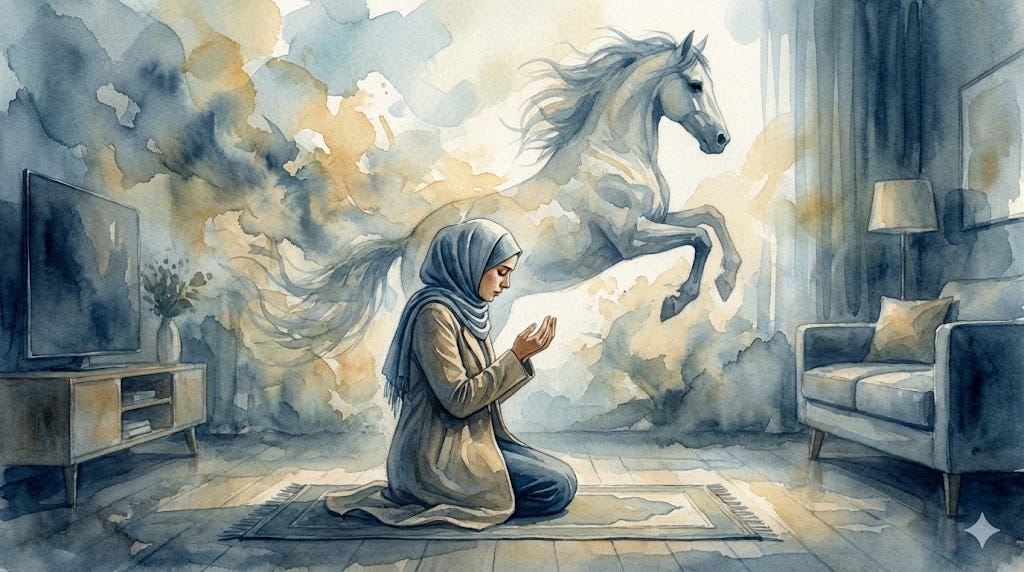
But the chain does not happen automatically.
There is a condition.
And the condition is the hardest thing any human being can do.
You have to mean it.
You have to actually want to be lowered.
This is where most of us stall.
We want the Ma’rifah without the reduction.
We want the certainty without the silence.
We want the fruits of spiritual training without the agony of the training itself — and above all, without the loss of status, the loss of image, the loss of the carefully constructed self that we have spent our entire lives building and protecting.
And so the tradition gives us a prayer.
Not a prayer for elevation.
Not a prayer for success or strength or victory.
A prayer for abasement.
Imam Zayn al-Abedeen, peace be upon him — the son of Imam Husayn, the survivor of Karbala, the man who poured his entire broken heart into the language of supplication — in his Du’a Makarim al-Akhlaq, the Supplication for Noble Character, says:
«اللَّهُمَّ صَلِّ عَلَى مُحَمَّدٍ وَآلِهِ، وَلَا تَرْفَعْنِي فِي النَّاسِ دَرَجَةً إِلَّا حَطَطْتَنِي عِنْدَ نَفْسِي مِثْلَهَا، وَلَا تُحْدِثْ لِي عِزّاً ظَاهِراً إِلَّا أَحْدَثْتَ لِي ذِلَّةً بَاطِنَةً عِنْدَ نَفْسِي بِقَدَرِهَا»
“O God, bless Muhammad and his Household, raise me not a single degree before the people without lowering me its like in myself, and bring about no outward exaltation for me without an inward abasement in myself to the same measure.“
— Imam Ali ibn al-Husayn Zayn al-Abedeen, Sahifa Al-Sajjadiyyah, Supplication 20 (Du’a Makarim al-Akhlaq), Verse 5
Read that prayer and ask yourself:
do I actually want this?
For every degree God raises you before people — every compliment, every honour, every recognition — lower me the same amount in my own eyes.
For every outward dignity — every position, every title, every mark of respect — create in me an inward abasement to the same measure.
This is not false humility.
This is not the performance of modesty that we see in religious circles — the pious lowering of the eyes that is really just another form of display.
This is a structural request.
A mathematical equation.
Imam Sajjad is asking God to build into his soul a mechanism that automatically counterbalances every outward rise with an inward descent.
Why?
Because the idol of the nafs feeds on exactly this: on recognition, on status, on the feeling that I am someone.
And the only way to starve that idol is to ask God — sincerely, with real desire, not as a formula but as a plea — to make you smaller in your own eyes every time the world tries to make you bigger.
This is the contemplative exercise of this session.
Not a breathing technique.
Not a mindfulness practice.
A prayer.
A request to be broken.
A request to be made small.
And if you cannot say it yet — if something in you recoils from this prayer, if the horse rears up and refuses — then at least be honest about that.
At least name the refusal.
Because the refusal itself is the idol, showing its face.
The Stance of the Abject Servant
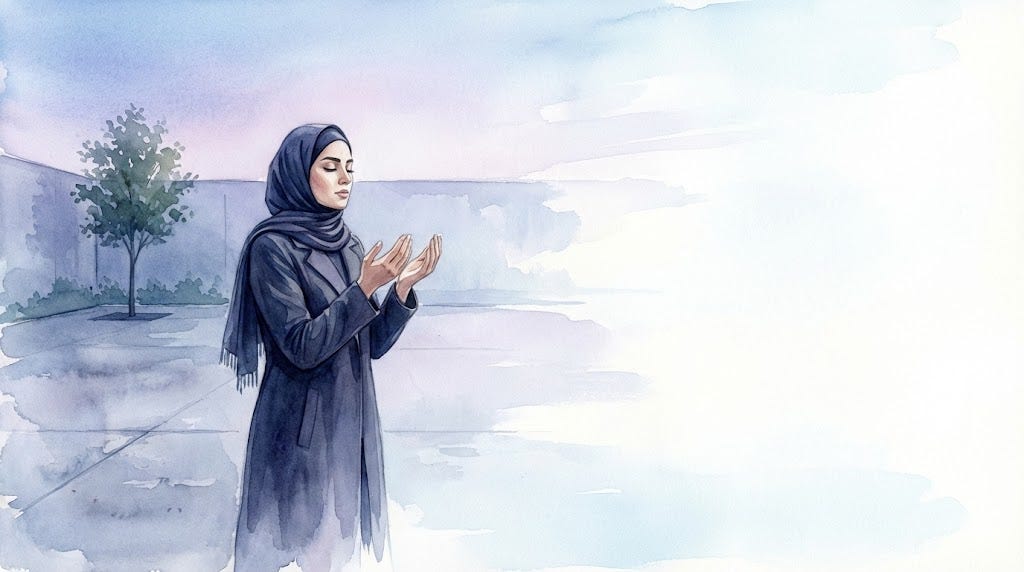
And what does it look like when someone actually means this prayer?
What does a human being look like when the inward abasement is real?
The same Imam — Imam Zayn al-Abedeen, peace be upon him — tells us. In his Risalat al-Huquq — the Treatise on Rights — he describes the rights that prayer has over the one who prays.
And his description is not comfortable:
«وَأَمَّا حُقُوقُ الصَّلَاةِ فَأَنْ تَعْلَمَ أَنَّهُ وِفَادَةٌ إِلَى اللَّهِ وَأَنَّكَ فِيهَا قَائِمٌ بَيْنَ يَدَيِ اللَّهِ فَإِذَا عَلِمْتَ ذَلِكَ كُنْتَ خَلِيقاً أَنْ تَقُومَ فِيهَا مَقَامَ الْعَبْدِ الذَّلِيلِ الرَّاغِبِ الرَّاهِبِ الْخَائِفِ الرَّاجِي الْمِسْكِينِ الْمُتَضَرِّعِ الْمُعَظِّمِ»
“As for the rights of prayer: know that it is a delegation to God, and that in it you are standing before God. And if you know that, then it befits you to stand in it as the stance of the abject servant — longing, dreading, fearing, hoping, wretched, beseeching, glorifying.“
— Imam Ali ibn al-Husayn Zayn al-Abedeen, Risalat al-Huquq; cited in Adab as-Salat (Imam Khomeini), from al-Kafi (al-Kulayni)
Seven words.
Seven descriptions of how the trained soul stands before God.
And notice: they are not comfortable words.
They are not the words of someone who has “arrived.”
They are the words of someone who is still arriving — still longing, still fearing, still hoping, still wretched.
Al-’abd al-dhalil.
The abject servant.
Not the proud servant.
Not the accomplished servant.
Not the servant who has earned his place through years of devotion.
The abject one.
The one who has nothing to show, nothing to claim, nothing to stand on.
This is what the training produces.
Not confidence.
Not spiritual accomplishment.
Not the feeling of being “close to God” in a way that makes you feel good about yourself.
The training produces abjection — the willingness to stand before God with nothing, as nothing, and to find in that nothingness not despair but relief.
Because when you are nothing, the idol has nothing to stand on.
When you are nothing, the horse has no rider to throw.
When you are nothing, there is nothing left between you and God — no image to protect, no reputation to maintain, no self to worship.
And in that emptiness — in that perfect, terrifying, liberating emptiness — the soul finds what it was looking for all along.
Complete Detachment
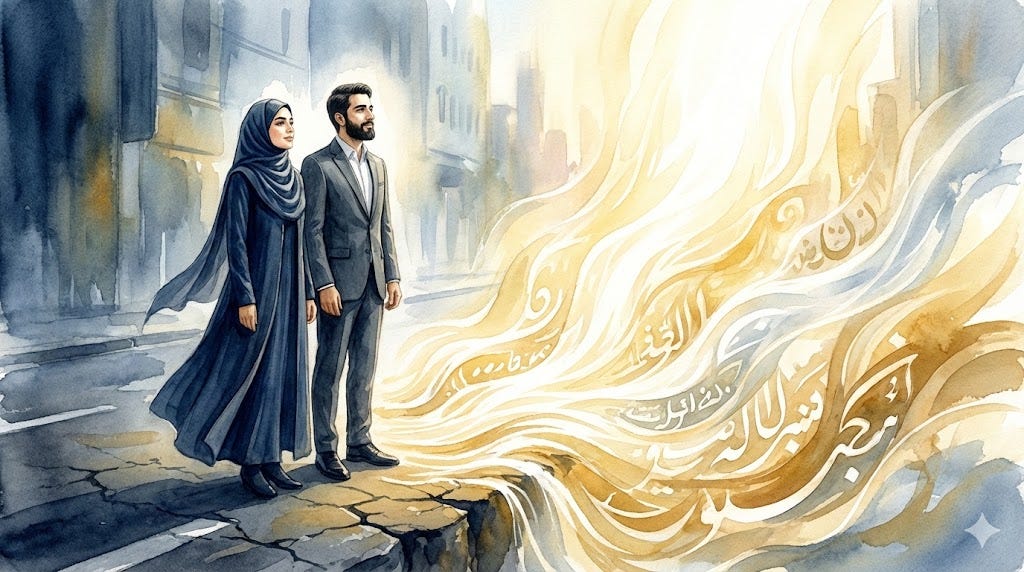
And this is where the Munajat of Sha’ban takes us — to the summit of everything we have been saying tonight.
To the prayer that the Imams of the Ahl al-Bayt, peace be upon them, all recited in the month before Ramadhan.
The prayer that prepared them for the very fast we are living through right now.
In its most extraordinary passage, the supplication says:
«إِلَهِي هَبْ لِي كَمَالَ الْانْقِطَاعِ إِلَيْكَ وَأَنِرْ أَبْصَارَ قُلُوبِنَا بِضِيَاءِ نَظَرِهَا إِلَيْكَ حَتَّى تَخْرِقَ أَبْصَارُ الْقُلُوبِ حُجُبَ النُّورِ فَتَصِلَ إِلَى مَعْدِنِ الْعَظَمَةِ وَتَصِيرَ أَرْوَاحُنَا مُعَلَّقَةً بِعِزِّ قُدْسِكَ»
“O God, grant me complete detachment from all creation so that I may fully arrive at You, and illuminate the eyes of our hearts with the light of gazing toward You, so that the eyes of the heart may pierce the veils of light and reach the wellspring of Grandeur, and our souls may cling to the splendour of Your Holiness.”
— Munajat Sha’baniyyah, Section 6; Mafatih al-Jinan
Kamal al-Inqita’.
Complete detachment.
Complete severance.
Not partial.
Not
“I’ll keep a little bit of the old life.”
Not
“I’ll give up the obvious sins but keep the comfortable habits.”
Complete.
And notice the structure of the prayer.
It does not say:
“Grant me detachment and grant me arrival.”
It says:
grant me detachment so that I may arrive.
The detachment is not a separate project.
It is not a prerequisite that you finish before moving on to the real work.
The detachment is the arrival.
The cutting away is the reaching.
The moment the last thread connecting you to anything other than God is severed — in that moment, and not one moment before — the eyes of the heart pierce the veils.
And what do they find behind the veils?
Ma’dan al-’Azamah.
The Wellspring of Grandeur.
Not a reward.
Not a compensation for what you gave up.
The Wellspring itself.
The source.
The thing that every habit, every comfort, every idol was a shabby, counterfeit substitute for.
This is the end of the chain.
This is what the Hadith al-Mi’raj was pointing toward.
Fasting leads to silence.
Silence leads to wisdom.
Wisdom leads to Ma’rifah.
Ma’rifah leads to Yaqin.
And Yaqin — certainty — is another name for Kamal al-Inqita’: the state in which you are so completely, so totally, so irrevocably cut off from everything that is not God that you arrive at everything that is God.
The idol is smashed.
The horse is trained.
The servant is abject.
And the heart — finally, finally — sees.
Movement 3: The Outward Turn — What the Liberated Soul Does in the World
The Sacrifice That Cannot Stay Inside
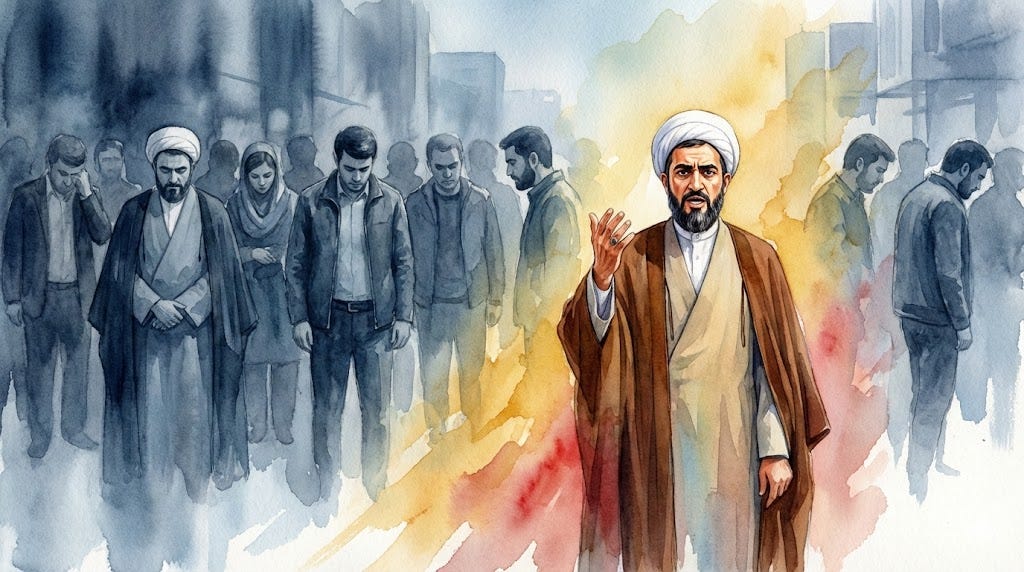
We have done the inner work tonight.
We have named the idol — the self, the nafs, the collection of habits and comforts and unquestioned assumptions that hold us captive.
We have heard Imam Ali describe the training — not killing the horse but breaking it in, day by day, fast by fast, until the rider takes the reins.
We have traced the chain of inheritance — fasting to silence, silence to wisdom, wisdom to Ma’rifah, Ma’rifah to Yaqin.
We have stood with Imam Sajjad in the posture of the abject servant and cried with the Munajat of Sha’ban for complete detachment.
And now we must ask the question that the tradition always asks at this point in the journey — the question that separates genuine spiritual transformation from spiritual tourism:
What changes in the world because you changed?
Because here is the test — and the masters of the path are unforgiving about this.
If you break the idol of habit inside yourself and the world outside remains exactly as it was — if your tongue is gentler but you say nothing when injustice speaks, if your ego is smaller but you do nothing when the powerful crush the weak, if your heart is detached from comfort but you remain comfortably detached from the suffering of others — then the sacrifice was incomplete.
The horse was trained, but it was never ridden anywhere.
The idol of habit does not only live inside you.
It lives in the structures around you.
It lives in the communities that confuse tradition with truth and custom with religion.
It lives in the silence of scholars who know the right thing to say but fear the reaction.
It lives in the complicity of believers who fast from food all day and feast on the misery of others all year.
Remember the Four Pillars of Kufr from earlier tonight?
Desire, fear of people, displeasure, and anger.
Allamah Tabatabai told us that rahbah — fear of people — is a structural pillar of disbelief.
He was not only talking about your personal social anxieties.
He was talking about the collective silence that allows oppression to continue unchallenged — the silence of entire communities, entire institutions, entire religious establishments that know what is happening in Gaza, in Sudan, in every forgotten corner of the earth where the powerful starve the weak, and say nothing because they are afraid of what it would cost them to speak.
That silence is the idol of habit at the social level.
And the person who has genuinely broken the inner idol — the person who has been trained by the Month of Ramadhan, who has tasted the chain of inheritance, who has stood before God as the abject servant and meant it — that person cannot remain silent.
Not because they are brave.
But because the horse has been trained, and the rider now chooses its direction.
The Imam’s Standard
And this is where we return to Imam Ali — not the mystic tonight, not the trainer of the soul, but the ruler.
The leader.
The man who held power and used it as a form of prayer.
In the same letter from which we drew the Arudduha — Letter 45 of the Nahj al-Balagha — the Imam does not only talk about training his nafs.
He explains why he trains it.
He gives the social consequence of the inner work:
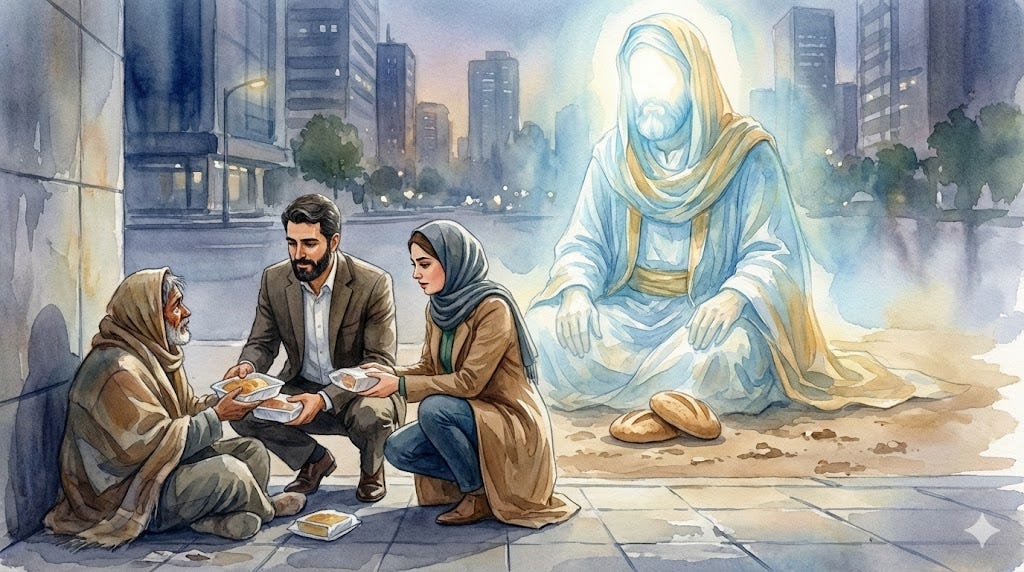
«أَأَقْنَعُ مِنْ نَفْسِي بِأَنْ يُقَالَ لِي أَمِيرُ الْمُؤْمِنِينَ وَلَا أُشَارِكُهُمْ فِي مَكَارِهِ الدَّهْرِ»
“Shall I be content to be called Commander of the Faithful and not share with people the hardships of the world?“
— Nahj al-Balagha, Letter 45
This is the same letter.
The same breath.
The man who trains his soul through taqwa is the same man who refuses to eat well while his people go hungry.
The inner work and the outer work are not two separate projects.
They are one movement.
The horse is trained so that it can carry its rider into the world.
“Shall I be content to be called Commander of the Faithful”
— shall I accept the title, the position, the spiritual status —
“and not share with people the hardships of the world?”
Shall I be religious and not be just?
Shall I fast and not feed?
Shall I pray and not protest?
Shall I break the idol inside and leave the idols outside standing?
The answer, for Imam Ali, is visceral.
He describes his own eating — two loaves of barley.
His own sleeping — on the ground.
Not because he enjoys deprivation.
But because somewhere, someone under his care is hungry and sleeping on the ground, and he refuses to live above the lowest of those he serves.
This is the Riyadah made political.
This is the trained horse, ridden into the field of justice.
The Ramadhan Test
So here is the test.
Not for Imam Ali — he passed it fourteen centuries ago.
For us.
For everyone listening tonight, sitting with their Quran and their prayer beads and their carefully maintained spiritual routine.
What idol of habit — not just your personal idol, but the collective idol, the social idol — are you willing to break?
The habit of comfort while others starve.
The habit of silence while others are besieged.
The habit of religious performance without political consequence.
The habit of fasting for thirty days and then returning to the exact same complicity on day thirty-one.
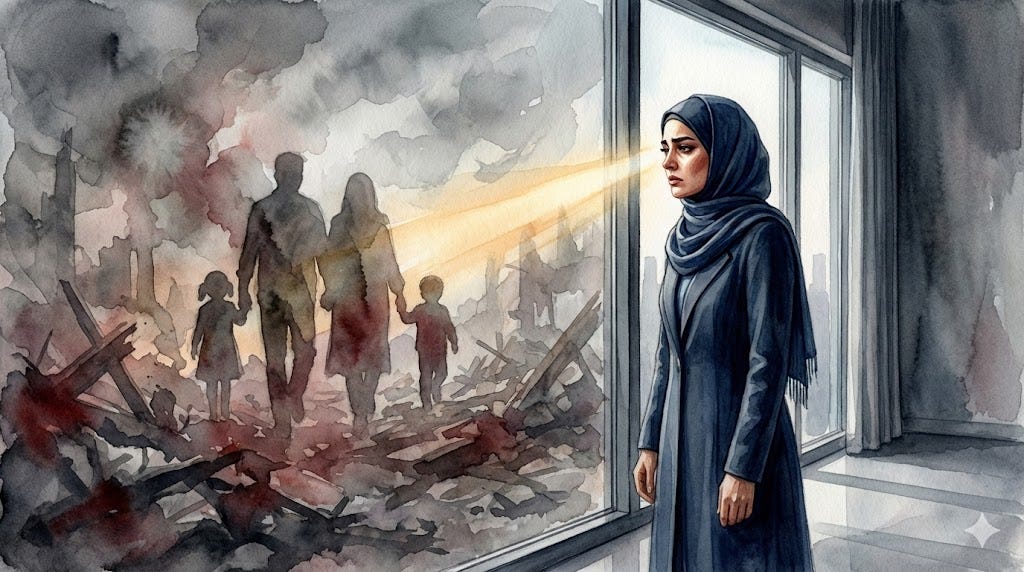
In Gaza tonight, there are people who did not choose the sacrifice we chose.
Their hunger is not a spiritual exercise.
Their children’s emptiness is not a station on a mystical path.
They are being starved — deliberately, systematically, in front of the entire world — and the world watches, and the ummah watches, and the communities watch, and the scholars watch, and we watch.
And the horse stands in the stable, trained and powerful and going nowhere.
If the chain of inheritance is real — if fasting truly leads to silence, and silence to wisdom, and wisdom to Ma’rifah, and Ma’rifah to Yaqin — then Yaqin must produce something in the world.
Certainty about God must produce intolerance of injustice.
The person who has met God cannot look at the starvation of children and remain composed.
The person who has stood as the abject servant before the Creator cannot stand as a passive observer before the destruction of creation.
This is not a political addendum to a spiritual lecture.
This is the spiritual lecture.
The sacrifice that liberates is not complete until it liberates not only you but your willingness to act.
Du’a Makarim al-Akhlaq — the same prayer we read tonight — does not only ask for personal abasement.
In its full text, Imam Sajjad asks God to make him a force in the world: to provide for the needy, to honour the oppressed, to bring justice where there is none.
The inward lowering and the outward rising are two sides of the same coin.
God lowers you inside so that He can raise others through you outside.
That is the sacrifice that liberates.
Not just you.
Everyone your liberation touches.
Bridge to Session 5: The Meeting
We have now moved through four stations.
We left.
We cleaned.
We ate.
We sacrificed.
And if the sacrifice has been real — even partially, even imperfectly, even in one small, unglamorous act of choosing the hard thing over the easy thing — then something has happened that you may not have noticed yet.
The distance has shortened.
Between you and God, something has closed.
Not because you earned it — not because the fasting impressed Him or the prayers accumulated enough credit.
But because you have been emptied.
Layer by layer, session by session, this month has been stripping things away — the ego’s house, the mirror’s rust, the hunger for anything less than God, and now the idol of habit itself.
And what remains, after all that stripping, is a human being standing with almost nothing between them and their Creator.
Almost nothing.
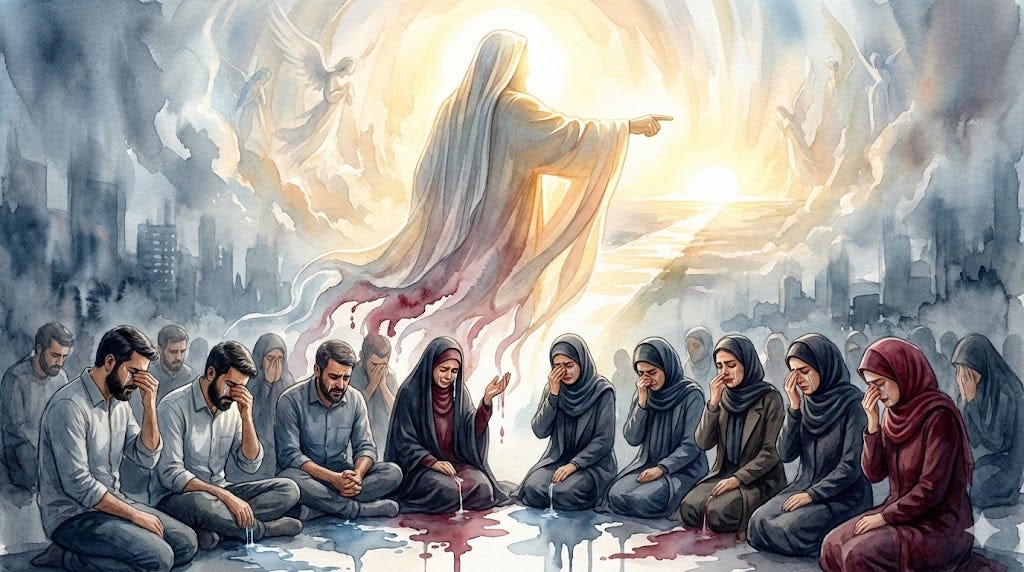
And the tradition tells us there is a night — one night, somewhere in these last ten days — when even that “almost” disappears.
A night when the veil between heaven and earth becomes so thin that the angels descend through it.
A night when the decree for your entire coming year is written and placed in the hands of a living Guide.
A night that the Quran says is better than a thousand months — and the scholars of the path say this is not poetry.
It is mathematics.
One night in which a lifetime of arrival is possible.
That night is coming.
Perhaps it has already come.
Perhaps you are sitting in it right now without knowing it.
And the question that every session has been building toward — the question that the migration made possible, the cleansing made necessary, the feast awakened, and the sacrifice cleared the way for — is the simplest and most terrifying question a human being can ask:
Is it possible to actually meet God?
Not read about Him.
Not believe in Him from a safe theological distance.
Not feel a warm glow in prayer that might be devotion or might be indigestion.
Meet Him.
Stand in His presence with nothing between you and Him — no idol, no habit, no image, no self — and know, with the certainty that the Hadith al-Mi’raj chain promised, that you have arrived.
The masters of the path say yes.
They say the entire architecture of the Month of Ramadhan — every hungry afternoon, every 3am alarm, every broken habit, every cracked idol — was designed to bring you to that door.
And they say there is a word for what happens when you walk through it.
They call it Liqa’ Allah.
The Meeting with God.
But before we reach that night, there is something else we must face.
And I cannot close tonight without naming it.
In a matter of days — perhaps one, perhaps two, perhaps three — we will mark the night of the 19th of Ramadhan.
The night when the sword of Ibn Muljim al-Muradi fell on the head of the man who has been our teacher all evening.
The man who trained his nafs like a wild horse.
The man who refused to eat while his people hungered.
The man who wrote the letter we have been reading from tonight.
The Commander of the Faithful, the master of the path, the rider who took the reins of his soul and rode it all the way to God — struck down in the mihrab.
In prayer. In the very act of worship he spent his entire life perfecting.
The horse, finally, carried him home.
And then, two nights later — the 21st — he will leave us.
The man who said Arudduha — “I am training it” — will complete the training.
The man who asked
“Shall I be content to be called Commander of the Faithful and not share with people the hardships of the world?”
will will pay the ultimate price of that sharing — a sword in the mihrab, blood on the prayer mat.
And then — and this is the part that should make your heart stop — he will meet his Lord.
Not in grief.
Not in defeat.
In joy.
He will arrive at the Meeting we are still journeying toward, and he will arrive smiling.
So when you sit on those nights — the 19th, the 21st — and you weep for Imam Ali, know what you are weeping for.
You are not only weeping for a historical tragedy.
You are weeping for the man who showed you what a trained soul looks like, what a broken idol looks like, what a life lived in complete sacrifice looks like — and who sealed that teaching with his own blood, in his own prayer, in his own Ramadhan.
He arrived.
He met God.
And he left us a path.
Next week — the final session.
We follow that path to its end.
The Night of Power.
The Meeting.
And the question of what remains when the month is gone and the Beloved departs.
Next week: arrival.
A Ballad for the Broken Idol
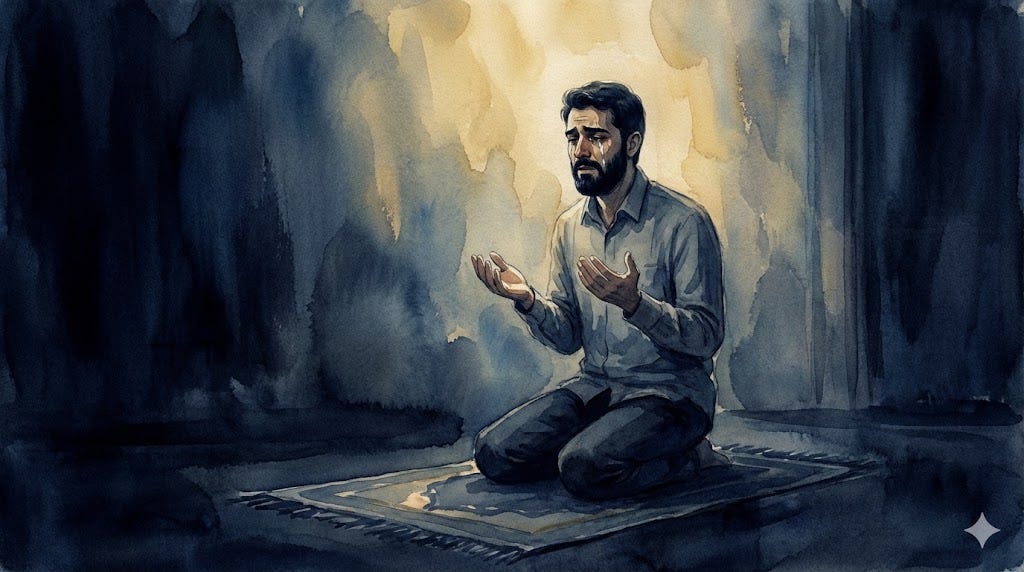
In the voice of the one who has seen the idol — and recognised it as their own face.
O God.
O Breaker of every idol that was ever built.
O You who sent Abraham to smash the statues and then showed him the one statue Abraham could not smash alone.
This is the du’a of the one who has seen the Greatest Idol.
Who looked for it in the temple and found it in the mirror.
And it is the tradition of these very nights — the nights of the Month of Ramadhan we are living through right now — that teaches us how to stand before God with this knowledge.
In the du’a taught for the nights of this month — the prayer that begins Ya man yamliku al-tadbir (O He who holds the Governance of existence) — the supplicant says:
«فَإِنِّي لَمْ آتِكَ ثِقَةً بِعَمَلٍ صَالِحٍ عَمِلْتُهُ، وَلَا لِوِفَادَةِ مَخْلُوقٍ رَجَوْتُهُ، أَتَيْتُكَ مُقِرّاً عَلَى نَفْسِي بِالْإِسَاءَةِ وَالظُّلْمِ»
“I have not come to Your presence relying on a righteous deed that I have performed, nor on the support of any creature I have hoped for. I have come confessing against my own soul my wrongdoing and my self-oppression.“
— Du’a for the Nights of Ramadhan; Misbah al-Mutahajjid (Shaykh al-Tusi); Iqbal al-A’mal (Sayyid Ibn Tawus)
Do you hear that?
This is a prayer designed for now — for these very nights, for this very month.
And what does it teach the fasting person to say?
I have not come relying on a righteous deed.
Not one.
After weeks of prayer.
After weeks of fasting, of discipline, of waking at 3am and pushing through the long afternoons.
You arrive at the door with empty hands and say:
I have nothing to show You.
I come confessing against myself.
This is the ‘abd al-dhalil — the abject servant we met tonight.
This is what it looks like when the idol is truly broken: you do not arrive before God with a ledger of accomplishments.
You arrive with an honest confession.
And that confession is the offering.
And then, in the same tradition of these nights — in the pre-dawn prayers of this very month — the supplicant asks for the thing that the whole chain of inheritance has been leading toward:
«اللّهُمَّ صَلِّ عَلى مُحَمَّدٍ وَآلِهِ، وَهَبْ لي فِي الغَداةِ رِضاكَ، وَأَسْكِنْ قَلْبي خَوْفَكَ، وَاقْطَعْهُ عَمَّنْ سِواكَ، حَتّى لا أَرْجُوَ وَلا أَخافَ إِلاّ إِيّاكَ، اللّهُمَّ صَلِّ عَلى مُحَمَّدٍ وَآلِهِ، وَهَبْ لي ثَباتَ اليَقينِ، وَمَحْضَ الإِخْلاصِ، وَشَرَفَ التَّوْحيدِ، وَدَوامَ الاِسْتِقامَةِ، وَمَعْدِنَ الصَّبْرِ، وَالرِّضا بِالقَضاءِ وَالقَدَرِ»
“O God, bless Muhammad and his Family, and in this morning bestow upon me Your pleasure, and place the fear of You in my heart, and detach it from all other than You, so that I place no hope in anyone but You and fear none but You. O God, bless Muhammad and his Family, and grant me firm certainty — Thabat al-Yaqin — and sincere devotion free of any taint, and the honour of Tawhid, and constancy in steadfastness, and the wellspring of patience, and contentment with Your decree.“
— Du’a for the Sahar of the Nights of Ramadhan; Misbah al-Mutahajjid (Shaykh al-Tusi); Bihar al-Anwar (Allamah Majlisi, Vol. 89); Mafatih al-Jinan
Iqta’hu ‘amman siwak — وَاقْطَعْهُ عَمَّنْ سِواكَ.
Cut it off from everything that is not You.
This is Kamal al-Inqita’ — the complete detachment we heard in the Munajat of Sha’ban.
And Thabat al-Yaqin — firm certainty — is the final link of the chain: the station where the servant does not care whether he wakes in ease or hardship, because he has seen something that makes everything else irrelevant.
And notice what sits alongside it: mahd al-ikhlas — sincerity without any taint.
Sharaf al-tawhid — the honour of knowing God is One.
Dawam al-istiqamah — the constancy to stay on the path after the month ends.
This one prayer, recited in the pre-dawn hours of Ramadhan, asks for the entire architecture of the spiritual life we have been building all month.
And there is one more teaching — from Imam Ali himself this time — one that we will need for next week, but that he gives us now, as a provision for the road.
Because the man who trained his soul did not train it for the training’s sake.
He knew why he worshipped.
And he left us the clearest statement of that why ever spoken:
«إِنَّ قَوْماً عَبَدُوا اللَّهَ رَغْبَةً فَتِلْكَ عِبَادَةُ التُّجَّارِ. وَإِنَّ قَوْماً عَبَدُوا اللَّهَ رَهْبَةً فَتِلْكَ عِبَادَةُ الْعَبِيدِ. وَإِنَّ قَوْماً عَبَدُوا اللَّهَ شُكْراً فَتِلْكَ عِبَادَةُ الْأَحْرَارِ.»
“Some worship God out of desire — that is the worship of merchants. Some worship God out of fear — that is the worship of slaves. And some worship God out of gratitude — that is the worship of the Free.“
— Nahj al-Balagha, Hikmah 237
The worship of the Free. ‘Ibadat al-Ahrar.
Not for paradise.
Not from fear of hell.
But because they have seen Him — or tasted a single drop of what it means to see Him — and they cannot stop.
The idol is broken.
The horse is trained.
And what remains is not duty. It is love.
Hold that word. We will need it next week.
And so — having heard how the master of the path teaches us to stand before God, having learned the vocabulary of sacred rupture from the man who embodied it more completely than anyone except the Prophet — we lift our hands and say:
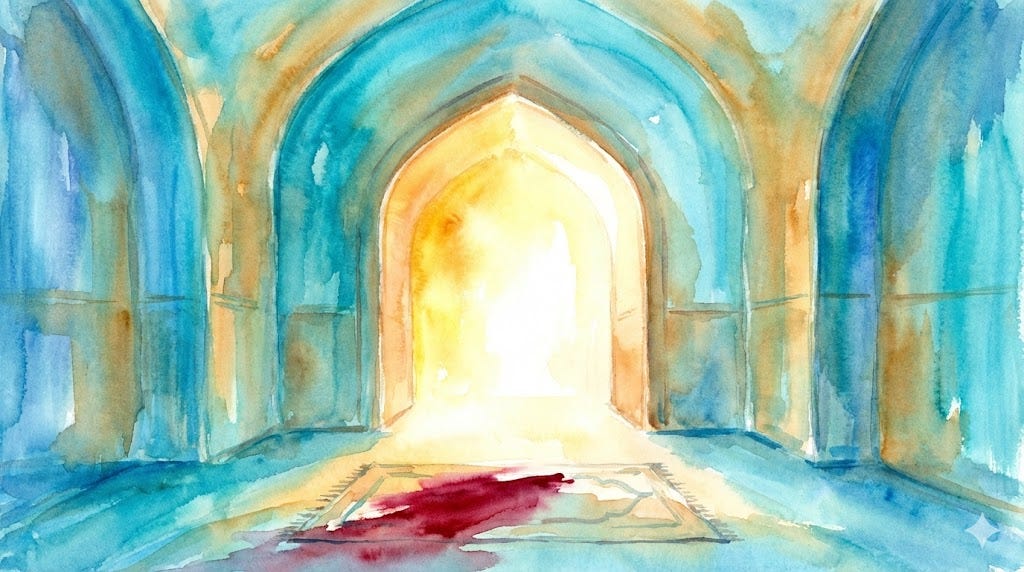
O God —
We came into this session tired.
Tired of fasting.
Tired of the alarm.
Tired of the discipline and the hunger and the long stretch before maghrib when the body screams and the soul goes quiet and the old voice says:
Go back to what you were.
It was easier.
It was comfortable.
You knew who you were.
And tonight, You showed us what that voice is.
It is the idol.
The Greatest Idol.
Not a statue of stone in some ancient temple but the living, breathing structure of habit and comfort and self-worship that we have been building and polishing and protecting our entire lives.
The thing we call “me.”
The thing that sits at the centre of every prayer, every fast, every act of worship and says:
This is mine.
I earned this.
I am someone.
O God — we saw it tonight.
We saw the Sanam al-Akbar.And we are terrified.
Because the idol is not outside us.
We cannot walk away from it.
We cannot smash it with a hammer and dust off our hands.
It is us.
And we do not know how to break something we are.
But Ali knew.
Ali, who trained his nafs like a wild horse — not killing it, not starving it, but taking the reins, day by day, fast by fast, prayer by prayer, until the stallion came safely on the Day of the Great Fear.
Ali, who ate two loaves of barley and slept on the ground — not because he loved deprivation but because somewhere, someone under his care was hungry and he refused to eat above the lowest of those he served.
Ali, who said:
Shall I be content to be called Commander of the Faithful and not share with people the hardships of the world?
That Ali — Your Ali, O God — is about to be struck down.
In a matter of days, the sword will fall.
Not on a battlefield.
Not in the chaos of war.
In the mihrab. In the place of prayer.
In the very posture of worship that he spent his entire life perfecting.
The man who trained the horse will be killed while riding it toward You.
O God — we cannot hold this.
It is too much.
The teacher who taught us to break the idol will have his skull broken in sajdah.
The man who said Arudduha — I am training it — will complete the training with his own blood on the floor of the masjid.And he will smile.
Because the horse carried him home.
Because the chain reached its end.
Because the man who embodied Thabat al-Yaqin — firm certainty — arrived at certainty not through theology or philosophy or argument but through a sword on the 19th night of Your month, and he did not flinch.
He said:
«فُزْتُ وَرَبِّ الْكَعْبَةِ»
“By the Lord of the Ka’bah — I have succeeded!“
— Imam Ali ibn Abi Talib; Bihar al-Anwar (Allamah Majlisi, 42/249); Manaqib (Ibn Shahr Ashub)
Fuztu.
I have succeeded.
I have won.
Not “I have been defeated.”
Not “I have been taken.”I have won.
The man whose skull has just been split open in his own mihrab looks up from the blood and declares victory.
Because for him, this is not death.
This is arrival.
This is the Meeting.
This is what the whole training was for — the horse has carried him all the way home to God.
And then — the tradition tells us — the heavens answered.
Gabriel himself cried out between heaven and earth:
«تَهَدَّمَتْ وَاللَّهِ أَرْكَانُ الْهُدَى، وَانْفَصَمَتْ الْعُرْوَةُ الْوُثْقَى، قُتِلَ ابْنُ عَمِّ الْمُصْطَفَى، قُتِلَ الْوَصِيُّ الْمُجْتَبَى، قُتِلَ عَلِيٌّ الْمُرْتَضَى، قَتَلَهُ أَشْقَى الْأَشْقِيَاءِ»
“By God, the pillars of guidance have crumbled. The firmest handle has been severed. The cousin of al-Mustafa has been killed. The chosen successor has been killed. Ali al-Murtadha has been killed — killed by the most wretched of the wretched.“
— Archangel Gabriel; Bihar al-Anwar (Allamah Majlisi)
Ali says:
I have won.
The heavens say:
The pillars have crumbled.
He sees arrival.
They see devastation.
And both are true.
Both are true at the same time.
Because the man who wins is the man the world cannot afford to lose — and the world has been trying to recover from that loss ever since.O God — make us worthy of that teaching.
Make us worthy of that blood.
We are not Ali.
We cannot pretend to be.
But we heard him tonight — heard him say break the idol, heard him say train the horse, heard him say do not eat while your people starve — and something in us cracked.
A hairline fracture.
The smallest beginning of a rupture in the idol we have been worshipping without knowing it.Do not let that fracture heal over.
O God —
By Muhammad — the one who sought refuge in You from the hidden shirk, the one whose surrender was so complete that he became the mirror in which You showed Yourself to creation.
By Fatimah — the woman who inherited Ali’s hunger and Ali’s justice and Ali’s refusal to be comfortable while the world suffered.
Who ground the wheat until her hands bled and never once asked:
Why am I doing this to myself?
Because she knew.
She always knew.
By Ali — Your lion, Your proof, Your door.
The one who taught us everything we heard tonight and who will, in a matter of days, seal that teaching in his own blood.
We ask You by the blood that will fall on the mihrab: do not let his teaching be wasted on us.
Do not let us hear Arudduha and go back to letting the horse run wild.
Do not let us hear
Shall I be content? and be content.
Make his sacrifice burn in us until the idol cannot stand.
By Husayn — who inherited his father’s refusal and took it to Karbala and turned it into the revolution that has not stopped burning in fourteen hundred years.
Who was denied the water of the Euphrates — and whose thirst became the standard by which every injustice is measured.By Sajjad — the abject servant, the one who stood before You with nothing and made that nothing the most eloquent prayer the world has ever heard.
Who asked You to raise him not a single degree without lowering him its like in himself.
Who meant it.
Who lived it.By Your Imam — the hidden one, the living proof, the heir of Ali’s sword and Husayn’s blood and Sajjad’s prayer.
The one who waits — not because You are slow but because we are not yet ready.
The one who hungers for a people worthy of the justice he carries.We ask You:
Break the idol.
Not gently.
Not politely.
Not at a pace that lets us keep one hand on the old life while reaching for the new.
Break it the way Abraham broke the statues — completely, irreversibly, so that when the people come back and ask:
Who did this?
The only answer is:
The One who made me and unmade everything that was not me.
Give us the chain.
Give us the silence that fasting was designed to produce.
Give us the wisdom that grows in that silence.
Give us the Ma’rifah — the knowledge of You that is not information but taste, not theology but food.
And give us the Yaqin — the certainty at which the idol has no power, at which the horse runs where the rider points, at which the servant does not care whether he wakes in ease or hardship because he has seen Your Face and nothing else will ever be enough.And when the idol is broken — when the habits crack and the comfort falls away and the nafs, for one terrifying moment, stops pretending to be God —
Do not let us sit in the rubble admiring our own liberation.
Send us out.
Send us into the world with the fire of Ali’s justice and the grief of Husayn’s thirst and the prayer of Sajjad’s tears.
Send us to the hungry — not to feel spiritual empathy but to feed them.
Send us to the besieged — not to post about them but to stand with them.
Send us to every corner of this earth where the idol of power and the idol of silence and the idol of complicity still stand — and make us, God, make us among those who break them.
O God —
Grant us what the Munajat of Sha’ban asked for — what every Imam of the Ahl al-Bayt recited as they prepared for this very month:
«إِلَهِي هَبْ لِي كَمَالَ الْانْقِطَاعِ إِلَيْكَ وَأَنِرْ أَبْصَارَ قُلُوبِنَا بِضِيَاءِ نَظَرِهَا إِلَيْكَ حَتَّى تَخْرِقَ أَبْصَارُ الْقُلُوبِ حُجُبَ النُّورِ فَتَصِلَ إِلَى مَعْدِنِ الْعَظَمَةِ»
“O God, grant me complete detachment from all creation so that I may fully arrive at You, and illuminate the eyes of our hearts with the light of gazing toward You, so that the eyes of the heart may pierce the veils of light and reach the Wellspring of Grandeur.“
— Munajat Sha’baniyyah; Mafatih al-Jinan
Complete detachment.
Complete arrival.The idol smashed.
The horse home.
The servant standing before You with nothing — nothing — between him and the Wellspring.That is what we ask.
That is what Imam Ali gave his life for.
That is what the Month of Ramadhan was built to produce.Do not let us leave this month without it.
اللَّهُمَّ صَلِّ عَلَى مُحَمَّدٍ وَآلِ مُحَمَّدٍ وَعَجِّلْ فَرَجَهُمْ
O God, send Your blessings upon Muhammad and the Family of Muhammad, and hasten their relief.
Amen, O Lord Sustainer of the Universes.
Amen, O Most Merciful of the Merciful.
And from Him alone is all ability, and He has authority over all things.