

In His Name, the Most High
اَلسَّلاَمُ عَلَيْكَ يَا أَبَا عَبْدِاللَّهِ
وَعَلَى الْأَرْوَاحِ الَّتِي حَلَّتْ بِفِنَائِكَ
عَلَيْكُمْ مِنَّا جَمِيعًا سَلاَمُ اللَّهِ أَبَدًا مَا بَقِينَا وَبَقِيَ اللَّيْلُ وَالنَّهَارُ
وَلا جَعَلَهُ اللَّهُ آخِرَ الْعَهْدِ مِنَّا لِزِيَارَتِكُمْ
اَلسَّلاَمُ عَلَى الْحُسَيْنِ
وَعَلَى عَلِيِّ بْنِ الْحُسَيْنِ
وَعَلَى أَوْلَادِ الْحُسَيْنِ
وَعَلَى أَصْحَابِ الْحُسَيْنِ
Peace be upon you, O Aba Abdillah (O Husayn),
and upon the souls who have gathered in your courtyard.Upon you, from us all, is the peace of God—forever,
for as long as we remain and as long as night and day endure.And may God never make this our last pledge to visit you.
Peace be upon al-Husayn,
and upon Ali, son of al-Husayn,
and upon the children of al-Husayn,
and upon the companions of al-Husayn.— Adapted from Ziyarat Ashura
Video of the Sermon (Majlis/Lecture)
This is a video of the sermon, the maqtal — lamentation — referenced in this session can be found here.
Introduction
Five nights of foundation.
On the first night we recovered a word — shahada, which is not victimhood but witness, with the cost of witnessing borne in the body.
On the second night we traced the chain — from Abel (Habil) through the prophets from the Children of Israel into the family of the Prophet — peace and blessings be upon them all.
On the third night we entered the theology of the candle — Shaheed Motahhari’s metaphor — may God rest his pure soul, and his five kinds of death.
On the fourth night we heard Imam Husayn’s diagnosis at Mina, and the three silences — fear, comfort, the narrowing of moral vision.
Last night we stood at the shared ground and the divergences between the Christian witness and our own, and we named the methodology that would carry us forward:
Honour without conflation.
Tonight we leave the religious neighbour entirely, look at the secular one, and we begin with a confession.
If the wretched of the earth went looking for liberation outside the mosque in the twentieth century, the question is not only why they went —
it is why the mosque had stopped offering them anything to come back to.
And the question is larger still: the failure was not a Muslim failure alone.
It was a failure across all three Abrahamic houses, in different ways, in the same decades.
The verse that hangs over the night is from al-Baqarah:
وَلَا تَقُولُوا لِمَن يُقْتَلُ فِي سَبِيلِ اللَّهِ أَمْوَاتٌ ۚ بَلْ أَحْيَاءٌ وَلَٰكِن لَّا تَشْعُرُونَ
“Do not say of those slain in the way of God that they are dead; rather, they are alive, but you perceive it not.”
— Qur’an, Surah al-Baqarah (the Chapter of the Cow) #2, Verse 154
The qualifier matters more than the rest of the verse.
Fi sabil Allah.
In the way of God.
Many were slain in the twentieth century.
The verse names the road.
Tonight we ask who walked it, and who paved it.
The question we will spend the night asking is whose road they were on.
Why the Wretched Went Elsewhere
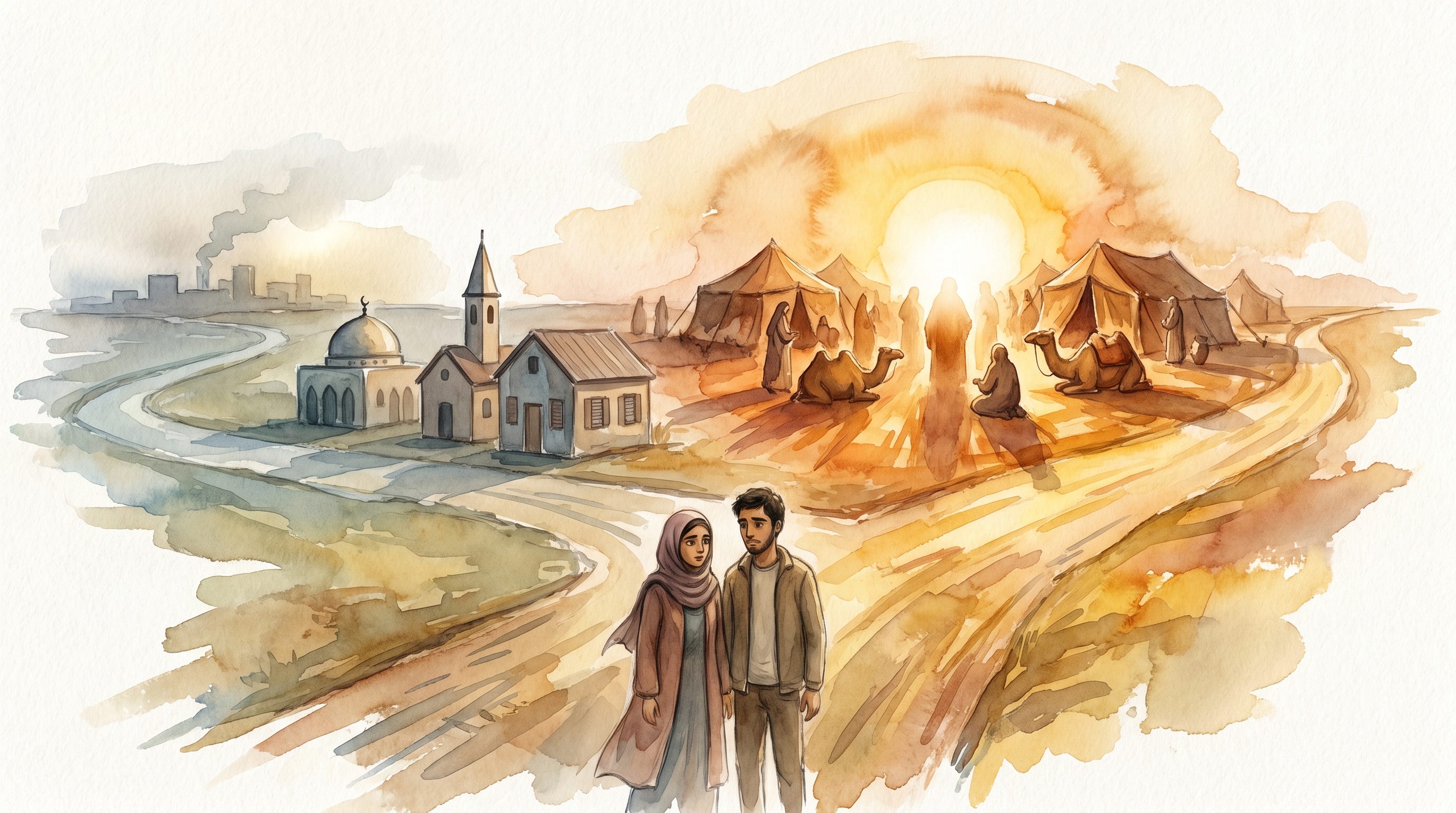
Set the scene.
The mid-twentieth century.
The colonial and post-colonial world bleeding.
Algeria — eight years of war from 1954. Vietnam — first against the French, then against the Americans.
Cuba — the revolution of 1959 against an empire’s client regime.
Palestine — the Nakba in 1948 and every catastrophe that followed it.
The map of the global south, country after country, holding ground that had been bought and sold over their heads for two centuries by powers they had never asked to govern them.
A generation of young people, then.
Whose grandparents had been farmers under empire.
Whose fathers had fought, often as conscripts, in someone else’s world wars.
The young people of that generation looked around at the world that had been handed to them, and they asked the only question worth asking —
what do we do with our bodies, our lives, the dignity that has been taken?
And as they asked, they looked at the religious houses around them — the mosques, the churches, the synagogues.
And what they found, in too many places, was silence.
Or comfort.
Or dogma.
Or worse.
They looked elsewhere because they had to.
The fault is not theirs alone.
Tonight we will name three houses — Christian, Jewish, our own — gently, and as a self-critique.
We honour the prophetic root in each.
We name the suffering each people endured.
And we name, with care, where each drifted.
Then we lift the question off communities and onto persons — because the question of who failed and who did not is, at the end of the day, never a question about peoples.
It is a question about choices.
And the model lives in our own caravan — Hurr ibn Yazid blocked the caravan and turned; Umar ibn Sa’ad faced the same caravan and chose Rayy and the fire.
Both men faced the same caravan.
Both had the same choice.
Both made it.
We are not here to indict communities.
We are here to honour every Hurr in every tradition — Christian, Jewish, Muslim, and yes, even secular — and to set ourselves the same choice tonight.
A Christianity Bogged Down in Dogma
The first house we approach is the Christian house, and we approach it as we did last night —
honouring what God has honoured.
The chain of Christian witness is real — we sang it last night.
Polycarp of Smyrna, refusing to curse Christ at the stake.
Perpetua of Carthage, killed in the arena.
Justin the philosopher.
Franz Jägerstätter, beheaded at Brandenburg in 1943 for refusing the Wehrmacht oath.
The twenty-one Coptic men on a Libyan beach in February 2015.
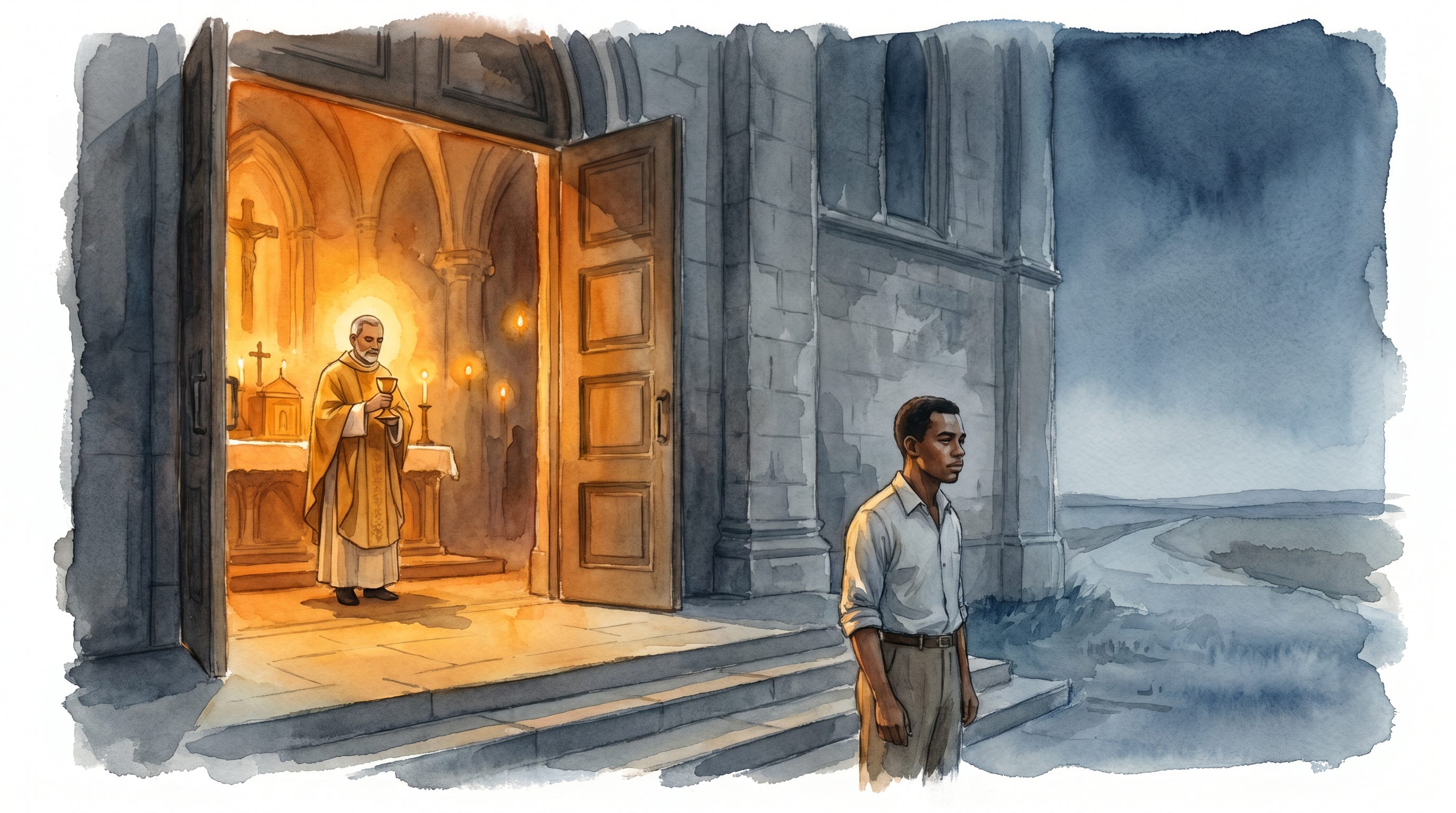
Óscar Romero, killed at the altar in San Salvador in 1980, mid-sentence, with the chalice in his hand.
And Shireen Abu Akleh — whose name we will name again tonight, because she sits in the geometry of every paragraph in this sermon.
The chain is real.
We do not unsay it.
And yet.
The institutional Christian house did not meet its prophetic moment in the mid-twentieth century.
The Catholic Church entered and emerged from the world wars in confusion.
Pius XII’s contested record of silence during the Shoah.
The institutional drift that allowed too many priests and bishops, in country after country, to lend the authority of the Church to the regimes of Mussolini, Franco, Pétain, and the long succession of dictatorships of Latin America.
Vatican II in the early 1960s was a corrective that came late.
Even after Vatican II, liberation theology had to be pushed into existence at Medellín in 1968 by bishops who had had enough —
because the absence of a prophetic Christianity in the colonial decades had been so unbearable, to so many.
That is the institutional drift.
We name it.
And the line that lands the move: the colonised man who would soon write The Wretched of the Earth — Frantz Fanon, raised Catholic in Martinique — was raised in the church that gave him no theology of liberation he could use.
We will return to him in Point 2.
The colonised young men and women of Algeria, of Cuba, of Vietnam, of Palestine, looked at the Church standing too often beside the empire that was breaking their bodies, and they did the only honest thing they could.
They looked elsewhere.
A Faith That Returned to Sinai — and the Calf Beside It
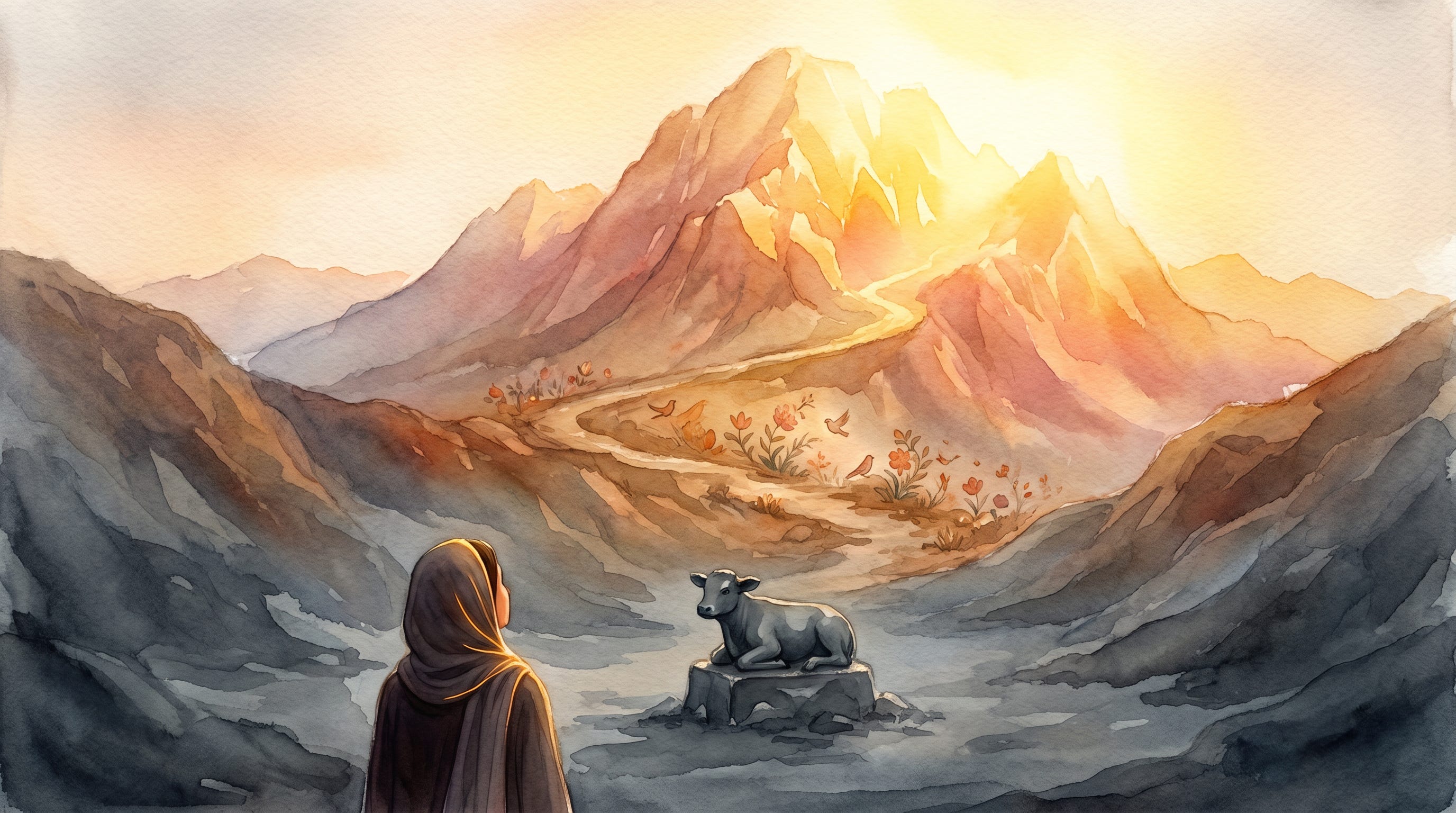
The second house we approach tonight is the Jewish house, and we approach it with the patience the subject demands.
Long before any of the catastrophes we will name, this house gave the world Moses (Musa) — peace and blessings be upon him — the prophet who stood before Pharaoh, who spoke with God on Sinai, who led a people out of the most powerful empire of his age.
It gave us Aaron (Harun), the patient brother.
It gave us the long line of prophets of justice — Elijah, Isaiah, Amos, Micah —
whose denunciations of the kings of their own people are some of the most fearless prophetic speech the world has ever known.
It gave us the Maccabees, who refused to bow to Antiochus IV in the second century before the common era.
And the great rabbis of every century who upheld justice when justice was costly.
And the Qur’an honours every one of them.
The Qur’an is the most generous text in the world toward the prophets from the Children of Israel.
Surah al-Baqarah opens a sustained meditation on the covenant given at Sinai.
Surah Aal Imran weaves the lineage of the prophets from the Children of Israel into the lineage of the Messiah.
Surah Maryam shows our own Saint Mary (Maryam) — peace and blessings be upon her — addressed by an angel in the same words the Hebrew prophets had been addressed for fifteen centuries before her.
They are our siblings in the prophetic family.
Any sermon that speaks of the Jewish house must begin and end with that honour, or it is not worth giving.
Because we cannot understand what comes next without naming what was done to this people in the centuries before the twentieth.
Christian Europe — and let us name this precisely, because what was done to the Jewish people in Europe was a Christian failure, not a Jewish one — inherited an ancient prejudice, systematised it theologically, and over fifteen hundred years perfected the machinery of antisemitism.
The accusation of deicide.
The blood libels of the medieval centuries.
The ghettoes of Venice and Rome and Frankfurt.
The pogroms of the Russian Pale.
The Dreyfus affair in France in 1894.
The slow, grinding ostracism of Jewish populations across nineteenth-century Europe.
And then the Shoah.
Jewish lives extinguished in industrial murder.
The figure most often cited is six million; the historians dispute the precise number; what is documented by the United States Holocaust Memorial Museum is a total Holocaust death toll of approximately seventeen million, three hundred and eighty-three thousand, nine hundred souls.
The Nazi murder programme was vastly wider than the Jewish suffering alone.
Soviet civilians and prisoners of war — by every honest count, more numerous in the Nazi machinery than the Jewish dead, somewhere in the order of twelve million on careful estimates.
Poles. Roma and Sinti.
The disabled, in the programme the Nazis themselves named Aktion T4.
Jehovah’s Witnesses.
Political dissenters.
Homosexuals.
The targeting of the Jewish people was singular in its systematic intent, in its industrial completeness, and we honour that singularity.
But the catastrophe was wider, and the Jewish dead belong within that wider catastrophe, not detached from it.
To isolate the Holocaust to a single religious grouping is itself a violation of the dead — Jewish and non-Jewish alike.
What happened in Europe in those years was humanity killing humanity.
We honour the Jewish portion fully — and we refuse the framing that erases the rest.
We have to be honest about how a people who endured what the Jewish people endured in the 1940s came to make the choices they made in the years that followed.
They were a people abandoned.
Christian Europe had spent fifteen centuries calling them killers of God, then five years killing them.
The world stood by, in the late 1930s and early 1940s, doing what amounted to nothing while the trains rolled into Treblinka.
And then, at the end of the war, an offer arrived.
A Western empire — the same British Empire whose Balfour Declaration of 1917 had laid the groundwork, and whose Mandate had administered the land for the thirty years since — presented them with the prospect of a state.
In a land already inhabited by another people, who would bear the cost of the gift.
Let us be honest about what the offer was.
The Empire was not redeeming the Jewish people for the catastrophe in which it had itself been complicit.
The Empire was using their trauma as an instrument for its own colonial calculus in the Levant.
A portion of the Jewish community — not all, but a politically dominant portion — accepted the offer.
And on the wreckage of the Palestinian Nakba of 1948, an ethno-national project was built.
Over the decades that followed, this project gradually substituted, in too many official mouths, the prophetic covenant of Sinai for a tribal “chosen people” theology that the prophets themselves had spent centuries trying to dismantle.
The proverbial golden calf, made this time of fear instead of gold — but a calf nonetheless.
The covenant of Moses with the God of justice replaced, in the dominant idiom of the new state, by a doctrine of ethnic exclusivity that no prophet from the Children of Israel ever taught and that every prophet of Israel preached against.
Chosenness, which had always been a burden of justice, was quietly traded for a shield of ethnicity.
The cost has been borne, daily, for nearly eighty years — by the Palestinian people, by the integrity of the Jewish prophetic tradition itself, and by the trust of every neighbour the new state has inherited.
Before we leave this house, we pause to name those who refused to look away.
They are the Hurrs of the Jewish tradition, and they matter.
Hannah Arendt, whose later misgivings about political Zionism cost her the friendship of much of her own community for the simple act of insisting that Jewish life is bigger than the Israeli state.
Marek Edelman, the Bund commander of the Warsaw Ghetto Uprising of 1943, who refused to migrate to the new state because he saw what it would become, and who remained in Poland for the rest of his life.
Rabbi Elmer Berger, who founded the American Council for Judaism in 1942 to insist that Judaism is a faith, not a nationalism.
The Neturei Karta, who for eighty years have refused the entire premise of the state on theological grounds.
The Israeli historians of the 1980s onward who have done the hard work of telling the truth from inside — Ilan Pappé, Norman Finkelstein, Avi Shlaim, Shlomo Sand.
Truth-tellers from inside, who have paid for their truth-telling.
And the figure who lives with us still.
Shireen Abu Akleh — Christian Palestinian journalist, killed by an Israeli sniper in Jenin on the eleventh of May, 2022, while wearing a vest marked PRESS.
We named her in last night’s supplication; we name her again now because she sits at exactly the geometry of this paragraph.
A Christian Palestinian who covered the violence of a state operating in the name of Jewish chosenness, killed by that state, mourned in the same week by Christians and Muslims together.
Palestine is the place where the failure of all three houses converges into a single open wound.
And Shireen is the witness whose witness was killed.
We honour them all.
We grieve them all.
And we speak the name of the Jewish house tonight without shame and without flattery — because that is what the prophets of that house would have demanded of us.
The Mosque That Forgot the Candle
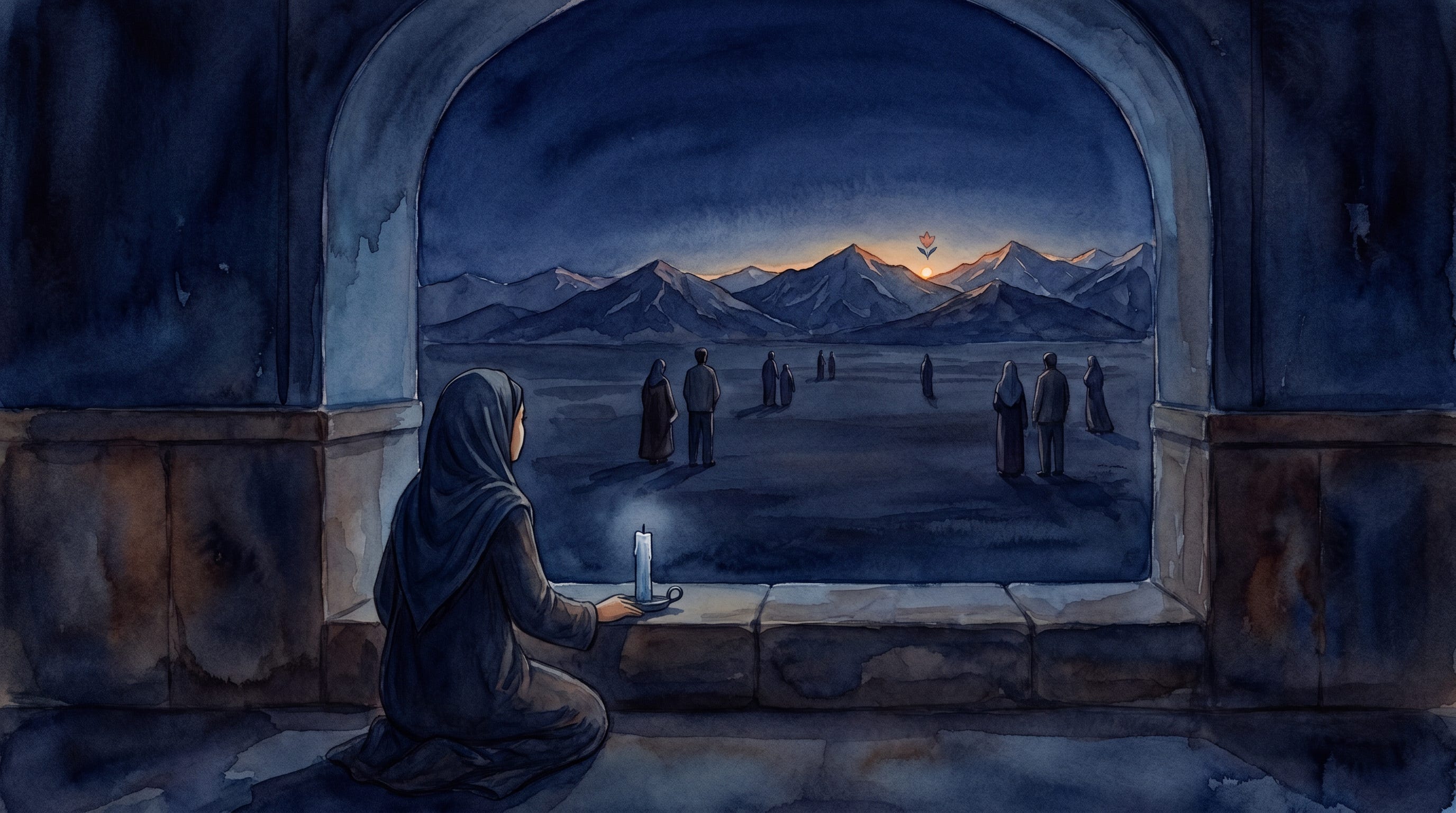
The third house we visit is the most painful, because it is our own.
The same plague Imam Husayn — peace and blessings be upon him — diagnosed in the Khutba of Mina at the start of his rising — applied now to the Muslim world in the mid-twentieth century.
The three silences from Night 4 — fear, comfort, the narrowing of moral vision — were not a one-off seventh-century pathology.
They were the standing temptation of every religious community in every age.
And they had taken hold of much of the Muslim world in the decades when the wretched of the earth were looking for an answer.
Look at the record.
The Arab catastrophe of 1948.
The Suez crisis of 1956.
The Six-Day War of 1967, where in less than a week the same colonial settler-state seized the Sinai, the West Bank, the Golan Heights, and East Jerusalem — the third holiest site in our religion.
And the official scholarly establishments of the Arab Muslim world, in country after country, had nothing to say but mourning prayers.
Each humiliation more total than the last.
What was on offer instead?
Pan-Arabism. Nasser’s pan-Arabism — secular, ethnically narrow, theologically empty — but the only revolutionary slogan in the Sunni Arab world for two decades.
A nationalism without the prophets.
A liberation without God.
The kind of slogan the empires can absorb, since it offers them no transcendent challenge.
And in the mosques themselves — what had Islam become?
In too many mosques, in too many cities, Islam had been reduced to the niceties of personal purity — to ablution, to the angle of the slaughtering knife, to the corner-cases of menstruation and travel.
To kitchen and shoes.
While the prophetic command to enjoin good and forbid evil, to stand against tyranny, to be witnesses for God even against ourselves, lay forgotten on the shelf.
The covenant of kuntum khayra ummatin — you were the best of communities — was being recited every Friday without the conditional that follows it.
This is the kitchen-and-shoes Islam Imam Khomeini — may God rest his pure soul — thundered against from his exile. This is the Islam Imam Husayn went to Karbala to refuse.
And the wretched of the earth saw it, and they reached past it, and we cannot blame them for reaching.
Now — there were Muslims who tried.
We owe them a fair word.
In Egypt, Hasan al-Banna, founder of the Muslim Brotherhood in Ismailia in 1928, who built a real mass movement out of mosques and schools and labour cooperatives — and who was assassinated by the Egyptian secret police in February 1949.
Sayyed Qutb, whose Milestones (1964) was the most rigorous Sunni Islamic critique of modern jahiliyyah of its decade — and who in 1966 was hanged by Nasser.
Whatever we make of the Brotherhood’s later trajectory, or of the takfiri turn that took hold of some of Qutb’s successors — and we will return to that turn in Session 9 — the period itself had two figures who tried, and one of them paid with his life.
The honour is real.
In Najaf, Shaheed Sayyed Muhammad Baqir al-Sadr — may God rest his pure soul — was at work on Falsafatuna — Our Philosophy (1959) and Iqtisaduna — Our Economics (1961) — a real Islamic answer to Hegelian philosophy and Marxist economics, written in Arabic, exactly when the wretched of the earth needed it.
They didn’t see him either.
In Iran, the man who would change the calculus had not yet risen publicly.
Imam Khomeini — may God rest his pure soul — was still a young scholar in Qom.
The fifteenth of Khordad, 1342 — June 1963 — when Imam Khomeini led the resistance to the Shah’s so-called White Revolution and was arrested, and when those who defended him were massacred in the streets — that was two years away from the moment Fanon’s book was being printed.
His exile to Turkey in 1964, his move to Najaf in 1965, his Najaf lectures of 1969 and 1970 that became Hukumat-e Islami (Islamic Government, the theory of Wilayat al-Faqih) — all of that lay ahead.
And here is the theological note I want you to carry from this paragraph.
Witness precedes theory in the prophetic tradition.
Imam Husayn did not write a book.
He went to Karbala.
Imam Sajjad and Sayyedah Zaynab — peace and blessings be upon them — wrote the book of Karbala afterwards.
The young scholar in Qom and then in exile in Najaf was already at his Karbala.
The framework of his theory would follow his witness.
And Imam Khomeini’s diagnosis, when it came to be written, was the same diagnosis Imam Husayn had made at Mina —
and notice that he uses very nearly the same image you and I have been using all night.
From his first lecture at the Hosseinieh of Najaf, on the twenty-first of January, 1970:
باید اسلام را به صورت حقیقیاش به مردم معرفی کرد، تا جوانان ما تصور نکنند که آخوندها در گوشهای از نجف یا قم نشستهاند و فقط مسائل حیض و نفاس را مطالعه میکنند، نه اینکه با سیاست سروکار داشته باشند. اسلام برای همه شئون زندگی برنامه دارد؛ اسلام یک دین سیاسی است، و روحانیون باید سیاست را از اسلام بیاموزند، نه اینکه اسلام را از سیاستمداران غربی یا شرقی بگیرند.
“Islam must be presented to the people in its true form, so that our youth do not imagine the religious scholars — the so-called akhunds, the quietist clergy — sitting in some corner of Najaf or Qom, studying only the questions of menstruation and post-natal purity, as if they had nothing to do with politics. Islam has a programme for every aspect of life. Islam is a political religion. And the religious scholars must learn politics from Islam — not take their Islam from Western or Eastern politicians.”
— Imam Khomeini, Hukumat-e Islami / Islamic Government, lecture 1 (Najaf, 21 January 1970; translated from the Persian original)
Forty-five years before this majlis, the same Imam who would lead the Islamic Revolution of 1979 was diagnosing the kitchen-and-shoes Islam from his exile in Najaf.
Same critique.
Same target.
Same tradition.
And listen to the closing line —
“the religious scholars must learn politics from Islam, not take their Islam from Western or Eastern politicians”
— because that sentence, spoken in a Najaf classroom in 1970, is the seed of the slogan the Revolution would chant nine years later:
Na sharqi, na gharbi — Jomhuri-ye Eslami — Neither East nor West, Islamic Republic.
The candle was already shaped before it was raised.
The wretched of the earth in 1961 saw a man under house arrest, then a man in exile, then no man at all.
They could be forgiven for not seeing what was coming.
And here in our own community — Shaheed Murtadha Motahhari and Dr Ali Shariati — may God rest their pure souls — were still gathering their materials.
The candle had been re-found, but it had not yet been raised.
The wretched of the earth could not see the dawn breaking in the mountains around Qom and Najaf.
They saw the long night still on the plain.
They saw what was on the table.
And what was on the table was Fanon.
Chosenness Is Not a Possession — It Is a Burden
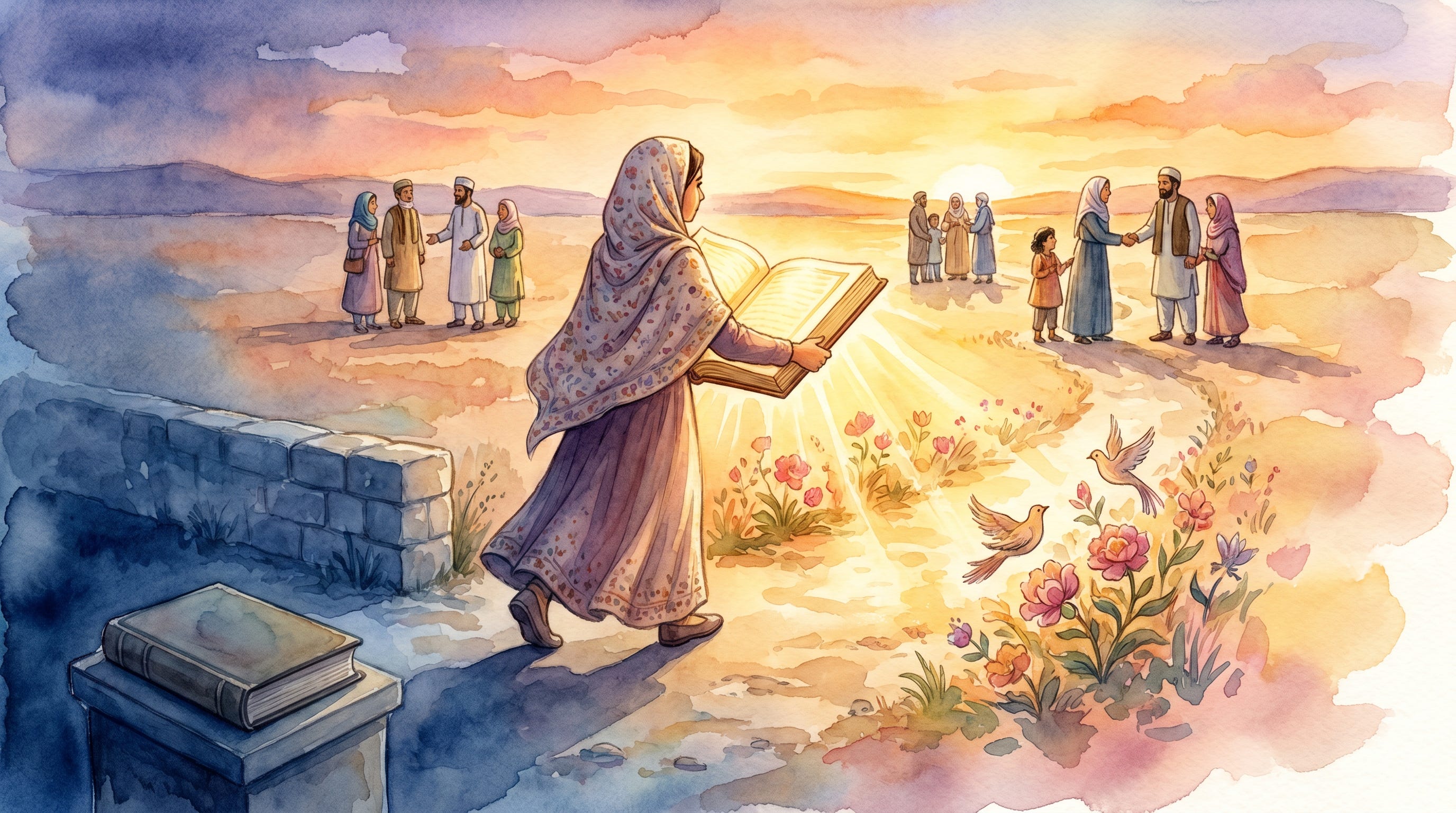
Now we have to ask the diagnostic question that runs across all three houses.
What is chosenness, in the language of the Qur’an?
Because the deformation each house drifted into is the same deformation.
The cure, where it has been administered, is the same cure.
The negative pole first.
Chosenness is not an ethnic category.
The moment any community — Jewish, Christian, or Muslim — turns chosenness into a possession of blood or soil or lineage, it has done something with terrible theological consequences.
It has made God ethno-centric.
And an ethno-centric God cannot be just — because if He favours one race over another, He must be unjust to those He did not favour.
And an unjust God is no God at all.
’Adl-e-Ilahi — divine justice — is one of our Usul al-Din, one of the five constitutive principles of the faith in our Shia tradition.
Not one attribute among many — a constitutive principle of His nature, alongside tawhid, prophethood, the imamate, and the Day of Judgement.
Pull ’adl down, and tawhid falls with it.
The very claim to be the chosen people of God collapses the moment chosenness is taken as ethnic.
The form refutes itself.
This diagnosis lands hardest in the Jewish house we have just visited — but, it lands on us first.
The grammar of kuntum khayra ummatin ukhrijat li’l-nas is grammatically conditioned on what follows: ta’muruna bi’l-ma’ruf wa tanhawna ’an al-munkar wa tu’minuna billah — you enjoin good, forbid evil, and believe in God.
Drop the conditional and the Muslim community has performed the same drift we are diagnosing in our prophetic siblings.
The condition is performative, not ontological.
God’s mercy does not depend on us; our station as witnesses does.
كُنتُمْ خَيْرَ أُمَّةٍ أُخْرِجَتْ لِلنَّاسِ تَأْمُرُونَ بِالْمَعْرُوفِ وَتَنْهَوْنَ عَنِ الْمُنكَرِ وَتُؤْمِنُونَ بِاللَّهِ
“You were the best of communities, brought forth for humanity — you enjoin the good, forbid the evil, and believe in God.”
— Qur’an, Surah Aal Imran (the Chapter of the Family of Imran) #3, Verse 110
The Qur’an’s clearest critique of chosenness-as-possession is the parable of the donkey carrying books, in Surah al-Jumu’ah:
مَثَلُ الَّذِينَ حُمِّلُوا التَّوْرَاةَ ثُمَّ لَمْ يَحْمِلُوهَا كَمَثَلِ الْحِمَارِ يَحْمِلُ أَسْفَارًا
“The likeness of those who were entrusted with the Torah and then did not carry it is as the likeness of a donkey carrying volumes of books.”
— Qur’an, Surah al-Jumu’ah (the Chapter of the Friday Gathering) #62, Verse 5
And listen to how Allamah Sayyed Muhammad Husayn Tabataba’i — may God rest his pure soul — in al-Mizan fi Tafsir al-Qur’an, reads this verse — because the move he makes is exactly the move our methodology requires.
He names the historical referent of the verse plainly; he does not flinch.
And then he turns the simile back, as a warning, on the Muslim community itself.
«و المراد بالذين حملوا التوراة ثم لم يحملوها اليهود الذين أنزل الله التوراة على رسولهم موسى عليه السلام فعلمهم ما فيها من المعارف و الشرائع فتركوها و لم يعملوا بها فحملوها و لم يحملوها فضرب الله لهم مثل الحمار يحمل أسفارا… فاعترض الله سبحانه بهذا المثل و ذكرهم بحال اليهود حيث حملوا التوراة ثم لم يحملوها فكانوا كالحمار يحمل أسفارا و لا ينتفع بما فيها من المعرفة و الحكمة، فعليهم أن يهتموا بأمر الدين… و ليحذروا أن يحل بهم من سخطه تعالى ما حل باليهود حيث لم يعملوا بما علموا فعدهم الله جهلة ظالمين و شبههم بالحمار يحمل أسفارا.»
“The intended referent of ‘those who were charged with the Torah and then did not carry it’ is the Jews — those upon whose messenger Moses — peace and blessings be upon him — God sent down the Torah, who taught them what it contained of teachings and laws, and they abandoned it and did not act according to it.
They carried it and did not carry it, so God struck for them the simile of the donkey carrying books…
And so God objected by means of this simile, and reminded the Muslims of the condition of the Jews — who were charged with the Torah and did not carry it.
Therefore it is incumbent upon the Muslims to be concerned with the matter of religion…
And let them beware lest there befall them of God’s wrath what befell the Jews — when the Jews failed to act on what they knew, so God counted them as ignorant and oppressive, and likened them to a donkey carrying books.”
— Allamah Tabataba’i, al-Mizan fi Tafsir al-Qur’an, commentary on Surah al-Jumu’ah, Verse 5
Hear what Allamah Tabataba’i is doing.
The verse names the Jews as its historical referent — and Allamah Tabataba’i does not soften that.
But the same simile is then turned, in the same paragraph of his commentary, back toward the Muslims:
let them beware lest there befall them what befell the Jews.
The donkey of the parable is the historical Israel of Moses’s time —
and any community after them that is entrusted with revelation and reduces it to a burden carried without understanding.
That is the covenantal reading.
The simile is universal in its theological force, even where its historical referent is specific.
The Muslim who recites the Qur’an without enacting it, the Christian who recites the Sermon on the Mount without standing against the empire, the Jew who recites the Torah without standing against the pharaohs of every age — all are donkeys of the books they carry.
The image cuts across all three houses.
And it cuts deepest, when it cuts at us.
Now the affirmative pole.
What chosenness actually is, when it is rightly understood.
It is the active duty to enjoin good and forbid evil:
وَالْمُؤْمِنُونَ وَالْمُؤْمِنَاتُ بَعْضُهُمْ أَوْلِيَاءُ بَعْضٍ ۚ يَأْمُرُونَ بِالْمَعْرُوفِ وَيَنْهَوْنَ عَنِ الْمُنكَرِ
“The believing men and believing women are protectors of one another — they enjoin the good and forbid the evil.”
— Qur’an, Surah al-Tawbah (the Chapter of the Repentance) #9, Verse 71
It is the witness against the self when justice demands it — and listen carefully, because this verse returns in the bridge to Point 2:
يَا أَيُّهَا الَّذِينَ آمَنُوا كُونُوا قَوَّامِينَ بِالْقِسْطِ شُهَدَاءَ لِلَّهِ وَلَوْ عَلَىٰ أَنفُسِكُمْ أَوِ الْوَالِدَيْنِ وَالْأَقْرَبِينَ
“O you who believe, be upholders of justice, witnesses for God, even against yourselves or your parents and relatives.”
— Qur’an, Surah al-Nisa (the Chapter of the Women) #4, Verse 135
It is the Qur’an’s own answer to the question who is the best? — not a tribe or a lineage, but those who imitate the Prophet — peace and blessings be upon him, his family, and his righteous companions:
لَّقَدْ كَانَ لَكُمْ فِي رَسُولِ اللَّهِ أُسْوَةٌ حَسَنَةٌ لِّمَن كَانَ يَرْجُو اللَّهَ وَالْيَوْمَ الْآخِرَ وَذَكَرَ اللَّهَ كَثِيرًا
“Indeed, in the Messenger of God you have an excellent example, for whoever seeks God and the Last Day and remembers God much.”
— Qur’an, Surah al-Ahzab (the Chapter of the Confederates) #33, Verse 21
Chosenness is achieved, not inherited.
And it is the cosmopolitan vocation:
يَا أَيُّهَا النَّاسُ إِنَّا خَلَقْنَاكُم مِّن ذَكَرٍ وَأُنثَىٰ وَجَعَلْنَاكُمْ شُعُوبًا وَقَبَائِلَ لِتَعَارَفُوا ۚ إِنَّ أَكْرَمَكُمْ عِندَ اللَّهِ أَتْقَاكُمْ
“O humanity, We have created you from a male and a female, and made you into nations and tribes that you may know one another. Indeed, the most noble of you in the sight of God is the most God-conscious.”
— Qur’an, Surah al-Hujurat (the Chapter of the Apartments) #49, Verse 13
Difference is not a problem to be solved.
Difference is the ground on which mutual knowing — ta’aruf — becomes possible.
We are chosen to know one another — not to wall ourselves off from one another.
So hear the line we walk with for the rest of the night.
Chosenness is not a possession to be defended.
Chosenness is a burden to be carried.
The moment any community confuses the two, it ceases to be chosen —
even if it goes on saying so for centuries.
Hurr Crossed the Sand. Umar Chose Rayy. The Choice Is Always Now.
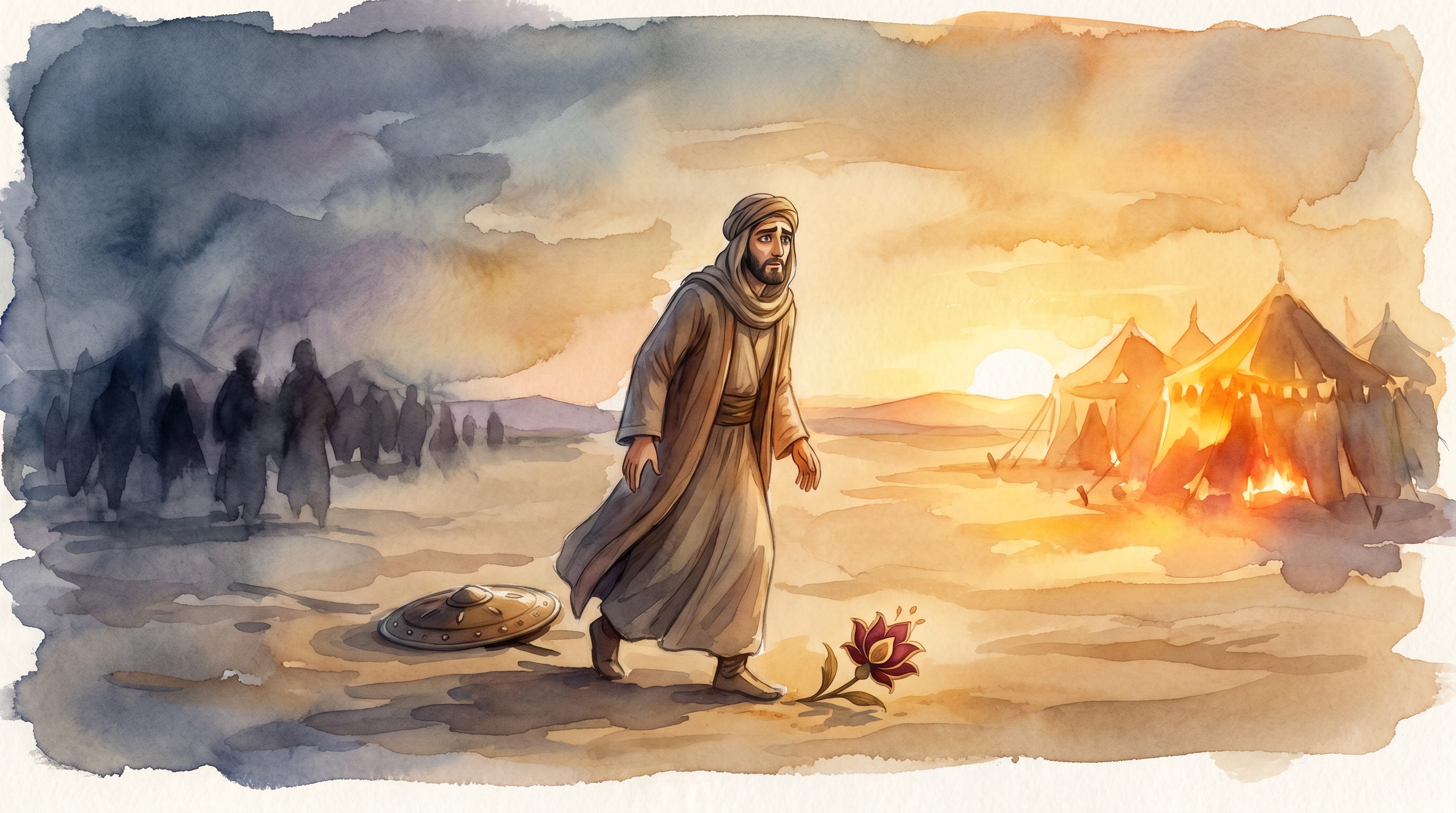
Whatever happened to the institutions, the choice has always been individual — and the choice is always now.
Hurr ibn Yazid blocked the caravan and turned.
Umar ibn Sa’ad faced the same caravan and chose Rayy and the fire.
You heard both stories last night — Hurr stepping across the open sand, laying his shield upside down, asking “will you accept my repentance?”; Umar ibn Sa’ad sitting in the same desert and counting the lands he had been promised.
Tonight we lift the lesson off them and onto every soul that has ever stood at the edge of the same kind of choice.
Within every house, in every century, both choices have been available.
The Christian who became a Jägerstätter and the Christian who put on the SS uniform — both faced the same field.
The Jew who became a Marek Edelman and the Jew who enforced the occupation — both faced the same field.
The Muslim who walked with Imam Husayn at Karbala and the Muslim who pulled the bowstring against him —
both faced the same field.
Listen again to the verse the Qur’an gives us for this moment:
يَا أَيُّهَا الَّذِينَ آمَنُوا كُونُوا قَوَّامِينَ بِالْقِسْطِ شُهَدَاءَ لِلَّهِ وَلَوْ عَلَىٰ أَنفُسِكُمْ
“O you who believe, be upholders of justice, witnesses for God, even against yourselves.”
— Qur’an, Surah al-Nisa (the Chapter of the Women) #4, Verse 135
That verse made Hurr.
He bore witness for God against himself — against the army he had led, against the orders he had been given, against the path he had been on.
Surah al-Nisa 4:135 made flesh, in a single morning, on the open sand of Karbala.
And it can make any of us, on any morning, in any field, when the choice is set before us.
We are not here to indict communities.
We are here to honour every Hurr in every tradition — Christian, Jewish, Muslim, and yes, even secular — and to set ourselves the same choice tonight.
Be witnesses for God, even against yourselves.
The verse means what it says.
That is the gate from Point 1 into Point 2.
Point 1 has just told you why the wretched went elsewhere.
Point 2 will now meet them where they went — and ask, with the same compassion, what they found there.
If the choice is individual, then the question becomes: what vocabulary did the twentieth century give to those who chose to stand?
Marx in the Heartless World
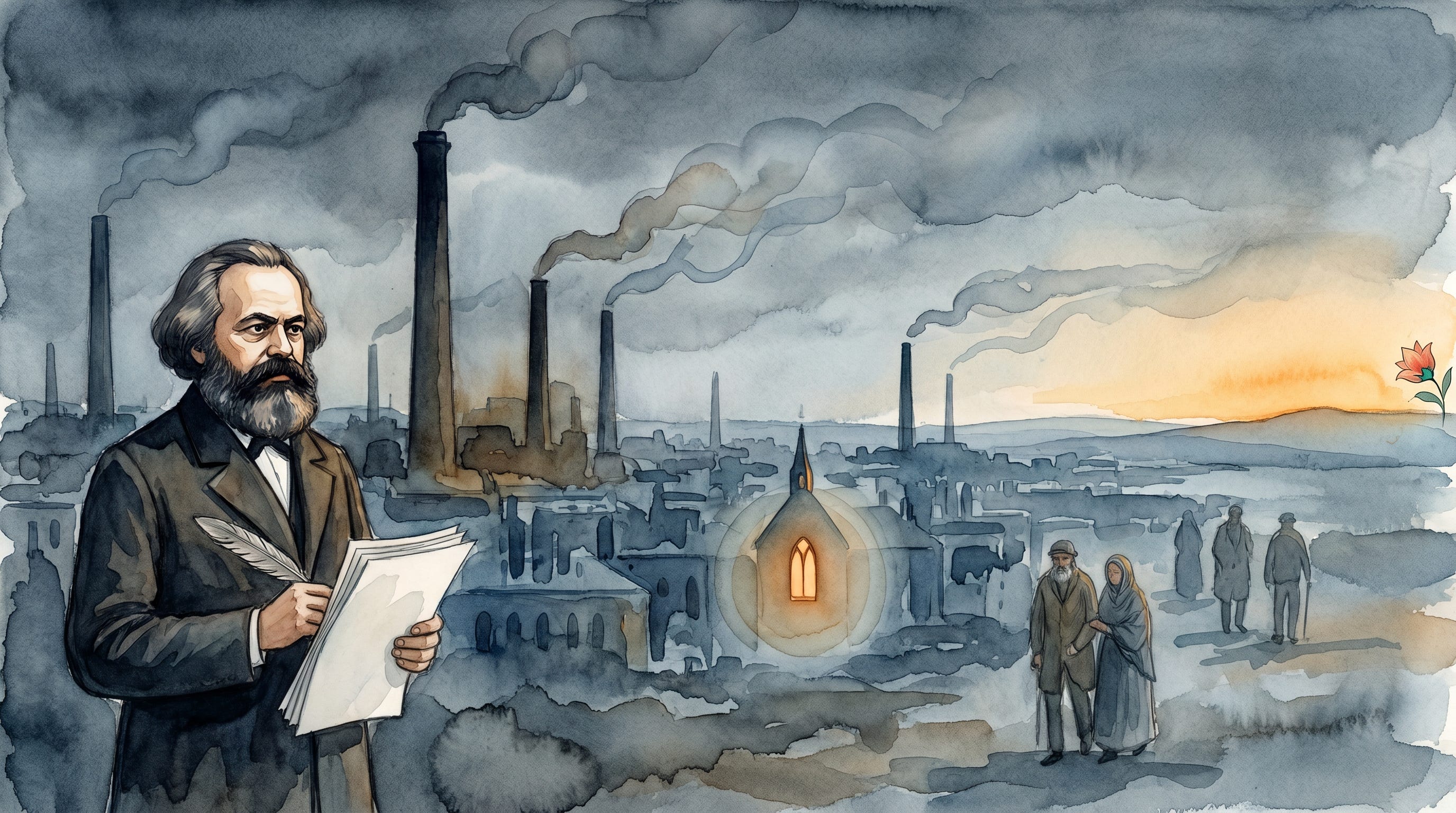
Hear me carefully, because the figure I am about to bring into this majlis is one whose name has been used as a curse in our community for as long as some of you have been alive.
Karl Marx.
Born in Trier in the Rhineland in 1818, descended on both sides from rabbis, raised secular, dead in London in 1883.
The standard atheist reading of Marx clips a famous phrase off the head of a longer sentence and produces a one-line dismissal.
The standard Muslim reaction to that one-line dismissal is to bury Marx without ever having heard him.
We will do neither tonight.
From a piece of writing Marx published in February of 1844, in a small German-French journal in Paris, comes the most-quoted and least-understood sentence in the entire history of nineteenth-century European thought:
“Religion is the sigh of the oppressed creature, the heart of a heartless world, and the soul of soulless conditions. It is the opium of the people.”
— Karl Marx, A Contribution to the Critique of Hegel’s Philosophy of Right, Introduction (Paris, February 1844)
Read the full sentence with me.
Religion is the sigh of the oppressed creature — not the oppressor, the oppressed, the one who has nothing else.
The heart of a heartless world — Marx is acknowledging that religion gives a heart to a world that is otherwise heartless.
He is not dismissing religion as nothing.
The soul of soulless conditions — the smoke and the lung disease and the children working in the factories of Manchester and the Ruhr.
Religion is the soul of those soulless conditions.
And then: it is the opium of the people.
The atheist reading lands on those last seven words alone and stops there.
But that is not what Marx is saying.
Marx’s critique is something else entirely.
That religion as it has come to function in his Lutheran-Hegelian Christian milieu has become a sedative for suffering rather than a transformer of the conditions that cause it.
Marx wants the heartless world transformed so that the consolation is not necessary.
He wants the cause of the suffering removed, not the consolation removed.
Look at the diagnosis again.
Listen to it as the diagnosis Imam Husayn made at Mina.
As the diagnosis Shaheed Motahhari made in The Martyr.
As the diagnosis Imam Khomeini made in Hukumat-e Islami.
Religion that has lost its connection with God has become a sedative.
Marx and the prophets are looking at the same phenomenon.
The difference between them is which side of the diagnosis each is speaking from.
Marx made the same diagnosis our own prophets made — but from outside the tradition, looking at a Christianity that had already, in its mid-nineteenth-century German Lutheran-Hegelian form, lost its prophetic edge.
He never met a living prophetic religion.
He didn’t know there was one.
That is not a failure of his intelligence.
It is a failure of the religion he was looking at to be what religion is supposed to be.
We do not claim Marx.
The materialist metaphysics that follows the diagnosis is not ours, and never will be.
But we do not pretend his critique was foolish, and we do not allow the cheap clipped version of the famous sentence to stand in our community any longer.
Marx was almost with Imam Husayn on the diagnosis.
He just couldn’t see far enough to find the alternative.
Fanon in the Body of the Colonised
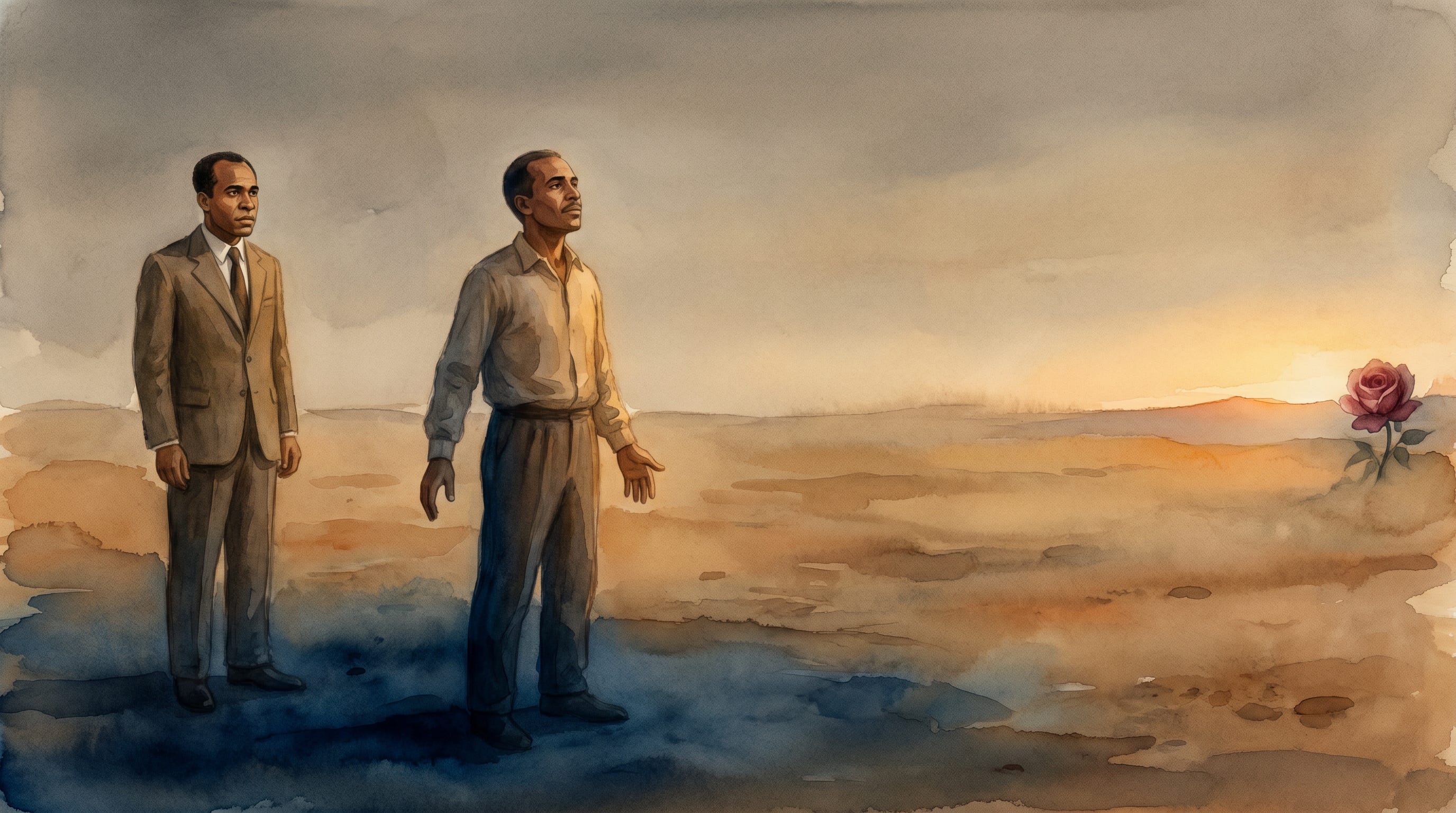
Marx’s diagnosis was European.
Fanon’s was something else.
It was the diagnosis applied to the wretched of the earth — to the colonised, the dehumanised, those whom empire had reduced from subjects to objects.
Frantz Fanon.
Born in Martinique in 1925, raised Catholic, schooled at the Lycée Schoelcher under Aimé Césaire.
He fought with the Free French in the Second World War, was wounded, was decorated, came home to find that the empire he had bled for would not see him as a Frenchman.
Trained as a psychiatrist in Lyon.
Posted to the Blida-Joinville psychiatric hospital in colonial Algeria in 1953.
And there, day after day in his consulting room, he saw what colonialism did to the colonised — saw it in their bodies, in their fractured selves, in the wounds that no diagnostic manual had a name for.
He resigned in 1956 to join the Algerian liberation movement.
He died of leukaemia in Bethesda, Maryland, on the sixth of December, 1961 — six weeks after dictating the final pages of The Wretched of the Earth to his wife.
He was thirty-six years old.
And what he wrote in his last six weeks of life still shapes how the world thinks about colonisation.
His central claim — and we should hear at least one passage carefully:
“At the level of individuals, violence is a cleansing force. It frees the native from his inferiority complex and from his despair and inaction; it makes him fearless and restores his self-respect.”
— Frantz Fanon, The Wretched of the Earth, Chapter 1, “Concerning Violence” (1961; trans. Constance Farrington, Grove Press, 1963)
Hear what Fanon is doing.
He is not theologising violence.
He is diagnosing it — diagnosing it as a psycho-political rupture by which the colonised, who has been reduced to an object by colonial dehumanisation, recovers his standing as a subject.
It is psychiatry, not theology.
It is ontology, not jihad.
The colonised has been turned into a thing.
The act of resistance is the moment in which he becomes a person again.
This diagnosis is closer to ours than most Muslims realise.
The Qur’an, too, knows that the dignity of the human person is recovered through standing — that prostration before God is the only standing that matters, but that prostration before tyrants is the loss of a station God Himself bestowed on the children of Adam:
وَلَقَدْ كَرَّمْنَا بَنِي آدَمَ
“And We have honoured the children of Adam.”
— Qur’an, Surah al-Isra (the Chapter of the Night Journey) #17, Verse 70
The verses commanding resistance to oppression — Surah al-Hajj 22 Verses 39 and 40:
أُذِنَ لِلَّذِينَ يُقَٰتَلُونَ بِأَنَّهُمۡ ظُلِمُواْۚ وَإِنَّ ٱللَّهَ عَلَىٰ نَصۡرِهِمۡ لَقَدِيرٌ
ٱلَّذِينَ أُخۡرِجُواْ مِن دِيَٰرِهِم بِغَيۡرِ حَقٍّ إِلَّآ أَن يَقُولُواْ رَبُّنَا ٱللَّهُۗ وَلَوۡلَا دَفۡعُ ٱللَّهِ ٱلنَّاسَ بَعۡضَهُم بِبَعۡضٖ لَّهُدِّمَتۡ صَوَٰمِعُ وَبِيَعٞ وَصَلَوَٰتٞ وَمَسَٰجِدُ يُذۡكَرُ فِيهَا ٱسۡمُ ٱللَّهِ كَثِيرٗاۗ وَلَيَنصُرَنَّ ٱللَّهُ مَن يَنصُرُهُۥٓۚ إِنَّ ٱللَّهَ لَقَوِيٌّ عَزِيزٌ
Those who are fought against are permitted [to fight] because they have been wronged, and God is indeed able to help them — those who were expelled from their homes unjustly, only because they said, ‘God is our Lord.’ Had not God repulsed the people from one another, ruin would have befallen the monasteries, churches, synagogues and mosques in which God’s Name is much invoked. God will surely help those who help Him. Indeed God is all-strong, all-mighty.
— Qur’an, Surah al-Hajj (the Chapter of the Pilgrimage) #22, Verses 39–40
— are the prophetic echo, in an earlier register, of what Fanon was articulating in the language of psychiatry on a desk in Algeria a century later.
But Fanon stops where Marx stopped.
The recovery of agency, in his frame, is exhausted by the act.
There is no transcendent anchor.
The colonised becomes a subject through resistance — but the subject he becomes is the subject only of history, only of the body, only of the political moment.
And history alone, the body alone, the political moment alone, are not strong enough to hold what a witness is for.
There is a second danger Fanon does not address — could not address, because he died before it had played out.
When violence is the only path to selfhood, the violence does not stop when the selfhood is recovered.
The twentieth century is full of revolutionary movements that began as the recovery of the dehumanised and ended as the dehumanisation of those they then ruled.
Algeria after Boumédiène’s coup.
Cuba after the firing squads of La Cabaña.
Cambodia under the Khmer Rouge.
We can name what he could not.
Like Marx before him, Fanon made the same diagnosis our own prophets made — but from outside the tradition.
He saw what colonialism did to the human person.
He saw that the human person had to recover.
He just didn’t have the vocabulary that could anchor that recovery in something history could not take away.
That vocabulary was sitting in Persian, in a book that had not yet been written, on a desk in Tehran a few years away.
Shariati Before God With the People
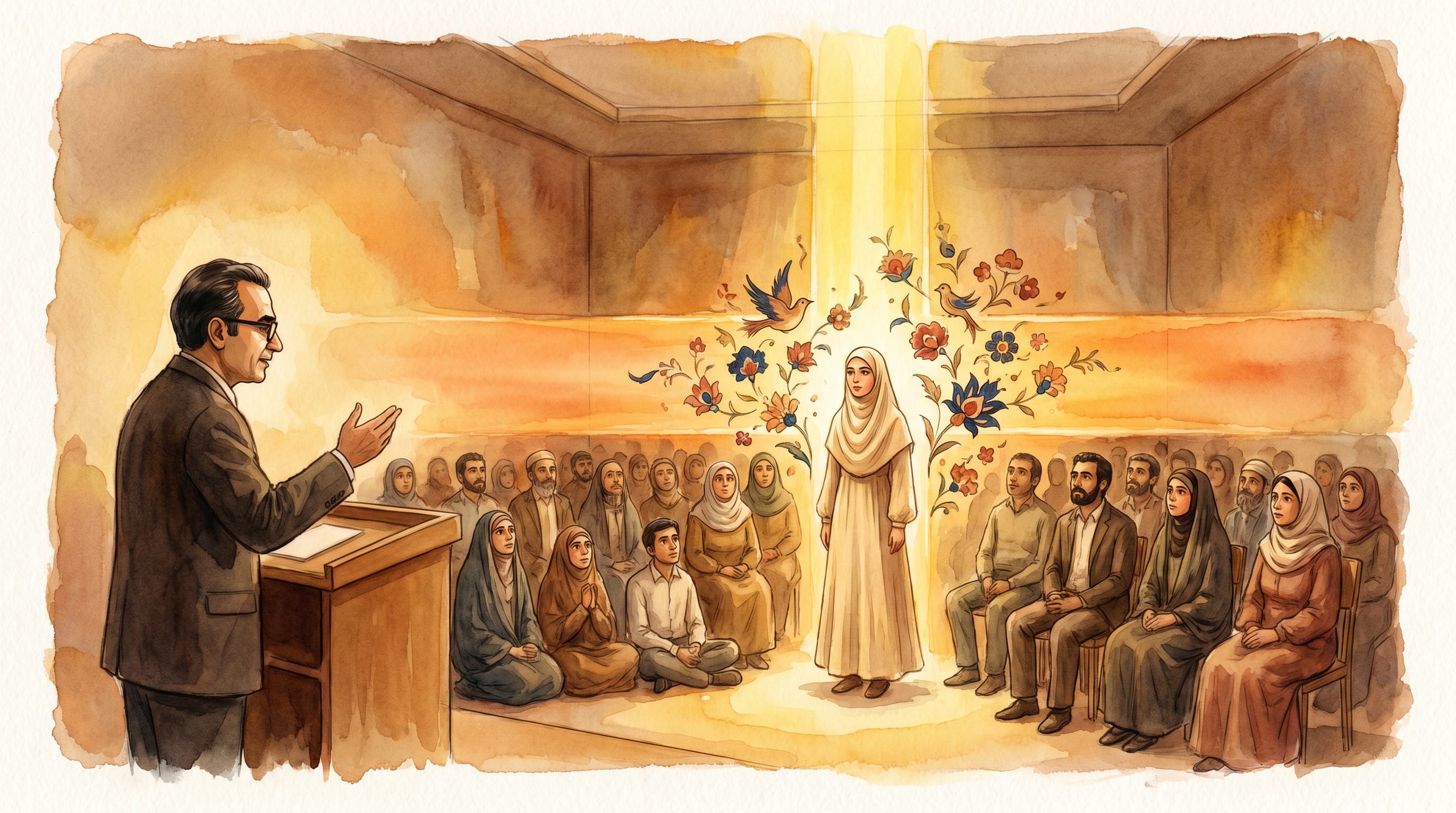
Dr Ali Shariati — may God rest his pure soul — born in Mazinan in northeastern Iran in 1933, was at the Sorbonne in Paris from 1959 to 1964 — exactly the years in which Fanon was finishing The Wretched of the Earth and dying in Bethesda.
Same Paris.
Same anti-colonial fire.
Same intellectual milieu.
Same questions.
He read Fanon.
Read him deeply.
And here we have to be careful, because two pieces of folklore have grown up around the relationship between Dr Shariati and Fanon.
Both are wrong, and we should say so honestly.
That Dr Shariati translated Wretched of the Earth into Persian — he did not; the actual translator’s name was hidden by editorial decision.
That they exchanged letters — they did not; the careful scholars Davari and Saffari, in their 2022 essay on the Shariati-Fanon engagement, conclude the letter exchange was almost certainly invented by Dr Shariati himself for rhetorical purposes.
Dr Shariati was, by his own admission, an unreliable narrator who liked to invent characters and exchanges to dramatise points he wanted to make.
So how did Dr Shariati actually engage Fanon?
He read him on the page.
He thought against him.
He carried his arguments into his lectures at the Hosseiniyeh-ye Ershad in Tehran in the early 1970s.
And in those lectures, he offered the move that completes what Fanon could not complete.
Listen to the move.
Fanon told the colonised: to recover yourself, you must act.
Recovery is in the act of resistance.
And he was right, to a point.
Then Dr Shariati made the corrective.
The recovery of agency from within history alone is not enough — because history itself is still under the same sky.
The colonised, the wretched, the dehumanised — they are also, the Qur’an reminds us in Surah al-A’raf 7:172 (the verse we recovered on Night 2), the inheritors of the primordial covenant.
They are the souls who were asked, before the body was given, “Am I not your Lord?” — and who answered, “Yes — we bear witness.”
That covenant was made before history.
It cannot be exhausted by history.
It anchors the human person in something history can never take away.
Hear the redirection of Fanon, because this is the spine of Point 2:
Fanon’s violence is immanent necessity — the colonised’s recovery of agency from within history.
Dr Shariati’s martyrdom is transcendent witness — the believer’s covenant with God that history cannot exhaust.
The way I would put it, in our own words:
The shahid does not simply die for the people.
The shahid dies before God, with the people, for the people, and in the people, all at once.
That is what is missing from Marx.
That is what is missing from Fanon.
The transcendent anchor that prevents the sacrifice from collapsing into mere loss.
But hear how Dr Shariati himself put it — in his own voice, from the pulpit of the Hosseiniyeh-ye Ershad in Tehran, in the autumn of 1972:
«حسین وارث آدم است… جانشین پیامبران بزرگ که به انسان آموخت چگونه زیست، اکنون آمده است تا بیاموزد چگونه مرد.» «در فرهنگ ما، شهادت مرگی نیست که دشمن بر پیکر رزمندگان ما تحمیل کند. شهادت مرگی است که رزمنده ما آن را میطلبد؛ مرگی که با تمام آگاهی، منطق، خرد، هوش، فهم، شعور و هوشیاری انسانی خویش انتخاب میشود… شهادت در فرهنگ ما و در دین ما، واقعهای خونین و تصادفی نیست.»
“Husayn (peace and blessings be upon him), the heir of Adam… the successor of the great prophets, who taught mankind ‘how to live’, has now come to teach mankind ‘how to die’. In our culture, martyrdom is not a death which is imposed by an enemy upon our warriors.
It is a death which is desired by our warrior, selected with all of the awareness, logic, reasoning, intelligence, understanding, consciousness and alertness that a human being has… Martyrdom: to arise and bear witness in our culture and in our religion is not a bloody and accidental happening.”
— Dr Ali Shariati, Shahādat / Martyrdom: Arise and Bear Witness, lecture delivered at the Hosseiniyeh-ye Ershad, Tehran, Autumn 1972 (Persian text standardised from the 1352/1973 Pāzhg edition; English trans. A.A. Ghassemy)
Hear what Dr Shariati is doing.
In his grammar, martyrdom is not passive suffering imposed by the enemy.
It is active testimony chosen by the witness — the exact architecture we have traced from Abel to Husayn.
He is refusing every account of martyrdom that treats it as an accident, a tragedy, a misfortune that befalls the witness.
In Dr Shariati’s reading — which is the Husayni reading — the shahid is not a victim.
The shahid is a chooser.
The death is not imposed; it is willed.
And it is willed, in his own list of words, with awareness, logic, reasoning, intelligence, understanding, alertness.
The full faculty of human consciousness, brought to bear on the moment of giving the body to the cause.
That is what is missing from every secular witness the twentieth century placed on our shelves.
Marx, Fanon, Che, Bobby Sands — not because they lacked courage, but because the vocabulary that could anchor that consciousness in something history could never reach was not on the table when they were looking.
The vocabulary of the covenant.
The vocabulary of “Am I not your Lord? — Yes, we bear witness.”
Now let me offer you a metaphor — and let me be clear that the metaphor is mine, not Dr Shariati’s.
Two axes meet in the witness.
The vertical axis — the covenant with God that history cannot reach.
The horizontal axis — the solidarity with the wretched that the prophets have always demanded.
Cut the vertical, and only the horizontal is left — sacrifice without anchor, which the twentieth century saw devour its own children again and again.
That is the trap Marx and Fanon could not escape.
Cut the horizontal, and only the vertical is left — faith without justice, which is the kitchen-and-shoes Islam Imam Husayn went to Karbala to refuse.
That is the trap our community had walked into in the decades when the wretched were looking for an answer.
The shahid is the figure in whom the two axes meet.
That is the Husayni paradigm in Dr Shariati’s grammar.
And it is the answer to Fanon that Fanon could not have given himself, because the prophetic religion that would have given it to him was not on the table when he was looking.
A Witness That History Cannot Exhaust
So the spine of Point 2, in three names and three moves.
Marx diagnosed dead religion from outside the prophetic tradition.
He had nowhere to turn after the diagnosis except history.
Fanon applied Marx’s diagnosis to the colonised, added the dimension of psycho-political rupture, gave the wretched of the earth the most rigorous account of their own condition that the twentieth century would produce.
He had nowhere to turn except the body.
Dr Shariati received both, took what was true in each, and added the missing piece.
The transcendent anchor.
The covenant with God that history cannot exhaust.
The progression is honest.
None was wrong about everything.
Only one had the missing piece.
We do not claim Marx.
We do not claim Fanon.
We grieve them — because the candle they could have followed was not yet lit at the moment they were looking.
And we honour the partial truth in each of them, as the Qur’an honours the partial truth in every prophetic figure who came before its final revelation.
We are not in the business of diminishment.
We are in the business of completion.
The witness in our tradition is the figure in whom the diagnoses of every age — Marx’s, Fanon’s, Imam Husayn’s — find their answer in a single body, on a single afternoon, on a barren plain in Iraq.
Imam Husayn carried what Marx could not carry.
He carried what Fanon could not carry.
He carries what every secular witness in the centuries that followed could only point at and never reach.
He carried it because the candle was lit, and the lamp was raised, and the oil was the oil of the prophets all the way back to Abel.
That is what a witness is.
And that is what is missing from every secular sacrifice the twentieth century has placed on our shelves.
Cold War, Two Empires, Borrowed Faces
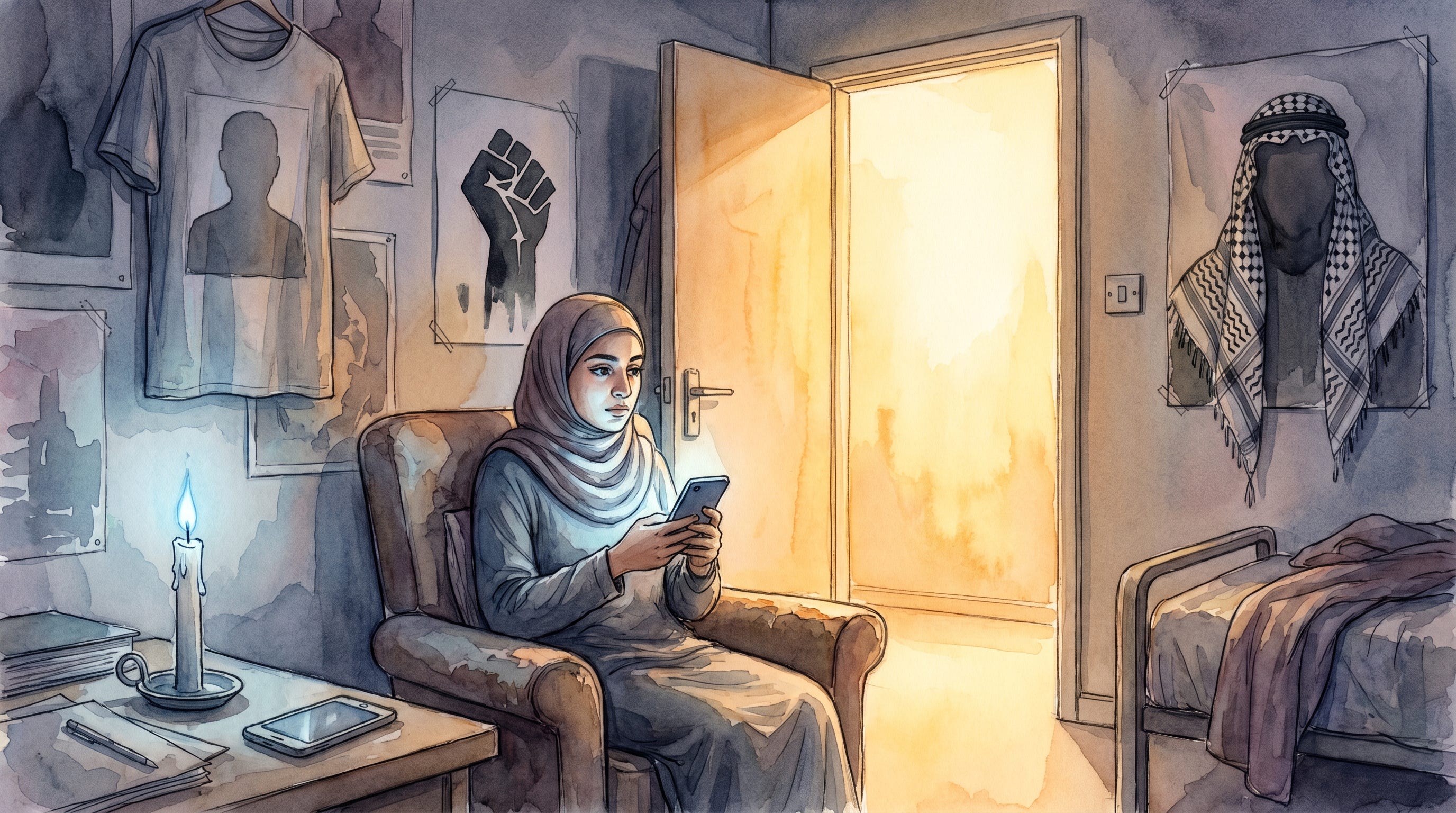
Now we move to the third point of the night, and the most difficult to land in our own moment, because it is the one that asks something of us and not just of the figures we have been discussing.
The mid-twentieth century did not happen in a vacuum.
The wretched of the earth were caught between two materialist empires — the Soviet bloc on one side, the American on the other — each pulling every “third path” eventually into its own gravity.
Vietnam, Cuba, Algeria, Egypt — all caught, sooner or later, by the gravity of one empire or the other.
The Cold War was the field on which the secular revolutionary tradition was built and constrained.
Every secular liberation movement of those decades had to ask itself, sooner or later:
Which empire are you with?
And whichever answer it gave, it had bought its place in someone else’s calculus.
This is why so many of the iconic faces of twentieth-century revolution — Che Guevara on the t-shirt, Fidel Castro in the dorm-room poster, Nelson Mandela on the wall,
Bobby Sands in the Belfast stencil — became, in our own community, especially in our diaspora, the faces we admired without ever asking what their cause was for.
Today that borrowing lives in algorithmic iconography — posters become profile pictures, causes become aesthetics, and the covenant is replaced by the scroll.
We borrowed the iconography of secular martyrdom because we had no living iconography of our own to admire.
And we had no living iconography of our own because we had not lived our own theology.
The kitchen-and-shoes Islam had filled the mosque.
The candle had not yet been raised.
And the diaspora youth went to university, met the t-shirts and the posters and the keffiyehs draped over revolutionary figures whose causes they had never examined, and they reached for what was on offer —
because what was being offered in the prayer hall was not enough.
We do not mock these figures.
They had real causes.
Bobby Sands and the H-Block hunger strikers in 1981 — sixty-six days of hunger strike; he was twenty-seven when his body forgot how to live.
Nelson Mandela — twenty-seven years in Robben Island and Pollsmoor for his refusal to accept the apartheid state’s legitimacy.
Fidel Castro and Che Guevara were real opponents of empire’s brutality in the Caribbean and the cone of South America.
Honour where honour is due.
But we ask, of every face we have admired in our youth, the diagnostic question this whole series has been building:
Was the cause anchored in the covenant with God, or only in the will of history?
If only in the will of history —
the witness is closer to a tragic loss than to the candle of society.
The candle of society burns by the oil of revelation.
Without the oil, the wick can still be set alight, but the light goes out when the wick is gone, and the room returns to the darkness it was in before.
The trap is real.
We have admired their faces without asking what their cause was for, because we had not yet learned to admire the face that asked the question and answered it correctly.
And the face that asked the question and answered it correctly was right there, in our own caravan, on a plain in Iraq, fourteen hundred years ago.
We just hadn’t been told.
Neither East Nor West — The Candle Lit
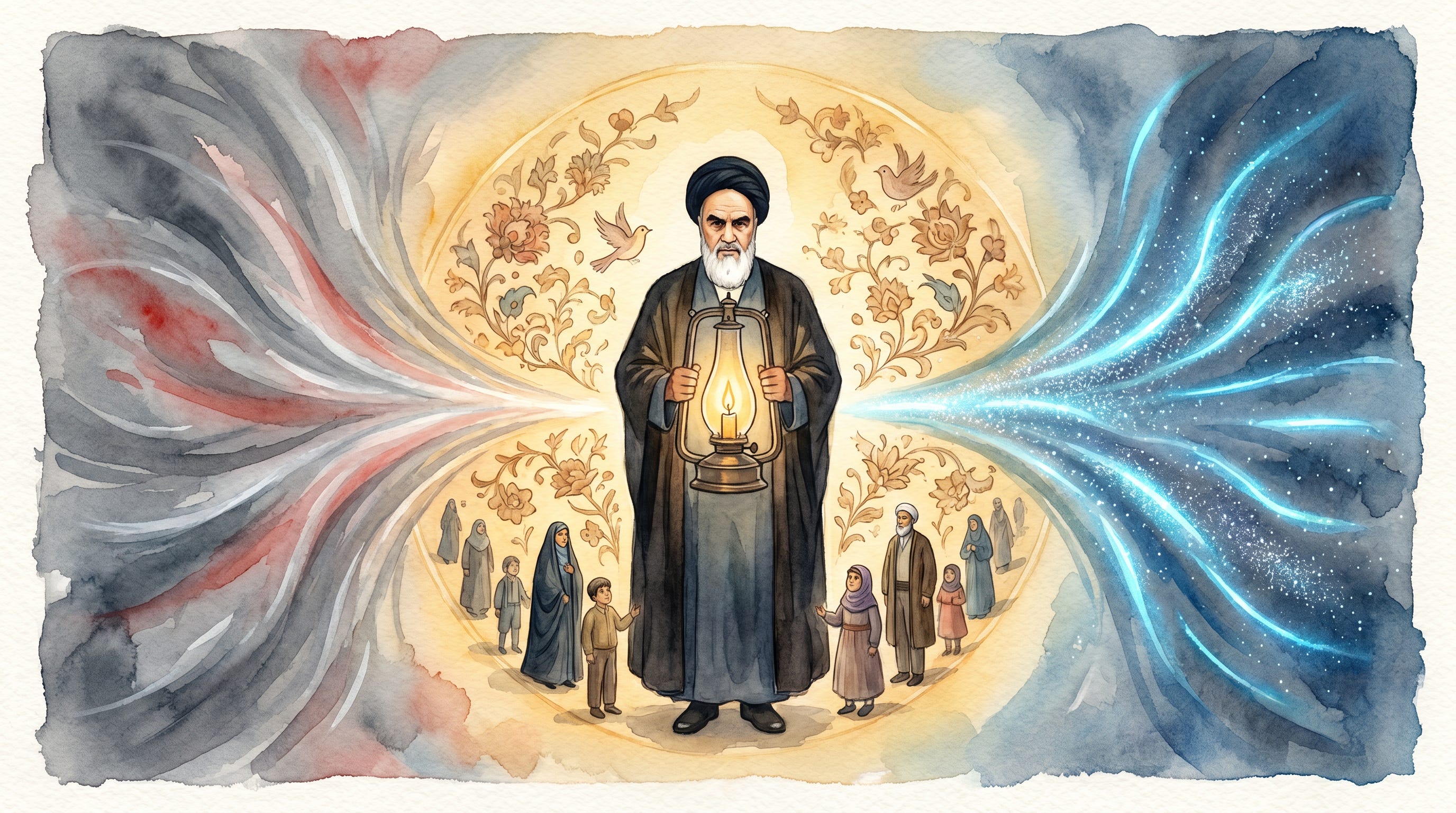
The Islamic Revolution in Iran of 1979 — under the leadership of Imam Khomeini — was the first major mass movement of the modern age to refuse both Cold War poles.
Not align with one against the other.
Not play one off against the other.
Refuse both.
Na sharqi, na gharbi — Jomhuri-ye Eslami.
Neither East nor West — Islamic Republic.
The slogan was not a piece of theatre.
It was a precise theological refusal.
The Soviet bloc offered one form of materialism — the materialism of class, of historical inevitability, of the man without God.
The American bloc offered another — the materialism of capital, of consumer choice, of the man whose horizon ended at the shopping mall.
The Islamic Revolution in Iran said, in the vocabulary of the prophets, neither.
That refusal was only possible because the candle was lit.
Without the lit candle, every “third path” the twentieth century had attempted had been pulled into one of the two materialist gravities.
Every secular non-aligned movement was eventually pulled in.
Only the Islamic Revolution held, and continues to hold — not because of Iranian exceptionalism, but because of the candle.
The wretched of the earth, who had had no Islamic revolution to look at when Fanon was writing in 1961, had one to look at by 1979.
Fanon did not live to see it.
Some of those who admired Fanon did.
And some of them began, in their own lives, the turning this whole night has traced — from the will of history toward the covenant with God — because there was, at last, a candle to turn toward.
The candle of society — Shaheed Motahhari’s candle — finally rose to the height of its lamp.
La Ikraha fi’l-Din — How a Witness Persuades
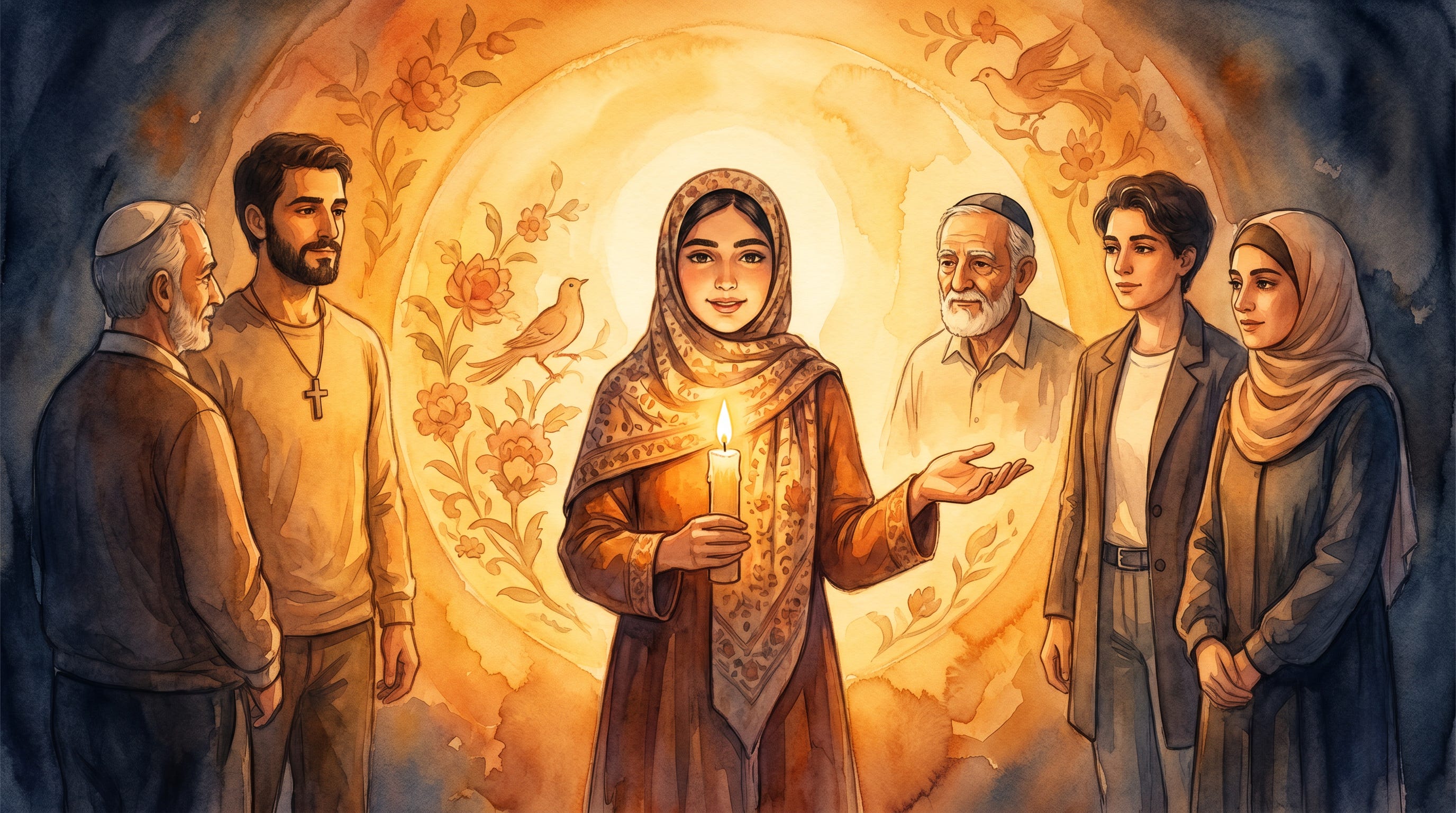
How does the witness, then, persuade?
If we have the candle and others do not — what is the believer’s task?
The Qur’an answers in three words and one verse:
لَا إِكْرَاهَ فِي الدِّينِ ۖ قَد تَّبَيَّنَ الرُّشْدُ مِنَ الْغَيِّ
“There is no compulsion in religion; the truth has been made distinct from error.”
— Qur’an, Surah al-Baqarah (the Chapter of the Cow) #2, Verse 256
La ikraha fi’l-din.
No compulsion in religion.
The candle illuminates; it does not compel.
The Prophet — peace and blessings be upon him, his family, and his righteous companions — did not force conversion.
The Imams — peace and blessings be upon them — did not force conversion.
The witness in our tradition is performed by the example of the life lived, not by the demand made of others.
That is the methodology of bayan, of tabyeen, of clarification.
The structural opposite is the takfiri counterfeit — “convert or die.”
DAESH’s “convert or die” is the structural opposite of Islam, not its excess.
We will dismantle that counterfeit fully in Session 9.
And here is a parallel discipline I want to leave you with.
Honour without conflation — the methodology we built in Session 5 — applies to events as much as it applies to persons.
We refuse the conflation of Imam Husayn with witnesses outside our tradition who got it partially right.
We equally refuse the conflation of Imam Husayn with events that share none of his architecture.
The holocaust victims did not choose their fate.
The Master of Witnesses chose his.
To equate the two is to violate both — to shrink Imam Husayn to victim-shaped suffering, and to grant the Nazi machinery a power over a witness it never possessed.
Imam Husayn was not a person who could be destroyed.
Sayyedah Zaynab — peace and blessings be upon her — in the court of Yazid, looked over what had been done to her brother and her sons and her caravan and said “I saw nothing but beauty” — and that single sentence forecloses any equivalence the equivalence-makers would draw between Karbala and any other catastrophe in human history.
The holocaust was a tragedy.
The pogroms were a tragedy.
The Nakba is a tragedy.
Karbala was a victory.
The Master of Witnesses chose his sacrifice and his sacrifice cannot be diminished by any tyrant or any catastrophe, because the choosing was already complete before the swords fell.
The equation of Karbala with the holocaust is sometimes offered from our pulpits as if it were a kindness to one tradition or both.
It is a kindness to neither.
It diminishes the unique theological station of Imam Husayn, and it trivialises the specific historical horror of the murder of the Jewish people and the millions alongside them.
We trust Imam Husayn to land on his own theological terms, and we refuse the borrowed iconography in every direction.
The chosenness of the believer is performed in how we treat the other — the Christian Palestinian, the Jewish anti-Zionist, the secular revolutionary who never had a candle to follow, the kitchen-and-shoes Muslim who has not yet seen what we have seen tonight.
We extend the hand.
We light the candle.
We trust the candle to do its own work.
That is what shahada-of-the-life looks like in our day.
The verse from al-Hujurat —
يَـٰٓأَيُّهَا ٱلنَّاسُ إِنَّا خَلَقۡنَٰكُم مِّن ذَكَرٖ وَأُنثَىٰ وَجَعَلۡنَٰكُمۡ شُعُوبٗا وَقَبَآئِلَ لِتَعَارَفُوٓاْۚ إِنَّ أَكۡرَمَكُمۡ عِندَ ٱللَّهِ أَتۡقَىٰكُمۡۚ إِنَّ ٱللَّهَ عَلِيمٌ خَبِيرٞ
O humanity! Indeed, We created you from a male and a female, and made you into nations and tribes that you may know one another. Indeed the noblest of you in the sight of God is the most Godwary among you. Indeed God is all-knowing, all-aware.
— Qur’an, Surah al-Hujurat (the Chapter of the Chambers) #49, Verse 13
We are made into nations and tribes that we may know one another — is not decoration.
It is the operating manual for the believer who has just understood what chosenness actually requires.
The Pact We Make Tonight
So a pact, between this night and tomorrow.
Three options.
Each takes the one that fits your state.
One.
Find one secular revolutionary whose face you have admired without examining — Bobby Sands, Che Guevara, Mandela, Fanon himself.
Read the actual life.
Honour what was real in their courage.
And ask the diagnostic question: was their cause anchored in the covenant with God, or only in the will of history?
Two.
Or — take one of the three houses we visited tonight.
Pick the one that disturbed you most.
Study, with kindness, the period in which that house’s prophetic root went quiet.
Not to indict.
To understand.
The understanding alone is its own kind of repair.
Three.
Or — find one person in your own life who has gone elsewhere because our house had nothing to offer them.
A cousin.
A friend.
A child.
A spouse who has stopped praying because the prayer had stopped speaking.
Do not bring them back with arguments.
Bring them back with a hand.
Be the candle.
Whichever option lands for you tonight — take it.
The point is not to choose well.
The point is to choose.
The Road Ahead
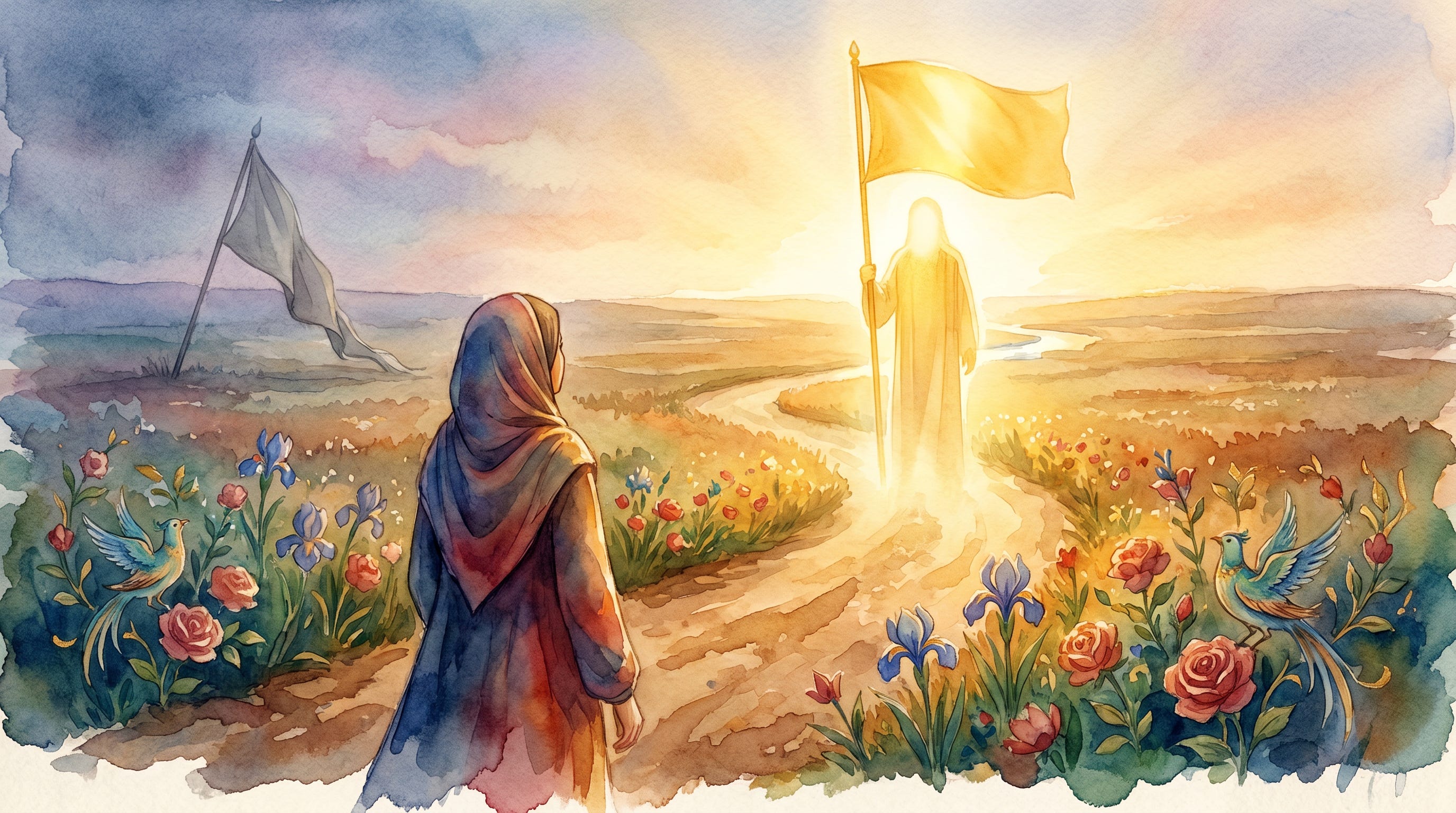
Tomorrow night — the seventh — we move from Europe and the Cold War to the colonial world’s other great twentieth-century question.
Vietnam.
Ho Chi Minh, the political theology of anti-colonial liberation, the merit and the limit of mass sacrifice in a national cause as opposed to a covenantal one.
And the maqtal will carry Abbas son of Ali — peace and blessings be upon him — the standard-bearer, the water-carrier, the loyal brother whose hand was severed and who held to the standard with the other, until that one too was severed.
The perfected anti-colonial witness, because his standard was for the Proof of God, not for any flag that could one day be folded away.
Tomorrow.
The Question to Carry Home
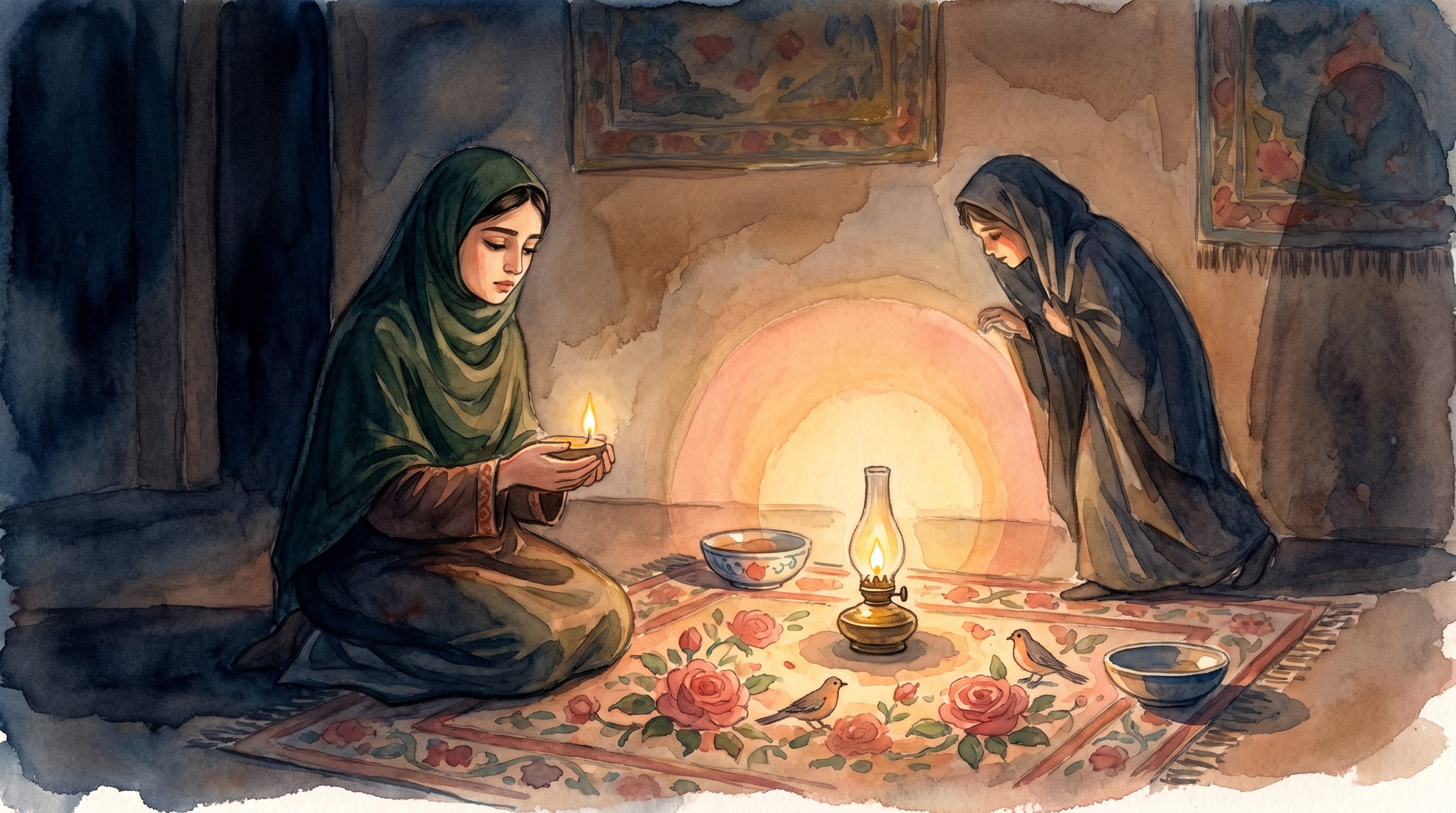
Before we move to the maqtal, one question to carry home.
When you have admired the face of a witness who was not anchored in the covenant — Che on a t-shirt, Fanon on a syllabus, Mandela on a wall — was your admiration the recognition of a partial truth, or was it the substitution of a partial truth for the full one?
The partial truth is real.
The substitution is the trap.
The candle gives off enough light to see the difference.
Imam Husayn — peace and blessings be upon him — never reached for diminishment.
He honoured every witness who had come before him — David (Dawud), Solomon (Sulayman), John the Baptist (Yahya), Jesus (Isa) — peace and blessings be upon them all — even as he gave his own life to the witness only he could give.
The proof of tabyeen is whether the lamp gives off enough light that a stranger can come closer, not enough heat to drive them away.
Tonight we lit the lamp.
Tomorrow we tend it.
Cherry Blossoms at Dawn
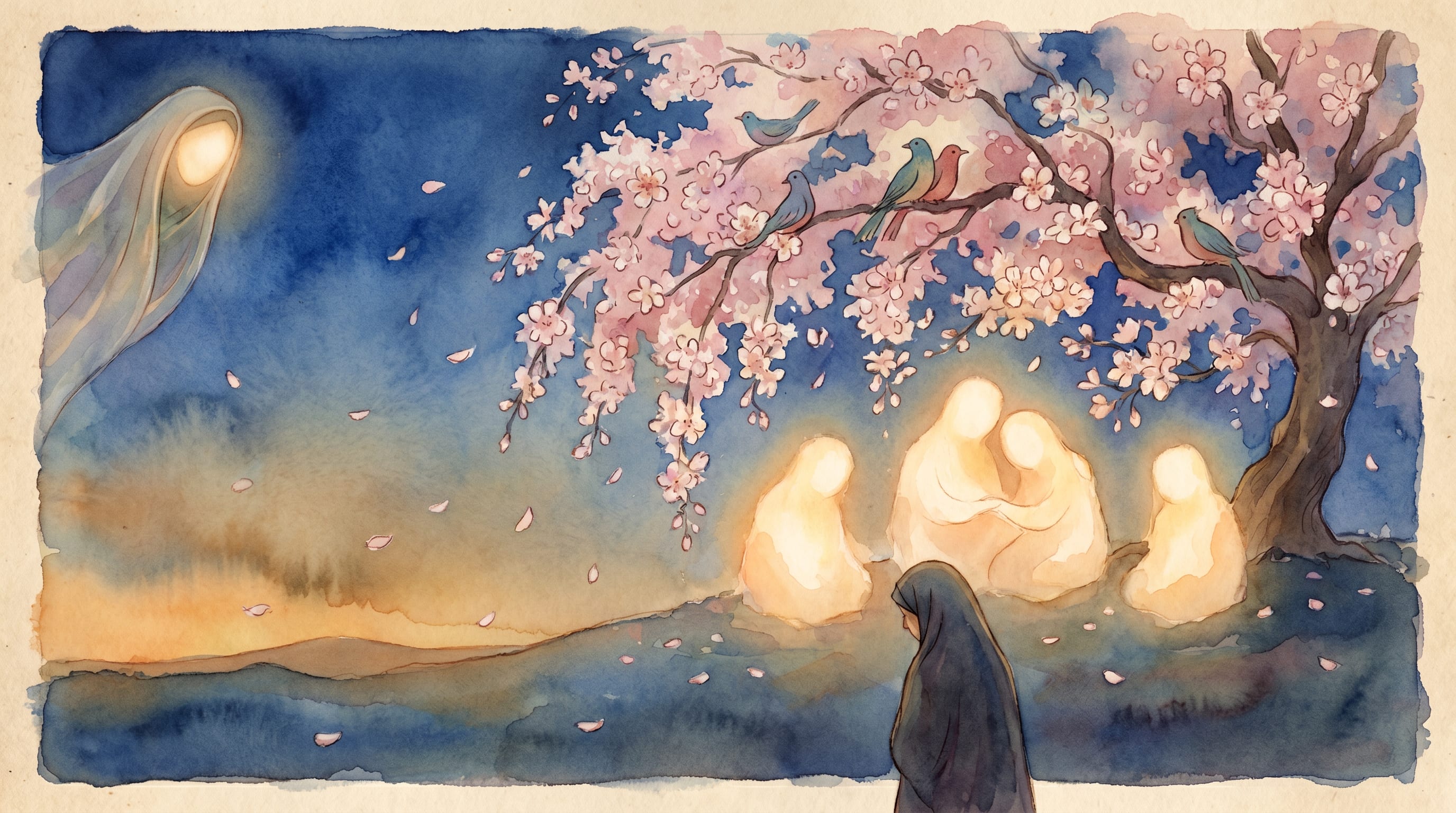
But before tomorrow, tonight is not yet finished.
Tonight’s maqtal carries four figures, woven together.
All four were born facing the right direction.
None had to turn.
All four walked into the dawn of Ashura because the family had walked there — and because the family was the right family.
The first — Qasim ibn al-Hasan — peace and blessings be upon him — the son of the Imam who had been poisoned in his own house by his own wife, Ja’da bint al-Ash’ath, whom Mu’awiyyah had bribed with the false promise of marriage to Yazid — and the nephew of the Imam who was about to be slaughtered.
Fourteen years old, or thereabouts.
Still in the body of a boy.
Still close enough to childhood that his uncle was holding his hand on the night before Ashura when he asked him the question that would seal his place in the chain.
The second — Ali al-Akbar ibn al-Husayn — peace and blessings be upon him — the eldest son of Imam Husayn, eighteen years old, who resembled the Messenger of God so closely in face, in voice, in bearing, that to look at him was to remember the grandfather none of the family had stopped grieving.
When he asked his father for permission, his father looked at him and saw the Prophet looking back.
And the third and the fourth — Aun and Muhammad — peace and blessings be upon them both — the two brothers, sons of Abdullah ibn Ja’far at-Tayyar — peace and blessings be upon him, the son of Ja’far the one who flies in paradise on his two wings.
And the sons of Sayyedah Zaynab — peace and blessings be upon her — the sister of the Master of Witnesses — who walked them by the hand to her brother’s tent the night before Ashura and asked him to receive them in the place their father, kept in Medina by infirmity, could not stand.
Aun the elder — the one who flies — reciter of the chapters and verses of the Qur’an.
Muhammad the younger — the half-step-behind who would not be parted from his brother on the last morning.
Four boys.
Three farewells, one morning.
Three mothers: Sayyedah Ramla, Sayyedah Layla, Sayyedah Zaynab.
Tonight we will not tell their stories one after the other.
Tonight we will braid them.
The asking — Qasim’s, Ali al-Akbar’s, and Sayyedah Zaynab’s — told side by side.
The going out — Qasim alone, Akbar alone, and the two brothers together because they would not be separated.
The falling — and here the parallel breaks open into difference, because the four bodies came back to the camp differently, and the difference itself preaches.
The bringing back — the orphan-child gathered in pieces by his grieving uncle, the perfect-resemblance borne whole by his weeping father, the two brothers carried side by side in the uncle’s two arms back to their mother — laid, in our memory, all four together at the edge of the tents.
Revolutionary youth die for an idea.
The youth of Husayn die for the Proof of God.
That is the difference.
And that is everything.
The voice that carries our maqtal across this series — the Imam of the Age — may our souls be his ransom, and may God hasten his return — comes to us tonight from behind the veils, for all four of them.
The opening cello carries one note.
The four stories begin.
Listen.
Segue to Maqtal (Lamentation)
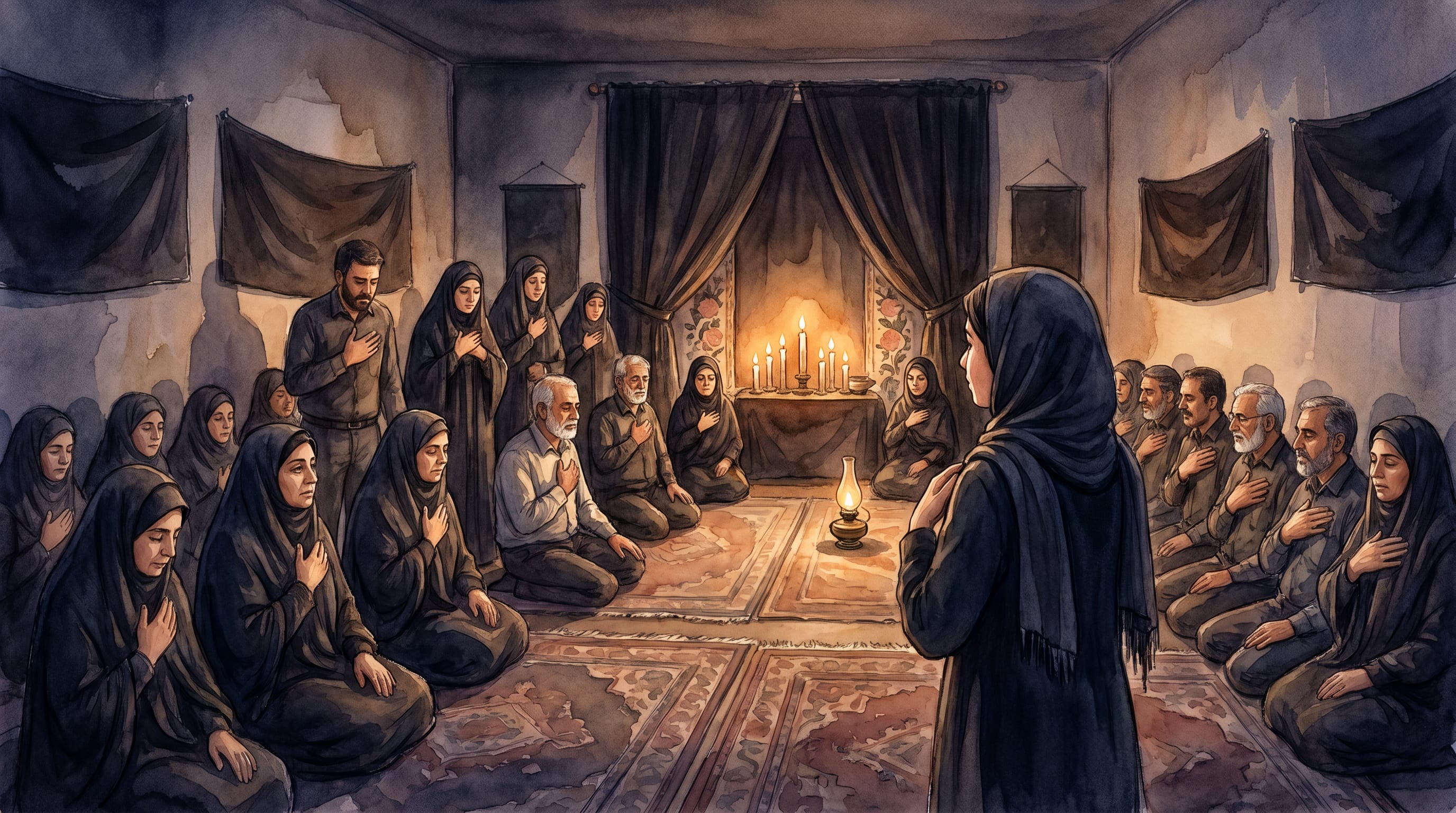
Maqtal (Lamentation) for the Sixth Night of Muharram 2026/1448
Supplication
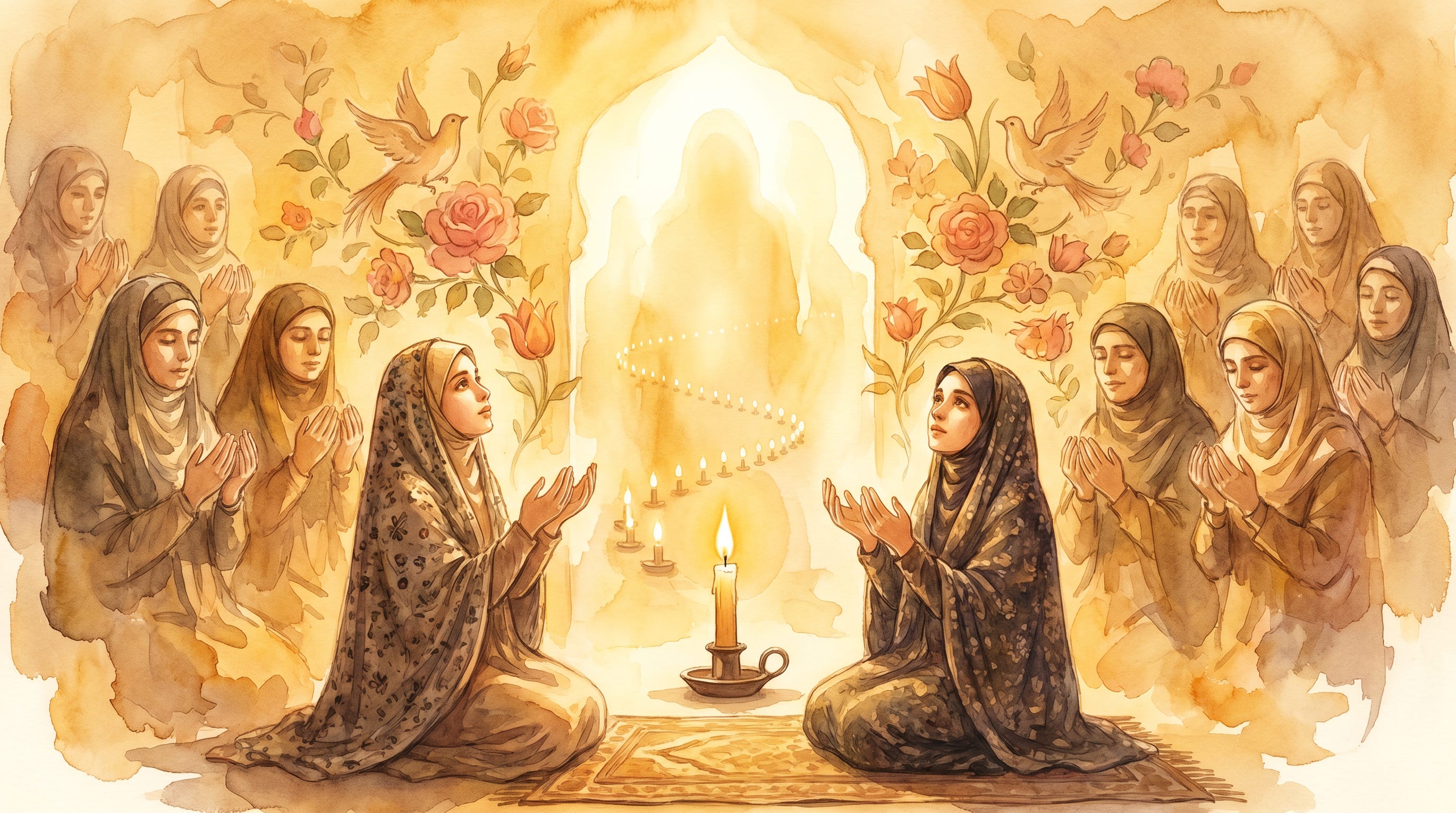
Peace upon Abel, the first witness of the earth.
Peace upon every witness in every tradition who refused to bow.
Peace upon the Hurrs of every house.
Peace upon Qasim and Ali al-Akbar and the two brothers Aun and Muhammad, who never had to reach because they were born holding it.
Peace upon Husayn, the Master of the Witnesses.
Peace upon the Imam of our Age — may our souls be his ransom and may God hasten his return.
Peace upon the candle that no Cold War can put out, that no empire can blow out, that no diaspora can mislay, that no kitchen-and-shoes Islam can extinguish — because the oil of that candle is the oil of the prophets, all the way back to the first witness, all the way forward to the witness who has not yet come.
O God, we have nowhere to go but Your door.
You are the One who made us into nations and tribes that we might know one another.
You are the One who made covenant before You made body.
You are the One whose justice — ’adl — is the principle of Your Being, by which a chosen people is a people of responsibility and never a people of possession.
O God, send Your peace and Your blessings on Your last messenger Muhammad and his family and his righteous companions.
Send Your peace on the prophets of every house — on Adam, on Abel, on Noah, on Abraham, on Ishmael and Isaac, on Moses and Aaron, on David and Solomon, on John the Baptist and Zechariah, on Jesus son of Mary, on every one of them whose names we know and whose names only You know.
O God, Tonight we have brought into Your presence the souls of the wretched of the earth who reached for what was not yet on the table.
We grieve them, O God.
We name them — Frantz Fanon, in his early grave at thirty-six in Bethesda.
Karl Marx, who diagnosed dead religion and died not knowing the living one.
Che Guevara, whose body fell on a Bolivian slope in 1967.
Bobby Sands, who went hungry in the H-Block until his body forgot how to live.
Nelson Mandela, twenty-seven years on Robben Island.
The young Algerians, the young Vietnamese, the young Cubans, the young Lebanese and Palestinians, whose names have not survived their own decade.
We do not place them where You have not placed them.
We do not raise them above their station.
But we grieve them — because the candle they could have followed was not yet lit at the moment they were looking.
And we ask You, O God, in Your justice that exceeds our understanding, to weigh their lives by the light they could see, not the light they could not.
O God, we honour the Hurrs of every house.
O God — every soul in every age who stood at the edge of the choice and turned toward You; who refused to bow to tyranny; who gave their comfort, their safety, or their lives so that the oppressed would not be abandoned — receive them by Your measure, not ours.
O God, look upon the wronged and the dispossessed of every land — those crushed beneath occupation and injustice, those who cried out for deliverance and were not answered by men — and be Yourself their helper, for You have promised to aid those who are wronged.
Send Your peace upon Sayyed Hassan Nasrallah, in the second Muharram since his own martyrdom on Your road.
And send Your peace upon every name we will hear tomorrow night — we hold them tonight only in passing, knowing tomorrow is theirs.
O God, The longer return is to Husayn ibn Ali, the Master of Witnesses, in whom every chain finds its completion.
To his brother Hasan.
To their father Ali ibn Abi Talib, the Commander of the Faithful.
To their mother Sayyedah Fatima al-Zahra, the daughter of the Prophet.
To the Imams of guidance, in the chain that runs from Imam Husayn to the Imam of our Age, may our souls be his ransom, and may You O our beloved Lord, hasten his return.
O God, Send Your peace upon Qasim ibn al-Hasan, the boy who asked his uncle and was answered, whose body came back in pieces and whose witness came back whole.
Send Your peace upon Ali al-Akbar ibn al-Husayn, the eighteen-year-old whose face was the face of the Prophet of God.
And we ask You, O God, that the dawn that broke for them may break, in its own way, for every young person in this room who is still being asked which face to wear, which cause to die for, which idea to follow.
Show them the face that asked the question and answered it correctly.
Show them Husayn.
O God.
In this Muharram — the first since the martyrdom of Imam Khamenei — send Your peace upon him.
The man who refused the East and the West.
Who lit the path for everyone who turned.
Who visited Christian martyrs’ homes every Christmas, who held the line of honour without conflation from the seat of leadership for thirty-six years, whose voice we still hear when we listen for it.
Welcome him into Your nearness, O God, with Your prophets and Your Imams and Your martyrs and Your saints.
O God.
Hasten the return of the Imam of our Age.
Make us of his helpers.
Make us of his soldiers.
Make us of those who, when he calls, are already standing.
O God — we have nowhere to go but to You, and no one to ask but You, and no words enough except the ones You have placed on the tongues of Your friends:
إِنَّا لِلَّهِ وَإِنَّا إِلَيْهِ رَاجِعُونَ
“We belong to God, and to Him we return.”
— Qur’an, Surah al-Baqarah (the Chapter of the Cow) #2, Verse 156
And we repeat your promise, an eternal promise for Justice, and a warning for the wrongdoers:
وَسَيَعۡلَمُ ٱلَّذِينَ ظَلَمُوٓاْ أَيَّ مُنقَلَبٖ يَنقَلِبُونَ
And the wrongdoers will soon know at what goal they will end up.
— Qur’an, Surah al-Shu’araa (the Chapter of the Poets) #26, Verse 227
And we add, from the depths of everything we have learned tonight:
حَسْبُنَا اللَّهُ وَنِعْمَ الْوَكِيلُ
“God is sufficient for us, and He is the best of guardians.”
— Qur’an, Surah Aal Imran (the Chapter of the Family of Imran) #3, Verse 173
Amen, O Lord Sustainer of the Universes.
Amen, O Most Merciful of the Merciful.
And from Him alone is all ability, and He has authority over all things.