

In His Name, the Most High
Opening: The Morning After

It is Eid.
The fast is broken.
The suhur alarm will not ring tomorrow.
The long afternoons of thirst, the slow crawl toward maghrib, the hunger that became — somewhere around the third week, if you were paying attention — something other than hunger, something more like a door left open: all of that is over.
The discipline that held this month together has been released.
And into the sudden looseness of this morning — the sweetness of the first daytime glass of water, the strange freedom of an afternoon with no iftar to prepare for — a question arrives.
It is a quiet question.
You will not find it in the takbirat or the Eid greetings or the embrace of your family.
It comes later, in the pause between festivities, in the silence after the prayer.
And it asks:
Who are you now?
Are you the person you were before this Month of Ramadhan?
Or has something changed — something underneath the surface, below the level of habit and routine, in the place where the real work was being done while you thought you were just hungry?
If you have been with us through this series — through the five Saturday evenings that carried us from just before the start of the Month of Ramadhan to the Night of Qadr — then you know what I mean by the real work.
You were there in Session One when we heard the call of Abraham, peace be upon him, and made the Great Migration — not from one city to another, but from the house of the ego into the open air of the month.
We learned that fasting is not deprivation but departure.
That the Month of Ramadhan does not begin with an empty stomach.
It begins with a leaving.
You were there in Session Two when we scrubbed the mirror of the heart — limb by limb, sense by sense — and discovered that the heart is not broken.
It is covered.
And that the glass we were cleaning had been waiting, under all that dust, to show us the face of God.
You were there in Session Three when we sat at the Banquet —
“You are the guests of God”
— and learned that the food on the table was not bread but Ma’rifah: intimate knowledge that changes the one who receives it.
We were fed by God Himself.
You were there in Session Four when we met the Greatest Idol — not a statue of stone but the living, breathing structure of habit and comfort and self-satisfaction — and heard Imam Ali, peace be upon him, say
arudduha — “I am training it, not killing it”
— and understood that the ego is a horse to be ridden, not a demon to be destroyed.
And you were there last week — Session Five, the Night of Qadr — when the moth finally reached the flame.
When the bankrupt servant arrived at the door of the King with nothing in his hands and discovered that the nothing was the entrance fee.
When Imam Ali’s word rang out from Letter 31 like a command across centuries:
qarrirhu bi’l-fana’ — settle the heart into its own annihilation.
And we closed with a promise.
We said:
Sibghatullah. The colour of God. The dye that does not wash out.
We said:
did the dye hold?
We said:
that is for Eid.
It is Eid.
If you were not with us — if this is the first of these sessions you have encountered, if someone sent you a link this morning or you stumbled onto these words on your own — then I want to say two things.
First: welcome.
You are not late.
There is no door in this series that closes behind you.
Everything we have built over five weeks is still standing, and the texts are there, the videos are there, the audios are there if you want to walk the path from the beginning.
I hope you will.
The journey is worth the walking.
Second: you already know the question I am about to ask.
You do not need five weeks of preparation to feel it.
You felt it this morning, or you will feel it tonight, or you will feel it on the first ordinary Monday after Eid when the alarm rings and there is no suhur and no prayer and no special night — just life, returned to its usual shape, with you inside it.
The question is:
did Ramadhan change me?
And beneath that question, a harder one:
will the change last?
The scholars anticipated this fear.
They knew that Ramadhan’s architecture — the communal rhythm, the enforced discipline, the nightly gatherings, the special du’as — creates a scaffolding around the believer that holds the soul in place.
And they knew that when the scaffolding comes down on Eid morning, many people feel the old structure shifting underneath them.
The mirror begins to cloud.
The horse, so carefully trained, starts to pull.
This is not failure.
This is the human condition.
But the tradition does not leave us there.
The tradition says: something happened to you this month.
Something that, if it was real — if the fast reached below the stomach to the heart, if the prayer was not just motion but meeting, if the mirror was truly scrubbed and not merely wiped — something that cannot be fully undone.
The tradition has a word for it.
صِبْغَةَ اللَّهِ
Sibghatullah.
The dye of God.
Cloth that has been truly dipped does not return to its original colour.
It may fade.
It may require redipping.
But the fibre itself has been altered.
The dye is not paint on the surface.
It has entered the weave.
Tonight — our last evening together of this series, our Eid gathering, the final session of The Joy of Fasting — we ask:
did the dye hold?
What does it mean for the dye to hold?
And what do you carry out of the Month of Ramadhan into the long months that follow?
The answer, as always, will come from the ones who knew.
From Imam Ali, whose letter has guided us all month.
From Imam Khomeini, whose Adab as-Salat gave us the theology of transformation.
From Ayatullah Bahjat, whose single sentences landed like pebbles in still water and whose ripples we are still tracing.
From Imam Sajjad, peace be upon him, who said goodbye to the Month of Ramadhan the way you say goodbye to a friend you loved and will never stop missing.
And from the du’a of the Eid prayer itself — which contains, in one extraordinary phrase, the secret of what Eid actually is.
We begin with that phrase.
Video of the Sermon (Majlis/Lecture)
Audio of the Sermon (Majlis/Lecture)
Movement 1: Sibghatullah — The Colour That Remains
The Verse
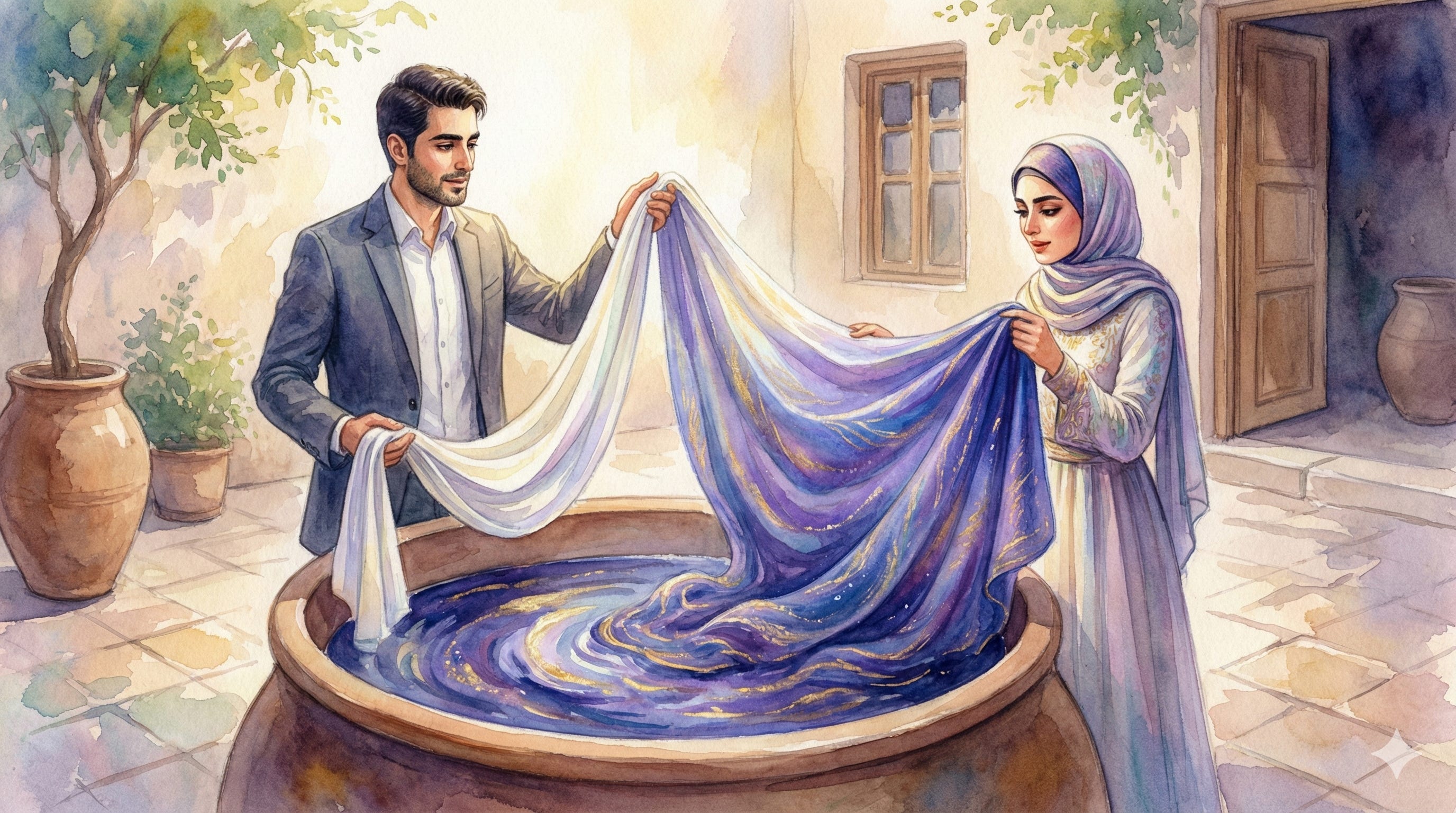
There is a verse in the Quran that most people pass over quickly.
It sits in the second surah, nestled between longer, more famous passages about the People of the Book, and it contains a single image so precise, so physical, that if you stop and let it land, it changes the way you understand everything the Month of Ramadhan was trying to do to you.
«صِبْغَةَ اللَّهِ ۖ وَمَنْ أَحْسَنُ مِنَ اللَّهِ صِبْغَةً ۖ وَنَحْنُ لَهُ عَابِدُونَ»
“The dye of God — and who is better than God at dyeing? — and we are His worshippers.”
— Quran, Surah al-Baqarah (the Chapter of the Cow) #2, Verse 138
Sibghatullah.
The word sibghah does not mean colour.
It does not mean paint.
It means dye — the kind you immerse cloth in, the kind that soaks through the fibres, the kind that does not wash out because it has become inseparable from the material itself.
Paint sits on the surface.
You can scratch it off.
You can cover it with another coat.
But a dye enters the weave.
It changes the structure of the fabric at the level of the thread.
And the Quran — in one word — tells you what God’s project with the human being has always been.
Not to decorate you.
Not to improve your behaviour.
Not to make you perform the right actions in the right order at the right times — though all of that matters, all of that is scaffolding, all of that is the vat in which the cloth is held.
The project is to dye you.
To change you at the level of the fibre.
To make God’s colour so deeply your own that you cannot be separated from it any more than the thread can be separated from its hue.
And here is what is extraordinary about this verse: it does not say try to be dyed.
It does not say hope for God’s colour.
It says — as a statement, as a fact, as an announcement — Sibghatullah.
The dye of God.
And then a challenge:
wa man ahsanu min Allahi sibghah? — who is better at dyeing than God?
The answer, of course, is no one.
No one dyes like God.
And if He is the one doing the dyeing — if the Month of Ramadhan was His vat, and fasting was the mordant that opened the fibres, and the prayers and the nights and the hunger and the breaking and the rebuilding were all the chemistry of immersion — then the question of Eid morning is not whether you did enough.
The question is whether you stayed in long enough for the colour to take.
Imam Khomeini — The Body Itself Is Meant to Be Dyed
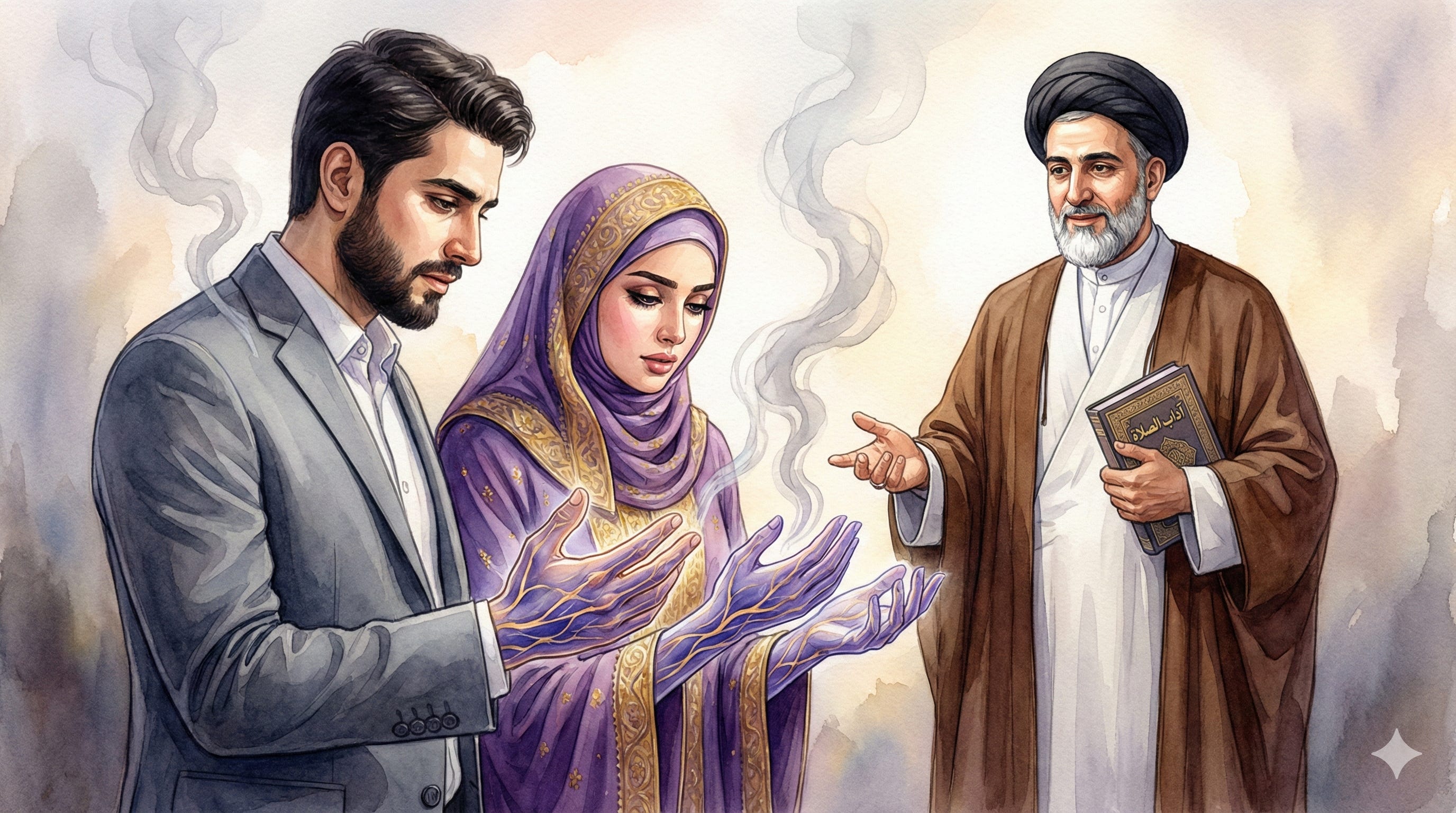
Imam Khomeini, in his extraordinary Adab as-Salat — The Disciplines of Prayer — takes this verse and does what only Imam Khomeini could do with it.
He makes it the destination of the entire spiritual journey.
Not one stop along the way.
Not one station among many.
The destination.
He writes:
وَغَايَةُ سَيْرِ أَهْلِ اللَّهِ هِيَ أَنْ تَكُونَ الطَّبِيعَةُ وَمُلْكُ الْبَدَنِ مُنْصَبِغَةً بِصِبْغَةِ اللَّهِ
“And the ultimate goal of the wayfaring of the people of God is that nature itself — and the kingdom of the body — become dyed in the dye of God.”
— Imam Khomeini; Adab as-Salat (The Disciplines of Prayer)
Read that again.
The kingdom of the body.
Not the soul.
Not the spirit.
Not some ethereal, disembodied part of you that floats above the mess of daily life.
Imam Khomeini says: the body.
The hands.
The tongue.
The eyes.
The stomach that spent thirty days learning a new rhythm.
This is what separates the Islamic understanding of transformation from every brand of spirituality that asks you to escape the body, transcend the material, leave the world behind.
Imam Khomeini says: no.
The body is included.
The body is the point.
The Sibghatullah does not bypass your physical existence.
It soaks through it.
And this is why fasting — of all the forms of worship available — is the door through which the Month of Ramadhan enters.
Because fasting is the one act of worship that is entirely, inescapably physical.
You cannot fast in your mind.
You cannot fast in theory.
You fast in your stomach, in your throat, in the ache behind your eyes at three in the afternoon when the world smells like food and your body says enough.
Fasting takes the kingdom of the body and holds it — by its own consent, by its own submission — in the vat.
Imam Khomeini is saying:
that was not punishment. That was dyeing.
He goes on.
The passage continues — and this is important — with a warning.
He says that as long as there remains in the soul any trace of ananiyyah — selfhood, self-worship, the residue of the ego that we met in Session One and fought in Session Four — then the result of all worship, even the most sincere, will be incomplete.
The dye will not penetrate fully.
The fibres will resist.
فَفِي النَّفْسِ بَقِيَّةٌ مِنَ الْأَنَانِيَّةِ
“There remains in the soul a trace of egoism.”
— Imam Khomeini; Adab as-Salat (The Disciplines of Prayer)
That trace — that last stubborn thread that refuses to absorb the colour — is what the entire month has been working to soften.
The migration of Session One was leaving the house of that ego.
The mirror of Session Two was scrubbing its fingerprints off the glass.
The idol of Session Four was naming it aloud.
The fana’ of Session Five was the moment the thread finally, finally let go and allowed the dye in.
And Eid morning is when you check the cloth.
Ayatullah Bahjat — When the Walls Become Your Teacher
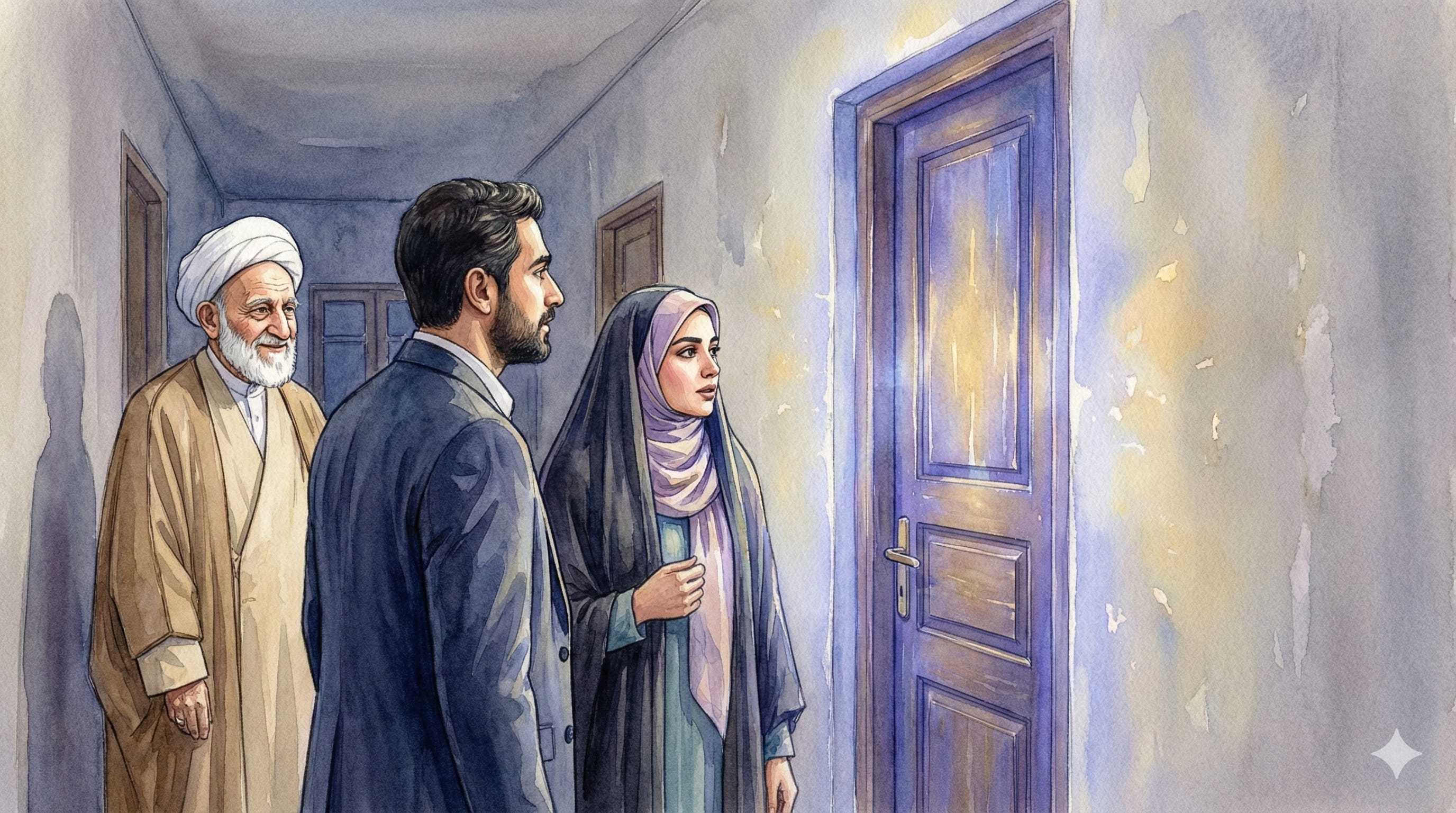
Ayatullah Bahjat — that quiet, precise man whose words have accompanied us like pebbles dropped into still water — takes the same teaching and gives it a test.
A way to know whether the dye has held.
He says:
معرفةُ اللهِ أعظمُ العبادات، و همهی تکالیف مقدمهی معرفت خدا هستند
“Knowledge of God is the greatest of all acts of worship. And all obligations — every single one of them — are merely preparation for knowing God.”
— Ayatullah Bahjat; Dar Mahzar-e Bahjat (Rakhshad)
Every prayer, every fast, every act of charity, every lowered gaze, every bitten tongue — all of it, all of it, is preparation.
Means, not ends.
Scaffolding, not building.
The building is ma’rifah — that intimate, transformative knowledge of God that we first met in Session Three at the Banquet.
And then Ayatullah Bahjat says something so extraordinary that it stopped me the first time I read it, and it has not stopped stopping me since:
اگر کسی اهلیت داشته باشد، یعنی طالب معرفت باشد و در طلب، جدیت و خلوص داشته باشد، در و دیوار به اذن الله معلمش خواهند بود
و گرنه سخن پیغمبر هم در او اثر نخواهد کرد، چنان که در ابوجهل اثر نکرد
“If someone has the capacity — meaning they are a seeker of knowledge, and they pursue that seeking with seriousness and sincerity — then the walls and doors will become their teacher, by God’s permission.”
“And if they do not — then even the words of the Prophet himself will have no effect on them. Just as they had no effect on Abu Jahl.”
— Ayatullah Bahjat; Dar Mahzar-e Bahjat (Rakhshad), entry 22
Listen to both halves of this teaching, because they are equally important.
The first half is a promise: if the dye has truly entered you — if you come out of the Month of Ramadhan with genuine sincerity, with real thirst for God — then the world itself becomes your teacher.
You do not need a shaykh at your elbow every moment.
You do not need to be inside the special nights, the special prayers, the scaffolding of the month.
The walls of your home will teach you.
The door you open every morning will teach you.
The face of your child, the silence of your commute, the ordinary Tuesday afternoon that has no special designation in any calendar — all of it will speak, because the one who has been dyed sees God’s colour everywhere.
This is what the Sibghatullah does.
It does not just colour you.
It colours everything you look at.
The second half is a warning: without that sincerity, without that genuine transformation at the level of the fibre, nothing works.
Not the Prophet’s own words.
Not the most eloquent sermon.
Not the most moving du’a.
Abu Jahl heard the Quran from the lips of the man who received it — and it had no effect.
The cloth was never placed in the vat.
The dye never had a chance.
Ayatullah Bahjat is asking you, on Eid morning, to be honest with yourself.
Were you in the vat?
Or were you next to the vat, watching others be immersed, admiring the process, perhaps even describing the process beautifully — but keeping your own cloth dry?
If you were in the vat — even partially, even imperfectly, even if you spent half the month distracted and the other half struggling — then the walls and doors are already speaking to you.
You may not hear them clearly yet.
The dye may still be settling.
But the fibre has changed.
And the world, for you, will never look quite the same.
That is what the Month of Ramadhan was for.
That is what the fast accomplished.
That is the Sibghatullah.
Interlude: What Is Eid?
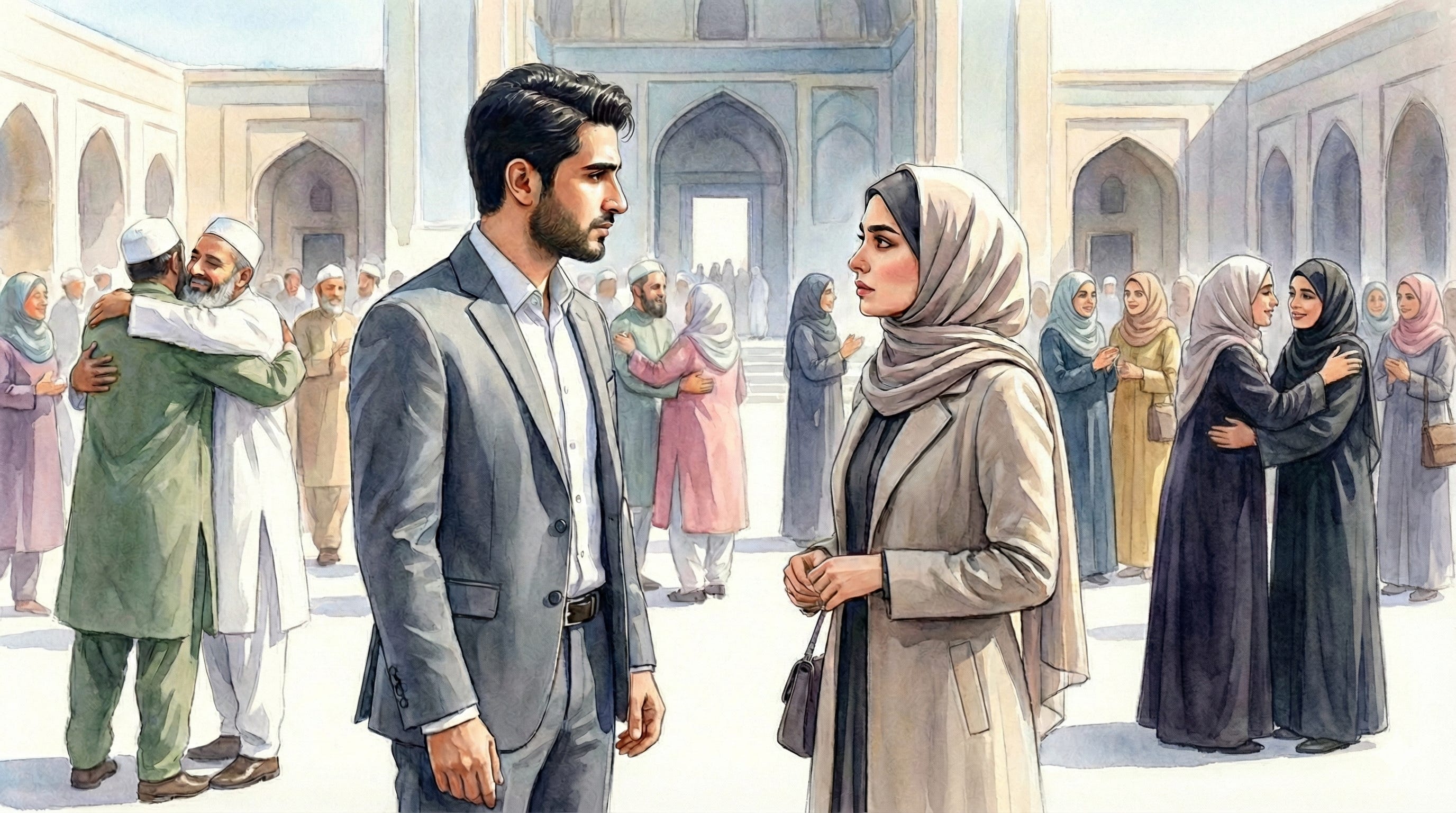
Before we ask what provisions to carry out of the Month of Ramadhan — what tools the tradition gives us to protect and preserve this transformation — we need to pause and ask a more basic question.
Because the word we have been using all morning, the word on everyone’s lips, the word in every greeting and every message — Eid — that word contains a theology most of us have never been taught.
The Eid Prayer Is a Sermon, Not Just a Celebration
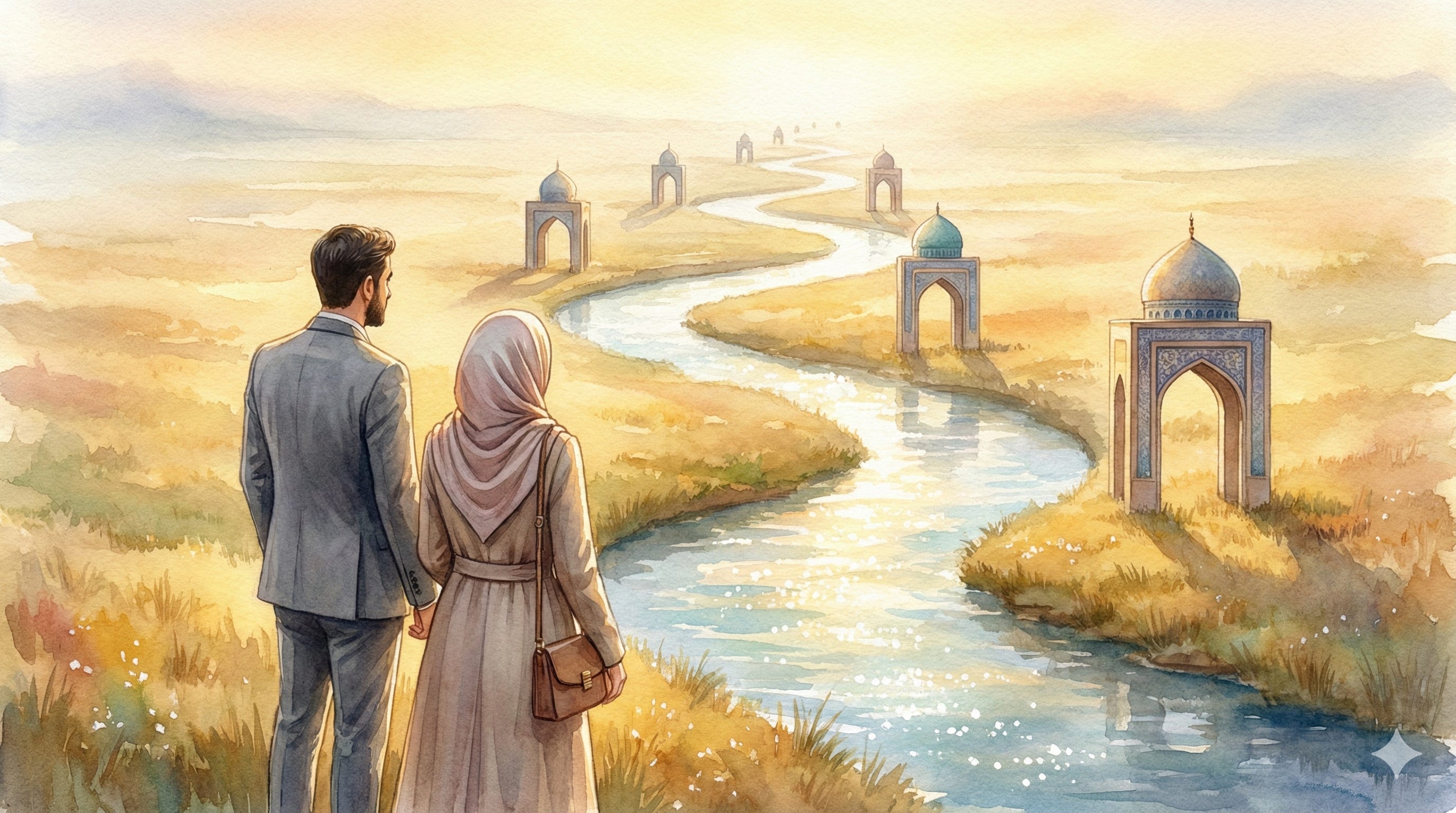
Notice the structure of the Eid prayer.
It is not simply two rak’at and a greeting.
It is two rak’at followed by two khutbas — two sermons.
Prayer first, then teaching.
Now notice: this is the reverse of Salat al-Jumu’ah, the Friday prayer.
On Friday, the two sermons come first, and the two rak’at follow.
The imam teaches, then the congregation prays.
The word prepares you for the worship.
On Eid, the order is flipped.
You pray first.
Then you are taught.
This is not merely custom.
The jurisprudence is precise.
In the Friday prayer, the two sermons structurally replace the two omitted rak’ahs of the four-rak’ah Dhuhr prayer — they are a condition of the prayer’s validity, which is why they must precede it.
But the Eid prayer is a standalone two-rak’ah prayer; it does not replace any daily obligation.
Its sermons are a recommended exhortation — guidance that follows the act, not a pillar that enables it.
Imam al-Sadiq, peace be upon him, clarified this when asked about the prayer of the two Eids:
«رَكْعَتَانِ... وَالْخُطْبَةُ بَعْدَ الصَّلَاةِ»
“Two rak’ahs... and the sermon is after the prayer.”
— Imam Ja’far al-Sadiq; Wasa’il al-Shi’a (al-Hurr al-’Amili), Volume 7, Hadith 9802; originally in al-Kafi (al-Kulayni), Volume 3, Page 460
This was the order established by the Prophet, peace be upon him and his family, and maintained by the Imams of the Ahlulbayt — even when later rulers reversed it for reasons of their own.
But listen to the theology inside the structure, because it speaks directly to what we have been doing all month.
On Friday, you come from the week.
You come from the marketplace, from the office, from the noise and distraction of ordinary life.
You need the sermon to gather you, to remind you, to bring your heart back from wherever it has wandered before you stand before God.
The words prepare you for the prayer.
But on Eid morning, you come from the Month of Ramadhan.
You have already been gathered.
You have already been taught — not by one sermon but by thirty days of them.
The month itself was your khutba.
The fasting was your instruction.
The nights of prayer, the breaking of the idol, the bankrupt standing before God on the Night of Qadr — all of that was the preparation that, on any ordinary Friday, the imam’s words would need to provide.
On Eid morning, you do not need to be prepared for prayer.
You arrive already prepared.
The prayer does not need the sermon to be valid — and neither, in a sense, do you.
So the prayer comes first — immediately, directly, without preamble.
You stand before God with whatever the month has made of you, and you pray.
And the sermon that follows?
It is not preparation for worship.
It is guidance for what comes next.
It faces forward, not backward.
It asks:
now that you have prayed as someone shaped by the Month of Ramadhan, how do you carry that shape into the world you are about to re-enter?
This is the question of our session tonight.
And every Friday — every single week of the year — is itself an Eid.
The weekly celebration.
The weekly rehearsal.
The rhythm built into the architecture of Muslim life that says: the gathering before God is not a rare event. It is a pulse.
Something that beats through the days whether you are inside the special month or long past it.
Every Friday, the cycle begins again — sermon, then prayer.
Teaching, then worship.
Because outside of the Month of Ramadhan, you will need the preparation again.
You will need the words to gather you before you can stand.
But you will stand on those Fridays having once stood on Eid morning — having once arrived already prepared, already dyed — and the memory of that standing will be the thread that connects every Friday back to this day.
Eid al-Fitr, then, is not a break from the rhythm.
It is the rhythm’s source — the annual gathering from which all the weekly ones draw their meaning, the way a river’s mouth remembers the spring.
The Qunut — Who Made This Day an Eid?

And in the qunut of that prayer — the supplication recited after each of the five takbirat in the first rak’ah, and again after each of the four in the second — there is a phrase that most people recite without hearing.
A phrase that, if you stop and listen to it, reframes everything:
«أَسْأَلُكَ بِحَقِّ هَذَا الْيَوْمِ الَّذِي جَعَلْتَهُ لِلْمُسْلِمِينَ عِيداً وَلِمُحَمَّدٍ صَلَّى اللَّهُ عَلَيْهِ وَآلِهِ ذُخْراً وَشَرَفاً وَمَزِيداً»
“I beseech You by the right of this day which You have appointed as a celebration for the Muslims, and as a treasure and an increase in honour for Muhammad — may the blessings of God be upon him and his family.”
— Qunut of Salat al-Eid; Mafatih al-Jinan (Shaykh Abbas al-Qummi)
Ja’altahu li’l-Muslimina ‘ida.
You made it a celebration.
Not us.
We did not earn Eid.
We did not manufacture this joy.
God designated this day as a festival.
The celebration is His gift — His decision that after thirty days of immersion, after the hunger and the prayer and the long nights, the cloth shall be lifted from the vat and the colour examined.
The Eid is not our reward for good behaviour.
It is His declaration that the dyeing is complete.
And the qunut continues — after affirming that our preparation is directed solely toward God, after asking to be entered into every good and removed from every evil — with a request that gathers up the entire wisdom of the month:
«أَسْأَلُكَ خَيْرَ مَا سَأَلَكَ مِنْهُ عِبَادُكَ الصَّالِحُونَ وَأَعُوذُ بِكَ مِمَّا اسْتَعَاذَ مِنْهُ عِبَادُكَ الصَّالِحُونَ الْمُخْلِصُونَ»
“I ask You for the best of what Your righteous servants have asked of You. And I seek refuge in You from that which Your righteous, sincere servants have sought refuge in.”
— Qunut of Salat al-Eid; Mafatih al-Jinan (Shaykh Abbas al-Qummi)
You do not even need to know what to ask for.
The du’a says:
give me whatever the best of them asked for. Protect me from whatever the best of them feared.
On Eid morning — after a full month of trying — you still come before God not as an expert in your own needs but as someone who trusts that the righteous knew something you do not.
This is the posture we have been learning all series.
The bankrupt servant from Sessions Four and Five.
The one who arrives with nothing in his hands and discovers that the nothing was the entrance fee.
Every Day Without Sin Is Eid
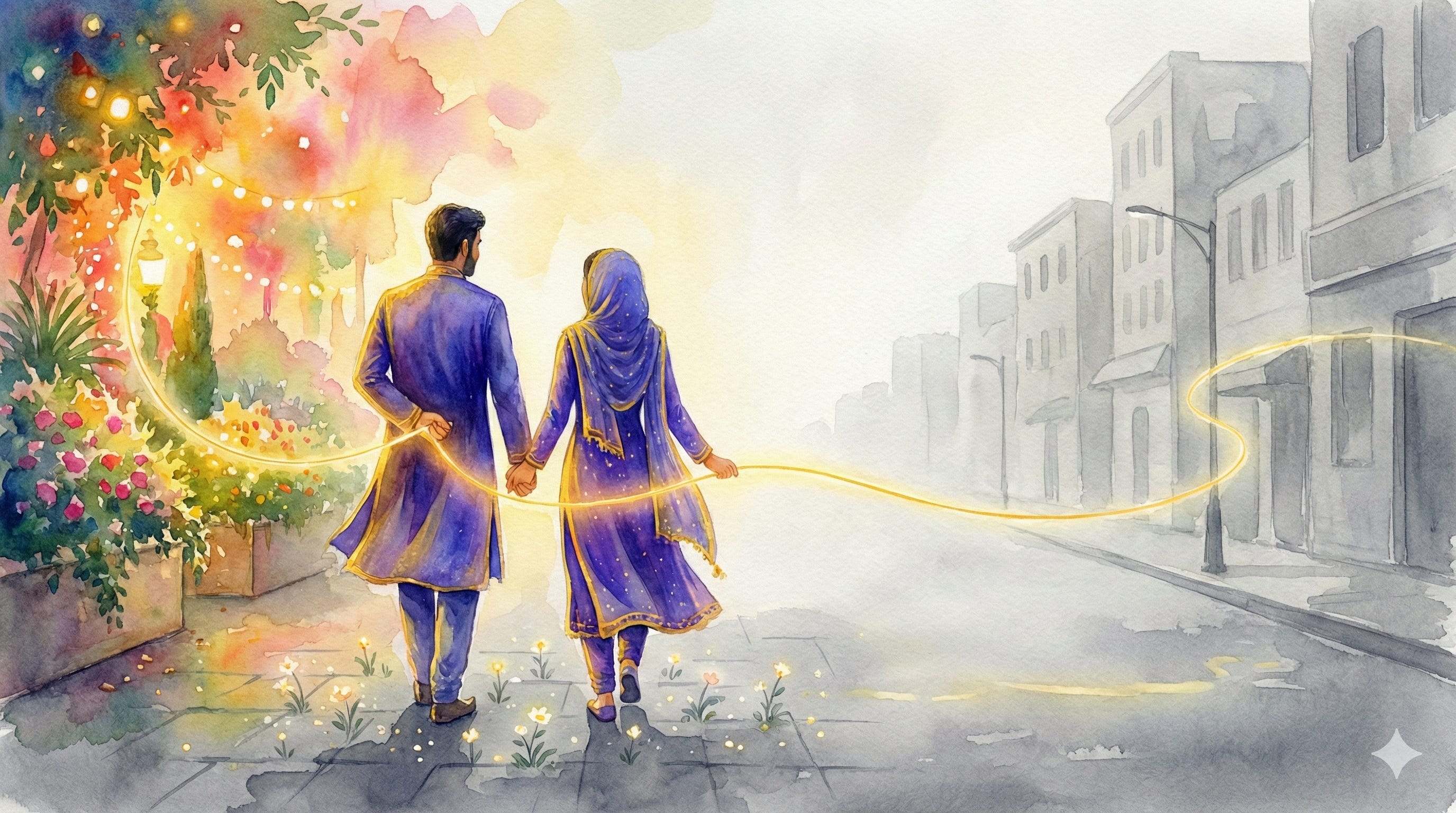
And here, Imam Ali — the man whose voice has been the voice of this entire series, whose Letter 31 mapped the terrain, whose arudduha trained the horse, whose blood on the mihrab floor is still fresh in our calendar — Imam Ali takes the word Eid and does what he always does.
He cracks it open and shows you what is inside.
He was asked about Eid.
People were celebrating.
There was festivity and relief and the ordinary human joy of a holiday.
And Imam Ali said:
«إِنَّمَا هُوَ عِيدٌ لِمَنْ قَبِلَ اللهُ صِيَامَهُ وَشَكَرَ قِيَامَهُ، وَكُلُّ يَوْمٍ لَا يُعْصَى اللهُ فِيهِ فَهُوَ عِيدٌ»
“It is only an Eid for the one whose fasting God has accepted and whose standing in prayer He has appreciated. And every day in which God is not disobeyed — that day is an Eid.”
— Imam Ali; narrated by Shaykh al-Saduq in Man La Yahduruhu al-Faqih; Also in Nahjul Balaghah, Hikmah (Saying) #428 (or #437 in other versions such Muhammad Abduh’s version); it is also found in Rawdat al-Wa’izin of Shaykh Al-Nayshabouri, Volume 2, Page 353
Every day in which God is not disobeyed.
Not every day you feel spiritual.
Not every day you have a moving experience in prayer.
Not every day the tears come easily and the heart feels soft.
Every day you do not turn away from Him.
Every day the connection holds.
Every day the dye does not fade.
Imam Ali is saying: Eid is not a date on the calendar.
Eid is a state.
And the state is simply this — that you remain oriented toward God.
That you do not break the thread.
That whatever else the day brings — boredom, difficulty, distraction, exhaustion, the sheer ordinariness of an afternoon with no special designation — you do not disobey.
This is not a crushing standard.
This is a liberating one.
Because it means Eid is available to you tomorrow.
And the day after.
And the ordinary Monday three weeks from now when the Month of Ramadhan feels like a distant memory and you cannot remember the last time you cried in du’a.
If on that Monday you hold the thread — if you do not disobey, if the connection does not break, if the dye holds even faintly — then that Monday is an Eid.
And every Friday that comes is another Eid.
Another weekly gathering.
Another rehearsal.
Another lifting of the cloth to check the colour.
The question of this session, then, is not “how do I celebrate Eid?”
The question — the real question, the one Imam Ali is asking — is:
How do I make every day an Eid?
How do I carry the state of the Month of Ramadhan — the connection, the clarity, the closeness — into the days and weeks and months that follow?
What provisions does the tradition give me for the road ahead?
That is what we turn to now.
Movement 2: Four Provisions for the Road
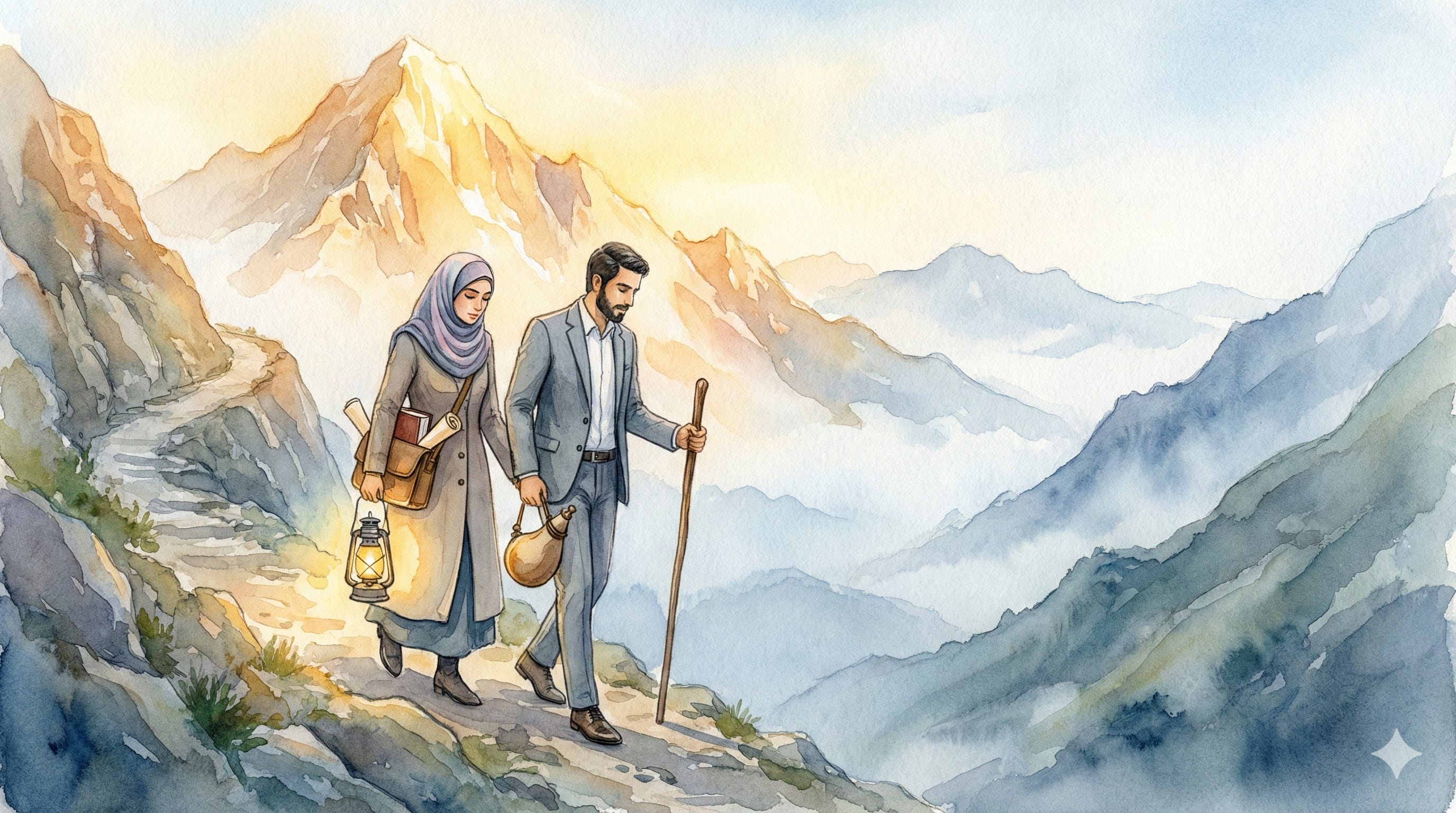
The traveller who has reached the summit must now descend.
And descent — any mountaineer will tell you — is harder than the climb.
The footholds that were obvious on the way up are hidden on the way down.
The path looks different when you are facing the valley instead of the peak.
The tradition knows this.
It knows that the return from the Month of Ramadhan is not simply a matter of willpower — of gritting your teeth and trying very hard to be the person you were on the twenty-seventh night.
Willpower is the first thing to fail.
What the tradition offers instead are provisions — tools for the road, du’as for the descent, teachings that address not just what to do but how to survive the doing.
We will carry four provisions out of the Month of Ramadhan tonight.
The First Provision: The Supplication of the Drowning Man

Imam al-Sadiq, peace be upon him, once told his companion Abdullah bin Sinan something that must have been terrifying to hear:
«سَتُصِيبُكُمْ شُبْهَةٌ فَتَبْقَوْنَ بِلَا عَلَمٍ يُرَى، وَلَا إِمَامِ هُدًى، لَا يَنْجُو مِنْهَا إِلَّا مَنْ دَعَا بِدُعَاءِ الْغَرِيقِ»
“Soon a doubt will afflict you, and you will be left without a visible sign or a guiding Imam. No one will be saved from it except the one who supplicates with the Supplication of the Drowning Man.”
— Imam Ja’far al-Sadiq; Kamal al-Din wa Tamam al-Ni’mah (Shaykh al-Saduq), Volume 2, Page 351, Hadith 49
Du’a al-Ghareeq.
The Supplication of the Drowning Man.
Not the supplication of the student.
Not the supplication of the seeker.
The drowning man — the one who is going under, the one whose mouth is full of water, the one who has seconds, not minutes, and whose entire theology has been compressed by the ocean into a single cry.
Abdullah asked:
“And how is the Supplication of the Drowning Man?”
The Imam said:
«يَا اللهُ يَا رَحْمٰنُ يَا رَحِيمُ، يَا مُقَلِّبَ الْقُلُوبِ، ثَبِّتْ قَلْبِي عَلَى دِينِكَ»
“O God, O Merciful, O Compassionate — O Turner of Hearts, make my heart firm upon Your religion.”
— Imam Ja’far al-Sadiq; Kamal al-Din wa Tamam al-Ni’mah (Shaykh al-Saduq), Volume 2, Page 351, Hadith 49
Five seconds.
That is the lifeline.
That is what stands between the believer and drowning in an age without a visible guide.
And then something remarkable happened.
Abdullah — a careful, learned man — repeated the du’a back, but he added a word.
A perfectly reasonable, theologically sound word.
He said: Ya Muqallib al-Qulub wa’l-absar — “O Turner of Hearts and eyes.”
Because God is indeed the Turner of hearts and eyes.
It is true. It is even Quranic.
And the Imam stopped him:
«إِنَّ اللهَ عَزَّ وَجَلَّ مُقَلِّبُ الْقُلُوبِ وَالْأَبْصَارِ، وَلَكِنْ قُلْ كَمَا أَقُولُ لَكَ: يَا مُقَلِّبَ الْقُلُوبِ ثَبِّتْ قَلْبِي عَلَى دِينِكَ»
“Indeed, God Almighty is the Turner of hearts and eyes — but say exactly as I say to you: ‘O Turner of Hearts, make my heart firm upon Your religion.’”
— Imam Ja’far al-Sadiq; Kamal al-Din wa Tamam al-Ni’mah (Shaykh al-Saduq), Volume 2, Page 351, Hadith 49
Listen to what is happening here.
The Imam is not correcting a theological error.
He is correcting something more subtle and more important: the impulse to improve on what the teacher gives you.
Abdullah’s addition was true.
It was even beautiful.
But the Imam says: no.
When you are drowning, you do not compose.
You do not elaborate.
You do not add flourishes to the rope that has been thrown to you.
You grab it. Exactly as it is. Exactly as it was given.
This is the du’a that Ayatullah Bahjat insisted everyone recite — constantly, at all times, scholar and layperson alike.
And now we understand why.
Because the Imam prescribed it specifically for an age like ours: an age of occultation, of confusion, of doubt, of being left without a visible sign.
An age when the scaffolding of the Month of Ramadhan comes down and you are returned to a world that offers you a thousand reasons to forget what you experienced in the month that just ended.
يَا مُقَلِّبَ الْقُلُوبِ
Ya Muqallib al-Qulub.
O Turner of Hearts.
— Dua al-Ghareeq
The name itself is a confession.
The hearts turn.
They do not stay.
They are not fixed by nature.
The very organ that received the dye of the Month of Ramadhan — the heart that was scrubbed in Session Two and fed in Session Three and broken open in Session Five — that organ is, by its nature, a thing that turns.
It rotates.
It shifts.
It drifts.
And the moment the scaffolding comes down, the turning begins.
ثَبِّتْ قَلْبِي عَلَى دِينِكَ
Thabbit qalbi ‘ala dinik.
Make my heart firm upon Your religion.
— Dua al-Ghareeq
Not
“elevate me.”
Not
“give me more.”
Just:
do not let me fall from where I am.
At every level of faith — from the person who wept every night in Ramadhan to the person who could barely stay awake for isha — declining from that level is regression.
Tathbit means: keep me at the level I have reached.
Wherever that is.
However modest.
However imperfect.
This is the first provision: the humility to know that what you gained in the Month of Ramadhan can only be kept by asking God to keep it for you.
Not by your effort.
Not by your discipline.
Not by your memory of how it felt on the Night of Qadr.
By His hand on your heart.
The drowning man does not save himself.
He cries out.
And the cry — exact, precise, unembellished, five seconds long — is the rope.
يَا اللهُ يَا رَحْمٰنُ يَا رَحِيمُ، يَا مُقَلِّبَ الْقُلُوبِ، ثَبِّتْ قَلْبِي عَلَى دِينِكَ
Ya Allah, ya Rahman, ya Rahim — ya Muqallib al-Qulub, thabbit qalbi ‘ala dinik.
“O God, O Merciful, O Compassionate — O Turner of Hearts, make my heart firm upon Your religion.”
— Dua Al-Ghareeq
Every day.
For the rest of your life.
The Second Provision: The Bankruptcy That Never Ends

Do you remember the du’a of the Ramadhan nights?
We met it in Session Four, and it came back in Session Five.
The bankrupt servant who arrives at the door of the King with nothing in his hands.
The du’a for the nights of Ramadhan — recorded in Misbah al-Mutahajjid and Iqbal al-A’mal — whose words became the sound of the idol breaking:
«فَإِنِّي لَمْ آتِكَ ثِقَةً بِعَمَلٍ صَالِحٍ عَمِلْتُهُ، وَلَا لِوِفَادَةِ مَخْلُوقٍ رَجَوْتُهُ، أَتَيْتُكَ مُقِرّاً عَلَى نَفْسِي بِالْإِسَاءَةِ وَالظُّلْمِ»
“I have not come trusting in any righteous deed I have done, nor seeking the patronage of any creature I have hoped in. I have come confessing against my own soul — my wrongdoing and my oppression.”
— Du’a for the Nights of Ramadhan; Misbah al-Mutahajjid (Shaykh al-Tusi); Iqbal al-A’mal (Sayyid Ibn Tawus)
That du’a belonged to the nights.
To the darkness, the hunger, the raw openness of three in the morning.
You might have thought it was a Ramadhan du’a — something you say during the month, when the scaffolding of the fast strips away your pretensions and leaves you standing naked before God.
But here is what the tradition does.
It places the same posture — not the same du’a, but the same theology, the same bankruptcy, the same empty hands — in a different supplication, prescribed for Eid morning.
The du’a recited when you go out for the Eid prayer — narrated by Abu Hamzah al-Thumali from Imam al-Baqir, peace be upon him — begins with a beautiful inversion:
«اللَّهُمَّ مَنْ تَهَيَّأَ فِي هَذَا الْيَوْمِ أَوْ تَعَبَّأَ أَوْ أَعَدَّ وَاسْتَعَدَّ لِوِفَادَةٍ إِلَى مَخْلُوقٍ رَجَاءَ رِفْدِهِ وَنَوَافِلِهِ وَفَوَاضِلِهِ وَعَطَايَاهُ، فَإِنَّ إِلَيْكَ يَا سَيِّدِي تَهْيِئَتِي وَتَعْبِئَتِي وَإِعْدَادِي وَاسْتِعْدَادِي، رَجَاءَ رِفْدِكَ وَجَوَائِزِكَ وَنَوَافِلِكَ وَفَوَاضِلِكَ وَفَضَائِلِكَ وَعَطَايَاكَ»
“O God, whoever on this day has prepared himself, or readied himself, or equipped himself to enter the court of one of Your servants in hope of their rewards and gifts and bestowals — my preparation, O my Master, my readiness, my equipment, are directed solely toward You, in hope of Your rewards, Your gifts, Your bestowals.”
— Du’a upon going out for Eid prayer; narrated by Abu Hamzah al-Thumali from Imam al-Baqir; Iqbal al-A’mal (Sayyid Ibn Tawus); Mafatih al-Jinan (Shaykh Abbas al-Qummi)
It is Eid.
People are visiting each other, bringing gifts, preparing feasts, entering each other’s homes with offerings.
And the du’a says: yes, but my preparation is not for any of them.
It is for You.
On the day of maximum social celebration, the heart turns inward — not away from the celebration but through it, toward the One who made it a celebration.
And then — after this beautiful declaration of orientation — come the words.
Not the same words as the Ramadhan night du’a — but unmistakably the same voice, the same posture, the same empty-handed servant arriving at the same door:
«وَلَمْ أَفِدْ إِلَيْكَ الْيَوْمَ بِعَمَلٍ صَالِحٍ أَثِقُ بِهِ قَدَّمْتُهُ، وَلَا تَوَجَّهْتُ بِمَخْلُوقٍ أَمَّلْتُهُ، وَلَكِنْ أَتَيْتُكَ خَاضِعاً مُقِرّاً بِذُنُوبِي وَإِسَاءَتِي إِلَى نَفْسِي»
«فَيَا عَظِيمُ يَا عَظِيمُ يَا عَظِيمُ، اغْفِرْ لِيَ الْعَظِيمَ مِنْ ذُنُوبِي، فَإِنَّهُ لَا يَغْفِرُ الذُّنُوبَ الْعِظَامَ إِلَّا أَنْتَ»
“I have not come before You today with any righteous deed in which I may place my trust, nor have I turned to any creature in whom I place my hope. Rather, I have come to You in humility, confessing my sins and my wrongdoing against myself.”
“So O Great One, O Great One, O Great One — forgive my great sins, for none forgives great sins but You.”
— Du’a upon going out for Eid prayer; narrated by Abu Hamzah al-Thumali from Imam al-Baqir; Iqbal al-A’mal (Sayyid Ibn Tawus); Mafatih al-Jinan (Shaykh Abbas al-Qummi)
Listen to what the tradition has done.
These are two different du’as, composed independently, transmitted through different chains, recorded in different sections of the devotional corpus.
And yet they say the same thing.
The Ramadhan night du’a says:
lam atika thiqatan bi-’amalin salihin ‘amiltuhu
— I have not come trusting in any righteous deed I have done.
The Eid morning du’a says:
lam afid ilayka al-yawma bi-’amalin salihin athiqu bihi
— I have not come before You today with any righteous deed in which I may place my trust.
Different words.
Same bankruptcy.
Same empty hands.
This is not coincidence.
This is architecture.
The tradition deliberately places the posture of poverty at both ends of the month — on the first night and on the final morning — because it wants you to understand something that the ego will spend the rest of the year trying to make you forget:
The bankruptcy does not end when the Month of Ramadhan ends.
It becomes permanent.
The person who emerged from the Night of Qadr thinking
“I have done well, I have earned something, I can now approach God with confidence in my deeds”
— that person missed the entire point.
The bankrupt servant does not graduate from bankruptcy.
The bankruptcy is the relationship.
The empty hands are the entrance fee.
And the tradition ensures this by placing the same theology of poverty at the beginning of the month and on its final morning — in two separate compositions, as if to say: this is not one author’s theme.
This is the consensus of the spiritual tradition.
This is what the Imams, peace be upon them, want you to carry out of every Month of Ramadhan for the rest of your life.
This is the second provision: the knowledge that you never graduate from needing God.
That the dye of Sibghatullah does not make you self-sufficient.
It makes you permanently, beautifully, irreversibly dependent — and that dependence is not weakness.
It is the strongest thread in the weave.
The Third Provision: The Hardest Terrain Is the Most Rewarding
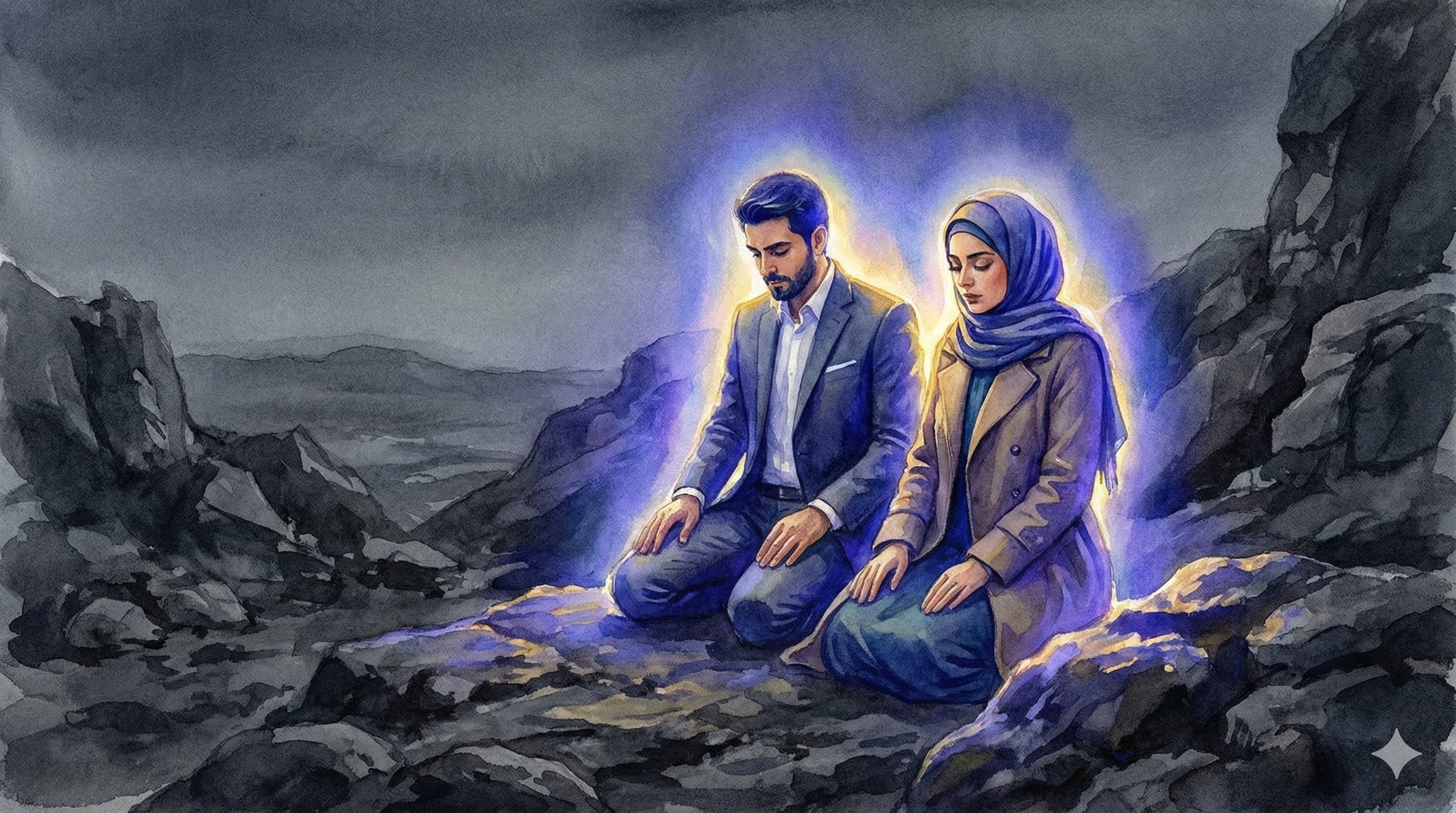
There is a teaching of Ayatullah Bahjat’s that sounds, at first hearing, like consolation for the disappointed.
But it is not consolation.
It is something far more radical.
He says:
چه بسا از این که فرمودهاند: عبادت در غیبت افضل از عبادت در حال حضور است، بتوان استفاده کرد که مقامات بالاتری برای ما ممکن است
“Perhaps from the saying that worship in the time of occultation is superior to worship in the time of [visible] presence, one can derive that even loftier stations are possible for us.”
— Ayatullah Bahjat; Dar Mahzar-e Bahjat (Rakhshad), Entry 45
The teaching behind this is precise: in the time of the Prophet, peace be upon him and his family, you could see the proof.
You could sit with Salman, whose single night of prayer was worth more than the entire world and everything in it.
You could watch Abu Dharr’s patience, Ammar’s courage.
The evidence of what worship could produce was visible, walking among you, breathing the same air.
We do not have that.
We live in occultation.
We live in the age that Imam al-Sadiq was describing when he taught Abdullah bin Sinan the Supplication of the Drowning Man — the age of shubhah, of doubt, of being left “without a visible sign or a guiding Imam.”
We live in an age where the scaffolding of the Month of Ramadhan comes down and leaves us in what feels like an empty room.
No visible proof.
No companions whose radiance lights the path.
Just ordinary life, with its ordinary distractions, and the memory of what we felt in the month that just ended.
And Ayatullah Bahjat says: that is not a punishment.
That is the condition that makes the greatest spiritual achievements available.
Because worship without visible proof requires more faith.
More sincerity.
More effort.
And therefore — by the justice of a God who does not waste effort — it reaches higher.
Ayatullah Bahjat marvels at this.
He describes the companions of the Prophet, the stations they reached — and then says: the hadith tells us that stations even beyond theirs are possible for us.
Not despite the difficulty of our age, but because of it.
The hiddenness does not diminish your worship.
It magnifies it.
After Eid, you return to a world where everything conspires to make you forget.
The alarm no longer wakes you for suhur.
The evening no longer pulls you toward iftar and du’a.
The special nights are gone.
The scaffolding is down.
And into that sudden emptiness, the ego — the horse we trained so carefully in Session Four — begins to pull at the reins again.
This is the third provision: the understanding that the emptiness after the Month of Ramadhan is not a void.
It is a frontier.
The hardest terrain is the most rewarding.
Every prayer you offer in the long months ahead — without the scaffolding, without the communal rhythm, without the special designation of the month — is worth more than it was inside the Month of Ramadhan.
Every day you hold the thread in the ordinariness of July or October or February is a day of superior worship.
The dye does not fade faster in difficult conditions.
It sets deeper.
The Fourth Provision: The Outward Turn
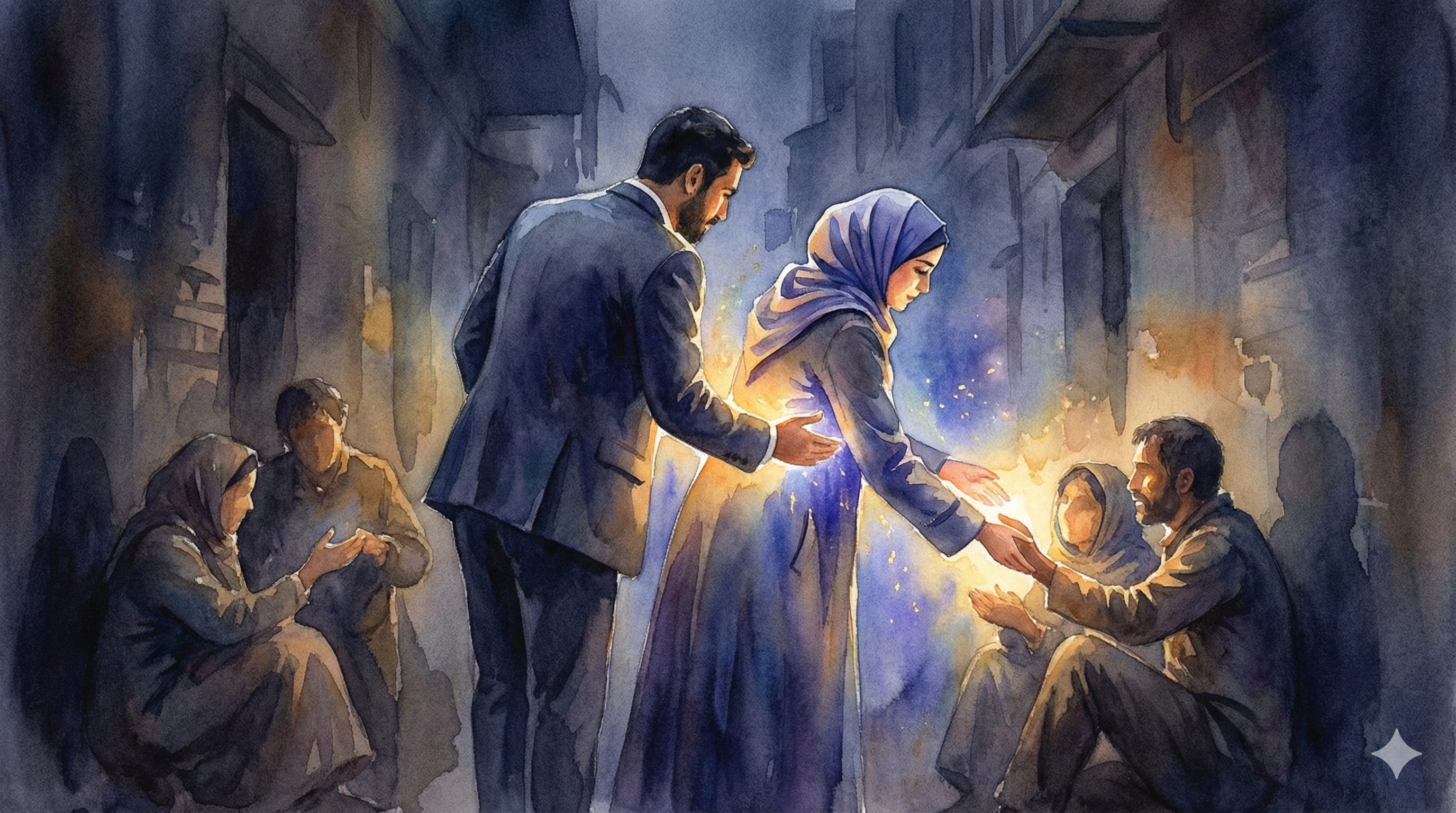
We have spoken of the heart.
We have spoken of the dye.
We have spoken of holding the thread between you and God through the long months ahead.
And all of this — every word of it — is necessary.
But it is not sufficient.
Because the tradition will not let us rest in the inward.
It never has.
From the first session of this series — when we spoke of hijrah, of migration, of leaving the house of the ego — the direction has been toward, not away from.
Toward God, yes.
But also toward the world that God made and the people He placed in it.
Three nights ago, in the Quieter Moment of Session Five, we heard Imam Ali’s deathbed testament.
The twelve urgent repetitions of a single phrase — Allah, Allah fi... — God, God, attend to...
The orphans.
The neighbours.
The Quran.
The poor.
Prayer.
What your right hands possess.
And then his very last words.
The final sentence of the final public imam.
The words he chose to leave ringing in the ears of his sons and, through them, in the ears of every Muslim until the Day of Judgment:
«وَلَا تَتْرُكُوا الْأَمْرَ بِالْمَعْرُوفِ وَالنَّهْيَ عَنِ الْمُنْكَرِ، فَيُوَلِّيَ اللهُ عَلَيْكُمْ أَشْرَارَكُمْ، ثُمَّ تَدْعُونَ فَلَا يُسْتَجَابُ لَكُمْ عَلَيْهِمْ»
“Do not abandon the commanding of good and the forbidding of evil — lest God set the worst of you over you, and then you call upon Him and He does not answer you against them.”
— Nahj al-Balagha, Letter 47
This is not a footnote to the spiritual journey.
It is its final destination.
The dye of God does not make you glow for yourself.
It makes you visible — visible to the people who need you.
The orphan who has no advocate.
The neighbour who has no one to check on them.
The stranger at the border, the displaced person who has no centre, no community, no one to speak for them.
We opened this series, in Session One, by naming them — by saying that the migration of the Month of Ramadhan is a migration toward solidarity with those who have been forced to migrate in the flesh.
That solidarity does not end because the fast has ended.
Last week, we named the Day of Quds — the last Friday of the Month of Ramadhan, designated by Imam Khomeini as a day of solidarity with all the oppressed.
We said then that Quds Day is not one Friday.
It is the annual sharpening of a blade that must remain sharp every day of the year.
We said: every day is Ashura, and every place is Karbala.
Tonight — standing on the other side of the Month of Ramadhan, looking at the Sibghatullah and asking whether the dye held — we can see something we could not see last week.
The tradition placed the Day of Quds inside the Month of Ramadhan.
Inside the vat.
Inside the dyeing process itself.
Not after it, not beside it, but woven into the very month that was supposed to be transforming you.
Because solidarity with the oppressed is not an add-on to the spiritual programme — something you attend to once you have finished the real work of prayer and fasting and self-purification.
It is the dye showing.
It is the colour becoming visible.
The believer who emerges from the Month of Ramadhan unable to look away from the suffering of the Palestinian, the Yemeni, the Congolese, the Rohingya, the Sudanese, the English, the European, the American — the victim of horrific abuse by the arrogant — that believer is not being distracted from their spiritual gains.
They are proving them.
And just as Imam Ali taught us tonight that every day in which God is not disobeyed is an Eid, so too is every day a Day of Quds — every day a day in which the believer cannot be silent while the mustakbireen crush the mustad’afeen, regardless of the creed or colour of those who suffer.
And Imam Ali’s warning is addressed directly to our age: if the people who have been dyed in God’s colour fall silent — if they retreat into private piety and comfortable spirituality, if they concern themselves only with the state of their own hearts and the quality of their own prayers — then the worst among us will rule.
And our du’as — those beautiful, heartfelt du’as we learned this month — will go unanswered.
Then you call upon Him and He does not answer you against them.
The du’as stop working.
Not because God has abandoned you, but because you abandoned the condition on which the du’as are accepted: that you stand for justice.
That you speak when silence is easier.
That you let the dye of God be seen not only in your prayer but in your refusal to look away from what is wrong.
This is the fourth provision: courage.
The willingness to speak.
The understanding that inner transformation, if it does not manifest as outward compassion and justice, is not transformation at all.
It is decoration.
Paint on the surface, not dye in the fibre.
The Sibghatullah faces outward.
If the dye held, you will not be able to walk past suffering without stopping.
The Quieter Moment: The Farewell
In every session, we have paused.
We have stepped away from the argument, the theology, the architecture — and we have sat with something.
A du’a.
A passage.
A moment of silence in which the tradition speaks not to the mind but to the heart.
Tonight, for the last time in this series, we pause.
And we pause with the voice that has accompanied us all series long — the voice that, more than any other in the Islamic tradition, knows how to speak to God as though God were listening.
Which, of course, He is.
Imam Ali ibn al-Husayn, Zayn al-Abedeen, peace be upon him.
The Imam of the Prostrators.
The one whose entire surviving legacy is prayer.
In his Sahifa Al-Sajjadiyyah — the psalm-book of the Ahlulbayt — there is a du’a numbered forty-five.
Its title is simple:
His Supplication in Bidding Farewell to the Month of Ramadhan.
And what Imam Sajjad does in this du’a is something extraordinary.
He does not bid farewell to an obligation.
He does not close a chapter of worship.
He says goodbye to a friend.
Listen to how he speaks to the month.
Not about it.
To it:
«فَنَحْنُ مُوَدِّعُوهُ وِدَاعَ مَنْ عَزَّ فِرَاقُهُ عَلَيْنَا، وَغَمَّنَا وَأَوْحَشَنَا انْصِرَافُهُ عَنَّا»
«فَنَحْنُ قَائِلُونَ: السَّلَامُ عَلَيْكَ يَا شَهْرَ اللَّهِ الْأَكْبَرَ، وَيَا عِيدَ أَوْلِيَائِهِ»
“We bid farewell to it with the farewell of one whose parting pains us, whose leaving fills us with gloom and loneliness.”
“So we say: Peace be upon you, O greatest month of God! O festival of His friends!”
— Sahifa Al-Sajjadiyyah, Du’a 45, Verses 23
And then the salams begin.
One after another.
Each one a name for what Ramadhan was.
Each one a way of saying:
I knew you.
You were real to me.
You were not a duty — you were a companion.
«السَّلَامُ عَلَيْكَ يَا أَكْرَمَ مَصْحُوبٍ مِنَ الْأَوْقَاتِ، وَيَا خَيْرَ شَهْرٍ فِي الْأَيَّامِ وَالسَّاعَاتِ»
«السَّلَامُ عَلَيْكَ مِنْ قَرِينٍ جَلَّ قَدْرُهُ مَوْجُوداً، وَأَفْجَعَ فَقْدُهُ مَفْقُوداً، وَمَرْجُوٍّ آلَمَ فِرَاقُهُ»
«السَّلَامُ عَلَيْكَ مِنْ أَلِيفٍ آنَسَ مُقْبِلًا فَسَرَّ، وَأَوْحَشَ مُنْقَضِياً فَمَضَّ»
“Peace be upon you, O most noble of accompanying times! O best of months in days and hours!”
“Peace be upon you, Comrade who is great in worth when found and who torments through absence when lost, anticipated friend whose parting gives pain!”
“Peace be upon you, familiar who brought comfort in coming, thus making happy, who left loneliness in going, thus giving anguish!”
— Sahifa al-Sajjadiyyah, Du’a 45, Verses 24, 26 and 27
Qarin. Comrade.
Alif. Familiar.
Nasir. Helper.
Mujawir. Neighbour.
These are not metaphors.
This is Imam Sajjad teaching us something about the nature of sacred time.
The month of Ramadhan is not a container that holds worship.
It is a being — a presence that arrives, accompanies, and departs.
You do not simply observe it.
You are accompanied by it.
And when it leaves, the loneliness is real.
The grief is real.
The anguish is not poetic — it is the anguish of someone watching a dear friend walk away, not knowing if they will ever meet again.
Because you might not.
«السَّلَامُ عَلَيْكَ مِنْ مَطْلُوبٍ قَبْلَ وَقْتِهِ، وَمَحْزُونٍ عَلَيْهِ قَبْلَ فَوْتِهِ»
“Peace be upon you, object of seeking before your time, object of sorrow before your passing!”
— Sahifa al-Sajjadiyyah, Du’a 45, Verse 37
We grieved for Ramadhan before it ended.
We were already mourning its departure while it was still here.
And the Imam validates that grief — he does not say “be grateful for what you had.”
He says: yes, the sorrow is appropriate.
Because something real is leaving.
And then comes the verse that, if you hear it properly, will stay with you until next Ramadhan:
«السَّلَامُ عَلَيْكَ مَا كَانَ أَحْرَصَنَا بِالْأَمْسِ عَلَيْكَ، وَأَشَدَّ شَوْقَنَا غَداً إِلَيْكَ»
“Peace be upon you — How much we craved you yesterday! How intensely we shall yearn for you tomorrow!”
— Sahifa al-Sajjadiyyah, Du’a 45, Verse 40
Yesterday, we craved you.
Tomorrow, we will yearn for you more.
Not less.
More.
The Imam is saying: the absence will not dull.
It will sharpen.
As the months pass, as the scaffolding fades further, as ordinary life reasserts itself — the yearning for what Ramadhan was, for who you were inside it, for the closeness you felt to God when the vat was holding you — that yearning will grow.
It will not diminish with distance.
It will increase.
And that yearning — that shawq — is itself a thread.
Perhaps the strongest thread of all.
Because as long as you miss Ramadhan, you have not fully left it.
As long as the absence hurts, the dye is still there, reminding you of the colour you once wore, pulling you back toward the vat you once stood in.
The du’a does not end in grief.
It ends — as every du’a of the Ahlulbayt ends — in turning back toward God.
And its final request echoes everything we have said tonight:
«اللَّهُمَّ إِنَّا نَتُوبُ إِلَيْكَ فِي يَوْمِ فِطْرِنَا الَّذِي جَعَلْتَهُ لِلْمُؤْمِنِينَ عِيداً وَسُرُوراً... تَوْبَةَ مَنْ لَا يَنْطَوِي عَلَى رُجُوعٍ إِلَى ذَنْبٍ... تَوْبَةً نَصُوحاً خَلَصَتْ مِنَ الشَّكِّ وَالِارْتِيَابِ»
«فَتَقَبَّلْهَا مِنَّا، وَارْضَ عَنَّا، وَثَبِّتْنَا عَلَيْهَا»
“O God, we repent to You on this day of our fast-breaking, which You have appointed for the faithful as a festival and a joy — the repentance of one who does not harbour a return to sin — an unswerving repentance, rid of doubt and wavering.”
“So accept it from us, be pleased with us, and fix us within it.”
— Sahifa al-Sajjadiyyah, Du’a 45, verse 49
ثَبِّتْنَا عَلَيْهَا
Thabbitnā ‘alayhā.
Fix us within it.
Make us firm.
There it is again.
The same word.
Tathbit.
The same plea the Drowning Man makes, the same cry Ayatullah Bahjat insisted upon, the same request that runs through everything we have discussed tonight:
I cannot hold this on my own. Hold me.
Imam Sajjad — the grandson of the Prophet, the son of the martyr of Karbala, the man who spent decades in prostration — asks God for the same thing we are asking for on this Eid morning.
Fix me.
Steady me.
Do not let me drift from what I found in this month.
If he needed to ask, what makes us think we do not?
So let this be our farewell.
Not just to the Month of Ramadhan, but to this series — to these six Saturday nights we have spent together.
We came in as travellers, leaving the house of the ego.
We scrubbed the mirror.
We sat at the Banquet.
We broke the idol of habit.
We stood bankrupt before God on the Night of Qadr.
And now we stand here — on Eid morning, in the light, with food in our stomachs and the taste of celebration on our lips — and we say:
Peace be upon you, Comrade.
How intensely we shall yearn for you tomorrow.
The Closing: One Last Prostration
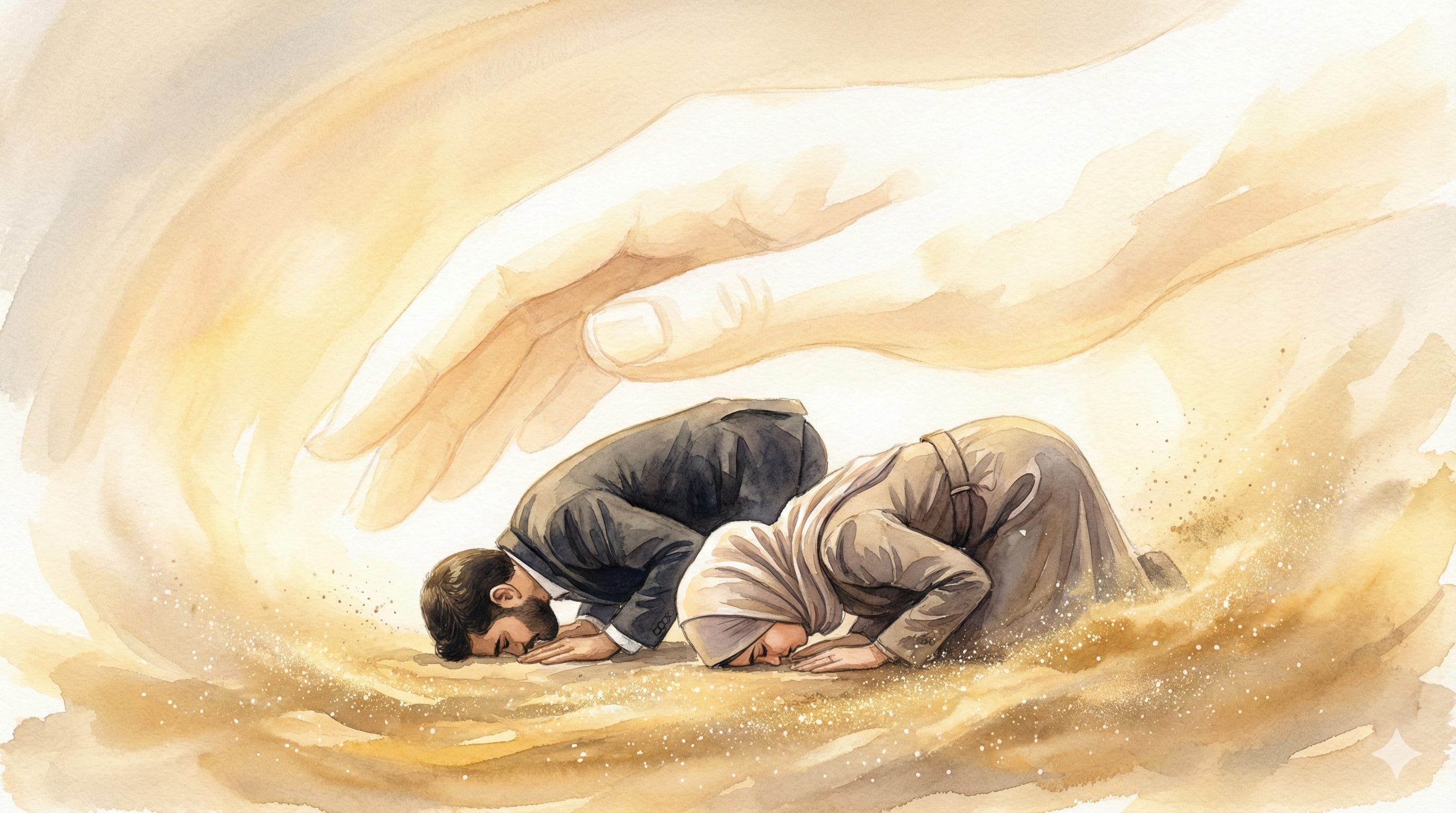
After the Eid prayer — after the two rak’at, after the takbirat, after the qunut — the worshipper is instructed to do something that, on any other day, might seem routine.
But on this day, it is not routine at all.
You prostrate.
You put your face on the ground — the same face you have been turning toward God every day for thirty days, the same forehead that bore the mark of the night prayers, the same cheek that touched the earth on the Night of Qadr.
And from that position — face in the dust, on the morning of celebration, with the whole world preparing its feasts and its visits — you say:
«إِلَهِي لَا تُقَلِّبْ وَجْهِي فِي النَّارِ بَعْدَ سُجُودِي وَتَعْفِيرِي لَكَ، بِغَيْرِ مَنٍّ مِنِّي عَلَيْكَ، بَلْ لَكَ الْمَنُّ عَلَيَّ»
“My God, do not turn my face in the Fire after I have prostrated it and pressed it into the dust for You — with no favour from me upon You; rather, the favour is Yours upon me.”
— Post-Eid prayer sajdah; Mafatih al-Jinan (Shaykh Abbas al-Qummi)
Even the prostration is not yours to claim.
Even the act of putting your face on the ground is His gift to you, not your gift to Him.
بِغَيْرِ مَنٍّ مِنِّي عَلَيْكَ
Bi-ghayri mannin minni ‘alayk — without any favour from me upon You.
The bankruptcy continues.
The empty hands remain empty.
You are prostrating, and even the prostration belongs to God.
And then, still in sajdah, you say the words that might be the most honest sentence in the entire liturgical tradition:
«إِنْ كُنْتُ بِئْسَ الْعَبْدُ فَأَنْتَ نِعْمَ الرَّبُّ. عَظُمَ الذَّنْبُ مِنْ عَبْدِكَ، فَلْيَحْسُنِ الْعَفْوُ مِنْ عِنْدِكَ، يَا كَرِيمُ»
“If I have been a bad servant, then You are a good Lord. The sin from Your servant has grown great — so let the pardon from Your side be gracious, O Most Generous.”
— Post-Eid prayer sajdah; Mafatih al-Jinan (Shaykh Abbas al-Qummi)
إِنْ كُنْتُ بِئْسَ الْعَبْدُ فَأَنْتَ نِعْمَ الرَّبُّ
In kuntu bi’sa al-’abd, fa-Anta ni’ma al-Rabb.
If I have been a bad servant — You are a good Lord.
That is the whole theology.
The whole series.
The whole of the Month Ramadhan compressed into nine Arabic words.
It does not say:
“I was a good servant and deserve Your reward.”
It does not say:
“I was a bad servant and deserve Your punishment.”
It says something that only the bankrupt can say, something that only the dyed cloth can say, something that only the person who has spent thirty days in the vat and emerged still imperfect can say with any honesty:
My quality is not the point. Yours is.
If I failed — and I did — Your goodness is not contingent on my success.
If my sins are great — and they are — then let Your pardon be greater.
Not because I deserve it.
Because You are ni’ma al-Rabb — the best of Lords.
Because generosity is Your nature, not my achievement.
And then — one hundred times — the simplest word:
«الْعَفْوَ الْعَفْوَ»
“Forgive. Forgive.”
— Mafatih al-Jinan, post-Eid prayer sajdah
One hundred times.
Al-’afwa, al-’afwa.
Not a complex du’a.
Not a theological argument.
Not a list of requests.
Just the word.
Again and again.
Like a drowning man — there is that image again — who has only breath enough for one syllable.
Forgive. Forgive. Forgive.
This is where the tradition leaves you on Eid morning.
Not triumphant.
Not graduated.
Face in the dust, repeating the simplest possible word, trusting that the Lord who put the dye in the vat and the month on the calendar and the prayer in your heart will also put the pardon where it is needed.
Sayyid Ibn Tawus, recording these a’mal, adds a final note — not a du’a but a warning, in his own voice:
«وَلَا تَقْطَعْ يَوْمَكَ هَذَا بِاللَّعِبِ وَالْإِهْمَالِ، وَأَنْتَ لَا تَعْلَمُ أَمَرْدُودٌ أَمْ مَقْبُولُ الْأَعْمَالِ. فَإِنْ رَجَوْتَ الْقَبُولَ فَقَابِلْ ذَلِكَ بِالشُّكْرِ الْجَمِيلِ، وَإِنْ خِفْتَ الرَّدَّ فَكُنْ أَسِيرَ الْحُزْنِ الطَّوِيلِ»
“Do not spend this day of yours in play and negligence while you do not know whether your deeds are rejected or accepted. If you hope for acceptance, then repay it with beautiful gratitude. And if you fear rejection, then be consumed with prolonged grief.”
— Sayyid Ibn Tawus; recorded in Mafatih al-Jinan (Shaykh Abbas al-Qummi), a’mal of Eid al-Fitr
The tradition does not let you rest.
Even on the day of celebration — especially on the day of celebration — it keeps one hand on your shoulder, steadying you between hope and fear.
You do not know if your Ramadhan was accepted.
You cannot know.
And that not-knowing is not a failure of the system.
It is the system.
It is what keeps you turning toward God tomorrow, and the day after that, and every day until you meet Him.
If you hope — give thanks.
If you fear — stay in grief.
And if you are wise, you will do both at once.
To Those Who Gathered

And now — to you.
We began this journey six weeks ago, on a Saturday evening, scattered across time zones and cities and countries.
Some of you joined from the beginning.
Some of you found us midway through.
Some of you are hearing this for the first time tonight, having arrived at the end of a story you did not witness from its start.
It does not matter.
You are here.
And the tradition teaches us — Imam Ali taught us, three nights ago — that every day in which God is not disobeyed is an Eid.
Which means that wherever you entered this conversation, you entered on an Eid.
And wherever you carry it forward, you carry it into the possibility of another one.
We have drawn, in these six sessions, from a well that is inexhaustible.
Imam Khomeini and Ayatullah Bahjat.
Allamah Tabatabai and Mirza Maliki Tabrizi.
The Sahifa of Imam Sajjad.
The Nahj of Imam Ali.
The du’as of the Ahlulbayt, peace be upon them all — words composed by people who lived the transformation we have only been describing.
We have barely begun.
The classical sources we have touched could sustain years of further exploration.
These six sessions are a complete arc — from migration to return, from the house of the ego to the Eid of God — but they are not a closed book.
They are, God willing, the first chapter of something longer.
What we have built together — this congregation without walls, this community that gathers not because of geography but because of something harder to name — is itself a kind of Sibghatullah.
The dye that holds you together is not a building.
It is not a postcode.
It is the colour you share: the colour of people who wanted more from the Month of Ramadhan than routine, who came looking for the fire and were willing to sit close enough to be changed by it.
That colour does not fade because the series ends.
The Final Word
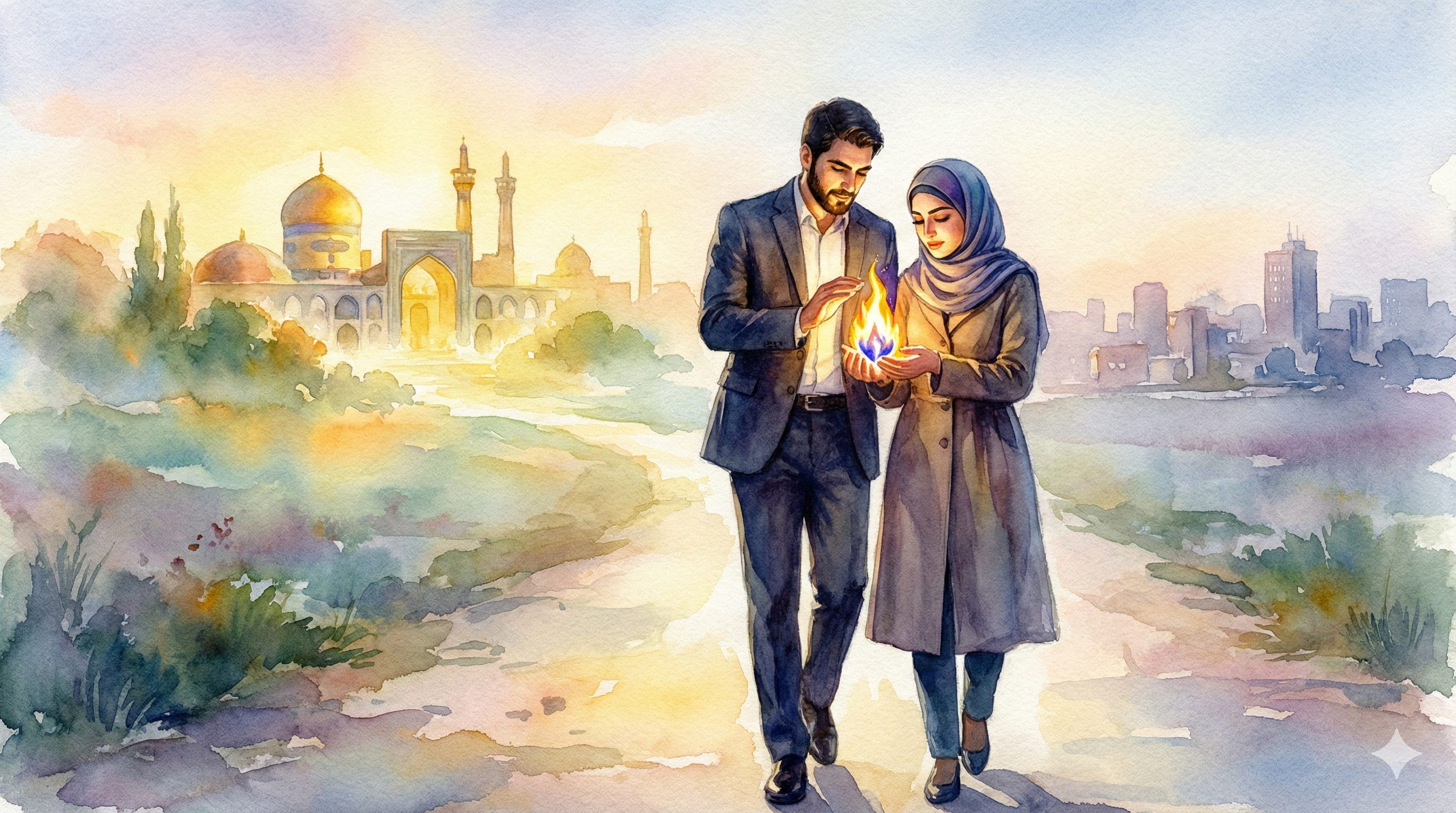
We close as we have closed every session — with salawat, and with a du’a.
The salawat you know:
اللَّهُمَّ صَلِّ عَلَى مُحَمَّدٍ وَآلِ مُحَمَّدٍ وَعَجِّلْ فَرَجَهُمْ
Allahumma salli ‘ala Muhammad wa aali Muhammad wa ‘ajjil farajahum
O God, send Your blessings upon Muhammad and the Family of Muhammad, and hasten their relief.
And the du’a — let it be the Imam’s, from the very end of Du’a 45:
«اللَّهُمَّ صَلِّ عَلَى مُحَمَّدٍ نَبِيِّنَا وَآلِهِ كَمَا صَلَّيْتَ عَلَى مَلَائِكَتِكَ الْمُقَرَّبِينَ، وَصَلِّ عَلَيْهِ وَآلِهِ كَمَا صَلَّيْتَ عَلَى أَنْبِيَائِكَ الْمُرْسَلِينَ، وَصَلِّ عَلَيْهِ وَآلِهِ كَمَا صَلَّيْتَ عَلَى عِبَادِكَ الصَّالِحِينَ، وَأَفْضَلَ مِنْ ذَلِكَ يَا رَبَّ الْعَالَمِينَ»
«صَلَاةً تَبْلُغُنَا بَرَكَتُهَا، وَيَنَالُنَا نَفْعُهَا، وَيُسْتَجَابُ لَهَا دُعَاؤُنَا»
«إِنَّكَ أَكْرَمُ مَنْ رُغِبَ إِلَيْهِ، وَأَكْفَى مَنْ تُوُكِّلَ عَلَيْهِ، وَأَعْطَى مَنْ سُئِلَ مِنْ فَضْلِهِ، وَأَنْتَ عَلَى كُلِّ شَيْءٍ قَدِيرٌ»
“O God, bless Muhammad our Prophet and his Household, as You have blessed Your angels brought near. Bless him and his Household, as You have blessed Your prophets sent forth. Bless him and his Household, as You have blessed Your righteous servants — and better than that, O Lord of all worlds.”
“A blessing whose benediction reaches us, whose benefit attains to us, and through which our supplication may be answered.”
“You are the most generous of those beseeched, the most sufficient of those in whom trust is placed, the most giving of those whose bounty is sought. And You are powerful over all things.”
— Imam Ali ibn al-Husayn (Zayn al-Abedeen); al-Sahifa al-Sajjadiyyah, Du’a 45, verse 53
Eid Mubarak.
The fire does not go out because the month has ended.
Carry it.
And from Him alone is all ability and He has authority over all things.