

In His Name, the Most High
اَلسَّلاَمُ عَلَيْكَ يَا أَبَا عَبْدِاللَّهِ
وَعَلَى الْأَرْوَاحِ الَّتِي حَلَّتْ بِفِنَائِكَ
عَلَيْكُمْ مِنَّا جَمِيعًا سَلاَمُ اللَّهِ أَبَدًا مَا بَقِينَا وَبَقِيَ اللَّيْلُ وَالنَّهَارُ
وَلا جَعَلَهُ اللَّهُ آخِرَ الْعَهْدِ مِنَّا لِزِيَارَتِكُمْ
اَلسَّلاَمُ عَلَى الْحُسَيْنِ
وَعَلَى عَلِيِّ بْنِ الْحُسَيْنِ
وَعَلَى أَوْلَادِ الْحُسَيْنِ
وَعَلَى أَصْحَابِ الْحُسَيْنِ
Peace be upon you, O Aba Abdillah (O Husayn),
and upon the souls who have gathered in your courtyard.Upon you, from us all, is the peace of God—forever,
for as long as we remain and as long as night and day endure.And may God never make this our last pledge to visit you.
Peace be upon al-Husayn,
and upon Ali, son of al-Husayn,
and upon the children of al-Husayn,
and upon the companions of al-Husayn.— Adapted from Ziyarat Ashura
Video of the Sermon (Majlis/Lecture)
This is a video of the sermon, the maqtal — lamentation — referenced in this session can be found here.
Introduction
Six nights of foundation.
On the first night we recovered a word — shahada, which is not victimhood and never was, but witness, with the cost of witnessing borne in the body.
On the second we traced the chain from Abel (Habil), through the prophets to the family of the Prophet.
On the third we entered the theology of the candle — Shaheed Motahhari’s metaphor, and his five kinds of death.
On the fourth we heard Imam Husayn’s diagnosis at Mina, and the three silences — fear, comfort, and the narrowing of moral vision.
On the fifth we stood at the shared ground and the divergences between the Christian witness and our own, and we named the methodology that has carried us forward since:
honour without conflation.
Last night we left the religious neighbour and entered the secular one — Marx, Fanon, Dr Shariati — and asked what becomes of sacrifice when the form is preserved and the content is missing.
Tonight we walk one step further.
Tomorrow night the final step.
Three nights — three middle panels in a triptych the Husayni witness sits across.
Last night was the secular-revolutionary panel.
Tonight is the anti-colonial-national panel.
Tomorrow is the aesthetic-state-manufactured panel.
The middle panel — tonight’s — is the most sympathetic of the three.
We will honour what is true in it.
And we will ask, again —
Is sacrifice without the worship of the One God strong enough to hold what a witness is for?
The verse that hangs over the night is from al-Hajj.
أُذِنَ لِلَّذِينَ يُقَاتَلُونَ بِأَنَّهُمْ ظُلِمُوا ۚ وَإِنَّ اللَّهَ عَلَىٰ نَصْرِهِمْ لَقَدِيرٌ
الَّذِينَ أُخْرِجُوا مِن دِيَارِهِم بِغَيْرِ حَقٍّ إِلَّا أَن يَقُولُوا رَبُّنَا اللَّهُ ۗ وَلَوْلَا دَفْعُ اللَّهِ النَّاسَ بَعْضَهُم بِبَعْضٍ لَّهُدِّمَتْ صَوَامِعُ وَبِيَعٌ وَصَلَوَاتٌ وَمَسَاجِدُ يُذْكَرُ فِيهَا اسْمُ اللَّهِ كَثِيرًا ۗ وَلَيَنصُرَنَّ اللَّهُ مَن يَنصُرُهُ ۚ إِنَّ اللَّهَ لَقَوِيٌّ عَزِيزٌ
“Permission is given to those who are fought against, because they have been wronged — and indeed God is capable of giving them victory. Those who have been expelled from their homes unjustly, only because they said: our Lord is God. And had God not repulsed some people by means of others, there would have been pulled down monasteries, and churches, and synagogues, and mosques in which the name of God is much remembered. And God will surely help those who help Him. Indeed, God is strong, exalted in might.”
— Qur’an, Surah al-Hajj (the Chapter of the Pilgrimage) #22, Verses 39–40
Some of you heard part of this verse last night.
It stood inside the Fanon paragraph as the prophetic echo of what Fanon was articulating in the language of psychiatry on a desk in Algiers a century later.
Tonight the verse is not in the body of the night.
The verse is at the door.
We do not turn it sideways now.
We walk through it.
Three Locks on a Door
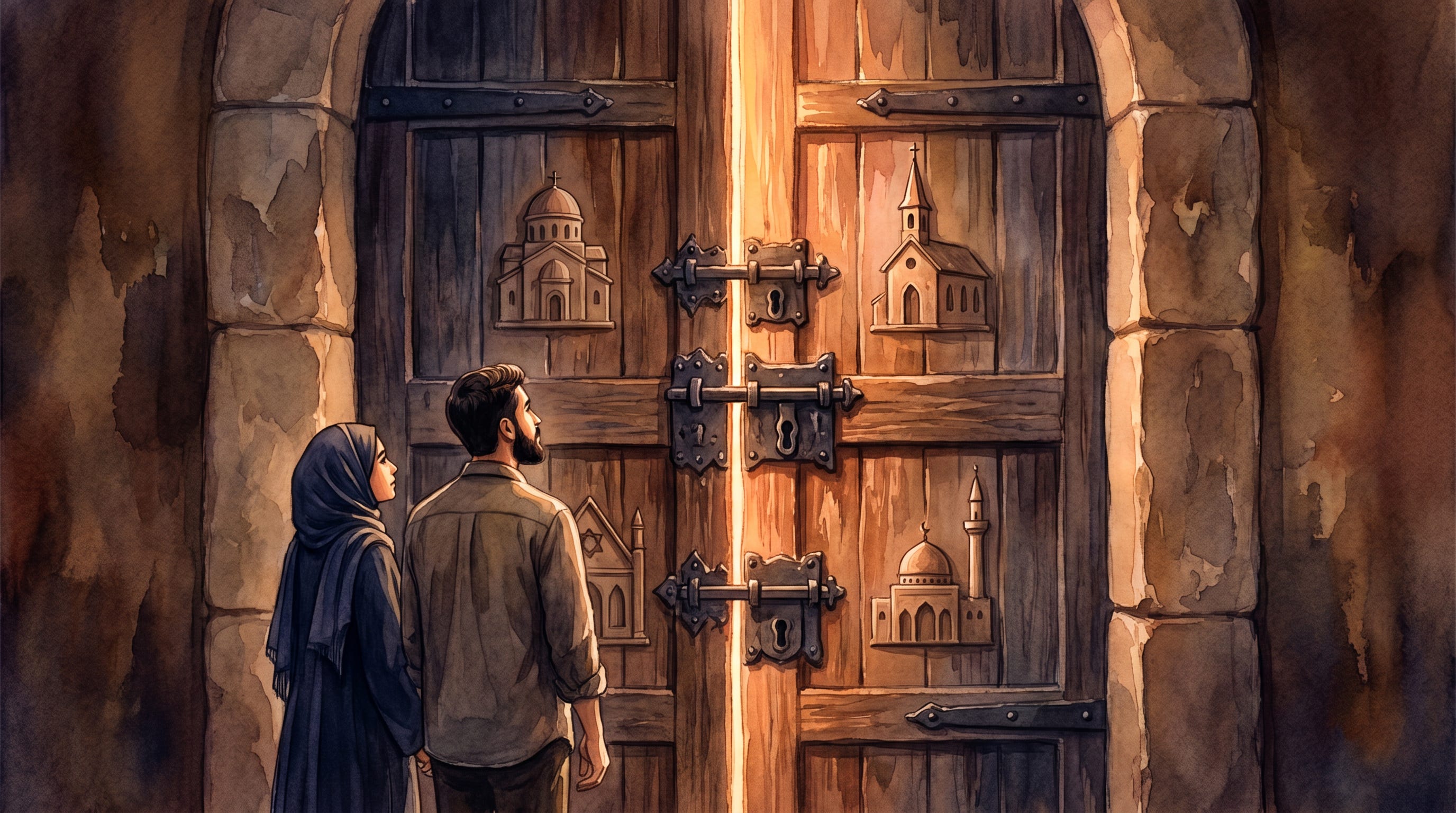
The classical exegetes tell us this is the first verse of permission for defensive armed struggle in the entire Qur’anic revelation.
For thirteen years in Mecca and the early years in Medina, the Prophet’s community, was permitted to witness in word, to witness in life, and to bear.
To carry.
To absorb.
This verse is the moment the permission to bear opens — slightly, conditionally, with three locks on the door — into the permission to defend.
Three things in the verse.
The first.
Permission is given to those who are fought against, because they have been wronged.
It is the wronged, not the proud.
It is those whom the violence has come to, not those who go to the violence.
The verse opens its door to the defended, not to the invading.
That is the first lock — and the Qur’an never lifts it.
The second.
Those who have been expelled from their homes unjustly, only because they said: our Lord is God.
The verse does not name a flag.
It does not name a tribe.
It does not name a national identity.
It names one sentence — the sentence the tongue speaks and the life carries.
Rabbuna Allah. Our Lord is God.
That is the second lock.
And the third.
“Had God not repulsed some people by means of others, there would have been pulled down — monasteries, and churches, and synagogues, and mosques in which the name of God is much remembered.”
Sawami‘, wa biya’, wa salawat, wa masajid.
The four houses of worship the verse names.
The hermits’ cells of the desert ascetics.
The churches of the Christians.
The synagogues of the Jews.
The mosques of the Muslims.
Permission to fight, in the Qur’an, is granted in defence of the worship of the One God across the four houses where the name of God is named.
Not an empire.
Not a banner.
Not a nation.
The places where God’s name is much remembered.
That is the third lock.
Three locks on the door.
The wronged.
The covenant of our Lord is God.
The houses where God’s name is invoked.
Tonight we will look at a people whose suffering the world will never forget.
We will honour their wound.
And we will ask, with the Qur’an as our anchor and these three locks as our test:
Was the something they died for the something the verse permits dying for?
Tonight we walk into Vietnam.
Vietnam: A Country That Could Not Be Deterred
There is one sentence we have to begin with.
If you had been a young person in Hanoi or Saigon between 1945 and 1975, you would have known this sentence the way our young people know Surah al-Fatiha.
It would have been said over the coffins of your friends, carved into the walls of your bus stations.
The sentence was spoken by Ho Chi Minh, the founder of modern Vietnam, on Voice of Vietnam radio, on the seventeenth of July 1966, in response to the escalation of the American bombing of his country.
Listen.
Không có gì quý hơn độc lập tự do.
Nothing is more precious than independence and freedom.
— Ho Chi Minh, broadcast appeal, Hanoi, 17 July 1966
After his death three years later, this sentence was carved into the entrance of his mausoleum.
Hear what kind of sentence this is.
It is not a poet’s flourish.
It is not a slogan in the cheap sense.
This was a head of state telling his people, in one line, what they could be asked to die for.
The sentence has the form of a sacred declaration.
It is short.
It is absolute.
It admits no qualification.
Nothing — not life, not safety, not the bodies of one’s children — is more precious than this.
In our own tradition, the sentence has the cadence of a shahada.
Negation — nothing.
Comparative — more precious than.
Declaration — independence and freedom.
The same skeleton as la ilaha illa Allah.
The first half empties the world; the second half places one thing in the centre of the emptied world.
That is the form of shahada.
And the question we will ask tonight — the question the whole night turns on — is whether the content matches the form.
Whether independence and freedom, by themselves, anchored in nothing higher, can hold the weight that the form is asking them to hold.
Because if the cadence of shahada can be filled with any content the speaker chooses, the cadence remains, but the witness empties.
And if the form is empty, then everything we have been saying for six nights falls away.
So we have to ask, of Ho Chi Minh and of every man and every woman who has ever spoken with his cadence —
What is the content?
The Man Behind the Sentence
Before we ask the question, we have to know who we are asking it of.
Ho Chi Minh was not a comfortable revolutionary.
He was not a man who shouted from a podium and slept in a palace.
He was a man whose whole adult life was spent in motion — Paris in his twenties, Moscow in his thirties, Canton, Hong Kong, southern China; finally back to Vietnam in 1941, in his early fifties, after thirty years away.
He lived simply.
He worked late.
He wrote everything down.
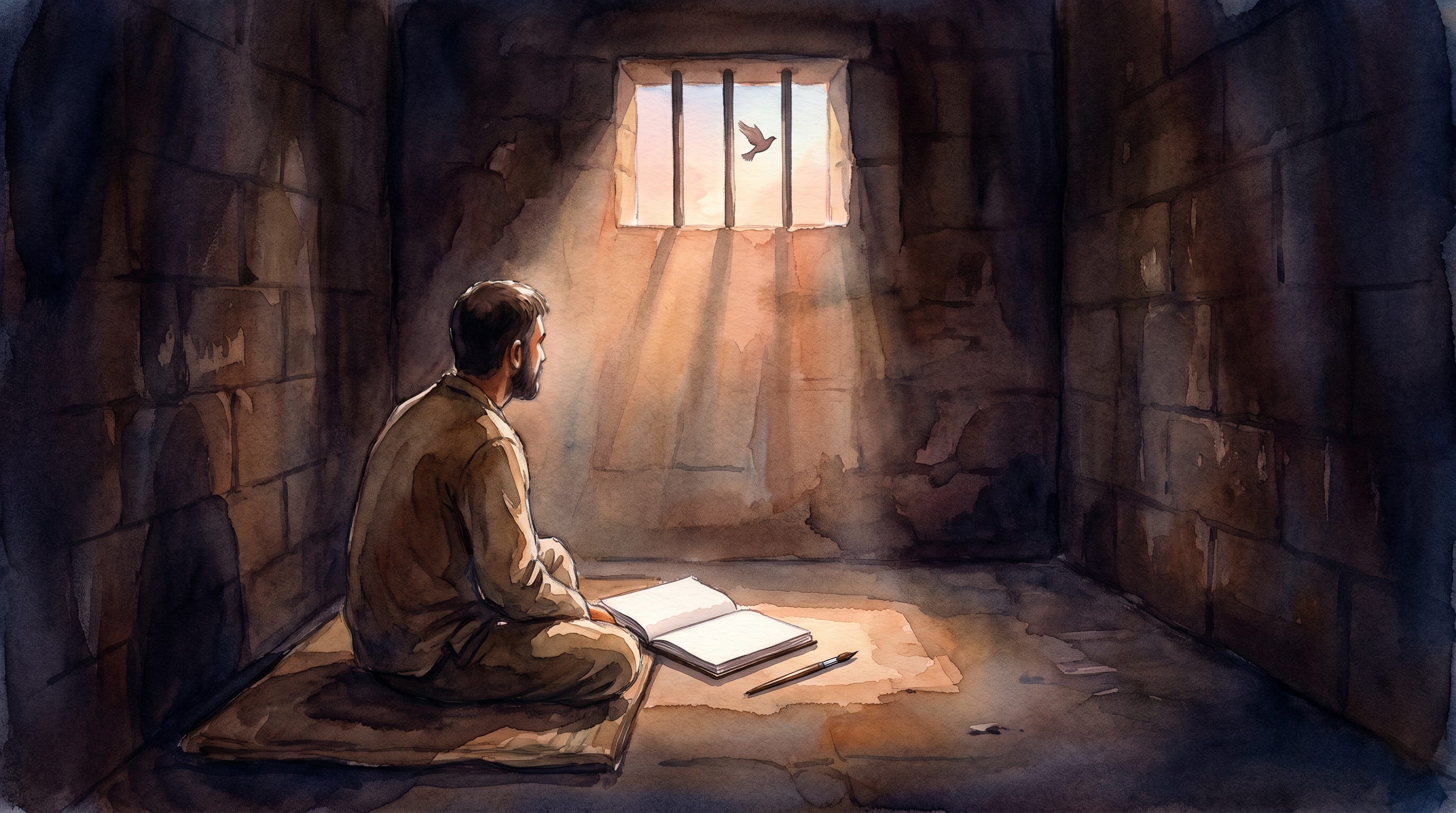
In August 1942, on a clandestine journey through southern China, he was arrested by Chiang Kai-shek’s forces and spent the next thirteen months in over a dozen different prisons.
During that confinement, he composed one hundred and fifteen poems in classical Chinese — later published under the title Nhật ký trong tù.
Prison Diary.
The opening lines, the verses that stand at the door of the whole collection, run like this.
Thân thể ở trong lao, Tinh thần ở ngoài lao.
“My body is inside the prison, but my spirit is outside.”
— Ho Chi Minh, Prison Diary, translated by Aileen Palmer (Foreign Languages Publishing House, Hanoi, 1967)
Hear this in the right register.
This is not the language of nihilism.
This is the language of a man learning, one day at a time, in a prison cell, that the body is not the whole of the person —
that the body can be confined and the spirit can be free.
In the Persian gnostic tradition we have been walking through this series, this is the language of the second stage of the soul’s journey — Eshgh.
The stage at which the lover learns that what binds the body cannot bind what is in love with God.
In the Husayni tradition, this is the language of sabr — the steadfastness our Imam Sajjad — peace and blessings be upon him, taught the people of Damascus from inside Yazid’s chains.
I am not telling you that Ho Chi Minh is Imam Sajjad.
I am telling you that the instinct in this fragment — that the body is not the limit of the person — is an instinct that runs through every tradition that knows what witness means.
The Vietnamese saw it in him.
That is why they followed him for thirty years.
And it is why a country of farmers absorbed the worst aerial bombardment in human history — more tonnage than was dropped on Germany in the Second World War — and did not break.
We honour the man.
We do not flatten him.
And we ask the question we are going to ask of him.
The Wrong Calculation
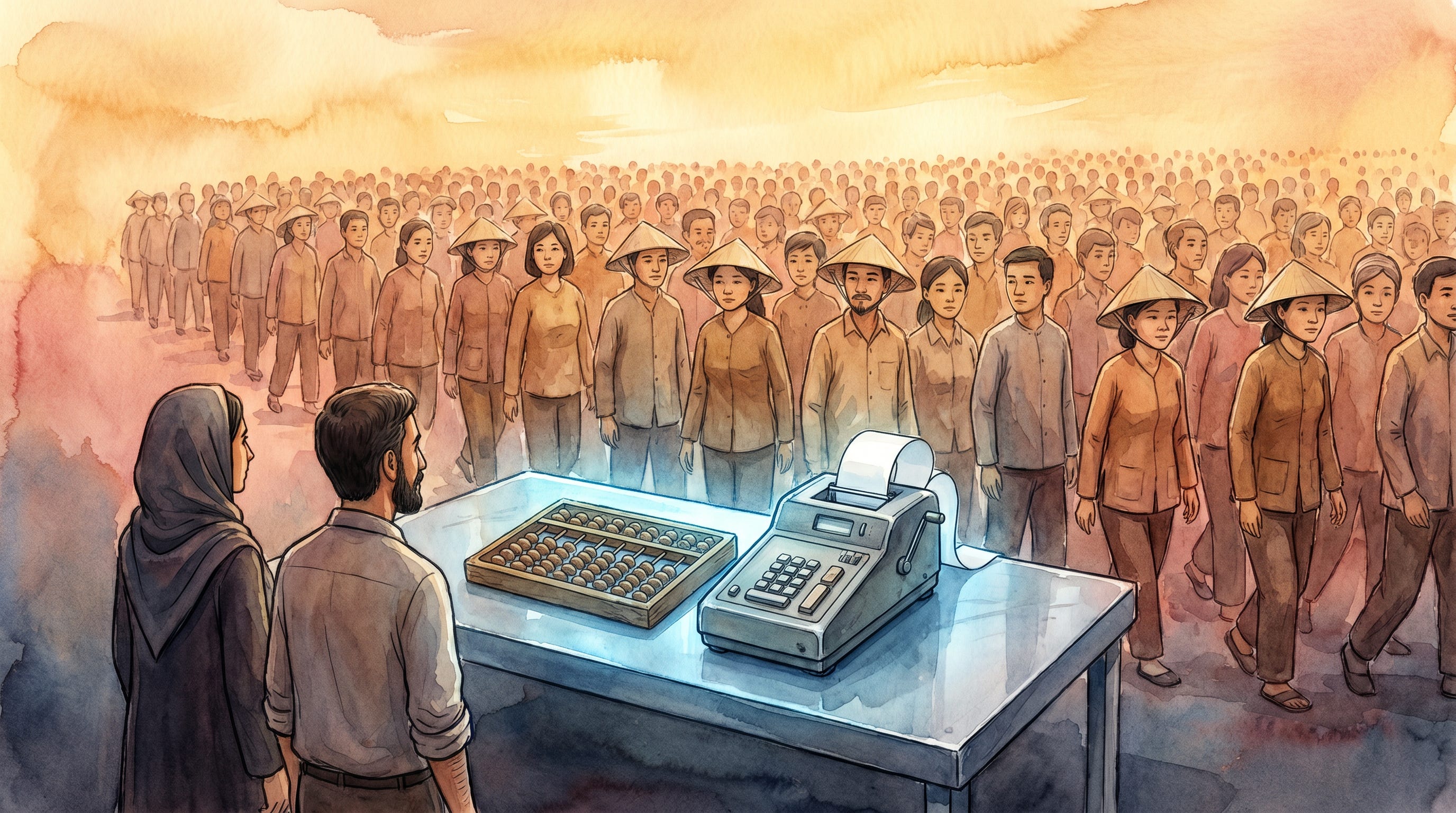
The Americans called it the body count.
Robert McNamara, the Secretary of Defence under Kennedy and Johnson, was a Harvard Business School graduate who had run the Ford Motor Company before he ran the Pentagon.
He believed that war could be reduced to a metric and the metric could be optimised.
The metric he chose was bodies.
If we can kill more of them than they can kill of us, eventually they will fold.
That was the calculation.
It was the wrong calculation.
The most rigorous demographic study of Vietnamese war deaths is by Hirschman, Preston and Vu Manh Loi, published in 1995 in Population and Development Review.
Their analysis estimates that between thirty and forty-six per cent of total Vietnamese war deaths during the period of heaviest American engagement — 1965 to 1974 — were civilian.
In that nine-year window alone, three to six hundred thousand civilians died directly from the bombing and the shelling and the operations of the United States military.
Broader estimates that include the full conflict period, the famine deaths, the disease, the displacement-mortality, go up to two million Vietnamese civilian dead.
— Hirschman, Preston and Vu Manh Loi, “Vietnamese Casualties During the American War: A New Estimate”, Population and Development Review 21:4 (December 1995), 783–812
— Spencer Tucker (ed.), Encyclopedia of the Vietnam War, ABC-CLIO, 2000
Two million civilians.
Across two decades.
For one country smaller than the state of California.
McNamara’s planners expected a country absorbing this many casualties to fold by the third year.
They built their war plan around that expectation.
The expectation was wrong by fourteen years.
The Vietnamese kept coming.
McNamara, twenty-eight years after the war ended, gave an interview to Errol Morris.
He said this.
“We were terribly wrong. We didn’t understand them.”
Now hear me carefully.
There is a thing the Vietnamese knew that McNamara did not know — and there is a related thing that we, as the lovers of Imam Husayn — peace and blessings be upon him, of all people, also know.
We, of all people, know what it is to look at a people who could not be deterred by the body count.
We have walked, in our own century, with peoples whose enemies expected them to fold by the third week and who were still there a third year later.
We will name them in the supplication at the close of tonight.
The form of the Vietnamese sacrifice was complete.
The willingness to die was total.
The body count was met with the body count and the body count was returned.
We honour the form.
Before the night closes, we will ask about the content.
Two Who Burned
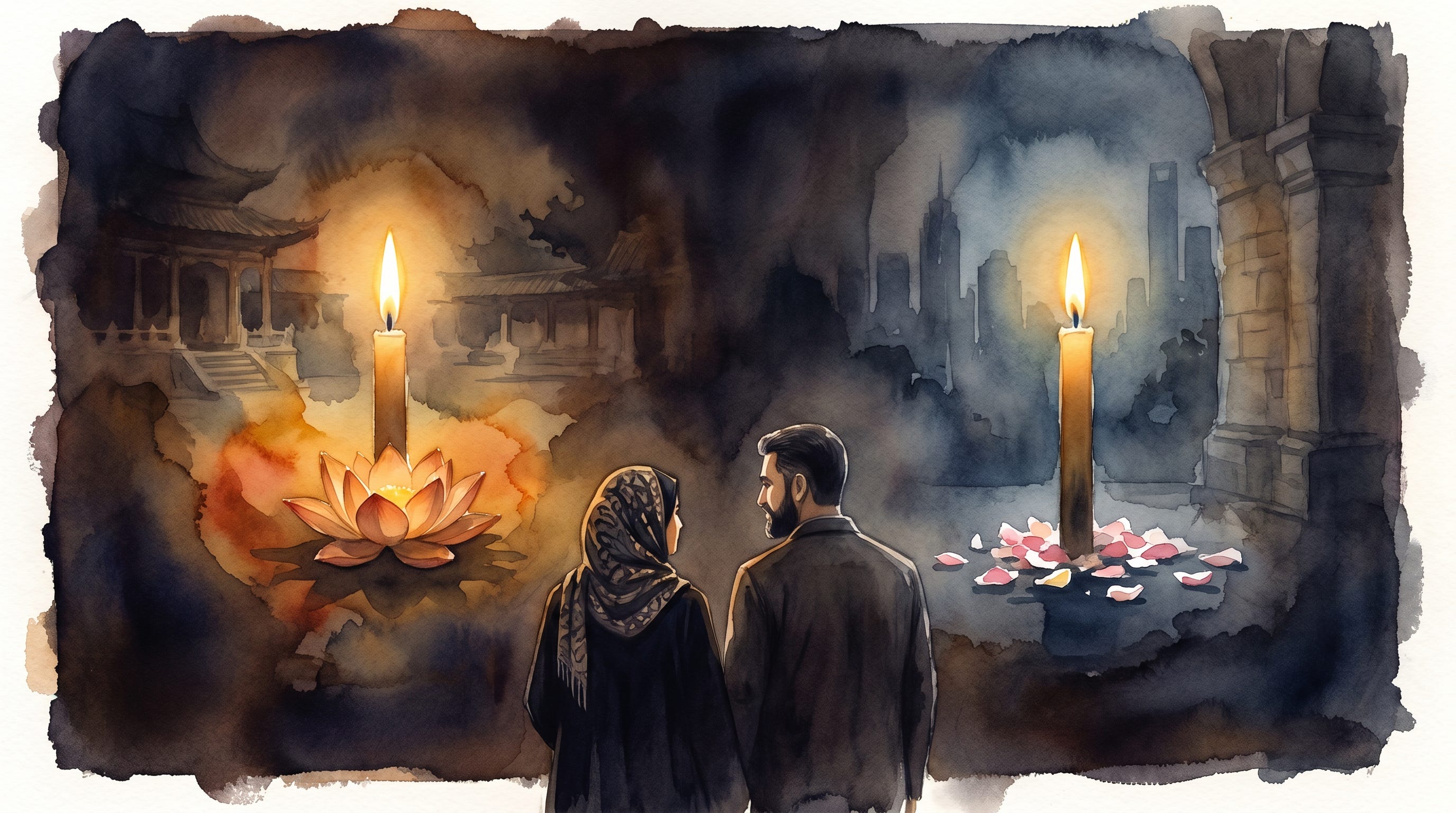
Before we leave the Vietnamese roots, I owe you one more figure — and this one is not Marx, not Mao, not Ho Chi Minh.
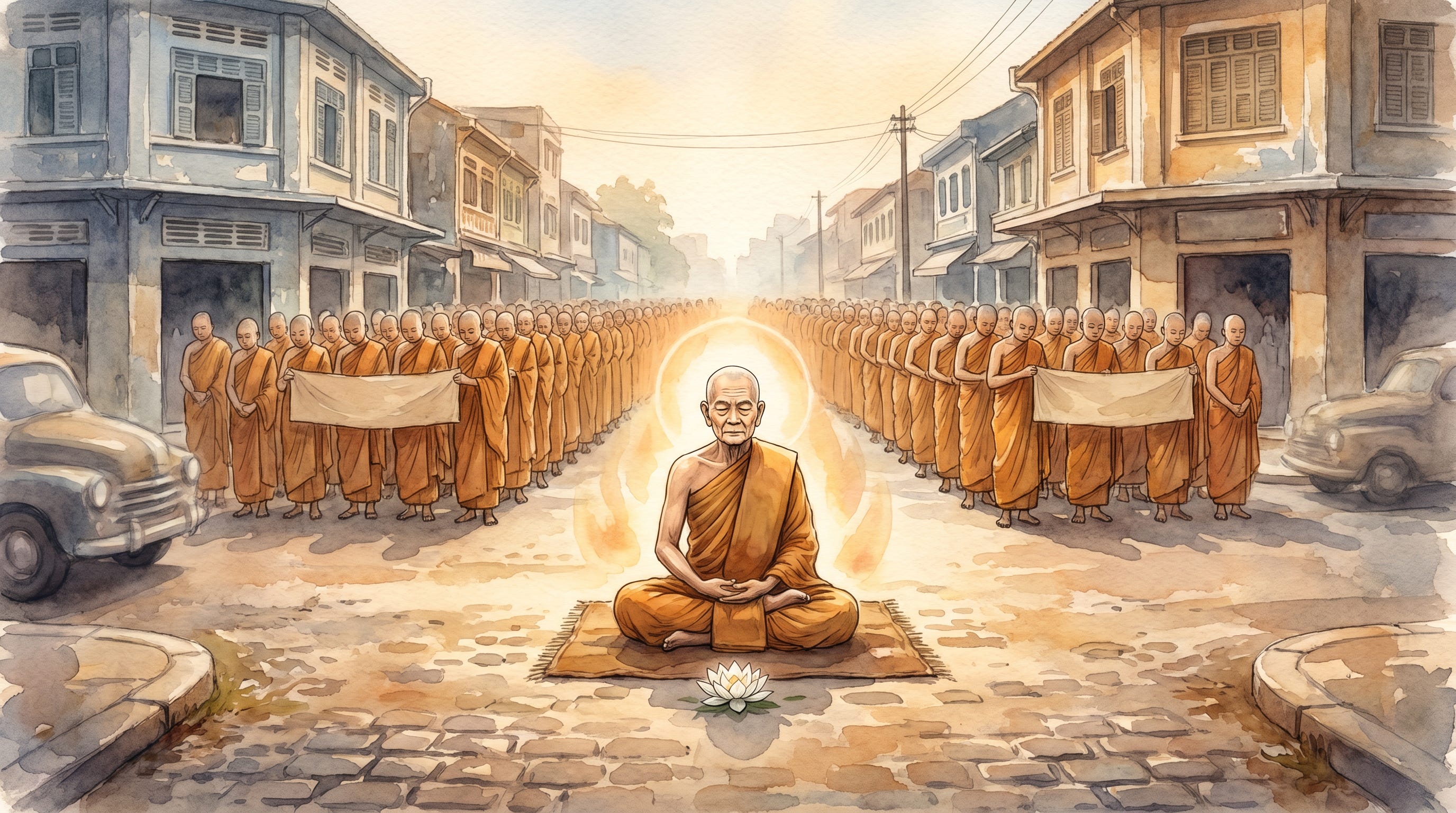
Thich Quang Duc — Saigon, 11 June 1963
He was a Buddhist monk.
His name was Thich Quang Duc.
He was sixty-six years old.
On the eleventh of June 1963, at half past nine in the morning, he sat down at the intersection of Phan Dinh Phung and Le Van Duyet streets in Saigon — three hundred and fifty other monks and nuns walked behind him in two rows, carrying banners in Vietnamese and English.
He sat on a small cushion in the middle of the intersection.
Another monk poured petrol over his head and shoulders.
Thich Quang Duc folded his hands.
He set himself on fire.
He did not flinch.
He did not cry out.
The reporters who were there said the only sound was the sound of the flames.
Malcolm Browne of the Associated Press took the photograph that won the World Press Photo of the Year.
President Kennedy, three months before he himself would be killed in Dallas, was reported to have said, looking at it:
“No news picture in history has generated so much emotion around the world as that one.”
— Malcolm W. Browne, Muddy Boots and Red Socks: A Reporter’s Life, Times Books, 1993; David Halberstam, The Making of a Quagmire, Random House, 1965
Why was he burning?
The American-backed regime of Ngo Dinh Diem in South Vietnam — governing a country eighty per cent Buddhist — had for years marginalised and persecuted the Buddhist majority.
Pagodas had been raided.
Monks had been arrested.
On the eighth of May 1963, the regime had banned the flying of Buddhist flags on Vesak in Hue.
Government forces had opened fire on the demonstrators that day.
Nine people were killed.
Thich Quang Duc left a written letter, addressed to the President of the Republic.
“Before closing my eyes, I respectfully plead to President Ngo Dinh Diem to take a mind of compassion … and implement religious equality.”
Hear the content of his witness.
He was not asking for a revolution.
He was not asking for an army from the North.
He was asking for the right of the Buddhist majority to fly their own flag on their own holiest day, in their own country, without being shot at by their own government.
He gave his body, in stillness, in public, to ask that.
Now — and this is where we have to be careful, because the methodology of this whole series is honour without conflation — we honour Thich Quang Duc.
He sits cleanly inside the same instinct the verse names.
He was wronged.
He was expelled from his country’s public life and from his community’s worship.
His worship was being suppressed.
The verse names the four houses, and the Buddhist temple is not one of them — we will be honest about that.
The Buddhist sangha does not affirm the One God in the way the Qur’an means it.
But the instinct the verse names is broad enough to recognise the man who burned in the lotus position to ask for the right of his sangha to fly its flag on the morning of the Buddha’s birthday.
We honour the instinct.
We do not say the theology is identical.
It is still not the shahada of Imam Husayn, peace and blessings be upon him.
But it is closer than what surrounds it.
Aaron Bushnell — Washington, 25 February 2024
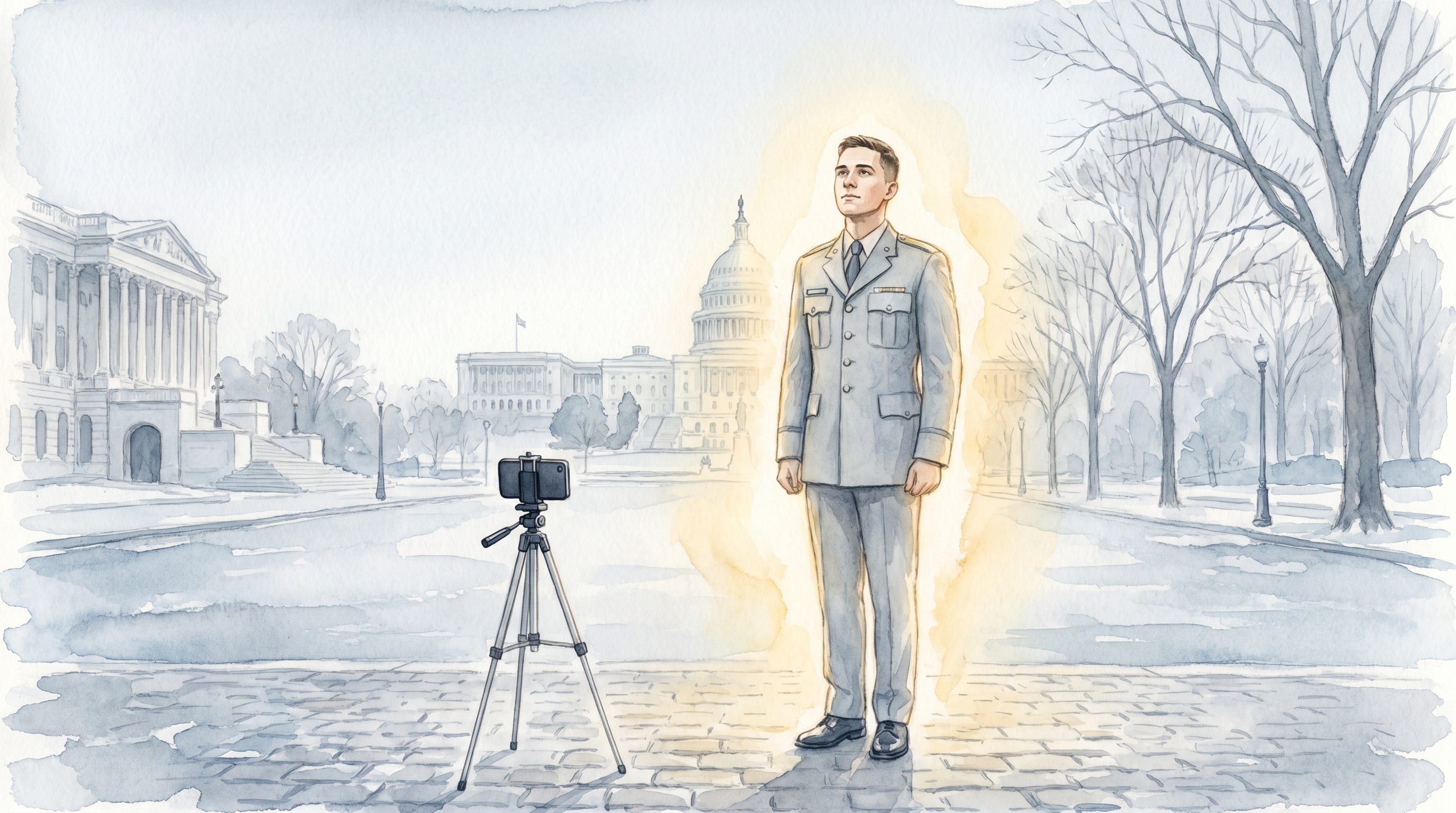
And there is a sixty-one-year echo I owe you, before we leave this section.
The morning of the twenty-fifth of February, 2024.
Washington, D.C.
The Israeli Embassy on International Drive, in Van Ness.
A young man in a United States Air Force uniform — twenty-five years old — set up a phone on a tripod, started a Twitch live-stream, and began to speak.
His name was Aaron Bushnell.
He had served four years in the Air Force as an information-technology specialist.
He had been working with mutual-aid networks for the homeless.
He had been reading carefully.
He had watched, for one hundred and forty days, what the country whose uniform he was wearing was helping to do to the people of Gaza.
And on that morning, in his uniform, on the public sidewalk outside the embassy, he said this — and I am giving you his exact words.
“My name is Aaron Bushnell. I am an active duty member of the United States Air Force, and I will no longer be complicit in genocide. I am about to engage in an extreme act of protest. But compared to what people have been experiencing in Palestine at the hands of their colonisers, it’s not extreme at all. This is what our ruling class has decided will be normal.”
— Aaron Bushnell, statement preceding self-immolation, Israeli Embassy, Washington D.C., 25 February 2024
Then he poured a flammable liquid over himself.
He lit himself on fire.
The only words he could shout, as the flames took his voice, were two.
“Free Palestine.”
He repeated them until he could no longer make a sound.
He died of his injuries that evening.
Sixty-one years separate him from Thich Quang Duc.
The continents differ.
The decades differ.
The uniforms differ.
The theologies differ.
The instinct does not.
Quang Duc burned because his country’s regime was suppressing his people’s worship.
Bushnell burned because his country’s regime was funding the suppression of another people’s worship.
Both could not be silent.
Bushnell was not a Muslim.
He was not a Husayni.
His worldview was secular and humanist.
We do not pretend his theology is ours.
We honour the instinct.
He saw what his uniform was being used for, and he refused to let his body be one of its instruments.
He gave his body to ask, of the country whose uniform he wore —
what kind of worship are we practising, when we feed bombs to a people who say “our Lord is God” in a different tongue?
He used the only words he had left as the fire took him.
Free Palestine.
Two words.
He could have chosen any words.
He chose those two.
We name him.
We honour him.
We do not flatten him.
It is still not the shahada of Imam Husayn, peace and blessings be upon him.
But it is closer than what surrounds it.
The lesson here is short.
Sacrifice on a national scale, even at extraordinary cost, even with extraordinary discipline, produces a recognisable form of witness.
The form alone is not the witness.
The form is what the question is being asked of.
What Was True in Ho’s Vocabulary
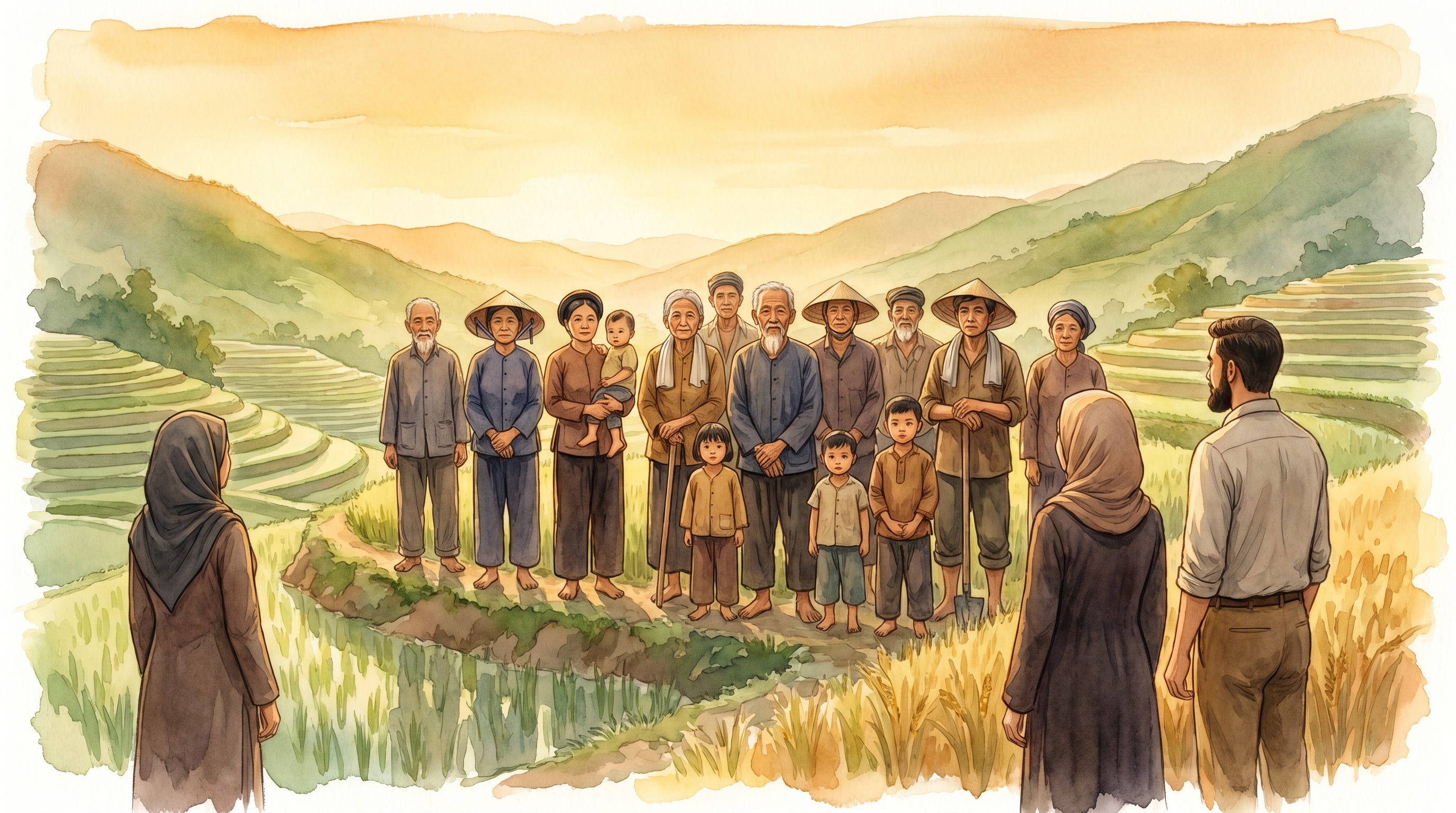
Before we go to the limit, we have to honour the merit.
Three things are true in Ho Chi Minh’s vocabulary.
Three things the Qur’an, read honestly, would not deny him.
The first.
The dignity of a people refusing to be ruled by those who do not know them.
يَا أَيُّهَا النَّاسُ إِنَّا خَلَقْنَاكُم مِّن ذَكَرٍ وَأُنثَىٰ وَجَعَلْنَاكُمْ شُعُوبًا وَقَبَائِلَ لِتَعَارَفُوا
“O humankind, We have created you from a male and a female, and have made you peoples and tribes, that you may know one another.”
— Qur’an, Surah al-Hujurat (the Chapter of the Private Apartments) #49, Verse 13
The verse does not say that you may compete.
It does not say that you may dominate one another.
It says that you may know one another.
Vietnam’s refusal of French rule, and then American rule, was a refusal in exactly the register the Qur’an names.
They wanted to be known as a people, on their own terms.
That instinct is sound.
The second.
The refusal of humiliation.
The verse we anchored the night with names humiliation as a category that opens the door to permission.
No tradition that knows God can teach its people to accept being trampled on. Vietnam refused to be trampled on.
That refusal is sound.
The third.
The willingness to bear cost for what one believes.
The Vietnamese paid the price.
They paid it for thirty years.
In their fields, in their bodies, in their children.
That is honest, and it is hard, and it is real.
It stands as a rebuke to every tradition — including ours — that has at one time or another taught its people that comfort is faithfulness.
The Khutba of Mina that we read together in Session Four named exactly this disease in the scholars of Imam Husayn’s own time.
They were silent because they had become comfortable.
The willingness to bear cost is the opposite of that disease.
So hear me.
On these three counts — dignity, the refusal of humiliation, the willingness to bear cost —
my brother Ho Chi Minh and I would have something to say to one another.
We do not condescend to him.
But there is a man whose voice we are going to hear now, who lived these three things in a deeper register.
Sayyed Abbas Builds the Bridge
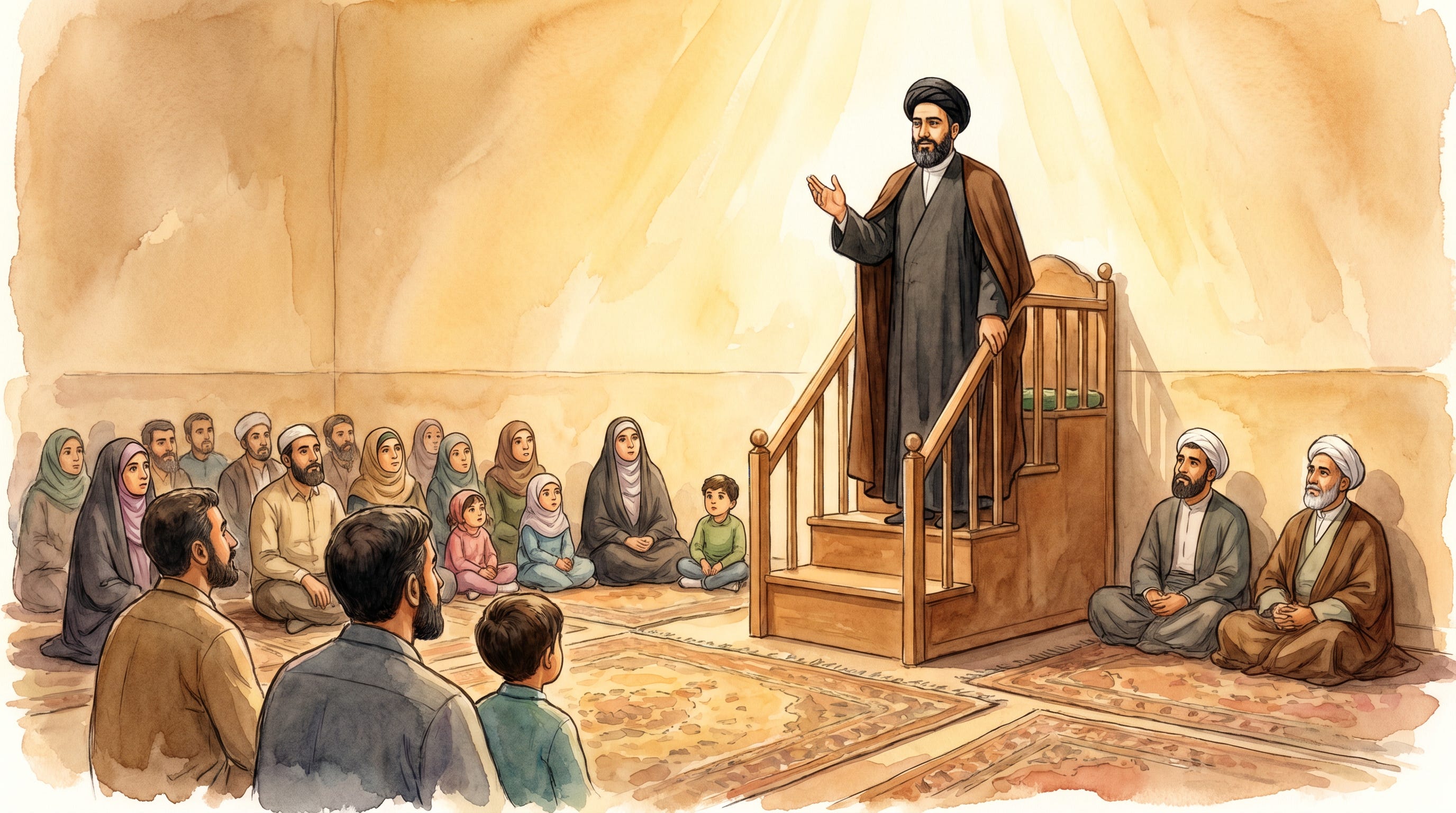
His name was Sayyed Abbas al-Musawi, may God rest his pure soul.
He was the second Secretary-General of the Islamic Resistance in Lebanon.
He was martyred on the sixteenth of February 1992, in a strike on the convoy returning from a memorial for Shaykh Ragheb Harb, may God rest his pure soul — the man whose own martyrdom, eight years to the day earlier, had taught the south of Lebanon what witness meant in their own century.
Sayyed Abbas died with his wife Sayyeda Siham and his five-year-old son Sayyed Husayn, may God rest their pure souls.
The American-supplied helicopter that fired on his convoy did not distinguish between the commander and the child.
Hear what Sayyed Abbas said, from his pulpit in the Bekaa, in the years between his return from Hawza in Najaf and his martyrdom in 1992.
Hear the line that pulls Ho Chi Minh’s three true things out of the secular grammar and into the covenantal grammar.
شرطٌ لمن يريد أن يكون ولياً من أولياء الله: أن يبلسم جراحات المعذَّبين في الأرض. أن يدافع عن المظلومين في الأرض. هذا شرط فيمن يكون موالياً لله تبارك وتعالى.
“There is a condition for whoever wants to be one of the close friends of God. They must heal the wounds of the tormented on earth. They must defend the oppressed on earth. This is a condition for anyone who claims to be loyal and devoted to God, the Blessed and Exalted.”
— Sayyed Abbas al-Musawi, pulpit address, Bekaa, c. 1988–1992
Hear what just happened.
Sayyed Abbas took the exact three things that are true in Ho Chi Minh’s vocabulary — dignity, refusal of humiliation, willingness to bear cost — and he named them as a condition of being a wali of God.
Not as a substitute for the worship.
Not as a replacement for the shahada.
As a condition of it.
In Sayyed Abbas’s grammar — the grammar of the Qur’an and of the Imams, peace and blessings be upon them — defending the oppressed is not a separate thing from worship.
It is part of what the worship requires.
That is the bridge.
Ho Chi Minh’s instinct was sound on the three counts.
What was missing, in his grammar, was the anchor —
The One God in whose name the wounds of the tormented are healed.
Sayyed Abbas did not deny the instinct.
He grounded it.
The instinct without the anchor produces a movement.
The instinct with the anchor — that produces a witness.
We hold that bridge in our hands as we walk now into the limit.
The Morning After
When the cause is anchored only in the people, only in the nation, only in history —
the cause cannot hold what the form is asking it to hold.
There are three reasons.
The first is the morning after.
Vietnam reunified on the thirtieth of April 1975.
The American helicopters lifted off the roof of the embassy in Saigon.
The country had finally, after thirty years, been allowed to belong to itself.
The morning after.
The new state inherited the moral capital of the war and the practical machinery of revolutionary discipline.
Within a few years, the same revolutionary discipline that had liberated the peasantry had constructed the system of “re-education camps” through which somewhere between two hundred thousand and half a million of the country’s own people passed.
The boat people.
The famine years of 1976–80.
The war with Pol Pot’s Cambodia.
The border war with China.
The economic collapse before the Doi Moi reforms of 1986 finally pulled the country, in pieces, back from the brink.
I am not telling you this to score a point against Vietnam.
I am telling you this because the same pattern has played out, in different countries, in different decades, for the entire twentieth century.
Algeria after Boumédiène’s coup.
Cuba after the firing squads of La Cabaña.
The pattern is this.
A cause anchored only in the nation has no resource for the morning after.
It is here that the Husayni covenant — and the Sayyed Abbas of our own century who carried it — has an answer that the secular twentieth century did not have.
Hear Sayyed Abbas, may God rest his pure soul, again.
This time on the day he stood on the pulpit in the Bekaa and declared what the Resistance was for — not just what it was against.
احملوا لواء رفع الحرمان عن المستضعفين والفقراء والمساكين، احملوا هذا اللواء..
“Carry the banner of lifting deprivation from the oppressed, the poor, and the needy. Carry this banner.”
— Sayyed Abbas al-Musawi, pulpit address, c. 1988–1992
And then — listen to the chain that follows — Sayyed Abbas reaches back into the words of the man whose imamate the entire Twelver tradition rests on. Imam Ali ibn Abi Talib, peace and blessings be upon him. The Commander of the Faithful.
He reaches back to a letter Imam Ali wrote to one of his governors — Uthman ibn Hunayf al-Ansari, who was the governor of Basra.
The letter is preserved for us in Nahj al-Balagha.
It is Letter Forty-Five.
Uthman had been invited to a banquet in Basra — a feast where the rich were welcomed and the poor were turned away at the door.
He attended.
Word reached the Commander of the Faithful in his capital at Kufa.
And he wrote to his governor — not to dismiss him, but to teach him.
The line we need tonight is in the fourth section of it.
وَلَوْ شِئْتُ لَاهْتَدَيْتُ الطَّرِيقَ، إِلَى مُصَفَّى هذَا الْعَسَلِ، وَلُبَابِ هذَا الْقَمْحِ، وَنَسَائِجِ هذَا الْقَزِّ، وَلَكِنْ هَيْهَاتَ أَنْ يَغْلِبَنِي هَوَايَ، وَيَقُودَنِي جَشَعِي إِلَى تَخَيُّرِ الْأَطْعِمَةِ ـ وَلَعَلَّ بِالْحِجَازِ أَوِ بِالْـيَمَامَةِ مَنْ لَا طَمَعَ لَهُ فِي الْقُرْصِ، وَلَا عَهْدَ لَهُ بِالشِّبَعِ ـ أَوْ أَبِيتَ مِبْطَاناً وَحَوْلِي بُطُونٌ غَرْثَى وَأَكْبَادٌ حَرَّى
“If I had wished, I could have taken the way leading toward pure honey, and fine wheat, and silken cloth. But far be it from me that my whims should overcome me, and that my greed should lead me to choose between rich foods — while perhaps in the Hijaz or in al-Yamamah there are people who have no hope of bread, no acquaintance with the feeling of being fed.
Shall I lie down with a satiated belly while around me there are hungry stomachs and burning livers?”
— Imam Ali, letter to Uthman ibn Hunayf al-Ansari. Nahj al-Balagha, Letter 45, Section 4
“Shall I lie down with a satiated belly while around me there are hungry stomachs and burning livers?”
This is the Commander of the Faithful, in the year forty of the Hijra, writing to his governor in Basra.
Fourteen hundred years ago.
A letter so old that the paper it was first written on has been dust for thirteen centuries — and yet the letter has not aged a single day.
What Sayyed Abbas did with this letter on his pulpit in the Bekaa was simple.
He took Imam Ali’s principle and he made it the positive programme of the Resistance.
Listen to how he closed.
وسيعلم كل العالم أننا كما كنا السبّاقين إلى مقاومة الاحتلال، سنكون السبّاقين إلى مقاومة الإهمال والحرمان.
“And the whole world shall know that just as we were the pioneers in resisting the occupation, we shall be the pioneers in resisting neglect and deprivation.”
— Sayyed Abbas al-Musawi, pulpit address, c. 1988–1992
This is the answer Vietnam could not give.
This is the cause that knows what to do once the foreign army leaves — because the cause was never only about the foreign army leaving.
The cause was the worship of the One God, lived as the love of God’s poor.
The first half of the cause is the no — no to the foreigner, no to the humiliation, no to the bombs.
The second half is the yes — yes to the bread, yes to the dignity, yes to the worship that requires us to feed our neighbours.
A cause with only the no leaves its children, the morning after victory, with a hollow state.
A cause with both the no and the yes — that cause produces a civilisation.
That cause produces a Hizbullah that runs hospitals and orphanages and schools alongside its missile units, because the same theology that licenses the missile licenses the school.
Ho Chi Minh’s grammar produced the no with extraordinary discipline.
He could not produce the yes — because his grammar had no place from which to produce it.
Independence and freedom, by themselves, do not feed the children of Hai Phong on the morning of the first day of peace.
The worship of the One God, anchored in the love of the One God’s poor, does.
Two Captains: Ho Chi Minh and Ngo Dinh Diem
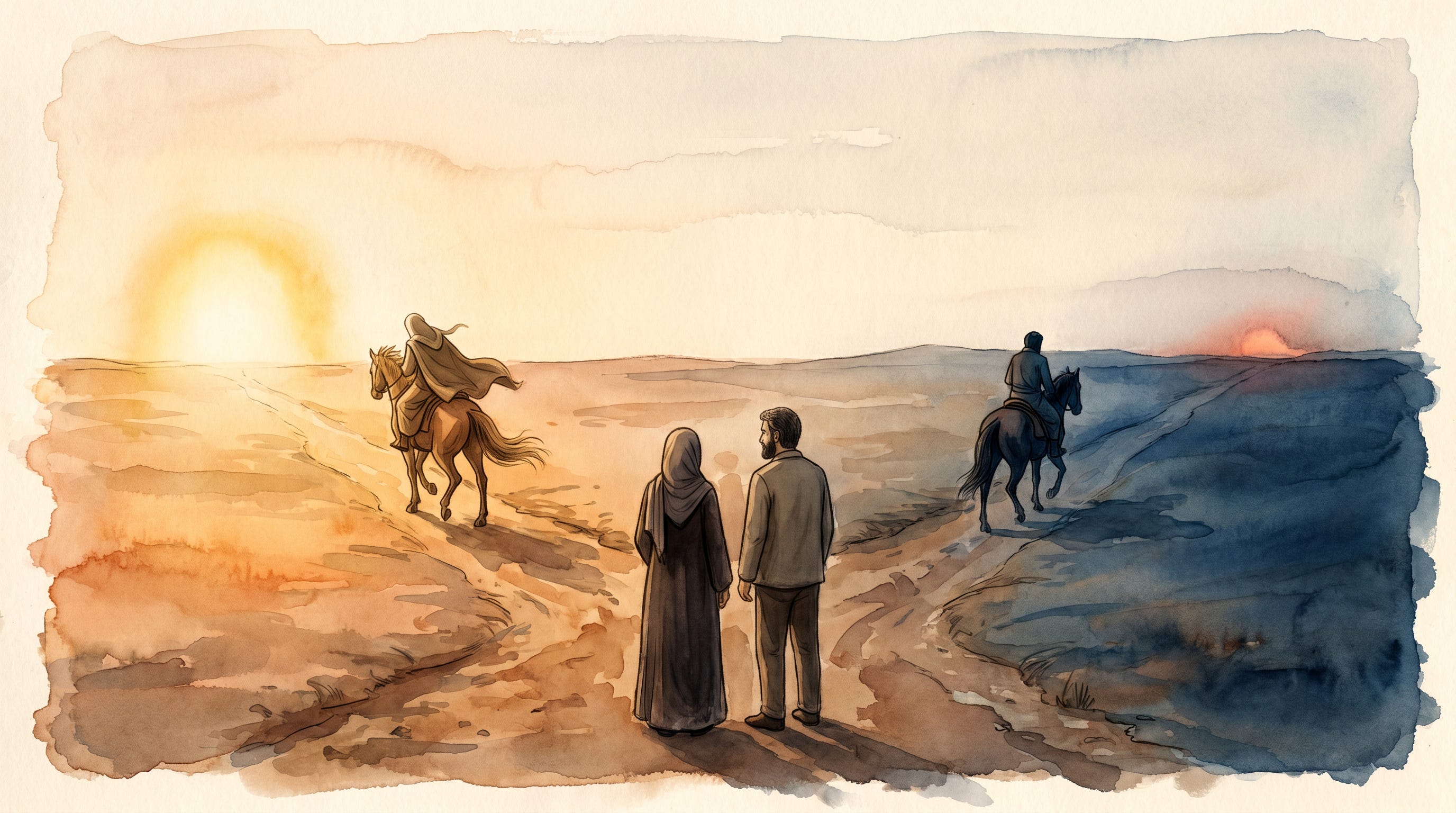
In Session Five we walked with two captains who stood on the same field of Karbala under the same desert sky on the morning of the tenth of Muharram.
One captain crossed — Hurr ibn Yazid al-Riyahi, peace and blessings be upon him, who walked his horse into the camp of Imam Husayn, peace and blessings be upon him, and asked to die there.
The other chose Rayy and the fire — Umar ibn Sa’d, who lit the fire on the tents of the women and children.
Two captains.
Same field.
Same sky.
The witness was in the choice.
Tonight that figure returns.
In Vietnam there were also two captains.
One was Ho Chi Minh, who chose his cause in Paris in 1919 — at the door of the Versailles Peace Conference, with a petition asking the victors of the First World War to apply Wilson’s principle of self-determination to French Indochina.
The door was closed in his face.
His cause was made by what he was refused.
The other was Ngo Dinh Diem, who chose his cause in 1954 — not the cause of his own people, but the cause of the Americans who installed him.
He flew the southern flag over his palace until November 1963, when his own generals, with American knowledge and consent, overthrew him in a coup and shot him in the back of an armoured personnel carrier.
The flag changed hands.
The napalm did not.
One captain crossed.
One chose Rayy and the fire.
I am not saying Diem is Umar ibn Sa’d.
I am saying the logic of the field of Karbala does not stay in the seventh century.
It is the logic of every age in which two paths are open and a man must choose which one he is on.
The Vietnam of 1954 to 1963 had Hurrs and it had Umar ibn Sa’ds.
The world still does.
The Trap That Eats Its Own Children
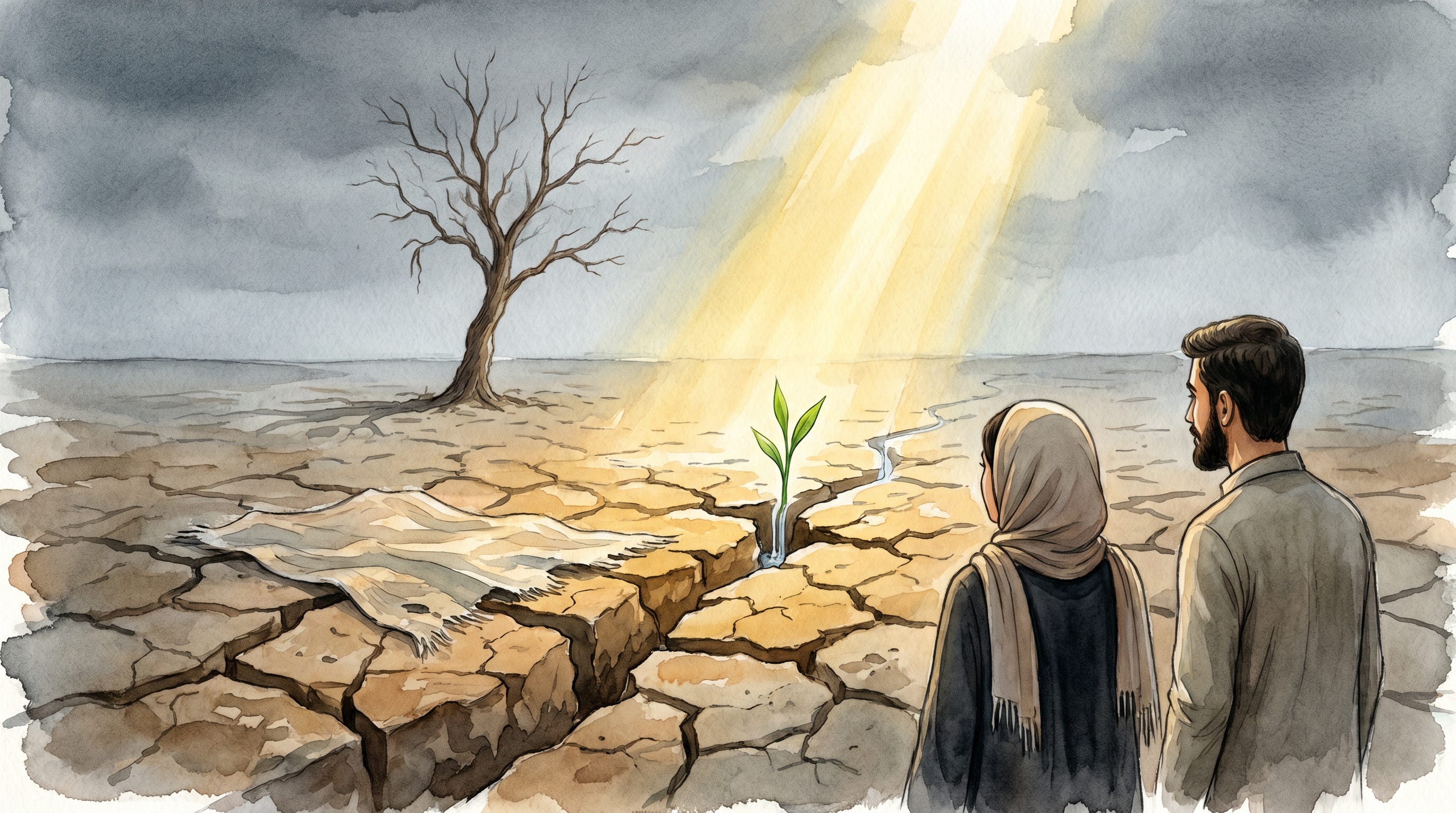
Last night we read the warning in The Wretched of the Earth — that the recovery of agency through violence does not stop when the agency is recovered.
The violence has its own gravity.
It pulls the revolution toward more violence — turned, when the foreigner is gone, against the revolution’s own children.
Vietnam carries that warning into the next register.
Algeria after Boumédiène.
Cuba after the firing squads.
Vietnam after the camps.
Edward Said wrote it carefully in Culture and Imperialism in 1993.
Anti-colonial victory does not, by itself, produce a politics that knows what to do with the people once they are free.
Dr Shariati saw it, in Paris in the early sixties.
Dr Shariati had grown up inside a tradition that taught — if the tradition was understood — that the recovery of agency requires both the no and the yes, and the anchor for both is the One God.
Fanon could not see that.
Dr Shariati, in the end, could.
The wound of colonialism cannot be healed by the bandage of nationalism alone.
The wound is deeper.
It needs a deeper medicine.
Sacrifice in a worthy cause is honourable.
We have said it.
But honourable is not the same as complete.
A worthy cause that is not anchored in the worship of the One God has no resource to govern its own children once the foreign army leaves.
The witness of Imam Husayn, peace and blessings be upon him, is worthy at the moment of falling — and worthy at the moment of waking the day after.
That is the difference we are walking toward.
A Stage on the Road — Ma’rifat
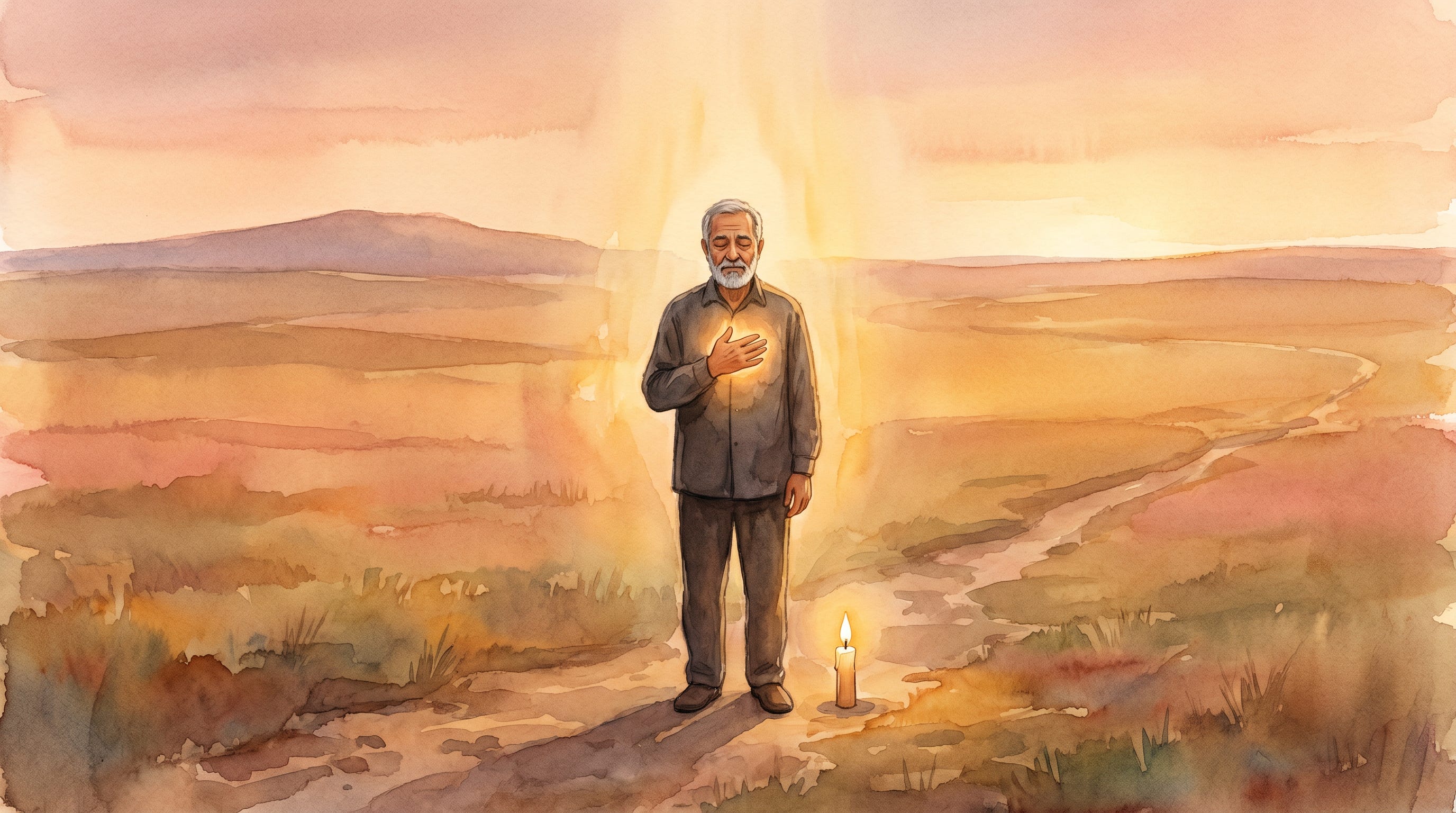
In Session Three we walked with the first stage of the Persian gnostic path.
Talab.
The Quest.
The seeking.
The boy in a village in Kerman whose father worked with water, not with books, and who was already being formed into a candle.
In Session Five we walked with the second.
Eshgh.
The Love.
The lover whose breath was bound to Imam Husayn’s breath.
The commander who, fighting Daesh, laughed and said “may my Lord forgive me — my clothes are not for war” and went forward in his suit all the same.
Tonight we walk with the third.
Ma’rifat.
The word is from the same Arabic root as ’Arafat — the plain on which the pilgrims stand on the ninth of Dhu al-Hijjah, in the most weighted moment of the Hajj.
The root means to know — to know with the heart, not only the mind.
To recognise.
The Persian gnostic tradition names seven stages on the soul’s journey — Talab, Eshgh, Ma’rifat, Istighna, Tawhid, Hayrat, Faqr-o-Fana.
The book on Hajj Qasem Soleimani I have been quoting from across this series, Rafiq-e Khoshbakht-e Ma, adds an eighth — Shahadat, the Husayni completion of the path.
We have agreed to walk four — Talab, which we have done; Eshgh, which we have done; Ma’rifat, which is tonight; and Shahadat, which is the ninth night.
Tonight, ma’rifat.
The discernment.
The knowing-with-the-heart that distinguishes a worthy cause from its counterfeits.
Two anecdotes from Hajj Qasem’s life.
Both from the third chapter of Rafiq-e Khoshbakht-e Ma.
The first is interior.
The second is exterior.
Husayn the Son of Gholam-Husayn
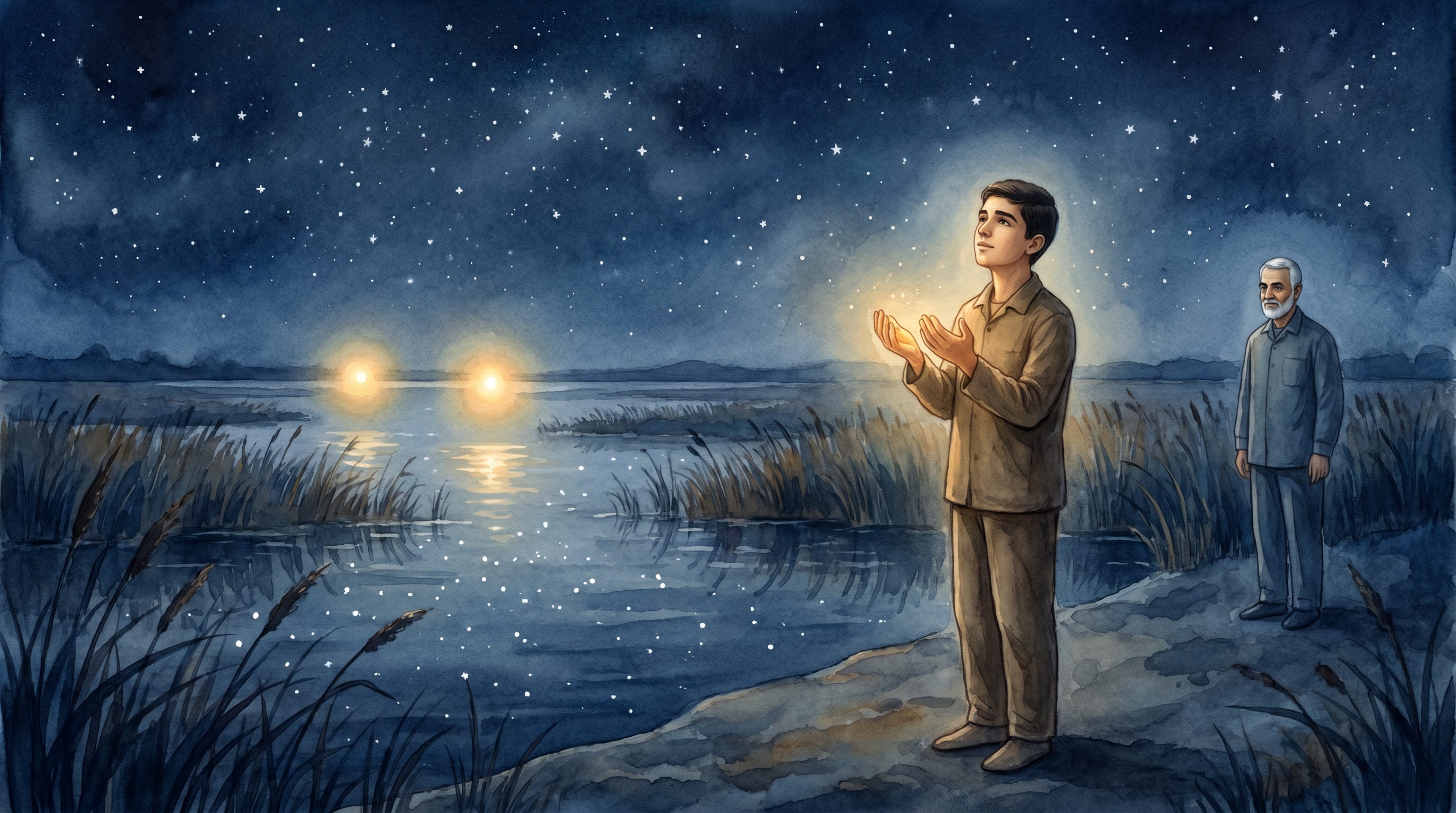
This is a story Hajj Qasem himself told.
The setting is the Iran–Iraq war.
The frontline at Shalamcheh.
Two of his men — Husayn Sadeghi and Akbar Mousapour — had gone out on reconnaissance and had not come back.
Hajj Qasem was sure the operation had been compromised, sure his men had been captured.
He drove out to the front and confronted the young intelligence officer — a teenager, the son of two schoolteachers.
There were a hundred Husayns in that unit, so they used the patronymic.
Husayn the son of Gholam-Husayn.
Two days later, the young man radioed him.
Come back.
Hajj Qasem came back.
The young man, smiling at the corner of his mouth, said this.
“Tomorrow, Akbar Mousapour will come back.”
Hajj Qasem said.
“Husayn! What are you saying?”
The young man.
“Husayn the son of Gholam-Husayn says this.”
Hajj Qasem stayed.
The next afternoon, the men at the binoculars said.
“There is a darkness on the water.”
They went down.
They lifted Akbar Mousapour out of the marsh.
He had been martyred in the water.
The day after, in the same place, Sadeghi’s body floated up.
Both at the point they had departed from.
Both, as if the river itself had brought them home.
When it was over, Hajj Qasem asked the young man.
“How did you know?”
The young man said.
“Last night I saw Akbar Mousapour in a dream.
He told me,
‘Husayn, we were not captured.
We were martyred.
Tomorrow at this hour I will come back, and Sadeghi the day after.’”
And then the line I want you to carry home tonight.
“Do you know why Akbar Mousapour was permitted to come to me?
He had two virtues.
He was married.
And his namaz-e shab — his night prayer — was not interrupted, even in the water.”
— Shahid Sardar Soleimani, narrated in Rafiq-e Khoshbakht-e Ma, Chapter 3 (Ma’rifat), pp. 38–39
The night prayer was not interrupted, even in the water.
Hear what ma’rifat is.
It is not deduction.
It is not I have looked at the satellite imagery and concluded.
It is the kind of seeing that comes through the unseen — the kind of knowing that namaz-e shab, the prayer of the deep night when no one is watching, sustains in a heart.
The teenager could see what the commander could not see.
And the commander, may God rest his pure soul, was humble enough — and this is itself a sign of his ma’rifat — to listen to him.
The Vietnam beat we have just walked argued that human reason alone, anchored in the nation alone, cannot govern the morning after.
Rafiq-e Khoshbakht-e Ma gives us the answering register.
There is a kind of knowing that is not human deduction.
It is granted to those who keep the prayer that interrupts nothing.
The Letter from Boukamal
The second anecdote is exterior.
In November of 2017, the forces of the Resistance — the Syrian Arab Army, Hizbullah, the Iraqi Hashd al-Shaabi, the Iranian commanders — entered the city of Boukamal in eastern Syria.
Its liberation broke the territorial back of the Daesh death cult.
In the days of the operation, Hajj Qasem’s men used a private home as a temporary command post.
They did not ask the family’s permission — there was no time, and the family had been displaced.
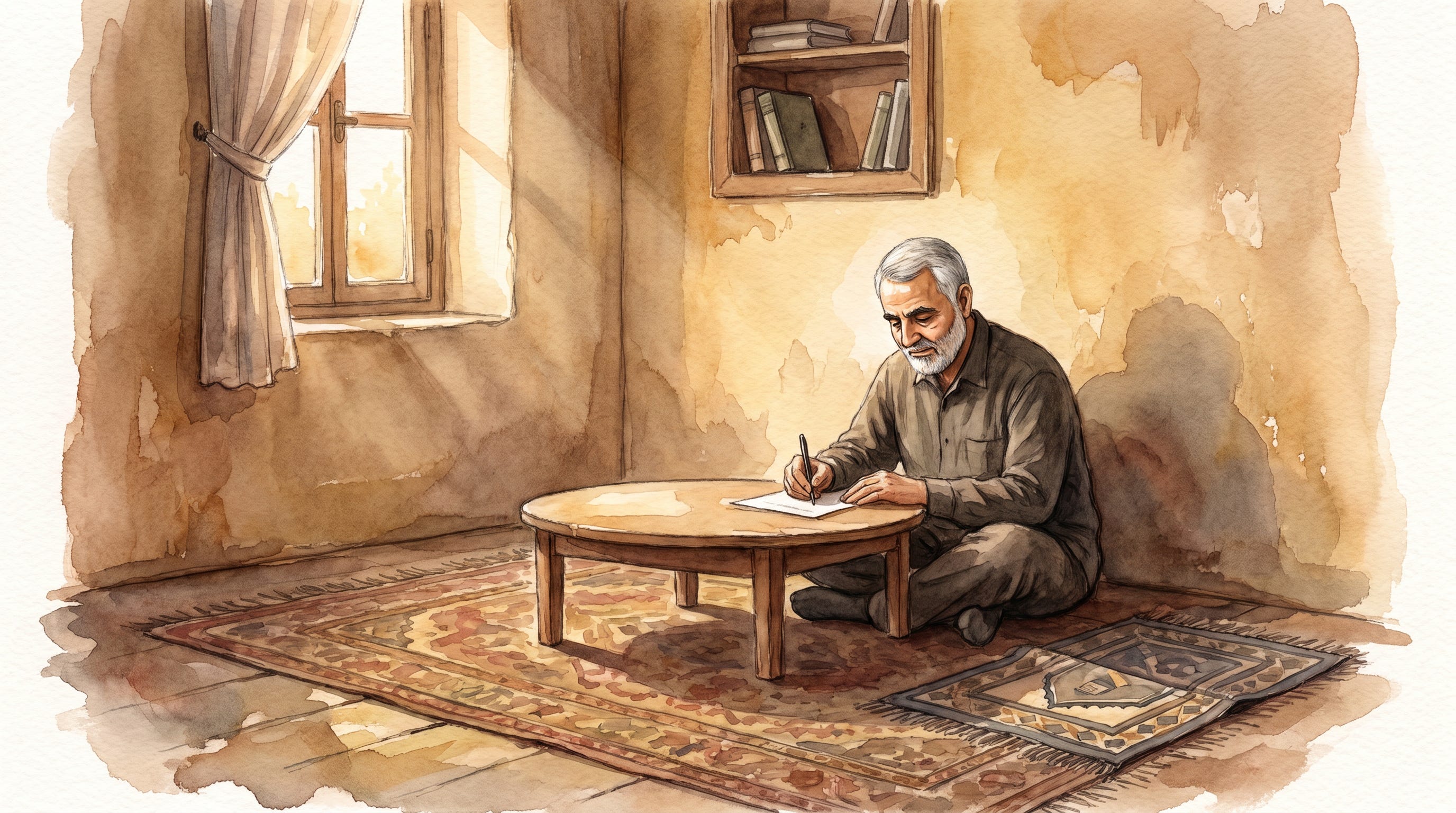
When the operation was over, before he left, Hajj Qasem sat down and wrote a letter.
He left it in the house, for the family to find when they returned.
The letter is preserved, in his own handwriting, in Rafiq-e Khoshbakht-e Ma, page forty-one.
Hear it.
خانوادۀ عزیز و محترم! سلامٌ علیکم.
من برادر کوچک شما قاسم سلیمانی هستم. حتماً مرا میشناسید. ما به اهلِسنت در همهجا خدمات زیادی انجام دادهایم. من شیعه هستم و شما سنی هستید؛ اما من هم بهنوعی سنی هستم؛ زیرا به سنت رسول خدا اعتقاد دارم و انشاءالله در راه او حرکت میکنم، و شما هم بهنوعی شیعه هستید؛ زیرا اهلبیت را دوست دارید.
اوّلاً از شما عذر میخواهم و امیدوارم عذر مرا بپذیرید که خانۀ شما را بدون اجازه استفاده کردیم؛ ثانیاً هر خسارتی که به منزل شما وارد شده باشد، ما آمادۀ پرداخت آن هستیم.
من در خانۀ شما نماز خواندم و دو رکعت نماز هم به نیت شما خواندم و از خداوند متعال خواستارم که عاقبتبهخیر شوید. محتاج دعای شما هستم.
برادر یا فرزند شما، سلیمانی.
“Dear and respected family — peace be upon you.
I am your little brother, Qasem Soleimani. You surely know me. We have served the Sunni community in many places. I am Shia and you are Sunni — but I am also, in some way, Sunni, because I believe in the sunnah of the Messenger of God, peace and blessings be upon him, his family and his righteous companions, and, God willing, I move on his path. And you are also, in some way, Shia, because you love the Ahl al-Bayt, peace and blessings be upon them.
First, I ask your forgiveness, and I hope you will accept my apology, that we used your home without permission. Second, any damage that has come to your home, we are ready to pay for it.
I prayed in your home, and I prayed two rak’ats with the intention of you. And I ask God Most High that you may have a good ending. I am in need of your prayer.
Your brother — or your son — Soleimani.”
— Shahid Sardar Hajj Qasem Soleimani, letter to a Sunni family in Deir ez-Zor, c. November 2017. Reproduced in Rafiq-e Khoshbakht-e Ma, p. 41
Hear three things in that letter.
The first.
The cause is named.
Not “Iran.”
Not “Shi’ism.”
Not “the Resistance.”
The sunnah of the Messenger of God, peace and blessings be upon him, his family and his righteous companions, and the love of the Ahl al-Bayt, peace and blessings be upon them.
Two registers, named in the same sentence, named as the one cause under which both Sunni and Shia stand.
Ma’rifat in the first register — the discernment that the cause is bigger than the sect.
The second.
The discernment is enacted.
The family’s books are read.
The damage is offered to be paid.
The use of the home is apologised for, in writing, with the speaker’s name.
In a war.
In a city just retaken from the most pitiless death cult of our generation.
The commander writes a personal apology to a Sunni family for the use of their kitchen.
Ma’rifat in the second register — the discernment that gestures of dignity, in the smallest things, are themselves the witness.
The third.
The worship of God is performed in the home.
Two rak’ats, with the intention of the family.
Ma’rifat in the third register — the discernment that the cause is grounded, in the end, in the worship of the One God, and that the worship of the One God is what ties the Sunni family in Boukamal, and the Shia commander from Kerman, and the Master of the Witnesses on the plain of Karbala, into one chain of witness.
The wound that Vietnam could not heal alone — the wound that Fanon could not heal alone — meets, in this letter, the only thing strong enough to hold it.
The covenant.
We are not fighting a war to install our flag over your country.
We are fighting a war to defend the worship that you, and we, perform in different rooms of the same house.
That is ma’rifat.
That is what the third stage looks like, lived.
That — God willing — is what we are asking for, every time we say may God rest the pure soul of Hajj Qasem Soleimani.
We are asking that the discernment he was given be granted to us also.
The Test Is Not Scale
The first thing we learn from Vietnam is that the scale of a sacrifice does not, by itself, sanctify it.
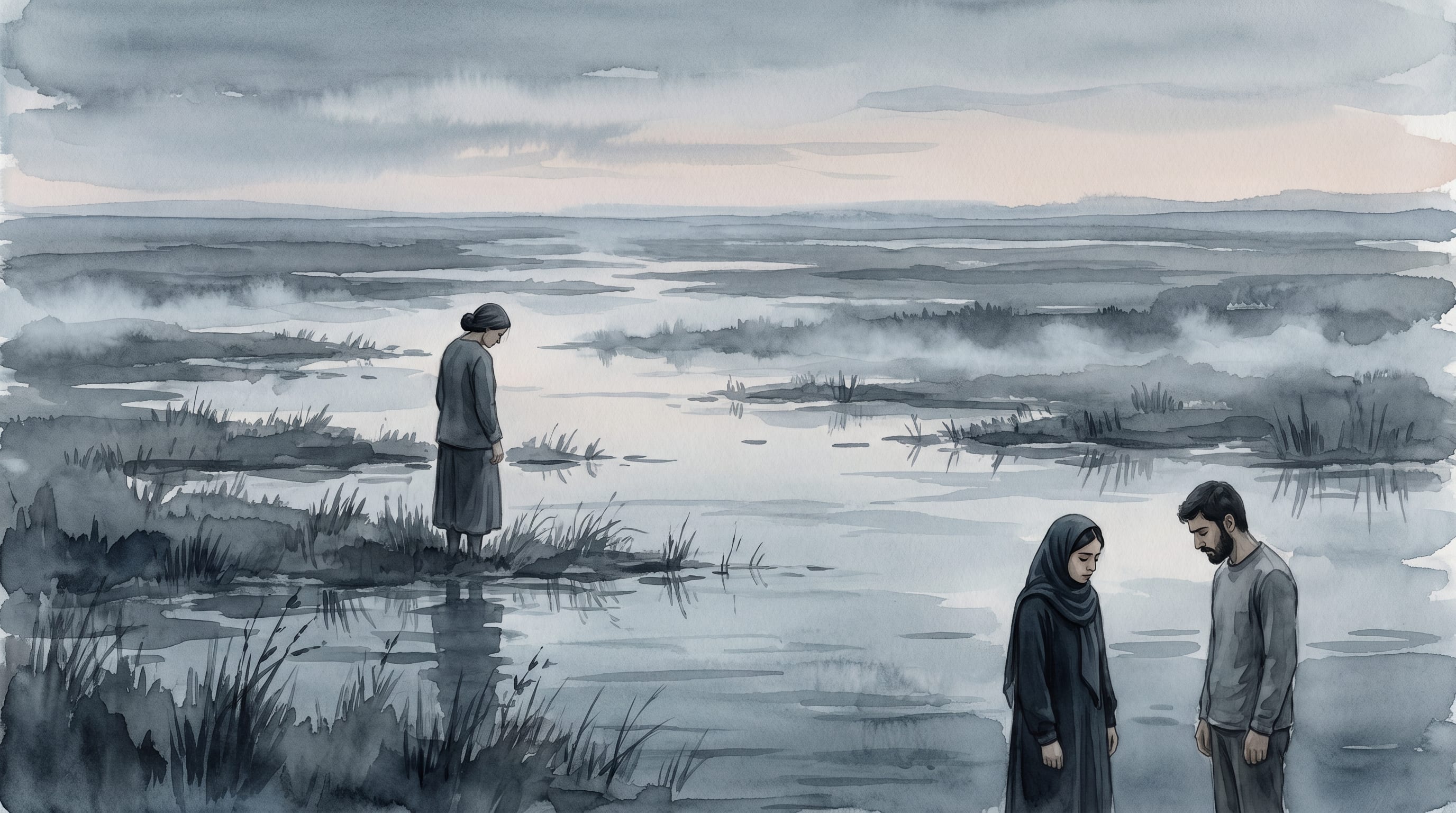
Two million Vietnamese dead.
Whole villages turned into nothing.
Children whose names were never written down, whose graves were never dug, whose mothers walked into the marshes looking for what was left of them.
And the Qur’an’s question, asked of every age, asks of those graves too.
What was the something?
We do not insult the graves by asking.
We honour them by asking.
The Qur’an itself recognises that wronged peoples are permitted to fight.
The verse does not, by saying so, make every fight a witness.
The verse does not, by saying so, make every grave a candle.
Permission is a category.
Witness is a verdict.
Do not let the size of a cause’s body count be confused with the size of its truth.
That is the first thing.
Two Voices, Forty Years Apart
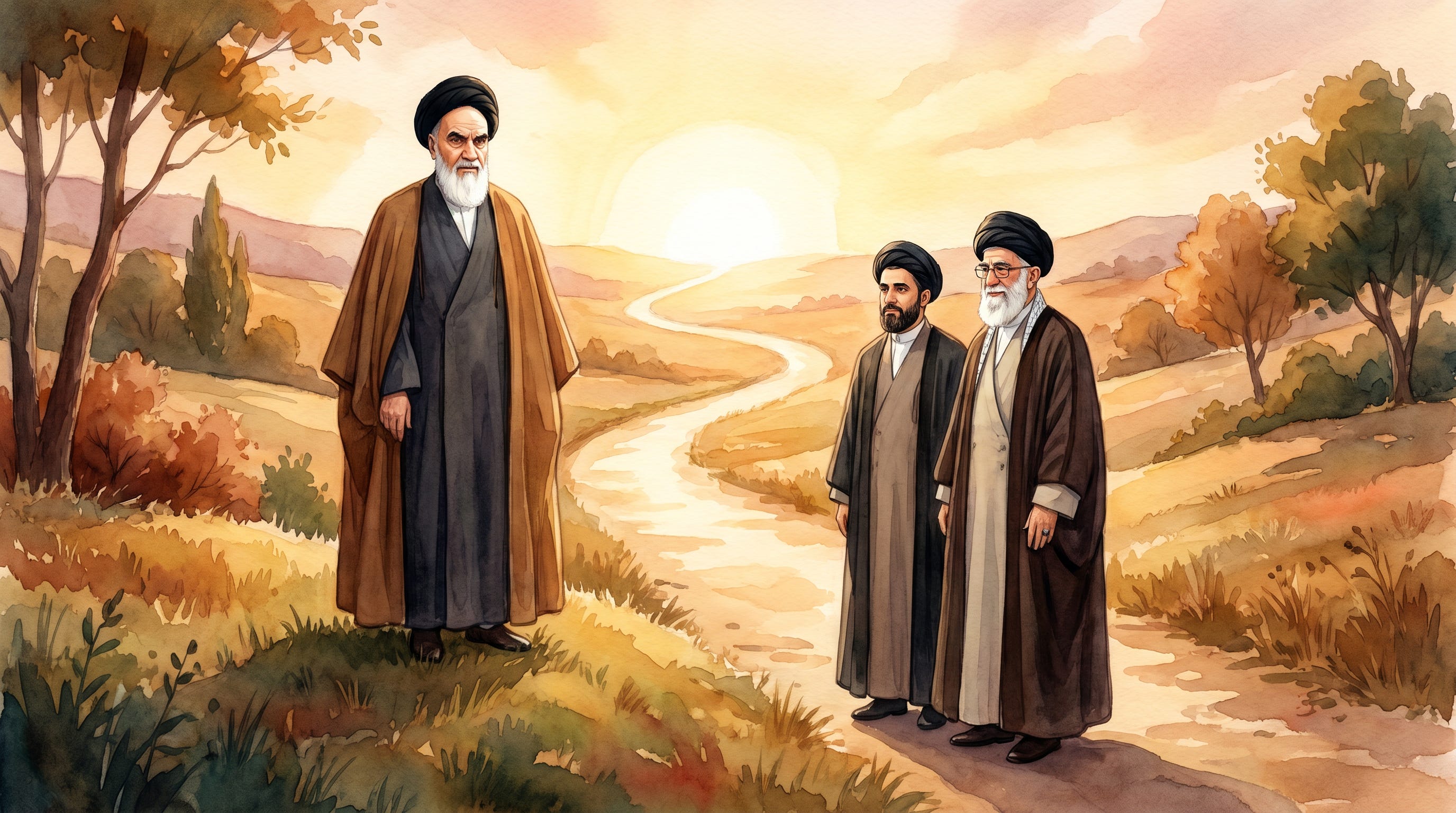
The second thing we learn is that the test of a cause is not the dignity of its founder, the suffering of its people, or the beauty of its slogan.
The test is whether the cause is the cause of the Imam of the Age, may our souls be his ransom and may God hasten his return.
This is the test our fourth sermon, on the Khutba of Mina, set up.
Imam Husayn at Mina, peace and blessings be upon him, asked the scholars:
for whom are you keeping silent?
The same question, in the affirmative voice, is:
for whom is your walking?
The Vietnamese walked for Vietnam.
Sayyed Abbas, may God rest his pure soul, walked for the worship that was the same in his pulpit in the Bekaa as it was in the home of the Sunni family Hajj Qasem would later apologise to in Deir ez-Zor.
The test of every Shia, every Muslim, every honest human being who has touched what Imam Husayn touched is —
for whom is your walking?
And here is where the seed our beloved Imam Khomeini, may God rest his pure soul, planted in the years of his exile in Najaf — the seed we planted with you in this series last night — finds its root tonight.
In January of 1970, in Najaf, in the lectures that became the book Hukumat-e Islami, Imam Khomeini told the seminarians a sentence that I want you to hear again, because tonight it is the door of the answer.
“The religious scholars must learn politics from Islam, not take their Islam from Western or Eastern politicians.”
Nine years later, the Revolution carried that sentence into the open.
The slogan that grew out of it was three Persian words.
Na sharqi, na gharbi.
Neither East, nor West.
I am not going to walk you through the history of that slogan tonight.
We will do that, God willing, on the night of this series that takes the Revolution as its subject.
Tonight I only want you to hear how directly it answers the question Vietnam asks.
Ho Chi Minh’s vocabulary was sharqi.
He was supported by Moscow and Beijing.
The Diem regime’s vocabulary was gharbi.
He was supported by Washington.
But the question we are asking tonight is not — which side were they on?
The question is — whose worship was their walking for?
Neither Ho Chi Minh nor Ngo Dinh Diem could answer that question with the answer the Imam of the Age, may our souls be his ransom, would recognise.
Neither East, nor West — the Imam of the Age is the test.
And here I want to put two voices side by side.
I want you to hear them in the same breath, and you tell me — you tell me, by the time the second one finishes — whether two leaders, separated by forty years of history, are not standing on the same line, citing the same Imam, dying for the same cause.
The first voice.
Sayyed Abbas al-Musawi, may God rest his pure soul.
From a pulpit in the Bekaa, in February of 1986.
He has six years left to live.
قد يجذُر بنا الأعداء، ولكن نحن.. نحن على خط إمامنا الخميني، نؤمن بالقاعدة التي سنّها هذا الإمام: اقتلونا، فإن شعبنا سيعي أكثر فأكثر.
“The enemies may root themselves against us. But we — we are on the path of our Imam Khomeini, may God rest his pure soul. We believe in the principle established by this Imam: kill us, for our nation will become more and more aware.”
— Sayyed Abbas al-Musawi, The Mandate of Awareness, pulpit address, February 1986
The second voice.
Forty years, almost to the month, after Sayyed Abbas said those words.
The seventeenth of February, 2026.
Eleven days before the speaker would be martyred — may God rest his pure soul — in a joint American–Israeli airstrike on Tehran on the morning of the twenty-eighth of February — the eighth of Ramadan, 1447 — together with our generals and the children of the Shajareh Tayyebeh school in Minab.
He is delivering what would be his last televised address to the nation of Iran.
The address is titled, in the published transcripts,
“Power, Dignity, and the Unbreakable Nation.”
He closes it like this.
والله، إذا قتلونا، فإن شعبنا سيعي أكثر. هذه هي قاعدة الإمام الخميني: «اقتلوني فإن شعبي سيعي أكثر فأكثر». نحن واقفون على هذا الخط.
“By God — if they kill us, our people will understand more. This is the principle established by Imam Khomeini, may God rest his pure soul: ‘Kill me, and my people will awaken — all the more, again and again.’ We stand firmly on this path.”
— Imam Sayyed Ali Khamenei, final televised address to the nation of Iran, “Power, Dignity, and the Unbreakable Nation”, 17 February 2026
Hear what just happened.
Sayyed Abbas in 1986.
On the path of our Imam Khomeini.
Kill us, our nation will become more and more aware.
Imam Sayyed Ali Khamenei in 2026, eleven days before his martyrdom.
This is the principle established by Imam Khomeini.
Kill me, and my people will awaken more and more.
Same principle.
Same Imam.
Same line.
Same cause.
Two generations apart.
Both speakers martyred for the principle they spoke.
This is the answer.
This is what na sharqi, na gharbi means in the lived register.
The Imam of the Age is the test, and here is what it looks like when two leaders pass that test, separated by forty years and one generation of the Resistance.
Ho Chi Minh’s leaders died for Vietnam.
And Vietnam, with all our honouring, is in history now.
Sayyed Abbas and Imam Khamenei, may God rest both their pure souls, died for the Imam of the Age.
And the Imam of the Age is not in history.
He is in the unseen, watching every one of us, waiting for the appointed hour.
That is the difference.
And that is everything.
The lesson here is a single sentence.
The worthiness of a cause is measured not by its banner, but by whose banner the worship returns to.
The First Lesson Is the Lesson of the Poor
The third thing we learn from Vietnam is that a complete cause must be both — worth the death and worth the building.
A cause worth dying for that is not also worth building a civilisation around will leave its children to inherit either a slogan or a security state.
The post–1975 trajectory of Vietnam is not unique.
It is the predictable shape of revolutions whose theology stops at independence.
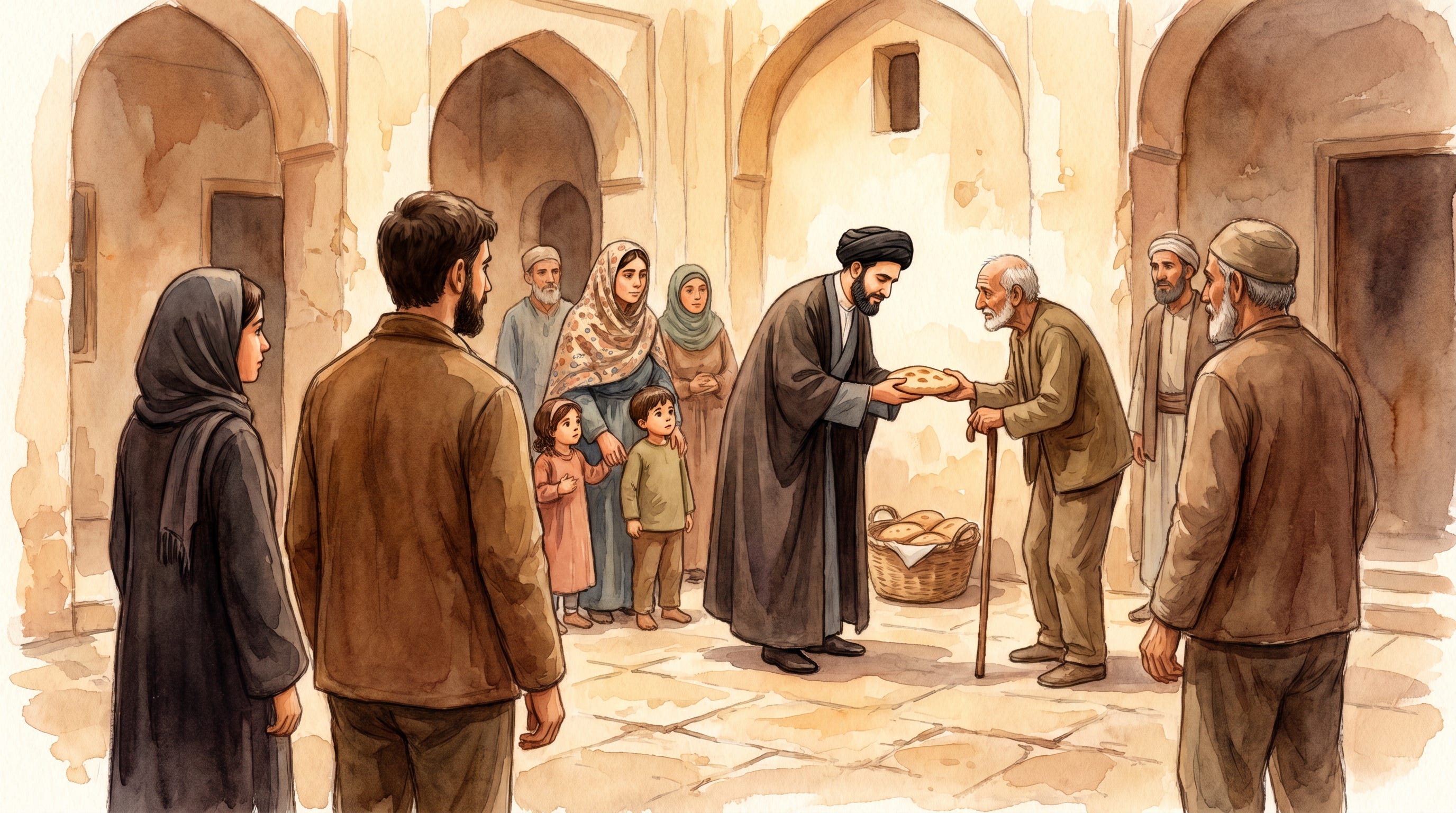
Sayyed Abbas told us, on his pulpit, in a sentence that is one of the most direct things any Resistance leader has ever said about what we are for, the following.
إذا لم يلتفت الغني للفقير في هذه المرحلة، أي متى يلتفت؟ فمن أراد الحسين، ومن أراد درس الإمام الحسين، أوّل درس يجب أن يستفيده هو هذا الدرس: الفقراء أمانة الله في أعناقنا.
“If the wealthy do not attend to the poor in this stage, then when will they ever do so? For whoever seeks Husayn, peace and blessings be upon him, and whoever seeks the lesson of Imam Husayn — the first lesson they must learn is this one: the poor are a trust from God upon our necks.”
— Sayyed Abbas al-Musawi, The Lesson of Imam Husayn, pulpit address, c. 1988–1992
The first lesson of Imam Husayn, peace and blessings be upon him, is the lesson of the poor.
Not the lesson of the sword.
Not the lesson of the standard.
Not the lesson of the great refusal in Yathrib or the great speech at Mina.
The first lesson is the lesson of the poor as a trust from God upon our necks.
Sayyed Abbas is not inventing this.
He is reading Imam Husayn the way the Imams of the Ahl al-Bayt, peace and blessings be upon them, have always been read by the people who understood them best — as a project of both liberation and daily attendance to the dignity of the human person.
The cause is total enough for the death because it is tender enough for the morning bread.
I Do Not Want Karbala to Remain in History
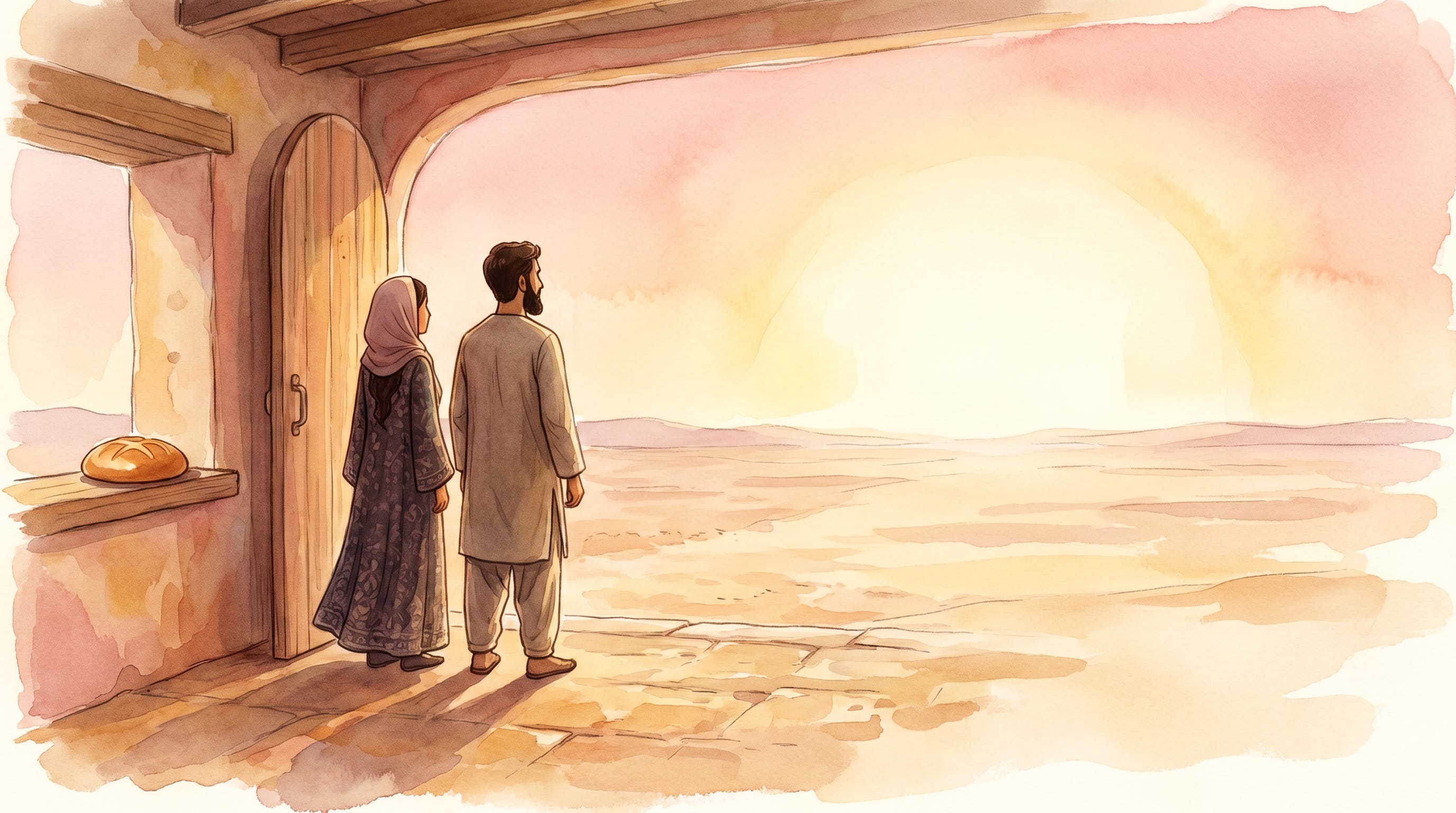
And then — listen, because this is the line of the night, the line that the whole sermon has been earning — Sayyed Abbas, gives us the structural payoff.
أنا لا أريد أن تبقى كربلاء في التاريخ. كربلاء عندما تبقى في التاريخ وتخرج من واقعنا وعصرنا، لا تكون كربلاء التي أرادها الإمام الحسين. الإمام الحسين أراد هو وأهل البيت أن يكون كل يومٍ كربلاء، كل يومٍ عاشوراء. أراد أن يكون كل أرضٍ كربلاء، على امتداد التاريخ والأجيال.
“I do not want Karbala to remain only in history. When Karbala remains in history and is separated from our current reality and our era, it is no longer the Karbala that Imam Husayn intended. Imam Husayn and the Ahl al-Bayt intended for every day to be Karbala, and for every day to be Ashura. He intended for every land to be Karbala, spanning across history and throughout the generations.”
— Sayyed Abbas al-Musawi, The Message of Karbala, pulpit address, c. 1988–1992
The maxim Sayyed Abbas is reaching for is older than the Resistance.
Kullu yawmin ʿAshura, wa kullu arḍin Karbala.
Every day is Ashura. Every land is Karbala.
The phrase has been carried across the Shia tradition for centuries.
It is preserved in al-Qutayfi’s Al-Rasa’il al-Ahmadiyyah, volume two, page two hundred and seventy-three; in Sayyed Muhsin al-Amin’s A’yan al-Shi’a, volume one, page six hundred and twenty; and it was taken up by Dr Ali Shariati, in the lecture halls of Tehran and Mashhad in the early 1970s.
Sayyed Abbas gives the maxim its sharpest twentieth-century edge.
I do not want Karbala to remain only in history.
If we keep Karbala only in history — if we visit it only in our majalis once a year, and weep, and go home unchanged — we have failed the Master of the Witnesses, peace and blessings be upon him.
He did not die so we could weep about his death once a year.
He died so that every day would be Ashura, and every land would be Karbala — every day a day in which we choose between Yazid and Husayn, peace and blessings be upon him, and every land a land on which the choosing is required.
That is the cause that is worth both dying for and building around.
It is worth dying for because every day is Ashura.
The covenant is renewed every morning.
The standard is held every morning.
It is worth building around because every land is Karbala.
Every neighbourhood is a place where the trust of the poor is on our necks.
Every household is a place where Imam Husayn, peace and blessings be upon him, is to be taught to the children — and where the Sunni family in Boukamal is to be apologised to, in writing, for the use of their kitchen.
The cause is total at the moment of falling.
And tender at the moment of the morning bread.
This is what no twentieth-century revolutionary frame achieved.
This is what we have been given.
The Pact We Make Tonight
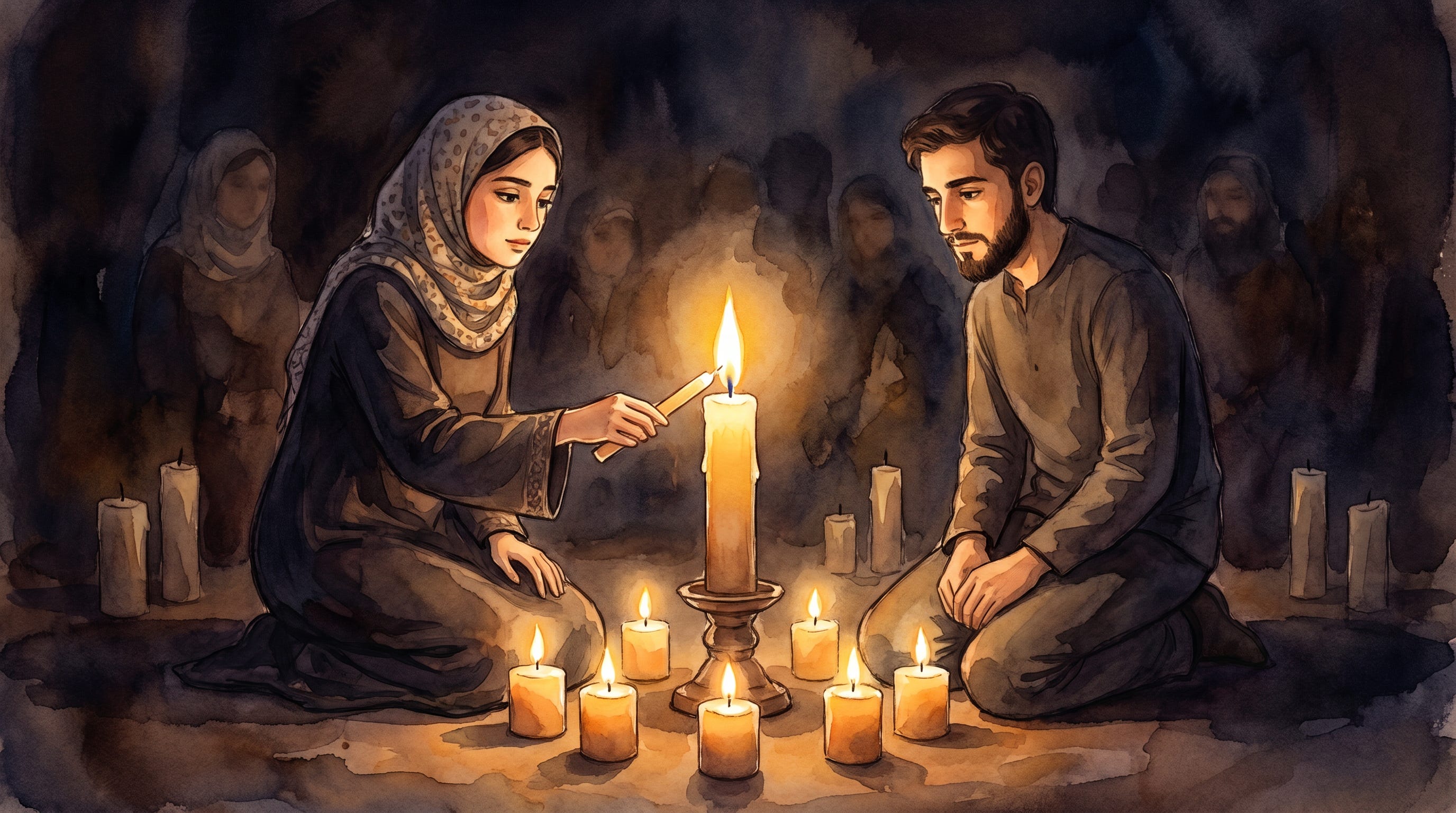
So.
What do you carry home tonight?
Three things.
The first.
The size of a cause’s body count is not the size of its truth.
Do not confuse scale with witness.
The Vietnamese paid more in blood than almost any other people of the twentieth century.
We honour that.
We do not let it confuse us.
The second.
The test of a cause is the Imam of the Age, may our souls be his ransom and may God hasten his return.
Not the colour of the flag.
Not the geography of its founders.
Whose worship is your walking for?
That is the question.
Sayyed Abbas and Imam Khamenei, may God rest both their pure souls, both passed that test — separated by forty years, citing the same Imam Khomeini, dying for the same cause.
The third.
A complete cause is both worth dying for and worth building around.
A cause that knows only the no will leave you the yes to figure out by yourselves the morning after — and the morning after will not forgive the cause for having no answer.
Every day is Ashura. Every land is Karbala.
The yes is in those two sentences.
We do not have to invent it.
We only have to live it.
That is the pact we make tonight.
The Road Ahead
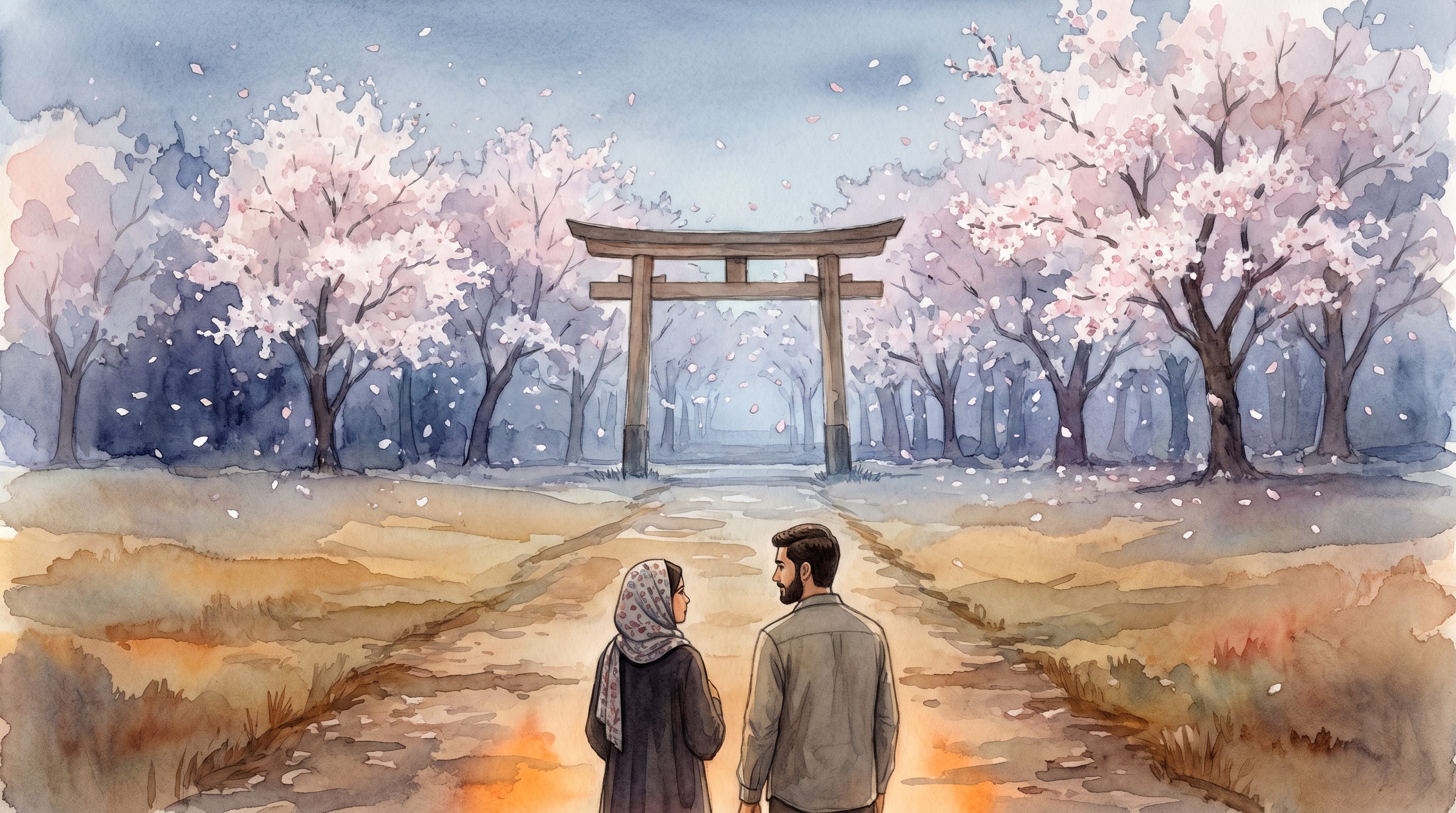
Tomorrow night we walk into the third panel of the triptych.
If the secular-revolutionary is Marx and Fanon — if the anti-colonial-national is Ho Chi Minh — the aesthetic-state-manufactured is Japan.
Tomorrow we walk into the bushido.
We walk into the cherry blossom that the samurai believed told the truth about the noble death.
We walk into the kamikaze pilots of 1944 and 1945, whose youth was used by their state with an aesthetic horror the twentieth century has not stopped reckoning with.
What happens to a great theology of the noble death when it is severed from the worship of the One God and put into the service of an empire?
That is tomorrow.
Tonight we still have a river-bank to walk to.
The Question to Carry Home
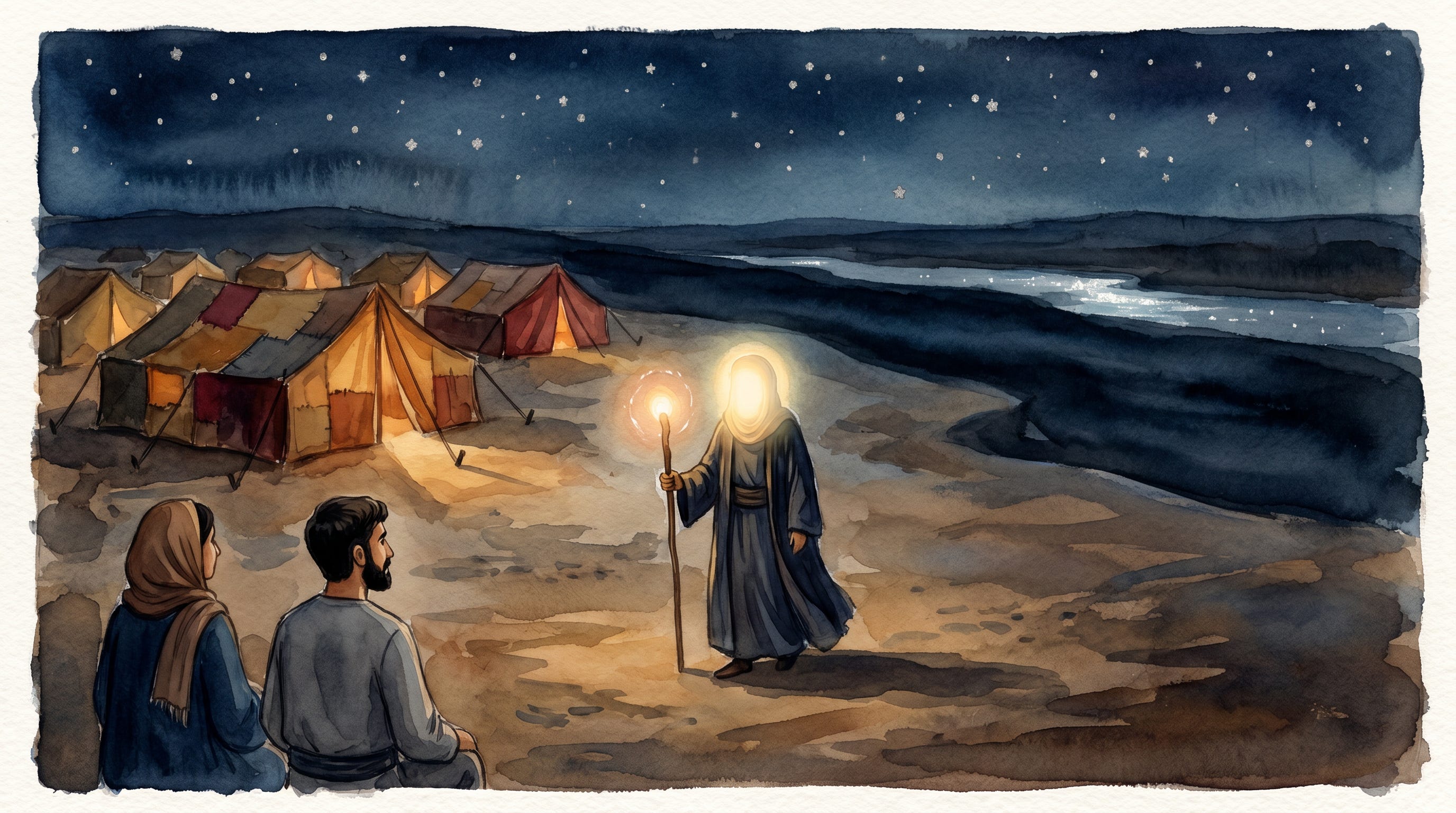
The question this series asks every night is the same question.
Where is your brother?
Tonight we ask it of the field of Karbala on the seventh of Muharram.
We ask it of the man at the river-bank.
We ask it of every commander, in every age, who has walked toward water for the children of someone else’s tents.
We ask it of ourselves.
Where is your brother — and whose worship is his walking for?
The Hands at the Euphrates
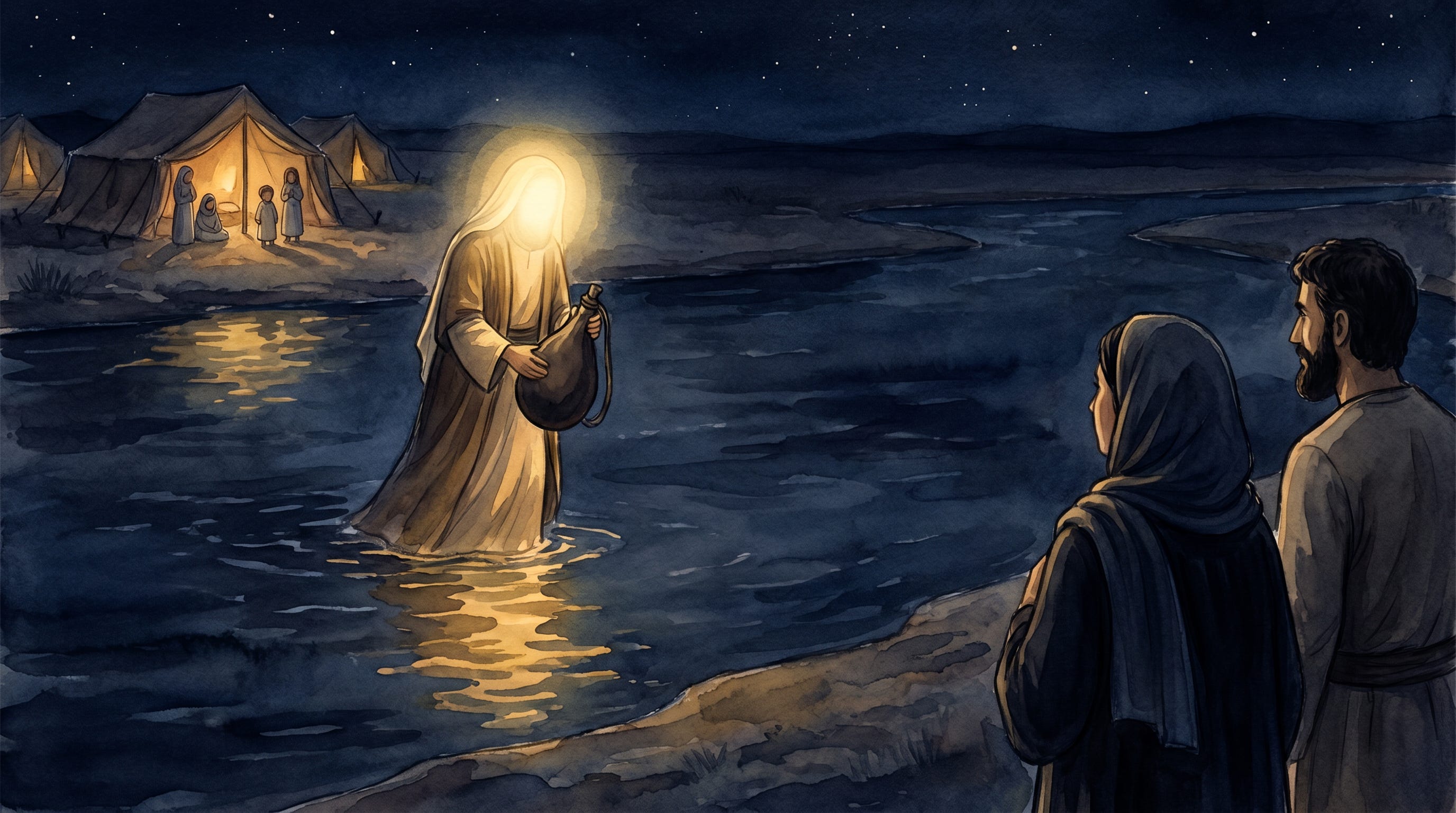
I bring you, at this hour, to the bank of a river.
The river is the Furat.
The Euphrates.
It runs west of the encampment of the Master of the Witnesses, peace and blessings be upon him.
But the day at the river-bank is not tonight.
Tonight is the seventh of Muharram, in the year sixty-one of the Hijra — and tonight, in the chronicle as Tabari and Ibn Tawus and the Akhbar al-Tiwal preserve it for us, the message has arrived in the camp of Umar ibn Sa’d from Ibn Ziyad in his palace at Kufa.
Block al-Husayn and his companions from the water.
Do not let them taste a drop of it.
Tonight the order has been given.
Tonight five hundred horsemen ride to the bank of the river to block the camp from the only water in the desert.
Tonight the children of Ahl al-Bayt begin a thirst that will not be relieved until the morning of the tenth.
Three days.
The day at the river-bank — the day of the hands — is three days from this night.
The day of Ashura.
The tenth of Muharram.
By that morning, the water of the river will have been cut from the camp for three days.
The tongues of the children will have thickened in their mouths.
The elders will have refused, again and again, to drink before the children.
And Abul Fadl al-Abbas — peace and blessings be upon him — will have moved between the tents in the way a brother moves when his brother’s children cannot ask for water in their own voices.
And on the morning of the tenth, when the thirst has gone past where any human body can carry it, Imam Husayn — peace and blessings be upon him — will turn to his half-brother.
And his half-brother will turn to the river.
There is a man standing at the river-bank.
He is the half-brother of Husayn — peace and blessings be upon him.
He is the son of Ali ibn Abi Talib, peace and blessings be upon him, by Fatima bint Hizam — the woman of the Banu Kilab whom Imam Ali married after the passing of Sayyedah Fatima al-Zahra, peace and blessings be upon her.
His mother bore Imam Ali, four sons — and all four would fall at Karbala on the day of Ashura.
Because of those four sons, the Shia tradition has carried her name, ever since, as
Umm al-Banin — the mother of the sons.
And Umm al-Banin would not be the only mother of the household keeping vigil that morning:
Sayyedah Zaynab — peace and blessings be upon her — had also sent her own two sons out at first light, Aun and Muhammad, the sons of Abdullah ibn Ja'far at-Tayyar — so that the long vigil the Shia tradition has remembered as hers began on the morning she sent her sons.
He himself is called Abu al-Fadl — the father of Fadl — after his eldest son.
His name is al-Abbas.
He carries the standard of his brother.
The standard is a piece of wood.
The standard is a piece of cloth.
The wood and the cloth are not the standard.
The standard is the cause whose proof is its own carrier.
Tonight you will be taken to the river-bank.
You will hear, in the voice of the Hidden Imam, may our souls be his ransom and may God hasten his return, what happened at the river-bank when the standard could not be put down.
He will tell you about the right hand.
He will tell you about the left hand.
He will tell you about the mace, and about the water-skin, and about the sand, and about Imam Husayn — peace and blessings be upon him — kneeling in the sand and saying the words that have not stopped echoing since.
I am going to step aside now and let you hear it for yourself.
But before I do, I want you to remember one thing.
Abbas is the perfected anti-colonial witness.
Not because he refused a colonial occupation.
Not because he carried a national flag.
Not because he was on the East or West side of any quarrel of his time.
He is the perfected anti-colonial witness because
his standard was for the Proof of God
— for the Imam of the Age, his elder brother, peace and blessings be upon him, and not for any flag that could one day be folded away.
His cause was Sayyed Abbas’s cause.
Hajj Qasem’s cause.
Martyr Imam Khamenei’s cause.
The cause of every man and every woman in this room who has ever asked the question we have been asking tonight and answered it the way the Master of the Witnesses — peace and blessings be upon him — taught us to answer it.
Whose worship is your walking for?
Tonight, on the seventh of Muharram, fourteen centuries on, we walk for him.
Segue to Maqtal (Lamentation)
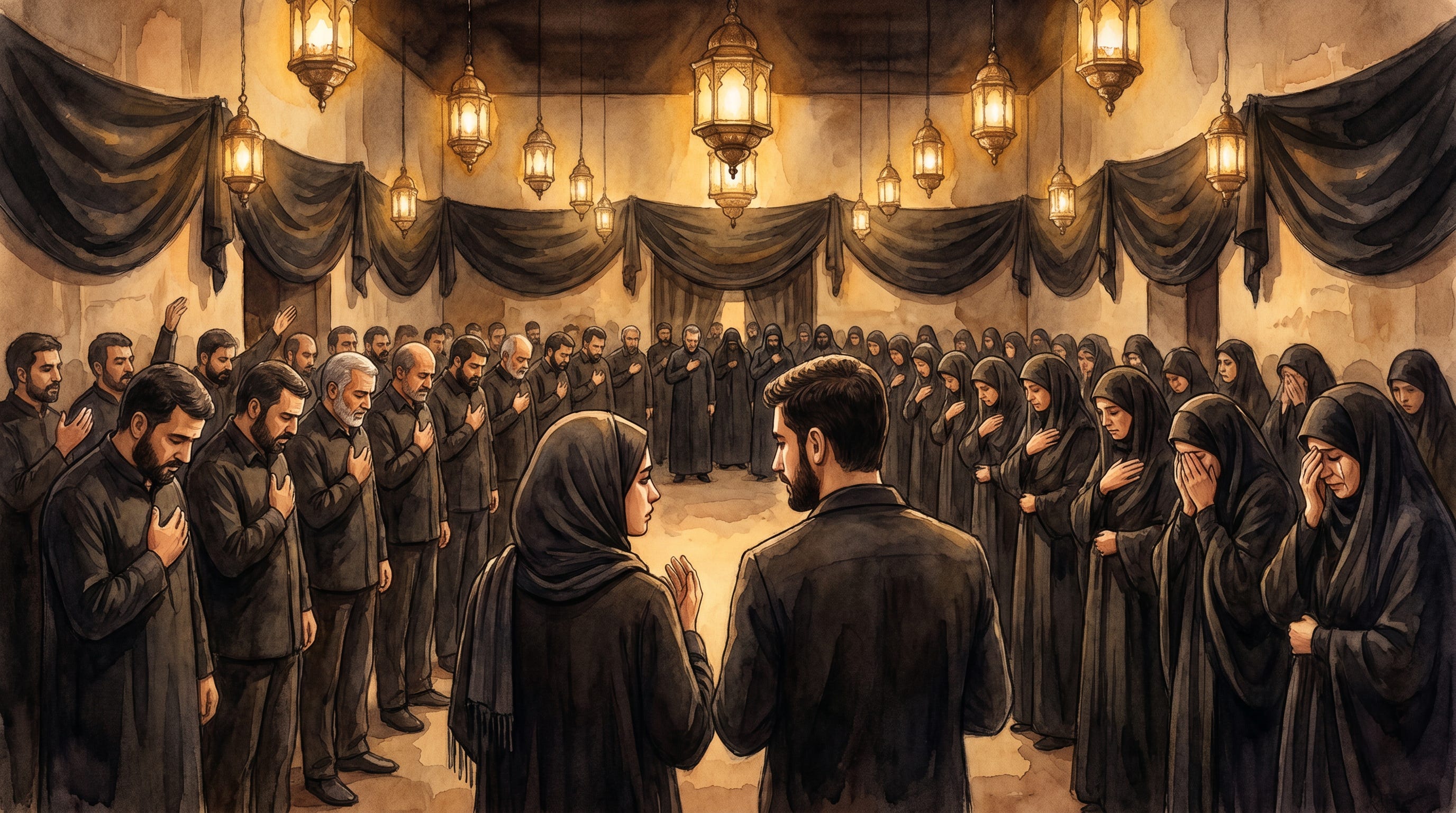
Maqtal (Lamentation) for the Seventh Night of Muharram 2026/1448
Supplication
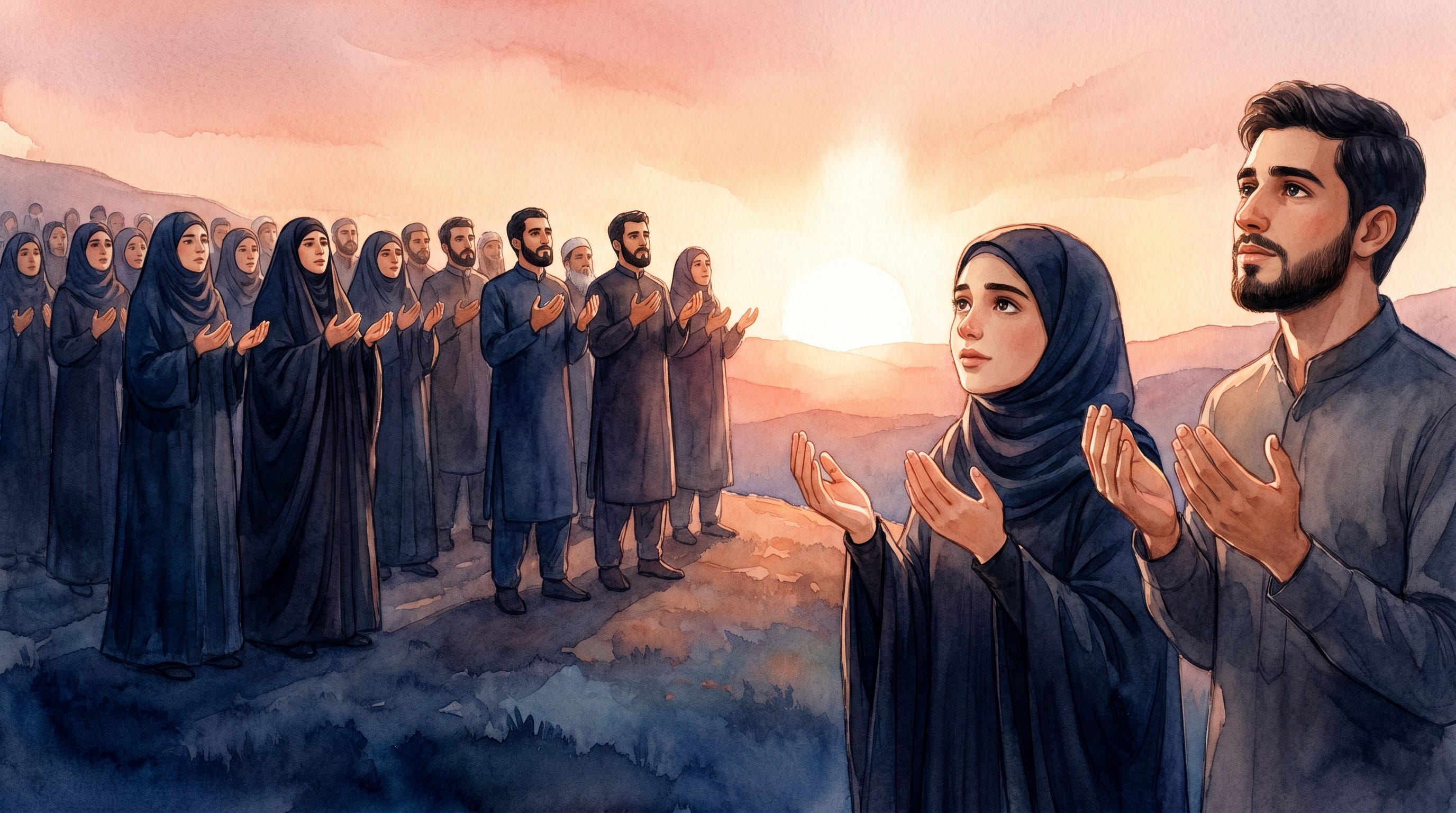
Peace upon Abel, the first witness of the earth.
Peace upon every witness in every tradition who refused to bow to other than God.
Peace upon every man and every woman who has ever been wronged, expelled from their home, only because they said: our Lord is God.
O God, we have nowhere to go but Your door.
You are the One who gave permission to the wronged to defend the worship of Your name in the four houses where Your name is invoked.
You are the One who placed the locks on that door — the lock of the wronged, the lock of our Lord is God, the lock of the houses of worship — so that no empire and no nation and no flag could pretend to stand under the permission You gave.
O God, send Your peace and Your blessings on Your last messenger Muhammad and his family and his righteous companions.
Send Your peace on the prophets of every house — on Adam, on Abel, on Noah, on Abraham, on Ishmael and Isaac, on Moses and Aaron, on David and Solomon, on John the Baptist and Zechariah, on Jesus son of Mary, on every one of them whose names we know and whose names only You know.
O God, tonight we have honoured a country whose dead the world will not stop counting.
We have honoured Vietnam.
We have honoured the man who told his people that nothing was more precious than independence and freedom.
We have honoured the monk who burned in stillness.
We have honoured the willingness to bear cost.
We have refused to flatten any of them.
And we have asked, with Your verse as our anchor, the question Your verse asks of every age.
We thank You for the verse.
We thank You for the locks.
We thank You for the answer.
O God, send Your peace on Sayyed Abbas al-Musawi, who told us that the condition of being one of Your friends is to heal the wounds of the tormented and to defend the oppressed.
Who told us that we shall be the pioneers in resisting neglect and deprivation, just as we were the pioneers in resisting the occupation.
Who told us that the first lesson of Imam Husayn is the lesson of the poor — that the poor are a trust from God upon our necks.
Who told us, in the line that this whole night has been earning, that he did not want Karbala to remain in history.
Send Your peace on his wife Sayyeda Siham, and on his five-year-old son Sayyed Husayn, who fell with him in the same convoy on the road back from Shaykh Ragheb Harb’s commemoration.
Send Your peace on Shaykh Ragheb himself, who taught the south of Lebanon what it means to refuse the handshake of the occupier eight years to the day before his student joined him.
O God, send Your peace on Hajj Qasem Soleimani — the standard-bearer of our own century, the man whose ma’rifat carried what could not be put down, the man who wrote a personal apology to a Sunni family in Boukamal for the use of their kitchen and who prayed two rak’ats with the intention of them in their own home.
Grant us, O God, the discernment You granted him.
Grant us the ma’rifat of the cause that is bigger than the sect, the dignity that is enacted in the smallest things, the worship that ties the Sunni family in Boukamal and the Shia commander from Kerman and the Master of the Witnesses on the plain of Karbala into one chain of witness.
O God.
In this Muharram — the first since the martyrdom of our beloved Imam Sayyed Ali Khamenei — send Your peace upon him.
The man who, eleven days before his shahada, stood before the nation of Iran and repeated to them the principle Sayyed Abbas had repeated forty years earlier from his pulpit in the Bekaa — that if they kill us, our nation will become more and more aware.
The man who held the line of neither East nor West for thirty-six years from the seat of leadership.
We hold him tonight only in passing — we know that the night that takes him as its subject is not yet, but is coming.
Welcome him into Your nearness, O God, with Your prophets and Your Imams and Your martyrs and Your saints.
O God, send Your peace upon the children of Minab — one hundred and sixty-three of them, boys and girls, teachers and parents — who fell on the same morning their leader fell, on the eighth of Ramadan, in the Shajareh Tayyebeh school in Hormozgan, by a Tomahawk that came from a country that signed the laws of war and broke them.
The children whose names their mothers will never stop writing, whose witness was complete the moment their teacher’s hand closed over theirs.
O God, send Your peace upon every young man of the Resistance who took his father’s place and his grandfather’s burden in his hands.
Peace upon every young Palestinian who has died in the rubble of his father’s house in Gaza, holding what he could of his family in a cloth.
Peace upon every young Lebanese who fell in the south.
Peace upon every young Iraqi of the Hashd al-Shaabi who walked into the open against Daesh.
Peace upon every young Yemeni and every young Syrian who carried water for the children of someone else’s tents.
Peace upon every medic in Gaza who did not stop.
Peace upon every fighter on every Resistance front of our generation who returned to his mother with his sleeve folded under, and would not let her weep at the sleeve.
Peace upon the Sunni families like the family of Boukamal whose home Sayyed Hajj Qasem’s letter was written for.
O God.
The longer return is to Husayn ibn Ali, the Master of Witnesses, in whom every chain finds its completion.
To his brother Hasan.
To their father Ali ibn Abi Talib, the Commander of the Faithful — the man who could not sleep in Kufa with a full stomach because there was a man in the Hijaz who had not eaten that day.
To their mother Sayyedah Fatima al-Zahra, the daughter of the Prophet.
To the Imams of guidance, in the chain that runs from Imam Husayn to the Imam of our Age, may our souls be his ransom, and may You — O our beloved Lord — hasten his return.
O God, send Your peace upon al-Abbas ibn Ali, peace and blessings be upon him — the moon of Banu Hashim, the standard-bearer, the water-carrier — to whom we are walking in the next breath, in the voice of his nephew the Hidden Imam.
O God.
We pray to You for Imam Sayyed Mujtaba Khamenei — the new Wali al-Faqih, the son who has taken his father’s place at the head of the worship.
Preserve him for us, O God.
Strengthen him.
Guide him.
Make him the leader his father trained him to be, and the leader You have appointed him to be, until the Imam of our Age, may our souls be his ransom, returns and the line he carries is handed back to its rightful holder.
O God.
Hasten the return of the Imam of our Age.
Make us of his helpers.
Make us of his soldiers.
Make us of those who, when he calls, are already standing.
O God — we have nowhere to go but to You, and no one to ask but You, and no words enough except the ones You have placed on the tongues of Your friends.
إِنَّا لِلَّهِ وَإِنَّا إِلَيْهِ رَاجِعُونَ
“We belong to God, and to Him we return.”
— Qur’an, Surah al-Baqarah (the Chapter of the Cow) #2, Verse 156
And we repeat Your promise, an eternal promise for justice, and a warning for the wrongdoers:
وَسَيَعْلَمُ الَّذِينَ ظَلَمُوا أَيَّ مُنقَلَبٍ يَنقَلِبُونَ
“And the wrongdoers will soon know at what goal they will end up.”
— Qur’an, Surah al-Shu’araa (the Chapter of the Poets) #26, Verse 227
And we add, from the depths of everything we have learned tonight:
حَسْبُنَا اللَّهُ وَنِعْمَ الْوَكِيلُ
“God is sufficient for us, and He is the best of guardians.”
— Qur’an, Surah Aal Imran (the Chapter of the Family of Imran) #3, Verse 173
Amen, O Lord Sustainer of the Universes.
Amen, O Most Merciful of the Merciful.
And from Him alone is all ability, and He has authority over all things.