

In His Name, the Most High
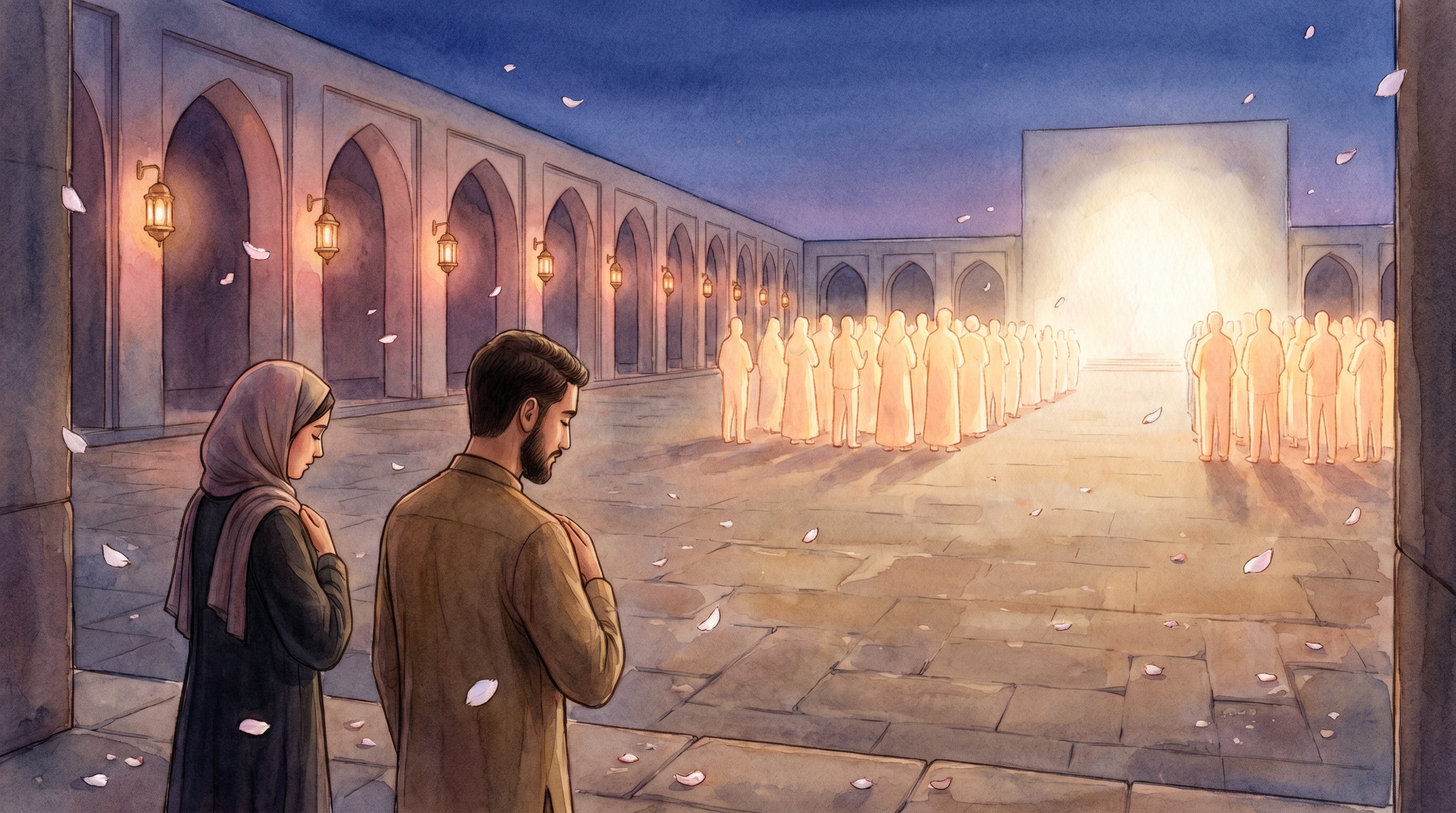
اَلسَّلاَمُ عَلَيْكَ يَا أَبَا عَبْدِاللَّهِ
وَعَلَى الْأَرْوَاحِ الَّتِي حَلَّتْ بِفِنَائِكَ
عَلَيْكُمْ مِنَّا جَمِيعًا سَلاَمُ اللَّهِ أَبَدًا مَا بَقِينَا وَبَقِيَ اللَّيْلُ وَالنَّهَارُ
وَلا جَعَلَهُ اللَّهُ آخِرَ الْعَهْدِ مِنَّا لِزِيَارَتِكُمْ
اَلسَّلاَمُ عَلَى الْحُسَيْنِ
وَعَلَى عَلِيِّ بْنِ الْحُسَيْنِ
وَعَلَى أَوْلَادِ الْحُسَيْنِ
وَعَلَى أَصْحَابِ الْحُسَيْنِ
Peace be upon you, O Aba Abdillah (O Husayn),
and upon the souls who have gathered in your courtyard.Upon you, from us all, is the peace of God—forever,
for as long as we remain and as long as night and day endure.And may God never make this our last pledge to visit you.
Peace be upon al-Husayn,
and upon Ali, son of al-Husayn,
and upon the children of al-Husayn,
and upon the companions of al-Husayn.— Adapted from Ziyarat Ashura
Video of the Sermon (Majlis/Lecture)
This is a video of the sermon, the maqtal — lamentation — referenced in this session can be found here.
Introduction
Seven nights of foundation.
A word recovered — shahada, witness, with the cost borne in the body.
A chain traced from Abel through the prophets to the family of the Prophet, peace and blessings be upon them all.
The theology of the candle.
The Khutba of Mina and the three silences — fear, comfort, the narrowing of the moral eye.
The shared ground and divergences with the Christian witness, and the methodology that has carried us forward since:
honour without conflation.
The secular neighbour — Marx, Fanon, Dr Shariati — and the question of what becomes of sacrifice when the form is preserved and the content is missing.
And last night, with our beloved Abul Fadhl al-Abbas — peace and blessings be upon him, at the Euphrates — Vietnam, Ho Chi Minh, Quang Duc, Bushnell —
whose worship is your walking for?
Tonight is the third panel of the triptych.
The secular-revolutionary panel was Marx and Fanon.
The anti-colonial-national panel was Vietnam.
And tonight is the aesthetic-state-manufactured panel.
Tonight is Japan.
This is the most difficult of the three.
Because Japan gives us the tradition where the aesthetic of a noble death reached its most refined form in human history — and, in our own lifetimes’ memory, its most dangerous corruption.
We will honour what is true in the tradition.
We will name what was done to it by the state that came to use it.
And we will hold one further question — the question that, in fact, will turn out to be the structural heart of the night — a question that was put on the table thirteen centuries ago by our beloved Sayyedah Zaynab —peace and blessings be upon her, when she stood before a tyrant and answered him in one phrase that has come down to us across the centuries.
The verse that hangs over the night is short.
It is from Surah al-Isra.
And it speaks, in seventeen Arabic words, to every faculty of the soul by which a human being is moved.
The Eye, the Ear, the Heart
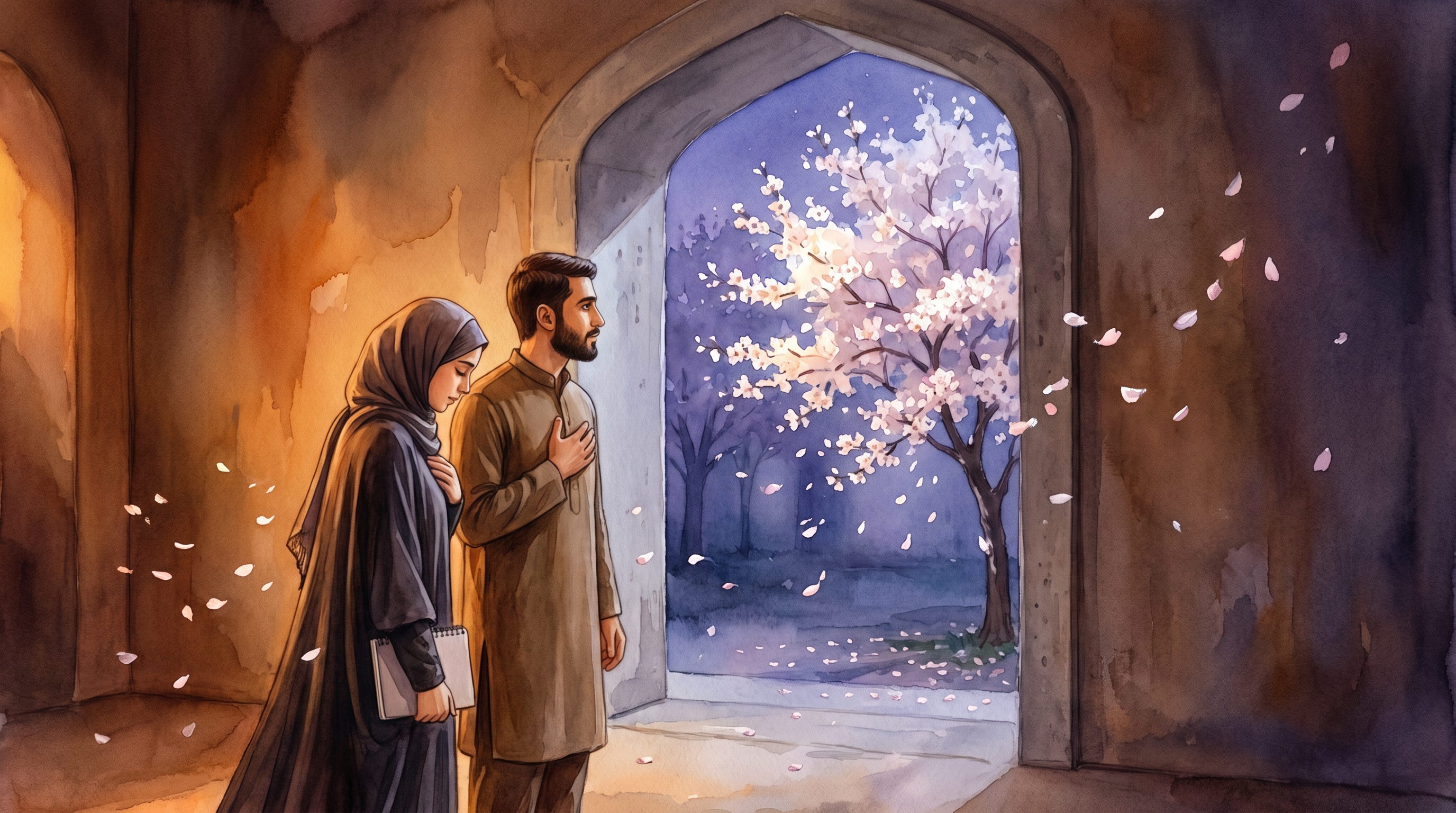
وَلَا تَقْفُ مَا لَيْسَ لَكَ بِهِ عِلْمٌ ۚ إِنَّ السَّمْعَ وَالْبَصَرَ وَالْفُؤَادَ كُلُّ أُولَٰئِكَ كَانَ عَنْهُ مَسْئُولًا
“Do not pursue that of which you have no knowledge. Indeed, the hearing, the sight, and the heart — of each of these, you shall be questioned.”
— Qur’an, Surah al-Isra (the Chapter of the Night Journey) #17, Verse 36
Listen to the verse.
It does not name a single object the prohibition is for.
It says only:
Do not pursue what you do not know.
The faculty of pursuit is what is being addressed.
And then the verse names the three faculties through which the pursuit happens.
The hearing.
The sight.
The heart.
What we hear and follow because we like the sound of it.
What we see and follow because we are moved by the look of it.
What our hearts agree to because the agreeing feels right.
And then the verse closes the door:
Each of these — you shall be questioned.
Every faculty by which a human being is moved is itself answerable.
Not just the action; the responsiveness.
Not just what we did; what we let our eye and our ear and our heart be moved by.
Tonight we walk into a tradition whose entire genius is to move the eye and the ear and the heart.
The bushido of the samurai is one of the most aesthetically refined ethical systems any culture has produced.
The cherry blossom in spring is one of the most beautiful images in any people’s visual vocabulary.
The kamikaze pilot’s silhouette against the dawn — and we will speak of what was done to that silhouette in 1944 and 1945 — was photographed and made into icon precisely because it was seen as beautiful.
The verse is at the door of the night.
Beauty does not exempt.
The eye that found the cherry blossom moving will be asked, on the Day, what content was that beauty filled with.
That is the test of the night.
What Sayyedah Zaynab Saw — Hold the Question
But before we walk into the bushido and the cockpit, I want you to hold a question in your hearts the entire night.
Tonight we are going to be told something I want you to feel the weight of from the start.
Beauty can be a trap.
Truth is the only test.
That is the takeaway.
The night of furqan — the night the congregation is taught the discrimination between the true witness and the counterfeit form of witness.
But hold the question.
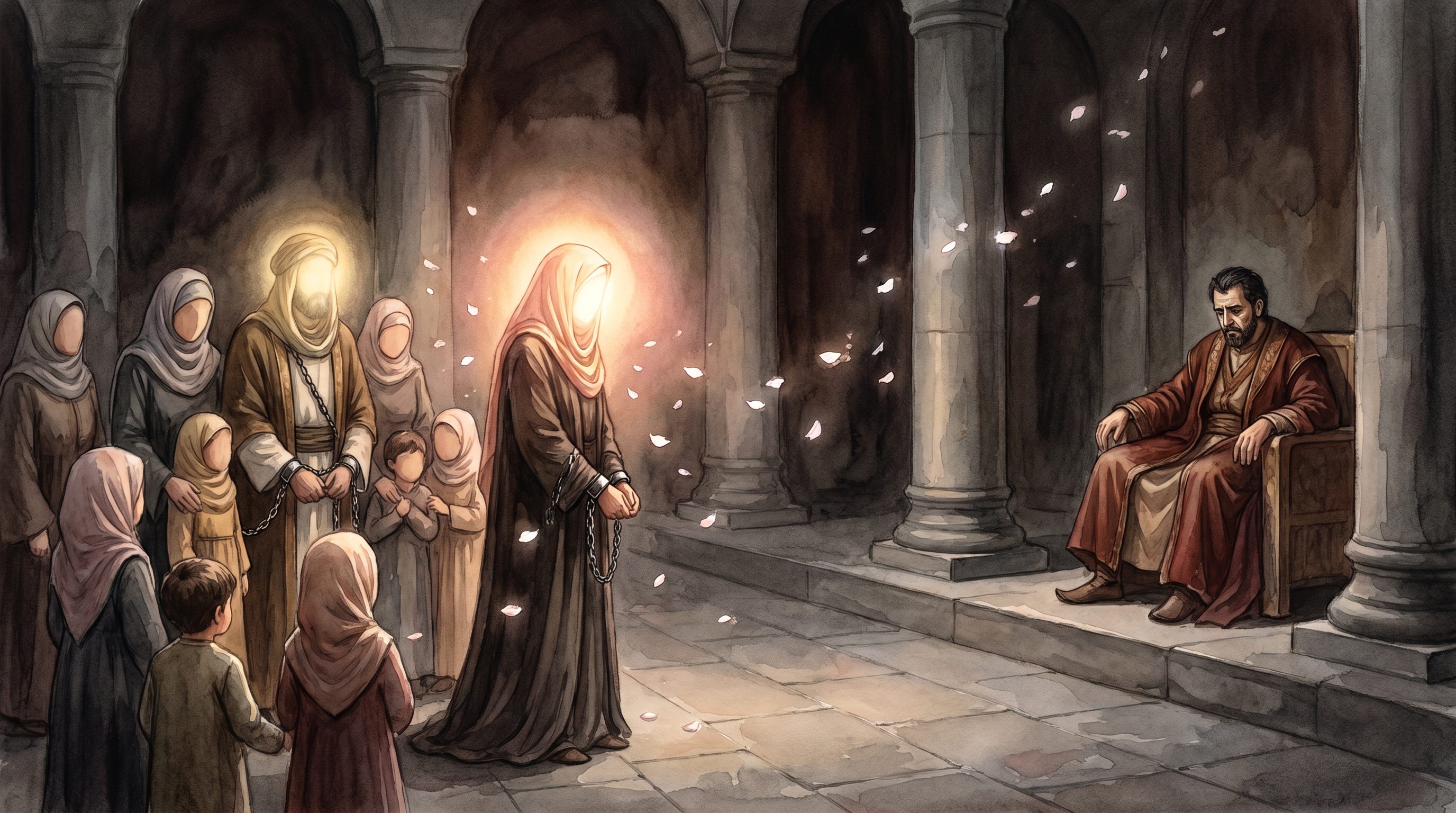
Because when Sayyedah Zaynab — peace and blessings be upon her — the daughter of the Commander of the Faithful, the granddaughter of the Prophet — was brought, in chains, with the orphaned children of her brother Imam Husayn — peace and blessings be upon him, into the court of Ubaydullah ibn Ziyad in Kufa — when the head of her brother was on the platter at the tyrant’s feet, when the children of the household were dead behind her — Ibn Ziyad turned to her.
And he asked her one question.
“What did God do to your brother and your family?”
And she — Sayyedah Zaynab, who had walked beside her brother into the desert, who had buried her nephews in the sand of Karbala, who had carried the children of the slaughtered through the markets of Damascus — she answered him with one phrase.
مَا رَأَيْتُ إِلَّا جَمِيلًا
“I saw nothing but beauty.”
— Sayyedah Zaynab, in response to Ubaydullah ibn Ziyad at the court in Kufa, narrated in Sayyid Ibn Tawus, al-Luhuf ’ala qatla al-tufuf; preserved identically in Bihar al-Anwar vol. 45 and al-Mufid’s al-Irshad vol. 2
And then she continued — because Sayyedah Zaynab does not stop at one phrase — and she said:
هَؤُلَاءِ قَوْمٌ كَتَبَ اللَّهُ عَلَيْهِمُ الْقَتْلَ فَبَرَزُوا إِلَى مَضَاجِعِهِمْ، وَسَيَجْمَعُ اللَّهُ بَيْنَكَ وَبَيْنَهُمْ فَتُحَاجُّونَ إِلَيْهِ وَتَخْتَصِمُونَ عِنْدَهُ، فَانْظُرْ لِمَنِ الْفَلْجُ يَوْمَئِذٍ، ثَكِلَتْكَ أُمُّكَ يَا ابْنَ مَرْجَانَةَ
“They were a group for whom God had destined martyrdom; they rushed forward to their resting places. Soon God will gather you and them, and then you will be interrogated harshly. Then you will see who wins. May your mother mourn over you, O son of Marjana.”
— Sayyedah Zaynab, al-Luhuf ’ala qatla al-tufuf; preserved identically in Bihar al-Anwar vol. 45, al-Mufid’s al-Irshad vol. 2, and Tabari’s Tarikh vol. 5
So hold the question.
If we are going to spend the next hour saying that beauty can be a trap — and we are — and if Sayyedah Zaynab — peace and blessings be upon her — looking at the slaughter of her family, said that what she saw was nothing but beauty — then what is the difference between the beauty that was a trap and the beauty Sayyedah Zaynab saw?
That is the question we will answer tonight.
That is the discrimination we will be taught.
And the seventy-two who would not flicker — the men whose vows on the night of Ashura are the subject of tonight’s maqtal — were already, on that night before the morning of slaughter, seeing what she would later, on the road from Kufa to Damascus, name.
Hold the question.
The night is for the answer.
The Way of the Samurai
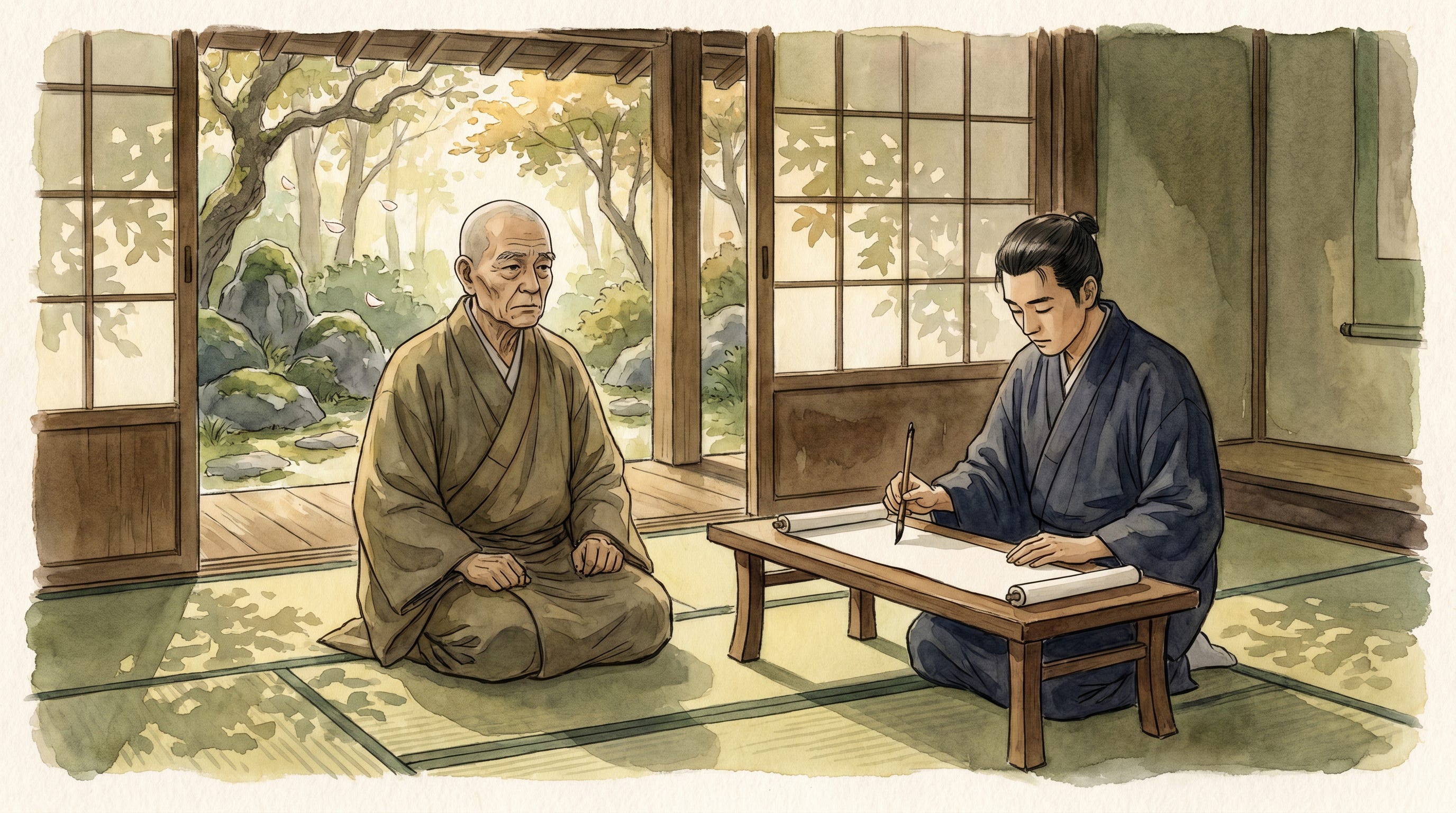
To Saga prefecture, in southern Japan, in the year 1716.
A retired samurai is dictating, to a younger man named Tashiro Tsuramoto, his reflections on the calling he has spent his life inside.
His name is Yamamoto Tsunetomo.
After his lord’s death in 1700, Tsunetomo had wished to commit seppuku — the ritual self-administered death of the loyal retainer following his master.
But the Tokugawa shogunate had by that time forbidden the practice by edict.
So Tsunetomo retreated.
He shaved his head.
He took the robe of a Buddhist monk.
And for twenty years he lived in retirement, training a younger generation of samurai whose own swords would, in the long Tokugawa peace, never see a battle.
The book Tashiro Tsuramoto compiled is called Hagakure — In the Shadow of Leaves.
The Book of the Samurai.
And here is the first thing I want you to feel, before we read a single line.
Hagakure is a peacetime book.
Tsunetomo himself never fought a battle.
He was, in the strict sense, a samurai with no employer and a sword with no enemy.
The book he dictated is an aristocrat-class meditation on readiness for death, written by a man whose own death-readiness had been administratively forbidden, addressed to a class of warriors whose own swords would never leave their scabbards in earnest.
That matters.
Because what Tsunetomo wrote in retirement — what he meant as a meditation for retired warriors — would, two centuries later, be picked up by a militarised Japanese state, severed from its own internal cautions, and read as a battlefield manual.
The misreading is the seed of the corruption.
But before the misreading, there is the book itself.
And the book is serious.
So we read it carefully, before we say anything about what was later done with it.
The opening of Chapter One of Hagakure is the most universally quoted line in Japanese cultural history:
“The Way of the Samurai is found in death.
When it comes to either/or, there is only the quick choice of death.
It is not particularly difficult.
Be determined and advance.”
— Yamamoto Tsunetomo, Hagakure, Chapter One
Most reception of Hagakure stops there.
The Way of the Samurai is found in death.
That is the line that gets carved into film posters.
But Tsunetomo does not stop there.
He keeps going. And what comes next is what most readers do not know.
“To say that dying without reaching one’s aim is to die a dog’s death is the frivolous way of sophisticates.
When pressed with the choice of life or death, it is not necessary to gain one’s aim…
To die without gaining one’s aim is a dog’s death and fanaticism.
But there is no shame in this.
This is the substance of the Way of the Samurai.”
— Yamamoto Tsunetomo, Hagakure, Chapter One
The phrase “a dog’s death” — inujini in Japanese — is the term for a death without purpose.
A death that achieves nothing.
Tsunetomo is defending the dog’s death.
He is saying:
Yes, dying without gaining anything is what the sophisticates call fanaticism. So what?
There is no shame in this.
This is the substance of the Way.
This is the rawer Hagakure ethos.
Die anyway.
Even if it achieves nothing.
And — this is what the state will later seize upon.
When the Tokkotai is formed in October 1944, when twenty-three young men in Zero fighters are told to fly into American carriers, the state will not need to invent the doctrine that the dog’s death is acceptable.
Tsunetomo, three centuries earlier, has already provided it.
But — and this is the move I want you to feel — Hagakure does not stop with the defence of the dog’s death either.
Hagakure’s Apex Is Compassion
Listen to a different passage from Chapter One.
Tsunetomo has been speaking of the samurai’s daily mental rehearsal of his own death.
And then — without warning — he says this:
“Compassion is like a mother who nurtures one’s fate.
Examples of the ruin of merciless warriors who were brave alone are conspicuous in both past and present.”
— Yamamoto Tsunetomo, Hagakure, Chapter One
Read that sentence twice.
The merciless warrior who was brave alone — the exact human silhouette that the kamikaze programme of 1944–45 would later manufacture — is the profile Tsunetomo names as ruin.
Not as nobility.
As ruin.
This is Hagakure’s own internal warning against precisely what the state will later use Hagakure’s name to do.
And then — at the very end of the book, in a section called “Late Night Idle Talk” — Tsunetomo lays out his own four personal vows.
Never to be outdone in the Way of the Samurai.
To be of good use to the master.
To be filial to my parents.
To manifest great compassion, and to act for the sake of Man.
— Yamamoto Tsunetomo, Hagakure, “Late Night Idle Talk”
Note carefully the fourth vow.
To manifest great compassion, and to act for the sake of Man.
Not honour.
Not loyalty.
Not glory.
Compassion. Acting for the sake of mankind.
This is the apex.
This is the vow that, in Tsunetomo’s own structure, crowns the other three.
The fourth steps outside the path, the master, the parents, and addresses humanity itself.
And here is the move I want you to feel.
The kamikaze programme, when it came in 1944, did not violate Hagakure on the surface.
It violated Hagakure’s own declared apex.
The form survived.
The cherry blossom, the readiness for death, the morning rehearsal — all of this could be preserved while the apex was silently removed.
Compassion as the highest declared principle was excised, and the surface — the form — was retained.
This is precisely the methodology of every state-manufactured form of witness.
The corruption of a tradition is not always the rejection of its surface.
Sometimes it is the silent removal of its apex while the surface is preserved.
Hold this.
We will see this move again — in the kamikaze programme, in what was done to Karbala by certain late-mediaeval embellishers, in what the empire of our own age has done to the vocabulary of democracy and freedom.
The form preserved, the apex silently removed.
The Prince of Mito
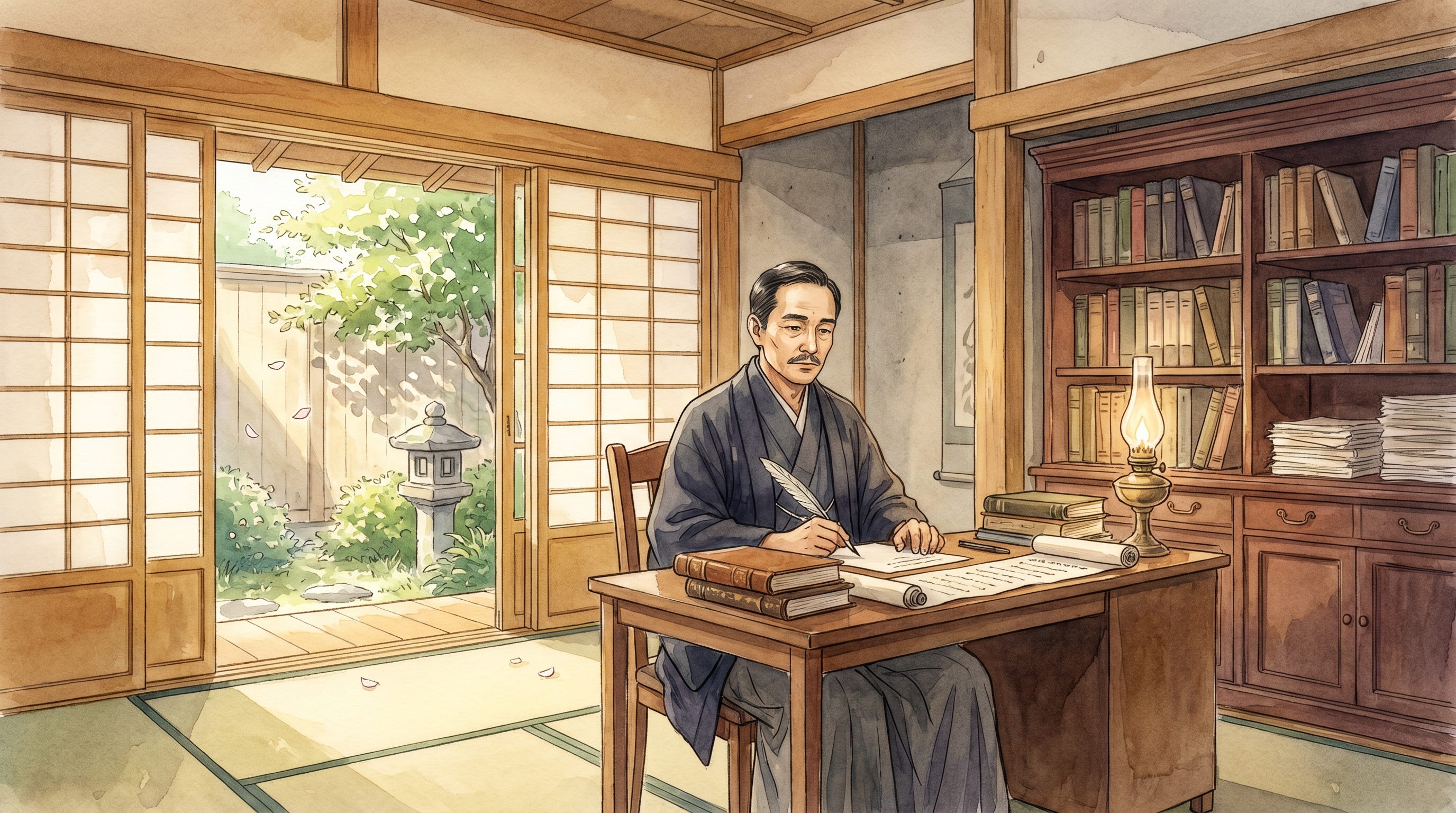
Two centuries after Tsunetomo, in 1900, a Japanese man named Inazō Nitobe — descended from samurai stock, by then a Christian — published, in English, a book called Bushido: The Soul of Japan.
He wrote it for a Western audience.
And it preserves the internal tensions of the tradition that the militant 1930s and 1940s Japanese state would, very soon, paper over.
In Chapter Two, on Rectitude — gi — Nitobe writes:
“Rectitude is the power of deciding upon a certain course of conduct in accordance with reason, without wavering — to die when it is right to die, to strike when to strike is right.”
— Inazō Nitobe, Bushido: The Soul of Japan, Chapter II
To die when it is right to die.
The discrimination is built into the definition of the virtue.
And in Chapter Three, on Courage, Nitobe quotes a Prince of Mito — the Mito-branch Tokugawa, the most philosophical branch of the shogunate:
“Death for a cause unworthy of dying for, was called a ‘dog’s death.’
‘To rush into the thick of battle and to be slain in it,’ says a Prince of Mito, ‘is easy enough, and the merest churl is equal to the task; but,’ he continues, ‘it is true courage to live when it is right to live, and to die only when it is right to die.’”
— Inazō Nitobe, Bushido: The Soul of Japan, Chapter III
To rush into battle and be slain — easy.
The merest churl can do it.
Dying is not the test.
True courage is to live when it is right to live, and to die only when it is right to die.
And then Nitobe adds a cross-reference:
“And yet the Prince had not even heard of the name of Plato, who defines courage as ‘the knowledge of things that a man should fear and that he should not fear.’”
— Inazō Nitobe, Bushido: The Soul of Japan, Chapter III
Plato.
Two millennia and half a world away.
The same definition.
Courage is not the willingness to die.
Courage is the knowledge of what is worth fearing and what is not.
So here is where Point One leaves us.
The Way of the Samurai, in its serious form, had its own internal critique.
Tsunetomo named compassion as the apex.
Tsunetomo named the merciless warrior who was brave alone as ruin.
Nitobe named discrimination as the test.
The Prince of Mito named inujini — the dog’s death — as the failure mode. Plato agreed.
The form had a soul.
The form had its own warnings.
The form had, in its own classical articulation, the antibodies against its later corruption.
And yet — when the corruption came, in the autumn of 1944, in an airfield in the Philippines — the state needed to silence all of these voices to send the boys into the cockpit.
The state did not weaponise bushido in spite of bushido’s serious form.
The state weaponised bushido by silencing bushido’s serious form.
So we turn now to that airfield.
Mabalacat, the 25th of October
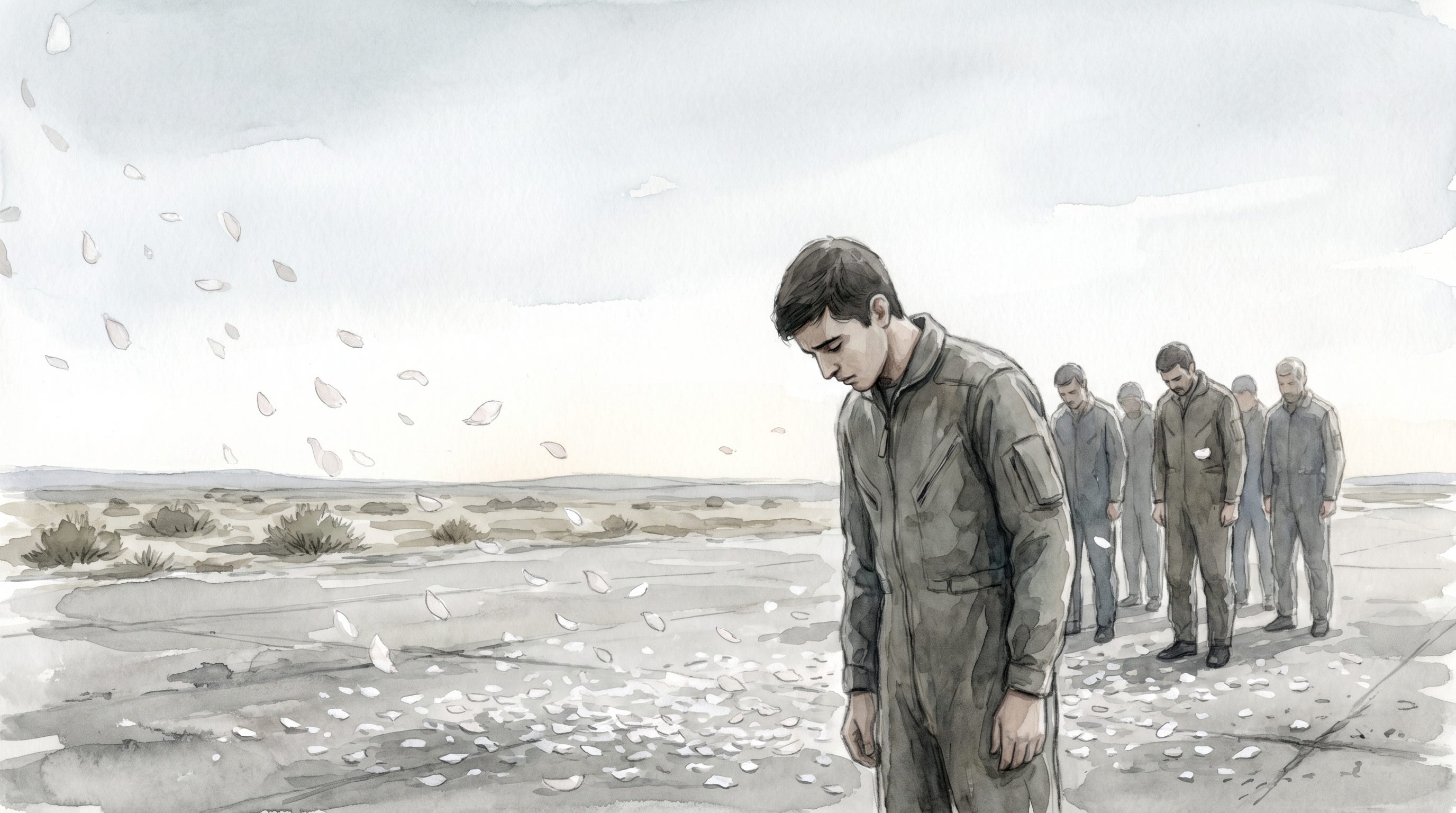
The 20th of October, 1944. Mabalacat Airfield, on the island of Luzon, in the Japanese-occupied Philippines.
Vice Admiral Takijirō Ōnishi — a man we will return to before the night is over — has flown to Mabalacat to take command of the First Air Fleet.
Ōnishi has a problem.
The American advance through the Pacific is now within striking distance of the Philippines. Japan’s carrier-based airpower has been decimated.
Conventional air operations are no longer producing meaningful results.
The Japanese homeland is, in the calculation of the Imperial Headquarters in Tokyo, weeks away from being directly threatened.
Ōnishi convenes a meeting at Mabalacat.
He proposes a new tactic — Tokkō, Special Attack — the deliberate crashing of an aircraft, with its pilot inside, into an enemy ship.
He asks for volunteers.
Twenty-three young men step forward.
The squadron is named Shikishima — after a poem invoking the Yamato spirit and the cherry blossom in spring as the image of the Japanese soul.
The first commander is Lieutenant Yukio Seki — twenty-three years old, a graduate of the 70th class of the Imperial Japanese Naval Academy, married only the previous spring to a young woman named Mariko, formerly an instructor at Kasumigaura Naval Air Group.
When Seki is informed of his command, the eyewitness accounts say he bowed his head for ten full seconds before he answered.
When he raised it, he is reported to have said:
“Please do appoint me to the post.”
The Shikishima Squadron flies its first sortie on the 21st of October.
They locate no targets.
They return.
Three more days of failed sorties.
Then, on the 25th of October, 1944, Lieutenant Seki leads five Zero fighters carrying 250-kilogram bombs in the first officially-credited organised kamikaze attack of the war.
They strike the escort carriers of Taffy 3.
The USS St. Lo is hit.
None of the five returned.
The programme that began that morning would, by August of the following year, have killed approximately four thousand young Japanese men in cockpits.
The programme had a name — Tokkōtai.
It had an aesthetic vocabulary — the cherry blossom, Yamato-damashii, taiatari.
It had a state behind it.
And it had the cherry blossom.
Always, throughout, the cherry blossom.
The Cherry Blossom in the State’s Hand
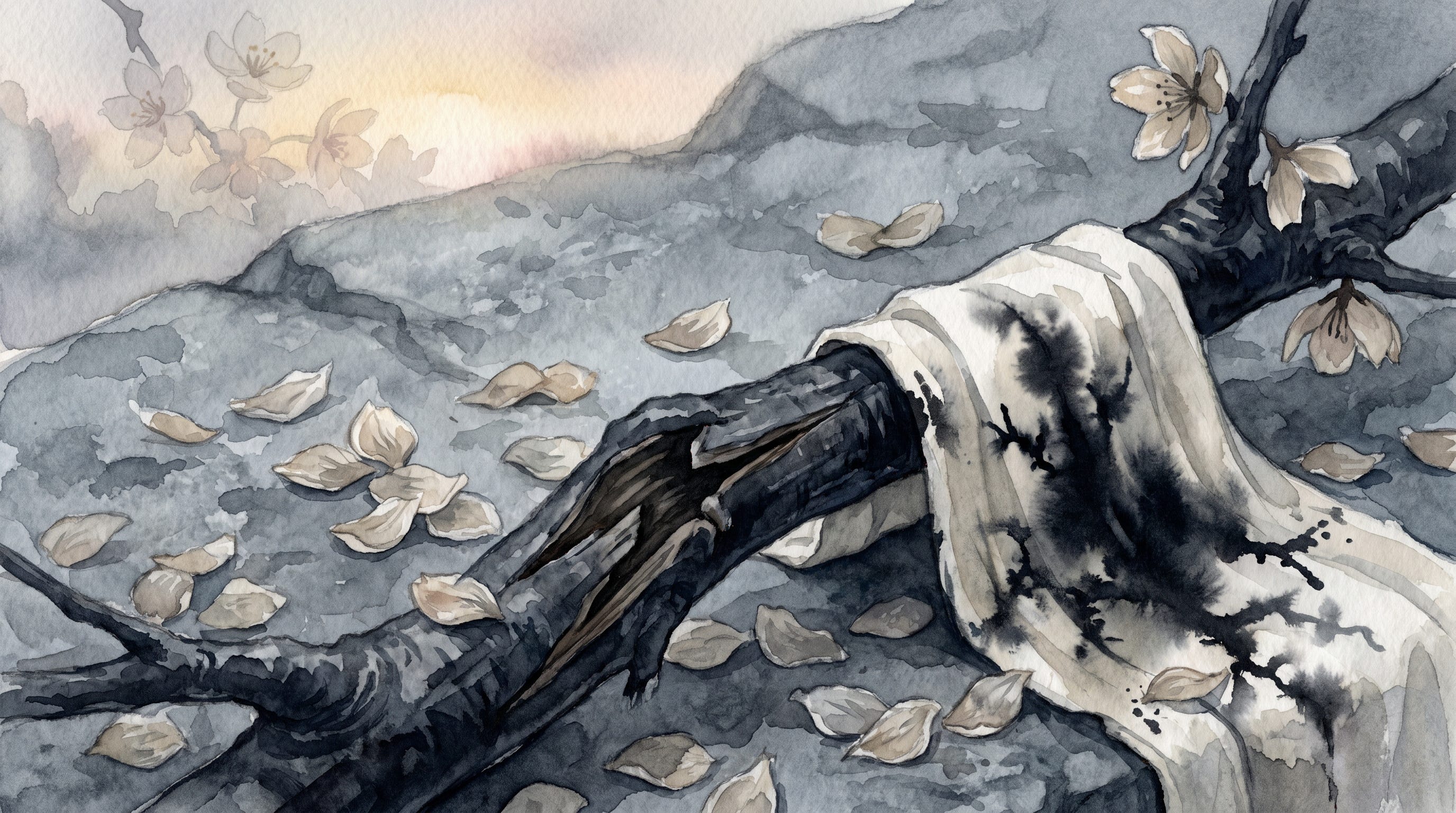
The cherry blossom is not new to Japan in 1944.
It is one of the oldest aesthetic motifs in any culture — the petal that falls at the height of its beauty, the meditation on impermanence, mono no aware.
We met the cherry blossom two nights ago, on the night we spoke of the young men of the Imam's house who walked out at the morning of Ashura: Qasim ibn al-Hasan and Ali al-Akbar ibn al-Husayn; and Aun and Muhammad, the sons of Sayyedah Zaynab and of Abdullah ibn Ja'far at-Tayyar — peace and blessings be upon them all.
The maqtal of that night honoured these four young men with the image of four cherry blossoms on the grey stone, opening into the dawn that would take them.
Tonight we see the same image as state-co-opted.
The cherry blossom branch on tonight’s grey stone has been rendered in its corrupted form.
Darkened.
Pierced.
The petals fallen.
The cloth that wraps it stained with a black that will not wash out.
The aesthetic is older than its corruption.
The corruption is that the state took the aesthetic and wrote a script for it.
Lieutenant Seki himself, when he served as an instructor at Kasumigaura from January to June 1944 — before he himself was sent to the cockpit — used a phrase to his students:
“My students, fall like mountain cherry blossoms.”
— Lieutenant Yukio Seki, message to his students at Kasumigaura Naval Air Group, January–June 1944, preserved in Nemoto Junzen, Shikishima-tai shi e no itsukakan (Tōkyō: Kōjinsha, 2003), pp. 53–54
The instruction Seki gave to the next class, before he himself was the one who fell, was the instruction the state had given him to give them.
The cherry blossom written into the cockpit.
The aesthetic marshalled into the script.
Now I want to read for you Seki’s own letters, in the days before his founding mission.
We honour the boy without endorsing the system that used him.
That is the methodology of this night — the methodology we named on the fifth night with Hurr and with the Twenty-One on the Beach:
Honour without conflation.
Here is Seki’s letter to his wife’s parents in Kamakura:
“To Mother in Saijō, please forgive me for causing you hardships since I was very young and for my lack of filial piety.
Now standing at the crossroads of victory or defeat for the Empire, I am determined to repay the Emperor’s grace with my own body. There is nothing that surpasses this as the long-cherished desire of a military man.
I am determined to repay the Emperor’s grace by carrying out a taiatari (body-crashing) attack on an aircraft carrier with my own body for the Empire of Japan.
Everyone, take care.
Yukio.”
— Lieutenant Yukio Seki, letter to his wife’s parents, October 1944, trans. Bill Gordon, primary source Nemoto 2003
Note the technical word.
Taiatari.
Body-crashing.
The military engineering term — the action the state was asking him to perform.
Spiritualised in the propaganda; engineering language in the cockpit.
And here is Seki’s letter to his wife of seven months — the woman he had married only the previous spring — Mariko:
“Dear Mariko,
I am truly sorry for going to fall without being able to do anything for you.
Even without words, I think that you, with readiness as the wife of a military man, are sufficiently able. Please keep in mind to show filial piety to your parents. I write now before my departure while many memories come to me.
I hope that Emi and her young boy also will be in high spirits.
Yukio.”
— Lieutenant Yukio Seki, letter to his wife Mariko, October 1944, trans. Bill Gordon
Three sentences for the wife of his life.
Two paragraphs about her parents and her sister.
The script the state has given him does not have room for the marriage of seven months.
The boy is delivering the form because the form is what the state requires.
The interiority is silently overwritten.
This is what the cherry blossom in the state’s hand looks like.
The Letters of Three Boys
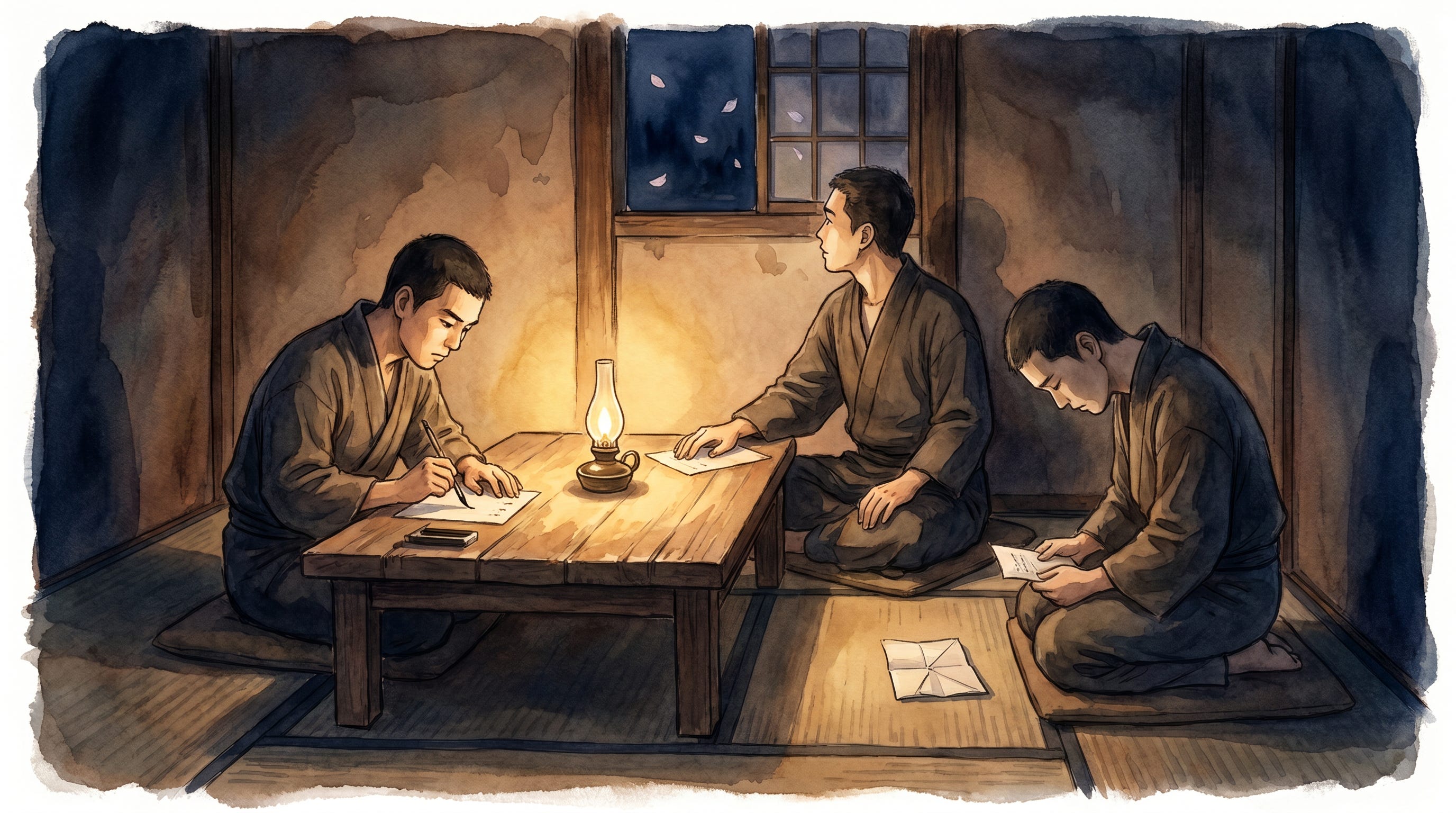
Now I want to read you the final letters of three other young men — three of the four thousand who would die in the programme between October 1944 and August 1945.
Three boys, in three different registers of what the state was overwriting in them.
Honour without conflation — applied with extra care here.
We honour the boys.
We name what was done to them.
We do not flatten them into either heroes or victims.
The source for all three letters is Manoa journal, volume 13, number 1, from 2001, pages 120–123 — translated by B. Gordon from the Japanese collection by Naemura Hichiro published in Osaka in 1993.
Captain Adachi Takuya — The Seduced
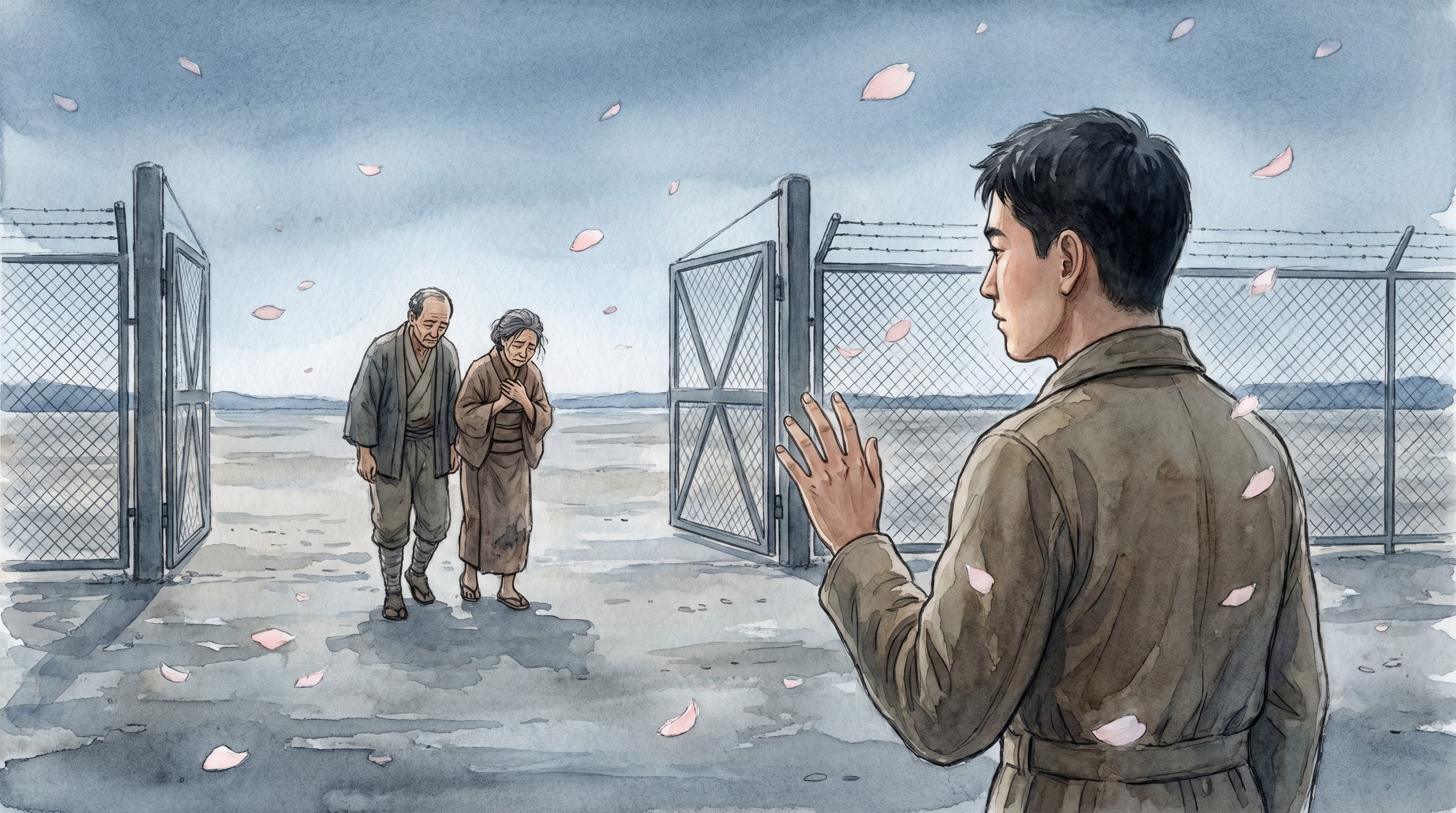
The first letter is from Captain Adachi Takuya.
Killed in the Okinawa area on the 28th of April, 1945.
Age 23.
Letter to his parents, written after they had visited him at his airfield, before his final mission.
“The difficulty of the journey you made to see me was clearly evident in your dishevelled hair and in the hollows under your eyes — it made me want to bend my knees and worship before you. In the wrinkles on your brows was vivid testimony of the pains you took to raise me.
When you took my hand and passed it over your chilblains, I experienced a sense of profound peacefulness unlike anything I have experienced since joining up — like being a baby again and longing for the warmth of a mother’s love. It is because I bask in the beauty of your deep devotion that I can martyr myself for you — for in death I will sleep in the world of your love.
Even if I should die, it will be with a peaceful spirit.
The war zone is where these beautiful emotions are put to the test. If death means a return to this world of love, there is no need for me to fear.
At sixteen-hundred hours our meeting was over. Watching you walk out the gate, I quietly waved goodbye.”
— Captain Adachi Takuya, final letter to his parents, April 1945, Manoa 13(1), pp. 120–123
This is the most aesthetically beautiful letter in the corpus of human grief I have read.
And precisely for that reason — the most dangerous.
The boy is sincere.
Every word he wrote is meant.
The form of his letter is consummate.
And the script he is delivering is the state’s.
The state did not need to manipulate his sincerity.
The state needed his sincerity to be real.
Real sincerity, channelled through a script the state had written, was what put him in the cockpit.
He thought he was dying for his mother’s love.
He was dying for an empire that, by April 1945, was already three months from collapse.
The sermon’s job is not to mock him.
The sermon’s job is to grieve for him while naming the system that turned a son’s love for his mother into a weapon.
Captain Furukawa Takao — The Resistant
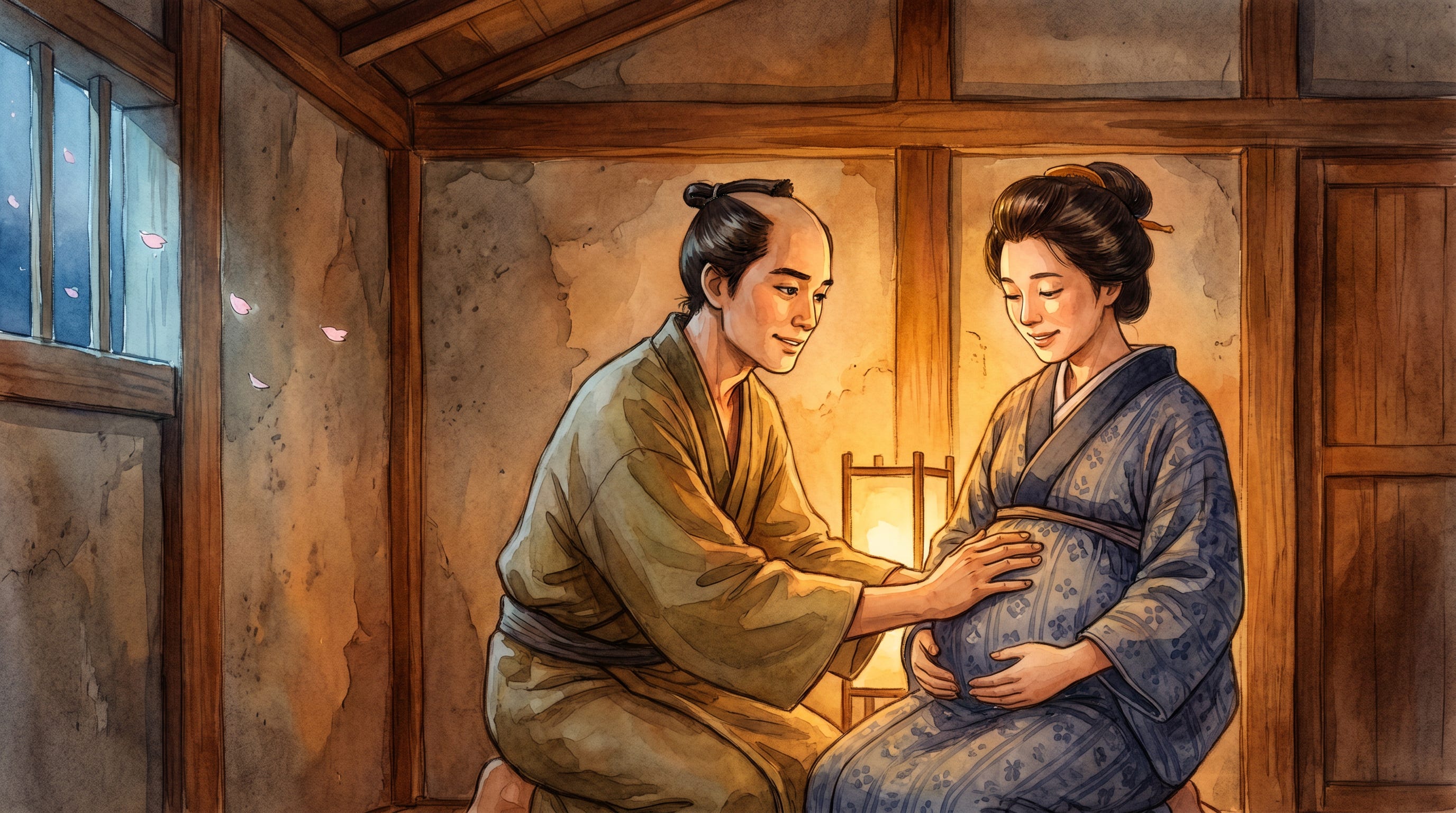
The second letter — from Captain Furukawa Takao, killed in the sea off Kagoshima on the 21st of April 1945, age 25.
Native of Saga Prefecture — the same Saga where Tsunetomo dictated Hagakure two centuries earlier.
Letter to his pregnant wife.
The closing sentence is what the night turns on:
“Now, more than ever, the fleetingness of human life astonishes me, but I have become a much stronger person.
You too must be strong.
Wait for me.
I will return without fail.
Until you’ve safely given birth to our child, I have no intention of dying easily.”
— Captain Furukawa Takao, final letter to his wife, April 1945, Manoa 13(1), pp. 120–123
Until you’ve safely given birth to our child, I have no intention of dying easily.
This is the boy who resisted the script.
The voice the kamikaze programme had to drown out.
The young man who wanted to live to see his child born.
The system killed him anyway.
His son Takashi was born in the months after his death.
The family really exists.
The unborn child grew up.
Second Lieutenant Tomisawa — The Doubting
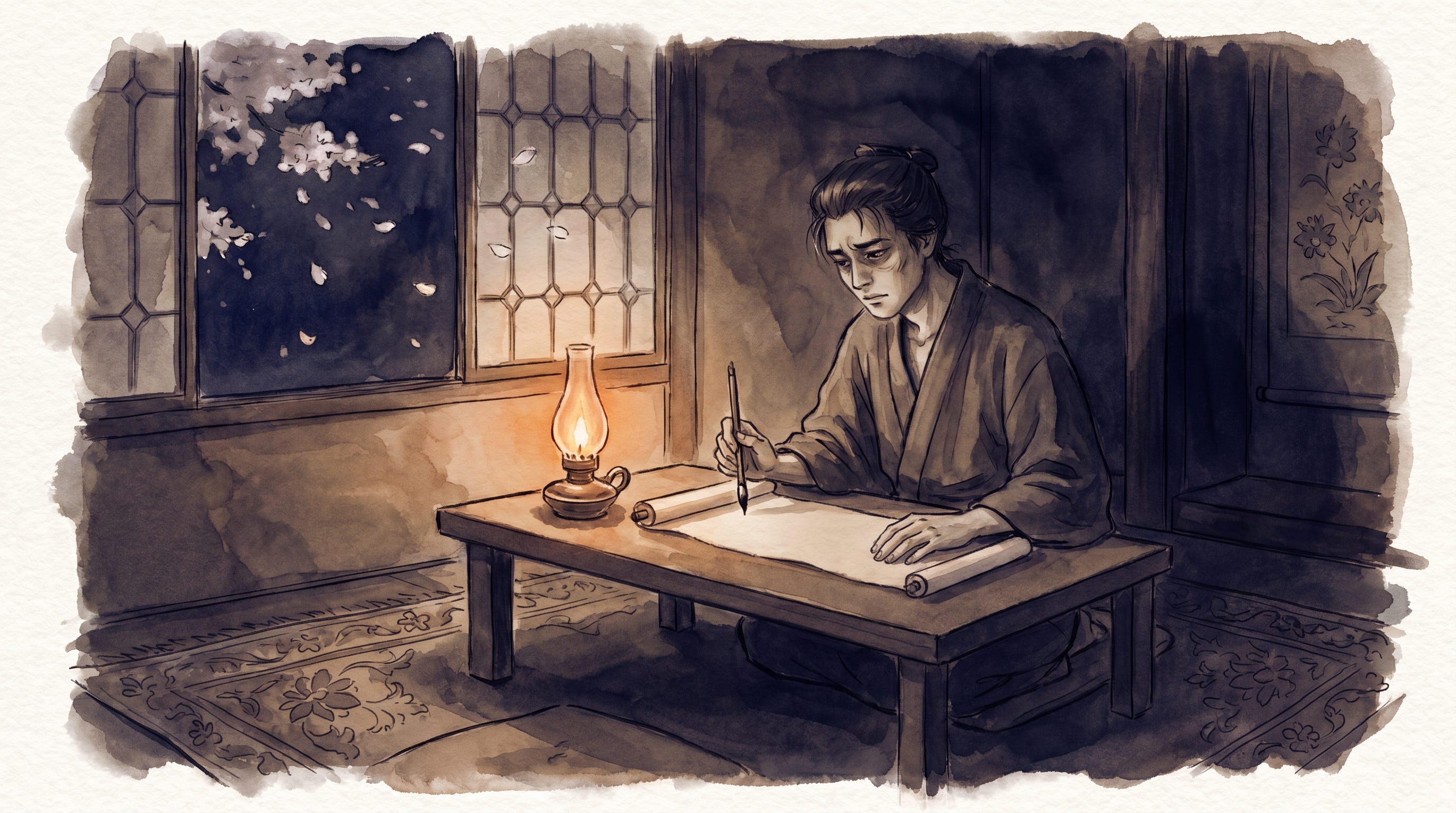
The third letter — Second Lieutenant Tomisawa, before his final mission.
The single line that breaks open the script:
“At last for me also the time of final service has arrived.
I very deeply appreciate my special upbringing until now.
I am one who lacked courage, but please do speak well of me…
Shall I keep silent?
Shall I try to be quiet about this?
Father, Mother, please do congratulate me.”
— Second Lieutenant Tomisawa, final letter to his family, 1945, Manoa 13(1), pp. 120–123
“I am one who lacked courage, but please do speak well of me.”
That is one of the most haunting sentences in the corpus.
The boy is naming, in his own voice, what the script could not paper over.
He knows the courage is not there.
He is asking his family to lie for him in death because in life he could not summon what they would describe him as having.
Shall I keep silent?
Shall I try to be quiet about this?
The boy is on the edge of refusing.
And then — immediately, and you can almost hear the click of it — the script returns:
Father, Mother, please do congratulate me.
The state-manufactured form papering over a doubt the boy did not quite have permission to voice.
Three Sincerities
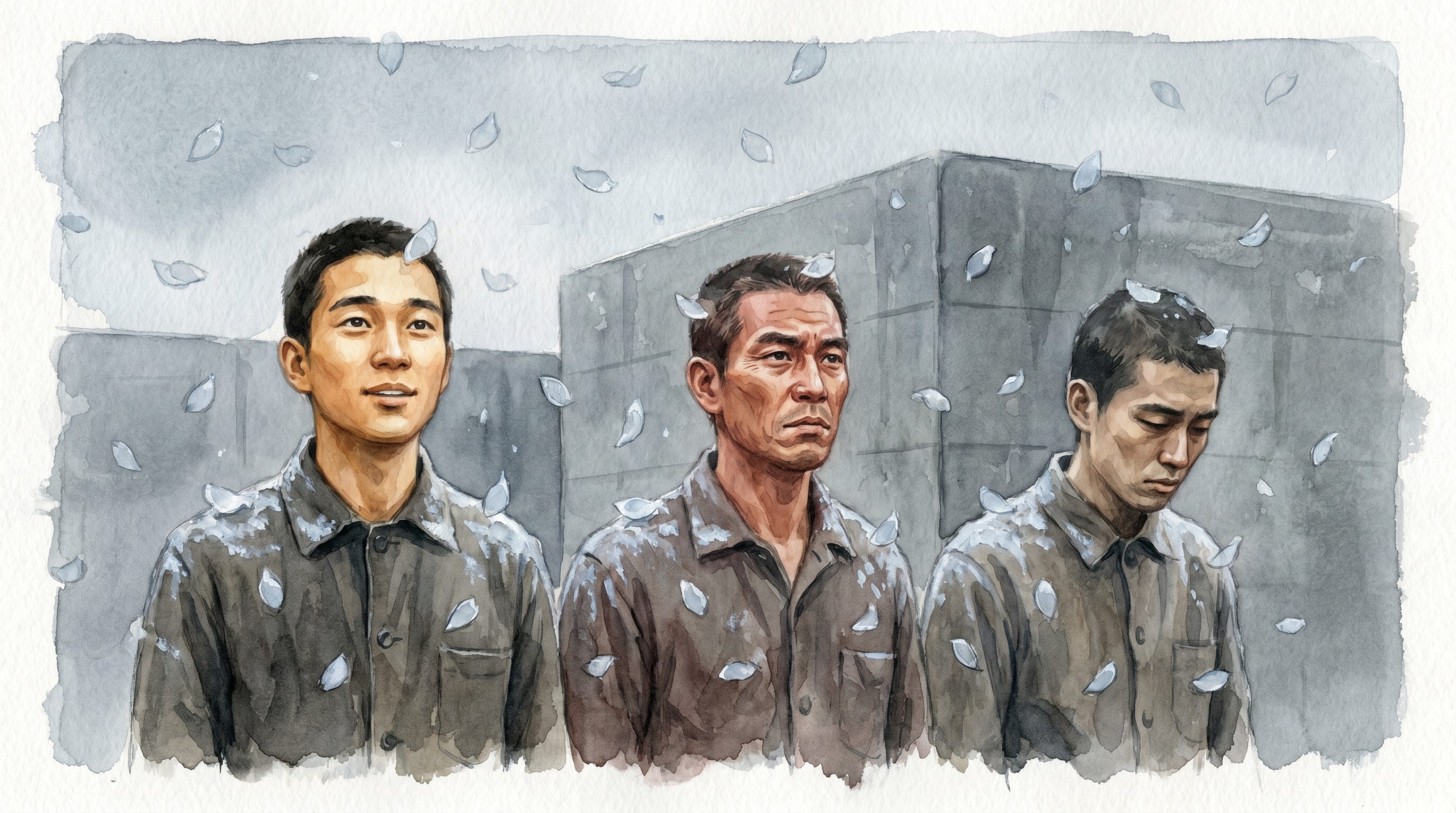
Three boys.
Three voices.
Three different things happening underneath the form.
Adachi was sincere in the script.
Furukawa was sincere against the script.
Tomisawa was sincere despite the script.
And the system used all three of them the same way.
The state did not need any one of these boys to feel any one particular thing.
The state needed him in the cockpit.
The form was what mattered.
The boy was used regardless of what the boy felt.
This is what state-manufactured form looks like when you look at it closely.
And it is, exactly the thing Sayyedah Zaynab — peace and blessings be upon her, the question we have been holding from the start of the night — would later refuse to call beauty.
The Architect’s Apology
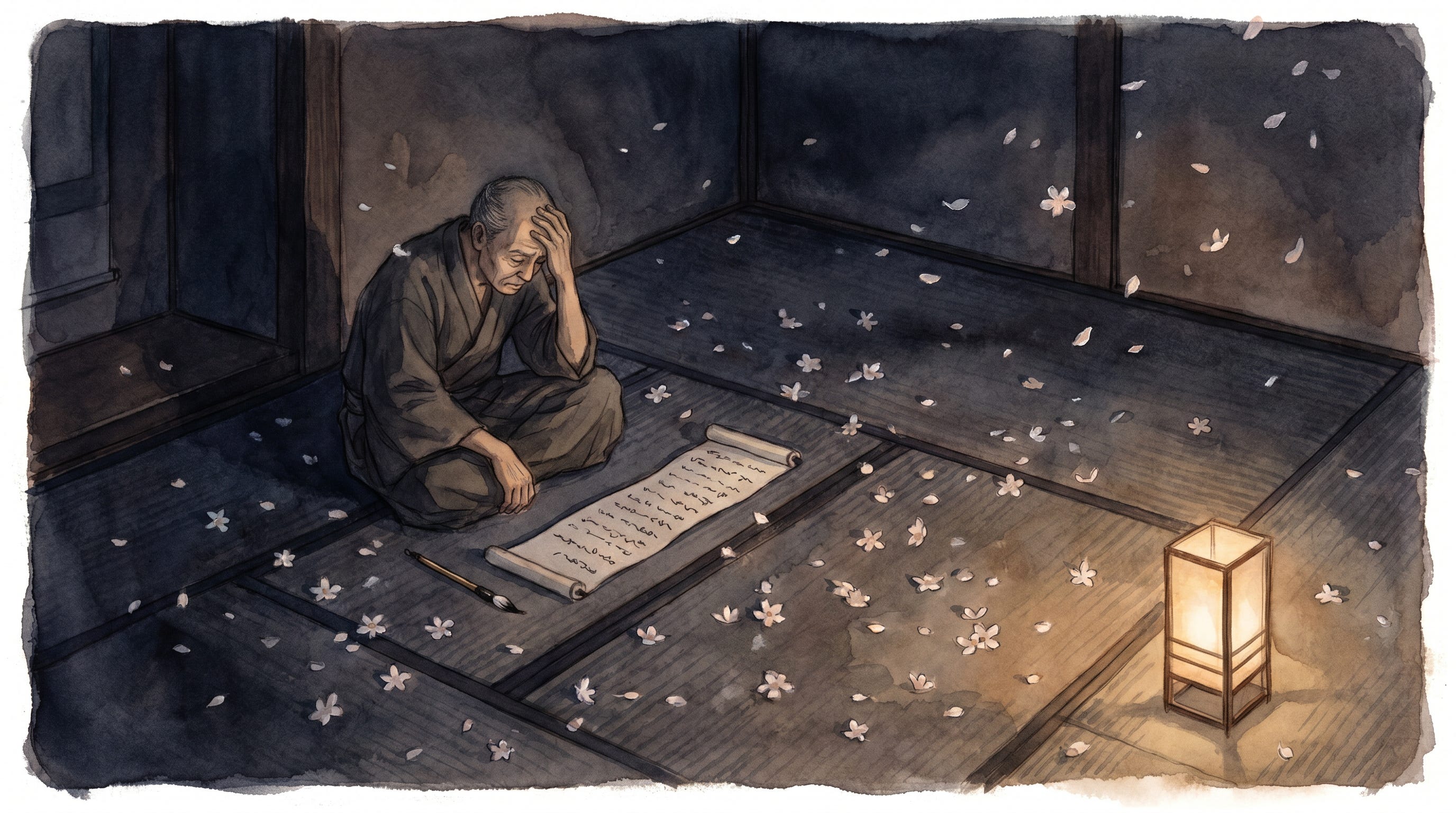
Before we move on, one more letter from the kamikaze period.
Not a pilot’s letter.
The architect’s.
Vice Admiral Takijirō Ōnishi.
By the spring of 1945, the Tokkotai programme he had instituted had taken approximately four thousand young Japanese lives.
The American advance continued.
The bombs that would fall on Hiroshima and Nagasaki — and we will speak of those bombs in a few minutes — were already, in their secret, being prepared.
On the 15th of August 1945, Emperor Hirohito broadcast the surrender of Japan.
The war was over.
The next day, Ōnishi entered his official residence in Tokyo.
He took up the tantō — the short blade traditionally used for seppuku — and committed the ritual self-administered death.
But he did so without a kaishakunin.
The kaishakunin is the second swordsman in the seppuku ritual, whose role is the mercy-cut that ends the suffering.
This is the mercy built into the form.
Ōnishi refused the kaishakunin.
He suffered for over fifteen hours.
He died in the early morning of the 17th of August.
The note he left was addressed first to the spirits of the Special Attack Corps.
To the four thousand boys he had ordered to die.
“To the spirits of the Special Attack Corps:
I offer my deepest gratitude: you fought well.
Believing in our ultimate victory, you scattered like blossoms, becoming human bullets.
Yet that belief was not fulfilled.
By my death, I seek to atone before the spirits of my former subordinates and their bereaved families.”
— Vice Admiral Takijirō Ōnishi, suicide note, 16 August 1945; original at Yasukuni Yūshūkan, English in Inoguchi & Nakajima, The Divine Wind (US Naval Institute Press, 1958)
And then he turned his note to the youth of Japan:
“After my death, if you act rashly, know that recklessness aids the enemy.
If you heed the Imperial Will, exercise self-restraint, and endure hardship — then my death will have meaning.
Even in endurance, do not lose the pride of being Japanese.
In peacetime, continue to uphold the spirit of the Special Attack — for the welfare of the Japanese people, and for the peace of all humanity, strive to do your utmost.”
— Vice Admiral Takijirō Ōnishi, suicide note (continuation), 16 August 1945
Hear what the architect has just said.
“If you act rashly, know that recklessness aids the enemy.”
The man who institutionalised the dog’s death as a programme of state — in his final act, with his abdomen open and the kaishakunin refused — condemns the rash sacrifice he had ordered.
“Even in endurance, do not lose the pride of being Japanese.”
Endurance — gaman — the long, patient bearing-with that is the opposite of the explosive, beautiful gesture the cherry blossom is meant to symbolise.
The architect of the cherry-blossom programme, in his last words, told the young to choose endurance over sacrifice.
“For the peace of all humanity, strive to do your utmost.”
Peace.
Not victory.
Not the resurrection of the empire.
Peace of all humanity.
The architect, in the final clause of his note, pointed his nation toward exactly what Tsunetomo, three centuries earlier, had named in his fourth vow:
To act for the sake of Man.
Even the architect of the cockpit, in his last act, condemned what he had built.
He fell on his own blade.
He refused the mercy-cut.
He suffered for fifteen hours.
He died saying
Peace and endurance.
And the four thousand pilots whose deaths he had ordered remained dead.
The Sister-Poet, Forty Years Before
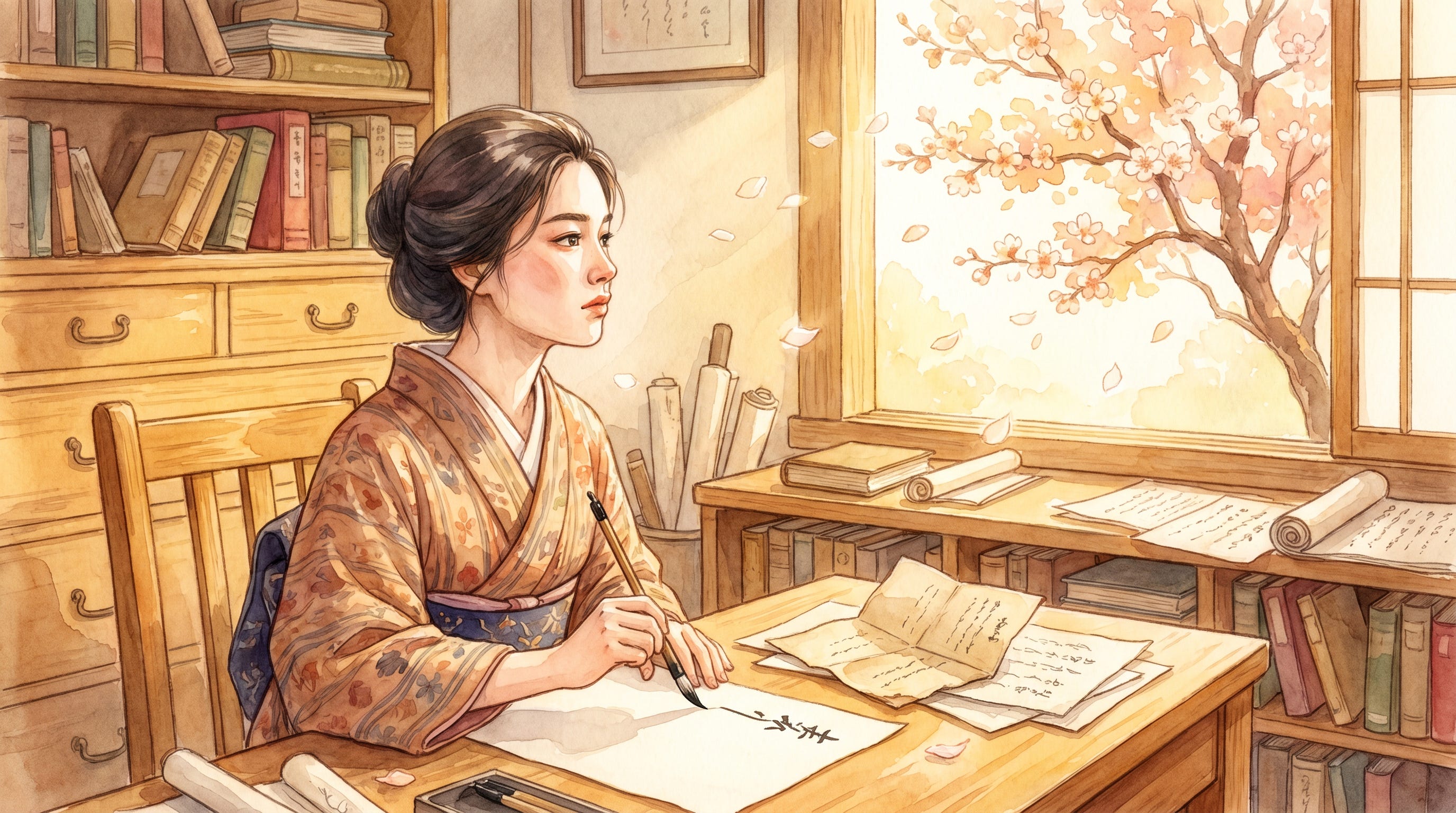
But here is what I want you to know, before we leave the kamikaze cockpit.
Because what the kamikaze programme was — and the fact that it was a distortion of the bushido tradition, not a fulfilment of it — had already been named in Japan, in the Japanese language, by a Japanese woman, forty years before the Tokkotai existed.
Her name was Akiko Yosano.
Born in Sakai, near Osaka, in 1878.
A poet, a feminist, a pacifist.
By the time the Russo-Japanese War broke out in 1904, she was one of the most widely-read poets in Japan, with a regular column in the literary journal Myōjō — Bright Star.
In 1904, her younger brother Chuzaburo was conscripted into the Imperial Japanese Army and sent to the siege of Lüshun — Port Arthur.
In September 1904, while her brother was still in the siege lines, Yosano published in Myōjō a poem addressed to him, called Kimi Shinitamou koto nakare — “You Must Not Die”, or in Yamazaki’s translation, “Prithee Do Not Die”.
It was, at the time, regarded as an unpatriotic poem.
In some quarters of the Japanese public it was called treasonous.
Yosano was monitored by the authorities for the rest of her life.
And the poem became, after the Second World War, one of the most beloved anti-war poems in the Japanese language.
Listen to the heart of the poem.
“Oh, younger brother mine, for thee I weep,
Prithee do not die,
For you were born the very last,
And our parents loved you all the more,
Yet they made thee grasp a blade in hand,
Taught thee kill a man thou shall,
Kill a man, and die you too,
groomed you thus to age twenty-four…”
— Akiko Yosano, Kimi Shinitamou koto nakare, Myōjō journal, September 1904; Yamazaki translation
Groomed you thus to age twenty-four.
The poem turns, sharply, to the question:
“I prithee do not die,
The Heavenly-Prince does not himself
Lead by his own august presence his troop to battle.
For to command that men shed blood of men,
And die following the beastly path,
And tell us death be the glory of men,
If his Highness’ heart be compassionate,
How could he truly think it so?”
— Akiko Yosano, Kimi Shinitamou koto nakare (continued)
The Heavenly-Prince — the Emperor — does not himself lead by his august presence his troop into battle.
The Emperor is in Tokyo.
And the boys he has ordered into the trenches are dying for an empire whose ruler does not put his own body on the line.
To command that men shed blood of men, and die following the beastly path, and tell us death be the glory of men.
Listen carefully, to the phrase Yosano uses.
The beastly path.
The Japanese term, in the original, is chikushōdō — 畜生道. The way of beasts.
In Japanese Buddhism, chikushōdō is one of the six realms of rebirth — the realm of beasts, the realm into which a soul descends as punishment for living an animal life of unreasoning violence.
It is the Buddhist condemnation of mindless killing.
Yosano has just used the same theological vocabulary the bushido tradition used for the dog’s death — inujini — and applied it to state-manufactured death itself.
The Japanese internal critique of state-martyrology, in the very theological vocabulary of the very tradition the state would later corrupt, was already articulated in 1904 — forty years before the kamikaze programme existed.
The sister told the empire it was sending her brother to chikushōdō — the way of beasts.
The empire did not listen.
Forty years later, the empire was sending four thousand brothers.
The cherry blossom of Tsunetomo’s apex of compassion, the Prince of Mito’s true courage to live when it is right to live, the sister-poet’s do not die, the architect’s own dying repentance — all of these voices were in the Japanese tradition when the state, in 1944, sent the boys into the cockpits.
The state silenced all of them.
The Other Empire
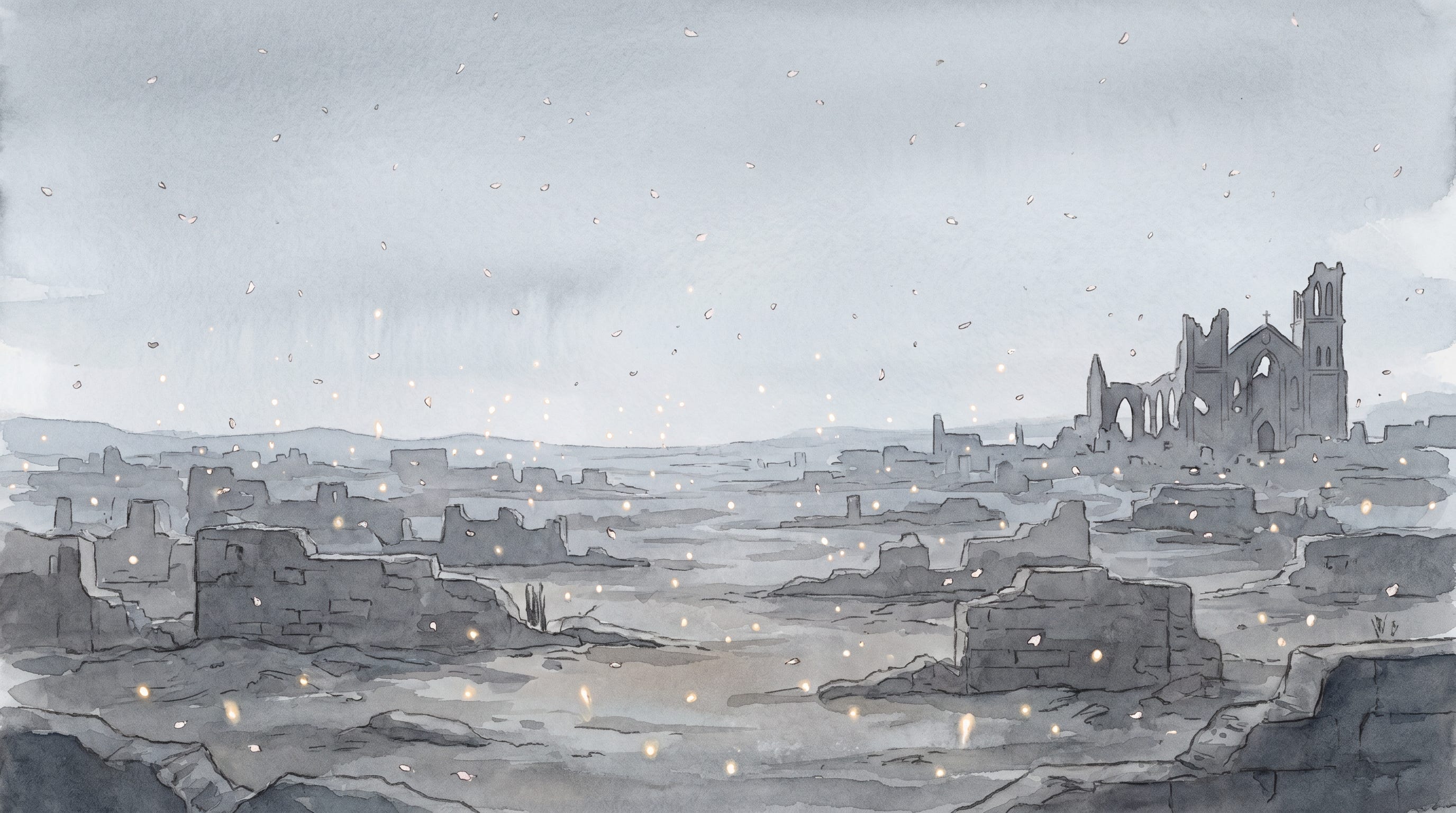
And before we turn from the cockpit to the corrective tonight — before we walk to the question Sayyedah Zaynab put on the table at the start — let us name what was happening in those very same nine days — the nine days of August 1945, from the bomb that fell on Hiroshima to the surrender Japan accepted at the Imperial Conference.
Because to name one empire’s state-manufactured death without naming the other would be to honour the dead unevenly.
In those same nine days — from Hiroshima to the surrender — while Vice Admiral Ōnishi was watching his empire collapse around him and preparing himself for the blade with which he would, two days later, refuse the mercy-cut, two American bombs fell on two Japanese cities.
The 6th of August, 1945 — Hiroshima.
By the year’s end, some one hundred and forty thousand souls had returned to their Lord.
The 9th of August, 1945 — Nagasaki.
Some seventy-four thousand more.
Including, in cruel historical irony, the largest community of Japanese Christians in the world — descendants of the underground church that had survived the Tokugawa persecutions for two centuries.
The bomb fell less than a kilometre from the Urakami Cathedral.
The American president was Harry S. Truman.
On the 11th of August 1945 — five days after Hiroshima, two days after Nagasaki — Truman wrote a private letter to a representative of the Federal Council of Churches who had protested the bombing.
Listen to what the President of the United States wrote, with his own pen:
“Nobody is more disturbed over the use of atomic bombs than I am but I was greatly disturbed over the unwarranted attack by the Japanese on Pearl Harbour and their murder of our prisoners of war.
The only language they seem to understand is the one we have been using to bombard them.
When you have to deal with a beast you have to treat him as a beast.”
— President Harry S. Truman, letter to Federal Council of Churches representative Samuel McCrea Cavert, 11 August 1945; Truman Presidential Library archives
The same word.
Beast.
Chikushōdō, the way of beasts.
Yosano had named the path of beasts as what the empire was sending its young men to.
Truman named the people on whom his bombs had fallen as themselves the beasts to be treated as beasts.
The dehumanisation that Yosano had warned was being done to her brother by his own empire, was being done to her people by the opposing empire forty years later.
And now I have to tell you something the popular American narrative does not preserve.
The American government, in the summer of 1945, already knew that Japan was seeking to surrender.
The historian I name is Tsuyoshi Hasegawa, professor at the University of California, Santa Barbara, in his book Racing the Enemy: Stalin, Truman, and the Surrender of Japan (Harvard University Press, 2005).
The findings, in summary:
Japanese Foreign Minister Tōgō had, on the 12th of July 1945 — three weeks before Hiroshima — instructed his ambassador in Moscow to request Soviet mediation for peace.
The Emperor himself authorised this approach.
American cryptanalysts had broken the Japanese diplomatic code.
The Magic intercepts were briefed to Truman at Potsdam.
Truman knew, by the 17th of July, that Japan was seeking surrender through Soviet channels.
The American Secretary of War, Henry Stimson, drafted a proposal that would have clarified the surrender terms to allow Japan to retain the imperial institution.
Stimson believed this clarification would have allowed Japan to surrender without the bombs.
The proposal was set aside — for political reasons, for postwar order with the Soviet Union, for reasons that had nothing to do with saving lives.
The Potsdam Declaration contained no mention of imperial preservation.
The Soviet Union entered the war against Japan on the 8th of August 1945 — between the two bombs.
The Soviet offensive collapsed Japan’s last major army group within days.
The Imperial Conference that finally accepted the Potsdam terms convened after the Soviet entry, not after Hiroshima.
Hasegawa’s conclusion:
The Soviet entry into the war was at least as decisive as the atomic bombs in breaking the Japanese leadership’s deadlock.
The bombs were one factor among several, in a process where the alternative path — clarifying surrender terms while accepting Soviet entry — was rejected on political grounds.
Which is to say: there is no clean side in the August of 1945.
There is the cockpit on one side, with its young men and its overwritten interiority.
And there is the bomb-bay door on the other side, with its decision-makers and its rejected alternatives and its language of beasts.
Both forms are state-manufactured.
Both ended bodies the empires considered expendable.
The architect of the cockpit, Ōnishi, repented in his last act.
He fell on his own blade.
He refused the mercy-cut.
He left a note saying peace.
The architect of the bomb did not.
President Truman lived another twenty-seven years, until 1972.
He never, in any public statement or any declassified private correspondence, expressed regret for the bombs.
He went to his grave defending them.
Tonight we honour the dead of both — the four thousand kamikaze pilots, the two hundred and fourteen thousand of Hiroshima and Nagasaki.
And we name the systems that killed them. Without conflation, and without the selective honesty that would let one empire off the hook to convict another.
The cockpit and the bomb-bay door.
The cherry blossom and the mushroom cloud.
Both are the same form.
The form-alone beauty that the empire manufactures.
The form Sayyedah Zaynab — peace and blessings be upon her — was not deceived by, even when the empire of her own age tried it.
And before this Muharram is over, we will hear of yet another empire whose state-manufactured death has been the great atrocity of our hour, and we will name what stands against it.
Tomorrow night the catalogue.
The night after, the climax.
The Arbaeen sessions, the unfolding.
Tonight is the seed.
So now we return to the question we have held all night.
The question Sayyedah Zaynab put on the table.
What Sayyedah Zaynab Saw
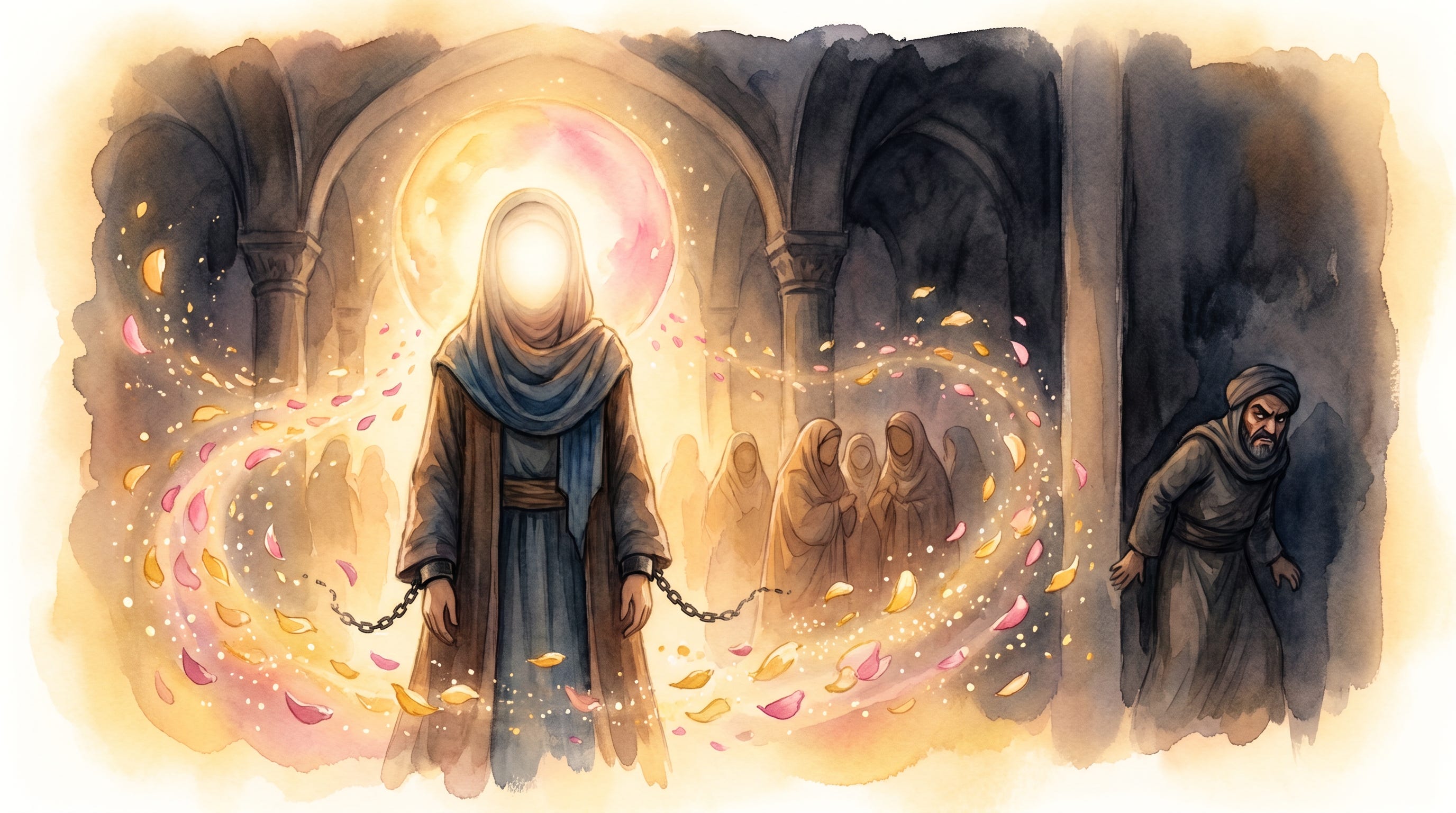
Let us return, to the court of Ubaydullah ibn Ziyad in Kufa.
The narrator of the scene is Bashir ibn Khuzaim al-Asadi — a Kufan poet who was present that day.
Bashir tells us that Sayyedah Zaynab — peace and blessings be upon her — entered the audience-chamber unrecognised.
She sat among the captive women.
Ibn Ziyad asked who she was.
He was told: Zaynab, the daughter of Ali.
Ibn Ziyad turned. And he said:
“Praise to God who disgraced you and failed you in your efforts.”
Sayyedah Zaynab — chained, with the children of her brother dead behind her, with the head of Imam Husayn at the tyrant’s feet — did not flinch.
She replied:
“Verily, it is the libertine who becomes disgraced, and the debauchee who gets refuted; and they are other than us.”
— Sayyedah Zaynab, Sayyid Ibn Tawus, al-Luhuf
And then Ibn Ziyad asked his real question:
“What did God do to your brother and your family?”
He thought she would weep.
He thought she would bow.
He thought she would say what every other captive in his court had said.
Sayyedah Zaynab did not weep.
She did not bow.
She answered him with the phrase we have been holding all night.
مَا رَأَيْتُ إِلَّا جَمِيلًا، هَؤُلَاءِ قَوْمٌ كَتَبَ اللَّهُ عَلَيْهِمُ الْقَتْلَ فَبَرَزُوا إِلَى مَضَاجِعِهِمْ، وَسَيَجْمَعُ اللَّهُ بَيْنَكَ وَبَيْنَهُمْ فَتُحَاجُّونَ إِلَيْهِ وَتَخْتَصِمُونَ عِنْدَهُ، فَانْظُرْ لِمَنِ الْفَلْجُ يَوْمَئِذٍ، ثَكِلَتْكَ أُمُّكَ يَا ابْنَ مَرْجَانَةَ
“I saw nothing but beauty. They were a group for whom God had destined martyrdom; they rushed forward to their resting places. Soon God will gather you and them, and then you will be interrogated harshly. Then you will see who wins. May your mother mourn over you, O son of Marjana.”
— Sayyedah Zaynab, in the court of Ubaydullah ibn Ziyad in Kufa, narrated in Sayyid Ibn Tawus, al-Luhuf ’ala qatla al-tufuf; preserved identically in Bihar al-Anwar vol. 45, al-Mufid’s al-Irshad vol. 2, and Tabari’s Tarikh vol. 5
The narrator says Ibn Ziyad became furious — as if decided to kill her on the spot.
One of his attendants intervened and whispered that a lady cannot be punished for her words.
He restrained himself.
He did not kill her.
But the answer she had given him was the answer that travelled.
It is the answer we are still receiving, fourteen centuries later, in this hall, on this night.
I saw nothing but beauty.
So what was the beauty she saw?
Because if everything we have spoken of for the last hour is true — if beauty can be a trap, if the cherry blossom in the state’s hand was a counterfeit, if the four thousand cockpits and the two cities and the fifteen hours of Ōnishi’s seppuku and the silenced sister-poet’s verses and the architect’s unrepented bombs are all form-alone beauty — what kind of beauty was it that Sayyedah Zaynab saw at Karbala?
There are, two kinds of beauty.
Two Kinds of Beauty
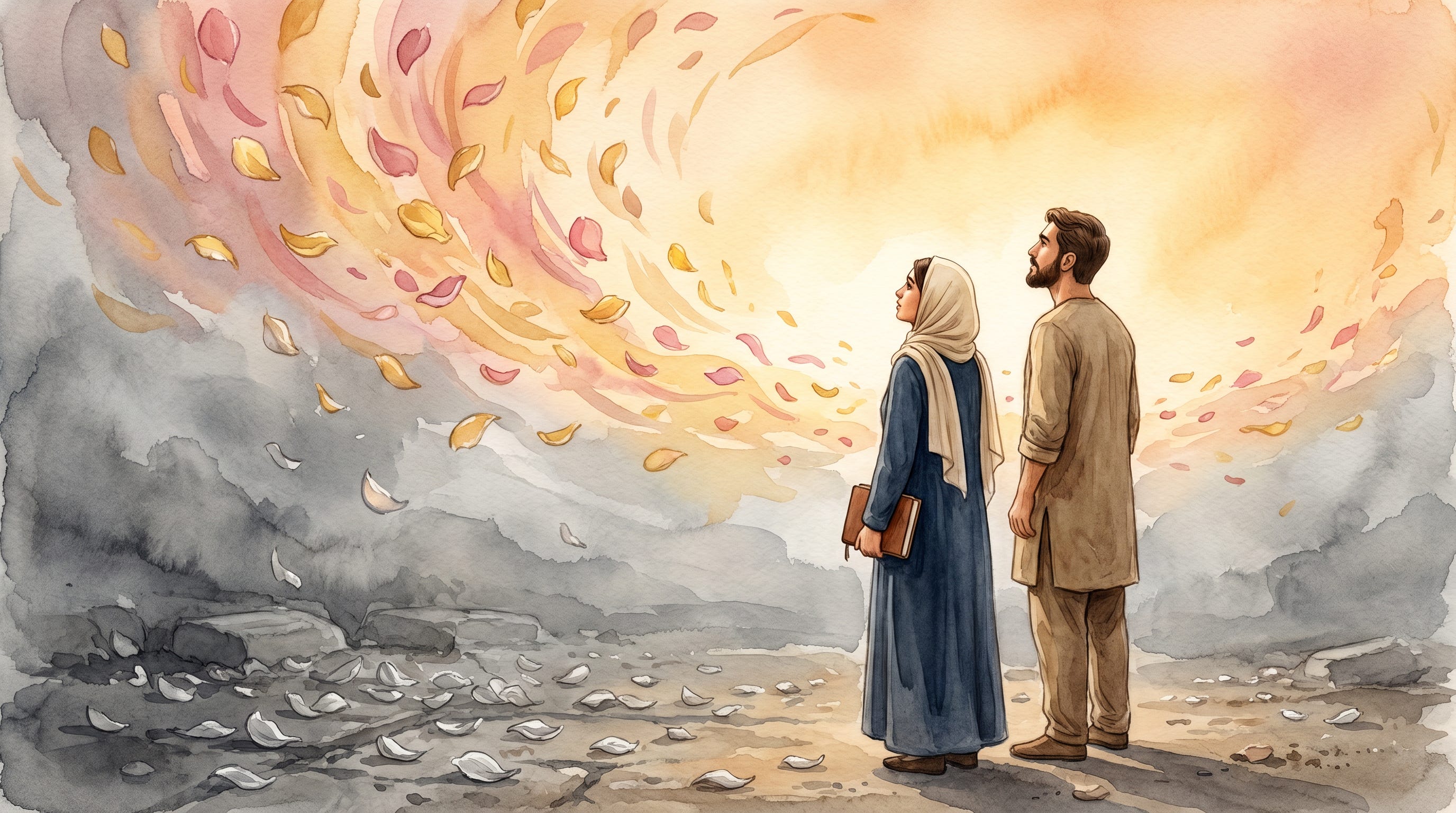
The first is the beauty the state manufactures.
Form-alone beauty.
The cherry blossom whose petal-fall is choreographed into a script.
The kamikaze pilot’s silhouette photographed against the dawn.
The mushroom cloud that Robert Oppenheimer, watching the Trinity test in July 1945, quoted from the Bhagavad Gita to describe —
“Now I am become Death, the destroyer of worlds.”
Even the architect of the bomb reaches for the aesthetic.
The bushido aesthetic when severed from its content.
The takfiri suicide attack’s sincerity-vocabulary.
The tatbir blade’s grief-performance.
The social-media aesthetic of mourning that we will hear of tomorrow night.
This kind of beauty has no fixed content.
This is the trap.
The second is the beauty Sayyedah Zaynab saw.
And listen carefully now, because the discrimination we are about to make is the discrimination the night has been working toward.
Sayyedah Zaynab did not deny the surface.
She did not pretend the field of Karbala was anything other than atrocity.
The bodies of her family lay broken in the sand.
Her infant nephew, Abdullah ibn Husayn — peace and blessings be upon him, had been killed in his father’s arms by an arrow through his throat.
The tents of the household had been burned around them.
Sayyedah Zaynab saw all of this.
She would later, in the court of Yazid in Damascus, name every single act of it in detail; she would make Yazid weep at the recitation.
She did not flinch from the surface.
And — and this is the discrimination we are now learning — she saw beneath the surface to the truth.
The truth that her family had stepped forward, with their eyes open, to fulfil what God had written.
Kataba Allahu ’alayhim al-qatl — God had written the killing for them.
Barazu ila madaji’ihim — they came forth to their resting places.
The truth that the witness was complete; the qadar — divine decree — of God was being fulfilled.
She held both.
She did not collapse one into the other.
The surface was atrocity and the content was the most beautiful thing the human earth has ever seen.
She held both.
That is what the trained eye sees.
The surface is what it is.
The truth beneath the surface is the beauty.
And here, here is the heart of the night — here is what the truth she saw consisted of.
The Loyalty That Is the Beauty
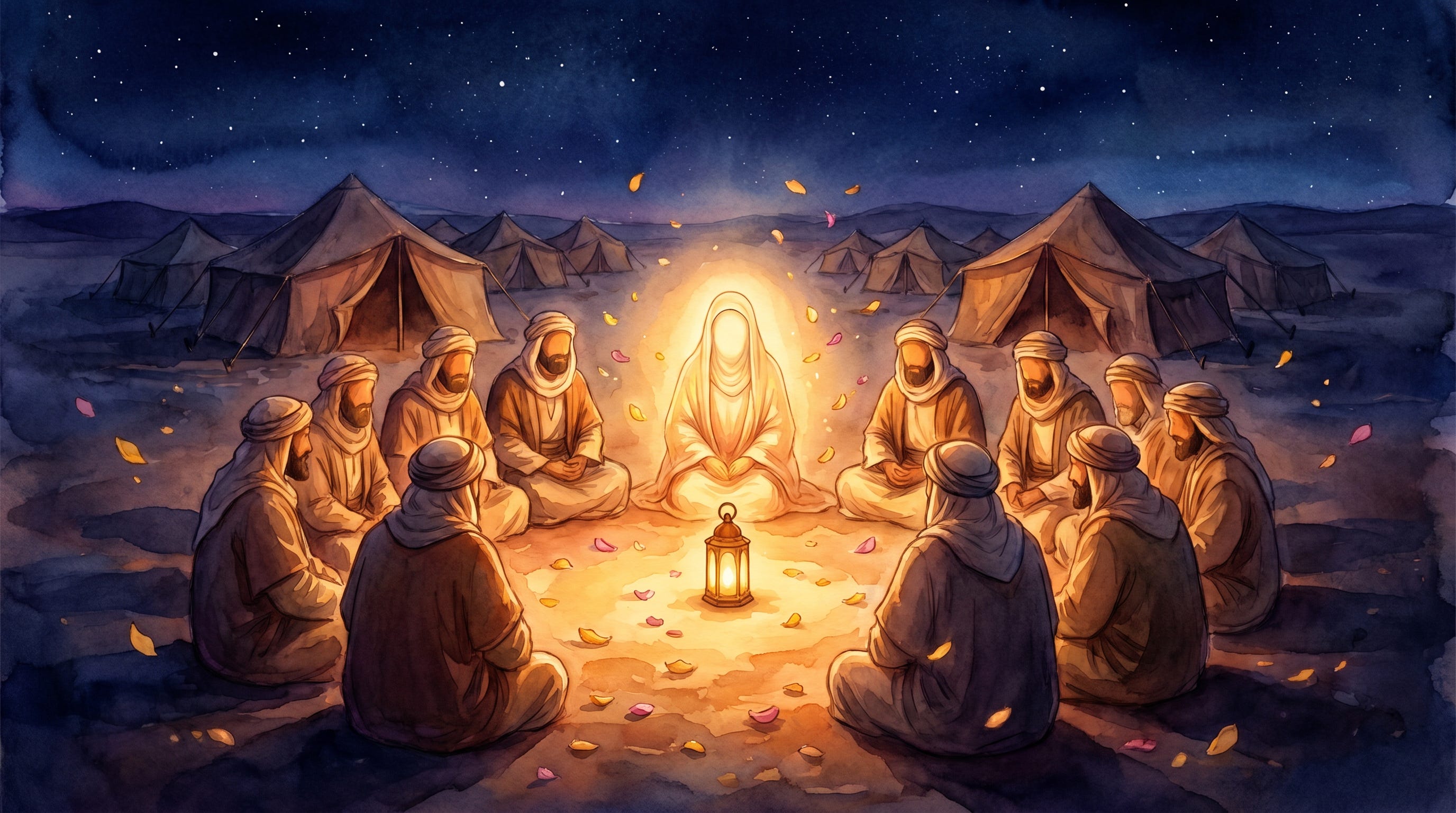
Listen carefully now.
The beauty Sayyedah Zaynab saw was the beauty of the seventy-two’s loyalty.
Not the loyalty of the soldier to his commander.
Not the loyalty of the subject to his emperor.
Not the loyalty of the kamikaze pilot to the Tokkōtai or the Imperial Will.
Not the loyalty of the citizen to a flag.
Not even — and listen to this carefully — not even the loyalty of the companion to a man as such.
The loyalty of every one of the seventy-two — Muslim ibn Awsajah, Habib ibn Muzahir al-Asadi, Sa’id ibn Abdullah al-Hanafi, Zuhayr ibn al-Qayn al-Bajali, Burayr ibn Khudayr al-Hamdani — peace and blessings be upon them all — the loyalty of every one of them was to God Himself, to the Truth God had revealed, and to Imam Husayn — peace and blessings be upon him — as the Imam of their Time, as the proof of God on earth.
That is what beauty IS.
That is what no empire can manufacture.
That is what the kamikaze programme, for all its aesthetic perfection, could not produce.
That is what the seventy-two had — already, fully, completely — on the night their vows were tested.
And tonight, in the breath that follows, our brother will tell you in the maqtal what each of those five named companions said when the Master of Witnesses — peace and blessings be upon him, gathered them together and offered them their freedom.
And that is what Sayyedah Zaynab would later, in the courts of the tyrants, name.
The kamikaze were emperor-loyal soldiers.
The seventy-two were God-loyal witnesses.
That is the difference.
The form looked similar from the outside.
The content was infinite distance.
The kamikaze pilot’s loyalty was to a man — Hirohito — who was about to surrender.
To a polity that would, within months, be dissolved.
To an aesthetic — the cherry blossom — that the state had written into a script.
The seventy-two’s loyalty was to God Himself, to the Truth He had revealed, and to the Imam He had appointed.
That loyalty does not dissolve when the empire falls. That loyalty is the form God Himself has filled with His own content.
That is the beauty the eye trained by faith perceives. That is what Sayyedah Zaynab saw.
The night teaches us to see as she saw.
So we ask now the question Sayyedah Zaynab’s discrimination has commanded.
By what test do we know which beauty we are seeing?
That is the test we now turn to.
Form-Alone Is Not the Test
We have already, seen with Sayyedah Zaynab’s eye what the discrimination is.
So we name it briefly here.
Form-alone beauty is not the test.
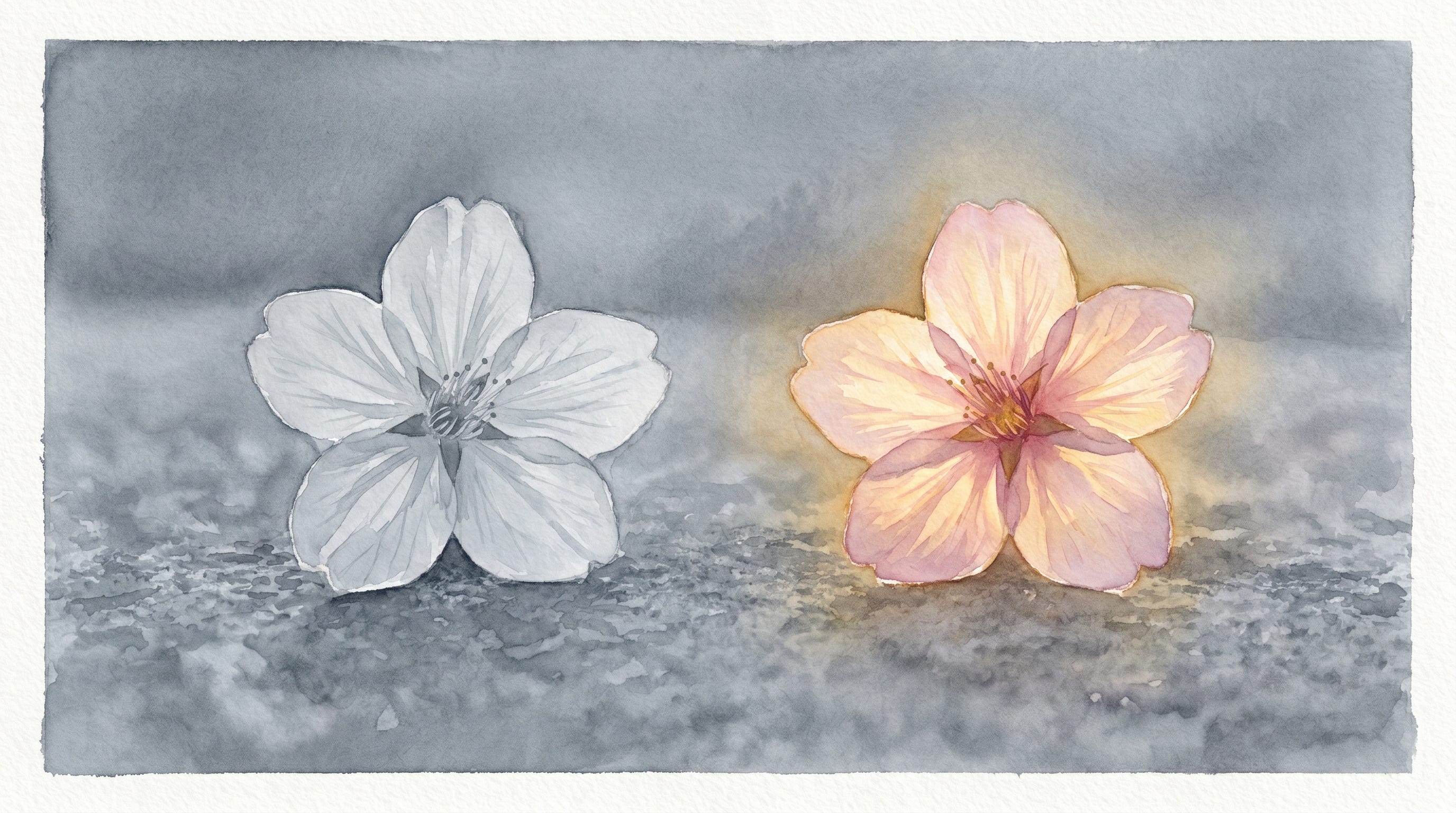
The cherry blossom in spring is beautiful — but written into a Tokkotai script, it is the trap.
The kamikaze pilot’s silhouette against the dawn is beautiful — but the photograph the state took of it is the trap.
Even the mushroom cloud, which Oppenheimer reached for the Bhagavad Gita to describe — even the architect of the empire’s atrocity reaches for the aesthetic when he tries to name what he has done.
That is form-alone beauty.
That is the trap.
The Master of Witnesses — peace and blessings be upon him, did not die form-alone beautifully.
Three days without water.
His children dying around him.
The surface of his death was atrocity.
And yet — through the eye Sayyedah Zaynab trained — the content of his death was the most beautiful thing the human earth has ever seen.
Form alone is not the test.
Sincerity Is Not the Test
The second test we set aside.
Sincerity is not the test either.
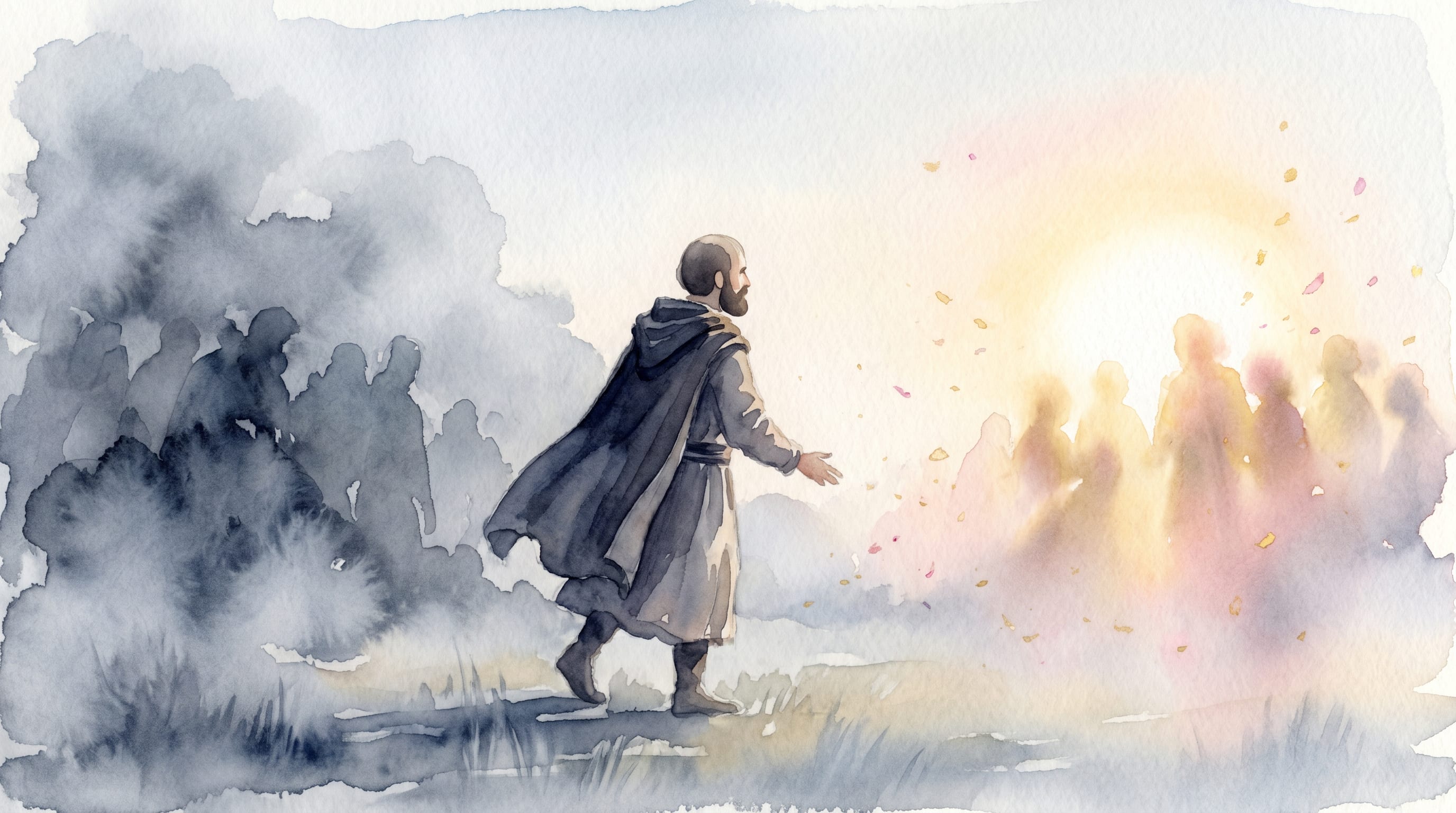
Adachi was sincere.
The state used his sincerity.
Furukawa was sincere when he refused.
The state used his sincerity by killing him anyway.
Tomisawa was sincere when he summoned what he could not find.
The state used his sincerity by writing the script he then performed.
All three sincerities were used the same way by the system that wrote their script.
And every empire has its sincere men.
Yazid’s army at Karbala had its sincere men.
Their sincerity did not save them from being on the wrong side of the witness.
Hurr ibn Yazid al-Riyahi — peace and blessings be upon him — the captain we honoured on the fifth night — was sincerely loyal to his commander until the morning he was sincerely loyal to something higher.
That morning is what saved him.
The sincerity itself did not change.
What it was loyal to changed.
And that change was everything.
The young Israeli soldier today, ordered into the streets of Gaza, told he is defending civilisation against barbarism — he is sincere.
The young American Marine sent to Iraq in 2003, told he is defending freedom against tyranny — he was sincere.
The kamikaze pilot in 1945 — he was sincere.
And every one of them was used by a system that did not need their sincerity for anything except to keep them in position.
Sincerity is not the test.
Sincerity, alone, cannot tell you whether your death is a witness or a sacrifice the wrong god demanded.
The Imam of the Age Is the Test
So what is the test?
The test is what the Master of Witnesses — peace and blessings be upon him, gave the seventy-two on the night of Ashura, fourteen centuries ago.
He gathered them.
He praised God.
He turned to them — knowing exactly what each one of them would face if they stayed — and he offered them their freedom.
Take my family.
Take the cover of the darkness.
Hold the hand of one of my own and walk out under the stars.
The enemy wants only me.
And one by one — beginning with Abul Fadhl al-Abbas — peace and blessings be upon him, then the sons of Aqil whom he specifically permitted — and they refused — and then the seventy-two who were not family:
Muslim ibn Awsajah,
Sa’id ibn Abdullah al-Hanafi,
Zuhayr ibn al-Qayn al-Bajali,
Habib ibn Muzahir,
Burayr ibn Khudayr al-Hamdani — peace and blessings be upon them all — every one of them refused.
Each in their own register.
Each with their eyes open.
Each having been given the way out.
This is the test.
Not beauty.
Not sincerity.
The willingness to choose freely, with the eyes open, the cause God Himself has appointed.
And the cause God has appointed is named through three criteria.
First — service to the worship of the One God.
Not to the Emperor of Japan.
Not to the President of the United States.
Not to the Prime Minister of any state, however biblical it may profess its claim is.
Not to a flag, not to a state, not to a civilisation, not to an aesthetic.
La ilaha illa Allah.
There is no god but God.
Any death claimed as martyrdom whose content is loyalty to anything below God is a counterfeit by definition.
Second — the demand for justice in accordance with revealed law.
Not just any cause.
The death must be in service of the deen — the law God revealed to His Prophet — peace and blessings be upon him, his family, and his righteous companions — and the amr bi’l-ma’ruf wa nahy ’an al-munkar — enjoining the good and forbidding the evil — it commands.
Imam Husayn — peace and blessings be upon him, did not die for his land or his family’s honour.
He died for the deen of his grandfather.
The cause is named, and the cause is the cause God revealed.
Third — loyalty to the Imam appointed by God.
The proof of God on earth, who is the criterion.
In our age, the Hidden Imam — may our souls be his ransom and may God hasten his return.
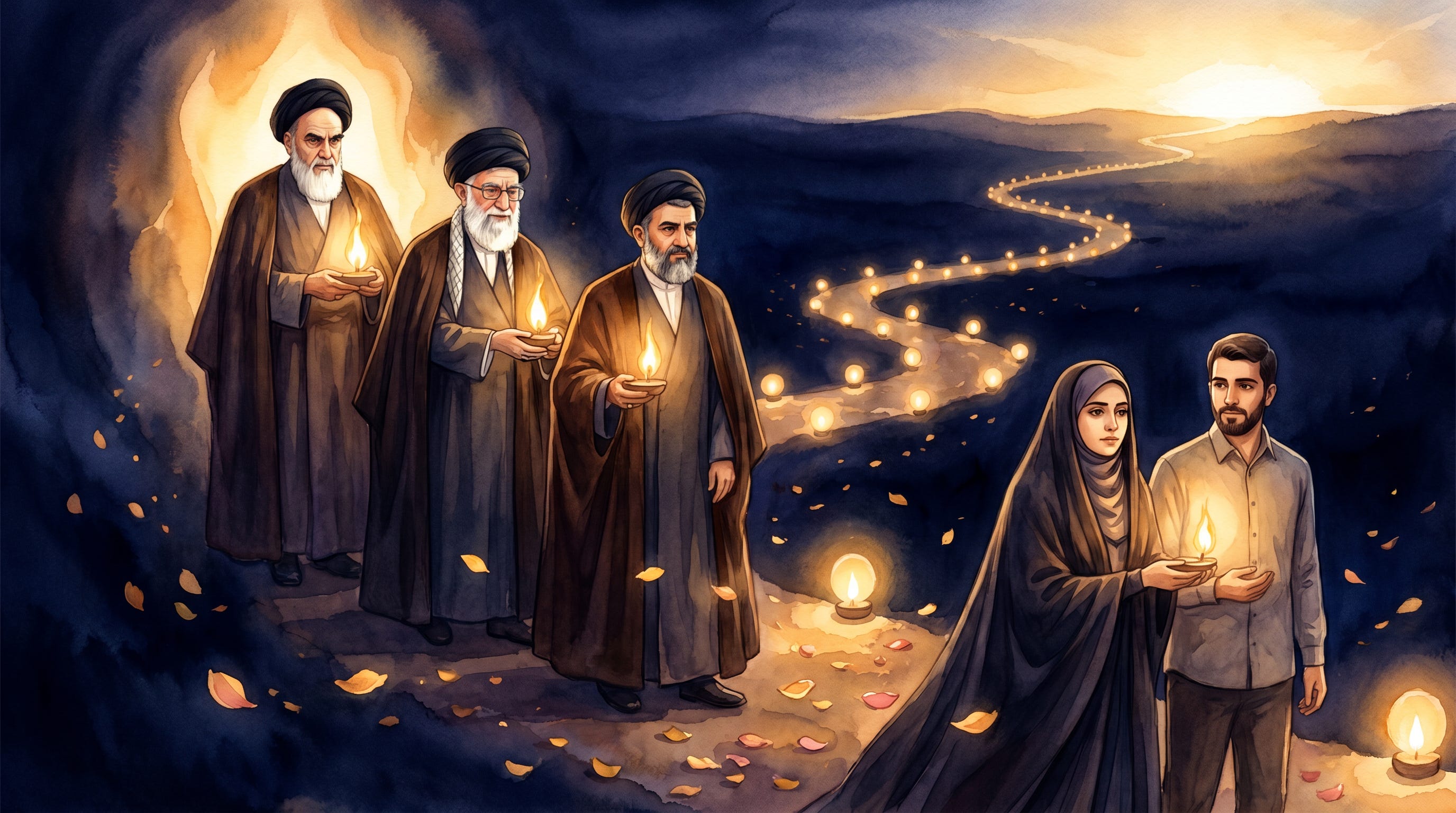
And in the chain of those who have prepared for his return — from Imam Sayyed Ruhollah Khomeini — may God rest his pure soul; through Imam Sayyed Ali Khamenei — may God rest his pure soul; through to Imam Sayyed Mujtaba Khamenei — may God protect and strengthen him, the present Wali al-Faqih — until the Imam of our Age, may our souls be his ransom and may God hasten his return, takes the line back into his own hands.
To die for any other authority — even a beautiful one, even a sincerely loved one — is the dog’s death.
The Hagakure name for it.
The Yosano name for it.
Inujini.
Chikushōdō.
The way of beasts.
The cherry blossom that has been written into a state-script is — by every test the night has set — the dog’s death.
Beautiful in form.
Empty of content.
And the lamps that would not flicker on the night before Ashura — by the same test — are the witness.
Not because their deaths were less brutal.
Because the content their forms were filled with was the worship of the One God, the demand for justice in His revealed law, and loyalty to the Imam He had appointed.
Even Tsunetomo, in 1716, named great compassion and acting for the sake of mankind as the apex of the Way.
Even the militant tradition knew.
The form is the form; the test is the content.
Beauty without God is empty; sincerity without God is exploited; the witness without the Imam of the Age is misdirected.
That is the test.
That is what Sayyedah Zaynab saw.
That is what the seventy-two embodied.
The Pact We Make Tonight
So.
What do you carry home tonight?
Three things.
The first.
Beauty is not the test, and sincerity is not the test, and the Imam of the Age is the test.
When you watch the news this week and see a young Israeli soldier declaring that he is defending his civilisation, ask the test of his cause.
When you see a young American Marine declaring that he is fighting for freedom, ask the test of his cause.
Every cause but the one whose content is the worship of the One God, the demand for justice in His revealed law, and loyalty to the Imam He has appointed — every cause but that one — is, by tonight’s test, the dog’s death.
The second.
Sayyedah Zaynab’s eye is the eye we are training.
Not the surface — she did not deny the surface.
Not the form alone — she was not deceived by form.
We are training to see beneath the surface to the truth.
The truth that loyalty to God is the only loyalty that does not betray.
The truth that the seventy-two on this very night, fourteen centuries ago, were already what we are still trying to learn to be.
The third.
Honour without conflation.
The methodology applied tonight in two registers — to the bushido tradition — we honoured Tsunetomo’s seriousness before showing what was done to it — and to the kamikaze pilots — we honoured their interiority without endorsing the system that used them.
And tonight we have applied the same methodology to the empire that opposed the kamikaze empire — we have honoured the dead of Hiroshima and Nagasaki, while naming the empire that decided to drop the bombs after knowing Japan was seeking surrender.
The methodology is what saves us from the easy partisanships that flatten the dead.
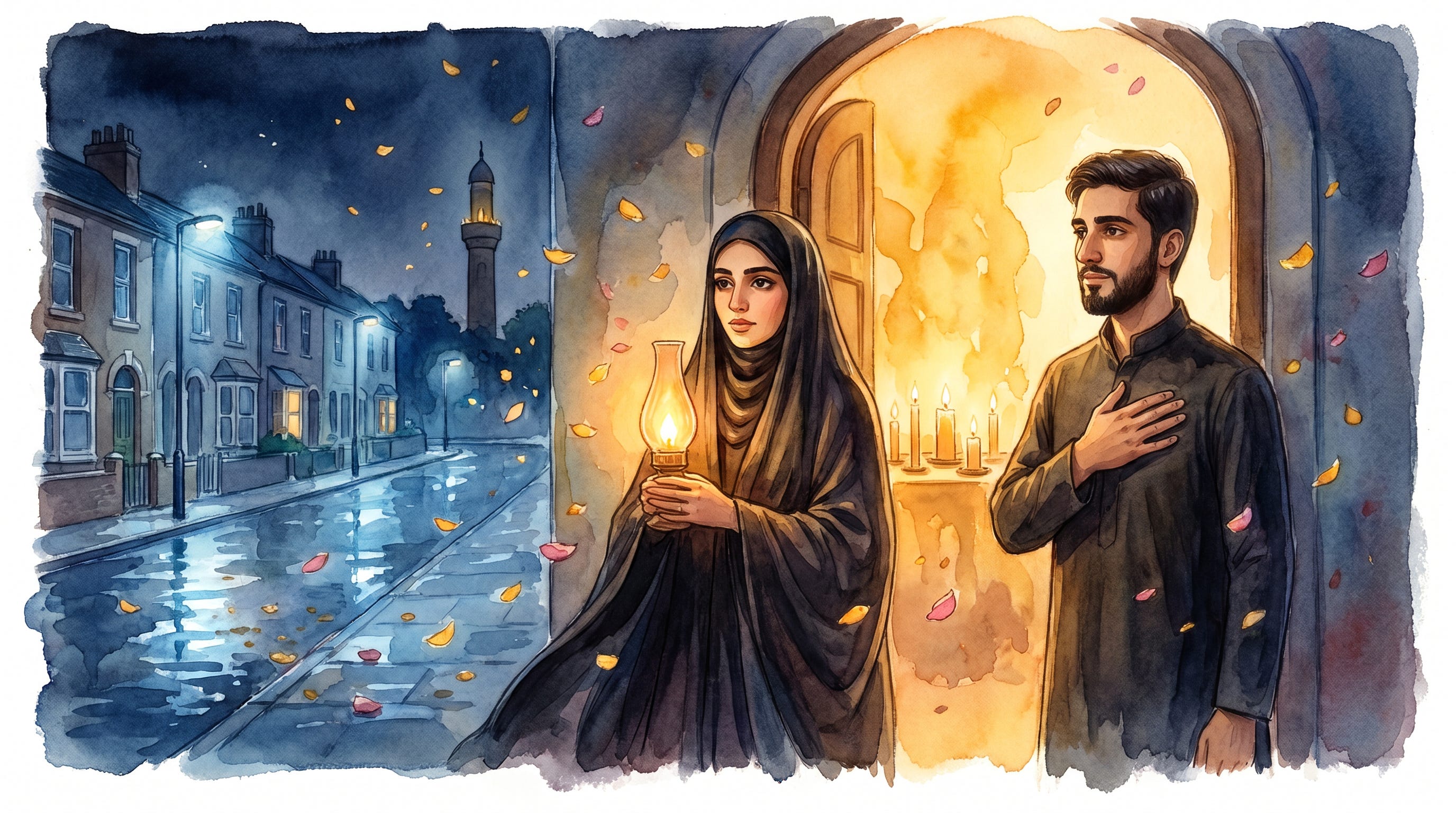
Every day is Ashura. Every land is Karbala.
That sentence is the answer.
We do not have to invent it.
We only have to live by the test.
That is the pact we make tonight.
The Road Ahead

Tomorrow night we walk into the corrective.
Into the catalogue.
The political counterfeit — the so-called martyrdom claimed by takfiri groups, the suicide attacks on innocents that ISIS dressed in religious vocabulary.
The ritual counterfeit — the public self-harm performed in the name of mourning, that the senior scholars of our generation have without exception forbidden, and that we will speak of clearly, but with love.
The cultural counterfeit — martyrdom as identity badge, photographs of martyrs as aesthetic, the social-media mourning-tourism, the theology reduced to a mood.
And the imperial counterfeit — the empire that calls itself the righteous nation while bombing the children of others, the empire that invokes Amalek over the children of Gaza, the empire whose form Imam Husayn refused at Karbala when he refused Yazid’s claim to inherited legitimacy.
Tomorrow we apply, across the catalogue, the test we have learned tonight.
And the night after, at noon on the tenth, the witness himself — peace and blessings be upon him — in the climax that the nine nights have been preparing.
We are not done yet.
The Question to Carry Home
The question this series asks every night is the same question.
Where is your brother?
Tonight we ask it of the field of Karbala on the eighth of Muharram, where the seventy-two have already chosen.
We ask it of the airfield at Mabalacat, in October 1944, where twenty-three young men were asked the question and answered yes to the wrong cause.
We ask it of the bomb-bay door over Hiroshima, where the question was answered by a President whose private letter described the people below as beasts.
We ask it of every young man in every uniform in the world tonight whose state is asking him the question and writing the script for his answer.
Where is your brother — and whose worship is his walking for?
The Lamps That Would Not Flicker
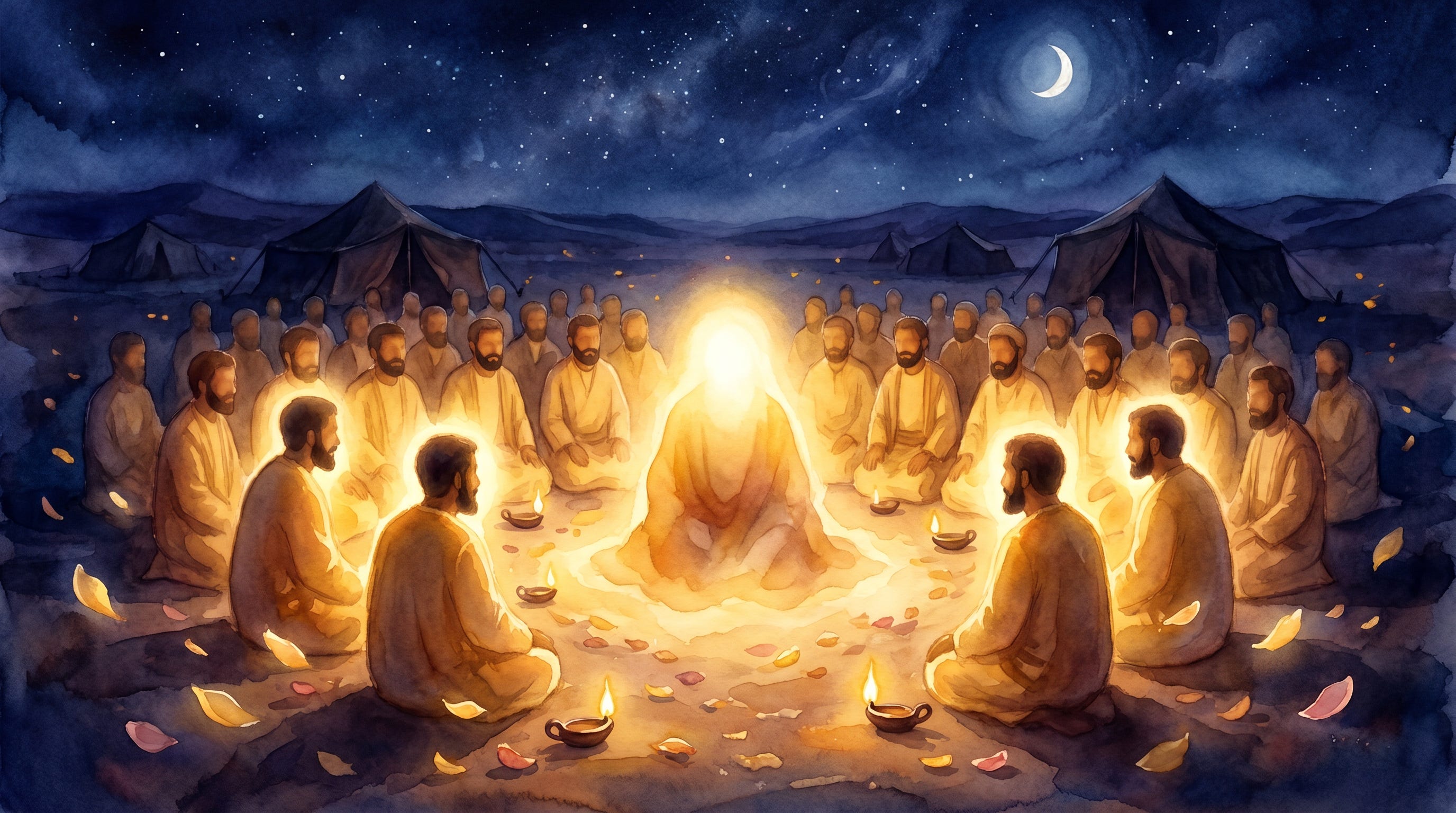
I bring you, at this hour, to a night that, in the chronicle, is two nights from this one.
The night I bring you to is the night of Ashura — laylat ’Ashura — the night that precedes the morning of slaughter, the night when, in the chronicles as Lohoof and Reyshahri preserve them for us, Imam Husayn — peace and blessings be upon him, gathered his companions, praised God, and offered them their freedom.
But that night is not tonight.
Tonight is the eighth of Muharram.
We are two days from the morning of slaughter.
The water has been cut from the camp for one day.
The voices of the children are beginning to thicken in their throats.
Imam Husayn — peace and blessings be upon him, has not yet gathered his companions for the test.
The lamps in his camp are still lit.
The night of the test is two nights from this one — laylat ’Ashura, the night the lamps will be extinguished and the men will be told they are free to leave.
The night of permission.
The night the seventy-two will choose.
And tonight, in the breath that follows, we will be taken to that night.
In the voice of the Hidden Imam — may our souls be his ransom and may God hasten his return — we will be taken, fourteen centuries across, to the men who, when they were given the freedom to leave, said in five different registers what we have heard echoed across the centuries.
You will hear of a man who said
even unarmed I will stone them.
His name was Muslim ibn Awsajah — peace and blessings be upon him.
You will hear of an old companion of three Imams, the elder of the Kufan delegation, a member of the elite force of Imam Ali himself — who, on the eve of his death, laughed — and when reproached by his fellow elder, the Doyen of Qur’an reciters, said:
what can be a better time for happiness than this?
His name was Habib ibn Muzahir al-Asadi — peace and blessings be upon him.
You will hear of a man who said:
if I were burned alive and my ashes scattered seventy times, I would not leave you.
His name was Sa’id ibn Abdullah al-Hanafi — peace and blessings be upon him.
And on the morning of Ashura, when Imam Husayn stood for the noon prayer, this man would step in front of him to take the arrows that were meant for the Imam.
The body of his vow on the night will become the body shielding the prayer on the day.
You will hear of a man whose loyalty was not inherited but chosen.
He had once been Uthmani.
On the road to Karbala, he met the Imam.
He was changed.
He came over.
And in the night-of-Ashura test he would say: how I would love to be killed a thousand times and brought back to life.
His name was Zuhayr ibn al-Qayn al-Bajali — peace and blessings be upon him.
You will hear of a Qur’an-reciter — the Doyen of the reciters — who himself, on the morning of Ashura, smiled.
And when reproached, said:
the distance between us and the heavenly fairies is not more than an hour of fighting against this community and their swords.
His name was Burayr ibn Khudayr al-Hamdani — peace and blessings be upon him.
And you will hear, briefly, of those whose names the chronicles preserved less, whose names the Ziyarat of the Hidden Imam preserved when no chronicle did, whose names only God remembers — yet all of them stood, all of them stayed, all of them are part of the body of light.
These are the lamps that would not flicker.
And before we begin, I want you to remember one thing.
Sayyedah Zaynab — peace and blessings be upon her — would say later, when asked at the court of the tyrant:
I saw nothing but beauty.
And what she saw — what she meant when she said beauty — was this.
The loyalty of these men.
Not the loyalty of soldiers to a commander.
Not the loyalty of subjects to an emperor.
Not the loyalty of pilots to a state-script.
The loyalty of every one of them, and of all the seventy-two, to God Himself, to the Truth God had revealed, and to the Imam of their Time, Imam Husayn — peace and blessings be upon him, as the proof of that Truth on earth.
That is what beauty IS.
That is what the empires of this world cannot manufacture.
That is what the cherry blossom, when the state took it, could not capture — and what the seventy-two, on the very night you sit and remember them, already had.
I am going to step aside now and let you hear it for yourselves.
Segue to Maqtal (Lamentation)
Maqtal (Lamentation) for the Eighth Night of Muharram 2026/1448
Supplication
Peace upon Abel, the first witness of the earth.
Peace upon every witness in every tradition who refused to bow to other than God.
Peace upon every man and every woman who has ever been wronged, expelled from their home, only because they said: our Lord is God.
O God, we have nowhere to go but Your door.
You are the One who placed the eye and the ear and the heart in the soul of every child of Adam, and You are the One who told us, in Your verse from Surah al-Isra, that each of these will be questioned.
You will ask the eye for what it found beautiful.
You will ask the ear for what it found stirring.
You will ask the heart for what it agreed to.
O God — train our eye, train our ear, train our heart, that what we agree to be moved by is Your truth, and not the form-alone beauty the empires of this world manufacture.
O God, send Your peace and Your blessings on Your last messenger Muhammad and on his family and on his righteous companions.
Send Your peace on the prophets of every house — on Adam, on Abel, on Noah, on Abraham, on Ishmael and Isaac, on Moses and Aaron, on David and Solomon, on John the Baptist and Zechariah, on Jesus son of Mary, on every one of them whose names we know and whose names only You know.
O God, tonight we have walked into the most beautiful death-philosophy in human cultural history and we have seen what was done to it by the state that came to use it.
Grant us, O God, the discernment to recognise the form-alone beauty wherever it appears — in the empires of yesterday, in the empires of today, in the empires of tomorrow.
Grant us the discernment our beloved Sayyedah Zaynab — peace and blessings be upon her, taught us, by the witness of her one phrase at the court of the tyrant.
Ma ra’aytu illa jamilan.
I saw nothing but beauty.
Train our eye to see what she saw.
O God, send Your peace on Sayyed Abbas al-Musawi — the man who, from his pulpit in the Bekaa, told us that the condition of being one of Your friends is to heal the wounds of the tormented and to defend the oppressed.
Who told us that the first lesson of Imam Husayn is the lesson of the poor.
Who told us, in the line we have been earning across these nights, that he did not want Karbala to remain in history.
Send Your peace on his wife Sayyeda Siham and on his five-year-old son Sayyed Husayn, who fell with him in the same convoy.
Send Your peace on Sheikh Ragheb Harb, who taught the south of Lebanon what it means to refuse the handshake of the occupier eight years to the day before his student joined him.
O God, send Your peace on Hajj Qasem Soleimani — the standard-bearer of our own century.
The night that takes the full measure of his witness is one night from this one — tomorrow’s night, the night of the corrective, where his actual martyrdom on the third of January 2020 will be the foil-figure against which every counterfeit claim to martyrdom will be weighed.
Tonight we hold him in passing, and we name him, because he is the man who walked the four classical stages — talab, eshgh, ma’rifat, shahadat — and in his walking taught us to walk.
O God.
In this Muharram — the first since the martyrdom of our beloved Imam Sayyed Ali Khamenei on the 28th of February 2026, on the 8th of Ramadan 1447 — send Your peace upon him.
The man who, eleven days before his shahada, stood before the nation of Iran and held the line of neither East nor West for the thirty-sixth year.
We hold him tonight only in passing — we know that the night that takes him as its subject is not yet, but is coming.
Welcome him into Your nearness, O God, with Your prophets and Your Imams and Your martyrs and Your saints.
O God, send Your peace upon every young man of the Resistance who took his father’s place and his grandfather’s burden in his hands.
Peace upon every young Palestinian who has died in the rubble of his father’s house in Gaza, holding what he could of his family in a cloth.
Peace upon every young Lebanese who fell in the south.
Peace upon every young Iraqi of the Hashd al-Shaabi who walked into the open against Daesh.
Peace upon every young Yemeni and every young Syrian who carried water for the children of someone else’s tents.
Peace upon every medic in Gaza who did not stop.
Peace upon every fighter on every Resistance front of our generation who returned to his mother with his sleeve folded under, and would not let her weep at the sleeve.
Peace upon the children of Minab — one hundred and sixty-three of them, boys and girls, teachers and parents — who fell on the same morning their leader fell, by a Tomahawk that came from a country that signed the laws of war and broke them.
O God.
The longer return is to Husayn ibn Ali, the Master of Witnesses, in whom every chain finds its completion.
To his brother Hasan, peace and blessings be upon him.
To their father Ali ibn Abi Talib, the Commander of the Faithful — the man who could not sleep in Kufa with a full stomach because there was a man in the Hijaz who had not eaten that day.
To their mother Sayyedah Fatima al-Zahra, the daughter of the Prophet, peace and blessings be upon her.
To the Imams of guidance, in the chain that runs from Imam Husayn to the Imam of our Age, may our souls be his ransom, and may You — O our beloved Lord — hasten his return.
O God, send Your peace upon Sayyedah Zaynab, peace and blessings be upon her — the eye that saw nothing but beauty at the court of the tyrant; the daughter of Ali who taught us, by one phrase, the discrimination tonight has tried to learn.
Send Your peace upon Imam Zayn al-Abidin, peace and blessings be upon him — who, also at that court, when threatened by Ibn Ziyad with death, replied: do you frighten me with death?
Do you not know that martyrdom is our habit and our greatness?
O God, send Your peace upon the seventy-two companions whom we heard named in the breath that preceded.
Muslim ibn Awsajah, the resolute.
Habib ibn Muzahir al-Asadi, the elder.
Sa’id ibn Abdullah al-Hanafi, the lover.
Zuhayr ibn al-Qayn al-Bajali, the convert.
Burayr ibn Khudayr al-Hamdani, the reciter of Quran.
Peace and blessings be upon them all.
And peace upon every companion whose name only You remember — and we know You remember each one.
O God.
We pray to You for Imam Sayyed Mujtaba Khamenei — the new Wali al-Faqih, the son who has taken his father’s place at the head of the worship.
Preserve him for us, O God. Strengthen him.
Guide him.
Make him the leader his father trained him to be, and the leader You have appointed him to be, until the Imam of our Age, may our souls be his ransom, returns and the line he carries is handed back to its rightful holder.
O God.
Hasten the return of the Imam of our Age.
Make us of his helpers.
Make us of his soldiers.
Make us of those who, when he calls, are already standing.
O God — we have nowhere to go but to You, and no one to ask but You, and no words enough except the ones You have placed on the tongues of Your friends.
إِنَّا لِلَّهِ وَإِنَّا إِلَيْهِ رَاجِعُونَ
“We belong to God, and to Him we return.”
— Qur’an, Surah al-Baqarah (the Chapter of the Cow) #2, Verse 156
And we repeat Your promise, an eternal promise for justice, and a warning for the wrongdoers:
وَسَيَعْلَمُ الَّذِينَ ظَلَمُوا أَيَّ مُنقَلَبٍ يَنقَلِبُونَ
“And the wrongdoers will soon know at what goal they will end up.”
— Qur’an, Surah al-Shu’araa (the Chapter of the Poets) #26, Verse 227
And we add, from the depths of everything we have learned tonight:
حَسْبُنَا اللَّهُ وَنِعْمَ الْوَكِيلُ
“God is sufficient for us, and He is the best of guardians.”
— Qur’an, Surah Aal Imran (the Chapter of the Family of Imran) #3, Verse 173
Amen, O Lord Sustainer of the Universes.
Amen, O Most Merciful of the Merciful.
And from Him alone is all ability, and He has authority over all things.