

In His Name, the Most High
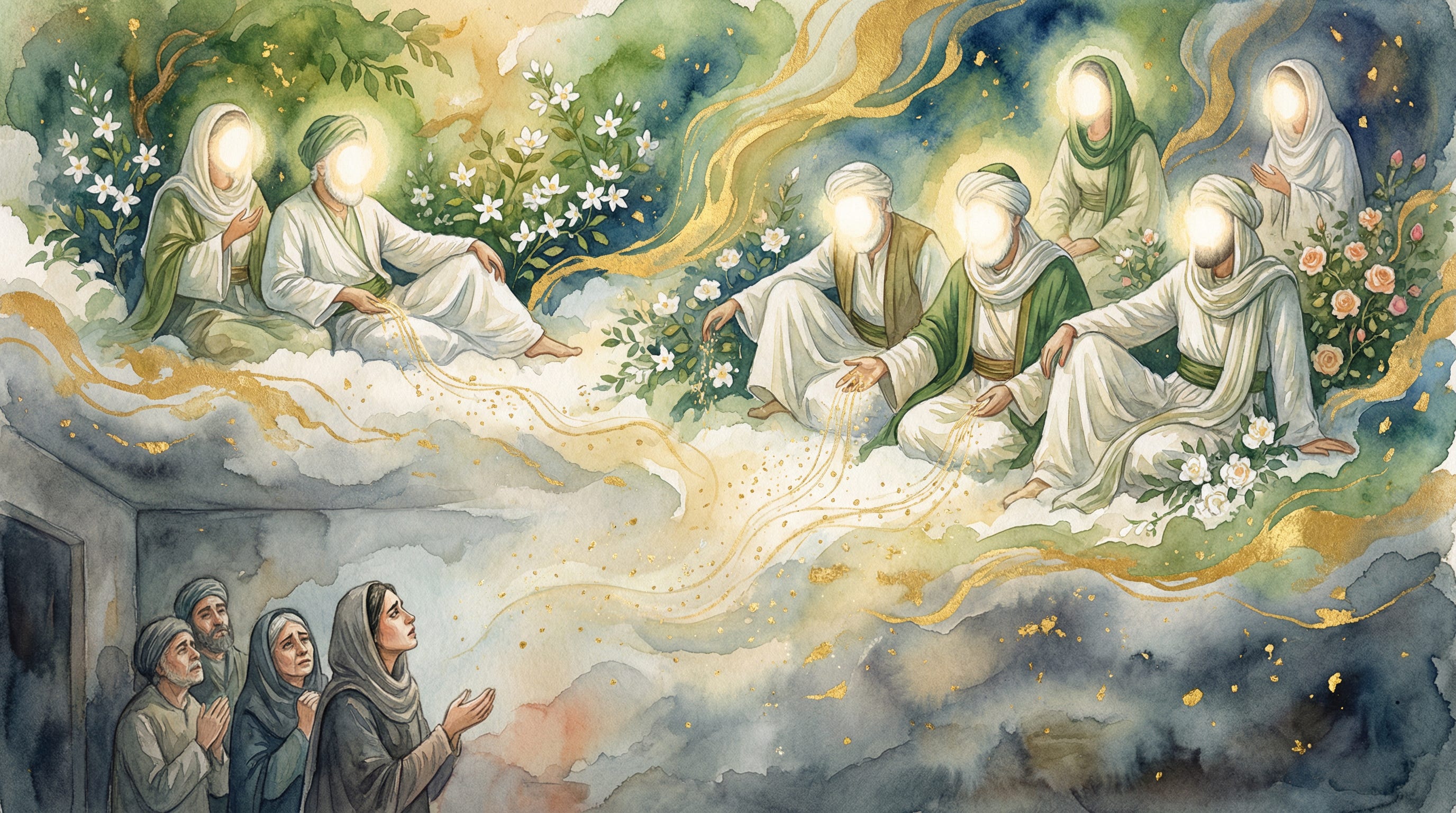
We begin tonight with two verses from Surah Aal Imran (the Chapter of the Family of Imran).
Listen to them carefully — because everything we will discuss this evening is contained within them.
وَلَا تَحْسَبَنَّ الَّذِينَ قُتِلُوا فِي سَبِيلِ اللَّهِ أَمْوَاتًا ۚ بَلْ أَحْيَاءٌ عِندَ رَبِّهِمْ يُرْزَقُونَ فَرِحِينَ بِمَا آتَاهُمُ اللَّهُ مِن فَضْلِهِ وَيَسْتَبْشِرُونَ بِالَّذِينَ لَمْ يَلْحَقُوا بِهِم مِّنْ خَلْفِهِمْ أَلَّا خَوْفٌ عَلَيْهِمْ وَلَا هُمْ يَحْزَنُونَ
“Do not think of those killed in the way of God as dead. Rather, they are alive with their Lord, receiving provision, rejoicing in what God has granted them of His bounty, and receiving glad tidings about those who have not yet joined them from behind — that there shall be no fear upon them, nor shall they grieve.”
— Qur’an, Surah Aal Imran (the Chapter of the Family of Imran) #3, Verses 169–170
These verses tell us two things.
And I want us to hold both of them tonight — not just the first, which we are accustomed to hearing, but the second, which we too often let pass.
The first thing is this: the shaheed is alive.
بَلْ أَحْيَاءٌ
— rather, they are alive.
This is not a metaphor.
This is not a consolation offered to the grieving to help them get through the night.
It is a correction.
God is correcting us.
He says
َلَا تَحْسَبَنَّ
— do not think, do not reckon, do not suppose.
The verb here is about perception.
He is telling us that when we look at the martyrdom of our beloved ones and see death, we are seeing it wrong.
The shaheed — the martyr — has not ended.
The shaheed has arrived.
The second thing — and this is where I want us to pause — is what comes next in the verse.
وَيَسْتَبْشِرُونَ بِالَّذِينَ لَمْ يَلْحَقُوا بِهِم مِّنْ خَلْفِهِمْ
And receiving glad tidings about those who have not yet joined them from behind
They are receiving glad tidings — about whom?
About us.
About those who have not yet joined them.
About those who are still behind, still here, still in this world of trial and test.
Do you hear what that means?
It means the shaheed is not merely alive — the shaheed is watching.
They are looking back at us.
They are receiving news about us.
And the verse tells us they are either rejoicing at what they see — or they are waiting.
Waiting to see what we do with their blood.
Waiting to see whether their testimony will be carried forward, or whether it will be buried under our grief and our silence and our return to the comfortable routines that their sacrifice was meant to shatter.
That is what this evening is about.
Not only to mourn — though we will mourn.
Not only to remember — though we will remember.
But to ask ourselves a question that the blood of our shuhada (martyrs) has placed before us, and that this arba’een now demands we answer:
What will we do with their testimony?
Video of the Sermon (Majlis/Lecture)
Bridge: From the Unbroken Chain to the Unbroken Testimony
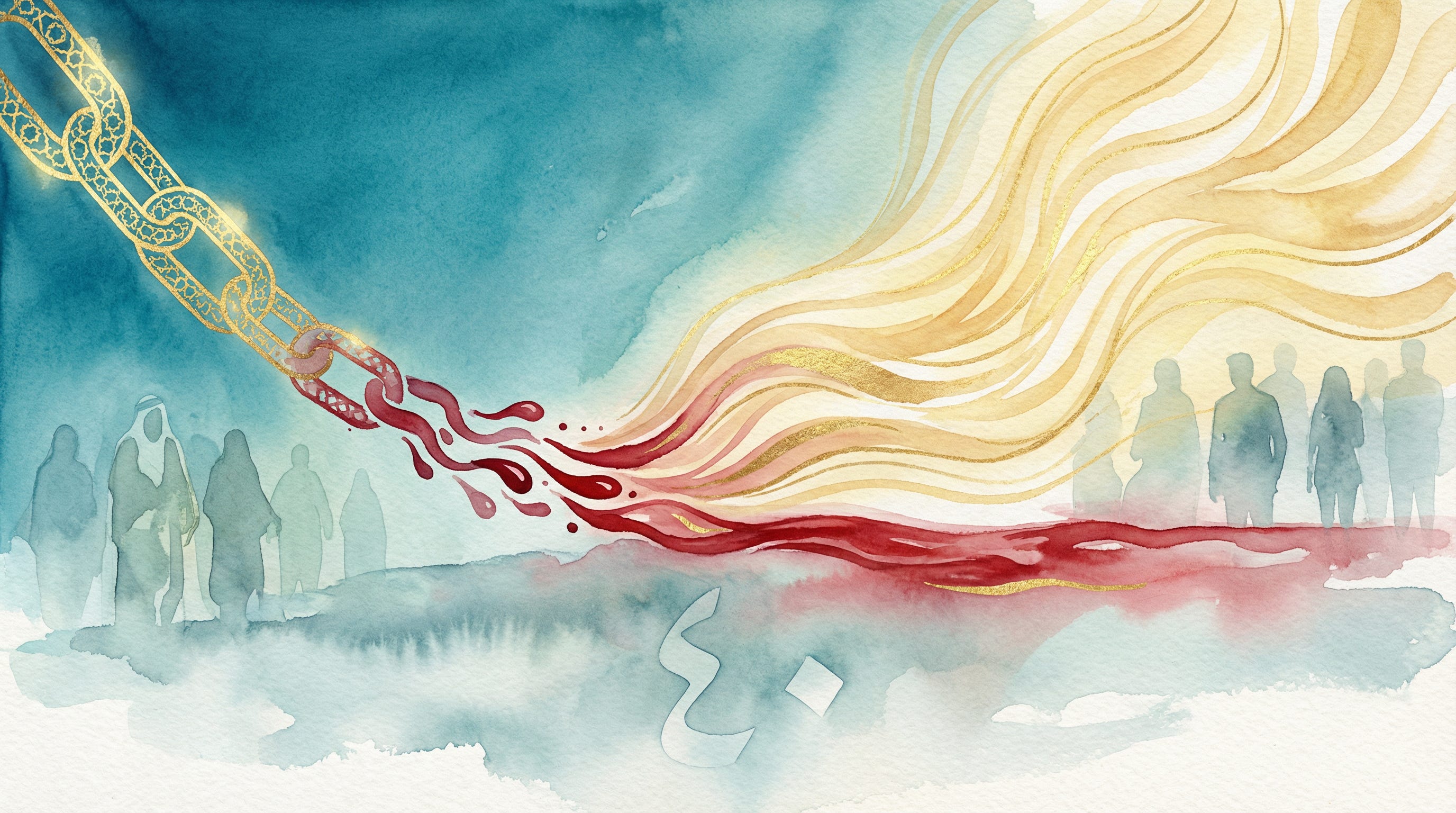
Some of you were with us — not so long ago — for a session we called The Unbroken Chain.
We gathered in the immediate aftermath of the martyrdom of our leader, Imam Sayyed Ali al-Husayni al-Khamenei — may God rest his pure soul.
The wound was fresh.
The shock had not yet settled.
And the question that hung over us that night was an urgent one:
What happens now?
What happens to the chain of wilayah when its most visible link is struck?
And the answer we arrived at — together, with the help of God and the guidance of the Ahlul Bayt — was that the chain does not break.
It has never broken.
Because it was never held together by any one man, however great that man was.
It is held together by God’s promise.
By the covenant that began with the Prophet, passed through the Imams, and continues — unbroken — through the institution of wilayat al-faqih until the return of the Imam of our time, may our souls be his ransom, and may God hasten his return.
That was the Unbroken Chain.
The institution.
The structure.
The divine architecture that outlives every individual who serves it.
Tonight, we shift our gaze.
Tonight, we do not ask what survives after the shaheed (martyr) is taken.
Tonight, we ask what the shaheed left behind.
Not an institution — a testimony.
A witness written in blood.
A message that does not merely echo — it amplifies.
It grows louder with every passing day, every passing generation, every empire that tries to silence it and fails.
If the Unbroken Chain was about the institution that endures, then the Unbroken Testimony is about the message that endures — and about the duty, the sacred obligation, that it places upon every single one of us who witnessed it.
We are forty days on from the martyrdom of our leader.
Forty days since the girls of Minab were taken from their schoolhouse by the bombs of an empire that calls itself civilised.
Forty days — and the number itself, as we shall see, is not incidental.
It is not arbitrary.
It is a threshold.
And tonight, by the grace of God, we will cross it together.
We will speak about three things.
First: the significance of forty — al-arba’een — in our theology, in our history, and in the broader tradition of the prophets.
Why forty?
What does this number do to those who endure it?
Second: the meaning of shaheed — a word we use constantly, but whose depth we rarely pause to excavate.
Why is the martyr called a witness?
What did they see?
And what does their death make visible to us?
And third: our duty.
Not the shaheed’s duty — that is fulfilled.
But ours.
What does it mean to be the ones who witnessed the witness?
What is asked of us now — not as mourners, but as the carriers of a testimony that must not die with our tears?
And we will close, God willing, with a remembrance of our beloved shuhada (martyrs) — from the earliest to the most recent — and a supplication that asks God to count us among those who were worthy of their sacrifice.
In the name of the Lord of the Martyrs and Truthful, let us begin.
Point 1: The Significance of Forty
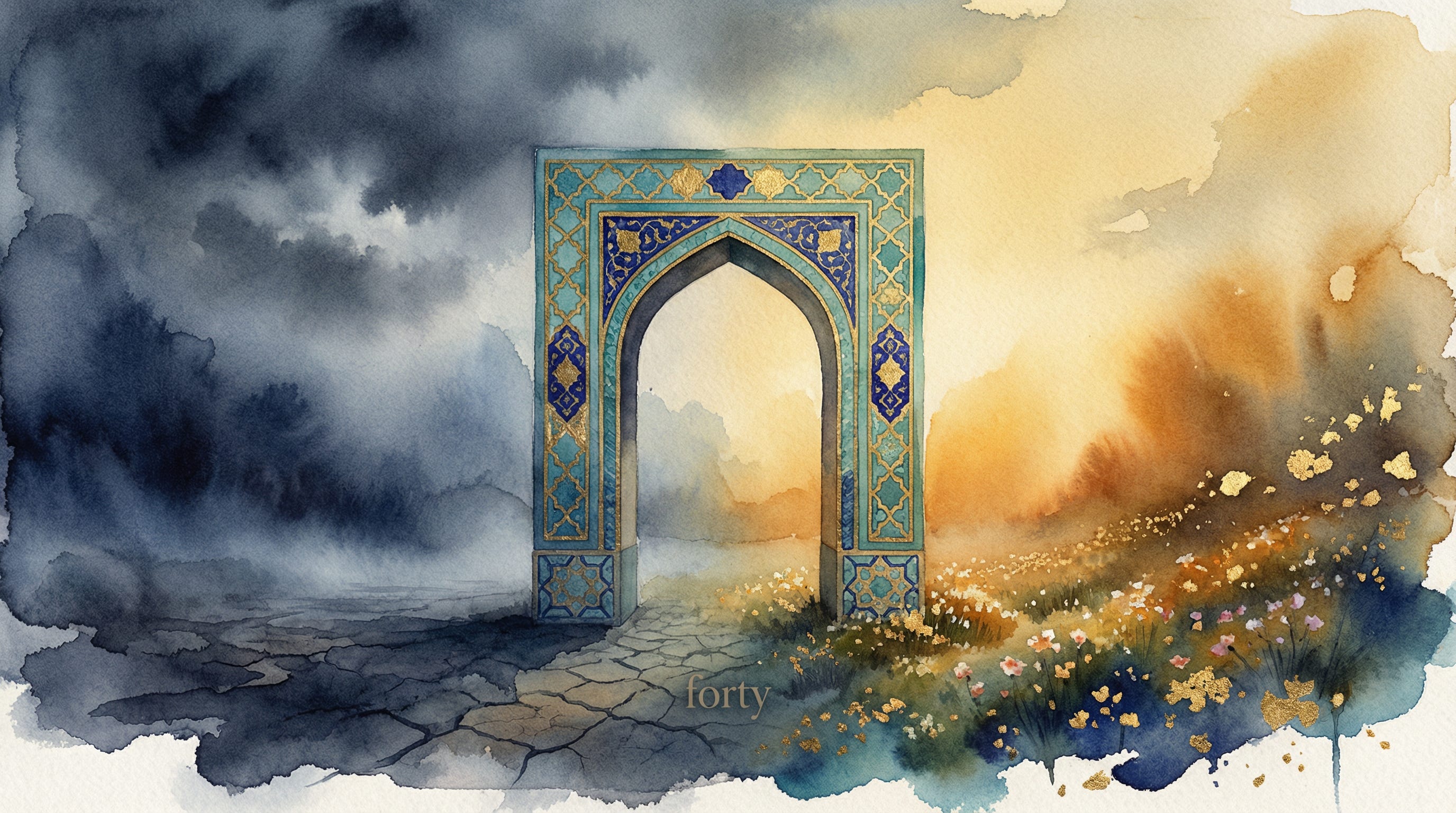
Tonight is not an ordinary gathering.
It is an arba’een.
And before we speak about the shaheed (martyr), before we speak about our duty, I want us to understand what that word means — what the number forty does in the vocabulary of God.
Because forty is not arbitrary.
It is not a cultural convention.
It is not something our scholars invented.
It is a number that appears again and again — in the Qur’an, in the Sunnah, in the traditions of every prophet — and every single time it appears, it marks the same thing: a threshold.
A boundary between what was and what must now be.
A crucible in which something is either transformed or exposed.
Let me show you what I mean.
Moses (Musa) on the Mountain
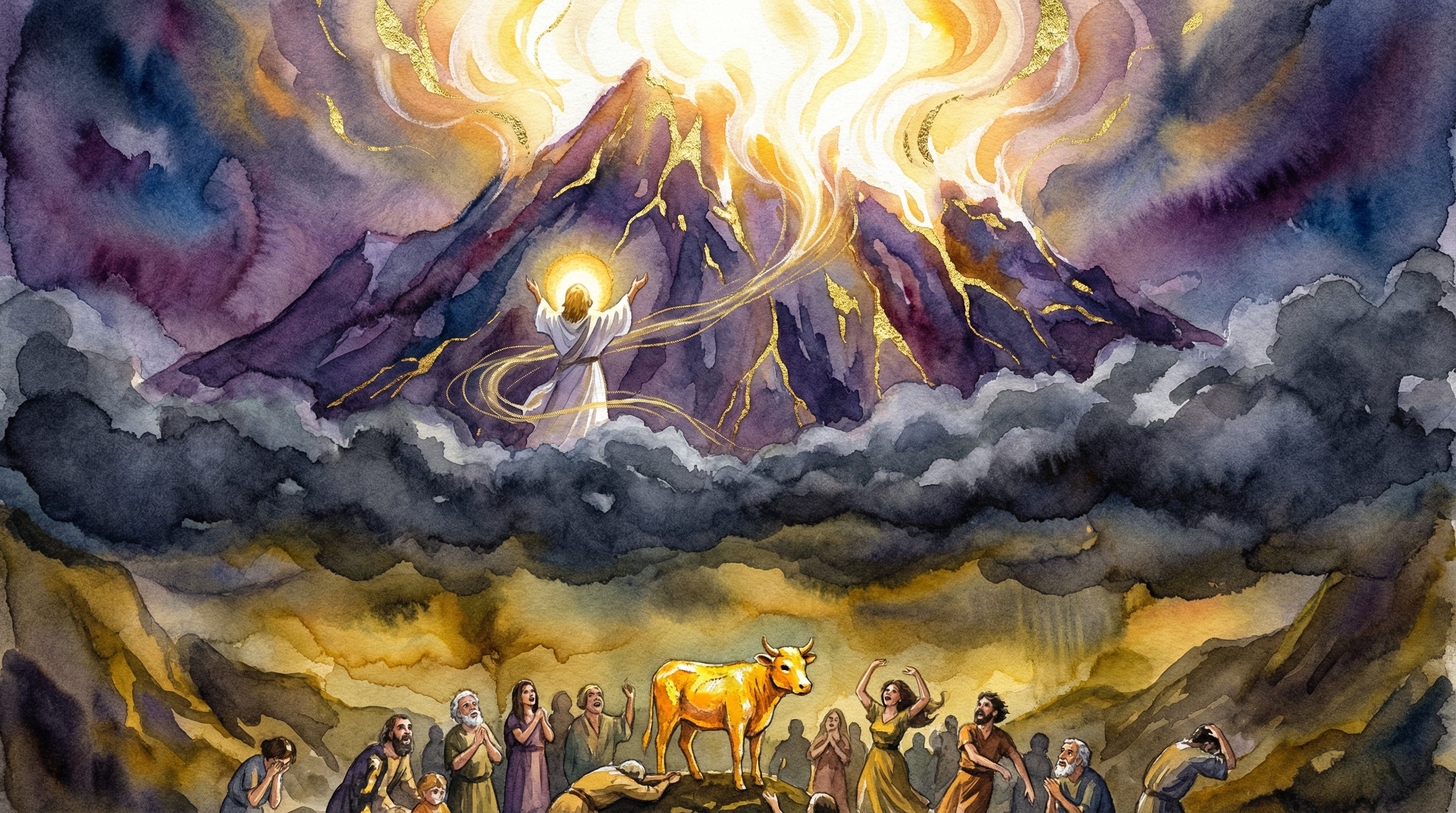
God says in Surah Al-A’raf:
وَوَاعَدْنَا مُوسَىٰ ثَلَاثِينَ لَيْلَةً وَأَتْمَمْنَاهَا بِعَشْرٍ فَتَمَّ مِيقَاتُ رَبِّهِ أَرْبَعِينَ لَيْلَةً
“And We appointed for Moses thirty nights and completed them with ten, so the term of his Lord was completed as forty nights.”
— Qur’an, Surah Al-A’raf (the Chapter of the Heights) #7, Verse 142
Forty nights on the mountain.
Not thirty.
Not fifty.
Forty.
And notice — God did not give him the Tablets on the first night.
He did not reveal the divine speech on the tenth night, or the twentieth.
The Tablets came at the end of the forty.
The entire period was preparation.
Refinement.
Purification.
Moses — peace and blessings be upon him — a prophet already chosen, already spoken to at the burning bush, already entrusted with the mission to Pharaoh — even he needed forty nights of preparation before he was ready to receive the fullness of divine guidance.
The forty was not waiting.
The forty was becoming.
And here is what we often miss about this story:
While Moses was on the mountain being transformed, his people — down below — were being exposed.
They could not endure the forty.
They could not hold their faith for forty nights without their prophet in front of them.
And so they turned to the calf.
The same forty that refined Moses revealed the weakness of those who could not endure it.
Hold that thought.
We will return to it.
The Prophet at Forty
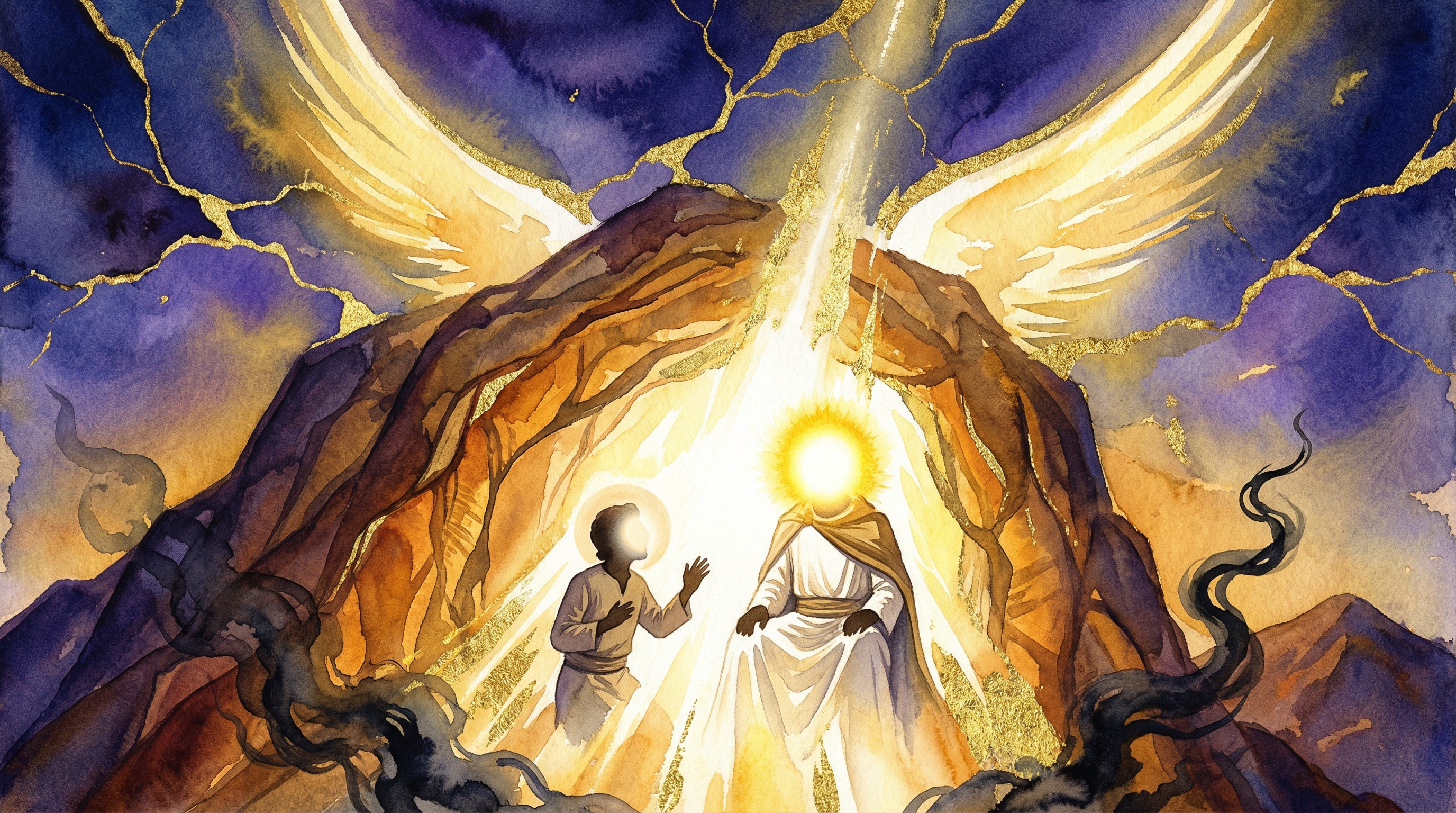
Our Prophet — peace and blessings be upon him, his family and righteous companions — received his first revelation and was formally appointed as the Messenger of God at the age of forty.
This is universally agreed upon across both Shia and Sunni traditions — there is no dispute on this point whatsoever.
Al-Ya’qubi records it in his Tarikh, his compendium on History.
Allamah al-Majlisi dedicates extensive narrations to it in volume 18 of Bihar al-Anwar.
Ayatullah Ja’far Subhani, in his masterful biography of the Prophet, titled The Message — discusses it in careful detail in the chapter on the first revelation.
Our tradition is highly specific about when this happened.
The Be’that — the formal appointment, the beginning of the prophetic mission — took place on the 27th of Rajab, in the Cave of Hira.
The Sunni traditions often place the first revelation in the month of Ramadhan, and our scholars have explained this distinction with precision: the mission itself, the appointment, began on the 27th of Rajab with the first verses of Surah Al-Alaq — the Chapter of the Clot —
ٱقۡرَأۡ بِٱسۡمِ رَبِّكَ ٱلَّذِي خَلَقَ
Read in the Name of your Lord who created;
— Qur’an, Surah al-Alaq (the Chapter of the Clot) #96, Verse 1
— while the complete, holistic reality of the Qur’an descended upon the Prophet’s heart later, during Laylat al-Qadr (the night of Destiny) in Ramadan, before being revealed piecemeal over the next twenty-three years.
But the point for us tonight is this: it happened at forty.
Not before.
Not after.
Forty years he lived among the people of Makkah.
Forty years of watching.
Forty years of witnessing their idolatry, their injustice, their burying of daughters, their worship of stone.
He would retreat to the Cave of Hira — year after year — in solitude, in contemplation, in a turning toward God that deepened with every passing season.
And all the while, the vessel was being shaped.
The forge was doing its work.
And when the vessel was ready — when the forty years of preparation had reached their completion — then came Gabriel.
Then came “Read”.
Then came the revelation that would reshape the world.
And here I want to share with you something extraordinary — a firsthand account of that moment from none other than Amir al-Mu’mineen, Imam Ali ibn Abi Talib, peace and blessings be upon him.
In Sermon 192 of Nahj al-Balagha — known as the Sermon of al-Qasi’ah — Imam Ali describes being present. He says:
وَلَقَدْ كَانَ يُجَاوِرُ فِي كُلِّ سَنَةٍ بِحِرَاءَ، فَأَرَاهُ وَلَا يَرَاهُ غَيْرِي
“Every year he used to go in seclusion to the hill of Hira, where I saw him but no one else saw him.”
Pause on that.
Imam Ali was there.
Not as a passive bystander — as the one companion who was granted access to these retreats.
And then he describes the moment of revelation:
وَلَقَدْ سَمِعْتُ رَنَّةَ الشَّيْطَانِ حِينَ نَزَلَ الْوَحْيُ عَلَيْهِ (صلى الله عليه وآله)، فَقُلْتُ: يَا رَسُولَ اللَّهِ مَا هَذِهِ الرَّنَّةُ؟ فَقَالَ: هَذَا الشَّيْطَانُ قَدْ أَيِسَ مِنْ عِبَادَتِهِ. إِنَّكَ تَسْمَعُ مَا أَسْمَعُ، وَتَرَى مَا أَرَى، إِلَّا أَنَّكَ لَسْتَ بِنَبِيٍّ، وَلَكِنَّكَ لَوَزِيرٌ
“I heard the moan of Satan when the revelation descended upon him. I said, ‘O Messenger of God, what is this moan?’ And he replied, ‘This is Satan, who has lost all hope of being worshipped. O Ali, you see all that I see and you hear all that I hear, except that you are not a Prophet.’”
— Imam Ali, Nahj al-Balagha, Sermon 192, compiled by Sharif al-Radi
Two things to note here.
First — and this is a point our scholars emphasise with great care — the Prophet was not frightened.
He was not confused.
He did not doubt his sanity or question what was happening to him.
Our tradition firmly rejects any suggestion of this.
The Prophet had been prepared — by forty years of divine refinement — for exactly this moment.
He received the revelation with absolute certainty, with complete readiness.
The forty had done its work.
And second — the moan of Satan.
When the forty is completed, when the transformation reaches its fulfilment, the forces of falsehood know.
They feel it.
They lose hope.
That moan is the sound of an entire age of darkness realising that its time is ending.
Prophethood did not come to a youth in haste.
It came to a man who had been forged — quietly, patiently, over four decades — into someone capable of carrying the weight of the final message.
The forty was the forge.
And what emerged from that forge shook the throne of every tyrant from Makkah to the empires beyond.
The Hadith of Forty Days
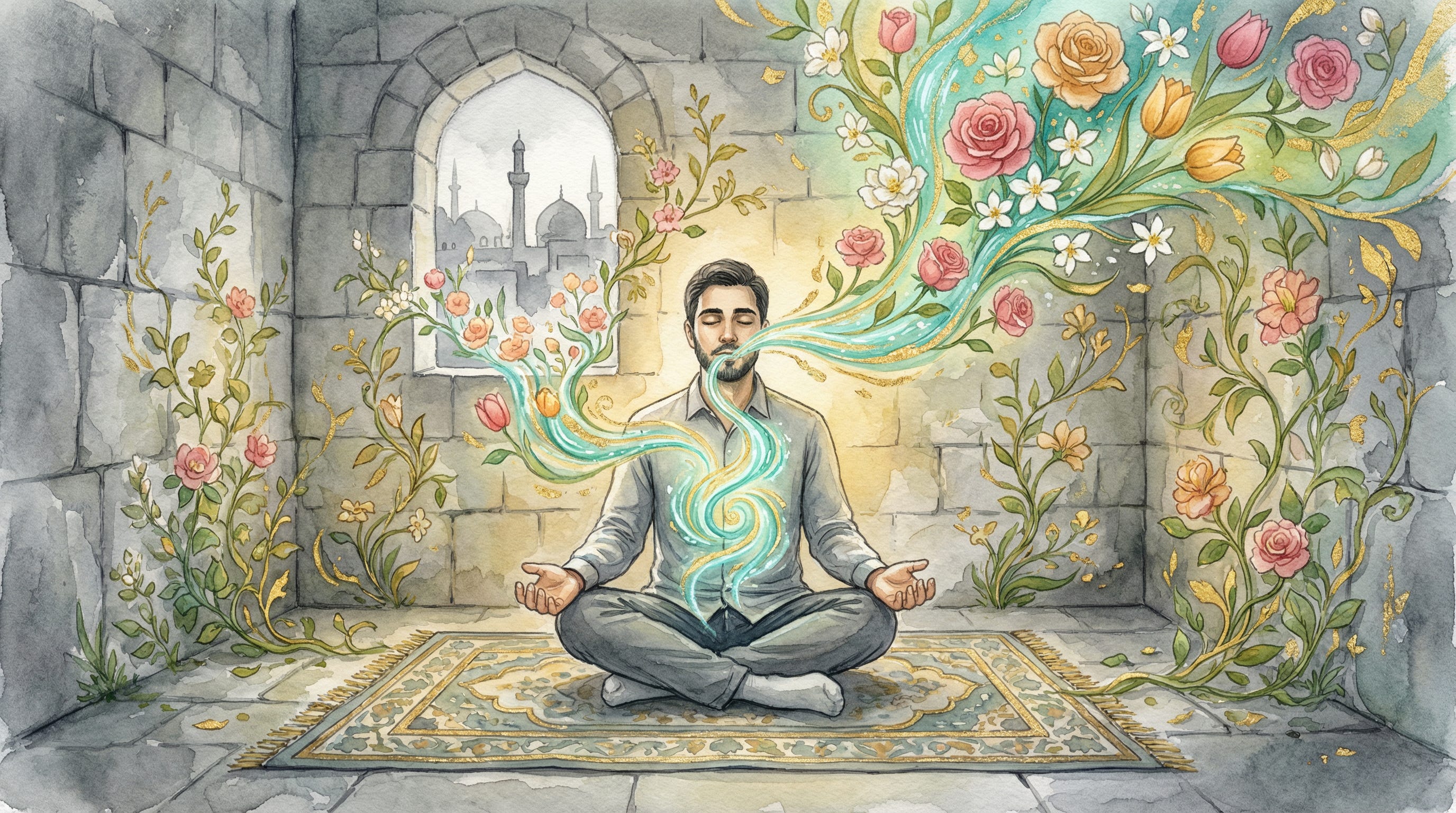
And then there is this — a tradition from the Prophet, peace and blessings be upon him, his family and righteous companions, that goes to the very heart of what the number forty means for the human soul:
مَنْ أَخْلَصَ لِلَّهِ أَرْبَعِينَ يَوْمًا ظَهَرَتْ يَنَابِيعُ الْحِكْمَةِ مِنْ قَلْبِهِ عَلَىٰ لِسَانِهِ
“Whoever dedicates himself sincerely to God for forty days, the springs of wisdom will appear from his heart upon his tongue.”
— Ibn Fahd al-Hilli in Uddat al-Da’i wa Najah al-Sa’i; Allamah Majlisi, Bihar al-Anwar, Volume 67; Muhsin Faydh al-Kashani, Al-Wafi; Abu Nu’aym al-Isfahani, Hilyat al-Awliya, Al-Ghazali, Ihya Ulum al-Din
You will sometimes find this narrated with a slight variation — arba’eena sabahan, forty mornings, rather than arba’eena yawman, forty days — but the core meaning is identical.
Now, a word about this hadith for those of you who are students of the tradition — because I think it is important to be precise about what we are citing and on what authority.
In our tradition, this hadith is recorded by Ibn Fahd al-Hilli in Uddat al-Da’i wa Najah al-Sa’i — one of the great classical works on supplication and spiritual discipline.
From there, Allamah al-Majlisi transmits it in Bihar al-Anwar, volume 67.
Mulla Muhsin al-Fayd al-Kashani also records it in Al-Wafi.
In the Sunni tradition, it appears in Abu Nu’aym al-Isfahani’s Hilyat al-Awliya’ and is cited prominently by Imam al-Ghazali in the Ihya’ Ulum al-Din.
Now — I want to be transparent, because scholarship demands transparency.
From the strict perspective of hadith chain analysis — ilm al-rijal — the chains of transmission for this specific wording carry technical weakness.
In the Sunni tradition, scholars like al-Suyuti have graded it as da’if — weak —due to an interrupted transmission between Makhul and Abu Ayyub al-Ansari.
In our own tradition, one of the primary chains passes through Darim ibn Qabisah, whose reliability is not firmly established in the biographical dictionaries of al-Najashi.
So the chain is discussed.
That is the honest assessment.
But — and this is crucial — you will be hard-pressed to find a single Shia scholar of akhlaq or irfan who dismisses this hadith.
And the reason is this: the matn — the meaning, the content, the substance of what is being said — is universally accepted.
Not merely accepted — tested.
The great masters of our spiritual tradition — Mulla Sadra, Allamah Tabatabai, Imam Khomeini — they did not merely quote this hadith.
They lived it.
They practised the arba’iniyyah — the forty-day spiritual retreat of utter sincerity — and they found the Prophet’s promise to be a literal reality.
The springs of wisdom appeared.
The heart was unlocked.
The tongue was opened.
This is what our scholars call spiritual empiricism — the truth of the hadith is not only in its chain but in its result.
Generation after generation of wayfarers on the path to God have tested this forty-day threshold and found it to be exactly as the Prophet described.
And this is entirely consistent with the Qur’an itself.
God tells us in Surah Al-Ankabut — the Chapter of the Spider:
وَالَّذِينَ جَاهَدُوا فِينَا لَنَهْدِيَنَّهُمْ سُبُلَنَا
“And those who strive for Us — We will surely guide them to Our paths.”
— Qur’an, Surah Al-Ankabut (the Chapter of the Spider) #29, Verse 69
The principle is the same: sincerity of effort, over a sustained period, produces divine guidance.
The hadith of forty days gives this principle a specific frame — a measurable commitment, a defined threshold.
Forty days of ikhlas — sincerity.
Forty days of genuine turning.
And what emerges on the other side is not what went in.
And notice — when Imam Khomeini, may God rest his pure soul, taught this hadith to his students, he was building the spiritual foundations of a revolution.
The same revolution whose torch was carried for decades by our beloved Imam Khamenei.
There is a line — quiet but unbroken — between the mystic’s forty-day retreat and the shaheed’s forty-day arba’een.
Both are crucibles.
Both demand sincerity.
Both promise transformation.
So this is the key to understanding what an arba’een truly is.
It is not merely a mourning period.
It is not simply the custom of waiting forty days before holding a memorial.
It is a spiritual threshold — divinely appointed — in which transformation is not just possible but promised to the one who endures it with sincerity.
The scholars have tested it.
The mystics have walked it.
The Prophet — peace and blessings be upon him, his family and righteous companions — guaranteed it.
If you have spent these forty days — since the martyrdom of our leader, since the killing of the girls of Minab — if you have spent them in sincere grief, sincere reflection, sincere turning toward God, then something should have changed in you by now.
The springs should be flowing.
Wisdom should be appearing where before there was only anguish.
And if nothing has changed — then the forty is asking you why.
Forty Across the Traditions of the Prophets
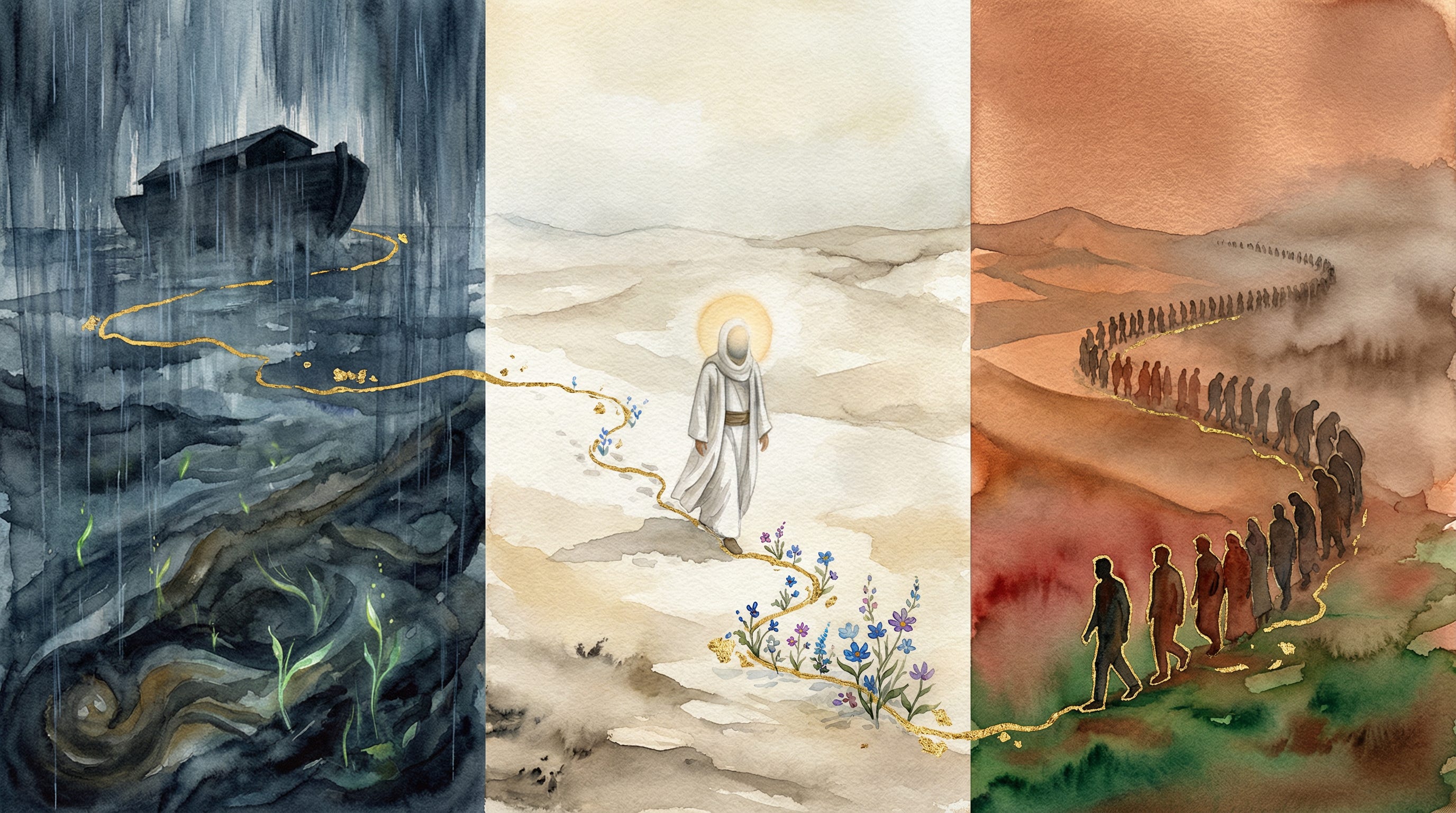
And it is not only in our tradition.
The number forty echoes across the entire history of divine guidance — because the God who appointed it is One, and His methods are consistent.
Noah (Nuh) — peace and blessings be upon him — and the flood.
The rain fell for forty days and forty nights.
After the forty, the old world was gone — annihilated, washed clean.
A new world stood in its place.
The forty was not merely the duration of a storm.
It was the span required for a complete renewal — for the corruption to be washed away entirely and for something new to emerge from the water.
The Biblical tradition preserves this number in the book of Genesis; the Qur’an speaks of the flood itself, and the message is the same: the forty is the instrument of total transformation.
Jesus (Isa) — peace and blessings be upon him, and may God hasten his return — the son of Maryam — peace and blessings be upon her, spent forty days in the wilderness in fasting and solitude before he began his public mission.
The Gospel accounts in Matthew and Luke both record this.
Forty days of preparation — not retreat from the world, but preparation to re-enter it as something different from what he was before.
The wilderness did not weaken him.
It sharpened him.
It burned away everything that was not essential, and what remained was ready for the mission.
And Bani Isra’il — the children of Israel — wandered for forty years in the desert.
God tells us in Surah Al-Ma’idah — the Chapter of the Table Spread:
قَالَ فَإِنَّهَا مُحَرَّمَةٌ عَلَيْهِمْ ۛ أَرْبَعِينَ سَنَةً ۛ يَتِيهُونَ فِي الْأَرْضِ
“He said: Then it is forbidden to them for forty years; they shall wander in the earth.”
— Qur’an, Surah Al-Ma’idah (the Chapter of the Table Spread) #5, Verse26
Forty years.
An entire generation had to pass — the generation that was too afraid to enter the holy land, too compromised by its own weakness — before a new generation, forged in the desert, was ready to inherit the promise.
Do you see the pattern?
Across every tradition, every prophet, every dispensation — forty marks the boundary between before and after.
It is the threshold between the person you were and the person you are being asked to become.
Between the community that grieved and the community that rises.
Between the tears and the testimony.
The question that every arba’een places before those who observe it is this: which side of the boundary are you on?
Have you crossed it?
Or are you still standing at the threshold, mourning but unchanged, weeping but unwilling to move?
The Arba’een of Imam Husayn: The Paradigm
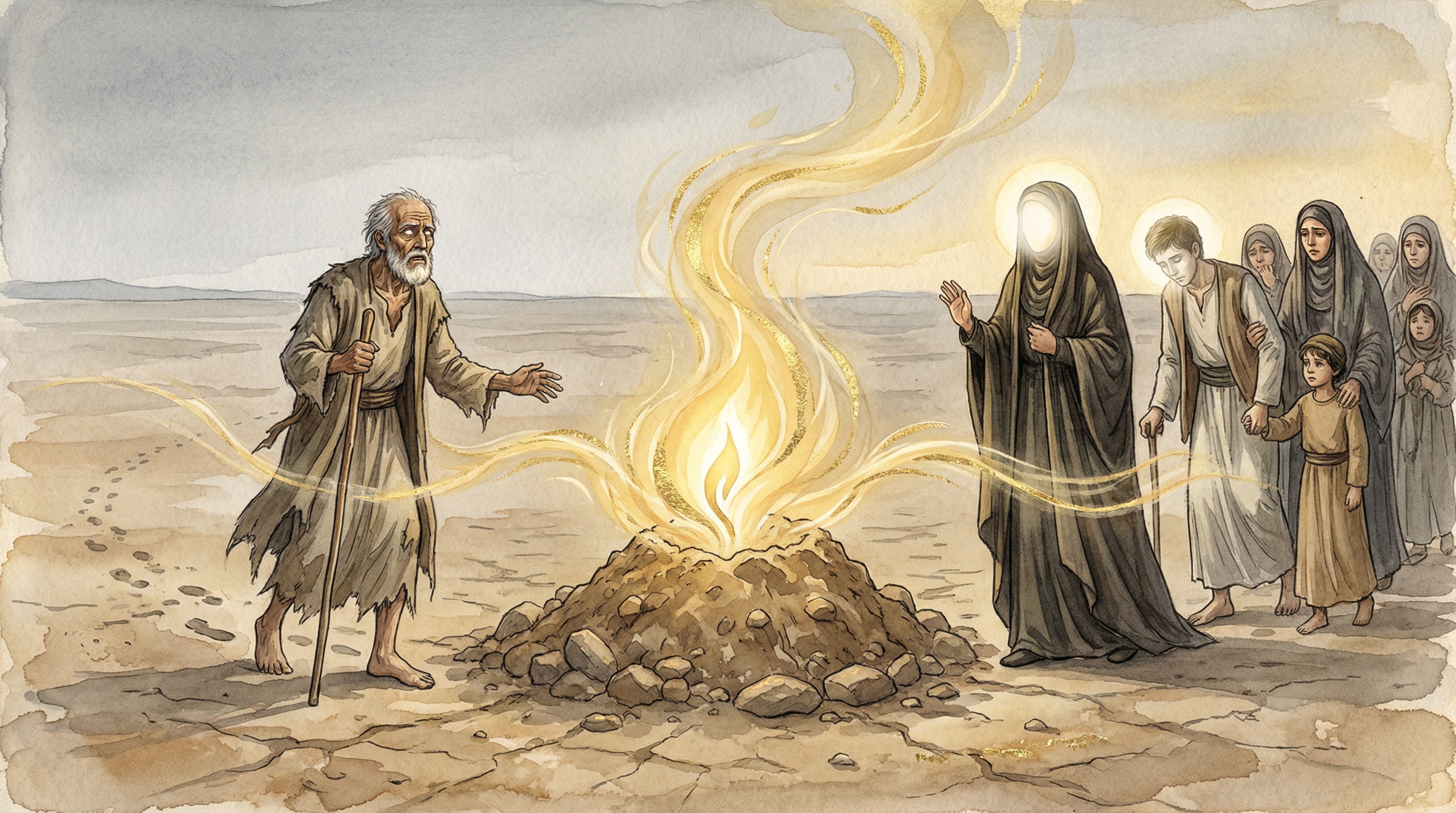
And nowhere is this clearer — nowhere is the transformative power of the forty more visible — than in the Arba’een of Imam Husayn, peace and blessings be upon him.
The fortieth day after Ashura.
The day when two things happened that changed the meaning of Karbala forever.
The first: Jabir ibn Abdullah al-Ansari — the companion of the Prophet, peace and blessings be upon him, his family and his righteous companions — arrived at the grave of Imam Husayn.
He was old.
He was blind.
He had crossed the desert to reach a grave in a land of desolation. And he became the first za’ir — the first pilgrim — to visit the resting place of the master of martyrs.
His journey is recorded by Ibn Quluwayh al-Qummi in Kamil al-Ziyarat, one of our earliest and most authoritative sources.
Think about what that means.
A blind old man, crossing the desert, to stand at a grave.
Why?
Because the forty had done its work on him.
The forty had transformed his grief into obligation.
He could not merely mourn from afar.
He had to go.
He had to be present.
He had to bear witness with his body, even if his eyes could no longer see.
That is what the forty does.
It will not let you sit still.
The second: the Ahlul Bayt — the surviving family of Imam Husayn — returned to Karbala from their captivity in Sham.
Led by Sayyedah Zaynab, and Imam Zayn al-Abidin, peace and blessings be upon them both, they came back to the place of slaughter.
This is recorded by Sayyed Ibn Tawus in Luhuf (Al-Malhuf ala Qatla al-Tufuf ( — The Sorrowful Sighs for the Martyrs of the Banks of the Euphrates) — though some historians discuss the precise dating, the tradition is powerful and deeply rooted.
And notice what happens at the Arba’een.
The mourning does not end — but it transforms.
The tears do not stop — but they take on a new purpose.
The survivors do not retreat into private grief.
They begin the work of testimony. Sayyedah Zaynab — who we will speak more about later tonight, God willing — does not weep in silence.
She speaks.
She testifies.
She takes the blood of her brother and makes it speak to the world.
The Arba’een of Imam Husayn is the moment when tragedy becomes movement.
When grief becomes revolution.
When the mourner becomes a witness.
And that is the model for every arba’een that has followed since.
Including this one.
The Arba’een of Imam Sayyed Ali al-Khamenei: Our Threshold
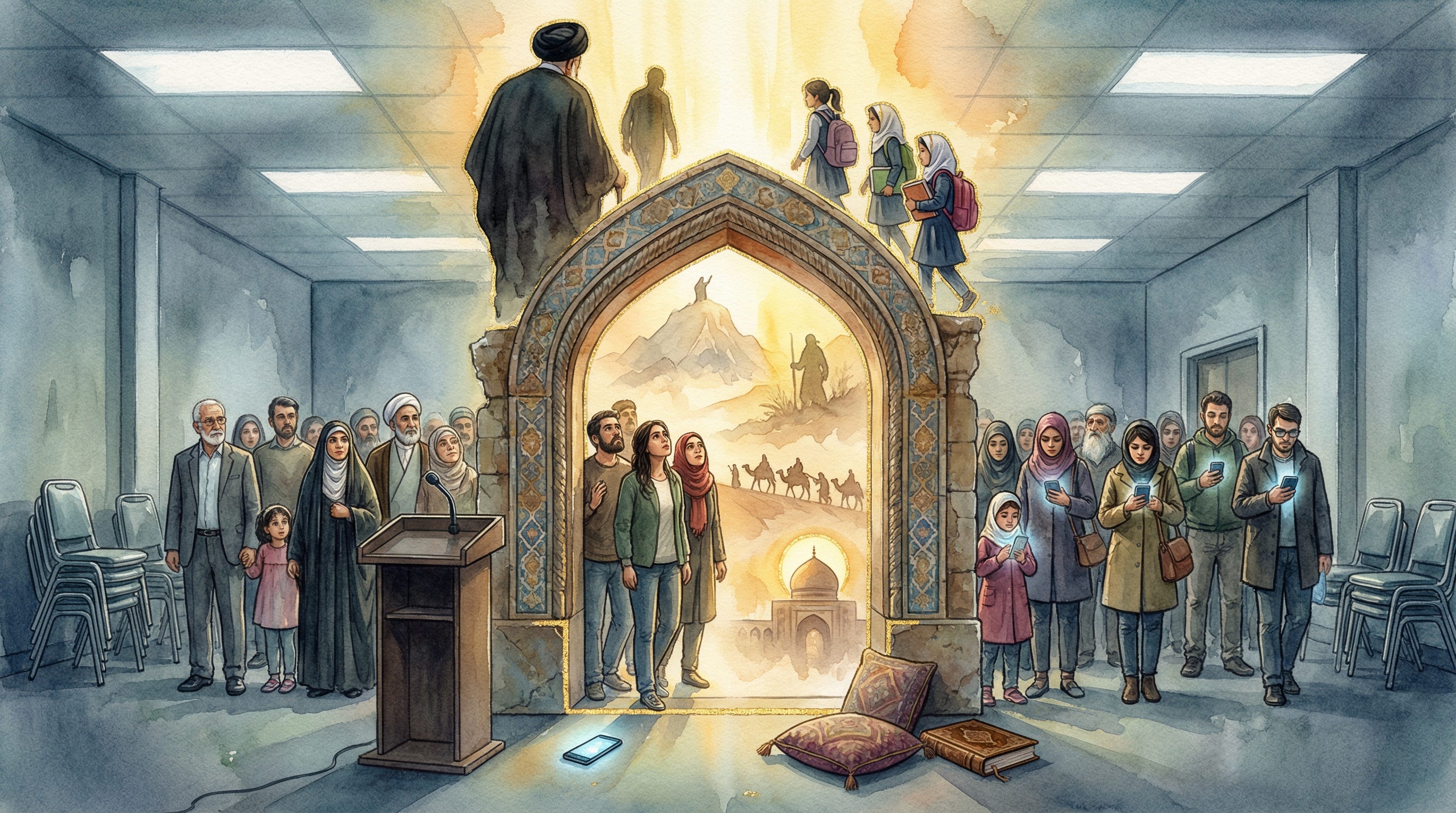
So here we are.
Forty days have passed.
Forty days since the martyrdom of Imam Sayyed Ali al-Husayni al-Khamenei — may God elevate his station and accept his sacrifice.
Forty days since the girls of Minab — young, bright, full of life and hope and future — were taken from their schoolhouse by the bombs of an empire that has lost every claim to moral authority it ever pretended to hold.
Forty days.
The same span that refined Moses on the mountain.
The same span that prepared Jesus in the wilderness.
The same span that separated the generation of fear from the generation of promise.
The same span that turned the mourning of Karbala into the movement that still shakes the thrones of the oppressors fourteen centuries later.
And the question the forty now puts to us is the same question it has always put to those who stand at its threshold:
What has this done to you?
Have these forty days changed you?
Have they sharpened something in you?
Have the springs of wisdom begun to flow?
Or have you merely endured them — counted the days, attended the gatherings, posted your tributes, and returned to the same life you were living before their blood was spilled?
Because the forty does not merely invite transformation.
As we saw with the people of Moses — with those who could not endure forty nights without turning to the calf — the forty also exposes.
It exposes who was sincere and who was not.
Who was truly shaken and who was only briefly moved.
Who will cross the threshold and who will remain standing at it, mourning without motion, grieving without growth.
Lesson for Today
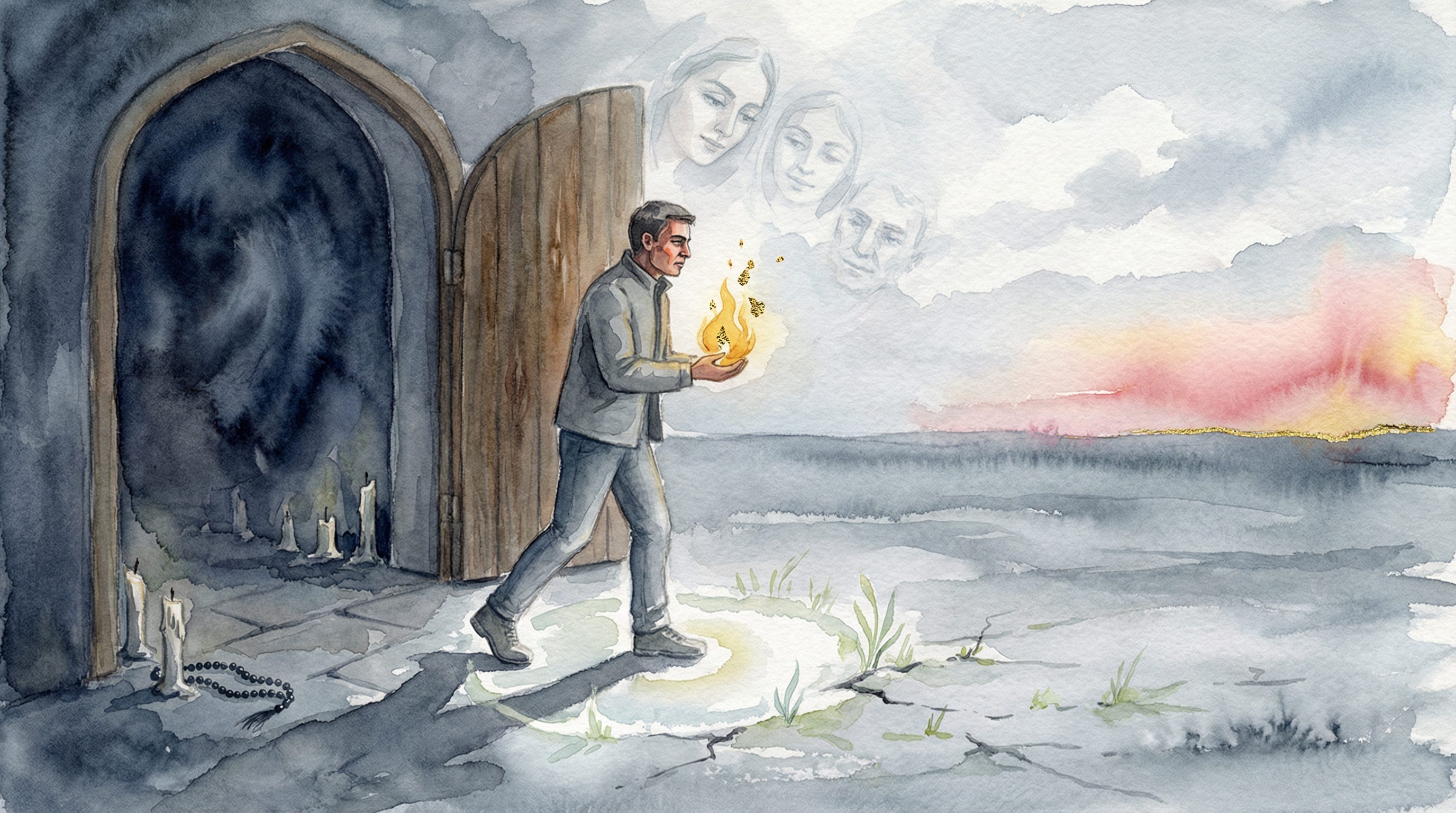
The forty days have not been given to us for passive grief.
They are a crucible — a divine instrument of transformation.
The question this arba’een puts to every one of us tonight is this:
Have you let the blood of the shaheed change you?
Or have you merely counted the days?
And here is my challenge to you — not as something abstract, but as something concrete, something you take with you when you leave this gathering tonight.
Commit to the next forty days.
Not forty days of mourning — that time has passed, and it has done its work.
Forty days of transformation.
Pick one thing — a practice, a commitment, a study, a change in habit — and dedicate the next forty days to it.
In the name of our shuhada.
In honour of their blood.
Perhaps it is a study — committing to read and understand one book of substance, one work that deepens your knowledge of your faith, your history, your responsibility.
Perhaps it is a practice — a prayer you have been neglecting, a discipline you have let slip, a relationship with God that has grown distant.
Perhaps it is a stand — a commitment to speak where you have been silent, to stop looking away from the injustice that the shuhada gave their lives to expose.
Whatever it is — make it specific.
Make it real.
And dedicate it to them.
Because the arba’een is not an ending.
It is not the last day of mourning.
It is the first day of whatever comes next.
And what comes next is up to you.
Point 2: The Shaheed as Witness
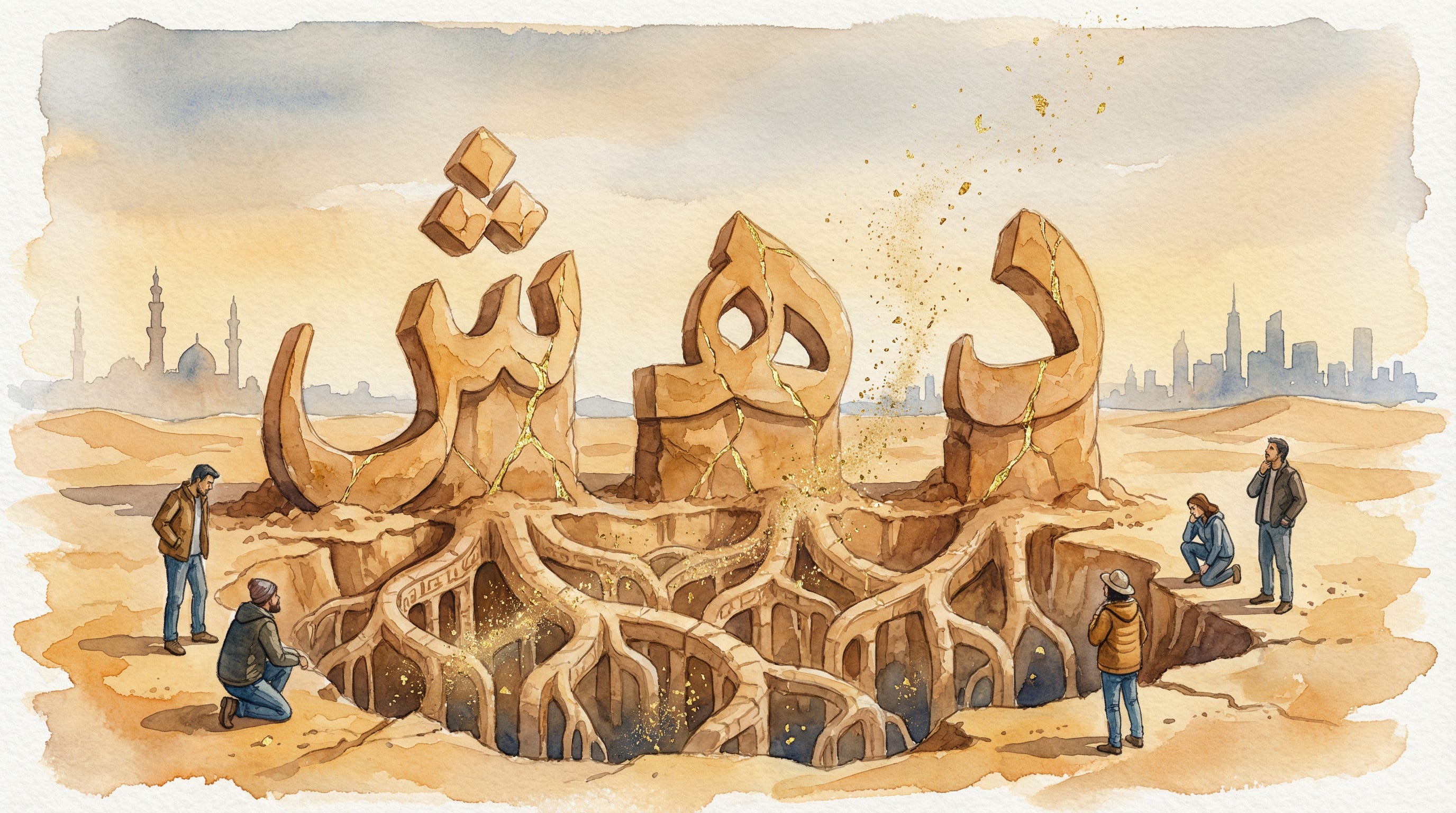
We have spoken about the forty — what it means, what it demands, what it transforms.
Now I want to turn to the one whose blood marks the beginning of this forty.
The shaheed.
We use this word constantly.
Every time a believer falls — in Gaza, in Lebanon, in Iran, in Iraq — we say shaheed.
We say it with love.
We say it with grief.
We say it with honour.
But I want us to pause tonight and ask:
Do we truly know what we are saying?
Because the word shaheed does not mean what most people think it means.
And understanding what it actually means will change everything about how we understand what happened forty days ago — and what is being asked of us now.
The Word Itself
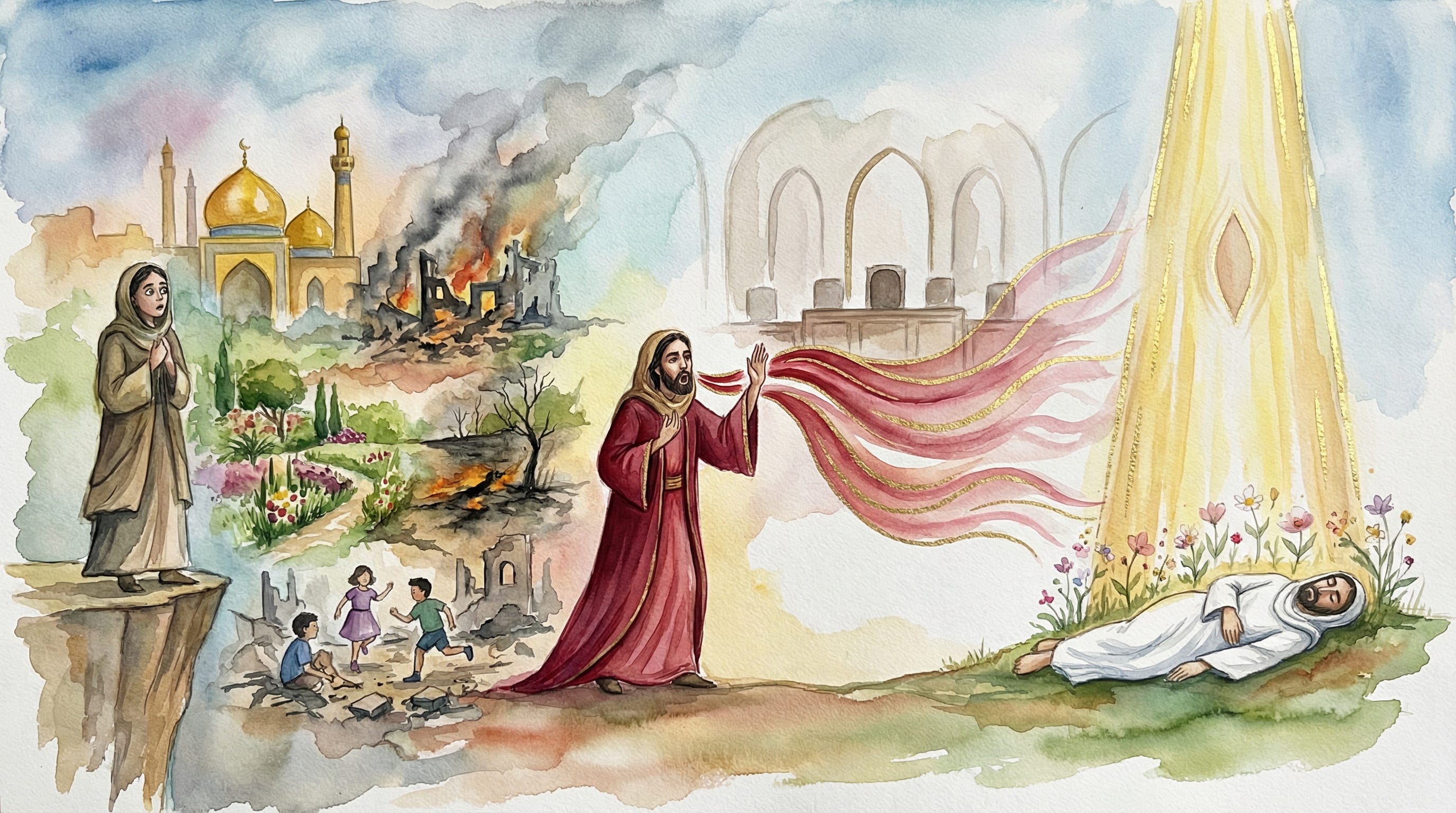
The Arabic root is ش-ه-د — shin, ha, dal.
And from this single root come three meanings that are so intertwined they cannot be separated.
The great lexicographers — Ibn Manzur in Lisan al-Arab, al-Raghib al-Isfahani in his Mufradat Alfaz al-Qur’an — they lay these meanings out with a precision that takes your breath away.
The first meaning: shahida — to witness.
To be present.
To see something with your own eyes, to observe it directly.
The second meaning: shahida — to testify.
To bear witness.
To stand up and declare what you have seen.
The third meaning — and this is where the depth lies — shaheed, the form fa’eel in Arabic, carries both an active and a passive sense simultaneously.
The shaheed is the one who witnesses — who saw the truth so clearly, so completely, that they could not do anything but stand for it.
And the shaheed is the one who is witnessed — witnessed by God, seen by Him, known by Him, received by Him.
So when we call someone a shaheed, we are not saying: this person died.
We are not even saying: this person died bravely, or this person died for a cause.
We are saying something far more profound.
We are saying: this person saw.
They saw the truth — about God, about justice, about the nature of this world and the next — and what they saw was so overwhelming, so undeniable, that their entire being became a testimony to it.
Their life became a testimony.
And when their life was taken, their death became a testimony — louder, clearer, more permanent than anything they could have said while breathing.
The shaheed is not named for how they died.
The shaheed is named for what they saw — and for what their death now makes visible to the rest of us.
And I want you to notice something.
The English word “martyr” comes from the Greek martys — and it also means “witness.”
The same concept, across languages, across civilisations.
But in common Western usage, the word has lost its force.
A martyr, in the modern Western imagination, is someone who suffered.
Someone who was victimised.
There is a passivity to it — a sense that the martyr is defined by what was done to them.
In the Qur’anic usage, the opposite is true.
The shaheed is defined not by what was done to them, but by what they did.
They testified.
They bore witness.
Their death was not an ending — it was the opening statement in a trial that is still ongoing, a trial in which the oppressor stands accused and the shaheed’s blood is the evidence.
The First Shaheed: Habil at the Hands of Qabil
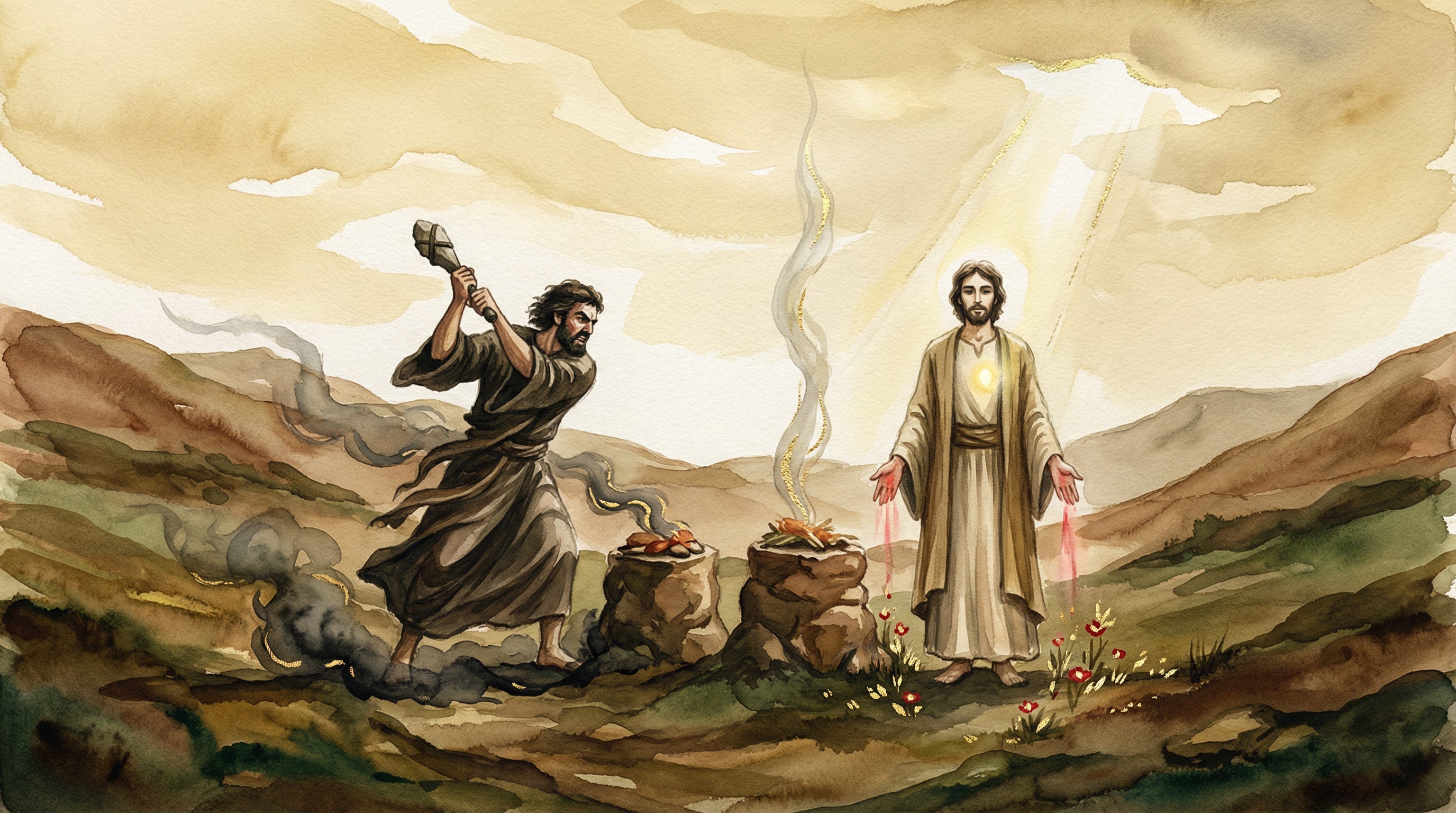
And this chain of testimony begins at the very beginning.
God tells us in Surah Al-Ma’idah — the Chapter of the Table Spread:
وَاتْلُ عَلَيْهِمْ نَبَأَ ابْنَيْ آدَمَ بِالْحَقِّ إِذْ قَرَّبَا قُرْبَانًا فَتُقُبِّلَ مِنْ أَحَدِهِمَا وَلَمْ يُتَقَبَّلْ مِنَ الْآخَرِ قَالَ لَأَقْتُلَنَّكَ ۖ قَالَ إِنَّمَا يَتَقَبَّلُ اللَّهُ مِنَ الْمُتَّقِينَ لَئِن بَسَطتَ إِلَيَّ يَدَكَ لِتَقْتُلَنِي مَا أَنَا بِبَاسِطٍ يَدِيَ إِلَيْكَ لِأَقْتُلَكَ ۖ إِنِّي أَخَافُ اللَّهَ رَبَّ الْعَالَمِينَ
“Recite to them the tale of the two sons of Adam in truth. When each offered a sacrifice, it was accepted from one and not from the other. He said: ‘I will surely kill you.’ He replied: ‘God only accepts from the God-conscious. If you stretch your hand toward me to kill me, I shall not stretch my hand toward you to kill you. Indeed, I fear God, the Lord of the worlds.’”
— Qur’an, Surah Al-Ma’idah (the Chapter of the Table Spread) #5, Verses 27–28
Habil — Abel — the son of Adam.
The first human being to die.
And look at how he died.
His brother said: I will kill you. And Habil’s response was not to fight, not to flee, not to beg.
His response was to testify.
إِنِّي أَخَافُ اللَّهَ رَبَّ الْعَالَمِينَ
I fear God, the Lord of the worlds. If you stretch your hand to kill me, I will not stretch mine to kill you.
This is the first shahadah in human history.
And notice what it says:
there are things more precious than survival.
There is a truth that is worth more than my life.
I would rather die holding that truth than live having abandoned it.
Habil did not raise his hand.
Not because he was weak — but because raising his hand would have meant becoming his brother.
And he chose death over that.
He chose to testify — with his refusal, with his body, with his blood — that the way of God is not the way of violence, that submission to God means refusing to become the oppressor even when the oppressor is standing over you.
Every shaheed since has repeated this testimony.
In a thousand forms, across a thousand generations, in every land and every language — the same witness.
From Habil to Husayn.
From Husayn to the shuhada of our own time.
The form changes.
The testimony does not.
And in our Muharram sessions this year, God willing, we will walk this entire chain together.
From the first shaheed — the son of Adam who would not raise his hand — to the latest.
From Habil to the schoolgirls of Minab who never even had the chance to raise theirs.
We will trace this line of blood-testimony that runs through the whole of human history and ask: what is it saying?
What has it always been saying?
And what does it demand of those who hear it?
That is for Muharram, God willing.
But tonight, I want to plant the seed — because what we are discussing now is the root from which that entire series will grow.
The Qur’an Corrects Our Perception
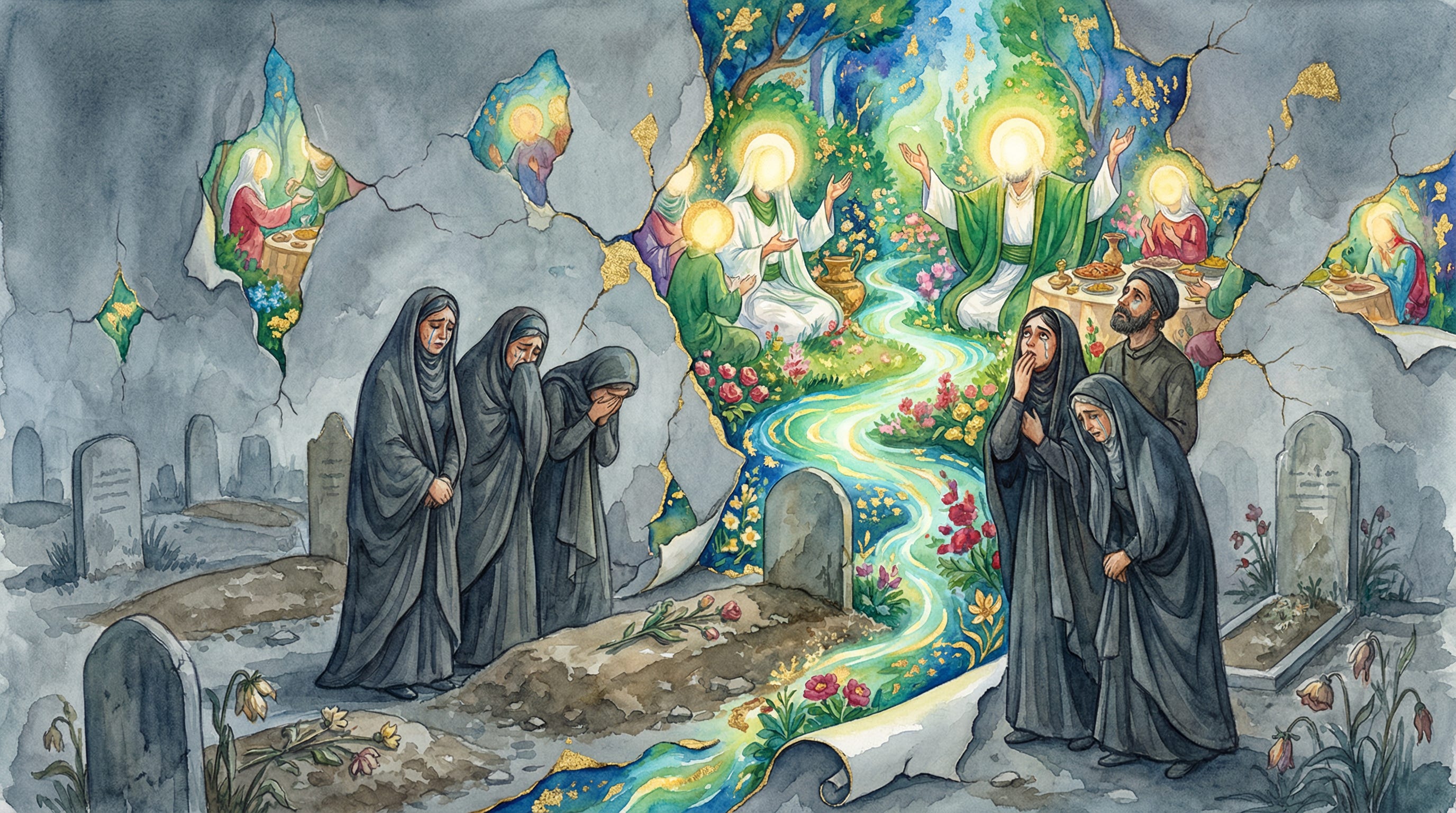
Now let us return to our anchoring verse — but this time, I want to bring in a companion verse from Surah Al-Baqarah — the Chapter of the Cow — that sharpens the point even further.
God says:
وَلَا تَقُولُوا لِمَن يُقْتَلُ فِي سَبِيلِ اللَّهِ أَمْوَاتٌ ۚ بَلْ أَحْيَاءٌ وَلَٰكِن لَّا تَشْعُرُونَ
“And do not say of those who are killed in the way of God, ‘They are dead.’ Rather, they are alive, but you perceive it not.”
— Qur’an, Surah Al-Baqarah (the Chapter of the Cow) #2, Verse 154
I want you to notice the verb.
La taqulu — do not say.
This is a command.
This is a correction.
God is not offering comfort to the grieving.
He is correcting an error in how we see reality.
He is saying: when you look at the shaheed and you see death, you are wrong. You are perceiving something incorrectly.
Wa lakin la tash’urun — but you do not perceive.
The problem is not with the shaheed.
The problem is with us.
With our eyes.
With our categories.
We see a body and we think: finished.
We see blood and we think: loss.
We see a grave and we think: absence.
And God says:
No. You are not seeing what is actually there.
The shaheed is alive.
بَلْ أَحْيَاءٌ
rather, they are alive.
And not alive in some diminished, metaphorical sense.
The verse in Surah Aal Imran tells us they are receiving provision — yurzaqun.
They are rejoicing — farihin.
They are receiving glad tidings — yastabshirun.
This is not the language of metaphor.
This is the language of a reality more real than the one we are standing in.
And here is the point I want you to carry with you: a living person can be pressured.
A living person can be threatened.
A living person can be bought, or broken, or silenced, or compromised.
A shaheed cannot.
A shaheed’s testimony is sealed.
It is final.
It is incorruptible.
No intelligence service can interrogate it.
No sanctions can weaken it.
No propaganda can distort it.
No assassination can end it — because the assassination is the testimony.
That is why empires fear martyrs.
Not because of what they did in life — but because of what they become in death.
The shaheed is the one witness the empire cannot cross-examine, cannot discredit, cannot make disappear.
The blood speaks.
And it does not stop speaking.
Two Testimonies, One Truth
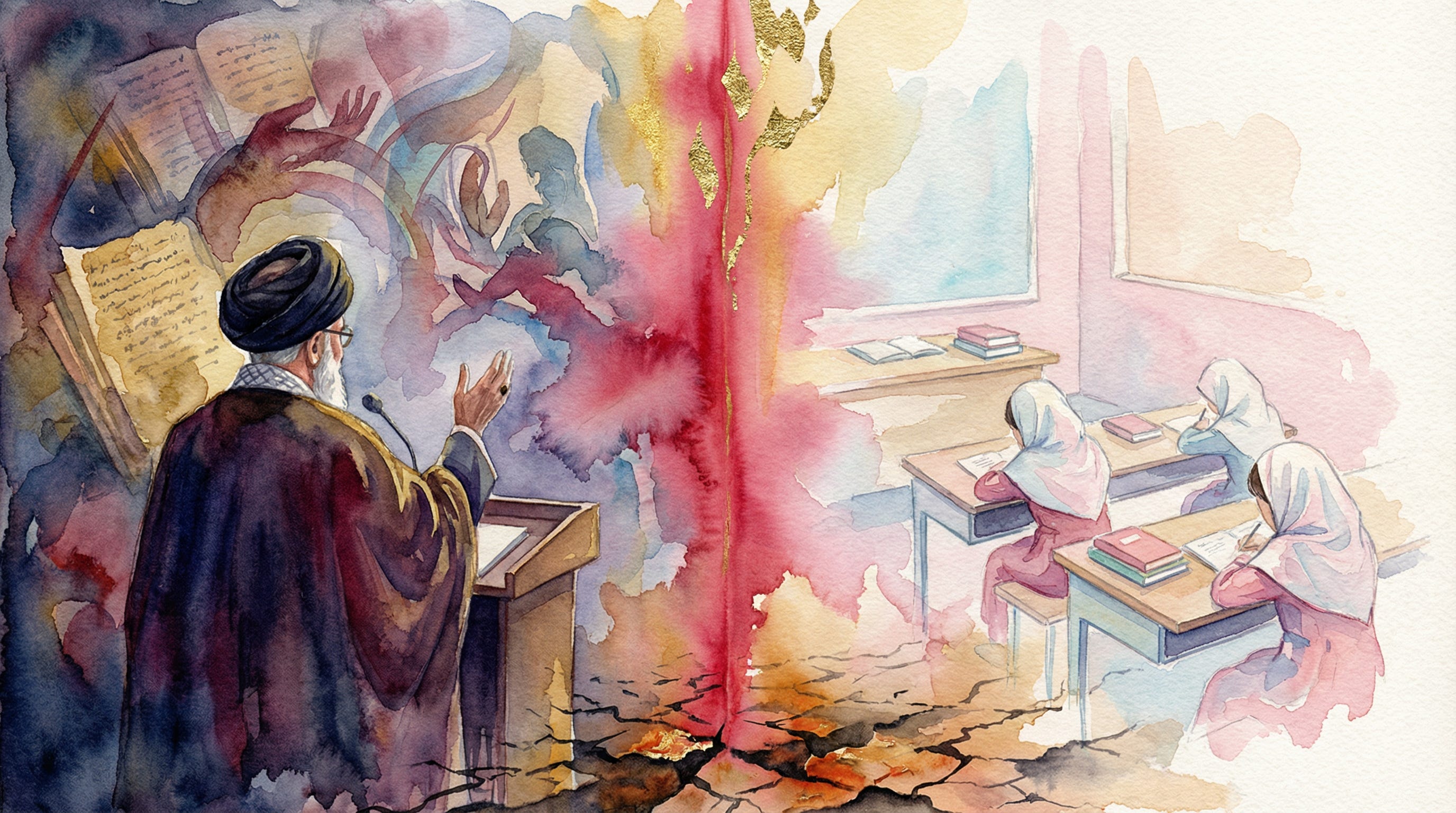
And now I want to bring this to our present moment.
Because we are not here tonight to discuss martyrdom in the abstract.
We are here because specific human beings — people we knew, people we loved, people we followed — have entered this station.
And their blood is speaking to us right now.
I want to place two testimonies before you tonight.
They look different on the surface.
The world would categorise them differently.
But I want to show you that they are saying exactly the same thing.
The First Testimony: Imam Sayyed Ali al-Husayni al-Khamenei.
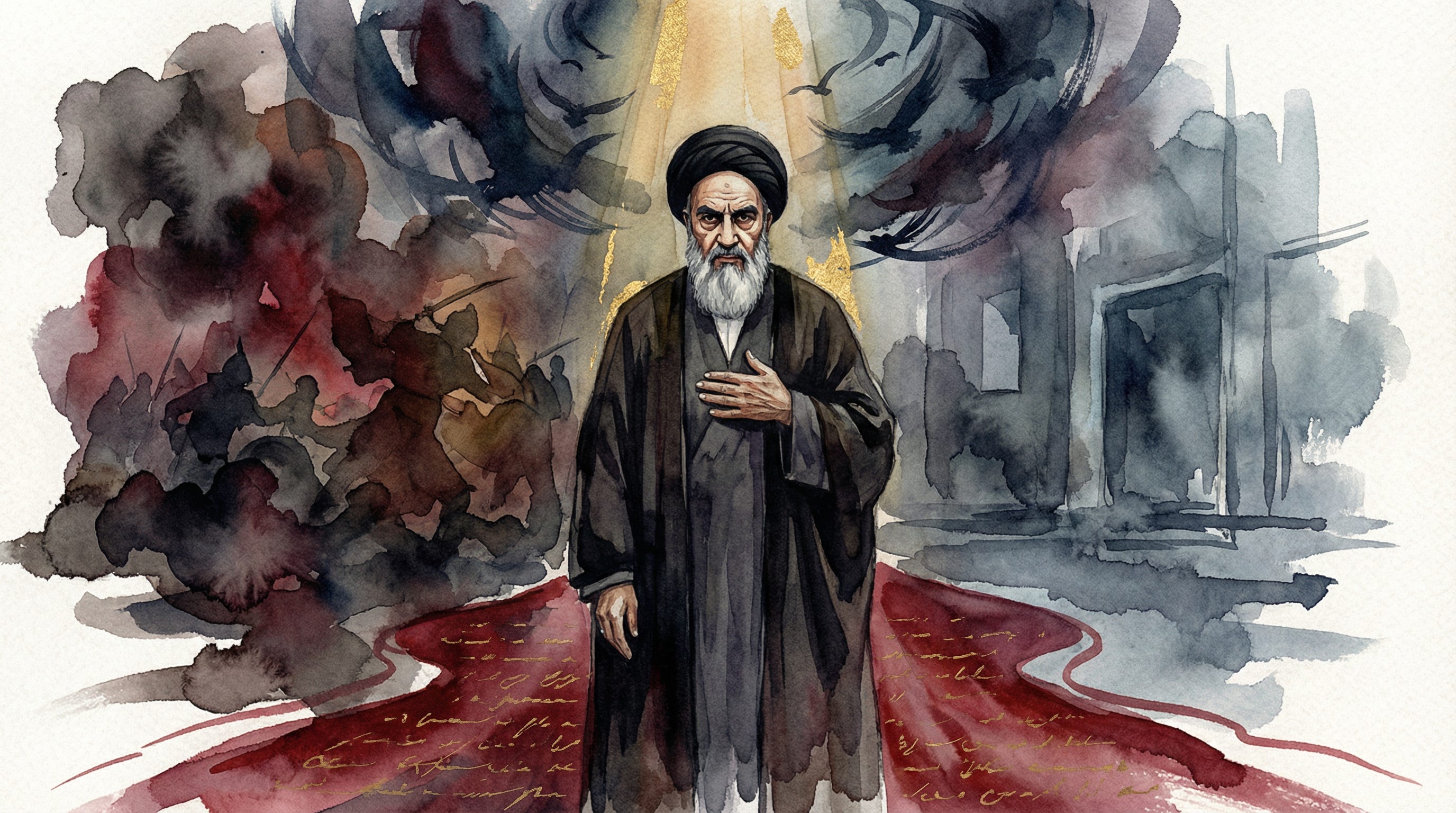
A lifetime of scholarship.
A lifetime of service.
Decades of carrying the weight of the wilayah on his shoulders — through an eight-year war that should have broken Iran, through sanctions designed to strangle a nation, through internal dissent and external pressure from every direction, through the assassinations of his brothers and his generals, through betrayals and conspiracies that would have crushed anyone of lesser resolve.
And through all of it — steadfast.
Through all of it — upright.
Through all of it — testifying.
Testifying that the project of Islamic governance is real, that it is possible, that it is worth defending with everything you have.
Testifying that resistance to empire is not a tactic to be abandoned when the cost gets too high — it is a covenant.
Testifying that the wilayah will not bend, will not kneel, will not negotiate away the blood of its martyrs for the comfort of a truce with the oppressor.
And then — after decades of this testimony, at the apex of his life’s work — he was taken.
Shaheed.
His blood joined the river that flows from Karbala to Minab to wherever the next testimony will be written.
His shahadah says:
This path is true.
I walked it for a lifetime.
I die upon it without regret.
Follow it.
The Second Testimony: The Girls of Minab.
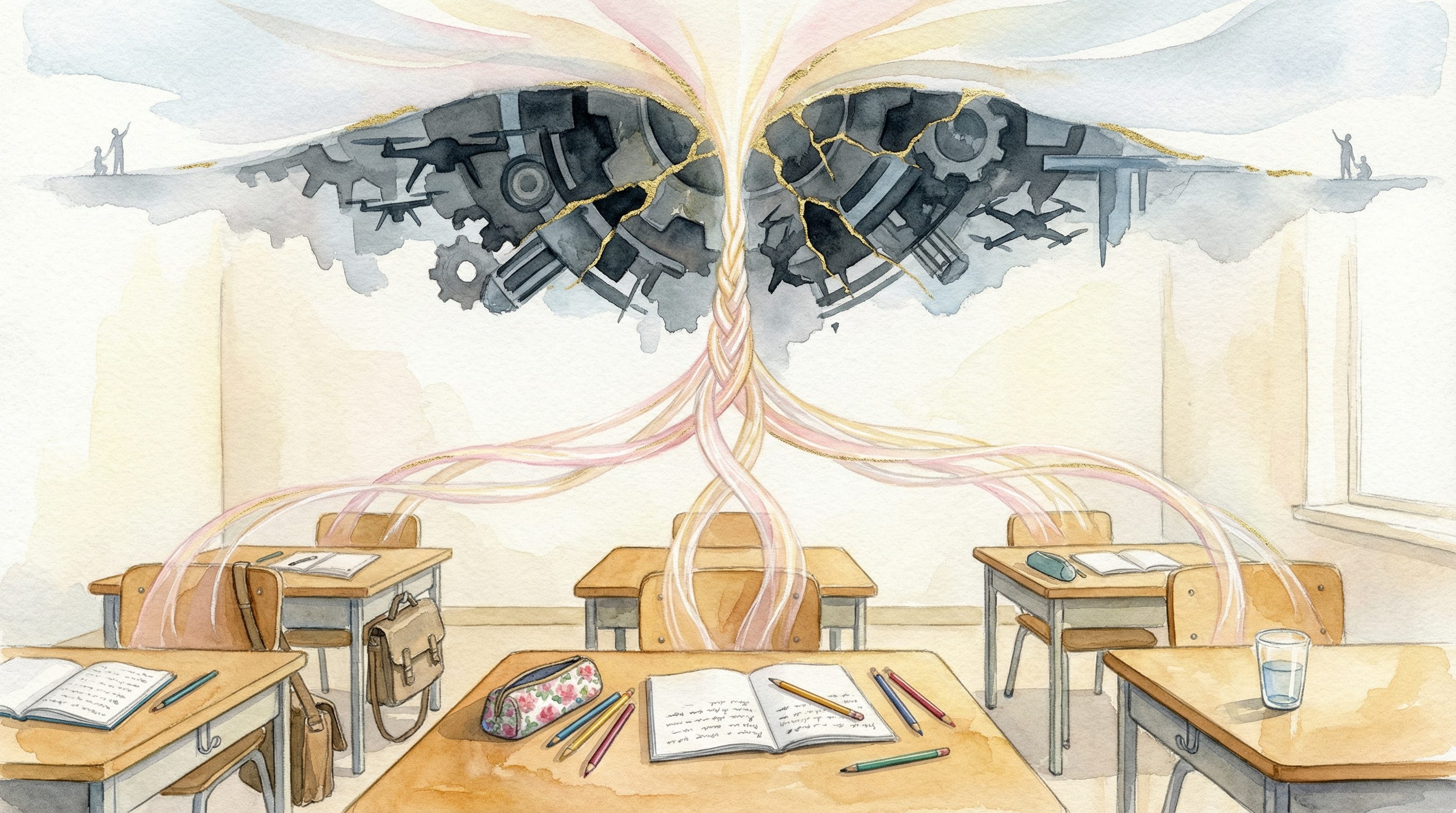
Young.
At the very beginning of their lives.
Not on a battlefield — in a schoolhouse.
Not carrying weapons — carrying books.
Not making political statements — learning. Growing.
Looking forward to a future that was supposed to belong to them.
And then the bombs came.
The machinery of empire — the same empire that calls itself civilised, that lectures the world about human rights, that wraps its violence in the language of precision and necessity — dropped its ordnance on a school.
And those girls were taken.
Not because of anything they did.
Not because of any choice they made.
But because they existed — in the wrong place, at the wrong time, in the wrong country, under the wrong flag — in the eyes of an empire that has decided that Iranian lives are expendable.
They did not choose the battlefield.
The battlefield was brought to them.
They did not volunteer for shahadah.
Shahadah was imposed upon them.
And yet — and this is the profound and devastating truth — their testimony is no less powerful for being unchosen.
In some ways, it is more powerful.
Because the innocence of the shaheedat of Minab strips the empire of every excuse, every justification, every carefully constructed narrative about “strategic targets” and “acceptable losses.”
Their shahadah says:
Look at what this empire really is.
Look at what it does when it thinks no one is watching.
Look at the blood on its hands — the blood of children — and tell me again that it stands for justice.
Now — the world looks at these two testimonies and sees different categories.
The aged leader and the young students.
The political and the civilian.
The deliberate and the “collateral.”
But shahadah makes them one.
The root is the same.
The witness is the same.
Both testified — one with a lifetime of words and deeds, the other with a silence that screams louder than any speech — that this empire’s violence is illegitimate, and that standing in its path is itself an act of truth.
And here is the proof that the Qur’an is not speaking in metaphor when it says bal ahya’.
Look at what has happened in these forty days.
Look at what the blood of the shaheedat of Minab has done to the empire that spilled it.
It has become a catalyst.
It is shaking foundations that decades of diplomacy and negotiation could not shake.
The testimony of those girls — their innocence, their youth, the sheer obscenity of what was done to them — has pierced through every firewall of propaganda and reached the conscience of the world.
The empire meant to terrorise.
Instead, it testified against itself.
It handed the prosecution its most devastating exhibit.
The blood of the shaheed is a truth serum — and the empire was forced to swallow it.
بَلْ أَحْيَاءٌ عِندَ رَبِّهِمْ يُرْزَقُونَ
They are alive with their Lord, receiving provision.
— Qur’an, Surah Aal Imran (the Chapter of the Family of Imran) #3, Verses 169
They are alive.
And their testimony is working.
The Grammar of Witness: From the Ziyarat Arba’een
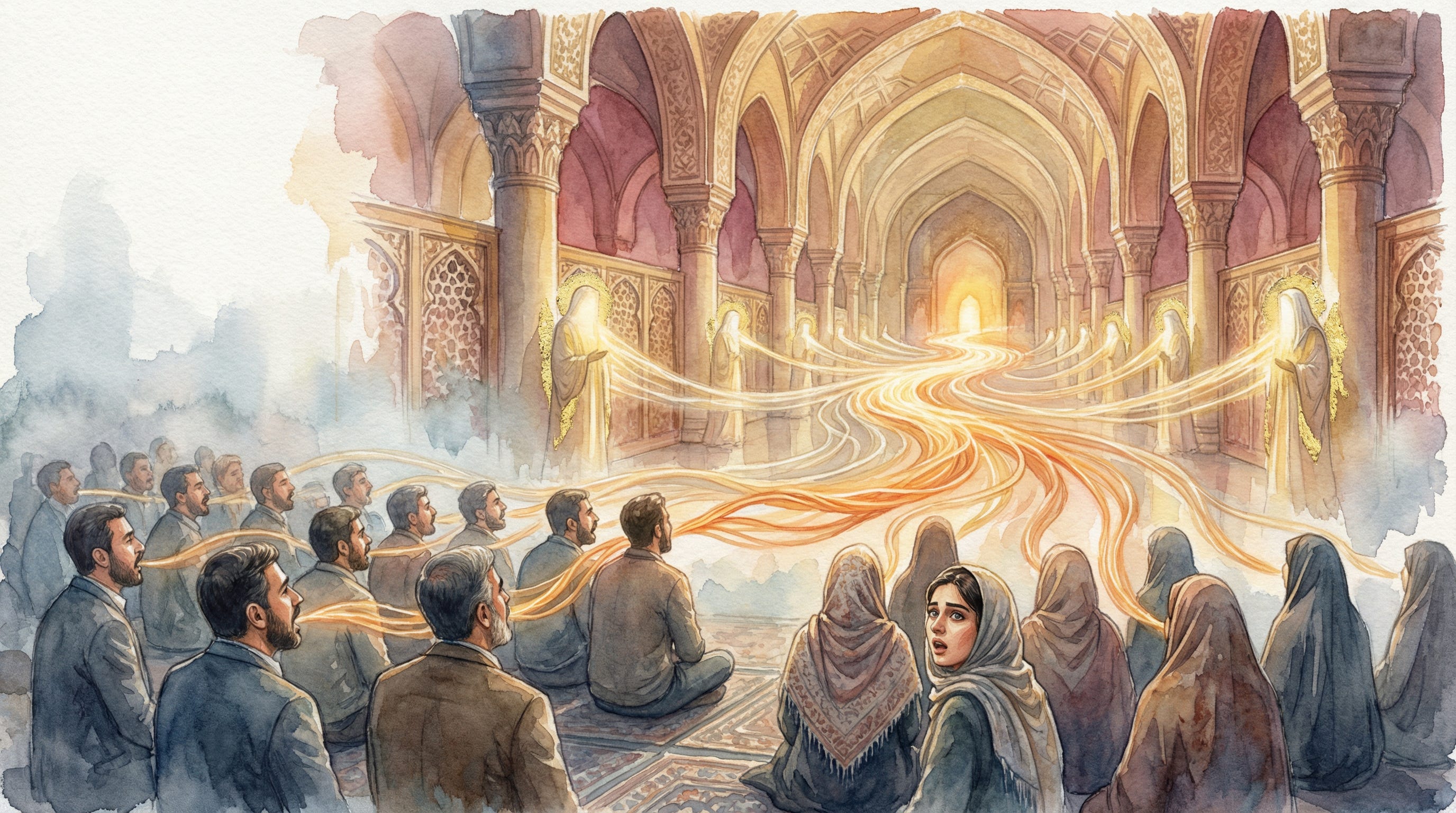
And so we come back — as we always do — to Imam Husayn.
Because every shahadah in history is a footnote to Karbala, and every arba’een is a reflection of the first.
From the Ziyarat Arba’een — attributed to Imam al-Sadiq, peace and blessings be upon on, transmitted through Safwan al-Jammal, and recorded in Kamil al-Ziyarat by Ibn Quluwayh and in Mafatih al-Jinan by Shaykh Abbas al-Qummi — we recite these words:
أَشْهَدُ أَنَّكَ قَدْ أَقَمْتَ الصَّلَاةَ وَآتَيْتَ الزَّكَاةَ وَأَمَرْتَ بِالْمَعْرُوفِ وَنَهَيْتَ عَنِ الْمُنكَرِ وَأَطَعْتَ اللَّهَ وَرَسُولَهُ حَتَّىٰ أَتَاكَ الْيَقِينُ
“I bear witness that you established the prayer, gave the zakat, enjoined the good, forbade the evil, and obeyed God and His Messenger until certainty came to you.”
— Ziyarat Arba’een
I want you to hear the verb.
أَشْهَدُ
I bear witness.
I testify.
Not:
I remember you.
Not:
I honour you.
Not:
I mourn you.
أَشْهَدُ
I bear witness.
When we recite this ziyarah — and we will recite a ziyarah together at the end of this programme tonight — we are not performing an act of nostalgia.
We are not simply paying our respects to someone who died a long time ago.
We are entering the chain of witness.
We are adding our voices to the testimony.
The shaheed testified with their blood.
We testify with our words — ashhadu.
With our presence — we are here, tonight, forty days on, and we have not forgotten.
With our commitment — we say: you established the prayer, you enjoined the good, you forbade the evil, and we see it, we affirm it, we carry it forward.
The grammar of the ziyarah does not allow passivity.
The word ashhadu makes us participants.
It makes us witnesses.
It pulls us out of the audience and into the courtroom.
And once you are in the courtroom, once you have said ashhadu, you cannot pretend you did not see what you saw.
Which brings us to the question — and this is where our session turns for the final time, God willing.
Lesson for Today
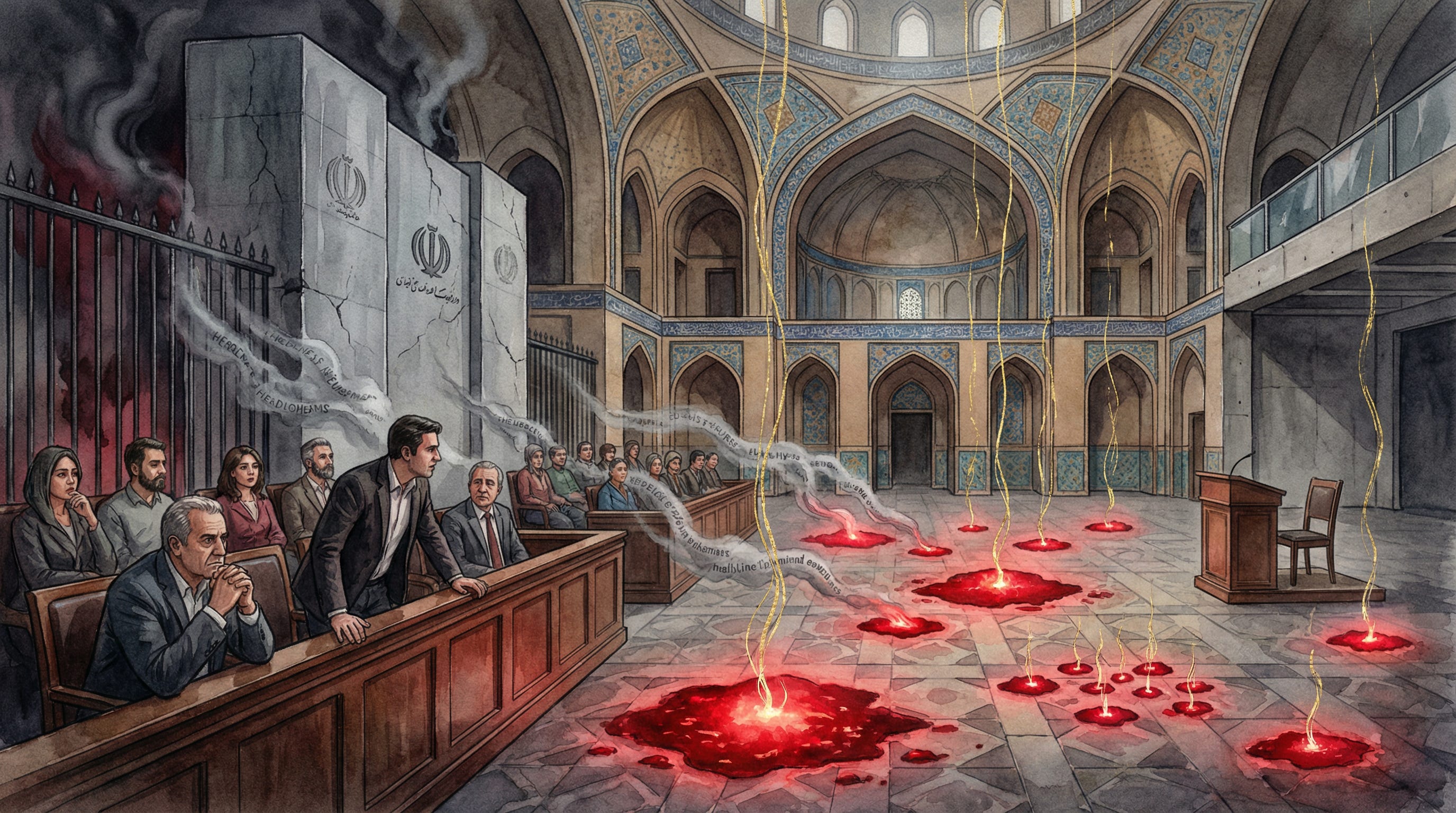
The shaheed’s testimony is not complete until someone receives it.
A witness who speaks to an empty courtroom has testified — yes — but justice requires a jury.
The testimony requires someone to hear it, to weigh it, to act upon it.
Tonight, you are the jury.
The blood of Imam Khamenei.
The blood of the girls of Minab.
The blood of Hajj Qassem.
The blood of Hajj Emad.
The blood of Sayyed Hassan.
The blood of Sayyed Hashem.
The blood of every shaheed in this unbroken chain that stretches from Habil to this very night — it has been presented as evidence.
It has been placed before you.
You have heard it.
You have seen it.
You have wept over it.
The question is not whether you heard the testimony.
You did.
You are here.
You heard it.
The question is:
What is your verdict? And what will you do with it?
Because a jury that hears the evidence and then goes home and does nothing — that is not a jury.
That is a spectator.
And the blood of the shaheed was not spilled for spectators.
Learn their names.
Learn their stories.
When the empire’s media erases them — when it calls its bombs “precision strikes” and its victims “collateral damage” and its wars “operations” — your duty, your minimum duty, the floor beneath which you cannot fall, is to say their names and tell the truth of what happened.
This is the most basic act of witness.
And even this — even this small thing — the empire fears.
Because the empire’s power depends on your silence.
And the shaheed’s testimony depends on your voice.
Point 3: The Duty of the Witness
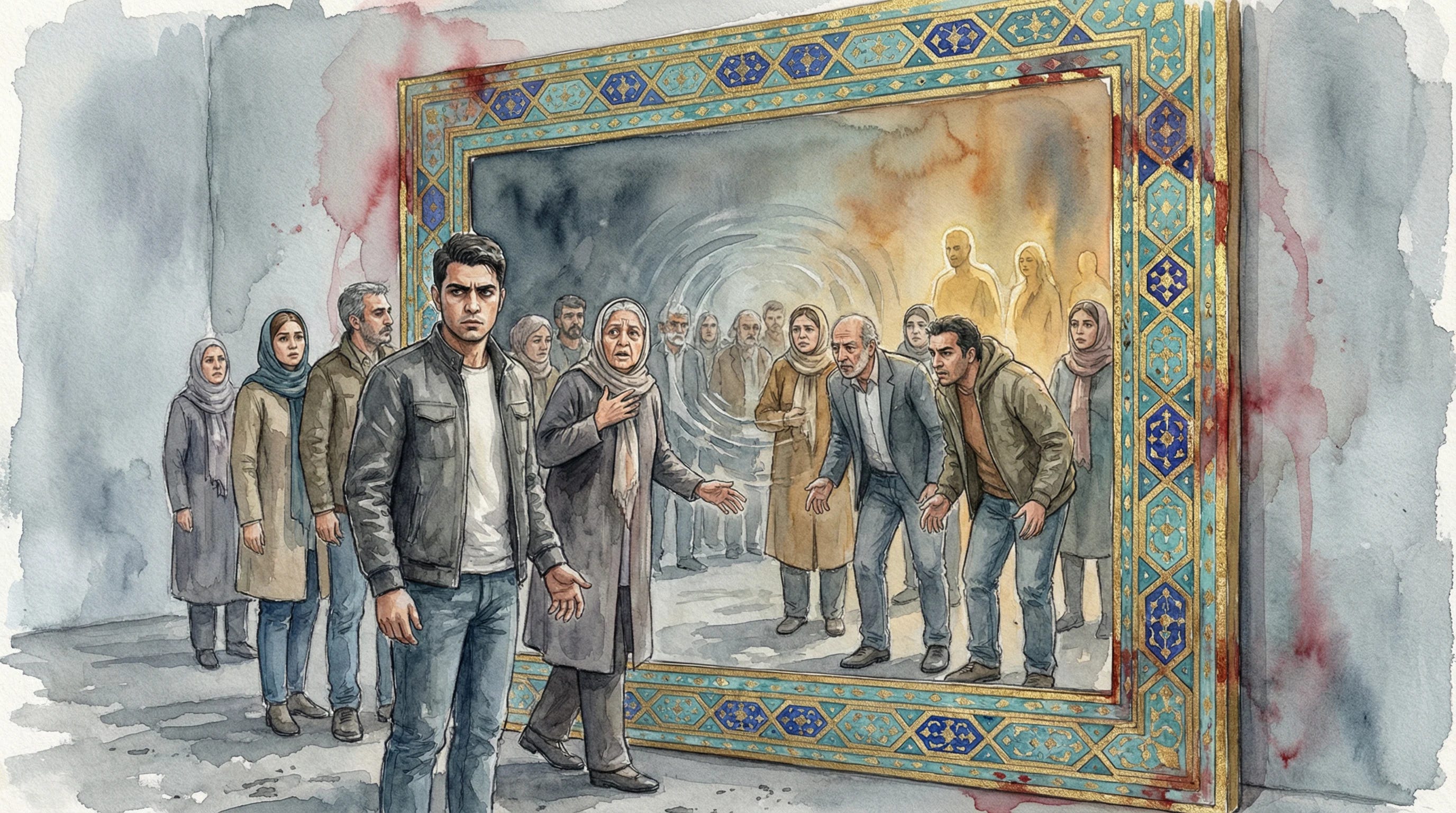
So now we come to it.
The question that this entire evening has been building toward.
We have spoken about the forty — the crucible that transforms or exposes.
We have spoken about the shaheed — the one who sees the truth and testifies to it with their blood.
And now we must speak about ourselves.
Because there is a word we have not yet addressed tonight.
We have spoken about the shaheed — the one who testifies.
But the Arabic root gives us another word, equally important, equally binding:
Shahid. شَاهِد.
The shaheed is the one who testifies with their life.
The shahid is the one who witnesses the testimony.
The one who was there.
The one who saw.
The one who heard.
That is us.
We witnessed the martyrdom of our leader.
We witnessed the killing of the girls of Minab.
We saw the images.
We heard the news.
We felt the blow.
And by witnessing it — whether we chose to or not — we entered the chain.
We became shahid.
Witnesses.
And with that word comes a duty that we cannot escape — not by grief, not by silence, not by pretending we did not see what we saw.
The shaheed has spoken.
Their testimony is sealed.
It is complete.
It is incorruptible.
The question now is:
What do we — the witnesses — do with it?
The Paradigm: Sayyedah Zaynab — The First Transmitter
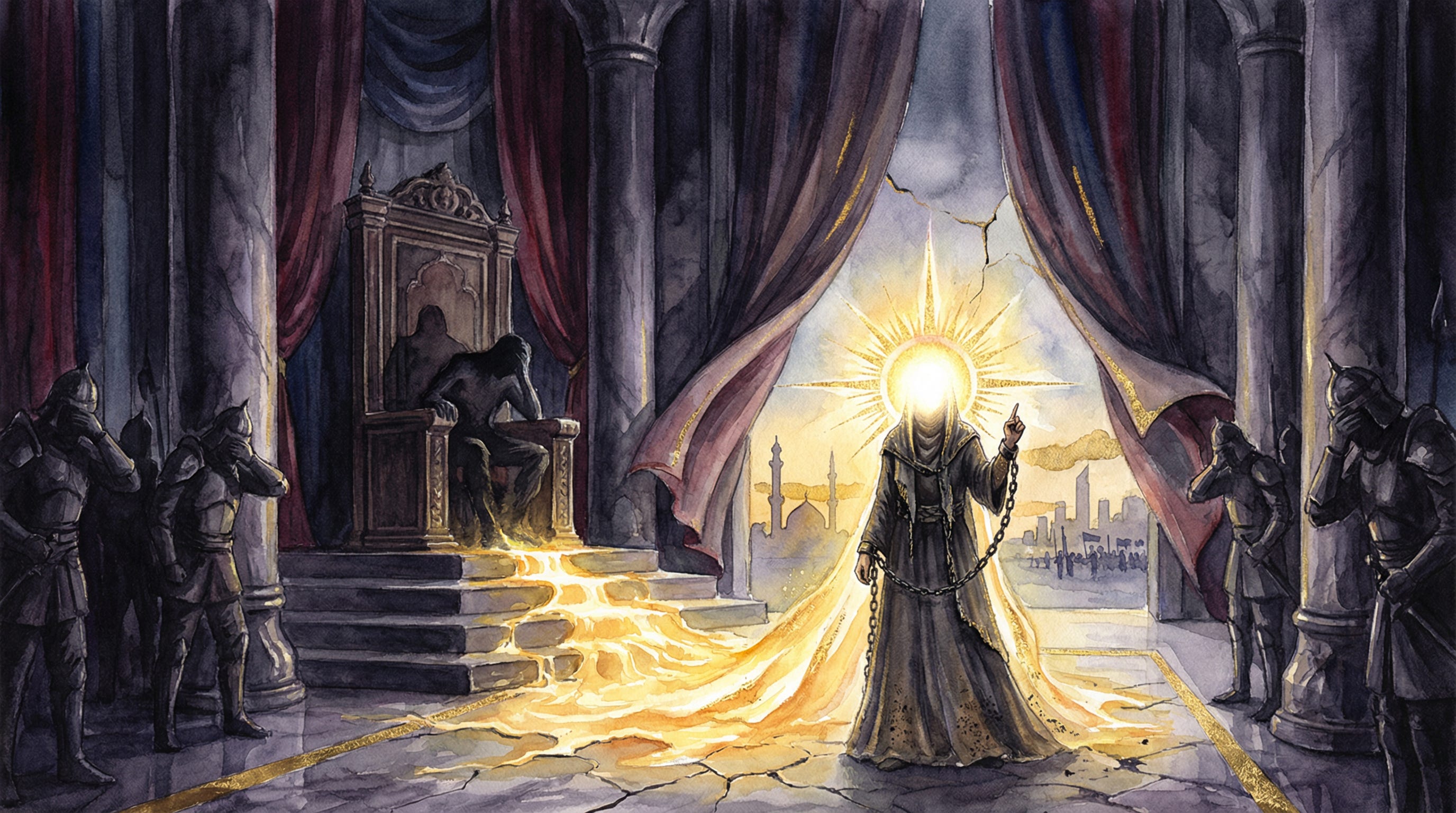
To understand our duty, we must go back to the one who defined it.
The one who stood at the very first crossroads between grief and testimony and chose — against every pressure, every threat, every instinct of self-preservation — to speak.
Sayyedah Zaynab, peace and blessings be upon her.
After Karbala, everything invited silence.
Imam Husayn and his companions had given everything.
The men were slain.
The tents were burned.
The family of the Prophet — the women, the children, Imam Zayn al-Abidin who was barely alive with fever — were chained and dragged from Karbala to Kufa, from Kufa to Sham.
Every circumstance said:
Submit.
Be quiet.
Accept what has happened.
Grieve in private.
Do not provoke the tyrant further.
Sayyedah Zaynab refused all of it.
In the court of Ibn Ziyad in Kufa — she spoke.
In the streets, as the people watched the captives pass — she spoke.
And then, in the palace of Yazid himself, in the capital of the empire that had just murdered her brother, she stood — a woman in chains, in the seat of power of the most powerful man in the world — and she said:
أَظَنَنْتَ يَا يَزِيدُ حَيْثُ أَخَذْتَ عَلَيْنَا أَقْطَارَ الْأَرْضِ وَآفَاقَ السَّمَاءِ فَأَصْبَحْنَا نُسَاقُ كَمَا تُسَاقُ الْأُسَارَى أَنَّ بِنَا هَوَانًا عَلَى اللَّهِ وَبِكَ عَلَيْهِ كَرَامَةً
“Do you think, O Yazid, that by closing in on us from every direction of the earth and horizon of the sky, and by driving us like captives, that we are humiliated before God and that you are honoured before Him?”
And then — and these words should burn themselves into our hearts:
فَوَاللَّهِ لَا تَمْحُو ذِكْرَنَا وَلَا تُمِيتُ وَحْيَنَا
“By God, you shall never erase our memory, nor shall you extinguish our revelation.”
— Sayyedah Zaynab, as transmitted in Al-Ihtijaj by al-Tabarsi, Volume 2; Balaghat al-Nisa’ by Ibn Tayfur; and Bihar al-Anwar by Allamah al-Majlisi, Volume 45.
لَا تَمْحُو ذِكْرَنَا وَلَا تُمِيتُ وَحْيَنَا
You will never erase our memory. You will never kill our message.
Fourteen centuries have passed.
And what is the verdict?
Has Yazid erased their memory?
Has any Yazid — in any age, in any form — managed to extinguish the revelation of Prophet Muhammad that Imam Husayn died to protect?
The answer stands in every majlis, in every arba’een procession, in every tear shed for Karbala from Najaf to London to Jakarta to São Paulo.
The answer is walking through the streets of Iraq every year — twenty million strong.
The answer is sitting in this room tonight.
Sayyedah Zaynab was right.
And she was right because she did not merely believe the testimony would survive — she ensured it.
She became the vehicle.
She became the transmitter.
She took the blood of Imam Husayn and translated it into a voice that the empire could not silence — a voice that echoes still, a voice that will echo until the return of the Imam of our time.
This is what it means to be a witness.
Not to watch.
Not to mourn.
To transmit.
To take the testimony of the shaheed and carry it — through your voice, through your actions, through your life — into the world.
And this is our model.
This is the standard we are measured against.
Not:
Did you cry for the shaheed?
But:
Did you speak for them?
Did you carry their testimony forward?
Did you ensure that their blood was not spilled in vain?
Every generation needs its Sayyedah Zaynab.
Someone who receives the testimony and refuses to let it die in private grief.
Someone who speaks when the empire demands silence.
Someone who stands in the court of the oppressor — whatever form that court takes in their time — and says:
You will never erase our memory.
The question is whether this generation — our generation — will produce its Zaynabs.
Or whether we will be the ones who wept and then went home.
The Three Duties: Dhikr, Shahadah, Amal
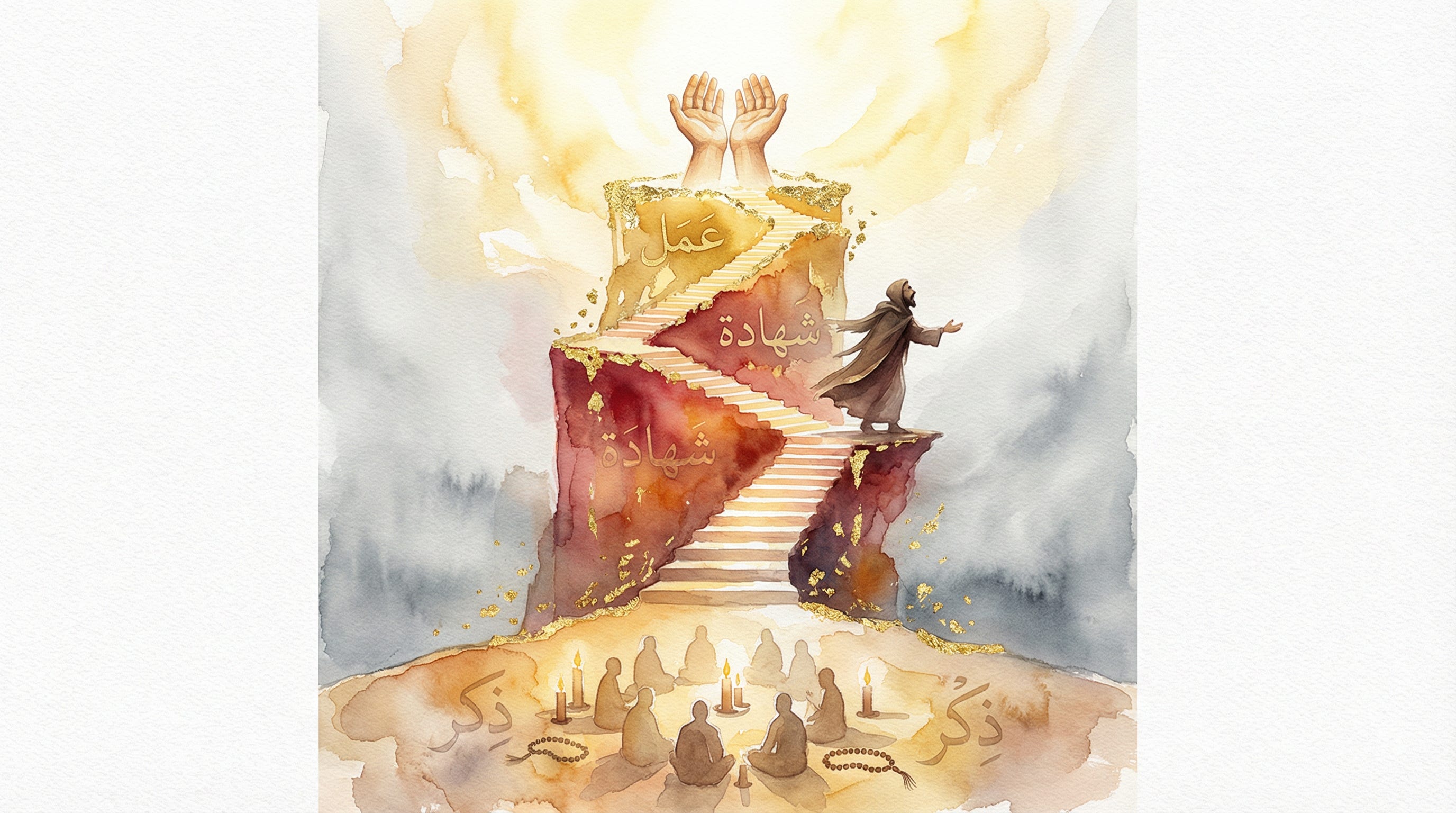
Let me give you a framework.
Because duty, to be real, must be specific.
It must have steps.
It must be something you can measure yourself against.
I want to present three levels of obligation — three tiers of what it means to be a witness.
Each one builds on the one before.
Each one is necessary.
And each one demands more than the last.
The First Duty: ذِكْر — Dhikr — Remembrance
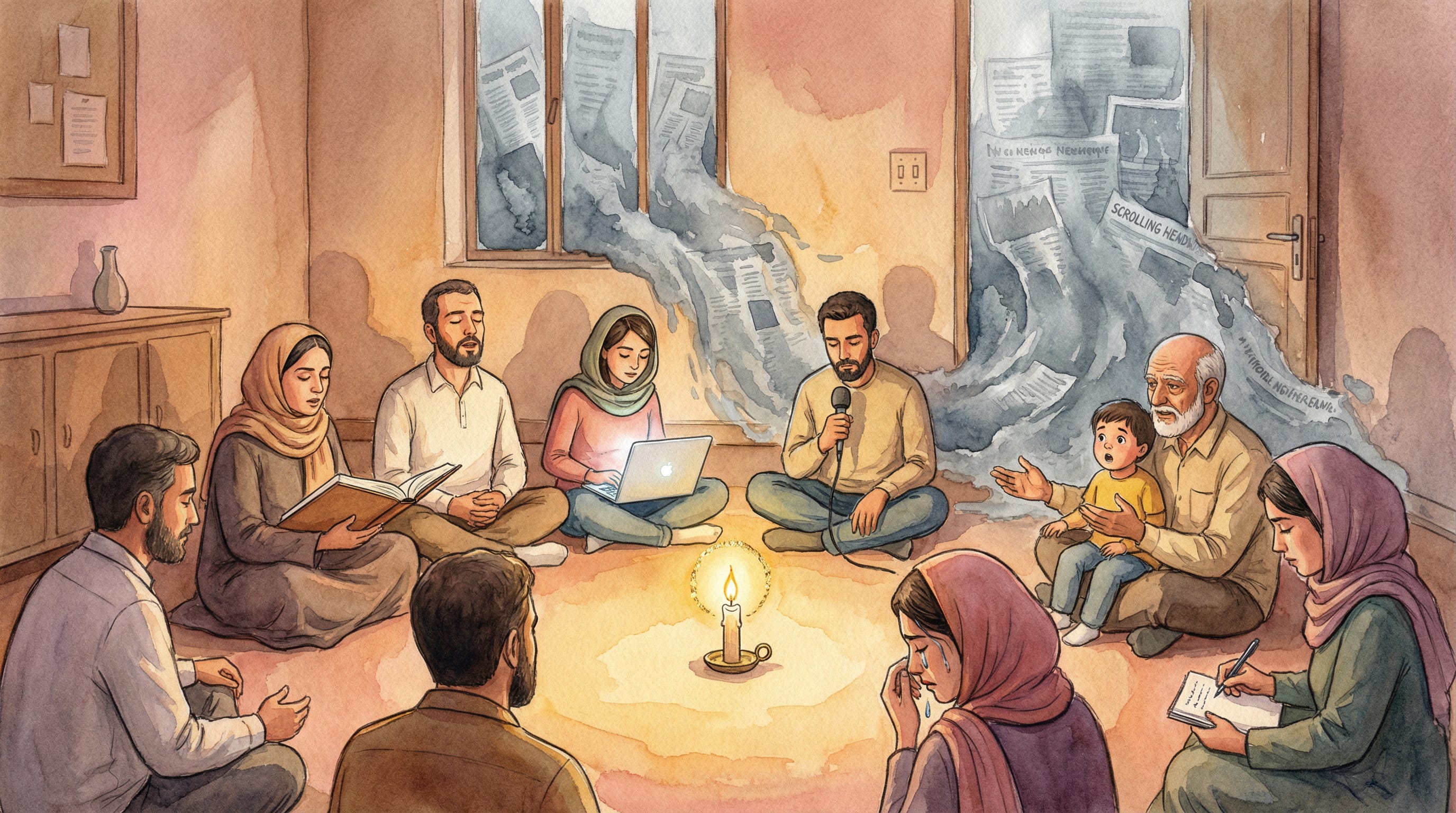
The most basic obligation of the witness:
Do not let them be forgotten.
Imam al-Sadiq, peace and blessings be upon him, said:
أَحْيُوا أَمْرَنَا رَحِمَ اللَّهُ مَنْ أَحْيَا أَمْرَنَا
“Keep our cause alive. May God have mercy on the one who keeps our cause alive.”
— Narrated in Wasail al-Shi’a by Shaykh al-Hurr al-Amili, Vol. 14; also in Amali of Shaykh al-Saduq.
Ihya’ amrina — keep our cause alive.
This is not passive nostalgia.
This is not putting up a poster once a year and feeling you have done your part.
The verb is ihya’ — to give life, to vivify, to make alive.
It is an active, ongoing, relentless commitment to ensuring that the memory of the shaheed remains alive in the hearts and minds of the community and the world.
And this is what we are doing tonight.
This gathering — this arba’een — is an act of dhikr.
The noha — lamentation hymn — that our brother Abdullah will share with us tonight, the tribute that our dear sister Roberta has prepared, the documentary that sister Fatema has made, the poems and words that members of this community will offer — all of this is dhikr.
All of this is ihya’.
All of this is keeping the cause alive.
And it matters.
It matters enormously.
Because the empire’s first strategy is always erasure.
Before it lies about the shaheed, it tries to make you forget them entirely.
It floods the news cycle.
It buries yesterday’s atrocity under today’s distraction.
It makes the twenty-four-hour news wheel turn so fast that the blood of last month’s martyrs is dry before anyone has time to ask what happened.
Dhikr is the refusal to let that happen.
It is the act of stopping the wheel.
Of saying: no.
We will not move on.
We will not forget.
We will say their names.
This is the floor.
It is necessary.
It is noble.
But — it is the floor.
Not the ceiling.
The Second Duty: شَهَادَة — Shahadah — Testimony
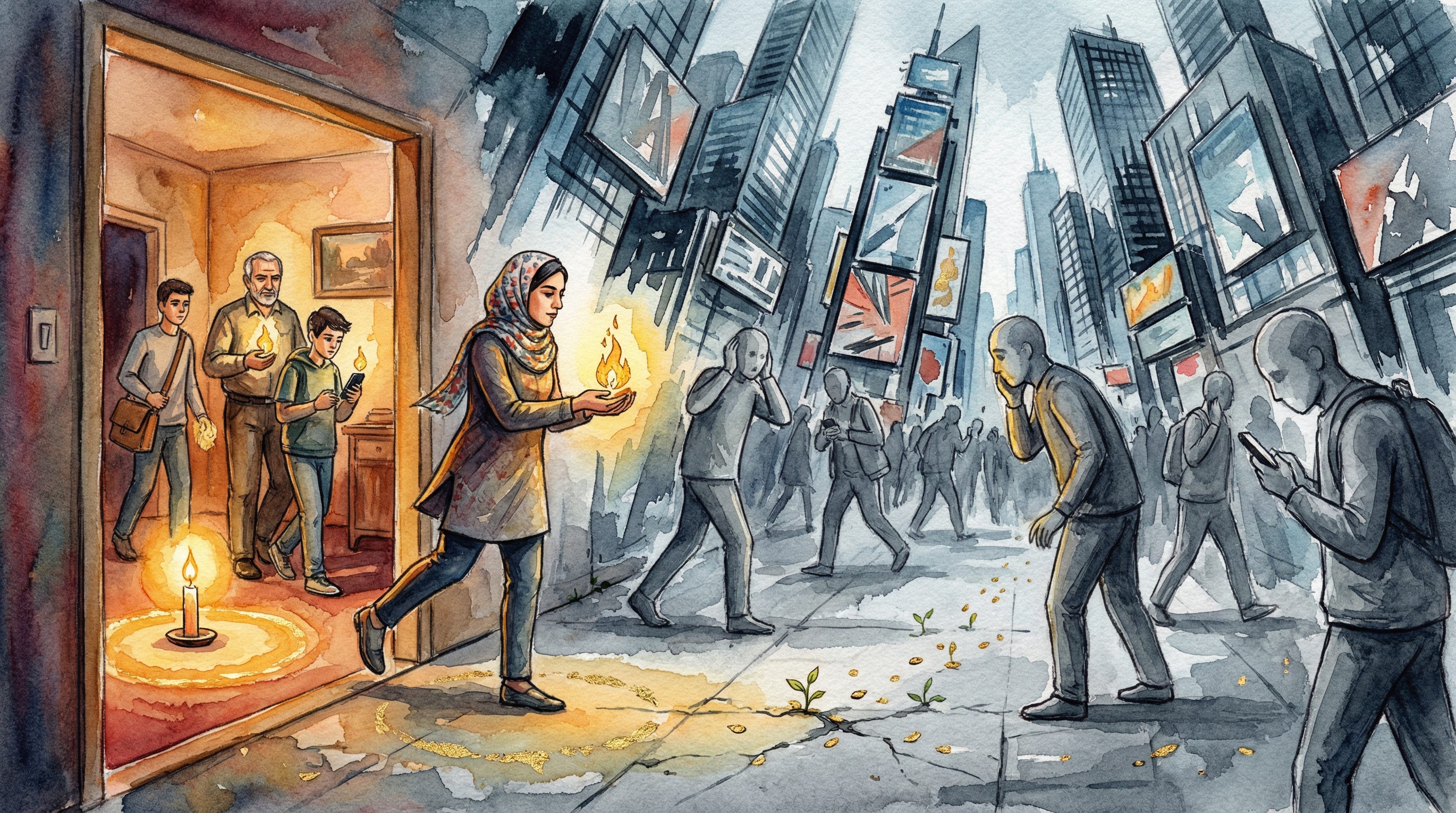
The intermediate obligation:
Carry their witness into the world.
God says in Surah Al-Baqarah:
وَلَا تَكْتُمُوا الشَّهَادَةَ ۚ وَمَن يَكْتُمْهَا فَإِنَّهُ آثِمٌ قَلْبُهُ
“And do not conceal testimony. Whoever conceals it — his heart is indeed sinful.”
— Qur’an, Surah Al-Baqarah (the Chapter of the Cow) #2, Verse 283
Listen to the weight of this verse.
وَلَا تَكْتُمُوا الشَّهَادَةَ
Do not conceal.
Do not suppress.
Do not bury.
The verb katama means to hide, to keep secret, to swallow down.
And the consequence?
فَإِنَّهُ آثِمٌ قَلْبُهُ — his heart is sinful.
Not his tongue.
Not his hand.
His heart.
The concealment of testimony corrupts the witness from the inside out.
Now — this verse is typically discussed in the context of legal testimony, of bearing witness in a court.
But its principle is universal, and tonight I want us to feel its universality.
Because we have witnessed something.
We have seen what happened to our leader.
We have seen what happened to the girls of Minab.
We have seen what this empire does in the dark while it lectures the world about light.
And the verse says:
If you have seen this, and you conceal it — if you remain silent when the truth requires your voice — then your heart is sinning.
Silence, in the face of what we have witnessed, is not neutrality.
It is not wisdom.
It is not pragmatism.
The Qur’an calls it what it is: a sin of the heart.
Shahadah — testimony — means carrying the shaheed’s witness beyond the walls of the majlis and into the world.
It means speaking the truth about what happened — in your conversations, in your communities, on your platforms, in your workplaces, in every space where the empire’s narrative goes unchallenged.
When the empire calls its bombs “precision strikes” — you say: they hit a school.
When the empire calls its victims “collateral damage” — you say their names.
When the empire calls its wars “operations” and its invasions “interventions” — you testify to what you saw.
Because you are a shahid.
You witnessed it.
And the Qur’an has told you: do not conceal what you witnessed.
And I want to share something with you here, because it is relevant and it is real.
Some of you may know that as part of our Truth Promoters network, we maintain a website — themartyr.net — whose sole purpose is exactly this: testimony.
Bearing witness.
Saying their names.
This website was first established years ago, after the martyrdom of Hajj Imad Mughniyeh, may God rest his pure soul.
It was an attempt to do what Sayyedah Zaynab did — to take the testimony of the shaheed and carry it forward, to chronicle their lives, to tell their stories, to ensure that the empire’s erasure machine would not succeed.
For various reasons — lack of support, lack of energy, the difficulties that come with swimming against the current — it went dormant for a period.
But the domain remained.
The seed was in the soil, waiting.
And now, God be praised, it continues.
And I mention this not to promote a website — but because it illustrates something important about shahadah.
The work of testimony is not glamorous.
It is not always met with support.
There are times when you will speak and no one will listen.
There are times when the audience is empty and the response is silence.
There are times when you will be mocked, or ignored, or worse.
But the duty remains.
وَلَا تَكْتُمُوا الشَّهَادَةَ
Do not conceal the testimony.
The verse does not say:
Bear witness only when it is convenient, only when you have an audience, only when the empire is not watching.
It says:
Do not conceal it. Period.
The shaheed did not ask whether the timing was right before they testified.
The shaheed did not check the analytics.
The shaheed did not wait for a critical mass of support.
They saw the truth, and they spoke — with their blood.
And we are being asked to speak with far less cost.
Just our voices.
Just our presence.
Just our refusal to be silent.
The Third Duty: عَمَل — Amal — Action — Living Testimony
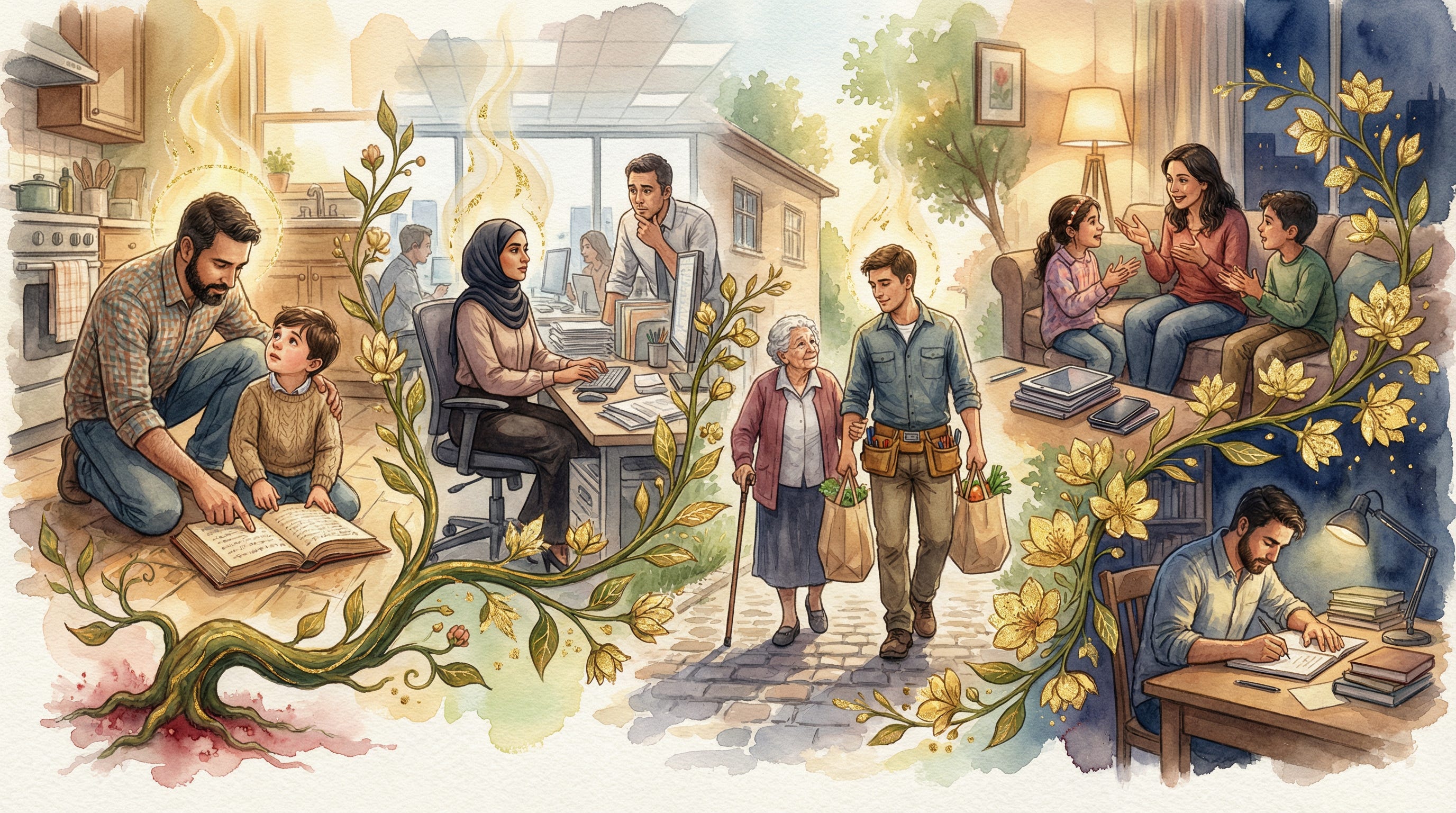
The highest obligation:
Shape your life around the values the shaheed died for.
This is attributed to Imam Ja’far al-Sadiq, peace and blessings be upon him — and in some transmissions to Imam al-Baqir, peace and blessings be upon him — as narrated in Al-Kafi by Shaykh al-Kulayni, in the chapter on truthfulness, and by Hurr al-Ameli in Was’ail al-Shia in the book of jihad, the chapter on truthfulness and obligation of piety:
كُونُوا دُعَاةً لِلنَّاسِ بِغَيْرِ أَلْسِنَتِكُمْ لِيَرَوْا مِنْكُمُ الِاجْتِهَادَ وَالصِّدْقَ وَالْوَرَعَ
“Be callers to the people without your tongues — let them see from you striving, truthfulness, and piety.”
— Al-Kulayni, Al-Kafi, Volume 2, Chapter on Truthfulness and Returning the Trust, Page 105, Hadith 10; Hurr al-Ameli, Wasa’il al-Shia, Book of Jihad, Chapter on the Obligation of Piety, Volume 15, Page 246, Hadith 20387
بِغَيْرِ أَلْسِنَتِكُمْ — Without your tongues.
Not through speeches.
Not through sermons.
Not through posts and shares and hashtags. Through your life.
Through what people see when they watch you.
Through the striving — al-ijtihad.
The truthfulness — al-sidq.
The piety — al-wara’.
This is the highest form of testimony.
And it is the one that most of us find the hardest — because it does not allow for performance.
It does not allow for the gap between what we say and what we do. It demands that our daily lives — our actual, mundane, ordinary lives — become the evidence.
And this is where the arba’een transformation from Point 1 comes full circle.
Remember what we said: the forty is a crucible.
It does not merely invite change — it demands it.
You entered this forty as a mourner.
The question is:
What do you emerge as?
If Imam Khamenei spent his life building a society grounded in Islamic governance, justice, and resistance to empire — what are you building?
And I don’t mean building a state.
I mean: in your home, in your family, in your workplace, in your community — what are you building?
Is it aligned with the values he died defending?
Or have you compartmentalised him — honouring his memory on Saturday nights and living by a different set of values the rest of the week?
If the girls of Minab went to school because they believed in a future — what future are you working toward?
Are you educating your children with the same hope, the same commitment to knowledge, the same belief that learning matters even when the bombs are falling?
Or have you surrendered your children’s minds to the empire’s entertainment machine and called it pragmatism?
These are not rhetorical questions.
These are the questions that amal — living testimony — demands we answer.
Not with words.
With choices.
With the actual, observable shape of our lives.
What It Means to Be a Witness Today
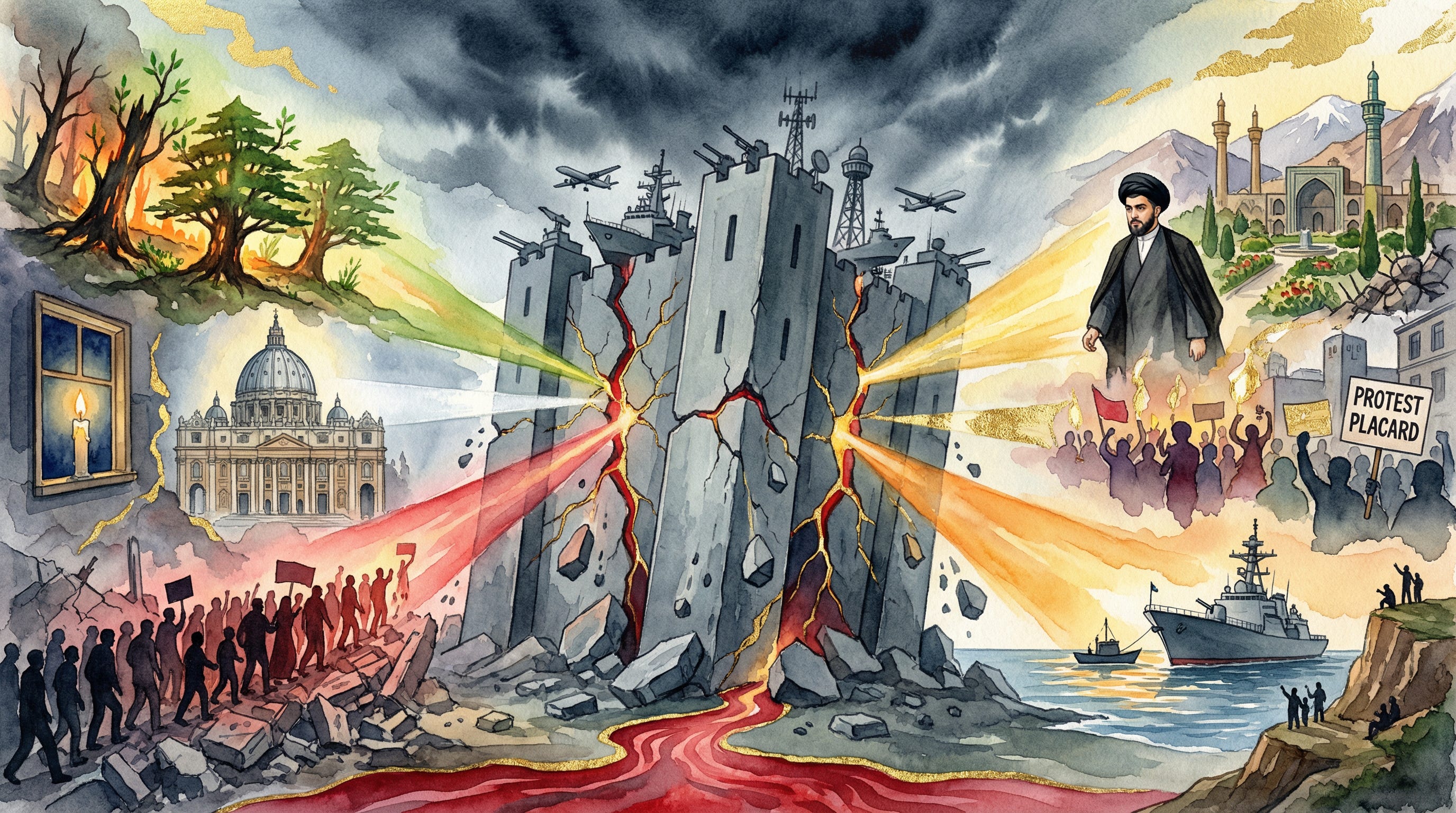
Let me make this concrete.
Because I do not want anyone to leave tonight thinking this is abstract — thinking this is beautiful theology that applies to someone else, somewhere else, in some other time.
This is about you.
Here.
Now.
Tomorrow morning.
In the age of information warfare — being a shahid means refusing the empire’s framing.
It means catching yourself when you use their language — when you say “conflict” instead of “aggression,” when you say “tensions” instead of “occupation,” when you say “both sides” when there is a bomber and a school.
It means correcting the record, not once in a dramatic moment, but consistently, patiently, in every conversation where the truth is being bent.
In the age of distraction — being a shahid means refusing to let the news cycle bury them.
The empire’s strategy is not always to lie.
Sometimes it is simply to move on.
To flood the feed with the next outrage, the next scandal, the next spectacle, until yesterday’s atrocity feels like ancient history and last month’s martyrs are forgotten.
Your duty is to resist that current.
To be the one who says — no, we are still talking about this.
We are still talking about Minab.
We are still talking about Gaza.
We are still talking about Lebanon.
We have not moved on.
We will not move on.
In the age of helplessness — and this is perhaps the most important — being a shahid means refusing despair.
Because despair is the empire’s most powerful weapon.
More powerful than its bombs, more powerful than its propaganda.
If it can make you believe that nothing will change, that resistance is futile, that the machine is too big and too strong — then it has silenced you more effectively than any censorship ever could.
But the shaheed’s testimony is inherently hopeful.
Think about it.
The shaheed testified because they believed the truth matters.
They gave their life because they believed — with a certainty that survived the approach of death itself — that the truth will prevail.
To despair is to contradict their witness.
To give up is to say: you died for nothing.
And we know — by the Qur’an, by the evidence of history, by the testimony of every shaheed from Habil to tonight — that they did not die for nothing.
So do not despair.
The empire looks strong.
It always looks strong.
Yazid looked strong.
Pharaoh looked strong.
Every oppressor in history looked strong — right up until the moment they didn’t.
And what brought them down was never a bigger army.
It was a testimony that would not die.
It was a people who refused to be silent.
It was a Sayyedah Zaynab who stood in the court and said:
You will never erase our memory.
And if you want proof that the testimony is working, you do not need to open a history book.
You need only open your eyes.
Look at what has unfolded in our lifetime.
The people of Gaza — besieged, starved, bombed, caged for decades — chose to no longer be forgotten.
They became their own shahideen.
They made their own amal.
They stood — with almost nothing — against one of the most heavily armed regimes on earth and said:
We will not go quietly.
We refuse to be erased.
And they did not stand alone.
Their brethren in Lebanon rose — and gave sacrifices so monumental that history will spend generations reckoning with what Hizbullah offered on the altar of Palestine.
Their brethren in Yemen — a people themselves ravaged by years of war, by the schemes of puppet regimes doing the bidding of the empire and its allies — Yemen, battered and bleeding, stood up and blockaded the sea lanes of the oppressor.
With almost nothing.
Against the mightiest navy in the world.
And they have not blinked.
And Iran. Iran that has borne forty-seven years of crippling sanctions — forty-seven years — simply for refusing to let the Palestinian cause go quietly into the night.
Iran that has buried its generals, its scientists, its leaders — one after another, assassination after assassination — and has not broken.
Iran that is being bombed, as we sit here tonight, by an empire that fires its own generals for warning against war crimes, and whose leader speaks to the world in a language so vulgar, so unhinged, so devoid of any pretence of civilisation, that even those who once called themselves his allies are turning away in disgust.
And when the empire struck the highest branch — when it took from us the Wali al-Faqih himself — what happened?
Did the institution collapse?
Did the project of Islamic governance crumble without its leader, as the empire’s strategists no doubt prayed it would?
No.
Within a week — one week — the Assembly of Experts had appointed Imam Sayyed Mujtaba al-Khamenei as the new leader, the new Wali al-Faqih.
And he has risen to that trust.
He is working.
He is struggling.
He is teaching.
He is standing firm on the path of his father — and the path of his forefathers, the Ahlul Bayt, peace and blessings be upon them all.
The chain did not break.
We said this in The Unbroken Chain, and the evidence stands before us: the wilayah continues, the testimony continues, the resistance continues.
The empire took the man — and the institution answered within days.
That is not weakness.
That is a civilisation that has built something the empire cannot comprehend — because the empire builds on individuals and interests, and the wilayah is built on covenant and divine promise.
Listen to how the empire speaks now.
Not with the measured confidence of the powerful — but with the desperate, flailing obscenity of a bully who can feel the ground shifting beneath him.
That is not the language of strength.
That is the language of an order that is coming apart.
When a man must threaten war crimes openly, when he must scream his threats into the void because his whispered commands no longer produce obedience — that man is not in control.
He is in freefall.
And it is not only the Muslims who see it.
When the leader of over a billion Catholics — the Pope himself — looks at the empire’s ambassador and says:
God does not hear the prayers of those who wage war, whose hands are stained with blood
— something has shifted in the world.
The testimony of the shuhada has reached ears that the empire thought were permanently closed.
Consciences that were meant to stay asleep are waking up.
The witness is spreading — beyond the ummah, beyond the borders the empire built to contain it.
And all the while — and we must never let this slip from our sight, not for a single day — the children of Gaza still starve.
The mothers and fathers and elders of Gaza still endure a genocide that the world watches in real time on its screens and struggles to stop.
The machinery of death has not stopped.
The testimony is not yet complete.
The trial is still in session.
But the verdict is coming.
It is coming because the shaheed’s blood does not dry.
It does not fade.
It does not become yesterday’s news.
It accumulates.
It testifies.
And the courtroom of history has never — not once — returned a final verdict in favour of the oppressor.
So do not despair.
Do not look at the bombs and the sanctions and the vulgarity of the powerful and conclude that nothing can be done.
Everything that is happening — from Gaza to Yemen to Lebanon to Iran to the crumbling alliances of the empire — all of it began with a people who refused to be silent.
All of it began with testimony.
All of it began with someone — somewhere — saying:
وَلَا تَكْتُمُوا الشَّهَادَةَ
Do not conceal what you have witnessed.
The Story of This Room
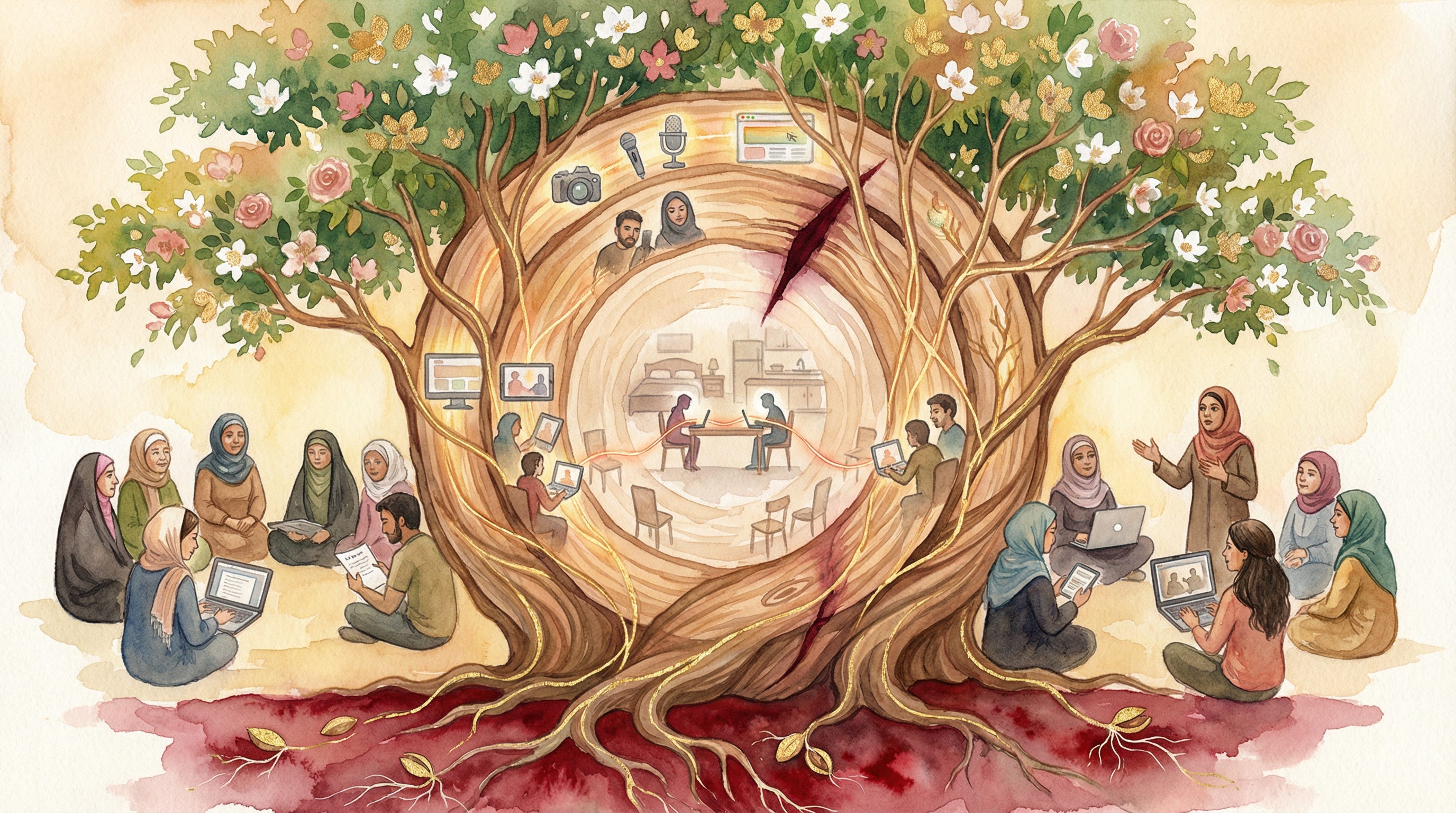
And I want to say one more thing before we close this point — and this is not from a book or a hadith.
This is about us.
About this gathering.
About how we came to be sitting here tonight.
This group — Truth Promoters — did not begin with a strategic plan.
It did not begin with funding or institutional support or a grand vision.
It began the way most true things begin: with grief, and with the refusal to let grief be the final word.
After the martyrdom of Hajj Qassem Soleimani — may God rest his pure soul — a small group of believers found each other.
We were scattered.
We were hurting.
Some of us had known Hajj Qassem personally — as a teacher, a mentor, someone who moved us toward God with a gentleness that belied the ferocity of his commitment on the battlefield.
And we needed — simply needed — to be together.
To console each other.
To make sense of what had happened.
So we started talking.
On Saturday calls.
On Zoom, on Jitsi, on Telegram — whatever platform would hold us.
And the attendance, brothers and sisters — I will be honest with you — there were sessions where it was two people.
Two.
Just two believers, on opposite sides of the same house, on their separate devices, refusing to let the conversation die.
That is what we started with.
Not a movement.
Not a programme.
Two people and an internet connection and a refusal to be silent.
And then — slowly, painfully, with setbacks and long stretches of almost nothing — others joined.
The genocide in Gaza awakened something.
The martyrdom of Sayyed Hassan Nasrallah in September 2024 — may God rest his pure soul — was a blow that could have broken us, but instead it sharpened us.
We began recording.
We began teaching.
We began building — the sessions, the websites, the resources, the network.
Themartyr.net was revived.
This programme — our Wednesday Majalis, our Saturday Majalis — was born.
Why am I telling you this?
Not for credit.
Not for history.
I am telling you this because it is the proof of what I have been saying tonight.
The testimony of the shaheed works.
It transforms.
It transmits.
It takes two grieving believers on their laptops and — over time, with patience, with the help of God — it builds something.
Not because they were special.
Not because they had resources or connections or support.
But because they received the testimony and refused to conceal it.
وَلَا تَكْتُمُوا الشَّهَادَةَ
Do not conceal what you have witnessed.
And look at where we are tonight.
An arba’een gathering.
A community.
A sister who has never formally entered Islam, preparing a tribute with love.
A brother whose hymn will shake this room.
A young woman who has produced a documentary with skill and devotion.
And you — every one of you — who chose to be here, on a Saturday evening, forty days on, to say:
We have not forgotten. We will not forget.
This is what happens when you receive the testimony and act on it.
Not grand things.
Real things.
Small things that grow.
Seeds that become trees — and if you are hearing an echo of our brother Abdullah’s noha, you are hearing correctly.
Lesson for Today
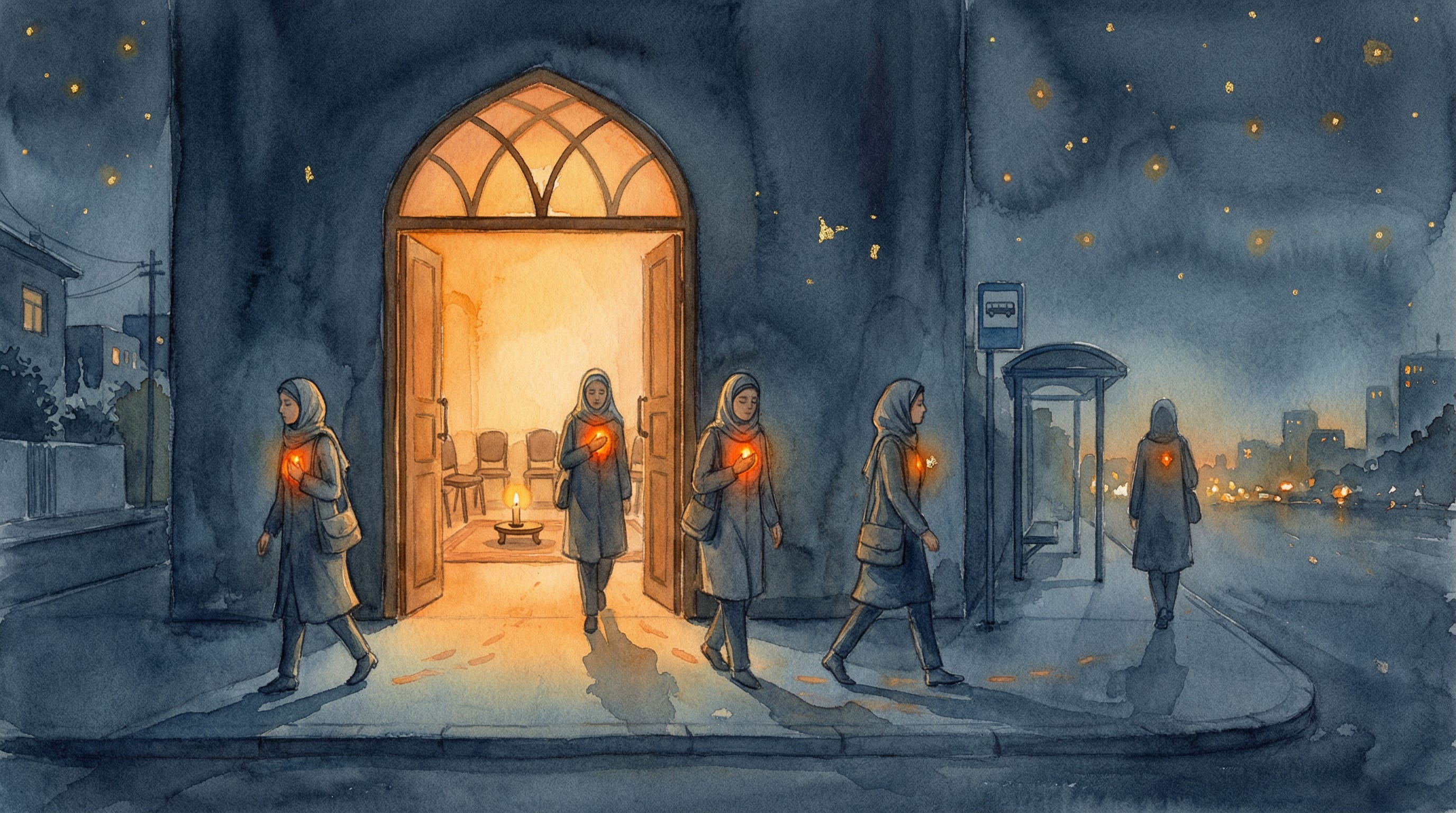
The most dangerous thing an empire can face is not a martyr.
Empires have always killed.
They are experts at killing.
They have built entire economies around killing.
Another body does not frighten them.
What frightens them — what keeps the strategists awake, what the intelligence agencies write their reports about — is a people who received the martyr’s testimony and refused to be silent.
That is what Sayyedah Zaynab built in the court of Yazid.
That is what the arba’een produces — every year, in every generation, in every corner of the ummah.
That is what a handful of believers on a Saturday call can become, by the grace of God, if they refuse to let the testimony die.
And that is what you are being called to become tonight.
Not mourners — witnesses.
Not an audience — transmitters.
Not spectators at a trial — the jury, the advocates, the ones who carry the evidence out of the courtroom and into the world.
The shaheed has spoken.
Their testimony is complete.
It is sealed.
It is alive with God and it is working in this world — you can see it working, right now, in the crumbling of the empire’s legitimacy, in the awakening of consciences across the globe.
Now it is your turn.
Before you leave this gathering tonight — before you step out of this room and back into the world that the shaheed’s blood is trying to change — decide:
What will your testimony be?
Not in grand gestures.
Not in dramatic sacrifices.
In daily life.
In what you read.
In what you share.
In what you teach your children.
In how you spend your money.
In where you direct your energy.
In the words you choose when someone asks you what happened.
In the refusal to look away when looking away would be easier.
The shahadah of the shaheed was dramatic because it had to be.
Yours can be quiet — but it must be real.
Pick one thing.
One concrete thing.
And begin tomorrow.
In their name.
In honour of their blood.
As your testimony — your shahadah — that you received their witness, and you will not let it die.
A Supplication-Eulogy in Two Parts
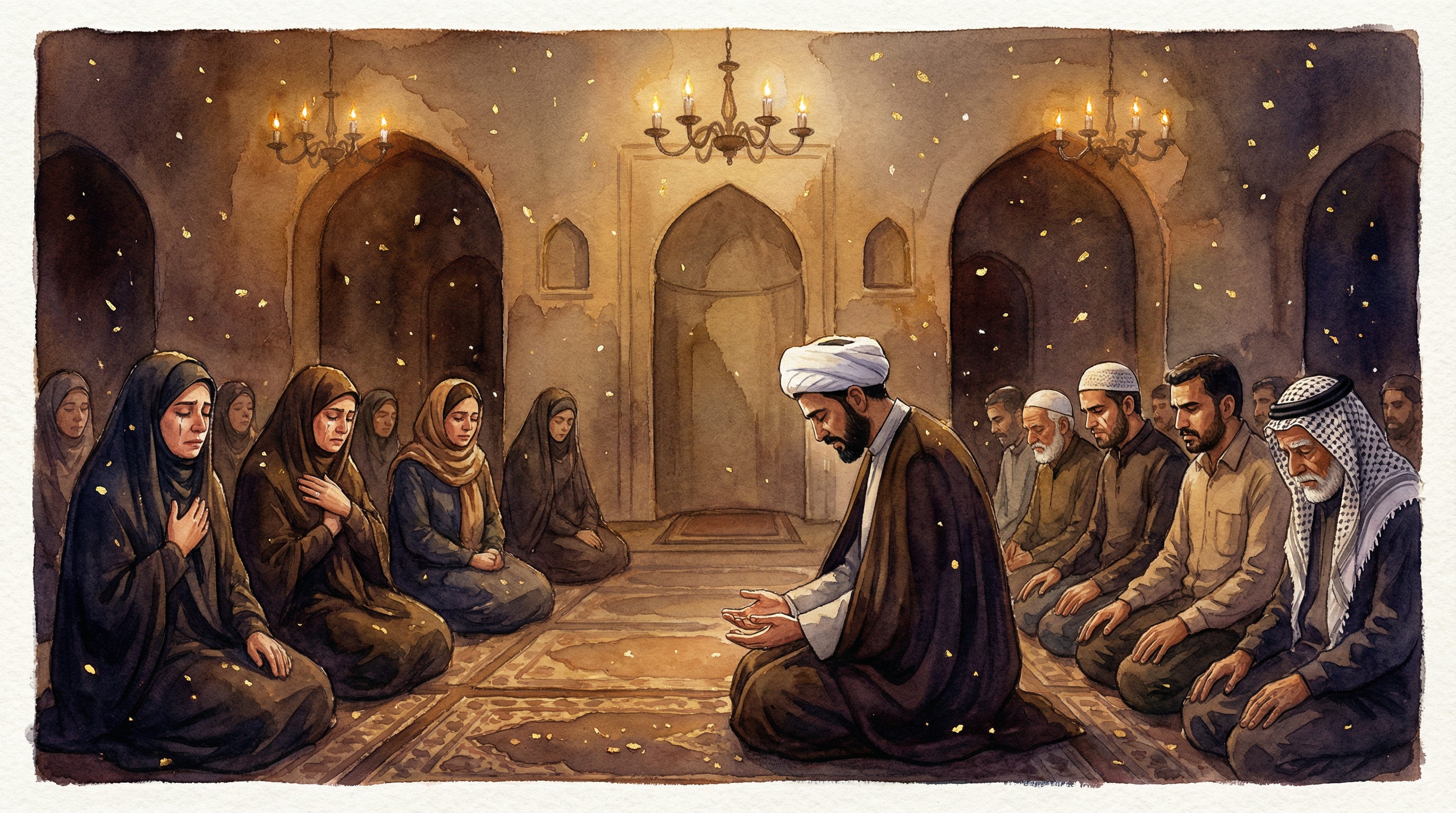
We have spoken tonight about the forty, and what it demands of us.
We have spoken about the shaheed, and what their blood is saying to the world.
We have spoken about our duty — as witnesses, as transmitters, as the ones who must carry the testimony forward.
Now I ask you to set all of that aside for a moment.
Not to forget it — you will carry it with you, God willing, when you leave tonight.
But to set it aside — because what I want to do now is not teach.
It is not argue.
It is not challenge.
What I want to do now is remember.
Simply remember.
To say their names.
To let their names fill this room. And then — together — to turn to the One who received them, and ask Him to make us worthy of what they gave.
Part 1: The Naming — المرثية
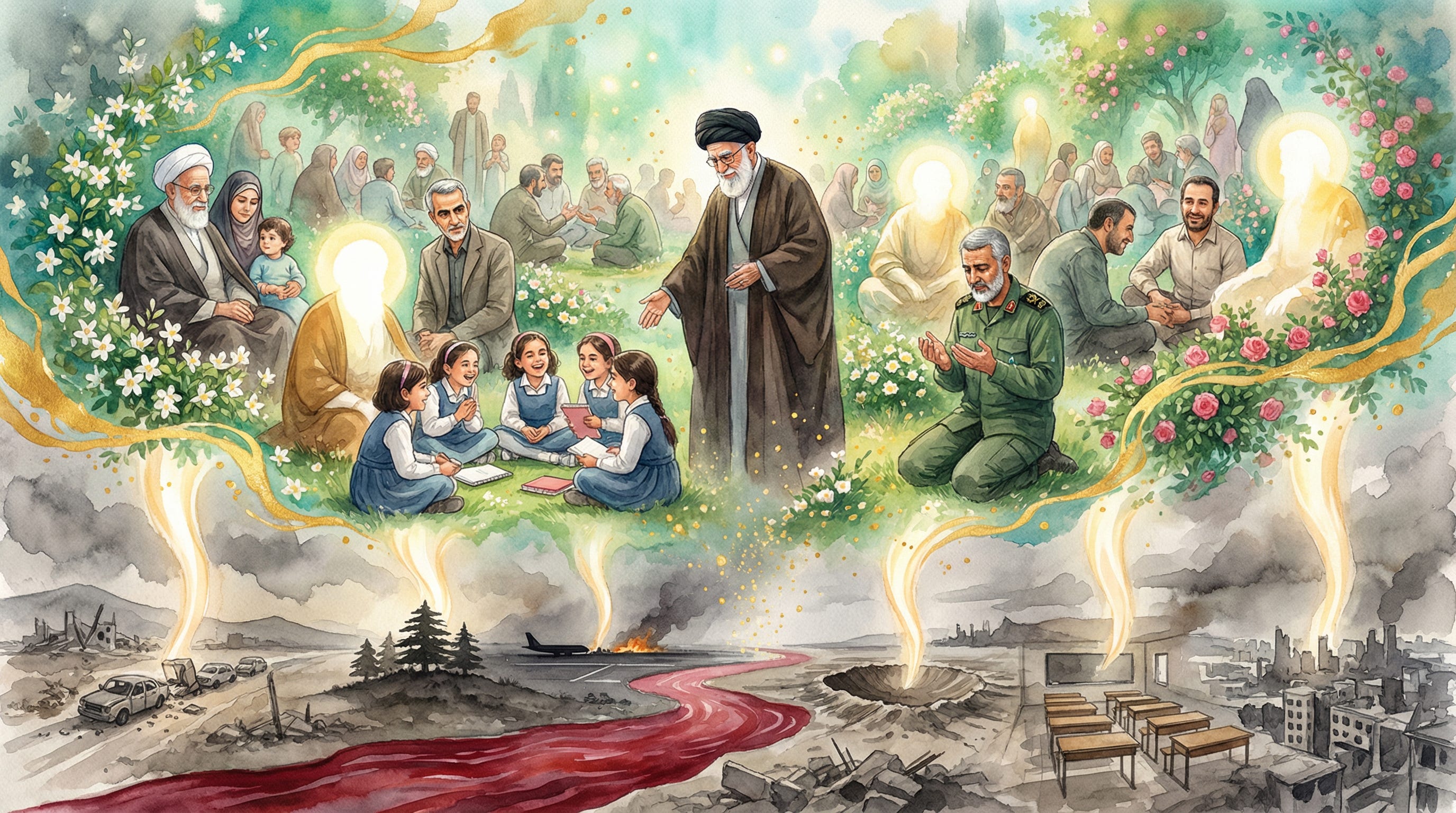
We remember tonight the shuhada of this ummah — those whose blood is the ink in which the testimony of truth is written.
We remember tonight those whose names we know, and those whose names only God knows.
The named and the unnamed.
The leaders and the unknown.
The generals and the schoolgirls.
Every one of them —
أَحْيَاءٌ عِندَ رَبِّهِمْ يُرْزَقُونَ
Alive with their Lord, receiving provision, rejoicing.
We remember Sayyed Abbas al-Musawi — may God bless his pure soul.
The one who built the resistance in Lebanon from nothing — from the rubble of occupation, from the ashes of invasion, from the determination of a people who had been told they were too weak to fight.
He built it with his hands and his faith and his scholarship.
And when the empire came for him, it did not come for him alone — it killed his wife.
It killed his child.
It murdered an entire family and called it a military operation.
But what he built did not die with him.
What he built stood for decades after him.
What he built shook the earth.
We remember Hajj Imad Mughniyeh — may God bless his pure soul.
The shadow that empires could not outrun.
The architect of resistance whose brilliance was matched only by his devotion to God and to the cause of the oppressed.
He moved through the world like a whisper — unseen, unheard, but felt in every blow the resistance struck against the occupier.
They hunted him for decades.
They feared him like they feared no one else.
And when they finally reached him in Damascus, his martyrdom did not end the fear — it deepened the resolve of every brother and sister who walked in his path.
We remember Hajj Qassem Soleimani — may God bless his pure soul.
The general who wept.
The commander who knelt at the grave of Imam Husayn and sobbed like a child.
The strategist who crossed every border the empire tried to build — every wall, every sanction, every line in the sand — and carried the cause of Palestine on his shoulders from Tehran to Baghdad to Beirut to Damascus and beyond.
They struck him down with a coward’s weapon on the road from Baghdad airport — a drone, fired from a continent away, by men who would not dare face him in the light.
And his blood watered the tree of resistance across an entire region.
Some of us in this room knew him.
Knew his gentleness.
Knew the way he would speak to you — not as a general to a subordinate, but as a father, as a brother, as someone whose only concern was to move you closer to God and further from your own nafs.
That gentleness — that impossible combination of ferocity on the battlefield and tenderness in person — that was Hajj Qassem.
And the world has not seen his like since.
And perhaps will not again, until the coming of the one we await.
We remember Sayyed Hassan Nasrallah — may God bless his pure soul.
The voice.
The voice of the oppressed that rang out from Dahiyeh and was heard in every village in the south, in every refugee camp, in every heart that had been told that resistance was impossible.
He looked the empire in the eye — for decades — and he never blinked.
Not once.
Not when they bombed Beirut in 2006.
Not when they killed his own son.
Not when the entire weight of the Zionist machine was pointed at his chest.
He spoke and the ummah listened.
He promised and he delivered.
He laughed — Oh my Lord, that laugh — and the oppressor trembled.
They buried eighty-two bunker busters into the earth to reach him.
Eighty-two.
Because one was not enough.
Because ten were not enough.
Because even in death, they were afraid of him.
And they were right to be afraid — because his words have not stopped.
His voice has not gone silent.
It echoes tonight in this room, and in every room where believers gather and refuse to surrender.
We remember the shuhada of Gaza — may God bless each and every one of them.
The tens of thousands.
The children pulled from rubble with dust still in their hair.
The mothers who shielded their babies with their bodies and were buried with them.
The fathers who searched through the wreckage with bare hands calling names that no one answered.
The doctors who operated by torchlight until the torchlight was bombed.
The journalists who filmed their own genocide so the world could not say it did not know — and were killed for filming it.
We cannot name them all tonight.
No single gathering could hold all their names.
But God knows every one.
Every name.
Every face.
Every last breath.
And they are alive with Him, and they are rejoicing, and they are waiting — waiting for us.
We remember the shaheedat of Minab — may God bless each and every one of them.
The girls.
The schoolgirls.
Young, bright, full of life and promise and future.
They went to school that morning the way every child goes to school — with their bags and their books and their friendships and their small, precious hopes for the day ahead.
And the empire’s bombs found them there.
They did not choose the battlefield.
They did not choose shahadah.
Shahadah was brought to their classroom door and forced its way in.
And in their innocence — in the sheer, unbearable purity of what they were and what was done to them — they have become the most devastating testimony against the empire that this generation has seen.
Their blood is not merely crying out for justice.
It is producing justice.
It is shaking foundations.
It is ending alliances.
It is stripping masks from faces that have worn them for decades.
May God envelope them in His mercy.
May He reunite them with their families in the highest gardens.
May He make their innocence a weight on the scales against every hand that was complicit in their murder — from the pilot who dropped the bomb to the president who gave the order to the system that made it all possible.
We remember Imam Sayyed Ali al-Husayni al-Khamenei — may God bless his pure soul.
Al-waliyy.
Al-faqih.
Al-mujahid.
Al-shaheed.
The one who held the trust of the Imam of our time for decades — and never once set it down.
Not in the eight years of sacred defence when the world armed his enemy and starved his people.
Not in the decades of sanctions designed to bring a nation to its knees.
Not when they took his generals, one by one — Hajj Imad, Hajj Qassem, Sayyed Hassan — each loss a wound that would have broken a lesser man.
Not when the conspirators plotted from within and the enemies pressed from without.
Not when the weight of an entire ummah’s expectations rested on his shoulders and the resources to meet them were stripped away by an unjust world.
Through all of it — steadfast.
Through all of it — upright.
Through all of it — his hand extended to the oppressed, his face turned toward the Imam of the age, his heart anchored in the covenant of wilayah.
He warned us.
He guided us.
He taught us.
He wept with us.
He prayed for us.
He carried what we could not carry.
He saw what we could not see.
And he did all of this — for decades — knowing that the path he walked would end where it ended.
Knowing that the shaheed’s road has only one destination.
And walking it anyway.
Without hesitation.
Without regret.
Forty days ago, he arrived.
بَلْ أَحْيَاءٌ عِندَ رَبِّهِمْ يُرْزَقُونَ
Rather, they are alive with their Lord, receiving provision
He is alive.
He is with his Lord.
He is rejoicing.
And he is receiving glad tidings — about us.
About what we will do next.
About whether we will be worthy of the trust he left behind.
And we feel his absence tonight like a wound that has not yet learned to scar.
Like a space in the room that nothing can fill. Like a silence where his voice used to be.
But the silence is not empty.
It is full of his testimony.
It is asking us a question.
And the question is the same question this entire evening has been asking:
What will you do now?
Part 2: The Turn — الدعاء
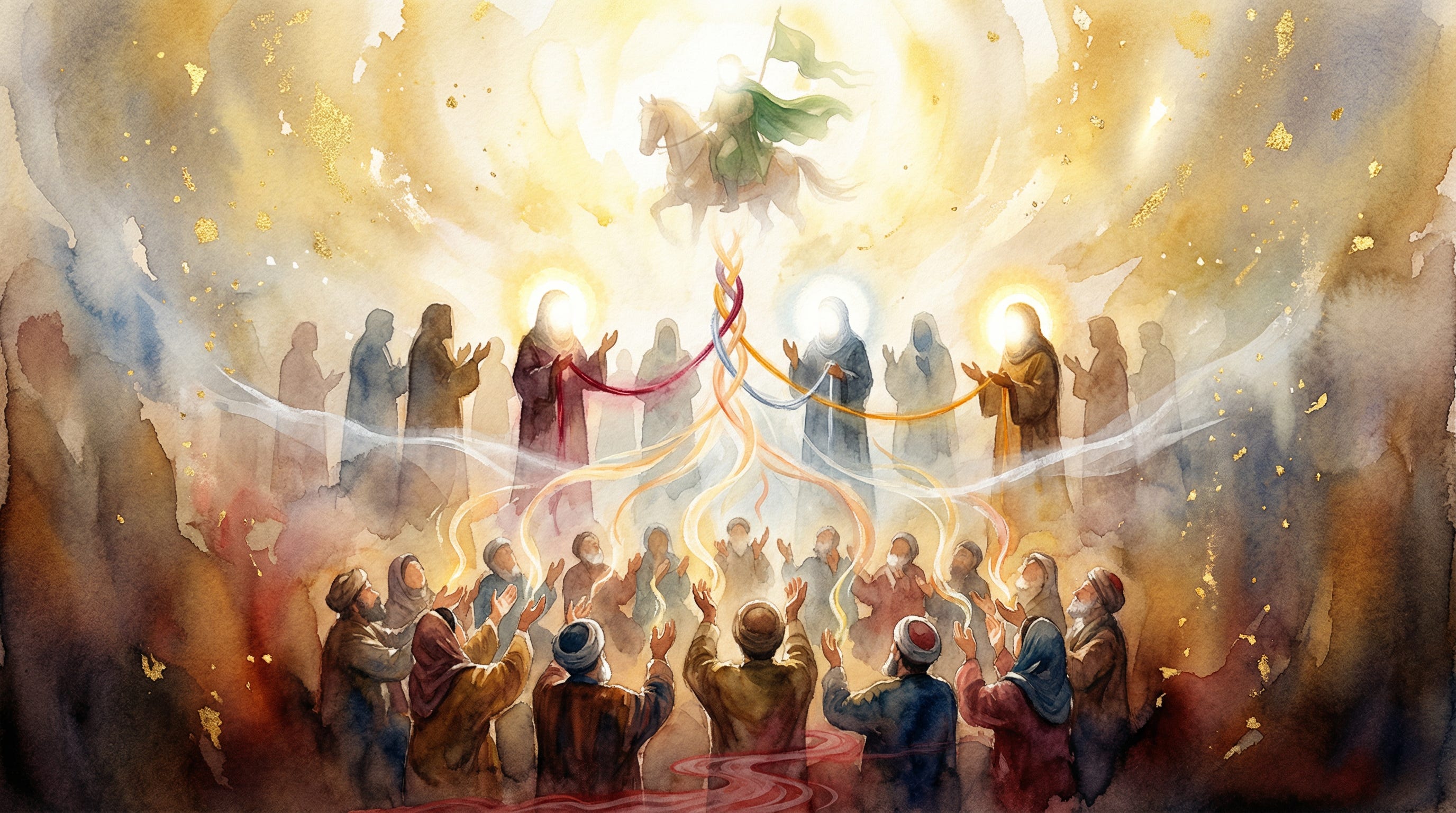
O Our Lord!
You have told us that the shuhada are alive with You.
That they are receiving provision.
That they are rejoicing.
We believe this.
We hold to this.
We cling to this with everything we have — because without this belief, the weight of what has been taken from us would be unbearable.But Our Lord — we who are left behind, we who are still in this world of trial and test and temptation — we need Your help.
We are weak where they were strong.
We are uncertain where they were sure.
We are hesitant where they were decisive.
We need You.
O Our Lord!
You took from us a leader, a father, a guide — Imam Sayyed Ali al-Khamenei — and in his place You left us a testimony.
A testimony written in his blood, sealed by his sacrifice, carried now by his son and by every believer who received it.
Help us to carry it.
Help us to be worthy of it.
Do not let us be among those who heard the truth and then forgot.
Do not let us be among those who wept at the arba’een and then returned to heedlessness — who mourned on Saturday and forgot by Monday — who shed tears for the shaheed and then lived as though the shaheed died for nothing.
Oh Our Lord!
You have shown us — through the blood of the innocent, through the schoolgirls of Minab, through the children of Gaza pulled from the rubble with their mothers’ arms still around them —
You have shown us what this empire truly is.
What it does in the dark.
What it does in the light.
What it does to children.
Give us the clarity to see it for what it is.
Give us the courage to say what we see.
And give us the strength — Oh Our Lord, the strength — to resist it.
Not tomorrow.
Not when the conditions are right.
Now.
Today.
With whatever we have.
Oh Our Lord!
Bless and protect, Imam Sayyed Mujtaba al-Khamenei, the successor of his father, the bearer of the trust.
Strengthen his hands.
Sharpen his sight.
Surround him with those who are sincere.
Protect him from those who would betray.
And make him — as his father was — a lantern on the path of the Ahlul Bayt, a shield for the oppressed, and a thorn in the side of every oppressor.
Oh Our Lord
Count us among the shuhada — not necessarily those who die for the truth, but those who live for it.
Make our lives a testimony.
Make our choices a witness.
Make our silence impossible when injustice speaks.
Make us among those who received the testimony of the shaheed and did not conceal it — who carried it forward, who transmitted it, who refused to be silent even when silence was safer, even when silence was easier, even when silence was all the world demanded of us.
Oh Our Lord
We ask You — by the blood of Husayn ibn Ali, shed on the plains of Karbala and not yet dry.
We ask You — by the tears of Zaynab bint Ali, shed in the court of the oppressor and not yet wiped.
We ask You — by the patience of Ali ibn al-Husayn, who bore the unbearable and did not break.
We ask You — by the steadfastness of every shaheed from Habil the son of Adam to the last soul who fell in Your path this very day.
We ask You — hasten the return of the one whose coming will complete every testimony.
The one whose appearance will answer every cry.
The one who will fill the earth with justice as it has been filled with oppression.
The one we wait for, the one we weep for, the one we live for.The Master of the Age, may our souls be his ransom
Hasten, Oh Our Lord, his noble relief.
Hasten his coming.
And make us — all of us in this room tonight — among his helpers, his supporters, his soldiers, his witnesses.Amen, O Lord Sustainer of the Universes.
Amen, O Most Merciful of the Merciful.
And from Him alone is all ability and He has authority over all things.