

In His Name, the Most High
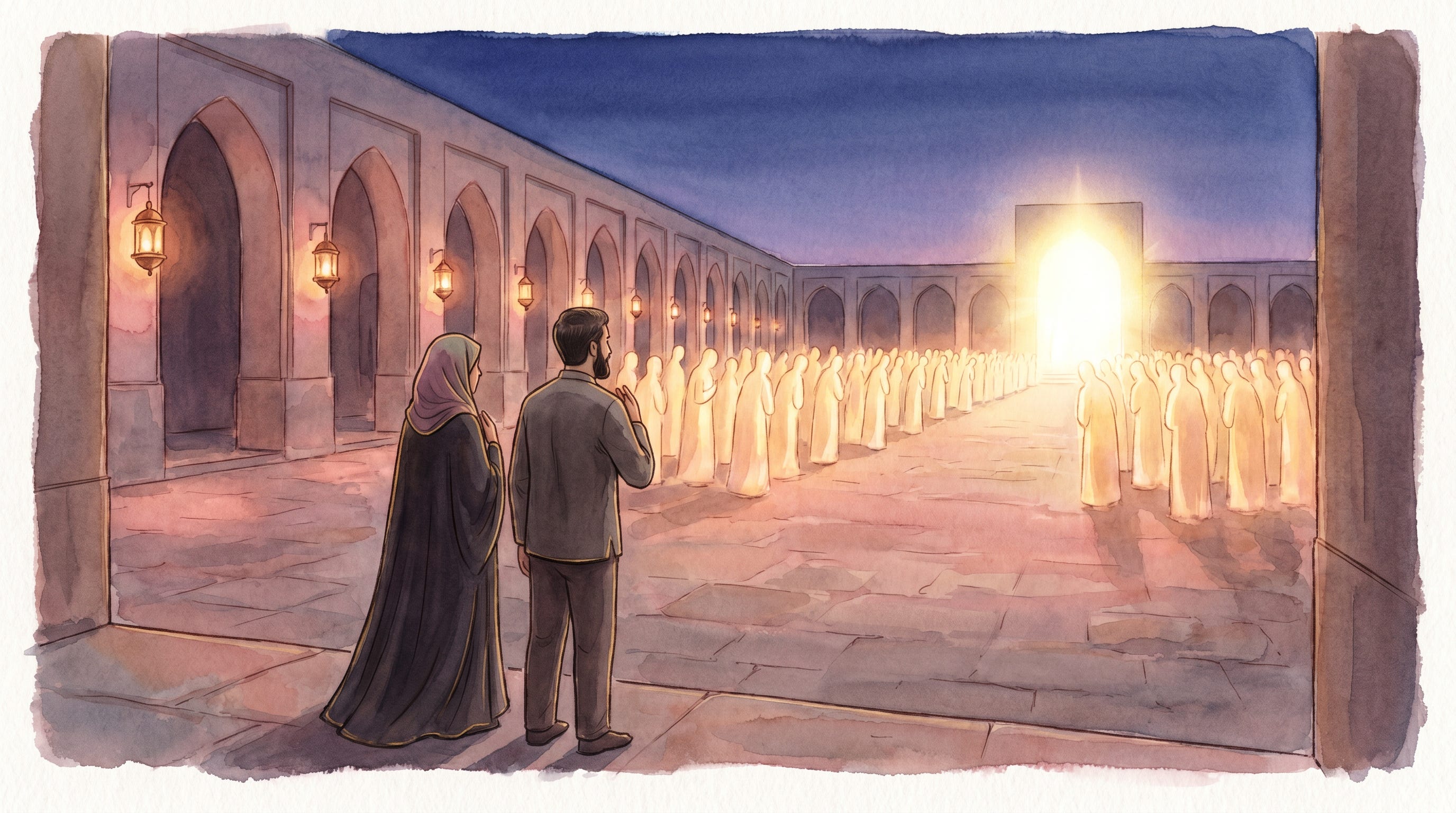
اَلسَّلاَمُ عَلَيْكَ يَا أَبَا عَبْدِاللَّهِ
وَعَلَى الْأَرْوَاحِ الَّتِي حَلَّتْ بِفِنَائِكَ
عَلَيْكُمْ مِنَّا جَمِيعًا سَلاَمُ اللَّهِ أَبَدًا مَا بَقِينَا وَبَقِيَ اللَّيْلُ وَالنَّهَارُ
وَلا جَعَلَهُ اللَّهُ آخِرَ الْعَهْدِ مِنَّا لِزِيَارَتِكُمْ
اَلسَّلاَمُ عَلَى الْحُسَيْنِ
وَعَلَى عَلِيِّ بْنِ الْحُسَيْنِ
وَعَلَى أَوْلَادِ الْحُسَيْنِ
وَعَلَى أَصْحَابِ الْحُسَيْنِ
Peace be upon you, O Aba Abdillah (O Husayn),
and upon the souls who have gathered in your courtyard.Upon you, from us all, is the peace of God—forever,
for as long as we remain and as long as night and day endure.And may God never make this our last pledge to visit you.
Peace be upon al-Husayn,
and upon Ali, son of al-Husayn,
and upon the children of al-Husayn,
and upon the companions of al-Husayn.— Adapted from Ziyarat Ashura
Video of the Majlis (Sermon/Lecture)
We Have Returned
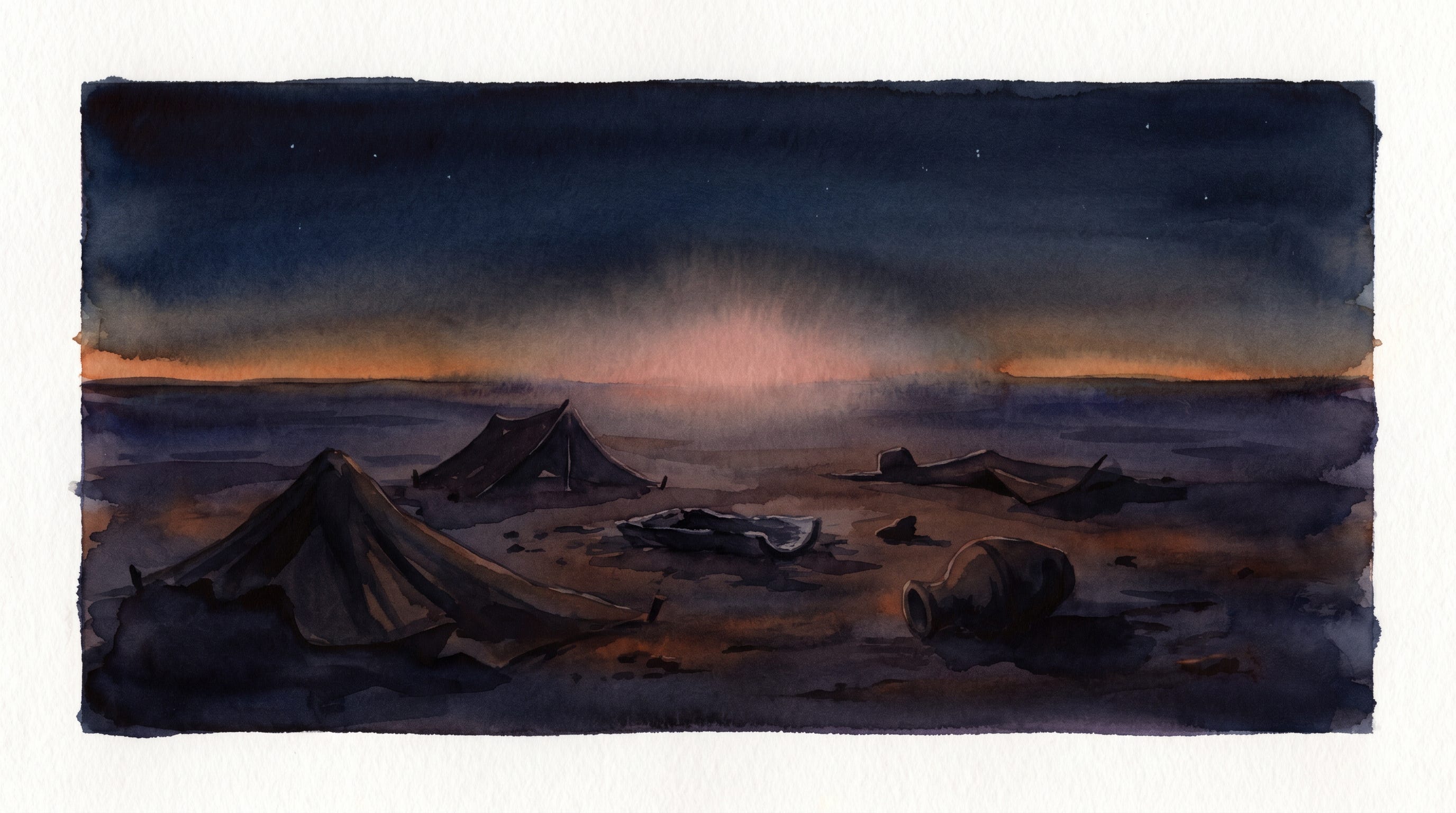
We left him at noon on the tenth.
We had walked, the whole of Muharram, toward a single hour — and when the hour came, when the horses were turned and sent across the body of our beloved Imam Husayn, peace and blessings be upon him, something in the telling itself broke.
The voice that had carried us from the first night could not carry the trampling.
We stood, last of all, at a grave with no shroud, in a field with no survivors that the empire could see, and the night came down.
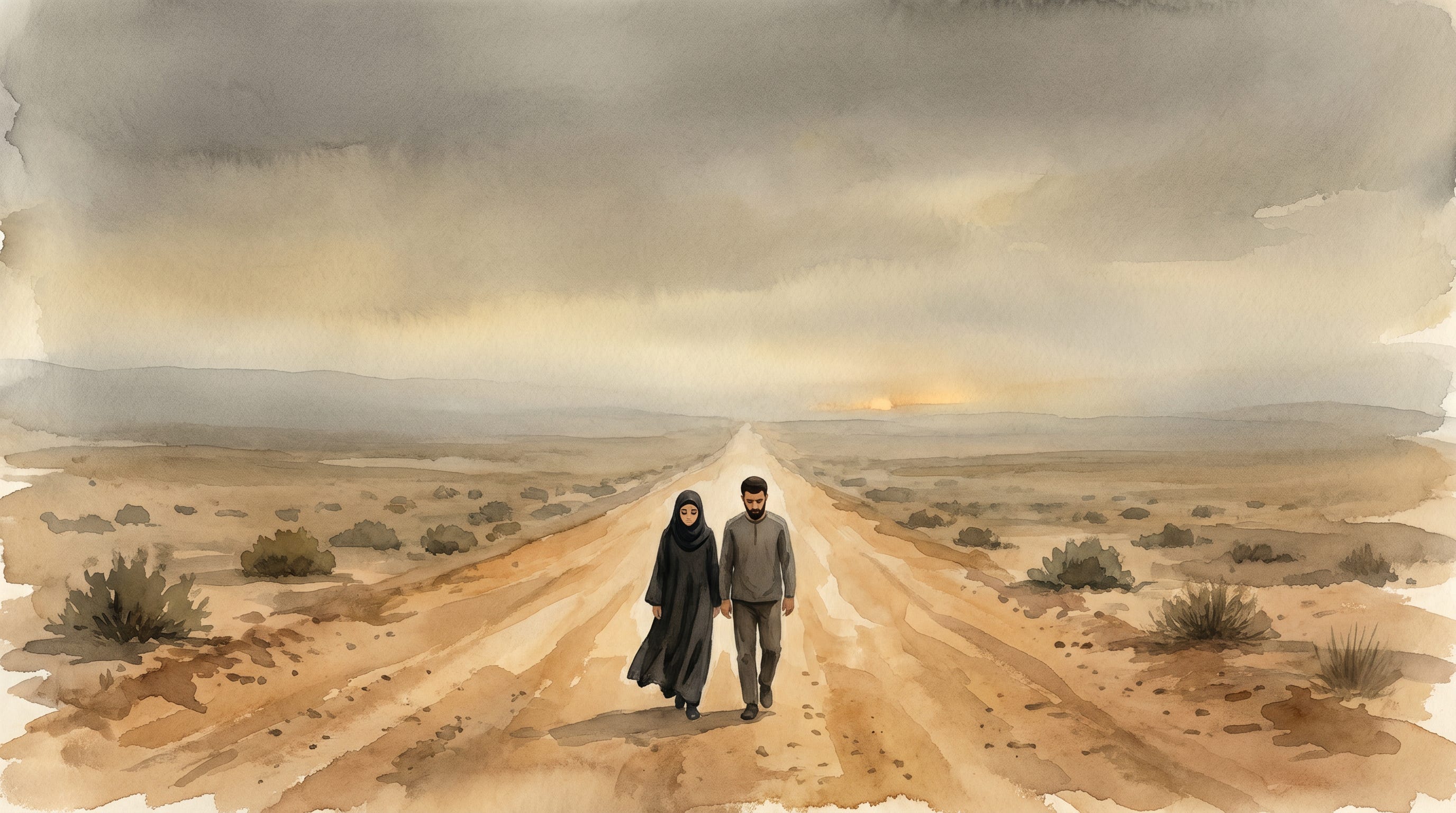
And then Arbaeen called us back.
Between that noon and this night, the believing world crosses something — five weeks of mourning, the long quiet between the killing and the fortieth day, the season in which grief is supposed to either harden into despair or be turned into something else.
Tonight we have crossed it.
We have returned.
And we return not to the field — we have stood at the field, we will stand there again — but to the one who walked off the field carrying everything.
Because the field was not the end of the story.
It was the middle.
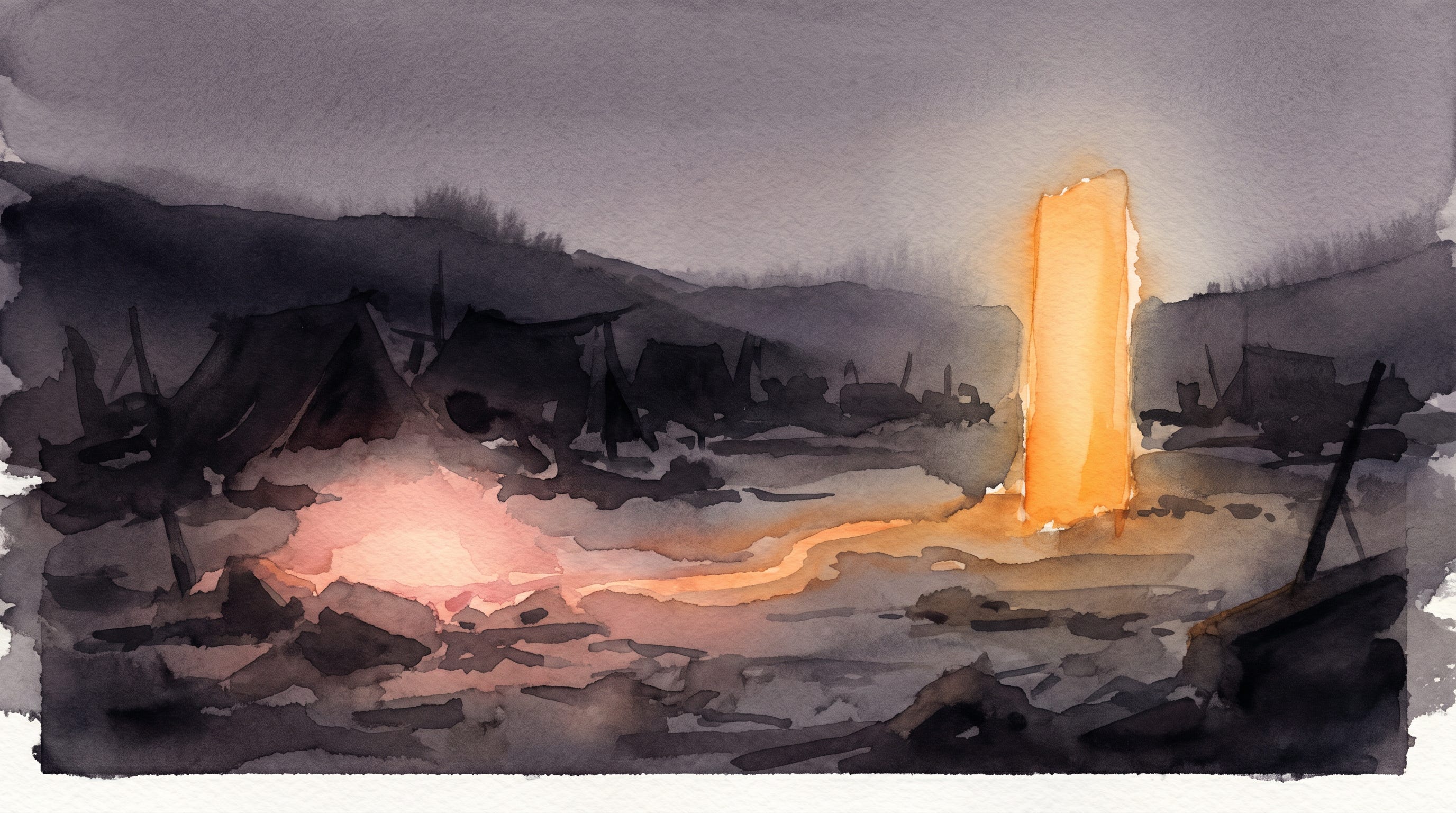
There is a thing the chronicles tell, and the popular telling almost always rushes past, and it is the most important thing in the whole of the aftermath: at the very moment the empire thought it had finished, the testimony did not stop. It changed mouths.
It passed from the brother who could no longer speak to the sister who would not stop.
The Master of Witnesses fell silent at noon.
By the afternoon, the witness-after-the-witness was already at work.
That is the subject of tonight.
And I will tell you now, plainly, why it is the subject of our lives and not only of history: because the meaning of a martyr is not finished at the moment of his death.
It is finished — or it is betrayed — by what the living do with what the martyr gave.
A witness who dies and is forgotten has, in the end, been defeated; the empire that killed him has had the last word.
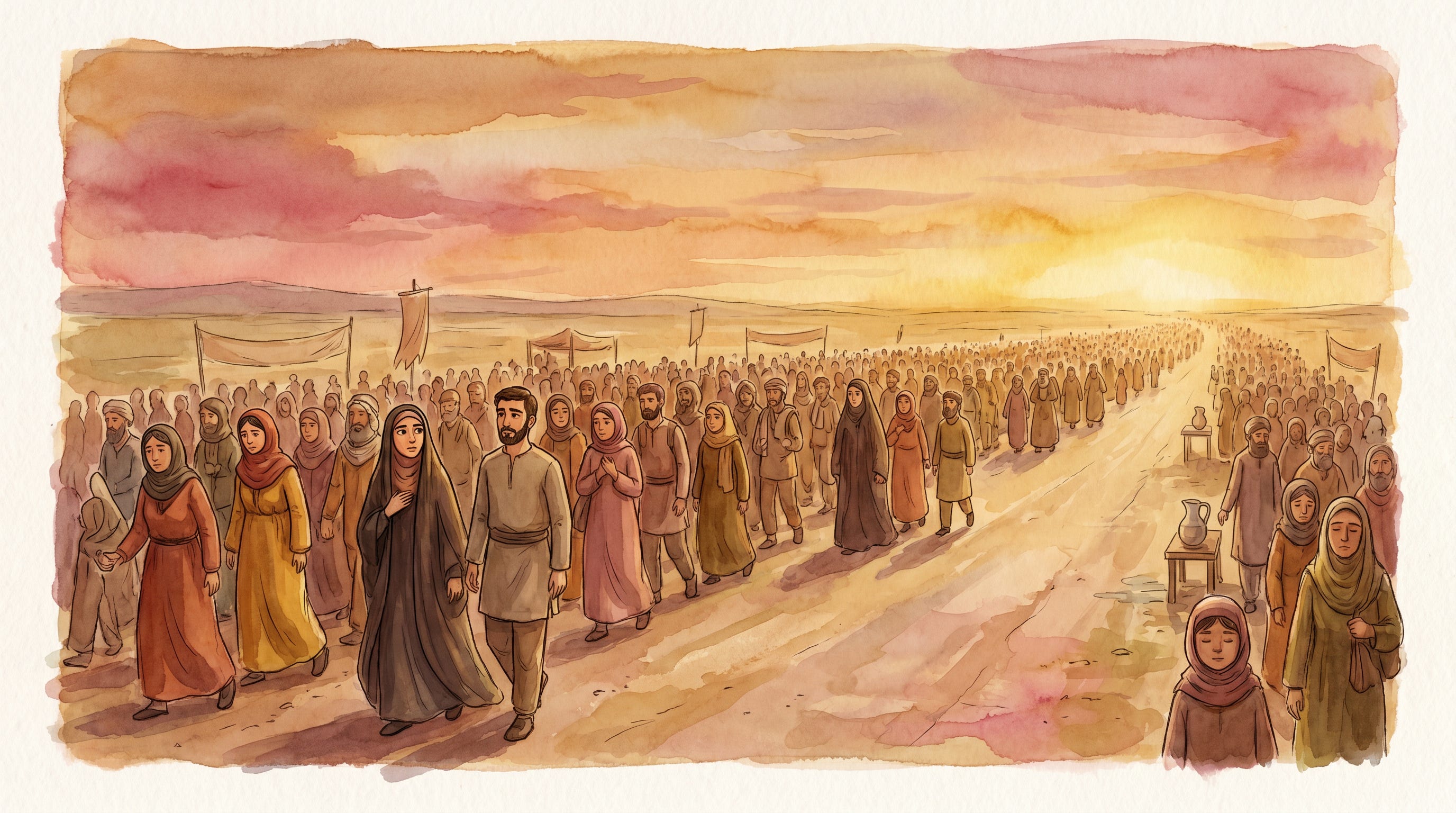
But a witness who dies and is carried — named, repeated, wept for, walked toward by twenty million bodies on a road every single year — that witness has won, and goes on winning, fourteen centuries after the swords were sheathed and the dynasty that drew them turned to dust.
The difference between those two outcomes — between Karbala as a massacre the empire won and forgot, and Karbala as the trial the empire has been losing ever since — the difference is a woman.
Tonight we meet her: Sayyedah Zaynab, the daughter of Imam Ali and of Sayyedah Fatimah al-Zahra, peace and blessings be upon them, the sister of Imam Husayn.
The first teacher of post-Karbala Islam.
The one who refused the mercy of dying so that the dead could keep speaking through her mouth.
And before we begin, hear two verses — one from the end of the Qur’an’s account of who the righteous are, and one from the very beginning of the human story — because between them sits the whole theology of tonight.
The first refuses, in the plainest possible language, to make witness a thing only men do:
إِنَّ ٱلۡمُسۡلِمِينَ وَٱلۡمُسۡلِمَٰتِ وَٱلۡمُؤۡمِنِينَ وَٱلۡمُؤۡمِنَٰتِ وَٱلۡقَٰنِتِينَ وَٱلۡقَٰنِتَٰتِ وَٱلصَّـٰدِقِينَ وَٱلصَّـٰدِقَٰتِ وَٱلصَّـٰبِرِينَ وَٱلصَّـٰبِرَٰتِ وَٱلۡخَٰشِعِينَ وَٱلۡخَٰشِعَٰتِ وَٱلۡمُتَصَدِّقِينَ وَٱلۡمُتَصَدِّقَٰتِ وَٱلصَّـٰٓئِمِينَ وَٱلصَّـٰٓئِمَٰتِ وَٱلۡحَٰفِظِينَ فُرُوجَهُمۡ وَٱلۡحَٰفِظَٰتِ وَٱلذَّـٰكِرِينَ ٱللَّهَ كَثِيرٗا وَٱلذَّـٰكِرَٰتِ أَعَدَّ ٱللَّهُ لَهُم مَّغۡفِرَةٗ وَأَجۡرًا عَظِيمٗا
Indeed, the submitting men and the submitting women, the believing men and the believing women, the devout men and the devout women, the truthful men and the truthful women, the patient men and the patient women, the humble men and the humble women, the charitable men and the charitable women, the fasting men and the fasting women, the men who guard their chastity and the women who do so, and the men who remember God much and the women who do so — for them God has prepared forgiveness and a great reward.
— Qur’an, Surah al-Ahzab (the Chapter of the Confederates) #33, Verse 35
Every station of faith in that verse is named twice — once for the men, once for the women.
The patient men and the patient women.
The truthful men and the truthful women.
Tonight the witness is a woman, and the Qur’an named her station before she was born.

And the second verse is the oldest promise on earth — the covenant we opened on the second night of this series, the first yes any of us ever said:
وَإِذۡ أَخَذَ رَبُّكَ مِنۢ بَنِيٓ ءَادَمَ مِن ظُهُورِهِمۡ ذُرِّيَّتَهُمۡ وَأَشۡهَدَهُمۡ عَلَىٰٓ أَنفُسِهِمۡ أَلَسۡتُ بِرَبِّكُمۡۖ قَالُواْ بَلَىٰ شَهِدۡنَآ
And [recall] when your Lord brought forth from the children of Adam, from their loins, their descendants, and made them bear witness concerning themselves: “Am I not your Lord?” They said: “Yes — we bear witness.”
— Qur’an, Surah al-A’raf (the Chapter of the Heights) #7, Verse 172
Yes — we bear witness.
Every soul said it before it had a body.
We tend to imagine that covenant being kept in some clean place, a heaven of light.
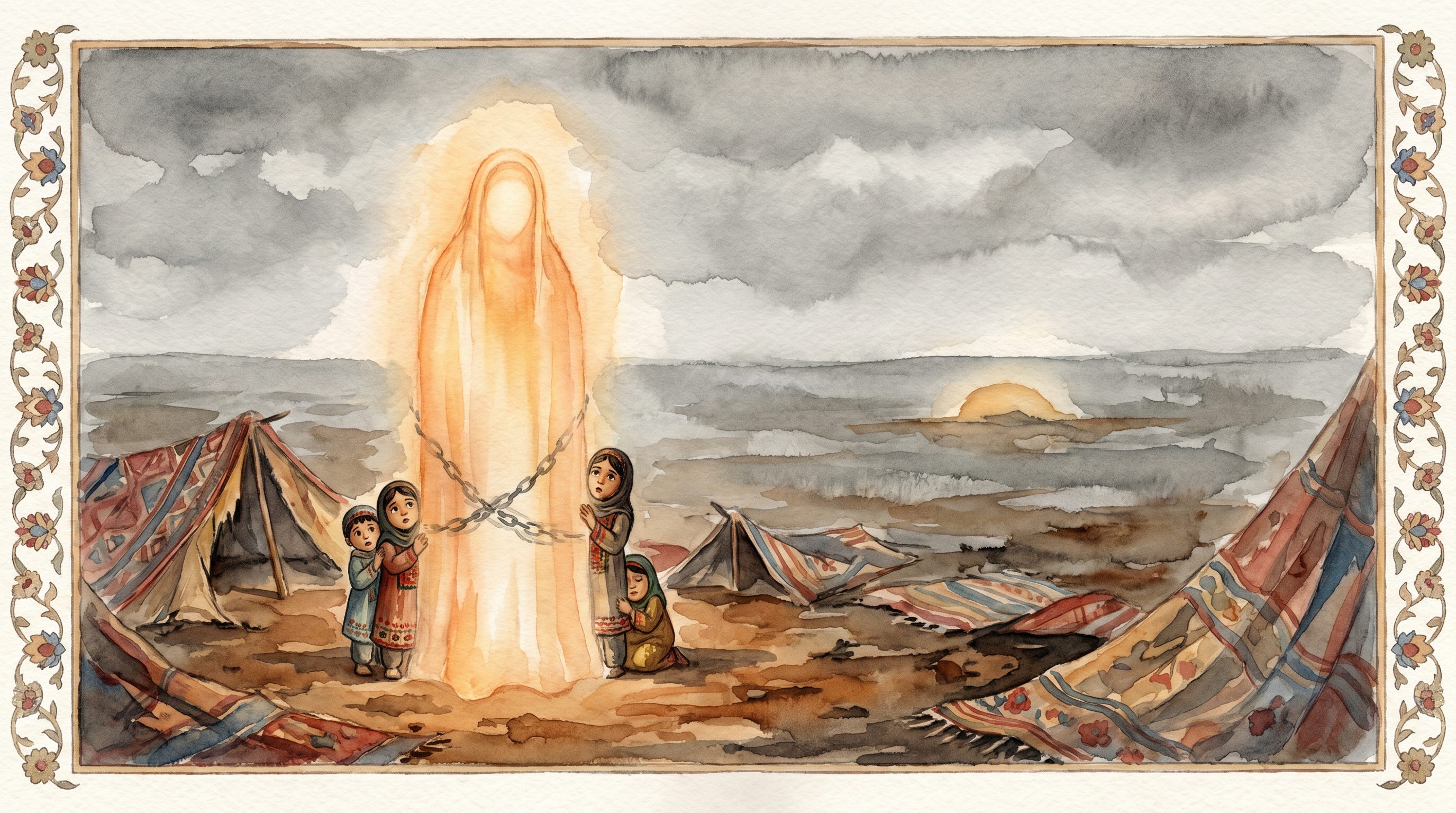
Tonight I want you to see it kept in the hardest place a human being has ever stood: in a ruined camp, by a woman in chains, holding other people’s frightened children, standing over the unburied bodies of her brothers and her sons.
Yes — we bear witness.
The covenant is not only spoken in eternity.
It is kept on the earth.
And it was kept, at the very limit of what a human heart can carry, by Sayyedah Zaynab, peace and blessings be upon her.
And the keeping of it began the moment the killing ended — at the body itself.
The Moment at the Body
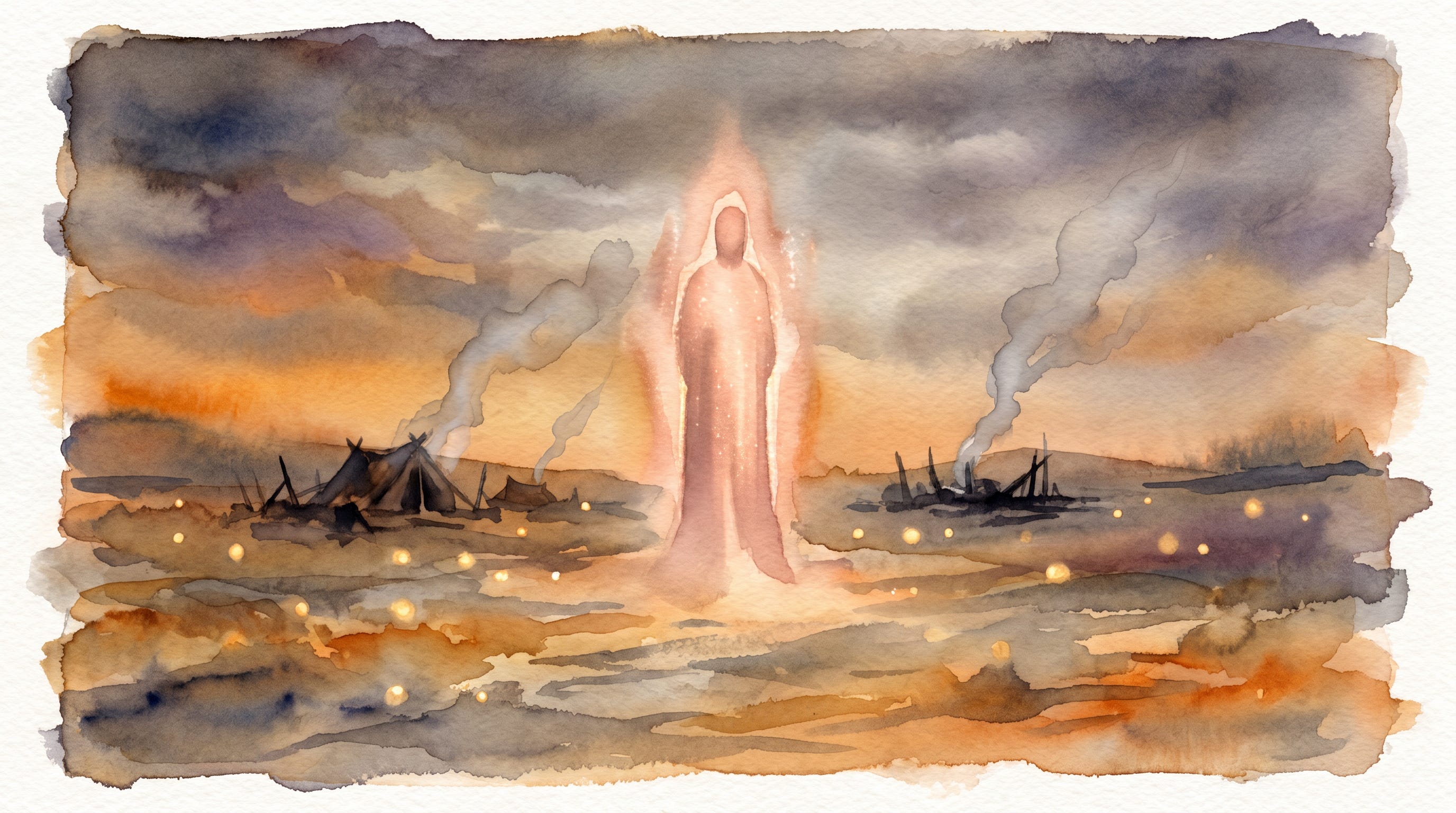
There is a station in our tradition that we do not name nearly often enough.
We have spent ten nights on the one who falls — the witness who gives everything at the sword and is gathered to his Lord.
But there is another station, and in some ways it is the harder one: the station of the one who is left.
Not the one who dies.
The one who must stand up afterward, in the wreckage, and carry what the fallen can no longer carry.
The martyr’s work is finished at the sword.
The survivor’s work begins at the body.
Think for one moment about what mercy would have looked like, that afternoon, for Sayyedah Zaynab.
Mercy would have been to die.
To be allowed to fall beside her brother and be done.
Everyone she had built her life around was gone — her brother the Imam, her nephews, her own two sons whom she had sent out that very morning.
The camp was burning behind her.
To go on living was not the easy thing.
To go on living was the proverbial cross she was asked to carry.
And she carried it — not for herself, but because she understood something the empire did not: that if she died, the testimony died with her, and Karbala became just another massacre in a century full of them.
She refused the mercy of dying so that the dead could keep speaking.
That is the theology of the survivor.
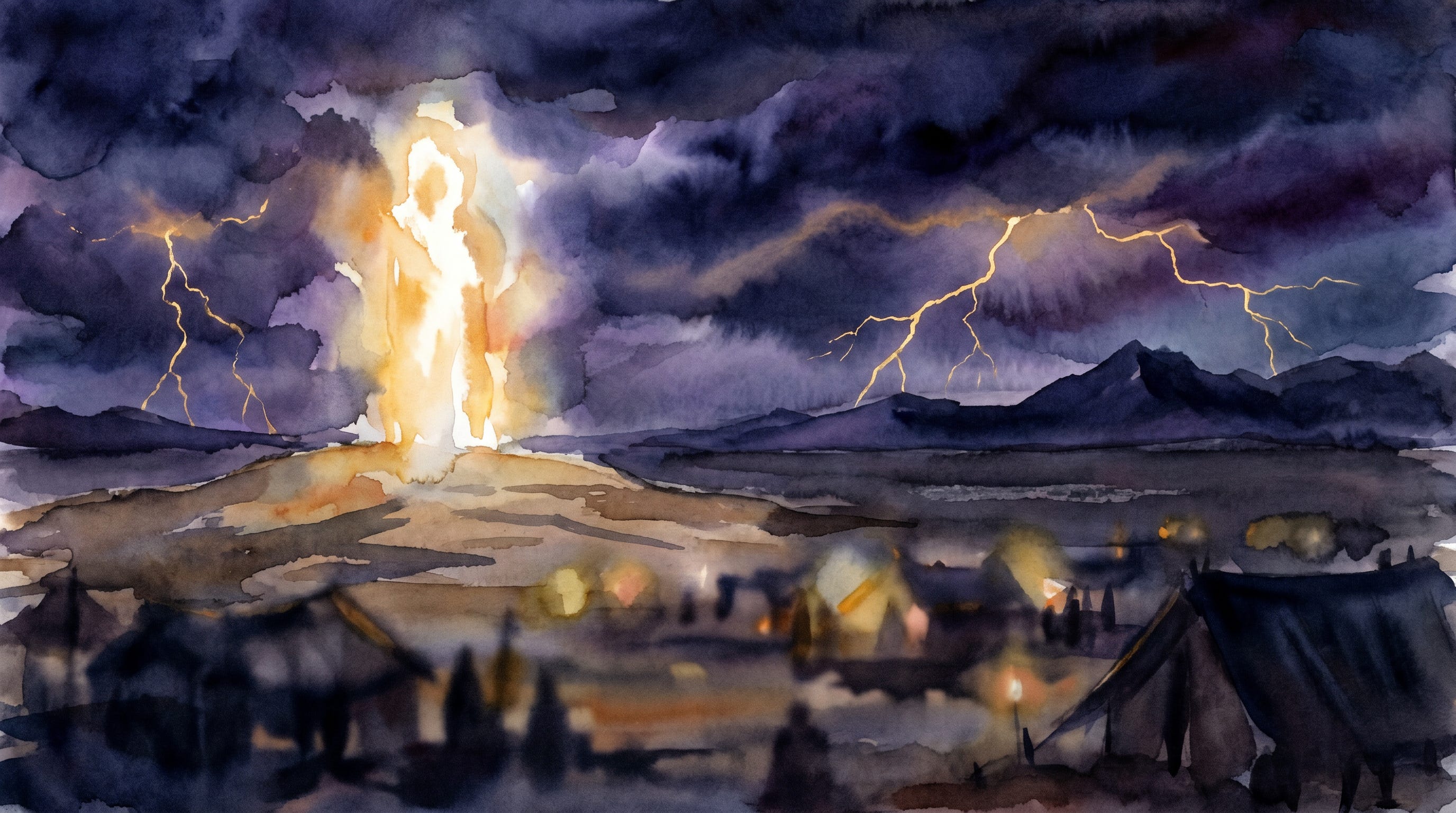
And watch how she lived it, from the first second.
The chronicles tell us that as the enemy closed in on her brother, she did not stay hidden in the tents.
She came out — to a rise of ground from which she could see the field — and she watched.
Our scholars preserve her cry, that cosmic cry that wished the order of creation itself would break rather than witness what it was witnessing:
يَا لَيْتَ السَّمَاءَ وَقَعَتْ عَلَى الْأَرْضِ! يَا لَيْتَ الْجِبَالَ دُكَّتْ عَلَى السَّهْلِ!
“Would that the sky had fallen upon the earth! Would that the mountains had been crushed down upon the plain!”
— Sayyed Ibn Tawus, al-Luhuf ʿalā Qatlā al-Tufūf
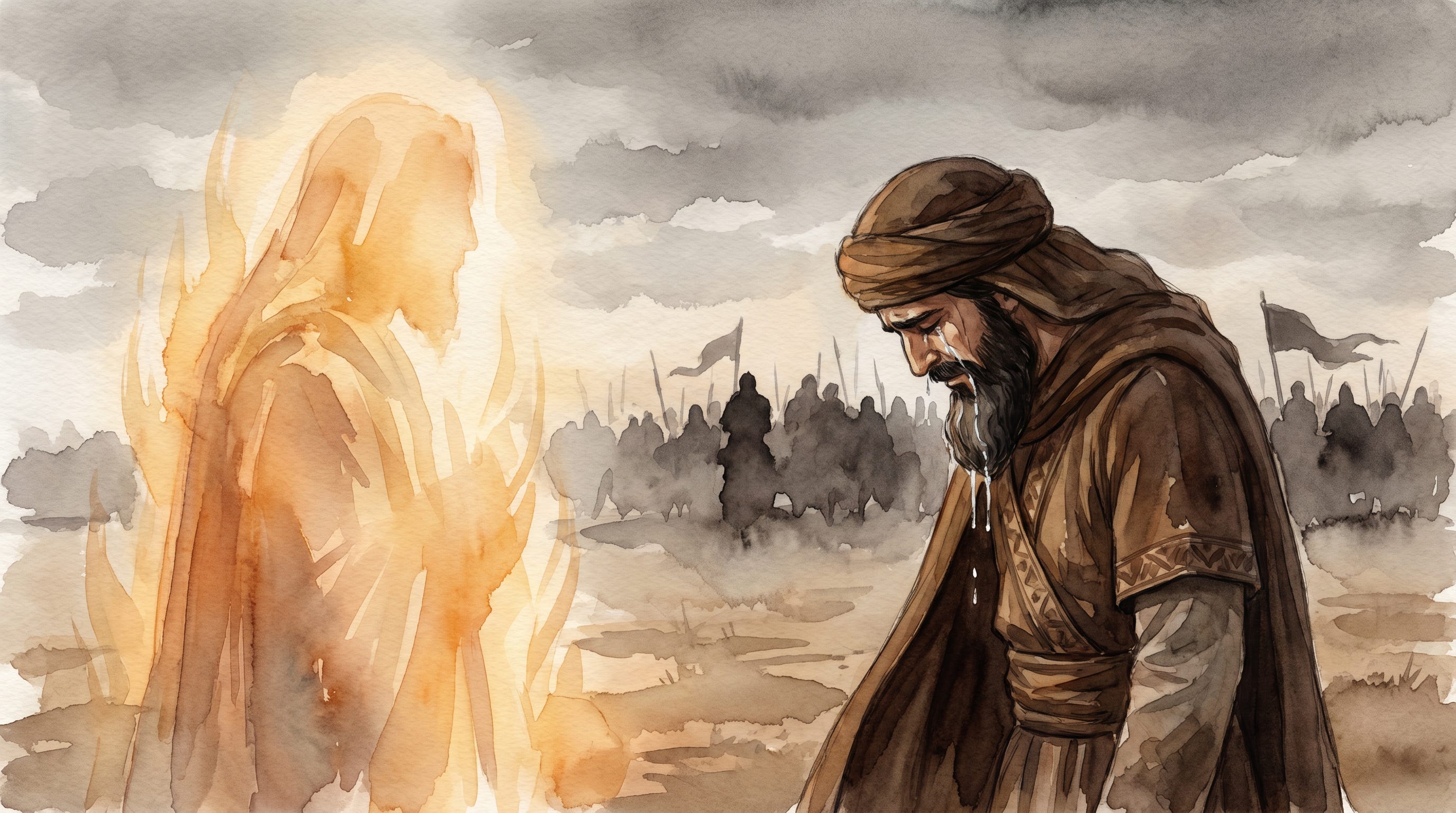
And then — and this is the thing I want you to hold — she did not only grieve.
She indicted.
She called out by name to the commander of the army that was killing her brother, Umar ibn Sa’d:
“O Umar — will Abu Abdillah be killed while you stand and watch him?”
The man, the chronicles say, turned his face away and wept into his beard — and did not stop his soldiers.
But mark what just happened: the very first act of the survivor was not private weeping.
It was public testimony, naming the guilty to his face.
From the first second, hers was a voice of witness.
A word of honesty, in passing, the way we have tried to be honest all series: the place she stood is remembered in the devotional tradition by a beautiful later name — Til-e-Zaynabiyyah, “the mound of Zaynab.”
The name is a later devotion; the event — that she watched from a height — is in the earliest sources.
We love the name; we tell you plainly what it is.
Then came the act that defines her.
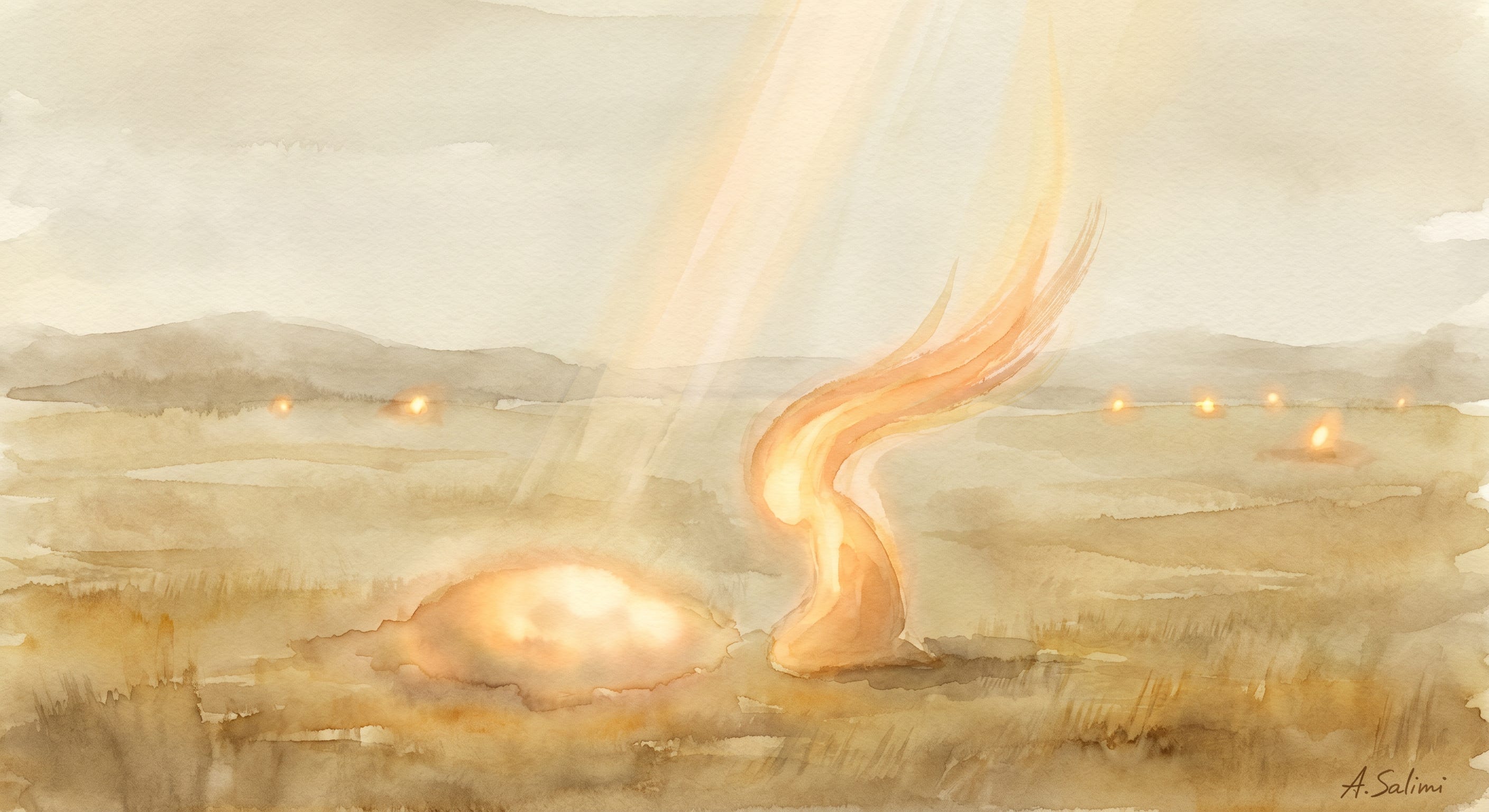
When the killing was over, she walked out onto that field — through bodies she had known and loved her whole life — until she reached the body of her brother, beheaded, trampled, stripped.
And there, the lamentation tradition has carried to us, she did not collapse.
She knelt.
She placed her hands beneath that holy body and lifted it, a little, toward the heavens, and she said:
اَللّٰهُمَّ تَقَبَّلْ مِنَّا هٰذَا الْقُرْبَانَ
“O God, accept from us this sacrifice.”
— preserved in the husayniyya tradition; carried by al-Muqarram, Maqtal al-Husayn, and others
Now I must be careful with you here, because we do not dress devotion up as chronicle.
This exact phrase is carried widely in our mourning tradition and it is perfectly true to her station — but it is not one of those lines we can trace to the earliest chains with certainty.
So I give it to you as what it is: the words our tradition, weeping, has placed on her lips for fourteen centuries because they are the only words equal to what she did.
And what she did is unmistakable, whatever the precise wording: she refused to let the enemy name the event.
Listen to that word she used — or that our tradition knew she must have meant.
Qurban.
An offering.
A sacrifice brought near to God.
Ibn Ziyad and Yazid had a name for what happened at Karbala: a rebellion put down, a victory, a problem solved.
And standing over the worst thing that had ever happened to a human family, Sayyedah Zaynab reached past their name for it and gave it God’s name.
Not “they have destroyed us.”
“O God, accept from us this offering.”
That is not denial.
Denial looks away from the wound.
She was looking straight at the wound, with her hands underneath it.
That is something far higher than denial.
That is the supreme act of the survivor: to refuse the enemy the power to define what just happened.
The empire may hold the field.
It certainly does not get to hold the meaning.
And then she did the thing that turned a defeat into a trial that is still running.
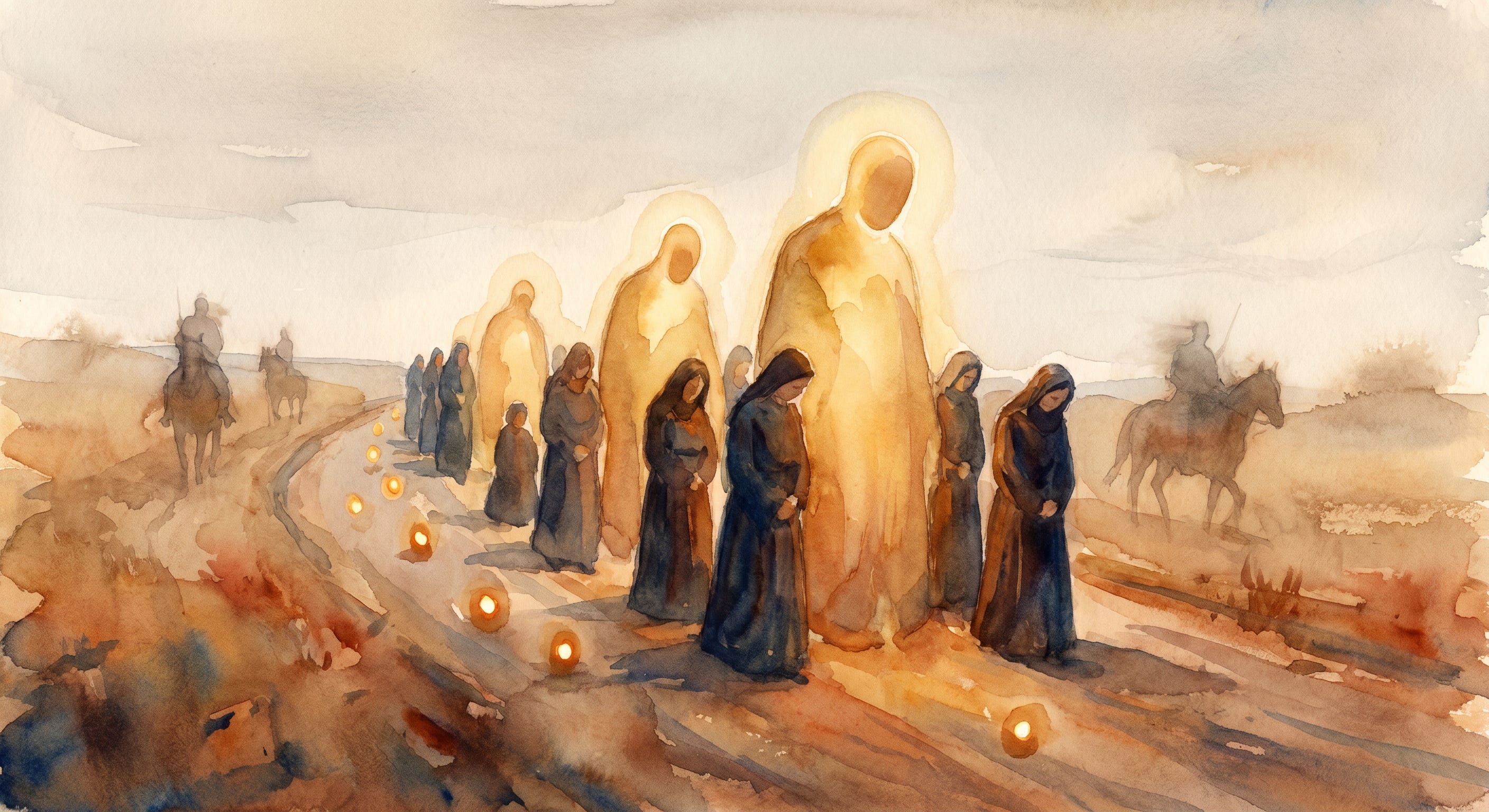
The order came to move the captives — the women and the children of the House of the Prophet, roped together, driven out of Karbala toward Kufa, with the severed heads of the martyrs carried on spears at the head of the column.
The empire intended this as a spectacle of humiliation.
A victory parade.
They were going to march the family of Muhammad, peace and blessings be upon him and his family and righteous companions, through the cities of Iraq and Syria as proof that resistance was finished and the regime had won.
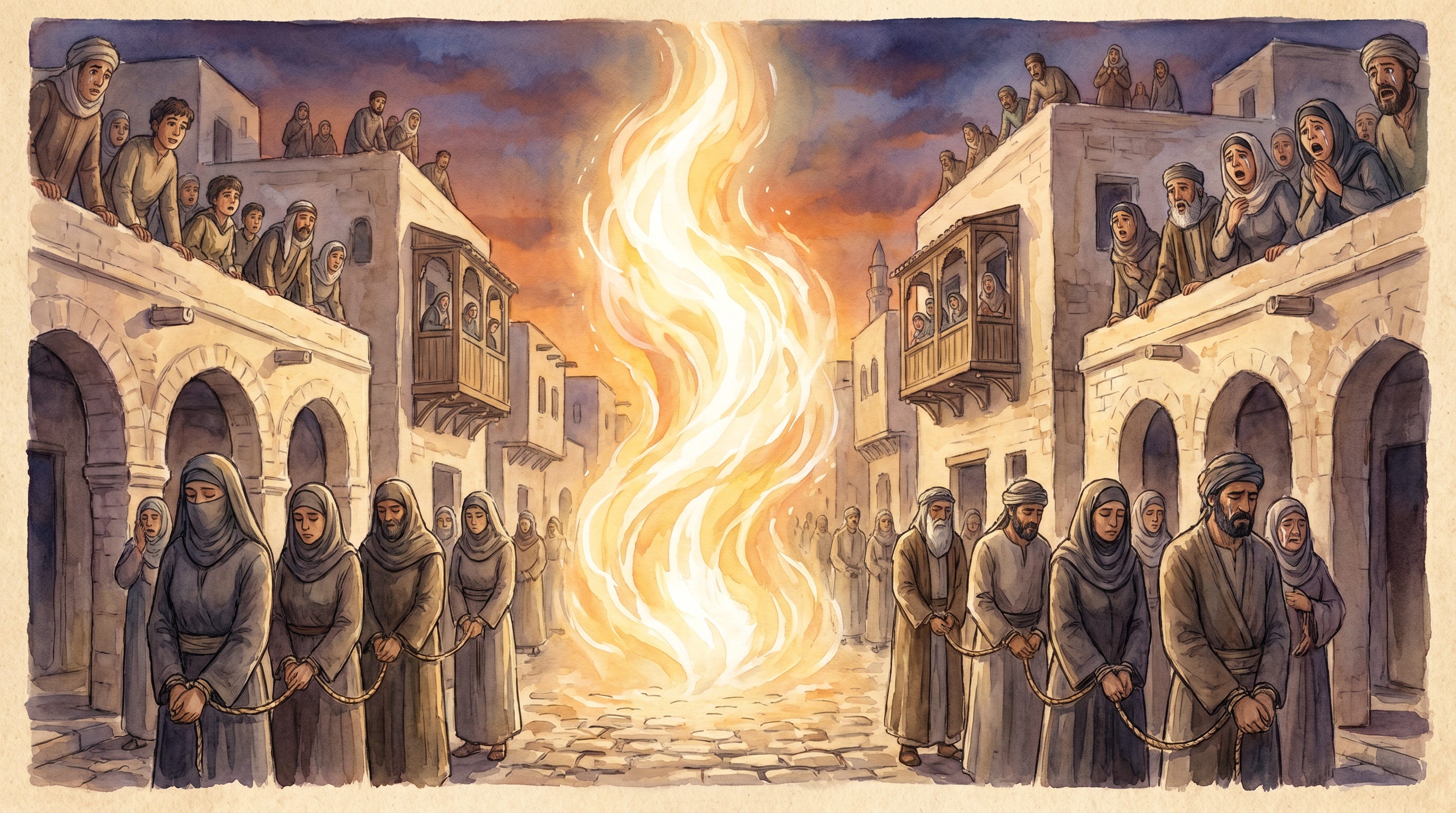
And Sayyedah Zaynab took the victory parade and turned it into the opening statement of the prosecution.
Understand the genius and the courage of it.
The empire gave her a stage built to break her — and she stepped onto it and used it to break them.
Every town the column passed through became a courtroom.
Every crowd that gathered to gawp became a jury.
The chains they bound her with became the pulpit she preached from.
By the time that caravan reached its end, the regime that had won the battle at noon on the tenth had begun to lose the argument forever — and it has been losing it every single year since.
The witness died at noon.
By the afternoon, the witness-after-the-witness was already standing.
Imam Husayn, peace and blessings be upon him, gave the testimony with his body.
Sayyedah Zaynab made certain the testimony would be heard.
Without her, Karbala is a tragedy the empire wins and history forgets.
With her, Karbala is the verdict the empire has never been able to overturn.
And the trial she opened was held, formally, in two courts: first in the city that had betrayed her family, and then in the very capital of the empire that had killed them.
The Sermons of Kufa and Damascus
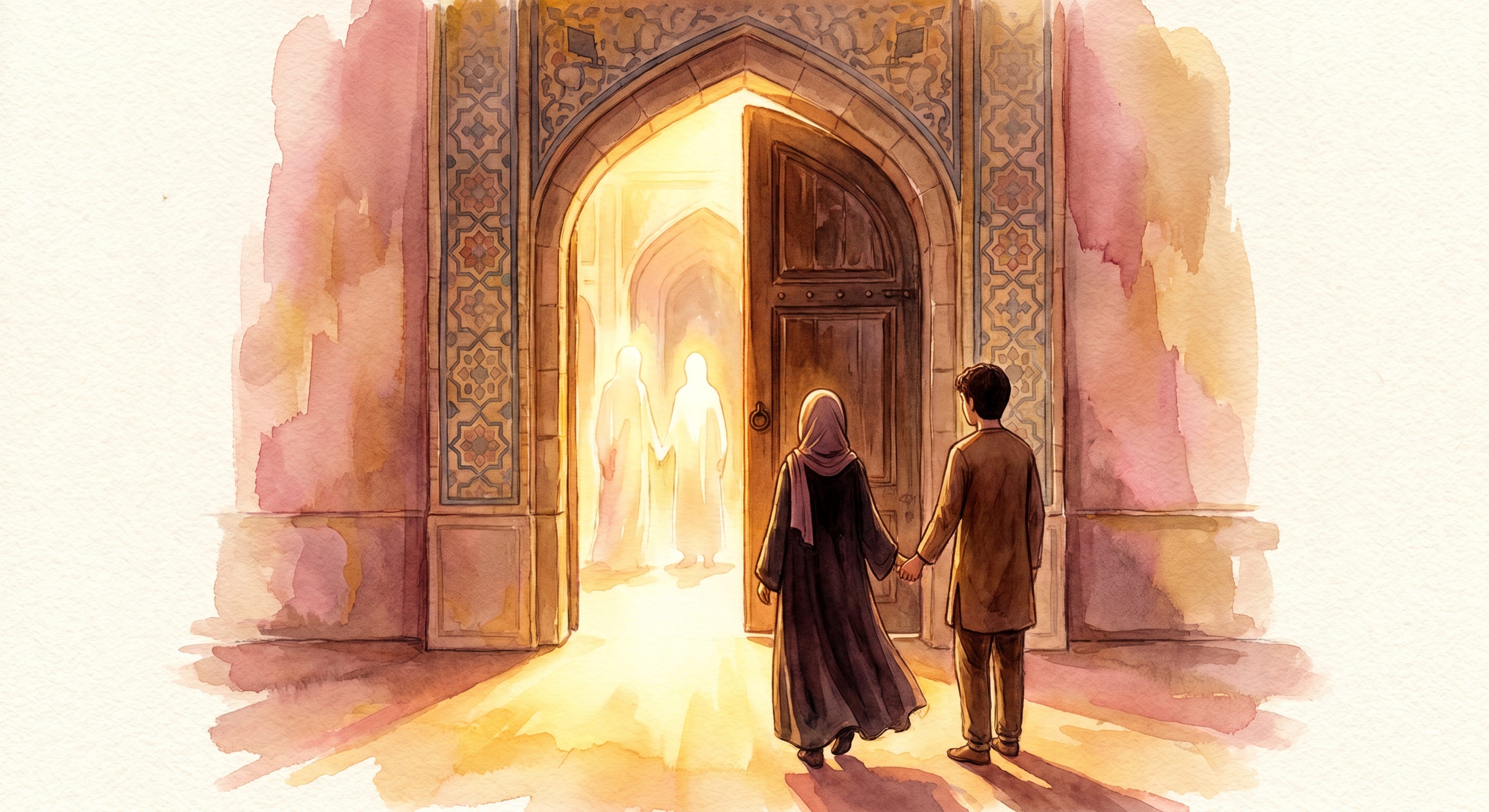
This is the part of the story that the night of Ashura itself left undone.
You will remember — for those who walked the tenth night with us — that we deliberately stopped at a door.
We said the longer telling, what was said before I saw nothing but beauty and what was said after, the sermons that would shatter both courts, would come when we walked together again, after Arbaeen had called us back.
We have been called back.
Tonight we pay what we deferred.
Four sermons.
Two by the daughter of Imam Ali; two by his grandson.
Hear what they did with nothing.
Kufa: The Captive Who Silenced a City
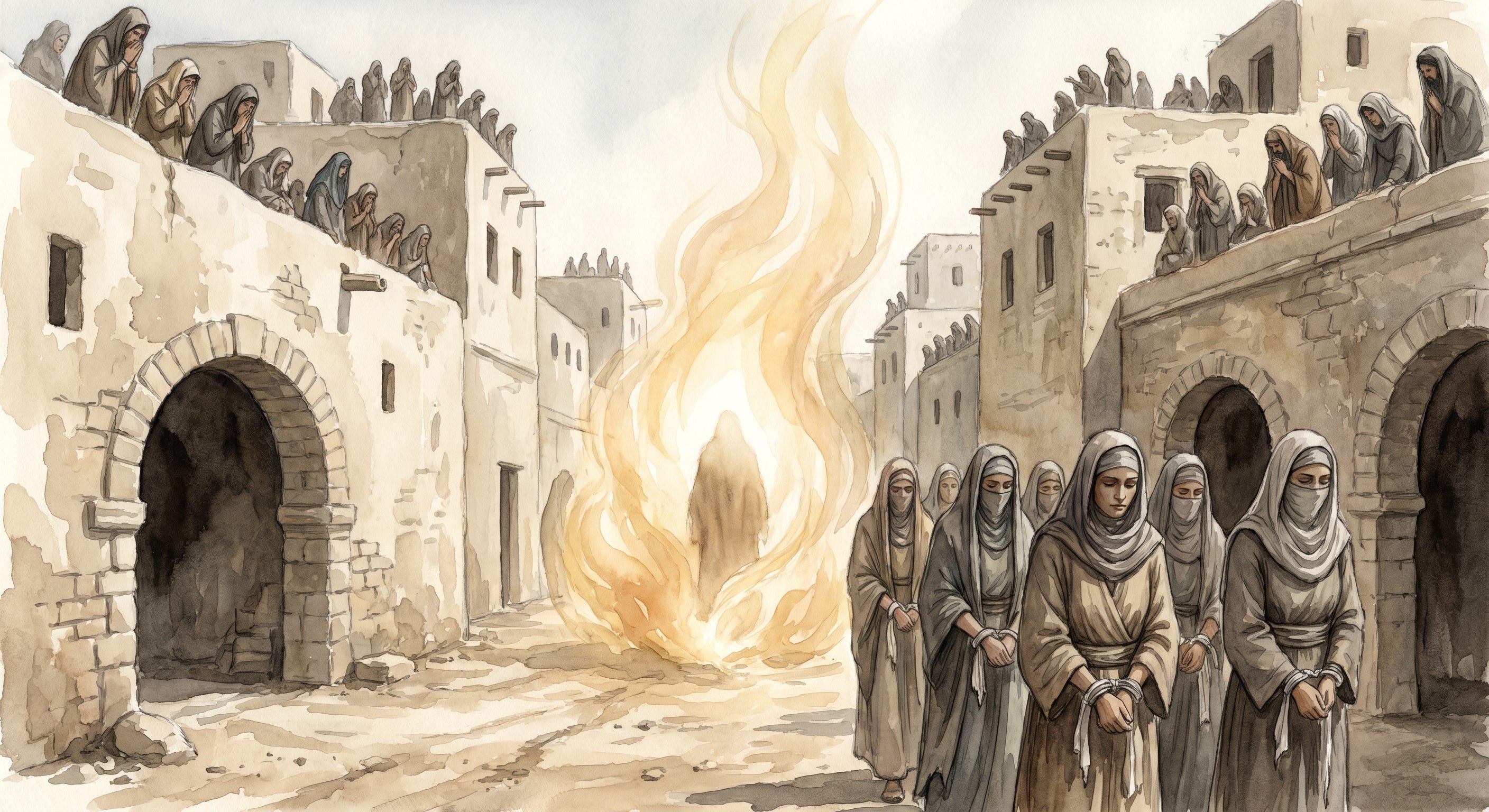
They brought the caravan into Kufa first.
Of all the cities on earth, Kufa.
The city whose eighteen thousand letters had begged Imam Husayn to come.
The city that had sworn its loyalty to his ambassador Muslim ibn Aqil, peace and blessings be upon him, and then abandoned him to die alone on its rooftops.
Now the people of Kufa lined the streets to watch the family of the man they had invited and betrayed be driven past them in chains — and, the chronicles say, they began to weep.
They wept.
After everything.
And Sayyedah Zaynab, peace and blessings be upon her, raised her hand for silence — and a whole city fell silent before a single captive woman.
The Hawza has preserved what she said, and I want you to feel the steel in it, because it is the steel that the whole rest of our history is forged from:
الْحَمْدُ لِلَّهِ، وَالصَّلَاةُ عَلَى أَبِي مُحَمَّدٍ وَآلِهِ الطَّيِّبِينَ الْأَخْيَارِ. يَا أَهْلَ الْكُوفَةِ، يَا أَهْلَ الْخَتْلِ وَالْغَدْرِ! أَتَبْكُونَ؟ فَلَا رَقَأَتِ الدَّمْعَةُ، وَلَا هَدَأَتِ الرَّنَّةُ. إِنَّمَا مَثَلُكُمْ كَمَثَلِ الَّتِي نَقَضَتْ غَزْلَهَا مِنْ بَعْدِ قُوَّةٍ أَنْكَاثًا، تَتَّخِذُونَ أَيْمَانَكُمْ دَخَلًا بَيْنَكُمْ... فَكَيْفَ تَرْحَضُونَ قَتْلَ سَلِيلِ خَاتَمِ النُّبُوَّةِ، وَسَيِّدِ شَبَابِ أَهْلِ الْجَنَّةِ؟
“Praise be to God, and blessings upon my father Muhammad and his pure and chosen descendants. O people of Kufa — O people of treachery and betrayal! Do you weep? Then may your tears never dry, and may your wailing never cease. You are like the woman who unravels her own yarn, thread by thread, after she has firmly spun it; you take your faith as a thing of deceit between you. … How will you ever wash away the murder of the son of the Seal of the Prophets? Of the lord of the youth of Paradise? … You have earned the wrath of God, and in the punishment you shall abide.”
— Sayyedah Zaynab’s sermon in Kufa, preserved in al-Tabarsi’s al-Iḥtijāj and in Biḥār al-Anwār vol. 45; carried also by al-Muqarram and by al-Qarashi, Ḥayāt al-Imām al-Husayn, vol. 3
She did not beg.
She prosecuted.
She stood in chains, in the city that had abandoned her ambassador and slaughtered her brother, and she did not ask them for pity — she handed them their indictment.
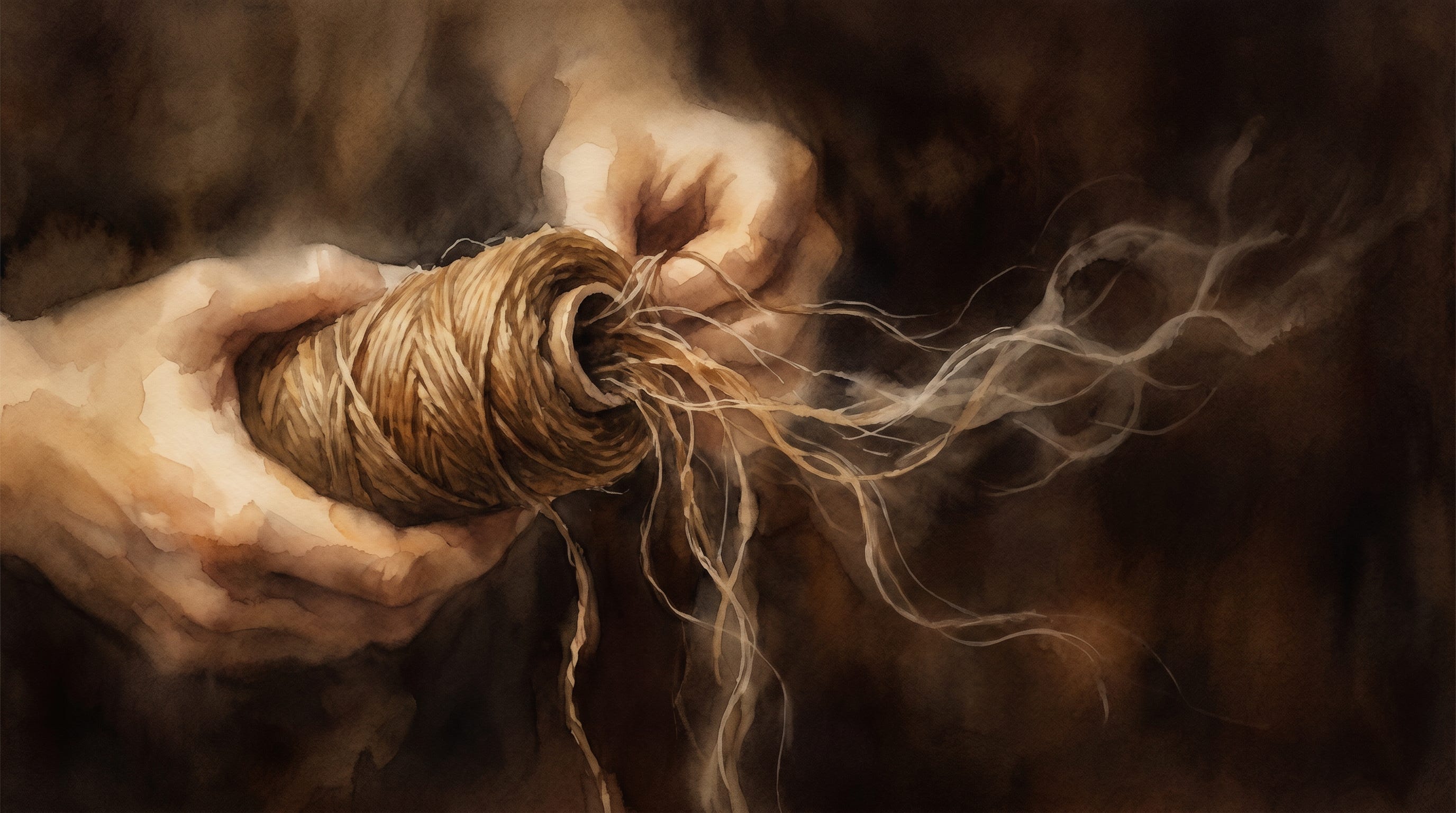
There is a Qur’anic blade hidden in that line about the woman who unravels her spun yarn: it is the Qur’an’s own image, from the Chapter of the Bee, for a people who make and break their covenant with God as casually as undoing a thread.
She reached into the Book and pulled out the exact verse that named what Kufa was.
كَٱلَّتِى نَقَضَتْ غَزْلَهَا مِنۢ بَعْدِ قُوَّةٍ أَنكَـٰثًۭا
“Like her who unravels her yarn after it was strongly spun.”
— Quran, Surah al-Nahl (The Chapter of the Bee) #16, Verse #92
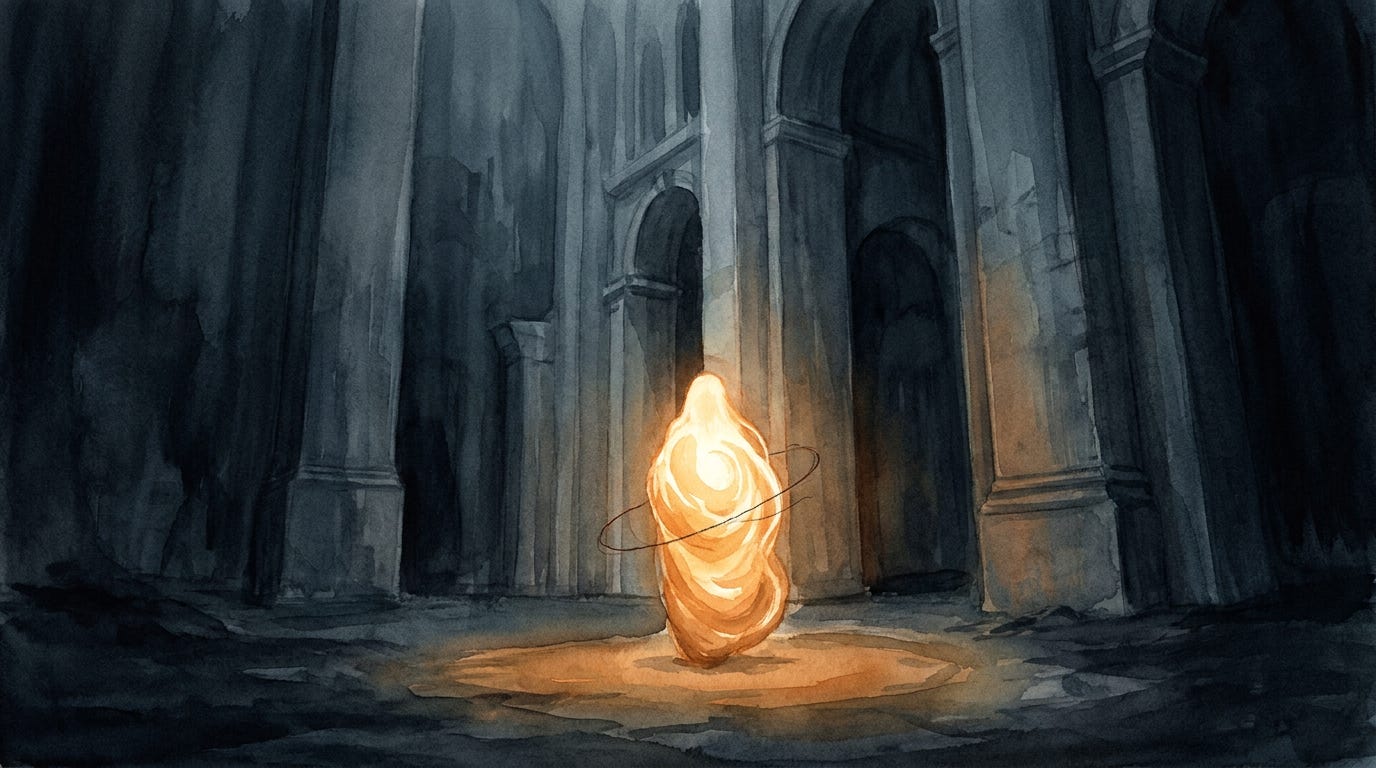
And here is the lesson that the whole night turns on.
The most dangerous thing a tyranny can face is not an army.
It is a captive who refuses to be ashamed.
A tyranny knows what to do with an army; it has more soldiers, more steel, more cruelty, and in the end it usually wins the field.
What a tyranny has no answer for is a chained woman who looks its crowd in the eye and tells them the truth about themselves and will not lower her gaze.
That is the pattern that begins in Kufa and runs through the whole of our history: when the open hand has been emptied of the sword — when the rising has been put down and the army is gone — the patient, clear voice of the captive becomes the voice of the tradition.
The body can be defeated.
The testimony cannot, so long as there is a mouth left willing to carry it.
The Governor’s Hall: “I saw nothing but beauty”
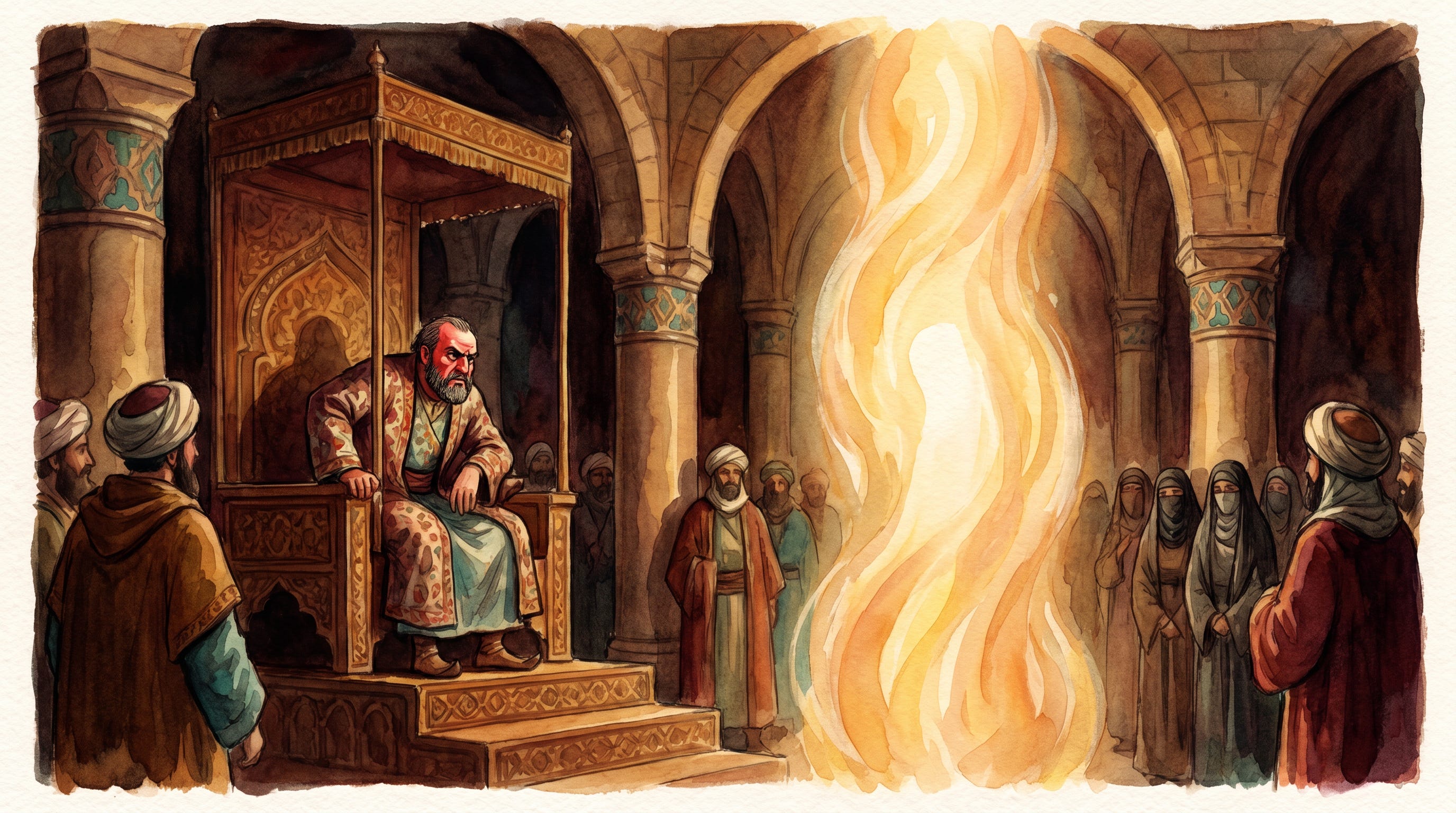
From the streets, they brought her before the governor — Ubayd Allah ibn Ziyad, may the mercy of God be distant from him — in his hall in Kufa.
He was flushed with victory, and he wanted to enjoy it.
He looked at this woman whose entire family he had just destroyed and he asked her, to wound her:
“How did you see what God did with your brother and your house?”
And she gave the answer that the tenth night could not reach.
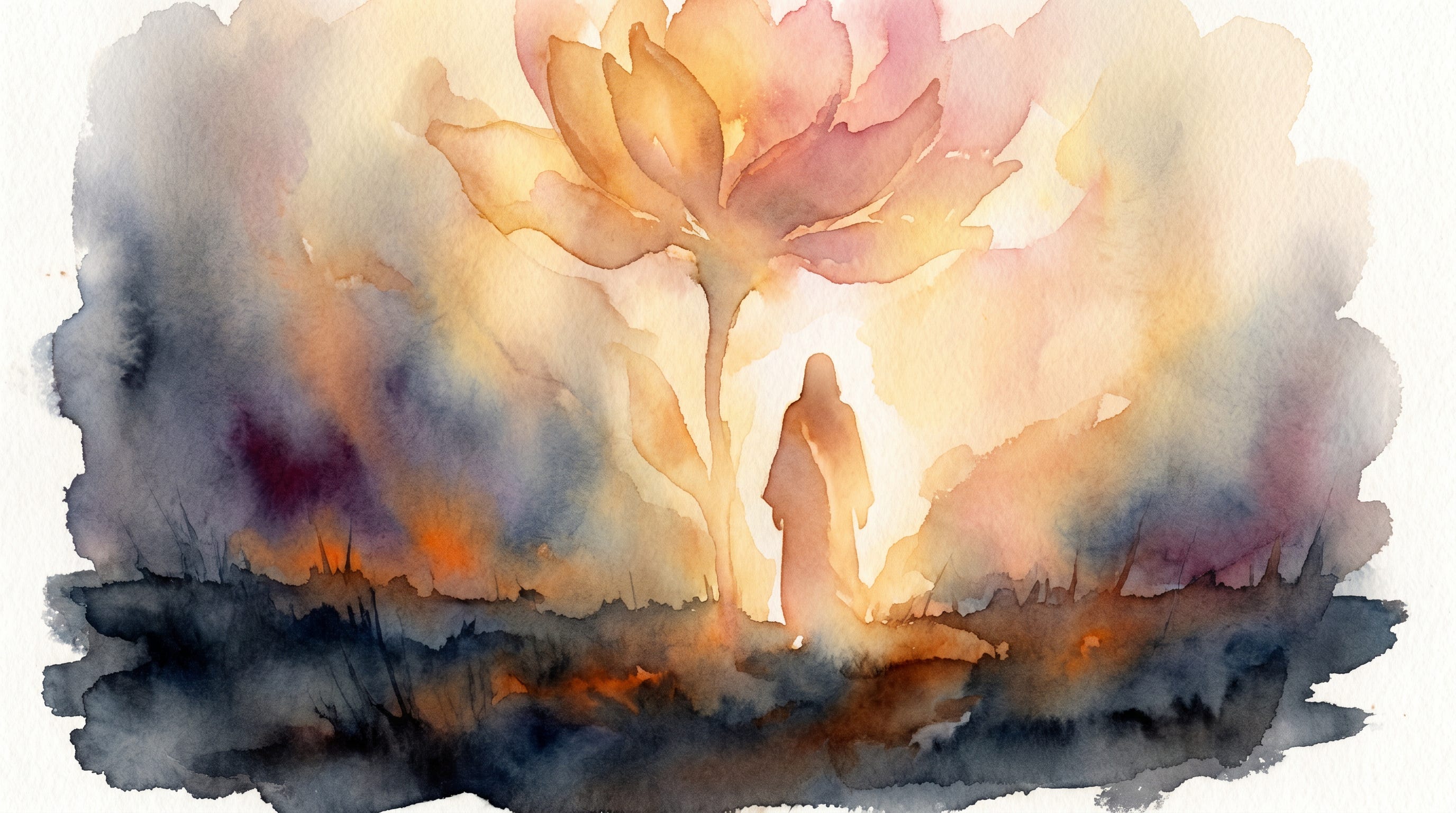
The answer that, in our tradition, is the very seam where grief turns into something the empire can never touch:
مَا رَأَيْتُ إِلَّا جَمِيلًا
“I saw nothing but beauty.”
— Sayyedah Zaynab to Ibn Ziyad, in his court at Kufa; preserved in al-Luhuf and the maqtal tradition
Do not mishear that line.
She did not say she saw beauty instead of the horror.
She had just walked through the horror with her own feet; she had lifted her brother’s trampled body with her own hands.
She saw the horror more completely than any human being who has ever lived.
What she is saying is that she saw, through it, the one thing the horror could not reach: a covenant kept, an offering accepted by God, a witness that would outlive the empire that made it.
This is what our tradition calls riḍā bi’l-qaḍāʾ — contentment with the decree of God.
And contentment with the decree is not the numbness of someone who feels no pain.
It is the refusal to let the pain have the last word.
She had wept, would that the sky had fallen.
And she had also said, I saw nothing but beauty.
Both, from the same heart, in the same week.
The grief is real, however, the grief does not get the last word — God does.
This is the same vision she had already spoken over the body.
The offering she lifted to the heavens at Karbala and the beauty she named in Ibn Ziyad’s hall are one thing.
The seed she planted over her brother’s body flowered, a few days later, in the governor’s own court.
He gave her a question meant to break her, and she answered it with a sentence that has outlasted his name by fourteen hundred years.
Damascus: the Daughter of Ali in the Court of Yazid
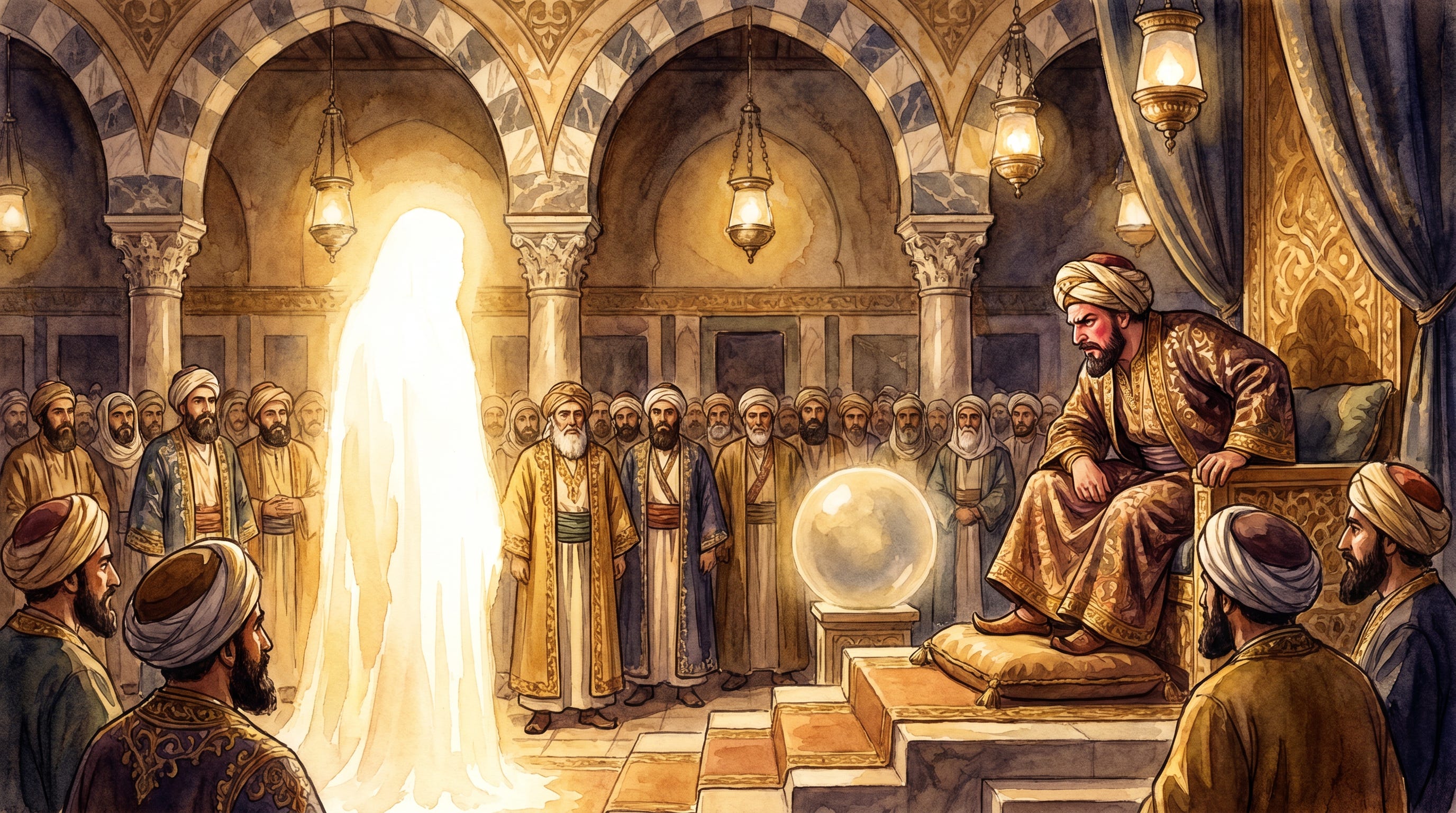
And then the long road to Damascus, to the very centre of the empire, into the throne room of Yazid himself, may the mercy of God be distant from him.
The hall was packed — the nobles of Syria, the ambassadors of foreign kings, the bishops and the dignitaries, gathered to watch the head of the Prophet’s grandson laid before the caliph as a trophy.
And Yazid, drunk on the moment, took a cane in his hand and began to strike the teeth and the lips of that severed head, and he recited the old pagan poetry of his ancestors — would that my elders killed at Badr could see this day — declaring openly, before the whole court, that this was his revenge for the polytheists the Prophet’s religion had defeated two generations before.
He said it out loud.
He admitted, in his own throne room, that he had killed the family of Muhammad to avenge the enemies of Muhammad.
And the daughter of Ali rose to her feet — a captive, unveiled, exhausted, surrounded by the power of the entire empire — and she demolished him.
أَظَنَنْتَ يَا يَزِيدُ — حَيْثُ أَخَذْتَ عَلَيْنَا أَقْطَارَ الْأَرْضِ وَآفَاقَ السَّمَاءِ، فَأَصْبَحْنَا نُسَاقُ كَمَا تُسَاقُ الْأُسَارَى — أَنَّ بِنَا هَوَانًا عَلَى اللَّهِ وَبِكَ عَلَيْهِ كَرَامَةً؟ فَكِدْ كَيْدَكَ، وَاسْعَ سَعْيَكَ، وَنَاصِبْ جَهْدَكَ، فَوَاللَّهِ لَا تَمْحُو ذِكْرَنَا، وَلَا تُمِيتُ وَحْيَنَا. أَمِنَ الْعَدْلِ يَا ابْنَ الطُّلَقَاءِ تَخْدِيرُكَ حَرَائِرَكَ وَإِمَاءَكَ، وَسَوْقُكَ بَنَاتِ رَسُولِ اللَّهِ سَبَايَا، قَدْ هَتَكْتَ سُتُورَهُنَّ وَأَبْدَيْتَ وُجُوهَهُنَّ، تَحْدُو بِهِنَّ الْأَعْدَاءُ مِنْ بَلَدٍ إِلَى بَلَدٍ؟
“O Yazid — do you imagine that because you have closed off to us the regions of the earth and the horizons of the sky, so that we are driven as captives are driven, that we are despised before God and you are honoured? …
Plot all you wish, and strive all you wish, and exert every effort — by God, you will never erase our remembrance, nor extinguish the revelation that came to us. …
And is it any justice, O son of the freed ones, that you keep your own free-women and slave-girls behind veils, while you have driven the daughters of the Messenger of God as captives, their coverings torn, their faces uncovered, the enemy driving them on from city to city?”
— Sayyedah Zaynab’s sermon in the court of Yazid, preserved in Balāghāt al-Nisāʾ of Ibn Abī Ṭāhir Ṭayfūr (third century AH), in al-Tabarsi’s al-Iḥtijāj, and in Biḥār al-Anwār vol. 45
O son of the freed ones.
Feel the precision of that knife. Yazid’s whole grandeur rested on the dignity of the caliphate, on the claim to be the rightful successor of the Prophet.
And in three words she reminded the entire court of what his family actually was: his grandfather Abu Sufyan, his father Mu’awiyah, his grandmother — these were the people the Prophet had pardoned at the conquest of Mecca, the ṭulaqāʾ, the freed ones, set at liberty by a mercy they had done nothing to earn.
This is the gratitude of the freed, she said — that the grandsons of the pardoned would slaughter the grandsons of the one who pardoned them.
She did not raise a weapon.
She raised a genealogy, and it cut deeper than any sword in that hall.
And then she did to him what she had done to Kufa: she reached into the Book and pulled out the verses that sentenced him.
To his face, she recited the warning to the tyrant who mistakes God’s patience for God’s approval:
وَلَا يَحۡسَبَنَّ ٱلَّذِينَ كَفَرُوٓاْ أَنَّمَا نُمۡلِي لَهُمۡ خَيۡرٞ لِّأَنفُسِهِمۡۚ إِنَّمَا نُمۡلِي لَهُمۡ لِيَزۡدَادُوٓاْ إِثۡمٗاۖ وَلَهُمۡ عَذَابٞ مُّهِينٞ
“And let not those who disbelieve imagine that the respite We grant them is good for their souls. We grant them respite only so that they may increase in sin — and for them is a humiliating punishment.”
— Qur’an, Surah Aal Imran (the Chapter of the Family of Imran) #3, Verse 178
You think your throne is God’s blessing on you, she told him.
It is God’s rope, and you are busy hanging yourself with it.

And for her own dead — for the bodies left in the field of Karbala — she recited the verse that turns every one of them from a corpse into a living thing:
وَلَا تَحۡسَبَنَّ ٱلَّذِينَ قُتِلُواْ فِي سَبِيلِ ٱللَّهِ أَمۡوَٰتَۢاۚ بَلۡ أَحۡيَآءٌ عِندَ رَبِّهِمۡ يُرۡزَقُونَ
“And do not think of those who have been killed in the way of God as dead. Rather, they are alive with their Lord, receiving provision.”
— Qur’an, Surah Aal Imran (the Chapter of the Family of Imran) #3, Verse 169
You have not killed them, she told the most powerful man in the world.
You have promoted them.
They are not in your field; they are with their Lord, provided for.
You have buried nothing.
Damascus: The Chained Young Man Takes the Pulpit
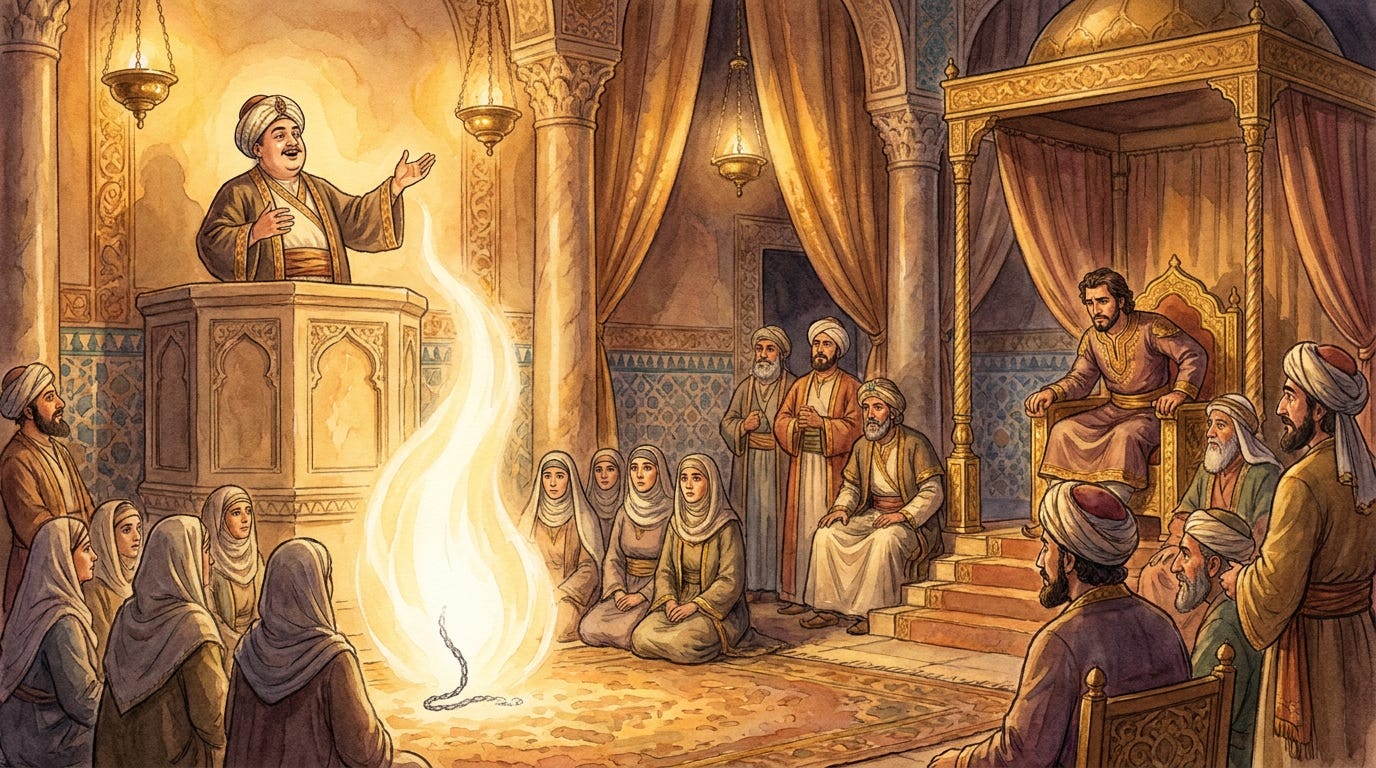
And there was one more voice in that court the empire had not reckoned with — the one survivor among the men of the House, sick almost to death, bound in chains:
Imam Ali ibn al-Husayn, Zayn al-Abidin, peace and blessings be upon him, the great-grandson of the Prophet, the fourth of the Imams of guidance.
Yazid, sensing the room turning, tried to seize the narrative back.
He had a court orator — a man on the imperial payroll — climb the pulpit and pour praise on Mu’awiyah and Yazid and slander upon Imam Ali, peace and blessings be upon him, and his sons.
And the sick young Imam, from his chains, called up at him:
“Woe to you, O speaker — you have bought the pleasure of a creature at the price of the anger of the Creator. Take your seat in the Fire.”

And then he turned to Yazid and asked leave to climb that same pulpit — “to say a few words that contain, for these people, the pleasure of God.”
Yazid refused.
He knew.
But the crowd, curious, pressed him, and he could not hold them, and so a chained prisoner climbed the pulpit of the empire — and what came out of his mouth, the chronicles say, made the whole hall weep, until Yazid grew frightened of his own court.
He simply told them who he was.
أَيُّهَا النَّاسُ! مَنْ عَرَفَنِي فَقَدْ عَرَفَنِي، وَمَنْ لَمْ يَعْرِفْنِي فَأَنَا أُنْبِئُهُ بِحَسَبِي وَنَسَبِي: أَنَا ابْنُ مَكَّةَ وَمِنًى، أَنَا ابْنُ زَمْزَمَ وَالصَّفَا، أَنَا ابْنُ مَنْ حَمَلَ الرُّكْنَ بِأَطْرَافِ الرِّدَاءِ... أَنَا ابْنُ مُحَمَّدٍ الْمُصْطَفَى، أَنَا ابْنُ عَلِيٍّ الْمُرْتَضَى... أَنَا ابْنُ الْمَقْتُولِ بِكَرْبَلَاءَ، أَنَا ابْنُ مَنْ رُفِعَ رَأْسُهُ عَلَى الرُّمْحِ، أَنَا ابْنُ مَنْ سُبِيَ نِسَاؤُهُ مِنَ الْعِرَاقِ إِلَى الشَّامِ.
“O people! Whoever knows me knows me; and whoever does not, let me inform him of my lineage and descent.
I am the son of Mecca and Mina; I am the son of Zamzam and Safa. I am the son of the one who carried the Black Stone in the folds of his cloak. … I am the son of Muhammad al-Mustafa.
I am the son of Ali al-Murtadha. … I am the son of the one slain at Karbala; the son of the one whose head was raised upon a spear; the son of the one whose women were driven as captives from Iraq to Syria.”
— the sermon of Imam Zayn al-Abidin in the court of Yazid, preserved in al-Tabarsi’s al-Iḥtijāj, in Biḥār al-Anwār vol. 45, and in Maʿālim al-Madrasatayn
I am the son of Mecca and Mina;
I am the son of Zamzam and Safa.
He did not argue.
He did not plead.
He simply named his lineage, link by link, until the room understood that the family Yazid was parading in chains was the family in whose veins ran every sacred thing in Islam — and that meant the family Yazid had slaughtered was the Prophet’s own.
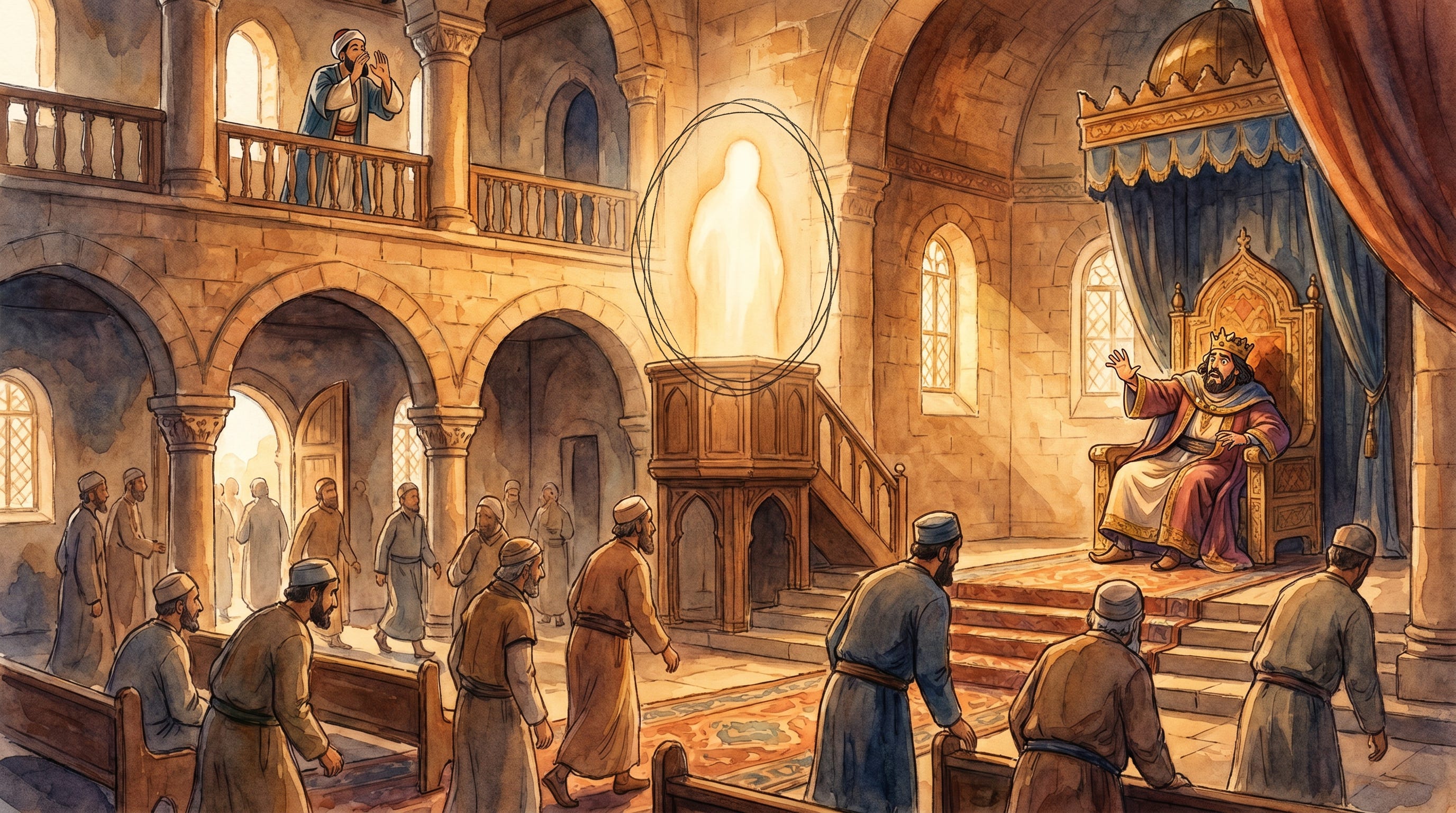
And then God arranged the most exquisite collapse of the empire’s theatre.
As the room began to weep, Yazid, panicking, ordered the muezzin to call the prayer — anything to cut the Imam off.
The call began.
And when the muezzin reached the words
“I bear witness that Muhammad is the Messenger of God,” the chained young Imam stopped, and turned to Yazid in front of the entire court, and said:
“This Muhammad — is he your grandfather, or mine? If you say he is yours, everyone here knows you are lying. And if you confess he is mine — then why did you kill his son, and take his daughters captive?”
There was no answer.
There has never been an answer.
And the chronicles tell us that men stood up in that hall and walked out rather than pray behind Yazid.
What They Did With Nothing
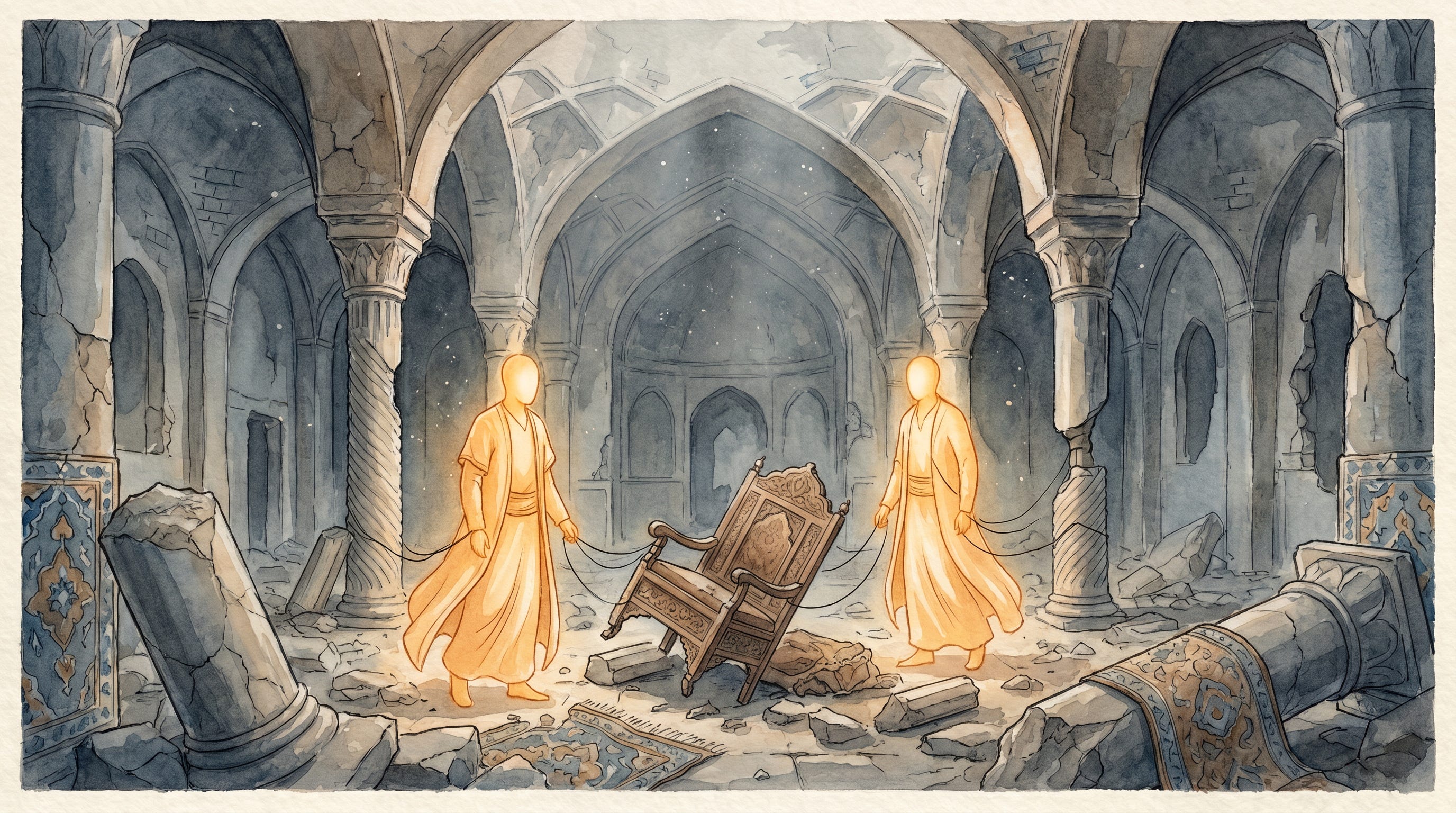
Two courts.
Four sermons.
And by the end, the empire that held the field at noon on the tenth had lost the only thing that ever lasts — the argument.
Yazid held the bodies.
Sayyedah Zaynab and Imam Sajjad held the meaning.
The regime could behead the witness.
It could not behead the witness-after-the-witness.
And here is the thing I want every one of us to sit with, because it is the most practical lesson in the whole of our religion: they had nothing.
No army.
No freedom.
No allies.
No weapons.
Not even their own clothing — they had been stripped of the veils from their heads.
They had a clear voice, and they had the truth, and they had their refusal to be ashamed.
And with those three things alone — voice, truth, and dignity — a captive woman and a chained young man brought down the moral authority of a dynasty that had armies and gold and the whole apparatus of empire.
The Umayyad house that thought it had won at Karbala was broken within a few generations and is remembered today by the entire world, Sunni and Shia alike, as a byword for tyranny.
That is what the witness-after-the-witness did with nothing.
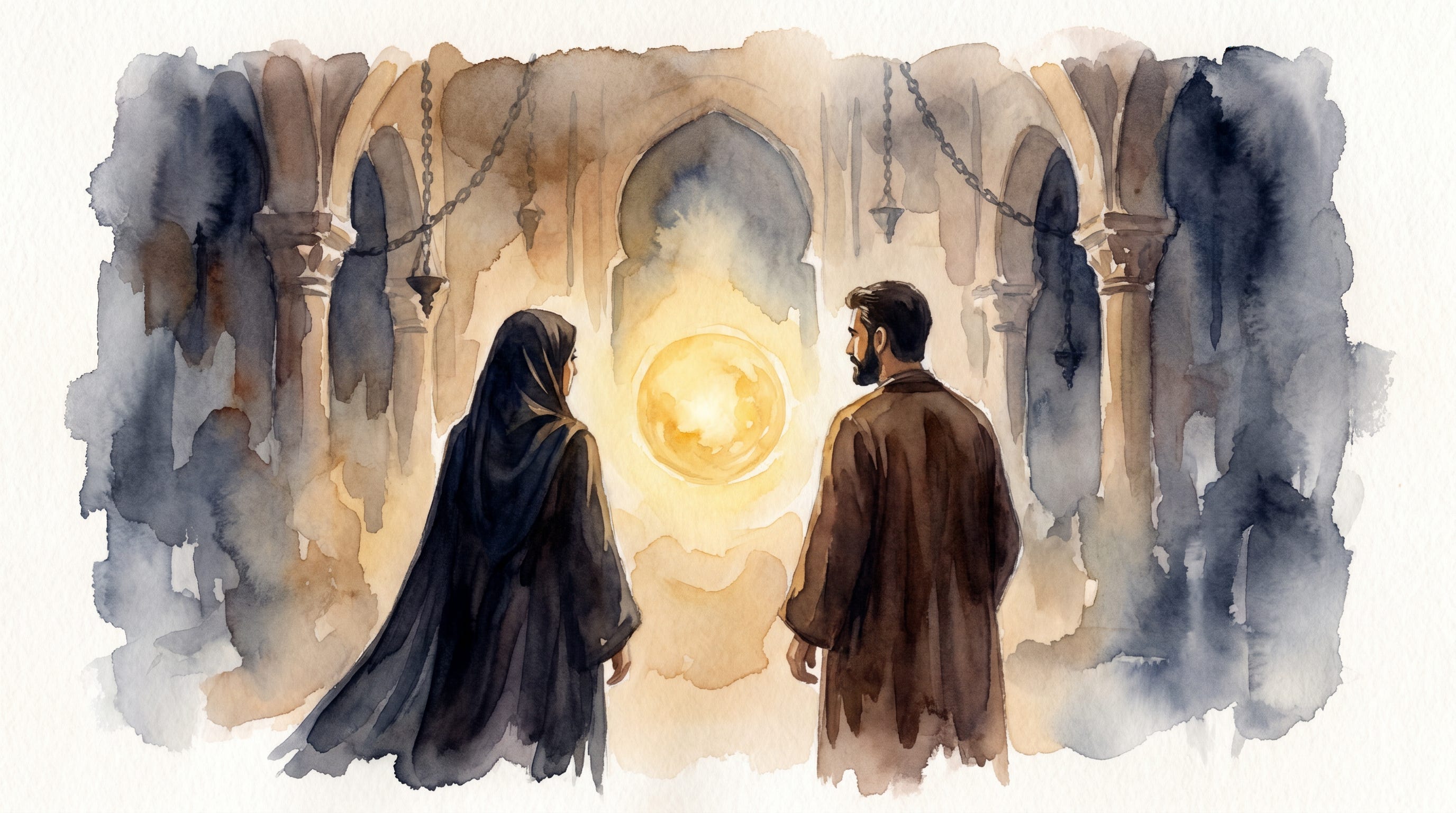
Which raises the question the tradition has circled for fourteen hundred years, the question that is the doorway to everything else tonight:
How?
How does a captive woman, a sick boy in chains, stand in the throne room of the man who has just butchered their entire family — and not break?
What did they have, on the inside, that the empire could not reach?
The Road Has a Destination
The Rank She Was Given

Our tradition has a description of Sayyedah Zaynab, peace and blessings be upon her, that it does not give lightly.
It calls her maḥfūẓatun ʿan al-khaṭaʾ — “protected from error.”
Now, she is not a prophet.
She is not one of the fourteen Infallibles — not one of the Ma’sumin whose protection from sin is a pillar of our creed.
And yet the tradition, for fourteen centuries, has placed her at a station that stands very near that perfected summit.
So the question for tonight is not only how did she not break — it is something larger:
Is that station a thing only they can reach, a different species of human being sealed off from us — or is it the far end of a road that we ourselves are standing on?
Here the tradition draws a line we must not blur.
There is the intrinsic, total infallibility — al-ʿiṣmah al-kubrā — woven into the very being by God’s decree and lasting a whole life long; and that belongs to the Prophet, to Sayyedah Fatima, and to the twelve Imams, peace be upon them, and to no one else.
And there is ḥifẓ — a protection God lays upon a chosen servant, resting on a soul purified almost to that summit, for the carrying of a particular trust.
When our scholars call Zaynab maḥfūẓatun ʿan al-khaṭaʾ, they mean the second, not the first: not the sealed infallibility of the Fourteen, but a real, God-given guarding of her tongue and her judgement for the mission that Karbala laid upon her.
And we can see exactly why it was needed.
With Imam Ali ibn al-Husayn, Zayn al-Abidin, peace and blessings be upon him, gravely ill and marked for execution, it fell to Sayyedah Zaynab to carry the outward authority of guidance through those first terrible months — the questions answered, the rulings given, in her name, to shield the Imam.
God does not entrust the keeping of His religion to one who might err in it.
And the Imam himself testified to where her knowledge came from; as she spoke in the court of Kufa, he said to her:
يَا عَمَّةُ أَنْتِ بِحَمْدِ اللَّهِ عَالِمَةٌ غَيْرُ مُعَلَّمَةٍ، فَهِمَةٌ غَيْرُ مُفَهَّمَةٍ.
“O aunt — you are, by the grace of God, a knower untaught, and one who comprehends without being instructed.”
— al-Tabarsi, al-Iḥtijāj, vol. 2; recorded also in Biḥār al-Anwār, vol. 45, p. 163
A knower untaught: knowledge not gathered by the fallible human hand, but placed in her directly by God — and what God places, God protects in the conveying.
That is the weight that sits behind the phrase maḥfūẓatun ʿan al-khaṭaʾ.
The Prophets, And The Slip That Was Not A Sin
And here a word is needed that clears away a confusion many of us carry — because it goes to the very heart of what ismah is.
To place that supreme infallibility with the Fourteen is not to say that the other prophets of God were anything less than protected.
Every prophet — Adam, Noah, Abraham, Moses, Jesus, peace be upon them all — was maʿṣūm: guarded from sin, major and minor, before his mission and after it.
Imam al-Baqir, peace be upon him, taught that God never sent a prophet except that He protected him from disbelief, and corruption, and every sin.
عَنْ أَبِي جَعْفَرٍ (عَلَيْهِ السَّلَام) قَالَ:
«إِنَّ اللَّهَ تَبَارَكَ وَ تَعَالَى لَمْ يَبْعَثْ نَبِيّاً إِلَّا وَ قَدْ عَصَمَهُ مِنَ الْكُفْرِ وَ الْفُجُورِ وَ الْمَعَاصِي، وَ لَمْ يُؤْذِهِ الشَّيْطَانُ فِي دِينِهِ وَ لَا فِي دُنْيَاهُ».Imam Muhammad al-Baqir, peace and blessings be upon him said:
“Verily God, Blessed and Exalted, did not send a single prophet except that He protected him (‘asamahu) from disbelief (kufr), immorality (fujur), and sins (ma’asi). And Satan did not harm him in his religion, nor in his worldly affairs.”— Al-Kulayni, al-Kāfī, Vol. 1, p. 106 (Book of Proof / Kitab al-Hujjah, Chapter on the Infallibility of the Imams and Prophets), also in Al-Majlisi, Bihar al-Anwar, Vol. 11, p. 48, Hadith 18
Infallibility is the shared floor of prophethood — not the private possession of the Fourteen alone.
“But,” someone always asks, “does the Qur’an not say that Adam disobeyed his Lord? Does it not speak of the slips of the prophets?”
And here is the nuance that is so often missed — and getting it right matters, because the careless reading hands our opponents a weapon and robs us of the truth.
Asked about that very verse — “so Adam disobeyed his Lord and erred” — Imam Ja’far al-Sadiq, peace be upon him, answered:
لَيْسَ الْعِصْيَانُ مَا تَظُنُّونَ... وَإِنَّمَا كَانَ ذَلِكَ تَرْكَ الْأَوْلَى.
“The ‘disobedience’ is not what you imagine … rather, it was only the leaving of the better course — tark al-awlā.”
— Imam Ja’far al-Sadiq, in al-Kulayni, al-Kāfī, vol. 2, p. 282
We walked this same ground on the fifth night, The Cross and the Witness, when we set Adam’s story against the Christian doctrine of “the fall”: the word over the tree was a counsel, not a binding law — the advice of a physician, not the decree of a king — and what came after was the natural consequence of the choice, not the punishment of a crime.
That is tark al-awla: never the doing of a sin, but the leaving of the most perfect of permitted options.
For you and me, to miss the better choice is nothing at all.
But for a soul at the very summit of nearness to God, even a permitted act that falls a hair short of the highest is reckoned — relative to that station alone — a slip; as Allamah Tabataba’i explains it, what is merely allowed can be a shortcoming in the one whose whole being is meant to be absorbed in God.
The greater the light, the smaller the shadow that shows against it.
So the prophets all share infallibility; and the Fourteen stand at the summit of it — the highest degree of a protection every prophet holds, sealed for them by explicit text, the Verse of Purification, and joined to a cosmic trust, a wilāya takwīniyya, that the general office of prophethood does not carry.
One protection; graded in degrees; and at its peak, the family for whom this night is kept.
Grace, Not A Cage

To answer the larger question, then, we have to be clear about how that protection works in a living soul — a doctrine very often misunderstood, even among us.
And we have to begin by clearing away two more things it is not.
Ismah is not the suspension of free will.
The Infallible is not a puppet whose hand God holds back from sin.
And Ismah is not some metaphysical inability to sin — as though the Ma’sum were a locked door, a machine that simply cannot do wrong.
Because if that were what it meant, then their sinlessness would be no virtue at all.
A door earns no praise for staying shut when it has no power to open.
There is no honour in a goodness you could not have departed from.
If Sayyedah Zaynab could not have broken in that throne room, then her not-breaking means nothing.
The whole point is that she could have, and did not.

So what is it?
The Hawza has carried the answer down a chain of our greatest teachers — from Shaykh al-Mufid in the fifth century of the Hijra, through Allamah al-Hilli, through Allamah Tabataba’i in our own age, into the teaching of Ayatollah Jawadi-Amoli today — and the word at the centre of it is luṭf: grace.
Ismah is a divine grace that places into the heart such an overwhelming abundance of the knowledge of God, and such an intensity of love for Him, that — while the full power to sin remains — the desire to sin simply has no weight left in it.
Shaykh al-Mufid put it with great precision:
الْعِصْمَةُ لُطْفٌ يَفْعَلُهُ اللَّهُ تَعَالَى بِالْمُكَلَّفِ، بِحَيْثُ يَمْتَنِعُ مِنْهُ وُقُوعُ الْمَعْصِيَةِ وَتَرْكُ الطَّاعَةِ مَعَ قُدْرَتِهِ عَلَيْهِمَا.
“Infallibility is a grace (luṭf) that God, the Exalted, bestows upon the responsible one — such that the occurrence of disobedience and the abandonment of obedience become impossible from him, while he still possesses the power over both.”
— Shaykh al-Mufid, Taṣḥīḥ Iʿtiqādāt al-Imāmiyyah, p. 128
And Allamah Tabataba’i drew the line under it exactly:
فَالْإِنْسَانُ الْمَعْصُومُ إِنَّمَا يَنْصَرِفُ عَنِ الْمَعْصِيَةِ بِنَفْسِهِ وَمِنِ اخْتِيَارِهِ وَإِرَادَتِهِ... إِنَّ الْعِصْمَةَ مَلَكَةٌ نَفْسَانِيَّةٌ تَمْنَعُ صَاحِبَهَا عَنِ ارْتِكَابِ الْمَعْصِيَةِ.
“The infallible person turns away from sin purely by himself — through his own choice and his own will … Indeed, Ismah is an inner disposition (malaka nafsāniyya) that prevents its possessor from committing sin.”
— Allamah Tabataba’i, al-Mīzān fī Tafsīr al-Qurʾān (the discussion on ʿiṣmah, under Surah al-Ahzab 33:33)
The perfecting of the will.
Not the removal of the will — its perfection.
Now hold that beside the image we have carried with us through every single night of this series:
Shaheed Mutahhari’s candle, the candle that burns itself in order to give the room light.
Here is what Ismah is, in the language of that candle.
The fire of their love for God burns so completely that the little candles the lower self keeps offering — here, take comfort; here, take safety; here, take the approval of the powerful and you can keep your life — those little candles give no light at all beside the blaze they already carry.
It is not that the Infallible cannot see what safety offers.
It is that, next to the fire of God already burning in that heart, the bribe of safety is a struck match held up against the sun.
That is how a captive woman stands in Yazid’s court and feels no pull to soften the truth for the sake of her life.
It is not that she felt the fear and overcame it by gritted teeth.
It is that there was nothing safety could put on the table that weighed anything at all against what she was already holding.
The Same Road — And A Door That Is Open
And now hear why this is not a lecture about them, but an invitation to us — the most hopeful sentence in the whole of our theology.
The Ma’sumin are not a different species of being.
They are not made of other clay.
They are the human being as God designed the human being to be — the perfected end of the very road that every one of us is invited, in our daily struggle, to walk.
We will not reach the end of that road; that summit is theirs.
But — and this is everything — we are on the same road.
It is not a different road.
Every act of tazkiyat al-nafs, the purification of the self; every single time you refuse the little candle of comfort or status or safety for the sake of the great fire — that is a step, your step, down the same road Sayyedah Zaynab walked to its very end.
And do not let anyone tell you that road has no way-stations short of their summit.
The intrinsic infallibility of the Fourteen is theirs alone — we will not stand where they stand.
But the masters of our tradition speak of something else upon this same road, well below that summit and yet far above where most of us live: al-ʿiṣmah al-iktisābiyya — an acquired protection from sin, one that a human being earns through the long labour of purifying the self.
Grand Ayatollah Jawadi-Amoli says it as plainly as it can be said:
عصمت منحصر در انبيا و فرشتگان و امامان نيست؛ بلكه درِ آن به روي همگان باز است... باب عصمت عملی به روی کسی بسته نیست.
“Infallibility is not confined to the prophets, the angels, and the Imams; rather, its door is open to all … the door of practical infallibility is closed to no one.”
— Ayatollah Jawadi-Amoli, Waḥy wa Nubuwwat dar Qurʾān (Thematic Exegesis of the Qur’an), vol. 3
And how can a person be unable to sin and yet remain free?
Ayatollah Misbah-Yazdi answered with a single image.
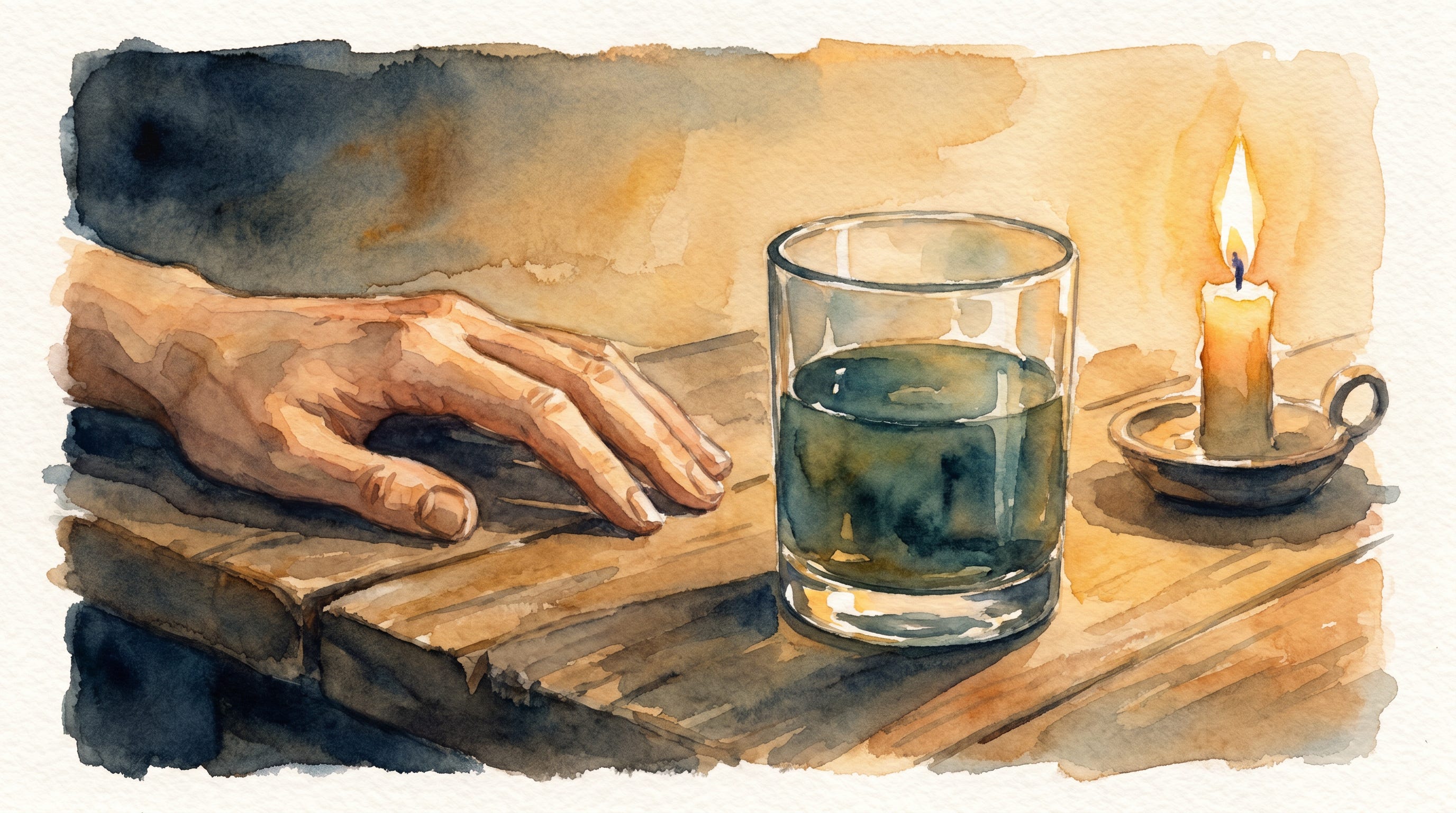
Set a glass of poison before someone in their right mind.
Their hand is free; no one restrains it; they are perfectly able to lift it and drink.
And yet they never will — not because they are forced, but because their certainty that it would kill them makes the very thought of drinking it unthinkable.
That is the perfected will.
The believer who, through years of tazkiyat al-nafs, comes truly to see that a lie, a cruelty, a surrender of conscience is poison to the soul reaches a place where the sin stays possible to the hand and becomes impossible to the heart.
The candle and the glass of poison are one teaching from two directions: when the fire of God burns that brightly, and the toxicity of the sin is seen that clearly, the little candle of safety is not refused through clenched teeth — it is simply seen for what it is, and left where it lies.
She Guarded the Imam
She walked that road to its very end — to the maḥfūẓa station we began with.
But here we have to be careful, because what she did next is easily misunderstood, and the truth is far greater than the mistake.
Sayyedah Zaynab did not become the Imam in the months after Karbala, and the Imamate did not pass through her.
The Imam after Imam Husayn was his son — Imam Ali ibn al-Husayn, Zayn al-Abidin, peace and blessings be upon him — and he was the Imam by nass, the explicit divine designation, that Imam Husayn had placed upon him before Ashura.
The leadership was already his, sealed, on the day of the tenth; it did not leave the line of the Imams for a single second.
What Sayyedah Zaynab did was something else — and it is the very thing this night asks of us.
She guarded the Imam.
She kept him alive when the swords were seeking him; she stood between him and the courts; she carried the outward business of the caravan — the answers, the bearing, the public voice — precisely so that the ailing Imam would be shielded and the line preserved in him.
And she made it unmistakably plain to everyone watching who the authority now was.
When the tents were set ablaze and the women had to choose between the fire and the open desert, she — the elder, the towering figure of the household — did not decide on her own.
She turned to that young, ill man and asked him:
«يَا بَقِيَّةَ الْمَاضِينَ وَثِمَالَ الْبَاقِينَ، قَدْ أَضْرَمُوا النَّارَ فِي مَضَارِبِنَا، فَمَا رَأْيُكَ؟»
فَقَالَ لَهَا: «يَا عَمَّةُ، عَلَيْكُنَّ بِالْفِرَارِ»“O remnant of the past ones and refuge of the remaining ones! They have set fire to our tents, so what is your opinion [instruction]?”
He replied to her: “O aunt, you must flee.”
— Al-Majlisi, Bihar al-Anwar, Vol. 45, Jala’ al-Uynun, also in Al-Muqarram, Maqtal al-Husayn, and al-Qazwini, Zaynab al-Kubra min al-Mahd ila al-Lahd
“O remnant of those who have passed, O refuge of those who remain — they have set our tents on fire. What is your command?” And he answered: “O aunt — you must flee.”
She, with all her rank and all her knowledge, sought the ruling of the Imam of her time, and obeyed it on the instant.
In that single exchange she taught the whole caravan — and teaches us — exactly who the Proof of God now was.
So she did not hand on the Imamate; she protected the one who carried it — and in guarding him, she guarded Islam itself, and the Truth, from being snuffed out in the chaos after Karbala.
And that is the call this night lays upon us: not to become anything we are not, but to know the Imam of our own age — the Awaited One, may our souls be his ransom and may God hasten his return — and in his absence to hold fast to his guidance through the Wali al-Faqih, in our age Imam Sayyed Mujtaba Khamenei, may God protect him, and to guard the Truth with our own witness, exactly as she did.
So the road has a destination.
And the road is walked by ordinary people, one refusal at a time.
Which means the question is no longer about her.
It is about us.
The Heat That Never Grows Cold
And if anyone here is thinking that such a fire is only for the Zaynabs of the world, and not for someone like them — someone ordinary, someone who knows their own sins too well — then hear where the tradition says this fire is lit.
The Prophet, peace and blessings be upon him his family and his righteous companions, said — in a saying preserved for us through Imam Ja’far al-Sadiq, peace be upon him, in the earliest books of ziyarah:
إِنَّ لِقَتْلِ الْحُسَيْنِ حَرَارَةً فِي قُلُوبِ الْمُؤْمِنِينَ لَا تَبْرُدُ أَبَداً.
“Indeed, in the killing of Husayn there is a heat in the hearts of the believers that never grows cold.”
— Ibn Qulawayh, Kāmil al-Ziyārāt, ch. 14; also Biḥār al-Anwār, vol. 44, p. 284
A heat — ḥarārah — that never grows cold.
Our scholars are insistent that this is no mere sentiment of sorrow.
Shaheed Mutahhari reads it as the very thing that keeps Karbala a living epic and not a dead date in a book — a heat that will not let the believer make his peace with tyranny.
«این حرارت باعث میشود که حادثه کربلا از صورت یک حادثه تاریخی خارج شود و به صورت یک حماسه زنده و جاوید درآید.»
This heat causes the event of Karbala to exit the form of a mere historical event and transform into a living, eternal epic.
— Shaheed Mutahhari, Hamaseh-ye Hossein (the Epic of Husayn)
Ayatollah Jawadi-Amoli reads it as a divine light, a love placed by God in the heart, that keeps the heart from hardening and dying. This is the fire of our whole metaphor — and the tradition is telling us that we do not have to manufacture it out of nothing. It is placed in the believing heart by the witness of Husayn himself.
«إنّ لقتل الحسين حرارة في قلوب المؤمنين لن تبرد أبداً... هذه الحرارة هي نور إلهي يمنع القلب من القسوة والموت.»
Verily, the martyrdom of al-Husayn is a heat in the hearts of the believers that will never cool... This heat is a divine light that prevents the heart from hardening and dying.
— Ayatollah Jawadi-Amoli, Lectures on Irfan (Islamic Mysticism) and Quran
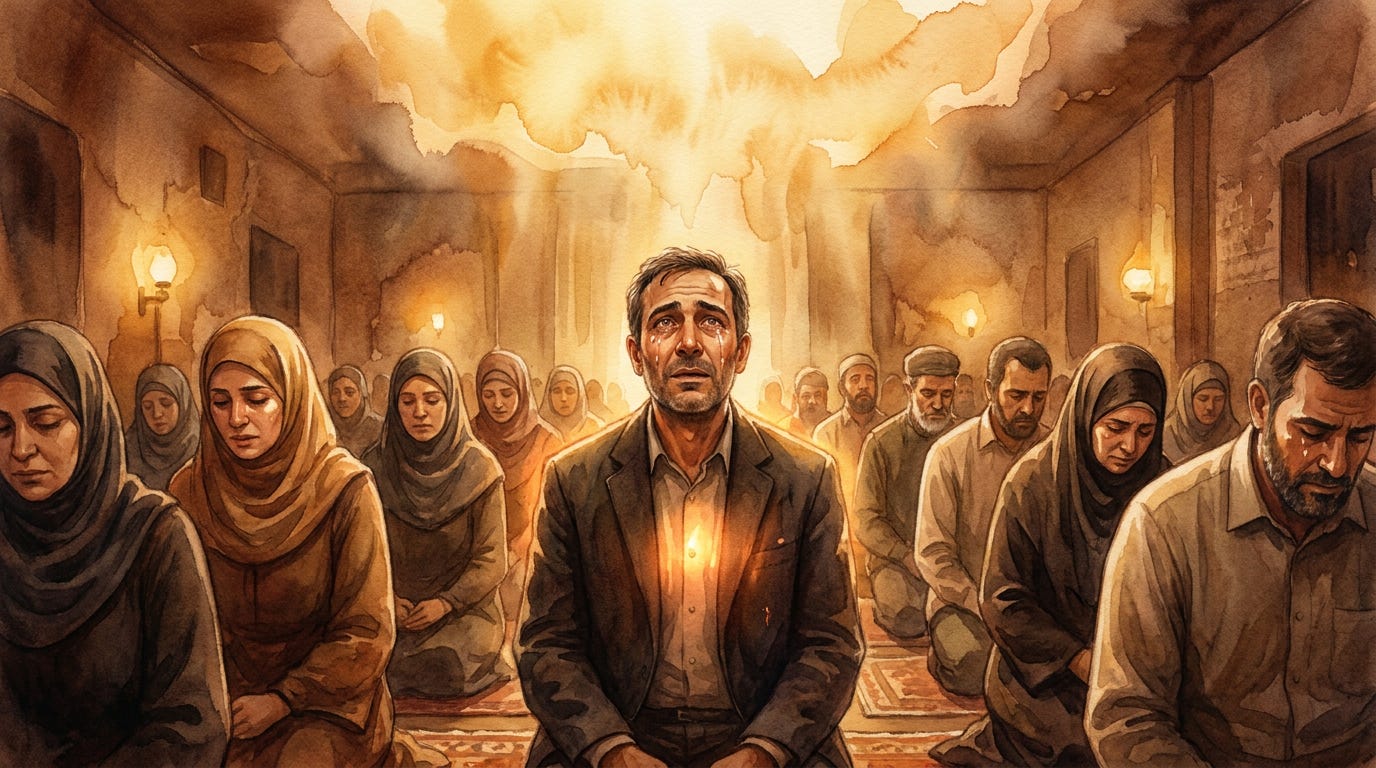
And that is the deepest reason we gather, and weep, and refuse to let this memory cool.
The remembrance of Imam Husayn, received rightly — not as a spectacle to be watched, but understood for what it truly is — is the spark that lights the love of God in an ordinary heart.
A person can walk into the majlis a wretch, weighed down by his own failings, and the witness of Imam Husayn can kindle in him a love of God so real that he walks out the beginning of a lover — for whoever truly beholds what Imam Husayn gave, and why, cannot help but be set alight by it.
That is why this remembrance is neither nostalgia nor theatre.
It is the ignition of the very fire by which the whole road — every refusal, every act of tazkiyat al-nafs — becomes possible to walk.
Imam Husayn does not only show us the end of the road.
He gives us the fire to begin it.
We Are the Witnesses-After-the-Witness
Let me say something now that I want to land with its full weight, because it is the reason we are in this room tonight and not at home.
We did not stand at Karbala.
None of us was on that mound, or in the market of Kufa, or in the throne room of Damascus.
It is tempting, then, to think of ourselves as the audience of this story — people who hear it, are moved by it, weep at it, and go home.
I want to tell you that this is not what we are.
We are not the audience of this story.
We are inside it.
We stand in the lineage of Sayyedah Zaynab, peace and blessings be upon her.
Let us trace the chain together.
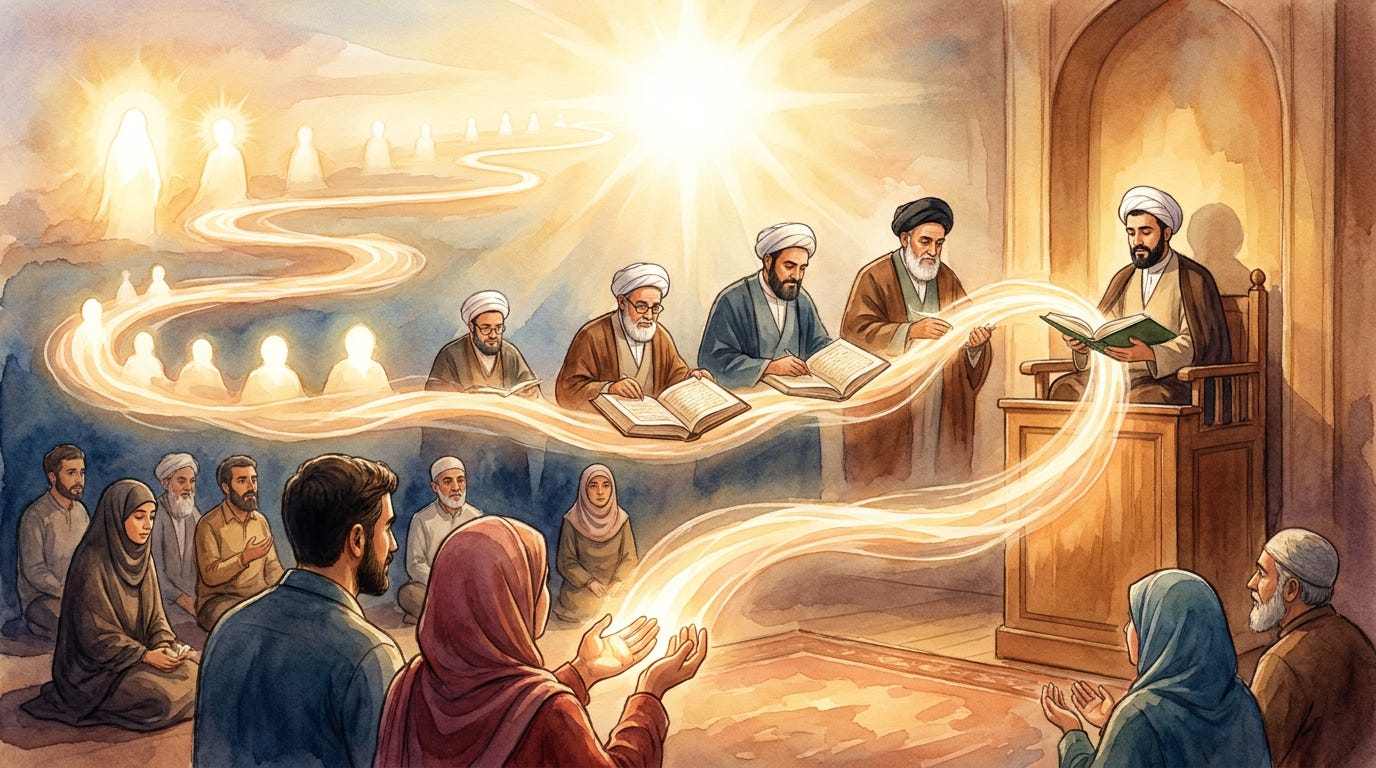
Every gathering of mourning held in a front room; every pilgrim who walks toward a grave; every Muharram sermon raised in any city and in any language, fourteen centuries on — whether a short walk from that field or half a world away from it — every one of these is a continuation of the sermon she began in the market of Kufa.
The chain of witness that opened in that hour has never once closed.
It runs from her to Imam Zayn al-Abidin — and from him down the line of the Imams, peace be upon them, one entrusting it to the next, until it reaches the Imam of our own age: Imam al-Mahdi, the Master of the Age, may God hasten his return.
The inheritance, in truth, is his.
And because he is veiled from us, he did not leave it lying unguarded — it runs on, through the just scholars who copied and kept these texts under every passing tyranny, to the reciter on the pulpit, into this room, into this night, into us.
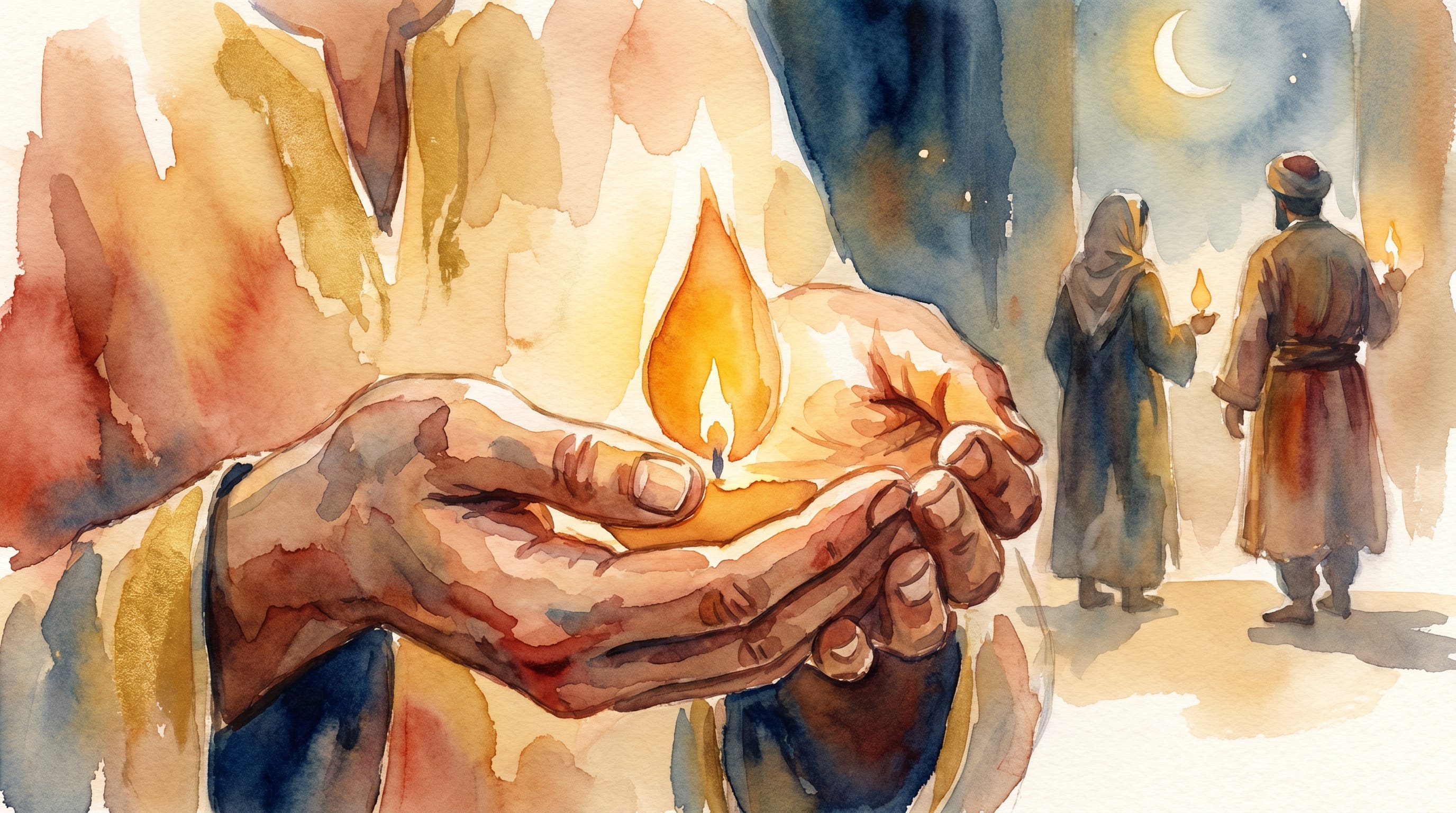
We are not the owners of this trust; we are its current keepers, holding it for the One to whom it belongs.
The testimony Sayyedah Zaynab refused to let die was handed, hand to hand, down fourteen centuries, and it is in our hands now — to carry, and to give back.
The Trust Is His — And We Are Not Left Alone
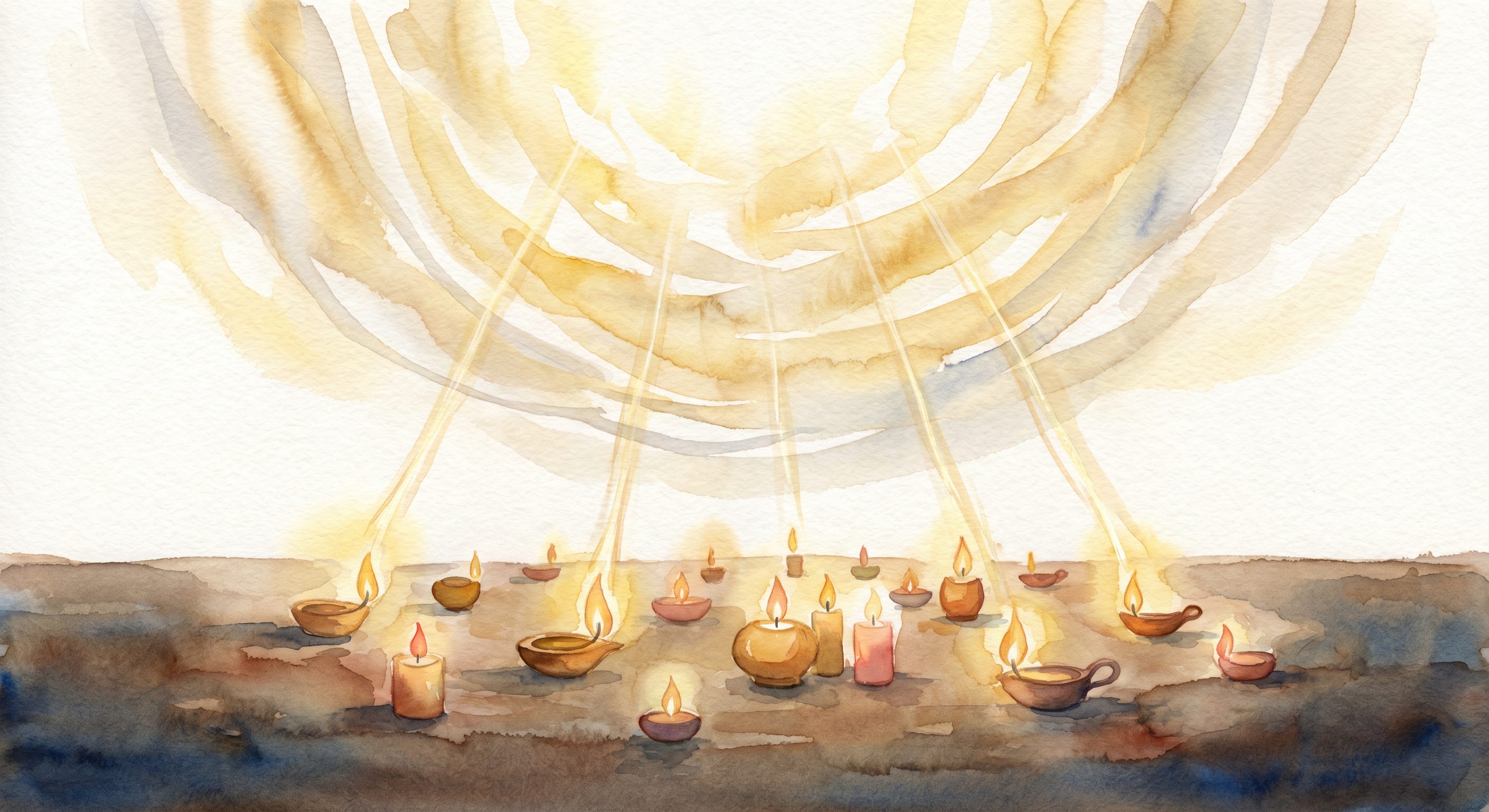
But notice where the chain has reached — and let it raise the question it forces.
If the inheritance has come down, unbroken, to the Imam of our age, then why has he not yet taken it up in the open?
Why is the Master of the Age still veiled from us?
Our tradition gives an answer we must have the courage to hear: he is hidden not because of any failing in him, but because of a failing in us.
We are not yet ready.
We are not yet the companions who gathered around Imam Husayn on the night of Ashura — the lamps that would not flicker, who, offered their lives and their leave to go, chose to stay.
The day the world holds enough hearts like those, the veil lifts.
So the trust is in our hands not as owners but as keepers — to carry with diligence, with care, with precision — and to labour to become the kind of people fit to hand it back to the one whose it is, and so to hasten his return.
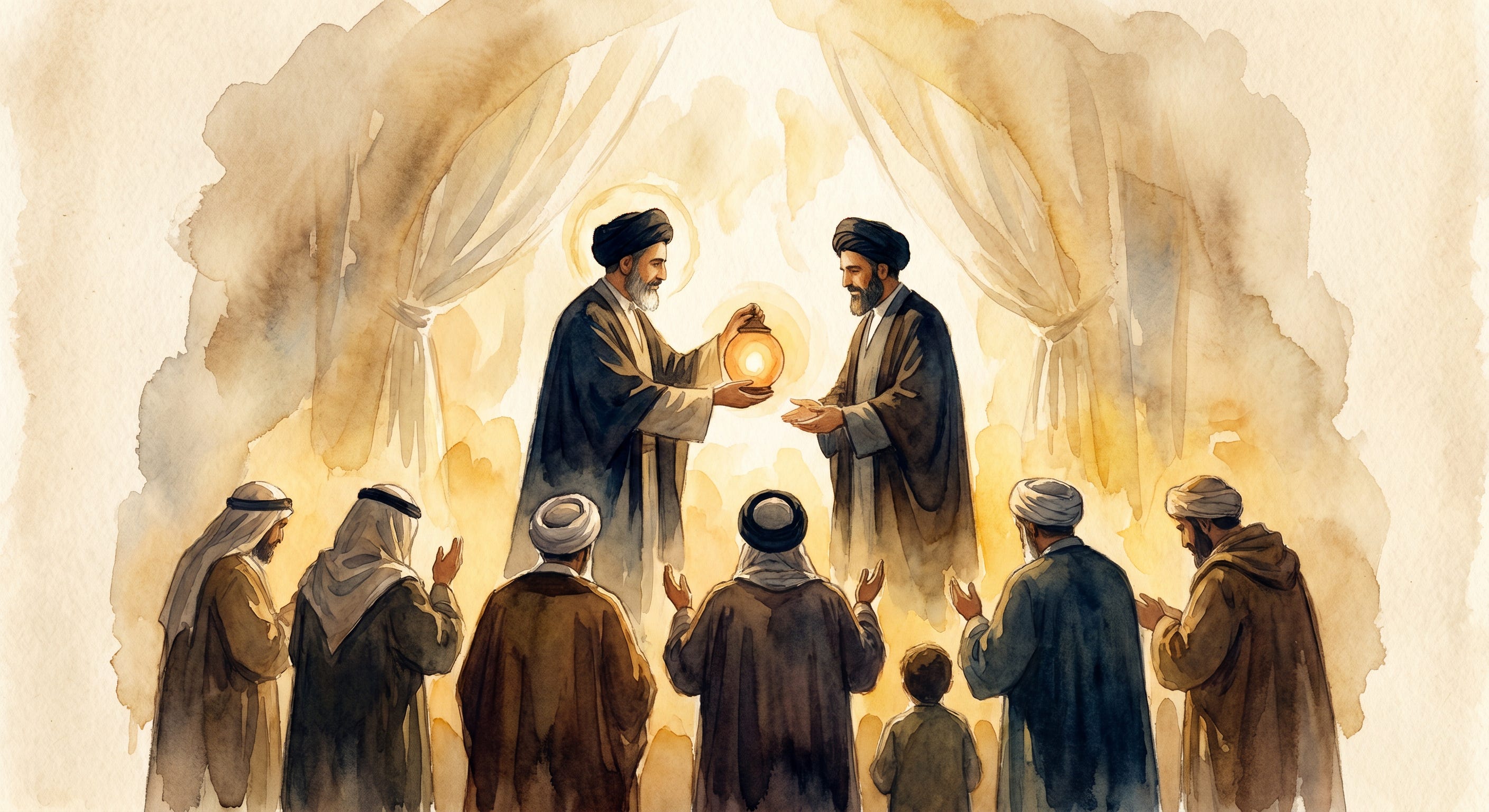
And here is the mercy in it: God did not leave us orphaned in that labour, to flail in the dark and guess.
The Imam of the Age did not vanish and abandon his Shia.
He left a chain of guidance that does not break in the occultation: the Wilāyat al-Faqīh — the guardianship of the just, qualified jurist who stands, in the Imam’s absence, as his general deputy.
This is no office the scholars invented for themselves.
The Imam himself appointed it.
In the signed letter (tawqīʿ) he sent out before the veil closed, the Imam of the Age wrote:
وَأَمَّا الْحَوَادِثُ الْوَاقِعَةُ فَارْجِعُوا فِيهَا إِلَى رُوَاةِ حَدِيثِنَا، فَإِنَّهُمْ حُجَّتِي عَلَيْكُمْ، وَأَنَا حُجَّةُ اللَّهِ عَلَيْهِمْ.
“As for the events that befall you, refer in them to the narrators of our traditions — for they are my proof over you, and I am God’s proof over them.”
— the Tawqīʿ (signed letter) of Imam al-Mahdi, may God hasten his return, to Isḥāq ibn Yaʿqūb; al-Saduq, Kamāl al-Dīn, vol. 2, p. 484; al-Ṭabarsī, al-Iḥtijāj, vol. 2, p. 470
His proof over us.
To turn to the just jurist is to turn, through him, to the Imam — exactly as the Qur’an commands us to obey God, and the Messenger, and those vested with authority among us
يَـٰٓأَيُّهَا ٱلَّذِينَ ءَامَنُوٓاْ أَطِيعُواْ ٱللَّهَ وَأَطِيعُواْ ٱلرَّسُولَ وَأُوْلِي ٱلۡأَمۡرِ مِنكُمۡۖ فَإِن تَنَٰزَعۡتُمۡ فِي شَيۡءٖ فَرُدُّوهُ إِلَى ٱللَّهِ وَٱلرَّسُولِ إِن كُنتُمۡ تُؤۡمِنُونَ بِٱللَّهِ وَٱلۡيَوۡمِ ٱلۡأٓخِرِۚ ذَٰلِكَ خَيۡرٞ وَأَحۡسَنُ تَأۡوِيلًا
O you who believe! Obey God and obey the Messenger and those vested with authority among you. And if you dispute concerning anything, refer it to God and the Messenger, if you have faith in God and the Last Day. That is better and more favourable in outcome.
— Qur’an, Surah al-Nisa (the Chapter of the Women) #4, Verse 59
And so, in our own time: we have only lately lost our beloved Imam Sayyed Ali Khamenei, may God rest his pure soul, and we now live under the one who has taken up that trust after him — the Wali al-Faqih of our age, Imam Sayyed Mujtaba Khamenei, may God protect him.
To hold fast to his guidance and to heed his commands is not an optional refinement for the especially devout; it is a duty upon anyone who truly means it when he says he is working for the return of the Master of the Age.
And now turn back to Sayyedah Zaynab, peace and blessings be upon her, and see that this is the very lesson of her night.
She was the towering figure of the household — and yet, in the burning tents, she did not take a single step until she had asked the Imam of her time and obeyed him.
She referred to him, and she followed him, without excuse and without argument, in the heart of the chaos, even when an easier road lay open.
That is exactly what is asked of us.
We follow the Imam of our time — and in his occultation, the one who keeps his place — and we do so even when we cannot yet see the whole of what he intends.
For this obedience now is, in truth, a rehearsal: a dry-run for the day the Imam returns.
If we cannot school our own egos to follow his just deputy today, we will not have the discipline to stand with the Imam himself tomorrow.
As Imam Sayyed Ali Khamenei, may God rest his pure soul, taught, awaiting him is not idleness:
انتظار یک عمل است، یک آمادهسازی است... انتظار فرج یعنی آمادهسازی خود... انتظار یعنی باید دائم در حال آمادهباش باشید.
“Awaiting is an act; it is a preparation… To await the deliverance means to prepare your own self… To await means that you must be, always, in a state of readiness.”
— Martyr Sayyed Ali Khamenei, may God rest his pure soul; address of 20 September 2005
The fuller doctrine of this — what Wilāyat al-Faqīh is and is not, its proofs, its limits, its place in the architecture of the occultation — we will give its proper due, God willing, in the Mahdawiyyah arc of our Wednesday sessions, after Arbaeen.
Tonight, only this: to await the Imam is not to sit and wait; it is to prepare — and the first discipline of that preparation is to follow the Leadership of our age, without excuse.
To stand in Sayyedah Zaynab’s lineage, in our own time, is to know the Imam we await and to follow the one who keeps his place until he comes.
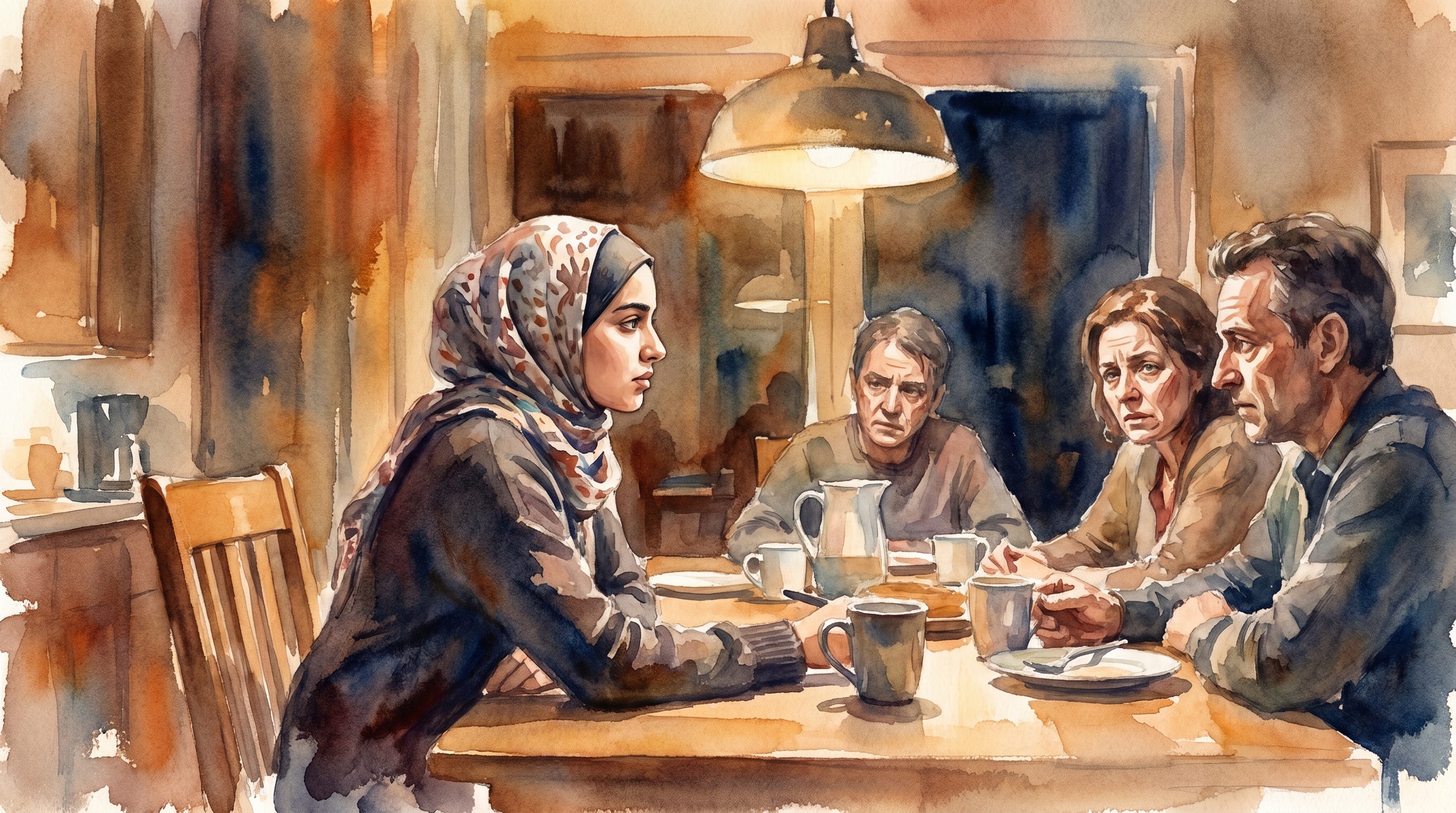
And if we do not understand all of this, then we have not understood why we are here — and we have not understood why it matters, far more than we tend to think, that we, in our own cities, learn to speak clearly.
Because look again at what the witness-after-the-witness actually did.
She did not only weep — though she wept, and we weep, and the weeping is sacred and we will never apologise for it.
But weeping was not the inheritance.
The inheritance was that she carried the meaning, and said it plainly, in the room where it was least welcome.
She told Kufa the truth about Kufa.
She told Yazid the truth about Yazid.
To their faces.
In their own halls.
That is the thing handed down to us.
And here is the honest application, the one that should make us a little uncomfortable.
For almost everyone in this room, the frontier where your faith is tested is not a battlefield — we will speak of the frontier, the thughur, tomorrow night.
Your frontier is the room where the truth is unwelcome and silence would be so much easier: the workplace where a thing is said about Islam, or about the oppressed, that you know to be a lie, and the easy thing — the so much easier thing — is to let it stand and keep your comfort.
The campus.
The timeline on your phone.
The family dinner table.
Sayyedah Zaynab did not let the lie stand in the throne room of the man who had just killed her brother.
We are asked, at the very least, not to let it stand in ours.
That is the whole of the inheritance, reduced to something you can carry out of this room tonight.
But — and this is the part we must get exactly right, because everything depends on it — the inheritance is not only that we testify.
It is how.
She carried the truth in a particular way, and the way is part of the witness.
The Method Is Part of the Witness

Notice what Sayyedah Zaynab and Imam Zayn al-Abidin, peace and blessings be upon them, did not do.
Think back to Kufa, to that governor’s hall.
The man responsible for the slaughter of her family was sitting a few feet in front of her.
Did the family of the Prophet send someone in the night to put a knife in Ibn Ziyad?
They did not.
Did our beloved Imam Husayn, peace and blessings be upon him, sneak an assassin into Kufa before Karbala to remove the governor and “solve the problem”?
He did not.
The household of the Prophet stood in the open, in the daylight, with their chests bare, and they fought — when they fought — face to face, and otherwise they testified with the open voice.
Never once by the knife in the dark.
This is not an accident of circumstance.
It is a law of our religion, and I want to give it to you with its proper names, because it is one of the clearest dividing lines between the way of the Ahl al-Bayt and the way of the empires of every age.
There is qitāl — open, declared combat, where two sides face each other and both know they are at war.
Our tradition permits this, within strict limits, in its place.
And there is something the tradition calls fatk, also ghīlah, also ightiyāl — the killing of a man by stealth, by ambush, while he feels safe, off his guard.
And there is ghadr — treachery, the breaking of a covenant of safety you have given.
And the ruling on these last three, by the consensus of our jurists from the classical age down to the marājiʿ of Qom and Najaf today, is that they are forbidden — and forbidden, mark this, even against an enemy combatant.
Not merely discouraged.
Forbidden in their essence.
The clearest text in the whole tradition is a question a man named Abu al-Sabbah al-Kinani once put to Imam Ja’far al-Sadiq, peace and blessings be upon him.
He had a neighbour who openly and viciously cursed the Commander of the Faithful, Imam Ali himself.
Surely, he thought, this one’s blood is forfeit.
So he asked the Imam:
“May I assassinate him?”
The Imam replied unequivocally:
يَا أَبَا الصَّبَّاحِ، هَذَا الْفَتْكُ! وَقَدْ نَهَى رَسُولُ اللَّهِ صَلَّى اللَّهُ عَلَيْهِ وَآلِهِ عَنِ الْفَتْكِ. يَا أَبَا الصَّبَّاحِ، إِنَّ الْإِسْلَامَ قَيَّدَ الْفَتْكَ، وَدَعْهُ فَسَيَكْفِيكَهُ اللَّهُ بِغَيْرِكَ.
“O Abu al-Sabbah — this is assassination! And the Messenger of God forbade assassination. O Abu al-Sabbah, Islam has shackled assassination. Leave him be; God will suffice you against him by other means.”
— al-Kulayni, al-Kāfī, vol. 7, p. 375
Islam has shackled assassination.
Even against a man who curses Imam Ali to the Imam’s own grandson — no.
And this rests on the very floor of the Qur’an, which forbids treachery so completely that it will not even let you end a treaty by stealth:
وَإِمَّا تَخَافَنَّ مِن قَوْمٍ خِيَانَةً فَٱنبِذْ إِلَيْهِمْ عَلَىٰ سَوَآءٍ ۚ إِنَّ ٱللَّهَ لَا يُحِبُّ ٱلْخَآئِنِينَ
“And if you fear treachery from a people, throw their treaty back to them openly, on equal terms. Indeed, God does not love the treacherous.”
— Qur’an, Surah al-Anfal (the Chapter of the Spoils of War) #8, Verse 58
Even if you know the enemy is plotting against you, you may not strike him in the dark.
You must declare, openly, that the covenant is ended — and only then face him in the light.
And the living embodiment of that law was Imam Ali, peace and blessings be upon him, who could have ended his war with Mu’awiyah a hundred times by cunning and chose, every time, not to:
وَاللَّهِ مَا مُعَاوِيَةُ بِأَدْهَى مِنِّي، وَلَكِنَّهُ يَغْدِرُ وَيَفْجُرُ، وَلَوْلَا كَرَاهِيَةُ الْغَدْرِ لَكُنْتُ مِنْ أَدْهَى النَّاسِ، وَلَكِنْ كُلُّ غُدَرَةٍ فُجَرَةٌ، وَكُلُّ فُجَرَةٍ كُفَرَةٌ، وَلِكُلِّ غَادِرٍ لِوَاءٌ يُعْرَفُ بِهِ يَوْمَ الْقِيَامَةِ.
“By God, Mu’awiyah is no more cunning than I am — but he is treacherous, and he transgresses. Were it not for my hatred of treachery, I would be the most cunning of all men. But every treachery is a sin, and every sin a defiance of God — and every treacherous man will carry a banner on the Day of Resurrection by which he is known.”
— Imam Ali, Nahj al-Balagha, Sermon 200
He told us, in effect:
I could win the way they win. I refuse to, because how you win is part of what you are fighting for.
And he gave us the maxim that stands like a wall against every man who has ever excused a crime by saying he was following orders:
لَا طَاعَةَ لِمَخْلُوقٍ فِي مَعْصِيَةِ الْخَالِقِ
“There is no obedience to any creature in disobedience to the Creator.”
— Imam Ali, Nahj al-Balagha, Saying 165
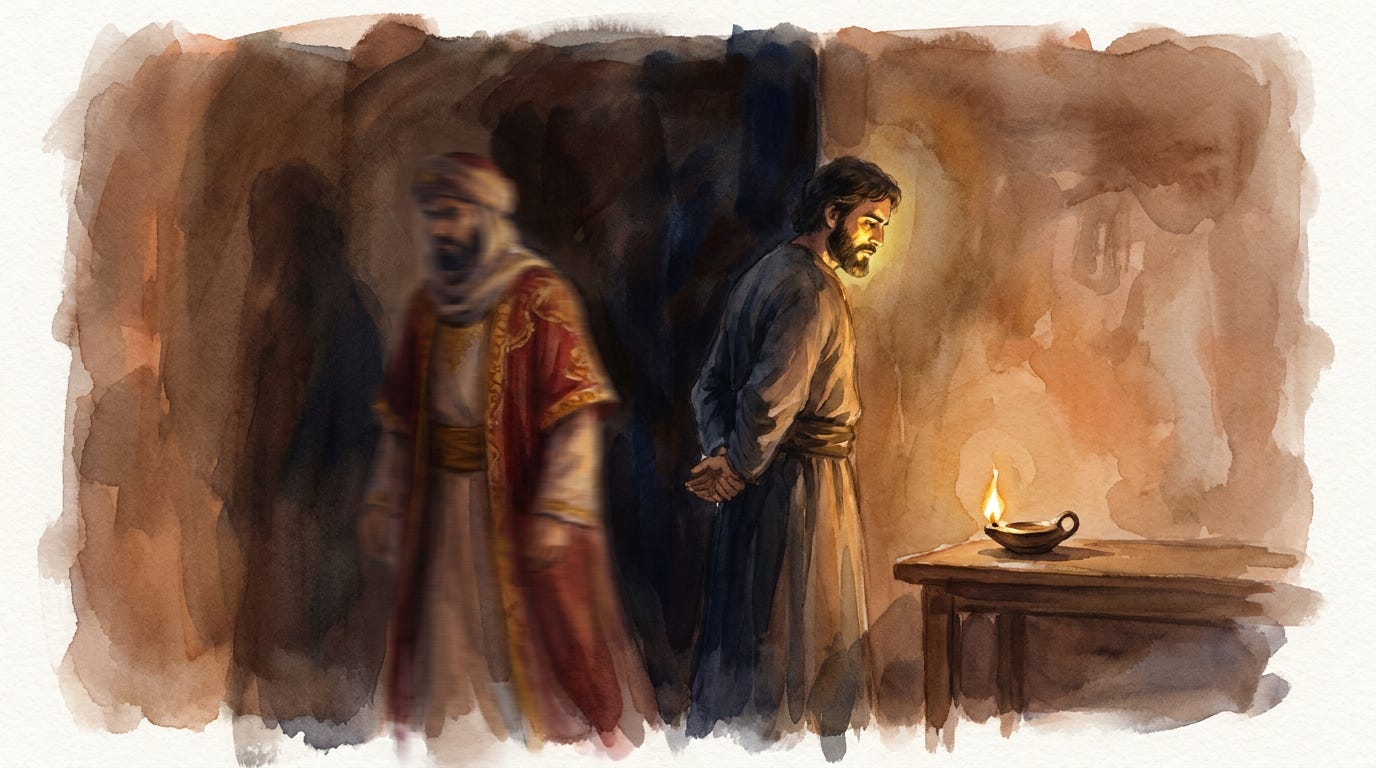
You have already met this law once in this series, and did not perhaps notice it was the same law.
On the fourth night, the ambassador Muslim ibn Aqil, peace and blessings be upon him, was hiding in the house of Hani in Kufa, and Ibn Ziyad walked in, unguarded, within arm’s reach.
Muslim had been urged: kill him now, and Kufa is yours, and Karbala may never happen.
And Muslim refused — and when they asked him why, he gave this very hadith:
Islam has shackled assassination; the believer does not kill by stealth.
It was, in the language of our very first night, Abel’s choice — the brother who would rather be killed than become a killer in the dark.
Shaheed Mutahhari sums the whole principle in one line:
در اسلام، هدف وسیله را مباح نمیکند؛ ما برای یک هدفِ مقدّس، از وسیلهٔ نامقدّس استفاده نمیکنیم.
“In Islam, the end does not make the means permissible; we do not use an unholy means for a holy goal.”
— Shaheed Mutahhari, Ḥamāsah-ye Ḥusaynī (The Husayni Epic), vol. 1
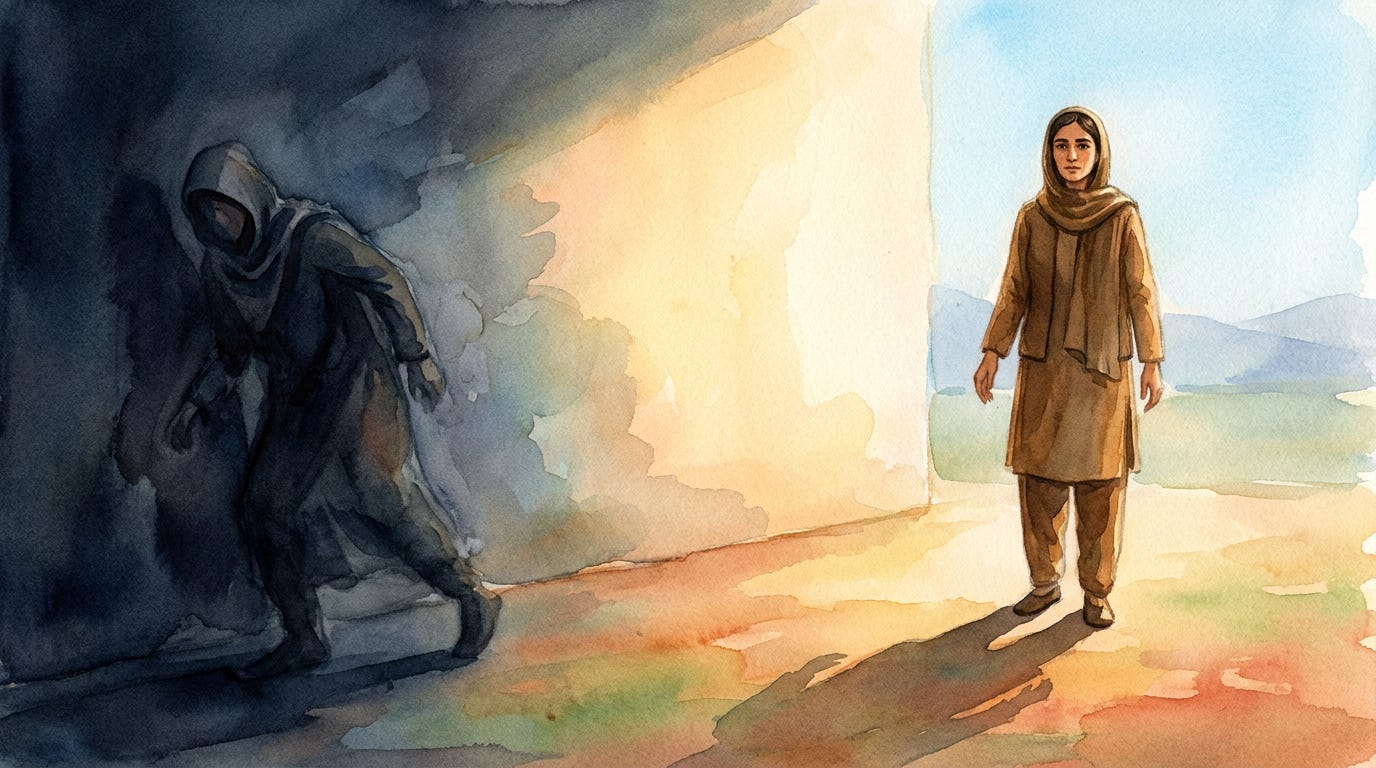
And this is where we answer the objection that always comes — the quiet voice that says:
But doesn’t that put us at a disadvantage?
If they assassinate and we will not, don’t they win?
Hear the answer carefully, because it turns the whole thing over.
Assassination is not the weapon of the strong. It is the confession of the defeated.
A power that has to kill in the dark is a power that knows it has already lost the argument in the daylight.
They strike from the shadows precisely because they cannot stand in the light — because in open, ideological, spiritual confrontation, they have nothing.
The believer who refuses the knife in the dark is not accepting a disadvantage.
He is refusing to pretend that the only kind of victory is the empire’s kind.
How you win is part of what you win.
The Law, Walked — In Our Own Lifetime

And lest this sound like ancient law, let me show you the very same thing breathing in a man who died in our own time.
For twenty-five years, the enemy knew Hajj Imad Mughniyeh by a shadow and a code-name — “Hajj Radwan” — and almost nothing else.
He effaced himself so completely that the cause, and not the man, was what the world saw.
And where did that effacement come from?
Doctor Hossein Akbari, in his study of him, traces it to the very beginning:
لقد بدأ عماد مغنية حياته بتزكية نفسه واكتساب العلوم الدينية، ثمّ انخرط بعد ذلك في الأنشطة الاجتماعية.
“Imad Mughniyeh began his life with the purification of his self — tazkiyat al-nafs — and the acquisition of the religious sciences, and only then engaged in the work of his community.”
— Doctor Hossein Akbari, Imad Mughniyeh: The Enemy’s Greatest Foe (ʿImād Mughniyya: ʿAduwwuhum al-Akbar), Al-Ahed News, 2021
First the inner work — tazkiyat al-nafs — and only then the outer.
And the engine of the whole of it,
Doctor Akbari says, was his Ashura belief — the conviction that bound his every act of resistance to the field of Karbala:
وقد ارتبط دافع الحاج عماد في مناهضة الهيمنة باعتقاده العاشورائي مما جعل منه مجاهدًا جريئًا وقوةً عظيمة ضد الكيان الصهيوني الغاصب.
“Hajj Imad’s drive in resisting domination was bound to his Ashura belief (iʿtiqād ʿāshūrāʾī) — and it was this that made him a daring mujahid and a great force against the usurping Zionist entity.”
— Doctor Hossein Akbari, Imad Mughniyeh: The Enemy’s Greatest Foe, Al-Ahed News, 2021
The Ashura that Sayyedah Zaynab carried off that field is the same Ashura that, fourteen centuries later, made a man pour himself out so completely that he kept no name for himself at all.
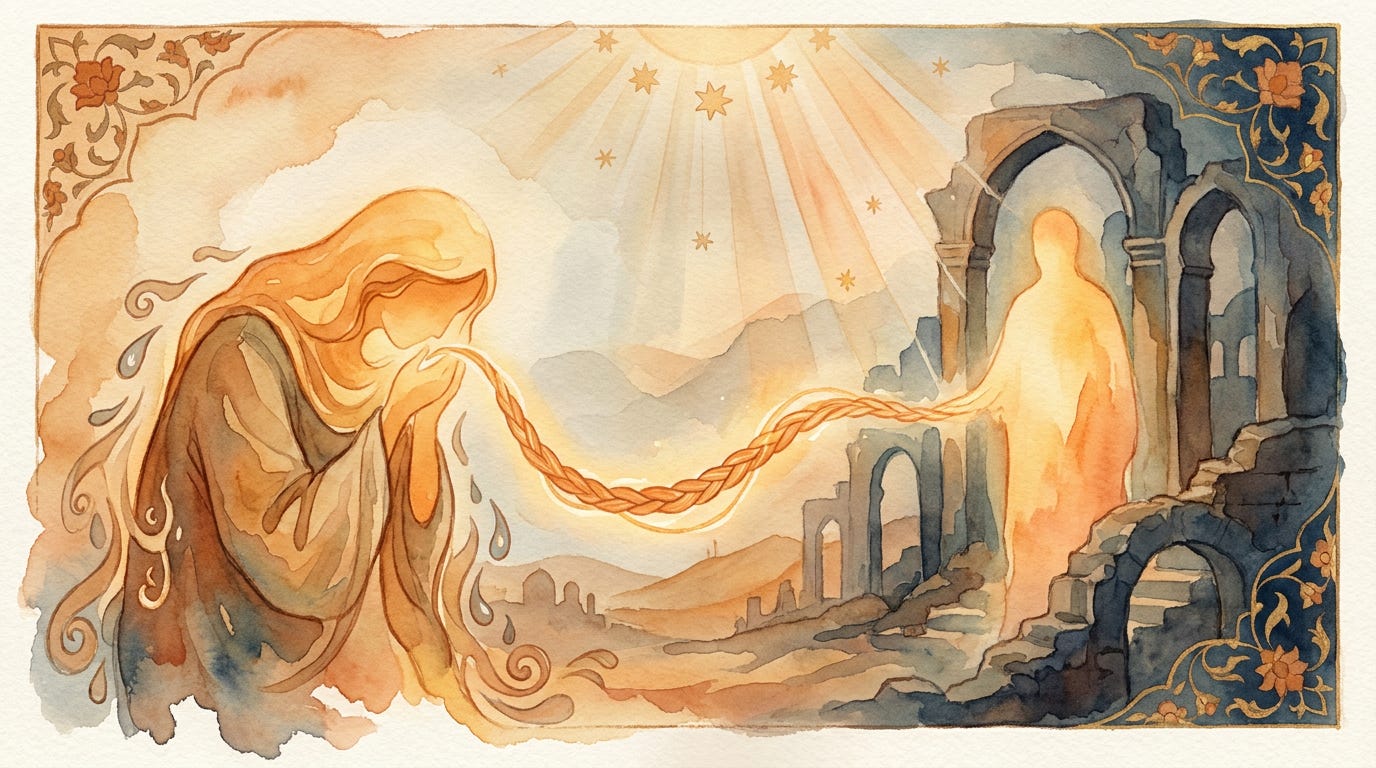
And — the detail that should stop us — look at how that family met its losses.
When Imad’s parents learned of his martyrdom, Doctor Akbari records, they gave thanks to God that He had sealed the life of their third son with martyrdom.
And his mother, after the later martyrdom of her grandson Jihad, said:
إنّ وقع استشهاد حفيدي جهاد كان أصعب بكثير عليّ من استشهاد عماد.
“The blow of my grandson Jihad’s martyrdom was far harder upon me than the martyrdom of Imad.”
— the mother of Imad Mughniyeh, in Doctor Hossein Akbari, Imad Mughniyeh: The Enemy’s Greatest Foe, Al-Ahed News, 2021
A mother who carried the killing of her own son with such acceptance that a later grief could weigh heavier than his.
And Doctor Akbari names exactly where such patience comes from: it is al-ṣabr al-jamīl — the beautiful patience — which, he says, no family could reach except by drawing on the patience of the Ahl al-Bayt, peace be upon them.
Al-ṣabr al-jamīl: the very phrase the Qur’an places on the lips of the Prophet Jacob (Yaʿqub), peace be upon him, in his grief
وَجَآءُو عَلَىٰ قَمِيصِهِۦ بِدَمٖ كَذِبٖۚ قَالَ بَلۡ سَوَّلَتۡ لَكُمۡ أَنفُسُكُمۡ أَمۡرٗاۖ فَصَبۡرٞ جَمِيلٞۖ وَٱللَّهُ ٱلۡمُسۡتَعَانُ عَلَىٰ مَا تَصِفُونَ
And they produced sham blood on his shirt. He said, ‘No, your souls have made a matter seem decorous to you. Yet patience is graceful, and God is my resort against what you allege.’
— Qur’an, Surah Yusuf (the Chapter of Prophet Joseph) #12, Verse 18
— and the same well Sayyedah Zaynab drew from when she stood in the ruin of Karbala and said I saw nothing but beauty.
Fourteen centuries apart, the same patience, drawn from the same source.
The chain has not closed.
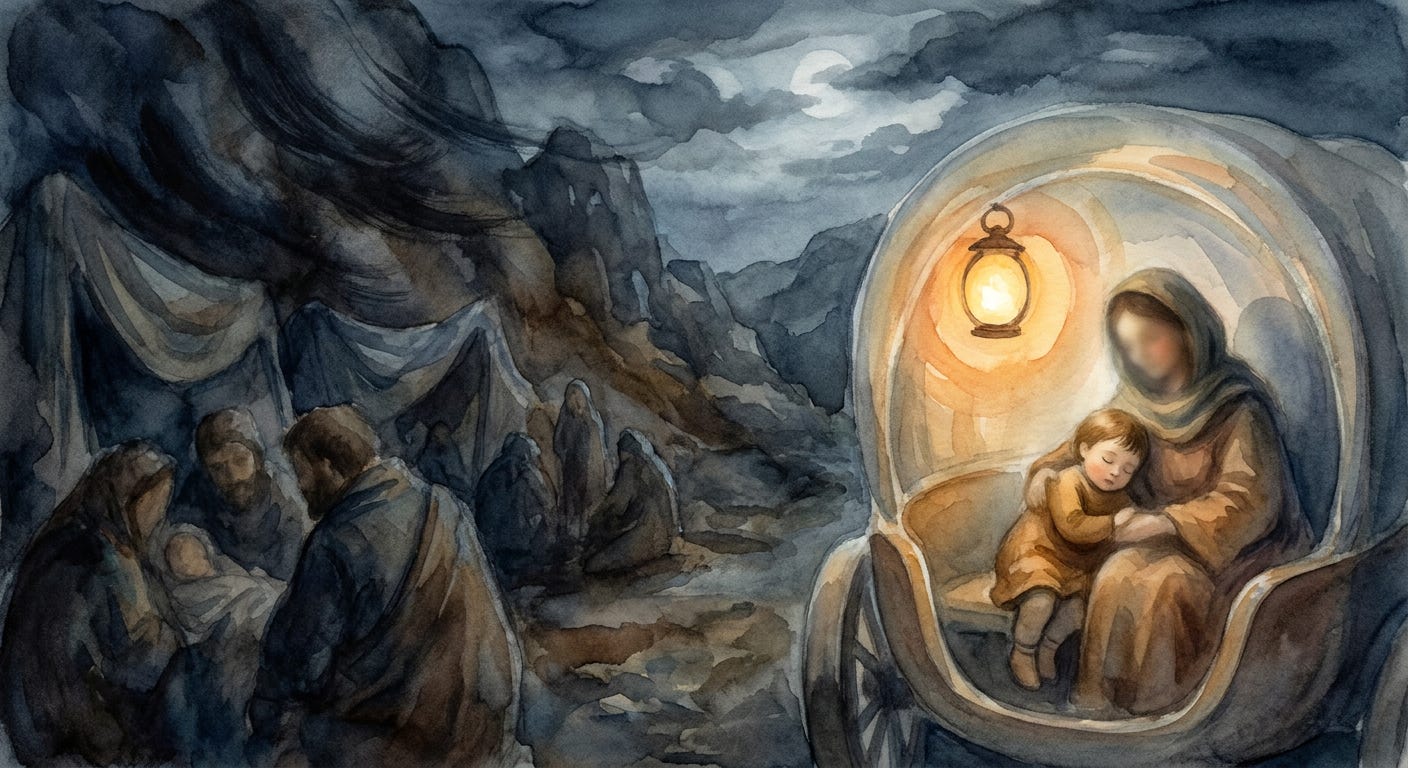
And here is the law itself, walked, in a single night on the border of Lebanon.
It was narrated by one of the brothers who was in the operations room when it happened — a man who has since become, himself, one of the witnesses, may God rest his pure soul.
In the years of the occupation of the south, near the fortress of Beaufort, the Islamic Resistance had prepared an operation against a senior figure of the Zionist regime who was to pass through — none other than Benjamin Netanyahu.
Everything was ready; the men were in position; the weapons were set.
And in the final moments, as the motorcade came into view, the last reconnaissance saw that there was a child in the vehicle, and family, and journalists.
The word went back to Sayyed Hassan Nasrallah and Hajj Imad, who were overseeing it.
And Sayyed Hassan ordered them, at once, to stand down.
To abort.
The men came back confused — some of them angry.
These are occupiers.
This was the most important target imaginable.
Why?
And Sayyed Hassan told them, in words the one narrating this carried:
“This is not how we operate. In our theology there is no such thing as “collateral damage.” Any soul killed is on our necks, and we will answer to God for it.”
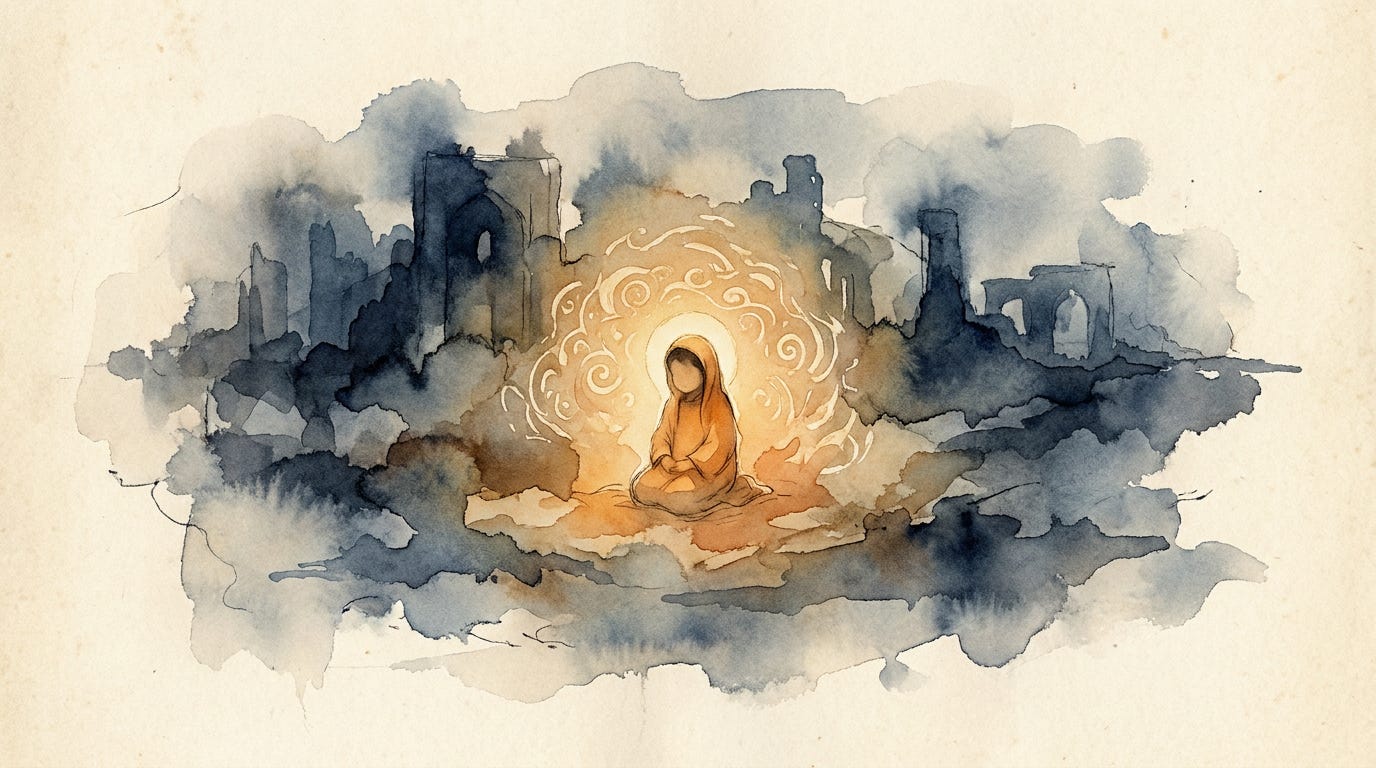
And he recited to them the verse that our whole religion stands on:
مَن قَتَلَ نَفْسًۢا بِغَيْرِ نَفْسٍ أَوْ فَسَادٍ فِى ٱلْأَرْضِ فَكَأَنَّمَا قَتَلَ ٱلنَّاسَ جَمِيعًا
“Whoever kills a soul — unless for a soul, or for corruption in the land — it is as though he had killed all of humanity.”
— Qur’an, Surah al-Ma’idah (the Chapter of the Table Spread) #5, Verse 32
Hold what that means.
The most pivotal enemy of the entire regime was in the crosshairs — and the operation died, rather than let a child or a non-combatant journalist be harmed.
That is the line our religion draws, and it is the line the whole world’s other systems erase with a single phrase.
A combatant in a declared war is one matter; the believer may face him in the open.
But the treacherous killing of a man under a covenant of safety, or the killing of a non-combatant beside him — that is something else entirely, and it is forbidden.
There is a permitted stratagem of open war, what the tradition calls khudʿah — the feint, the misdirection, “war is deception” — and it is a world away from ghadr, the betrayal of trust.
The men obeyed though they did not yet understand — and that obedience, the will that submits to its guide even against its own reasoning, is the very thing we were speaking of a moment ago: the trained will, walking the road.
They are killed by stealth; they will not kill by it.
And the asymmetry is itself the testimony.
And as a brief aside, there is, in our own history, a hard example of the opposite road, and I name it only in passing tonight, because it deserves a full and careful telling another time.
There was a movement that arose claiming love for the Ahl al-Bayt — the followers of Hasan-i Sabbah, in the fortress of Alamut, the ones history calls the Assassins — and they made stealth-killing and the betrayal of trust their very method, and suspended the sacred law to do it.
Our tradition never accepted the method; because their secret dagger is precisely the open witness of Karbala turned inside-out.
The popular imagination of our day, with its films and its games, has made them romantic.
We love a great story too.
But the romance of the shadow does not make the shadow’s method true.
The full account — of how they came to be, and why — belongs to another night in our Wednesday session on Mahdawiyyah, God willing.
The Reductio of the Scientist
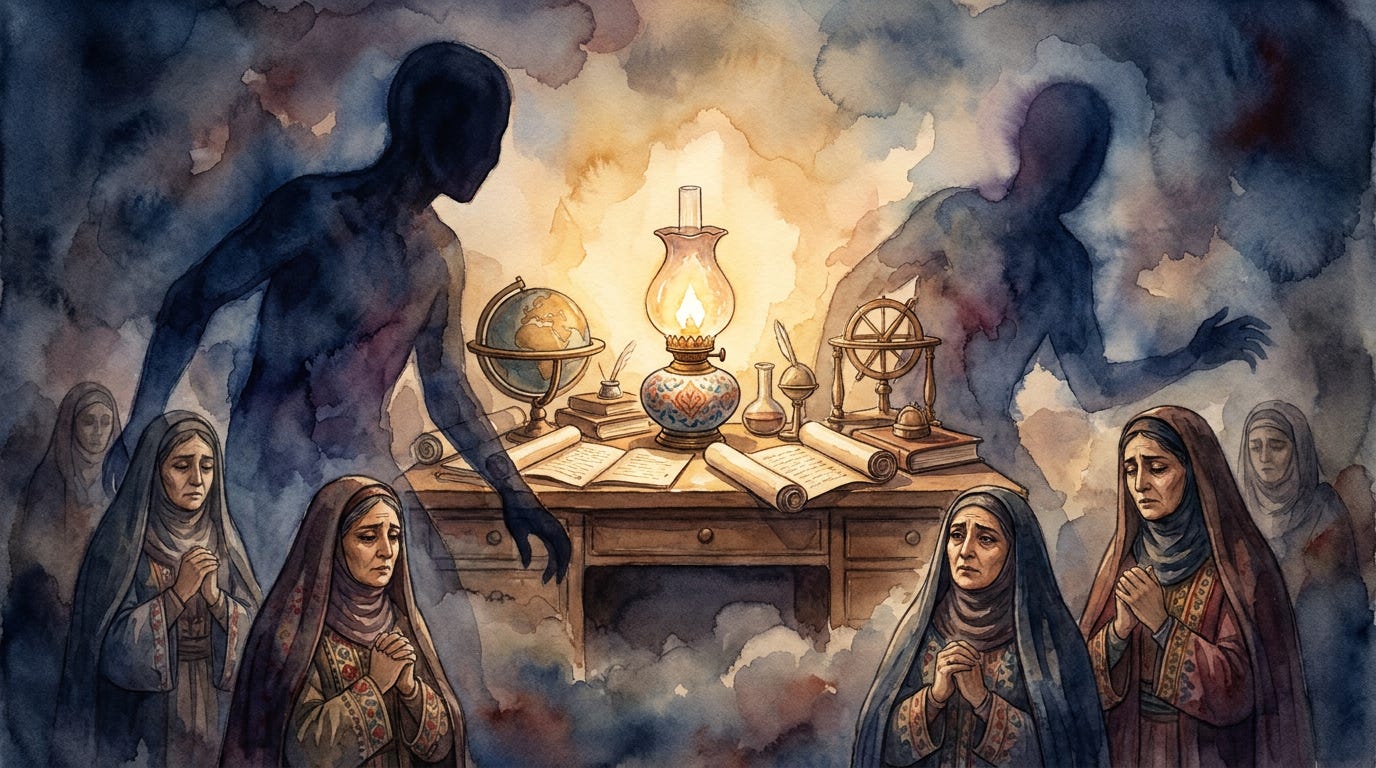
Now turn the criterion onto the present, and let it do its work.
The empires of our day assassinate as a matter of policy — the drone over the airport, the car bomb on the morning commute, the device left on a motorcycle, the poison.
And of every such killing, our faith asks one question: in the open, or in the dark?
Of the soldier or the strategist, an argument can at least be attempted — he is, the regime will say, a combatant; one can argue the case.
But here is the question I want to leave ringing, because there is no answer to it:
What is the excuse for killing a professor of nuclear physics?
For a cancer researcher?
For a scholar of artificial intelligence?
What combatant is that?
That is the killing of a non-combatant, by stealth — and worse: it is the killing of knowledge itself, in order to keep a whole people backward, dependent, unable to rise.

And our tradition holds knowledge so sacred that it weighs the ink of the scholar against the blood of the martyr and does not find the scholar wanting.
The empire assassinates the scientist precisely because it knows what God knows — that knowledge is the deepest threat there is to oppression.
So when you hear of a physicist killed in his car with his wife beside him, understand exactly what you are looking at: not strength, but the confession of the defeated; and understand, too, that the witness against that regime is, in the same breath, the witness for the people that regime is trying to keep in the dark — their right to learn, to build, to stand up.
The fuller naming — the long roll of the assassinated, the scientists and the scholars and the commanders of our own lifetime — waits for the night when we name the living witnesses one by one.
Tonight we name the principle.
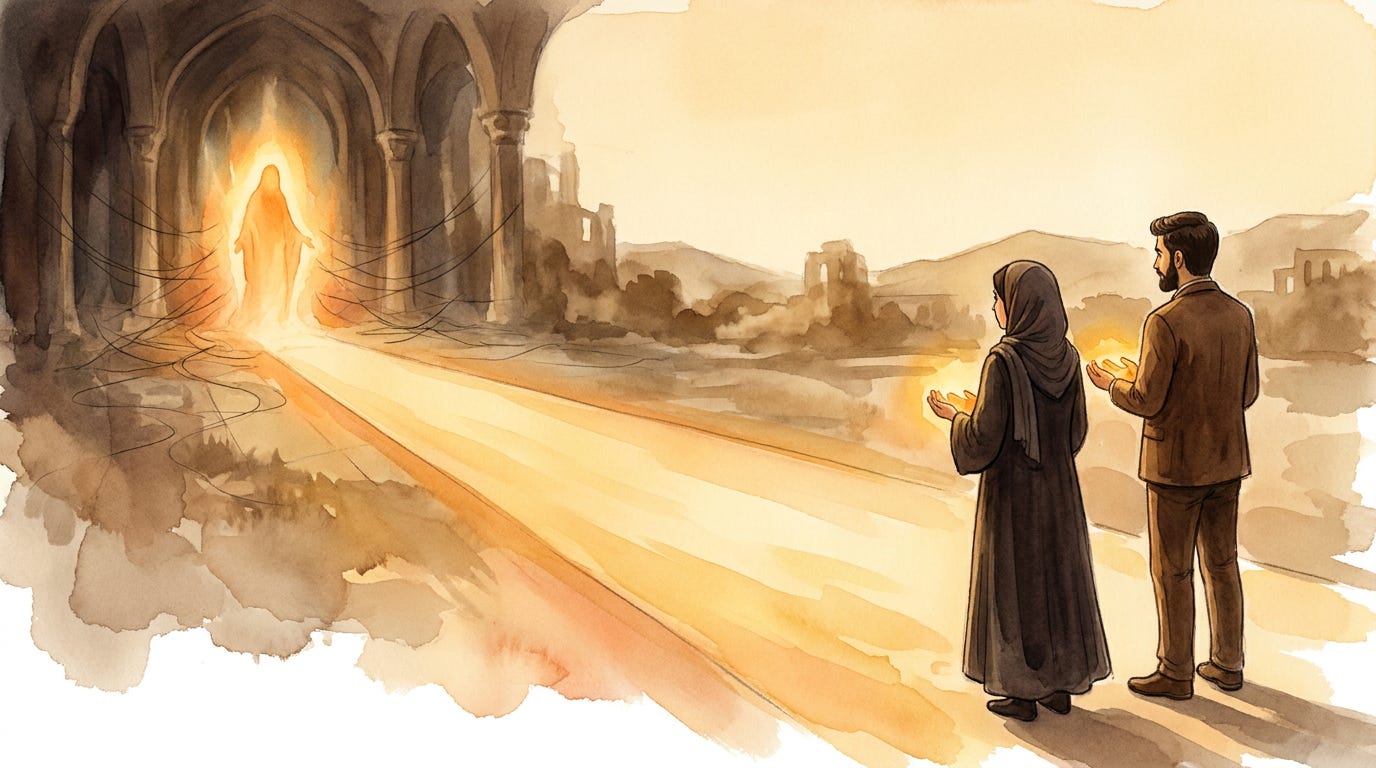
So this is the inheritance, whole.
The witness-after-the-witness carries the meaning — and carries it the way she carried it: in the open, with the bare chest and the clear voice, and never, never by the method of the shadow.
That is the road.
And it runs straight from a chained woman in a throne room to us, tonight.
The Pact We Make Tonight
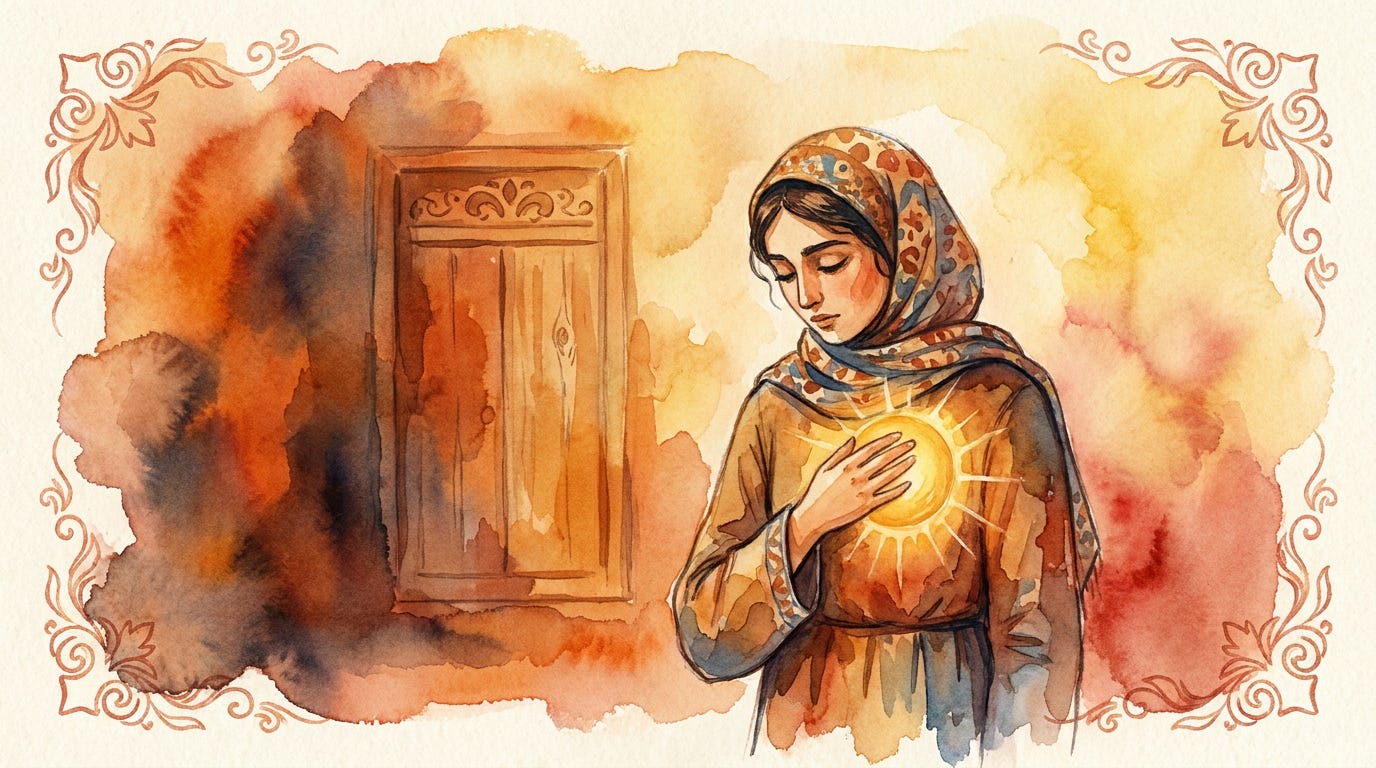
So let me ask you to leave with something in your hands, not just in your eyes.
Between tonight and tomorrow morning, find the one room in your life where you have been letting the lie stand.
You know the room.
It is the one where it costs something to speak — where the easy thing is the silence.
And resolve, quietly, that in that room you will be what Sayyedah Zaynab, peace and blessings be upon her, was in hers: the witness-after-the-witness.
Not loud, not reckless — but clear.
Refusing to let the lie keep the last word.
That is the whole of what tonight asks.
The chain of witness reached your hands.
The only question is whether it goes further from here.
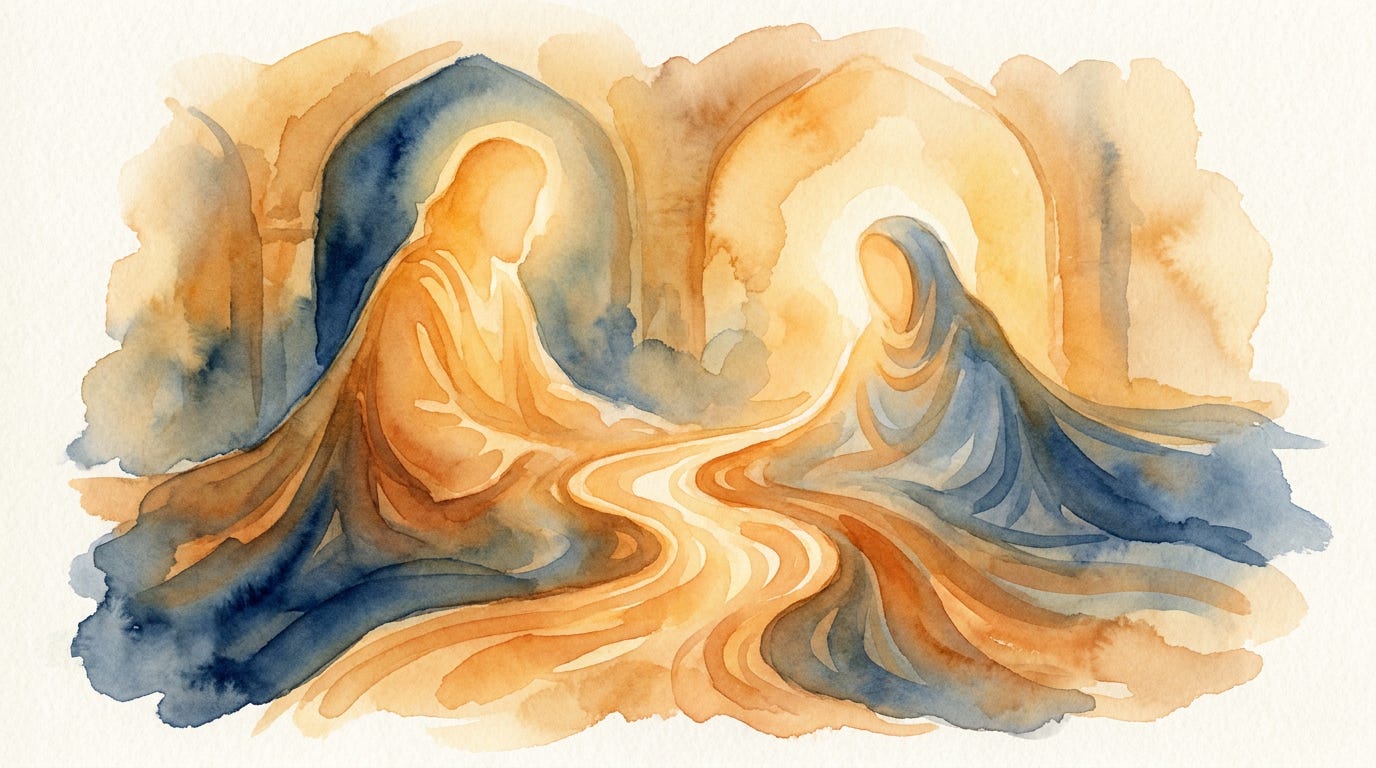
And now I hand you to another voice.
We have spoken, all night, of the sister.
But there is one who has been listening to us speak of her — the one in whose lineage she stands, and in whose lineage we stand: her great-nephew, the Awaited Imam, the Mahdi, may our souls be his ransom and may God hasten his return.
It was his voice that broke at the trampling on the tenth night and could not finish the line.
Tonight, let him tell us what it was to watch his aunt stand — and let us listen as his voice, broken since the noon of the tenth, begins, at the sound of her words, to find its feet again.
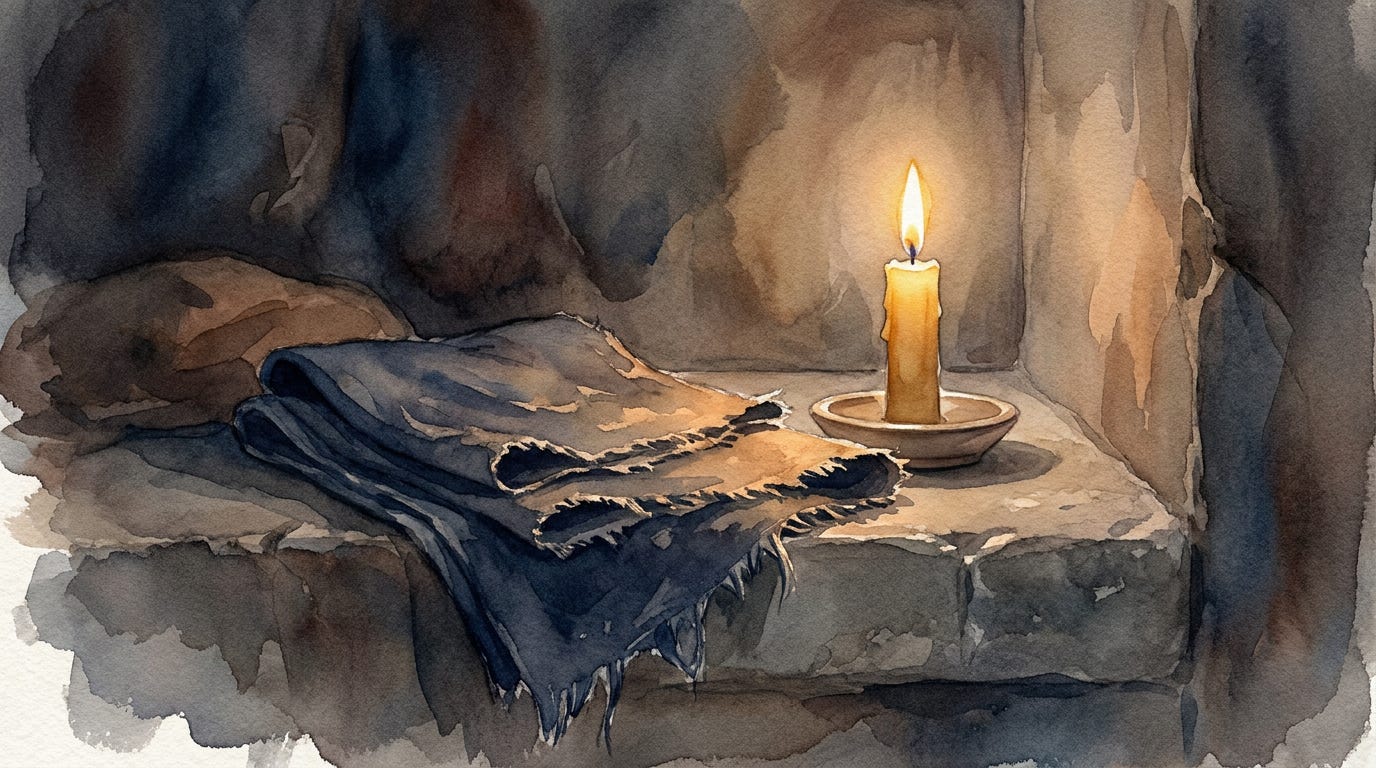
Beside the candle tonight there is one new thing: a single torn length of dark cloth, laid across the grey stone — the veil that was pulled from the heads of the women of the House of the Prophet.
That is what sits beside the flame.
Look at it while you listen.
Segue to Maqtal (Lamentation)
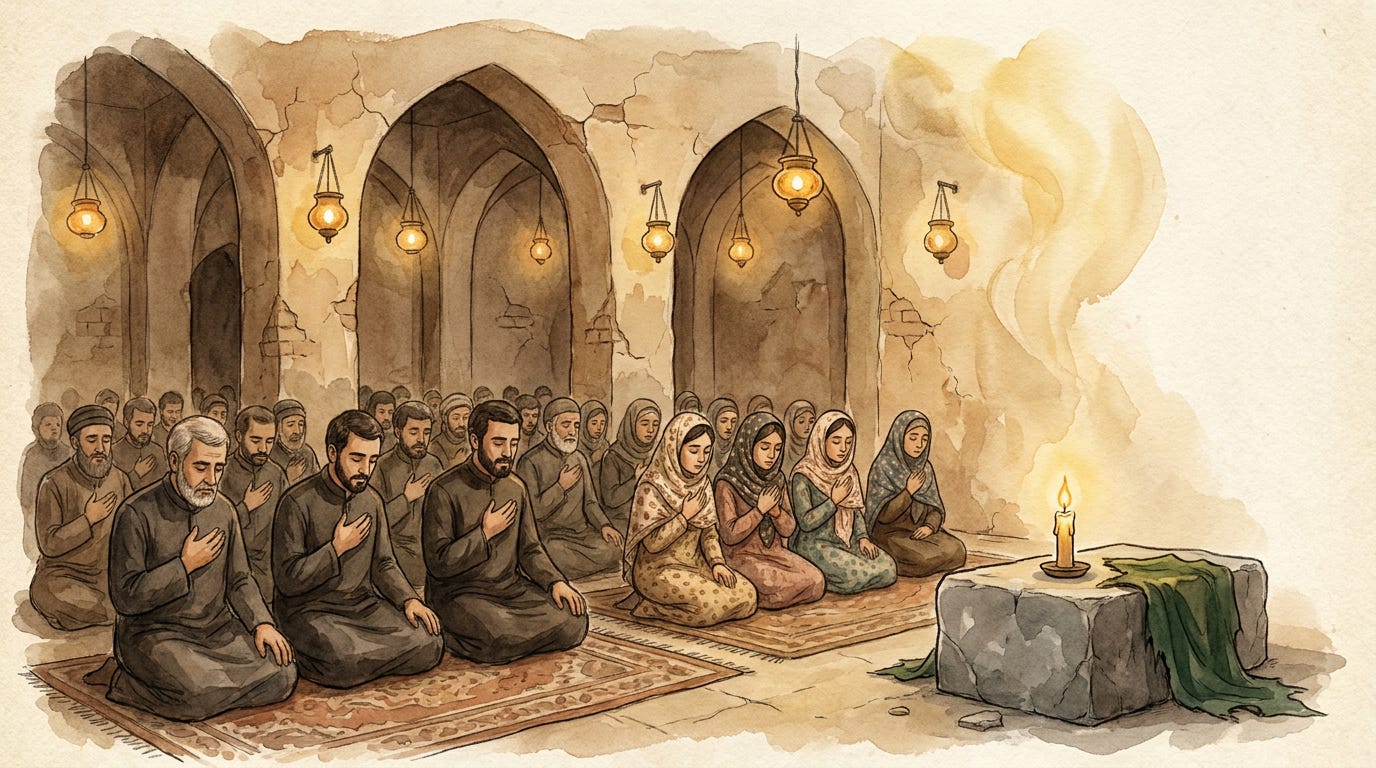
Maqtal (Lamentation) for the First Night of Arbaeen 2026/1448
Supplication
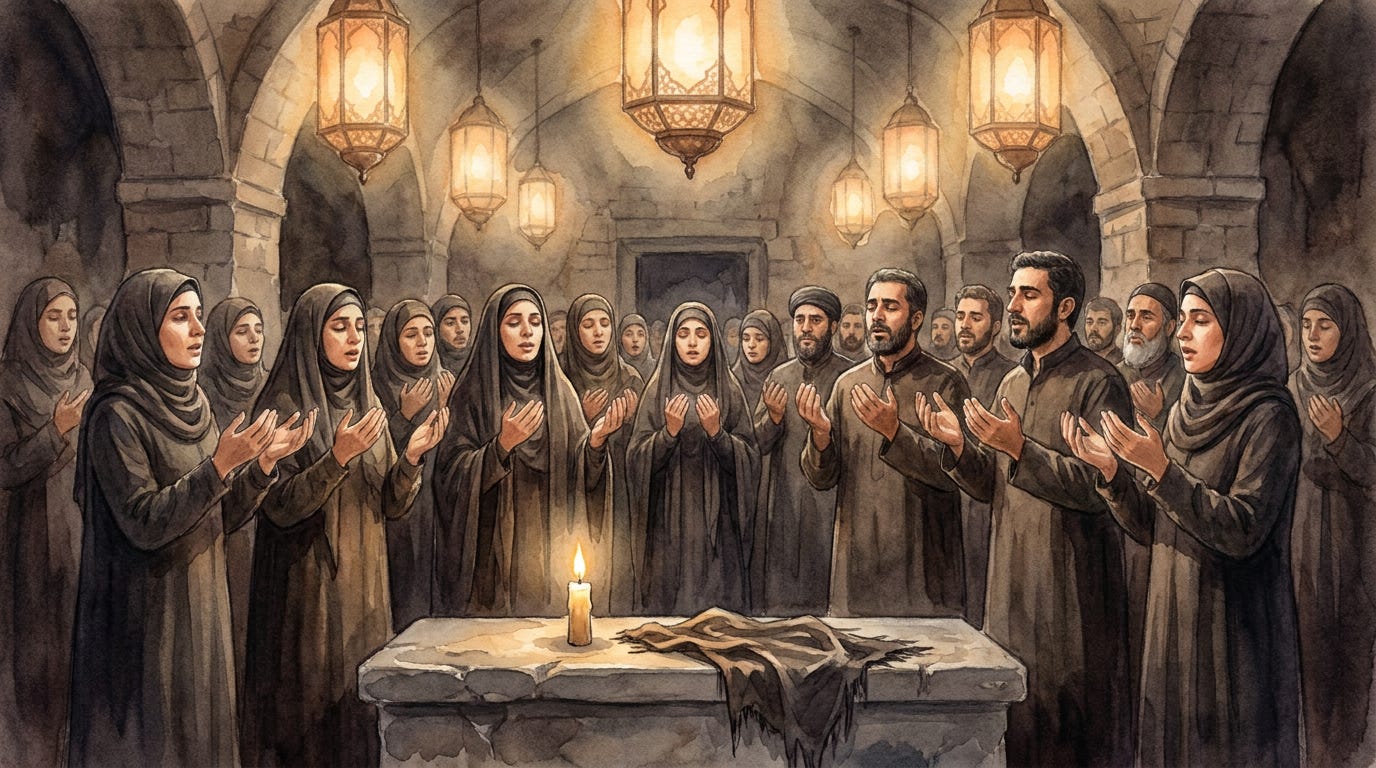
Peace upon Abel, the first witness of the earth, who would rather be killed than kill.
Peace upon every soul, in every age and every land, who has ever been driven from their home only for saying: our Lord is God.
O God — we have nowhere to go but Your door, and no one to ask but You, and no words enough except the ones You have placed on the tongues of Your friends.
O God, send Your peace and Your blessings upon Your final Messenger Muhammad, and upon his pure family, and upon his righteous companions. And send Your peace upon the prophets of every house — upon Adam, and Noah, and Abraham, and Moses and Aaron, and Jesus son of Mary, and upon every one of them whose name we know and whose name only You know — the chain of witness whose whole weight came to rest, at last, in the veins of Husayn.
O God — this is her night.
Send Your peace, and our love, and our grief, upon our lady Sayyedah Zaynab, peace and blessings be upon her: the daughter of Imam Ali, the partner of Imam Husayn, the one who watched from the mound and did not look away, the one who lifted the offering from the dust, the one who silenced a treacherous city in her chains, the one who stood unveiled in the throne room of the tyrant and would not be ashamed — the eye that saw nothing but beauty.
The witness-after-the-witness, who refused the mercy of death so that the dead could go on speaking.
O God — teach us to stand where she stood.
O God, send Your peace upon our master Imam Husayn, the Master of Witnesses; and upon al-Abbas, and Ali al-Akbar, and Qasim, and the children of the household, and the suckling Ali al-Asghar, and upon every companion who fell in that field — peace and blessings be upon them all.
O God, send Your peace upon her nephew, our master Ali, the son of Husayn, Zayn al-Abidin, peace and blessings be upon him — who held the line of guidance from a bed of chains, and whose prayers for the people of the frontiers we will take up tomorrow night.
O God, send Your peace upon our masters, all the Imams of Guidance, Imam al-Baqir, Imam al-Sadiq, Imam Jawad, Imam al-Ridha, Imam al-Kadhim, Imam al-Hadi and Imam al-Askari.
O God — and the longer return is always to the chain that runs from Imam Husayn, through the Imams of guidance, to the Imam of our Age, may our souls be his ransom and may You, our beloved Lord, hasten his return.
O God — and upon those of our own age who walked the road our lady opened, who carried the testimony in the open and never by the shadow, and who were taken for it.
In this Arbaeen — the first since the martyrdom of our beloved Imam Sayyed Ali Khamenei on the 28th of February 2026 — send Your peace upon him, and welcome him into Your nearness with Your prophets and Your martyrs.
Send Your peace upon Sayyed Hassan Nasrallah, who was promised the meeting and kept the appointment.
Upon Sayyed Abbas al-Musawi, and his wife Sayyeda Siham and their little son Sayyed Husayn, who fell with him in the one convoy.
Upon Shaykh Ragheb Harb, who taught the south the meaning of refusing the occupier’s hand.
Upon Hajj Qasem Soleimani, and Hajj Abu Mahdi al-Muhandis, who fell together under the one strike; and upon Hajj Imad Mughniyeh, who effaced his own name for twenty-five years so the cause could keep its face.
Upon Ayatollah Sayyed Muhammad Baqir al-Sadr and his sister, the martyr Bint al-Huda, who went to the gallows of the tyrant of Iraq rather than be silent.
Upon Ayatollah Sayyed Muhammad Husayn Fadhlullah, and upon every scholar of guidance whom death has taken from us.
And upon Imam Khomeini, who lit the lamp in our own century.
O God — may the mercy and the peace of God rest upon their pure souls, and may You raise their stations, and gather them with the ones they loved.
O God, send Your peace upon the young men and the children of the resistance of every land — of Palestine and Lebanon and Iraq and Yemen and Syria and Bahrain — who are being made witnesses, in our own days, while the world looks away.
Peace upon every child of Gaza pulled from the rubble; peace upon every one whose name only You remember, and we know that You remember each.
O God — and for those who still remain, we ask You for their protection.
Preserve for us Imam Sayyed Mujtaba Khamenei, the Wali al-Faqih of our time — may God protect him — strengthen him, guide him, and keep him firm upon the path until the appointed hour.
And protect, O God, every righteous scholar and every faithful leader of guidance who remains — shield them from the daggers of the shadow, and keep them standing in the light.
O God — hasten the return of the Imam of our Age.
Make us of his helpers, of his soldiers, of those who, when he calls, are already standing — exactly where his aunt left us.
ٱلَّذِينَ إِذَآ أَصَٰبَتۡهُم مُّصِيبَةٞ قَالُوٓاْ إِنَّا لِلَّهِ وَإِنَّآ إِلَيۡهِ رَٰجِعُونَ
“Those who, when disaster strikes them, say: Indeed we belong to God, and indeed to Him we return.”
— Qur’an, Surah al-Baqarah (the Chapter of the Cow) #2, Verse 156
And we repeat Your promise — an eternal promise for the patient, and a warning for the wrongdoers:
وَسَيَعْلَمُ ٱلَّذِينَ ظَلَمُوٓاْ أَىَّ مُنقَلَبٖ يَنقَلِبُونَ
“And those who do wrong will come to know to what a [bitter] end they will return.”
— Qur’an, Surah al-Shu’arā (the Chapter of the Poets) #26, Verse 227
And we add, from the depths of everything we have learned tonight:
حَسْبُنَا اللَّهُ وَنِعْمَ الْوَكِيلُ
“God is sufficient for us, and He is the best of guardians.”
— Qur’an, Surah Aal Imran (the Chapter of the Family of Imran) #3, Verse 173
Amen.
Amen. O Lord Sustainer of the Universes,
Amen, O Most Merciful of the Merciful.
And our final call is that all praise belongs to God, the Lord of the worlds; and may His peace and blessings be upon Muhammad and his pure household.