
In His Name, the Most High
This is session one in our four-part Fatimiyyah 2026/1448 series, “Fruit of the Heart,” on raising our children — based on the Qur’an, the Tradition of the Ahlulbayt (peace be upon them), and guidance drawn from the teachings of the martyred leader, Imam Sayyed Ali Khamenei, may God rest his pure soul.
It follows Night 1, “Before the Heart Hardens: The Soil, the Seed and the Fitrah,” and last year’s Fatimiyyah series, “Wilayah in the Home,” on marriage and the family.
Each night builds on the one before it, so readers are encouraged to take them in order.
فَبِمَا رَحۡمَةٖ مِّنَ ٱللَّهِ لِنتَ لَهُمۡۖ وَلَوۡ كُنتَ فَظًّا غَلِيظَ ٱلۡقَلۡبِ لَٱنفَضُّواْ مِنۡ حَوۡلِكَۖ فَٱعۡفُ عَنۡهُمۡ وَٱسۡتَغۡفِرۡ لَهُمۡ وَشَاوِرۡهُمۡ فِي ٱلۡأَمۡرِۖ فَإِذَا عَزَمۡتَ فَتَوَكَّلۡ عَلَى ٱللَّهِۚ إِنَّ ٱللَّهَ يُحِبُّ ٱلۡمُتَوَكِّلِينَ
“It is by God’s mercy that you are gentle to them; had you been harsh and hardhearted, they would have surely scattered from around you. So excuse them and plead for forgiveness for them, and consult them in the affairs, and once you are resolved, put your trust in God. Indeed God loves those who trust in Him.”
— Qur’an, Surah Aal Imran (the Chapter of the Family of Imran) #3, Verse 159
A Warning from the Most Merciful
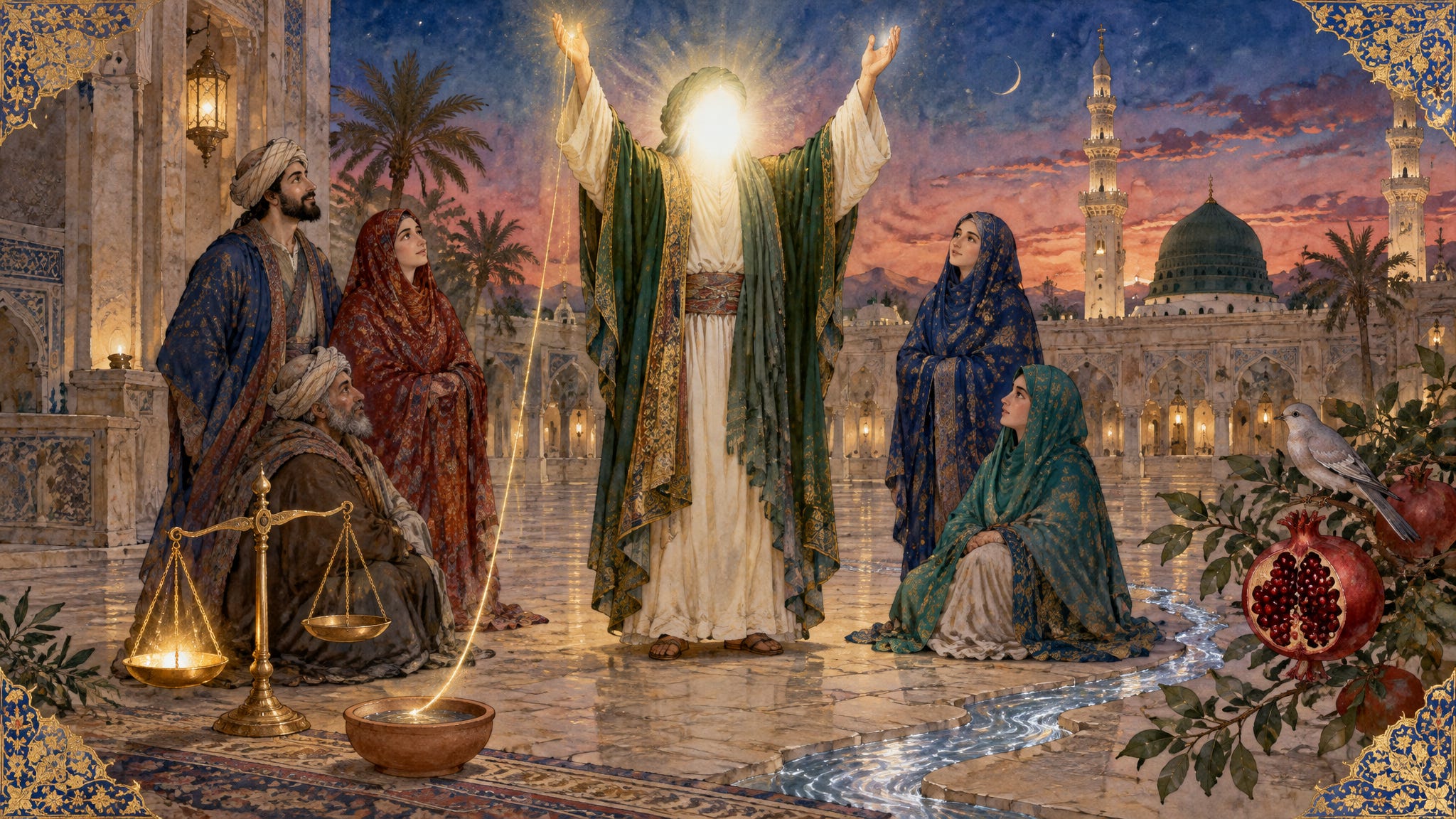
I want to begin tonight with a warning — and with the one it was given to.
This verse is God speaking to His Prophet, Muhammad, peace and blessings be upon him, his family, and his righteous companions.
And it came down after Uhud.
Think about what that day had been.
The archers he had placed on the hill left their post.
Men he was calling back walked away from him while he called.
His face was cut, and his tooth was broken.
If there was ever a day when a leader had a reason to be harsh with his own people, it was that day.
And God tells him that his gentleness with them is God’s own mercy, working through him.
And then the warning:
had you been harsh and hardhearted, they would have surely scattered from around you.
He was the gentlest man who ever lived.
And God tells him that harshness would have emptied the room around him.
If he was told that, none of us is too good to hear it.
Not the father at the head of the table.
Not the mother who is worn out by seven o’clock in the evening.
Not the man standing here.
Allamah Sayyed Muhammad Husayn Tabataba’i, may God rest his pure soul — the author of al-Mizan, the commentary this majlis keeps returning to — notices who is being spoken to.
The verses around this one address the companions, with an edge of reproach: grieving their dead, some of them had come close to blaming the Prophet.
And at this verse God turns from them, and speaks to His Prophet instead.
— Allamah Sayyed Muhammad Husayn Tabataba’i, al-Mizan fi Tafsir al-Qur’an, on Surah Aal Imran (the Chapter of the Family of Imran)1
That is the shape of the whole night.
The ones who did wrong are not the ones addressed.
The gentle one is — and he is told to stay gentle.
Ayatullah Abdullah Jawadi Amoli, may God protect him, teaching the same verse, draws three things from it, and all three belong to tonight.
The first is something that was never reported.
Wounded and all but abandoned at Uhud; left standing in the middle of the Friday sermon while people walked out to buy goods more cheaply — and no one has ever reported that the Messenger of God, peace and blessings be upon him, his family, and his righteous companions, flared up, or complained, or belittled anyone, or reproached anyone.
The second is the one we get wrong in both directions.
Soft is not lax.
Gentleness is one thing; being easy-going about a wrong, or indifferent to it, is another.
Gentleness is not the absence of a standard.
It is the manner in which a standard is held.
And the third is the one to carry with you all night. God tells His Prophet:
وَٱخۡفِضۡ جَنَاحَكَ لِمَنِ ٱتَّبَعَكَ مِنَ ٱلۡمُؤۡمِنِينَ
“and lower your wing to the faithful who follow you.”
فَإِنۡ عَصَوۡكَ فَقُلۡ إِنِّي بَرِيٓءٞ مِّمَّا تَعۡمَلُونَ
“But if they disobey you, say, ‘I am absolved of what you do.’”
— Qur’an, Surah al-Shu’ara (the Chapter of the Poets) #26, Verses 215 and 216
Absolved of what you do.
Of the deed.
And Ayatullah Jawadi Amoli tells how the Prophet did exactly that.
When one of his commanders wronged a tribe, he stood before the people, raised his hands to the sky until they could see beneath his arms, and declared to God that he was clear of what that man had done.
Then he sent Amir al-Mu’minin, Imam Ali, peace and blessings be upon him, to the wronged tribe, to weigh every loss and pay it from the public treasury — down to the bowl a dog drinks from.
— Ayatullah Abdullah Jawadi Amoli, Tasnim, his commentary on Surah Aal Imran, session 264, 26 March 1990 — narrated2
He disowned the deed.
He did not disown the people.
And he mended what was broken.
Keep those three in your hand — gentleness that is God’s mercy, softness that is not laxity, and the deed disowned while the person is kept.
We will need every one of them before the night is over.
The Guardian Who Asked
Last week we began with a mother, and a vow over a child she had not yet seen.
Tonight we meet the man who raised that child.
ذَٰلِكَ مِنۡ أَنۢبَآءِ ٱلۡغَيۡبِ نُوحِيهِ إِلَيۡكَۚ وَمَا كُنتَ لَدَيۡهِمۡ إِذۡ يُلۡقُونَ أَقۡلَٰمَهُمۡ أَيُّهُمۡ يَكۡفُلُ مَرۡيَمَ وَمَا كُنتَ لَدَيۡهِمۡ إِذۡ يَخۡتَصِمُونَ
“These accounts are from the Unseen, which We reveal to you, and you were not with them when they were casting lots [to see] which of them would take charge of Mary’s care, nor were you with them when they were contending.”
— Qur’an, Surah Aal Imran (the Chapter of the Family of Imran) #3, Verse 44
A girl had been given to the house of worship — Mary, peace and blessings be upon her, the child of that vow.
She needed a guardian: someone to answer for her keep, her safety, her affairs.
The men who served that house all wanted the honour of it, so they cast lots.
And the lot fell to Zechariah, peace and blessings be upon him.
And notice who he was to her.
Years later, when she had given birth alone, one of our reports has him come looking for her — and her maternal aunt is at his side.
The guardian God chose for this child was not a stranger, and not an institution.
He came to her with her own family beside him — people who already had every reason to love her.
— Imam Ja’far al-Sadiq, peace and blessings be upon him, through Muhammad ibn Umarah; Shaykh al-Saduq, Kamal al-Din wa Tamam al-Ni’mah, chapter 7, report 1 — narrated3
Then the verse this whole series stands under.
فَتَقَبَّلَهَا رَبُّهَا بِقَبُولٍ حَسَنٖ وَأَنۢبَتَهَا نَبَاتًا حَسَنٗا وَكَفَّلَهَا زَكَرِيَّاۖ كُلَّمَا دَخَلَ عَلَيۡهَا زَكَرِيَّا ٱلۡمِحۡرَابَ وَجَدَ عِندَهَا رِزۡقٗاۖ قَالَ يَٰمَرۡيَمُ أَنَّىٰ لَكِ هَٰذَاۖ قَالَتۡ هُوَ مِنۡ عِندِ ٱللَّهِۖ إِنَّ ٱللَّهَ يَرۡزُقُ مَن يَشَآءُ بِغَيۡرِ حِسَابٍ
“Thereupon her Lord accepted her with a gracious acceptance, and made her grow up in a worthy fashion, and He charged Zechariah with her care. Whenever Zechariah visited her in the sanctuary, he would find provisions with her. He said, ‘O Mary, from where does this come for you?’ She said, ‘It comes from God. God provides whomever He wishes without any reckoning.’”
— Qur’an, Surah Aal Imran (the Chapter of the Family of Imran) #3, Verse 37; the English, Ali Quli Qarai’s
Last week we took its first clause:
Her Lord accepted her with a gracious acceptance.
Tonight takes its title from the second:
And made her grow up in a worthy fashion
— in the Arabic, nabatan hasanan, a beautiful growth.
It is the word for a plant coming up out of the ground.
Not a product being made.
A plant being grown.
Then:
He charged Zechariah with her care.
And then something we usually read straight past.
She had a place of her own.
The sanctuary — the mihrab.
One of our Imams tells us how that place came to be — Imam al-Baqir or Imam al-Sadiq, peace and blessings be upon them; the narrator does not say which.
She grew up serving the worshippers in that house, fetching and carrying for them.
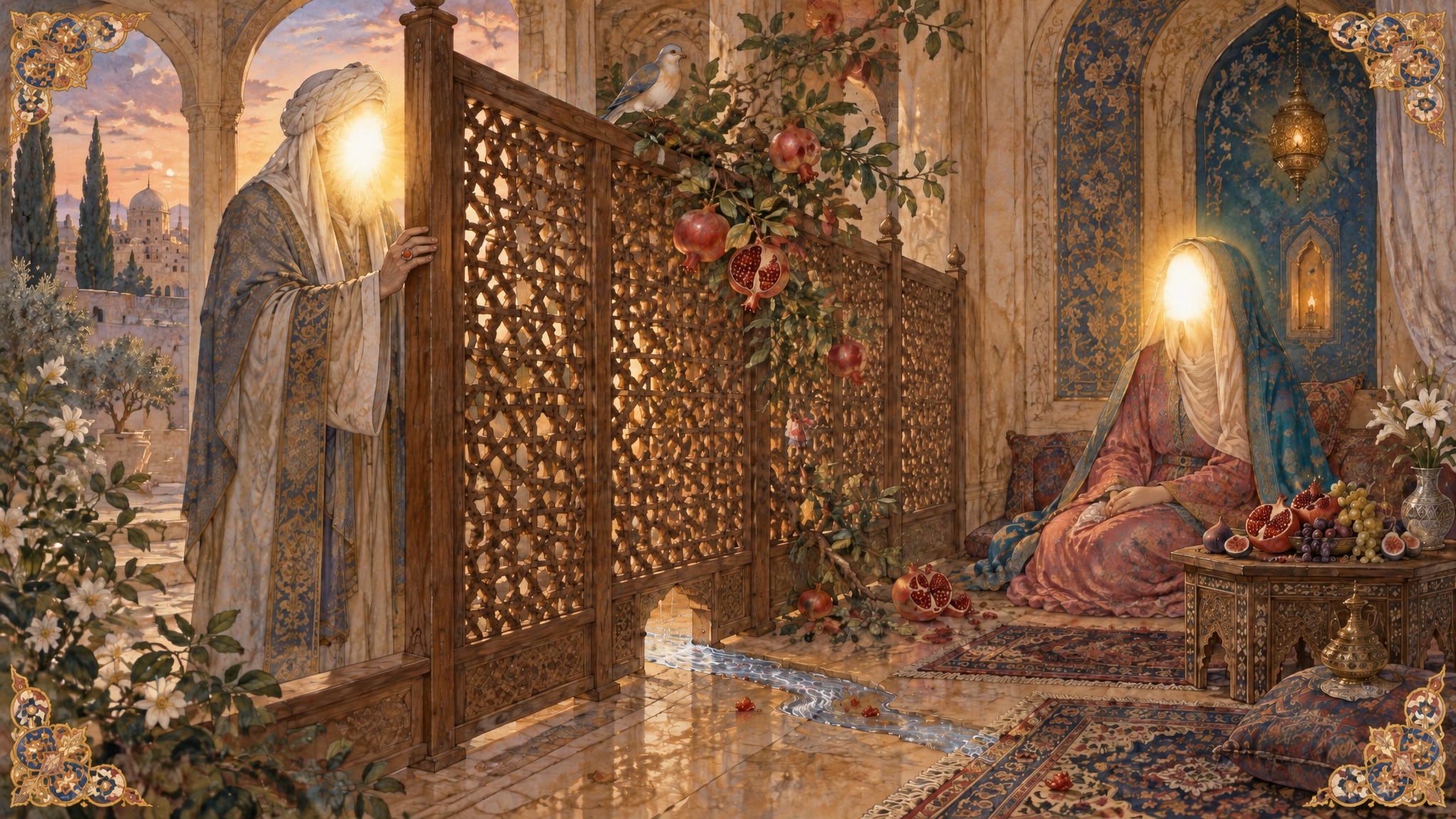
And when she came of age, Zechariah was commanded to put up a screen for her, apart from the worshippers.
A room of her own.
And it was there that he would come in to her, and find with her the fruit of winter in summer, and the fruit of summer in winter.
— Imam Muhammad al-Baqir or Imam Ja’far al-Sadiq, peace and blessings be upon them, through Hariz; al-’Ayyashi, Tafsir al-’Ayyashi, volume 1, on Surah Aal Imran, report 38 — narrated4
The child has a private place.
And the guardian is the one who guards it — not the one who invades it.
Zechariah had every right to walk into that room.
It was his office; God had given it to him.
And what does the verse say he did there?
Whenever Zechariah visited her in the sanctuary, he would find provisions with her.
He found something he could not explain.
Most of us, finding something in our child’s room that we cannot explain, do not wait.
We go straight from the finding to the verdict, in a single step — and we call the step concern.
Ayatullah Jawadi Amoli asks a question of this verse that I had never thought to ask.
Why did Zechariah not ask her the first time?
Or the second?
His answer is in the shape of the verse.
Whenever he went in to her, he found provision — and then he asked.
He found it, and found it, and found it; and only then did he ask.
Perhaps, he says, the first time he assumed the best: that good people who came to the house to worship had brought it.
And perhaps the secret is this.
He found it the first time, the second, the tenth, the hundredth — and he did not go to her.
He went to work.
He kept watch himself.
He closed off every way in.
He set people to see who came and who went.
He made his enquiries.
Only when every way was closed did he go to her and ask:
O Mary, from where does this come for you?
And when she told him it was from God, the verse does not say he pressed her, or tested her answer, or raised it again the following week.
In Ayatullah Jawadi Amoli’s words:
it was finished, and he was convinced, and he was content.
— Ayatullah Abdullah Jawadi Amoli, Tasnim, his commentary on Surah Aal Imran, session 107, 19 August 1989 — narrated5
Do the arithmetic against your own house.
How many times do we find something before we speak?
And when the answer comes, do we accept it — or treat it as the opening of an interrogation?
And look where his question ends.
هُنَالِكَ دَعَا زَكَرِيَّا رَبَّهُۥۖ قَالَ رَبِّ هَبۡ لِي مِن لَّدُنكَ ذُرِّيَّةٗ طَيِّبَةًۖ إِنَّكَ سَمِيعُ ٱلدُّعَآءِ
“Thereat Zechariah supplicated his Lord. He said, ‘My Lord! Grant me a good offspring from You! Indeed You hear all supplications.’”
— Qur’an, Surah Aal Imran (the Chapter of the Family of Imran) #3, Verse 38
He asks, he is answered, he is content — and he does not go away and make a ruling about her.
He goes and prays for a child of his own.
The guardian’s question does not end in a verdict.
It ends in worship: in longing to be given what she had been given.
What God gave him, and what it cost, belongs to our last night.
And now the same question, in another house.
Imam Muhammad al-Baqir, peace and blessings be upon him, tells us that Sayyedah Fatimah, peace and blessings be upon her, took on the work inside her home — the kneading, the baking, the sweeping — and Amir al-Mu’minin, Imam Ali, peace and blessings be upon him, took on everything beyond the door: the firewood, and bringing home the food.
One day he asked her:
Fatimah, is there anything to eat?
And she said:
No — by the One who made your right so great, for three days we have had nothing to set before you.
Why did you not tell me?
he asked.
And she said:
The Messenger of God, peace and blessings be upon him, his family, and his righteous companions, told me not to ask you for anything. If he brings you something, he said, take it; and if not, do not ask him.
So he went out and borrowed a single dinar, and turned for home as evening fell — and in the street he met al-Miqdad ibn al-Aswad, one of the most loyal of the companions.
What brings you out at this hour? he asked.
And al-Miqdad said: hunger.
That is what brought me out too, said Imam Ali.
And he gave him the dinar.
And when he came home, he found the Messenger of God sitting there, and Sayyedah Fatimah at her prayer, and between them something covered.
When she had finished her prayer, she brought it out.
A bowl of bread and meat.
O Fatimah, from where does this come to you?
And she answered in Mary’s words:
It is from God.
God provides for whom He wishes, without reckoning.
And the Messenger of God turned to Imam Ali and said:
Shall I not tell you who you and she are like?
Zechariah, when he went in to Mary in the sanctuary and found provision with her, and said:
O Mary, from where does this come to you?
And they ate from it for a month.
— Imam Muhammad al-Baqir, peace and blessings be upon him, through Najm; al-’Ayyashi, Tafsir al-’Ayyashi, volume 1, on Surah Aal Imran, report 41 — narrated6
And this is not a reading we have put on the story.
In the long counsel God gave to Jesus, may our souls be his ransom, and may God hasten his return — a counsel our Imams handed down — God tells him who Zechariah was to him: in the place of your father, and the guardian of your mother, when he would go in to her in the sanctuary and find provision with her.
— from the Imams, peace and blessings be upon them, through Ali ibn Asbat; Shaykh al-Kulayni, al-Kafi, Volume 8 (al-Rawda), hadith 105 — narrated7
The guardian’s first instrument is a question.
Not a verdict.
He had the office, the right and the standing — God gave him all three, in a verse of the Qur’an.
And when he found something in that room he could not explain, he did not reach for the right.
He reached for a question.
He waited.
He closed every other explanation with his own hands.
Then he asked, and accepted the answer, and went away and prayed.
That is what a right looks like in the hands of someone who loves.
“My Daughter Has Stopped Wearing Hijab”

Now let me put a sentence to you the way it actually arrives.
Not as a question in a book of rulings.
As something a father says to a scholar after the majlis, or a mother says to her sister on the phone, late at night.
“My daughter has stopped wearing hijab.”
Watch what happens next, because it happens in less than a second.
Three questions are waiting to be asked.
Is she any less your daughter?
What is her reason?
Did anyone ever explain to her what hijab is for?
And we skip all three.
Some of you know the look on her face when we do.
The glazed look.
The look of a girl who worked out long ago that this subject produces a face, not a conversation — and that the question was never going to be asked.
Zechariah’s question is the one we skip.
He found, and found, and found, before he asked.
We find once, and we rule.
There is a report in al-Kafi that shows exactly how this goes wrong — and it is not about children at all.
A man who served Imam Ja’far al-Sadiq, peace and blessings be upon him, told him that he and his friends disowned certain people, because they did not say what we say.
And the Imam said: they are loyal to us — and you disown them?
We have what you do not have; should we disown you?
Then he taught him.
Among the Muslims, he said, there is one with a single share of faith, one with two, and so on up to seven — and it is not right to make the one with one share carry what the one with two shares carries.
And he gave him an example.
A man invited his Christian neighbour to Islam, made it beautiful to him — and the neighbour accepted.
Before dawn the next day he was knocking at his door: come and pray with us.
And he kept him praying.
Through the dawn prayer; then, the day is short — stay for noon; then for the afternoon; then for sunset; then, only one prayer is left.
And the next morning, before dawn, he was knocking again.
And the new Muslim said:
Look for someone with more time to spare for this religion.
I am a poor man, with a family to provide for.
And the Imam said:
He brought him into it — and he brought him out of it.
— Imam Ja’far al-Sadiq, peace and blessings be upon him, through a saddler who served him; Shaykh al-Kulayni, al-Kafi, Volume 2, hadith 82 (thaqalayn) — narrated8
Nobody in that story was unkind.
The man at the door gave his neighbour everything he had.
He simply never once asked what his neighbour could carry.
Every child has her own share.
Load her, all at once, with what took you years to carry, and the very zeal that was meant to bring her in can bring her out.
And none of this is a modern discovery, or something the West taught us.
The Bible has it, in the letter to the Ephesians:
“And, ye fathers, provoke not your children to wrath: but bring them up in the nurture and admonition of the Lord.”
— Ephesians 6:4 (King James Version)
The letter to the Colossians gives the reason: provoke them not, lest they be discouraged.
And Jesus, may our souls be his ransom, and may God hasten his return, says of whoever makes one of these little ones stumble that it would be better for him to have a millstone hung about his neck, and to be drowned in the depth of the sea.
— Colossians 3:21 and Matthew 18:6 (King James Version) — narrated9
So if it is not wickedness — not in her, and not in us — what is it?
The martyred leader, Imam Sayyed Ali Khamenei, may God rest his pure soul, answers in a book we have in English: Tabyeen: The Neglected Obligation.
Tabyeen is clarification — making a thing plain.
He calls it the number one priority.
And then he says this:
“Some have been misguided today as we have not carried out the jihad of clarification.”
— Imam Sayyed Ali Khamenei, may God rest his pure soul, Tabyeen: The Neglected Obligation (AIM Ahlul Bayt Islamic Mission, 2024), its Introduction — the published English, as printed10
Listen to where he puts the failure.
Not on the ones who were misguided — on us.
As we have not clarified.
It is a failure of explanation.
And for the parent who hopes one conversation will settle it, the same book:
“However, continuation, steadfastness, clarifications and repetitions are necessary and may take a lot of time too.”
— Imam Sayyed Ali Khamenei, may God rest his pure soul, Tabyeen: The Neglected Obligation, page 40 — the published English, as printed
So the diagnosis is education.
And the answer is tabyeen — clarification, repeated, and given time — not blame.
And I want to say this plainly, because we said it last week, and this series will keep saying it.
Nobody in this room is being blamed.
The parents in this hall worked with the understanding and the information they were given — and some were given very little.
Some of us were raised on the other side of all this: on fear, on the word no, on a religion that arrived as a list.
And we are here tonight anyway — which says something about us, and more about God.
See it.
Forgive it.
And do not hand it on.
And now the word that decides how we speak to the daughter in our own house.
The martyred leader again, to a gathering of women, on the fourth of January 2023.
He begins by making the ruling plain.
Hijab is an obligation of the sharia; there is no doubt in it, and no room to pick at it.
And then, in the same breath:
But those who do not keep it completely must not be accused of having no religion.
He once asked the scholars of a provincial city why some of them accused a woman because a little of her hair was showing — what people call bad-hijab.
And as he tells it, he corrects the word: say her hijab is weak.
When I came into that city, he says, perhaps a third of the crowd that came out to meet me were women like that — and they were in tears.
These are our own children.
These are our own daughters.
And in Ramadan, on the nights of vigil, they bring him the pictures: women of every appearance, weeping.
And he says:
I envy that weeping.
If only I could weep like that girl, like that young woman.
How can such a person be accused?
It is not right, he says — a weak hijab is not right.
But that does not put her outside the religion.
And then: all of us have our shortcomings.
And earlier in the same talk he says something that is our title, in somebody else’s mouth.
Faith is not a lesson, that you teach someone and they learn it.
Faith is a growth — his word is ruyesh, a coming-up out of the ground — and it needs the sowing of seed.
And he says who sows it: the mothers.
— Imam Sayyed Ali Khamenei, may God rest his pure soul, to women, 4 January 2023 (1401/10/14) — narrated11
So the daughter who has stopped wearing hijab is not a case to be won.
She is a plant to be grown.
She is ours — and she may be the one weeping in prayer on nights you have never seen.
What We Carry Forward

This is the second of our four nights on raising our children, in the days of the martyrdom of Sayyedah Fatimah al-Zahra, peace and blessings be upon her.
Today is Saturday, the 19th of Jumada al-Ula, 1448 — the 31st of October, 2026.
Last week, on the night of the 13th, we said three things.
Your child is born facing God: you do not install faith in her; you find it there, and you protect it.
Raising her is cultivation, not manufacture — the work of a gardener, not a potter.
And her first school is play and love, not pressure.
And we met a mother who gave her child to God before the child was born — and was given a daughter where a son had been promised.
And we heard the three sevens.
Imam Ja’far al-Sadiq, peace and blessings be upon him:
Let your son play for seven years; let him be taught adab for seven years; and keep him with you for seven years.
— Imam Ja’far al-Sadiq, peace and blessings be upon him; Shaykh al-Saduq, Man La Yahduruhu al-Faqih, Volume 3, hadith 1528 (thaqalayn) — narrated12
Last week was the first seven.
Tonight is the second — the years of adab: of manners, of learning, and of limits.
That is why tonight is about limits at all.
Play needs no rulebook.
Adab does.
And one more thing carried forward — from this minbar, last year, on the first night of Wilayah in the Home.
I quoted the martyred leader, Imam Sayyed Ali Khamenei, may God rest his pure soul, and this is how it stood:
محبت اساس خوشبختی است... محبت آن ملاطی است که اینها را برای هم حفظ میکند.
Love is the cement of any relationship. The fundamental mortar that holds the family together and keeps its foundation strong is love, love, love.
— Imam Khamenei, Zan va Khanevadeh (Woman and Family), Page 134
— from this majlis, last year: Wilayah in the Home, session 1, “The First Stitch”, 22 November 202513
Love is the cement.
That was last year’s answer to how a house holds together.
It is this year’s answer to how a child grows — and tonight we ask what love does when it has to say no.
So tonight has three movements.
First, love — whether affection for a child is a concession to the modern world, or the Sunnah itself.
Second, limits — how to hold a line without breaking the one you hold it for.
And third, the guardian’s question — the dignity of the child, and what it means to ask before you judge.
Is Religion Anything but Love? — Affection as Sunnah
The Prophet Who Would Not Hurry a Child
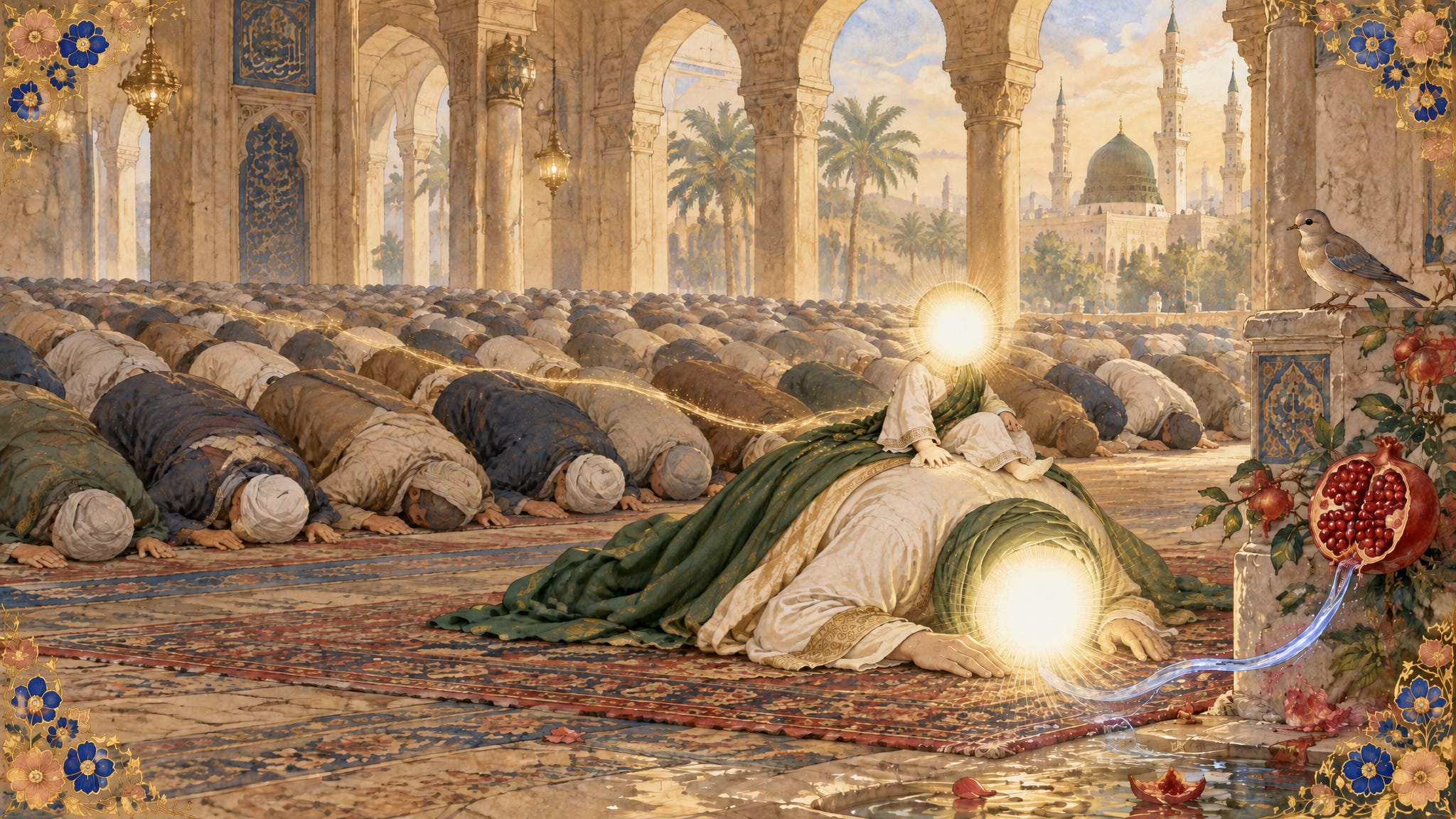
Imam Ja’far al-Sadiq, peace and blessings be upon him, tells of a day when the Messenger of God, peace and blessings be upon him, his family, and his righteous companions, was leading his companions in prayer — and stayed down in one of the prostrations so long that, when the prayer was over, they said to him:
O Messenger of God, you made that prostration long.
And he said:
Yes.
My son climbed onto my back, and I did not want to hurry him — until he came down by himself.
And the Imam adds:
By that, he meant to raise them up — his family — and to honour them.
A whole congregation waited on a child.
And the one who made them wait was the Messenger of God.
— Imam Ja’far al-Sadiq, peace and blessings be upon him, to Muhammad ibn Harb al-Hilali; Shaykh al-Saduq, Ma’ani al-Akhbar, hadith 692 (thaqalayn) — narrated14
And the instruction behind it is one line, in Shaykh al-Saduq’s collection:
4707 - وَ فِي خَبَرٍ آخَرَ قَالَ قَالَ اَلنَّبِيُّ صَلَّى اَللَّهُ عَلَيْهِ وَ آلِهِ : “مَنْ كَانَ عِنْدَهُ صَبِيٌّ فَلْيَتَصَابَ لَهُ “.
“And in another report, he said: The Prophet, God bless him and his family, said: ‘Whoever has a little child with him, let him be a child with him.’”
— the Messenger of God, peace and blessings be upon him, his family, and his righteous companions; Shaykh al-Saduq, Man La Yahduruhu al-Faqih, Volume 3, hadith 1492 (thaqalayn; 4707 is the edition’s own number) — my translation
He does not say:
raise the child to your level.
He says:
go down to his.
In this tradition, affection is not a mood.
It is an instruction.
And it has a reward written against it.
Imam Ja’far al-Sadiq tells us that the Messenger of God, peace and blessings be upon him, his family, and his righteous companions, said:
Whoever kisses his child, God writes a good deed for him.
Whoever makes him glad, God will make him glad on the Day of Resurrection.
And whoever teaches him the Qur’an — the two parents will be called, and dressed in two robes whose light makes the faces of the people of Paradise shine.
— Imam Ja’far al-Sadiq, peace and blessings be upon him, through al-Fadl ibn Abi Qurra; Shaykh al-Kulayni, al-Kafi, Volume 6, hadith 202 (thaqalayn) — narrated15
A kiss is a deed, and it is written down — in the same book as your prayer and your fast.
And beside it, from the same Imam: the Messenger of God said, love children, and be merciful to them; and when you promise them something, keep it — for they know nothing except that it is you who provide for them.
— Imam Ja’far al-Sadiq, peace and blessings be upon him, through Abdullah ibn Muhammad al-Bajali; Shaykh al-Kulayni, al-Kafi, Volume 6, hadith 204 (thaqalayn) — narrated16
Listen to the reason he gives, because it is not the one we would give.
He does not say:
Keep your promise so that the child learns honesty.
He says:
Keep it, because to a small child you are where everything comes from.
Break a promise to him, and what he learns is not that his father is unreliable.
He learns that words are nothing.
And now let me say something plainly, because it needs saying in this room and in most rooms.
Holding a child, kissing a child, getting down on the floor and playing with a child — this is not weakness.
It is not unmanly.
And it is not something the West brought into our homes.
It is Sunnah.
The man who stayed down in his prostration for a child on his back was the Messenger of God, and no one has ever called him weak.
And the next report is the hardest one tonight.
I will not soften it.
A man came to the Prophet and said:
I have never kissed a child.
And when he had turned to go, the Messenger of God said:
This is a man who, to my mind, is one of the people of the Fire.
— Imam Ja’far al-Sadiq, peace and blessings be upon him; Shaykh al-Kulayni, al-Kafi, Volume 6, hadith 208 (thaqalayn) — narrated17
I am not going to explain that away.
He said it of a thing the man had never done.
And the thing he had never done was kiss a child.
Some of you are sitting with that.
Some of you are the child he never kissed — forty years old now, and never able to name what was missing.
And some of you are the man himself.
Stay with it a moment.
We will come back to it before the night is over, and I will not leave either of you there.
Is Religion Anything but Love?
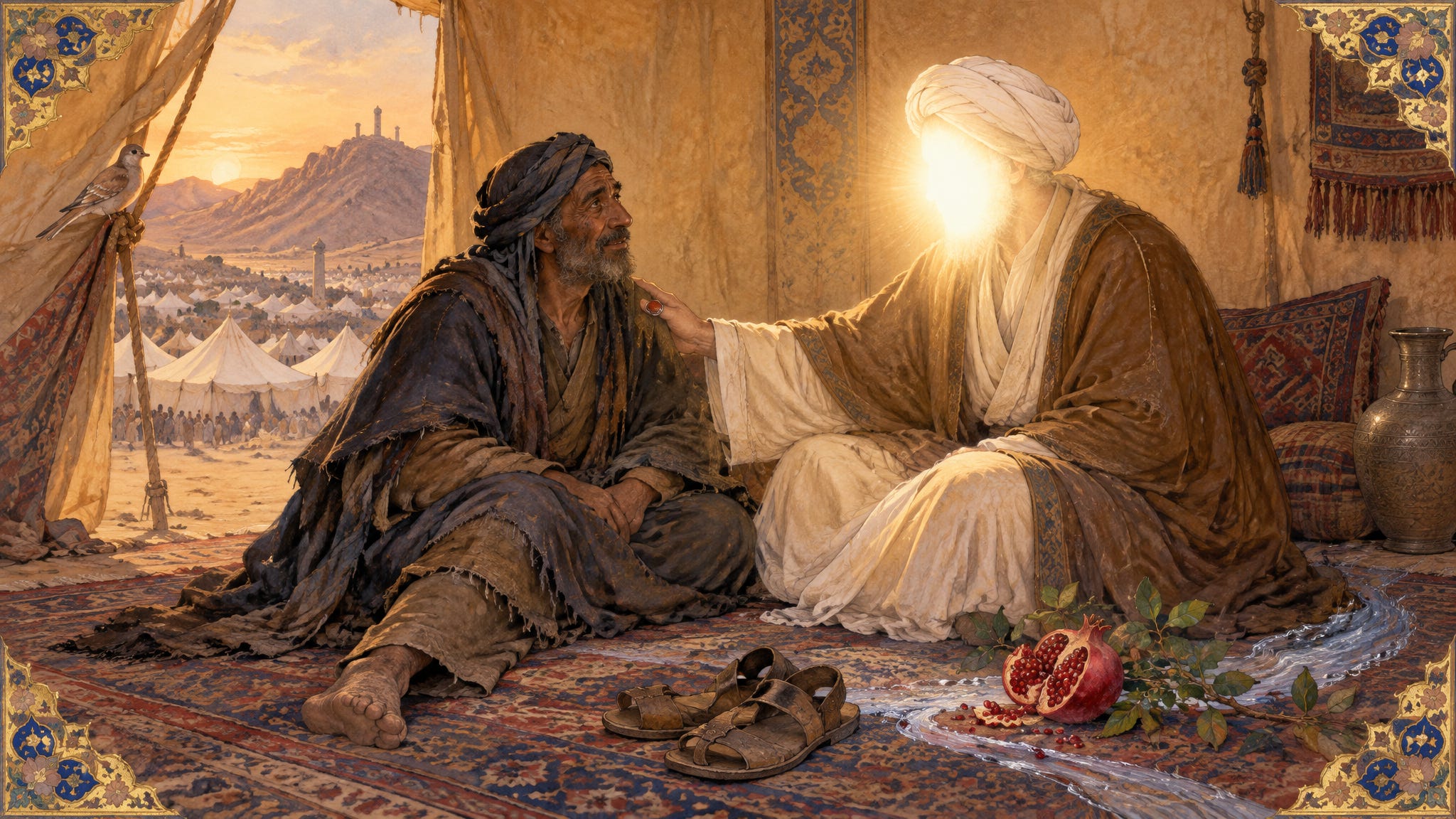
The question this first movement is named for is not ours.
An Imam asked it.
Imam Ja’far al-Sadiq, peace and blessings be upon him, said to one of his companions, Sa’id ibn Yasar:
Is religion anything but love?
And he answered his own question with a verse.
— Imam Ja’far al-Sadiq, peace and blessings be upon him, to Sa’id ibn Yasar; Shaykh al-Saduq, al-Khisal, hadith 75 (thaqalayn) — narrated18
This is the verse he gave him:
قُلۡ إِن كُنتُمۡ تُحِبُّونَ ٱللَّهَ فَٱتَّبِعُونِي يُحۡبِبۡكُمُ ٱللَّهُ وَيَغۡفِرۡ لَكُمۡ ذُنُوبَكُمۡۚ وَٱللَّهُ غَفُورٞ رَّحِيمٞ
“Say, ‘If you love God, then follow me; God will love you and forgive you your sins, and God is all-forgiving, all-merciful.’”
— Qur’an, Surah Aal Imran (the Chapter of the Family of Imran) #3, Verse 31
He did not ask whether love is a part of religion.
He asked whether there is anything in it besides.
And his father, Imam Muhammad al-Baqir, peace and blessings be upon him, said the same words — and this time we know the moment.
Burayd ibn Mu’awiya says:
I was with him in his tent at Mina. And the Imam looked at Ziyad al-Aswad, whose feet were cracked and torn, and felt for him, and said:
“What has happened to your feet?”
And Ziyad said:
“I came on a young camel of mine that was worn thin, and I walked most of the way to spare it.”
And the Imam grieved for him.
And then Ziyad said:
“I fall into sins, until I think I am ruined — and then I remember my love for you, and I hope for salvation, and the darkness lifts from me.”
And the Imam said:
“And is religion anything but love?”
And then, in the same breath, the other half.
A man came to the Prophet, he said, and told him:
“I love those who pray, but I do not pray; I love those who fast, but I do not fast.”
And the Messenger of God said to him:
“You are with the one you love — and yours is what you have earned.”
— Imam Muhammad al-Baqir, peace and blessings be upon him, through Burayd ibn Mu’awiya; Shaykh al-Kulayni, al-Kafi, Volume 8, hadith 37 (thaqalayn) — narrated19
Look at the order.
Before the question, before any theology, the Imam saw a man’s feet — and was moved, and asked about them.
The religion answered its own question before it asked it.
And then it kept both halves: the love counts, and the love does not do your praying for you.
And Allamah Tabataba’i, may God rest his pure soul, reaches the same place by analysis.
Take the whole of the religion, he says — what it teaches about God, its morals, its rulings, in all their breadth — and analyse it, and it comes down to sincerity: a person setting his self, his character and his deeds on the foundation that they are for God alone.
And sincerity comes down to nothing but love.
Then he gives the report, and names the books that carry it.
— Allamah Sayyed Muhammad Husayn Tabataba’i, al-Mizan fi Tafsir al-Qur’an, on Surah Aal Imran (the Chapter of the Family of Imran) #3, Verses 28 to 32 — narrated20
The Forced Heart Goes Blind

And now someone will say:
If religion is love, then leave the child alone until he comes to it in his own time, and never press him at all.
Amir al-Mu’minin, Imam Ali ibn Abi Talib, peace and blessings be upon him, has two sayings that answer that between them.
The first:
وَقَالَ (عليه السلام): إِنَّ لِلْقُلُوبِ شَهْوَةً وَإِقْبَالًا وَإِدْبَاراً، فَأْتُوهَا مِنْ قِبَلِ شَهْوَتِهَا وَإِقْبَالِهَا، فَإِنَّ الْقَلْبَ إِذَا أُكْرِهَ عَمِيَ.
“And he, peace be upon him, said: Hearts have a desire, and an advancing and a retreating. So come to them by way of their desire and their advancing — for the heart, when it is forced, goes blind.”
— Amir al-Mu’minin, Imam Ali ibn Abi Talib, peace and blessings be upon him; Nahj al-Balagha, Saying 193 — my translation
And the second draws the line exactly:
وَقَالَ (عليه السلام): إِنَّ لِلْقُلُوبِ إِقْبَالًا وَإِدْبَاراً فَإِذَا أَقْبَلَتْ فَاحْمِلُوهَا عَلَى النَّوَافِلِ، وَإذَا أَدْبَرَتْ فَاقْتَصِرُوا بِهَا عَلَى الْفَرَائِضِ.
“And he, peace be upon him, said: Hearts have an advancing and a retreating. So when they advance, carry them to the supererogatory prayers; and when they retreat, confine them to the obligatory.”
— Amir al-Mu’minin, Imam Ali ibn Abi Talib, peace and blessings be upon him; Nahj al-Balagha, Saying 312 — my translation
The obligatory stays.
What moves with the heart is how much more you ask of it.
And Shaheed Ayatullah Murtaza Mutahhari, may God rest his pure soul, in Ta’lim va Tarbiyat dar Islam — Education and Upbringing in Islam — reads that second saying as a rule about worship itself.
Worship, he says, is not to be imposed on the soul; it is to be brought to the soul gently, using its inclination and its mood.
And then:
Worship too, if it comes to a person’s soul as force and imposition, not only fails to do good — it does harm.
— Shaheed Ayatullah Murtaza Mutahhari, Ta’lim va Tarbiyat dar Islam (Education and Upbringing in Islam), page 45 — narrated21
That does not lower the standard.
It chooses the moment when the standard can be received.
Three Questions, in a Fiqh Class, on Her Birthday
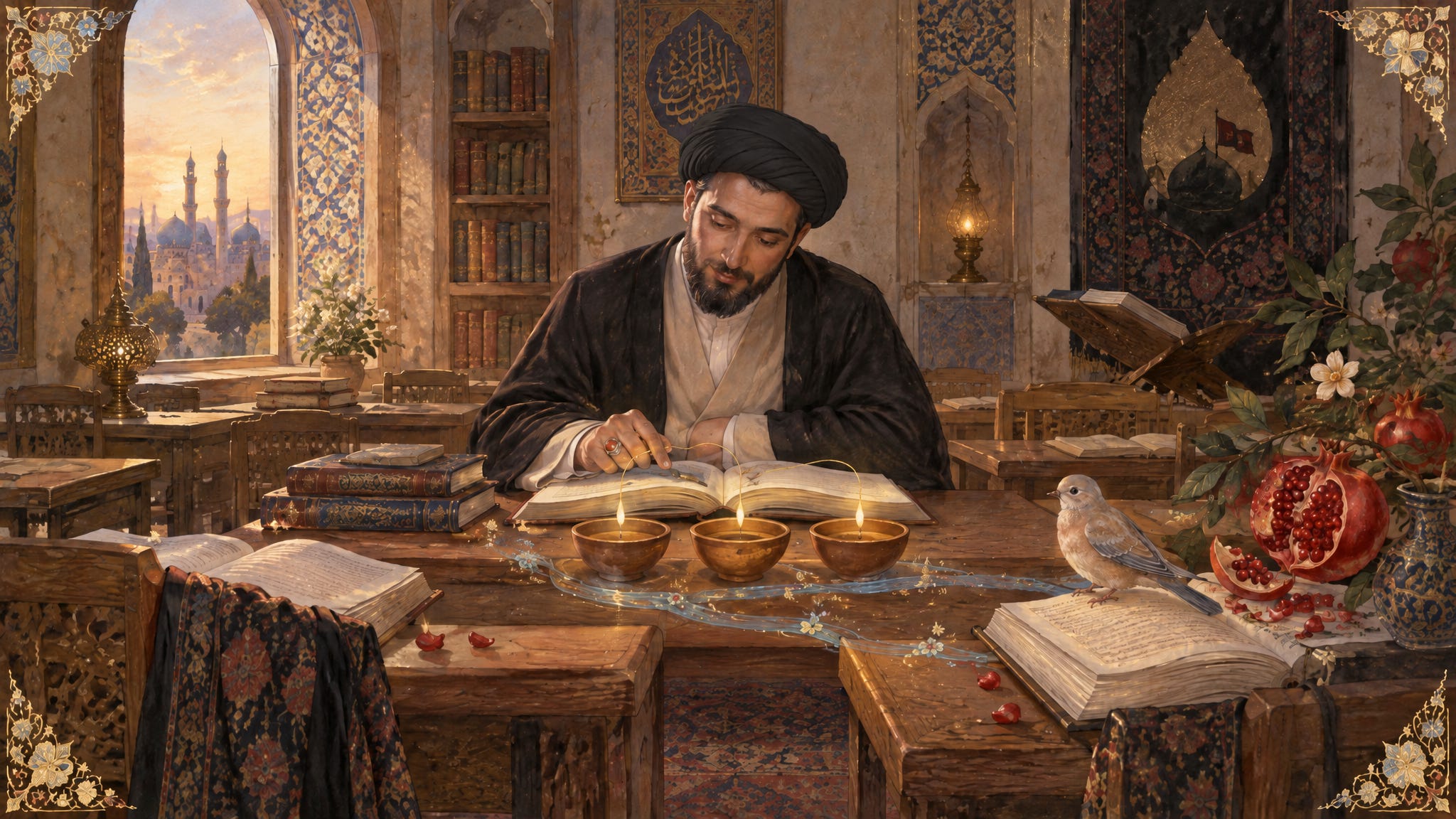
Let me tell you where this part of the night began for me.
Not in a book about love — in a class on law.
Ayatullah Sayyed Muhammad Hasan Mirahmadi, may God protect him, teaches a course in the jurisprudence of the family: the rulings on children, on guardianship, on what a guardian may and may not do.
A technical course.
And on the 10th of December last year, he opened his class on the occasion of the birth of Sayyedah Fatimah, peace and blessings be upon her — and put three questions to his students.
What is the role of love in raising a child?
How much does love affect it?
And how does it do its work?
— Ayatullah Sayyed Muhammad Hasan Mirahmadi, a class on the jurisprudence of the family (the rulings on children), 10 December 2025 — narrated22
Three questions, about love, in a class on law — on her birthday.
Love is not a soft addition to the rulings on children.
It is a question the rulings themselves ask.
Lessons for Our Time
Lesson One — Affection Is Sunnah, Not a Concession to Modernity

The first lesson is short, and it is a correction.
Some of us were taught, without anyone saying it, that warmth is a softening of the tradition: that the strict version is the real one, and kindness is something the modern world has pushed us into.
It is the other way round.
The kiss is a deed, written down.
Make a child glad, and you are made glad on the Day of Resurrection.
The child taught the Qur’an dresses his parents in light.
And be a child with him is an instruction from the Prophet himself.
So when someone tells you that this generation has gone soft on its children, you can answer from the sources.
Where this generation is gentle, it has found its way back to the Sunnah.
And there is a line some of you will remember from this minbar, and I want to say whose it is.
In a session of The Art of Supplication last year, I quoted Shaykh Alireza Panahian, may God protect him:
مسجدی که برای بازی کودکان جا ندارد، در واقع برای آیندهی خود جا ندارد. باید جذابترین نقطه شهر برای فرزندان ما، مسجد و مرکز اسلامی باشد.
“A mosque that has no room for children to play, in reality, has no room for its own future. The most attractive place in the city for our children must be the mosque and the Islamic centre.”
— Shaykh Alireza Panahian, from his book Shahri dar Aseman (A City in the Sky), which is a compilation of his lectures on the spiritual dimensions of the mosque
— from this majlis, last year: The Art of Supplication, session 20, “The Hearth, The Hub, and The Horizon”, 25 October 2025
A mosque with no room for children to play has no room for its own future.
And a house with no room for a child’s noise, a child’s questions and a child’s slowness has no room for its own future either.
So this week — get down on the floor, and play.
Lesson Two — To the Father Who Was Never Kissed
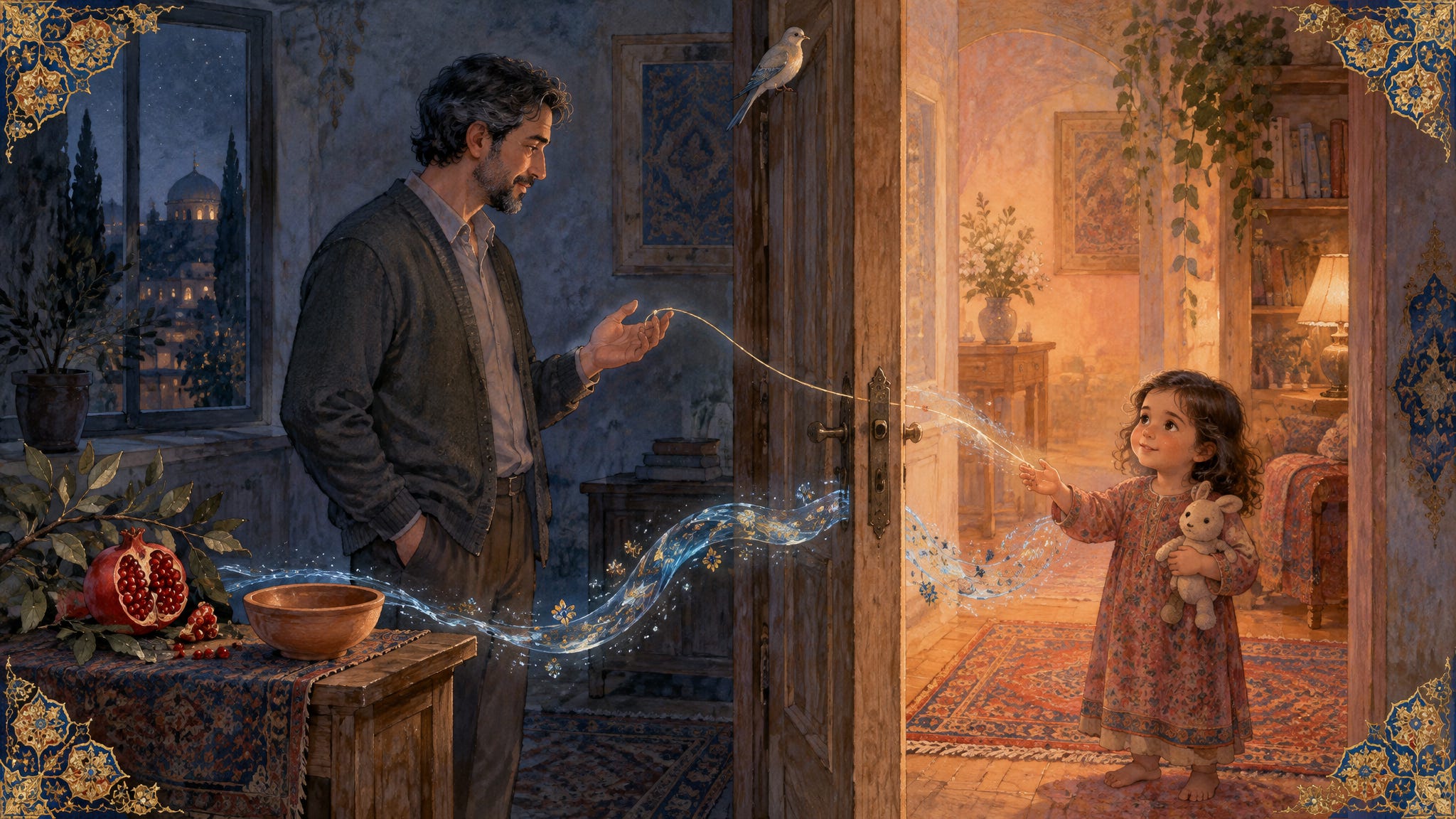
The second lesson is lower and slower, and it is for somebody in particular.
Some of you were never kissed.
Not beaten, perhaps — just never kissed.
Nobody in your house did that.
And you grew up, and became a father, and you have never quite known what to do with your own children: how to hold them, and for how long, and whether it is too much.
So hear this as Sunnah, not as sentiment.
It is open to you tonight.
It does not need you to have been given it.
It does not need you to feel natural doing it.
It needs one thing, and then another, and then another.
One thing said warmly.
One hand on one head.
One well done that is not followed straight away by but.
And look again at the man in that report.
What was said of him was not about anything he had done.
It was about something he had never done.
Which means the door was open to him the whole time — he simply never walked through it.
It is open tonight.
Limits That Do Not Break — Discipline Without Damage
Ignorant Love and Rational Love
Everything said so far could be misheard.
Someone could walk out with it and say:
love the child, and everything else will follow.
So this second movement begins with the other failure — because love is not the only way to fail.
Shaheed Mutahhari, may God rest his pure soul, gives the distinction, and it is the hinge of tonight.
A mother and father love their child, he says, and want his good.
And that love can show itself in two ways.
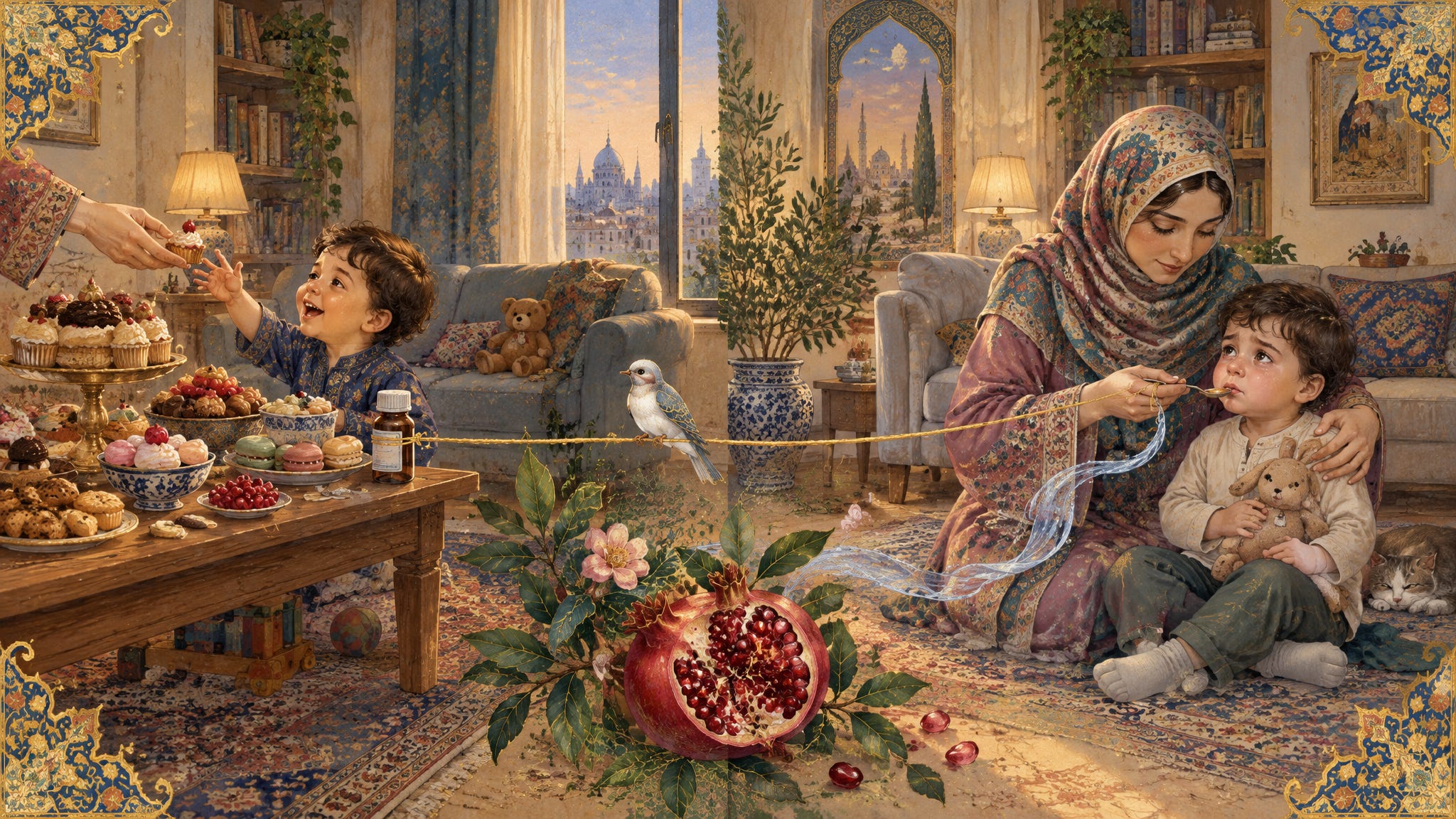
Ignorant parents measure their love by one thing: whatever the child wants, give it to him; whatever he dislikes, keep it from him.
He likes that food — I love my child, so how can I refuse him?
But a medicine, an injection, which the child hates and will not have: because I love my child, I will never upset him.
That, he says, is one kind of love.
The other kind is love joined to reason: love that serves the child’s real good, now and later.
And love of that kind may please the child — and it may not.
— Shaheed Ayatullah Murtaza Mutahhari, Ta’lim va Tarbiyat dar Islam (Education and Upbringing in Islam), PDF page 237 — narrated23
Ignorant love measures itself by what the child likes.
Rational love measures itself by what the child needs.
And the injection is the test, because it is the thing the child hates most and needs most.
So let me say it without apology.
The injection is an act of love.
And so is the word no.
The limit is not something unfortunate added to the love.
It is one of the shapes the love takes.
The Old Priest Who Did Not Restrain His Sons

And the Bible has a portrait of exactly this failure.
There was an old priest, a judge of his people, who raised another man’s son well — a boy given to the house of God by his mother’s vow.
But his own sons took the best of the offerings for themselves, until people came to loathe the offering of the Lord.
And God sent a man to him with a question:
לָמָּה תִבְעֲטוּ בְּזִבְחִי וּבְמִנְחָתִי אֲשֶׁר צִוִּיתִי מָעוֹן וַתְּכַבֵּד אֶת־בָּנֶיךָ מִמֶּנִּי לְהַבְרִיאֲכֶם מֵרֵאשִׁית כָּל־מִנְחַת יִשְׂרָאֵל לְעַמִּי׃
“Wherefore kick ye at my sacrifice and at mine offering, which I have commanded {in my} habitation; and honourest thy sons above me, to make yourselves fat with the chiefest of all the offerings of Israel my people?”
— 1 Samuel 2:29 (King James Version)24
And then the sentence that closes the matter:
וְהִגַּדְתִּי לוֹ כִּי־שֹׁפֵט אֲנִי אֶת־בֵּיתוֹ עַד־עוֹלָם בַּעֲוֺן אֲשֶׁר־יָדַע כִּי־מְקַלְלִים לָהֶם בָּנָיו וְלֹא כִהָה בָּם׃
“For I have told him that I will judge his house for ever for the iniquity which he knoweth; because his sons made themselves vile, and he restrained them not.”
— 1 Samuel 3:13 (King James Version)
Listen to the charge.
Not that he was harsh.
Not that he beat them.
He restrained them not.
He honoured his sons above God, and the honouring looked like love.
Raise Him Gently, or You Break Him

And now the manner of the limit — because a limit that breaks the child is not a limit. It is damage with a religious excuse.
Imam Ja’far al-Sadiq, peace and blessings be upon him, gives the picture.
Faith, he says, is ten rungs, like a ladder, climbed one rung after another.
So do not throw down the one below you, or the one above you will throw you down.
When you see someone a rung below you, raise him up to you gently.
And do not load him with what he cannot carry, or you will break him — and whoever breaks a believer, it is on him to set the break.
— Imam Ja’far al-Sadiq, peace and blessings be upon him, to Abd al-Aziz al-Qaratisi; Shaykh al-Kulayni, al-Kafi, Volume 2, hadith 84 (thaqalayn) — narrated25
The word he uses is the word for setting a broken bone.
Read it as a rule about a child, and it loses none of its force.
Load him with what he cannot carry, and if he breaks, the setting of it is yours.
Before this part of the night is over, you will hear that in this tradition the setting even has a price.
Do Not Make Worship Hateful
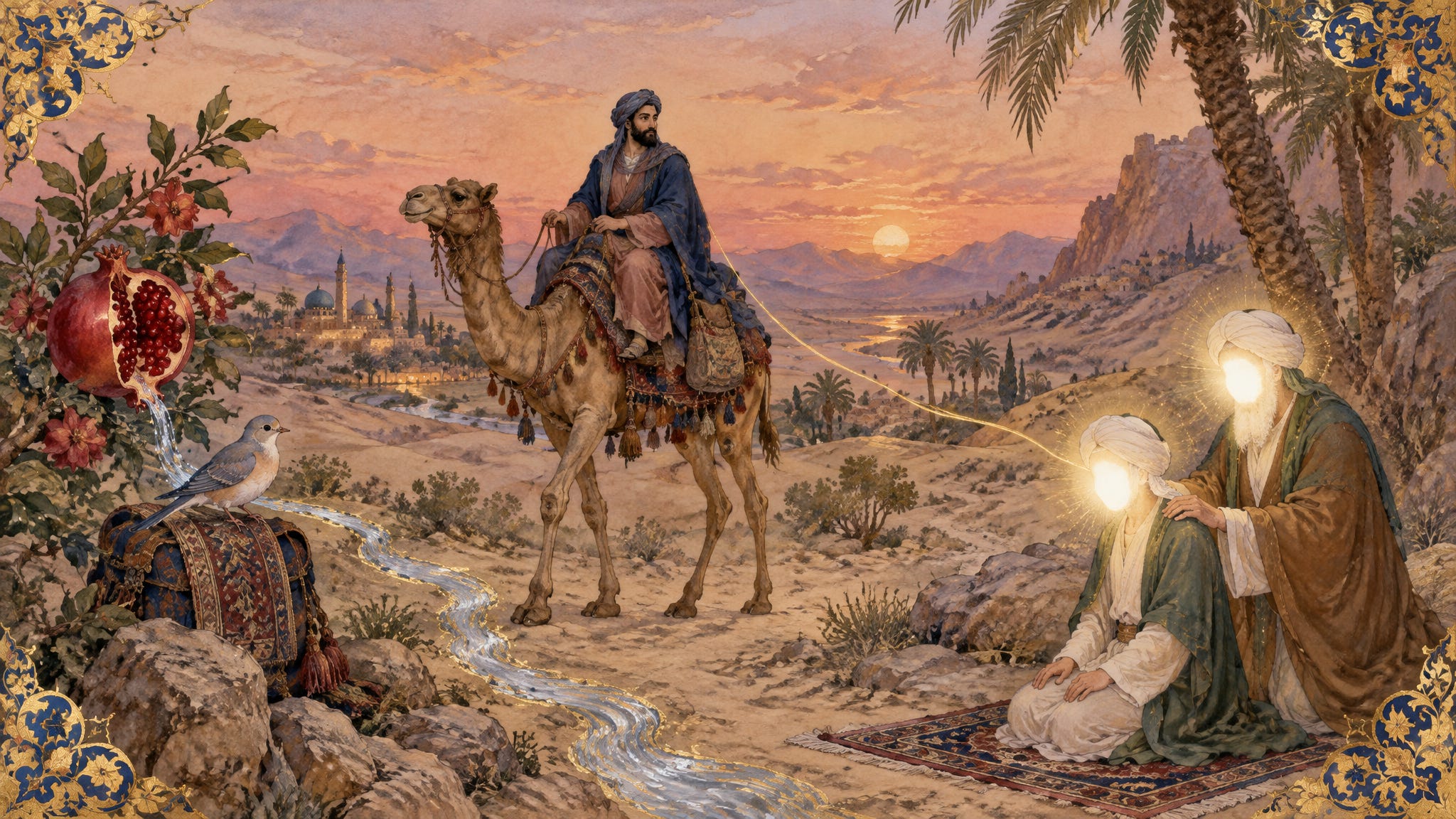
And the same rule runs through worship, because worship is where we are most tempted to overload a child.
Imam Muhammad al-Baqir, peace and blessings be upon him, tells us that the Messenger of God, peace and blessings be upon him, his family, and his righteous companions, said:
This religion is firm, so go deep into it gently — and do not make the worship of God hateful to the servants of God.
Or you will be like the rider who drives his mount until it drops: he has not finished his journey, and he has no mount left.
— Imam Muhammad al-Baqir, peace and blessings be upon him, through Abu al-Jarud; Shaykh al-Kulayni, al-Kafi, Volume 2, hadith 233 (thaqalayn) — narrated26
And his son, Imam Ja’far al-Sadiq, peace and blessings be upon him, remembers being young.
I strove hard in worship when I was a young man, he says — and my father said to me:
My son, less than what I see you doing.
For when God loves a servant, He is pleased with little from him.
— Imam Ja’far al-Sadiq, peace and blessings be upon him, through Hafs ibn al-Bakhtari; Shaykh al-Kulayni, al-Kafi, Volume 2, hadith 237 (thaqalayn) — narrated27
An Imam setting a limit on his own son’s devotion.
And the limit is not a rebuke.
It is the rider sparing his mount.
Not a Counsel of Perfection — a Schedule

And the duties themselves arrive in stages.
Imam Ja’far al-Sadiq tells us that his father said:
We tell our children to pray at five; you tell yours at seven.
We tell ours to fast at seven, for as much of the day as they can manage — and when thirst and hunger get the better of them, they break the fast, until they grow used to it.
So tell yours to fast at nine, as much of the day as they can — and when thirst gets the better of them, let them break it.
— Imam Muhammad al-Baqir, peace and blessings be upon him, through his son Imam Ja’far al-Sadiq and al-Halabi; Shaykh al-Kulayni, al-Kafi, Volume 3, hadith 1604 (thaqalayn) — narrated28
The stopping is part of the instruction, not a failure of it.
And last week we climbed the first rungs of a ladder that Imam al-Baqir or Imam al-Sadiq, peace and blessings be upon them, describes:
At three, there is no god but God, and a few months later, Muhammad is the Messenger of God; at four, the blessing on the Prophet and his family; at five, the right hand and the left, and the first prostration; at seven, the washing of the face and the hands, and the prayer.
And on every rung: then he is left.
Tonight, the last rung.
At nine — and I will not hide this from you — he is taught the wudu, and struck for it, and told to pray, and struck for it.
And when he has learnt them, God forgives him, and his parents.
— Imam Muhammad al-Baqir or Imam Ja’far al-Sadiq, peace and blessings be upon them, through Abdullah ibn Fadala; Shaykh al-Saduq, Man La Yahduruhu al-Faqih, Volume 1, hadith 862 (thaqalayn) — narrated29
Six years of say this and then he is left, before anything else.
And then one word at nine that our scholars have never treated lightly — which is exactly why it needs a fiqh.
The Fiqh of Discipline — and Its Order
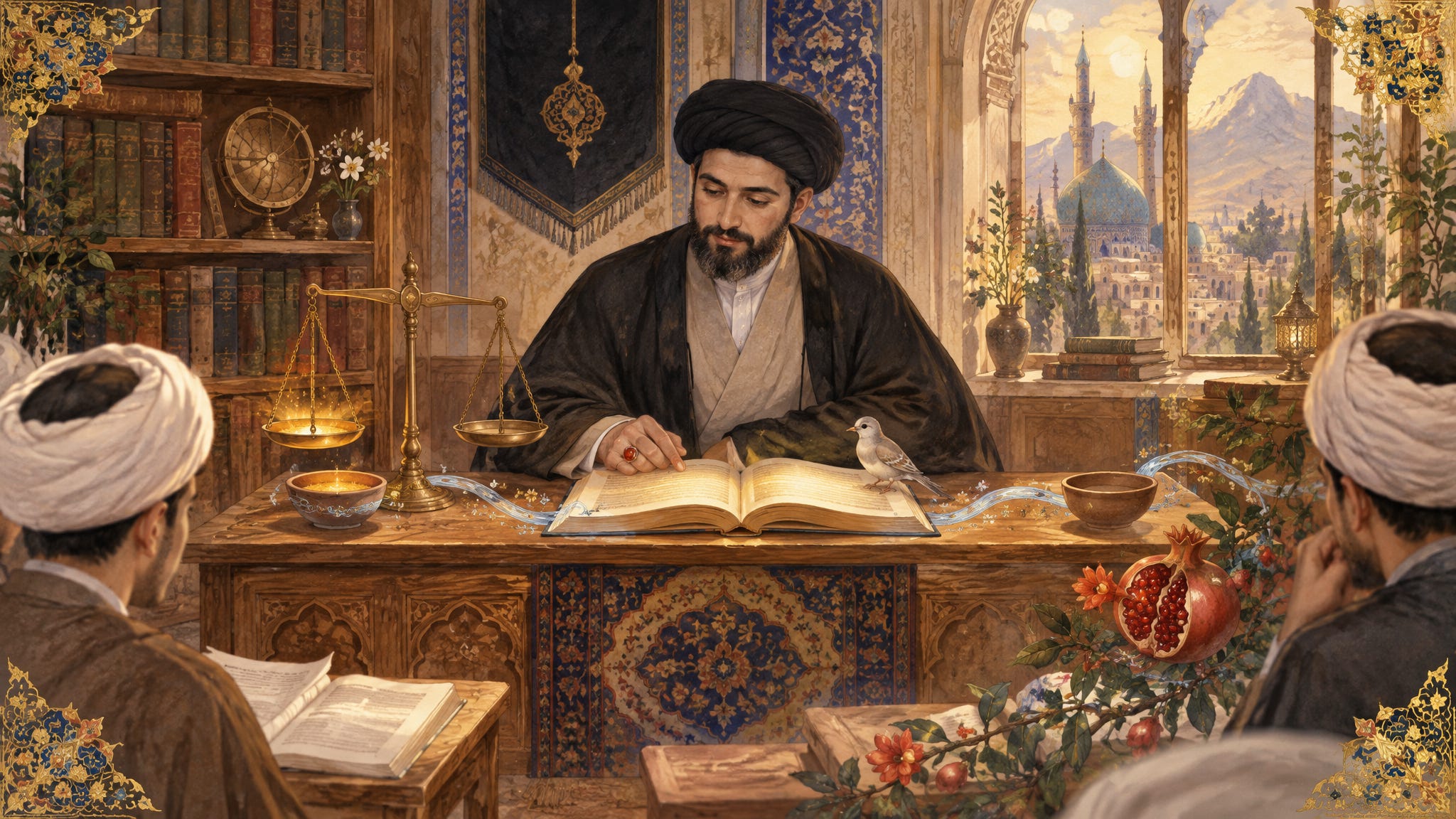
The course of Ayatullah Mirahmadi, may God protect him, on the jurisprudence of the family — the class we met earlier tonight — spends almost a month, from the middle of December into January, on one question:
Whether, and how far, a parent may strike a child.
And when he closes it, he names what it covered.
The permissibility of striking at all. Its manner, and its amount.
And the diya — blood money, and the retaliation, where there is serious harm.
A course of fiqh does not treat this as a matter of temperament.
It treats it as law — with a chapter on compensation, and a chapter on retribution.
And then the thing to notice, because the order is the argument.
Only after all that does the class turn to the child’s duty to obey his parents.
And the session that turns to it says so:
After completing the question of striking children, in continuation of it, and in line with the parent’s guardianship, we come to the obligation to obey the parents.
— Ayatullah Sayyed Muhammad Hasan Mirahmadi, a class on the jurisprudence of the family (the rulings on children), 10 and 13 January 2026 — narrated30
The obligation is built on the limit — not the limit on the obligation. We usually hear it the other way round: the child must obey, and discipline is how you get the obedience. This course spends a month marking how far a guardian may go, and only then, inside that boundary, comes to what the child owes.
The Rulings — and Whose Is Whose

And because this is law, the rulings differ, and each belongs to its own marja’.
Ayatullah Sayyed Ali al-Sistani, may God protect him:
Only the guardian, or someone he authorises, may strike a child, and only where the child’s discipline depends on it — lightly, without reddening the skin, and, as an obligatory precaution, no more than three strikes.
A teacher may do so only with the guardian’s permission.
A child who has reached maturity is not to be struck — that too as an obligatory precaution.
And if the skin reddens, or bruises, or turns black, a diya is due.
— Ayatullah Sayyed Ali al-Sistani, may God protect him, his answers on raising children and on striking, and A Code of Practice for Muslims in the West, ruling 2056 (sistani.org) — narrated31
And the diya is not a figure of speech.
Ayatullah Sayyed Muhammad Sadiq Alovestani, may God protect him, taught it this April, from the Book of Diyas — the book of compensation for injury.
On a report narrated by Ishaq ibn Ammar, a blow that reddens the face carries one and a half dinars; one that bruises it, three; one that blackens it, six.
And on the body, in the well-known view of the jurists, half of that.
— Ayatullah Sayyed Muhammad Sadiq Alovestani, a class on the Book of Diyas, 26 April 2026 — narrated32
A slap that reddens a child’s face has a price, in a book of law.
It is not a private family matter.
It is a debt.
And Ayatullah Sayyed Muhammad Husayn Fadhlullah, may God rest his pure soul, reads the matter more widely still.
Be merciful to the young, he says, by understanding them according to the size of their minds and feelings; do not call them to account as you call adults to account; overlook their mistakes, and be gentle with them when you point them out.
For God has given no one — not a father, not a mother, not a brother, not a teacher — an authority over children that would justify beating them; and if a man strikes a child, even his own son, and the child’s hand reddens, there is a diya he must pay.
Yes, there are moments of discipline when a child may need some severity — but it must be measured, he says, the way you measure the medicine he needs.
And then a sentence every tired parent will recognise — not as an accusation, but as a warning about the evenings when we are most at risk:
Many parents and teachers, carrying some crisis from a quarrel at home or at work, try to vent their anger by hitting the child.
That is an oppression God will punish — because the oppression of the weak is among the most obscene of oppressions.
— Ayatullah Sayyed Muhammad Husayn Fadhlullah, Friday sermon, 1 November 2002 — narrated33
So here are two maraji’, and two readings, both within the tradition.
Ayatullah Sistani permits it, tightly bounded, with a diya if the skin changes colour.
In Ayatullah Fadhlullah’s reading, no one has an authority over a child that would justify beating him; where a child needs some severity, it is measured like a medicine.
You follow your own marja’ — and you do not present one reading as the only one.
Violence Is Haram

Ayatullah Fadhlullah gave a whole Friday sermon to this, on the 24th of January 2003 — a sermon on gentleness, set against violence.
One of its headings is flat and unqualified: violence is haram.
And under another heading, religion is justice, he says this.
Some will tell you that religion is one thing and the way you treat people is another.
We say: religion is this.
Religion is justice, and whoever has no justice has no religion — justice with the wife, with the child, with the neighbour.
Do not understand religion as rites alone, and prayer, and staying in the mosque from morning to night, so that a man is the most scrupulous of people in the rites while his own family are the most wretched of people because of him.
The best of you, said the Prophet, is the best of you to his family.
— Ayatullah Sayyed Muhammad Husayn Fadhlullah, Friday sermon, 24 January 2003 — narrated34
And in the same sermon he tells of something that had reached him in the news a few days before.
I will tell it gently — because some of you carry memories of being hit, and because it is not the blows that matter in it.
A father was disturbed by his baby daughter’s crying, because he wanted to sleep.
She was five months old.
He did not try to soothe her, or settle her, or bring her something for whatever was hurting her.
He beat her, until she died.
Her mother said he would not let her take the child to the hospital.
And when her mother went to the police, he said:
It is a father’s right to strike his daughter.
And Ayatullah Fadhlullah asks:
What beast is this beast?
Have you ever seen a beast that would harm its own young?
The animals, he says, are the very picture of gentleness in the care of their young.
— Ayatullah Sayyed Muhammad Husayn Fadhlullah, Friday sermon, 24 January 2003 — narrated35
Look at what his answer actually was.
Not regret.
Not that he had lost his temper.
A claim: it is a father’s right.
A beast does not harm its own young.
And a beast does not claim a right to.
Here a parent’s claim of right is named out loud — and answered.
The guardian’s right is real.
It was never a right to that.
Not Strictness — Love
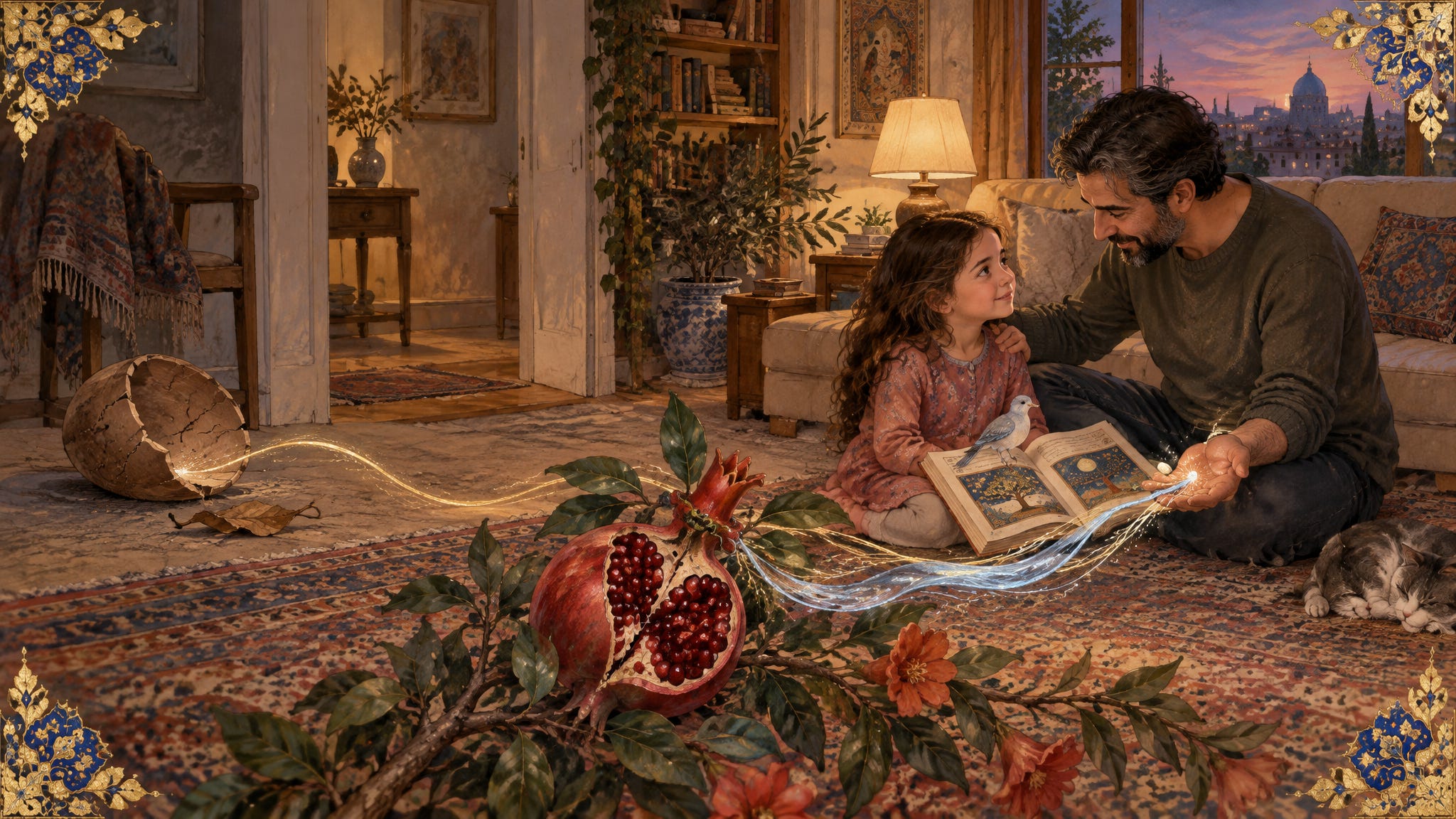
And Ayatullah Muhammad Taqi Misbah Yazdi, may God rest his pure soul, speaking about how to bring the young to the foundations of faith, puts this whole second movement in a few sentences.
Give them books suited to their age, he says — and alongside that, deal with your children with kindness, with courtesy and with reason.
Not by domineering.
Not with sentences like:
Don’t you dare!
If you do that, whatever happens is on your own head!
If you do that, you are no longer my child — I disown you!
These are no use, he says, and sometimes they do more harm than good.
Win the young person’s trust with kindness and warmth, so that he knows you want his good.
The way to protect and raise our children is not strictness — it is love, a kind tongue, encouragement, and reasons suited to what they can understand, step by step.
— Ayatullah Muhammad Taqi Misbah Yazdi, may God rest his pure soul, a talk of 24 September 2014 — narrated36
If you do that, you are no longer my child.
There are people in this room who were raised on that sentence.
Let it stop with us.
Lessons for Our Time
Lesson Three — The Obligation Runs Both Ways

The third lesson changes who is being addressed.
We have spent this movement on what a guardian may and may not do.
And now the Messenger of God, peace and blessings be upon him, his family, and his righteous companions, turns the whole of it round.
Imam Ja’far al-Sadiq, peace and blessings be upon him, tells us he said:
May God have mercy on one who helps his child to be good to him.
And the narrator asked the obvious question: how does he help him?
And the Imam said:
He accepts what the child can manage, and lets pass what is too hard for him; he does not overburden him, and he is not harsh with him.
— Imam Ja’far al-Sadiq, peace and blessings be upon him, through Yunus ibn Ribat; Shaykh al-Kulayni, al-Kafi, Volume 6, hadith 207 (thaqalayn) — narrated37
The child’s duty to his parents is real, and the same report says how heavy it is.
But the parent has a half of it too, and the parent’s half is to make the child’s duty possible.
Accept what he manages.
Let pass what is too hard.
Do not overburden him.
Do not be harsh with him.
That is not lowering the standard.
That is the standard.
Lesson Four — Measured Like a Medicine, Never Spent Like Anger
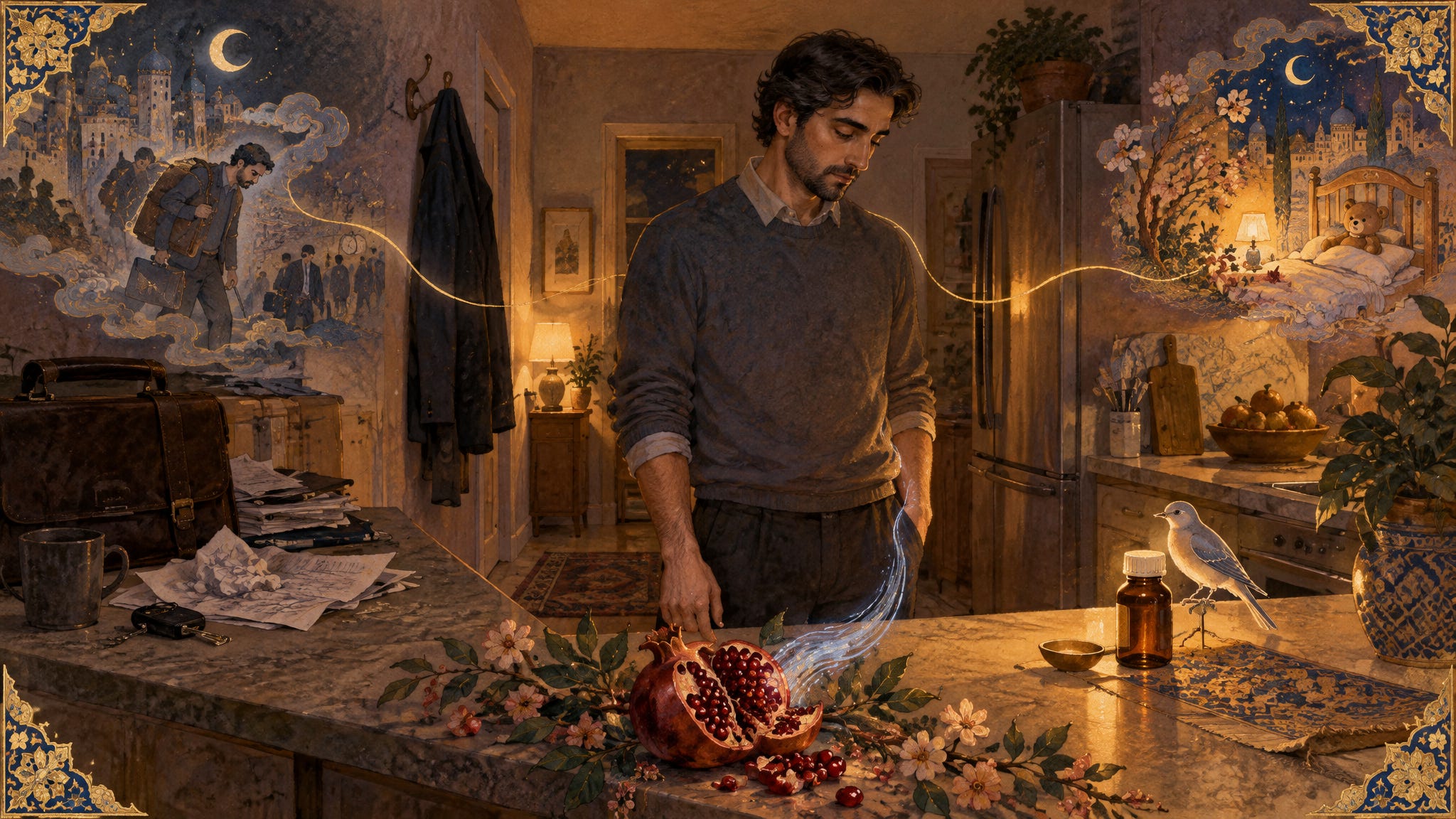
And the fourth lesson is the one to take home tonight, because it decides what happens at eight o’clock when the child will not sleep.
Every limit has to pass one test before it is set.
Is this a medicine — measured, for his good, the way you would measure a dose?
Or is it my day, coming out on the one person in the house who cannot answer back?
The injection is love.
The word no is love.
But the raised hand that comes from the quarrel at work or the bill on the table — Ayatullah Fadhlullah has already named it: the oppression of the weak.
And the slammed door, and the sentence you would not say to a colleague, come from the same place.
So before you correct, stop for one breath and ask whose need this is: the child’s, or yours.
If it is his, measure it.
If it is yours, carry it yourself.
Ask Before You Judge — The Child’s Dignity and the Guardian’s Question
The Example Is the Lesson
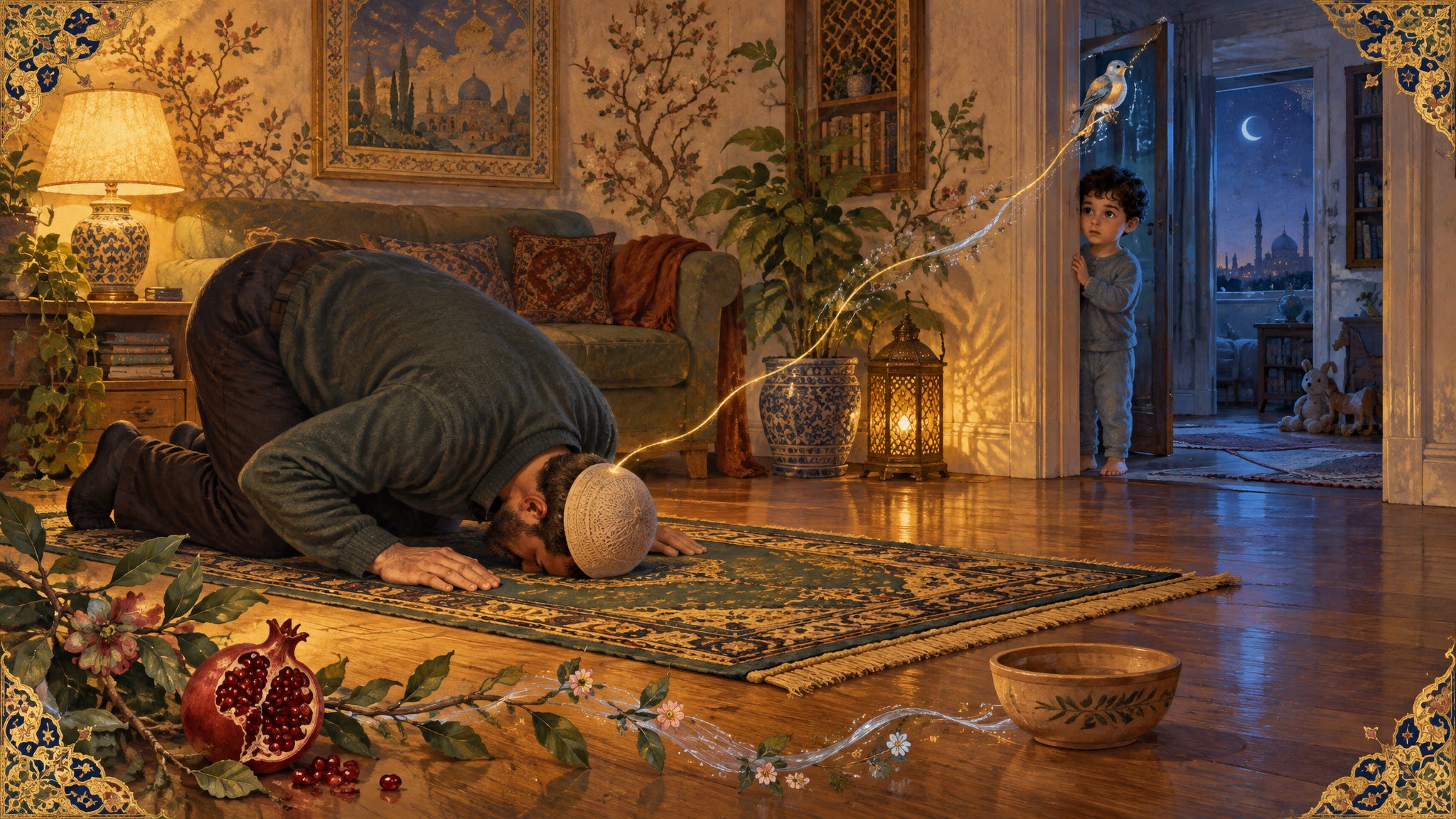
We began tonight with a guardian in a sanctuary who reached for a question instead of a verdict.
This last movement is the same shape, in your house — with the fiqh attached.
And it begins with the verse everyone quotes about the family.
Listen to who it is addressed to.
يَـٰٓأَيُّهَا ٱلَّذِينَ ءَامَنُواْ قُوٓاْ أَنفُسَكُمۡ وَأَهۡلِيكُمۡ نَارٗا وَقُودُهَا ٱلنَّاسُ وَٱلۡحِجَارَةُ عَلَيۡهَا مَلَـٰٓئِكَةٌ غِلَاظٞ شِدَادٞ لَّا يَعۡصُونَ ٱللَّهَ مَآ أَمَرَهُمۡ وَيَفۡعَلُونَ مَا يُؤۡمَرُونَ
“O you who have faith! Save yourselves and your families from a Fire whose fuel will be people and stones, over which are [assigned] severe and mighty angels, who do not disobey whatever God commands them and carry out what they are commanded.”
— Qur’an, Surah al-Tahrim (the Chapter of the Prohibition) #66, Verse 6
Imam Ja’far al-Sadiq, peace and blessings be upon him, tells us that when this verse came down, a man among the Muslims sat down and wept.
I have failed with my own self, he said — and now I am charged with my family as well!
And the Messenger of God, peace and blessings be upon him, his family, and his righteous companions, said to him:
It is enough for you to command them with what you command yourself, and forbid them what you forbid yourself.
— Imam Ja’far al-Sadiq, peace and blessings be upon him, through Abd al-A’la; Shaykh al-Kulayni, al-Kafi, Volume 5, hadith 139 (thaqalayn) — narrated38
Save yourselves — and then your families.
The order is not an accident, and neither is the measure: what you command yourself; what you forbid yourself.
Whatever standard you hold your child to, you are holding it first.
And the martyred leader, Imam Sayyed Ali Khamenei, may God rest his pure soul, gives the method of it.
He is speaking of husbands and wives keeping each other on the path to God — and it is the whole method of the home:
“This ‘protection’ can only be achieved through love, cordial words, proper logic, and wise interaction; it cannot be attained through harshness or force.”
— Imam Sayyed Ali Khamenei, may God rest his pure soul, The Compassionate Family, page 62 — the published English, as printed
And in the Persian of the book it comes from, he names a figure every one of us has met.
There are people, he says, who do not properly know the teachings of Islam on how a man and a woman are to treat each other — and so their religion does not make them any less harsh, or any less domineering.
They are religious, and they are domineering, both at once.
This too, he says, must be put right.
— Imam Sayyed Ali Khamenei, may God rest his pure soul, Zan va Khanevadeh (Woman and Family), PDF page 105 — narrated39
Some of you were raised by a man like that.
And the reason it is so hard to name is that he was not irreligious.
He prayed.
He was exact about it.
The exactness was in the prayer, and not in the house.
And Shaheed Mutahhari, may God rest his pure soul, says why what children see matters so much.
Every Muslim, he says, is a capital for Islam; a believer’s faith is meant to be seen, for God’s sake and not for show.
And when it is not seen —
The children come along, and open their eyes, and judge by what they see, and say: sir, all these words are lies.
There is no such thing as being a Muslim.
— Shaheed Ayatullah Murtaza Mutahhari, Ta’lim va Tarbiyat dar Islam, PDF page 266 — narrated40
A Child Is a Human, Not an Object
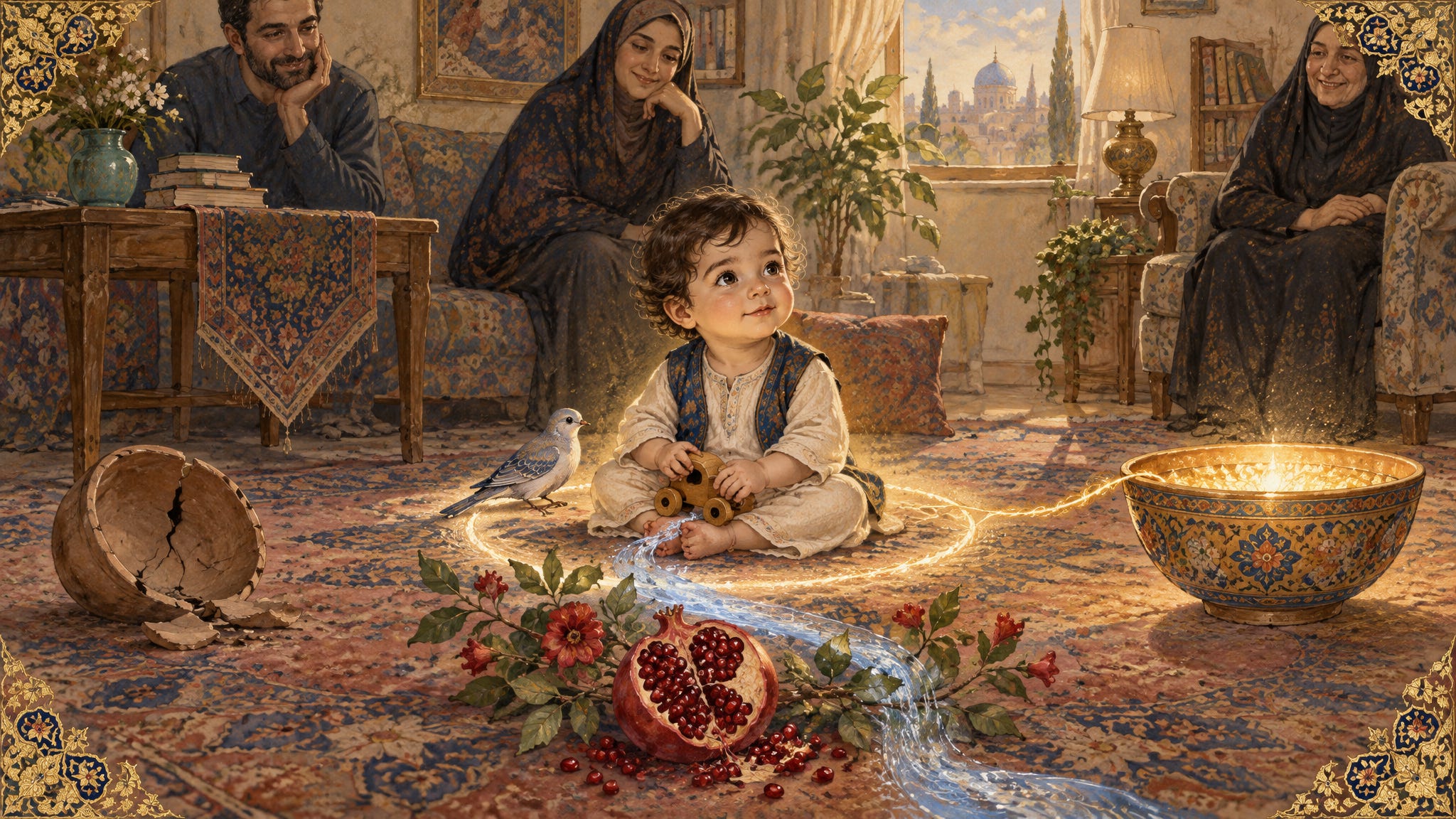
And now the fiqh of it — because a jurist has asked exactly this.
Ayatullah Alireza A’rafi, may God protect him, teaching the jurisprudence of social relations — the rulings on honouring people and on humiliating them — asks whether rulings like the prohibition of insult reach a child who has not yet reached maturity.
He sets out three positions.
The first — that a child is outside these rulings altogether — he calls weak.
The second draws a line: a child old enough to understand is inside them, and a younger child is not.
And the third: they include every child, whether he understands or not — and the reason it gives is the sentence tonight needs.
The child who cannot yet understand still has a dignity — so it is others who see the insult.
It is not necessary that the child himself should feel it.
— Ayatullah Alireza A’rafi, a class on the jurisprudence of social relations (honouring and humiliating), 1 December 2021 — narrated41
The child’s dignity does not depend on the child’s ability to feel it.
And remember the words we began with tonight — he disowned the deed, not the people.
Humiliation is the exact opposite.
It does not disown a deed.
It indicts a person — and, in a child’s case, a person who cannot answer back.
The Guardian’s Right Against the Child’s Privacy
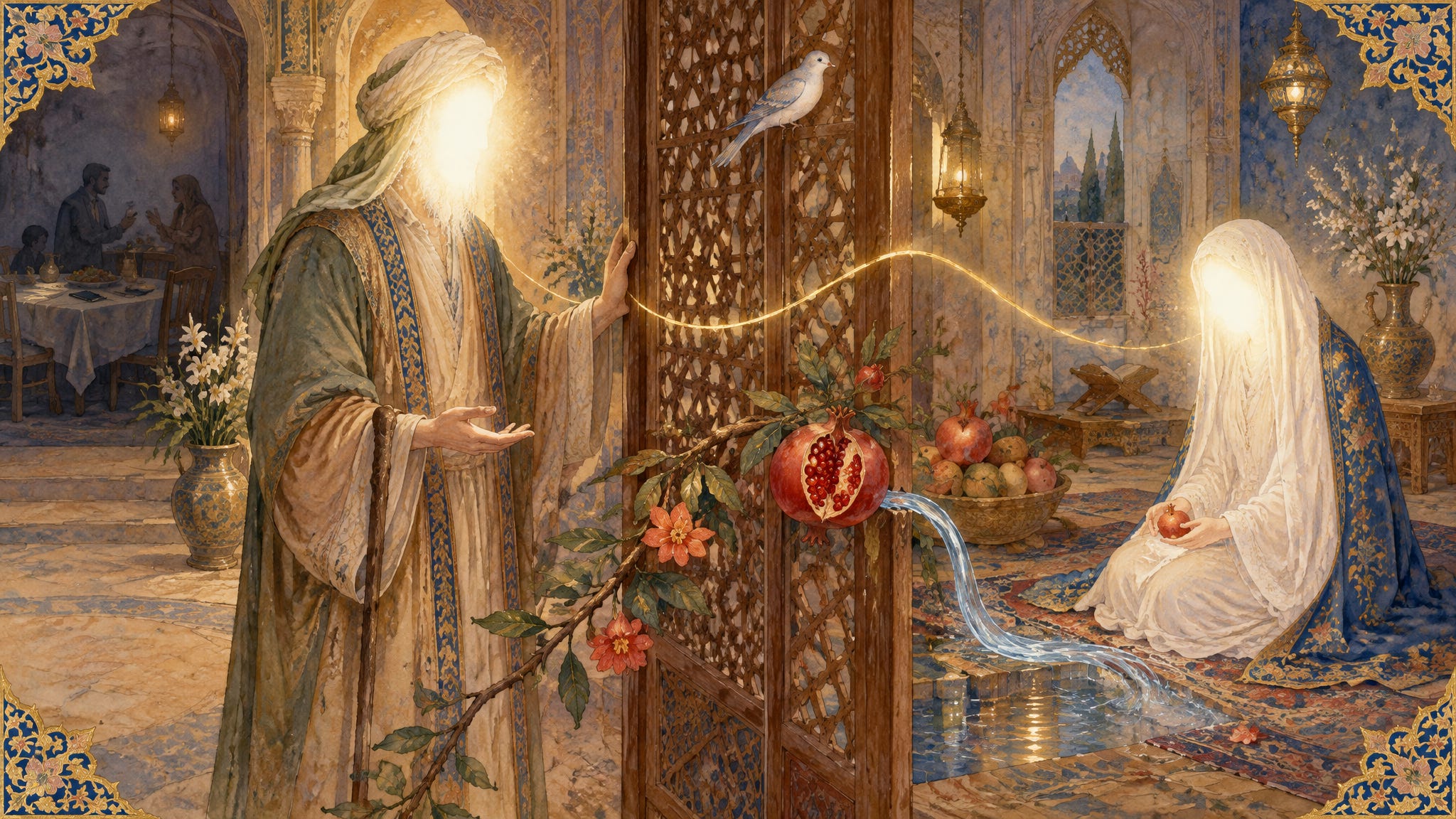
And now the fiqh of the guardian’s own question — because Zechariah, peace and blessings be upon him, had a right, and the question is what a right entitles you to.
Ayatullah Mirahmadi, may God protect him, spent several sessions last December, in that same class, on the clash between the guardian’s right to raise and the privacy of the people in his care.
And the first answer he examines is this one: that since the guardian holds authority in the house, as father and as husband, there is no private sphere at all for the wife and the children.
The guardian is the sole rider in the field — and, from a divine motive, he watches over their phones and their screens.
And then he takes it apart.
Its root, he says, is that it does not accept a private sphere at all.
— Ayatullah Sayyed Muhammad Hasan Mirahmadi, a class on the jurisprudence of the family (the rulings on children), 1 December 2025 — narrated42
The guardian’s right is real.
It meets a privacy that is also real.
And this jurist holds both at once — which is more than most of us manage at the dinner table.
Zechariah had the right.
Mary, peace and blessings be upon her, had the sanctuary.
He discharged the first by asking, and the second was never breached.
The right was never the problem.
The manner of discharging it is the whole of the religion of raising a child.
Created for a Time Other Than Yours

And there is a saying many of you have heard, and fewer of us have checked.
Ibn Abi al-Hadid, in his great commentary on Nahj al-Balagha, gathers at its end the sayings attributed to Amir al-Mu’minin, Imam Ali, peace and blessings be upon him.
And this is one of them:
١٠٢- لا تقسروا أولادكم على آدابكم فإنهم مخلوقون لزمان غير زمانكم.
“Do not force your children into your own ways, for they are created for a time other than your time.”
— attributed to Amir al-Mu’minin, Imam Ali ibn Abi Talib, peace and blessings be upon him; Ibn Abi al-Hadid, Sharh Nahj al-Balagha, Volume 20, saying 102 — my translation
Do not force.
Not do not teach.
Not do not correct.
The word is about force — and force is what breaks a child.
Ayatullah Fadhlullah, may God rest his pure soul, quotes it too, as Imam Ali’s, in a gentler wording: do not bring up your children on your own manners, for they were created for a time other than yours.
— Ayatullah Sayyed Muhammad Husayn Fadhlullah, Friday sermon, 1 March 1996 — narrated43
And in a sermon a month earlier, he gives the stakes — and they are not only domestic.
This is what Islam wants, he says: that fathers and mothers help their children to think.
Not that we tell a child you have no right to think, but that we tell him think — and when he brings us his idea, we may tell him it is wrong.
Because children who are trained to say we hear and obey to their parents, without conviction, will say it to the tyrant too.
— Ayatullah Sayyed Muhammad Husayn Fadhlullah, Friday sermon, 2 February 1996 — narrated44
Ask before you judge is not a parenting technique.
It is what a community does when it does not want to raise people who will obey whoever is loudest.
The Guardian of the Lamps
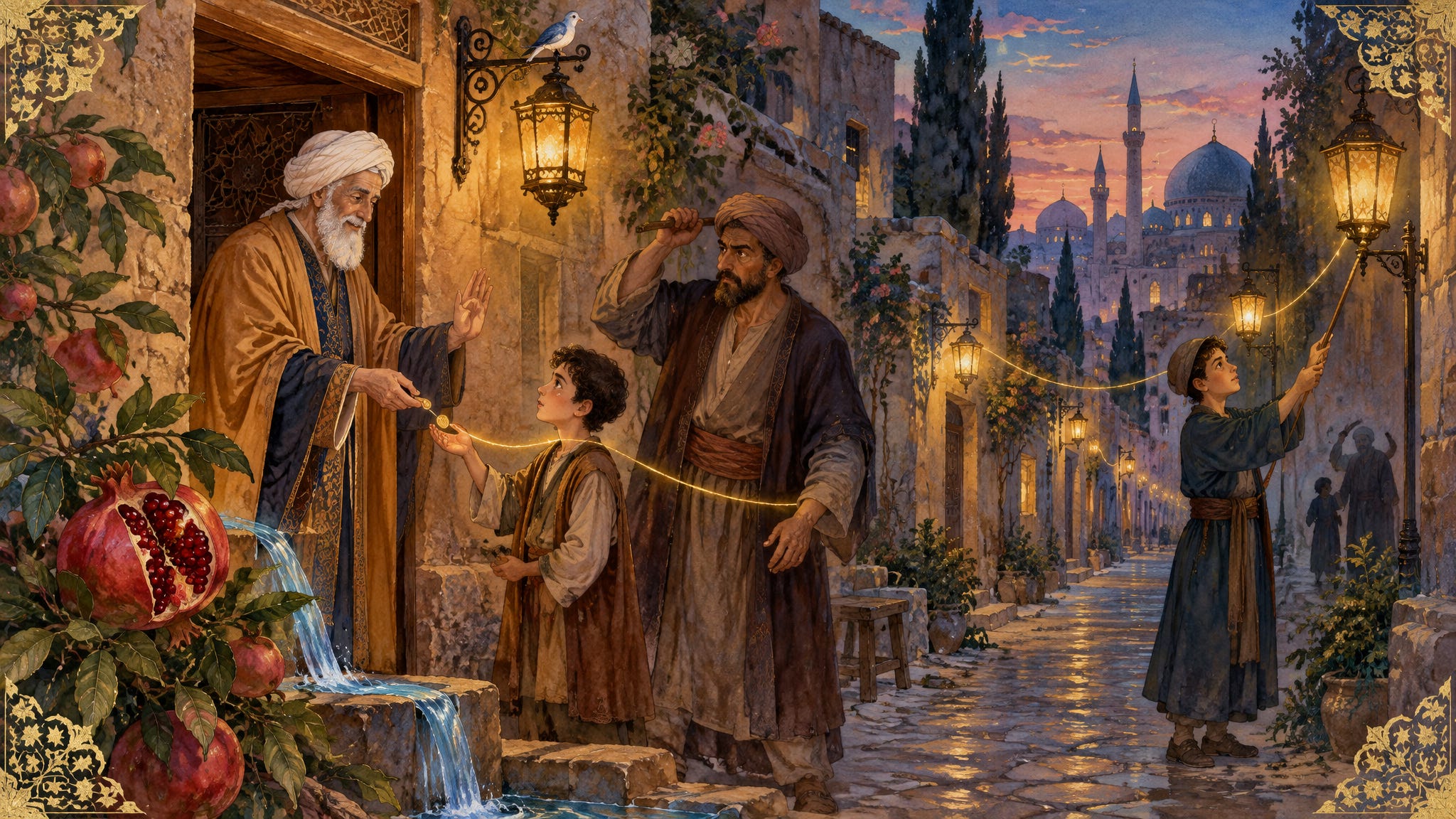
Let me leave the jurists for a moment, and let a son speak.
Ayatullah Shaykh Mohsen Araki, may God protect him, has written a memoir of his father, Ayatullah Mirza Habibullah Araki, may God rest his pure soul.
He calls it Dar Maktab-e Pedar — In My Father’s School.
And in it he tells what a neighbour once told him.
When the neighbour was a boy, he and the other boys of the street used to shoot out the street lamps with their slingshots.
And one of their favourite targets was the lamp over the Arakis’ door.
The old scholar was hurt by it.
Little by little he worked out whose doing it was.
And he never let on — and he went on showing those boys affection whenever he saw them.
Until one day the boy’s own father found out.
He took his son by the hand and marched him to the scholar’s door, to be punished in front of him — to discipline the boy, and to wipe away the shame.
And this is what the old man did with a punishment laid at his door, ready-made, for a wrong done to him.
He strictly forbade the father to lay a finger on the boy.
Then he smiled at him, gave him a hundred fils — no small sum in those days — and said to the father: leave him be, he has done nothing.
And he prayed for him.
And the neighbour said: what your father did had such an effect on me that I was not only deeply sorry for what I had done — from that day on, I guarded the lamp over your door, and the lamps of the other houses, and I would not let the other boys touch them.
And Shaykh Araki says this story brings to mind a verse:
وَلَا تَسۡتَوِي ٱلۡحَسَنَةُ وَلَا ٱلسَّيِّئَةُۚ ٱدۡفَعۡ بِٱلَّتِي هِيَ أَحۡسَنُ فَإِذَا ٱلَّذِي بَيۡنَكَ وَبَيۡنَهُۥ عَدَٰوَةٞ كَأَنَّهُۥ وَلِيٌّ حَمِيمٞ
“Good and evil [conduct] are not equal. Repel [evil] with what is best. [If you do so,] he between whom and you was enmity, will then be as though he were a sympathetic friend.”
— Qur’an, Surah Fussilat (the Chapter of that Explained in Detail) #41, Verse 34
— Ayatullah Shaykh Mohsen Araki, Dar Maktab-e Pedar (In My Father’s School), PDF pages 48 and 49 — narrated45
Dignity did what punishment could not.
And the change outlasted the moment: the boy did not simply stop.
He became the guardian of the lamps.
Set him beside the father we heard of earlier tonight, because one verse joins them.
Ayatullah Fadhlullah opened his sermon on gentleness — the sermon with the father who claimed a right — on this same verse.
— Ayatullah Sayyed Muhammad Husayn Fadhlullah, Friday sermon, 24 January 2003 — narrated46
Two fathers, under one verse.
One claims a right to strike his daughter — and is answered:
What beast is this beast?
The other refuses a punishment laid at his door, for a wrong done to him — and a boy becomes the guardian of the lamps.
Set the two side by side, and nothing more needs to be said.
One Like Zaynab
And one last word before the lessons, about the house this whole series turns towards.
The martyred leader, speaking to women and girls on the third of December last year, lists the qualities of Sayyedah Fatimah al-Zahra, peace and blessings be upon her — and among them, as a mother:
She raises one like Sayyedah Zaynab, peace and blessings be upon her, and brings her into being.
She raises the likes of Imam al-Hasan and Imam al-Husayn, peace and blessings be upon them, in her own embrace.
— Imam Sayyed Ali Khamenei, may God rest his pure soul, to women and girls, 3 December 2025 (1404/09/12) — narrated47
That is what love with limits produces, when it is done in the house of the Prophet.
Not a child who obeys whoever is loudest.
A Zaynab.
Lessons for Our Time
Lesson Five — Ask Before You Judge. Explain Before You Command.
The fifth lesson is the one the whole night has been walking towards, and it is two sentences long.
Ask before you judge.
Zechariah found, and found, and found, before he spoke — and when he spoke, he asked; and when he was answered, he was convinced, and content.
Explain before you command.
A child who does not understand why he is praised, or why he is warned, does not learn the rule.
He learns that the people who love him are unpredictable.
And because a child has a dignity whether or not he can feel it, the explanation is not a courtesy you may skip.
It is part of what you owe him.
And there is a sentence in The Compassionate Family that turns this round to the people doing the asking:
“The love and affection that you have for your children is the same love and affection that your parents had for you; it is also the same affection that your child will have for his or her children in turn.”
— Imam Sayyed Ali Khamenei, may God rest his pure soul, The Compassionate Family, page 32 — the published English, as printed
What you are doing is not new.
You are passing on what was given to you — or, if what was given to you was not love, you are the place where it changes.
Both are the same work.
Lesson Six — To the Young Adults in the Room
And the sixth lesson is not for the parents.
It is for their children — and some of you are here tonight as both.
Your parents worked with what they had.
Some of them had very little to work with.
Some of them were raised by people who thought tenderness was weakness, or who honoured their sons above God and restrained them not.
And they did the best they could with half the tools.
So see that.
Forgive it.
And do not hand it on.
That is all this series asks of anyone’s children.
Not that you call what was done fine.
That you see it truly, forgive it deliberately, and let it stop with you.
And notice how the lessons end.
We began with a guardian who asked.
We end with a child who forgives.
And the supplication tonight is for them — for the ones who raised us.
Conclusion — Key Takeaways

Three things to take home tonight — and they are things to do, not only things to think.
The first. Love is the religion, not a concession to it.
An Imam asked whether there is anything in religion but love, and the Messenger of God, peace and blessings be upon him, his family, and his righteous companions, stayed down in his prostration rather than hurry a child off his back.
The kiss is written down as a deed.
Affection is not the modern world softening the tradition; it is the tradition.
So this week: one kiss, one warm word, one promise kept.
The second. Limits must be ones a child can carry.
Love is not the only way to fail — the old priest failed by restraining his sons not at all.
So the limit is real, and the injection is love, and so is the word no.
But load a child with what he cannot carry and he breaks, and whoever breaks must set the break.
Measure a limit like a medicine; never spend it like anger.
So this week: before you correct, ask whose need it is — his, or yours.
The third. Ask before you judge; explain before you command.

Zechariah, peace and blessings be upon him, had the right, and he reached for a question.
The guardian’s authority is real, and it meets a privacy that is also real; the right was never the problem — the manner is the whole of it.
So this week: before the verdict, ask the question.
And when you warn, say why.
Do those three, and you will have done the work of the second seven — whatever the age of your child, and whatever your own.
Next week, God willing: her people — and the child who spoke for her.
Eulogy — The Name
And now, because these are her nights, we go to a cradle.
A man came to Imam Ja’far al-Sadiq, peace and blessings be upon him, grieved and heavy-hearted.
What is grieving you?
the Imam asked him.
And he said:
a daughter has been born to me.
And the Imam did not begin with a ruling.
He began with what the man was carrying.
Her weight, he said, is on the earth, and her provision is on God.
She will live out a life that is not yours, and eat from a provision that is not yours.
And the man says:
by God, it lifted from me.
Then the Imam asked him:
what have you named her?
And he said:
Fatimah.
And the Imam said:
Ah — ah.
And he put his hand to his forehead.
Then he told him, from the Messenger of God, peace and blessings be upon him, his family, and his righteous companions, what a child is owed by its father — a son, and a daughter.
And then he said:
Since you have named her Fatimah, do not revile her, and do not curse her, and do not strike her.
— Imam Ja’far al-Sadiq, peace and blessings be upon him, through al-Sakuni; Shaykh al-Kulayni, al-Kafi, Volume 6, hadith 201 (thaqalayn) — narrated48
Sit with the shape of that, because it is the whole of tonight in one report.
He began with provision, not prohibition.
He met the man’s disappointment before he said a word about the child.
And look at the three things he forbade.
Revile — that is humiliation, and you heard a jurist set out the view that even a child who cannot understand it has a dignity it wounds.
Strike — that is the hand, and you heard a teacher of fiqh give a month to how far it may go, and a book of law put a price on a reddened face.
Curse — that is the tongue that sends a child away from God’s mercy: the very opposite of a religion that is love.
The night’s whole argument, given as a ruling over a cradle.
And the reason he gives is not the child’s usefulness, or her father’s honour, or what people will say.
The reason is her name.
And notice what happened before he gave it.
An Imam descended from her heard her name — and before he said anything else, he sighed, and put his hand to his forehead.
He did not say why.
He did not need to.
And neither do I.
And the name itself, in the mouth of the one who loved it most.
Ibn Abbas tells us that the Messenger of God, peace and blessings be upon him, his family, and his righteous companions, was sitting one day with Ali, and Fatimah, and al-Hasan and al-Husayn, peace and blessings be upon them all. And he prayed over them:
O God, You know that these are the people of my house, and the dearest of people to me.
And then he said:
It is as if I can see my daughter Fatimah on the Day of Resurrection, coming forward on a mount of light, with angels on every side of her, leading the believing women of my community into Paradise.
She is the mistress of the women of the worlds.
And someone asked him:
O Messenger of God — the mistress of the women of her own world?
And he said:
That is for Mary, daughter of Imran, peace and blessings be upon her.
My daughter Fatimah is the mistress of the women of the worlds, of the first and of the last.
She stands in her mihrab, and seventy thousand of the angels brought near greet her — and call to her as the angels called to Mary:
وَإِذۡ قَالَتِ ٱلۡمَلَـٰٓئِكَةُ يَٰمَرۡيَمُ إِنَّ ٱللَّهَ ٱصۡطَفَىٰكِ وَطَهَّرَكِ وَٱصۡطَفَىٰكِ عَلَىٰ نِسَآءِ ٱلۡعَٰلَمِينَ
“And when the angels said, ‘O Mary, God has chosen you and purified you, and He has chosen you above the world’s women.”
— Qur’an, Surah Aal Imran (the Chapter of the Family of Imran) #3, Verse 42
We began tonight in a mihrab — a girl in her sanctuary, and a guardian at the door who asked before he judged.
And here is the mihrab again, and another girl in it, and the angels calling her by Mary’s words.
Then he turned to Ali, peace and blessings be upon him, and said:
يا علي، إن فاطمة بضعة مني، وهي نور عيني، وثمرة فؤادي، يسوءني ما ساءها، ويسرني ما سرها، وإنها أول من يلحقني من أهل بيتي فأحسن إليها بعدي
“O Ali, Fatimah is a part of me. She is the light of my eye, and the fruit of my heart. What grieves her grieves me, and what gladdens her gladdens me. And she is the first of my household to join me — so be good to her after me.”
— the Messenger of God, peace and blessings be upon him, his family, and his righteous companions, through Ibn Abbas; Shaykh al-Saduq, al-Amali, hadith 781 (thaqalayn) — my translation49
What grieves her grieves me.
He said it with her sitting beside him.
She is the first of my household to join me.
He knew. And he asked Ali to be good to her after him.
And he gave her the name this whole series is called by.
A part of me.
The light of my eye.
The fruit of my heart.
Segue to Maqtal
We have said her name.
And behind that name stand two mothers.
The mother who bore her, and who died when she was five.
And the woman who carried the name Fatimah before her, and who was a mother to the Prophet himself, peace and blessings be upon him, his family, and his righteous companions.50
That second mother is honoured by two things.
She was the mother of Imam Ali, peace and blessings be upon him.
And she is the woman who gave birth in the Ka’bah.
Imam Ali ibn al-Husayn al-Sajjad, peace and blessings be upon him, tells us that the pains of labour came upon Sayyedah Fatimah bint Asad, peace and blessings be upon her, while she was circling the Ka’bah — and she went into it, and inside it she gave birth to Amir al-Mu’minin.
— Imam Ali ibn al-Husayn al-Sajjad, peace and blessings be upon him, through Abu Hamza al-Thumali; al-Fattal al-Nisaburi, Rawdat al-Wa’izin, record 101 in our copy — narrated51
And her son is greeted in his ziyarah with both his honours at once:
السَّلامُ عَلَيْكَ يَا مَنْ وُلِدَ فِي الْكَعْبَةِ وَ زُوِّجَ فِي السَّمَاءِ بِسَيِّدَةِ النِّسَاءِ،
“Peace be upon you, O one who was born in the Ka’bah and was wedded in the heavens to the chief of all women.”
— Shaykh Abbas al-Qummi, Mafatih al-Jinan, the Ziyarah of Amir al-Mu’minin on the Birthday of the Prophet — the English of our text; the salutation runs on in the ziyarah, and is cut here52
Born in the House of God, to one Fatimah.
Wedded in the heavens, to the other.
Our maqtal tonight is Two Mothers.
Supplication
O God, we ask You by the verse You set over this whole series — by the gracious acceptance, by the beautiful growth, and by the guardian You charged with her care.
By Your prophets and Your chosen ones, peace and blessings be upon them all — by Zechariah, who found, and found, and found before he asked; and by Mary, whose sanctuary was never breached; and by her son, may our souls be his ransom, and may God hasten his return.
By Muhammad, peace and blessings be upon him, his family, and his righteous companions — who stayed down in his prostration rather than hurry a child, and who called his daughter the fruit of his heart.
By the fourteen — by Sayyedah Fatimah al-Zahra, peace and blessings be upon her, the mistress of the women of the worlds, of the first and of the last; and by every Imam, from the Commander of the Faithful, peace and blessings be upon him, who was born in Your House, to the one we are waiting for, may our souls be his ransom and may God hasten his return.
And we ask You in the words of her grandson, Imam Ali ibn al-Husayn al-Sajjad, peace and blessings be upon him, in his supplication for his parents — because tonight’s lessons ended with the children in this room, and this is their prayer:
اللَّهُمَّ صَلِّ عَلَى مُحَمَّدٍ عَبْدِكَ وَرَسُولِكَ، وَأَهْلِ بَيْتِهِ الطَّاهِرِينَ، وَاخْصُصْهُمْ بِأَفْضَلِ صَلَوَاتِكَ وَرَحْمَتِكَ وَبَرَكَاتِكَ وَسَلَامِكَ
“O God, bless Muhammad, Your slave and Your messenger, and his Household, the pure, and single them out for the best of Your blessings, Your mercy, Your benedictions, and Your peace!”
وَاخْصُصِ اللَّهُمَّ وَالِدَيَّ بِالْكَرَامَةِ لَدَيْكَ، وَالصَّلَاةِ مِنْكَ، يَا أَرْحَمَ الرَّاحِمِينَ
“And single out my parents, O God, for honour with You and blessings from You, O Most Merciful of the merciful!”
اللَّهُمَّ اشْكُرْ لَهُمَا تَرْبِيَتِي، وَأَثِبْهُمَا عَلَى تَكْرِمَتِي، وَاحْفَظْ لَهُمَا مَا حَفِظَاهُ مِنِّي فِي صِغَرِي
“O God, thank them for my upbringing, reward them for honouring me, and guard them as they guarded me in my infancy!”
اللَّهُمَّ وَمَا تَعَدَّيَا عَلَيَّ فِيهِ مِنْ قَوْلٍ، أَوْ أَسْرَفَا عَلَيَّ فِيهِ مِنْ فِعْلٍ، أَوْ ضَيَّعَاهُ لِي مِنْ حَقٍّ، أَوْ قَصَّرَا بِي عَنْهُ مِنْ وَاجِبٍ فَقَدْ وَهَبْتُهُ لَهُمَا، وَجُدْتُ بِهِ عَلَيْهِمَا وَرَغِبْتُ إِلَيْكَ فِي وَضْعِ تَبِعَتِهِ عَنْهُمَا، فَإِنِّي لَا أَتَّهِمُهُمَا عَلَى نَفْسِي، وَلَا أَسْتَبْطِئُهُمَا فِي بِرِّي، وَلَا أَكْرَهُ مَا تَوَلَّيَاهُ مِنْ أَمْرِي يَا رَبِّ
“O God, whatever word through which they have transgressed against me, act through which they have been immoderate with me, right of mine which they have left neglected, or obligation toward me in which they have fallen short, I grant it to them and bestow it upon them, and I beseech You to remove from them its ill consequence, for I do not accuse them concerning myself, find them slow in their devotion toward me, or dislike the way they have attended to my affairs, my Lord!”
— Imam Ali ibn al-Husayn al-Sajjad, peace and blessings be upon him; al-Sahifa al-Sajjadiyya, Supplication 24, his supplication for his parents — the English of our text of the Sahifa53
I grant it to them.
That is the sixth lesson, in an Imam’s words — and then he goes further than we did, and asks God to lift its consequence from them.
And the verse that teaches a child how to pray for the ones who raised him:
وَٱخۡفِضۡ لَهُمَا جَنَاحَ ٱلذُّلِّ مِنَ ٱلرَّحۡمَةِ وَقُل رَّبِّ ٱرۡحَمۡهُمَا كَمَا رَبَّيَانِي صَغِيرٗا
“Lower the wing of humility to them, mercifully, and say, ‘My Lord! Have mercy on them, just as they reared me when I was [a] small [child]!’”
— Qur’an, Surah al-Isra (the Chapter of the Night Journey) #17, Verse 24
O God, for every child in this hall, and every child still in the womb: accept them with a gracious acceptance, and make them grow a beautiful growth.
O God, for every father who was never kissed and is trying anyway: make the Sunnah easy for him, and let one warm word be enough to begin.
O God, for the daughter who has stopped wearing hijab, and for her mother and her father: keep her ours, and keep us hers, and let the question be asked at last.
O God, make us guardians who ask before we judge, whose love can say no, and whose limits are a medicine and never an anger.
O God, have mercy on our mothers and fathers, who were our first school — on those who are with us, and on those who have gone before us.
O God, have mercy on Allamah Tabataba’i, on Shaheed Mutahhari, on Ayatullah Misbah Yazdi, and on all the scholars whose words we carried tonight; and protect those of them who are still with us.
O God, we remember before You the martyred leader, Imam Sayyed Ali Khamenei, may God rest his pure soul — accept him, and gather him with those he loved.
O God, protect and guide and lengthen the life of our Wali al-Faqih, Imam Sayyed Mujtaba Khamenei, may God protect him, and keep him firm on the straight path until the rising of the one we are waiting for.
O God, hasten the relief of Your friend and the son of Your friend — the Imam of our Age, may our souls be his ransom and may God hasten his return. And let us be among those he would be pleased to find raising their children for him when he comes.
O God, we remember before You the families of those in this majlis, and the martyrs, and the truthful — keep them in Your care, and let none of them be forgotten.
O God, by the name her father gave her, make us of her lovers, and of those who weep for her tonight — and make our children guardians of the lamps.
And whatever we have said tonight that was true, it is from You; and whatever was wrong in it is from me, and I ask Your forgiveness for it.
Amen, O Lord Sustainer of the Universes
Amen, O Most Merciful of the Merciful
And from Him alone is all ability and He has authority over all things.
Sources Cited
The Qur’an — the Arabic in the Uthmani script; the English, Ali Quli Qarai’s. Set in the text: Surah Aal Imran, Verses 31, 37, 38, 42, 44 and 159; Surah al-Shu’ara, Verses 215 and 216; Surah al-Isra, Verse 24; Surah Fussilat, Verse 34; Surah al-Tahrim, Verse 6.
Nahj al-Balagha — Sayings 193 and 312 (the Arabic as our library holds it; the English said in the majlis is mine).
Shaykh al-Kulayni, al-Kafi — Volume 2, hadiths 82, 84, 233 and 237; Volume 3, hadith 1604; Volume 5, hadith 139; Volume 6, hadiths 201, 202, 204, 207 and 208; Volume 8, hadiths 37 and 105 (numbered as in the thaqalayn edition).
Shaykh al-Saduq — Man La Yahduruhu al-Faqih, Volume 1, hadith 862, and Volume 3, hadiths 1492 and 1528; al-Amali, hadith 781; al-Khisal, hadith 75; Ma’ani al-Akhbar, hadith 692 (numbered as in the thaqalayn edition); and Kamal al-Din wa Tamam al-Ni’mah, chapter 7, report 1 (the edition of Ghaffari, volume 1, page 191).
al-’Ayyashi, Tafsir al-’Ayyashi — volume 1, on Surah Aal Imran, reports 38 and 41; and, in a reader’s note, al-Rawandi’s al-Khara’ij, volume 2, page 532.
al-Fattal al-Nisaburi, Rawdat al-Wa’izin — record 101 in our copy: the birth in the Ka’bah.
Shaykh Abbas al-Qummi, Mafatih al-Jinan — the Ziyarah of Amir al-Mu’minin on the Birthday of the Prophet: the salutations, in the Arabic and in the English of our text.
Imam Ali ibn al-Husayn al-Sajjad, peace and blessings be upon him — al-Sahifa al-Sajjadiyya, Supplication 24, his supplication for his parents (the Arabic, and the English of our text of the Sahifa).
Ibn Abi al-Hadid, Sharh Nahj al-Balagha — Volume 20, saying 102.
Allamah Sayyed Muhammad Husayn Tabataba’i, al-Mizan fi Tafsir al-Qur’an — on Surah Aal Imran, Verses 28 to 32 and Verses 156 to 164.
Ayatullah Abdullah Jawadi Amoli — Tasnim: his commentary on Surah Aal Imran, sessions 107 (19 August 1989) and 264 (26 March 1990) (tasnim.esra.ir).
Shaheed Ayatullah Murtaza Mutahhari — Ta’lim va Tarbiyat dar Islam (Education and Upbringing in Islam): printed page 45, and PDF pages 237 and 266.
Imam Sayyed Ali Khamenei, may God rest his pure soul — Tabyeen: The Neglected Obligation (AIM Ahlul Bayt Islamic Mission, 2024), its Introduction and page 40; The Compassionate Family, pages 32 and 62; Zan va Khanevadeh (Woman and Family), PDF page 105; speeches of 4 January 2023 and 3 December 2025 (farsi.khamenei.ir).
Ayatullah Sayyed Muhammad Hasan Mirahmadi — his class on the jurisprudence of the family (the rulings on children): 1 and 10 December 2025, and 10 and 13 January 2026 (eshia.ir).
Ayatullah Alireza A’rafi — a class on the jurisprudence of social relations (honouring and humiliating), 1 December 2021 (eshia.ir).
Ayatullah Sayyed Ali al-Sistani — the questions and answers on raising children and on striking, and A Code of Practice for Muslims in the West, ruling 2056 (sistani.org, checked there on 29 September 2026); pointed to, not carried.
Ayatullah Sayyed Muhammad Sadiq Alovestani — a class on the Book of Diyas, 26 April 2026 (eshia.ir).
Ayatullah Muhammad Taqi Misbah Yazdi — a talk of 24 September 2014 (mesbahyazdi.ir).
Ayatullah Sayyed Muhammad Husayn Fadhlullah — Friday sermons of 2 February 1996, 1 March 1996, 1 November 2002 and 24 January 2003 (bayynat.org.lb); used on the upbringing of children only.
Ayatullah Shaykh Mohsen Araki — Dar Maktab-e Pedar (In My Father’s School), PDF pages 48 and 49.
The Bible — Ephesians 6:4, Colossians 3:21 and Matthew 18:6, in the Greek of the SBL Greek New Testament and the King James Version; 1 Samuel 2:29 and 3:13, in the Hebrew of the Westminster Leningrad Codex (Sefaria, “Tanach with Nikkud”) and the King James Version.
From this majlis — Wilayah in the Home, session 1, “The First Stitch” (22 November 2025); The Art of Supplication, session 20, “The Hearth, The Hub, and The Horizon” (25 October 2025), quoting Shaykh Alireza Panahian; and Night 1 of this series, “Before the Heart Hardens”.
Allamah’s words.
قوله تعالى:«فبما رحمة من الله لنت لهم»إلى آخر الآية، الفظ هو الجافي القاسي، و غلظ القلب كناية عن عدم رقته و رأفته، و الانفضاض التفرق.
و في الآية التفات عن خطابهم إلى خطاب رسول الله(صلى الله عليه وآله وسلم)، و أصل المعنى: فقد لان لكم رسولنا برحمة منا، و لذلك أمرناه أن يعفو عنكم و يستغفر لكم و يشاوركم في الأمر و أن يتوكل علينا إذا عزم.
و نكتة الالتفات ما تقدم في أول آيات الغزوة أن الكلام فيه شوب عتاب و توبيخ، و لذلك اشتمل على بعض الأعراض في ما يناسبه من الموارد و منها هذا المورد الذي يتعرض فيه لبيان حال من أحوالهم لها مساس بالاعتراض على النبي(صلى الله عليه وآله وسلم)فإن تحزنهم لقتل من قتل منهم ربما دلهم على المناقشة في فعل النبي(صلى الله عليه وآله وسلم)، و رميه بأنه أوردهم مورد القتل و الاستيصال، فأعرض الله تعالى عن مخاطبتهم و التفت إلى نبيه(صلى الله عليه وآله وسلم)فخاطبه بقوله: فبما رحمة من الله لنت لهم.
و الكلام متفرع على كلام آخر يدل عليه السياق، و التقدير: و إذا كان حالهم ما تراه من التشبه بالذين كفروا و التحسر على قتلاهم فبرحمة منا لنت لهم و إلا لانفضوا من حولك.
“His words, exalted: ‘So it is by a mercy from God that you were gentle with them,’ to the end of the verse. Al-fazz is the coarse, hard man; hardness of heart is a figure for the absence of tenderness and kindness in it; and al-infidad is scattering.
And in the verse there is a turn from addressing them to addressing the Messenger of God, God bless him and his family and grant them peace. The root of the meaning is: Our Messenger was gentle with you by a mercy from Us; and for that reason We commanded him to pardon you, to ask forgiveness for you, to consult you in the matter, and to put his trust in Us once he has resolved.
The point of the turn is what was said at the start of the verses on the battle: that the speech carries a tinge of reproach and rebuke, and so it turns away from them at the places that call for it. This is one of them, for it sets out a state of theirs that bears on objecting to the Prophet, God bless him and his family and grant them peace: their grief for those of them who had been killed may well have led them to dispute what the Prophet had done, and to charge him with having led them to slaughter and ruin. So God, exalted, turned away from addressing them, and turned to His Prophet, God bless him and his family and grant them peace, and addressed him with His words: ‘So it is by a mercy from God that you were gentle with them.’
And the speech branches from another that the context points to. Its sense is: since their state is what you see — likening themselves to those who disbelieved, and grieving for their dead — it is by a mercy from Us that you were gentle with them; and were it not so, they would have scattered from around you.”
— Allamah Sayyed Muhammad Husayn Tabataba’i, al-Mizan fi Tafsir al-Qur’an, on Surah Aal Imran #3, Verses 156 to 164; my translation
The three passages of the lesson, in order.
خب، اگر كسي خُلُق عظيم نميداشت در برابر اين صحنه چه برخوردي ميكرد؟ كسي نقل نكرد كه ذات مقدس رسول خدا(صلّي الله عليه و آله و سلّم) برآشفته بشود، اعتراض بكند، تحقير بكند، سرزنش بكند. اينها يك سلسله مَلكات عادي نيست كه مثلاً حالا انسان، در سختترين شرايط تنها بماند و بعد هم چيزي اعتراض نكند يا براي ارزان خريدن بعضي از كالاها نمازجمعه را ترك بكند، خطبهها را ترك بكنند خطيب را در حال ايستاده رها بكنند بعد هم پيغمبر چيزي نگويد، اين ﴿إِنَّكَ لَعَلَي خُلُقٍ عَظِيم﴾[8] وقتي ذات اقدس الهي روي عظمت اخلاقي پيغمبر صِحه گذاشت، معلوم ميشود خيلي مسئله مهم است.
“Well — had someone not had a tremendous character, how would he have met such a scene? No one has reported that the holy person of the Messenger of God, God bless him and his family and grant them peace, flared up, or objected, or belittled anyone, or reproached anyone. These are not some set of ordinary dispositions — that a man should be left alone in the hardest of conditions and then object to nothing; or that, to buy some goods more cheaply, people should abandon the Friday prayer, abandon the sermons and leave the preacher standing, and the Prophet then say nothing. This is ‘indeed you possess a tremendous character’ [8]. When the most holy Divine Essence set His seal on the Prophet’s greatness of character, it is clear that the matter is a very great one.”
خُلق عظيم آن است كه انسان ﴿أَشِدَّاءُ عَلَي الْكُفَّارِ رُحَمَاءُ بَيْنَهُمْ﴾[19] باشد، لذا همين رسول خدا(صلّي الله عليه و آله و سلّم) كه داراي خُلق عظيم است و نسبت به مؤمنين، رئوفِ رحيم است كه در سورهٴ «توبه» آمده و ﴿بِالْمُؤْمِنِينَ رَؤُوفٌ رَحِيمٌ﴾ آيه 128 سورهٴ «توبه» اين بود كه ﴿لَقَدْ جَاءَكُمْ رَسُولٌ مِنْ أَنْفُسِكُمْ عَزِيزٌ عَلَيْهِ مَاعَنِتُّمْ حَرِيصٌ عَلَيْكُم بِالْمُؤْمِنِينَ رَؤُوفٌ رَحِيمٌ﴾ همين وجود مبارك كه داراي خُلق عظيم است و ﴿بِالْمُؤْمِنِينَ رَؤُوفٌ رَحِيمٌ﴾ است و ﴿فَبِمَا رَحْمَةٍ مِنَ اللّهِ لِنتَ لَهُمْ﴾ است، نسبت به كساني كه حجت خدا بر اينها بالغ شد و اينها اهل ايمان نبودند و اهل فرار و شِقاق و نفاق بودند، نسبت به اينها ميفرمايد: ﴿يَا أَيُّهَا النَّبِيُّ جَاهِدِ الْكُفَّارَ وَالْمُنَافِقِينَ وَاغْلُظْ عَلَيْهِمْ﴾[20]؛ فرمود تو نسبت به مؤمنين غليظالقلب نيستي ولي نسبت به كافران و منافقان، غليظ باش: ﴿وَاغْلُظْ عَلَيْهِمْ﴾[21] قهراً مسئلهٴ لَيّن بودن، نرم بودن با سهلانگار بودن و بيتفاوت بودن فرق ميكند، زيرا ذات اقدس الهي به رسولش فرمود نسبت به مؤمنين، رئوف و رحيم باش، نسبت به كافر و منافق اهل گذشت نباش.
“A tremendous character is that a person be ‘hard against the disbelievers, merciful among themselves’ [19]. So this same Messenger of God, God bless him and his family and grant them peace, who possesses a tremendous character and is ‘to the believers gentle and merciful’, as Surah al-Tawbah says — verse 128 of Surah al-Tawbah is: ‘There has certainly come to you a messenger from among yourselves; grievous to him is your distress; he is eager for your good; to the believers he is gentle and merciful’ — this same blessed person, who has a tremendous character, who is ‘to the believers gentle and merciful’, and of whom it is said ‘it is by a mercy from God that you were gentle with them’: of those against whom God’s proof had been made complete, who were not people of faith but people of flight, of schism and of hypocrisy, He says: ‘O Prophet, wage jihad against the disbelievers and the hypocrites, and be severe with them’ [20]. He said: you are not hard of heart towards the believers; but towards the disbelievers and the hypocrites, be severe — ‘and be severe with them’ [21]. Necessarily, then, being gentle and being soft differ from being lax and being indifferent: for the most holy Divine Essence told His Messenger to be gentle and merciful towards the believers, and not to let things pass with the disbeliever and the hypocrite.”
آيه 215 و 216 سورهٴ «شعراء» اين است كه ﴿وَاخْفِضْ جَنَاحَكَ لِمَنِ اتَّبَعَكَ مِنَ الْمُؤْمِنِينَ ٭ فَإِنْ عَصَوْكَ فَقُلْ إِنِّي بَرِيءٌ مِّمَّا تَعْمَلُونَ﴾؛ اگر كسي معصيت كرد، مبادا با سهلانگاري معصيت او را امضا كني، علناً اعلان تبرّي كن بگو من از اين كار بيزارم. در جريان خالد كه دست به آن گناه، دراز كرد وقتي جريان به وجود مبارك رسول خدا(صلّي الله عليه و آله و سلّم) رسيد، در حضور مردم آمد، دست به طرف آسمان برداشت، طوري كه زير دو بغل حضرت را مردم ديدند، دست را كاملاً به طرف آسمان برداشت عرض كرد: «اللهم إنّي أبرأ إليك مما فعل خالد»[24] چون خدا فرمود اگر كسي معصيت كرد، صريحاً اعلان تبرّي كن ﴿فَإِنْ عَصَوْكَ فَقُلْ إِنِّي بَرِيءٌ مِّمَّا تَعْمَلُونَ﴾ آنگاه وجود مبارك حضرت امير(صلوات الله و سلامه عليه) را خواست، بعد فرمود ميروي در آن قبيلهٴ ستمديده، همه غرامتهاي آنها را بررسي ميكني و از بيتالمال ميپردازي «حتي أنّه ليدي ميلغة الكلب»[25] «ميلغه» آن ظرفي كه سگ در او ولوغ ميكند، آب ميخورد.
“Verses 215 and 216 of Surah al-Shu’ara are: ‘And lower your wing to the faithful who follow you; but if they disobey you, say: I am absolved of what you do.’ If someone disobeys, beware of signing off on his disobedience by being easy-going: declare your disavowal openly, and say: I am clear of this deed. In the affair of Khalid, who stretched out his hand to that sin — when the matter reached the blessed presence of the Messenger of God, God bless him and his family and grant them peace, he came before the people and raised his hand towards the sky, so that the people saw beneath both his arms; he raised his hands fully towards the sky and said: ‘O God, I declare myself clear to You of what Khalid has done’ [24]. For God had said: if anyone disobeys, declare your disavowal plainly — ‘but if they disobey you, say: I am absolved of what you do.’ Then he called for the blessed presence of Amir al-Mu’minin, God’s blessings and peace be upon him, and said: go to that wronged tribe, look into all their losses, and pay them from the public treasury — ‘so that he even paid for the dog’s drinking-bowl’ [25]. Milagha is the vessel a dog laps from, the one it drinks water from.”
— Ayatullah Abdullah Jawadi Amoli, Tasnim, his commentary on Surah Aal Imran, session 264, 26 March 1990 (tasnim.esra.ir); my translation
The numbers in square brackets are the website's own note marks, referring to footnotes that I have brought into the translation.
The commander was Khalid ibn al-Walid, and the tribe the Banu Jadhimah.
The passage. It comes from the middle of the Imam’s long account of the times when God’s proofs were hidden from their people; it opens on John the Baptist, peace and blessings be upon him, who has just risen among his people to preach. The story is sometimes told with Zechariah knocking at her door; that detail is not in the reports we hold.
بأيام الله، وأخبرهم أنّ محن الصالحين إنّما كانت لذنوب بني إسرائيل وأنّ العاقبة للمتقين ووعدهم الفرج بقيام المسيح بعد نيّف وعشرين سنة من هذا القول، فلمّا ولد المسيح أخفى الله عزّ وجلّ ولادته وغيّب شخصه، لأنّ مريم لمّا حملته انتبذت به مكاناً قصيّاً، ثمّ إنّ زكريّاً وخالتها أقبلاً يقصّان أثرها حتّى هجماً عليها وقد وضعت ما في بطنها وهي تقول: ﴿يَا لِيَتْنِي مَّتْ قَبْلَ هَذَا وَكُنْتَ نَسِيَّاً مِنْسِيًّا﴾ فأطلق الله تعالى ذكره لسانه بعذرها وإظهار حجّتها، فلمّا ظهرت اشتدّت البلوى والطلب على بني إسرائيل وأكبّ الجبارة والطواغيت عليهم حتّى كان من أمر المسيح ما قد أخبر الله عزّ وجلّ به واستنر شمعون بن حمون والشيعة حتّى أفضى بهم الاستنار إلى جزيرة من جزائر البحر فأقاموا بها ففجّر الله لهم العيون العذبة وأخرج لهم من كلّ الثمرات، وجعل لهم فيها الماشية وبعث إليهم سمكة تدعى القمد لا لحم لها ولا عظم وإنّما هي جلد ودم فخرجت من البحر فأوحي الله عزّ وجلّ إلى النحل أن تركبها، فركبتها فأتت النحل إلى تلك الجزيرة ونهض النحل وتعلّق بالشجر فعرش وبني وكثر العسل ولم يكونوا يفقدون شيئاً من أخبار المسيح .
“[He reminded them] of the days of God, and told them that the trials of the righteous had come only because of the sins of the Children of Israel, and that the outcome belongs to the God-wary; and he promised them relief with the rising of the Messiah [peace be upon him], some twenty-odd years after these words. When the Messiah [peace be upon him] was born, God, mighty and majestic, concealed his birth and hid his person; for Mary [peace be upon her], when she had conceived him, withdrew with him to a distant place. Then Zechariah and her maternal aunt came following her tracks until they came upon her — and she had delivered what was in her womb, and she was saying: ‘Would that I had died before this and been a thing forgotten, utterly forgotten.’ So God, exalted be His mention, loosed his tongue to plead her excuse and make her proof plain. When it became manifest, the trial and the hunting of the Children of Israel grew hard, and the tyrants and the idols of power fell upon them, until there came to pass with the Messiah what God, mighty and majestic, has told of. And Simon son of Hammun and the Shi’a went into hiding, until their hiding brought them to an island in the sea, where they settled. And God caused sweet springs to gush out for them, and brought out for them every kind of fruit, and gave them livestock there; and He sent them a fish called al-Qamad, which has no flesh and no bone, only skin and blood. It came out of the sea, and God, mighty and majestic, inspired the bees to ride upon it; they rode it, and the bees came to that island, and rose and clung to the trees, and made their hives and built, and the honey increased. And they lost nothing of the news of the Messiah [peace be upon him].”
— Imam Ja’far al-Sadiq, peace and blessings be upon him, through Muhammad ibn Umarah; Shaykh al-Saduq, Kamal al-Din wa Tamam al-Ni’mah, chapter 7, report 1 (the edition of Ghaffari, volume 1, page 191); my translation
Where this edition prints an honorific as a symbol, its text shows a space; the translation gives the honorific in brackets.
The report.
٣٨ - وفي رواية حريز عن أحدهما قال نذرت ما في بطنها للكنيسة أن تخدم العباد ، وليس الذكر كالأنثى في الخدمة قال : فشبت فكانت تخدمهم وتناولهم حتى بلغت فأمر زكريا أن يتخذ لها حجاباً دون العباد فكان يدخل عليها فترى عندها ثمرة الشتاء في الصيف وثمرة الصيف في الشتاء ، فهنالك دعا وسأل ربه أن يهب له ذكراً فوهب له يحيى (٢) .
“38 — And in the report of Hariz, from one of the two [Imams], who said: She vowed what was in her womb to the house of worship, to serve the worshippers — and the male is not like the female [in that service]. He said: So she grew up, and she would serve them and hand them what they needed, until she came of age. Then Zechariah was commanded to put up a screen for her, apart from the worshippers; and he would go in to her, and see with her the fruit of winter in summer and the fruit of summer in winter. And there and then he prayed, and asked his Lord to grant him a son; and He granted him John.”
— Imam Muhammad al-Baqir or Imam Ja’far al-Sadiq, peace and blessings be upon them, through Hariz; al-’Ayyashi, Tafsir al-’Ayyashi, volume 1, on Surah Aal Imran, report 38; my translation
The lesson’s own words, with the two questions from the class that sit inside it.
اما چطور شد كه براي بار اول و بار دوّم اين سؤالها را نكرد چون ظاهر آيه اين است كه ﴿كُلَّمَا دَخَلَ عَلَيْهَا زَكَرِيَّا الْمَحْرَابَ وَجَدَ عِنْدَهَا رِزْقاً﴾ بعداً سؤال كرد كه ﴿يَا مَرْيَمُ أَنَّي لَكِ هذَا﴾ براي اوّلين بار كه يك روزي غيبي را يافت, سؤال نكرد چه كسي به تو داد. اين از آن باب است كه اين روزيها را كه مشاهده ميكرد احتمال ميداد مردم خيّري كه براي انجام عبادت به معبد ميآيند آنها آورده باشند تا اينكه ديد همه راهها بسته است و همواره ايشان روزيِ جديد دارد بعد سؤال كرد يا علل ديگري در كار بود. به هر حال اگر انسان راه را ببندد مع ذلك رزق را نزد اين كودك ببيند براي اولين بار هم كه شد بايد سؤال بكند كه چه كسي آورد ولي ظاهر آيه اين است كه بعد از اينكه چندين بار اين رزق غيبي را ديد سؤال كرد از كجا آمد ﴿كُلَّمَا دَخَلَ عَلَيْهَا زَكَرِيَّا الْمَحْرَابَ وَجَدَ عِنْدَهَا رِزْقاً﴾ آنگاه ﴿قَالَ يَا مَرْيَمُ أَنَّي لَكِ هذَا﴾ اين نشانهٴ آن است كه شايد صبر ميكرد ببيند بر اينكه راهي براي كشف اين روزي است يا نه اين راهها را بسته است و مكرر هم آزمود, ديد كه با راههاي بسته روزي نزد مريم است, اينجا زمينه سؤال فراهم ميشود كه سؤال بكند و جواب بشنود وگرنه اين سؤال هست كه چرا دومين بار اين سؤال نكرد.
پرسش:...
پاسخ: ما در تعبيرات فارسي اگر بگوييم چه برداشتي از آن ميشود, هر وقتي كه وارد ميشد روزي جديد ميديد گفت، نه ميگفت. اگر ميگفت بود از آن استفاده ميشد كه هر وقت ميديد ميگفت; اما اگر ما در تعبيرات فارسي اينچنين بگوييم هر وقت وارد ميشد يافته بود, گفت اين پيداست كه بعد از استمرار گفت. شايد سرّش اين باشد كه بار اول بار دوم بار دهم بار صدم هر وقت كه وارد ميشد مييافت, تحقيق كرد خودش حراست كرد خودش حفاظت كرد راهها را بست افرادي گماشت كه چه كسي ميآورد چه كسي ميبرد از سؤال كرد, ديد تمام راهها بسته است.
پرسش:...
پاسخ: معبد بود ديگر, در محراب راه نداشتند يعني در آن مقصورهاي كه براي اين مريم(عليها السّلام) فراهم شده بود آنجا راه نداشتند; اما معبد بود ديگر ميآمدند مرتب عبادت ميكردند ميرفتند. سرانجام ديد كه تمام راهها بسته است, آمد از خودش سؤال كرد ﴿يَا مَرْيَمُ أَنَّي لَكِ هذَا قَالَتْ هُوَ مِنْ عِندِ اللّهِ﴾ و تمام شد و قانع شد و راضي شد ﴿إِنَّ اللّهَ يَرْزُقُ مَن يَشَاءُ بِغَيْرِ حِسَابٍ﴾ البته اين ﴿إِنَّ اللّهَ يَرْزُقُ مَن يَشَاءُ بِغَيْرِ حِسَابٍ﴾ دو تا احتمال در آن است هم كلام مريم(عليها السّلام) باشد; هم كلام الله هر دو باشد حق است.
“But how was it that he did not ask these questions the first time and the second? For the apparent sense of the verse is that ‘whenever Zechariah entered upon her in the sanctuary, he found provision with her’, and afterwards he asked, ‘O Mary, from where does this come to you?’ The first time he found a provision from the Unseen, he did not ask who had given it to her. That was because, seeing these provisions, he thought it possible that good people who came to the temple to worship had brought them — until he saw that every way in was closed and that she always had fresh provision; then he asked. Or there were other causes at work. In any case, if a man closes off the way and still sees provision with this child, he ought to ask who brought it, even the first time. But the apparent sense of the verse is that he asked where it came from after he had seen this provision from the Unseen several times: ‘whenever Zechariah entered upon her in the sanctuary, he found provision with her’, and then ‘he said: O Mary, from where does this come to you?’ This is a sign that perhaps he was waiting, to see whether there was a way of discovering the source of this provision or not. He closed those ways, and tested it again and again, and saw that, with the ways closed, the provision was with Mary. That is where the ground is laid for him to ask and to hear the answer; otherwise there remains the question: why did he not ask this the second time?
Question: …
Answer: If we put it in our own Persian expressions, what would be understood? ‘Whenever he entered he saw fresh provision, he said’ — no: ‘he would say.’ If it were ‘he would say’, it would be understood that whenever he saw it he said it. But if, in our Persian expressions, we say ‘whenever he entered he had found it, he said’, it is plain that he said it after it had gone on for some time. Perhaps the secret of it is this: the first time, the second time, the tenth time, the hundredth time — whenever he entered, he found it. He investigated; he kept guard himself; he kept watch himself; he closed the ways; he set men to see who was bringing and who was taking; he made enquiries — and he saw that every way was closed.
Question: …
Answer: It was a temple, after all. They had no way into the sanctuary — that is, into the private chamber that had been prepared for this Mary, peace be upon her, they had no way in; but it was a temple, after all: people came, worshipped regularly, and left. In the end he saw that every way was closed, and he came and asked her herself: ‘O Mary, from where does this come to you? She said: It is from God.’ And it was finished, and he was convinced, and he was content. ‘God provides for whomever He wishes without reckoning’ — there are, of course, two possibilities in this ‘God provides for whomever He wishes without reckoning’: it may be the words of Mary, peace be upon her, or the words of God. Both are true.”
— Ayatullah Abdullah Jawadi Amoli, Tasnim, his commentary on Surah Aal Imran, session 107, 19 August 1989 (tasnim.esra.ir); my translation
The website prints each question from the class only as “Question: …”, so the questions themselves are not recorded.
The report. It runs across a page of the edition; the two parts are joined here.
٤١ - عن سيف عن نجم عن أبي جعفر (عليه السلام) قال : إن فاطمة عليها السلام ضمنت لعلي (عليه السلام) عمل البيت والعجين والخبز وقم البيت (٥) وضمن لها علي ما كان خلف الباب من نقل الحطب وأن يجيء بالطعام ، فقال لها يوماً : يا فاطمة هل عندك شيء ؟ قالت : لا والذي عظم حقك ما كان عندنا منذ ثلاثة أيام شيء نقريك به قال أفلا أخبرتني ؟ قالت : كان رسول الله نهاني أن أسألك شيئاً فقال : لا تسألي ابن عمِّك شيئاً إن جاءك بشيء عفو وإلا فلا تسأليه ، قال : فخرج الإمام فلقي رجلاً فاستقرض منه ديناراً ، ثم أقبل به وقد أمسى فلقي مقداد بن الأسود ، فقال للمقداد : ما أخرجك في هذه الساعة ؟ قال : الجوع والذي عظم حقك يا أمير المؤمنين قال : قلت لأبي جعفر : ورسول الله حيّ ؟ قال : ورسول الله حيّ قال : فهو أخرجني وقد استقرضت ديناراً وسأوثرك به ؛ فدفعه إليه فأقبل فوجد رسول الله جالساً وفاطمة تصَلِّي وبينهما شيء مغطى ، فلما فرغت أحضرت ذلك الشيء فإذا جفنة من خبز ولحم ، قال : يا فاطمة أنّى لك هذا ؟ قالت : هو من عند الله إنَّ الله يرزق من يشاء بغير حساب ، فقال رسول الله : ألا أحدثك بمثلك ومثلها ؟ قال : بلى قال : مثل زكريا إذا دخل على مريم المحراب فوجد عندها رزقاً ، قال : يا مريم أنّى لك هذا ؟ قالت : هو من عند الله إنَّ الله يرزق من يشاء بغير حساب ، فأكلوا منها شهراً وهي الجفنة التي ي أكل منها القائم وهي عندنا(١) .
“41 — From Sayf, from Najm, from Abu Ja’far [Imam al-Baqir], peace be upon him, who said: Fatimah, peace be upon her, took on for Ali, peace be upon him, the work of the house — the kneading, the bread and the sweeping of the house — and Ali [peace be upon him] took on for her what lay beyond the door: carrying the firewood, and bringing the food. One day he said to her: O Fatimah, do you have anything? She said: No, by the One who made your right great; for three days we have had nothing to set before you. He said: Then why did you not tell me? She said: The Messenger of God [God bless him and his family] forbade me to ask you for anything. He said: Do not ask your cousin for anything; if he brings you something of his own accord, [take it,] and otherwise do not ask him. He said: So the Imam [peace be upon him] went out and met a man, and borrowed a dinar from him. Then he came back with it, and evening had fallen, and he met Miqdad ibn al-Aswad, and said to al-Miqdad: What has brought you out at this hour? He said: Hunger — by the One who made your right great, O Commander of the Faithful. [The narrator] said: I said to Abu Ja’far: And the Messenger of God [God bless him and his family] was alive? He said: And the Messenger of God [God bless him and his family] was alive. He said: Then it is what brought me out; and I have borrowed a dinar, and I will give it to you before myself. So he gave it to him. Then he came [home], and found the Messenger of God [God bless him and his family] sitting, and Fatimah praying, and between them something covered. When she had finished, she brought that thing — and it was a bowl of bread and meat. He said: O Fatimah, from where does this come to you? She said: It is from God; God provides for whomever He wishes without reckoning. Then the Messenger of God [God bless him and his family] said: Shall I not tell you of your likeness and hers? He said: Yes. He said: The likeness of Zechariah, when he entered upon Mary in the sanctuary and found provision with her; he said: O Mary, from where does this come to you? She said: It is from God; God provides for whomever He wishes without reckoning. So they ate from it for a month; and it is the bowl from which the Qa’im [peace be upon him] will eat, and it is with us.”
— Imam Muhammad al-Baqir, peace and blessings be upon him, through Najm; al-’Ayyashi, Tafsir al-’Ayyashi, volume 1, on Surah Aal Imran, report 41; my translation
The Qa'im is the Imam of our Age, may our souls be his ransom and may God hasten his return. In this edition the numbers in brackets in the Arabic are its footnote marks, and where it prints an honorific as a symbol, its text shows a space; the translation gives those honorifics in brackets. Qutb al-Din al-Rawandi tells the same story in al-Khara'ij wa al-Jara'ih (volume 2, page 532), and in his telling it is the Prophet himself who asks her the question.
That counsel, one of the many in God’s address to Jesus that this report records.
يَا عِيسَى زَكَرِيَّا بِمَنْزِلَةِ أَبِيكَ وَ كَفِيلُ أُمِّكَ إِذْ يَدْخُلُ عَلَيْهَا الْمِحْرَابَ فَيَجِدُ عِنْدَهَا رِزْقاً وَ نَظِيرُكَ يَحْيَى مِنْ خَلْقِي وَهَبْتُهُ لِأُمِّهِ بَعْدَ الْكِبَرِ مِنْ غَيْرِ قُوَّةٍ بِهَا أَرَدْتُ بِذَلِكَ أَنْ يَظْهَرَ لَهَا سُلْطَانِي وَ يَظْهَرَ فِيكَ قُدْرَتِي أَحَبُّكُمْ إِلَيَّ أَطْوَعُكُمْ لِي وَ أَشَدُّكُمْ خَوْفاً مِنِّي
“O Jesus, Zechariah is in the place of your father and is the guardian of your mother, when he enters upon her in the sanctuary and finds provision with her. And your counterpart among My creation is John: I gave him to his mother after old age, when she had no strength for it, because I willed that My authority should appear to her, and that My power should appear in you. The most beloved of you to Me is the one most obedient to Me, and the one most in awe of Me.”
— from the Imams, peace and blessings be upon them, through Ali ibn Asbat; Shaykh al-Kulayni, al-Kafi, Volume 8 (al-Rawda), hadith 105; my translation
The report in full, with its chain.
2ـ أَبُو عَلِيٍّ الأشْعَرِيُّ عَنْ مُحَمَّدِ بْنِ عَبْدِ الْجَبَّارِ وَمُحَمَّدُ بْنُ يَحْيَى عَنْ أَحْمَدَ بْنِ مُحَمَّدِ بْنِ عِيسَى جَمِيعاً عَنِ ابْنِ فَضَّالٍ عَنِ الْحَسَنِ بْنِ الْجَهْمِ عَنْ أَبِي الْيَقْظَانِ عَنْ يَعْقُوبَ بْنِ الضَّحَّاكِ عَنْ رَجُلٍ مِنْ أَصْحَابِنَا سَرَّاجٍ وَكَانَ خَادِماً لأبِي عَبْدِ الله (عَلَيهِ السَّلام) قَالَ بَعَثَنِي أَبُو عَبْدِ الله (عَلَيهِ السَّلام) فِي حَاجَةٍ وَهُوَ بِالْحِيرَةِ أَنَا وَجَمَاعَةً مِنْ مَوَالِيهِ قَالَ فَانْطَلَقْنَا فِيهَا ثُمَّ رَجَعْنَا مُغْتَمِّينَ قَالَ وَكَانَ فِرَاشِي فِي الْحَائِرِ الَّذِي كُنَّا فِيهِ نُزُولاً فَجِئْتُ وَأَنَا بِحَالٍ فَرَمَيْتُ بِنَفْسِي فَبَيْنَا أَنَا كَذَلِكَ إِذَا أَنَا بِأَبِي عَبْدِ الله (عَلَيهِ السَّلام) قَدْ أَقْبَلَ قَالَ فَقَالَ قَدْ أَتَيْنَاكَ أَوْ قَالَ جِئْنَاكَ فَاسْتَوَيْتُ جَالِساً وَجَلَسَ عَلَى صَدْرِ فِرَاشِي فَسَأَلَنِي عَمَّا بَعَثَنِي لَهُ فَأَخْبَرْتُهُ فَحَمِدَ الله ثُمَّ جَرَى ذِكْرُ قَوْمٍ فَقُلْتُ جُعِلْتُ فِدَاكَ إِنَّا نَبْرَأُ مِنْهُمْ إِنَّهُمْ لا يَقُولُونَ مَا نَقُولُ قَالَ فَقَالَ يَتَوَلَّوْنَا وَلا يَقُولُونَ مَا تَقُولُونَ تَبْرَءُونَ مِنْهُمْ قَالَ قُلْتُ نَعَمْ قَالَ فَهُوَ ذَا عِنْدَنَا مَا لَيْسَ عِنْدَكُمْ فَيَنْبَغِي لَنَا أَنْ نَبْرَأَ مِنْكُمْ قَالَ قُلْتُ لا جُعِلْتُ فِدَاكَ قَالَ وَهُوَ ذَا عِنْدَ الله مَا لَيْسَ عِنْدَنَا أَ فَتَرَاهُ اطَّرَحَنَا قَالَ قُلْتُ لا وَالله جُعِلْتُ فِدَاكَ مَا نَفْعَلُ قَالَ فَتَوَلَّوْهُمْ وَلا تَبَرَّءُوا مِنْهُمْ إِنَّ مِنَ الْمُسْلِمِينَ مَنْ لَهُ سَهْمٌ وَمِنْهُمْ مَنْ لَهُ سَهْمَانِ وَمِنْهُمْ مَنْ لَهُ ثَلاثَةُ أَسْهُمٍ وَمِنْهُمْ مَنْ لَهُ أَرْبَعَةُ أَسْهُمٍ وَمِنْهُمْ مَنْ لَهُ خَمْسَةُ أَسْهُمٍ وَمِنْهُمْ مَنْ لَهُ سِتَّةُ أَسْهُمٍ وَمِنْهُمْ مَنْ لَهُ سَبْعَةُ أَسْهُمٍ فَلَيْسَ يَنْبَغِي أَنْ يُحْمَلَ صَاحِبُ السَّهْمِ عَلَى مَا عَلَيْهِ صَاحِبُ السَّهْمَيْنِ وَلا صَاحِبُ السَّهْمَيْنِ عَلَى مَا عَلَيْهِ صَاحِبُ الثَّلاثَةِ وَلا صَاحِبُ الثَّلاثَةِ عَلَى مَا عَلَيْهِ صَاحِبُ الأرْبَعَةِ وَلا صَاحِبُ الأرْبَعَةِ عَلَى مَا عَلَيْهِ صَاحِبُ الْخَمْسَةِ وَلا صَاحِبُ الْخَمْسَةِ عَلَى مَا عَلَيْهِ صَاحِبُ السِّتَّةِ وَلا صَاحِبُ السِّتَّةِ عَلَى مَا عَلَيْهِ صَاحِبُ السَّبْعَةِ وَسَأَضْرِبُ لَكَ مَثَلاً إِنَّ رَجُلاً كَانَ لَهُ جَارٌ وَكَانَ نَصْرَانِيّاً فَدَعَاهُ إِلَى الإسْلامِ وَزَيَّنَهُ لَهُ فَأَجَابَهُ فَأَتَاهُ سُحَيْراً فَقَرَعَ عَلَيْهِ الْبَابَ فَقَالَ لَهُ مَنْ هَذَا قَالَ أَنَا فُلانٌ قَالَ وَمَا حَاجَتُكَ فَقَالَ تَوَضَّأْ وَالْبَسْ ثَوْبَيْكَ وَمُرَّ بِنَا إِلَى الصَّلاةِ قَالَ فَتَوَضَّأَ وَلَبِسَ ثَوْبَيْهِ وَخَرَجَ مَعَهُ قَالَ فَصَلَّيَا مَا شَاءَ الله ثُمَّ صَلَّيَا الْفَجْرَ ثُمَّ مَكَثَا حَتَّى أَصْبَحَا فَقَامَ الَّذِي كَانَ نَصْرَانِيّاً يُرِيدُ مَنْزِلَهُ فَقَالَ لَهُ الرَّجُلُ أَيْنَ تَذْهَبُ النَّهَارُ قَصِيرٌ وَالَّذِي بَيْنَكَ وَبَيْنَ الظُّهْرِ قَلِيلٌ قَالَ فَجَلَسَ مَعَهُ إِلَى أَنْ صَلَّى الظُّهْرَ ثُمَّ قَالَ وَمَا بَيْنَ الظُّهْرِ وَالْعَصْرِ قَلِيلٌ فَاحْتَبَسَهُ حَتَّى صَلَّى الْعَصْرَ قَالَ ثُمَّ قَامَ وَأَرَادَ أَنْ يَنْصَرِفَ إِلَى مَنْزِلِهِ فَقَالَ لَهُ إِنَّ هَذَا آخِرُ النَّهَارِ وَأَقَلُّ مِنْ أَوَّلِهِ فَاحْتَبَسَهُ حَتَّى صَلَّى الْمَغْرِبَ ثُمَّ أَرَادَ أَنْ يَنْصَرِفَ إِلَى مَنْزِلِهِ فَقَالَ لَهُ إِنَّمَا بَقِيَتْ صَلاةٌ وَاحِدَةٌ قَالَ فَمَكَثَ حَتَّى صَلَّى الْعِشَاءَ الآخِرَةَ ثُمَّ تَفَرَّقَا فَلَمَّا كَانَ سُحَيْرٌ غَدَا عَلَيْهِ فَضَرَبَ عَلَيْهِ الْبَابَ فَقَالَ مَنْ هَذَا قَالَ أَنَا فُلانٌ قَالَ وَمَا حَاجَتُكَ قَالَ تَوَضَّأْ وَالْبَسْ ثَوْبَيْكَ وَاخْرُجْ بِنَا فَصَلِّ قَالَ اطْلُبْ لِهَذَا الدِّينِ مَنْ هُوَ أَفْرَغُ مِنِّي وَأَنَا إِنْسَانٌ مِسْكِينٌ وَعَلَيَّ عِيَالٌ فَقَالَ أَبُو عَبْدِ الله (عَلَيهِ السَّلام) أَدْخَلَهُ فِي شَيْءٍ أَخْرَجَهُ مِنْهُ أَوْ قَالَ أَدْخَلَهُ مِنْ مِثْلِ ذِهْ وَأَخْرَجَهُ مِنْ مِثْلِ هَذَا.
“2 – Abu Ali al-Ash’ari, from Muhammad ibn Abd al-Jabbar; and Muhammad ibn Yahya, from Ahmad ibn Muhammad ibn Isa; all of them from Ibn Faddal, from al-Hasan ibn al-Jahm, from Abu al-Yaqzan, from Ya’qub ibn al-Dahhak, from a man of our companions, a saddler, who was a servant of Abu Abdillah, peace be upon him, who said: Abu Abdillah, peace be upon him, sent me on an errand while he was at al-Hira — me and a group of his clients. He said: So we went off on it, and then came back downcast. He said: My bedding was in the enclosure where we were lodging; I came in, in a bad way, and threw myself down. And while I was like that, there was Abu Abdillah, peace be upon him, coming towards me. He said: And he said, ‘We have come to you’ — or he said, ‘We have come your way.’ I sat up straight, and he sat at the head of my bedding, and asked me about what he had sent me for; I told him, and he praised God. Then some people came to be mentioned, and I said: ‘May I be made your ransom — we disown them; they do not say what we say.’ He said: And he said, ‘They are loyal to us, and they do not say what you say — and you disown them?’ He said: I said, ‘Yes.’ He said: ‘Then here it is: we have what you do not have. Ought we, then, to disown you?’ He said: I said, ‘No, may I be made your ransom.’ He said: ‘And here it is: God has what we do not have. Do you think, then, that He has cast us aside?’ He said: I said, ‘No, by God, may I be made your ransom — we will not do it.’ He said: ‘Then be loyal to them, and do not disown them. Among the Muslims there is one who has one share, and among them one who has two shares, and among them one who has three shares, and among them one who has four shares, and among them one who has five shares, and among them one who has six shares, and among them one who has seven shares. So it is not right that the one with the one share be made to carry what the one with the two shares carries; nor the one with the two shares what the one with the three carries; nor the one with the three what the one with the four carries; nor the one with the four what the one with the five carries; nor the one with the five what the one with the six carries; nor the one with the six what the one with the seven carries. And I will give you an example. There was a man who had a neighbour, and he was a Christian; and he invited him to Islam and made it beautiful to him, and he answered him. Then he came to him a little before dawn and knocked at his door. He said to him: “Who is this?” He said: “I am so-and-so.” He said: “And what do you need?” And he said: “Make your ablution, put on your two garments, and come along with us to the prayer.” He said: So he made his ablution, put on his two garments, and went out with him. He said: And they prayed as much as God willed; then they prayed the dawn prayer; then they stayed on until it was morning. And the one who had been a Christian got up, wanting his home; and the man said to him: “Where are you going? The day is short, and what lies between you and the noon prayer is little.” He said: So he sat with him until he had prayed the noon prayer. Then he said: “And what lies between the noon and the afternoon prayer is little,” and he held him back until he had prayed the afternoon prayer. He said: Then he got up and wanted to go off home, and he said to him: “This is the end of the day, and it is less than its beginning,” and he held him back until he had prayed the sunset prayer. Then he wanted to go off home, and he said to him: “Only one prayer is left.” He said: So he stayed until he had prayed the last evening prayer, and then they parted. And when it was a little before dawn, he came to him early and knocked at his door. He said: “Who is this?” He said: “I am so-and-so.” He said: “And what do you need?” He said: “Make your ablution, put on your two garments, and come out with us, and pray.” He said: “Look for someone for this religion who has more time to spare than I do. I am a poor man, and I have a family to provide for.”’ And Abu Abdillah, peace be upon him, said: ‘He brought him into a thing, and brought him out of it.’ Or he said: ‘He brought him in by the like of this, and brought him out by the like of this.’”
— Imam Ja’far al-Sadiq, peace and blessings be upon him, through a saddler who served him; Shaykh al-Kulayni, al-Kafi, Volume 2, hadith 82 (thaqalayn), the whole report, with its chain; my translation
4 Καὶ οἱ πατέρες, μὴ παροργίζετε τὰ τέκνα ὑμῶν, ἀλλ ὰ ἐκτρέφετε αὐτὰ ἐν παιδείᾳ καὶ νουθεσίᾳ κυρίου.
“And, ye fathers, provoke not your children to wrath: but bring them up in the nurture and admonition of the Lord.”
21 οἱ πατέρες, μὴ ἐρεθίζετε τὰ τέκνα ὑμῶν, ἵνα μὴ ἀθυμῶσιν.
“Fathers, provoke not your children {to anger}, lest they be discouraged.”
6 Ὃς δʼ ἂν σκανδαλίσῃ ἕνα τῶν μικρῶν τούτων τῶν πιστευόντων εἰς ἐμέ, συμφέρει αὐτῷ ἵνα κρεμασθῇ μύλος ὀνικὸς ⸀εἰς τὸν τράχηλον αὐτοῦ καὶ καταποντισθῇ ἐν τῷ πελάγει τῆς θαλάσσης.
“But whoso shall offend one of these little ones which believe in me, it were better for him that a millstone were hanged about his neck, and {that} he were drowned in the depth of the sea.”
— Ephesians 6:4, Colossians 3:21 and Matthew 18:6: the Greek, the SBL Greek New Testament (SBLGNT; Fihrist — Ephesians, record 8; Colossians, record 5; Matthew, record 37); the English, the King James Version
The braces in the King James text mark words its translators supplied. In the Greek, the small corner before one word of Matthew is the SBL edition’s sign for a variant reading, and the gap inside the word for “but” in Ephesians belongs to our copy’s text, not to the edition.
The book's own setting is public and political — the ummah, the nation, and a movement of misguidance coming at it from a hundred directions. The majlis takes the principle and says it about the home.
The two passages in his Persian, in the order he spoke them.
افشانندهی بذر ایمان در دلها؛ مادرها هستند که فرزند را مؤمن بار میآورند. «ایمان» درس نیست که آدم به یکی درس بدهد یاد بگیرد؛ ایمان یک رویش است، یک رشد معنوی است که بذرافشانی لازم دارد؛ این بذرافشانی به وسیلهی مادر انجام میگیرد و مادر این کار را میکند. اخلاق را همین طور. بنابراین نقش [او] فوقالعاده است.
“Scatterer of the seed of faith in hearts: it is mothers who raise the child to be a believer. ‘Faith’ is not a lesson, that a person teaches someone and he learns it; faith is a growth, a spiritual development, which needs the sowing of seed. This sowing is done by the mother; it is the mother who does this work. Morals, the same. So [her] role is extraordinary.”
چند مطلب دیگر هم هست که متأسّفانه دیگر نمیتوانم به تفصیل صحبت کنم؛ یکی مسئلهی حجاب است. حجاب یک ضرورت شریعتی است؛ شریعت است؛ ضرورت شرعی است؛ یعنی هیچ تردیدی در وجوب حجاب وجود ندارد؛ این را همه باید بدانند. این که حالا خدشه کنند، شبهه کنند که آیا حجاب هست، لازم است، ضروری است، نه، جای خدشه و شبهه ندارد؛ یک واجب شرعی است که باید رعایت بشود، منتها آن کسانی که حجاب را به طور کامل رعایت نمیکنند، اینها را نباید متّهم کرد به بیدینی و ضدّانقلابی؛ نه. من قبلاً هم گفتهام؛ یک وقتی در سفری از سفرهای استانی که میرفتم، در جمع علما گفتم این را؛(۱۸) علمای آنجا جمع بودند؛ گفتم چرا گاهی بعضی از شما این خانمی را که حالا فرض کنید یک مقداری موهایش بیرون است یا به تعبیر رایج بدحجاب است ــ که حالا باید گفت ضعیفالحجاب؛ حجابش ضعیف است ــ متّهم میکنید؟ بنده وارد این شهر شدم، جمعیّت آمدند استقبال؛ شاید اقلّاً یکسوّم جمعیّت این جور خانمها هستند، دارند اشک میریزند؛ این را نمیشود گفت ضدّانقلاب است؛ این چطور ضدّانقلابی است که این جور با شوق و با حرارت و با انگیزه میآید و مثلاً فرض کنید در فلان مراسم دینی یا فلان مراسم انقلابی شرکت میکند؟ اینها بچّههای خودمانند، دخترهای خودمانند. من چند بار تا حالا در خطبهی نماز عید فطر این را تکرار کردهام که در مراسم ماه رمضان، در شبهای اَحیاء ــ عکسهایش را برای من میآورند، حالا من که آنجاها را نمیتوانم [بروم] امّا تصویرش را برای من میآورند ــ زنها با ریختهای مختلف، قوارههای مختلف اشک میریزند؛ من حسرت میخورم به آن جور اشک ریختن! میگویم ای کاش من هم میتوانستم این جور مثل این دختر، مثل این زن جوان اشک بریزم؛ این را چطور میشود متّهم کرد؟ بله، کار درستی نیست، بدحجابی یا ضعف حجاب درست نیست امّا این موجب نمیشود که ما این [افراد] را از حوزهی دین و انقلاب و مانند اینها خارج بکنیم و خارج بدانیم؛ چرا؟ البتّه همهی ماها یک نقصهایی داریم، باید نقصها را برطرف کنیم؛ هر چه بتوانیم برطرف کنیم، بهتر است.
“There are a few other matters too, which, unfortunately, I can no longer speak about in detail. One is the question of hijab. Hijab is a necessity of the sharia; it is sharia; it is a legal necessity — that is, there is no doubt whatever that hijab is obligatory; everyone must know this. That people should now pick at it and raise doubts — is there hijab, is it required, is it necessary — no: there is no room for picking at it or for doubt. It is a legal obligation that must be observed. But those who do not observe hijab completely — these must not be accused of irreligion and of being counter-revolutionary. No. I have said this before. Once, on one of the provincial trips I was making, I said this in a gathering of the scholars [18] — the scholars of that place were gathered — I said: why do some of you sometimes accuse this lady who, let us suppose, has some of her hair showing, or is, in the common expression, ‘bad-hijab’ — though now one ought to say ‘weak-hijab’: her hijab is weak? I came into this city, and the crowds came out to welcome me; perhaps at least a third of the crowd were ladies like this, and they were shedding tears. You cannot say of this one that she is counter-revolutionary. How is this one counter-revolutionary, who comes like this, with longing, with warmth, with eagerness, and takes part — let us say — in such-and-such a religious ceremony or such-and-such a revolutionary ceremony? These are our own children; these are our own daughters. I have repeated this several times now in the sermon of the Eid al-Fitr prayer: that in the ceremonies of the month of Ramadan, on the nights of vigil — they bring me the pictures of it; I cannot [go] to those places now, but they bring me the image of it — women of every look, of every appearance, are shedding tears. I envy that kind of weeping! I say: if only I too could weep like this, like this girl, like this young woman. How can such a person be accused? Yes — it is not right; bad-hijab, or weakness of hijab, is not right. But this is no reason for us to put these [people] outside the domain of religion and the revolution and the like, and to count them outside. Why should we? Of course, all of us have some shortcomings; we must remove the shortcomings — whatever we can remove, the better.”
— Imam Sayyed Ali Khamenei, may God rest his pure soul, to women, 4 January 2023 (1401/10/14; farsi.khamenei.ir), paragraph 47, and paragraph 57, sentences 1 to 10; my translation; the [18] is the website’s own note mark, and the words in square brackets are the website’s
The report in full; Shaykh al-Saduq gives it without a chain.
4743 - قَالَ اَلصَّادِقُ عَلَيْهِ اَلسَّلاَمُ : “دَعِ اِبْنَكَ يَلْعَبْ سَبْعَ سِنِينَ وَ يُؤَدَّبْ سَبْعَ سِنِينَ وَ أَلْزِمْهُ نَفْسَكَ سَبْعَ سِنِينَ فَإِنْ أَفْلَحَ وَ إِلاَّ فَإِنَّهُ مِمَّنْ لاَ خَيْرَ فِيهِ”.
“4743 – Al-Sadiq, peace be upon him, said: ‘Let your son play for seven years, be taught adab for seven years, and keep him with you for seven years; then if he succeeds, [well and good]; and if not, he is one in whom there is no good.’”
— Imam Ja’far al-Sadiq, peace and blessings be upon him; Shaykh al-Saduq, Man La Yahduruhu al-Faqih, Volume 3, hadith 1528 (thaqalayn; 4743 is the edition’s own number); my translation
Last year's English renders the Persian freely. The two Persian sentences say: “Love is the basis of happiness … love is the mortar that keeps them for one another.” The ellipsis is last year's own.
The two sentences of the report that tell of the prostration. They stand inside a long answer the Imam gave to Muhammad ibn Harb al-Hilali, the governor of Medina, who had come to ask why the Prophet lifted Imam Ali onto his shoulders to bring the idols down from the Ka’bah; the rest of that answer is not set here.
وإنه عليه السلام كان يصلى بأصحابه فأطال سجدة من سجداته، فلما سلم قيل له: يا رسول الله لقد أطلت هذه السجدة. فقال صلى الله عليه وآله: نعم، إن ابني ارتحلني فكرهت أن أعجله حتى ينزل وإنما أراد عليه السلام بذلك رفعهم وتشريفهم، فالنبي صلى الله عليه وآله رسول بني آدم وعلي عليه السلام إمام ليس بنبي ولا رسول فهو غير مطيق لحمل أثقال النبوة.
“And he, peace be upon him, was praying with his companions, and he made one of his prostrations long; and when he had given the salam, it was said to him: O Messenger of God, you made this prostration long. And he, God bless him and his family, said: Yes — my son rode on me, and I disliked to hurry him until he came down. And by that, peace be upon him, he meant only to raise them up and to honour them; for the Prophet, God bless him and his family, is the Messenger to the children of Adam, while Ali, peace be upon him, is an Imam, neither a prophet nor a messenger, and so he could not bear the weights of prophethood.”
— Imam Ja’far al-Sadiq, peace and blessings be upon him, to Muhammad ibn Harb al-Hilali; Shaykh al-Saduq, Ma’ani al-Akhbar, hadith 692 (thaqalayn), its tenth and eleventh sentences; my translation
The report in full, with its chain.
عِدَّةٌ مِنْ أَصْحَابِنَا عَنْ أَحْمَدَ بْنِ مُحَمَّدِ بْنِ خَالِدٍ عَنْ شَرِيفِ بْنِ سَابِقٍ عَنِ الْفَضْلِ بْنِ أَبِي قُرَّةَ عَنْ أَبِي عَبْدِ اللَّهِ ( عليه السلام ) قَالَ قَالَ رَسُولُ اللَّهِ ( صلى الله عليه وآله ) مَنْ قَبَّلَ وَلَدَهُ كَتَبَ اللَّهُ عَزَّ وَ جَلَّ لَهُ حَسَنَةً وَ مَنْ فَرَّحَهُ فَرَّحَهُ اللَّهُ يَوْمَ الْقِيَامَةِ وَ مَنْ عَلَّمَهُ الْقُرْآنَ دُعِيَ بِالْأَبَوَيْنِ فَيُكْسَيَانِ حُلَّتَيْنِ يُضِيءُ مِنْ نُورِهِمَا وُجُوهُ أَهْلِ الْجَنَّةِ .
“A number of our companions, from Ahmad ibn Muhammad ibn Khalid, from Sharif ibn Sabiq, from al-Fadl ibn Abi Qurra, from Abu Abdillah, peace be upon him, who said: The Messenger of God, God bless him and his family, said: Whoever kisses his child, God, mighty and majestic, writes a good deed for him; and whoever makes him glad, God will make him glad on the Day of Resurrection; and whoever teaches him the Qur’an, the two parents will be called, and clothed in two robes from whose light the faces of the people of Paradise shine.”
— Imam Ja’far al-Sadiq, peace and blessings be upon him, through al-Fadl ibn Abi Qurra; Shaykh al-Kulayni, al-Kafi, Volume 6, hadith 202 (thaqalayn); my translation
The report in full, with its chain.
أَحْمَدُ بْنُ مُحَمَّدٍ عَنْ عَلِيِّ بْنِ فَضَّالٍ عَنْ عَبْدِ اللَّهِ بْنِ مُحَمَّدٍ الْبَجَلِيِّ عَنْ أَبِي عَبْدِ اللَّهِ ( عليه السلام ) قَالَ قَالَ رَسُولُ اللَّهِ ( صلى الله عليه وآله ) أَحِبُّوا الصِّبْيَانَ وَ ارْحَمُوهُمْ وَ إِذَا وَعَدْتُمُوهُمْ شَيْئاً فَفُوا لَهُمْ فَإِنَّهُمْ لَا يَدْرُونَ إِلَّا أَنَّكُمْ تَرْزُقُونَهُمْ .
“Ahmad ibn Muhammad, from Ali ibn Faddal, from Abdullah ibn Muhammad al-Bajali, from Abu Abdillah, peace be upon him, who said: The Messenger of God, God bless him and his family, said: Love children and be merciful to them; and when you promise them something, keep it for them — for they know nothing except that it is you who provide for them.”
— Imam Ja’far al-Sadiq, peace and blessings be upon him, through Abdullah ibn Muhammad al-Bajali; Shaykh al-Kulayni, al-Kafi, Volume 6, hadith 204 (thaqalayn); my translation
The report in full, with its chain.
عَلِيُّ بْنُ مُحَمَّدِ بْنِ بُنْدَارَ عَنْ أَحْمَدَ بْنِ أَبِي عَبْدِ اللَّهِ عَنْ عِدَّةٍ مِنْ أَصْحَابِنَا عَنِ الْحَسَنِ بْنِ عَلِيِّ بْنِ يُوسُفَ الْأَزْدِيِّ عَنْ رَجُلٍ عَنْ أَبِي عَبْدِ اللَّهِ ( عليه السلام ) قَالَ جَاءَ رَجُلٌ إِلَى النَّبِيِّ ( صلى الله عليه وآله ) فَقَالَ مَا قَبَّلْتُ صَبِيّاً قَطُّ فَلَمَّا وَلَّى قَالَ رَسُولُ اللَّهِ هَذَا رَجُلٌ عِنْدِي أَنَّهُ مِنْ أَهْلِ النَّارِ .
“Ali ibn Muhammad ibn Bundar, from Ahmad ibn Abi Abdillah, from a number of our companions, from al-Hasan ibn Ali ibn Yusuf al-Azdi, from a man, from Abu Abdillah, peace be upon him, who said: A man came to the Prophet, God bless him and his family, and said: I have never kissed a child. And when he had turned away, the Messenger of God said: This is a man who, to my mind, is of the people of the Fire.”
— Imam Ja’far al-Sadiq, peace and blessings be upon him; Shaykh al-Kulayni, al-Kafi, Volume 6, hadith 208 (thaqalayn); my translation
The report in full, with its chain.
1-74 حدثنا أبي رضي الله عنه قال: حدثنا علي بن إبراهيم بن هـاشم، عن أبيـه،عن ابن أبي عمير، عن محمد بن حمران، عن سعيد بن يسار قال: قال لي أبوعبد الله عليه السلام: هل الدين إلا الحب؟ إن الله عز وجل يقول: قُلْ إِن كُنتُمْ تُحِبُّونَ اللّهَ فَاتَّبِعُونِي يُحْبِبْكُمُ اللّهُ وَيَغْفِرْ لَكُمْ ذُنُوبَكُمْ وَاللّهُ غَفُورٌ رَّحِيمٌ
“1-74 – My father, may God be pleased with him, narrated to us; he said: Ali ibn Ibrahim ibn Hashim narrated to us, from his father, from Ibn Abi Umayr, from Muhammad ibn Humran, from Sa’id ibn Yasar, who said: Abu Abdillah, peace be upon him, said to me: Is religion anything but love? God, mighty and majestic, says: ‘Say, if you love God, then follow me; God will love you and forgive you your sins, and God is forgiving, merciful.’”
— Imam Ja’far al-Sadiq, peace and blessings be upon him, to Sa’id ibn Yasar; Shaykh al-Saduq, al-Khisal, hadith 75 (thaqalayn; 1-74 is the edition’s own number); my translation
The report in full, with its chain.
عَنْهُمْ عَنْ سَهْلِ بْنِ زِيَادٍ عَنِ الْحَسَنِ بْنِ عَلِيِّ بْنِ فَضَّالٍ عَنْ عَلِيِّ بْنِ عُقْبَةَ وَ ثَعْلَبَةَ بْنِ مَيْمُونٍ وَ غَالِبِ بْنِ عُثْمَانَ وَ هَارُونَ بْنِ مُسْلِمٍ عَنْ بُرَيْدِ بْنِ مُعَاوِيَةَ قَالَ كُنْتُ عِنْدَ أَبِي جَعْفَرٍ ( عليه السلام ) فِي فُسْطَاطٍ لَهُ بِمِنًى فَنَظَرَ إِلَى زِيَادٍ الْأَسْوَدِ مُنْقَلِعَ الرِّجْلِ فَرَثَى لَهُ فَقَالَ لَهُ مَا لِرِجْلَيْكَ هَكَذَا قَالَ جِئْتُ عَلَى بَكْرٍ لِي نِضْوٍ فَكُنْتُ أَمْشِي عَنْهُ عَامَّةَ الطَّرِيقِ فَرَثَى لَهُ وَ قَالَ لَهُ عِنْدَ ذَلِكَ زِيَادٌ إِنِّي أُلِمُّ بِالذُّنُوبِ حَتَّى إِذَا ظَنَنْتُ أَنِّي قَدْ هَلَكْتُ ذَكَرْتُ حُبَّكُمْ فَرَجَوْتُ النَّجَاةَ وَ تَجَلَّى عَنِّي فَقَالَ أَبُو جَعْفَرٍ ( عليه السلام ) وَ هَلِ الدِّينُ إِلَّا الْحُبُّ قَالَ اللَّهُ تَعَالَى حَبَّبَ إِلَيْكُمُ الْإِيمانَ وَ زَيَّنَهُ فِي قُلُوبِكُمْ وَ قَالَ إِنْ كُنْتُمْ تُحِبُّونَ اللَّهَ فَاتَّبِعُونِي يُحْبِبْكُمُ اللَّهُ وَ قَالَ يُحِبُّونَ مَنْ هاجَرَ إِلَيْهِمْ إِنَّ رَجُلًا أَتَى النَّبِيَّ ( صلى الله عليه وآله ) فَقَالَ يَا رَسُولَ اللَّهِ أُحِبُّ الْمُصَلِّينَ وَ لَا أُصَلِّي وَ أُحِبُّ الصَّوَّامِينَ وَ لَا أَصُومُ فَقَالَ لَهُ رَسُولُ اللَّهِ أَنْتَ مَعَ مَنْ أَحْبَبْتَ وَ لَكَ مَا اكْتَسَبْتَ وَ قَالَ مَا تَبْغُونَ وَ مَا تُرِيدُونَ أَمَا إِنَّهَا لَوْ كَانَ فَزْعَةٌ مِنَ السَّمَاءِ فَزِعَ كُلُّ قَوْمٍ إِلَى مَأْمَنِهِمْ وَ فَزِعْنَا إِلَى نَبِيِّنَا وَ فَزِعْتُمْ إِلَيْنَا .
“From them, from Sahl ibn Ziyad, from al-Hasan ibn Ali ibn Faddal, from Ali ibn Uqba, Tha’laba ibn Maymun, Ghalib ibn Uthman and Harun ibn Muslim, from Burayd ibn Mu’awiya, who said: I was with Abu Ja’far, peace be upon him, in a tent of his at Mina, and he looked at Ziyad al-Aswad, whose feet were cracked and torn, and he felt for him, and said to him: What has happened to your feet, that they are like this? He said: I came on a young camel of mine that was worn thin, and I walked to spare it for most of the way. And he felt for him. And at that, Ziyad said to him: I fall into sins, until, when I think that I am ruined, I remember my love for you, and I hope for salvation, and it lifts from me. And Abu Ja’far, peace be upon him, said: And is religion anything but love? God, exalted, has said: ‘He has endeared faith to you and adorned it in your hearts’; and He has said: ‘If you love God, then follow me; God will love you’; and He has said: ‘They love those who emigrate to them.’ A man came to the Prophet, God bless him and his family, and said: O Messenger of God, I love those who pray, and I do not pray; and I love those who fast, and I do not fast. And the Messenger of God said to him: You are with the one you love, and yours is what you have earned. And he said: What is it you seek, and what is it you want? Truly, if there were a terror from the heavens, every people would flee to their place of safety — and we would flee to our Prophet, and you would flee to us.”
— Imam Muhammad al-Baqir, peace and blessings be upon him, through Burayd ibn Mu’awiya; Shaykh al-Kulayni, al-Kafi, Volume 8, hadith 37 (thaqalayn); my translation; the verses are Surah al-Hujurat #49, Verse 7, Surah Aal Imran #3, Verse 31, and Surah al-Hashr #59, Verse 9
An English rendering of this report that circulates online has “the feet of Ziyad, which had turned black” and “a week's ride”. But al-Aswad is Ziyad's name, and what he rode was a young camel.
Allamah’s analysis, and the report as he gives it.
و ثالثها: أن الشريعة الإلهية ممثلة للإخلاص لله و الإخلاص له ممثل لحب الله سبحانه، و بعبارة أخرى الدين الذي هو مجموع المعارف الإلهية و الأمور الخلقية و الأحكام العملية على ما فيها من العرض العريض لا ينتهي بحسب التحليل إلا إلى الإخلاص فقط، و هو وضع الإنسان ذاته و صفات ذاته و هي الأخلاق و أعمال ذاته و أفعاله على أساس أنها لله الواحد القهار، و الإخلاص المذكور لا يحلل إلا إلى الحب، هذا من جهة التحليل.
و من جهة التركيب ينتهي الحب إلى الإخلاص، و الإخلاص إلى مجموع الشريعة، كما أن الدين بنظر آخر ينحل إلى التسليم و التسليم إلى التوحيد.
“And the third: that the divine sharia is the embodiment of sincerity to God, and sincerity to Him is the embodiment of the love of God, glory be to Him. In other words: religion — which is the sum of the divine teachings, the moral matters and the practical rulings, with all the breadth they have — does not, on analysis, come down to anything but sincerity alone: that is, a person’s setting his very self, the qualities of his self (which are its morals), and the works and deeds of his self, on the foundation that they are for God, the One, the All-Subduing. And this sincerity does not analyse into anything but love. That is from the side of analysis.
And from the side of composition, love leads to sincerity, and sincerity to the whole of the sharia — just as religion, from another view, resolves into submission, and submission into tawhid.”
و في معاني الأخبار، عن سعيد بن يسار قال: قال لي أبو عبد الله: هل الدين إلا الحب؟ إن الله عز و جل يقول: قل إن كنتم تحبون الله فاتبعوني يحببكم الله. أقول: و رواه في الكافي، عن الباقر(عليه السلام)و كذا القمي و العياشي في تفسيريهما، عن الحذاء عنه(عليه السلام): و كذا العياشي في تفسيره، عن بريد عنه(عليه السلام)، و عن ربعي عن الصادق(عليه السلام)، و الرواية تؤيد ما أوضحناه في البيان المتقدم.
“And in Ma’ani al-Akhbar, from Sa’id ibn Yasar, who said: Abu Abdillah said to me: Is religion anything but love? God, mighty and majestic, says: ‘Say, if you love God, then follow me; God will love you.’ I say: And it is narrated in al-Kafi from al-Baqir, peace be upon him; and so too al-Qummi and al-’Ayyashi in their two commentaries, from al-Hadhdha’, from him, peace be upon him; and so too al-’Ayyashi in his commentary, from Burayd, from him, peace be upon him, and from Rib’i, from al-Sadiq, peace be upon him. And the report supports what we made clear in the exposition above.”
— Allamah Sayyed Muhammad Husayn Tabataba’i, al-Mizan fi Tafsir al-Qur’an, on Surah Aal Imran #3, Verses 28 to 32; my translation
His own words.
در حکمت ۳۰۴ ـ که معلوم است در آنجا نظر به عبادت است که عبادت را هم نباید بر روح تحمیل کرد بلکه باید آن را با نرمش بر روح وارد نمود، یعنی از میل و حالش باید استفاده کرد ـ میفرماید: اِنَّ لِلْقُلُوبِ اِقبالاً وَ اِدْباراً، فَاِذا اَقْبَلَتْ فَاحْمِلوها عَلَى النَّوافِلِ وقتی که دیدید دل نشاط دارد، حال دارد، اقبال دارد، آن وقت وادارش کنید نافله را هم بخواند، چون حالش را دارد، وَ اِذا اَدْبَرَتْ فَاقْتَصِروا بِها عَلَى الْفَرَائِضِ وقتی میبینید که میل ندارد، به همان فرایض اکتفا کنید، عبادت را هم به او تحمیل نکنید. اینها همه نشان میدهد که حالت روح را باید خیلی ملاحظه کرد، حتی در عبادت. عبادت هم اگر بر روح انسان جنبهٔ زور و تحمیل داشته باشد علاوه بر اینکه اثر نیک نمیبخشد، اثر سوء نیز میبخشد.
“In Hikmat 304 — where it is clear that the concern is worship: that worship too must not be imposed on the soul, but must be brought to the soul gently, that is, one must make use of its inclination and its mood — he says: ‘Hearts have an advancing and a retreating; so when they advance, carry them to the supererogatory prayers’ — when you see that the heart has energy, has the mood, is advancing, then get it to say the supererogatory prayer as well, because it is in the mood for it — ‘and when they retreat, confine them to the obligatory’ — when you see that it has no inclination, be content with the obligatory alone; do not impose worship on it either. All of this shows that the state of the soul must be very much taken into account, even in worship. Worship too, if it bears the aspect of force and imposition upon the human soul, not only gives no good effect — it gives a bad effect as well.”
— Shaheed Ayatullah Murtaza Mutahhari, Ta’lim va Tarbiyat dar Islam, page 45; my translation; his Hikmat 304 is Saying 312 in the numbering used here
His own words.
به مناسبت میلاد حضرت صدیقه سلام الله علیها و در راستای سنت چهارشنبه ها، نکته ای را بیان می کنیم.
نقش محبت در تربیت چقدر است؟ محبت چه مقدار در تربیت موثر است؟ وکیفیت تاثیر آن چگونه است؟
“On the occasion of the birth of Hazrat Siddiqah, peace be upon her, and in keeping with our custom on Wednesdays, we will set out a point. What is the role of love in upbringing? How far is love effective in upbringing? And what is the manner of its effect?”
— Ayatullah Sayyed Muhammad Hasan Mirahmadi, a class on the jurisprudence of the family (the rulings on children), 10 December 2025 (1404/09/19; eshia.ir), paragraphs 11 and 13; my translation
His own words.
مثلاً مادر و پدری به فرزند خودشان محبت دارند، خیر و سعادت او را میخواهند. این خواستن خیر و سعادت فرزند، دوجور ممکن است تجلی داشته باشد: پدر و مادرهای نادان که بچهشان را دوست دارند و میخواهند به او محبت کنند، مقیاس محبت کردنشان این است که این بچه چه را میخواهد، همان را به او بدهیم؛ یعنی محبتشان به این شکل ظهور میکند که این بچه چه را دوست دارد، هرچه را که او دوست دارد همان را به او بدهیم و هرچه را که این بچه دوست ندارد و دشمن دارد آن را به او ندهیم. فلان غذا را بچه دوست دارد، من هم بچهام را دوست دارم و نمیتوانم او چیزی را دوست داشته باشد و به او ندهم. اما یک دوایی را، یک آمپولی را که این بچه اساساً دشمن دارد و نمیخواهد، من هم چون بچهام را دوست دارم بگوییم چون بچهام نمیخواهد من هرگز او را ناراحت نمیکنم.
این یک گونه محبت کردن است. و گونهٔ دیگر، محبت مقرون به منطق است، یعنی محبت موافق با مصلحت که شامل زمان حال و زمان استقبال هر دو میشود. آن محبتی که واقعاً احسان و محبت است، ممکن است مطابق خوشایند این بچه باشد و ممکن است مطابق خوشایند او نباشد.
“For example, a mother and father love their child, and want his good and his happiness. This wanting of the child’s good and happiness may show itself in two ways. Ignorant parents, who love their child and want to show him love — the measure of their love is: whatever this child wants, let us give him that. That is, their love takes this form: whatever this child likes, let us give him that; and whatever this child does not like and is averse to, let us not give it to him. The child likes such-and-such a food; and I love my child, and I cannot have him like something and not give it to him. But a medicine, an injection, which this child is utterly averse to and does not want — I too, because I love my child, should say: since my child does not want it, I will never upset him.
This is one kind of loving. And the other kind is love joined to reason — that is, love in keeping with his real good, which takes in both the present and the future. The love that is truly kindness and love may agree with what pleases this child, and it may not agree with what pleases him.”
— Shaheed Ayatullah Murtaza Mutahhari, Ta’lim va Tarbiyat dar Islam, PDF page 237, lines 3 and 5; my translation
1 Samuel 2:29 and 3:13: the Hebrew, the Westminster Leningrad Codex, as Sefaria publishes it (“Tanach with Nikkud”, from tanach.us; public domain); the English, the King James Version
The old priest is Eli, the priest at Shiloh, and the boy he raised is Samuel — the son of Hannah's vow, which Night 1 told. The story is told in 1 Samuel, chapters 1 to 4; the majlis names him by his office.
The report in full, with its chain.
2ـ مُحَمَّدُ بْنُ يَحْيَى عَنْ مُحَمَّدِ بْنِ أَحْمَدَ عَنْ بَعْضِ أَصْحَابِهِ عَنِ الْحَسَنِ بْنِ عَلِيِّ بْنِ أَبِي عُثْمَانَ عَنْ مُحَمَّدِ بْنِ عُثْمَانَ عَنْ مُحَمَّدِ بْنِ حَمَّادٍ الْخَزَّازِ عَنْ عَبْدِ الْعَزِيزِ الْقَرَاطِيسِيِّ قَالَ قَالَ لِي أَبُو عَبْدِ الله (عَلَيهِ السَّلام) يَا عَبْدَ الْعَزِيزِ إِنَّ الإيمَانَ عَشْرُ دَرَجَاتٍ بِمَنْزِلَةِ السُّلَّمِ يُصْعَدُ مِنْهُ مِرْقَاةً بَعْدَ مِرْقَاةٍ فَلا يَقُولَنَّ صَاحِبُ الإثْنَيْنِ لِصَاحِبِ الْوَاحِدِ لَسْتَ عَلَى شَيْءٍ حَتَّى يَنْتَهِيَ إِلَى الْعَاشِرِ فَلا تُسْقِطْ مَنْ هُوَ دُونَكَ فَيُسْقِطَكَ مَنْ هُوَ فَوْقَكَ وَإِذَا رَأَيْتَ مَنْ هُوَ أَسْفَلُ مِنْكَ بِدَرَجَةٍ فَارْفَعْهُ إِلَيْكَ بِرِفْقٍ وَلا تَحْمِلَنَّ عَلَيْهِ مَا لا يُطِيقُ فَتَكْسِرَهُ فَإِنَّ مَنْ كَسَرَ مُؤْمِناً فَعَلَيْهِ جَبْرُهُ.
“2 – Muhammad ibn Yahya, from Muhammad ibn Ahmad, from one of his companions, from al-Hasan ibn Ali ibn Abi Uthman, from Muhammad ibn Uthman, from Muhammad ibn Hammad al-Khazzaz, from Abd al-Aziz al-Qaratisi, who said: Abu Abdillah, peace be upon him, said to me: O Abd al-Aziz, faith is ten degrees, like a ladder, climbed rung after rung. So let the one with two never say to the one with one: you are on nothing — and so on, up to the tenth. So do not throw down the one who is below you, lest the one above you throw you down. And when you see someone a degree below you, raise him up to you gently; and do not load him with what he cannot bear, so that you break him — for whoever breaks a believer, it is on him to set the break.”
— Imam Ja’far al-Sadiq, peace and blessings be upon him, to Abd al-Aziz al-Qaratisi; Shaykh al-Kulayni, al-Kafi, Volume 2, hadith 84 (thaqalayn); my translation
The report in full, with its chain, and the second chain the book gives for it.
1ـ مُحَمَّدُ بْنُ يَحْيَى عَنْ أَحْمَدَ بْنِ مُحَمَّدِ بْنِ عِيسَى عَنْ مُحَمَّدِ بْنِ سِنَانٍ عَنْ أَبِي الْجَارُودِ عَنْ أَبِي جَعْفَرٍ (عَلَيهِ السَّلام) قَالَ قَالَ رَسُولُ الله (صَلَّى اللهُ عَلَيْهِ وآلِه) إِنَّ هَذَا الدِّينَ مَتِينٌ فَأَوْغِلُوا فِيهِ بِرِفْقٍ وَلا تُكَرِّهُوا عِبَادَةَ الله إِلَى عِبَادِ الله فَتَكُونُوا كَالرَّاكِبِ الْمُنْبَتِّ الَّذِي لا سَفَراً قَطَعَ وَلا ظَهْراً أَبْقَى. مُحَمَّدُ بْنُ سِنَانٍ عَنْ مُقَرِّنٍ عَنْ مُحَمَّدِ بْنِ سُوقَةَ عَنْ أَبِي جَعْفَرٍ (عَلَيهِ السَّلام) مِثْلَهُ.
“1 – Muhammad ibn Yahya, from Ahmad ibn Muhammad ibn Isa, from Muhammad ibn Sinan, from Abu al-Jarud, from Abu Ja’far, peace be upon him, who said: The Messenger of God, God bless him and his family, said: This religion is firm; so go deep into it gently, and do not make the worship of God hateful to the servants of God — lest you be like the rider whose mount has given out, who has neither covered the distance nor kept a back to ride. Muhammad ibn Sinan, from Muqarrin, from Muhammad ibn Suqa, from Abu Ja’far, peace be upon him: the like of it.”
— Imam Muhammad al-Baqir, peace and blessings be upon him, through Abu al-Jarud; Shaykh al-Kulayni, al-Kafi, Volume 2, hadith 233 (thaqalayn); my translation
The report in full, with its chain.
5ـ عَلِيُّ بْنُ إِبْرَاهِيمَ عَنْ أَبِيهِ عَنِ ابْنِ أَبِي عُمَيْرٍ عَنْ حَفْصِ بْنِ الْبَخْتَرِيِّ وَغَيْرِهِ عَنْ أَبِي عَبْدِ الله (عَلَيهِ السَّلام) قَالَ اجْتَهَدْتُ فِي الْعِبَادَةِ وَأَنَا شَابٌّ فَقَالَ لِي أَبِي (عَلَيهِ السَّلام) يَا بُنَيَّ دُونَ مَا أَرَاكَ تَصْنَعُ فَإِنَّ الله عَزَّ وَجَلَّ إِذَا أَحَبَّ عَبْداً رَضِيَ عَنْهُ بِالْيَسِيرِ.
“5 – Ali ibn Ibrahim, from his father, from Ibn Abi Umayr, from Hafs ibn al-Bakhtari and others, from Abu Abdillah, peace be upon him, who said: I strove hard in worship when I was young, and my father, peace be upon him, said to me: My son, less than what I see you doing; for God, mighty and majestic, when He loves a servant, is pleased with little from him.”
— Imam Ja’far al-Sadiq, peace and blessings be upon him, through Hafs ibn al-Bakhtari; Shaykh al-Kulayni, al-Kafi, Volume 2, hadith 237 (thaqalayn); my translation
The report in full, with its chain.
1ـ عَلِيٌّ عَنْ أَبِيهِ عَنِ ابْنِ أَبِي عُمَيْرٍ عَنْ حَمَّادٍ عَنِ الْحَلَبِيِّ عَنْ أَبِي عَبْدِ الله عَنْ أَبِيهِ (عَلَيْهِ الْسَّلام) قَالَ إِنَّا نَأْمُرُ صِبْيَانَنَا بِالصَّلاَةِ إِذَا كَانُوا بَنِي خَمْسِ سِنِينَ فَمُرُوا صِبْيَانَكُمْ بِالصَّلاَةِ إِذَا كَانُوا بَنِي سَبْعِ سِنِينَ وَنَحْنُ نَأْمُرُ صِبْيَانَنَا بِالصَّوْمِ إِذَا كَانُوا بَنِي سَبْعِ سِنِينَ بِمَا أَطَاقُوا مِنْ صِيَامِ الْيَوْمِ إِنْ كَانَ إِلَى نِصْفِ النَّهَارِ أَوْ أَكْثَرَ مِنْ ذَلِكَ أَوْ أَقَلَّ فَإِذَا غَلَبَهُمُ الْعَطَشُ وَالْغَرَثُ أَفْطَرُوا حَتَّى يَتَعَوَّدُوا الصَّوْمَ وَيُطِيقُوهُ فَمُرُوا صِبْيَانَكُمْ إِذَا كَانُوا بَنِي تِسْعِ سِنِينَ بِالصَّوْمِ مَا اسْتَطَاعُوا مِنْ صِيَامِ الْيَوْمِ فَإِذَا غَلَبَهُمُ الْعَطَشُ أَفْطَرُوا.
“1 – Ali, from his father, from Ibn Abi Umayr, from Hammad, from al-Halabi, from Abu Abdillah, from his father, peace be upon him, who said: We order our children to pray when they are five years old; so order your children to pray when they are seven years old. And we order our children to fast when they are seven years old, with as much of the day’s fast as they can bear — whether it is to midday, or more than that, or less; and when thirst and hunger overcome them, they break the fast — so that they grow used to fasting and become able for it. So order your children, when they are nine years old, to fast as much of the day as they can; and when thirst overcomes them, let them break the fast.”
— Imam Muhammad al-Baqir, peace and blessings be upon him, through his son Imam Ja’far al-Sadiq and al-Halabi; Shaykh al-Kulayni, al-Kafi, Volume 3, hadith 1604 (thaqalayn); my translation
The report in full.
863 - وَ رَوَى عَبْدُ اَللَّهِ بْنُ فَضَالَةَ عَنْ أَبِي عَبْدِ اَللَّهِ وَ أَبِي جَعْفَرٍ عَلَيْهِمَا اَلسَّلاَمُ قَالَ سَمِعْتُهُ يَقُولُ: «إِذَا بَلَغَ اَلْغُلاَمُ ثَلاَثَ سِنِينَ يُقَالُ لَهُ قُلْ لاَ إِلَهَ إِلاَّ اَللَّهُ سَبْعَ مَرَّاتٍ ثُمَّ يُتْرَكُ حَتَّى يَتِمَّ لَهُ ثَلاَثُ سِنِينَ وَ سَبْعَةُ أَشْهُرٍ وَ عِشْرُونَ يَوْماً فَيُقَالَ لَهُ قُلْ مُحَمَّدٌ رَسُولُ اَللَّهِ سَبْعَ مَرَّاتٍ وَ يُتْرَكُ حَتَّى يَتِمَّ لَهُ أَرْبَعُ سِنِينَ ثُمَّ يُقَالَ لَهُ قُلْ سَبْعَ مَرَّاتٍ: صَلَّى اَللَّهُ عَلَى مُحَمَّدٍ وَ آلِهِ - ثُمَّ يُتْرَكُ حَتَّى يَتِمَّ لَهُ خَمْسُ سِنِينَ ثُمَّ يُقَالَ لَهُ أَيُّهُمَا يَمِينُكَ وَ أَيُّهُمَا شِمَالُكَ فَإِذَا عَرَفَ ذَلِكَ حُوِّلَ وَجْهُهُ إِلَى اَلْقِبْلَةِ وَ يُقَالُ لَهُ اُسْجُدْ ثُمَّ يُتْرَكُ حَتَّى يَتِمَّ لَهُ سَبْعُ سِنِينَ فَإِذَا تَمَّ لَهُ سَبْعُ سِنِينَ قِيلَ لَهُ اِغْسِلْ وَجْهَكَ وَ كَفَّيْكَ فَإِذَا غَسَلَهُمَا قِيلَ لَهُ صَلِّ ثُمَّ يُتْرَكُ حَتَّى يَتِمَّ لَهُ تِسْعُ سِنِينَ فَإِذَا تَمَّتْ لَهُ عُلِّمَ اَلْوُضُوءَ وَ ضُرِبَ عَلَيْهِ وَ أُمِرَ بِالصَّلاَةِ وَ ضُرِبَ عَلَيْهَا فَإِذَا تَعَلَّمَ اَلْوُضُوءَ وَ اَلصَّلاَةَ غَفَرَ اَللَّهُ عَزَّ وَ جَلَّ لَهُ وَ لِوَالِدَيْهِ إِنْ شَاءَ اَللَّهُ.
“863 – And Abdullah ibn Fadala narrated from Abu Abdillah and Abu Ja’far, peace be upon them both; he said: I heard him say: When the boy reaches three years, he is told: Say, There is no god but God, seven times. Then he is left until he completes three years, seven months and twenty days; then he is told: Say, Muhammad is the Messenger of God, seven times; and he is left until he completes four years; then he is told: Say seven times, God bless Muhammad and his family. Then he is left until he completes five years; then he is asked: Which is your right hand, and which is your left? And when he knows that, his face is turned towards the qibla, and he is told: Prostrate. Then he is left until he completes seven years; and when he has completed seven years, he is told: Wash your face and your hands; and when he has washed them, he is told: Pray. Then he is left until he completes nine years; and when he has completed them, he is taught the wudu, and struck for it, and ordered to pray, and struck for it. And when he has learnt the wudu and the prayer, God, mighty and majestic, forgives him and his parents, God willing.”
— Imam Muhammad al-Baqir or Imam Ja’far al-Sadiq, peace and blessings be upon them, through Abdullah ibn Fadala; Shaykh al-Saduq, Man La Yahduruhu al-Faqih, Volume 1, hadith 862 (thaqalayn; 863 is the edition’s own number); my translation
The opening of each session, in his own words.
موضوع: فقه الاسره/احکام الصبیان /بررسی مساله ضرب الصبیان
مسائل سه گانه ضرب صبیان به پایان رسید و تکمیل شد. اصل جواز ضرب، کیفیت و کمیت ضرب و دیه و قصاص در صورت آسیب جدی را بررسی کردیم و به پایان رسید.
“Subject: the jurisprudence of the family / the rulings on children / examining the question of striking children.
The three questions of striking children have come to an end and been completed. We examined the principle of the permissibility of striking, the manner and the amount of striking, and diya and retaliation in the case of serious harm; and it has come to an end.”
موضوع: فقه الاسره/احکام الصبیان /مساله وجوب اطاعت والدین
بیان مساله جدید / وجوب طاعه الوالدین :
پس از تکمیل مساله ضرب صبیان در امتداد همین مساله و در راستای مساله ولایت والد، به مساله وجوب اطاعت والدین می رسیم.
“Subject: the jurisprudence of the family / the rulings on children / the question of the obligation to obey parents.
Statement of a new question / the obligation of obedience to parents:
After completing the question of striking children, in continuation of this same question and in line with the question of the parent’s guardianship, we come to the question of the obligation to obey parents.”
— Ayatullah Sayyed Muhammad Hasan Mirahmadi, a class on the jurisprudence of the family (the rulings on children), 10 January 2026 (1404/10/20) and 13 January 2026 (1404/10/23) (eshia.ir); my translation
Ayatullah Sistani's rulings are given on his office's website, sistani.org — the questions and answers on raising children (qa/0380, question 2) and on striking (qa/0584, questions 5, 7, 9 and 11), and A Code of Practice for Muslims in the West (book 46, ruling 2056); they were checked there on 29 September 2026.
The text he teaches from, and his own summary of it.
(و في إحمرار الوجه بالجنایة) من لطمة و شبهها (دینار و نصف و في إخضراره ثلاثة دنانیر وفي إسوداده ستّة) لروایة إسحاق بن عمّار (و) المشهور أنّ هذه الجنایات الثلاث (في البدن علی النصف) و الروایة خالیة عنه.
در صورت اوّل اگر جنایت باعث سرخ شدن پوست صورت شود، یک و نیم دینار یعنی یک و نیم هزارم دیه کامل ثابت میگردد. اگر باعث کبود شدن پوست صورت شود، سه دینار یعنی سه هزارم دیه کامل ثابت خواهد شد و اگر باعث سیاه شدن پوست صورت شود، شش دینار یعنی شش هزارم دیه کامل ثابت میشود.
“(And for the reddening of the face by an injury) — from a slap and the like — (one and a half dinars; and for its turning green, three dinars; and for its blackening, six), on account of the report of Ishaq ibn Ammar; (and) the well-known view is that these three injuries (on the body are at half) — and the report is silent on it.”
“In the first case, if the injury causes the skin of the face to redden, one and a half dinars — that is, one and a half thousandths of the full diya — is due. If it causes the skin of the face to bruise, three dinars — that is, three thousandths of the full diya — will be due; and if it causes the skin of the face to blacken, six dinars — that is, six thousandths of the full diya — is due.”
— Ayatullah Sayyed Muhammad Sadiq Alovestani, a class on the Book of Diyas, 26 April 2026 (1405/02/06; eshia.ir), paragraphs 3 and 17; the first is the text he is teaching, in Arabic, and the second his own Persian; my translation
The passage in his own words.
ثم أكد على مسألة توقير الكبير ورحمة الصغير، فقال (ص): “وقّروا كباركم وارحموا صغاركم”، أن نوقّر الكبار الذين سبقونا في الإسلام، وعلينا أن نحترم شيبتهم وسنّهم ونقدّم لهم الاحترام، وإذا احتاجوا إلى الرعاية فعلينا أن نقدمها لهم، لأن الإنسان إذا ردّ إلى أرذل العمر يتحوّل إلى ما يشبه الطفل الذي هو بحاجة إلى رعاية واحتضان يعينه على استكمال حياته، وكما أن الله أرادنا بالنسبة إلى والدينا أن لا ننهرهما وأن نقول لهما قولاً كريماً، أرادنا من خلال هذه اللفتة أن نتحمّل من كبارنا حتى لو لم يكونوا من ولدنا، فأراد لنا أن لا ننهرهم ولا نتعسف بهم، وأن نقول لهم قولاً كريما، وقد ورد عن النبي (ص) أنه قال: “من إجلال الله إجلال شيبة المسلم”، وفي حديث آخر عن الإمام الصادق (ع): “ليس منا من لم يوقّر كبيرنا ويرحم صغيرنا”، وعن الإمام الصادق (ع): “عظّموا كباركم، وصلوا أرحامكم، وليس تصلونهم بشيء أفضل من كفِّ الأذى عنهم”.
أما رحمة الصغار، فهي أن نفهمهم بحسب حجم عقولهم ومشاعرهم وأحاسيسهم، فلا نثقل على هذه المشاعر الطفولية بالعنف، ولا نحاسبهم محاسبتنا للكبار، لأن علينا أن نعطي كل مرحلة من العمر حجمها، فللصغير تفكير محدود، وعلينا أن نعامله بحسب محدودية تفكيره، وعلينا أن نتجاوز عن أخطائه ونرفق به عندما نريد تنبيهه إلى هذه الأخطاء، فلا نتعامل مع أطفالنا بالعنف والضرب، لأن الله تعالى لم يسلّط أباً ولا أخاً ولا أماً ولا معلّماً على الأطفال، بحيث يبررون ضربهم، لأن الإنسان إذا ضرب طفلاً ـ حتى لو كان ابنه ـ فاحمرّت يده فهناك دية لا بد أن يدفعها له.
نعم، هناك حالات تأديبية قد يحتاج معها الطفل إلى شيء من العنف، ولكن يجب أن يكون العنف مدروساً، كمثل دراستك للدواء الذي هو بحاجة إليه، فعلى الآباء والأمهات أن ينتبهوا إلى نقطة، وهي أن الكثير من الآباء والأمهات أو المعلّمين والمربين، قد يعيش أزمة نفسية معينة نتيجة خلاف عائلي أو خلاف في عمله، فيحاول التنفيس عن غيظه بضرب الطفل، هذا ظلم يعاقبه الله عليه، لأن “ظلم الضعيف من أفحش الظلم”.
“Then he stressed the matter of honouring the old and showing mercy to the young, and he, God bless him and his family, said: ‘Honour your elders and be merciful to your young’ — that we honour the elders who went before us in Islam, and that we respect their grey hair and their years and offer them respect; and if they need care, we must give it to them, because a person, when he is returned to the most feeble age, becomes something like a child who needs care and an embrace to help him complete his life. And just as God wanted us, regarding our parents, not to rebuke them and to speak to them a noble word, He wanted us, through this gesture, to bear with our elders even if they are not our parents: He wanted us not to rebuke them nor treat them harshly, and to speak to them a noble word. And it is reported from the Prophet, God bless him and his family, that he said: ‘Part of exalting God is honouring the grey hair of the Muslim’; and in another hadith, from Imam al-Sadiq, peace be upon him: ‘He is not of us who does not honour our elder and show mercy to our young’; and from Imam al-Sadiq, peace be upon him: ‘Honour your elders, and keep the ties of your kin; and you keep no tie with them by anything better than holding back harm from them.’
As for mercy to the young: it is that we understand them according to the size of their minds, their feelings and their sensations; that we do not weigh on these childish feelings with violence; and that we do not call them to account as we call adults to account — for we must give every stage of life its measure. The young one’s thinking is limited, and we must treat him according to the limits of his thinking; we must overlook his mistakes, and be gentle with him when we want to alert him to these mistakes. So let us not deal with our children by violence and beating — for God, exalted, has not given a father, nor a brother, nor a mother, nor a teacher, authority over children such that they may justify beating them; for if a person strikes a child — even if he is his son — and his hand reddens, there is a diya he must pay him.
Yes, there are disciplinary situations in which a child may need something of harshness; but the harshness must be measured, like your measuring of the medicine he needs. So fathers and mothers must pay attention to a point: that many fathers and mothers, or teachers and educators, may be living through a certain psychological crisis as a result of a family dispute or a dispute at work, and try to vent their rage by beating the child. This is an oppression for which God punishes him, because ‘the oppression of the weak is among the most obscene of oppressions.’”
— Ayatullah Sayyed Muhammad Husayn Fadhlullah, Friday sermon, 1 November 2002 (bayynat.org.lb, 2002 archive, article 1638); my translation
The two headings, and the passage under the second, in his own words.
العنف حرام
الدين هو العدل
“Violence is haram.”
“Religion is justice.”
البعض يقول لك: الدين شيء والمعاملة شيء آخر؟؟ نحن نقول: إن الدين هو هذا الدين، الدين هو العدل، من لا عدل له لا دين له، سواء العدل مع الزوجة أو مع الطفل أو الجار وما إلى ذلك. افهموا الدين فهماً إنسانياً اجتماعياً ولا تفهموه مجرد طقوس وصلاة وإقامة في المسجد من الصباح حتى المساء، بحيث يكون الإنسان من أكثر المحافظين على الطقوس الدينية بينما أهله من أشقى الناس به، وهناك كلمة للنبي (ص) يقول فيها: “خيركم خيركم لأهله، وأنا خيركم لأهلي”.
“Some say to you: religion is one thing and dealing with people is another?? We say: religion is this religion; religion is justice; whoever has no justice has no religion — whether justice with the wife, or with the child, or the neighbour, and so on. Understand religion with a human, social understanding, and do not understand it as mere rites, and prayer, and staying in the mosque from morning until evening — such that a person is among the most scrupulous in keeping the religious rites, while his family are the most wretched of people because of him. And there is a word of the Prophet, God bless him and his family, in which he says: ‘The best of you is the best of you to his family, and I am the best of you to my family.’”
— Ayatullah Sayyed Muhammad Husayn Fadhlullah, Friday sermon, 24 January 2003 (bayynat.org.lb, 2003 archive, article 1520), two of its headings (lines 14 and 32) and the passage under the second (line 34); my translation
The two passages in his own words.
إنّ العنف قد يتحوّل إلى حالة من الوحشية تجعل الإنسان أقسى من الوحش، لأن الوحش لا يفعل ذلك.. لقد نقلت إلينا الأخبار قبل أيام أن أباً ينزعج من بكاء طفلته لأنه يريد أن ينام، ولم يحاول أن يدرس الوسائل التي يستطيع فيها أن يهدهد هذه الطفلة ذات الخمسة أشهر وأن يدللها، وأن يأتي إليها ببعض الأدوية التي تهدئ من بكائها، فانطلق كمثل الوحش ليضرب رأسها بجدار هنا وبأرض هناك، أو بأية وسيلة تحت يده، حتى نزفت هذه الطفلة وماتت تحت تأثير هذه الضربات، وبناء على أقوال والدتها، فإنه منعها من أخذها إلى المستشفى، وعندما قدمت شكوى لمخفر من مخافر الشرطة، قال لها إن من حق الأب أن يضرب ابنته.
إننا نتساءل: أيّ وحش هو هذا الوحش؟ هل ترون وحشاً يمكن أن يسيء إلى وليده، بل المسألة بالعكس، فإننا نلاحظ من خلال بعض الأفلام الوثائقية، أن الحيوانات هي في منتهى الرفق في مسألة العناية بأطفالهم. وهذه الحادثة قد نجد أمثالها بشكل آخر، فقد نجد بعض الآباء والأمهات يعنفون مع أطفالهم إذا بكوا أو تمردوا على أيّ أمر بالضرب المبرح، باعتبار أن هذه هي الوسيلة “النافعة” في إسكات الطفل، لأن الأب لا يريد أن يصبر على طفله، بل يريد أن يختصر المسافة من أجل أن يريح نفسه، فيلجأ إلى ضربه، وإذا فرضنا أننا انتقلنا إلى المدارس، فإننا نجد أن هذا الأسلوب يستعمله الكثير من المربين والمربيات، والمعلّمين والمعلمات، حيث يختصرون مسألة تأديب الطفل بالضرب أو ببعض أساليب العنف التي قد تكون أخطر من الضرب في تأثيرها النفسي المدمّر..
“Violence may turn into a state of savagery that makes a human being harder than a beast — because a beast does not do that. The news reached us a few days ago that a father was disturbed by his little daughter’s crying because he wanted to sleep; and he did not try to study the means by which he could lull this five-month-old girl and pet her, and bring her some medicine to calm her crying; so he set off like a beast to strike her head against a wall here and a floor there, or with whatever means was under his hand, until this child bled and died under the effect of these blows. And according to her mother’s statements, he prevented her from taking her to the hospital; and when she filed a complaint at a police station, he said to her: it is the father’s right to strike his daughter.”
“We ask: what beast is this beast? Do you see a beast that could harm its own young? Rather, the matter is the reverse: we observe, through some documentary films, that animals are at the utmost of gentleness in the care of their young. And this incident — we may find its like in another form: we may find some fathers and mothers who are violent with their children when they cry or rebel against anything, with severe beating, on the view that this is the ‘effective’ way to silence the child — because the father does not want to be patient with his child, but wants to shorten the distance so as to give himself rest; so he resorts to beating him. And if we turn to the schools, we find this method used by many educators and teachers, men and women, who cut short the disciplining of the child with beating, or with some methods of violence that may be more dangerous than beating in their destructive psychological effect.”
— Ayatullah Sayyed Muhammad Husayn Fadhlullah, Friday sermon, 24 January 2003 (bayynat.org.lb, 2003 archive, article 1520); my translation
His own words.
برای مثال برای کسانی که دوره ابتدایی هستند کتابهایی را معرفی کنیم و برای کسانی که در دوره دبیرستان یا بالاتر هستند به همین سبک؛ و در کنار این برنامه هم با مهربانی، با ادب و با منطق با فرزندان خود برخورد کنیم، نه با تحکم و گفتن این تعابیر که مبادا چنین کنی! اگر چنین کنی دیگر هر چه دیدی از چشم خودت دیدی! اگر چنین کنی دیگر فرزند من نیستی و عاقت میکنم! اینها فایده ندارد و گاه ضررش بیشتر از نفعش است. باید با مهربانی و با صمیمیت اعتماد جوان را جلب کنیم تا بفهمد ما خیرخواهش هستیم.
اما به یاد داشته باشیم که راه حفظ و تربیت فرزندانمان سختگیری نیست، بلکه باید فرزندان را با محبت، با زبان خوش، با تشویق و با استدلالِ متناسبِ با مرتبه فهم و معلوماتشان به تدریج با مسائل اعتقادی آشنا ساخت.
“For example, for those in the primary years, we should recommend books, and for those in secondary school or above, in the same way; and alongside this programme, let us deal with our children with kindness, with courtesy and with reason — not with domineering, and with saying such things as: Don’t you dare do that! If you do that, whatever happens to you is on your own head! If you do that, you are no longer my child, and I disown you! These are of no use, and sometimes their harm is greater than their benefit. We must win the young person’s trust with kindness and warmth, so that he understands that we wish him well.”
“But let us remember that the way to protect and raise our children is not strictness; rather, children must be made familiar with the matters of belief gradually — with love, with a kind tongue, with encouragement, and with reasoning suited to the level of their understanding and their knowledge.”
— Ayatullah Muhammad Taqi Misbah Yazdi, a talk of 24 September 2014 (2 Mehr 1393; mesbahyazdi.ir), paragraph 75, sentences 8 to 12, and paragraph 89, its last sentence; my translation
The report in full, with its chain.
عِدَّةٌ مِنْ أَصْحَابِنَا عَنْ أَحْمَدَ بْنِ مُحَمَّدٍ عَنِ الْحَسَنِ بْنِ مَحْبُوبٍ عَنْ عَلِيِّ بْنِ الْحَسَنِ بْنِ رِبَاطٍ عَنْ يُونُسَ بْنِ رِبَاطٍ عَنْ أَبِي عَبْدِ اللَّهِ ( عليه السلام ) قَالَ قَالَ رَسُولُ اللَّهِ ( صلى الله عليه وآله ) رَحِمَ اللَّهُ مَنْ أَعَانَ وَلَدَهُ عَلَى بِرِّهِ قَالَ قُلْتُ كَيْفَ يُعِينُهُ عَلَى بِرِّهِ قَالَ يَقْبَلُ مَيْسُورَهُ وَ يَتَجَاوَزُ عَنْ مَعْسُورِهِ وَ لَا يُرْهِقُهُ وَ لَا يَخْرَقُ بِهِ فَلَيْسَ بَيْنَهُ وَ بَيْنَ أَنْ يَصِيرَ فِي حَدٍّ مِنْ حُدُودِ الْكُفْرِ إِلَّا أَنْ يَدْخُلَ فِي عُقُوقٍ أَوْ قَطِيعَةِ رَحِمٍثُمَّ قَالَ رَسُولُ اللَّهِ ( صلى الله عليه وآله ) الْجَنَّةُ طَيِّبَةٌ طَيَّبَهَا اللَّهُ وَ طَيَّبَ رِيحَهَا يُوجَدُ رِيحُهَا مِنْ مَسِيرَةِ أَلْفَيْ عَامٍ وَ لَا يَجِدُ رِيحَ الْجَنَّةِ عَاقٌّ وَ لَا قَاطِعُ رَحِمٍ وَ لَا مُرْخِي الْإِزَارِ خُيَلَاءَ .
“A number of our companions, from Ahmad ibn Muhammad, from al-Hasan ibn Mahbub, from Ali ibn al-Hasan ibn Ribat, from Yunus ibn Ribat, from Abu Abdillah, peace be upon him, who said: The Messenger of God, God bless him and his family, said: May God have mercy on one who helps his child to be good to him. He said: I said: How does he help him to be good to him? He said: He accepts what he can manage, and passes over what is hard for him, and does not overburden him, and is not harsh with him. For there is nothing between him and coming within one of the bounds of disbelief except that he enter into undutifulness [to his parents], or the cutting of kinship. Then the Messenger of God, God bless him and his family, said: Paradise is fragrant — God has made it fragrant, and made its scent fragrant; its scent is found from a journey of two thousand years; and the scent of Paradise is not found by one undutiful [to his parents], nor by one who cuts his kin, nor by one who trails his garment in vanity.”
— Imam Ja’far al-Sadiq, peace and blessings be upon him, through Yunus ibn Ribat; Shaykh al-Kulayni, al-Kafi, Volume 6, hadith 207 (thaqalayn); my translation
The report in full, with its chain.
1- عِدَّةٌ مِنْ أَصْحَابِنَا عَنْ أَحْمَدَ بْنِ مُحَمَّدٍ عَنْ مُحَمَّدِ بْنِ إِسْمَاعِيلَ عَنْ مُحَمَّدِ بْنِ عُذَافِرٍ عَنْ إِسْحَاقَ بْنِ عَمَّارٍ عَنْ عَبْدِ الأعْلَى مَوْلَى آلِ سَامٍ عَنْ أَبِي عَبْدِ اللهِ (عَلَيْهِ السَّلام) قَالَ لَمَّا نَزَلَتْ هَذِهِ الآيَةُ يا أَيُّهَا الَّذِينَ آمَنُوا قُوا أَنْفُسَكُمْ وَأَهْلِيكُمْ ناراً جَلَسَ رَجُلٌ مِنَ الْمُسْلِمِينَ يَبْكِي وَقَالَ أَنَا عَجَزْتُ عَنْ نَفْسِي كُلِّفْتُ أَهْلِي فَقَالَ رَسُولُ اللهِ (صَلَّى اللهُ عَلَيْهِ وَآلِه) حَسْبُكَ أَنْ تَأْمُرَهُمْ بِمَا تَأْمُرُ بِهِ نَفْسَكَ وَتَنْهَاهُمْ عَمَّا تَنْهَى عَنْهُ نَفْسَكَ.
“1 – A number of our companions, from Ahmad ibn Muhammad, from Muhammad ibn Isma’il, from Muhammad ibn Udhafir, from Ishaq ibn Ammar, from Abd al-A’la, the client of the family of Sam, from Abu Abdillah, peace be upon him, who said: When this verse came down — ‘O you who have faith, save yourselves and your families from a Fire’ — a man of the Muslims sat down weeping, and said: I have failed with my own self, and I am charged with my family! And the Messenger of God, God bless him and his family, said: It is enough for you that you command them with what you command yourself, and forbid them what you forbid yourself.”
— Imam Ja’far al-Sadiq, peace and blessings be upon him, through Abd al-A’la; Shaykh al-Kulayni, al-Kafi, Volume 5, hadith 139 (thaqalayn); my translation
چون با مفاهیم اسلامی درست آشنا نیستند و اخلاقیات مرتبط با روابط زن و مرد را در اسلام درست نمیدانند، تدینشان موجب نمیشود که از غلظتشان کم شود، از تحکم و زورگوییشان بکاهد؛ نه، هم متدینند، هم آن تحکمها و زورگوییها را دارند؛ این هم باید اصلاح شود. اخلاق اسلامی در روابط زن و مرد - به خصوص در داخل خانواده - باید مورد توجّه قرار بگیرد.۱
وجه مشترک زوجین در زندگی باید عبارت باشد از توجّه به خدا و اطاعت دستورات الهی و عمل به فرامین خدا. زن و شوهر باید همدیگر را در این جهت حفظ کنند. اگر زن میبیند که شوهر او بیاعتنا به مسائل دینی است، او را با حکمت و اخلاق خوش و ظرافت و زیرکی زنانه، وادار به آمدن در راه خدا کند. مرد هم اگر میبیند زنش بیاعتناست، او هم باید همین تکلیف را انجام دهد. این از کارهای اساسی در زندگی است.۲
“— because they are not properly acquainted with Islamic concepts, and do not properly know the morals that Islam sets for the relations of man and woman, their religiosity does not lessen their harshness, or reduce their domineering and their bullying. No — they are both religious, and given to that domineering and bullying. This too must be put right. The morals of Islam in the relations of man and woman — especially inside the family — must be attended to.[1]”
“The common ground of husband and wife in life must be attention to God, obedience to the divine commands, and acting on God’s orders. Husband and wife must keep each other in this direction. If the wife sees that her husband is careless of religious matters, she should bring him onto God’s path with wisdom, good manners, and a woman’s delicacy and shrewdness. And if the man sees that his wife is careless, he too must carry out the same duty. This is among the fundamental tasks of life.[2]”
— Imam Sayyed Ali Khamenei, may God rest his pure soul, Zan va Khanevadeh (Woman and Family), PDF page 105; my translation; the passage begins mid-sentence, and the numerals are the book’s note marks
His own words.
بریزم، به شما چه کار؟! مخصوصاً حیثیت و آبروی مذهبی. اساساً هر مسلمانی یک سرمایه است برای اسلام. اگر آقای زید یک مسلمان واقعی است، بگذار جامعه بفهمد و او را بشناسد، البته محضاً لله نه برای ریا. محضاً لله تظاهر کند به مسلمانی خودش؛ یعنی به آنچه که واقعاً معتقد است و عمل میکند، متظاهر هم باشد تا جامعه بفهمد که چنین فردی از خودش دارد. این معنی ندارد که مسلمانها مسلمان باشند ولی جامعه نشناسد که اینها مسلمانند و به عنوان یک مسلمان به آنها ارادت نداشته باشد. بعد بچهها که میآیند، چشمشان را باز میکنند و به ظاهر قضاوت میکنند، میگویند آقا این حرفها دروغ است، مسلمانی وجود ندارد. نه، مَحْبُوبَةً فِی اَرْضِکَ وَ سَمَائِکَ. خدایا کاری بکن که در زمین (یعنی پیش خلق تو) و در آسمان محبوب باشم، هر دو جا (اگر انسان در زمین محبوب باشد و در آسمان ملعون که دیگر خیلی بد میشود، میشود یک آدم ریاکار و متظاهر)، با حقیقت باشم که تو مرا دوست داشته باشی، و حقیقت داشتن من را مردم هم بشناسند که مردم نیز مرا دوست داشته باشند.
“[My honour is mine to] spill — what business is it of yours?! Especially religious standing and reputation. Basically, every Muslim is a capital for Islam. If Mr Zayd is a true Muslim, let society know it and recognise him — purely for God’s sake, of course, not for show. Purely for God’s sake let him make his Muslimness visible: that is, let him show what he truly believes and practises, so that society knows it has such a person among its own. It makes no sense that Muslims should be Muslims and society not recognise that they are Muslims, and not hold them dear as Muslims. Then the children come along, open their eyes, judge by appearances, and say: sir, these words are lies — there is no such thing as being a Muslim. No — ‘beloved in Your earth and Your heaven’: O God, make me beloved on earth (that is, among Your creatures) and in heaven, in both places (if a person is beloved on earth and accursed in heaven, that is very bad — he becomes a hypocrite and a show-off); let me be true, so that You love me, and let people too recognise my truth, so that they also love me.”
— Shaheed Ayatullah Murtaza Mutahhari, Ta’lim va Tarbiyat dar Islam, PDF page 266; my translation; the passage begins mid-sentence
His own words.
بحث هفتم این بود که آیا عناوینی که مثل اهانت است شامل غیر بالغ هم میشود یا نه. شامل غیر عاقل هم میشود یا نه. و احیاناً شامل غیر حی و میت هم میشود یا نه. عرض شد این سؤال گرچه در اهانت طرح میشود ولی در سایر عناوین چه ایجابی و چه سلبی هم قابلبحث است. شبیه آنچه مرحوم شیخ در شرایط عاقدین مطرح کرده ولی در کل عقود است. دو سه مطلب در محل نزاع بیان کردیم و نهایتاً رسیدیم به اینکه در اینجا حداقل سه احتمال را میتوان مطرح کرد.
1. کسی بگوید مطلقاً صبی و غیر بالغ چه ممیز و چه غیر ممیز از شمول این احکام خارج است. حرمت یا کراهت اهانت سوءظن یا سوء خلق یا بغض و این احکام سلبی شامل صبی چه ممیز چه غیر ممیز نمیشود. به دلیل آنکه در ادله میگوید عمده خطأ. این احتمال ضعیف است.
2. تفصیل بین ممیز و غیر ممیز. در ممیز اطلاقات شمول دارد و غیر ممیز را در برنمیگیرد. به این بیان که ادله عامه در اهانت و عناوین دیگر حکم عقل و ظلم و احبب لنفسک ما تحب لغیرک حتی ادله خاصه که مسلم و مؤمن را ذکر میکرد میتوانست شامل ممیز شود. چون درک و شناخت دارد. وجهی هم برای تخصیص نداریم. چون ادله مربوط به صبی مربوط به خود صبی است نه احکام متعلق به صبی. اما به غیر ممیز صدق نمیکند مگر اینکه به پدر و مادر برگردد.
3. اطلاقات شامل صبی به نحو مطلق میشود چه ممیز چه غیر ممیز. با این بیان که غیرممیز چون کرامتی دارد دیگران برداشت اهانت میکنند و لازم نیست خود شخص برداشت اهانت کند بلکه چون دیگران برداشت اهانت میکنند برای صدق اهانت کافی است.
“The seventh discussion was whether titles such as insult include the one who has not reached maturity, or not; whether they include the one without reason, or not; and possibly whether they include the one not living, the dead, or not. It was said that this question, though raised regarding insult, is open to discussion in the other titles too, positive and negative — like what the late Shaykh raised in the conditions of the contracting parties, though it holds across all contracts. We set out two or three points on the matter in dispute, and finally came to this: that here at least three possibilities can be raised.
1. Someone may say that the child and the one not yet mature, whether discerning or not, is absolutely outside the scope of these rulings: the forbiddenness or disapproval of insult, of suspicion, of ill manners or of hatred — these prohibitive rulings do not include the child, discerning or not — because the proofs say that his deliberate act counts as error. This possibility is weak.
2. A distinction between the discerning and the non-discerning: the unrestricted proofs include the discerning child and do not take in the non-discerning. On this account, the general proofs on insult and the other titles — the judgement of reason, injustice, and ‘love for yourself what you love for others’, and even the particular proofs that name the Muslim and the believer — could include the discerning child, because he has understanding and recognition; and we have no ground for restricting them, because the proofs concerning the child concern the child himself, not the rulings that attach to the child. But it does not hold of the non-discerning child, unless it comes back to the father and mother.
3. The unrestricted proofs include the child absolutely, discerning or not — on this account: the non-discerning child, because he has a dignity, is taken by others to have been insulted; and it is not necessary that the person himself take it as an insult — rather, that others take it as an insult is enough for it to be an insult.”
— Ayatullah Alireza A’rafi, a class on the jurisprudence of social relations (honouring and humiliating), 1 December 2021 (1400/09/10; eshia.ir), paragraphs 5 to 11; my translation
The position, and his critique of it, in his own words.
خلاصه راه حل اول این بود که با وجود قدرت ولایت ولی در خانه که به عنوان پدر و شوهر مطرح است، برای همسر و فرزندان چیزی به عنوان حریم خصوصی نخواهیم داشت فلذا در این جا قدرت ولایت ولی یکه تاز میدان است و به انگیزه الهی و عرشی از فضای مجازی همسر و فرزندان حراست می کند.
ما این احتمال را نقد کردیم زیرا ریشه این بیان و دیدگاه به این مساله برمی گردد که اصلا حریم خصوصی را قبول ندارند و مورد امضای شارع نمی دانند و معتقدند در شرع مقدس حقوق توقیفی هستند کما اینکه مثال آن نیز بیان شد. اما حقوق مستحدثه که در عصر و زماننا هذا متشرعین مد کرده اند، از نظر ایشان حجیت ندارد.
“The summary of the first solution was this: that, given the power of the guardian’s authority in the house — he being cast as father and husband — there will be nothing for the wife and the children that counts as a private sphere; and so here the power of the guardian’s authority rides the field alone, and from a divine, heavenly motive guards the online world of the wife and the children.”
“We criticised this possibility, because the root of this account and view goes back to this: that they do not accept a private sphere at all, and do not consider it endorsed by the Lawgiver, and believe that in the holy law rights are fixed by revelation alone — as its example was also given. But the newly arisen rights which the observant have made current in our own age have, in their view, no authority.”
— Ayatullah Sayyed Muhammad Hasan Mirahmadi, a class on the jurisprudence of the family (the rulings on children), 1 December 2025 (1404/09/10; eshia.ir), paragraphs 25 and 33; my translation
The sentence in his own words.
ولذا يقول الإمام عليّ (ع): “لا تؤدّبوا أولادكم بأخلاقكم، لأنَّهم خُلقوا لزمان غير زمانكم”.
“And so Imam Ali, peace be upon him, says: ‘Do not bring up your children on your own manners, for they were created for a time other than your time.’”
— Ayatullah Sayyed Muhammad Husayn Fadhlullah, Friday sermon, 1 March 1996 (bayynat.org.lb, 1996 archive, article 56933); my translation
His own words.
هذا ما يريده الإسلام؛ أن يعين الآباء والأمَّهات أولادهم على أن يفكّروا، لا أن نقول للولد إنَّه ليس مِنْ حقّك أن تفكّر، بل أن نقول له فكّر، وعندما يأتي لنا بفكرته، فقد نقول له إنَّ فكرتك خطأ إذا وجدناها خطأً، أن نعوّد أولادنا على أن يفكّروا، لأنّهم إذا تعوَّدوا أن يقولوا لآبائهم وأمَّهاتهم دوماً سمعاً وطاعةً من دون قناعة، فسيقولون ذلك أيضاً للطَّاغية، فنكون بذلك نربّيهم تربية الشَّخصيَّة المستسلمة، وليس الشَّخصيَّة المفكّرة، ولا الشَّخصيَّة الَّتي تتحمَّل مسؤوليَّة نفسها.
“This is what Islam wants: that fathers and mothers help their children to think — not that we say to the child, you have no right to think, but that we say to him, think; and when he brings us his idea, we may tell him your idea is wrong, if we find it wrong. That we accustom our children to think — because if they grow used to saying to their fathers and mothers, always, ‘we hear and obey’, without conviction, they will say it to the tyrant too; and so we would be raising them with the upbringing of the surrendering personality, not the thinking personality, nor the personality that bears responsibility for itself.”
— Ayatullah Sayyed Muhammad Husayn Fadhlullah, Friday sermon, 2 February 1996 (bayynat.org.lb, 1996 archive, article 57143); my translation
The story in his own words.
یکی از همسایگان نزدیک ما، روزی مرا دید و از پدرم ذکر خیری کرد و جریانی را تعریف کرد؛ ایشان گفت:
من و تعدادی از بچههای همسایه به اقتضای سن نوجوانی، شرارتهایی میکردیم؛ از جمله اینکه دوست داشتیم با تیرکمان لامپهای خیابان را هدف قرار دهیم و آنها را بترکانیم، یکی از هدفهای همیشگی ما، لامپ روی درب خانهٔ شما بود، هرگاه فرصتی دست میداد برای بازی لامپ درب خانهٔ شما را با تیرکمان هدف میگرفتیم و میترکاندیم. پدر شما هم از این کار آزرده میشد و به تدریج دانسته بود کار کیست، ولی به روی خود نمیآورد و همچنان هرگاه ما را میدید به ما محبت میکرد، تا روزی پدرم - پدر این همسایه - از کار من مطلع شد و دانست که شکستن لامپ درب خانهٔ شما کار من است. دست مرا گرفت و نزد پدر شما آورد تا در برابر پدر شما مرا تنبیه کند و بدین ترتیب هم مرا ادب کرده باشد و هم از خجالت پدر شما درآمده باشد. پدرت تا مرا دید نه تنها پدرم را از هرگونه آزردن من به شدت منع کرد؛ بلکه به طور عجیب وغیرقابل انتظاری به من محبت نمود و با چهرهای خندان و گشاده مبلغ صد فلس - که در آن روزگار پول کمی نبود - به من داد و به پدرم گفت: کاری با ایشان نداشته باشید، کاری نکرده و برای من دعا کرد. این رفتار پدر شما آن چنان در من اثر گذاشت که نه تنها از کاری که کرده بودم به شدت پشیمان شدم، بلکه از این پس از لامپ درب خانه شما و لامپهای دیگر خانهها نگهبانی میکردم و اجازه نمیدادم بچههای دیگر به لامپها آسیبی برسانند.
این داستان آموزنده ما را به یاد آیه کریمه قرآن میاندازد که فرمود:
﴿وَلَا تَسْتَوِي الْحَسَنَةُ وَلَا السَّيِّئَةُ ادْفَعْ بِالَّتِي هِيَ أَحْسَنُ فَإِذَا الَّذِي بَيْنَكَ وَبَيْنَهُ عَدَاوَةٌ كَأَنَّهُ وَلِيٌّ حَمِيمٌ﴾۱؛
نیکی و بدی یکسان نیستند بدی را با نیکوترین شیوه دفع کن، ناگهان بینی آن را که با تو دشمنی دارد همانند دوستی صمیمی است.
“One of our close neighbours saw me one day, spoke well of my father, and told me of an incident. He said:
I and a number of the neighbourhood boys, as boys of that age will, used to get up to mischief. Among other things, we liked to take aim at the street lamps with slingshots and burst them, and one of our constant targets was the lamp over the door of your house: whenever the chance came, for fun, we would take aim at the lamp over your door with our slingshots and burst it. Your father was hurt by this, and gradually came to know whose doing it was; but he did not let on, and still, whenever he saw us, he showed us affection — until one day my father — this neighbour’s father — learnt what I had done, and knew that breaking the lamp over your door was my doing. He took me by the hand and brought me to your father, to punish me in front of your father, and so both to discipline me and to make amends to your father for the shame. As soon as your father saw me, not only did he strictly forbid my father from hurting me in any way; but, strangely and unexpectedly, he showed me affection, and with a smiling and open face gave me a sum of a hundred fils — which in those days was not a small sum — and said to my father: have nothing to do with him; he has done nothing — and he prayed for me. This conduct of your father had such an effect on me that not only was I deeply sorry for what I had done, but from then on I guarded the lamp over your door and the lamps of the other houses, and would not let the other children harm the lamps.
This instructive story reminds us of the noble verse of the Qur’an which says:
‘Good and evil are not equal. Repel [evil] with what is best; and then he between whom and you there is enmity is as though he were a close friend.’[1]
Good and evil are not alike; repel evil in the finest way, and suddenly you see the one who bears you enmity like a close friend.”
— Ayatullah Shaykh Mohsen Araki, Dar Maktab-e Pedar (In My Father’s School), PDF pages 48 and 49; my translation; the last paragraph is his own Persian rendering of the verse, and the [1] is his note mark for Surah Fussilat, verse 34
The sermon’s opening lines.
يقول الله تعالى في كتابه المجيد: {ولا تستوي الحسنة ولا السيئة إدفع بالتي هي أحسن فإذا الذي بينك وبينه عداوة كأنه وليّ حميم}، ويروى عن النبي (ص) أنه قال: “إن الرفق لم يوضع على شيء إلا زانه، ولا نُزع عن شيء إلا شانه، وإن الله رفيق يحب الرفق ويعطي على الرفق ما لا يعطي على العنف”.
“God, exalted, says in His glorious Book: {Good and evil are not equal; repel with what is best; and then he between whom and you there is enmity is as though he were a close friend}; and it is narrated from the Prophet, God bless him and his family, that he said: ‘Gentleness is never placed on anything but it adorns it, nor taken from anything but it disfigures it; and God is gentle, He loves gentleness, and He gives for gentleness what He does not give for harshness.’”
— Ayatullah Sayyed Muhammad Husayn Fadhlullah, Friday sermon, 24 January 2003 (bayynat.org.lb, 2003 archive, article 1520), paragraph 6; my translation
The passage in his own words.
در تابآوری در سختیها و مصیبتها؛ چه کسی است که بتواند تاب بیاورد و طاقت بیاورد مصائب حضرت زهرا (سلام الله علیها) را؟ در این زمینه هم ایشان یک انسان آسمانی است، یک انسان عرشی است. در دفاع شجاعانه از حقّ مظلوم؛ در تبیین حقایق و روشنگری؛ در فهم و عمل سیاسی. ببینید، اینها همه خصوصیّات فاطمهی زهرا (سلام الله علیها) است. به عنوان یک زن و دارای جنسیّت زنانه، در خانهداری، در شوهرداری، در فرزندپروری؛ کسی مثل زینب را پرورش میدهد و به وجود میآورد، کسی مثل امام حسین و امام حسن را در آغوش خودش تربیت میکند. حضور در جایگاههای غیر قابل فراموشی در تاریخ؛ حضور در شِعب ابیطالب، حضور در هجرت به مدینه، حضور فعّال در برخی از غزوات پیغمبر، حضور در ماجرای مباهله. اینها یک فهرستهایی است که تمامی ندارد؛ فاطمهی زهرا (سلام الله علیها) به این خصوصیّات آراسته است و تمامی ندارد. به طور خلاصه اگر بخواهیم بگوییم، همان که خود پیغمبر فرمود: سَیِّدَةُ نِساءِ العالَمین؛ سَرور زنان جهان. طبق روایت، از پیغمبر اکرم پرسیدند که این جمله دربارهی حضرت مریم آمده که «سَیِّدَةُ نِساءِ العالَمین»؛ فرمود: مَریَمَ کانَت سَیِّدَةَ نِساءِ عالَمِها؛(۲) او سرور زنان زمان خودش بود ــ زنان عالم [خودش] ــ امّا فاطمه سرور زنان همهی عالم است در همهی دورانهای تاریخ. این فاطمهی زهرا است. شما درستان را از چنین شخصیّتی میگیرید، خودتان را به سمت چنین شخصیّتی حرکت میدهید، هدف را از چنین شخصیّتی میگیرید و دنبال میکنید؛ اینها آن نقاطی است که زنان جامعهی ما، زنان کشور ما بحمدالله به آن توجّه دارند و باید داشته باشند. این راجع به حضرت زهرا (سلام الله علیها).
“— in endurance through hardships and calamities: who is there who could bear and endure the calamities of Hazrat Zahra, peace be upon her? In this field too she is a heavenly human being, a human being of the Throne. In the courageous defence of the right of the oppressed; in clarifying the truth and bringing light; in political understanding and action. See — all of these are the qualities of Fatimah al-Zahra, peace be upon her. As a woman, and in her womanhood: in keeping a home, in caring for her husband, in raising children — she raises one like Zaynab and brings her into being; she brings up the likes of Imam Husayn and Imam Hasan in her own embrace. Her presence in places in history that cannot be forgotten: her presence in the Valley of Abu Talib, her presence in the emigration to Medina, her active presence in some of the Prophet’s campaigns, her presence at the Mubahala. These are lists that have no end; Fatimah al-Zahra, peace be upon her, is adorned with these qualities, and they have no end. In short, if we want to say it, it is what the Prophet himself said: the mistress of the women of the worlds. According to a narration, the noble Prophet was asked: this phrase, ‘the mistress of the women of the worlds’, was said about Hazrat Mary; he said: Mary was the mistress of the women of her own world [2] — she was the mistress of the women of her own time, the women of [her own] world — but Fatimah is the mistress of the women of the whole world, in every era of history. This is Fatimah al-Zahra. You take your lesson from such a personality; you move yourselves towards such a personality; you take your goal from such a personality and pursue it. These are the points that the women of our society, the women of our country, thank God, attend to and must attend to. This, concerning Hazrat Zahra, peace be upon her.”
— Imam Sayyed Ali Khamenei, may God rest his pure soul, to women and girls, 3 December 2025 (1404/09/12; farsi.khamenei.ir), paragraph 11; my translation; the passage begins mid-sentence, the [2] is the website’s own note mark, and the word in square brackets is the website’s
The report in full, with its chain.
عَلِيُّ بْنُ مُحَمَّدٍ عَنِ ابْنِ جُمْهُورٍ عَنْ أَبِيهِ عَنْ فَضَالَةَ بْنِ أَيُّوبَ عَنِ السَّكُونِيِّ قَالَ دَخَلْتُ عَلَى أَبِي عَبْدِ اللَّهِ ( عليه السلام ) وَ أَنَا مَغْمُومٌ مَكْرُوبٌ فَقَالَ لِي يَا سَكُونِيُّ مِمَّا غَمُّكَ قُلْتُ وُلِدَتْ لِي ابْنَةٌ فَقَالَ يَا سَكُونِيُّ عَلَى الْأَرْضِ ثِقْلُهَا وَ عَلَى اللَّهِ رِزْقُهَا تَعِيشُ فِي غَيْرِ أَجَلِكَ وَ تَأْكُلُ مِنْ غَيْرِ رِزْقِكَ فَسَرَّى وَ اللَّهِ عَنِّيفَقَالَ لِي مَا سَمَّيْتَهَا قُلْتُ فَاطِمَةَ قَالَ آهِ آهِ ثُمَّ وَضَعَ يَدَهُ عَلَى جَبْهَتِهِ فَقَالَ قَالَ رَسُولُ اللَّهِ ( صلى الله عليه وآله ) حَقُّ الْوَلَدِ عَلَى وَالِدِهِ إِذَا كَانَ ذَكَراً أَنْ يَسْتَفْرِهَ أُمَّهُ وَ يَسْتَحْسِنَ اسْمَهُ وَ يُعَلِّمَهُ كِتَابَ اللَّهِ وَ يُطَهِّرَهُ وَ يُعَلِّمَهُ السِّبَاحَةَ وَ إِذَا كَانَتْ أُنْثَى أَنْ يَسْتَفْرِهَ أُمَّهَا وَ يَسْتَحْسِنَ اسْمَهَا وَ يُعَلِّمَهَا سُورَةَ النُّورِ وَ لَا يُعَلِّمَهَا سُورَةَ يُوسُفَ وَ لَا يُنْزِلَهَا الْغُرَفَ وَ يُعَجِّلَ سَرَاحَهَا إِلَى بَيْتِ زَوْجِهَا أَمَّا إِذَا سَمَّيْتَهَا فَاطِمَةَ فَلَا تَسُبَّهَا وَ لَا تَلْعَنْهَا وَ لَا تَضْرِبْهَا .
“Ali ibn Muhammad, from Ibn Jumhur, from his father, from Fadala ibn Ayyub, from al-Sakuni, who said: I went in to Abu Abdillah, peace be upon him, grieved and distressed. He said to me: O Sakuni, what is grieving you? I said: A daughter has been born to me. He said: O Sakuni, her weight is on the earth and her provision is on God; she will live out a term that is not yours, and eat from a provision that is not yours. And by God, it lifted from me. Then he said to me: What have you named her? I said: Fatimah. He said: Ah, ah! Then he put his hand on his forehead, and said: The Messenger of God, God bless him and his family, said: The right of the child over its father, if it is a boy, is that he choose a fine mother for him, give him a good name, teach him the Book of God, purify him, and teach him to swim; and if it is a girl, that he choose a fine mother for her, give her a good name, teach her Surah al-Nur and not teach her Surah Yusuf, not lodge her in the upper rooms, and hasten her going to her husband’s house. But since you have named her Fatimah, do not revile her, and do not curse her, and do not strike her.”
— Imam Ja’far al-Sadiq, peace and blessings be upon him, through al-Sakuni, who is the father in the report; Shaykh al-Kulayni, al-Kafi, Volume 6, hadith 201 (thaqalayn); my translation
The report in full, with its chain.
18 - حدثنا أحمد بن زياد بن جعفر الهمداني (رحمه الله)، قال: حدثنا علي ابن إبراهيم بن هاشم، قال: حدثنا جعفر بن سلمة الاهوازي، قال: حدثنا إبراهيم بن محمد الثقفي، عن إبراهيم بن موسى ابن اخت الواقدي، قال: حدثنا أبو قتادة الحراني، عن عبد الرحمن بن العلاء الحضرمي، عن سعيد بن المسيب، عن ابن عباس، قال: إن رسول الله (صلى الله عليه وآله) كان جالسا ذات يوم وعنده علي وفاطمة والحسن والحسين (عليهم السلام)، فقال: اللهم إنك تعلم أن هؤلاء أهل بيتي وأكرم الناس علي فأحبب من أحبهم، وأبغض من أبغضهم، ووال من والاهم، وعاد من عاداهم، وأعن من أعانهم، واجعلهم مطهرين من كل رجس، معصومين من كل ذنب، وأيدهم بروح القدس. ثم قال (صلى الله عليه وآله): يا علي، أنت إمام امتي، وخليفتي عليها بعدي، وأنت قائد المؤمنين إلى الجنة، وكأني أنظر إلى ابنتي فاطمة قد أقبلت يوم القيامة على نجيب من نور، عن يمينها سبعون ألف ملك، وعن يسارها سبعون ألف ملك، وبين يديها سبعون ألف ملك، وخلفها سبعون ألف ملك، تقود مؤمنات أمتي إلى الجنة، فأيما امرأة صلت في اليوم والليلة خمس صلوات، وصامت شهر رمضان، وحجت بيت الله الحرام، وزكت مالها، وأطاعت زوجها، ووالت عليا بعدي، دخلت الجنة بشفاعة ابنتي فاطمة، وإنها لسيدة نساء العالمين. فقيل له: يا رسول الله، أهي سيدة نساء عالمها؟ فقال النبي (صلى الله عليه وآله): ذاك لمريم بنت عمران، فأما ابنتي فاطمة فهي سيدة نساء العالمين من الاولين والآخرين، وإنها لتقوم في محرابها فيسلم عليها سبعون ألف ملك من الملائكة المقربين، وينادونها بما نادت به الملائكة مريم فيقولون: يا فاطمة (إن الله اصطفاك وطهرك واصطفاك على نساء العالمين) (1). ثم التفت إلى علي (عليه السلام)، فقال: يا علي، إن فاطمة بضعة مني، وهي نور عيني، وثمرة فؤادي، يسوءني ما ساءها، ويسرني ما سرها، وإنها أول من يلحقني من أهل بيتي فأحسن إليها بعدي، وأما الحسن والحسين فهما ابناي وريحانتاي، وهما سيدا شباب أهل الجنة، فليكرما عليك كسمعك وبصرك. ثم رفع (صلى الله عليه وآله) يده إلى السماء، فقال: اللهم إني أشهدك أني محب لمن أحبهم، ومبغض لمن أبغضهم، وسلم لمن سالمهم، وحرب لمن حاربهم، وعدو لمن عاداهم، وولي لمن والاهم (2).
“18 – Ahmad ibn Ziyad ibn Ja’far al-Hamadani, may God have mercy on him, narrated to us; he said: Ali ibn Ibrahim ibn Hashim narrated to us; he said: Ja’far ibn Salama al-Ahwazi narrated to us; he said: Ibrahim ibn Muhammad al-Thaqafi narrated to us, from Ibrahim ibn Musa, the son of al-Waqidi’s sister; he said: Abu Qatada al-Harrani narrated to us, from Abd al-Rahman ibn al-Ala’ al-Hadrami, from Sa’id ibn al-Musayyib, from Ibn Abbas, who said: The Messenger of God, God bless him and his family, was sitting one day, and with him were Ali, Fatimah, al-Hasan and al-Husayn, peace be upon them; and he said: O God, You know that these are the people of my house, and the dearest of people to me; so love whoever loves them, and hate whoever hates them; befriend whoever befriends them, and be the enemy of whoever is their enemy; help whoever helps them; make them purified of every uncleanness, protected from every sin, and support them with the Holy Spirit. Then he, God bless him and his family, said: O Ali, you are the Imam of my community, and my successor over it after me, and you are the leader of the believers to Paradise. And it is as if I am looking at my daughter Fatimah, coming forward on the Day of Resurrection on a noble mount of light, with seventy thousand angels on her right, seventy thousand angels on her left, seventy thousand angels before her and seventy thousand angels behind her, leading the believing women of my community to Paradise. So any woman who prays five prayers in the day and the night, fasts the month of Ramadan, makes the pilgrimage to the Sacred House of God, pays the alms on her wealth, obeys her husband, and holds to Ali as her guardian after me, will enter Paradise through the intercession of my daughter Fatimah. And she is the mistress of the women of the worlds. It was said to him: O Messenger of God, is she the mistress of the women of her own world? And the Prophet, God bless him and his family, said: That is for Mary, daughter of Imran. As for my daughter Fatimah, she is the mistress of the women of the worlds, of the first and the last. And she stands in her mihrab, and seventy thousand of the angels brought near greet her, and call to her with what the angels called to Mary, and say: O Fatimah, ‘God has chosen you and purified you, and chosen you above the women of the worlds.’ (1) Then he turned to Ali, peace be upon him, and said: O Ali, Fatimah is a part of me; she is the light of my eye and the fruit of my heart. What grieves her grieves me, and what gladdens her gladdens me. And she is the first of my household to join me — so be good to her after me. And as for al-Hasan and al-Husayn, they are my two sons and my two sweet basils, and they are the two masters of the youth of the people of Paradise; so let them be as dear to you as your hearing and your sight. Then he, God bless him and his family, raised his hand to the heavens and said: O God, I call You to witness that I love whoever loves them, and hate whoever hates them; I am at peace with whoever is at peace with them, and at war with whoever wars with them; I am the enemy of whoever is their enemy, and the friend of whoever befriends them. (2)”
— the Messenger of God, peace and blessings be upon him, his family, and his righteous companions, through Ibn Abbas; Shaykh al-Saduq, al-Amali, hadith 781 (thaqalayn); my translation; the (1) and (2) are the edition’s note marks
What is said of both mothers here is told, with its sources, in the maqtal, Two Mothers.
The report, and the second chain the book gives beside it.
وروى ان محمد بن الفضيل الدروقي عن أبي حمزة الثمالى ، قال : سمعت علي بن الحسين وع، يقول : إن فاطمة بنت أسد رضى الله عنها ضربها الطلق ، وهى في الطواف فدخلت الكعبة فولدت أمير المؤمنين وع، فيها .
قال عمر بن عثمان : ذكرت هذا الحديث لسلمة بن الفضل فقال : حدثني محمد بن اسحاق عن عمه وموسى بن بشار ؛ ان علي بن أبي طالب وع، ولد في الكعبة ، وفي ذلك يقول السيد الحميري في شعر له :
“And it is narrated that Muhammad ibn al-Fudayl al-Daruqi [narrated] from Abu Hamza al-Thumali, who said: I heard Ali ibn al-Husayn, peace be upon him, say: Fatimah bint Asad, may God be pleased with her, was seized by the pains of labour while she was in the tawaf; so she entered the Ka’bah, and gave birth to Amir al-Mu’minin, peace be upon him, inside it.
Umar ibn Uthman said: I mentioned this hadith to Salama ibn al-Fadl, and he said: Muhammad ibn Ishaq narrated to me, from his uncle and from Musa ibn Bashshar, that Ali ibn Abi Talib, peace be upon him, was born in the Ka’bah; and of that al-Sayyed al-Himyari says, in a poem of his:”
— Imam Ali ibn al-Husayn al-Sajjad, peace and blessings be upon him, through Abu Hamza al-Thumali; al-Fattal al-Nisaburi, Rawdat al-Wa’izin, record 101 in our copy; my translation; the poem that follows is not set here
The salutations of this part of the ziyarah, in the Arabic and in the English of our text; the one said in the majlis is the last of them.
السَّلامُ عَلَيْكَ يَا وَصِيَّ الْأَوْصِيَاءِ السَّلامُ عَلَيْكَ يَا عِمَادَ الْأَتْقِيَاءِ السَّلامُ عَلَيْكَ يَا وَلِيَّ الْأَوْلِيَاءِ السَّلامُ عَلَيْكَ يَا سَيِّدَ الشُّهَدَاءِ السَّلامُ عَلَيْكَ يَا آيَةَ اللَّهِ الْعُظْمَى السَّلامُ عَلَيْكَ يَا خَامِسَ أَهْلِ الْعَبَاءِ السَّلامُ عَلَيْكَ يَا قَائِدَ الْغُرِّ الْمُحَجَّلِينَ الْأَتْقِيَاءِ السَّلامُ عَلَيْكَ يَا عِصْمَةَ الْأَوْلِيَاءِ السَّلامُ عَلَيْكَ يَا زَيْنَ الْمُوَحِّدِينَ النُّجَبَاءِ السَّلامُ عَلَيْكَ يَا خَالِصَ الْأَخِلّاءِ السَّلامُ عَلَيْكَ يَا وَالِدَ الْأَئِمَّةِ الْأُمَنَاءِ السَّلامُ عَلَيْكَ يَا صَاحِبَ الْحَوْضِ وَ حَامِلَ اللِّوَاءِ السَّلامُ عَلَيْكَ يَا قَسِيمَ الْجَنَّةِ وَ لَظَى السَّلامُ عَلَيْكَ يَا مَنْ شُرِّفَتْ بِهِ مَكَّةُ وَ مِنًى السَّلامُ عَلَيْكَ يَا بَحْرَ الْعُلُومِ وَ كَنَفَ [كَهْفَ ] الْفُقَرَاءِ السَّلامُ عَلَيْكَ يَا مَنْ وُلِدَ فِي الْكَعْبَةِ وَ زُوِّجَ فِي السَّمَاءِ بِسَيِّدَةِ النِّسَاءِ،
“Peace be upon you, O successor of the successors. Peace be upon you, O pillar of the people of piety. Peace be upon you, O guardian of the saints. Peace be upon you, O master of the martyrs. Peace be upon you, O great sign of Allah. Peace be upon you, O fifth of the People of the Cloak. Peace be upon you, O leader of the radiant-faced and pious. Peace be upon you, O refuge of the saints. Peace be upon you, O adornment of the chosen monotheists. Peace be upon you, O most sincere of the devoted friends. Peace be upon you, O father of the trustworthy Imams. Peace be upon you, O master of the Pool and bearer of the Banner. Peace be upon you, O distributor of Paradise and Hellfire. Peace be upon you, O one through whom Mecca and Mina were ennobled. Peace be upon you, O ocean of knowledge and refuge of the destitute. Peace be upon you, O one who was born in the Ka’bah and was wedded in the heavens to the chief of all women.”
— Shaykh Abbas al-Qummi, Mafatih al-Jinan, the Ziyarah of Amir al-Mu’minin on the Birthday of the Prophet — the English of our text; the last salutation runs on in the ziyarah, and is cut here
The whole supplication, in its Arabic and in the English of our text of the Sahifa. The English headings between its passages are the file’s own, not the Imam’s.
دُعَاؤُه لاِبَويْهِ(عليهما السلام)
His Supplication for his Parents (a)
Titular Introduction to the Supplication for Parents
وَكَانَ مِنْ دُعَائِهِ عَلَيْهِ السَّلَامُ لِأَبَوَيْهِ عَلَيْهِمَا السَّلَامُ
Among his supplications (peace be upon him) for his parents (peace be upon them).
Invoking Blessings Upon the Prophet and His Pure Household
اللَّهُمَّ صَلِّ عَلَى مُحَمَّدٍ عَبْدِكَ وَرَسُولِكَ، وَأَهْلِ بَيْتِهِ الطَّاهِرِينَ، وَاخْصُصْهُمْ بِأَفْضَلِ صَلَوَاتِكَ وَرَحْمَتِكَ وَبَرَكَاتِكَ وَسَلَامِكَ
O God, bless Muhammad, Your slave and Your messenger, and his Household, the pure, and single them out for the best of Your blessings, Your mercy, Your benedictions, and Your peace!
Petitioning Divine Honour for Parents from the Most Merciful
وَاخْصُصِ اللَّهُمَّ وَالِدَيَّ بِالْكَرَامَةِ لَدَيْكَ، وَالصَّلَاةِ مِنْكَ، يَا أَرْحَمَ الرَّاحِمِينَ
And single out my parents, O God, for honour with You and blessings from You, O Most Merciful of the merciful!
Seeking Inspired Knowledge of All Duties Owed to Parents
اللَّهُمَّ صَلِّ عَلَى مُحَمَّدٍ وَآلِهِ، وَأَلْهِمْنِي عِلْمَ مَا يَجِبُ لَهُمَا عَلَيَّ إِلْهَاماً، وَاجْمَعْ لِي عِلْمَ ذَلِكَ كُلِّهِ تَمَاماً، ثُمَّ اسْتَعْمِلْنِي بِمَا تُلْهِمُنِي مِنْهُ، وَوَفِّقْنِي لِلنُّفُوذِ فِيمَا تُبَصِّرُنِي مِنْ عِلْمِهِ حَتَّى لَا يَفُوتَنِي اسْتِعْمَالُ شَيْءٍ عَلَّمْتَنِيهِ، وَلَا تَثْقُلَ أَرْكَانِي عَنِ الْحَفُوفِ فِيمَا أَلْهَمْتَنِيهِ
O God, bless Muhammad and his Household, teach me through inspiration knowledge of everything incumbent upon me toward them, and gather within me knowledge of all that completely! Then make me act in accordance with what You have inspired me and give me the success to put into practice the knowledge You have shown to me, lest I fail to act according to something You have taught me or my limbs feel too heavy to perform that with which You have inspired me!
Blessing the Prophet as Source of Ennobling and Sacred Obligations
اللَّهُمَّ صَلِّ عَلَى مُحَمَّدٍ وَآلِهِ كَمَا شَرَّفْتَنَا بِهِ، وَصَلِّ عَلَى مُحَمَّدٍ وَآلِهِ، كَمَا أَوْجَبْتَ لَنَا الْحَقَّ عَلَى الْخَلْقِ بِسَبَبِهِ
O God, bless Muhammad and his Household, as You have ennobled us through him, and bless Muhammad and his Household, as You have made incumbent upon us rights toward the creatures because of him!
Petitioning Filial Awe, Devoted Obedience, and Selfless Reverence
اللَّهُمَّ اجْعَلْنِي أَهَابُهُمَا هَيْبَةَ السُّلْطَانِ الْعَسُوفِ، وَأَبَرُّهُمَا بِرَّ الْأُمِّ الرَّءُوفِ، وَاجْعَلْ طَاعَتِي لِوَالِدَيَّ وَبِرِّي بِهِمَا أَقَرَّ لِعَيْنِي مِنْ رَقْدَةِ الْوَسْنَانِ، وَأَثْلَجَ لِصَدْرِي مِنْ شَرْبَةِ الظَّمْآنِ حَتَّى أُوثِرَ عَلَى هَوَايَ هَوَاهُمَا، وَأُقَدِّمَ عَلَى رِضَايَ رِضَاهُمَا وَأَسْتَكْثِرَ بِرَّهُمَا بِي وَإِنْ قَلَّ، وَأَسْتَقِلَّ بِرِّي بِهِمَا وَإِنْ كَثُرَ
O God, fill me with awe of my parents, the awe one has toward a tyrannical sovereign, and let me be devoted to them, with the devotion of a compassionate mother! Make my obedience and devotion to them more gladdening to my eyes than sleep to the drowsy and more refreshing to my breast than drink to the thirsty, so that I may prefer their inclination to my inclination, set their satisfaction before my satisfaction, make much of their devotion to me though it be little, and make little of my devotion to them though it be great.
Asking God to Soften Voice, Words, Temper, and Heart Toward Parents
اللَّهُمَّ خَفِّضْ لَهُمَا صَوْتِي، وَأَطِبْ لَهُمَا كَلَامِي، وَأَلِنْ لَهُمَا عَرِيكَتِي، وَاعْطِفْ عَلَيْهِمَا قَلْبِي، وَصَيِّرْنِي بِهِمَا رَفِيقاً، وَعَلَيْهِمَا شَفِيقاً
God, lower before them my voice, make agreeable to them my words, make mild before them my temper, make tender toward them my heart, and turn me into their kind companion, their loving friend!
Entreating God to Recompense Parents for Their Nurturing and Care
اللَّهُمَّ اشْكُرْ لَهُمَا تَرْبِيَتِي، وَأَثِبْهُمَا عَلَى تَكْرِمَتِي، وَاحْفَظْ لَهُمَا مَا حَفِظَاهُ مِنِّي فِي صِغَرِي
O God, thank them for my upbringing, reward them for honouring me, and guard them as they guarded me in my infancy!
Offering One’s Own Failings as Atonement to Elevate Parents’ Standing
اللَّهُمَّ وَمَا مَسَّهُمَا مِنِّي مِنْ أَذًى، أَوْ خَلَصَ إِلَيْهِمَا عَنِّي مِنْ مَكْرُوهٍ، أَوْ ضَاعَ قِبَلِي لَهُمَا مِنْ حَقٍّ فَاجْعَلْهُ حِطَّةً لِذُنُوبِهِمَا، وَعُلُوّاً فِي دَرَجَاتِهِمَا، وَزِيَادَةً فِي حَسَنَاتِهِمَا، يَا مُبَدِّلَ السَّيِّئَاتِ بِأَضْعَافِهَا مِنَ الْحَسَنَاتِ
O God, and whatever harm has touched them from me, detested thing has reached them from me, or right of theirs which has been neglected by me, allow it to alleviate their sins, raise them in their degrees, and add to their good deeds! O He who changes evil deeds into manifold good deeds!
Granting Pardon to Parents for Any Transgressions Against the Supplicant
اللَّهُمَّ وَمَا تَعَدَّيَا عَلَيَّ فِيهِ مِنْ قَوْلٍ، أَوْ أَسْرَفَا عَلَيَّ فِيهِ مِنْ فِعْلٍ، أَوْ ضَيَّعَاهُ لِي مِنْ حَقٍّ، أَوْ قَصَّرَا بِي عَنْهُ مِنْ وَاجِبٍ فَقَدْ وَهَبْتُهُ لَهُمَا، وَجُدْتُ بِهِ عَلَيْهِمَا وَرَغِبْتُ إِلَيْكَ فِي وَضْعِ تَبِعَتِهِ عَنْهُمَا، فَإِنِّي لَا أَتَّهِمُهُمَا عَلَى نَفْسِي، وَلَا أَسْتَبْطِئُهُمَا فِي بِرِّي، وَلَا أَكْرَهُ مَا تَوَلَّيَاهُ مِنْ أَمْرِي يَا رَبِّ
O God, whatever word through which they have transgressed against me, act through which they have been immoderate with me, right of mine which they have left neglected, or obligation toward me in which they have fallen short, I grant it to them and bestow it upon them, and I beseech You to remove from them its ill consequence, for I do not accuse them concerning myself, find them slow in their devotion toward me, or dislike the way they have attended to my affairs, my Lord!
Acknowledging the Immeasurable and Unpayable Debt Owed to Parents
فَهُمَا أَوْجَبُ حَقّاً عَلَيَّ، وَأَقْدَمُ إِحْسَاناً إِلَيَّ، وَأَعْظَمُ مِنَّةً لَدَيَّ مِنْ أَنْ أُقَاصَّهُمَا بِعَدْلٍ، أَوْ أُجَازِيَهُمَا عَلَى مِثْلٍ، أَيْنَ إِذاً يَا إِلَهِي طُولُ شُغْلِهِمَا بِتَرْبِيَتِي وَأَيْنَ شِدَّةُ تَعَبِهِمَا فِي حِرَاسَتِي وَأَيْنَ إِقْتَارُهُمَا عَلَى أَنْفُسِهِمَا لِلتَّوْسِعَةِ عَلَيَّ
They have rights against me which are more incumbent, precedence in beneficence toward me that is greater, and kindness toward me that is mightier than that I should settle accounts with justice or repay them with equivalents. Where then, my God, would be their long occupation with bringing me up? Where the hardship of their toil in taking care of me? Where the stinting of themselves to provide me with plenty?
Confessing Inability to Repay Parents and Seeking Refuge from Filial Ingratitude
هَيْهَاتَ مَا يَسْتَوْفِيَانِ مِنِّي حَقَّهُمَا، وَلَا أُدْرِكُ مَا يَجِبُ عَلَيَّ لَهُمَا، وَلَا أَنَا بِقَاضٍ وَظِيفَةَ خِدْمَتِهِمَا، فَصَلِّ عَلَى مُحَمَّدٍ وَآلِهِ، وَأَعِنِّي يَا خَيْرَ مَنِ اسْتُعِينَ بِهِ، وَوَفِّقْنِي يَا أَهْدَى مَنْ رُغِبَ إِلَيْهِ، وَلَا تَجْعَلْنِي فِي أَهْلِ الْعُقُوقِ لِلْآبَاءِ وَالْأُمَّهَاتِ يَوْمَ تُجْزَى كُلُّ نَفْسٍ بِمَا كَسَبَتْ وَهُمْ لَا يُظْلَمُونَ
What an idea! I can never discharge their right against me, fulfil my obligations toward them, or accomplish the duty of serving them So bless Muhammad and his Household and help me, O Best of those whose help we seek! Give me success, O Most Guiding of those whom we beseech! Place me not among the people of disrespect to fathers and mothers on the day when every soul will be repaid for what it has earned, they shall not be wronged.
Petitioning the Best Divine Favour for Parents Among All Faithful Forebears
اللَّهُمَّ صَلِّ عَلَى مُحَمَّدٍ وَآلِهِ وَذُرِّيَّتِهِ، وَاخْصُصْ أَبَوَيَّ بِأَفْضَلِ مَا خَصَصْتَ بِهِ آبَاءَ عِبَادِكَ الْمُؤْمِنِينَ وَأُمَّهَاتِهِمْ، يَا أَرْحَمَ الرَّاحِمِينَ
O God, bless Muhammad, his Household, and his progeny and single out my parents for the best which You have singled out for the fathers and mothers of Your faithful servants, O Most Merciful of the merciful!
Asking God to Preserve Remembrance of Parents in Prayer and Daily Hours
اللَّهُمَّ لَا تُنْسِنِي ذِكْرَهُمَا فِي أَدْبَارِ صَلَوَاتِي، وَفِي إِنًى مِنْ آنَاءِ لَيْلِي، وَفِي كُلِّ سَاعَةٍ مِنْ سَاعَاتِ نَهَارِي
O God, let me not forget to remember them after my ritual prayers, at every time throughout my night, and in each of the hours of my day!
Seeking Mutual Forgiveness, Divine Pleasure, and Eternal Abode for Parents
اللَّهُمَّ صَلِّ عَلَى مُحَمَّدٍ وَآلِهِ، وَاغْفِرْ لِي بِدُعَائِي لَهُمَا، وَاغْفِرْ لَهُمَا بِبِرِّهِمَا بِي مَغْفِرَةً حَتْماً، وَارْضَ عَنْهُمَا بِشَفَاعَتِي لَهُمَا رِضًى عَزْماً، وَبَلِّغْهُمَا بِالْكَرَامَةِ مَوَاطِنَ السَّلَامَةِ
O God, bless Muhammad and his Household, forgive me through my supplication for my parents, forgive them through their devotion toward me with unfailing forgiveness, be well pleased with them through my intercession for them with resolute good pleasure, and make them reach through Your generosity the abodes of safety!
Petition for Mutual Intercession and Reunion in the Abode of Divine Mercy
اللَّهُمَّ وَإِنْ سَبَقَتْ مَغْفِرَتُكَ لَهُمَا فَشَفِّعْهُمَا فِيَّ، وَإِنْ سَبَقَتْ مَغْفِرَتُكَ لِي فَشَفِّعْنِي فِيهِمَا حَتَّى نَجْتَمِعَ بِرَأْفَتِكَ فِي دَارِ كَرَامَتِكَ وَمَحَلِّ مَغْفِرَتِكَ وَرَحْمَتِكَ، إِنَّكَ ذُو الْفَضْلِ الْعَظِيمِ، وَالْمَنِّ الْقَدِيمِ، وَأَنْتَ أَرْحَمُ الرَّاحِمِينَ
O God, if Your forgiveness reaches them first, make them my intercessors, and if Your forgiveness reaches me first, make me their intercessors, so that we may gather together through Your gentleness in the house of Your generosity and the place of Your forgiveness and mercy! Verily You are Possessor of abounding bounty and ancient kindness, and You are the Most Merciful of the merciful!
— Imam Ali ibn al-Husayn al-Sajjad, peace and blessings be upon him; al-Sahifa al-Sajjadiyya, Supplication 24, his supplication for his parents, whole — the English of our text of the Sahifa