

In His Name, the Most High
The Shield Raised
Last week, we forged a Shield.
And as always, tonight's session assumes what came before.
We are building, brick upon brick.
We went to the armoury of the tradition — the Quran, the Sunnah, the teachings of the Imams, the rulings of the scholars — and we examined the materials from which this Shield is made.
We learned that Taqiyyah is not a Shia invention.
It is a Quranic permission, revealed in Surah Aal-e-Imran, validated by the story of Ammar ibn Yasir, and modelled by the Believer in Pharaoh’s household who concealed his faith until concealment became impossible.
We learned that Taqiyyah shares its root with Taqwa — that both come from و-ق-ي, both meaning protection, both expressions of the wisdom that shields what is sacred from what would destroy it.
We distinguished Kitman from Kidhb — concealment from fabrication — and we learned that the jurisprudential tradition demands Tawriyah before lying, that the greatest living maraji’ have ruled this to be obligatorily precautionary.
We understood the theological foundation: that God does not burden a soul beyond its capacity, that the religion contains no dead-ends, that the dispensation exists for genuine necessity rather than convenience.
And we learned the hard limits — that Taqiyyah ends where innocent blood begins, that the Shield must be lowered when the Sword becomes obligatory, that possessing power transforms silence from wisdom into betrayal.
This was the forging.
But a Shield that remains in the armoury protects no one.
Tonight — and in the session that follows — we take the Shield into the field.
When we began this arc, we announced that the Defensive movement would span two sessions: the forging of the Shield, and its application.
But as we prepared the material, it became clear that “application” itself requires more space than a single session allows.
The historical record is deep.
The contemporary questions are urgent.
And there is one topic in particular — the Nuclear Fatwa and the Islamic theology of warfare — that demands careful treatment, not a rushed summary.
And so we have divided the application into two parts.
Tonight, in Session 56, we examine the Record: how the Shield was actually carried through history, and how it operates at the level of statecraft today.
We will ground Taqiyyah in Fitrah — showing that it is inscribed not merely in revelation but in creation itself, that nature teaches the same lesson the Quran enshrines.
We will dismantle the accusation that has haunted our community for fourteen centuries — the claim that Taqiyyah is simply Nifaq, that we are hypocrites concealing our true beliefs.
We will show that these two concepts are not twins but opposites — mirror images moving in contrary directions.
We will trace the historical record — from the Era of the Imams, through the Hasan-Husayn spectrum, to the Safavid transformation — asking how the Shield was carried, and when it was finally lowered.
And we will examine Imam Khamenei’s concept of Heroic Flexibility — Narm-e Qahramaneh — asking what Taqiyyah looks like at the level of nations, using the JCPOA as our case study.
Then, next week, in Session 57, we turn to a different question:
When is the Shield lowered?
We will examine the Nuclear Fatwa — not as a political curiosity, but as the inevitable conclusion of Islamic principles applied to modern warfare.
We will show that the prohibition on weapons of mass destruction is not Imam Khamenei’s personal opinion but the necessary outcome of Quranic ethics, Prophetic instructions, and fourteen centuries of jurisprudence on the limits of violence.
We will explore Makarim al-Akhlaq — the Noble Character — and ask whether the primary mode for Muslims today is still concealment, or whether it has become demonstration.
And we will address the question that haunts every conscious believer living in the West:
Is Taqiyyah even relevant in Manchester, in Toronto, in Sydney?
Do I need the Shield in a society that does not persecute me?
Or has the condition changed — and with it, the obligation?
Tonight: the Record.
Next week: the Shield Lowered.
The Shield has been forged.
Now we learn to carry it.
Video of the Majlis (Sermon/Lecture)
This is the video presentation of this write-up as a Majlis (part of the Truth Promoters Weekly Wednesday Majlis Program)
Audio of the Majlis (Sermon/Lecture)
This is the audio presentation of this write-up as a Majlis (part of the Truth Promoters Weekly Wednesday Majlis Program)
Recap
The Shield Forged
Last week, in the first part of the Defensive movement, we laid the foundations.
We began where all Islamic knowledge must begin — with the Quran.
The Quranic Anchor
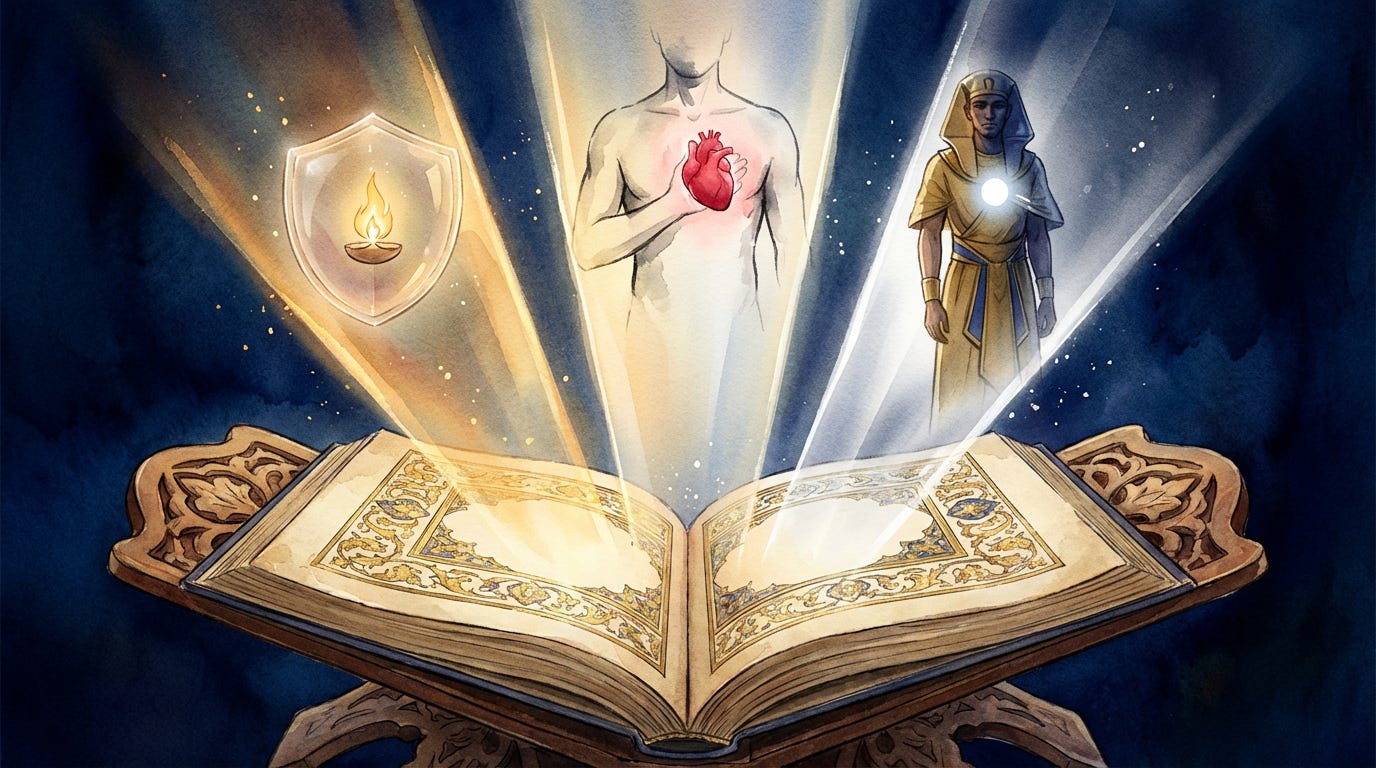
We examined three witnesses from the Book of God.
The first was Surah Aal-e-Imran, verse 28 — the exception clause:
إِلَّا أَن تَتَّقُوا مِنْهُمْ تُقَاةً
“Except when you protect yourselves from them as a precaution.”
— Quran, Surah Aal-e-Imran (the Chapter of the Family of Imran) #3, Verse 28
God prohibited taking the disbelievers as allies — then opened a door.
When genuine danger exists, the believer is permitted to display outwardly what does not reflect his inward reality.
This is not our interpretation imposed upon the text; it is the plain meaning of the Arabic, confirmed by Allamah Tabatabai in Al-Mizan.
The second witness was Surah al-Nahl, verse 106 — the validation of Ammar ibn Yasir. When Ammar spoke words of disbelief under torture and came weeping to the Prophet, revelation descended:
إِلَّا مَنْ أُكْرِهَ وَقَلْبُهُ مُطْمَئِنٌّ بِالْإِيمَانِ
“Except for one who is compelled while his heart is secure in faith.”
— Quran, Surah al-Nahl (the Chapter of the Bee) #16, Verse 106
The tongue under duress does not bind the heart.
The Prophet asked Ammar how he found his heart;
Ammar replied,
“Secure in faith.”
The Prophet said:
“Then if they return you to it, return to it.”
Explicit prophetic permission.
The third witness was Surah al-Ghafir, verse 28 — the Believer of Pharaoh’s household:
وَقَالَ رَجُلٌ مُّؤْمِنٌ مِّنْ آلِ فِرْعَوْنَ يَكْتُمُ إِيمَانَهُ
“And a believing man from the family of Pharaoh who concealed his faith...”
— Quran, Surah al-Ghafir (the Chapter of the Forgiver) #40, Verse 28
Here was a man living in the innermost circle of the greatest tyrant of his age — and he was mu’min, a believer.
His concealment did not negate his faith; it protected it.
And when the moment came — when Pharaoh moved to kill Moses — the believer spoke.
Concealment until the moment demands speech.
Three Quranic proofs.
The foundation is not Shia; it is Quranic.
The Linguistic Root
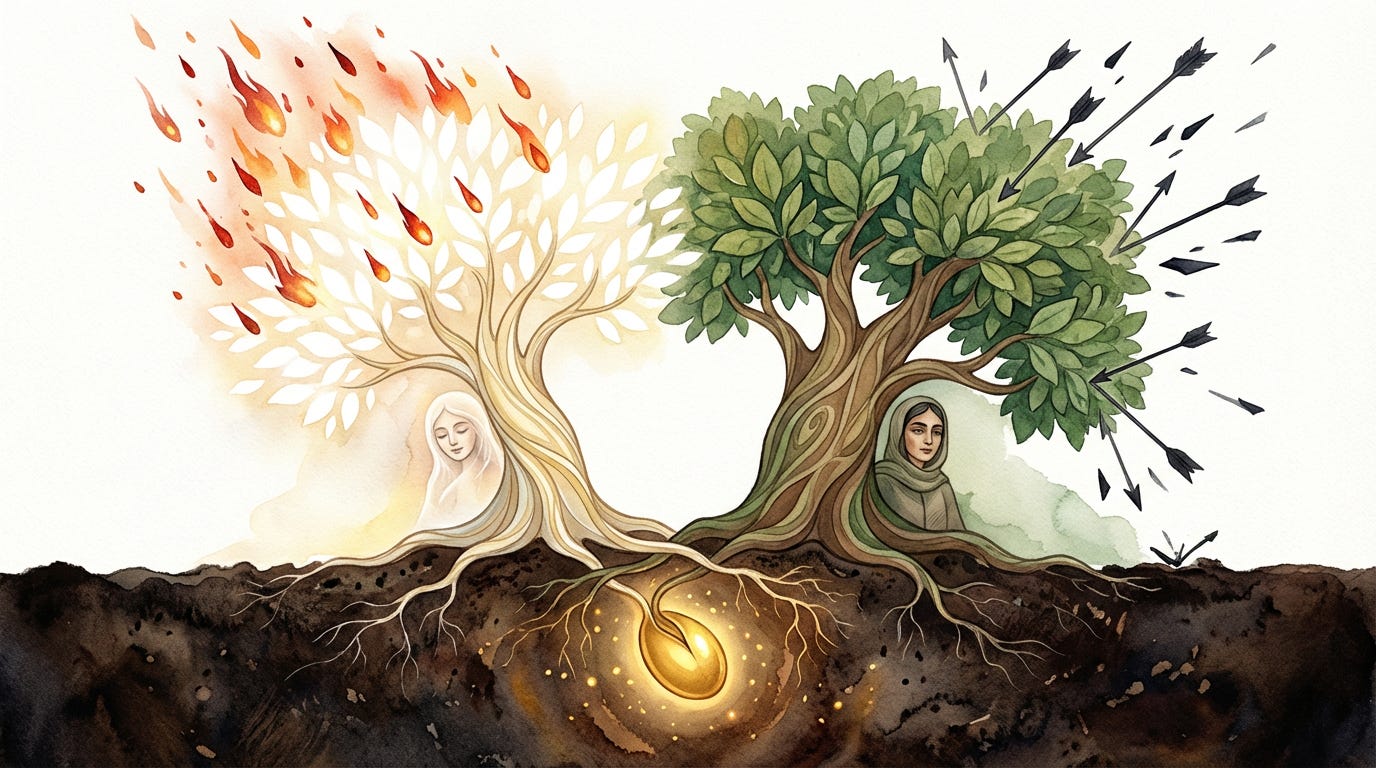
We then examined the word itself.
Taqiyyah comes from the root و-ق-ي — the same root that gives us Taqwa, the virtue that God praises above all others.
Both mean protection.
Both mean shielding.
Taqwa is shielding oneself from the wrath of God through righteous conduct.
Taqiyyah is shielding oneself from the harm of the enemy through wise discretion.
Same root.
Same meaning.
Two applications of the same act of protection.
If it is noble to shield oneself from Divine anger, why is it shameful to shield oneself from human violence?
The critics who mock Taqiyyah must first contend with Taqwa — and they cannot, because the language itself refutes them.
Kitman vs. Kidhb
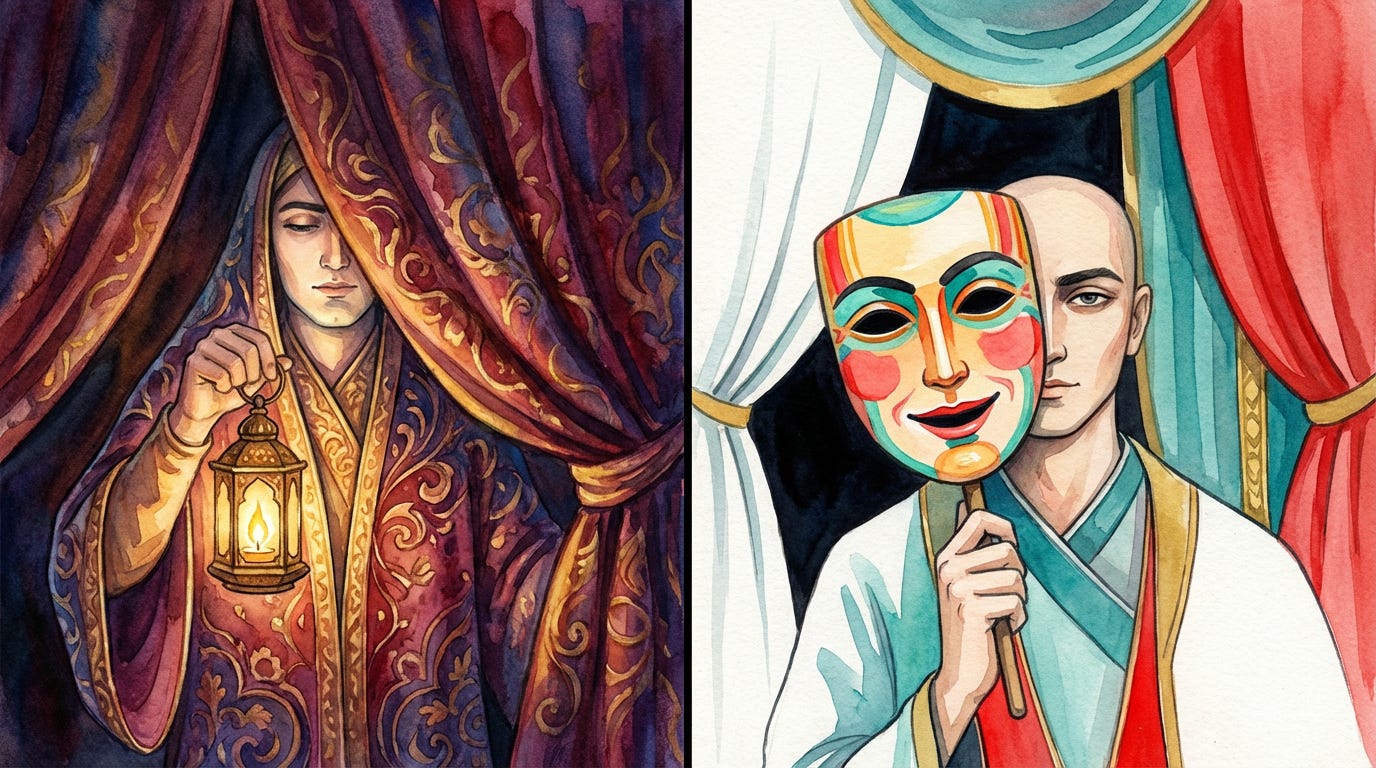
We drew the crucial distinction between concealment and fabrication.
Kitman is the act of not revealing.
The one who practises Kitman does not manufacture a false reality.
He simply withholds.
He redirects.
He gives an answer that is true but incomplete.
Kidhb is the act of stating falsehood.
The one who practises Kidhb says
“X is true”
when he knows X is false.
Taqiyyah operates through Kitman, not Kidhb.
The believer who says
“I am a Muslim who follows the Quran and the Sunnah”
has not lied — every word is true.
He has simply not disclosed the full picture.
We learned the art of Tawriyah — strategic ambiguity — through the examples of the Prophet saying
“We are from water”
and Husayn ibn Ruh declaring
“The Muslims have agreed by consensus...”
Words that are technically true, while the listener draws his own conclusions.
The Jurisprudential Hierarchy
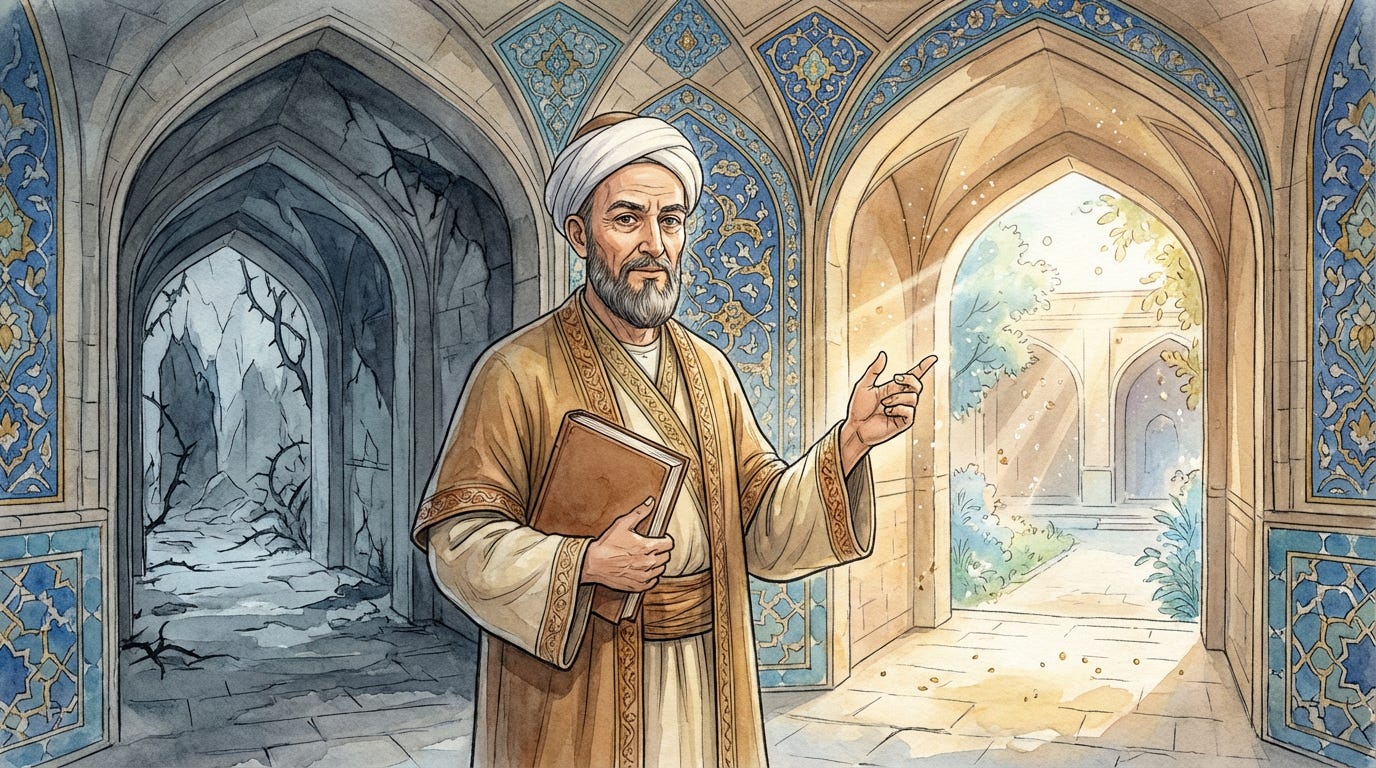
We examined what the scholars actually rule.
Ayatullah al-Khoei established the foundational position:
Tawriyah is excluded from the legal category of lying entirely.
It is Sidq — truthfulness — because the speaker’s intended meaning matches reality.
The three most widely followed living maraji’ — Imam Khamenei, Ayatullah Sistani, and Ayatullah Makarem-Shirazi — have all ruled that attempting Tawriyah before resorting to lying is Ehtiyat Wajib, obligatorily precautionary.
This means the community is bound to seek the truthful path first.
Even when necessity permits concealment, the believer is obligated to attempt the method that preserves both safety and truthfulness.
How, then, can anyone call this “a community of liars”?
The very authorities who guide this community have made the avoidance of lying a matter of obligatory precaution.
The Theological Foundation
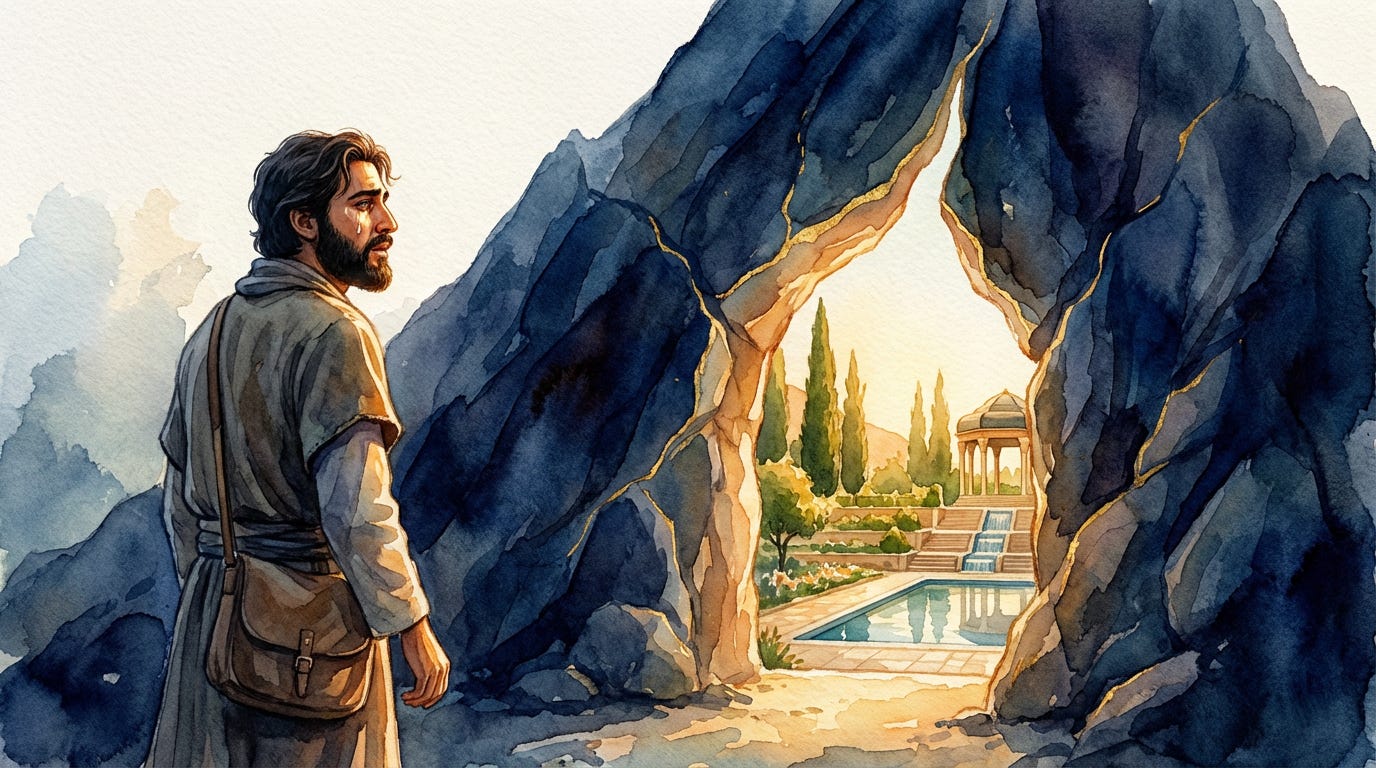
We understood why Islamic law is structured this way.
The Quran declares:
لَا يُكَلِّفُ اللَّهُ نَفْسًا إِلَّا وُسْعَهَا
“God does not burden a soul beyond its capacity.”
— Quran, Surah al-Baqarah (the Chapter of the Cow) #2, Verse 286
and
يُرِيدُ اللَّهُ بِكُمُ الْيُسْرَ وَلَا يُرِيدُ بِكُمُ الْعُسْرَ
“God intends for you ease and does not intend for you hardship.”
— Quran, Surah al-Baqarah (the Chapter of the Cow) #2, Verse 185
Ayatullah Jawadi-Amoli explained: the religion has no dead-ends. When genuine hardship arises, the obligation is lifted — not bent, but lifted entirely.
But we also issued a warning: this mercy is not a blank cheque. The haraj that lifts an obligation is objective hardship recognised by the Shariah, not subjective discomfort determined by the individual. The dispensation exists for genuine necessity, not for convenience.
The Hard Limits
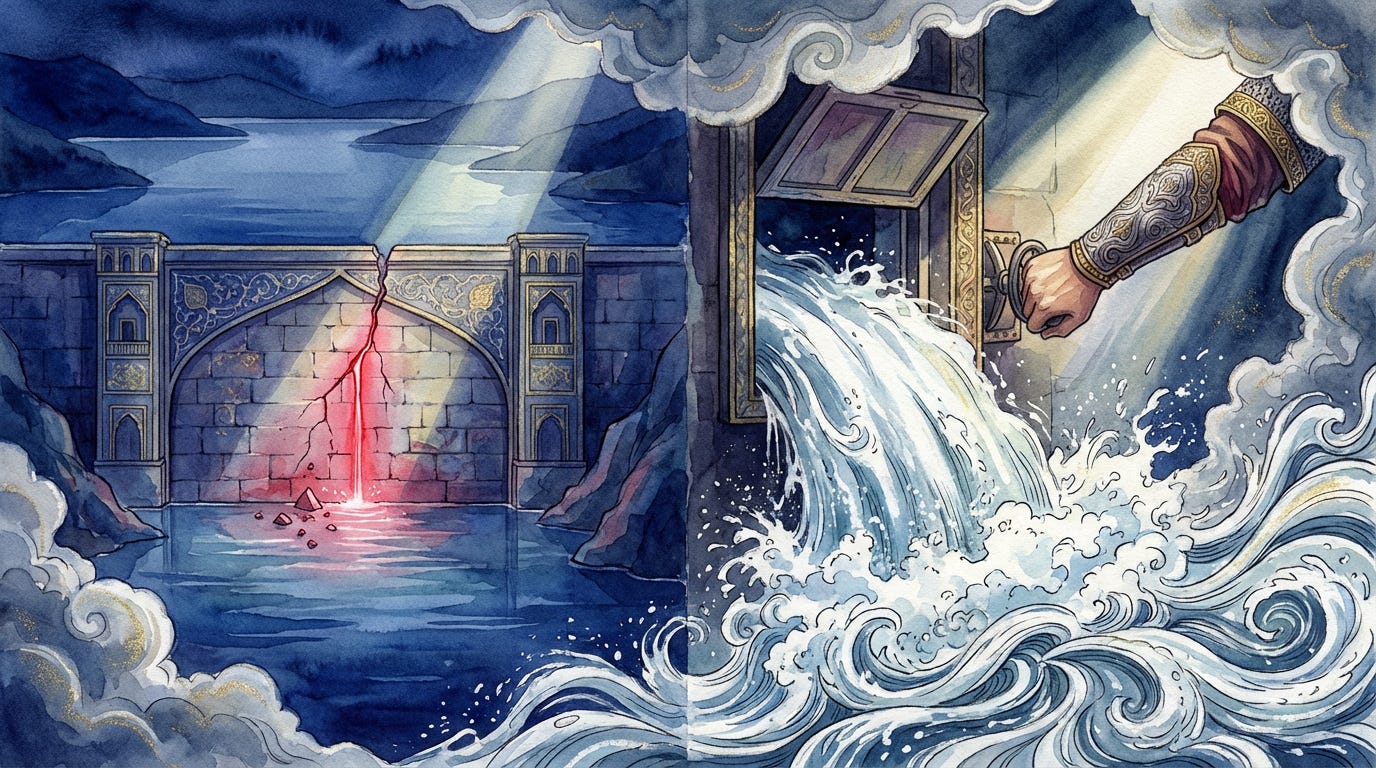
Finally, we learned where the Shield must be lowered.
Imam al-Sadiq declared:
إِنَّمَا جُعِلَتِ التَّقِيَّةُ لِيُحْقَنَ بِهَا الدَّمُ، فَإِذَا بَلَغَتِ التَّقِيَّةُ الدَّمَ فَلَا تَقِيَّةَ
“Taqiyyah was only instituted to preserve blood. But if Taqiyyah itself reaches the point of causing blood to be shed, then there is no Taqiyyah.”
Imam Khomeini declared:
قدرت نداشتن عذر است، اما اگر قدرت پیدا کردیم، تقیه حرام است
“Lacking power is an excuse. But if we acquire the power, Taqiyyah becomes forbidden.”
The Shield is not permanent.
It is not a lifestyle.
It is a response to a specific condition — the condition of inability.
When capacity exists, when the power to speak and act has been granted, then Taqiyyah ceases to be a virtue and becomes a vice.
We traced this through the examples of the Imams themselves — Imam Ali’s twenty-five years of patient silence,
Imam Hasan’s treaty with Muawiyah, and Imam Husayn’s stand at Karbala.
The same tradition, the same family — but different conditions produce different responses.
When silence preserves, silence is obligatory.
When silence betrays, resistance becomes obligatory.
The Shield Forged
This was the work of last week.
The accusation — that Taqiyyah is “religiously sanctioned lying” — was dismantled at every level: Quranic, linguistic, jurisprudential, theological.
The one who carries this knowledge can now respond with the confidence of one who knows his tradition.
But knowledge alone does not guarantee wisdom.
Knowing what the Shield is does not tell you when to raise it and when to lower it.
Understanding the theory does not automatically produce the practice.
And so tonight, we turn from foundation to application.
We ask:
How has this Shield actually been carried?
When was it raised?
When was it lowered?
And what does it look like in our own time — in the age of the Islamic Revolution, in the age of social media, in the age when a Muslim in Manchester can speak openly about his faith without fear of execution?
The Shield has been forged.
Now we learn to wield it.
Mahdawiyyah (The Culminating Guidance) - The Era of Establishment - The Geopolitics of Waiting - The Shield (Taqiyyah) - The Shield in Action - The Record
The Fitrah Foundation: Taqiyyah Inscribed in Creation

We have established that Taqiyyah is Quranic — anchored in the verses of Surah Aal-e-Imran, Surah al-Nahl, and Surah al-Ghafir.
We have established that it is linguistic — sharing its root with Taqwa, the virtue God praises above all others.
We have established that it is jurisprudential — governed by a hierarchy that demands truthful concealment before any resort to fabrication.
But there is a deeper layer still.
What if Taqiyyah is not merely permitted by revelation, but inscribed in creation itself?
What if the principle we are defending is not a peculiarity of Islamic law, but a universal law of nature — written into the Fitrah of every living thing?
This is the argument that Allamah Tabatabai advances in Al-Mizan. And it transforms the entire discussion.
The Testimony of Creation
In his commentary on Surah Aal-e-Imran (the Chapter of the Family of Imran), third chapter of the Quran, Verse 28, Allamah Tabatabai does not begin with scripture.
He begins with nature.
He writes:
وَهَذَا أَمْرٌ مِنَ الْأُمُورِ الْفِطْرِيَّةِ الَّتِي يَحْكُمُ بِهَا فِطْرَةُ الْإِنْسَانِ، بَلْ فِطْرَةُ كُلِّ ذِي شُعُورٍ يُشْعِرُ بِمَا فِيهِ نَفْعُهُ وَضَرُّهُ... فَإِنَّ الْفِطْرَةَ تُجَهِّزُ الْأَضْعَفَ مِنَ الْمَوْجُودَاتِ، إِذَا ابْتُلِيَ بِمَا هُوَ أَقْوَى مِنْهُ... بِاسْتِعْمَالِ الْخُدْعَةِ وَالْحِيلَةِ لِصِيَانَةِ نَفْسِهِ مِنَ الْهَلَاكِ، وَالِاخْتِفَاءِ عَنْ عَيْنِ خَصْمِهِ.
“And this [Taqiyyah] is one of the natural matters (al-umur al-fitriyya) which the nature (Fitrah) of man dictates — nay, the nature of every sentient being that perceives what benefits or harms it... For indeed, Nature equips the weaker of creatures, when afflicted by that which is stronger than it... to employ stratagem to preserve itself from destruction, and to hide from the eyes of its adversary.”
— Allamah Tabatabai, Al-Mizan fi Tafsir al-Quran, Volume 3, Commentary on Verse 3:28
Consider what Allamah Tabatabai is arguing.
He does not say:
“Taqiyyah is permitted because the Quran says so.”
He says:
“Taqiyyah is permitted because this is how God made the world.”
The Quran is not introducing a new principle; it is confirming a principle that was already written into the fabric of existence.
The legislative will of God — what He commands in scripture — aligns with the generative will of God — what He has built into creation.
The Evidence of Nature
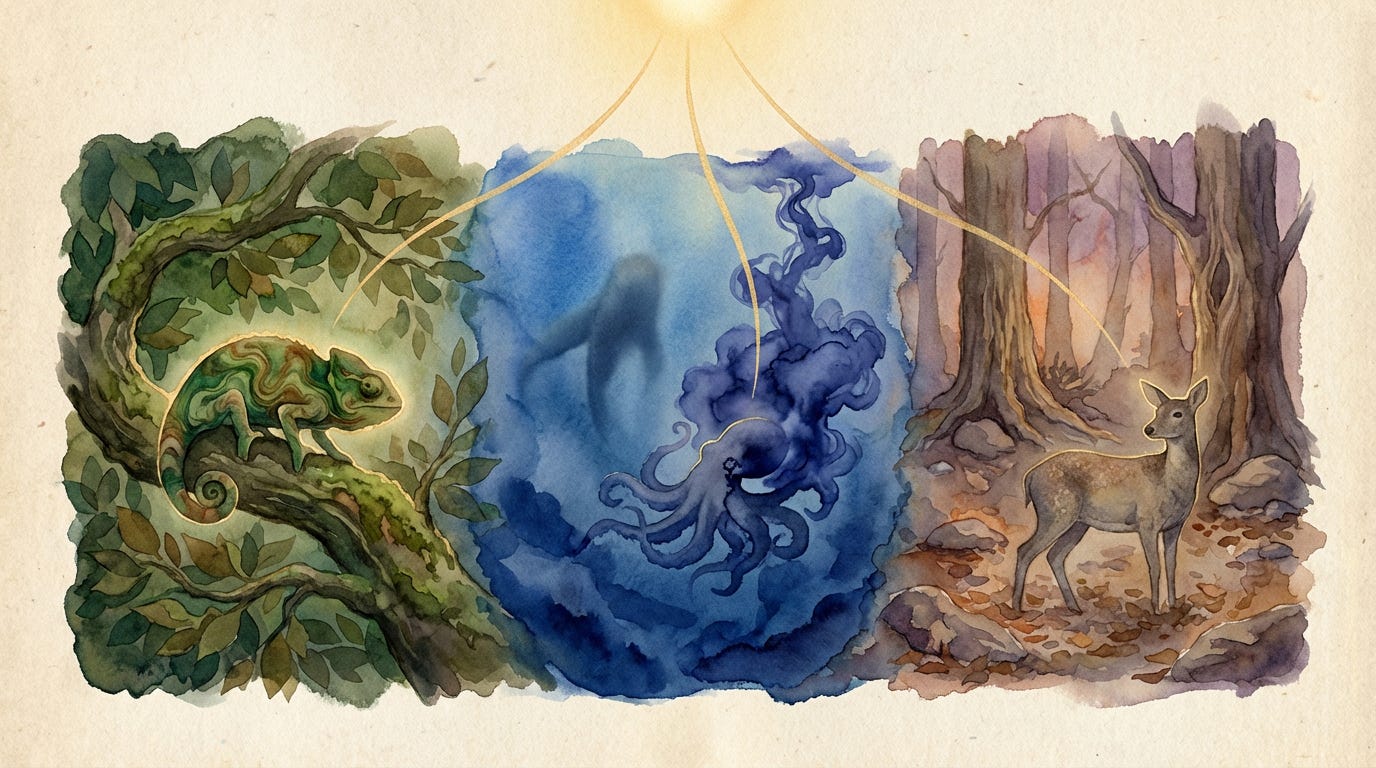
Look at the created world.
Look at how the weak survive against the strong.
The chameleon does not fight the predator.
It changes colour.
It becomes invisible against the branch, indistinguishable from the leaf.
The predator’s eyes pass over it, and it survives.
Is the chameleon “lying” to the predator?
The octopus does not battle the shark.
It releases ink, clouds the water, and vanishes into the murk.
Or it shifts its texture, its colour, its very shape — becoming a rock, a coral, a patch of sand.
Is the octopus “deceiving” the shark?
The deer does not charge the wolf.
It freezes.
It becomes still as stone, hoping the predator’s motion-sensitive eyes will pass over what does not move.
Is the deer being “dishonest” with the wolf?
The question answers itself.
These creatures are not lying.
They are not fabricating a false reality.
They are protecting a true one — the reality of their continued existence — from those who would destroy it.
And who gave them these abilities?
Who designed the chameleon’s shifting skin?
Who taught the octopus to vanish?
Who inscribed in the deer’s instincts the wisdom of stillness?
The same God who revealed the Quran.
The Theological Implication

This is Allamah Tabatabai’s point, and it is devastating to the critics.
If Taqiyyah is written into Fitrah — into the very constitution of living things — then to mock Taqiyyah is to mock the Creator’s design.
The one who says,
“Taqiyyah is cowardice,”
must explain why God made the chameleon.
The one who says,
“Taqiyyah is deception,”
must account for the octopus.
The one who says,
“The believer should stand exposed before his enemies regardless of consequence,”
must answer why the Creator equipped the weak with the tools of concealment — and then praised a man in Pharaoh’s household for using them.
The principle is not Shia.
It is not even merely Quranic.
It is cosmic.
It is written into the laws of biology, into the survival mechanisms of every creature that perceives what harms it and what helps it.
The Pearl and the Shell
Ayatullah Jawadi-Amoli — himself a student of Allamah Tabatabai — expands this insight in Tafsir-e Tasneem.
He writes:
تقیّه، سلاح انسان مؤمن در برابر دشمن قویپنجه است. عقل سلیم حکم میکند که انسان سرمایههای وجودی خود را رایگان از دست ندهد.
“Taqiyyah is the weapon of the believing human against a strong-clawed enemy. Sound Reason (Aql-e Salim) dictates that a human should not lose their existential assets — life and faith — for free.”
— Ayatullah Jawadi-Amoli, Tafsir Tasneem, Commentary on Surah 3:28
And he offers an image that captures the essence:
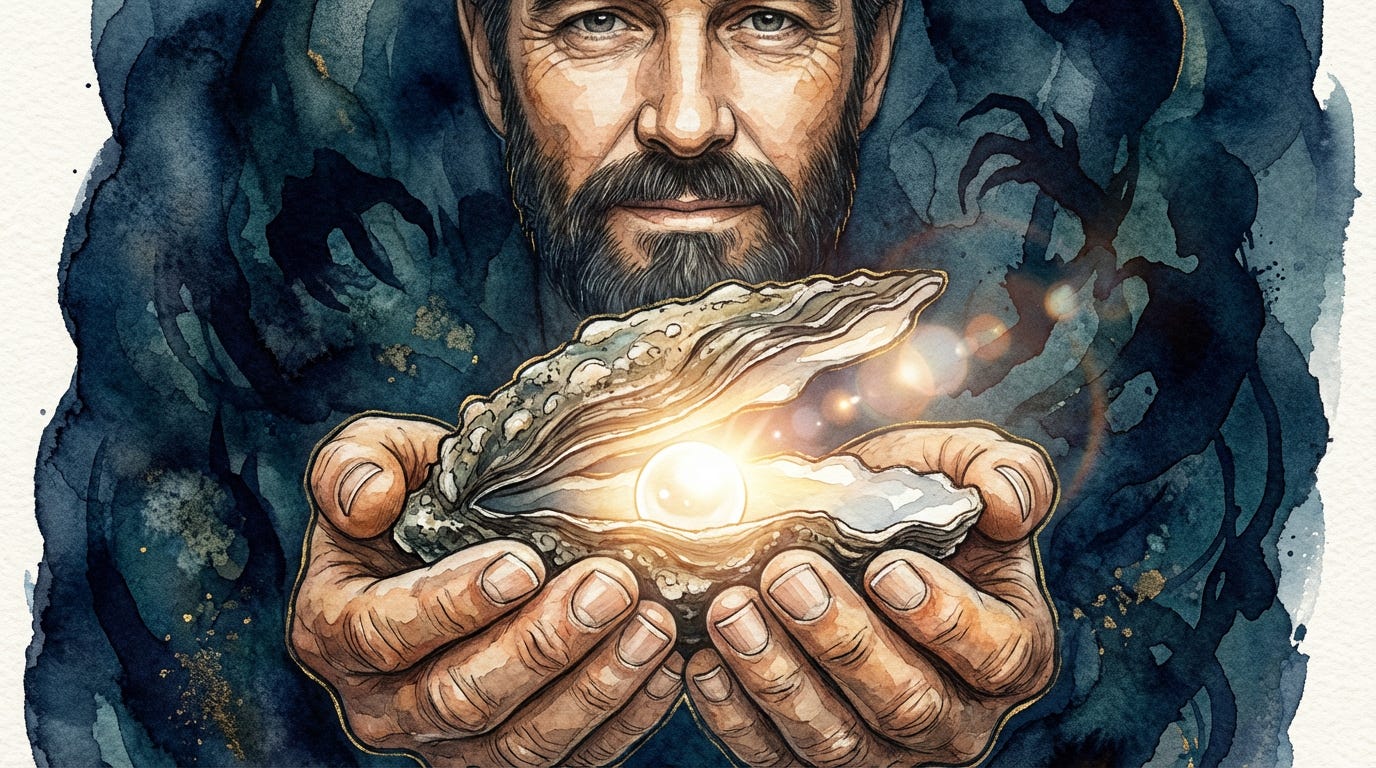
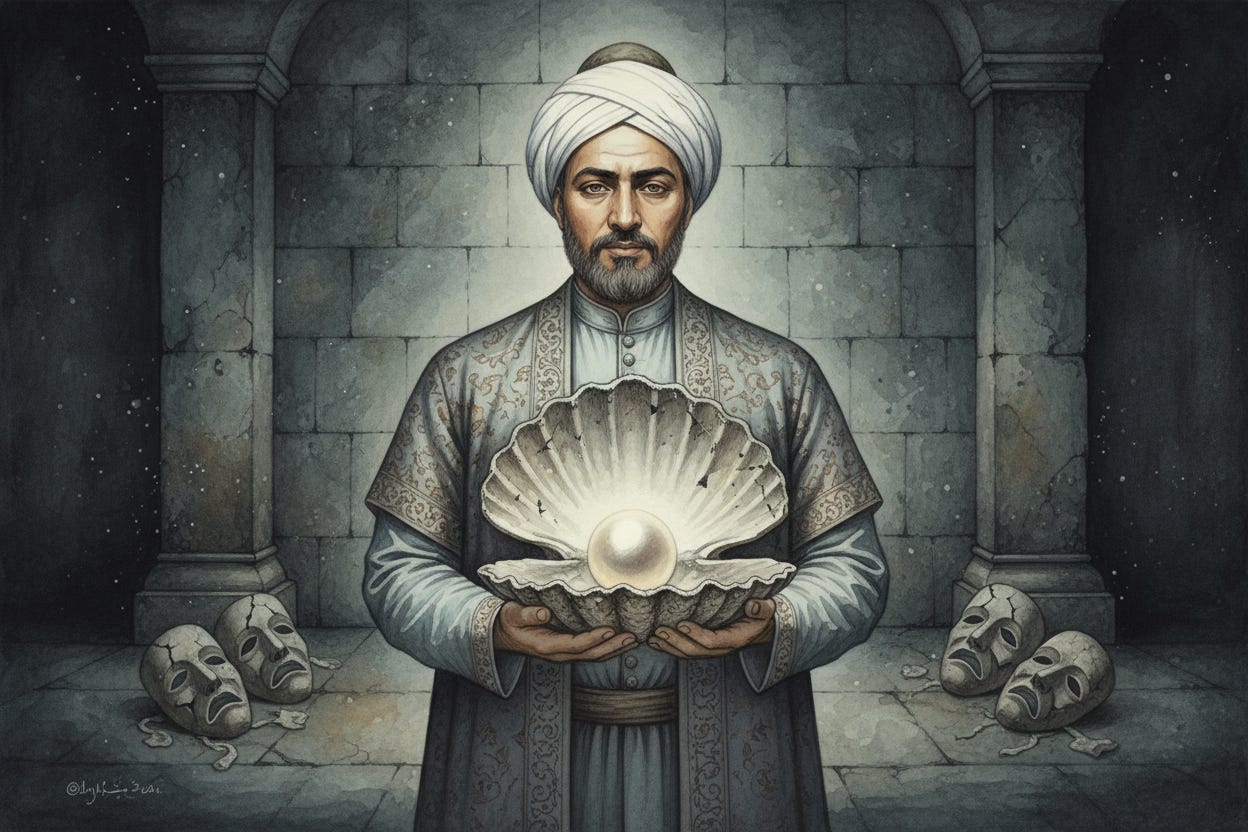
Just as a precious pearl is hidden within a hard shell to protect it from the crushing pressure of the ocean, so too is faith protected by Taqiyyah in hostile environments.
The shell is not the pearl.
But without the shell, there would be no pearl.
The concealment is not the faith.
But without the concealment, the faith would be crushed before it could shine.
This is not cowardice.
This is wisdom.
This is not deception.
This is preservation.
This is the Fitrah of creation, confirmed by the Shariah of the Creator.
The Principle Established
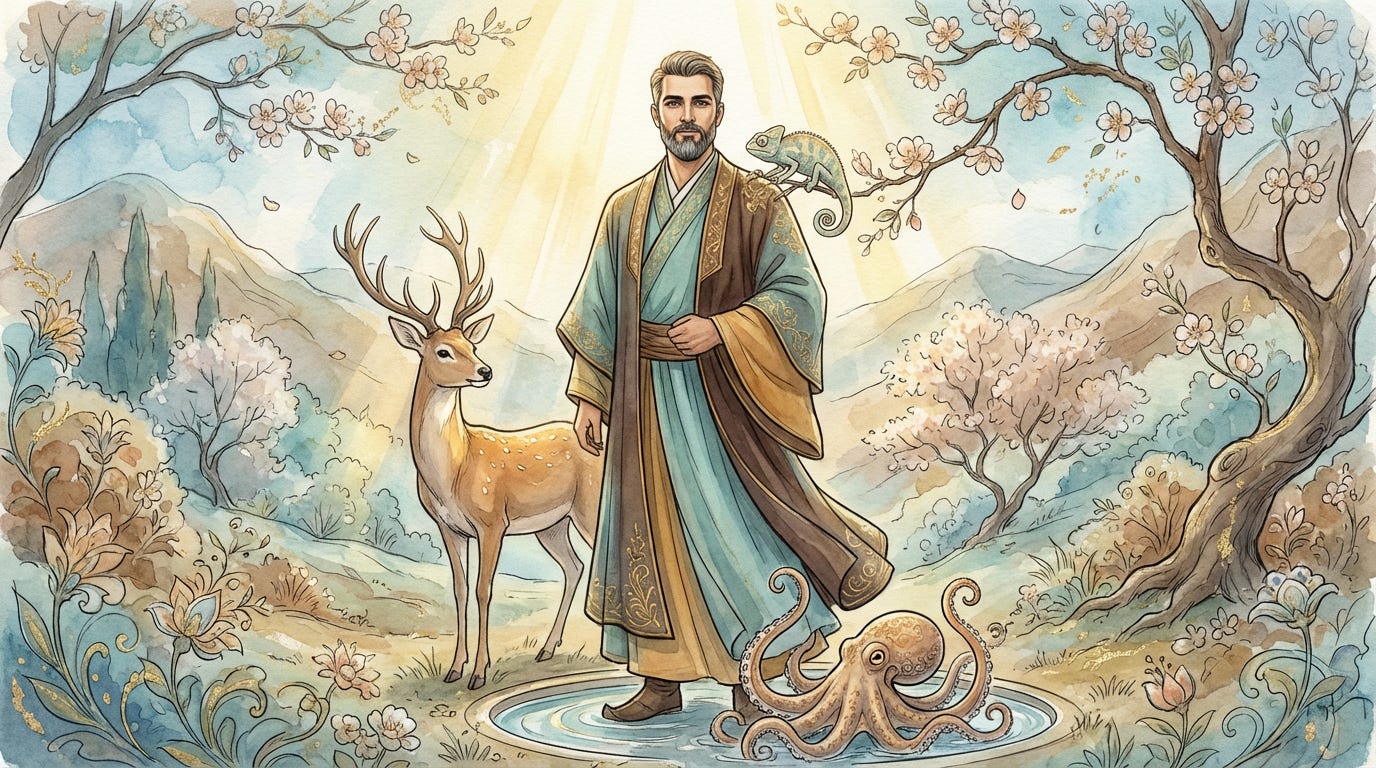
And so we arrive at the first foundation of tonight’s discussion.
Taqiyyah is not a Shia invention.
It is not a cultural practice that emerged from historical persecution.
It is not an embarrassing exception that we wish we could hide.
It is a universal law — written into nature by the same Hand that wrote the Quran.
The chameleon practises it.
The octopus practises it.
The deer practises it.
And the believer, facing those who would destroy him for his faith, is permitted — by the Creator of chameleons and octopuses and deer — to practise it too.
The one who mocks this mocks the design of God Himself.
And we are not ashamed of what God has designed.
Taqiyyah vs Nifaq: The Mirror and Its Opposite
There is an accusation that has followed the Shia for fourteen centuries.
It takes many forms, but at its core it is always the same:
“The Shia are hypocrites.
They hide their true beliefs.
They say one thing and believe another.
Taqiyyah is just a fancy word for Nifaq.”
This accusation is not merely wrong.
It is precisely backwards.
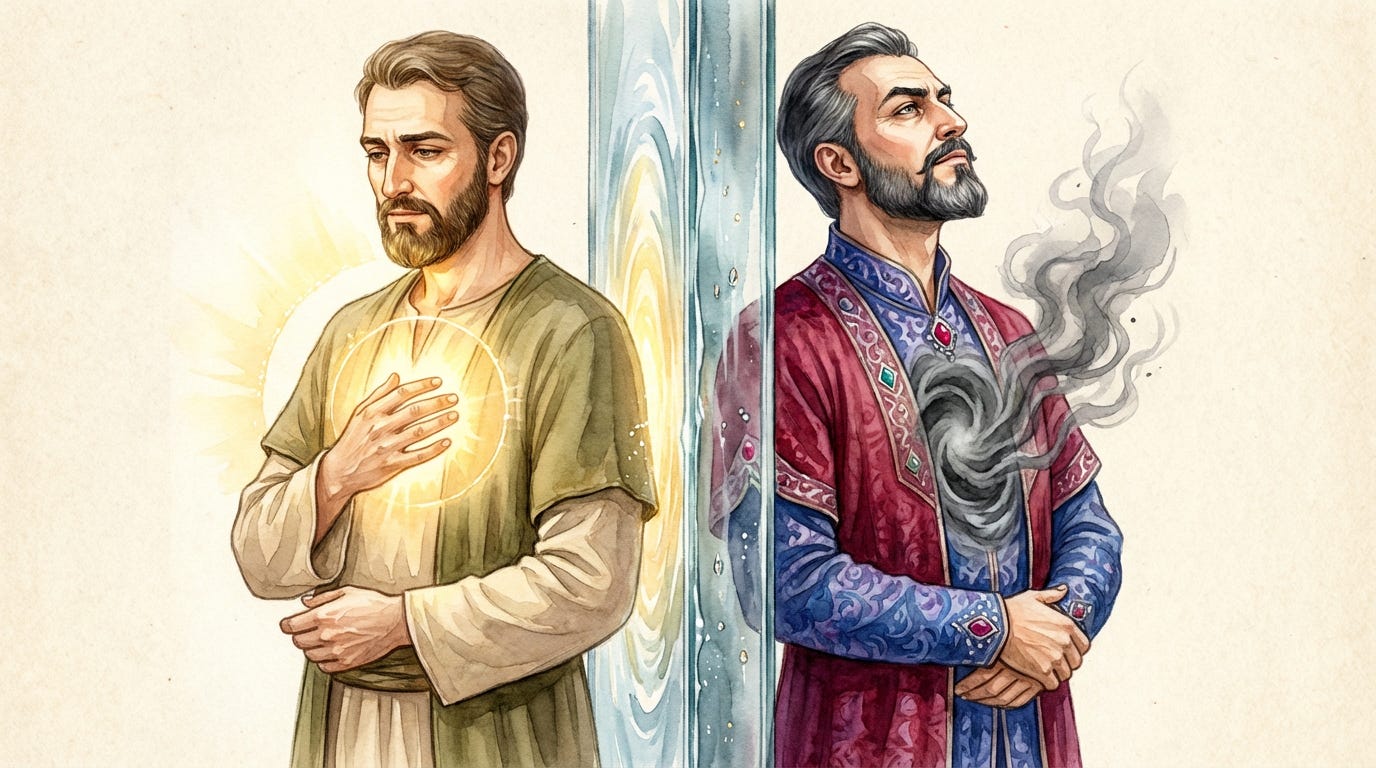
Taqiyyah and Nifaq are not twins.
They are not even cousins.
They are mirror opposites — two movements in contrary directions, two concealments with contrary purposes, two relationships between the tongue and the heart that could not be more different.
Tonight, we dismantle this accusation at the root.
The Quranic Portrait of Nifaq
Let us begin with what the Quran actually says about hypocrites.
In Surah al-Baqarah, God describes them:
وَمِنَ النَّاسِ مَن يَقُولُ آمَنَّا بِاللَّهِ وَبِالْيَوْمِ الْآخِرِ وَمَا هُم بِمُؤْمِنِينَ يُخَادِعُونَ اللَّهَ وَالَّذِينَ آمَنُوا وَمَا يَخْدَعُونَ إِلَّا أَنفُسَهُم وَمَا يَشْعُرُونَ فِي قُلُوبِهِم مَّرَضٌ فَزَادَهُمُ اللَّهُ مَرَضًا
“And of the people are some who say, ‘We believe in God and the Last Day,’ but they are not believers. They think to deceive God and those who believe, but they deceive none except themselves, and they perceive it not. In their hearts is disease, so God has increased their disease.”
— Quran, Surah al-Baqarah (the Chapter of the Cow) #2, Verses 8-10
And in Surah al-Munafiqun, God is even more explicit:
إِذَا جَاءَكَ الْمُنَافِقُونَ قَالُوا نَشْهَدُ إِنَّكَ لَرَسُولُ اللَّهِ ۗ وَاللَّهُ يَعْلَمُ إِنَّكَ لَرَسُولُهُ وَاللَّهُ يَشْهَدُ إِنَّ الْمُنَافِقِينَ لَكَاذِبُونَ
“When the hypocrites come to you, they say, ‘We bear witness that you are the Messenger of God.’ And God knows that you are His Messenger, and God bears witness that the hypocrites are liars.”
— Quran, Surah al-Munafiqun (the Chapter of the Hypocrites) #63, Verse 1
Notice what defines the Hypocrite (Munafiq).
The Hypocrite says “I believe” — but he does not believe.
The Hypocrite appears to be Muslim — but his heart contains disbelief, malice and enmity (kufr).
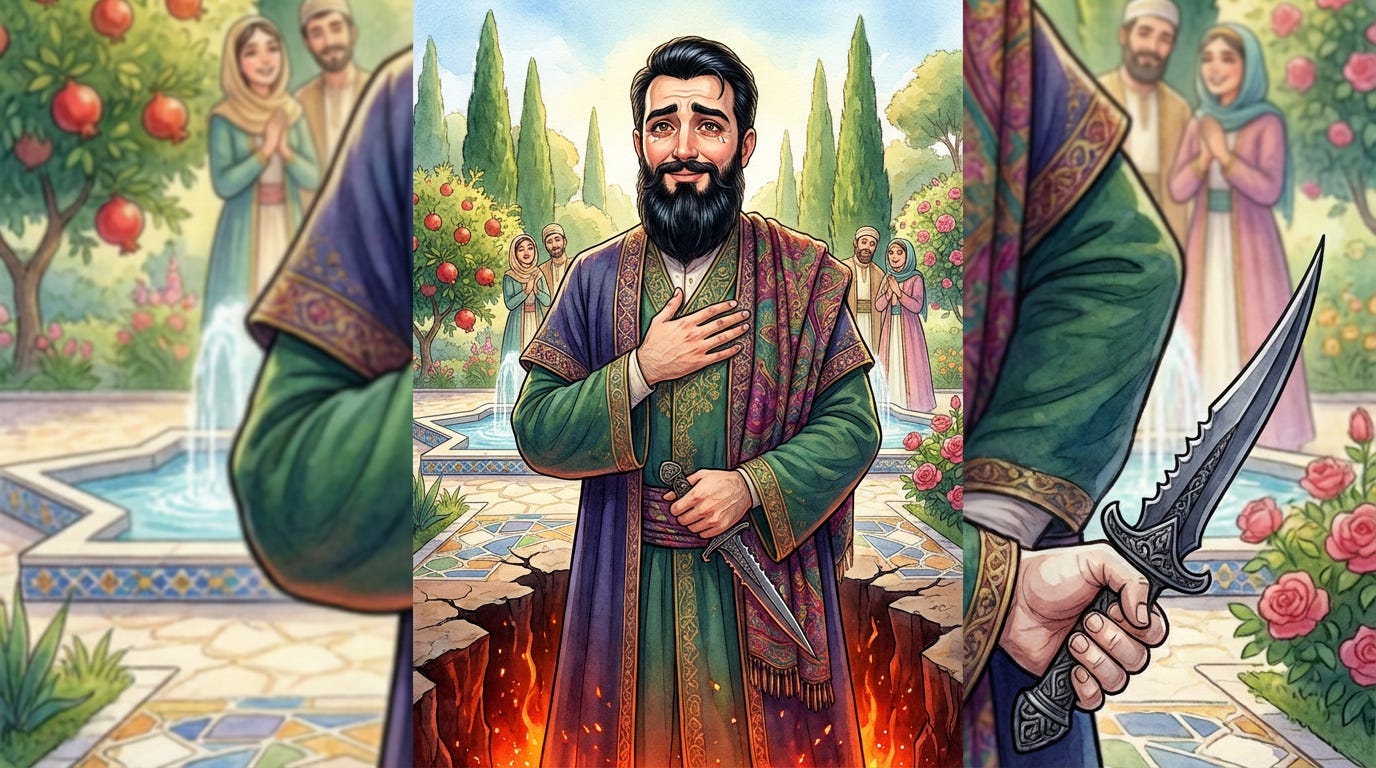
The Hypocrite enters the community of believers — but he enters as a saboteur, a disease, a poison dressed in the clothing of faith.
The direction of Hypocrisy (Nifaq) is this: kufr inside, Islam on the tongue.
The Hypocrite conceals disbelief under the appearance of faith.
And the purpose?
To harm.
To deceive.
To weaken the community from within.
To gain the trust of the believers and then betray it.
This is why God reserves for the hypocrites the lowest pit of the Fire:
إِنَّ الْمُنَافِقِينَ فِي الدَّرْكِ الْأَسْفَلِ مِنَ النَّارِ
“Indeed, the hypocrites will be in the lowest depths of the Fire.”
— Quran, Surah al-Nisa (the Chapter of the Women) #4, Verse 145
Lower than the open disbelievers.
Lower than those who rejected Islam publicly.
Because the Hypocrite (Munafiq) did something worse than reject — he infiltrated.
He wore the mask of faith while carrying the dagger of treachery.
The Reality of Taqiyyah
Now consider the one who practises Taqiyyah.
What is his condition?
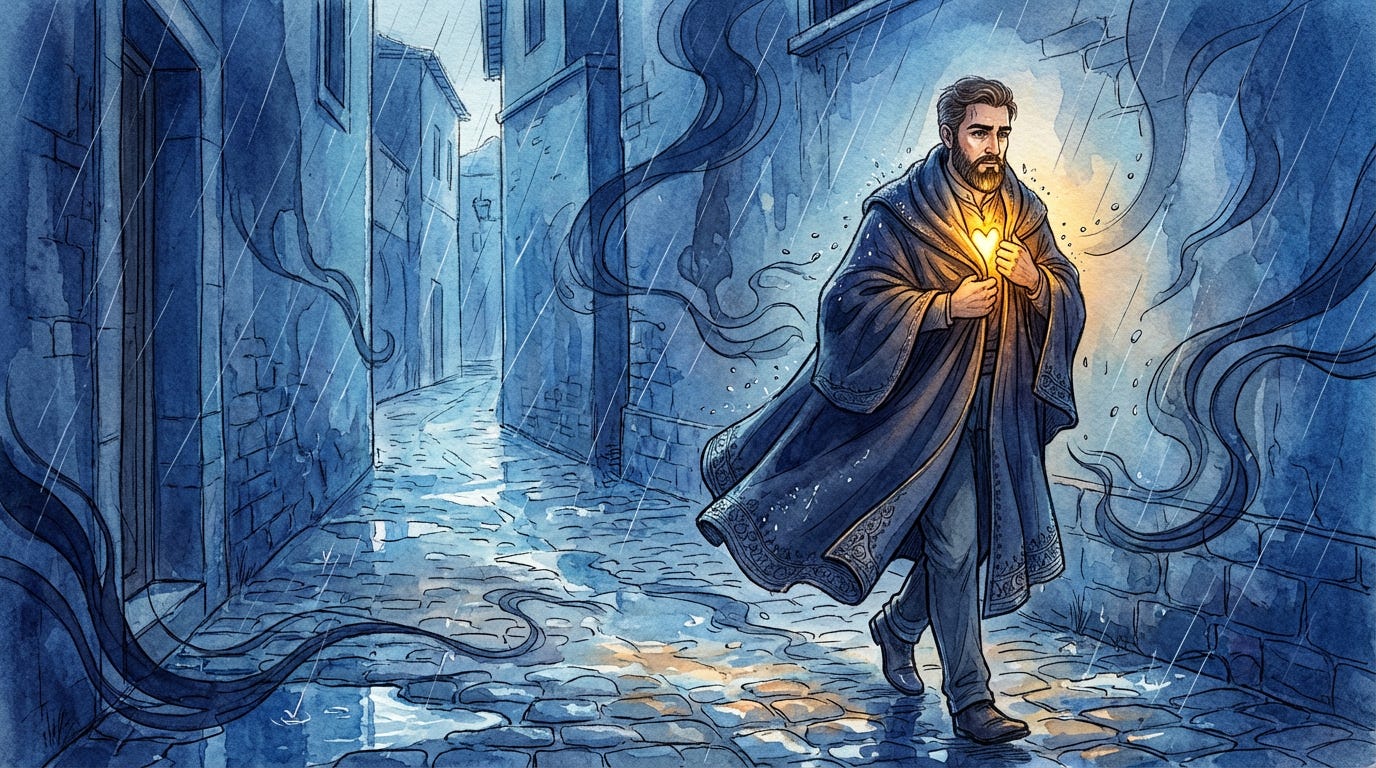
His heart is full of faith.
He believes in God, in the Prophet, in the Day of Judgment, in the Wilayah of the Ahl al-Bayt.
His inner reality is Islam — not as a mask, but as the very core of his being.
But he is surrounded by enemies.
He lives under a tyranny that would kill him for what he believes.
He cannot openly declare his faith without bringing destruction upon himself, his family, his community.
And so he conceals.
Not kufr (disbelief, malice, enmity) under Islam — but Islam under caution.
Not disbelief wearing the mask of faith — but faith protected by the shield of discretion.
The direction of Taqiyyah is this: iman inside, caution on the tongue.
The Mutaqi - the one who performs Taqiyyah - conceals faith to protect it from those who would destroy it.
And the purpose?
Not to harm the community of believers — but to preserve it.
Not to infiltrate and betray — but to survive and transmit.
Not to weaken the Truth — but to carry it through the storm until the storm passes.
The Mirror Opposites
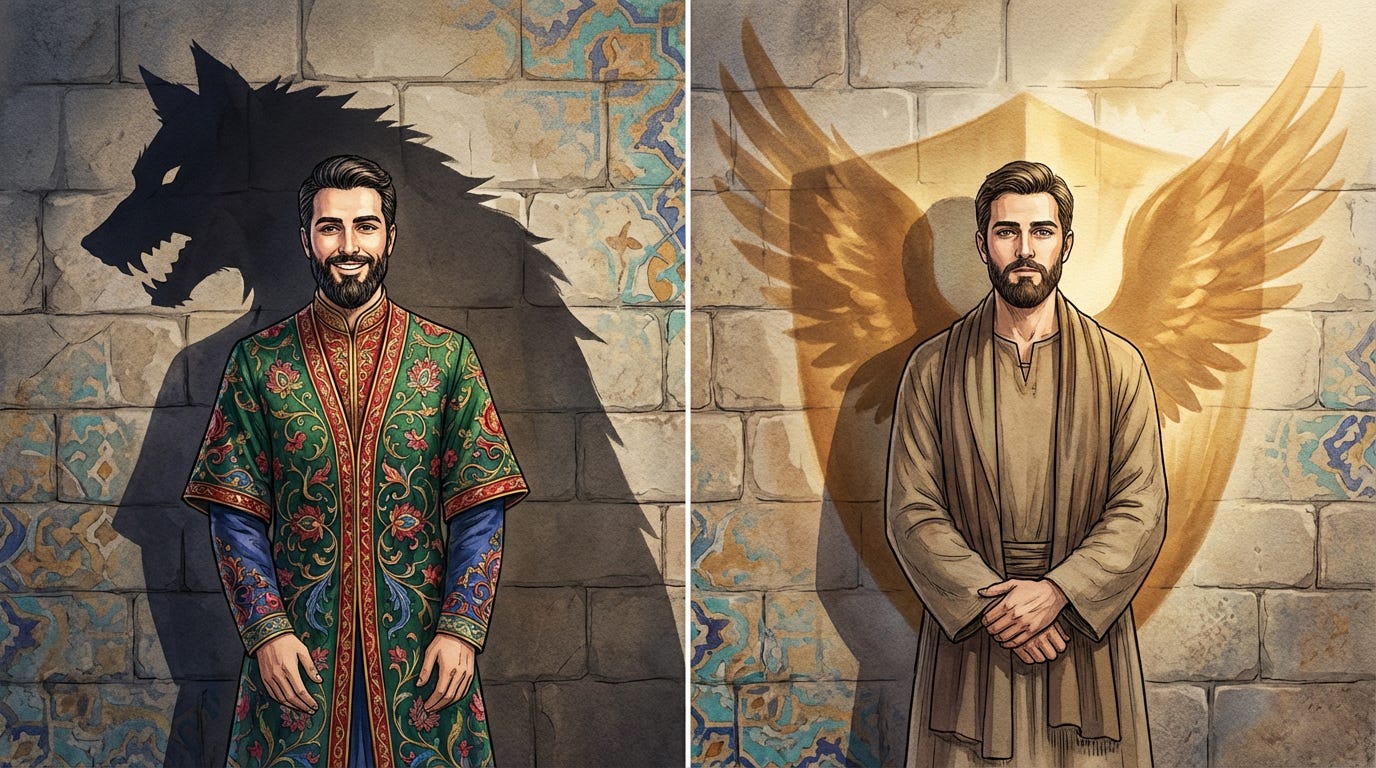
Do you see the inversion?
Consider the contrast:
Inside: The Munafiq carries kufr (disbelief, malice, enmity) within; the Mutaqi carries iman (faith, belief).
Outside: The Munafiq appears Muslim; the Mutaqi appears conformist.
Direction: Nifaq hides evil under good; Taqiyyah protects good from evil.
Purpose: Nifaq harms the community; Taqiyyah preserves it.
Relationship to Truth: Nifaq conceals falsehood; Taqiyyah protects truth.
Divine Judgment: The Munafiq is promised the lowest pit of the Fire (4:145); the Mutaqi is validated by the Quran itself (16:106, 40:28).
These are not the same thing.
These are not even similar things.
These are opposite things — as opposite as a poison and an antidote, as a disease and a cure, as a traitor and a guardian.
The Munafiq brings evil into the community disguised as good.
The Mutaqi keeps good within himself, protected from external evil.
The Munafiq harms.
The Mutaqi preserves.
To confuse them is not merely an error of terminology.
It is a fundamental failure to understand the moral universe in which these concepts operate.
The Testimony of Ayatullah Jawadi-Amoli
Ayatullah Jawadi-Amoli, in Tafsir-e Tasneem, makes this distinction with crystalline clarity:
إِنَّ التَّقِيَّةَ تُرْسُ الْمُؤْمِنِ... وَلَيْسَتْ نِفَاقاً، بَلْ هِيَ كِتْمَانُ الْحَقِّ لِحِفْظِهِ، لَا لِإِبْطَالِهِ.
“Indeed, Taqiyyah is the Shield of the believer... It is not hypocrisy (Nifaq); rather, it is the concealment of the Truth to preserve it, not to nullify it.”
— Ayatullah Jawadi-Amoli, Tafsir Tasneem, Commentary on Surah 3:28
This is the key phrase: li-hifdhihi, la li-ibtalihi — “to preserve it, not to nullify it.”
The Munafiq conceals in order to nullify — to destroy the community from within, to undermine the Truth while pretending to uphold it.
The Mutaqi conceals in order to preserve — to protect the Truth until it can be spoken openly, to carry the light through the darkness until dawn.
Same act of concealment.
Opposite purposes.
Opposite moral valuations.
Opposite destinations in the Hereafter.
The Quranic Heroes of Concealment
And lest anyone doubt which side the Quran stands on, consider whom it honours.
The Believer of Pharaoh’s household — who concealed his faith (yaktumu imanahu) — is presented as a hero.
God preserves his words across Surah al-Ghafir (40th Chapter of the Quran), verses 28 through 45.
His long speech defending Moses, calling Pharaoh’s court to reason, warning them of the fate of previous nations — all of this is recorded in the Quran as a model of wisdom and courage.
And yet he was practising Taqiyyah.
He was a believer who hid his belief.
Was he a Munafiq?
The Quran calls him rajulun mu’min — “a believing man.”
Was he a hypocrite?
The Quran preserves his testimony as guidance for all generations.
Was he condemned?
He is honoured.
And Ammar ibn Yasir — who spoke words of disbelief under torture, whose tongue betrayed what his heart held firm — was he a Munafiq?
The Prophet embraced him.
Revelation descended to validate him.
God Himself declared that the one who is compelled, while his heart remains secure in faith, bears no blame.
These are the Quranic models.
These are the precedents that define what Taqiyyah actually is.
And they are the opposite — the precise, definitional opposite — of Nifaq.
The Accusation Refuted
So when the critic says,
“Taqiyyah is just Nifaq with a different name,”
we respond:
You have not read the Quran.
You have not understood the terms.
You have confused a shield with a dagger, a guardian with a traitor, a preserver of truth with a destroyer of truth.
The Munafiq says “I believe” while his heart contains kufr.
The Mutaqi says what safety requires while his heart overflows with belief (iman).
The Munafiq enters the community to destroy it.
The Mutaqi protects himself so that he can serve the community — so that he can teach, transmit, raise the next generation, preserve the kernel until the conditions change.
These are opposites.
And the one who cannot tell them apart has no business pronouncing on Islamic theology.
The Lesson
The distinction is not academic.
It is practical.
Every believer who has ever lived under tyranny — whether Umayyad, Abbasid, Ottoman, Pahlavi, or any other — has faced this question:
Do I speak openly and die?
Or do I conceal and survive?
The Quran answers: in conditions of genuine danger, concealment is permitted.
The heart’s faith is what matters.
The tongue under duress does not bind the soul.
But the Quran also warns: do not become what you are hiding from.
Do not let the concealment corrupt the core.
Do not mistake the shell for the pearl it protects.
The Munafiq has no pearl.
He has only shell — and inside the shell is poison.
The Mutaqi has a pearl — and the shell exists only to protect it until the day it can shine.
Know the difference.
And never let anyone confuse the Shield of the Believer with the Mask of the Hypocrite.
The Historical Record: The Shield Through the Ages
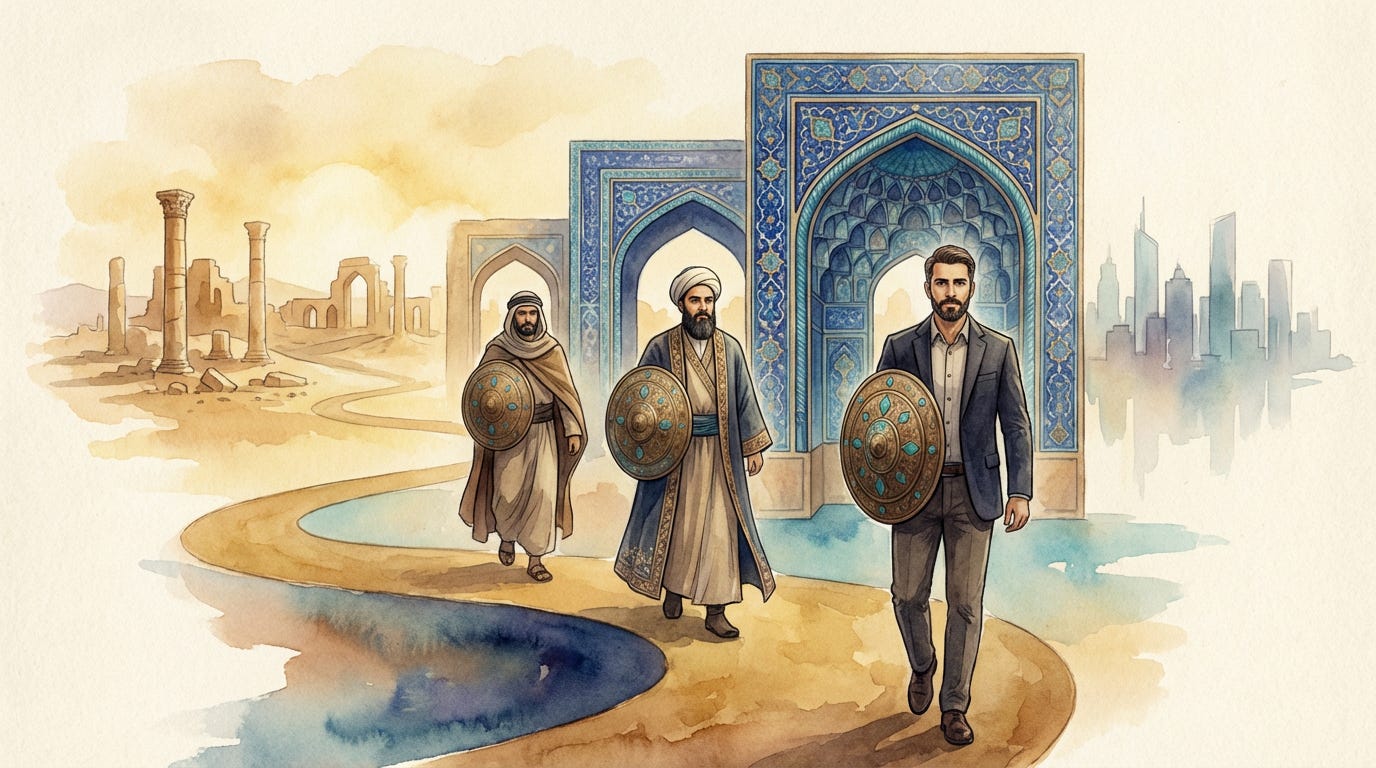
We have established that Taqiyyah is Fitrah — written into the very fabric of creation.
We have established that it is the opposite of Nifaq (Hypocrisy) — the mirror image, not the twin.
Now we ask: how was it actually used?
Theory is one thing.
Practice is another.
And the community did not survive fourteen centuries of persecution through theory alone.
They survived because generation after generation learned to carry the Shield — learned when to raise it, when to adjust it, and when circumstances demanded it be lowered entirely.
Tonight, we trace that record.
The Era of the Imams: Building in the Shadows
Consider the conditions faced by Imam Muhammad al-Baqir and Imam Ja’far al-Sadiq, peace be upon them both.
The Umayyads had built their throne on the blood of the Ahl al-Bayt.
Karbala was not ancient history — it was living memory, a wound that had not healed, a crime that the regime could never acknowledge without condemning itself.
And then the Abbasids came.
They had ridden to power on Shia support, on the slogan of “al-Rida min Aal Muhammad” — “the Chosen One from the Family of Muhammad.”
But once in power, they proved no better than their predecessors.
The prisons filled with Alids.
The spies multiplied.
The surveillance was constant.
In such conditions, what was the Imam to do?
Open revolution was not possible.
The capacity was not there.
The people were scattered, weak, traumatised by decades of persecution.
To raise the sword would have been to repeat the tragedy of Zayd — righteous blood spilled without achieving the goal.
But silence was not an option either.
The teachings had to be transmitted.
The school had to be built.
The scholars had to be trained.
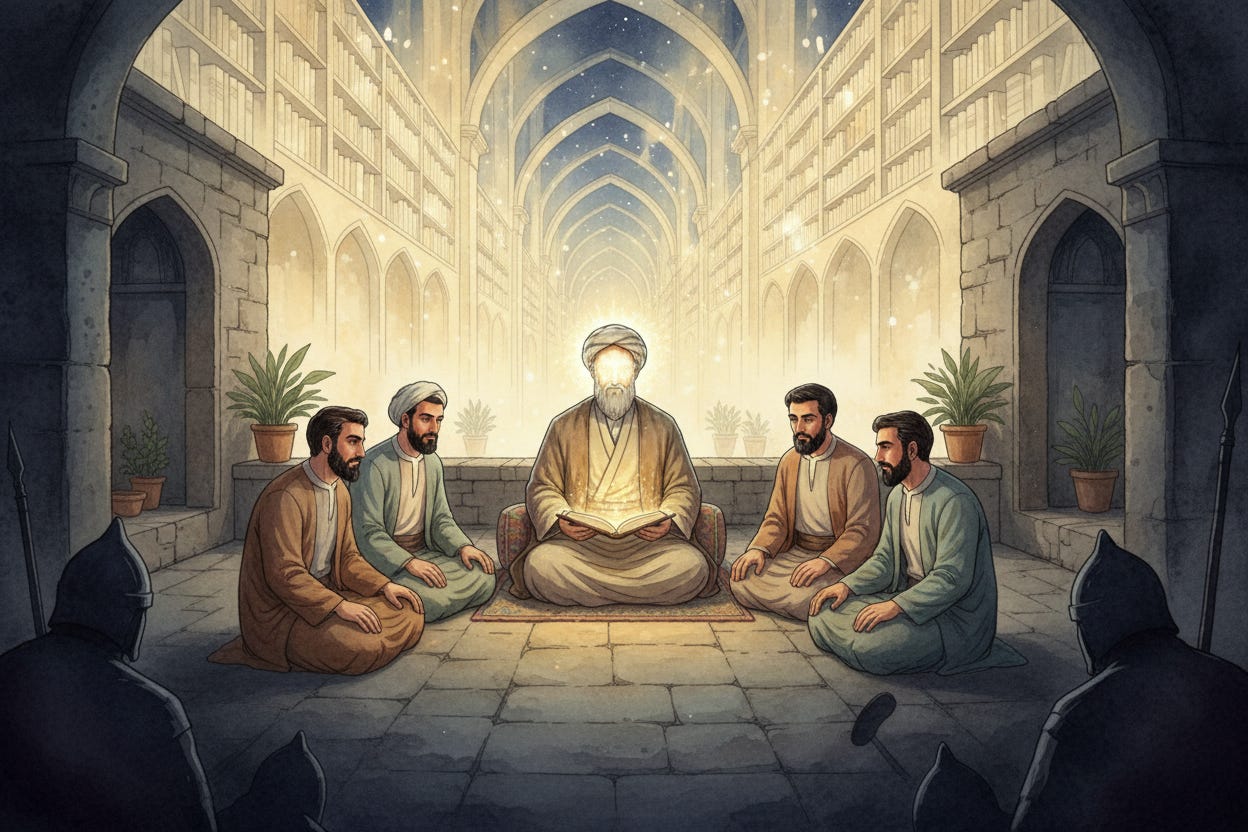
The kernel had to be preserved and cultivated, even if it could not yet be planted in open ground.
And so the Imams employed the Shield.
They taught — but carefully, to trusted students, in circles that could be denied or dispersed if the authorities came asking.
They built networks — but quietly, through scholars who could travel, who could carry knowledge from Madinah to Kufa to Qom to distant lands where the regime’s eyes could not reach.
They answered questions — but often in ways that required interpretation, that could be understood by the initiated without exposing the community to danger.
This is the context of the hadith we cited last week:
تِسْعَةُ أَعْشَارِ الدِّينِ فِي التَّقِيَّةِ، وَلَا دِينَ لِمَنْ لَا تَقِيَّةَ لَهُ
“Nine-tenths of religion is in Taqiyyah, and there is no religion for the one who has no Taqiyyah.”
— Al-Kulayni, Al-Kafi, Volume 2, Kitab al-Iman wa al-Kufr, Bab al-Taqiyyah, Hadith 4
Nine-tenths.
This was not exaggeration.
This was description.
In the conditions of that era — with spies in every gathering, with informants in every city, with death the price of a careless word — the overwhelming majority of practical religious life consisted of navigating the terrain.
Knowing what could be said and what could not.
Knowing who could be trusted and who could not.
Knowing when to teach openly and when to speak in layers.
The one who could not navigate this terrain did not survive to teach the next generation.
And so the Imam gave practical instruction:
خَالِطُوهُمْ بِالْبَرَّانِيَّةِ، وَخَالِفُوهُمْ بِالْجَوَّانِيَّةِ، إِذَا كَانَتِ الْإِمْرَةُ صِبْيَانِيَّةً
“Mix with them outwardly, and differ from them inwardly, when the rule is childish (tyrannical).”
— Al-Kulayni, Al-Kafi, Volume 2, Kitab al-Iman wa al-Kufr, Bab al-Taqiyyah
The external and the internal.
The Barraniyyah and the Jawwaniyyah.
Maintain the outward conduct that allows survival.
Preserve the inward truth that gives survival meaning.
This was not cowardice.
This was strategy.
The proof is in the results.
By the time of Imam al-Sadiq’s death in 148 AH, the Shia school had been established.
Thousands of students had been trained.
The foundations of fiqh (jurisprudence), of kalam (theology), of hadith science, of Quranic exegesis — all had been laid.
The works that would later fill the libraries of Najaf and Qom had their origins in those quiet circles, those careful teachings, those sessions conducted under the Shield.
Had the Imams chosen open confrontation, they would have been martyred — as indeed, eventually they were.
But the school would not have been built.
The knowledge would not have been transmitted.
The community would have had its heroes, but not its scholars.
Its martyrs, but not its teachers.
The Shield made the school possible.
And today, when you sit in a Hawza in Qom or Najaf, when you open Al-Kafi or Bihar al-Anwar, when you study the fiqh that traces back through an unbroken chain to Imam al-Sadiq — you are benefiting from Taqiyyah.
You are the fruit of the Shield.
The Hasan-Husayn Spectrum: When Patience, When Resistance
But here we must address a question that troubles many.
If Taqiyyah is so important — if nine-tenths of religion is in it — then what do we make of Imam Husayn?
He did not practise Taqiyyah.
He did not conceal.
He marched to Karbala with seventy-two souls against an army of thousands.
He knew he would die.
He said so explicitly.
And he went anyway.
Was Imam Husayn wrong?
Was he abandoning the principle his family had taught?
Was Karbala a failure of strategy?
The question dissolves when you understand the spectrum.
Taqiyyah and Shahadah (Martyrdom/Witnessing) are not contradictions.
They are not competing principles between which the believer must choose once and forever.
They are responses to different conditions — and the wisdom lies in knowing which condition you face.
Consider Imam Hasan, peace be upon him.
After the martyrdom of his father, he faced Muawiyah.
The Imam had an army — but it was fractured, unreliable, infiltrated by those whose loyalty was to silver rather than to truth.
Muawiyah was offering bribes.
Commanders were defecting.
The soldiers were war-weary after years of conflict.
The Imam assessed the situation with the eye of a strategist.
Open battle would mean the death of the remaining faithful — the core of the Shia community, the carriers of the teaching, the transmitters of the trust.
And for what?
Victory was not possible.
The conditions were not there.
And so he made the treaty.
He withdrew from open confrontation.
He accepted terms that his enemies mocked as surrender.
And he preserved the community.
Was this cowardice?
Imam al-Sadiq, peace be upon him, answered:
وَاللَّهِ، مَا سَلَّمَ الْحَسَنُ بْنُ عَلِيٍّ الْأَمْرَ إِلَى مُعَاوِيَةَ إِلَّا أَنَّهُ لَمْ يَجِدْ أَنْصَارًا
“By God, Hasan ibn Ali did not hand over the matter to Muawiyah except that he could not find supporters.”
— Al-Majlisi, Bihar al-Anwar, Volume 44
The capacity was not there.
And when the capacity is not there, patience is obligatory.
This is Taqiyyah at the political level — strategic patience, the preservation of the kernel when the shell cannot be defended.
Now consider Imam Husayn, peace be upon him.
He faced Yazid.
But Yazid was not Muawiyah.
Muawiyah was a politician.
He was corrupt, he was illegitimate, he had usurped the right of the Ahl al-Bayt — but he maintained the outward forms of Islam.
He prayed.
He fasted.
He did not openly mock the religion.
He corrupted the kernel while preserving the shell.
Yazid sought to destroy both.
Yazid drank openly.
He mocked the prayer.
He surrounded himself with dogs and monkeys.
He represented not merely political illegitimacy but civilisational collapse — the complete hollowing out of Islam until nothing remained but a name.
And Yazid demanded not merely political submission but something far worse: legitimisation.
He demanded that Imam Husayn — the grandson of the Prophet, the son of Imam Ali and Sayyedah Fatimah, the walking embodiment of Islamic authenticity — give him bay’ah.
Public allegiance.
The stamp of approval from the Family of the Prophet upon Yazid’s wine-soaked, dog-keeping, prayer-mocking rule.
This was the line.
Had Imam Husayn given bay’ah, he would have survived.
Physically.
But Islam would have died.
The message to all future generations would have been: even the Ahl al-Bayt accepted Yazid.
Even the family of the Prophet bowed to this.
There is no line that cannot be crossed.
There is no principle that cannot be sold.
Survival is everything.
And so Imam Husayn refused.
He knew he would die. He said:
إِنِّي لَا أَرَى الْمَوْتَ إِلَّا سَعَادَةً، وَلَا الْحَيَاةَ مَعَ الظَّالِمِينَ إِلَّا بَرَمًا
“I see death as nothing but felicity, and life with the oppressors as nothing but misery.”
— Al-Majlisi, Bihar al-Anwar, Volume 44
He marched to Karbala not to win a military victory — he knew that was impossible — but to draw a line that could never be erased.
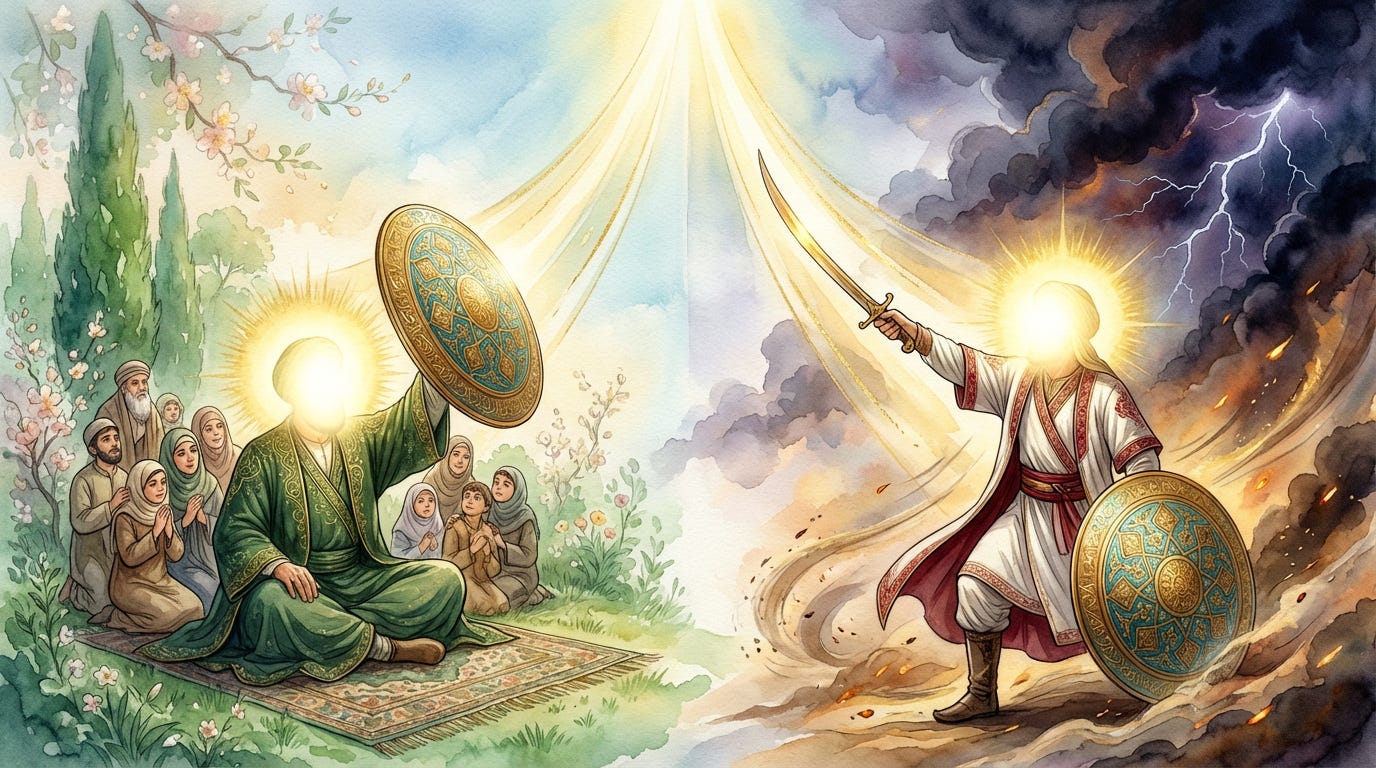
He lowered the Shield and drew the Sword.
And in doing so, he saved Islam.
The same family.
The same tradition.
The same commitment to the Truth.
But different conditions produce different responses.
Imam Hasan faced a situation where patience could preserve the community without surrendering the principle.
Imam Husayn faced a situation where patience would become surrender — where silence would not protect the kernel but bury it.
This is the spectrum.
And the wisdom of the believer lies in knowing where on that spectrum his own situation falls.
The Lesson of the Spectrum
We established in Session 55 the hard limits of Taqiyyah — the lines beyond which it becomes forbidden.
Imam al-Sadiq said:
إِنَّمَا جُعِلَتِ التَّقِيَّةُ لِيُحْقَنَ بِهَا الدَّمُ، فَإِذَا بَلَغَتِ التَّقِيَّةُ الدَّمَ فَلَا تَقِيَّةَ
“Taqiyyah was only instituted to preserve blood. But if Taqiyyah itself reaches the point of [causing] blood to be shed, then there is no Taqiyyah.”
— Al-Kulayni, Al-Kafi, Volume 2, Kitab al-Iman wa al-Kufr, Bab al-Taqiyyah, Hadith 2
Imam Khomeini said:
قدرت نداشتن عذر است، اما اگر قدرت پیدا کردیم، تقیه حرام است
“Lacking power is an excuse. But if we acquire the power, Taqiyyah becomes forbidden.”
— Imam Khomeini, Sahifeh-ye Imam, Volume 21, Page 408
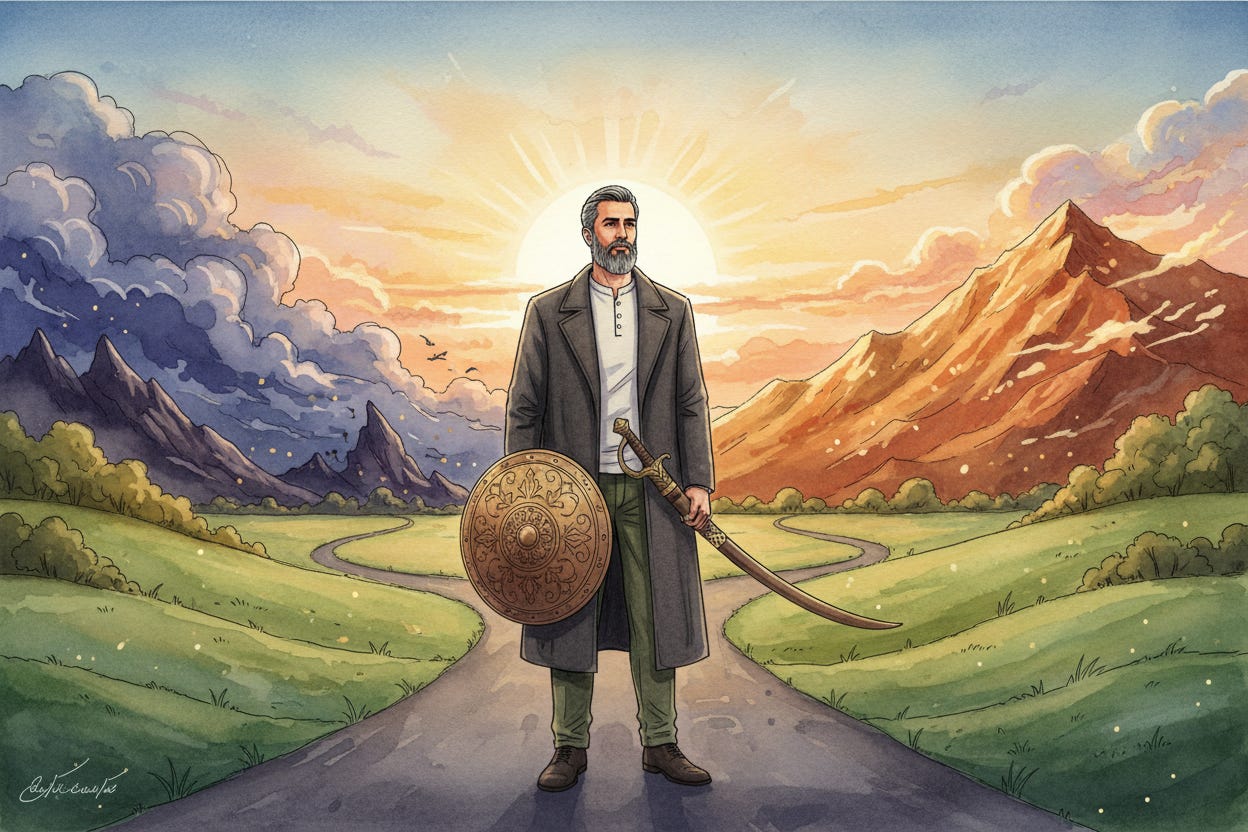
The Hasan-Husayn spectrum is the lived demonstration of these principles.
When Taqiyyah can preserve without surrendering — use it.
Raise the Shield.
Protect the community.
Build in the shadows.
Wait for conditions to change.
When Taqiyyah would become surrender — lower the Shield.
Draw the Sword.
Accept the consequences.
Die if necessary — but die with the principle intact.
The coward never lowers the Shield.
He hides behind it forever, even when hiding becomes betrayal.
The fool never raises it.
He charges into every battle regardless of conditions, wasting righteous blood without achieving the goal.
The wise believer — the one who has learned from Imam Hasan and Imam Husayn both — knows when to do which.
He reads the signs of his time.
He assesses the conditions.
He asks:
Is this a moment for patience, or a moment for resistance?
Can the kernel be preserved through concealment, or is the kernel itself under attack?
And he acts accordingly.
This is not inconsistency.
This is not contradiction.
This is the fullness of the tradition — a tradition capacious enough to contain both the treaty and the stand, both the Shield and the Sword, both the patient builder and the defiant martyr.
We need them both.
We honour them both.
And we learn from them both.
The Safavid Transformation: When the Shield Was Lowered
We have traced the Shield through the Era of the Imams — the careful building in shadows, the networks of knowledge constructed under surveillance.
We have examined the Hasan-Husayn spectrum — the wisdom of knowing when patience preserves and when resistance becomes obligatory.
Now we come to a turning point.
For nine centuries after the Occultation, the Shia of Iran lived as a minority.
The land was Sunni — Shafi’i, Hanafi, ruled by dynasties that ranged from indifferent to hostile.
The Shia communities in Qom, in Kashan, in scattered pockets across the plateau, maintained their faith quietly.
The Shield remained raised.
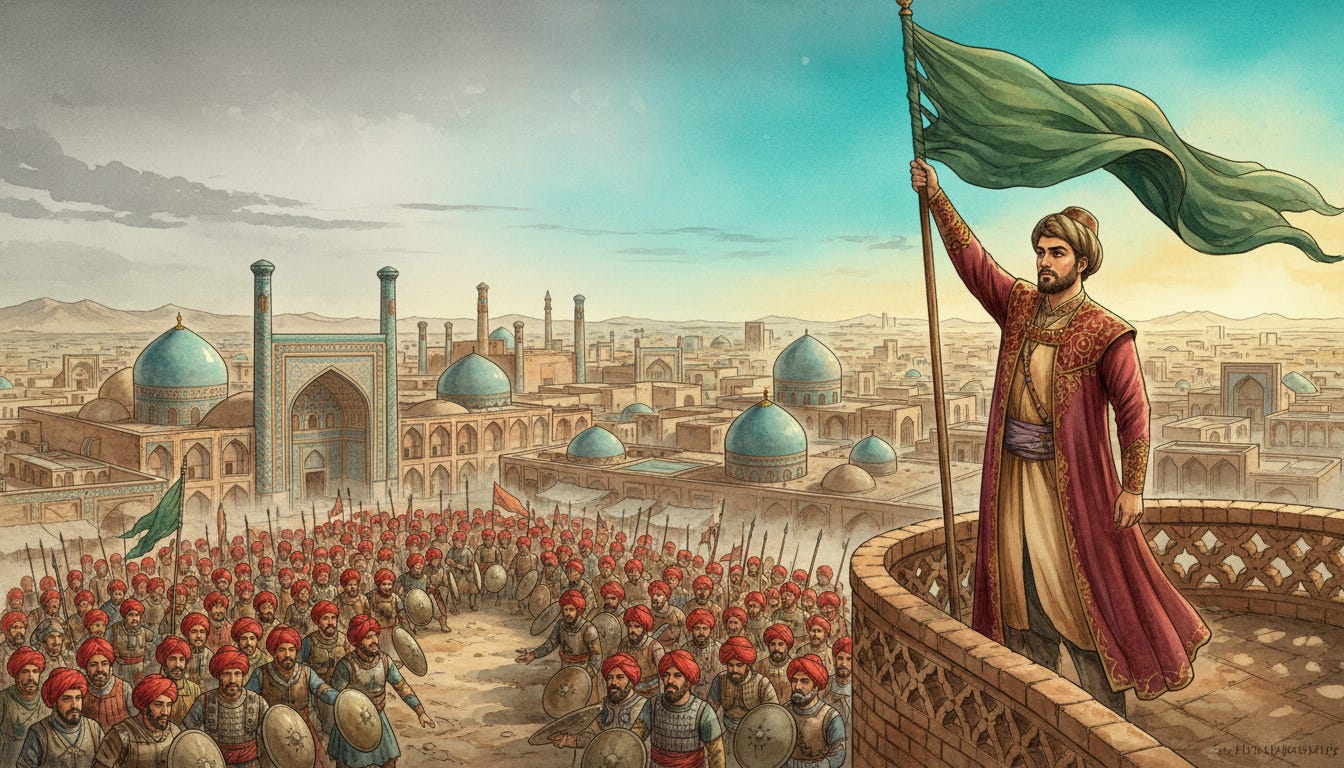
Then, in 907 AH — 1501 CE — everything changed.
A young warrior named Ismail, leader of a militarised Sufi order — the Safaviyya — based in Ardabil, swept into Tabriz at the head of his Qizilbash fighters.
He declared himself Shah.
And he made an announcement that would reshape the religious landscape of an entire civilisation:
Twelver Shi’ism was now the state religion of Iran.
The Political Reality
Let us be clear about what this was — and what it was not.
Shah Ismail was not a scholar.
He was not a jurist.
He was not a spiritual leader in the mould of the Imams.
He was a young, ambitious, militarily brilliant empire-builder who needed a weapon against his rivals.
To the west stood the Ottomans — who claimed the title of Caliph, leader of all Sunni Muslims, and who viewed the Safavid territories as rightfully theirs.
To the east prowled the Uzbeks — Sunni extremists who had already devastated Shia communities in Central Asia.
Ismail needed an identity that would make his empire distinct — a banner that would create loyalty among his subjects and a wall against his enemies. He chose Shi’ism.
Was he sincere?
The historical record suggests he was about as Shia as the Abbasids were pro-Ahl al-Bayt.
Both used the name.
Neither earned it.
The Abbasids rode to power on the slogan “al-Rida min Aal Muhammad” — the Chosen One from the Family of Muhammad — then spent two centuries imprisoning, poisoning, and surveilling the actual Family of Muhammad.
The Safavids declared Shi’ism the state religion, then ruled as absolute monarchs with all the corruption, wine-drinking, and tyranny that implies.
This is not cynicism.
This is historical honesty.
But here is what matters for our discussion: the political reality created space that had not existed before.
Whatever the kings’ motivations, the result was that for the first time in nine centuries, a Shia Muslim in Iran could pray openly, mourn openly, declare openly:
أَشْهَدُ أَنَّ عَلِيًّا وَلِيُّ ٱللَّٰهِ
“I bear witness that Ali is the Waliyy of God.”
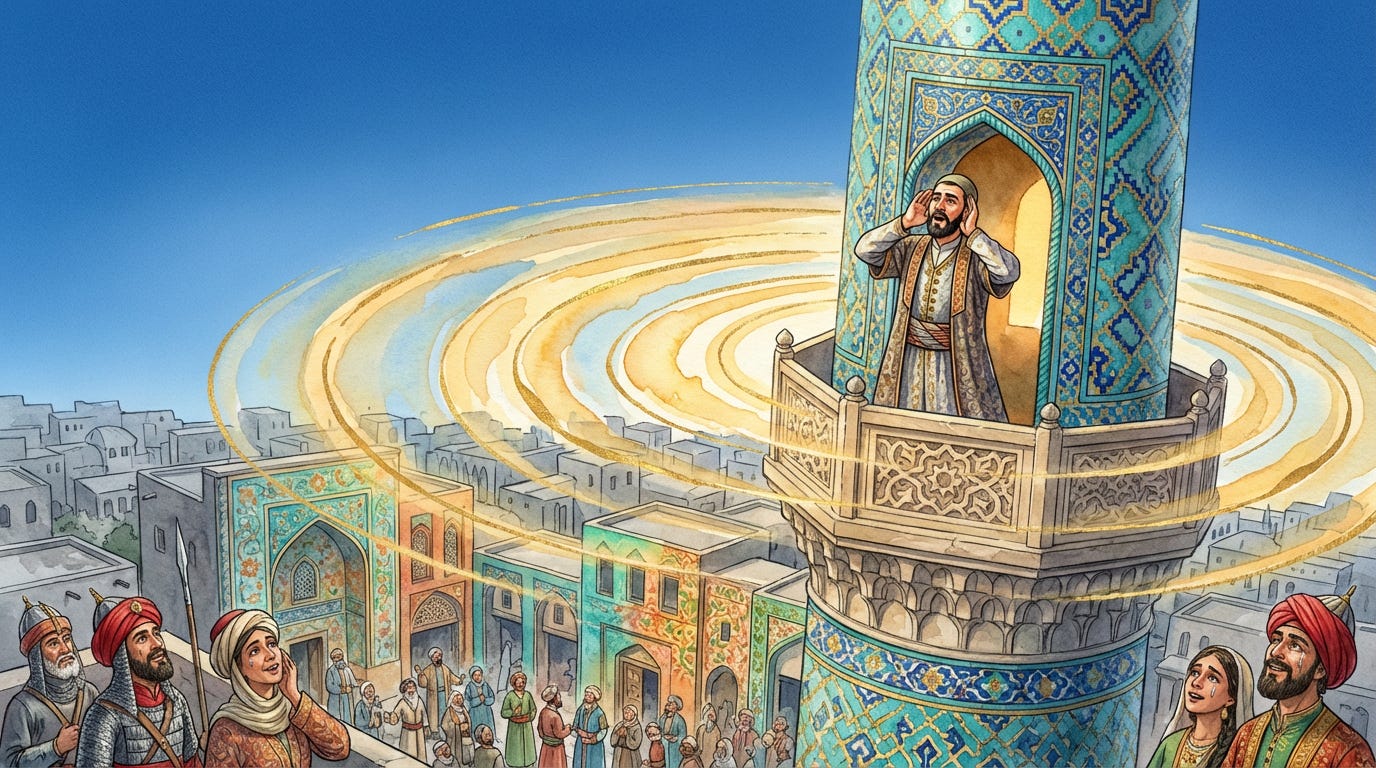
When Shah Ismail ordered this phrase added to the Adhan in Tabriz, his advisors warned him that the city was still majority Sunni.
They feared revolt.
His response was recorded:
من به یاری خدا و ائمه اطهار (ع) قیام کردهام و از هیچکس باک ندارم. اگر رعیت حرفی زدند، شمشیر میکشم...
“I have risen with the help of God and the Pure Imams , and I fear no one. If the people speak a word of protest, I will draw the sword...”
— Alam-ara-ye Safavi (World-Adorning History of the Safavids), Page 64
This was the sonic signal that the era of silence was over.
The secret became the slogan.
The whisper became the call to prayer.
The Scholars’ Calculation
The kings provided the sword.
But they had no books.
They had no scholars.
They had military power but no religious infrastructure.
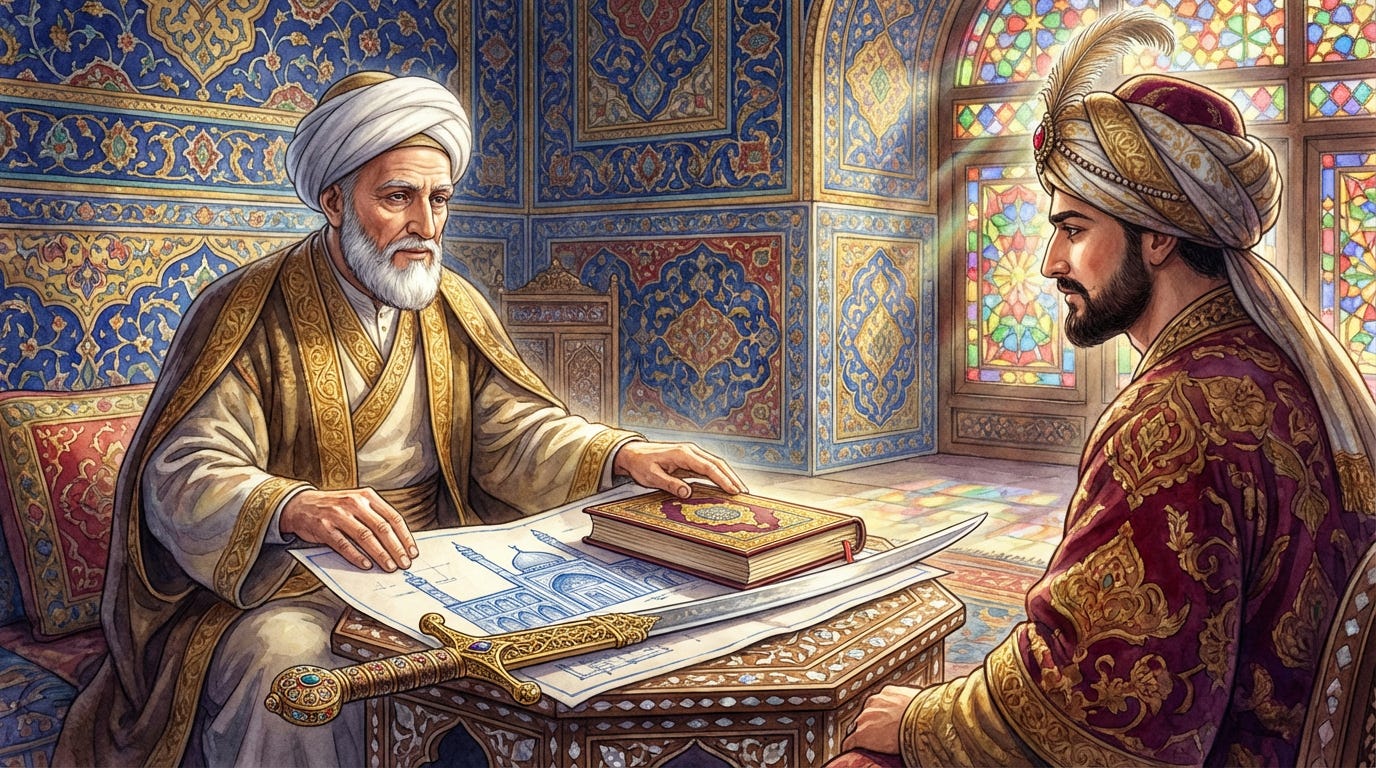
And so they invited.
From Jabal Amil in Lebanon, from the seminaries of Iraq, from Bahrain — Shia scholars were summoned to Iran.
They were offered positions, land, protection, influence.
In exchange, they would build the religious architecture of the new state.
The most significant of these was Shaykh Nur ad-Din Ali ibn al-Husayn al-Karaki — Al-Muhaqqiq al-Thani — who made a calculation that would shape Shia history.
He knew what the Safavid kings were.
He harboured no illusions about their spiritual credentials.
But he saw something else: an opportunity that might not come again for centuries.
Under hostile Sunni rule, the Shia could survive — but they could not flourish.
The great texts could be preserved — but they could not be taught openly.
The mourning for Imam Husayn could continue — but only behind closed doors.
Under Safavid rule, whatever its flaws, the “fear” — the Khawf that had necessitated Taqiyyah — was removed.
And so Muhaqqiq al-Karaki issued rulings that transformed public religious life.
He revived the Friday Prayer — Salat al-Jumu’ah — which many scholars had deemed suspended during the Occultation because it required either the Imam or safety from persecution.
Muhaqqiq al-Karaki argued that Safavid rule provided sufficient safety.
The Jurist now had Bast al-Yad — an “Extended Hand” — through state support.
He permitted scholars to work with the state — not to endorse its corruption, but to use its machinery for the propagation of the faith.
لِمَا فِيهِ مِنْ إِعْزَازِ الدِّينِ وَتَرْوِيجِ الْمَذْهَبِ وَخَذْلِ الْمُخَالِفِينَ
“[Working with the Sultan is permitted] for the sake of glorifying the Religion, promoting the Madhhab (School of Thought), and humiliating the opponents.”
— Al-Muhaqqiq al-Karaki, Jami’ al-Maqasid, Volume 4
Notice the framing.
He did not say:
“The Sultan is righteous, therefore obey him.”
He said:
“The Religion can be served through this arrangement.”
The kings were tools.
The scholars were the craftsmen.
Shaheed Mutahhari, centuries later, would defend this calculation:
محقق کرکی و علامه مجلسی و امثال اینها که به دربار صفویه رفتند، نه برای این بود که دربار را تأیید کنند، بلکه برای این بود که از قدرت دربار برای ترویج اسلام و نجات شیعه استفاده کنند. آنها در واقع دربار را تسخیر کردند، نه اینکه تسخیر دربار شوند.
“Muhaqqiq al-Karaki and Allamah Majlisi and their likes who went to the Safavid court did not do so to endorse the court, but rather to utilise the power of the court for the propagation of Islam and the salvation of the Shia. In reality, they captured the court; they were not captured by the court.”
— Shaheed Murtadha Mutahhari, Khadamat-e Mutaqabil-e Islam va Iran
And Imam Khomeini, who despised monarchy as an institution, nevertheless validated the Safavid-era scholars:
اگر مجلسی و دیگران همراهی با سلاطین میکردند، برای این بود که نفوذ در دستگاه جائر پیدا کنند تا بتوانند جلو ظلم را بگیرند... همراهی آنها، همراهیِ تقیهآمیز برای حفظ اساس مذهب بود.
“If Majlisi and others accompanied the Sultans, it was in order to gain influence within the unjust apparatus so they could prevent oppression... Their accompaniment was a Taqiyyah-based accompaniment to preserve the very foundation of the religion.”
— Imam Khomeini, Kashf al-Asrar
Notice Imam Khomeini’s phrase:
“Taqiyyah-based accompaniment.”
Even the engagement with the Safavid state was itself a form of strategic navigation — not the Taqiyyah of hiding from enemies, but the Taqiyyah of working with imperfect allies.
A different Shield, for different conditions.
The Transformation of Public Life
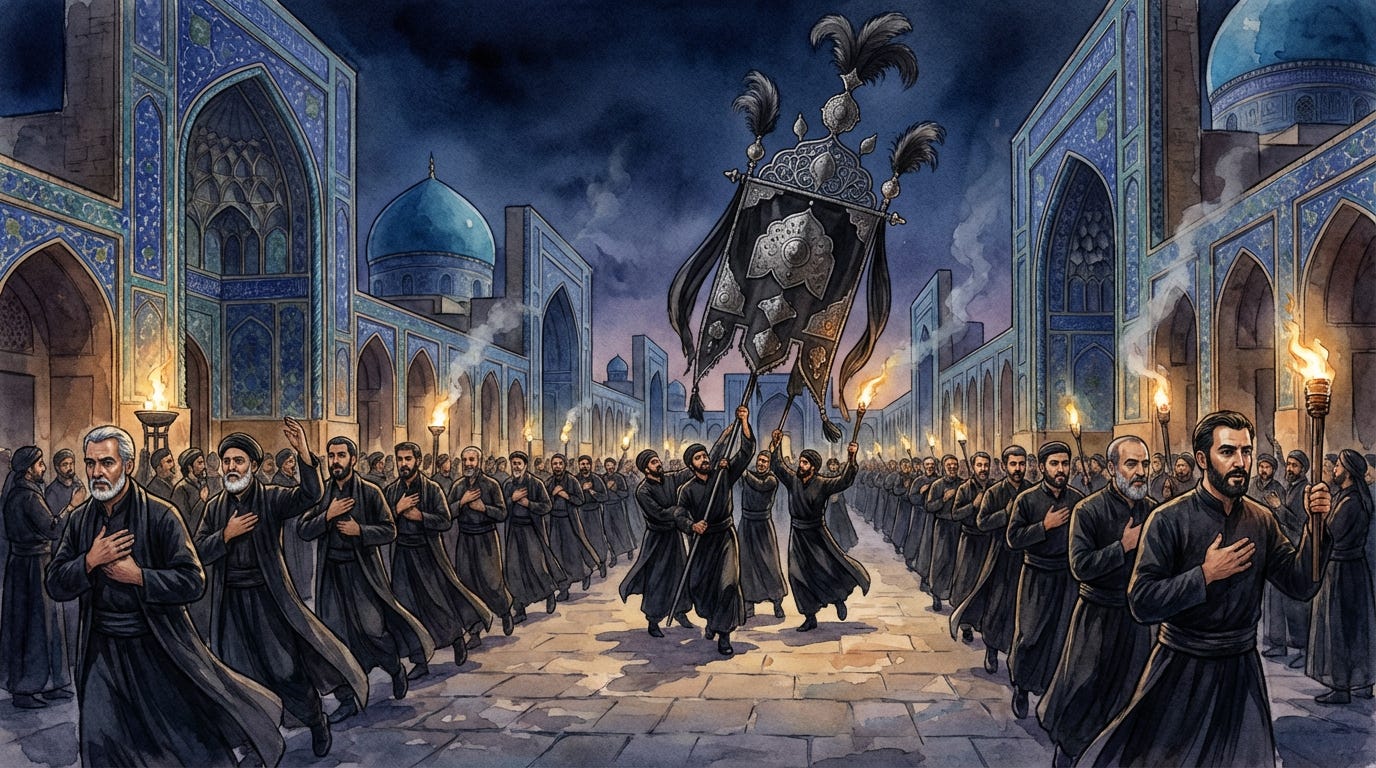
The results were visible.
The private became public.
The hidden became proclaimed.
The mourning for Imam Husayn — which for centuries had been conducted in homes, in small gatherings, in whispered lamentations — exploded into the streets.
Jean Chardin, a French traveler who visited Isfahan during the Safavid era, recorded what he witnessed:
“During the first ten days of Muharram... the entire city of Isfahan goes into mourning. Black standards are raised... Men cover their bodies with black... and they shout through the streets: ‘O Hussein! O Hussein!’”
— Voyages de Monsieur le Chevalier Chardin en Perse, Volume 3
The theological logic was straightforward: Taqiyyah exists because of Khawf al-Darar — fear of harm.
If the King himself is mourning with you, the fear is removed.
Therefore, concealment is no longer permitted — because hiding the truth when there is no danger is not Taqiyyah.
It is cowardice.
The Dust Wiped Away
The culmination came with Allamah Muhammad Baqir al-Majlisi — author of Bihar al-Anwar, one of the most influential scholars in Shia history.
Allamah Majlisi represented the full flowering of what the Safavid security umbrella made possible.
He wrote in Persian so the common people could access the teachings.
He compiled the hadith traditions into encyclopaedic collections so nothing would be lost.
He wrote openly — including critiques of the Caliphs that would have meant instant death a century earlier.
In the introduction to his work Haqq al-Yaqin (The Certain Truth), he expressed what the era meant:
شکر و سپاس خدای را که در این ایام دولت قاهره صفویه... غبار تقیه از چهره مذهب حق زدوده شد و دوستان اهل بیت (ع) توانستند بیپروا اظهار محبت و برائت نمایند.
“Thanks and praise be to God that in these days of the victorious Safavid state... the dust of Taqiyyah has been wiped from the face of the True School of Thought, and the friends of the Ahl al-Bayt have been able to fearlessly manifest their love (Tawalla) and their dissociation (Tabarra).”
— Allamah Majlisi, Haqq al-Yaqin, Author’s Introduction
“The dust of Taqiyyah has been wiped from the face of the True School of Thought.”
This is the moment.
This is the transformation.
The Shield — raised for nine centuries — was lowered.
The Intellectual Flowering
And it was not only law and hadith that flourished.
Sadr al-Din al-Shirazi — known to history as Mulla Sadra — represented the philosophical peak of what became known as the School of Isfahan.
While Muhaqqiq al-Karaki built the legal infrastructure and Majlisi compiled the traditions, Mulla Sadra did something that would have been impossible under persecution: he thought.
He synthesised philosophy, mysticism, and theology into a unified system — the Transcendent Wisdom (al-Hikmat al-Muta’aliyah) — that remains the foundation of Shia philosophical training to this day.
His Asfar al-Arba’ah (The Four Journeys) traced the soul’s journey from creation to Creator and back again, weaving together Aristotle and Ibn Arabi, Avicenna and the Imams.
This kind of work requires peace.
It requires libraries.
It requires decades of uninterrupted contemplation.
Under Umayyad surveillance, under Abbasid prisons, under hostile Sunni dynasties — there was no space for this.
The scholars were too busy surviving to philosophise.
The Safavid umbrella — for all its political corruption — gave Mulla Sadra the one thing a philosopher needs: time.
And what he built with that time still shapes how we understand the relationship between reason and revelation, between existence and essence, between the human soul and its Divine origin.
The Shield, when lowered, did not only permit public mourning.
It permitted public thinking.
A Critical Caveat
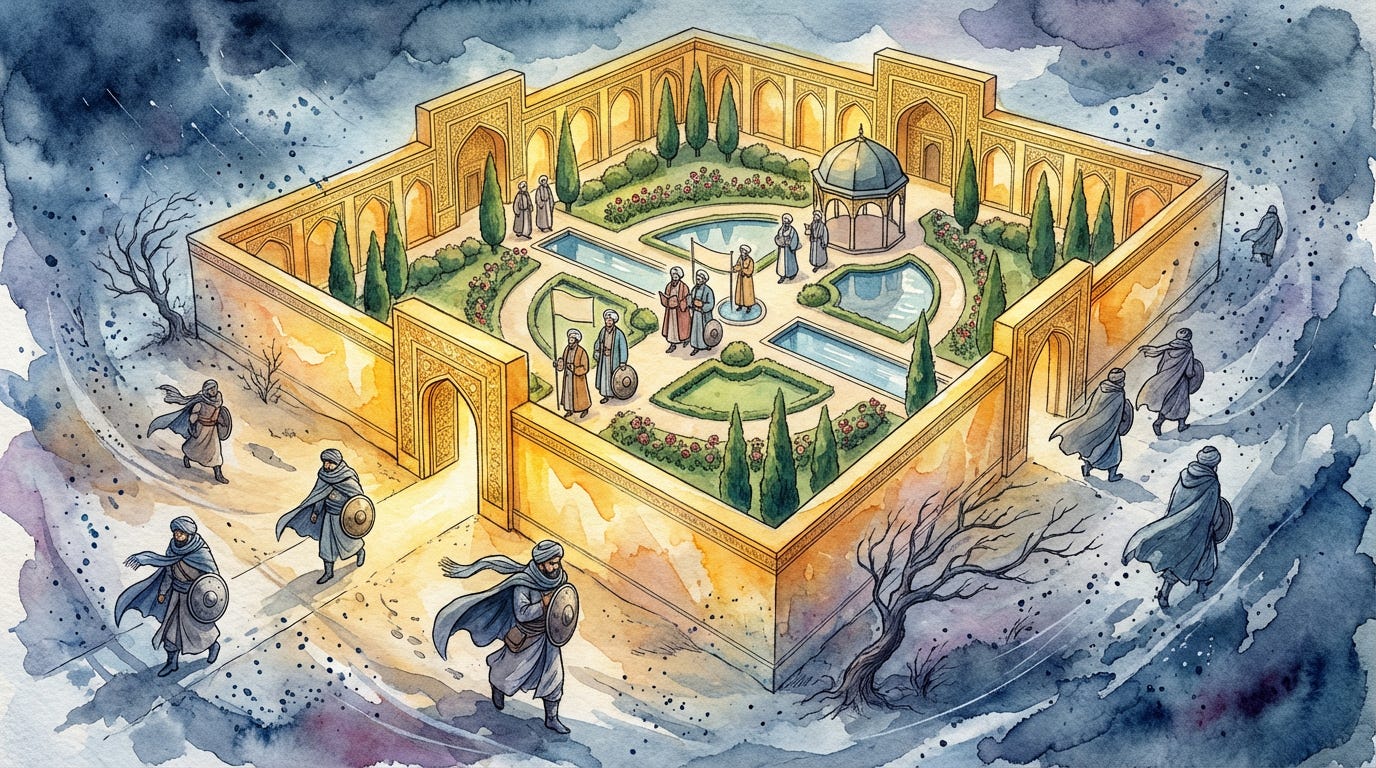
But we must not misread this history.
The Shield was lowered in Iran — in the territories where Safavid power held sway.
It was not lowered everywhere.
In Lebanon, in Bahrain, in India, in the scattered Shia communities across the Sunni-ruled world — the conditions had not changed.
The Safavid Shah could not protect a Shia in Ottoman Damascus or Mughal Delhi.
For those communities, the Shield remained raised.
And even in Iran, a different kind of navigation emerged.
The Safavid kings were not the Imams.
They were not even sincere believers in many cases.
Working with them required its own wisdom — the wisdom of using imperfect instruments for sacred purposes, of serving the faith through flawed vessels, of maintaining one’s principles while operating in a morally compromised environment.
Dr. Ali Shariati, the twentieth-century intellectual, would later critique this arrangement harshly — arguing that the Safavids transformed “Red Shi’ism” (the Shi’ism of revolution and martyrdom) into “Black Shi’ism” (the Shi’ism of mourning and political quietism).
«تشیع علوی، تشیع شهادت است و تشیع صفوی، تشیع عزاداری. در تشیع صفوی، چهرهی حسین (ع) که پرچمدار مبارزه با ظلم است، به چهرهای مظلوم و گریان تبدیل میشود تا مردم فقط بر او بگریند و خود ساکت بمانند.»
“Alid Shi’ism is the Shi’ism of Martyrdom; Safavid Shi’ism is the Shi’ism of Mourning. In Safavid Shi’ism, the figure of Hussein —who is the standard-bearer of the struggle against oppression—is transformed into a victimized, weeping figure, so that the people merely weep for him while remaining silent themselves.”
— Dr Ali Shariati, Tashayyu’-e Alavi va Tashayyu’-e Safavi (Alid Shi’ism and Safavid Shi’ism)
There is something to this critique.
The institutionalisation of religion always carries risks.
But Shaheed Mutahhari’s response also carries weight: without the Safavid security umbrella, the books would have burned.
The Ottomans and Uzbeks were not interested in preserving Shia libraries. The scholars made a calculated choice — imperfect allies over existential enemies.
History rarely offers clean options.
The Lesson
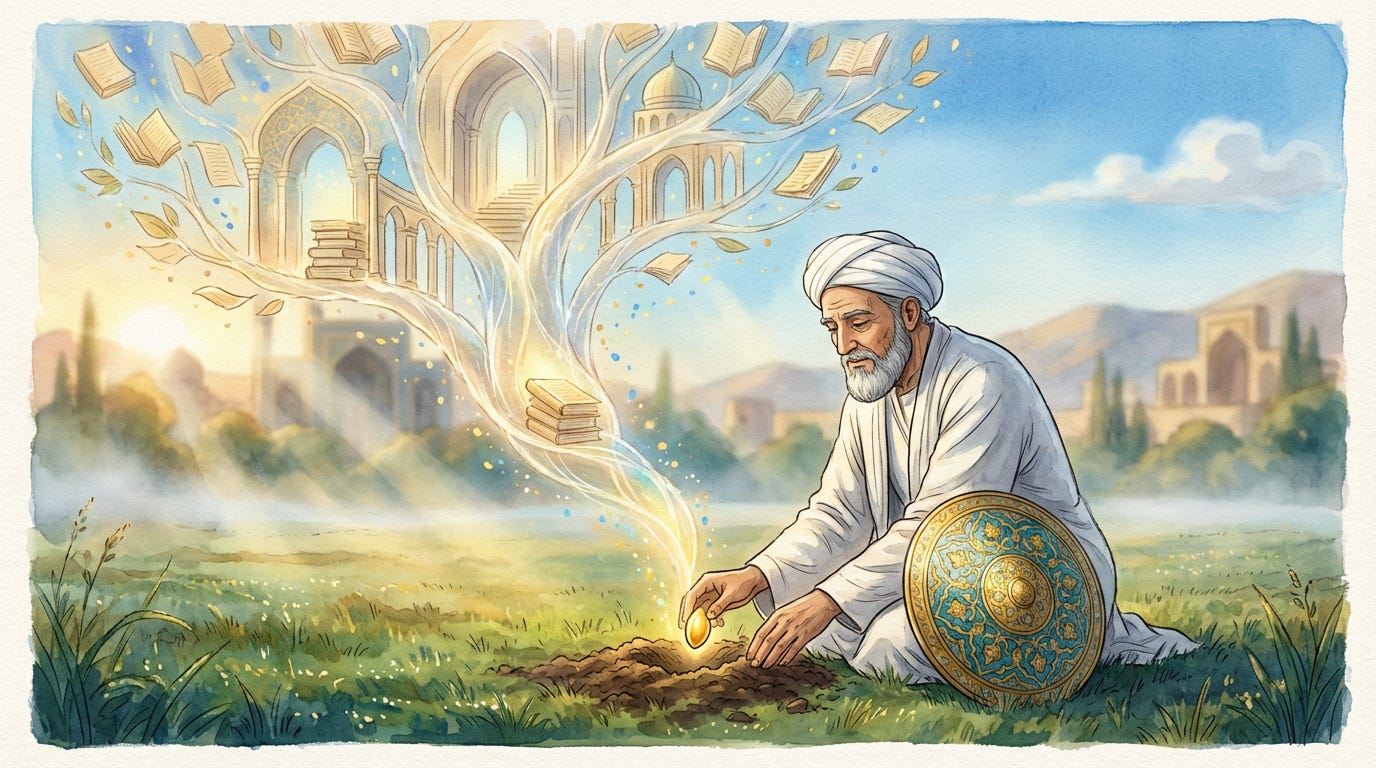
What do we learn from the Safavid transformation?
The Shield is not permanent.
It is not a lifestyle, not an identity, not a perpetual posture.
It is a response to conditions.
And when conditions change, the practice changes.
When the fear is present, the Shield is raised.
When the fear is removed, the Shield is lowered.
When the enemies are at the gate, concealment preserves.
When the gates are secured, concealment becomes unnecessary — and declaration becomes possible.
The scholars of the Safavid era understood this.
They did not cling to Taqiyyah out of habit when Taqiyyah was no longer required.
They recognised that the conditions had shifted — and they shifted with them.
The kernel that had been protected for nine centuries was finally planted in open ground.
And what grew from it — the Hawza of Isfahan, the libraries, the public mourning, the open teaching — became the foundation for everything that followed.
Including, centuries later, an Islamic Revolution that would lower the Shield even further.
But that is a discussion for next week.
Heroic Flexibility: The Shield at the Level of Nations
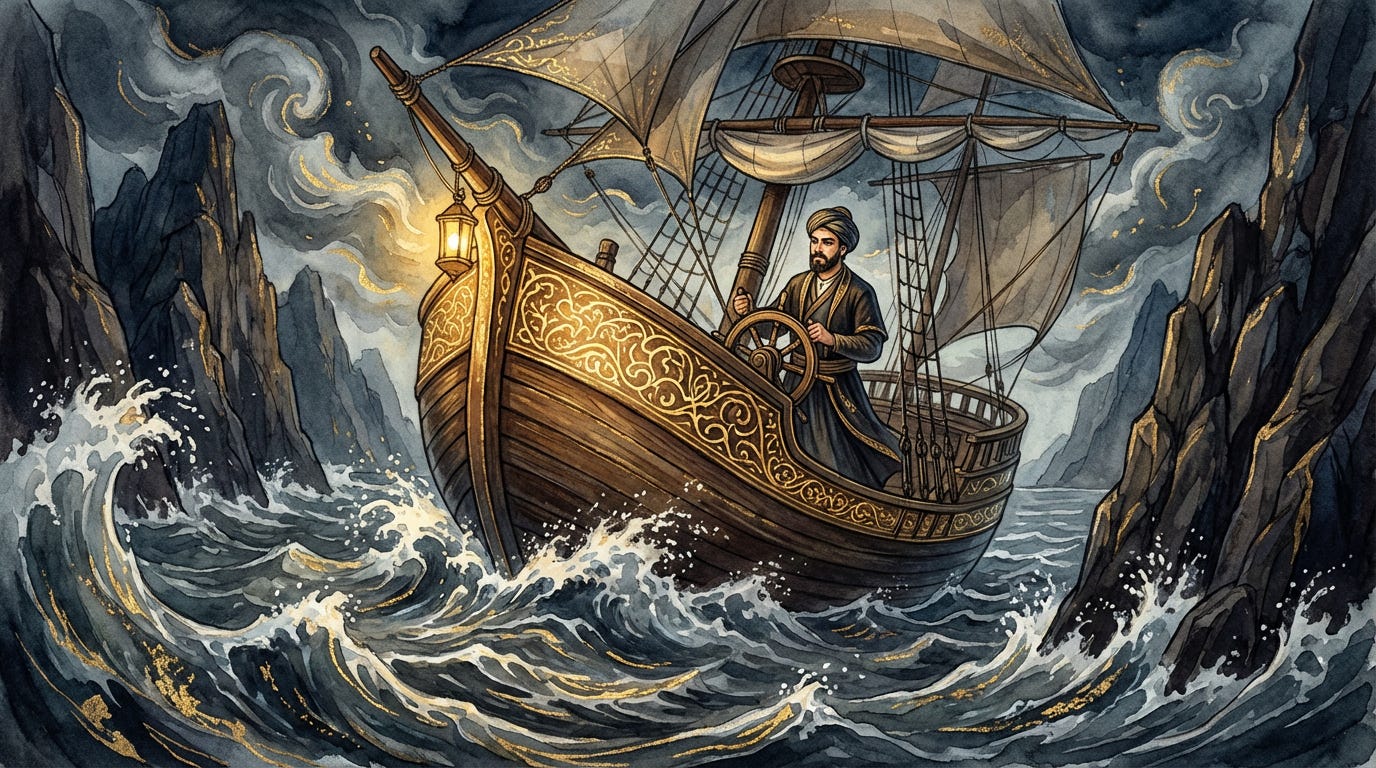
We have traced the Shield through the individual believer — Ammar under torture, the Believer in Pharaoh’s household.
We have traced it through the scholarly community — Imam al-Sadiq’s networks, the careful building in shadows.
We have traced it through the transformation of an entire civilisation — the Safavid moment when the dust of Taqiyyah was wiped from the face of the faith.
But there is one more dimension we must examine before we close tonight’s discussion.
What does the Shield look like at the level of statecraft?
When you are no longer a persecuted minority, when you have established a state governed — however imperfectly — by Islamic principles, when you possess military power and territorial sovereignty... does the wisdom of strategic navigation simply disappear?
Or does it transform?
The Concept: Narm-e Qahramaneh
In September 2013, the Supreme Leader of the Islamic Revolution, Imam Khamenei, introduced a phrase that confused some of his supporters and infuriated his critics.
The phrase was Narm-e Qahramaneh — Heroic Flexibility.
He was addressing the question of nuclear negotiations with the Western powers.
For years, Iran had been subjected to crippling sanctions, threats of military attack, and a relentless propaganda campaign insisting that the Islamic Republic was secretly pursuing nuclear weapons.
Iran’s position had been consistent: we are not pursuing such weapons; our religious principles forbid them; our nuclear programme is for energy, medicine, and scientific advancement.
The West refused to accept this.
And so negotiations began — long, tortuous, humiliating negotiations in which Iran was treated as a defendant rather than a sovereign nation.
Some within Iran argued that any negotiation was surrender.
Any flexibility was weakness.
The Islamic Republic should stand rigid, accept no compromise, and let the sanctions do their worst.
Imam Khamenei responded with a different wisdom:
نرمش قهرمانانه یعنی در مقابل دشمن، در جایی که مصلحت است، انعطاف نشان دادن؛ اما نه به معنای عقبنشینی از اصول
“Heroic Flexibility means showing flexibility before the enemy where there is benefit — but not in the sense of retreating from principles.”
— Imam Khamenei, Speech to IRGC Commanders, September 2013
Notice the precision.
Flexibility — yes.
Retreat from principles — no.
These are not the same thing.
The Metaphor: The Wrestler
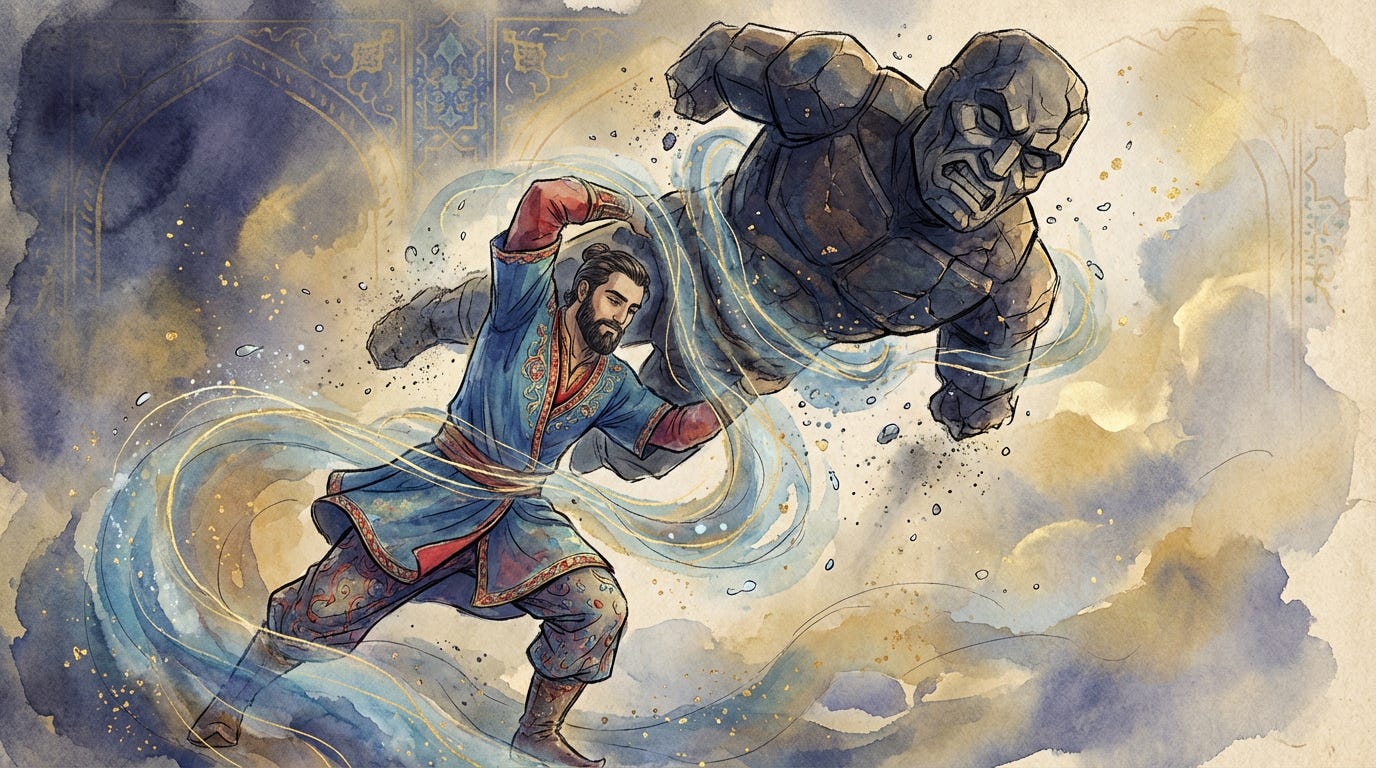
Imam Khamenei employed a metaphor that every Iranian would understand: the wrestler.
Iranian wrestling — Koshti — is an ancient art.
And every wrestler knows that rigidity is death.
The opponent who stands stiff, who refuses to yield any ground, who meets force with force at every point — this opponent is easy to throw.
The master wrestler flows.
He gives ground where giving ground costs nothing.
He yields position to create an opening.
He absorbs the enemy’s energy and redirects it.
Is this weakness?
Watch him throw his opponent to the mat and then answer.
Flexibility in movement is not flexibility in principle.
The wrestler who yields a grip to set up a throw has not abandoned his goal of victory.
He has adapted his tactics to achieve it.
The rigid wrestler loses.
The flexible wrestler wins.
And the heroic wrestler — the Pahlavan — knows exactly when to yield and when to stand immovable.
The Critical Distinction: Mudara vs Wila
Here we must introduce a distinction that cuts to the heart of Islamic political ethics.
Mudara (مدارا) — diplomacy, tactical engagement, dealing with an adversary through negotiation and strategy.
Wila (ولاء) — allegiance, loyalty, genuine alignment of heart and purpose.
These are not the same.
You can sit at a table with your enemy without becoming his friend.
You can negotiate terms without selling your soul.
You can sign an agreement that serves your interests without abandoning your principles.
The Prophet himself, peace be upon him and his family, demonstrated this distinction at Hudaybiyyah.
The Prophetic Precedent: Hudaybiyyah
In the sixth year after the Hijrah, the Prophet led his companions toward Makkah to perform the Umrah pilgrimage.
he Quraysh blocked their path.
Negotiations began.
The terms that emerged were, on their face, humiliating.
The Muslims would not enter Makkah that year — they would turn back.
Any Makkan who fled to Madinah would be returned — but any Muslim who fled to Makkah would not.
And most striking: when the treaty was being written, the Quraysh objected to the phrase
“Muhammad, Messenger of God.”
“If we accepted that you were the Messenger of God,” they said, “we would not be fighting you.”
The Prophet instructed Imam Ali to remove the phrase. Write simply:
“Muhammad ibn Abdullah.”
Some companions were outraged.
This was surrender!
This was denial of the Prophet’s station!
How could they accept such terms?
But the Prophet saw further.
The peace — even an imperfect, humiliating peace — was more valuable than the symbolic victory.
It would give the Muslims time to consolidate, to grow, to demonstrate the beauty of Islam to tribes who had only heard Quraysh propaganda.
And so it proved.
Within two years, the treaty collapsed — not because the Muslims broke it, but because the Quraysh violated its terms.
And when the Prophet marched on Makkah, he entered virtually unopposed, the city opening its gates to the faith it had fought for two decades.
Was Hudaybiyyah surrender?
It was strategy.
Was removing “Messenger of God” a denial of truth?
It was wisdom — giving the enemy a symbolic victory that cost nothing while securing a practical victory that changed history.
This is Mudara.
This is Heroic Flexibility.
This is the Prophetic model of strategic engagement.
The JCPOA: Hudaybiyyah in Modern Form
Now consider the Joint Comprehensive Plan of Action — the nuclear agreement signed in Vienna on 14 July 2015.
Iran agreed to significant restrictions on its nuclear programme:
“Iran will... keep its level of uranium enrichment at up to 3.67%... Iran will reduce the number of its installed centrifuges to 6,104...”
— JCPOA, Annex I, Sections A and B
In exchange, the Western powers agreed to lift nuclear-related sanctions.
Now, 3.67% enrichment is suitable for nuclear power plants and medical isotope production.
It is nowhere near the approximately 90% enrichment required for a weapon.
Iran had never enriched to weapons grade.
Iran had consistently maintained — based on the explicit religious ruling of its Supreme Leader — that such weapons were forbidden.
But the West insisted: Iran wants a bomb. Iran is pursuing a bomb. Iran cannot be trusted.
And so Iran said, in essence:
Fine. We will formally agree to limit what we were never going to do anyway.
This is Tawriyah at the level of statecraft.
The West demanded assurance.
Iran provided it — truthfully, because Iran was never pursuing weapons-grade enrichment in the first place.
The agreement restricted something that Islamic law had already forbidden.
Like the Prophet saying “We are from water” — technically true, addressing the demand, without surrendering the actual position.
Like removing “Messenger of God” from the treaty document — a symbolic concession that cost nothing of substance, because the Prophet’s station did not depend on Quraysh acknowledgment.
Iran signed.
Iran complied.
The International Atomic Energy Agency verified compliance in report after report.
“The Agency continues to verify the non-diversion of declared nuclear material in Iran. Iran is implementing its nuclear-related commitments under the JCPOA.”
— IAEA Report to the Board of Governors, February 2019
The Exposure of the Deceiver
But here is what the Heroic Flexibility also achieved: it revealed who the true treaty-breaker was.
From before the ink was dry, the United States acted in bad faith.
UN-mandated nuclear sanctions were lifted — but the US maintained other sanctions, imposed new ones, and used “secondary sanctions” to threaten any company or country that did business with Iran.
European banks, terrified of American retaliation, refused to process Iranian transactions.
The promised economic relief never materialised.
Then, on 8 May 2018, the United States formally withdrew from the agreement — an agreement Iran was verifiably keeping.
The Europeans followed.
They issued statements of regret while doing nothing to fulfil their own commitments.
Their “special purpose vehicle” to facilitate trade with Iran remained an empty shell.
Their promises proved worthless.
And Iran?
Iran’s principles remained intact.
Iran had never pursued weapons of mass destruction — and still did not.
Iran had complied with every provision — and was verified doing so.
The flexibility was “heroic” precisely because it cost nothing of the kernel.
Iran did not abandon its religious position.
Iran did not compromise its strategic depth.
Iran did not become an ally of those it negotiated with.
What Iran did was expose the deceiver.
The world saw — those with eyes to see — that Iran kept its word while the West broke theirs.
That Iran accepted intrusive inspections while Israel, with its undeclared arsenal, accepted none.
That Iran operated within international law while the United States tore up agreements on a presidential whim.
The one accused of Taqiyyah — of religious deception — was the one telling the truth.
The ones claiming to defend the “rules-based international order” were the ones violating it.
The Lesson
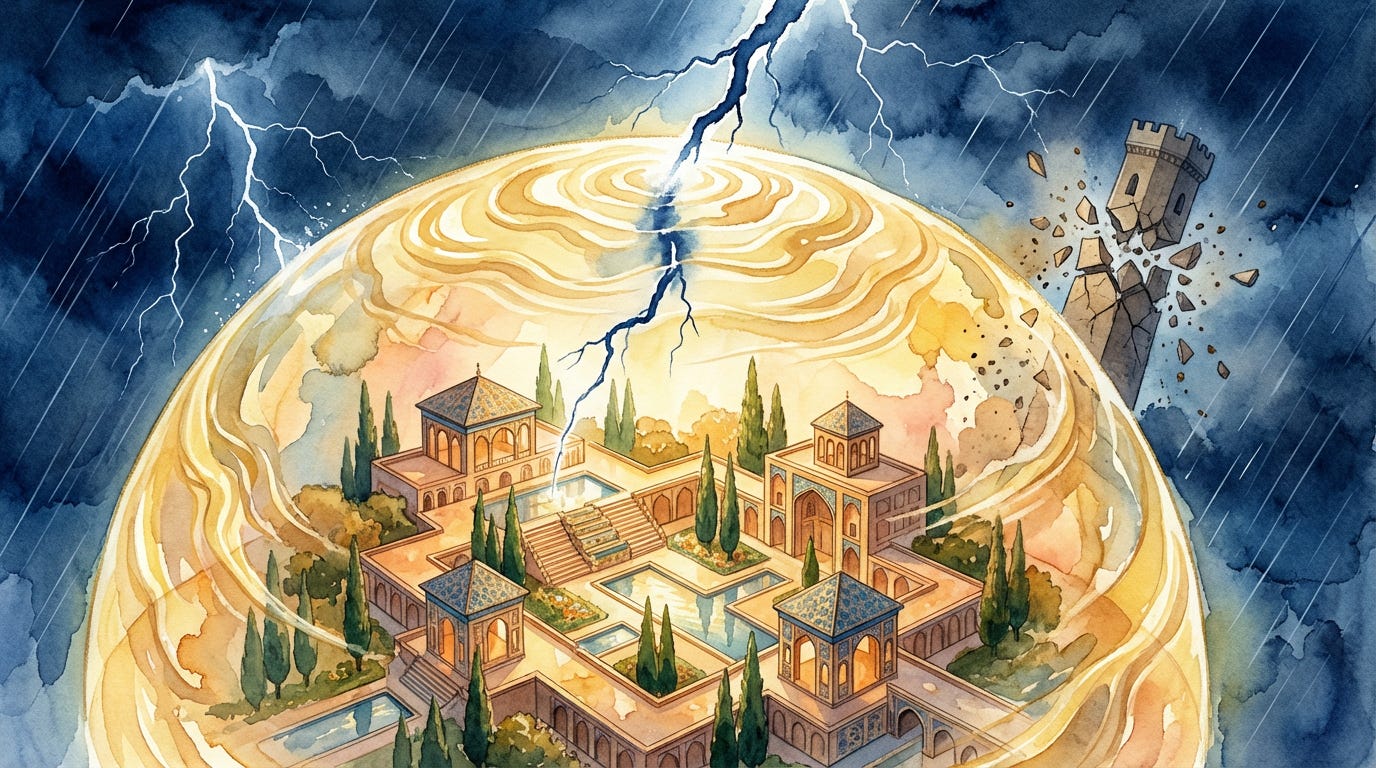
Heroic Flexibility is not surrender.
It is the application of ancient wisdom to modern statecraft.
It is the recognition that rigidity breaks, while flexibility endures.
It is the understanding that you can engage with an enemy without becoming his ally — that Mudara is not Wila.
It is the Prophetic model of Hudaybiyyah: accept the terms that cost nothing of substance, give the enemy his symbolic victories, and let time reveal who is truly committed to their word.
And it is, in its own way, a form of the Shield.
Not the Shield of hiding — the Islamic Republic does not hide its positions.
But the Shield of strategic patience.
The Shield of tactical wisdom.
The Shield that protects the kernel while navigating a hostile world.
The same principle, scaled from the individual to the state.
The same wisdom, applied across fourteen centuries.
A Question for Next Week
But this raises a deeper question.
Why is Iran so adamant?
Why, when faced with existential sanctions and threats of military attack, does the Islamic Republic refuse to pursue nuclear weapons?
Many nations, facing such pressure, would conclude that survival requires the ultimate deterrent.
Pakistan acquired it.
North Korea acquired it.
Israel — the very entity threatening Iran — has hundreds of undeclared warheads.
Why not Iran?
Is this merely political calculation?
A strategic judgment that the costs outweigh the benefits?
Or is there something deeper — something rooted in the very foundations of Islamic law, something that makes such weapons not merely unwise but forbidden?
Next week, we examine the Nuclear Fatwa.
And we will discover that the prohibition on weapons of mass destruction is not Imam Khamenei’s personal opinion.
It is not a political posture that might change with circumstances.
It is the inevitable conclusion of Islamic principles applied to modern technology — principles rooted in the Quran, in the Prophetic tradition, in fourteen centuries of jurisprudence on the ethics of warfare.
It is the inevitable conclusion of Islamic principles applied to modern technology — principles rooted in the Quran, in the Prophetic tradition, in fourteen centuries of jurisprudence on the ethics of warfare.
It is the theology of violence.
And it forbids what the accusers claim Iran secretly desires.
But that is for next week.
Tonight, the Shield has been traced from Fitrah to history to statecraft.
And now we draw the threads together.
Conclusion: The Shield in the Field
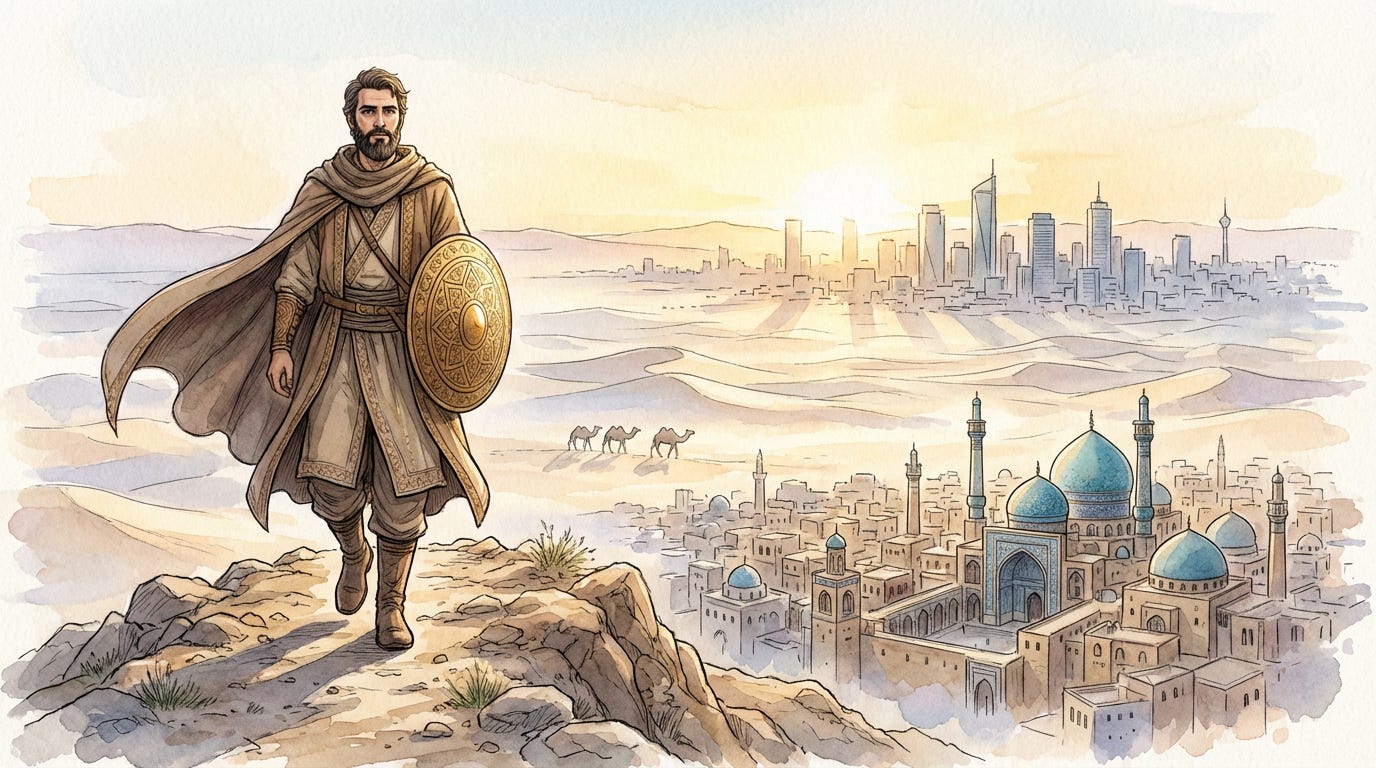
We have covered much ground tonight.
We began where Session 55 left off — with a Shield forged but not yet wielded.
And we took it into the field.
The Threads Gathered
We grounded Taqiyyah in Fitrah — showing that the principle of protective concealment is not merely permitted by revelation but inscribed in creation itself.
The chameleon, the octopus, the deer — these are not anomalies.
They are evidence.
God equipped the weaker of His creatures with the tools of survival, and then revealed in His Book that the believer may use those same tools when faced with those who would destroy him.
To mock Taqiyyah is to mock the design of the Creator.
We dismantled the ancient slander — the accusation that Taqiyyah is merely Nifaq by another name.
We showed that these concepts are not twins but opposites.
The Munafiq conceals disbelief under the appearance of faith; the Mutaqi protects faith from those who would crush it.
One hides evil under good; the other shields good from evil.
One harms the community; the other preserves it.
The mirror and its opposite.
Never to be confused again.
We traced the historical record — from the Era of the Imams, when nine-tenths of religion was the wisdom of navigating hostile terrain, through the Hasan-Husayn spectrum that taught us when patience preserves and when resistance becomes obligatory, to the Safavid transformation when the dust of Taqiyyah was finally wiped from the face of the faith in Iran.
The Shield was raised for nine centuries.
Then conditions changed — and the practice changed with them.
And we examined Heroic Flexibility — the Shield scaled to the level of statecraft.
We saw how Imam Khamenei applied the ancient wisdom to modern negotiations, how the JCPOA echoed the Prophetic precedent of Hudaybiyyah, how Iran’s flexibility was “heroic” precisely because it never compromised the kernel.
The one accused of deception kept his word.
The ones proclaiming a “rules-based order” broke theirs.
The Principle Confirmed
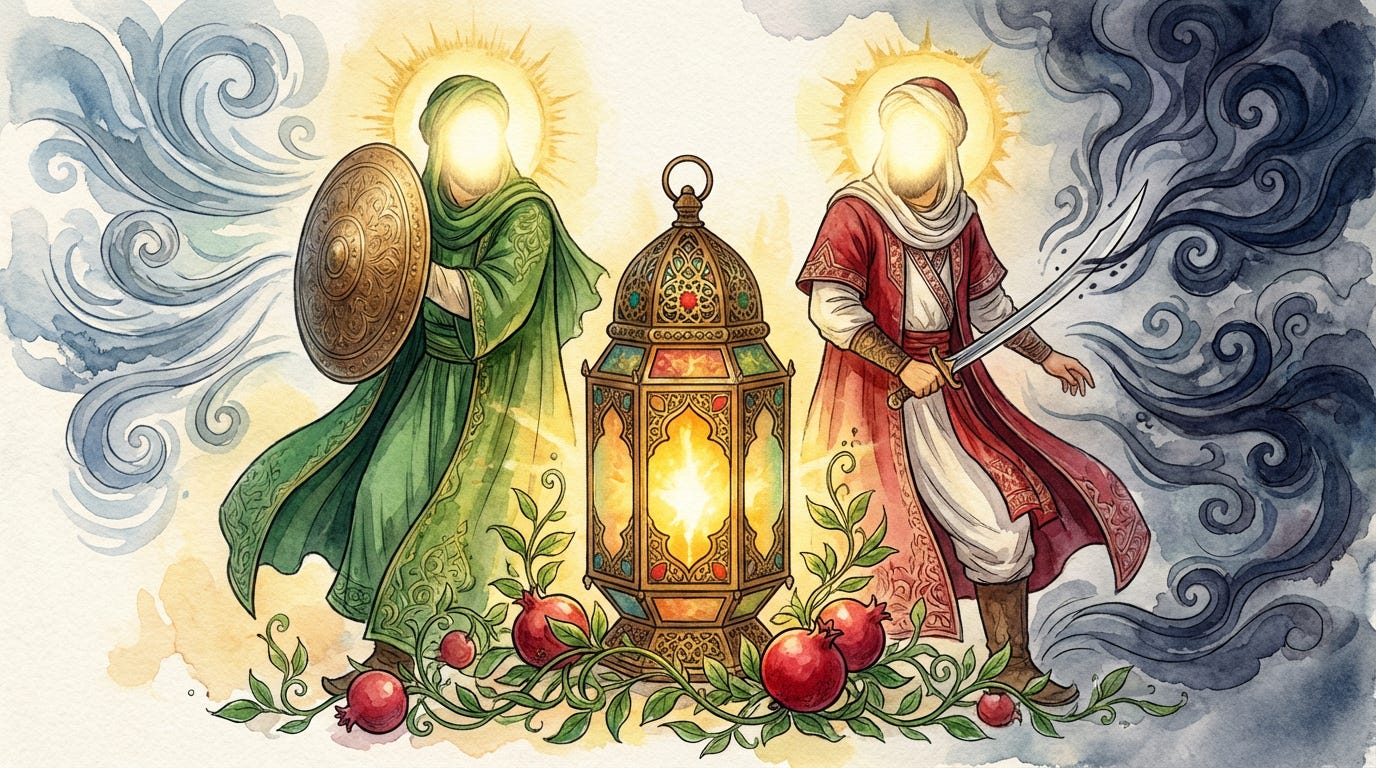
Through all of this, one principle has remained constant:
The Shield is not permanent.
It is not a lifestyle.
It is not an identity.
It is not a perpetual posture of hiding.
It is a response to conditions.
When the danger is present, the Shield is raised — and raising it is wisdom.
When the danger passes, the Shield is lowered — and lowering it is also wisdom.
When engagement serves the faith, engage — with flexibility, with tactical intelligence, with the wrestler’s flowing adaptation.
When resistance becomes obligatory — when the kernel itself is under attack, when silence would mean surrender — then the Shield is set aside and the Sword is drawn.
The same family taught us both.
Imam Hasan made the treaty; Imam Husayn made the stand.
Both were right.
Both were guided.
Both were responding to the conditions that God had placed before them.
The wisdom lies in reading those conditions correctly.
And this wisdom — cultivated across fourteen centuries, tested in persecution and in power, applied by individuals and by states — is what allowed the community to survive.
It is what allowed us to be here tonight, studying this tradition, carrying this light.
We are the fruit of the Shield.
What Remains
But we are not finished.
Tonight we examined the Shield in action — how it was carried, when it was raised, when it was lowered.
Next week, we ask a different question:
When is the Shield not merely lowered but forbidden?
When does the faith demand not concealment but declaration — not flexibility but immovable stance — not the wisdom of survival but the testimony of truth regardless of cost?
We will examine the Nuclear Fatwa — and discover that the Islamic Republic’s refusal to pursue weapons of mass destruction is not political calculation.
It is not strategic judgment.
It is the inevitable conclusion of Quranic principles, Prophetic instructions, and fourteen centuries of jurisprudence on the ethics of violence.
We will explore the theology of warfare in Islam — and understand why any weapon that is indiscriminate, that harms non-combatants, that poisons the earth for generations, that continues to kill after the war ends — why such a weapon is not merely unwise but haram, forbidden at the foundational level.
We will learn the way of Makarim al-Akhlaq — the Noble Character — and ask whether the primary mode for believers today is still concealment or whether it has become demonstration.
Whether we hide the truth or show it through conduct that refutes every slander.
And we will address the question that haunts every conscious believer living in the West:
Is Taqiyyah even relevant in Manchester, in Toronto, in Sydney?
Do I need the Shield in a society that does not persecute me?
Or has the condition changed — and with it, the obligation?
These are the questions for next week.
Tonight: the Shield in action.
Next week: the Shield lowered — and what rises in its place.
A Supplication-Eulogy for Wisdom and the Navigators of Wisdom
We ask God, the Most High, the Protector, the Guardian —
Grant us the wisdom that was granted to the Imams.
The wisdom to read the conditions of our time.
The wisdom to know when silence serves the Truth and when it betrays it.
The wisdom to know when flexibility is heroism and when it becomes surrender.
Grant us the patience of Hasan, peace be upon him —
Who saw that the community could not survive open war,
Who swallowed the bitterness of a treaty with the corrupt,
Who endured the mockery of those who called him weak,
Because he knew that preserving the kernel was worth more than a thousand symbolic victories.
Grant us the courage of Husayn, peace be upon him —
Who saw that the line had been crossed,
Who knew that silence would bury the faith forever,
Who stood with seventy-two against an army of thousands,
Because he knew that some truths must be spoken even if speaking them means death.
Grant us the knowledge of al-Baqir and al-Sadiq, peace be upon them —
Who built the school in the shadows,
Who trained the scholars under the eyes of spies,
Who gave us the books, the methods, the principles,
That we still study tonight, fourteen centuries later.
Grant us the strategic depth of the Leader of our time —
Who navigates a hostile world with the wisdom of the wrestler,
Who yields where yielding costs nothing,
Who stands immovable where principle demands it,
Who has kept the faith while empires rage against him.
Protect us from the two errors:
The cowardice that never lowers the Shield, even when lowering it is obligatory —
And the recklessness that never raises it, even when raising it is wisdom.
Make us among those who read the signs correctly.
Make us among those who act when action is demanded.
Make us among those who wait when waiting is the path.
And hasten the appearance of the one for whom all this preparation has been made —
The Imam of our Time,
The Proof of God upon His creation,
The one whose coming will end the need for navigation,
Because on that Day, the Truth will stand sovereign,
And there will be no more hiding,
And no more calculation,
And every believer will finally be able to declare what has been carried in the heart across the long, long night.
O God, hasten his relief and make us among his helpers and supporters.
And may the peace and blessings of God be upon Muhammad —
Who said “We are from water” when the enemy sought his blood,
Who removed his title from the treaty at Hudaybiyyah because peace was worth more than a word,
Who taught us that wisdom and courage are not opposites but companions.
And upon the Family of Muhammad —
Upon Ali, who held his tongue for twenty-five years,
Not because he had nothing to say,
But because he had everything to protect.
Upon Fatimah, who spoke when speaking was demanded,
Whose sermon still echoes as testimony against those who wronged her.
Upon Hasan, who made the treaty the short-sighted called surrender,
And preserved the community the reckless would have destroyed.
Upon Husayn, who said “I see death as nothing but felicity,”
And drew the line that can never be erased.
Upon Sajjad, who turned the language of supplication into the language of revolution,
Whose whispered prayers carried more power than shouted slogans.
Upon Baqir and Sadiq, who built the school that still stands,
Whose students’ students’ students still transmit the light.
Upon Kadhim, who endured the prison rather than compromise the principle.
Upon Ridha, who walked the tightrope of the Caliph’s court without falling.
Upon Jawad, Hadi, and Askari — who preserved the line against all odds,
Until the moment came for the Proof to be hidden.
And upon the Hidden Imam —
Who waits as we wait,
Who watches as we navigate,
Who prays for us as we pray for him.
May our efforts be accepted in his service.
May our navigation be guided by his light.
And may we be among those who greet him when he comes —
Having carried the Shield faithfully,
Having lowered it when the time was right,
Having stood for the Truth when standing was demanded.
Amen, O Most Merciful of the Merciful.
Amen, O Lord Sustainer of the Universes.
And from Him alone is all ability, and He has authority over all things.