

In His Name, the Most High
Preamble
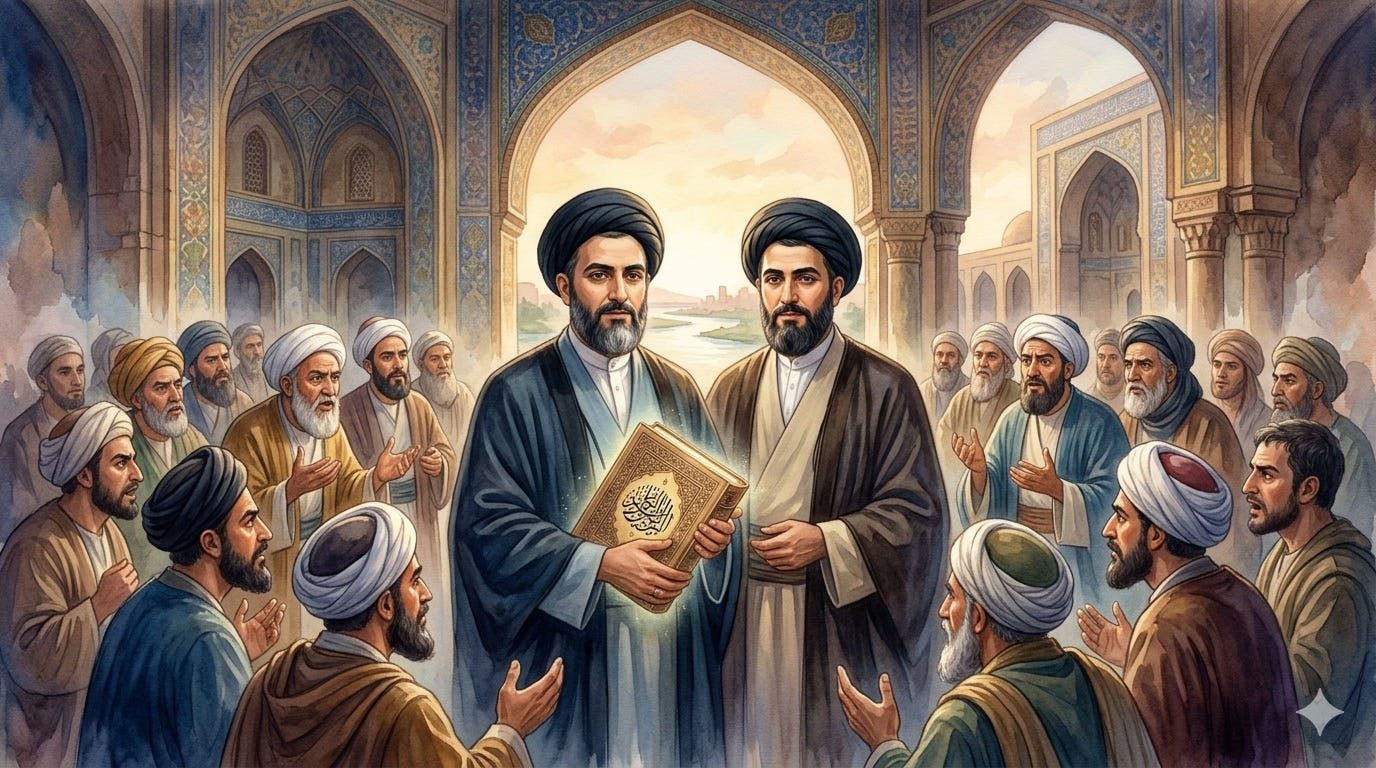
Tonight, we do not begin with a crisis, or a migration, or a martyrdom.
We begin with ten words.
Ten words spoken by Amir al-Mu’minin, Imam Ali, peace and blessings be upon him, over a thousand years before we gathered here this evening.
Ten words that diagnose a disease of the human heart with such precision that every age since has found itself in their mirror.
النَّاسُ أَعْدَاءُ مَا جَهِلُوا
“People are the enemies of what they do not know.”
— Nahj al-Balaghah, compiled by al-Sharif al-Radhi, Maxims/Sayings (al-Hikam), Saying 172
Ten words.
And yet within them is the entire story of the two men we will meet tonight.
Two brothers.
Born of one mother.
Taught by one teacher.
Raised in one of the most dangerous and most glorious cities the Muslim world has ever produced — Baghdad, in the fourth and fifth centuries after the Hijrah.
A city where philosophers walked alongside fanatics.
Where libraries were built in one generation and burned in the next.
Where a Shi’i family could be honoured in the courts of power and threatened in the streets in the same week.
Tonight we meet Sayyed al-Radhi and Sayyed al-Murtadha.
The one who gave us Nahj al-Balagha — the book from which, moments ago, we recited.
And the one who taught the man who would build Najaf.
These two brothers stood in an arena surrounded by scholars and theologians who did not know them, did not understand them, and in their ignorance — opposed them.
And the answer these two brothers gave to that hostility was not retreat.
It was not silence.
It was not compromise.
Their answer was knowledge.
Refined.
Defended.
Transmitted.
And written down — so that a thousand years later, on a Wednesday evening far from the banks of the Tigris, we can still sit together and hear the words of Imam Ali preserved by one brother, defended by the other, and tested in the fire of every opposing school of their age.
النَّاسُ أَعْدَاءُ مَا جَهِلُوا
“People are the enemies of what they do not know.”
— Nahj al-Balaghah, compiled by al-Sharif al-Radhi, Maxims/Sayings (al-Hikam), Saying 172
And the response of the scholar to that enmity, Sayyed al-Radhi and Sayyed al-Murtadha will teach us tonight, is to teach.
Even when those around them do not wish to learn.
Especially when they do not wish to learn.
Video of the Majlis (Sermon/Lecture)
Audio of the Majlis (Sermon/Lecture)
A Note to the Congregation
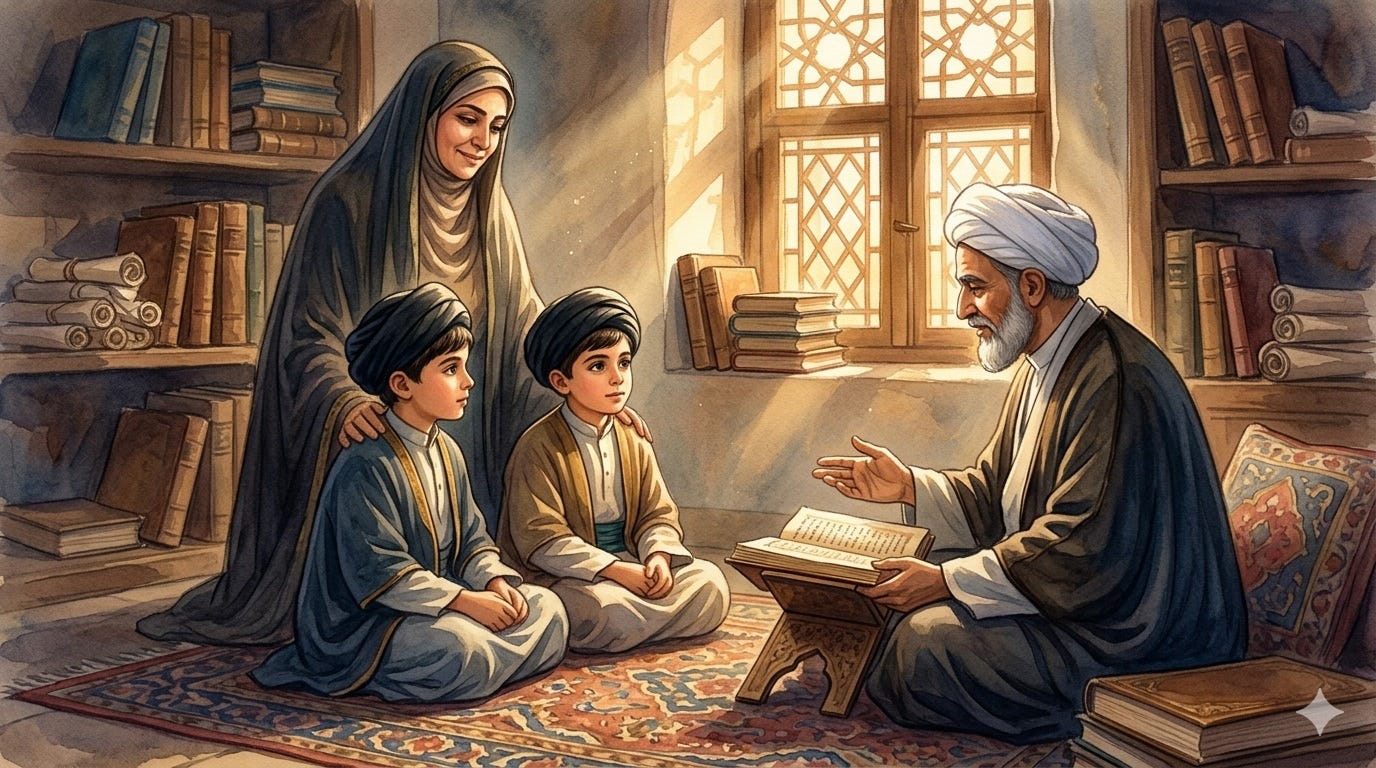
Before we go further tonight, a word about where we are going — because what you are about to begin is not a single session.
When we first sat down to write tonight’s majlis, we expected, as we have done in every previous session of this sub-series, to deliver one complete portrait — birth to legacy — in a single evening.
But as the work unfolded, something became clear.
The story of these two brothers is not a story that can be told in one sitting.
It is too rich.
It carries too much that the Shi’a community needs to hear, and too much that — if we rushed it — would land as a list of names rather than as the living tradition we are trying to honour.
The two brothers themselves lived their lives across more than eighty years.
They produced books that shaped a thousand years of scholarship.
They trained students who carried their inheritance from Baghdad to Tripoli to Aleppo to Najaf.
They lived inside an intellectual world populated by Ibn Sina and Qadi Abd al-Jabbar and the rising shadow of al-Ghazali.
They were buried in Karbala beside their father, beside their Grandfather, the Master of the Martyrs.
And what their story finally asks us — at its end — is to think honestly about the difference between religion and the abuse of religion; the difference between the genuine theological commitments of Sunni and Shi’a believers across history, and the political projects that have used both traditions as cloaks for worldly ambition.
That is not a small ask.
And it deserves more than the closing five minutes of an exhausted majlis.
So we have made a decision.
You will recall that in Session 64, when we first began The Architecture of Guidance, we said this to you:
Over the past three sessions, we have been covering a great deal of ground each week — entire centuries, multiple scholars, vast historical arcs.
The material ahead of us is too rich and too important to continue at that pace.
Beginning tonight, we are going to slow down.
Not because there is less to say — but because there is more.
And we said:
There is a wisdom the scholars of medicine have always known: when a person has been without food for a long time, you do not place a feast before them.
You give nourishment carefully, in measure, so the body can receive it.
Our community has been starved of this knowledge for a long time.
We will feed it — but with care.
Tonight, we honour that same principle again.
The story of Sayyed al-Radhi and Sayyed al-Murtadha will be told across four sessions, not one.
Tonight — Session 65 — we meet them as boys.
We meet their mother and their father.
We meet the lineage they carried in their blood, and the household that prepared them.
We watch the dream that brought them to Shaykh al-Mufid.
And we stand with them at the threshold of their lives, the soil prepared, ready for what was about to grow.
Next week — Session 66 — we will walk the full life of the younger brother, Sayyed al-Radhi: the poet who became a compiler, the scholar who lived Nahj al-Balagha before he gave it to the world, the public man who refused a thousand dinars rather than betray his principles.
We will walk him to his early grave at the age of forty-seven, and we will stand at his funeral as the vizier of the Abbasid caliphate himself steps in to lead the prayer the elder brother could not bear to lead.
The week after — Session 67 — we will walk the full life of the elder brother, Sayyed al-Murtadha: thirty years of carrying the work forward alone, the five books that became the foundations of every Hawza in the world, the dream through which his great ancestor gave him a title he refused before he accepted, the library of eighty thousand volumes, and the four students he dispatched across the Mediterranean to plant the seed in soil that fire could not reach.
And in the fourth and final week — Session 68 — we will meet the world that surrounded them: Ibn Sina and the Mu’tazilites and the rising Ash’ariyya and the looming shadow of al-Ghazali.
We will watch the library burn.
We will see what survived the burning.
And we will pause — gravely, honestly — to ask what this whole story is for: what it teaches us about the difference between the tradition we have inherited and the political projects, ancient and modern, Shi’a and Sunni and beyond, that have draped themselves in religion’s clothing while serving entirely different masters.
We will close that fourth week, by God’s permission, at the graves of the two brothers in Karbala, with our eyes raised toward the One in Whose service they lived and died — our beloved Imam, the Mahdi of this age, may our souls be his ransom, and may God hasten his return.
This is not a delay.
It is the work the material demands.
And it is, in its own way, a continuation of the principle Sayyed al-Radhi and Sayyed al-Murtadha lived by themselves: that knowledge transmitted in haste is knowledge that does not transmit at all.
So tonight: two boys.
One mother.
One teacher.
One household where, every day, the words of Imam Ali — their ancestor — were spoken as though the Commander of the Faithful himself might walk through the door.
Let us begin.
Introduction
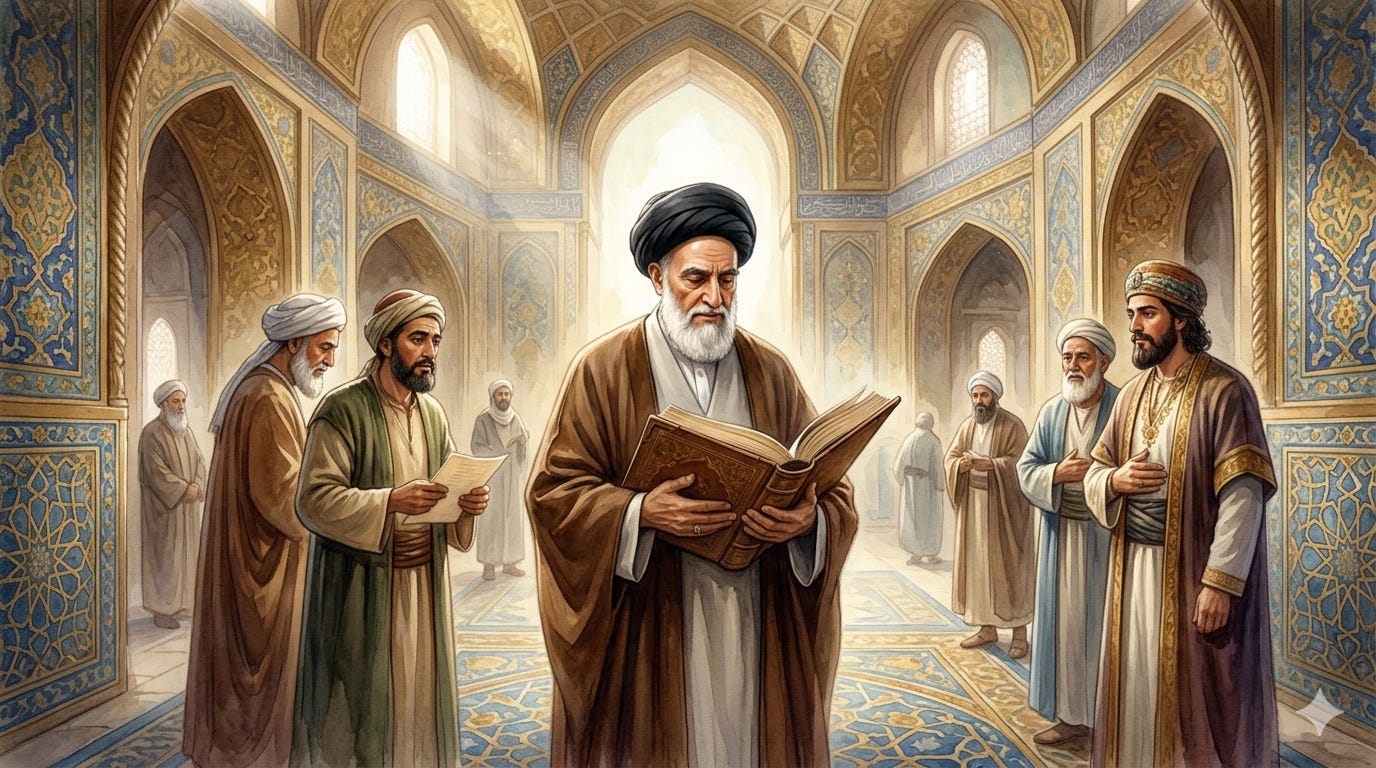
Tonight is the fifth session of our sub-series, The Architecture of Guidance.
We began this journey some weeks ago by asking a question — how did the Marja’iyyah we know today, the Hawza in Qom, the Hawza in Najaf, the scholarly hierarchy that anchors our community — how did it come to be?
Who built it?
What crises shaped it?
And through whose hands was the light of the Imams carried, in the long night of occultation?
Tonight we begin to answer a part of that question by meeting two men.
Two men who, unlike every figure we have met in this sub-series so far, come to us not as individuals but as a pair.
Brothers.
Sayyed al-Radhi and Sayyed al-Murtadha.
And here, before we go any further, a small clarification.
Some of you will have heard these two men referred to by a different title — as Sharif al-Radhi and Sharif al-Murtadha.
And some may have asked, quite reasonably — was it not Sharif al-Radhi who compiled Nahj al-Balagha?
How can it be the same man?
It is the same man.
Sayyed and Sharif are two honourifics given to the descendants of the Prophet Muhammad, peace and blessings be upon him, his family and his righteous companions.
Both signify nobility of lineage.
Sharif, from the Arabic sharafa — to be elevated, to be honoured.
Sayyed, from sada — to be a master, a chief, a leader.
In the age we are entering tonight — fourth and fifth-century Baghdad — Sharif was the dominant honorific used for the Alid nobility of the Abbasid capital.
And in fact, these two brothers’ father, Sayyed Abu Ahmad Husayn ibn Musa, held one of the highest offices an Alid could hold in that world.
He was the Naqib al-Talibiyin — and let me pause to explain what that office meant, because it tells you much about the world into which our two brothers were born.
The Naqib al-Talibiyin was the official overseer of all the descendants of Abu Talib — which, in practice, meant all the descendants of Imam Ali and of his brothers.
In the Abbasid administrative system, and later under the Buyids, the Alids were a recognised class — formally registered, formally represented, formally entitled to certain stipends from the pious endowments made for the descendants of the Prophet.
The Naqib was the man who maintained the genealogical registers, guarding the lineage against impostors.
He settled disputes within the Alid community.
He represented their interests at the caliph’s court.
He administered the endowments that supported them.
In a city where, in the wrong decade, being a Shi’i could still get a man killed in the street — the Naqib was the Alid community’s official voice in the halls of power.
So when we say their father was a Sharif, we do not mean only that he carried the blood.
We mean he was a recognised, titled, state-registered representative of the Prophet’s descendants in the capital of the Islamic world.
And our two brothers were born into that house, grew up under that weight of expectation, and would both, in turn, later in life, hold that same office themselves.
So the biographical sources of their own age, and the centuries immediately after, recorded our two men as Sharif al-Radhi and Sharif al-Murtadha.
Over time, regional custom shifted.
In the Hijaz, Sharif came to cluster around the Hasani line — most famously in the ruling Sharifs of Mecca, whose descendants went on to establish royal houses across several modern Arab states.
And in the broader Shi’a world, Sayyed gradually displaced Sharif as the universal honorific for descendants of the Prophet — regardless of which Imam they trace through.
So tonight I will use Sayyed al-Radhi and Sayyed al-Murtadha, in keeping with our own Shi’a usage.
But when you hear Sharif al-Radhi and Sharif al-Murtadha elsewhere, know that it is the same men.
Same lineage.
Same brothers.
And their lineage, for the record, is Husayni through both parents — their father’s line traces to Imam Musa al-Kadhim, peace be upon him, their mother’s to Imam Ali Zayn al-Abidin, peace be upon him.
They carry in their blood the bond to two of the Imams whose legacy they would spend their lives defending.
But let me pause here, because there is a danger in everything I have just said about titles and lineages.
The title Sayyed, the title Sharif, the blood tie to the noblest family that ever walked this earth — it is an honour.
It is not a guarantee.
And the respect we owe to the descendants of the Prophet, peace and blessings be upon him, his family and his righteous companions — that respect is owed in love, in care, in kindness.
It was never meant to be a claim to privilege, nor a caste standing above the rest of the believers.
This is not my inference.
It is what the Qur’an itself teaches.
In Surah al-Hujurat, God sets the measure for all human honour in a single verse:
إِنَّ أَكْرَمَكُمْ عِندَ اللَّهِ أَتْقَاكُمْ
“Indeed, the most noble of you in the sight of God is the most righteous of you.”
— Qur’an, Surah al-Hujurat (the Chapter of the Chambers), #49, Verse 13
The most noble — akramakum — is the one with the most taqwa — righteousness, God-awareness.
Not the one with the noblest blood.
Not the one with the oldest family name.
Not the one whose lineage traces to the Prophet.
The one with the most God-consciousness.
And lest anyone imagine that the sacred lineages are somehow exempt from this measure, the Qur’an, in Surah al-Baqarah, addresses that very question head-on.
When Prophet Abraham (Ibrahim), peace be upon him, was tested by his Lord, and he passed every test, his Lord said to him:
وَإِذِ ابْتَلَىٰ إِبْرَاهِيمَ رَبُّهُ بِكَلِمَاتٍ فَأَتَمَّهُنَّ ۖ قَالَ إِنِّي جَاعِلُكَ لِلنَّاسِ إِمَامًا ۖ قَالَ وَمِن ذُرِّيَّتِي ۖ قَالَ لَا يَنَالُ عَهْدِي الظَّالِمِينَ
“And [remember] when his Lord tested Abraham with certain commands, and he fulfilled them, He said: ‘Indeed, I am making you an Imam for humanity.’ [Abraham] said: ‘And from my descendants?’ He said: ‘My covenant does not reach the wrongdoers.’”
— Qur’an, Surah al-Baqarah (the Chapter of the Cow), #2, Verse 124
Even Abraham — the Khalil, the Friend of God — could not bequeath his sacred station as a bloodline inheritance.
When he asked, gently, lovingly,
and what of my offspring, my Lord?
— the answer was not a simple yes.
The answer was:
لَا يَنَالُ عَهْدِي الظَّالِمِينَ
My covenant does not reach the unjust.
— Qur’an, Surah al-Baqarah (the Chapter of the Cow), #2, Verse 124
Even if they are of Prophet Abraham’s line.
Even if they are of Prophet Muhammad’s line.
Even if they wear the title Sayyed or Sharif upon their name.
This is why our tradition has always been careful to separate the blessing of lineage from the measure of a person.
A descendant of the Prophet who lives with taqwa — God-consciousness, who serves the people, who carries the weight of the name with humility — that person honours the ancestor they inherited.
And a descendant who claims the title but forgets the example — remember who the example was.
It was Imam Ali, peace and blessings be upon him, who, when he ruled half the known world, kept the mud-brick house, wore the patched cloak, and ate his bread with salt.
The ancestor of our two brothers tonight.
If the ancestor refused the palaces of his own age in the name of God, what measure should we take of any descendant, in any age, who trades the example for the title alone?
And that is why, a thousand years after their deaths, we still speak the names of Sayyed al-Radhi and Sayyed al-Murtadha with reverence.
Not because of the blood in their veins, which they did not choose — but because of what they did with it.
They used their name to teach.
To defend.
To carry the words of Imam Ali forward for every generation that would come after them — including ours.
Born four years apart.
Raised in the same house.
Taught by the same teacher.
Buried in the same city.
And between them, in the space of a single generation, they gave our tradition two gifts that cannot be separated.
One brother compiled the book that has been called the gateway to Imam Ali himself — Nahj al-Balagha.
The other brother became the undisputed leader of the Shi’a for twenty-three years after their teacher’s death, and trained the man who would found the Hawza of Najaf.
That is why they come to us, across these four sessions, together.
Because their story — and the tradition’s debt to them — cannot be told apart.
Our structure across this four-part journey will follow the rhythm we have settled into across this sub-series.
Three movements, distributed across four weeks.
Formation. Contribution. Departure and legacy.
Tonight, in the Formation, we will meet the mother whose decision changed a civilisation.
In the Contribution — across Sessions 66 and 67 — we will meet Nahj al-Balagha; we will meet Alam al-Huda, the Banner of Guidance; and we will meet the four students through whom the inheritance of one teacher reached every corner of the Mediterranean and Persian worlds.
In Session 68 we will step into the intellectual battlefield that surrounded them — a world populated by Ibn Sina, the Mu’tazilites, the Ash’arites, and soon after them the towering figure of al-Ghazali.
A world of thought so fierce, so crowded, and so unforgiving that only the best-trained minds could survive in it at all — let alone stand at its centre.
And in the Departure, in that same fourth week, we will follow the thread as it passes, from these two brothers, into the hand of the one student who — when Baghdad itself was no longer safe — would carry it south, to the shrine of Imam Ali, and build there a seminary that has stood for nearly one thousand years.
But all of that lies ahead.
Tonight, we begin where every story must begin: at the beginning, but before that, let us recap the previous session.
Recap
Last week, we sat with a man who, by the end of his life, had become the most important Shi’a scholar in the world.
Shaykh al-Mufid.
The Beneficial One.
We followed him from his origins in Ukbara — a small town on the banks of the Tigris, about sixty kilometres north of Baghdad, in what is today the Saladin Governorate of Iraq — to the minbar — pulpit — of the greatest scholarly authority of his age.
We saw how he took the tradition that Shaykh al-Kulayni and Shaykh al-Saduq had preserved — preserved in hadith, preserved in text — and gave it a voice.
The voice of rational theology.
Of trained argumentation.
Of scholars who could walk into the courtrooms of the Buyid caliphs, and into the mosques and debating halls of Karkh, and stand their ground in any language the opposing school wished to speak.
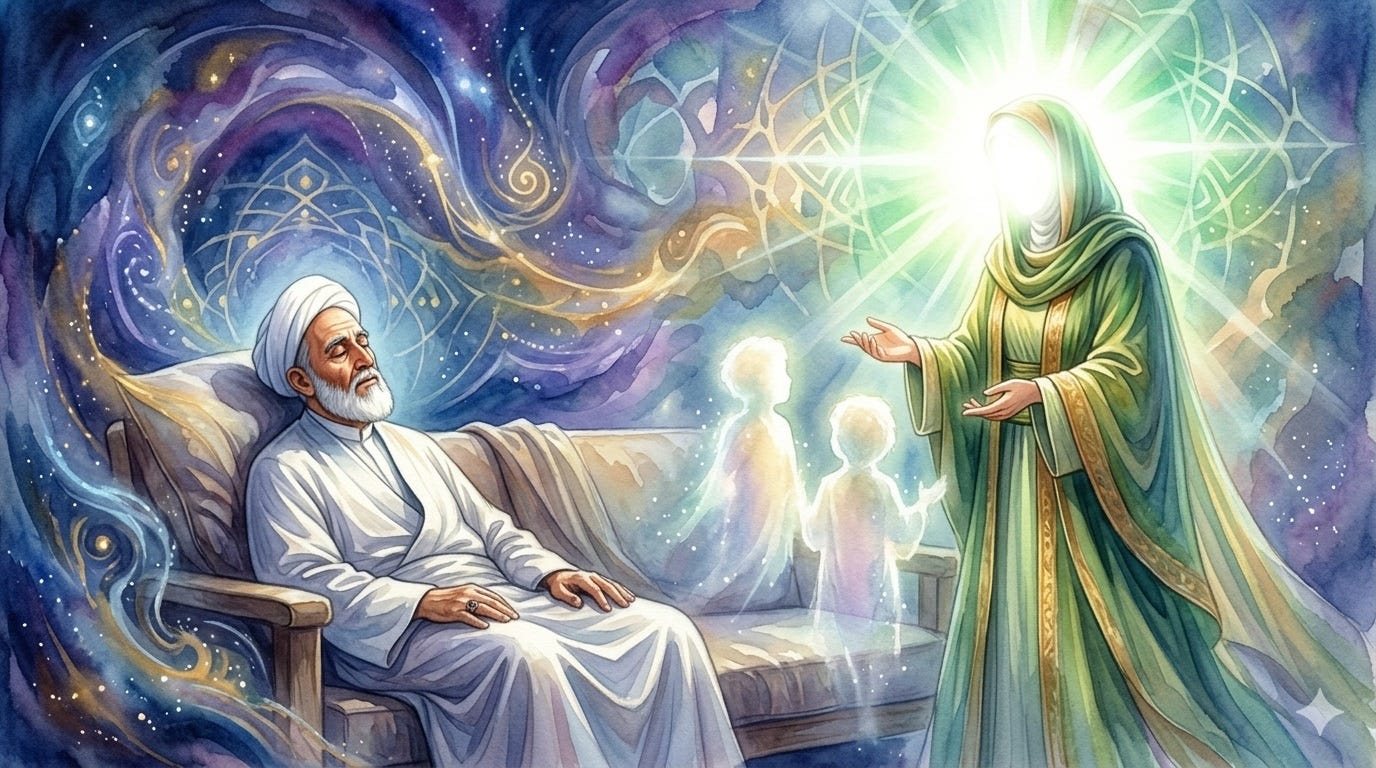
And we ended last week with a dream.
A dream in which, as the biographical sources record it, a woman came to Shaykh al-Mufid in his sleep — and she was Sayyedah Fatimah al-Zahra, peace and blessings be upon her.
And she said to him:
Take these two, my sons, and teach them.
When Shaykh al-Mufid awoke, he rose and walked to the mosque of al-Karkh — the Shi’i quarter of Baghdad.
And there, waiting for him, was a mother.
With her two young sons.
Asking him to teach them.
Those two sons are tonight’s session.
The chain now has a shape.
Shaykh al-Kulayni and Shaykh al-Saduq — they preserved.
Shaykh al-Mufid — he defended and systematised.
And now, in this generation, Sayyed al-Radhi and Sayyed al-Murtadha inherit the torch.
Theologically.
Politically.
Intellectually.
Literarily.
The torch that will pass, through Sayyed al-Murtadha, into the hand of the student who will carry it out of Baghdad altogether when Baghdad itself begins to burn.
That is where we pick up tonight.
The Formation — Two Sons, One Mother, One Teacher
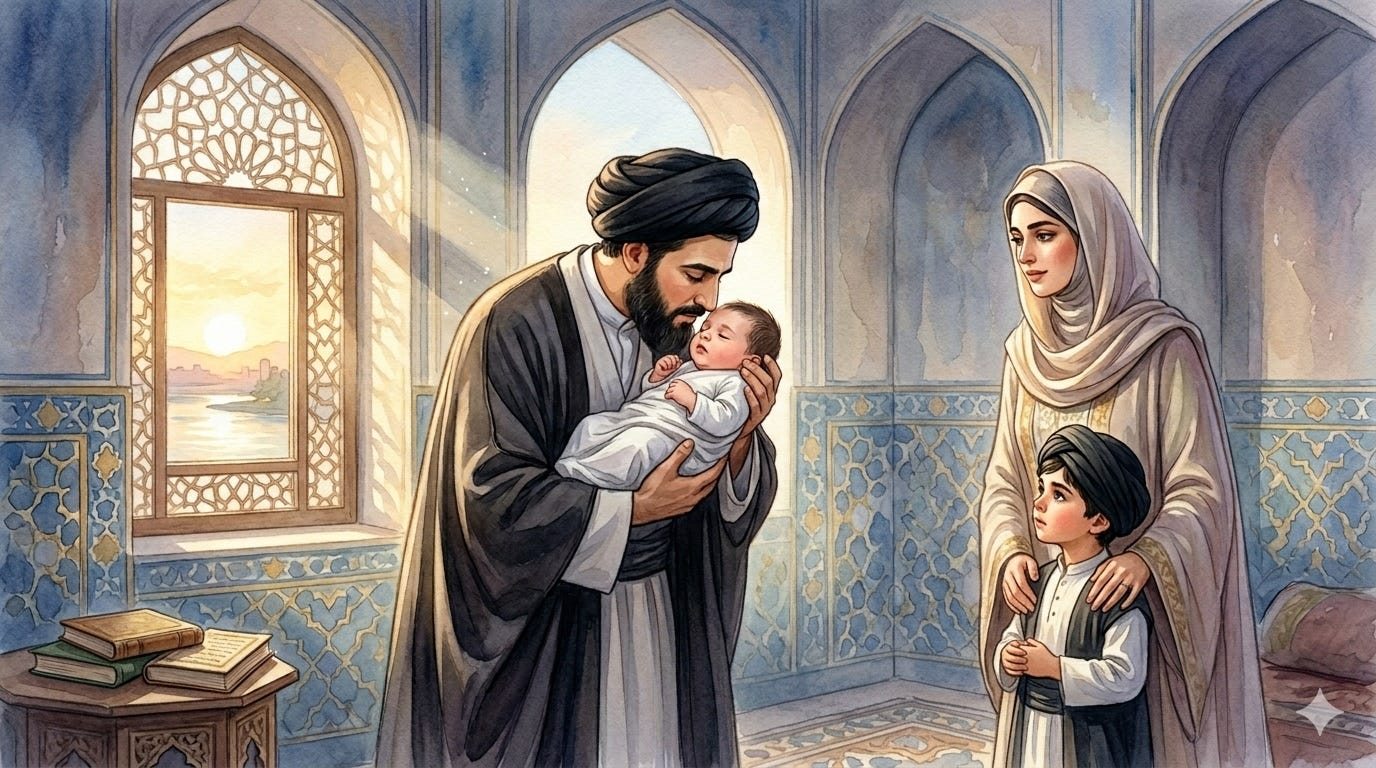
Let us begin at the beginning.
In the city of Baghdad, in the year 355 after the Hijra — which, in the reckoning of the West, is the year 966 of the common era — a boy was born into a noble house on the west bank of the Tigris.
His father named him Ali.
The world would come to know him as Sharif al-Murtadha, and later, as Sayyed al-Murtadha, Alam al-Huda — the Banner of Guidance.
Four years later, in the year 359 of the Hijra, a second son was born to the same mother and the same father.
His father named him Muhammad.
The world would come to know him as Sharif al-Radi, Sayyed al-Radhi — and every student of the Arabic language, of Islamic thought, of political philosophy, of spiritual reflection, of the art of eloquence itself — for a thousand years after his death, and until the end of this world — would quietly owe him a debt.
For the one book he would give them before he was buried.
Nahj al-Balagha. The Peak of Eloquence.
A book that the great Sunni reformer of al-Azhar, Shaykh Muhammad Abduh, published and championed — the same Shaykh Muhammad Abduh who would later become the Grand Mufti of Egypt, and one of the most influential Sunni reformers of the nineteenth century.
A book whose most comprehensive classical commentary runs to twenty volumes and was written, not by a Shi’i, but by a Mu’tazilite scholar of the seventh century of the Hijra — Ibn Abi’l-Hadid — a man who could not put the book down even though he did not share its compiler’s creed.
A book whose passages Arab school children have memorised for a thousand years to learn what their language, at its highest register, sounds like.
A book whose Letter 53, to Malik al-Ashtar on the governance of Egypt, is today studied in departments of political philosophy as one of the most comprehensive treatises on just rulership ever produced in the classical world.
And, in our own age, a book that has taken its place on the shelves of the great academic houses of the West.
The most recent scholarly edition and translation of Nahj al-Balagha was published only two years ago, in the year 2024 of the common era, by the Laudian Professor of Arabic at the University of Oxford, and brought out by Brill of Leiden — one of the oldest and most respected academic presses in the world, founded in the year 1683.
The Emeritus Professor of Arabic at Oxford called the work a major achievement and described Nahj al-Balagha itself as one of the most revered Arabic texts among both Sunni and Shi’a Muslims alike.
In other words: a book that has outgrown every boundary its compiler might have imagined for it.
A book that belongs, today, not only to the Shi’a, not only to the Muslims, not only to the Arabic-speaking world — but to the heritage of humanity itself.
And the man who gave it to us — who collected, arranged, preserved, and published these words of his ancestor when no one else had thought to do so — is the boy whose name his father had just whispered into his ear as the call to prayer rose over fourth-century Baghdad.
And a word about those names themselves — al-Murtadha and al-Radhi — because, like the title al-Mufid that we sat with last week, these were not random honourifics.
They were chosen.
And they were chosen to carry meaning.
Both names come from a single root in the Arabic language — the root ر-ض-ي, r-dh-y — a root that turns, in every direction you look at it, around a single idea1.
Divine pleasure.
Approval.
Contentment.
Acceptance.
But the two names take that single root in two different directions.
Al-Radhi is the active form.
It means the one who is pleased, the one who is content.
The one doing the pleasing.
Pleased with what God has decreed.
Pleased with his portion of this world.
Pleased in the way the Qur’an speaks of the returning soul at the end of Surah al-Fajr — one of the most beloved passages in the entire Book:
يَا أَيَّتُهَا النَّفْسُ الْمُطْمَئِنَّةُ ارْجِعِي إِلَىٰ رَبِّكِ رَاضِيَةً مَّرْضِيَّةً
“O soul at peace. Return to your Lord — well-pleased, and well-pleasing.”
— Qur’an, Surah al-Fajr (the Chapter of the Dawn), #89, Verses 27–28
Radhiyah.
The soul that is pleased with God.
From the same form as al-Radhi.
And al-Murtadha is the passive form — but from a deeper turn of the same verb.
It means the one approved, the one chosen, the one whom God has selected.
Not the one doing the pleasing — but the one who has been found pleasing.
It is the word the Qur’an uses when it speaks of the messengers God has chosen:
عَالِمُ الْغَيْبِ فَلَا يُظْهِرُ عَلَىٰ غَيْبِهِ أَحَدًا إِلَّا مَنِ ارْتَضَىٰ مِن رَّسُولٍ
“He is the Knower of the Unseen, and He does not disclose His Unseen to anyone — Except to him whom He has approved (chosen) as a messenger…”
— Qur’an, Surah al-Jinn (the Chapter of the Jinn) #72, Verses 26–27
So here are two names, from the same root, pointing at two faces of the same divine reality.
One son named for pleasing God.
The other son named for being chosen by God.
The two faces of one coin.
And together — given by the same father to his two sons — they drew from the same well.
A father’s prayer, whispered at the hour of their naming.
That these two boys, born into the heaviest lineage a Muslim could carry, would grow up to be pleased with God in every circumstance — and pleasing to God in every act.
That whatever this world threw at them — wealth or poverty, honour or humiliation, power or exile — they would stand at the end of their lives as the kind of souls to whom the Qur’an addresses its gentlest invitation:
Return to your Lord, well-pleased, and well-pleasing.
It was the prayer of a father.
And — as we shall see across these four sessions — the prayer was answered.
Their father was Sayyed Abu Ahmad Husayn ibn Musa al-Musawi — the Naqib al-Talibiyin of Baghdad we have just spoken of.
A man of such standing in the Abbasid capital that when disputes broke out between the caliph and the Buyid princes, he was among the few trusted enough to mediate between them.
Seven times, across the course of his long life, Abu Ahmad held the position of Naqib.
Seven times he stepped away from it or was removed by political turbulence.
And seven times he was called back to it — because no other Alid in Baghdad could hold it as he did.
Their mother was Sayyedah Fatima bint Husayn — a noblewoman of scholarly family in her own right.
Her father was al-Nasir al-Saghir, and her grandfather was al-Nasir al-Kabir.
Let me pause here to explain these names, because they will mean little to most of us today but they carried enormous weight in the Shi’i world of the fourth century of the Hijra.
Al-Nasir al-Saghir — the Younger al-Nasir — was a prominent Alid chieftain of northern Iran, a descendant of Imam Ali Zayn al-Abidin, peace be upon him, through his son Umar al-Ashraf.
His title, al-Saghir, distinguished him from his own father — al-Nasir al-Kabir, the Elder al-Nasir — better known to history as al-Hasan al-Atrush.
And al-Hasan al-Atrush was, in his age, something extraordinary: he was a scholar, a poet, a jurist, a narrator of hadith, and at the same time a warrior who, some fifty years before our two brothers were born, had led the Alids of his region to establish an independent state in the lands of Tabaristan — the coastal region south of the Caspian Sea, in what is today the Mazandaran province of northern Iran.
He had died in battle in the year 304 of the Hijra, fighting to preserve what he had built.
And his memory — the memory of an Alid who had carried the honour of his lineage not just in his blood, but in his scholarship, his poetry, his sword, and ultimately his life — was still living memory in the Alid households of Baghdad when his great-grandsons were born.
This was Sayyedah Fatima bint Husayn’s inheritance — paternal and maternal alike, for she was also the granddaughter of scholars on her mother’s side.
And as the biographical sources record her, she was a woman who knew exactly what her two sons carried in their veins, and exactly what she wanted them to become.
This was the household into which these two brothers were born.
A household of wealth, yes — but wealth in Baghdad in the fourth century of the Hijra was never secure.
A household of political standing, yes — but political standing in that city, in that age, was a position at the mouth of a lion’s cave.
The Abbasid caliph sat on the throne, but the Buyid princes held the real power.
The Shi’i quarter of Karkh and the Sunni quarter of Bab al-Basra would, in the wrong month, descend into open street fighting.
Scholars would walk from their houses to the mosque past the ashes of a library that had been burned the night before.
And in the middle of all of it, an Alid family was expected — by the caliph, by the Buyids, by the Shi’i community, by the wider ummah — to produce leaders.
Scholars.
Judges.
Men who could hold the line.
Into that world, these two young boys were born.
Two boys who, it was clear very early, were not ordinary.
The Dream
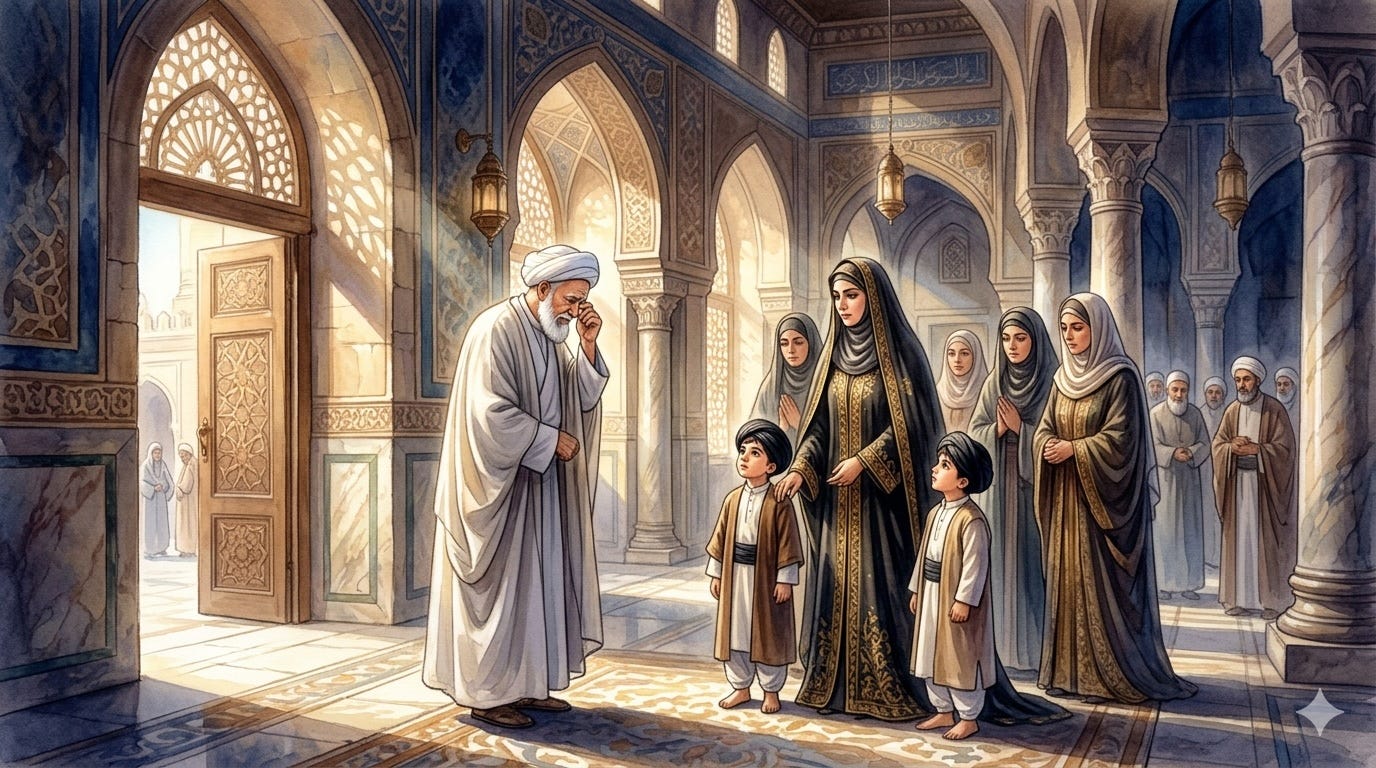
We ended last week with a dream.
And we end this week’s opening with the same dream — because last week it was told from the perspective of the teacher, and this week it must be told from the perspective of the mother.
The biographical sources record the episode with remarkable consistency.
Shaykh al-Mufid — whom we met last week, the Beneficial One, the most learned Shi’i scholar of his age — was asleep one night in his home in Baghdad.
And in his sleep, he saw a woman come to him.
And the woman was Sayyedah Fatimah al-Zahra, peace and blessings be upon her — the daughter of the Prophet, peace and blessings be upon him, his family and his righteous companions, the mother of our Imams, the Mistress of the Women of the Worlds.
And she was holding the hands of her two young sons, al-Hasan and al-Husayn, peace be upon them.
And she said to Shaykh al-Mufid:
Take my two sons. Teach them jurisprudence.
And the Shaykh awoke.
As the biographical sources tell us, he was startled, disturbed, bewildered.
What could such a dream mean?
He rose, performed his prayers, and — as was his habit — walked from his home to the mosque of al-Karkh to begin his day’s teaching.
And as he approached the mosque, he saw, waiting at the entrance, a woman.
She was surrounded by attendants, as befitted a noblewoman of her rank.
Her two young sons stood beside her.
And she spoke to Shaykh al-Mufid with the directness of a mother who knows that the man she is addressing is the most important teacher in the city, and that her time with him is short.
O Shaykh, these are my two sons. I have brought them to you that you may teach them.
The two boys were Ali and Muhammad — Sayyed al-Murtadha and Sayyed al-Radhi.
The mother was Sayyedah Fatima bint Husayn.
And Shaykh al-Mufid, looking at the two children before him and remembering the dream he had just awoken from, understood what had happened.
The biographical sources tell us simply: he wept.
He recounted the dream to her.
And he took them on as his students.
The earliest and most detailed preservation of the incident reaches us through Ibn Abi al-Hadid — the great Mu’tazilite commentator we met earlier tonight — who recorded it in his celebrated commentary on Nahj al-Balagha:
فَلَمَّا تَعَالَى النَّهَارُ فِي صَبِيحَةِ تِلْكَ اللَّيْلَةِ الَّتِي رَأَى فِيهَا الرُّؤْيَا، دَخَلَتْ عَلَيْهِ الْمَسْجِدَ فَاطِمَةُ بِنْتُ النَّاصِرِ، وَحَوْلَهَا جَوَارِيهَا، وَبَيْنَ يَدَيْهَا ابْنَاهَا مُحَمَّدٌ الرَّضِيُّ وَعَلِيٌّ الْمُرْتَضَى صَغِيرَيْنِ، فَقَامَ إِلَيْهَا وَسَلَّمَ عَلَيْهَا، فَقَالَتْ لَهُ: أَيُّهَا الشَّيْخُ، هَذَانِ وَلَدَايَ قَدْ أَحْضَرْتُهُمَا لِتُعَلِّمَهُمَا الْفِقْهَ، فَبَكَى أَبُو عَبْدِ اللَّهِ وَقَصَّ عَلَيْهَا الْمَنَامَ، وَتَوَلَّى تَعْلِيمَهُمَا.
“The next morning, after the night in which he had seen the dream, Fatima bint al-Nasir entered the mosque to see him, surrounded by her servants, and with her two young sons, Muhammad al-Radhi and Ali al-Murtadha, walking before her. He rose and greeted her. She said to him: O Shaykh, these are my two sons, whom I have brought to you so that you may teach them jurisprudence. Abu Abdillah wept, and recounted to her the dream, and undertook their education.”
— Ibn Abi al-Hadid, Sharh Nahj al-Balagha, Volume 1, on the compiler’s biography; cited by Allamah Majlisi in Bihar al-Anwar
And this account was carried forward, centuries later, into the great Shi’i encyclopaedic tradition by Allamah al-Majlisi — who we will meet as we progress through this series, who gathered it into his monumental Bihar al-Anwar — the Oceans of Lights — which even today sits on the shelf of every serious student of our tradition as the largest compilation of Shi’i narrations ever assembled.
Through Allamah al-Majlisi’s collection, the story of a mother, a teacher, and a dream was preserved for us, a thousand years later, in this very majlis.
And thus began a relationship between one teacher and two students that would, in a single generation, reshape the intellectual landscape of Shi’ism.
Lessons Woven In
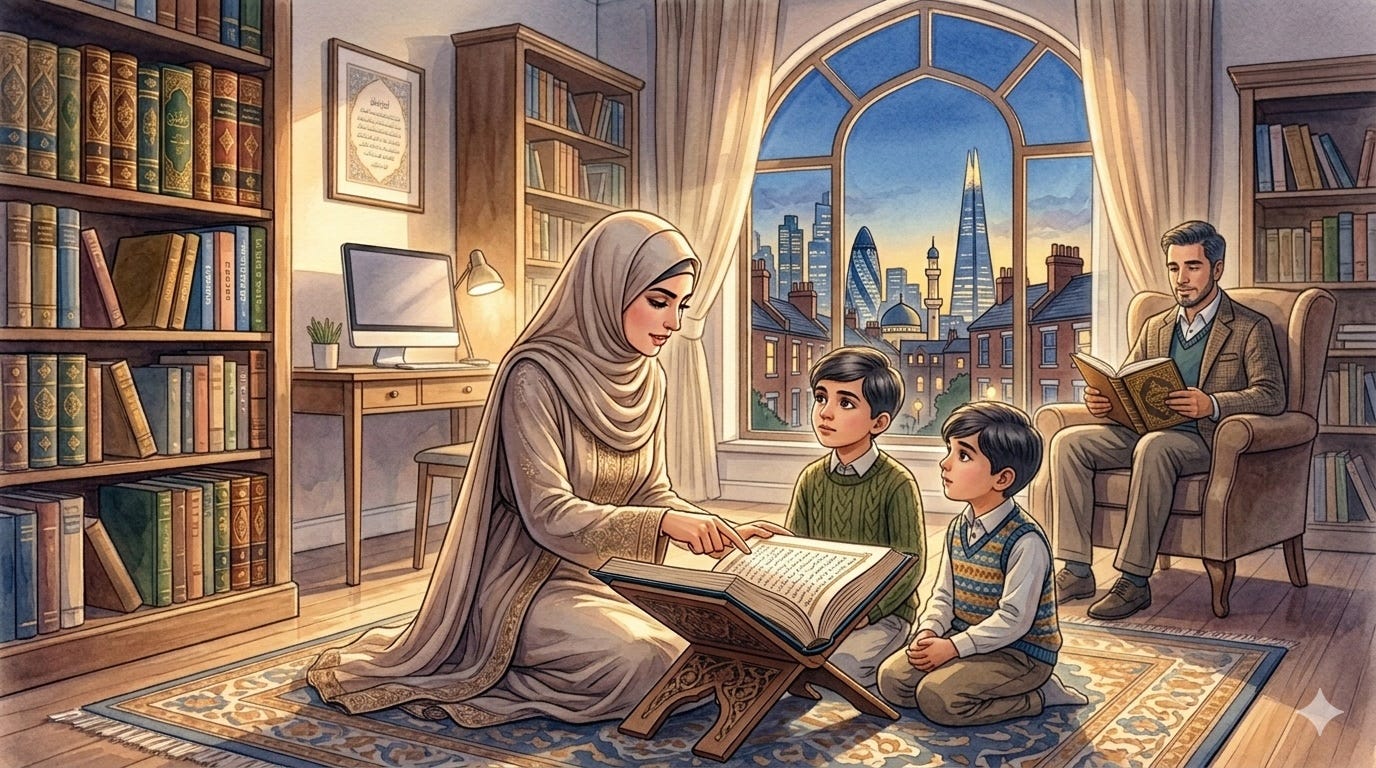
Pause with me here for a moment, before we leave the mother and her two boys at the mosque of al-Karkh.
What this episode tells us — and it tells us something that our tradition has known for fourteen centuries and that our age has largely forgotten — is that the family is the first institution of learning.
Before the madrasah, before the Hawza, before the seminary, before any formal institution of any kind, there is the mother who decides that her sons will be something.
And there is the father whose standing gives them the means.
And there is the household whose atmosphere teaches them what to value before they know the word for value.
Had Sayyedah Fatima bint Husayn not made the decision she made that morning, there would be no Nahj al-Balagha as we know it today.
There would be no Alam al-Huda to lead the Shi’a after Shaykh al-Mufid’s death.
There would be no Shaykh al-Tusi trained as he was trained — because Shaykh al-Tusi would train under Sayyed al-Murtadha for twenty-three years.
The entire chain — the entire scholarly lineage we are tracing in this sub-series — hinged, at that one moment, on the decision of a mother to walk her children to the mosque.
And let me say a word to the parents in this gathering, because there is nothing more important I could say tonight.
The pursuit of knowledge in our children begins long before the first day of school.
It begins in what we allow in our homes.
In what we consume in front of our children.
In which scholars we listen to at the dinner table and which distractions we refuse to make space for.
In whether the first book in a child’s hand is a book the angels would smile upon, or something that will rot them from the inside.
Sayyedah Fatima bint Husayn did not take her children to the mosque of al-Karkh that morning on a whim.
She had been preparing them for that moment, in the quiet of her home, for years.
And let me be plain here, because the age we are living in has made this lesson urgent in a way that previous generations perhaps did not feel with the same weight.
We are raising our children in a world where the institutions that were, a generation or two ago, the natural partners of the family in the formation of a child — have in many places drifted far from that partnership.
Drifted into territory that, if we are honest with ourselves, no serious believing parent can ignore.
Our schools, particularly in the West — and not least here in the United Kingdom — have become places where children are increasingly formed in ideas and ideologies that their parents never consented to.
Where the fundamentals — language, mathematics, the sciences, the humanities, the history of civilisations — compete for air with the preoccupations of the moment.
Agendas that confuse children about their own bodies, their own identities, the most basic questions of who they are — and do so at ages where a child cannot yet process such weight.
Where, in some cases, schools have been advised not to tell parents about changes their own child is going through.
And where, under government programmes framed in the language of safeguarding, teachers are placed in the role of watching for signs of what is called “extremism” — so that a child’s innocent mention at school of a religious conviction, a political concern, a love for the people of Palestine, a love for the Ahl al-Bayt — can find its way into a file, without the parent ever knowing.
Let me be clear, so that no one misunderstands me.
I am not speaking against our teachers.
I know many of them, and many of them are themselves alarmed at what they are being asked to deliver.
I am not saying there is no such thing as abuse — there is, and real abuse must be confronted.
I am not saying schools have no role in protecting children — they do, and we thank God for them.
What I am saying is this: the cure for abuse cannot be the dismantling of the trust between parent and child.
The cure cannot be the construction of a wall between a child and the first educators God appointed for them — which is the mother and the father.
Because when that wall is built, on an industrial scale, across a whole generation, we do not need to speculate about where it leads.
The research is already in.
The children most at risk in any age are not the children of believing, attentive parents who stayed close — they are the children who were severed, emotionally, ideologically, spiritually, from the adults who loved them most, and who were then handed over to whatever the age was pushing upon them.
And so the burden this places on us, in this age, is the same burden that fell on Sayyedah Fatima bint Husayn, a thousand years ago.
We cannot outsource the formation of our children.
We must know what they are being taught.
We must stay in conversation with them.
We must be the mother who walked her sons to the mosque of al-Karkh — and not the parent who handed them to a stranger and hoped for the best.
The tradition of our Imams has always placed the family — not the state, not the institution — the family, at the centre of a child’s formation.
That is why Sayyedah Fatima bint Husayn’s story is in this script tonight.
Because what she did in the fourth century of the Hijra, every believing parent in every age is being asked to do again, in whatever form their age demands.
And there is one more lesson — and it is a lesson about Shaykh al-Mufid, and through him about every teacher who will ever sit before a student.
Shaykh al-Mufid could have turned the mother away.
He was the busiest scholar in Baghdad.
He had hundreds of students waiting for his time.
A dream is a subjective experience; he could have dismissed it as coincidence, or stress, or the overactive imagination of an overworked man.
But he did not.
He saw the mother at the gate, he saw the two children, he remembered what he had been shown, and — in the language of the biographical sources — he wept.
And he took them.
Every scholar listening to this tonight, and every teacher of any subject, take this into your heart.
The students who come to you are sometimes just students.
And sometimes they are what Shaykh al-Mufid saw at the gate of the mosque that morning.
You will not always know which is which.
Treat every one of them as though they might be.
The Training Under Shaykh al-Mufid
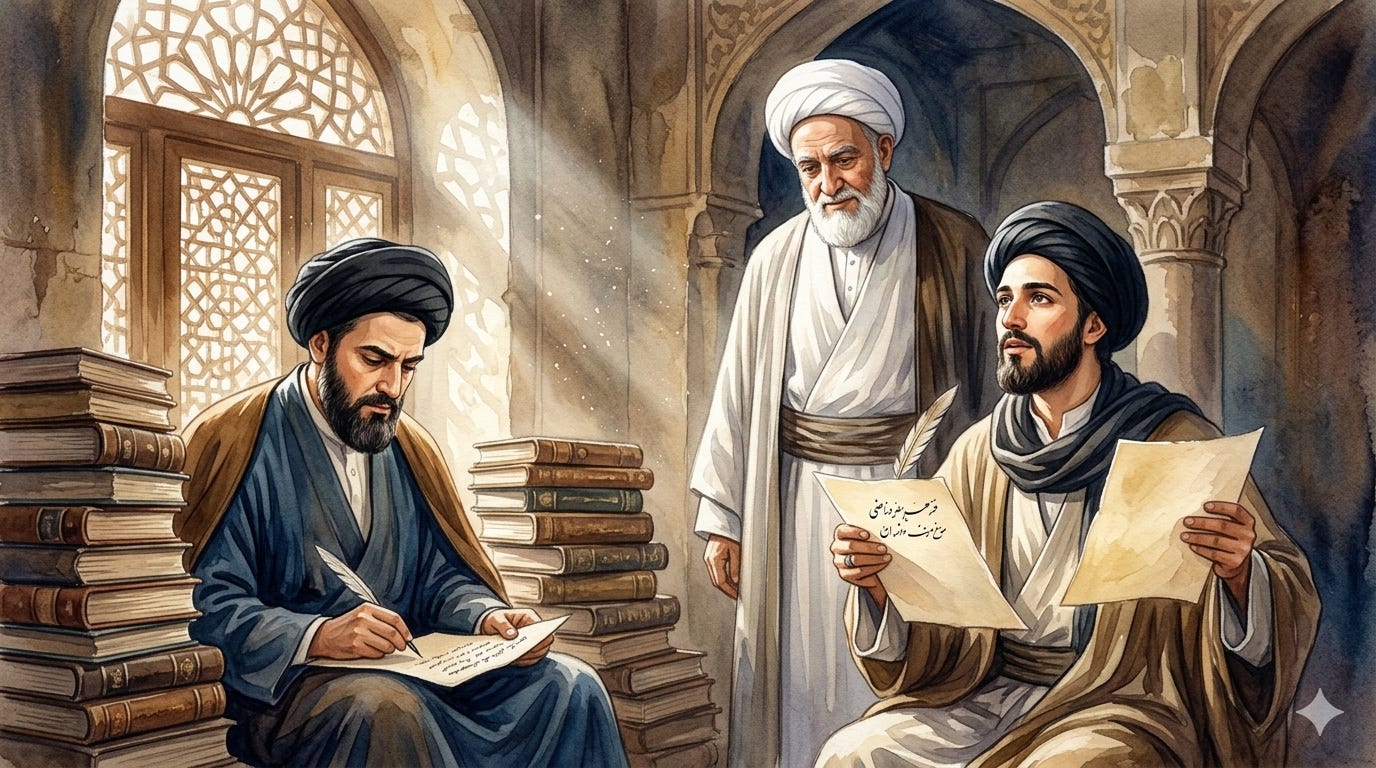
The two brothers would train under Shaykh al-Mufid for years.
And as they trained, something became clear to their teacher that the biographical sources record with some tenderness.
The two brothers, though raised in the same house by the same parents and taught by the same teacher — were very different men.
Sayyed al-Murtadha, the elder, was the systematiser.
The rationalist.
The one who would take a doctrine, examine it from every angle, and construct around it a defensive architecture so thorough that no opponent would find an opening.
His was the mind of the kalam theologian — patient, methodical, unemotional, devastating when challenged.
By the time Shaykh al-Mufid’s death arrived, Sayyed al-Murtadha was ready to inherit not just the Shaykh’s students, but his methodology — and push it further.
Sayyed al-Radhi was a different soul altogether.
The younger brother was the poet.
The literary genius.
The one whose gift was not the construction of arguments but the capture of language.
From his teenage years, he composed poetry that his contemporaries considered the finest of the age.
His ear for Arabic was extraordinary.
His sensibility for the rhythm and weight of words was, as the sources tell us, unmatched among his peers.
He could have spent his life as a poet in the courts of the Buyid princes and been remembered, a thousand years later, only as a great poet of his age.
Instead, he used that gift in the service of something no one else, before or since, has quite managed to do.
But that story belongs to next week.
For now, let us leave them here.
Two boys.
Two gifts.
One mother, one father, one teacher.
And a household in which, every day, the words of Imam Ali — their ancestor and their Imam — were spoken as though the Commander of the Faithful himself might walk through the door.
The soil was prepared.
Now, God willing, we watch what grew in it.
A Closing Reflection
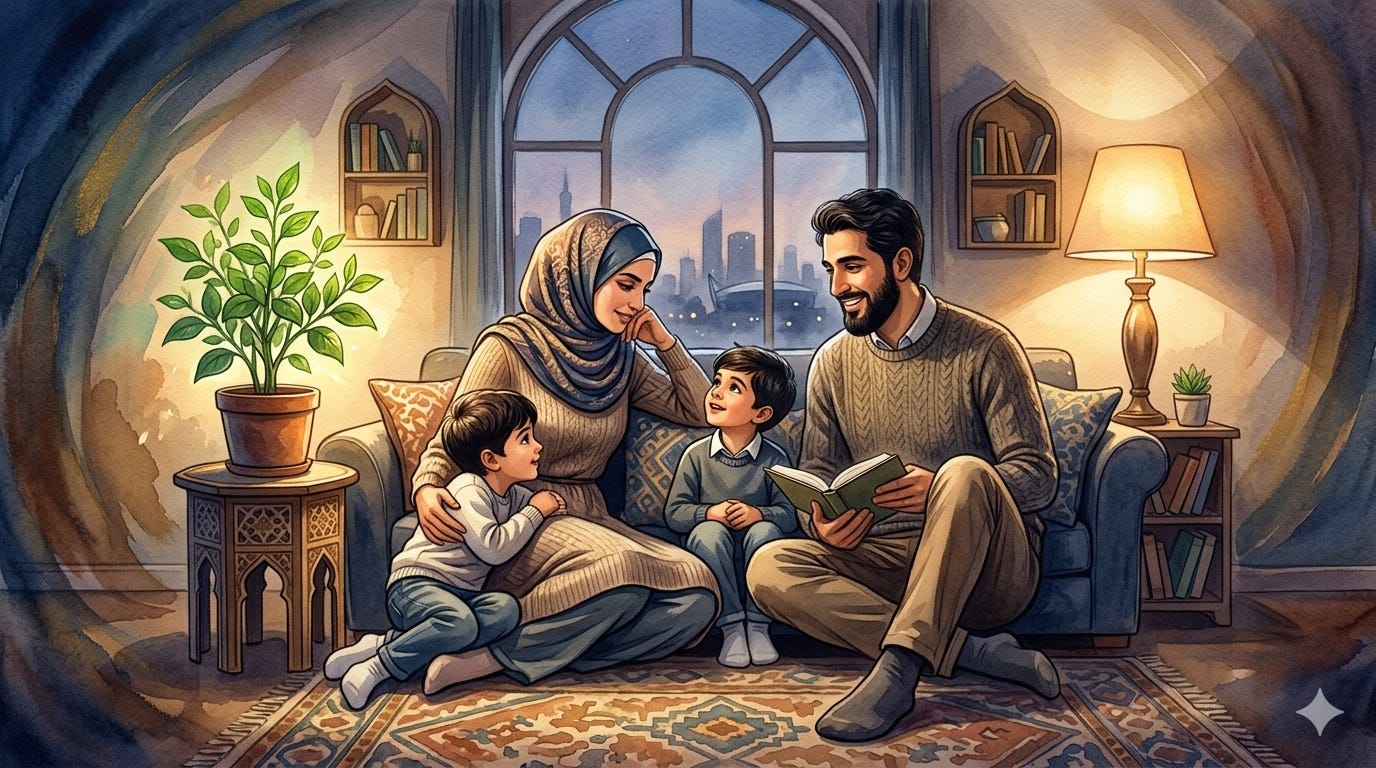
Before we close tonight, let us sit, for one quiet moment, with what we have just walked through.
Because everything the brothers will become — everything we will spend the next three weeks unpacking — was already there, in seed, in this opening session.
It was there in a mother’s decision to walk her children to a mosque.
It was there in a father’s careful choice of names that would carry his prayer for them across a thousand years.
It was there in a teacher’s willingness to weep at a dream and accept its summons.
It was there in a household where the words of an ancestor were spoken with such love that the children grew up unable to imagine a life that did not serve those words.
And here, is the question this opening session leaves with us — and the question I want you to carry with you, from this gathering tonight, into your homes, into your week, into the choices you will make tomorrow morning over breakfast with your own children, into the conversations you will have at the dinner table, into the things you will allow into your home and the things you will refuse to allow.
What seed is being planted in your household tonight?
Not the household of Sayyedah Fatima bint Husayn in fourth-century Baghdad.
Yours.
In Manchester, in Birmingham, in Bournemouth, in Leicester, in London, in Toronto, in Sydney, in Detroit, in Bangsri, in Martinique, in whatever city this majlis reaches.
What is the soil in your home, and what is being planted in it?
Because the brothers who are going to give us Nahj al-Balagha and the foundations of every Hawza in the world — they did not begin as scholars.
They began as boys.
In a house.
With a mother.
With a father.
With names whispered into their ears at the call to prayer.
And with a household that knew, from the day they were born, that what was being raised within those walls was not a private matter.
It was the future of a tradition.
The same is true, in your house and mine.
The future of this tradition — the future of the community that the Imam, may our souls be his ransom and may God hasten his return, will find waiting for him when the day comes — is being shaped, this week, in households like ours.
May God grant us, every one of us, the eyes Sayyedah Fatima bint Husayn had, to see what our children might become.
May God grant us the courage she had, to do what is needed to prepare them for it.
And may God grant us the wisdom Shaykh al-Mufid had, to recognise — when the moment comes, in whatever form it takes — that what is standing at our gate is not what it appears to be on the surface, but something the Lord of the Worlds has placed before us as a trust.
The Closing Supplication
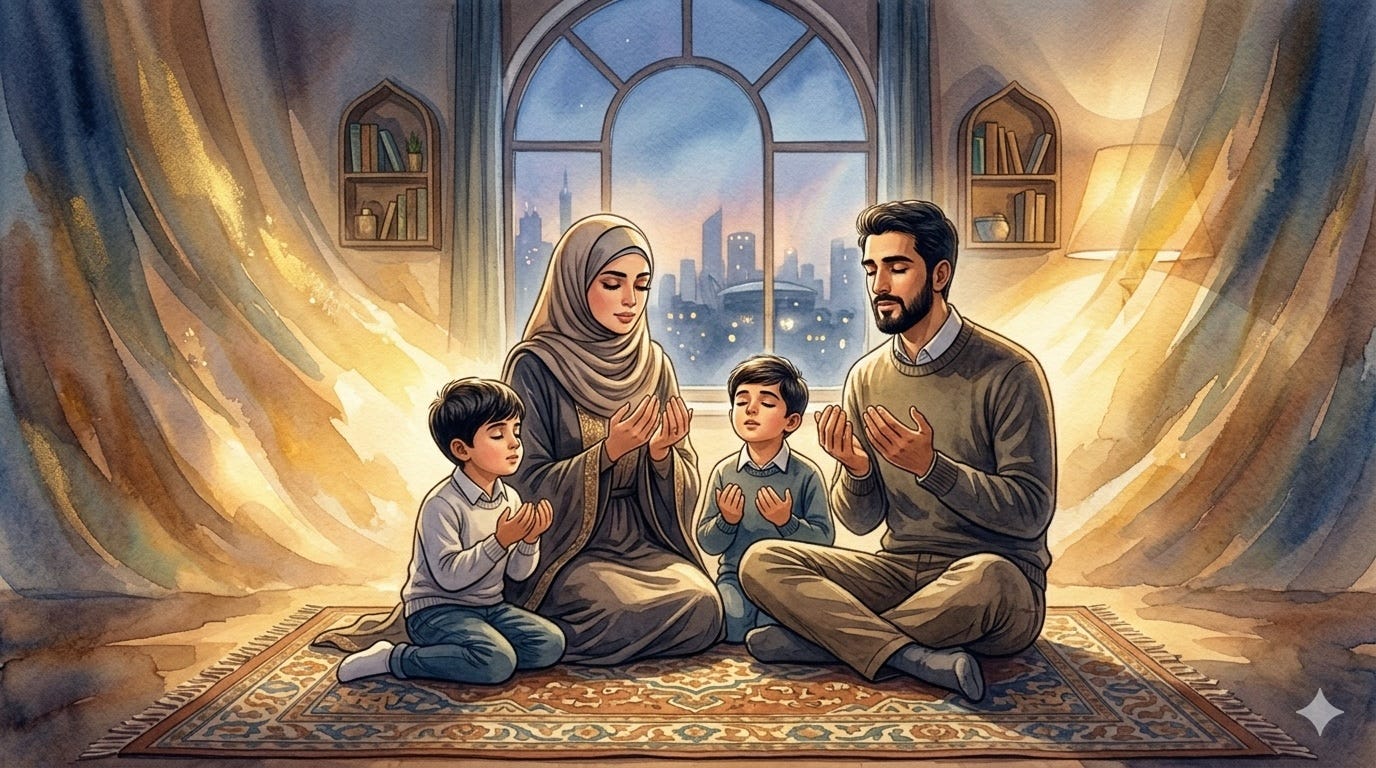
O God — Lord of Sayyed al-Radhi and Sayyed al-Murtadha, and Lord of Sayyedah Fatima bint Husayn before them, and Lord of every mother and every father who has ever raised a child to love You and to love Your Friends.
We thank You, tonight, for the gift of the two brothers whose story we have only just begun.
We thank You for the mother who walked them to the mosque, and for the father who whispered their names into their ears, and for the teacher who wept at a dream and took the burden of their formation upon his shoulders.
O God — make our households like the household of Sayyedah Fatima bint Husayn.
Make our names — the names we give our children, the names we live our own lives by — names that carry Your prayer for us across whatever years You grant us in this world.
Make us, in the homes You have entrusted to us, the parents that those children deserve.
O God — we ask You, by the love You have for the descendants of Your Prophet, peace and blessings be upon him, his family and his righteous companions — grant us tawfeeq.
Grant us success in our endeavours.
Grant us the rigour, the patience, the courage, and the humility that Sayyed al-Radhi and Sayyed al-Murtadha carried into every act of their lives.
Let us not waste the days You have given us.
Let us not arrive at our final hour with the work undone.
And O God — for our beloved Master, the Imam of this Age, the Proof of God upon His earth, the son of al-Hasan al-Askari, peace be upon him and upon his fathers — be, in this hour and in every hour, his guardian, his protector, his leader, his helper, his guide, and his watchful eye.
Hasten his relief.
Make his hardship easy.
And count us, by Your mercy, among those who labour, as Sayyed al-Radhi and Sayyed al-Murtadha laboured, to prepare the ground for the day of his return.
For the occultation continues, O Lord, because we are not yet ready.
Make us ready.
Let every act of our lives — every word taught to a child, every truth spoken in love, every household built on Your remembrance — be a stone we lay in the foundation of the community he will one day lead.
And O God — when our own time comes, as it came for Sayyed al-Radhi at forty-seven and for Sayyed al-Murtadha at eighty, grant us husn al-khatima.
A good ending.
The ending of those whom You have chosen and who have chosen You.
Let us depart this world in the manner of these two brothers — with our work given to those who would carry it forward, and our hearts at peace with the One who created us.
And let us be reunited, by Your mercy, with the ones we have loved in this life and with the ones we have only loved from afar — in a Paradise where the soil of Karbala lies open beneath our feet and the face of the Imam, may our very souls be his ransom and may God hasten his return, is the first sight our eyes meet.
O God, send Your blessings upon Muhammad and the family of Muhammad — and hasten their relief — and may their enemies, all of them, be excluded from Your mercy.
Amen, O Lord, Sustainer of the Universes.
Amen, O Most Merciful of the Merciful.
Teaser for Next Week
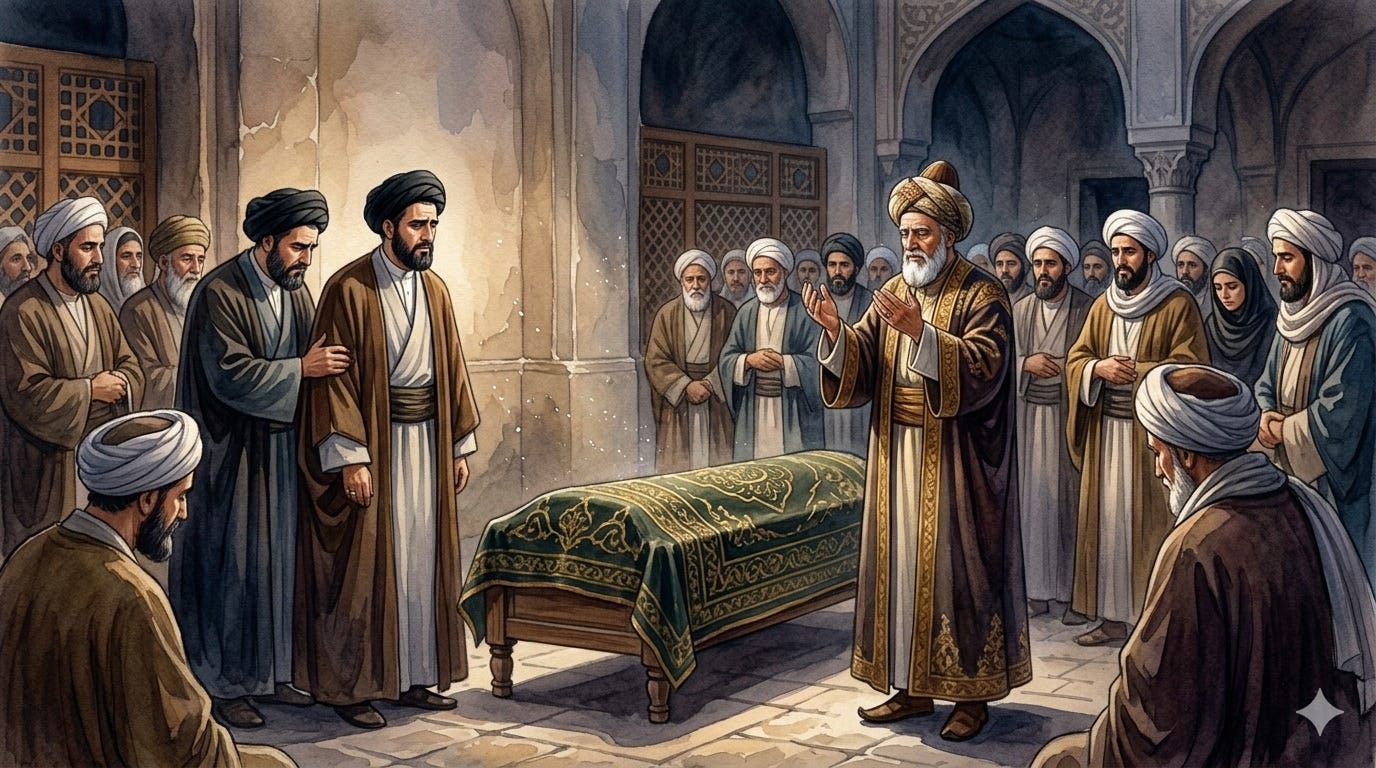
Next week, God willing, we walk the full life of the younger brother — Sayyed al-Radhi — from his early scholarly works, through the compilation of Nahj al-Balagha, through his refusal to bow to a Caliph who tried to break him, to his early grave at the age of forty-seven, where the vizier of the Abbasid caliphate himself stepped in to lead the prayer his elder brother could not bear to lead.
Until then, may God keep you and your loved ones in His care, and may He grant us the soil, the seed, and the patience to raise what He has entrusted to us.
And from Him alone is all ability, and He has authority over all things.
A technical note for readers interested in the Arabic grammar: al-Radhi (الرَّاضِي) is the active participle (ism al-faʿil) of the Form I verb radhiya (رَضِيَ) — “to be pleased / content.”
Al-Murtadha (المُرتَضَى) is the passive participle (ism al-mafʿul) of the Form VIII verb irtadha (ارْتَضَى) — “to choose, to approve.”
Both derive from the same Arabic root, typically listed in classical lexicography (Lisan al-ʿArab, al-Sihah, Lane’s Lexicon) under ر-ض-و, the verb being one of those defective verbs whose weak third radical can surface as either و or ي in different forms.
Form VIII is not a separate root but a derivational pattern (iftiʿāla) built upon the Form I root by inserting the ت infix.
The two names thus share a single root while expressing two complementary aspects of the idea of divine pleasure — one active (the one who pleases), one passive-derived (the one approved / chosen).