

In His Name, the Most High
Preamble
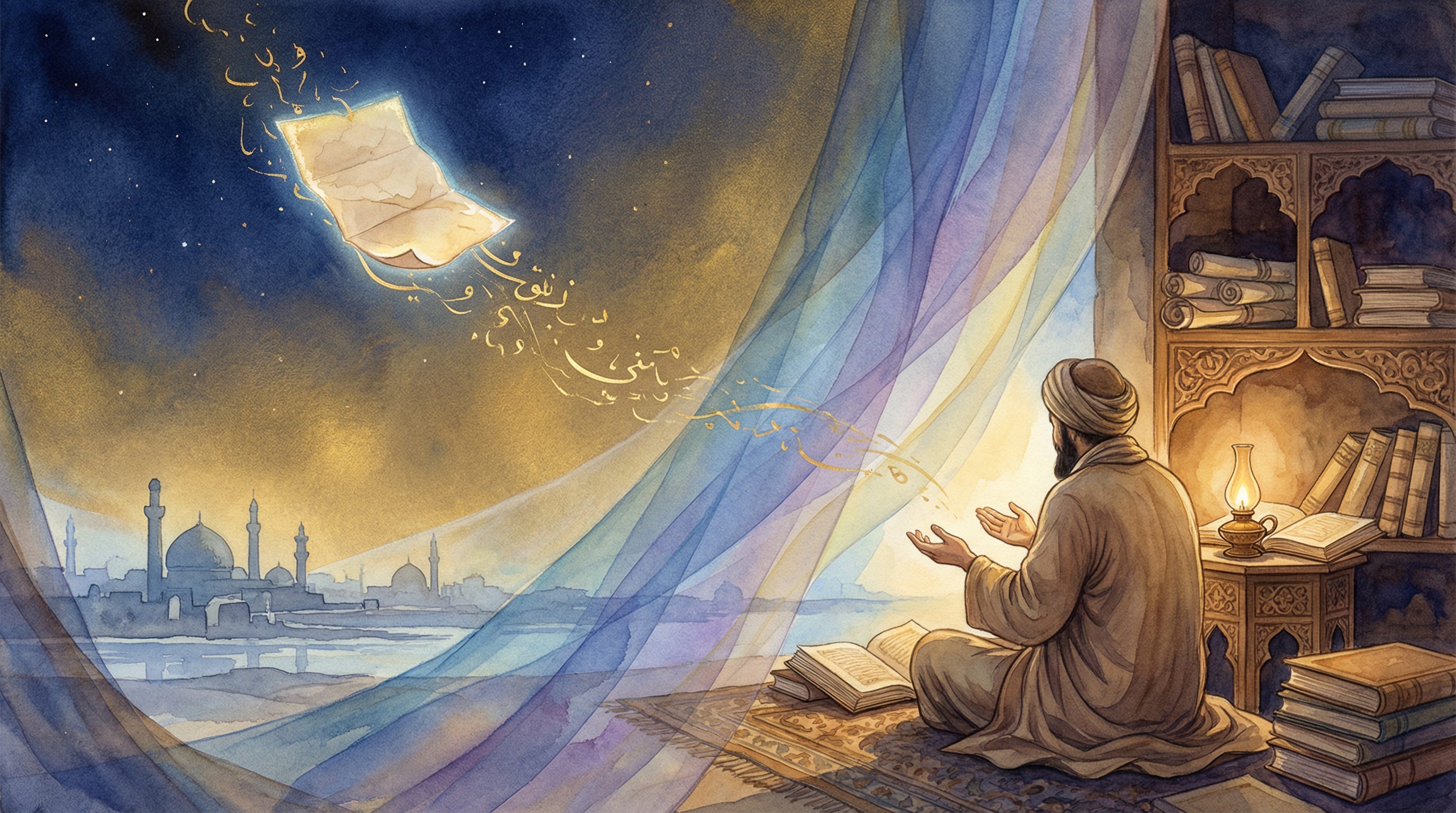
Tonight, we begin with a letter — but not the kind of letter any postal service could deliver.
We begin with a letter from a man the world cannot see, to a man the world would never forget.
In the early years of the Major Occultation — when no Deputy remained, when the door to the Imam had been closed, when the community might reasonably have wondered whether the Hidden Imam knew they existed at all — a letter arrived.
It arrived for a scholar in Baghdad.
And it began with these words:
سَلَامُ اللَّهِ عَلَيْكَ أَيُّهَا الْوَلِيُّ الْمُخْلِصُ فِي الدِّينِ، الْمَخْصُوصُ فِينَا بِالْيَقِينِ
“The peace of God be upon you, O friend — the one sincere in faith, the one distinguished among us by his certainty.”
— From the Tawqi’ of Imam al-Mahdi (aj) to Shaykh al-Mufid; recorded in Bihar al-Anwar, Volume 53
And in another letter:
سَلَامُ اللَّهِ عَلَيْكَ أَيُّهَا النَّاصِرُ لِلْحَقِّ، الدَّاعِي إِلَيْهِ بِكَلِمَةِ الصِّدْقِ
“The peace of God be upon you, O supporter of the Truth — the one who calls to it with the word of truthfulness.”
— From the Tawqi’ of Imam al-Mahdi (aj) to Shaykh al-Mufid; recorded in Bihar al-Anwar, Volume 53
Listen to what the Imam is saying.
He is not writing to a king.
He is not writing to a general.
He is writing to a scholar.
And the titles he gives him —
friend, sincere in faith, distinguished by certainty, supporter of the Truth
— are not titles any caliph or sultan could bestow.
These are titles conferred from the Unseen.
Tonight, we meet the man who received them.
A Note to the Congregation
Before we begin, a word about where we are going.
Over the past three sessions, we have been covering a great deal of ground each week — entire centuries, multiple scholars, vast historical arcs.
The material ahead of us is too rich and too important to continue at that pace.
Beginning tonight, we are going to slow down.
Not because there is less to say — but because there is more.
Each of the scholars we will meet in the coming weeks — the theologians, the founders, the martyrs, the mystics, the revolutionaries — deserves to be known not merely as a name in a list, but as a human being.
We want to walk with them.
To understand the world they were born into.
To see what they built.
To stand at their graveside and ask:
what did this life mean — and what does it demand of us?
The Prophet, peace be upon him, his family and righteous companions, taught gradually — giving knowledge in portions the heart could absorb.
We will follow his example.
There is a wisdom the scholars of medicine have always known: when a person has been without food for a long time, you do not place a feast before them.
You give nourishment carefully, in measure, so the body can receive it.
Our community has been starved of this knowledge for a long time.
We will feed it — but with care.
So tonight: one man.
One life.
One chapter in the story we are telling.
And that man’s name is Shaykh al-Mufid.
Introduction
In our last session, we met the Preservers.
Shaykh al-Kulayni — the man from Kulayn who spent twenty years in Baghdad compiling Al-Kafi, and who died in the very year the door of the Minor Occultation closed.
Shaykh al-Saduq — the child born of the Imam’s own supplication, who travelled from Qum to Fergana and back to fight the crisis of doubt with the weapon of evidence.
Together, they gave us the first two of the Four Books.
They saved the raw material of the tradition — the words of the Imams, gathered, verified, and organised into works that have sustained the community for over a thousand years.
But here is the question that their achievement raised — a question they could not answer, because it was not their question to answer:
What do you do with the material once it is saved?
The hadith were compiled.
The texts were preserved.
The narrations were organised.
But the Shi’a did not live in a vacuum.
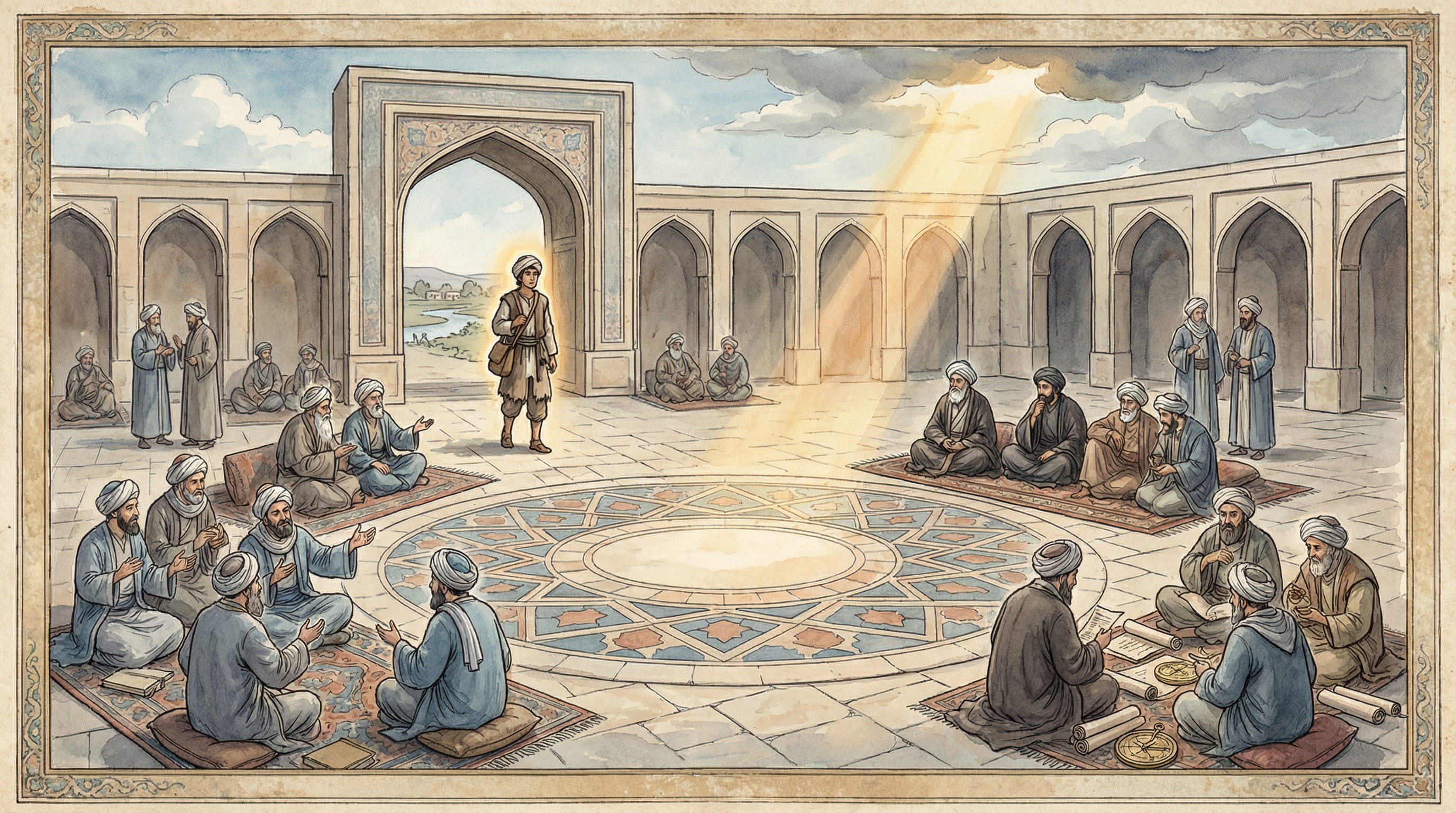
They lived in Baghdad — the most intellectually vibrant city on earth — surrounded by brilliant minds who did not share their beliefs and who demanded reasons, not merely reports.
The Mu’tazilites — the great rationalist theologians — shared the Shi’a commitment to divine justice, but rejected the Imamate.
They could argue circles around anyone who only knew hadith.
The Ash’arites — who would become the dominant theological school of Sunni Islam — affirmed divine predestination and challenged the Shi’a understanding of God’s justice and man’s free will.
And behind both stood the towering shadow of Greek philosophy — the legacy of Aristotle and Plato, which had entered the Islamic world through the great translation movement and had been powerfully reshaped by Muslim thinkers.
Al-Farabi — known as “the Second Teacher,” second only to Aristotle himself — had already laid the philosophical groundwork a generation earlier.
And Ibn Sina — Avicenna — who was born just fifteen years after Shaykh al-Mufid, would soon elevate Islamic philosophy to its highest peak.
We will encounter both of these giants again as our series continues, because the Shi’a scholars we are tracing did not build in isolation — they built in conversation with the most powerful ideas of their age, and they were not afraid of that conversation.
And behind all of these intellectual challenges stood a more immediate, more dangerous question:
If the Shi’a cannot defend their beliefs in the arena of reason — if they can only quote hadith while their opponents construct arguments — then how long before the educated youth of the community simply walk away?
The preservers had saved the voice of the Imams.
Now someone had to defend it.
Someone had to take the preserved tradition and arm it with reason — to prove that what the Imams taught was not merely transmitted truth, but demonstrable truth.
That someone was a young man from a small town on the Tigris, who arrived in Baghdad, walked into the classroom of the most formidable Mu’tazili judge in the city — and left that classroom with a new name.
They called him al-Mufid.
The Beneficial One.
Recap
In Session 63 — “When the Light Was Hidden” — we stood at the threshold of the Major Occultation.
We heard the final Tawqi’ of the Hidden Imam — the letter that closed the door and delegated authority to the scholars:
وَأَمَّا الْحَوَادِثُ الْوَاقِعَةُ فَارْجِعُوا فِيهَا إِلَى رُوَاةِ حَدِيثِنَا فَإِنَّهُمْ حُجَّتِي عَلَيْكُمْ وَأَنَا حُجَّةُ اللَّهِ عَلَيْهِمْ
“As for the newly occurring events, refer regarding them to the narrators of our hadith, for they are my proof upon you, and I am the proof of God upon them.”
— Al-Saduq, Kamal al-Din wa Tamam al-Ni’mah, Volume 2, Chapter 45, Hadith 4; also recorded in Bihar al-Anwar, Volume 53
“As for the newly occurring events, refer to the narrators of our hadith, for they are my proof upon you, and I am the proof of God upon them.”
We traced the work of Shaykh al-Kulayni — twenty years compiling Al-Kafi in Baghdad, sixteen thousand narrations, completed in the very year the Occultation became total.
We followed Shaykh al-Saduq from Qum to Fergana and back — the scholar who found a community in doubt and answered that doubt with Kamal al-Din and Man la Yahduruhu al-Faqih.
We explored the golden window opened by the Buyid dynasty — the Daylamite mountain people who remembered the Alid refugees who had brought them Islam, and who, when they came to power, gave the Shi’a their first era of intellectual freedom.
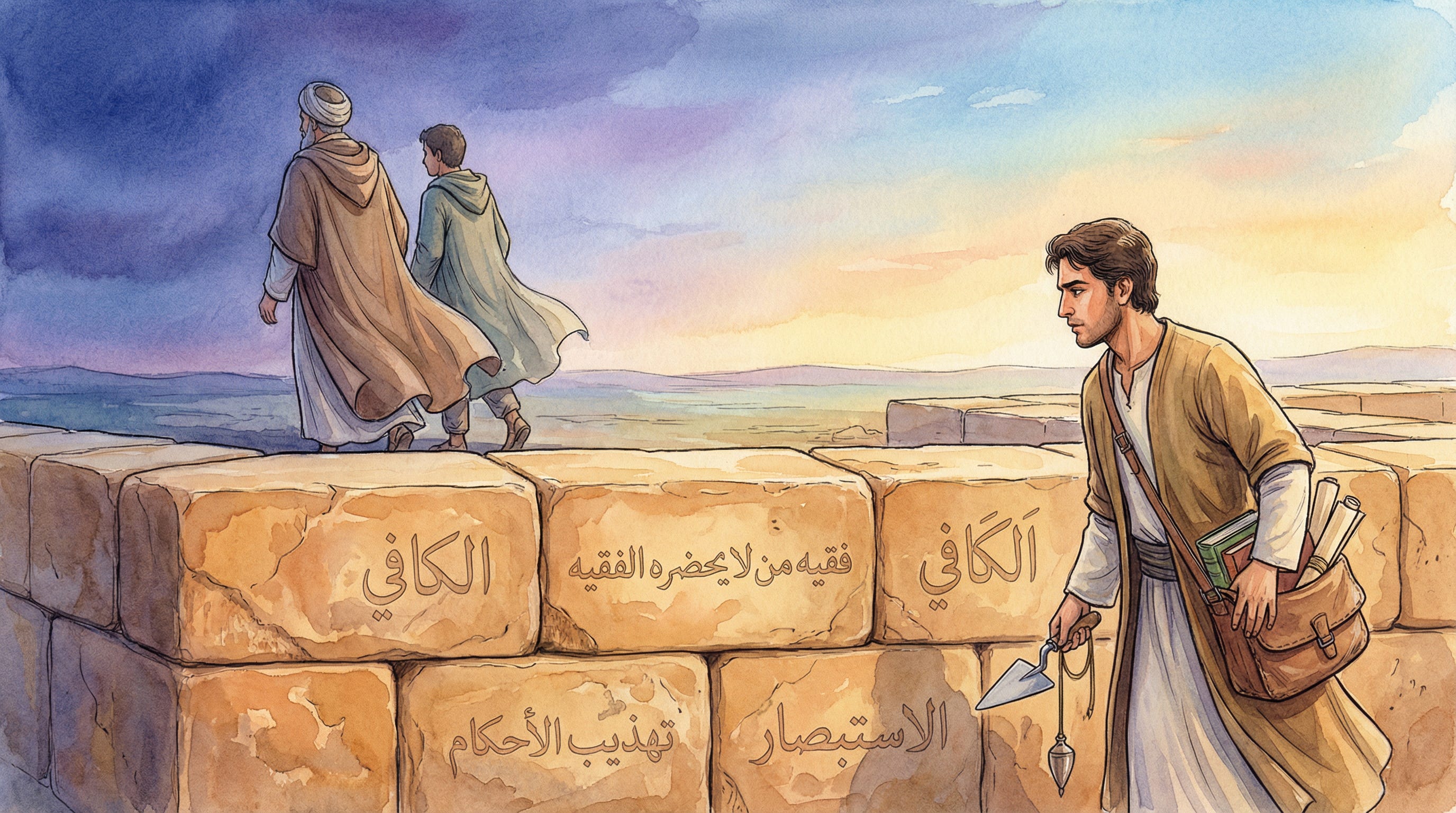
We named the Four Books and the Six Books side by side — honouring the shared inheritance of preservation.
And we established the critical principle that defines the Shi’a approach to hadith: no book is wholly sahih — every narration must be tested, and the supreme standard against which it is tested is the Book of God.
That session ended with the foundations laid.
Tonight, we meet the man who built the walls.
Video of the Majlis (Sermon/Lecture)
Audio of the Majlis (Sermon/Lecture)
Point 1: The Formation — From Ukbara to Baghdad
The Boy from the Banks of the Tigris
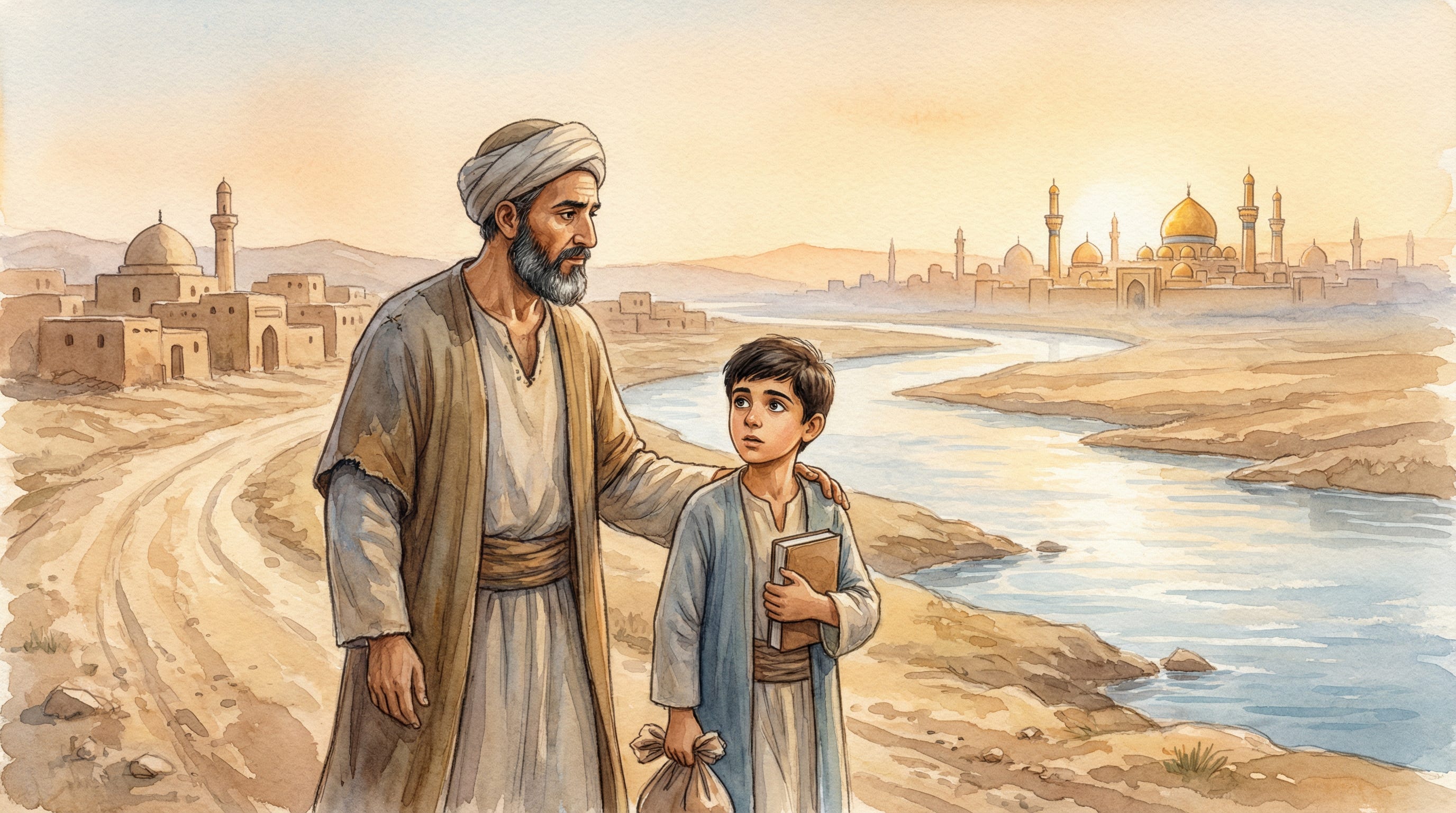
He was born in the year 336 after the Hijrah — seven years after the Major Occultation had begun, seven years into the silence — in a town called Ukbara.
Ukbara was a small settlement on the eastern bank of the Tigris, about sixty kilometres north of Baghdad, in what is today the Saladin Governorate of Iraq — the same province that contains the city of Samarra, where the Tenth and Eleventh Imams were held under house arrest by the Abbasids, and where the Twelfth Imam entered his Occultation.
His full name was Muhammad ibn Muhammad ibn al-Nu’man.
His kunya was Abu Abdillah.
A kunya is a traditional Arabic honorific — a name of parentage, literally meaning “father of” or “mother of,” used as a mark of respect and dignity.
In Arab and Islamic culture, to address someone by their kunya rather than their given name is a sign of honour.
Abu Abdillah — “Father of Abdillah” — was how his contemporaries would have addressed him in respect, much as we might say “sir” or use a formal title in English, though the kunya carries a warmer, more personal weight.
And the people of his time knew him first by a simpler title:
Ibn al-Mu’allim — “the Son of the Teacher” — because his father was a teacher, a man who understood that the greatest inheritance he could give his son was not land or gold, but knowledge.
And so his father did what the mother of Sayyed al-Murtada and Sayyed al-Radhi would do a generation later — a decision we will hear about in our next session.
He brought his son to Baghdad.
Not to seek wealth.
Not to enter the courts of power.
To study.
The City He Entered
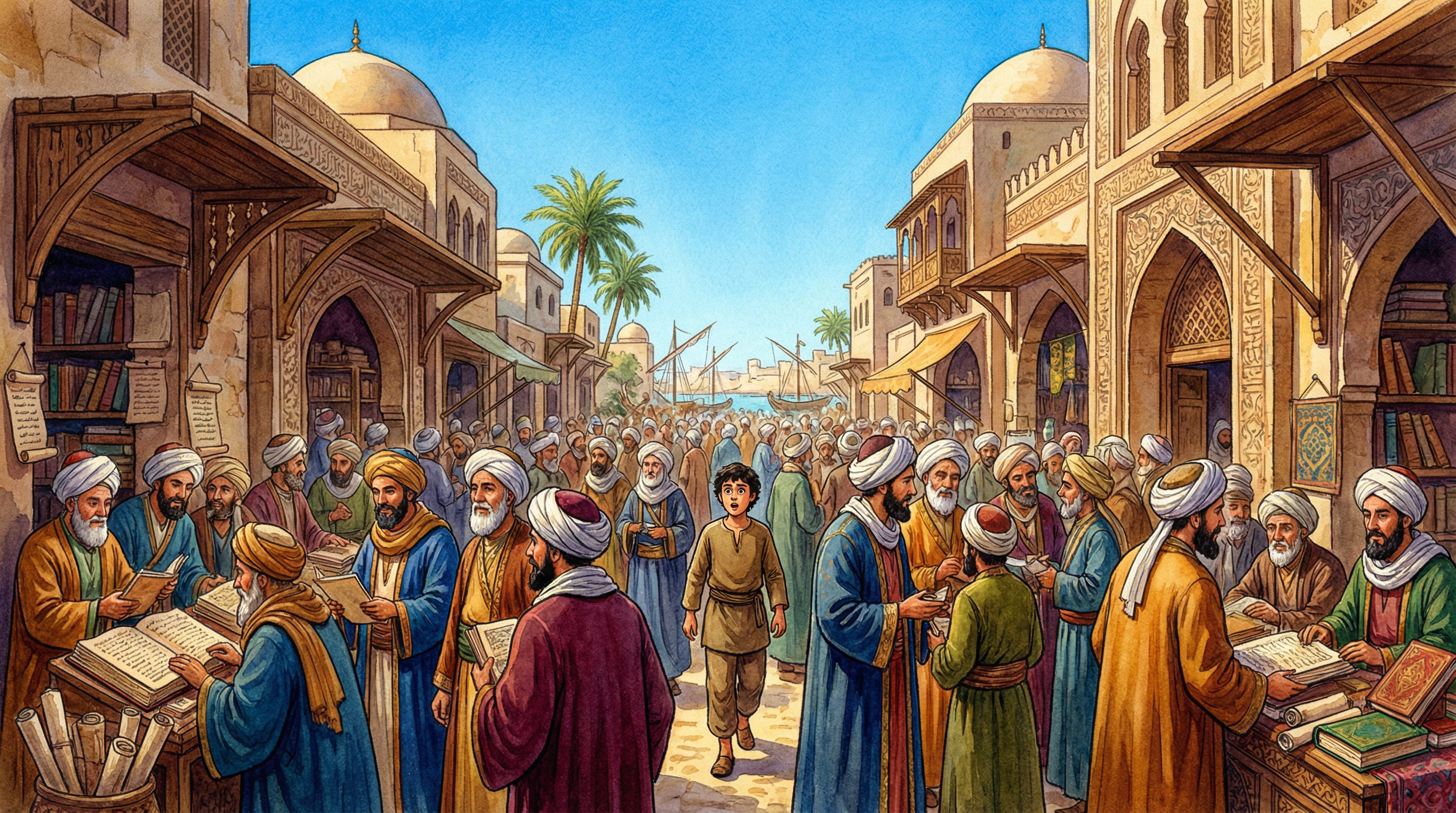
And what a city to enter.
We described in our last session the golden window that the Buyid dynasty had opened for the Shi’a — the sons of Daylamite mountain fishermen who remembered the Alid refugees who had brought them Islam, and who, when they conquered Baghdad, gave the community something it had never had: freedom.
By the time the young Ibn al-Mu’allim arrived in Baghdad, that freedom was at its peak.
The Buyid grip on the city was secure, the patronage of learning was at its most generous, and the intellectual environment was unmatched anywhere in the world — though the dynasty’s internal rivalries were beginning to show the cracks that would, within decades, allow new conquerors to sweep it all away.
The al-Karkh quarter — the Shi’i neighbourhood — was the intellectual heart of the city.
Over a hundred bookshops lined its streets.
Scholars debated in courts, in mosques, in gardens, in the markets and even in the bathhouses.
The Buyid rulers patronised learning across sectarian lines — and the result was the most intellectually vibrant environment the Muslim world had ever seen.
But it was also a furnace.
Because intellectual freedom does not mean intellectual comfort.
It means that every idea must defend itself.
The Mu’tazilites — brilliant rationalist theologians who affirmed divine justice but rejected the Imamate — held major positions in the courts and academies.
Their arguments were sophisticated, their methods rigorous, their confidence immense.
The Ash’arites — the rising school of Sunni theology, championed by Abu al-Hasan al-Ash’ari and his followers — were developing their own systematic defence of Sunni doctrine.
This was the city the boy from Ukbara walked into.
A city where you could publish freely — but where you would be challenged immediately.
A city where being Shi’a was no longer punishable by death — but where being Shi’a without rational arguments meant being dismissed as intellectually provincial.
A city that demanded not merely faith, but the defence of faith.
The Day He Earned His Name
He studied under the leading Shi’i scholars of Baghdad and Qum — jurists and hadith specialists who carried the tradition of the Imams.
And here is a detail worth noting: one of his principal teachers — a hadith scholar and jurist from Qum by the name of Ibn Qulawayh al-Qummi — was a direct student of Shaykh al-Kulayni, the very compiler we met in our last session.
The chain is not abstract.
Shaykh al-Kulayni compiled the words of the Imams.
His student transmitted them.
And that student’s student — Shaykh al-Mufid — would defend them with the weapons of reason.
Three generations, three links, one unbroken chain.
But Shaykh al-Mufid did not study only under Shi’i scholars.
He also attended the classes of prominent Mu’tazili thinkers — because this was a tradition that did not fear other ideas.
It engaged them.
And it was in one of these classes that the moment came.
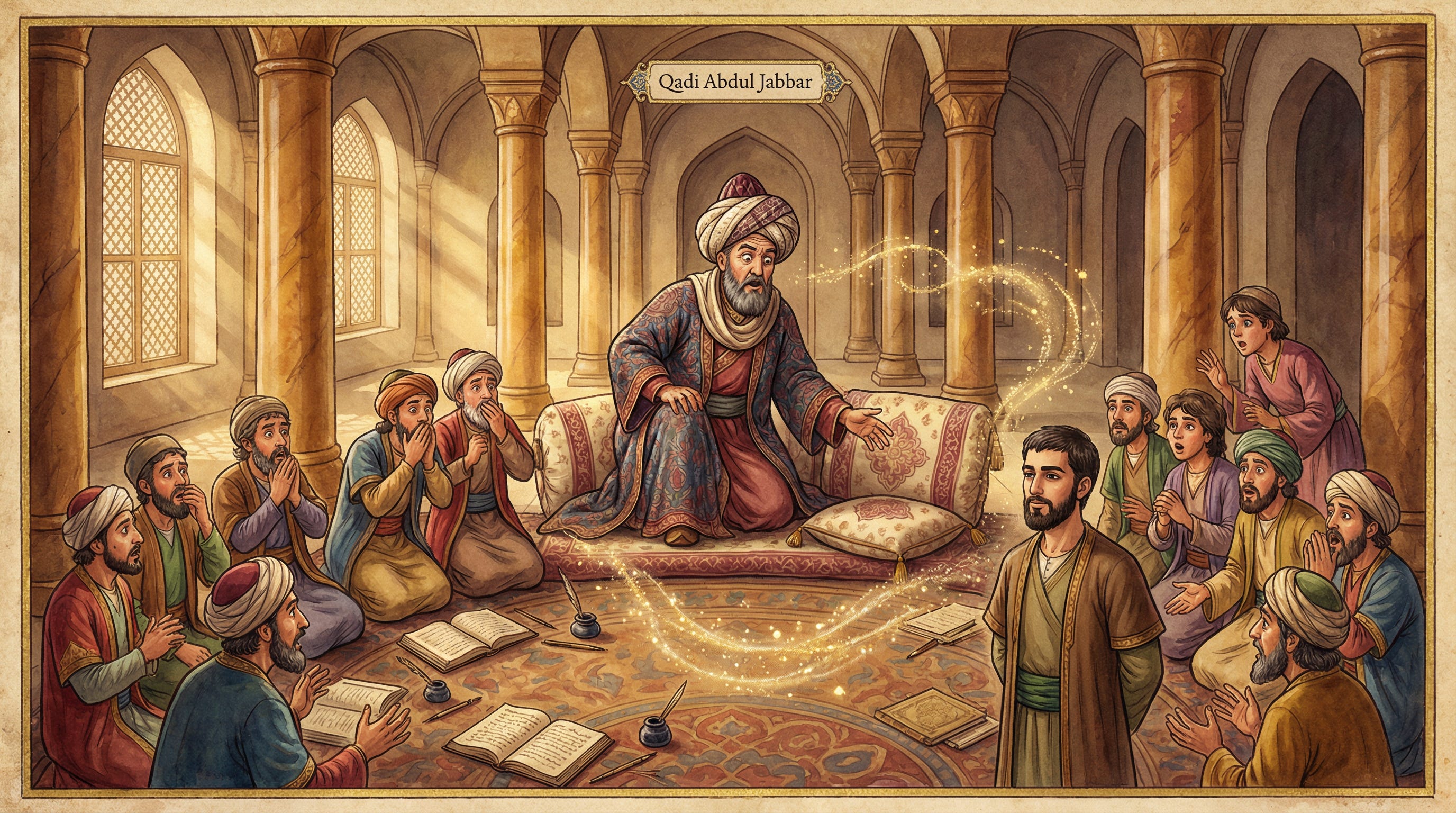
The young Ibn al-Mu’allim was sitting in the circle of one of the most formidable Mu’tazili scholars of the age — the judge Abdul Jabbar, whose intellect commanded the respect of the entire city.
During the lesson, the young student raised a point.
The sources tell us that it was so sharp, so precisely argued, so unexpected from someone so young, that the judge was stunned.
He asked the student’s name.
And then — in front of the entire class — he invited the young man to come and sit in his own place, the place of the teacher, and said:
“You are truly mufid — truly beneficial.”
أَنْتَ مُفِيدٌ حَقًّا
The scholars and students in the class were astonished.
The judge turned to them and said:
“We are at a loss to answer him. You try — so that he goes back to his seat.”
— The account of how Shaykh al-Mufid earned his title, recorded in the biographical literature; see Sayyid Bahr al-’Ulum, Rijal; also cited in Ali Naghi Zabihzadeh, “Shi’ite Authorities in the Age of Major Occultation, Part 1: Shaykh al-Mufid,” published by the Ahlul Bayt World Assembly
From that day, the boy from Ukbara was no longer Ibn al-Mu’allim — the Son of the Teacher.
He was al-Mufid — the Beneficial One.
And the name was not merely a compliment.
It was a prophecy.
Because this young man would spend the rest of his life being exactly that — beneficial — to the community of the Ahl al-Bayt.
The Word Spread
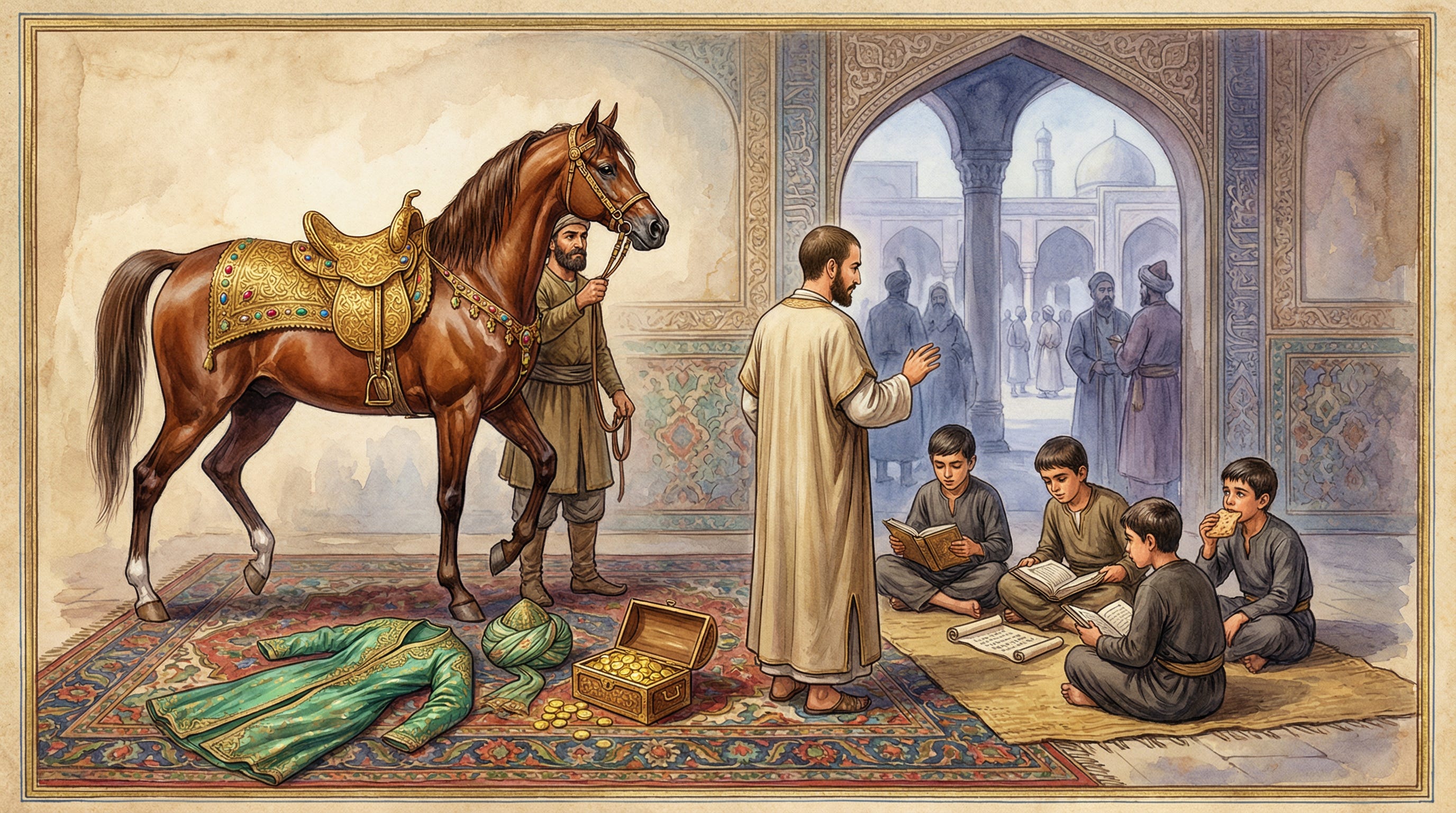
News of what had happened in that classroom reached the Buyid court.
The ruler — ’Adud al-Dawla, the most powerful of the Buyid monarchs, the man who had built the first shrine over the grave of Imam Ali in Najaf — recognised what the community had in this young scholar.
He honoured Shaykh al-Mufid with gifts: a horse with a golden saddle, a gown, a turban, a hundred golden dinars — each dinar worth ten ordinary gold coins.
And he ordered that the students who attended Shaykh al-Mufid’s classes be provided with bread and meat every day — so that poverty would never be a barrier to learning.
This was not mere royal patronage.
It was the Buyid state saying to the Shi’a community:
Your scholars matter. Your intellectual tradition matters. We will invest in it.
And Shaykh al-Mufid, for his part, used that investment not to build personal wealth or political influence — but to build a school.
A school that would produce the next generation of scholars — including two brothers whose story we will tell next week, and whose teacher was chosen for them in a dream by none other than Sayyedah Fatimah al-Zahra, peace be upon her.
But that is for next week.
What Formed Him
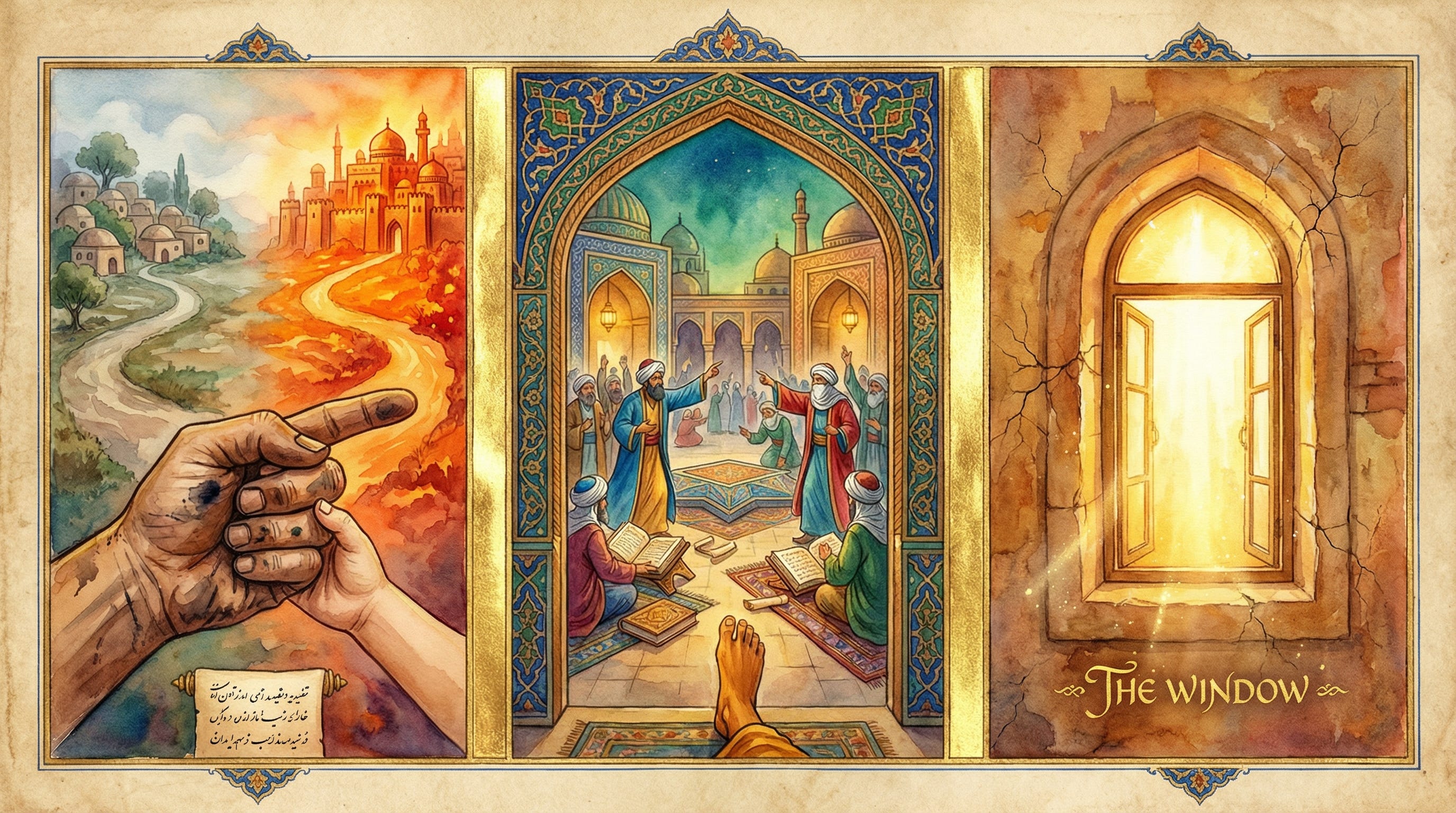
Let us pause here — because Point 1 is about formation, and the formation of Shaykh al-Mufid carries lessons that are as alive today as they were a thousand years ago.
First: his father.
A man whose name history barely records — “al-Mu’allim,” the Teacher — but whose single decision changed the course of Shi’i intellectual history.
He brought his son to Baghdad.
He chose education over comfort, over safety, over the familiar.
He did not keep his son in Ukbara, where life was quieter and the questions were smaller.
How many parents today face the same choice?
Whether to send a child to the Hawza, to a place of serious study, to an environment where they will be challenged and stretched — or to keep them close, where the questions are manageable and the answers are easy?
The father of Shaykh al-Mufid chose the furnace.
And the furnace made a diamond.
Second: he studied under scholars who disagreed with him.
The young Shaykh al-Mufid sat in the circles of Mu’tazili thinkers — men who rejected the Imamate, men whose theology differed from his on fundamental points.
He did not avoid them.
He did not declare them enemies.
He learned their arguments so thoroughly that when the moment came, he could defeat those arguments from the inside.
This is a lesson our community desperately needs today.
We live in an age where many believers are afraid of ideas they disagree with — afraid that exposure to philosophy, or to Western thought, or to the arguments of other Islamic schools, will somehow weaken their faith.
Shaykh al-Mufid’s example says the opposite.
He sat in the Mu’tazili classroom.
He listened.
He understood.
And then — when the moment came — he stood up and made a point so sharp that the teacher himself could not answer it.
You cannot defeat an argument you have not understood.
You cannot defend a faith you have only inherited but never examined.
The Buyid golden window gave the Shi’a freedom.
Shaykh al-Mufid used that freedom not to build walls, but to enter the arena.
And here is the contemporary reflection that presses on us: the Buyid window of intellectual freedom parallels the window Muslim communities have in the West today — freedom to teach, to publish, to debate, to build institutions.
The question Shaykh al-Mufid’s era poses to us is: are we using our window the way Shaykh al-Mufid used his?
Two hundred books in a lifetime, without a printing press.
We have the internet.
What are we writing?
Third: the window.
We have said this before, and we will say it again, because the pattern repeats: every generation has a window.
The Sadiqiyya window.
The Buyid window.
And the window we are in now.
The window does not announce when it will close.
It simply closes.
And then the only question that matters is:
what did you build while it was open?
Point 2: The Contribution — The Shield of Reason and the Letters from the Unseen
The Intellectual Revolution
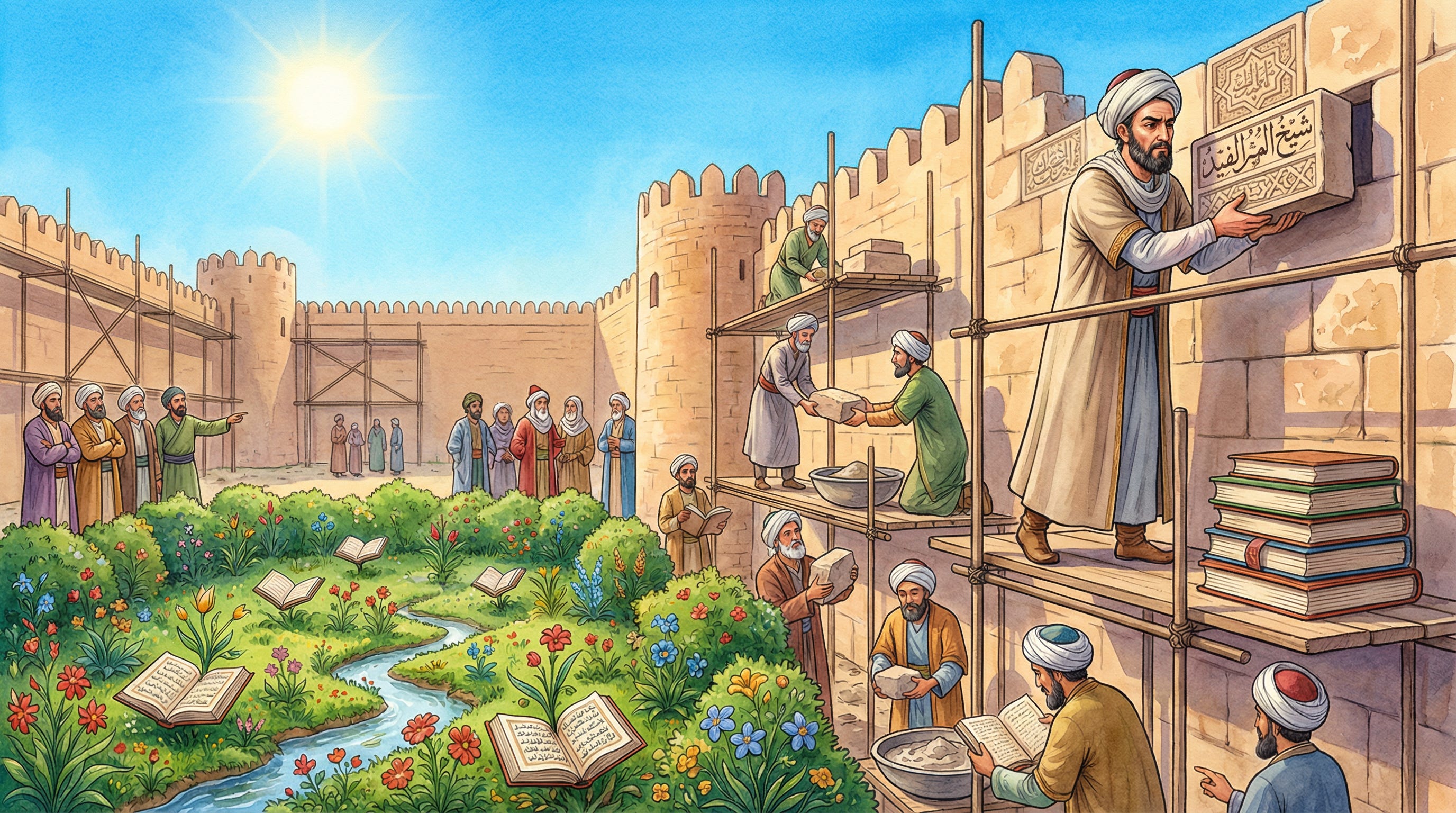
To understand what Shaykh al-Mufid did, you must first understand what existed before him.
For the first century and a half after the Occultation, the Shi’a scholarly tradition was primarily a tradition of riwayah — narration.
The scholars preserved what the Imams had said, transmitted it faithfully, and organised it into collections.
This was the work of Shaykh al-Kulayni and Shaykh al-Saduq — the Preservers we met last week.
And it was essential work.
Without it, the words of the Imams would have been lost.
But narration alone has a vulnerability.
If your entire defence of your beliefs consists of saying,
“The Imam said so,”
then anyone who does not already accept the authority of the Imam will simply shrug and walk away.
And in Buyid Baghdad, shrugging was the least of it.
The Mu’tazilites did not merely shrug — they argued.
They constructed elaborate rational proofs for their theological positions.
They could demonstrate, through formal logic, why they believed what they believed about God’s justice, about human free will, about the nature of the Qur’an.
The Ash’arites argued back — with their own formal systems, their own theological architecture, their own answers to the same questions.
And the Shi’a?
The Shi’a had hadith.
Magnificent hadith.
Profound hadith.
Hadith that contained, within them, the deepest truths of existence.
But hadith that had not yet been translated into the language of rational argument.
Shaykh al-Mufid understood that this was not merely an academic gap.
It was an existential threat.
If the educated youth of Baghdad — the young men and women who read philosophy, who attended the Mu’tazili debates, who breathed the air of rational inquiry — could not find rational arguments for their Shi’a beliefs, they would leave.
Not because the beliefs were false, but because no one had shown them why the beliefs were true — in the language they understood.
And so Shaykh al-Mufid did something that changed the trajectory of Shi’ism forever.
He took the preserved tradition — the hadith of the Imams, the theology of the Ahl al-Bayt — and he built around it a fortress of rational argument.
He did not abandon the hadith.
He armed them.
He developed what the scholars call Kalam — systematic rational theology — as a Shi’i discipline.
Before him, Kalam was largely a Mu’tazili and Ash’ari enterprise.
After him, the Shi’a had their own theological system — one that could stand in any debate, in any court, in any age, and defend itself.
And alongside the Kalam, he developed the Shi’i approach to Usul al-Fiqh — the principles of jurisprudence — the formal methodology by which scholars derive legal rulings from the foundational sources.
Before Shaykh al-Mufid, Shi’i jurists relied almost entirely on direct hadith application.
Shaykh al-Mufid introduced a structured method — a logical framework for moving from the general to the specific, from the principle to the ruling, from the text to the application.
He did not see a contradiction between reason and revelation.
He saw them as two wings of the same bird.
And the bird could not fly with only one.
His written output was staggering.
The biographical sources record that he wrote approximately two hundred works across theology, jurisprudence, history, ethics, and Qur’anic sciences.
Among the most significant:
Awa’il al-Maqalat (The First Principles of Discourses)— a theological work setting out the distinctive positions of the Shi’a school, clarifying where the Shi’a agree with other Islamic schools and where they differ, and why they differ.
Al-Irshad (The Guidance) — a comprehensive history of the Twelve Imams, their lives, their miracles, and their stations — a work that remains a primary reference to this day.
Al-Muqni’ah (The Sufficient Guide) — his most important jurisprudential work, a manual of Shi’i law that begins — and this is characteristic of the man — not with legal rulings, but with matters of belief.
Because for Shaykh al-Mufid, law without theology was a body without a soul.
Two hundred works.
In an age without printing presses, without computers, without even reliable supplies of paper — where every copy had to be written by hand, and every book was a physical act of endurance as much as an intellectual one.
This was not a man who theorised about defending the faith.
He did it — one book at a time, one debate at a time, one student at a time.
And his students would include the greatest scholars of the next generation — as we will see in a moment.
The Letters from the Unseen
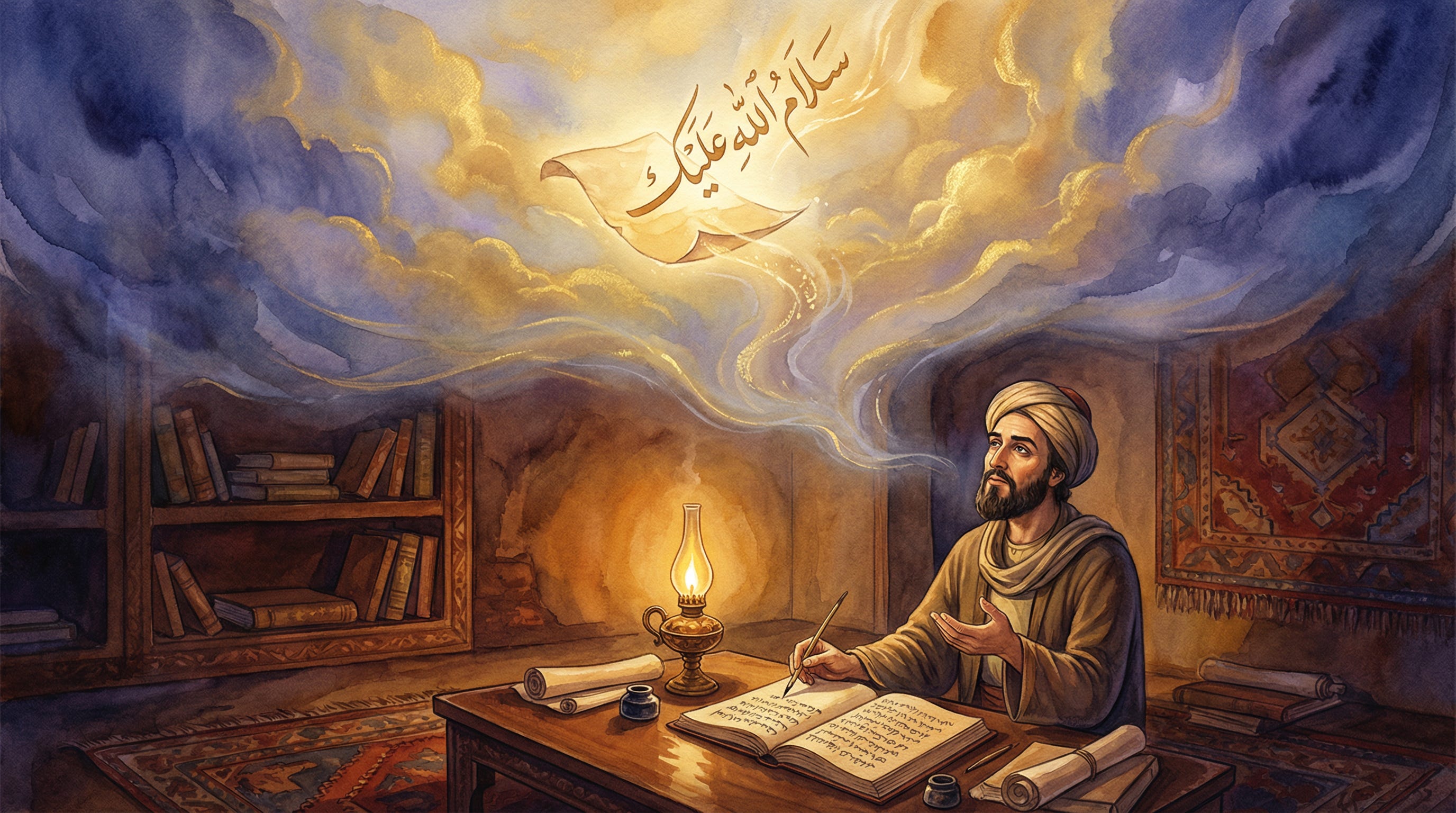
What we have described so far — the intellectual revolution, the two hundred books, the transformation of Shi’i theology — would be enough to secure Shaykh al-Mufid’s place in history.
But there is something else.
Something that lifts his story from the realm of intellectual biography into the realm of the sacred.
During the Major Occultation — when no Special Deputy existed, when the door to the Imam had been closed by the final Tawqi’ we heard in our last session — Shaykh al-Mufid received letters from the Hidden Imam.
We must pause here, because the weight of this statement deserves to be felt.
The final Tawqi’ of the Imam — delivered through the Fourth Deputy in 329 AH — had explicitly warned:
فَقَدْ وَقَعَتِ الْغَيْبَةُ التَّامَّةُ، فَلَا ظُهُورَ إِلَّا بِإِذْنِ اللَّهِ تَعَالَى ذِكْرُهُ، وَذَلِكَ بَعْدَ طُولِ الْأَمَدِ، وَقَسْوَةِ الْقُلُوبِ، وَامْتِلَاءِ الْأَرْضِ جَوْرًا. وَسَيَأْتِي لِشِيعَتِي مَنْ يَدَّعِي الْمُشَاهَدَةَ، أَلَا فَمَنِ ادَّعَى الْمُشَاهَدَةَ قَبْلَ خُرُوجِ السُّفْيَانِيِّ وَالصَّيْحَةِ فَهُوَ كَذَّابٌ مُفْتَرٍ، وَلَا حَوْلَ وَلَا قُوَّةَ إِلَّا بِاللَّهِ الْعَلِيِّ الْعَظِيمِ
“The complete Occultation has now occurred. There shall be no appearance except by the permission of God, exalted be His mention, and that shall be after a lengthy period, and the hardening of hearts, and the earth being filled with injustice. And there shall come to my Shi’a those who claim to have seen me. Behold — whoever claims to have seen me before the rising of the Sufyani and the heavenly Cry, he is a liar and a fabricator. And there is no power and no strength except through God, the Most High, the Most Great.”
— From the final Tawqi’ (letter) of Imam al-Mahdi (aj) to his Fourth Deputy, Ali ibn Muhammad al-Samarri, in the year 329 AH. Recorded in: Al-Tusi, Kitab al-Ghayba (The Book of Occultation), Hadith 365; Al-Saduq, Kamal al-Din wa Tamam al-Ni’mah; Al-Tabrisi, Al-Ihtijaj
“Whoever claims to have seen me before the rising of the Sufyani and the heavenly Cry, he is a liar and a fabricator.”
The door of special deputyship was closed.
No one could claim to be a representative in the way the Four Deputies had been.
And yet — letters came to Shaykh al-Mufid.
Not through a formal deputyship.
Not through a public claim of representation.
Through means that the sources describe without fully explaining — because the Imam’s affairs in the Occultation are, by their nature, beyond our full comprehension.
What the tradition records is the content of these letters.
And the content is extraordinary.
We heard two of them in tonight’s preamble:
سَلَامُ اللَّهِ عَلَيْكَ أَيُّهَا الْوَلِيُّ الْمُخْلِصُ فِي الدِّينِ، الْمَخْصُوصُ فِينَا بِالْيَقِينِ
“The peace of God be upon you, O friend — the one sincere in faith, the one distinguished among us by his certainty.”
— From the Tawqi’ of Imam al-Mahdi (aj) to Shaykh al-Mufid; recorded in Bihar al-Anwar, Volume 53
And:
سَلَامُ اللَّهِ عَلَيْكَ أَيُّهَا النَّاصِرُ لِلْحَقِّ، الدَّاعِي إِلَيْهِ بِكَلِمَةِ الصِّدْقِ
“The peace of God be upon you, O supporter of the Truth — the one who calls to it with the word of truthfulness.”
— From the Tawqi’ of Imam al-Mahdi (aj) to Shaykh al-Mufid; recorded in Bihar al-Anwar, Volume 53
Some scholars of the tradition have recorded that over the course of Shaykh al-Mufid’s thirty years of scholarly leadership, he may have received as many as thirty such communications.
The Imam addressed him as “dear committed brother” — a phrase that tells you everything about the relationship between the Hidden Imam and the scholars who carry his authority.
But it is not the words of praise that are most significant.
It is the correction.
The Correction — When the Imam Intervened
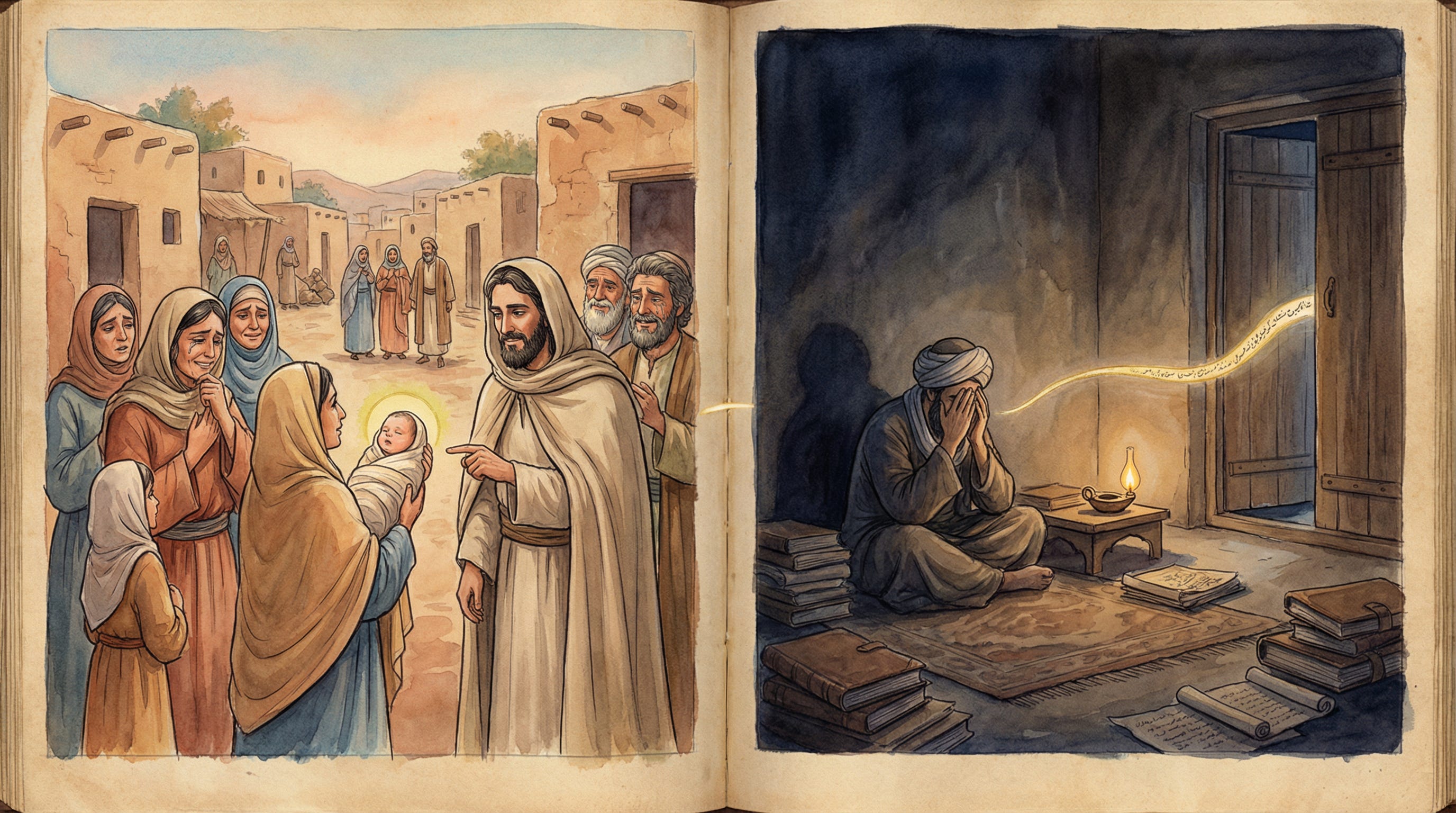
There is an account — recorded in the biographical sources — that illustrates the nature of this relationship more powerfully than any theological argument could.
A man came to Shaykh al-Mufid from a nearby village with a question.
A woman in their community had died during childbirth.
What should be done?
Shaykh al-Mufid issued his ruling — bury the mother with her child.
The man thanked him and left.
But on his way back to the village, something happened.
A man he did not know called out to him on the road and said:
The Shaykh has sent me with a correction.
The child is still alive inside the mother.
The abdomen must be opened, the child extracted, and only then should the burial proceed.
The villager, believing the message had come from Shaykh al-Mufid, followed the instruction.
The child was alive.
The child was saved.
Years later, the man and the child — now grown — returned to Baghdad to thank Shaykh al-Mufid for sending the corrected message that had saved the child’s life.
And Shaykh al-Mufid realised: he had never sent any message.
He had never sent any messenger.
He did not know who the man on the road was.
The messenger had come from the Imam.
The realisation struck him like a blow.
He — the greatest scholar of his age, the man who had written two hundred books — had issued a ruling that was wrong.
And the Imam himself had intervened to correct it.
Shaykh al-Mufid went home.
He closed his door.
And he seriously considered never issuing a fatwa again.
Think about what this means.
A scholar of his stature — a man whose entire life was dedicated to providing guidance — was so shaken by a single error that he was prepared to stop entirely.
This is not the behaviour of a man motivated by ego or status.
This is the behaviour of a man who understood the gravity of what it means to speak on behalf of the religion of God.
And then — another communication came from the Imam:
Continue issuing fatwas. We will support you.
— The account of the Imam’s correction and subsequent instruction to Shaykh al-Mufid; recorded in the biographical literature; see also Ali Naghi Zabihzadeh, “Shi’ite Authorities in the Age of Major Occultation, Part 1: Shaykh al-Mufid,” published by the Ahlul Bayt World Assembly
The Imam corrected him — and then told him to carry on.
This is the relationship between the Hidden Imam and the Marja’iyyah.
The scholars are not infallible.
The Imam never said they were.
He said they are his proof — his representatives.
And he watches over them.
He corrects when correction is needed.
And he encourages when encouragement is needed.
The Marja’iyyah is not a human invention.
It is not an accident of history.
It is a divinely supervised institution — guided from the Unseen by the Imam whose authority it carries.
And the tawqi’at to Shaykh al-Mufid are the proof.
The Dream of Sayyedah Fatimah
There is one more account from the life of Shaykh al-Mufid that we must hear tonight — because it connects this session to our next.
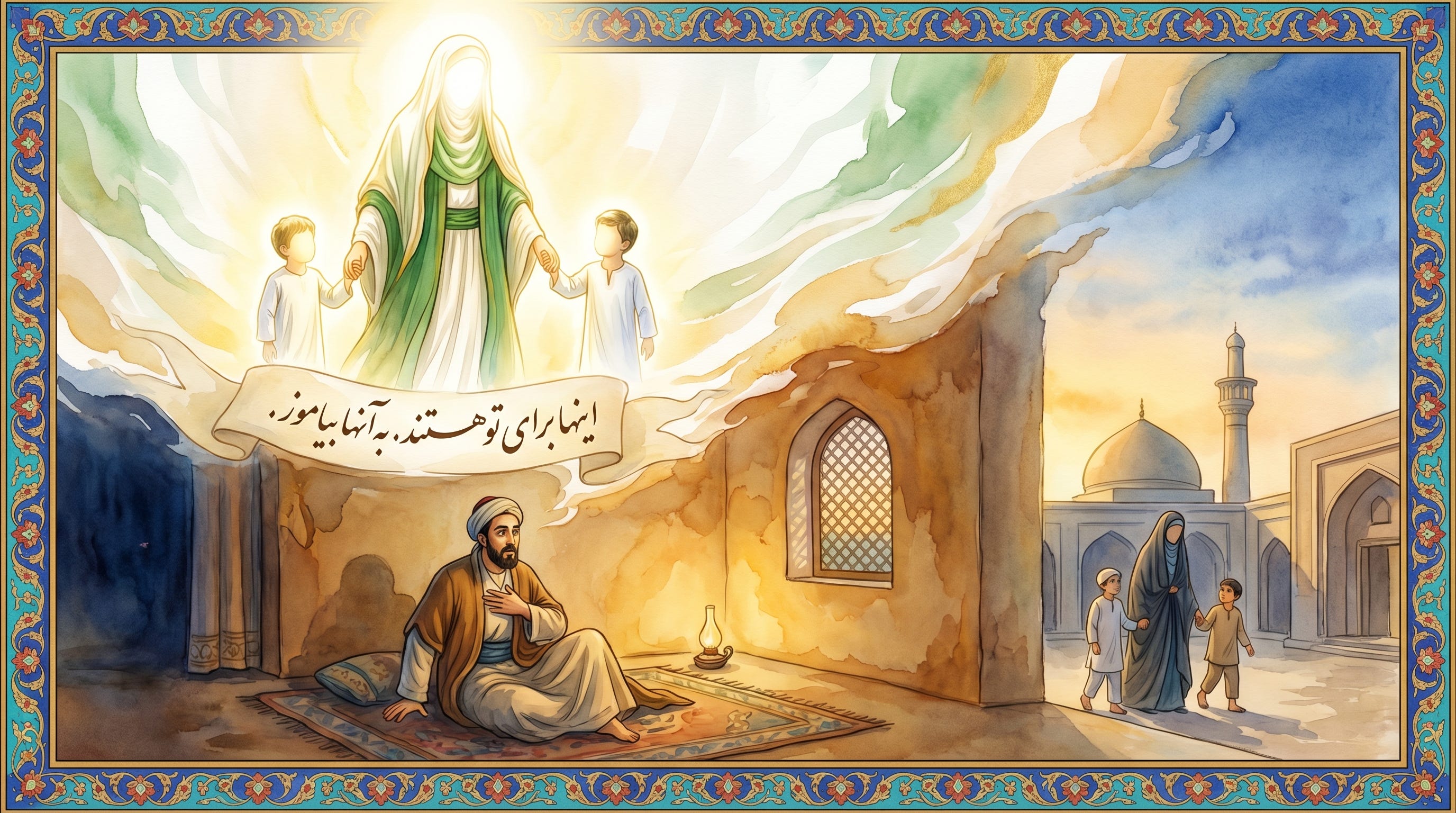
The sources record that Shaykh al-Mufid saw, in a dream, the Lady of Light — Sayyedah Fatimah al-Zahra, peace be upon her.
She came to him holding the hands of two young boys — Imam al-Hasan and Imam al-Husayn, peace be upon them — and she said:
يَا شَيْخُ، عَلِّمْهُمَا الْفِقْهَ
“O Shaykh — teach them jurisprudence.”
— The account of Shaykh al-Mufid’s dream of Sayyedah Fatimah (s); recorded in the biographical sources; see also Zabihzadeh, “Shi’ite Authorities: Shaykh al-Mufid”
Shaykh al-Mufid awoke, shaken by what he had seen.
That morning, he went to the mosque in the al-Karkh quarter of Baghdad — the Shi’i neighbourhood we have described.
And there, waiting for him, was a woman — accompanied by her servants — holding the hands of her two young sons.
She said:
“O Shaykh — teach them jurisprudence.”
The two boys were Sayyed al-Murtada and Sayyed al-Radhi — Ali and Muhammad, sons of al-Husayn, descendants of Imam al-Kadhim, peace be upon him.
The dream was actualised.
The mother had brought her sons to Shaykh al-Mufid — and Sayyedah Fatimah had already instructed him to receive them.
These two brothers would become giants.
Sayyed al-Radhi would compile Nahj al-Balagha — the sermons, letters, and sayings of Imam Ali, peace be upon him — one of the most influential texts in the Arabic language.
Sayyed al-Murtada would become the undisputed leader of the Shi’a for twenty-three years after Shaykh al-Mufid’s death.
That is the subject of our next session, God willing.
But the lesson tonight is this: the teacher-student relationship, in the Hawza, is not a bureaucratic arrangement.
It is not a matter of applications and admissions and enrolment forms.
It is sacred.
Sayyedah Fatimah herself — the daughter of the Prophet, the mother of the Imams — appeared in a dream to designate who should teach, and who should be taught.
The Hawza is not merely an educational institution.
It is an institution whose appointments are sometimes made in the Unseen.
The Expansion of the Jurist’s Authority — A Step Toward Wilayat al-Faqih
There is one more dimension of Shaykh al-Mufid’s contribution that we must name — because it connects directly to the thread that runs through this entire series.
In his jurisprudential work — his most important legal text — Shaykh al-Mufid did something that went beyond his predecessors.
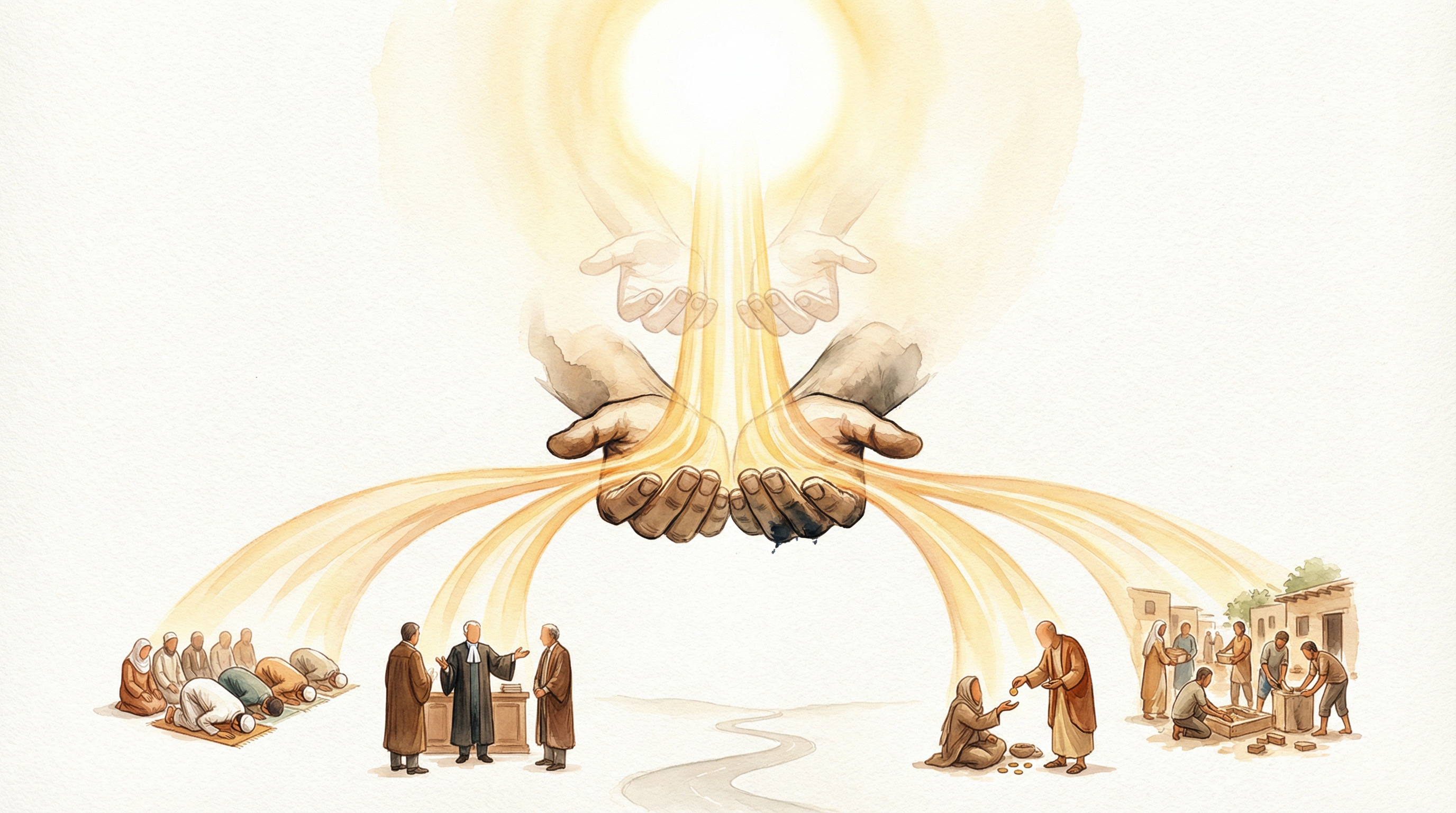
He argued that the Imams themselves had delegated specific executive responsibilities to the qualified Shi’i jurists — the fuqaha.
The jurists, he wrote, have been granted authority by the Imams to lead prayers — not only the daily prayers, but the congregational Friday prayers and the prayers of the two Eids.
They have been granted authority to judge in disputes and reconcile parties.
They have been granted authority to collect and distribute the religious dues — the khums and the zakat — and to ensure that these reach those who deserve them.
In other words: the jurist is not merely a man who answers questions.
The jurist is a man who governs — who administers the affairs of the community in the absence of the Imam.
The biographical sources record his position clearly. In his own words, Mufid stated that the Imams:
قَدْ فَوَّضُوا ذَلِكَ إِلَى فُقَهَاءِ شِيعَتِهِمْ
“…have delegated these matters to the jurists of their Shi’a.”
— Shaykh al-Mufid, Al-Muqni’ah; cited in Zabihzadeh, “Shi’ite Authorities: Shaykh al-Mufid”; see also Ahmad Azari Qummi, Wilayat al-Faqih az Didgah-e Fuqaha-ye Islam, pp. 167–184
Do you hear what is happening in this statement?
The preservers — Shaykh al-Kulayni and Shaykh al-Saduq — compiled the hadith.
Shaykh al-Mufid then said:
the hadith are not merely to be stored.
They require interpretation.
And the men who interpret them — the qualified jurists — are not merely scholars.
They are delegated authorities.
They carry a portion of the Imam’s responsibility.
This is a direct step on the road to the Marja’iyyah — the system of scholarly authority that would develop over the coming centuries.
And it is a direct step on the road to Wilayat al-Faqih — the principle that the most qualified jurist can govern not merely individuals, but a state.
Shaheed al-Awwal — the First Martyr, whom we will meet in a future session — would take this principle further, expanding the jurist’s executive role even more explicitly.
And Imam Khomeini — may God rest his soul — would take it to its logical conclusion.
But the seed was planted here.
By a man from Ukbara.
Who sat in a Mu’tazili classroom, earned a name, received letters from the Unseen, and wrote two hundred books to prove that the faith of the Ahl al-Bayt could hold its own in any arena.
Point 3: The Departure & Legacy — The Funeral of Eighty Thousand
His Piety — Because Knowledge Without Character Is Noise
Before we speak of how Shaykh al-Mufid left this world, we must speak of how he lived in it.
Because this series is not merely about what these scholars wrote.
It is about what they were.
And the sources are unanimous: Shaykh al-Mufid was not only the most formidable intellect of his generation — he was among its most devoted worshippers.
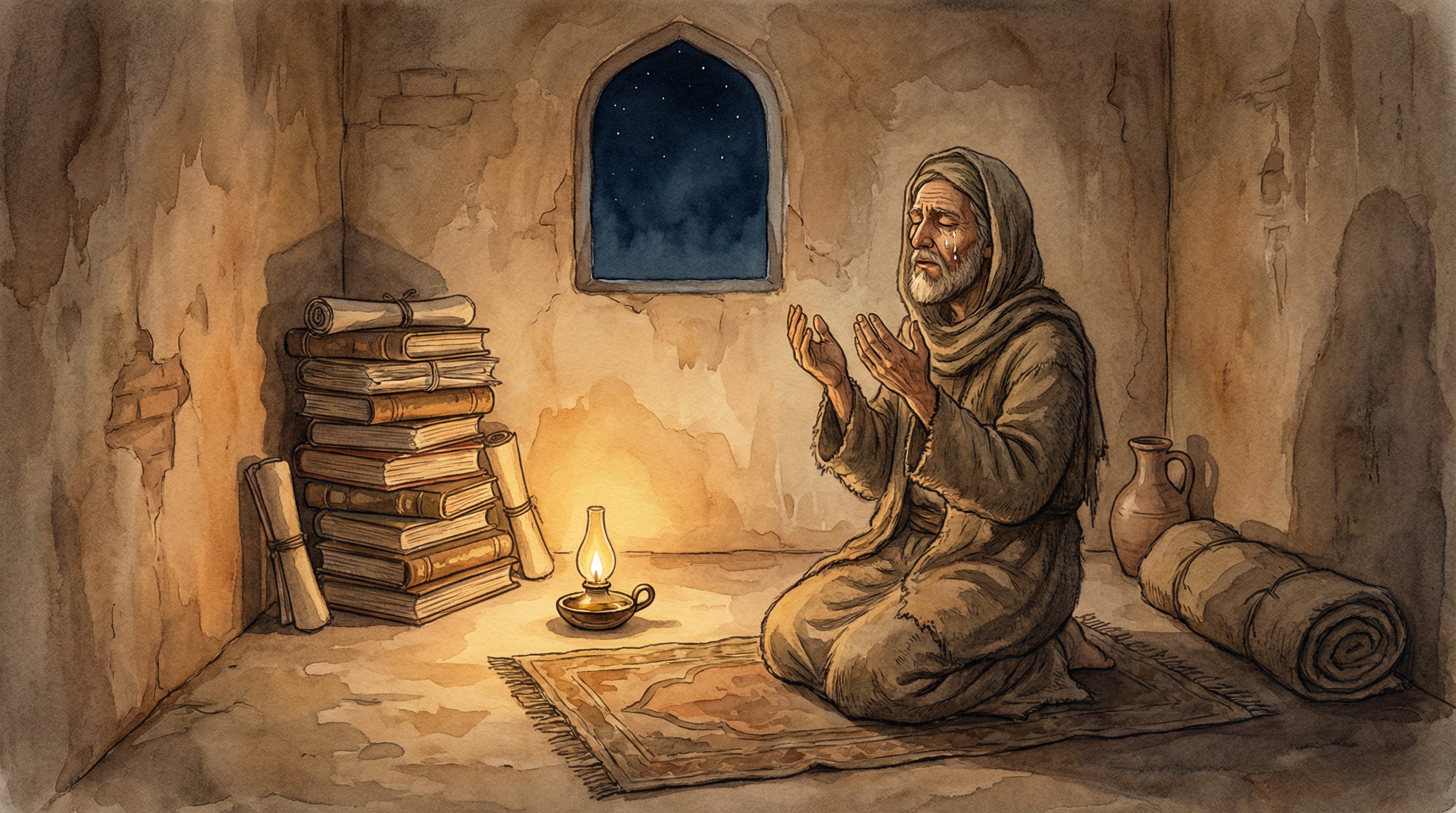
The scholars who knew him personally described a man who prayed through the night — every night.
Who fasted frequently.
Who wore rough, simple clothing despite having access to the patronage of the most powerful dynasty in the Muslim world.
Who gave constantly in charity — not from surplus, but from substance.
The Shafi’i historian Yafi’i — a man who disagreed with Mufid on virtually every theological point — wrote of him:
كان كثير الصدقات، عظيم الخشوع، كثير الصلاة والصوم، خشن اللباس
“He would give charity very often, and prayed a lot, and practised fasting frequently. He was a man of modesty and midnight prayer. He wore rough and coarse clothes.”
— Yafi’i; cited in Zabihzadeh, “Shi’ite Authorities: Shaykh al-Mufid”
And another great Sunni scholar — Ibn Hajar al-’Asqalani, one of the most respected hadith authorities in the entire Sunni tradition — went further:
وكان كثير التقشف والتخشع، والإكباب على العلم... وما كان ينام من الليل إلا هجعة، ثم يقوم يصلي أو يدرس أو يتلو القرآن
“He was a true worshipper and ascetic. He was a man of midnight prayer. He was steadfast in acquiring knowledge. Shortly after the beginning of the night, he would wake up and begin prayer, then he would study and read the Qur’an.”
— Ibn Hajar al-’Asqalani; cited in Zabihzadeh, “Shi’ite Authorities: Shaykh al-Mufid”
The same sources record that eighty thousand people embraced Shi’ism because of him — not through compulsion, not through political pressure, but through the force of his arguments and the witness of his character.
Let that number settle.
Eighty thousand people changed their beliefs — not because a king ordered them to, but because a man in rough clothes prayed all night, argued all day, gave away everything he had, and made more sense than anyone else in the room.
This is the model of the Hawza at its best.
Not scholars who impress from a distance.
Scholars whose proximity opens hearts.
Because when you see a man who has mastered philosophy, who can defeat any opponent in debate, who has written two hundred books — and then you discover that this same man sleeps on a rough mat, gives his money to the poor, and stands before God weeping in the last third of the night — something happens to you.
The argument enters through the mind.
But the character enters through the heart.
And when both arrive together, the effect is permanent.
This is the lesson that the Hawza has always understood — and that our modern age, with its obsession with credentials and publications and online followings, is in danger of forgetting:
Knowledge without piety is a lamp without oil.
It may look like a lamp.
It may sit where a lamp should sit.
But it gives no light.
Shaykh al-Mufid gave light — because the oil of his worship fed the flame of his knowledge.
The Third of Ramadan, 413 AH
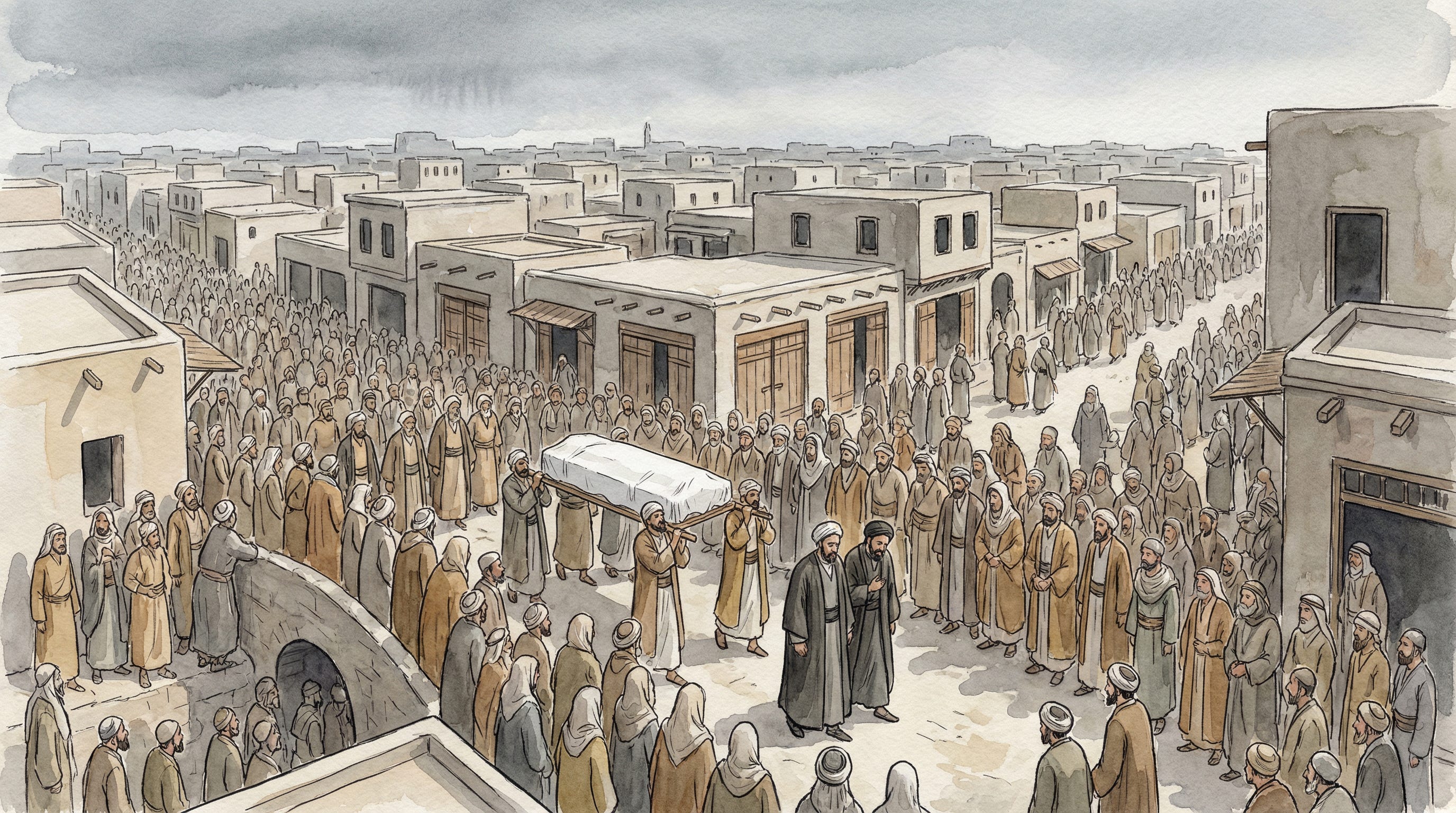
Shaykh al-Mufid died on the third of the holy month of Ramadan, in the year 413 after the Hijrah — 1022 CE in the Gregorian calendar.
He had lived for seventy-seven years.
Seventy-seven years of teaching, debating, writing, worshipping, and building.
And Baghdad mourned him as it had mourned few men before.
The great Sunni historian Ibn Kathir — a scholar of the Hanbali school, who was no friend to Shi’ism in his theological positions — counted the death of Shaykh al-Mufid among the most significant events of the year 413 AH.
In Ibn Kathir’s own words:
توفي في هذه السنة... شيخ الإمامية الروافض، والمصنف لهم، والمحامي عن حوزتهم. كانت له وجاهة عند ملوك الأطراف لميل كثير من أهل ذلك الزمان إلى التشيع... وكان من جملة تلاميذه الشريف الرضي والمرتضى، وقد رثاه بقصيدة بعد وفاته في هذه السنة
“The great shaykh and Shi’ite scholar passed away in that year. He was one of the major Shi’ite authors and supporters of their seminaries. He had credit and influence among the kings of neighbouring regions. Sharif Radi and Murtada were his students. They composed some couplets in his grief after he passed away.”
— Ibn Kathir; cited in Zabihzadeh, “Shi’ite Authorities: Shaykh al-Mufid”
This was not a Shi’i hagiographer exaggerating.
This was a Sunni historian acknowledging that a giant had fallen.
And the funeral itself was something the city had rarely seen.
The sources record that eighty thousand people attended.
Eighty thousand mourners — in a city that, at the time, had a population of perhaps several hundred thousand.
A significant portion of the entire capital came to a stop.
Among the mourners was Sayyed al-Murtada — Shaykh al-Mufid’s greatest student, the man who had been brought to him as a boy by his mother, the man Sayyedah Fatimah had designated in a dream.
Sayyed al-Murtada led the funeral prayer.
And he and his brother Sayyed al-Radhi composed verses of grief for the teacher who had shaped them both.
Think about what eighty thousand mourners means.
These were not people who had read his books — most of them could not read.
These were not fellow scholars who appreciated his methodology.
These were ordinary people.
Shopkeepers and labourers, mothers and children, the people of al-Karkh and beyond — who understood, in the way that ordinary people always understand, that this man had given his life for them.
He had defended their beliefs when no one else could.
He had given them intellectual dignity in a city that could easily have dismissed them.
He had stood in the courts and the classrooms and the public squares and said: the faith of the Ahl al-Bayt is not a provincial superstition.
It is a rational, defensible, demonstrable truth.
And I will prove it — to anyone, anywhere, in any language you choose.
They came to his funeral because he had given them their voice.
The Imam’s Farewell
And then there is this.
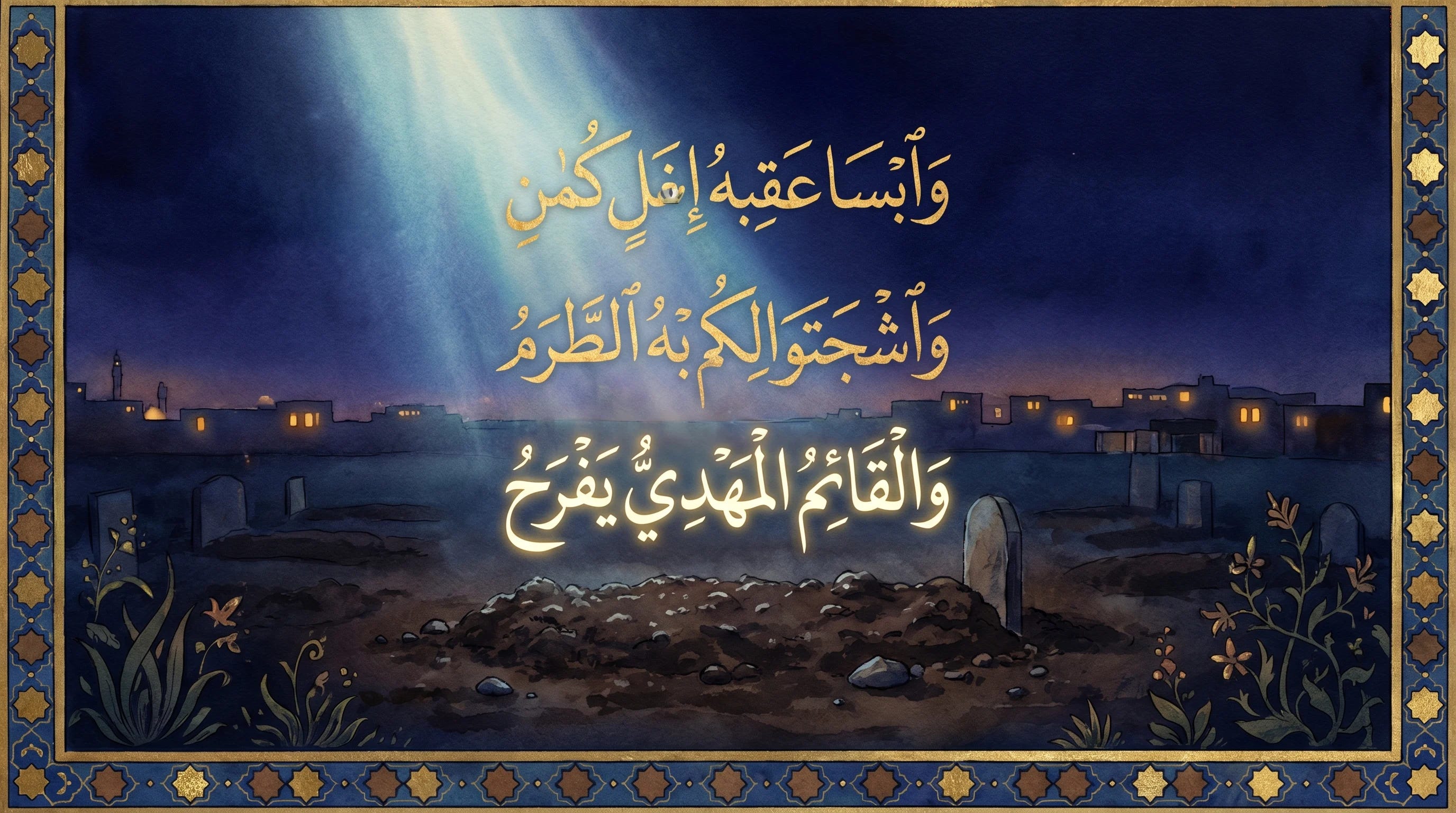
After Shaykh al-Mufid was buried, verses appeared — attributed by the tradition to the Hidden Imam himself — that were inscribed upon his grave:
لَا صَوَّتَ النَّاعِي بِفَقْدِكَ إِنَّهُ
يَوْمُ عَلَى آلِ الرَّسُولِ عَظِيمُ“Let no voice be raised announcing your death —
for the day of your passing is immense upon the Household of the Prophet.”إِنْ كُنْتَ قَدْ غُيِّبْتَ فِي جَدَثِ الثَّرَى
فَالْعِلْمُ وَالتَّوْحِيدُ فِيكَ مُقِيمُ“Though you are concealed beneath the soil —
knowledge and the affirmation of God’s oneness reside forever in you.”وَالْقَائِمُ الْمَهْدِيُّ يَفْرَحُ كُلَّمَا
تُلِيَتْ عَلَيْهِ دُرُوسُكَ التَّعْلِيمُ“And the Arising Mahdi rejoices whenever
your teachings are recited before him.”— Verses attributed to Imam al-Mahdi (aj), inscribed on the grave of Shaykh al-Mufid; recorded in the biographical sources; see also Zabihzadeh, “Shi’ite Authorities: Shaykh al-Mufid”
Read that last line again.
The Arising Mahdi rejoices whenever your teachings are recited before him.
The Imam — hidden from the world, watching from the Unseen — rejoices when the work of this scholar is studied.
This is not merely a tribute to one man.
This is a statement about the entire scholarly tradition.
The Imam is not indifferent to the Hawza.
He is not distant from it.
He rejoices in it.
The work of every scholar who teaches, who writes, who preserves, who defends — that work reaches the Imam.
And it brings him joy.
If that does not give you goosebumps, check your pulse.
What He Left Behind — The Chain Unbroken
Let us now stand back and see where Shaykh al-Mufid stands on the road we are tracing.
Before Shaykh al-Mufid, the tradition had its content — the hadith of the Imams, compiled by Shaykh al-Kulayni and Shaykh al-Saduq.
Shaykh al-Mufid gave the tradition its method — rational theology, systematic jurisprudence, the formal defence of beliefs in the language of reason.
And he gave the tradition its students.
This is perhaps his greatest legacy — not the two hundred books, not the debates, not even the tawqi’at — but the fact that when he died, the chain did not break.
Sayyed al-Murtada — ’Alam al-Huda, “the Banner of Guidance” — took leadership of the Shi’a community for twenty-three years after Shaykh al—Mufid’s death.
He pushed the rational methodology further, insisted on critical evaluation of hadith against the Qur’an, and led the community through the final decades of the Buyid era.
Sayyed al-Radhi — Sayyed al-Murtada’s brother — compiled Nahj al-Balagha, one of the most influential texts in the Arabic language.
He gave the community the political manual of Imam Ali, peace be upon him — a text that would feed directly into the concept of just governance that leads, centuries later, to Wilayat al-Faqih.
And through Sayyed al-Murtada’s students — above all Shaykh al-Tusi, whom we will meet in two sessions, God willing — Shaykh al-Mufid’s methodology would travel from Baghdad to Najaf, where it would be institutionalised in the Hawza that stands to this day.
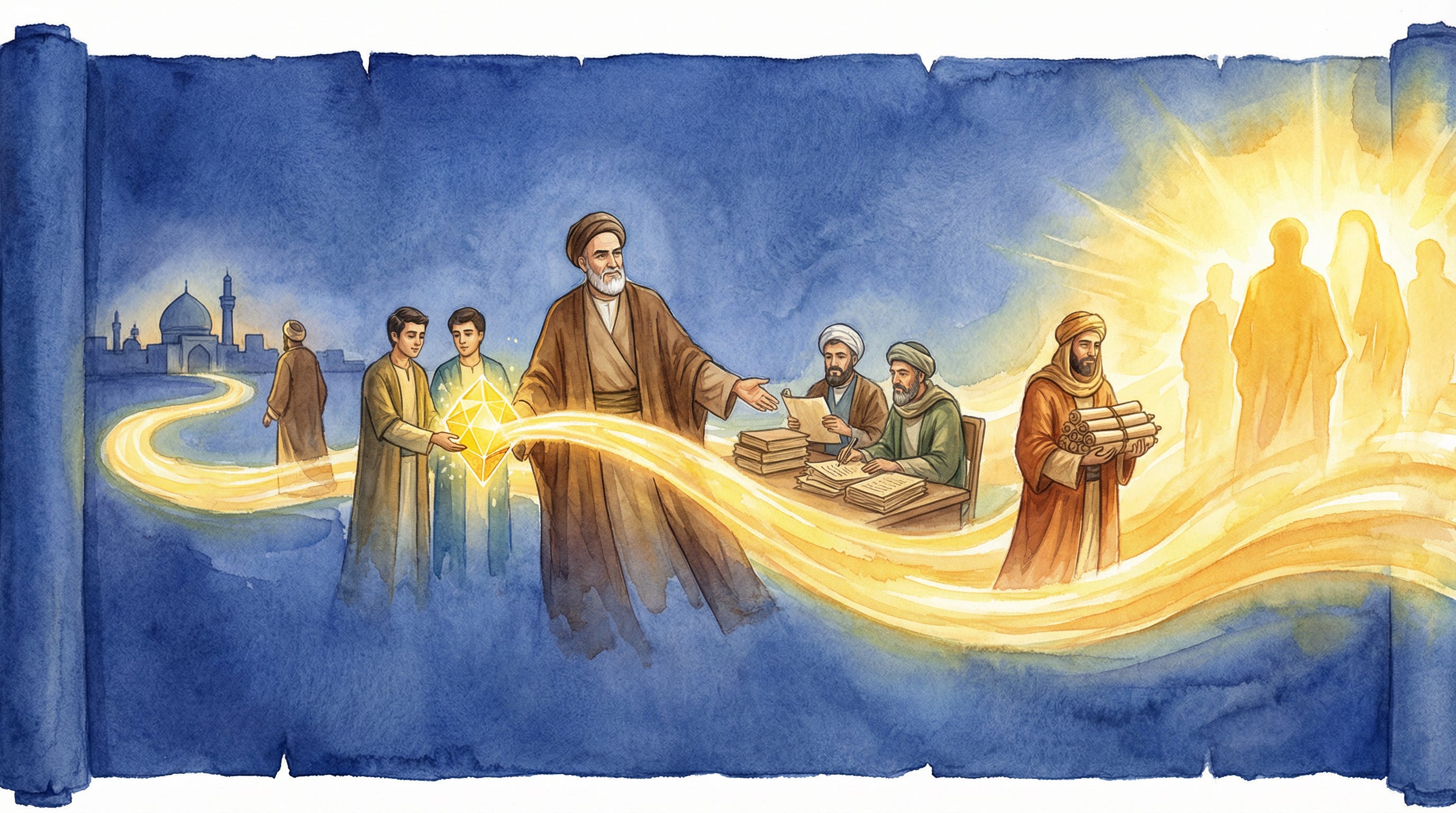
The chain runs like this:
The Imams taught their companions.
The companions recorded their words in the Usul — the Four Hundred Principles.
Shaykh al-Kulayni and Shaykh al-Saduq compiled those words into the Four Books.
Shaykh al-Mufid armed those books with reason and trained the next generation to wield them.
Sayyed al-Murtada and Sayyed al-Radhi refined the method and preserved the political philosophy.
Shaykh al-Tusi would take it all to Najaf and build the permanent institution.
Every link holds because the previous link held.
Shaykh al-Mufid is the link between preservation and defence — between the raw material and the rational fortress built around it.
Without him, the tradition would have had its texts but not its arguments.
It would have had its content but not its method.
It would have had its past but not its future.
Lessons from the Departure
Three things we carry from the ending of Shaykh al-Mufid’s life.
First: character outlasts argument.
Shaykh al-Mufid won every debate.
He wrote two hundred books.
He transformed Shi’i theology.
But when eighty thousand people came to his funeral, they were not mourning a debater.
They were mourning a man who prayed all night and gave away everything he had.
The arguments opened the door — the character walked through it.
In our age of social media scholars and online personalities, where intellectual performance is rewarded with followers and likes, Shaykh al-Mufid’s example is a corrective.
The question is not how many people watched your lecture.
The question is: did you pray last night?
Did you give from your own plate?
Would the people who live closest to you — your family, your neighbours, your students — testify that you are a servant of God, not a performer for an audience?
Second: the chain must not break.
Shaykh al-Mufid’s most important act was not any single book or any single debate.
It was the training of Sayyed al-Murtada and Sayyed al-Radhi — the two brothers who would carry the tradition forward.
Without them, everything Shaykh al-Mufid built would have died with him.
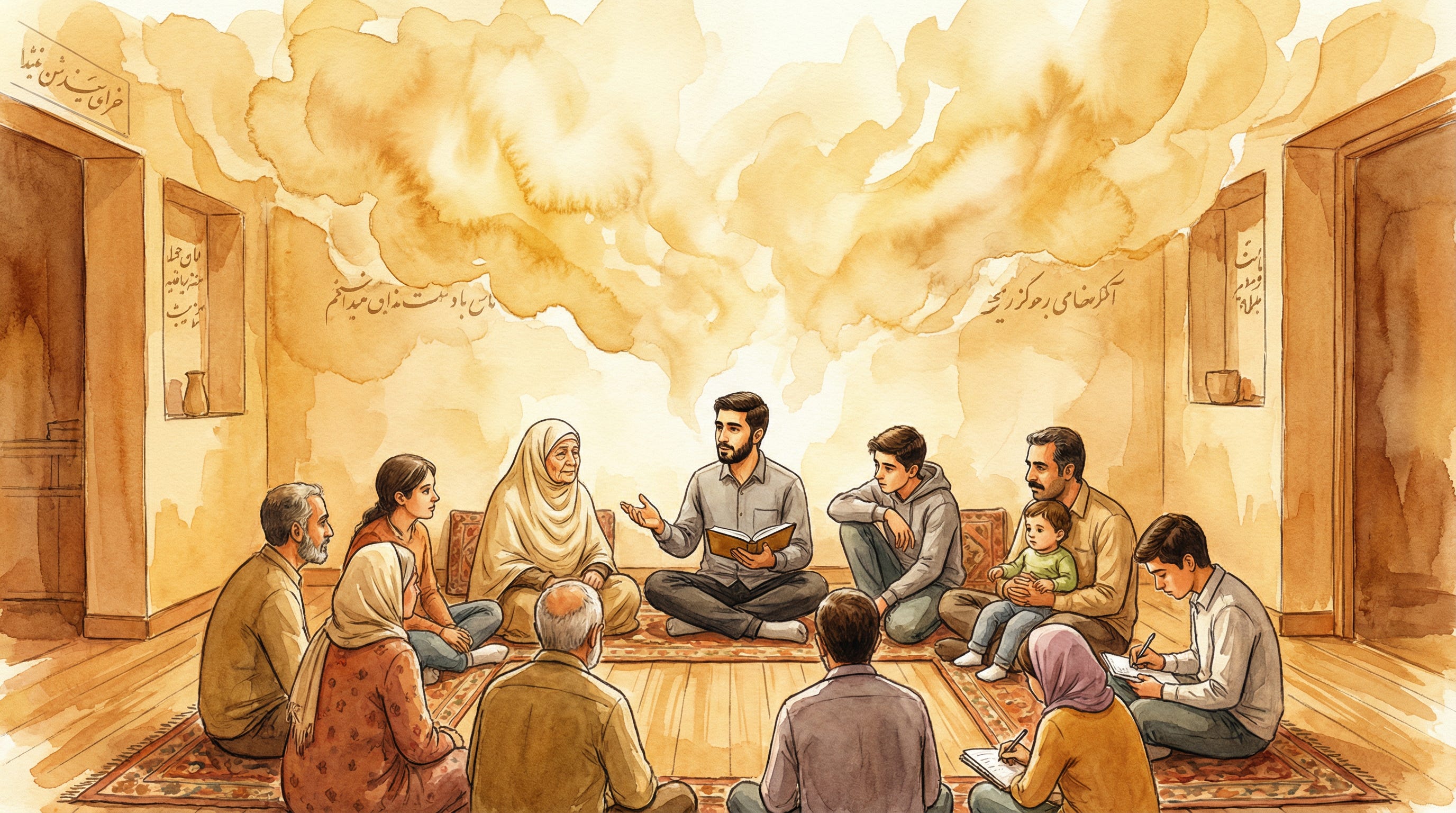
In our communities today — in Rochdale, in London, in Dearborn, in Sydney — we have speakers, we have programmes, we have institutions.
But the question is: are we training the next generation to carry this forward?
Or are we building around personalities who, when they leave, take everything with them?
The Hawza model is not personality-dependent. It is chain-dependent.
The teacher trains the student.
The student becomes the teacher.
The chain continues.
And the chain is stronger than any individual link.
Third: the Imam is watching.
The verses on Shaykh al-Mufid’s grave —
“the Arising Mahdi rejoices whenever your teachings are recited before him”
— tell us something that should transform how we understand our own work.
Every class taught in a mosque basement.
Every late-night study circle.
Every parent who sits with their child and teaches them about the Ahl al-Bayt.
Every scholar who writes a book that three people read.
Every volunteer who organises a programme that no one thanks them for.
The Imam sees it.
And it brings him joy.
You may not receive a tawqi’.
You may never hear his voice or read his words addressed to you by name.
But the relationship is real.
He is not neglectful of your affairs.
He is not forgetful of your remembrance.
He rejoices in your work — as he rejoiced in the work of the man from Ukbara who earned the name al-Mufid, and who spent seventy-seven years proving that the name was deserved.
Conclusion
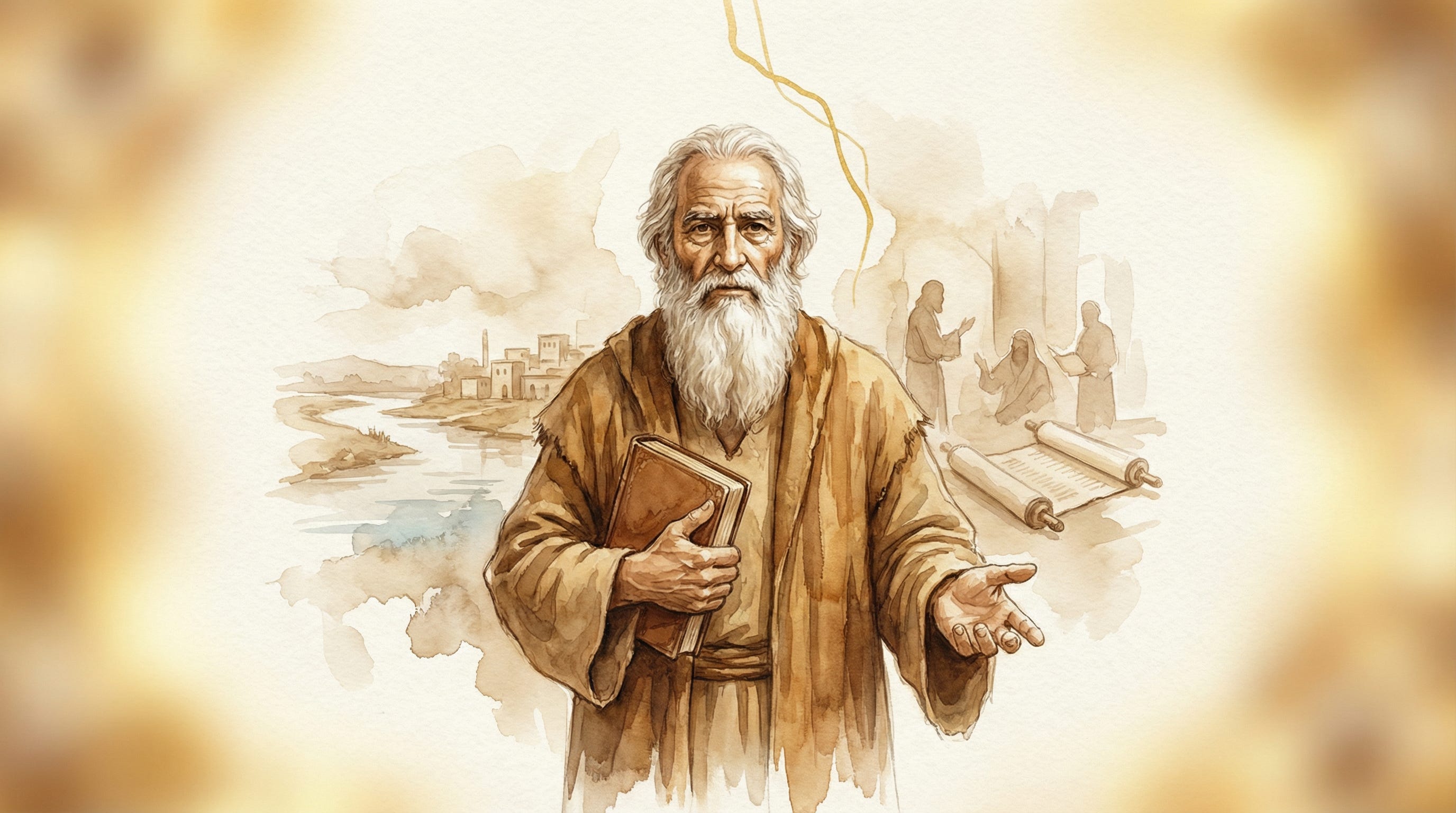
Tonight, we have walked with one man — from Ukbara to Baghdad, from a student’s bench to the most formidable intellectual pulpit in the Muslim world, and from there to a grave inscribed with the words of the Hidden Imam.
Shaykh al-Mufid — Muhammad ibn Muhammad ibn al-Nu’man — was the man who took the preserved tradition of the Imams and armed it with reason.
He transformed Shi’i theology from a tradition of narration into a tradition of rational defence.
He wrote two hundred books.
He debated every school and defeated every challenger.
He received letters from the Imam of the Age — who called him friend, who corrected him when he erred, and who told him to continue.
He saw Sayyedah Fatimah in a dream — and the next morning, the two boys she had entrusted to him walked through his door.
He expanded the authority of the jurist — planting the seed that would grow, over centuries, into the Marja’iyyah and ultimately into Wilayat al-Faqih.
And when he died, eighty thousand people came.
Not for his arguments.
For his character.
Because he was a man who prayed through the night, gave away his wealth, wore rough clothes, and never once confused knowledge with arrogance.
He was al-Mufid.
The Beneficial One.
And a thousand years later, we are still being benefited by him.
Remembrance: On the Martyrdom of Imam Ja’far al-Sadiq, Peace Be Upon Him
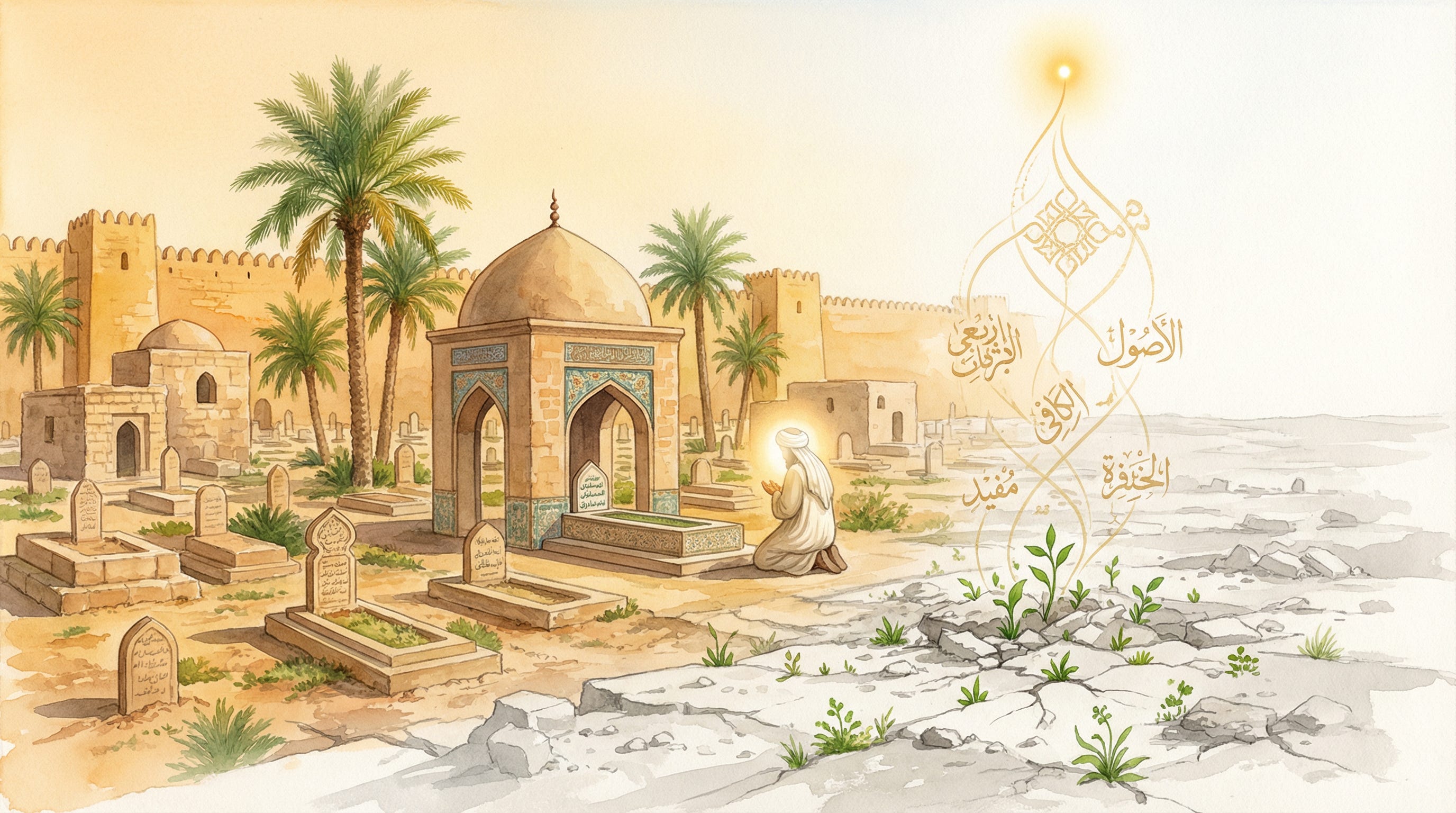
And before we close, we must pause — because God’s calendar does not work by accident.
Yesterday marked the anniversary of the martyrdom of the man from whom all of this flows.
Imam Ja’far ibn Muhammad al-Sadiq — peace be upon him — the sixth Imam, the teacher of four thousand, the founder of the school that gave the Shi’a and the Sunni world alike the foundations of their jurisprudence.
We spent an entire session with him — Session 62 — standing in his classroom in Medina, watching the greatest scholarly circle in the history of Islam pour out knowledge across every discipline.
And we said then:
everything that comes after is an attempt to preserve what he poured out.
Tonight, we have met one of those who preserved it — Shaykh al-Mufid, who armed the Imam’s teachings with the weapons of reason.
But the teacher himself — what happened to the teacher?
The Abbasid Caliph al-Mansur — the same al-Mansur who called Imam al-Sadiq
“a thorn in my side that neither sweetness nor severity can remove”
— could not remove the thorn by debate, by exile, or by imprisonment.
So he removed it with poison.
In the year 148 after the Hijrah, in the holy city of Medina, Imam Ja’far al-Sadiq was poisoned on the orders of al-Mansur.
The sources describe the poison being administered through grapes — offered as a gift, received as a betrayal.
The Imam suffered.
And then the Imam died.
He was buried in the cemetery of al-Baqi’ — next to his father, Imam al-Baqir, and his grandfather, Imam Zayn al-Abidin, and the Imam al-Hasan ibn Ali, peace be upon them all.
That grave — those graves — would later be demolished.
The Wahhabi destruction of al-Baqi’ in 1925 erased the physical markers.
As if the enemies knew that even a grave bearing the name of Imam al-Sadiq would become a university.
But they could not demolish what he built in the hearts of his students.
They could not demolish the four thousand.
They could not demolish the Usul — the Four Hundred Principles his companions carried away.
They could not demolish Al-Kafi, which Shaykh al-Kulayni compiled from those principles.
They could not demolish the fortress of reason that Shaykh al-Mufid built around them.
They poisoned the teacher.
But the lesson survived.
And tonight — a thousand years later, in a gathering that would not exist without him — we are the proof that the poison failed.
The thorn is still in their side.
And it will remain there — until his grandson, the Mahdi, appears to finish what he started.
Peace be upon you, O Abu Abdillah.
Peace be upon you, O son of the Messenger of God.
Peace be upon you, O teacher of four thousand and father of a civilisation.
Your students are still studying.
Your school is still open.
And the man from Ukbara — the one they called al-Mufid — defended your legacy with every breath he had.
May God gather them together — the teacher and the defender — in the company of your grandson, on the day the world is finally set right.
Supplication-Eulogy: A Prayer at the Grave of the Friend
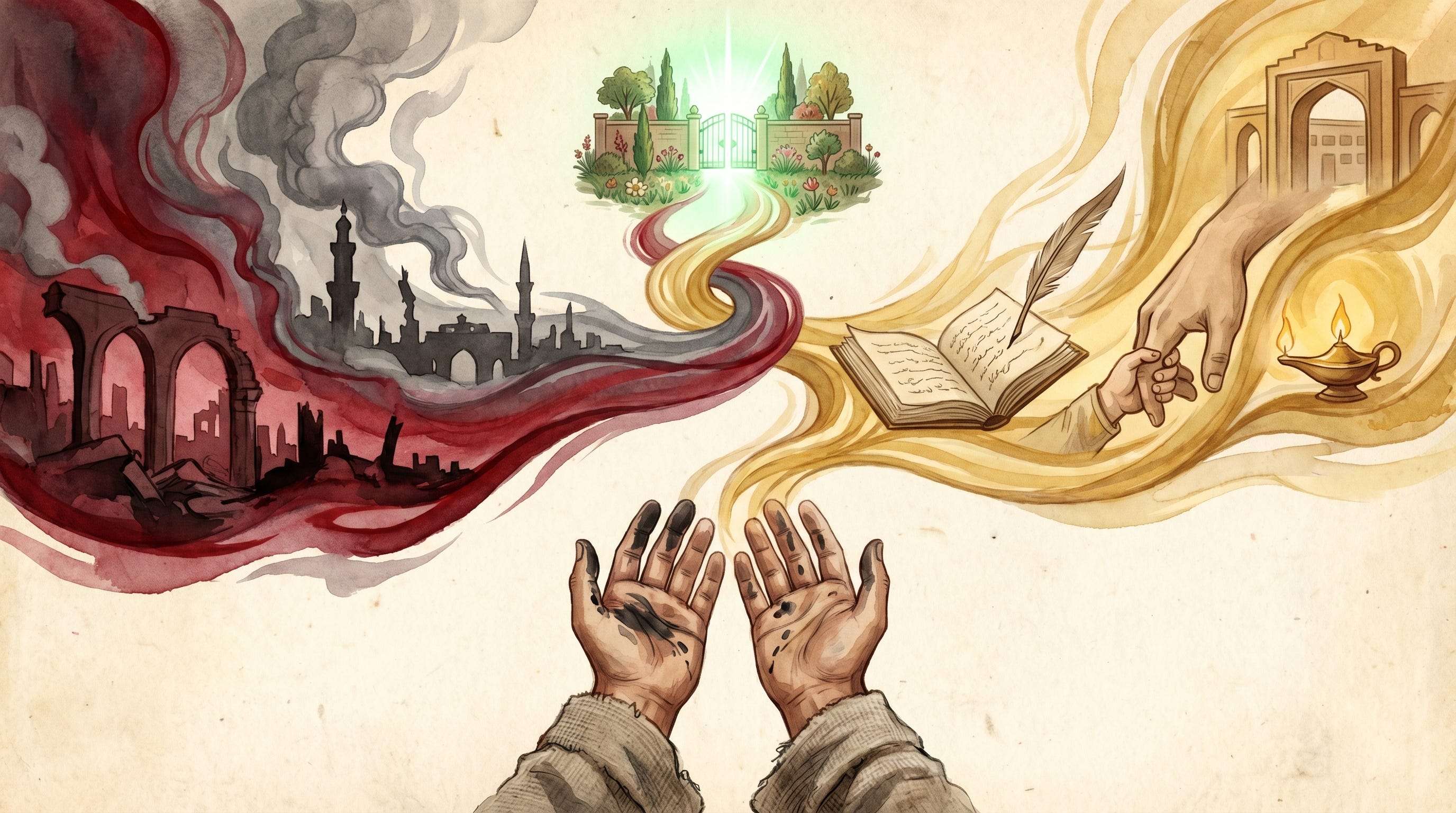
O God — we stand tonight at the grave of a man who gave his life to defend the truth of Your Ahl al-Bayt.
A man who wore rough clothes and prayed through the night and wrote two hundred books so that a community would not lose its voice.
A man to whom Your Hidden Proof wrote with his own hand:
“O friend — O supporter of the Truth.”We ask You by the station of that friendship — raise the rank of Shaykh al-Mufid.
Place him in the company of the Imams whose words he defended.
Let the light of his scholarship be a witness for him on the Day when all witnesses are called.
And let the Arising Mahdi — who rejoiced in his teachings — greet him as he greeted him in this world: as a brother, as a beloved, as a friend.O God — the world tonight is drowning in oppression.
The lands of the Prophets are soaked in blood.
The cries of the innocent rise from every corner of this earth — from Palestine, from Lebanon, from Yemen, from Sudan, from every place where the powerful crush the weak and call it order.And in this darkness, we understand — as Shaykh al-Mufid understood — that the weapon against oppression is not only the sword.
It is the pen.
It is the classroom.
It is the book written at midnight by a scholar who refuses to let ignorance win.Because ignorance is the soil in which oppression grows.
And knowledge — true knowledge, rooted in Your Book and the teachings of Your Ahl al-Bayt — is the hand that uproots it.
Every child who is taught the truth is a blow against tyranny.
Every community that is educated is a fortress that cannot be taken.
Every scholar who speaks when silence is easier is a soldier in the army of the Imam — whether the Imam has appeared or not.O God — hasten the return of our Master, the Imam of our Time, the son of al-Hasan, Your Proof upon Your creation and Your trustee over Your servants.
The earth is filled with injustice, as You promised it would be.
We cannot end that injustice alone.
But we can build — as Shaykh al-Mufid built.
We can teach — as Shaykh al-Mufid taught.
We can arm the next generation with reason and faith and courage — so that when the Imam appears, he finds not a community asleep, but a community that has been preparing, building, striving, and refusing to surrender to the darkness.O God — make us links in the chain that Shaykh al-Mufid strengthened.
Make our work a source of the Imam’s joy.
And when the day comes that the Mahdi rises — let him find that the seeds Shaykh al-Mufid planted, and the seeds we planted after him, have become a garden worthy of his return.O God — grant us an ending that is pleasing to You. Let us live in this world as Your true servants — following the path walked by the likes of Shaykh al-Mufid — and let us leave this world with that servanthood intact. And make us, in our living and in our dying, from those who are a source of joy for You, and for Muhammad, and for the family of Muhammad.
O God — bless Muhammad and the family of Muhammad.
Send Your peace upon the Proof, the Hidden, the Awaited, the one for whom the scholars compiled and debated and bled and died.
And grant us the honour of standing in his service — in this world and the next.Amen, O Lord Sustainer of the Universes.
Amen, O Most Merciful of the Merciful.
And from Him alone is all ability, and He has authority over all things.
A Story Inspired by This Session

What happens when a young Muslim woman in a university seminar feels the truth in her heart — but cannot find the words to defend it?
And what does a scholar from a thousand years ago have to teach her?
Read “The Lamp Without Oil: A Lesson in Truth” — A Truth Promoters Vignette