

In His Name, the Most High
Preamble
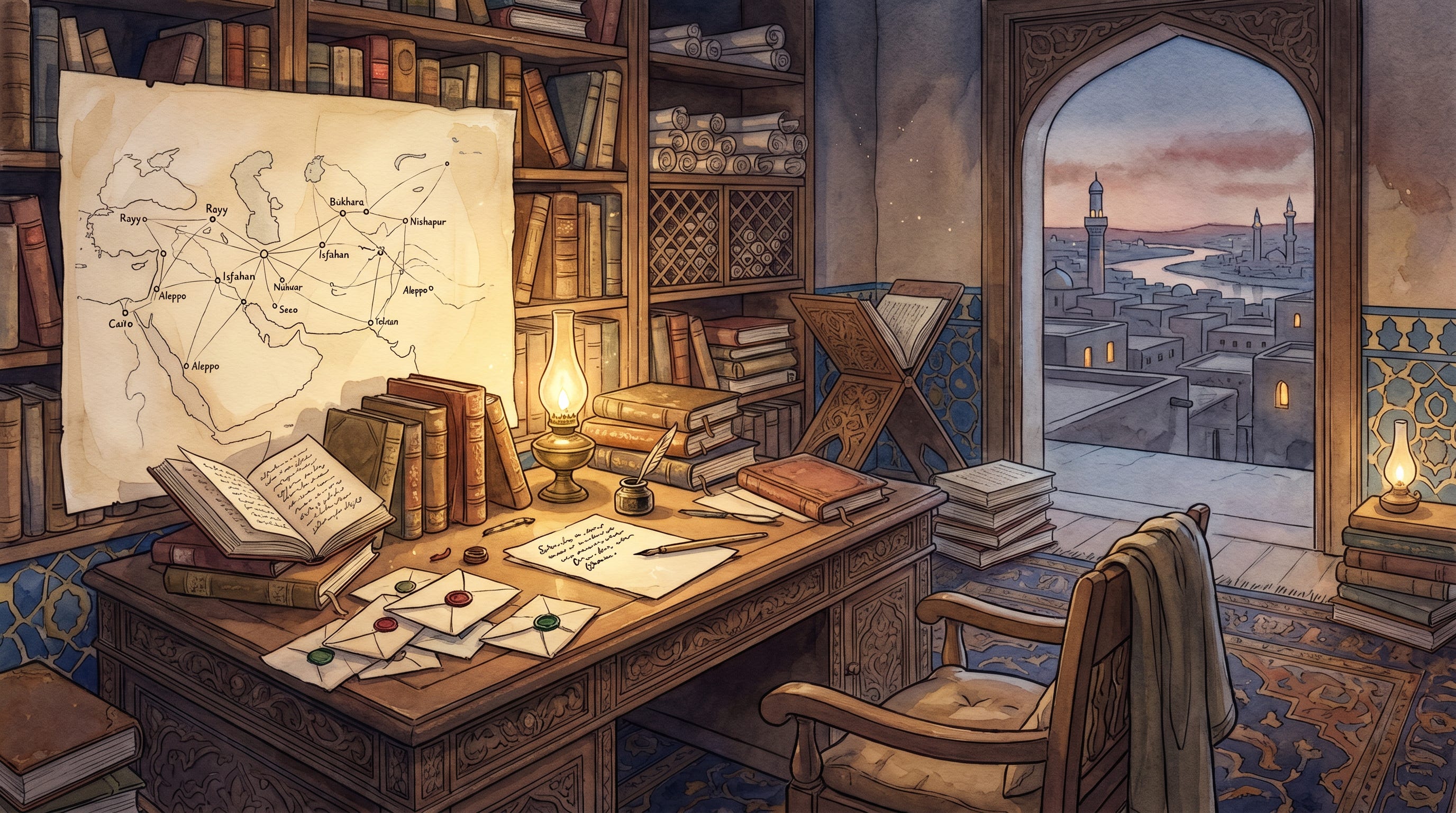
Tonight, we do not begin with a brother.
We begin with the world the brothers walked.
A world more crowded with thought than perhaps any moment in Islamic history before it.
A world in which a Shi’a scholar in Baghdad could not sit down to write a treatise without knowing that, in another city, in another court, in another tradition, someone else was writing one too — a Mu’tazilite in Rayy, a philosopher in Isfahan, a future Ash’arite at the head of his own seminary in Nishapur.
A world in which the manuscripts circulated faster than the rumours, and the rumours circulated faster than the caravans, and a young scholar in Tus reading Ibn Sina’s Shifa might, in the same week, be reading Sayyed al-Murtadha’s Shafi.
A world that — within a single generation of our two brothers’ deaths — would close.
And it is in the closing of that world, and what was saved from the closing, that the deepest lesson of these two brothers’ lives is finally to be found.
Listen to one short saying — preserved by Sayyed al-Radhi, in the third part of Nahj al-Balagha, from the lips of the Commander of the Faithful, peace and blessings be upon him:
الْعِلْمُ خَيْرٌ مِنَ الْمَالِ ۚ الْعِلْمُ يَحْرُسُكَ، وَأَنْتَ تَحْرُسُ الْمَالَ
“Knowledge is better than wealth. Knowledge guards you, and you must guard wealth.”
— Nahj al-Balaghah, compiled by al-Sharif al-Radhi, Maxim (al-Hikam), Saying 147
Thirteen words.
Wealth requires you to protect it.
Knowledge protects you.
Wealth, when fire comes, burns.
Knowledge, when it has been transmitted to enough hearts, cannot burn — because no fire reaches all of those hearts at once.
The eighty thousand handwritten manuscripts that Sayyed al-Murtadha gathered, and that his student Shaykh al-Tusi inherited, would burn in the year 447 of the Hijra — eleven years after Sayyed al-Murtadha’s death — when the Seljuq Turks took Baghdad and turned the Shi’a flourishing of Karkh into ash.
Eighty thousand volumes.
Reduced to nothing.
And yet — what those manuscripts had carried, what the brothers and their teacher and their students had spent two generations transmitting from heart to heart and city to city — survived.
Because by the year the fire came, the words had already escaped.
Tonight, in this fourth and final session of our journey through the brothers of Baghdad, we walk three movements.
We walk, first, into the intellectual world that surrounded the brothers — a world we have only glimpsed in fragments across the previous sessions, but which deserves a full visit, because the brothers were not isolated scholars.
They were one node in a network of thought that stretched from Bukhara to Aleppo to Cairo, and the texture of that network is the context in which everything they wrote takes its meaning.
We walk, second, to the burning of their inheritance — the Seljuq fires of 447, the library reduced to ash, the student fleeing south to a desert town that would one day be called Najaf — and we ask the question that has been waiting for us since the very first session:
What survived, and why?
And then we walk, third — and this is the heart of tonight, the heart of the four-week journey, the heart of why we tell this story — to a grave methodological reflection.
Because to understand the brothers honestly, and to understand the closing of their window honestly, we must learn to read history with a particular kind of clarity: a clarity that distinguishes between the genuine theological commitments of believers across traditions, and the political projects, ancient and modern, that have draped themselves in religion’s clothing while serving entirely different masters.
Without that clarity, the story we have just told becomes a sectarian inventory of grievances.
With it, the story becomes what it has always been meant to be — a teaching for the community of the awaiting.
And we will close this four-week journey, by God’s permission, where we have always known it would close: at the graves of the two brothers in Karbala, with our eyes raised toward the One in Whose service they lived and died.
Our beloved Imam.
The Mahdi of this age, may our souls be his ransom, and may God hasten his return.
Video of the Majlis (Sermon/Lecture)
Audio of the Majlis (Sermon/Lecture)
Recap
In Session 65, three weeks ago, we met the two brothers as boys — their mother, their father, the dream of Sayyedah Fatimah al-Zahra, peace and blessings be upon her, and the morning Sayyedah Fatima bint Husayn walked her two sons to the mosque of al-Karkh and placed them in the hands of Shaykh al-Mufid.
In Session 66, two weeks ago, we walked the full life of the younger brother, Sayyed al-Radhi — Nahj al-Balagha, the Dar al-Ilm founded eighty years before the Nizamiyyah, the three offices held with dignity, the refusal of a thousand dinars from the vizier al-Mahlabi, the refusal to denounce the Fatimids when the Caliph al-Qadir demanded it, his death at forty-seven on the sixth of Muharram 406 of the Hijra, the funeral led by Fakhr al-Mulk because his elder brother could not bear to attend, and the transfer of his body to Karbala beside their father.
Last week, in Session 67, we walked the full life of the elder brother, Sayyed al-Murtadha — the five foundational books of every Hawza in the world, the dream through which Imam Ali, peace and blessings be upon him, gave him the title Alam al-Huda through a sick vizier in 420 AH, the library of eighty thousand handwritten manuscripts opened to every serious seeker, the stipends paid to students out of his own pocket, the Hanbali fire of 422 and his four-word response —
wa ada ila durusihi, and he returned to his lessons
— and the four students he dispatched: Ibn al-Barraj to Tripoli under the Twelver Shi’a Ammarids, Sallar al-Daylami to Aleppo under the Mirdasids, Abu al-Salah al-Halabi as his khalifa — deputy — across the whole of Mirdasid-era greater Syria, and Shaykh al-Tusi held back in Baghdad as his closest disciple and successor.
We walked Sayyed al-Murtadha to his death, on the twenty-fifth of Rabi’ al-Awwal 436 of the Hijra, at the age of eighty years and eight months — al-Najashi present at his deathbed, Sallar al-Daylami assisting, the body initially buried in his Karkh residence and then transferred, like his father and his brother before him, to Karbala, where the three of them — father and two sons — now rest beside the Master of the Martyrs.
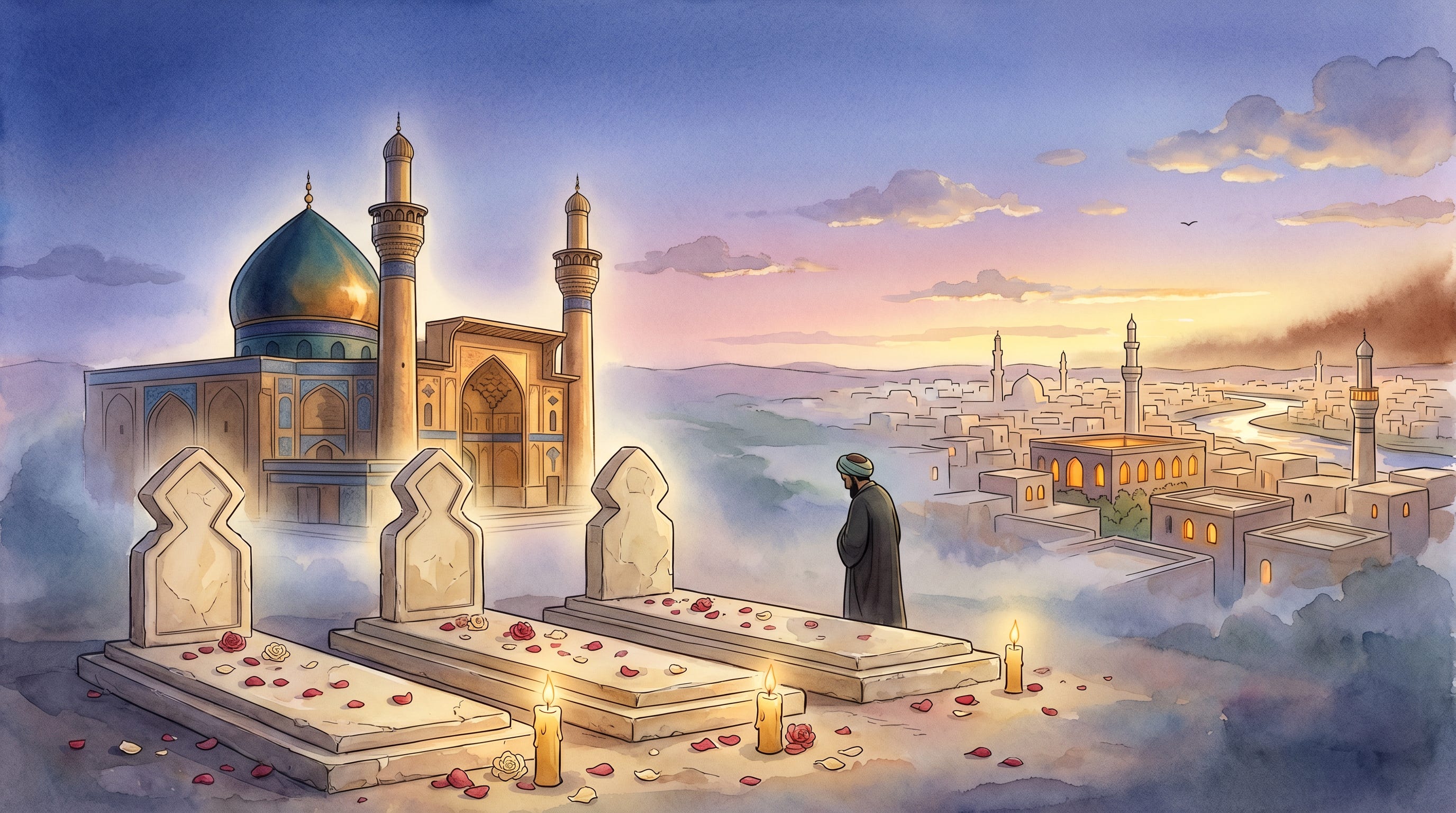
Three graves in Karbala.
Eleven years of remaining Buyid protection.
A library of eighty thousand volumes still standing.
A young scholar from Tus, by then already in his fifties, sitting at the head of the seminary in Karkh as the heir to two generations of accumulated work.
That is where we left them last week.
Tonight we step back, before we step forward into the closing of the window — to meet the world that surrounded them all.
The Intellectual Arena
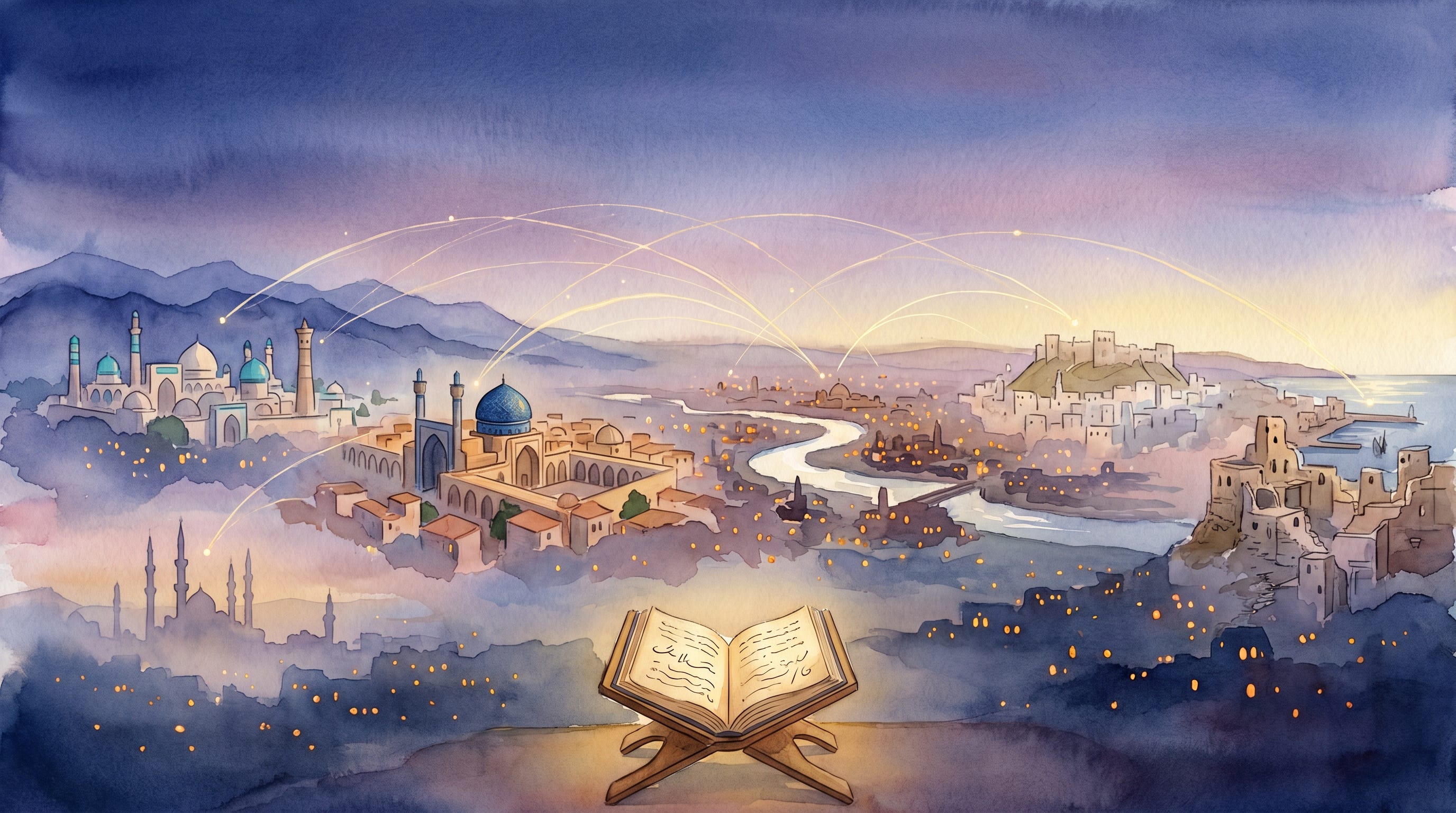
What Sayyed al-Radhi and Sayyed al-Murtadha did — the books, the Dar al-Ilm, the seminary, the students, the dispatching of judges across the Levant — none of it happened in a quiet room.
It happened in what may have been the most intellectually crowded moment in Islamic history to that point.
Let me give you a sense of the stage.
The Contemporary: Ibn Sina
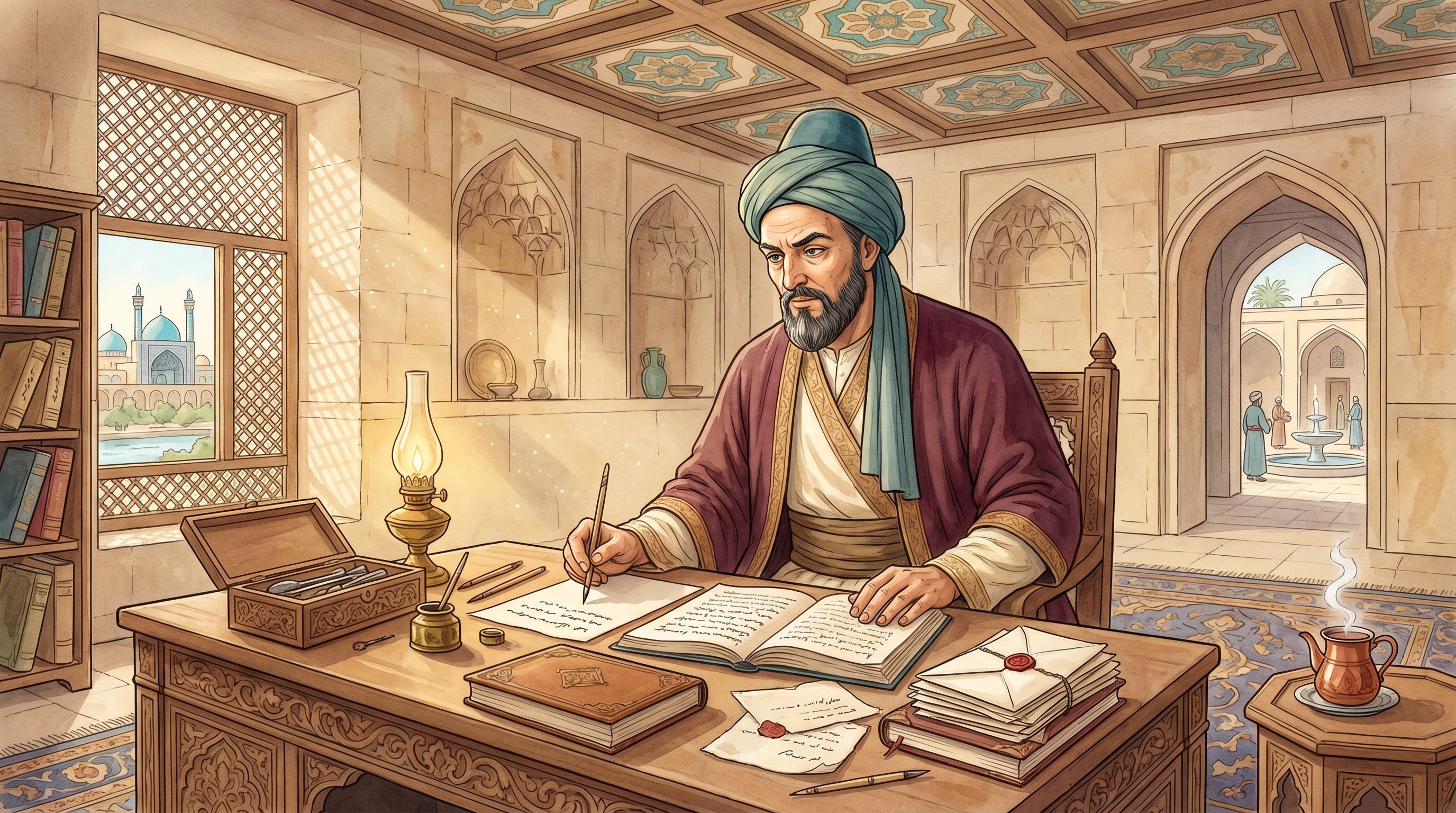
The first figure you must picture, alongside our two brothers, is a man you have certainly heard of.
Abu Ali al-Husayn ibn Sina — known in the Latin West, and through the Latin West to the modern world, as Avicenna.
He was born around the year 980 of the Gregorian calendar (369 AH) — which places his birth twenty-one years after Sayyed al-Radhi’s, and fifteen years after Sayyed al-Murtadha’s.
He was, in the most literal sense, their contemporary.
Let me tell you where Ibn Sina lived, because the geography itself is the story.
And it is a story that connects his life to the same political currents that we have been following all evening.
Ibn Sina was born, as we said, in around the year 980 of the Gregorian calendar, in a village near the great Central Asian city of Bukhara — in what is today the country of Uzbekistan.
And Bukhara at the moment of his birth was the capital of a dynasty that we must introduce properly, because it will not come up again in quite the same way in this sub-series.
The Samanid dynasty — in Persian, Samaniyan — was a Persian Sunni Muslim dynasty of Iranian origin that ruled eastern Iran and Central Asia from the year 819 (approx. 203 AH) of the Gregorian calendar until 999 (approx. 390 AH).
They were originally governors appointed by the Abbasid caliphs, and in time they became effectively independent — while continuing, in the same fashion we have seen with the Buyids of Baghdad, to nominally acknowledge the Abbasid caliph in their sermons and on their coinage.
Their capital at Bukhara was, in the tenth century, one of the great cultural centres of the Islamic world.
The historians tell us that Bukhara under the Samanids rivalled Baghdad — with over four hundred madrasas, great libraries, flourishing trade along the Silk Roads, and a deliberate Samanid policy of reviving Persian language and culture alongside Arabic Islamic scholarship.
The great Persian poets Rudaki and Ferdowsi, the polymath al-Biruni, and Ibn Sina himself were all products, directly or indirectly, of this Samanid cultural flourishing.
And although the Samanids were Sunni, they were known for their tolerance — Twelver Shi’a scholars, including Muhammad ibn Ya’qub al-Kulayni — Shaykh al-Kulayni, whom we met in Session 63, were given freedom to operate in Samanid lands.
Ibn Sina’s father was an administrator in the Samanid government.
Ibn Sina was educated in Bukhara in the full flood of Samanid scholarship — Qur’an by age ten, then jurisprudence, philosophy, medicine, the full curriculum of that extraordinary city.
But the Samanid state was collapsing even as Ibn Sina came of age.
And the story of how it collapsed is worth pausing on, because it is the first appearance in our sub-series of a force that will, within two generations, break the Shi’a flourishing of Baghdad itself.
In the year 999 of the Gregorian calendar — when Ibn Sina was about nineteen — the Samanid realm was torn in two from opposite directions.
From the north, across the river Oxus, came the Qarakhanids.
From the south, out of the mountains of what is today eastern Afghanistan, came the Ghaznavids.
Both were new powers.
Both were Turkic.
Both were Sunni Muslim.
And between them, they ended the Persian Samanid state forever.
Let me tell you briefly who each of these were, because they will matter again before the night is over.
The Qarakhanids — sometimes transliterated as the Karakhanids — were a Turkic dynasty descended from the Qarluq tribal confederation, a group of nomadic Turkic tribes who had dominated the steppes of Central Asia since the decline of the old Uighur Khaganate in the eighth century.
They were originally shamanists, with traces of Buddhism and Nestorian Christianity mixed in — until, around the middle of the tenth century, one of their khans, a man remembered in Turkic tradition as Satuq Bughra Khan, converted to Islam.
His people followed him.
And the Qarakhanids became, in the historical record, the first Turkic people ever to convert en masse to Islam.
Consider the weight of that for a moment.
The story of the Turkic peoples as a dominant Muslim political force in the world — which is the story of every Turkic dynasty from the Seljuqs to the Ottomans to the modern Turkish state — begins with the Qarakhanids.
They captured Bukhara in 999, and their descendants would rule Central Asia for the next two hundred years.
The Ghaznavids, meanwhile, rose from a quite different origin.
They were not a tribal confederation.
They were, in the first instance, former Turkic slave-soldiers — mamluks, in the Arabic — who had served in the army of the very Samanid dynasty they would eventually destroy.
Their founder was a man named Sebüktigin, a Turkic slave soldier who had risen through the Samanid military ranks, married the daughter of a previous governor, and taken control of the small mountain city of Ghazna — in what is today eastern Afghanistan — in the year 977 (367 AH) of the Gregorian calendar.
And it was his son, Sultan Mahmud of Ghazna, who in 998 (389 AH) inherited the Ghaznavid realm and transformed it into one of the most militarily formidable states of the Islamic world.
Mahmud of Ghazna is a figure you should remember, because his shadow falls on our entire story.
He was a staunch, campaigning, doctrinally committed Sunni Muslim.
He received formal titles and legitimation from the Abbasid caliph al-Qadir in Baghdad — the same al-Qadir, you will recall from Session 66, who had dismissed Sayyed al-Radhi from his offices after the Fatimid poem incident, who privately despised the Shi’a flourishing the Buyids were protecting.
And Mahmud of Ghazna made himself, in return, the sword of Sunni orthodoxy in the eastern Islamic world.
He campaigned against the Isma’ili Shi’a of Multan in India.
He campaigned against the Twelver Shi’a Buyids in Persia.
And in the year 1029 (420 AH) of the Gregorian calendar — just seven years before Sayyed al-Murtada’s death — Mahmud of Ghazna marched west, defeated the Buyid prince Majd al-Dawla in Rayy, and annexed the whole of northern Persia into his Sunni empire.
Think about what that means for our story.
While Sayyed al-Murtadha sat in Baghdad writing al-Shafi fi al-Imamah and teaching the generation of Shaykh al-Tusi, the Buyid realm at the eastern edge of his world was being eaten away by a militantly Sunni Turkic power that explicitly understood itself as the enemy of what the Buyids had built.
Ibn Sina himself — the very philosopher we have been following — had his library plundered by Mahmud’s successor Mas’ud when the Ghaznavids briefly occupied Isfahan, and that portion of it was carried off to Ghazna and eventually destroyed.
The Ghaznavid rise — and behind it, the rise of all Turkic Sunni military power in the eastern Islamic world — was the first rumble of the storm that would, within a generation, bring the Seljuqs into Baghdad itself and close the Shi’a window of our story.
So when we say that the Samanid state was torn apart in 999 of the Gregorian calendar — and that Ibn Sina was forced to become a traveller as a result — we are not telling a story about one young man losing his patron.
We are telling the opening chapter of the story we have spent this whole sub-series telling: the transition from Persian and Arab Shi’a dynasties protecting Islamic scholarship, to Turkic Sunni dynasties displacing them.
Ibn Sina lived the opening movement of that transition.
Our two brothers, a few years later, lived its middle movement in Baghdad.
And Shaykh al-Tusi, a few decades after that, would live its closing movement — and be forced to flee Baghdad altogether for the desert town of Najaf.
But all of that was still to come.
For now, in the year 999 (390 AH), the nineteen-year-old Ibn Sina had to find a new patron.
Ibn Sina, like many scholars of his generation, had to become a traveller.
He moved westward, through a succession of patrons and courts.
First to Khwarazm.
Then to Jurjan near the Caspian Sea, where his future biographer Juzjani first met him.
Then, from around 1014 (404 AH) onwards, into the Buyid-ruled Persian heartland — the same Shi’a Daylamite dynasty we have been speaking about through this sub-series, but here we must clarify something that is often missed.
The Buyids did not rule their domain as a single unit.
By Ibn Sina’s time, the three sons of Buya had divided the realm into three branches: the Buyids of Iraq, based in Baghdad — the patrons of Shaykh al-Mufid and our two brothers; the Buyids of Fars, based in Shiraz; and the Buyids of Jibal and Rayy, based in the Persian interior.
These three branches cooperated sometimes and fought each other sometimes, in the fashion of all dynasties with multiple heirs.
And it was into the domain of the third branch — the Buyids of Jibal — that Ibn Sina moved.
He served as court physician to Majd al-Dawla, the Buyid prince of Rayy, and then as vizier — that is to say, prime minister — to Shams al-Dawla, the Buyid prince of Hamadan, the city in western Iran that was then one of the three great Buyid capitals.
For six years, Ibn Sina was, quite literally, running the government of a Buyid Shi’a Persian city-state, while composing some of the most important works of philosophy and medicine in the Islamic tradition in whatever hours of the day his duties left him.
And here a third dynasty enters our story.
When Shams al-Dawla died in 1021, and the Buyid succession in Hamadan became unstable, Ibn Sina was eventually forced to flee.
He was imprisoned for four months in a fortress outside Hamadan.
And when he was released, he escaped — disguised as a Sufi ascetic, along with his brother, his student Juzjani, and two slaves — across the mountains to the court of a new patron in Isfahan.
That new patron was Ala al-Dawla Muhammad — the amir of Isfahan. And his dynasty was the Kakuyids.
Now, the Kakuyids deserve their introduction, because they turn out to be something rather remarkable.
The Kakuyids were a Shi’a Muslim dynasty of Daylamite origin — from the same mountains south of the Caspian Sea that had produced the Buyids themselves a century earlier.
The founder of the dynasty, Ala al-Dawla Muhammad, was actually the cousin of the powerful Buyid queen-mother Sayyedah Shirin — his family was related by blood and marriage to the Buyid royal house.
He had begun his career as a Buyid governor of Isfahan around 1008 (398 AH).
And as the northern Buyid realm weakened, he had steadily built Isfahan into his own semi-independent Shi’a emirate, while remaining nominally loyal to the Buyids — exactly the pattern we have seen again and again in these years of Shi’a flourishing.
In other words: when Ibn Sina escaped Hamadan in 1024 (414 AH) and fled to Isfahan, he did not pass out of the Shi’a Daylamite world at all.
He passed from the Buyid branch into its Kakuyid cousin.
The same Shi’a political ecosystem that protected Shaykh al-Mufid and Sayyed al-Murtadha in Baghdad was, in different branches, protecting the greatest philosopher of the age in the Persian interior.
Ala al-Dawla, the Kakuyid amir, was — by all accounts — one of the most cultured patrons of his age.
The historians tell us that he held weekly academic gatherings at his court every Thursday evening.
He gave Ibn Sina the peace and the resources to complete his greatest works.
Ibn Sina dedicated his major Persian philosophical work, the Danishnama-yi ʿAla’i — The Book of Knowledge for Ala al-Dawla — to him in gratitude.
And it was in Ala al-Dawla’s service, accompanying him on a military campaign to Hamadan, that Ibn Sina died in 1037 of the Gregorian calendar — one year after Sayyed al-Murtadha’s own death in 436 of the Hijra.
So when we speak of Ibn Sina as a contemporary of our two brothers — we are not speaking of two men who happened to be alive at the same time in distant corners of the world.
We are speaking of two scholarly lives lived inside the same Shi’a political canopy, under cousin dynasties of Daylamite origin, flourishing in the same golden window — the window that the Seljuqs were about to close.
These were not two separate worlds.
These were two rooms of the same house.
Think about that.
Sayyed al-Murtadha, in Baghdad, leading the Shi’a seminary, dispatching his khalifa to Aleppo, compiling the five foundational texts of the Hawza — was a close contemporary of Ibn Sina, writing the Qanun fi al-Tibb — The Canon of Medicine and the Kitab al-Shifa — The Book of Healing — sometimes known as The Cure — in Hamadan and Isfahan, under the patronage of Buyid princes connected to the same dynasty that protected Baghdad’s Shi’a.
These were not two separate worlds.
These were two rooms of the same house.
Ibn Sina’s Kitab al-Shifa — The Cure — was not a medical book, despite its title.
It was a vast philosophical and scientific encyclopedia, modelled on the corpus of Aristotle, covering logic, natural sciences, mathematics, and metaphysics.
His al-Qanun fi al-Tibb — The Canon of Medicine — would, in its later Latin translation, become the standard medical textbook in European universities for nearly six hundred years, taught in Paris and Bologna and Padua until the year 1650 of the Gregorian calendar.
And our brothers in Baghdad sat at the scholarly centre of the network through which his ideas flowed.
Ibn Sina was not formally a student of Sayyed al-Murtadha, and Sayyed al-Murtadha was not formally a student of Ibn Sina.
They belonged to different branches of Islamic intellectual life — Ibn Sina to the falsafa tradition, the Islamic-Aristotelian philosophical tradition descending from al-Kindi and al-Farabi; Sayyed al-Murtadha to the kalam tradition, the Islamic theological tradition that engaged philosophy but did not simply inherit it.
But they knew of each other.
The texts circulating in Ibn Sina’s Isfahan circulated in Sayyed al-Murtadha’s Baghdad.
The students who travelled the Buyid trade routes carried manuscripts in both directions.
What it meant to be a Shi’a scholar in the early fifth century of the Hijra was to be operating in the same intellectual universe as Ibn Sina.
Not as a rival.
Not as an ally.
But as a neighbour, whose arguments you had to have taken seriously, whose books you had to have read, whose categories you had to engage — or be left behind.
Our brothers did not shrink from that universe.
They walked into it.
The Interlocutor: Qadi Abd al-Jabbar and the Mu’tazila
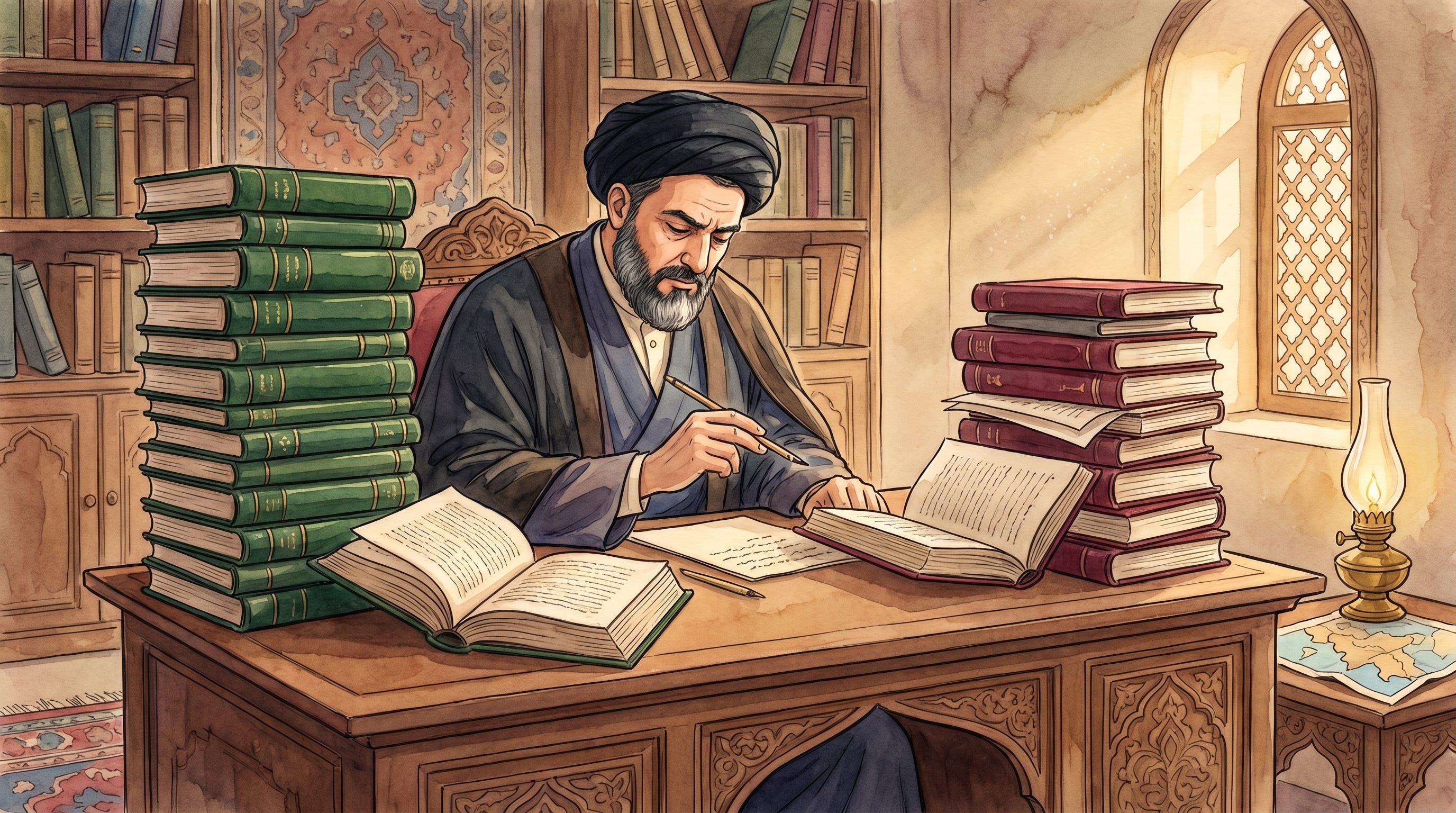
The second figure you must picture is closer to Baghdad — and closer to Sayyed al-Murtadha personally.
Qadi Abd al-Jabbar ibn Ahmad al-Hamadani, who died in the year 415 of the Hijra — nine years after Sayyed al-Radhi and twenty-one years before Sayyed al-Murtadha — was the greatest theologian of the Mu’tazila school in the early fifth century.
The Mu’tazila, you will recall from Session 64 on Shaykh al-Mufid, were the great rationalist school of Islamic theology — the scholars who insisted that reason must precede revelation in the ordering of religious knowledge, that the Qur’an was created rather than eternal, that God’s justice required human free will, that anthropomorphic readings of scripture must be metaphorically interpreted.
They had been, at their peak two centuries earlier under the Abbasid caliph al-Ma’mun, the official theological school of the caliphate itself.
By our brothers’ time they had lost that official position, but they remained one of the most intellectually formidable forces in Islamic thought.
And Qadi Abd al-Jabbar was their champion.
He served as the chief judge of Rayy — the Persian city near modern Tehran — under the Buyid vizier al-Sahib ibn ʿAbbad.
He wrote a vast theological encyclopedia titled al-Mughni fi Abwab al-Tawhid wa al-ʿAdl — The Sufficient in the Matters of Divine Unity and Justice — running to twenty volumes.
It was the most comprehensive statement of Mu’tazilite theology ever written.
And within it, in its volume on the Imamate, he mounted a sustained Mu’tazilite-Sunni critique of the Shi’a doctrine of the imamate.
And Sayyed al-Murtadha — from his seminary in Baghdad — answered him.
He wrote al-Shafi fi al-Imamah — The Healing, on the Imamate — which was a direct, point-by-point refutation of Qadi Abd al-Jabbar’s volume.
Al-Shafi — the Healer, or the Sufficient-that-Cures — positioned deliberately against al-Mughni, the Sufficient.
The titles themselves spoke to each other across the distance between Baghdad and Rayy.
It is one of the most famous textual duels in Islamic intellectual history.
What is striking — and what tells us something about our brothers’ whole posture — is that Sayyed al-Murtadha did not refuse to engage with Qadi Abd al-Jabbar.
He did not declare Mu’tazilite theology forbidden territory.
He did not walk away.
He read the twenty volumes of al-Mughni carefully, identified the Imamate section as the point of greatest disagreement, and wrote a response that engaged Qadi Abd al-Jabbar’s arguments on their own terms — using the Mu’tazilite categories of rational proof, the Mu’tazilite commitment to reason, the Mu’tazilite vocabulary of divine justice — and turned those very tools back against Qadi Abd al-Jabbar’s conclusions on the Imamate.
This is the signature of Sayyed al-Murtadha’s scholarship.
He did not build walls.
He walked through doors.
The Rising Tide: The Ash’ariyya
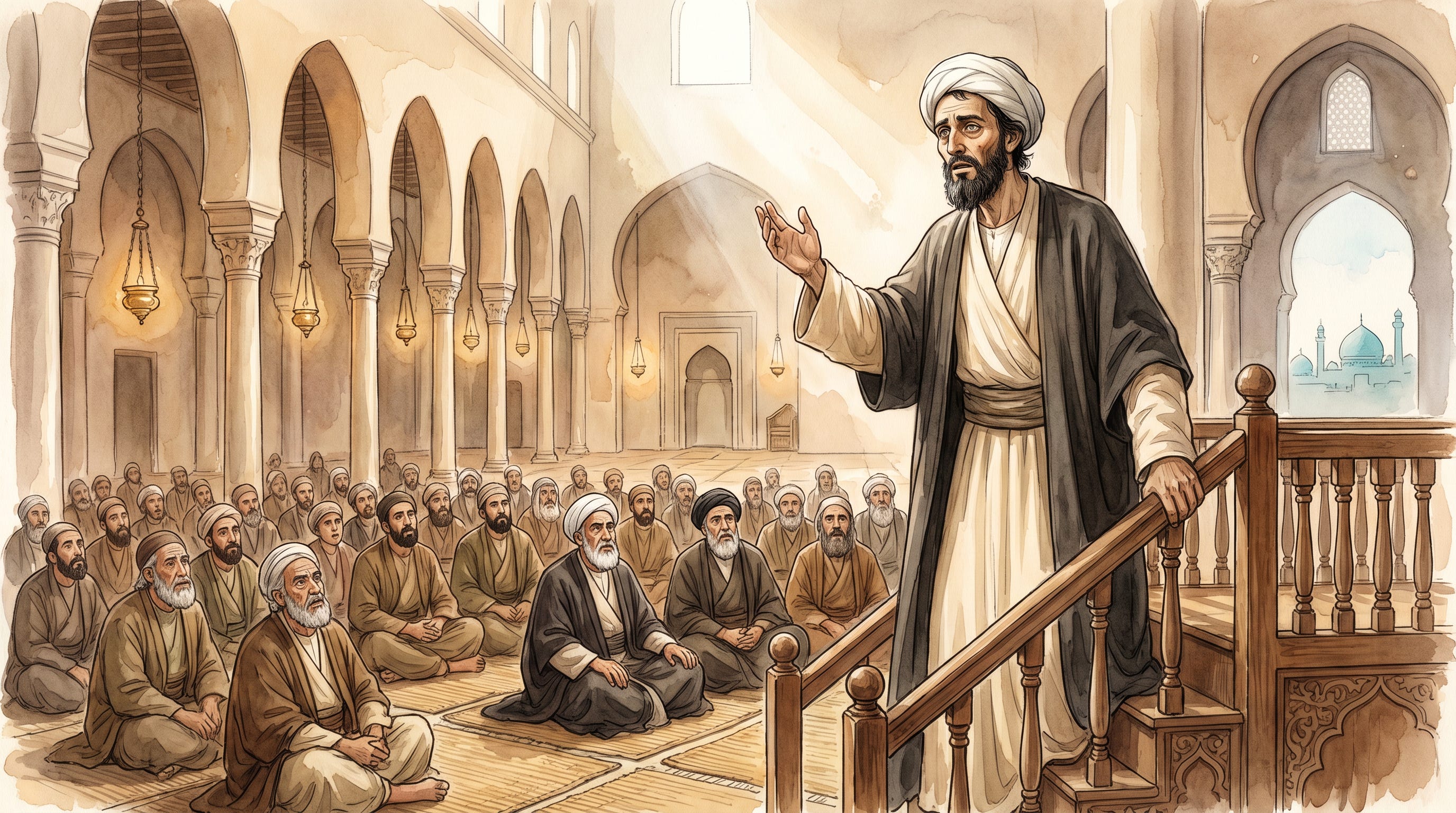
The third figure on the stage was not a single man but a school — and it was rising at precisely the moment our brothers were flourishing.
The Ash’ariyya — the theological school founded by Abu al-Hasan al-Ash’ari, who died in the year 324 of the Hijra, about thirty years before our brothers were born — had been growing steadily through the fourth century of the Hijra.
Al-Ash’ari had himself been a Mu’tazilite in his early career — and the story of how he broke from Mu’tazilism is worth telling, because it captures something essential about the intellectual world our two brothers were navigating.
Al-Ash’ari had studied for decades under Abu Ali al-Jubba’i, the greatest Mu’tazilite theologian of his generation and the head of the Mu’tazilite school in Basra.
He had lived in al-Jubba’i’s household.
He had become his most prominent disciple.
He had himself become an imam of the Mu’tazila — one of its recognised teachers.
And then, according to the classical accounts, he put a question to his teacher.
He asked al-Jubba’i about three brothers.
The first had lived a pious life and died a righteous man.
The second had lived a sinful life and died a wicked man.
The third had died in infancy, before reaching the age of moral responsibility.
What, teacher, al-Ash’ari asked, is the fate of each of them?
Al-Jubba’i replied, according to the standard Mu’tazilite view, that the first brother would be rewarded in paradise, the second punished in hell, and the third placed in a neutral intermediate station — for he had neither earned reward nor committed sin.
But teacher, al-Ash’ari pressed, what if the third brother — the infant — were to say to God:
Lord, had You allowed me to live, I would have lived piously like my first brother and earned paradise. Why have You denied me that opportunity?
Al-Jubba’i replied that God would answer:
I knew that if you had lived, you would have sinned and been condemned. I took you early in mercy.
But teacher, al-Ash’ari pressed further, what then of the second brother — the one who lived and was condemned? Could he not say:
Lord, You knew I would sin. Why did You not take me as an infant too, in mercy?
And al-Jubba’i, the greatest Mu’tazilite theologian of his age, could not answer coherently.
The biographical sources tell us that al-Ash’ari then disappeared from public life for fifteen days of private seclusion.
And then he walked into the Great Mosque of Basra, climbed the pulpit in front of the congregation, and publicly renounced Mu’tazilism.
It is one of the most famous public intellectual conversions in the entire history of Islamic thought — a man at the height of his scholarly authority, tearing down, in a single sermon, the school he had spent forty years helping to build.
The school he founded positioned itself as a theological middle way — accepting the rational methods of kalam, but pulling back from some of the Mu’tazila’s boldest rationalist conclusions, particularly around the createdness of the Qur’an and the limits of reason in matters of divine attributes.
And in our brothers’ time, the Ash’ariyya was in the process of becoming what it would be for the next thousand years: the dominant theological school of Sunni Islam.
It had a particular strength in the cities of the Persian east — in Nishapur, in Tus (where Shaykh al-Tusi was born) — and it was steadily displacing both older Hanbalite literalism and older Mu’tazilite rationalism across Sunni intellectual life.
Our brothers did not live to see the full rise of the Ash’ariyya to dominance.
That would come in the generation after them.
But they lived in the moment when it was becoming clear what was happening.
And Sayyed al-Murtadha, in his theological writings, engaged Ash’arite arguments as carefully as he engaged Mu’tazilite ones.
Tanzih al-Anbiya’ wa al-A’imma — his treatise on the infallibility of the Prophets and Imams — had to contend with both Mu’tazilite and Ash’arite understandings of what prophethood required.
Al-Dhakhira fi ʿIlm al-Kalam — his treatise on theology — surveyed the whole theological landscape of his age and positioned the Shi’a on that landscape with intellectual rigour.
The Shadow Ahead: al-Ghazali
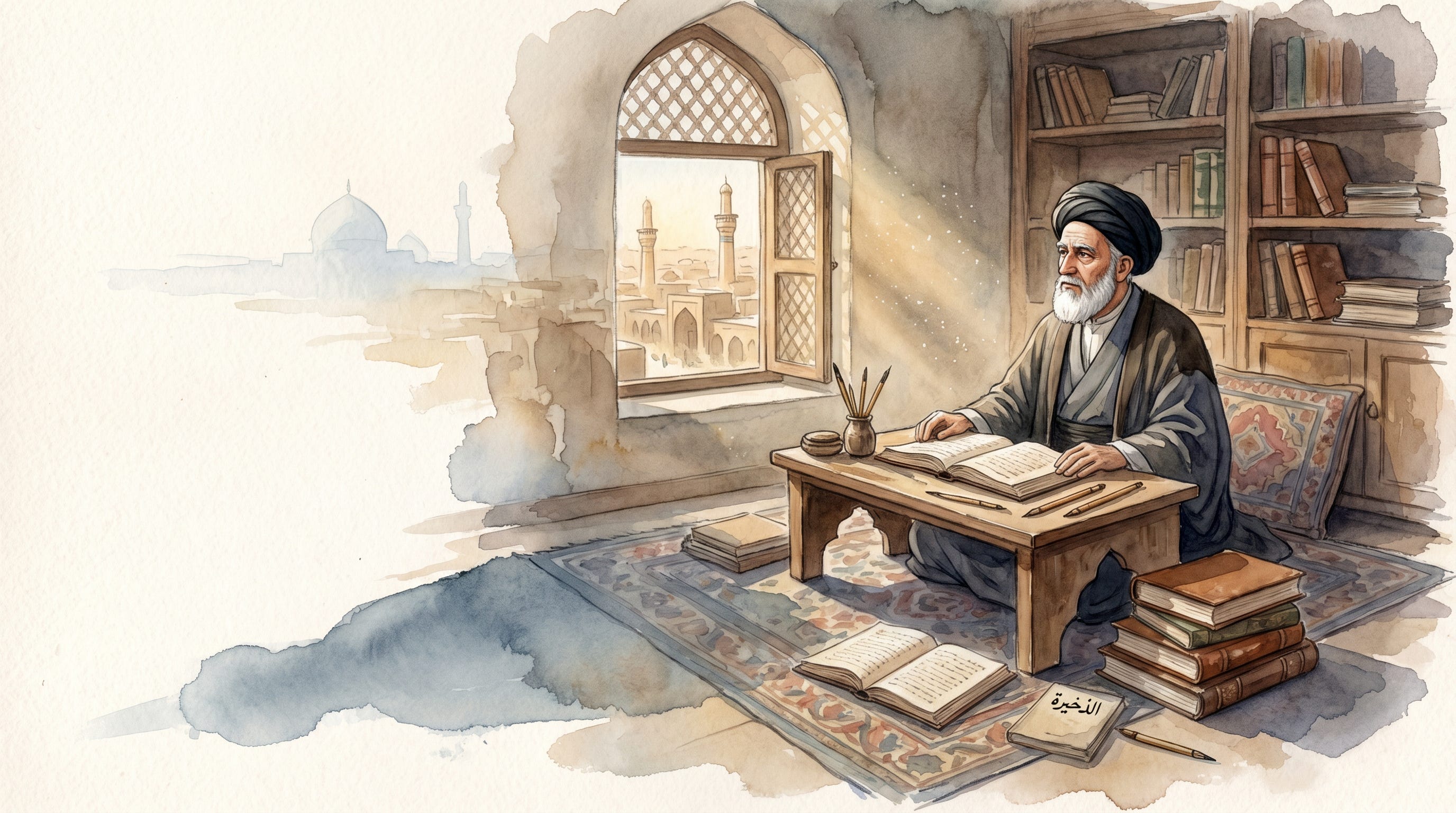
And finally — and this is the most poignant detail of the stage our brothers walked — we must name a man who was not yet born when they died, but whose shadow already stretched towards them.
Abu Hamid Muhammad al-Ghazali was born in the year 450 of the Hijra — fourteen years after Sayyed al-Murtadha’s death.
He would grow up in the Persian city of Tus.
He would be trained at the Nizamiyyah madrasa in Nishapur — the Sunni institutional network founded, we must remember, by the Seljuq vizier Nizam al-Mulk deliberately to counter the Shi’a scholarly flourishing we have been discussing all night.
He would rise to become the greatest Sunni theologian of his age, and perhaps the most influential single Sunni theologian of the entire medieval period.
And he would write, in 1091 (484 AH) of the Gregorian calendar — fifty-five years after Sayyed al-Murtadha’s death — Tahafut al-Falasifa — The Incoherence of the Philosophers — a work that would, within a generation, decisively turn the Sunni theological mainstream away from the Aristotelian philosophical tradition of Ibn Sina.
Our brothers did not know al-Ghazali.
Al-Ghazali did not know them.
But the intellectual world al-Ghazali would reshape was the intellectual world our brothers had inherited.
The Shi’a scholarship our brothers built — rational, philosophically engaged, committed to kalam and falsafa as legitimate tools — would, in al-Ghazali’s reshaping of Sunni thought, come to look increasingly distinctive.
Not by changing itself.
But because the Sunni mainstream, under al-Ghazali’s influence, would move in the opposite direction — pulling back from philosophical engagement in a way that the Shi’a tradition, holding to the path Sayyed al-Murtadha had laid down, never would.
This is part of why the Shi’a and Sunni intellectual traditions, which in Sayyed al-Murtadha’s time still shared so much common theological vocabulary and so many common philosophical references, would become, over the following centuries, progressively more distinct.
Our brothers were standing at the last moment when the shared intellectual universe of Islamic theology was still fully shared.
And they built into their tradition — into al-Dhakhira, into al-Shafi, into Tanzih al-Anbiya’, into the teaching in the Dar al-Ilm — a commitment to philosophical engagement that would outlast the Sunni retreat.
The Hawza that teaches Ibn Sina’s philosophy today — that reads al-Isharat wa al-Tanbihat as a standard text, that treats Mulla Sadra — who we will meet in a future session, God willing — and the School of Isfahan as its own heritage, that produces scholars who move fluidly between fiqh and falsafa — that Hawza exists because two brothers in eleventh-century Baghdad decided that the answer to the crowded intellectual stage of their time was not to build walls around it, but to walk through every door.
Lessons Woven In

Let me draw out what this means for us.
We live, in our own age, in an intellectually crowded moment.
We live in an age where, on every platform we open, on every screen, in every classroom our children walk into, in every bookshop and every podcast and every social media feed, ideologies compete for the hearts and minds of the believers.
Secular atheism, new-age spirituality, consumerist individualism, political ideologies of every stripe, revisionist readings of Islam that would hollow out its core, shallow readings of Islam that would reduce it to slogans, hostile readings of Islam that would caricature it into something no Muslim would recognise.
The temptation — the constant temptation — is to retreat.
To build walls.
To circle the wagons.
To declare the intellectual arena of our age haram territory, enter it at your peril, read nothing that is not already from within our tradition.
And when you hear that temptation whispered — in a lecture, in a Friday sermon, in the advice an elder gives a young Muslim going off to university — remember our two brothers.
Remember Sayyed al-Radhi, reading the Diwan of Abu Tamam in a world where poetry was already becoming suspect in some pious circles — and writing his own Diwan, and using the same poetic tools that his non-Muslim and non-Shi’a contemporaries were using, and turning them to the service of the Ahl al-Bayt.
Remember Sayyed al-Murtadha, sitting down with the twenty volumes of Qadi Abd al-Jabbar’s al-Mughni, reading every page, understanding every argument, engaging every category — and then answering, from within that shared philosophical vocabulary, in a way that a Mu’tazilite critic was forced to take seriously.
Remember the Dar al-Ilm, where Shi’a, Sunni, Mu’tazili, and even non-Muslim scholars sat in the same classroom and studied the same texts.
Our tradition — the tradition of the Ahl al-Bayt — has never feared engagement.
It has never needed to.
Because it has always known that Truth does not lose when it meets other claims in open argument.
Truth loses only when those entrusted with it retreat into silence.
The scholars of this Ummah who shaped our intellectual inheritance did not hide from the intellectual challenges of their age.
They walked into them, and they answered them, and they won the respect of their interlocutors precisely because they came prepared.
But let me add one thing — and it is a thing that matters more, perhaps, in our age than in any age before it.
Engagement is not the same as aggression.
When our two brothers wrote against Qadi Abd al-Jabbar, they did not mock him.
They did not abuse him.
They did not reduce him to a caricature of his own positions.
Sayyed al-Murtadha read al-Mughni carefully, honestly, in good faith — he represented his interlocutor’s arguments in their strongest form, and only then did he answer them.
This is the standard the tradition sets.
The Qur’an itself commands us:
ادْعُ إِلَىٰ سَبِيلِ رَبِّكَ بِالْحِكْمَةِ وَالْمَوْعِظَةِ الْحَسَنَةِ وَجَادِلْهُم بِالَّتِي هِيَ أَحْسَنُ
“Invite to the way of your Lord with wisdom and beautiful preaching, and argue with them in ways that are best and most gracious.”
— Qur’an, Surah al-Nahl (the Chapter of the Bee), #16, Verse 125
وَجَادِلْهُم بِالَّتِي هِيَ أَحْسَنُ — Wa jadilhum bi’l-latī hiya ahsan — argue with them in the way that is most beautiful.
Not merely in a way that is effective.
Not merely in a way that wins.
In the way that is ahsan — the most beautiful.
The Qur’an does not permit us to choose between being right and being gracious.
It commands us to be both.
And this is the way of every honourable scholar of the Ahl al-Bayt, past, present, and — God willing — future.
The great scholars of our tradition did not win their interlocutors’ respect by shouting.
They won it by understanding.
They did not humiliate their opponents.
They answered them.
And in answering them with care, with dignity, with accuracy, with grace — they elevated the entire conversation.
In our own age, we have inherited platforms that can amplify our voices across the world in seconds.
We can argue with strangers at three in the morning.
We can mock.
We can caricature.
We can dehumanise with a single clip, a single quote taken out of context, a single insult landed in front of thousands.
And too many of our own, carrying the name of the Ahl al-Bayt on their tongues, have done exactly this — confusing cruelty for conviction, confusing mockery for manhood, confusing the volume of their voices for the weight of their arguments.
This is not the way of our brothers.
This is not the way of our tradition.
When you engage — and you must engage — engage with the honour of those who walked before you.
Represent your opponent’s view fairly.
Understand it before you answer it.
Speak the truth plainly, but never cruelly.
Do not humiliate a person to win a point.
Do not score victories at the cost of another’s dignity.
The Commander of the Faithful, Imam Ali ibn Abi Talib, whose words our two brothers gathered and preserved for us in Nahj al-Balagha, said it plainly:
النَّاسُ صِنْفَانِ: إِمَّا أَخٌ لَكَ فِي الدِّينِ، أَوْ نَظِيرٌ لَكَ فِي الْخَلْقِ
“People are of two kinds: either a brother to you in faith, or your equal in creation.”
— Nahj al-Balagha, Letter 53 (the Letter to Malik al-Ashtar)
Every interlocutor you meet — even the one who disagrees with you most fundamentally — is either your brother in faith or your equal in creation.
There is no third category.
There is no category in which cruelty becomes permissible.
So engage.
But engage as our two brothers engaged.
With rigour, with preparation, with depth — and with the dignity that the tradition of the Ahl al-Bayt has always demanded of those who carry its name.
This is the inheritance.
This is the command.
Engage.
Read.
Understand.
Answer.
Do not retreat.
And may God grant us the wisdom, the courage, the rigour, and the humility to walk in their footsteps.
The Library That Would Burn
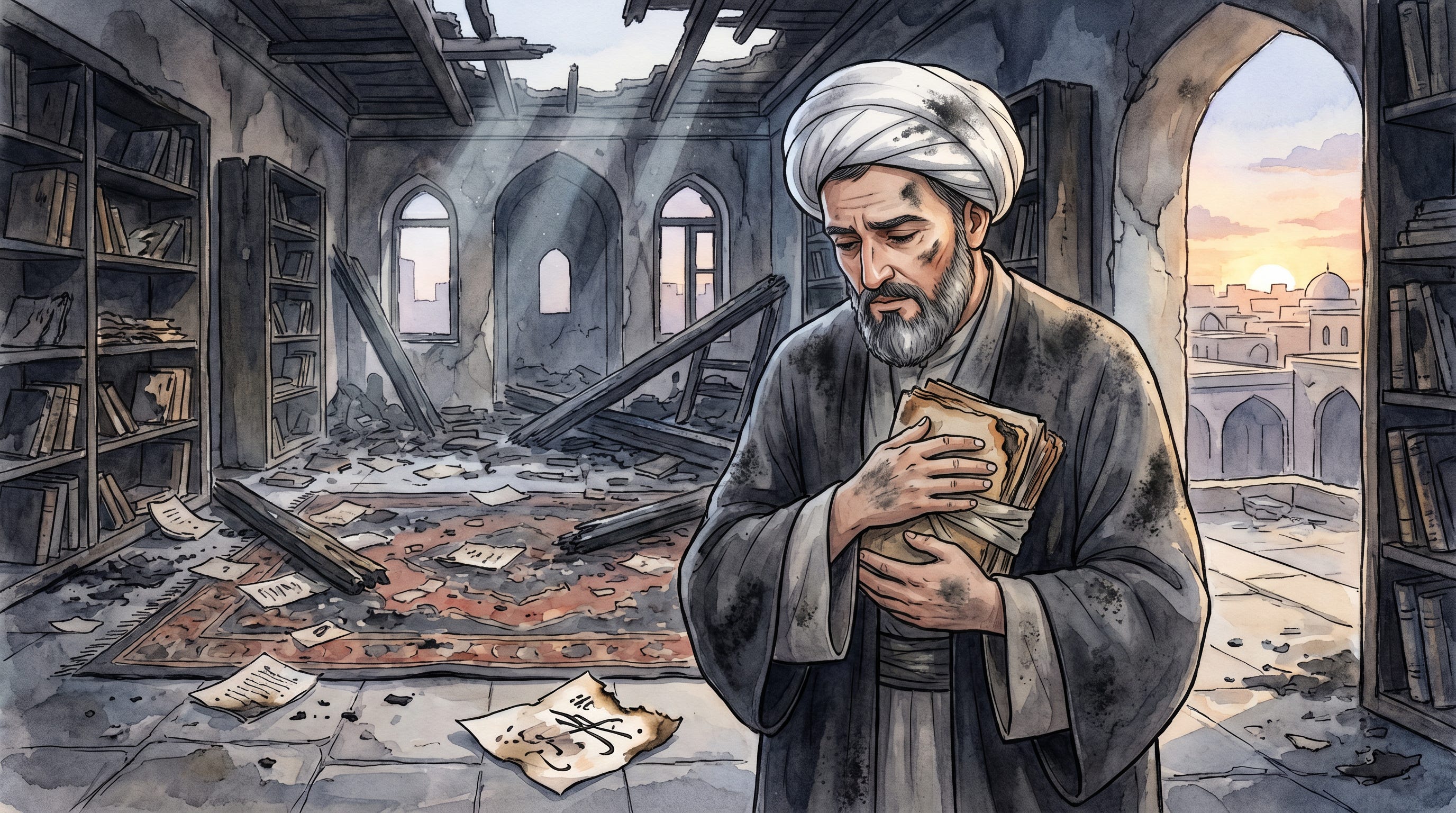
But the story of their legacy does not end at their graves.
Because the most dramatic chapter of what the two brothers built was still to come.
When Sayyed al-Murtadha died, his library of eighty thousand volumes passed, along with his leadership of the community, to his greatest student — Shaykh al-Tusi.
And Shaykh al-Tusi, for the next eleven years, continued teaching in Baghdad under the last of the Buyid protection, adding his own works — including two of the Four Books of Hadith — to the library his master had built.
And then, in the year 447 of the Hijra — just eleven years after Sayyed al-Murtadha’s death — the Seljuq Turks, the successors we have been foreshadowing all night, conquered Baghdad.
And the Seljuqs, who were militantly Sunni and explicitly hostile to the Shi’a flourishing that the Buyids had protected, unleashed on Karkh a wave of violence more devastating than anything the Hanbali riots had ever produced.
Shaykh al-Tusi’s house was attacked.
His library — the inheritance of Sayyed al-Murtadha’s library, built over nearly a century of careful acquisition — was burned to the ground.
Shaykh al-Tusi himself escaped with his life and a handful of manuscripts, and fled Baghdad forever, eventually settling in the desert town of Najaf, beside the shrine of the Commander of the Faithful, where he would plant the seed of the Hawza that still teaches there today.
Eighty thousand volumes.
Reduced to ash.
And here is the detail that matters for tonight.
The sources do not tell us, specifically, what was inside those eighty thousand volumes.
We know there were classical hadith collections.
We know there were works of philosophy, kalam, poetry, grammar, medicine.
We know Sayyed al-Murtadha had been copying and preserving manuscripts for over fifty years.
And when the Seljuq fires finally extinguished it all, a silence fell across a great swathe of the Shi’i scholarly inheritance that can never now be recovered.
Works of Sayyed al-Radhi and Sayyed al-Murtadha themselves were lost.
Volumes of Sayyed al-Radhi’s own Qur’anic commentary, Haqa’iq al-Ta’wil — of which only a single chapter survives — were most likely in that library.
Letters, poems, treatises, drafts, correspondences — all gone.
The Book That Could Not Burn
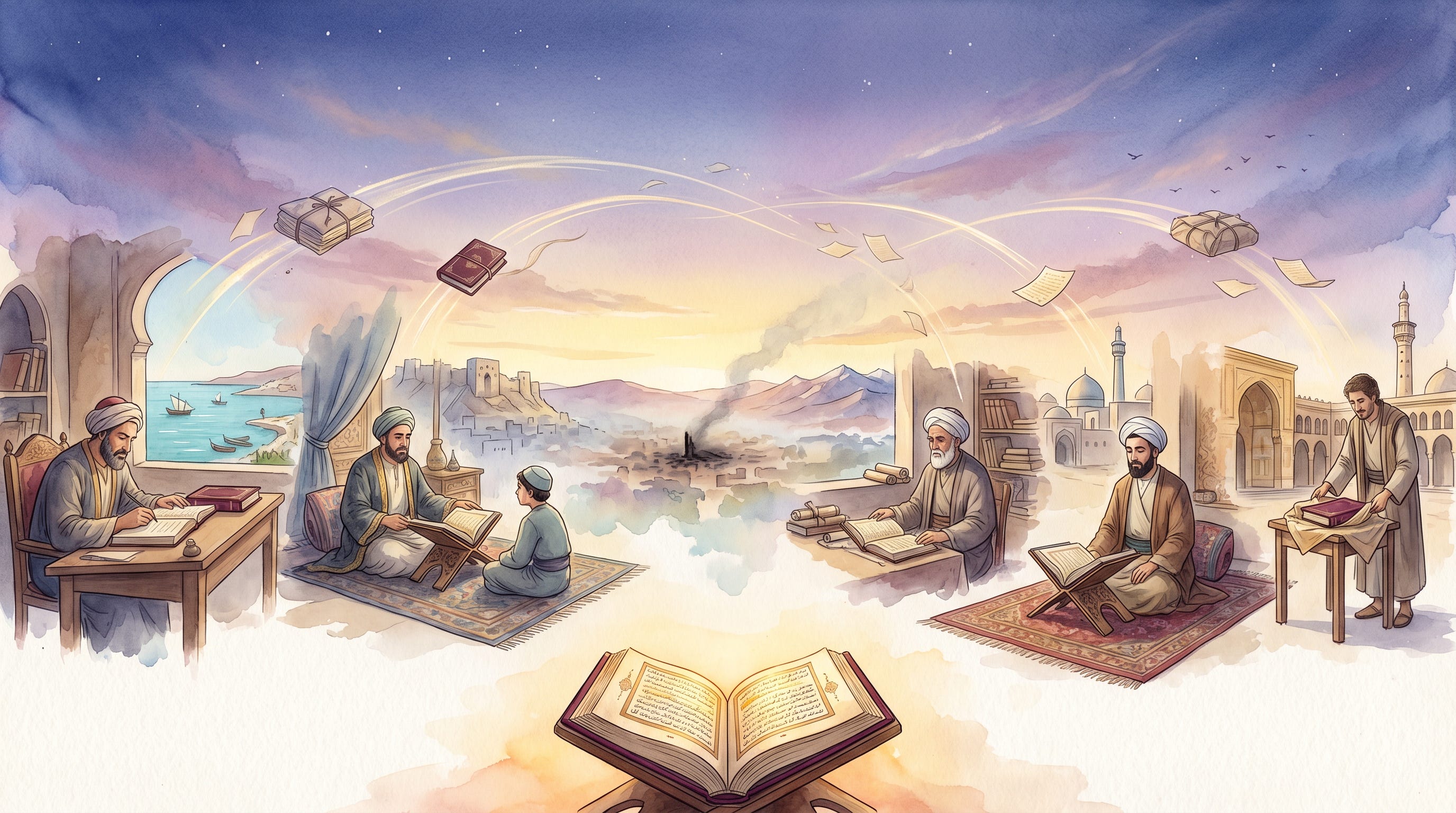
But there was one book that the Seljuq fires could not reach.
Because by the year 447 of the Hijra, Nahj al-Balagha had already escaped Baghdad.
It had been copied.
And copied.
And copied again.
Students who had sat in the Dar al-Ilm had carried copies home with them — to Tripoli, to Aleppo, to Damascus, to Rayy, to Qom.
Ibn al-Barraj had a copy in Tripoli.
Abu al-Salah had a copy in Aleppo.
Every scholar who had passed through Baghdad for two decades had carried a piece of Nahj al-Balagha out with him into the wider Muslim world.
By the time the Seljuqs burned Karkh, Nahj al-Balagha was no longer in Karkh.
It was everywhere.
It was in the hands of every serious student of the Ahl al-Bayt across the Mediterranean and across the Persian world.
You cannot burn a book that has already been dispersed.
And this, is perhaps the deepest lesson of the two brothers’ legacy.
Because when they built their library, they were not hoarding treasure — they were cultivating a seed bank.
Every manuscript they lent, every copy they funded, every student they sent to the Levant with scrolls in his saddlebag — each of these was a grain planted in soil the Seljuqs could not reach.
The library burned.
The inheritance did not.
Because the inheritance had already been scattered to places where fire could not find it.
This is how a scholarly tradition survives the closing of its window.
Not by hoarding.
By giving.
A Word on Why We Tell This Story
Before we turn to our final eulogy — let me pause, because something important needs to be said, and it needs to be said plainly.
Across these four sessions, we have spent a great deal of time talking about dynasties.
The Abbasids.
The Buyids.
The Fatimids.
The Ammarids of Tripoli.
The Hamdanids and Mirdasids of Aleppo.
The Samanids of Bukhara.
The Qarakhanids.
The Ghaznavids.
The Kakuyids of Isfahan.
And, looming at the edge of tonight’s story, the Seljuqs who will dominate the next few sessions of this sub-series.
We have spoken about which of these were Shi’a and which were Sunni.
We have spoken about Shi’a flourishing under Shi’a dynasties, and Shi’a scholarship being threatened when those dynasties fell.
And I want to be absolutely clear about why we speak this way — because it would be catastrophically easy, and catastrophically wrong, to walk away from this four-week journey thinking that the story of our tradition is a story of Shi’a versus Sunni.
It is not.
Let me say that again, because it matters.
The story of our tradition is not Shi’a versus Sunni.
It never has been.
And the great scholars of our school — past, present, and God willing, future — have never permitted that framing to stand.
This series — this whole sub-series on the Architecture of Guidance, and the wider series of which it is a part — stands in the tradition of the Martyr Imam Sayyed Ali Khamenei’s Insan-e 250 Saleh — The 250-Year-Old Person — which reads the lives of the fourteen Infallibles not as a list of biographies but as a single continuous human life, unfolding across two and a half centuries against the shifting political and social and intellectual conditions of each age.
That is the kind of history we are trying to do here.
Socio-political-theological history.
Not a list of kings and their dates.
Not a scoreboard of Shi’a victories and Sunni defeats.
But an attempt to read the history of our tradition the way the Qur’an asks us to read history — as a set of ayat, signs, from which the believer extracts understanding, so that the community that inherits this history can see its own present clearly.
And when we do that — when we read honestly — we see something that the simplistic “Shi’a versus Sunni” framing cannot see.
We see Sayyed al-Murtadha writing a twenty-volume answer to Qadi Abd al-Jabbar the Mu’tazilite — and doing so with respect, engaging the arguments, never mocking the man.
We see Sayyed al-Radhi compiling Nahj al-Balagha and dedicating it to the whole Ummah — so successfully that within two centuries the Sunni Mu’tazilite Ibn Abi al-Hadid was writing a twenty-volume commentary on it from within his own tradition.
We see the Sunni judge Ibn Khallikan of Damascus preserving the narration of the Alam al-Huda dream in his Wafayat al-A’yan, without polemic, without dismissal, because the story was worth preserving.
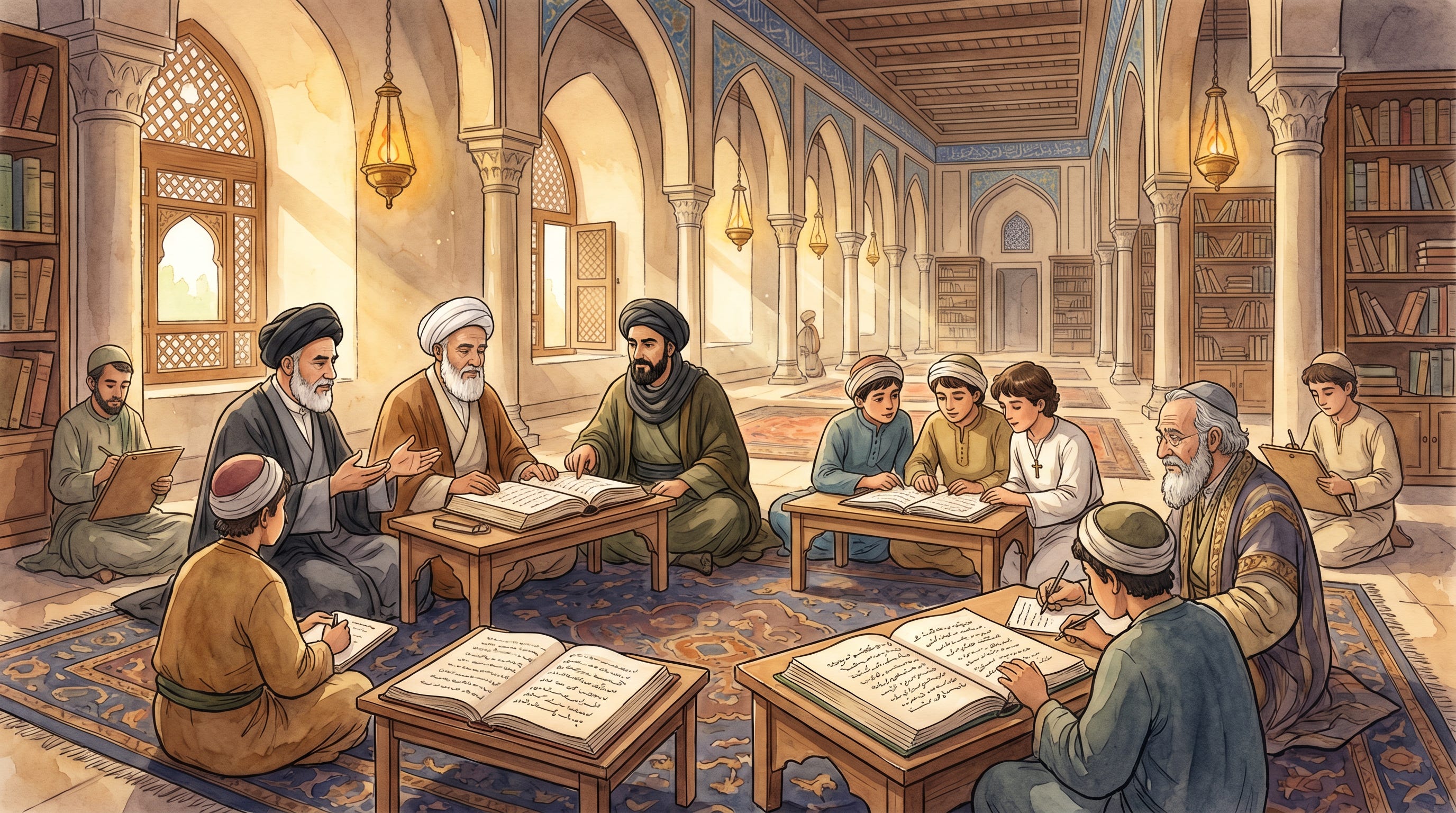
We see students in the Dar al-Ilm — Shi’a, Sunni, Mu’tazilite, and yes, even non-Muslim — sitting together and reading the same texts.
We see Fakhr al-Mulk, the vizier of the Abbasid caliph, stepping in to lead the funeral prayer over Sayyed al-Radhi’s body when his own brother could not bear to.
This is not a story of sectarian warfare.
This is a story of a community of faith engaging, respectfully, with other communities of faith — and being engaged with, respectfully, in return.
So when we speak of the Seljuqs, or of the Ghaznavids before them, as powers whose conquest threatened the Shi’a flourishing — we are not speaking about ordinary Sunni Muslims.
The Turkic peasants who cultivated the fields of Khurasan under Seljuq rule were not our enemies.
The Hanafi scholars who taught in the madrasas of Nishapur were not our enemies.
The ordinary pious Sunni believers of eleventh-century Baghdad — our neighbours, our trading partners, the men and women who bought bread from the same bakers we did — were not our enemies.
The problem, when there was a problem, was almost never theology.
The problem was power.
When dynasties — any dynasties, of any sect — set about consolidating their political authority, they have historically used whatever ideological tools were available to them to legitimise that consolidation.
If the tool ready to hand was anti-Shi’a rhetoric, they used that.
If the tool was anti-Sunni rhetoric, they used that.
If the tool was anti-Mu’tazilite, or anti-Sufi, or anti-philosophical, or anti-scholarly in general — they used that.
The driving force was not the theology.
The driving force was the power.
Let me give you a contemporary example, because it will clarify everything.
In the year 1802 of the Gregorian calendar — just over two centuries ago — the First Saudi State, under the rule of the Wahhabi movement, marched on the city of Karbala.
They killed thousands of civilians.
They destroyed the dome over the shrine of Imam Husayn.
They plundered the treasury of the shrine and carried off four thousand camel-loads of wealth.
And a little over a century later, in April of 1925 of the Gregorian calendar, the third Saudi State, after conquering the Hejaz, levelled the sacred cemetery of Jannat al-Baqi in Medina — the resting place of Imam al-Hasan, Imam al-Sajjad, Imam al-Baqir, and Imam al-Sadiq, peace be upon them all — reducing the shrines of the Ahl al-Bayt to bare earth where no marker stands to this day.
These are among the most painful episodes in modern Shi’a memory.
And it would be the easiest thing in the world to narrate them as Sunni crimes against the Shi’a.
But that narration would be a lie.
Because the overwhelming majority of Sunni Muslims — of every school, across the entire world — were horrified by these acts.
The Ottoman ulama, the Sunni jurists of Baghdad, the scholars of al-Azhar in Cairo, Sunni communities from Damascus to Delhi — condemned these acts when they happened.
They were not Sunni crimes.
They were the crimes of a particular political project that was using a particular narrow theological justification to consolidate its hold over the Arabian peninsula.
The modern scholarly consensus is clear on this point: the destruction at Karbala and al-Baqi was, at its core, a political act — an act of establishing the authority of a new state, using theology as the instrument of that authority, rather than the reverse.
The First Parallel: Christian Zionism and the Scofield Project
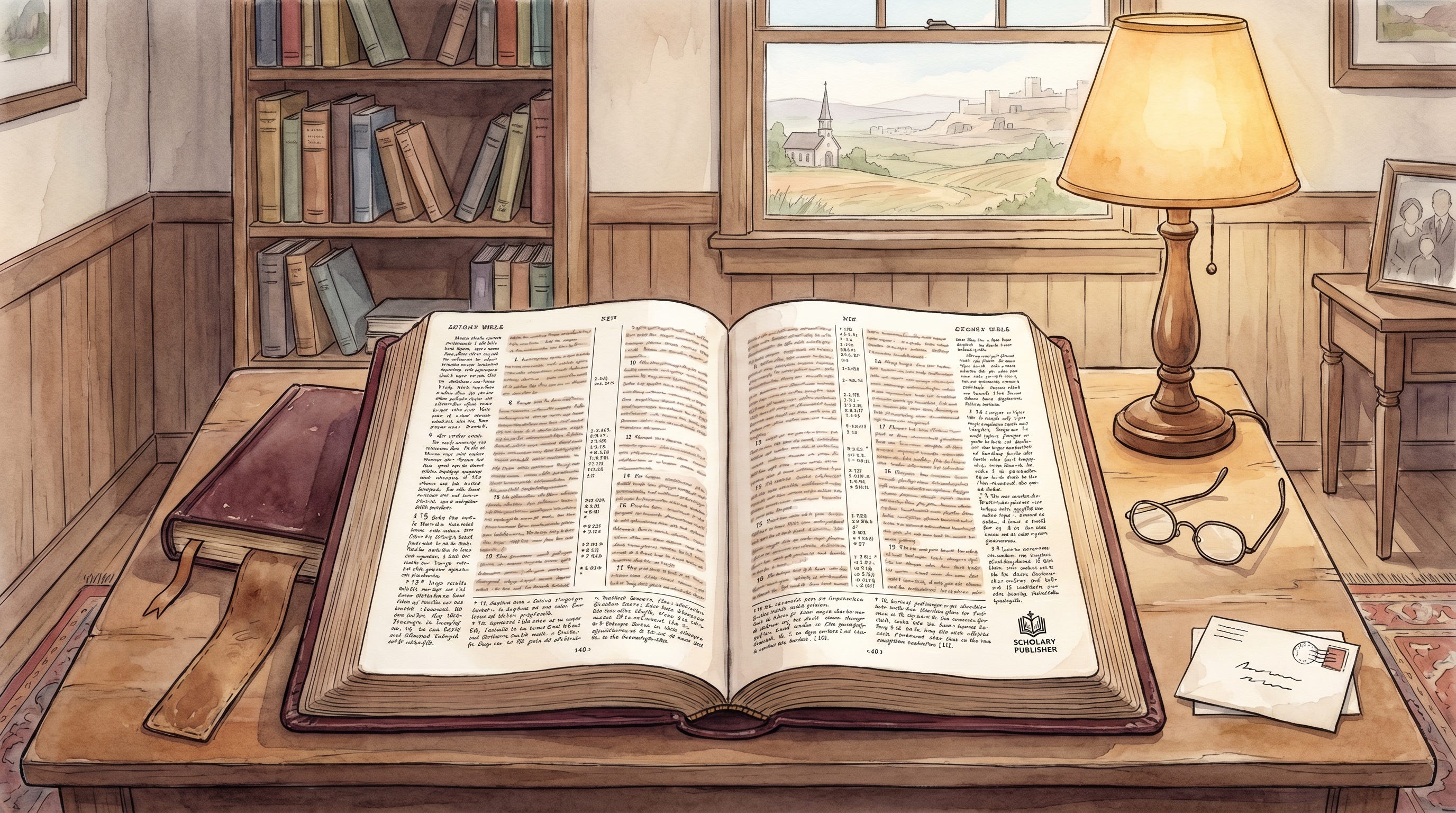
In the year 1909 of the Gregorian calendar — just over a century ago — a man named Cyrus Ingerson Scofield, an American lawyer and convert to a particular strand of evangelical Christianity, published, with the backing of Oxford University Press and the financial support of a circle of wealthy patrons, a work that he titled the Scofield Reference Bible.
The Scofield Reference Bible was not a new translation of the Christian scriptures.
It was the traditional King James Bible, printed in its familiar form, but accompanied — on every single page — by Scofield’s own extensive annotations and footnotes.
And those footnotes advanced a particular theological framework called dispensationalism — a framework that, among many other teachings, held that the return of the Jewish people to the land of Palestine was a prophetic precondition for the Second Coming of Christ, and that support for the establishment and defence of a modern Jewish state in that land was therefore a Christian religious duty.
The Scofield Bible sold more than two million copies by the end of the Second World War.
It became the single most influential study Bible in American evangelical Christianity.
And it is the theological engine — more than any other single source — of what we now call Christian Zionism: the movement of tens of millions of American evangelical Christians who today provide theological, political, and financial support for the “State of Israel” precisely because they have been taught, through Scofield’s footnotes and their descendants, that such support is a Christian religious obligation.
Now, I am not asking you to adjudicate the theology of Scofield’s footnotes tonight.
What I am asking you to notice is the mechanism.
A political project — in this case, the establishment of a Jewish nation-state in Palestine — required religious legitimation to mobilise mass support.
A theological framework was found, selectively amplified, and popularised.
And a generation of ordinary Christian believers — who themselves were not politically motivated, who were simply reading their Bible in good faith and trusting the footnotes printed alongside the text — were recruited, often without their clear awareness, into supporting a political project that would, over the subsequent decades, contribute to the displacement and suffering of millions of Palestinians — including Palestinian Christians themselves, who share the faith of their evangelical American brethren, and whose presence in the Holy Land stretches back to the time of Christ, peace be upon him and may God hasten his return.
The theology was the cloak.
The political project was the body underneath.
The Second Parallel: Zionism and Judaism
And this brings us to the most important distinction of all — the distinction between Judaism and Zionism.
Judaism, is a religion.
It is one of the great monotheistic traditions of humanity.
It traces its origins to the Prophet Abraham, peace and blessings be upon him, who is also our father in faith.
Its scriptures preserve revelations given to Prophets whom we Muslims revere — Moses, David, Solomon, peace be upon them all.
Its ethical traditions shaped the moral imagination of the ancient world and continue to shape it today.
The Jewish people are the descendants of those who received these revelations, and they have, across millennia, suffered persecutions and expulsions and genocides — most catastrophically, within living memory, the Holocaust in Europe in the twentieth century — that no Muslim with a heart can fail to mourn.
Zionism is something different.
Zionism is a political movement, founded in the late nineteenth century of the Gregorian calendar, primarily through the work of a secular Austrian-Hungarian journalist named Theodor Herzl — a man who was not particularly religious, who wrote explicitly that the project he was advancing was a political project for a Jewish national homeland, not a religious one.
Zionism took the immense and genuine suffering of the Jewish people across centuries of European persecution — real suffering, suffering that demands acknowledgement — and channelled that suffering into a territorial project: the establishment of a Jewish state, eventually in the land of Palestine, at the cost of the displacement of the Palestinian people who had lived on that land for centuries.
And the theological cloak that dresses this political project — the claim that a particular understanding of biblical promises justifies the dispossession of one people by another — is precisely the same mechanism we have just described with Scofield, and the same mechanism we have described with the Wahhabi sack of Karbala.
And here, is the crucial point:
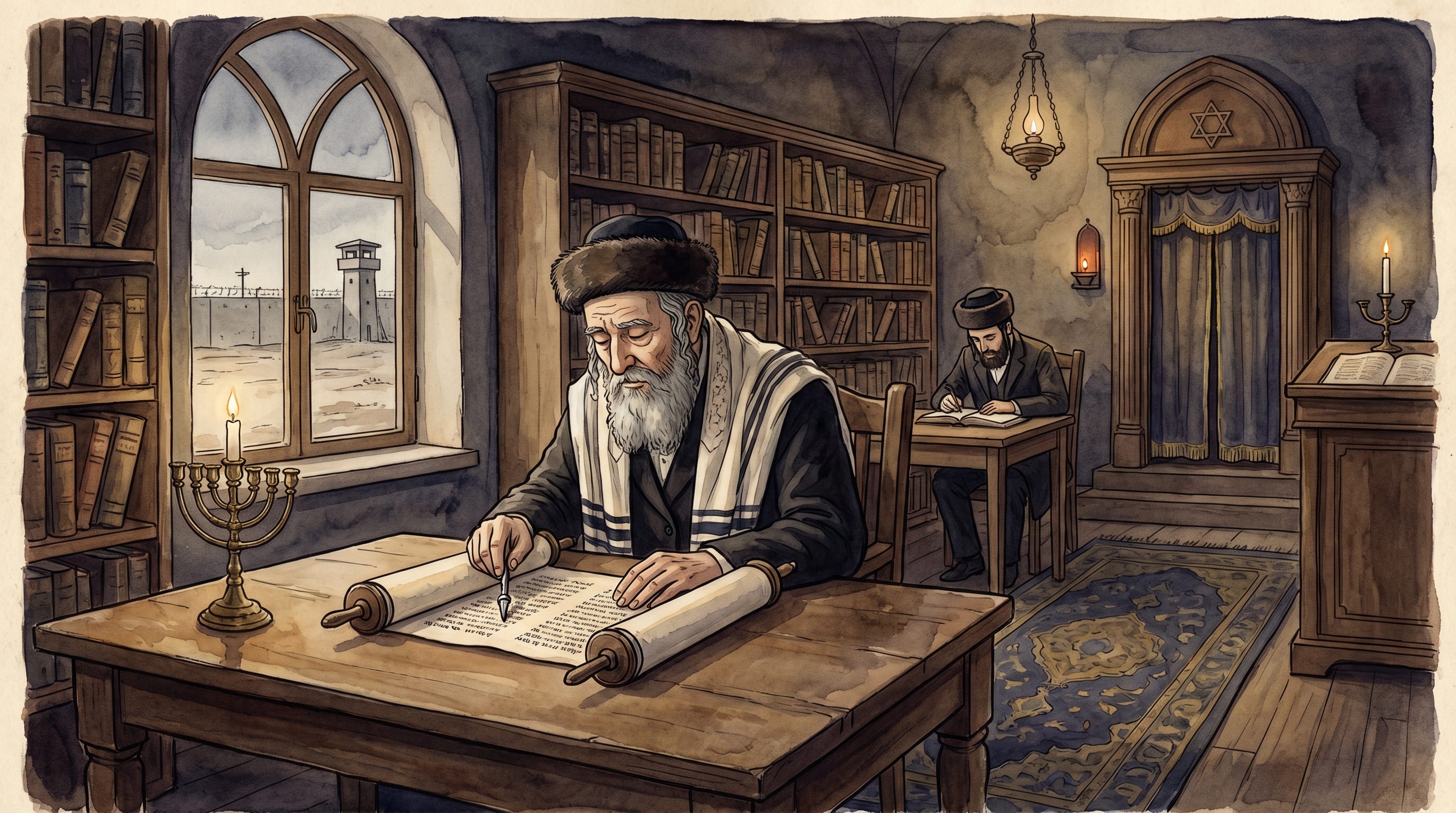
Many of the most principled opponents of Zionism, historically and today, have been religious Jews themselves
— Jewish scholars, rabbis, communities, and movements who hold firmly that Zionism is not Judaism, that political statehood is not a religious commandment, that the land does not belong to any nation but to God, and that a genuine Jewish faithfulness requires rejecting, not embracing, the use of religious scripture to justify the displacement of another people.
These Jewish voices exist.
They have always existed.
And they deserve to be heard — because when they speak against Zionism, they are not speaking against their own tradition.
They are speaking from their own tradition.
They are doing, within Judaism, exactly what our own scholars have done within Islam for a thousand years: refusing to let political power clothe itself in the garments of revelation.
To confuse Zionism with Judaism is to make the same mistake as confusing Wahhabism with Islam.
Both confusions are wrong.
Both confusions hurt ordinary believers — Jewish and Muslim alike — who are then blamed for political projects they never chose, and which their own scriptures, read honestly, do not sanction.
The Universal Principle
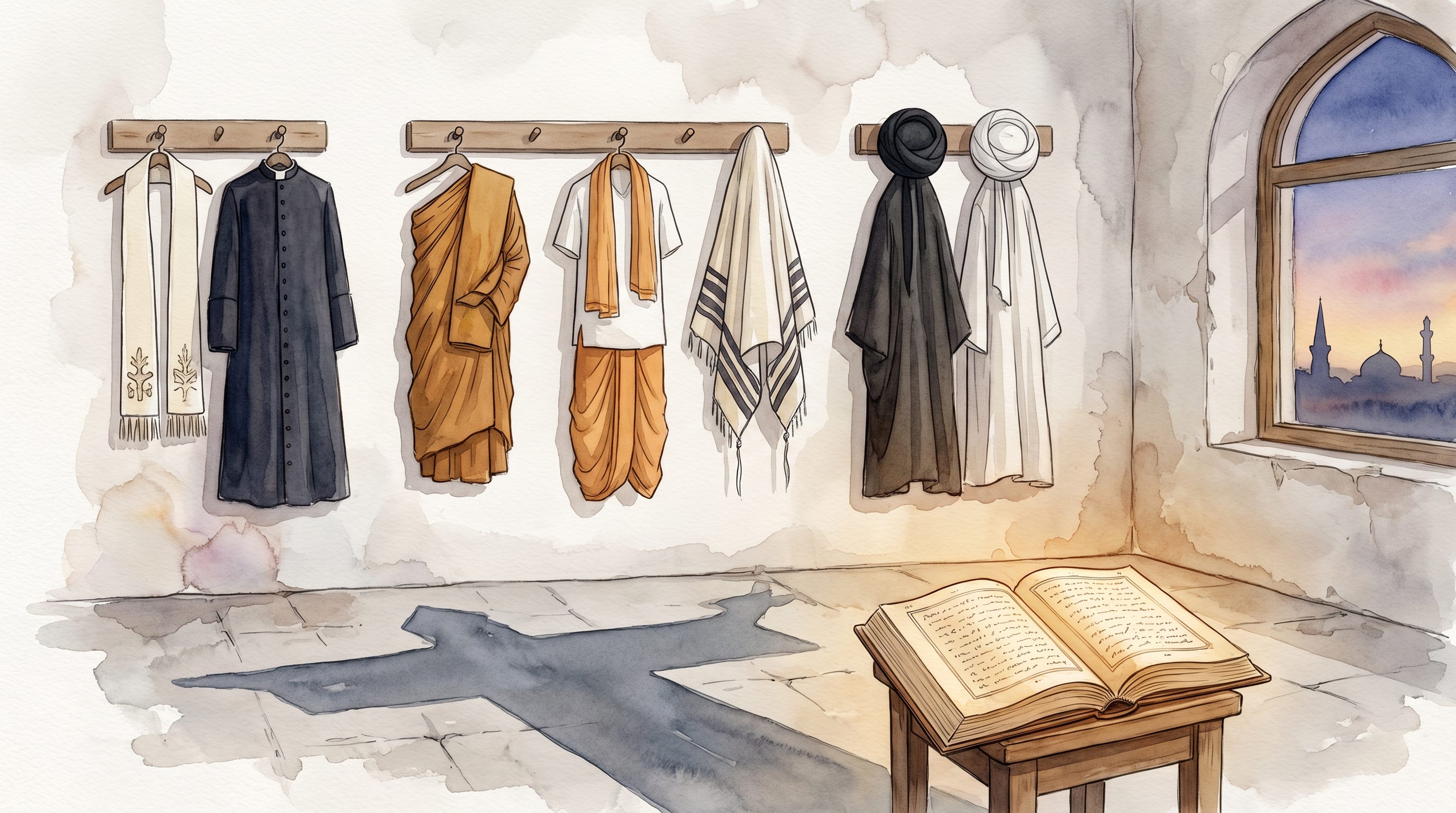
And this same pattern, can be found wherever religion is abused in the service of political ambition.
Not where faith engages the world — because faith must engage the world; that is its whole purpose.
But where faith is hollowed out by those who claim it, kept as an empty vessel to be filled with whatever ambition the moment requires, and then held up as though it were the Divine mandate itself.
There are those who, claiming the name of Christ — whose message was one of love for the neighbour and care for the stranger — have used his name to justify the most terrible violence.
In the year 2011 of the Gregorian calendar, a Norwegian man named Anders Breivik, claiming to defend what he called Christian Europe from an imagined Muslim threat, murdered seventy-seven people, most of them teenagers at a summer camp.
He framed his act as Christian defence.
The Christian churches of Europe, almost without exception, condemned him in the strongest possible terms.
Pope Benedict condemned him.
The Lutheran Church of Norway condemned him.
Because Breivik was not practising Christianity.
He was practising political extremism with Christian costume.
And we could walk this same path through every tradition.
Buddhist nationalism in Myanmar committing atrocities against the Rohingya.
Hindu nationalism in India committing violence against Muslim and Christian minorities.
And yes — because honesty costs us nothing — Muslim political movements that have done terrible things in our own tradition’s name: Daesh, so-called Islamic State, which has murdered more Muslims than non-Muslims; al-Qaeda, whose violence has been overwhelmingly against fellow Muslims; the Taliban and the many smaller sectarian militias that have killed Shi’a and Sunni alike in Pakistan and Iraq and Afghanistan.
The mechanism is the same every time.
A political project seeks mass mobilisation.
It reaches for the nearest religious vocabulary.
It selectively amplifies.
It caricatures its opponents.
It promises eternal reward for temporal violence.
And ordinary believers — believers who in another generation, in another context, would have lived their faith quietly and well — are drawn into acts and attitudes that their own scriptures, read with care, prohibit.
What This Means for Our Reading of History

I say all of this now, in the closing session of a four-week journey through two Shi’a scholars who died a thousand years ago, because I want us to be absolutely clear about how we read the historical record.
The earth belongs to God.
He is not a real-estate dealer who allots territory to one people at the expense of another.
He is not a respecter of nations.
He does not prefer Arab to Persian, or Jew to Palestinian, or Turk to Kurd, or European to African.
These are categories of human politics, not of divine plan.
The Qur’an tells us plainly:
يَا أَيُّهَا النَّاسُ إِنَّا خَلَقْنَاكُم مِّن ذَكَرٍ وَأُنثَىٰ وَجَعَلْنَاكُمْ شُعُوبًا وَقَبَائِلَ لِتَعَارَفُوا ۚ إِنَّ أَكْرَمَكُمْ عِندَ اللَّهِ أَتْقَاكُمْ
“O humanity! Indeed, We created you from a single male and female, and made you into peoples and tribes so that you may come to know one another. Truly the most noble of you in the sight of God is the most God-conscious of you.”
— Qur’an, Surah al-Hujurat (the Chapter of the Private Chambers), #49, Verse 13
Every human being, born into whatever tradition they were born into, has a single duty: to strive and to yearn and to work tirelessly towards the Truth, and in that striving, to live with honour, with compassion, and with justice.
That is the command.
The accidents of birth — the tradition you were raised in, the family you came from, the nation whose passport you carry — these are tests, not trophies.
They are the conditions within which you must work out your relationship with your Creator.
They are not credentials that elevate you above your neighbour.
And this is why, when we read the history of our tradition honestly, we do not tell a story of Shi’a versus Sunni, or Muslim versus Jew, or Muslim versus Christian.
We tell a story of truth versus the abuse of truth — a story that cuts through every tradition and that finds its honest servants, and its dishonest exploiters, in every community that has ever existed.
And this is the deep pattern that our two brothers would have recognised instantly — because the Commander of the Faithful, Imam Ali ibn Abi Talib, peace and blessings be upon him, whose words Sayyed al-Radhi compiled into Nahj al-Balagha, spoke about this mechanism a thousand years before anyone in this hall was born.
He spoke about men who use religion as a cloak for their ambition.
He spoke about men who quote scripture to serve power rather than serving power to uphold scripture.
He spoke about the poisoning of religious discourse by the contamination of political greed.
In Sermon 50 of Nahj al-Balagha, he said:
إِنَّمَا بَدْءُ وُقُوعِ الْفِتَنِ أَهْوَاءٌ تُتَّبَعُ، وَأَحْكَامٌ تُبْتَدَعُ، يُخَالَفُ فِيهَا كِتَابُ اللَّهِ، وَيَتَوَلَّى عَلَيْهَا رِجَالٌ رِجَالاً عَلَى غَيْرِ دِينِ اللَّهِ
“The beginning of the occurrence of sedition is passions that are followed, and innovations that are introduced — in which the Book of God is contradicted, and over which men take authority over other men, on a basis other than the religion of God.”
— Nahj al-Balagha, Sermon 50
Men take authority over other men, on a basis other than the religion of God.
This is the mechanism.
It has always been the mechanism.
And it is the mechanism we see at work whenever we see a Shi’a or a Sunni or any political authority — medieval or modern — reaching for a theological weapon to serve a worldly ambition.
The Seljuqs, when they closed the Shi’a flourishing of Baghdad, were not doing theology.
They were consolidating power.
The Wahhabi Saudi state, when it destroyed Karbala and Baqi, was not doing theology.
It was consolidating power.
And the pattern repeats, in our own age, wherever you see it.
So when you listen to this series — and when you share it with your Sunni friends, your Sunni neighbours, your Sunni colleagues, as I hope you will — please understand what we are doing and what we are not doing.
We are not rehearsing grievances.
We are not dividing the Ummah.
We are not saying that to be Shi’a is to be against the Sunni, or that to be Sunni is to be against the Shi’a.
We are reading the history of our tradition honestly — which means naming, when they occurred, the moments when particular political projects, using particular narrow ideological frames, moved against our scholars and our scholarship.
And we are reading it this way because it is the only way to understand how our inheritance survived to reach us — and what kind of political and social conditions allow any religious tradition, Shi’a or Sunni, to flourish or to wither.
The flourishing of Sayyed al-Radhi and Sayyed al-Murtadha in Baghdad was not a Shi’a flourishing only.
It was a flourishing of Islamic scholarship itself — in which the Shi’a held their distinctive place, but in which Sunni, Mu’tazilite, and even non-Muslim scholars also benefited, and which contributed to Islamic civilisation as a whole.
When the Seljuqs closed that window, they did not just damage Shi’a scholarship.
They damaged the entire intellectual culture of Islamic Baghdad.
The library that burned in 447 AH was not a Shi’a library only.
It was a library of Islamic learning, accumulated across schools, across generations, across sects.
Everyone lost when it burned.
This is the lens through which this series asks you to read it.
And with that understanding fixed in your heart — we can now, God willing, return to the graves of our two brothers, and close this four-week journey where it has always been meant to close.
The Eulogy — Standing Together at the Graves
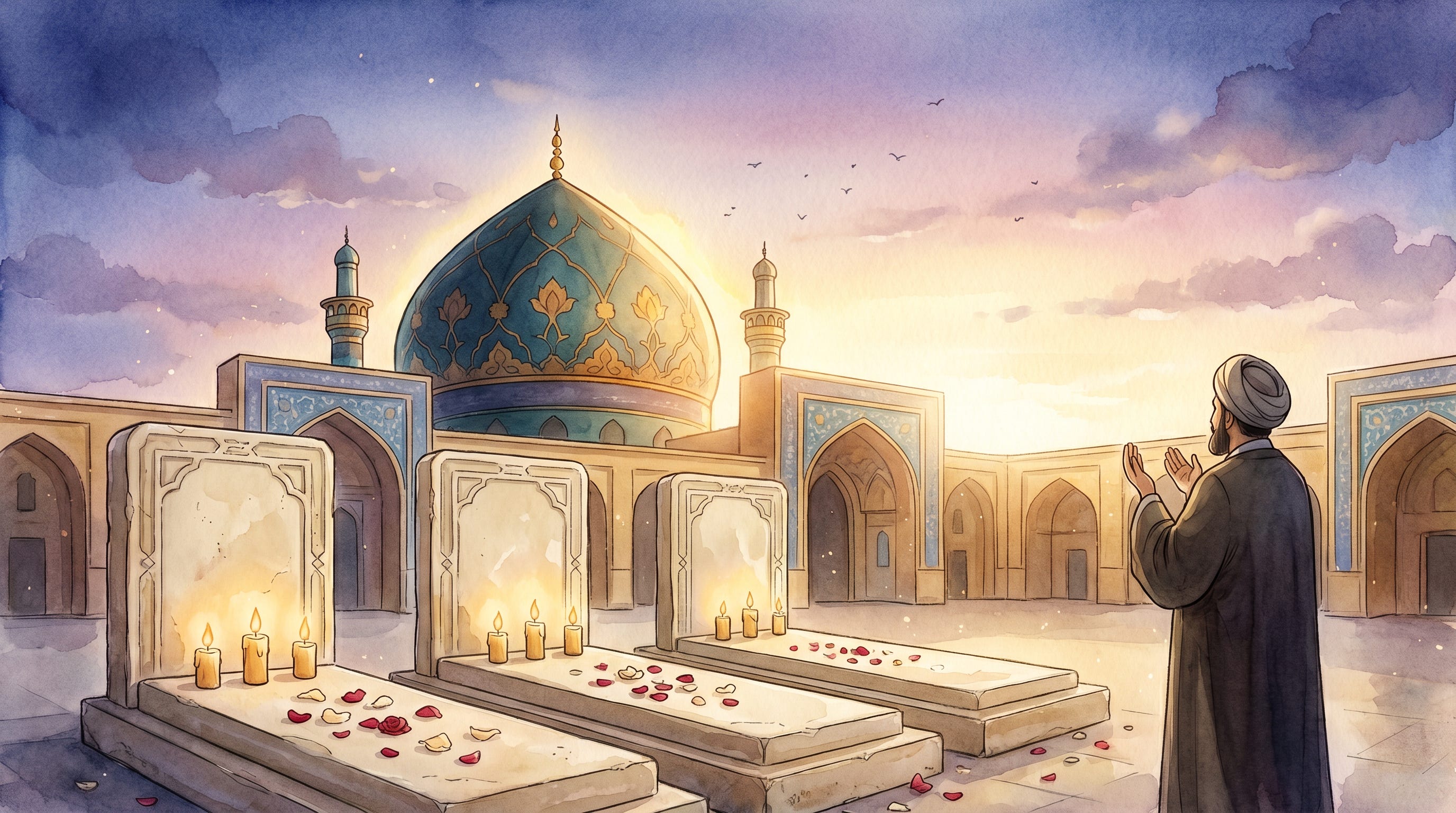
Before we close, let us return — one final time — to Karbala.
Across the past three weeks, we have stood at these graves twice already.
Last week, beside Sayyed al-Murtadha.
The week before, beside the younger brother — Sayyed al-Radhi — and his father.
Tonight, we stand at all three together — and we raise our eyes, finally, beyond them.
Let us make the short journey, together, from this gathering to Karbala.
Let us walk through the streets of the Holy City, past the pilgrims and the traders and the mourners, past the great golden dome of the Grandfather whose martyrdom we mark with our tears every Muharram.
Let us enter the sacred precincts of the Ha’ir.
And let us stand, in the stillness within, at three graves laid side by side — two brothers, and beside them, their father.
This is where our four-week story has led us.
Not to a conclusion in a library in Baghdad.
Not to a final lecture in the Dar al-Ilm.
But to a quiet patch of soil in Karbala, where the two brothers whom God raised up for the Shi’a community in its hour of greatest need now lie in the eternal company of the Imam in whose service they spent every breath of their lives.
The Shared Salutation
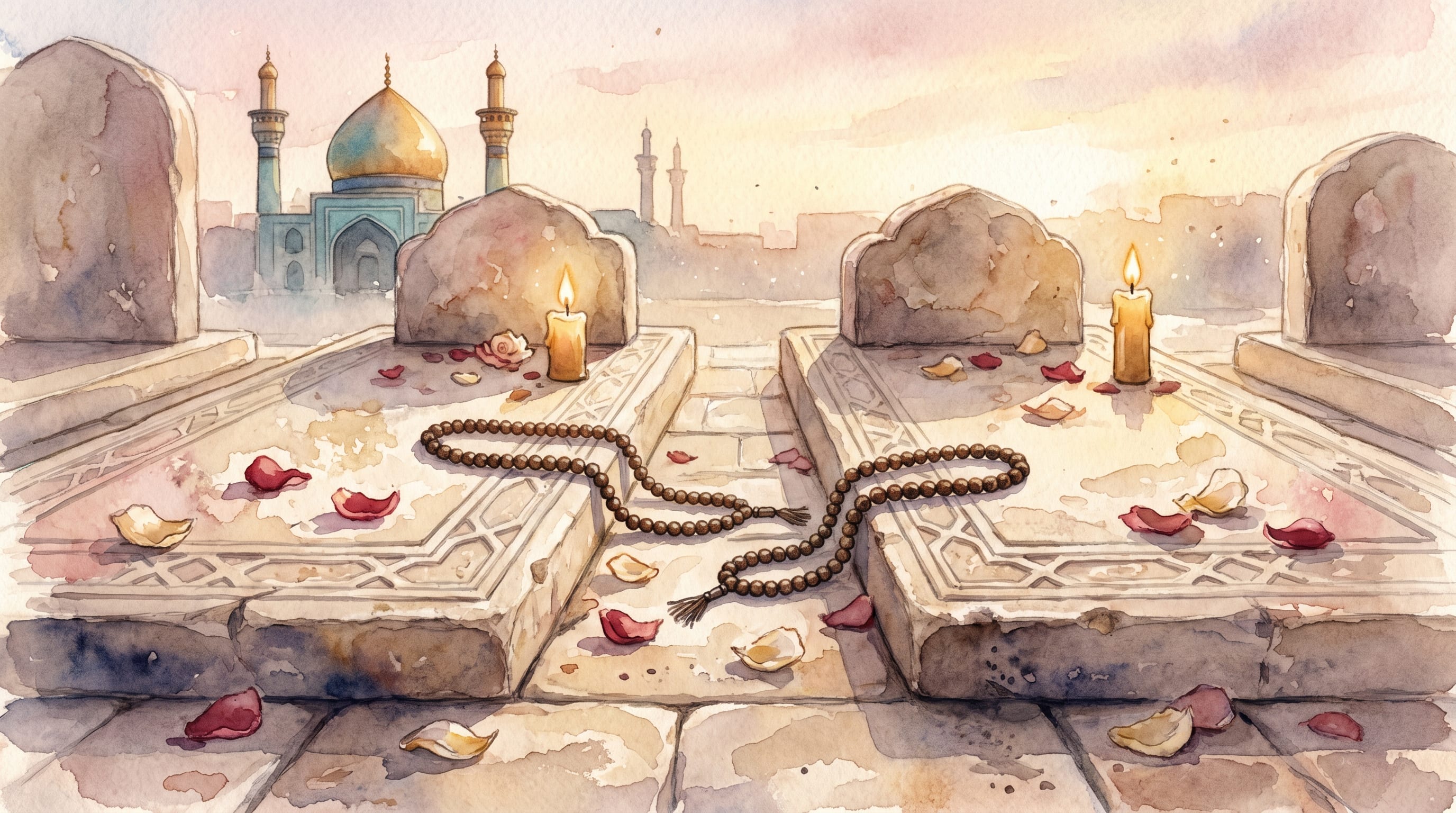
Peace be upon you, O two sons of Abu Ahmad al-Husayn.
Peace be upon you, O two sons of Sayyedah Fatima, daughter of the grandson of the grandson of Imam Zayn al-Abedin, peace be upon him.
Peace be upon you, O two brothers of Baghdad — who were separated by thirty years of the elder’s lonely grief, and who now rest beside each other, where no separation can ever reach you again.
Peace be upon you, O two inheritors of the Dar al-Ilm, O two servants of Nahj al-Balagha, O two architects of the scholarly tradition we have inherited, O two lights of the Karkh quarter of Baghdad when the world was still young and the Buyid window was still open.
Peace be upon you — salutations upon you, peace upon you, mercy upon you, and the blessings of God upon you — in this life and in the life that is to come.
And Beyond Their Graves — to the One in Whose Service They Lived and Died
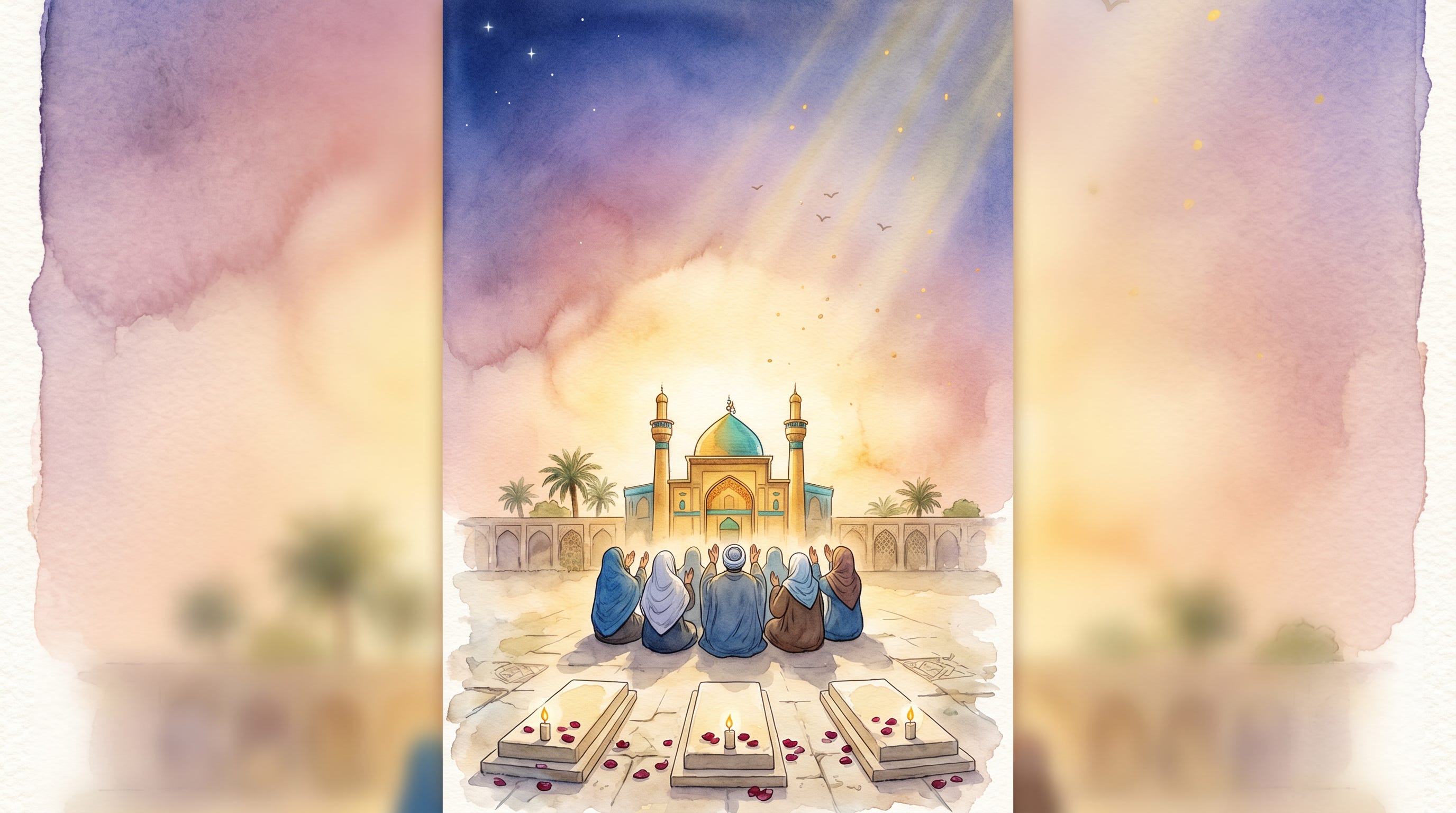
And now, let us raise our eyes from the graves.
Because these two brothers did not live and die for themselves.
They did not build the Hawza, preserve the hadith, dispatch their students across the Mediterranean, sell their estates, endure the fire of 422, carry thirty years of grief, for their own glory or their own name.
Everything they built was in service of One whom they knew they would never meet in this world.
Everything they built was to prepare a community worthy of his return.
O Master of the Age.
O Proof of God.
O Son of al-Hasan al-Askari.
O Son of Fatima.
Peace be upon you, O Argument of God in His lands.
Peace be upon you, O Sight of God among His creatures.
Peace be upon you, O Light of God in the darknesses of the earth.
Peace be upon you, O Awaited One, for whose coming the prophets wept and to whose banner every messenger before Muhammad — peace be upon him, his family and his righteous companions — pointed.
Sayyed al-Radhi was born in 359 of the Hijra.
Sayyed al-Murtadha died in 436.
Between those two dates — in the very generations in which these two brothers lived their lives — the Greater Occultation of our Twelfth Imam had begun.
The year 329.
Just thirty years before Sayyed al-Radhi’s birth.
The Ghaybat al-Kubra — the Major Occultation — was, for Sayyed al-Radhi and Sayyed al-Murtadha, the freshest wound of the community into which they had been born.
And they understood, with a clarity that the centuries have sometimes dimmed for those who came after them, what the occultation meant.
It did not mean that the Imam, may our souls be his ransom, and may God hasten his return, had abandoned his community.
The occultation was not his absence from us.
It was our unreadiness to receive him.
It did not mean that the community was excused from responsibility.
The occultation was not a permission to sleep.
It was a summons to prepare.
It did not mean that the believer should retreat into private devotion and wait passively for a reappearance that would sweep away all evil and require nothing of them.
The occultation was, and is, an active awaiting — a wait that demands of every believer that they become, in their own life, in their own family, in their own community, the kind of believer worthy of serving under the Imam’s banner when he returns.
This is why Sayyed al-Radhi compiled Nahj al-Balagha.
This is why Sayyed al-Murtadha sold his lands for paper.
This is why they built the Dar al-Ilm.
This is why they trained Shaykh al-Tusi.
This is why they dispatched Ibn al-Barraj to Tripoli and Sallar to Aleppo and Abu al-Salah to the whole of Bilad al-Sham.
Because every stone they laid, every manuscript they copied, every student they fed was a stone in the foundation of a community waiting for the Imam — a community that would, God willing, one day be ready.
And — let me say this plainly, because if there is one thing that this four-week session should leave in your hearts, it is this.
The occultation continues because we are not yet ready.
Every generation of sincere believers — from Sayyed al-Radhi’s generation to our own — carries a portion of the responsibility for preparing the ground for the Imam’s return.
Every act of honest scholarship brings the day closer.
Every act of genuine justice brings the day closer.
Every believing father who raises his children on the love of the Ahl al-Bayt brings the day closer.
Every believing mother who teaches her children to pray brings the day closer.
Every scholar who engages the world’s confusion with patience and rigour brings the day closer.
Every believer who refuses to be drawn into sectarian hatred, who meets their neighbour — Sunni or Christian or Jewish or atheist — with the dignity the Qur’an commands, brings the day closer.
Every one of us who works at being the kind of servant the Imam, may our souls be his ransom, and may God hasten his return, would recognise as worthy, brings the day closer.
And every act of negligence, every surrender to despair, every retreat into passivity, every word of cruelty spoken in the name of our tradition, every moment in which we exchange the inheritance of the Ahl al-Bayt for the cheap currencies of this world — pushes the day further away.
O God, be — for Your Friend, the Proof, the son of al-Hasan, may Your blessings be upon him and upon his fathers — in this hour, and in every hour — a guardian, a protector, a leader, a helper, a guide, and a watchful eye — until You settle him upon Your earth in obedience, and grant him long enjoyment therein.
Our Covenant Tonight
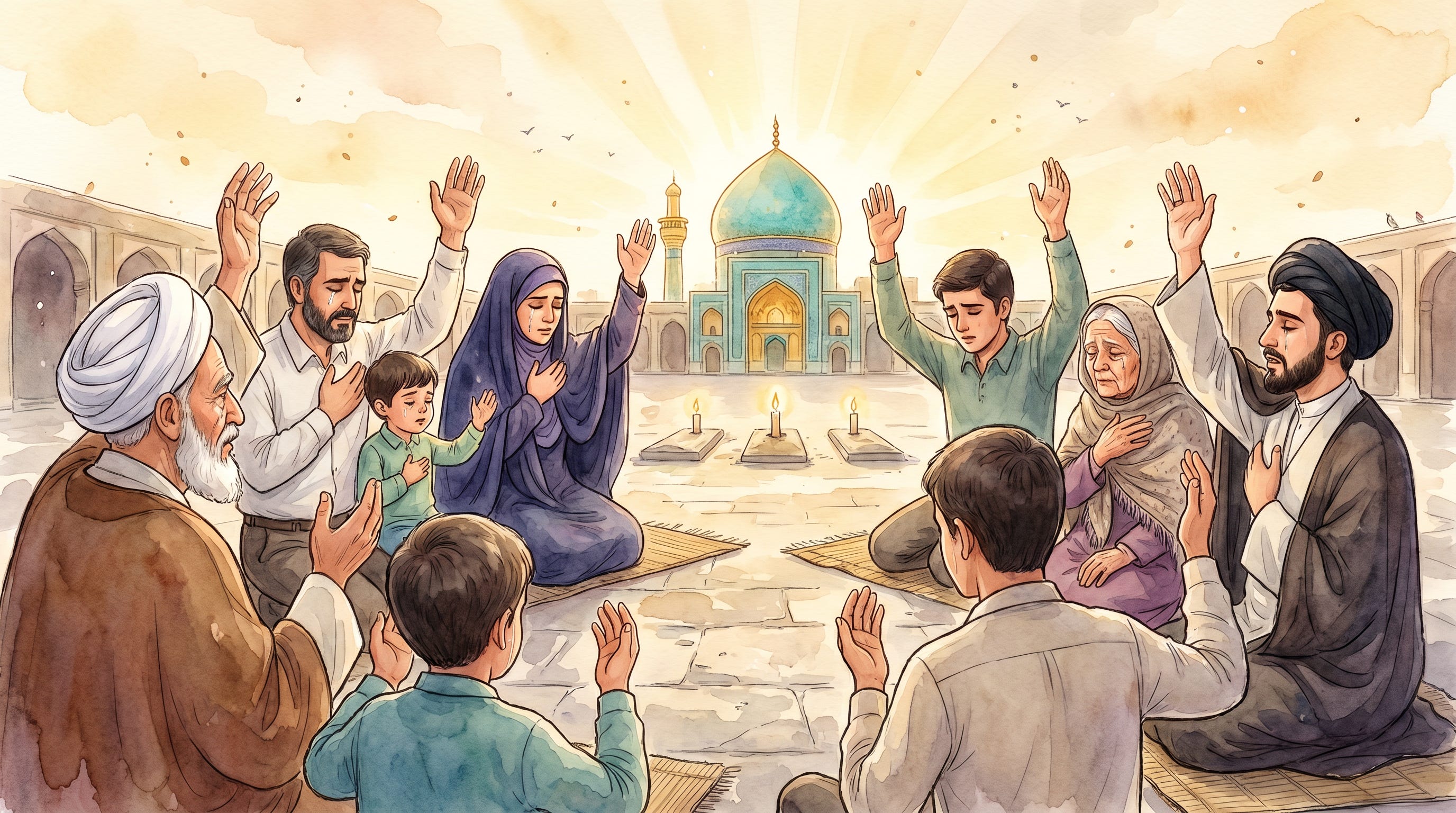
So let us, in this final moment of this four-week gathering, renew with God what Sayyed al-Radhi and Sayyed al-Murtadha renewed with Him every morning of their lives.
O God — we renew tonight, in this gathering, our covenant with Your Proof.
We renew our pledge.
We renew our allegiance.
We place it, this very hour, upon our necks — and we swear, by Your mercy, that we shall not turn away from it, and we shall not let it vanish.
O God — appoint us among his helpers.
Among his aides.
Among his protectors.
Among those who hasten to his command and race toward his cause.
And if death should come to us before his reappearance — the death that You have decreed inevitable for every one of Your servants — then raise us from our graves, wrapped in our shrouds, answering his call, to stand in the ranks of those who march beneath his banner.
O God — hasten his relief.
Make his hardship easy.
Let us see, with these eyes, the face of our Imam.
Let us drink from the cup of his justice.
Let us live in the age of his sun, the age in which the earth will be filled with equity and justice as thoroughly as it is today filled with oppression and tyranny.
Hasten, hasten, O our Master, O Master of the Age.
The Closing Supplication
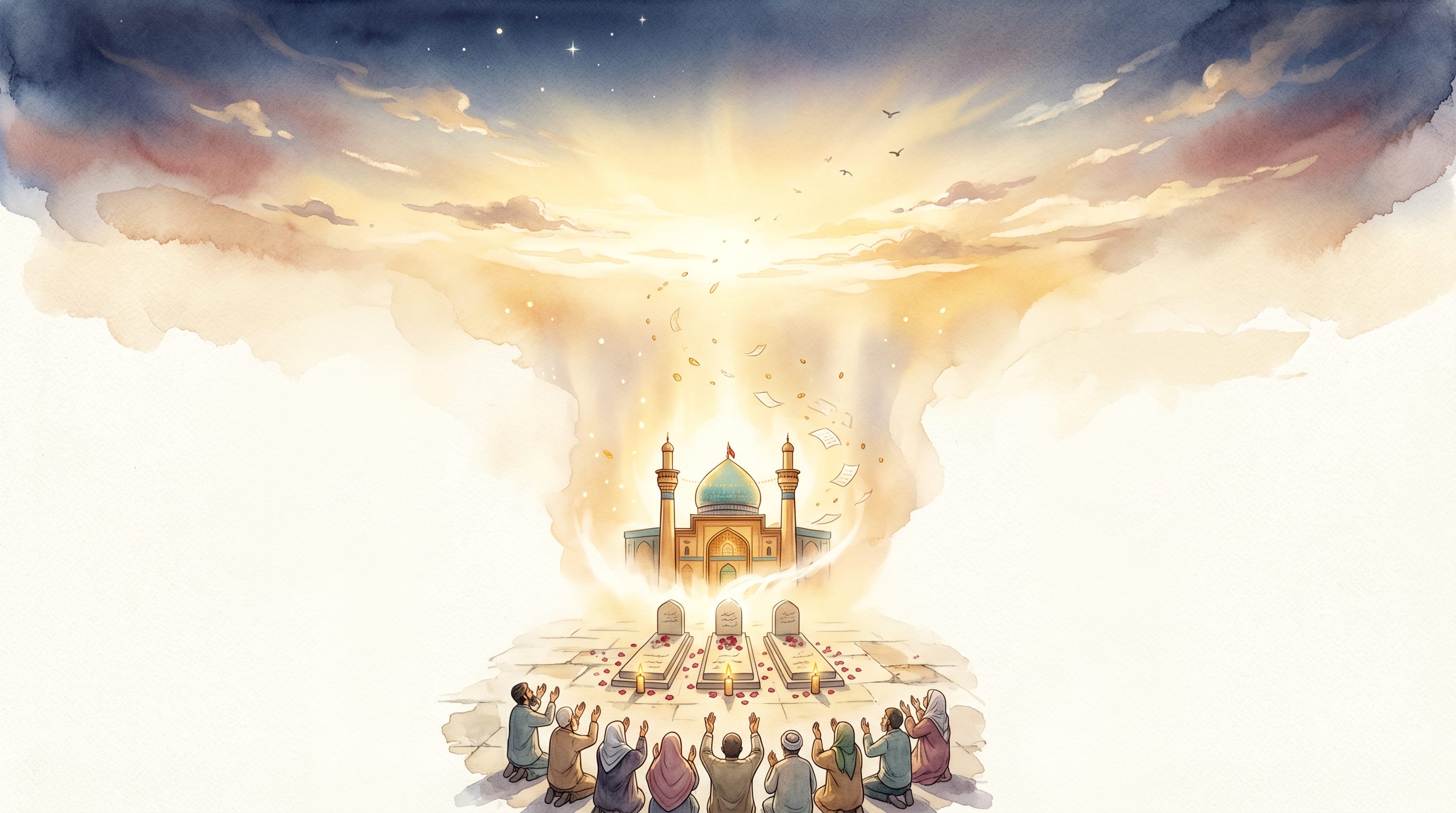
O God — Lord of the Worlds, Lord of every age, Lord of the seen and the unseen, Lord of the awaited Imam in whose service these two brothers spent every breath of their lives.
We thank You, tonight, for the gift of this four-week journey.
We thank You for Sayyed al-Radhi — the younger, who gave us Nahj al-Balagha and died at forty-seven leaving no wealth behind because he had given it all away.
We thank You for Sayyed al-Murtadha — the elder, who gave us the foundations of every Hawza in the world and carried his brother’s absence for thirty years without ever letting it stop him.
We thank You for the household that raised them, for the parents who prepared them, for the teacher who took them on, and for the four students through whom their inheritance reached every corner of the Mediterranean and Persian worlds.
We thank You for the library that burned, and we thank You — even more — for the book that could not burn, because it had already escaped to too many hearts to be reached by any fire.
We thank You for the courage they carried into the intellectual arena of their age — for their refusal to retreat, for their willingness to read every book and engage every interlocutor and answer every argument with rigour and with grace.
And we thank You for the lesson their lives finally teach us: that the story of our tradition is not a story of one community against another, but a story of truth standing against the abuse of truth — in every age, in every tradition, on every continent of this earth that belongs to You alone.
O God — make us, in our own lives, like Sayyed al-Radhi and Sayyed al-Murtadha were in theirs.
Make our households like the household of Sayyedah Fatima bint Husayn — where the words of the Imams were spoken with such love that the children grew up unable to imagine a life that did not serve them.
Make our voices, when we engage the world, like the voices of the brothers — careful, prepared, gracious, willing to represent our opponent’s view in its strongest form before we answer it.
Let us argue bil lati hiya ahsan — in the way that is most beautiful — and never confuse cruelty for conviction or mockery for manhood.
Make our hands, when fire comes for what we have built, like the hand of Sayyed al-Murtadha — that did not close the school, did not announce a season of mourning, but moved to a new house in Karkh and returned, that very day, to its lessons.
Make our hearts, when grief sits beside us, like the heart of the elder brother who carried his loss for thirty years and never let it become a reason to stop.
Make us willing, like Sayyed al-Radhi, to do one thing well for Your sake — even if no one ever knows our name.
Make us willing, like Sayyed al-Murtadha, to give away what we have rather than hoard it — to open our libraries, to fund our students, to dispatch our knowledge outward into soil where fire cannot find it.
O God — we ask You, by the love You have for the descendants of Your Prophet, peace and blessings be upon him, his family and his righteous companions — grant us tawfeeq.
Grant us success in the work You have entrusted to us.
Grant us the rigour, the patience, the courage, and the humility that Sayyed al-Radhi and Sayyed al-Murtadha carried into every act of their lives.
Let us not waste the days You have given us.
Let us not arrive at our final hour with the work undone.
And O God — for our beloved Master, the Imam of this Age, the Proof of God upon His earth, the son of al-Hasan al-Askari, peace be upon him and upon his fathers — be, in this hour and in every hour, his guardian, his protector, his leader, his helper, his guide, and his watchful eye.
Hasten his relief.
Make his hardship easy.
And count us, by Your mercy, among those who labour, as the brothers laboured, to prepare the ground for the day of his return.
For the occultation continues, O Lord, because we are not yet ready.
Make us ready.
Let every act of our lives — every word taught to a child, every truth defended in love, every household built on Your remembrance, every neighbour met with the dignity Your Qur’an commands, every act of service offered to Your creation — be a stone we lay in the foundation of the community he will one day lead.
And O God — when our own time comes, as it came for Sayyed al-Radhi at forty-seven and for Sayyed al-Murtadha at eighty, grant us husn al-khatima.
A good ending.
The ending of those whom You have chosen and who have chosen You.
Let us depart this world in the manner of these two brothers — with our work given to those who would carry it forward, our libraries opened, our students fed, and our hearts at peace with the One who created us.
Let us depart, O Lord, having scattered enough of what we carried into enough hearts that no fire of any age can reach all of it at once.
Let our inheritance, like Nahj al-Balagha, escape every catastrophe by having already been given away.
And let us be reunited, by Your mercy, with our beloved Sayyed al-Radhi and Sayyed al-Murtadha, beside their father, beside their Grandfather Imam Husayn — in a Paradise where the soil of Karbala lies open beneath our feet, where the company of the Ahl al-Bayt is ours forever, and where the face of the Imam, may our souls be his ransom, and may You, Our beloved Lord, hasten his return, is the first sight our eyes meet.
May the peace of God be upon our two brothers, Sayyed al-Radhi and Sayyed al-Murtadha, resting beside their father, beside their Grandfather Imam Husayn, in the soil of Karbala tonight as we speak.
And may the peace of God be upon every scholar, every teacher, every mother, every father, every student, every believer who has ever lived their life in service of preparing the ground for the return of the Imam, may our souls be his ransom and may God hasten his return — from the earliest companions of the Prophet to this gathering tonight.
And may God count us, in His mercy, among that company.
O Allah, send Your blessings upon Muhammad and the family of Muhammad — and hasten their relief — and curse their enemies, all of them.
Amen, O Lord, Sustainer of the Universes.
Amen, O Most Merciful of the Merciful.
A Closing Word
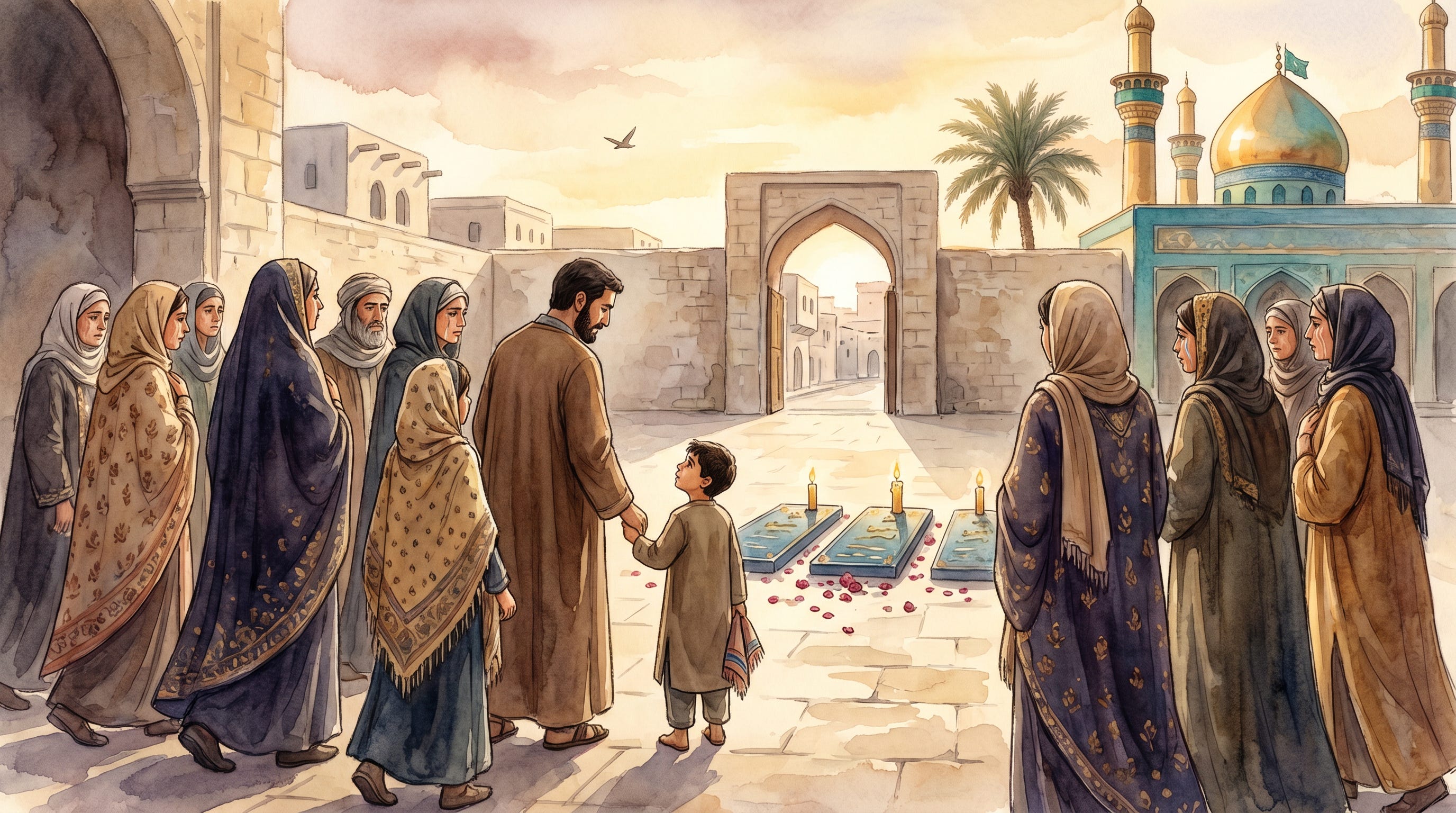
And so we close, after four weeks, the journey of two brothers.
We began three weeks ago with two boys at the gate of a mosque, and a mother who had walked them there.
We end tonight with three graves in Karbala, and our eyes raised toward One whose grave we have never visited and whose face we have never seen — and yet whose absence shapes every breath of every day we have together in this world.
The brothers built what they built so that we, in our own age, might be a little more ready.
May we be that.
May our households become a little more like Sayyedah Fatima bint Husayn’s.
May our scholarship — whatever scholarship we have, however modest — become a little more like Sayyed al-Murtadha’s: open, generous, dispatched outward into the world.
May our public lives — whatever public station we occupy — become a little more like Sayyed al-Radhi’s: dignified, principled, willing to refuse a thousand dinars rather than betray a single word of truth.
And may the day of the Imam’s return — the day for which the brothers spent every hour of their lives preparing — find us standing where they would have wanted us to stand.
With our work given away.
With our hearts ready.
With our faces turned toward him, and our feet already moving in his direction.
Teaser for Next Week
Next week, God willing, we begin a new arc within the Architecture of Guidance — with the man whom Sayyed al-Murtadha trained for twenty-three years and to whom he left every part of his inheritance:
Shaykh Abu Ja’far Muhammad ibn al-Hasan al-Tusi.
The young scholar from Tus who arrived in Baghdad at the age of twenty-three.
The man who would face the Seljuq conquest, watch his master’s library burn, escape with his life, and — in the desert town beside the shrine of the Commander of the Faithful — plant the seed of the Hawza of Najaf, the institution that has stood for nearly one thousand years and stands today.
Until then, may God keep you and your loved ones in His care, and may He grant us the wisdom to live, in our own age, the inheritance these two brothers gave their lives to leave us.
And from Him alone is all ability, and He has authority over all things.