

In His Name, the Most High
We begin this session — this special, painful, necessary session — with two passages from the Book of God.
The first is from Surah Aal-e-Imran — the Chapter of the Family of Imran. God says:
وَلَا تَحْسَبَنَّ الَّذِينَ قُتِلُوا فِي سَبِيلِ اللَّهِ أَمْوَاتًا ۚ بَلْ أَحْيَاءٌ عِندَ رَبِّهِمْ يُرْزَقُونَ ● فَرِحِينَ بِمَا آتَاهُمُ اللَّهُ مِن فَضْلِهِ وَيَسْتَبْشِرُونَ بِالَّذِينَ لَمْ يَلْحَقُوا بِهِم مِّنْ خَلْفِهِمْ أَلَّا خَوْفٌ عَلَيْهِمْ وَلَا هُمْ يَحْزَنُونَ ● يَسْتَبْشِرُونَ بِنِعْمَةٍ مِّنَ اللَّهِ وَفَضْلٍ وَأَنَّ اللَّهَ لَا يُضِيعُ أَجْرَ الْمُؤْمِنِينَ
“And do not think of those who have been killed in the way of God as dead. Rather, they are alive with their Lord, receiving provision, rejoicing in what God has bestowed upon them of His bounty, and they receive good tidings about those after them who have not yet joined them — that there will be no fear concerning them, nor will they grieve. They receive good tidings of favour from God and bounty, and that God does not allow the reward of believers to be lost.”
— Quran, Surah Aal-e-Imran (the Chapter of the Family of Imran) #3, Verses 169-171
The second is from Surah al-Ahzab — the Chapter of the Confederates. God says:
مِنَ الْمُؤْمِنِينَ رِجَالٌ صَدَقُوا مَا عَاهَدُوا اللَّهَ عَلَيْهِ ۖ فَمِنْهُم مَّن قَضَىٰ نَحْبَهُ وَمِنْهُم مَّن يَنتَظِرُ ۖ وَمَا بَدَّلُوا تَبْدِيلًا
“Among the believers are men who have been true to their covenant with God. Among them are those who have fulfilled their pledge — and among them are those who are still waiting. And they have never changed in the least.”
— Quran, Surah al-Ahzab (the Chapter of the Confederates) #33, Verse 23
Video of the Sermon/Majlis
The Imam's Final Message
I want you to hold that second verse —
مِنَ الْمُؤْمِنِينَ رِجَالٌ صَدَقُوا مَا عَاهَدُوا اللَّهَ عَلَيْهِ
Among the believers are men who have been true to their covenant with God.
— Quran, Surah al-Ahzab (the Chapter of the Confederates) #33, Verse 23
— I want you to hold it carefully in your hearts tonight.
Because this verse carries a weight that only became clear to us two days ago.
On the day that our leader, Imam Sayyed Ali al-Husayni al-Khamenei — may God rest his pure soul — was martyred, his official account posted a message to the world.
And that message was this very verse.
مِنَ الْمُؤْمِنِينَ رِجَالٌ صَدَقُوا مَا عَاهَدُوا اللَّهَ عَلَيْهِ
Among the believers are men who have been true to their covenant with God.
— Quran, Surah al-Ahzab (the Chapter of the Confederates) #33, Verse 23
فَمِنْهُم مَّن قَضَىٰ نَحْبَهُ
Among them are those who have fulfilled their pledge.
— Quran, Surah al-Ahzab (the Chapter of the Confederates) #33, Verse 23
وَمِنْهُم مَّن يَنتَظِرُ ۖ
And among them are those who are still waiting.
— Quran, Surah al-Ahzab (the Chapter of the Confederates) #33, Verse 23
وَمَا بَدَّلُوا تَبْدِيلًا
And they have never changed.
— Quran, Surah al-Ahzab (the Chapter of the Confederates) #33, Verse 23
Not one bit. Not one inch. Not one degree.
This was his farewell.
This was his last word to us.
And if we understand this verse — truly understand it — we will understand everything we need to understand about what has happened, how to process it, and what we are supposed to do next.
Let us break this verse open.
Understanding the Verse
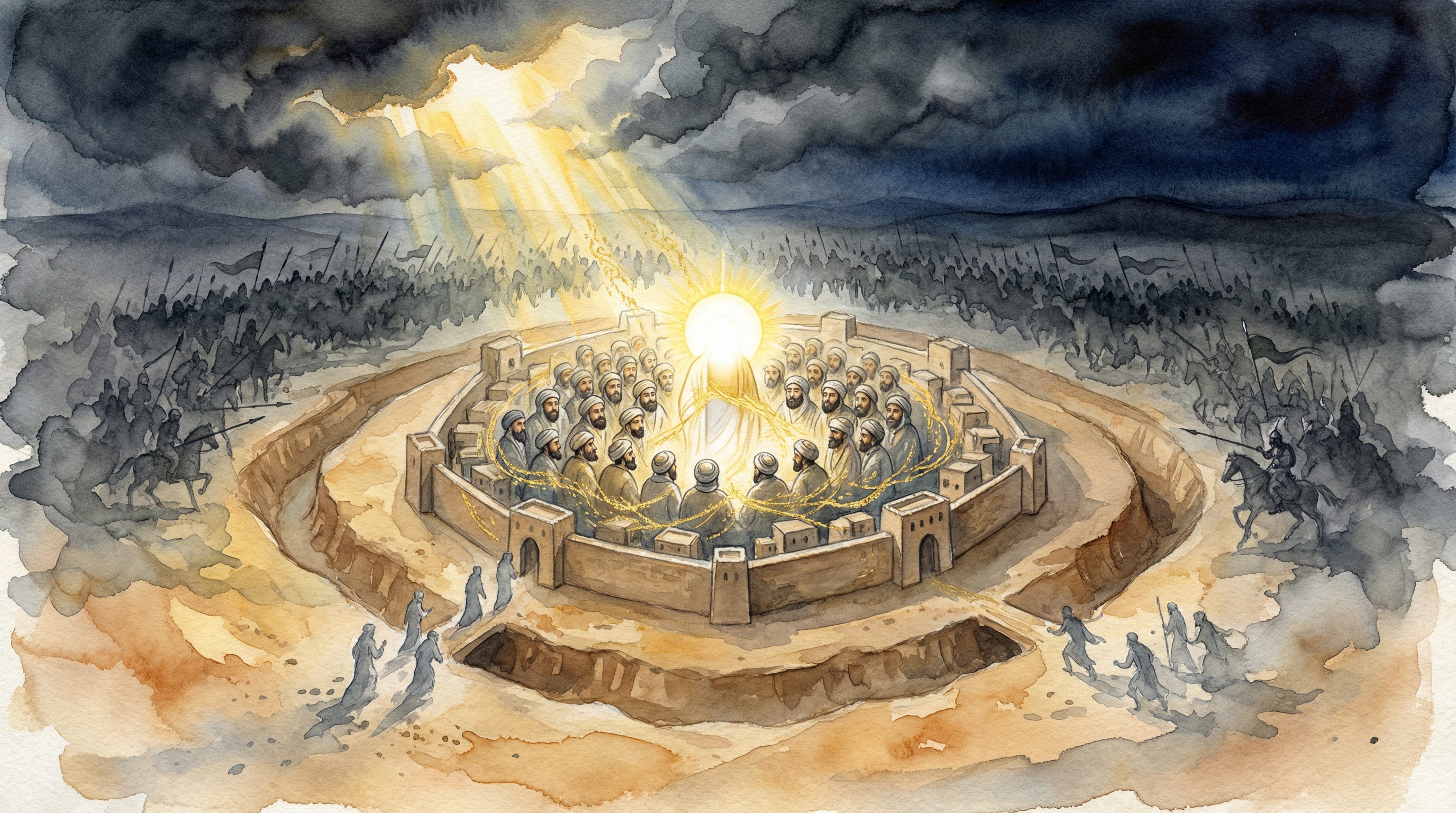
This verse was revealed in the context of the Battle of al-Ahzab — the Battle of the Confederates — when the entire Arabian Peninsula had gathered its forces against the Prophet and the small community of believers in Madinah.
The Muslims were surrounded.
The hypocrites had abandoned them.
The situation looked impossible.
And in that moment — at the very point where the weak of heart began to waver — God revealed this verse.
He said: look at the believers. Look at the real ones.
They made a covenant with God.
And some of them have already given their lives to fulfil that covenant.
And the rest?
The rest are waiting for their turn.
And none of them — none of them — have changed.
There are three categories of people described here, and we must recognise all three tonight.
The First Category: Those Who Have Fulfilled Their Pledge
The first —
فَمِنْهُم مَّن قَضَىٰ نَحْبَهُ
Among them are those who have fulfilled their pledge.
— Quran, Surah al-Ahzab (the Chapter of the Confederates) #33, Verse 23
— those who have fulfilled their pledge.
These are the martyrs.
Those who gave everything.
Those who held the line until their bodies could hold no more.
Imam Khamenei is among these now.
Thirty-six years he carried this trust.
From the day the Assembly of Experts placed that weight upon his shoulders on the 4th of June, 1989, until the moment the enemies of God struck his compound on the 28th of February, 2026.
He never wavered.
He never bent.
He never changed.
وَمَا بَدَّلُوا تَبْدِيلًا
And they have never changed.
— Quran, Surah al-Ahzab (the Chapter of the Confederates) #33, Verse 23
He survived an assassination attempt in 1981 that left his right hand paralysed for life — and he never spoke of it as a wound.
He spoke of it as a medal.
He led a nation through an eight-year war, through sanctions, through the conspiracies of every superpower on earth.
And just eleven days before his martyrdom, standing at the Imam Khomeini Hussainiyah in Tehran, he looked at the camera and he said — and I want you to hear these words carefully, because they are among his last:
«ملت ایران درسهای اسلامی و شیعی خود را خوب میداند؛ میداند چه کاری باید بکند. امام حسین (ع) فرمود: مثل من با مثل یزید بیعت نمیکند.»
“The Iranian nation knows its Islamic and Shia lessons well; it knows what to do. Imam Husayn, peace be upon him, said: ‘Someone like me does not pledge allegiance to someone like Yazid.’”
— Imam Khamenei, Imam Khomeini Hussainiyah Tehran, Meeting with people of East Azerbaijan Province on the eve of the anniversary of the Tabriz uprising, 17 February 2026
And then he said:
«در واقع ملت ایران میگوید: ملتی مثل ما — با این فرهنگ، با این تاریخ و با این آموزههای والا — با رهبران فاسد مثل کسانی که الان در آمریکا سر کار هستند، بیعت نمیکند.»
“In reality, the Iranian nation is saying: A nation like ours — with this culture, this history, and these lofty teachings — will not pledge allegiance to corrupt leaders like those currently in power in America.”
— Imam Khamenei, Imam Khomeini Hussainiyah Tehran, Meeting with people of East Azerbaijan Province on the eve of the anniversary of the Tabriz uprising, 17 February 2026
Eleven days later, they killed him.
But listen to what he said.
He did not say:
“I will not pledge allegiance.”
He said:
“The nation will not pledge allegiance.”
He was not speaking about himself.
He was speaking about us.
He was speaking about the system.
He was speaking about the chain that does not break — because it is not held together by one man.
It is held together by a covenant with God.
He was preparing us.
Whether he knew the strike was coming or not — and God knows best — his final message was the message of Imam Husayn at Karbala.
And just as Imam Husayn’s blood did not end the message but amplified it beyond anything a living voice could have achieved, so too the blood of our beloved Imam Khamenei has amplified this message to the entire world.
Someone like me does not pledge allegiance to someone like Yazid.
And a nation like this does not collapse when its leader is taken.
It rises.
The Second Category: Those Who Are Awaiting Their Turn
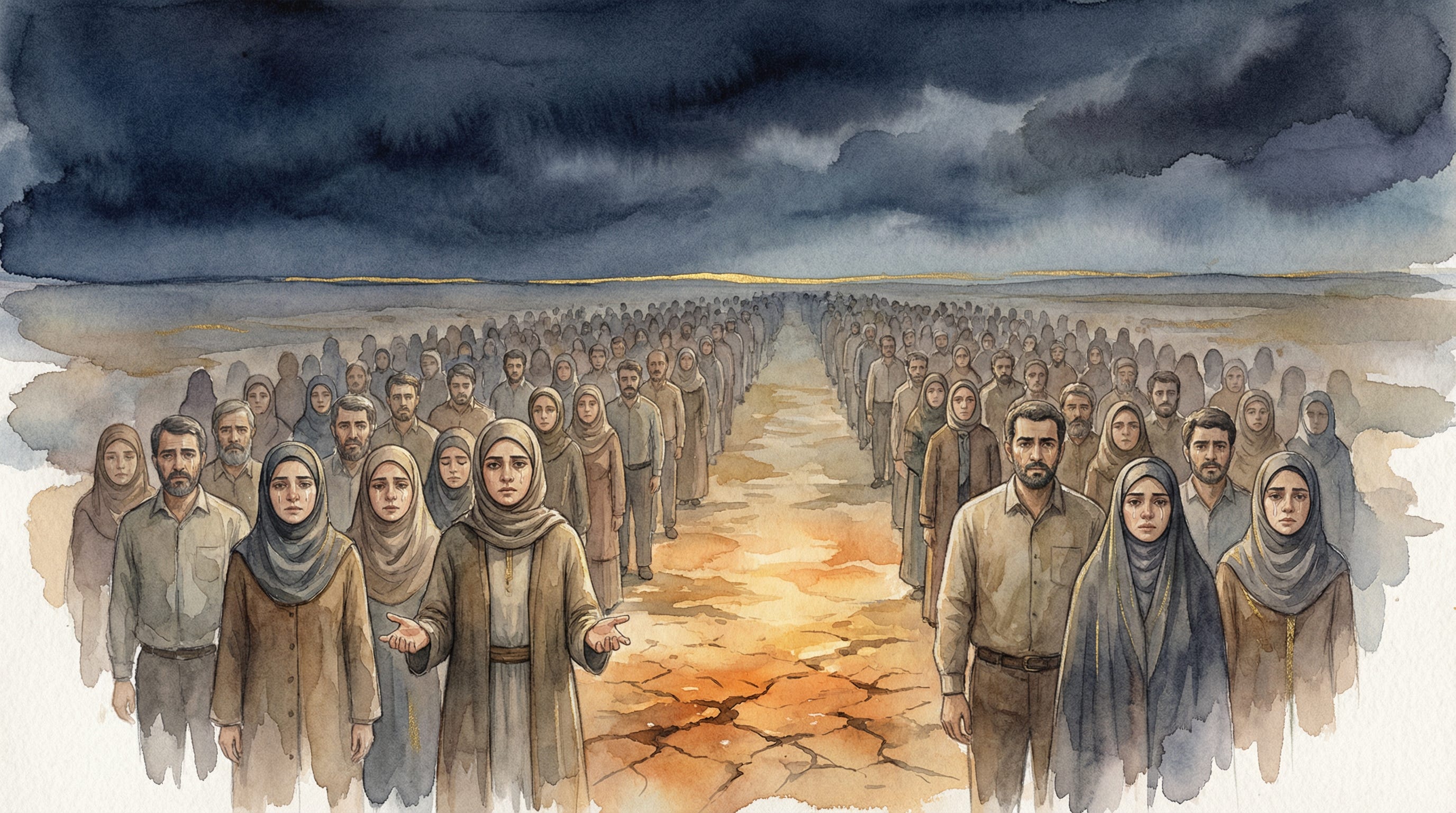
The second category in the verse —
وَمِنْهُم مَّن يَنتَظِرُ ۖ
And among them are those who are still waiting.
— Quran, Surah al-Ahzab (the Chapter of the Confederates) #33, Verse 23
— those who are still waiting for their turn.
That is us.
We are the ones who are waiting.
Our covenant with God has not yet been fulfilled.
We are still here.
We are still breathing.
We are still standing.
And the question that this verse puts to us tonight — the question that the blood of our leader puts to us tonight — is not “what has happened?”
The question is:
“Will you change?”
وَمَا بَدَّلُوا تَبْدِيلًا
And they have never changed.
— Quran, Surah al-Ahzab (the Chapter of the Confederates) #33, Verse 23
Will you change your direction?
Will you abandon the path?
Will you lose your nerve?
Will you let the enemies of God see you stumble?
That is the test.
That is the trial.
That is the imtihan that every generation of this community has faced since Karbala.
And the answer — the only answer worthy of a people who call themselves the followers of Husayn — is:
وَمَا بَدَّلُوا تَبْدِيلًا
And they have never changed.
— Quran, Surah al-Ahzab (the Chapter of the Confederates) #33, Verse 23
We have not changed.
And we will not change.
The Third Category: The Ones Who Did Change
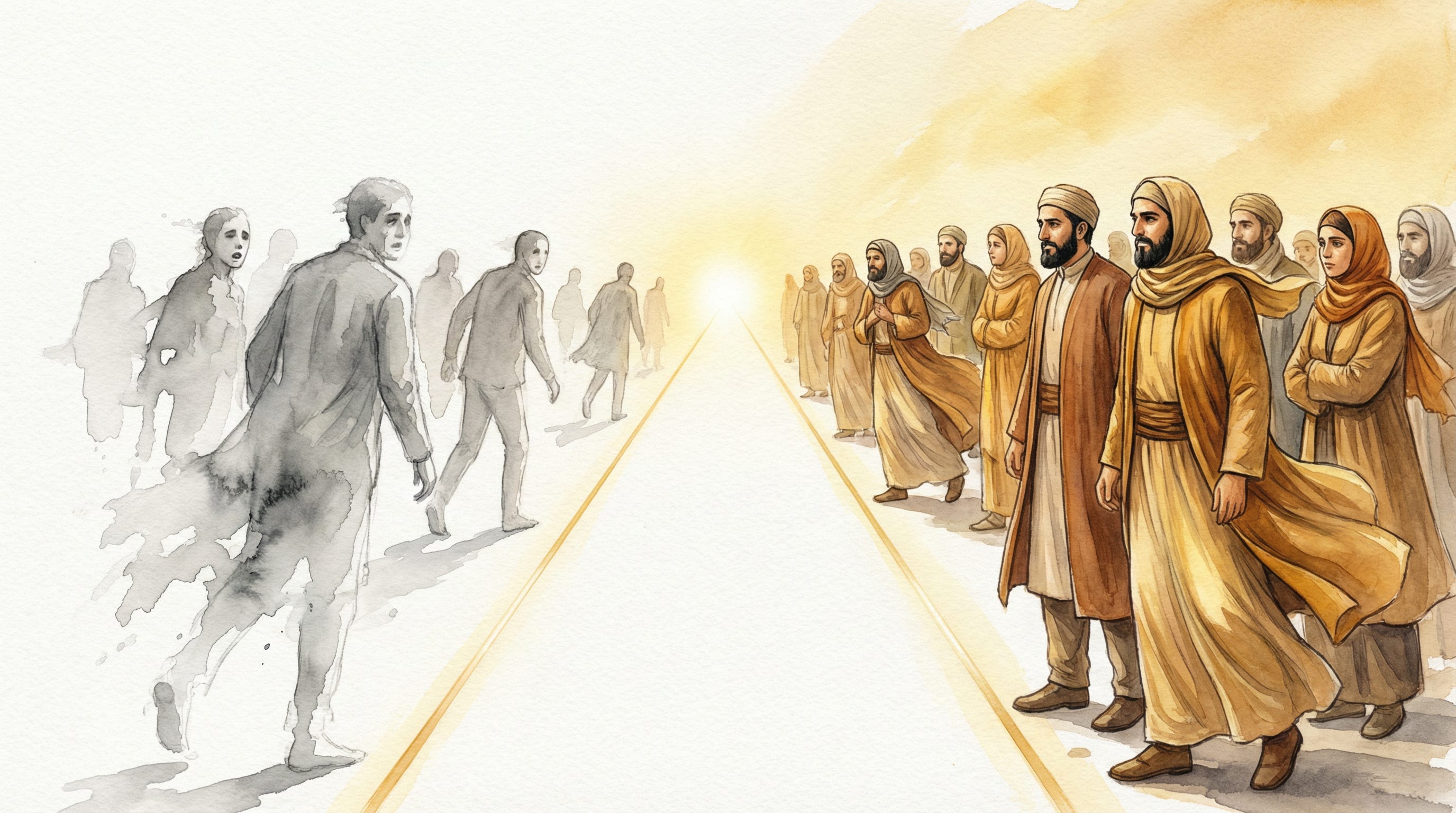
The third — and this is often missed — is the implicit category: the ones who did change.
The ones who broke their covenant.
The ones who wavered.
The ones who ran.
Because this verse does not exist in a vacuum.
It comes directly after the description of the hypocrites — the munafiqin — who had promised God they would stand firm, and then fled when the armies came.
The verse about the believers is a contrast.
God is saying: look at the difference.
Look at the hypocrites who promised and broke their promise.
And look at the believers who promised and kept their promise, even when it cost them their lives.
Tonight, we choose which category we belong to.
You Have Not Been Orphaned
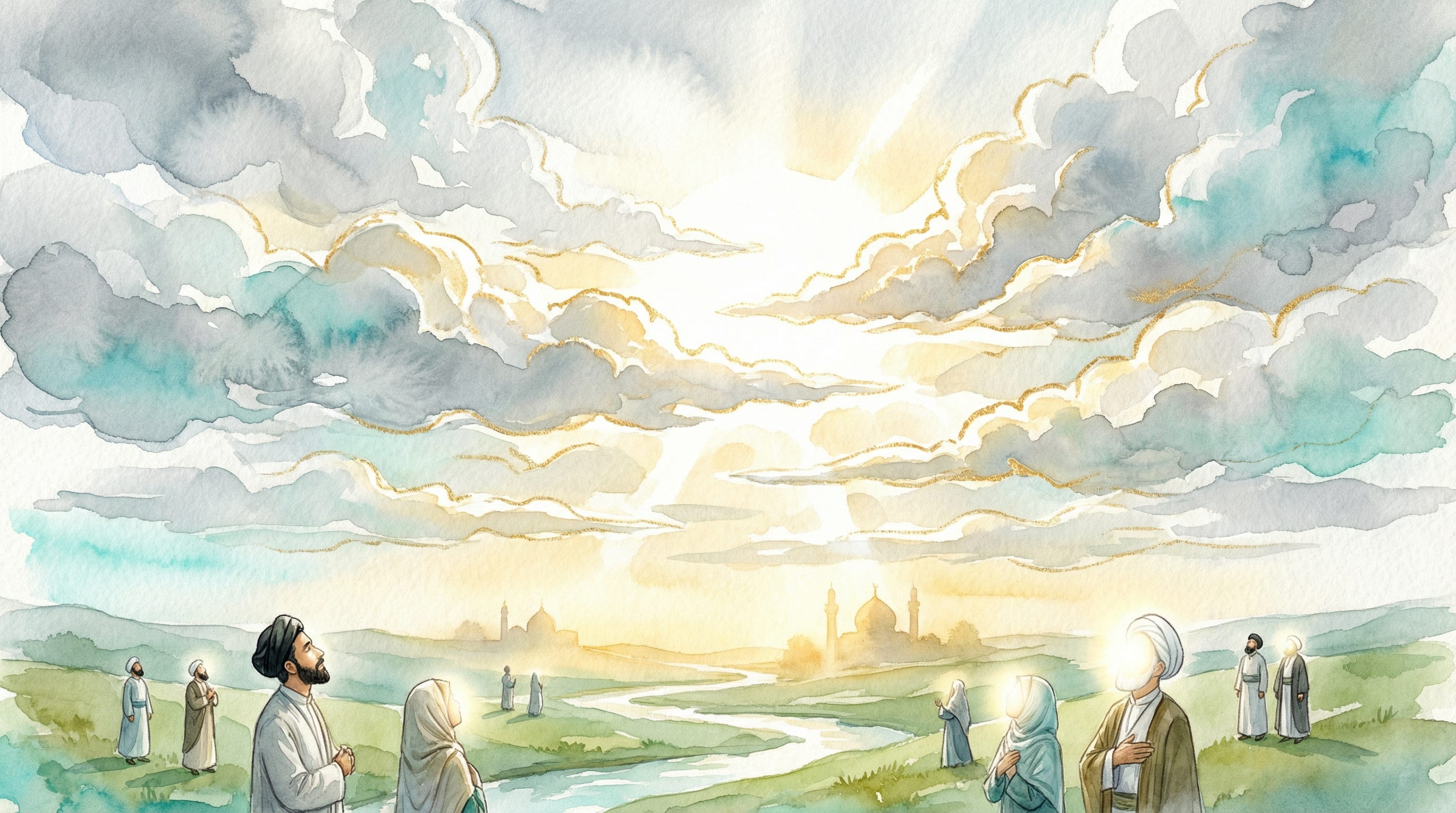
I know many of you are hurting.
I know many of you feel orphaned.
I know many of you woke up on Sunday morning to news that shook you to your core.
Some of you wept.
Some of you could not speak.
Some of you are angry — a deep, burning anger at the injustice of what has been done.
And some of you — and this is the hardest one — some of you are afraid.
Afraid for the future.
Afraid for Iran.
Afraid for the system.
Afraid that the chain has finally been broken.
I am here tonight to tell you three things.
The first is that your grief is sacred.
Do not let anyone tell you otherwise.
Do not let anyone — not the media, not the politicians, not the people on social media who danced in the streets — do not let anyone make you feel ashamed of your tears.
When the Prophet lost his son Ibrahim, he wept. And when the companions said to him,
“O Messenger of God, even you weep?”
he said:
“The eye weeps and the heart grieves, and we do not say anything except what pleases our Lord.”
Your grief for a man who spent his life in the service of the Imam of our time is not weakness.
It is faith.
The second thing I want to tell you is that this is not new.
This is not the first time the enemies of God have killed the leader of the believers.
This is the pattern.
This is what they do.
They killed Imam Ali in the mosque.
They killed Imam Husayn on the plains of Karbala.
They poisoned Imam al-Kazim in the prisons of Baghdad.
They poisoned Imam al-Rida in Khorasan.
Every single Imam — every single one, with the sole exception of our Twelfth Imam who is in occultation — was murdered by the tyrants of their age.
And what happened after each one?
Did the community collapse?
Did the message die?
Did the chain break?
No.
وَمَا بَدَّلُوا تَبْدِيلًا
And they have never changed.
— Quran, Surah al-Ahzab (the Chapter of the Confederates) #33, Verse 23
They did not change.
Not one bit.
The community mourned.
The community gathered.
The community identified the next leader through the divine system of nass and designation.
And the community continued.
The chain held.
And it will hold now.
The third thing I want to tell you — and this is the most important — is that you have not been orphaned.
You feel orphaned.
And that is natural.
But the reality is different from the feeling.
Because our ultimate leader — the one to whom Imam Khamenei himself was a deputy — is alive.
The Imam of our time, Al-Hujjat ibn al-Hasan al-Mahdi, may our souls be his ransom, is alive.
He is watching.
He has not left.
He has not abandoned us.
He is the sun behind the clouds.
Imam al-Sadiq — was asked:
“How can people benefit from a Hujjat who is hidden and concealed?”
He replied:
«كَمَا يَنْتَفِعُونَ بِالشَّمْسِ إِذَا سَتَرَهَا السَّحَابُ»
“As they benefit from the sun when it is covered by the clouds.”
— Al-Saduq, Ikmal al-Din, Volume 1, Page 207, Hadith 22
— Al-Majlisi, Bihar al-Anwar, Volume 52
The sun does not cease to exist because a cloud passes.
Its heat reaches you.
Its light sustains you.
Its gravity holds the planets in their orbits. And the Imam — even in his occultation — sustains this world, guides its affairs, and watches over his community.
Imam Khamenei was a cloud that channelled the light of that sun to us.
He was a deputy.
A noble, courageous, faithful deputy.
And now God has taken him.
But the sun remains.
And another cloud will form.
Another deputy will rise.
Because that is the system.
That is the design.
That is the wisdom of the One who told us, fourteen centuries ago, that the earth can never be devoid of a Hujjat.
And the proof?
The proof is happening right now.
As we sit here tonight, the Provisional Leadership Council of the Islamic Republic has already been formed.
The President, the Head of the Judiciary, and a jurist of the Guardian Council — Ayatullah Alireza Arafi — have assumed their constitutional duties.
The Assembly of Experts — the 88 senior scholars whose sole purpose is to ensure the continuity of this leadership — will convene and select the next Wali al-Faqih.
The system has activated.
Exactly as it was designed to do.
Exactly as it did in 1989 when Imam Khomeini answered the call of his Master.
This is not the behaviour of a system in collapse.
This is the behaviour of a system that was built for this moment.
And that — that resilience, that continuity, that refusal to break — is the subject of our session tonight.
Shaheed Ayatullah Morteza Motahhari — may God rest his pure soul — the great philosopher and martyr of the Islamic Revolution, said it best:
«شهادت، تزریق خون است به پیکر اجتماع. این شهدا هستند که به پیکر اجتماع و در رگهای اجتماع، خون جدید وارد میکنند.»
“Martyrdom is the injection of blood into the body of society. It is the martyrs who pump new blood into the body and veins of society.”
— Shaheed Morteza Motahhari, Hamaseh-ye Hoseini (The Epic of Husayn), Chapter on the Social Function of Martyrdom
The blood of Imam Khamenei will not be in vain.
But it will only become the seed of renewal if we receive it correctly.
If we receive it with faith.
If we receive it with patience.
If we receive it with clarity.
And if we receive it with action.
That is what we will discuss tonight.
We will discuss the theology of martyrdom and the fleeting nature of this world.
We will discuss the practical duties of the believer — both for those who followed Imam Khamenei as their Marja’ al-Taqlid, and for those who looked to him as the Wali al-Faqih.
We will discuss the process of succession — because it is a clear, established, well-tested process, and you deserve to understand it.
And we will close, as we always do, with a eulogy and a supplication.
But first — first — we must talk about what death means.
Because if we do not understand death, we will never understand martyrdom.
And if we do not understand martyrdom, we will never understand why the chain has never broken.
The Theology of Martyrdom and the Fleeting World
Before we talk about processes and constitutions and practical duties — before we talk about what to do next — we must talk about what has actually happened.
Not politically.
Not geopolitically.
Theologically.
Because the lens through which you see this event will determine everything.
If you see it through the lens of CNN and BBC, you will see a military strike that killed a head of state.
If you see it through the lens of the enemies of Islam, you will see a victory.
If you see it through the lens of the hypocrites, you will see the beginning of the end.
But if you see it through the lens of the Quran — through the lens of the Ahl al-Bayt — through the lens of fourteen centuries of this community’s experience — you will see something entirely different.
You will see a martyrdom.
And in our tradition, a martyrdom is not a defeat.
It is a coronation.
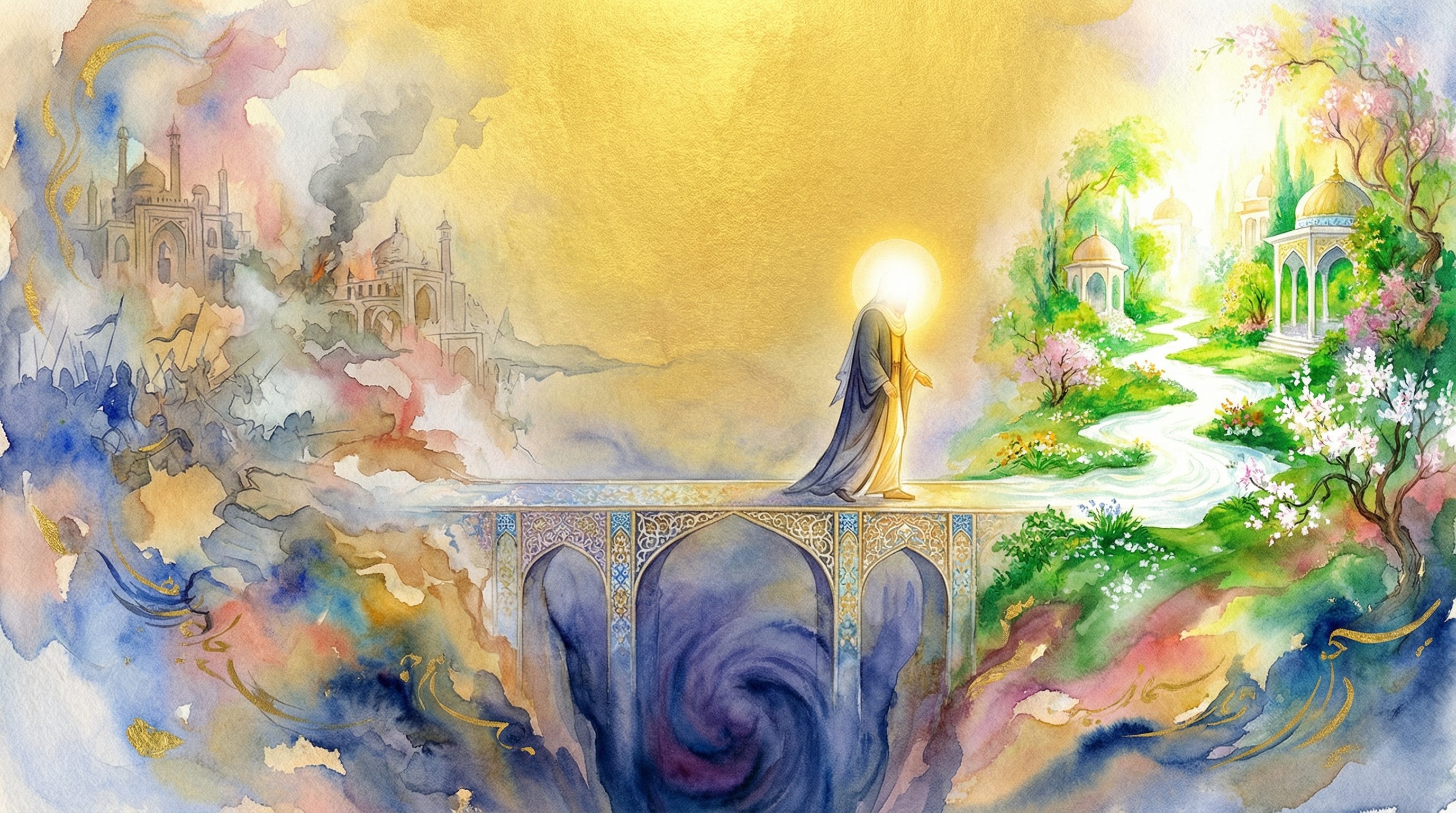
This World Is a Bridge
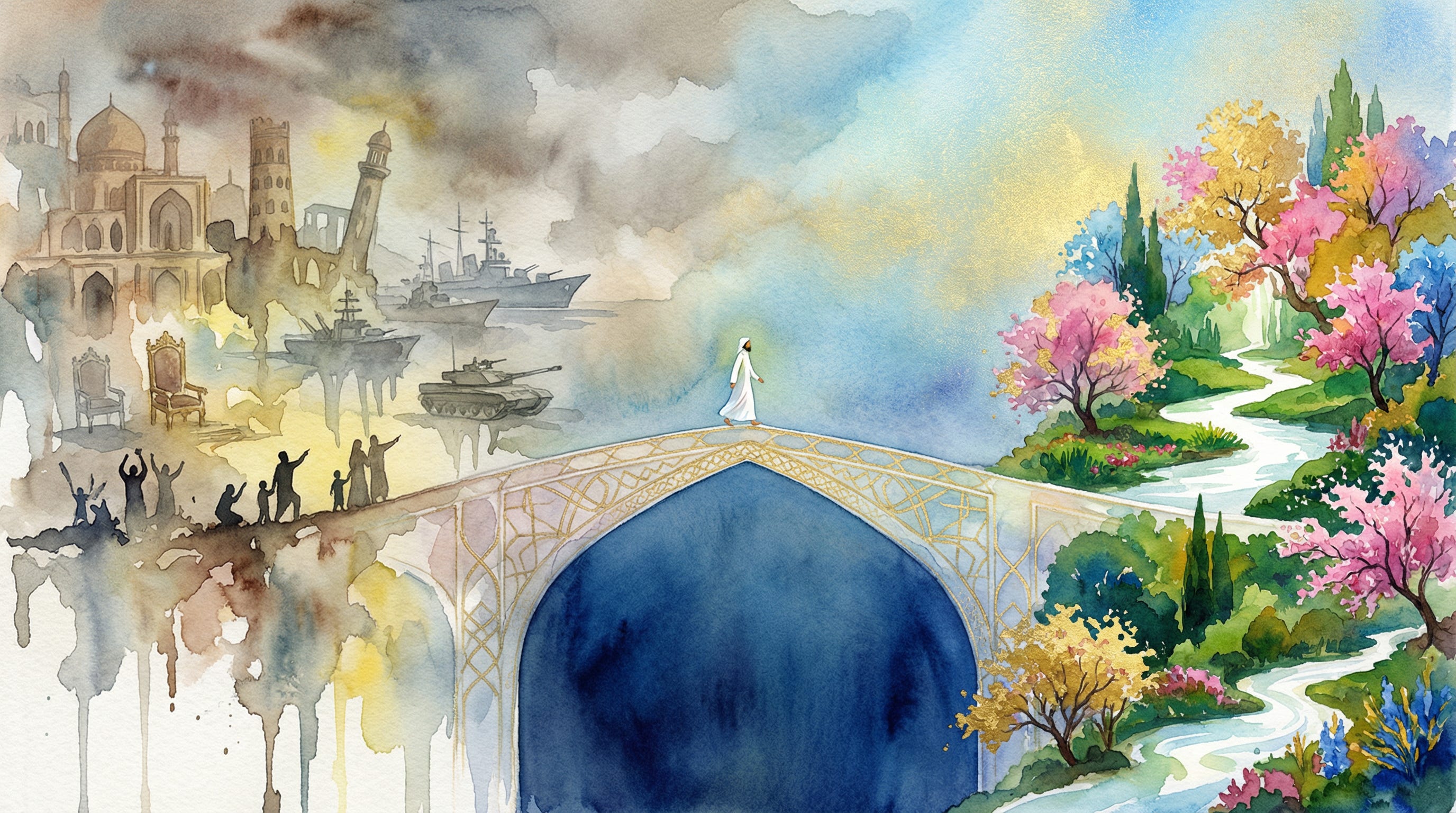
Let us begin with a fundamental truth that our tradition teaches us — a truth that the modern world has forgotten, and that the enemies of God have never understood.
This world is not the destination.
It is a passage.
God says in Surah Aal-e-Imran (the Chapter of the Family of Imran):
كُلُّ نَفْسٍ ذَائِقَةُ الْمَوْتِ ۗ وَإِنَّمَا تُوَفَّوْنَ أُجُورَكُمْ يَوْمَ الْقِيَامَةِ ۖ فَمَن زُحْزِحَ عَنِ النَّارِ وَأُدْخِلَ الْجَنَّةَ فَقَدْ فَازَ ۗ وَمَا الْحَيَاةُ الدُّنْيَا إِلَّا مَتَاعُ الْغُرُورِ
“Every soul shall taste death. And you will only be given your full compensation on the Day of Resurrection. Whoever is drawn away from the Fire and admitted to Paradise has indeed triumphed. And the life of this world is nothing but the enjoyment of delusion.”
— Quran, Surah Aal-i-Imran (the Chapter of the Family of Imran) #3, Verse 185
And in Surah al-Ankabut (the Chapter of the Spider):
وَمَا هَٰذِهِ الْحَيَاةُ الدُّنْيَا إِلَّا لَهْوٌ وَلَعِبٌ ۚ وَإِنَّ الدَّارَ الْآخِرَةَ لَهِيَ الْحَيَوَانُ ۚ لَوْ كَانُوا يَعْلَمُونَ
“And this worldly life is nothing but diversion and amusement. And indeed, the home of the Hereafter — that is the true life, if only they knew.”
— Quran, Surah al-Ankabut (the Chapter of the Spider) #29, Verse 64
Pay attention to the language here.
God does not say the Hereafter is “the better life” —
He says it is al-hayawan — the true life.
The real life.
This world — with all its noise, all its empires, all its missiles and aircraft carriers and military operations — this world is la’ib wa lahw.
Play and amusement.
A game.
A distraction.
The enemies of God think they have won because they have taken a body.
They do not understand that they have released a soul.
They think they have ended a man.
They do not realise they have elevated a martyr to a station they can never reach, can never comprehend, and can never touch.
Donald Trump stood at Mar-a-Lago and announced the death of our leader as though he had accomplished something.
But what has he accomplished?
He has sent a servant of God to God.
He has reunited a lover with his Beloved.
He has given a man who spent his entire life preparing for this meeting the very thing he yearned for.
The question is not whether Imam Khamenei has won or lost.
The Quran has already answered that:
فَمَنْ زُحْزِحَ عَنِ النَّارِ وَأُدْخِلَ الْجَنَّةَ فَقَدْ فَازَ
So whoever is kept away from the Fire and admitted to Paradise has indeed triumphed
— Quran, Surah Aal-e-Imran (the Chapter of the Family of Imran) #3, Verse 185
The question is about us.
The question is always about the ones who remain.
The Highest Station
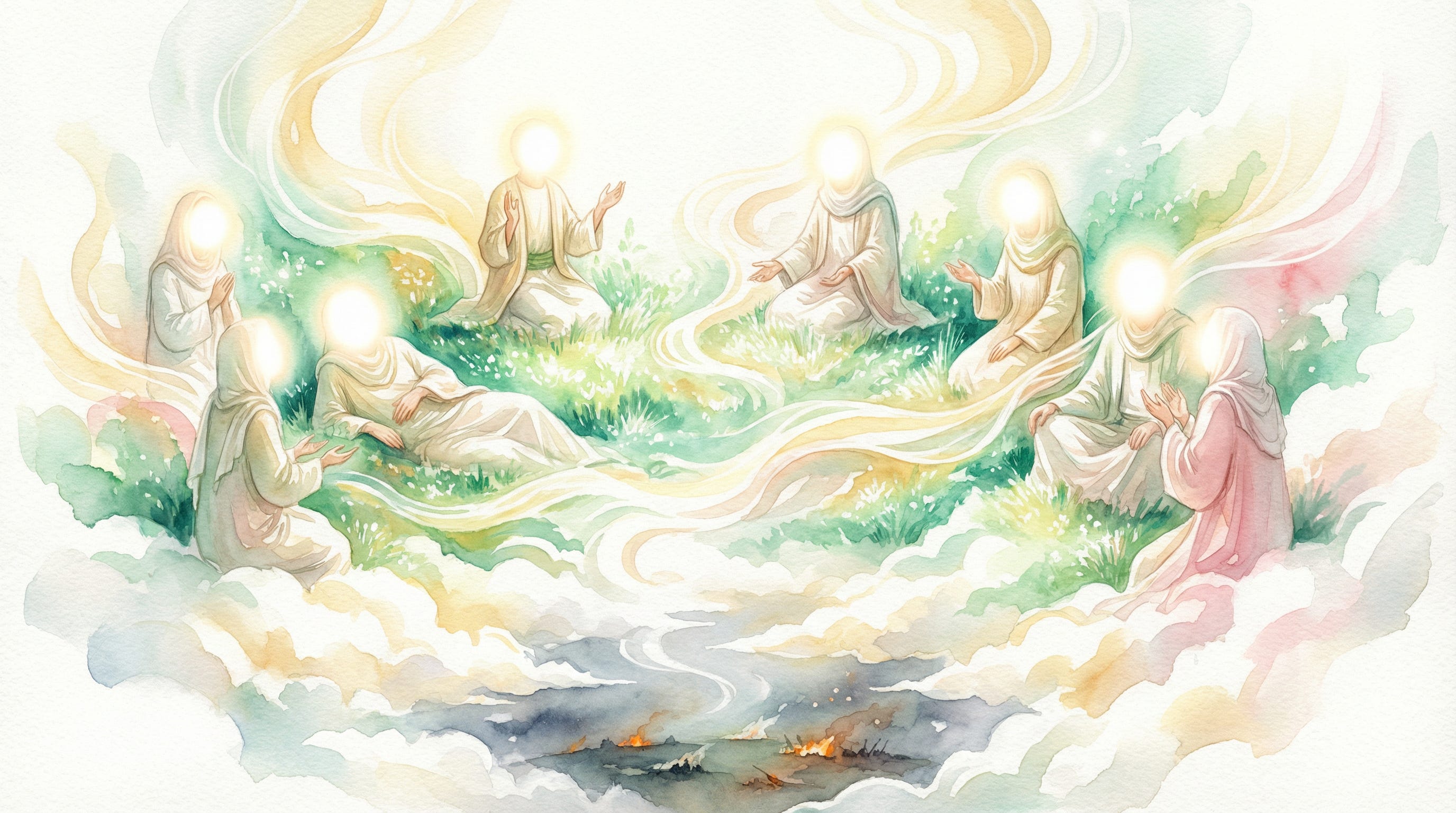
Now let us go deeper.
Because our tradition does not merely say that death is a transition.
It says that martyrdom — specifically — is the highest station a human being can attain.
We already recited the verses from Surah Aal-e-Imran at the opening of this session.
Let us return to them now with fresh eyes:
وَلَا تَحْسَبَنَّ الَّذِينَ قُتِلُوا فِي سَبِيلِ اللَّهِ أَمْوَاتًا
“And do not think of those who have been killed in the way of God as dead.”
— Quran, Surah Aal-e-Imran (the Chapter of the Family of Imran) #3, Verses 169
This is a command.
La tahsabanna.
Do not think it.
Do not even entertain the thought.
The shaheed is not dead.
The shaheed is alive —
أَحْيَاءٌ عِندَ رَبِّهِمْ يُرْزَقُونَ
Alive with their Lord, receiving provision.
— Quran, Surah Aal-e-Imran (the Chapter of the Family of Imran) #3, Verses 169
Not in the grave.
Not in the past.
Not in memory.
Alive.
In the present tense.
Receiving.
Being given.
Sustained by God directly.
And what is their state?
فَرِحِينَ بِمَا آتَاهُمُ اللَّهُ مِن فَضْلِهِ
Rejoicing, because of what God has given them of His grace.
— Quran, Surah Aal-e-Imran (the Chapter of the Family of Imran) #3, Verses 170
Farihin — rejoicing.
They are not suffering.
They are not regretting.
They are not looking back at this world with longing.
They are in a state of joy — because of what God has given them of His grace.
And here is the part that should pierce every heart in this room:
وَيَسْتَبْشِرُونَ بِالَّذِينَ لَمْ يَلْحَقُوا بِهِم مِّنْ خَلْفِهِمْ
They receive good tidings about those who have not yet joined them.
— Quran, Surah Aal-e-Imran (the Chapter of the Family of Imran) #3, Verses 170
They are looking at us.
They are receiving news about us.
And they are hoping — hoping — that we will hold firm, so that when we finally join them, we will arrive with honour, not with shame.
أَلَّا خَوْفٌ عَلَيْهِمْ وَلَا هُمْ يَحْزَنُونَ
No fear upon them, and they do not grieve.
— Quran, Surah Aal-e-Imran (the Chapter of the Family of Imran) #3, Verses 170
Imam Khamenei does not grieve tonight.
We grieve.
But he does not.
He is where every servant of God hopes to be.
And his only concern — if we are to believe this verse, and we must — his only concern is about us.
Whether we will hold.
Whether we will change.
وَمَا بَدَّلُوا تَبْدِيلًا
And they have never changed.
— Quran, Surah al-Ahzab (the Chapter of the Confederates) #33, Verse 23
The Pattern of the Righteous
I need you to see something.
I need you to step back and see the pattern.
Because what happened on Saturday, what we learned about on Sunday, is not an isolated event.
It is the latest instance of a pattern that has repeated since the beginning of prophethood.
The enemies of God have always killed the righteous.
Always.
And the righteous have always won.
Always.
Go back to the Quran itself.
God tells us in Surah Aal-e-Imran (the Chapter of the Family of Imran):
قَدْ خَلَتْ مِن قَبْلِكُمْ سُنَنٌ فَسِيرُوا فِي الْأَرْضِ فَانظُرُوا كَيْفَ كَانَ عَاقِبَةُ الْمُكَذِّبِينَ
“There have passed before you patterns of history. Travel through the land and observe what was the end of those who denied.”
— Quran, Surah Aal-e-Imran (the Chapter of the Family of Imran) #3, Verse 137
Sunan. Patterns.
This is a sunnah of God — a divine pattern that repeats.
The tyrant rises.
The tyrant kills the righteous.
And then the tyrant falls.
Every time.
Without exception.
Look at the Prophets.
The Prophet Yahya —peace and blessings be upon him — John the Baptist — beheaded by a tyrant king because he spoke the truth.
The Prophet Zakariyyah — peace and blessings be upon him — sawn in half by his own people.
And where are those tyrants now?
Dust. Forgotten.
Or remembered only as villains in the story of the men they killed.
And look at the Ahl al-Bayt — the family of the Prophet.
Our Imams.
The twelve lights of guidance.
Imam Ali ibn Abi Talib — struck by the sword of Ibn Muljam in the mosque of Kufa.
Where is Ibn Muljam?
Who follows him?
Who builds institutions in his name?
Nobody. But the name of Ali — fourteen hundred years later — rings from every minaret on earth.
Imam Husayn ibn Ali — butchered on the plains of Karbala by the army of Yazid.
They killed him.
They killed his sons.
They killed his companions.
They thought they had won.
And today — today — more than a hundred million human beings walk to his shrine every year in the largest peaceful gathering on the face of the earth.
And where is Yazid?
Yazid is a curse on the tongues of the righteous.
Imam Musa al-Kazim — poisoned in the prisons of Harun al-Rashid.
Imam al-Rida — poisoned in Khorasan by al-Ma’mun.
Imam Muhammad al-Jawad, Imam Ali al-Hadi, Imam Hasan al-Askari — all of them.
All of them killed.
Every single one.
The classical sources — Kitab al-Irshad of Shaykh al-Mufid, Al-Kafi of al-Kulayni — they record for us that not a single Imam, except the Twelfth who is in occultation, died a natural death.
They were all murdered by the superpowers of their age.
And what happened after each one?
Did the chain break?
Did the community dissolve?
Did the message die?
No.
The very opposite.
The chain held.
A new Imam stepped forward, designated by explicit nass.
The community rallied.
The message grew stronger.
Because the blood of the martyr, as Shaheed Motahhari told us, is the injection of new blood into the veins of society.
This is the sunnah of God.
The tyrant kills.
And the killed one wins.
The Conscious Sacrifice
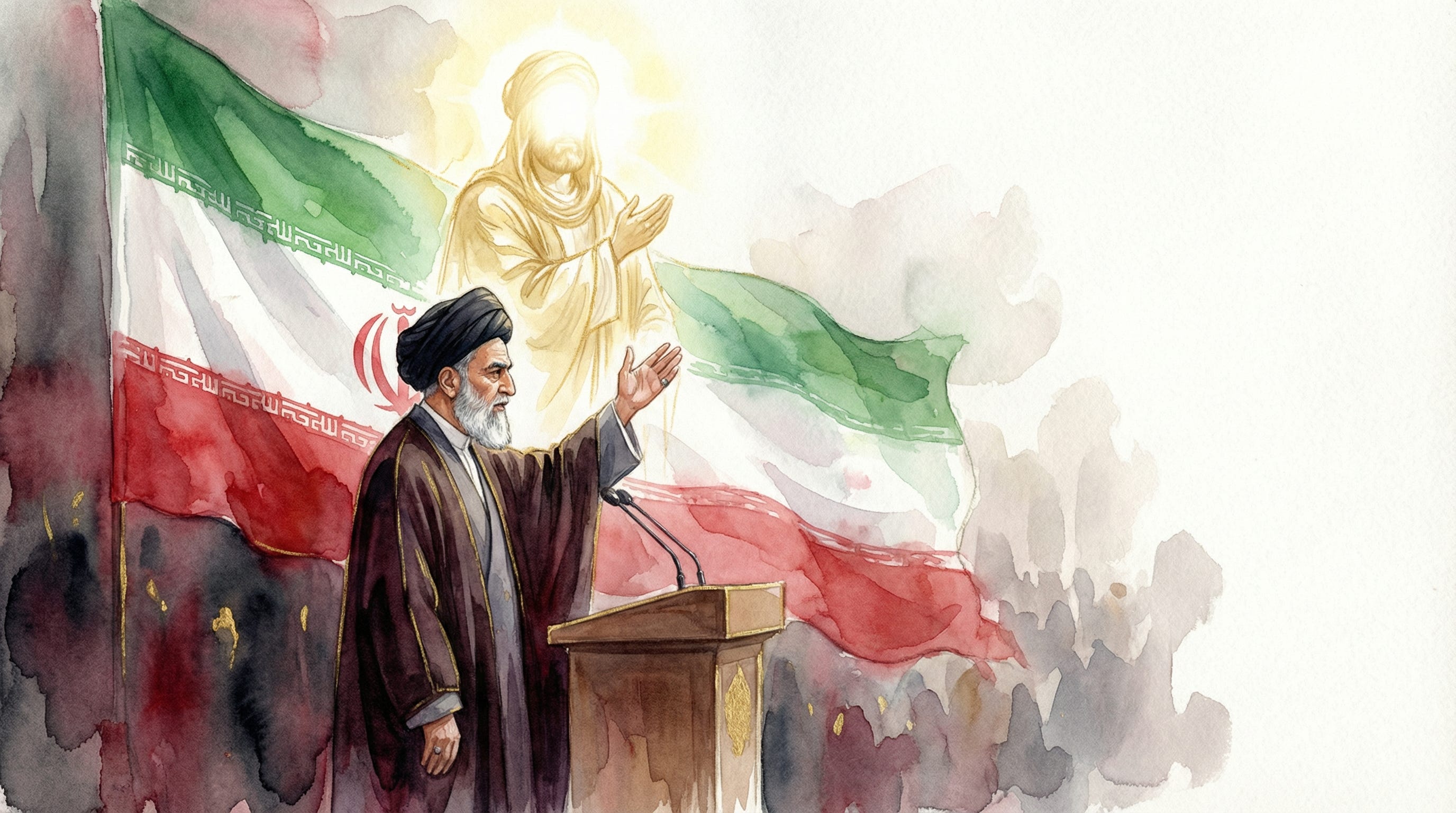
There is another dimension here that we must understand, because it separates the Islamic concept of martyrdom from the way the Western world understands death in war.
In our tradition, the martyrdom of the leaders of faith is not an accident.
It is not bad luck.
It is not a failure of intelligence or security.
It is a conscious, voluntary sacrifice.
The classical sources are explicit about this.
A tradition in Al-Kafi states that an Imam who does not know what will befall him is not a true proof of God.
Imam Ali knew his killer.
He knew the night.
He knew the place.
He went to the mosque anyway.
Imam Husayn knew what awaited him at Karbala.
He was warned by everyone he met on the road.
He went anyway.
Imam Musa al-Kazim knew he would die in prison.
He told his companions.
He accepted it anyway.
Now — Imam Khamenei was not a ma’sum.
He was not an infallible Imam.
We do not claim for him what belongs to the Twelve. But he was a man who walked in their path.
And he was a man who, eleven days before his death, stood before the nation and quoted Imam Husayn’s refusal to submit to Yazid.
He was a man who, for decades, said openly:
“We are ready for this.”
He was a man who had already survived one assassination attempt in 1981 — a bomb at a prayer gathering that took his right arm from him — and who stood up, brushed off the dust, and said:
“I still have one hand. That is enough to serve.”
He knew.
He knew that the military build-up in the Gulf was the largest since the 2003 invasion of Iraq.
He knew that the negotiations in Geneva were a thin veil over the real intention.
He knew that they wanted him to bow.
And he said — with the words of Husayn on his lips —
وَمِثْلِي لَا يُبَايِعُ مِثْلَ يَزِيدَ أَبَدًا
Someone like me will never give allegiance to someone such as Yazid
— Sayyed Ibn Tawus, Lahouf
And then he met his Lord.
This is not defeat.
This is what victory looks like when the scoreboard is kept by God, not by CNN and Fox.
The Real Question
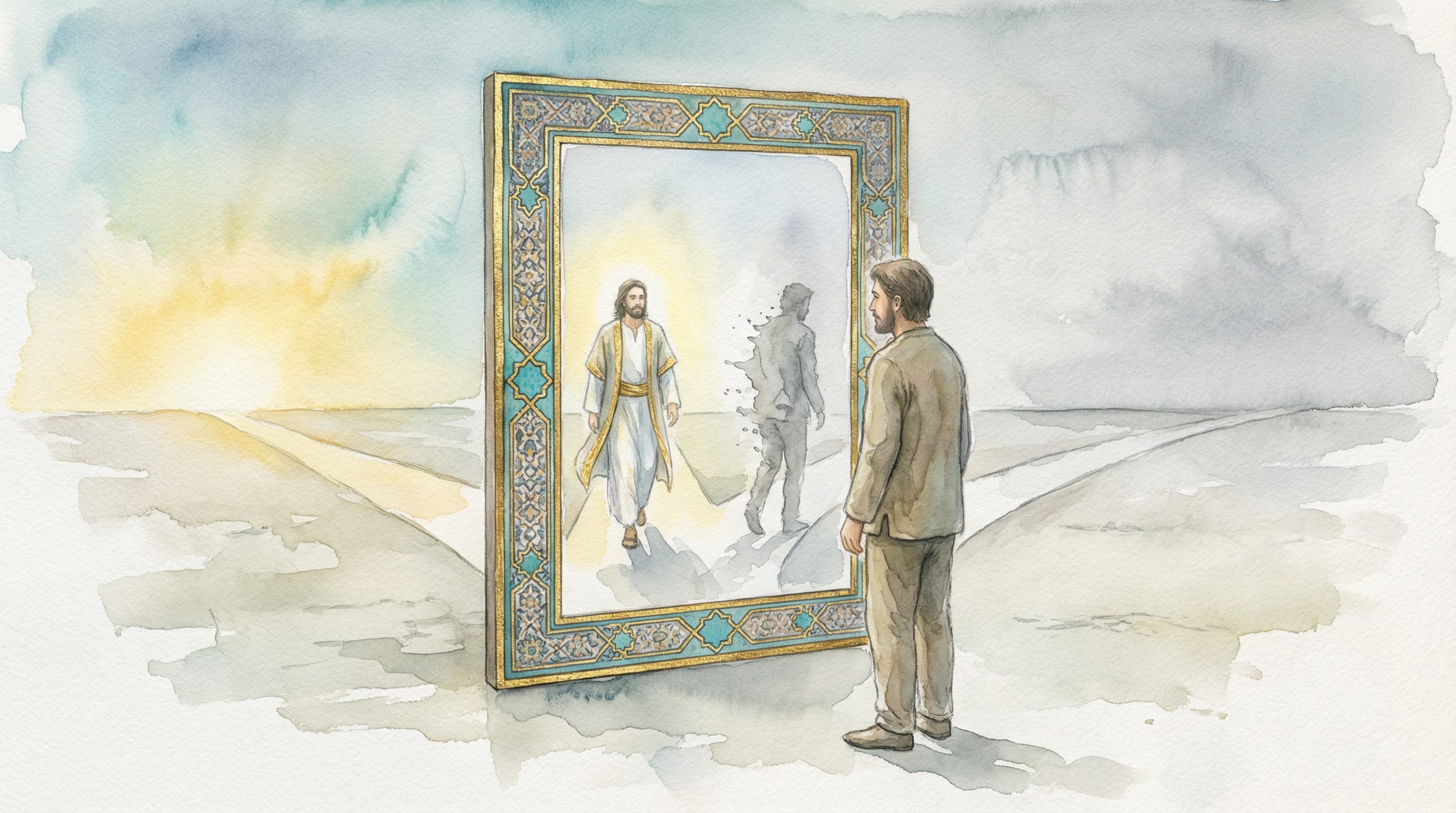
So let us bring this to its conclusion.
The question tonight is not:
“Why did God allow this to happen?”
We have answered that.
God allows His servants to be tested.
God allows the tyrants to overreach.
And God raises His martyrs to stations that no living person can attain.
This is the sunnah of God, and you will never find in the sunnah of God any change —
وَلَنْ تَجِدَ لِسُنَّةِ اللَّهِ تَبْدِيلًا
And you will never find any change in the way (sunnah) of God
— Quran, Surah al-Fath (the Chapter of Victory) #48, Verse 23
The question tonight is not:
“Has Imam Khamenei lost?”
We have answered that too.
The Quran says he is alive.
The Quran says he is rejoicing.
The Quran says there is no fear upon him and no grief.
The question tonight — the only question that matters — is about us.
How did he live?
He lived as a servant of the Imam of his time.
He lived as a guardian of Islamic jurisprudence.
He lived as a shield for the oppressed.
He lived as a man who said to the greatest military powers on earth:
No. I will not bow. My nation will not bow.
And now: how will we live?
Will we honour his blood by holding firm to the path?
Or will we betray it by wavering?
Will we be the ones described in Surah al-Ahzab —
وَمَا بَدَّلُوا تَبْدِيلًا
And they have never changed.
— Quran, Surah al-Ahzab (the Chapter of the Confederates) #33, Verse 23
Or will we be the others — the ones the verse was contrasted with — the ones who promised and broke their promise when the pressure came?
That is the test.
That is where we are.
That is the only question.
And to answer it properly, we need to understand our practical duties — as followers of a Marja’, as believers in the system of Wilayat al-Faqih, and as servants of the Imam of our time.
And that is what we turn to now.
Our Practical Duties
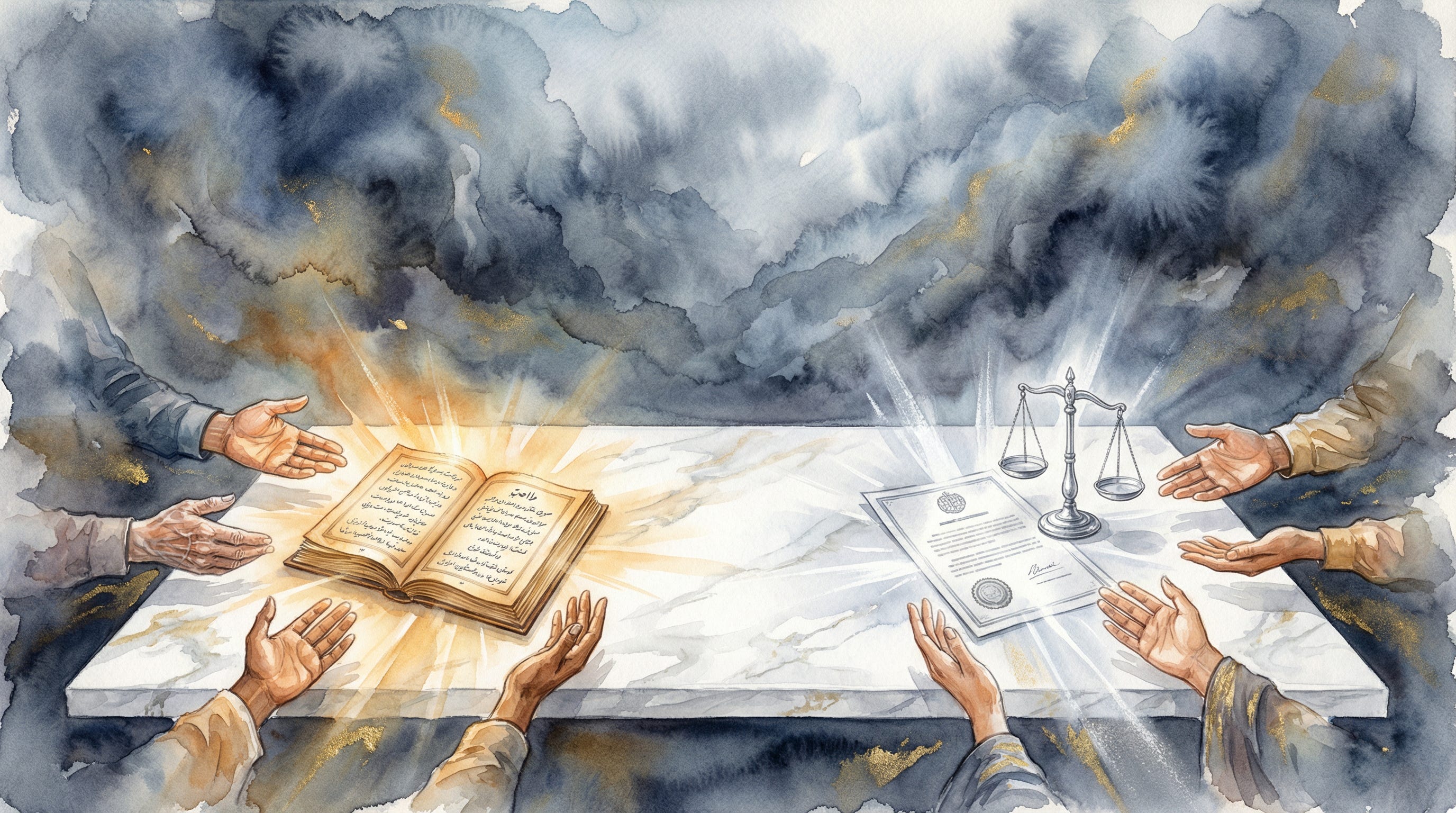
We have spoken about the theology.
We have spoken about what death means and what martyrdom means in our tradition.
Now we must speak about something that many of you are asking — perhaps the very reason many of you came tonight.
The practical question.
The question that is burning in the hearts of the believers across the world right now:
What do we do?
Imam Khamenei — may God rest his pure soul — occupied two distinct positions in the lives of millions of believers.
For some, he was their Marja’ al-Taqlid — their Source of Emulation in matters of religious law.
For others — and for the believers as a whole — he was the Wali al-Faqih — the Guardian Jurist, the Supreme Leader.
These are two separate questions, and they have two separate answers.
I want to address both of them clearly tonight, because clarity is what the believers need right now — not ambiguity, not confusion, and not panic.
The Marja’iyyah Question: When Your Marja’ Is Martyred
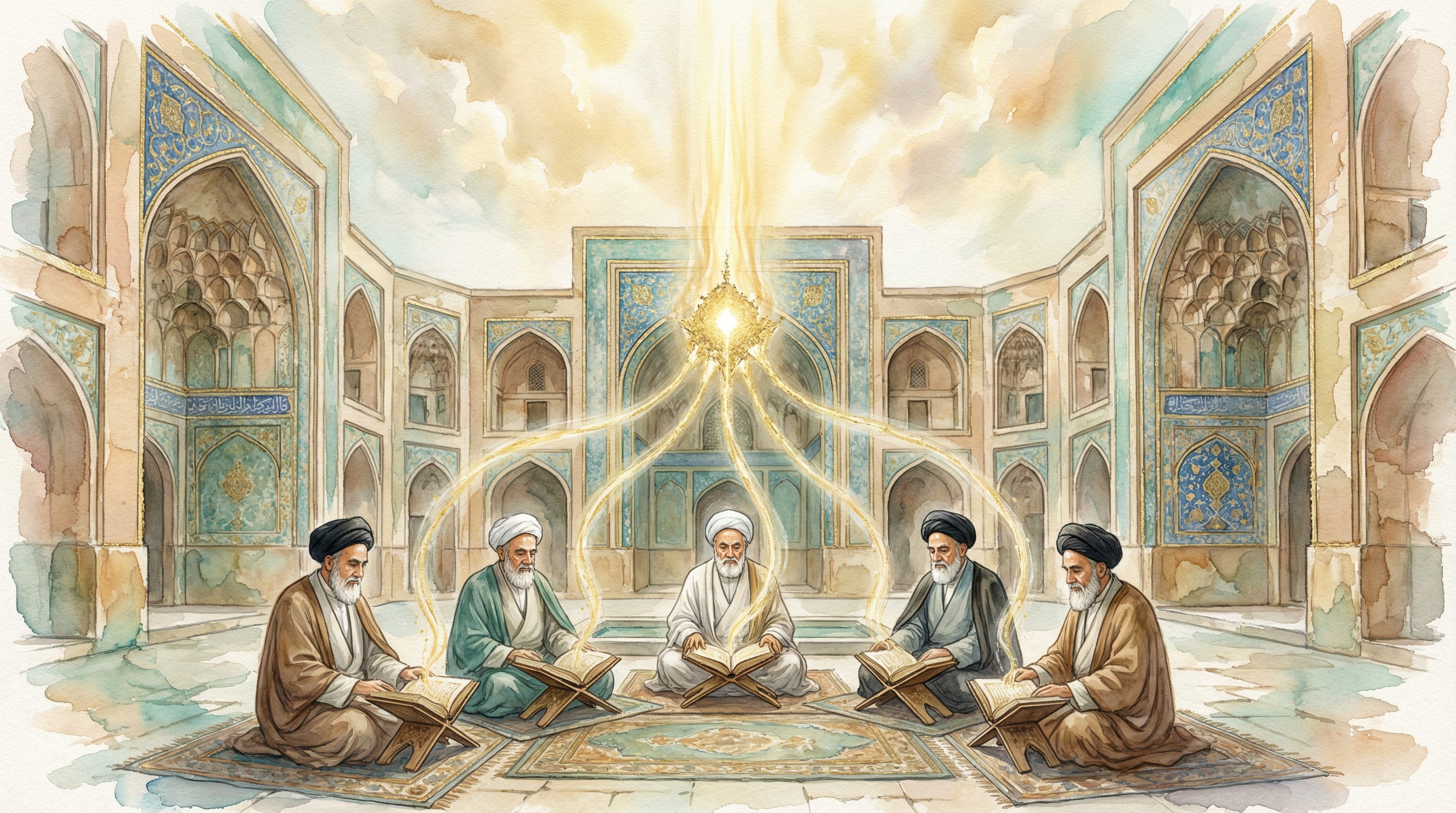
Let me speak first to those of you who followed Imam Khamenei as your Marja’ al-Taqlid.
You are perhaps asking: who do I follow now?
Are my prayers still valid?
Are the rulings I have been acting upon still sound?
Do I need to find a new Marja’ immediately?
Take a breath.
The answer is clear, and it is well-established in our jurisprudence.
This is not a crisis.
This is a normal — if deeply painful — event that our scholars have dealt with for centuries.
Every Marja’ is a mortal human being.
And the scholars of our Hawza — in Qom, in Najaf, in every seminary that has served this community — have laid down clear, tested, reliable principles for exactly this moment.
The first thing to understand is the concept of al-baqa’ ‘ala taqlid al-mayyit — remaining upon the taqlid of the deceased Marja’.
There is a scholarly consensus — an ijma’ — in the Hawza that a muqallid may continue to follow the rulings of a Marja’ who has passed away.
Your prayers are valid.
Your fasting is valid.
The rulings you have been acting upon do not collapse because the Marja’ has departed this world.
But — and this is a critical point, so listen carefully — the general principle in the Hawza is that continuing to follow a deceased Marja’ requires the permission of a living Marja’.
You cannot simply continue on your own authority.
You need either to choose a new living Marja’ to follow, or you need to obtain the permission of a living Marja’ who authorises you to continue following the rulings of the deceased.
This is not a new principle.
This is established jurisprudence.
And Imam Khamenei himself — the very Marja’ whose loss we are mourning tonight — articulated this with precision in his Practical Laws of Islam.
When he was asked whether beginning or continuing to follow a deceased mujtahid depends on following a living one, he answered clearly:
“The permissibility of starting or continuing to follow a deceased mujtahid depends on the fatwa of the most learned, living one.”
— Imam Khamenei, Practical Laws of Islam, Rules of Taqlid, Conditions of Taqlid, Question 23
Now, some of you may remember that this exact question arose after the passing of Imam Khomeini — may God rest his pure soul — in 1989.
Millions of people followed Imam Khomeini as their Marja’.
When he passed, they asked: can we continue?
And Imam Khamenei — as a living Marja’ — gave them explicit permission to do so.
He told the followers of Imam Khomeini:
“You may keep following the Imam, and at the time being there is no reason for you to give up his taqlid. If the need arises to obtain a shar’ī ruling concerning new issues, you may correspond with our office.”
And note something important here:
Imam Khamenei’s ruling on this matter was broader than that of many other maraji’.
When he was asked whether continuing with a deceased Marja’ is limited to issues that the muqallid had already acted upon during the Marja’s lifetime, he answered:
“Continuing to follow a deceased marji’ with regard to all issues, even those which he has not acted upon during the lifetime of the marji’, is permissible and valid.”
All issues.
Not just the ones you had previously encountered.
This is a significant ruling, and it means that his risalah — his body of jurisprudential rulings — remains a complete and usable guide, not merely a partial one limited to past practice.
He also clarified one further point that is relevant tonight.
He was asked: is it specifically the most learned living mujtahid whose permission is needed, or is it sufficient to have the permission of any qualified mujtahid?
And he answered:
“If the scholars are unanimous in their view about the permissibility of continuing with the taqlid of a deceased mujtahid, it is not obligatory to get the permission of the most knowledgeable one.”
This is important — because, as we have said, there is a scholarly consensus on this point.
And I do not want you to take my word for it.
Let me show you.
The Consensus of the Living Maraji’
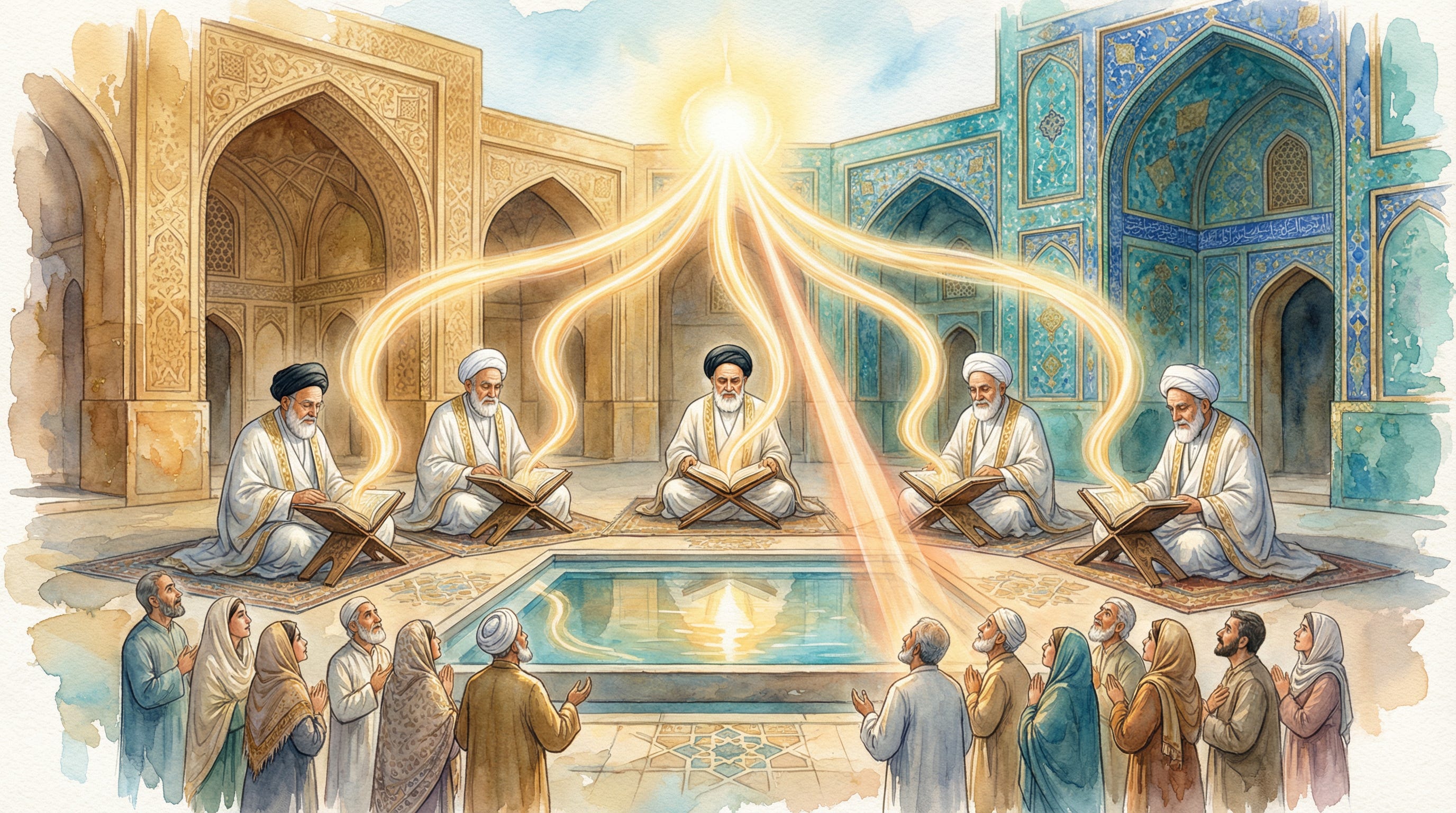
Let us go through the major living maraji’ — the highest authorities in the Shia world today — and see what each of them says about al-baqa’ ‘ala taqlid al-mayyit (remaining on the taqlid of a deceased marja’).
Because when you see the unanimity with your own eyes, you will understand that this is not a matter of dispute.
This is settled.
Grand Ayatullah Sayyid Ali al-Sistani — the most widely followed Marja’ in the world today, based in Najaf al-Ashraf.
His position, as articulated in his Minhaj al-Salihin and through his official wakalah (office) — the IMAM-US organisation in North America — is clear.
A person cannot begin taqlid of a deceased Marja’ (taqlid ibtida’i of a deceased is not permitted).
But a person who was already following a Marja’ during his lifetime may continue to follow him after his death.
And Ayatullah Sistani goes further than some: even if the muqallid had adopted the Marja’ but had not yet learned or acted upon all of his rulings, he may still continue.
His fatwa permitting baqa’ is itself the permission.
If you take Ayatullah Sistani as your living Marja’, his ruling authorises you to remain upon the rulings of Imam Khamenei in the areas where baqa’ applies — and particularly so if Imam Khamenei is considered a’lam (more knowledgeable) or at least not less knowledgeable than the living.
You can find the reference for this in the Minhaj al-Salihin of Ayatullah Sistani, Volume 1, Kitab al-Taqlid, and the Ruling on al-Baqa’ ‘ala Taqlid al-Mayyit (remaining on the taqlid of a deceased marja)
Grand Ayatullah Nasir Makarim-Shirazi — one of the most senior maraji’ in the Hawza of Qom.
In his Tawdih al-Masa’il, he states: baqa’ is permitted if the person was already doing taqlid of the Marja’ during his life, and the deceased is equal to or more knowledgeable than the living maraji’.
For rulings already learned, continuing is straightforward.
For rulings not yet learned, he permits it under conditions relating to a’lamiyyah.
The principle is the same: baqa’ is valid.
You can find this in the Tawdih al-Mas’ail of Ayatullah Makarim-Shirazi, in the Kitab al-Taqlid, and the Ruling on the Baqa’ bar Taqlid-e-Mayyit (Remaining in the Taqlid of a deceased marja)
Grand Ayatollah Husayn Nuri Hamadani — another of the senior maraji’ of Qom.
His position follows the classical usuli line: no beginning taqlid of a deceased, but baqa’ is permitted for the person who was already following him, provided the deceased is more knowledgeable or at least not less knowledgeable than the living.
His fatwa permitting baqa’ functions, again, as the authorisation for his muqallideen to remain upon their previous Marja’.
And this too you can find in the Tawdih al-Masa’il of Ayatullah Nuri Hamadani, Kitab al-Taqlid, and the Ruling on Baqa’ bar Taqlid-e Mayyit (Remaining on the Taqlid of a deceased Marja’).
Ayatollah Mohsen Araki — a recognised mujtahid of the Qom Hawza, and — note this well — the very same scholar who now sits on the Provisional Leadership Council of the Islamic Republic.
He is of course from one of our honourable teachers.
He follows the mainstream usuli position: no ibtida’i taqlid of a deceased, and baqa’ is permitted under the standard conditions.
His position aligns entirely with the consensus.
And this too is in the Risalah Amaliyyah of Ayatullah Mohsen Araki, Kitab al-Taqlid, and the Ruling on Al-Baqa’ ‘ala Taqlid al-Mayyit (Remaining on the Taqlid of a deceased marja)
Grand Ayatollah Abdullah Jawadi-Amoli — the philosopher, the exegete, the student of Allamah Tabatabai, whom we quoted earlier on the nature of Wilayat al-Faqih.
He too does not permit beginning taqlid of a deceased.
But he accepts baqa’ for the person who was already following the Marja’, with the classical conditions on a’lamiyyah.
For issues not yet learned during the Marja’s lifetime, he distinguishes — but the core ruling is the same: baqa’ is permissible.
His ruling can also be found in his Istifta’at, on the subject of Taqlid and the Questions on Baqa bar taqlid-e mayyit (Remaining on the Taqlid of a deceased marja’).
Do you see what I am showing you?
Five of the most eminent living authorities in the Shia world — spanning both Najaf and Qom, spanning different schools of thought and emphasis within the Hawza — and they are unanimous.
Not one of them says you cannot continue.
Not one of them says your taqlid of Imam Khamenei is now void.
Every single one of them — without exception — permits baqa’ ‘ala taqlid al-mayyit for the person who was already following that Marja’.
The details differ slightly — on the question of a’lamiyyah, on the scope of issues covered, on the precise mechanism — but the core ruling is identical.
And remember what Imam Khamenei himself told us:
“If the scholars are unanimous in their view about the permissibility of continuing with the taqlid of a deceased mujtahid, it is not obligatory to get the permission of the most knowledgeable one.”
The scholars are unanimous.
His own condition is met.
So what does this mean for you, practically, tonight?
It means you have two clear paths, and both are valid:
The First Path: You Choose a New Living Marja’ Taqlid
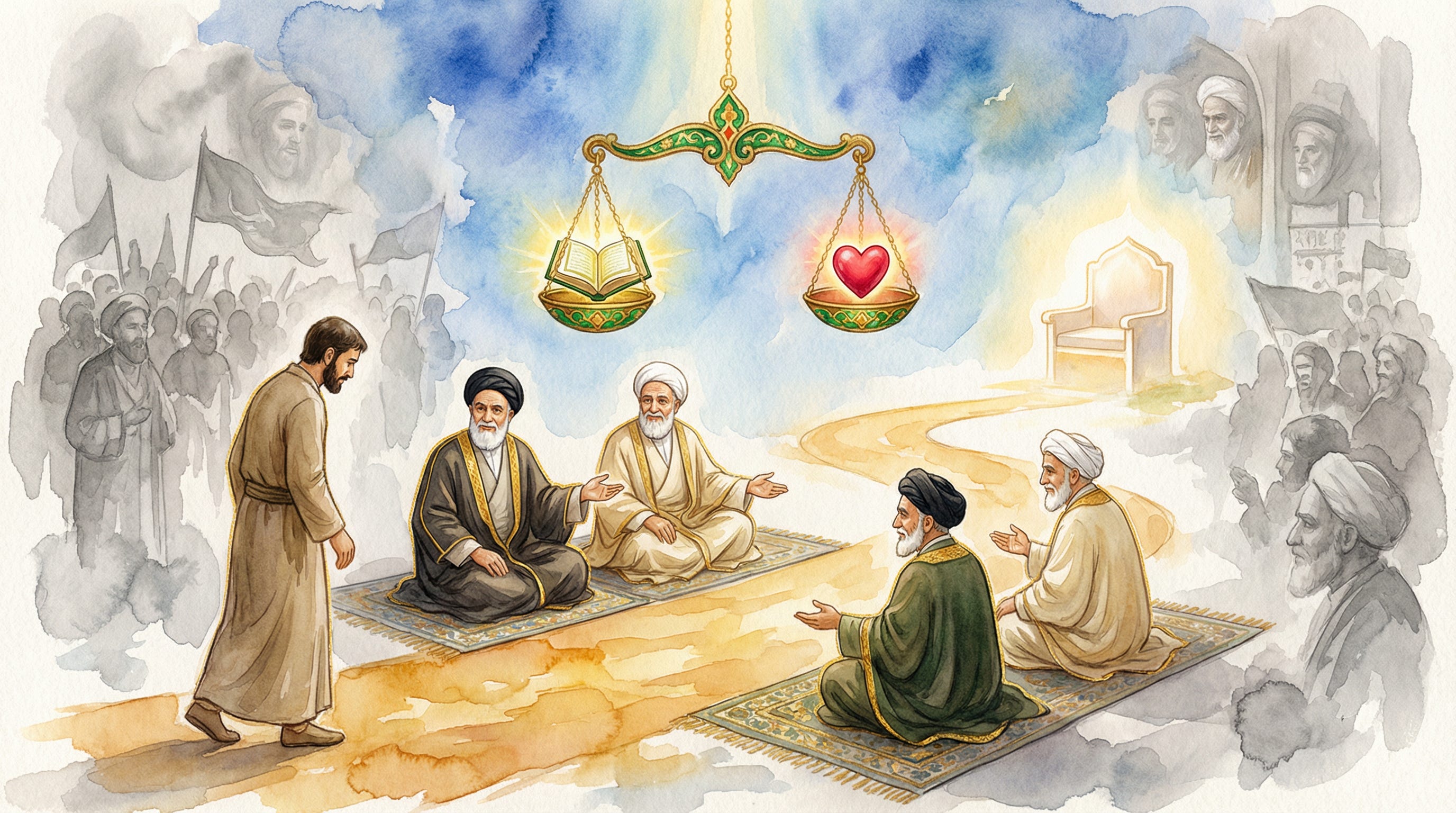
The first path: You choose a new living Marja’ al-Taqlid — and you follow him fully.
You consult the Ahl al-Khibra — the people of expertise.
These are the senior scholars, the seminary students, the learned among the community who are qualified to assess the jurisprudential credentials of the living mujtahideen.
The primary criterion — the criterion upon which our scholars are united — is a’lamiyyah: you must follow the most knowledgeable among the qualified, living jurists.
Not the most famous.
Not the most politically prominent.
Not the one with the largest following.
The most knowledgeable.
Allamah al‑Hilli writes:
وَالإِمَامُ يَجِبُ أَنْ يَكُونَ مَنْصُوصًا عَلَيْهِ، لِأَنَّ الْعِصْمَةَ مِنَ الْأُمُورِ الْبَاطِنَةِ الَّتِي لَا يَعْلَمُهَا إِلَّا اللَّهُ تَعَالَى، فَيَجِبُ أَنْ يَنْصِبَهُ لِعِبَادِهِ وَيُعَرِّفَهُمْ إِيَّاهُ.
“The Imam must be designated, because infallibility is an inward matter which none knows except Allah, Exalted is He. Therefore, He must appoint him for His servants and make him known to them.”
— Allamah Hilli, Baab al-Hadi Ashar Fi al-Aqa’id, Section on Imamate
The same logic applies in the era of occultation to the selection of a Marja’.
You do not choose based on personal preference or tribal loyalty.
You consult.
You ask.
You seek out the scholars who can guide you to the right decision.
The Second Path: You Continue Following the Rulings of Imam Khamenei
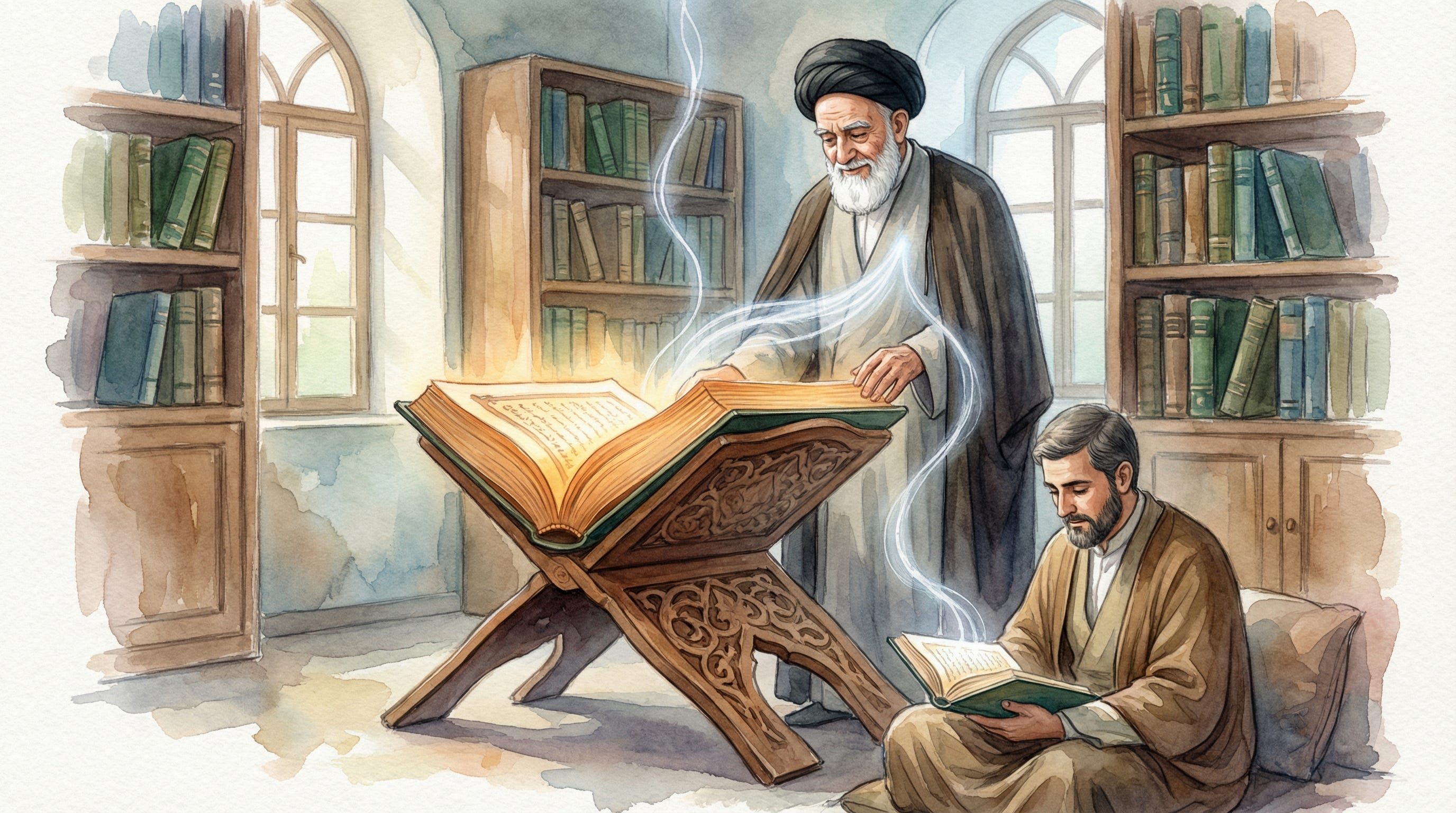
The second path: You continue following the rulings of Imam Khamenei — and you do so through a living Marja’ who permits baqa’.
You identify a living mujtahid — and as we have just demonstrated, every major living Marja’ permits this — and under the authority of his fatwa, you continue to act upon the rulings of our martyred leader.
The living Marja’s fatwa permitting baqa’ is itself the permission.
You are not acting without authority.
You are acting under the jurisprudential authority of a living scholar who has ruled that your continuation is valid.
And note — this is critical for those of you who followed Imam Khamenei — what he himself ruled in Question 41 of his Practical Laws: that baqa’ applies to all issues, even those you had not yet acted upon during his lifetime.
“Continuing to follow a deceased marji’ with regard to all issues, even those which he has not acted upon during the lifetime of the marji’, is permissible and valid.”
This is a broader ruling than many other maraji’ give.
It means his risalah — his complete body of rulings — remains your guide.
Not partially.
Fully.
In either case, you need a connection to a living Marja’.
That is the principle.
The chain of taqlid must pass through a living authority.
It is not enough to simply say,
“I will continue on my own.”
The system — by divine wisdom — requires that a living mujtahid stands as the bridge between you and the jurisprudential tradition.
Now — I want to be clear about something.
It is not my place — standing on this minbar — to direct you to a specific Marja’.
That is not my role.
My role is to explain the process — the jurisprudential framework — and to trust that you, as mature and intelligent believers, will follow it.
There are eminent, qualified, living maraji’ in both Qom and Najaf.
Their offices — their maktabs — are accessible.
Their risalahs are published.
The scholars around you can help you identify the right one.
As you know we have a project that is working to make their material that much more accessible and also to make it easier and frictionless to communicate and consult with the various offices, and with God’s grace, this project - FiqhFlow - will become a reality soon, Amen, O Lord Sustainer of the Universes.
What I will say is this: do not rush.
You are not in a state of emergency regarding your daily religious practice.
Your existing rulings remain your guide while you take the time to consult properly, to ask the right people, and to make an informed, conscientious decision.
This is not a race.
It is a responsibility.
Treat it with the weight it deserves.
And do not let anyone exploit this moment to push you in one direction or another for political, social, cultural or any reasons.
The Marja’iyyah is a sacred trust.
It belongs to the realm of knowledge and piety, not to the realm of political manoeuvring, tribal niceties, or groupthink.
Choose based on a’lamiyyah — on knowledge, on piety, on justice. Nothing else.
The Wilayat al-Faqih Question: How the New Leader Is Selected
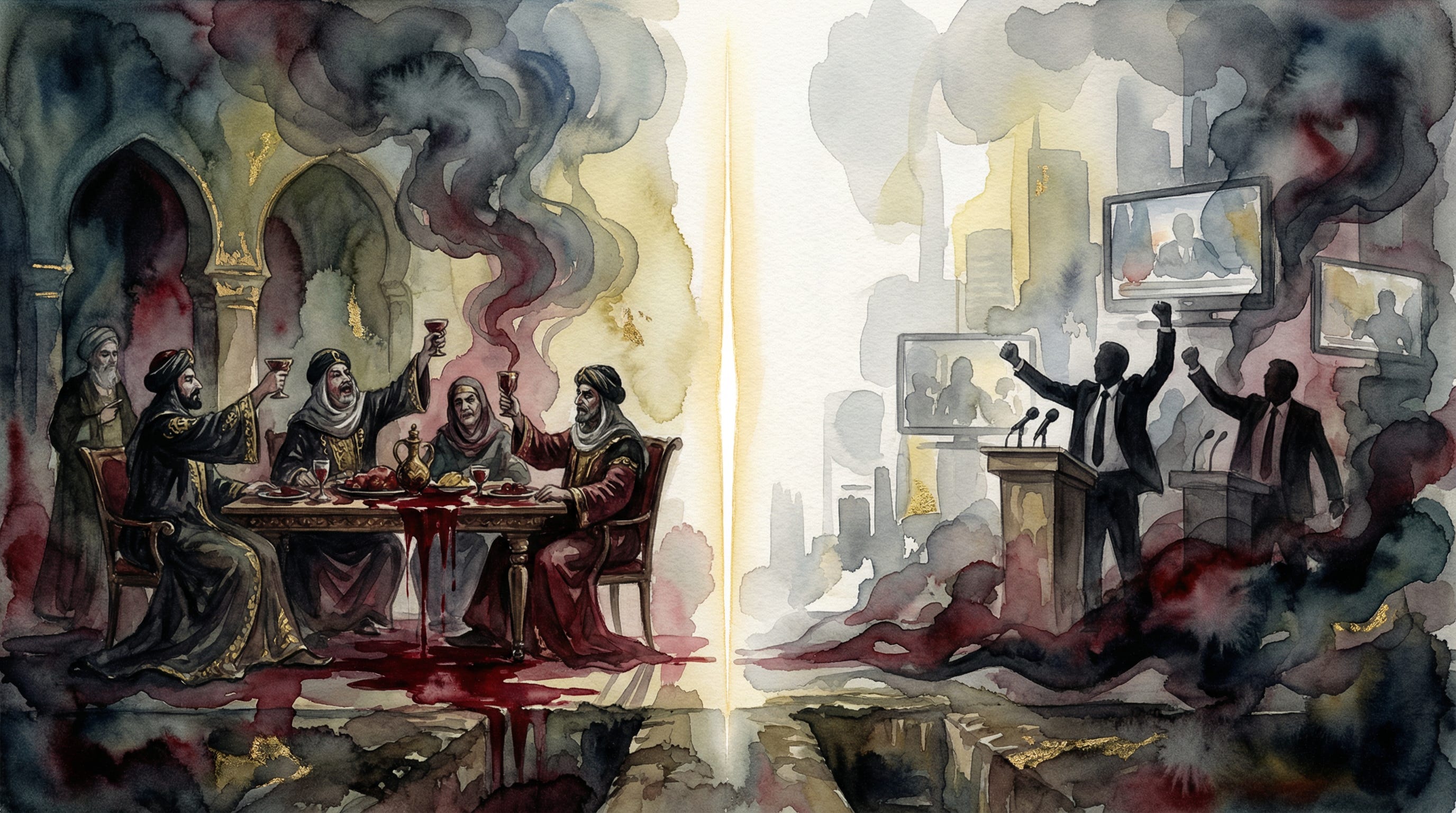
Now let me turn to the second question — the question of the Wilayat al-Faqih and the leadership of the Islamic Republic.
This is where many of you are most anxious.
And I understand why.
The images coming out of Iran are frightening.
The strikes are ongoing.
The enemies are celebrating.
And I want to pause on that word — celebrating — because it brings to mind something that every one of you in this room knows by heart.
Something you recite on the day of Ashura.
Something many of you recite daily.
Something from the Ziyarat Ashura:
اللَّهُمَّ إِنَّ هَذَا يَوْمٌ تَبَرَّكَتْ بِهِ بَنُو أُمَيَّةَ وَابْنُ آكِلَةِ الأَكْبَادِ، وَهَذَا يَوْمٌ فَرِحَتْ بِهِ آلُ زِيَادٍ وَآلُ مَرْوَانَ بِقَتْلِهِمُ الْحُسَيْنَ صَلَوَاتُ اللهِ عَلَيْهِ
“O God, this is a day on which the Banu Umayyah considered themselves blessed — and the son of the liver-eater — and this is a day on which the family of Ziyad and the family of Marwan rejoiced because of their killing of Husayn, the blessings of God be upon him.”
— Ziyarat Ashura
The family of Ziyad rejoiced.
The family of Marwan celebrated.
They held banquets in Damascus.
They congratulated each other.
They thought they had won.
Look at your screens today.
Look at the press conferences.
Look at the media coverage.
Look at the triumphalism.
Donald Trump stood at his podium and boasted about what he had done — as though destroying a nation’s leader while negotiations were ongoing, for the second time, is something to celebrate.
The first time — in June of last year (2025) — they struck while talks were progressing.
And now again — with Geneva producing real dialogue, with a deal within reach — they struck again.
Because there are those who do not want peace.
There are those for whom the very existence of an independent Islamic state is intolerable.
Netanyahu — the man who has overseen the destruction of Gaza, the butchery of Lebanon, the starvation of children, the bombing of hospitals — stood before cameras and spoke of “a new dawn.”
Lindsey Graham, who has never met a war he would not cheer for, spoke of “the beginning of the end for the regime.”
And the son of the dead Shah — a man who has spent forty years in Maryland conspiring with the Netanyahus of this world, begging foreign powers to bomb his own country so that he might return to a peacock throne that the people of Iran removed from under his father — he too celebrated.
Aal-e Ziyad wa Aal-e Marwan.
The names change.
The faces change.
The pattern does not.
They killed Imam Husayn and they celebrated.
And where are they now?
They killed our leader — Imam Khamenei — and they are celebrating.
And where will they be?
I will tell you where: in the same dustbin of history where every tyrant who raised his hand against the righteous has ended up.
Not one of them survives.
Not one of them is remembered except as a villain in the story of the man they killed.
And let me say something about the cost of this celebration.
Because the triumphalism on their screens hides a reality they do not wish to show their people.
Iran has responded — as it has the right to respond, as any nation would respond when its sovereignty is violated and its leader is assassinated.
And the retaliatory strikes have already taken the lives of over five hundred American service men and women in the West Asia region.
Five hundred families who will never see their sons and daughters again.
And for what?
For the ambitions of Netanyahu?
For the fantasies of a deposed prince in Maryland?
For the political theatre of a man who confuses destruction with strength?
The blood of those soldiers is not on Iran’s hands.
It is on the hands of those who chose war when peace was within reach.
It is on the hands of those who torpedoed negotiations — not once but twice — because they could not stomach a world in which the Islamic Republic exists.
But this is not a political session.
And I do not want to give these people more of our time than they deserve.
Because the Ziyarat teaches us something else — something more important than the names of the oppressors.
It teaches us that God keeps account.
Allahumma la’an — O God, curse them — remove them from Your Mercy O God.
We leave them to God’s reckoning, and we turn to what matters: the survival of the system they tried to destroy.
And the question on everyone’s lips is: will the system survive?
I want to answer this with theology first, and then with constitutional process.
Because both are needed.
The Theological Principle: The Guardianship of the Ideology
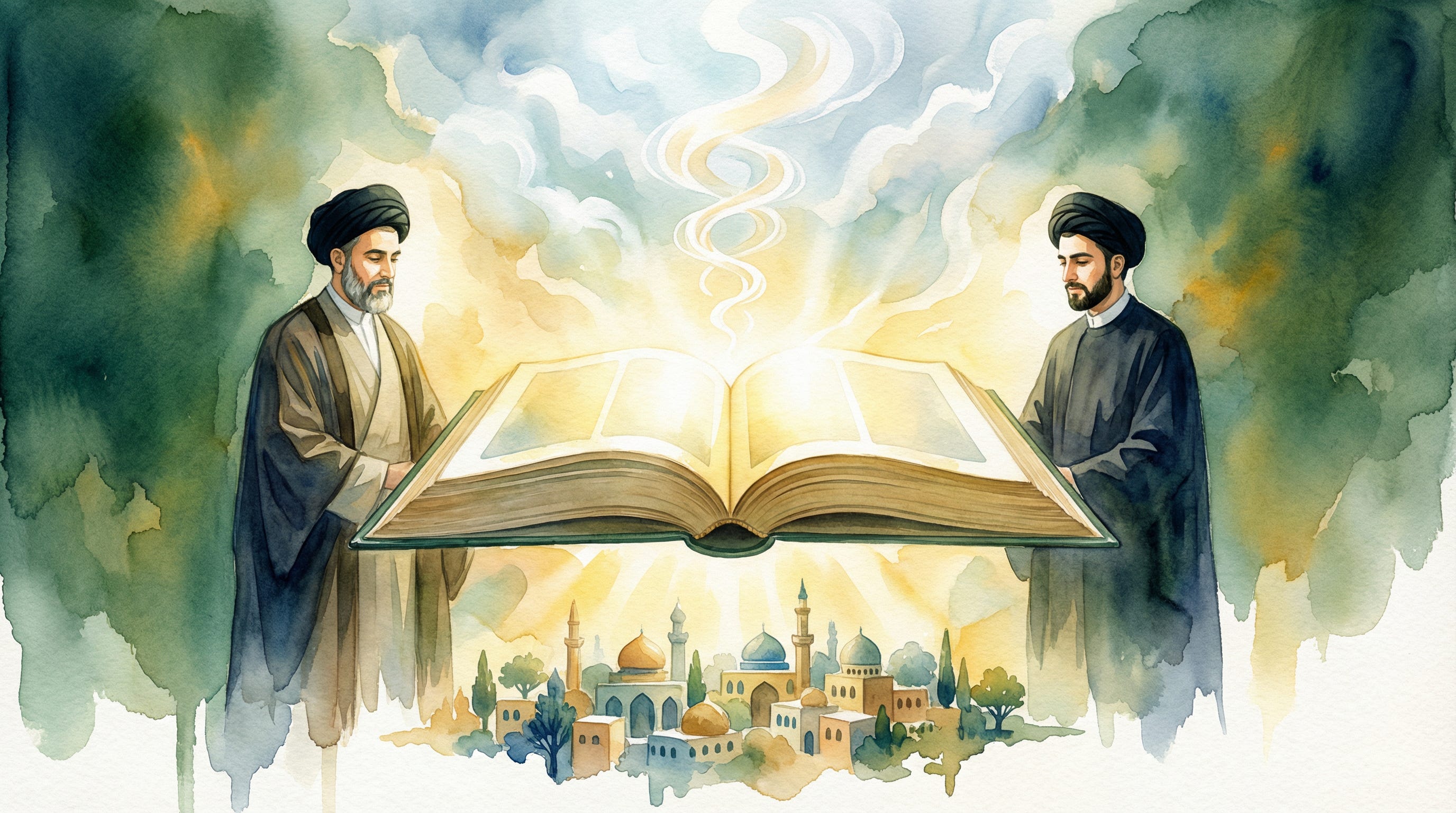
Grand Ayatollah Abdullah Jawadi-Amoli — one of the foremost philosophers and jurists of the Qom Hawza, a student of both Allamah Tabatabai and Imam Khomeini — has articulated the principle of Wilayat al-Faqih with a clarity that we need tonight more than ever.
He says:
«ولایت فقیه، یعنی جامعه اسلامی بدون سرپرست نباشد. فقیه، تافته جدا بافته از دیگران نیست، بلکه کارشناس مسائل اسلامی است که با شرایطی، رهبری جامعه را بر عهده میگیرد. ولایت فقیه، در حقیقت ولایت فقه و دین است، نه ولایت شخص.»
“Wilayat al-Faqih means that the Islamic society should not be without a guardian. The Faqih is not a separate weave from others; rather, he is an expert in Islamic matters who, under certain conditions, undertakes the leadership of the society. The Guardianship of the Jurist is, in reality, the guardianship of jurisprudence and religion, not the guardianship of a person.”
— Ayatullah Jawadi-Amoli, Wilayat al-Faqih wa Naqsh-e Ara-ye Mardom
I want you to hold onto that last sentence.
ولایت فقیه، در حقیقت ولایت فقه و دین است، نه ولایت شخص
The guardianship is of the jurisprudence. It is of the religion. It is not the guardianship of a person.
— Ayatullah Jawadi-Amoli, Wilayat al-Faqih wa Naqsh-e Ara-ye Mardom
This is the key.
This is the answer to the anxiety in your hearts.
When Imam Khomeini — may God rest his pure soul — built the Islamic Republic, he did not build a system around himself.
He built a system around an idea.
The idea that Islamic law must govern.
The idea that during the occultation of the Twelfth Imam, a qualified jurist must stand in his place to ensure that the community is not left without guidance.
The idea that governance is a religious obligation, not merely a political convenience.
Imam Khomeini died.
The idea survived.
Imam Khamenei has been martyred.
The idea survives.
And it will survive the next leader.
And the one after that.
Because the system is not held together by the charisma of any one man.
It is held together by a divine principle — that the earth cannot be devoid of a Hujjat, and that in the absence of the Imam, the most qualified jurist must stand as his deputy.
The Constitutional Process: How It Works
Now — the mechanism.
Let me explain exactly what is happening right now, and what will happen next.
The Constitution of the Islamic Republic of Iran — which was itself designed by the scholars of the Hawza, based on jurisprudential principles — has a clear procedure for this.
It is found in Article 111 of the Constitution.
When the Supreme Leader passes away, or is unable to fulfil his duties, the following process is activated:
Step One: The Provisional Leadership Council
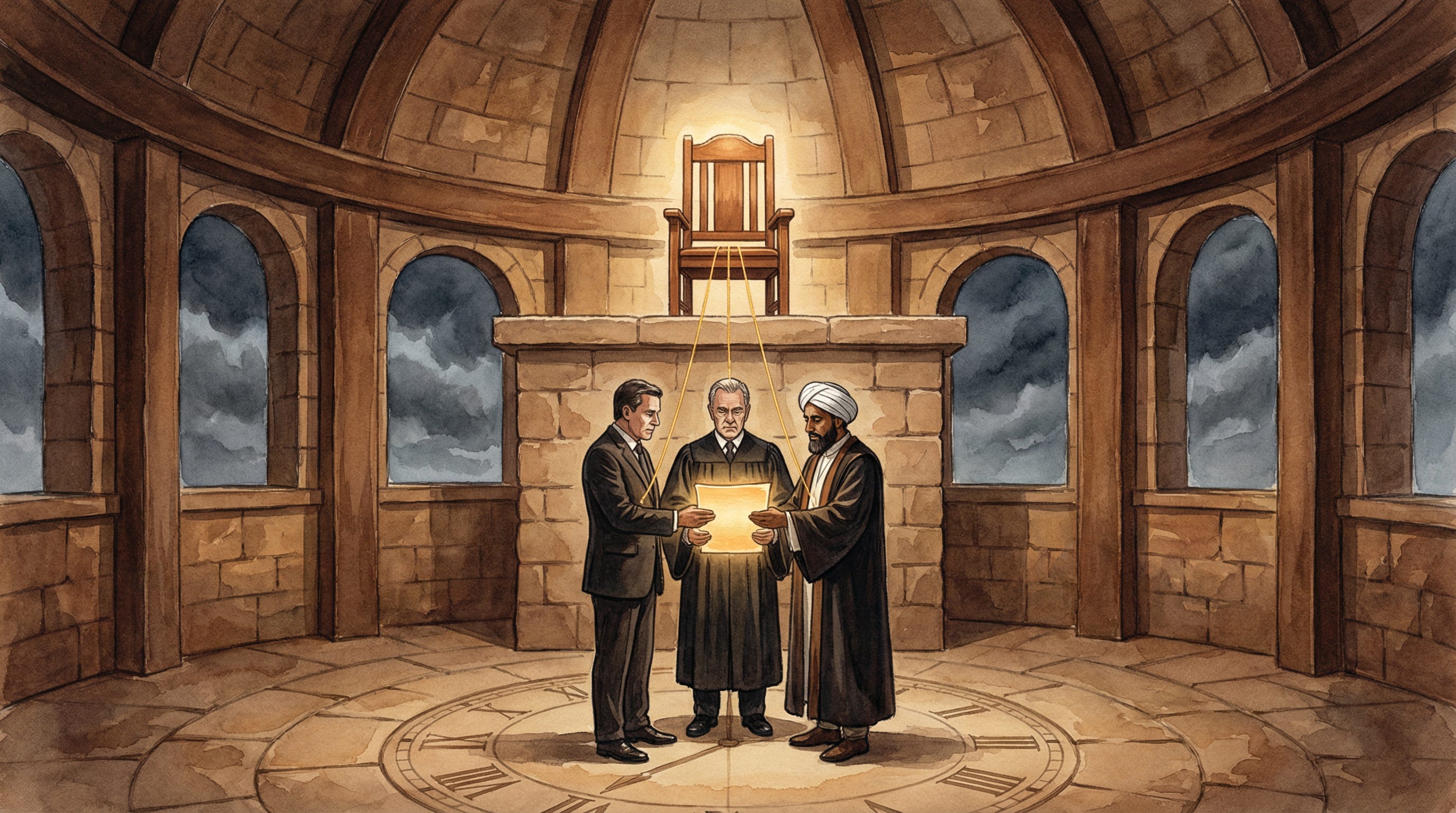
The powers of the Supreme Leader are immediately — immediately — transferred to a three-member council.
This council consists of:
The President of the Republic — currently Masoud Pezeshkian.
The Head of the Judiciary — currently Gholamhossein Mohseni-Ejei.
And one jurist from the Guardian Council, selected by the Expediency Discernment Council — and as of today, this is Ayatullah Alireza Arafi, the head of Iran’s seminary system and the Friday prayer leader of Qom.
This council has already been formed.
It was announced on Sunday — one day after the martyrdom.
One day.
The system activated within hours.
Step Two: The Assembly of Experts
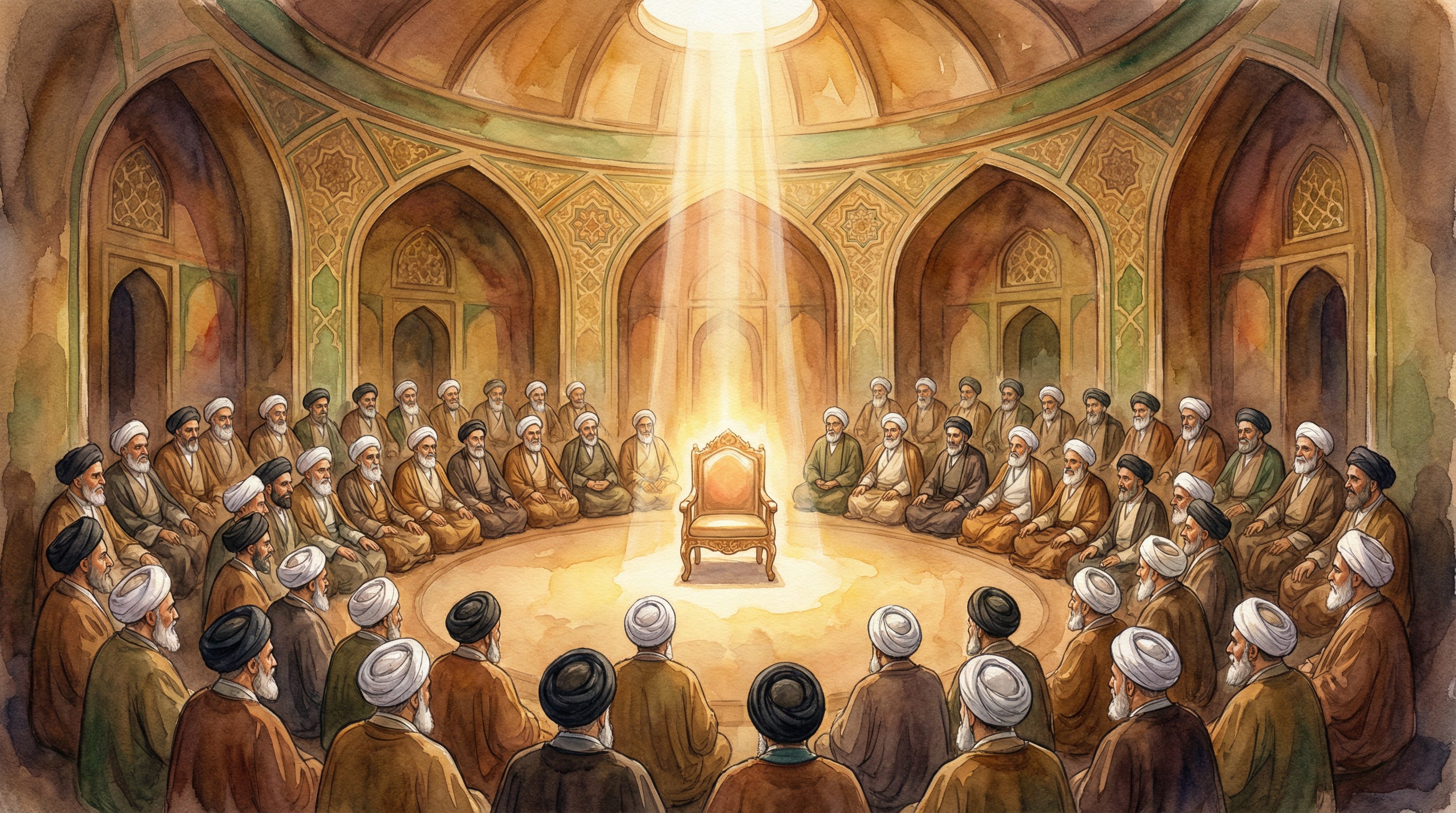
The Majles-e Khobregan-e Rahbari — the Assembly of Experts — is a body of eighty-eight senior elected jurists.
Their sole constitutional purpose — the reason they exist — is to supervise the Supreme Leader and, when necessary, to select a new one.
They are constitutionally mandated to convene and select a new leader “as soon as possible.”
This is the same body that selected Imam Khamenei in 1989.
It has done this before.
Let me remind you of how it happened then — because the parallel is instructive and reassuring.
The 1989 Precedent
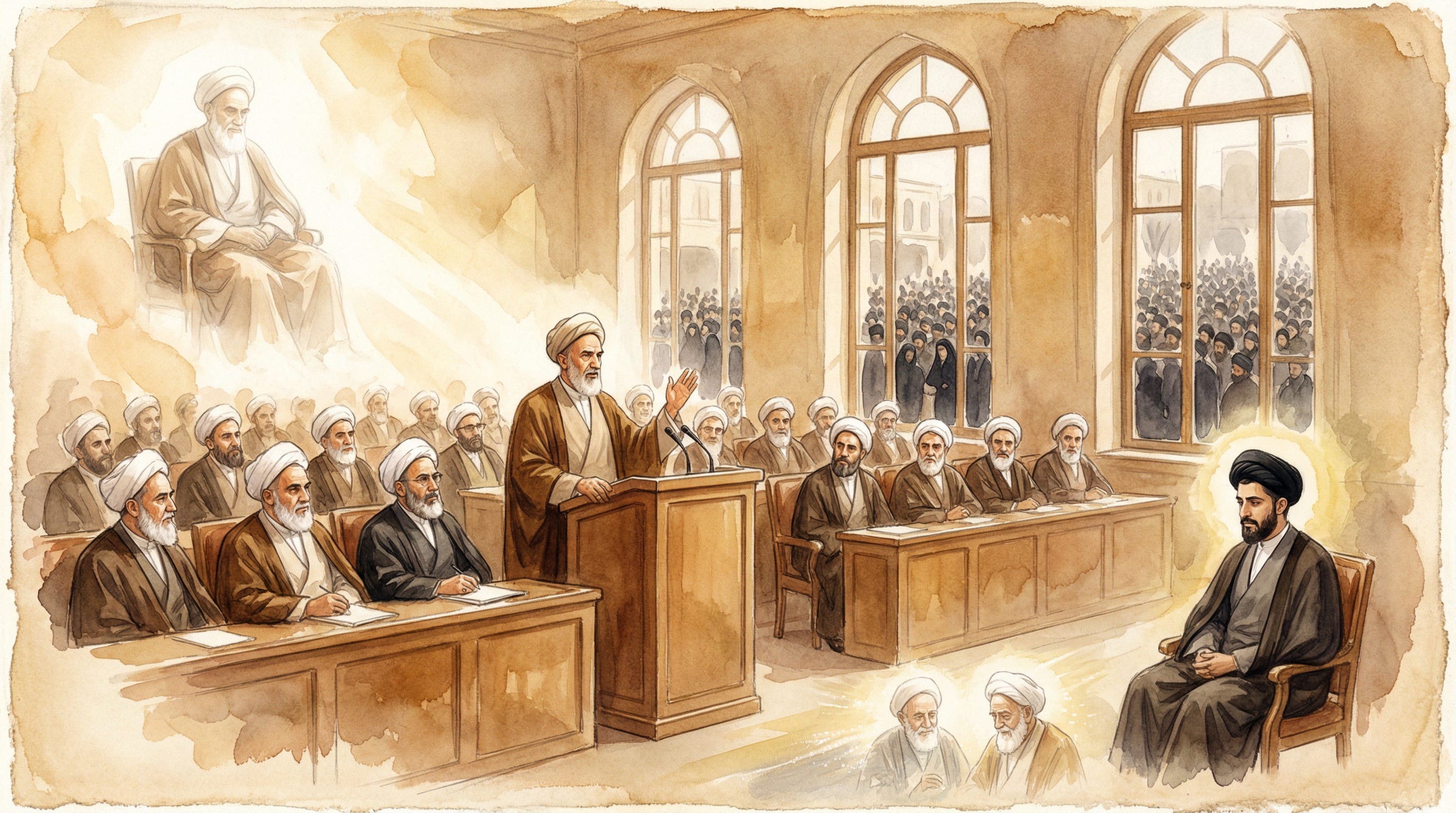
When Imam Khomeini — may God rest his pure soul — passed away on the 3rd of June, 1989, the nation was plunged into a grief that many of you who are old enough will remember.
Millions of people attended his funeral.
The country was in a state of shock.
There were real fears that the Islamic Republic — barely ten years old, still scarred by the Iran-Iraq war — would not survive the loss of its founder.
The Assembly of Experts convened on the morning of the 4th of June — one day later.
There was debate.
Some members initially favoured a leadership council — a collective leadership rather than a single person.
But a consensus formed that a single leader was needed.
And then Ayatullah Hashemi Rafsanjani — the Speaker of the Parliament, one of the most senior figures in the country — stood before the Assembly and delivered a testimony.
He recounted a conversation in the presence of Imam Khomeini.
He said:
«در جلسهای که با آقای خامنهای و یکی از مسئولان دیگر خدمت امام بودیم، بحثی پیش آمد و ما از آینده رهبری و خلاء آن صحبت کردیم. امام فرمودند: شما تا وقتی مثل آقای خامنهای را دارید، نگران خلاء رهبری نباشید.»
“In a meeting where I was with Mr. Khamenei and another official in the presence of the Imam, a discussion arose, and we spoke of the future of the leadership and its vacuum. The Imam said: ‘As long as you have someone like Mr. Khamenei, you should not worry about a leadership vacuum.’”
— Ayatullah Hashemi Rafsanjani, Testimony To the Assembly of Experts During the Selection of the New Supreme Leader, 4 June 1989
And then the senior Maraji’ of the time — the highest authorities in the Shia world — endorsed the decision.
Grand Ayatullah Mohammad-Reza Golpayegani — one of the most eminent scholars of the century — issued a statement:
«انتخاب شایسته جناب عالی از سوی مجلس خبرگان، موجب امیدواری و آرامش گردید. این جانب، این انتخاب را به حضرت بقیة الله، ارواحنا فداه، و به جناب عالی تبریک میگویم و پیروی از رهنمودهای شما را وظیفه خود میدانم.»
“Your Excellency’s worthy selection by the Assembly of Experts has brought about hope and tranquility. I congratulate the Remainder of God — may our souls be sacrificed for him — and Your Excellency on this selection, and I consider it my duty to follow your guidance.”
— Ayatullah Golpayegani, Message Congratulating Imam Khamenei on his selection as the Supreme Leader, June 1989, Qom
And Grand Ayatullah Mohammad Ali Araki declared:
«انتخاب شایسته حضرتعالی، که فردی لایق و متعهد میباشید، مایه دلگرمی و امیدواری ملت ایران است. اطاعت از اوامر شما را بر خود و بر همه مؤمنین واجب میدانم.»
“The worthy selection of Your Excellency, who is a deserving and committed individual, is a source of encouragement and hope for the Iranian nation. I consider obedience to your orders obligatory upon myself and upon all believers.”
— Ayatullah Muhammad Ali Araki, Endorsing the leadership of Imam Khamenei, June 1989, Qom
The system worked.
The Assembly convened.
A leader was chosen.
The senior scholars endorsed him.
The community accepted him.
And the Islamic Republic did not just survive — it endured for thirty-six more years, standing firm against everything the world threw at it.
That is the precedent.
That is the proof that the system functions.
And that is what will happen again now.
A Word of Patience
But I must be honest with you.
The circumstances today are different from 1989 in one critical way.
In 1989, the nation was at peace.
The Assembly could convene in safety.
The scholars could deliberate without the sound of bombs overhead.
Today — as we sit here — strikes are continuing.
The military situation is active.
It is possible — and I want to be transparent about this — that the Assembly of Experts may not be able to convene immediately.
Not because the system has failed, but because the physical security situation may require time to stabilise.
This does not mean the system has collapsed.
The Provisional Leadership Council is functioning.
The state is operating.
The constitutional process is underway.
And reports indicate that Imam Khamenei himself — in the period before his martyrdom, particularly after the war of last June — had already requested the Assembly of Experts to prepare for the question of succession.
There are reports that he had identified three senior clerics as candidates.
The Assembly had been examining potential successors in recent years.
This was not left to chance.
So I say to you: be patient.
Do not fall prey to the propaganda of those who wish for the system to collapse.
The enemies of Islam are celebrating precisely because they hope this will be the end.
Our duty — our taklif shar’i (religious duty) — is to prove them wrong.
Through patience.
Through prayer.
Through trust in God and in the system that He has allowed to be established.
And remember the words of Imam Khamenei himself — the very first words he spoke as leader in 1989, when he inherited this trust from Imam Khomeini:
«این راه، راه امام است. ما همان راه را دنبال خواهیم کرد و همان اهداف را دنبال خواهیم کرد. هیچ تغییری در سیاستهای ما به وجود نخواهد آمد.»
“This path is the path of the Imam. We will follow the same path and we will pursue the same goals. There will be no change in our policies.”
— Imam Khamenei, First speech as Supreme Leader, 4 June 1989, Tehran
Whoever stands at that podium next will say the same thing.
Not because it is a scripted line.
But because it is the truth.
The path does not change.
The ideology does not change.
The system does not change.
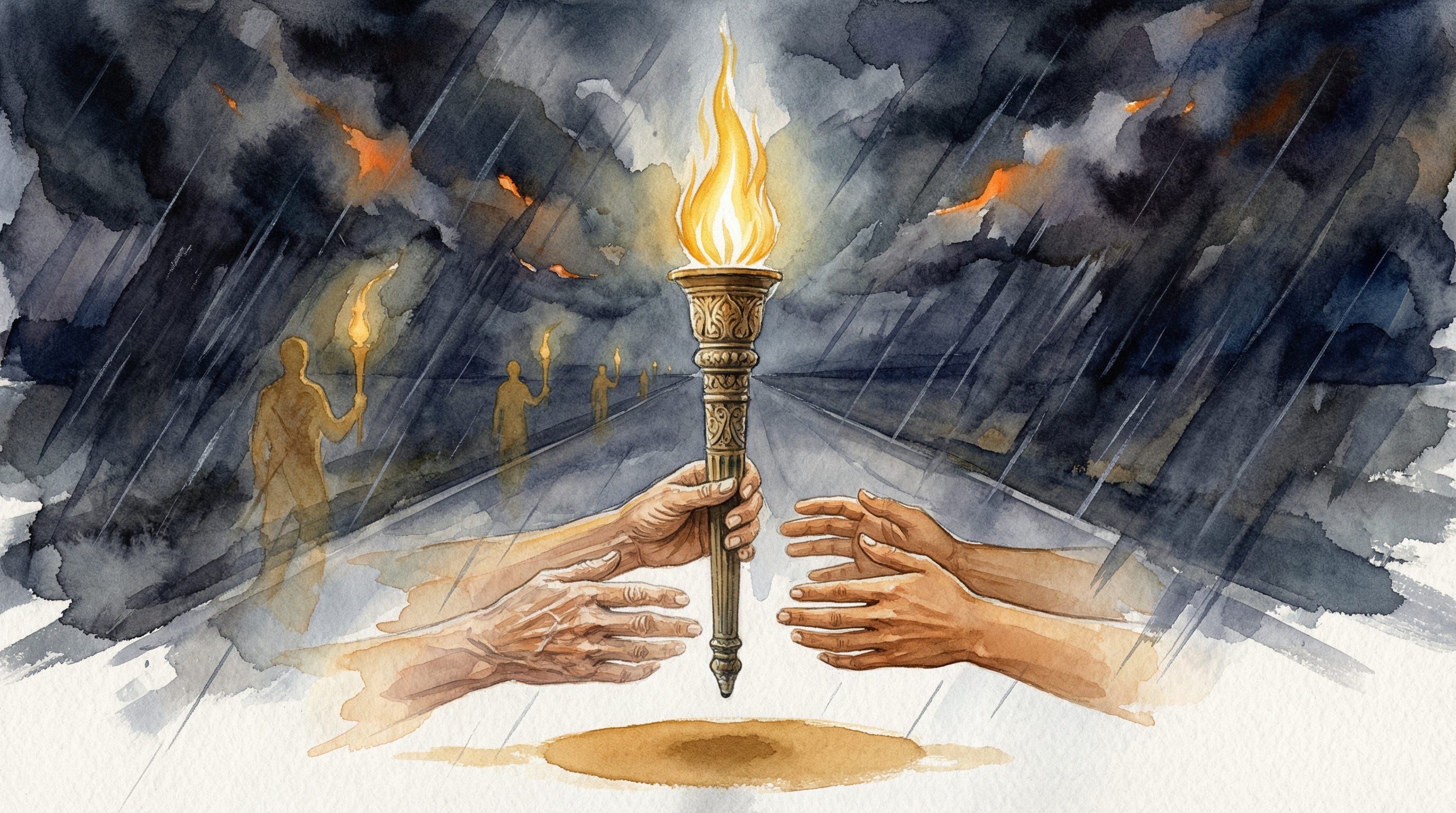
Only the torchbearer changes.
And the torch is still burning.
The Imam’s Directive
And finally — for those who are wondering what authority guides all of this, what scriptural foundation underpins the entire system of deputies and scholars and leadership councils — let me leave you with the words of the one who matters most.
The Imam of our time. Al-Hujjat ibn al-Hasan al-Mahdi — may our souls be his ransom and may God hasten his return.
In a directive to Ishaq ibn Ya’qub, the Imam said:
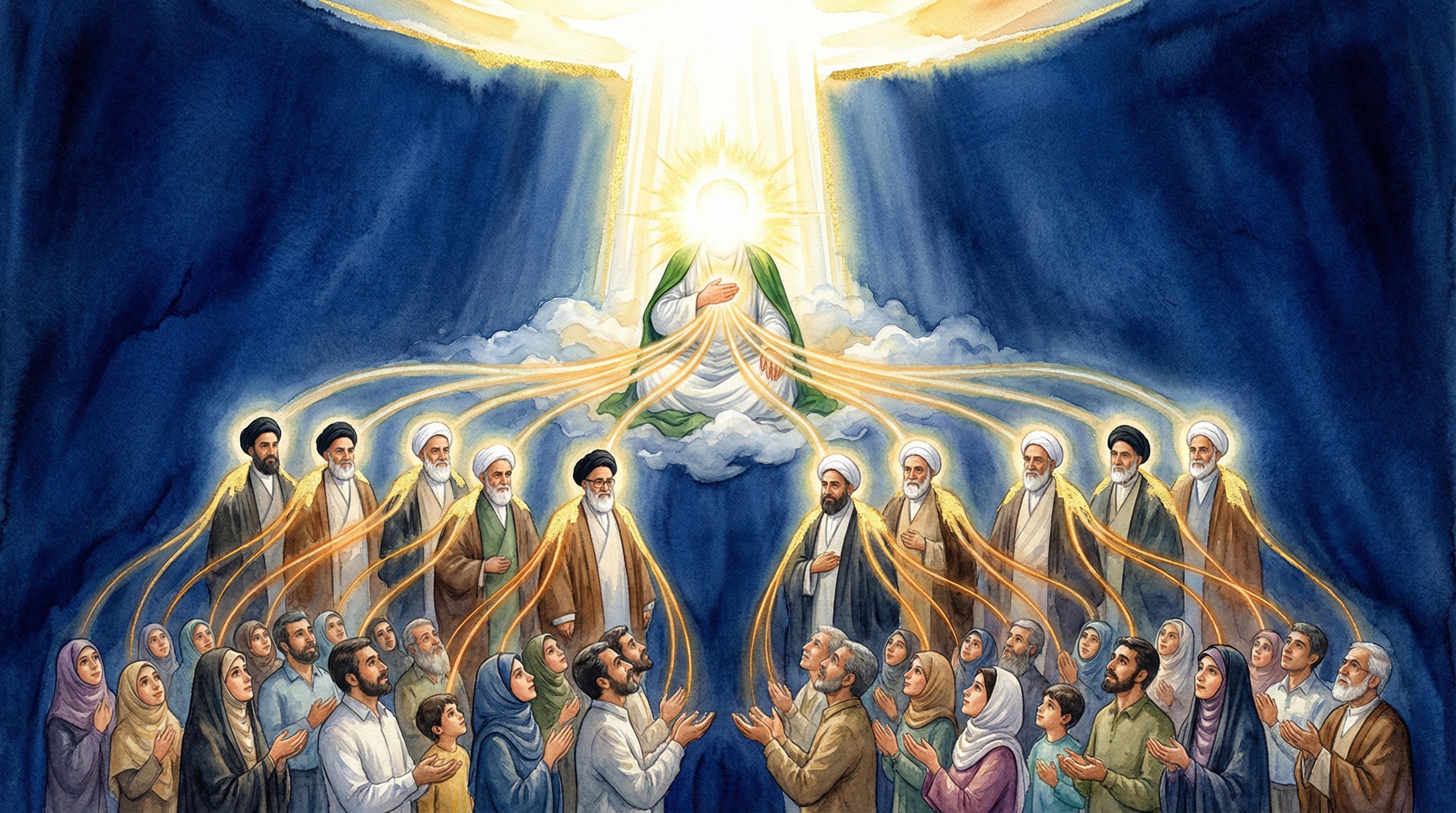
«وَأَمَّا الْحَوَادِثُ الْوَاقِعَةُ فَارْجِعُوا فِيهَا إِلَى رُوَاةِ حَدِيثِنَا فَإِنَّهُمْ حُجَّتِي عَلَيْكُمْ وَأَنَا حُجَّةُ اللَّهِ عَلَيْهِمْ»
“As for the events that will occur, refer regarding them to the narrators of our traditions, for they are my proof upon you, and I am the proof of God upon them.”
— Al-Saduq, Kamal al-Din wa Tamam al-Ni’mah
— Al-Tusi, Ghaybah
— Al-Hurr Al-Ameli, Wasa’il al-Shia, Volume 27, Page 140, Hadith 9
The scholars are the proof of the Imam upon us.
The Imam is the proof of God upon them.
And God is above all.
The chain is intact.
The system is intact.
The proof is intact.
Follow the scholars.
Trust the process.
And do not change.
وَمَا بَدَّلُوا تَبْدِيلًا
And they have never changed.
— Quran, Surah al-Ahzab (the Chapter of the Confederates) #33, Verse 23
The Lesson
Before we close — before we turn to the eulogy and the supplication — let me draw out three lessons.
Three things to carry with you when you leave this gathering tonight.
The First Lesson: The System is Stronger than the Individual

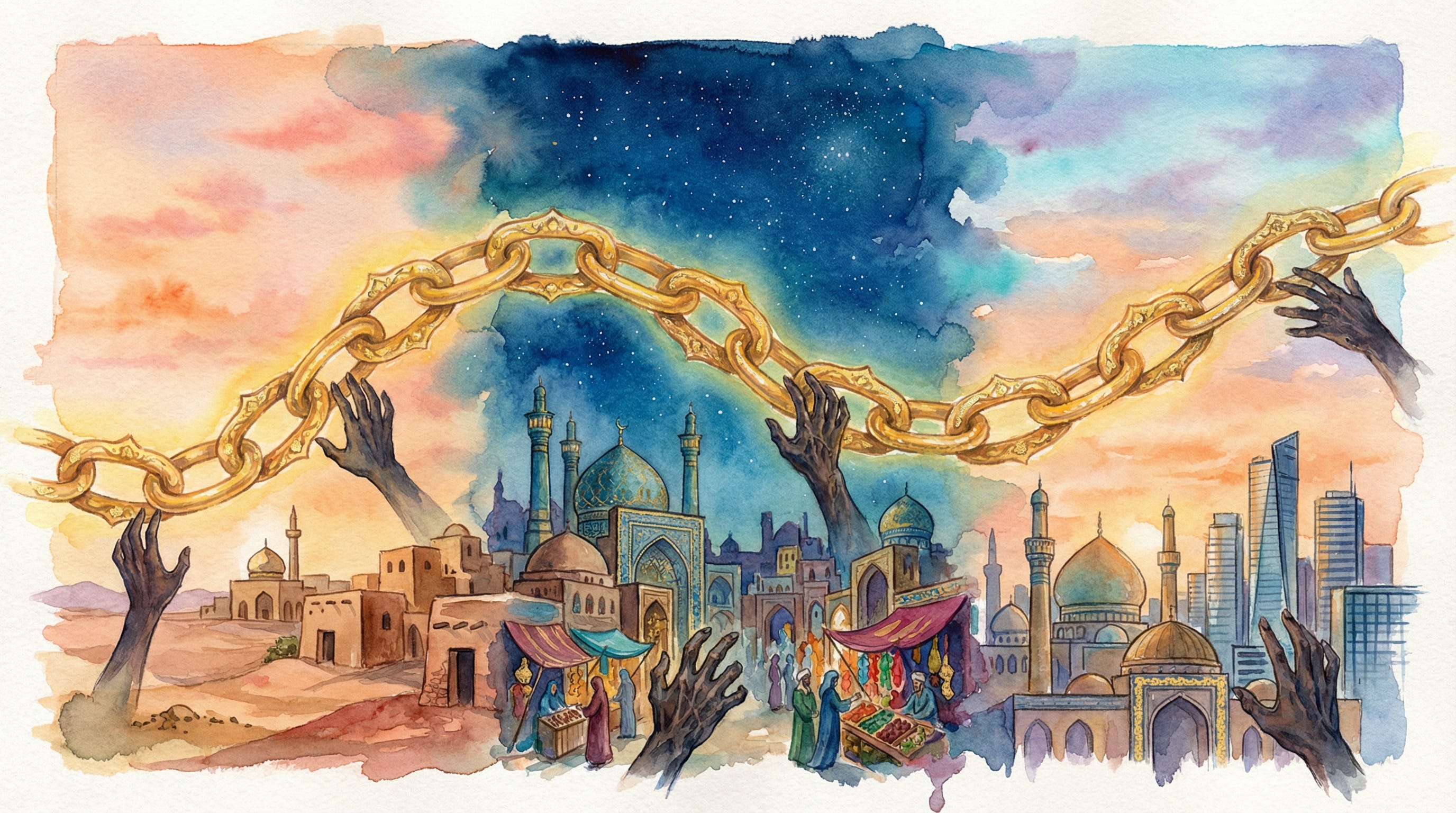
The first lesson: The system is stronger than the individual.
This is the genius of what the Ahl al-Bayt — peace and blessings be upon them all — established.
From the first Imam to the twelfth.
From the era of manifest presence to the era of occultation.
From the nass of the Imams to the Marja’iyyah of the jurists to the Wilayat al-Faqih of the Islamic Republic.
The system was never designed to depend on one human being.
It was designed to ensure that when one falls, another rises.
We mourn the man — may God rest his pure soul — and we mourn him deeply.
But we trust the institution.
We trust the process.
We trust the principle that the earth cannot be devoid of a Hujjat.
And we trust the directive of our Imam — refer to the narrators of our traditions, for they are my proof upon you.
The chain has never been broken in fourteen hundred years.
It will not be broken now.
The Second Lesson: Our Response Defines Us
The second lesson: Our response defines us.
How we respond to this trial is itself a test.
It is an imtihan.
It is part of the sifting we’ve discussed previously.
The Imam of our time is watching.
The angels are recording.
And the question being asked of us — the question that Surah al-Ahzab puts to every generation — is:
will you change?
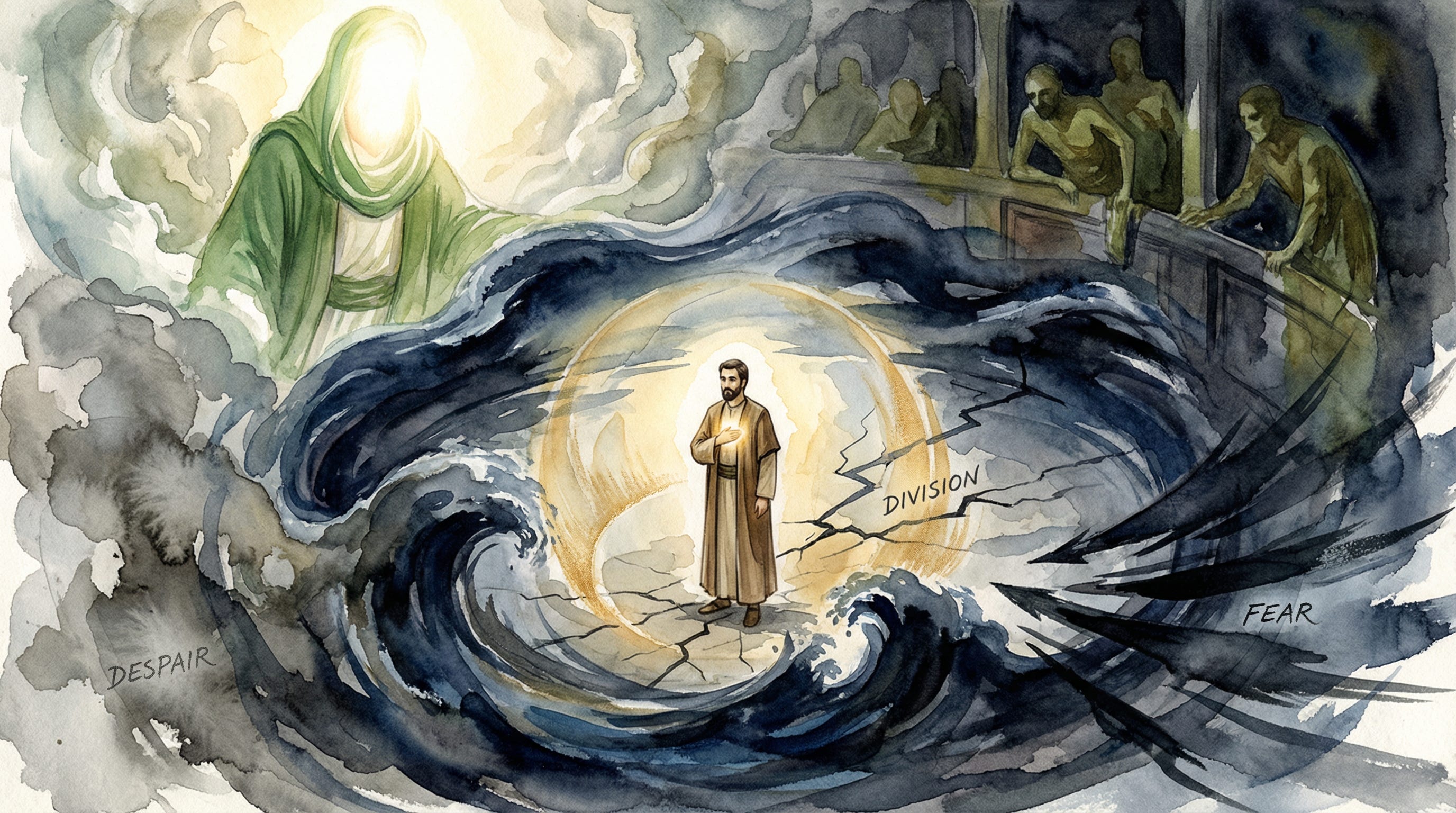
Will you respond with despair — or with intidhar, with active, purposeful anticipation of the Imam’s return?
Will you respond with fear — or with the courage of Imam Husayn at Karbala, who faced an army of thousands and did not blink?
Will you respond with division — or with the unity that our tradition demands of us in moments of crisis?
The enemies of Islam are watching us tonight.
They struck the head and they are waiting to see if the body will fall.
I say to them — and I say to you: this body is held together by something they do not understand.
It is held together by a covenant with God. And — wa ma baddalu tabdila — we have not changed, and we will not change.
The Third Lesson: This Is A Call to Action, Not to Passivity
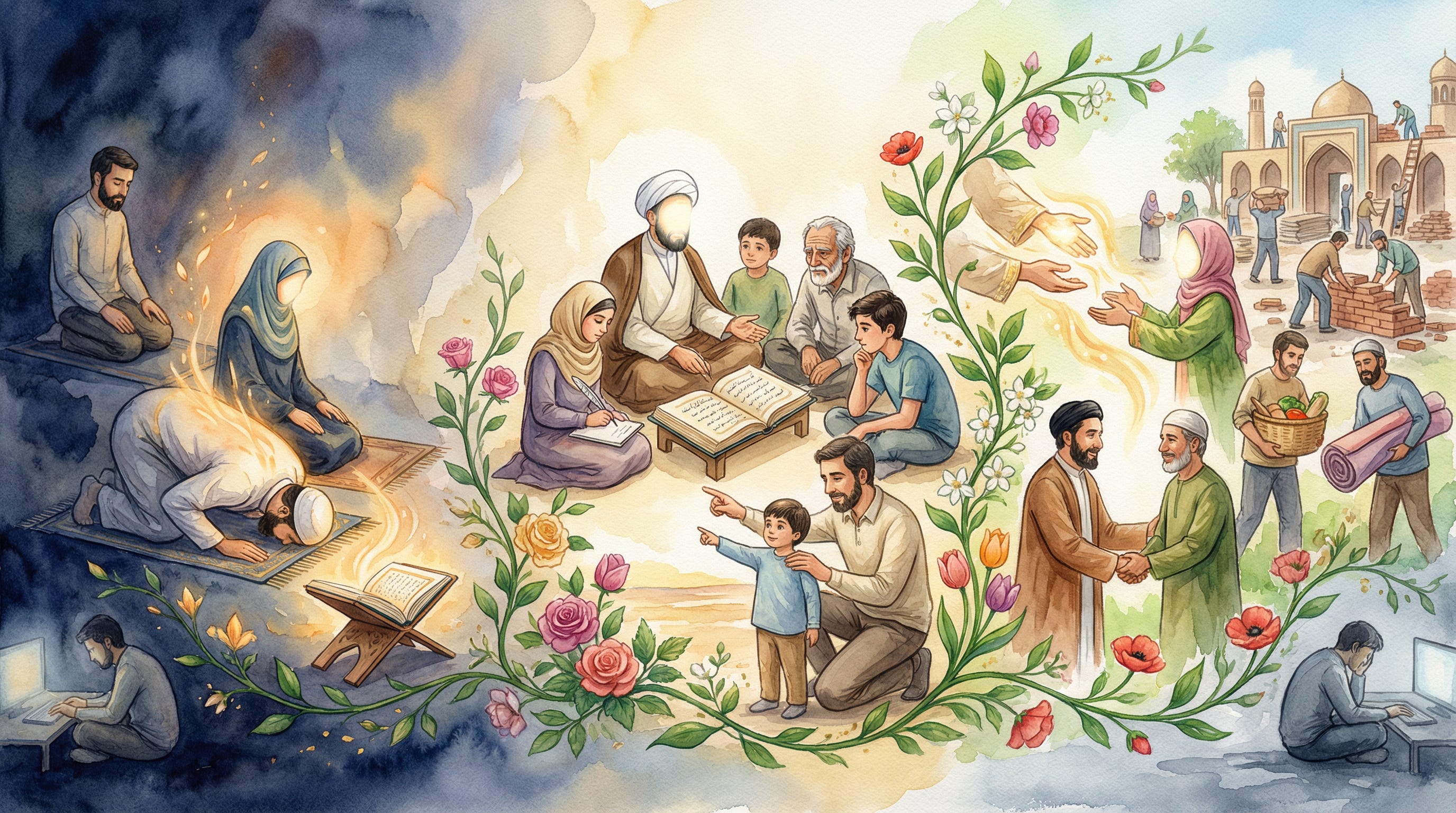
The third lesson: This is a call to action, not to passivity.
Do not go home tonight and do nothing.
Do not sit in front of your screens and consume grief.
Grief without action is an indulgence.
Tears without purpose are wasted water.
Pray more.
And I mean that literally — lengthen your night prayers.
Read more Quran.
Give sadaqah for the soul of our martyred leader.
Give sadaqah for the reappearance of the Imam.
Learn more.
If you do not know the basics of your fiqh, now is the time to learn.
If you do not have a risalah, get one.
If you have never attended a Hawza class, attend one.
The scholars are the proof of the Imam upon you — but you must go to them.
You must seek knowledge.
You must equip yourself.
Teach your children.
Tell them who Imam Khamenei was.
Tell them why he mattered.
Tell them the story of Karbala.
Tell them about the Imams - use the material we have built up over the months and years.
Tell them about the Occultation — the Cultimating Guidance as we’ve termed it in our sessions.
Give them the tools to navigate a world that is hostile to everything we believe.
Because the next generation is the generation that may witness the return of the Imam — and they must be ready.
Support your communities.
Strengthen the bonds between you.
Help the poor among you.
Resolve the disputes among you.
The Prophet — peace and blessings be upon him and his family — said:
«أَلَا أُخْبِرُكُمْ بِأَفْضَلَ مِنْ دَرَجَةِ الصَّلَاةِ وَ الصِّيَامِ وَ الصَّدَقَةِ؟ صَلَاحُ ذَاتِ الْبَيْنِ»
“Shall I tell you what is better than prayer and fasting and charity? It is reconciling between people.”
— Nahjul Balaghah, Letter 47, Imam Ali quoting from Prophet Muhammad
Now is the time for that.
And finally — do not let the enemies of Islam see a community in disarray.
Let them see a community that is unshakeable.
A community that buries its dead with dignity and then rises with purpose.
A community that does not need any one person to survive — because it is connected to the inexhaustible divine source that never runs dry.
The Eulogy
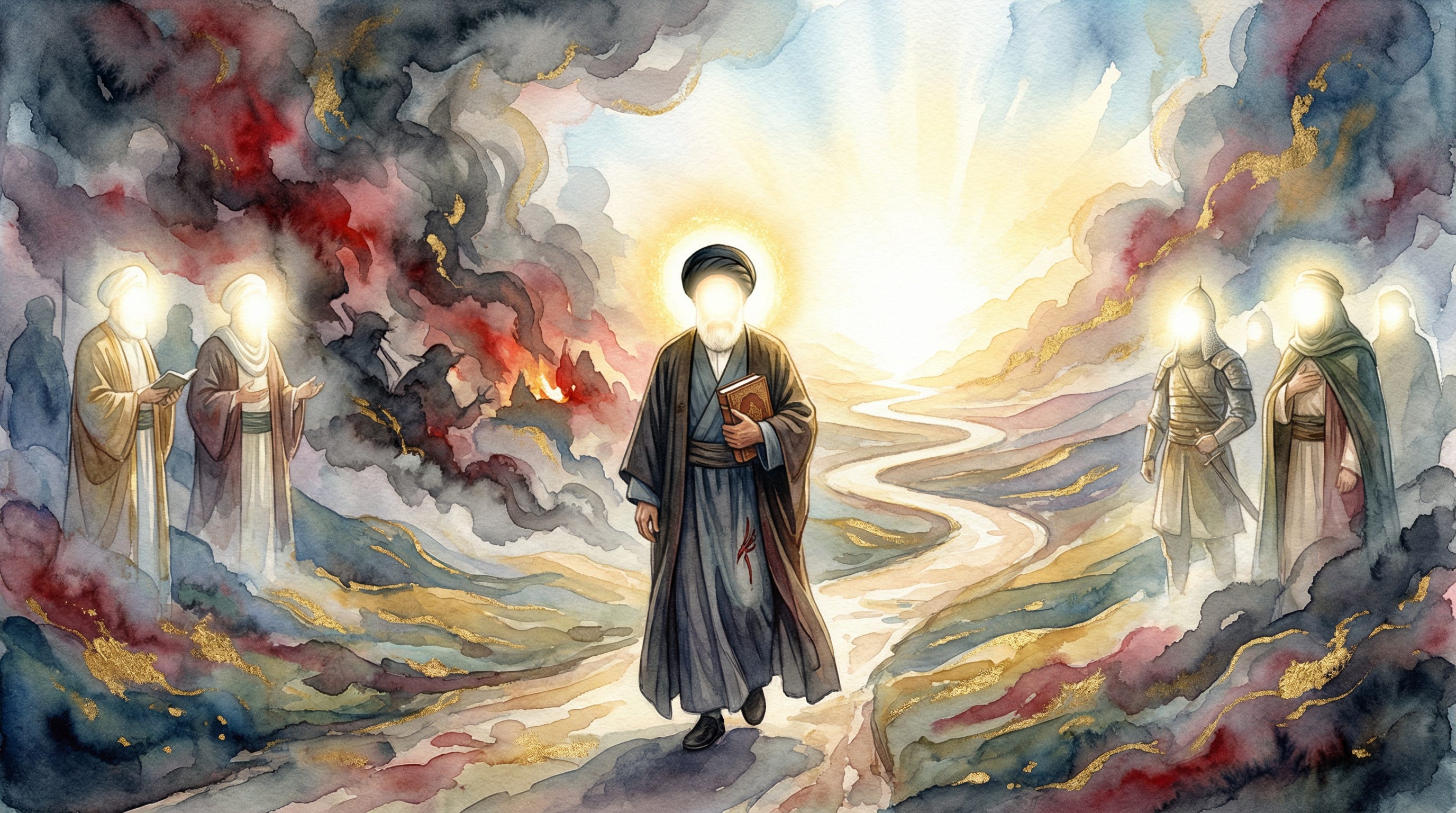
Let me now speak about the man.
Not the institution.
Not the office.
Not the constitutional position.
The man.
He was born in Mashhad — the city of Imam al-Rida — on the 17th of July, 1939.
His father was a scholar.
His grandfather was a scholar.
He was raised in the house of knowledge, in the shadow of the shrine of the Eighth Imam.
He went to Qom as a young man.
He studied under the greatest minds of the century — under Imam Khomeini himself, under Allamah Tabatabai, under Shaheed Motahhari.
He did not study to gain a title.
He studied to serve.
And then came the revolution.
And he was in the streets.
He was in the prisons.
He was arrested.
He was exiled.
He was beaten.
And he did not break.
On the 27th of June, 1981 — in a prayer gathering in Tehran — a bomb planted by the Mujahedin-e-Khalq (MEK) — a group that we call Munafeqin-e-Khalq (MKO) exploded beside him.
It destroyed the use of his right hand.
Permanently.
For the rest of his life, he could not use his right arm.
And what did he say? He said — and I am paraphrasing from memory — that God had given him one hand for prayer and one hand for the revolution, and now God was telling him to focus entirely on prayer.
He turned a wound into worship.
Two years later, he became the President of the Republic.
And then, in 1989, when Imam Khomeini departed this world, the Assembly of Experts looked at the nation and asked: who?
And the answer came back — from the testimony of Ayatullah Rafsanjani, from the endorsement of Ayatullah Golpayegani and Ayatullah Araki, from the scholars and the soldiers and the people who knew him:
Sayyed Ali Khamenei.
He is the one.
And for thirty-six years — thirty-six years — he carried that trust.
He was not a man of grand gestures.
He was not a man of noise.
He was a man of discipline.
Of consistency.
Of steel conviction wrapped in quiet patience.
He read.
He wrote.
We have been honoured to study some of his works, and in the coming months and years we will continue, with God’s grace to continue to learn from him.
He composed poetry.
He wept when he recited the Quran — and there are videos that millions of you have seen, of this man — the leader of a nation, the commander of armies — weeping like a child when the verses of God were recited in his presence.
That is not the weeping of a politician.
That is the weeping of a servant who knows his Master.
He stood against America for thirty-six years and he did not flinch.
He stood against Israel for thirty-six years and he did not flinch.
He stood against the internal enemies — the hypocrites, the agents, the fifth columnists — and he did not flinch.
He buried his allies — Hajj Qasem Soleimani, Hajj Abu Mahdi al-Muhandis, Shaheed Ismail Haniyeh, Sayyed Hassan Nasrallah — one by one, the pillars around him were taken, and he did not flinch.
And in his final speech — his very last public address — he did not talk about missiles or negotiations or geopolitics.
He talked about Imam Husayn.
He said:
وَمِثْلِي لَا يُبَايِعُ مِثْلَ يَزِيدَ أَبَدًا
Someone like me will never give allegiance to someone such as Yazid
— Sayyed Ibn Tawus, Lahouf
And then they killed him.
And I say to you tonight — with the conviction of everything I have studied and everything I believe — they did not defeat him.
They confirmed him.
They proved that he was telling the truth.
Because only the truthful die like this.
Only the truthful are killed by the tyrants.
Only the truthful end their lives with the words of Imam Husayn on their lips.
So we say to him tonight:
O our leader...
You carried the trust that was placed upon your shoulders on that day in 1989, when the nation was orphaned by the passing of Imam Khomeini. And you carried it faithfully for thirty-six years.
You did not waver.
You did not compromise.
You did not bend.
You stood against the greatest military powers on earth and you did not blink.
And now they have taken your body from us.
But they have not taken what you built.
They have not taken the system you protected.
They have not taken the faith you nourished.
They have not taken the Imam you served.
You are with Imam Husayn now.
You are with Imam Ali now.
You are with Sayyedah Fatimah now.
You are with the Prophet now.
And we... we remain.
And we will continue.
Wa ma baddalu tabdila.
The Supplication
May God send his blessings upon Prophet Muhammad and the Family of Prophet Muhammad and Hasten their Relief
For our Martyred Leader.
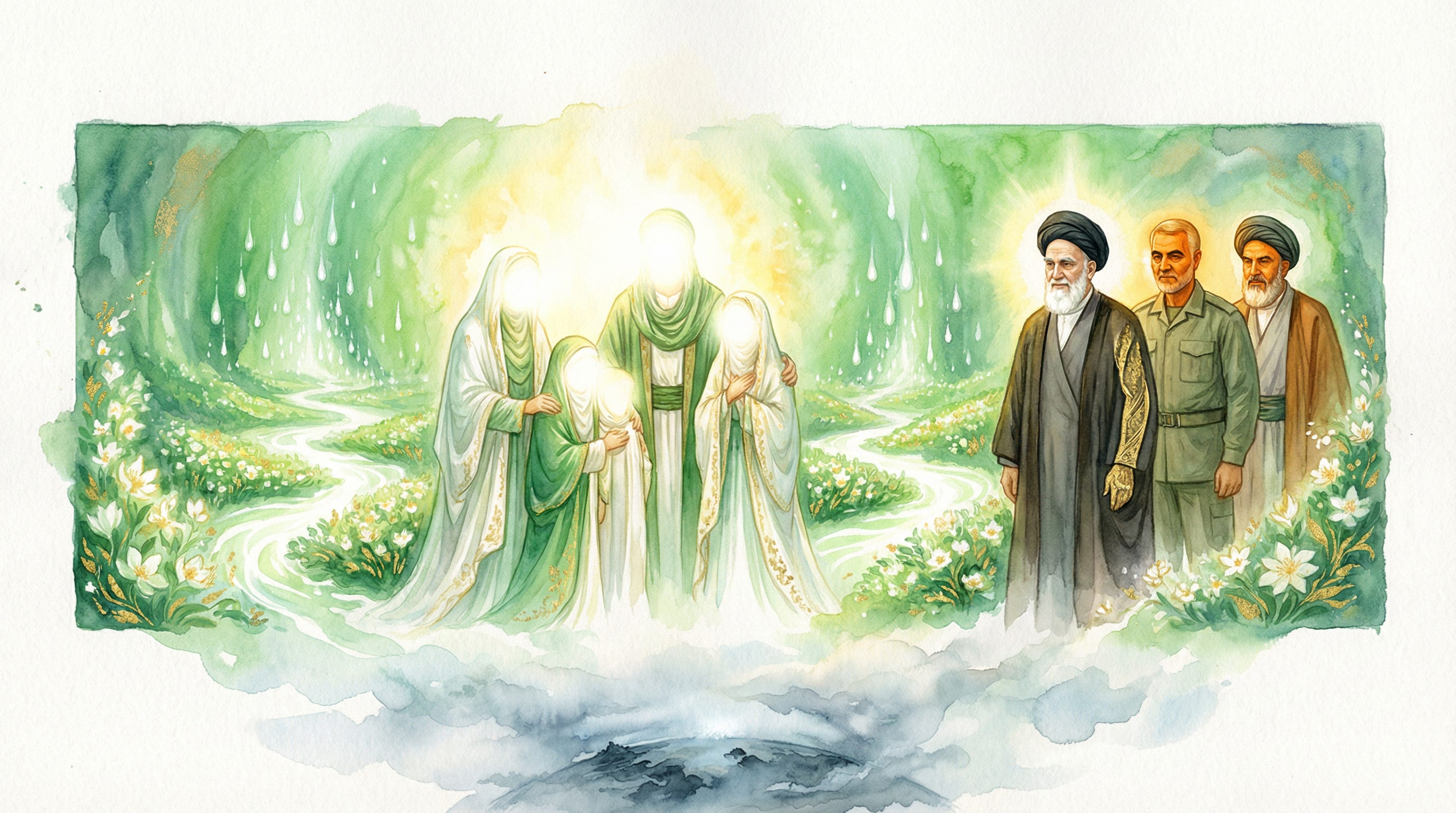
O God, accept the soul of Your servant, Imam Sayyed Ali ibn Sayyed Jawad al-Husayni al-Khamenei, in the ranks of the truthful and the martyrs.
Elevate his station.
Illuminate his grave with the light of Muhammad and the Family of Muhammad.
Grant him the companionship of those he served — the companionship of Ali and Fatimah and Hasan and Husayn and the nine Imams from the progeny of Husayn.
Reward him, O Lord, for every prayer he led, for every tear he shed for Your Husayn, for every night he stood in Your service when the world was sleeping, for every wound he bore without complaint, for every year he carried the weight of this trust upon his shoulders.
And reunite him with Hajj Qassem and Sayyed Hassan, and all the martyrs of this path — so that they may stand together in Your presence, as they stood together in this world, an unbroken line of servants who did not change.
For the Believers.
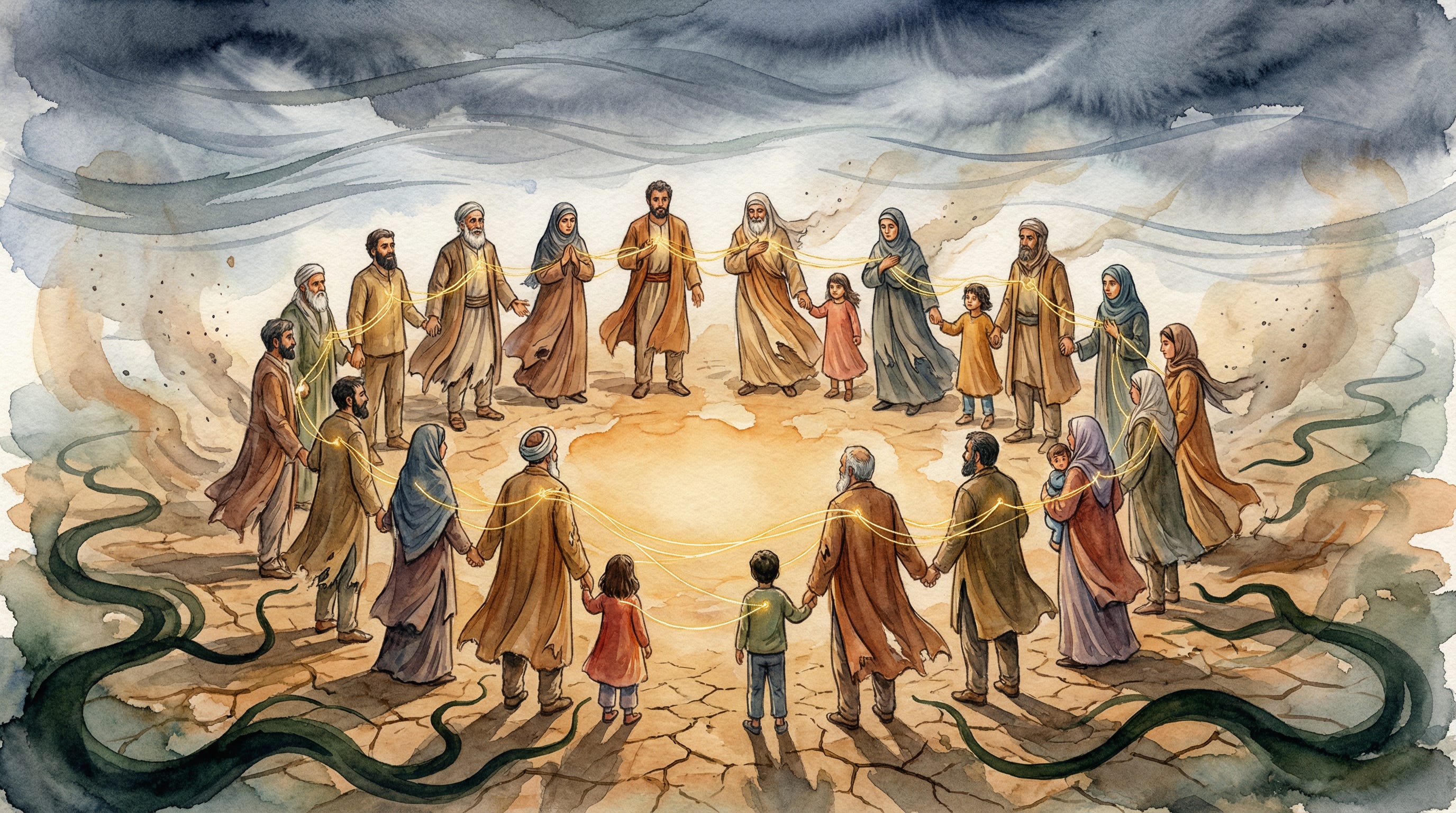
O God, grant patience and steadfastness to the believers.
Unite our hearts.
Protect us from despair.
Protect us from division.
Protect us from the whispering of the hypocrites who wish to see us scatter.
Grant us the wisdom to navigate this trial as the companions of the Imams navigated theirs — with faith, with unity, and with unshakeable trust in Your plan.
Make us among those described in Your Book — min al-mu’minina rijalun sadaqu ma ‘ahad Allaha ‘alayh — among the believers who have been true to their covenant with You.
And let us never change.
Wa ma baddalu tabdila.
For the Scholars and the Leaders.
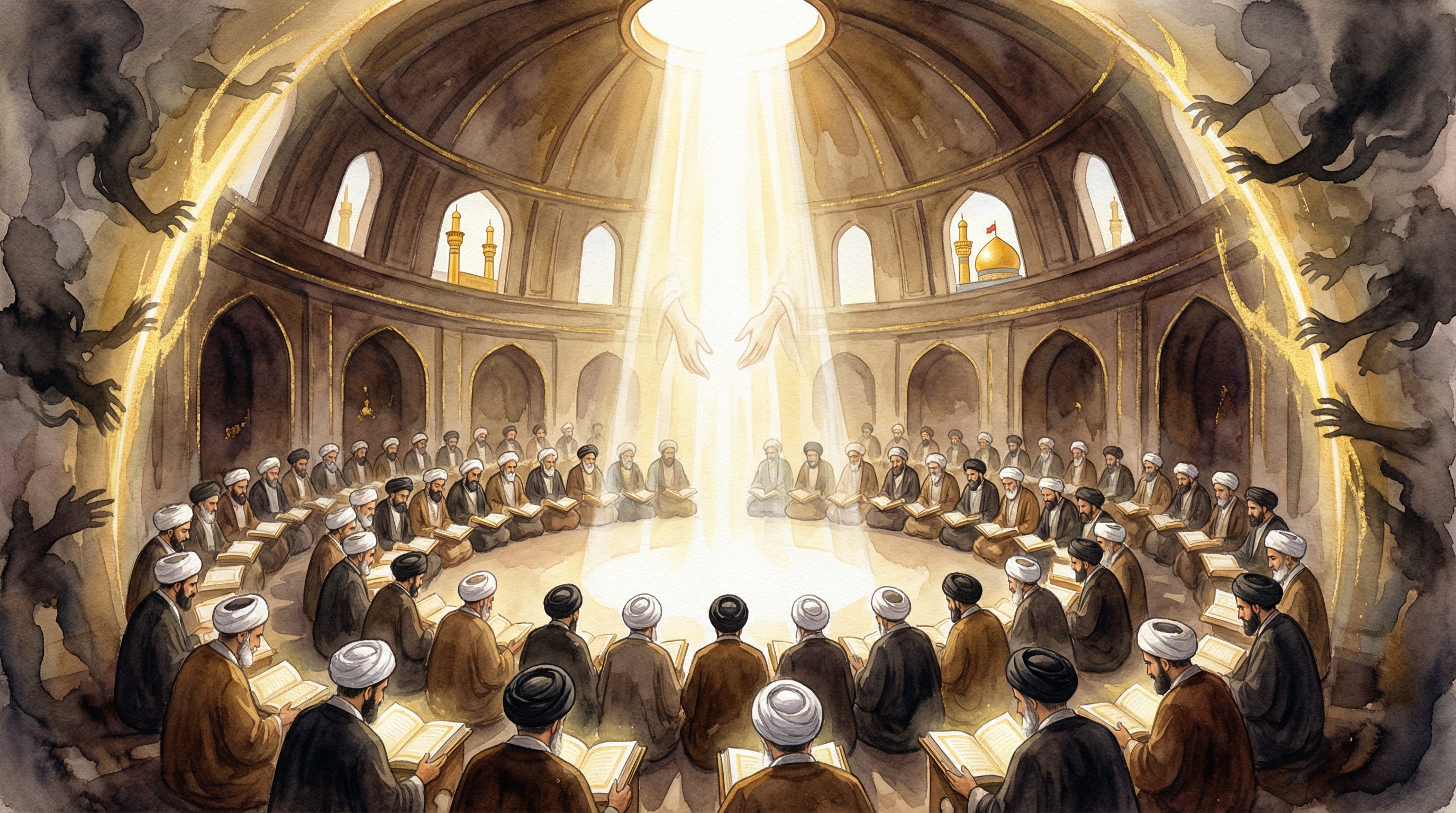
O God, guide the Assembly of Experts.
Guide the scholars of Qom and Najaf.
Grant them wisdom and unity and courage.
Protect them from the plots of the enemies.
And grant them the clarity to choose a leader who is worthy of this trust — a leader who will walk in the path of Imam Khomeini and Imam Khamenei, a leader who will serve the Imam of our time with the same devotion.
For the Islamic Republic and the Oppressed.
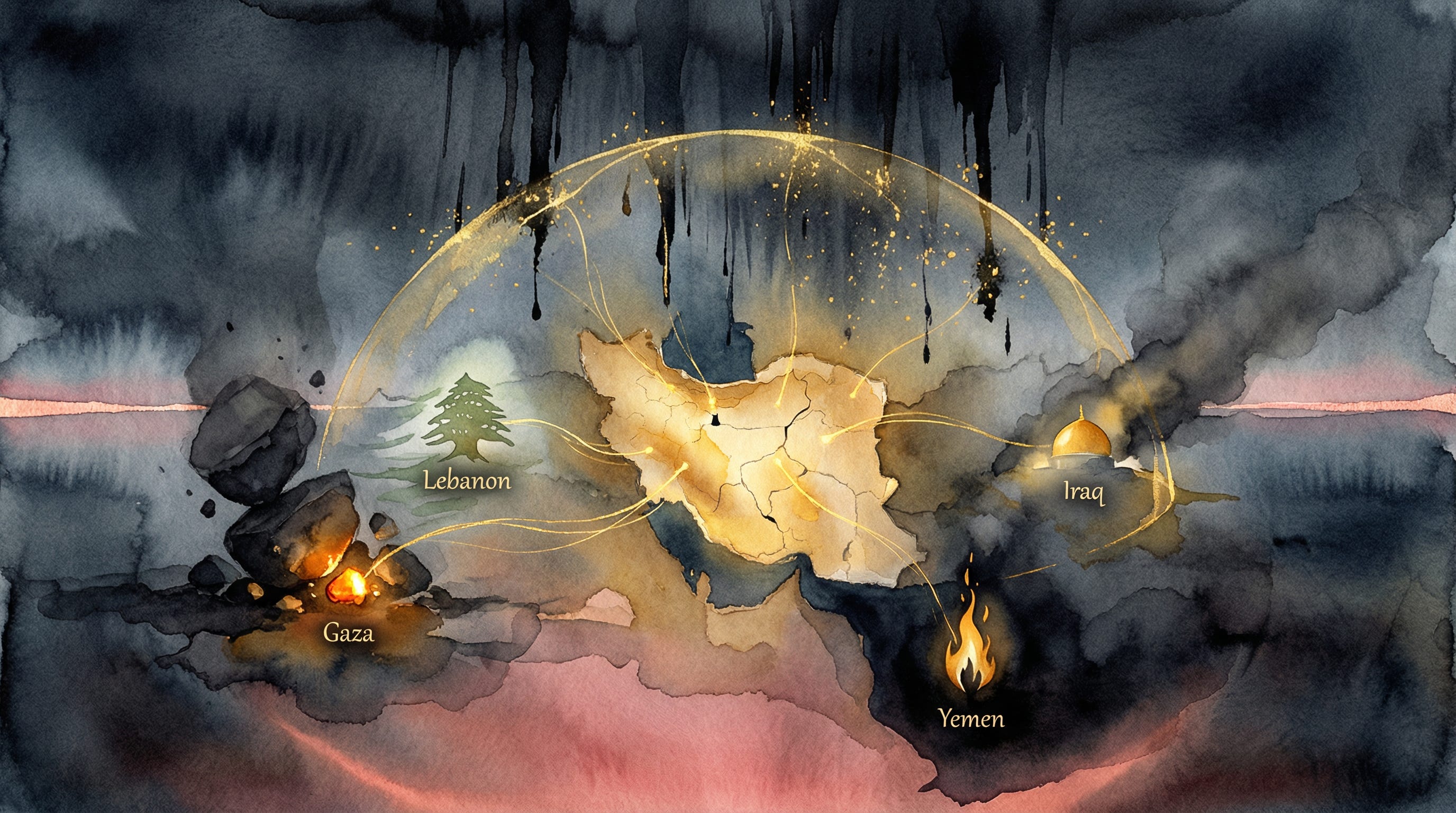
O God, protect the Islamic Republic of Iran.
We know it is not perfect — no human institution is, in the absence of the Infallible Imam.
But it is an institution built on the principle of Your governance, an institution that sought to implement Your law and prepare the ground for the return of Your Hujjat.
Protect it from those who seek to destroy it.
Protect its people — its men, its women, its children — from the bombs that are falling as we speak.
And be with the oppressed.
In Iran.
In Gaza.
In Lebanon.
In Yemen.
In Iraq.
In every land where Your servants are being crushed beneath the boots of the arrogant.
Grant them victory,
O Lord. Grant them relief.
Grant them patience until the relief comes.
For the Reappearance.
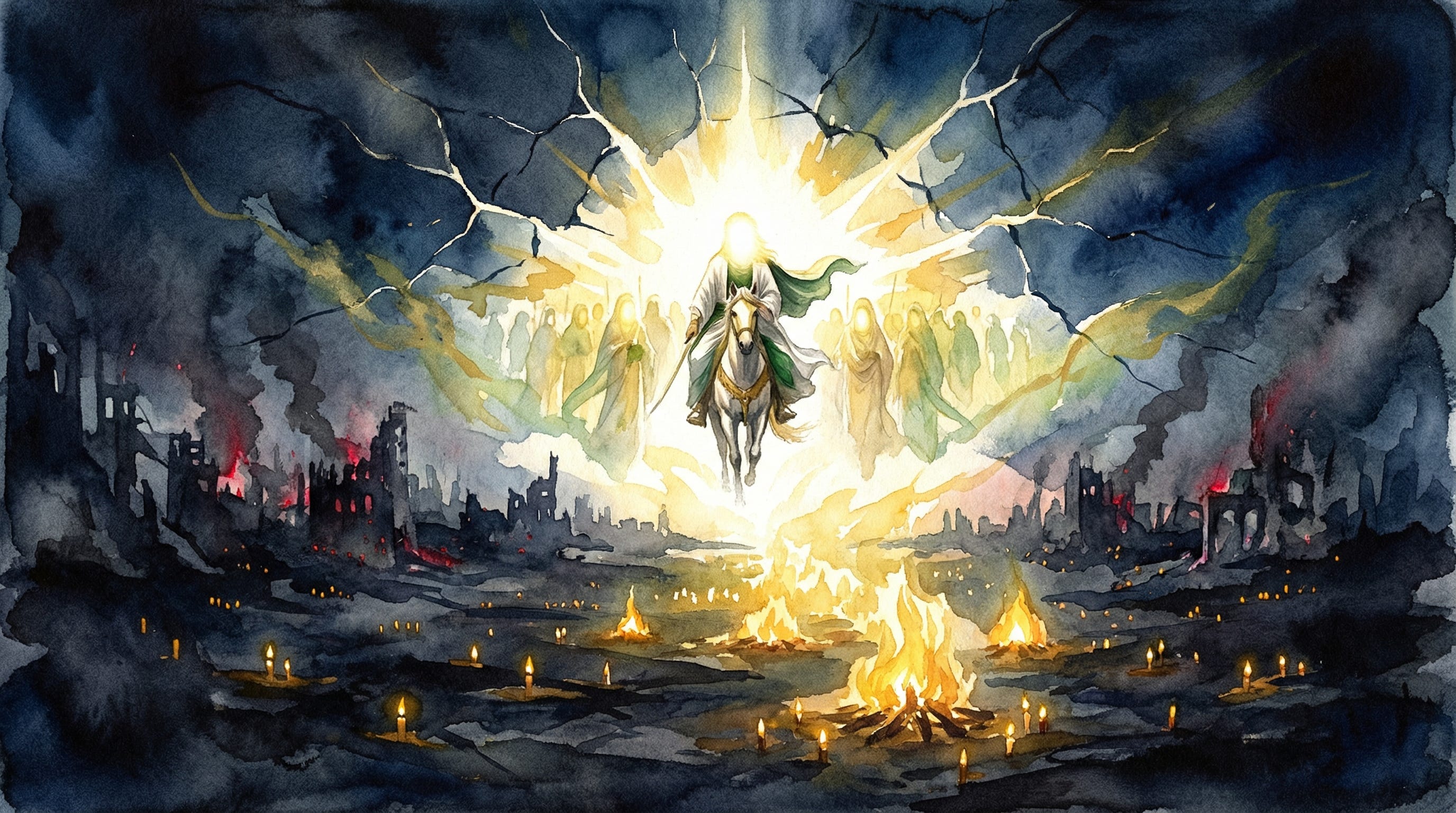
O God, hasten the reappearance of Your Hujjat.
If we have ever needed him — if the world has ever needed him — it is now.
The tyrants are drunk on their power.
The bombs are falling on the innocent.
The mosques are shaking.
The shrines are threatened.
The believers are scattered.
Send him, O Lord.
Send the one who will fill the earth with justice as it has been filled with oppression.
Send the grandson of Husayn.
Send the son of Hasan al-Askari.
Send the Hujjah, Muhammad ibn al-Hasan, the One who will Rise from the Family of Muhammad.
We have waited for over a thousand years.
And we will wait as long as You decree.
But tonight — tonight we ask with a broken heart and a voice that trembles — hasten his return.
And until he comes...
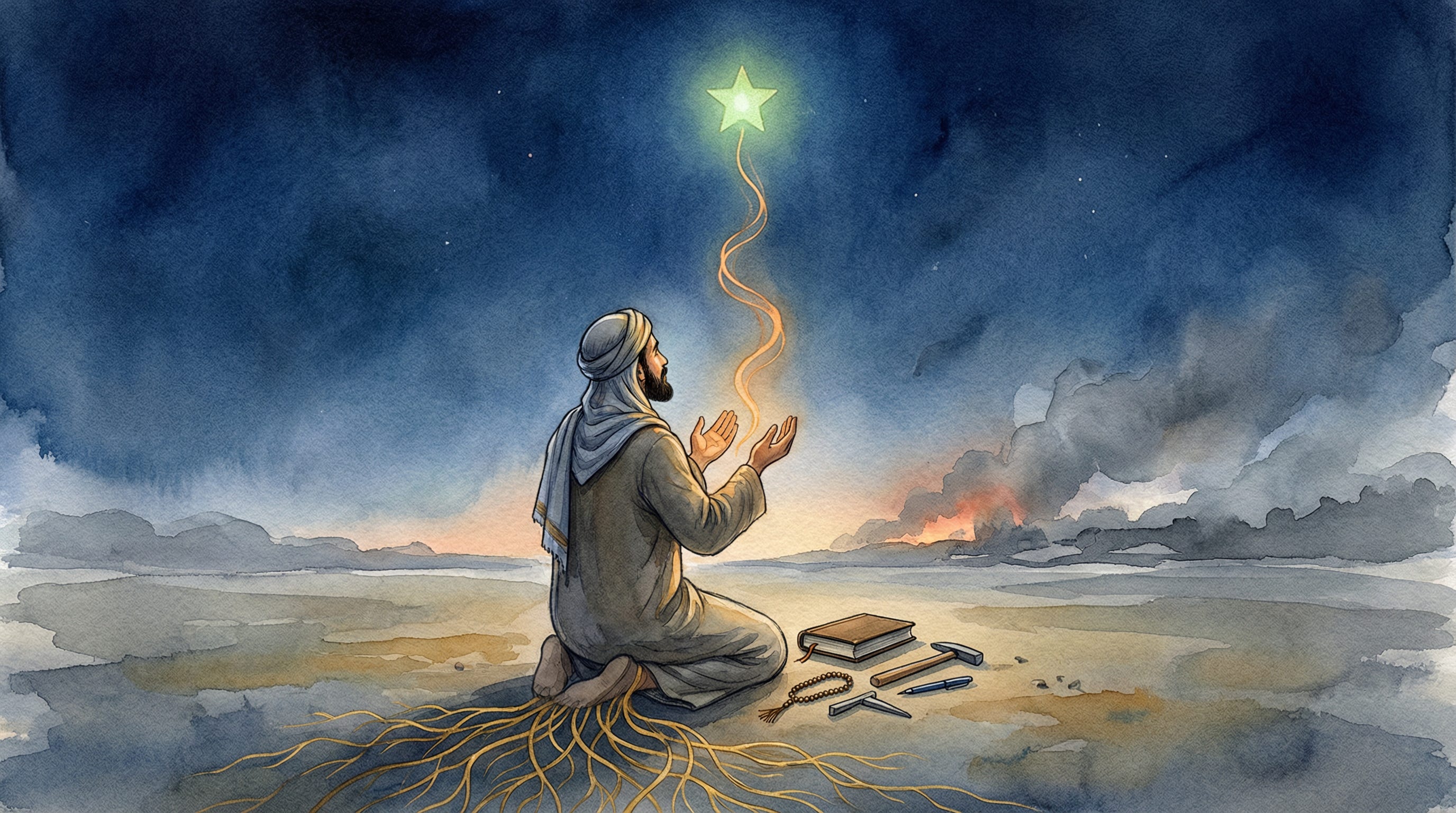
Until the dawn breaks...
We renew our covenant.
We renew it with the words that Your servants have spoken every morning since the gates of the Minor Occultation were sealed:
«اللَّهُمَّ كُنْ لِوَلِيِّكَ الْحُجَّةِ بْنِ الْحَسَنِ — صَلَوَاتُكَ عَلَيْهِ وَعَلَى آبَائِهِ — فِي هَذِهِ السَّاعَةِ وَفِي كُلِّ سَاعَةٍ، وَلِيّاً وَحَافِظاً وَقَائِداً وَنَاصِراً وَدَلِيلاً وَعَيْناً، حَتَّى تُسْكِنَهُ أَرْضَكَ طَوْعاً وَتُمَتِّعَهُ فِيهَا طَوِيلاً»
“O God, be for Your Deputy, the Hujjah ibn al-Hasan — Your blessings be upon him and upon his forefathers — in this hour and in every hour, a Guardian, a Protector, a Leader, a Helper, a Guide, and a Watcher, until You bring him to dwell in Your earth willingly, and let him enjoy therein for a long time.”
— Dua Faraj
O Imam al-Mahdi...
Your deputy has been taken from us.
But we have not abandoned you.
We have not changed.
Wa ma baddalu tabdila.
We will find another to carry the banner.
And we will continue to wait — not with idle hands, but with busy hands and full hearts — until you come.
وَآخِرُ دَعْوَانَا أَنِ الْحَمْدُ لِلَّهِ رَبِّ الْعَالَمِينَ
And the last of our call is: Praise be to God, the Lord of all the worlds.
وَصَلَّى اللهُ عَلَى مُحَمَّدٍ وَآلِهِ الطَّاهِرِينَ
And may God send blessings upon Muhammad and his Pure Household.
Amen, O Lord Sustainer of the Universes
Amen, O Most Merciful of the Merciful
And from Him alone is all ability and He has authority over all things.