

In His Name, the Most High
يَرْفَعِ اللَّهُ الَّذِينَ آمَنُوا مِنكُمْ وَالَّذِينَ أُوتُوا الْعِلْمَ دَرَجَاتٍ
“God will raise those who have believed among you, and those who were given knowledge, by degrees.”
— Qur’an, Surah al-Mujadilah (the Chapter of the Women who Pleads) #58, Verse 11
إِنَّ الْمُؤْمِنِينَ الْفُقَهَاءَ حُصُونُ الْإِسْلَامِ كَحِصْنِ سُورِ الْمَدِينَةِ لَهَا
“Verily the believing jurists are the fortresses of Islam, like the encircling wall that surrounds a city.”
— Al Kulayni, Al-Kafi, Volume 1, Kitab Fadl al-’Ilm (narrated from Imam Kadhim)
The Shift from Shield to Structure
The Shield protected.
For the last several sessions, we stood on the ramparts and looked outward.
We examined the geopolitics of waiting — the forces that threaten the community during the Great Occultation, and the divine counter-strategy that mobilises believers not merely to survive but to resist, to build, to prepare the ground for the return of the Imam, may God hasten his noble relief.
But a shield, no matter how strong, only defends.
It does not build.
It does not teach.
It does not preserve the words of a Prophet across fourteen centuries of exile, persecution, and empire.
Tonight, we turn inward.
We turn from the Shield to what the Shield protects — the living, breathing Architecture of Guidance that the scholars of the Ahl al-Bayt constructed, stone upon stone, generation after generation, through the longest night in the history of any community on earth.
We begin a new chapter.
And the question that launches it is deceptively simple:
When the Imam disappeared — who kept the light on?
Why This Series? The Door the Tawqi’ Opened
We recall.
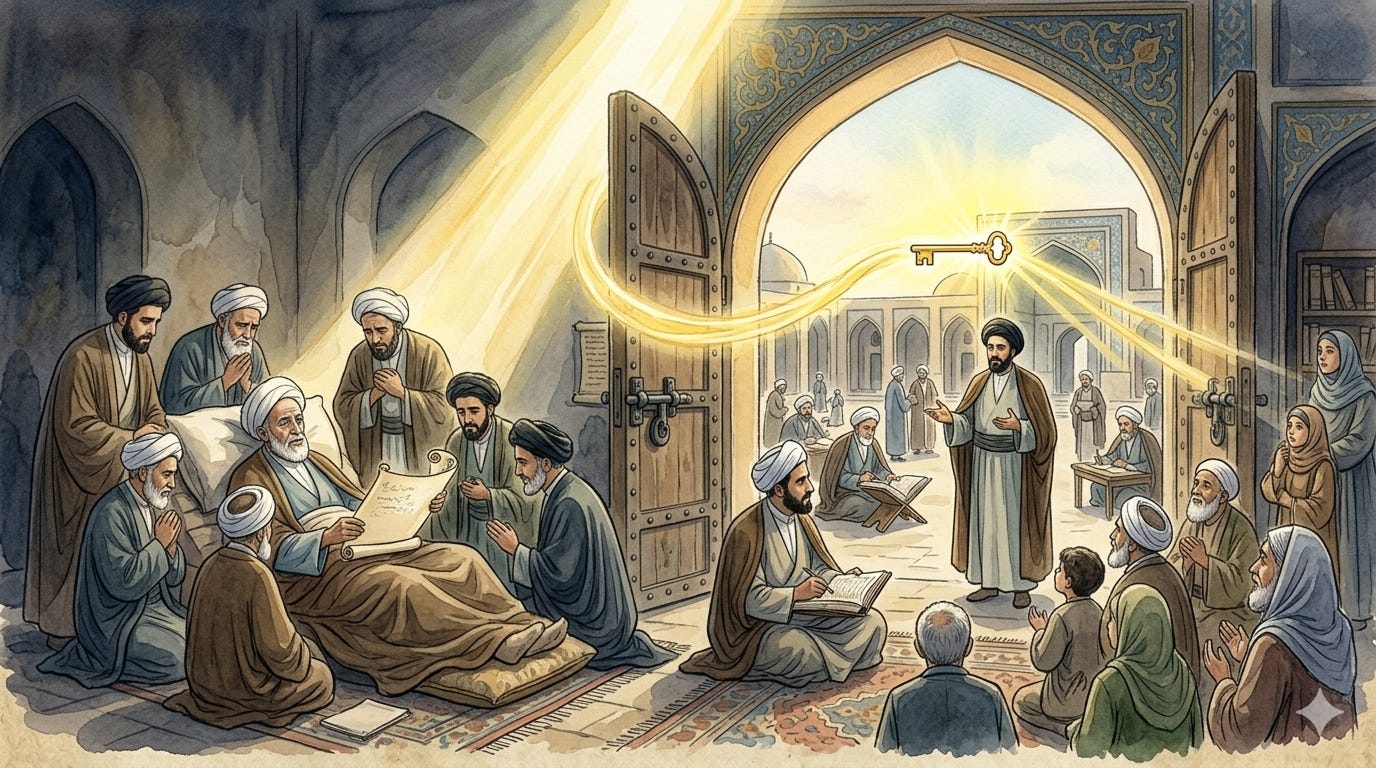
In Session 52, we stood with Ali ibn Muhammad al-Samarri — the Fourth and Final Deputy — as he delivered the last Tawqi’(written communication) from the Imam of the Age, peace be upon him, six days before the Deputy’s own death in 329 AH.
That letter sealed the Minor Occultation.
The door of Specific Deputyship (al-Niyaba al-Khassah) was closed.
But another door — far wider, far more demanding — was opened.
And the key to that door was embedded in a single sentence, delivered not in the Final Tawqi’ but through the Second Deputy, Muhammad ibn Uthman, in a communication we examined in Session 50:
وَأَمَّا الْحَوَادِثُ الْوَاقِعَةُ فَارْجِعُوا فِيهَا إِلَى رُوَاةِ حَدِيثِنَا، فَإِنَّهُمْ حُجَّتِي عَلَيْكُمْ وَأَنَا حُجَّةُ اللَّهِ عَلَيْهِمْ
“As for the newly occurring events, refer regarding them to the narrators of our traditions, for surely they are My Proof upon you, and I am the Proof of God upon them.”
— Al-Saduq, Kamal al-Din wa Tamam al-Ni’mah, Volume 2, Chapter 45, Hadith 4
Read this sentence carefully.
Then read it again.
This is not a suggestion.
It is not advice.
It is a constitutional charter.
The Imam — the divinely appointed leader of the Muslim community — delegated his authority, in the arena of newly occurring events, to a specific class of people: the narrators of the traditions of the Ahl al-Bayt.
And he declared them his Hujjah — his Proof — upon the community, while simultaneously declaring himself the Proof of God upon them.
This creates a chain.
God → Imam → Scholar → Community.
This chain is not theoretical.
It is not aspirational.
It is operational.
And the question this series asks is:
Who were these scholars?
What did they build?
How did a persecuted, scattered community without a visible leader create the most enduring religious educational institution in human history?
The answer is a story that spans more than a thousand years.
We call it The Architecture of Guidance.
A Word on the Nature of What Follows
Before we lay the first stone, it is important to be clear about the scope and purpose of what lies ahead.
This series — The Architecture of Guidance — will unfold in three movements.
The First Movement
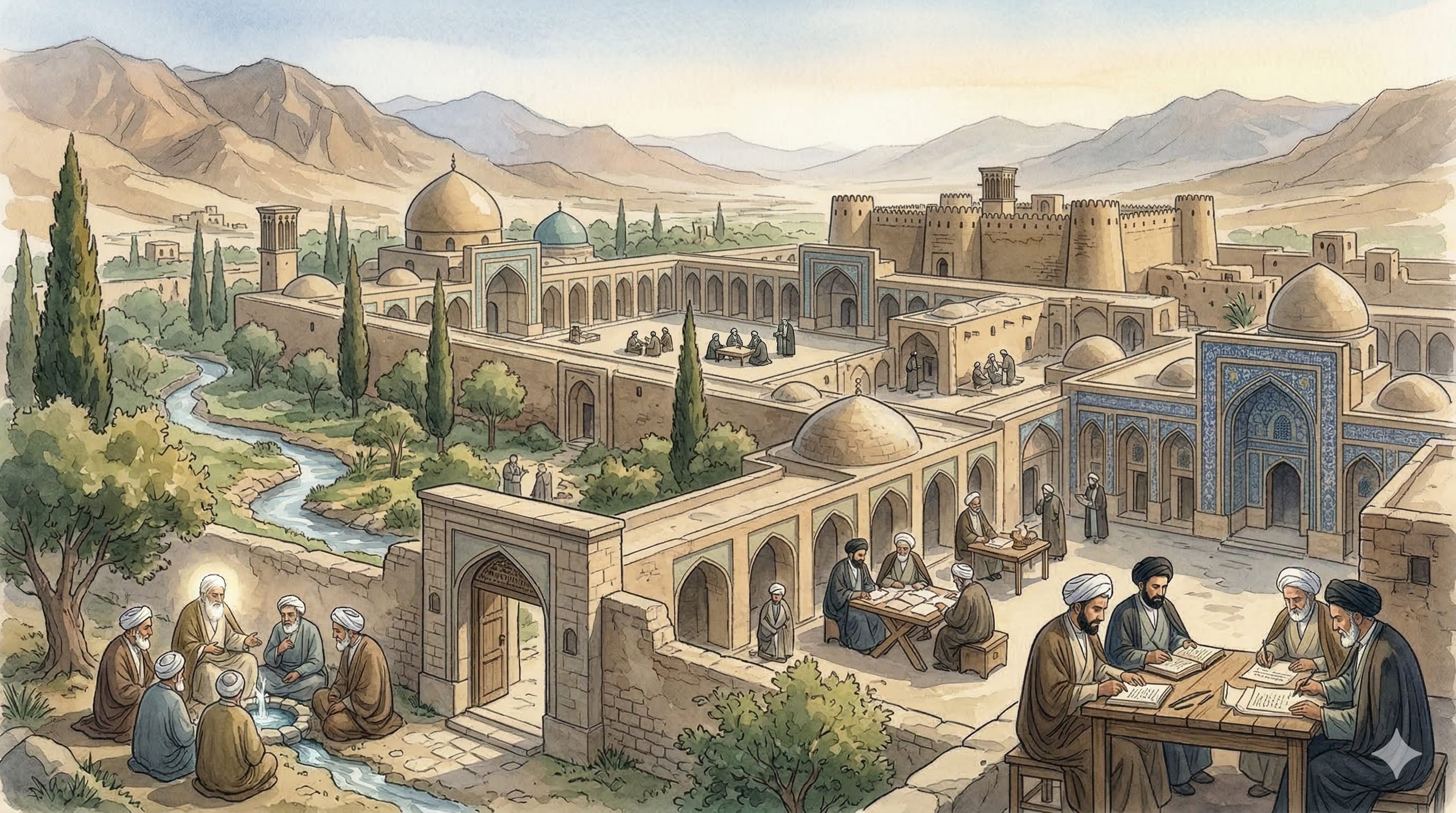
The First Movement is what we begin tonight.
Over the coming sixteen sessions, we will trace the builders of the Shi’a scholarly tradition from the classroom of Imam al-Sadiq (peace be upon him), through the crisis of the Occultation, through the great compilers and theologians and martyrs, through the founding of the Hawza, through the Mongol catastrophe and the Safavid renaissance and the modern struggles, up to our own age.
This is the story of the Hawza — the seminary, the garden, the protected enclosure of knowledge.
The Second Movement
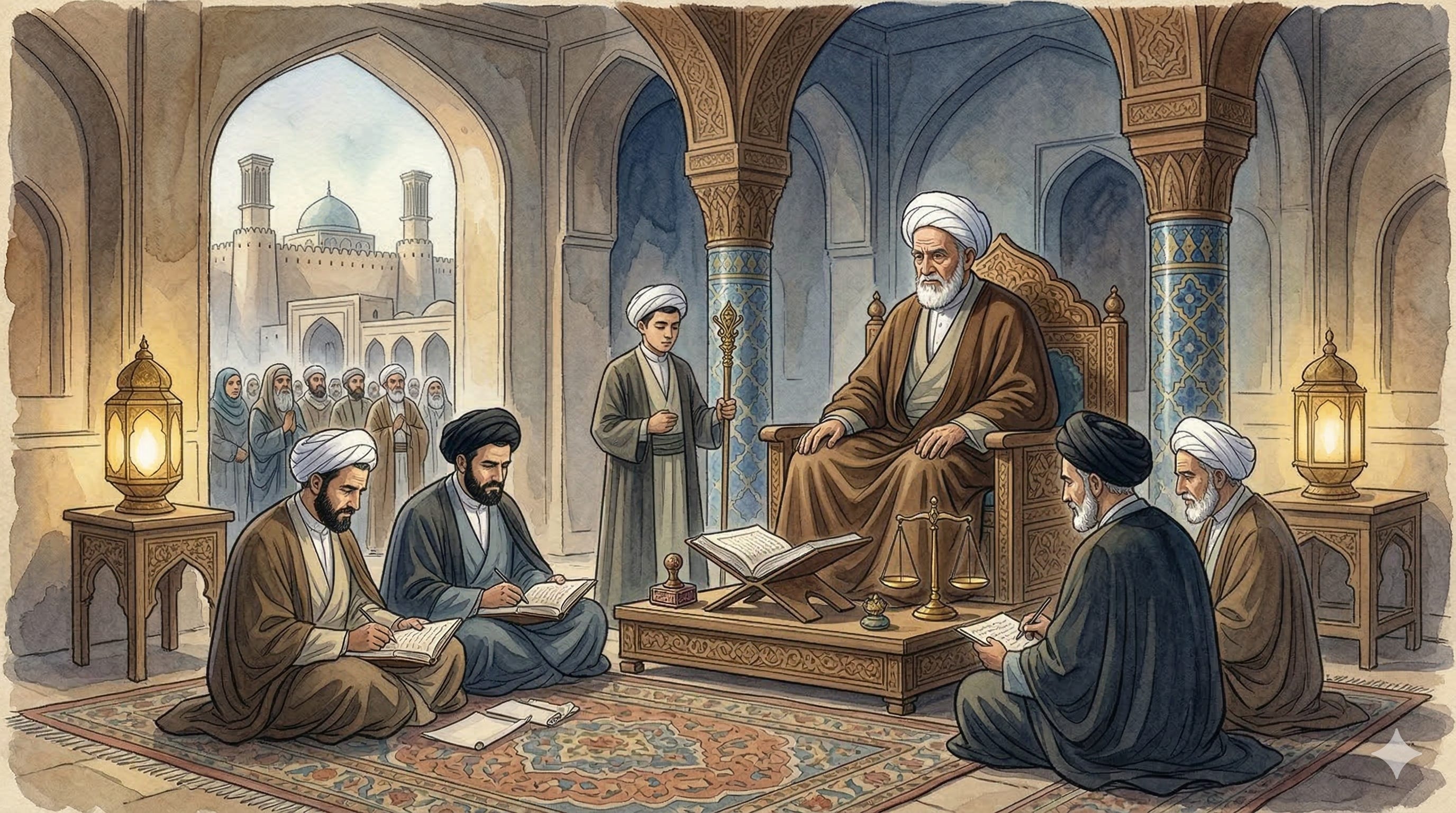
The Second Movement — after these sixteen sessions — will be a series of bridging sessions in which we examine the institution of the Marja’iyyah in depth.
Not merely what a Marja‘ is, but the full scope of his authority:
The concept of the Hakim Shar’i (the jurist as judge and governor), the historical reality that Maraji’ maintained their own enforcement mechanisms to uphold the Shari’ah within the territories of empires, and how this institution evolved from a scholarly advisory role into a comprehensive system of communal governance.
We will understand what the Marja’iyyah is before we can understand what it became.
The Third Movement
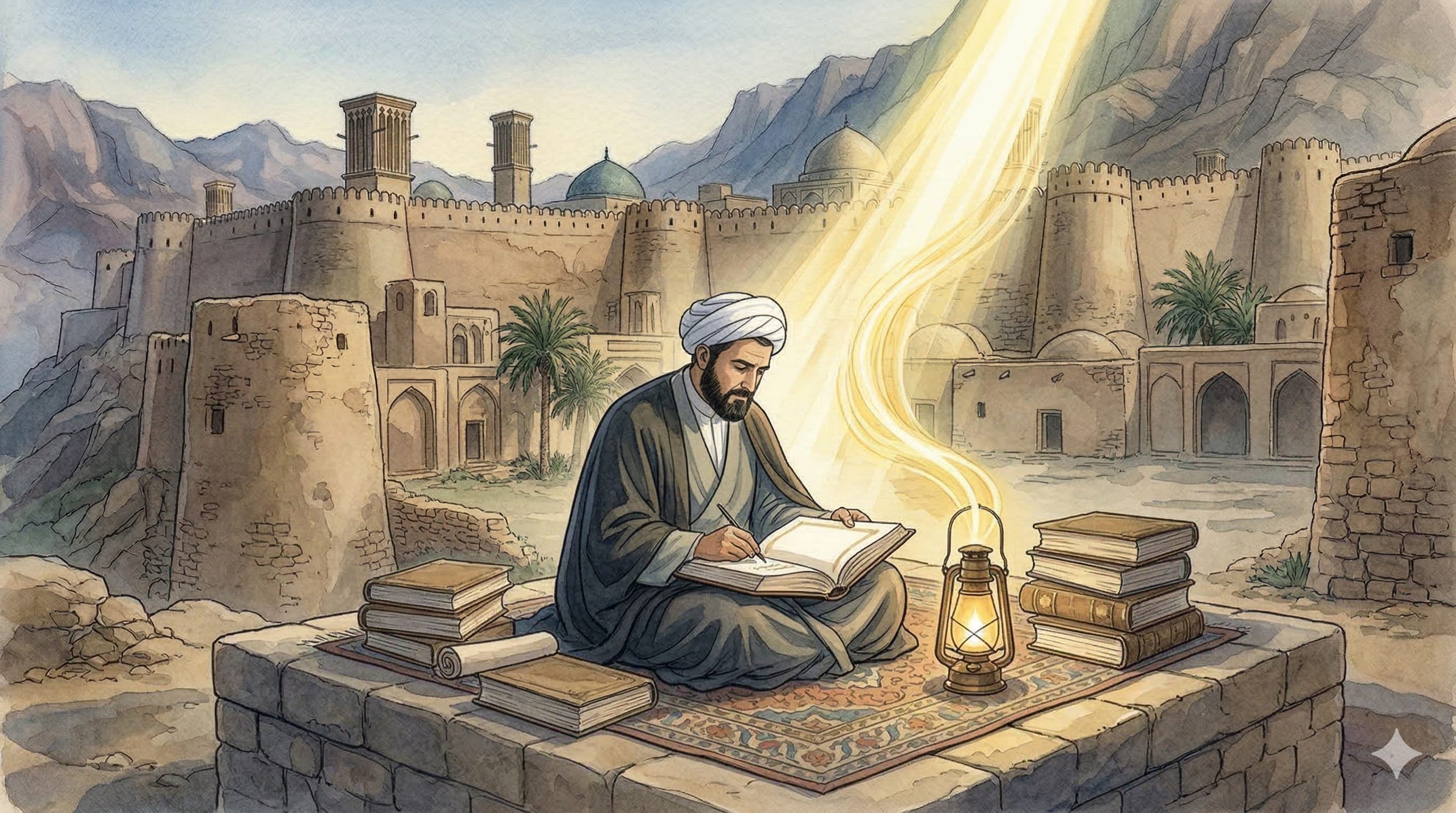
The Third Movement — God willing, in a future sub-series — will address Wilayat al-Faqih: the Governance of the Jurist.
And that discussion will not begin where most begin — with Imam Khomeini, may God elevate his station — but where it must begin: with the Wilayah of God Himself, flowing downward through the Prophet, the Imams, and finally to the Faqih.
That is a journey unto itself, and it requires the foundation we are about to build.
Tonight, we lay that foundation.
We introduce three concepts — the Hawza, the Marja’iyyah, and Wilayat al-Faqih — not as dry definitions, but as living realities that shape the daily life of every Shi’a Muslim on earth.
Video of the Majlis (Sermon/Lecture)
Audio of the Majlis (Sermon/Lecture)
Point One: The Hawza — The Protected Garden
What Is the Hawza?
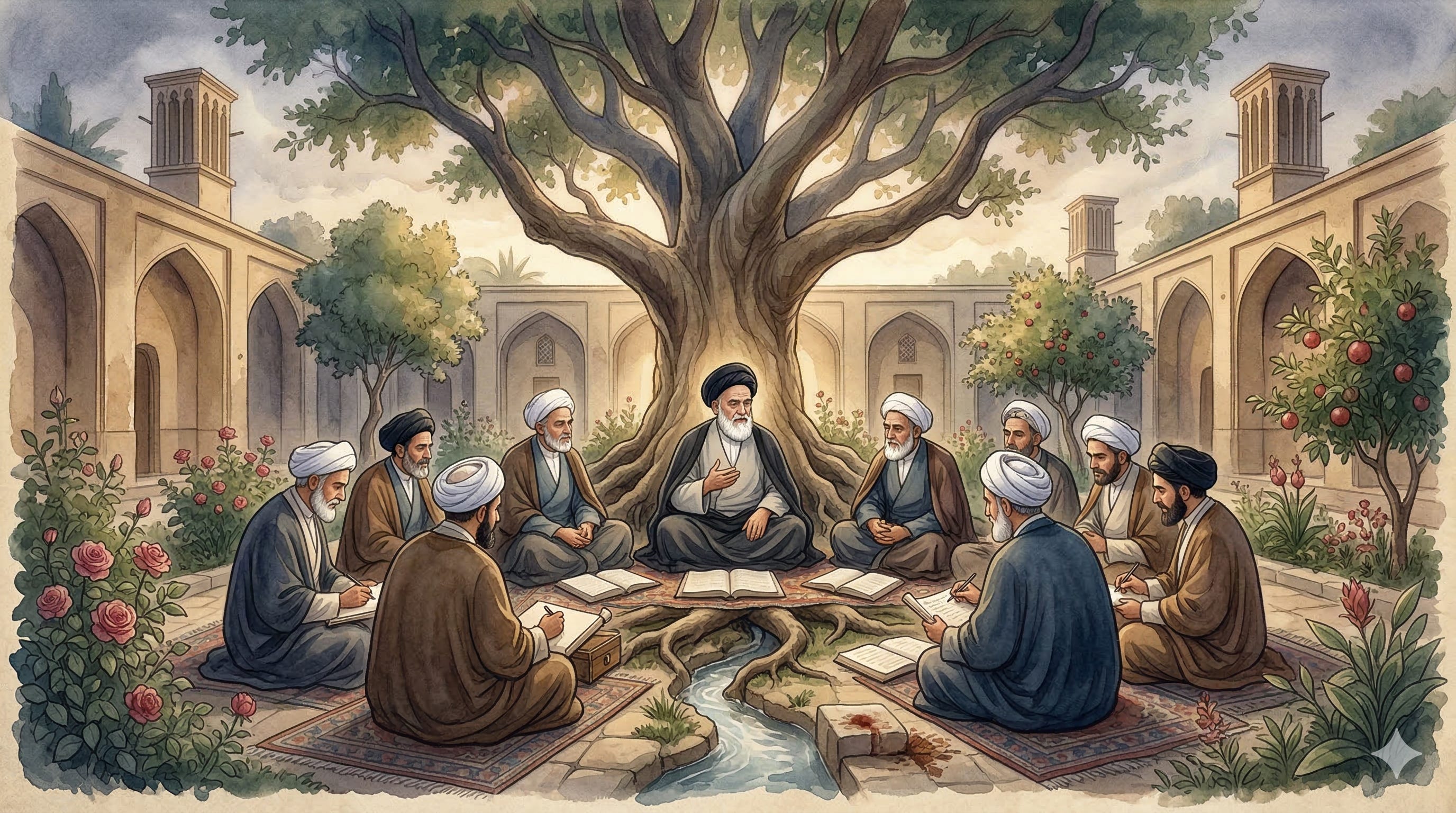
The word Hawza (حوزة) comes from the Arabic root حَوَزَ, meaning to possess, to gather, to enclose, to protect.
A Hawza is, in its simplest definition, an enclosure — a protected space.
But what is being protected?
Knowledge.
Not any knowledge — the knowledge that flows from the Qur’an, the Sunnah of the Prophet (peace be upon him and his family), and the traditions of the Twelve Imams.
The Hawza is the institutional structure through which this knowledge has been preserved, taught, debated, refined, and transmitted across more than a millennium.
And here, immediately, a crucial distinction must be drawn.
In the Western educational model — the model most of us are familiar with — the institution confers authority upon the individual.
A degree from Oxford means something because Oxford means something.
The institution is primary; the individual is secondary.
In the Hawza, this relationship is reversed.
The individual scholar is the institution.
The seminary is not a building with a brand.
It is a circle of students gathered around a teacher.
When the teacher moves, the seminary moves.
When the teacher dies, that particular circle dissolves — and new circles form around his greatest students.
This is why the great Madrasas of the Islamic world were named after their founding scholars, not the reverse.
The Madrasa of Shaykh al-Tusi.
The circle of Shaykh al-Mufid.
The seminary of Allamah al-Hilli.
The authority did not flow from a logo or a campus — it flowed from the knowledge, piety, and ijazah (authorisation to transmit) of the individual.
And this has a profound consequence.
It means that the story of the Hawza is not the story of buildings and institutions in the abstract.
It is the story of human beings — of their courage, their sacrifice, their spiritual states, their intellectual genius, and, often, their blood.
The Hawza was not built the way a university is built — with a founding charter, a board of governors, and a ribbon-cutting ceremony.
The Hawza was grown — the way a tree grows from a seed, through soil and storm, watered sometimes by rain and sometimes by the tears of scholars who buried their libraries and fled from burning cities, carrying nothing but the knowledge in their hearts.
The Qur’anic Foundation
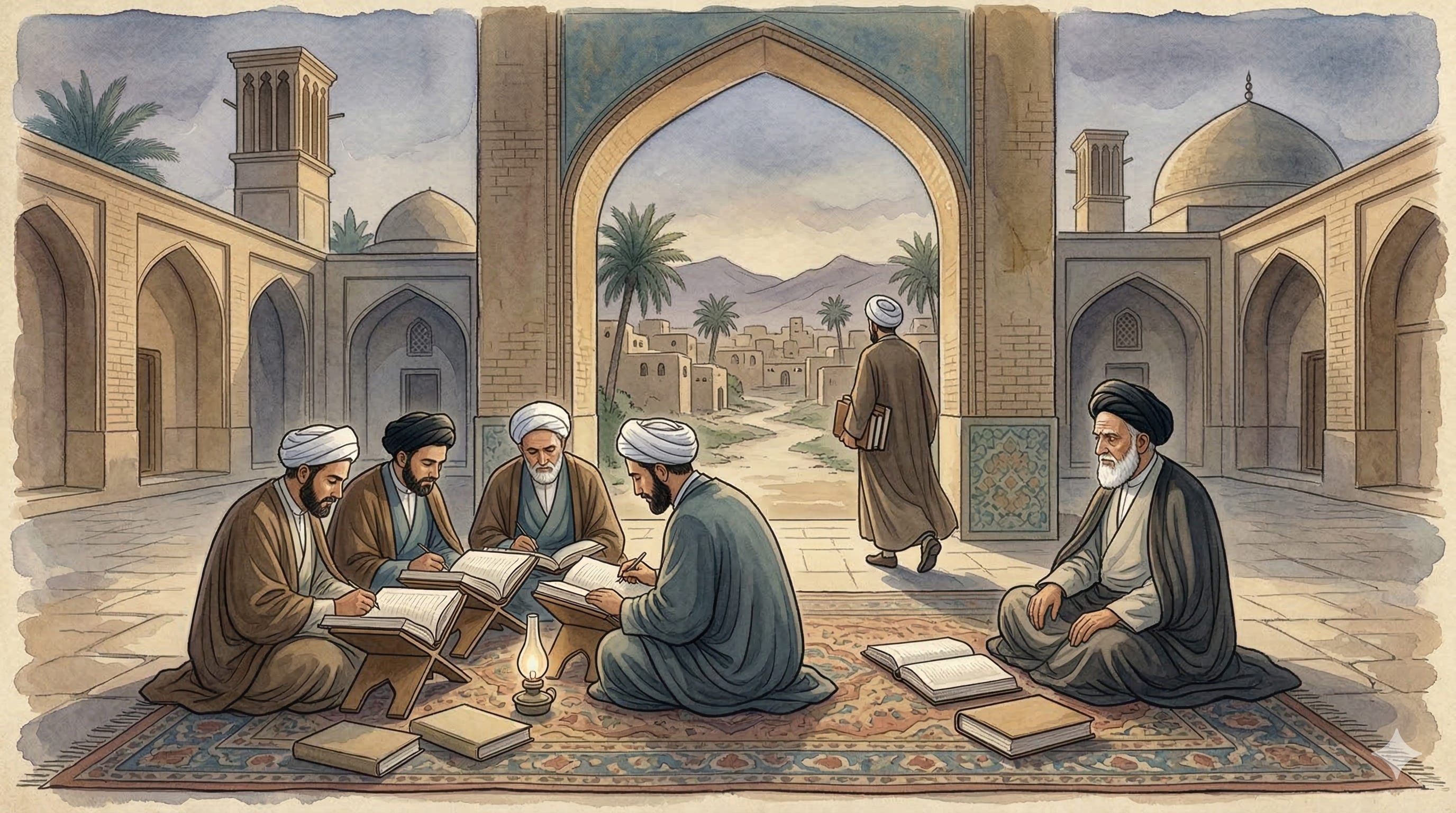
This is not a human invention.
The Qur’an itself commands it:
وَمَا كَانَ الْمُؤْمِنُونَ لِيَنفِرُوا كَافَّةً ۚ فَلَوْلَا نَفَرَ مِن كُلِّ فِرْقَةٍ مِّنْهُمْ طَائِفَةٌ لِّيَتَفَقَّهُوا فِي الدِّينِ وَلِيُنذِرُوا قَوْمَهُمْ إِذَا رَجَعُوا إِلَيْهِمْ لَعَلَّهُمْ يَحْذَرُونَ
“And it is not for the believers to go forth all at once. For there should separate from every division of them a group to obtain understanding in the religion and warn their people when they return to them, that they might be cautious.”
— Qur’an, Surah al-Tawbah (the Chapter of Repentance) #9, Verse 122
This verse is, in the tradition of the Ahl al-Bayt, the founding charter of the Hawza.
Notice what it commands:
Not everyone is to go out and fight.
A group — taa’ifah — must remain behind to obtain deep understanding (li-yatafaqqahu) in the religion.
And then they must return to their people and warn them.
Two obligations in one: the obligation to learn, and the obligation to teach.
The Hawza is the institutional expression of this verse.
A group dedicated to deep understanding, so that the community does not walk in blindness.
And the Imams (peace be upon them) reinforced this again and again.
Imam al-Sadiq (peace be upon him) said:
كُونُوا زَيْنًا لَنَا وَلَا تَكُونُوا شَيْنًا عَلَيْنَا
“Be an ornament for us, and not a disgrace upon us.”
— Al-Kulayni, Al-Kafi, Volume 2
This is not a request.
It is a command.
And it was understood by the scholars as a mandate to build — to build knowledge, to build institutions, to build a community so excellent that it brings honour to the name of the Ahl al-Bayt.
More Than a School — The Soul of the Hawza
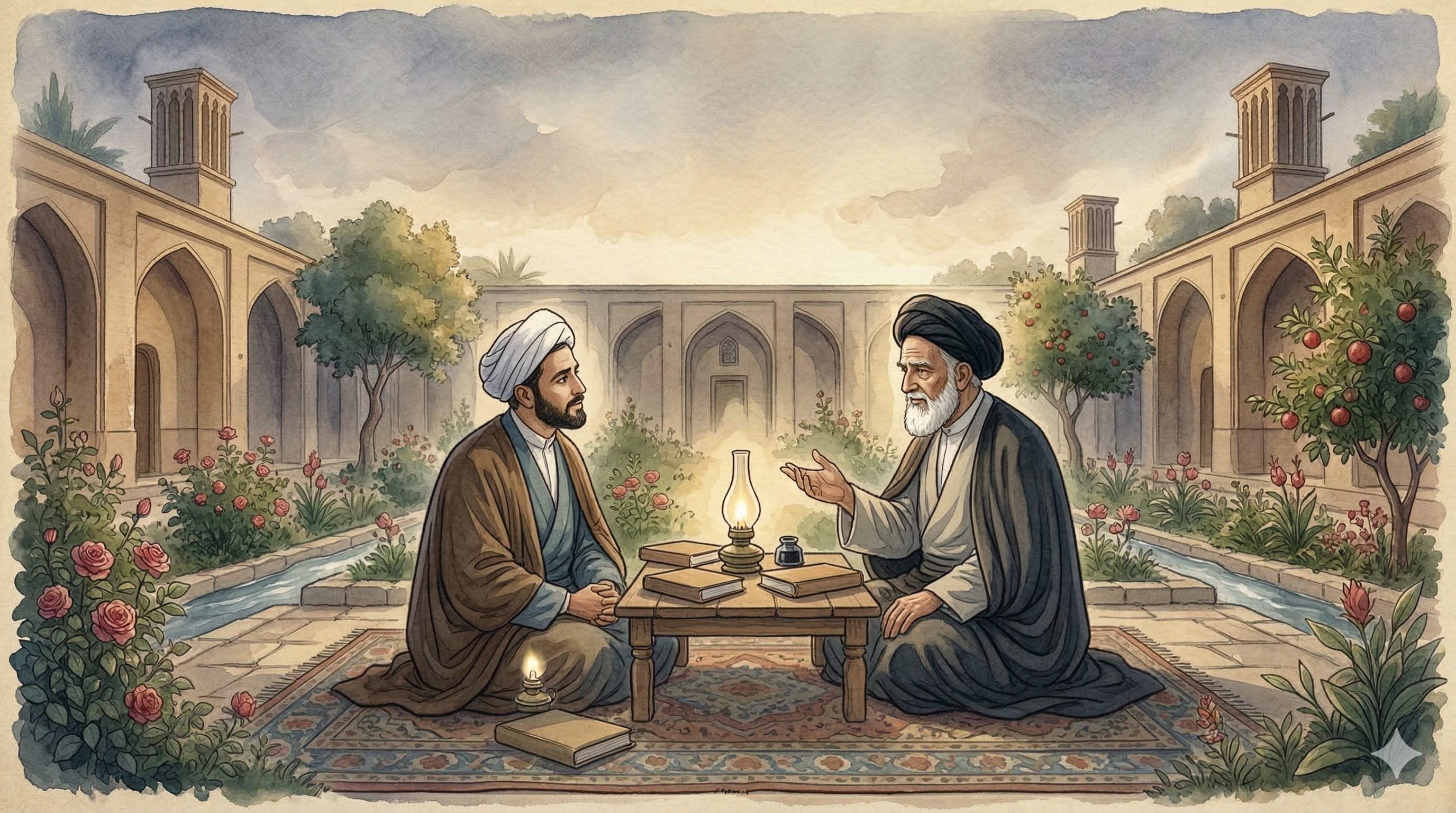
But we have said what the Hawza is in structural terms.
We have said it is an enclosure of knowledge, that the scholar is the institution, that it is rooted in the Qur’an.
We have not yet said what makes it alive.
And here, we must speak from a place deeper than textbooks.
The education — the classes, the texts, the examinations — is a part of the Hawza.
An important part, certainly.
But it is not the heart.
If education were all that the Hawza offered, a good university could replace it.
A well-funded online programme could replicate its curriculum.
A sufficiently motivated individual could study the books alone in his room.
But he would not become what the Hawza produces.
Because the Hawza does not primarily produce scholars.
It produces human beings.
And the difference is everything.
The Teacher’s Secret
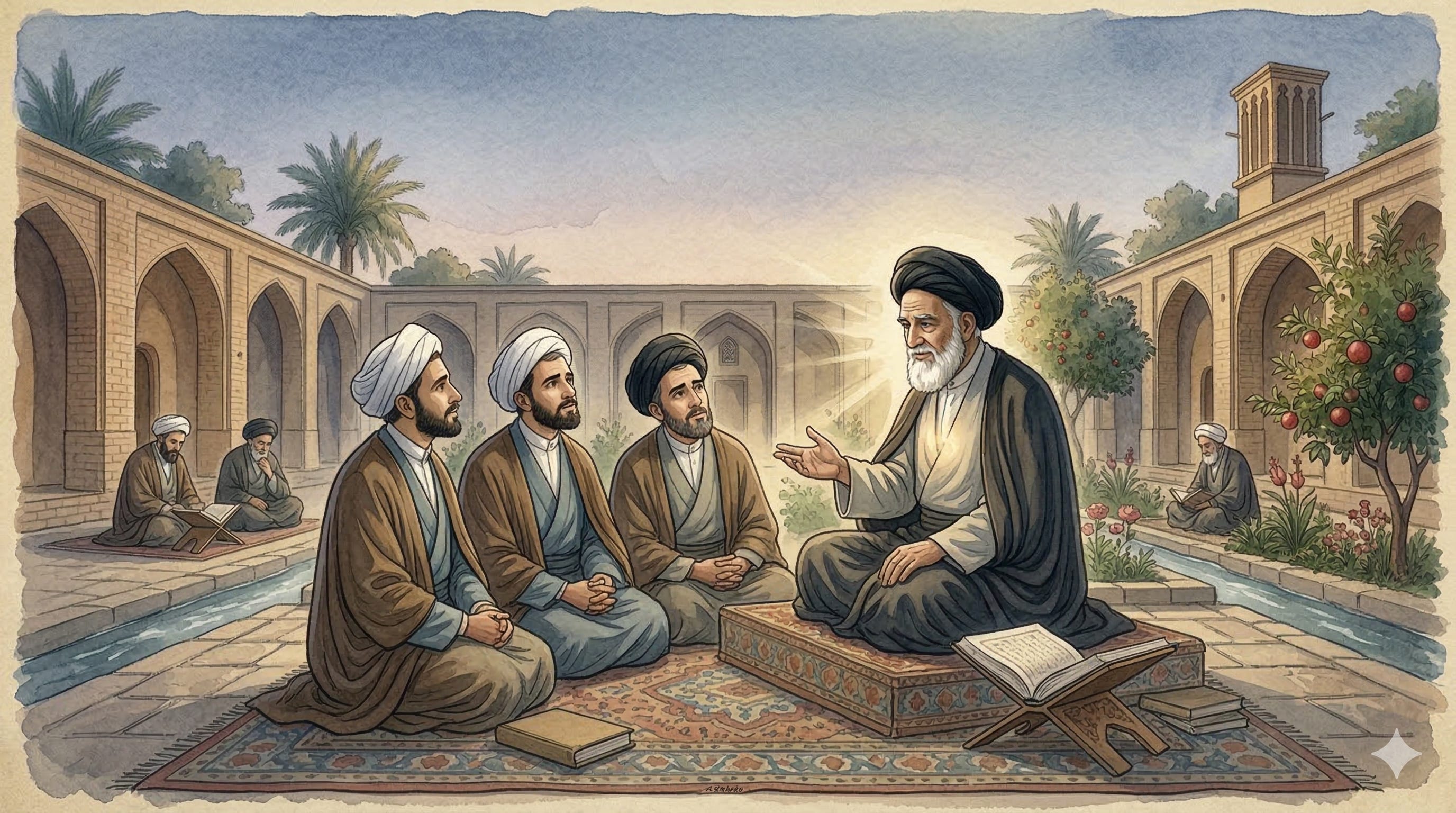
What makes the teachers of the Hawza special?
Is it their knowledge?
If it were merely knowledge, then any professor who had memorised the same texts would suffice.
But we know, intuitively and experientially, that this is not the case.
A man can memorise every hadith in Al-Kafi and remain spiritually dead.
A man can master every principle of Usul al-Fiqh and still be enslaved to his ego.
What makes the great teachers of the Hawza extraordinary is not their knowledge alone — it is their connection with God.
This is the same quality that made the Ahl al-Bayt (peace be upon them) magnetic.
People were drawn to Imam al-Sadiq (peace be upon him) not primarily because he was a brilliant jurist — though he was — but because the love of God permeated through him and into those who sat in his presence.
His knowledge was alive because it flowed from a heart that was connected to its Source.
And this quality — this spiritual radiance — does not transmit through a textbook or a video lecture.
It transmits through presence.
Through sitting at the feet of a teacher whose heart is awake.
Through years — sometimes decades — of proximity to a human being who has walked the path of self-purification and emerged on the other side as a mirror reflecting divine light.
This is what the Hawza, at its best, offers: not merely information, but transformation.
Sacred Geography — Why Qum and Najaf Are Not Interchangeable with London or Dearborn
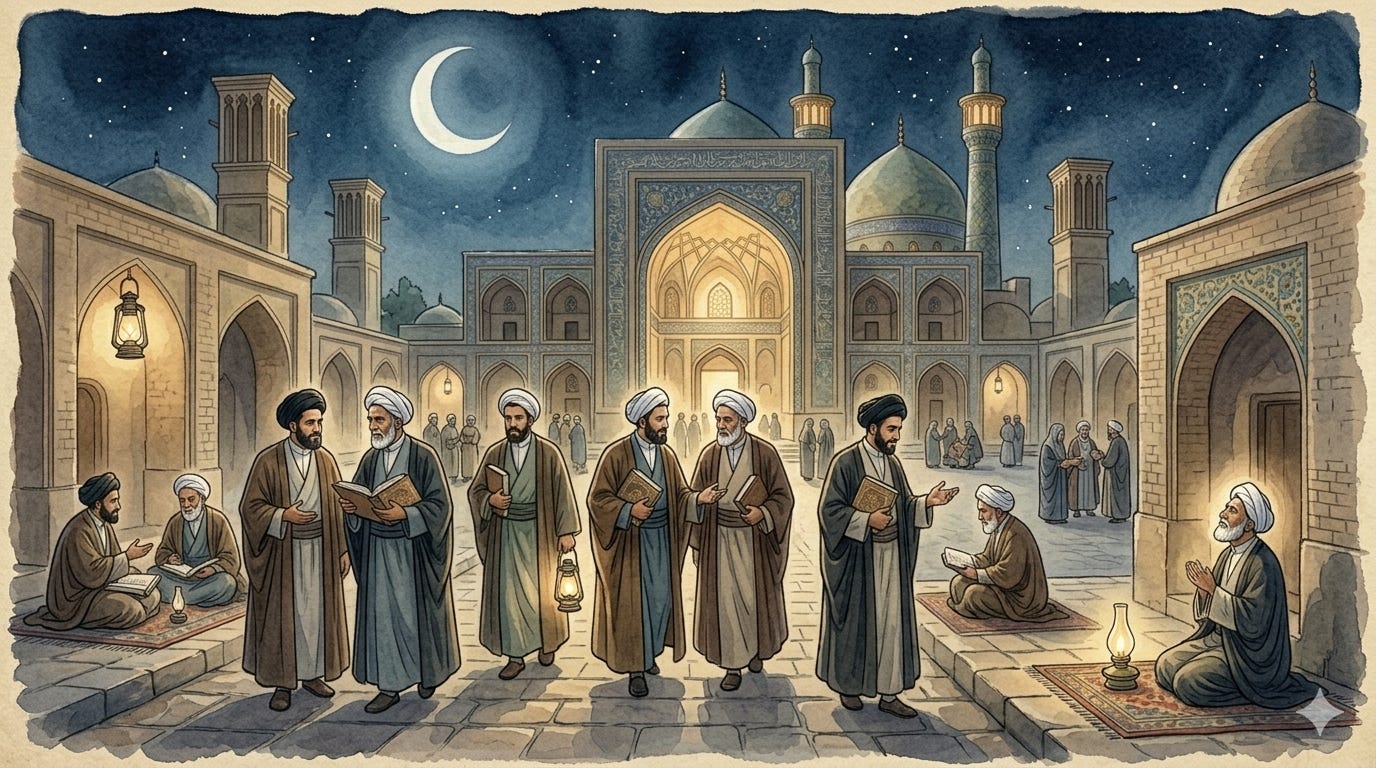
And this brings us to a delicate but necessary point.
There are Hawza-style institutions today in many cities around the world — and they do important work.
But there is a reason — a spiritual reason, not merely a historical or logistical one — why the two great Hawzas of the Shi’a world are in Najaf and Qum specifically, and not elsewhere.
It is not merely that these cities have buildings and libraries.
It is that these cities have shrines.
Najaf is the resting place of Imam Ali (peace be upon him) — Bab Madinat al-’Ilm, the Gate to the City of Knowledge.
It is also the site of Wadi al-Salaam, the Valley of Peace, where numerous prophets are said to rest.
Knowledge does not merely happen to be in Najaf — knowledge gravitates to Najaf, because the door to the city of knowledge is there.
There is a spiritual gravity to the place that cannot be replicated.
Qum is built upon resistance and sacrifice.
When Sayyidah Fatima al-Ma’soumeh (peace be upon her) — the sister of Imam al-Rida (peace be upon him) — was travelling to visit her brother and was attacked by the enemies of the Ahl al-Bayt, she fell ill and was brought to Qum, where she passed away.
She was buried there, and her shrine became the seed from which the entire scholarly and spiritual tradition of Qum grew.
It is not incidental that Qum is special — it is special because of her, and because of her position with God.
And regarding the relationship between these two centres, there is a tradition from Imam al-Sadiq (peace be upon him) that demands our attention:
عَنْ قَرِيبٍ تَخْلُو كُوفَةُ مِنَ الْمُؤْمِنِينَ وَيَأْرِزُ عَنْهَا الْعِلْمُ كَمَا تَأْرِزُ الْحَيَّةُ فِي جُحْرِهَا ثُمَّ يَظْهَرُ الْعِلْمُ بِبَلْدَةٍ يُقَالُ لَهَا قُمُّ وَتَصِيرُ مَعْدِنًا لِلْعِلْمِ وَالْفَضْلِ حَتَّى لَا يَبْقَى فِي الْأَرْضِ مُسْتَضْعَفٌ فِي دِينِهِ حَتَّى الْمُخَدَّرَاتِ فِي الْحِجَالِ وَذَلِكَ عِنْدَ قُرْبِ ظُهُورِ قَائِمِنَا
“Soon Kufa will become empty of the believers, and knowledge will leave it like a snake leaves its hole. Then knowledge will appear in a land called Qum. It will become the centre of knowledge and virtue, so that there will not remain an unaware person in his religion — not even the woman who stays at home. This will happen close to the time of the reappearance of our Qa’im.”
— Al-Majlisi, Bihar al-Anwar, Volume 60, Page 213
This does not mean Najaf is empty of knowledge — far from it.
Najaf remains a towering centre of learning, home to the greatest Maraji’ of our time.
But the tradition points to something specific: that the innovations, the deep philosophical advances, the breakthroughs in spirituality and thought, would increasingly emanate from Qum.
And when we look at history honestly, we see this unfolding before our eyes.
The transcendent philosophy of Mulla Sadra was taught and revived in the circles of Qum and Isfahan, not Najaf.
The mystical heights of Ayatollah Bahjat and Allamah Hasanzadeh Amoli — these were Qum phenomena.
The philosophical depth of Allamah Tabatabai’s Al-Mizan and Imam Khomeini’s lectures on Ibn Arabi’s Fusus al-Hikam — these flowered in Qum.
The political philosophy that produced the Islamic Revolution was incubated in Qum.
Najaf’s tradition is of a different character — more focused on jurisprudential rigour, on the classical textual sciences, on a certain measured caution.
Both traditions are essential.
Both are needed.
They are two lungs of a single body.
But they are not identical, and the student who is drawn to the deeper dimensions of knowledge, spirituality, and civilisational thought will find that Qum offers something that cannot be found elsewhere in the same concentration.
And in both Qum and Najaf, what makes the Hawza work is the atmosphere — the fact that knowledge is not confined to the classroom.
It is in the air.
It is in the conversations between students walking from the shrine to the dormitory.
It is in the mubahathaat — the open discussions where students sit in pairs or groups and wrestle with a text, arguing, questioning, challenging each other, sharpening the mind the way iron sharpens iron.
It is in the midnight prayers at the shrine, where a student who has spent the day studying Usul al-Fiqh stands before God and remembers why he is studying at all.
The Real Purpose — Becoming Human
And this is the deepest point.
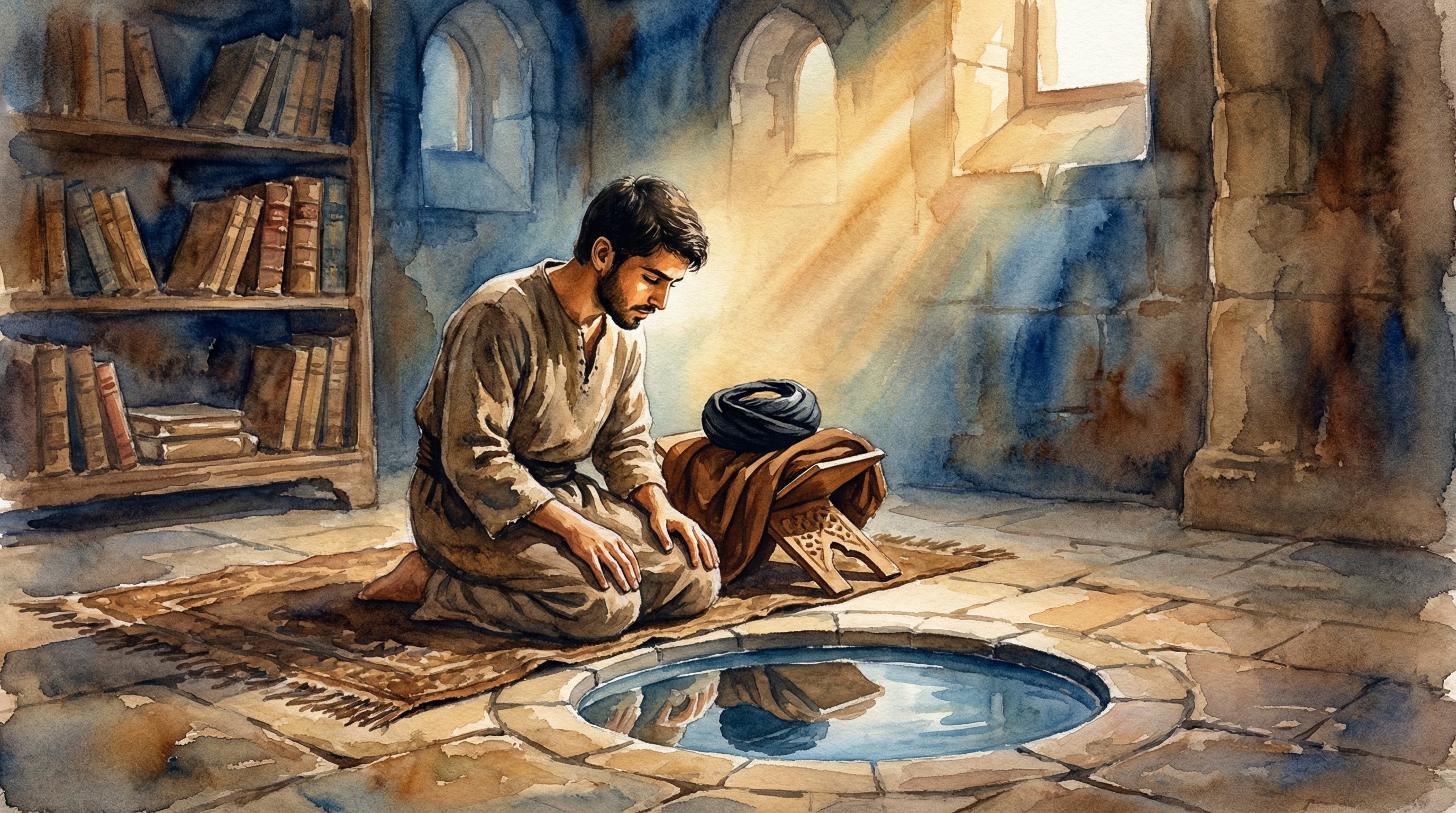
The student who enters the Hawza with the desire to “become a mulla” — to wear the scholar’s garb, to wrap a turban around his head, to be called “Shaykh” — has already failed.
And he will continue to fail, no matter how many texts he masters, because he has mistaken the means for the end.
The turban is not the goal.
The aba (cloak) is not the goal.
The title is not the goal.
The goal is to become a human being.
The Prophet (peace be upon him and his family) and Imam Ali (peace be upon him) said:
مَنْ عَرَفَ نَفْسَهُ فَقَدْ عَرَفَ رَبَّهُ
“Whoever truly knows himself has indeed come to know his Lord.”
— Al-Majlisi, Bihar al-Anwar, Attributed to the Prophet and to Imam Ali; widely cited and the classical mystical literature
Read this carefully.
It does not say:
“Whoever memorises hadith has come to know his Lord.”
It does not say:
“Whoever earns a degree has come to know his Lord.”
It says:
“Whoever knows himself.”
And what does it mean to know yourself?
It means to strip away the illusions.
The illusions of ego — the conviction that you are important, that you are already learned, that you are better than the man sitting next to you.
The illusions of title and status — the belief that a turban makes you holy, that a cloak makes you wise.
The illusions of comfort — the assumption that you can attain closeness to God without the pain of confronting your own deficiencies.
To know yourself is to look at yourself — honestly, ruthlessly, without the cosmetics of self-deception — and see what is actually there.
The envy.
The pride.
The laziness.
The fear.
The attachments.
And then — and only then — to begin the work of building.
Because you cannot build on a foundation you have not examined.
You cannot construct a palace on a swamp.
You must first drain the swamp — and that drainage is the process of tazkiyah, the purification of the soul that the Qur’an places before the teaching of the Book:
هُوَ الَّذِي بَعَثَ فِي الْأُمِّيِّينَ رَسُولًا مِّنْهُمْ يَتْلُو عَلَيْهِمْ آيَاتِهِ وَيُزَكِّيهِمْ وَيُعَلِّمُهُمُ الْكِتَابَ وَالْحِكْمَةَ
“It is He who has sent among the unlettered a Messenger from themselves, reciting to them His verses and purifying them and teaching them the Book and wisdom.”
— Qur’an, Surah al-Jumu’ah (the Chapter of Friday) #62, Verse 2
Notice the order: yuzakkihim (purifying them) comes before yu’allimuhum al-kitab (teaching them the Book).
Purification before education.
Character before curriculum.
Becoming human before becoming a scholar.
This is what the Hawza — the real Hawza, the one supervised by the Imam from the Unseen — is designed to produce.
Not walking libraries.
Not men in turbans who can quote but cannot love.
Not jurists whose hearts are harder than the texts they study.
But human beings.
Whole, purified, humble, courageous human beings who have confronted themselves, conquered themselves, and emerged fit to serve the Imam of the Age.
Everything else — the classes, the ijazah, the methodology — is the scaffolding.
The building itself is the human soul.
Lessons for Our Time
Why does this matter to us — here, now, in this age?
First, the Hawza is not a historical relic.
It is alive.
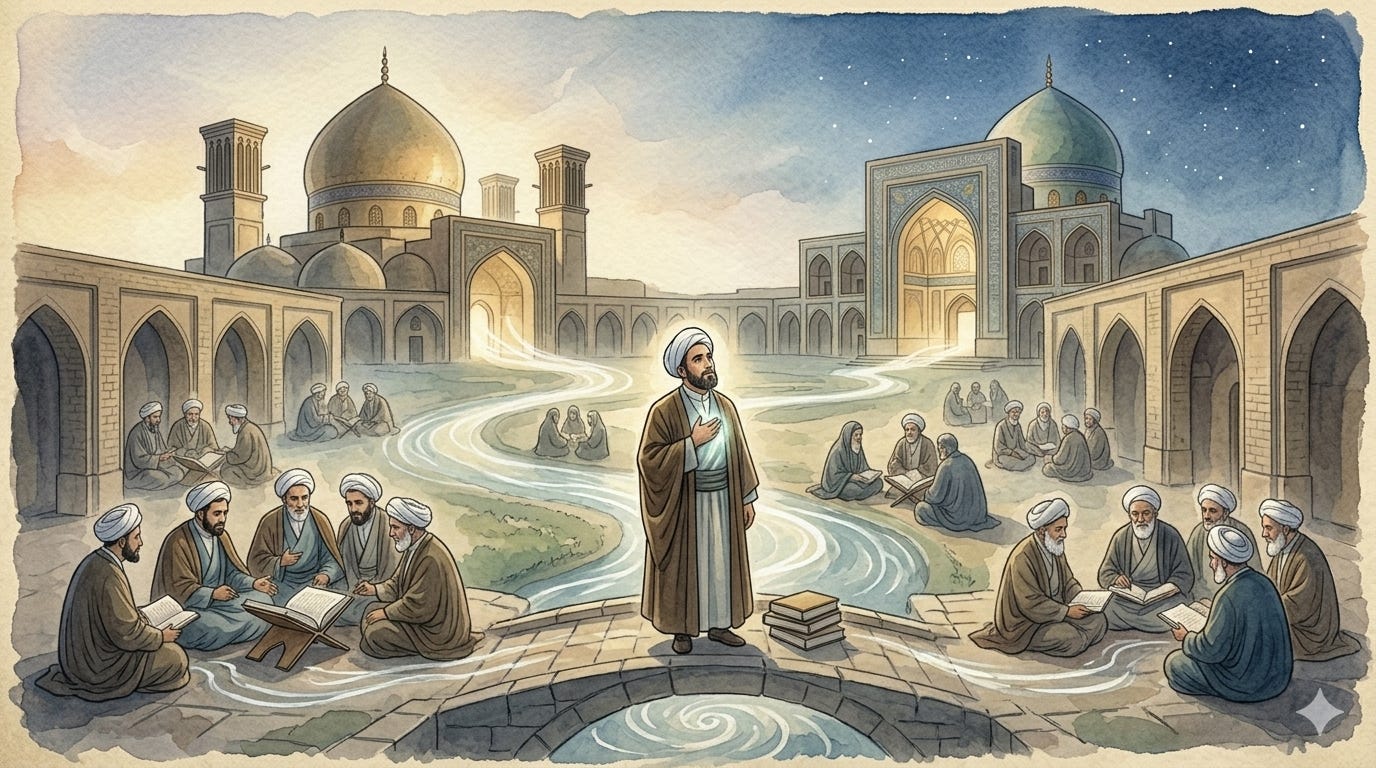
As we speak, students in Najaf and Qom sit in circles, studying the same texts that were written in the 4th century Hijri, using methodologies refined over a millennium, in an unbroken chain of transmission that stretches back to the Imams themselves.
The closest parallel in the Western world — the University of Bologna, founded in 1088 CE, and Oxford, around 1096 CE — came decades after Shaykh al-Tusi established the formal Hawza of Najaf.
We are inheritors of the oldest continuously functioning educational tradition in the world.
And yet — how many of us know the names of its builders?
That is what this series will remedy.
Second, we must be honest about a growing crisis.
In many diaspora communities, “Hawza” has become a brand — a weekend course, a two-year diploma, a certificate to hang on the wall.
There is nothing wrong with Islamic education outside of Qum and Najaf; indeed, it is desperately needed.
But we must not deceive ourselves into believing that a programme in London or Toronto or Dearborn can replicate what the great Hawzas produce.
The spiritual atmosphere, the proximity to the shrine, the presence of scholars whose hearts are awake, the years of grinding self-confrontation through the mubahathaat — these cannot be packaged into a syllabus and shipped overseas.
They must be lived.
The student who is serious — truly serious — must, at some point, go to the source.
Not because the source has a monopoly on information.
Information is everywhere.
But because transformation requires immersion, and immersion requires being in the place where knowledge lives in the air, where the shrine of the Imam or the daughter of the Imam radiates a gravity that pulls the soul toward its purpose.
Third, and most importantly: we must examine our own intentions.
Every one of us — not only Hawza students, but every believer — must ask ourselves the question that the tradition poses with uncomfortable clarity:
Am I trying to accumulate knowledge,
or am I trying to become a human being?
Because the world does not need more people who can quote hadith at dinner parties.
It does not need more turbans without substance behind them.
It does not need more degrees without transformation.
It needs human beings.
Human beings who have wrestled with their egos and won — or at least, who are still fighting, honestly, every day.
Human beings who have understood that man ’arafa nafsahu faqad ’arafa rabbahu (Whoever truly knows himself has indeed come to know his Lord) is not a slogan on a poster — it is a programme for life.
A programme that begins with the terrifying act of looking at yourself as you truly are, and ends — if God wills — with a glimpse of the One who created you.
This is the standard the Hawza was built to uphold.
This is the standard we must hold it to.
And this is the standard we must hold ourselves to, whether we have ever set foot in a seminary or not.
Point Two: The Marja’iyyah — The Scholar as Compass
What Is a Marja’?
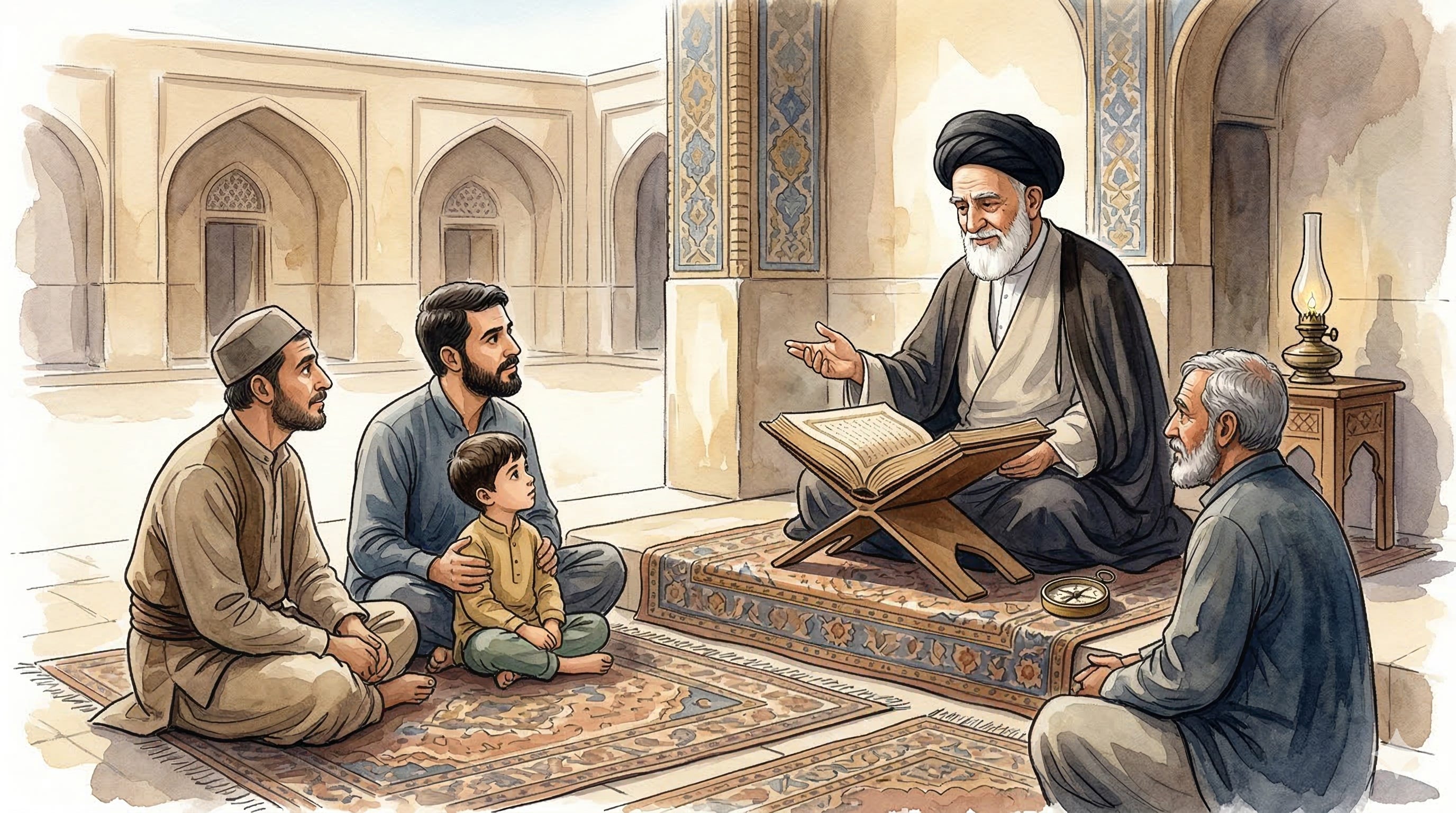
If the Hawza is the garden in which scholars are cultivated, the Marja’iyyah is the fruit that garden produces.
The word Marja’ (مرجع) means, quite literally, a point of reference — a place to which one returns.
A Marja’ al-Taqlid is a scholar of such extraordinary learning, piety, and competence in Islamic jurisprudence that the ordinary believer — who cannot personally spend decades mastering the intricate sciences of Usul al-Fiqh, Rijal, Tafsir, and Hadith — may follow his rulings in matters of practical religious law.
This is Taqlid — emulation.
And it is not blind following.
It is the rational recognition that specialisation is necessary.
When you are ill, you consult a doctor.
Not because you are incapable of reading a medical textbook — but because the doctor has spent years mastering a system of knowledge that you have not.
You trust his diagnosis not out of ignorance, but out of informed deference to expertise.
The relationship between the believer and the Marja’ is identical in principle.
But it carries an additional weight.
Because the Marja’ does not derive his authority from a university, a government, or a board of certification.
He derives it from the Tawqi’.
The Imam said:
وَأَمَّا الْحَوَادِثُ الْوَاقِعَةُ فَارْجِعُوا فِيهَا إِلَى رُوَاةِ حَدِيثِنَا، فَإِنَّهُمْ حُجَّتِي عَلَيْكُمْ وَأَنَا حُجَّةُ اللَّهِ عَلَيْهِمْ
“As for the newly occurring events, refer regarding them to the narrators of our traditions, for surely they are My Proof over you, and I am the Proof of God over them.”
— Al-Saduq, Kamal al-Din wa Tamam al-Ni’mah, Vol. 2, Chapter 45, Hadith 4
“They are My Proof upon you.”
The Marja’ stands in the chain:
God → Imam → Scholar → Community.
His authority is not self-appointed.
It is delegated — from the Imam himself, through the scholars who came before, through the chain of ijazah and scholarly transmission, all the way back to the narrators who sat at the feet of the Imams and recorded their words.
This is why the Marja’iyyah is not merely an academic institution.
It is a sacred trust.
The Scope of Authority — A Preview
We will explore the full scope of the Marja’iyyah in the bridging sessions that follow the sixteen on the Hawza.
But a preview is warranted tonight, because without it, the audience may underestimate what the Marja’iyyah actually is.
The Marja’ is not merely a man who answers questions about prayer and fasting.
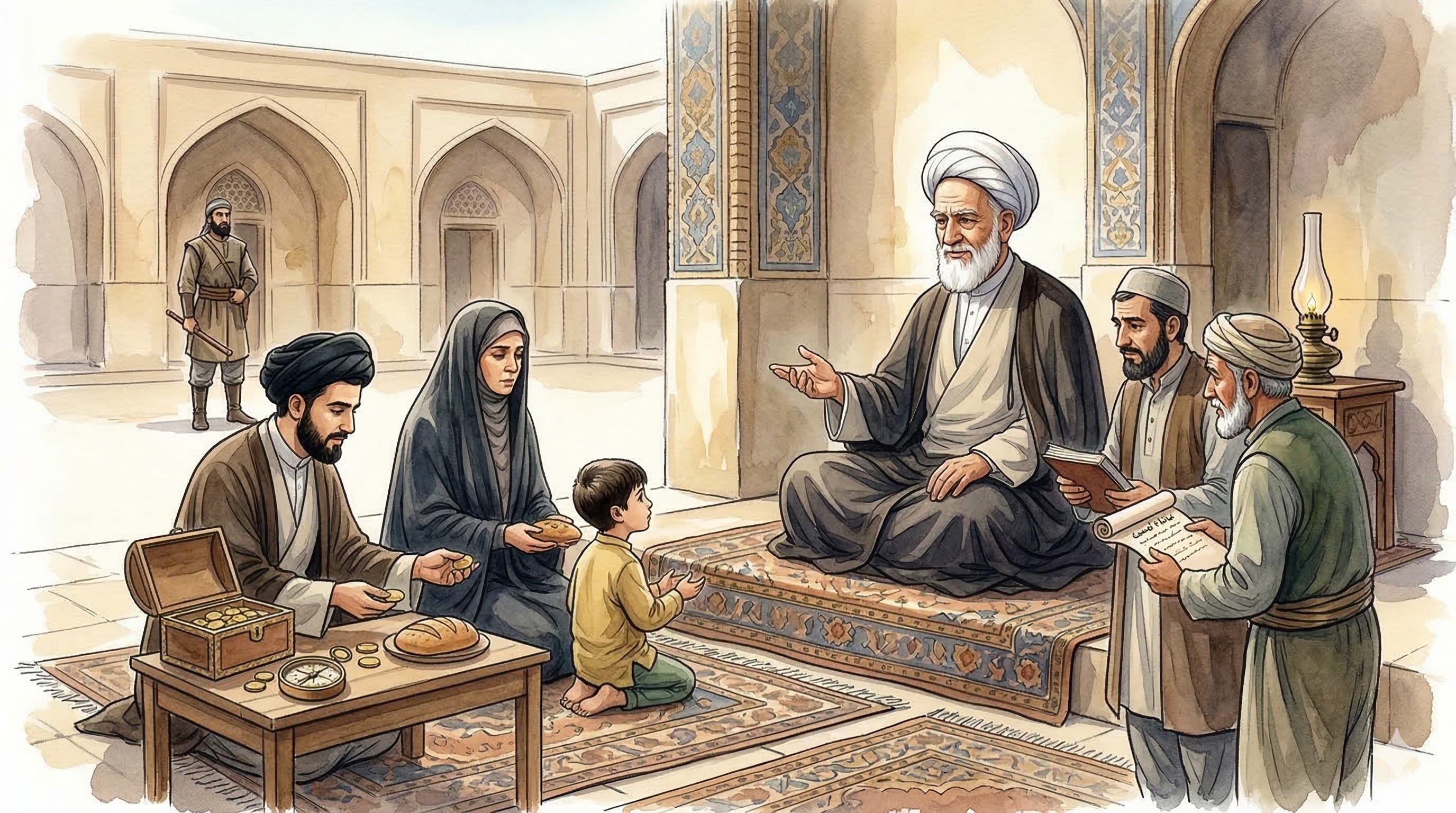
In the classical understanding — and in practice throughout much of Islamic history — the Marja’ functioned as:
A jurist (Faqih) — issuing rulings on all matters of Islamic law
A judge (Hakim Shar’i) — adjudicating disputes between believers
A custodian of the community’s wealth — collecting and distributing Khums and Zakat
A guardian of the vulnerable — overseeing the affairs of orphans, widows, and the incapacitated
A protector of the faith — defending the community’s doctrinal integrity against deviation
And, at various points in history, the Marja’ maintained enforcement mechanisms — not police in the modern sense, but networks of agents, representatives, and, yes, armed protectors who ensured that the Shari’ah was upheld within the community, even when the surrounding political authority was hostile or indifferent.
This was not an aberration.
It was the norm.
When the Ottomans governed Iraq, the Shi’a of the south did not look to Istanbul for justice.
They looked to Najaf.
The Marja’ was their governor in all but name.
This is the institution we will examine — not in the abstract, but through the lives of the men who built it.
Lessons for Our Time
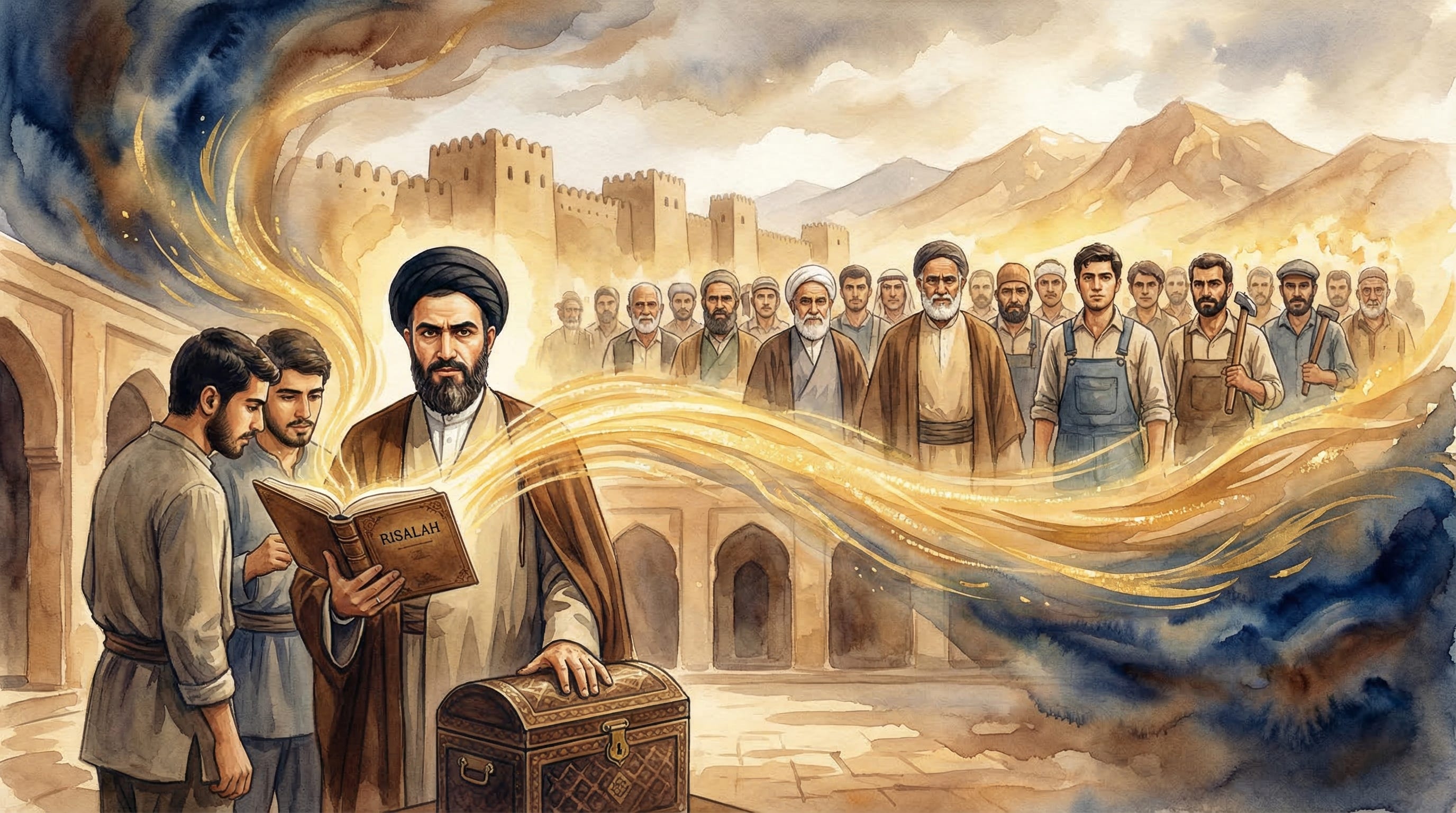
Every Shi’a Muslim alive today is connected to this chain, whether they are conscious of it or not.
When you open your Risalah (practical laws manual) to check a ruling, you are engaging with the Marja’iyyah.
When your community collects and distributes Khums, you are participating in a system that was designed by the Imams and refined by the scholars across a thousand years.
When a single fatwa from Najaf can mobilise hundreds of thousands — as we witnessed in 2014 when Grand Ayatullah Sistani’s ruling brought forth the Hashd al-Sha’bi to defend Iraq against ISIS (DAESH) — you are witnessing the operational power of the Marja’iyyah in real time.
To understand this institution is not an academic luxury.
It is a duty of the awaiter.
Because the community that does not understand its own governing structure is a community that can be manipulated, divided, and led astray.
Point Three: Wilayat al-Faqih — The Horizon
The Question That Would Not Go Away
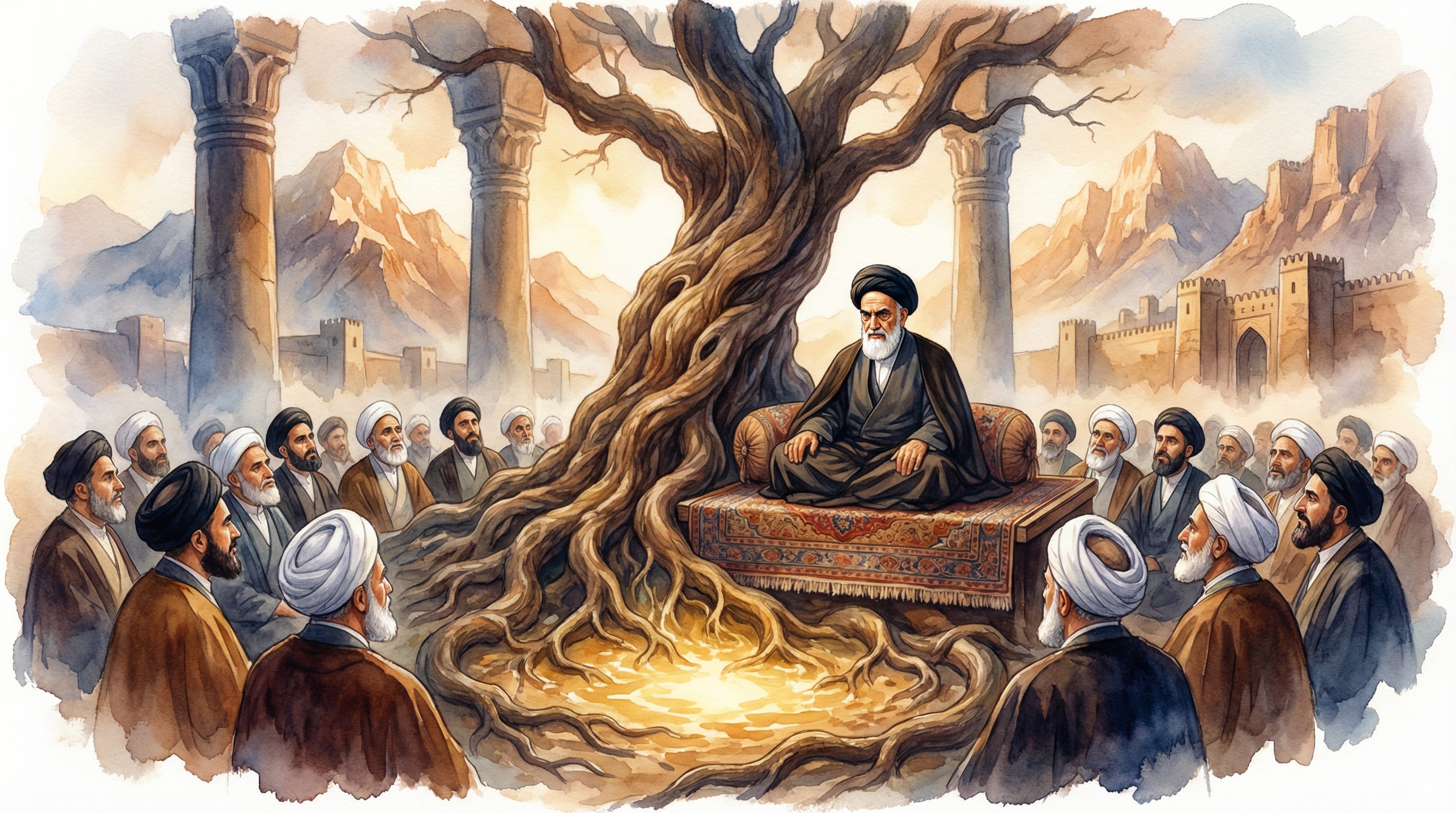
If the scholar can guide individuals — can the scholar guide a state?
If the Marja’ can collect taxes, adjudicate disputes, defend the faith, and protect the vulnerable — is he not already governing?
And if he is already governing in substance, should he not govern in form?
This question is not modern.
It is as old as the Occultation itself.
The moment the Imam disappeared and the scholars inherited his Hujjiyyah (authority as proof), the question was planted like a seed.
It germinated slowly — through Shaheed al-Awwal’s expansion of the jurist’s role in the 8th century Hijri, through the Usuli victory in the 12th century, through the Tobacco Revolt in the 13th century — until, in the 14th century, Imam Khomeini, may God bless his pure soul, gave it its fullest articulation:
The governance of the Faqih is not an innovation.
It is the logical and necessary conclusion of the Imam’s delegation of authority.
If the Shari’ah was revealed by God to be implemented — and it was — then it cannot be suspended simply because the Imam is in occultation.
Someone must implement it.
And the most qualified person to implement it is the one who has spent his life mastering it: the Faqih.
This is Wilayat al-Faqih.
What This Series Will Not Do — And What the Future Series Will
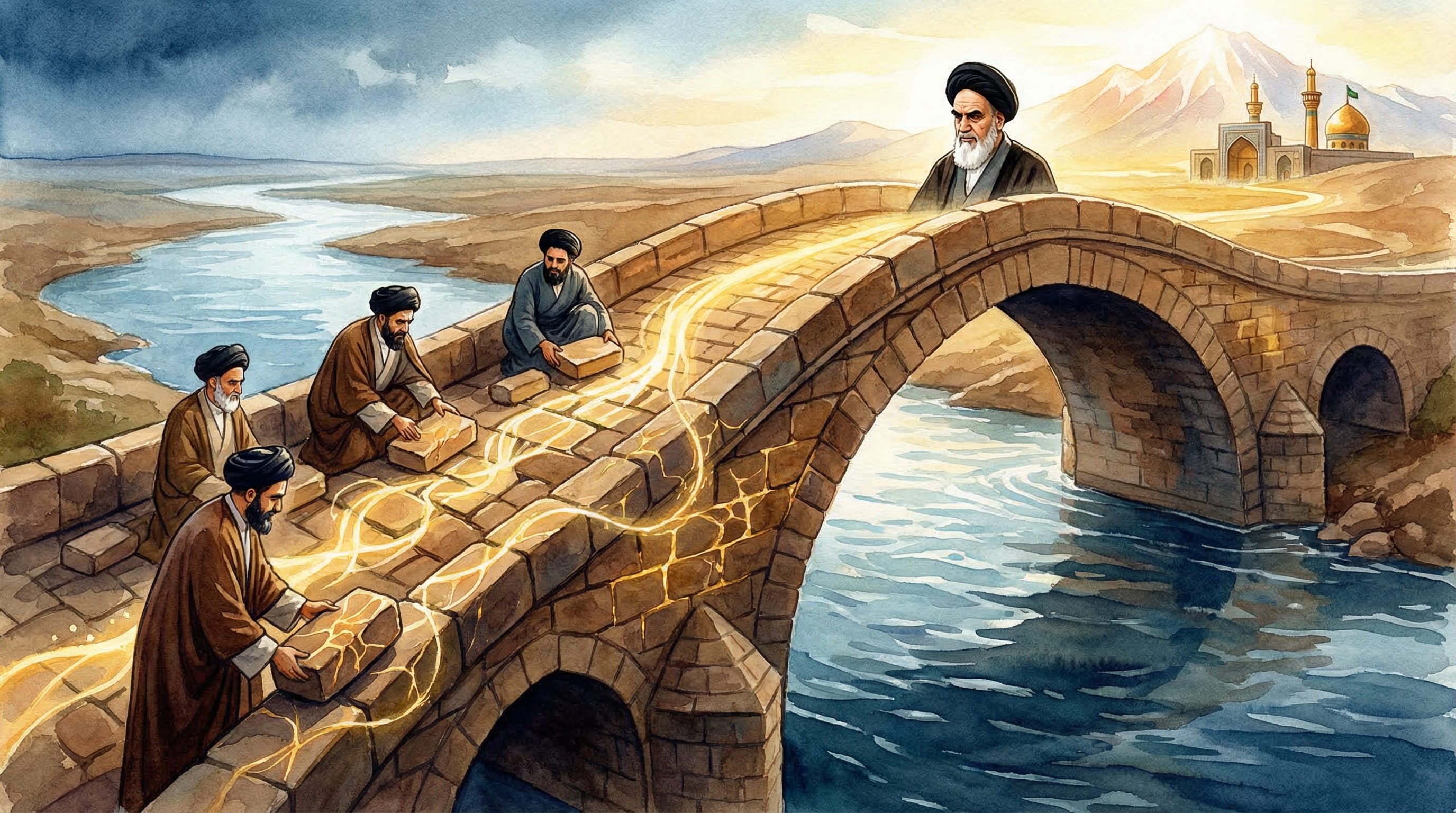
We will not, in these sixteen sessions, attempt to fully unpack Wilayat al-Faqih.
That discussion deserves — and demands — its own dedicated treatment.
What we will do is trace the intellectual and institutional foundations that made Wilayat al-Faqih possible.
Because Wilayat al-Faqih did not emerge from a vacuum.
It emerged from a thousand-year tradition of scholars who, generation after generation, expanded the scope of what the Faqih could do and should do — from compiling hadith, to debating theology, to founding seminaries, to administering community affairs, to leading political resistance, to, finally, governing a state.
Every scholar we will study in this series — from al-Kulayni to Shaheed Muhammad Baqir al-Sadr — is a stone in the road that leads to that destination.
And in the future sub-series on Wilayat al-Faqih, God willing, we will trace the concept from its true origin — not from Imam Khomeini, but from the Wilayah of God Himself, flowing through the Prophet (peace be upon him and his family), through the Twelve Imams, and finally to the Faqih.
That is the complete picture.
These sixteen sessions are the preparation for it.
Lessons for Our Time
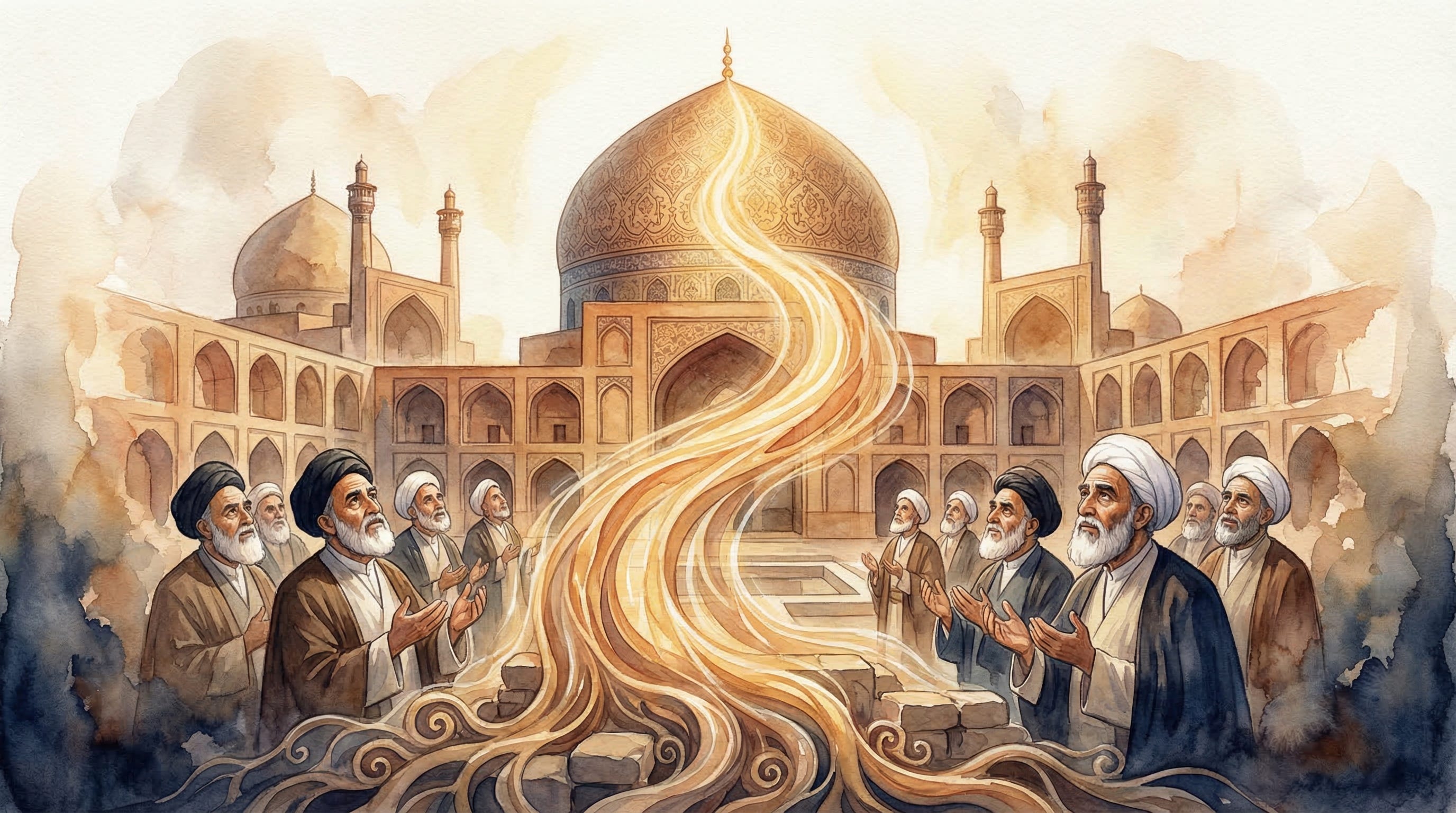
Even if one disagrees with the political implementation of Wilayat al-Faqih — and scholarly disagreement on this matter exists and is legitimate — no serious student of the Shi’a tradition can afford to be ignorant of the concept.
Because it is the culmination of the very tradition we are studying.
To study the Hawza and ignore Wilayat al-Faqih is like studying architecture and refusing to discuss the dome.
The dome is where the whole structure converges.
We are not here to impose a position.
We are here to understand — deeply, honestly, and from the sources.
And when we understand, we can make informed decisions — as the tradition has always demanded of us.
The Road Ahead — What We Will Walk Together
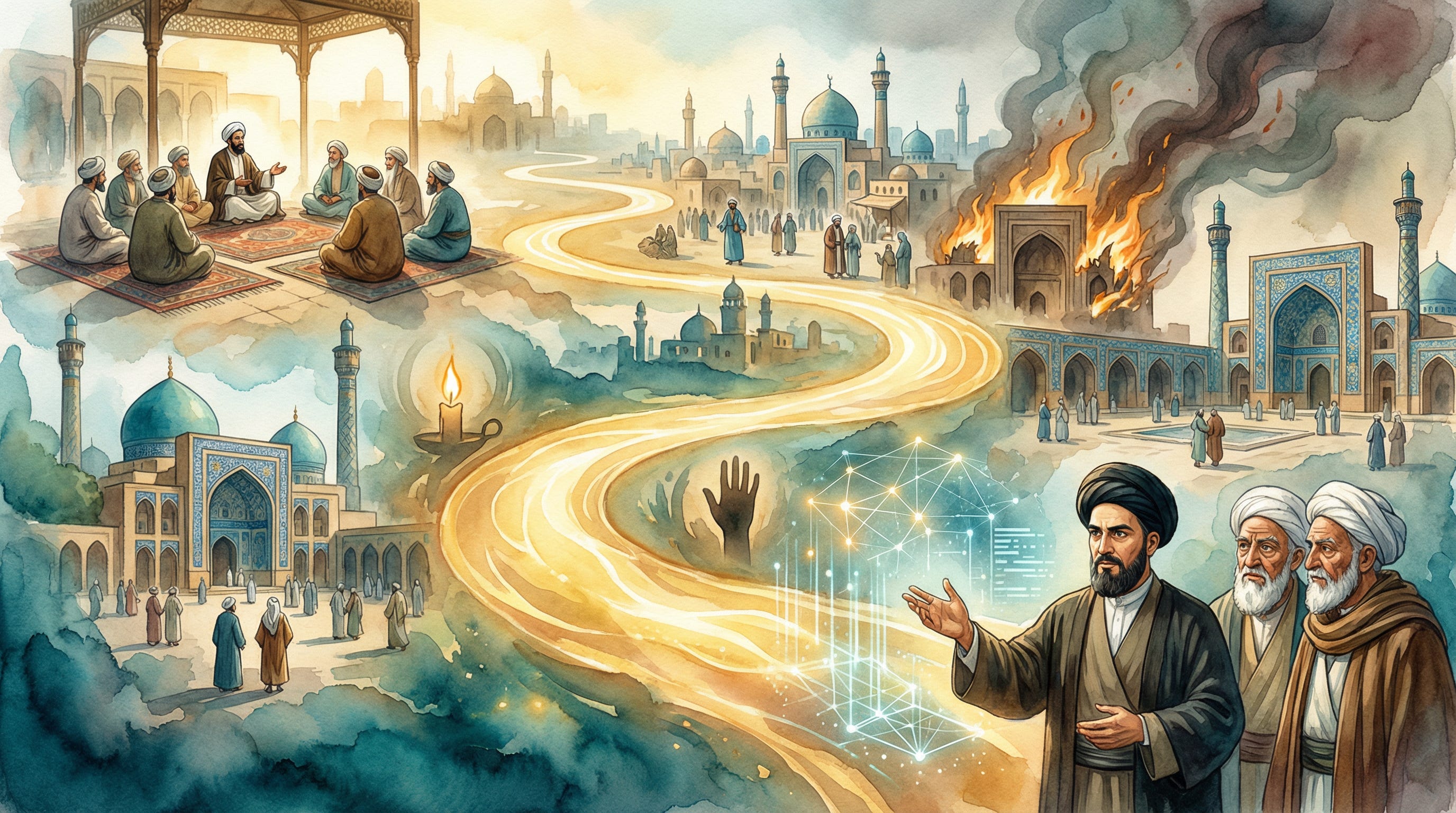
And so, here is the map.
Over the coming sixteen sessions, we will walk through the following eras:
We will begin where all things begin — in the classroom of Imam al-Sadiq (peace be upon him), the sixth Imam, who taught four thousand students and created the intellectual DNA of the entire tradition.
We will meet the founders of the Sunni schools of law — Abu Hanifa, Malik, al-Shafi’i, and Ibn Hanbal — and trace their own debts to the Imam’s teaching.
We will then enter the crisis of the Occultation — and meet the men who saved the tradition from oblivion: al-Kulayni, who spent twenty years compiling Al-Kafi in hostile Baghdad, and al-Saduq, who travelled from Qum to Central Asia to fight the community’s doubt about the Ghaybah itself.
We will witness the intellectual revolution of Shaykh al-Mufid — the man to whom the Hidden Imam himself wrote letters — and his students, the brothers Sayyid al-Murtada and Sayyid al-Radhi, who gave us Nahj al-Balagha.
We will stand beside Shaykh al-Tusi as the Seljuqs burn his library in Baghdad — and watch him walk through the ashes to Najaf, where he will establish the Hawza that has now outlasted every empire that tried to destroy it.
We will mourn with the Martyrs of Jabal Amil — Shaheed al-Awwal, who wrote the most enduring legal textbook in Shi’a history in seven days from memory while awaiting execution in a Damascus prison, and Shaheed al-Thani, who was beheaded on the road to Hajj, his head sent to the Ottoman Sultan.
We will marvel at the Safavid golden age — at Shaykh Bahai, who designed the most beautiful square in the world while simultaneously writing poetry and engineering water systems, and at Mulla Sadra, who synthesised the entirety of Islamic philosophy while exiled to a village by conservative clerics who feared his ideas.
We will enter the modern struggle — the Akhbari-Usuli debate that defined the Marja’iyyah, the Tobacco Revolt that proved the scholar could mobilise millions, the Ba’athist horror that tried to extinguish the Hawza and produced instead the revolutionary genius of Shaheed Baqir al-Sadr.
And we will arrive at our own age — at Imam Musa al-Sadr, at Imam Khomeini, at the Resistance, at Ayatollah Sistani, and at the martyred Imam Khamenei — may God rest his pure soul — who was taken from this Ummah on the 28th of February 2026 by the American war machine, and whose blood, like the blood of every scholar-martyr before him, will only deepen the roots of the tree he spent his life watering.
And we will meet his successor — his son, Imam Sayyid Mujtaba Khamenei — who did not arrive at the helm from a political vacuum but from the heart of the Hawza itself.
For more than seventeen years, Sayyid Mujtaba has been teaching Bahth al-Kharij sessions in the Hawza of Qum — and for those unfamiliar with this term, it is important to understand what it means.
Bahth al-Kharij — literally “external research” — is the highest level of study in the Hawza.
It is not a classroom in the ordinary sense.
There is no textbook.
There is no set curriculum.
The senior scholar — typically a Mujtahid of the highest rank — presents his own independent research on a given topic in jurisprudence or principles of jurisprudence, and the advanced students listen, question, challenge, and engage.
It is where original scholarship is born.
It is where the tradition grows.
To teach Bahth al-Kharij is to stand at the frontier of Islamic thought and push it forward.
Sayyid Mujtaba’s sessions were not merely well-attended — they were exceptionally well-attended, drawing hundreds of advanced students.
And his areas of enquiry went beyond the traditional Hawzawi subjects.
Alongside classical jurisprudence, he was pioneering research into the jurisprudence of the knowledge economy, the legal and ethical frameworks for artificial intelligence, and the Islamic position on the challenges of high technology and digital civilisation.
He was not alone in this — scholars such as Ayatollah Jawadi-Amoli and our own teacher Ayatollah Mohsen Araki, among others, have been similarly pushing the boundaries of what the Hawza addresses.
And this brings us to a misconception that must be shattered tonight, once and for all.
The Hawza Does Not Live in the Past
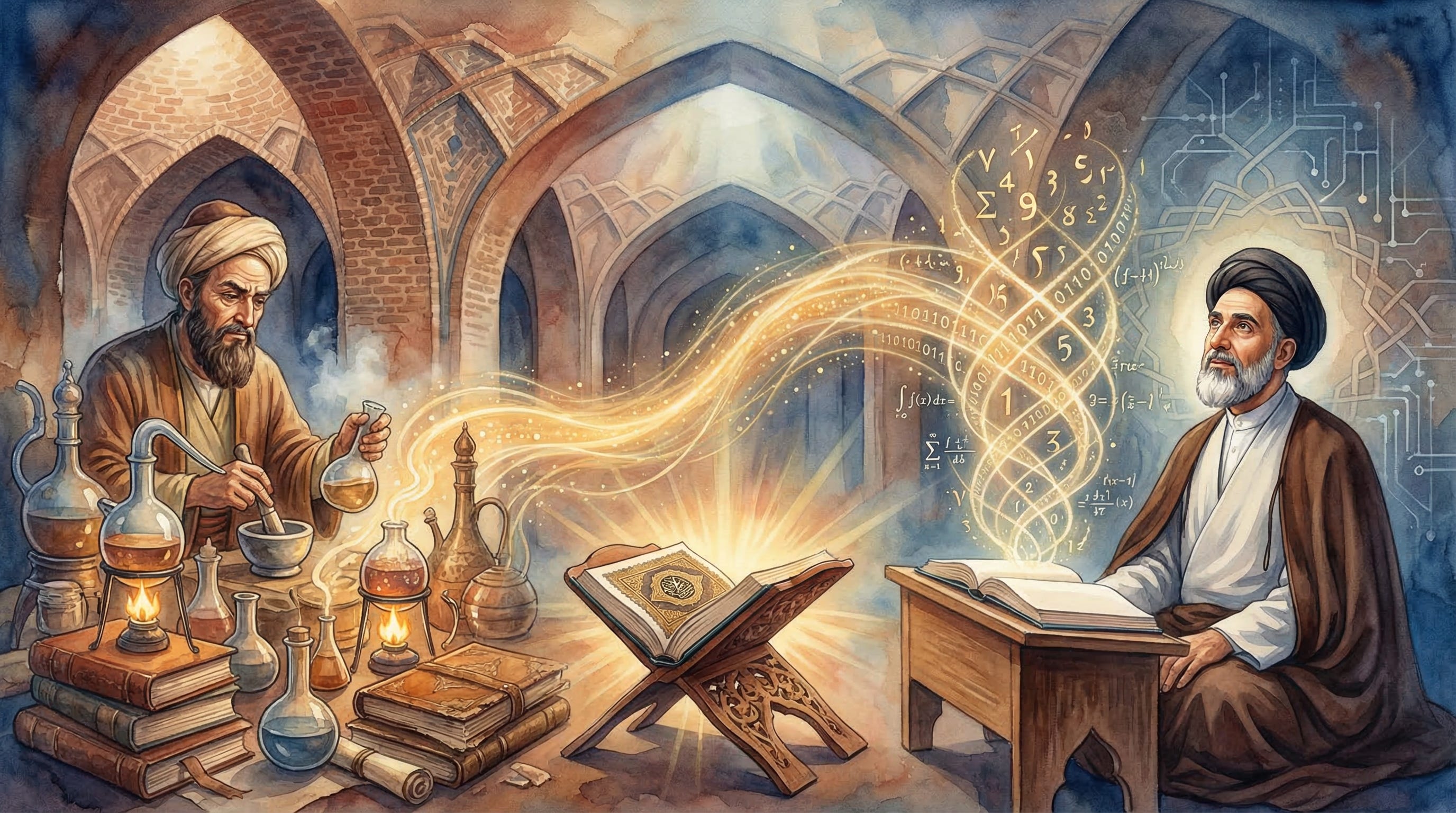
There is a lazy assumption — common among both Western observers and, regrettably, among some Muslims themselves — that the Hawza is a fossil.
A relic of the medieval world.
A place where old men in turbans read old books and have nothing to say about modernity.
This assumption is not merely wrong.
It is the opposite of the truth.
Let us remember where we are standing.
The very concept of algebra — al-jabr — was formalised by Muhammad ibn Musa al-Khwarizmi (d. ~850 CE), a scholar working in the House of Wisdom in Baghdad, in the same intellectual ecosystem that the Imams were nurturing.
His name gave the English language the word algorithm — the mathematical foundation upon which every computer, every search engine, every artificial intelligence system on earth operates today.
These are Arabic words.
Not because of racial pride — that is irrelevant — but because the scholars of the Islamic civilisation did not see knowledge as divided into “religious” and “secular” categories.
That division is a modern Western invention.
It has no basis in the tradition of the Ahl al-Bayt.
Jabir ibn Hayyan — whom we will meet in the next session — was a student of Imam al-Sadiq (peace be upon him).
He was not merely a jurist or a hadith narrator.
He was the father of early chemistry.
He conducted experiments, wrote on pharmacology, developed laboratory techniques, and laid foundations that European scientists would build upon centuries later.
And he learned under the same Imam who taught jurisprudence and theology.
The Prophet (peace be upon him and his family) said:
الْحِكْمَةُ ضَالَّةُ الْمُؤْمِنِ فَحَيْثُمَا وَجَدَهَا فَهُوَ أَحَقُّ بِهَا
“Wisdom is the lost property of the believer — wherever he finds it, he has the greatest right to it.”
— Ibn Majah, Sunan, Kitab al-Zuhd (the Book of Asecticism), Bab al-Hikmah, Chapter on Wisdom, Hadith 4169
And he said:
طَلَبُ الْعِلْمِ فَرِيضَةٌ عَلَى كُلِّ مُسْلِمٍ
“Seeking knowledge is an obligation upon every Muslim.”
— Al-Kulayni, Al-Kafi, Volume 1, Kitab Fadhail al-Ilm (Book on the Virtue of Knowledge), Hadith 1
And he said:
اطْلُبُوا الْعِلْمَ وَلَوْ بِالصِّينِ
“Seek knowledge even if it be in China.”
— Al-Majlisi, Bihar al-Anwar, Volume 1
— meaning: even if it is far, even if it is difficult, even if it requires you to leave everything you know and travel to the ends of the earth.
Knowledge is not optional.
Knowledge is not limited to what is comfortable or familiar.
Knowledge is an obligation — and it encompasses everything from the laws of prayer to the laws of physics, from the purification of the heart to the purification of water, from the science of hadith narrators to the science of algorithms.
The Hawza that produced Jabir ibn Hayyan, that existed in the same civilisation as al-Khwarizmi, that today hosts scholars researching the jurisprudence of artificial intelligence — this is not an institution stuck in the past.
It is an institution that has always been ahead of its time, because it draws from a Source that is beyond time altogether.
But What Is Knowledge?
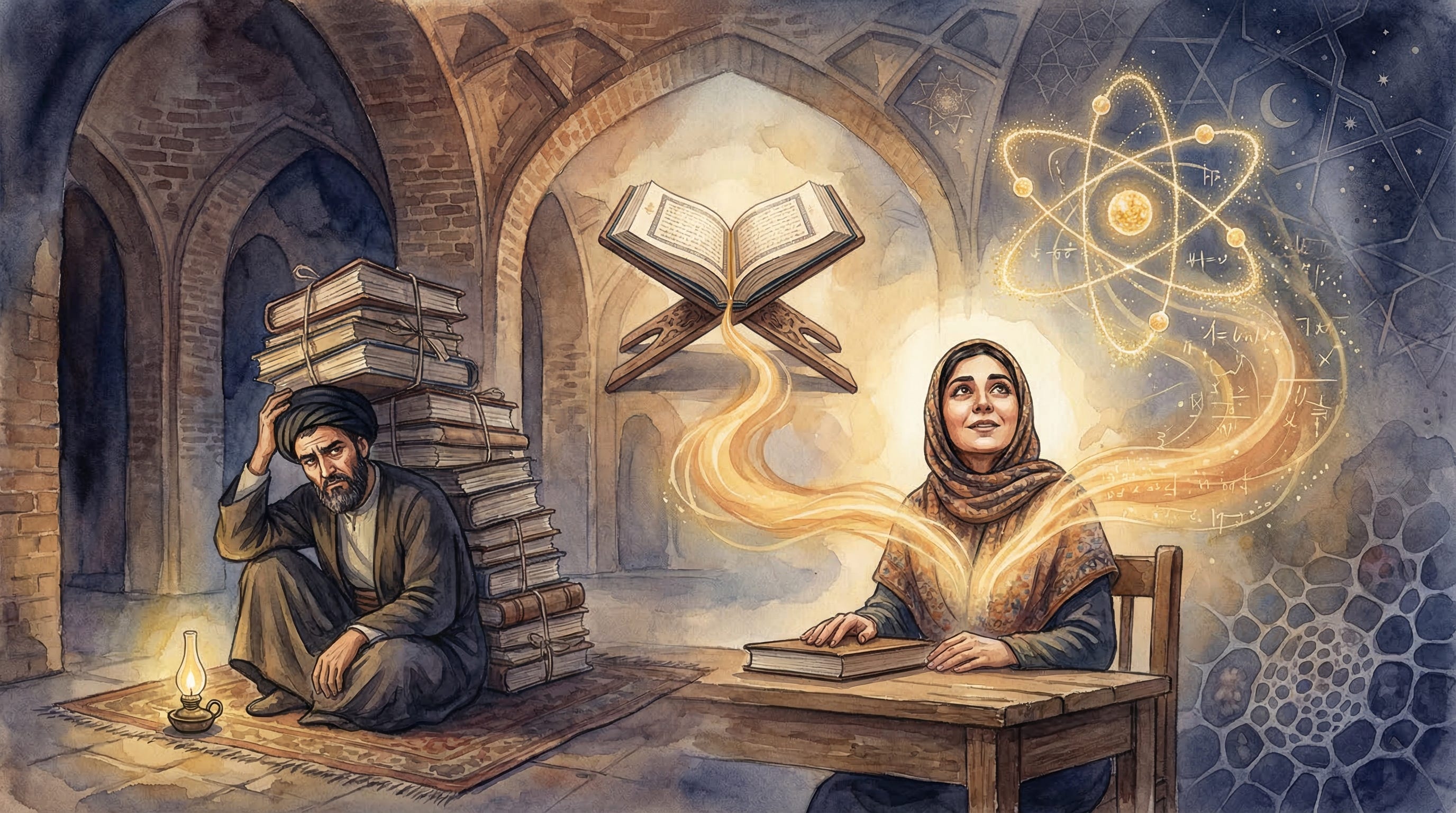
And yet — and this is the point we must return to, again and again, because the age we live in will try to make us forget it — knowledge in the Islamic tradition is not merely information.
The modern world worships data.
It equates knowledge with the accumulation of facts, with degrees, with publications, with metrics.
A man with a PhD is considered “knowledgeable.”
A man with a million followers is considered an “authority.”
The tradition of the Ahl al-Bayt says: not necessarily.
Knowledge, in its truest sense, is that which transforms the knower.
It is that which builds the soul.
It is that which draws the human being closer to his Lord.
A man can memorise every hadith in Al-Kafi and still be arrogant — and his memorisation, in that case, is not knowledge.
It is baggage.
A woman can master the intricacies of quantum physics — and if that mastery deepens her awe before the Creator, if it makes her more humble, more grateful, more aware of the infinite precision of the One who designed the atom — then her physics is an act of worship.
Knowledge is light.
But light is not merely illumination — it is warmth.
It is life.
It is the medium through which the soul recognises its Creator and is drawn toward Him.
This is what the Hawza — at its very best — cultivates.
Not information.
Not credentials.
But light.
And this is the standard against which we must measure everything we study, everything we teach, and everything we claim to know.
So this is the map.
This is a story of human beings — flawed, brilliant, courageous, sometimes disagreeing with each other, sometimes persecuted by their own, always returning to the well of the Ahl al-Bayt for water.
And at every step, we will ask:
What is the lesson for us — here, now, in this age?
Because we are not studying history.
We are studying a blueprint.
A blueprint for the civilisation that the Imam, may our souls be his ransom, and may God hasten his return — will complete when he returns — but which we, the awaiters, are tasked with constructing in the meantime.
Conclusion — The Builders and The Blueprint
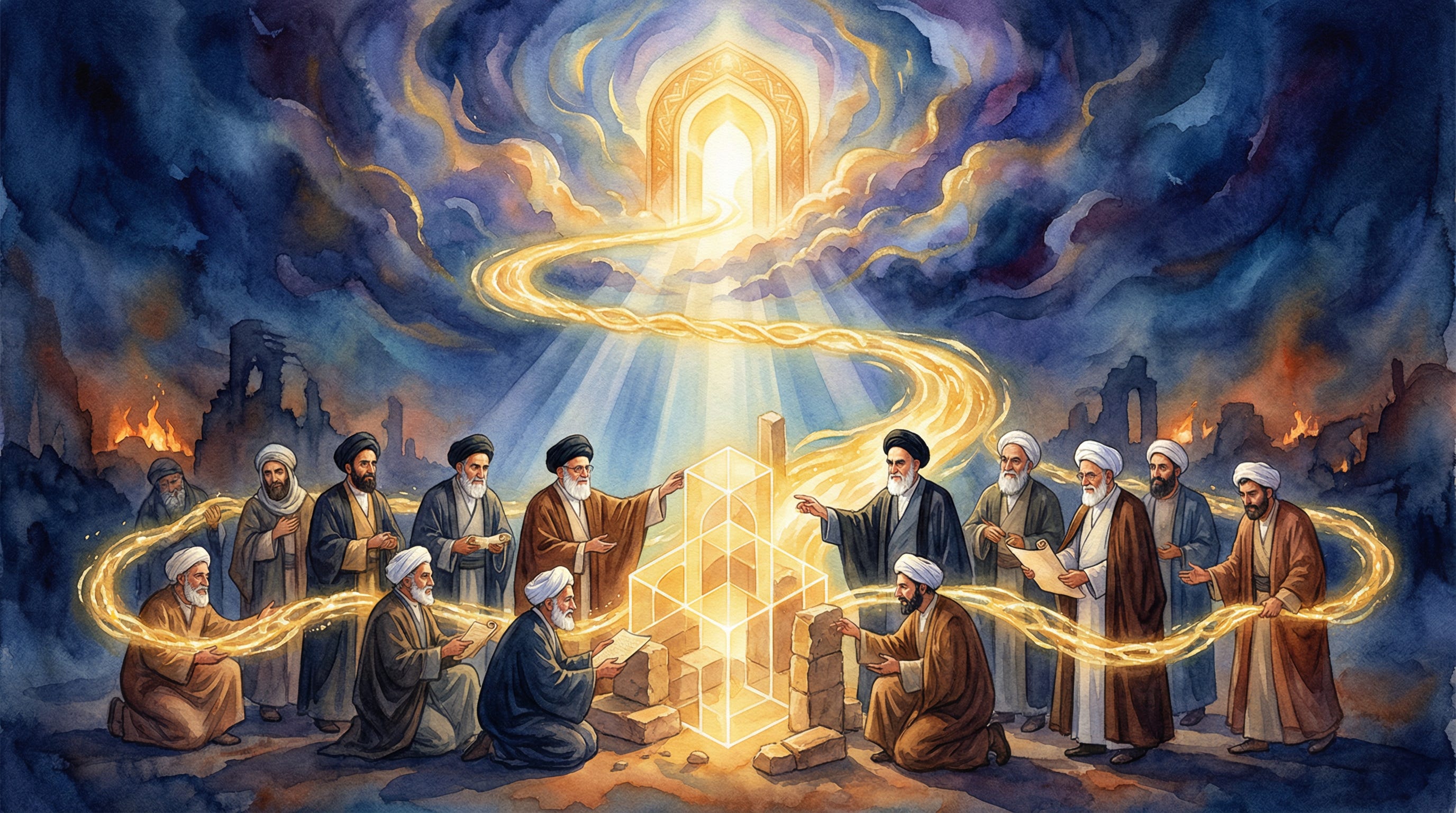
Let us gather the threads of what we have laid down tonight.
First: The Hawza is not merely a school.
It is a divinely mandated institution — rooted in the Qur’an, commissioned by the Imams, and sustained across a thousand years by the sacrifice of scholars who chose knowledge over safety, teaching over silence, and, when necessary, death over compromise.
But it is more than even this.
It is a living organism — animated not by curricula and syllabi but by the spiritual radiance of teachers whose hearts are connected to God, nourished by the sacred geography of shrine cities where knowledge is in the air itself, and oriented toward a single, uncompromising purpose: the production of human beings— not scholars in the narrow sense, but souls who have confronted themselves and emerged purified, ready to serve the Imam of the Age.
Second: The Marja’iyyah is not merely a fatwa hotline.
It is a comprehensive system of communal governance — judicial, financial, educational, and spiritual — that the scholars built, piece by piece, to fill the void left by the Imam’s occultation.
It is the fruit of the Hawza and the mechanism by which the Imam’s delegated authority reaches every believer on earth.
Its scope — as we will explore in the bridging sessions — extends far beyond ritual law into the full administration of community life, including the concept of the Hakim Shar’i and the historical reality of enforcement of the Shari’ah within the territories of empires.
Third: Wilayat al-Faqih is not an aberration or a modern invention.
It is the culmination of a thousand-year trajectory — the natural endpoint of a tradition that progressively expanded the scholar’s role from narrator, to theologian, to jurist, to community administrator, to, finally, head of state.
We will trace this trajectory across every session, and we will address it fully, God willing, in a dedicated series to come — beginning not with Imam Khomeini but with the Wilayah of God Himself.
Fourth: The Hawza does not live in the past.
It has never lived in the past.
From Jabir ibn Hayyan’s chemistry under Imam al-Sadiq, to al-Khwarizmi’s algebra, to today’s research into the jurisprudence of artificial intelligence and the knowledge economy by scholars like Imam Sayyid Mujtaba Khamenei, Ayatollah Javadi-Amoli, and Ayatollah Mohsen Araki — the tradition has always engaged with the totality of human knowledge.
Because in the worldview of the Ahl al-Bayt, there is no border between “religious” and “secular” knowledge.
There is only knowledge that brings the human being closer to God, and ignorance that leads him away.
The words algebra and algorithm are Arabic not by coincidence, but because the civilisation that the Imams shaped did not truncate the intellect — it liberated it.
Fifth — and deepest of all: knowledge itself, in this tradition, is not information.
It is light.
Light that illuminates, that warms, that transforms.
The Hawza does not exist to produce walking libraries or turbaned professors.
It exists to produce human beings who have understood the meaning of man ’arafa nafsahu faqad ’arafa rabbahu — whoever knows himself has come to know his Lord — and who have embarked on the terrifying, liberating, lifelong journey of stripping away the illusions of the ego so that the soul can see its Creator.
This is the standard.
For the Hawza student, for the Marja’, for the believer who has never set foot in a seminary.
The standard is the same.
Become human.
Everything else follows.
And underlying all five threads is a single, unshakeable principle:
The Imam has not abandoned us.
He told Shaykh al-Mufid, in a letter that we will read in a future session:
إِنَّا غَيْرُ مُهْمِلِينَ لِمُرَاعَاتِكُمْ وَلَا نَاسِينَ لِذِكْرِكُمْ
“We are not neglectful of your affairs, nor are we forgetful of your remembrance.”
— Al-Majlisi, Bihar al-Anwar, Volume 53
He watches.
He guides.
And the scholars — from al-Kulayni in 4th-century Baghdad to the Bahth al-Kharij sessions in 21st-century Qum — are his instruments.
The chain has never broken.
Not when the Seljuqs burned Baghdad.
Not when the Mongols drowned the Tigris in ink.
Not when the Ottomans beheaded the Shahids.
Not when Saddam executed the Sadrs.
Not when the American war machine took Imam Khamenei from us on the 28th of February.
The chain does not break.
Because we are the school of Karbala.
And in the school of Karbala, the fall of a leader is not the end of the mission — it is the deepening of it.
We are about to meet the links of this chain — one by one, session by session, century by century.
May God grant us the tawfeeq to walk this path with open hearts, sharp minds, and purified souls.
May He grant us the understanding to see in the story of these scholars not merely history, but a mirror — reflecting back to us the question:
What are you building? And what are you becoming?
And may He count us, when the Imam appears, among those who did not merely wait — but who prepared.
To Those Who Wrote by Candlelight
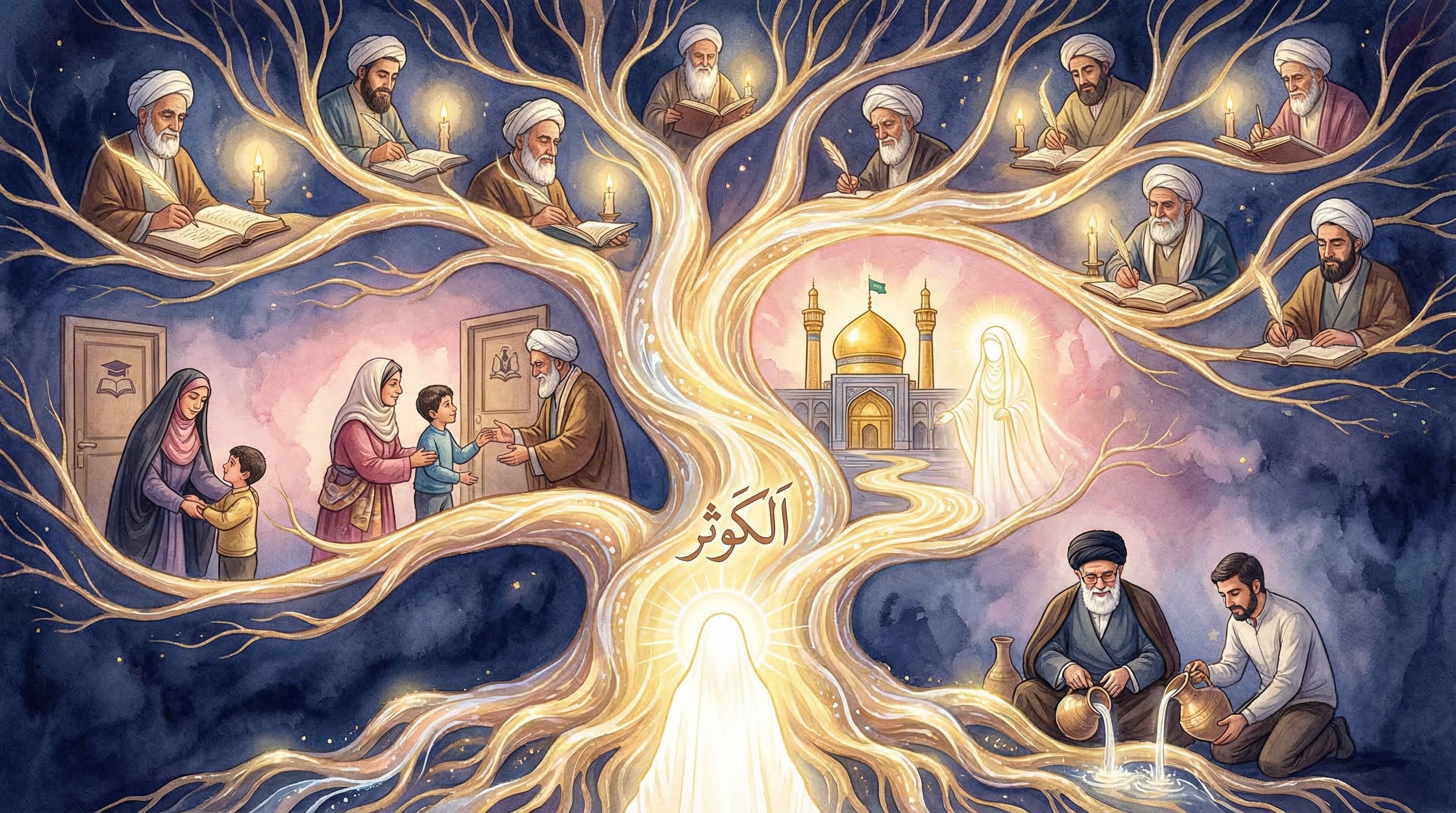
Tonight’s eulogy is brief, for it is an opening — and the eulogies that follow, session by session, will honour the individual builders.
But tonight, we honour them collectively.
We honour every scholar who sat in a cold room in Baghdad or Najaf or Qum or Hillah or Jabal Amil, writing by candlelight, preserving the words of an Imam he would never meet in this world — trusting that the Imam saw him, trusting that the ink on his page was a bridge to the Return.
We honour every mother who brought her son to a scholar’s door — as the mother of Sayyid al-Murtada and Sayyid al-Radhi brought her two boys to Shaykh al-Mufid — knowing that she was offering her most precious possession to the service of the Ahl al-Bayt.
And here, a pause.
Because the Qur’an tells us a story about a mother and a vow — and it is the story that, in many ways, gave us the Hawza of Qum.
The wife of Imran — Hannah — made a vow to God:
رَبِّ إِنِّي نَذَرْتُ لَكَ مَا فِي بَطْنِي مُحَرَّرًا فَتَقَبَّلْ مِنِّي ۖ إِنَّكَ أَنتَ السَّمِيعُ الْعَلِيمُ
“My Lord, I have vowed to You what is in my womb, consecrated for Your service. So accept this from me. Indeed, You are the All-Hearing, the All-Knowing.”
— Qur’an, Surah Aal-e-Imran (the Chapter of the Family of Imran) #3, Verse 35
She expected a son — a boy who would serve in the temple, who would be a priest, a scholar, a warrior for God.
But when the child came:
فَلَمَّا وَضَعَتْهَا قَالَتْ رَبِّ إِنِّي وَضَعْتُهَا أُنثَىٰ
“And when she delivered her, she said, ‘My Lord, I have delivered a female.’”
— Qur’an, Surah Aal-e-Imran (the Chapter of the Family of Imran) #3, Verse 36
There is a tone in her voice — a hint of apology, as if a daughter could not fulfil the vow.
As if the service of God were the exclusive domain of men.
But God — glorified is He — accepted the girl:
فَتَقَبَّلَهَا رَبُّهَا بِقَبُولٍ حَسَنٍ وَأَنبَتَهَا نَبَاتًا حَسَنًا
“So her Lord accepted her with a beautiful acceptance, and caused her to grow in a beautiful manner.”
— Qur’an, Surah Aal-e-Imran (the Chapter of the Family of Imran) #3, Verse 37
That girl became Maryam — The Blessed Saint Mary — the most honoured woman in the Qur’an.
The woman chosen above all the women of the worlds.
The woman to whom angels spoke directly.
The woman through whom God manifested the miracle of Prophet Isa — Jesus the son of Mary (peace be upon them, and may God hasten his return).
God did not need Hannah’s son.
God wanted Hannah’s daughter.
And now look at the Hawza of Qum.
It does not exist because a great male scholar decided to build there.
It exists because a woman — Sayyedah Fatima al-Ma’soumeh, the daughter of Imam al-Kadhim, the sister of Imam al-Rida (peace be upon them all) — was brought there by the decree of God.
She was travelling to her brother, was attacked, fell ill, and was carried to Qum.
She died there.
She was buried there.
And from her grave — from the resting place of a daughter of the Ahl al-Bayt — grew the most revolutionary centre of Islamic learning in the modern world.
Imam al-Rida (peace be upon him) gave her the title al-Ma’soumeh — the Infallible.
And he said:
مَنْ زَارَهَا عَارِفاً بِحَقِّهَا فَلَهُ الْجَنَّةُ
"Whoever visits her, recognising her right, for him is Paradise.”
— Al-Majlisi, Bihar al-Anwar, Volume 99, page 266
And her nephew, Imam al-Jawad (peace be upon him) said:
مَنْ زَارَ عَمَّتِي بِقُمَّ فَلَهُ الْجَنَّةُ
"Whoever visits my aunt in Qum, for him is Paradise."
— Ibn Qulawayh, Kamil al-Ziyarat, Page 324
The Hawza of Qum is built on the grave of a woman.
The greatest centre of philosophical innovation in the Shi’a world draws its spiritual gravity from a daughter.
Let those who slander Islam as “anti-woman” reckon with this.
Let the Islamophobes and the Zionists and the ignorant reckon with the fact that the most intellectually dynamic seminary in the Islamic world — the seminary that produced the Islamic Revolution, that trained Imam Khomeini, that today hosts the most advanced research in Islamic philosophy, mysticism, and jurisprudence — exists because God accepted the sacrifice of a woman, just as He accepted the vow of Hannah, just as He chose Saint Mary above all the women of the worlds.
The tradition does not merely tolerate women.
It is built upon them.
And lest we forget the most fundamental proof of all — the one that stands at the very root of everything we are, everything we study, and everyone we follow:
The Prophet Muhammad (peace be upon him and his family) — the Seal of the Prophets, the Master of Creation — had sons. Qasim. Abdullah.
Both died in infancy.
And when they died, the pagans of Quraysh rejoiced. As ibn Wa’il and others mocked him openly, calling him abtar — a word meaning “cut off,” “without posterity,” “a man whose line ends with him.”
In the cruel calculus of pre-Islamic Arabia, where a man’s worth was measured by his sons, a Prophet without surviving male heirs was a Prophet whose message would die with him.
God’s response was three verses — the shortest Surah in the Qur’an, and perhaps the most devastating:
إِنَّا أَعْطَيْنَاكَ الْكَوْثَرَ
فَصَلِّ لِرَبِّكَ وَانْحَرْ
إِنَّ شَانِئَكَ هُوَ الْأَبْتَرُ“Indeed, We have given you al-Kawthar (Abundance).
So pray to your Lord and sacrifice.
Indeed, it is your enemy who is the one cut off.”— Qur’an, Surah al-Kawthar (the Chapter of Abundance) #108, Verses 1–3
Al-Kawthar.
The Abundance.
The Overflowing Good.
What is al-Kawthar?
The exegetes have offered many interpretations — a river in Paradise, the intercession on the Day of Judgement, the abundance of knowledge and followers.
But in the Shi’a tradition, drawing from the teachings of the Ahl al-Bayt themselves, the most profound interpretation is this:
Al-Kawthar is Sayyedah Fatima al-Zahra.
She is the Abundance.
She is God’s answer to those who called His Prophet “cut off.”
Ayatollah Makarem-Shirazi, in his exegesis of this Surah, explains that the Prophet’s enemies assumed his mission would die because he had no surviving sons.
They measured legacy by male lineage.
But God overturned their entire framework. He did not give the Prophet another son.
He gave him something the pagans could never have imagined — a daughter through whom the prophetic legacy would not merely survive, but would multiply beyond anything the world had ever seen.
Your enemy is the one who is cut off. Not you, O Muhammad.
Where is As ibn Wa’il today?
Where is Abu Lahab?
Where are the Qurayshi chiefs who mocked?
Their names survive only as footnotes in the biography of the man they ridiculed.
And the descendants of Sayyedah Fatima?
They number in the hundreds of millions.
Every Imam.
Every Sayyid.
Every scholar whose black turban declares the prophetic bloodline — it flows through her.
God did not continue the prophetic lineage through a son.
He continued it through a daughter.
Sayyedah Fatima al-Zahra (peace be upon her).
Every single Imam — from Imam al-Hasan to Imam al-Mahdi — is her son, her grandson, her descendant.
Every Sayyid who walks the earth today carries his nobility through her blood.
Every turban wrapped in black cloth that signifies descent from the Prophet declares, with every fold:
I am here because of a woman.
The entire tree of the Ahl al-Bayt — the tree whose fruit is the Imamate, the Marja’iyyah, the Hawza, the Revolution, and the future state of the Mahdi — grows from her.
Not from a son.
From a daughter.
From Hannah’s vow came Saint Mary.
From Saint Mary came Jesus.
From Sayyedah Fatima al-Zahra came every Imam.
From the Imams came the Hawza.
From Sayyedah Ma’soumeh’s grave came Qum.
From Qum came a revolution.
We honour every mother.
Every daughter.
Every woman who carried the trust — often unseen, often unsung, but always indispensable.
We honour every student who left home and family to sit at the feet of a teacher, not for a degree or a salary, but for the privilege of carrying one more link in the chain — and for the hope that, through the struggle of becoming human, he might catch a glimpse of the One who made him.
We honour the martyred Imam Khamenei — who led the Ummah for thirty-six years, who watered this tree with his life, and whose blood is now part of the soil from which the next generation of builders will grow.
And we honour his son, and his successor, who carries the trust forward — from the Hawza to the helm — as the tradition has always demanded: knowledge first, then leadership; purification first, then governance; becoming human first, then guiding humanity.
Peace be upon them all.
And peace be upon the one they served — the Master of the Age, the Imam of the Time, the son of al-Hasan, Muhammad al-Mahdi — may our souls be his ransom, and may God hasten his return.
The Builder’s Prayer
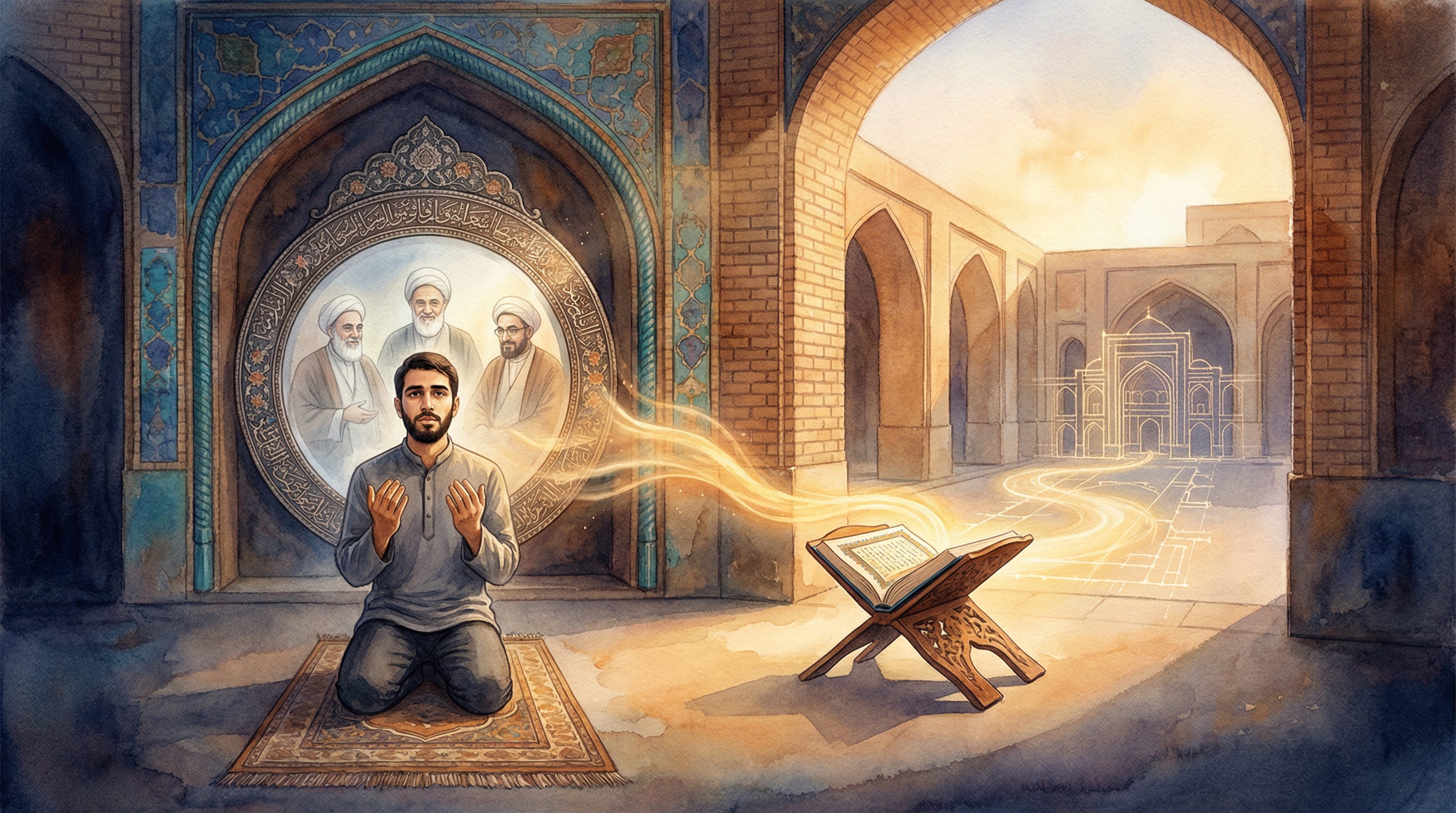
We close tonight with the words of the Imam himself, from the Tawqi’ delivered through the Second Deputy — the words that launched the entire architecture we are about to study:
O God, You have commanded us to refer to the narrators of the traditions of Your chosen ones. We have heard and we obey.
Grant us, O Lord, the knowledge that transforms — not the knowledge that merely accumulates.
Grant us the courage to know ourselves — truly, honestly, without the cosmetics of self-deception — so that through knowing ourselves we may come to know You.
Grant us the wisdom to see in the story of these scholars not a history lesson but a mirror, and in that mirror, the face of who we must become.
Make us builders, O Lord. Not spectators. Not consumers. Not critics standing on the sidelines. But builders — of knowledge, of character, of institutions, of souls.
And when Your Proof returns — when the Cry is heard and the Banner is raised — count us among those who prepared the ground upon which he will stand.
O God, Send your choicest blessings upon our beloved Prophet Muhammad, and upon his pure and infallible family, and upon his righteous companions, and hasten their relief - with the return of our Master, may our souls be his ransom.
Amen, O Lord Sustainer of the Universes
Amen, O Most Merciful of the Merciful
And from Him alone is all ability and He has authority over all things.