

In His Name, the Most High
يُرِيدُونَ لِيُطْفِئُوا نُورَ اللَّهِ بِأَفْوَاهِهِمْ وَاللَّهُ مُتِمُّ نُورِهِ وَلَوْ كَرِهَ الْكَافِرُونَ
“They desire to extinguish the light of God with their mouths — and God will perfect His light, however much the disbelievers hate it.”
— Qur’an, Surah al-Saff (the Chapter of the Ranks) #61, Verse 8
The Three White Banners
Hold that verse in your hand for the next hour.
We will come back to it twice, and the second time you will hear something in it I promise you have never noticed.
But let me start somewhere else.
There is a sentence in a Sunni chronicle that I have not been able to put down.
The chronicle is called al-Muntazam fi Tarikh al-Muluk wa’l-Umam — The Well-Ordered Account of the History of Kings and Nations.
Its author is Ibn al-Jawzi, a Hanbali scholar of Baghdad, writing well over a century after the thing he describes.
He is recording the sack of a house.
He lists what was carried out of it and burned — the notebooks, and a chair.
And then this.
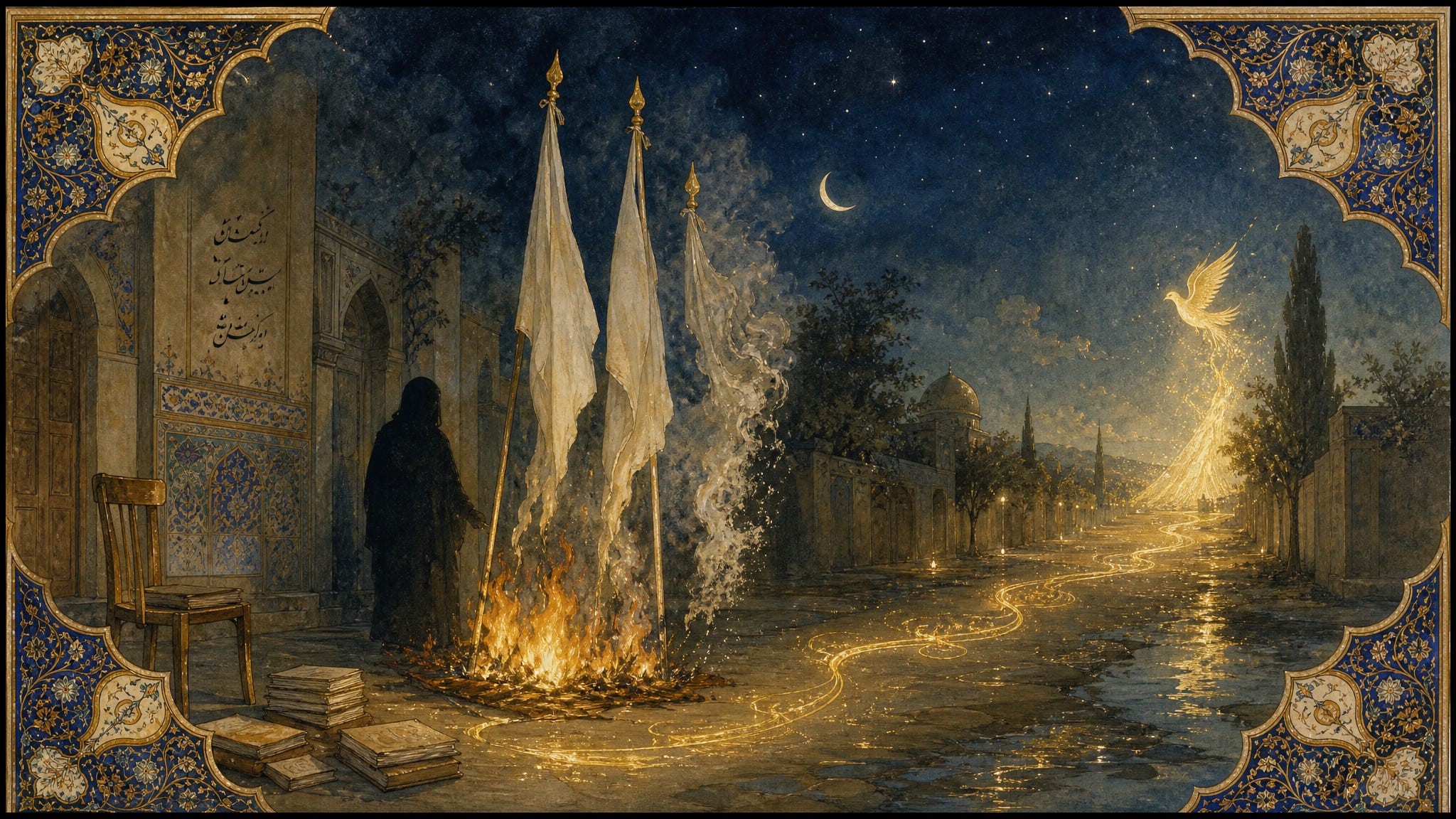
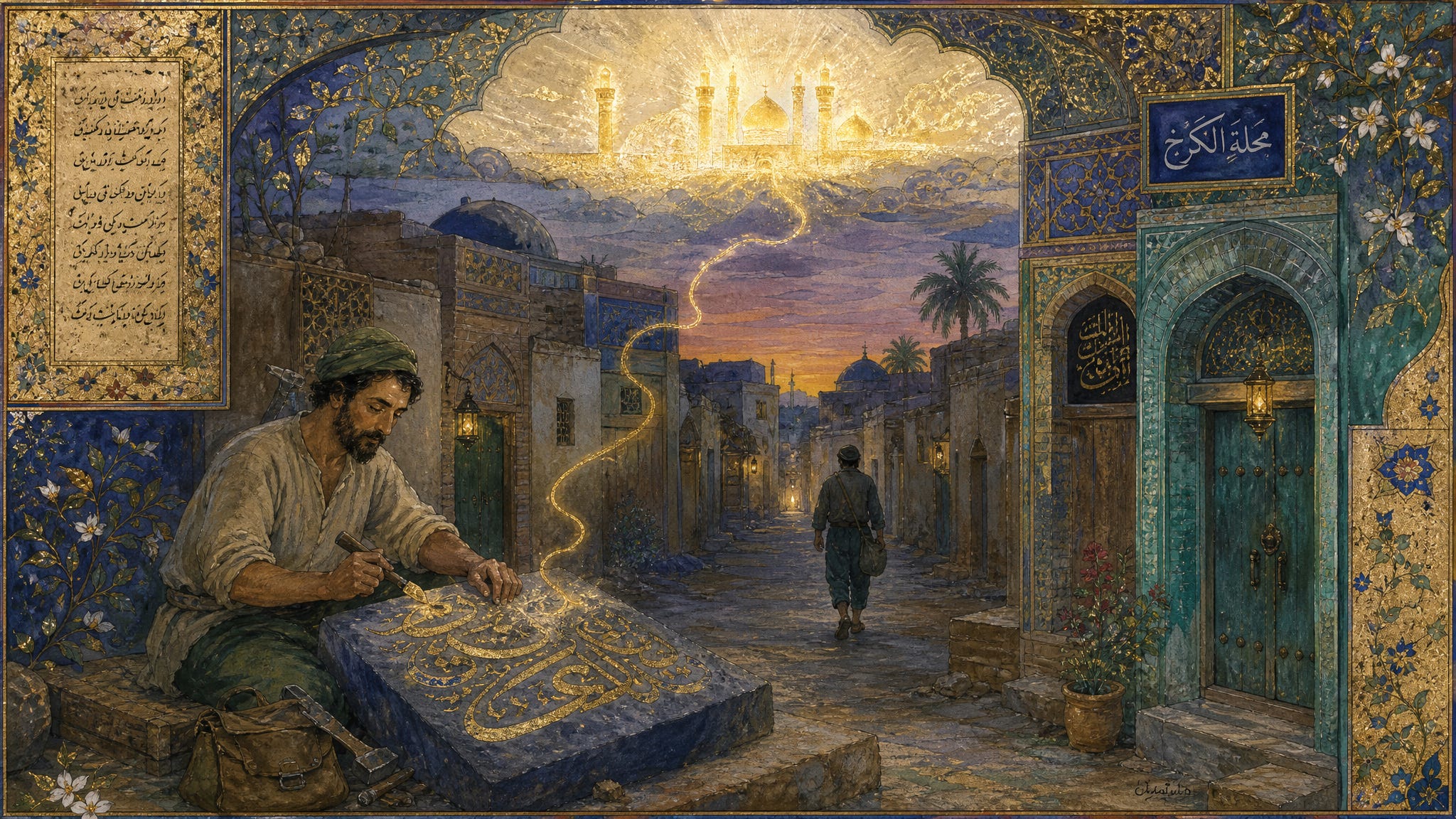
وَأُضِيفَ إِلَيْهِ ثَلَاثَةُ مَجَانِيقَ بِيضٌ كَانَ الزُّوَّارُ مِنْ أَهْلِ الْكَرْخِ قَدِيمًا يَحْمِلُونَهَا مَعَهُمْ إِذَا قَصَدُوا زِيَارَةَ الْكُوفَةِ، فَأُحْرِقَ الْجَمِيعُ
“And to it were added three white banners, which the visitors from the people of Karkh used, in the old days, to carry with them when they set out for the visitation of Kufa. And all of it was burned.”
— Ibn al-Jawzi, Al-Muntazam fi Tarikh al-Muluk wa’l-Umam, Volume 16, Page 16, under the year 449 (Dar al-Kutub al-Ilmiyya, edited by Muhammad Abd al-Qadir Ata)
I will read you that entry in full later, with everything that comes before it.
Tonight I want one clause.
And the word for what those pilgrims were doing —
زِيَارَةَ الْكُوفَةِ
Ziyarat al-Kufa
— is the word you use every time you talk about going.
But I have to tell you something, and I would rather tell you now than have you find it out later.
There is a word in that sentence that is wrong.
Not wrong in my translation — wrong in the book.
In the printed edition, in the manuscripts behind it, wrong for a thousand years.
I have translated it as banners because that is certainly what it means.
The Arabic in front of me does not say banners.
We will come back to it.
And when we do, you will find that what happened to that sentence is the same thing that happened to the man.
Sit with that for a moment.
Somebody went into a house that day, and looked for the flags that ordinary people carried on the road to the shrine of the Commander of the Faithful, peace and blessings be upon him.
And carried them out into the street.
And put them in the fire with the books.
Understand what that is.
They were not burning property.
They were burning a direction.
The Man Whose House It Was
And here is what this majlis — this sermon — is about.
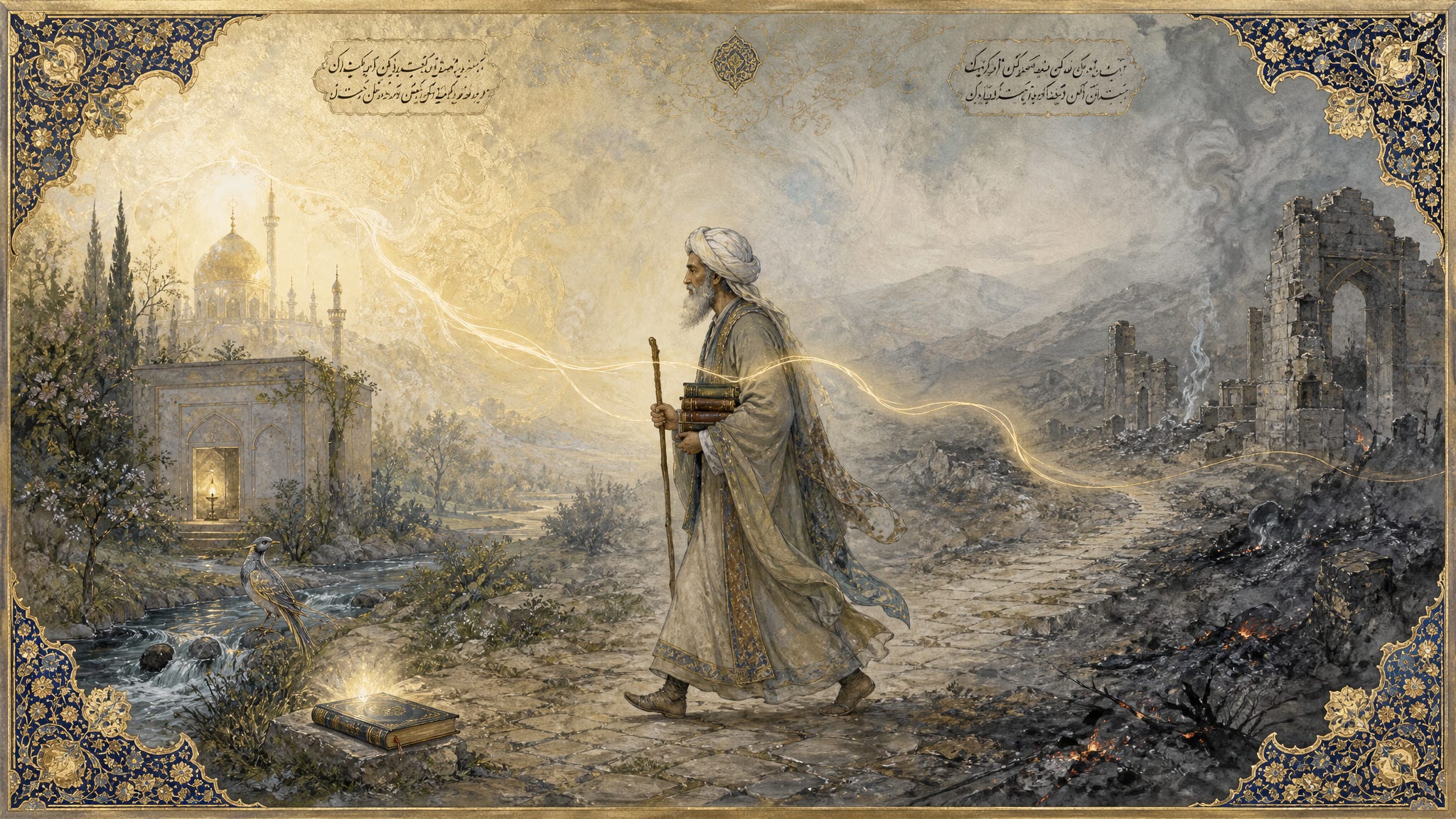
The man whose house that was — he walked that road himself.
Not as a pilgrim.
As a resident.
He went and he lived beside that grave, and he taught there until he died, and by his own will he was buried inside his own house there.
And that house is a mosque today.
You can pray in it.
They burned the banners that pointed to Najaf.
And the man walked to Najaf.
That is the whole of tonight in one sentence — and every clause of it comes from a Sunni chronicle.
We will not need a single source of our own to prove any of it.
Back To The Verse — The First Time
I told you we would return to it.
يُرِيدُونَ لِيُطْفِئُوا نُورَ اللَّهِ بِأَفْوَاهِهِمْ وَاللَّهُ مُتِمُّ نُورِهِ وَلَوْ كَرِهَ الْكَافِرُونَ
“They desire to extinguish the light of God with their mouths — and God will perfect His light, however much the disbelievers hate it.”
— Qur’an, Surah al-Saff (the Chapter of the Ranks) #61, Verse 8
They desire to extinguish the light of God with their mouths.
Now — there is a verse almost exactly like that one in Surah al-Tawbah — the Chapter of the Repentance — and the difference between them is a single word — and that difference is the whole of tonight.
يُرِيدُونَ أَن يُطْفِئُوا نُورَ اللَّهِ بِأَفْوَاهِهِمْ وَيَأْبَى اللَّهُ إِلَّا أَن يُتِمَّ نُورَهُ وَلَوْ كَرِهَ الْكَافِرُونَ
"They intend to extinguish the light of God with their mouths, but God refuses except to perfect His light, although the disbelievers dislike it."
— Qur’an, Surah al-Tawbah (the Chapter of the Repentance) #9, Verse 32
Let me pause here to explain, because Allamah Tabataba’i pauses on it too.
In Surah al-Tawbah it is
يُرِيدُونَ أَنْ يُطْفِئُوا
— they intend to extinguish.
In our verse it is
يُرِيدُونَ لِيُطْفِئُوا
— they intend so that they may extinguish.
And he quotes al-Raghib al-Isfahani1 on what that changes:
و الفرق بين الموضعين أن في قوله: «يريدون أن يطفئوا» يقصدون إطفاء نور الله، و في قوله: «ليطفئوا» يقصدون أمرا يتوصلون به إلى إطفاء نور الله
“And the difference between the two places is that in ‘they intend to extinguish’ they intend the extinguishing of God’s light itself; and in ‘so that they may extinguish’ they intend a thing by means of which they may arrive at extinguishing the light of God.”
— Allamah Tabataba’i, Al-Mizan fi Tafsir al-Qur’an, on Surah al-Saff (the Chapter of the Ranks) #61, Verse 8, quoting al-Raghib al-Isfahani
And then Allamah Tabataba’i gives his own summary of it:
و محصله أن متعلق الإرادة في قوله: «يريدون أن يطفئوا نور الله» نفس الإطفاء، و في قوله: «يريدون ليطفئوا نور الله» السبب الموصل إلى الإطفاء و هو النفخ بالأفواه و الإطفاء غرض و غاية
“The upshot is that the object of the intention in ‘they intend to extinguish the light of God’ is the extinguishing itself; and in ‘they intend so that they may extinguish the light of God’ it is the cause that leads to the extinguishing — which is the blowing with the mouths — while the extinguishing is the purpose and the end.”
— Allamah Tabataba’i, Al-Mizan fi Tafsir al-Qur’an, on Surah al-Saff (the Chapter of the Ranks) #61, Verse 8
Do you hear what that gives us tonight?
This verse is not about the goal.
It is about the instrument.
And Allamah Tabataba’i tells us why the image is a mouth at all:
كما يطفأ الشمعة بالنفخة كناية عن أنهم زعموا أن نور الله و هو دينه نور ضعيف كنور الشمعة يطفأ بأدنى نفخة
“…as a candle is put out with a puff of breath — a figure for the fact that they supposed the light of God, which is His religion, to be a weak light like the light of a candle, put out by the slightest breath.”
— Allamah Tabataba’i, Al-Mizan fi Tafsir al-Qur’an, on Surah al-Saff (the Chapter of the Ranks) #61, Verse 8
They thought it was a candle.
So in Karkh they reached for an instrument.
And they did not use their mouths.
They used fire, which is a serious instrument.
And they used the state, which is a far more serious one.
It made no difference.
And tonight I want to show you exactly why it made no difference — because the reason is not a miracle.
It is a design.
What You Are Standing On
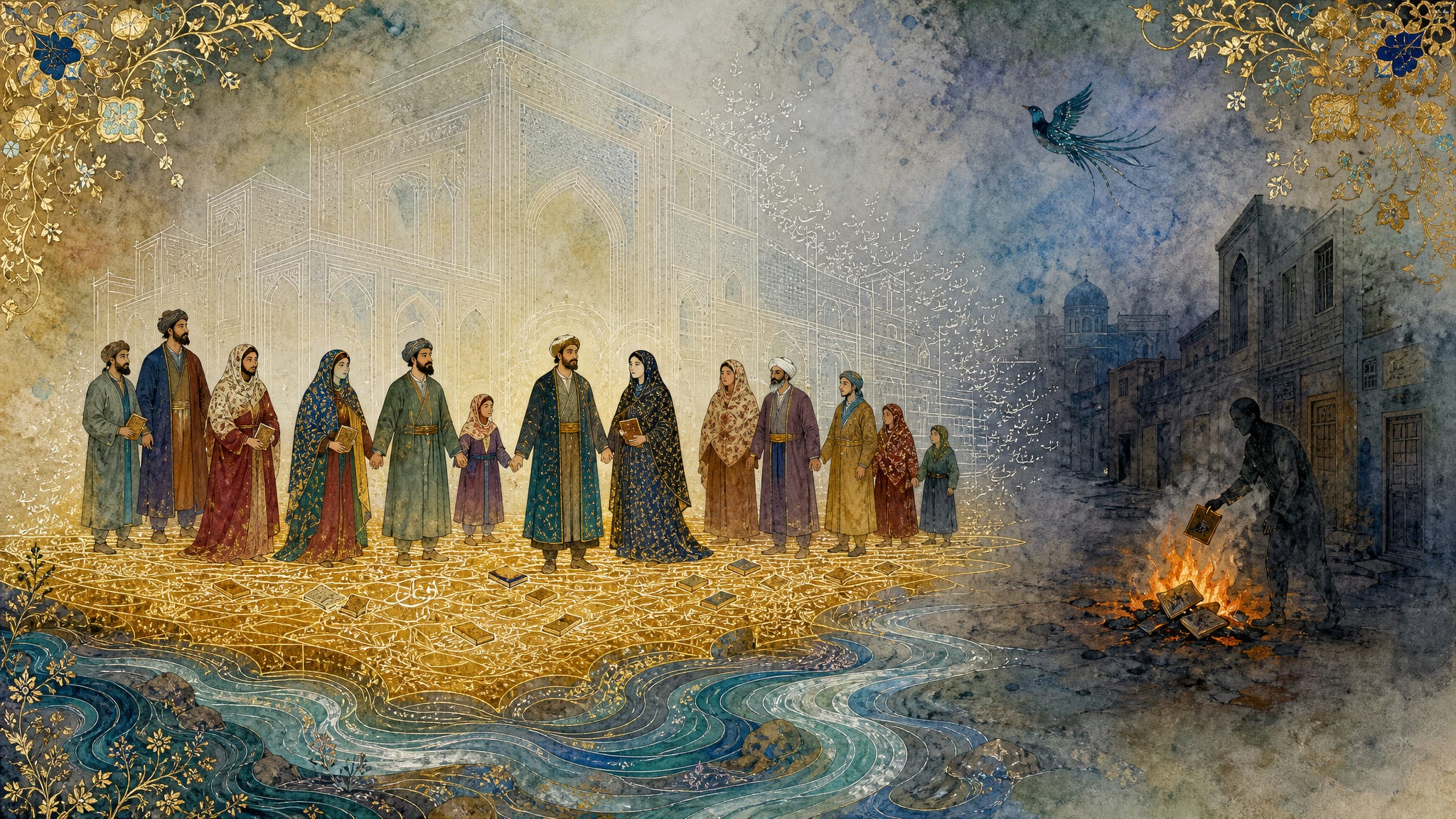
Now let me tell you why I am spending an hour of your evening on a piece of furniture.
Every one of us is standing on something.
Not a building — though we have one, and we are grateful for it.
I mean the thing underneath that.
The thing that would still be there if the building were not.
And most of us have never once been asked to name it.
We have never had to.
That is what it means to live in a settled place in a settled time, and it is a mercy, and I would not wish the alternative on anybody in this room.
But it has a cost, and the cost is this:
A people who have never had to name what holds them up do not know what holds them up.
And they find out in the worst possible way, at the worst possible time, from people who worked it out before they did.
Somebody worked it out about us — about the Shia, once, in a city that is now rubble.
He made a list.
He went and got the things on the list, one at a time, and put them in a fire in the street where everybody could see.
And he was wrong — not about the list.
The list was very good.
He was wrong about what those things were made of.
Tonight I want to walk you through his list.
And then I want to ask you what would be on yours.
Because the question underneath this whole evening is one you will not be asked politely when it finally comes:
What actually protects a people when the state turns on them?
I will tell you the answer now, so that you can spend the hour watching me prove it rather than waiting for it.
It is not a building.
Video of the Majlis (Sermon/Lecture)
Recap — What We Carry Forward
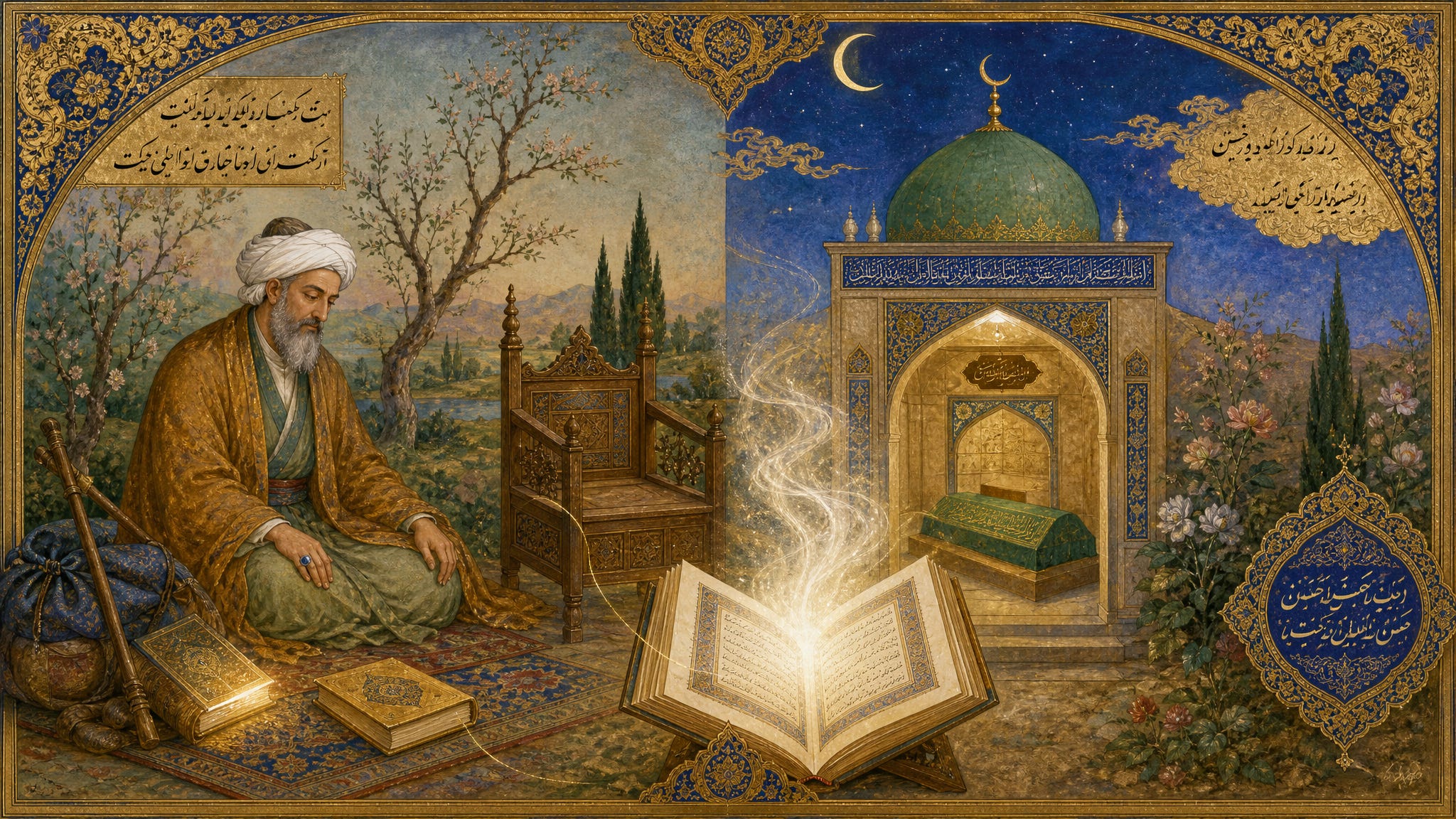
Before we go into the fire, let me set us down gently — because tonight does not stand on its own.
Last week we spent an hour building a man.
Tonight we watch them burn what he built.
We are in The Architecture of Guidance — this is the tenth part of it — and beginning at the ninth part we opened a smaller sequence inside it, of nine sessions, called The House Beside the Grave.
Tonight is the second of those nine.
Last week was the first.
And the whole nine are asking one question from nine directions:
How does the guidance of the Imam of our Age, may our souls be his ransom and may God hasten his return, reach us while he is absent?
So — three things from last week, and the third is the one that matters tonight.
First, the man.
Shaykh Abu Ja’far Muhammad ibn al-Hasan al-Tusi — though our tradition does not usually call him that.
It calls him Shaykh al-Ta’ifa, the Shaykh of the Community.
Not a compliment: a title, and nobody has seriously contested it in a thousand years.
A boy from Tus in Khurasan who came to Baghdad as a young man in the year 408 of the Hijra and never went home.
Twenty-three years at the feet of one teacher.
Two of the four books on which the whole of our jurisprudence stands, compiled by his own hand.
Second, the chair.
An actual wooden chair — an appointed seat, given to him in the capital of the Muslim world for the teaching of theology.
We spent time on that chair last week.
Keep hold of it. It comes back tonight, and it does not come back well.
Third, and most importantly — in the year 447 of the Hijra, in a city already coming apart around him, he finished a book about the Occultation of the Imam of our Age.
And he wrote the year into the book himself, in his own hand, in the first person.
A book about how guidance survives an absence, written by a man about to lose everything he had.
We will read his sentence to you before the night is out.
And one more thing, which the calendar gave us and not me.
Last week fell on the 28th of Safar — the demise of the Holy Prophet, peace and blessings be upon him, his family, and his righteous companions — and the Messenger of God was buried in the room he died in.
The first house beside a grave.
That is where this little sequence gets its name.
So that is where we left him.
At the very height of it.
And it brings us back, as every week does, to the question this whole series has been asking since Session Sixty-One:
What are you building?
And what are you becoming?
Tonight we watch them burn it.
And next week we find out what they could not reach.
Where We Are Going
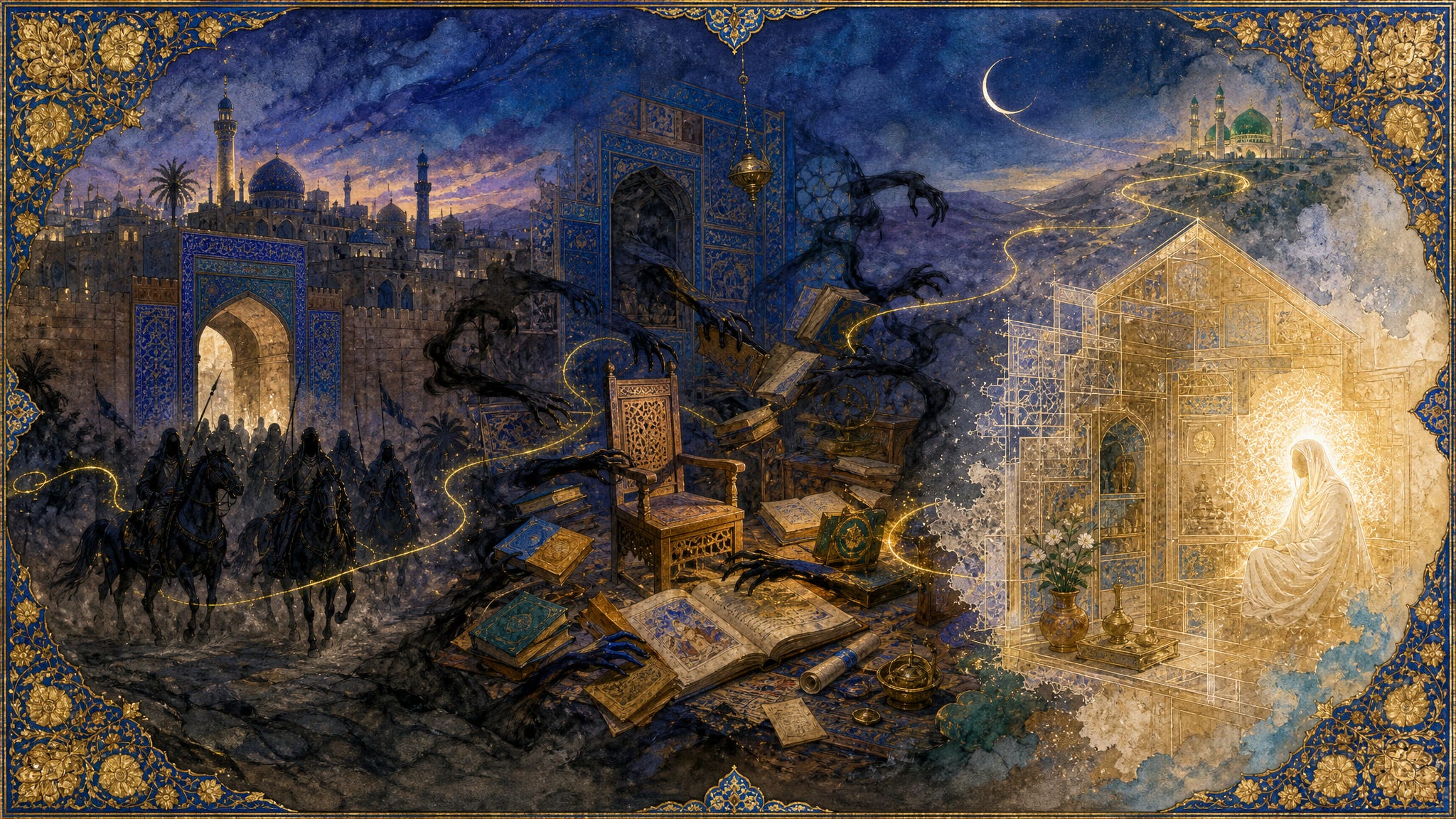
Three points.
One — how a city changes hands.
Who came to Baghdad, and why, and what they actually wanted.
Two — what they came for.
The inventory of what was destroyed, which is the most revealing list in this entire session.
Three — what could not be burned.
And that is where we find the answer to the question underneath all of it:
What protects a people when the state turns on them?
And it was his house.
The man I have just been describing to you.
The one with the chair.
Tonight he loses everything he owns — and we find out what he had that could not be taken.
How a City Changes Hands
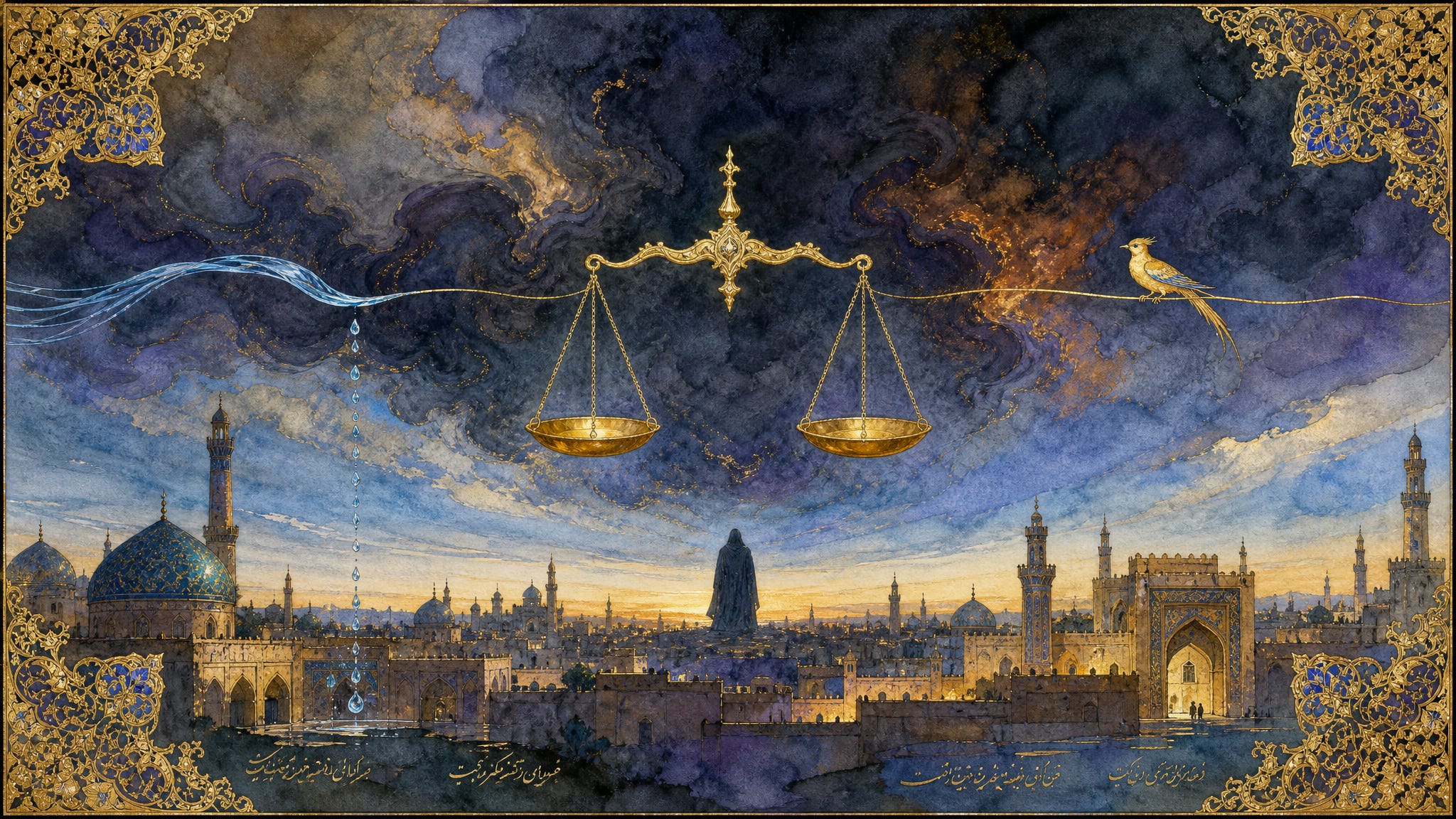
The storm gathers.
Before I can tell you what happened in Karkh, I have to tell you who was standing in Baghdad — and I am going to tell it fairly.
A sermon that misrepresents its opponent is a sermon that can be taken apart.
And a sermon that can be taken apart protects nobody.
The Family That Came Down Off The Steppe
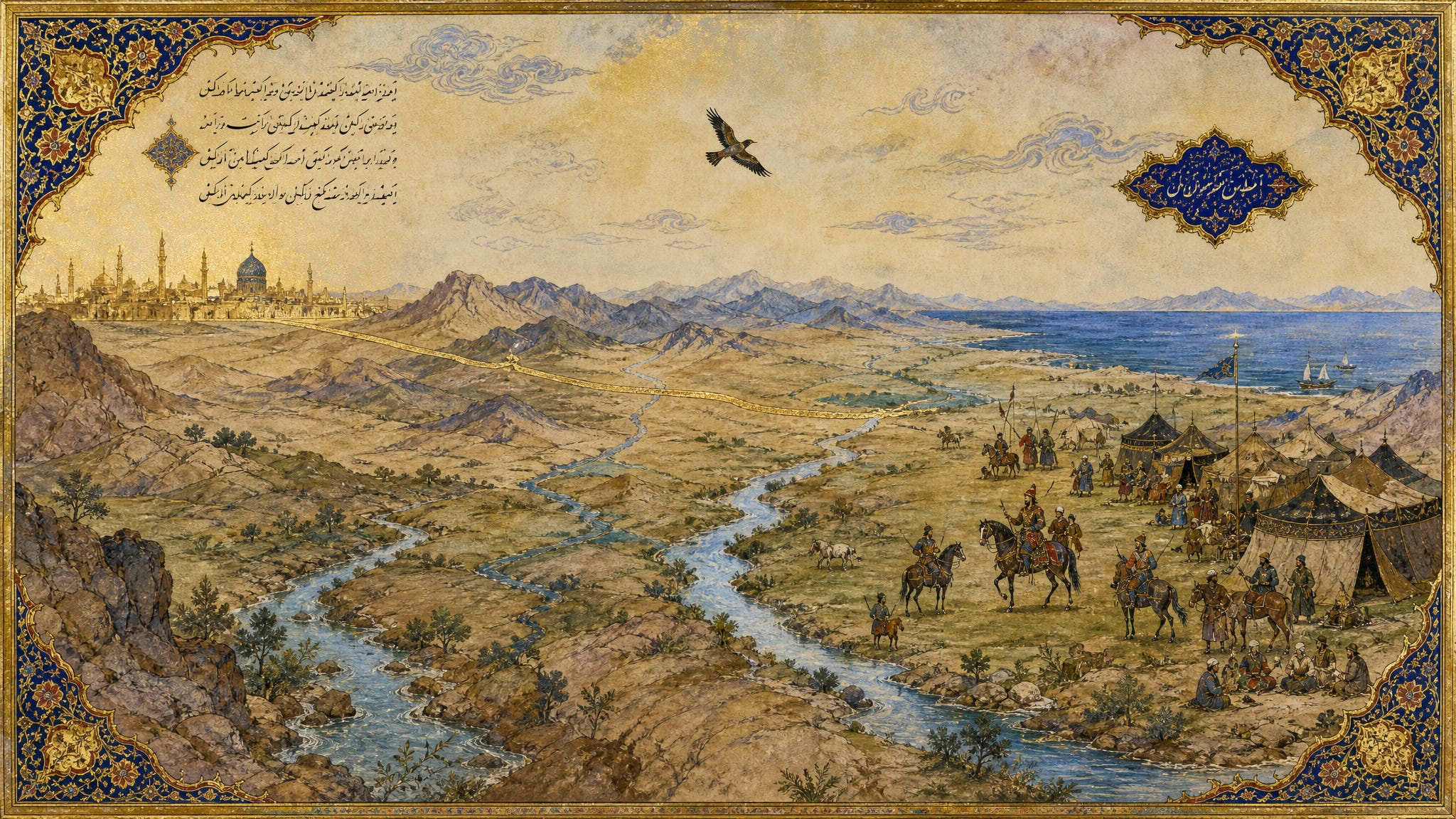
They were Turkic Oghuz — Ghuzz in the Arabic sources — a confederation of tribes that had been moving west across the grasslands for centuries.
Their own family was of the Qiniq.
The eponym is Seljuk ibn Duqaq, whose father carried the nickname Temur Yaligh, iron bow.
They broke with their Oghuz overlord and went south, to Jand, on the lower Syr Darya.
Let me place that for you, because I suspect those two names mean nothing to most of us in this hall, and they should.
The Syr Darya is one of the two great rivers of Central Asia.
The Greeks called it the Jaxartes.
The Arab geographers called it Sayhun.
It comes down off the mountains and runs out into the Aral Sea — and the other one, the Oxus, we will meet in a moment, because they cross it.
And Jand sat near the mouth of that river, out on the open steppe, in what is today southern Kazakhstan.
Now hold the map in your head for a second, because the distance is the point.
That is about fourteen hundred miles from Baghdad.
Fourteen hundred miles of grass and desert and mountain, and not one road you would call a road.
Further than London is from anywhere most of us have driven.
That is where this family is, at the point where our story picks them up.
Not on the edge of the Muslim world — outside it, looking in.
And within three generations they will be sitting in Baghdad deciding what the call to prayer is allowed to say.
And Islam came to them there.
Let me be careful with that sentence, because the honest scholarship is careful with it.
The Encyclopaedia Iranica, in its article on the Seljuqs, calls the accounts of their origins “semi-legendary” — and when a reference work of that standing hedges, we hedge with it.
So I will say only what can be said.
The traditions place their entry into Islam at Jand, in the closing years of the fourth century after the Hijra.
The first hard date is the year 382 of the Hijra — 992 in the reckoning of the West — when they appear on a battlefield as Muslims, fighting alongside the Samanids.
They were Hanafi in law, and they stayed Hanafi.
Now — a detail, and I give it to you along with its uncertainty.
Seljuk gave his sons the names Mikail, Israil, Musa and Yunus.
Michael, Israel, Moses, Jonah.
Not Turkic names.
Scholars have argued about what that means for a century and have not settled it, and I am not going to settle it for them tonight.
I raise it so you can see these people as they actually were.
A family one or two generations off the grasslands, whose grandfather’s religion nobody today can name with confidence.
And within three generations they will be the arbiters of orthodoxy in Baghdad.
Hold on to that.
It matters before the hour is out.
Dandanaqan — One Morning That Rearranged The East
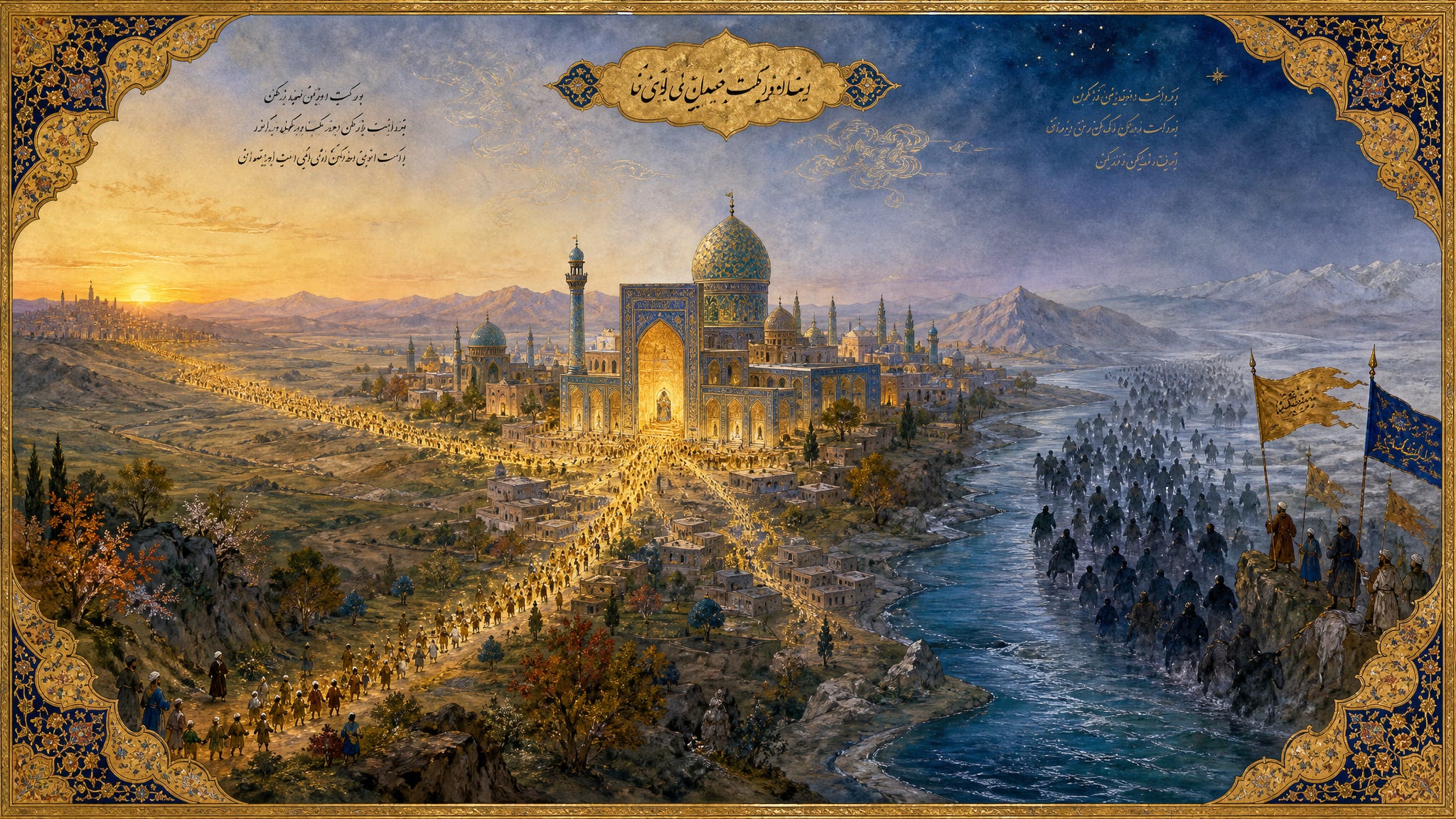
Around the year 426 of the Hijra — 1035 of the common era — roughly ten thousand Oghuz under Seljuq leadership cross the Oxus into Khurasan.
By 429 — 1038 — they have taken Nishapur, and the Friday sermon is read in Tughril Beg’s name for the first time.
And in 431 — 1040 in the Western reckoning — comes the battle of Dandanaqan.
Tughril Beg and his brother Chaghri Beg break the Ghaznavid sultan in the field.
Khurasan is theirs.
Rayy falls by 434.
Isfahan by 443 — 1051.
And after Dandanaqan they divide the work.
Tughril Beg takes the west.
Chaghri Beg holds Khurasan.
Hold that last sentence, because the whole point rests on it.
Khurasan is held, and Khurasan goes on supplying the empire — its administrators, its judges, its religious personnel.
The religious character of the Seljuq state was manufactured in Nishapur.
It was not manufactured in Baghdad.
We will need that in ten minutes.
The Hundred Years Before — Why Baghdad Was Already Broken
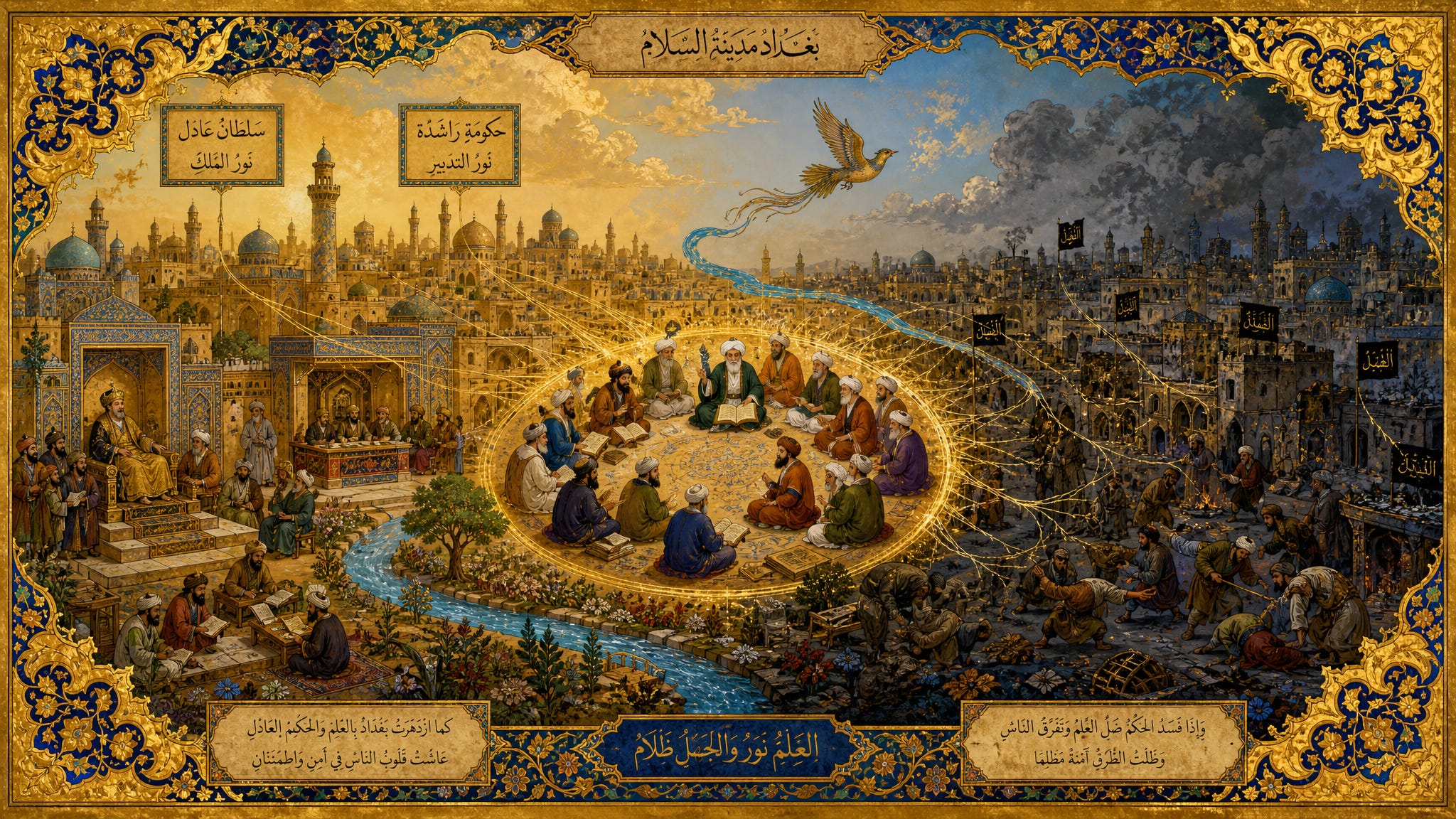
I will compress a century into ninety seconds, because it is scaffolding and not the building.
The Buyids get their own majlis in a couple of weeks, God willing.
In the year 334 — 945 — a Buyid amir walks into Baghdad and takes the title amir al-umara, commander of commanders.
And for a 113 years by our reckoning — a 110 by the Western one — the caliph reigns and the Buyids rule.
Now, there is a temptation here, and I want to resist it in front of you.
The temptation is to call that the Shi’a century.
The careful scholarship will not let us say that, and I would rather be careful than comfortable.
The Encyclopaedia Iranica, in its article on the Buyid dynasty, puts it evidentially rather than as a verdict:
“It cannot be established that there was a determined attack on Sunnism, at least in Iraq.”
— Encyclopaedia Iranica, Section on the Buyid Dynasty
Hear the precision of that.
Not there was no such attack.
It cannot be established.
That is a historian refusing to claim more than his evidence carries, and it is exactly the discipline this majlis keeps asking of you.
The Buyids kept the Abbasid caliph in place rather than replacing him; there were Sunni Turkish contingents in Iraq; a policy of enforcing Shi’ism would have led to disaster, and they knew it.
So here is what is true, and it is both more accurate and more useful.
It was a century in which Shi’a scholarship could be done openly, at the highest level, in the capital of the Muslim world.
That is what was actually gained.
And that is precisely what was about to be lost.
By the 440s the Buyid order has collapsed.
Fragmentation.
Army factionalism.
Fiscal ruin.
And a government that can no longer police its own streets.
The Invitation
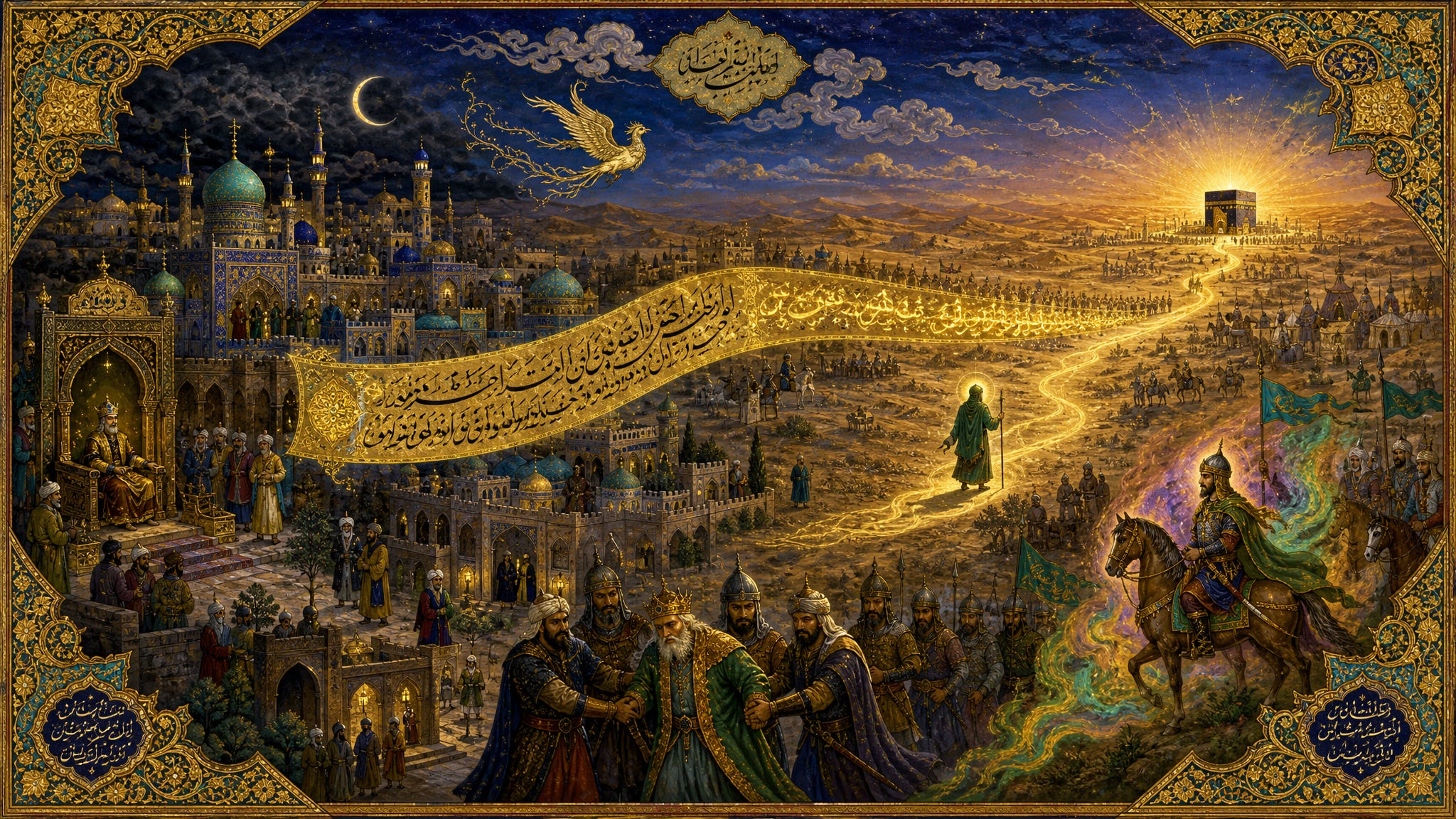
Now the part that reframes everything, and most people have never heard it.
The caliph is al-Qa’im bi-Amr Allah, in office from 422 to 467 — a very long reign with very little power in it.
The Encyclopaedia of Islam sums up his early decades in a single sentence, and it is a bleak one:
“Hardly a day passed in the capital without turmoil.”
— Encyclopaedia of Islam, On al-Qa’im bi-Amr Allah
Forty-five years on the throne, and that is the summary.
And he has a specific problem.
A Turkish commander of the collapsing Buyid establishment has gone over to the Fatimids in Cairo.
Let me pause here to explain, because if you do not know what the Fatimids were, the caliph’s panic makes no sense.
There was a second caliphate.
In Egypt, in the city of Cairo, there sat another man who called himself Commander of the Faithful and successor of the Messenger of God, peace and blessings be upon him, his family, and his righteous companions — and unlike the man in Baghdad he was Isma’ili Shi’a, and claimed descent from Sayyedah Fatimah al-Zahra, peace and blessings be upon her.
He had wealth Baghdad no longer had.
He had an army Baghdad no longer had.
And he had missionaries — organised, funded, patient — working in every city of the Muslim world, including this one.
So understand what the caliph in Baghdad is looking at.
A rival caliph, of a rival branch of Islam, with money, with soldiers, and with agents inside his own capital.
And now one of his own commanders has taken the Fatimid coin.
So the caliph writes a letter.
He writes to Tughril Beg, and he asks him to come.
Let me be plain, because this is the hinge of the whole point.
The Seljuqs did not arrive in Baghdad uninvited.
The caliph sent for them.
Tughril Beg reaches Baghdad in the month of Ramadan of the year 447 — December of 1055.
The sources give the day as the 24th or 25th, so I will not pretend to know which.
He comes officially as a pilgrim bound for Makkah, and swears loyalty to the caliph and to the Buyid amir both.
Within days the amir’s name is out of the Friday sermon.
By the end of the month he — the Buyid amir — is under arrest, over the caliph’s own protest.
He dies a prisoner at Rayy.
He is the last Buyid to rule Iraq.
And Now Let Me Show You The Place
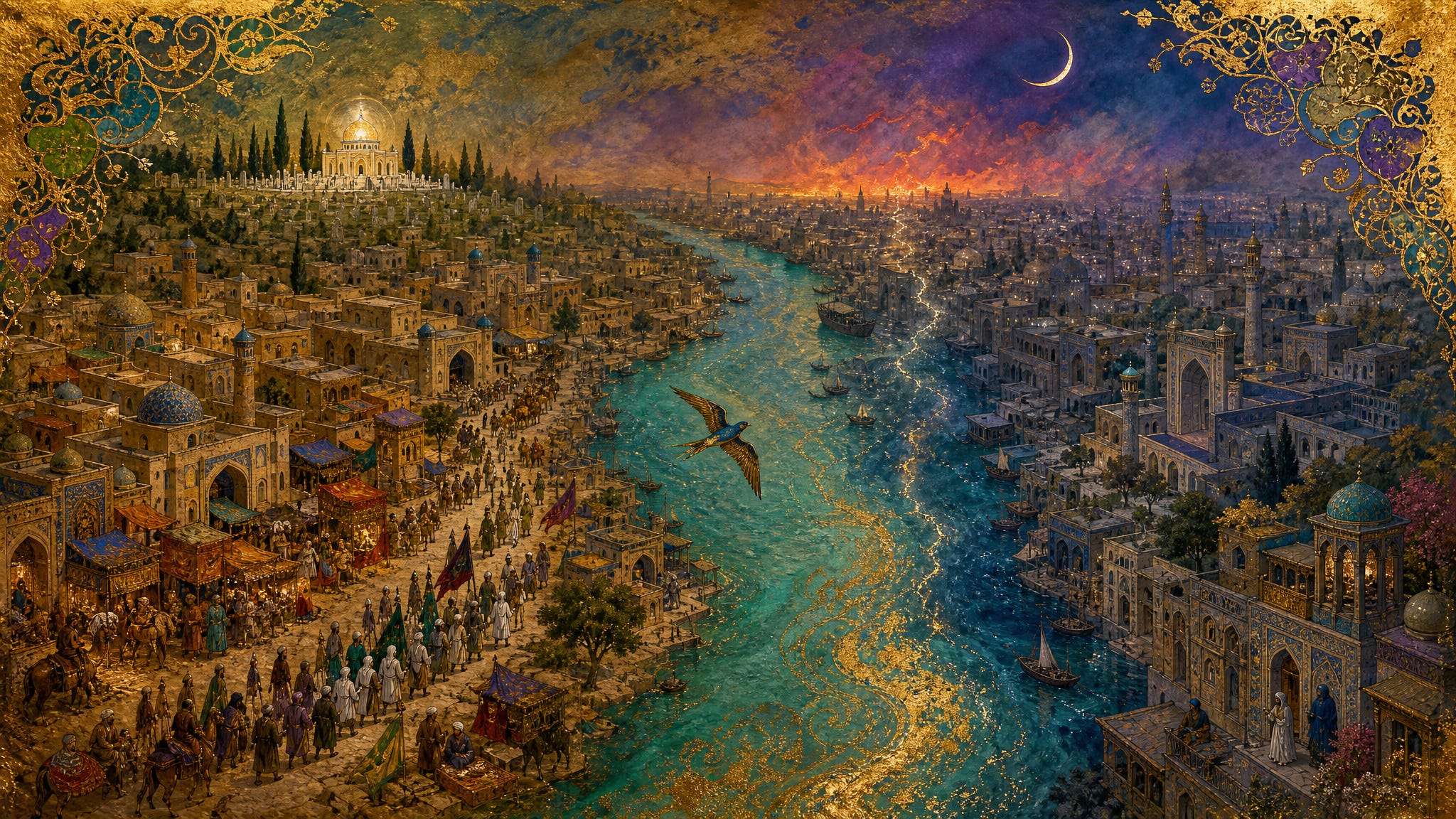
Because I have been saying the word Karkh all evening and I have not told you what it was.
Karkh was the great market quarter of Baghdad, on the west bank of the Tigris.
Not a village.
Not a ghetto.
Rather a commercial engine.
Merchants, cloth-dealers, guilds, warehouses, money.
And it was, overwhelmingly, ours — overwhelmingly Shia.
Now — I could describe it from a modern history book.
I would rather describe it out of the chronicle itself, in the chronicler’s own vocabulary, because his words tell you more about the shape of the place than any summary of mine could.
He speaks of
أَبْوَابِ الدُّورِ
— the doors of the houses.
He speaks of
الدُّرُوب
Al-durub.
The heads of the lanes.
A darb is not a street in our sense — it is a lane with a mouth to it, a way in that a body could stand in and be seen standing in.
Named lanes, with entrances; streets you could stand at the top of and see all the way down.
He speaks of
الزُّوَّارُ مِنْ أَهْلِ الْكَرْخِ
— the pilgrims of the people of Karkh
— as a body, who
قَدِيمًا
in the old days,
used to carry banners together on the road to Kufa.
Do you hear what that builds?
A dense, walkable, self-aware quarter, where people knew whose door was whose — and where the whole street went on pilgrimage together.
Now put two more things beside it.
To the north, at a place the sources call
مَقَابِر قُرَيْشٍ
— the graveyard of Quraysh
— stood the shrine we know today as Kazimayn: the resting place of Imam Musa al-Kadhim and Imam Muhammad al-Jawad, peace and blessings be upon them both.
And across the water, on the east bank, sat Bab al-Basra — a staunchly Sunni quarter that had been fighting Karkh, on and off, for generations.
That fight was old, and ugly, and it had blood on both sides of it.
I am not going to tell you our quarter was innocent in it, because that would not be true.
So this is the city Tughril Beg rode into.
A capital with two caliphs claiming it, a bankrupt government, a rival commander in the pay of Cairo, and two quarters at each other’s throats since before anyone alive could remember.
Hold that picture.
It is about to be set on fire.
And Now A Correction, Because It Protects Everything That Follows
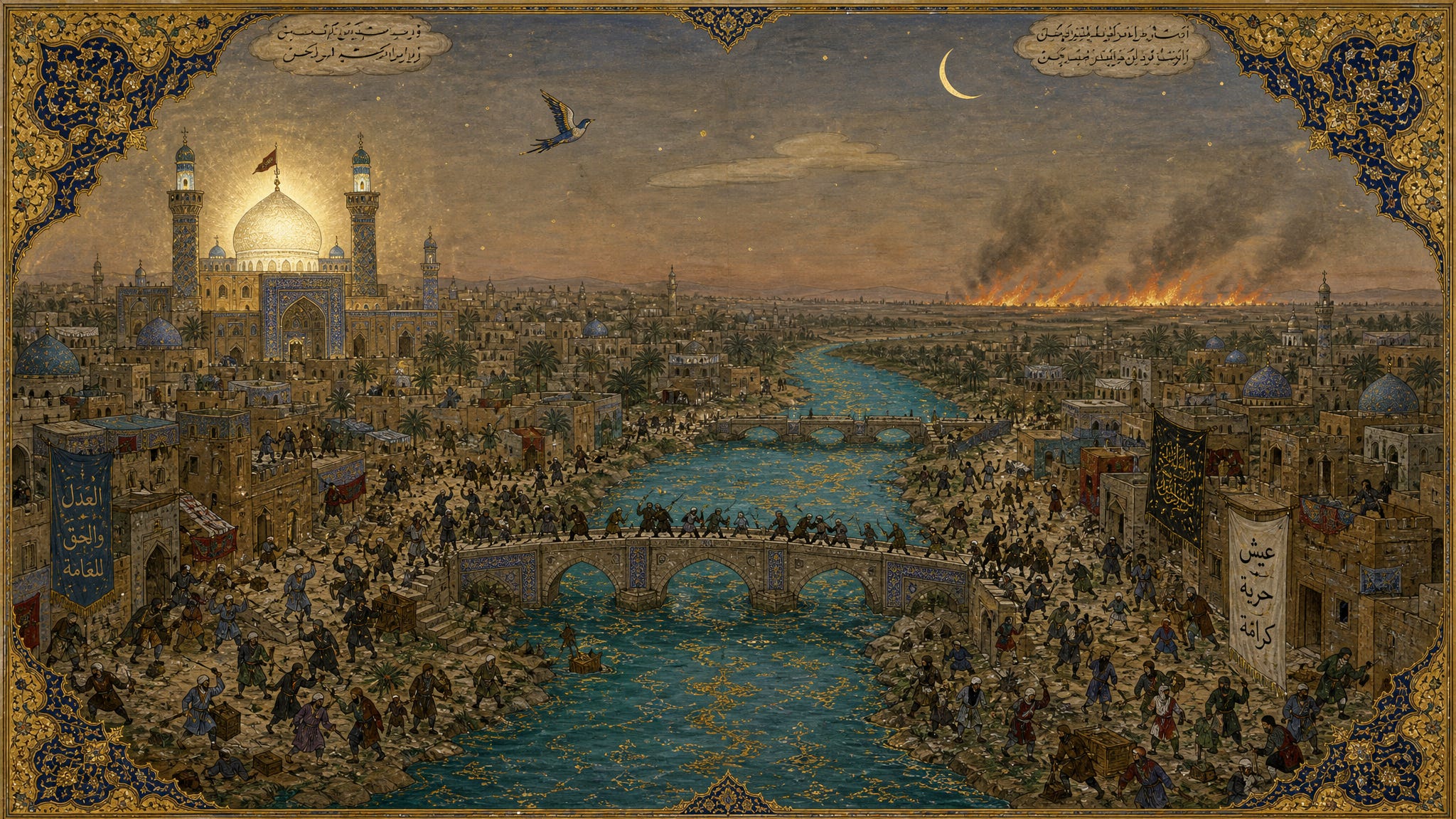
We have to be accurate about 447.
Karkh was not put to the torch the night Tughril Beg arrived.
I say that clearly, because the story is often told that way and the story is wrong.
What the chroniclers describe in 447 is soldiery looting; the commons rising and killing soldiers; the old street war between Karkh and Bab al-Basra flaring at the two bridges.
That is a city coming apart, and it is terrible, and people died in it.
But it is not yet the thing this majlis is named for.
That comes the following year.
The Honest Answer To The First Question Anybody Asks
So — did they come to crush us?
No.
They came because an Abbasid caliph, fighting for his own political survival against a Fatimid-funded general, sent for them.
Their project was an empire.
His project was to still be caliph in the morning.
Karkh was not the object of the policy.
Karkh was what the policy went over the top of.
And I am not going to stand here and claim there was a standing, empire-wide, doctrinally-driven programme against the Shi’a — because the evidence does not support it, and because our own material in the third point contradicts it.
The Purge Before Ours
And now the fact that turns everything I say tonight from a slogan into a demonstration.
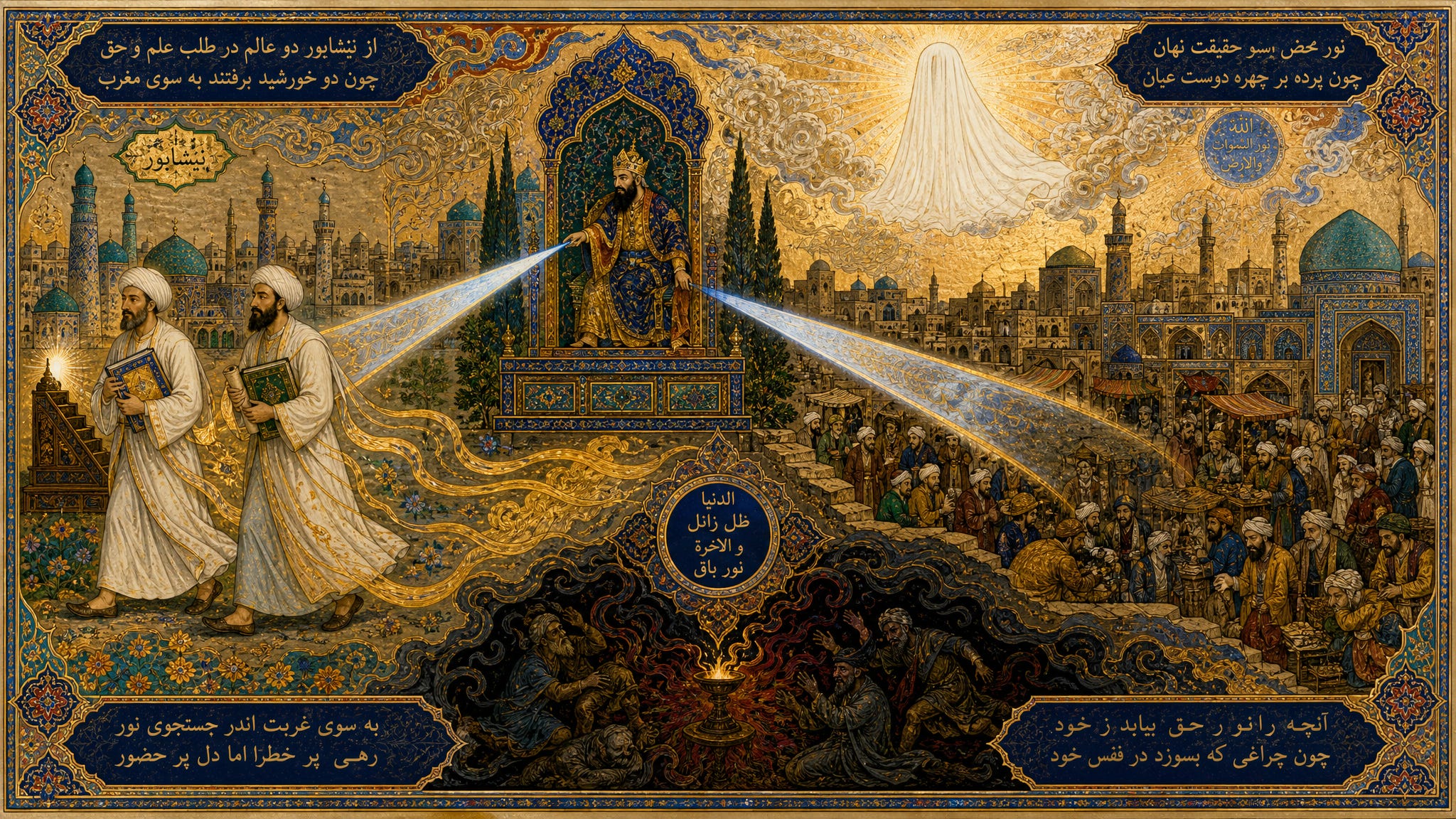
Before I take you into Karkh, I want to show you what this state did to Sunnis.
Because if you do not see this first, you will misunderstand everything that follows.
Tughril Beg’s first vizier was a Khurasani — Hanafi in law, and reported to have been Mu’tazili in creed.
And from around the years 445 and 446 — 1053 and 1054 — he had the cursing of the Ash’aris written into the Friday sermon at Nishapur.
Written into the sermon.
By order of the state.
Two years before Baghdad.
Al-Juwayni — the teacher of al-Ghazali, one of the great minds of that or any century — left Khurasan for the Hijaz.
Al-Qushayri left too, and wrote a formal complaint about what had been done.
They were driven out of their own country.
And the historians read the motive as political rather than theological: clearing the high offices for Hanafis.
It was reversed after 455.
The vizier who ordered it was imprisoned, and executed within the year.
Let me be plain about what that means.
The first religious purge carried out by this state was not aimed at us.
It was aimed at Sunnis.
At the most eminent Sunni scholars of the age.
One of whom taught al-Ghazali.
So when I tell you what happened in Karkh, I am not going to tell you that Sunnis did it to Shi’a.
I am going to tell you that a state discovered orthodoxy is an extremely efficient weapon, and used it on whoever was standing in front of it.
That year it was Ash’aris in Nishapur.
The next year it would be us — the Shi’a.
Not Shi’a against Sunni.
Truth against the abuse of truth.
That is not a slogan I am asking you to accept on my word.
That is the documented sequence of events.
And Now I Am Going To Argue Against Myself
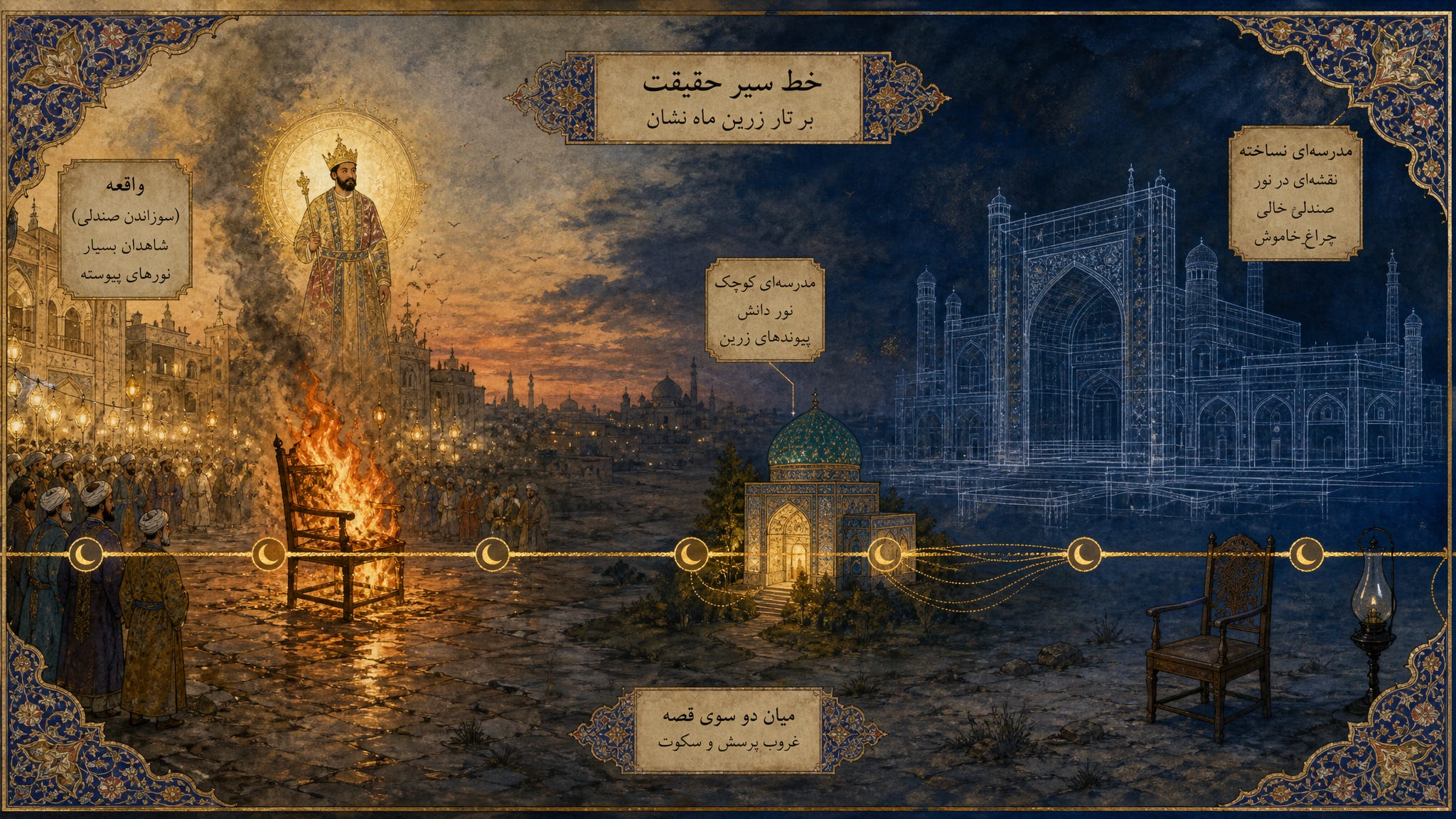
There is a thing you will hear said about this period with great confidence, and I am not going to say it.
You will hear that the Nizamiyya madrasas were built to destroy Shi’ism, and that Karkh was their first fruit.
It is not true.
And I want you to be able to defend every single thing you hear from me tonight, so let me give you the dates.
The Nizamiyya of Baghdad was begun in 457 and opened in 459.
Nizam al-Mulk did not become vizier until 455.
The events I am about to describe are 448 and 449 — between eight and eleven years earlier.
When that chair was carried into the street and burned, Nizam al-Mulk held no office.
Alp Arslan was not sultan.
Tughril Beg was still alive.
And not one Nizamiyya existed anywhere on the face of the earth.
If we blame the Nizamiyyas for Karkh, one well-read opponent takes this entire sermon apart in a single sentence.
And he would be right to.
While I am here — he did not invent the madrasa either.
Madrasas existed in Khurasan before him; the first institution really deserving the name is placed at Nishapur in the first quarter of that same century.
What he did was systematise, endow, network and politicise it.
That is a large thing to have done.
It is not the same as having invented it.
Lessons For Our Time
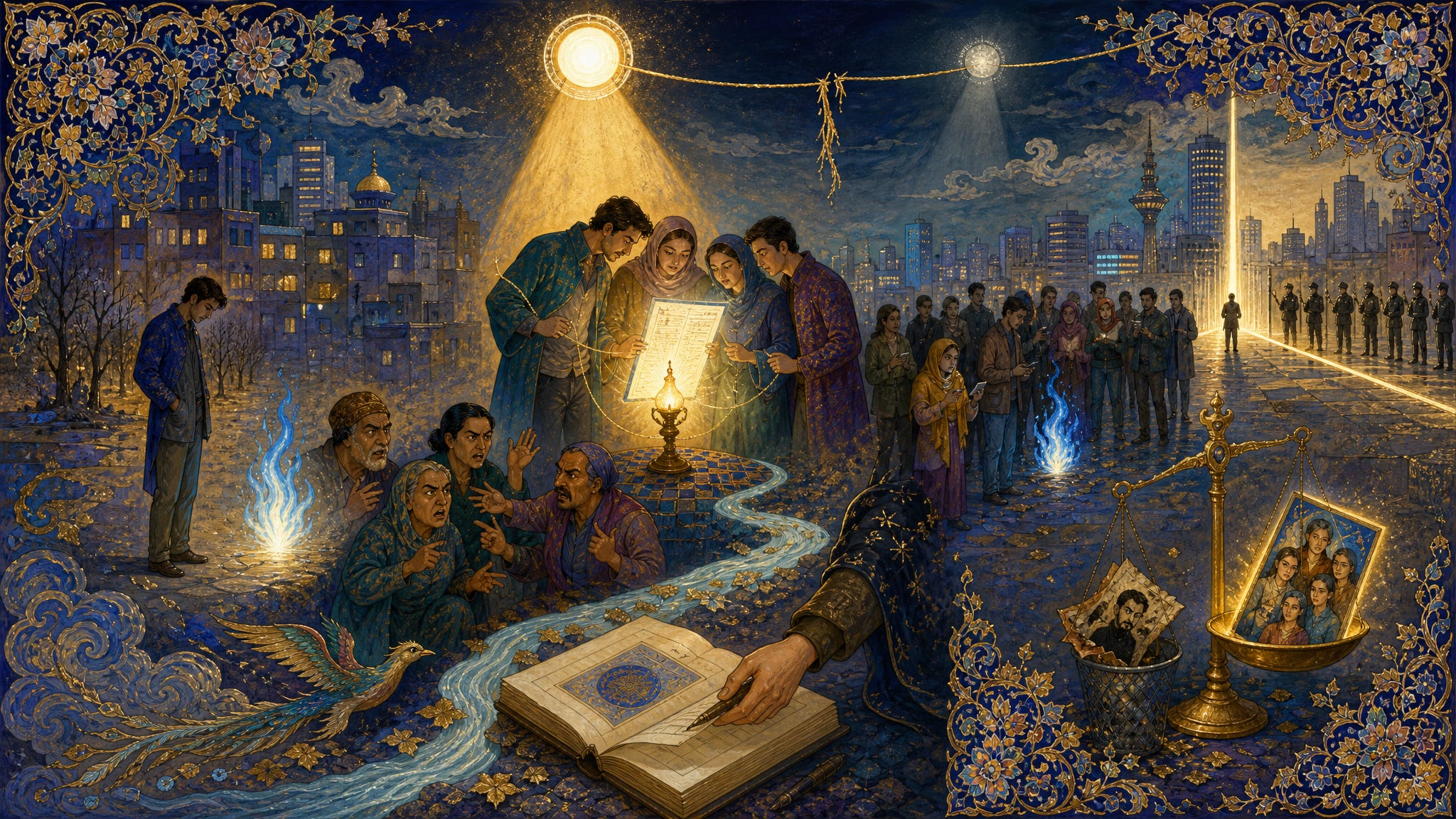
Five things, and every one of them is about how you read what is happening to you.
The first — learn the difference between being hated and being incidental.
Both burn identically.
That is what makes this hard.
But they are different situations, and they call for different responses — and a community that cannot tell them apart will misread every crisis it ever meets.
Seeing malice where there is only indifference.
And seeing indifference where there is real malice on its way.
Half of what gets called persecution is a state stepping on something on its way somewhere else.
That is not a comfort.
In some ways it is worse.
But it is the truth, and you cannot respond well to a situation you have described wrongly.
And it runs the other way too, and that half costs us more.
A man was stabbed to death at a mosque.
It went everywhere.
It was an attack on Muslims.
It was proof of how bad things have become.
And there were people on television within the day who were entirely certain of what it meant.
It was a family matter.
Two men of the same faith, of the same family, and a dispute that ended in a building where it should never have been brought.
That came out a long time afterwards.
And you will not remember reading it — because the first story was a headline, and the correction was four paragraphs on an inside page.
Now listen carefully, because this is a knife-edge and I want to walk it properly.
A man was killed.
That is not smaller because the motive turned out to be different.
His family did not get him back.
And hatred of Muslims is real, and it is not rare, and I am not standing on this pulpit to tell you it is imaginary.
What I am telling you is that a community which reaches for the same explanation every time will eventually be wrong.
And it will be wrong loudly.
And it will be believed a little less the next time it is right.
That is the cost.
It is not paid by the people who wrote the headline.
It is paid by us, later, when it matters.
The second — when a report reaches you, the Qur’an tells you what to do with it.
And the word it uses is the word we use for this work.
يَا أَيُّهَا الَّذِينَ آمَنُوا إِن جَاءَكُمْ فَاسِقٌ بِنَبَإٍ فَتَبَيَّنُوا أَن تُصِيبُوا قَوْمًا بِجَهَالَةٍ فَتُصْبِحُوا عَلَىٰ مَا فَعَلْتُمْ نَادِمِينَ
“O you who believe — if a corrupt person comes to you with a report, then verify it, lest you strike a people in ignorance and become regretful over what you have done.”
— Qur’an, Surah al-Hujurat (the Chapter of the Chambers) #49, Verse 6
Look at the verb.
فَتَبَيَّنُوا
Fa-tabayyanu.
Then make it clear.
The root is bayan — the making-plain of a thing — and the form the Qur’an chooses is not the one that means be told, it is the one that means go and establish it for yourself, until it stands clear in front of you.
That is the word.
The thing we say we are doing from this pulpit every week is not a programme somebody invented and gave a nice name to.
It is an imperative in the Book of God.
And now I want to give you what Allamah Tabataba’i does with this verse, because it is more radical than you expect.
He does not treat it as a piece of religious etiquette.
He treats it as God ratifying a law of reason:
و قد أمضى الله سبحانه في هذه الآية أصل العمل بالخبر و هو من الأصول العقلائية التي يبتني عليه أساس الحياة الاجتماعية الإنسانية، و أمر بالتبين في خبر الفاسق و هو في معنى النهي عن العمل بخبره
“In this verse God, glorified be He, has ratified the principle of acting upon a report — and it is one of the rational principles upon which the very foundation of human social life is built. And He commanded verification in the report of a corrupt person, which carries the sense of a prohibition against acting on his report.”
— Allamah Tabataba’i, Al-Mizan fi Tafsir al-Qur’an, on Surah al-Hujurat (the Chapter of the Chambers) #49, Verse 6
And then the sentence I want this gathering to carry home:
ففي الآية إثبات ما أثبته العقلاء و نفي ما نفوه في هذا الباب، و هو إمضاء لا تأسيس
“So in the verse there is an affirmation of what rational people affirm, and a denial of what they deny, in this matter — and it is an endorsement, not a founding.”
— Allamah Tabataba’i, Al-Mizan fi Tafsir al-Qur’an, on Surah al-Hujurat (the Chapter of the Chambers) #49, Verse 6
إمْضَاءٌ لَا تَأْسِيس
Imda’ la ta’sis.
An endorsement, not a founding.
Imda’ is what a man does when he puts his signature to a document somebody else drew up — he did not write it, and after he signs it, it binds.
Ta’sis is laying a foundation where there was nothing before.
God is not adding a religious rule on top of ordinary life.
He is signing His name to something reason already knew — and by signing it, making it binding.
So when somebody tells you that checking a story is a nicety, or that it is for academics, or that there is no time for it — understand what you are being asked to set aside.
And notice one more thing.
Allamah Tabataba’i says the reason for the command is not the report at all.
It is the ignorance.
يفيد أن المأمور به هو رفع الجهالة و حصول العلم بمضمون الخبر عند ما يراد العمل به
“It indicates that what is commanded is the removal of ignorance and the attainment of knowledge of the report’s content, at the point when one intends to act upon it.”
— Allamah Tabataba’i, Al-Mizan fi Tafsir al-Qur’an, on Surah al-Hujurat (the Chapter of the Chambers) #49, Verse 6
And notice who the verse does not warn you about.
It does not say
if an enemy comes to you with a report.
It says
if a corrupt person comes to you
— someone who may be on your side.
In your community.
A man you like.
A man you have been listening to for years.
Now let me apply that where it costs us something.
We do this to one another.
There is among us a reflex — an immediate reach for hatred of our brothers of the Sunnah.
And when we do it, some of them reciprocate.
And then we hold up their reciprocation as proof that we were right in the first place.
Who is served by that?
Name the beneficiary.
I will wait.
And here is the thing that should stop this gathering in its tracks tonight.
The version of this very night that most of our people carry in their heads is wrong.
The Sunni Seljuqs came and burned the Shi’a of Karkh.
I have just spent the best part of an hour showing you that the orders were written by an Abbasid administration.
That this same dynasty’s first religious purge fell on Sunni scholars.
And that a Hanbali historian of Baghdad is the reason we know any of it at all.
We accepted a report without verifying it.
About our own history.
About our own dead.
And it was doing work for us, which is why nobody checked.
It was simple.
It had a villain.
And it asked nothing of us.
History is not a film.
It is nuanced, and it is slow, and the honest version almost never has a clean enemy in it.
The third — ask who benefits from you being at each other’s throats.
The street war between those two quarters was decades old, and both quarters had blood on them.
That was a fight.
What changed in 448 was not the level of hatred.
It was that one side acquired the machinery of government.
Private hatred is a wound.
Hatred plus the state is a policy.
And a policy has a purpose.
A population busy hating each other is a population not looking at anything else.
Not at where the money went.
Not at what was sold, or to whom, or for how much.
A quarrel in the street is the cheapest lid you can put on a city.
Now — I am not going to stand here and tell you there is a room somewhere with a plan in it.
I do not know that.
And I am not going to preach to you what I cannot show you.
What I can show you is 448.
A state under pressure discovered that a religious question would keep a city occupied, and used it.
That is documented.
That is in the chronicle.
You can go and read it.
So take the mechanism, not the conspiracy.
When you find yourself furious with your neighbour, it is worth one minute of your life to ask who profits from the two of you being furious.
Sometimes the answer is nobody.
The anger is honest, and you should go and settle it.
And sometimes the answer is somebody.
And they are not standing anywhere near the argument.
The fourth — watch what an ideology does to its own before you judge what it will do to you.
The families driven out of Nishapur were Sunni.
If you had been paying attention in 445, you would have known what was coming in 448.
Not because you were a target.
Because you had seen the instrument in use.
And the fifth, which is the uncomfortable one.
This state was run by men whose grandfathers’ religion nobody can name with confidence.
Within two generations they were deciding whose call to prayer was legitimate.
Certainty arrives fast, and it arrives late.
The most recently arrived are very often the most anxious to police the boundary — and that is a mechanism you can watch operating in Muslim communities anywhere in the world, in any decade you care to name.
I am not going to supply you with examples.
And I would ask you not to supply them either.
The moment we start naming, we are doing the thing this majlis is against.
What They Came For
I Am Going To Correct My Own Title
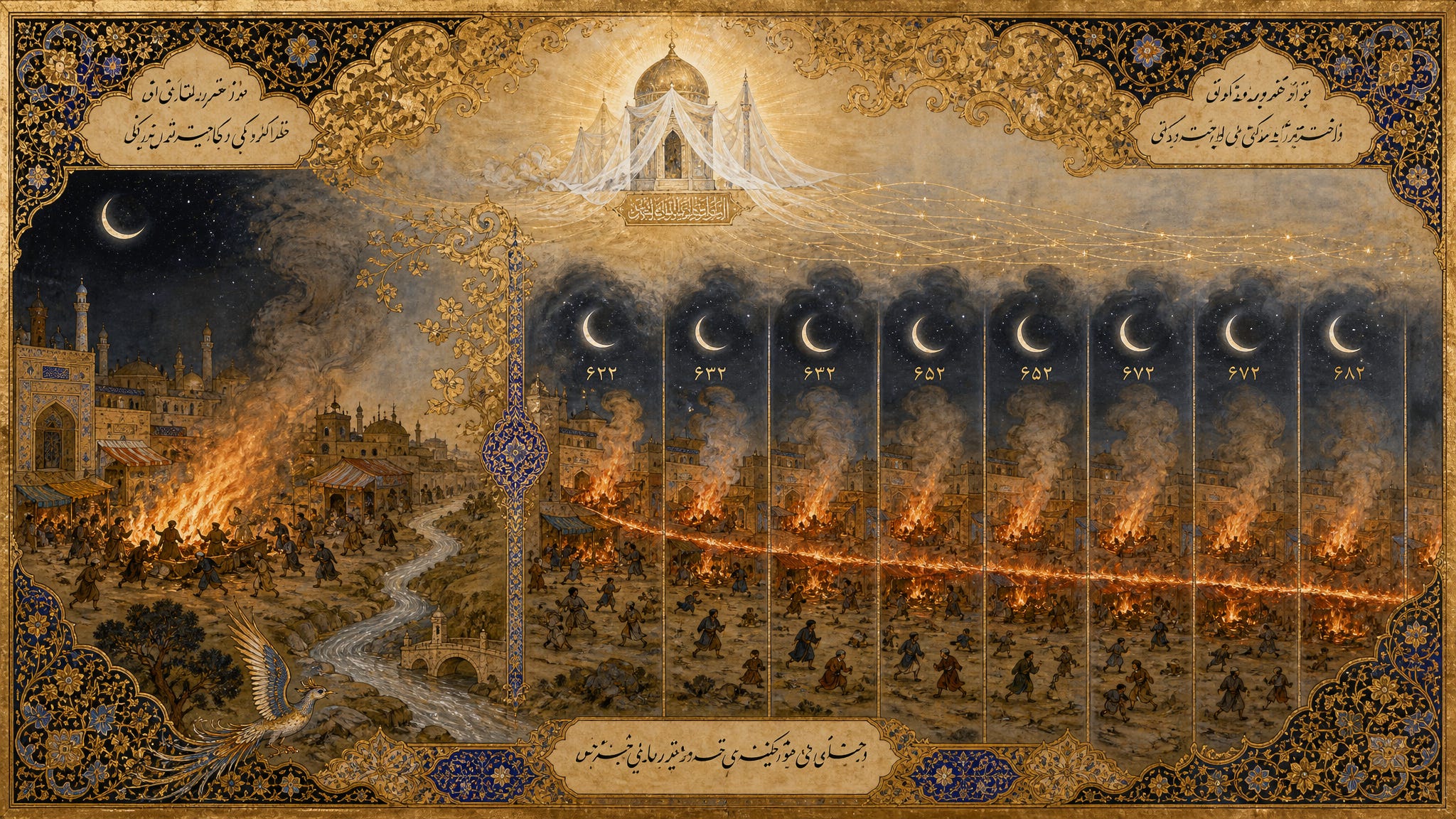
This sermon or majlis is called The Night the Books Burned.
Before I use that title, I am going to correct it.
Because it is wrong, and it is wrong in a way that matters.
It was not a night.
It was years.
And the burning happened more than once.
I could have kept quiet about that.
The title is better than the truth as a piece of writing, and I chose it, and nobody in this room would have known.
But we do not do that here.
And there is a second reason, which is the one that actually persuaded me.
The truth is more frightening.
One night is a catastrophe.
A community can survive a catastrophe — you bury the dead, you rebuild, you tell the story to your children.
Years of it, coming back and coming back, is not a catastrophe.
It is a policy.
And a policy is designed to make you leave.
The Year They Came For The Words
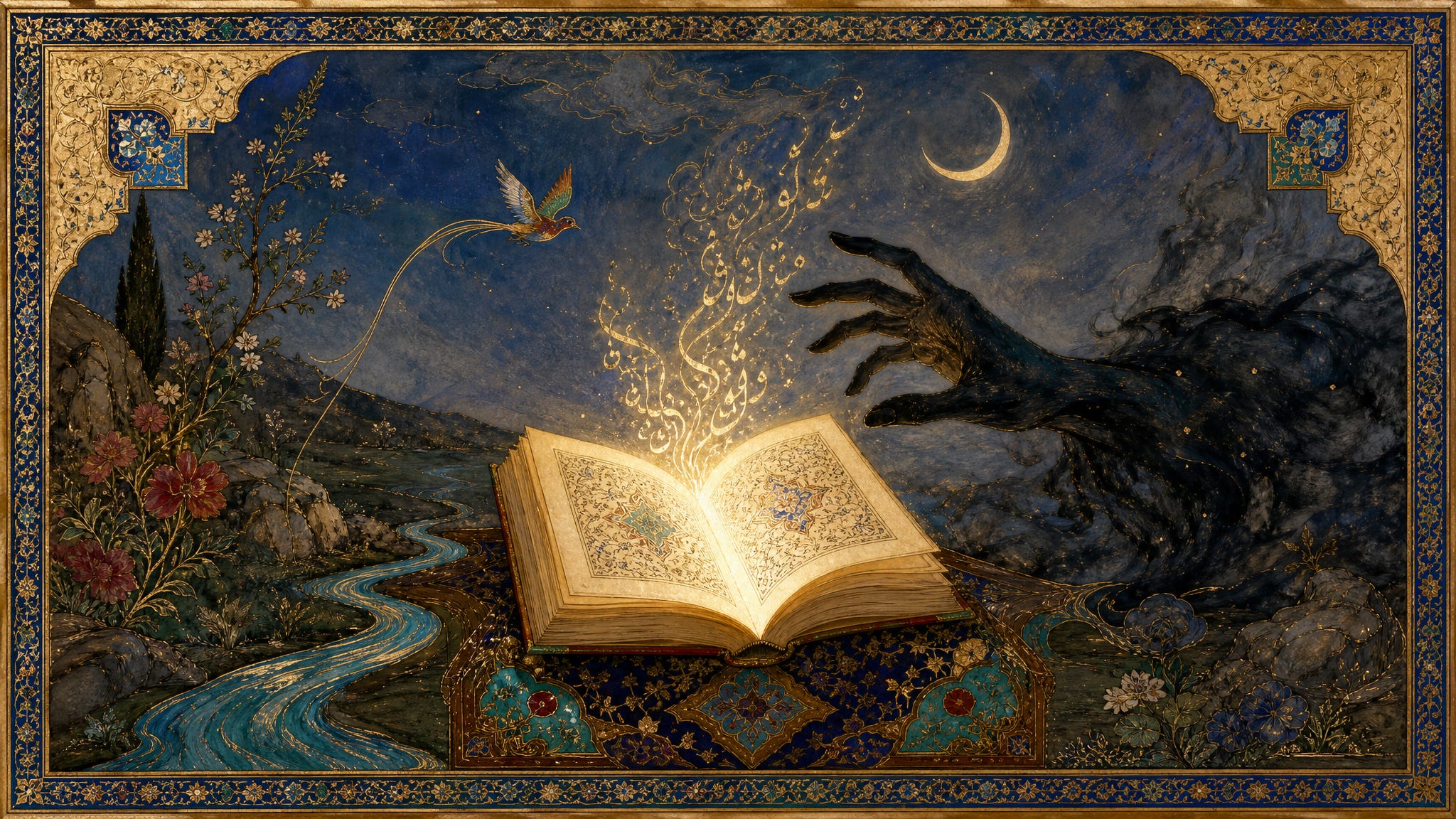
Everything in this section comes from one chronicle under one year:
Ibn al-Jawzi, al-Muntazam fi Tarikh al-Muluk wa’l-Umam, Volume 16, under the year 448.
The Banners
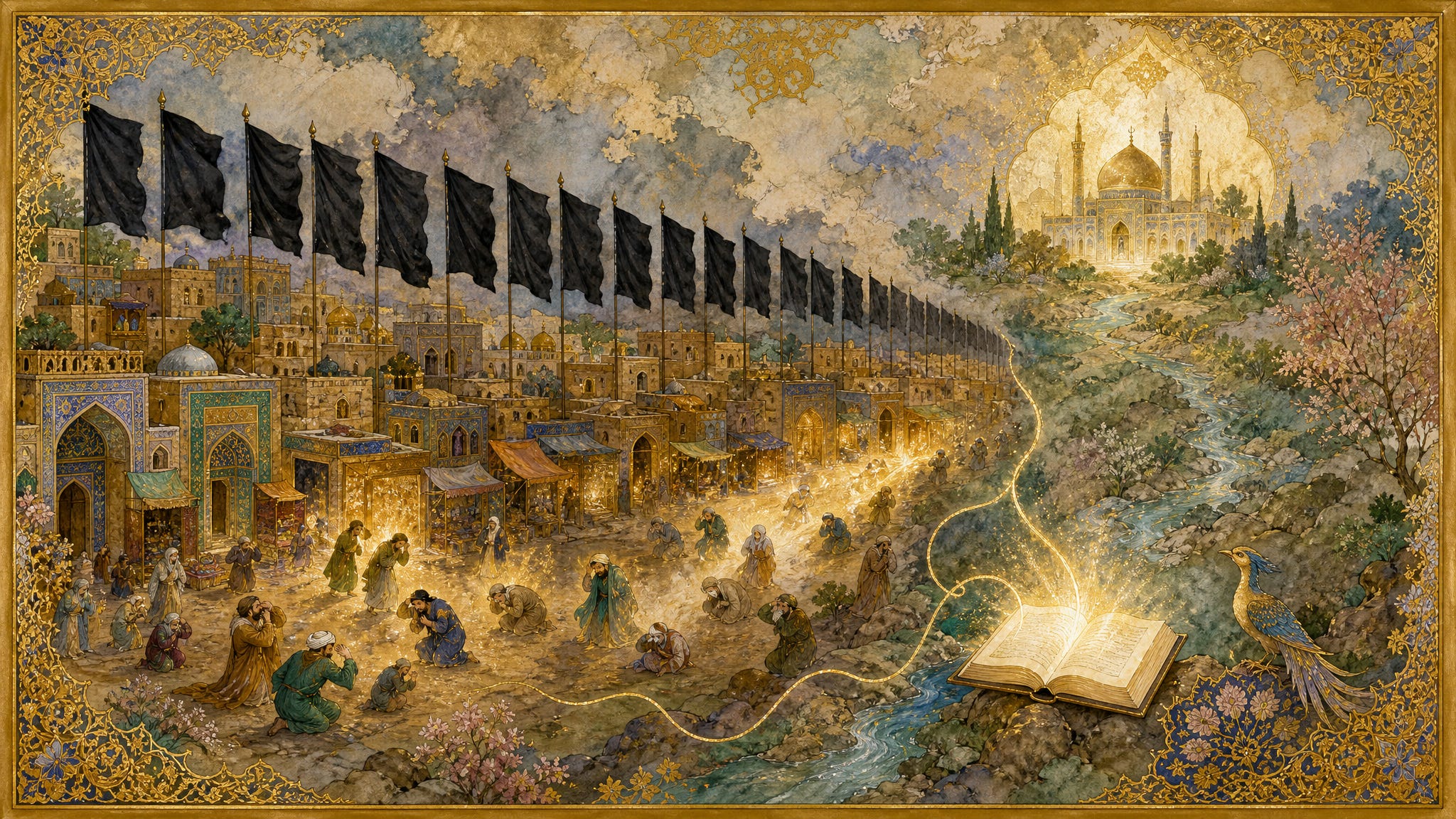
The chief minister of the caliph2 gave orders that black banners — the Abbasid colour — be raised in Karkh.
And the chronicler records that the people of the quarter were distressed by it.
Their flag, on our roofs, by order.
And notice that the chronicler bothers to tell us it frightened them.
He is not on our side and he is not writing for us, and he writes it down anyway.
Remember that.
It becomes the argument of this whole point.
The Line Taken Out Of The Call To Prayer
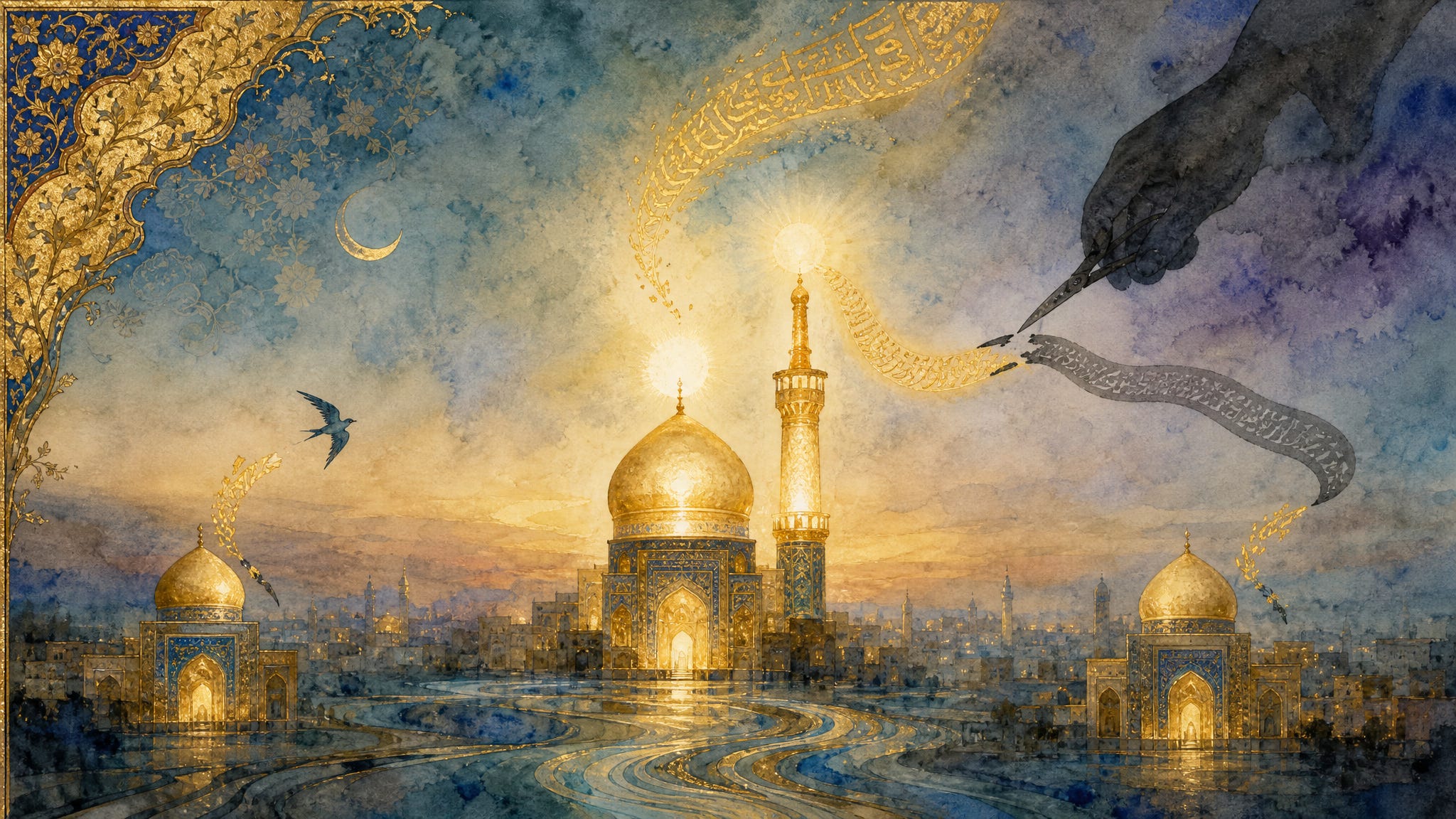
وَفِي هَذِهِ السَّنَةِ أُقِيمَ الأَذَانُ فِي الْمَشْهَدِ بِمَقَابِرِ قُرَيْشٍ، وَمَشْهَدِ الْعَتِيقَةِ، وَمَسَاجِدِ الْكَرْخِ بِالصَّلَاةُ خَيْرٌ مِنَ النَّوْمِ، وَأُزِيلَ مَا كَانُوا يَسْتَعْمِلُونَهُ فِي الأَذَانِ: حَيَّ عَلَىٰ خَيْرِ الْعَمَلِ
“And in this year the call to prayer was established at the shrine at Maqabir Quraysh, and at the shrine of al-Atiqa, and in the mosques of Karkh, with ‘prayer is better than sleep’; and what they used to use in the call to prayer — ‘hasten to the best of deeds’ — was removed.”
— Ibn al-Jawzi, Al-Muntazam fi Tarikh al-Muluk wa’l-Umam, Volume 16, Page 8, under the year 448
I told you earlier where Maqabir Quraysh is.
It is Kazimayn.
So say it plainly.
By order of the government, the call to prayer was altered at the graves of the seventh and ninth Imams, peace and blessings be upon them.
The Words Taken Off The Doors
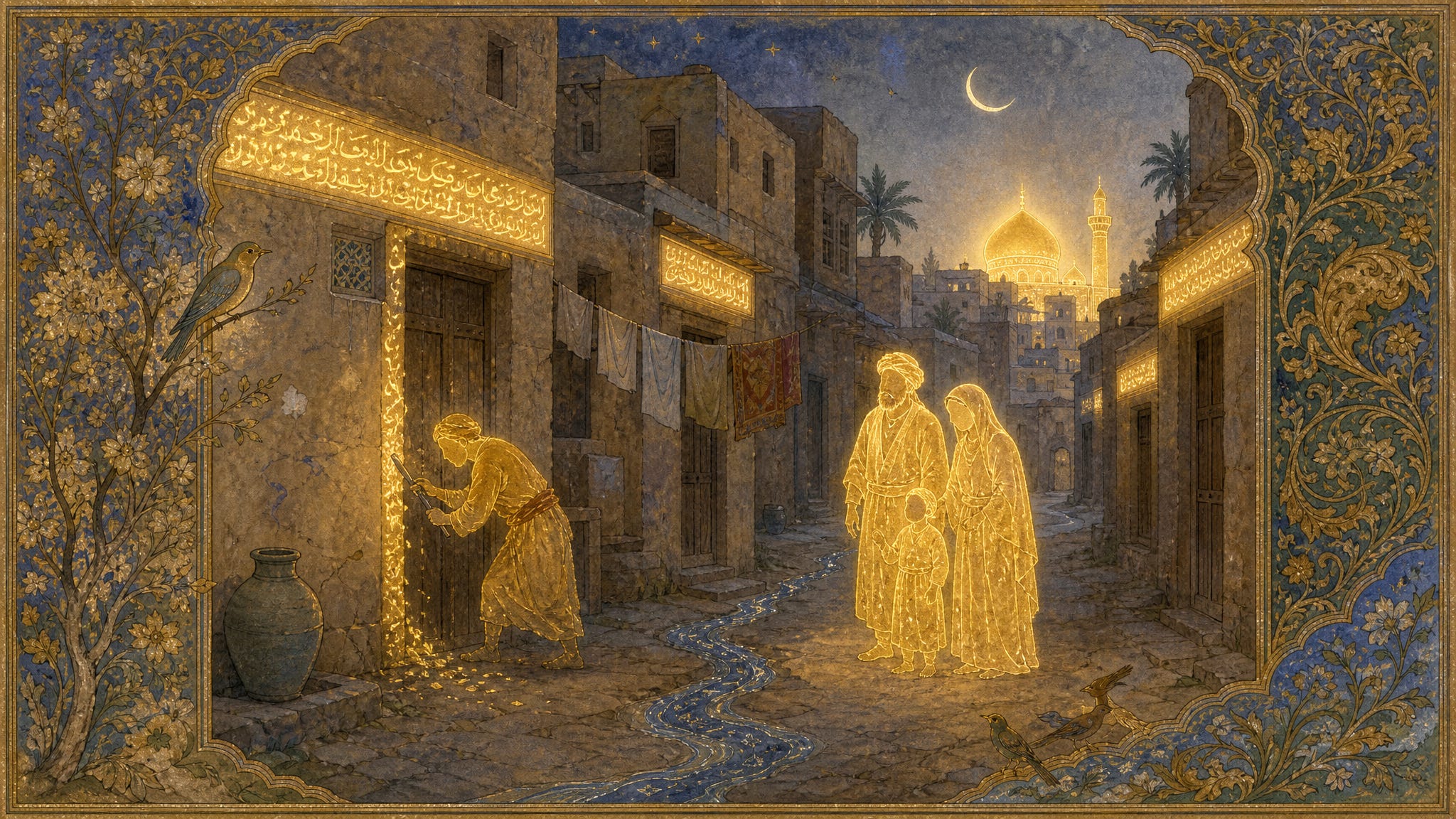
وَقُلِعَ جَمِيعُ مَا كَانَ عَلَىٰ أَبْوَابِ الدُّورِ وَالدُّرُوبِ مِنْ: مُحَمَّدٌ وَعَلِيٌّ خَيْرُ الْبَشَرِ
“And everything that was on the doors of the houses and at the heads of the lanes — ‘Muhammad and Ali are the best of humankind’ — was torn off.”
— Ibn al-Jawzi, Al-Muntazam fi Tarikh al-Muluk wa’l-Umam, Volume 16, Page 8, under the year 448
Pause with me here, because this is the centre of the point.
These were not government buildings.
These were the doors of houses.
Somebody walked down a residential street in Baghdad with a tool in his hand, and went door by door, and took a sentence off the thresholds of families.
Think about the man doing it.
He is not a general.
He is not a theologian.
He is a workman with a chisel and a list of streets, and at the end of the day he goes home.
And think about the family standing in the doorway watching him work.
And Then A Killing
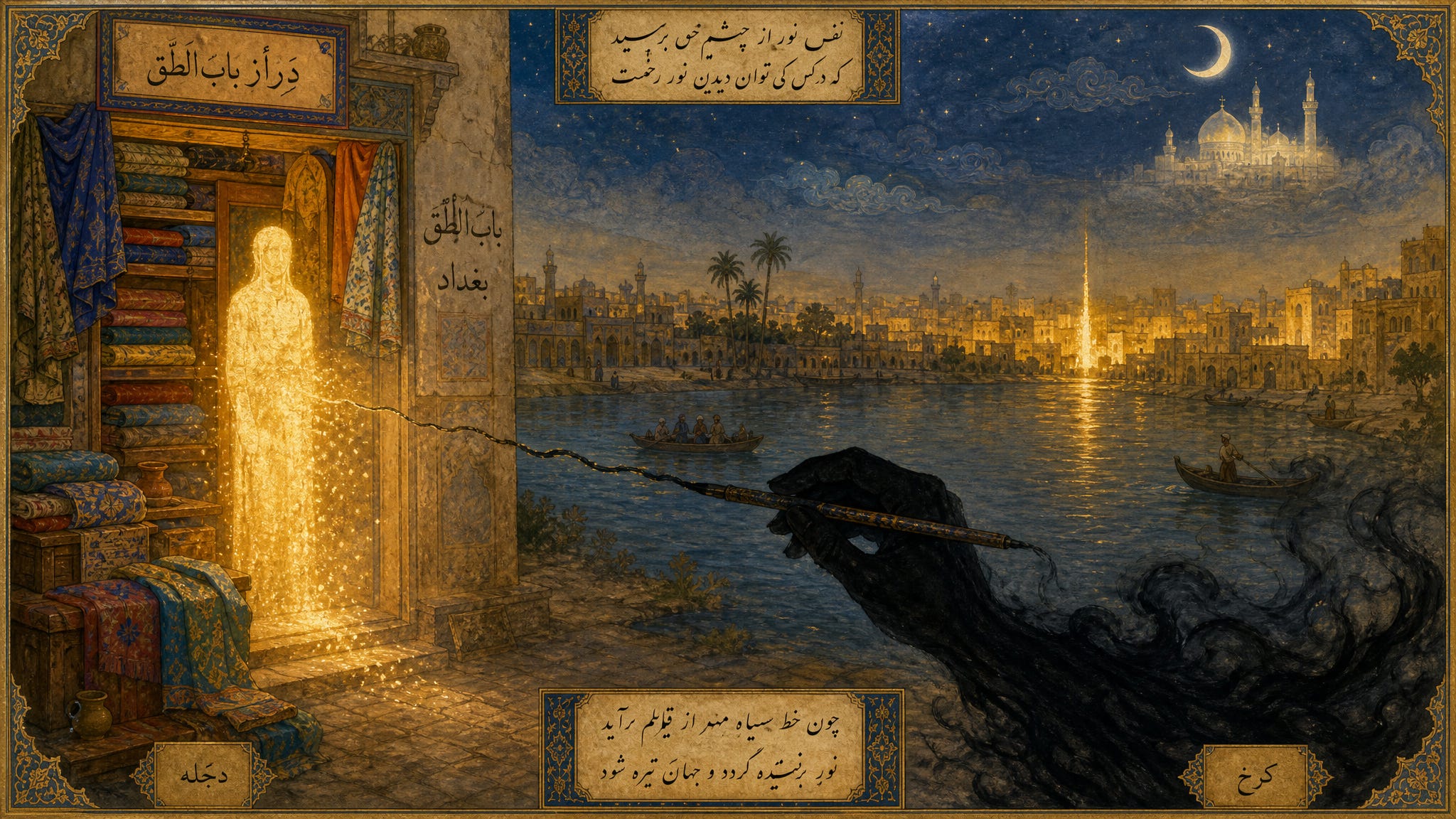
وَتَقَدَّمَ رَئِيسُ الرُّؤَسَاءِ إِلَى ابْنِ النَّسَوِيِّ بِقَتْلِ … شَيْخِ الْبَزَّازِينَ بِبَابِ الطَّاقِ، لِمَا كَانَ يَتَظَاهَرُ بِهِ مِنَ الْغُلُوِّ فِي الرَّفْضِ، فَقُتِلَ وَصُلِبَ عَلَىٰ بَابِ دُكَّانِهِ
“And the chief minister3 ordered Ibn al-Naswi to kill … the head of the drapers at Bab al-Taq4 — for the extremism in rafd which he was displaying openly. And he was killed, and crucified at the door of his own shop.”
— Ibn al-Jawzi, Al-Muntazam fi Tarikh al-Muluk wa’l-Umam, Volume 16, Page 8, under the year 448
I have taken his name out of what I read to you.
He was a victim and not a villain — but the rule in this majlis is that we do not hand you a name to fasten on to, because the moment you have one you stop seeing the mechanism.
His name is not lost.
It is written down in the footnotes at the bottom of this write-up, with the others I have kept off this pulpit tonight, and anybody who wants it can have it.
It simply will not be said from here.
Now notice three things in that sentence, because all three matter.
One.
The order came from the caliph’s own chief minister5.
Not a Turkish general.
The pen was Abbasid.
Two.
Look at the charge.
لِمَا كَانَ يَتَظَاهَرُ بِهِ
— for what he was displaying openly.
He was not killed for a crime.
He was killed for being visible.
Three, and this is new to us tonight.
He was the head of the drapers6 at Bab al-Taq — and Bab al-Taq is on the east bank.
It is not in Karkh.
So the measures were not confined to one quarter.
This was not a riot in a neighbourhood that got out of hand.
It reached across the river.
And Then One Clause
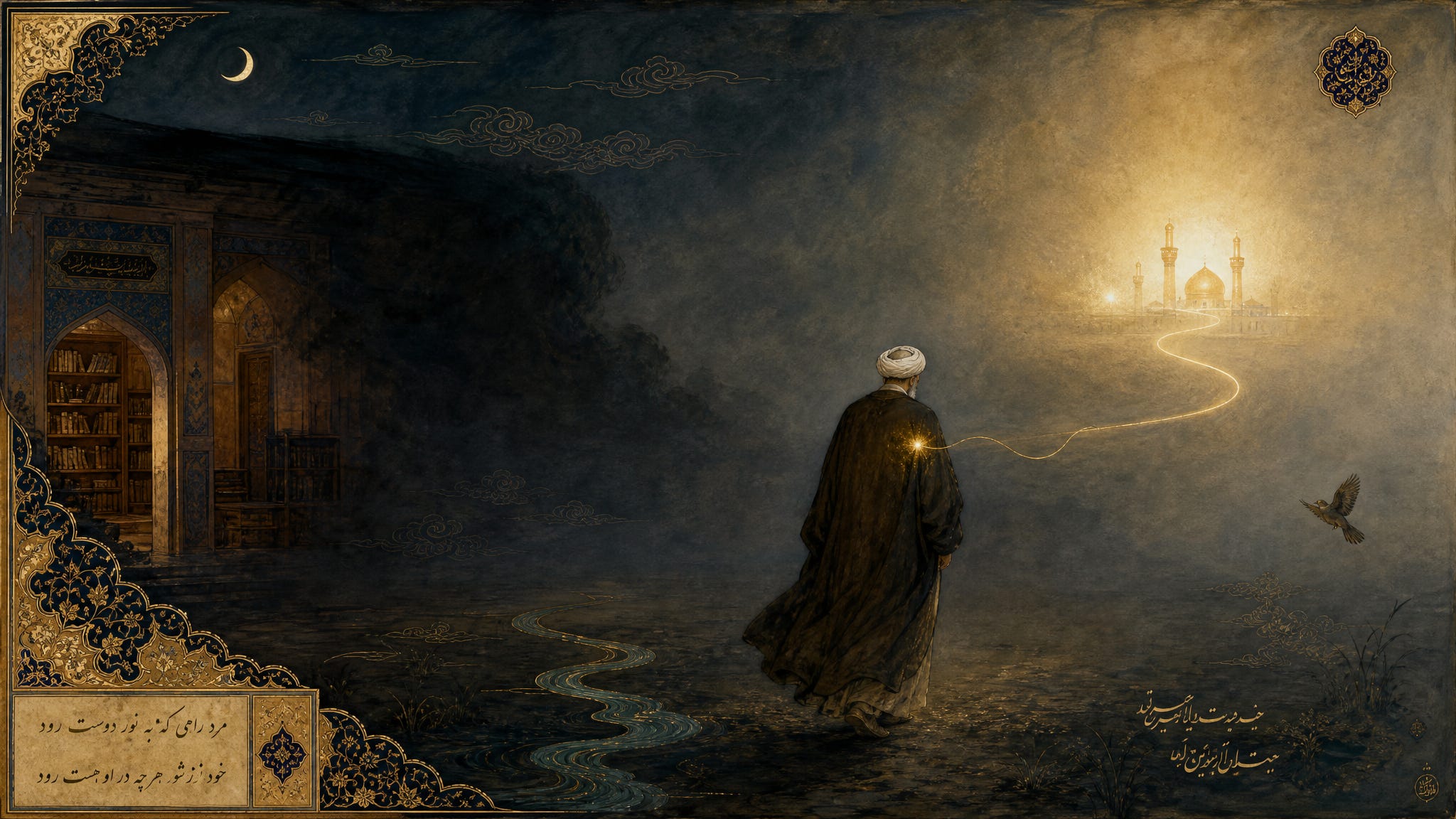
وَهَرَبَ أَبُو جَعْفَرٍ الطُّوسِيُّ، وَنُهِبَتْ دَارُهُ
“And Abu Ja’far al-Tusi fled, and his house was plundered.”
— Ibn al-Jawzi, Al-Muntazam fi Tarikh al-Muluk wa’l-Umam, Volume 16, Page 8, under the year 448
That is all he gets.
Six words of Arabic.
One clause.
The greatest scholar our school produced in that century appears in the chronicle of his own city as a subordinate clause between two other events.
He fled.
We are not told where.
We are not told with what.
We are not told whether he took anything, or whether he had anywhere to go, or who went with him.
Six words.
Safar Of The Following Year — The Chair
And now the following year.
And this the chronicler gives its own chapter heading, which is itself worth noticing.
كَبْسُ دَارِ أَبِي جَعْفَرٍ الطُّوسِيِّ بِالْكَرْخِ
“The forcing of the house of Abu Ja’far al-Tusi in Karkh”
— Ibn al-Jawzi, Al-Muntazam fi Tarikh al-Muluk wa’l-Umam, Volume 16, chapter heading under the year 449
He gave it a heading.
In his own book.
Nobody made him.
And then the entry.
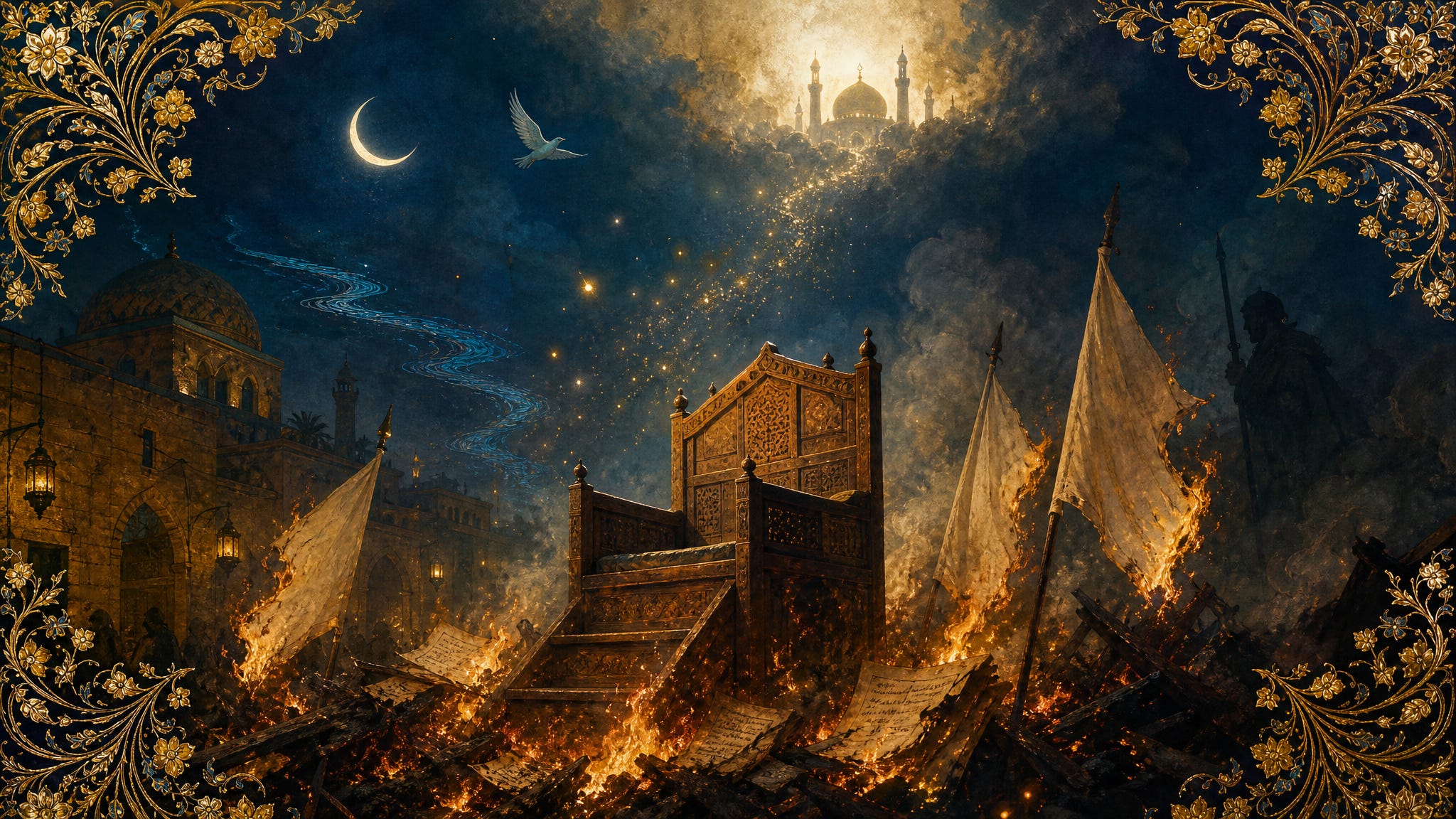
وَفِي صَفَرٍ هَذِهِ السَّنَةِ كُبِسَتْ دَارُ أَبِي جَعْفَرٍ الطُّوسِيِّ مُتَكَلِّمِ الشِّيعَةِ بِالْكَرْخِ، وَأُخِذَ مَا وُجِدَ مِنْ دَفَاتِرِهِ، وَكُرْسِيٌّ كَانَ يَجْلِسُ عَلَيْهِ لِلْكَلَامِ، وَأُخْرِجَ ذَٰلِكَ إِلَى الْكَرْخِ، وَأُضِيفَ إِلَيْهِ ثَلَاثَةُ مَجَانِيقَ بِيضٌ كَانَ الزُّوَّارُ مِنْ أَهْلِ الْكَرْخِ قَدِيمًا يَحْمِلُونَهَا مَعَهُمْ إِذَا قَصَدُوا زِيَارَةَ الْكُوفَةِ، فَأُحْرِقَ الْجَمِيعُ
“In Safar of this year the house of Abu Ja’far al-Tusi, the theologian of the Shi’a, in Karkh, was forced. What was found of his notebooks was seized, and a chair on which he used to sit for theology. And that was brought out into Karkh, and to it were added three white banners which the visitors from the people of Karkh used, in the old days, to carry with them when they set out for the visitation of Kufa. And all of it was burned.”
— Ibn al-Jawzi, Al-Muntazam fi Tarikh al-Muluk wa’l-Umam, Volume 16, Page 16, under the year 449 (Dar al-Kutub al-Ilmiyya, edited by Muhammad Abd al-Qadir Ata)
There it is.
That is the sentence I opened with.
And now you know whose house it was, and what year, and who wrote it down.
The Word That Is Wrong
And now I owe you the thing I promised at the start of the night.
Look at what I read you, and look at what I translated.
I said banners.
The book does not say banners.
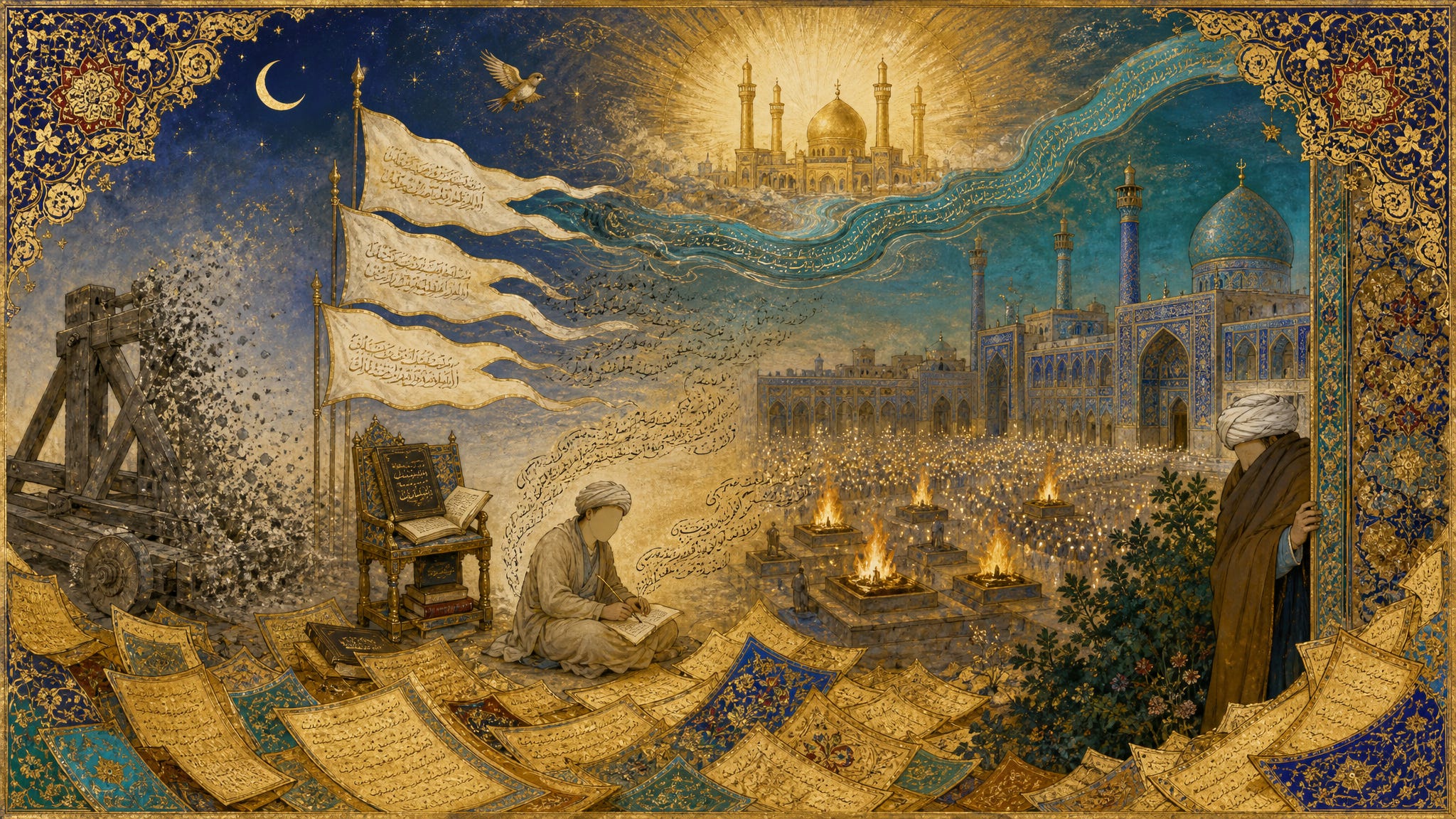
مَجَانِيق
Majaniq.
It says mangonels.
Siege engines.
The great timber catapults that armies wheel up to a city wall and use to throw stones through it.
Three white siege engines, which the pilgrims used to carry with them when they went to visit Kufa.
Now — sit with how strange that is for a moment before I resolve it, because the strangeness is the lesson.
It cannot be right, and you do not need a word of Arabic to see why.
Three tests, and the sentence fails all three.
One.
It says they were white.
Nobody has ever described a siege engine by its colour.
It is timber and rope and iron.
Cloth is white.
You mention the colour of a thing when colour is the only thing it has.
Two.
It says the pilgrims carried them.
A mangonel is a machine.
It is built on site by a crew.
You do not carry three of them to a shrine and then take them home again.
Three.
Look at what it was burned with.
Notebooks.
A teaching chair.
Every other object on that list came out of a scholar’s house.
A siege engine is the one item that belongs to another world entirely.
So what should it say?
سَنَاجِق
Sanajiq.
Banners.
The plural of sanjaq — a Turkic word for a standard.
Not the banner of an army: the cloth on a pole that a body of people carries so the rest of them can see where the front is.
The thing you look for when you have fallen behind on a road.
Three of them.
White.
Kept in a house between pilgrimages and brought out once a year.
And here is how the mistake happened, and it is very human.
A copyist is working through a chronicle.
And a chronicle of that century is full of sieges — the word majaniq is on page after page after page.
His hand knows it.
His eye expects it.
And then he meets sanajiq — a foreign word, a Turkish word, rare, in a hand that has been copied and recopied.
And he writes the word he knows.
Not out of malice.
Not even out of carelessness.
Out of familiarity.
He wrote what a man who had read a hundred pages of war would expect to find.
And then it was copied faithfully for a thousand years.
The modern editor prints it, and he is right to print it — an editor’s duty is to what the manuscripts say, not to what they ought to say.
Later Shi’a historians noticed and restored the reading, and glossed it so nobody would trip:
three white sanajiq — that is, the standard.
Now let me tell you why I have spent three minutes of your evening on one word.
Because look at what happened to that sentence.
It was written down truly.
It was damaged in transmission — by someone who could not imagine what he was reading.
A man who had never walked to Najaf behind a white flag, meeting the description of it, reached instead for the nearest thing in his own experience: a weapon.
And the damage did not destroy it.
It survived, and we can see the damage, and we can repair it — for exactly one reason.
Because enough people copied it.
That is the whole of tonight, happening inside the evidence for tonight.
They burned the banners.
And the sentence about the banners was itself half-burned in transmission.
And both survived, by the same method.
Not because anybody protected them.
Because there were too many copies in too many hands.
And there is a second report, and it is worse.
أُحْرِقَتْ كُتُبُهُ عِدَّةَ نُوَبٍ بِمَحْضَرٍ مِنَ النَّاسِ فِي رَحْبَةِ جَامِعِ النَّصْرِ، وَاسْتَتَرَ هُوَ خَوْفًا عَلَىٰ نَفْسِهِ
“His books were burned several times over, in the presence of the people, in the plaza of the Nasr Mosque; and he went into hiding, in fear for his life.”
— Ibn al-Najjar, quoted by Ibn Hajar al-Asqalani, Lisan al-Mizan, Volume 5, Page 135
Read that again.
عِدَّةَ نُوَب
Iddata nuwab.
Several times over.
A nawba is a turn that comes round — the word you use for a night watch, for a shift, for a fever that returns.
This was not one fire.
It was a rota.
And not in a back alley.
In the plaza of a great mosque, in front of a crowd.
And notice the last clause:
وَاسْتَتَرَ هُوَ خَوْفًا عَلَىٰ نَفْسِهِ
He went into hiding, in fear for his life.
That is the state he was in.
Not offended.
Not inconvenienced.
Hiding.
The Inventory Of Fear
Now I want you to look at the list.
Not to feel it.
To look at it — the way you would look at a shopping list somebody dropped in the street.
A line in the call to prayer.
A sentence chiselled off a door-frame.
Three pieces of white cloth on poles.
A wooden chair.
Some notebooks.
Now tell me what that is worth.
And be honest about the books before you answer, because I want this argument to be sound and not merely moving.
Manuscripts in that century were among the most valuable movable objects a man could own.
His notebooks were worth real money, and the people who took them knew it.
Which makes what they did with them worse, not better.
But the chair.
The three pieces of cloth on poles.
The line in the adhan.
Tell me what those are worth.
Nothing.
Not a dirham.
And I know what somebody is thinking, because I thought it too.
The year before, the chronicle says his house was plundered.
It does.
That was robbery, and I will not pretend otherwise.
But look at what they did the second time.
They did not sell it.
They carried it into the street and set fire to it in front of everybody.
You do not burn loot.
Burning is not what you do to a thing you want.
Burning is what you do to a thing you want gone.
So this was not robbery.
And it was not even destruction, not really.
It was subtraction.
Somebody sat down and worked out what a community is actually made of.
And then went and removed those things, one at a time.
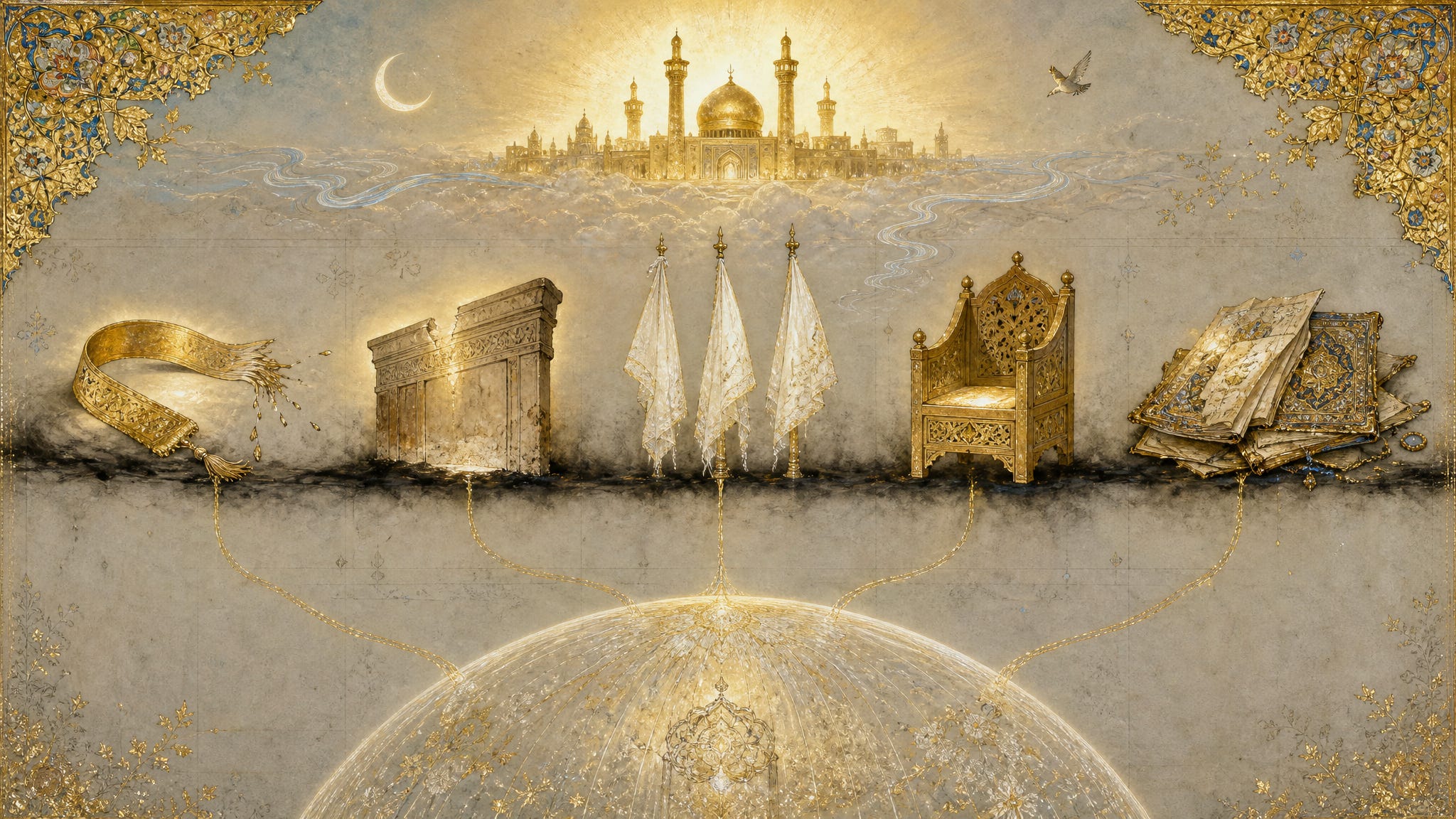
Take the line out of what they say five times a day. — their voice.
Take the words off their doors. — their confession.
Take the banners off their pilgrimage road. — their direction.
Take the chair out from under their teacher. — their transmission.
That is not a mob.
A mob takes what it can carry, sells it, and goes home.
That is somebody who understood us.
And made a list.
And here is what I want this gathering to take out of the room tonight.
What a tyranny reaches for first is a precise inventory of what it is afraid of.
If you ever want to know what is actually load-bearing in your faith — what is holding the roof up — do not ask a scholar.
Look at what the people who want it gone go for first.
The Verse
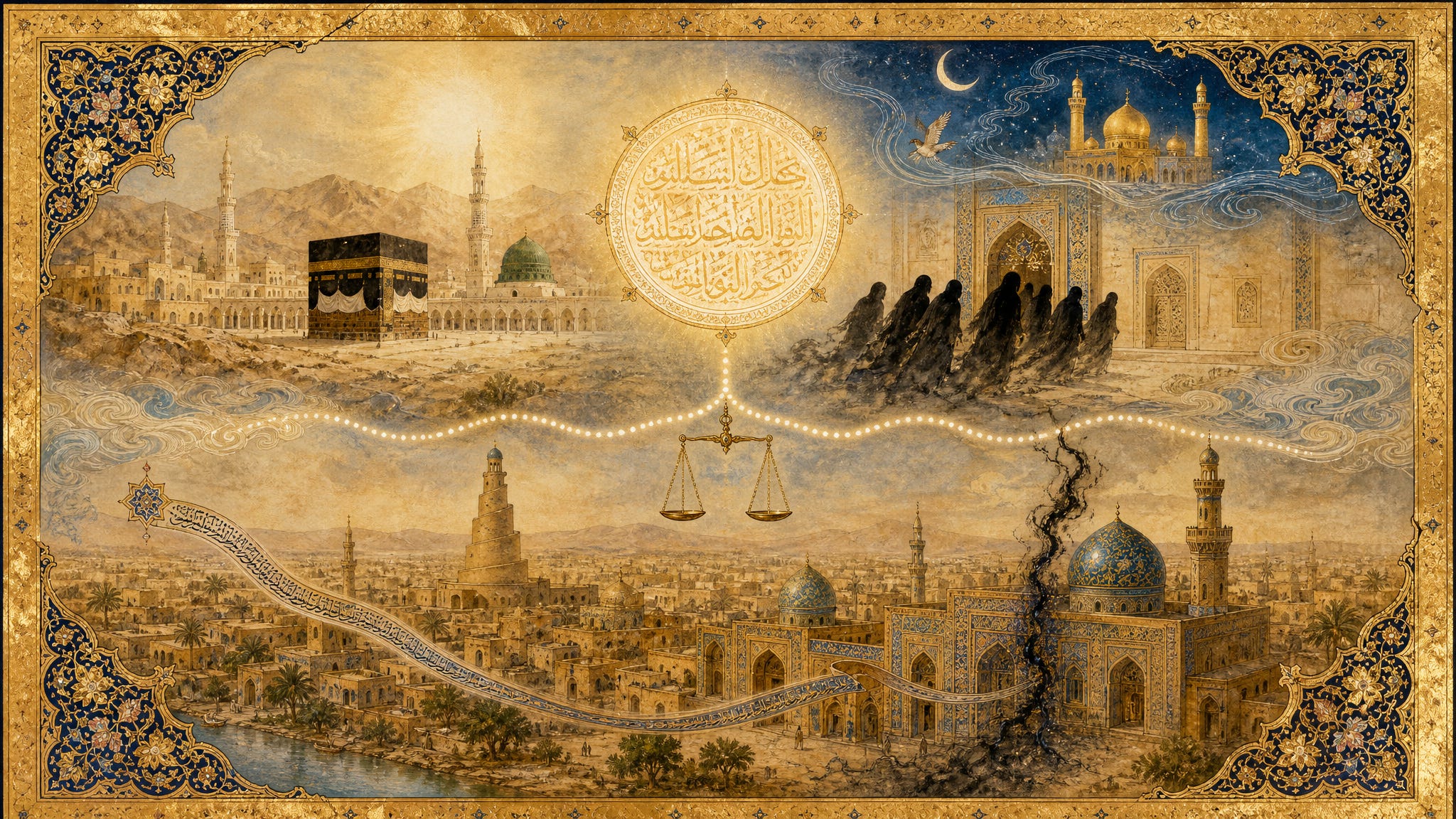
وَمَنْ أَظْلَمُ مِمَّن مَّنَعَ مَسَاجِدَ اللَّهِ أَن يُذْكَرَ فِيهَا اسْمُهُ وَسَعَىٰ فِي خَرَابِهَا أُولَـٰئِكَ مَا كَانَ لَهُمْ أَن يَدْخُلُوهَا إِلَّا خَائِفِينَ لَهُمْ فِي الدُّنْيَا خِزْيٌ وَلَهُمْ فِي الْآخِرَةِ عَذَابٌ عَظِيمٌ
“And who is more unjust than one who prevents the mosques of God from His name being mentioned in them, and strives for their ruin? Those — it was not for them to enter them except in fear. For them in this world is disgrace, and for them in the Hereafter a great punishment.”
— Qur’an, Surah al-Baqarah (the Chapter of the Cow) #2, Verse 114
Now let me be careful with that, in front of you rather than behind your back.
I am not going to tell you this verse was written about Karkh.
And I am not being modest.
The commentary settles it against me.
Allamah Tabataba’i says the referent is the pagans of Mecca before the migration:
ظاهر السياق أن هؤلاء كفار مكة قبل الهجرة، فإن هذه الآيات نزلت في أوائل ورود رسول الله صلى الله عليه وآله وسلم المدينة
“The apparent sense of the context is that these are the disbelievers of Mecca before the migration, for these verses were revealed in the earliest period of the Messenger of God’s arrival in Madinah.”
— Allamah Tabataba’i, Al-Mizan fi Tafsir al-Qur’an, on Surah al-Baqarah (the Chapter of the Cow) #2, Verse 114
And he points at the grammar to prove the event is closed:
يدل على مضي الواقعة و انقضائها لمكان قوله «كان»
“It indicates that the event is past and finished, because of His words ‘it was’.”
— Allamah Tabataba’i, Al-Mizan fi Tafsir al-Qur’an, on Surah al-Baqarah (the Chapter of the Cow) #2, Verse 114
So the verse is not about Karkh, and no mosque in Karkh was pulled down, and nobody was stopped from saying the name of God in them.
What I will tell you is that it names the instinct exactly.
The man who cannot win a mosque decides instead to change what is said inside it.
Lessons For Our Time
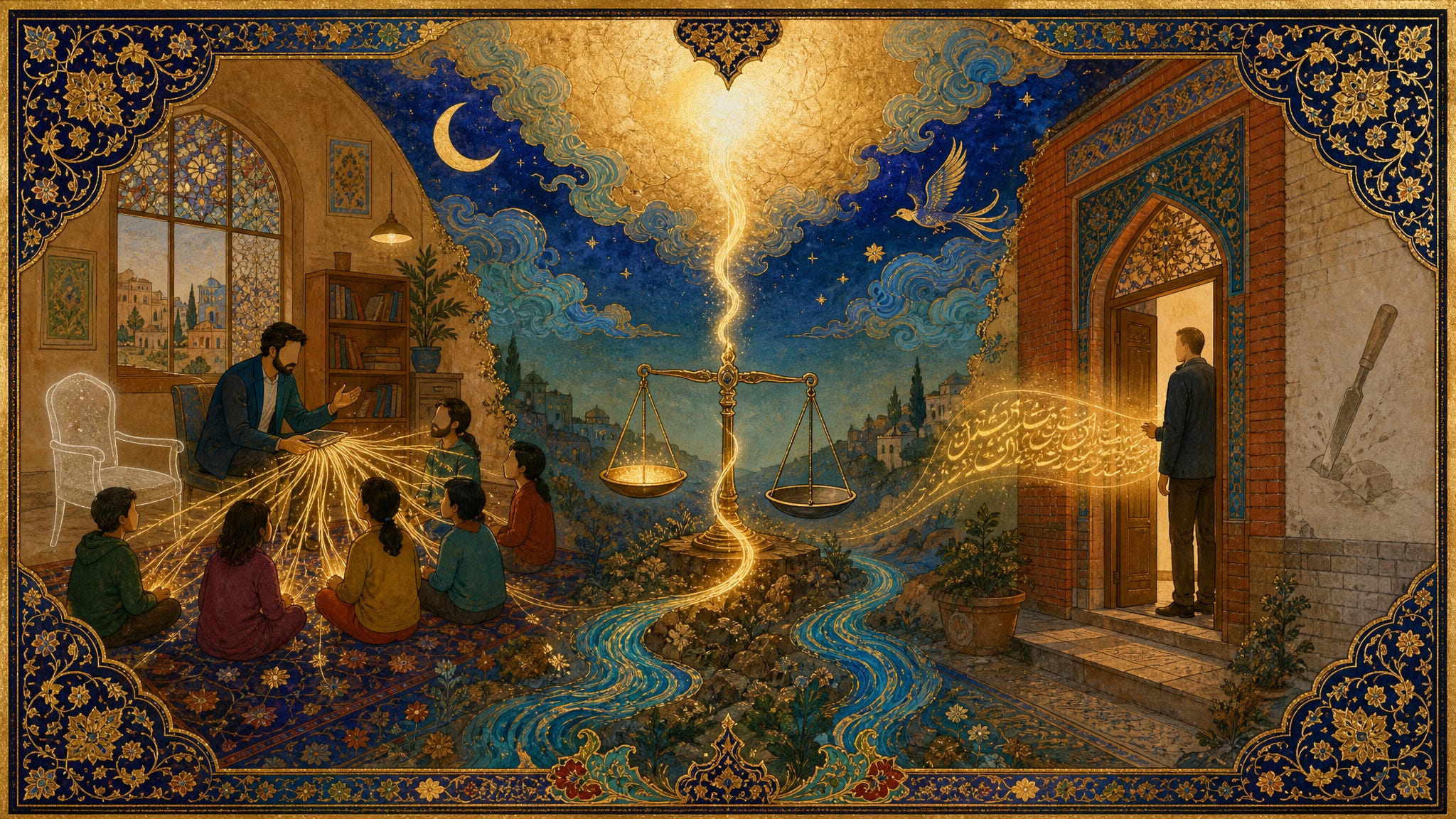
Two things, and they are both about what you would lose.
The first — take the inventory of your own house.
They worked out what we were made of before they came.
Could you?
If somebody wanted to end this community — not kill it, just end it — what four things would they take?
Not the building.
Never the building.
What is the sentence over our door?
What is the chair in our house?
I would put it to you that in every generation the chair is whoever is teaching the children.
And that a community which could not tell you, in the abstract, how its own children are being taught has already lost the chair, without anybody needing to burn it.
The second — what is said over a threshold is not decoration.
Somebody in Baghdad went house to house with a chisel over a sentence written above a door.
That tells you those sentences were doing work.
And remember what the draper was killed for.
Not for a crime.
For what he was displaying openly.
A community that writes what it believes where the street can read it has made a decision.
That decision has costs, and in 448 the cost was collected.
The question for us is not whether we would write it.
It is whether we would still write it if it cost us something.
And most of us have never had to find out — which is a mercy, and is also a gap in our self-knowledge.
The Machine Does Not Care Whose Hands Are On It
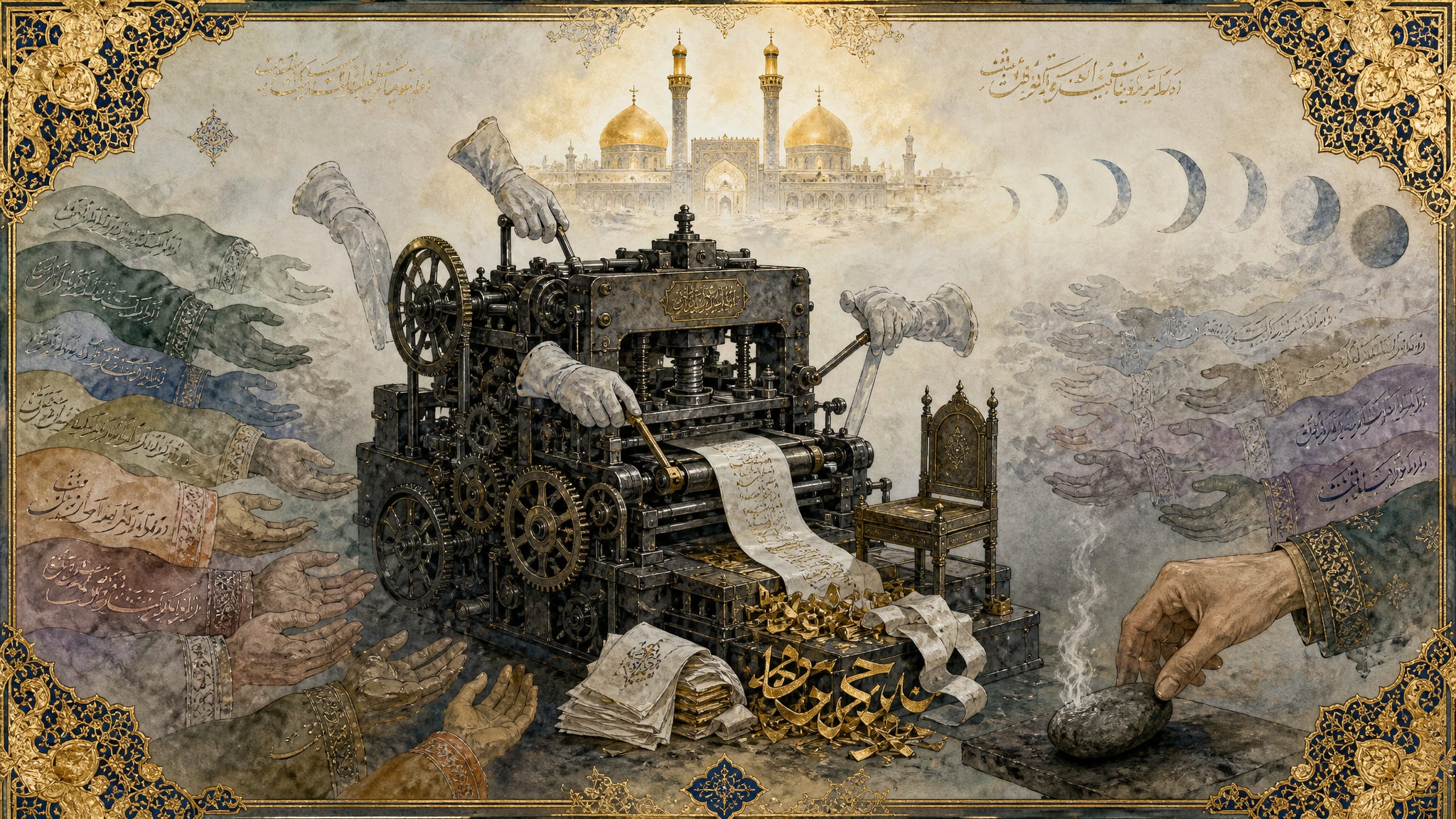
What the fire tells you about the thing that lit it.
We have watched a community lose its voice, its confession, its direction and its teacher, in three years, by order.
Now I want to ask a colder question, and it is the question that will keep you from misusing everything I have just told you.
Who did this?
Not which men.
What kind of thing.
Because if the answer is a people, then tonight is a grievance and you will carry it out of here like a stone in your pocket.
And if the answer is a mechanism — then it can come for anybody, in any century, wearing anybody’s colours.
Including ours.
I am going to show you that it is the second.
And I am going to show it to you using the twenty-one months that came next.
Why They Complied
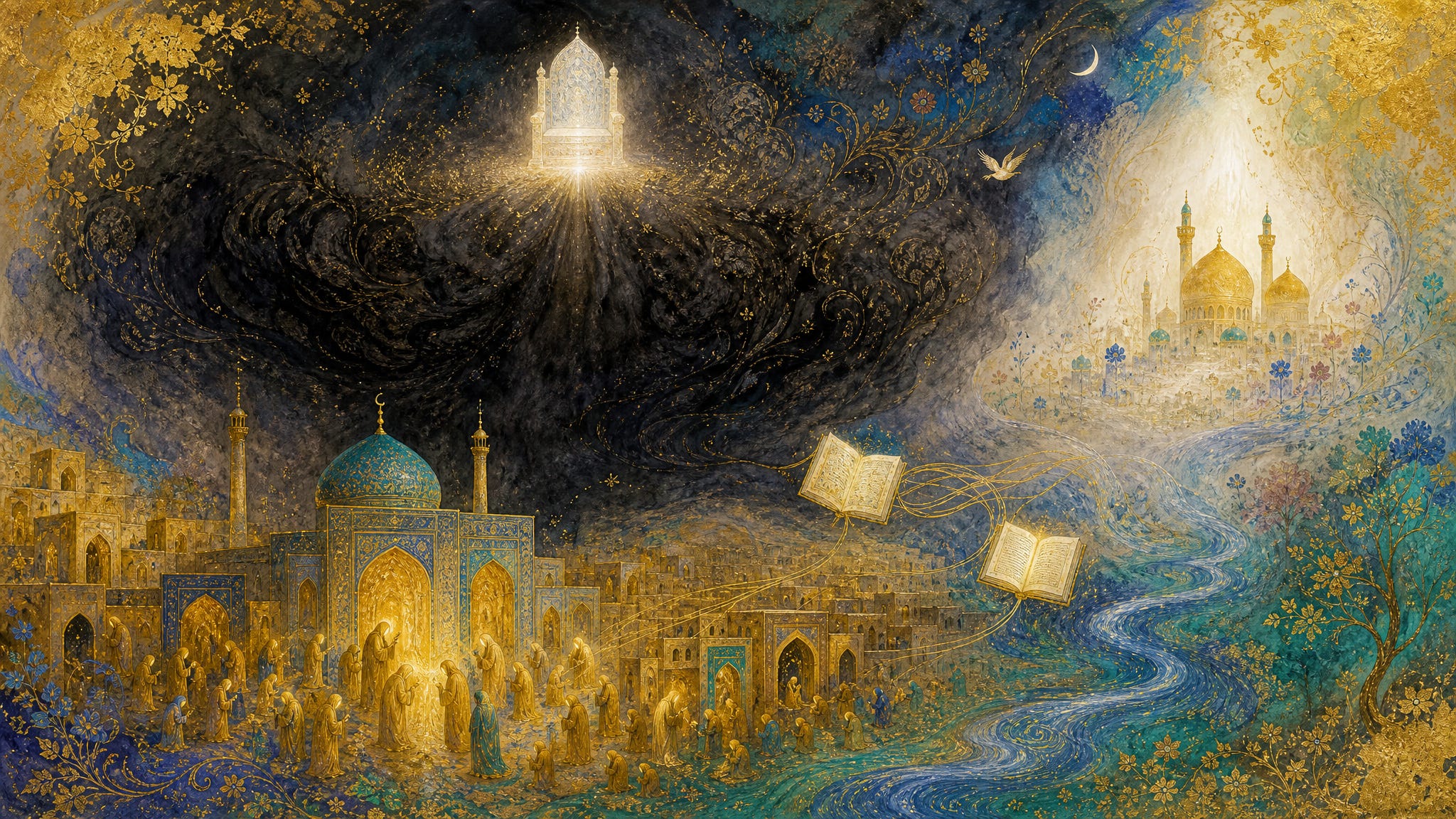
One short section, and it is devastating.
Because a question has been sitting there since I read you the first entry.
Why did they do it?
Why did the people of Karkh take the sentence off their own doors, and stand in their own mosques and say a line they did not believe in?
Ibn al-Athir answers it, and he answers it in three words.
خَوْفَ السُّلْطَنَةِ وَقُوَّتِهَا
Khawfa al-sultana wa quwwatiha.
Out of fear of the sultanate and its power.
Not of a man, and not of an army — of al-sultana, the abstract noun, the sheer fact of there being a government.
And then the second word, in case you thought the first was rhetoric:
quwwatiha
its force.
Not because they were persuaded.
Not because they lost an argument.
Not because anyone sat down with them and showed them a better proof.
Because they were afraid of the government.
And in that same sentence Ibn al-Athir supplies something Ibn al-Jawzi leaves in the passive.
He names who gave the order for the adhan.
وَفِيهَا أَمَرَ الْخَلِيفَةُ
— and in that year the caliph ordered it.
The caliph.
And Now Notice Who Is Telling Us This
I want you to notice something about this entire hour.
Not one word of it has come from us.
Every single thing I have read to you tonight comes out of Sunni sources.
A Hanbali historian of Baghdad gave this episode its own heading in his own book.
A Shafi’i hadith master, three centuries later, recorded the burning of the books in a work on the criticism of narrators.
Nobody asked either of them.
Nobody was checking their work.
There was no advantage in it for either.
And now I have to be honest with you about something, and it is not the thing you are expecting.
They do not condemn it.
I looked.
I went looking specifically, because it would have been a wonderful thing to read to you.
Ibn al-Jawzi reports it flatly, without a word of protest.
Others narrate the whole period with something close to satisfaction.
One of them even records the reason for a man’s execution as the extremism he was displaying — that is the chronicler’s own judgement of the victim, not mine.
But they wrote it down.
And that is enough.
In fact it is better than enough.
I am not asking anybody in this room — or anybody watching this afterwards — to take a Shi’a source on trust tonight.
We never needed one.
And Then It Ran The Other Way
Now what happened next, and this is the section that stops tonight from being a grievance.
Twenty-one months.
That is the interval.
Not two years, not a generation.
Twenty-one months after they burned that chair in the street.
In Dhu al-Qa’da of the year 450 — December of 1058 — that commander who had taken the Fatimid coin enters Baghdad with the Egyptian banners flying.
And Ibn al-Jawzi records this:
فَتَلَقَّاهُ أَهْلُ الْكَرْخِ، فَوَقَفُوا فِي وَجْهِ فَرَسِهِ وَتَضَرَّعُوا إِلَيْهِ أَنْ يَجْتَازَ عِنْدَهُمْ
“And the people of Karkh came out to meet him, and stood in the face of his horse, and begged him to pass through their quarter.”
— Ibn al-Jawzi, Al-Muntazam fi Tarikh al-Muluk wa’l-Umam, Volume 16, under the year 450
Of course they did.
Hayya ala khayr al-amal — hasten to Good activities, comes back into the call to prayer.
The Friday sermon in Baghdad is read for the Fatimid caliph in Cairo.
And the Abbasid caliph is taken out of his own capital.
He is held up the Euphrates, at Hadithat Ana, for a full year, in the keeping of a bedouin lord — who, the chronicler is careful to say, treated him well.
And Ibn al-Jawzi records the prayer that caliph made in exile.
اللَّهُمَّ أَعِدْنِي إِلَىٰ وَطَنِي، وَاجْمَعْ بَيْنِي وَبَيْنَ أَهْلِي وَوَلَدِي
“O God, return me to my homeland, and gather me together with my family and my children.”
— Ibn al-Jawzi, Al-Muntazam fi Tarikh al-Muluk wa’l-Umam, Volume 16, under the year 450
Then it turns again, because it always turns again.
Dhu al-Qa’da of the year 451 — Tughril Beg comes back.
The caliph re-enters his palace with the sultan holding his mule’s bridle.
The commander is hunted down and killed in Dhu al-Hijja of that year, and his head is displayed in Baghdad.
And the chief minister7 — the man whose orders began this whole account, who had the banners raised and the doors chiselled and the draper killed — did not survive the reversal either.
He was handed over, and paraded, and put to death.
The chronicles describe how, with some relish.
I am not going to.
So Let Me Tell You Why Not
Because if I read you the burning of that chair, and then read you a caliph praying to be allowed home to his children — and I enjoy the second one — then I have not understood a single thing about the night I have just spent an hour describing.
I would just be waiting my turn.
I have read you his prayer.
Did it sound like a stranger’s prayer to you?
O God, return me to my homeland, and gather me together with my family and my children.
There is not one person in this room who has not made that prayer, in some form, about something.
What we are looking at tonight is not a wrong done by one community to another.
It is a mechanism.
It is what happens when a state decides that a religious question can be settled by force.
And the mechanism does not care whose hands are on it.
It worked perfectly for them in 449.
It worked perfectly for us in 450.
Both times the people who paid were ordinary — a draper at his shop door, a family in a doorway, an old man on the Euphrates asking to see his children.
That is why we say it every single week.
Not Shi’a against Sunni.
Truth against the abuse of truth.
And One More Thing Was Lost
There was a library in Karkh.
It had been founded by a Buyid vizier, Sabur ibn Ardashir, in the quarter called Bayn al-Surayn, and endowed as waqf for the jurists.
The chroniclers count it in the ten thousands of volumes — and a hundred copies of the Qur’an in the hand of the Banu Muqla, the great calligraphers of that age.
The geographer Yaqut al-Hamawi is reported to have said there was nothing better in the world — and to have given the reason, and the reason is lovely:
The books were the scholars’ own original copies, in their own handwriting.
— Yaqut al-Hamawi
Not copies of copies.
The manuscripts themselves.
And Ibn al-Athir records what became of it, under the year 451:
وَاحْتَرَقَتْ فِيهِ خِزَانَةُ الْكُتُبِ الَّتِي وَقَفَهَا سَابُورُ بْنُ أَرْدَشِيرَ الْوَزِيرُ
“And in it burned the treasury of books which the vizier Sabur ibn Ardashir had given in endowment.”
— Ibn al-Athir, Al-Kamil fi’l-Tarikh, Volume 10, Page 7, under the year 451
Ten thousand four hundred volumes, in the scholars’ own hands.
And every single one of them was a copy that somebody had made, and carried, and kept.
Hold that thought until next week.
It is going to matter more than anything else I say tonight, especially for what we cover in the next session.
Lessons For Our Time
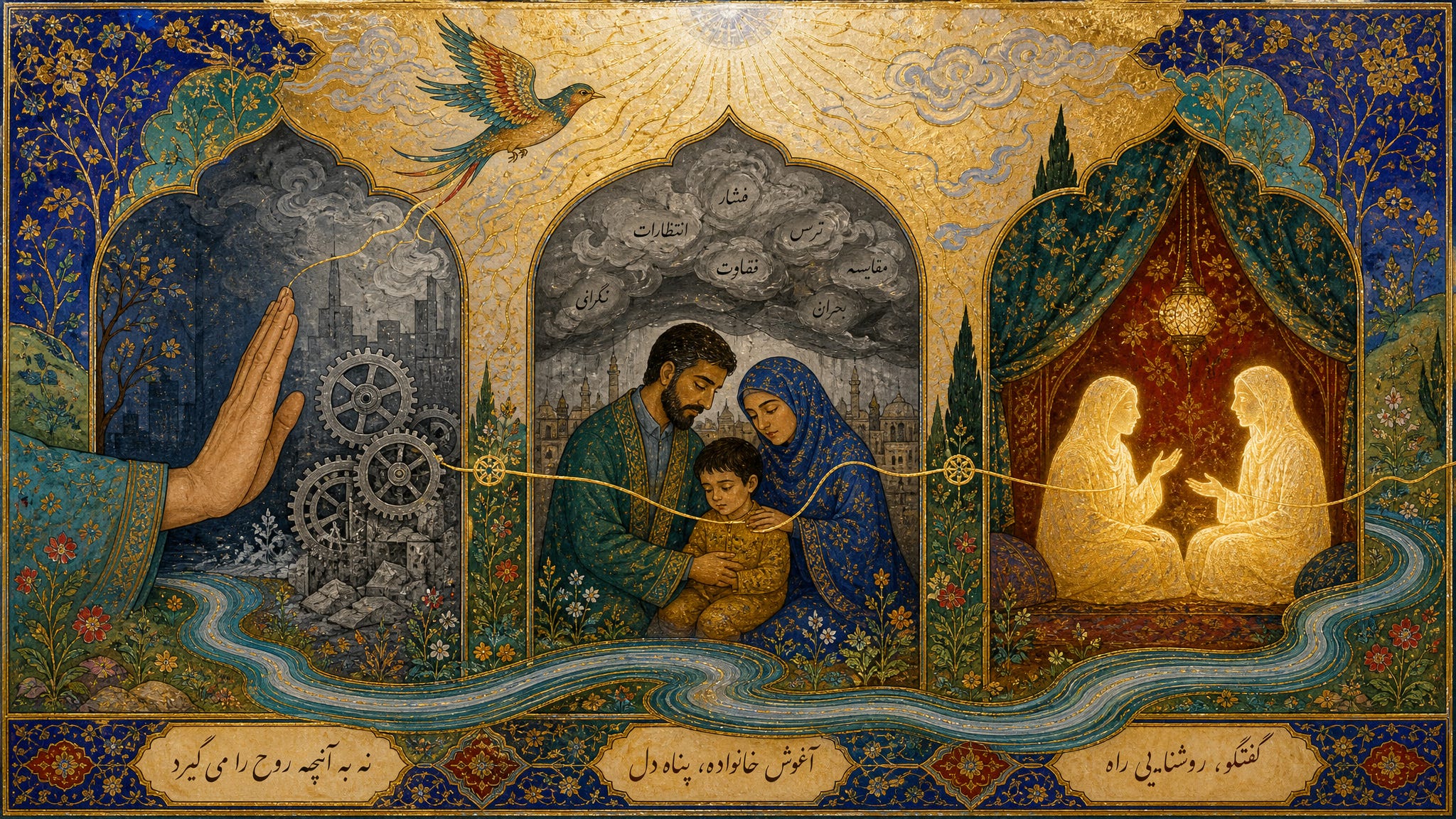
Three, and every one of them is a warning against the easiest reading of tonight.
The first — do not accept a grievance where a mechanism is on offer.
Somebody will take tonight’s material and use it as fuel.
That is the easiest possible reading of this evening, and it is the wrong one.
And the proof that it is wrong is inside the sermon.
Twenty-one months later our own side had the machinery, and used it, and a caliph was praying to be let home to his children.
The lesson is not look what they did to us.
The lesson is look what the machine does.
And then refuse to be the hand on it.
The second — fear of the state is not the same thing as being convinced.
Out of fear of the sultanate and its power.
They changed what they said out loud.
They did not change what they believed — and we know that, because the moment the pressure came off in 450, the words came straight back.
Strategic prudence — Taqiyyah — is not surrender.
It never was.
But it is not free either.
And this session shows you the bill.
A generation of children grew up in Karkh hearing a call to prayer with a line missing from it.
What you stop saying in front of others, your children may never learn to say at all.
And the third, which is the one that costs us something.
Every one of us can think of a place where our own community’s institutions treat a difference of opinion as a matter for authority rather than a matter for argument.
I am not going to describe it, and I would rather you did not either.
The instinct that burned that chair is not a foreign instinct.
It is a human one.
And it is in us.
It is not scale that makes it a different thing.
It is only opportunity.
Conclusion — Key Takeaways
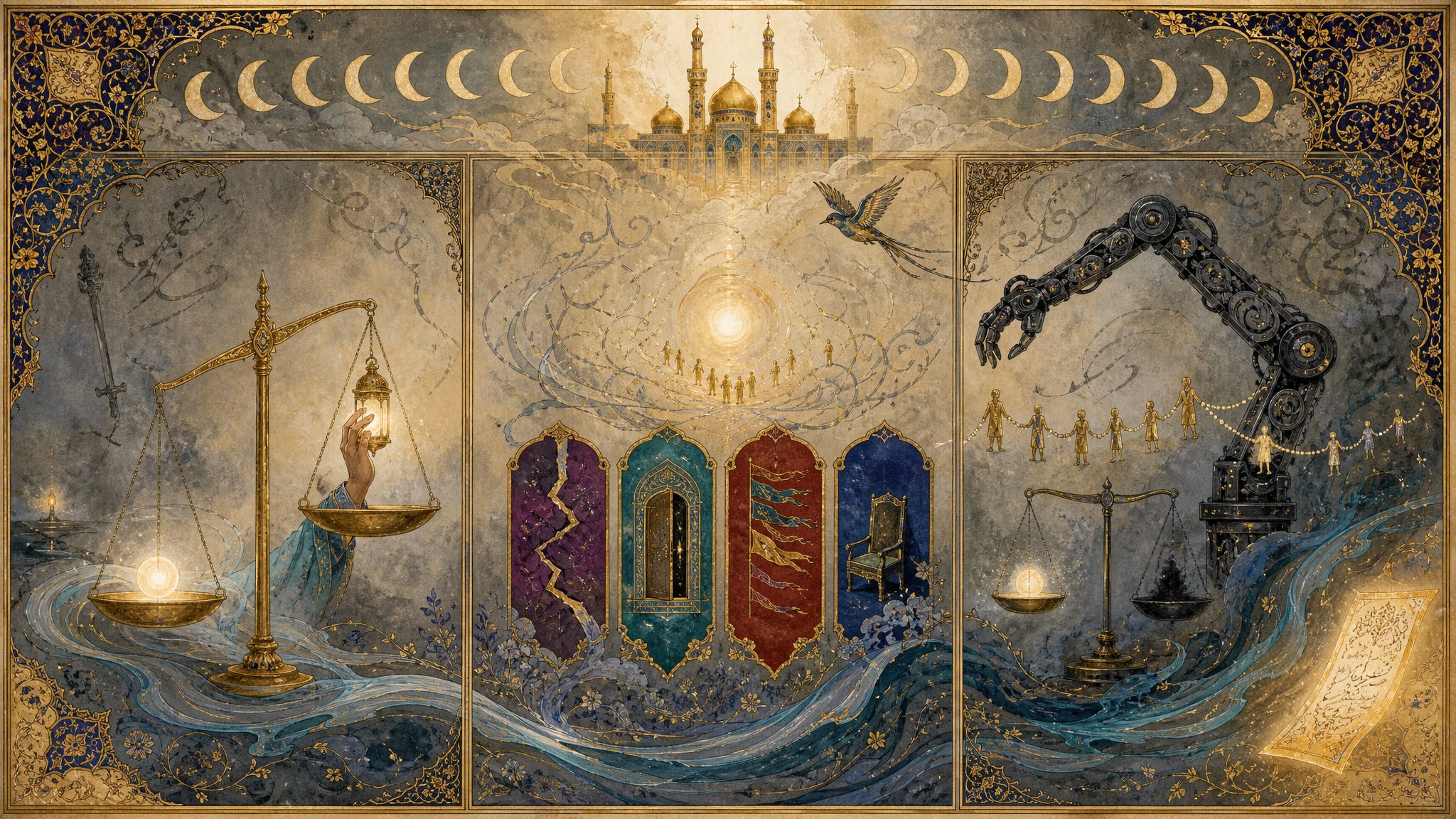
Three things to carry home.
One.
A state does not have to hate you in order to destroy you — so verify the report before you decide which one it was.
The Seljuqs were sent for.
The orders were Abbasid.
The first religious purge this state carried out fell on Sunni scholars at Nishapur, two years before it reached us.
And the version of this night that most of our people carry in their heads was accepted without anybody checking it — about our own history, about our own dead.
Two.
What a tyranny reaches for first is a precise inventory of what you are actually made of.
A line in the call to prayer.
A sentence off a door-frame.
Three pieces of cloth on poles.
A chair.
Not one dirham of value in any of it.
They were not robbing a house.
They were subtracting a community — its voice, its confession, its direction, its transmission.
If you want to know what is holding your own roof up, look at what the people who want it gone go for first.
Three.
It is a mechanism, and it does not care whose hands are on it.
It worked perfectly for them in 449.
It worked perfectly for us in 450.
Both times, ordinary people paid — a draper at his shop door, a family in a doorway, an old man on the Euphrates asking to be let home to his children.
Not Shi’a against Sunni.
Truth against the abuse of truth.
And the title, which is where we started.
The Night the Books Burned.
It was not a night, and I told you so before I used it.
It was years.
And tonight I have shown you only what was taken.
Next week, what could not be taken — and it turns out to be a piece of paper.
Eulogy — What Was Lost: Karkh, the Books, and the Scholars of the Quarter
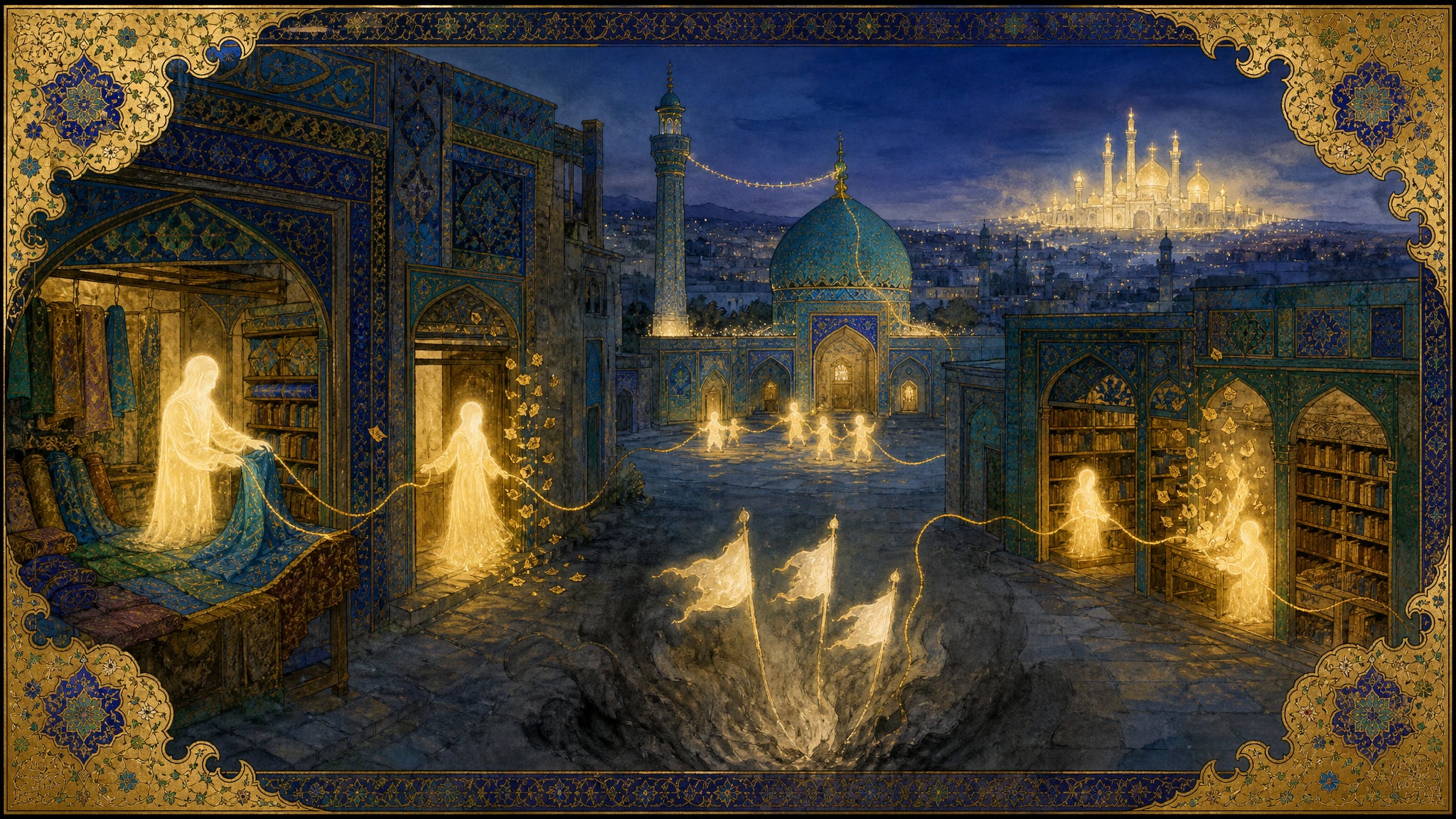
Let me stay in that street a little longer than the chronicle does.
Because Ibn al-Jawzi gives us the list, and he gives us the year, and then he moves on to the next entry.
He was not writing a lament.
Somebody has to.
Start with the man at the shop door.
The head of the drapers.
A tradesman, at Bab al-Taq, on the east bank, who sold cloth for a living and who had never in his life given anybody an order.
And they killed him, and they nailed him up at the door of his own shop so that his customers would have to walk past him.
He is not named from this pulpit.
But he had a name, and a wife, and a street that knew him, and a stock of cloth that somebody had to come and clear out afterwards.
He was killed for what he was displaying openly.
That is the whole charge.
He was visible.
Now the doorway.
Somewhere in Karkh there is a woman standing in a doorway watching a workman with a chisel take a sentence off the lintel above her head.
She did not put it there.
Her husband’s father put it there, or his father did.
She has walked under it every day of her married life.
It comes off in pieces.
He sweeps up.
He goes home to his own family.
And she goes back inside a house that has stopped saying anything.
Now the children.
There is a generation of children in that quarter who learned the call to prayer in the years after 448.
They learned it with a line missing.
They stood in the mosque beside their fathers and heard a line their fathers had grown up with, and did not know it had been taken out, because nobody was going to explain it to a child in a year like that.
Some of those children got the line back in 450.
Some of them were grown by then.
Some of them, we must assume, never said it at all.
That is a loss with no monument on it and no entry in any chronicle.
Now the library.
Sabur ibn Ardashir’s endowment, in Bayn al-Surayn, given as waqf for the jurists. Books in the ten thousands.
A hundred copies of the Qur’an in the hand of the great calligraphers of that age.
And — this is the part I keep returning to — the scholars’ own manuscripts.
Not copies.
The originals, in the hands that wrote them.
Every single volume in that room was a copy somebody had made.
A man sat with a reed and an inkwell and gave months of his eyesight to it.
Somebody paid for the paper.
Somebody carried it across a city, or across a desert.
Somebody’s father left it to somebody’s son.
And it went in an afternoon.
Do not let anybody tell you a burned library is a loss of information.
It is not.
It is a loss of labour — thousands of quiet lifetimes of it, from people who did the work knowing they would never be thanked, and were not.
And now the quarter itself.
Karkh was not a symbol.
It was a place where people bought cloth and argued about prices and got married and buried their parents.
It had lanes with names.
It had a body of pilgrims who went to Kufa together, badly organised and glad of each other, carrying three white flags so the slow ones could see where the front was.
Those flags were kept somewhere between pilgrimages.
Somebody folded them and put them away each year, and got them out again the next.
And a man carried them into the street and put them in a fire, and was pleased with himself.
And to the north of all of it, at Maqabir Quraysh, lay Imam Musa al-Kadhim and Imam Muhammad al-Jawad, peace and blessings be upon them both — and by order of the government the call to prayer was altered over their graves.
We were not there.
And I will not pretend we would have been braver than the people who took the sentence off their own doors, because they were afraid of the government and, perhaps, so are we, and they got the words back the moment they could, and I hope we would have done the same.
But they are ours.
The draper is ours.
The woman in the doorway is ours.
The children with the missing line are ours.
The copyists whose eyesight went into that library are ours.
And a thousand years later, in a language they never heard, we are still saying so.
Segue to the Maqtal
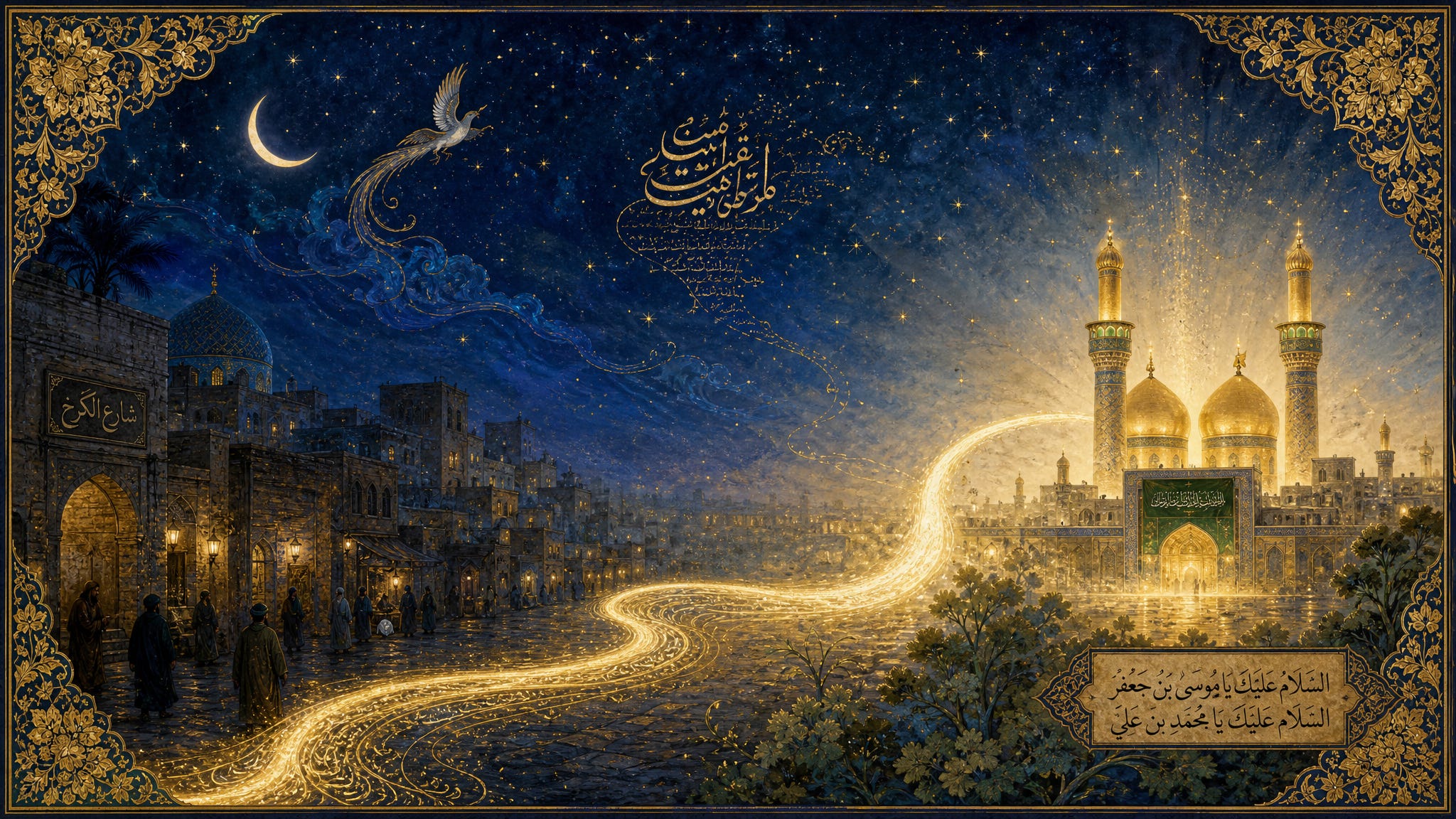

Maqtal (Lamentation) for the Tenth Session of the Architecture of Guidance
The Voice You Are About to Hear
Before it begins, let me tell you honestly what you are about to hear, because you should never be in any doubt.
That is not a reciter.
It is not a person.
It is a voice made for this series, in clear English, belonging to no living man — an imagining of the voice of the Imam of our Age, may our souls be his ransom and may God hasten his return, speaking from behind the veils of his absence, looking back across the years at people he was watching the whole time.
It is a vessel for his words.
It is nothing more than that, and we will not pretend it is anything more than that.
And tonight he does not speak about the scholar.
He speaks about the workman.
About the man who was given a list of streets and a tool, and went down a residential lane in Baghdad taking a sentence off the top of one door after another — and who finished at the end of the afternoon, and put the chisel in his bag, and went home to his own family, past his own door.
Because somebody had to do it.
It is never only the man who gives the order.
The Man with the Chisel.
Supplication — For the Ones Who Carried It
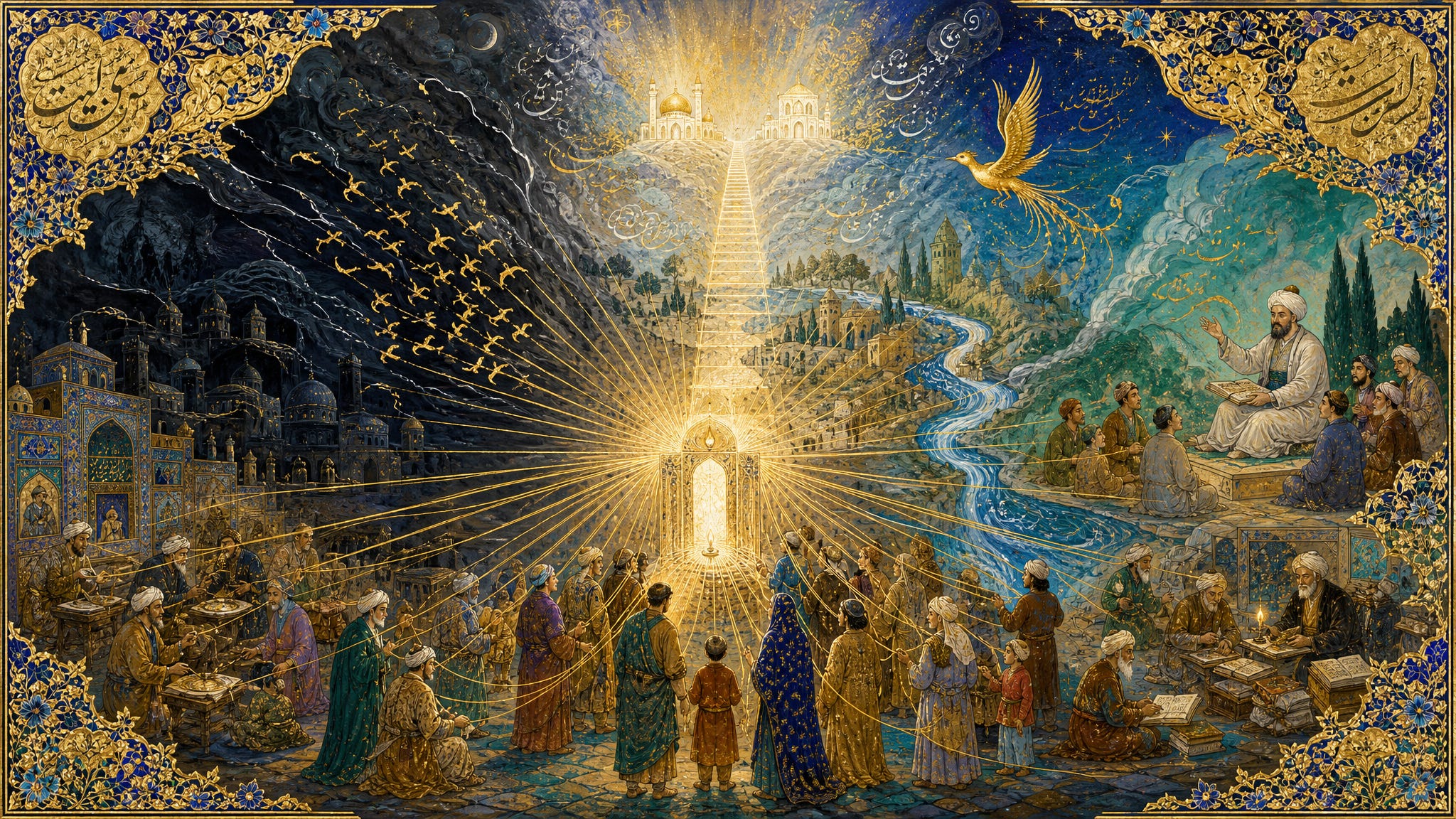
A prayer for the people in tonight’s account who have no monument: the ones who copied, and carried, and handed on.
O God.
We have nowhere to go but Your door.
O God — peace upon Your prophets.
Upon Adam, and Noah, and Abraham, and Ishmael and Isaac, and Moses and Aaron, and David and Solomon, and Zechariah and John, and Jesus son of Mary — peace and blessings be upon them all.
Every one of them was sent to bring people out of the darknesses and into the light, and every one of them left no dinar and no dirham behind him.
And peace and blessings upon Muhammad, and upon his family, and upon his righteous companions — who was buried in the room he died in, and gave this little series its name.
O God, peace upon Sayyedah Fatimah al-Zahra, peace and blessings be upon her, in whose house this whole inheritance began.
Peace upon the Commander of the Faithful, peace and blessings be upon him, at whose grave a broken man built a house and would not leave it.
Peace upon Imam Hasan and upon Imam Husayn, the Master of Witnesses, peace and blessings be upon them.
Peace upon Imam Musa al-Kadhim and upon Imam Muhammad al-Jawad, peace and blessings be upon them, over whose graves a government altered the call to prayer, and could not alter what was in the mouths that said it.
Peace upon the Imams of guidance, one after another, peace and blessings be upon them all — who told us to guard our books, and to scatter our knowledge among our brethren, and who said it three hundred years before anybody came with a fire.
O God.
Tonight we ask You for the ones who carried it.
For the draper at his shop door, killed for what he was displaying openly.
For the families who stood in their doorways and watched a workman take a sentence off the lintel, and who said nothing, because they were afraid of the government — and who put it back the moment they could.
For the children of that quarter who learned the call to prayer with a line missing from it, and for the ones who never learned the line at all.
For the copyists.
For the men who gave their eyesight to a page so that somebody they would never meet could read it.
For everything that burned in Bayn al-Surayn in an afternoon, and for every hand that had written it.
For the old man in Kashan with the shaky hand, certifying a book to a stranger who had walked four hundred miles to read it aloud to him.
For the ones on the roads with paper in their bags, who did not know there had been a fire, and who were the reason it did not matter.
Accept it from them, O God.
They did it for us and they never met us.
O God — a teacher of ours lost everything he owned in the space of two years, and went into hiding in fear for his life, and walked south, and sat down again in a desert town, and started teaching before the ash was cold.
Make us people who sit down again.
O God.
We pray to You for Imam Sayyed Mujtaba Khamenei — may God protect him — the Wali al-Faqih of our time.
Preserve him for us.
Strengthen him. Guide him.
Make him the leader You have appointed him to be, until the Imam of our Age returns and the trust he carries is handed back to its rightful holder.
O God.
Hasten the return of the Imam of our Age, may our souls be his ransom.
They thought Your light was a candle, and they brought a fire to it, and they were still standing in the street when it had already gone past them in forty directions.
يُرِيدُونَ لِيُطْفِئُوا نُورَ اللَّهِ بِأَفْوَاهِهِمْ وَاللَّهُ مُتِمُّ نُورِهِ وَلَوْ كَرِهَ الْكَافِرُونَ
“They desire to extinguish the light of God with their mouths — and God will perfect His light, however much the disbelievers hate it.”
— Qur’an, Surah al-Saff (the Chapter of the Ranks) #61, Verse 8
O God — complete it.
And whether or not we live to see it completed, let us be found carrying it.
Make us of his helpers.
Make us of his soldiers.
Make us of those who, when he calls, are already standing.
Amen, O Lord Sustainer of the Universes.
Amen, O Most Merciful of the Merciful.
And from Him alone is all ability, and He has authority over all things.
Abu al-Qasim al-Husayn ibn Muhammad al-Raghib al-Isfahani (d. ca. 502 AH / 1108 CE) was a prominent Islamic polymath, lexicographer and moral philosopher.
Though historically affiliated with the Shafi'i school of jurisprudence, his intellectual legacy transcends sectarian boundaries.
He is best known for his magnum opus, Mufradat Alfaz al-Qur'an (The Vocabulary of the Qur'an), a foundational semantic dictionary of Qur'anic terminology, and al-Dhari'a ila Makarim al-Shari'a, a seminal treatise on Islamic ethics.
Renowned for his synthesis of rationalist philosophy, linguistics and spiritual ethics, as well as his profound reverence for the Ahl al-Bayt, peace and blessings be upon them, al-Raghib's works have been studied and cited by scholars across the Sunni and Shi'a worlds for nearly a millennium.
His name was Ra'is al-Ru'asa Abu al-Qasim Ali ibn al-Hasan Ibn al-Muslima. Ht was the Caliph’s own chief minister, the man who ordered the black banners, the chiselling of the doors, and the execution of the draper, and who did not survive the reversal in 450.
Ibid.
He was the head of the drapers at Bab al-Taq, a cloth-merchant and head of his guild. His name was Abu Abdillah Ibn al-Jallab, Shaykh al-Bazzazin (the head of the drapers), at Bab al-Taq.
See Note 2.
See Note 4.
See Note 2.