

In His Name, the Most High
اَلسَّلاَمُ عَلَيْكَ يَا أَبَا عَبْدِاللَّهِ
وَعَلَى الْأَرْوَاحِ الَّتِي حَلَّتْ بِفِنَائِكَ
عَلَيْكُمْ مِنَّا جَمِيعًا سَلاَمُ اللَّهِ أَبَدًا مَا بَقِينَا وَبَقِيَ اللَّيْلُ وَالنَّهَارُ
وَلا جَعَلَهُ اللَّهُ آخِرَ الْعَهْدِ مِنَّا لِزِيَارَتِكُمْ
اَلسَّلاَمُ عَلَى الْحُسَيْنِ
وَعَلَى عَلِيِّ بْنِ الْحُسَيْنِ
وَعَلَى أَوْلَادِ الْحُسَيْنِ
وَعَلَى أَصْحَابِ الْحُسَيْنِ
Peace be upon you, O Aba Abdillah (O Husayn),
and upon the souls who have gathered in your courtyard.Upon you, from us all, is the peace of God—forever,
for as long as we remain and as long as night and day endure.And may God never make this our last pledge to visit you.
Peace be upon al-Husayn,
and upon Ali, son of al-Husayn,
and upon the children of al-Husayn,
and upon the companions of al-Husayn.— Adapted from Ziyarat Ashura
Video of the Majlis (Sermon/Lecture)
The Seed We Were Left
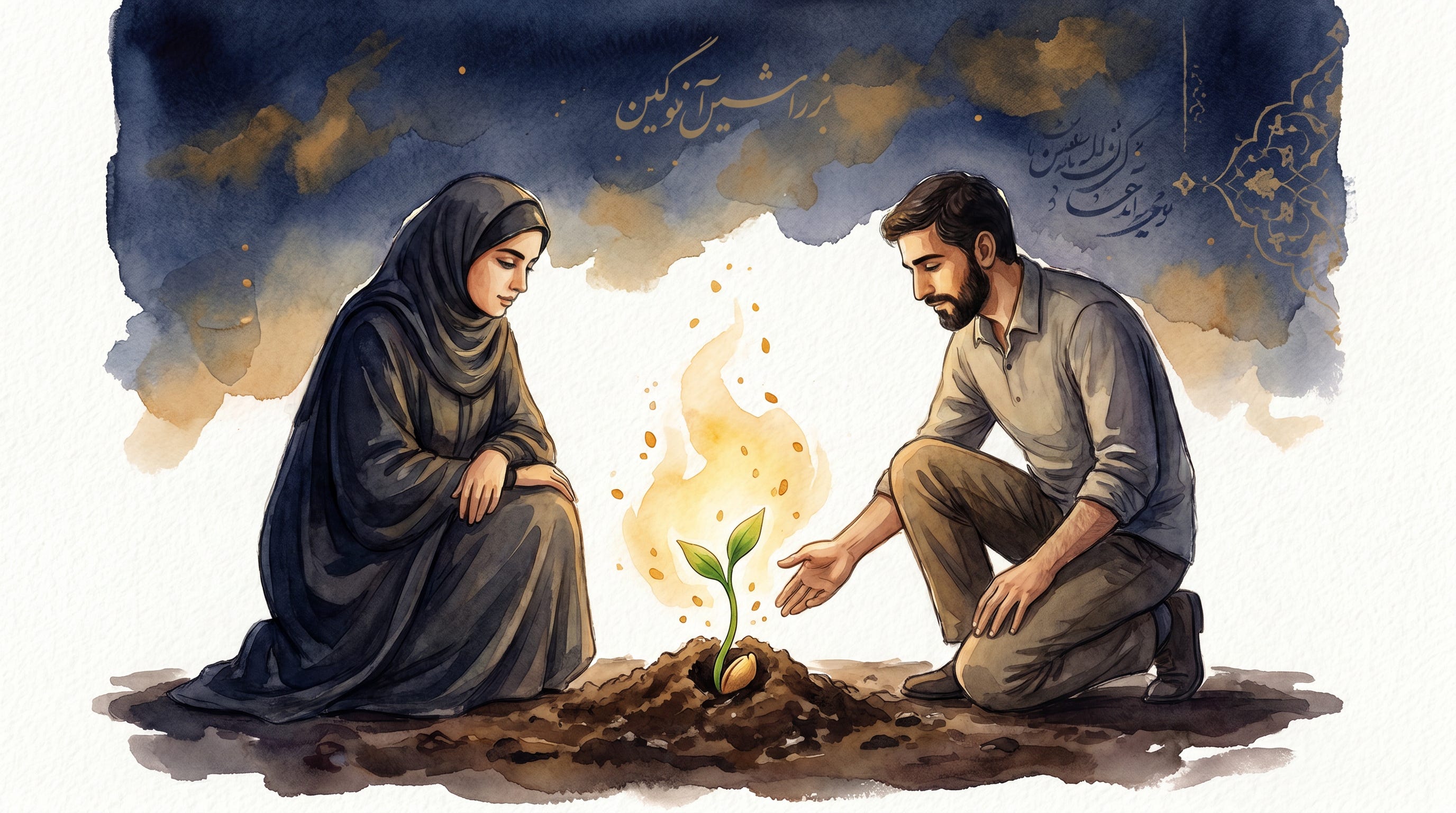
Last night we ended on a seed, and we set it carefully in the soil before we slept.
We had walked, all of us, all the way through the supplication that Imam Zayn al-Abidin, peace and blessings be upon him, wrote for the guardians of the frontiers — the Duʿaa Ahl ath-Thughoor — and we found at the very end of it a gift so strange and so generous that we had to stop and hold it in our hands.
The Imam asked God to give the reward of the frontier not only to the one who fought it, but to the one who supported the one who fought it; and to the one who only prayed for him; and then — most astonishing of all — to the one who fully intended to go and hold the line, and was simply prevented, by sickness or circumstance or the closing of every road.
The Imam asked God to write that person “among the worshippers,” and to place him “in the ranks of the martyrs and the righteous.”
And we drew from that a single sentence and pressed it down into the ground like a seed:
Intention is the witness, and the grade is God’s to assign.
You do not have to fall at the sword to be counted among those who bore witness.
But you must be willing.
Tonight we open that seed, and we watch what grows out of it.
Because here is the question it forces on us, the moment we take it seriously.
If the witness — the shaheed — is the one who testifies to God with his life, and we have spent twelve nights proving that this is what the word means, and not the wringing of grief or the celebration of defeat; and if every single believer is summoned to that witness, every soul in this room without exception — then the witness of the battlefield cannot possibly be the only kind.
It cannot be.
Because almost no one in this room will ever stand on a battlefield.
If that were the only door, the door would be shut to nearly all of us, and the call would be a cruelty.
So there must be more than one road to the station.
There must be grades of witness, and types of witness, and stations of witness — and our tradition, which thinks about everything, has thought about exactly this, and has mapped it with a precision that will take your breath away.
So tonight we ask, plainly: how many kinds of witness are there?
And we will find that the answer is the most freeing answer in our entire religion.
Here it is, stated before we begin, so that you can watch it arrive and gather weight as it comes:
You do not have to die to be a witness.
But you must be willing to.
Hold both halves, because the whole night lives in the tension between them.
The first half throws the door wide — the witness is not only the one who is killed; the gate is enormous, and you are invited through it.
The second half keeps the gate from becoming cheap — the witness is not the comfortable spectator who admires the martyrs from his armchair and risks nothing.
Between the wide-open gate and the willing heart stands every one of us.
Tonight we learn where we are standing.
The Word That Widened
I want to begin where honesty demands we begin — because honesty is the whole method of this series, and tonight, of all nights, it is also the whole content.
You have heard a saying from the pulpit.
You may have repeated it yourself; I do not blame you, it is a beautiful thing to say.
The ink of the scholar is heavier on the scales of the Day of Judgement than the blood of the martyr.
It makes a room lean forward.
And I have to be honest with you about it, the way a teacher who respects you is honest even when it costs him the easy applause: that exact saying, as a transmitted hadith, is one the scholars of hadith — the people whose whole life’s discipline is the weighing of chains — have long flagged as weak.
It circulates everywhere; it is graded daʿeef - weak.
I will not build the most important night of this series on a sentence I would have to defend with my fingers crossed behind my back.
We do not need the weak to carry the true.
And tonight you will see that the true is so overwhelmingly strong that we will never once miss the weak.
So let me take that beautiful but shaky sentence out from under your feet, and put down in its place ground that will hold any weight you place on it.
The Messenger of God, peace and blessings be upon him, his family and his righteous companions, taught that the shaheed, the witness, is very far from being only the man who falls in a line of battle — and here is one of those places where the two houses of this ummah, the Shia and our dear brethren of the sunnah, stand together and say the very same thing in almost the very same words.
He named a whole company of them.
Our brethren of the sunnah preserve his words in their soundest collections:
الشُّهَدَاءُ خَمْسَةٌ: الْمَطْعُونُ، وَالْمَبْطُونُ، وَالْغَرِقُ، وَصَاحِبُ الْهَدْمِ، وَالشَّهِيدُ فِي سَبِيلِ اللَّهِ.
“The martyrs are five: the one who dies of the plague, the one who dies of a disease of the belly, the one who drowns, the one crushed beneath a falling building — and the one slain in the way of God.”
— Sahih al-Bukhari, no. 2829; and Sahih Muslim
And in a fuller telling of the same hadith, narrated from the companion Jabir ibn Atik, the Prophet counts seven — adding to these the one who dies of pleurisy, and the one who dies by fire, and — mark this one well, for the whole of tonight will come to lean upon it — the woman who dies in childbirth; preserved by Malik in al-Muwatta, and by Abu Dawud and al-Nasa’i.
And our own tradition holds exactly the same teaching, in the words of the Imams of the House.
In al-Khisal of Shaykh al-Saduq, set down within the long hadith that describes the whole of the religion, it is stated plainly:
وَمَنْ قُتِلَ دُونَ مَالِهِ فَهُوَ شَهِيدٌ.
“And whoever is killed defending his property is a martyr.”
— Shaykh al-Saduq, al-Khisal, the Description of the Religion
— and in al-Kafi, the Imams add the one killed defending his family, and his religion, and his very life.
These are not turns of phrase, and they are not the pious exaggeration of preachers.
They are, in the exact technical language of the jurists, shuhadaa — given the rank and the reward of the witness, though not one of them ever stood on a battlefield.
We will return to several of them, one by one, before the night is out.
For now, simply let the size of that company land on you: the plague-stricken, the drowned, the mother in her childbed, the man at his own doorway.
The witnesses were always more than the soldiers.
The roll was always longer than the war.
And the tradition hands us a proof of this that sits at the very centre of the House of the Prophet — a proof that should make every one of us go silent.
It is in al-Kafi, the foundational collection of our hadith, the work of Shaykh al-Kulayni; and it is narrated through a chain that Allamah al-Majlisi himself graded sahih, fully sound; and it comes from Imam Musa al-Kazim, peace and blessings be upon him, speaking of his own great-grandmother, the Mistress of the Women of all the Worlds:
إِنَّ فَاطِمَةَ عَلَيْهَا السَّلَامُ صِدِّيقَةٌ شَهِيدَةٌ، وَإِنَّ بَنَاتِ الْأَنْبِيَاءِ لَا يَطْمَثْنَ.
“Verily Fatima, peace be upon her, is a truthful one, a martyr — siddiqa shaheeda; and the daughters of the prophets do not menstruate.”
— al-Kulayni, al-Kafi, vol. 1, Kitab al-Hujja, the Chapter on the Birth of al-Zahra, hadith 2; graded sahih by Allamah al-Majlisi, Mir’at al-Uqul, vol. 5, p. 315
Stop and feel the weight of that.
Shaheeda.
A martyr.
Sayyedah Fatima al-Zahra, peace and blessings be upon her — who never stood on any battlefield, who died in her own home, of an injury done to her in her own home — and the seventh Imam, with the authority of an Imam, calls her, flatly and without apology, a martyr.
Now hold that single word against everything you ever assumed the word shaheed could mean.
The great commentators did not let this pass without explanation, and what they wrote is, I promise you, the whole architecture of tonight handed to us in advance.
When al-Mulla Muhammad Salih al-Mazandarani — the master commentator on al-Kafi — reached this narration, he stopped to explain how the word could possibly reach a woman who died in her bed.
And listen to exactly what he says, because it is the key that unlocks the night:
وَالشَّهِيدُ مَنْ قُتِلَ مِنَ الْمُسْلِمِينَ فِي مَعْرَكَةِ الْقِتَالِ الْمَأْمُورِ بِهِ شَرْعًا، ثُمَّ اتَّسَعَ فَأُطْلِقَ عَلَى كُلِّ مَنْ قُتِلَ مِنْهُمْ ظُلْمًا كَفَاطِمَةَ عَلَيْهَا السَّلَامُ.
“The martyr is the one slain, from among the Muslims, on the battlefield of a fighting commanded by the Sacred Law. Then the term widened, and was applied to everyone of them killed unjustly — such as Fatima, peace be upon her.”
— al-Mazandarani, Sharh Usul al-Kafi, vol. 7, p. 213
Then the term widened. Thumma ittasaʿa.
I want you to watch the word with your own eyes as it does this.
It begins exactly where you expect it: the man on the field, the sword in his hand, the enemy in front of him.
And then — in the very grammar of the tradition, in the pen of the commentators, on the tongues of the Imams — it opens.
It reaches out past the edge of the battlefield and it gathers in everyone who was struck down unjustly, everyone wronged, until it can hold the daughter of the Prophet of God, struck in her own doorway.
The word is not standing still.
The word is growing before our eyes.
And the growth of that one word is the entire blueprint of what we will build tonight: we are going to follow shaheed as it widens — from the battlefield, to the wronged, to the ordinary faithful life — and somewhere in that widening, every single one of us is going to find ourselves standing inside the word.
And lest you think this is only the move of one commentator, hear how Allamah al-Majlisi himself glosses this very same narration.
He affirms, first, that the report establishes her martyrdom beyond all doubt:
ثُمَّ إِنَّ هَٰذَا الْخَبَرَ يَدُلُّ عَلَىٰ أَنَّ فَاطِمَةَ صَلَوَاتُ اللهِ عَلَيْهَا كَانَتْ شَهِيدَةً، وَهُوَ مِنَ الْمُتَوَاتِرَاتِ.
“This report indicates that Fatima, God’s blessings be upon her, was a martyr — and this is among the mutawatirat — the matters transmitted so continuously that they are beyond all doubt.”
— Allamah al-Majlisi, Mir’at al-Uqul fi Sharh Akhbar Al al-Rasul, vol. 5, p. 318
A martyr beyond doubt — who died in her own home.
And when he turns to the other half of her title — siddiqa, the truthful one — he shows that it reaches all the way down to infallibility itself:
وَالصِّدِّيقَةُ فَعِيلَةٌ لِلْمُبَالَغَةِ فِي الصِّدْقِ وَالتَّصْدِيقِ، أَيْ كَانَتْ كَثِيرَةَ التَّصْدِيقِ لِمَا جَاءَ بِهِ أَبُوهَا صَلَّى اللهُ عَلَيْهِ وَآلِهِ، وَكَانَتْ صَادِقَةً فِي جَمِيعِ أَقْوَالِهَا، مُصَدِّقَةً أَقْوَالَهَا بِأَفْعَالِهَا، وَهِيَ مَعْنَى الْعِصْمَةِ.
“And al-Siddiqa is an intensive form, denoting the utmost in truthfulness and in affirmation — that is, she was abundant in affirming what her father, may God bless him and his family, brought; she was truthful in all her words, confirming her words by her deeds — and this is the very meaning of infallibility, ʿisma.”*
— Allamah al-Majlisi, Mir’at al-Uqul, vol. 5, p. 315
So in one short narration the seventh Imam has told us that the highest witness-station and the highest truthfulness belong to a woman who was never on a field — and the greatest of our scholars have spent their commentaries confirming it.
Now — why can the word do this?
What gives it the right to widen?
And here our tradition’s deepest thinker, Allamah Tabataba’i, hands us the final piece.
In Tafsir al-Mizan, expounding the verse in which God appoints the believing community to be witnesses over mankind — li-takoonoo shuhadaa’a ʿala an-naas —
وَكَذَٰلِكَ جَعَلۡنَٰكُمۡ أُمَّةٗ وَسَطٗا لِّتَكُونُواْ شُهَدَآءَ عَلَى ٱلنَّاسِ وَيَكُونَ ٱلرَّسُولُ عَلَيۡكُمۡ شَهِيدٗاۗ وَمَا جَعَلۡنَا ٱلۡقِبۡلَةَ ٱلَّتِي كُنتَ عَلَيۡهَآ إِلَّا لِنَعۡلَمَ مَن يَتَّبِعُ ٱلرَّسُولَ مِمَّن يَنقَلِبُ عَلَىٰ عَقِبَيۡهِۚ وَإِن كَانَتۡ لَكَبِيرَةً إِلَّا عَلَى ٱلَّذِينَ هَدَى ٱللَّهُۗ وَمَا كَانَ ٱللَّهُ لِيُضِيعَ إِيمَٰنَكُمۡۚ إِنَّ ٱللَّهَ بِٱلنَّاسِ لَرَءُوفٞ رَّحِيمٞ
Thus We have made you a middle nation that you may be witnesses to mankind, and that the Apostle may be a witness to you. We did not appoint the qiblah you were following, but that We may ascertain those who follow the Apostle from those who turn back on their heels. It was indeed a hard thing except for those whom God has guided.
And God would not let your prayers go to waste. Indeed God is most kind and merciful to mankind.
— Qur’an, Surah al-Baqarah (the Chapter of the Cow) #2, Verse 143
— he explains that the shahada, the witnessing, is at its root a thing God confers: not only an act you perform, but a station God places upon you.
He writes:
وَاعْلَمْ أَنَّ الشَّهَادَةَ عَلَى الْأَعْمَالِ عَلَى مَا يُفِيدُهُ كَلَامُهُ تَعَالَى لَا يَخْتَصُّ بِالشُّهَدَاءِ مِنَ النَّاسِ، بَلْ كُلُّ مَا لَهُ تَعَلُّقٌ مَا بِالْعَمَلِ كَالْمَلَائِكَةِ وَالزَّمَانِ وَالْمَكَانِ وَالدِّينِ وَالْكِتَابِ وَالْجَوَارِحِ وَالْحَوَاسِّ وَالْقَلْبِ فَلَهُ فِيهِ شَهَادَةٌ.
“Know that the witnessing over deeds — as His speech, exalted is He, indicates — is not restricted to the human witnesses; rather everything that has any connection to the deed — the angels, time, place, the religion, the Book, the limbs, the senses, and the heart — has a witnessing of it.”
— Allamah al-Tabataba’i, al-Mizan fi Tafsir al-Qur’an, commentary on Surah al-Baqarah (the Chapter of the Cow) #2, Verse #143
Do you hear what that opens?
Witnessing, in the language of the Qur’an, has two voices.
There is the active witness — the one who stands up and bears testimony, the chooser, the one with the sword or the pen.
And there is the conferred witness — the one over whom, and through whom, God causes a testimony to be borne; the one God makes a witness, whose very blood, whose very life, testifies — against the oppressor and for the truth.
Sayyedah Fatima did not have to lift a sword to be a witness in the second voice.
Neither, we will find, does a baby at a dry river, or a child in a ruin in Sham.
God made them witnesses.
The word widened to gather them in.
And tonight is the story of that widening.
So now — with the word in our hands and watching it grow — let us draw the map.
The Map of Witness
If we are going to speak responsibly about the grades of witness, we need the actual vocabulary the tradition uses — and our tradition has two languages for it, one from the philosophers of martyrdom and one from the jurists of the Sacred Law.
We need them both, and we need them in that order, because the first gives us the meaning and the second gives us the precision.
The Philosopher’s Map: Five Ways to Die
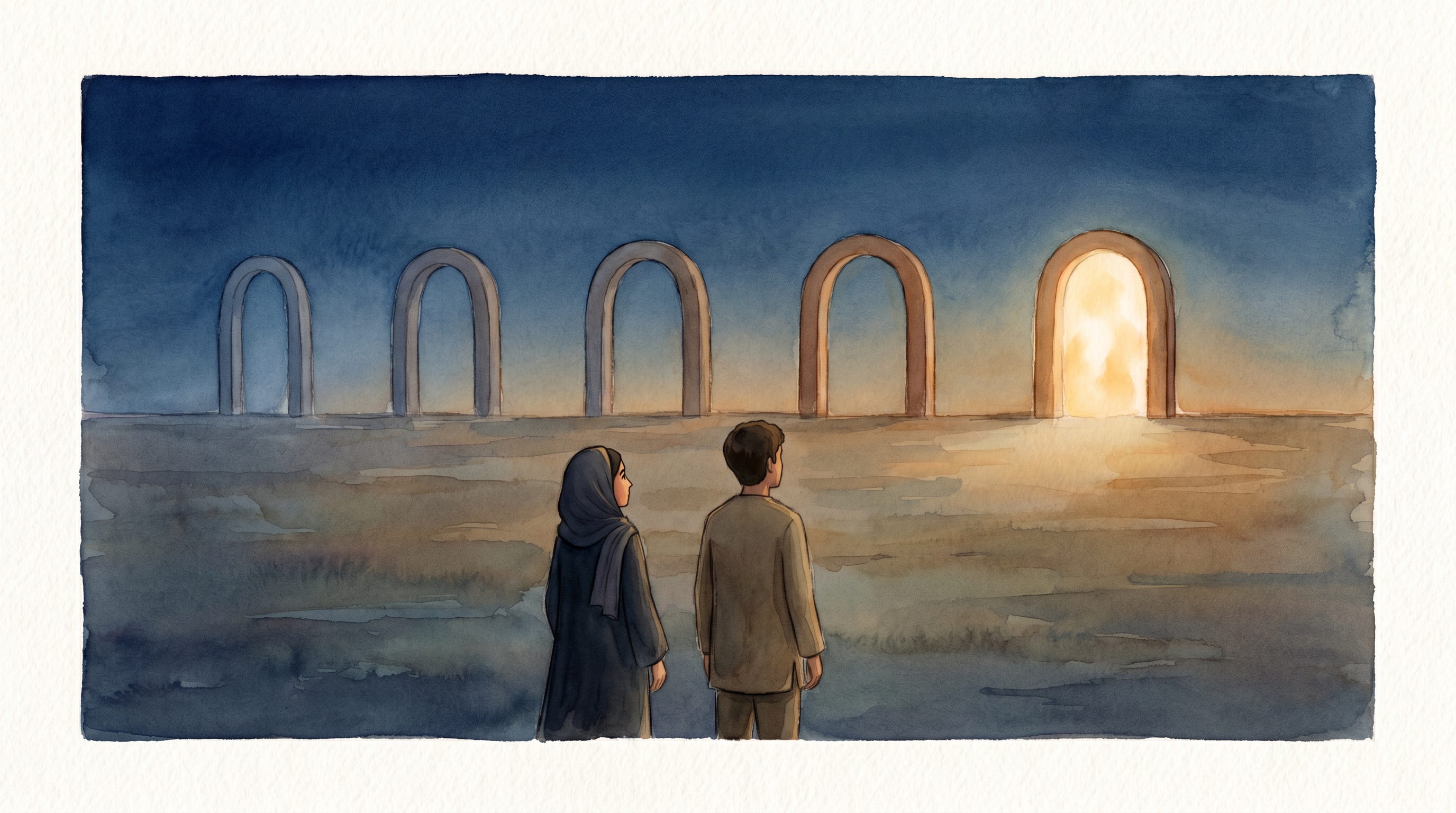
We begin with the philosopher.
Begin with Shaheed Mutahhari, whose framework carried us all the way through the third night of Muharram, and who asked a question so plain it is almost startling:
How many kinds of death are there?
Because, he says:
“Merely being killed can have no sanctity. It is not always a matter of pride. Many a death may even be a matter of disgrace.”
The word shaheed carries a halo — but the halo does not come from the killing.
It comes from something inside the death.
So what is it?
And he answers by laying out five kinds of death.
There is, first, natural death — a man completes his span and goes;
“it is neither a matter of pride nor of shame.”
Second, accidental death — the earthquake, the epidemic, the flood —
“considered to be premature, and hence regrettable.”
Third, the criminal death — and I want you to hold this third one very carefully, because we will need it later tonight and it will seem, for a while, to stand in our way.
Shaheed Mutahhari describes it as the killing in which
“A person kills another in cold blood simply to satisfy his own passion, or because he considered the victim to be his rival.”
And of such a death he says:
“The person killed is regarded as a victim of aggression and tyranny, whose life has been taken in vain… It is shocking and pitiable, but it is neither praiseworthy nor a matter of pride. The victim loses his life unnecessarily, because of malice, enmity and hatred.”
Mark that phrase — taken in vain.
We will come back to it standing over the body of a child, and we will have to answer it.
Fourth, there is self-murder:
“the worst kind of death”
Where the death is itself the crime.
And then there is the fifth.
The fifth is martyrdom, and Shaheed Mutahhari defines it with a precision we have to carry with us, because everything turns on it:
“Martyrdom is the death of a person who, in spite of being fully conscious of the risks involved, willingly faces them for the sake of a sacred cause, or, as the Holy Qur’an says, in the way of God. It has two basic elements: the life is sacrificed for a cause; and the sacrifice is made consciously.”
— Ayatullah Murtadha Mutahhari, The Martyr
Two elements.
The life is given for a cause — it is in the way of God.
And the giving is conscious — chosen, eyes open, the risk fully weighed.
And then Shaheed Mutahhari says the sentence that has tripped a thousand preachers, the sentence we are going to have to walk straight through tonight.
He warns that if Imam Husayn, peace and blessings be upon him, were only an innocent man to whom a terrible injustice was done — a pure victim and nothing more — then
“He could not have been called a martyr, let alone the Doyen of the Martyrs.”
What lifts Imam Husayn above mere victimhood, what makes him the Sayyed al-Shuhada, the Master of all Witnesses, is precisely that he chose it, knowing.
And Mutahhari is scathing about the preachers who miss this — who, he says, narrate Karbala “as though Husayn lost his life in vain,” and so rob the Master of Witnesses of the very thing that makes him the Master.
He is right.
Hold that.
It is true.
And in about fifteen minutes it is going to look like a wall built directly across our path, when we come to the children who could not choose.
We will not knock the wall down.
We will find the door in it that Shaheed Mutahhari himself left open.
But first — the jurists.
Before we step into their world, let us be clear about what we are doing.
Shaheed Mutahhari asked:
What is inside the death that makes it holy?
The jurists are about to ask:
What does the Sacred Law do with the physical body?
They are not giving you two competing lists.
They are looking at the exact same jewel from two different angles.
The philosopher gives us the meaning; the jurist gives us the precision.
And let us not forget — because some have tried to dismiss him, though they are wrong — that Shaheed Mutahhari was not merely a philosopher sitting in an armchair.
He was a jurist of the highest order, deeply versed in history, and the very man who stripped away centuries of distortion to return us to the true, unvarnished face of Karbala.
He knew the texts, and he knew the law.
The First Door: The Martyr of the Battlefield
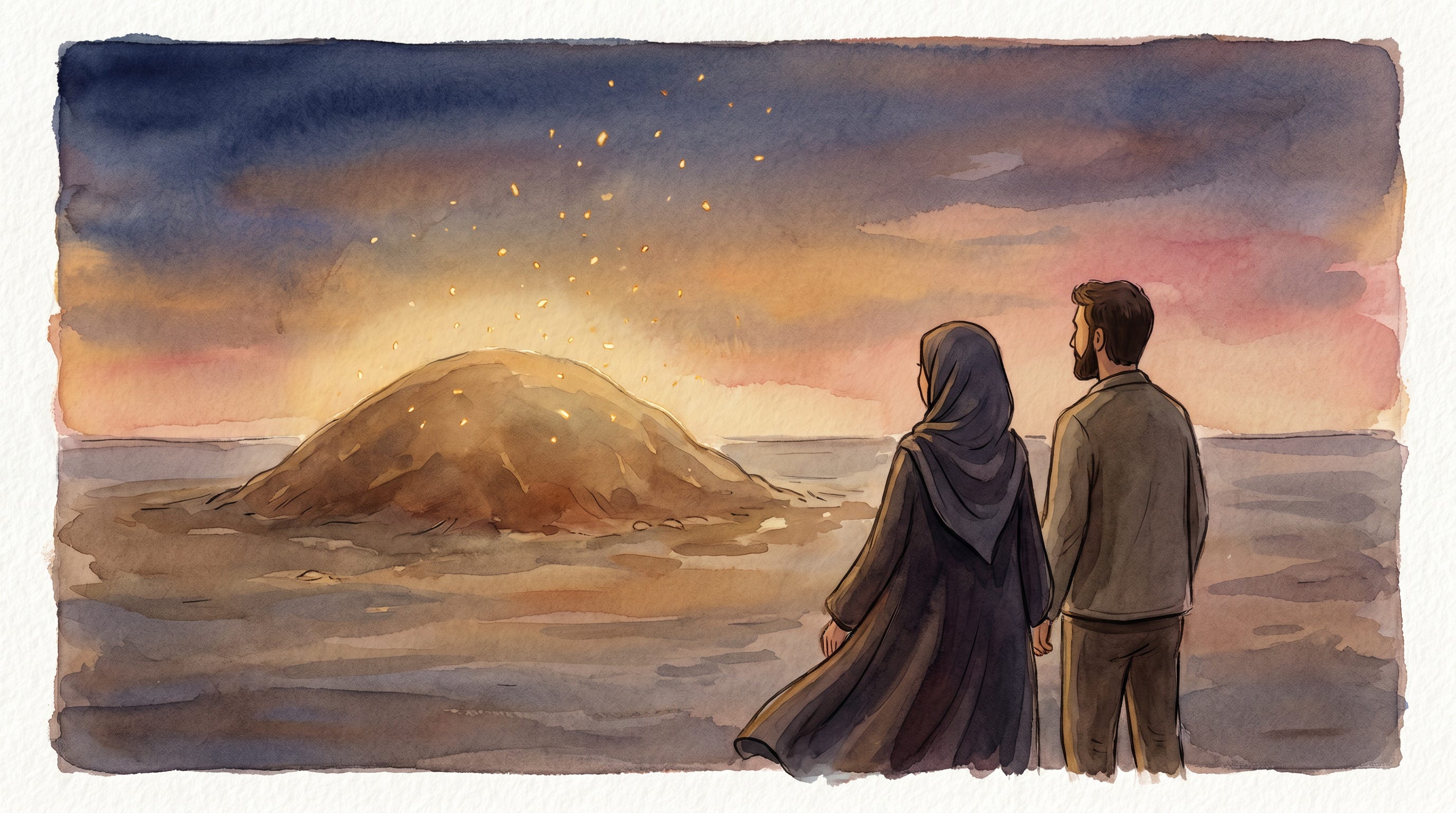
Because the jurists drew the map even more finely than the philosophers, and the way they drew it is, I promise you, the secret of the entire night.
They asked a very concrete, very physical question about the martyr — a question not about his soul but about his body.
Here it is:
Is the body of the martyr washed and shrouded, like every other believer who dies — or not?
And on the answer to that single question, our jurisprudence splits the martyr into two great categories.
And the splitting is the sermon.
The first category they call al-shaheed al-haqeeqi — the true martyr, the martyr of the battlefield, shaheed al-maʿraka.
Open the classical text of our law, the Lumʿa of the First Martyr, al-Shaheed al-Awwal — himself a man martyred for his scholarship in the eighth century — and read his own words, with the commentary of the Second Martyr, al-Shaheed al-Thani, woven around them:
الثَّالِثُ: الشَّهِيدُ، وَهُوَ المَقْتُولُ بَيْنَ يَدَيِ الإِمَامِ عَلَيْهِ السَّلَامُ أَوْ نَائِبِهِ الخَاصِّ فِي مَعْرَكَةِ الجِهَادِ. وَلَا يُغَسَّلُ وَلَا يُكَفَّنُ، بَلْ يُدْفَنُ بِثِيَابِهِ بَعْدَ نَزْعِ السِّلَاحِ.
“The third [of those exempt from the washing of the dead]: the martyr — and he is the one killed in the presence of the Imam, peace be upon him, or his special deputy, on the battlefield of jihad. He is neither washed nor shrouded; rather he is buried in his clothes, after the removal of his weapons.”
— al-Shaheed al-Awwal, al-Lumʿa al-Dimashqiyya, Kitab al-Tahara, Ahkam al-Shaheed
Hear the ruling, because it is extraordinary, and our jurisprudence holds it almost alone.
This martyr is not washed.
Not shrouded.
Not embalmed with camphor.
He is laid in the earth in the very clothes he fell in, with his own blood still upon him — because, the jurists say:
His blood is his purity.
You do not cleanse a martyr of the one thing on his body that testifies for him.
And the Second Martyr - al-Shaheed al-Thani, commenting, tells us why the weapons come off but the bloodied garments stay — and his reason is so tender it should stop your heart:
يُتْرَكُ البَاقِي إِكْرَامًا لَهُ، وَلِيَشْهَدَ لَهُ يَوْمَ القِيَامَةِ.
“The rest is left upon him as an honour to him — and so that it may bear witness for him on the Day of Resurrection.”
— al-Shaheed al-Thani, al-Rawda al-Bahiyya fi Sharh al-Lumʿa
So that it may bear witness for him.
Even the bloodstain is a shaheed — a witness — that will testify on his behalf when the books are opened.
And this is the scriptural ground of the ruling, narrated from Imam Jaʿfar al-Sadiq, peace and blessings be upon him:
قَالَ الصَّادِقُ عَلَيْهِ السَّلَامُ: الَّذِي يُقْتَلُ فِي سَبِيلِ اللَّهِ يُدْفَنُ فِي ثِيَابِهِ وَلَا يُغَسَّلُ.
“Imam al-Sadiq, peace be upon him, said: The one who is killed in the way of God is buried in his clothes and is not washed.”
— Shaykh al-Saduq, Man la Yahduruhu al-Faqih, the section concerning the rules of the martyr
The Line at the Edge of the Field
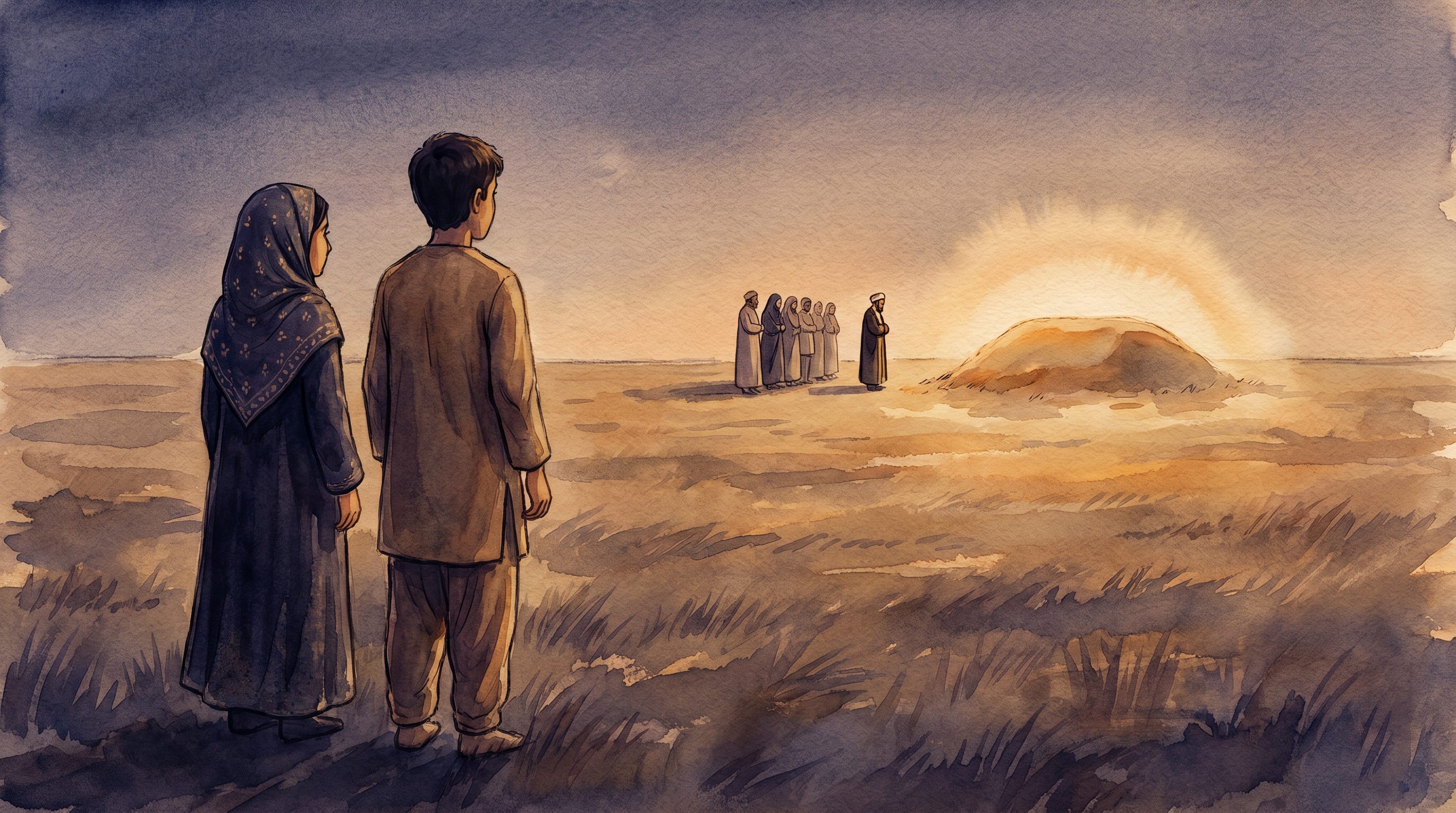
But to this exemption the jurists fix one strict and exact condition — the condition of ramaq, the lingering spark of life.
The dispensation belongs only to the one whose soul departs on the field itself.
If the Muslims reach him while a spark of life is still in him, and he is carried off and dies afterward in a tent or a camp, he is washed and shrouded like any believer — he keeps the full reward, and loses only the ritual exemption.
Hear the marajiʿ state it plainly.
Ayatullah Khoei and Ayatullah Sistani, in their Minhaj al-Salihin:
الشَّهِيدُ الَّذِي يُقْتَلُ فِي نَفْسِ الْمَعْرَكَةِ، وَلَمْ يُدْرِكْهُ الْمُسْلِمُونَ وَبِهِ رَمَقٌ، لَا يُغَسَّلُ، إِذَا كَانَتِ الْمَعْرَكَةُ بِأَمْرِ الْإِمَامِ الْمَعْصُومِ عَلَيْهِ السَّلَامُ أَوْ نَائِبِهِ الْخَاصِّ، أَوْ كَانَتْ لِأَجْلِ الْحِفَاظِ عَلَى بَيْضَةِ الْإِسْلَامِ.
“The martyr who is killed within the battle itself, and whom the Muslims do not reach while there is still a spark of life (ramaq) in him, is not washed — provided the battle was by the command of the Infallible Imam, peace be upon him, or his special deputy, or was for the sake of preserving the heartland of Islam.”
— Ayatullah Khoei and Ayatullah Sistani, Minhaj al-Salihin, vol. 1, Kitab al-Tahara, Ghusl al-Mayyit
And Imam Khomeini, in his Tahrir al-Wasilah, makes the very condition explicit — the departure of the soul on the battlefield:
يَسْقُطُ الْغُسْلُ عَنِ الشَّهِيدِ، وَهُوَ الْمَقْتُولُ فِي الْجِهَادِ مَعَ الْإِمَامِ عَلَيْهِ السَّلَامُ أَوْ نَائِبِهِ الْخَاصِّ، بِشَرْطِ خُرُوجِ رُوحِهِ فِي الْمَعْرَكَةِ، وَيَلْحَقُ بِهِ الْمَقْتُولُ فِي حِفْظِ بَيْضَةِ الْإِسْلَامِ، فَلَا يُغَسَّلُ وَلَا يُحَنَّطُ وَلَا يُكَفَّنُ، بَلْ يُدْفَنُ بِثِيَابِهِ.
“Ghusl is waived for the martyr — who is the one killed in jihad alongside the Imam, peace be upon him, or his special deputy — on the condition that his soul departs on the battlefield; and attached to him is the one killed in defence of the heartland of Islam: he is neither washed, nor embalmed, nor shrouded, but is buried in his clothes.”
— Imam Khomeini, Tahrir al-Wasilah, vol. 1, Kitab al-Tahara, Ghusl al-Mayyit
The line is drawn exactly at the edge of the field, and not one inch beyond it.
But here is where our jurisprudence does something that should make us proud, something the other schools do not do.
Having lifted the washing and the shrouding off the battlefield martyr — having honoured him so highly that we will not even cleanse his blood — our jurists then insist that the funeral prayer is still prayed over him.
The Sacred Law dropped the washing; it never dropped the prayer.
The reasoning is a piece of pure usul, of legal principle: the general command to pray over every dead Muslim stands by istishab, by the presumption of its continuity, because no text ever lifted it — only the washing was lifted.
So picture it.
The community gathers over the battlefield martyr, unwashed and bloodied as he is, and stands, and prays.
He is so honoured that we will not wash the blood from him — and so beloved that we will not let him go into the earth without the whole community standing over him in prayer.
The honour is doubled.
And this — let it land where it belongs — is not the impurity of a thing too defiled to wash.
It is the exact opposite.
It is ikram; it is honour.
The wounds of the martyr, the tradition says, will rise on the Day of Resurrection with the colour of blood and the scent of musk.
And the summit of this entire category — its highest peak, where the air is thinnest — is the field of Karbala itself.
Imam Husayn, peace and blessings be upon him, and his companions were not washed by human hands.
They were buried in their garments, in their blood, three days upon the open ground, and the rites over the Master of Witnesses were the affair of the Imam of his Age — his son Ali ibn al-Husayn — Imam Sajjad, peace and blessings be upon him, and beyond him, in the way the tradition speaks of it, the hand of the Awaited One himself.
Thar Allah — the Blood of God.
That is the peak of the mountain.
Now hold that peak in your eye, and turn with me to the second category — because the second category is as wide as the open sky, and it is where the whole of tonight, and the whole of you, actually lives.
The Second Door: The Martyr of the Hereafter
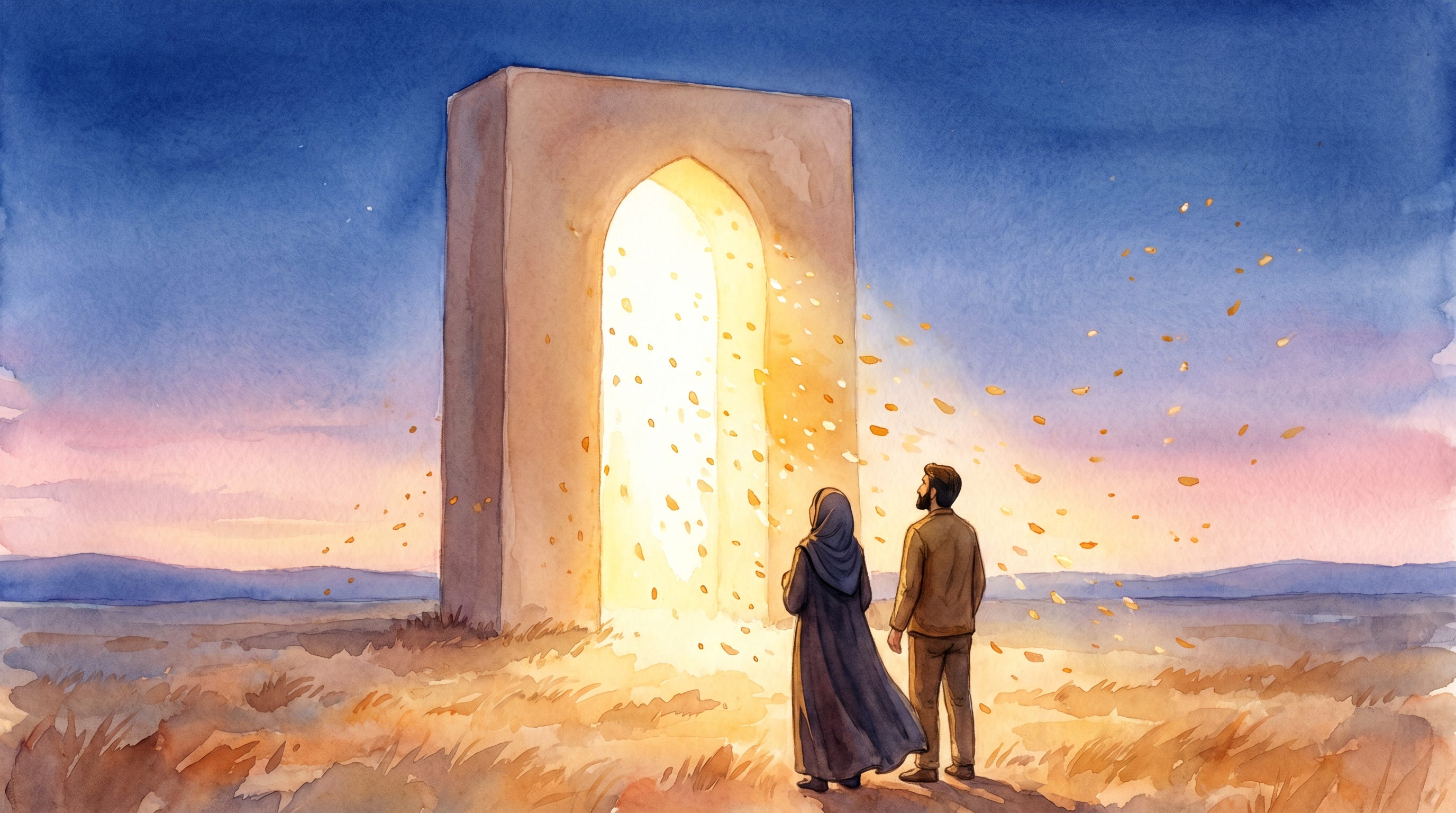
The jurists call it al-shaheed al-hukmi — or shaheed al-akhira, the martyr of the Hereafter.
And the ruling on this one is this: he is washed; he is shrouded; he is embalmed; he is given every single ordinary funeral rite of every ordinary believer — and he is given the full reward of a martyr.
The full reward.
And I need you to hear this clearly, because the human heart loves to rank things.
You might quietly wonder:
If the battlefield martyr is so honoured that we will not even wash his blood from him, then the one who is washed and shrouded must be a lesser rank.
No.
The washing is not a demotion.
It is simply the ordinary dignity of the believer returning to God in purity — and God adds to it, in the unseen, the rank the eye cannot see.
The washing does not lower the reward; it just means the glory is hidden in the soul, not written on the skin.
And who walks in this category?
Open the hadith of the Ahl al-Bayt and read the roll they themselves recited — the famous narrations of “the martyrs are seven,” preserved in Wasaa’il al-Shia and in Man Laa Yahduruhu al-Faqih.
The one who dies of the plague.
The one who dies of the wasting sickness of the belly.
The one who drowns.
The one crushed beneath the collapsing building.
The one killed unjustly — al-maqtool zulman.
The woman who dies in childbirth — al-nufasaa.
The one killed defending his family, his property, his faith, his life.
The one stationed in watch at the frontier — al-murabit — the very figure we spent all of last night with.
The stranger who dies far from home.
And — sweetest of all, and a station open to every soul in this room tonight — the one who dies upon the love of the Family of Muhammad: man maata ʿala hubbi Aali Muhammad maata shaheeda.
These are not my categories — they are the Family’s own.
Do not take the roll from me; take it from them.
The Messenger of God, peace and blessings be upon him and his family, named the seven — preserved in our books on the authority of Zayd, the son of Imam Zayn al-Abidin, from his fathers, from the Messenger of God himself:
عَنْ زَيْدِ بْنِ عَلِيٍّ، عَنْ أَبِيهِ عَلَيْهِ السَّلَامُ، عَنْ آبَائِهِ عَلَيْهِمُ السَّلَامُ، قَالَ: قَالَ رَسُولُ اللَّهِ صَلَّى اللَّهُ عَلَيْهِ وَآلِهِ: الشُّهَدَاءُ سَبْعَةٌ سِوَى الْقَتْلِ فِي سَبِيلِ اللَّهِ: الْمَطْعُونُ شَهِيدٌ، وَالْغَرِقُ شَهِيدٌ، وَصَاحِبُ ذَاتِ الْجَنْبِ شَهِيدٌ، وَالْمَبْطُونُ شَهِيدٌ، وَصَاحِبُ الْحَرِيقِ شَهِيدٌ، وَالَّذِي يَمُوتُ تَحْتَ الْهَدْمِ شَهِيدٌ، وَالْمَرْأَةُ تَمُوتُ بِجُمْعٍ شَهِيدَةٌ.
“From Zayd ibn Ali, from his father, from his forefathers, peace be upon them, who said: the Messenger of God, peace and blessings be upon him and his family, said: ‘The martyrs are seven, besides the one slain in the way of God: the one who dies of the plague is a martyr; the one who drowns is a martyr; the one who dies of pleurisy is a martyr; the one who dies of the wasting sickness of the belly is a martyr; the one who dies in a fire is a martyr; the one who dies beneath a collapsing building is a martyr; and the woman who dies in childbirth is a martyr.’”
— Shaykh al-Saduq, Man la Yahduruhu al-Faqih, Kitab al-Janaiz, the chapter on the rulings of the martyrs; codified by al-Hurr al-Amili, Wasaa’il al-Shia, Kitab al-Tahara, Abwab Ghusl al-Mayyit, bab 14
And the one cut down unjustly — the one killed defending his household, his property, his faith — Imam al-Baqir, peace and blessings be upon him, narrating the Messenger of God, names him a shaheed; and then, in the same breath, turns the whole matter into the lesson of this very night:
قَالَ رَسُولُ اللَّهِ صَلَّى اللَّهُ عَلَيْهِ وَآلِهِ: مَنْ قُتِلَ دُونَ مَظْلِمَتِهِ فَهُوَ شَهِيدٌ. ثُمَّ قَالَ: يَا أَبَا مَرْيَمَ، هَلْ تَدْرِي مَا دُونَ مَظْلِمَتِهِ؟ قُلْتُ: جُعِلْتُ فِدَاكَ، الرَّجُلُ يُقْتَلُ دُونَ أَهْلِهِ وَدُونَ مَالِهِ وَأَشْبَاهِ ذَلِكَ. فَقَالَ: يَا أَبَا مَرْيَمَ، إِنَّ مِنَ الْفِقْهِ عِرْفَانَ الْحَقِّ.
“The Messenger of God, peace and blessings be upon him and his family, said: ‘Whoever is killed in defence of his violated right is a martyr.’ Then the Imam said: ‘O Abu Maryam, do you know what “in defence of his violated right” means?’ I said: ‘May I be made your ransom — it is the man killed defending his family, or his property, or the like of that.’ He said: ‘O Abu Maryam — part of true understanding is the recognition of what is right.’”
— Imam al-Baqir; al-Kulayni, al-Kafi, vol. 5, Kitab al-Jihad, the chapter on the one killed in defence of his right, hadith 2
And — sweetest of all, and the one station here that stands open to every soul in this room tonight — the Messenger of God, peace and blessings be upon him and his family, said:
مَنْ مَاتَ عَلَى حُبِّ آلِ مُحَمَّدٍ مَاتَ شَهِيدًا، أَلَا وَمَنْ مَاتَ عَلَى حُبِّ آلِ مُحَمَّدٍ مَاتَ مَغْفُورًا لَهُ، أَلَا وَمَنْ مَاتَ عَلَى حُبِّ آلِ مُحَمَّدٍ مَاتَ تَائِبًا، أَلَا وَمَنْ مَاتَ عَلَى حُبِّ آلِ مُحَمَّدٍ مَاتَ مُؤْمِنًا مُسْتَكْمِلَ الْإِيمَانِ.
“Whoever dies upon the love of the Family of Muhammad dies a martyr. Behold — whoever dies upon the love of the Family of Muhammad dies forgiven. Behold — whoever dies upon the love of the Family of Muhammad dies repentant. Behold — whoever dies upon the love of the Family of Muhammad dies a believer, his faith made complete.”
— The Messenger of God; recorded by al-Zamakhshari in Tafsir al-Kashshaf under the Verse of Affection (Surah al-Shura, the Chapter of Consultation, 42:23), and preserved in the Shia tradition in al-Majlisi, Bihar al-Anwar, vol. 27
The Love That Makes a Martyr

But here we must stop, and be exact — because no word in our religion is more abused than this one.
Love.
When the Prophet, peace and blessings be upon him, his family and his righteous companions, promises the rank of the martyr to the one who dies upon the love of his Family, he does not mean a warm feeling in the chest.
He does not mean the man who says “I love Imam Ali” with his tongue and contradicts him with every limb.
He does not mean love as a ticket to Paradise, bought once and never paid for again.
The love that confers the grade of shaheed is the love the mystics name eshgh — not an emotion that visits the heart, but a fire that seizes it and remakes it; the lover’s love, that binds your breath to the breath of the beloved until you walk as he walked, and stand where he would stand, and refuse what he refused.
A love that has not moved your feet is not yet the love the hadith means.
And do not take this from me — God Himself makes love a test, with one exacting condition. He does not say: if you love Me, feel it. He says:
قُلْ إِنْ كُنْتُمْ تُحِبُّونَ اللَّهَ فَاتَّبِعُونِي يُحْبِبْكُمُ اللَّهُ وَيَغْفِرْ لَكُمْ ذُنُوبَكُمْ ۗ وَاللَّهُ غَفُورٌ رَحِيمٌ.
“Say: if you truly love God, then follow me — and God will love you, and forgive you your sins. And God is Forgiving, Merciful.”
— Qur’an, Surah Aal Imran (the Chapter of the Family of Imran) #3, Verse #31
See the order of it.
Our love comes first; then the proof — follow me; and only then does the love return, now from God’s own side — God will love you.
Love that never becomes following never completes the circuit.
And the Family of the Prophet, peace and blessings be upon them, pressed exactly this upon their own followers, lest anyone mistake the claim for the substance.
Imam al-Baqir, peace be upon him, turned to his companion Jabir and said:
يَا جَابِرُ، أَيَكْتَفِي مَنِ انْتَحَلَ التَّشَيُّعَ أَنْ يَقُولَ بِحُبِّنَا أَهْلَ الْبَيْتِ؟ فَوَاللَّهِ مَا شِيعَتُنَا إِلَّا مَنِ اتَّقَى اللَّهَ وَأَطَاعَهُ، وَمَا كَانُوا يُعْرَفُونَ إِلَّا بِالتَّوَاضُعِ وَالتَّخَشُّعِ وَالْأَمَانَةِ وَكَثْرَةِ ذِكْرِ اللَّهِ وَالصَّوْمِ وَالصَّلَاةِ وَالْبِرِّ بِالْوَالِدَيْنِ.
“O Jabir — is it enough, for the one who lays claim to following us, that he should merely say ‘I love the Ahl al-Bayt’? By God, none are our true followers except whoever is mindful of God and obeys Him. They were never known, O Jabir, except by their humility, their reverence, their trustworthiness, their constant remembrance of God, their fasting and their prayer, and their kindness to their parents.”
— Imam al-Baqir; al-Kulayni, al-Kafi, vol. 2, Kitab al-Iman wa al-Kufr, Chapter on Obedience and God-wariness
That is the love the hadith is speaking of: not the tongue’s claim, but the life’s proof — the love that has already made a different person of the one who carries it.
And so even this widest and sweetest of all the gates turns out to have a price.
It is open to everyone in this room — and free to no one.
Now look at that list.
Look hard at it.
There is not one battlefield in the whole of it.
There is a sickbed and a flood and a delivery-room and a doorway and a frontier-post and a lonely road far from home and a heart full of love for the House of the Prophet.
And every single one of them is a shaheed, in full reward.
How The Word Stretches Without Snapping
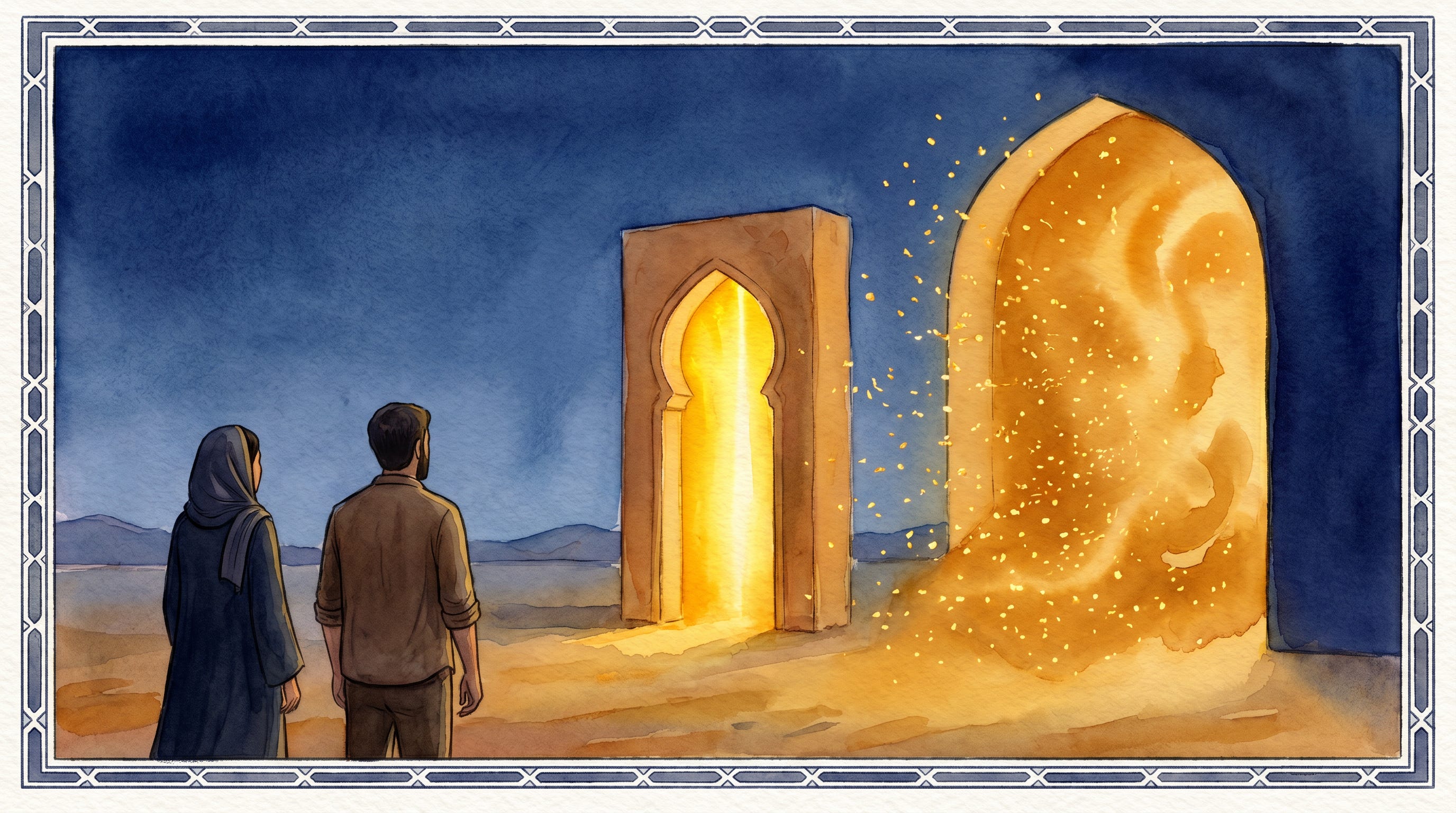
And here is the question that completes the map: how do the jurists let the word stretch this far without it snapping in their hands?
Because they are careful people; they do not throw the word around.
And their answer is a piece of usul so precise that it turns out to be the thesis of tonight, hiding inside a technical term.
They say that when the hadith calls the drowned man, or the woman in childbirth, or the unjustly slain, a shaheed — this is tanzeel: a true elevation, a real conferring by God of the rank and the reward of the martyr — and not a change in the law of burial.
The reward is genuinely, literally given; the funeral rites simply stay ordinary.
And — listen to this, because it is the spine of everything — the jurists explicitly refuse to extend the battlefield exemption by qiyas, by analogy.
They will not reason:
“Well, the drowned man suffered too, so let us not wash him either.”
Shia jurisprudence rejects qiyas at its root.
We discussed this in depth in our weekly Lantern of the Path sessions - specifically the one on Imam Ja’far al-Sadiq — [31] Imamah (Leadership) - Imam al-Sadiq: The Sword of Knowledge and the Shield of Prudence as well as in [57] Mahdawiyyah (The Culminating Guidance) - The Era of Establishment - Part 2 - The Geopolitics of Waiting - Part 2 - The Shield (Taqiyyah) - The Shield Lowered - The Theology of Warfare - and I would strongly invite everyone to review those sessions to get clarity on the notion of qiyas.
The ritual exemption is pinned exactly and only where the texts of the Ahl al-Bayt placed it — at qadr al-mutayaqqan, the limit of absolute certainty — no wider and no narrower.
The categories are held with a jeweller’s exactness.
Do you see what the jurists have built?
In their own dry, careful, technical grammar — tanzeel and takhsees and the refusal of qiyas — they have said the exact thing this whole night is straining to say.
The station of witness is far, far wider than the battlefield — and the grade is God’s to confer, not man’s to deduce.
The fiqh itself drew the wide gate.
It marked the narrow door the battlefield, and it set Imam Husayn at the summit of it.
And then it drew a second door, an enormous one, and it wrote over the arch, in effect: all reward; no battlefield required.
And the crowd that streams through that wide gate is past counting — and the scholar walks through it, and the wronged child walks through it, and the mother walks through it, and the honest man who only ever wanted to feed his family walks through it — and not one of them died on a battlefield, and every one of them is a witness in full.
Two Doors, and Who Walks Through
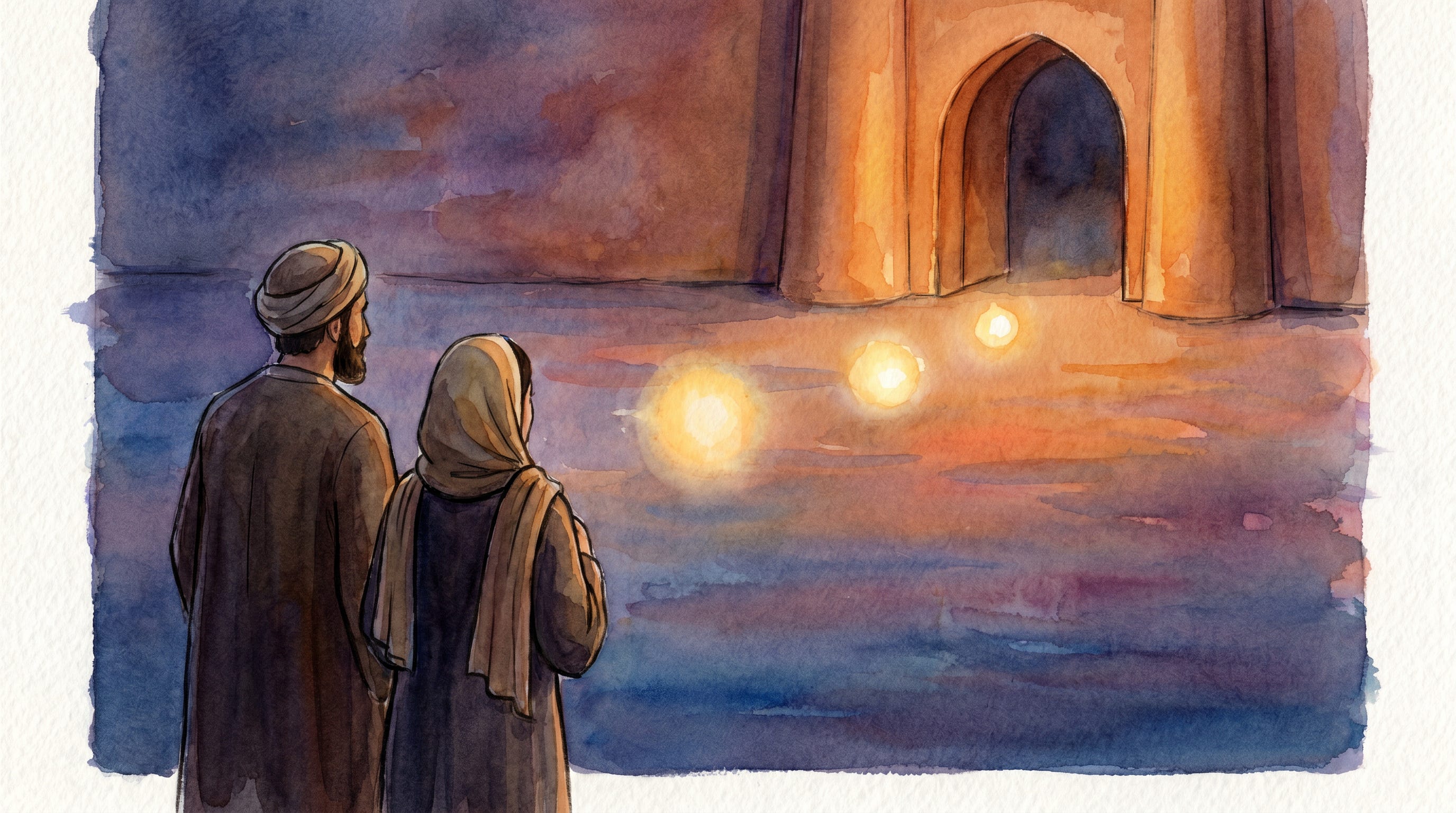
So the map has two doors.
One is narrow, and drenched in blood, and leads out across the open field — and at its summit stands Imam Husayn.
The other is a wide gate marked the Hereafter, and the throng pouring through it is enormous, and none of them died in a war, and every one of them is a witness entire.
Tonight, we are going to stand at that wide gate, and we are going to watch three of them come through it.
The one who chose his field.
The one who could not choose at all.
And the one who simply lived a good and quiet life.
Come and meet them.
The Desk Was Their Field
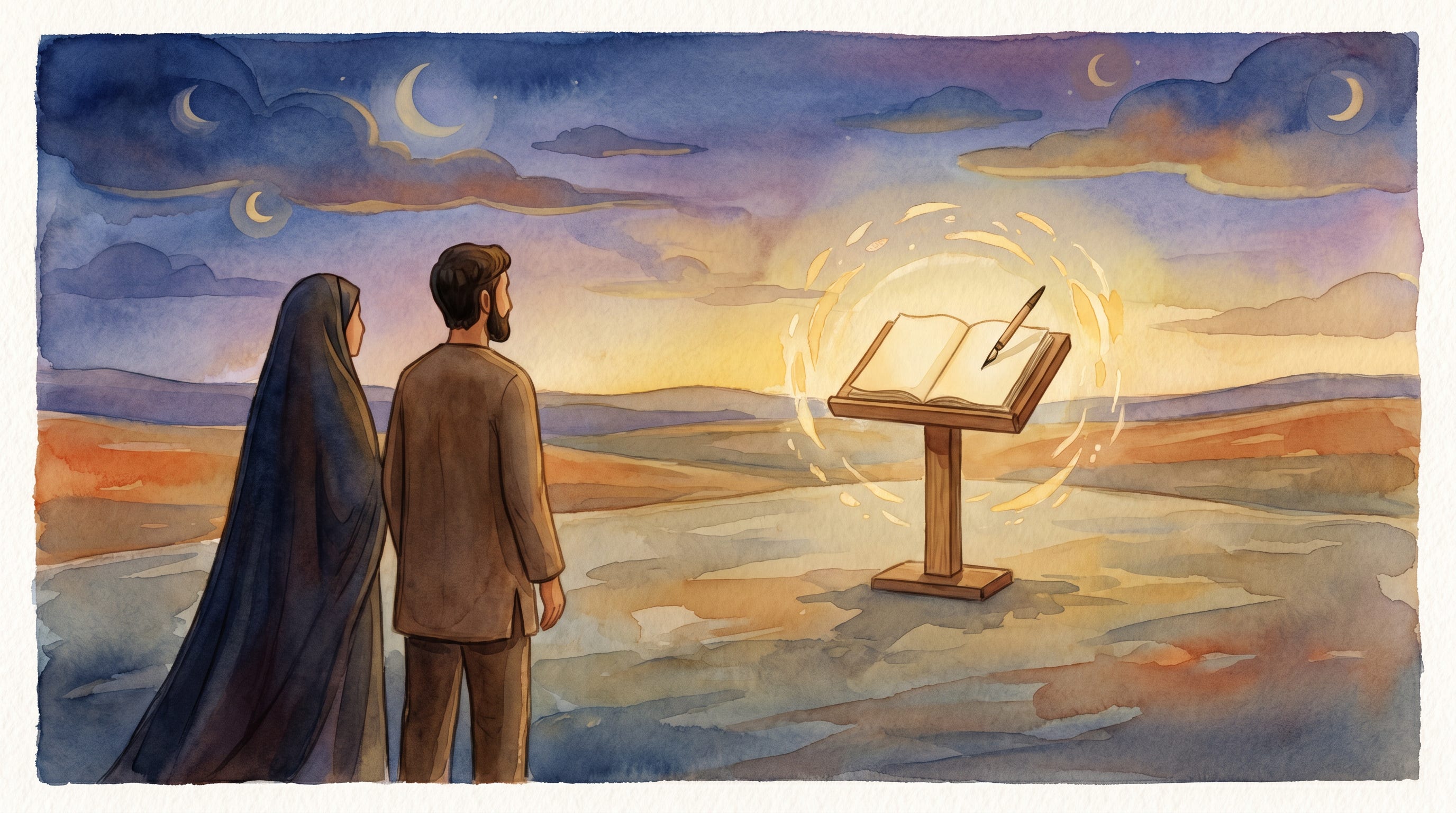
The first one through the gate is the one who chose — and who chose a field that has never had a single sword on it.
We sat, last night, with a hadith of Imam Jaʿfar al-Sadiq, peace and blessings be upon him, and we cannot leave it behind, because it is the hinge that swings the frontier open onto the classroom. The Imam said:
عُلَمَاءُ شِيعَتِنَا مُرَابِطُونَ فِي الثَّغْرِ الَّذِي يَلِي إِبْلِيسَ وَعَفَارِيتَهُ، يَمْنَعُونَهُمْ عَنِ الْخُرُوجِ عَلَى ضُعَفَاءِ شِيعَتِنَا، وَعَنْ أَنْ يَتَسَلَّطَ عَلَيْهِمْ إِبْلِيسُ وَشِيعَتُهُ.
“The scholars of our Shia are stationed in watch — murabitoun — at the frontier that faces Iblis and his hordes. They hold them back from breaking out against the weak among our Shia, and they prevent Iblis and his followers from gaining mastery over them.”
— al-Tabarsi, al-Ihtijaj, vol. 1, p. 358; al-Majlisi, Bihar al-Anwar, vol. 2, p. 6, no. 13
Murabitoun.
The very word the supplication used last night for the guardian of the borders.
Only here the frontier is not a river or a mountain pass — it is the seam where falsehood presses against the minds of the weak, and the guard at that seam is the scholar: the teacher, the one who clarifies, the one who will not let a lie walk unchallenged into a community that has no other defence against it.
And Imam Musa al-Kazim, peace and blessings be upon him, sharpened the very same image into stone:
لِأَنَّ الْمُؤْمِنِينَ الْفُقَهَاءَ حُصُونُ الْإِسْلَامِ كَحِصْنِ سُورِ الْمَدِينَةِ لَهَا.
“For the believing scholars — the fuqahaa — are the fortresses of Islam, just as the encircling wall is a fortress for the city.”
— al-Kulayni, Usul al-Kafi, vol. 1, Kitab Fadl al-Ilm (the Book of the Excellence of Knowledge), hadith 3
The scholar is not merely a teacher; he is a wall.
And the one who would breach that wall to get at the people sheltering behind it must first get through him.
The desk, the lectern, the pulpit, the seminary, the pen: these are a frontier.
And the one who keeps that post, knowing precisely what it can cost him, is a witness who chose his field.
Now I must be careful and exact here, because the fiqh we just drew tells us which of the two doors these scholars walk through, and the precision is itself the lesson.
They are not battlefield martyrs in the ritual sense.
They were not cut down in a line of combat with a sword in their hands.
They were shot at a lectern, blown apart at a gathering, executed in a cell. By the letter of the law, their bodies are washed and shrouded exactly like yours and mine.
For the ritual exemption, as Imam Khamenei sets it out, belongs to the one killed in the battle itself — under the Imam or his deputy, and, in our age of the Occultation, in the defence of Islam under the authority of the Guardian Jurist:
الشَّهِيدُ الَّذِي لَا يُغَسَّلُ وَلَا يُكَفَّنُ هُوَ مَنْ قُتِلَ فِي مَعْرَكَةِ الْقِتَالِ مَعَ الْكُفَّارِ وَالْبُغَاةِ وَنَحْوِهِمْ بِأَمْرِ الْإِمَامِ الْمَعْصُومِ عَلَيْهِ السَّلَامُ أَوْ نَائِبِهِ الْخَاصِّ، وَفِي عَصْرِ الْغَيْبَةِ يُعْتَبَرُ الْمُقَاتِلُونَ الَّذِينَ يَسْتَشْهِدُونَ فِي سَاحَاتِ الدِّفَاعِ عَنِ الْإِسْلَامِ وَالْمُسْلِمِينَ بِأَمْرِ الْوَلِيِّ الْفَقِيهِ مِنَ الشُّهَدَاءِ الَّذِينَ لَا يُغَسَّلُونَ وَلَا يُكَفَّنُونَ عَلَى الْأَحْوَطِ وُجُوبًا.
“The martyr who is neither washed nor shrouded is the one killed on the battlefield, fighting the unbelievers, the rebels, and the like, by the command of the Infallible Imam, peace be upon him, or his special deputy. And in the age of the Occultation, the fighters who are martyred in the arenas of the defence of Islam and the Muslims, by the command of the Guardian Jurist (al-wali al-faqih), are counted among the martyrs who are neither washed nor shrouded — by obligatory precaution.”
— Imam Khamenei, Ajwibat al-Istiftaaat, vol. 1, Kitab al-Tahara, question 307
So by the jurists’ own line, the scholar struck down at a lectern — away from any field of battle — does not take that ritual exemption: he is washed and shrouded like any believer.
And yet his station as a martyr of the Hereafter is held entire.
Hear it precisely, because the precision is the glory: the scholar-martyrs come through the wide gate.
They are martyrs of the Hereafter, in full reward — washed, shrouded, prayed over like any believer — and the assassin’s bullet was their dhulm, and the desk was their field.
And that, far from lowering them, sets them at the very centre of tonight’s argument: they are the living proof that the witness-station is won where no army ever marched.
And our own lifetime — our lifetime, not a storybook century — has produced a roll of them that we have no right to let slip from our memory.
Let us name them, because to leave them as “the scholars who were killed” is itself a kind of forgetting.
There is Shaheed Murtadha Mutahhari — the philosopher whose framework has carried this entire series, the student of Imam Khomeini, the mind the Revolution leaned on — shot dead in a Tehran street on the first of May, 1979, by the Furqan group: a band that could not answer his pen, and so reached for a pistol.
There is Ayatullah Muhammad Mufatteh — philosopher, jurist, the dean of the Faculty of Theology at the University of Tehran — gunned down by that same Furqan group on the eighteenth of December, 1979, on the steps of his own faculty.
And mark why they hated him enough to kill him: Shaheed Mufatteh had spent his life trying to tear down the wall between the seminary and the university, between the hawza and the modern campus — to make the scholar and the student speak to one another.
They killed him for building that bridge; and so the Islamic Republic named the day of his murder the Day of Unity between the Seminaries and the Universities.
They made his death-day the festival of the very thing he died building.
That is what a witness does to the empire that kills him: he turns even the date of his murder into a lesson.
Then there is Ayatullah Sayyed Muhammad Husayni Beheshti — Chief Justice, Secretary-General of the Islamic Republican Party, jurist and philosopher, a man who spoke several languages and built a constitution, considered the second most powerful figure in the land after Imam Khomeini himself.
On the 28th of June, 1981 — the seventh of Tir — a bomb, planted by an operative who had walked into the building disguised as a sound engineer, tore through the party headquarters, and Ayatullah Beheshti was killed, and with him, in a single instant, more than seventy others: cabinet ministers — the Minister of Energy, the Minister of Roads, the Minister of Posts — deputy ministers, and nearly thirty members of parliament.
The histories count seventy-three, seventy-four.
But the nation, has remembered them, from that day to this, as the seventy-two — and no Shia heart anywhere on earth needs that number explained to it.
Seventy-two, in one room, in one blast — and the rhyme with another seventy-two, on another field of slaughter, was not lost on a single soul who buried them.
They were not a coincidence of arithmetic.
They were an inheritance, felt in the body.
There is, Ayatullah Sayyed Muhammad Baqir al-Sadr — by common acknowledgement the most brilliant juridical mind our tradition produced in the last hundred years, the author of works that re-founded our philosophy and our economics — and beside him, his sister, Sayyedah Aminah al-Sadr, whom the whole Muslim world knew as Bint al-Huda: herself a teacher, a novelist, a builder of the faith of a generation of women.
Saddam’s Baʿathist regime took them together, in Najaf, in April of 1980.
They were tortured — the histories record the marks of it — and they were killed.
A brother and a sister, martyred side by side, defending the same single truth.
And if that pairing sends your mind running to another brother and another sister — to a Husayn and a Zaynab — then you have finally understood why we keep insisting that the chain has not broken.
It is the same chain.
It is the same brother-and-sister, standing in the same place, paying the same price.
And there is Ayatullah Sayyed Hassan al-Shirazi, struck down in Beirut in May of 1980 — shot in a car, on his way to the memorial gathering for the Martyr, Sayyed Muhammad Baqir al-Sadr.
He was killed, that is, in the very act of grieving a martyr.
The empire could not even allow the mourning.
Not one of them died on a battlefield.
Every single one of them died at, or because of, a desk — a pen, a pulpit, a seminary, a faculty, a classroom.
May God bless their pure sounds, raise their stations, and gather them with the witnesses they spent their lives serving.
And here is the thing I need you to see about every one of them — the thing that makes them the first face of the witness and not a sad footnote.
Not one of them was conscripted.
No one drafted them to the frontier of the pen.
Each of them chose the post.
Each of them knew — with open eyes, in a country where scholars were being shot in the street — that to keep teaching, to keep clarifying, to keep standing at the seam that faces the deceivers, might cost exactly what it finally cost.
And each of them got up the next morning and chose it again, and again, until the morning it was collected from them.
That is the first half of tonight’s sentence, standing up in front of you in human flesh:
You do not have to die on a field — the desk is a field — but you must be willing.
They were willing.
The willingness was the witness.
But now we have to turn — and it is a hard turn, the hardest of the night — because there is someone standing at that same wide gate who never got to be willing at all.
The Ones Who Could Not Choose
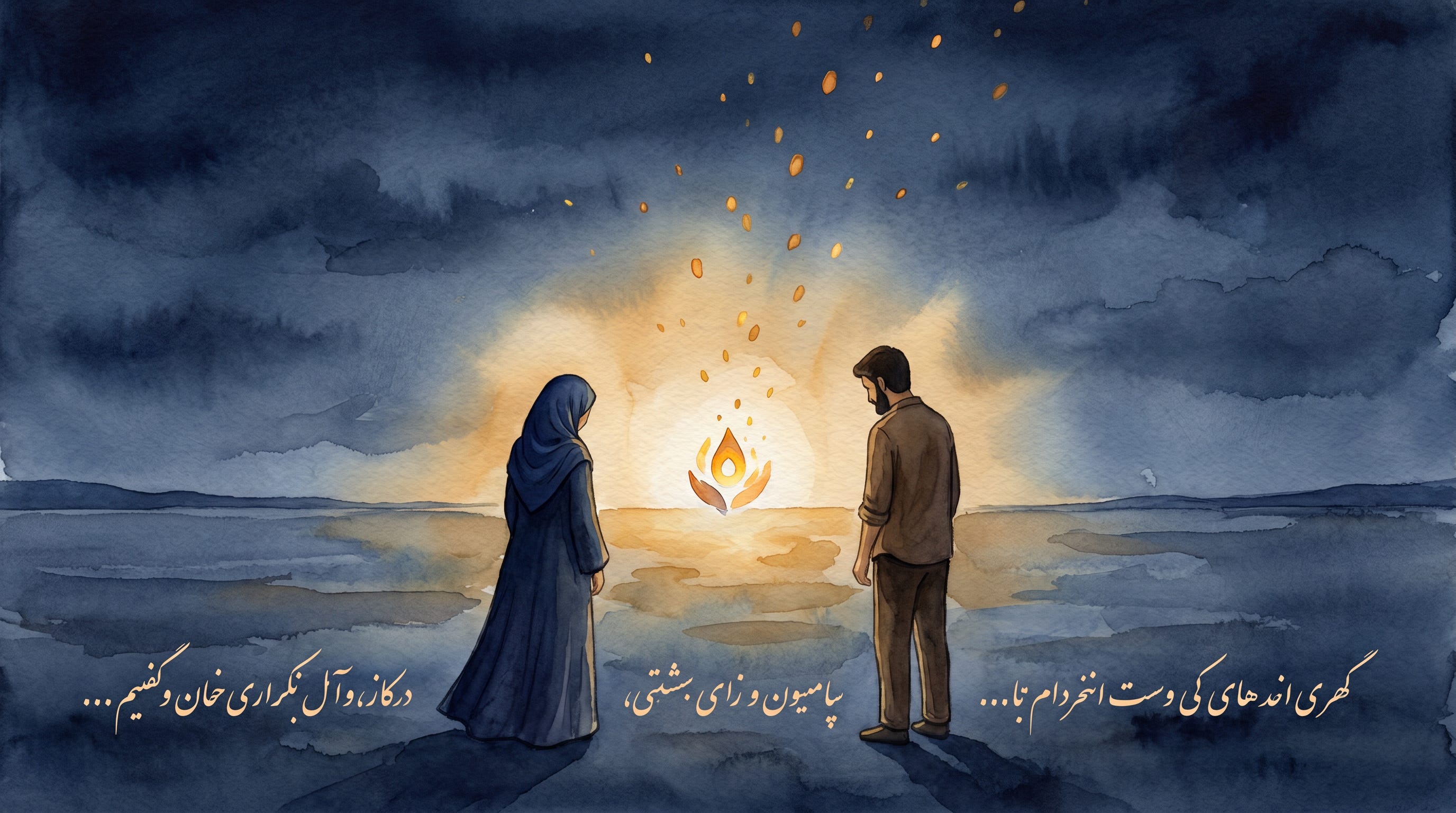
Here is the question that has been waiting since the very first words tonight — the question that sits, right now, in the chest of every person in this room who has watched a school come apart on the small screen of a smartphone.
The child at her desk, in the middle of a lesson.
The teacher at the board.
The family asleep beneath a shelter.
They did not choose anything.
They did not march toward a cause with their eyes open and their risk weighed.
They were doing the most ordinary, the most innocent thing a human being can do — learning their letters, teaching a class, sheltering from the sky — and the sky came down on top of them.
So what are they?
Because Shaheed Mutahhari told us, in his own precise words, that the one killed in vain — the victim of another’s cruelty — is
“shocking and pitiable, but neither praiseworthy nor a matter of pride.”
Is that all the bombed child is?
A pity?
A regrettable number?
A life taken in vain?
No.
And I am going to give you three reasons it is no — and the first of them lives inside this very House whose grief we are carrying tonight.
His name was Ali al-Asghar.
He was six months old.
We told his story on the ninth night: the infant son of Imam Husayn, carried to the lip of the battlefield because there was not a drop of water left in the tents and an infant cannot be made to understand thirst — lifted up, not as a shield, but as a plea — and answered with an arrow through the throat.
Six months old.
Now put him to Shaheed Mutahhari’s own test.
Was that infant
“fully conscious of the risks involved”?
Did that baby
“willingly face them for the sake of a sacred cause”?
He could not yet hold up his own head.
And yet there is not one Muslim alive who would dare to call Ali al-Asghar anything but a shaheed — a martyr of Karbala, of the very highest rank, the youngest witness of the Master of Witnesses, named in the Ziyarat with his own salutation.
So let us be exact about what that proves, because it is the key that turns Shaheed Mutahhari’s wall into a door.
Shaheed Mutahhari’s condition — that the witness must choose, with open eyes — is the bar for the one who is able to choose.
It was never, and could never be, a wall against the one who cannot.
It describes the summit of the active witness; it does not deny the station to the infant whom God Himself lifts.
Remember the two voices of shahada that Tabataba’i opened for us: the active witness who bears testimony, and the conferred witness whom God makes a witness.
Shaheed Mutahhari is describing the first voice.
The infant is a witness in the second.
The grade is God’s to assign — and God does not require a baby’s consent to make that baby His witness.
And so the conclusion is iron:
If the infant of Karbala is a martyr without choosing, then the infant of Gaza is a martyr without choosing, and the child of Minab is a martyr without choosing.
The House of the Prophet already contains, in the body of a six-month-old child, the complete answer to the question the whole world is asking and cannot answer.
That is the first reason.
Here is the second, and it is the word itself, doing again exactly what we watched it do at the start of the night.
Remember Mulla al-Mazandarani: shaheed began on the battlefield, and then widened — thumma ittasaʿa —
“and was applied to everyone killed unjustly, al-maqtool zulman.”
Everyone killed unjustly.
And we saw, when we drew the map, that this is not a poet’s flourish — it is a named category of the jurists, one of the martyrs of the Hereafter, in full reward, sitting in the roll right beside the woman of childbirth and the frontier-guard.
So when an aggressor’s bomb kills a child who was doing nothing but living, the question of that child’s rank is not an open one we have to win by argument.
The jurists answered it centuries before the bomb was forged.
Al-maqtool dhulman shaheed.
The unjustly slain is a witness.
The child is already written onto the martyr-roll that the scholars of the Ahl al-Bayt drew with their own hands.
And the Qur’an seals the whole matter — twice.
Hear, first, how God speaks of exactly these people: the weak, the trapped, the ones with no power at all over the decisions that destroy them:
وَمَا لَكُمْ لَا تُقَاتِلُونَ فِي سَبِيلِ اللَّهِ وَالْمُسْتَضْعَفِينَ مِنَ الرِّجَالِ وَالنِّسَاءِ وَالْوِلْدَانِ الَّذِينَ يَقُولُونَ رَبَّنَا أَخْرِجْنَا مِنْ هَٰذِهِ الْقَرْيَةِ الظَّالِمِ أَهْلُهَا، وَاجْعَل لَّنَا مِن لَّدُنكَ وَلِيًّا، وَاجْعَل لَّنَا مِن لَّدُنكَ نَصِيرًا.
“And what is it with you, that you do not fight in the way of God — and for the oppressed among the men, the women, and the children — those who cry out: Our Lord, bring us out of this town whose people are oppressors, and appoint for us from Yourself a protector, and appoint for us from Yourself a helper.”
— Qur’an, Surah al-Nisa (the Chapter of the Women) #4, Verse 75
The men, the women, and the children.
God Himself names the children.
He hears the cry of the trapped and the weak, and He does not file them under “regrettable losses” — He calls them the very cause the believer is commanded to fight for.
These are not lives taken in vain.
These are al-mustadʿafoon — the oppressed whose cry has gone up past the sky and reached the Throne.
And God’s own word for what is done to them is dhulm — injustice — and to that He has bound an unbreakable promise:
وَمَن قُتِلَ مَظْلُومًا فَقَدْ جَعَلْنَا لِوَلِيِّهِ سُلْطَانًا، فَلَا يُسْرِف فِّي الْقَتْلِ، إِنَّهُ كَانَ مَنصُورًا.
“And whoever is killed unjustly — wronged — We have appointed for his heir an authority; but let him not be excessive in killing; indeed, he is supported [by the law].”
— Qur’an, Surah al-Isra (the Chapter of the Night Journey) #17, Verse 33
The one slain madhlouman — wronged — is not abandoned by Heaven.
God Himself stands as the sultan, the authority, behind that spilt blood.
So that is the third reason, and it answers the deepest, most stubborn form of the question — the form that asks:
But how is the bombed child any different from a man stabbed in a dark alley for the money in his coat?
Here is the difference, and it is the whole of it.
The man in the alley is killed by a private cruelty, for a private greed; that is Shaheed Mutahhari’s third category exactly — the death that is pitiable but not a glory, the life taken in vain.
But the child in the school is not killed by a private cruelty.
The child is killed in a collective assault — an aggression aimed at a whole people, because of who they are, because of what they hold — and that places the child, by the very structure of the event, on the side of the wronged, the mustadʿafoon, the people God commands the believer to defend.
It is not the alley.
It is the field of Karbala, drawn again, in a schoolyard.
And in the reckoning of Heaven, the more innocent the victim and the more monstrous the injustice, the higher the witness rises — for Imam Husayn himself is the Master of Witnesses in part because he is the most wronged.
And of all of them God says the thing that ends the argument forever:
وَلَا تَحْسَبَنَّ الَّذِينَ قُتِلُوا فِي سَبِيلِ اللَّهِ أَمْوَاتًا، بَلْ أَحْيَاءٌ عِندَ رَبِّهِمْ يُرْزَقُونَ.
“And never reckon those who were killed in the way of God as dead. Rather, they are alive, with their Lord, provided for.”
— Qur’an, Surah Aal ʿImran (the Chapter of the Family of ʿImran) #3, Verse #169
Now I have to bring this down out of the verses and into a room you have all seen, because the children we are speaking of are not an abstraction, and to keep them abstract would itself be a kind of cowardice — the very cowardice the whole night is calling us out of.
On the morning of the 28th of February of this year — the first morning of the war that was launched against Iran, and, as it happens, the same dark morning on which this community lost the Leader of the Islamic Revolution in Tehran, a martyrdom we will stand with fully tomorrow night — on that one morning, in the town of Minab in the south, there was a primary school named Shajareh Tayyebeh.
The children inside it were seven, eight, nine, ten years old.
They had, that very morning, just finished their Qur’an class.
And a missile struck the school.
The teachers and the principal did the thing that every instinct God put in a human heart commands you to do: they gathered the surviving children and moved them into the one place that felt safe, the prayer hall — the room where the foreheads go down to God — and the principal began telephoning the parents to come quickly and take their children home.
And while the parents were arriving at the gate, a second missile struck the prayer hall.
And the analysts who studied the strike afterward describe it with a cold technical word that you should learn, because it tells you everything about the intention behind it: a double-tap — the tactic of striking a target, waiting for the survivors and the rescuers and the parents to gather, and then striking the same spot again.
When the dust settled, a hundred and sixty-eight children were dead.
A hundred and sixty-eight.
Listen to the ones who survived, because their words are worth more than all my exposition.
There was a father named Ruhollah, whose little girl had lived through the first strike and was moved to the prayer hall before the second.
He said:
“My little girl was completely burned… We could only identify her from her school bag, which she was still holding.”
And he said:
“She used to tell me, ‘I promise I will become a doctor, so you won’t have to pay medical bills anymore.’ And I would hold her and say, ‘You are already my little doctor.’”
There was an eleven-year-old survivor named Parastesh, and when they asked her what she remembered of the morning, she said only this:
“Before the bomb hit, we had Qur’an classes.”
And among the dead was a teacher named Zohreh Shahriyari — and Zohreh was carrying a child, six months along.
Six months.
The age of Ali al-Asghar.
A teacher, who had chosen her post at the frontier of small minds; a mother, carrying her unborn; and a wronged soul, struck down for nothing at all — all three of tonight’s witnesses gathered into one woman in one instant, and a six-month child who never breathed our air folded straight into the arms of the same House that holds the infant of Karbala.
The United Nations did not look away from it, even if the newspapers did. Volker Türk, the United Nations High Commissioner for Human Rights, addressing the Human Rights Council in April of this year, said the bombing of that school “evoked a visceral horror,” and named the thing the whole night has been naming: that it shows “who pays the highest price for war — civilians, with no power in the decisions that led to the conflict.”
No power in the decisions that destroyed them.
Al-mustadʿafoon — the oppressed on the earth.
The verse, in the mouth of a Swiss diplomat who had never read it.
And I will tell you what the power that did this said afterward, because it matters enormously for what comes next.
It never apologised.
It blamed the victims.
When its president was finally pressed, months later, he said — and I am quoting the man exactly —
“mistakes are made, a war is nasty… nobody did that on purpose.”
When its Secretary of Defence — who styles himself as the ‘Secretary of War’ was asked, he said:
“All I can say is that we’re investigating… We of course never target civilian targets.”
And the investigation, to this hour, has produced nothing.
Now hold that sentence — nobody did that on purpose — because it is not an aberration, and it is not new.
It is a habit.
Reach back, and you will find the same hand and the same silence everywhere.
In this very war, in Gaza, the schools have been struck so systematically that the United Nations has given the destruction its own grim name — scholasticide, the deliberate killing of an entire educational system: some six hundred and sixty schools hit, and the United Nations Commission of Inquiry on the Occupied Palestinian Territory, in its report of June 2026, finding the “deliberate, targeted killing” of more than twenty thousand Palestinian children.
When the Khadija girls’ school in Deir al-Balah was struck, the investigators of Human Rights Watch went in — and reported, in August 2025, that they found no evidence of any military target there at all, which makes the strike, in their finding, “unlawfully indiscriminate.”
Reach back further, to the town of Qana in Lebanon, in 1996, where the artillery of an occupying army fell on a United Nations compound packed with families who had fled there precisely because it was supposed to be the safe place — a hundred and six people killed, fifty-two of them children — and the inquiry of the United Nations found the shelling had been deliberate.
The same school.
The same shelter.
The same children.
The same silence afterward.
And reach back as far as you like — to the hospital in Kunduz, run by Doctors Without Borders, that an American gunship destroyed in 2015, killing the patients in their beds, after the doctors had given the coordinates of their own hospital to the military again and again; and to what the United States called that hospital afterward; and here we arrive at the word.
Because there is a word at the very heart of all of this — a single, smooth, terrible word — and it is the counterfeit this whole night has been built to expose.
When the powers of this age kill a school full of children, they have a word ready for those children.
They call them collateral damage.
They called the bombed hospital at Kunduz collateral damage.
They call the prayer hall at Minab a mistake nobody made on purpose.
And I want to say to you, with the full weight of everything we have built tonight: in the law of God, there is no such category.
There is no laundering word, no accounting column, into which you may pour the bodies of children and call the ledger balanced.
God’s word for the deliberate or reckless killing of one innocent soul is not collateral. It is this:
مَن قَتَلَ نَفْسًا بِغَيْرِ نَفْسٍ أَوْ فَسَادٍ فِي الْأَرْضِ فَكَأَنَّمَا قَتَلَ النَّاسَ جَمِيعًا، وَمَنْ أَحْيَاهَا فَكَأَنَّمَا أَحْيَا النَّاسَ جَمِيعًا.
“Whoever kills a single soul — unless it be for a soul, or for corruption in the land — it is as though he had killed the whole of mankind; and whoever gives one life, it is as though he had given life to the whole of mankind.”
— Qur’an, Surah al-Ma’idah (the Chapter of the Table Spread) #5, Verse 32
The whole of mankind.
That is the weight, in the scale of God, of one child in a prayer hall.
And the euphemism — collateral damage — is not a small lie or a careless phrase.
It is the very machinery of the counterfeit: a system that invents a clean word for its own crime precisely so that it never has to repent of it.
A word built for one purpose only — to let the killing continue without the conscience ever once waking up.
Allamah Tabataba’i, in al-Mizan, expounding this very verse, dwells on how it makes the single soul stand for the whole of humanity in the sight of God — that to extinguish one is, in the divine reckoning, to strike at the sanctity of all:
كَوْنُ قَتْلِ الْوَاحِدِ بِمَنْزِلَةِ قَتْلِ الْجَمِيعِ، وَإِحْيَاءِ الْوَاحِدِ بِمَنْزِلَةِ إِحْيَاءِ الْجَمِيعِ، مَعْنًى يَرْتَبِطُ بِكُلِّ قَتْلٍ وَقَعَ بَيْنَ هَٰذَا النَّوْعِ، مِنْ غَيْرِ اخْتِصَاصِهِ بِبَعْضٍ دُونَ بَعْضٍ.
“That the killing of one is as the killing of all, and the giving of life to one is as the giving of life to all — this is a meaning that attaches to every killing that occurs within this [human] species, and is not restricted to some rather than others.”
— Allamah al-Tabataba’i, al-Mizan fi Tafsir al-Qur’an, commentary on Surah al-Ma’idah (5), Verse #32
The empire built a word to make one child weigh nothing.
God revealed a verse to make one child weigh everything.
We will weigh that whole system — openly, by its proper name, and without flinching — tomorrow night.
Tonight I will say only this much, and I will say it with great care, because the care is itself a mercy and a truth.
When we cry out against the regimes that do this — and we do cry out, and we will, and we are commanded to — we are not crying out against a people.
The American mother who has buried her son in one of these wars; the ordinary citizen whose children’s schools are starved of money while the bombs are shipped abroad in his name; the Jewish child who is raised, poor soul, to be afraid of his neighbour — these are not our enemies.
They are, in their own way, also the betrayed; also devoured by the very systems that claim to act for them.
The cry of the believer is against the oppression — the dhulm — and never against a people.
The witness against the regime is, at the very same moment, the witness for the peoples the regime consumes.
Hold that carefully tonight; tomorrow we will say it in full, and prove it from the mouths of the very men who taught us the slogans.
So hear the rank, now, stated plainly — and let it land exactly where the lie was sitting.
The children of Minab, of Gaza, of Qana — they are not victims taken in vain.
They are shuhadaa — martyrs of the Hereafter, the wronged whom God has crowned with His own hand, written onto the martyr-roll the jurists drew, gathered up by the same hand that gathered the infant of Karbala.
Their blood is not a full stop at the end of a sad sentence the world will soon forget.
It is a testimony — and God is still reading it aloud.
They could not choose.
And the One who has never needed our choosing chose them.
And if even the one who could not choose is a witness in full — then surely, surely, there is a place at this wide gate for the one who simply tried to live a good and ordinary and quiet life.
There is.
Come and meet the last of the three.
The Witness of an Ordinary Life
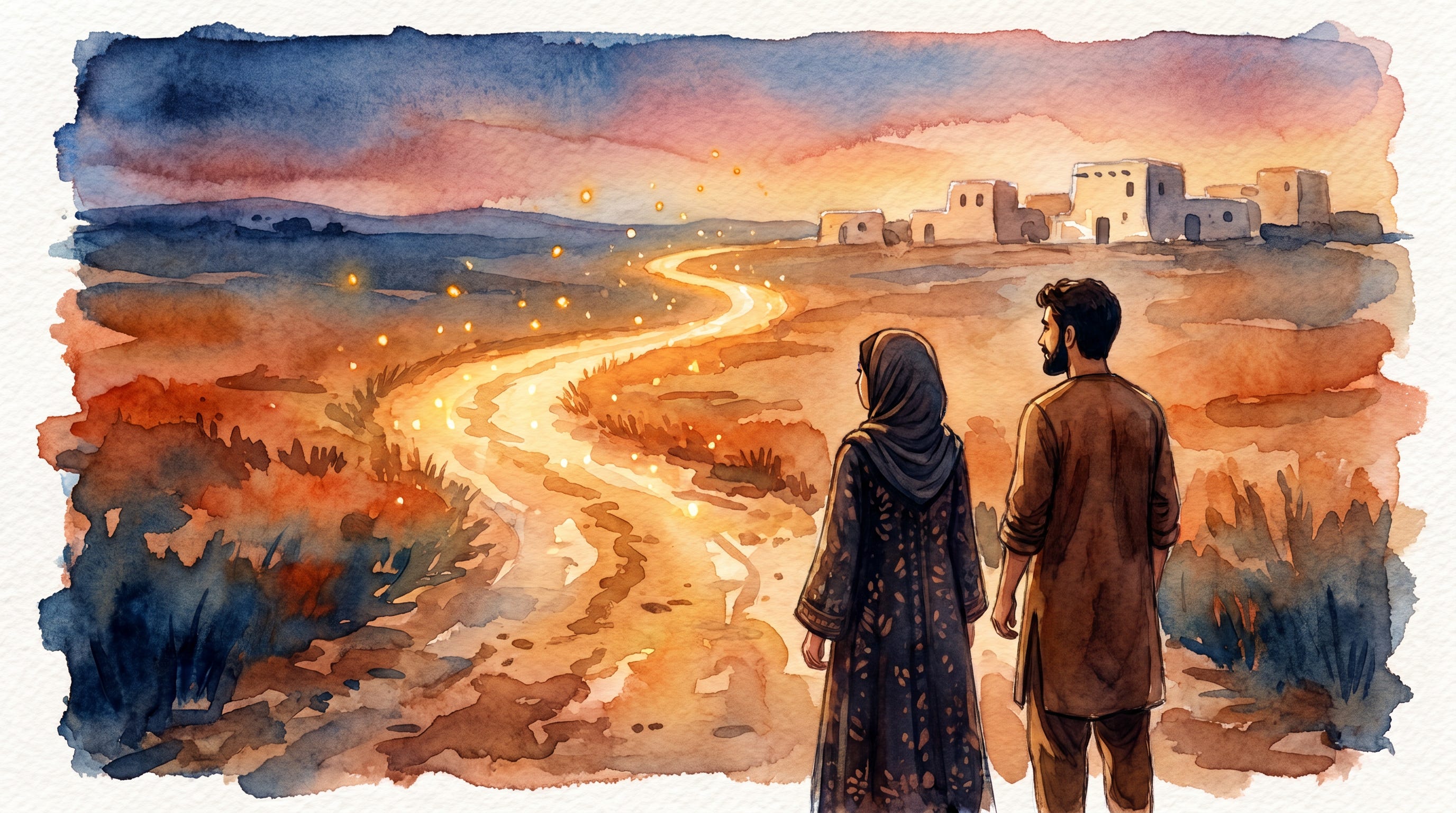
The third one through the gate is the one most of us, God willing, will actually turn out to be.
Not the scholar at the frontier of ideas.
Not — God protect every child of ours — the little one under the bomb.
Just a believer who got up in the dark of the morning and went out to earn an honest living, and lived a clean life, and came home at night; and who, one ordinary day, did not come home.
I want you to hear, with real attention, what our tradition says about that person — because I promise you it is more, far more, than you have ever imagined.
Imam Jaʿfar al-Sadiq, peace and blessings be upon him, said — and it is in al-Kafi, in the Book of Earning a Livelihood, the Kitab al-Maʿisha, through a sound chain:
الْكَادُّ عَلَى عِيَالِهِ كَالْمُجَاهِدِ فِي سَبِيلِ اللَّهِ.
“The one who toils for his family is like the warrior — the mujahid — in the way of God.”
— al-Kulayni, al-Kafi, vol. 5, Kitab al-Maʿisha, p. 88, hadith 1
Like the warrior in the way of God.
The tired man on the early bus, with the lunch his wife packed and the weight of the rent on his chest, who will not earn a single coin by anything God forbade — that man, says our Imam, stands in the same rank as the one who carries a sword in the path of God.
And this is not one stray narration that we are leaning on too hard.
Imam al-Rida, peace and blessings be upon him, raises it higher still:
الَّذِي يَطْلُبُ مِنْ فَضْلِ اللَّهِ مَا يَكُفُّ بِهِ عِيَالَهُ أَعْظَمُ أَجْرًا مِنَ الْمُجَاهِدِ فِي سَبِيلِ اللَّهِ عَزَّ وَجَلَّ.
“The one who seeks of God’s bounty that which suffices his family has a greater reward than the warrior in the way of God, the Mighty and Majestic.”
— al-Hurr al-Amili, Wasaa’il al-Shia, vol. 12, p. 43, narrating from Imam al-Rida
A greater reward.
And the same body of narration records Imam al-Sadiq teaching that the man of straitened means who works only enough to feed himself and his household, asking nothing unlawful, is like the mujahid in the way of God.
The narrations stack one upon the other, all saying the same astonishing thing about a man at his work.
And lest you think mujahid is just a warm comparison, hear how the Messenger of God, peace and blessings be upon him, his family and his righteous companions, sealed it — and watch the word shaheed arrive in his very sentence:
مَنْ سَعَى عَلَى عِيَالِهِ مِنْ حِلِّهِ فَهُوَ كَالْمُجَاهِدِ فِي سَبِيلِ اللَّهِ، وَمَنْ طَلَبَ الدُّنْيَا حَلَالًا فِي عَفَافٍ كَانَ فِي دَرَجَةِ الشُّهَدَاءِ.
“Whoever strives for his family by lawful means is like the warrior in the way of God; and whoever seeks the things of this world lawfully, in dignity and restraint, is in the rank of the martyrs — fi darajati al-shuhadaa.”
— Mustadrak al-Wasaa’il, vol. 13, p. 17
In the rank of the martyrs.
And in another narration, preserved in Uyun Akhbar al-Rida, the image becomes almost unbearable in its vividness — the honest earner is compared not merely to the warrior, but to the warrior fallen:
الْكَادُّ عَلَى عِيَالِهِ كَالْمُتَشَحِّطِ بِدَمِهِ فِي سَبِيلِ اللَّهِ.
“The one who toils for his family is like the one drenched in his own blood in the way of God.”
— Uyun Akhbar al-Rida, vol. 1, p. 275
Drenched in his own blood.
The very picture of the man fallen on the field of Karbala — laid, by the tongue of the Prophet, over a weary father walking home from a day’s lawful work.
So if that man dies on his ordinary road — in a crash on the commute, in a sudden sickness of the heart, on the very bus he rides every dawn — the gate does not close on him.
He comes through the wide gate.
He is washed and shrouded like any one of us — and he is raised, the tradition swears, in the rank of the martyrs.
And the same is true of the mother who dies in the bringing of a child into the world — al-nufasaa, named outright in the roll of the martyrs of the Hereafter.
And the same is true of the one killed defending his family or his honest earnings, for the Imam said plainly:
مَنْ قُتِلَ دُونَ مَالِهِ فَهُوَ شَهِيدٌ.
“Whoever is killed defending his property is a martyr.”
— al-Kulayni, al-Kafi, vol. 7, p. 296
There is, I am telling you, a whole hidden congregation of witnesses living quiet lives all around us — and we walk past them at the market and on the bus and at the school gate, every single day, with no idea at all of what they are carrying.
Now — and this is the question that completes the entire night, so hold your attention here — how is this man a witness?
Because his witness is of a wholly different shape than the other two, and the difference between the shapes is the key that unlocks the meaning of all three.
The battlefield martyr’s death is his testimony — his blood, on the field, speaks for him.
The wronged child’s death is her testimony — God raises her spilt blood against the oppressor.
But the honest worker’s testimony is not his death at all.
His testimony is his life.
His death only sets the seal upon it.
And what did his life testify to?
It testified — every single morning, for thirty or forty or fifty years — to one quiet, unglamorous, world-shaking thing:
I will feed my family by what is lawful, because my God asked it of me, even on the days when the unlawful was easier and faster and no living soul would ever have known the difference.
That is a witness borne not in one blazing instant on a far-off field, but across the whole grey length of a lifetime, in ten thousand small refusals that no one ever filmed and no one ever applauded.
And when at last the death comes, God does not weigh the manner of it.
God weighs the intention it interrupted, and the state of obedience the man was standing in when it came for him — and on the strength of that intention (niyyah) and that obedient standing, God credits him, in full, with the rank of the ones who fell beneath the swords.
Do you see, now, why this is the man most of us will be — and why it is the best news in the whole of the night?
Because it means the witness was never a thing that happened only once, in one terrible instant, on one distant field.
The witness is what your whole life testifies to.
And it is being built right now — by you, in this room — in the lawful coin you carry home and the forbidden coin you leave on the table; in the prayer you do not skip and the lie you do not tell; in a thousand small, willing, faithful acts of an utterly ordinary life.
The seal of the death may come on a battlefield, or in a prison of Sham, or on the morning bus.
But the witness was being written long, long before.
And this very same principle — that God weighs not the manner of the death, but the service a soul was standing in when death came for it — reaches all the way up, from the man on the morning bus to the highest office in the land.
On the 19th of May, 2024, a helicopter came down in heavy fog over the mountains of East Azerbaijan, and eight men were killed:
The President of Iran, Ayatullah Sayyid Ebrahim Raisi, and the seven who flew and served alongside him.
His foreign minister, Doctor Hossein Amir-Abdollahian, the first foreign minister of the Republic ever to die in office.
The Imam of the Friday prayer of Tabriz and the Leader’s own representative there, Ayatullah Sayyed Muhammad Ali Ale-Hashem.
The governor of the province, Malek Rahmati
The commander of the guard, Brigadier Sayyed Mehdi Mousavi; and the pilots and the flight technician who carried them, Colonel Sayyid Taher Mostafavi, Colonel Mohsen Daryanush, and Major Behrouz Ghadimi.
They were on their way home from the opening of a dam — from a plain day’s work of bringing water and life to ordinary people.
Now hear me carefully, because honesty is still the whole of tonight.
We do not know — and I will not stand on this pulpit and pretend to you that we know — whether a hand was behind that crash in the fog.
The official investigation found no proof of foul play; and we do not build our claims upon speculation, however much the temper of the times invites it.
But here is the thing — and it is the very thing this entire night has been teaching.
It does not change their station.
The believers did not name them martyrs by how they died.
They named them Martyrs of Service — Shuhada-ye Khidmat — by what they were doing when they died: serving.
They fell in the road of their duty to the people of God and the faith of God; the Leader of the Revolution himself stood and prayed over their bodies, and a nation walked behind them in their hundreds of thousands.
Whether the death came by an enemy’s hand on a mountain, or by the mountain’s own fog, the answer of Heaven is the same — because the grade was never in the manner of the dying.
It was in the life of service that the dying only sealed.
And do you remember Zohreh Shahriyari — the teacher in the prayer hall of Minab?
Look at her now, with everything we have gathered in our hands.
She had chosen her post at the frontier of young minds: she was the witness who chose.
She was carrying a child: she stood in the rank of al-nufasaa, the witness who lived faithfully.
And she was struck down wronged, maqtoolatan madhlooma: she was the witness who could not choose.
All three faces of the witness — the chooser, the wronged, the faithful life — gathered into one woman, in one instant, in one prayer hall.
The whole of tonight, written into a single name.
That is not a coincidence we arranged for the sermon.
That is what witness looks like when a real human life is finally laid in the scale of God: it is almost never just one pure kind.
It is a life, testifying — and sealed by a death.
The Work That Makes a Martyr
But before we gather these three at the gate, there is a hard word we are bound to say — because the widest gate is always the easiest to counterfeit.
If the honest worker’s witness is the lawfulness of his living, then everything hangs on that one word: lawful.
And lawful does not merely mean legal.
It is not enough that no earthly court would convict you.
The wage that carries the rank of the martyr is the wage that is clean in the sight of God — clean in whose hand it came from, and clean in what it did to other people on its way to your pocket.
A salary drawn from the grinding of the poor; a fortune built on a weapon that tears children into pieces; a profit wrung from a hungry people’s need; a wage earned in the service of a regime that murders the innocent — the bank that funds the siege, the firm that insures the bulldozer that levels the family home, the partner who opens a door so the machine of a slaughter can keep its supply of parts and permits — these are not the honest living the Prophet crowned, though every ledger on earth should call them lawful.
And do not reach, here, for the oldest excuse of the complicit:
If I do not do it, someone else will.
Hear where that sentence has been spoken before.
On the night after Ashura, when the tents of the Household were thrown open to the looters, the men of that army — so the Lohoof of Sayyed Ibn Tawus records — took precedence over one another in the plunder, racing each other to be the first hand to tear the veil from the shoulder of a daughter of Sayyedah Fatima and the first to pull the ring from a small one’s ear; and each of them, we may be sure, told himself the very same thing: that if his hand did not seize it, the hand at his shoulder would.
Someone else would have taken it anyway did not wash a single one of those hands clean — not in the histories of men, and not in the sight of God.
It never has.
It never will.
A sin you commit because another stood ready to commit it in your place is still, wholly and only, your sin; and the wage it pays you is unclean, though it reach you stamped and signed and flawlessly legal.
For this was the way of the Prophets, and labour was never beneath them.
The Messenger of God, peace and blessings be upon him and his family, earned in the trade and the caravans of Sayyedah Khadija before ever the revelation came, and fed the poor of Mecca from what he earned.
And the Commander of the Faithful, Imam Ali, peace be upon him, with the whole world his by right, worked the earth with his own two hands — and so did Sayyedah Fatima al-Zahra, peace be upon her:
كَانَ أَمِيرُ الْمُؤْمِنِينَ صَلَوَاتُ اللهِ عَلَيْهِ يَحْتَطِبُ وَيَسْتَقِي وَيَكْنُسُ، وَكَانَتْ فَاطِمَةُ سَلَامُ اللهِ عَلَيْهَا تَطْحَنُ وَتَعْجِنُ وَتَخْبِزُ.
“The Commander of the Faithful, God’s blessings be upon him, would gather firewood, and draw water, and sweep the floor; and Fatima, God’s peace be upon her, would grind the grain, and knead the dough, and bake the bread.”
— al-Kulayni, al-Kafi, vol. 5, Kitab al-Maʿisha (the Book of Earning a Livelihood)
But see how exact they were about the cleanness of the gain.
Imam Jaʿfar al-Sadiq, peace be upon him, once gave his servant Musadif a thousand dinars to carry in trade to Egypt.
On the road the caravan learned that their goods had grown scarce in Egypt, and the traders swore a pact among themselves to sell the people of Egypt nothing except at double — a dinar of profit on every dinar — squeezing the shortage for all it would give.
Musadif came home beaming, two purses in his hands: the capital, and a profit equal to it.
And the Imam took back only his own purse, and pushed the profit away untouched:
سُبْحَانَ اللهِ! تَحْلِفُونَ عَلَى قَوْمٍ مُسْلِمِينَ أَلَّا تَبِيعُوهُمْ إِلَّا رِبْحَ الدِّينَارِ دِينَارًا؟! … يَا مُصَادِفُ، مُجَادَلَةُ السُّيُوفِ أَهْوَنُ مِنْ طَلَبِ الْحَلَالِ.
“Glory be to God! You swear an oath against a people who are Muslims, that you will sell to them only at a dinar’s profit on every dinar?! … O Musadif — crossing swords is easier than seeking the lawful.”
— al-Kulayni, al-Kafi, vol. 5, Kitab al-Maʿisha, the narration of Musadif
Hear what the Imam refused.
Not a theft; not a fraud.
By the cold arithmetic of the market it was a perfectly legal trade.
But it was a gain drawn from the need of fellow believers in their hour of scarcity — and that, to the Imam, was no lawful gain at all, but a thing harder and uglier than war.
Crossing swords is easier than seeking the lawful.
The honest wage is not the easy thing the careless reading imagines; it is one of the steepest disciplines in the whole of the religion — a daily reckoning with where your money is born and whom it bleeds.
And the one who profanes this most grievously is the very one set to guard it — the false scholar, the court scholar.
He takes the coin of the regime, or the coin of the oligarch, and so his tongue is bought before he ever mounts the pulpit; he cannot forbid the wrong that signs his cheque.
Some will even prey on the welfare God set aside for the oppressed — feigning a need they do not have, eating the portion of the orphan and the widow — and then stand over the people and feed them an Islam of the kitchen and the shoes, the corner-cases of cleanliness and travel, while the command to enjoin the good and forbid the evil lies forgotten on the shelf.
This is the very silence our beloved Imam Husayn, peace and blessings be upon him, indicted from the plain of Mina: the learned who fell quiet because their comfort had been purchased.
It is the whited sepulchre of which the Messiah - Jesus the son of Mary, may our souls be his ransom, and may God hasten his return, warned in the Seven Woes — fair without, and full of dead men’s bones within — and it is the sin God laid upon the Ahbar — the Scribes — of the Children of Israel, who devoured unlawful wealth and would not forbid the evil before their eyes.
And he whitewashes the whole of it with a gift to the mosque, a public sadaqah, as if a clean donation could launder an unclean gain.
It cannot.
The gift is only the lid laid neatly over the tomb.
And some who climb that pulpit were never formed in the Hawza at all — unlettered men in a scholar’s cloak, misguiding the very people they were trusted to guide.
But the ranks of the scholars, and how the Hawza forms a true one, deserves a night of its own — and, God willing, it will have one.
And understand why we press this so hard — for it is said not in scorn, but in love.
We do not want a single one of these men lost; we cannot bear that any servant of God should stand before Him one day with the bread of the orphan in his belly.
So we say to every scholar, of every rank: the surest guardian of your tongue is a clean and independent income — the very kind we have just seen in the hands of the Prophet and his household.
For the work of one’s own honest hands is no distraction from worship; it is worship — indeed, it is the highest part of it:
الْعِبَادَةُ سَبْعُونَ جُزْءًا، أَفْضَلُهَا طَلَبُ الْحَلَالِ.
“Worship is seventy parts — and the best of them is the seeking of the lawful livelihood.”
— The Messenger of God; al-Kulayni, al-Kafi, vol. 5, Kitab al-Maʿisha; also al-Saduq, Maʿani al-Akhbar
Earn your own bread, and no regime owns your tongue; lean on your own clean labour, and no oligarch can purchase your silence.
Close, with your own hand, every door but the honest one — bolt shut the stipend that gags you, the gift that compromises you, the welfare you were never owed — until the one road left open beneath your feet is the road of the righteous.
And we ask this not to shame them, but to save them: for we would not wish the Fire upon any soul that God has made — and least of all upon a man who carries His Book in his hands.
So the witness of work, exactly like the witness of the tongue, comes with its conditions.
When Imam al-Rida, peace and blessings be upon him, passed through Nishapur, the people of knowledge crowded about his mount and begged him for a single tradition, and he gave them the word of God Himself, handed down through his pure fathers — and then, as the caravan began to move, he called the condition back to them over his shoulder:
لَا إِلَهَ إِلَّا اللهُ حِصْنِي، فَمَنْ دَخَلَ حِصْنِي أَمِنَ مِنْ عَذَابِي. … بِشُرُوطِهَا، وَأَنَا مِنْ شُرُوطِهَا.
“There is no god but God — that is My fortress; whoever enters My fortress is secure from My punishment. … with its conditions — and I am one of its conditions.”
— al-Saduq, Uyun Akhbar al-Rida and al-Tawhid (the Silsilat al-Dhahab, the Golden Chain, narrated at Nishapur)
Even La ilaha illa Allah — there is no god except God — the very key of the religion — is a fortress entered only bi-shurūtihā, by its conditions; and the foremost of those conditions, the Imam taught, is wilayah — obedience to the Proof of God in one’s age.
So it is with the wage, and so it is with the work.
Yes — the one who goes out to earn an honest living, and dies, is a martyr.
Yes — with its conditions.
Bring the conditions, and the wide gate is truly, gloriously yours.
The Grade Is God’s to Give
So bring the three of them back, and stand them side by side, here at the wide gate, and see what they hold in common.
The scholar chose his post and was willing to die at it — and his witness was his willingness.
The child could not choose, and was crowned by God anyway — and her witness was God’s to give.
The worker simply lived rightly, year upon quiet year — and his witness was his whole faithful life, sealed at the end by an ordinary death.
Three completely different deaths.
Three completely different doors.
And the same single thing standing over all three of them:
A life that testified to God — and a grade that was God’s to assign, and not the chronicle’s to award.
The witness is not measured by how loudly the world recorded your ending.
It is measured by what your living said to your Lord.
And now the sentence we began the night with stands up before you, complete and on its own two feet:
You do not have to die to be a witness.
But you must be willing to.
Hear both halves now with the whole weight of the night behind them.
You do not have to die — because the wide gate is real, drawn by the hand of the jurists themselves, and the scholar at his desk and the mother in her childbed and the honest man on his road all walk through it in full reward.
And you must be willing — because the willingness is the part that is yours.
It is the one demand the night lays on every single one of us who can choose.
God did not ask the infant of Karbala for his willingness; He will not ask the child of Minab for hers; for the ones who could not choose, the grade is pure, unowed gift.
But you — you who can choose, you who got up this morning with options in front of you — you are asked.
And the question is not “will you certainly be killed” — almost none of us ever will be.
The question is the other one, the one you cannot dodge: are you willing?
Is there a line you would actually hold?
A truth you would not sell, whatever they offered?
A forbidden coin you would leave on the table in the dark, where no one is watching and no one will ever know?
Because the supplication taught us last night, and the whole of tonight has proved it: the one who was truly willing, with the entire weight of his heart, and was simply never required to pay — God writes him among the martyrs and the righteous all the same.
Intention is the witness. The grade is God’s.
So be willing — really, all the way down, willing — and then go and hold whatever small, unwatched line is actually handed to you, for nothing in the world but the love of God.
There is one last thing I must clear away before we go down into the dark — because a single word, an English word, has tripped some sincere people, and the confusion is far too important to leave standing in the room.
We have said, from the very first night of this series, that a witness is no victim.
And someone heard that and thought we were saying that a witness is never wronged — that to honour the children of Gaza as witnesses, we must somehow pretend that they were not crushed, not robbed, not the utter and absolute losers of an unbearable injustice.
That is not what we are saying, and we must never, ever let it be heard that way.
The trouble is entirely in the English word victim, which smears together two things that our religion keeps very carefully apart.
One of them is madhloom — the one to whom a great wrong is done, the one who suffers injustice.
And the witness almost always is madhloom; Imam Husayn, peace and blessings be upon him, is the most wronged man who ever drew breath.
The other meaning hiding inside that one English word is defeat — passivity, helplessness, a life reduced to a mere thing that was done to, a death that is a full stop and nothing further.
That — and only that — is what a witness is not.
The witness is madhloom but never maghloob — wronged, but never overcome; struck by the hand of the oppressor, but never reduced to an object; stripped of everything except meaning.
The victim’s death, in that hollow second sense, is a full stop.
The witness’s death is a sentence that God is still speaking.
Imam Husayn was the most wronged man on that whole field — and its victor.
The children of Gaza are wronged — unbearably, unforgivably wronged — and they are not defeated: their blood is testifying, right now, louder than the bombs that fell on them.
Oppressed, yes.
Wronged, yes, before God and history.
Victims, in that hollow sense of the beaten and the finished — never.
And that — at last — brings us to a child.
Because if the grade is truly God’s to give, then God can give it even to one whose name the very chronicles could barely keep hold of — one the historians argued over, one whose age and even whose name the books could not agree upon, and yet whom God kept, and whom a whole community has wept for across thirteen hundred years, and over whose small grave a shrine still stands in Damascus to this very hour.
The witness is not measured by the loudness of the record.
God keeps the witness even where the record forgot the name.
And there is no purer proof of it — no smaller and no tenderer proof in all of our tradition — than the little one I am about to take you down to see.
To the Dungeon of Sham (Damascus)
We have spent the whole of this night among grades and categories and verses and the careful rulings of the jurists — among the two doors and the wide gate and the long roll of the martyrs of the Hereafter.
And now we must do the thing this series always does at its close, the thing the whole of the theology was only ever for: we must stop explaining the witness, and go and stand beside one.
And tonight, the witness is the smallest of them all.
Not a scholar with a pen.
Not a soldier with a sword.
Not even a mother in her childbed.
A little girl — three years old, or perhaps four; the books cannot agree — in a cold and roofless ruin in the city of Damascus, who did nothing in all her short life but love her father, and who could not understand, with a child’s whole and walled-in grief, why he did not come.
I want to prepare you for one thing about how I will tell her story, because it is the very thing we learned at the start of the night.
The chronicles could barely hold her.
We will be honest, in a moment, about exactly how thinly the record kept her — how late her name came to her, how the earliest histories, busy counting the men and the swords, did not pause over a small girl dying of grief in a ruin.
We will not pretend the record is whole; it is not.
But here is the whole burden of everything we have built tonight, brought to rest on a single child:
The witness is not measured by the loudness of the record.
God kept her.
The historians lost her name and God kept her soul.
A hundred million people who were not yet born when she died now weep at the sound of it.
And she is the smallest proof, and the surest, of the one thing this night exists to say — that the grade is God’s to give, and He gives it even to the ones the world forgot to write down.
So let the candle stand.
And beside it, tonight, let there be the smallest thing we have ever laid upon the grey stone in all these nights: a child’s broken bead, a little bangle, thin enough for a wrist that never finished growing — the smallest object, for the smallest witness; a little light, put out in the dark.
And the Imam of our Age, may our souls be his ransom, and may God hasten his return — who is family to her, who calls her, in the most tender words of all this long road, the little one of the house — has been waiting, all this night, to tell you of her, in a voice that you are only now, this far into the dark, ready to hear.
Come down with me, now, into the ruin of Sham.
Segue to Maqtal (Lamentation)
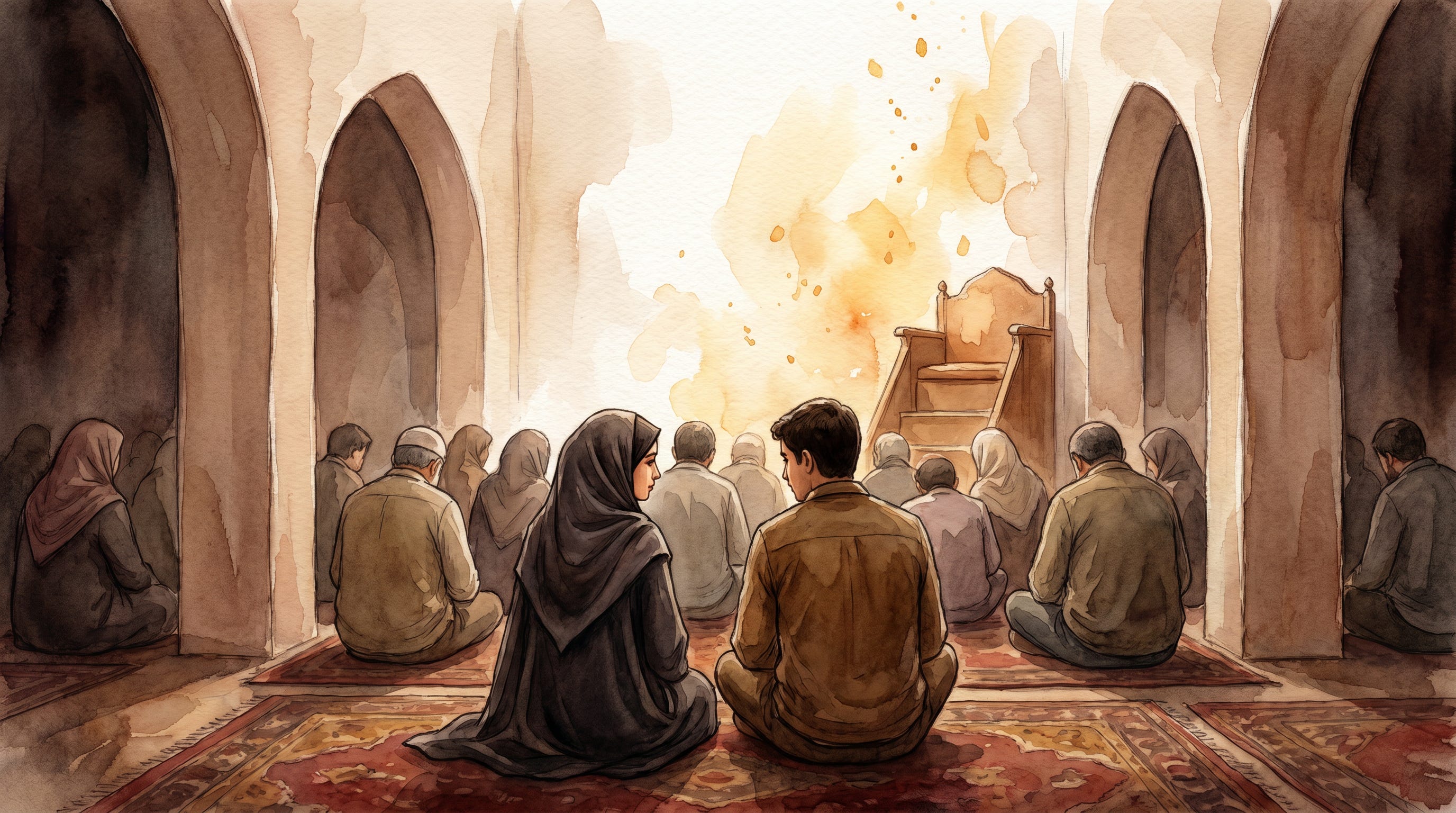
Maqtal (Lamentation) for the Third Night of Arbaeen 2026/1448
Supplication
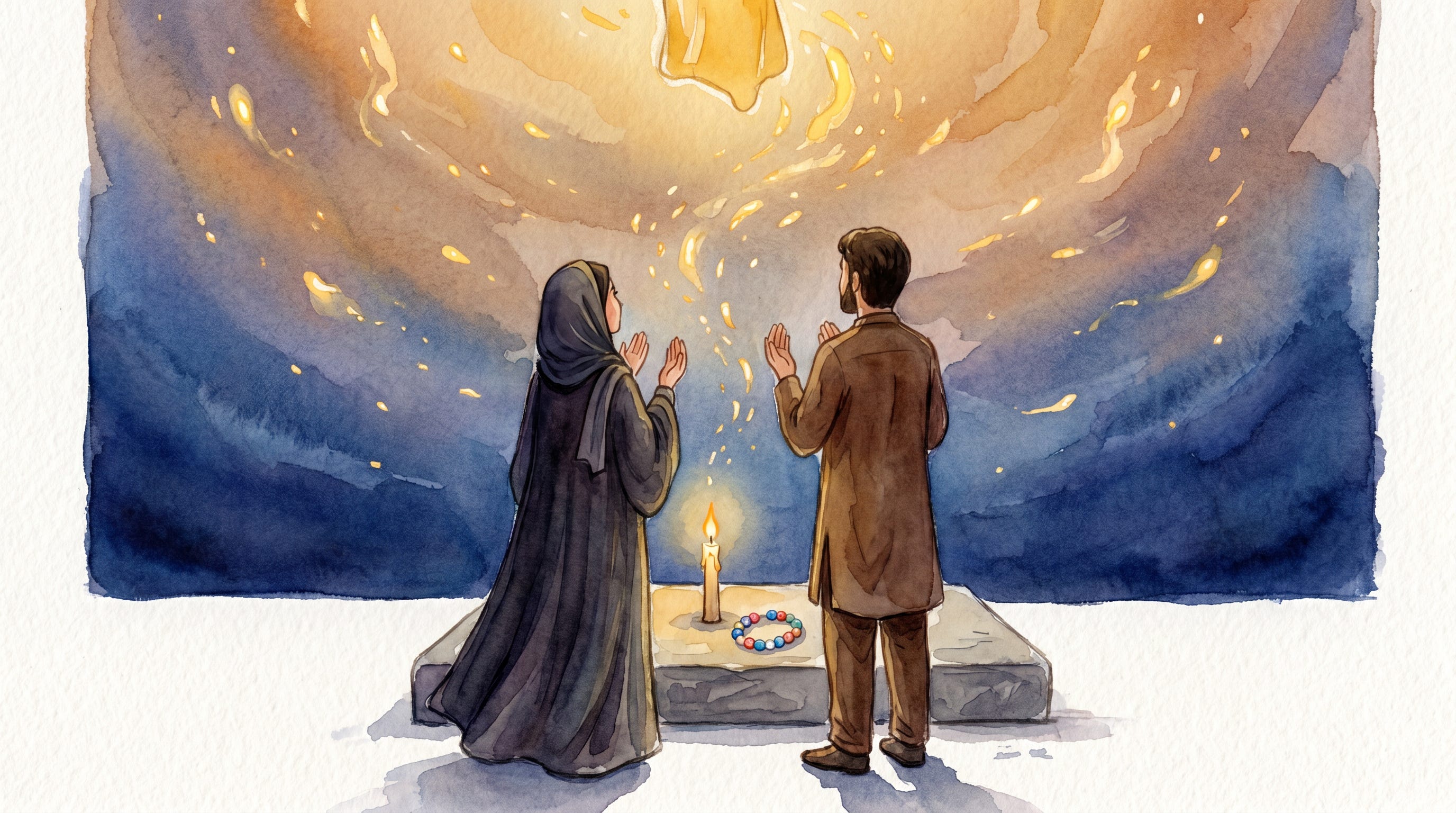
In His Name, the Lord of the Witnesses and the Truthful
We have stood beside her.
The little bead is still on the grey stone, and the candle is still burning.
Now, before we rise to go out into the night, we turn our faces back to God, and we lift our hands.
O Our beloved Lord, send your choicest blessings upon Muhammad and the Family of Muhammad, and hasten their relief.
O God — we have nowhere to go but to You, and no one to ask but You, and no words enough except the ones You have placed upon the tongues of Your friends.
O God, by the truth of the witness whose courtyard we greeted at the opening of this night — our Master Aba Abdillah al-Husayn — and by the truth of the souls that alighted in his courtyard, send Your peace and Your blessing upon Muhammad and the Family of Muhammad: the first of the witnesses, and the seal of them; and upon Sayyedah Fatima al-Zahra, the siddiqa shaheeda, the truthful martyr, the proof that the highest witness was never on a field.
O God, we send our peace to the little one of the House whose night this is — Sayyedah Ruqayyah, the daughter of Husayn, peace and blessings be upon her — and to the children of the household, the small witnesses whom the empire did not trouble to count; and to the infant Ali al-Asghar, the witness of six months; peace and blessings be upon them all.
O God, send Your peace upon the witnesses of our own age who fell at the frontier of the pen and the lectern and the seminary — upon Shaheed Mutahhari, and Ayatullah Mufatteh, and Ayatullah Beheshti and the seventy-two who fell with him, and Ayatullah Baqir al-Sadr and his sister Bint al-Huda, and Ayatullah Hassan Shirazi: may You bless all their pure souls, and gather them with the witnesses they served, and let not the lamps they lit go out.
O God, and send Your peace upon the Martyrs of Service — Ayatullah Sayyed Ebrahim Raisi, and the seven who fell with him in the fog of the mountain as they returned from a work of service to Your people: his foreign minister Hossein Amir-Abdollahian, the Friday Imam of Tabriz Ayatullah Sayyed Muhammad Ali Ale-Hashem, the governor Malek Rahmati, and the guards and the crew who flew with them; may You bless all their pure souls, for they were taken upon the road of their duty.
O God, and send Your peace upon the smallest witnesses of our own days — upon the hundred and sixty-eight children of Minab and their teachers, and the unborn child carried into Your mercy; upon the children of Gaza, and of Lebanon, and of Yemen, and of Iraq, and of Syria, and of Bahrain, and of every place where a school became a grave; and upon the children of Qana, who sheltered beneath Your name.
You named them in Your Book — the men, the women, and the children — so do not let us forget the names that You remembered.
Receive them as You received the infant of Karbala, and be Yourself the protector and the helper that their killers denied them.
O God, preserve for us the one who holds the line in our own time — our master, the guardian of the affair, Imam Sayyed Mujtaba Khamenei, may You protect him — and keep him steadfast upon the path of the witnesses, and shield him as You shielded the line through every age of fear, until the hour of the One we await.
O God, hasten the relief of our Master, the Awaited One, the Mahdi, the son of Hasan — may our souls be his ransom and may You hasten his return — and make us, before that hour comes, among those who were willing: who held a line where one was given them, who fed their families by what You made lawful, who would not sell the truth at any price the world named, and who, when at last You asked, did not look away.
And we say, of every witness we have named this night, the thing You command us to say — the truest sentence we know:
وَلَا تَقُولُوا لِمَن يُقْتَلُ فِي سَبِيلِ اللَّهِ أَمْوَاتٌ، بَلْ أَحْيَاءٌ وَلَٰكِن لَّا تَشْعُرُونَ.
“And do not say of those who are killed in the way of God, ‘They are dead.’ Rather, they are alive — but you do not perceive it.”
— Qur’an, Surah al-Baqarah (the Chapter of the Cow) #2, Verse #154
They are alive.
Every one of them.
The scholar and the child and the honest worker and the little one of Sham — alive, with their Lord, provided for.
And we are the ones who do not yet perceive it.
O God, write us with them; and do not make this the last of our covenant.
ٱلَّذِينَ إِذَآ أَصَٰبَتۡهُم مُّصِيبَةٞ قَالُوٓاْ إِنَّا لِلَّهِ وَإِنَّآ إِلَيۡهِ رَٰجِعُونَ
“Those who, when disaster strikes them, say: Indeed we belong to God, and indeed to Him we return.”
— Qur’an, Surah al-Baqarah (the Chapter of the Cow) #2, Verse 156
And we repeat Your promise — an eternal promise for the patient, and a warning for the wrongdoers:
وَسَيَعْلَمُ ٱلَّذِينَ ظَلَمُوٓاْ أَىَّ مُنقَلَبٖ يَنقَلِبُونَ
“And those who do wrong will come to know to what a [bitter] end they will return.”
— Qur’an, Surah al-Shu’arā (the Chapter of the Poets) #26, Verse 227
And we add, from the depths of everything we have learned tonight:
حَسْبُنَا اللَّهُ وَنِعْمَ الْوَكِيلُ
“God is sufficient for us, and He is the best of guardians.”
— Qur’an, Surah Aal Imran (the Chapter of the Family of Imran) #3, Verse 173
Amen. O Lord Sustainer of the Universes,
Amen, O Most Merciful of the Merciful.
And our final call is that all praise belongs to God, the Lord of the worlds; and may His peace and blessings be upon Muhammad and his pure household.