

In His Name, the Most High

In our previous session, we ascended the mountain of the theology of Mahdawiyyah to gaze upon the summit of identity. We established that the Mahdi is not a mythical hope or a future hypothesis, but a present, living reality—Muhammad ibn al-Hasan al-Askari, the Witness of our deeds and the Heir of the Prophets.
Tonight, we descend from the mountain of identity into the valley of duty.
It is not enough to know who he is; the terrifying and transformative question is: who are we in relation to him?
If our previous session was about the commander, this session is about the soldier.
If the previous session established the promise, this session establishes the preparation.
We are pivoting from theology to sociology — from what we believe to how we live.
This transition is critical because history is littered with communities who recognised their Prophet but failed to serve him.
The Israelites recognised Prophet Moses yet refused to enter the Holy Land.
The Kufans recognised Imam Husayn yet abandoned him in Karbala.
Recognition alone does not guarantee salvation; it is intidhaar (awaiting) that bridges the gap between belief and loyalty.
Tonight, we dissect the most misunderstood concept in the doctrine of Mahdawiyyah. We aim to rescue the concept of “waiting” from the paralysis of apathy and restore it to its true meaning: a dynamic, revolutionary state of readiness.
A word on preparation before we proceed: as is the case with all our sessions — be they from the Art of Supplication series, the Lantern of the Path series, the Patience, Tabyeen or Wilayah in the Home series — there is a requirement for everyone to engage not just with this session, but with the previous ones in each series, ideally in order and in full, to get the most from what we cover.
We appreciate that this can seem a daunting task, but its importance cannot be overstated.
We will, as we generally do, provide a recap of the previous session, however this is always summarised and lacks the nuance and detail of the full treatment — so while there is a recap, this does not replace studying, and more importantly reflecting on, the previous sessions.
So without further ado, let us implore Him to grant us wisdom and tawfeeq (ability and success) in understanding this important and indeed life-changing subject — and not just understanding, but in truly becoming resolute and devout soldiers of Imam al-Mahdi; that we may be from those who help the sun rise in the West, and that we become from those whom He accepts among the successful.
In His most beautiful Name, we proceed…
Video of the Majlis (Sermon/Lecture)
This is the video presentation of this write-up as a Majlis (part of the Truth Promoters Weekly Wednesday Majlis Program)
Audio of the Majlis (Sermon/Lecture)
This is the audio presentation of this write-up as a Majlis (part of the Truth Promoters Weekly Wednesday Majlis Program)
Recap
The Living Promise: Between Prophecy and Presence

Before we define our duty, we must stand firmly on the three pillars of truth we erected in our last session.
For the benefit of those joining us now, and to refresh the spirits of those who were present, let us recall the reality of the one we await.
The Specificity of the Saviour

We moved beyond the abstract “Universal Hope” held by other faiths.
While the world waits for a concept of salvation, we established that the Shia await a specific man.
We identified him not as a future possibility, but as a historical certainty: Muhammad ibn al-Hasan al-Askari (may our souls be his ransom), born in the garrison city of Samarra in 255 AH — the fulfilment of the promise given to Adam.
We established that the earth is never — not for the blinking of an eye — void of a Divine Proof (Hujjah).
Just as the Quran is the Silent Book, he is the Speaking Book; without him, the connection between Heaven and Earth would be severed and the earth would swallow its inhabitants.
The Revolution of Vocabulary: Anonymity, not Absence
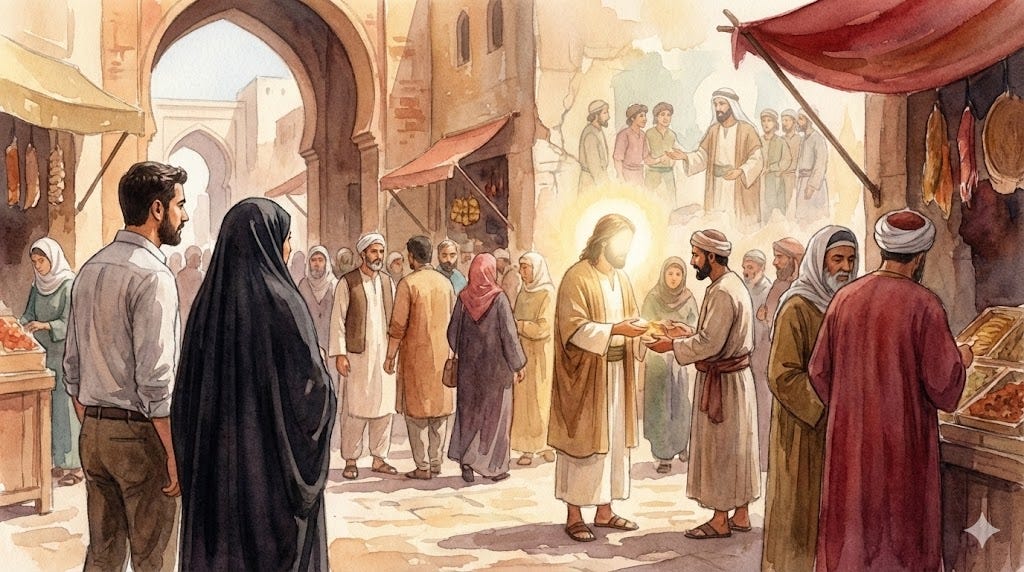
Crucially, we corrected our understanding of Ghaybah (Occultation). We argued that Ghaybah does not mean “Absence” or “Invisibility” — it means Anonymity.
Using the Qur’anic paradigm of Prophet Joseph (Yusuf), we understood that the Imam is present among us.
Just as Joseph (Yusuf) walked in the markets of Egypt and dealt with his brothers who did not recognise him, the Mahdi walks in our markets, steps on our carpets, and attends our Hajj.
He is not a ghost living in a cave; he is a citizen of this earth living incognito — the Witness (al-Shahid) who observes our deeds, our public bravery and our private sins, with a heart that grieves for our failures and rejoices in our victories.
The Heir of the Prophets and the Resurrector
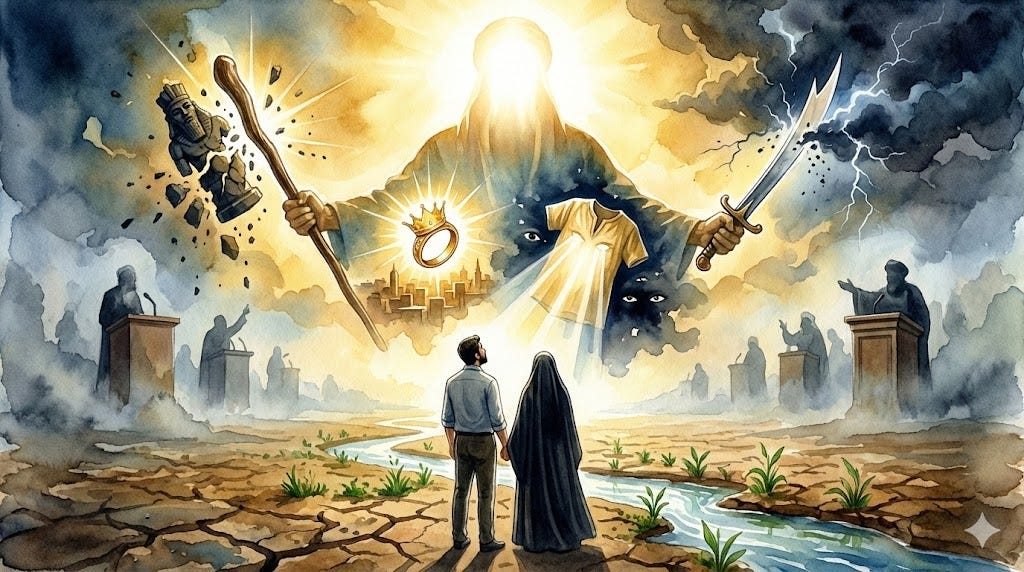
Finally, we defined his mission not merely as “reform,” but as Resurrection (Ba’th).
We established that he is the heir who carries the physical artefacts of the Prophets:
The Staff of Prophet Moses (Musa) to shatter illusions,
The Ring of Prophet Solomon (Sulayman) to command governance,
The Shirt of Prophet Joseph (Yusuf) to restore sight, and
The Dhulfiqar (sword) of Imam Ali to separate truth from falsehood.
He comes to complete the unfinished symphonies of the past Prophets — to remove the “monkeys from the pulpit” who hijacked the mission of Islam, and to revive the earth with Justice after it has died through Oppression.
The Conclusion of the Recap
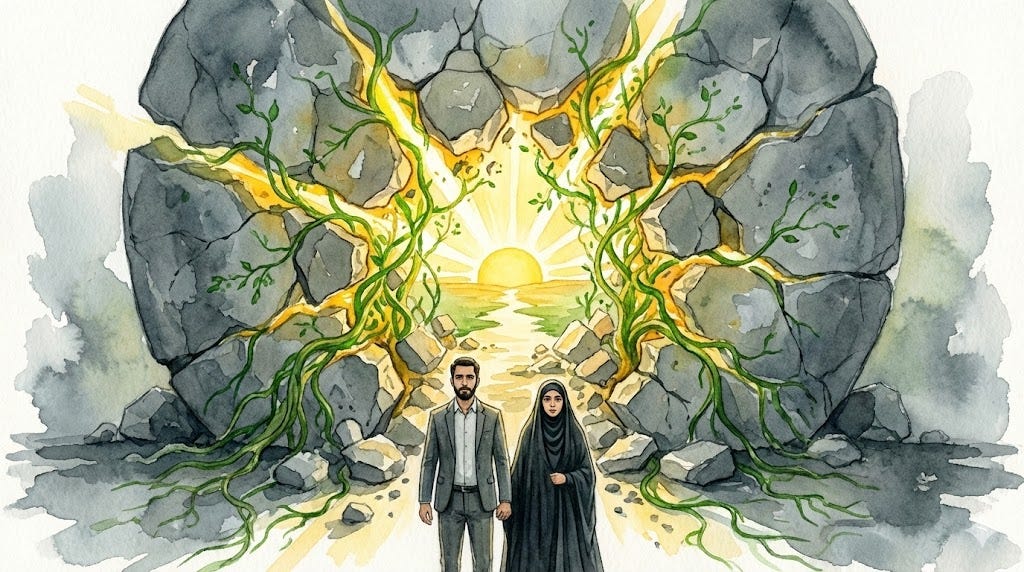
This theological reality — that the Imam is alive, present, and witnessing — demands a logical reaction.
If we were waiting for a leader to be born in the distant future, perhaps we could afford to sleep.
One does not prepare an army for a commander who does not yet exist.
But because he is here, because he is waiting for us, our passivity becomes inexcusable.
The relationship between the Imam and the Ummah is reciprocal: he awaits our maturity; we await his appearance.
But there is a profound difference in the quality of this waiting.
His waiting is the patience of a father watching a child learn to walk — he is ready, but the child is stumbling.
Our waiting, too often, has been the waiting of a spectator expecting a show to begin.
Tonight, we shatter the idol of passive waiting.
We assert the thesis that intidhaar is not a noun; it is a verb. It is not a state of rest; it is an act of war against the status quo.
It is, as we shall discover, an act of worship, resistance, and construction.
In His Most profound Name, and with full reliance on His support, let us proceed to the main part of tonight’s session.
Mahdawiyyah (The Culminating Guidance) - Introduction to Mahdawiyyah - The Philosophy of Intidhaar: Action, Not Apathy
The Great Fallacy: Dismantling Passive Waiting
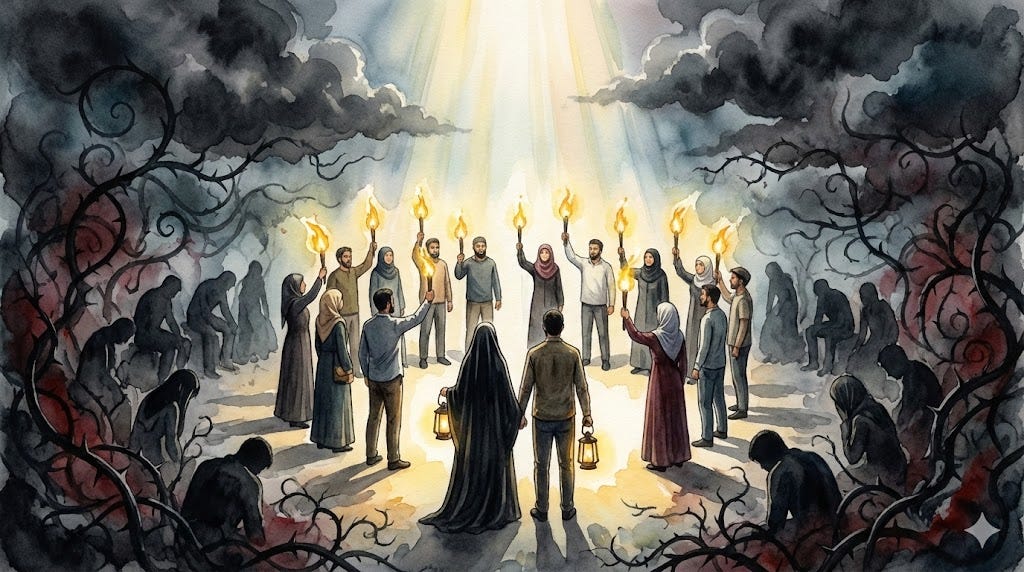
We must begin by dismantling the most dangerous weapon Satan has deployed against the believing community: the weapon of Distorted Intidhaar.
For centuries, a toxic interpretation has poisoned the minds of certain believers.
They latched onto the famous, mutawatir (widely transmitted) narration found in all schools of Islam regarding the Mahdi’s mission:
يَمْلَأُ الْأَرْضَ قِسْطاً وَعَدْلًا كَمَا مُلِئَتْ جَوْراً وَظُلْماً
“He will fill the earth with equity and justice as it was filled with oppression and tyranny.”
— Al-Saduq, Kamal al-Din wa Tamam al-Ni’mah, Volume 1, Chapter 24, Hadith 11
From this sacred promise, they drew a catastrophic conclusion:
“If his coming depends on the world being full of oppression, then we should simply let oppression spread.
Reform delays his arrival; corruption hastens it.”
This logic turns the believer into an accomplice of Satanic forces.
It suggests that to welcome the Ultimate Reformer, we must destroy reform.
It suggests that to welcome the Holy Physician, we must poison the patient.
This is not the waiting of the righteous; it is the waiting of the nihilist.
The great philosopher and martyr, Ayatullah Murtadha Mutahhari, rigorously dismantled this fallacy in his seminal work on the Mahdi.
He argued that this type of “Destructive Intidhaar” negates the Qur’anic obligation of Amr bil-Ma’ruf (Enjoining the Good), transforming Islam into a tool for preserving corruption:
اِین نوع انتظار، انتظار وِیرانگر است... اینجور برداشت از انتظار فرج و از قیام مهدی موعود (ع) منجر به تعطیل در حدود و مقررات اسلامی میشود... و نهایتاً به اباحیگری ختم میشود
“This type of awaiting is ‘Destructive Awaiting’... This kind of understanding regarding the awaiting of relief and the uprising of the Promised Mahdi leads to the suspension of Islamic limits and laws... and ultimately results in sheer permissiveness (ibahigari).”
— Ayatullah Shaheed Murtadha Mutahhari, Qiyam va Inqilab-e Mahdi (The Uprising and Revolution of the Mahdi), Section: ‘Two Types of Awaiting’, Page 14
We must correct our lens.
The Mahdi does not arrive from a distance to a world that has totally abandoned God; he reveals himself to a world where a core group of believers has reached the peak of readiness to support him against that abandonment.
He is not waiting for the world to be black enough to enter; he is waiting for the torchbearers to be bright enough to signal his emergence (dhuhoor).
The Grammar of Expectation: Reclaiming Intidhaar
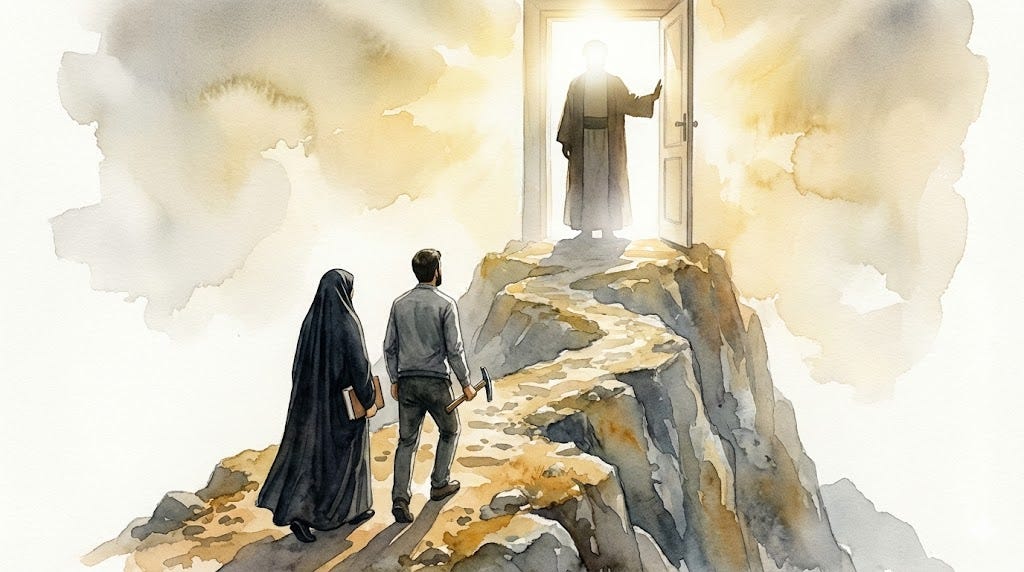
We must reclaim the vocabulary of our faith from the grip of passivity.
To understand our duty, we must look at the grammatical root of the Imam’s title.
In the Arabic language, a simple shift of a vowel changes the entire theology of the End Times.
We know him as Al-Muntadhar (with a fatha on the dha) — the Passive Participle, meaning “The Awaited One,” the one whom the world is waiting for. But we often forget that he is also Al-Muntadhir (with a kasra on the dha) — the Active Participle, meaning “The Awaiting One.”
What is he awaiting?
He is awaiting the Divine Command. He is awaiting the completion of the 313 commanders — we will discuss this important point in a future session, God willing.
He is awaiting the maturity of the masses.
This creates a reciprocal relationship.
It is not a one-way street where we sit and wait for him to arrive; he is standing and waiting for us to rise.
His waiting is more painful than ours, for he witnesses the oppression we only hear about.
As Imam Muhammad al-Jawad explains regarding his title:
لِأَنَّ لَهُ غَيْبَةً يَكْثُرُ أَيَّامُهَا... يَنْتَظِرُ خُرُوجَهُ الْمُخْلِصُونَ
“Because he has an occultation whose days will be many... the sincere ones will await (yantadhiru) his emergence.”
— Al-Saduq, Kamal al-Din wa Tamam al-Ni’mah, Volume 2, Chapter 36, Hadith 3
The implication is terrifying: if he is Al-Muntadhir (waiting), and we are the object of his wait, then our lack of readiness is the very cause of his delay.
The Deed, Not the Feeling
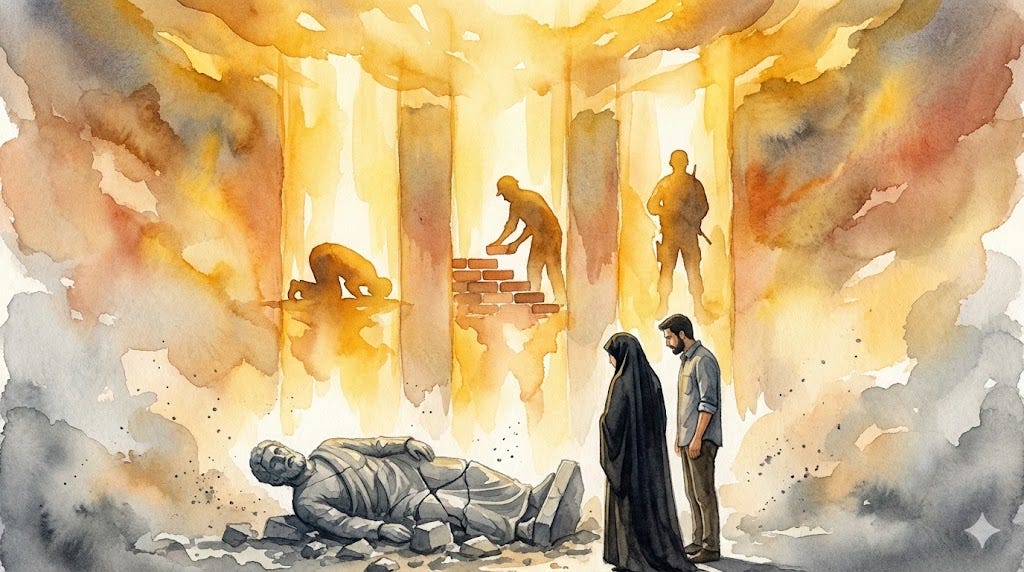
With this reciprocity established, we understand why the Holy Prophet (peace and blessings be upon him and his family) did not describe intidhaar as a “state of heart” or a “feeling of hope.”
He described it with the word a’mal — deed, action.
If waiting were merely sitting in a mosque crying for his appearance, the Prophet would have called it “The Best State” (afdal al-ahwal).
Instead, he called it “The Best Action”:
أَفْضَلُ أَعْمَالِ أُمَّتِي انْتِظَارُ الْفَرَجِ
“The best deeds/actions (a’mal) of my ummah (community) is awaiting the relief.”
— Al-Majlisi, Bihar al-Anwar, Volume 52, Page 122, Hadith 4
This single word — a’mal — shatters the idol of laziness.
It categorises intidhaar alongside prayer (salah or namaaz) and striving (jihad).
It is something you do, not something you feel.
Movement, Not Stagnation
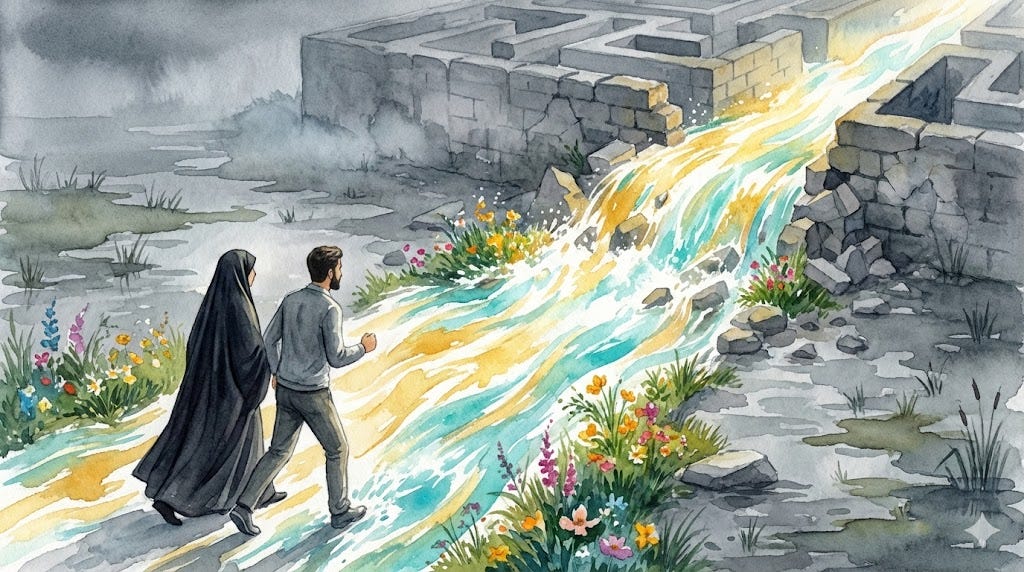
The Leader of the Islamic Revolution, Imam Khamenei, expands on this concept, redefining intidhaar not as a pause in history, but as the engine of history.
He explains that true waiting creates vitality (nishat) and movement, whereas false waiting creates lethargy:
معنای انتظار این است که... انسان تسلیم وضع موجود نشود... انتظار حركت است؛ انتظار سكون نيست
“The meaning of intidhaar is that... a human being does not surrender to the existing status quo... intidhaar is movement; intidhaar is not stagnation.”
— Imam Khamenei, Speech at the Great Gathering of Mid-Sha’ban, 1426 AH (2005)
Two Analogies: The Student and the Soldier
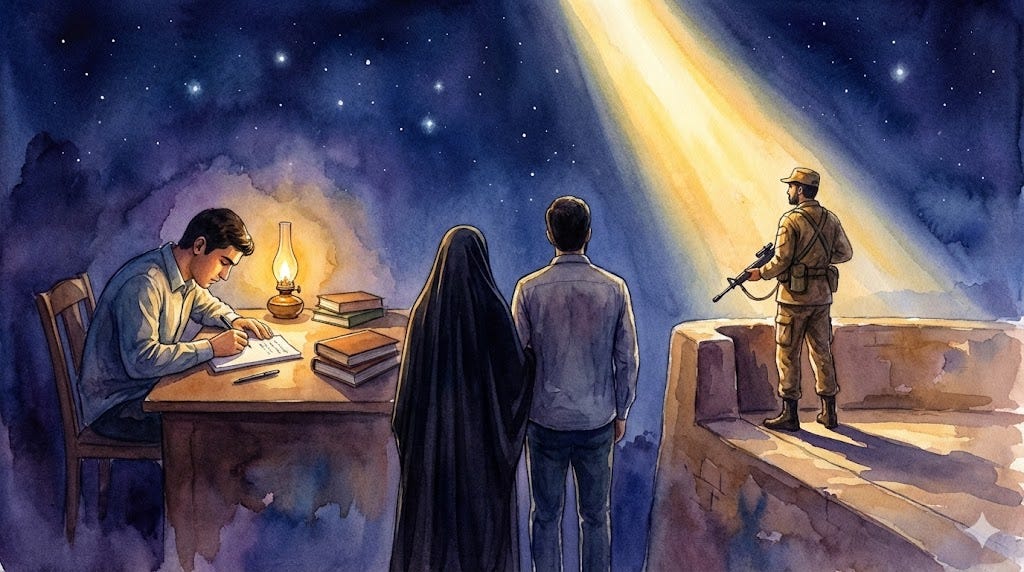
To visualise this, consider two analogies.
Is a student “awaiting” their final exam if they spend the semester sleeping?
No — they are neglecting.
The student who is truly awaiting the exam is the one studying late into the night.
Is a soldier “awaiting” the General’s inspection if they are sitting in the dirt with an unpolished rifle?
No.
The soldier who is awaiting is standing at attention, uniform pressed, weapon cleaned, eyes forward.
This is the reality of intidhaar.
We are the soldiers in the barracks.
The General is present, observing our readiness.
To be asleep when the command is given is not patience; it is treason.
The Qur’anic Anchor: The Command to Station
To understand the divine mandate for the End Times, we turn to the final verse of Surah Aal-e-Imran.
This verse is the strategic manual for the community of the Mahdi.
God commands the believers:
يَا أَيُّهَا الَّذِينَ آمَنُوا اصْبِرُوا وَصَابِرُوا وَرَابِطُوا وَاتَّقُوا اللَّهَ لَعَلَّكُمْ تُفْلِحُونَ
“O you who have believed, be patient (isbiru), and excel in patience (sabiru), and remain stationed (rabitu), and fear God that you may succeed.”
— Qur’an, Surah Aal-e-Imran (the Chapter of the Family of Imran) #3, Verse 200
The Tafsir (Exegesis) of the Ahl al-Bayt
While the apparent meaning refers to guarding the military borders, the Ahl al-Bayt provided the ta’wil (deeper interpretation) that connects this duty specifically to the Imam of the Age.
Imam Muhammad al-Baqir decodes the three stages of command in this verse:
اصْبِرُوا عَلَى أَدَاءِ الْفَرَائِضِ،
وَصَابِرُوا عَدُوَّكُمْ،
وَرَابِطُوا إِمَامَكُمُ الْمُنْتَظَرَIsbiru: Be patient in performing obligations.
Sabiru: Excel in patience against your enemies.
Rabitu: Station yourselves in readiness for your Awaited Imam.— Al-Nu’mani, Kitab al-Ghaybah, Chapter 11, Hadith 13
The Binding Contract of Readiness

The leading exegete of our time, Ayatullah Jawadi-Amoli, in his monumental Tafsir-e Tasnim, expands on the concept of murabatah (stationing).
He explains that ribat literally means “tying” — like tying a horse at the frontier.
Therefore, murabatah with the Imam means tying one’s existence to his mission.
It is not a casual relationship; it is a binding contract of readiness.
He clarifies that this “stationing” requires both external military readiness and internal intellectual vigilance:
مرابطه یعنی بستن مرزها... اما مرابطه در فرهنگ انتظار، تنها مرزبانی جغرافیایی نیست. مرابطه یعنی انسان منتظر، جان و اندیشه خود را به ولایت گره بزند و همواره در سنگر دفاع از حریم دین و امام زمان (عج) مسلح و بیدار باشد. کسی که خواب است، نمیتواند مرابط باشد
“Murabatah means closing (guarding) the borders... But murabatah in the culture of intidhaar is not merely geographical border guarding. Murabatah means that the awaiting human being ties his soul and intellect to the Wilayah, and is always armed and awake in the trench of defending the sanctuary of religion and the Imam of the Time. One who is asleep cannot be a murabit (stationed guard).”
— Ayatullah Jawadi-Amoli, Tafsir-e Tasnim, Volume 16, Page 642, Commentary on Surah Aal-e-Imran (the Chapter of the Family of Imran) #3, Verse 200
The implication is clear: true intidhaar is to live life in the trenches — intellectually and spiritually — never leaving one’s post, awaiting the Commander’s inspection of the lines.
Redefining Power: From Relief to Strength
If intidhaar is a “deed” and a “stationing,” then it naturally manifests as motion.
Passive waiting relies on the idea that we are weak and he will save us.
Active waiting relies on the idea that we must become strong to serve him.
The Founder of the Islamic Republic and late leader of the Islamic Revolution, Imam Khomeini, shattered the invalid and corrupt narrative that Shia Islam is a religion of passive suffering.
He redefined intidhaar not as “hoping for relief from pain” but as “preparing the instruments of power”:
انْتِظَارُ الْفَرَجِ انْتِظَارُ الْقُدْرَةِ... لَا بُدَّ مِنَ الْإِعْدَادِ. نَحْنُ نُرِيدُ أَنْ نُخْرِجَ الْبَشَرِيَّةَ مِنْ هَذَا الْمَضِيقِ... وَهَذَا يَحْتَاجُ إِلَى قُوَّةٍ
“Awaiting the Relief is awaiting Power... Preparation is essential. We want to bring humanity out of this constriction [of injustice]... and this requires power. We must not sit and wait for the Imam to come and solve our problems while we do nothing. We must prepare the ground.”
— Imam Khomeini, Sahifeh-ye Imam, Volume 19, Page 334
The Resistance as Living Intidhaar
This theology of “power” finds its sharpest expression in the Axis of Resistance.
The leaders of the resistance did not fight because they calculated they had more weapons than the enemy; they fought because resistance is the practical definition of intidhaar.
The martyr and thinker Sayyed Abbas al-Musawi, the former Secretary-General of Hezbollah, articulated this precise connection between the rifle and the prayer mat:
إِنَّنَا لا نَنْتَظِرُ الْمَهْدِيَّ بِالشِّعَارَاتِ، بَلْ نَنْتَظِرُهُ بِالْبَنَادِقِ وَالدِّمَاءِ... إِنَّ الْمُقَاوَمَةَ هِيَ التَّمْهِيدُ الْعَمَلِيُّ لِظُهُورِهِ
“We do not await the Mahdi with slogans; we await him with rifles and blood... Indeed, the Resistance is the practical paving of the way (tamheed) for his appearance.”
— Sayyed Abbas al-Musawi, Wasiyat (Will and Testament), 1992
Similarly, the master of the martyrs of the Islamic Resistance, Sayyed Hassan Nasrallah, consistently framed the victories of the Resistance not as ends in themselves, but as steps on the staircase towards the Great Victory.
He taught us that building a strong society is the invitation for the Imam:
نَحْنُ لَا نُقَاتِلُ لِنُحَرِّرَ أَرْضًا فَقَط، نَحْنُ نُقَاتِلُ لِنُعِدَّ أُمَّةً تَلِيقُ بِإِمَامِ الزَّمَانِ
“We do not fight merely to liberate land; we fight to prepare a nation that is worthy of the Imam of the Time.”
— Sayyed Hassan Nasrallah, Ashura Speech, 2010
Lesson for the Present: The Antidote to Despair
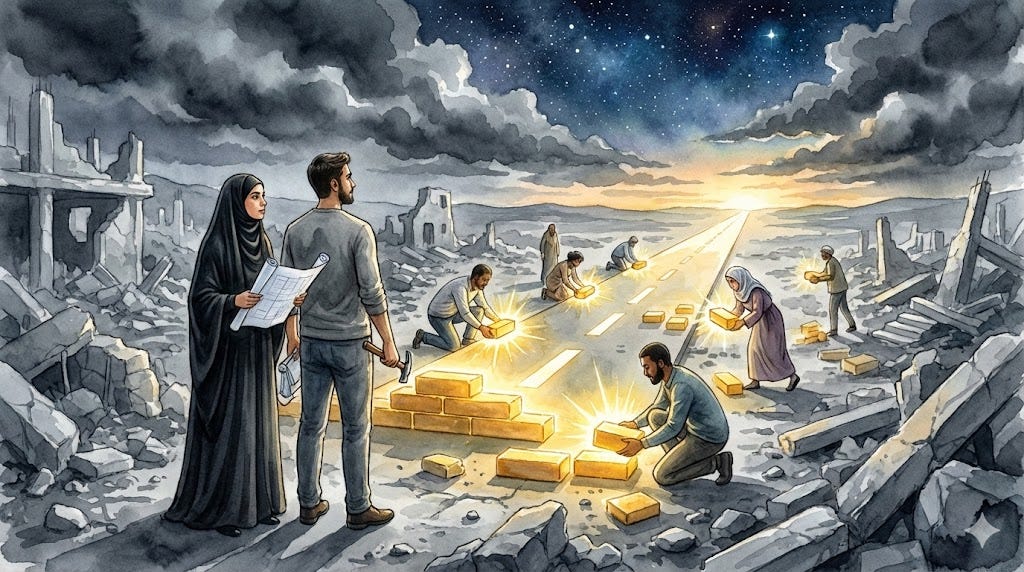
The world today is designed to crush your hope.
The images from Palestine, the corruption of global systems, the brazen power of arrogance — it is all engineered to make the believer say,
“There is no point. Evil is too strong.”
Passive intidhaar leads to spiritual depression because it relies on an external saviour to fix a world you feel helpless to change.
It renders you a victim of history.
Active intidhaar destroys depression because it gives you a mission.
When you understand that your small action — whether it is boycotting an oppressor, teaching a child truth, or building a community institution — is a direct contribution to the Imam’s infrastructure of return, your life gains cosmic purpose.
The lesson for the present is to shift our internal narrative.
We are not victims waiting to be rescued.
We are engineers preparing the landing strip.
Every act of resistance against despair — regardless of how insignificant it might appear to ourselves — is a brick in the structure of his government.
Call to Clarify: Against the Theology of Neutrality
We must be courageous in clarifying a difficult truth within our communities.
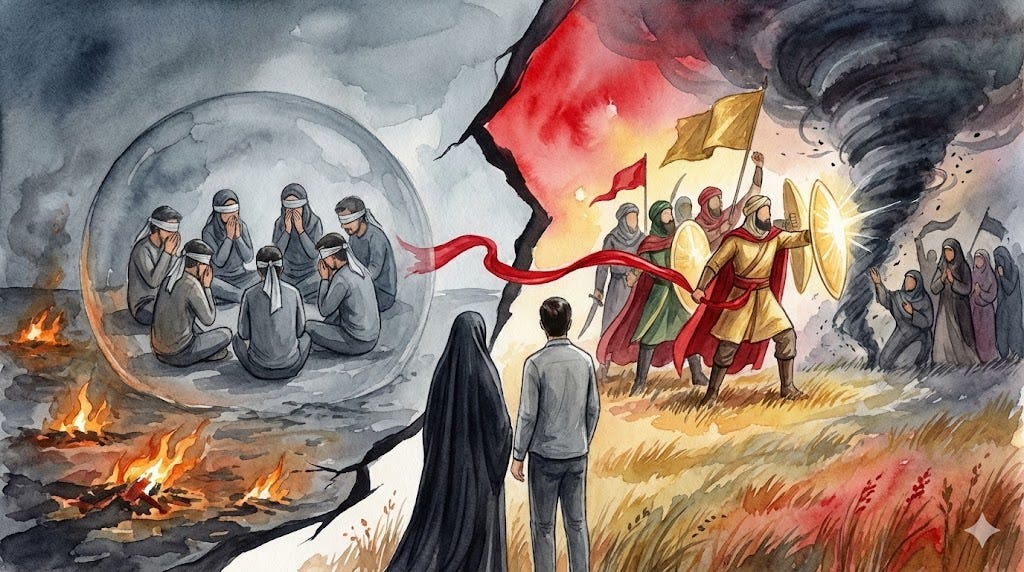
There exists a school of thought, a mindset — sometimes termed the “Hojjatieh” — that separates religion from politics, claiming we must strictly pray and mourn until the Imam arrives, and that intervening in politics is “raising a banner before the Mahdi.”
We must clarify: to separate Islam from Justice is to separate Islam from the Mahdi.
Anyone who tells you
“Do not speak about politics, just wait for the Imam”
is asking you to disobey the very Imam you are waiting for.
The Imam is the Chief of Justice.
How can his followers be neutral in the face of injustice?
Our loyalty is defined by Ziyarat Ashura:
إِنِّي سِلْمٌ لِمَنْ سَالَمَكُمْ وَحَرْبٌ لِمَنْ حَارَبَكُمْ
“I am at peace with those who are at peace with you, and I am at war with those who are at war with you.”
— Ziyarat Ashura
This is a declaration of political and social alignment.
You cannot be at war with the enemies of the Imam while sitting comfortably with the oppressors of your time.
We must teach our youth: you cannot be a soldier of the Mahdi while being a pacifist in the face of the Yazids of this age.
The Architecture of Delay: Why We Are the Barrier
Having established that we must act, the immediate question arises: how do we act?
Before we discuss political organisation or social resistance, we must address the primary battlefield: the human soul.
There is a comfortable lie we often tell ourselves:
“We are ready, but the Imam is delayed.”
The brutal truth, taught by our mystics and jurists, is the opposite: the Imam is ready, but we are delayed.
The occultation is not caused by God’s reluctance to send guidance; it is caused by the community’s incapacity to receive it.
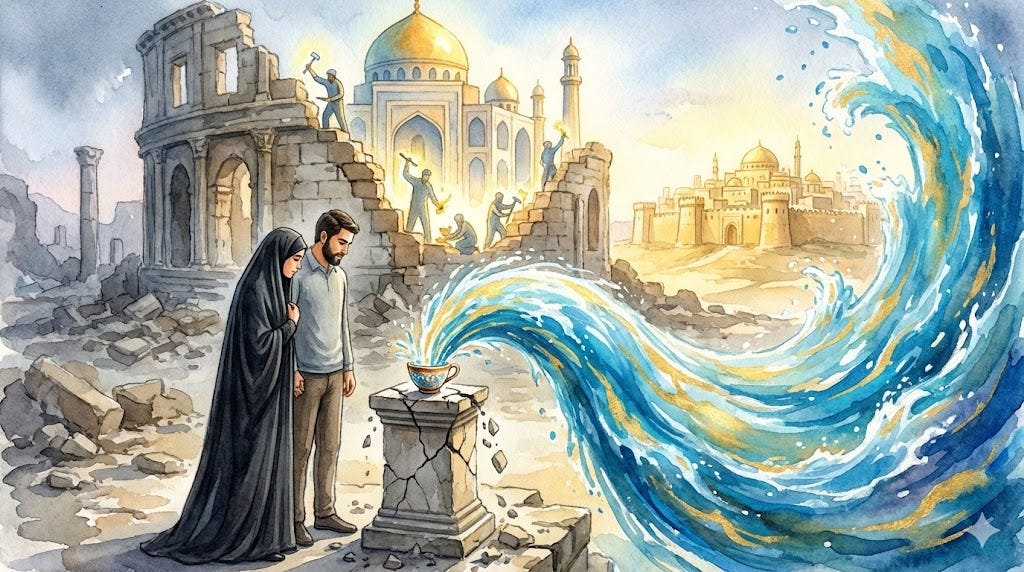
You cannot pour the ocean into a cup — the cup will shatter.
You cannot host a Leader in a ruin — the ruin must be rebuilt into a palace.
The Imam does not need more soldiers; the census of the believers is in the millions.
He needs better soldiers.
He requires souls that have mastered themselves so they can master the world.
The Qur’anic Law: Change Begins Within
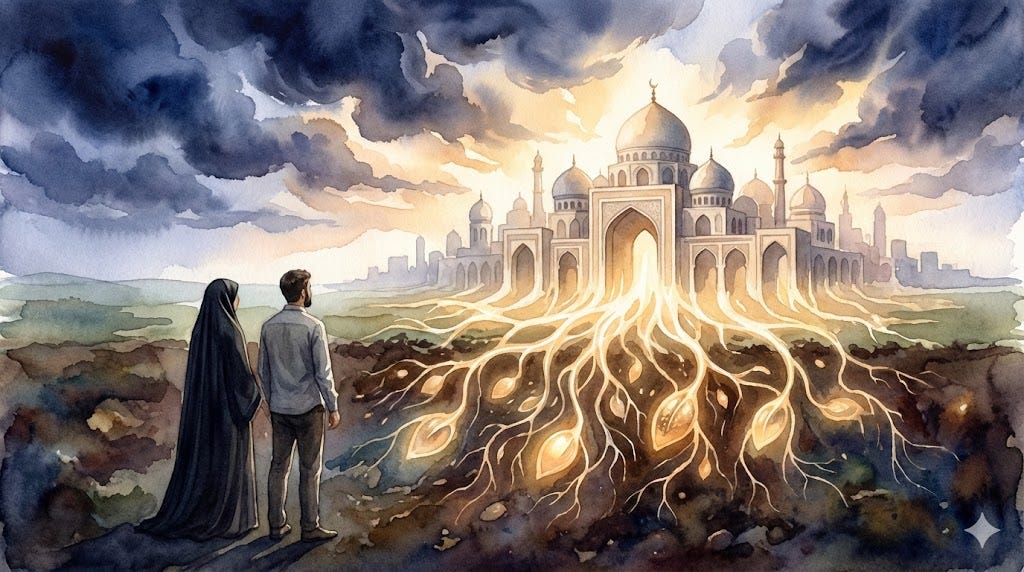
This principle is not poetic; it is Qur’anic law.
God has bound the fate of people to the state of their souls.
He declares in His Holy Book:
إِنَّ اللَّهَ لَا يُغَيِّرُ مَا بِقَوْمٍ حَتَّى يُغَيِّرُوا مَا بِأَنْفُسِهِمْ
“Indeed, God will not change the condition of a people until they change what is in themselves.”
— Qur’an, Surah Ar-Ra’d (the Chapter of the Thunder) #13, Verse 11
Allamah Tabatabai, in his monumental exegesis Al-Mizan, explains that this verse establishes a rigorous causal link.
It is not a suggestion; it is a divine formula.
The external reality of a divinely guided government cannot manifest until the internal reality of souls has transformed:
أَنَّهُ قَضِيَّةٌ حَتْمِيَّةٌ... فَبَيْنَهُمَا تَلَازُمٌ، كُلَّمَا تَغَيَّرَتِ الْحَالَةُ النَّفْسِيَّةُ بِأَنْ يَرْجِعُوا عَمَّا هُمْ عَلَيْهِ... غَيَّرَ اللَّهُ مَا بِهِمْ مِنَ النِّعْمَةِ
“It is a decisive decree... there is a correlation between them. Whenever the psychological state changes — such that they turn away from what they were upon... God changes the blessings (or condition) that they possess.”
— Allamah Tabatabai, Al-Mizan fi Tafsir al-Qur’an, Volume 11, Commentary on Surah Ar-Ra’d Verse 11
The Imam’s Diagnosis
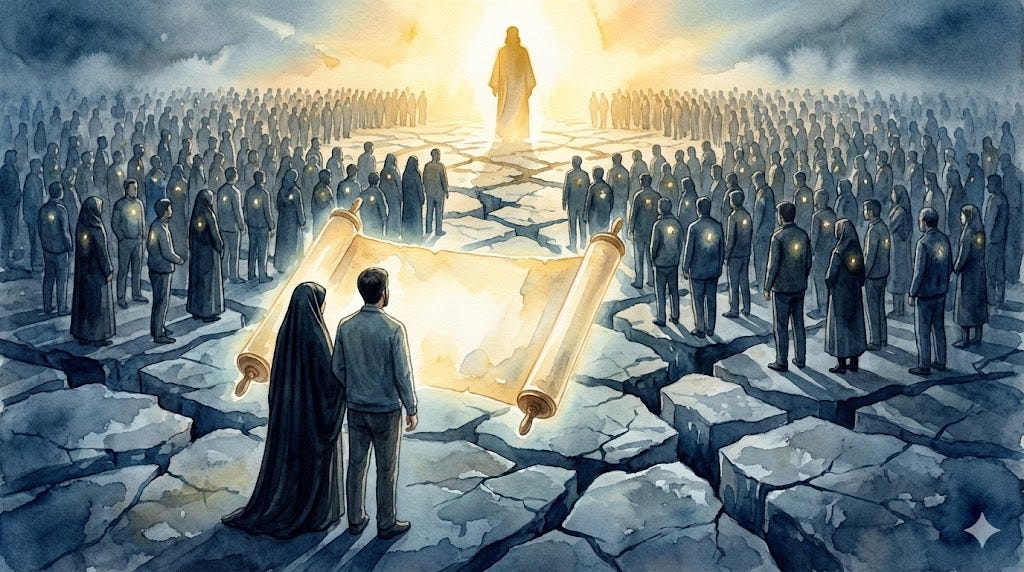
The Imam himself confirmed this diagnosis in his famous letter (tawqi’) to Shaykh al-Mufid.
He explicitly stated that the barrier to his appearance is not the strength of the enemy, but the spiritual inconsistency of his followers:
وَلَوْ أَنَّ أَشْيَاعَنَا وَفَّقَهُمُ اللَّهُ لِطَاعَتِهِ عَلَى اجْتِمَاعٍ مِنَ الْقُلُوبِ فِي الْوَفَاءِ بِالْعَهْدِ عَلَيْهِمْ لَمَا تَأَخَّرَ عَنْهُمُ الْيُمْنُ بِلِقَائِنَا
“If our Shia (followers) — may God grant them success in His obedience — were united in their hearts regarding the fulfilment of the covenant upon them, the blessing of meeting us would not have been delayed.”
— Al-Tabarsi, Al-Ihtijaj, Volume 2, Page 499
Let us pause on this.
The Imam does not blame the enemy.
He does not blame the governments of oppression.
He points his finger at us — at the disunity of our hearts, at our failure to fulfil the covenant.
This is not a letter of comfort; it is a letter of accountability.
The Insight of the Gnostics
The great mystic of our time, Ayatullah Bahjat, pierced through the excuses of the community.
When students would ask him,
“What must we do to see the Imam?”,
he would turn the question back onto their own spiritual state.
He taught that the Imam is not looking for a physical meeting; he is looking for spiritual affinity (sunkhaniyyat):
باید خودمان را اصلاح کنیم تا آقا ظهور کند... اگر ما خوب باشیم، او خودش میآید
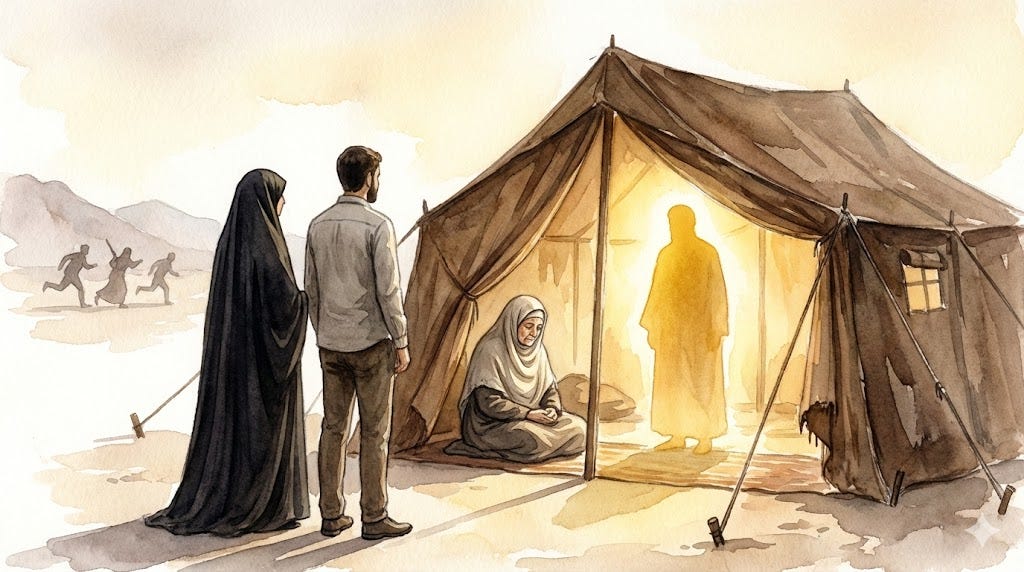
“We must fix ourselves so that the Master appears... If we are good, he himself will come. He came to the tent of the old woman because she had purified herself. We do not need to look for him; we need to become the kind of people he looks for.”
— Ayatullah Bahjat, Dar Mahzar-e Bahjat, Volume 2, Page 120
Let us pause on this image: the old woman in her tent.
She did not travel to find the Imam.
She did not possess wealth or status or learning.
She possessed purity — and so the Imam came to her.
This is the secret the mystics guard: proximity to the Imam is not geographical but spiritual.
And this mystical truth has political consequences.
From Self to Society: The Political Necessity
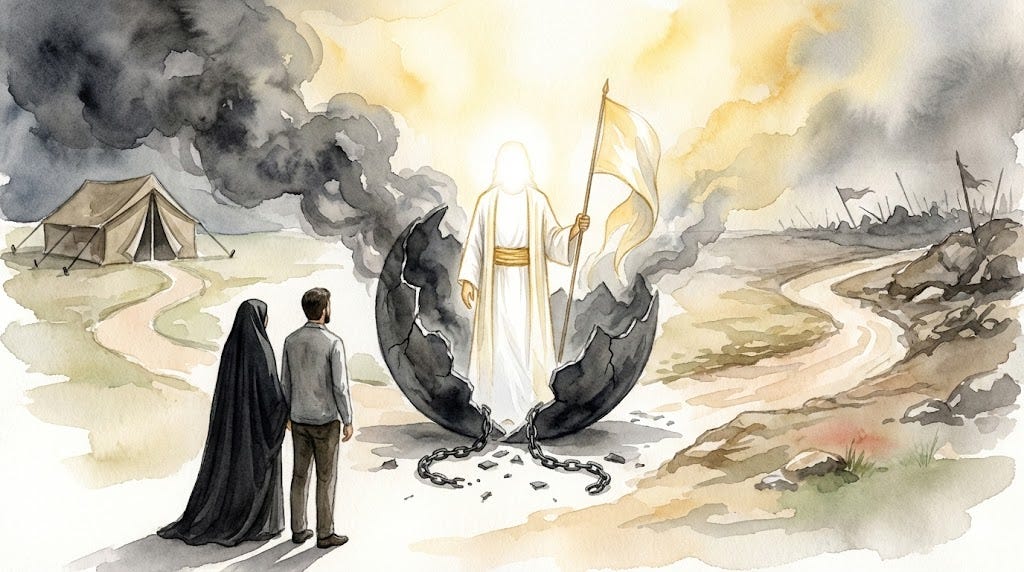
A soldier who has not conquered his own ego (nafs) is a liability on the battlefield.
A gun in the hand of an unpurified man is a danger to his own army.
This is why Imam Khomeini, before leading the revolution against the Shah, led a revolution against the self:
اَلْعَالَمُ كُلُّهُ مَحْضَرُ اللَّهِ... مَنْ لَمْ يُهَذِّبْ نَفْسَهُ لَا يَسْتَطِيعُ أَنْ يُهَذِّبَ غَيْرَهُ
“The whole world is the presence of God... He who has not refined his own self cannot refine others. He who is imprisoned by his own desires cannot liberate humanity.”
— Imam Khomeini, Sahifeh-ye Imam, Volume 8, Page 254
You see how the mystic and the revolutionary arrive at the same destination by different roads?
Ayatullah Bahjat speaks of the old woman’s tent; Imam Khomeini speaks of the battlefield.
But the principle is identical: purification precedes proximity.
The Vessel and the Light

The teacher of divine sciences, Ayatullah Hasanzadeh-Amoli, brings this to a cosmic level.
He speaks of the human heart as a “vessel” (wi’a).
The knowledge and authority of the Mahdi are heavy; they require a container that is robust and pure.
If the vessel is cracked by sin, it cannot hold the water of life.
He reminds us that the primary work of the awaiting believer is “emptying” (takhliyah) so that the “adornment” (tahliyah) of the Imam’s presence can occur:
جان را برای معارف الهیه که مهمانان ماورائی اند باید آماده کرد... تا خانه از اغیار خالی نشود دیّار در او منزل نمی کند
“The soul must be prepared for Divine Knowledge, which is a guest from the celestial realms... As long as the house is not emptied of strangers (aghyar), the Owner of the House will not take up residence in it.”
— Ayatullah Hasanzadeh-Amoli, Hazar-o-Yek Nukte (One Thousand and One Points), Point 577
The Uniform of the Soldier: Wara’ and Piety
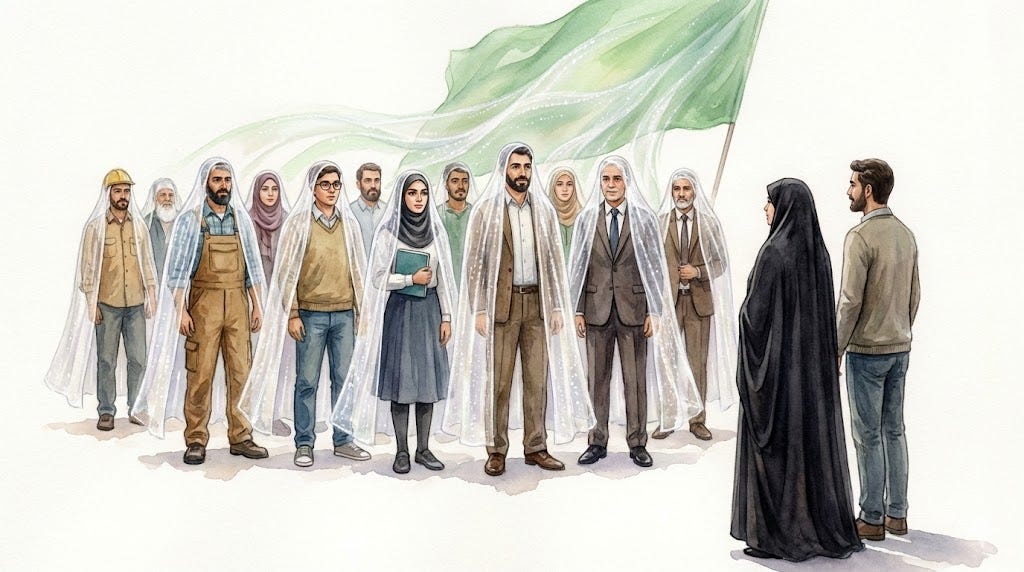
If we are soldiers in a barracks, what is our uniform?
It is not a particular style of clothing.
The uniform of the Mahdi’s army is a specific spiritual quality.
Imam Ja’far al-Sadiq did not leave this to our imagination.
In the foundational text regarding the ghaybah, he sets the entrance criteria for this army.
He does not ask for physical strength or wealth; he asks for wara’ (scrupulousness):
مَنْ سَرَّهُ أَنْ يَكُونَ مِنْ أَصْحَابِ الْقَائِمِ فَلْيَنْتَظِرْ، وَلْيَعْمَلْ بِالْوَرَعِ وَمَحَاسِنِ الْأَخْلَاقِ وَهُوَ مُنْتَظِرٌ
“Whoever wishes to be among the companions of the Qa’im (The Upriser) should wait (cultivate intidhaar), and should act with wara’ (scrupulous piety) and good morals while he is waiting.”
— Al-Nu’mani, Kitab al-Ghaybah, Chapter 11, Page 200, Hadith 16
The Discipline of the Doubtful

We must distinguish between taqwa and wara’.
Taqwa is generally understood as doing the obligatory (wajib) and avoiding the forbidden (haram).
Wara’ is a higher fortification.
It is to stop not just at the “red light” of the forbidden, but to stop at the “amber light” of the doubtful (shubuhat).
It is the extreme sensitivity of the soul to anything that might darken it.
Imam Khomeini, in his ethical masterpiece Forty Hadith, defines wara’ as the crucial stage after repentance (tawbah), without which the spiritual journey is impossible.
It is the refusal to graze one’s sheep near the precipice of sin:
فَإِنَّ الْوَرَعَ هُوَ تَرْكُ الْمُشْتَبِهَاتِ خَوْفاً مِنَ الْوُقُوعِ فِي الْمُحَرَّمَاتِ... وَهُوَ الْمِعْيَارُ فِي كَمَالِ الْإِنْسَانِ
“Indeed, wara’ is the abandoning of doubtful matters out of fear of falling into prohibitions... and it is the criterion for human perfection.”
— Imam Khomeini, Sharh-e Chehel Hadith (Forty Hadith), Hadith 26
The Jurisprudence of Trust
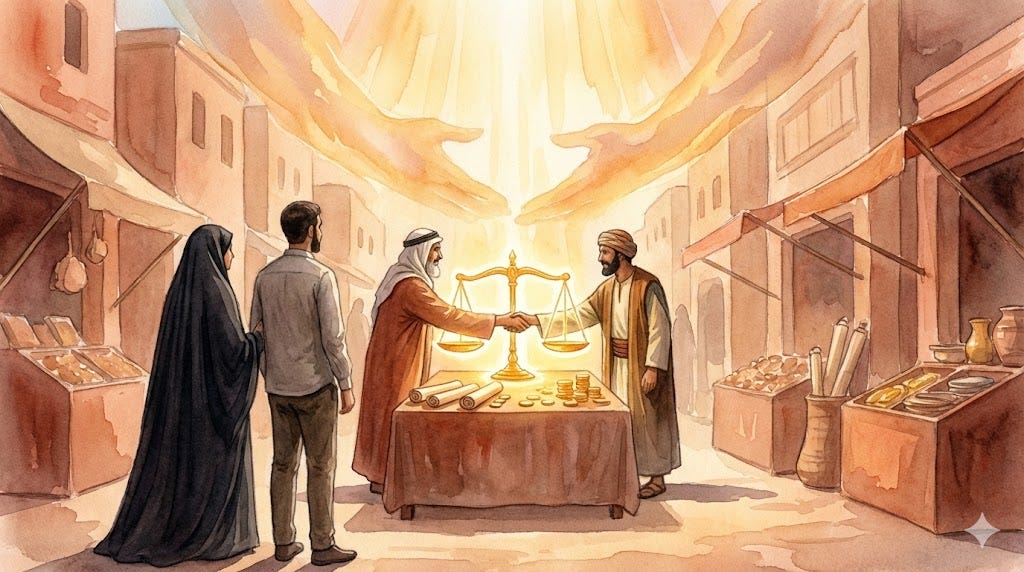
This high-level piety transforms how a believer interacts with society.
It is not just about prayer beads; it is about financial and social integrity.
The Supreme Authority, Ayatullah Sistani, in his guidance to the believers, emphasises that true waiting for the Imam is proven through sidq (truthfulness) and amanah (trustworthiness).
He reminds us that the Imam does not need devotees who cheat in business or lie in politics:
عَلَى الْمُؤْمِنِينَ... أَنْ يَتَحَلَّوْا بِالصِّدْقِ فِي الْحَدِيثِ، وَأَدَاءِ الْأَمَانَةِ... فَإِنَّ ذَلِكَ مِمَّا يُفْرِحُ أَوْلِيَاءَهُمْ
“It is upon the believers... to adorn themselves with truthfulness in speech and the fulfilment of trusts... for indeed, this brings joy to their Guardians (the Ahl al-Bayt).”
— Ayatullah Sistani, Advice to Believers (Wasiyah lil-Mu’mineen), Official Risalah
The Barrier Between Us and Him
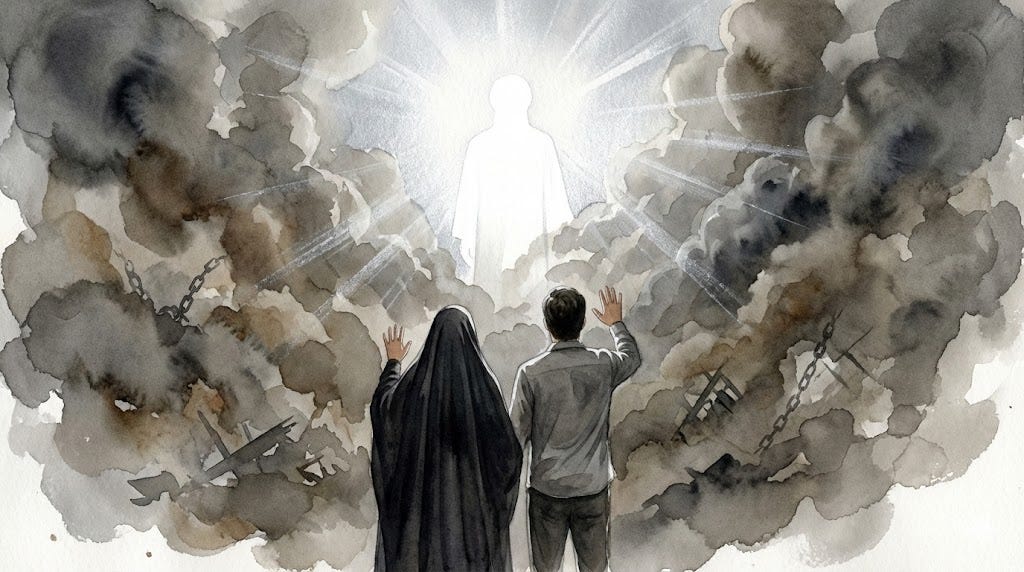
Why is wara’ the specific condition for the Mahdi?
Because the Mahdi is Pure Light, and connection with him requires affinity (sunkhaniyyat).
A soul darkened by carelessness cannot tune into his frequency.
Ayatullah Bahjat taught that the only barrier between us and the Imam is our own lack of wara’.
He viewed every sin as a slap to the face of the Imam:
آیا ما نباید به فکر باشیم که چه کردیم که بین ما و حضرت غیبت افتاده است؟... گناه کردن، و خدا را ناظر ندانستن، و امام زمان را حاضر ندیدن، از اموری است که ما را از آن حضرت دور می کند
“Should we not reflect on what we have done that has caused this Occultation between us and His Holiness?... Committing sins, not considering God as the Observer, and not seeing the Imam of the Time as present — these are the things that distance us from him.”
— Ayatullah Bahjat, Dar Mahzar-e Bahjat, Volume 1, Page 36
The Necessity of Precaution

If sin is the barrier, then precaution is the guard who keeps us from approaching the barrier in the first place.
The teacher of jurists, Ayatullah al-Khui, established the methodology of ihtiyat (precaution) in jurisprudence.
While legally one might find a loophole, the spirit of wara’ demands precaution in matters of the rights of others (haqq al-nas) and the rights of God.
For the soldier of the Mahdi,
“Is it technically halal?”
is the wrong question.
The question is:
“Is this worthy of the Imam’s eyes?”
This reframing transforms every decision — from business dealings to casual speech to how we spend our private hours — into a test of loyalty.
We are training ourselves now, in the small decisions, in the amber-light moments, for the day when the command comes without explanation and obedience must be immediate.
This is precisely what our teacher, Ayatullah Shaykh Mohsen Araki, means when he defines intidhaar itself as a form of spiritual conditioning:
اَلاِنْتِظَارُ هُوَ تَوْطِينُ النَّفْسِ عَلَى الطَّاعَةِ الْمُطْلَقَةِ لِلْوَلِيِّ
“Intidhaar is the conditioning of the soul for absolute obedience to the Wali (Guardian).”
— Ayatullah Mohsen Araki, Guftaman-e Intizar (The Discourse of Waiting), Page 45
The Divine Commandment of Strength
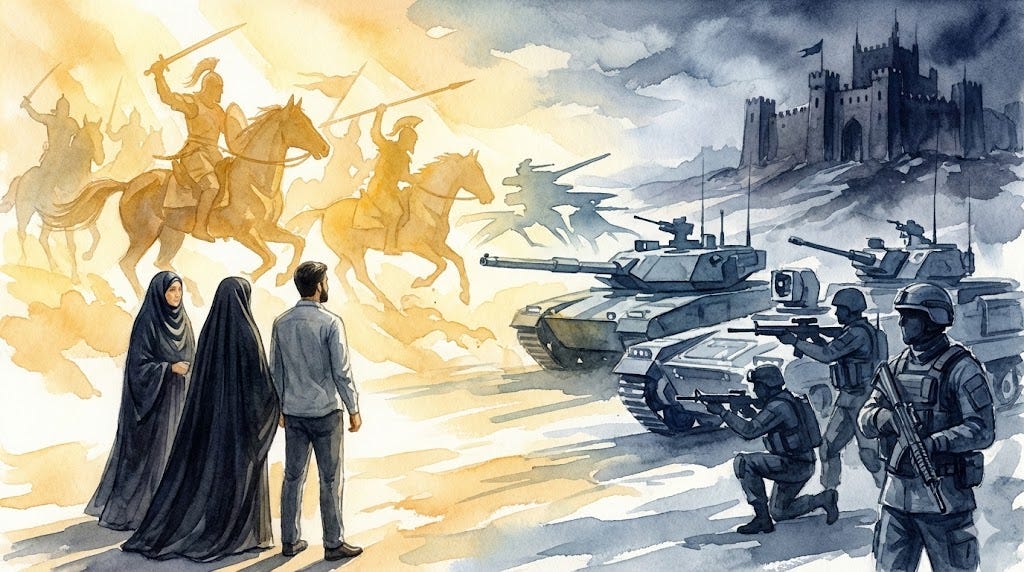
While wara’ purifies the vessel, it does not fill the arsenal.
The Imam is the “avenger” (al-muntaqim).
He is the “destroyer of the structures of shirk (polytheism).”
This mission requires strength and power.
God does not suggest that we become strong; He commands it with an imperative verb that echoes through the corridors of time.
He speaks to the believers in the Age of Occultation just as He spoke to the warriors of Badr:
وَأَعِدُّوا لَهُمْ مَا اسْتَطَعْتُمْ مِنْ قُوَّةٍ وَمِنْ رِبَاطِ الْخَيْلِ تُرْهِبُونَ بِهِ عَدُوَّ اللَّهِ وَعَدُوَّكُمْ
“And prepare against them whatever you are able of power and of steeds of war by which you may terrify the enemy of God and your enemy.”
— Qur’an, Surah Al-Anfal (the Chapter of the Spoils of War) #8, Verse 60
The Tafsir (Exegesis) of Unlimited Potential
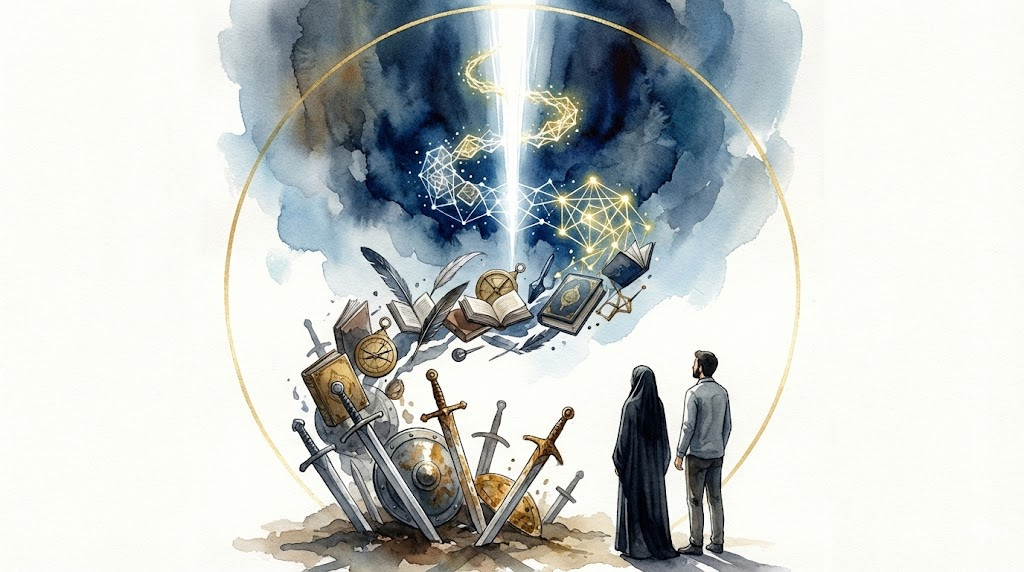
What is quwwah (power)?
Is it merely swords and arrows?
Allamah Tabatabai, in Al-Mizan, shatters the notion of antiquated warfare.
He explains that the indefinite form of the word “quwwah” implies that the means of power evolve with time.
The command is open-ended: whatever technology, whatever science, whatever strategy is required to deter the enemy of that specific age is a religious obligation:
إِنَّ الْأَمْرَ بِالتَّهْيِئَةِ لِإِرْهَابِهِمْ... يَعُمُّ كُلَّ مَا يَصْدُقُ عَلَيْهِ اسْمُ الْقُوَّةِ مِنَ الْعَدَدِ وَالْعُدَّةِ... سَوَاءٌ كَانَ ذَلِكَ مِنْ قَبِيلِ السِّلَاحِ الْمَعْهُودِ... أَوْ غَيْرِ ذَلِكَ مِمَّا يَتِمُّ بِهِ التَّقَوِّي
“The command to prepare for terrifying them... encompasses everything upon which the name of ‘power’ applies, in terms of numbers and equipment... whether that is of the known weaponry [of the past] or other things through which strength is perfected.”
— Allamah Tabatabai, Al-Mizan fi Tafsir al-Qur’an, Volume 9, Commentary on Surah Al-Anfal Verse 60
Shaykh Ali ibn Ibrahim al-Qummi, in the earliest Shia exegesis, links this verse directly to weaponry.
He narrates from the Imams that in the End Times, the preparation of weapons is not just permitted; it is the hallmark of the waiter:
مِنْ قُوَّةٍ، قَالَ: السِّلَاحُ
“(Regarding) ‘Of Power’, he said: [It means] Weaponry.”
— Al-Qummi, Tafsir, Volume 1, Page 277
Deterrence, Not Terror
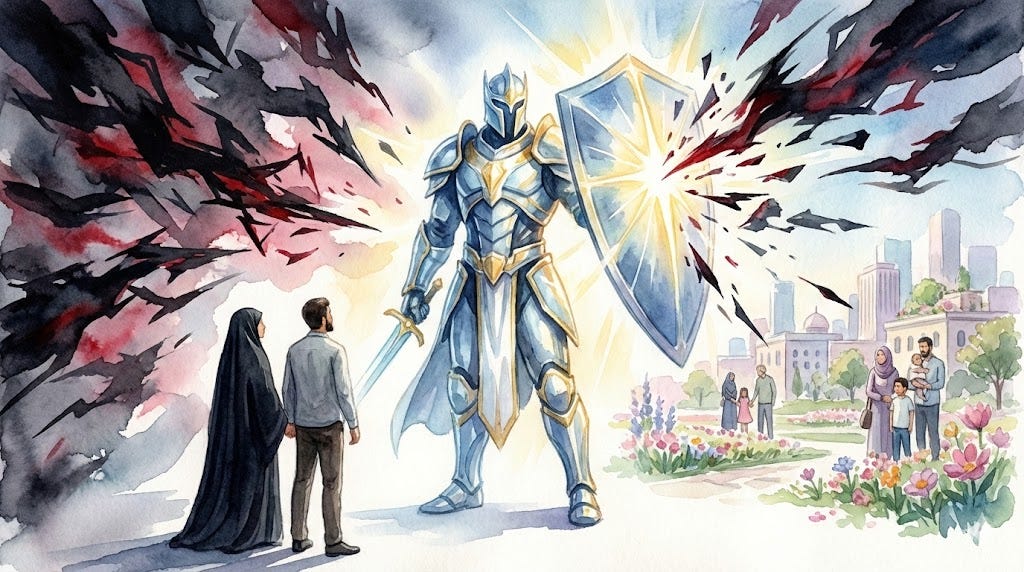
We must be hyper-vigilant in clarifying the Qur’anic terminology to prevent its weaponisation against us.
When the Qur’an says “to terrify (turhibuna) the enemy,” it does not mean “terrorism” (irhab) in the modern sense of killing innocents or spreading chaos.
It means deterrence.
It means possessing such strength, dignity, and capability that the enemy is too afraid to attack you.
It is the difference between a criminal who stabs people in the street (terrorist) and a strong guard whose mere presence prevents the crime (deterrent).
The Resistance movements do not target civilians; they defend civilians.
They do not spread chaos; they create order in the face of occupation.
This distinction is not semantic — it is the difference between the path of the Prophets and the path of Pharaoh.
The Jurisprudence of Defence
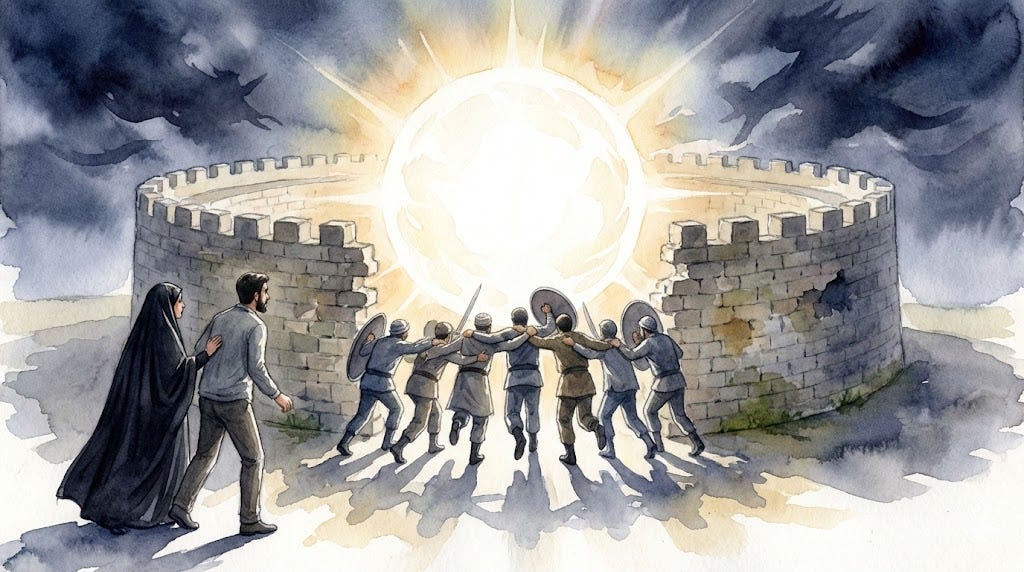
The Master of Jurists, Ayatullah al-Khui, establishes that the defence of the “The Existential Core of Islam” (Baydat al-Islam) — meaning the core existence of the faith — is a logical and legal absolute.
If the enemy possesses capabilities that the believers lack, the believers are in a state of sin until they bridge that gap.
Preparation is not recommended (mustahab); it is entirely obligatory (wajib):
وُجُوبُ الدِّفَاعِ عَنِ الْمُسْلِمِينَ وَحَوْزَةِ الْإِسْلَامِ... مِنْ أَهَمِّ الْوَاجِبَاتِ الشَّرْعِيَّةِ
“The obligation of defending the Muslims and the sanctuary of Islam... is among the most important of religious obligations.”
— Ayatullah al-Khui, Minhaj al-Salihin, Volume 1, Book of Jihad, Issue 29
The Intellectual Arsenal
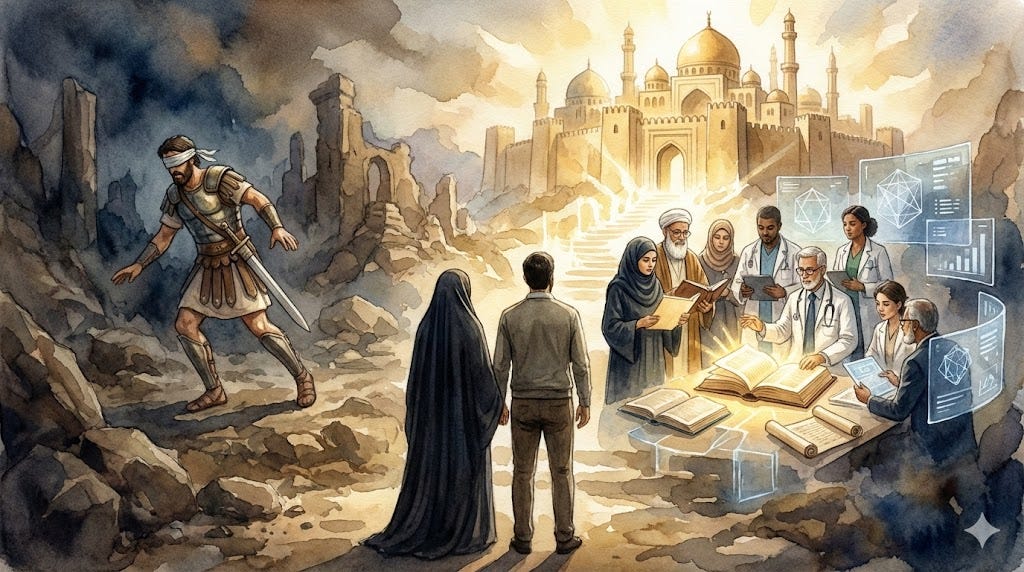
Ayatullah Jawadi-Amoli adds a crucial dimension: physical power without intellectual power is blind.
In the age of AI and media warfare, “quwwah” includes academic excellence.
A believer who fails in school, who lacks professional expertise, or who is ignorant of modern politics is a weak link in the Mahdi’s defence line:
قُوَّةُ الْعِلْمِ هِيَ الْأَسَاسُ... الْجَهْلُ ضَعْفٌ، وَالْمُؤْمِنُ الْقَوِيُّ خَيْرٌ وَأَحَبُّ إِلَى اللَّهِ مِنَ الْمُؤْمِنِ الضَّعِيفِ
“The power of knowledge is the foundation... Ignorance is weakness, and the strong believer is better and more beloved to God than the weak believer.”
— Ayatullah Jawadi-Amoli, Tasnim Tafsir (Concept summarised from commentary on Surah Al-Anfal Verse 60)
The School of the Vanguard
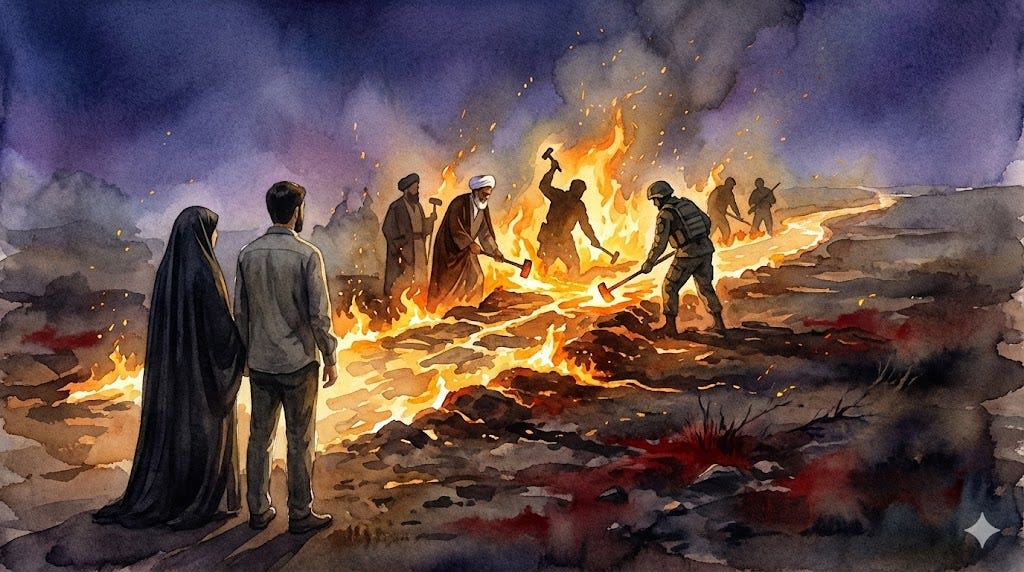
This theology was not left in books; it was forged in fire by the commanders who paved the way. Let us learn from those who embodied these principles — some with their blood, others with their ongoing sacrifice.
Hajj Qassem Soleimani: The Field as Mosque
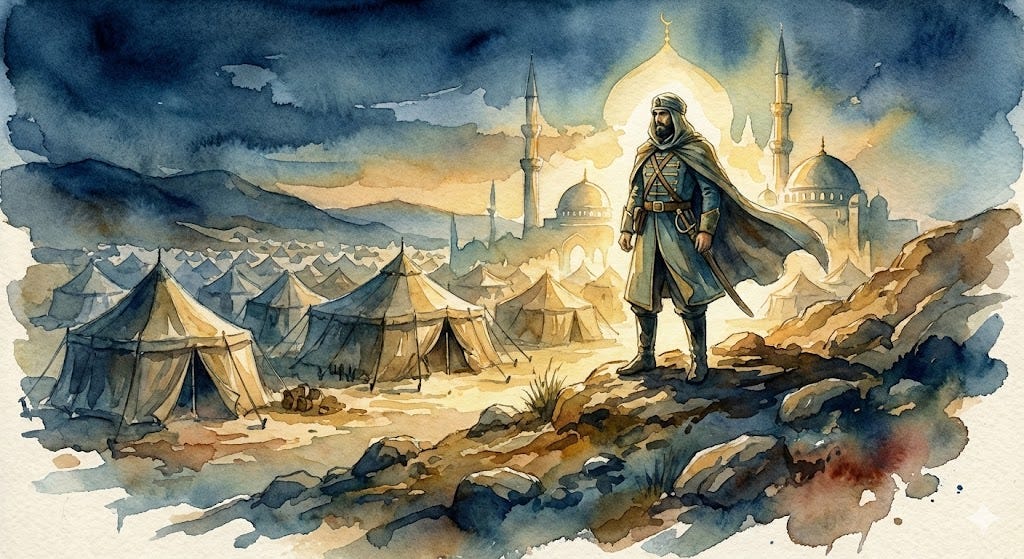
The Commander of Hearts, Hajj Qassem Soleimani, taught that the battlefield is a mosque.
He did not wait for the Imam to arrive to build the army; he built the army so the Imam could arrive.
He defined the “Camp of Husayn” as a place of constant operational readiness:
ما ملت امام حسینیم... ما ملت شهادتیم... باید به این بلوغ برسیم که نباید دید، باید شناخت
“We are the nation of Imam Husayn... We are the nation of martyrdom... We must reach this maturity: that one must not [just] look, one must recognise. We must be the sanctuary.”
— Hajj Qassem Soleimani, Speech in Hamedan, 2018
Hajj Imad Moughniyeh: The Silent Architect

The Ghost, Hajj Imad Moughniyeh, embodied the phrase “whatever you are able.”
He took a dispossessed people in South Lebanon and transformed them into a force that shattered the myth of the invincible army.
His philosophy was simple: remove the excuse of weakness.
As the martyr, Sayyed Hassan Nasrallah described him:
كَانَ عِمَادُ مُغْنِيَةَ الرَّجُلَ الَّذِي يَعْمَلُ فِي اللَّيْلِ وَالنَّهَارِ... لِيَصْنَعَ النَّصْرَ، لَا لِيَنْتَظِرَهُ
“Imad Moughniyeh was the man who worked day and night... to manufacture victory, not to wait for it.”
— Sayyed Hassan Nasrallah, Speech on the Anniversary of the Martyred Leaders, 2009
Sayyed Abdul Malik al-Houthi: The Qur’anic Iron
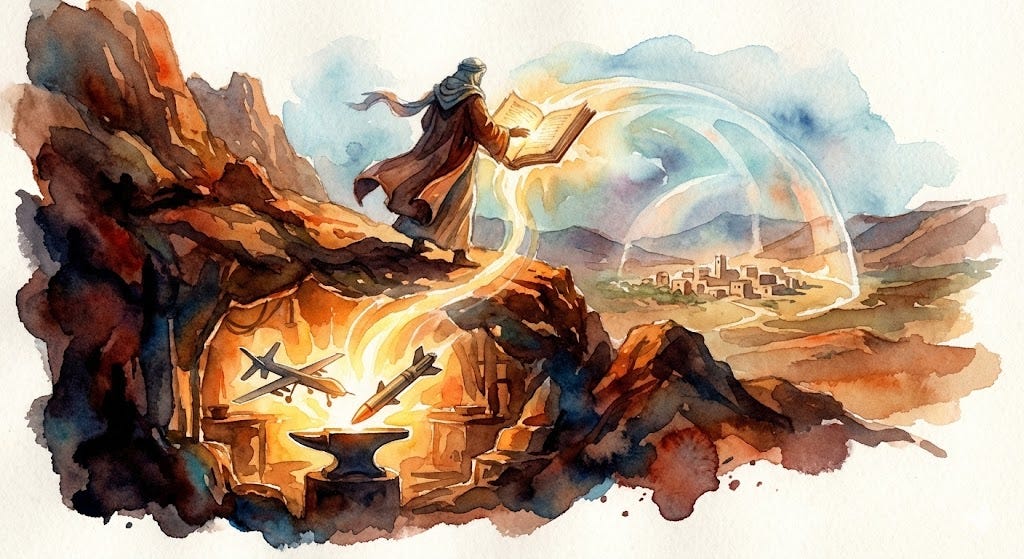
From the mountains of Yemen, Sayyed Abdul Malik al-Houthi revived the specific Qur’anic doctrine of “iron” (hadid).
He teaches that military manufacturing is an act of worship.
To build a drone or a missile to defend the oppressed is to manifest the verse of quwwah:
إِنَّ إِعْدَادَ الْقُوَّةِ لِمُوَاجَهَةِ الطُّغَاةِ هُوَ جُزْءٌ أَسَاسِيٌّ مِنْ إِيمَانِنَا وَمِنْ الْتِزَامِنَا بِالْقُرْآنِ
“Indeed, the preparation of power to confront the tyrants is a fundamental part of our faith and our commitment to the Qur’an.”
— Sayyed Abdul Malik al-Houthi, Speech on the Anniversary of the Sarkha (the Slogan), 1442 AH (2021 CE)
Yahya Sinwar: The Prison as Academy

Finally, we look to the martyr Yahya Sinwar.
He spent 22 years in the prisons of the occupation.
Did he sit and count the days?
No.
He turned the prison into an academy.
He learned the language of the enemy (Hebrew) perfectly.
He studied their psychology, their politics, their weaknesses.
He embodied the narration:
الْمُؤْمِنُ كَيِّسٌ فَطِنٌ
“The believer is intelligent and astute.”
— Al-Majlisi, Bihar al-Anwar, Volume 64, Page 307
His preparation in the dungeon was the foundation for the Flood that would later shake the world.
He taught us that intidhaar means that even if you are in chains, you are sharpening your mind for the moment the chains break.
The Roll Call of the Mahdi

The Imam does not need a mob; he needs a structure.
He needs doctors who are the best in their fields.
He needs engineers who can rebuild civilisations.
He needs strategists who understand geopolitics.
He needs journalists who are honourable and righteous.
He needs artists who are filled with true love and the spirit of justice.
He needs scholars who refuse to allow themselves to be corrupted.
He needs bodies that are fit for the rigours of global justice.
To be out of shape, to be uneducated, to be strategically illiterate — this is to be absent from the roll call of the Mahdi.
Lesson for the Present: The Jihad (Struggle) of Competence
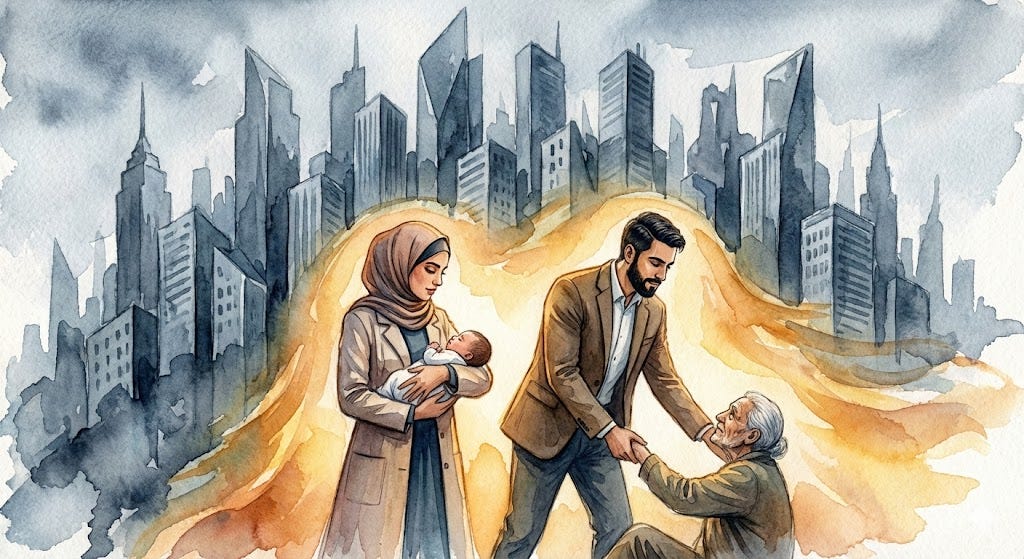
We must contextualise “power” (quwwah) for our specific time and place.
For those living in the West, “preparation” does not mean hostility toward our fellow citizens.
The “enemy” we face in these lands is not the ordinary civilian, nor is it the soldier sent as cannon fodder into pointless wars by corrupt elites.
Our enemy is the Oligarchy and the Culture of Death they have engineered — a system that destroys the family, the unborn, and the elderly for profit and control.
Therefore, our “weaponry” must adapt.
We fight the system by saving the people it tries to destroy.
Against the Culture of Death
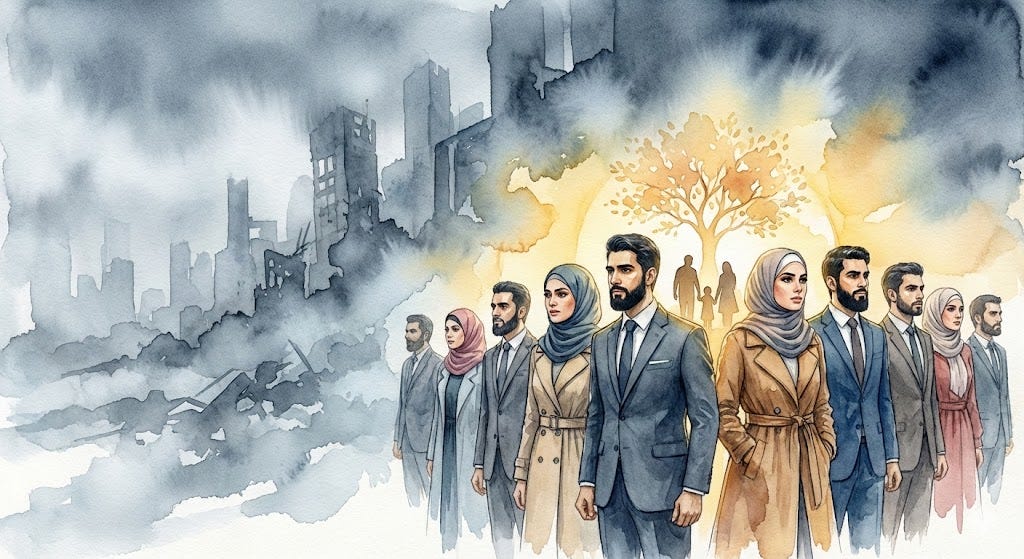
The West is currently enforcing a state-sanctioned dismantling of the sanctity of life.
Each of the fronts I am about to name deserves its own dedicated session — and God willing, we will return to them in depth.
But the soldier of the Mahdi must at least know the terrain of the battle, even before studying each position in detail.
Our preparation for the Imam includes standing firm on these fronts:
The Defence of the Unborn

We must be the defenders of those who cannot speak for themselves.
Abortion is the ultimate oppression against the most defenceless — and to oppose it is to prepare the way for the Mahdi, who is the servant of the Giver of Life, sent to revive the earth’s humanity.
The Defence of the Elderly
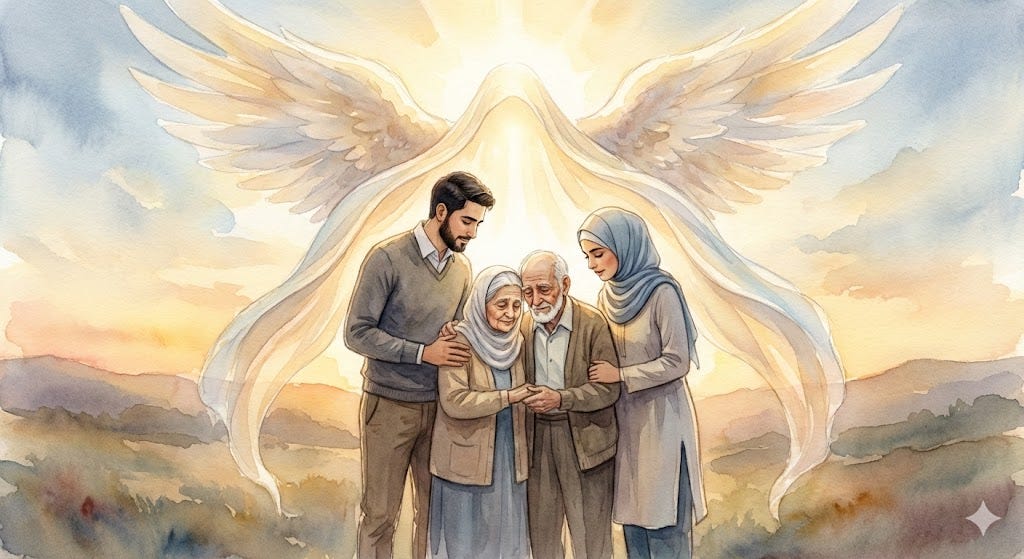
We must oppose the legalisation of state-sanctioned killing of the elderly — the generation that raised us.
To view them as a “burden” to be discarded is the logic of jahiliyyah (ignorance).
We honour our elders as the Prophet taught and as the Qur’an commands:
وَقَضَىٰ رَبُّكَ أَلَّا تَعْبُدُوا إِلَّا إِيَّاهُ وَبِالْوَالِدَيْنِ إِحْسَانًا ۚ إِمَّا يَبْلُغَنَّ عِندَكَ الْكِبَرَ أَحَدُهُمَا أَوْ كِلَاهُمَا فَلَا تَقُل لَّهُمَا أُفٍّ وَلَا تَنْهَرْهُمَا وَقُل لَّهُمَا قَوْلًا كَرِيمًا * وَاخْفِضْ لَهُمَا جَنَاحَ الذُّلِّ مِنَ الرَّحْمَةِ وَقُل رَّبِّ ارْحَمْهُمَا كَمَا رَبَّيَانِي صَغِيرًا
And your Lord has decreed that you not worship except Him, and to parents, good treatment. Whether one or both of them reach old age [while] with you, say not to them [so much as], “uff,” and do not repel them but speak to them a noble word. And lower to them the wing of humility out of mercy and say, “My Lord, have mercy upon them as they brought me up [when I was] small.”
— Qur’an, Surah Al-Isra (the Chapter of the Night Journey) #17, Verses 23-24
The Defence of the Family

As we discussed in our series Wilayah in the Home, the family unit is the fortress of faith and indeed of society.
To oppose the ease of divorce and the disintegration of traditional roles is a strategic act of defence.
The Power of Character

These defences — of life, of the elderly, of the family — are not won through aggression but through example.
The Prophet did not conquer hearts with a sword; he conquered them with a character so sublime it disarmed his enemies.
We recall the authentic history of the Battle of Badr.
After the first military victory of Islam, the Prophet did not execute the prisoners.
He established a “Ransom of Knowledge.”
Any prisoner who could teach ten Muslims to read and write earned his freedom.
جَعَلَ رَسُولُ اللَّهِ فِدَاءَ بَعْضِ أَسْرَى بَدْرٍ
أَنْ يُعَلِّمَ الرَّجُلُ مِنْهُمْ عَشَرَةً مِنْ أَوْلَادِ الْأَنْصَارِ الْكِتَابَةَ،
فَمَنْ عَلَّمَهُمْ ذٰلِكَ فَهُوَ حُرٌّ.The Messenger of God made the ransom of some of the captives of Badr that a man among them should teach ten of the children of the Ansar writing.
Whoever taught them that was free.— Ibn Hanbal, al‑Musnad (Musnad al‑Ansar / reports on Badr)1
This established the eternal doctrine: Education is more valuable than revenge.
The Prophet Muhammad has taught us clearly:
وَمَا كَانَ رِفْقٌ فِي شَيْءٍ قَطُّ إِلَّا زَانَهُ، وَلَا كَانَ الْخُرْقُ فِي شَيْءٍ قَطُّ إِلَّا شَانَهُ
“Kindness is never found in a thing except that it beautifies it, and harshness is never found in a thing except that it disgraces it.”
— Al-Kulayni, Al-Kafi, Volume 2, Page 119
The lesson for us is clear: in the West, our “power” is our utility.
We must be the best doctors, the most honest accountants, and the most helpful neighbours.
We must be so integral to society that they cannot ignore our truth.
Civic Courage
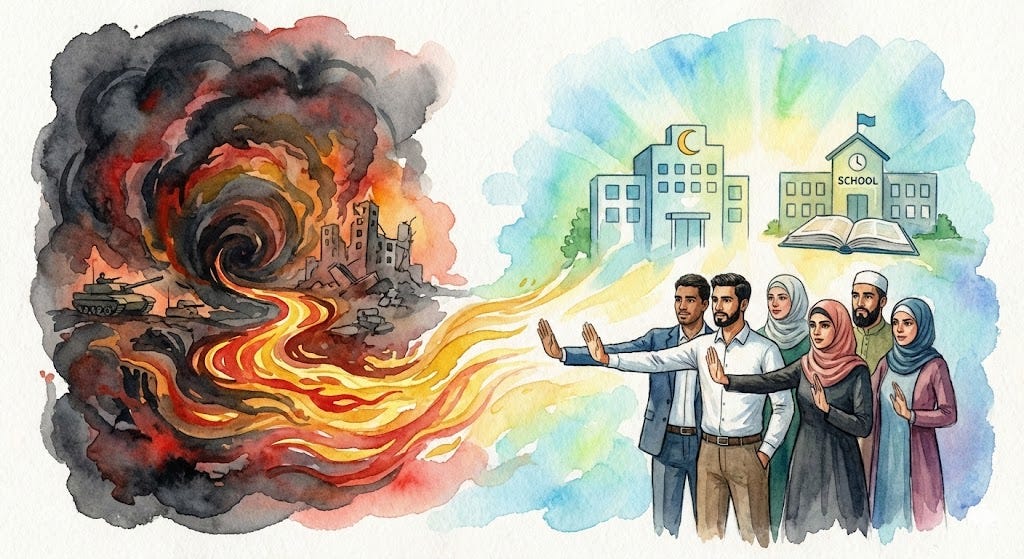
We must stand against the use of our tax resources for genocide.
It is a form of intidhaar to speak out against the diversion of wealth from healthcare and education to the funding of foreign wars.
This is “enjoining the good” on a systemic level.
The Universal Prohibition of Treachery

We must explicitly condemn the practice where individuals take out large loans from banks in non-Muslim countries with the specific intention of fleeing to Muslim countries without repaying them.
In Islam, there is a technical term for this: theft (sariqah).
To consume wealth through deception is haram under all circumstances.
It brings the curse of God, not His blessing.
A soldier of the Mahdi cannot build a house on stolen money.
Our standard is the Universal Exemplar.
God declares in the Holy Qur’an:
لَقَدْ كَانَ لَكُمْ فِي رَسُولِ اللَّهِ أُسْوَةٌ حَسَنَةٌ لِمَنْ كَانَ يَرْجُو اللَّهَ وَالْيَوْمَ الْآخِرَ
“You have indeed in the Messenger of God a beautiful exemplar (of conduct) for anyone whose hope is in God and the Final Day.”
— Qur’an, Surah Al-Ahzab (the Chapter of the Confederates) #33, Verse 21
This “beautiful exemplar” was honest with the friend and the enemy alike.
He was known as al-amin (the trustworthy) by the very pagans who sought to kill him.
To betray a trust — even the trust of a financial contract with a secular bank — is to betray the sunnah of the Prophet.
Call to Clarify: Refuting the Slander of Criminality
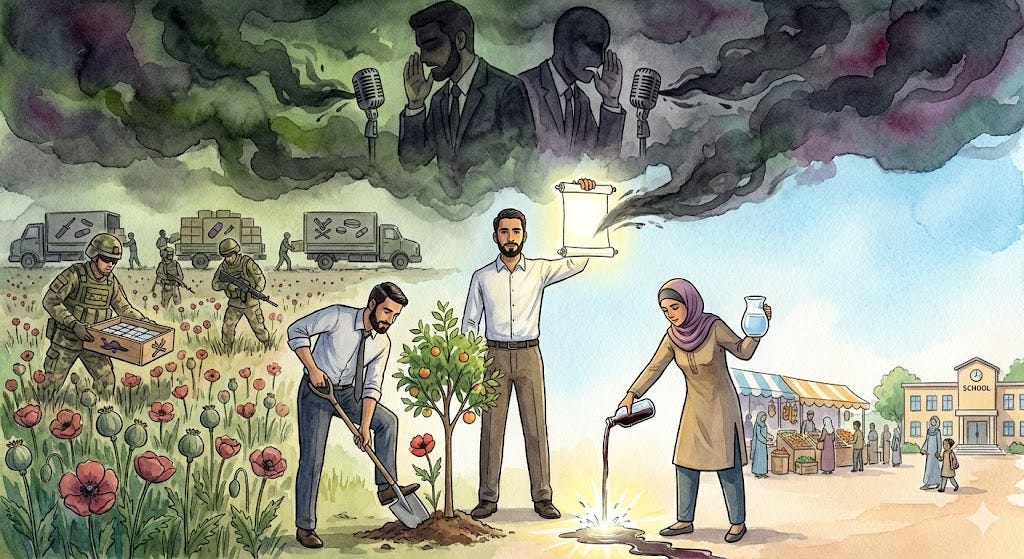
We must also address the malicious propaganda propagated by corrupt media oligarchs and politicians, who accuse resistance movements of funding themselves through drug trafficking and crime.
These accusations are baseless projections designed to delegitimise the defence of the oppressed.
The resistance is bound by Shari’ah.
To sell poison to humanity — whether drugs or vice — is an act of war against God.
History exposes who the real drug kingpins are.
Reports from the United Nations Office on Drugs and Crime (UNODC) confirm that in 2000/2001, under the strict religious ban of the Taliban in Afghanistan, opium poppy cultivation fell by 91%, almost to zero.
Yet, immediately following the US invasion and the so-called “War on Terror,” opium production skyrocketed to historical highs under the eyes of the occupation forces:
“In July 2000, Taliban leader Mullah Omar argued that opium was against Islam and banned its cultivation... The ban was effective... production fell by 91 per cent.”
— United Nations Office on Drugs and Crime (UNODC), World Drug Report 2003, Chapter 2, Page 99
However, immediately following the US invasion in late 2001, the production skyrocketed.
By the very next harvest in 2002, under the eyes of the occupation forces, it surged back to 3,400 tons.
“The 2002 opium poppy harvest... is estimated to be around 3,400 tons... The resumption of opium poppy cultivation in 2002... brings Afghanistan back to the levels of the mid-1990s.”
— United Nations Office on Drugs and Crime (UNODC), Afghanistan Opium Survey 2002, Executive Summary, Page 1
This trend continued unchecked. By 2017, with thousands of foreign troops on the ground, production hit a historical record.
“Opium production in Afghanistan increased by 87 per cent to a record level of 9,000 metric tons in 2017.”
— United Nations Office on Drugs and Crime (UNODC), Afghanistan Opium Survey 2017, Executive Summary, Page 6
The data forces a difficult question:
How did a “primitive” militia (the Taliban) successfully ban drugs in one year, while the world’s most advanced military alliance (NATO/ISAF) oversaw a 4,000% increase in production over 20 years?
Therefore, criminality is the tool of the occupier, not the resistor.
We must be clear: a Muslim who sells drugs, commits theft, or engages in violence against innocents is not serving the Cause; he is serving the Enemy.
Just because a criminal has a “Muslim” name, or claims to be a “Muslim” does not mean his actions represent Islam, any more than a Christian criminal represents Christianity or a Jewish criminal represents Judaism.
Those who seek to paint entire communities as criminals are described by the Qur’an as the true agents of corruption.
They are the ones who create strife while claiming to be peacemakers:
وَإِذَا قِيلَ لَهُمْ لَا تُفْسِدُوا فِي الْأَرْضِ قَالُوا إِنَّمَا نَحْنُ مُصْلِحُونَ * أَلَا إِنَّهُمْ هُمُ الْمُفْسِدُونَ وَلَكِنْ لَا يَشْعُرُونَ
“And when it is said to them, ‘Do not cause corruption on the earth,’ they say, ‘We are but reformers.’ Unquestionably, it is they who are the corrupters, but they perceive [it] not.”
— Qur’an, Surah Al-Baqarah (the Chapter of the Cow) #2, Verses 11-12
Allamah Tabatabai explains in Al-Mizan that this verse refers to the hypocrites (al-munafiqun) — those who destroy the moral fabric of society while controlling the narrative to appear as saviours.
He explains that their persistence in sin inverts their perception, making them see their destruction as construction:
وَهَذَا مِنَ الْخُدْعَةِ النَّفْسِيَّةِ... فَإِنَّ الْإِنْسَانَ إِذَا أَلِفَ شَيْئاً وَخَضَعَتْ لَهُ نَفْسُهُ صَوَّرَتْهُ لَهُ النَّفْسُ فِي صُورَةِ الْحَقِّ وَالْإِصْلَاحِ... وَهِيَ دَاءٌ عُضَالٌ لَا يُرْجَى لَهُ بُرْءٌ
“This is a psychological deception... for when a human being becomes accustomed to something [like corruption] and his soul submits to it, his soul portrays it to him in the form of truth and reform... and this is a chronic disease for which there is no hope of cure.”
— Allamah Tabatabai, Al-Mizan fi Tafsir al-Qur’an, Volume 1, Commentary on Surah Al-Baqarah, Verses 11-12
We must not allow their narrative to define us.
The Waiter for the Mahdi is the most honourable citizen, the most honest trader, and the most dignified neighbour — because he represents the Government of Justice.
The Prelude to Governance: From Soldier to Structure
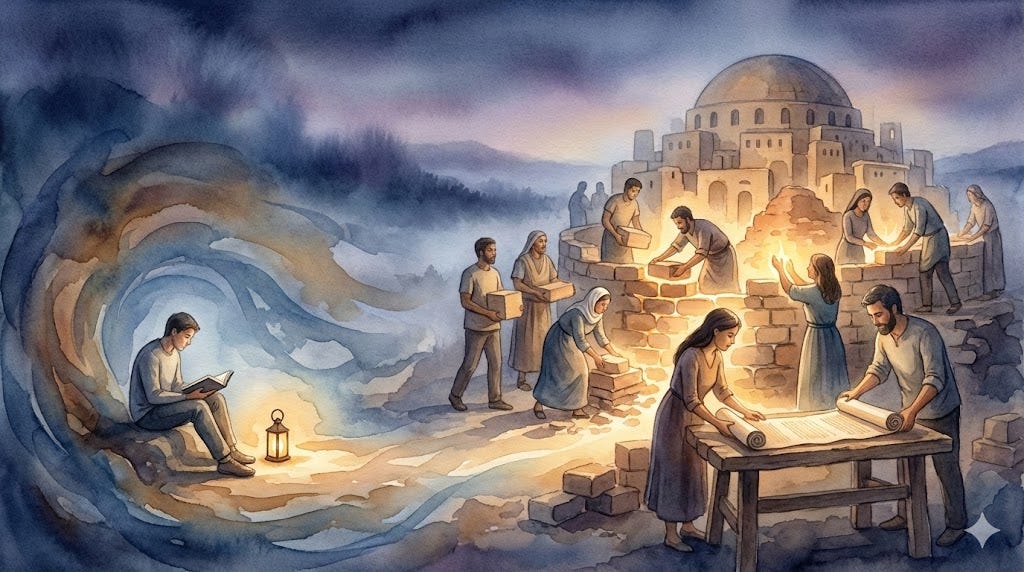
We have discussed the individual soldier — the work of self-building. Now we must discuss the collective structure.
A common misconception is that the Mahdi will arrive and build his government from zero, using miracles to erect institutions overnight in a vacuum.
This contradicts the sunnah (tradition) of God.
When the Prophet Muhammad (peace and blessings be upon him and his family) migrated to Madinah, he did not wait for angels to build the mosque, the market, or the constitution.
He built a system.
He organised.
He legislated.
He governed.
The Mahdi is coming to govern the globe.
Such a mission requires a foundation — a community that has moved beyond individual piety to establish collective justice.
You cannot invite the leader if you have not built the infrastructure for his rule.
Tamheed: Paving the Way
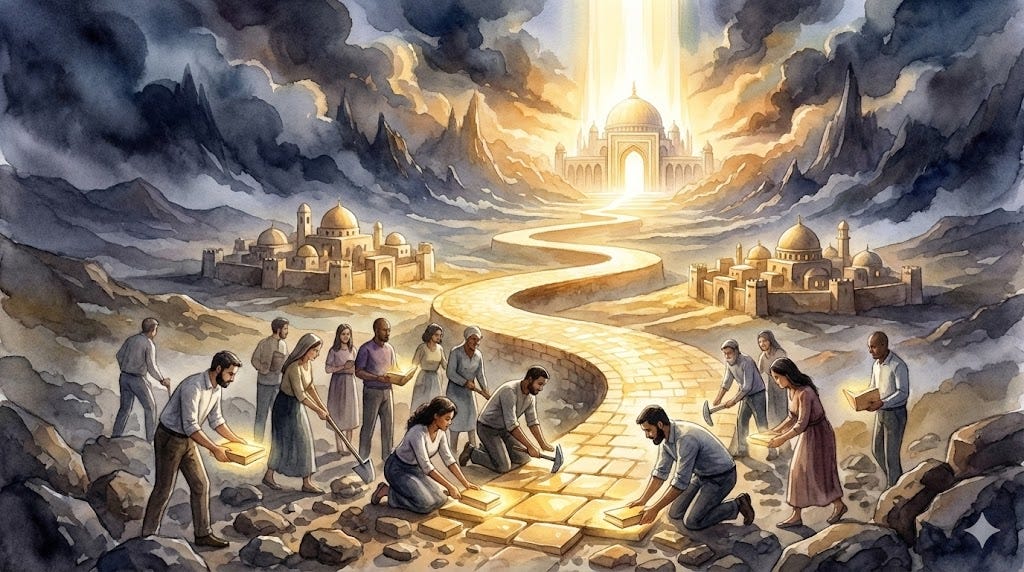
This collective preparation is what our scholars call tamheed — the act of smoothing the path, of paving the way.
It implies that before the Global Government of Justice can be established, there must be prototype governments or communities of justice that serve as the landing strip.
The Imam does not need a location on a map; he needs a location in the political reality of the world — a stronghold where the laws of God are respected and the oppressed are defended.
This is not about East or West; it is about haqq (truth) versus batil (falsehood).
Wherever a community organises itself to resist tyranny and establish justice, they are performing tamheed.
The Revolution as Proof of Concept
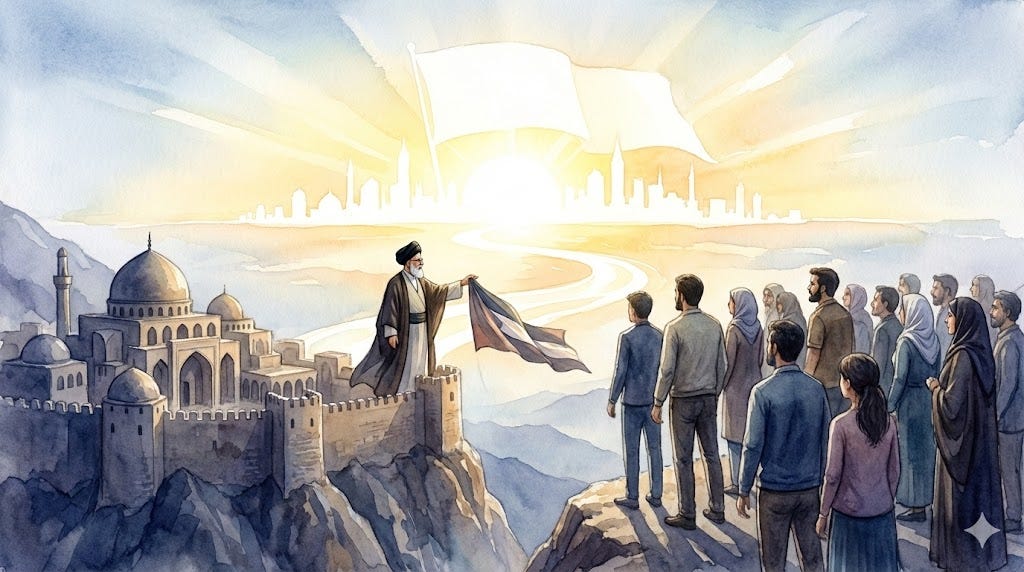
This brings us to the significance of the Islamic Revolution.
We do not view this system merely through the lens of nationalism or geography.
We view it through the lens of intidhaar.
For centuries, the believers waited passively.
Then, Imam Khomeini rose to demonstrate that waiting can take the form of governance.
He established a system that is unique in human history because it is constitutionally designed to be temporary.
It explicitly declares that the true ruler is the Twelfth Imam, and the current governance is merely a trusteeship holding the fort until his arrival:
اِنْقِلَابُ مَرْدُمِ اِیرَانْ نُقْطَةِ شُرُوعِ اِنْقِلَابِ جَهَانِيِّ اِسْلَامْ بِه پَرْچَمْدَارِيِّ حَضْرَتِ حُجَّتْ اَسْتْ
“The revolution of the people of Iran is the starting point of the global revolution of Islam under the banner of His Holiness the Hujjah (Imam Mahdi).”
— Imam Khomeini, Sahifeh-ye Imam, Volume 21, Page 327
This is the model.
It proves that it is possible to run a modern state not on the laws of the jungle, but on the anticipation of the Saviour.
It is a “Proof of Concept” for the world to see.
The Universal Front
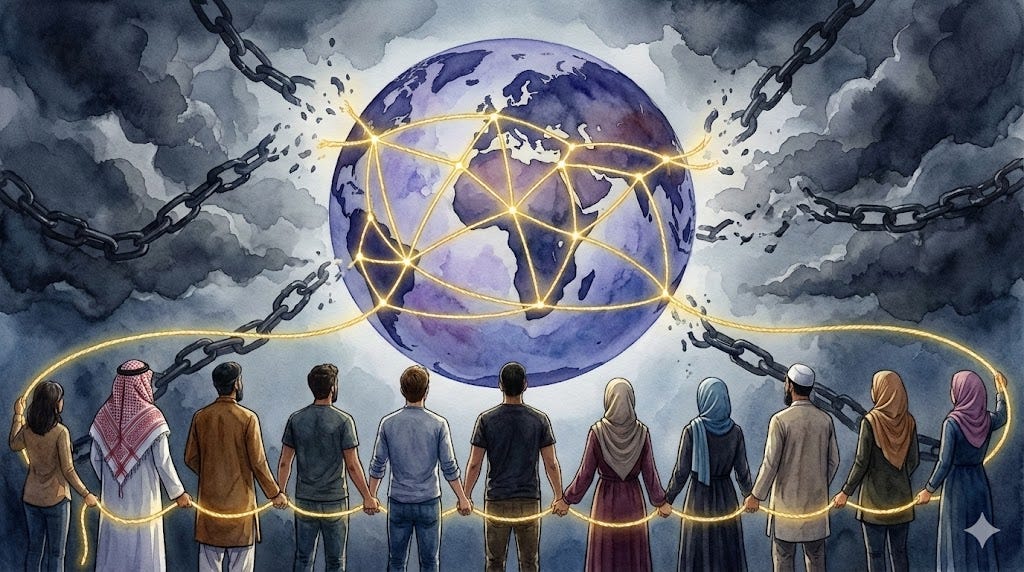
This model of tamheed is not limited to one country.
It has expanded into a universal front of resistance.
When we see communities — whether in West Asia, South East Asia, South America, Africa, or even movements in the collective West — standing up against global arrogance, they are building the infrastructure of the Mahdi.
Sayyed Hassan Nasrallah clarified that his organisation today is the training ground for the future.
You cannot expect to manage the affairs of the entire world under the Mahdi if you cannot manage a local resistance movement today:
لا يُمْكِنُكَ أَنْ تَكُونَ مَعَ الْحُسَيْنِ وَأَنْتَ عَلَى الْحِيَادِ... الْمُقَاوَمَةُ هِيَ التَّمْهِيدُ الْعَمَلِيُّ
“You cannot be with Husayn while you are neutral... Resistance is the practical paving of the way.”
— Sayyed Hassan Nasrallah, Compiled Speeches on Mahdawiyyah
From Good Individuals to Just Systems
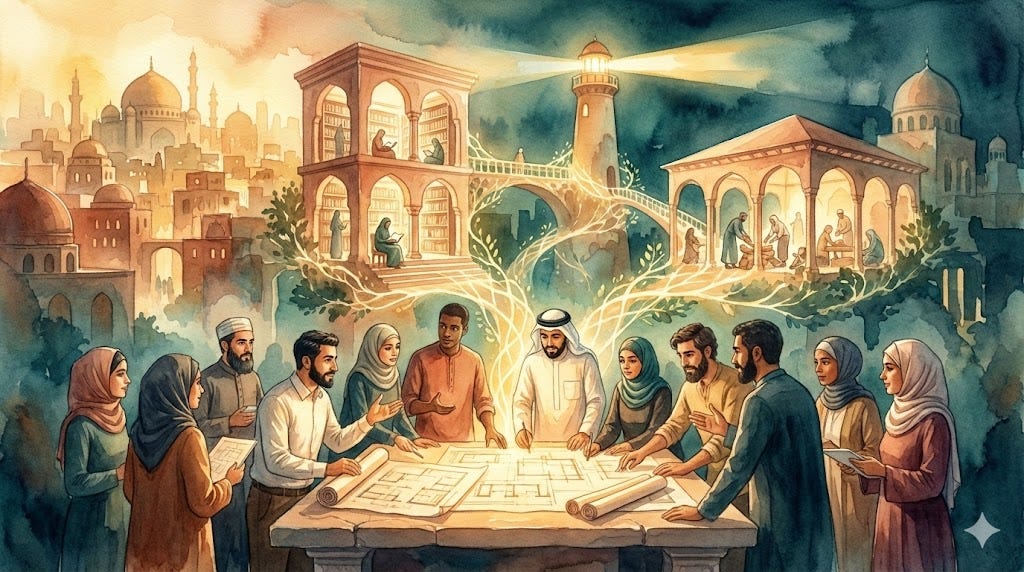
Therefore, intidhaar requires us to move from being “good individuals” to building “just systems.”
If you build an institution that helps the poor, you are paving the way.
If you establish a media platform that speaks truth, you are paving the way.
If you create a community centre that educates the youth, you are paving the way.
We are building a civilisation, not a monastery.
The Mahdi is not coming to lead a prayer circle; he is coming to govern humanity.
And governors need governors-in-training.
The War Against the Infrastructure of Justice
We have spoken of what we must build: the purity of the self, the strength of the body and mind, the competence of the professional, the integrity of the citizen.
We have spoken of tamheed — paving the way for the Imam through the construction of just individuals and just systems.
But we must also understand what we are building against.
For just as we labour to construct the infrastructure of the Imam’s return, the forces of arrogance labour to destroy it.
If tamheed is the strategy of the believers, then the destruction of tamheed is the strategy of the enemy.
They cannot defeat the idea, so they try to starve it, sanction it, and slander it.
Let us examine their methods with clear eyes.
The Inversion of Language

We must open our eyes to the blatant hypocrisy of the Global Arrogance.
While Western regimes proscribe and criminalise peaceful anti-genocide groups in their own capitals, they simultaneously work to “de-proscribe” and normalise entities in Syria that are essentially Al-Qaeda and DAESH rebranded.
They label the defenders of humanity as terrorists, while providing air cover and political legitimacy to the eaters of livers and the destroyers of shrines.
This is the clarity of the End Times: the masks have fallen.
The inversion of language — calling truth falsehood and falsehood truth — is the signature of the Satanic system.
We must not be fooled by their vocabulary.
Economic Terrorism: The Siege of the Faithful
We must also clarify the nature of the war being waged against the Camp of the Mahdi.
It is not just military; it is economic.
The so-called “Caesar Act” sanctions imposed on Syria and Lebanon are, by textbook definition, terrorism.
Terrorism is defined as “the unlawful use of violence or intimidation against civilians in the pursuit of political aims.”
When you blockade medicine, fuel, and bread to starve a civilian population into political submission, that is economic terrorism.
They try to starve the base of the Mahdi because they cannot defeat it on the battlefield.
Every child who dies for lack of medicine in a sanctioned hospital is a martyr of this silent war. And those who sign these sanctions will answer for every drop of blood.
The Crime of the Ceasefire
Finally, observe the events of late 2024 and 2025.
A ceasefire was agreed upon.
The Resistance in Lebanon and Gaza — men of honour and religion — abided by their word.
Yet the Occupying Regime, supported by the collective West, did not cease its fire for a single day.
They continued their genocidal rampage, proving that they have no covenant, no honour, and no humanity.
This betrayal is a major crime, but it serves a divine purpose:
It removes the last shreds of doubt from the hearts of the people.
It proves that there is no negotiation with absolute evil.
The masks have not just slipped; they have shattered.
To those who perpetrate these crimes, and to those who issue token statements of concern while supplying the bombs, we recite the promise of the Qur’an:
وَسَيَعْلَمُ الَّذِينَ ظَلَمُوا أَيَّ مُنْقَلَبٍ يَنْقَلِبُونَ
“And those who have wronged are going to know to what [kind of] return they will be returned.”
— Qur’an, Surah Ash-Shu’ara (the Chapter of the Poets) #26, Verse 227
Lesson for the Present: Theopolitics, Not Geopolitics
The lesson for us today is to elevate our consciousness from “geopolitics” to “theopolitics.”
When we show solidarity with the oppressed and those who resist global tyranny, we are not merely taking a political stance.
We are aligning ourselves with the Camp of Justice — the camp that will be led by the Imam upon his emergence.
We must realise that the Global Arrogance (istikbar-e jahani) attacks these movements not because of their ethnicity or geography, but because they represent the refusal to bow to anyone other than God.
They hate the Spirit of Resistance because it is the spirit of the Mahdi.
Therefore, our solidarity is not a matter of political partisanship; it is a matter of religious obligation to the mustad’afeen (the oppressed).
We stand with those who are bombed, starved, and besieged, regardless of the labels the media assigns them.
Our loyalty is to the Principle, not to any specific faction or party.
As the martyr Sayyed Muhammad Baqir al-Sadr famously declared regarding the imperative to support the establishment of divine rule:
ذُوبُوا فِي الْإِمَامِ الْخُمَيْنِيِّ كَمَا ذَابَ هُوَ فِي الْإِسْلَامِ
“Melt into Imam Khomeini, just as he has melted into Islam.”
— Ayatullah Shaheed Sayyed Muhammad Baqir al-Sadr, Message to his Students, 1979
He understood that the goal is not the glorification of a person or a state, but the dissolution of the self into the Truth.
We support the System of Justice wherever it manifests, and we oppose the System of Oppression wherever it strikes.
The lesson is unity: we cannot claim to await the Imam of the Oppressed while turning our backs on the oppressed of our time.
Call to Clarify: The Bridge of Deputyship
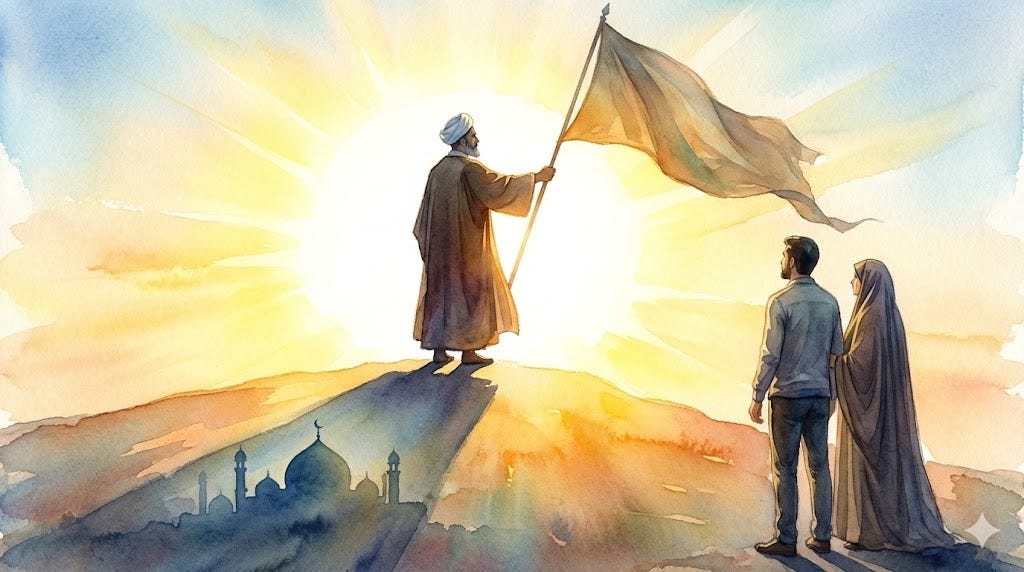
We must clarify the most controversial yet essential concept in our political theology:
Wilayah al-Faqih — the Guardianship of the Jurist.
The enemies of the Mahdi try to paint this as a dictatorship or a theocratic tyranny.
We must clarify: it is the Bridge of Deputyship.
In the absence of the infallible, society cannot be left to chaos or to the rule of the ignorant.
The Imam himself gave us the formula for the interim period.
He did not say “wait for me without a leader.” He said:
وَأَمَّا الْحَوَادِثُ الْوَاقِعَةُ فَارْجِعُوا فِيهَا إِلَى رُوَاةِ حَدِيثِنَا، فَإِنَّهُمْ حُجَّتِي عَلَيْكُمْ وَأَنَا حُجَّةُ اللَّهِ
“As for the newly occurring events, refer them to the narrators of our traditions (the Jurists), for they are my proof over you, and I am the Proof of God.”
— Al-Saduq, Kamal al-Din wa Tamam al-Ni’mah, Volume 2, Chapter 45, Hadith 4
The great philosopher, Ayatullah Jawadi-Amoli, clarifies that the Wali al-Faqih is not a replacement for the Imam, nor does he possess the Imam’s cosmic status.
He is a trustee who holds the banner so it does not fall in the mud before the Commander arrives.
He explains that the Jurist’s rule is a “shadow” that exists only to preserve the order until the “sun” appears, at which point the shadow naturally disappears:
وَلَايَةُ الْفَقِيهِ هِيَ ظِلُّ وَلَايَةِ الْمَعْصُومِ... وَفِي عَصْرِ الْغَيْبَةِ، الْفَقِيهُ الْجَامِعُ لِلشَّرَائِطِ نَائِبٌ عَامٌّ لِذَلِكَ الْحَضْرَةِ، لِيُسَلِّمَ تِلْكَ الْأَمَانَةَ إِلَى صَاحِبِهَا الْأَصْلِيِّ
“Wilayat al-Faqih is the shadow of the Wilayah of the Infallible... In the era of Occultation, the qualified Jurist is the General Deputy of His Holiness, [holding authority] in order to hand over that Trust (Amanah) to its Original Owner.”
— Ayatullah Jawadi-Amoli, Wilayat-e Faqih: Wilayat-e Fuqaha wa Adalat, Page 254
To attack the Deputy is to weaken the authority of the Principal.
We must explain to the world that this system is the only one designed to dissolve itself — to happily hand over power — the moment the Mahdi appears.
It is a system of stewardship, not ownership.
This topic — the theory and practice of Wilayah al-Faqih — deserves far more than these brief remarks.
God willing, once we complete our study of Mahdawiyyah and the periods of the Lesser and Greater Occultation, we will dedicate an entire series to the concept of Marja’iyyah (religious authority), which will then lead into a comprehensive treatment of Wilayah al-Faqih: its various forms, its theological foundations, and why the position articulated by Imam Khomeini represents the practically viable path for our age.
For now, let this introduction suffice as a doorway to that deeper study.
Conclusion: The Covenant Renewed
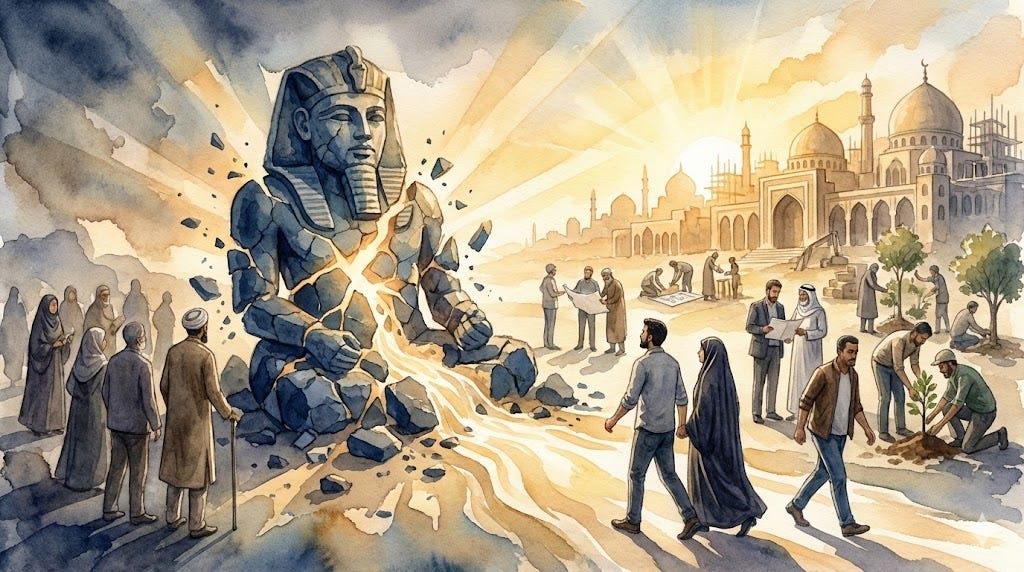
Tonight, we have shattered the idol of passivity.
We have reclaimed the word intidhaar from the grip of those who would turn waiting into sleeping.
We have established that waiting is not a posture of the body but a state of the soul — and that state is one of motion, not stagnation.
We have learned that the Imam is not delayed; we are delayed.
The occultation is not a divine punishment but a divine test — and the answer to that test is written in the choices we make every single day.
We have descended into the battlefield of the self and discovered that the uniform of the Mahdi’s army is not stitched from cloth but woven from wara’ — that scrupulous piety which stops at the amber light, not merely the red.
We have learned that the arsenal of the believer includes the rifle on the border and the intellect in the university, the discipline of the body and the sharpness of the mind.
And we have expanded our vision from the individual to the collective.
We have understood that tamheed — paving the way — requires not just good people but just systems, not just personal righteousness but institutional readiness.
We are not building a monastery; we are building a civilisation.
This is the covenant of intidhaar: to live every moment as if the trumpet could sound tomorrow, and to build every institution as if it must last a thousand years.
The Teaser: What Awaits

So now, we know who he is — Muhammad ibn al-Hasan al-Askari, the living Imam, the Witness of our deeds, the Heir of the Prophets.
We know what we must do — purify the self, strengthen the body and mind, and build the systems that will serve as the infrastructure of his return.
But this leaves us with the final, most beautiful question: what is the prize?
If we build this self, if we erect this system, what does the world look like when he finally emerges from behind the veil of anonymity and plants the banner of truth upon the earth?
Is it merely a world of battles won and enemies vanquished?
Or is it something far more profound — a world where the intellect is unchained from the shackles of ignorance, where poverty is not managed but erased, where the courts deliver justice so pure that the oppressor and the oppressed alike weep in gratitude?
The narrations speak of a time when the earth will pour forth its treasures, when knowledge will be so abundant that even the women in their homes will judge by the Book of God, when the wolf will drink alongside the lamb not because the wolf has changed its nature, but because the very ecosystem of existence will be transformed by the presence of the Perfect Human.
In our final part of this introduction to Mahdawiyyah, God willing, we will gaze into that Promised Dawn.
We will study the Blueprint of the Divine State and discover the civilisation that awaits those who endure.
Until then, let us carry this covenant in our hearts and prove it with our hands.
A Supplication-Eulogy: The Covenant Upon Our Necks
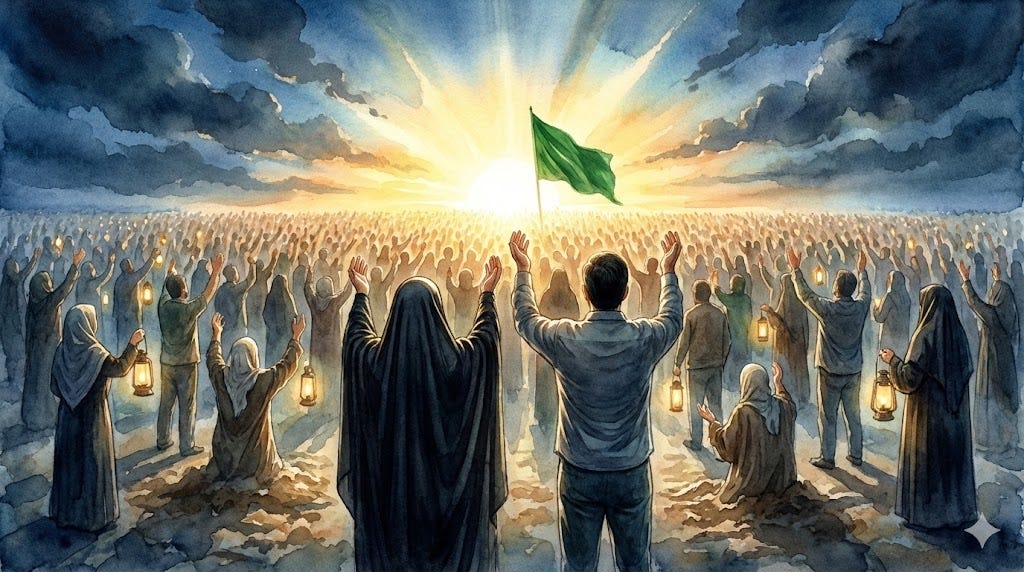
In the Name of God, the Most Merciful, the Most Compassionate — the Breaker of Tyrants and the Refuge of the Oppressed.
O God, Lord of the Worlds, we stand before You tonight not as the righteous but as the aspiring — not as the worthy but as the desperate.
We have heard the call of Your Hujjah, and we have recognised our failure to answer it as we should.O God, renew for him on this night, and on every night, and in every moment between the nights — a covenant, a contract, and a pledge of allegiance upon our necks.
O Turner of Hearts, our hearts are fickle and our resolve is weak.
We make promises at the minbar that we forget by the doorstep.
We weep for Husayn in Muharram and disobey him in Safar.
We claim to await the Mahdi while our actions delay his coming.So we ask You, by the right of the one who has no equal — keep our hearts firm upon Your religion and upon the obedience of Your Wali.
Do not let us be among those who recognised the Imam but failed to serve him, like the Israelites who knew Moses but refused to enter the Holy Land, like the Kufans who pledged to Imam Husayn but abandoned him in Karbala.O God, we do not wish to be spectators of history; we wish to be its writers under his banner.
Grant us the wara’ of the saints — that scrupulousness which flinches from the doubtful as it flinches from the forbidden.
Purify our earnings, our speech, our glances, and our thoughts, until we become vessels worthy of carrying his light.Grant us the quwwah of the mujahideen — strength of body, sharpness of mind, and mastery of the tools of our age.
Let us not be weak links in his chain.
Let us not be liabilities on his battlefield.
Make us the professionals, the experts, the excellent — so that when he calls, he finds an army ready, not a rabble making excuses.Grant us the vision of the builders — those who see beyond their own lifetimes, who plant trees whose shade they will never sit in, who erect institutions that will outlast their founders.
Let us be architects of tamheed, not hermits of isolation.O Master of the Age, O Sahib al-Zaman...
We see the bombs falling on the tents of the displaced, and we see the silence of the world.
We see the hypocrisy of those who speak of human rights while signing the cheques for the butchers.
We see the children pulled from the rubble, and we see the journalists who call it “conflict” instead of “massacre.”
But we also see you.
We see your hand in the steadfastness of the fighters who stand against armies with nothing but faith and iron.
We see your light in the patience of the mothers who bury their children and then raise their hands in praise of God.
We see your plan in the awakening of the youth — in the universities of the West, in the streets of the capitals of arrogance, in the hearts that are turning toward truth despite every effort to blind them.
We know that you see what we see, and more.
We know that your heart breaks for this Ummah in ways we cannot fathom.
And we know that your return is not delayed by cruelty but by our own unreadiness.So we beg you — pray for us as we try to become worthy of you.
O God, if life grants us the honour of serving him, then make our service sincere and our sacrifice complete.
And if death comes before his emergence — if we are lowered into our graves before we see that blessed face — then we ask You, by Your Mercy that encompasses all things:
Bring us forth from our graves when the call is raised.
Let our shrouds be our uniforms.
Let our hands find swords already unsheathed.
Let us rise from the dust answering the voice of the Caller, ready to fulfil the covenant we made in this world.Make us the awtad — the Pegs of the Earth — who hold the ground firm for his arrival.
Make us the Nuqaba and the Nujaba — the chosen ones who form the vanguard of his justice.
And if we are not worthy of the 313, then let us be among the ten thousand, or the seventy thousand, or the countless believers who will stream to his banner from every corner of the earth.O God, we are impatient, and we know that impatience is a deficiency.
But we cannot help but cry out from the depths of our need:Al-Ajal, Al-Ajal, Ya Mawlaya, Ya Sahib al-Zaman!
Hasten, hasten, O our Master, O Owner of the Time!The earth is filled with oppression and tyranny.
The promise is due.
The cup is overflowing.We are not asking You to come because we are ready — we know we are not. We are asking You to come because without You, we do not know how to become ready.
We are asking You to come because the world is dying, and only You hold the cure.Do not let our sins hasten Your wrath upon us, and do not let our shortcomings delay Your mercy from us.
O God, send Your blessings upon Muhammad and the Family of Muhammad — the purest of the pure, the most oppressed of the oppressed, the lanterns in the darkness of every age.
O God, send Your blessings upon Sayyedah Fatimah al-Zahra, the Mother of this Imam, whose grief for him is a grief we cannot comprehend.
O God, send Your blessings upon the Eleven Imams who preserved this light and passed it from hand to hand until it reached the Twelfth.
O God, send Your blessings upon all the awliya and the shuhada (martyrs) who paved the way with their blood — from the companions of Imam Husayn to the martyrs of our own time: Hajj Qassem, Hajj Imad, Sayyed Hassan, Yahya, and all those whose names are written in Your Book though the world has forgotten them.
We leave this gathering with a covenant renewed.
We leave with the words of the Imam echoing in our hearts:
“If our Shia were united in their hearts regarding the fulfilment of the covenant upon them, the blessing of meeting us would not have been delayed.”
O God, let us be the generation that fulfils the covenant.
O God, let us be the generation that ends the delay.
O God, let us be the generation that witnesses the Dawn.
Amen, O Lord Sustainer of the Universes
Amen, O Most Merciful of the Merciful
And from Him alone is all ability and He has authority over all things
From the Shia perspective, the same event and policy (ransom rather than mass execution; the permissibility of fida (ransom) for Badr captives) is affirmed through Qur’an, tafsir, and Imami hadith:
Qur’anic revelation about Badr captives and ransom
The Shia exegete al-Tabrisi explicitly states that the verse
مَا كَانَ لِنَبِيٍّ أَنْ يَكُونَ لَهُ أَسْرَىٰ حَتَّىٰ يُثْخِنَ فِي الْأَرْضِ
“It was not for a prophet to have captives until he has thoroughly subdued (the enemy) in the land”
— Qur’an, Surah al-Anfal (the Chapter of the Spoils of War) #8, Verse 67
was revealed concerning the captives of Badr and the taking of ransom:
نَزَلَتْ فِي أَسْرَى بَدْرٍ لَمَّا أَخَذَ رَسُولُ اللَّهِ (ص) مِنْهُمُ الْفِدَاءَ.
It was revealed about the captives of Badr, when the Messenger of Allah took ransom from them.
— al-Hasan b. al-Fadl al-Tabrisi, Majma al-Bayan fi Tafsir al-Quran, tafsir of Surah al-Anfal (the Chapter of the Spoils of War) #8, Verse 67.
Likewise, the general ruling verse:
فَإِذَا لَقِيتُمُ ٱلَّذِينَ كَفَرُوا فَضَرْبَ ٱلرِّقَابِ حَتَّىٰٓ إِذَآ أَثْخَنتُمُوهُمْ فَشُدُّوا ٱلْوَثَاقَ فَإِمَّا مَنًّا بَعْدُ وَإِمَّا فِدَآءً حَتَّىٰ تَضَعَ ٱلْحَرْبُ أَوْزَارَهَا
“When you meet those who disbelieve, then strike (their) necks; until, when you have thoroughly subdued them, then bind tightly (the captives); then thereafter either [set them free as] a favour or [ransom them], until the war lays down its burdens.”
— Quran, Surah Muhammad (the Chapter of Prophet Muhammad) #47, Verse 4
is treated in Shia tafsir and fiqh as the general legal basis that includes what was done at Badr.
Imami hadith on the Prophet’s practice of ransom and amnesty
Shia hadith explicitly affirm that the Prophet used ransom (fida) and amnesty (mann) with captives of war:
عَنْ أَبِي عَبْدِ اللَّهِ (ع) فِي أَسْرَى الْمُشْرِكِينَ، قَالَ: قَدْ فَادَى رَسُولُ اللَّهِ (ص) قَوْمًا، وَمَنَّ عَلَى قَوْمٍ.
From Abu Abdullah (Imam al-Sadiq, peace be upon him) regarding the captives of the polytheists. He said: “The Messenger of God ransomed some people, and granted amnesty to some people.”
— Al-Saduq, Man La Yahduruhu al-Faqih, Kitab al-Jihad, bab ahkam al-asra (also cited in al-Hurr al-Amili, Wasail al-Shia, Kitab al-Jihad, abwab ahkam al-asra).
Imami hadith on the legal options with prisoners (including ransom)
The Imams lay down the legal rule that the Imam has a choice with PoWs – one of those explicit options is fida:
عَنْ أَبِي عَبْدِ اللَّهِ (ع) فِي الرَّجُلِ يَأْسِرُ رَجُلًا مِنْ أَهْلِ الْحَرْبِ، قَالَ: الْإِمَامُ فِيهِ بِالْخِيَارِ، إِنْ شَاءَ قَتَلَهُ، وَإِنْ شَاءَ مَنَّ عَلَيْهِ، وَإِنْ شَاءَ فَدَاهُ، أَوِ اسْتَرَقَّهُ.
From Abu Abdullah (Imam al-Sadiq) about a man who captures a man from the people of war. He said: “The Imam has the choice concerning him: if he wishes he kills him, and if he wishes he grants him amnesty, and if he wishes he ransoms him, or he enslaves him.”
— Al-Tusi, Tahdhib al-Ahkam, Kitab al-Jihad, bab ahkam al-asra; cited in al-Hurr al-Amili, Wasail al-Shia, Kitab al-Jihad, abwab ahkam al-asra.
Shia hadith on the salvific value of teaching (parallel to “ransom of knowledge”)
Although the exact “teach ten at Badr” wording is not found with an Imami isnad in the four Shia canonical collections, the principle that teaching knowledge is a form of ongoing reward – like a spiritual “ransom” – is strongly affirmed.
For example, in al-Kafi:
عَنْ أَبِي عَبْدِ اللَّهِ (ع) قَالَ: مَنْ عَلَّمَ بَابًا مِنَ الْهُدَى فَلَهُ أَجْرُ مَنْ عَمِلَ بِهِ، لَا يَنْقُصُ أُولَئِكَ مِنْ أُجُورِهِمْ شَيْئًا.
From Abu Abdullah (Imam al-Sadiq), who said: “Whoever teaches a gate (chapter) of guidance has the reward of everyone who acts upon it; that does not diminish their rewards at all.”
— Al-Kulayni, al-Kafi, Kitab Fadl al-Ilm, bab thawab man allama al-nas al-khayr.