

In His Name, the Most High
The Battlefield of the Mind
We have spent two sessions examining weapons that poison the land.
We traced the prohibition from its Quranic roots through the Prophet’s explicit instructions, through a thousand years of jurisprudential reasoning, to the formal fatwas of our contemporary scholars.
We established that nuclear weapons, chemical weapons, biological weapons — any weapon that cannot distinguish combatant from civilian, that cannot be controlled once deployed, that continues killing after the war ends — falls under the absolute prohibition articulated fourteen centuries ago:
“Do not cast poison into their lands.”
We witnessed Imam Khomeini refuse to retaliate with chemical weapons even as Iranian soldiers choked on Saddam’s gas.
We examined Imam Khamenei’s formal Fatwa — the Triad of Prohibition covering production, stockpiling, and use.
We surveyed the consensus of the maraji’ and found the tradition speaking with one voice.
We traced the Precision Doctrine and saw how the prohibition shaped Iran’s actual military development.
And we answered the accusation that haunts every discussion — demonstrating that the Fatwa cannot be Taqiyyah, because there is no hidden truth to conceal.
The Theology of Warfare is established.
But warfare is not only waged with bombs and missiles.
Tonight, we turn to a different battlefield — and a different kind of poison.
The Weapon That Needs No Warhead
There is a weapon that requires no enrichment facility, no chemical precursor, no biological laboratory.
It cannot be detected by satellites.
It cannot be interdicted at borders.
It cannot be destroyed by airstrikes.
And yet it can bring down governments, shatter societies, turn neighbour against neighbour, and leave nations in ruins as surely as any nuclear blast.
This weapon is information.
Or rather — disinformation.
The deliberate corruption of truth.
The strategic deployment of lies.
The poisoning not of wells but of minds, not of soil but of the capacity to distinguish reality from fabrication.
Imam Khamenei has spoken of this directly.
The influence of media, he has observed, can be greater than the influence of an atomic bomb.
The bomb destroys buildings and bodies.
The corrupted media destroys something more fundamental — it destroys the shared understanding that makes society possible.
It destroys trust.
It destroys the very capacity for a people to reason together, to recognise their common interests, to resist those who would manipulate them.
Physical poison seeps into the ground and contaminates whatever grows there.
Information poison seeps into the mind and contaminates whatever thoughts grow there.
The parallel is not metaphorical.
It is precise.
And tonight, we examine how Islam addresses this second category of poison — with the same rigour, the same attention to sources, the same care for principle that we brought to the first.
The Questions Before Us
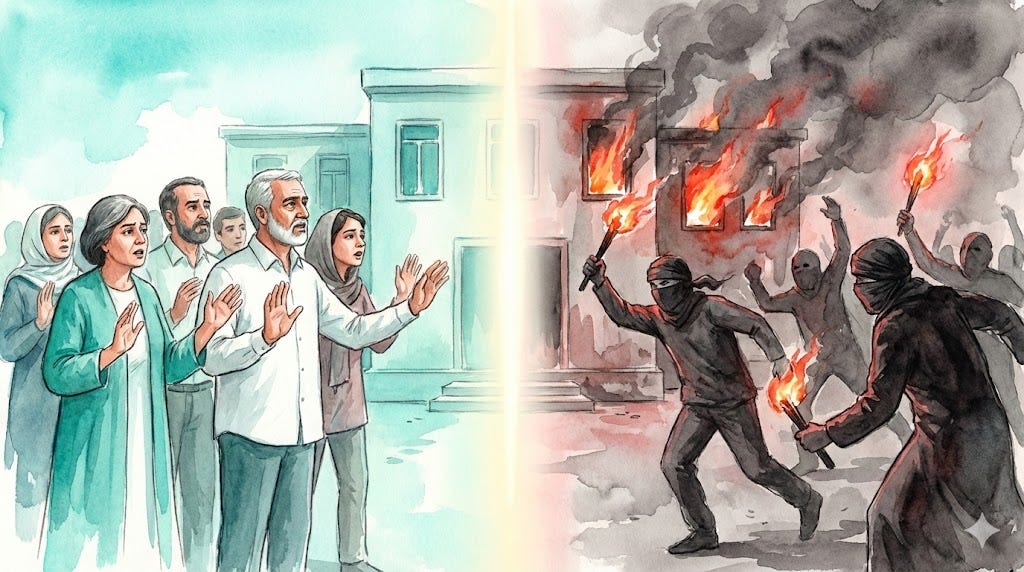
How does Islam distinguish between legitimate protest and destructive sedition?
The citizen has grievances.
Prices rise.
Corruption persists.
Injustice occurs.
Does he not have the right — even the duty — to speak out, to demand accountability, to insist that those in power answer to those they serve?
He does.
The Quran itself establishes this right.
The tradition affirms it.
The scholars have articulated it across centuries.
But there is a line.
On one side of the line stands the citizen who demands justice — who raises his voice, who organises his neighbours, who holds power accountable.
This is I’tiraz — legitimate protest.
This is Amr bil-Ma’ruf wa Nahi anil-Munkar — enjoining good and forbidding evil.
This is not merely permitted.
In certain circumstances, it is obligatory.
On the other side of the line stands something else entirely.
The agent provocateur who exploits grievance for destruction.
The foreign operative who hijacks legitimate anger and steers it toward chaos.
The rioter who burns the bus that his own community needs, who destroys the bank where his neighbours’ savings sit, who tears down the infrastructure that sustains the very people he claims to represent.
This is Fitna — sedition. This is Fasad fil-Ardh — corruption on earth.
And the Quran’s verdict on Fitna is unambiguous: it is worse than killing.
How can sedition be worse than killing?
This seems extreme. But consider: killing ends one life.
Sedition — the deliberate corruption of a society’s capacity to function, the shattering of the trust that holds communities together — can destroy the conditions that make millions of lives liveable.
The single murder is a tragedy.
The collapse of social order is a catastrophe.
Tonight, we trace this distinction through the sources.
We hear the Quran establish the right of the oppressed to speak — and the prohibition on those who would tear society apart.
We examine the classical texts and find the jurists already wrestling with these questions.
We learn from history — from Siffin, from the poisoning of Imam Hasan’s army, from the patterns that repeat whenever enemies seek to destroy what they cannot defeat on the battlefield.
And we hear from the contemporary scholars — Imam Khamenei, Imam Khomeini, Ayatullah Misbah-Yazdi, Ayatullah Jawadi-Amoli, Shaykh Mohsen Araki — who have applied these ancient principles to modern circumstances.
The Arc of Tonight’s Session

Tonight, we diagnose the disease.
We identify the poison — its nature, its characteristics, its method of operation.
We trace how Islam distinguishes legitimate protest from forbidden sedition.
We hear from the Quran, the classical sources, the historical record, and the contemporary scholars.
We learn to recognise the poison — so that we will not unknowingly drink it, so that we will not become instruments of the very destruction we believe we are opposing.
This is essential work.
Without diagnosis, there can be no cure.
Without recognition, there can be no resistance.
But diagnosis is not the end.
Next week, God willing, we apply the antidote.
We will hear Imam Ali’s counsel on how to navigate Fitna without being consumed by it — the remarkable teaching of the “Baby Camel” that shows the believer how to avoid being exploited by the corrupt.
We will distinguish between the instigators of Fitna and those who are merely manipulated by it — and understand why the tradition treats them differently.
We will examine what emerges when the Shield is finally lowered — not because danger has passed, but because a higher calling beckons.
The call to Makarim al-Akhlaq — the Noble Character — the positive demonstration of faith that is the believer’s primary mode when persecution lifts.
And we will address the question that many of us in the West must face: is Taqiyyah even relevant in Manchester, in Toronto, in Sydney?
What is our obligation when we have the freedom our ancestors never had?
That is for next week.
Tonight: the poison identified.
In His Name, with with full reliance on Him, we proceed.
Video of the Sermon/Majlis
Audio of the Sermon/Majlis
Recap
The Theology of Warfare

Let us briefly recall what we established in Sessions 57 and 58, for it is the foundation upon which tonight’s teaching stands.
The Nature of Conflict

We began by reframing how Islam views warfare itself.
Wars are not clashes between peoples — the American against the Iranian, population against population.
We established a framework resting on three pillars:
First, wars are initiated by systems of oppression — the Zalimin, the Mustakbirin.
Second, the just respond through legitimate defence — a sacred duty.
Third, even in the most righteous struggle, civilian populations retain their God-given sanctity.
We recognised that some conflicts are genuinely Haqq against Batil — Karbala was not a power struggle between competing elites but the Proof of God standing against the erasure of Islam itself.
Yet even when the cause is absolutely just, the aggressor’s civilian population remains protected.
We established that moral culpability exists on a spectrum — the Ziyarat Ashura warns of those who “heard and were pleased” — but moral culpability before God does not transform a civilian into a legitimate target.
And we distinguished the aggressor’s soldier, who bears the weight of his choice, from the defender’s soldier, who fulfils a sacred obligation established as Wajib Mutlaq.
The defender retains a duty of care toward the aggressor’s civilian population.
You fight the oppressive system, not the nation.
The Quranic Purpose
We turned to Surah Al-Anfal — the Chapter of the Spoils — and found the purpose of military preparation stated explicitly: turhibuna — to deter, to strike awe, to make aggression unthinkable.
Not taqtuluna — to kill.
Not tudammiruna — to destroy.
The goal is prevention, not annihilation.
Deterrence, not massacre.
The Classical Prohibition
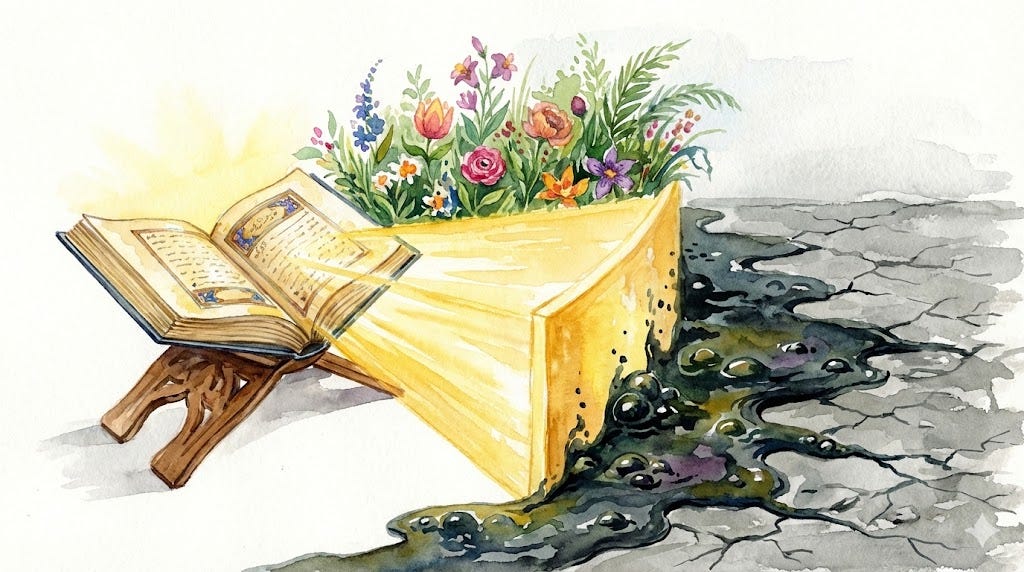
We descended to the jurists and found, a thousand years before nuclear weapons, the principle already articulated:
“Do not cast poison into their lands.”
Shaykh Al-Tusi established it.
Shaheed al-Awwal in Al-Lum’ah codified it.
The scholars ruled it absolute — even necessity does not override the prohibition.
Why?
Because poison cannot distinguish.
It cannot be controlled.
It continues killing after the battle ends.
The Prophetic Instructions
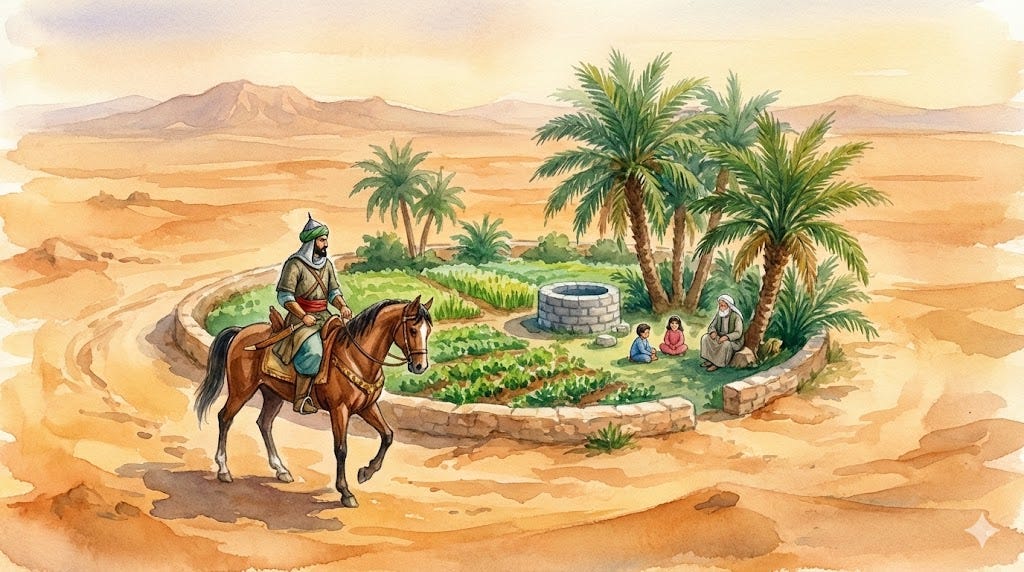
We heard the Prophet’s rules of engagement:
Do not kill the elderly, children, women.
Do not burn trees.
Do not destroy crops.
Do not poison wells.
The limits of legitimate warfare, established fourteen centuries ago.
Rational Necessity
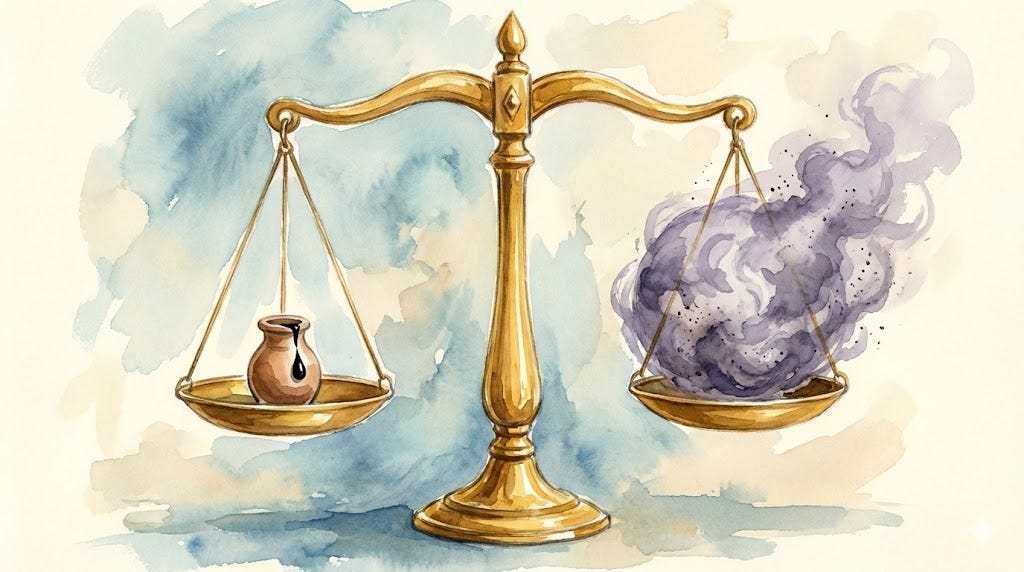
We applied al-mustaqillat al-’aqliyya — independent rational judgment — and recognised that indiscriminate massacre of innocents is dhulm.
Not by analogy, but by recognition: these weapons are the injustice the Prophet identified, scaled to industrial proportions.
The Expanded Category
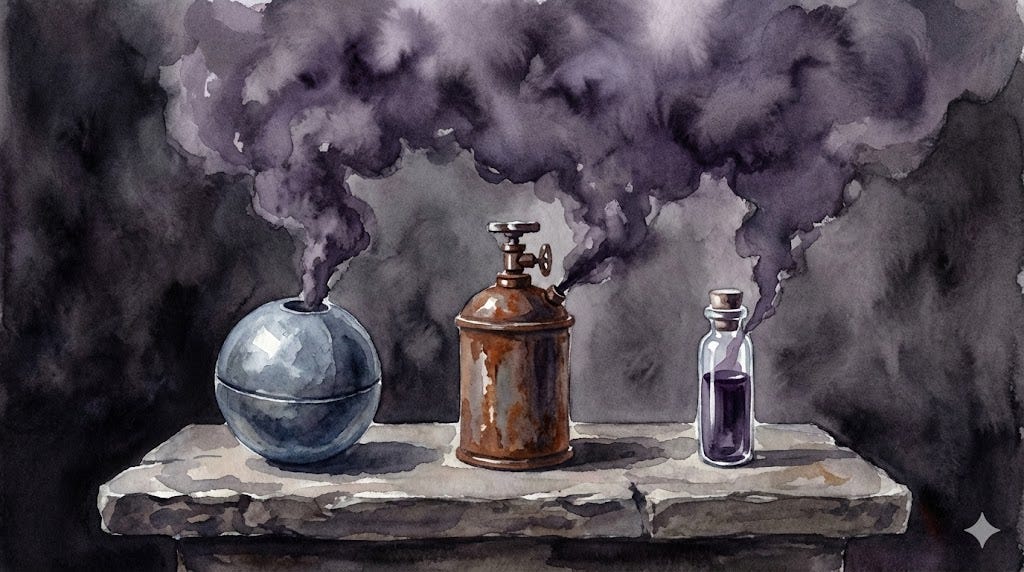
Nuclear, chemical, biological, radiological, incendiary — any weapon that cannot distinguish combatant from civilian, that cannot be controlled once deployed, that continues killing after the war ends.
All are poison in modern form.
The Contemporary Codification
Imam Khomeini refused chemical weapons under attack:
“What is the difference between us and Saddam?”
Imam Khamenei issued the formal Fatwa — the Triad of Prohibition: production, stockpiling, and use — all forbidden.
The maraji’ confirmed consensus: Ayatullah Sistani, Ayatullah Makarim-Shirazi, Ayatullah Jawadi-Amoli, Ayatullah Subhani — different cities, different methodologies, same conclusion.
The Precision Doctrine

The prohibition shaped policy.
Iran built Mass Precision instead of Mass Destruction.
The Supreme Leader demanded accuracy:
“Strike the point.”
Operation Martyr Soleimani demonstrated the doctrine — a “slap,” not a massacre.
The Taqiyyah Accusation Answered
The Fatwa cannot be Taqiyyah because Taqiyyah conceals a truth that exists — and there is no hidden truth here.
There is no secret argument for permissibility.
The sources yield only one conclusion: prohibition.
The accusation reveals not Iranian deception but the accuser’s inability to imagine a value system that places principle above power.
These are the foundations.
The Theology of Warfare is complete.
Now we turn to the Theology of Dissent — the same principles applied to a different battlefield.
If poison in the land is forbidden, what of poison in the mind?
If weapons that destroy bodies indiscriminately are haram, what of weapons that destroy the capacity for thought?
The sources have answers.
Let us hear them.
Mahdawiyyah (The Culminating Guidance) - The Era of Establishment - The Geopolitics of Waiting - The Shield (Taqiyyah) - The Shield Lowered - The Theology of Dissent - The Poison Identified
The Bridge: From Physical Poison to Information Poison
We have spent two sessions establishing why Islam forbids weapons that poison the land.
The prohibition rests on three characteristics: such weapons are indiscriminate — they cannot distinguish combatant from civilian.
They are uncontrollable — once deployed, they spread according to their own nature.
And they are residual — their harm persists long after the act, punishing generations who had no part in the original conflict.
These three characteristics — indiscriminate, uncontrollable, residual — place a weapon outside the bounds of legitimate warfare.
They transform it from an instrument of defence into an instrument of dhulm.
Now we must recognise something crucial:
These characteristics apply not only to weapons that destroy bodies.
They apply equally to weapons that destroy minds.
The Parallel Structure
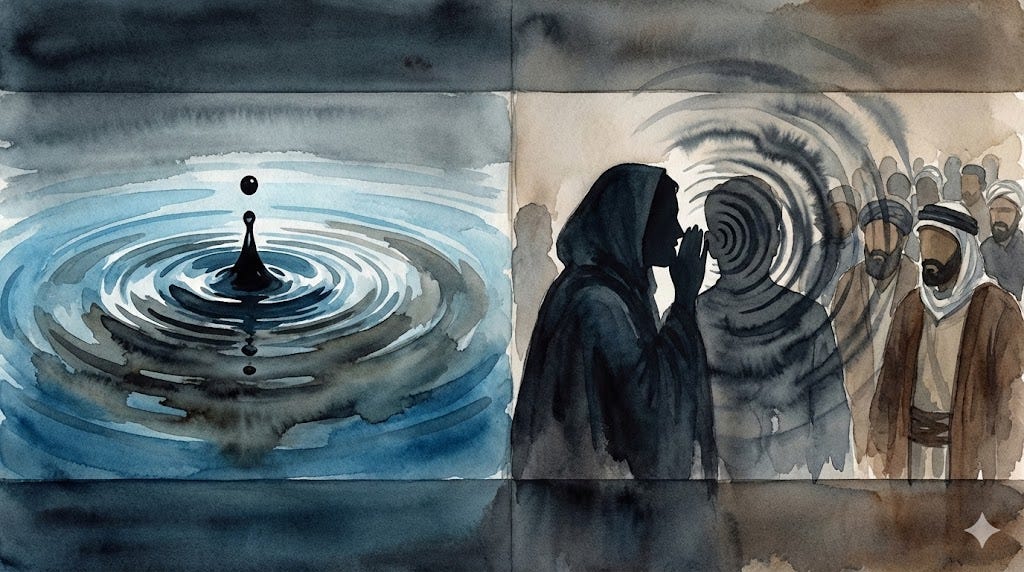
Consider the parallel:
Physical poison seeps into the water supply.
It cannot distinguish between the soldier who drinks and the child who drinks.
It spreads through the aquifer according to its own nature — the one who released it cannot control where it goes.
And it remains in the soil, in the water, in the ecosystem, harming those who come after.
Information poison seeps into the public mind.
It cannot distinguish between the guilty and the innocent — it infects whoever encounters it, warping their perception, corrupting their judgment.
It spreads through social networks, through media, through conversation — the one who released it cannot control where it goes or who absorbs it.
And it remains in the collective memory, in the assumptions people carry, in the fractured trust that never fully heals.
The bomb destroys buildings.
The lie destroys the capacity to build.
The chemical weapon scars the body.
The propaganda scars the capacity to reason.
The biological agent spreads from person to person until it has infected a population.
The rumour spreads from mind to mind until it has infected a society.
The parallel is not metaphorical.
It is structural.
It is precise.
And the same principle that forbids the one forbids the other.
Imam Khamenei: Media as the Greater Weapon
Imam Khamenei has articulated this parallel with characteristic precision.
In a meeting with commanders of the armed forces, he stated:
امروز تأثیر رسانه از بمب اتم بیشتر است. این را شما بدانید. امروز رسانه میتواند سرنوشت یک جنگ را تغییر دهد، کاری که بمب اتم نمیتواند بکند.
“Today, the influence of the media is greater than the atomic bomb. You must know this. Today, media can change the destiny of a war — a feat that the atomic bomb cannot achieve.”
— Imam Khamenei, Meeting with Commanders of the Army and IRGC
Consider the weight of this statement.
The atomic bomb is the most destructive weapon humanity has ever created.
It can incinerate a city in an instant.
It can kill hundreds of thousands in a flash.
It haunts the nightmares of every generation since Hiroshima.
And Imam Khamenei says: the media is more powerful.
Why?
Because the atomic bomb can destroy a city — but it cannot make the inhabitants of that city destroy themselves.
The atomic bomb can kill a population — but it cannot make a population turn against its own interests, betray its own values, dismantle its own defences.
The atomic bomb can end a war through annihilation — but it cannot make a nation surrender before the war even begins, convinced by propaganda that resistance is futile, that their cause is unjust, that their leaders are villains.
Media can do all of this.
Media can make a people believe lies about themselves.
It can fracture the unity that makes resistance possible.
It can turn neighbour against neighbour, citizen against government, faction against faction.
Media can win a war without a single shot being fired — by convincing the target population to defeat itself.
This is why its influence is greater than the atomic bomb.
And this is why it must be understood through the same lens we applied to weapons of mass destruction.
The Chemical Weapons of Soft War
In another address — this one to the Assembly of Experts in September 2009, in the aftermath of the post-election unrest of the so-called ‘Green Revolution’ — Imam Khamenei made the parallel even more explicit:
سلاح شیمیایی را وقتی میزنند، اثرش در بدنها میماند؛ سلاح تبلیغاتی و رسانهای هم همین جور است... تردیدافکنی در دلهای مردم، بدبین کردن مردم به یکدیگر، بدبین کردن مردم به مسئولین... اینها سلاحهای شیمیاییِ جنگ نرم است.
“When they use chemical weapons, the effect remains in the bodies. Propaganda and media weapons are exactly the same... Casting doubt in the hearts of the people, making people pessimistic about each other, making people pessimistic about the officials... These are the chemical weapons of the Soft War.“
— Imam Khamenei, Meeting with Members of the Assembly of Experts, September 2009
The chemical weapons of Soft War.
This is not poetry.
This is doctrine.
Recall what we established about chemical weapons: they leave residue.
The mustard gas settles on surfaces and continues to burn whoever touches them.
The nerve agent seeps into the soil and continues to poison whoever contacts it.
The harm does not end when the attack ends.
It persists.
It waits.
It claims victims long after the original deployment.
Propaganda operates identically.
The doubt that is cast into the heart does not evaporate when the broadcast ends.
It settles.
It remains.
It colours every subsequent perception.
The pessimism that is cultivated between neighbours does not disappear when the social media post is scrolled past.
It lingers.
It shapes how they see each other.
It fractures the trust that once held them together.
The cynicism about officials does not heal when the news cycle moves on.
It calcifies.
It becomes the default assumption.
It makes cooperation impossible, makes governance impossible, makes the collective action that any society needs impossible.
These are residual effects.
These are harms that persist long after the original act.
And just as the residual nature of chemical weapons places them in a special category of prohibition, so too does the residual nature of information warfare demand special consideration.
The Three Characteristics Applied
Let us be systematic.
Let us apply the three characteristics that define forbidden weapons to the weapons of information warfare.
Indiscriminate
A precision missile can strike a military headquarters while leaving the hospital next door untouched.
A lie cannot.
When a fabrication is released into the information ecosystem — when a rumour is spread, when a false narrative is planted, when a manipulated image is circulated — it reaches whoever encounters it.
The propagandist cannot control who absorbs the poison.
The lie reaches the enemy’s supporters — but it also reaches the confused, the uncertain, the genuinely seeking.
It reaches the young who have not yet formed their views.
It reaches the elderly who trust what they read.
It reaches the vulnerable who lack the tools to verify.
Information poison, like physical poison, cannot distinguish.
Uncontrollable
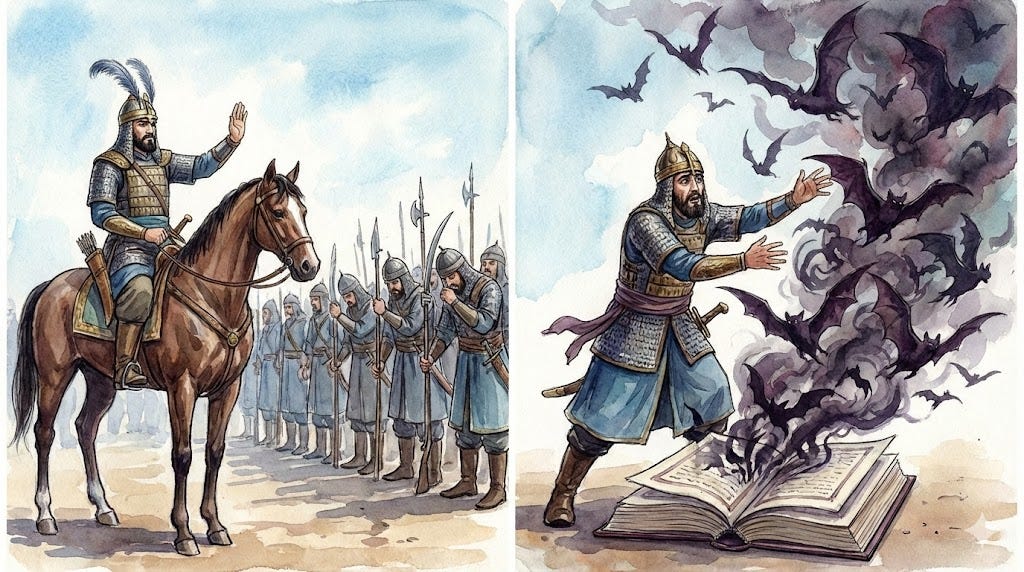
A commander can order his troops to cease fire.
He cannot order a lie to stop spreading.
Once disinformation enters the public sphere, it takes on a life of its own.
It is shared, repeated, modified, amplified.
It spawns variations.
It generates responses that themselves become vectors of confusion.
The original propagandist may have intended a specific effect — but the lie, once released, operates according to its own dynamics.
It may spread further than intended.
It may mutate in ways unforeseen.
It may cause harms never calculated.
Information poison, like physical poison, cannot be controlled once released.
Residual
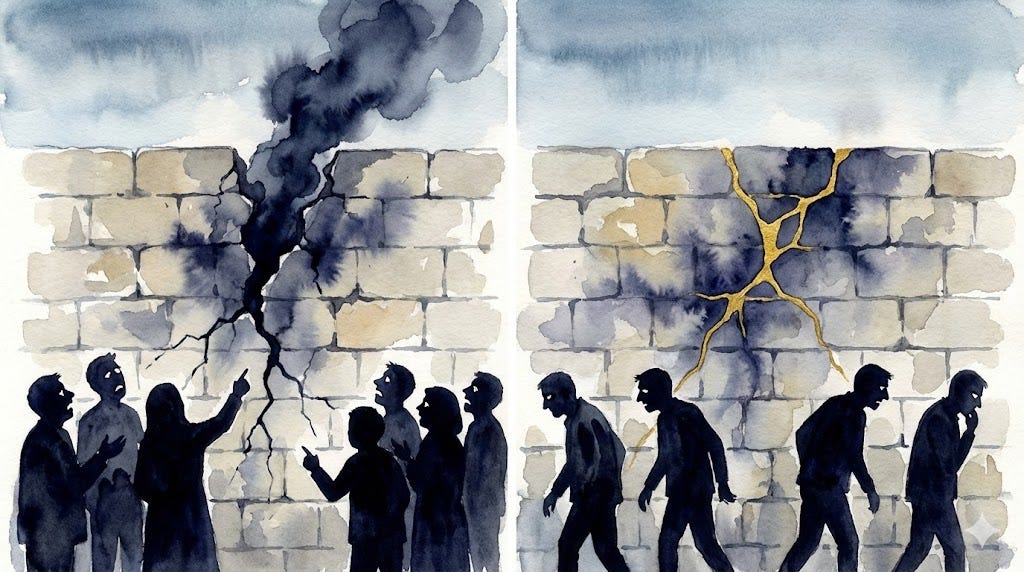
A conventional bomb destroys what it strikes, and then the destruction is complete.
The survivors can rebuild.
A lie that has been believed is never fully unbelieved.
Studies in psychology confirm what common sense suggests: corrections do not fully undo the effects of misinformation.
Even when people are told that something they believed is false, the original false belief continues to influence their thinking.
The residue remains.
A society that has been subjected to sustained information warfare carries the scars long after the warfare ends.
The fractured trust, the cultivated suspicions, the instilled cynicism — these do not heal quickly.
They may not heal at all within a generation.
Information poison, like physical poison, has residual effects that persist long after the original deployment.
The Same Principle, Different Battlefield
Now we can see why the Theology of Warfare leads directly to the Theology of Dissent.
The principle that forbids nuclear weapons is not:
“Do not use this particular technology.”
The principle is:
“Do not deploy weapons whose nature makes them indiscriminate, uncontrollable, and residual in their harm.”
Nuclear weapons happen to embody these characteristics in the physical domain.
Information warfare embodies the same characteristics in the cognitive domain.
The principle that forbids the one necessarily addresses the other.
This is why the Quran, long before nuclear weapons or mass media existed, addressed both domains.
It forbade physical destruction of innocents — and it forbade the spreading of lies and rumours that destroy social fabric.
It prohibited the killing of non-combatants — and it prohibited Fitna, which it declared worse than killing.
The tradition understood, fourteen centuries before the internet, that the battlefield of the mind is as real as the battlefield of the body.
And the same ethics govern both.
The Category Established
We have established a category: Information Poison.
This category includes:
Deliberate disinformation — the knowing fabrication and spread of falsehood to achieve political or military objectives.
Strategic rumour — the planting of unverifiable claims designed to create doubt, suspicion, and division.
Psychological manipulation — the exploitation of legitimate grievances to steer populations toward self-destructive actions.
Fitna cultivation — the deliberate mixing of truth and falsehood to create confusion about who is right and who is wrong, who is friend and who is enemy.
All of these share the three characteristics: indiscriminate in who they affect, uncontrollable once released, residual in their harm.
And all of them fall under the same principle that governs weapons of mass destruction.
They are forms of poison.
And the Prophet said:
“Do not cast poison into their lands.”
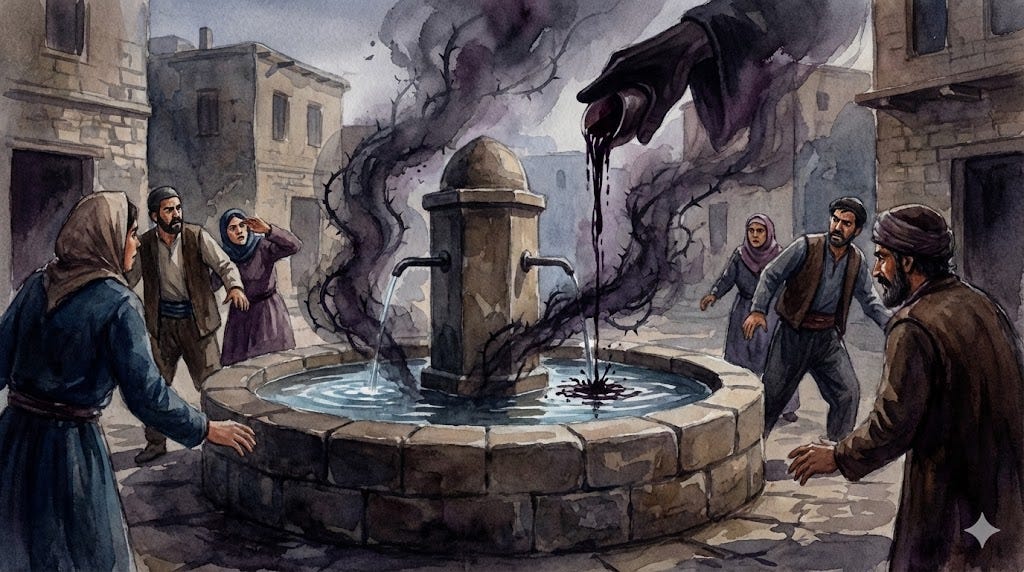
The one who casts information poison into a society — the propagandist, the disinformation agent, the cultivator of Fitna — is doing what the Prophet forbade.
He is poisoning.
Not wells, but minds.
Not soil, but the capacity for trust.
Not water, but the shared understanding that makes community possible.
And the ruling that applies to the poisoner of wells applies to the poisoner of minds.
The Transition
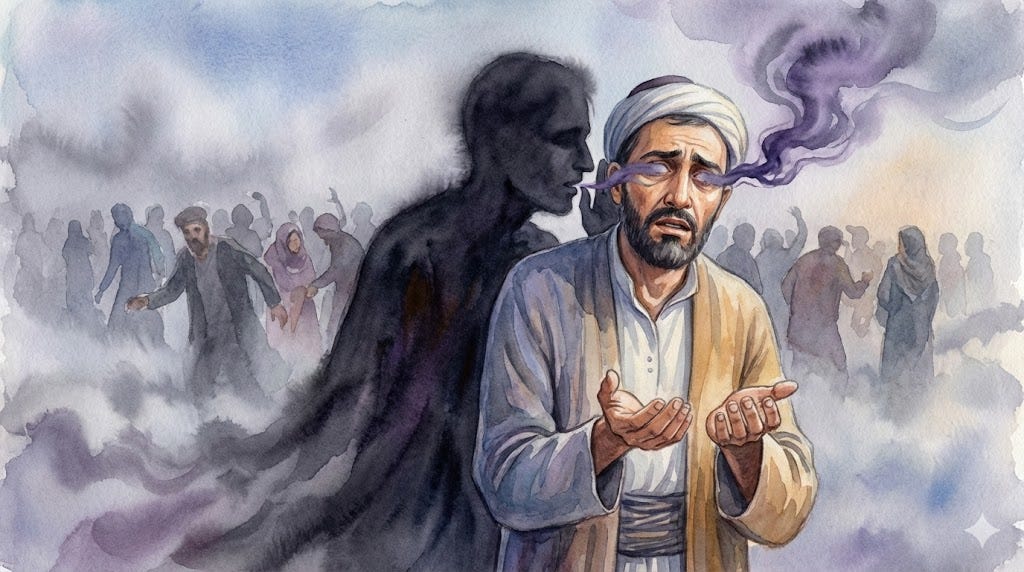
But here is where the Theology of Dissent becomes complex.
The poisoner is clearly condemned.
The one who knowingly spreads lies, who deliberately cultivates chaos, who serves foreign enemies by fracturing domestic unity — this person falls under clear prohibition.
But what about the one who believes the lies?
What about the citizen who has a genuine grievance — prices are high, corruption exists, injustice occurs — and who takes to the streets, not knowing that his legitimate anger is being exploited by those who wish to destroy what he wishes to reform?
What about the mob that riots, not understanding that they are serving an agenda that will harm them more than any injustice they currently suffer?
This is the complexity we must navigate.
The sources distinguish clearly between the instigator and the manipulated.
The sources distinguish between legitimate protest and destructive sedition.
The sources provide guidance for the individual caught in the fog of Fitna — how to avoid being used, how to resist manipulation, how to maintain integrity when truth and falsehood are deliberately mixed.
These are the questions that await us.
The bridge is crossed.
We have moved from physical poison to information poison, from the Theology of Warfare to the Theology of Dissent.
Now let us see what the Quran, the Prophet, and the scholars have to say about this second battlefield.
The Quranic Framework: The Right to Speak and the Prohibition on Poison
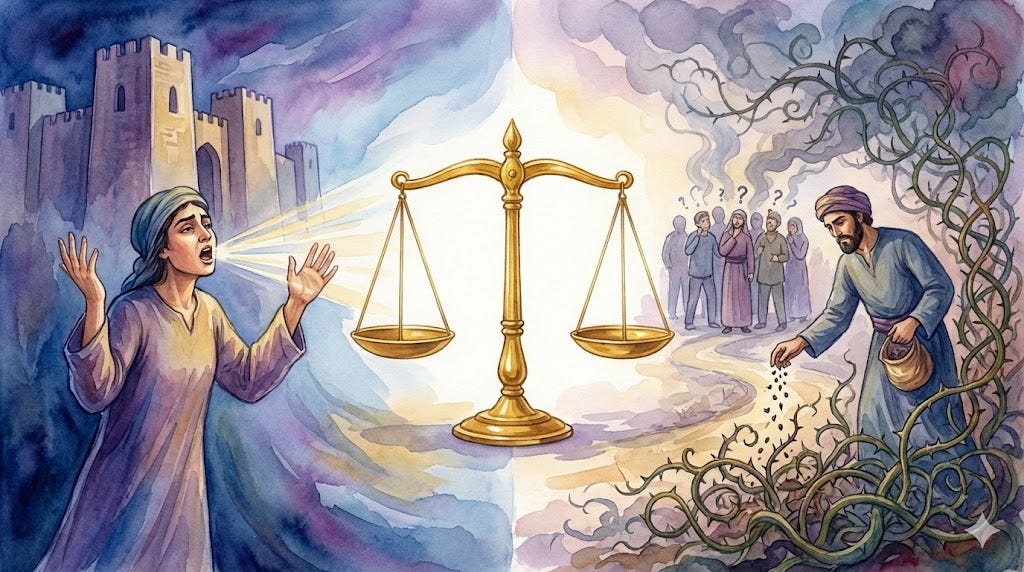
The Quran addresses both dimensions of our subject.
It establishes the right of the oppressed to speak out — to raise their voice, to demand justice, to hold power accountable.
And it establishes the prohibition on Fitna — on the deliberate corruption of social fabric, on the spreading of confusion that makes truth indistinguishable from falsehood.
Both teachings are essential.
Neither can be understood without the other.
The one who emphasises only the right to protest becomes an unwitting tool for those who exploit protest for destruction.
The one who emphasises only the prohibition on Fitna becomes an apologist for tyranny, silencing legitimate grievance in the name of stability.
The Quran holds both in balance.
Let us hear its voice.
The Right to Speak: Surah An-Nisa, Verse 148
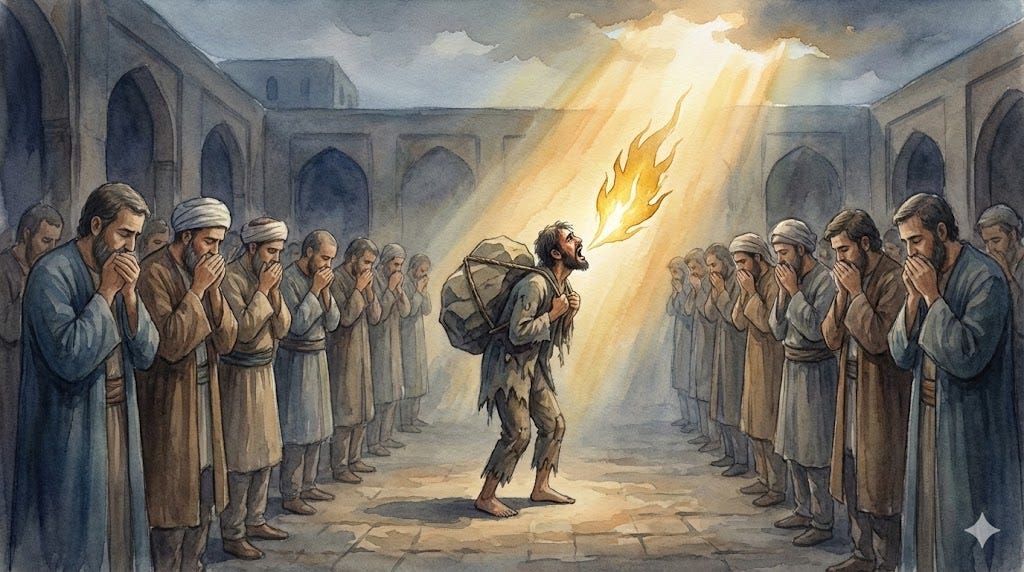
The Quran does not command silence in the face of injustice.
On the contrary — it explicitly grants the oppressed the right to raise their voice, even when that voice is harsh, even when it exposes faults, even when it disturbs the comfortable.
لَا يُحِبُّ اللَّهُ الْجَهْرَ بِالسُّوءِ مِنَ الْقَوْلِ إِلَّا مَن ظُلِمَ ۚ وَكَانَ اللَّهُ سَمِيعًا عَلِيمًا
“God does not love the public utterance of evil speech — except by one who has been wronged. And God is Hearing and Knowing.”
— Quran, Surah An-Nisa (the Chapter of the Women) #4, Verse 148
Consider the structure of this verse.
It begins with a general principle: God does not love the public utterance of evil speech. Al-Jahr bil-Su’ — the loud proclamation of what is ugly, harsh, critical.
In normal circumstances, this is discouraged.
The believer should speak gently, avoid exposing others’ faults, maintain the dignity of social discourse.
But then comes the exception: illa man dhulim — “except by one who has been wronged.”
The oppressed person is granted a license that others do not have.
He may speak harshly.
He may expose faults.
He may raise his voice in ways that would otherwise be discouraged.
Why?
Because silence in the face of oppression serves the oppressor.
Because the one who suffers injustice and says nothing allows that injustice to continue.
Because the cry of the wronged is not “ugly speech” — it is the sound of a human being refusing to accept that wrong is right.
Allamah Tabatabai: The Exception for the Oppressed
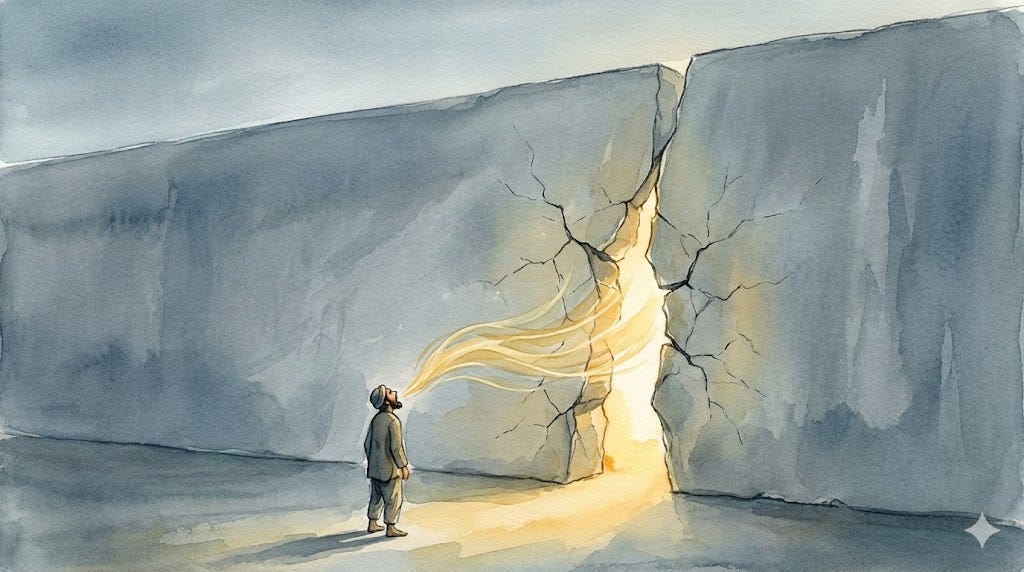
In Al-Mizan, Allamah Tabatabai examines this verse with his characteristic precision.
قوله تعالى: (لا يحب الله الجهر بالسوء من القول...) الجهر بالسوء من القول: هو إظهار ما يسوء التلفظ به من الفحش والشتم والتعيير ونحو ذلك.
وقوله: (إلا من ظلم) استثناء منقطع... والمعنى: لكن المظلوم يجوز له أن يجهر بالسوء من القول في ظالمه، من شتم أو معارضة بما لا يكذب فيه، أو تشكّي، أو ذم، أو دعاء عليه.
“His saying, the Most High: ‘God does not love the public utterance of evil...’
‘Public utterance of evil speech’ (Al-Jahr bi-su’ min al-qawl) means: Manifesting words that are offensive to utter, such as obscenity, cursing, shaming/exposing faults (Ta’yir), and similar things.
And His saying: ‘Except by one who has been wronged’ (Illa man zulima): This is a decisive exception... The meaning is: It is permissible (Ja’iz) for the oppressed person to shout evil words against his oppressor.
This includes cursing him, opposing him (with harsh words) provided he does not lie, complaining about him, shaming him (Dhamm), or praying against him.”
— Allamah Tabatabai, Al-Mizan, Volume 5, Commentary on Surah al-Nisa (the Chapter of the Women) #4, Verse 148
He notes that God “does not love” the public utterance of harsh speech — but He creates a legal exception (istithna’) for the Mazlum, the one who has been wronged.
The implication is profound:
If a citizen is denied their rights, they are permitted — even encouraged — to speak out publicly.
To expose the fault.
To name the injustice.
To demand accountability.
This is not Ghibah — the forbidden backbiting that exposes private faults without justification.
This is not bad etiquette or social impropriety.
This is a mechanism of justice.
The “shout” of the oppressed breaks the silence that protects tyranny.
It forces the community to confront what it would prefer to ignore.
It creates the pressure that makes reform possible.
And God — the verse reminds us — is “Hearing and Knowing.”
He hears the cry of the oppressed, even when the powerful wish to silence it.
He knows the truth of the grievance, even when the official narrative denies it.
The verse is a warning to the oppressor: God hears what you wish to suppress.
And it is an encouragement to the oppressed: your voice reaches Him, even when it reaches no one else.
The Implication
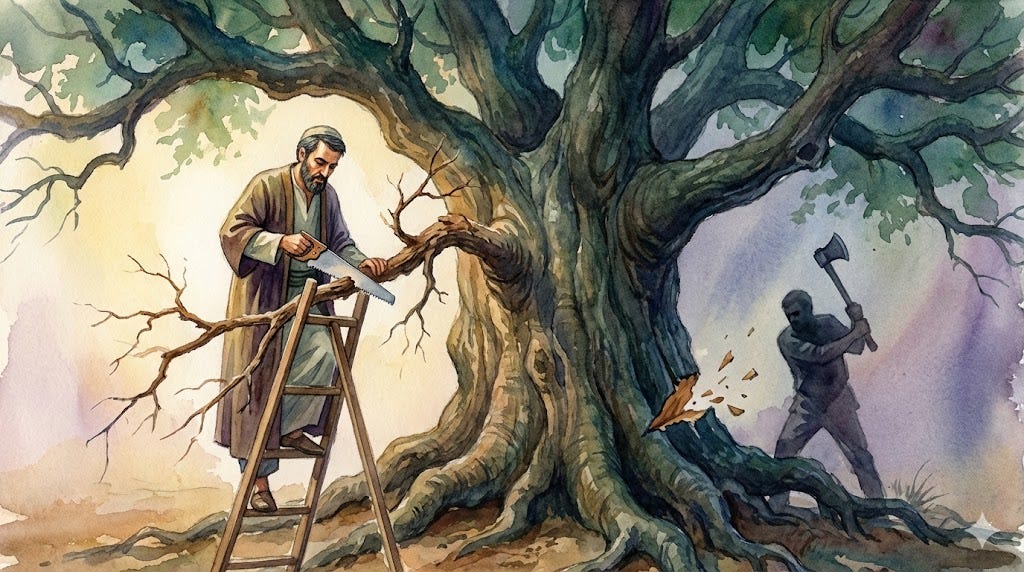
Legitimate protest is not merely permitted in Islam.
In circumstances of genuine oppression, it may be obligatory.
The principle of Amr bil-Ma’ruf wa Nahi anil-Munkar — enjoining good and forbidding evil — requires the believer to speak against wrong.
The verse in Surah An-Nisa confirms that this obligation extends even to harsh speech, to public criticism, to the exposure of faults that the powerful would prefer to hide.
The citizen who sees corruption and names it is not violating Islamic ethics.
He is fulfilling them.
But — and this is crucial — the license has limits.
The verse grants permission to the one who has been wronged.
It does not grant permission to the one who claims to be wronged but whose “grievance” is manufactured.
It does not grant permission to the one who exploits real grievances for purposes of destruction rather than reform.
The right to speak is real.
But it is not unlimited.
And it is precisely this limit that the next verse addresses.
The Prohibition on Fitna: Surah Al-Baqarah, Verse 217
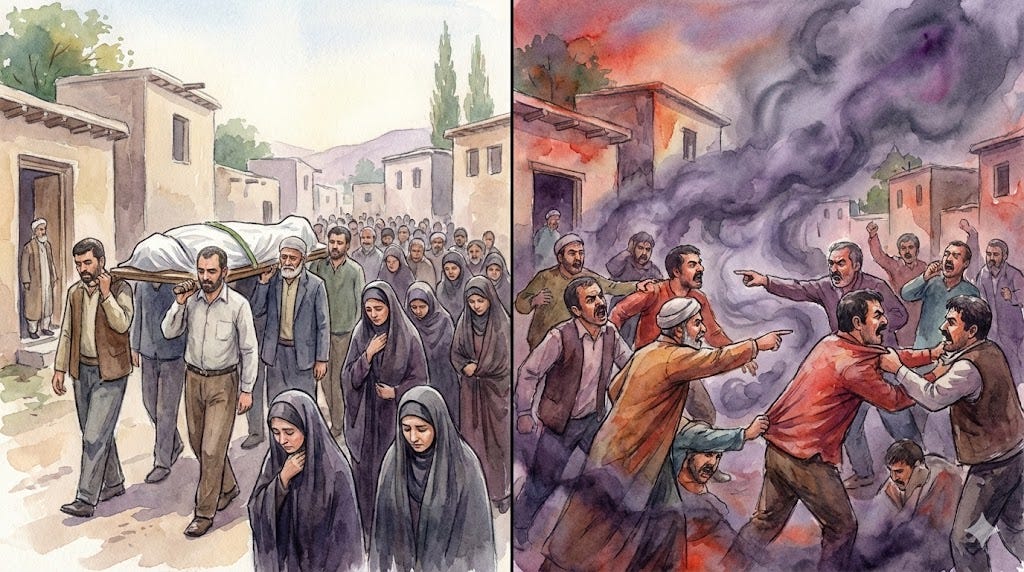
If the previous verse established the right to speak, this verse establishes the boundary that speech must not cross.
وَالْفِتْنَةُ أَكْبَرُ مِنَ الْقَتْلِ
“And Fitna is greater than killing.”
— Quran, Surah Al-Baqarah (the Chapter of the Cow) #2, Verse 217
This statement appears extreme.
How can anything be worse than killing?
Is not the taking of human life the gravest of crimes?
And yet the Quran declares:
Fitna is greater.
To understand this, we must understand what Fitna means.
The Meaning of Fitna
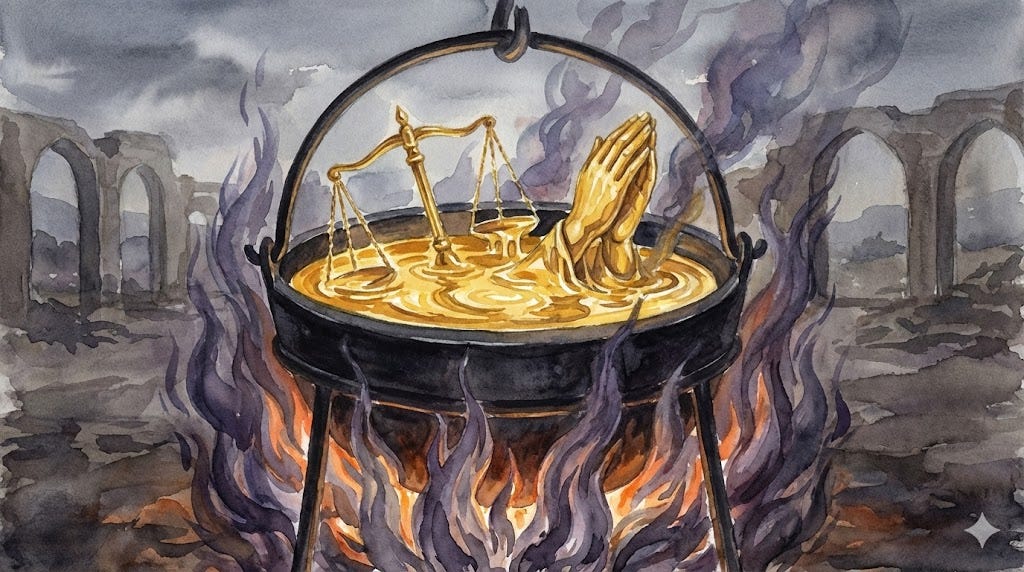
The word Fitna carries multiple layers of meaning.
At its root, it refers to the testing of gold by fire — the process by which precious metal is separated from dross.
From this comes the broader meaning: trial, test, tribulation.
But in the political and social context, Fitna takes on a specific meaning: sedition, civil strife, the deliberate corruption of social order through the confusion of truth and falsehood.
Fitna is not merely violence.
Violence is Qatl — killing.
Fitna is something deeper.
Fitna is the destruction of the conditions that make ordered society possible.
It is the shattering of trust.
The fracturing of unity.
The poisoning of the atmosphere so thoroughly that people no longer know whom to believe, whom to trust, what is true and what is false.
In a society afflicted by Fitna, killing becomes easy — because the bonds that restrain violence have been dissolved.
In a society afflicted by Fitna, justice becomes impossible — because the shared understanding that makes judgment possible has been corrupted.
In a society afflicted by Fitna, even well-intentioned people become instruments of destruction — because they cannot see clearly enough to know what they are doing.
This is why Fitna is worse than killing.
Killing ends one life.
Fitna destroys the conditions that make millions of lives liveable.
Ayatullah Jawadi-Amoli: The Distinction Between Physical and Spiritual Death

In Tafsir-e Tasnim, Ayatullah Jawadi-Amoli approaches this verse with profound philosophical depth, distinguishing between two categories of destruction: the death of the body, and the death of the soul.
فتنه، تحمیل کفر و شرک بر جامعه و سلب امنیت دینی و اعتقادی مردم است. قتل، سلب حیات دنیوی و جسمانی است که محدود و موقت است؛ اما فتنه، سلب حیات معنوی و ابدی انسان است.
از این رو، قرآن کریم میفرماید: “وَالْفِتْنَةُ أَکْبَرُ مِنَ الْقَتْلِ”. زیرا در قتل، مقتول اگر مؤمن باشد به بهشت میرود و تنها بدن او از بین رفته است؛ اما در فتنه، دین و جانِ جامعه به غارت میرود و انسانها به وادی کفر و ضلالت کشانده میشوند که نتیجهاش عذاب ابدی است.
پس زهرِ فتنه که روح ایمان را میکشد، کاریتر و مهلکتر از شمشیری است که تنها جسم را میشکافد.
“Fitna is the imposition of disbelief and polytheism upon society and the stripping away of people’s religious and ideological security. Killing is the stripping away of worldly and physical life, which is limited and temporary; whereas Fitna is the stripping away of the spiritual and eternal life of a human being.
Therefore, the Holy Quran states: ‘And Fitna is greater than killing.’ This is because in killing, if the victim is a believer, he goes to Paradise and only his body is destroyed. However, in Fitna, the religion and soul of the society are plundered, and humans are dragged into the valley of disbelief and misguidance, the result of which is eternal punishment.
Thus, the poison of Fitna, which kills the spirit of faith, is more effective and lethal than the sword which only splits the body.”
— Ayatullah Jawadi Amoli, Tafsir Tasnim, Volume 10, Commentary on Surah Al-Baqarah, Verse 217
Consider the weight of this analysis.
The one who is killed — if he is a believer — loses only his body.
His soul continues.
His destination, if he was faithful, is Paradise.
The harm, though terrible, is temporary and contained.
But the one who is subjected to Fitna — who is confused, misled, dragged into disbelief and misguidance — loses something far greater.
He loses his soul.
His destination becomes eternal punishment.
The harm is not temporary but everlasting.
And notice Ayatullah Jawadi-Amoli’s striking phrase: Zahr-e Fitna — the poison of Fitna.
The same word we have been using throughout our discussion of warfare.
The sword splits the body.
The poison of Fitna kills the spirit of faith.
The sword’s damage is visible, immediate, and limited to its target.
The poison’s damage is invisible, gradual, and spreads to whoever it touches.
This is why Fitna is greater than killing.
This is why the Quran places sedition — the deliberate corruption of a society’s capacity to distinguish truth from falsehood — in a category more severe than murder itself.
The individual murder is a tragedy.
The murder of a society’s faith, its trust, its capacity for truth — this is a catastrophe whose consequences extend into eternity.
The Obligation to Verify: Surah Al-Hujurat, Verse 6
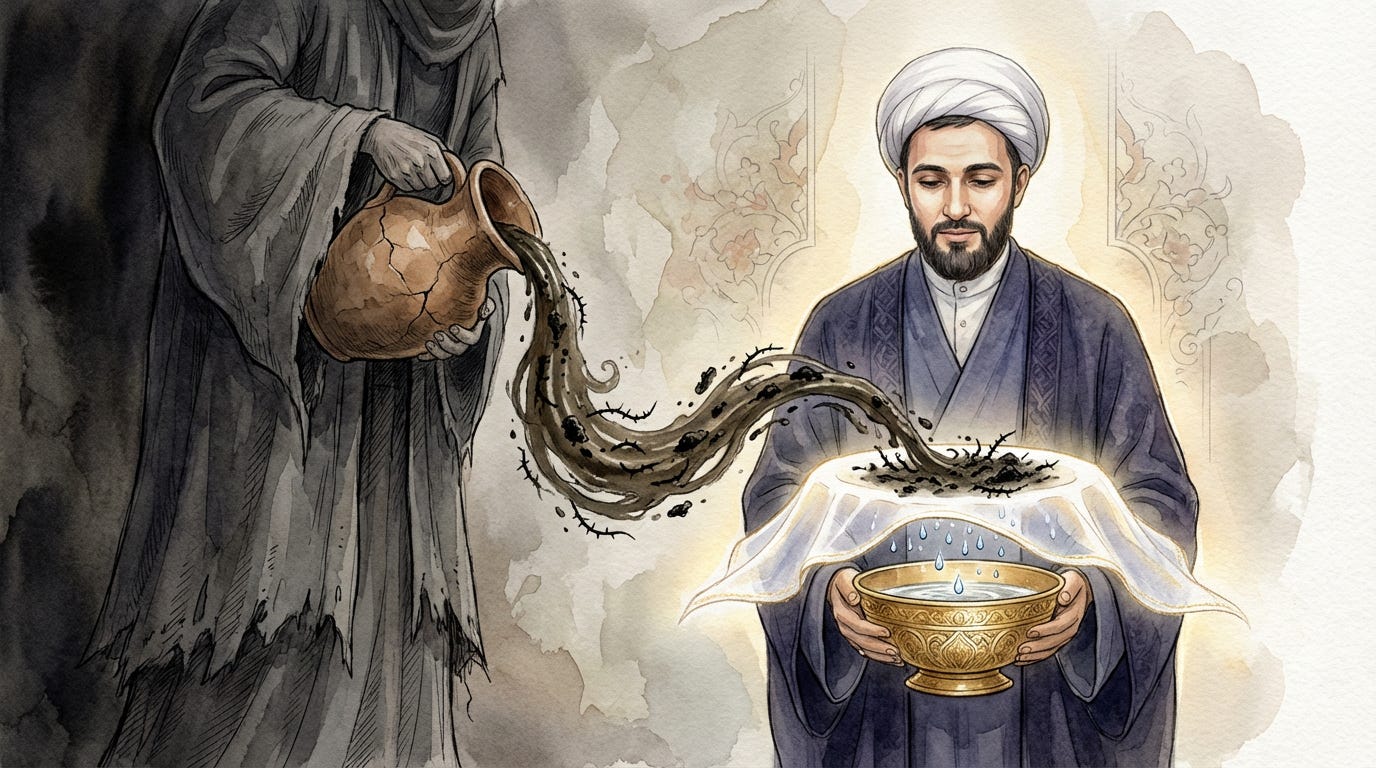
The Quran does not merely prohibit Fitna.
It provides the antidote — the practice that protects the believer from becoming an unwitting participant in sedition.
يَا أَيُّهَا الَّذِينَ آمَنُوا إِن جَاءَكُمْ فَاسِقٌ بِنَبَإٍ فَتَبَيَّنُوا أَن تُصِيبُوا قَوْمًا بِجَهَالَةٍ فَتُصْبِحُوا عَلَىٰ مَا فَعَلْتُمْ نَادِمِينَ
“O you who believe! If a corrupt person (Fasiq) comes to you with news, verify it (Tabayyanū), lest you harm a people in ignorance and afterwards become regretful.”
— Quran, Surah Al-Hujurat (the Chapter of the Chambers) #49, Verse 6
This verse is the Quranic vaccination against information poison.
The Fasiq: The Corrupt Source
The verse identifies the source of danger: the Fasiq — the corrupt person, the one whose moral character makes his testimony unreliable.
In the context of information warfare, who is the Fasiq?
He is the media outlet with a known agenda — the one that has been caught lying before, the one whose ownership serves foreign interests, the one whose “reporting” consistently aligns with the objectives of those who wish harm to the community.
He is the social media account that appears from nowhere, spreads inflammatory content, and disappears when its work is done.
He is the “analyst” who is funded by hostile governments, the “human rights organisation” that applies its principles selectively, the “journalist” who serves as a conduit for intelligence agencies.
The Quran does not say: ignore all news.
The Quran says: when the source is Fasiq — when the source has demonstrated corruption — verify before you act.
Tabayyun: The Obligation to Verify
The command is Tabayyanū — verify, investigate, clarify.
We studied this in our detailed series on Tabyeen.
This is not optional.
It is an imperative verb.
It is an obligation.
Before you believe the inflammatory report — verify.
Before you share the outrageous claim — verify.
Before you allow your anger to be mobilised by what you have read — verify.
The verse gives the reason: an tusībū qawman bi-jahālah — “lest you harm a people in ignorance.”
Acting on unverified information does not merely make you foolish.
It makes you harmful.
It makes you an instrument of the very Fitna you should be resisting.
You think you are fighting injustice — but you are attacking the innocent.
You think you are demanding accountability — but you are serving those who wish to destroy the system that, for all its faults, protects you.
You think you are exercising your right to protest — but you have become a weapon in someone else’s hand.
And afterwards — the verse warns — you will be Nādimīn: regretful.
When the fog clears, when the truth emerges, when you see what you actually did while you thought you were doing something else — you will regret.
But regret will not undo the harm.
The bank you burned will not unburn.
The trust you shattered will not unshatter.
The society you helped destabilise will not restabilise simply because you are sorry.
This is why verification is obligatory — not merely advisable, but Wajib (obligatory).
The believer who acts on unverified news from corrupt sources commits a sin — even if his intention was good, even if his grievance was real.
The road to Fitna is paved with unverified outrage.
The Quranic Balance

Let us step back and see the complete picture.
Surah An-Nisa 4:148 establishes:
The oppressed may speak out.
Legitimate protest is permitted, even obligatory.
The cry of the wronged is not silenced by Islam — it is protected.
Surah Al-Baqarah 2:217 establishes:
But there is a line.
Fitna — the destruction of social order through the confusion of truth and falsehood — is worse than killing.
Crossing from protest into sedition is not merely illegal; it is a graver sin than murder.
Surah Al-Hujurat 49:6 establishes:
The protection against crossing that line is verification.
Before you act, especially when the source is suspect, verify.
Acting in ignorance harms the innocent and serves the corrupt.
This is the Quranic framework.
It does not silence the citizen.
It does not excuse the tyrant.
It does not pretend that all is well when all is not well.
But it also does not permit the exploitation of grievance for destruction.
It does not allow the foreign agent to ride the wave of legitimate anger toward the overthrow of legitimate order.
It does not sanctify every act committed in the name of justice.
The citizen may speak.
The citizen must verify.
The citizen must not become an instrument of Fitna.
This is the balance.
And it is within this balance that the distinction between legitimate protest and forbidden sedition becomes clear.
The Core Distinction: Protest vs Riot
The Quranic framework establishes the principles.
Now we must apply them with precision.
The citizen has a grievance.
Prices have risen.
Corruption persists.
A policy has caused harm.
An official has abused his power.
The citizen wishes to speak, to act, to demand change.
When does his action constitute legitimate protest — protected, even obligatory?
When does it cross into sedition — forbidden, even worse than killing?
The line exists. The tradition draws it clearly. But in the fog of events, in the heat of emotion, in the chaos of the street, the line can be difficult to see.
Tonight, we make it visible.
Legitimate Protest: I’tiraz and Mutalebeh-gari
The Arabic term is I’tiraz — objection, protest, the raising of a grievance.
The Persian term is Mutalebeh-gari — the demanding of rights, the insistence that what is owed be paid.
Both terms share a common essence: the citizen seeks to correct a wrong within the framework of the system, not to destroy the system itself.
The Definition
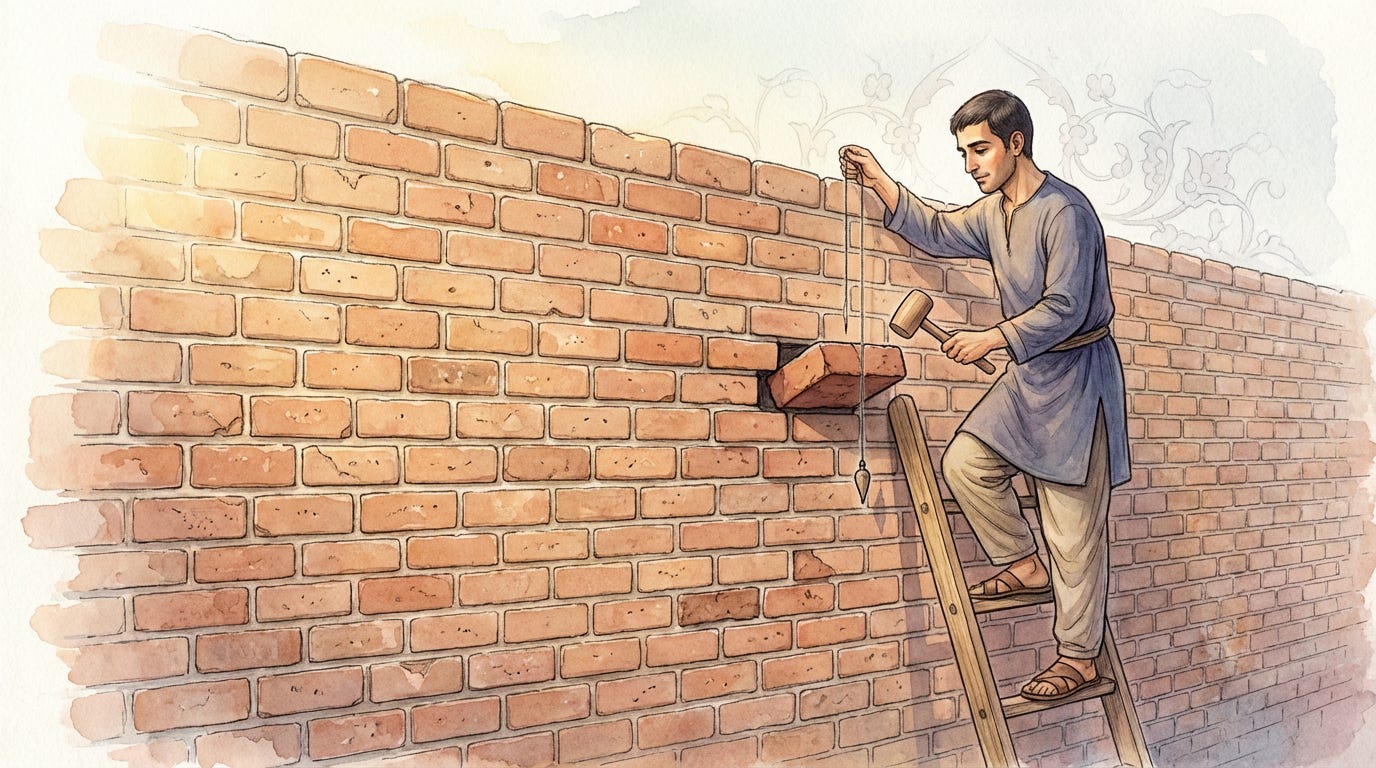
Legitimate protest is the public expression of grievance aimed at reform.
The protester identifies a specific wrong: this policy is unjust, this official is corrupt, this price increase is unbearable, this law is oppressive.
He demands a specific remedy: change the policy, remove the official, reverse the increase, repeal the law.
He operates within a framework of shared values: he appeals to principles that both he and the authorities nominally accept — justice, accountability, the welfare of the people.
And his goal is correction, not destruction.
He wants the system to work better, not to collapse.
The Religious Grounding

Legitimate protest is grounded in one of Islam’s most fundamental obligations:
Amr bil-Ma’ruf wa Nahi anil-Munkar — enjoining good and forbidding evil.
This is not merely a permission.
In many circumstances, it is a duty.
The believer who sees wrong and says nothing is complicit in the wrong.
The believer who sees oppression and remains silent allows oppression to continue.
The believer who sees corruption and does not object becomes, through his silence, a participant in corruption.
The Prophet, peace be upon him and his family, articulated this obligation in a hadith transmitted across both Sunni and Shia traditions — a rare case of near-identical wording in both canons, confirming its centrality to Islamic ethics.
The Sunni Transmission:
مَنْ رَأَى مِنْكُمْ مُنْكَرًا فَلْيُغَيِّرْهُ بِيَدِهِ، فَإِنْ لَمْ يَسْتَطِعْ فَبِلِسَانِهِ، فَإِنْ لَمْ يَسْتَطِعْ فَبِقَلْبِهِ، وَذَلِكَ أَضْعَفُ الْإِيمَانِ
“Whoever among you sees an evil (Munkar), let him change it with his hand; if he cannot, then with his tongue; if he cannot, then with his heart — and that is the weakest of faith.”
— Sahih Muslim, Kitab al-Iman (The Book of Faith), Hadith 49. Narrator: Abu Sa’id al-Khudri.
The Shia Transmission:
قَالَ رَسُولُ اللَّهِ (ص): مَنْ رَأَى مِنْكُمْ مُنْكَرًا فَلْيُنْكِرْهُ بِيَدِهِ، فَإِنْ لَمْ يَسْتَطِعْ فَبِلِسَانِهِ، فَإِنْ لَمْ يَسْتَطِعْ فَبِقَلْبِهِ، فَحَسْبُهُ أَنْ يَعْلَمَ اللَّهُ مِنْ قَلْبِهِ أَنَّهُ لِذَلِكَ كَارِهٌ
“The Messenger of God said: Whoever among you sees an evil, let him deny/change it with his hand; if he cannot, then with his tongue; if he cannot, then with his heart — for it suffices him that God knows from his heart that he despises it.”
— Wasail al-Shia (Shaykh al-Hurr al-Amili), Volume 16, Abwab al-Amr bil-Ma’ruf, Hadith 21372. Also found in Tahdhib al-Ahkam (Shaykh Tusi), Volume 6, Page 177.
The near-identical wording across traditions is significant.
This is not a sectarian teaching.
This is the Prophet’s instruction to the entire Ummah.
The Hierarchy of Response
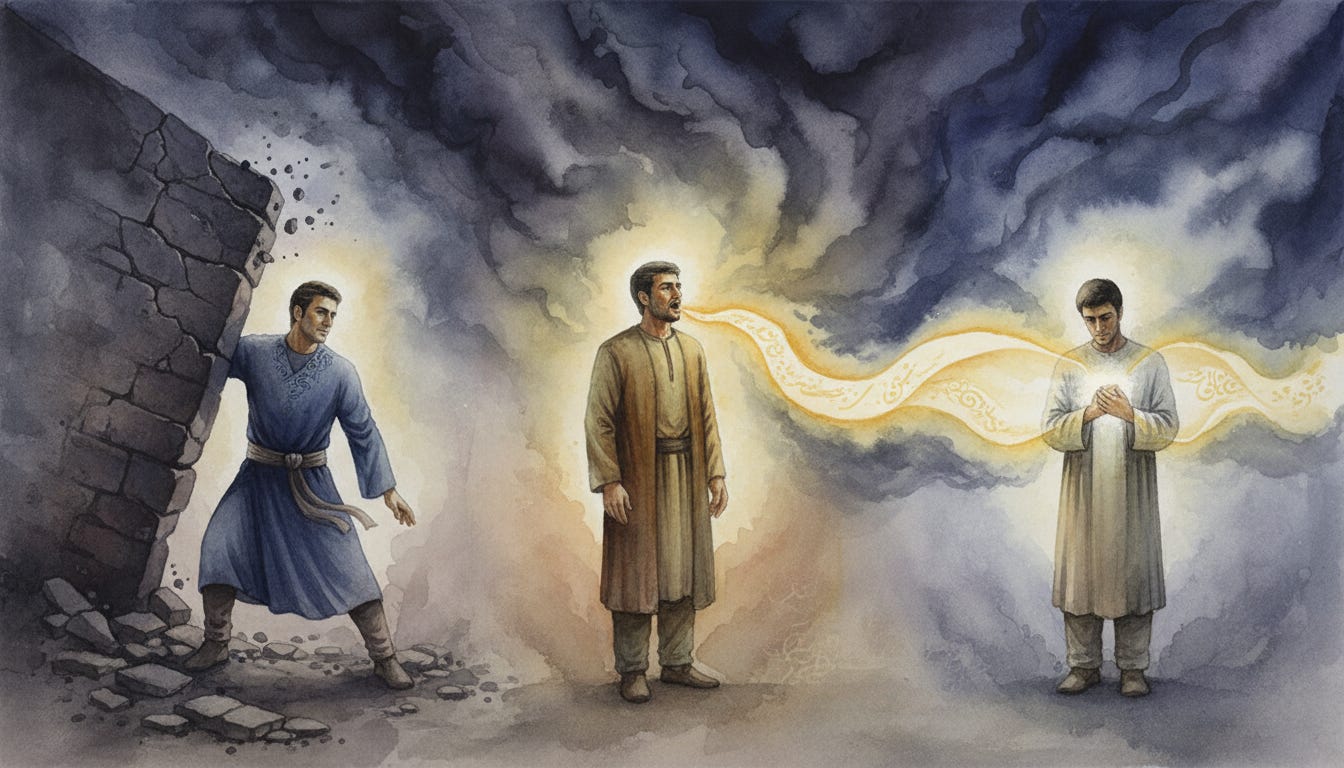
The hadith establishes a hierarchy — a ladder of response calibrated to capacity and circumstance.
The Hand — physical intervention, the direct prevention of wrong through action.
In both Sunni and Shia jurisprudence, this level is traditionally understood as the domain of legitimate authority: the state, the police, those who have been granted the power to enforce.
The individual does not have unlimited license to take physical action; such action requires proper authority, lest it create greater harm than it prevents.
The Tongue — verbal intervention, speech, protest, the public naming of wrong.
This is the realm of Nahi anil-Munkar as it applies to the scholar, the activist, the citizen who sees injustice.
It is here that legitimate protest finds its religious grounding.
The tongue is explicitly named as a means of changing evil.
The Heart — internal rejection, the refusal to accept wrong as right, even when one cannot act or speak.
This is the minimum — “the weakest of faith.”
The believer who cannot act and cannot speak must at least despise the wrong internally.
The Shia version adds the beautiful phrase:
“it suffices him that God knows from his heart that he despises it.”
God sees the internal rejection, even when external expression is impossible.
The Implication for Protest
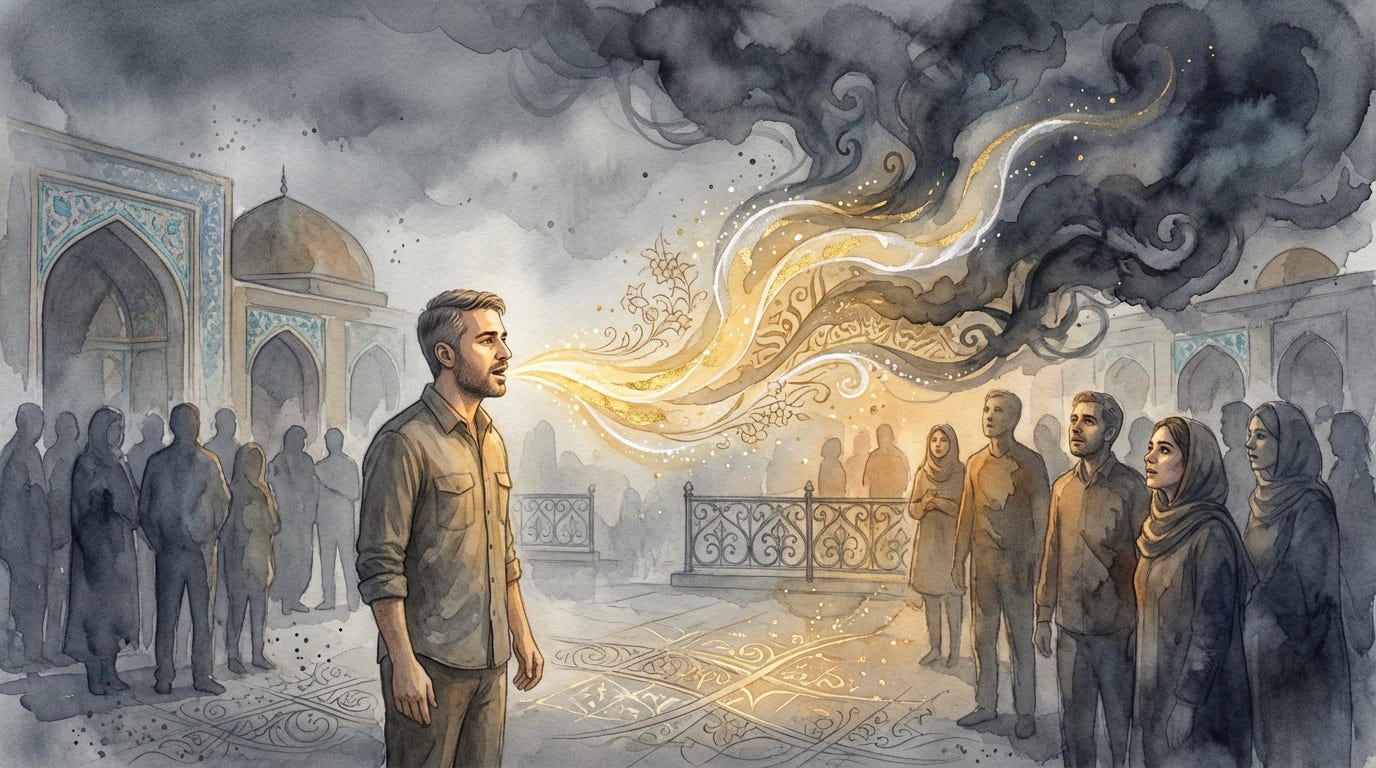
The tongue — speech, protest, public objection — is explicitly named as a means of forbidding evil.
The citizen who speaks against injustice is not violating Islamic ethics.
He is fulfilling them.
He is operating at the second level of the hierarchy — the level appropriate to those who lack state authority but possess the capacity for speech.
And Surah An-Nisa 4:148, as we have seen, grants the oppressed specific license to speak out publicly, even harshly.
The combination of the Quranic verse and the Prophetic hadith — transmitted identically across both major traditions of Islam — establishes beyond doubt:
Legitimate protest is not merely tolerated.
It is commanded.
The one who sees evil and has the capacity to speak against it, but remains silent, has failed in his faith.
The Religious Verdict
The citizen who protests genuine injustice through legitimate means is not sinning.
He may be fulfilling a religious duty.
The tradition does not demand quietism.
It does not sanctify every government action.
It does not require the believer to pretend that wrong is right.
It demands discernment — the wisdom to know what is truly wrong, the courage to name it, and the discipline to seek correction without causing greater harm.
Riot and Sedition: Ighthisash and Fitna
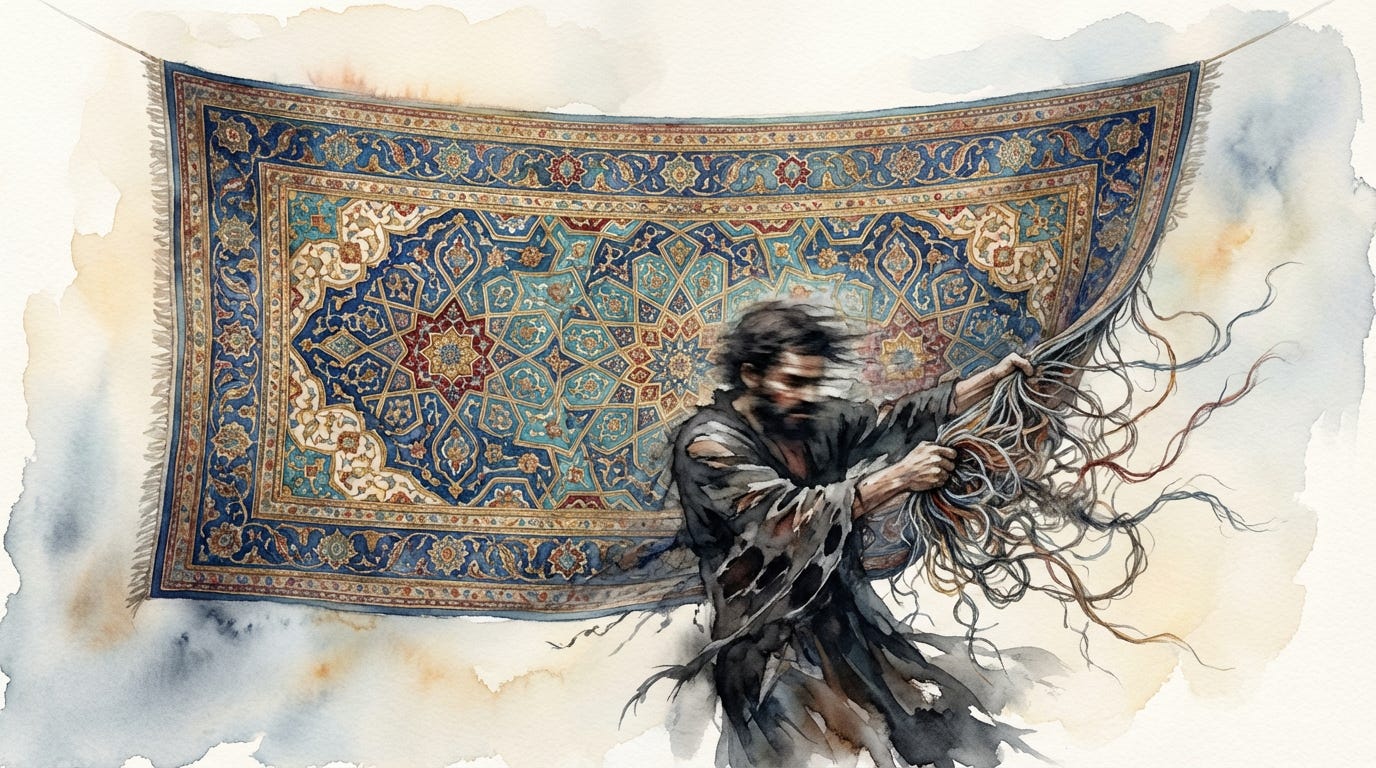
The Arabic term is Ighthisash — rioting, the creation of violent disorder.
It is closely related to Fitna — sedition, the deliberate corruption of social order.
Both terms share a common essence: the destruction of public order, security, and trust — whether or not the participants intend this destruction.
The Definition
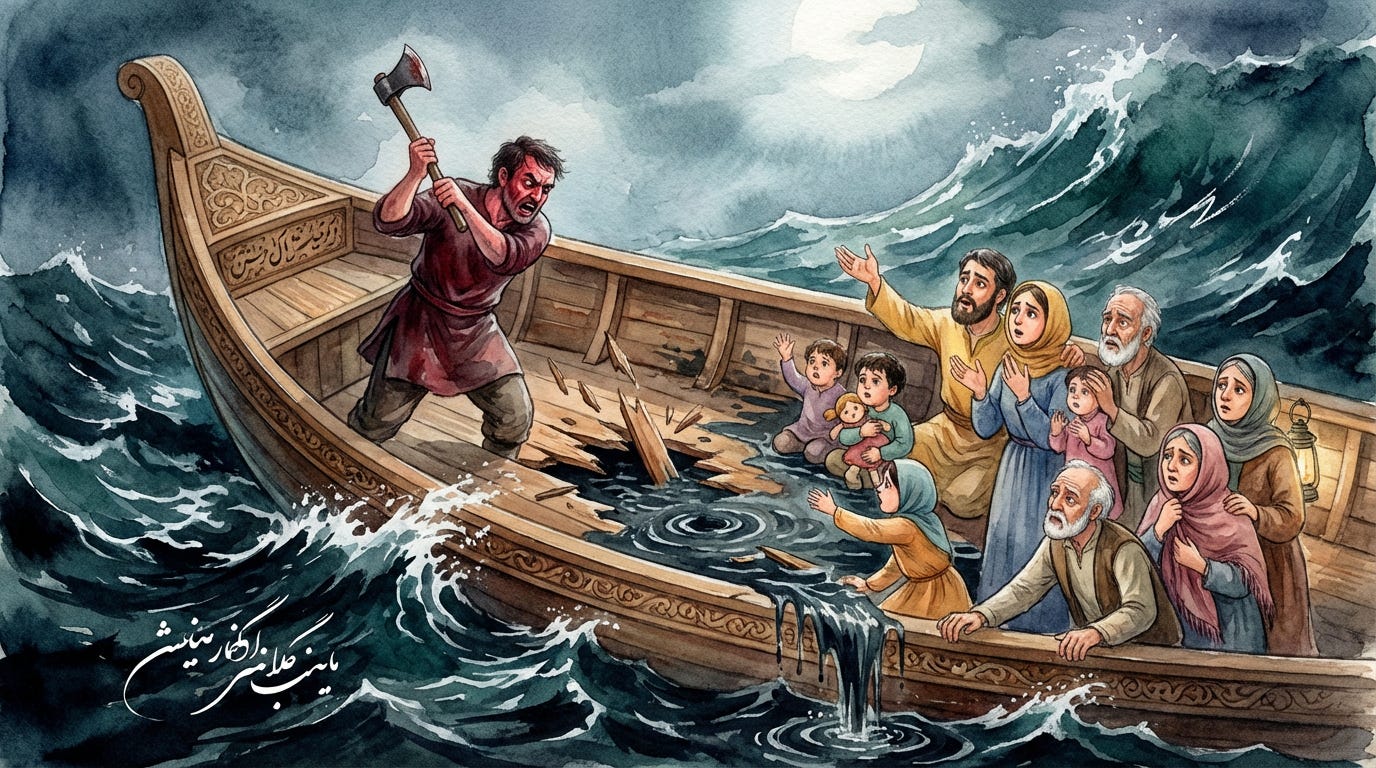
A riot is the use of violence, destruction, and chaos in ways that harm the innocent, destroy public and private property, and undermine the security that makes normal life possible.
The rioter may have a grievance — often he does.
But his actions have detached from his grievance.
He burns the bus — but the bus serves his own community.
He loots the shop — but the shop belongs to his neighbour.
He destroys the bank — but the bank holds his relatives’ savings.
He attacks the police station — but the chaos that follows harms the vulnerable more than anyone else.
The connection between the grievance and the action has been severed.
The destruction serves no reform. It creates only chaos — and chaos harms the weak more than the strong.
The Relationship to Fitna
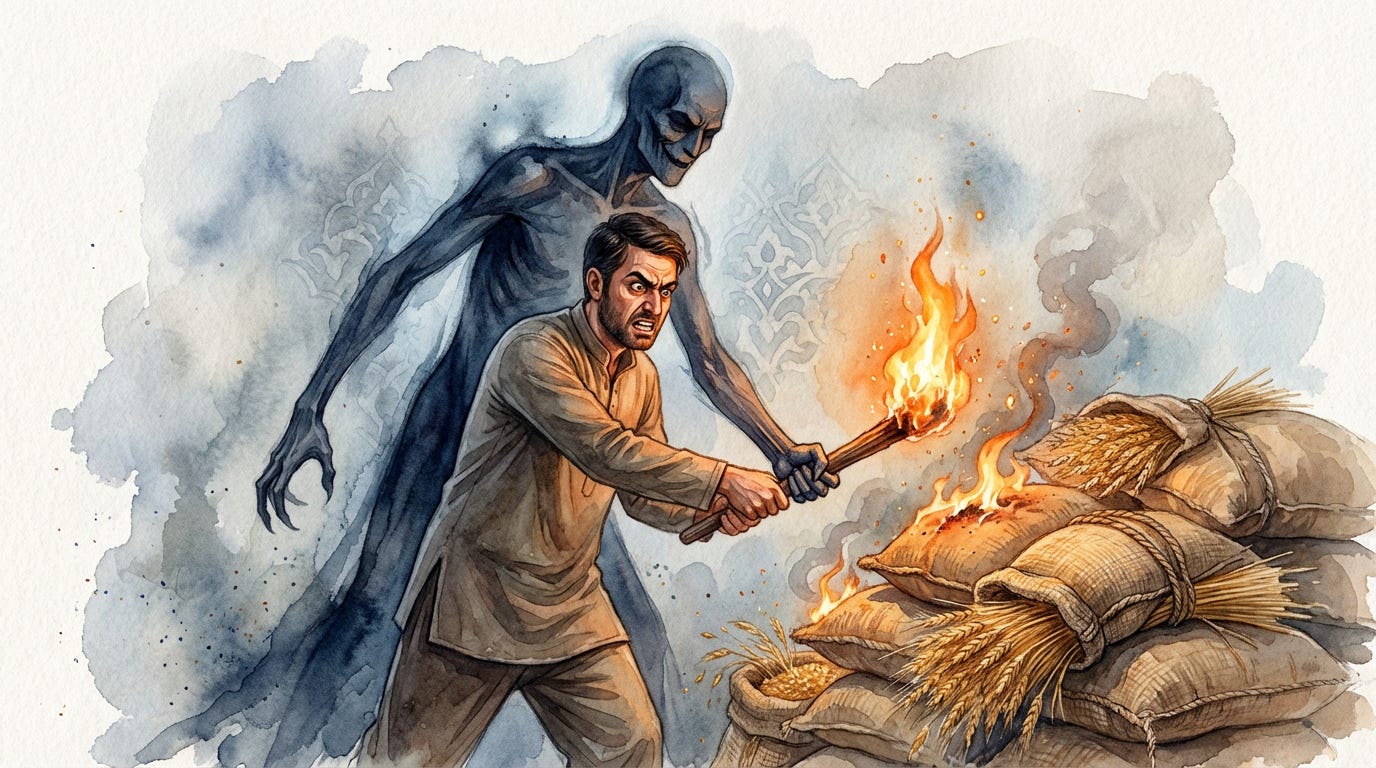
Riot and Fitna are related but not identical.
A riot may be spontaneous — an eruption of anger that, while destructive, was not planned or manipulated.
Fitna is strategic — the deliberate cultivation of chaos to serve a hidden agenda.
But in practice, the two often merge.
The foreign intelligence agency does not create grievances from nothing.
It finds real grievances and exploits them.
It takes genuine anger and steers it toward destruction.
It infiltrates legitimate protests and transforms them into riots.
The participant may not know he is serving Fitna.
He may believe he is fighting injustice.
But his actions — the burning, the looting, the destruction — serve an agenda he does not see.
This is the tragedy of Fitna: it turns well-intentioned people into instruments of their own harm.
The Religious Category
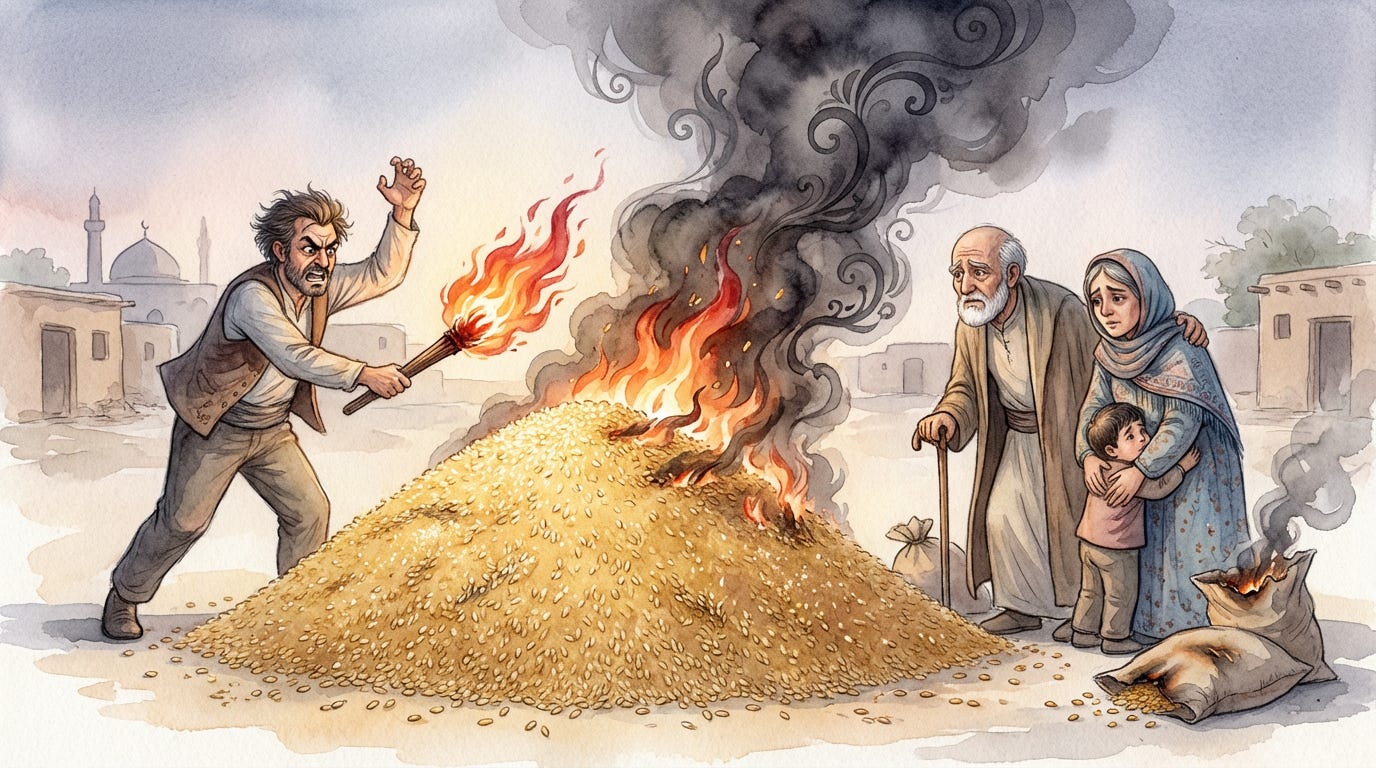
Riot falls under several prohibited categories in Islamic law:
Fasad fil-Ardh — corruption on earth.
The Quran condemns those who “spread corruption on earth” (Quran, Surah al-Maidah (the Chapter of the Table Spread) #5, Verse 33) in the strongest terms.
Destruction of property, disruption of order, harm to innocents — these are forms of Fasad.
Harj wa Marj — chaos and disorder.
The tradition consistently warns against actions that create social breakdown.
The harm of chaos falls disproportionately on the vulnerable — the poor, the elderly, the sick, those who cannot protect themselves.
Violation of Haqq al-Nas — the rights of people.
When a rioter burns a bus, he violates the rights of everyone who needed that bus.
When he loots a shop, he violates the rights of the owner and the community the shop served.
When he destroys public infrastructure, he violates the rights of all who depended on it.
The Religious Verdict

The one who riots — who burns, loots, and destroys — commits sin, even if his original grievance was legitimate.
The legitimacy of the grievance does not sanctify the means of expression.
You may be wronged.
You may have every right to protest.
But you do not have the right to burn your neighbour’s livelihood.
You do not have the right to destroy what the community needs.
You do not have the right to create chaos that harms the innocent.
The ends do not justify the means.
And when the means become Fasad — corruption, destruction, chaos — the ends, however noble, cannot redeem them.
The Summary
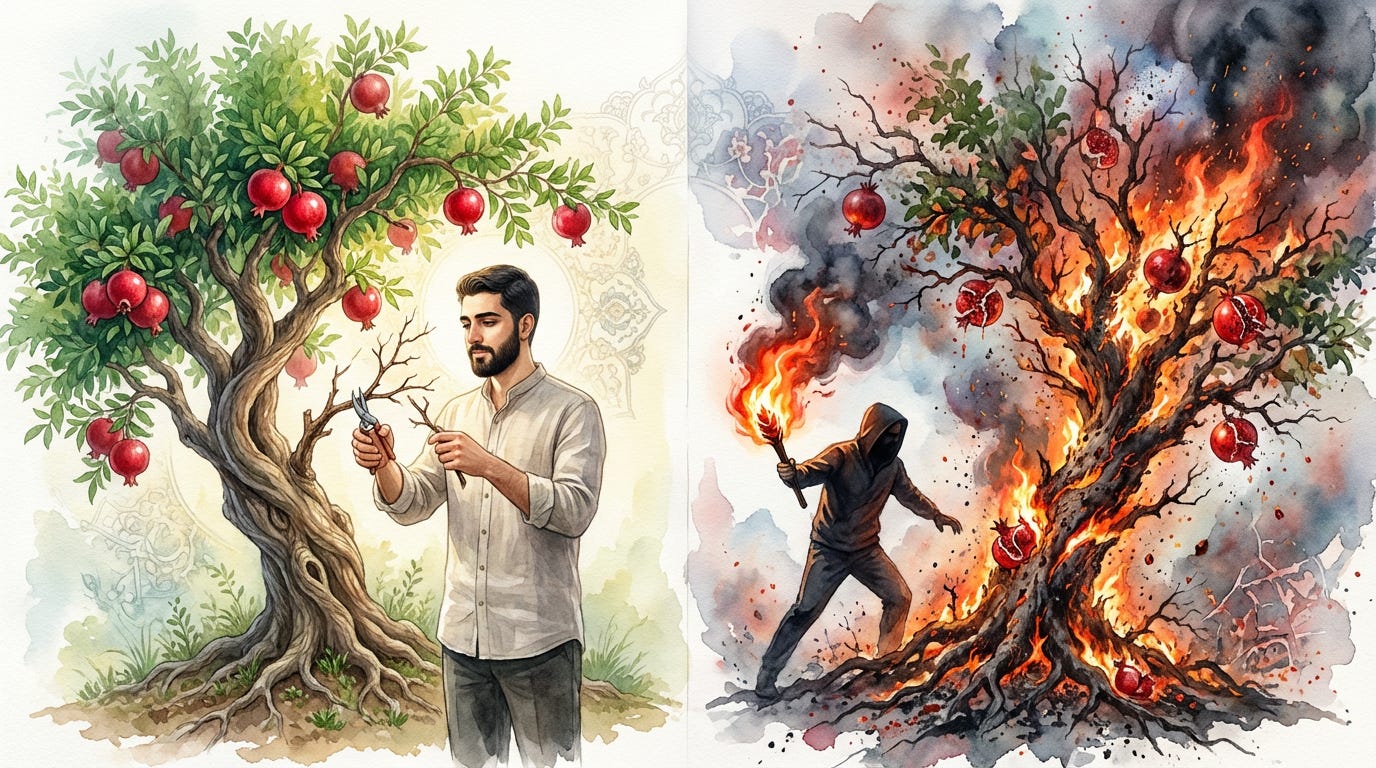
Legitimate Protest (I’tiraz) is characterised by:
Objective: Reform — the correction of specific wrongs, not the destruction of the system itself
Target: The policy, the official, the specific injustice — not society at large
Method: Speech, assembly, civil action — not violence or destruction
Relation to Grievance: Proportionate and connected — the action addresses the wrong
Effect on the Innocent: Minimal — the action targets those responsible, not bystanders
Relation to Enemy: Independent — it serves the people’s interest, not foreign agendas
Riot and Sedition (Ighthisash/Fitna) is characterised by:
Objective: Destruction — the collapse of order, not its reform
Target: Everything — property, infrastructure, trust, the fabric of society
Method: Violence, burning, looting, chaos
Relation to Grievance: Detached and disproportionate — the destruction bears no connection to remedy
Effect on the Innocent: Massive — harms everyone, especially the weak and vulnerable
Relation to Enemy: Often exploited — serves foreign agendas, whether participants know it or not
The Grey Zone: Where Protest Becomes Riot
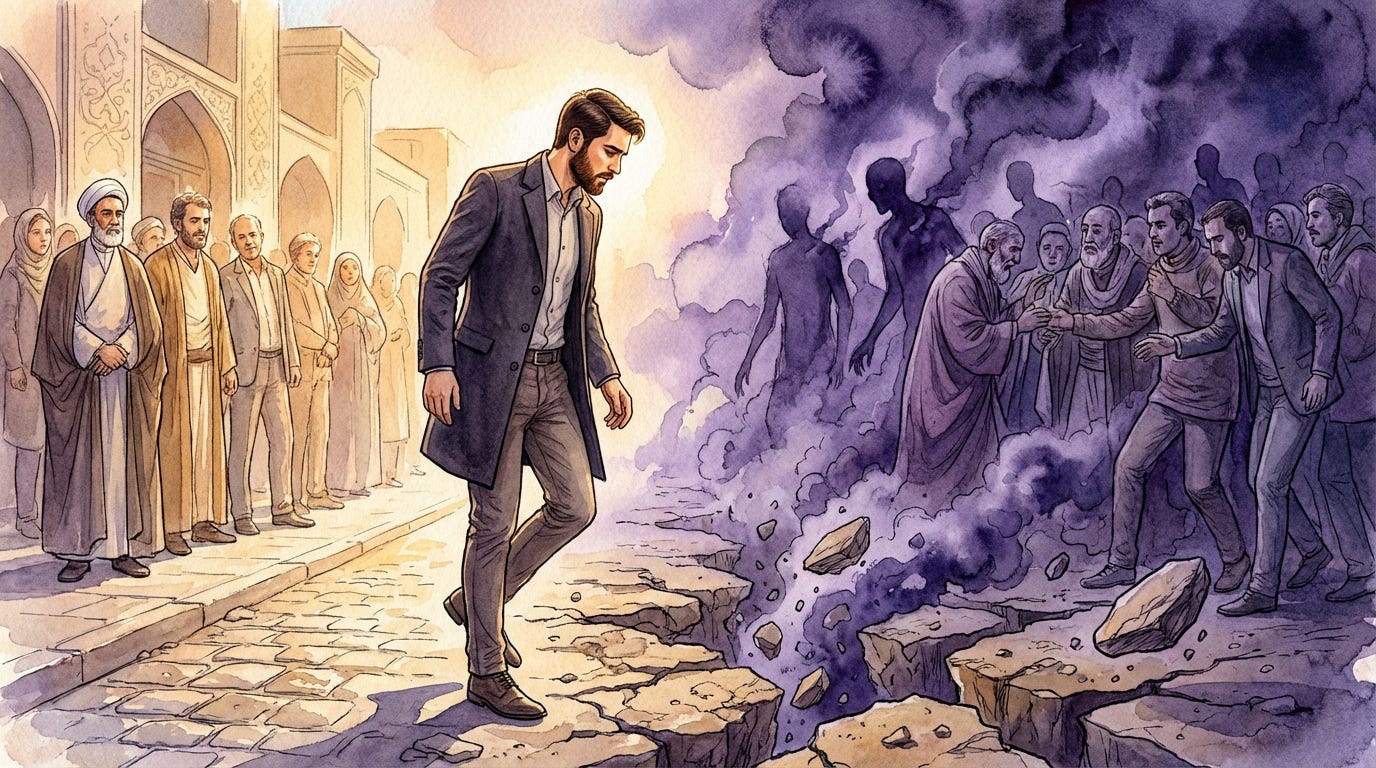
The distinction is clear in principle.
In practice, the transition can be gradual, even invisible to those experiencing it.
A protest begins peacefully.
The grievance is real.
The demands are legitimate.
The participants are sincere.
Then something shifts.
Perhaps agents provocateurs infiltrate — professionals trained to escalate, to throw the first stone, to provoke the reaction that transforms assembly into chaos.
Perhaps the authorities overreact — and legitimate anger at the overreaction spirals beyond control.
Perhaps the crowd psychology takes over — and individuals who would never burn a bus alone find themselves participating in destruction they would have condemned an hour earlier.
Perhaps outside actors intervene — not visibly, but through social media, through funding, through coordination that the participants do not perceive.
The protester who came to demand justice finds himself in a riot.
He did not intend this.
He does not want this.
But he is here, and the line has been crossed.
What does he do?
This is where Imam Ali’s counsel — which we will examine shortly — becomes essential.
The believer must have the Basirah — the insight — to recognise when the line is being crossed.
And he must have the courage to withdraw — to refuse to be used — even when withdrawal feels like betrayal of the cause.
The cause is not served by Fitna.
The cause is destroyed by Fitna.
And the one who continues to participate after the line is crossed becomes, whatever his intention, a participant in destruction.
The Practical Tests
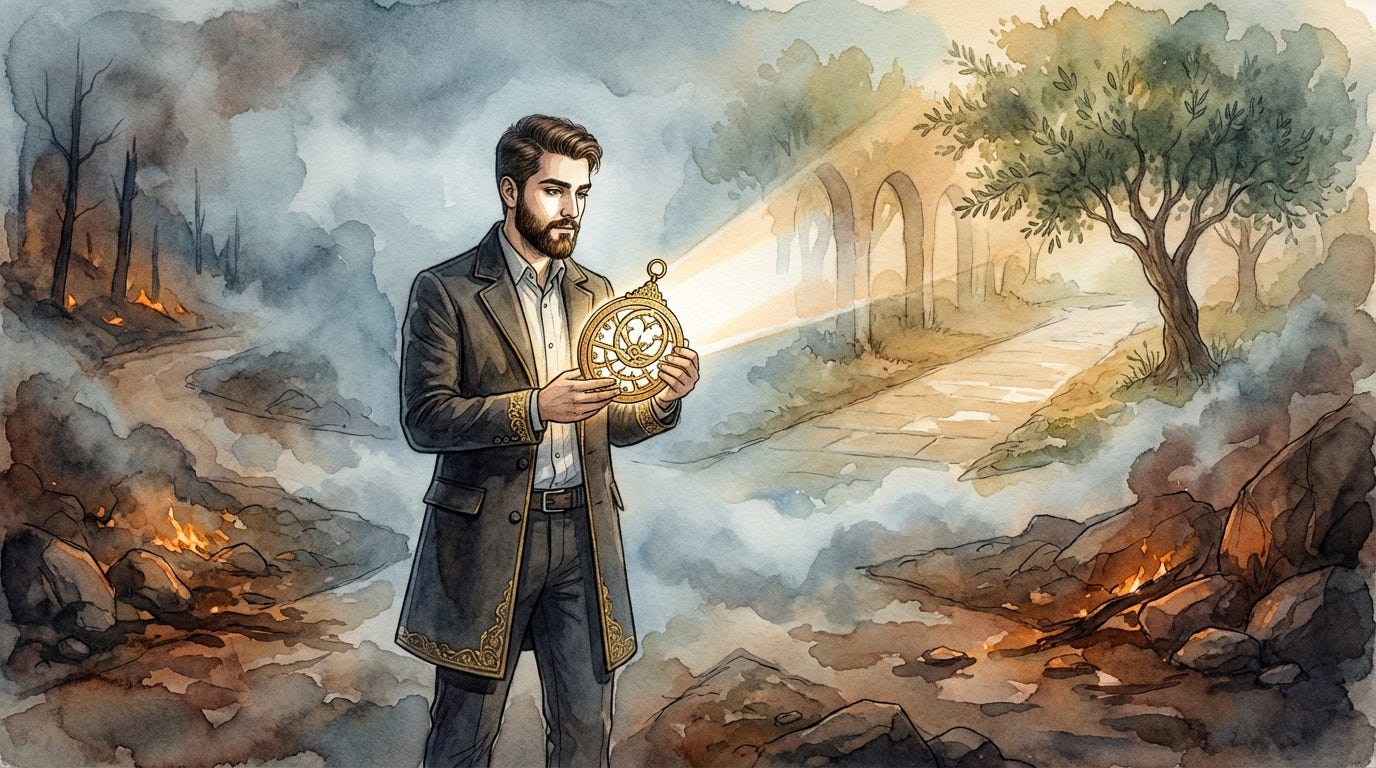
How does the individual know which side of the line he is on?
Several practical tests emerge from the tradition:
The Target Test: Am I targeting the source of injustice, or am I harming the innocent?
If my action burns the bus that my own community needs, I have crossed the line.
The Proportionality Test: Is my action proportionate to the grievance, or has it spiralled beyond any connection to the original wrong?
If I am destroying everything in sight because of a specific policy, I have crossed the line.
The Beneficiary Test: Who actually benefits from what I am doing?
If my actions serve the agenda of foreign powers who wish my nation harm, I have crossed the line — even if I do not intend to serve them.
The Aftermath Test: What will remain when this is over?
If the answer is “ashes, broken trust, and a weaker society,”
I have crossed the line.
The Verification Test: Have I verified the claims that are driving my anger?
Or am I acting on unverified reports from sources I have not examined?
If I have not applied Tabayyun, I may already be an instrument of Fitna.
These tests are not abstract.
They are practical tools for the believer caught in confusing circumstances.
Apply them honestly, and the line becomes visible.
The Tragedy of the Manipulated
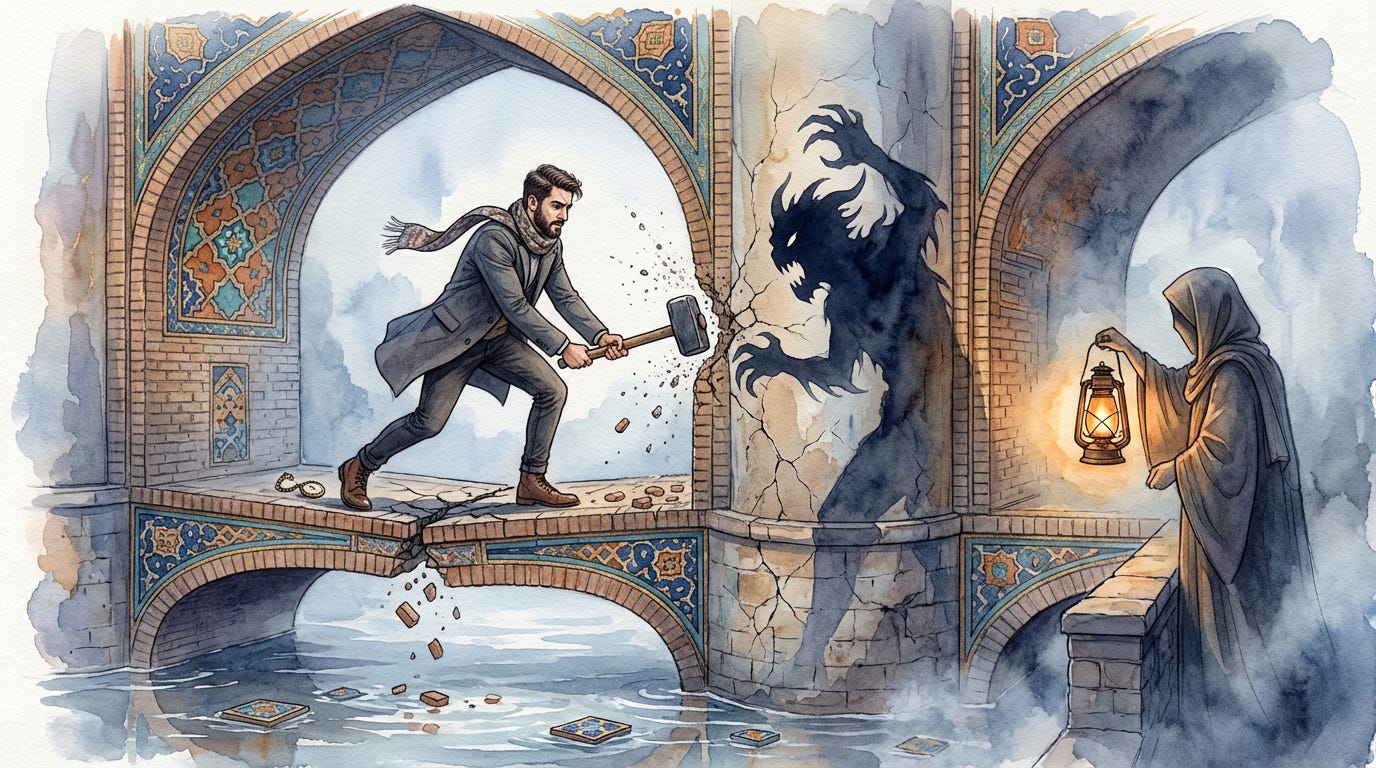
There is a profound tragedy in Fitna.
The manipulated rioter often has a real grievance.
His anger is not invented.
His suffering is not imaginary.
But his suffering has been exploited.
Someone has taken his legitimate pain and weaponised it — not to address his grievance, but to destroy what remains of the order that, however imperfect, still provides some protection.
He thinks he is fighting for justice.
He is actually fighting against his own interests.
He thinks he is striking at the oppressor.
He is actually destroying the infrastructure his community needs.
He thinks he is part of a popular uprising.
He is actually a tool of foreign intelligence services who view him as expendable.
This is the tragedy.
And it is why the Quran places such emphasis on verification, on discernment, on refusing to act in ignorance.
The manipulated rioter is a victim — but he is also a perpetrator.
His victimhood does not erase the harm he causes.
His ignorance does not undo the destruction he participates in.
He is both to be pitied and to be stopped.
And the believer who has Basirah — who sees what is happening — has an obligation to avoid becoming this tragic figure.
The cost of discernment is effort.
The cost of its absence is becoming an instrument of one’s own destruction.
The Classical Sources: The Tradition’s Guidance
The distinction between legitimate protest and forbidden sedition is not a modern invention.
It is not a reaction to contemporary events, crafted to serve present political needs.
It is embedded in the classical sources — in the jurisprudential texts studied in every Hawza, in the sermons and letters of Imam Ali that have guided believers for fourteen centuries, in the collections of wisdom that distil the teachings of the Ahl al-Bayt.
Tonight, we hear from these sources directly.
We find that the tradition anticipated our questions.
It provided answers before we thought to ask.
Sharh al-Lum’ah: On Rebels and Citizens
Al-Lum’ah al-Dimashqiyyah — the text we encountered in Session 57 regarding the prohibition on poisoning lands — is one of the foundational works of Shia jurisprudence.
Written by Shahid al-Awwal (the First Martyr) and commented upon extensively by Shahid al-Thani (the Second Martyr), it remains a core text in Hawza education.
In its treatment of Baghi — the rebel, the one who rises against legitimate authority — the text establishes a crucial principle:
لَا يُقَاتَلُ الْبَاغِي حَتَّى يُبْدَأَ بِالْحِوَارِ مَعَهُ، وَتُزَالَ شُبْهَتُهُ، وَتُسْمَعَ مَظْلَمَتُهُ، فَإِنْ كَانَتْ لَهُ مَظْلَمَةٌ أُزِيلَتْ.
“The rebel is not to be fought until dialogue is first initiated with him, his doubts are removed, and his grievance is heard. If he has a legitimate grievance, it must be addressed.“
— Sharh al-Lum’ah al-Dimashqiyyah, Kitab al-Jihad, Section on Baghi (Rebels)
Consider the weight of this ruling.
The state is not permitted to immediately crush those who rise against it.
The state must first engage in dialogue.
The state must first attempt to remove doubts — perhaps the rebels have been misinformed, perhaps they have misunderstood, perhaps they are acting on false reports (the very dynamic Surah Al-Hujurat warned against).
The state must first hear the grievance.
And — most remarkably — if the grievance is legitimate, the state must address it.
The rebel who has a genuine grievance is not simply to be suppressed.
His grievance is to be remedied.
Only after all of this — after dialogue, after clarification, after the hearing and potential remedy of grievances — does the question of force even arise.
The Implication
This ruling places a tremendous obligation on authority.
Before you label someone a rebel, have you talked to him?
Before you deploy force, have you heard his complaint?
Before you suppress the uprising, have you asked whether the uprising has a point?
The classical tradition does not give the state a blank check to crush all opposition.
It demands that the state first examine itself — first ask whether the opposition has arisen because of the state’s own failures.
And it demands that legitimate grievances be addressed, not merely silenced.
This is not softness on rebellion.
The text is clear that after these steps, force may be used against those who persist in armed rebellion despite having no legitimate grievance or despite having their grievance addressed.
But the steps cannot be skipped.
Dialogue before force.
Hearing before suppression.
Remedy before punishment.
Nahj al-Balagha, Letter 53: The Right to Be Heard
When Imam Ali appointed Malik al-Ashtar as governor of Egypt, he sent with him a letter of instruction — a comprehensive guide to governance that remains one of the most remarkable political documents in human history.
In this letter, Imam Ali addresses how the ruler should relate to the people — including those who have complaints, those who are dissatisfied, those who wish to speak against the ruler’s policies.
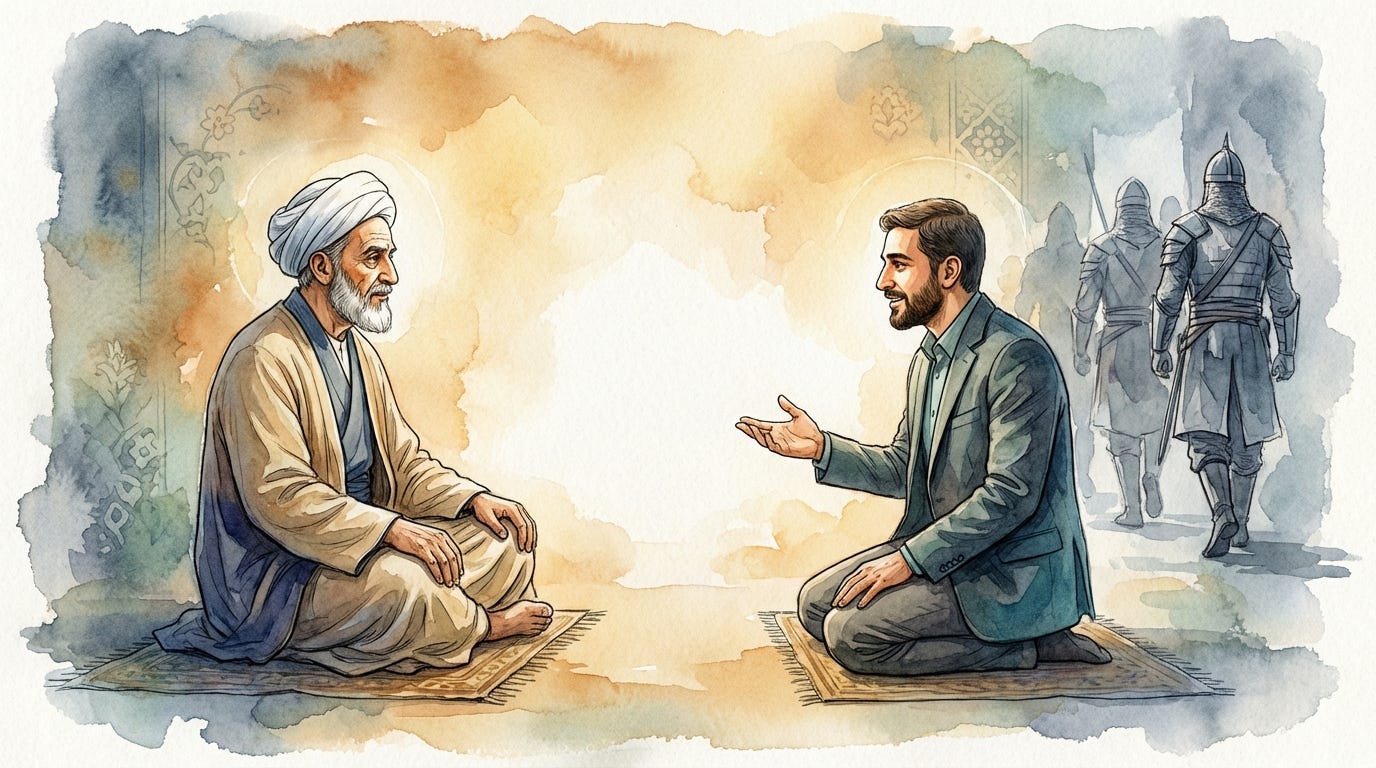
وَاجْعَلْ لِذَوِي الْحَاجَاتِ مِنْكَ قِسْماً تُفَرِّغُ لَهُمْ فِيهِ شَخْصَكَ، وَتَجْلِسُ لَهُمْ مَجْلِساً عَامّاً، فَتَتَوَاضَعُ فِيهِ لِلَّهِ الَّذِي خَلَقَكَ، وَتُقْعِدُ عَنْهُمْ جُنْدَكَ وَأَعْوَانَكَ مِنْ أَحْرَاسِكَ وَشُرَطِكَ، حَتَّى يُكَلِّمَكَ مُتَكَلِّمُهُمْ غَيْرَ مُتَتَعْتِعٍ.
“Set aside for those who have needs from you a portion of your time in which you free yourself for them. Sit with them in a general assembly and be humble therein before God who created you. Keep your soldiers and guards away from them, so that their spokesman may speak to you without fear (ghayr mutat’ti’).“
— Nahj al-Balagha, Letter 53 (To Malik al-Ashtar)
The phrase ghayr mutat’ti’ is crucial.
It means: without stammering, without hesitation, without the paralysing fear that comes from speaking truth to power while soldiers loom nearby.
The Imam is commanding the governor: create the conditions in which people can actually speak to you.
Remove the soldiers.
Dismiss the guards.
Humble yourself.
Let the spokesman of the people say what he needs to say — without fear of retaliation, without anxiety about consequences, without the trembling that comes when power surrounds the speaker.
The Implication
This is a remarkable protection of what we would today call the right to petition, the right to protest, the right of the citizen to address his government.
The Imam does not say: listen only to those who praise you.
The Imam does not say: hear only the comfortable voices.
The Imam says: create space for the uncomfortable voice.
Remove the intimidation.
Let the critic speak freely.
This is the Islamic foundation for legitimate protest.
The ruler who surrounds himself with guards when citizens wish to speak, who intimidates those who would criticise, who makes it dangerous to voice grievance — this ruler violates the explicit instruction of Imam Ali.
The ruler who humbles himself, who dismisses the guards, who creates space for honest speech — this ruler follows the path of Wilayah.
And the citizen who speaks in that space — who voices his grievance, who names the injustice, who demands accountability — that citizen is exercising a right that Imam Ali explicitly protected.
Nahj al-Balagha, Sermon 50: How Fitna Begins
But Imam Ali also understood the danger on the other side.
He understood that legitimate grievance could be exploited.
That sincere protest could be hijacked.
That the righteous anger of the people could be steered toward destruction.
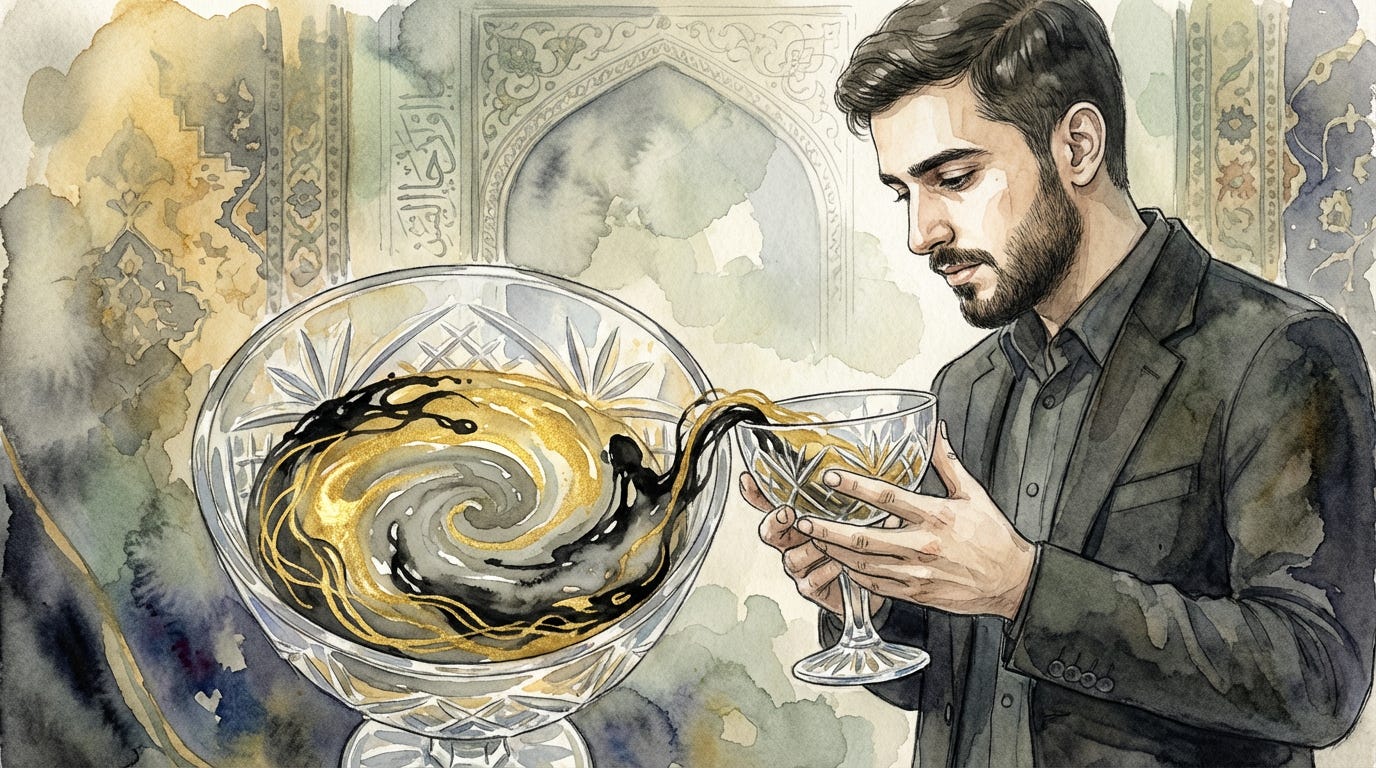
In Sermon 50, he describes the mechanism — how Fitna actually works:
إِنَّمَا بَدْءُ وُقُوعِ الْفِتَنِ أَهْوَاءٌ تُتَّبَعُ، وَأَحْكَامٌ تُبْتَدَعُ، يُخَالَفُ فِيهَا كِتَابُ اللهِ، وَيَتَوَلَّى عَلَيْهَا رِجَالٌ رِجَالاً عَلَى غَيْرِ دِينِ اللهِ. فَلَوْ أَنَّ الْبَاطِلَ خَلَصَ مِنْ مِزَاجِ الْحَقِّ لَمْ يَخْفَ عَلَى الْمُرْتَادِينَ، وَلَوْ أَنَّ الْحَقِّ خَلَصَ مِنْ لَبْسِ الْبَاطِلِ انْقَطَعَتْ عَنْهُ أَلْسُنُ الْمُعَانِدِينَ. وَلَكِنْ يُؤْخَذُ مِنْ هَذَا ضِغْثٌ، وَمِنْ هَذَا ضِغْثٌ، فَيُمْزَجَانِ فَهُنَالِكَ يَسْتَوْلِي الشَّيْطَانُ عَلَى أَوْلِيَائِهِ.
“Verily, the beginning of the occurrence of seditions is desires that are followed and rulings that are innovated in which the Book of God is violated, and men support other men in other than the religion of God.
If falsehood were pure, unmixed with truth, it would not be hidden from those who seek. And if truth were pure, unmixed with falsehood, the tongues of the opponents would be silenced.
But a handful is taken from this, and a handful from that, and they are mixed — and there Satan takes hold of his followers.”
— Nahj al-Balagha, Sermon 50
This is the mechanism of Fitna, articulated with devastating clarity.
Pure falsehood would be easy to detect.
No one follows obvious lies.
Pure truth would be irresistible.
No one opposes manifest reality.
The danger lies in the mixture.
A handful of truth — a real grievance, a genuine injustice, an actual problem.
A handful of falsehood — a manufactured narrative, a distorted interpretation, a hidden agenda.
Mixed together.
And in that mixture, Satan takes hold.
The sincere person follows because he sees the truth in it.
The malicious person hides because his falsehood is concealed within it.
And the result is Fitna — chaos, sedition, the destruction that serves no one except the enemies of the community.
The Implication
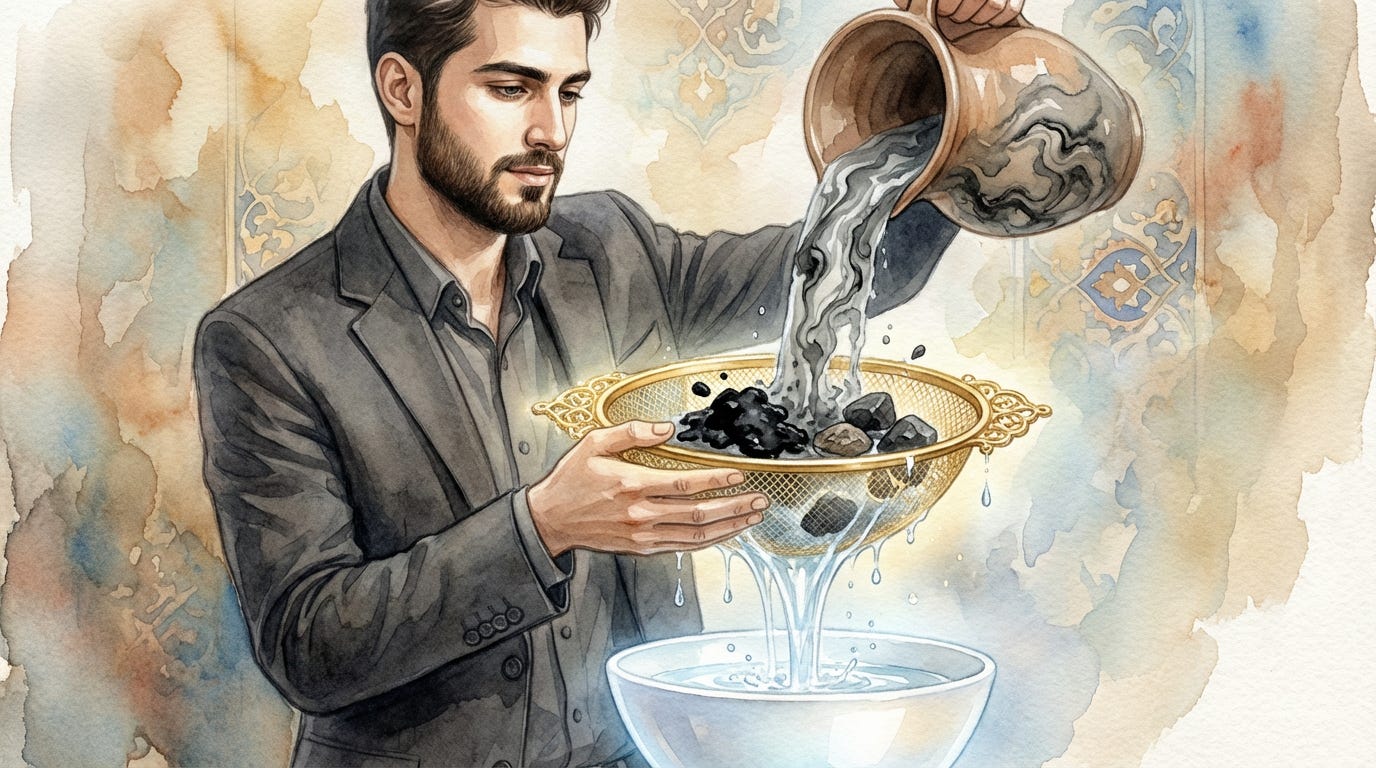
This is why verification — Tabayyun — is so crucial.
The Fitna-monger does not present obvious lies.
He presents mixtures.
He takes your real grievance — which is valid — and attaches it to a false solution, a destructive method, a hidden agenda.
You follow because the grievance is yours.
You do not see that the direction is his.
The believer who wishes to avoid becoming an instrument of Fitna must learn to separate the handful of truth from the handful of falsehood.
He must ask:
“Is my grievance being addressed — or is it being exploited?”
He must ask:
“Does this action remedy the wrong — or does it create greater wrong?”
He must ask:
“Whom does this actually serve?”
These questions are the antidote to the mixture.
Ghurar al-Hikam: The Root of Sedition
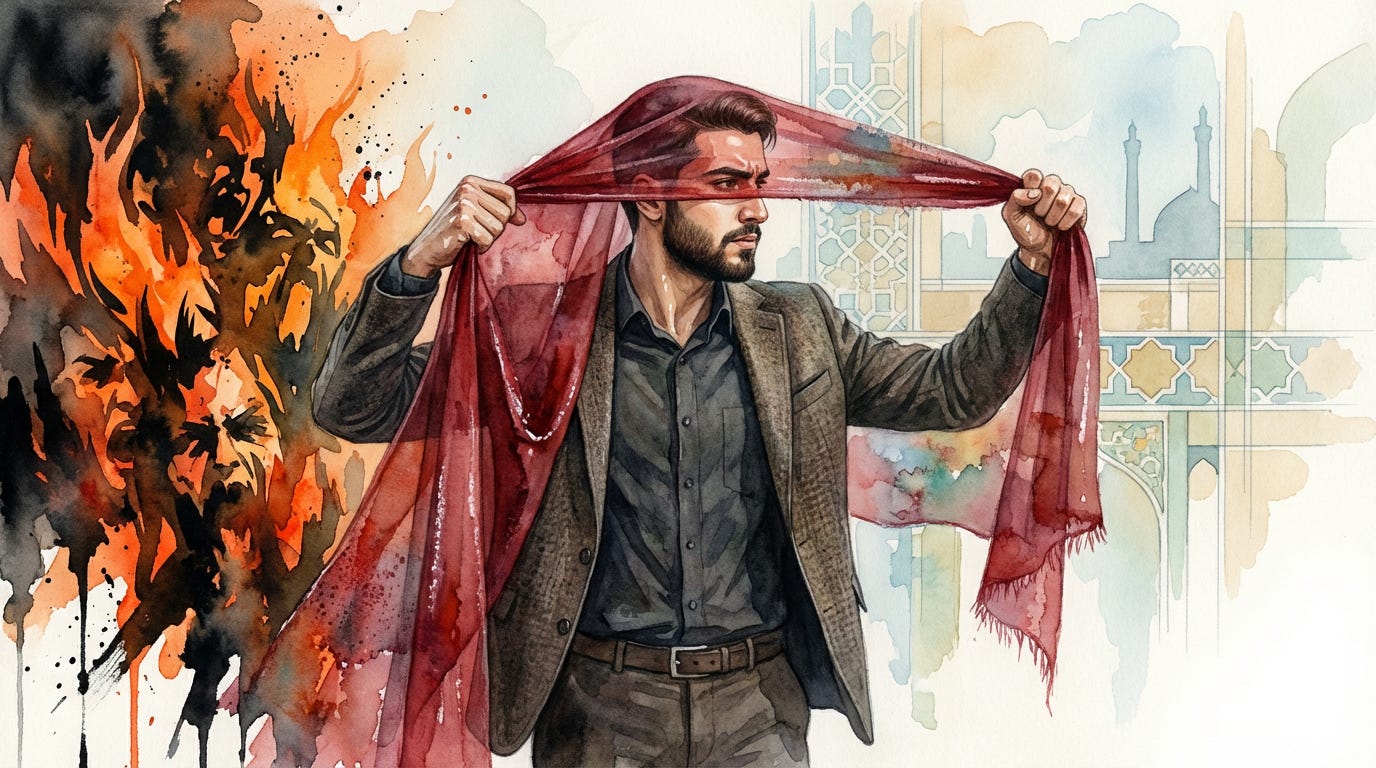
The Ghurar al-Hikam — a collection of short sayings attributed to Imam Ali — provides a penetrating insight into why people become susceptible to Fitna in the first place:
رَأْسُ الْفِتَنِ الْهَوَى
“The head of all seditions is desire (Hawa).”
— Ghurar al-Hikam
Hawa — desire, passion, the pull of the self toward what it wants regardless of what is right.
The Imam identifies this as the head — the ra’s — of all Fitna.
Not the root, not a contributing factor, but the head, the leading element, the thing that drives all the rest.
Why do people follow the mixture of truth and falsehood?
Because the mixture appeals to their Hawa.
The grievance is real, but the response to the grievance is shaped by desire — the desire for revenge, the desire for destruction, the desire to see enemies suffer, the desire to overturn everything because patience is difficult.
The one who has mastered his Hawa can see clearly.
He can distinguish the handful of truth from the handful of falsehood.
He can pursue remedy without destruction, justice without chaos, reform without Fitna.
The one who is ruled by his Hawa cannot see.
His desire colours everything.
His passion makes him easy to manipulate.
His anger makes him a tool.
This is why the inner work — the Jihad al-Nafs, the struggle against the self — is inseparable from the political work.
The one who has not struggled with his own desires will inevitably be captured by the Fitna that appeals to those desires.
The one who has achieved some mastery — who can pause, reflect, verify, and act from principle rather than passion — has a chance of remaining upright when the storm of sedition blows.
The Classical Wisdom Synthesised

Let us gather what the classical sources have taught us:
From Sharh al-Lum’ah: The state may not simply crush rebellion.
It must first dialogue, hear grievances, and address legitimate complaints.
Only after these steps may force be considered.
From Nahj al-Balagha, Letter 53: The ruler must create space for citizens to speak without fear.
The right to voice grievance is protected by the explicit instruction of Imam Ali.
From Nahj al-Balagha, Sermon 50: Fitna operates through mixture — a handful of truth combined with a handful of falsehood.
The believer must learn to separate them, lest he become Satan’s instrument.
From Ghurar al-Hikam: The root of susceptibility to Fitna is unmastered desire.
The inner work of self-purification is inseparable from the outer work of political discernment.
The tradition speaks with clarity.
It protects the right to protest.
It demands that the state hear grievances.
It warns against the exploitation of grievance for destruction.
And it calls the believer to the inner work that makes discernment possible.
This is the classical foundation.
Now let us see how it has been tested in history.
Historical Case Studies: The Poisoning Strategy

The principles we have traced — from Quran, through classical jurisprudence — are not abstractions.
They describe patterns that have repeated throughout Islamic history.
Again and again, enemies who could not defeat the Muslim community on the battlefield have turned to a different weapon: the poisoning of minds.
The exploitation of legitimate grievance.
The transformation of internal tension into internal collapse.
Tonight, we examine three case studies — three moments when this strategy was deployed against the Ahl al-Bayt and their followers.
The details differ.
The centuries differ.
The actors differ.
But the pattern is identical.
And recognising the pattern is the first step toward not repeating it.
Case Study One: Siffin — Qurans on Spears
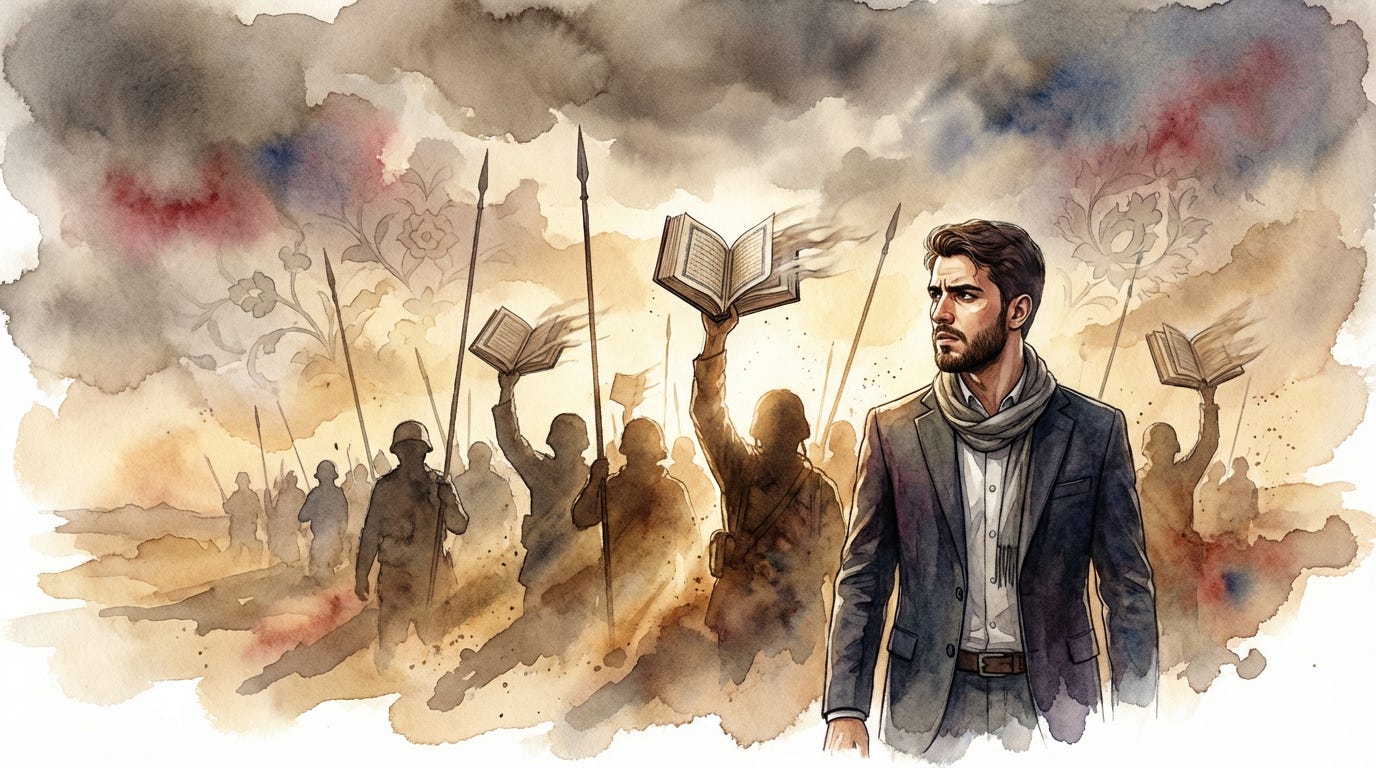
The year is 37 AH. The Battle of Siffin.
Imam Ali, Commander of the Faithful, leads the army of Iraq against Muawiyah ibn Abi Sufyan, who has refused to accept the legitimate Caliphate and has raised the banner of rebellion in Syria.
The battle is fierce.
For days, the two armies clash.
And slowly, decisively, Imam Ali’s forces gain the upper hand.
Victory is within reach.
The army of Syria is breaking.
Muawiyah’s rebellion is about to be crushed.
And then — a stratagem.
On the advice of Amr ibn al-As, Muawiyah orders his soldiers to raise copies of the Quran on their spears.
“The Book of God!”
they cry.
“Let the Book of God judge between us!”
The Mechanism
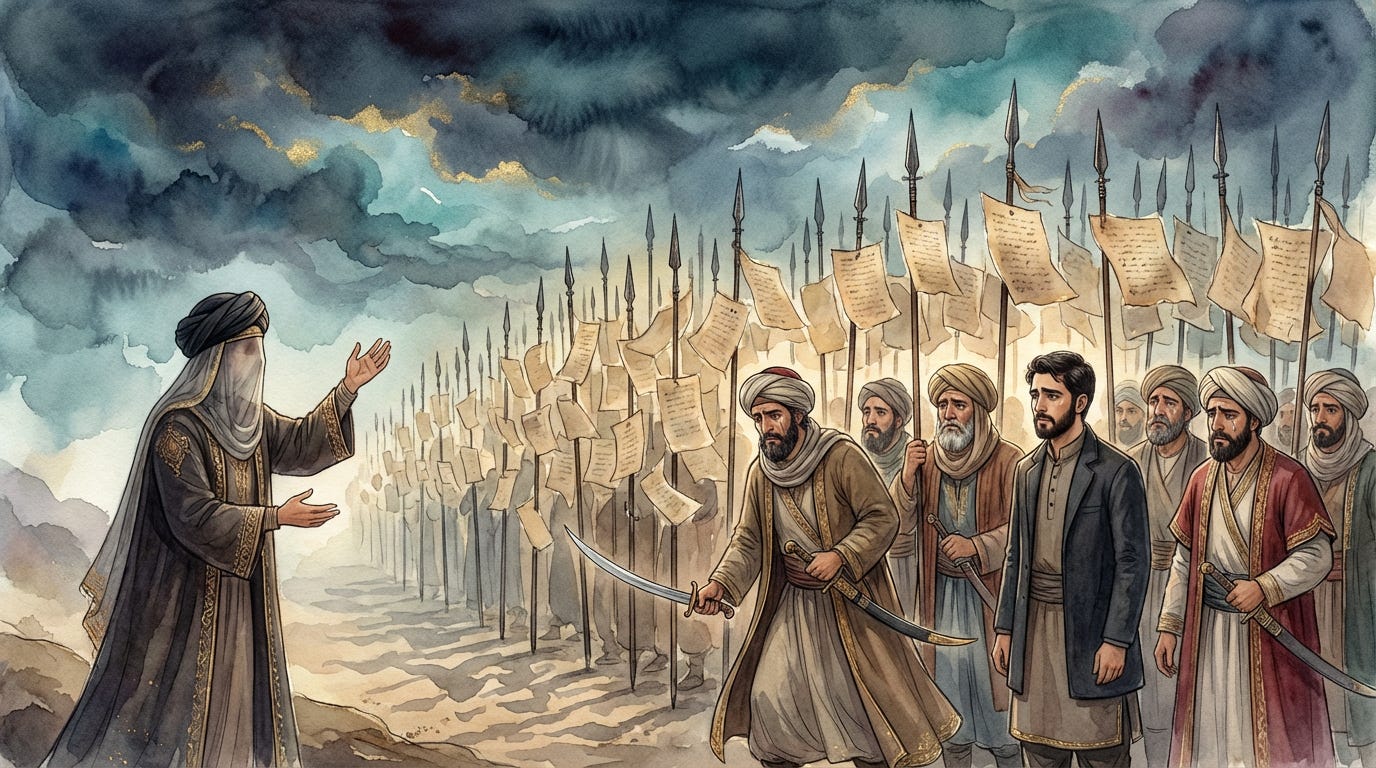
This was not a sincere appeal to scripture.
Muawiyah had shown no interest in the “judgment of the Quran” while he was winning, while he thought he could prevail by force.
Only when defeat loomed did he suddenly discover piety.
The Qurans on spears were a weapon — an information weapon.
They targeted not Imam Ali, but Imam Ali’s own army.
They exploited the sincere piety of the Iraqi soldiers — men who genuinely revered the Quran, who would hesitate to fight when the Holy Book was raised, who could be manipulated through their own faith.
And it worked.
A portion of Imam Ali’s army — men who would later become the Khawarij — demanded that the fighting stop.
“How can we fight when they call us to the Book of God?”
Imam Ali saw through the deception.
He told them:
وَيْحَكُمْ! أَنَا الْقُرْآنُ النَّاطِقُ، وَهَذَا الْقُرْآنُ الصَّامِتُ! إِنَّمَا رَفَعُوهَا خَدِيعَةً وَوَهْناً وَمَكِيدَةً. أَعْيَرْتُمُونِي جَمَاجِمَكُمْ سَاعَةً وَاحِدَةً؟ فَقَدْ بَلَغَ الْحَقُّ مَقْطَعَهُ.
“I am the speaking Quran, and this is the silent Quran. They have raised it only to deceive you. Yesterday I called them to it and they refused. Today they raise it only because they see defeat.”
— Al-Minqari, Waq’at Siffin, Pages 470-490
— Al-Majlisi, Bihar al-Anwar, Volume 32
But the internal pressure was too great.
The seed of doubt had been planted.
The mixture — a handful of truth (reverence for the Quran) combined with a handful of falsehood (the pretence that Muawiyah sought its judgment) — had done its work.
The fighting stopped.
The arbitration was imposed.
And from that arbitration came the fracturing of Imam Ali’s coalition, the emergence of the Khawarij, and ultimately the assassination of the Imam himself.
The Lesson
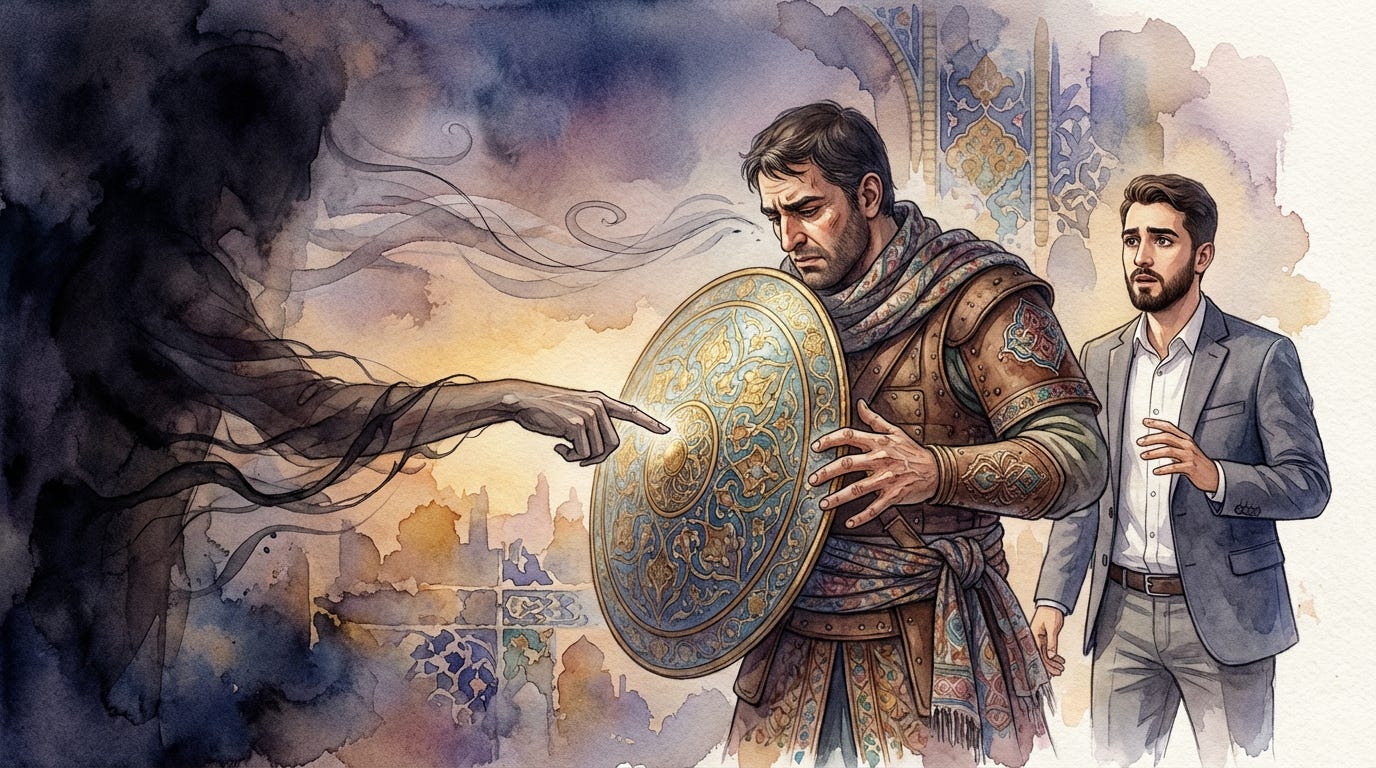
Muawiyah could not defeat Imam Ali on the battlefield.
So he defeated him in the minds of his own soldiers.
He used their piety against them.
He exploited their reverence for the Quran to make them betray the living interpreter of the Quran.
This is information warfare.
This is the poisoning strategy.
The target is not the enemy commander.
The target is the enemy’s own people — their beliefs, their values, their internal cohesion.
Turn them against themselves, and you do not need to defeat them.
They defeat themselves.
Case Study Two: Imam Hasan’s Army — Rumours and Bribery
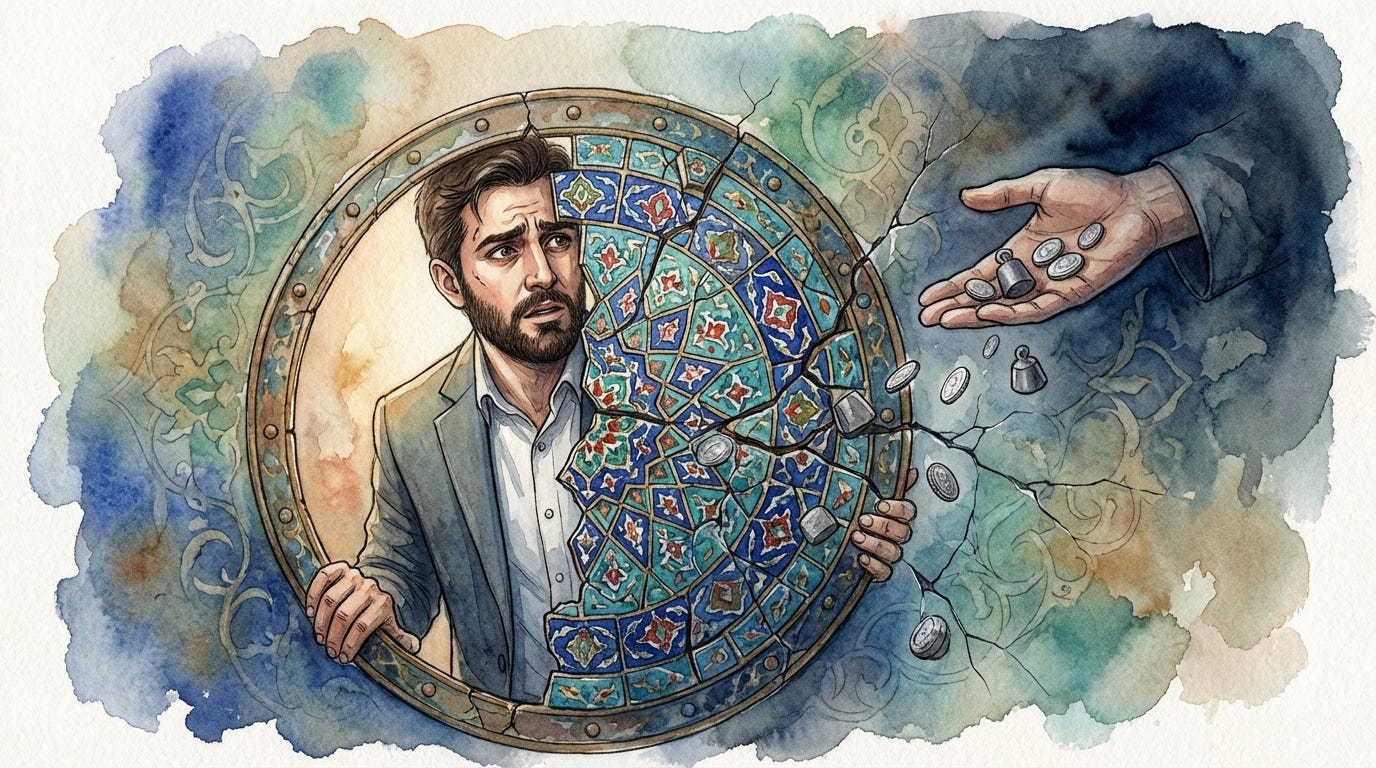
The year is 41 AH. Imam Hasan, the eldest grandson of the Prophet, has assumed leadership after his father’s martyrdom.
Muawiyah marches against him with the Syrian army.
Imam Hasan gathers his forces.
On paper, he has the numbers.
He has the legitimacy.
He has the rightful claim.
But he does not have a unified army.
And Muawiyah knows this.
The Mechanism
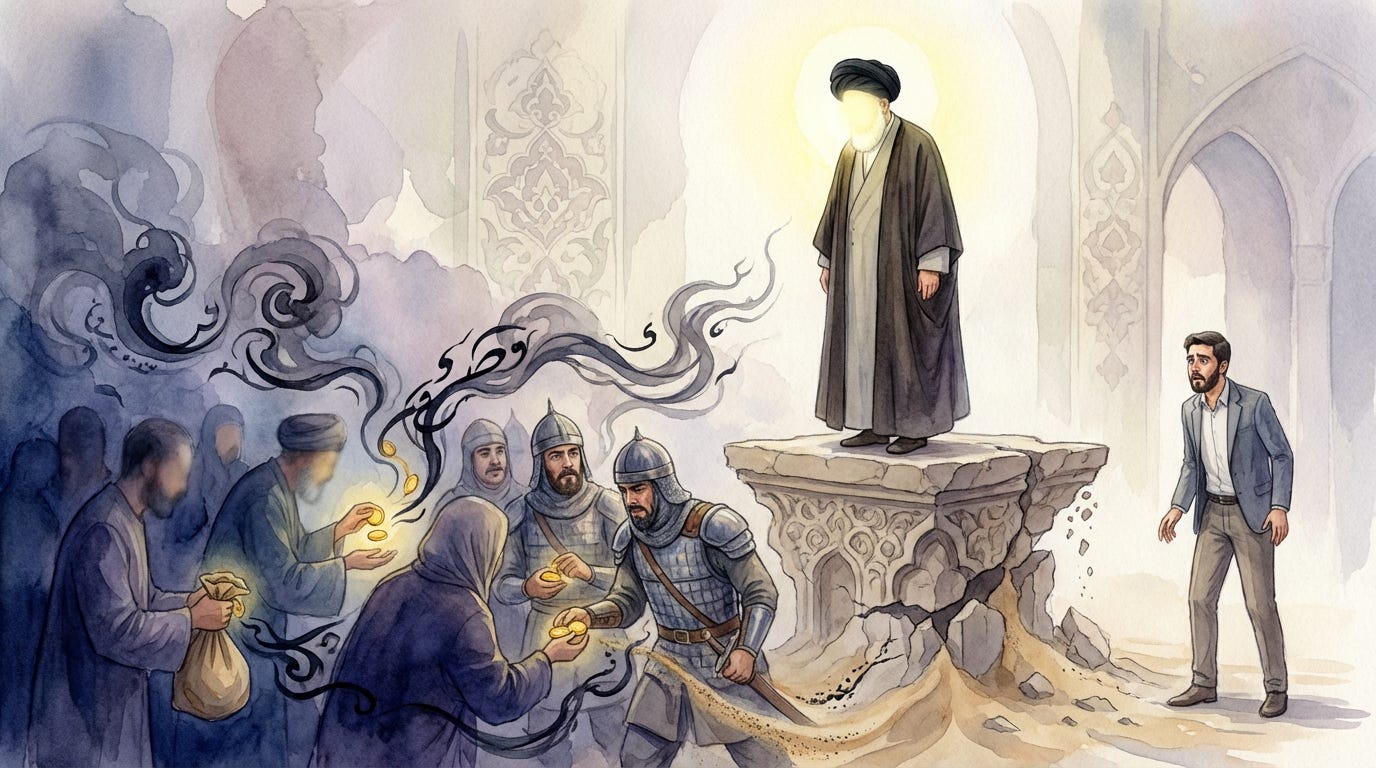
Rather than risk open battle, Muawiyah deploys a different weapon: gold and whispers.
He sends agents into Imam Hasan’s camp.
They carry money — vast sums, distributed to tribal chiefs, to commanders, to anyone whose loyalty can be purchased.
And they carry rumours.
“Imam Hasan is negotiating secretly with Muawiyah.”
“Imam Hasan plans to surrender.”
“Imam Hasan has already accepted terms.”
None of this was true.
But truth was not the point.
The point was to create doubt.
To fracture trust.
To make every soldier wonder if his commander had already betrayed him — and if so, why should he fight?
The rumours spread.
The gold changed hands.
And Imam Hasan watched his army melt away.
Commanders defected.
Tribal contingents withdrew.
Assassination attempts were made against the Imam himself — by men who had been convinced, through carefully planted lies, that he was a traitor to his own cause.
In the end, Imam Hasan was left with a choice: lead a fractured, unreliable army into a battle that would be slaughter rather than victory — or accept a treaty that preserved the lives of his followers and kept the principles of Islam alive for future generations.
He chose the treaty.
He chose wisdom over pride.
He chose the survival of the message over the glory of martyrdom.
But the lesson remains: his army was defeated before the battle began.
Defeated not by swords but by whispers.
Defeated not by strength but by the poison of manufactured doubt.
The Lesson
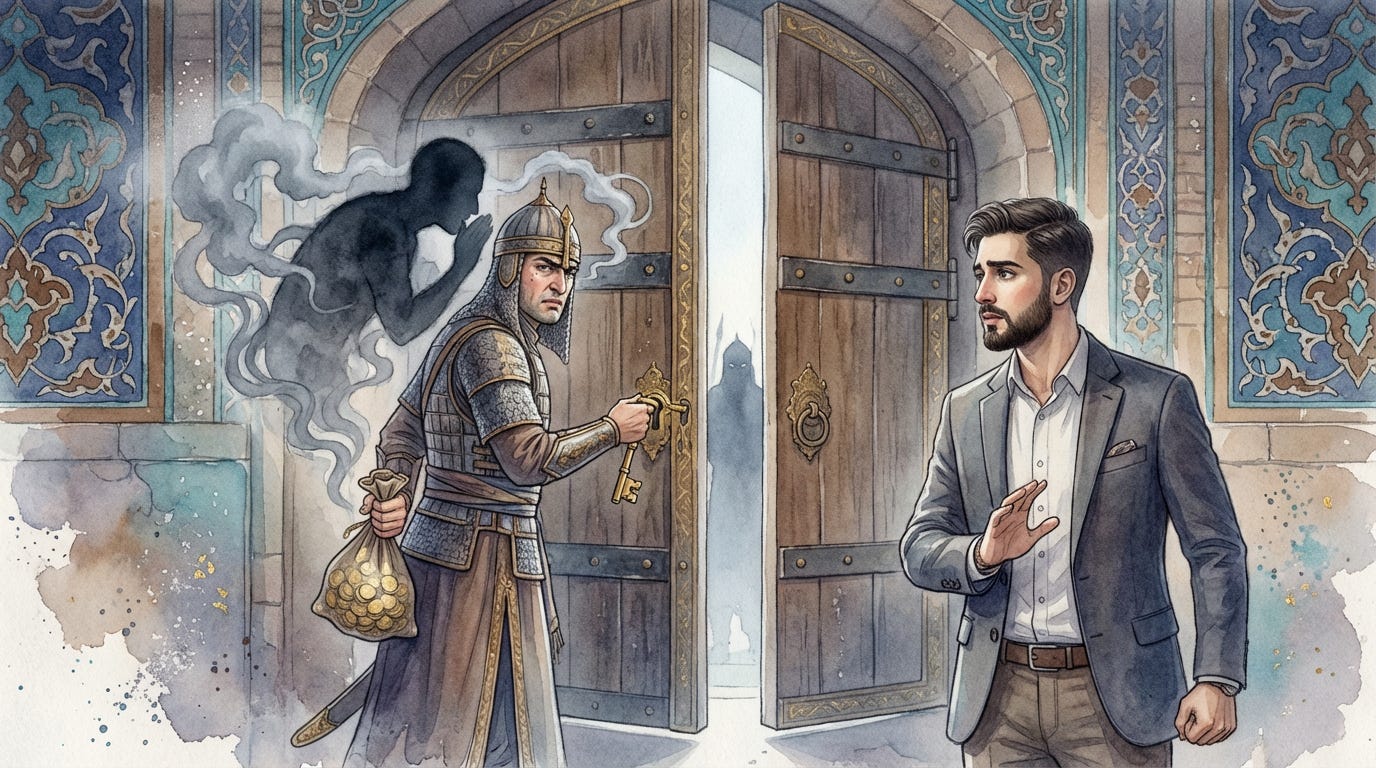
Muawiyah did not need to fight Imam Hasan.
He needed only to dissolve the trust that held Imam Hasan’s coalition together.
He did this through the precise combination we have been discussing: money to purchase betrayal, and lies to justify it.
The lie gave cover to the bribed — they could tell themselves they were not traitors, merely realists responding to their leader’s supposed surrender.
The army collapsed from within.
And the enemy walked in through the gates that the army’s own members had opened.
Case Study Three: Mukhtar al-Thaqafi — Exploiting the Oppressed
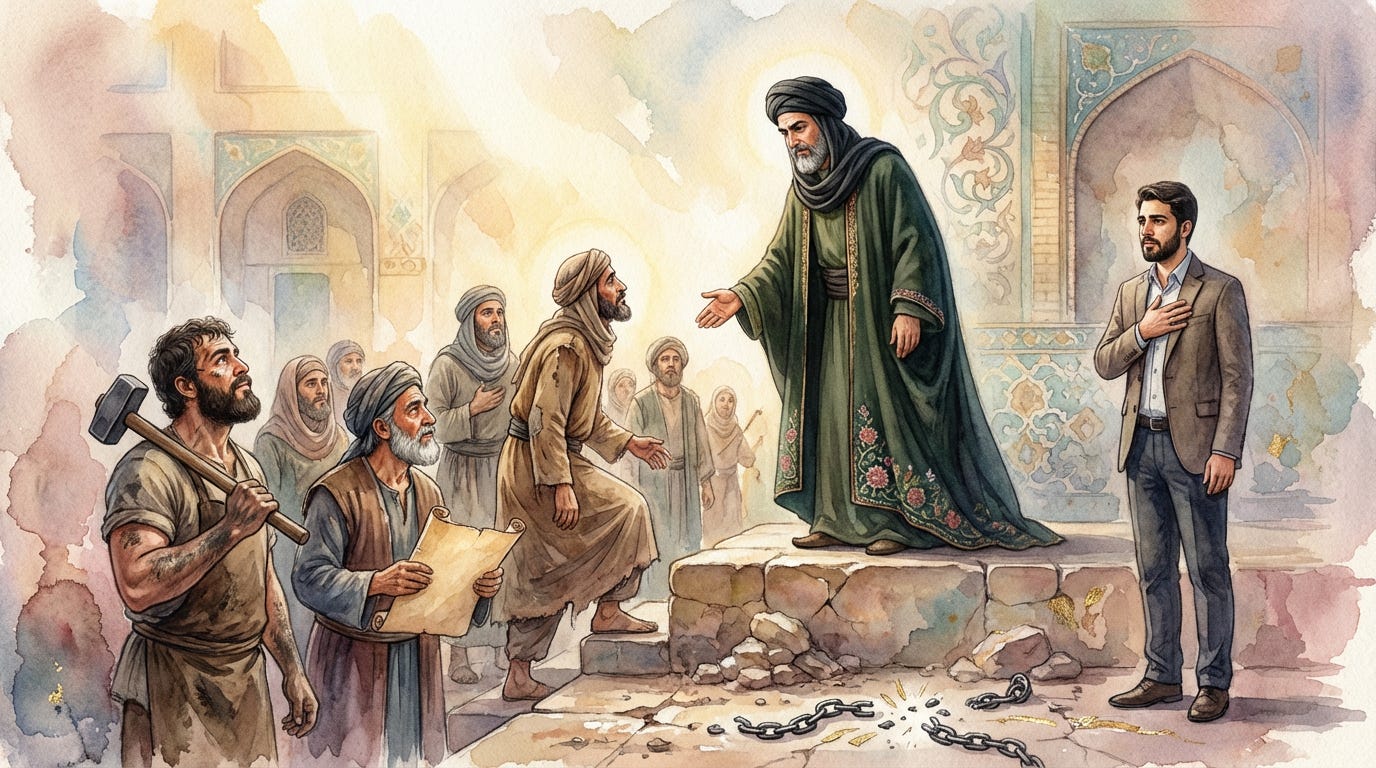
The year is 66 AH. Mukhtar al-Thaqafi rises in Kufa to avenge the blood of Imam Husayn.
His cause is righteous.
The murderers of Karbala still walk free.
Justice demands accountability.
And Mukhtar delivers it.
He hunts down the killers of Imam Husayn.
He executes Umar ibn Sa’d, the commander of the army that massacred the Imam’s family.
He brings a measure of justice to a community drowning in guilt.
But Mukhtar also does something else.
He mobilises the Mawali — the non-Arab Muslims, the Persians and others who had converted to Islam but were treated as second-class citizens by the Arab tribal aristocracy.
Their grievance was real.
The discrimination was real.
The injustice they suffered was real.
Mukhtar gave them dignity.
He elevated them.
He told them: you are equal in Islam, and I will treat you as equals.
The Mechanism
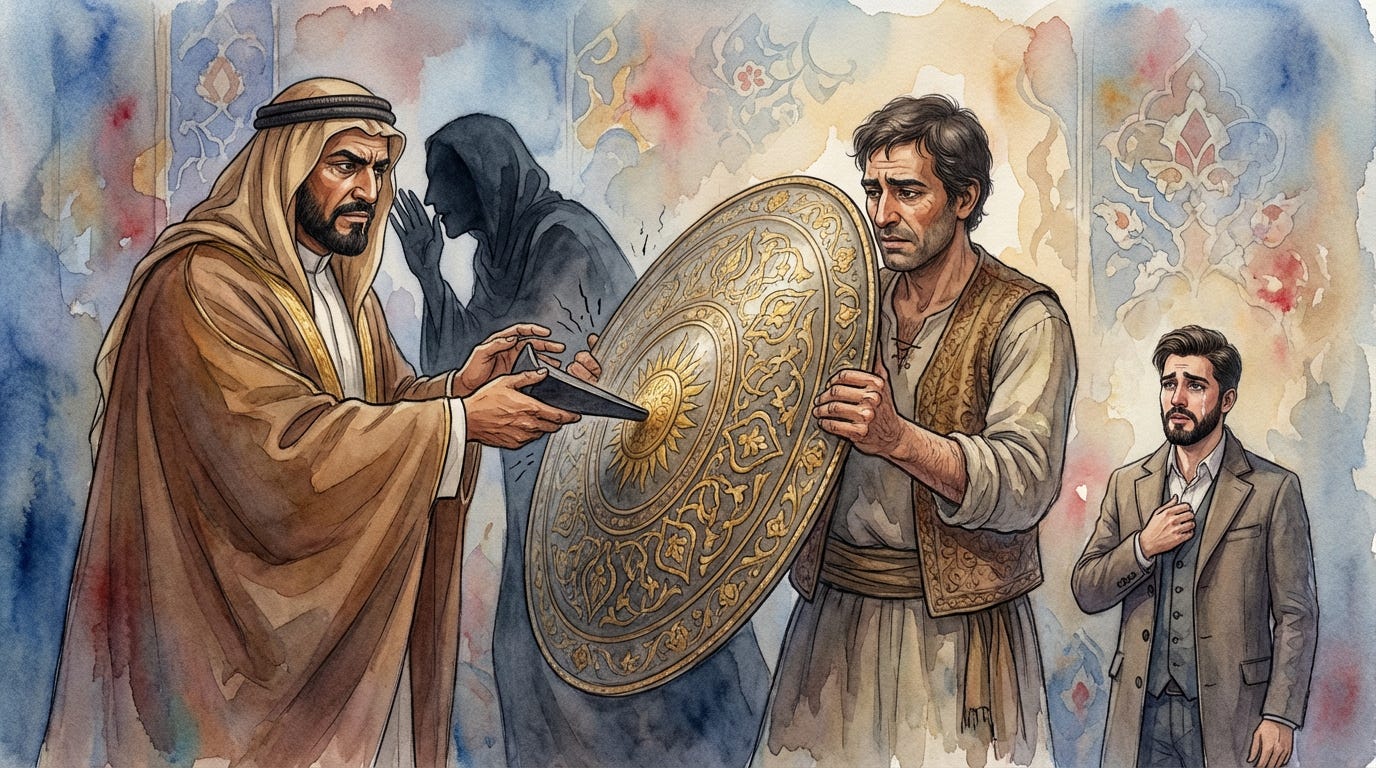
Mukhtar’s enemies could not attack his cause directly — avenging Husayn was unassailable.
So they attacked his coalition.
They inflamed the Arab tribal leaders against him — not by defending the murderers of Husayn, but by stoking fears about the empowerment of the Mawali.
“He elevates Persians above Arabs.”
“He threatens the natural order.”
“He uses these foreigners against us.”
The grievance of the Mawali was real.
Mukhtar’s response to it was largely just.
But his enemies weaponised the resentment of those who benefited from the old hierarchy.
They turned a question of justice — should the murderers of Husayn be punished? — into a question of ethnicity and tribe.
And when Mukhtar’s enemies finally came for him, it was his own city that opened its gates.
The very people whose sons had killed Imam Husayn — the very people who should have been most ashamed, most supportive of Mukhtar’s mission — were the ones who let his killers in.
The people Mukhtar had championed, the Mawali he had elevated, were scattered and powerless when the decisive moment came.
The coalition had been fractured.
The city had been turned against its own protector.
And Mukhtar died — betrayed not by his enemies’ strength, but by his own people’s manipulated fears.
The Lesson
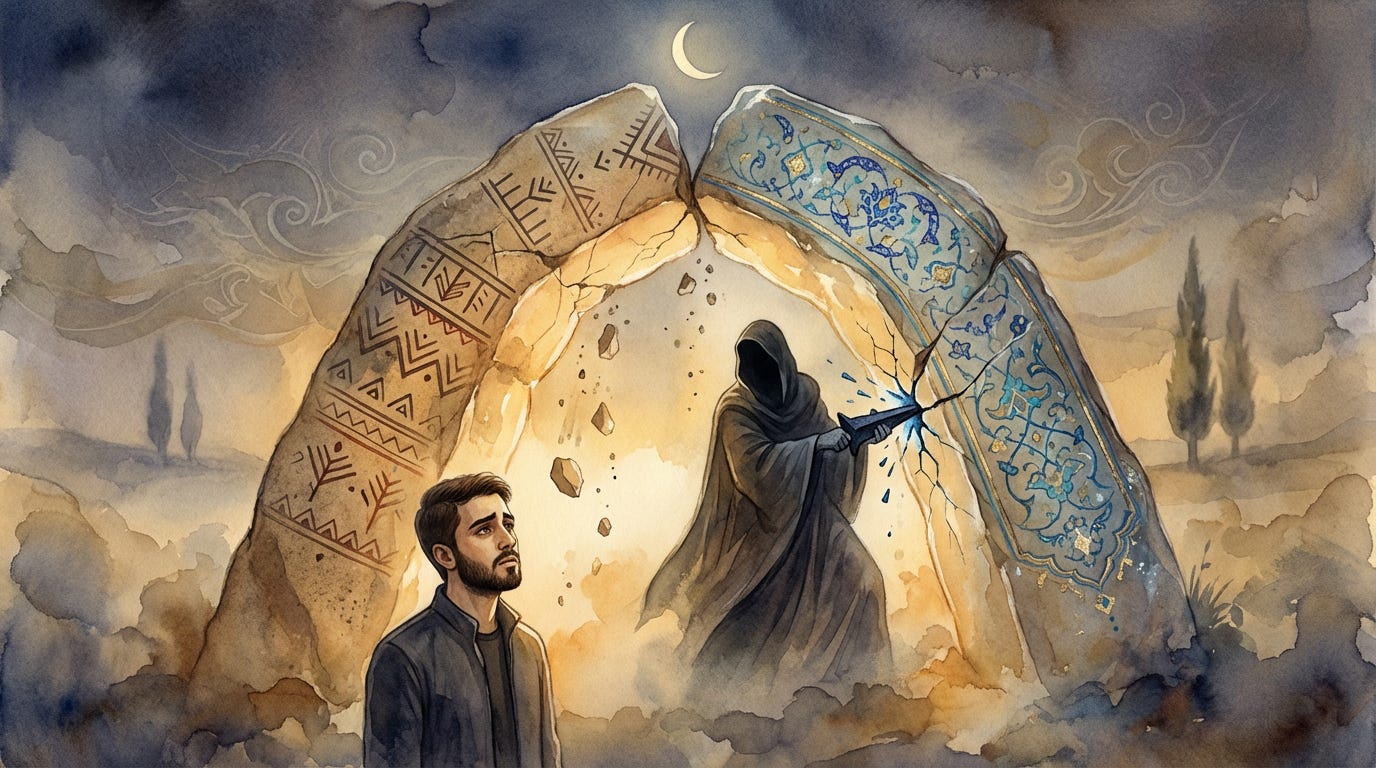
Mukhtar’s enemies could not defeat his cause.
So they defeated his coalition.
They took a real tension — Arab-Mawali relations — and inflamed it.
They took legitimate anxiety about social change and weaponised it into betrayal of a man who was delivering justice.
The community that should have protected Mukhtar became the instrument of his destruction.
This is the poisoning strategy.
This is how Fitna works.
Not by attacking the cause directly — the cause may be too strong, too righteous, too obviously correct.
But by attacking the coalition.
By finding the internal tensions and inflaming them.
By taking real grievances and real anxieties and steering them toward betrayal.
The Pattern Identified
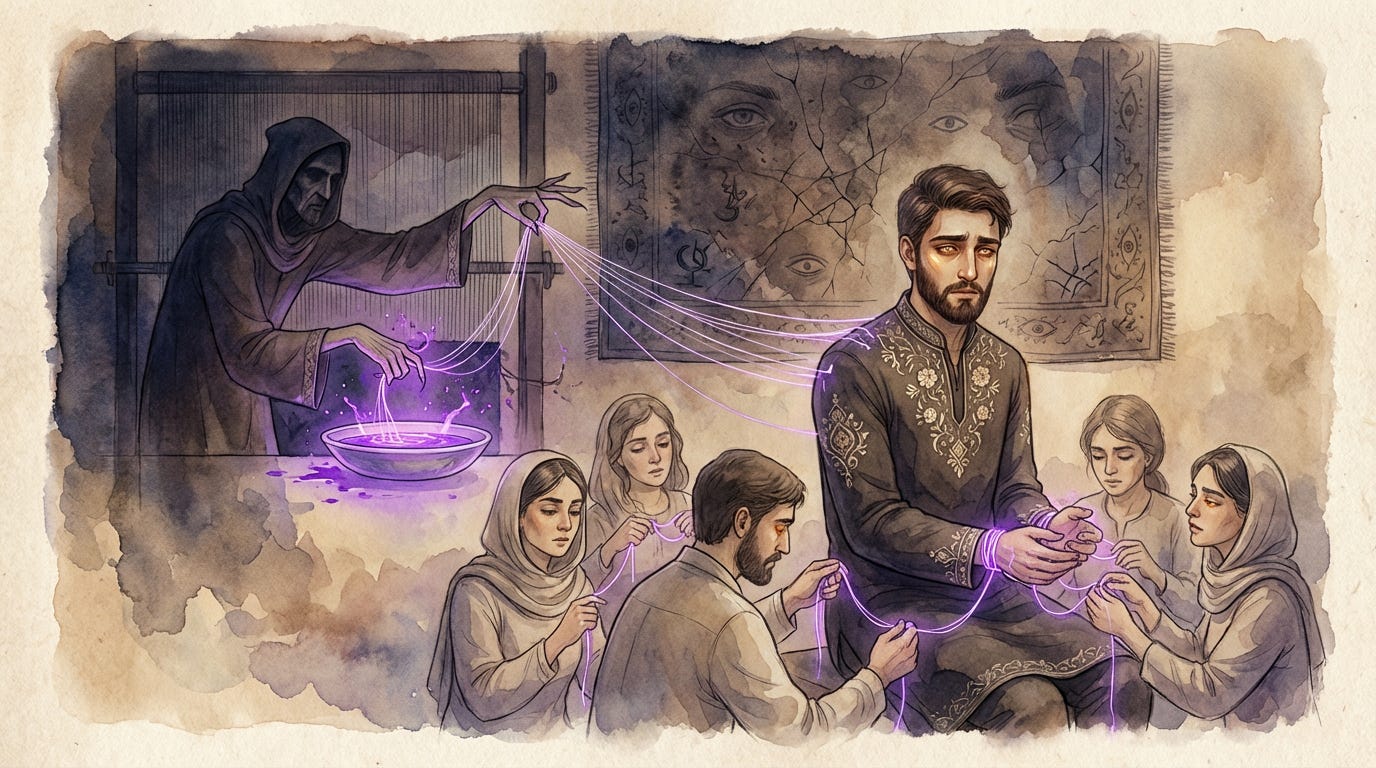
Three case studies.
Three different periods.
Three different contexts.
One pattern.
Step One: Identify an internal tension — a legitimate grievance, a real anxiety, an existing division.
At Siffin: the sincere piety of soldiers who revered the Quran.
With Imam Hasan: the tribal fragmentation and suspicion that plagued the Iraqi coalition.
With Mukhtar: the ethnic tensions between Arab and non-Arab Muslims.
Step Two: Exploit the tension — introduce lies that inflame it, money that corrupts it, rumours that amplify it.
At Siffin: the false claim that Muawiyah sought the Quran’s judgment.
With Imam Hasan: the false rumours that he had already surrendered.
With Mukhtar: the false framing that this was about Persian domination rather than justice for Imam Husayn.
Step Three: Collapse the target from within — let the enemy’s own people destroy what the enemy could not destroy from outside.
At Siffin: Imam Ali’s own soldiers forced him to stop fighting.
With Imam Hasan: his own army melted away and attempted to kill him.
With Mukhtar: his own city opened its gates to his murderers.
The pattern is consistent.
The pattern is ancient.
The pattern is still in use today.
The Contemporary Relevance

Every colour revolution follows this pattern.
Every regime-change operation follows this pattern.
Every destabilisation campaign follows this pattern.
Find the grievance — it is usually real.
Economic hardship, corruption, discrimination, political frustration.
These are real, and people genuinely suffer from them.
Exploit the grievance — amplify it through media, fund organisations that can mobilise it, introduce agents who can steer it.
Collapse the target — let the people themselves tear down their own institutions, destroy their own infrastructure, dissolve their own cohesion.
Then walk in through the gates that the people themselves have opened.
This happened in Libya.
In Syria.
In Ukraine.
In countless other places where legitimate grievances were weaponised for geopolitical purposes.
And it was attempted — just weeks ago — in the Islamic Republic itself.
The January 2026 Events: The Pattern in Real Time
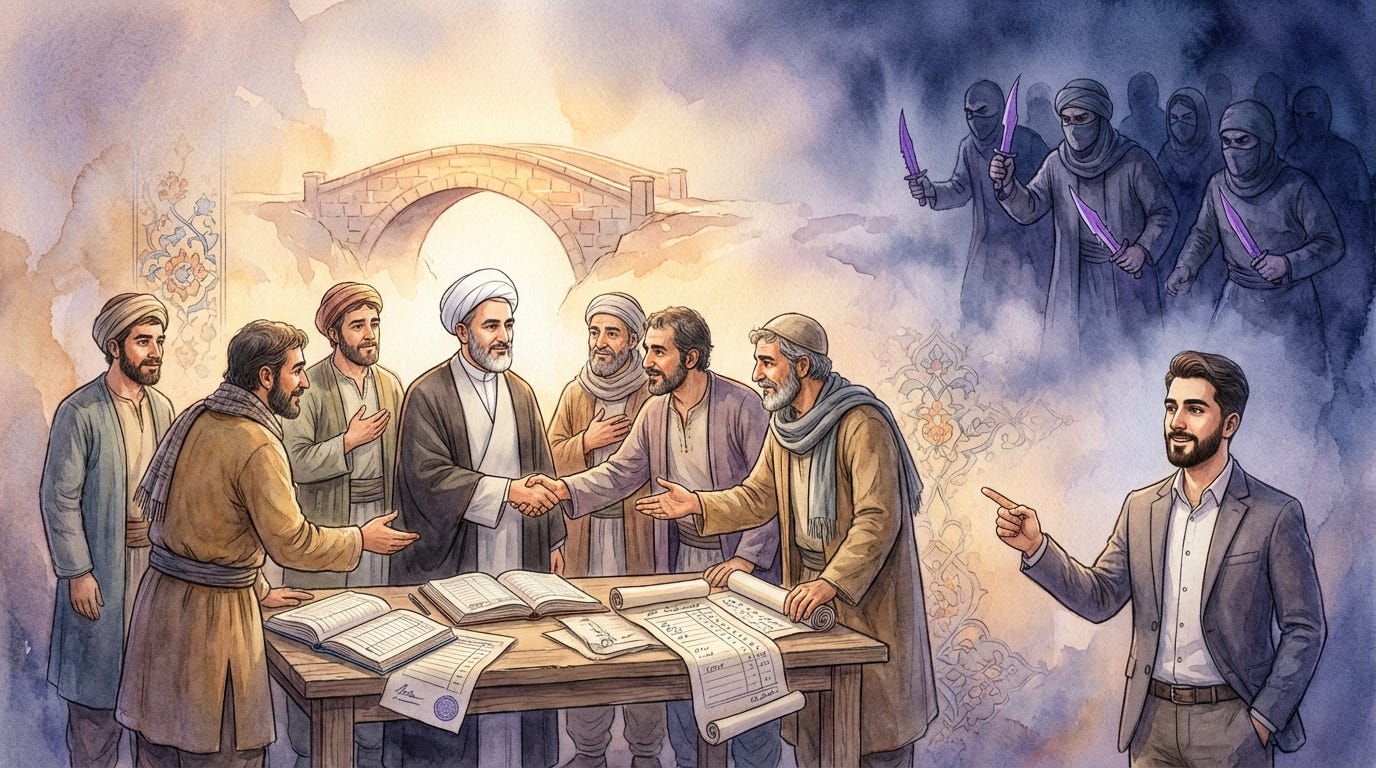
The grievance was real.
A speculative run on the Iranian Rial — engineered and celebrated by US Treasury officials who openly boasted of their sanctions’ impact — caused the currency to collapse.
The cost of imports rose sharply.
Merchants who dealt in mobile devices, laptops, and electronics found their livelihoods threatened.
The pain was genuine.
The frustration was legitimate.
And the people did what people have the right to do: they protested.
The bazaris — the merchant class that has been a pillar of Iranian society for centuries — came out to voice their grievance.
The protests were peaceful.
The demands were specific: economic relief, policy adjustment, acknowledgment of the hardship.
And here is what the enemies of Iran did not expect: the government listened.
Dialogue was opened with the bazaris.
Concessions were offered.
The legitimate grievance was addressed through legitimate means — exactly as Sharh al-Lum’ah demands, exactly as Imam Ali instructed Malik al-Ashtar.
The protests began to peter out.
The pressure was relieved.
The system had done what a just system should do: hear the grievance and respond to it.
This should have been the end of the story.
It was not.
The Coordinated Attack
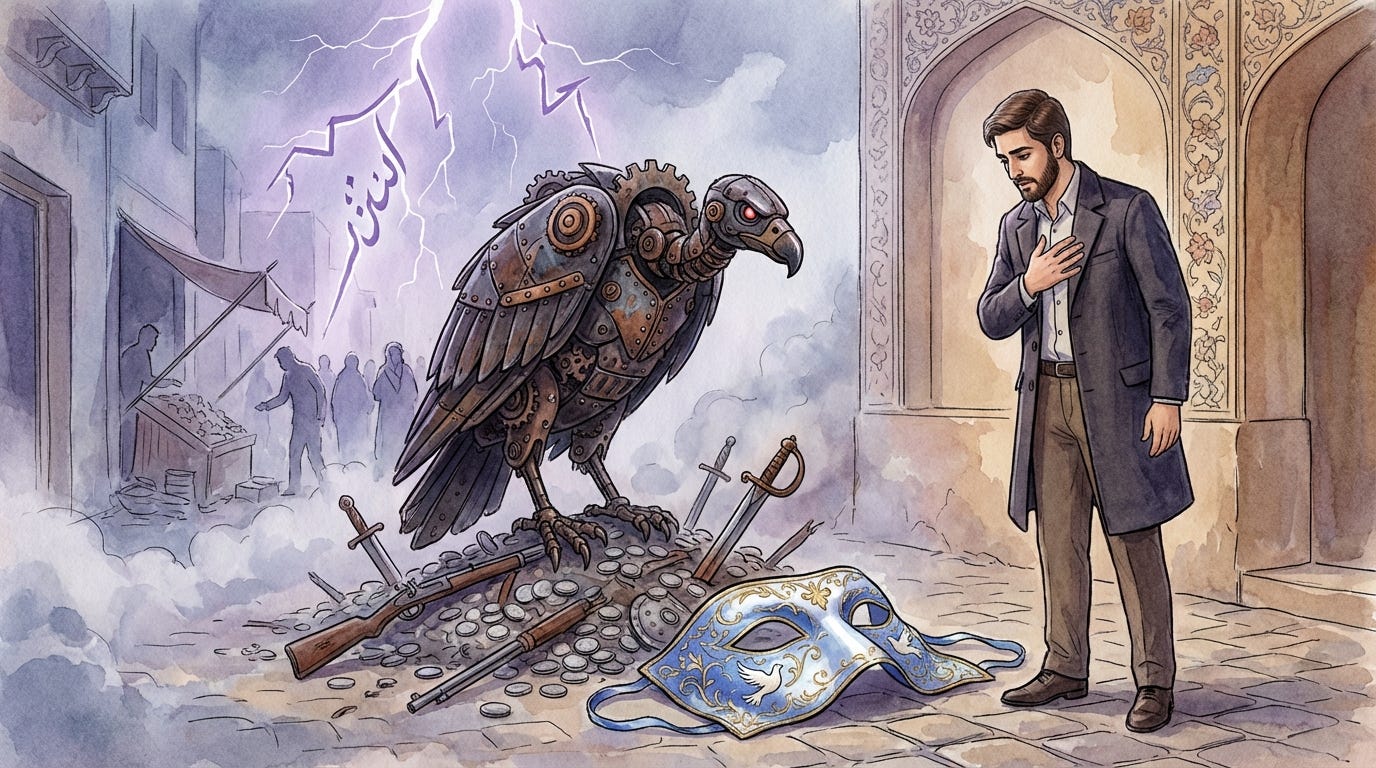
Just as the legitimate protests were subsiding, a coordinated assault began.
Sleeper agents activated.
Agent provocateurs emerged.
Networks that had been dormant suddenly sprang to life, mobilised through Starlink satellite internet that bypassed Iran’s communication infrastructure — until Iranian electronic warfare capabilities, managed to block it.
The peaceful protests were infiltrated.
The economic grievance was hijacked.
And then the violence began.
Reports emerged of gunmen shooting into crowds — not security forces defending themselves, but unknown actors creating chaos and casualties.
Videos surfaced of attacks on mosques — grenades thrown into spaces where teenagers, women, and children had gathered.
Police officers — many of them unarmed — were targeted with shocking brutality: beheaded, burned alive.
The footage exists.
The evidence is documented.
A three-year-old child was killed.
Not by the government.
By the terrorists who had transformed an economic protest into a coordinated assault on the nation itself.
More than three thousand people died in the violence.
And from outside Iran, the vultures circled.
Reza Pahlavi — son of the dead Shah, living in exile, dreaming of a restoration that the Iranian people rejected forty-seven years ago — appeared on every platform calling for “revolution.”
The Zionist regime, desperate to distract from its genocide in Gaza, amplified every claim, manufactured every narrative, pushed for the “regime change” it has sought for decades.
And Donald Trump — speaking as though Iran were an American province rather than a sovereign nation — screamed threats, promised that “help is on the way,” and directly threatened the life of Imam Khamenei.
Blatant interference.
Open incitement.
The mask fully removed.
The Information Poison
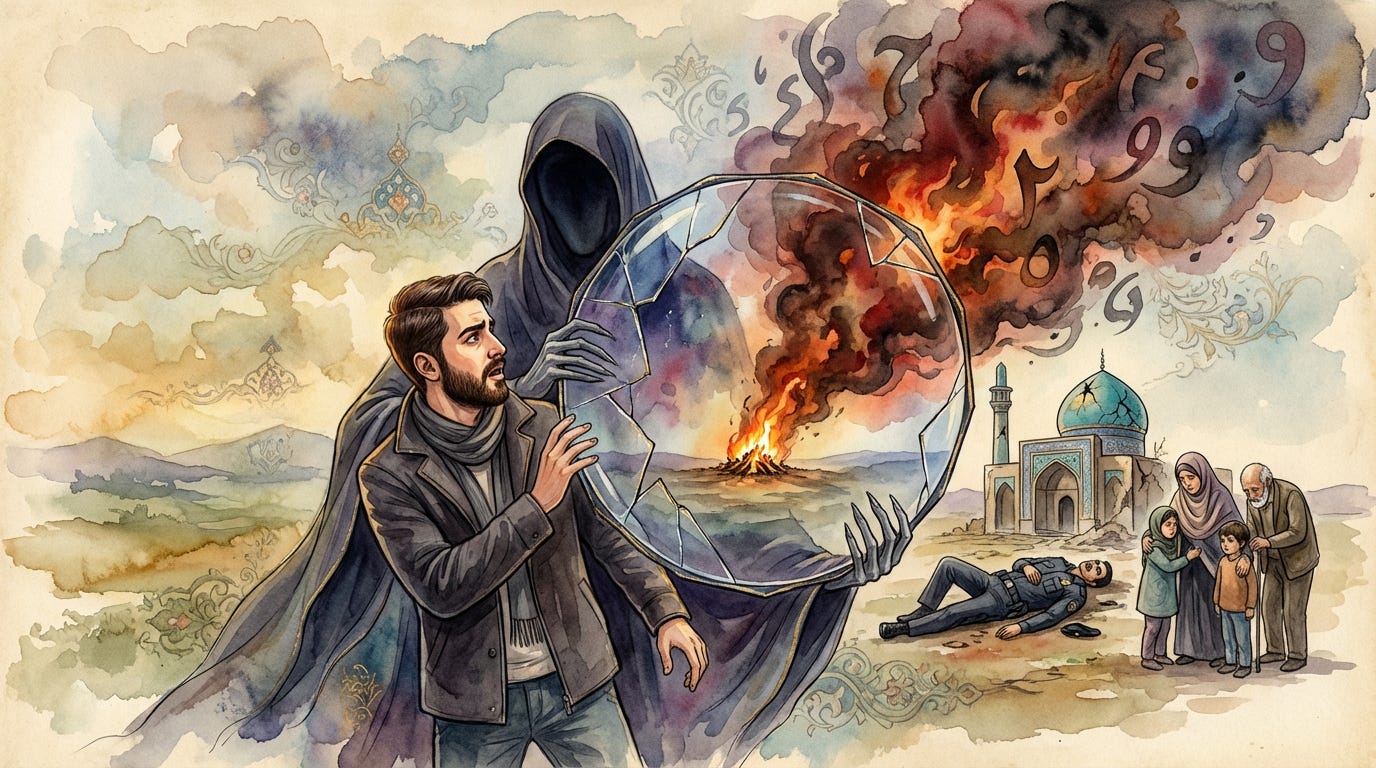
And then came the lies.
The legacy media — the same outlets that have minimised, justified, and ignored the genocide in Gaza — suddenly discovered an urgent concern for Iranian lives.
They reported figures that defied basic logic.
Consider: in Gaza, over two years of relentless bombardment — airstrikes, artillery, missiles, the full weight of one of the world’s most advanced militaries deployed against a trapped civilian population — the official documented death toll stands at approximately 60,000 to 80,000.
Yet these same outlets reported, with straight faces, that more than 30,000 people had been killed in Iran in just 48 hours of street violence.
Between January 8th and January 9th.
Thirty thousand.
In two days.
In street clashes.
Gaza, flattened by bombs over two years: 60,000-80,000.
Iran, in 48 hours of unrest: 30,000.
The mathematics alone expose the lie.
But the legacy media repeated it.
Amplified it.
Treated obvious propaganda as credible reporting.
Meanwhile, they said nothing about the police officers who were beheaded.
Nothing about the children killed by terrorist grenades.
Nothing about the mosques attacked.
Nothing about the coordinated nature of the violence that transformed legitimate protest into armed insurrection.
This is information poison.
This is the chemical weapon of the soft war.
This is exactly what Imam Khamenei described: propaganda that lingers in the hearts, that casts doubt, that makes people pessimistic about each other, that serves the agenda of those who wish the nation destroyed.
Imam Khamenei’s Response
In the aftermath, Imam Khamenei addressed the nation.
He distinguished — precisely as we have been distinguishing tonight — between the legitimate grievance and its exploitation.
The economic pain was real.
The people’s frustration was valid.
The government had a duty to hear and respond — and it did.
But the coordinated violence, the foreign direction, the transformation of protest into terrorism — this was something else entirely.
The people who came out peacefully to demand economic relief were not the enemy.
The networks that hijacked their protest, that introduced weapons and chaos, that killed children and police officers and worshippers in mosques — these were the enemy.
And the Imam made clear:
Iran listens to its people.
Iran addresses legitimate grievances.
Iran will not be lectured on human rights by those who fund genocide, who starve populations through sanctions, who threaten assassination of national leaders.
The nation held.
The system survived.
The plot failed.
But the attempt revealed, once again, the pattern we have been tracing.
The pattern of Siffin.
The pattern of Imam Hasan’s army.
The pattern of Mukhtar’s betrayal.
The same poison, in modern bottles.
The Question That Remains

We have identified the pattern.
We have seen it in history.
We have seen it in our own time — not in distant lands, but here, now, in events that are still unfolding as we speak.
But identification is not enough.
How does the individual believer navigate this?
When the streets are full, when the slogans are loud, when the grievance is real but the direction is suspicious — what does he do?
How does the community protect itself?
When foreign intelligence services have budgets larger than many nations’ GDP, when media empires exist to manufacture narratives, when satellite internet can bypass national infrastructure and coordinate insurrection in real time — how does the Ummah resist?
These questions have answers.
The scholars have spoken.
Let us hear them.
The Senior Scholars: The Living Tradition Speaks
We have traced the distinction through Quran and hadith.
We have examined it in the classical texts.
We have witnessed it tested in history — at Siffin, in Imam Hasan’s army, in Mukhtar’s Kufa, and in the events unfolding in our own time.
Now we hear from the living carriers of the tradition — the scholars who have applied these ancient principles to modern circumstances, who have guided the Ummah through the specific challenges of our age.
Their voices converge on the same teachings we have been tracing.
Their agreement confirms that what we have established is not interpretation but recognition — the inevitable conclusion that any honest engagement with the sources must reach.
Imam Khamenei: The Red Line is Security
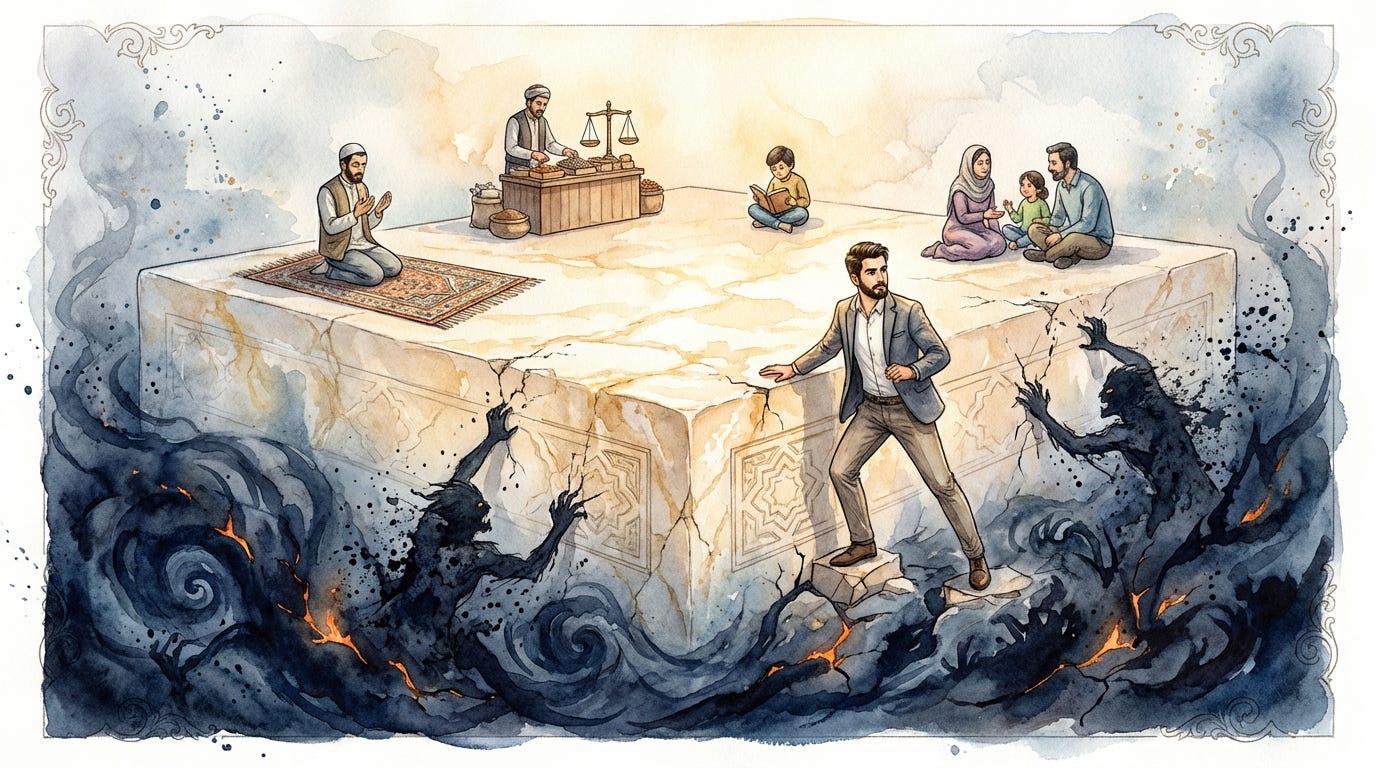
Imam Khamenei has addressed the question of protest and sedition with particular clarity, given the repeated attempts to destabilise the Islamic Republic through the exploitation of legitimate grievance.
His teaching centres on a crucial concept: Amniyat — security.
امنیت خط قرمز است. بدون امنیت، نه نماز ممکن است، نه روزه، نه تجارت، نه تحصیل، نه زندگی خانوادگی. امنیت زیربنای همه چیز است.
“Security (Amniyat) is the red line. Without security, neither prayer is possible, nor fasting, nor trade, nor education, nor family life. Security is the foundation of everything.”
— Imam Khamenei, Speech on the 2018/2019 Economic Unrest, Tehran
Consider the weight of this statement.
Security is not merely a political good.
It is a religious prerequisite.
Without security, the believer cannot pray — because he fears for his life.
Without security, the merchant cannot trade — because he fears robbery and chaos.
Without security, the student cannot learn — because institutions cannot function.
Without security, the family cannot flourish — because the basic conditions of normal life are absent.
Every religious obligation, every social function, every human flourishing depends on the foundation of security.
And therefore, actions that destroy security — that shatter the order which makes normal life possible — are not merely political crimes.
They are attacks on the very conditions that allow the practice of religion itself.
This is why the Imam draws the line where he draws it.
Criticism?
Permitted — even necessary.
Protest against specific wrongs?
Permitted — even obligatory in some circumstances.
But actions that cross into the destruction of security — that create chaos, that dissolve the order upon which everything else depends — these cross the red line.
The one who riots, who burns, who creates the conditions in which prayer becomes impossible and trade becomes impossible and family life becomes impossible — this person is not exercising a right.
He is destroying the foundation on which all rights rest.
Imam Khomeini: Freedom vs Conspiracy
The founder of the Islamic Republic understood, from the very beginning, that the revolution’s enemies would seek to destroy it from within.
And he understood that they would use the language of freedom to do so.
Imam Khomeini drew a sharp distinction:
انتقاد آزاد است، توطئه ممنوع. انتقاد هدیه است برای مسئولین؛ توطئه خنجر است در پشت ملت.
“Criticism is free; conspiracy is forbidden. Criticism is a gift for the officials; conspiracy is a dagger in the back of the nation.”
— Imam Khomeini, Sahife-ye Imam, Volume 10
The distinction is precise.
Criticism — the identification of faults, the demand for accountability, the insistence that officials live up to their responsibilities — this is not merely tolerated.
It is a gift.
It helps the officials see what they cannot see themselves.
It corrects errors before they become catastrophes.
It keeps the system healthy.
The official who fears criticism is weak.
The official who welcomes it is strong.
Conspiracy — the coordinated effort to destroy, not to reform; to overthrow, not to correct; to serve foreign agendas while wearing the mask of domestic grievance — this is something entirely different.
The conspiracy does not want to improve the system.
It wants to destroy the system.
The conspiracy does not care about the people’s welfare.
It uses the people’s welfare as a weapon against the people themselves.
The conspiracy is a dagger — and it is aimed at the back.
It does not confront openly.
It infiltrates, manipulates, deceives.
Imam Khomeini saw this clearly because he had lived through it.
He had watched foreign powers attempt to strangle the revolution from its first days.
He had seen the language of “freedom” and “human rights” weaponised by those who cared nothing for freedom or human rights — only for control.
And he left this teaching for those who would come after: learn to tell the difference.
Criticism strengthens.
Conspiracy destroys.
Welcome the first.
Resist the second.
Ayatullah Misbah-Yazdi: Preserving the System

Ayatullah Muhammad Taqi Misbah-Yazdi, one of the most influential scholars of recent decades, addressed the question of the believer’s obligation to the Islamic system itself.
His teaching may seem stark to modern ears.
But it flows directly from the principles we have been tracing.
حفظ نظام اسلامی از واجبترین واجبات است، حتی از نماز و روزه واجبتر. زیرا بدون نظام، اجرای احکام اسلام ممکن نیست.
انتقاد سازنده که نظام را تقویت کند، واجب است. انتقادی که نظام را تضعیف کند، حرام است.
“Preserving the Islamic system is among the most obligatory of obligations — even more obligatory than prayer and fasting. Because without the system, the implementation of Islamic rulings is not possible.
Constructive criticism that strengthens the system is Wajib (obligatory). Criticism that weakens the system is Haram (forbidden).”
— Ayatullah Misbah-Yazdi, Nazariyeh-ye Siyasi-ye Islam (Political Theory of Islam), Vol. 2, Discussion on Wilayat al-Faqih
The logic is rigorous.
Why do we pray?
Because God commanded it.
Why do we fast?
Because God commanded it.
But the implementation of God’s commands — the actual living of an Islamic life, the existence of Islamic institutions, the possibility of Islamic society — requires a system.
A structure.
An order within which the commands can be fulfilled.
Destroy that system, and you destroy the vessel that carries the commands.
Therefore, preserving the system is not separate from prayer and fasting.
It is the condition that makes prayer and fasting meaningful in a social context.
This does not mean the system is beyond criticism.
On the contrary — constructive criticism, criticism aimed at strengthening and correcting, is itself obligatory.
But there is a difference between the surgeon who cuts to heal and the assassin who cuts to kill.
The constructive critic identifies the disease in order to cure it.
The destructive critic identifies the disease in order to spread it — to use it as a weapon, to transform a curable illness into a fatal collapse.
The first is a doctor.
The second is a poisoner.
And the tradition distinguishes between them.
Ayatullah Jawadi-Amoli: The Rights of the People
Ayatullah Jawadi Amoli — whose profound analysis of Fitna we encountered earlier — has also addressed the question of how grievances should be addressed.
His teaching emphasises the principle of Haqq al-Nas — the rights of the people — and how those rights are violated not only by the state but also by those who claim to fight the state.
نمیتوان خون را با خون شست. کسی که به نام مردم، اموال مردم را تخریب میکند، حقالناس را ضایع کرده است. بیتالمال متعلق به همه است؛ آتش زدن آن ظلم به همه است.
“One cannot wash blood with blood. The one who, in the name of the people, destroys the property of the people has violated Haqq al-Nas (the rights of the people). Public property (Bayt al-Mal) belongs to everyone; burning it is oppression against everyone.”
— Ayatullah Jawadi Amoli, Sermon at Friday Prayer / Lesson on Fiqh (References themes found in his Tafsir Tasnim under 2:205 regarding Fasad fil-Ardh), During the 2019 economic unrest.
This is a devastating response to those who justify destruction in the name of justice.
You claim to fight for the people?
Then why are you burning the bus that the people need?
Why are you destroying the bank where the people’s savings sit?
Why are you attacking the infrastructure that the people depend on?
The one who destroys public property in the name of the public has not served the public.
He has wronged the public.
He has violated Haqq al-Nas — the rights of the very people he claims to champion.
And the violation of Haqq al-Nas is among the most serious categories of sin in Islamic jurisprudence.
God may forgive sins against Himself.
He does not forgive sins against His servants — except by those servants’ own forgiveness.
The rioter who burns the city must answer not to God alone, but to every single person whose life he has damaged.
And
“I was angry about injustice”
will not suffice as an answer.
Injustice is not remedied by greater injustice.
Blood cannot be washed with blood.
Ayatullah Mohsen Araki: The Fog of Fitna

Ayatullah Mohsen Araki, amongst our teachers, and a member of the Supreme Council of the Hawza amongst other roles, has addressed the specific challenge of navigating Fitna — the confusion that makes discernment so difficult.
His teaching emphasises the concept of Basirah — insight, the capacity to see through the fog.
فتنه یعنی فضا غبارآلود میشود. حق و باطل در هم میآمیزد. در چنین فضایی، وظیفه مؤمن بصیرت است — اینکه با چشم دل ببیند، نه با چشم ظاهر.
کسی که بصیرت ندارد، حتی با نیت خوب، ممکن است ابزار فتنه شود.
“Fitna means the atmosphere becomes dusty (Ghubar-alud). Truth and falsehood become mixed. In such an atmosphere, the duty of the believer is Basirah (insight) — to see with the eye of the heart, not with the outer eye.
The one who lacks insight, even with good intention, may become an instrument of Fitna.”
— Ayatullah Mohsen Araki, Speech on the anniversary of the 9th of Dey (End of 2009 Unrest)
The imagery is powerful.
Ghubar-alud — dusty, clouded, obscured.
When Fitna descends, visibility drops.
You cannot see clearly.
The familiar landmarks disappear.
Friend looks like enemy; enemy looks like friend.
In such conditions, the outer eye is useless.
You need a different kind of sight.
Basirah — insight, the eye of the heart, the capacity to perceive reality when appearances deceive.
How is Basirah developed?
Through the inner work we discussed earlier — the purification of the self, the mastery of Hawa (desire), the cultivation of a heart that is not easily swayed by anger, fear, or manipulation.
Through knowledge — understanding of the sources, familiarity with the patterns, recognition of how Fitna has operated throughout history.
Through connection to trustworthy guidance — attachment to the scholars who have Basirah, who can see what ordinary eyes cannot.
Without Basirah, even good intention is not enough.
The sincere person who lacks insight becomes a tool.
His sincerity is used against him.
His good intention is weaponised.
He thinks he is serving justice; he is actually serving destruction.
This is the tragedy of Fitna: it captures the good-hearted along with the corrupt.
And this is why Basirah is not optional.
It is a duty.
The believer must cultivate it — or risk becoming, in his very sincerity, an instrument of the evil he believes he opposes.
The Scholarly Consensus
Let us gather what we have heard:
Imam Khamenei: Security is the red line — the foundation on which all religious and social life depends.
Actions that destroy security cross a boundary that cannot be crossed.
Imam Khomeini: Criticism is a gift; conspiracy is a dagger.
Learn to tell the difference.
Ayatullah Misbah-Yazdi: Preserving the system is among the highest obligations.
Constructive criticism strengthens; destructive criticism is forbidden.
Ayatullah Jawadi-Amoli: Destruction in the name of the people is violation of the people’s rights.
Blood cannot wash blood.
Ayatullah Mohsen Araki: Fitna creates a dusty atmosphere where truth and falsehood mix.
The duty of the believer is Basirah — insight that sees through the fog.
Five scholars.
Different emphases.
Different styles.
One message.
The tradition speaks with clarity.
Legitimate protest is protected — even obligatory.
Sedition is forbidden — even when it wears the mask of justice.
The believer must cultivate the insight to tell the difference.
And the consequences of failure — of becoming an unwitting instrument of Fitna — are not merely political.
They are spiritual.
The one who serves destruction while believing he serves justice has been deceived at the deepest level.
And the cure for such deception is what we have been doing tonight: returning to the sources, tracing the principles, learning to recognise the patterns.
The poison has been identified.
Next week, God willing, we apply the antidote.
Conclusion: The Poison Identified
We set out tonight to diagnose a disease.
We have done so.
What We Have Established
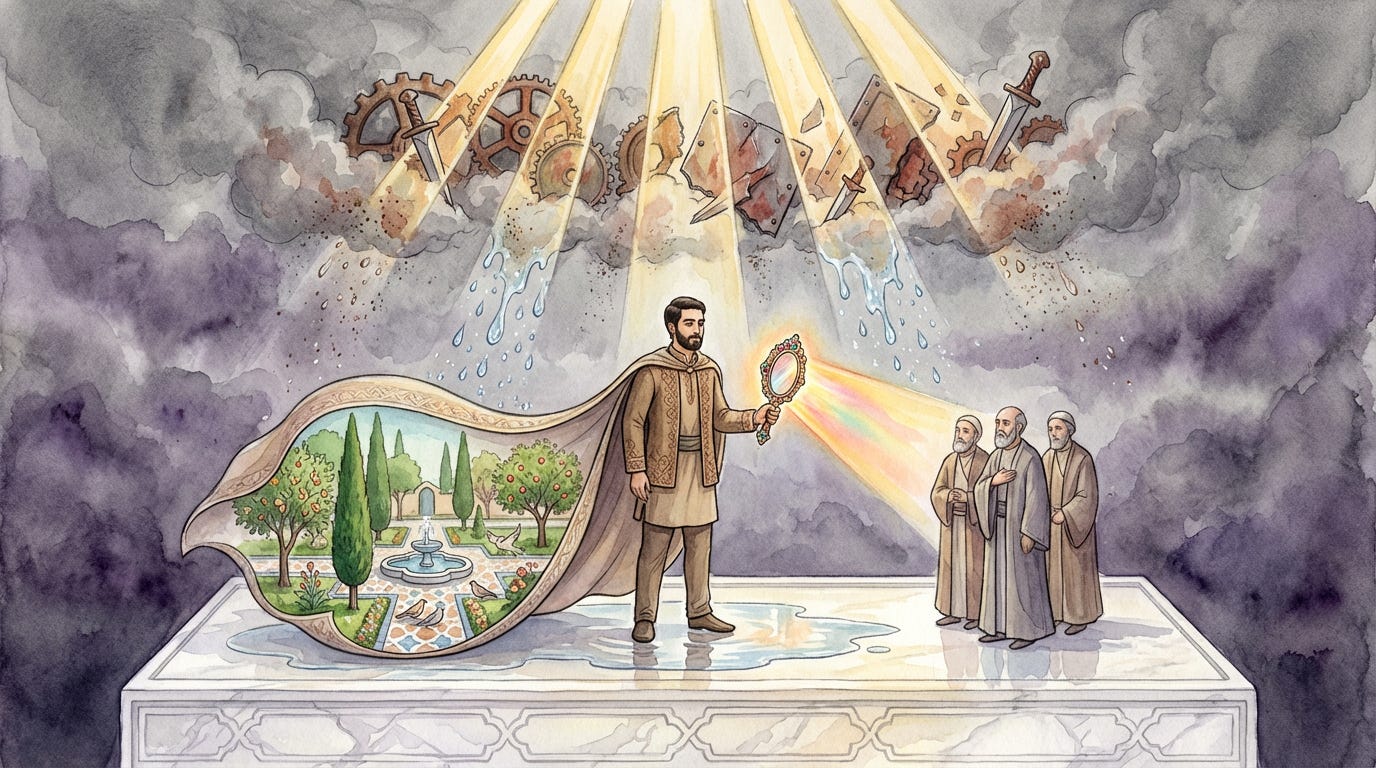
We began by building a bridge — from the physical poison we examined in Sessions 57 and 58 to the information poison that operates on the same principles.
The characteristics are identical: indiscriminate — it infects whoever encounters it, regardless of guilt or innocence.
Uncontrollable — once released, it spreads according to its own dynamics, beyond the control of those who deployed it.
Residual — its effects persist long after the original act, poisoning minds for years, even generations.
Imam Khamenei named it precisely: the influence of media is greater than the atomic bomb.
Propaganda and lies are the chemical weapons of the Soft War — they linger in the hearts as chemical agents linger in the bodies.
We turned to the Quran and found the framework already established.
The oppressed may speak — Surah An-Nisa grants them license to raise their voice, even harshly, against those who have wronged them.
Legitimate protest is not merely permitted; it is protected.
But Fitna is worse than killing — Surah Al-Baqarah declares it plainly.
The deliberate corruption of social order, the mixing of truth and falsehood until no one can distinguish them, the destruction of the trust that makes community possible — this is a graver sin than murder itself.
And the antidote is verification — Surah Al-Hujurat commands it.
When the corrupt source brings news, verify before you act.
The one who acts in ignorance harms the innocent and serves the corrupt.
We traced the distinction through the tradition’s own categories: I’tiraz — legitimate protest aimed at reform — versus Ighthisash and Fitna — rioting and sedition aimed at destruction.
The first is obligatory in many circumstances.
The second is absolutely forbidden.
We heard from the classical sources.
Sharh al-Lum’ah taught us that even rebels must first be heard — their grievances must be addressed before any question of force arises.
Imam Ali’s Letter 53 from Nahj al-Balagha, taught us that the ruler must create space for criticism — must dismiss the guards and let the spokesman speak without fear.
Imam Ali’s Sermon 50 from Nahj al-Balagha, taught us the mechanism of Fitna — how it operates through mixture, a handful of truth combined with a handful of falsehood, until Satan takes hold of his followers.
And Ghurar al-Hikam taught us the root of susceptibility — unmastered desire, the Hawa that makes us easy to manipulate.
We examined history and found the pattern repeated.
At Siffin: Qurans raised on spears, and Imam Ali’s own army turned against him through the exploitation of their piety.
With Imam Hasan: rumours and bribery, and an army that melted away before battle could even begin.
With Mukhtar: ethnic tensions exploited, and a city that opened its gates to the murderers of its own protector.
And in our own time — just weeks ago — the same pattern attempted again.
A legitimate grievance about economic hardship.
A government that listened and offered concessions.
Protests that were subsiding.
And then the coordinated attack — the sleeper agents, the provocateurs, the violence designed to transform reform into revolution.
The lies amplified by legacy media.
The figures that defied mathematics.
The grief weaponised, the anger hijacked, the nation targeted for destruction.
The pattern does not change.
Only the technology changes.
Finally, we heard from the contemporary scholars.
Imam Khamenei: Security is the red line — the foundation of all religious and social life.
Imam Khomeini: Criticism is a gift; conspiracy is a dagger.
Ayatullah Misbah-Yazdi: Preserving the system is among the highest obligations; constructive criticism strengthens, destructive criticism is forbidden.
Ayatullah Jawadi-Amoli: Blood cannot wash blood; destruction in the name of the people violates the people’s rights.
Ayatullah Mohsen Araki: Fitna makes the atmosphere dusty; the duty of the believer is Basirah — insight that sees through the fog.
Five scholars, one message.
The tradition speaks with clarity.
The Diagnosis Complete

The poison has been identified.
We know its nature: the corruption of truth, the exploitation of grievance, the transformation of legitimate anger into self-destructive chaos.
We know its characteristics: indiscriminate, uncontrollable, residual — the same characteristics that define forbidden weapons in the physical domain.
We know its mechanism: the mixture of truth and falsehood, the handful taken from this and the handful taken from that, until discernment becomes impossible.
We know its historical pattern: Siffin, Imam Hasan, Mukhtar — and now, in our own time, the same playbook deployed with modern technology.
We know the tradition’s verdict: Fitna is worse than killing; those who spread it commit a sin graver than murder; those who participate in it — even unknowingly — become instruments of destruction.
This is the diagnosis.
But diagnosis is not cure.
What Remains

We have identified the poison.
Next week, God willing, we apply the antidote.
We will hear Imam Ali’s remarkable counsel on navigating Fitna — the teaching of the “Baby Camel” that shows the believer how to avoid being ridden or milked by the corrupt.
We will distinguish between the two types of people in Fitna — the instigators who knowingly spread poison, and the manipulated who unknowingly consume it — and understand why the tradition treats them differently.
We will examine what emerges when the Shield is finally lowered — when the defensive posture gives way to something higher.
Makarim al-Akhlaq — the Noble Character — the positive demonstration of faith that is the believer’s primary mode when persecution lifts.
And we will address the question that many of us must face: what is our obligation in the West?
In Manchester, in Toronto, in Sydney — where no one will kill us for our faith — is Taqiyyah even relevant?
And if not, what takes its place?
That session will conclude the Defensive Movement that began in Session 55.
And then — God willing — we begin to build.
But for tonight, the work is done.
The poison has been identified.
May God grant us the Basirah to recognise it when we encounter it.
May He grant us the strength to refuse it when it is offered.
And may He protect this Ummah — and all of humanity — from those who would poison minds as readily as they would poison wells.
A Supplication for Sight in the Age of Fog and For Those Who Saw

In the Name of God, the Most Merciful, the Most Compassionate
O Lord of Clarity,
You who created light and separated it from darkness,
You who sent guidance to cut through confusion,
You who promised that truth would be made manifest and falsehood would perish —
Grant us sight in this age of fog.
Grant us Basirah — the insight of the heart — when the outer eye is deceived.
Grant us the capacity to distinguish the handful of truth from the handful of falsehood, even when they are mixed with the skill of centuries.
O Lord, we live in the age of Fitna.
The atmosphere is Ghubar-alud — dusty, clouded, obscured.
Lies travel faster than truth. Fabrications wear the mask of fact. The corrupt source speaks with confidence, and the honest voice is drowned in noise.
We are bombarded — moment by moment, screen by screen — with mixtures designed to confuse.
How do we navigate this, O Lord?
How do we fulfil the command to verify when verification itself has become a maze?
How do we obey the Prophet’s instruction to change evil with our hands, our tongues, our hearts — when we cannot clearly see what is evil and what is its counterfeit?
We turn to You for guidance.
We turn to the sources You have preserved.
We turn to the scholars who carry the light in this darkness.
And we ask You: illuminate our hearts.
Not our minds only — for the mind can be deceived by clever argument.
Our hearts — the seat of Basirah, the organ of spiritual perception, the faculty that knows truth when it encounters it, even when the mind is confused.
We remember tonight those who saw clearly when others were blinded.
We remember Imam Ali at Siffin — who saw through the Qurans on spears when his own army could not.
“I am the speaking Quran,” he said. “They raise the silent Quran only to deceive you.”
He saw. He warned. His army did not listen.
But he saw.
O Lord, grant us his sight.
We remember Imam Hasan — who saw clearly that his army had been poisoned, that battle would be slaughter not victory, that wisdom demanded patience even when pride demanded war.
He saw. He chose the harder path. History vindicated him.
O Lord, grant us his wisdom.
We remember Imam Husayn — who saw that the invitation from Kufa was contaminated, that the oaths of loyalty were written in water, that betrayal awaited.
He went anyway — not because he was deceived, but because his mission transcended survival.
He saw everything. He chose martyrdom with open eyes.
O Lord, grant us his courage — the courage that comes from seeing clearly, not from the blindness of passion.
We remember the scholars who have guided us in our own time.
Imam Khomeini, who drew the line between criticism and conspiracy — who welcomed the first and resisted the second — who built a system while the world tried to destroy it.
Imam Khamenei, who has borne the weight of leading through decades of Soft War — who has named the poison again and again — who has called the Ummah to Basirah when Basirah is most difficult.
The maraji’ of Qom and Najaf, who have preserved the tradition and applied it to circumstances the classical scholars never imagined.
O Lord, bless them. Protect them. Strengthen them.
And grant us the humility to follow their guidance when our own sight fails.
We remember tonight the victims of the poison.
Those who participated in Fitna thinking they served justice.
Those who burned and destroyed thinking they were building.
Those who woke — too late — to find that their hands had served their enemies.
The Quran warned them: you will become Nadimin — regretful.
And they did. And they do. And they will.
O Lord, protect us from that regret.
Protect us from the devastation of discovering that our sincerity was used against us.
Protect us from the tragedy of good intention in service of evil outcome.
We remember the martyrs of these recent days.
The police officers who were brutally killed, unarmed, serving a nation that foreign powers wished to destroy.
The children — the three-year-old child — killed not by the government but by the terrorists who claimed to fight for freedom.
The worshippers in mosques, targeted precisely because they gathered in prayer.
O Lord, receive them among the righteous.
Count them among the martyrs.
And let their blood be a witness against those who shed it — and those who incited, funded, and directed those who shed it.
O Lord, we await the one who will end all Fitna.
We await the Imam of our Age, the Proof of Your existence, the one whose appearance will bring clarity to a world drowning in confusion.
Imam Al-Mahdi, may our souls be his ransom.
When he appears, the fog will lift.
When he speaks, truth will be unmistakable.
When he rules, the mixture will be separated — the handful of truth restored to truth, the handful of falsehood exposed and destroyed.
O Lord, hasten his appearance.
We are weary of the fog.
We are weary of the effort to see when seeing is so hard.
We are weary of the poison that seeps into everything, that turns brother against brother, that makes the Ummah a weapon against itself.
Send us the dawn.
But until he comes, we do not despair.
Until he comes, we have the sources — Quran and hadith, preserved and transmitted.
Until he comes, we have the scholars — the carriers of light in the darkness.
Until he comes, we have each other — the community of believers, supporting one another, reminding one another, pulling one another back when we stray toward the fog.
Until he comes, we have Basirah — imperfect, hard-won, requiring constant effort — but real.
The poison is strong.
But the antidote exists.
And we have begun to learn it.
O Lord, accept this from us.
Forgive our failures of discernment.
Forgive the times we were deceived.
Forgive the moments we repeated lies without verifying, shared rumours without checking, allowed our anger to be ridden by those who wished us harm.
And grant us, in the days to come, the sight we have lacked.
Grant us the Basirah of Ali.
Grant us the wisdom of Hasan.
Grant us the courage of Husayn.
Grant us connection to the Mahdi — whose appearance we prepare by seeing clearly in the age of fog.
And may the peace and blessings of God be upon Muhammad,
The one who saw Jibril when others saw only air,
The one who saw the Night Journey when others saw only sleep,
The one who saw the future of this Ummah — its trials and its triumphs — and left us guidance for both.
And upon the Family of Muhammad —
Upon Fatimah, who saw the theft of her rights and named it plainly in the Mosque of Madinah.
Upon Ali, who saw through every deception — Siffin, Nahrawan, the plots that surrounded him — and never lost clarity even when those around him did.
Upon Hasan, who saw that patience was victory when battle would have been defeat.
Upon Husayn, who saw Karbala before he arrived — and went anyway, because his sight was not merely tactical but cosmic.
Upon Sajjad, who saw that survival was itself a mission — that the preservation of truth required living to transmit it.
Upon Baqir and Sadiq, who saw the opportunity in the chaos of their times — and built the school that still teaches us today.
Upon Kadhim, patient in prison, who saw beyond the walls that held his body.
Upon Ridha, navigating the court of Ma’mun with sight unclouded by proximity to power.
Upon Jawad, Hadi, and Askari — who saw the narrowing path and walked it faithfully.
And upon the Hidden Imam —
The one who sees us even when we cannot see him,
The one who guides even from behind the curtain,
The one whose appearance will restore sight to a world gone blind.
O God, connect us to them.
Let their sight become our sight.
Let their clarity illuminate our confusion.
Let their example guide us through the fog until the fog lifts forever.
Amen, O Most Merciful of the Merciful.
Amen, O Lord Sustainer of the Universes.
And from Him alone is all ability and He has authority over all things.