

In His Name, the Most High

يَـٰٓأَيُّهَا ٱلَّذِينَ ءَامَنُواْ كُونُواْ قَوَّـٰمِينَ لِلَّهِ شُهَدَآءَ بِٱلۡقِسۡطِۖ وَلَا يَجۡرِمَنَّكُمۡ شَنَـَٔانُ قَوۡمٍ عَلَىٰٓ أَلَّا تَعۡدِلُواْۚ ٱعۡدِلُواْ هُوَ أَقۡرَبُ لِلتَّقۡوَىٰۖ وَٱتَّقُواْ ٱللَّهَۚ إِنَّ ٱللَّهَ خَبِيرُۢ بِمَا تَعۡمَلُونَ
“O you who believe: stand firm for God, as witnesses to justice; and do not let hatred of a people move you to be unjust. Be just — that is nearer to taqwa. And be mindful of God; God is aware of what you do.”
— Qur’an, Surah al-Ma’idah (the Chapter of the Table Spread) #5, Verse 8
I want to begin with a verse that lets nobody in this room off.
Including me.
It is addressed to people who believe.
And it does not say:
be just to the people you like.
Anybody can do that.
It says:
do not let your hatred of a people move you to be unjust.
And then it tells you where justice sits.
Nearer to taqwa (God consciousness).
Not a courtesy we extend to other people when we happen to feel generous.
A part of our own mindfulness of God.
Tonight that verse is going to be tested twice.
Once on what was done, in the name of a true word, to places this community loves.
And once on what resentment could do in this room — in us — while we listen to it.
I am going to hold both of those to the one measure.
Hold me to it.
Something Happened Between Malik and Now
Three weeks ago, from this chair, I said this to you:
“And I want to be very careful about how I say the next part, because there is an easy version of it that I am not going to give you.
The easy version names somebody.
It picks a movement, or a century, or a country, and it puts the blame there, and everybody in this room feels a little better for ten seconds and a little worse for a week.”
“We are not doing that. We have never done that here and we are not starting tonight.”
“Something happened between Malik and now.
And whatever it was, it did not happen in the books.”
“What we are dealing with today is not in those books.
It came from somewhere else.
And you do not have to know where it came from, or name it, or fight about it, to know that it is not what you were handed by the tradition.”
— from this majlis, three weeks ago: The Architecture of Guidance, Part 14, Is This Idol Worship?
All of that is still true.
You do not have to know where it came from to know that it is not what you were handed.
A man can be quite certain a coin is counterfeit without ever having visited the workshop that struck it.
But some of you have been handed this charge at work, and at school, and by people you love.
And the question underneath it does not go away just because we refused to answer it badly.
So tonight we go and look at the workshop.
And the only way I know to do that, and keep the word I gave you three weeks ago, is to refuse the easy version on the way in.
No blame to make you feel better.
Nobody to boo.
I am going to read you their own pages — the movement’s own chroniclers, in their own words, with their page numbers — and where their pages say something in their favour, I am going to read that out too.
A history with the fair parts cut out is not a history.
It is an argument wearing a history’s clothes.
And it is fair to look now, because of what we did last week.
Last week we went into our own house first.
We heard an Imam of our own describe the excesses of our own people in harder words than anybody outside has ever used about us.
We did that first, on purpose.
A community that has not looked at itself has no business looking at anybody else.
One more thing, before anything else is told, because it is the rule of the whole evening.
Nobody leaves tonight with a stick.
Not for a Sunni.
Not for a Shi’a.
Not for anyone.
That is our way.
It has always been our way in this majlis.
And if anything I say tonight sounds to you like a stick, then I have said it badly — and the fault is mine, not the history’s.
A Word of Truth
Let me put the case against us first, at its full strength, in one sentence, before I answer anything:
You worship the dead, your domes are idols, and levelling them was nothing but obedience to the Prophet’s own command.
That last clause leans on a real report — a report every school of Islam reads, and one we read here in full three weeks ago:
قَالَ لِي عَلِيُّ بْنُ أَبِي طَالِبٍ: أَلَا أَبْعَثُكَ عَلَىٰ مَا بَعَثَنِي عَلَيْهِ رَسُولُ اللَّهِ صَلَّى اللَّهُ عَلَيْهِ وَسَلَّمَ: أَنْ لَا تَدَعَ تِمْثَالًا إِلَّا طَمَسْتَهُ، وَلَا قَبْرًا مُشْرِفًا إِلَّا سَوَّيْتَهُ
“Ali ibn Abi Talib said to me: shall I not send you on the same errand that the Messenger of God, may God’s blessings be upon him, sent me on? That you leave no image without effacing it, and no raised grave without levelling it.”
— Abu al-Hayyaj al-Asadi; Muslim ibn al-Hajjaj, Sahih Muslim, the Book of Funerals — set in full in this majlis in Session 74
Three weeks ago we answered the charge itself, and I am not going to argue it again.
Tonight’s answer is a different one, and it begins in our own house.
An Imam of Our Own House
Begin where last week ended.
Imam Ali ibn Musa al-Rida, peace and blessings be upon him, the eighth of the Imams, was asked about people of our own who made claims for him and for his fathers that they had no right to make.
You heard his answer last week, and I want you to hear it again:
الْغُلاةُ كُفَّارٌ وَالْمُفَوِّضَةُ مُشْرِكُونَ
“The exaggerators are disbelievers, and the over-claimers are associators.”
— Imam Ali ibn Musa al-Rida, peace and blessings be upon him; Shaykh al-Saduq, ʿUyun Akhbar al-Rida, Volume 2, the chapter on the proofs for the divine leaders and the rejection of the exaggerators, report 4
Disbelievers.
Associators.
Those are the very words thrown at this community from a thousand pulpits — and here they are in our own Imam’s mouth, about our own people.
And notice whom they are aimed at.
Not at people who visit graves.
At people who claimed too much for the Household.
That is a limit, and it was given to us by the Household itself.
The Premise We Share
And the principle under it, in the words of the commentator this majlis returns to almost every week — Allamah Sayyed Muhammad Husayn Tabataba’i, the author of al-Mizan — on two verses of Surah Al Imran:
فرد عبادة من يعبد مع عبادته غيره حتى بعنوان التقرب و التوسل و الاستشفاع.
“So God rejected the worship of one who worships another alongside his worship of Him — even under the heading of drawing near, and seeking a means, and asking for intercession.”
— Allamah Sayyed Muhammad Husayn Tabataba’i, al-Mizan fi Tafsir al-Qur’an, on Surah Al Imran #3, Verses 79 and 80
Even intercession — he names it.
That is our commentator, not theirs.
So let me be exact about what we share and what we do not.
We share the premise:
worship given to anyone other than God, under any heading at all, is shirk (polytheism).
What we do not share is the step that says asking the righteous to pray for you is that worship.
That argument we had three weeks ago.
Tonight’s question is not:
was the premise true?
It is:
what was done with it?
Our Own Book on the Prophet’s Grave
And before I open anybody else’s book, I want to open ours — on the very report that matters most.
Shaykh al-Saduq, one of the great gatherers of our tradition, about a thousand years ago, in Man La Yahduruhu al-Faqih — one of our four great collections — records the Prophet, peace and blessings be upon him, his family, and his righteous companions:
وَقَالَ اَلنَّبِيُّ صَلَّى اَللَّهُ عَلَيْهِ وَ آلِهِ: «لاَ تَتَّخِذُوا قَبْرِي قِبْلَةً وَ لاَ مَسْجِداً فَإِنَّ اَللَّهَ عَزَّ وَ جَلَّ لَعَنَ اَلْيَهُودَ حِينَ اِتَّخَذُوا قُبُورَ أَنْبِيَائِهِمْ مَسَاجِدَ.
“Do not take my grave as a qibla, nor as a mosque; for God, Mighty and Majestic, made His mercy distant from the Jews when they took the graves of their prophets as mosques.”
— the Prophet, peace and blessings be upon him, his family, and his righteous companions; Shaykh al-Saduq, Man La Yahduruhu al-Faqih, Volume 1, hadith 532
And immediately beside it, in the same book, an Imam answering a man who asked him about exactly this:
وَ سَأَلَهُ سَمَاعَةُ بْنُ مِهْرَانَ: عَنْ زِيَارَةِ اَلْقُبُورِ وَ بِنَاءِ اَلْمَسَاجِدِ فِيهَا فَقَالَ «أَمَّا زِيَارَةُ اَلْقُبُورِ فَلاَ بَأْسَ بِهَا وَ لاَ يُبْنَى عِنْدَهَا مَسَاجِدُ.
“And Sama’a ibn Mihran asked him about visiting graves and building mosques at them, and he said: as for visiting graves, there is no harm in it; and mosques are not to be built beside them.”
— Shaykh al-Saduq, Man La Yahduruhu al-Faqih, Volume 1, hadith 531
So the warning about the Prophet’s grave is in our books too.
We have not hidden it and we do not explain it away.
We hold it.
And our scholars have held it beside something else.
There is no harm in the visit — the Imam has just said so.
Prayer in a graveyard is disliked, but only in the sense of a lesser reward.
And where the one buried there is a blessing from God, as the shrines are, the place takes the ruling of a mosque: the shrines of the Household, like the mosques, are among houses God has permitted to be raised — and prayer in them is not disliked at all.
It is recommended. In our own time Ayatollah Jawadi Amoli, may God protect him, has set that out in his commentary on the Qur’an, from the author of Jawahir al-Kalam.
مطلب بعدي آن است كه اين جريان كه گفته شد ﴿لَنَتَّخِذَنَ عَلَيْهِم مَّسْجِداً﴾ اين در تفسير مراغي و امثال مراغي اين حرف هست چندتا روايت اينها نقل كردند كه شما قبور را مسجد قرار ندهيد البته در فقه ما اماميه هم هست كه نماز در قبرستان مكروه است اين كراهتها هم به معني «أقلّ ثواباً» هست نه آن حضاضتي كه در كراهتهاي ديگر است ولي اگر آن مقبور و آن قبر بركتِ الهي باشد نظير حرمها, حُكم مسجد را خدا غريق رحمت كند مرحوم صاحب جواهر را ايشان در بحث مكان مصلّي دارد بالأخره اين ذوات قدسي كه خليفهٴ الهياند اسامي اينها ملحق به اسامي مبارك ذات اقدس الهي شد و خانهٴ اينها, قبر اينها ملحق به خانهٴ الهي يعني مسجد شد هم مساجد جزء ﴿فِي بُيُوتٍ أَذِنَ اللَّهُ أَن تُرْفَعَ﴾ (سورهٴ نور, آيهٴ 36) هستند, هم حرمهاي اهل بيت(عليهم السلام) جزء ﴿فِي بُيُوتٍ أَذِنَ اللَّهُ أَن تُرْفَعَ﴾ هستند آنوقت ثوابهايي كه براي نماز در حرم هست ايشان ميشمارند كه معادل با كدام مسجد است ثواب نماز در حرم كدام شخصيّت معادل با ثواب نماز كدام مسجد است؟ اين را ايشان هم ذكر كردند خب اينها مستثناياند براي اينكه جزء ﴿فِي بُيُوتٍ أَذِنَ اللَّهُ أَن تُرْفَعَ﴾ هستند اينها نه تنها مكروه نيست بلكه مستحب است و فضايل فراواني دارد.
“The next point: on this episode, where it was said, ‘we will surely take a place of worship over them’ — this is in the commentary of al-Maraghi and works like it: they have related a number of reports that you should not make graves into mosques.
Of course, in our Imami jurisprudence too, prayer in a graveyard is disliked; and these dislikes mean ‘of lesser reward’, not the lowliness found in other dislikes. But if the one buried there, and that grave, is a blessing from God, like the shrines, then the ruling of a mosque — may God immerse the late author of Jawahir in His mercy, he has this in his discussion of the place of the one who prays.
After all, these holy beings, who are the vicegerents of God — their names were joined to the blessed names of the Most Holy Essence of God, and their house, their grave, was joined to the house of God, that is, the mosque.
The mosques are among ‘in houses God has permitted to be raised’ (Surah al-Nur, verse 36), and the shrines of the Household, peace be upon them, are among ‘in houses God has permitted to be raised’. And then the rewards for prayer in a shrine — he counts them up, and which mosque each one equals: the reward of prayer at whose shrine equals the reward of prayer in which mosque?
He has set this out as well.
So these are excepted, because they are among ‘in houses God has permitted to be raised’: not only are they not disliked — they are recommended, and they have many merits.”
— Ayatollah Jawadi Amoli, Tasnim, lesson on Surah al-Kahf (7 February 2009), my translation; the verse reference in brackets is the lesson’s own footnote
So the quarrel is not over the report.
We hold it as firmly as anybody.
The quarrel is over what it forbids.
Then Their Book
In the eighteenth century, in Najd — the high plateau in the middle of Arabia, the country around what is now Riyadh — a Hanbali scholar named Muhammad ibn Abd al-Wahhab wrote a short work called Kitab al-Tawhid, the Book of the Oneness of God.
Those of you who were here for Session 62 have met him.
I will name him once tonight, and then not again.
One of its chapters carries this title:
Excess at the graves of the righteous makes them idols worshipped besides God.
Under it he brings the Prophet’s prayer that his own grave should not become an idol that is worshipped, and the report that God’s anger was severe on a people who took the graves of their prophets as places of worship.
Now listen carefully, because this is where the evening turns.
We hold that report too.
We have just read it, in our own book, before we read it in his.
So the principle is shared.
The quarrel is over what it forbids — and over what was done with it.
A word about the name, said once and then put away.
The people who followed him called themselves the people of tawhid, the people of the oneness of God.
The name most of you know — Wahhabi — was given to them by their opponents, after the man.
From here on I will simply say:
the movement.
Where the Pattern Was Born
To understand what can be done with a true word, I want to take you back to Siffin.
Not because anybody tonight descends from anybody at Siffin.
Nobody does.
But because Siffin is where this pattern was first laid down, in front of the Commander of the Faithful, peace and blessings be upon him — and he saw it, and he named it.
At Siffin, as the battle turned, the copies of the Qur’an were raised.
And men in his own army said:
Our brothers are calling us to the Book of God — how can we refuse?
Afterwards he went out to their camp and reminded them of it:
ثُمَّ كَلَّمَهُمْ (عليه السلام) بِكَلاَم طَوِيل، مِنْ جُمْلَتِهِ أَنْ قَالَ: أَلَمْ تَقُولُوا عِنْدَ رَفْعِهِمُ الْمَصَاحِفَ ـ حِيلَةً وَغِيلَةً وَمَكْراً وَخَدِيعَةً ـ : إِخْوانُنَا وَأَهْلُ دَعْوَتِنَا، اسْتَقَالُونَا وَاسْتَرَاحُوا إِلى كِتَابِ اللهِ سُبْحَانَهُ، فَالرَّأْيُ الْقَبُولُ مِنْهُمْ وَالتَّنْفِيسُ عَنْهُمْ؟
“Then he spoke to them at length, and among what he said was: Did you not say, when they raised the copies of the Qur’an — as a trick and a treachery, a ruse and a deception — ‘Our brothers, the people of our own call, have asked us to let them off, and have taken refuge in the Book of God, glory be to Him; the right view is to accept it from them and give them relief’?”
— Imam Ali ibn Abi Talib, the Commander of the Faithful, peace and blessings be upon him; Nahj al-Balagha, Sermon 122
A trick, a treachery, a ruse, a deception.
Four words for one act.
The Book was raised to stop a battle, not to be obeyed.
Then came the arbitration — and the same men who had demanded it now called it unbelief. And he answered them:
إِنَّا لَمْ نُحَكِّمِ الرِّجَالَ، وَإِنَّمَا حَكَّمْنَا الْقُرْآنَ. وهذَا الْقُرْآنُ إِنَّمَا هُوَ خَطٌّ مَسْتُورٌ بَيْنَ الدَّفَّتَيْنِ، لاَ يَنْطِقُ بِلِسَان، وَلاَ بُدَّ لَهُ مِنْ تَرْجُمَان، وَإِنَّمَا يَنْطِقُ عَنْهُ الرِّجَالُ.
“We did not make men the judges; we made the Qur’an the judge. And this Qur’an is only lines written, hidden between two covers; it does not speak with a tongue; it must have an interpreter; and it is men who speak for it.”
— Imam Ali ibn Abi Talib, the Commander of the Faithful, peace and blessings be upon him; Nahj al-Balagha, Sermon 125
Hold on to that second sentence.
It does not speak with a tongue.
A text does not walk into a room by itself.
Somebody carries it in.
And somebody decides what it is being asked to do.
And then these same men took a sentence from the Qur’an —
No rule but God’s
— and made it their slogan against him.
And he gave them an answer of five words in Arabic.
It is the key to everything we will do tonight:
وَقَالَ (عليه السلام) لَمَّا سَمِعَ قَوْلَ الْخَوَارِجِ ـ لَا حُكْمَ إِلَّا لِلهِ ـ : كَلِمَةُ حَقٍّ يُرَادُ بِهَا بَاطِلٌ.
“When he heard the Khawarij say ‘No rule but God’s’, he said: a word of truth by which falsehood is intended.”
— Imam Ali ibn Abi Talib, the Commander of the Faithful, peace and blessings be upon him; Nahj al-Balagha, Saying 198
A word of truth.
Not a lie — a truth.
Every word of their slogan was true.
The falsehood was in what it was being used for.
And notice what he tests.
He tests the use.
He does not tell us what was in their hearts.
Neither will I.
What We Carry Forward
Tonight is Wednesday, the 25th of Rabi al-Thani, 1448 — the 7th of October, 2026.
This is the seventeenth part of The Architecture of Guidance, and the ninth of eleven sessions in the part of it we have called The House Beside the Grave.
Three weeks ago we took the charge you have all heard — that to visit a grave is to worship the dead — and we traced it to its source.
And we found that the argument was never really about the oneness of God at all.
The great scholars who disagreed about graves disagreed the way scholars disagree: in books, with evidence, in front of everybody, without either of them ever suggesting that the other had left the religion.
Two weeks ago we went into other people’s houses and read their books.
And we found that every serious tradition attached a limit to the honouring of the dead — and that every system God has given us can be corrupted by the people who carry it.
And last week we asked the hardest version of that question, about ourselves.
Can it become that — here?
And our own house answered first: yes, it can.
It said so in harder words than anybody outside has ever used about us.
And it showed us where the line runs:
between asking and deciding.
So tonight has three movements.
First, how a true word was put to work — a preacher, an emir, and a bargain.
Second, what was done with it, in the words of their own historian.
And third, the second levelling of al-Baqi’, and what is still being levelled now.
We have looked at ourselves first.
So now we can look at somebody else without it becoming a scoreboard.
A Preacher, an Emir, and a Bargain
The Place
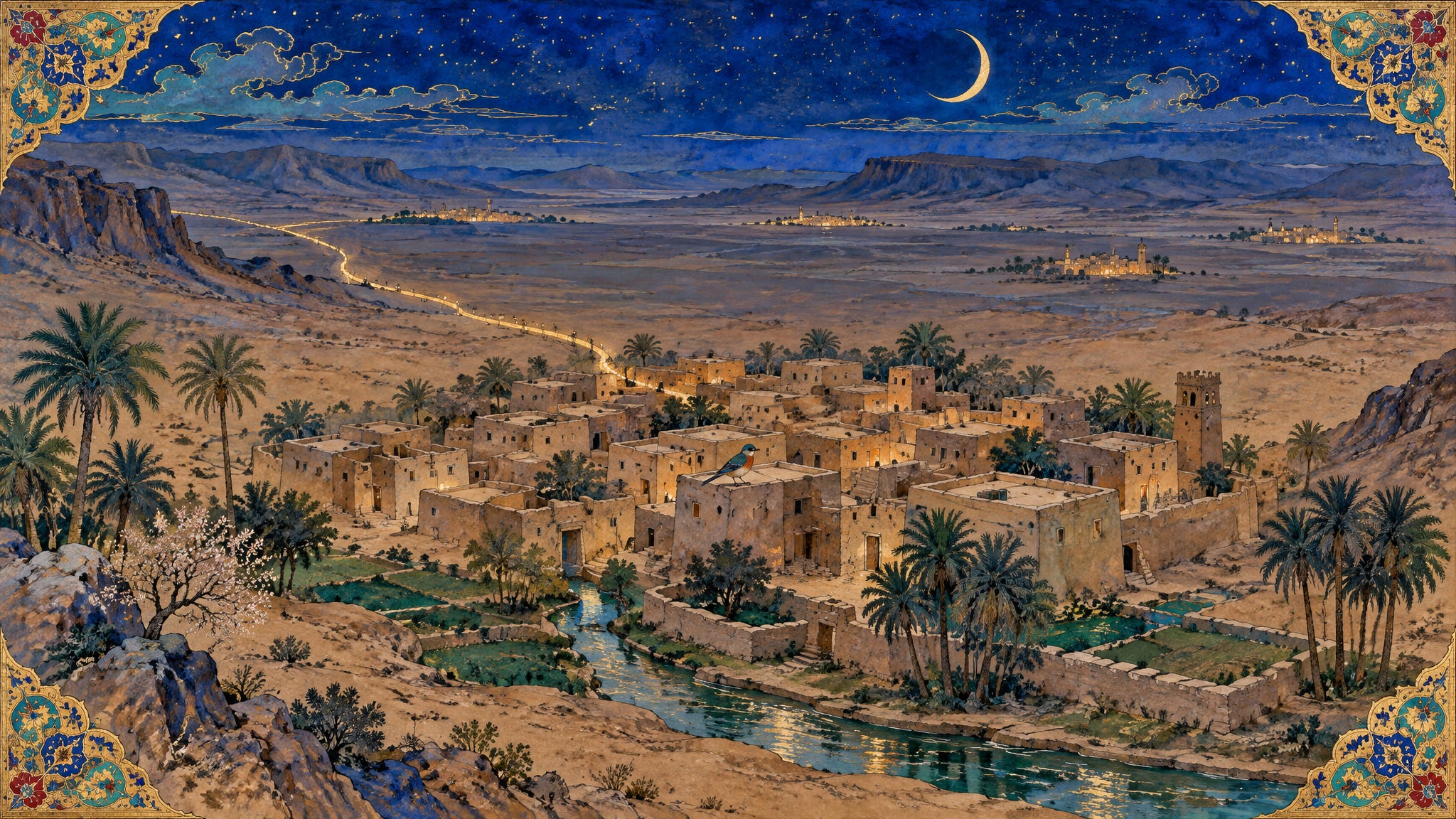
Start with the place, because you cannot follow what happened without it.
Najd is the high, dry interior of Arabia.
In the eighteenth century it was a patchwork of small towns, each with its own ruler, each watching the next.
One of those towns was al-Dir’iyya.
Madawi al-Rasheed, a historian of Arabia, in a history published by Cambridge University Press, describes it in one sentence:
“In the eighteenth century Dirʿiyyah was a small settlement in Najd with a mixed population of farmers, merchants, artisans, minor ʿulama and slaves.”
— Madawi al-Rasheed, A History of Saudi Arabia, second edition (Cambridge University Press, 2010), page 14
By one source, it had not more than seventy households.
It had its own emir, ruling since 1727.
Today it sits on the edge of Riyadh.
Keep the size of it in your mind.
What follows did not begin in an empire.
It began in a village.
A Book, Then a Pickaxe
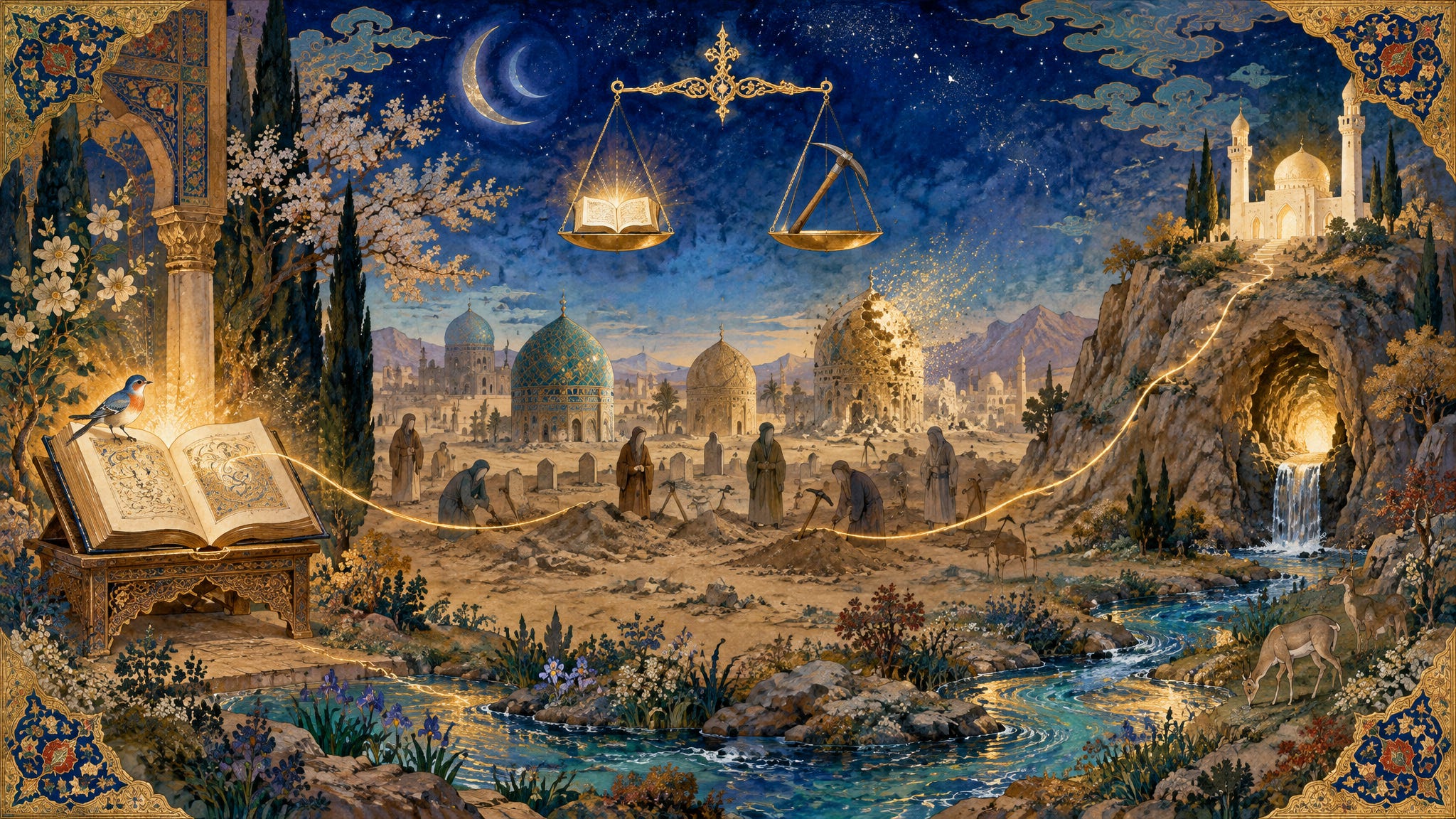
His life, in brief.
He lived from 1115 of the hijra to 1206 — the eighteenth century, in the calendar most of us live by.
١١١٥-١٢٠٦ه
“1115–1206 AH.”
— Kashf al-Shubuhat, the title page of the 1419 AH printing
He was born at al-Uyayna, into a family of judges and jurists; his father was the judge of the town.
As a young man, by his own chroniclers’ account, he went on pilgrimage to Mecca, spent time in Medina, and travelled to Basra, before coming home to Najd.
“Ibn ‘Abd al-Wahhab’s father was the leading cleric of the town, dispensing justice as Islamic judge (qadi) and giving opinions (fatwas) on matters of religious law or ritual in his capacity as mufti, while his mother was the daughter of another cleric.”
“The Wahhabi chroniclers offer a duller, more credible itinerary. They have Ibn ‘Abd al-Wahhab performing the pilgrimage to Mecca as a teenager, spending time then or later in the Prophet’s city of Medina. He then traveled to the ethnically and religiously mixed town of Basra before returning home to Najd, via the religious center of al-Ahsa on the Gulf coast (Ibn Ghannam, 1949, 1:26–8; Ibn Bishr, 1982–3, 1:35–7).”
— the family and the travels: Michael Crawford, Ibn ʿAbd al-Wahhab (Oneworld, 2014), chapter 2
And at a town called Huraymila he wrote the book we have just opened, Kitab al-Tawhid.
The movement’s own first chronicler records it there.
فأقام رحمه الله تعالى، وأفاض عليه بره ووالى، في بلد حُرَيملَا سنين ينشر أعلام التوحيد، ويبدي في المحافل الدر النضيد، وجوهر الحق الفريد، وصنف في تلك الإقامة كتاب «التوحيد» ونشر أعلامه.
“So he stayed — God the Exalted have mercy on him, and pour His goodness on him without end — in the town of Huraymila for years, spreading the banners of the oneness of God, and setting out in the gatherings strung pearls and the matchless jewel of truth; and during that stay he composed the book al-Tawhid, and spread its banners.”
— Husayn ibn Ghannam, Rawdat al-Afkar wa’l-Afham (Tarikh Najd), ed. al-Kharashi, page 215
I want you to hold the order of what happens next, because the order is the point.
First a book.
Then a pickaxe.
Then a bargain.
At al-Uyayna — the town of his birth — there were graves of Companions of the Prophet at a place called al-Jubayla, with domes built over them.
And here I am going to let the movement’s own first chronicler tell it, because I promised you their pages.
He calls the domes idols.
He records that the preacher and the emir of al-Uyayna went out to them with pickaxes — all of them, in his words, hoping for the reward — and that the graves were levelled according to the prescribed way.
A later chronicler of the movement, Ibn Bishr, adds that the preacher did it with his own hand, because the men with him shrank from pulling it down.
ولكن لم يصبر على الإقامة بذلك المكان، مع مشاهدته فيه الأوثان، فعند ذلك أمر الشيخ محمدٌ الأميرَ عثمان، بهدم القُبَب والمساجد المبنية في الجبيلة على قبور الصحابة، وقطع الأشجار التي كانت الخلق لها في كل ساعة منتابة، فبادر عثمان لذلك وامتثل، وخرج الشيخ معه وجماعتهم على عجل، وخرجوا بالمعاول، والكل للأجر آمل، فهدموا تلك المساجد، وأزالوا رفيع المشاهد، وأزالوا جميع المحظور، عن جميع تلك القبور، وعُدِّلَت على السَّنَن المشروع،
“But he could not bear to stay in that place while he saw idols in it. So at that the Shaykh Muhammad commanded the emir Uthman to demolish the domes and the mosques built at al-Jubayla over the graves of the Companions, and to cut down the trees that people resorted to at every hour. Uthman hastened to it and obeyed, and the Shaykh went out with him, and their company, in haste; and they went out with pickaxes, every one of them hoping for the reward. And they demolished those mosques, and removed the lofty shrines, and removed everything forbidden from all those graves; and they were levelled according to the prescribed way.”
— Husayn ibn Ghannam, Rawdat al-Afkar wa’l-Afham, ed. al-Kharashi, pages 215–216
فهدم فيها الشيخ بيده لما تهيّب هدمها الذين معه، فانتظر جهلة أهل البلد ما يحدث على الشيخ بسبب هدمها، فأصبح في أحسن حال.
“So the Shaykh demolished it with his own hand, because those with him shrank from demolishing it; and the ignorant among the people of the town waited for what would befall the Shaykh for demolishing it — and he rose in the best of states.”
— Uthman ibn Bishr, ʿUnwan al-Majd fi Tarikh Najd, Volume 1, page 39
The same first chronicler preserves the charge that was later made against them, and the answer given in the preacher’s name.
The charge was that they had demolished the graves of the Companions who fell at al-Jubayla, and scattered their remains, and pulled down a mosque there.
The answer accepts the demolition: what was pulled down, it says, was the building over the grave they claim is Zayd’s, and the mosque in the cemetery — following what God and His Messenger commanded of levelling graves.
And it denies the rest: the scattering of the remains.
That, it says, is false.
فلأجل ذلك هَدَم الشيخُ ذلك البناء الذي على قبره، وذلك المسجدَ المبنيَّ على المقبرة، اتباعًا لما أمر الله به ورسوله مِن تسوية القبور، والنهيِ الغليظِ الشديد في بناء المساجد عليها، كما يَعرف ذلك من له أدنى مَلَكَة من المعرفة والعلم.
“So for that reason the Shaykh demolished that building over his grave, and that mosque built over the cemetery — following what God and His Messenger commanded of levelling graves, and the severe, stern prohibition of building mosques over them — as anyone with the least grasp of knowledge and learning knows.”
— Husayn ibn Ghannam, Rawdat al-Afkar wa’l-Afham, ed. al-Kharashi, page 363; the charge (page 362) and the denial (page 363) narrated
I am reading you the denial because it is on the same page, and because a history that leaves out the defendant’s answer is not a history.
So that was the first major demolition of the movement — told by the movement, with its reason, in its own words.
Not the first demolition of anything in the history of Islam; the first major one of this movement.
And I cannot give you a year for it with any confidence.
What the pages allow me to say is this: it was at al-Uyayna, and it was before the agreement I am about to describe.
Now — in his Kitab al-Tawhid, the preacher wrote a line about us.
He wrote that the people of our school were the first to build mosques over graves.
He uses a name for us in that passage that I am not going to repeat in this room.
And a historian of the movement, David Commins, puts the charge plainly: he blamed us for bringing into Islam the practice of building mosques at graves.
I want to answer that.
And I want to answer it with the Qur’an, not with anger.
There is a chapter of the Qur’an named after a group of young believers who fled a tyrant and slept in a cave.
When they were found, the people of the town argued about what to do over them.
And the Qur’an reports how the argument ended:
وَكَذَٰلِكَ أَعۡثَرۡنَا عَلَيۡهِمۡ لِيَعۡلَمُوٓاْ أَنَّ وَعۡدَ ٱللَّهِ حَقّٞ وَأَنَّ ٱلسَّاعَةَ لَا رَيۡبَ فِيهَآ إِذۡ يَتَنَٰزَعُونَ بَيۡنَهُمۡ أَمۡرَهُمۡۖ فَقَالُواْ ٱبۡنُواْ عَلَيۡهِم بُنۡيَٰنٗاۖ رَّبُّهُمۡ أَعۡلَمُ بِهِمۡۚ قَالَ ٱلَّذِينَ غَلَبُواْ عَلَىٰٓ أَمۡرِهِمۡ لَنَتَّخِذَنَّ عَلَيۡهِم مَّسۡجِدٗا
“And thus did We make them known, so that people might know that the promise of God is true, and that of the Hour there is no doubt — when they were disputing among themselves about their affair. And they said: build over them a building; their Lord knows best about them. Those who prevailed over their affair said: we will surely take a place of worship over them.”
— Qur’an, Surah al-Kahf (the Chapter of the Cave) #18, Verse 21
Allamah Tabataba’i reads that verse closely.
There were two parties.
One wanted only to put up a building over them, wall them in, and leave them.
The other — the ones who prevailed — said: we will take a place of worship over them.
And he says the ones who prevailed were the monotheists: that a place of worship there would be a place where God is worshipped, and by its lasting, the memory of those young believers would last.
And Ayatollah Jawadi Amoli, may God protect him, adds what you have just heard for yourselves: had that been a false saying, the Qur’an would surely have refuted it.
It did not.
فمعنى الجملة أعني قوله:«ربهم أعلم بهم»يتفاوت بالنظر إلى الوجهين المتقدمين في قوله:«إذ يتنازعون بينهم أمرهم»إذ للجملة على أي حال نوع تفرع على تنازع بينهم كما عرفت آنفا فإن كان التنازع المدلول عليه بقوله:«إذ يتنازعون بينهم أمرهم»هو التنازع في أمر البعث بالإقرار و الإنكار لكون ضمير«أمرهم»للناس كان المعنى أنهم تنازعوا في أمر البعث فأعثرناهم عليهم ليعلموا أن وعد الله حق و أن الساعة لا ريب فيها لكن المشركين لم ينتهوا بما ظهرت لهم من الآية فقالوا ابنوا على أصحاب الكهف بنيانا و اتركوهم على حالهم ينقطع عنهم الناس فلم يظهر لنا من أمرهم شيء و لم نظفر فيهم على يقين ربهم أعلم بهم، و قال الموحدون أمرهم ظاهر و آيتهم بينة و لنتخذن عليهم مسجدا يعبد فيه الله و يبقى ببقائه ذكرهم.
“So the meaning of the sentence — I mean His saying, ‘their Lord knows best about them’ — differs according to the two readings already given of His saying, ‘when they were disputing among themselves about their affair’; for in either case the sentence branches from a dispute among them, as you have just seen. If the dispute meant by His saying, ‘when they were disputing among themselves about their affair’, is the dispute over the resurrection, affirming it and denying it — the pronoun in ‘their affair’ referring to the people — then the meaning is: they disputed over the resurrection, so We led them to come upon them, that they might know that the promise of God is true and that there is no doubt about the Hour; but the polytheists did not desist at the sign that had appeared to them, and said: build over the Companions of the Cave a building, and leave them as they are, so that the people are cut off from them — nothing of their affair has become clear to us, and we have arrived at no certainty about them; their Lord knows best about them. And the monotheists said: their affair is clear, and their sign is evident, and we will surely take over them a place of worship, in which God is worshipped, and by whose lasting their memory lasts.”
و قوله:«قال الذين غلبوا على أمرهم لنتخذن عليهم مسجدا»هؤلاء القائلون هم الموحدون و من الشاهد عليه التعبير عما اتخذوه بالمسجد دون المعبد فإن المسجد في عرف القرآن هو المحل المتخذ لذكر الله و السجود له قال تعالى:«و مساجد يذكر فيها اسم الله»: الحج: 40.
“And His saying, ‘Those who prevailed over their affair said: we will surely take a place of worship over them’: those who said it are the monotheists. And among the evidence for this is that what they took is named a masjid, not a temple; for the masjid, in the usage of the Qur’an, is the place taken for the remembrance of God and for prostration to Him. He, the Exalted, has said: ‘and mosques in which the name of God is remembered’ (al-Hajj: 40).”
— Allamah Sayyed Muhammad Husayn Tabataba’i, al-Mizan fi Tafsir al-Qur’an, on Surah al-Kahf #18, Verses 9 to 26
اين ﴿لَنَتَّخِذَنَ عَلَيْهِم مَّسْجِداً﴾ اگر يك سخن باطلي بود قرآن يقيناً ابطال ميكرد.
“This — ‘we will surely take a place of worship over them’ — had it been a false saying, the Qur’an would certainly have refuted it.”
— Ayatollah Jawadi Amoli, Tasnim, lesson on Surah al-Kahf (7 February 2009), my translation
So the claim that we were the first to put a place of worship beside the resting place of the righteous is not answered by our pride.
It is answered by the Qur’an, which reports believers doing exactly that — and does not correct them.
I am not going to say anything about who was first, or how many centuries before anybody.
I do not need to.
The Qur’an got there before all of us.
The Bargain at al-Dir’iyya
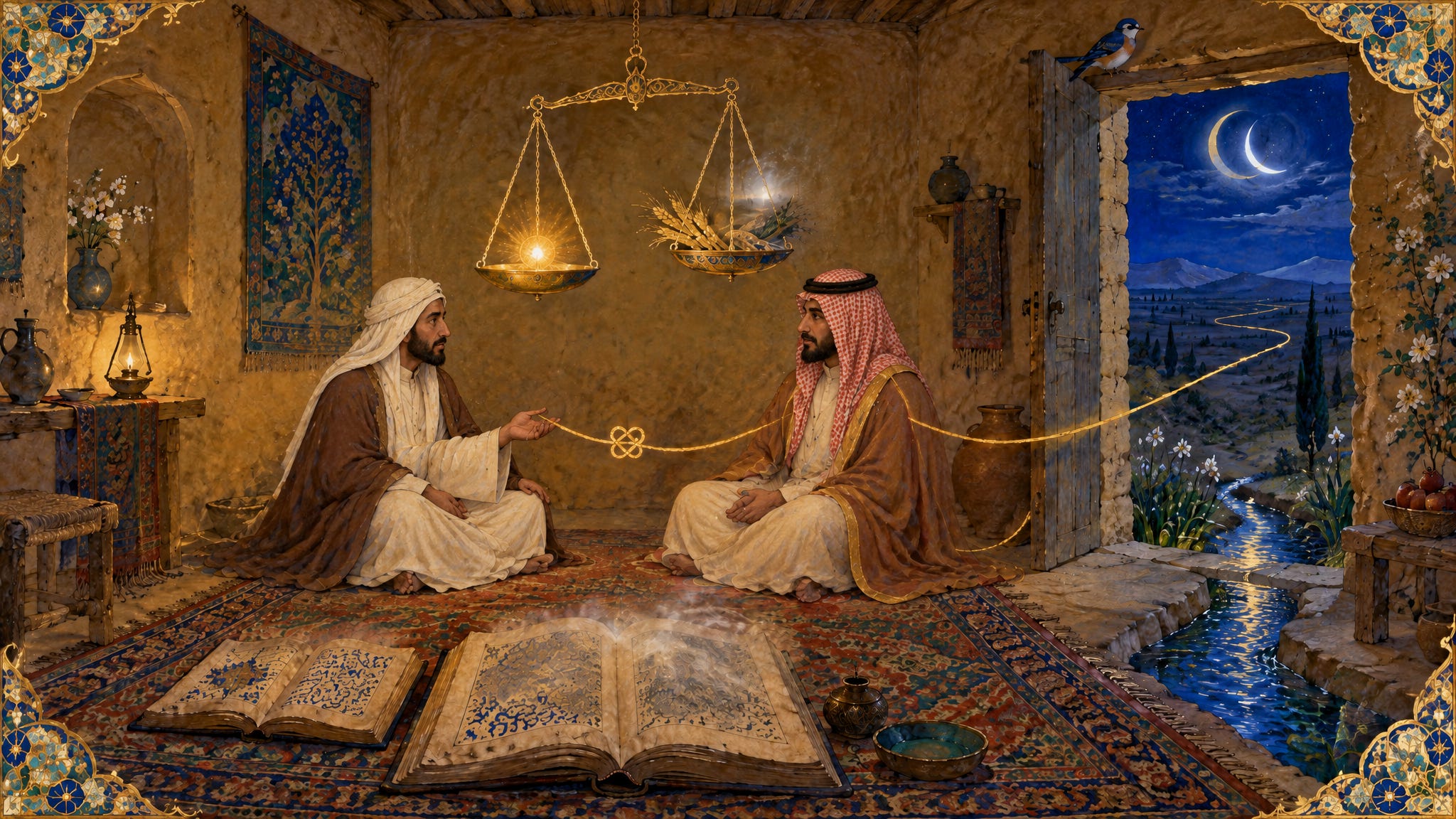
From al-Uyayna the preacher came to al-Dir’iyya, and to its emir.
And here I have to be more careful than anywhere else tonight, because this is the moment everybody thinks they already know.
The movement has two great chroniclers, and they do not tell this the same way.
The first — the one who lived in the preacher’s own time — records protection, and a covenant, and nothing more.
The second, Ibn Bishr, the later chronicler, records more.
I am going to give you his version, and I am going to give it to you as his, because it is his.
In Ibn Bishr’s account, the preacher set the word of the oneness of God before the emir as the road to rule.
And the emir had a condition.
He took from the people of al-Dir’iyya the kind of levy the rulers of the towns took from their subjects, and he asked that it be left alone.
And the preacher agreed.
Now I am going to give you the chronicler’s exact turn, because a summary of it once dropped the end, and the end matters.
The preacher agreed,
hoping that God would recompense him from the spoils with more than that, so that he would give it up out of desire for what is with God.
And, says the chronicler, so it was.
إلا أن محمد بن سعود شرط في مبايعته للشيخ أن لا يتعرضه فيما يأخذه من أهل الدرعية مثل الذي كان .. يأخذه رؤساء البلدان على رعاياهم ، فأجابه الشيخ على ذلك رجاء أن يخلف الله عليه من الغنيمة أكثر من ذلك ، فيتركه رغبة فيما عند الله سبحانه. فكان الأمر كذلك ووسع الله عليهم في أسرع ما يكون
“Except that Muhammad ibn Saud made it a condition of his pledge to the Shaykh that he would not interfere with what he took from the people of al-Dir’iyya, the like of what the rulers of the towns used to take from their subjects. The Shaykh agreed to that, hoping that God would recompense him from the spoils with more than that, so that he would give it up out of desire for what is with God, glory be to Him. And so it was: God gave them plenty, as quickly as could be.”
— Uthman ibn Bishr, ʿUnwan al-Majd fi Tarikh Najd, Volume 1, pages 42–43
فلما سمع بذلك الأمير محمد بن سعود أسكنه الله دار الخلود ، قام من فوره مسرعا إليه ومعه إخوته ثنيان ومشاري ، فأتاه في بيت أحمد بن سويلم فسلم عليه وبادره بالقبول والتقبيل ، وأبدى له غاية الإكرام والتبجيل ، وأخبره أنه يمنعه بما يمنع به نساءه وأولاده من جميع من عاداه وكاده ، إلا أنه طلب من الشيخ رحمه الله العهد والميثاق أن لا يرحل عن بلده إلى سائر الآفاق ،
“And when the emir Muhammad ibn Saud — God settle him in the abode of eternity — heard of it, he rose at once and hurried to him, with his brothers Thunayyan and Mishari, and came to him in the house of Ahmad ibn Suwaylim. He greeted him, and was quick to receive him and to kiss him, and showed him the utmost honour and reverence, and told him that he would protect him as he protected his own women and children from all who showed him enmity or plotted against him — except that he asked of the Shaykh, God have mercy on him, a covenant and pledge that he would not leave his town for other lands.”
— the first chronicler, for the protection and the covenant alone: Husayn ibn Ghannam, Rawdat al-Afkar wa’l-Afham (1949 edition), part 2, page 3
Listen to both halves of that.
The preacher’s hope, as the chronicler tells it, was that the emir would one day give up his levy for God’s sake.
That is a pious hope, and I am not going to take it away from him.
And the means by which it was expected to come about was the spoils of war.
The historians who have studied it tell the exchange the same way — booty in place of the tax.
Madawi al-Rasheed has the preacher promise wealth, in the form of zakat and expansion under his religious guidance.
And one of them, Michael Crawford, calls the single dramatic meeting a later legend, shaped by the times of the man who wrote it down.
I give you that as well.
The year was around 1744, or the year after.
I will not be more precise than the page allows.
“The reformer agreed to the first condition, but as for the second, he replied that God might compensate the amir with booty and legitimate taxes greater than the taxes on harvests.”
— David Commins, The Wahhabi Mission and Saudi Arabia (London: I.B. Tauris, 2006), page 19
“More specifically, Muhammad ibn ʿAbd al-Wahhab promised him wealth, in the form of zakat and expansion under his religious guidance.”
— Madawi al-Rasheed, A History of Saudi Arabia, page 17
“We may infer that the bond between shaykh and ruler developed more slowly and less dramatically than Ibn Bishr described, and was only later embodied in the legend of one decisive, resonant encounter.”
— Michael Crawford, Ibn ʿAbd al-Wahhab (Oneworld, 2014), chapter 3
Now let me put the test from Siffin to it — quietly, without raising my voice.
A word of truth: the oneness of God.
Nobody in this room disputes it.
Everybody in this room would die for it.
And what was it put to work for?
The Family That Carried It
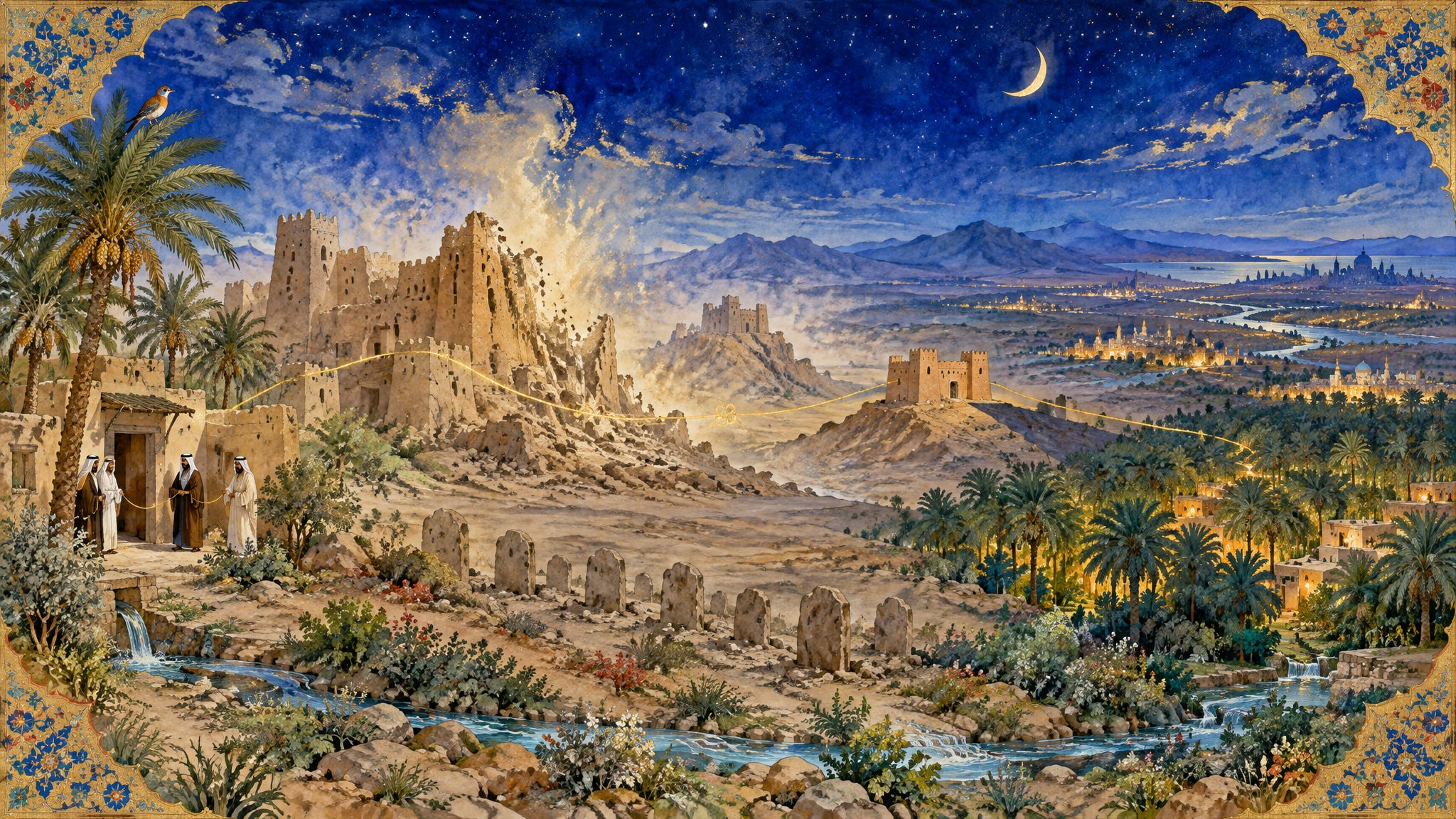
This is where I owe you an introduction, because the family of that emir is part of this story for the next two centuries, and I want you to meet it properly — as history — before we watch it act.
The family is the Al Saud.
Its origins: an oasis family, with no great tribal confederation behind it and no great wealth.
Madawi al-Rasheed dates the change in its fortunes to the moment it took up the movement.
Its religious orientation, in this period, is the agreement you have just heard.
The historians date it to 1744.
Its stance towards the graves — and so towards the shrines of the Household — she gives in one sentence:
“According to Wahhabi teachings, graves should remain unmarked to discourage later visits and veneration by Muslims.”
— Madawi al-Rasheed, A History of Saudi Arabia, page 20
Its impact on our own community, in its own century — one sentence, and only history.
She records that the Shi’a of al-Hasa, in the east of the peninsula, suffered repression throughout the eighteenth century at the movement’s hands, and that it counted them the very type of the people of innovation.
And the shape of the family’s rule is three states.
The first, beginning in 1744, ended by force at al-Dir’iyya itself, on the 11th of September 1818.
The second rose in 1824 and fell in 1891.
The third began when the family took Riyadh in 1902, and became the kingdom proclaimed in 1932.
“The fortunes of the Al Saʿud began to change with their adoption of the Wahhabi movement, associated with the reformer Muhammad ibn ʿAbd al-Wahhab (1703–92).”
“The majority of the peasantry consisted of Shiʿa Muslims, a minority among a Sunni majority. They had suffered repression throughout the eighteenth century at the hands of the Wahhabis, who regarded them as the epitome of ahl al-bidaʿ (al-Ḥasan 1994; Doughty 1979; Wallin 1854).”
“The Saʿudis surrendered on 11 September 1818 after the total destruction of their capital and its fortifications.”
— Madawi al-Rasheed, A History of Saudi Arabia: the family’s fortunes, page 15; al-Hasa, page 33; the end of the first state, page 22; the three states, pages 14–17, 20, 22, 25, 33, 38, 68
I am telling you the end of the first state here, and only here: it ended by force, in the place where it began.
And let me say plainly what I am doing and what I am not.
I am introducing the history of a ruling family.
I am not talking about anybody alive.
And I am not talking about a people.
A family is not a people, a dynasty is not the Sunni world, and the movement is not the religion.
The Story We Tell, and Why I Will Not Tell It

There is a story that our own community tells about where all of this came from.
Many of you have heard it.
Some of you were given it as fact.
It is the memoir of a British spy, who is supposed to have found the preacher as a young man, flattered him, and shaped him.
It is a forgery.
Hamid Algar, in a critical study of this movement published in 2002, sets out the marks of forgery in a long note.
They are simple ones.
The memoir exists only in Arabic, said to be translated by a doctor known only by his initials; the one English version was translated from the Arabic.
Its Englishman keeps his dates by the Hijri calendar.
And he speaks of nationalism, and of birth control, long before anybody spoke of either.
Algar is no friend of the movement.
And he says something else that I want you to hear.
He wishes the answering of the movement had been left to scholars — and as his example, he names Shaykh Ja’far Kashif al-Ghita’ of Najaf.
“‘Mr. Hempher’, it seems, so thoroughly assimilated his role as undercover agent that he used the Hijri calendar in preference to the Christian.”
“He would have done better to leave the task of refuting Wahhabism to scholars such as Shaykh Ja‘far Kashif al-Ghita’, from whose treatise an extract is included at the end of this essay.”
— Hamid Algar, Wahhabism: A Critical Essay (Oneonta, NY: Islamic Publications International, 2002), note 30, pages 38–39
So I will not tell that story.
We do not need a spy.
We do not need a villain from outside to explain what happened inside.
The true story is enough.
And a community that tells stories it cannot prove, about people it does not like, has lost the right to complain when stories are told about it.
Lessons for Our Time
Lesson One — Test the Use, Not the Slogan. And Never the Heart.
Go back to the five words from Siffin.
A word of truth by which falsehood is intended.
That is the test, and I want you to notice how narrow it is.
It judges the use a word is put to.
It does not judge the word — the word was true.
And it does not judge the heart of the man who said it.
What was in a man’s heart is God’s to know, and we said last week that it is not ours.
And it cuts our way too.
A slogan of ours — a chant, a banner, a verse on a wall — is tested in exactly the same way.
A true word, put to the wrong work, is no safer in our mouths than in anybody else’s.
Now, where does this kind of going wrong come from?
The Qur’an tells us where the danger sits.
When Iblis — Satan — was cast out, he said to God:
قَالَ فَبِمَآ أَغۡوَيۡتَنِي لَأَقۡعُدَنَّ لَهُمۡ صِرَٰطَكَ ٱلۡمُسۡتَقِيمَ
“He said: Because You have led me astray, I will surely sit in wait for them on Your straight path.”
— Qur’an, Surah al-A’raf (the Chapter of the Heights) #7, Verse 16
On Your straight path.
Not on the side roads.
The one who is already on a side road needs no attention at all.
The enemy sits on the main road — where the people of real devotion are walking — and he confuses, and he manipulates, and he misleads the ones who are on it.
Which means two things at once.
Going wrong in this way is no insult to anybody’s sincerity.
And sincerity, on its own, is no protection.
And you have already heard tonight how it is done.
A true text is read in part, and made to speak on its own — when the Commander of the Faithful has already told us that the Qur’an does not speak by itself, and that it is men who speak for it.
And then a group becomes sure that it alone is right.
That last step is the most dangerous one of all.
And the Commander of the Faithful drew the line himself — about the Khawarij, the very men who had raised that slogan against him:
لاَ تَقْتُلُوا الْخَوَارِجَ بَعْدِي، فَلَيْسَ مَنْ طَلَبَ الْحَقَّ فَأَخْطَأَهُ، كَمَنْ طَلَبَ الْبَاطِلَ فَأَدْرَكَهُ.
“Do not kill the Khawarij after me; for one who sought the truth and missed it is not like one who sought falsehood and found it.”
— Imam Ali ibn Abi Talib, the Commander of the Faithful, peace and blessings be upon him; Nahj al-Balagha, Sermon 61
He makes the distinction.
I am not going to make it for him about anyone else.
I am not going to tell you who sought the truth and missed it, and who did not.
That is not mine to know, and it is not yours.
You heard this last week, and I want you to hear it again:
“Two men can stand at the same grave, on the same afternoon, and do the identical thing with their hands and their mouths — and for one of them it is worship, and for the other it is not.”
— from this majlis, last week: The Architecture of Guidance, Part 16, Can It Become That?
So we do not judge the man at the grave.
And we do not judge the man who came to level it either.
Their link to God is God’s.
We judge what the word was used for — and that is all we judge.
Three weeks ago I said something about the person who repeats this charge to you, and I meant it:
“Somebody gave it to them in three sentences, the same way somebody might have given it to you, and it felt like defending God, which is not a contemptible thing to want to do.”
— from this majlis, three weeks ago: The Architecture of Guidance, Part 14, Is This Idol Worship?
Answer the argument.
Leave the man alone.
Lesson Two — Religion Is Not the Fault
There is a lesson some people would like you to draw from tonight, and I want to refuse it out loud.
The lesson is:
keep religion out of public life.
Look what happens when a preacher and a ruler shake hands.
No.
This whole series is walking the other way — towards the authority of the scholar, and towards the authority of the just jurist in the time of the Imam’s absence.
I am not going to stand here and tell you that religion in public life is the problem, and then come back in a few weeks and tell you the opposite.
The fault is narrower than that, and much more precise.
The preacher himself names it, in another of his books, Kashf al-Shubuhat, the Removal of the Doubts.
He takes the step from the people the Companions fought to the people of his own day.
Banu Hanifa, he says, testified that there is no god but God and that Muhammad is His messenger, and gave the call to prayer, and prayed; and because they raised a man to the rank of a prophet, they became unbelievers, their property and their blood lawful, and neither the testimonies nor the prayer availed them.
So what, he asks, of the one who raises a saint, or a Companion, or a prophet, to the rank of the Lord of the heavens and the earth?
In this book, that is what asking the righteous to intercede amounts to.
ويقال أيضاً: هؤلاء أصحاب رسول الله صلى الله عليه وسلم قاتلوا بني حنيفة، وقد أسلموا مع النبي صلى الله عليه وسلم وهم يشهدون أن لا إله إلا الله وأن محمداً رسول الله، ويؤذنون ويصلون. فإن قال: إنهم يقولون: إن مسيلمة نبي، فقل: هذا هو المطلوب، إذا كان من رفع رجلاً إلى رتبة النبي صلى الله عليه وسلم كفر وحل ماله ودمه ولم تنفعه الشهادتان ولا الصلاة، فكيف بمن رفع شمسان أو يوسف، أو صحابياً، أو نبياً إلى مرتبة جبار السموات والأرض سبحان الله ما أعظم شأنه
“And it is also said: these Companions of the Messenger of God (God bless him and grant him peace) fought Banu Hanifa — who had become Muslims with the Prophet (God bless him and grant him peace), and who testified that there is no god but God and that Muhammad is the Messenger of God, and gave the call to prayer, and prayed. And if he says: they say that Musaylima is a prophet — say: that is exactly the point. If the one who raised a man to the rank of the Prophet (God bless him and grant him peace) became an unbeliever, and his property and his blood became lawful, and neither the two testimonies nor the prayer availed him — then what of the one who raises Shamsan, or Yusuf, or a Companion, or a prophet, to the rank of the Compeller of the heavens and the earth? Glory be to God, how great is His majesty!”
— Muhammad ibn Abd al-Wahhab, Kashf al-Shubuhat, pages 39–40
That is the line.
Not religion.
Not public life.
A verdict of unbelief that makes a Muslim’s blood and property lawful — and then an army to carry it out.
Religion is not the fault.
That verdict is.
What Their Own Historian Wrote Down
Karbala
In the month of Dhu al-Qa’da, in the year 1216 of the hijra — the spring of 1802 — the movement’s forces came to Karbala.
I am going to tell you what happened there from one source only, and it is not ours.
It is Ibn Bishr, the movement’s own chronicler.
Everything in the next few sentences is from his pages.
They took the town by force.
They killed most of its people, in the markets and in the houses — about two thousand men, he says.
They pulled down the dome over the grave of Imam Husayn, peace and blessings be upon him.
They took what was there: the jewelled grille around the grave, the money, the weapons, the gold, the silver, the precious copies of the Qur’an.
And then the spoils were gathered together, the fifth was set aside, and the rest was divided as ghanima — as the spoils of war.
وذلك في ذي القعدة فحشد عليها المسلمون، وتسوروا جدرانها ودخلوها عنوة، وقتلوا غالب أهلها في الأسواق والبيوت، وهدموا القبة الموضوعة بزعم من اعتقد فيها على قبر الحسين. وأخذوا ما في القبة وما حولها، وأخذوا النصيبة التي وضعوها على القبر، وكانت مرصوفة بالزمرد والياقوت والجواهر، وأخذوا جميع ما وجدوا في البلد من الأموال والسلاح واللباس والفرش والذهب والفضة والمصاحف الثمينة وغير ذلك مما يعجز عنه الحصر، ولم يلبثوا فيها إلا ضحوة وخرجوا منها قرب الظهر بجميع تلك الأموال وقتل من أهلها قريب ألفا رجل. ثم إن سعود ارتحل منها على الماء المعروف بالأبيض، فجمع الغنائم وعزل أخماسها وقسم باقيها على المسلمين غنيمة، للراجل سهم وللفارس سهمان.
“That was in Dhu al-Qa’da. The Muslims massed against it, scaled its walls and entered it by force, and killed most of its people in the markets and the houses, and demolished the dome placed — as those who believe in it claim — over the grave of al-Husayn. And they took what was in the dome and around it, and took the grille they had placed over the grave, which was set with emeralds, rubies and jewels; and they took everything they found in the town — money, weapons, clothing, furnishings, gold, silver, precious copies of the Qur’an, and more than can be counted. They stayed in it only until mid-morning, and left it near noon with all that wealth; and nearly two thousand of its men were killed. Then Saud moved from there to the water known as al-Abyad, and gathered the spoils, set aside their fifths, and divided the rest among the Muslims as ghanima: one share for the man on foot, and two for the horseman.”
— Uthman ibn Bishr, ʿUnwan al-Majd fi Tarikh Najd, Volume 1, pages 257–258
Now notice what I have not done.
I have not added to his number.
Another witness gives a much larger one; I am giving you his.
Another history puts all of this a year earlier; I am giving you his month.
And I have said nothing about women or children, because the European traveller who wrote about it says they were spared, and I am not going to say otherwise.
We do not have to prove any of it.
Their own historian wrote it down.
And I know what this does to a room like this one.
Karbala is not a place on a map to us.
It is the place.
So I am going to ask you to do something very hard: to hear it flat.
Not to perform anything.
Not to let it harden into something you carry out of here — because in a few minutes I am going to read you what the Commander of the Faithful told his own men to do with exactly this feeling.
Mecca, Then Medina
A year after Karbala, the movement was in the holy cities.
And for what happened there, I want a witness who wrote in English: a Swiss traveller who was in Mecca in 1814, and in Medina early in 1815 — about a decade after the events — and who wrote it all down, in two books later published in London.
Mecca was taken on a Saturday, the 30th of April 1803 — the 8th of Muharram, 1218.
That date comes from a letter written by the preacher’s son, who was with the army.
It is the modern editor of their chronicle who gives it, in his note; and he prefers it to the chronicler’s own telling, which would put the entry a little earlier, at the very end of 1217.
وما ذكره عبد الله ابن الشيخ محمد بن عبد الوهاب في هذه الرسالة أن دخول الأمير سعود ابن عبد العزيز مكة كان في ثامن شهر محرم سنة (١٢١٨ هـ) هو الحقيقة والصواب لأنه كان مع الأمير سعود في هذه الغزوة، وأما المؤلف الشيخ عثمان بن عبد الله بن بشر فظاهر سياق كلامه وما ذكره يفيد أن دخول الأمير سعود لمكة كان آخر شهر ذي الحجة سنة (١٢١٧ هـ) والصواب ما ذكر في خلاصة الكلام وفي تأريخ إفادة الأنام وفي رسالة الشيخ عبد الله بن محمد بن عبد الوهاب الآنفة الذكر انتهى.
“And what Abd Allah, son of Shaykh Muhammad ibn Abd al-Wahhab, mentions in this letter — that the emir Saud ibn Abd al-Aziz entered Mecca on the eighth of Muharram, 1218 — is the truth and what is correct, because he was with the emir Saud on this campaign. As for the author, Shaykh Uthman ibn Abd Allah ibn Bishr, the plain sense of his account, and of what he mentions, indicates that the emir Saud entered Mecca at the end of the month of Dhu al-Hijja, 1217; and the correct date is the one given in Khulasat al-Kalam, and in Tarikh Ifadat al-Anam, and in the letter of Shaykh Abd Allah ibn Muhammad ibn Abd al-Wahhab mentioned above. End of quotation.”
— Ibn Bishr, ʿUnwan al-Majd, Volume 1, page 262, the editor’s note
At the great cemetery of Mecca, al-Ma’la, lies Sayyedah Khadija, peace be upon her, the first wife of the Prophet and the mother of Sayyedah Fatimah.
Here is the Swiss traveller, at her grave:
“Kaber Setna Khadidje: the tomb of Khadidje, the wife of Mohammed, the dome of which was broken down by the Wahabys, and is not yet rebuilt; it is regularly visited by hadjys, especially on Friday mornings.”
— John Lewis Burckhardt, Travels in Arabia (London, 1829), Volume I, page 315
Broken, and not yet rebuilt.
And still visited — every Friday morning.
Hold on to that last line; we will need it before the night is out.
And because I promised you the fair parts: the same witness reports that they broke the domes but left the graves themselves untouched.
“…never touched the tombs themselves, and every where respected the remains of the dead.”
— John Lewis Burckhardt, Travels in Arabia (London, 1829), Volume I, page 317; the domes, in the same sentence, narrated
And their own chronicler adds that when Mecca was taken, its people were given safe-conduct, and a great deal was given out among them in alms and gifts.
فأحرموا منها بعمرة، ودخل سعود مكة واستولى عليها، وأعطى أهلها الأمان وبذل فيها من الصدقات والعطاء لأهلها شيئاً كثيراً.
“And they entered ihram there for an umra; and Saud entered Mecca and took possession of it, and gave its people safe-conduct, and gave out in it, in alms and gifts to its people, a great deal.”
— Ibn Bishr, ʿUnwan al-Majd, Volume 1, page 263
Then Medina.
It was taken in 1804 or 1805 — the sources do not agree, so I give you both — and it was taken without fighting.
An Egyptian chronicler of the time, al-Jabarti, records that they razed the domes over all the graves except the one over the tomb of the Prophet.
Their own chronicler, Ibn Bishr, says the same in his own words:
all the domes that had been placed over the graves and the shrines.
Al-Baqi’ was among them — though neither of them names it.
“But in al-Jabarti’s account, the Wahhabis took Medina without any fighting and then prohibited things forbidden by shari’a: they banned tobacco in the marketplace (implying that they tolerated private consumption) and razed the domes over all graves except for that over the tomb of the Prophet.”
— al-Jabarti, through David Commins, The Wahhabi Mission and Saudi Arabia, page 31
وفي أول هذه السنة قبل مبايعة غالب بايع أهل المدينة المنورة سعوداً على دين الله ورسوله والسمع والطاعة، وهدمت جميع القباب التي وضعها على القبور والمشاهد
“And at the beginning of this year, before Ghalib’s pledge, the people of Medina the Illuminated pledged allegiance to Saud on the religion of God and His Messenger, and on hearing and obeying; and all the domes that had been placed over the graves and the shrines were demolished.”
— Uthman ibn Bishr, ʿUnwan al-Majd fi Tarikh Najd, Volume 1, page 288
And the same Egyptian chronicler records two things more.
They abolished illegal taxes that the old rulers of Mecca had collected, down to special dues for burying the dead.
And in general, he says, the new order brought greater security and prosperity to the holy cities.
“Al-Jabarti drew an unflattering comparison to the Meccan sharifs when he mentioned that the Wahhabis abolished illegal taxes that the sharifs had collected, like special dues for the performance of burials. In general, the new regime brought greater security and prosperity to the Holy Cities.”
— al-Jabarti, through David Commins, The Wahhabi Mission and Saudi Arabia, page 31
The Prophet’s own dome was ordered down.
They tried, and they gave it up.
The traveller records that too.
And what was taken from the Prophet’s chamber, I am going to tell you exactly as the traveller tells it, and not one word more.
The town’s own strongman seized the treasure first.
Then the emir stripped the Prophet’s tomb of the valuables still in it.
And then the sentence that carries the fair half, which I will give you whole: the tomb itself was left uninjured — but the emir regarded as idolatrous any visits, prayers or exclamations addressed to it, and so he prohibited them.
And it is false, he adds, that they abolished the pilgrimage to Medina.
“Saoud had given orders that it should be demolished; but its solid structure defied the rude efforts of his soldiers; and after several of them had been killed by falling from the dome, the attempt was given up.”
“The tomb was left uninjured; but Saoud regarded as idolatrous any visits, prayers, or exclamations, addressed to it, and therefore he prohibited them. But it is false to assert, as the Turks have done, that the pilgrimage to Medinah was abolished by the Wahabys.”
— John Lewis Burckhardt, Notes on the Bedouins and Wahábys (London, 1831), Volume 2: the dome, page 110; the treasure, pages 198–199, narrated; the tomb and the visit, page 200
The tomb was left uninjured.
The visit was forbidden.
Both halves are true, and you get both of them.
And one more fair line, which travels with the facts: in Medina, the traveller says, private property was not plundered — though the town’s supplies had been cut off, Ibn Bishr tells us, by years of blockade before it gave its pledge.
“The usual tribute was required, but private property was not plundered.”
— John Lewis Burckhardt, Notes on the Bedouins and Wahábys (London, 1831), Volume 2, page 198
وتبعهم أهل قبا ومن حولهم وضيقوا على أهل المدينة وقطعوا عنهم السوابل، وأقاموا على ذلك سنين.
“And the people of Quba and those around them followed them, and they pressed the people of Medina and cut off the roads to them, and kept at that for years.”
— Ibn Bishr, ʿUnwan al-Majd, Volume 1, page 288
Our Own Authority First
Before I bring you a single Sunni voice against what was done, I want our own house to speak first.
That is the rule of this majlis and it does not bend tonight.
You heard part of this sermon of the Commander of the Faithful last week — the lines about the two kinds of people who would be destroyed over him.
This is the other part.
It is addressed to the Khawarij, and it is about the exact act we are talking about tonight: declaring the whole community unbelievers.
فإنْ أَبَيْتُمْ إِلاَّ أَنْ تَزْعُمُوا أَنِّي أَخْطَأْتُ وَضَلَلْتُ، فَلِمَ تُضَلِّلونُ عَامَّةَ أُمَّةِ مُحَمَّد(صلى الله عليه وآله) بِضَلاَلِي، وَتَأْخُذُونَهُمْ بِخَطَئِي، وَتُكَفِّرُونَهُمْ بِذُنُوِبي! سُيُوفُكُمْ عَلَى عَوَاتِقِكُمْ تَضَعُونَهَا مَوَاضِعَ البَراءةِ وَالسُّقْمِ، وَتَخْلِطُونَ مَنْ أَذْنَبَ بِمَنْ لَمْ يُذْنِبْ. وَقَدْ عَلِمْتُمْ أَنَّ رَسُولَ اللهِ(صلى الله عليه وآله) رَجَمَ الزَّانِيَ [الْـمُحْصَنَ] ثُمَّ صَلَّى عَلَيْهِ ثُمَّ وَرَّثَهُ أَهْلَهُ، وَقَتَلَ الْقَاتِلَ وَوَرَّثَ مِيرَاثَهُ أَهْلَهُ، وَقَطَعَ السَّارِقَ وَجَلَدَ الزَّانِيَ غَيْرَ الْمحْصَنِ ثُمَّ قَسَمَ عَلَيْهِمَا مِنَ الْفَيْءِ وَنَكَحَا الْمُسْلِمَاتِ; فَأَخَذَهُمْ رَسُولُ اللهِ (صلى الله عليه وآله) بِذُنُوبِهمْ، وَأَقَامَ حَقَّ اللهِ فِيهمْ، وَلَمْ يَمْنَعْهُمْ سَهْمَهُمْ مِنَ الاْسْلاَمِ، وَلَمْ يُخْرِجْ أَسْمَاءَهُمْ مِنْ بَيْنِ أَهْلِهِ.
“And if you insist on claiming that I have erred and gone astray, why do you hold the whole community of Muhammad (God bless him and his family) astray for my straying, and take them to task for my error, and declare them unbelievers for my sins? Your swords are on your shoulders: you bring them down on the sound and the sick alike, and you mix the one who has sinned with the one who has not. And you know that the Messenger of God (God bless him and his family) stoned the [married] adulterer, then prayed over him, then let his family inherit from him; and he killed the killer, and let his family inherit what he left; and he cut off the thief’s hand, and flogged the unmarried adulterer, then gave them both their share of the spoils, and they married Muslim women. So the Messenger of God (God bless him and his family) took them to task for their sins, and established God’s right in them — and he did not deny them their share in Islam, nor remove their names from among its people.”
— Imam Ali ibn Abi Talib, the Commander of the Faithful, peace and blessings be upon him; Nahj al-Balagha, Sermon 127
Punished — and still prayed over.
Still inherited from.
Still married.
Still named among the people of Islam.
That is the Prophet’s own way with a Muslim who has sinned, in the mouth of the Commander of the Faithful.
A sin was a sin and the law was the law — and the man stayed a Muslim.
That is our authority, and it comes first.
And Then the Sunni Witnesses
Now the Sunni witnesses — and I want them to say what they say, and not one word more.
The first is the most remarkable, because of who he was.
It is the preacher’s own brother, writing in his brother’s own lifetime.
He sets out the qualities a scholar must have before he can give a ruling of his own, and then he describes a man who will not put his words before the people of knowledge, but obliges everybody to take his word and his understanding.
Whoever opposes him, he says, is to him an unbeliever — and yet he has not one of the qualities of the people of ijtihad: no, by God, not a tenth of one.
فإنّ اليوم أُبتلى الناس بمن ينتسب إلى الكتاب والسنة، ويستنبط مِن علومهما، ولا يبالي من خالفه، وإذا طلبت منه أن يعرض كلامه على أهل العلم لم يفعل بل يوجب على الناس الأخذ بقوله وبمفهومه، ومن خالفه فهو عنده كافر هذا، وهو لم يكن فيه خصلة واحدة من خصال أهل الإجتهاد، ولا والله عشر واحدة،
“For today people have been tried by one who traces himself to the Book and the Sunna, and draws out of their sciences, and does not care who differs from him; and if you ask him to put his words before the people of knowledge, he will not — rather, he obliges people to take his word and his understanding, and whoever differs from him is, to him, an unbeliever. This — and he has not one of the qualities of the people of ijtihad; no, by God, not a tenth of one.”
— Sulayman ibn Abd al-Wahhab, al-Sawa’iq al-Ilahiyya fi’l-Radd ʿala al-Wahhabiyya, ed. al-Sarawi (Beirut, 1998), page 37
And then he closes, not with an insult, but with a prayer:
اللهمّ إهد الضّال وردّه إلى الحقّ.
“O God, guide the one astray, and bring him back to the truth.”
— Sulayman ibn Abd al-Wahhab, al-Sawa’iq al-Ilahiyya, page 37
His own brother.
A prayer for his guidance.
The second is Ibn Abidin, a Hanafi jurist of Damascus, writing after the first state had fallen.
In his great commentary on Hanafi law, he counts the followers of the movement under the definition of the Khawarij.
They held, he says, that they alone were the Muslims, and that whoever differed from them was a mushrik (polytheist) — and so they made lawful the killing of the people of the Sunna, and of their scholars.
(قولُهُ: ويُكفّرونَ أصحابَ نبيِّنا صلى الله عليه وسلم) عَلِمْتَ أنَّ هذا غيرُ شرطٍ في مُسَمَّى الخوارج، بل هو بيانٌ لمَن خرَجوا على سيدِنا “عليّ” رضيَ الله تعالى عنهُ، وإلَّا فيكفي فيهم اعتقادُهم كُفْرَ مَن خرَجوا عليهِ كما وَقَعَ في زمانِنا في أتباعِ “عبدِ الوهابِ” الَّذين خرَجوا مِن نَجْدٍ، وتغلَّبوا على الحَرَمينِ وكانوا يَنْتَحِلونَ مذهبَ الحنابلةِ، لكنَّهم اعتقدوا أنَّهم هم المسلمونَ وأنَّ مَن خالفَ اعتقادَهم مُشرِكونَ، واستباحوا بذلكَ قتلَ أهلِ السُّنةِ وقَتْلَ علمائِهم حتَّى كَسَرَ اللهُ تعالى شَوْكَتَهم وخَرَّبَ بلادَهم وظَفِرَ بهم عساكرُ المسلمينَ عامَ ثلاثةٍ وثلاثينَ ومائتينِ وألفٍ.
“(His words: ‘and they declare the Companions of our Prophet, God bless him and grant him peace, unbelievers’.) You have learned that this is not a condition for being named among the Khawarij; it only describes those who rose against our master Ali, may God the Exalted be pleased with him. Otherwise it is enough, in their case, that they believe those they rose against to be unbelievers — as happened in our own time with the followers of Abd al-Wahhab, who came out of Najd and took control of the two Sanctuaries, and who professed the school of the Hanbalis; but they believed that they alone were the Muslims, and that whoever differed from their belief was a mushrik, and on that ground they made lawful the killing of the people of the Sunna and the killing of their scholars — until God the Exalted broke their power, laid waste their lands, and gave the armies of the Muslims victory over them, in the year 1233.”
— Ibn Abidin, Radd al-Muhtar, Volume 13, page 135
I want to be careful with him in two ways.
The phrase the Khawarij of our time, which you may see quoted, is a heading his printer added; it is not his.
And his own sentence ends on the victory of a sword, which is not the note I want to close anything on.
His modern editors added a footnote warning against declaring anybody an unbeliever in either direction.
I know it is there, and I am telling you it is there.
Last week you heard Imam al-Rida speak of the Khawarij by one of their old names.
It is the same men he meant — not the same word.
Our House Answered With a Book
And our own house answered, in the movement’s own lifetime.
A marja’ of Najaf — Shaykh Ja’far Kashif al-Ghita’, who died in 1813, while the first state still stood — received a letter from one of the emirs of Najd.
And he answered it with a book.
Listen to how he begins.
The letter, he says, is words like strung pearls.
He tells the emir that he read it alone, and fairly — wary, he says, of his own leaning towards the ways of his fathers.
He asks the emir to read his reply line by line.
And he hopes that there is no quarrel between them.
أمّا بعد، فقد ورد إلى المقصّر مع ربّه التائب إليه من ذنبه. الطالب من الله السداد جعفر أقل طلبة أهل بغداد كتاب كريم مشتمل على كلمات كالدر النظيم ممن لم يزل بالمعروف آمراً وعن المنكر ناهياً زاجراً الآمر بعبادة المعبود الشيخ عبد العزيز بن سعود
“As for what follows: there has come to the one who falls short before his Lord, who turns to Him in repentance from his sin, who asks God for right guidance — Ja’far, the least of the students among the people of Baghdad — a noble letter, containing words like strung pearls, from one who has never ceased to command the good and to forbid and restrain from the evil, who commands the worship of the One who is worshipped: Shaykh Abd al-Aziz ibn Saud.”
فلما نظرته وتدبّرته وتأملته وتصوّرته خلوت في زاوية من الدار وتصفحته تصفح الإنصاف والاعتبار، وقمت متهماً لنفسي بالميل إلى العصبية والعناد والركون إلى ما عليه الآباء والأجداد.
“And when I had looked at it, pondered it, reflected on it and grasped it, I withdrew to a corner of the house and went through it as one reads in fairness and to learn, holding myself suspect of leaning towards partisanship and obstinacy, and towards resting on what the fathers and forefathers held.”
فأقسم عليك بمن جعلك متبوعاً بعد أن كنت تابعاً ومطاعاً بعد أن كنت لغيرك مطيعاً سامعا واعزّك بعدما كنت ذليلاً وكثر جمعك بعدما كان نزراً قليلاً أن تنظر ما رسمته سطراً سطرا وتمعن في تحقيق ما رقمته نظراً وفكراً متوحّشاً من الناس وقت النظر متحذراً من النفس الأمارة كل الحذر طالبا من الله كشف الحقيقة سالكاً في المناظرة واضح الطريقة فلعله يظهر أنه ليس بيننا نزاع فنحمد الله على الاتفاق والاجتماع
“I adjure you by Him who made you followed after you had been a follower, and obeyed after you had been obedient and listening to others, and gave you might after you had been lowly, and made your company many after it had been few and small: that you look at what I have set down, line by line, and give careful thought to what I have written — keeping apart from people while you read, wary of the soul that commands to evil with every wariness, asking God to uncover the truth, taking the clear road in debate. Perhaps it will become clear that there is no quarrel between us, and we will praise God for agreement and coming together.”
— Shaykh Ja’far Kashif al-Ghita’, Manhaj al-Rashad (Najaf, al-Matbaʿa al-Haydariyya), pages 2–4
The book itself gives no year.
Hamid Algar — the same scholar who sent us to him — dates the exchange to 1795: before Karbala.
“In 1210/1795, some eight years before the Wahhabi sacking of Karbala, Shaykh Ja‘far Kashif al-Ghita’ (d. 1228/1813), one of the leading Shi‘i scholars of the time, addressed to ‘Abd al-‘Aziz b. Muhammad b. Sa‘ud an elegantly and courteously worded treatise entitled Manhaj al-Rashad li man arada ’l-Sadad.”
— Hamid Algar, Wahhabism: A Critical Essay, Appendix C, page 81
That is the register we are trying to speak in tonight.
It is not new.
A marja’ of Najaf practised it two centuries ago, in the movement’s own lifetime, answering a letter — not a sword — with courtesy, and with a book.
Lessons for Our Time
Lesson Three — Nobody Gets to Make This Sunni Against Shi’a
You have just heard the sharpest voices against what was done.
And they were Sunni voices: the preacher’s own brother, in his own lifetime; and a Hanafi jurist of Damascus, after the first state fell.
So let me say this out loud, because somebody in this room needs to hear it said:
I am not giving you this to throw at anybody.
I am giving it to you so that nobody can tell you this is a Shi’a grievance.
Not at a Sunni.
Not at a Shi’a.
Not at anyone.
The movement is not the religion.
And the dynasty is not the Sunni world.
I want to tell you about a conversation I have had more than once — with brothers I love, at a mosque I am honoured to pray in.
Many of our Sunni brothers will tell you that they are Wahhabi.
So I ask them what it means.
And they cannot tell me.
So I ask what they believe, and the conversation always ends up at the graveyard.
Do you visit your parents’ graves?
Of course.
Do you love the Prophet and his Household — and when God honours you with Hajj or Umrah, do you go and greet them?
Of course.
Do you hold the other schools of Islam to be mushrik?
Of course not.
And when I press them on what the word means, the answer I get is:
Well — our mosque takes its prayer times from Saudi, and we start Ramadan when Saudi does.
Is that what it is?
I don’t know.
And these are the same brothers who, when their imam is away — and sometimes when he is standing right there — ask me to lead them in prayer.
They are not what the label says.
They were taught the label.
They are ordinary Hanafi Sunnis, or Shafi’i — good people, devoted people — and nobody ever sat down with them and explained what the word means, or what it once meant.
That is not their failure.
It is a failure of teaching.
People are lost because they have not been taught properly.
So let me say the purpose of tonight as plainly as I can.
It is not to make anybody Shi’a.
That is not our job, and it never has been.
It is to help everybody — them and us — tell a true word from the use it is put to, and to see when they are being confused.
And now I owe you something harder, which our tradition owes its own people: a text of the Commander of the Faithful that is usually either hidden or thrown.
Tonight it will be neither.
It is in his sermons, from the time of the Battle of the Camel, and he is speaking about one of the wives of the Prophet — who is, by the Qur’an’s own word, a mother of the believers.
The sermon opens by calling the people of Basra to hold themselves fast to God.
Then comes what he says about her.
Then he speaks of faith, of the rising of the dead, of the Book of God, and of the trial the Prophet foretold — and of Uhud.
And it ends with a ruling of the Prophet, which I will come to.
Here is what he says about her, whole, without a word taken out:
وَأَمَّا فُلاَنَةُ، فَأَدْرَكَهَا رَأْيُ الْنِّسَاءِ، وَضِغْنٌ غَلاَ فِي صَدْرِهَا كَمِرْجَلِ الْقَيْنِ، وَلَوْ دُعِيَتْ لِتَنَالَ مِنْ غَيْرِي مَا أَتَتْ إِلَيَّ، لَمْ تَفْعَلْ، وَلَهَا بَعْدُ حُرْمَتُهَا الاْولَى، وَالْحِسَابُ عَلَى اللهِ.
“As for a certain woman: the judgement of women overtook her, and a rancour that boiled in her breast like a smith’s cauldron; and had she been called to do to another what she did to me, she would not have done it. And she keeps, after this, her former sanctity; and the reckoning is with God.”
— Imam Ali ibn Abi Talib, the Commander of the Faithful, peace and blessings be upon him; Nahj al-Balagha, Sermon 156
That is hard.
I am not going to pretend it is soft.
So let our own commentator explain it first.
Ibn Maytham al-Bahrani, one of the great commentators of our school on Nahj al-Balagha, says that a certain woman is an allusion to her; that her former sanctity is her sanctity as the wife of the Messenger of God — the very ground on which the Commander of the Faithful held back from her; and that the reckoning is with God means he pardoned her in this world and left the Hereafter to God.
And he adds that the Imam may have said it before she showed her repentance.
Ibn Abi al-Hadid, the great Mu’tazili commentator, reads it the same way — and his school holds that she repented.
وفلانة كناية عن عائشة وإدراك رأي النساء لها في حربه بالبصرة
“And ‘a certain woman’ is an allusion to Aisha; and the judgement of women overtaking her is her war against him at Basra.”
وقوله: ولها بعد حرمتها الأولى. وجه اعتذاره في الكفّ عن أذاها بعد استحقاقها للأذى في نظره، وحرمتها بنكاح رسول الله صلى الله عليه وآله وسلم وكونها زوجة له.
“His words: ‘and she keeps, after this, her former sanctity’. This gives the ground of his excuse for refraining from harming her, after she had come to deserve harm in his view: her sanctity, through her marriage to the Messenger of God (God bless him and his family), and her being his wife.”
وقوله: والحساب على الله. تنبيه على أنه وإن سامحها في الدنيا بما فعلت فإن الله تعالى هو المتولي لحسابها في الآخرة، ولعل هذا الكلام منه عليه السلام قبل إظهارها للتوبة وعلمه بذلك لأنه في معنى إظهار الوعيد لها من الله.
“His words: ‘and the reckoning is with God’. A pointer that, though he pardoned her in this world for what she did, it is God the Exalted who takes charge of her reckoning in the Hereafter. And perhaps these words of his, peace be upon him, came before she showed her repentance, and before he knew of it, since they amount to declaring God’s threat against her.”
— Ibn Maytham al-Bahrani, Sharh Nahj al-Balagha, Volume 3, pages 242 and 244
ولقد عفا الله تعالى عنها، وهي من أهل الجنة عندنا بسابق الوعد، وما صحَّ من أمر التوبة.
“And God the Exalted has pardoned her; and she is of the people of Paradise in our view, by the prior promise, and by what is established of the matter of repentance.”
— Ibn Abi al-Hadid, Sharh Nahj al-Balagha, Volume 9, page 127; his reading of the sermon, pages 126–133, narrated
And the phrase about the judgement of women?
Ayatollah Jawadi Amoli, may God protect him, explains that the Imam’s words about women in his Basra sermons belong to the Camel.
Had that matter not been raised there, he says, the Imam would not have spoken that way about women.
And before God, the only measure is taqwa.
از این شواهد معلوم میشود که راجع به قضیهٴ جنگ جمل و آن حادثه است و اگر جریان عایشه و امثال عایشه در آنجا مطرح نبود، اینطور حضرت درباره زن سخن نمیفرمود.
“From these indications it is clear that it concerns the affair of the Battle of the Camel and that event; and had the matter of Aisha, and of others like her, not been at issue there, the Imam would not have spoken in this way about women.”
— Ayatollah Jawadi Amoli, Tasnim, lesson on Surah al-Zukhruf (30 December 2015), my translation
And then look at what he did — because that is the real commentary on what he said.
After the battle he sent her home to Medina with forty women, turbaned and girded with swords, to guard her.
And when she arrived, she said:
جزى الله ابن أبي طالب خيراً فلقد حفظ فيَّ حرمة رسول الله صلى الله عليه وآله وسلم.
“May God reward the son of Abu Talib well; he kept the sanctity of the Messenger of God (God bless him and his family) in me.”
— Shaykh al-Mufid, al-Jamal, page 221, from al-Waqidi
Her title comes from the Qur’an itself:
ٱلنَّبِيُّ أَوۡلَىٰ بِٱلۡمُؤۡمِنِينَ مِنۡ أَنفُسِهِمۡۖ وَأَزۡوَٰجُهُۥٓ أُمَّهَٰتُهُمۡۗ وَأُوْلُواْ ٱلۡأَرۡحَامِ بَعۡضُهُمۡ أَوۡلَىٰ بِبَعۡضٖ فِي كِتَٰبِ ٱللَّهِ مِنَ ٱلۡمُؤۡمِنِينَ وَٱلۡمُهَٰجِرِينَ إِلَّآ أَن تَفۡعَلُوٓاْ إِلَىٰٓ أَوۡلِيَآئِكُم مَّعۡرُوفٗاۚ كَانَ ذَٰلِكَ فِي ٱلۡكِتَٰبِ مَسۡطُورٗا
“The Prophet is closer to the believers than their own selves, and his wives are their mothers. And those related by blood are closer to one another in the Book of God than the believers and the emigrants — except that you do a kindness to your friends. That is inscribed in the Book.”
— Qur’an, Surah al-Ahzab (the Chapter of the Confederates) #33, Verse 6
Allamah Tabataba’i explains that this motherhood is the duty to revere them, and the bar on marrying them after him.
And a mother is still owed kindness.
Here is my reasoning, and I give it to you as mine: the Qur’an asks it even towards parents who strive to make you associate others with God —
وَإِن جَٰهَدَاكَ عَلَىٰٓ أَن تُشۡرِكَ بِي مَا لَيۡسَ لَكَ بِهِۦ عِلۡمٞ فَلَا تُطِعۡهُمَاۖ وَصَاحِبۡهُمَا فِي ٱلدُّنۡيَا مَعۡرُوفٗاۖ وَٱتَّبِعۡ سَبِيلَ مَنۡ أَنَابَ إِلَيَّۚ ثُمَّ إِلَيَّ مَرۡجِعُكُمۡ فَأُنَبِّئُكُم بِمَا كُنتُمۡ تَعۡمَلُونَ
“But if they strive with you to make you associate with Me that of which you have no knowledge, do not obey them; and keep their company in this world honourably; and follow the way of the one who turns to Me. Then to Me is your return, and I will tell you what you used to do.”
— Qur’an, Surah Luqman (the Chapter of Luqman the Wise) #31, Verse 15
Do not obey them in that.
And keep their company honourably.
Both halves, in one verse.
And now the end of that same sermon — and this is why it belongs in tonight at all.
The Commander of the Faithful remembers what the Prophet told him about the trial that would come after him:
وَقَالَ: «يَا عَلِيُّ، إِنَّ الْقَوْمَ سَيُفْتَنُونَ بِأَمْوَالِهمْ، وَيَمُنُّونَ بِدِينِهِم عَلَى رَبِّهِمْ، وَيَتَمَنَّوْنَ رَحْمَتَهُ، وَيَأْمَنُونَ سَطْوَتَهُ، وَيَسْتَحِلُّونَ حَرَامَهُ بِالشُّبُهَاتِ الْكَاذِبَةِ، وَالاْهْوَاءِ السَّاهِيَةِ، فَيَسْتَحِلُّونَ الْخَمْرَ بِالنَّبِيذِ، وَالسُّحْتَ بِالْهَدِيَّةِ، وَالرِّبَا بِالْبَيْعِ». قُلْتُ: يَا رَسُولَ اللهِ، فَبِأَيِّ الْمَنَازِلِ أُنْزِلُهُمْ عِنْدَ ذلِكَ؟ أَبِمَنْزِلَةِ رِدَّة، أَمْ بِمَنْزِلَةِ فِتْنَة؟ فَقَالَ: «بِمَنْزِلَةِ فِتْنَة».
“And he said: ‘O Ali, the people will be tried through their wealth; they will count their religion a favour to their Lord, and hope for His mercy, and feel safe from His power; and they will make lawful what He has forbidden by false doubts and heedless whims — making wine lawful by calling it date-wine, and unlawful gain by calling it a gift, and usury by calling it trade.’ I said: ‘O Messenger of God, at which station shall I place them then — at the station of apostasy, or at the station of fitna?’ He said: ‘At the station of fitna.’”
— Imam Ali ibn Abi Talib, the Commander of the Faithful, peace and blessings be upon him; Nahj al-Balagha, Sermon 156
Not apostasy.
Fitna — trial, confusion.
Even people who make lawful what God has forbidden, through false doubts, are not to be placed outside Islam.
That is the Prophet’s ruling, carried by the Commander of the Faithful, against everything you heard about the testimonies not protecting anybody.
And one last thing about her, which almost nobody says.
She is buried at al-Baqi’.
And when al-Baqi’ was levelled the second time, the domes over the graves of the wives of the Prophet came down with all the rest.
وتوفيت في سنة سبع وخمسين للهجرة، وعمرها أربع وستون سنة، ودفنت بالبَقيع، في مُلْك معاوية، وصلّى عليها المسلمون ليلاً، وأمّهم أبو هريرة.
“And she died in the year fifty-seven of the hijra, at the age of sixty-four, and was buried at al-Baqi’, in the reign of Mu’awiya; and the Muslims prayed over her at night, and Abu Hurayra led them.”
— Ibn Abi al-Hadid, Sharh Nahj al-Balagha, Volume 9, page 127; the domes over the graves of his wives: Sayyed Muhsin al-Amin, Kashf al-Irtiyab, page 60, quoted in Point 3
The levelling took the graves of people every Muslim honours.
Nobody gets to make this Sunni against Shi’a.
Lesson Four — Describe Their Deeds. Do Not Revile Them.
Karbala, a little while ago.
I asked you to hear it flat.
Here is why.
At Siffin, the Commander of the Faithful heard some of his own men reviling the people of Sham — the army they were fighting, the army that was trying to kill them. And he stopped them:
إِنِّي أَكْرَهُ لَكُمْ أَنْ تَكُونُوا سَبَّابِينَ، وَلكِنَّكُمْ لَوْ وَصَفْتُمْ أَعْمَالَهُمْ، وَذَكَرْتُمْ حَالَهُمْ، كَانَ أَصْوَبَ فِي الْقَوْلِ، وَأَبْلَغَ فِي الْعُذْرِ، وَقُلْتُمْ مَكَانَ سَبِّكُمْ إِيَّاهُمْ: اللَّهُمَّ احْقِنْ دِمَاءَنَا وَدِمَاءَهُمْ، وَأَصْلِحْ ذَاتَ بَيْنِنَا وَبَيْنِهِمْ، وَاهْدِهِمْ مِنْ ضَلاَلَتِهِمْ، حَتَّى يَعْرِفَ الْحَقَّ مَنْ جَهِلَهُ، وَيَرْعَوِيَ عَنِ الْغَيِّ وَالْعُدْوَانِ مَنْ لَهِجَ بِهِ.
“I dislike for you that you should be revilers. But if you were to describe their deeds and mention their condition, that would be more right in speech and more complete as an excuse; and if, in place of your reviling them, you were to say: ‘O God, spare our blood and their blood, set right what is between us and them, and guide them out of their misguidance, so that whoever is ignorant of the truth may come to know it, and whoever is set upon error and aggression may turn back from it.’”
— Imam Ali ibn Abi Talib, the Commander of the Faithful, peace and blessings be upon him; Nahj al-Balagha, Sermon 206
Said to his own men, about an army in the field against him.
And what he gives them is not a better insult.
It is a prayer for their enemies’ guidance.
That is the method of this whole evening.
We have described their deeds — from their own historian, with his page numbers.
And we have not reviled them.
The preacher’s brother prayed
O God, guide the one astray.
Shaykh Ja’far hoped there was
no quarrel between us.
It is one register, and it is his.
The Second Levelling, and What Is Still Being Levelled
The Third State
In 1902 a member of the family took Riyadh, and began what would become the third state.
I will call him by what he did, not by his name: the king who built the present state.
One sentence about where the money came from, because the forgery we refused tonight pretends to tell that story, and the true story is plainer.
In December 1915 he signed a treaty with Britain, and received rifles, twenty thousand pounds, and then five thousand pounds a month, until 1924.
The British Empire is not the British people, any more than a dynasty is a people.
But that is the true story, plainly told — and it is exactly what the forgery distorted.
Then the Hijaz.
Ta’if, in September 1924, plundered for three days.
Mecca, in December 1924.
Medina had surrendered by December 1925.
And on the 8th of January 1926 he was proclaimed king of the Hijaz.
“The town was plundered for three days after which its inhabitants succumbed to Saʿudi rule.”
“His troops entered the holy city on 5 December 1924.”
— Madawi al-Rasheed, A History of Saudi Arabia, pages 38, 40, 43–44; David Commins, The Wahhabi Mission and Saudi Arabia, page 77
The Second Levelling
And now al-Baqi’.
This time it was not a raid.
It was a question, put formally.
The chief judge — I will give you his office and not his name — put a question in five parts to the scholars of Medina.
Is it permitted to build over graves, and to take them as places of worship?
If it is not, must the buildings come down, and prayer at them be stopped?
If a building stands in an endowed cemetery, like al-Baqi’, and keeps people from the ground it covers, is it usurpation that must be removed?
What of the things the ignorant do at the shrines — touching them, calling on the dead alongside God, sacrifices and vows, lamps?
And what of what is done at the Prophet’s own chamber?
Hold on to the third part.
It is the only one that is not about worship at all.
It is about land: whether a building took for a few what had been given to all.
وإذا كان البناء في مسبلة كالبقيع وهو مانع من الانتفاع بالمقدار المبني عليها فهل هو غصب يجب رفعه لما فيه من ظلم المستحقين ومنعهم استحقاقهم أم لا؟
“And if the building is in endowed ground such as al-Baqi’, and keeps people from using the ground it is built on, is it a usurpation that must be removed, for the wrong it does to those entitled and its denial of what is theirs — or not?”
— the question, its third part: Sayyed Muhsin al-Amin, Kashf al-Irtiyab, page 359
The answer is dated the 25th of Ramadan, 1344 — a Thursday, the 8th of April, 1926.
Building over graves, it says, is forbidden by consensus.
And it gives its grounds: first the report of Abu al-Hayyaj — the one you heard at the beginning of tonight — and then a report from Ibn Abbas, which is the very report in the preacher’s own chapter.
It forbids places of worship over graves, and lamps on them; and touching them, and sacrifices and vows at them, and calling on the dead.
And at the Prophet’s own chamber, it says that facing it in prayer is better prevented, and that circling it, touching it and kissing it are forbidden.
Now here is the thing I want you to notice.
The question offered them a reason — usurpation, endowed land.
And the answer never uses it.
Not once.
The question supplied the argument, and the answer did not touch it.
أما البناء على القبور فهو ممنوع إجماعا لصحة الأحاديث الواردة في منعه ولهذا أفتى كثير من العلماء بوجوب هدمه مستندين على ذلك بحديث علي رضي الله عنه أنه قال لأبي الهياج: “ ألا أبعثك على ما بعثني عليه رسول الله صلى الله عليه وسلم أن لا تدع تمثالا إلا طمسته، ولا قبراً مشرفا إلا سويته “1 رواه مسلم.
“As for building over graves, it is forbidden by consensus, because the hadiths that have come forbidding it are sound; and for this reason many scholars gave the ruling that it must be demolished, relying for that on the hadith of Ali, may God be pleased with him, that he said to Abu al-Hayyaj: ‘Shall I not send you on what the Messenger of God, God bless him and grant him peace, sent me on: that you leave no image without effacing it, and no raised grave without levelling it.’ Narrated by Muslim.”
— the opening of the answer, as printed by ʿAbd al-ʿAziz al-ʿAbd al-Latif, Da’awa al-Munawi’in, Volume 1, page 307; the rest narrated from Sayyed Muhsin al-Amin, Kashf al-Irtiyab, pages 359–360
It was printed in the official newspaper in Mecca, Umm al-Qura — issue number 69, the 17th of Shawwal 1344, a Friday, the 30th of April 1926.
We know that because a scholar who writes in the movement’s defence cites it.
جريدة أم القرى، عدد 69، 17 شوال 1344هـ.
“Umm al-Qura newspaper, issue 69, 17 Shawwal 1344 AH.”
— ʿAbd al-ʿAziz al-ʿAbd al-Latif, Da’awa al-Munawi’in, Volume 1, page 307, his footnote to the answer
And then the domes came down.
Sayyed Muhsin al-Amin, may God rest his pure soul — a scholar of our school from Jabal Amil, who wrote a long answer to all of this in his book Kashf al-Irtiyab — lists them.
The domes of the Imams.
Of al-Abbas.
Of the Prophet’s parents.
Of his wives.
Of Uthman.
Of Isma’il.
Of Malik.
وبعد صدور هذا السؤال والجواب هدموا جميع ما بالمدينة ونواحيها من القباب والأضرحة والمزارات فهدموا قبة أئمة أهل البيت بالبقيع ومعهم العباس عم النبي صلى الله عليه وآله وسلم وجدرانها وأزالوا الصندوق والقفص الموضوعين على قبورهم وصرفوا على ذلك ألف ريال مجيدي ولم يتركوا غير أحجار موضوعة على تلك القبور كالعلامة وهدموا قباب عبد الله وآمنة أبوي النبي صلى الله عليه وآله وسلم وأزواجه وعثمان بن عفان وإسماعيل بن جعفر الصادق ومالك إمام دار الهجرة وغير ذلك مما يطول باستيفائه الكلام
“And after this question and answer were issued, they demolished everything in Medina and its surroundings of domes, shrines and places of visitation. They demolished the domes of the Imams of the Household at al-Baqi’, and with them that of al-Abbas, the uncle of the Prophet (God bless him and his family), and their walls, and removed the casing and the cage placed over their graves — and spent a thousand Majidi riyals on it — and left nothing but stones laid on those graves as markers. And they demolished the domes of Abd Allah and Amina, the parents of the Prophet (God bless him and his family), and of his wives, and of Uthman ibn Affan, and of Isma’il ibn Ja’far al-Sadiq, and of Malik, the imam of the Abode of Emigration, and more besides, which it would take too long to list in full.”
— Sayyed Muhsin al-Amin, Kashf al-Irtiyab, page 60
In the spring of 1926.
Listen to that list again.
Not the domes of one community.
The domes over the Imams of the Household — and over a caliph, and over the founder of one of the four Sunni schools, and over the wives of the Prophet.
To the claim of consensus, Sayyed al-Amin answers with the unbroken practice of Muslims of every school.
(الأول) الإجماع المشار إليه بقولهم البناء على القبور ممنوع إجماعًا (والجواب) بطلان دعوى الإجماع بل هو جائز إجماعًا لاستمرار عمل المسلمين عليه من جميع المذاهب في كل عصر وزمان عالمهم وجاهلهم مفضولهم وفاضلهم أميرهم ومأمورهم رجالهم ونسائهم سنيهم وشيعيهم قبل ظهور الوهابية توافقوا عليه في جميع الأجيال والأعصار والأمصار والنواحي والأقطار بدون منع ولا إنكار
“(The first): the consensus they point to in saying ‘building over graves is forbidden by consensus’. (And the answer): the claim of consensus is void. Rather, it is permitted by consensus, because the practice of the Muslims of every school has continued upon it in every age and time — their learned and their unlearned, the lesser and the greater of them, their rulers and their ruled, their men and their women, their Sunnis and their Shi’a — before the appearance of the Wahhabis. They agreed upon it in every generation and age, in every city, region and land, without prohibition or objection.”
— Sayyed Muhsin al-Amin, Kashf al-Irtiyab, page 360
And the argument from endowment — that the cemetery was common land, and nobody may build on it?
Our answer to it is Sayyed al-Amin’s, and he takes it from their own historians.
No one ever reported, he says, that al-Baqi’ was endowed.
From al-Samhudi he adds that al-Baqi’ was once ground covered in boxthorn, cleared for the first burials, each tribe taking its own side of it.
And an early historian of Medina, Ibn Shabba, records that the first of the graves of Banu Hashim lay in the house of Aqil — a family’s own house.
The great historian of Medina, al-Samhudi, carries the same report.
أن تسبيلها أي وقفها في سبيل الله مقبرة للمسلمين دعوى بلا دليل إذ لم ينقل ناقل أن أحداً وقفها لذلك فهي باقية على الإباحة الأصلية
“That it was endowed — that is, made a waqf in the way of God, as a cemetery for the Muslims — is a claim without proof: no one has ever reported that anyone endowed it for that. So it remains on its original permissibility.”
وروى أبو غسان عن أبي سلمة بن عبد الرحمن عن أبيه لما توفي إبراهيم ابن رسول الله صلى الله عليه وآله وسلم أمر أن يدفن عند عثمان بن مظعون فرغب الناس في البقيع وقطعوا الشجر فاختارت كل قبيلة ناحية فمن هنالك عرفت كل قبيلة مقابرها
“And Abu Ghassan reported from Abu Salama ibn Abd al-Rahman, from his father: when Ibrahim, the son of the Messenger of God (God bless him and his family), died, he commanded that he be buried beside Uthman ibn Maz’un; and people became eager for al-Baqi’, and cut down the trees, and each tribe chose a side; and from then on each tribe knew its graves.”
وروى ابن أبي شبة عن قدامة بن موسى كان البقيع غرقداً فلما هلك عثمان بن مظعون دفن بالبقيع وقطع الغرقد عنه
“And Ibn Shabba reported from Qudama ibn Musa: al-Baqi’ was boxthorn; and when Uthman ibn Maz’un died, he was buried at al-Baqi’, and the boxthorn was cut away from him.”
— Sayyed Muhsin al-Amin, Kashf al-Irtiyab, pages 371–372, quoting al-Samhudi, Wafa’ al-Wafa
قال عبد العزيز: دُفنَ العباس بن عبد المطلب عند قبر فاطمة بنت أسد بن هاشم في أول مقابر بني هاشم التي في دار عقيل.
“Abd al-Aziz said: al-Abbas ibn Abd al-Muttalib was buried by the grave of Fatimah bint Asad ibn Hashim, at the first of the graves of Banu Hashim, which are in the house of Aqil.”
قال: وقد سمعت من يقول: دفن في موقع من البقيع متوسطا.
“He said: and I have heard someone say: he was buried at a spot in the middle of al-Baqi’.”
— Ibn Shabba, Tarikh al-Madina, Volume 1, page 127; the same report in al-Samhudi, Wafa’ al-Wafa, Volume 3, page 910
I want to be careful here.
Ibn Shabba records it.
I am not telling you it is proven.
Both books give a second view as well, and the man Ibn Shabba heard it from is weakened by their own critics.
But it is in their books — and it is a fair answer to an argument that the answer of 1926 never even used.
Two more cautions.
The year was 1926 — not 1925, which you will often hear.
And I am giving you no day for the demolition itself: the date you will often see, the 8th of Shawwal, I cannot find on any page I can show you.
And Sayyed Muhsin al-Amin says that the scholars of Medina signed that answer in fear.
That is his judgement, and I give it to you as his.
An Englishman at al-Baqi’
After it, an English traveller came to Medina, and walked into al-Baqi’.
He wrote down what he saw:
“When I entered the Bakia the sight which I saw was as it were a town which had been razed to the ground.”
— Eldon Rutter, The Holy Cities of Arabia, Volume 2, page 256
And a page later, the whole of the paragraph:
“Demolished and gone were the great white domes which formerly marked the graves of the members of Muhammad’s family, of the Third Khalifa, Othman, of the Imam Malik, and of others. Lesser monuments had suffered a like fate, and even the little cages of jerid sticks, with which the poor cover the graves of their dead, had all been crushed and thrown aside, or burnt.”
— Eldon Rutter, The Holy Cities of Arabia, Volume 2, page 257
The little cages of palm sticks that the poor put over the graves of their dead.
I am stopping at the end of his paragraph.
What comes after it is not what he saw.
Policy, Not a Passing Zeal
And it was not a passing zeal.
The next year, 1927, the kingdom’s scholars ruled that the tombs on graves should be destroyed — and in the same breath, that the Shi’a of al-Hasa should give up their innovations and become, in their phrase, true Muslims.
“They recommended that tombs on graves should be destroyed.”
— Madawi al-Rasheed, A History of Saudi Arabia, page 64; the second ruling, on al-Hasa, narrated
That is the second levelling.
Not a mob, and not a moment.
A question, an answer, a newspaper, and a ruling.
Her Mother’s House
Go back to Mecca for a moment — to Sayyedah Khadija, peace be upon her, whose dome at al-Ma’la you heard was broken, and whose grave was still being visited every Friday morning.
Our own books tell how her daughter was born.
Shaykh al-Saduq records that when Sayyedah Khadija’s time came, she sent for the women of Quraysh and of Banu Hashim to come to her, and they would not come; and that four women came in to her.
فلم تزل خديجة (عليها السلام) على ذلك إلى أن حضرت ولادتها، فوجهت إلى نساء قريش وبني هاشم: أن تعالين لتلين مني ما تلي النساء من النساء، فأرسلن إليها: أنت عصيتنا، ولم تقبلي قولنا، وتزوجت محمدا يتيم أبي طالب فقيرا لا مال له، فلسنا نجئ ولا نلي من أمرك شيئا. فاغتمت خديجة (عليها السلام) لذلك، فبينا هي كذلك، إذ دخل عليها أربع نسوة سمر طوال، كأنهن من نساء بني هاشم، ففزعت منهن لما رأتهن، فقالت إحداهن: لا تحزني يا خديجة فإنا رسل ربك إليك، ونحن أخواتك، أنا سارة، وهذه آسية بنت مزاحم، وهي رفيقتك في الجنة، وهذه مريم بنت عمران، وهذه كلثوم (2) اخت موسى بن عمران، بعثنا الله إليك لنلي منك ما تلي النساء من النساء، فجلست واحدة عن يمينها، واخرى عن يسارها، والثالثة بين يديها، والرابعة من خلفها، فوضعت فاطمة (عليها السلام) طاهرة مطهرة، فلما سقطت إلى الارض أشرق منها النور حتى دخل بيوتات مكة، ولم يبق في شرق الارض ولا غربها موضع إلا أشرق فيه ذلك النور.
“And Khadija, peace be upon her, remained so until the time of her delivery came. Then she sent to the women of Quraysh and of Banu Hashim: ‘Come, and attend to me as women attend to women.’ And they sent back to her: ‘You disobeyed us, and did not accept our word, and married Muhammad, the orphan of Abu Talib, a poor man with no wealth; so we will not come, nor attend to anything of yours.’ Khadija, peace be upon her, was grieved at that. And while she was so, four tall women, dark of complexion, came in to her, as if they were women of Banu Hashim; and she was alarmed at them when she saw them. And one of them said: ‘Do not grieve, O Khadija, for we are the messengers of your Lord to you, and we are your sisters: I am Sarah; and this is Asiya, daughter of Muzahim, and she is your companion in Paradise; and this is Maryam, daughter of Imran; and this is Kulthum, sister of Musa son of Imran. God has sent us to you, to attend to you as women attend to women.’ And one sat at her right, and another at her left, and the third before her, and the fourth behind her; and she gave birth to Fatimah, peace be upon her, pure and purified. And when she came down to the earth, a light shone from her until it entered the houses of Mecca, and there remained no place in the east of the earth or in its west but that light shone in it.”
— Imam Ja'far al-Sadiq, peace and blessings be upon him; Shaykh al-Saduq, al-Amali, Assembly 87, hadith 1
And the Swiss traveller, in 1814, was shown the place:
“Mouled Setna Fatme, or the birth-place of Fatme, the daughter of Mohammed, is shown in a good stone building, said to have been the house of her mother Khadidje, in the street called Zogag el Hadjar.”
— Burckhardt, Travels in Arabia, Volume I, page 313
And a page later:
“All these Mouleds had undergone complete repair since the retreat of the Wahabys, except that of Mohammed, on which the workmen were still employed.”
— Burckhardt, Travels in Arabia, Volume I, page 314
Said to have been.
I keep his caution; it is his.
And what became of that house since?
Ziauddin Sardar, a Muslim writer and cultural critic, records it in his history of Mecca, published in 2014:
“At the opposite end of the Grand Mosque Complex, as it is now called, the house of Khadijah, the first wife of the Prophet Muhammad, has been turned into a block of toilets.”
— Ziauddin Sardar, Mecca: The Sacred City (Bloomsbury, 2014), chapter 11, “The Reconfigured Utopia”
I am going to say nothing after that sentence.
The Old Tools, Taken Up Again
I am going to be gentle with this part.
But I will not skip it.
Remember the preacher’s own step: that the testimony of faith and the prayer do not protect a man; that his blood and property are lawful.
That is a tool.
And tools outlive the men who made them.
In our own time, al-Qaeda took up the old tools — dissociation, declaring other Muslims unbelievers, and war — and turned them even on the Saudi state itself.
“The traditional concepts of dissociation from unbelievers, takfir and jihad were now wielded against the Wahhabi state itself (al-Rasheed, 2007, 258–9).”
— Michael Crawford, Ibn ʿAbd al-Wahhab, chapter 9
In February 2006 the shrine of the two Imams at Samarra — the tenth and the eleventh Imams of the Household, peace and blessings be upon them — was bombed.
Five months earlier, al-Qaeda in Iraq, under Zarqawi, had declared war on the Shi’a.
I will not say more than the report I hold says.
“The bomb attack on a sacred Shiite shrine in Samarra on 22 February 2006 and subsequent reprisals against Sunni mosques and killings of Sunni Arabs is only the latest and bloodiest indication that Iraq is teetering on the threshold of wholesale disaster.”
— International Crisis Group, Middle East Report N°52, The Next Iraqi War? Sectarianism and Civil Conflict (27 February 2006): the bombing, page i; al-Qaeda in Iraq and Zarqawi, pages 14–17
And that October, Ayatollah Jawadi Amoli, may God protect him, spoke of the shrine at Samarra, naming no one, and said:
everyone’s sanctities are to be respected.
مقدسات هر كسي محترم است
“Everyone’s sanctities are to be respected.”
— Ayatollah Jawadi Amoli, Tasnim, lesson on Surah al-Nahl (31 October 2006), my translation
Then the group that called itself the Islamic State — ISIS, also known as DAESH.
Cole Bunzel, a scholar of the movement’s history and of jihadism, writing research papers for the Brookings Institution and the Carnegie Endowment, put it like this in 2016:
“Many of the Islamic State’s official publications are classic works of the Wahhabi canon, including some by Ibn Abd al-Wahhab himself.”
— Cole Bunzel, The Kingdom and the Caliphate: Duel of the Islamic States (Carnegie, 2016), page 8
And it declared the kingdom’s own rulers apostates.
“The Islamic State, like jihadi groups before it, declares the kingdom’s rulers apostates, unbelievers who have abandoned the religion and must be killed.”
— Cole Bunzel, The Kingdom and the Caliphate, page 5
And then the same scholar, in the same paper, gives his own measure.
I want you to hear it, because it is the line that keeps us honest:
“The Islamic State is, therefore, by no means the inevitable expression of historical Wahhabism.”
— Cole Bunzel, The Kingdom and the Caliphate, page 10
“And the vast majority of Wahhabis, or Salafis, reject the violence and the political project of the Islamic State.”
— Cole Bunzel, The Kingdom and the Caliphate, page 25
The vast majority.
Hold on to that.
People and systems are not the same thing.
Our House First
Now our own house — before anybody else’s.
In February 2015, Grand Ayatollah Sayyed Ali al-Husayni al-Sistani, the senior marja’ in Najaf, may God protect him, had his office issue twenty points of advice and guidance to the fighters on the battlefield — in Arabic, and in English.
By the majesty of God, he warns them, beware of casting suspicion on people’s faith in order to make what is sacred in them lawful — the way, he writes, of the Kharijites of the early period, and of those who follow them now, who justify it with texts they never understood.
And then this, in his office’s own English:
واعلموا إنّ من شهد الشهادتين كان مسلماً يُعصم دمُه ومالُه وإن وقع في بعض الضلالة وارتكب بعض البدعة، فما كلّ ضلالة بالتي توجب الكفر، ولا كلّ بدعة تؤدي إلى نفي صفة الاسلام عن صاحبها، وربما استوجب المرء القتل بفساد أو قصاص وكان مسلماً .
“Know that whosoever bears testimony that there is only one God and that Muhammad is His messenger is indeed a Muslim. That person’s life and property must be safeguarded. If that person falls into the trap of [theological] deviance and religious innovations, then know that not every misguidance leads to infidelity, nor does every innovation strip one of Islam as his faith. At times, a person is subjected to death penalty due to a turmoil caused by him or due to retribution he still stays a Muslim.”
— Grand Ayatollah Sayyed Ali al-Husayni al-Sistani, may God protect him; Advice and Guidance to the Fighters on the Battlefields (Najaf, 22 Rabiʿ al-Akhir 1436 / 12 February 2015), paragraph 6, in his office’s English
Whoever bears the testimony is a Muslim.
That person’s life and property must be safeguarded.
The preacher’s verdict was that the testimonies do not protect.
Here is our marja’ — to men under arms, in a war — telling them that they do.
Then he gives them a report, from Imam al-Sadiq, from his father, about how the Commander of the Faithful spoke of the people who fought him:
ففي الأثر المعتبر عن الامام الصادق عن ابيه (عليهما السلام): (أنّ علياً (عليه السلام) لم يكن ينسب أحداً من أهل حربه إلى الشرك ولا إلى النفاق ولكن يقول: هم اخواننا بغوا علينا )، (وكان يقول لأهل حربه: إنا لم نقاتلهم على التكفير لهم ولم نقاتلهم على التكفير لنا).
“In a sound report on the authority of [Imam] al-Sadiq who narrates on the authority of his father, peace be upon them both, that ‘ʿAli, peace be upon him, did not label any of those who fought him as polytheists or hypocrites but rather he would say, “They are our brothers who have transgressed against us” and he would [also] say about those who fought him “We fight them not because we think of them as unbelievers and not because they think we are unbelievers.”’”
— Advice and Guidance to the Fighters on the Battlefields, paragraph 6, in his office’s English
And then this, to men who had every reason to hate the people in front of them:
واعلموا أنّ أكثر من يقاتلكم إنّما وقع في الشبهة بتضليل آخرين ، فلا تعينوا هؤلاء المضلّين بما يوجب قوّة الشبهة في أذهان الناس حتّى ينقلبوا أنصاراً لهم، بل ادرؤوها بحسن تصرّفكم ونصحكم واخذكم بالعدل والصفح في موضعه، وتجنب الظلم والإساءة والعدوان، فإنّ من درأ شبهة عن ذهن امرئ فكأنّه أحياه ، ومن أوقع امرئ في شبهة من غير عذر فكأنه قتله.
“Know that most of those who fight you are victims who have been led astray by others. Do not let those who led others astray be better than you. Let your righteous actions, your well-wishing nature, your just conduct, your forbearance, and your avoidance of extortion, sin and aggression serve as an example for them. Whosoever helps misguided souls find the path of righteousness is like the one who saves a soul from perdition. And whomsoever misguides a person knowingly it is as if he has killed him.”
— Advice and Guidance to the Fighters on the Battlefields, paragraph 11, in his office’s English
And in the same letter he gave them the verse we opened with, the sermon we heard after Karbala, and the Commander of the Faithful’s answer to no rule but God’s.
And Ayatollah Jawadi Amoli, may God protect him, has put the whole long story of this in one sentence — about both sides at once: one sat on this side and prayed that God’s mercy be distant from the other; the other sat on that side and called him a mushrik — and so it stayed, until DAESH appeared and took up arms.
این از این طرف نشسته او را لعن کرده و او از آن طرف نشسته این را مشرک دانسته، همین طور ماند تا داعش پیدا شد و دست به اسلحه برد.
“This one sat on this side and prayed that God’s mercy be distant from that one; and that one sat on that side and counted this one a mushrik. And so it stayed, until DAESH appeared and took up arms.”
— Ayatollah Jawadi Amoli, Tasnim, lesson on Surah al-Hujurat (28 September 2016), my translation
And Their Own Religious Office
And then — by his office, and only by his office — the Grand Mufti of the kingdom itself.
In August 2014, in a public statement, he named the so-called DAESH and al-Qaeda and the groups that branched from them, and said:
وهذه الجماعات الخارجية لا تحسب على الإسلام , ولا على أهله المتمسكين بهديه, بل هي امتداد للخوارج الذين هم أول فرقة مرقت من الدين بسبب تكفيرها المسلمين بالذنوب , فاستحلت دماءهم وأموالهم .
“And these Kharijite groups are not to be counted against Islam, nor against its people who hold fast to its guidance; rather, they are an extension of the Khawarij, the first sect to pass out of the religion because it declared Muslims unbelievers over sins, and so made their blood and their property lawful.”
— the Grand Mufti of the Kingdom of Saudi Arabia, “An Insight and a Reminder”, Saudi Press Agency, August 2014 (the date as given by Cole Bunzel, The Kingdom and the Caliphate, page 23; the statement itself carries none); my translation
Lessons for Our Time
Lesson Five — Do Not Carry It as a Grievance
Three weeks ago I said something to the people in this room who have been hurt by this charge — and some of you have been.
I want to say it again, now that you have heard the whole of it:
“It would be very easy to carry this the wrong way. To let it settle into a grievance you take out and turn over. To become somebody who is always half-waiting for the next time it gets said, so you can be ready.”
“Do not do that. It will cost you far more than it costs them.”
— from this majlis, three weeks ago: The Architecture of Guidance, Part 14, Is This Idol Worship?
Let me show you what it costs, with a report from our own books.
A man among the Companions had a single palm tree, and it stood in the garden of a man of the Ansar.
He would walk through the Ansari’s garden to reach it, whenever he liked, without asking leave — and the family inside had no privacy.
The Ansari complained to the Prophet.
And the Prophet, peace and blessings be upon him, his family, and his righteous companions, asked the man to seek permission when he came.
He refused.
So the Prophet offered to buy the tree.
He refused.
The Prophet raised the price — in one report, to ten palms.
He refused. And then the Prophet offered him a palm in Paradise.
And he refused that too.
And the Prophet said to him:
إِنَّكَ رَجُلٌ مُضَارٌّ وَلا ضَرَرَ وَلا ضِرَارَ عَلَى مُؤْمِنٍ
“You are a man who does harm; and there is no harm and no harassment against a believer.”
And he had the tree uprooted, and thrown down in front of the man, and said:
انْطَلِقْ فَاغْرِسْهَا حَيْثُ شِئْتَ.
“Go, and plant it wherever you wish.”
— the Prophet, peace and blessings be upon him, his family, and his righteous companions; Shaykh al-Kulayni, al-Kafi, Volume 5, the chapter on harm, hadiths 2 and 8 (the man is named there: Samura ibn Jundab)
He held on to the place where one tree stood — and he lost a palm in Paradise.
And the tree was uprooted anyway.
I am not telling you anything about that man’s ending.
That is God’s.
I am telling you what holding on did to him.
A grievance is a tree you will not let go of, standing in somebody else’s garden.
It will cost you far more than it costs them.
Lesson Six — What Are You Building?
They levelled what others had built.
That is the history, and you have heard it.
But this whole series has been asking a different question, and it is the only one that is ours to answer:
What are we building?
Not what are we against.
Not what was taken from us.
What are we building — in our homes, in our children, in this community, and in the way we speak to the brothers at the mosque down the road?
The Prophet gave that man an instruction at the end, and I want you to hear it as if it were said to you.
Go, and plant it wherever you wish.
So plant something.
The Close
I have given you a great deal tonight, and most of it will go.
That is how sermons work, and I have made my peace with it.
So let me leave you three sentences.
None of them is mine.
The first is God’s:
Do not let hatred of a people move you to be unjust. Be just — that is nearer to taqwa.
The second is the Commander of the Faithful’s, about a slogan raised against him:
A word of truth by which falsehood is intended.
And the third is his too, to his own men, about an army that was fighting them:
I dislike for you that you should be revilers; but if you were to describe their deeds and mention their condition, that would be more right in speech and more complete as an excuse.
Conclusion — Key Takeaways
Three things to take out of this room, and they are things to do rather than things to think.
The first. Test the use, not the slogan — and never the heart.
When somebody hands you a true word — a verse, a report, a slogan, tawhid itself — ask what it is being used for.
Do not ask what is in his heart.
You cannot see it.
Neither can I.
And turn the question round.
The next time a slogan of ours comes past you — on a banner, in a chant, on a phone screen — ask it of that too.
A true word put to the wrong work is no safer in our mouths than in anybody else’s.
The second. Describe their deeds. Do not revile them.
If you have to speak about what was done at Karbala, at Medina, at al-Baqi’, speak about it the way their own historian wrote it down: what was done, where, and when.
Leave the insults out.
They add nothing to the truth, and they take a great deal away from you.
And when a conversation turns sharp — at work, at the school gate, at your own family’s table — reach for his prayer before you reach for the last word: the prayer that God set right what is between us and them, and guide them.
That is what the Commander of the Faithful put in his own men’s mouths, about men who were fighting them.
And the third. Do not carry it. Build.
A grievance costs you far more than it costs them.
Put it down — and plant something: in your home, in your children, and in the way you speak to the brothers at the mosque down the road.
And the last line, before I hand you on to next week, is the one I began with.
Nobody leaves with a stick.
Not for a Sunni.
Not for a Shi’a.
Not for anyone.
Next week, God willing:
What Is a Hawza?
You met a marja’ of Najaf tonight who answered a letter with a book.
Next week we ask what a school like his is for.
Eulogy — Sayyedah Fatimah al-Zahra, peace and blessings be upon her, and the Ground of al-Baqi’
She asked for it to be hidden.
Near the end, Sayyedah Fatimah al-Zahra, peace and blessings be upon her, made her will to the Commander of the Faithful, peace and blessings be upon him.
That he should perform her rites himself.
That he should bury her at night.
And that he should erase the trace of her grave.
فلما حضرتها الوفاة وصت أمير المؤمنين عليه السلام أن يتولى أمرها، ويدفنها ليلا، ويعفي قبرها .
“And when death came to her, she made her will to the Commander of the Faithful, peace be upon him: that he should take charge of her rites, and bury her by night, and efface her grave.”
— Imam al-Husayn ibn Ali, peace and blessings be upon him; Shaykh al-Mufid, al-Amali, Assembly 33, hadith 7
And he did.
He buried her in secret, and he hid the place of her grave.
لَمَّا قُبِضَتْ فَاطِمَةُ (عليها السلام) دَفَنَهَا أَمِيرُ الْمُؤْمِنِينَ سِرّاً وَعَفَا عَلَى مَوْضِعِ قَبْرِهَا
“When Fatimah, peace be upon her, passed away, the Commander of the Faithful buried her in secret, and effaced the place of her grave.”
— Imam al-Husayn ibn Ali, peace and blessings be upon him; Shaykh al-Kulayni, al-Kafi, Volume 1, the chapter on the birth of Sayyedah Fatimah al-Zahra, hadith 3
And then he turned towards the grave of her father — the Messenger of God, peace and blessings be upon him, his family, and his righteous companions — and he spoke to him as one confides in somebody he trusts, at night:
السَّلاَمُ عَلَيْكَ يَا رَسُولَ اللهِ عَنِّي، وَعَنِ ابْنَتِكَ النَّازِلَةِ فِي جِوَارِكَ، وَالسَّرِيعَةِ اللَّحَاقِ بِكَ! قَلَّ يَا رَسُولَ اللهِ، عَنْ صَفِيَّتِكَ صَبْرِي، وَرَقَّ عَنْهَا تَجَلُّدِي، إِلاَّ أَنَّ لِي فِي التَّأَسِّيِ بِعَظِيمِ فُرْقَتِكَ، وَفَادِحِ مُصِيبَتِكَ، مَوْضِعَ تَعَزّ، فَلَقَدْ وَسَّدْتُكَ فِي مَلْحُودَةِ قَبْرِكَ، وَفَاضَتْ بَيْنَ نَحْرِي وَصَدْرِي نَفْسُكَ. ﴿إِنَّا لِلَّهِ وَإِنَّا إِلَيْهِ رَاجِعُونَ﴾.
“Peace be upon you, O Messenger of God, from me, and from your daughter, who has come down to rest beside you and has been swift to join you. Little, O Messenger of God, is my patience over your chosen one, and my endurance has worn thin over her — except that, in the example of my great parting from you and the crushing weight of your loss, I have a place of consolation: for I laid you in the niche of your grave, and your soul flowed out between my throat and my chest. Truly we belong to God, and truly to Him we return.
فَلَقَدِ اسْتُرْجِعَتِ الْوَدِيعَةُ، وَأُخِذَتِ الرَّهِينَةُ! أَمَّا حُزْنِي فَسَرْمَدٌ، وَأَمَّا لَيْلِي فَمُسَهَّدٌ، إِلَى أَنْ يَخْتَارَ اللهُ لِي دَارَكَ الَّتِي أَنْتَ بِهَا مُقِيمٌ. وَسَتُنَبِّئُكَ ابْنَتُكَ بِتَضَافُرِ أُمَّتِكَ عَلَى هَضْمِهَا، فَأَحْفِهَا السُّؤَالَ، وَاسْتَخْبِرْهَا الْحَالَ، هذَا وَلَمْ يَطُلِ الْعَهْدُ، وَلَمْ يَخْلُ مِنْكَ الذِّكْرُ.
“The trust has been taken back, and the pledge reclaimed. As for my grief — it is without end; and as for my night — it is sleepless, until God chooses for me your home in which you dwell. And your daughter will tell you how your community joined together to wrong her; so question her closely, and ask her how it was — and all this when your time is not long past, and your memory has not faded.
وَالْسَّلاَمُ عَلَيْكُمَا سَلاَمَ مُوَدِّع، لاَ قَال وَلاَ سَئم، فَإنْ أَنْصَرِفْ فَلاَ عَنْ مَلاَلَة، وَإِنْ أُقِمْ فَلاَ عَنْ سُوءِ ظَنٍّ بِمَا وَعَدَ اللهُ الصَّابِرِينَ.
“And peace be upon you both — the greeting of one who bids farewell, neither resentful nor weary: if I leave, it is not from weariness; and if I stay, it is not from doubting what God has promised the patient.”
— Imam Ali ibn Abi Talib, the Commander of the Faithful, peace and blessings be upon him, at the burial of Sayyedah Fatimah al-Zahra; Nahj al-Balagha, Sermon 202
Ask her how it was.
Her grave was hidden by her own will.
More than a thousand years later, the graves at al-Baqi’ were levelled by somebody else’s.
One argument, more than a thousand years apart — and both are still visited.
She died seventy-five days after her father.
وُلِدَتْ فَاطِمَةُ عَلَيْهَا وَعَلَى بَعْلِهَا السَّلامُ بَعْدَ مَبْعَثِ رَسُولِ الله (صَلَّى اللهُ عَلَيْهِ وَآلِه) بِخَمْسِ سِنِينَ وَتُوُفِّيَتْ (عليها السلام) وَلَهَا ثَمَانَ عَشْرَةَ سَنَةً وَخَمْسَةٌ وَسَبْعُونَ يَوْماً وَبَقِيَتْ بَعْدَ أَبِيهَا (صَلَّى اللهُ عَلَيْهِ وَآلِه) خَمْسَةً وَسَبْعِينَ يَوْماً.
“Fatimah — upon her and upon her husband be peace — was born five years after the Messenger of God, God bless him and his family, was sent; and she passed away, peace be upon her, at the age of eighteen years and seventy-five days; and she remained after her father, God bless him and his family, seventy-five days.”
— Shaykh al-Kulayni’s own note opening the same chapter, al-Kafi, Volume 1
And when, in 1804 or 1805, the domes at Medina first came down, more than a thousand years had passed — and the people were still coming.
Remember the Swiss traveller at her mother’s grave in Mecca, its dome broken and not yet rebuilt:
it is regularly visited by hadjys, especially on Friday mornings.
They break the dome.
The people keep coming.
And here is what the people who kept coming were taught to say.
One of the Imams taught it; it is in al-Kafi, and its age is carried by the chain in Kamil al-Ziyarat.
When you come to the grave at al-Baqi’, you stand there, and you say this:
إِذَا أَتَيْتَ الْقَبْرَ الَّذِي بِالْبَقِيعِ فَاجْعَلْهُ بَيْنَ يَدَيْكَ ثُمَّ تَقُولُ السَّلامُ عَلَيْكُمْ أَئِمَّةَ الْهُدَى السَّلامُ عَلَيْكُمْ أَهْلَ التَّقْوَى السَّلامُ عَلَيْكُمُ الْحُجَّةَ عَلَى أَهْلِ الدُّنْيَا السَّلامُ عَلَيْكُمُ الْقُوَّامَ فِي الْبَرِيَّةِ بِالْقِسْطِ السَّلامُ عَلَيْكُمْ أَهْلَ الصَّفْوَةِ السَّلامُ عَلَيْكُمْ أَهْلَ النَّجْوَى أَشْهَدُ أَنَّكُمْ قَدْ بَلَّغْتُمْ وَنَصَحْتُمْ وَصَبَرْتُمْ فِي ذَاتِ الله وَكُذِّبْتُمْ وَأُسِيءَ إِلَيْكُمْ فَعَفَوْتُمْ وَأَشْهَدُ أَنَّكُمُ الأَئِمَّةُ الرَّاشِدُونَ الْمَهْدِيُّونَ وَأَنَّ طَاعَتَكُمْ مَفْرُوضَةٌ وَأَنَّ قَوْلَكُمُ الصِّدْقُ وَأَنَّكُمْ دَعَوْتُمْ فَلَمْ تُجَابُوا وَأَمَرْتُمْ فَلَمْ تُطَاعُوا وَأَنَّكُمْ دَعَائِمُ الدِّينِ وَأَرْكَانُ الأَرْضِ وَلَمْ تَزَالُوا بِعَيْنِ الله يَنْسَخُكُمْ فِي أَصْلابِ كُلِّ مُطَهَّرٍ وَيَنْقُلُكُمْ فِي أَرْحَامِ الْمُطَهَّرَاتِ لَمْ تُدَنِّسْكُمُ الْجَاهِلِيَّةُ الْجَهْلاءُ وَلَمْ تَشْرَكْ فِيكُمْ فِتَنُ الأَهْوَاءِ طِبْتُمْ وَطَابَ مَنْبِتُكُمْ مَنَّ بِكُمْ عَلَيْنَا دَيَّانُ الدِّينِ فَجَعَلَكُمْ فِي بُيُوتٍ أَذِنَ الله أَنْ تُرْفَعَ وَيُذْكَرَ فِيهَا اسْمُهُ وَجَعَلَ صَلَوَاتِنَا عَلَيْكُمْ رَحْمَةً لَنَا وَكَفَّارَةً لِذُنُوبِنَا إِذَا اخْتَارَكُمْ لَنَا وَطَيَّبَ خَلْقَنَا بِمَا مَنَّ بِهِ عَلَيْنَا مِنْ وَلايَتِكُمْ وَكُنَّا عِنْدَهُ مُسَمَّيْنَ بِفَضْلِكُمْ مُعْتَرِفِينَ بِتَصْدِيقِنَا إِيَّاكُمْ وَهَذَا مَقَامُ مَنْ أَسْرَفَ وَأَخْطَأَ وَاسْتَكَانَ وَأَقَرَّ بِمَا جَنَى وَرَجَا بِمَقَامِهِ الْخَلاصَ وَأَنْ يَسْتَنْقِذَهُ بِكُمْ مُسْتَنْقِذُ الْهَلْكَى مِنَ الرَّدَى فَكُونُوا لِي شُفَعَاءَ فَقَدْ وَفَدْتُ إِلَيْكُمْ إِذَا رَغِبَ عَنْكُمْ أَهْلُ الدُّنْيَا وَاتَّخَذُوا آيَاتِ الله هُزُواً وَاسْتَكْبَرُوا عَنْهَا يَا مَنْ هُوَ قَائِمٌ لا يَسْهُو وَدَائِمٌ لا يَلْهُو وَمُحِيطٌ بِكُلِّ شَيْءٍ لَكَ الْمَنُّ بِمَا وَفَّقْتَنِي وَعَرَّفْتَنِي مِمَّا ائْتَمَنْتَنِي عَلَيْهِ إِذْ صَدَّ عَنْهُمْ عِبَادُكَ وَجَهِلُوا مَعْرِفَتَهُمْ وَاسْتَخَفُّوا بِحَقِّهِمْ وَمَالُوا إِلَى سِوَاهُمْ فَكَانَتِ الْمِنَّةُ مِنْكَ عَلَيَّ مَعَ أَقْوَامٍ خَصَصْتَهُمْ بِمَا خَصَصْتَنِي بِهِ فَلَكَ الْحَمْدُ إِذْ كُنْتُ عِنْدَكَ فِي مَقَامِي هَذَا مَذْكُوراً مَكْتُوباً وَلا تَحْرِمْنِي مَا رَجَوْتُ وَلا تُخَيِّبْنِي فِيمَا دَعَوْتُ وَادْعُ لِنَفْسِكَ بِمَا أَحْبَبْتَ.
“When you come to the grave that is at al-Baqi’, set it before you; then say:
Peace be upon you, Imams of guidance. Peace be upon you, people of taqwa. Peace be upon you, the proof over the people of this world. Peace be upon you, who stand among creation with justice. Peace be upon you, people of the chosen purity. Peace be upon you, people of the intimate converse.
I bear witness that you conveyed, and counselled, and were patient in the cause of God; and you were called liars, and were wronged, and you forgave. And I bear witness that you are the rightly guiding, rightly guided Imams; that obedience to you is obligatory; that your word is the truth; that you called and were not answered, and commanded and were not obeyed; and that you are the pillars of the religion and the supports of the earth.
You never ceased to be under the eye of God: He carried you through the loins of every purified man, and moved you through the wombs of purified women. The ignorance of the Age of Ignorance did not stain you, and the trials of whims had no share in you. You were pure, and pure is the ground you grew from.
The Lord of the Judgement favoured us with you, and placed you in houses God has permitted to be raised, and His name to be remembered in them; and He made our blessings upon you a mercy for us and an atonement for our sins, when He chose you for us, and made our creation good by the favour He did us of your wilayah. And with Him we were named by your merit, acknowledging our faith in you.
And this is the station of one who has gone too far, and erred, and humbled himself, and confessed what he did, and who hopes by his standing here for deliverance — that through you the Rescuer of the perishing will rescue him from ruin. So be my intercessors; for I have come to you when the people of this world have turned from you, and taken the signs of God in mockery, and been too proud for them.
O You who stand and do not forget, who remain and are not diverted, who encompass all things: Yours is the favour, for You granted me success, and made known to me what You entrusted me with, when Your servants turned from them, and did not know them, and made light of their right, and inclined to others besides them. So the favour was Yours upon me, with peoples You singled out with what You singled me out with. Yours is the praise, since I am, with You, in this station of mine, remembered and written. Do not deprive me of what I hoped, and do not disappoint me in what I prayed.
And pray for yourself as you wish.”
— Shaykh al-Kulayni, al-Kafi, Volume 4, the first hadith of its chapter on visiting the graves at al-Baqi’; its age carried by the chain in Ibn Qulawayh, Kamil al-Ziyarat
In houses God has permitted to be raised.
That is the Qur’an’s own phrase, from the Chapter of Light, placed in the mouth of every visitor at al-Baqi’.
And Ayatollah Jawadi Amoli, may God protect him, says what kind of permission it is.
Not a permission of law — a permission of creation.
And the house to which He gave that permission, he says, no one can ruin.
يك اذن تشريعي است كه در سورهٴ مباركهٴ «حج» فرمود مسلمانها كه از مكّه به مدينه آمدند و حكومت تشكيل دادند و قدرت مركزي پيدا كردند به آنها اجازه دفاع داده شد ﴿أُذِنَ لِلَّذِينَ يُقَاتَلُونَ بِأَنَّهُمْ ظُلِمُوا﴾ (سورهٴ حج, آيهٴ 39) كه در سورهٴ مباركهٴ «حج» اين اذن تشريعي گذشت خدا اذن داد كه اينها بجنگند و از خودشان دفاع كنند در مكّه سخن از زد و خورد نبود فقط خورد بود به اصطلاح, سيزده سال در رنج بودند در مدينه كه حكومت مركزي شد از خودشان دفاع كردند اين ميشود اذن تشريعي اما فرمود اين اذنهايي كه من به حرم دادم به مسجد دادم اينها اذن تكويني است هيچ كس نميتواند عظمت مسجد را عظمت حرم را عظمت حسينيه را عظمت سرزمين وحي را عظيمت بقيع را كم بكند ﴿فِي بُيُوتٍ أَذِنَ اللَّهُ أَن تُرْفَعَ﴾ وگرنه آن اذن تشريعي كه در هر خانهاي هست كدام خانه است كه خداي سبحان اذن تشريعي نداد حتي امر كرده به همه خانهها و صاحبخانهها امر كرده كه شما رفيع بشويد ذكر بگوييد عبادت كنيد ﴿أَقِيمُوا الصَّلاَةَ وَآتُوا الزَّكَاةَ﴾ (سورهٴ بقره, آيهٴ 43) همه اين كارها را دستور داده پس هيچ خانهاي نيست كه ذات اقدس الهي اذن تشريعي نداده باشد اما آن خانهاي كه اذن تكويني داد و احدي نميتواند آن را ويران كند همين خانههاست ﴿فِي بُيُوتٍ أَذِنَ اللَّهُ أَن تُرْفَعَ﴾ خب سرّ رفعتش چيست؟
“There is a legislative permission. In the blessed Surah al-Hajj He said that the Muslims who had come from Mecca to Medina, and formed a government, and gained a central power, were given permission to defend themselves: ‘Permission is given to those who are fought, because they have been wronged’ (Surah al-Hajj, verse 39). That legislative permission was discussed in the blessed Surah al-Hajj: God permitted them to fight and to defend themselves. In Mecca there was no talk of giving blows, only of taking them, so to speak; for thirteen years they suffered. In Medina, when there was a central government, they defended themselves. That is legislative permission. But He said: these permissions that I gave to the shrine, that I gave to the mosque — these are a permission of creation. No one can diminish the greatness of the mosque, the greatness of the shrine, the greatness of the husayniyya, the greatness of the land of revelation, the greatness of al-Baqi’ — ‘in houses God has permitted to be raised’. Otherwise, as for the legislative permission that every house has — which house is there to which God, Glorified is He, has not given legislative permission? He has even commanded all houses, and all householders, to be raised up: to remember, to worship — ‘establish the prayer and give the zakat’ (Surah al-Baqara, verse 43) — He has commanded all these things. So there is no house to which the Most Holy Essence of God has not given legislative permission. But the house to which He gave the permission of creation, and which no one can ruin — it is these very houses: ‘in houses God has permitted to be raised’. So what is the secret of their being raised?”
— Ayatollah Jawadi Amoli, Tasnim, lesson on Surah al-Nur (16 November 2011), my translation; the verse references in brackets are the lesson’s own footnotes
You can take the dome.
You cannot take that.
And the late Ayatollah Mesbah Yazdi, may God rest his pure soul, put the grief where it belongs.
The Household, he said, did not grieve that al-Baqi’ had no lamp.
The calamity was never the lamp.
The calamity was a community deprived of them.
چرا نباید سطح معرفتمان به حدی باشد که بفهمیم بزرگترین مصیبت برای جامعه اسلامی این بود که از برکات وجود اهلبیت محروم شدند؟!
“Why should the level of our understanding not be such that we grasp that the greatest calamity for the Islamic community was that it was deprived of the blessings of the very presence of the Ahl al-Bayt?!”
— Ayatollah Mesbah Yazdi, “We and the Knowledge of the Lofty Station of Sayyedah al-Zahra” (30 April 2013), my translation
So let us not make the grief smaller than it is by making it about stones.
She asked for her grave to be hidden, and it was.
The others were levelled, and they did not disappear.
And somewhere, in the dark she chose, is the daughter of the Messenger of God — and the people are still coming, and they still know the words.
Ask her how it was.
Segue to Maqtal
Tonight we have stood at al-Baqi’ twice: once with the people who levelled it, and once with the people who kept coming.
And under that ground lies her eldest son.
Imam al-Hasan, peace and blessings be upon him, did not ask to be buried beside his grandfather.
He asked only to be brought near to him, so that he might renew his covenant with him.
And even that was refused.
Our maqtal tonight is for him.
And it is given in the voice of the one who carries every one of their griefs: the Imam of our Age.
Maqtal (Lamentation) for the Seventeenth Session of the Architecture of Guidance
Supplication
O God, we ask You by the light You placed in the world before there was a world to place it in.
By Your prophets, peace and blessings be upon them all — every one of them sent to a people who did not want to hear him, and every one of them patient.
By Muhammad, peace and blessings be upon him, his family, and his righteous companions — who asked that his grave not be taken as a place of worship, and who taught his people to greet the dead.
By the fourteen — by Sayyedah Fatimah al-Zahra, peace and blessings be upon her, whose grave You have hidden by her own will, and by every Imam from the Commander of the Faithful, peace and blessings be upon him, to the one we are waiting for.
O God, tonight we pray the prayer the Commander of the Faithful gave his own men for the army that was fighting them:
O God, spare our blood and their blood, set right what is between us and them, and guide them out of their misguidance, so that whoever is ignorant of the truth may come to know it, and whoever is set upon error and aggression may turn back from it.
O God, make us people who describe and do not revile.
Make us people who can hear a hard history and leave without a stick.
Keep us from using Your true word for anything but the work You gave it.O God, keep us on Your straight path — and keep us from the one who sits in wait there.
When we are confused, let us know that we are confused.
And when our brothers are confused, make us gentle with them, as Your friend was gentle.O God, have mercy on the dead of Karbala and of Medina and of Samarra, and on everyone who lies under ground that was levelled.
And have mercy on our own dead, and on every grave that has no one left to visit it.O God, we remember before You the martyred leader, Imam Sayyed Ali Khamenei, may God rest his pure soul — and we ask You to accept him, and to gather him with those he loved.
O God, protect and guide and lengthen the life of our Wali al-Faqih, Imam Sayyed Mujtaba Khamenei, may God protect him, and keep him firm on the straight path until the rising of the one we are waiting for.
O God, hasten the relief of Your friend and the son of Your friend — the Imam of our Age, may our souls be his ransom and may God hasten his return.
Let us be among those he would be pleased to find here when he comes — and when he comes, let us be standing at al-Baqi’ with him.And whatever we have said tonight that was true, it is from You; and whatever was wrong in it is from me, and I ask Your forgiveness for it.
Amen, O Lord Sustainer of the Universes
Amen, O Most Merciful of the Merciful
And from Him alone is all ability and He has authority over all things.