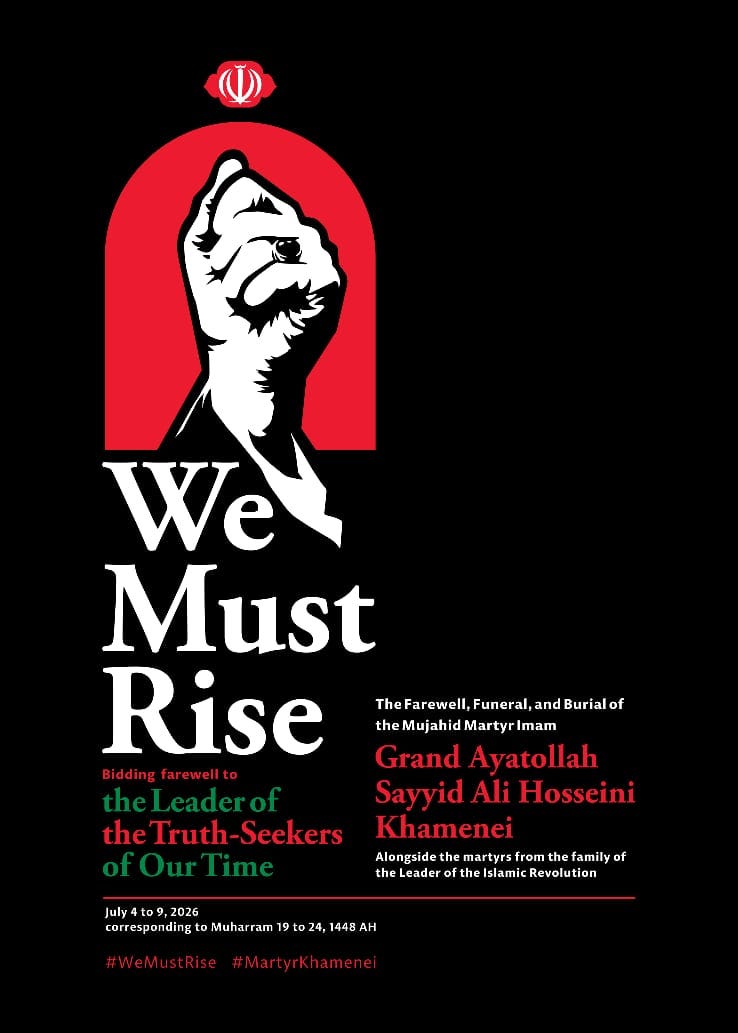
In His Name, the Most High
We begin tonight — as we began on the night of his martyrdom, and again on his arba’een — with the Book of God.
The first verse is the one that has carried this whole series. From Surah Aal Imran — the Chapter of the Family of Imran. God says:
وَلَا تَحْسَبَنَّ الَّذِينَ قُتِلُوا فِي سَبِيلِ اللَّهِ أَمْوَاتًا ۚ بَلْ أَحْيَاءٌ عِندَ رَبِّهِمْ يُرْزَقُونَ ۙ فَرِحِينَ بِمَا آتَاهُمُ اللَّهُ مِن فَضْلِهِ
“And do not think of those who have been killed in the way of God as dead. Rather, they are alive with their Lord, receiving provision, rejoicing in what God has bestowed upon them of His bounty.”
— Qur’an, Surah Aal Imran (the Chapter of the Family of Imran) #3, Verses 169–170
We have said it on every night of this series, and we say it again tonight, because tonight of all nights we are tempted to forget it.
He is not dead.
He is alive.
And we set beside it, tonight, a second verse — a verse about a trust.
Because tonight is about a trust.
From Surah al-Ahzab — the Chapter of the Confederates — the same chapter from which our leader took his own final message.
God says:
إِنَّا عَرَضْنَا الْأَمَانَةَ عَلَى السَّمَاوَاتِ وَالْأَرْضِ وَالْجِبَالِ فَأَبَيْنَ أَن يَحْمِلْنَهَا وَأَشْفَقْنَ مِنْهَا وَحَمَلَهَا الْإِنسَانُ
“Indeed, We offered the Trust to the heavens and the earth and the mountains, and they declined to bear it and were afraid of it — but man bore it.”
— Qur’an, Surah al-Ahzab (the Chapter of the Confederates) #33, Verse 72
The Trust — Al-amanah.
A weight so great that the heavens refused it, and the earth refused it, and the mountains refused it — and trembled at the very offer.
And a human being picked it up.
Hold both verses tonight.
The first tells us he is alive.
The second tells us what he carried — and what, in these last four months, has been placed into our hands.
Video of the Sermon (Majlis/Lecture)
The Trust We Were Asked to Keep
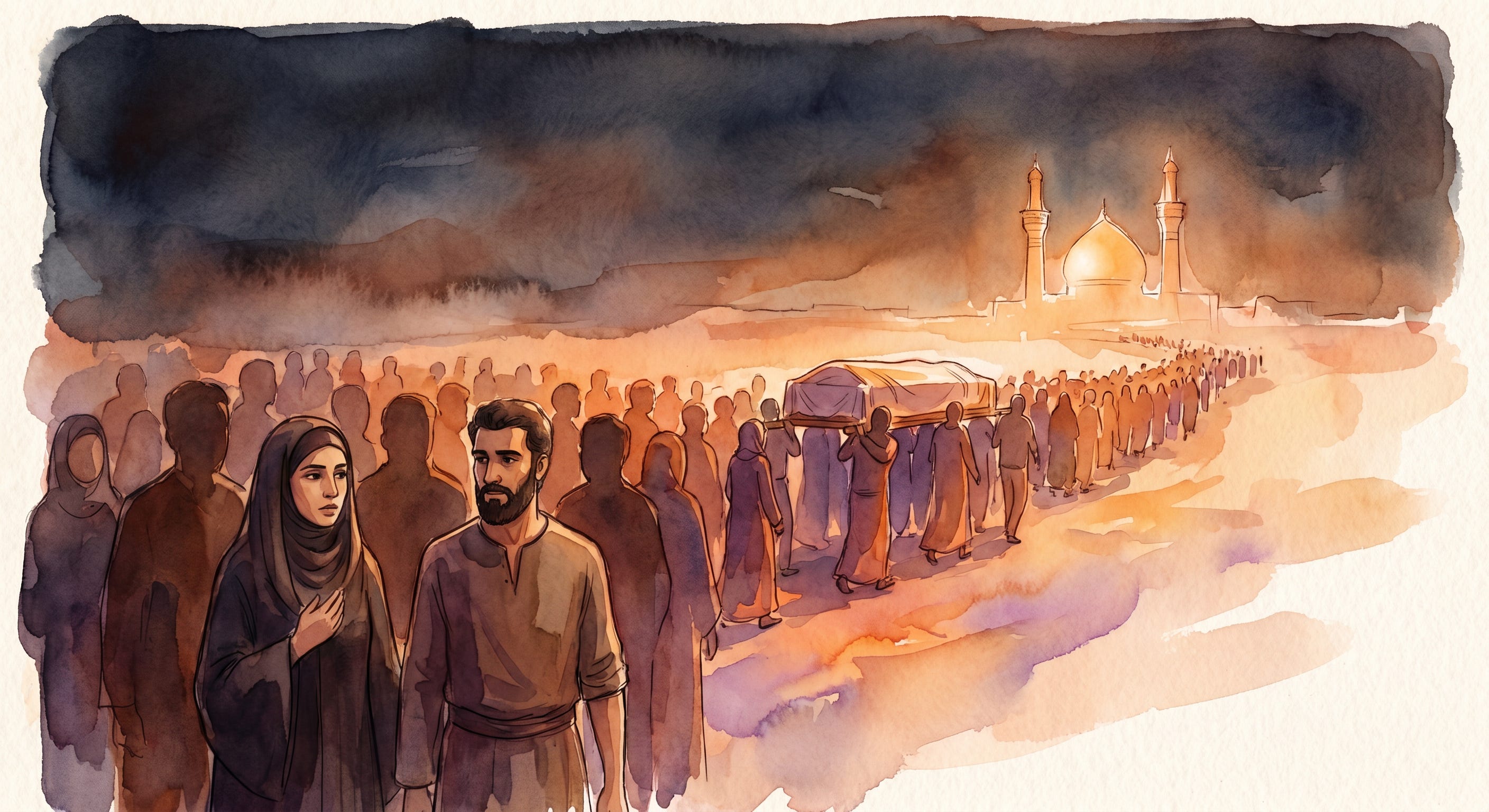
I want to begin with something that some of you have felt, and few of you have said aloud.
For four months, our leader has lain unburied.
Four months.
And in our tradition, we do not wait.
When a believer dies, we hasten — we wash, we shroud, we pray, and we return them to the earth, often within a single day.
It is one of the first things we are taught about death: that to honour the dead is to be swift with them.
And so a question has been sitting quietly in many hearts — a question some of you have not dared to ask out loud, because it felt almost disloyal to ask it.
Why has he not been buried?
Four months — is that allowed?
Has something gone wrong?
Has our leader, who gave everything, been denied even the swift and dignified burial that the poorest believer is owed?
I am not going to pretend you have not wondered this.
Honesty is the method of this series — it always has been — and tonight honesty means saying the quiet question out loud, and then answering it, fully, from the Book of God and the rulings of our scholars.
So let me say it plainly, here at the very start, and then let me spend the night proving it to you:
The wait was not neglect.
The wait was lawful.
The wait was deliberate.
And the wait was, in its own strange and beautiful way, an honour.
Because think again about that second verse.
God offered the Trust to the heavens and the earth, and they were afraid, and they set it down.
Our leader was offered a trust — the trust of the wilayah, the guardianship of the whole Ummah in the path of the Imam of our time — for he was the Wali Amr al-Muslimeen, the Guardian of the Affairs of the Muslims: not of one country, not of the Shia alone, but of all of them.
And do not pass over that word too quickly — al-amanah, the Trust.
Because our own Imams were asked what it is — this weight that the heavens and the earth and the mountains were offered, and refused to bear, and trembled at.
Imam Ali al-Ridha, peace be upon him, was asked about this very verse, and he answered in a single word:
الْأَمَانَةُ: الْوِلَايَةُ
“The Trust is the Wilayah — the Guardianship.”
— Imam Ali al-Ridha, recorded by al-Shaykh al-Saduq in Ma’ani al-Akhbar and in Uyun Akhbar al-Ridha
The Trust the mountains could not carry is the wilayah.
And for thirty-six years our leader carried it, and he never once set it down.
The trust was kept.
And then he was taken.
And in the four months since, a smaller trust has been placed upon the whole of this ummah — the trust of his own body.
To guard it.
To honour it.
To keep it from harm in a time of war.
And to carry it, at last — not in haste, but with the whole community gathered — to the place where it belongs.
And the ummah has kept it.
The trust was kept.
Two days ago, his body completed its final journey.
Not quietly.
Not in secret.
Carried through the cities of the people of the House —
past Shah Abdul Adheem in Tehran
past Imam Khomeini, between Tehran and Qom,
past Sayyedah Fatimah al-Ma’soumeh in Qom,
past Imam Ali in Najaf,
past Imam Husayn in Karbala,
past Imams al-Kadhim and al-Jawad in Kadhimiyyah,
past Imams al-Hadi and al-Askari in Samarra,
to rest, at the last, beside Imam Ridha in Mashhad — the city of his birth.
He was laid in the earth on Thursday — the eve of the martyrdom of Imam Ali ibn al-Husayn, Zayn al-Abidin, peace and blessings be upon him.
And yesterday, the whole ummah mourned that very Imam — the one who survived Karbala to carry its testimony onward.
The witness, laid to rest on the eve of the Witness.
And tonight we gather, two days on, with the earth still fresh above him.
This was not an ending.
It was a homecoming.
And it is a handover.
The body has returned to its Lord —
إِنَّا لِلَّهِ وَإِنَّا إِلَيْهِ رَاجِعُونَ
“Indeed, we belong to God, and to Him we return.”
— Qur’an, Surah al-Baqarah (the Chapter of the Cow) #2, Verse 156
And the covenant has returned to our hands.
Bridge: From the Chain and the Testimony to the Trust
Some of you were with us for the first of these sessions — The Unbroken Chain — on the night the wound was fresh.
And some of you were with us forty days later, for The Unbroken Testimony, on his arba’een.
In the Chain, we spoke of the institution that does not break — the wilayah that outlives any one man, because it was never held together by a man, but by a covenant with God.
In the Testimony, we spoke of the message that does not die — the witness written in blood, that grows louder with every empire that tries to silence it.
The Chain was the institution that endures.
The Testimony was the message that endures.
And tonight — the Trust.
The amanah that is kept, and carried home.
The body, returned to its Lord.
And the covenant, placed now in our hands.
If the first two sessions asked what survives him, tonight asks a quieter and more intimate question:
What were we asked to keep while we waited?
And did we keep it?
What We Will Cover Tonight
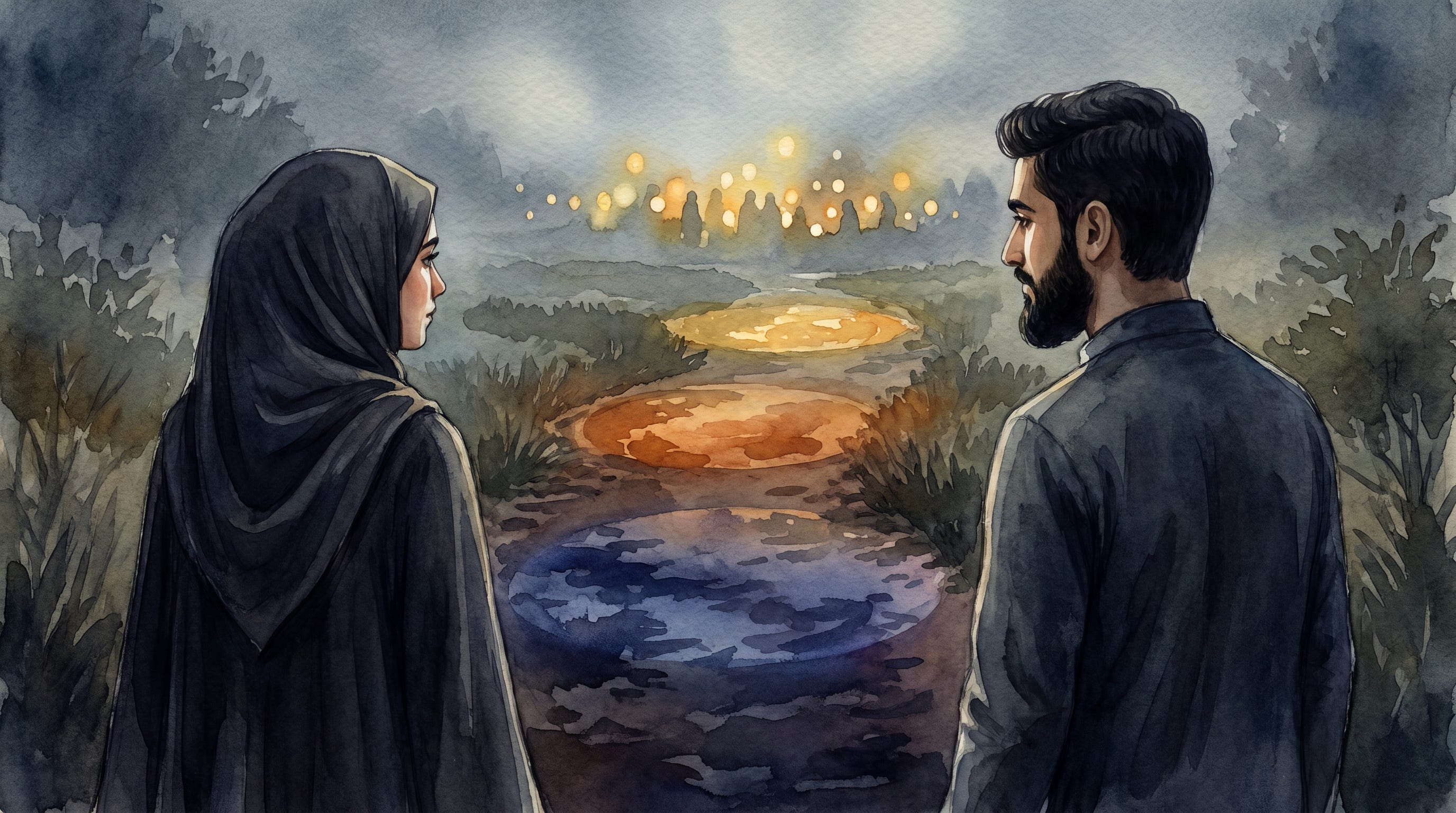
We will speak about three things.
First — the lawfulness of the wait.
We will answer the question in the room, properly, from the fiqh: why a believer who must be buried in haste could lawfully wait four months — and we will see that this is not new, that it happened only last year to a Sayyed we all loved, and that it has happened for a thousand years to the friends of God.
Second — the sanctity of the entrusted body.
Why the long wait did not diminish him by a single degree — and what it asked of us, who were given the keeping of it.
And third — the homecoming.
What it means to be laid to rest in the courtyard of Imam al-Ridha, carried there through Najaf, Karbala, Kadhimiyyah and Samarra — and what is now handed to us, the living, to carry in his place.
And we will close, as we always do, with a naming of our beloved shuhada — from the earliest to this very household — and a supplication that asks God to make us worthy of the trust that has been left in our hands.
In the name of the Lord of the Trust and the Lord of the Martyrs and the Truthful — let us begin.
Point 1 — The Lawfulness of the Wait
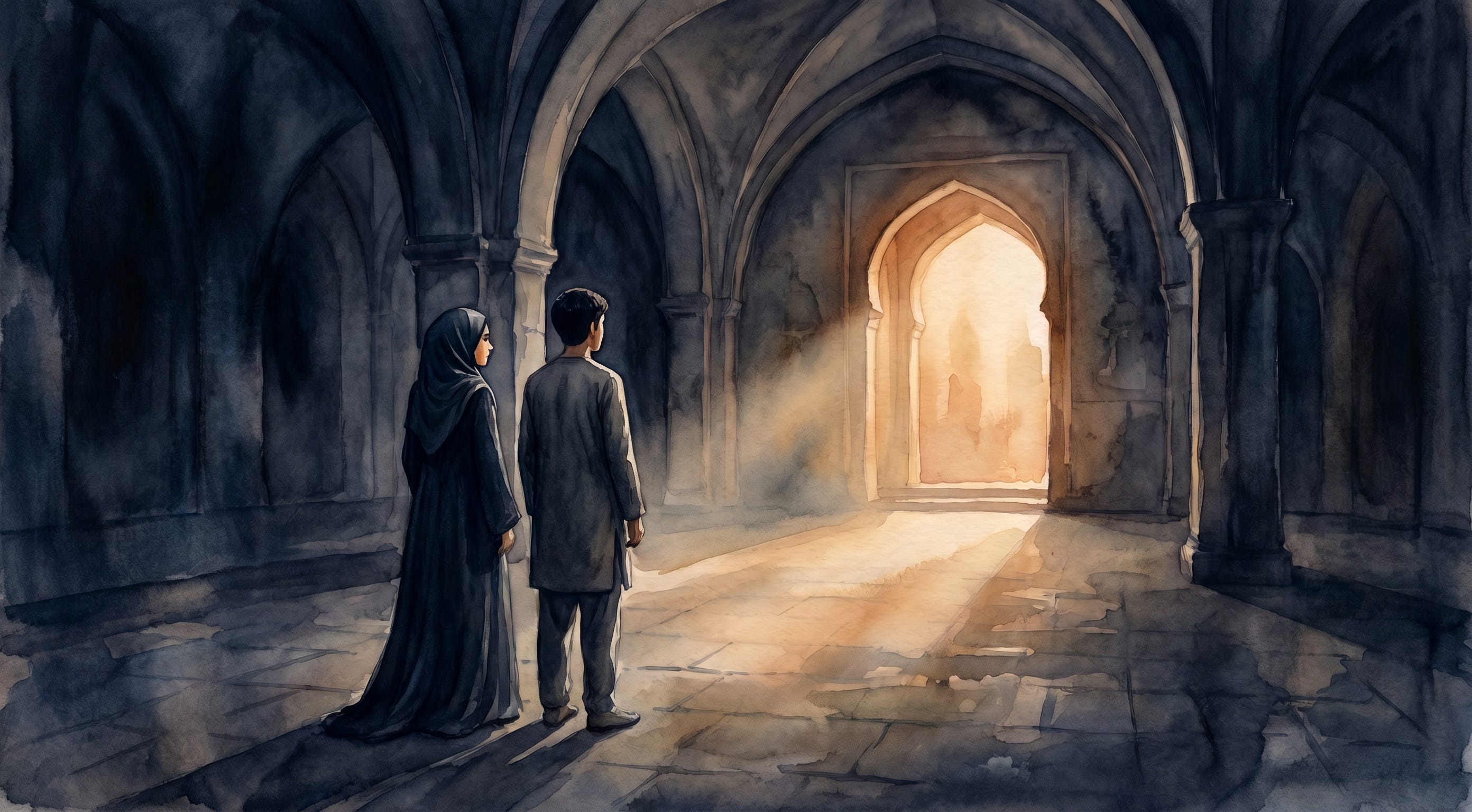
Let me begin where the question is still warm — because I left it unanswered at the opening, and I promised you I would not leave it there.
In our tradition, we do not keep our dead waiting.
This is not a custom.
It is a command.
Open the chapters of our law on the dead, and the very heading under which the rulings are gathered tells you everything.
Shaykh al-Hurr al-Amili titles it:
بَابُ وُجُوبِ الْمُبَادَرَةِ إِلَى تَجْهِيزِ الْمَيِّتِ وَدَفْنِهِ وَتَحْرِيمِ تَأْخِيرِهِ إِلَّا لِغَرَضٍ شَرْعِيٍّ
“The chapter on the obligation of hastening the preparation and the burial of the deceased — and the prohibition of delaying it, except for a lawful purpose.”
— al-Hurr al-Amili, Wasa’il al-Shia, the Book of Purity, the Chapters on Burial
Hear the two halves of that heading, because the whole of this first point lives inside them.
The obligation to hasten.
And the prohibition of delay — except for a lawful purpose.
And from the Imams themselves, the command could not be plainer.
Imam Ja’far al-Sadiq, peace and blessings be upon him, said:
إِذَا مَاتَ الْمَيِّتُ فَلَا تَحْبِسُوهُ، وَعَجِّلُوا بِهِ إِلَى قَبْرِهِ
“When someone dies, do not detain him. Hasten with him to his grave.”
— al-Kulayni, al-Kafi, the Book of Funerals
Do not detain him.
So the question is not a small one.
It is sharp, and it is fair.
If this is the law — if the believer is to be buried in haste, if delay is named a prohibition — then how did we let our beloved leader lie, unburied, for four months?
How is that not a wrong done to him?
I will not wave the question away.
The law did say: hasten.
So I owe you not a feeling, but a proof.
I owe you the very door that the law itself opened — for exactly this.
And before I open the books, let me remind you of something you already know.
Because you have seen this before.
Not in a history book.
Last year.
The Case You Lived
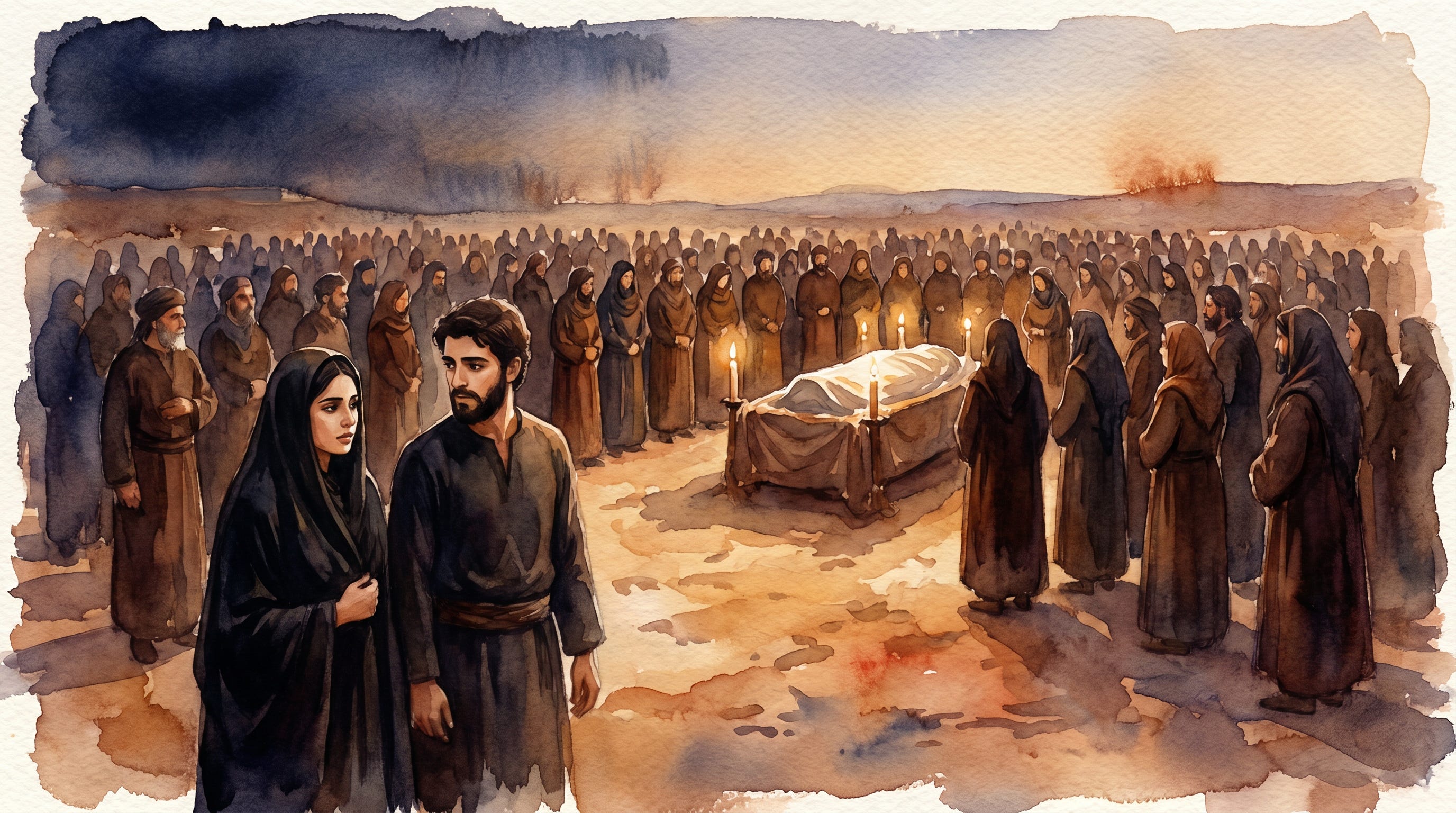
In September of 2024, the enemies of God martyred Sayyed Hassan Nasrallah — may God rest his pure soul.
And he was not buried that day.
He was not buried that week.
For the safety of the living, and for the dignity of his body in a time of war, he was given a temporary, hidden resting place — and the great public farewell, and his permanent grave, came months afterward.
Nearly five months later, in February of 2025, an ocean of human beings gathered to lay him to rest at last.
And beside him, Sayyed Hashim Safieddine — may God rest his pure soul — taken only days after him.
Five months.
And not one scholar among us called it a scandal.
On the contrary — the scholars explained it, openly, at the time: that burial may be delayed where circumstance compels it; that a believer may be laid in a temporary place and then carried to his proper one — so long as his body is kept from harm.
This is not new.
You watched it happen — months ago — to a Sayyed you wept for.
And our own leader, Imam Sayyed Ali Khamenei, stood and eulogised him.
And do you remember what the mourners said, in their grief, as they carried him?
We are committed to the covenant.
We keep the trust.
The trust was kept.
The Thousand-Year Precedent
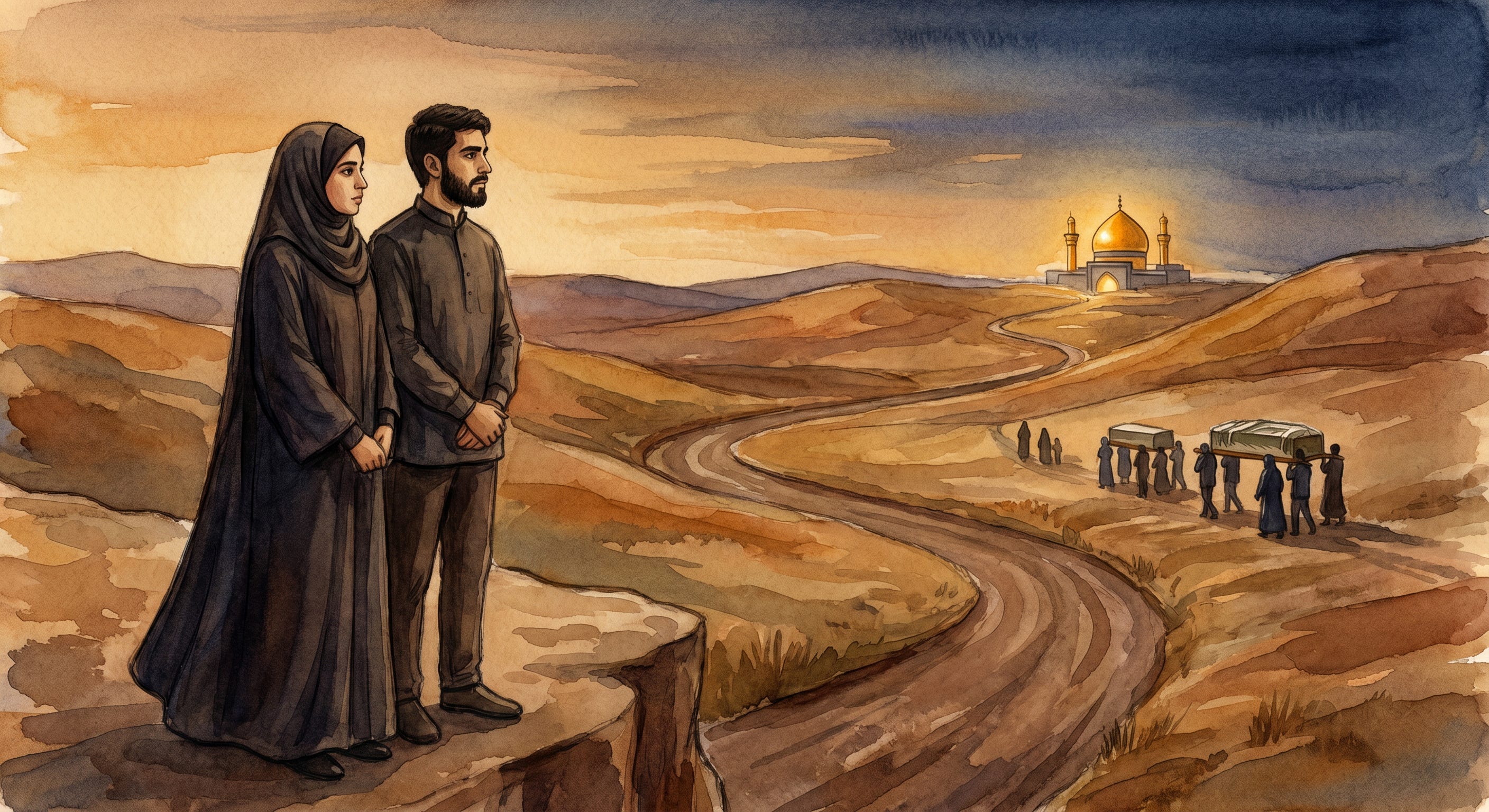
And if our own age is not enough for you, then go back a thousand years.
To two brothers — among the greatest our tradition has ever produced.
Al-Sharif al-Radi — the man who gathered the words of the Commander of the Faithful into the book we call Nahj al-Balagha — and his brother, al-Sharif al-Murtadha, the teacher of a whole age.
We learned about both of these brothers in our Mahdawiyyah Sessions.
They died in Baghdad.
And they were not left there.
They were carried — to rest in the courtyard of their grandfather, Imam al-Husayn, in Karbala. Ibn Maytham al-Bahrani records it in the opening of his commentary on the Nahj al-Balagha — and I want to be exact, as we always are: this is a biographer’s report, not a narration from an Infallible.
He writes:
دُفِنَ مَعَ أَخِيهِ الْمُرْتَضَى فِي جِوَارِ جَدِّهِ الْحُسَيْنِ عَلَيْهِ السَّلَامُ
“He was buried, together with his brother al-Murtadha, in the vicinity of his grandfather al-Husayn, peace be upon him.”
— Ibn Maytham al-Bahrani, Sharh Nahj al-Balagha, in his biographical introduction to al-Sharif al-Radi
Their own father had been laid to rest, before them, within the shrine of Imam Husayn itself.
A family — carried, across distance and across time, to rest beside the Master of Martyrs — the Master of Witnesses.
And I want you to hold that image, because it is not only a thousand years old.
It was this very week.
Because the very courtyard of Imam Husayn to which those two brothers were carried — Karbala — was on our own leader’s road only days ago, as his body was carried home.
And there is a precedent older still, and higher than these two brothers — the body of the Master of Martyrs himself, denied its grave upon the sands of Karbala — but that one belongs to our second point, and I will bring it to you there, God willing.
The Four Doors The Law Opened
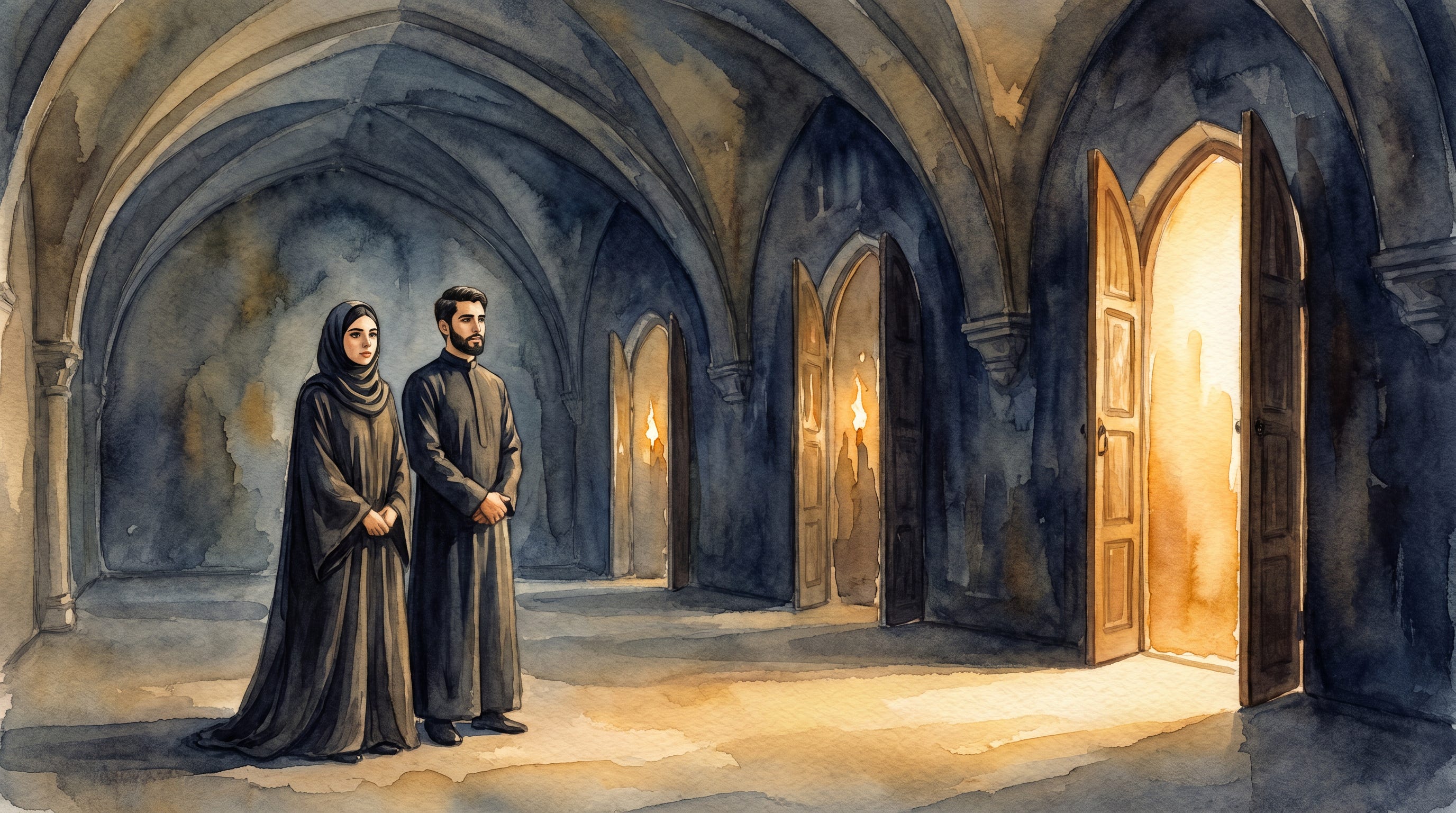
So now let us open the books, and name — precisely — the lawful purposes for which the law that commands haste permits the wait.
There are four.
And all four are standing in this very moment.
The first: that he be carried to the shrines of the people of the House.
This is not merely permitted.
It is loved.
Imam Khomeini, may God rest his pure soul, writes in Tahrir al-Wasila:
يَجُوزُ نَقْلُ الْمَيِّتِ مِنْ بَلَدِ مَوْتِهِ إِلَى بَلَدٍ آخَرَ قَبْلَ دَفْنِهِ عَلَى كَرَاهِيَةٍ، إِلَّا إِلَى الْمَشَاهِدِ الْمُشَرَّفَةِ وَالْأَمَاكِنِ الْمُقَدَّسَةِ فَلَا كَرَاهَةَ فِي النَّقْلِ إِلَيْهَا، بَلْ فِيهِ فَضْلٌ وَرُجْحَانٌ
“It is permissible to transfer the deceased from the town of his death to another town before burial, though with dislike — except to the honoured shrines and the sacred places: there is no dislike in transferring to them. Rather, in it there is merit, and recommendation.”
— Imam Khomeini, Tahrir al-Wasila, the Book of Purity
And our own leader — Imam Sayyed Ali Khamenei himself — ruled exactly the same in his own treatise:
That to carry the deceased to the sacred shrines before burial is permitted, and indeed recommended — so long as it brings no indignity upon him, and the delay is not such as the people would count as disrespect.
— Imam Khamenei, the rulings on the transfer of the deceased (naql al-mayyit), Rule 617 of his Practical Laws, and his Ajwibat al-Istiftaʾat
And the classical masters said it centuries before.
Al-Shahid al-Awwal — the First Martyr — writes in the Lum’a, and it is as if he wrote it for tonight:
تَجِبُ الْمُبَادَرَةُ إِلَى دَفْنِ الْمَيِّتِ بَعْدَ تَكْمِيلِ تَجْهِيزِهِ، وَيَحْرُمُ تَأْخِيرُهُ لِغَيْرِ عُذْرٍ، وَيَجُوزُ تَأْخِيرُهُ لِعُذْرٍ... وَكَذَا نَقْلُهُ إِلَى الْمَشَاهِدِ الْمُشَرَّفَةِ قَبْلَ دَفْنِهِ إِنْ أَمِنَ التَّغَيُّرَ
“Burial must be hastened once the preparations are complete; to delay it without excuse is forbidden, and to delay it for an excuse is permitted... and likewise to transfer him to the honoured shrines before his burial — provided no decomposition is feared.”
— al-Shahid al-Awwal, al-Lum’a al-Dimashqiyya, the Book of Purity, the Chapter on Burial
Provided no decomposition is feared.
Hold that condition.
We will need it in a moment.
The second: necessity.
The necessity of war.
This is the reason the authorities themselves have given.
The committee charged with his farewell stated it plainly: that the burial was held back by the conditions of war — by the strikes, by the danger to the millions who would gather, by the simple duty to keep the living safe.
More than a hundred days — for the safety of the people.
And here I must be careful with you — more careful than anywhere else in tonight’s talk.
Because there is a principle our law uses for moments like this, and it is one of the most misused sentences in the whole of our religion.
People tear it loose from its place and wave it like a key that opens every locked door.
So let me give it to you whole — with the fence God built around it, in the very same breath He gave the permission.
It begins in the Qur’an.
When God lists what is forbidden — the carrion, the blood, the flesh of swine — He does not leave the starving man to die beside them.
He says:
فَمَنِ اضْطُرَّ غَيْرَ بَاغٍ وَلَا عَادٍ فَلَا إِثْمَ عَلَيْهِ
“But whoever is compelled — neither craving it nor transgressing — there is no sin upon him.”
— Qur’an, Surah al-Baqarah (the Chapter of the Cow) #2, Verse 173
Hear how the permission arrives already chained.
Compelled — not merely inconvenienced.
Neither craving — he must take no appetite in it.
Nor transgressing — he may not go one mouthful past his need.
And again, in Surah al-Anʿam — the Chapter of the Cattle, God says He has set out the forbidden things in detail —
إِلَّا مَا اضْطُرِرْتُمْ إِلَيْهِ
“...except that to which you are driven by necessity.”
— Qur’an, Surah al-Anʿam (the Chapter of the Cattle) #6, Verse 119
And from the word of the Prophet himself, peace be upon him, his family and his righteous companions — in the narration our scholars call the hadith of the lifting:
رُفِعَ عَنْ أُمَّتِي ... وَمَا اضْطُرُّوا إِلَيْهِ
“Lifted from my community ... is that to which they are compelled.”
— The Prophet Muhammad, the hadith al-raf’, reported by al-Shaykh al-Saduq in al-Khisal and in al-Tawhid, and gathered by al-Hurr al-’Amili in Wasaʾil al-Shiʿa
From these roots — the Qurʾan above, and this narration — our jurists drew the maxim:
الضَّرُورَاتُ تُبِيحُ الْمَحْظُورَاتِ
“Necessities permit the forbidden.”
— a settled maxim of Islamic jurisprudence (a qāʿida fiqhiyya), set down among the governing legal maxims by our scholars:
— See al-Sayyed Ḥasan al-Mūsawī al-Bujnūrdī, al-Qawāʿid al-Fiqhiyya, and Shaykh Nāṣir Makārim al-Shīrāzī, al-Qawāʿid al-Fiqhiyya
Now — hear me.
This is not a key to every door.
It is the narrowest passage in the law, and it is hedged on every side.
Let me name the fences, so that no one ever carries this sentence out of here and abuses it.
First — it does not abolish the original ruling.
It only suspends it — and only while the necessity is actually standing in the room.
The moment the necessity lifts, the original command returns in full.
The duty to hasten the burial never died; it was held back, and the instant it was safe, it returned.
That is why he was buried this week — the moment the danger had passed, and not a day later than it had to be.
Second — and this is its own maxim, its constant guard:
الضَّرُورَةُ تُقَدَّرُ بِقَدْرِهَا
“Necessity is measured strictly by its own measure.”
— its companion maxim, set down beside the first in those same books of legal maxims
— (al-Bujnūrdī; Makārim al-Shīrāzī, al-Qawāʿid al-Fiqhiyya), and resting on the Qurʾan’s own limit upon the licence — “neither craving it nor transgressing” (Qur’an, Surah al-Baqarah (the Chapter of the Cow) #2, Verse 173)
You may take from the forbidden only the exact amount the necessity forces upon you — not one inch, not one hour, more.
A delay of war buys only the days of war.
It never bought a single day of carelessness.
Third: the bar is genuine compulsion — a real hardship, a real harm, haraj or dharar — not preference, not convenience, not what is merely easier.
The danger to the millions who would gather under the bombs is that bar.
A wish to wait would never have been.
Fourth: it is never for the individual to declare for himself.
It is the jurists — here, the authority of the Wali Amr al-Muslimeen, the Guardian of the Affairs of the Muslims — who weigh the necessity and rule.
This was not a family’s choice or a committee’s convenience; it was a ruling, made where rulings are made.
And fifth — the one that holds up the whole of our next point: necessity never, ever licenses an assault upon the sanctity of the body itself.
Whatever was permitted in the waiting, his hurma — dignity — was never on the table.
The door that opens for delay does not open for indignity.
The Second Martyr, al-Shahid al-Thani, gathers the whole matter into a single governing rule in his great commentary on the Lum’a:
وَضَابِطُ الْجَمِيعِ: أَنَّ كُلَّ مَا يَلْزَمُ مِنْ تَقْدِيمِ الدَّفْنِ فِيهِ حَرَجٌ أَوْ ضَرَرٌ يَجُوزُ مَعَهُ التَّأْخِيرُ
“The rule governing all of it: whatever, in the hastening of burial, would entail hardship or harm — delay is permitted on account of it.”
— al-Shahid al-Thani (Zayn al-Din al-ʿAmili), al-Rawda al-Bahiyya fi Sharh al-Lumʿa al-Dimashqiyya, Kitab al-Tahara, the Chapter on Burial
So this is not a loophole.
It is a door the law itself cut, narrow and guarded, opened by the jurist, closed the very instant the danger passed — and never once at the cost of the dignity of the one who waited.
And lest anyone imagine that “waiting” is somehow foreign to the way of the Imams — the Imams themselves command a wait, in their own rulings.
For the drowned, and for the one struck down senseless, Imam Musa al-Kadhim, peace be upon him, taught:
الْمَصْعُوقُ وَالْغَرِيقُ يُنْتَظَرُ بِهِ ثَلَاثَةَ أَيَّامٍ، إِلَّا أَنْ يَتَغَيَّرَ قَبْلَ ذَلِكَ
“The lightning-struck and the drowned — one waits upon him three days, unless he changes before that.”
— Imam Musa al-Kadhim, reported in al-Kulayni, al-Kafi, Kitab al-Janaʾiz, the Chapter on the Drowned and the Lightning-struck — a sound, hasan chain, through Ibn Abi Umayr from Hisham ibn al-Hakam
Three days.
By the command of the Imams themselves.
Held back for a reason — to be certain that death had truly come.
And listen to the limit they placed upon it: unless he changes before that.
The wait was bound by the body itself — by the first sign of decay.
Which is the very same line, you will notice, that governs how a body may be lawfully kept today: only so long as it is preserved from change.
The Imams’ own wait, and the law of preservation we spoke of a moment ago, are guarded by one and the same boundary.
The wait, where there is a reason, is not a breaking of the law.
It is the law.
The third: that his body be kept, lawfully, through the wait.
And here is the answer to a question some of you have carried in silence — and I would rather speak it than let it sit and ache:
What was done with his body, all this time?
The answer is the plainest thing in the world, and the law permits it without difficulty.
He was kept — preserved, in the cold — as the body of any believer may be preserved when there is a lawful reason to wait.
Our leader himself ruled on this very question, when it was put to him:
That to use refrigeration, to use the means that hold a body back from decay, is in itself no problem at all — so long as nothing is done that would dishonour him.
— Imam Sayyed Ali Khamenei, Ajwibat al-Istiftaʾat, Question 576
But hear the limit — because the honesty of this series demands it.
This permission is not a licence to keep a body forever, to set it aside in place of burial.
Imam Sayyed Ali Khomeini was severe about exactly this: that one may not simply deposit a body indefinitely and imagine it piety — the body must, in the end, be returned to the earth.
The preservation is permitted for the sake of the burial — to make the burial possible.
Never to replace it.
The cold was never the destination.
It was only the road to the grave.
And the fourth — and this is the most beautiful of them all.
He could have been buried sooner.
And he was held back — deliberately — so that the burial would not fall within the first ten days of Muharram.
So that the ummah could first finish its mourning for Imam Husayn.
So that nothing — not even the burial of the Wali al-Faqih himself — would stand in front of Sayyed al-Shuhada — the Master of Witnesses.
I will return to that at the very end of this point.
Because it is the lesson the whole of it has been carrying us toward.
“But Is He A Martyr Who Is Not Washed?”
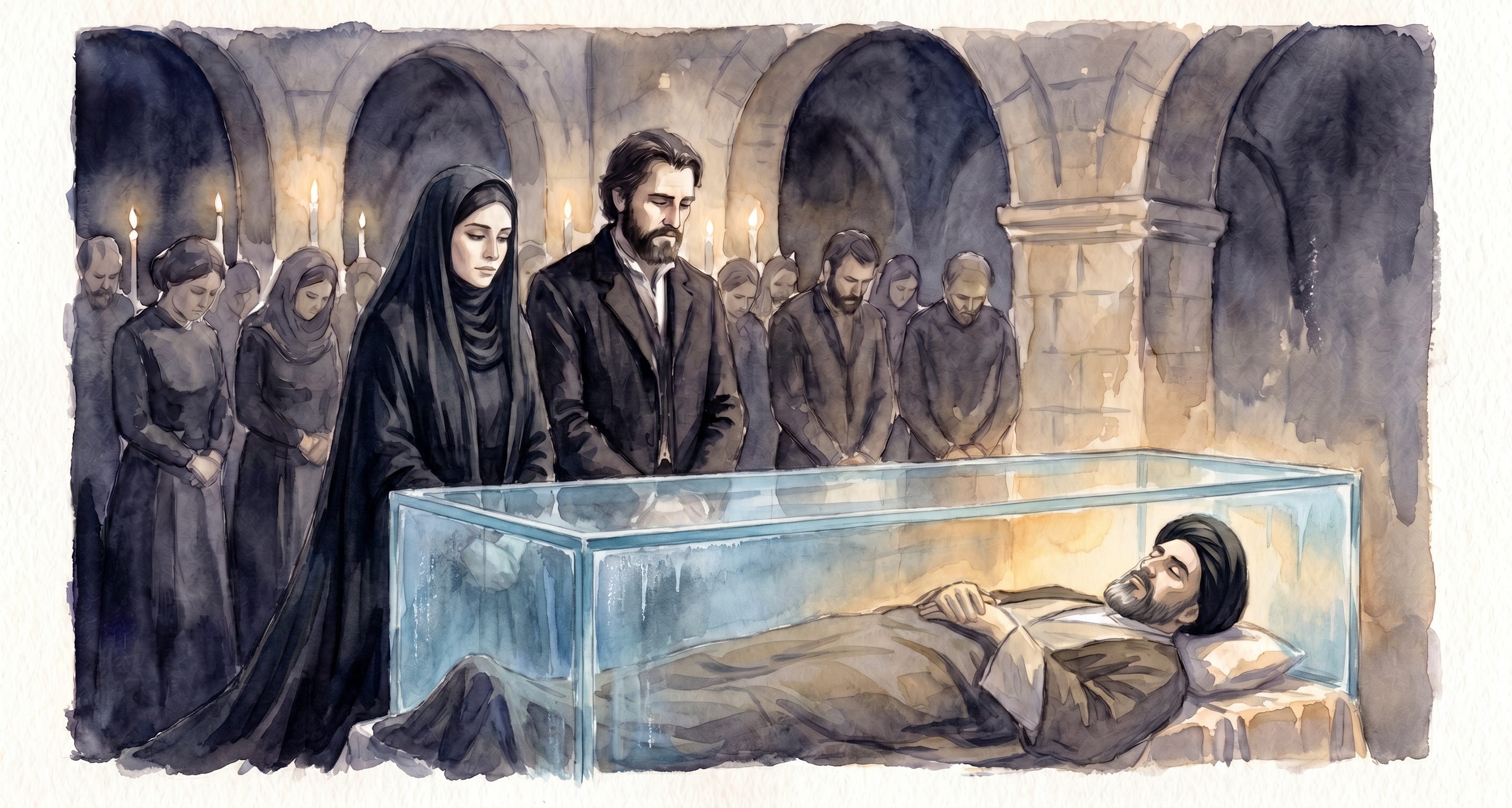
There is one last question a careful believer might raise — and it is a good one, the kind that comes from love and from knowledge both.
We know there is a martyr our law does not wash.
The one who falls on the field of battle is buried in his very clothes, in his own blood, unwashed and unshrouded — because his blood is his purity, and it will testify for him on the Day of Standing.
So — is our leader such a one?
Should he not have been buried as he fell, unwashed?
And here, once again, it is our leader’s own ruling that answers.
He was asked precisely who that unwashed martyr is, and he replied:
الشَّهِيدُ الَّذِي لَا يُغَسَّلُ وَلَا يُكَفَّنُ هُوَ مَنْ قُتِلَ فِي مَعْرَكَةِ الْقِتَالِ مَعَ الْكُفَّارِ وَالْبُغَاةِ وَنَحْوِهِمْ بِأَمْرِ الْإِمَامِ الْمَعْصُومِ عَلَيْهِ السَّلَامُ أَوْ نَائِبِهِ الْخَاصِّ، وَفِي عَصْرِ الْغَيْبَةِ يُعْتَبَرُ الْمُقَاتِلُونَ الَّذِينَ يَسْتَشْهِدُونَ فِي سَاحَاتِ الدِّفَاعِ عَنِ الْإِسْلَامِ وَالْمُسْلِمِينَ بِأَمْرِ الْوَلِيِّ الْفَقِيهِ مِنَ الشُّهَدَاءِ الَّذِينَ لَا يُغَسَّلُونَ وَلَا يُكَفَّنُونَ عَلَى الْأَحْوَطِ وُجُوبًا
“The martyr who is neither washed nor shrouded is the one slain on the battlefield — fighting the unbelievers, the rebels, and their like — by the command of the Infallible Imam, peace be upon him, or his special deputy. And in the age of Occultation, the fighters who are martyred in the arenas of the defence of Islam and the Muslims, by the command of the Guardian Jurist, are counted among the martyrs who are neither washed nor shrouded — by obligatory precaution.”
— Imam Khamenei, Ajwibat al-Istifta’at, vol. 1, Kitab al-Tahara, question 307
On the field of battle.
And our leader was not struck on a field of battle, with a weapon in his hand, in a line of fighting.
He was struck in his own place — by a fire sent from far away.
So by his own ruling, he was washed.
He was shrouded.
He was prayed over — in every city through which he passed.
He is a martyr of the Hereafter — al-maqtul zulman, the one slain in injustice — and he was given the full reward of the witness, and the full and ordinary dignity of a believer returning to his Lord.
And do not, for one moment, imagine that the washing is a lesser thing.
It is not.
It is the believer’s own honour — to be made pure, and wrapped in white, and given back to the earth as every servant of God prays to be given back.
The glory of the battlefield martyr is written on his skin, in his blood.
The glory of this one is hidden — where it always lived — in the soul.
For those who wish to go deeper into these two kinds of martyr — the one of the field, and the one of the Hereafter — we laid it all out in Session 13 of our Ashura and Arba’een series, which will be broadcast in the last five nights prior to the Arba’een of Imam Husayn and the details for which will be on our website - www.truthpromoters.com.
Tonight, this much is enough.
The Prayer Said Over Him
But go back to something I said a moment ago, and let it stop you — because it stopped a great many people this week.
I told you he was prayed over.
I said it in a single breath, and I moved on.
But that line is owed a longer pause — because of what you all saw.
He was not prayed over once.
He was prayed over in Tehran.
And again in Qom.
And in Najaf, and in Karbala, and at the last in Mashhad.
City after city, congregation after congregation — the funeral prayer said again, and again, over one body.
And many of you have quietly wondered:
Is that right?
Is the funeral prayer not said once, and finished?
How is it prayed five times over one man?
Let me answer it — fully — because the answer opens something beautiful.
First — Why It May Be Repeated At All
To understand it, you have to understand what this prayer is.
Because salat al-mayyit — the prayer over the dead — is not a prayer like the ones you pray five times a day.
Our scholars are exact about this.
Al-Shahid al-Awwal — the First Martyr — writes in the Lum’ah:
صَلَاةُ الْمَيِّتِ خَمْسُ تَكْبِيرَاتٍ، وَهِيَ دُعَاءٌ لَا صَلَاةٌ، فَلَا تُشْتَرَطُ فِيهَا الطَّهَارَةُ مِنَ الْحَدَثِ وَلَا الْخَبَثِ
“The prayer over the dead is five takbirs; and it is a supplication, not a prayer — so purity from ritual impurity, and from filth, is not a condition in it.”
— al-Shahid al-Awwal, al-Lum’a al-Dimashqiyya, the Book of Purity, the Chapter on the Funeral Prayer
A supplication, not a prayer.
It only carries the name “prayer” — and his student, al-Shahid al-Thani, the Second Martyr, explains in his commentary that it is called salat only in following the Prophet’s own usage, for the laws of ritual purity were laid down for the prayer that has bowing and prostration — and this one has neither.
Look at it, and you will see.
There is no bowing in it.
No prostration.
No sitting.
You need not even be in a state of wudhu (the ablution that leads to ritual purity and is a requirement prior to praying) to pray it — because it is not that kind of prayer.
It is five takbirs— five times Allahu Akbar (God is the Greatest) — and between them, supplication.
That is all.
A standing du’a for a soul that has gone on ahead of us.
And why five?
The Imams gave us a reason so tender it is worth stopping on.
Imam al-Baqir, peace be upon him, said to one of his companions:
خَمْسُ تَكْبِيرَاتٍ... أُخِذَتِ الْخَمْسُ تَكْبِيرَاتٍ مِنَ الْخَمْسِ صَلَوَاتٍ، مِنْ كُلِّ صَلَاةٍ تَكْبِيرَةٌ
“Five takbirs… the five takbirs were taken from the five daily prayers — from each prayer, one takbir.”
— Imam al-Baqir, al-Kulayni, al-Kafi, the Book of Funerals, the Chapter on the Reason for the Five Takbirs over the Deceased
The number of takbirs is beyond dispute; this narration, which tells us why they are five, our scholars relate as a reason — and I give it to you as that.
Do you see the mercy in it?
From every one of the five prayers a believer stood through, across the whole of his life, God set aside a single takbir — and kept it — to be said over him on the day he could no longer pray for himself.
His own prayers, saved up, and given back to carry him home.
Now — a du’a is not something you say once and lock away.
A du’a — a supplication — can be made by one, and then by another, and then by a thousand more.
There is no “used up” in supplication.
So when city after city, multitude after multitude, rose to pray over him — was that a mistake, or an excess?
Let me clarify it precisely — because this is exactly the place where people grow confused, and clarity is a debt we owe you.
The well-known position among our jurists — the view of the majority, as Sahib al-Jawahir records it — is that to repeat the funeral prayer over a single body is disliked; makruh.
And the reason is the very principle we opened this whole night upon: do not keep the believer waiting, do not hold his body back from the earth to run one gathering after another.
There is a narration beneath it.
Imam al-Sadiq, peace be upon him, said:
لَا تُعَادُ الصَّلَاةُ عَلَى الْمَيِّتِ إِذَا صُلِّيَ عَلَيْهِ
“The prayer is not repeated over the deceased, once it has been prayed over him.”
— Imam al-Sadiq, al-Shaykh al-Saduq, Man la Yahduruhu al-Faqih
So the dislike guards a right — the dead man’s right to be carried swiftly to his rest, and not kept waiting above the ground.
But hold on.
Because the very jurists who set that dislike down carved an exception into the same breath — and it reads as though it were written for a night exactly like this one.
Sayyed al-Yazdi gathers it, in the Urwat al-Wuthqa — one of the most important books in the science of Islamic Jurisprudence:
يُكْرَهُ تَكْرَارُ الصَّلَاةِ عَلَى الْمَيِّتِ، إِلَّا إِذَا كَانَ الْمَيِّتُ مِنْ أَهْلِ الْفَضْلِ وَالْعِلْمِ وَالتَّقْوَىٰ
“It is disliked to repeat the funeral prayer over the deceased — except if the deceased is of the people of merit, and knowledge, and piety.”
— Sayyed Muhammad Kazim al-Yazdi, al-Urwa al-Wuthqa
Except if the deceased is of the people of merit, and knowledge, and piety.
Read that again — and then think of whom we are burying.
And our two living authorities each set their hand to it.
Our own leader — the martyr Imam Sayyed Ali al-Husayni al-Khamenei — ruled it plainly in his treatise, and I give it to you in his own words:
مکروه است بر میت چند مرتبه نماز بخوانند، ولی اگر میت اهل علم و تقوی باشد مکروه نیست
“It is disliked to pray over the deceased several times — but if the deceased is a person of knowledge and piety, it is not disliked.”
— Imam Sayyed Ali al-Khamenei, Risalat al-Salah wa al-Sawm, Ruling 606
And Grand Ayatollah Sayyid al-Sistani goes a step further still.
He turned his scrutiny upon the very narration the dislike rests on — weighed it — and held that it does not stand firm enough to bind us at all:
يَجُوزُ تَكْرَارُ الصَّلَاةِ عَلَى الْمَيِّتِ الْوَاحِدِ، لَكِنَّهُ مَكْرُوهٌ عَلَىٰ مَا قِيلَ وَإِنْ لَمْ يَثْبُتْ، وَلَوْ كَانَ الْمَيِّتُ مِنْ أَهْلِ الشَّرَفِ فِي الدِّينِ جَازَ بِلَا كَرَاهَةٍ
“It is permissible to repeat the funeral prayer over one deceased. But it is disliked — according to what has been said, though it has not been established. And if the deceased is of the people of honour in religion, it is permissible, with no dislike at all.”
— Grand Ayatollah Sayyed Ali al-Sistani, Minhaj al-Salihin, vol. 1, Ruling 306
Now see how the two great marja’ close upon the truth from either side.
One tells you the dislike was never firmly established to begin with.
The other grants it as a general rule — and then lifts it away, entirely, for a man of knowledge and piety.
And between the two of them, there is not an inch of room left for hesitation over a man like this.
For who was he, if not the very one both exceptions were written for?
A faqih.
A marja’.
The Guardian of the Affairs of the Muslims.
A man of knowledge, and of honour in the religion, and of piety — if those words are to carry any meaning at all.
So the prayers said over him, city after city, were not merely permitted.
They were fitting.
And mark this: the single concern that ever lay beneath the dislike — that a body not be held back from its grave — was never once in question here.
He was prayed over as he was carried, along the road to his rest; not for one hour was he kept from the earth to make room for another prayer.
So the ummah did for him what the law allows and what love demanded: it prayed over him, and prayed over him, and prayed over him again.
And consider who rose to lead those prayers.
In Tehran, Ayatollah Ja’far Subhani.
In Qom, Ayatollah Jawadi-Amoli.
In Mashhad, Ayatullah Sayyed Mustafa Husayni Khamenei - his eldest son.
And in Najaf and in Karbala, he was received and prayed over by the scholars and the people of Iraq.
The most senior teachers of the Hawza — the grand maraji’ of our age — each rising to stand over him.
The greatest scholars of the ummah, leading the prayer for their leader.
And Now — The Words Themselves. Because The Prayer Is A Testimony
Let me give you the whole of what is said over him, so that you have it — for these are words that every one of you can carry.
The first point is the intention - the niyyah — and we will cover and explain that in more detail shortly, God willing.
The prayer carries five takbir - five declarations of God is the Greatest, each of which is followed by a supplication or testimony.
So, after the first takbir — Allahu Akbar (God is the Greatest), the testimony of faith:
أَشْهَدُ أَنْ لَا إِلَٰهَ إِلَّا اللهُ وَحْدَهُ لَا شَرِيكَ لَهُ، وَأَشْهَدُ أَنَّ مُحَمَّداً عَبْدُهُ وَرَسُولُهُ، أَرْسَلَهُ بِالْحَقِّ بَشِيراً وَنَذِيراً بَيْنَ يَدَيِ السَّاعَةِ
“I testify that there is no god but God alone, no partner has He; and I testify that Muhammad is His servant and His messenger, whom He sent with the truth, a bearer of glad tidings and a warner, before the coming of the Hour.”
After the second takbir, blessings upon the Prophet and his family:
اللَّهُمَّ صَلِّ عَلَىٰ مُحَمَّدٍ وَآلِ مُحَمَّدٍ، وَبَارِكْ عَلَىٰ مُحَمَّدٍ وَآلِ مُحَمَّدٍ، وَارْحَمْ مُحَمَّداً وَآلَ مُحَمَّدٍ، كَأَفْضَلِ مَا صَلَّيْتَ وَبَارَكْتَ وَتَرَحَّمْتَ عَلَىٰ إِبْرَاهِيمَ وَآلِ إِبْرَاهِيمَ، إِنَّكَ حَمِيدٌ مَجِيدٌ
“O God, bless Muhammad and the family of Muhammad, and grant favour to Muhammad and the family of Muhammad, and have mercy on Muhammad and the family of Muhammad — as the best of what You blessed and favoured and had mercy upon Ibrahim and the family of Ibrahim. Indeed, You are Praiseworthy, Glorious.”
After the third takbir, a plea for all the believers, the living of them and the dead:
اللَّهُمَّ اغْفِرْ لِلْمُؤْمِنِينَ وَالْمُؤْمِنَاتِ، وَالْمُسْلِمِينَ وَالْمُسْلِمَاتِ، الْأَحْيَاءِ مِنْهُمْ وَالْأَمْوَاتِ
“O God, forgive the believing men and the believing women, the submitting men and the submitting women — those of them who are living, and those who have died.”
And then, after the fourth takbir — over the body itself — we turn to him.
And here are the words the Ahlul Bayt taught, in their fuller and recommended form:
اللَّهُمَّ إِنَّ هَٰذَا عَبْدُكَ وَابْنُ عَبْدِكَ وَابْنُ أَمَتِكَ، نَزَلَ بِسَاحَتِكَ وَأَنْتَ خَيْرُ مَنْزُولٍ بِهِ. اللَّهُمَّ إِنَّا لَا نَعْلَمُ مِنْهُ إِلَّا خَيْراً وَأَنْتَ أَعْلَمُ بِهِ مِنَّا. اللَّهُمَّ إِنْ كَانَ مُحْسِناً فَزِدْ فِي إِحْسَانِهِ، وَإِنْ كَانَ مُسِيئاً فَتَجَاوَزْ عَنْ سَيِّئَاتِهِ. اللَّهُمَّ اجْعَلْهُ عِنْدَكَ فِي أَعْلَىٰ عِلِّيِّينَ، وَاخْلُفْ عَلَىٰ أَهْلِهِ فِي الْغَابِرِينَ، وَارْحَمْهُ بِرَحْمَتِكَ يَا أَرْحَمَ الرَّاحِمِينَ
“O God, this is Your servant, the son of Your servant, the son of Your maidservant. He has come down into Your courtyard, and You are the best before whom one is laid. O God, we know of him nothing but good — and You know him better than we do. O God, if he was a doer of good, increase his good; and if he did wrong, pass over his wrongs. O God, place him with You in the highest reaches of the Garden, and be a guardian over the family he has left behind, and have mercy on him, O Most Merciful of the merciful.”
— From the supplications of Imam Ja’far al-Sadiq over the believer’s body; al-Kulayni, al-Kafi, the Book of Funerals, the Chapter on the Prayer over the Believing Dead; al-Saduq, Man la Yahduruhu al-Faqih; and Shaykh Abbas al-Qummi, Mafatih al-Jinan, in the Rites of Burial
Then the fifth takbir — and it is finished.
No sitting.
No tashahud (testimony at the end of the prayer).
No salam (salutation at the end of the prayer).
A standing testimony, and a plea, and then we let him go.
Now — hear that fourth supplication again, because it is the heart of the whole thing:
“we know of him nothing but good — and You know him better than we do.”
Do you hear what that is?
The funeral prayer is a shahada — a witness.
A testimony.
The community gathers over its dead and bears witness to his goodness, before God.
And in the eyes of God, this is no small thing.
Imam al-Sadiq, peace be upon him, said:
إِذَا مَاتَ الْمُؤْمِنُ فَحَضَرَ جَنَازَتَهُ أَرْبَعُونَ رَجُلاً مِنَ الْمُؤْمِنِينَ فَقَالُوا: اللَّهُمَّ إِنَّا لَا نَعْلَمُ مِنْهُ إِلَّا خَيْراً وَأَنْتَ أَعْلَمُ بِهِ مِنَّا، قَالَ اللهُ تَبَارَكَ وَتَعَالَىٰ: قَدْ أَجَزْتُ شَهَادَاتِكُمْ، وَغَفَرْتُ لَهُ مَا عَلِمْتُ مِمَّا لَا تَعْلَمُونَ
“When a believer dies, and forty believing men attend his funeral and say, ‘O God, we know of him nothing but good, and You know him better than we do,’ God, Blessed and Exalted, says: ‘I have allowed your testimony, and forgiven him what I know of him that you do not know.’”
— Imam al-Sadiq, al-Saduq, Man la Yahduruhu al-Faqih, the Chapter on the Funeral Prayer
Forty witnesses — and God accepts their testimony, and forgives on the strength of it.
Forty.
And how many stood over him?
Not forty. Tens of millions — in city after city — bearing the very same witness:
We know of him nothing but good.
We have spoken, across this whole series, of the witness — the shaheed, the one who testifies.
We have had during our nights of Ashura and in the upcoming nights of Arbaeen on the subject of Shahada (Witness).
And here, at the very last, the ummah (community) itself becomes the witness for him.
For most of our dead we say those words in hope — testifying to the good we saw, and leaving the hidden, gently, to the One who knows the secret self we never could; for that is the mercy folded into
“You know him better than we do”
— we vouch for the outward, and we do not set ourselves up as his judge.
But for this man — thirty-six years of it, before our very eyes — the ummah said
“We know of him nothing but good”
and its voice did not shake.
And Now The Third Thing — The One I Want You To Carry With You
I said this prayer is a du’a that each person makes.
Hear how completely that is true.
In the prayers you pray behind an imam every day, the imam carries the recitation for you — he recites the Fatiha, and you stand silent, and his reciting stands in for yours.
But not here. In the prayer over the dead, there is no carrying.
Every soul in that congregation says every takbir himself, and every supplication himself — the imam aloud, and you, quietly, but you say it.
This prayer cannot be prayed for you.
Shoulder pressed to shoulder — and yet each one prays the whole of it, alone.
Jama’ah — congregational — on the outside.
Furada — individual — within.
And do you see where that carries us?
It means the prayer over him was never the possession of the crowds in Tehran, Qom, Najaf, Karbala, Kadhimiyyah, Samarra or Mashhad alone.
Every believer who lifted his hands said the whole of it himself.
But hold that thought — because it opens onto something every believer ought to carry, and few are ever taught plainly.
And clarity, tonight, is the whole of our task.
First, The Map — The Five Kinds Of Ruling
You have heard me, this very night, use words like wajib, and makruh, and mustahabb.
Let me stop and set the whole map in your hand — the five weights by which our religion measures every act a human being can do.
You will hear these five words for the rest of your life; know them, and the Sacred Law begins to open before you.
There is the wajib — the obligatory: what God requires of you.
Do it, and you are rewarded; leave it, and you have sinned.
Your prayers.
Your fast.
There is the haram — the forbidden: its mirror.
What God has shut off.
Do it, and you have sinned; leave it, and you are rewarded.
A lie.
An injustice.
Wealth that is not yours.
There is the mustahabb — the recommended: what God loves, but does not demand.
Do it, and He rewards you; leave it, and there is no sin upon you at all.
The night prayer.
A charity no one asked of you.
Those extra, fuller words of the very funeral supplication we recited a moment ago.
There is the makruh — the disliked: the gentle opposite of it.
What God would rather you leave, though He has not forbidden it.
Leave it, and He rewards you; do it, and you carry no sin.
It was this word — makruh — that stood behind our whole question of repeating the prayer.
And there is the mubah — the permitted, the simply-allowed: what the Law neither asks of you nor forbids you — the colour of your shirt, what you take for your lunch.
No reward in it, and no sin; the wide, permitted middle of an ordinary life.
Five words.
Five weights.
And every one of them, God willing, will have a night of its own on our Wednesday and Saturday gatherings — for there is an ocean in each.
Tonight I only lay the map down, because we need one of the five now, and we need it exactly.
And that one is the wajib — the obligation.
For it, too, is of two kinds — and this is where people are most often confused.
Not every duty is laid on us the same way.
Some, God places on each single soul, by name.
Others, He places on the community as a whole.
And the difference is the difference between what you owe alone and what we owe together.
The first, our scholars call wajib ʿayni — the individual obligation.
Al-Shaykh al-Muzaffar — in the book from which every student of the Hawza learns his very first Usul — defines it:
الْوَاجِبُ الْعَيْنِيُّ: مَا يَتَعَلَّقُ بِكُلِّ مُكَلَّفٍ وَلَا يَسْقُطُ بِفِعْلِ الْغَيْرِ
“The individual obligation is that which pertains to every legally-responsible soul, and does not fall away by the action of another.”
— al-Shaykh Muhammad Rida al-Muzaffar, Usul al-Fiqh, vol. 1
Your five daily prayers are of this kind.
Your fast, your Hajj, your khums.
And here is its heart: it does not fall away by the action of another.
If every Muslim on earth had prayed the dawn this morning, your dawn prayer would still be owed by you.
Why?
Because God does not merely want the act of prayer to exist somewhere in the world — He wants your forehead on the ground, your soul bent low.
No one can stand before God in your place.
But the second kind — and it is the kind our prayer over the dead belongs to — our scholars call wajib kifaʾi, from kifaya, sufficiency.
Here the command falls not on each of you singly, but on the whole community at once; and what God wills is simply that the deed be done, by whichever hands do it.
Shaykh Al-Muzaffar again:
الْوَاجِبُ الْكِفَائِيُّ وَهُوَ الْمَطْلُوبُ فِيهِ وُجُودُ الْفِعْلِ مِنْ أَيِّ مُكَلَّفٍ كَانَ، فَهُوَ يَجِبُ عَلَى جَمِيعِ الْمُكَلَّفِينَ، وَلَكِنْ يُكْتَفَى بِفِعْلِ بَعْضِهِمْ فَيَسْقُطُ عَنِ الْآخَرِينَ… نَعَمْ إِذَا تَرَكُوهُ جَمِيعاً مِنْ دُونِ أَنْ يَقُومَ بِهِ وَاحِدٌ فَالْجَمِيعُ مِنْهُمْ يَسْتَحِقُّونَ الْعِقَابَ
“The collective obligation is that in which the existence of the act is sought from any responsible soul whatsoever. It is obligatory upon all — but the action of some suffices, so it falls away from the rest… yet if they all abandon it, and not one of them rises to it, then all of them deserve the punishment.”
— al-Shaykh Muhammad Rida al-Muzaffar, Usul al-Fiqh, vol. 1
Sit with the mechanism of that, because it is exact — and it is beautiful.
It is laid upon everyone.
But it is discharged for everyone the instant it is carried out — and for a prayer such as this, a single believer, standing over the body, is enough.
One.
When that one prays, the duty lifts from the neck of the entire community, and every soul in it is acquitted before God.
And yet — hold the other edge of it — were a believer to die, and no one rose to pray over him, not one, then it is not a single person who has sinned.
It is all of them.
The whole community answers for the one it left unattended.
Our own marja’ sets it down plainly.
Ayatullah Sayyed al-Sistani:
الصَّلَاةُ عَلَى الْمَيِّتِ وَاجِبَةٌ كِفَائِيَّةٌ عَلَى كُلِّ بَالِغٍ عَاقِلٍ، فَإِذَا قَامَ بِهِ الْبَعْضُ سَقَطَ عَنِ الْآخَرِينَ، وَإِذَا تَرَكَهُ الْجَمِيعُ أَثِمُوا
“The prayer over the deceased is a collective obligation upon every mature, sane person; if some undertake it, it falls away from the rest; and if all abandon it, they all sin.”
— Grand Ayatollah Sayyed Ali al-Sistani, Islamic Laws, Ruling 630
And do not mistake a collective duty for a lesser one.
It is a mercy, and a safeguard — it is how God makes certain that the dead are always honoured, the drowning always have a hand reaching for them, the sick always find a healer, the community always keeps a scholar — without crushing every single back beneath the weight of every task.
The reply to a salam, the rescue of a man from the water, the study of medicine, the mastery of the religion deeply enough to guide others: all of these are of this same kind — owed by all, carried by some, and a mercy upon everyone.
And there is a point where the two kinds touch.
If a shared duty finds only one pair of hands able to do it — you are the only Muslim beside a dying believer in some far place; you are the only doctor when a man collapses — then the collective duty narrows to a single point, and becomes yours alone, an individual one you may not walk away from.
And even here, in the funeral prayer, the wali — the deceased’s own next of kin — carries a prior right to it.
But those are the edges of the matter; hold its heart.
So come back now to our leader, and see what all of this means.
The prayer over him was a collective obligation, laid upon the whole ummah.
And when those millions rose, in city after city, and prayed — they were not praying only for themselves.
They were discharging the duty on behalf of every believer alive, lifting it from the neck of the ummah, from Mashhad to Manila to Montreal.
So there is no believer, anywhere, left standing in sin for not having prayed it.
It was answered, in full, by his brothers who stood at his body — for all of us.
That is the wajib.
And it was carried.
And now the one line left to draw — for the believer far away.
Because a careful soul might still ask:
But could I not, at least, have prayed it myself, over him, from where I stood?
And here the law is precise, and you must not blur it.
The obligatory funeral prayer requires the body present before you.
Ayatullah Sayyed al-Yazdi sets it down as the very first condition, in the Urwa:
الْأَوَّلُ: حُضُورُ الْمَيِّتِ، فَلَا تَصِحُّ الصَّلَاةُ عَلَى الْغَائِبِ، نَعَمْ لَا بَأْسَ بِالدُّعَاءِ لَهُ وَالِاسْتِغْفَارِ وَإِهْدَاءِ الثَّوَابِ
“The first [condition]: the presence of the deceased — so the prayer over the absent is not valid. Yes: there is no harm in supplicating for him, and seeking forgiveness for him, and gifting him the reward.”
— Sayyid Muhammad Kazim al-Yazdi, al-Urwa al-Wuthqa, the Conditions of the Funeral Prayer
Hear both halves of that ruling, because your answer lives inside it.
If you were far away — in the West, before a screen — you did not, and could not, pray the obligatory prayer over him.
To pray the wajib over an absent body is not our way; and to “follow” an imam through a television is not a true congregation at all.
So let no one imagine he discharged an obligation from his living room — and, as we have just seen, he was never in default of it in the first place, for it was carried for him by those who stood at the body.
But — and here is the mercy, in the very next breath of the same ruling —
“there is no harm in supplicating for him.”
Because this prayer is, at its very heart, a du’a, you may stand, wherever on the earth you are, and face the qibla, and say those same words — the testimony, the blessings, the plea for the believers, and
“we know of him nothing but good”
— not as the obligatory prayer, but as a supplication — a mustahabb offering of the kind we named a moment ago — made in hope, its reward sent onward to his soul.
That, every believer alive could do.
And countless did.
Know the difference, and it is a gift; blur it, and you cheat yourself of clarity in your own faith.
The wajib was carried, on behalf of all, by those who stood over his body.
The du’a — that belonged to the whole world.
So the prayer over him was borne by the millions who stood at his body in Mashhad — and by the believer alone in her home a world away, who raised her hands and said the very same words for him.
One prayer.
Said by each of us.
Whole.
Hold on to that.
We will meet it again before the night is out.
Lesson for Today
So here is what I want you to carry out of this first point.
The law is never arbitrary.
There is adab — there is courtesy, there is order, there is a sacred sense of precedence — even in death.
Even in a grave.
Even in the timing of a burial.
And look at the order our leader was given — even as a body that could no longer choose for itself.
He was carried past Imam Ali in Najaf.
Then past Imam Husayn in Karbala.
Then past Imams al-Kadhim and al-Jawad in Kadhimiyyah.
Then past Imams al-Hadi and al-Askari in Samarra.
And only then to his own rest, beside Imam Ridha in Mashhad.
And his burial itself was moved aside — held back — so that it would not crowd in front of the mourning of Imam Husayn.
Do you see what that means?
In death, he did exactly what he did in life.
He stepped back.
He put Imam Husayn first.
For thirty-six years, every Muharram, this man wept for Imam Husayn and taught the whole Ummah to set Karbala at the centre of everything — and now, in the very manner of his burial, the law itself made him do it one last time.
Even his grave waited upon Imam Husayn.
So let our grief be ordered the way his was.
Imam Husayn first.
Always.
And trust the law that held him — because it did not abandon him in the waiting.
It guarded him.
It carried him.
It washed him, and wrapped him, and laid him down, in its own right time, exactly as it should.
The trust was kept.
Point 2 — The Sanctity of the Entrusted Body
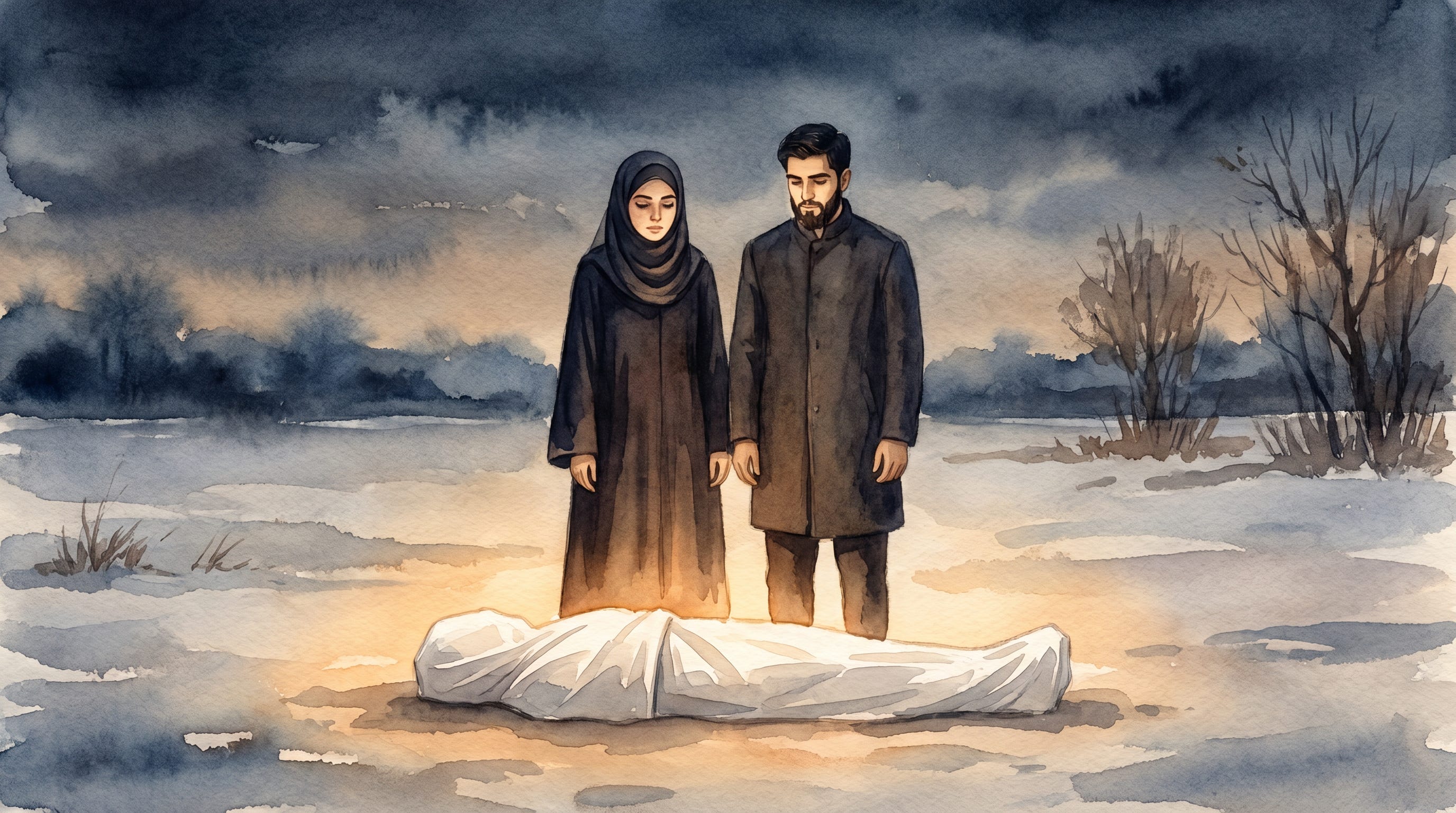
So the wait was lawful.
We have proven that.
But there is a second question — quieter than the first, and deeper.
The first question was about the law:
Was the waiting allowed?
This one is about the man:
Did the waiting cost him anything?
Four months, unburied.
Four months in the cold.
Four months while the world turned and the wars raged and his body lay waiting.
Did that diminish him?
Did something of his honour leak away in those long months — some dignity that a swifter burial would have preserved?
I want to answer that with the whole weight of our tradition behind me.
No.
Not by a single degree.
And to understand why, you have to understand what a believer’s body is in the eyes of God.
The Sanctity Greater Than the Ka’bah
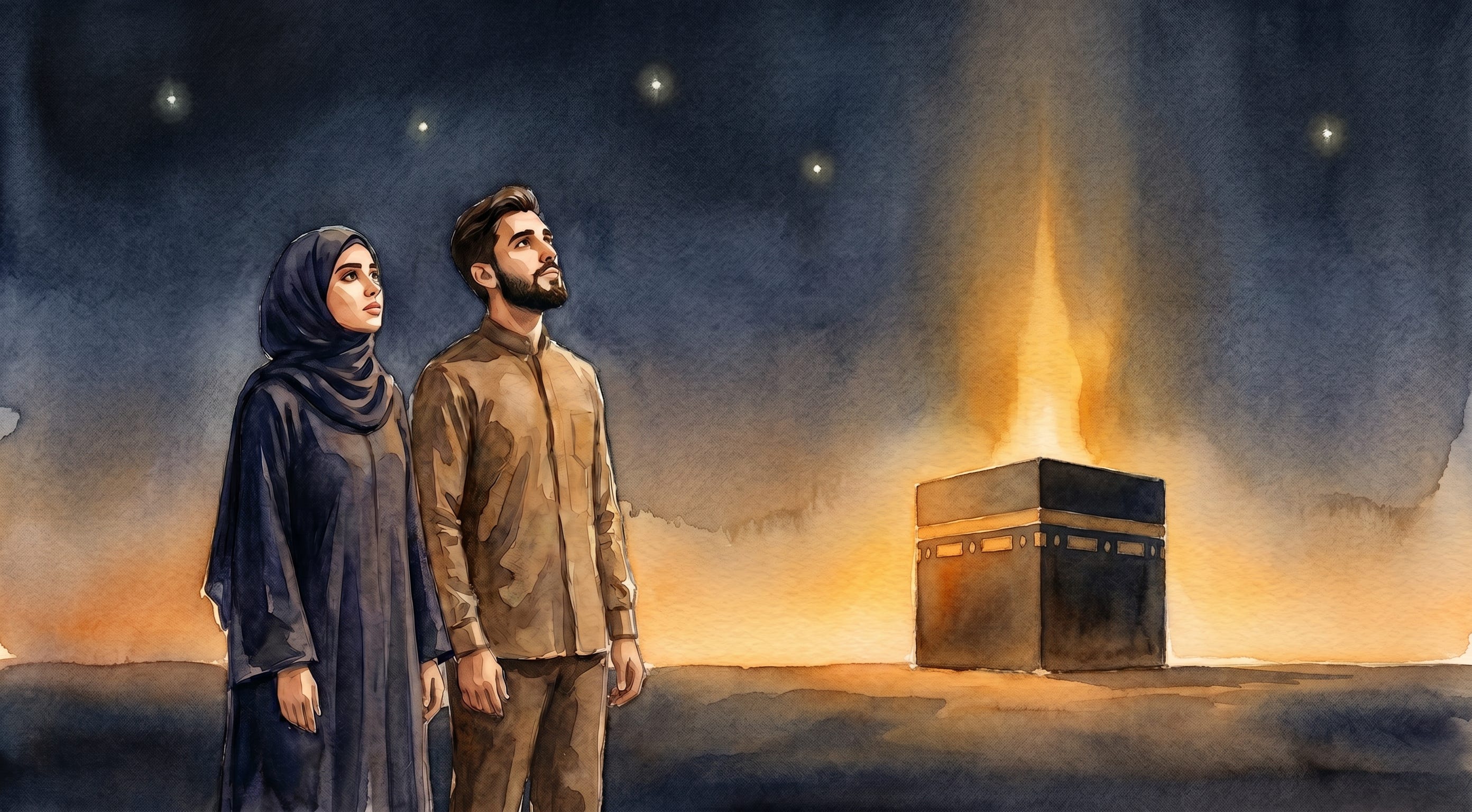
We think of the Ka’bah as the most sacred thing on earth.
And we are right to.
It is the House of God, the qibla — the lodestar — the prayer-direction — of every prayer, the heart toward which a billion faces turn.
And yet.
Listen to what the Messenger of God taught about the believer — and hold on to something, because this narration is steep.
Imam Ja’far al-Sadiq, peace and blessings be upon him, transmitted it, and al-Shaykh al-Saduq preserved it in a chapter whose very title is the teaching — “The Believer’s Sanctity is Greater than the Ka’bah”:
الْمُؤْمِنُ أَعْظَمُ حُرْمَةً مِنَ الْكَعْبَةِ
“The believer is greater in sanctity than the Ka’bah.”
— Imam al-Sadiq, al-Shaykh al-Saduq, al-Khisal
Greater than the Ka’bah.
Not equal to it.
Greater.
The stone we would give our lives to defend — the believer outweighs it before God.
And this is not one lonely narration, easily set aside.
In al-Kafi — in a sound, sahih chain — the believer is named among the very sanctities of God Himself.
Imam al-Sadiq, peace be upon him, said:
لِلَّهِ عَزَّ وَجَلَّ فِي بِلَادِهِ خَمْسُ حُرَمٍ: حُرْمَةُ رَسُولِ اللَّهِ، وَحُرْمَةُ آلِ رَسُولِ اللَّهِ، وَحُرْمَةُ كِتَابِ اللَّهِ، وَحُرْمَةُ كَعْبَةِ اللَّهِ، وَحُرْمَةُ الْمُؤْمِنِ
“God — Mighty and Majestic — has five sanctities in His lands: the sanctity of the Messenger of God, the sanctity of the Family of the Messenger of God, the sanctity of the Book of God, the sanctity of the Ka’bah of God — and the sanctity of the believer.”
— Imam al-Sadiq, al-Kulayni, al-Kafi
Hear the company the believer keeps in that sentence.
The Prophet.
The Ahlul Bayt — the Family of the Messenger of God.
The Qur’an.
The Ka’bah.
And the believer.
Set down in the same breath, among the five things God has made inviolable on His earth.
Now — if that is the sanctity of any believer; if the body of the most ordinary, anonymous servant of God carries an inviolability greater than the Ka’bah — then what shall we say of this believer?
The one who carried the wilayah for thirty-six years?
The one struck down in the path of God?
Then The Wait Was Not A Wound — It Was A Watch
So look again at those four months.
And see them now for what they were.
They were not four months of dishonour.
They were four months of guarding.
Four months in which an entire ummah stood watch over what had been entrusted to it — preserving it, protecting it, keeping it from every harm in a time of war — until it could be carried, with the whole world gathered, to the place where it belonged.
That is not neglect.
That is the highest honour a community can pay: to treat what is entrusted to it as a sacred trust, and to return it, at last, undiminished.
The body was the amanah.
And the ummah kept it.
The trust was kept.
The Proof Is Karbala Itself
And if you want the proof — the last, unanswerable proof — that no delay, and no indignity, can take a single thing from a body that God has honoured, then you do not need to search for it.
You already carry it in your heart.
Karbala.
When the Master of Martyrs fell — Imam Husayn ibn Ali, peace and blessings be upon him, the grandson of the Messenger of God — his body was not washed that day.
It was not shrouded.
It was not buried.
It was left upon the sand.
And worse than left.
The son of Sa’d called out for men who would ride their horses over the body of Imam Husayn — and ten of them came forward, and they trampled him until his chest and his back were crushed.
It is in al-Tabari.
It is in the Irshad of Shaykh al-Mufid.
It is in the Luhuf.
Our own books record it, and do not look away — and neither will we.
The most honoured body on the face of the earth — exposed, trampled, denied even a grave — for a day, and by some accounts longer.
And then the believers came.
A tribe of the Banu Asad, camped nearby at Ghadiriyya — they came out to that field, and they shrouded the seventy-two, and they prayed the funeral prayer over them, and they laid them in the earth:
Imam Husayn where his shrine now stands, his son Ali al-Akbar at his feet, his family gathered into a single grave at his feet, his brother Abbas where he had fallen.
Now hold the two images together in a single hand.
The body crushed into the dust on the tenth of Muharram.
And the shrine that fourteen centuries of believers have crossed deserts to reach — the grave our narrations say seventy thousand angels surround, weeping, until the Day of Standing.
Did the delay diminish him?
Did the trampling?
Did the days his body lay denied its grave take one single atom from the rank of the Master of Martyrs?
You know the answer.
The whole of your faith is the answer.
It took nothing.
It could take nothing.
And there is one detail more — and it belongs to tonight especially.
For our tradition holds that none washes and buries an Imam but an Imam.
So the one who presided over that burial in Karbala was Imam Husayn’s own son — Imam Ali ibn al-Husayn, Zayn al-Abidin, peace and blessings be upon him — brought to that field for it, and returned.
Imam al-Ridha himself laid down the principle, when the doubters asked him who had buried Imam Husayn: it was an Imam; and the same God who brought Imam al-Sajjad to Karbala, he said, brings an Imam to every burial that has need of one.
The same Imam al-Ridha beside whom our own leader now lies.
So here is the argument — and I can give you none stronger.
If the body of Imam Husayn — trampled, exposed, kept from its grave by the hatred of an enemy — lost nothing of its sanctity —
Then the body of our leader — washed, shrouded, prayed over in city after city, guarded through a lawful and deliberate wait, and laid at the last beside an Imam — could lose nothing of his.
What was done to Imam Husayn in hatred could not diminish him.
What was done for our leader in love, and in law, could never diminish him.
An Honest Word About Preservation
Now, some of you will have heard it said — and said with love — that his body was found untouched.
Preserved.
As though the very earth and air refused to act upon it.
And I have to be honest with you, because honesty is the method of this series, and I will not trade it for a comfort.
There is a narration — our Sunni brethren hold it — that the earth does not consume the bodies of the Prophets.
But notice two things.
It speaks of the Prophets.
And our leader, for all his greatness, did not claim and we do not claim for him the station of a Prophet.
So the narration, even where it is held, does not reach him.
And in our own books, I did not find a sound chain that says of the believer’s body what that report says of the Prophets’.
So I will not stand here and sell you a miracle I cannot source.
The truthful answer to “how was his body kept, all those months?” is the answer we already gave you, in the first point, from the rulings of our own scholars: it was lawfully preserved — kept from decay by permitted means, as the law allows when there is a reason to wait.
And do you know what?
That answer is better than the miracle.
Because the miracle would have made him the exception.
The law makes him one of us — a believer whose body was honoured exactly as the sacred law honours every believer’s body.
Guarded.
Preserved.
Returned with dignity.
We do not need to invent a wonder.
The truth is already a wonder: that God placed in the heart of His law such care for the dignity of a single human body.
And In Any Case — He Was Never Only A Body
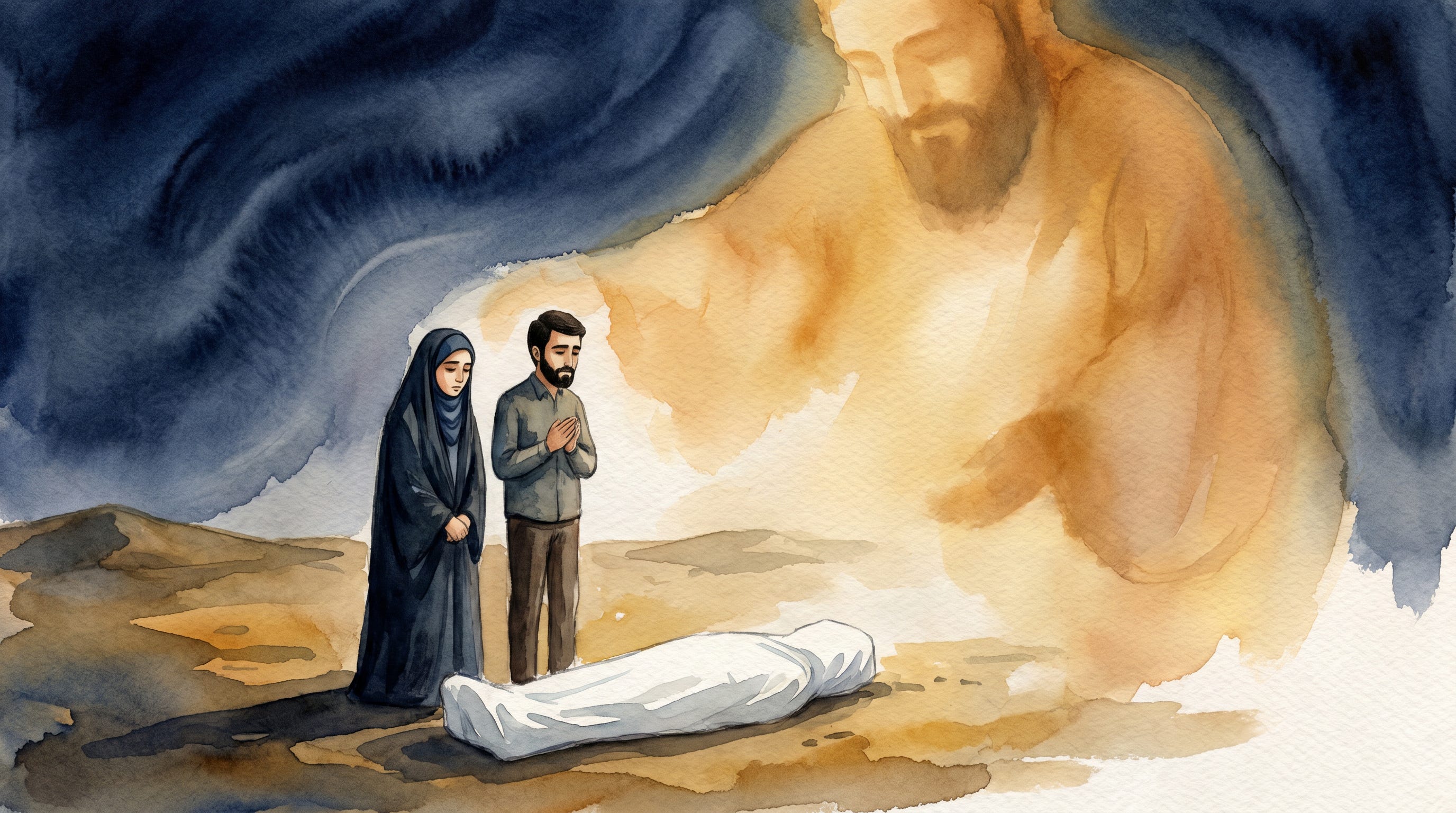
And here is the deepest reason the wait could not touch him.
Because the thing we have been calling “him” — the body in the cold, the body on the long road home — was never the whole of him.
It was never even the most of him.
Return, one last time, to the verse that has carried this entire series:
بَلْ أَحْيَاءٌ عِندَ رَبِّهِمْ يُرْزَقُونَ
“Rather, they are alive, with their Lord, receiving provision.”
— Qur’an, Surah Aal Imran (the Chapter of the Family of Imran) #3, Verse 169
He is alive.
He has been alive every single day of these four months.
While we wept over a body, he was with his Lord — receiving provision, rejoicing, gazing back at us.
His life never hung on the timing of a burial.
His honour was never in the keeping of the calendar.
The grave does not hold him; it never could; it only receives what he has already left behind.
The waiting could not diminish him — because the waiting only ever touched the part of him he had already finished with.
Lesson for Today
So here is what I want you to take from this second point.
How a people treats what is entrusted to it in the waiting — that is the measure of its faith.
And understand: two trusts were placed in our hands the day he was taken.
The first was his body.
And the ummah guarded it, through four long months, and laid it down this week with honour.
That trust is discharged.
But the second trust is not laid in any grave.
The second trust is his testimony.
His path.
The work he gave his life to.
The wilayah he never set down.
And that trust has been handed to us.
The first trust the earth took back a couple of days ago.
The second one we may never set down — not tomorrow, not ever.
So be the keepers of the second amanah.
Say their names.
Carry the work.
Refuse the erasure.
This is the whole purpose of themartyr.net, and of every gathering like this one.
Guard the trust that was guarded for you.
The trust was kept.
Now keep it.
Point 3 — The Homecoming
We have spoken about the wait.
We have spoken about the trust.
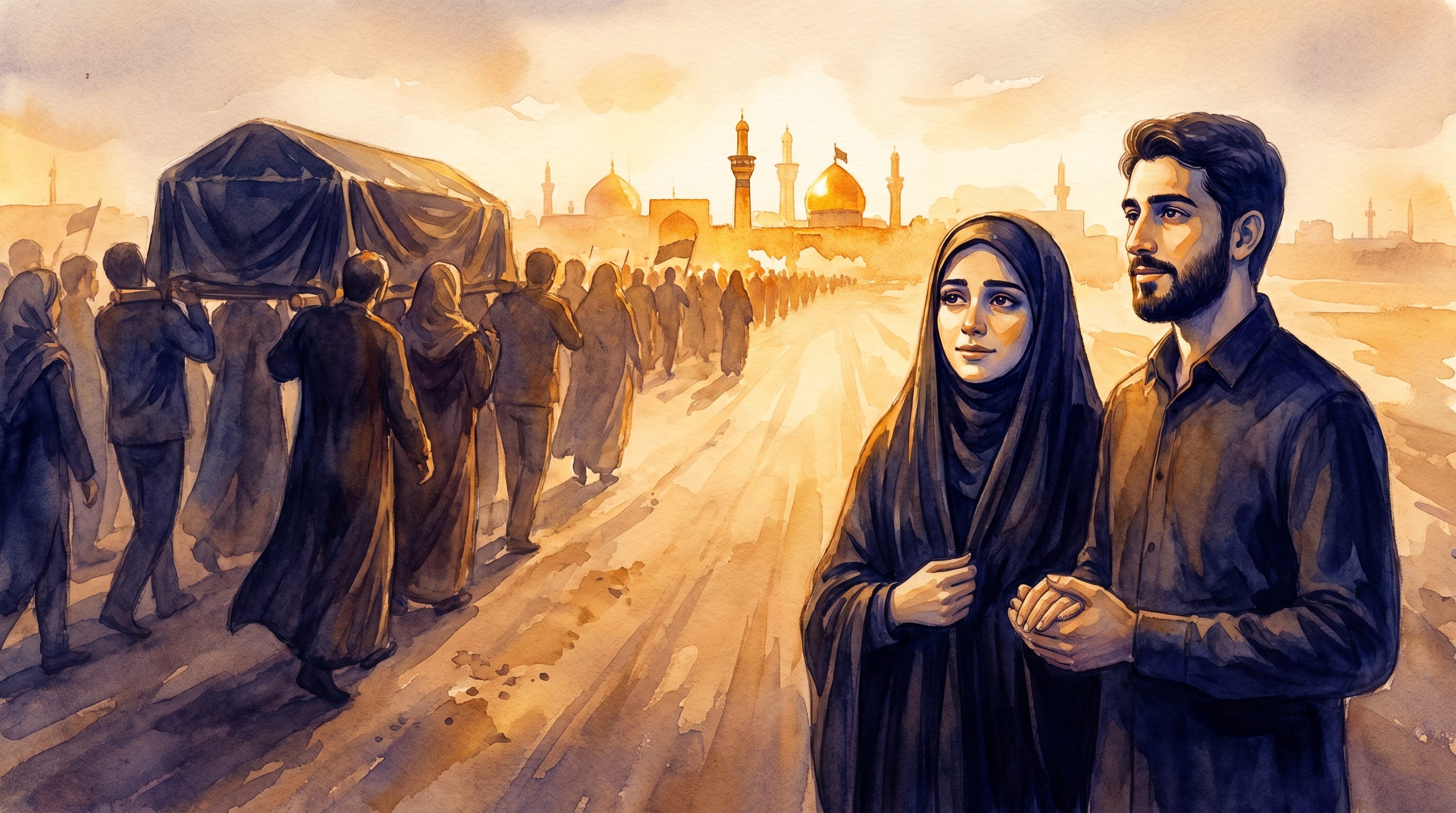
Now I want to speak about the road — the road he travelled these last days, while the whole world watched.
Because he did not go quietly into the ground.
His body moved — carried on the shoulders of millions, through the cities of the people of the House.
And I want you to see that road for what it was.
It was not a journey to a grave.
It was a journey home.
Buried In The Neighbourhood Of An Imam
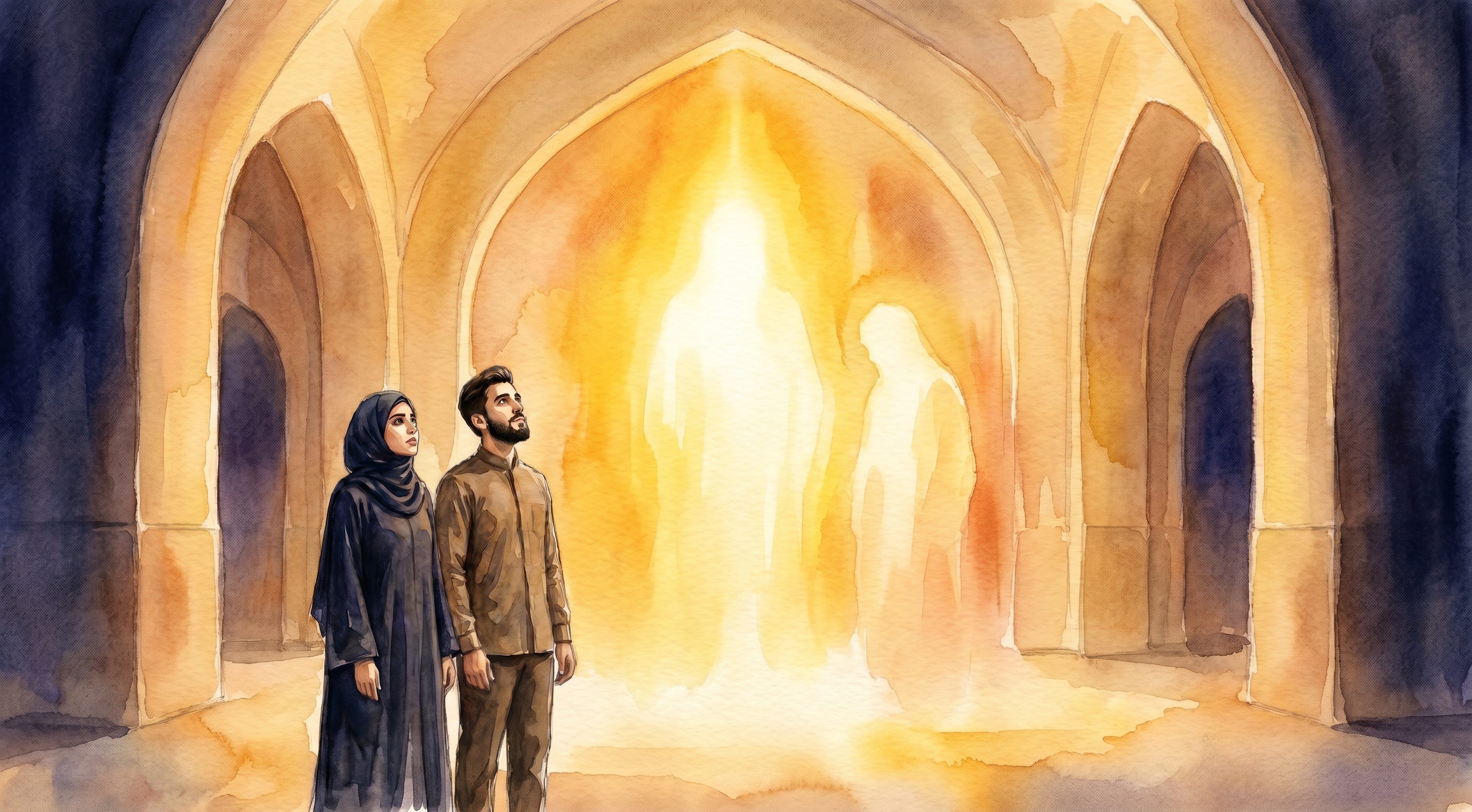
He has been laid to rest in Mashhad, beside the eighth of our Imams — Imam Ali ibn Musa al-Ridha, peace and blessings be upon him.
And our scholars have a beautiful word for that: jiwar.
Neighbourhood.
To be buried as the neighbour of one of the friends of God.
We said in the first point that the law does not merely permit burial near the awliya — it loves it; it counts it among the recommended places to be laid.
So his resting place is not an accident of geography.
It is the last testimony of a man’s heart — of where, in the end, he wished to lie.
But there is something here that goes deeper than honour.
Something that turns this whole night on its hinge.
Because Imam al-Ridha, peace and blessings be upon him, knew what it was to be buried far from home.
He was carried from Madinah to the far edge of Khurasan, to die there by poison — wronged, a stranger in a strange land.
And he foretold it himself.
He said:
إِنِّي سَأُقْتَلُ بِالسَّمِّ مَسْمُوماً مَظْلُوماً، وَأُقْبَرُ فِي دَارِ غُرْبَةٍ
“I shall be killed by poison, wronged, and buried in a land of estrangement.”
And then — listen — he made a promise about that very estrangement:
فَمَنْ زَارَنِي فِي غُرْبَتِي وَجَبَتْ لَهُ زِيَارَتِي يَوْمَ الْقِيَامَةِ
“So whoever visits me in my estrangement — my visitation becomes binding for him on the Day of Resurrection.”
— Imam al-Ridha, recorded by al-Saduq in Uyun Akhbar al-Ridha
Ghurbah.
Estrangement.
The condition of being far from where you belong.
And do you see what God has done?
Our leader spent four months in an estrangement of his own — not the estrangement of distance, but the estrangement of the long, unburied wait; the believer kept from his grave by the violence of an unjust world.
And now, out of that estrangement, he has been carried home — to rest beside the Imam of Estrangement.
The one who knows exactly what it is to be the stranger, wronged and far from home.
The one who promised to receive, on the Day of Standing, everyone who comes to him there.
The stranger comes to rest beside the Stranger.
And the Imam al-Ridha himself, peace and blessings be upon him, told us the truth about every one of his own family:
وَاللَّهِ مَا مِنَّا إِلَّا مَقْتُولٌ شَهِيدٌ
“By God, there is not one of us but is slain — a martyr.”
— Imam al-Ridha Uyun Akhbar al-Ridha
So the host of this burial is himself a martyr.
A wronged one welcomes a wronged one.
A witness receives a witness.
The Road Runs Through The Whole Of The House
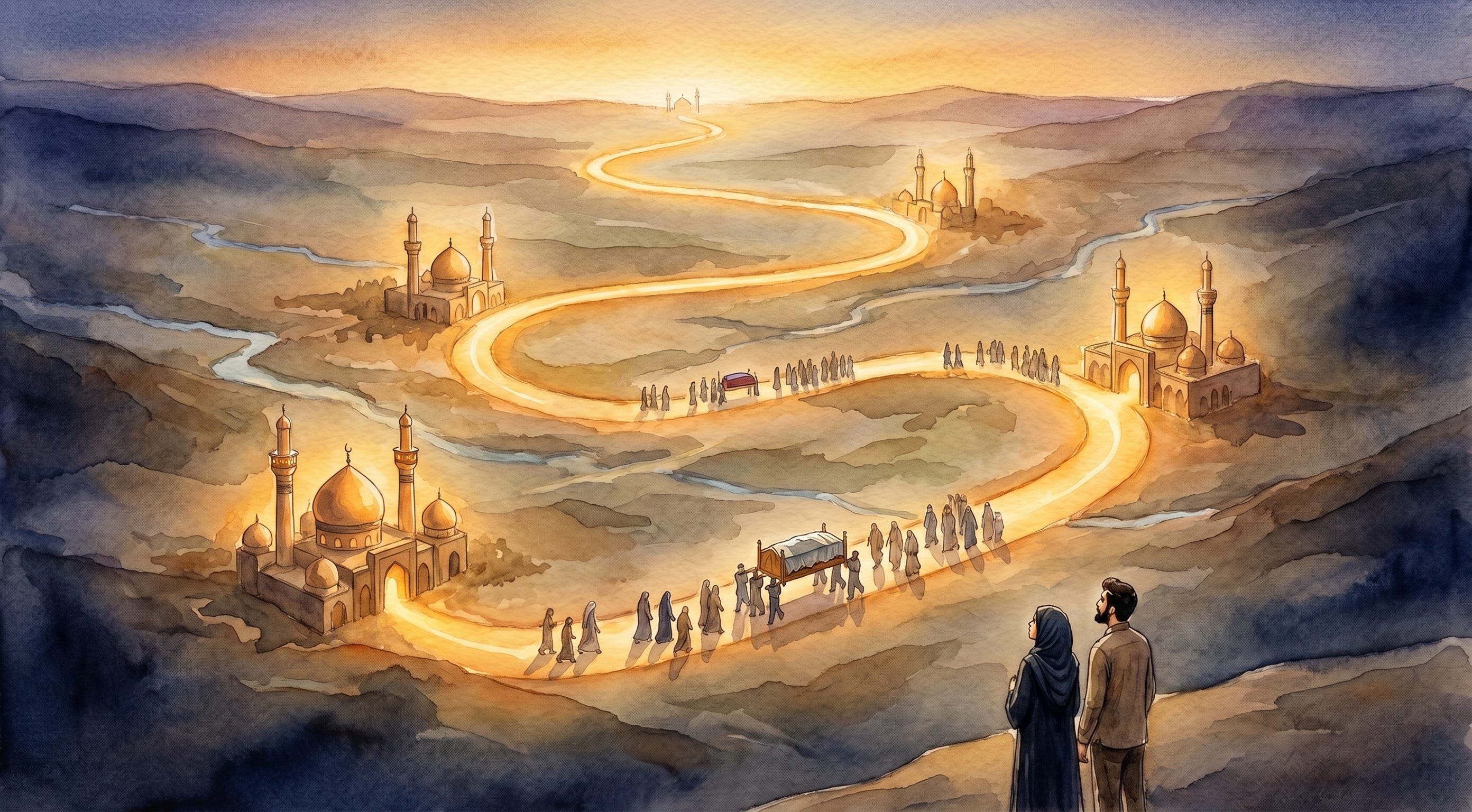
And look at the road itself.
He was not carried straight to Mashhad.
He was carried past Shah Abdul Adheem in Tehran.
Past Imam Khomeini, between Tehran and Qom.
Past Sayyedah Fatimah al-Ma’soumeh in Qom.
And then on, into Iraq — past Imam Ali in Najaf, past Imam Husayn in Karbala, past the Imams al-Kadhim and al-Jawad in Kadhimiyyah, past the Imams al-Hadi and al-Askari in Samarra — and only then home, to Imam al-Ridha.
One after another of the House of the Prophet.
Past the father, and the son.
To rest beside the grandson.
It was not a route a committee designed.
It was a procession through the family of the Prophet — as though, before he could be allowed to rest, he had first to greet every one of them.
Not a journey to a grave.
A journey home, through the House of the Messenger of God.
And when at last the earth received him, it received him under the oldest words we have for loss:
إِنَّا لِلَّهِ وَإِنَّا إِلَيْهِ رَاجِعُونَ
“Surely we belong to God, and surely to Him we return.”
— Qur’an, Surah al-Baqarah (the Chapter of the Cow)#2, Verse 156
To Him we return.
Not “from us he is taken.”
To Him he returns.
The deposit, given back to the One who left it with us.
Laid Down On The Night Of The Witness
And now the detail that, for me, holds the whole sermon in a single fold of the calendar.
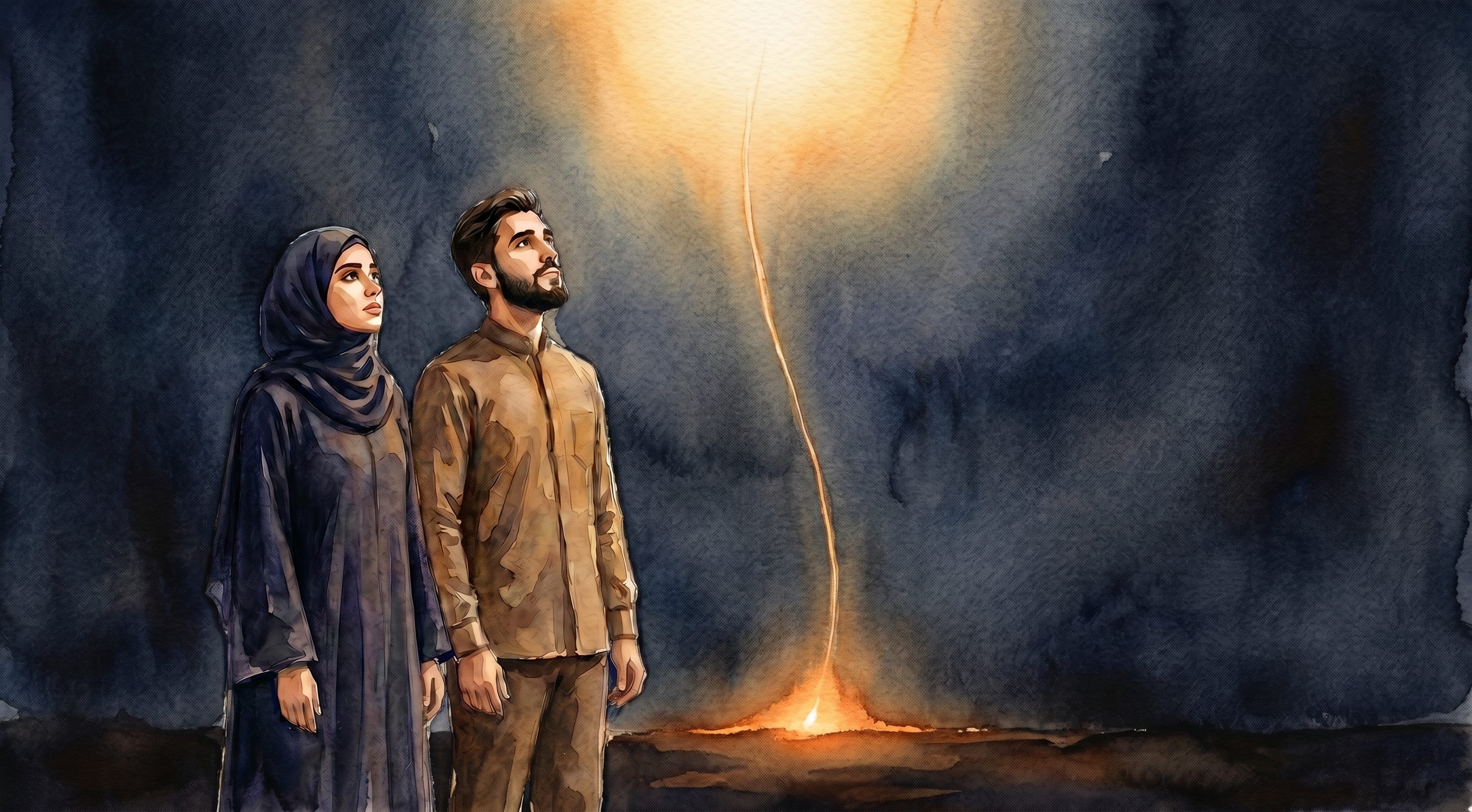
He was buried two days ago — on Thursday, the 9th of July 2026 — on the eve of the martyrdom of Imam Ali ibn al-Husayn, Zayn al-Abidin, peace and blessings be upon him.
Imam al-Sajjad.
The one who survived Karbala.
When the men of Imam Husayn’s camp were slaughtered, he was the one God kept back — sick, barely alive, the thread that did not snap.
And from the ashes of a butchered household, he rose to carry the testimony of Karbala forward across fifty years of grief.
He is the proof that the chain does not break even when the men are slain.
The survivor who became the witness.
And our leader was laid in the earth on the eve of his night.
And then yesterday — the very next day — the whole ummah mourned the passing of that same Imam.
And tonight, the night after, we gather.
The witness, laid to rest on the eve of the Witness who carried the trust onward — and we, gathered in the days just after, to take up what he left.
The One Who Now Carries It — Through His Own Grief
And this is no longer only a parable.
It is being lived, in front of us, by a single bereaved man.
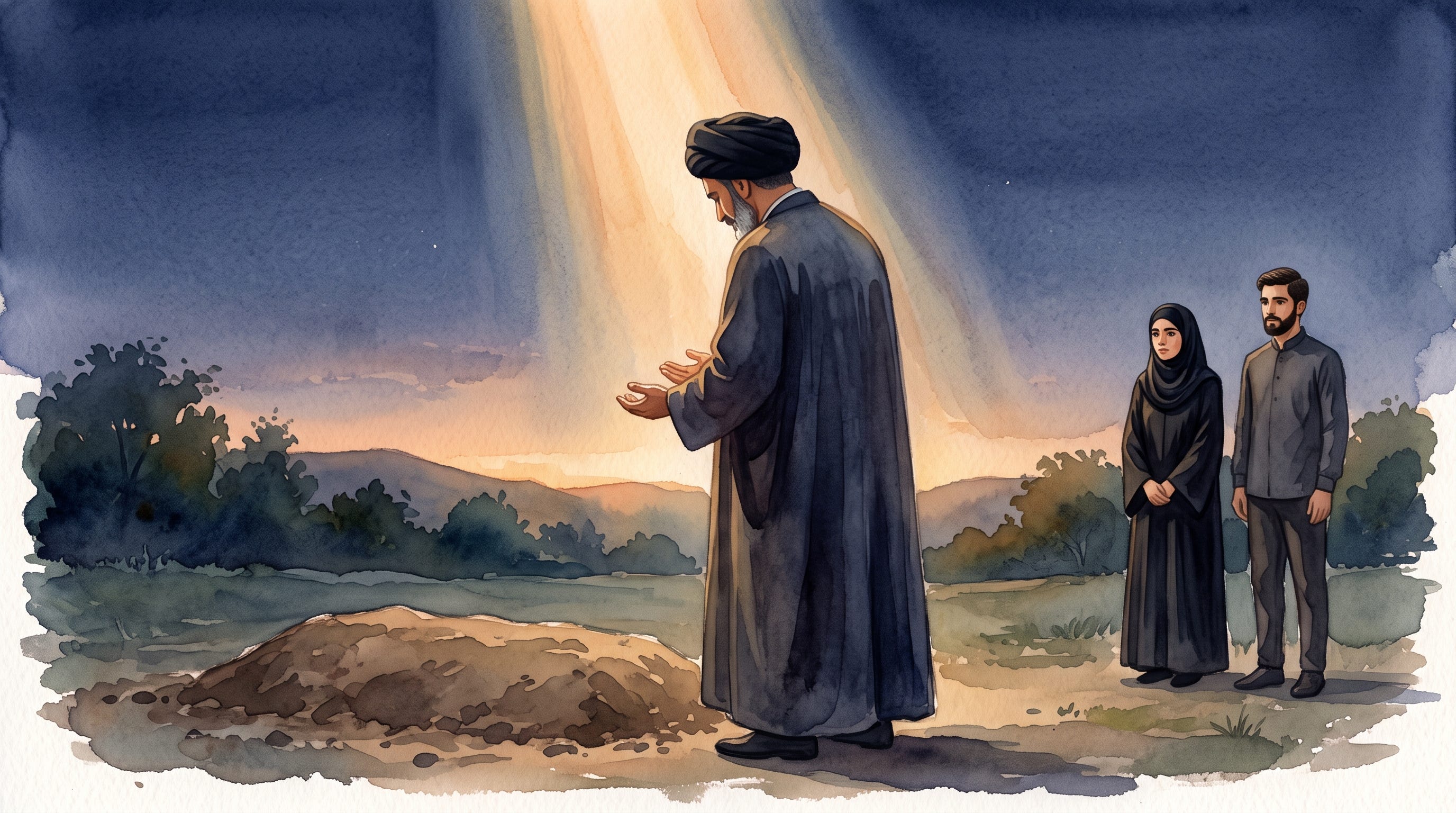
The trust of the wilayah has passed to Imam Sayyed Mujtaba al-Husayni al-Khamenei — appointed by the Assembly of Experts within days of the strike.
But understand what this man carries.
He was wounded in the same attack.
And he does not bury only his father.
He buries his wife.
His sister.
His sister’s child — a girl of fourteen months.
His brother-in-law.
An entire household, laid down at once.
And from within that emptied home, he takes up the guardianship of the Ummah.
Do you see it?
It is Karbala’s own pattern, repeating.
Like the son of Imam Husayn who rose from the wreckage of his slaughtered family to carry the message, Imam Mujtaba lifts the wilayah out of his own grief.
So when we speak of allegiance to the new Wali, understand whose hand it is that now receives the trust.
It is a wounded hand.
A grieving hand.
A hand that has just lowered its own beloved into the ground.
That does not weaken the call to stand with him.
It is the very reason to stand with him.
What The Trust Now Asks Of The Living
So the body comes home.
The trust passes on.
And the question turns, at last, to us.
What does the living ummah do now?
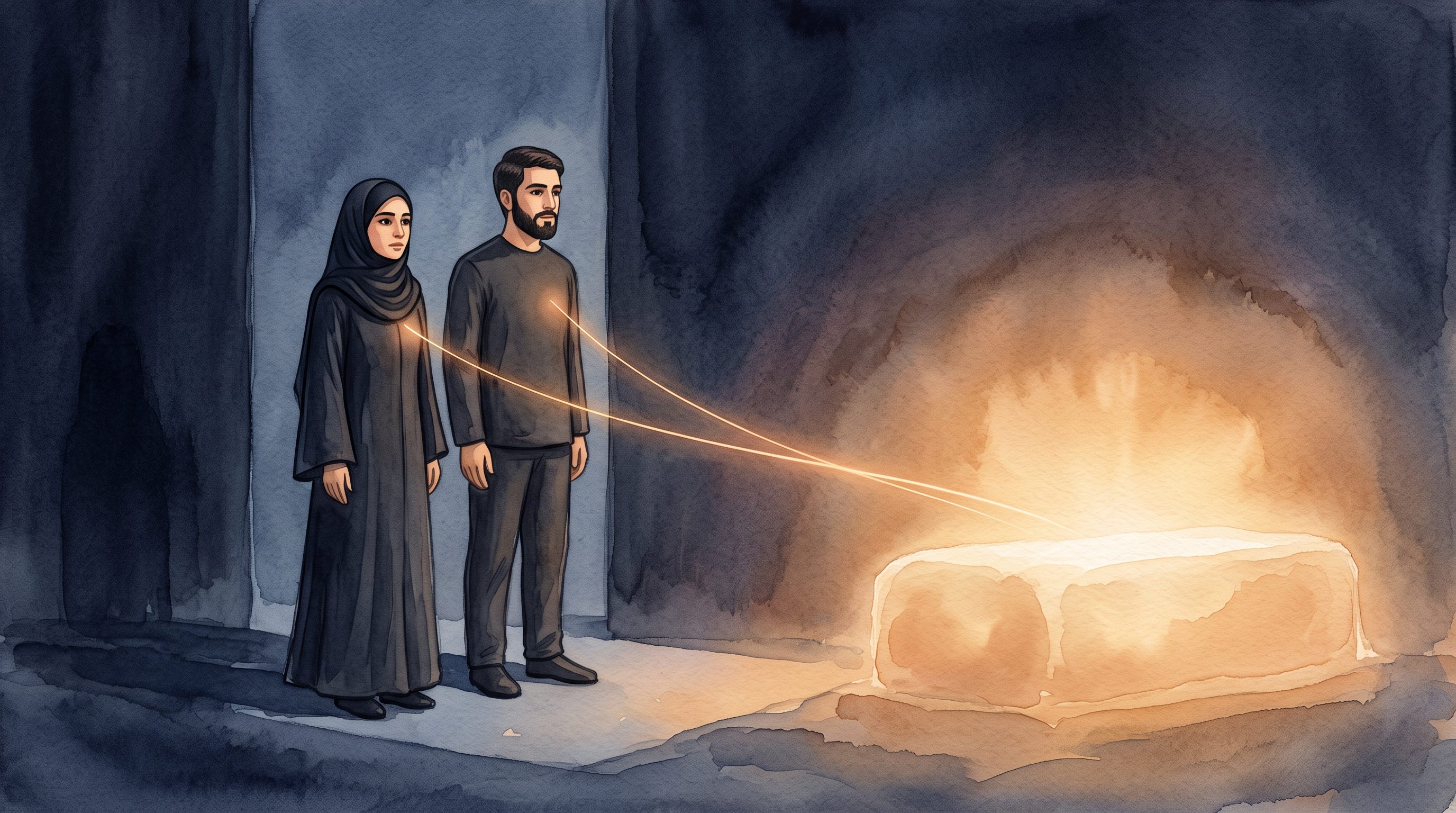
There is a bond that does not end at the grave — it begins there.
We call it ziyarah — visitation.
And the Imam al-Ridha, peace and blessings be upon him, taught us that it is not an optional sentiment.
It is the fulfilment of a covenant:
إِنَّ لِكُلِّ إِمَامٍ عَهْداً فِي عُنُقِ أَوْلِيَائِهِ وَشِيعَتِهِ، وَإِنَّ مِنْ تَمَامِ الْوَفَاءِ بِالْعَهْدِ زِيَارَةَ قُبُورِهِمْ
“Every Imam has a covenant upon the necks of his friends and his Shia; and part of the perfect fulfilment of that covenant is visiting their graves.”
— Imam al-Ridha, Uyun Akhbar al-Ridha
A covenant upon our necks.
The amanah again — now in the form of a bond we are asked to keep by going to them.
But here I have to stop you.
Because everything in this final point depends on what comes next.
We have to ask — visiting of what kind?
What The Ziyarah Is — And What It Is Not
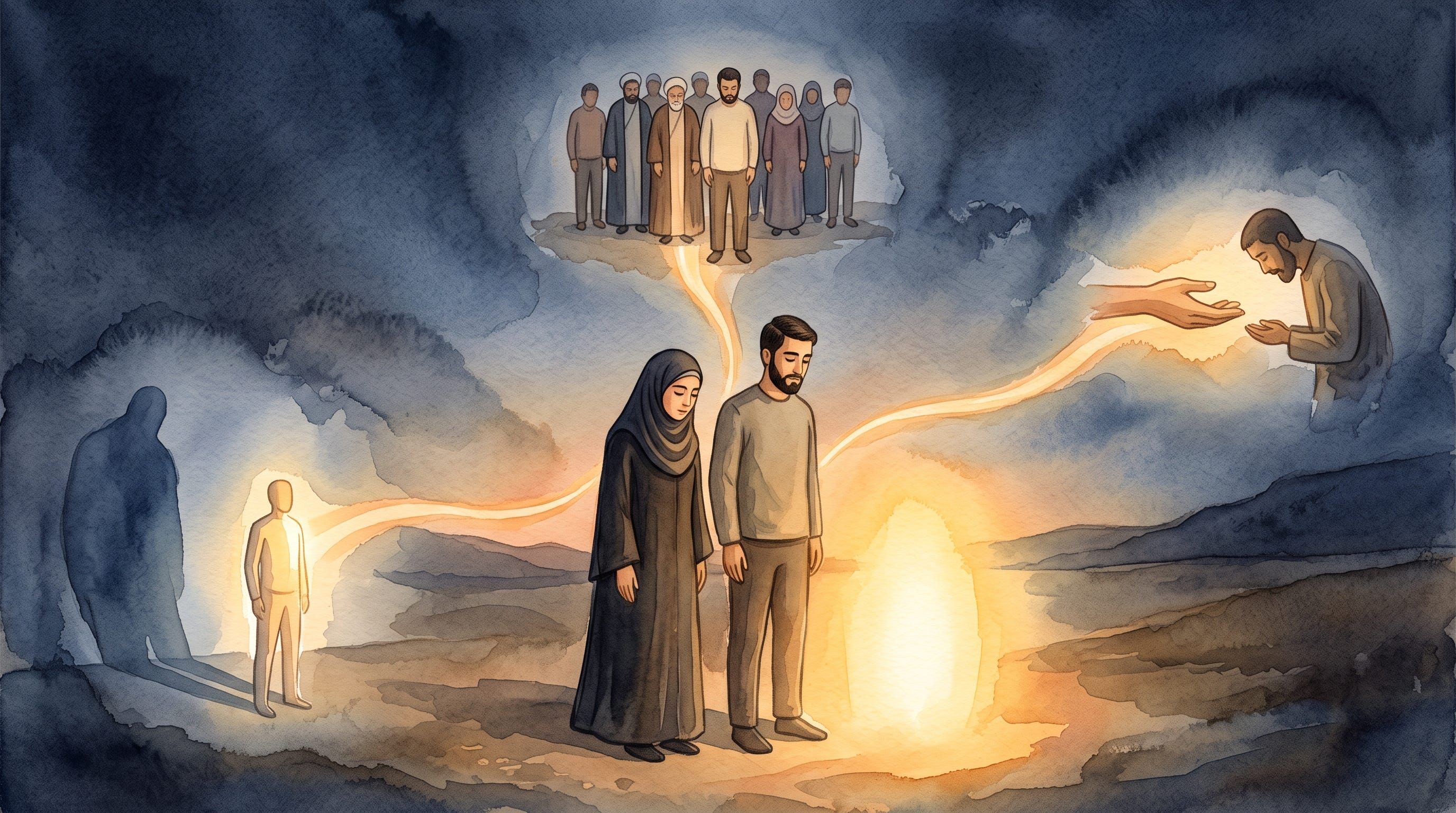
Because there is a way of visiting that is no visitation at all.
There is a way of standing at the grave of a martyr that the martyr would not recognise.
We have all seen it.
The visit as a stamp in a passport.
The visit as a photograph.
The visit as a marker of status — I have been; look where I stood.
The visit as a transaction — I have made my Hajj, I have touched the shrine of Husayn, and now my account is settled and heaven is owed to me.
I want to say this as plainly as I can: that is both a mistake and a misguidance.
To travel to the place of one who gave everything for God — and to go there for the sake of yourself; for your standing, for your story, for a private receipt against your sins — is to miss the entire point of why he is worth visiting at all.
So what is the point?
The ziyarah texts themselves tell us.
Read them — really read them — and you find that when we stand before an Imam, we do not list his miracles.
We bear witness to why he was worthy.
And it is the same testimony at every grave:
أَشْهَدُ أَنَّكَ قَدْ أَقَمْتَ الصَّلَاةَ، وَآتَيْتَ الزَّكَاةَ، وَأَمَرْتَ بِالْمَعْرُوفِ، وَنَهَيْتَ عَنِ الْمُنْكَرِ
“I bear witness that you established the prayer, and gave the alms, and enjoined the good, and forbade the evil.”
— the witness we repeat across the visitations of the Imams (Ziyarat Warith, and the ziyarat of the Imams)
That is the criterion.
That is what we are saluting.
And to visit them is to pledge ourselves to that same path.
So look closely at what we are pledging.
You established the prayer.
Not merely prayed — established.
There is a world between the two.
To pray is to stand before God yourself.
To establish the prayer is to build the conditions in which a whole community can stand before God — to raise a society in which the prayer is alive in the street, not just performed behind a closed door.
It is not the same as putting up a mosque.
It is making a world in which the mosque means something.
You gave the alms.
And the alms are no afterthought to the prayer — they are bound to it.
Think of the man who cannot feed his children.
Can he stand in prayer with a still heart?
His body is on the prayer-mat and his mind is at the empty table.
So to lift the poor is to protect the prayer — to clear the ground on which a person can finally turn to God without his hunger pulling him away.
You enjoined the good, and forbade the evil.
And here we must be most careful of all — because this is the duty we have most thoroughly shrunk.
We have taken the towering prophetic command to stand against wrong, and we have folded it down small — until it fits in a kitchen, until it is about a shoe.
We imagine the munkar we are called to confront is the music playing on the bus, or the man eating in the market in Ramadan.
And meanwhile — Imam Khomeini, may God rest his pure soul, thundered this from his exile — meanwhile we stand oblivious to the far greater evils: the tyranny, the plunder, the murder of nations, the empires that bomb schoolchildren and call it an accident.
That is the amr bil-ma’ruf the Imams established.
Not the policing of small private things.
The standing — at real cost — against the munkar of the powerful.
We opened this wound at length in our Ashura and Arba’een gatherings; tonight it is enough to name it.
That is the path the ziyarah asks us to walk.
To establish the prayer.
To lift the poor.
To stand against the wrong of the strong.
And The One Thing That Makes it Real: The Intention
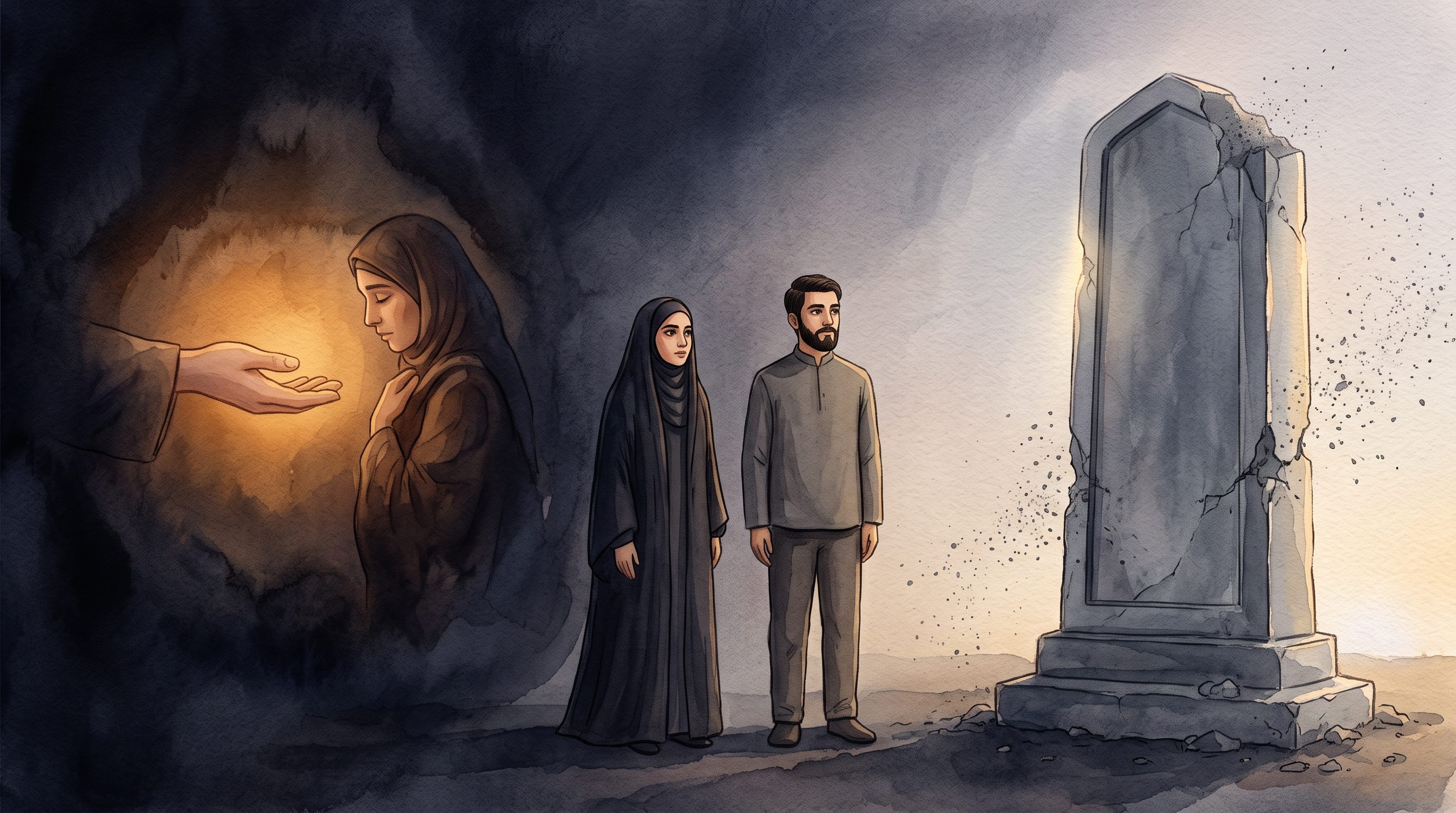
But even all of that can be hollowed out from within — if it is done for the wrong reason.
So let me give you the key that unlocks the whole of it.
Listen to how God describes the household of the Prophet, in Surah al-Insan — the Chapter of Humanity, when they gave away their own food to the poor, the orphan, and the captive:
إِنَّمَا نُطْعِمُكُمْ لِوَجْهِ اللَّهِ لَا نُرِيدُ مِنكُمْ جَزَاءً وَلَا شُكُورًا
“We feed you only for the Face of God; we desire from you no reward, and no thanks.”
— Qur’an, Surah al-Insan (the Chapter of Humanity) #76, Verse 9
Only for the Face of God.
And our commentators notice something breathtaking about this verse.
The Ahlul Bayt did not even say these words aloud to the poor at their door.
They did not announce their sincerity.
They concealed it in their hearts — and God Himself reached in, and disclosed what they had hidden, and wrote it into His eternal Book.
That is the summit of ikhlas — sincerity so pure it does not even want to be seen being sincere.
Now hold that next to the other thing we know so well: the name carved into the marble of the new wing of the mosque.
The donor’s name printed on the cover of the Qur’an.
The plaque.
The mention.
The credit.
The kudos.
I am not telling you those things are forbidden.
I am telling you they are a different universe from li-wajhi-llah — for the Face of God.
And here is why it matters more than we think.
There are people who treat the whole of their faith like a bank.
A prayer earns ten units of reward; in congregation, twenty-five times that.
And so they pile up credit — millions of units, billions — a fortune of merit stored in heaven.
And there is a terrible danger hidden in that arithmetic.
Because suppose a man spends his life so busy accumulating — so consumed with building his balance — that he never notices the brother starving at his gate; or that, somewhere in the piling-up, his worship quietly became about him — his standing, his name, his greatness — a small and almost innocent-seeming idolatry of the self.
Such a man may die with a vast fortune of merit stored up in heaven.
And no way to reach it.
Because he is not there.
God warns us of exactly this, and the image is merciless:
وَقَدِمْنَا إِلَىٰ مَا عَمِلُوا مِنْ عَمَلٍ فَجَعَلْنَاهُ هَبَاءً مَّنثُورًا
“And We shall turn to whatever deeds they did, and make them scattered dust.”
— Qur’an, Surah al-Furqan (the Chapter of the Criterion) #25, Verse 23
Scattered dust.
A lifetime of deeds — and a single wrong intention turns the whole heap to dust on the wind.
This is why the Imams told us:
نِيَّةُ الْمُؤْمِنِ خَيْرٌ مِنْ عَمَلِهِ
“The intention of the believer is better than his deed.”
— al-Kulayni, al-Kafi
Better than the deed.
Because the deed without the intention is dust — and the intention is the thing that makes the deed worth anything at all.
So when we feed, when we give, when we pray, when we stand — let it be as Imam Husayn and Sayyedah Zaynab did everything: qurbatan ila-llah.
For nearness to God.
For His Face.
Wanting no reward and no thanks.
Then Near Or Far No Longer Matters
And now — here is where it all comes home.
If that is what ziyarah truly is — not tourism, not a transaction, but a covenant to become like the one you are saluting, undertaken purely for the Face of God — then listen to the freedom in it.
Twenty million walked to Mashhad with his body these past days.
And blessed are they.
But most of us are not among them.
Most of us are a thousand miles away, in our own rooms, on the wrong side of the world.
And it does not matter.
Because if your heart goes to him in truth — if you stand where you are and take up his path for the Face of God — then you have made the visitation.
The fruit of ziyarah is not the dust of the road on your feet.
The fruit of ziyarah is that you become more like the one you came to salute, and so you draw nearer to God.
And that — the believer alone in his room, taking up the path — is a ziyarah as real as any made by the millions on the road.
Lesson for Today
So here is the charge of this third point, and of the whole night.
Twenty million carried his body to Mashhad.
But the body is not the trust.
Be his pallbearers in the thing that matters.
Visit him — at the shrine, or from your own room, it is the same — by taking up what he carried: establish the prayer where you stand, lift the poor at your own gate, and stand against the munkar of the powerful, whatever it costs you.
And do it for the Face of God alone.
Near or far, with the right heart, you keep the trust.
The trust was kept.
Now carry it home.
The One Command
Three nights, across this series, we have stood together.
On the night of the Chain, we said:
The institution does not break.
The wilayah outlives any man.
On the night of the Testimony, we said:
The message does not die.
The witness only grows louder.
And tonight, the Trust:
The amanah is kept, and carried home — the body returned to its Lord, and the covenant placed now in our hands.
The chain unbroken.
The testimony unbroken.
The trust unbroken.
And if you ask me — after all of it, after the law and the sanctity and the long road home — what is the one thing I am asking of you, the single thing to carry out of this room, I will not give you my own word for it.
I will give you the cry the believers have raised over his very coffin.
The slogan of his farewell.
Qiyam lillah.
Qumu lillah.
Rise for God.
And it is not a slogan someone invented for a banner.
It is a command of the Qur’an.
God says:
قُلْ إِنَّمَا أَعِظُكُم بِوَاحِدَةٍ ۖ أَن تَقُومُوا لِلَّهِ مَثْنَىٰ وَفُرَادَىٰ
“Say: I admonish you with but one thing — that you rise for God, in twos and singly.”
— Qur’an, Surah Saba (the Chapter of Sheba) #34, Verse 46
One thing.
Only one.
Out of the whole of the religion,
God reduces the admonition to a single word:
Rise — for God.
And hear how He says it: mathna wa furada.
In twos and singly.
Together — and alone.
Do you understand what that means tonight?
The together is the twenty million on the road to Mashhad — the ummah risen as one body.
But the alone — furada, one by one — that is you.
In your room.
On the far side of the world.
Rising for God where no one sees you, with no procession around you, no crowd to carry you.
Both are the rising.
Both are commanded.
The millions on the road, and the lone believer who takes up the path for the Face of God — mathna wa furada — and neither is greater than the other.
This is the whole of it.
The ziyarah of the path is the qiyam lillah.
To rise for God is to keep the trust.
So we will turn now to remember him, and those who fell with him, and to ask God to make us worthy.
And then our brother will raise his voice in the hymn you came to hear — and when he sings let us rise, let it be your answer.
We have heard the command.
Qumu lillah.
Now let us rise.
Eulogy and Supplication
Now I want to set the teaching down.
No more proofs.
No more rulings.
No more lessons.
Just remembrance.
Tonight of all nights — with him newly returned to the earth, two days laid to rest — I want us to say their names; to let their names fill this room — because, as we have learned across this whole series,
Saying the names is itself the keeping of the trust.
Part One — The Naming
There is a chain of blood that runs through the whole of human history, and tonight he has taken his place in it.
It begins with Abel — the son of Adam, the first to be killed for refusing to raise his hand against God’s command.
It runs through every prophet hunted and every messenger struck down.
It gathers, at its heart, the plain of Karbala — Imam Husayn ibn Ali, peace and blessings be upon him, and the seventy-two who fell beside him.
And it does not stop there.
It runs on, unbroken, into our own days.
We remember Sayyed Abbas al-Musawi — who built the resistance from nothing, and was martyred with his wife and his child.
We remember Hajj Imad Mughniyeh — the shadow the empires hunted for thirty years.
We remember Hajj Qasim Soleimani — the general who wept at the grave of Imam Husayn, struck down by a coward’s drone on the road from the airport.
We remember Sayyed Hassan Nasrallah — the voice that never once trembled, buried, as our leader is now buried, only after a long and patient wait.
And tonight, at the head of that procession, we lay our own leader: Imam Sayyed Ali al-Husayni al-Khamenei — al-wali, al-faqih, al-mujahid, al-shaheed.
One chain.
From Abel to this very night.
Each link a witness.
Each name a trust we refuse to let fall silent.
And now, my master — let me speak to you.
To you, who carried the wilayah for thirty-six years and never set it down.
To you, who buried your generals one by one and did not break.
To you, who taught a whole ummah to put Imam Husayn at the centre of everything — and who, in the very manner of your burial, were made to step aside for Imam Husayn one last time.
You did not fall on a field of battle, sword in hand.
You were struck in your own place, by a fire sent from far away — al-maqtul zulman, the one slain in injustice.
And the law washed you, and wrapped you in white, and carried you home past Imam Ali, and past Imam Husayn, to rest beside Imam al-Ridha, on the eve of the one who survived Karbala to carry it forward.
You were not alone when you fell.
A household was laid down with you, and we name them, gently, and we do not linger — for the grief is too near.
Your daughter, Sayyedah Bushra.
Your son-in-law, Dr. Misbah al-Huda Baqeri — the husband of your daughter Hoda, whom God spared.
Your daughter-in-law, Sayyedah Zahra Haddad-Adel — the wife of your son, our new leader.
And your granddaughter.
Zahra. Fourteen months old.
We will say it once, and let the silence carry the rest.
And with you fell the commanders of the Ummah — the men who stood at the frontiers and did not yield.
We will not call their roll tonight; there are too many, and the night is long.
We gather them, instead, into the words of Imam al-Sajjad himself — for it is his night, and there is no better tongue tonight than his.
He prayed, for exactly such men:
اللَّهُمَّ صَلِّ عَلَى مُحَمَّدٍ وَآلِهِ، وَحَصِّنْ ثُغُورَ الْمُسْلِمِينَ بِعِزَّتِكَ، وَأَيِّدْ حُمَاتَهَا بِقُوَّتِكَ
“O God, bless Muhammad and his Household, and fortify the frontiers of the Muslims through Your might, and strengthen their defenders through Your power.”
— Imam Ali ibn al-Husayn, Zayn al-Abidin, al-Sahifa al-Sajjadiyya, the Supplication for the People of the Frontiers
And we remember, at the last, the smallest of them — the ones who never had the chance to choose.
On the same morning he was taken — the first morning of the war — far to the south, in the town of Minab, a missile fell on a school called the Good Tree, the Shajareh Tayyebeh.
One hundred and sixty-eight children, with their teachers, were martyred — among them a teacher carrying a child not yet born.
The greatest of the ummah and its very least — its Leader and its schoolchildren — gathered into martyrdom on a single morning.
We told their story in full in our Ashura and Arba’een nights; tonight we only fold them, with their teachers and their unborn, into the same mercy that holds the children of Karbala.
All of them — every name we have spoken, and every name only God knows —
بَلْ أَحْيَاءٌ عِندَ رَبِّهِمْ يُرْزَقُونَ
“Rather, they are alive, with their Lord, receiving provision.”
— Qur’an, Surah Aal Imran (the Chapter of the Family of Imran) #3, Verses 169–170
Part Two — The Turn

And now we turn to the One who received them.
O our Lord — You told us the martyrs are alive with You; that they are provided for; that they rejoice.
We believe You.
We cling to this tonight, because without it the weight of what has been taken would be more than we could carry.
So we do not ask You to comfort our leader — he is with You, and needs nothing from us.
We ask You to comfort us, the ones left behind, who must now carry what he carried.O our Lord — Accept him.
Accept the thirty-six years, and the eight years of war, and the decades of siege, and every loss he bore without bending.
Raise him with the witnesses he loved — with Imam Husayn, whom he set before himself even in his grave; with Imam Ali, and with Imam al-Ridha, in whose neighbourhood he now rests.
And reward the patience this long wait demanded — of him, and of an ummah that guarded its trust for four months and returned it with honour.O our Lord — For the household laid down with him — his daughter, his children’s children, the infant of fourteen months — gather them into the arms that hold Ali al-Asghar and the children of Karbala.
And for his wife and his daughter whom You spared, and for every heart broken in that house, send down a patience worthy of the family of the Prophet.O our Lord — Strengthen the one who now carries the trust — Imam Sayyed Mujtaba al-Khamenei — who buried his father, his wife, his sister, and his sister’s child, and rose from that emptied home to take up the guardianship of the Ummah.
Make him, as his fathers were before him, a lantern on the path and a shield for the oppressed.
Steady his wounded hands.
Surround him with the sincere, and keep far from him the treacherous.
And gather the scholars and the believers around him as one.O our Lord — For the Ummah that mourns tonight — for Iran under its bombs and its sieges, for Gaza still buried in its rubble, for Lebanon and Yemen and every land where the people of the truth are made to bleed — be their refuge.
Lift the oppressed.
Break the arrogance of the oppressor.
And let the blood of these martyrs be not the end of something, but the turning of it.O our Lord — Make us of those who rise — not only in the crowd, but alone; not only on the road to the shrine, but in our own homes, for Your Face alone.
Make our visitation a walking of the path: that we establish the prayer, and lift the poor, and stand against the wrong of the powerful — and seek from it no reward, and no thanks, but You.O our Lord — Hasten the one for whom all of this waits — the Imam of our age, may our souls be his ransom.
Let this burial, and every burial, be one more step toward the morning of his rising, when the last witness comes to gather every testimony and fill the earth with the justice it was promised.Amen, O Lord of the Worlds.
Amen, O Most Merciful of the merciful.
And we seal it, as we sealed every night of this series, on the verse that has carried us through all three — the promise that he is not gone, only returned; not dead, but alive:
بَلْ أَحْيَاءٌ عِندَ رَبِّهِمْ يُرْزَقُونَ
“Rather, they are alive, with their Lord, receiving provision.”
— Qur’an, Surah Aal Imran (the Chapter of the Family of Imran) #3, Verse 169
They are not dead.
The chain is unbroken.
The testimony is unbroken.
And the trust is kept.
And from God alone is all ability, and He has authority over all things.
The Official Post for the Farewell, Funeral and Burial of the Great Leader, Imam Sayyed Ali al-Husayni al-Khamenei
Scheduled from July 4 to July 9, 2026 (corresponding to Muharram 19 to Muharram 24, 1448)