

In His Name, the Most High
From Diagnosis to Cure
Last week, we diagnosed the disease.
We traced the poison of Fitna through its sources — Quranic, Prophetic, classical, contemporary.
We established its characteristics: indiscriminate, uncontrollable, residual — the same characteristics that define forbidden weapons in the physical domain.
We examined its mechanism: the mixture of truth and falsehood, the exploitation of legitimate grievance, the transformation of sincere anger into self-destructive chaos.
We witnessed the pattern in history — at Siffin, in the dissolution of Imam Hasan’s army, in the betrayal of Mukhtar.
And we witnessed it in our own time, just weeks ago, when economic protests were hijacked by coordinated networks serving foreign agendas.
We heard the scholars speak with one voice: security is the red line; criticism is a gift but conspiracy is a dagger; constructive criticism strengthens while destructive criticism is forbidden; blood cannot wash blood; and the duty of the believer in the fog of Fitna is Basirah — insight, the eye of the heart.
The poison was identified.
But identification alone does not heal.
The physician who diagnoses cancer but offers no treatment has done only half his work.
Tonight, we complete the work.
Tonight, we apply the antidote.
The Questions Before Us

How does the individual believer navigate Fitna?
When the streets are full and the slogans are loud, when the grievance is real but the direction is suspicious, when sincere people stand alongside provocateurs and the line between them is invisible — what does he do?
How does he avoid becoming an instrument of destruction while believing himself an instrument of justice?
Imam Ali, peace be upon him, left us precise guidance — the remarkable teaching of the “Baby Camel” that shows the believer how to make himself useless to the corrupt without withdrawing from society entirely.
And when Fitna passes — or when, by God’s grace, we find ourselves in circumstances where persecution has lifted — what then?
The Shield of Taqiyyah was forged for protection.
But protection is not the believer’s primary mode.
The believer is not called to hide forever.
He is called, ultimately, to demonstrate — to show the beauty of faith through the beauty of character.
Makarim al-Akhlaq — the Noble Character — is what emerges when the Shield is lowered.
Not because danger has passed entirely, but because a higher calling beckons.
The calling to be a witness.
The calling to be proof.
The calling to be, in one’s own person, the answer to every slander against Islam.
And this raises the question that many of us in the West must face.
In Manchester, in Toronto, in Sydney, in Los Angeles — Shia Muslims live in societies that do not threaten death for their beliefs.
No one will execute you for commemorating Ashura.
No one will imprison you for following the Ahl al-Bayt.
There is pressure, certainly.
Misunderstanding.
Prejudice.
Social cost.
But this is not the classical condition of Taqiyyah.
This is not Ammar under torture.
This is not the Shia under Umayyad rule.
So what is our obligation?
Is the Shield even relevant here?
And if the Shield is largely unnecessary — then what replaces it?
What is the mode of the believer who has the freedom to demonstrate but often lacks the courage, the knowledge, or the clarity to do so?
These questions await us.
The Arc of Tonight’s Session
Tonight, we complete what we began.
We hear Imam Ali’s counsel on the Baby Camel — practical guidance for avoiding exploitation without abandoning engagement.
We distinguish between the two types of people caught in Fitna — the instigators who knowingly poison, and the manipulated who unknowingly drink — and understand why the tradition treats them differently.
We examine Makarim al-Akhlaq — the Noble Character — and understand that this, not concealment, is the believer’s primary mode.
The Prophet was not sent to hide the message.
He was sent to perfect noble character.
And so are we.
We address the Western question directly — and find that the answer is not the irrelevance of Taqiyyah but the emergence of a greater obligation.
And we conclude the Defensive Movement that has spanned six sessions — from Session 55 to tonight.
What to reject.
How to protect.
The limits of protection.
The poison identified.
The antidote applied.
The transition from defence to demonstration.
The arc will be complete.
And next week, God willing, we begin to build.
In His Name, we proceed, and in His do we place all our trust, and He is the best of those who are Trusted.
Video of the Majlis (Sermon/Lecture)
Audio of the Majlis (Sermon/Lecture)
Recap
The Poison Identified
Let us briefly recall what we established last week, for it is the ground upon which tonight's teaching stands.
The Bridge
We established that information poison operates on the same principles as physical poison.
Both are indiscriminate — they affect whoever encounters them, regardless of guilt or innocence.
Both are uncontrollable — once released, they spread according to their own dynamics.
Both are residual — their effects persist long after the original act, causing harm for years, even generations.
Imam Khamenei named it precisely: media’s influence is greater than the atomic bomb.
Propaganda is the chemical weapon of the Soft War — it lingers in hearts as chemical agents linger in bodies.
The Quranic Framework
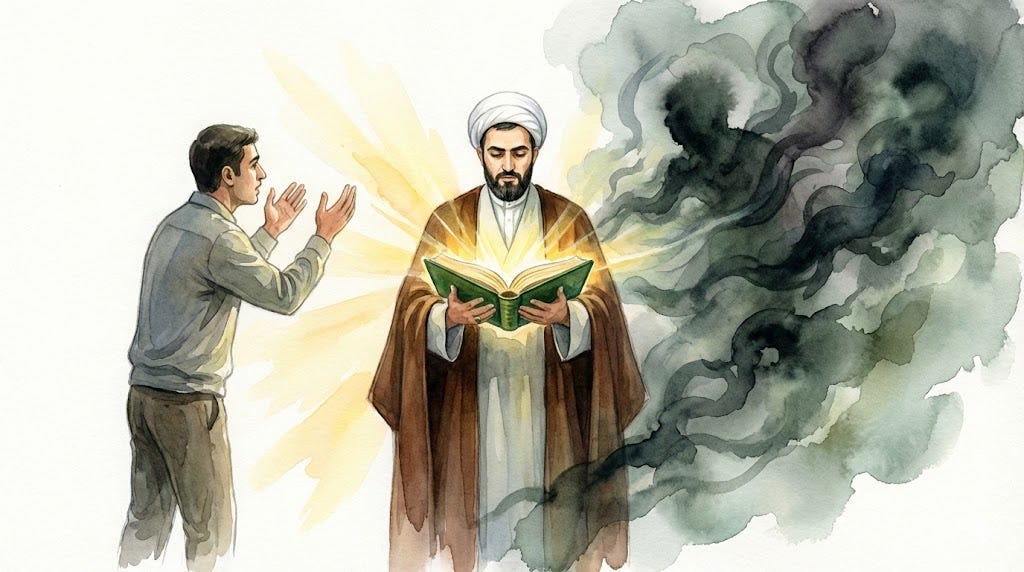
The Quran establishes both the right and the limit.
Surah An-Nisa 4:148 — the oppressed may speak out, even harshly.
Legitimate protest is protected.
Surah Al-Baqarah 2:217 — but Fitna is worse than killing.
Ayatullah Jawadi-Amoli explained: killing destroys the body, which is temporary; Fitna destroys the soul of the society, dragging people into misguidance whose consequence is eternal.
Surah Al-Hujurat 49:6 — the antidote is verification.
When the corrupt source brings news, verify before acting, lest you harm the innocent and become regretful.
The Core Distinction
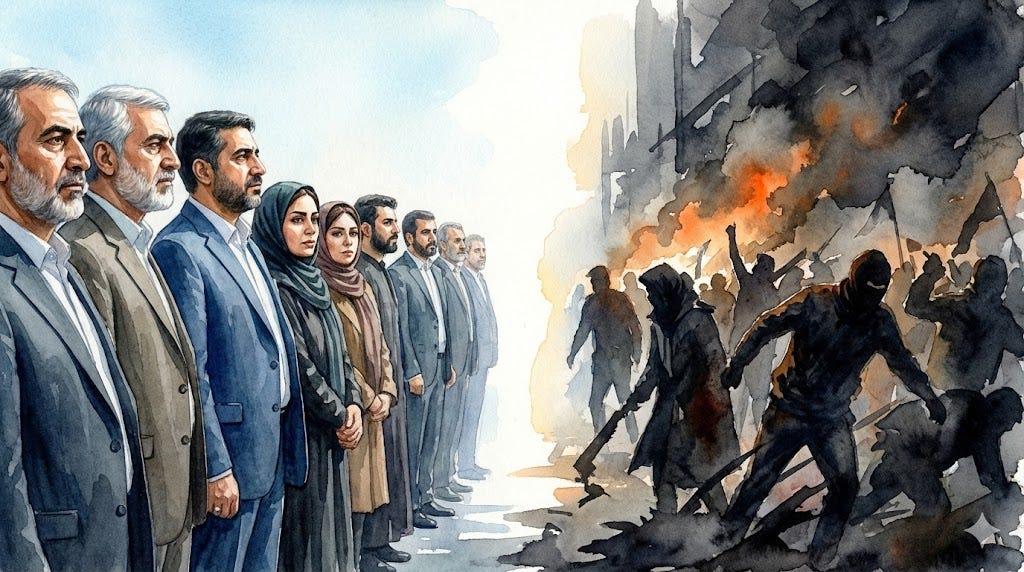
We distinguished I’tiraz — legitimate protest aimed at reform — from Ighthisash and Fitna — rioting and sedition aimed at destruction.
The first is grounded in Amr bil-Ma’ruf wa Nahi anil-Munkar, the obligation to enjoin good and forbid evil.
It is permissible, often obligatory.
The second falls under Fasad fil-Ardh, corruption on earth.
It is strictly forbidden — even when it wears the mask of justice.
The Classical Sources
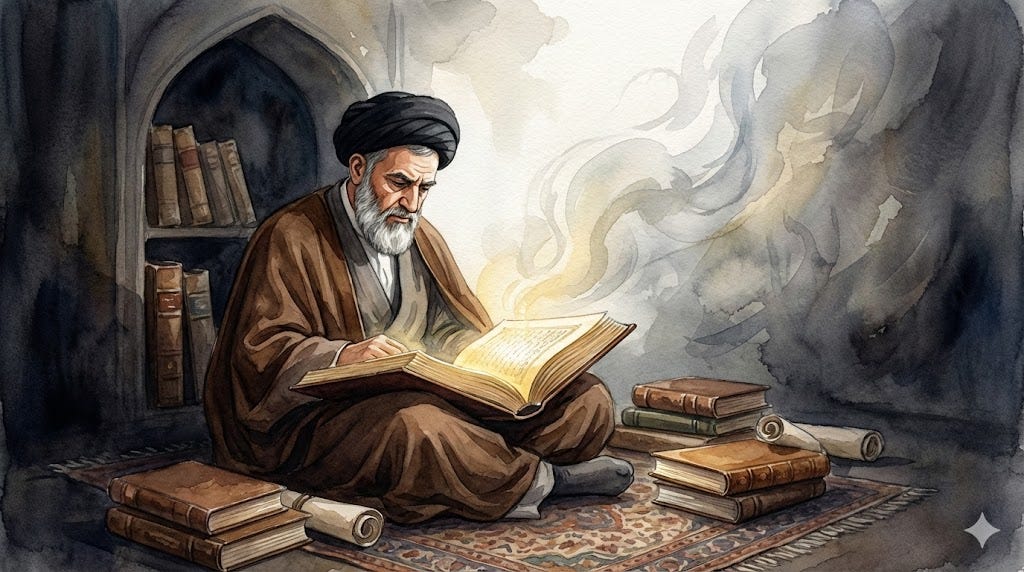
Sharh al-Lum’ah taught us that grievances must be heard before any question of force arises.
Imam Ali’s Letter 53 from Nahj al-Balagha taught us that rulers must create space for criticism — must dismiss the guards and let the spokesman speak without fear.
Imam Ali’s Sermon 50 from Nahj al-Balagha taught us the mechanism of Fitna:
“A handful is taken from this, and a handful from that, and they are mixed — and there Satan takes hold of his followers.”
Ghurar al-Hikam identified the root:
“The head of all seditions is desire.”
The Historical Pattern
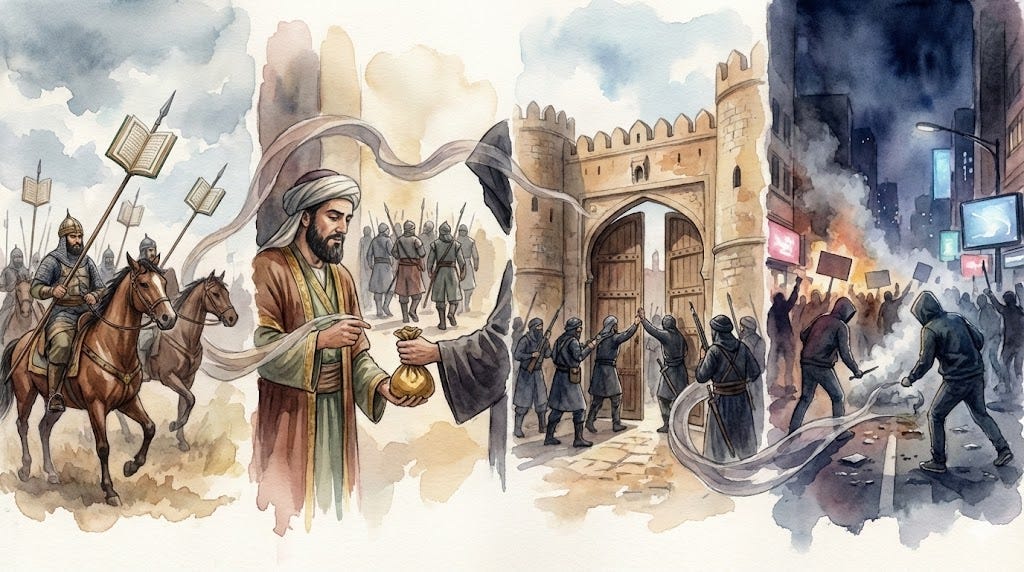
At Siffin: Qurans on spears, and an army turned against its own commander through the exploitation of piety.
With Imam Hasan: rumours and gold, and an army that dissolved before battle began.
With Mukhtar: ethnic tensions inflamed, and a city that opened its gates to murder its own protector.
In January 2026: economic grievances hijacked, coordinated violence introduced, and a nation targeted for destruction through the very people who should have protected it.
The pattern does not change.
Only the technology changes.
The Scholarly Consensus
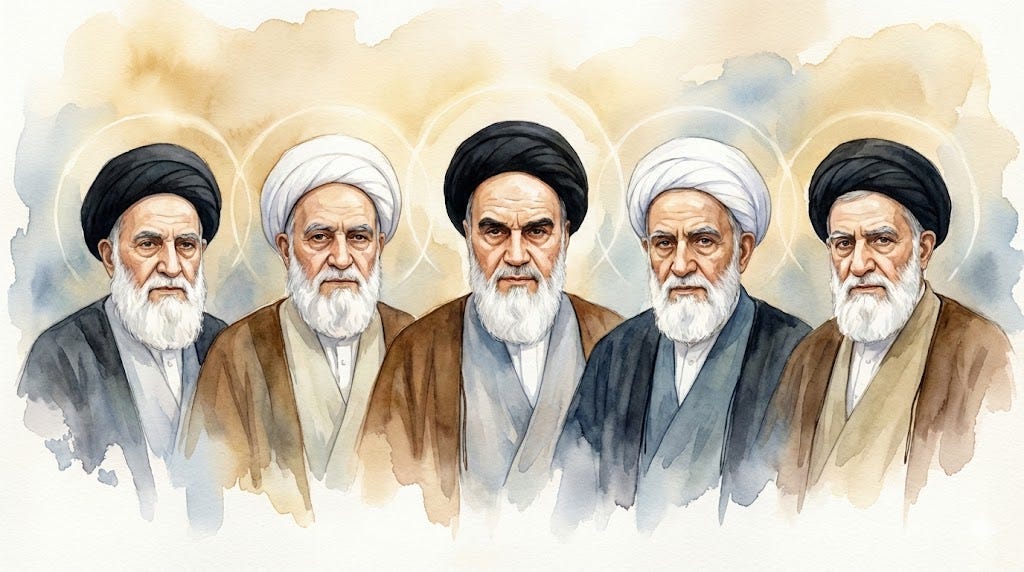
Imam Khamenei: Security is the red line.
Imam Khomeini: Criticism is a gift; conspiracy is a dagger.
Ayatullah Misbah-Yazdi: Preserving the system is among the highest obligations.
Ayatullah Jawadi-Amoli: Blood cannot wash blood.
Ayatullah Mohsen Araki: The duty of the believer is Basirah — insight that sees through the fog.
Five scholars, one message.
This was the diagnosis.
The poison identified.
Now we apply the antidote.
Mahdawiyyah (The Culminating Guidance) - The Era of Establishment - The Geopolitics of Waiting - The Shield (Taqiyyah) - The Shield Lowered - The Theology of Dissent - The Antidote Applied
Imam Ali’s Counsel: The Baby Camel
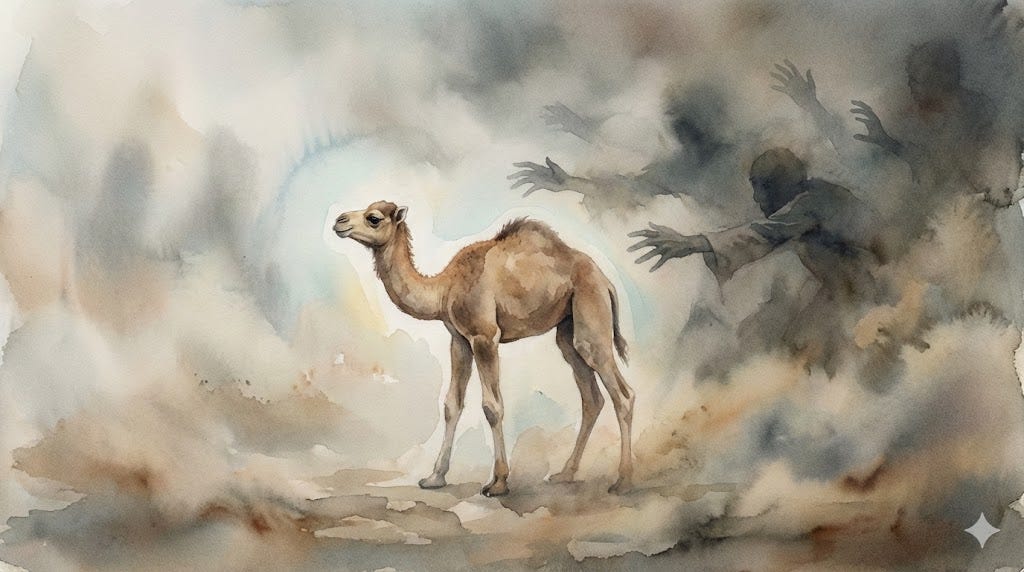
We have identified the poison.
We have seen its mechanism — the mixture of truth and falsehood, the exploitation of grievance, the transformation of legitimate anger into self-destructive chaos.
We have seen its pattern — repeated across history, deployed again in our own time.
Now the question becomes practical:
What does the individual believer do?
When the streets fill with protesters, some sincere and some provocateurs, and you cannot tell which is which — what do you do?
When both sides of a conflict seek to recruit you, to use your energy, your resources, your reputation for their purposes — what do you do?
When the atmosphere is dusty and visibility is near zero — how do you navigate?
Imam Ali, peace be upon him, left us guidance for precisely this situation.
And it is the very first teaching in the collection of his short sayings — Hikmah number one in Nahj al-Balagha.
The placement is significant.
This is where the compilers began.
This is foundational.
The Teaching
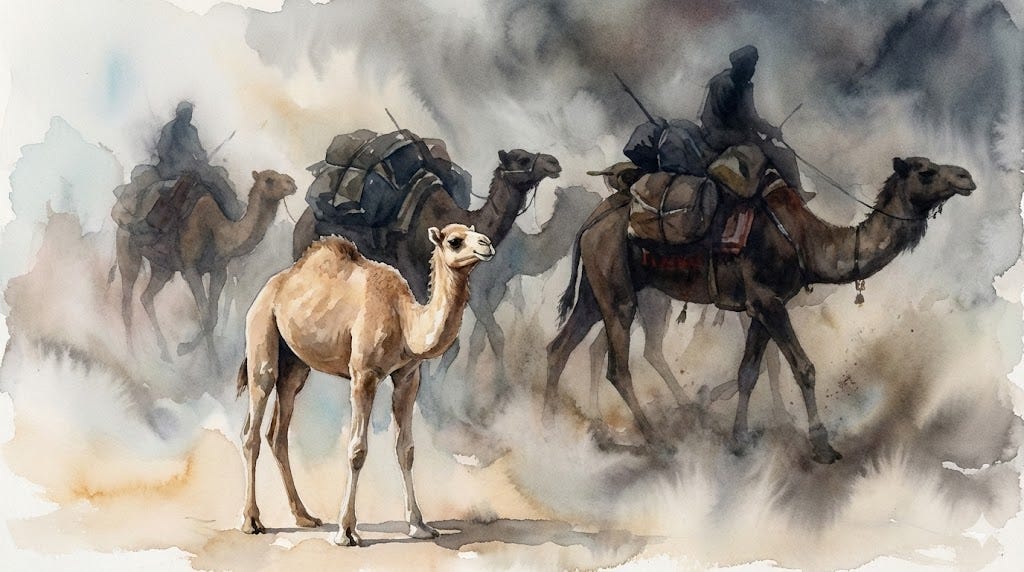
كُنْ فِي الْفِتْنَةِ كَابْنِ اللَّبُونِ، لَا ظَهْرٌ فَيُرْكَبَ، وَلَا ضَرْعٌ فَيُحْلَبَ
“During Fitna, be like an Ibn al-Labun (adolescent camel): it has no back strong enough to be ridden, nor an udder to be milked.”
— Nahj al-Balagha, Hikmah (Saying) #1
The image is striking.
The Ibn al-Labun is a two-year-old male camel — old enough to exist independently, but too young to be useful for the purposes adults typically use camels.
It cannot carry loads.
Its back is not strong enough.
You cannot ride it into battle or use it for transport.
It cannot give milk.
Being male, it has no udder.
You cannot extract resources from it.
It is, from the perspective of those who wish to exploit camels, useless.
And this, the Imam says, is what you should be during Fitna.
Useless to the exploiters.
The Commentary of Ibn Abi al-Hadid
Ibn Abi al-Hadid, the great Mu’tazilite scholar who wrote the most comprehensive classical commentary on Nahj al-Balagha, explains the teaching in detail:
ابْنُ اللَّبُونِ: وَلَدُ النَّاقَةِ إِذَا اسْتَكْمَلَ السَّنَةَ الثَّانِيَةَ... وَخَصَّهُ بِالذِّكْرِ لِأَنَّهُ لَا يَكُونُ فِيهِ مِنَ الْقُوَّةِ مَا يُرْكَبُ لِأَجْلِهِ، وَلَا لَهُ ضَرْعٌ فَيُحْلَبَ.
وَالْمُرَادُ: أَنَّهُ لَا يَنْبَغِي لِلْإِنْسَانِ أَنْ يَكُونَ مِمَّنْ يَطْمَعُ فِيهِ أَهْلُ الْفِتْنَةِ... فَيَسْتَخْدِمُوهُ فِي بَاطِلِهِمْ.
“Ibn al-Labun: The calf of the she-camel when it has completed its second year... [The Imam] specifically mentioned it because it does not possess the strength to be ridden, nor does it have an udder to be milked.
The Intention: It is not befitting for a human to be someone whom the People of Sedition (Ahl al-Fitna) covet... such that they use him and employ him in their falsehood.”
— Ibn Abi al-Hadid, Sharh Nahj al-Balagha, Volume 18, Page 82
Ibn Abi al-Hadid also explains that this teaching is
“a prohibition against seeking power or leadership during sedition”:
هذا نهي عن طلب الإمارة والرئاسة في الفتنة... والمعنى: اجعل نفسك صغيراً محتقراً في أعينهم حتى لا يكلفوك القتال معهم، ولا يطمعوا في مالك فيحلبوك كما تُحلب الناقة.
“This is a prohibition against seeking power or leadership during sedition... The meaning is: Make yourself small and insignificant in their eyes so that they do not task you with fighting alongside them, nor do they covet your wealth to ‘milk’ you as a she-camel is milked.”
— Ibn Abi al-Hadid, Sharh Nahj al-Balagha, Volume 18, Page 82
The guidance is precise.
Do not seek prominence during Fitna.
Do not position yourself where the corrupt can use you.
Make yourself small — not out of cowardice, but out of wisdom.
The one who makes himself large during Fitna attracts the attention of those who wish to ride him into their battles or milk him for their resources.
The one who makes himself small escapes their notice.
He survives.
He preserves his integrity.
He does not become an instrument of falsehood.
The Two Forms of Exploitation
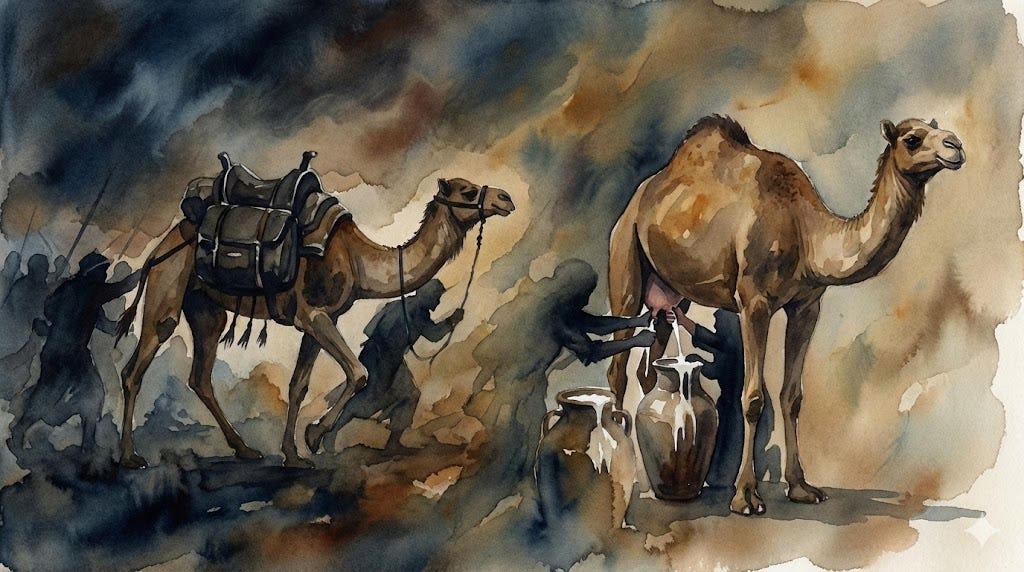
The Imam identifies two ways the People of Fitna exploit the sincere:
The Back — Being Ridden
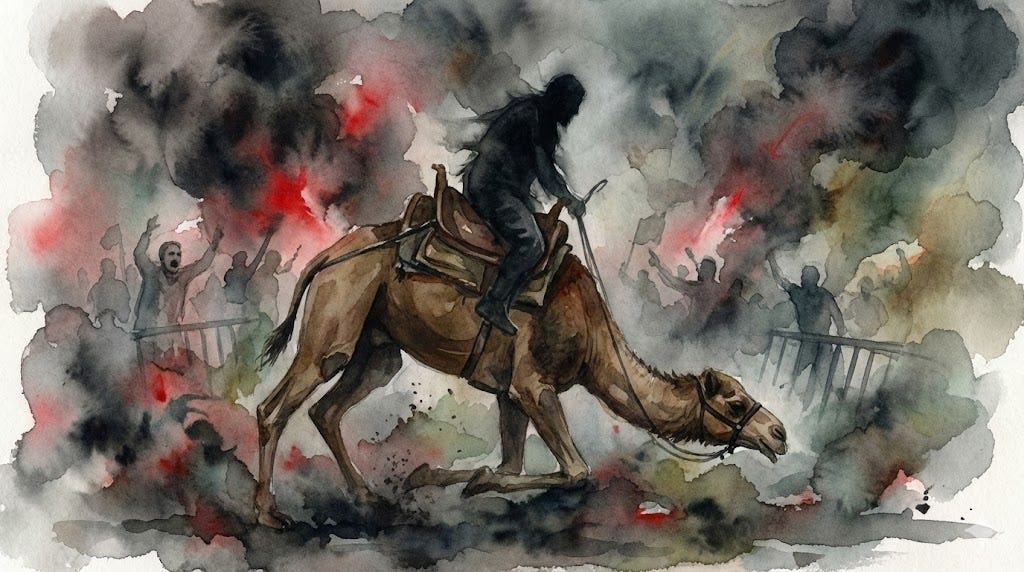
This is physical and active exploitation.
They want to ride you — to use your energy, your passion, your willingness to act.
They want you in the streets, shouting their slogans.
They want you confronting the police, absorbing the tear gas, taking the risks.
They want your body in their movement, your face in their crowd, your presence lending legitimacy to their chaos.
You become their vehicle.
They ride you toward their destination — which is not your destination, though they have convinced you it is.
The sincere protester thinks he is marching for economic justice.
He is actually being ridden toward regime change that will benefit foreign powers and leave him worse off than before.
The young man thinks he is fighting corruption.
He is actually being ridden into a confrontation designed to provoke a crackdown that will generate propaganda for international audiences.
They ride you.
You carry them.
And when you collapse from exhaustion or are arrested or are killed, they dismount and find another ride.
This is what it means to give your back.
The Udder — Being Milked
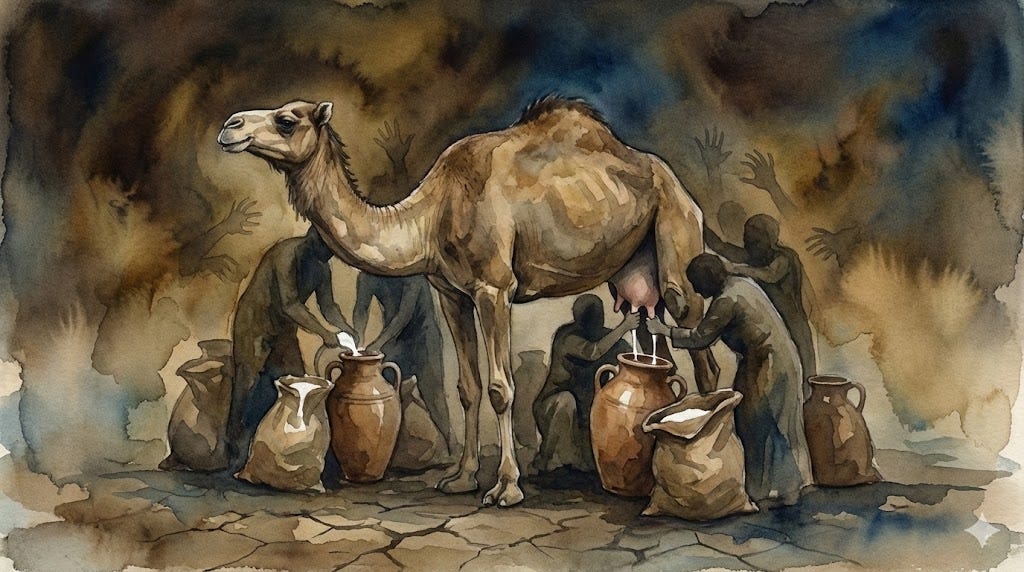
This is material and resource exploitation.
They want to milk you — to extract your wealth, your connections, your social capital.
They want your donations funding their operations.
They want your business providing cover for their activities.
They want your reputation lending credibility to their cause.
They want your social media platform amplifying their message.
You become their resource.
They extract from you what they need — money, legitimacy, reach — and when you are depleted, they move on to the next source.
The wealthy merchant thinks he is supporting a righteous cause.
He is actually funding networks that answer to foreign intelligence services.
The social media influencer thinks she is raising awareness.
She is actually amplifying narratives crafted in hostile capitals.
The community leader thinks he is lending his voice to justice.
He is actually lending his credibility to an operation designed to destroy the community he leads.
They milk you.
You provide the sustenance.
And when you are dry, they discard you.
This is what it means to have an udder.
The Imam’s Solution
The Imam’s counsel is not: withdraw from society.
The Imam’s counsel is not: be passive in the face of injustice.
The Imam’s counsel is: do not make yourself useful to the corrupt.
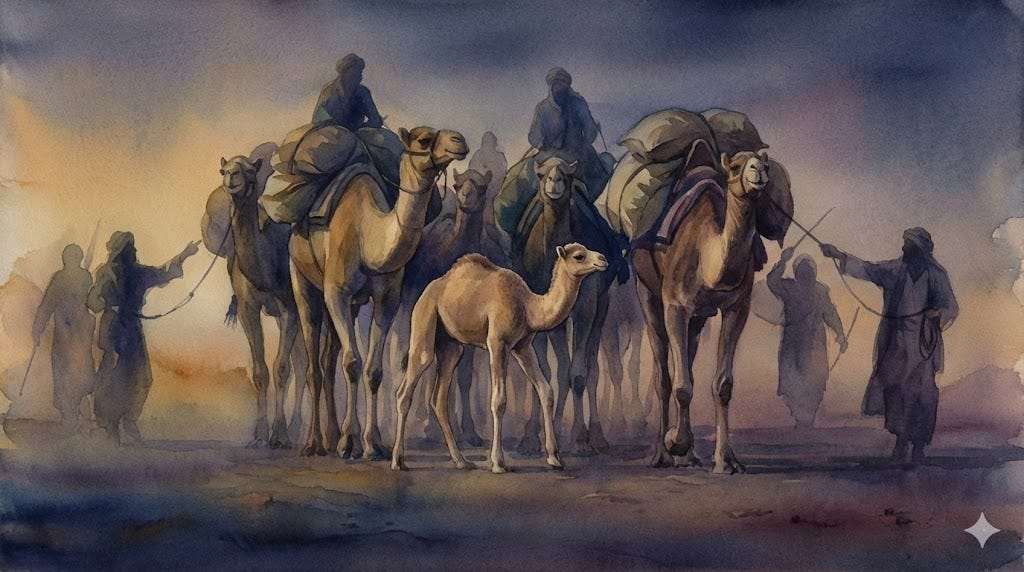
The Ibn al-Labun is not a dead camel.
It is not a camel that has fled to the wilderness.
It is a camel that is present in the herd but cannot be exploited for riding or milking.
It exists.
It participates in camel society.
It is not absent.
But it is useless for the purposes of those who wish to exploit.
This is the model.
Be present.
Remain engaged.
Do not abandon your community.
But do not give your back to be ridden.
Do not offer your udder to be milked.
When the People of Fitna come seeking recruits, be unavailable.
When they come seeking funds, be dry.
When they come seeking amplification, be silent.
Not because you do not care about justice — but because you recognise that they do not care about justice.
They care about exploitation.
And you will not be exploited.
Ayatullah Makarim-Shirazi: The Contemporary Application
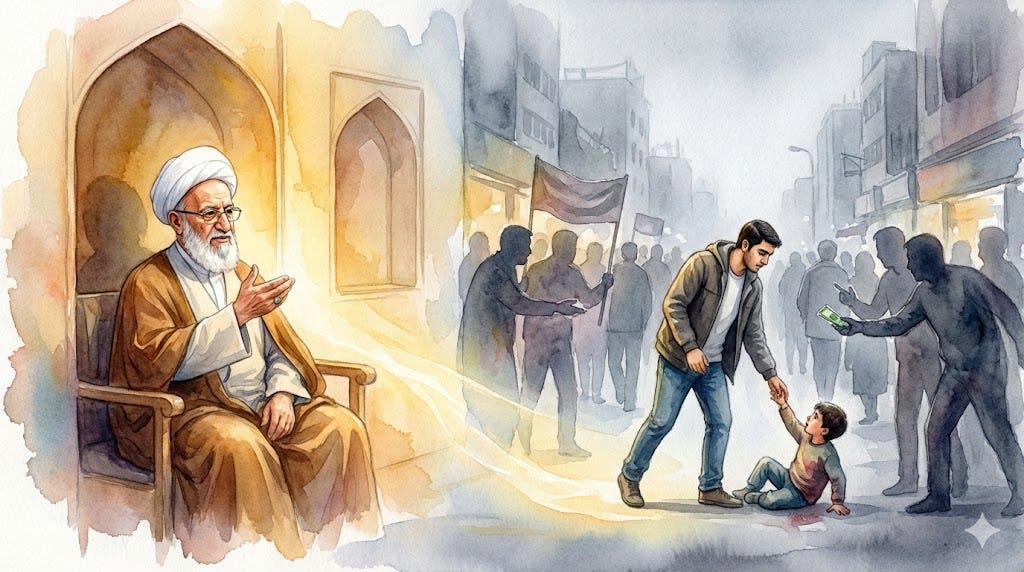
Ayatullah Makarim Shirazi, in his commentary Payam-e Imam Amir al-Mu’minin, applies this teaching to modern circumstances:
امام (ع) میفرماید: در فتنهها همچون “ابن اللبون” باش...
منظور این است که در درگیریهایی که بین ستمگران و باطلگرایان روی میدهد، و هر کدام میخواهند از نیروهای مردمی به نفع خود بهرهبرداری کنند، انسان باید چنان موضعی بگیرد که هیچیک از دو طرف نتوانند از او بهرهبرداری کنند.
نه “پشت” بدهد که بر آن سوار شوند و در مسیر اهداف شومشان بجنگد، و نه “پستان” و شیری داشته باشد که او را بدوشند و از امکانات مالی و موقعیت اجتماعی او برای تقویت خود استفاده کنند.
این دستور به معنای کنارهگیری از جامعه نیست، بلکه به معنای هوشیاری در برابر سوءاستفادهگران است.
“The Imam says: During seditions, be like the ‘Ibn al-Labun‘ (the adolescent camel)...
The meaning is that in conflicts that occur between oppressors and falsehood-seekers, where each side wants to exploit the popular forces for their own benefit, a person must take such a position that neither of the two sides can exploit him.
He should neither give a ‘back’ for them to ride (fighting for their sinister goals), nor have an ‘udder’ or milk for them to milk (using his financial resources or social status to strengthen themselves).
This instruction does not mean withdrawing from society, but rather signifies vigilance against exploiters.“
— Ayatullah Makarim Shirazi, Payam-e Imam Amir al-Mu’minin, Volume 12, Commentary on Hikmah 1
Notice the crucial clarification: this is not withdrawal from society.
The teaching is sometimes misunderstood as a counsel of quietism —
“stay home, don’t get involved, let others sort it out.”
This is not what the Imam intends.
The Imam himself was the most engaged of men.
He fought when fighting was necessary.
He governed when governance was necessary.
He never withdrew.
But he also never allowed himself to be used by the corrupt.
The teaching is about vigilance — being aware of who is trying to use you and for what purpose.
It is about discernment — recognising when a “movement” is actually an operation, when a “cause” is actually a cover, when “allies” are actually exploiters.
It is about strategic uselessness — making yourself unavailable to those who would ride or milk you, while remaining available for genuine service to truth.
Practical Application
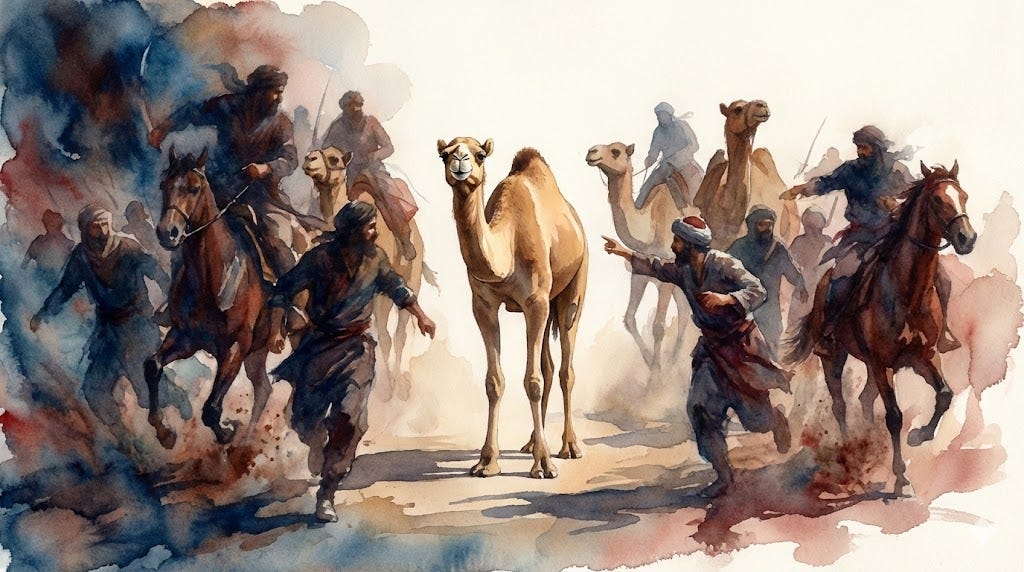
How does this teaching apply in practice?
When movements emerge suddenly, be suspicious.
Genuine movements build gradually.
They have history.
They have organic development.
They have leadership that emerges from the community over time.
Operations are deployed suddenly.
They appear from nowhere.
They have slick coordination from day one.
Their “leaders” are often unknown or newly prominent.
The Ibn al-Labun watches and waits.
He does not rush to join what appeared overnight.
When both sides want you, trust neither.
In genuine conflicts between good and evil, the good side does not need to recruit through manipulation.
The truth speaks for itself.
When competing factions both aggressively seek your participation — when both sides are “riding” and “milking” — it is likely that neither represents truth.
The Ibn al-Labun makes himself useless to both.
He waits for clarity.
When the ask escalates rapidly, withdraw.
Exploitation follows a pattern.
First they ask for something small — a signature, a share, a small donation.
Then the asks grow.
Before you know it, you are deeply invested in something you never intended to join.
The Ibn al-Labun recognises the pattern and breaks it early.
When the asks escalate, he becomes unavailable.
When emotions are running high, slow down.
The People of Fitna rely on emotion.
They need you angry, outraged, unable to think clearly.
They need you acting before you have time to verify.
The Ibn al-Labun deliberately slows down when emotions accelerate.
He steps back precisely when others rush forward.
He verifies precisely when others react.
When the cost of non-participation is social pressure, bear it.
The exploiters use social pressure as a weapon.
“Everyone is joining — why aren’t you?”
“Are you a coward?”
“Don’t you care about justice?”
The Ibn al-Labun bears this pressure.
He knows that social discomfort is preferable to becoming an instrument of destruction.
He knows that those who pressure him today will not bear the consequences of his actions tomorrow.
He is useless to the exploiters.
And in being useless to them, he preserves himself for genuine service to truth.
The Wisdom of Strategic Uselessness
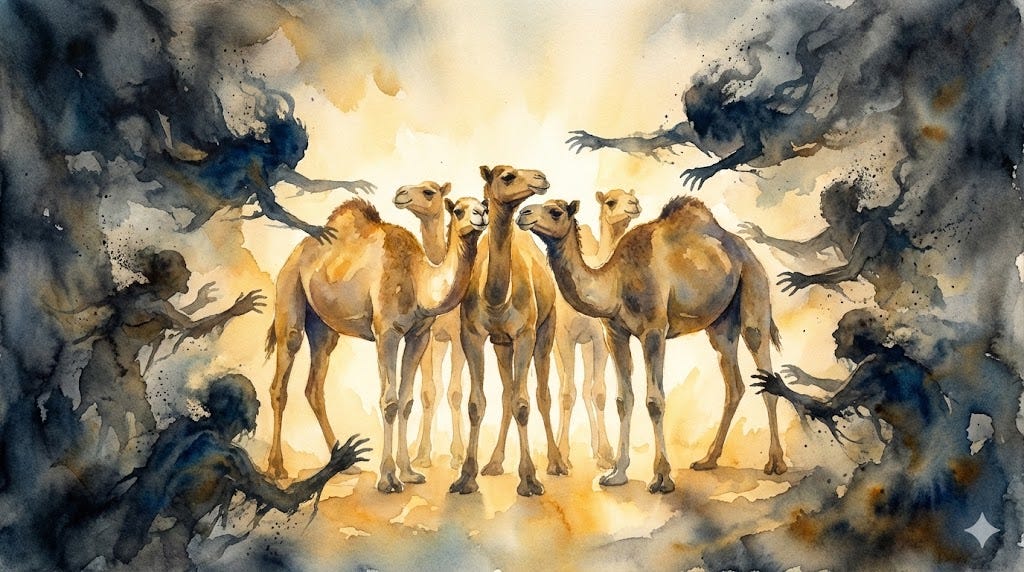
There is profound wisdom in this teaching.
The exploiters need resources.
They need bodies for their movements, money for their operations, voices for their amplification.
If enough people become Ibn al-Labun — if enough people make themselves useless to the corrupt — the operations fail.
The colour revolution cannot happen without crowds.
If the crowds stay home, there is no revolution.
The propaganda cannot spread without amplifiers.
If the amplifiers fall silent, the propaganda dies.
The destabilisation cannot succeed without resources.
If the resources dry up, the operation collapses.
The Ibn al-Labun is not passive.
He is engaged in a form of resistance — resistance to exploitation.
By refusing to be ridden, he denies transportation to the corrupt.
By refusing to be milked, he denies sustenance to the corrupt.
And in sufficient numbers, this denial is decisive.
The People of Fitna are parasites.
They cannot create; they can only exploit.
Deny them hosts, and they die.
The Two Types of People in Fitna: The Poisoners and the Poisoned
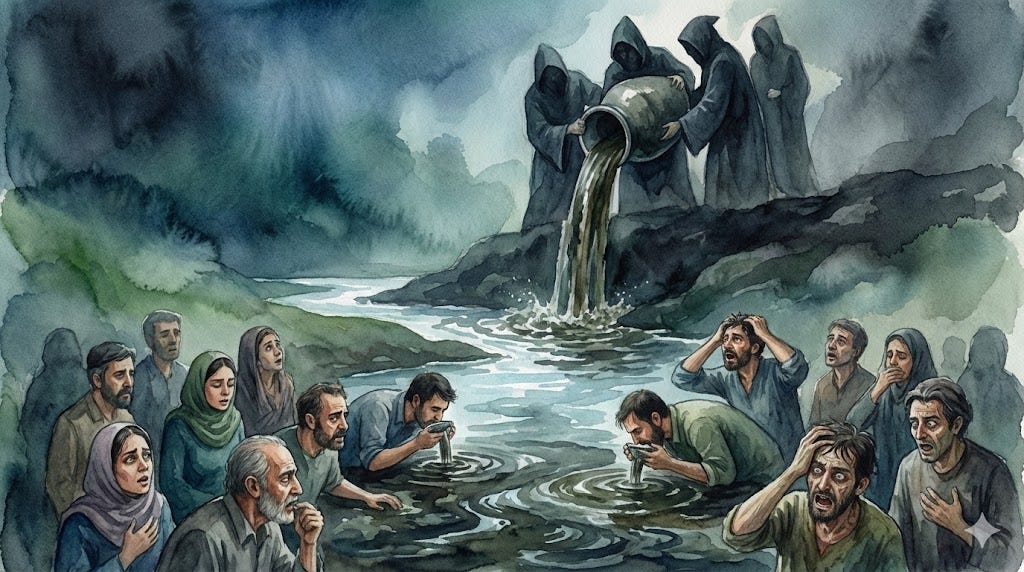
We have learned how to avoid being exploited during Fitna.
Now we must understand who it is that seeks to exploit — and distinguish them from those who, like us, are potential victims of exploitation.
This distinction is crucial.
The tradition does not treat everyone caught up in Fitna the same way.
It distinguishes sharply between those who knowingly create chaos and those who unknowingly participate in it.
The first are criminals.
The second are, in a profound sense, victims — even as their hands do damage.
Understanding this distinction shapes how we respond to both.
The First Type: The Instigators — Al-Mufsid fil-Ardh

The instigator is the one who knows.
He knows that what he spreads is false.
He knows that the movement he promotes serves destruction, not reform.
He knows that the grievances he exploits are merely tools, not concerns he genuinely shares.
He is the intelligence operative who plans the destabilisation.
He is the media executive who commissions the propaganda.
He is the agent provocateur who infiltrates the protest and throws the first stone.
He is the foreign-funded “activist” who coordinates networks of chaos while presenting himself as a voice of the people.
He is the social media operative who manufactures viral lies, knowing they are lies, knowing they will cause harm.
These are not confused people.
These are not sincere people who have made mistakes.
These are people who have chosen — deliberately, with full knowledge — to poison the minds of others for strategic purposes.
The Quranic Category
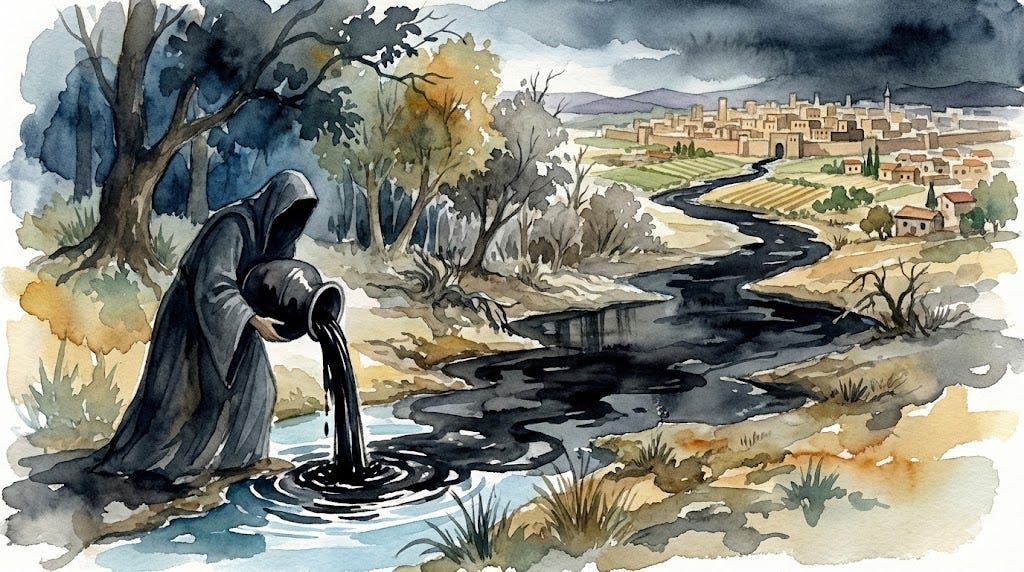
The Quran places such people in a severe category: Al-Mufsidun fil-Ardh — those who spread corruption on earth.
إِنَّمَا جَزَاءُ الَّذِينَ يُحَارِبُونَ اللَّهَ وَرَسُولَهُ وَيَسْعَوْنَ فِي الْأَرْضِ فَسَادًا أَن يُقَتَّلُوا أَوْ يُصَلَّبُوا أَوْ تُقَطَّعَ أَيْدِيهِمْ وَأَرْجُلُهُمْ مِّنْ خِلَافٍ أَوْ يُنفَوْا مِنَ الْأَرْضِ ۚ ذَٰلِكَ لَهُمْ خِزْيٌ فِي الدُّنْيَا ۖ وَلَهُمْ فِي الْآخِرَةِ عَذَابٌ عَظِيمٌ
“Indeed, the penalty for those who wage war against God and His Messenger and spread corruption on earth (Fasad) is that they be killed, or crucified, or that their hands and feet be cut off from opposite sides, or that they be exiled from the land. That is for them a disgrace in this world; and for them in the Hereafter is a great punishment.”
— Quran, Surah Al-Ma’idah (the Chapter of the Table Spread) #5, Verse 33
The severity of this verse shocks modern sensibilities.
But consider what it addresses.
The Mufsid fil-Ardh is not a petty criminal.
He is not someone who has made a mistake.
He is not even a murderer in the ordinary sense.
He is someone who wages war against the foundations of human society.
He spreads Fasad — corruption that metastasises, that spreads beyond its origin, that destroys the conditions that make ordered life possible.
The murderer kills one person.
The Mufsid creates conditions in which thousands may die.
The thief steals property.
The Mufsid destroys the trust that makes property meaningful.
The liar deceives one person.
The Mufsid poisons the information environment so thoroughly that truth itself becomes impossible to discern.
The severity of the punishment matches the severity of the crime.
And the crime of deliberate, knowing Fitna-mongering — of poisoning minds to collapse societies — falls squarely within this category.
The Contemporary Instigators
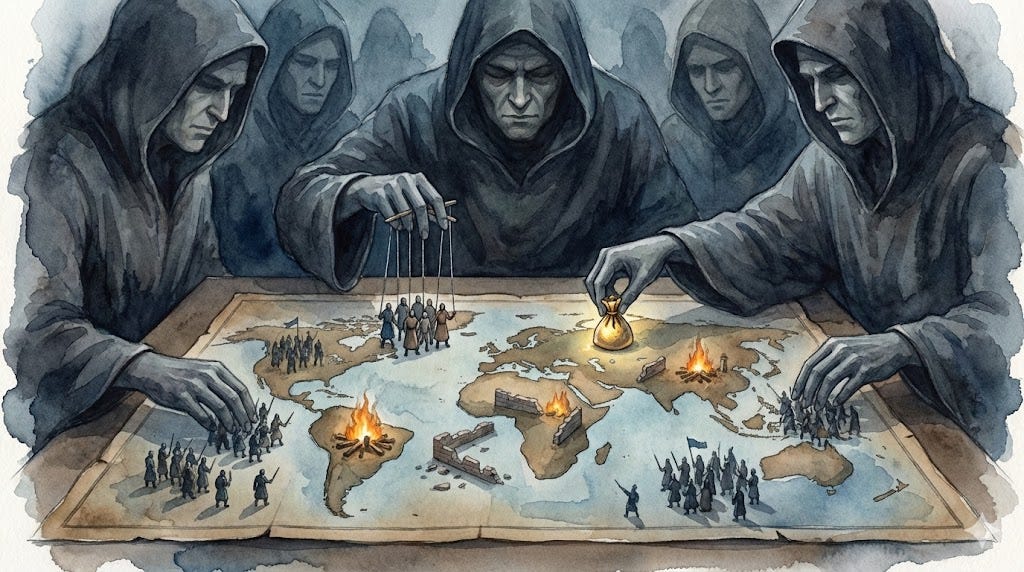
Who are the Mufsidun of our time?
They are the intelligence agencies that plan colour revolutions — that study societies for fracture points, that cultivate networks of agents, that deploy sophisticated psychological operations to turn nations against themselves.
They are the media conglomerates that manufacture narratives — that decide what the world will believe happened, regardless of what actually happened, and deploy their vast resources to make their version of reality the only version anyone encounters.
They are the think tanks and NGOs that provide cover — that present themselves as “human rights organisations” or “democracy promotion groups” while functioning as arms of hostile foreign policy.
They are the technology platforms that shape information flows — that algorithmically amplify outrage, suppress counter-narratives, and create the information environment in which Fitna flourishes.
They are the political leaders who openly call for regime change — who threaten foreign nations, fund their enemies, and celebrate when those nations suffer.
These are not victims.
These are perpetrators.
They know what they do.
They do it deliberately.
They do it for power, for profit, for strategic advantage.
And the tradition’s verdict on them is severe.
The Verdict
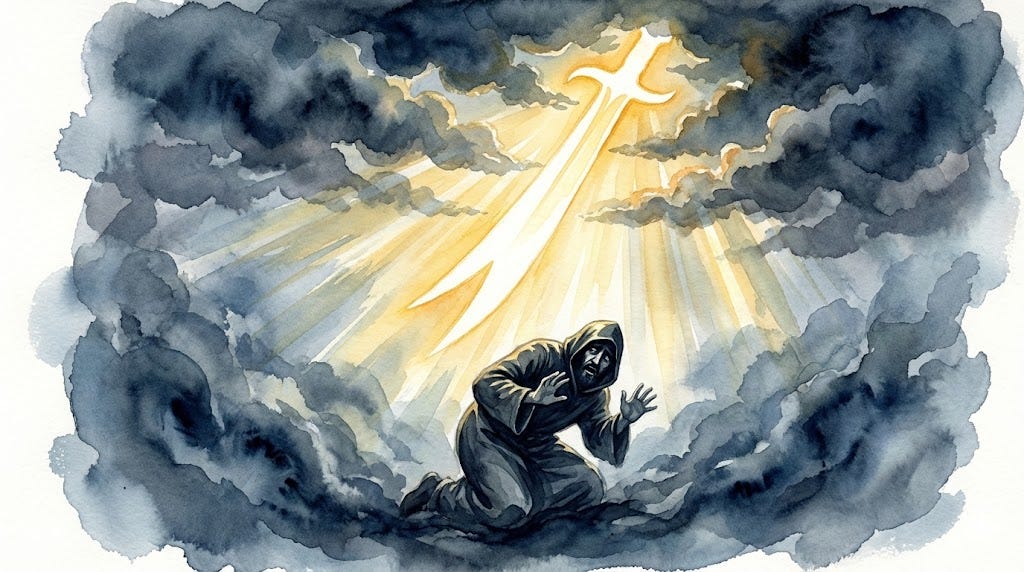
The instigator is Muharib — one who wages war against God and His Messenger.
Not because he carries a weapon in the conventional sense — but because he wages a war more destructive than conventional warfare.
He is a criminal of the highest order.
He deserves no sympathy, no benefit of the doubt, no assumption of good faith.
He deserves the punishment that the Quran prescribes for those who spread Fasad on earth.
This is not extremism.
This is justice.
The one who deliberately poisons the water supply of a city, knowing that thousands will die, deserves severe punishment.
The one who deliberately poisons the information supply of a nation, knowing that society will collapse, deserves no less.
The Second Type: The Manipulated — Al-Jahil al-Qasir
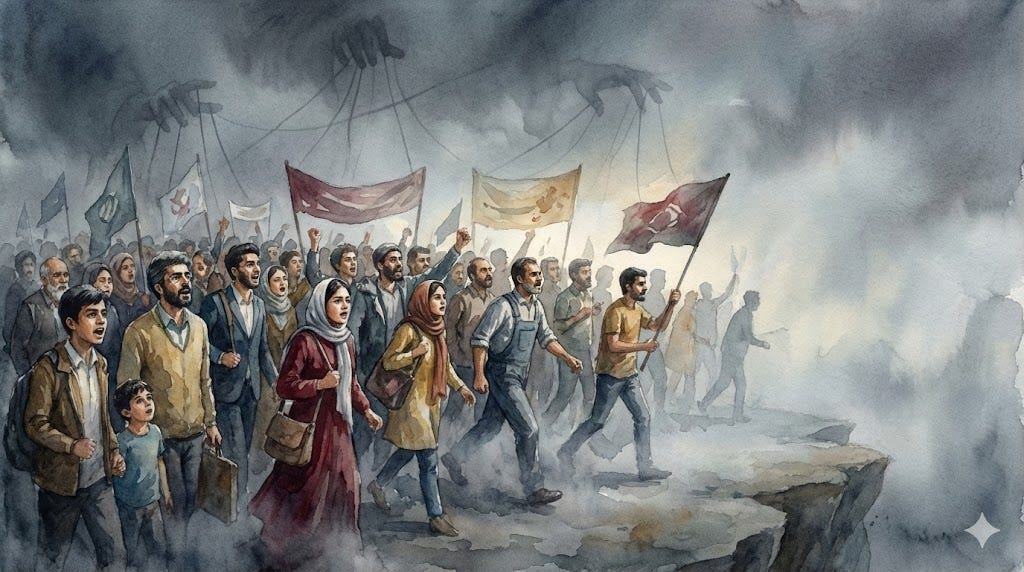
But there is another type — and this type is far more numerous.
The manipulated is the one who does not know.
He genuinely believes the lies he has been fed.
He sincerely thinks he is fighting for justice.
He authentically feels the grievance that the instigators have exploited.
He is the young man who takes to the streets because prices have risen and his family is struggling — not knowing that his protest has been infiltrated by agents who will transform it into a riot.
He is the student who shares inflammatory content online because it outrages her sense of justice — not knowing that the content was fabricated in a foreign intelligence operation.
He is the worker who joins the strike because his wages are inadequate — not knowing that the strike’s “organisers” answer to powers that wish his country destroyed.
He is the citizen who chants slogans against corruption because corruption genuinely exists — not knowing that the movement he has joined aims not to reform the system but to collapse it.
These people are not criminals.
They are victims.
Victims of the poison we have been describing.
They have drunk from the contaminated well, and now they act under its influence.
Their hands may do damage.
Their voices may amplify lies.
Their presence may lend legitimacy to chaos.
But they do not know.
They do not intend the destruction they participate in.
They are, in the terminology of the tradition, Jahil — ignorant, not in the sense of stupidity, but in the sense of lacking the crucial information that would change their behaviour.
And they are Qasir — falling short, limited, constrained — not through malice but through the fog that has been deliberately created around them.
The Quranic Recognition
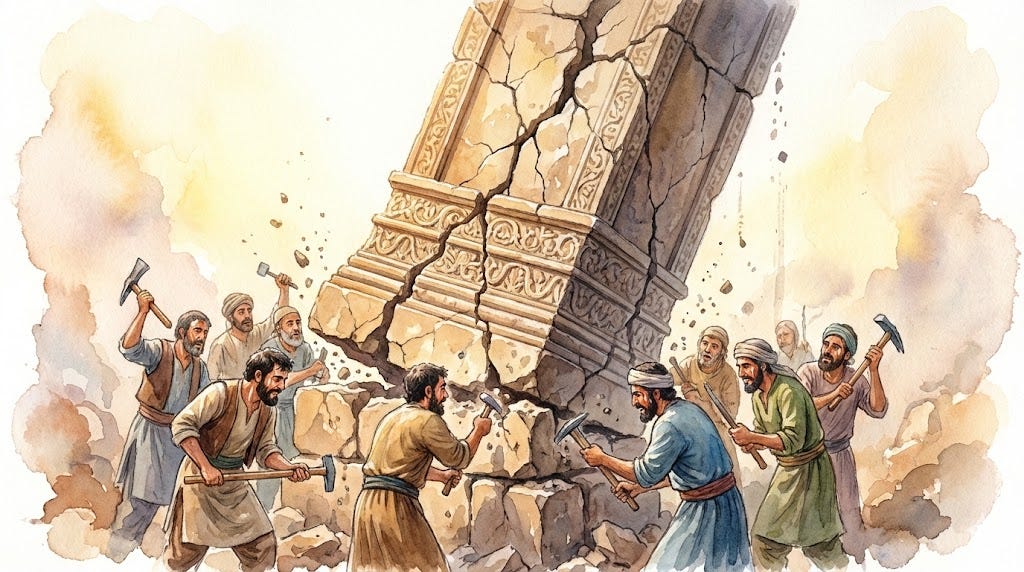
The Quran recognises this category of person — the one who does evil while believing he does good:
قُلْ هَلْ نُنَبِّئُكُم بِالْأَخْسَرِينَ أَعْمَالًا الَّذِينَ ضَلَّ سَعْيُهُمْ فِي الْحَيَاةِ الدُّنْيَا وَهُمْ يَحْسَبُونَ أَنَّهُمْ يُحْسِنُونَ صُنْعًا
“Say: Shall We inform you of the greatest losers in respect of deeds? Those whose effort is lost in the life of this world, while they think that they are doing good.”
— Quran, Surah Al-Kahf (the Chapter of the Cave) #18, Verses 103-104
These are the “greatest losers” — not because they are evil, but because they are tragically misdirected.
Their effort is real.
Their sincerity may be genuine.
Their belief that they are “doing good” is authentic.
But they are lost.
Their effort is wasted.
Worse than wasted — it is turned against them, against their families, against their communities, against everything they actually value.
They think they are building.
They are actually demolishing.
They think they are serving justice.
They are actually serving destruction.
And they will not know — many of them will never know — until it is too late.
This is tragedy, not malice.
The Jurisprudential Principle

The tradition has a principle that applies here: Al-Hudud Tudra’u bil-Shubuhat — “The prescribed punishments are averted by doubts.”
When there is genuine ambiguity about intention, about knowledge, about the nature of an act — the severe punishments are suspended.
The benefit of the doubt is given.
Why?
Because punishment is meant for the guilty — and guilt requires knowledge, intention, deliberate choice.
The one who acts in genuine ignorance — who truly did not know, who would have acted differently had they known — is not guilty in the same way as the one who acts with full knowledge.
They are responsible for their ignorance to some degree.
They should have verified.
They should have been more careful.
They should have applied Tabayyun before acting.
But their failure to verify is a different category of wrong than deliberate, knowing participation in evil.
And the tradition treats it differently.
The Verdict
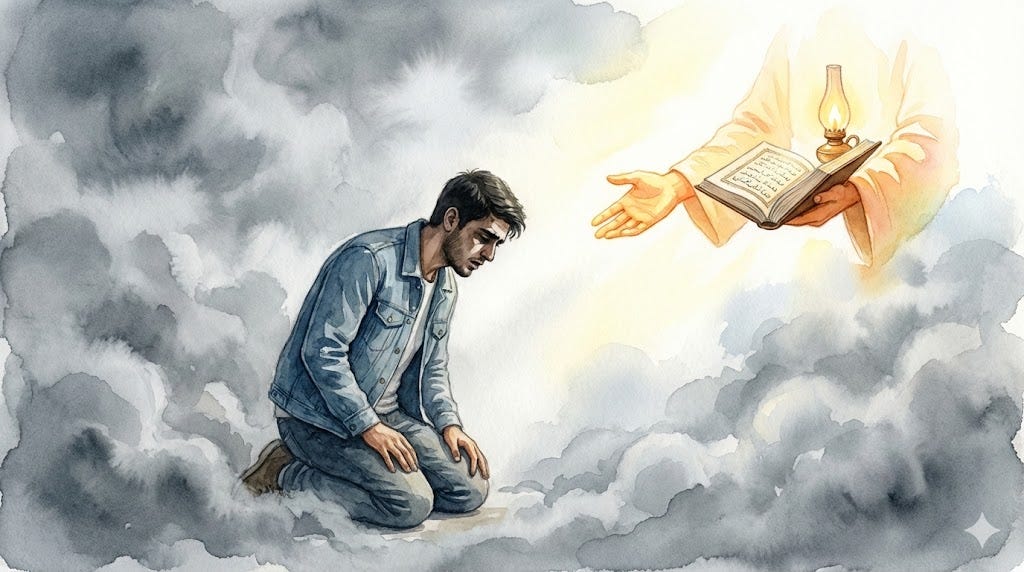
The manipulated person is not Mufsid.
He is Mustad’af — weakened, overpowered, incapacitated.
He is a victim of information warfare, not a perpetrator of it.
He should not be executed.
He should be educated.
He should not be punished with severity.
He should be shown the truth he was denied.
He should not be treated as an enemy.
He should be rescued from the enemy that has captured his mind.
This does not mean his actions have no consequences.
If he has destroyed property, he bears responsibility for that destruction.
If he has harmed others, he must make amends.
But the treatment is different.
For the instigator: justice, severity, the punishment of the Muharib.
For the manipulated: mercy, education, the patience required to deprogram someone who has been deceived.
Why the Distinction Matters
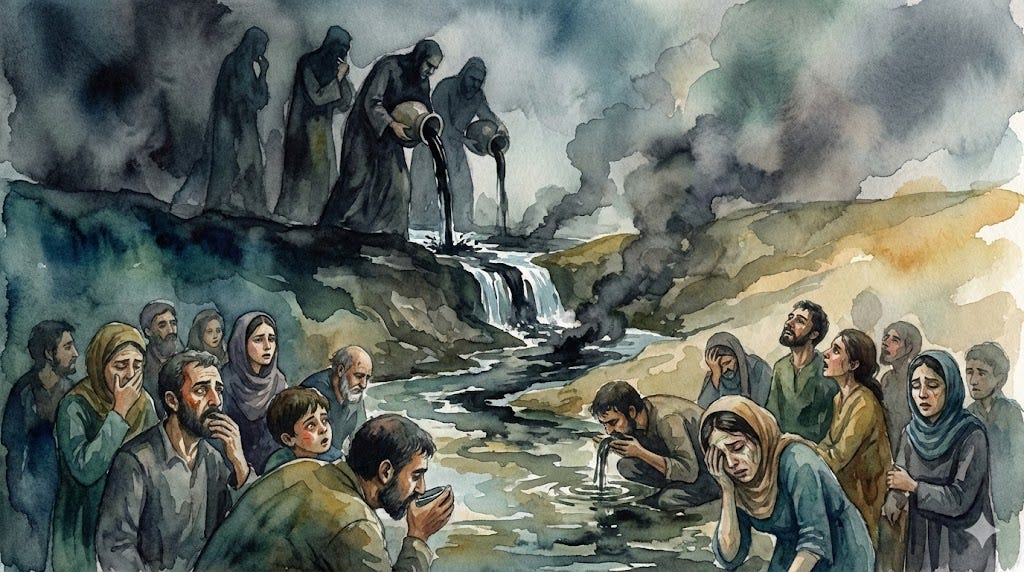
This distinction is not merely academic.
It has profound practical implications.
In how we view the crowds:
When we see footage of riots — of people burning, destroying, chanting slogans of chaos — we must resist the temptation to see them all as enemies.
Many of them — perhaps most of them — are victims.
They have been deceived.
They have been manipulated.
They have been fed a mixture of truth and falsehood so sophisticated that they cannot distinguish between them.
They are not our enemies.
They are our brothers and sisters who have been captured.
The enemy is not the crowd.
The enemy is the one who directed the crowd — who planned the operation, who deployed the agents, who manufactured the narrative.
In how we respond to the aftermath:
When Fitna passes — when the streets calm, when the chaos subsides — how do we treat those who participated?
If we treat them all as criminals, we create permanent enemies.
We drive the manipulated into the arms of the instigators.
We confirm the propaganda that painted us as oppressors.
If we distinguish — if we pursue the instigators with justice and approach the manipulated with mercy — we do something different.
We separate the poison from those who were poisoned.
We give the manipulated a path back — a way to recognise their error, to make amends, to reintegrate into the community they momentarily turned against.
We isolate the true criminals while reabsorbing those who were merely deceived.
This is not weakness.
This is wisdom.
This is how you defeat Fitna — not just in the moment, but permanently.
In how we protect ourselves:
The distinction also reminds us of our own vulnerability.
We could be the manipulated.
We could, under the right circumstances, drink from the poisoned well and not know it.
We are not immune to Fitna simply because we are believers, simply because we are educated, simply because we have good intentions.
The manipulated also had good intentions.
It did not save them.
This recognition should make us humble.
It should make us vigilant.
It should make us committed to the practices of verification and discernment that protect against manipulation.
It should make us pray:
O Lord, do not make me among those who think they are doing good while their effort is lost.
The Response to Each Type
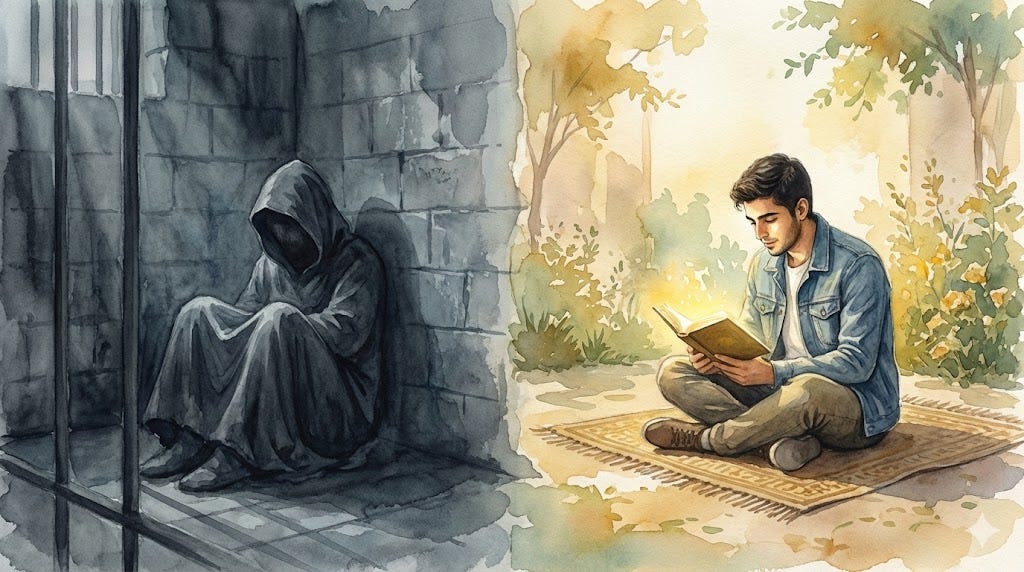
Let us summarise the appropriate response to each type:
To the Instigator (Al-Mufsid fil-Ardh):
Recognition: He is a criminal, a Muharib, one who wages war against society itself.
Response: Justice. Investigation, exposure, prosecution, punishment.
No sympathy: He knew what he was doing. He chose it deliberately.
No negotiation: You do not negotiate with those who seek your destruction.
To the Manipulated (Al-Jahil al-Qasir):
Recognition: He is a victim — deceived, misled, captured by information warfare.
Response: Mercy. Education, patience, a path back to clarity.
Sympathy: He did not know. Had he known, he would have acted differently.
Engagement: He can be reached. The truth can still penetrate.
The wisdom lies in distinguishing between them.
The folly lies in treating them the same — either by extending mercy to the instigators (who will exploit it) or by extending severity to the manipulated (who will be driven further away).
Know your enemy.
And know who is merely a captive of your enemy.
Treat each accordingly.
Makarim al-Akhlaq: From Concealment to Demonstration

We have spent many sessions on the defensive.
What to reject — the false claimants, the distorted expectations.
How to protect — the Shield of Taqiyyah, its conditions, its limits.
What to avoid — the physical poisons of warfare, the information poisons of Fitna.
How to navigate — the Baby Camel, strategic uselessness to the corrupt.
All of this is necessary.
The believer must know what to refuse, how to protect, when to withdraw.
But the believer’s life cannot be only refusal.
The believer’s posture cannot be only defensive.
There comes a moment when the Shield must be lowered — not because danger has passed entirely, but because a higher calling emerges.
The calling to demonstrate.
The Prophetic Mission

What was the Prophet sent for?
We know many answers to this question.
He was sent to deliver the final revelation.
He was sent to establish justice.
He was sent to complete the chain of prophecy.
He was sent to guide humanity to salvation.
All true.
But there is one answer he gave himself — an answer so important that it defines the very purpose of his mission:
إِنَّمَا بُعِثْتُ لِأُتَمِّمَ مَكَارِمَ الْأَخْلَاقِ
“I was sent only to perfect the noble traits of character.”
This hadith is remarkable for several reasons.
First, its transmission. It appears in both Sunni and Shia sources with virtually identical wording — a sign of its authenticity and centrality to the tradition:
In the Sunni canon:
Al-Muwatta of Imam Malik, Book 47, Hadith 1638
Musnad Ahmad ibn Hanbal, Volume 2, Page 381
In the Shia canon:
Bihar al-Anwar of Allamah Majlisi, Volume 16, Page 210
Majma’ al-Bayan of Tabarsi, Commentary on Surah Al-Qalam (68:4)
When a hadith appears identically across both traditions, transmitted through independent chains, confirmed by the greatest scholars of each school — we are dealing with something foundational.
Something that cannot be dismissed as sectarian interpretation or later fabrication.
This is the Prophet’s own statement of his mission.
Second, the word innama — “only.”
This is a particle of exclusivity in Arabic.
It means: this and nothing else.
This is the essence, the core, the defining purpose.
The Prophet did not say:
“Among my purposes is to perfect noble character.”
He said:
“I was sent only to perfect noble character.”
Everything else — the revelation, the law, the battles, the community-building — serves this purpose.
The goal is not merely to deliver information about God.
The goal is to transform human beings into vessels of noble character.
Third, the word utammim — “to perfect” or “to complete.”
The Prophet did not say:
“I was sent to create noble character from nothing.”
He said:
“I was sent to complete it.”
Noble character existed before him.
Adam had it.
Abrahim had it.
Moses and Jesus had it.
The previous prophets cultivated it in their communities.
But it was incomplete.
It needed perfection.
It needed the final refinement that only the Seal of the Prophets could provide.
And that perfection is Makarim al-Akhlaq — the noblest traits, the highest characteristics, the most beautiful manifestations of human virtue.
What is Makarim al-Akhlaq?
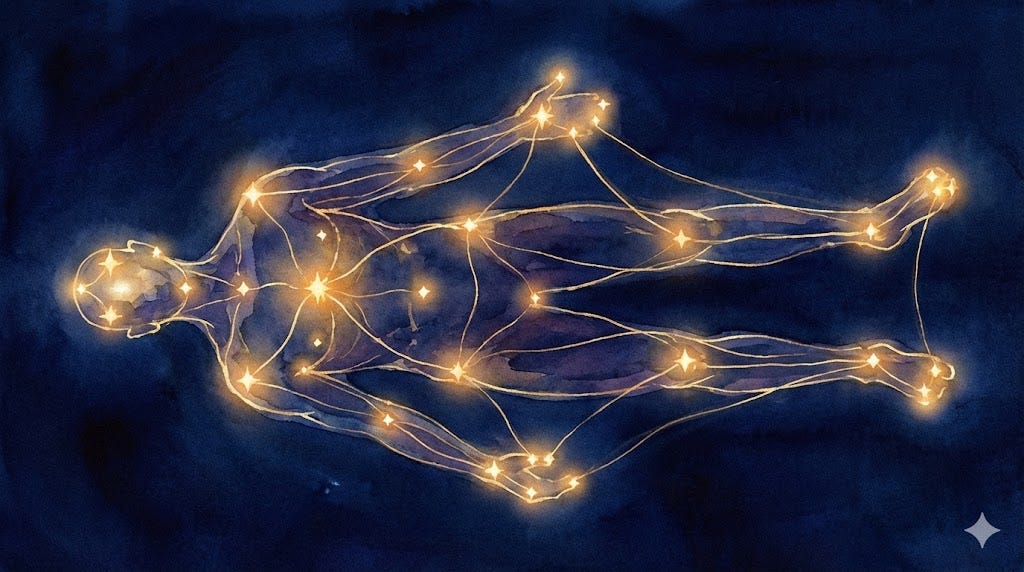
Makarim is the plural of Makrumah — a noble quality, a generous trait, something that elevates and dignifies.
Akhlaq is the plural of Khulq — character, disposition, the settled patterns of behaviour that define who a person is.
Together, Makarim al-Akhlaq refers to the constellation of virtues that constitute the perfected human being:
Honesty — not merely avoiding lies, but living in alignment with truth at every level.
Generosity — not merely giving when asked, but actively seeking opportunities to benefit others.
Patience — not merely enduring hardship, but maintaining dignity and purpose through trials.
Courage — not merely absence of fear, but the willingness to do what is right despite fear.
Justice — not merely following rules, but actively working to establish fairness in every domain.
Compassion — not merely pitying the suffering, but actively working to relieve it.
Humility — not merely avoiding arrogance, but genuinely seeing oneself as a servant, not a master.
Gratitude — not merely saying thanks, but living in constant awareness of blessings received.
Forgiveness — not merely letting go of grudges, but actively wishing well for those who have wronged you.
Trustworthiness — not merely keeping promises, but being someone others can rely upon absolutely.
These are the Makarim — the noble traits.
And the Prophet was sent to perfect them.
Not to hide them.
Not to protect them behind walls of concealment.
Not to keep them safe until conditions improve.
To perfect them — which means to manifest them, to demonstrate them, to live them so visibly that others can see and learn and be transformed.
The Relationship Between Taqiyyah and Makarim
Now we can understand the relationship between what we have studied and what we are now approaching.
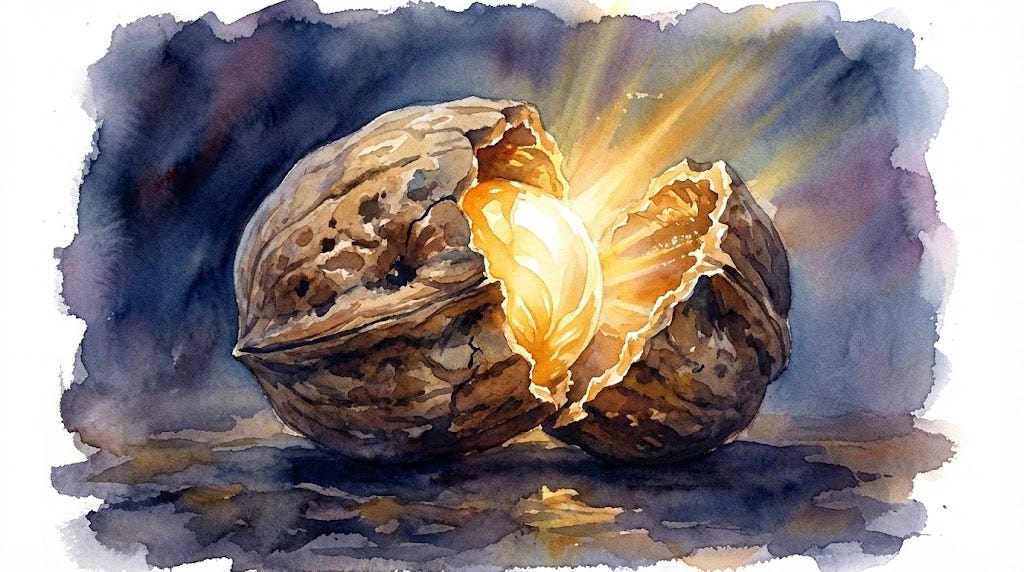
Taqiyyah is the Shell.
It protects the kernel when the shell is under attack.
It preserves the essence when external conditions threaten to destroy it.
When the enemy would kill you for your faith, the Shell permits concealment.
When expressing truth would lead to annihilation without benefit, the Shell permits strategic silence.
This is necessary.
Without the Shell, the kernel would have been destroyed long ago.
There would be no Shia community today without the Taqiyyah that preserved it through centuries of persecution.
Makarim al-Akhlaq is the Kernel.
It is what the Shell protects.
It is the actual content of the faith — not propositions to be believed, but character to be embodied.
The Shell exists for the sake of the Kernel.
The Kernel does not exist for the sake of the Shell.
And here is the crucial point:
When the Shell is secure, the Kernel must shine.
The purpose of protection is not permanent concealment.
The purpose of protection is to preserve something until it can be manifested.
You do not build a fortress to stay inside forever.
You build a fortress to protect what is precious until conditions allow it to flourish in the open.
The believer who has the opportunity to demonstrate noble character — but chooses instead to remain hidden — has mistaken the Shell for the Kernel.
He has made protection the goal, when protection was only ever the means.
The Primary Mode
Let us be clear about what this means.
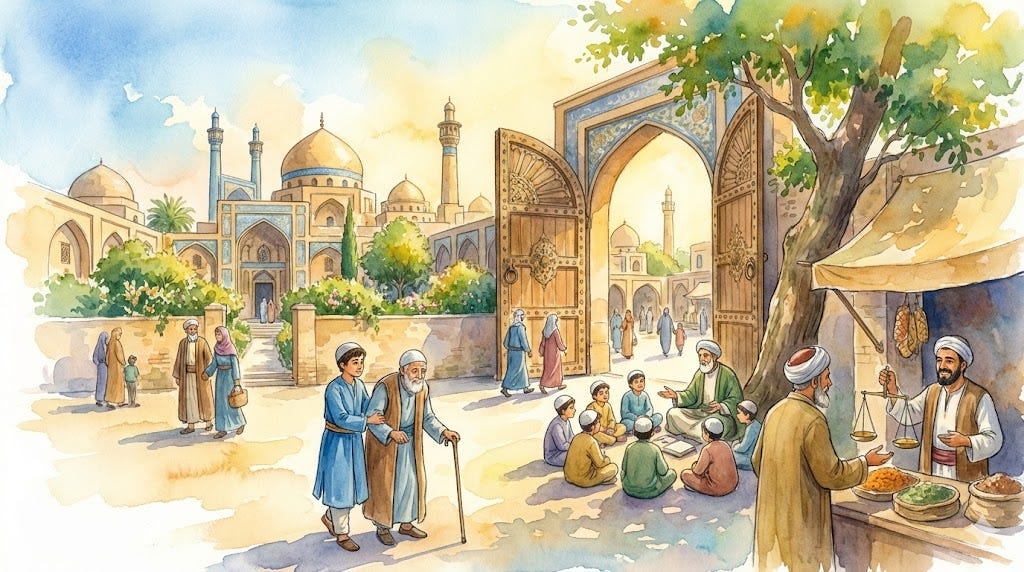
The believer’s primary mode is not concealment.
It is demonstration.
Taqiyyah is the exception, not the rule.
It applies when specific conditions obtain — when life is threatened, when the community would be harmed, when expression would bring destruction without benefit.
When those conditions do not obtain — when the believer has space to live openly, to practice visibly, to demonstrate the beauty of faith through the beauty of character — then the primary mode reasserts itself.
And the primary mode is Makarim.
The Prophet did not hide in Madinah.
He built a society that embodied the values he taught.
The Imams, even under persecution, taught openly when they could.
They trained scholars, they answered questions, they demonstrated through their conduct what Islam actually looks like when lived.
The great scholars of our tradition did not conceal their knowledge.
They wrote books, they taught students, they built institutions that have transmitted the faith across centuries.
Concealment was always in service of eventual demonstration.
Protection was always in service of eventual manifestation.
The Shell was always in service of the Kernel.
And when the believer has the opportunity to manifest — he must manifest.
The Contemporary Transformation
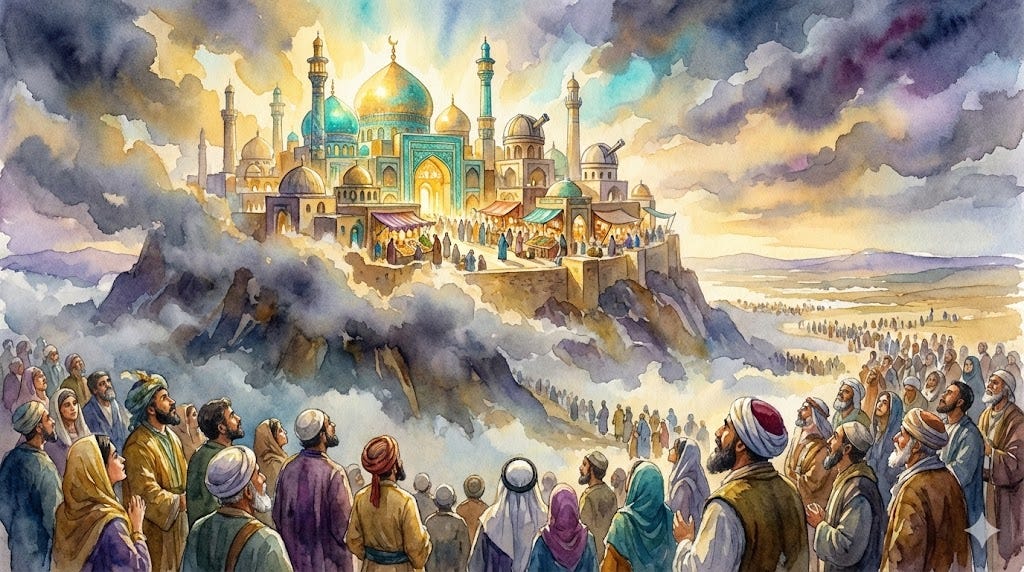
The existence of the Islamic Republic has changed something fundamental.
For centuries, the Shia were a persecuted minority.
They lived under hostile rule — Umayyad, Abbasid, Ottoman, various local dynasties.
They preserved their faith through strategic concealment, waiting for conditions that would allow open practice.
In 1979, those conditions arrived.
For the first time in centuries, a state existed that was built on Shia principles, led by Shia scholars, dedicated to implementing Shia jurisprudence.
The Shia were no longer a persecuted minority hiding in the shadows.
They were a nation — with a government, with institutions, with the capacity to demonstrate on the world stage what their faith actually looks like when lived.
This changes the equation.
The default mode of Taqiyyah — the defensive crouch that was necessary for survival — is no longer the primary posture.
The primary posture is now demonstration.
How does an Islamic system handle economics?
The world is watching.
How does an Islamic system approach science and technology?
The world is watching.
How does an Islamic system treat its citizens, its minorities, its neighbours?
The world is watching.
How does an Islamic system respond to aggression?
The world is watching.
The answers to these questions are not given in words alone.
They are given in conduct — in the actual behaviour of the system and its people.
And this is Makarim al-Akhlaq at the collective level.
The noble character that the Prophet came to perfect — demonstrated not just by individuals but by a society.
The Challenge
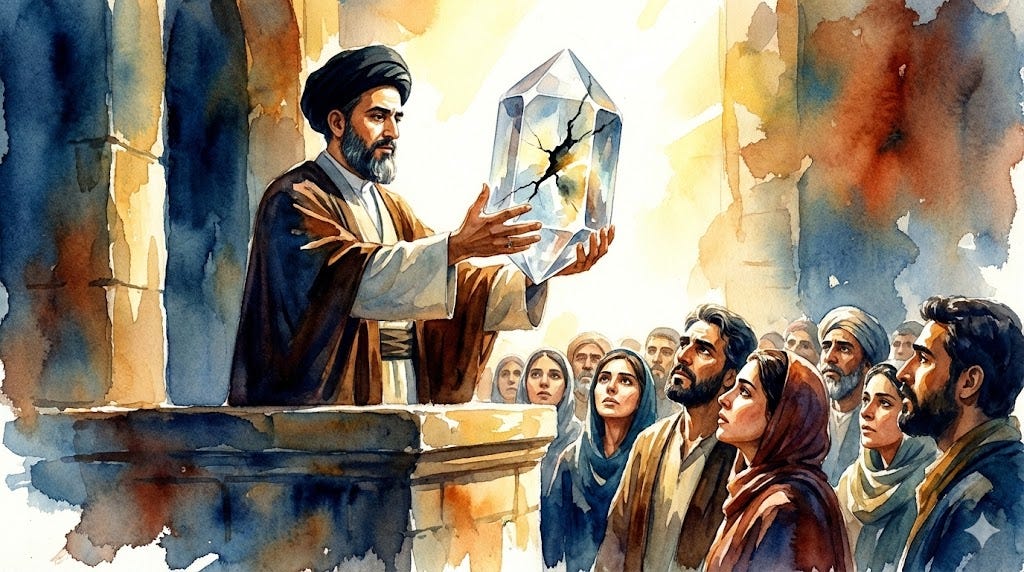
Here we must be honest.
Demonstration is harder than concealment.
Hiding requires only that you not be caught.
You can be mediocre in private, as long as you maintain appearances.
Demonstrating requires that you actually be what you claim.
There is no private space where you can relax your standards.
The Kernel must be real, not merely protected.
The Shia community — and the Islamic Republic that represents it — faces this challenge every day.
When the system falls short of its ideals — when corruption occurs, when injustice happens, when officials behave in ways that contradict the principles they claim — the demonstration is damaged.
Not because enemies fabricate lies (though they do).
But because the actual conduct provides material for legitimate criticism.
The Shell of Taqiyyah cannot protect against this.
You cannot conceal your way out of genuine failures.
You can only correct them — by actually embodying the noble character you claim.
This is hard.
It is much harder than hiding.
But it is what the moment demands.
The world is watching.
The world is making judgments about Islam based on what it sees.
And what it sees must be Makarim al-Akhlaq — or all the apologetics in the world will not suffice.
The Individual Obligation
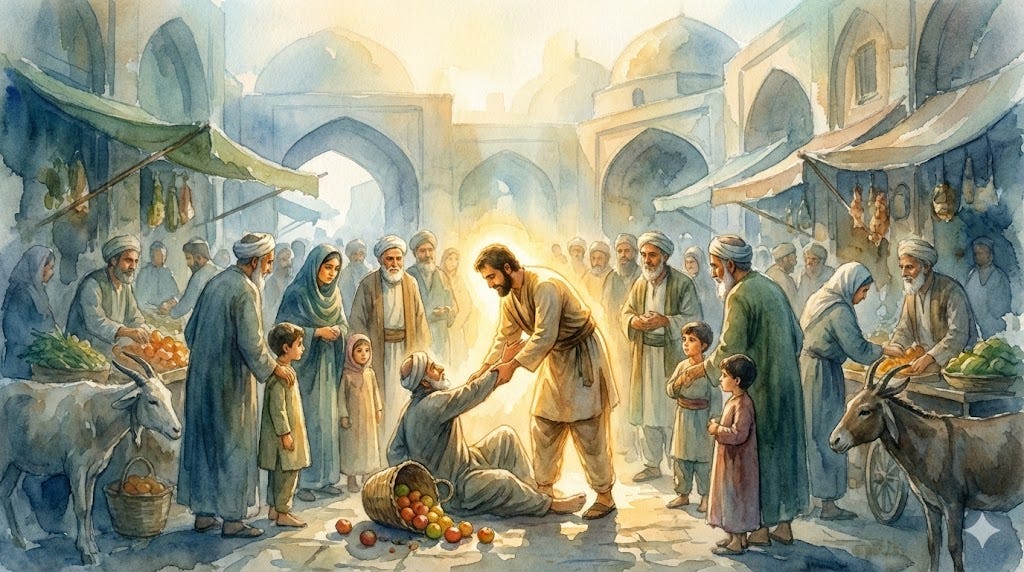
This collective reality creates an individual obligation.
Every believer who is seen — every Muslim whose conduct is observed by non-Muslims — is a demonstration.
Whether he likes it or not.
Whether he intends it or not.
His colleagues at work observe him.
His neighbours observe him.
The people he interacts with in daily life observe him.
And they draw conclusions — not about him alone, but about the faith he represents.
When he is honest, they think: perhaps Islam produces honest people.
When he is generous, they think: perhaps Islam produces generous people.
When he is patient, kind, just, humble — they think: perhaps there is something to this faith after all.
And when he is dishonest, greedy, hot-tempered, arrogant — they think the opposite.
This is an immense responsibility.
But it is also an immense opportunity.
The believer who lives Makarim al-Akhlaq in the open — who demonstrates noble character in every interaction — becomes a Hujjah, a proof.
Not a proof through argument.
A proof through existence.
His life answers the slanders against Islam more effectively than any lecture, any book, any debate.
He is the message made flesh.
And this — not concealment, not protection, not defensive posture — is what the Prophet was sent to create.
The Transition

We have been studying the Shield for six sessions.
We learned to forge it — understanding its nature, its conditions, its Quranic foundations.
We learned its history — how it was wielded across centuries of persecution.
We learned its limits — the weapons it cannot cover, the lines that cannot be crossed.
We learned to recognise the poison — the Fitna that seeks to destroy us from within.
We learned to navigate — the Baby Camel, strategic uselessness to the corrupt.
All of this remains valid.
The Shield is still needed.
Enemies still exist.
Fitna still operates.
The skills of protection remain essential.
But the Shield is not the goal.
The goal is what the Shield protects.
And what the Shield protects is Makarim al-Akhlaq — noble character, demonstrated openly, transforming the world through the beauty of lived faith.
The time has come to lower the Shield — not because danger has passed, but because something higher calls.
The time has come to demonstrate.
The Western Shia Question: The Freedom You Were Given
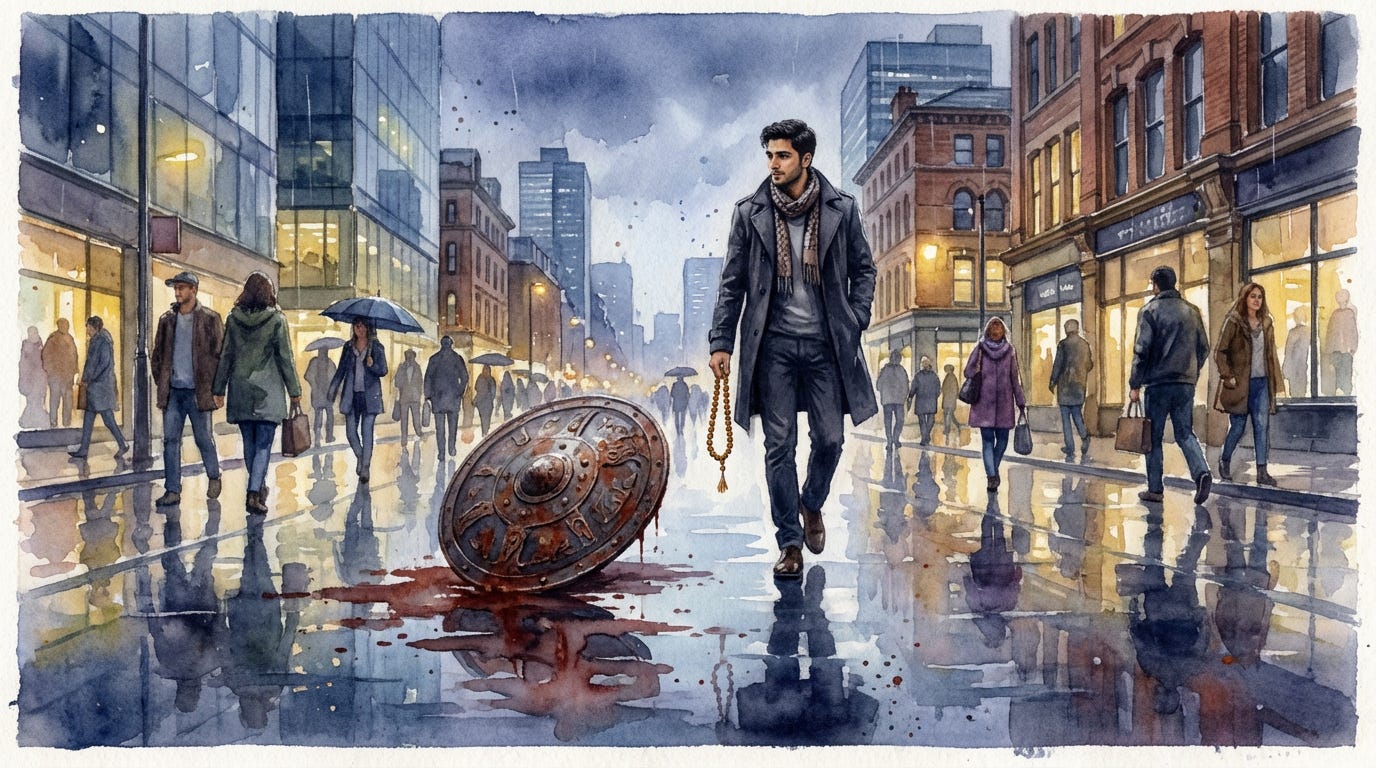
We have established that the believer’s primary mode is demonstration, not concealment.
We have established that the existence of the Islamic Republic has shifted the equation — that the Shia are no longer only a persecuted minority but a nation capable of showing the world what lived Islam looks like.
But there is a question that many of us must face — those of us who do not live in the Islamic Republic, who do not live under its protection, who live instead in Western societies with their own dynamics and pressures.
The question is direct:
Is Taqiyyah even relevant in Manchester?
In Toronto?
In Sydney?
In Los Angeles?
For those of us who live in the West — what is our situation, and what is our obligation?
The Classical Condition
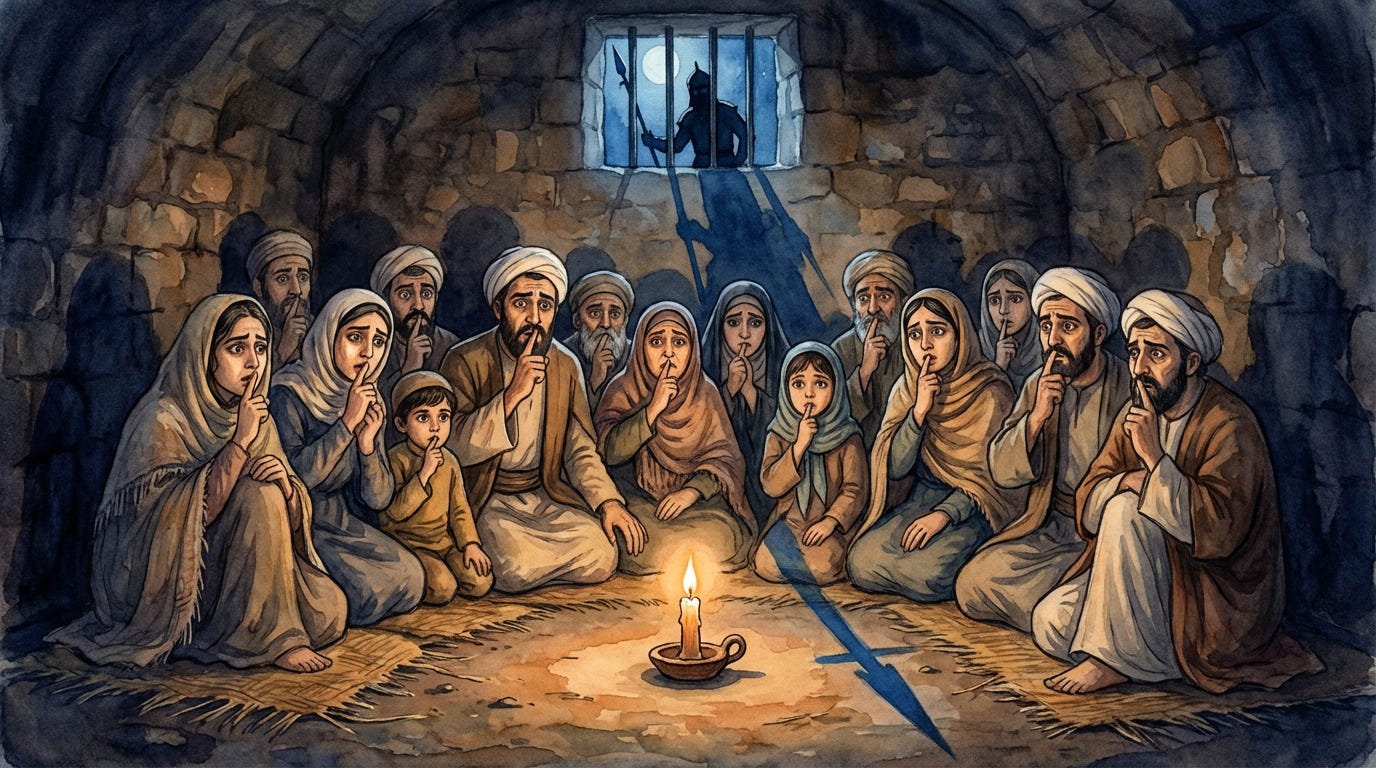
Let us recall what Taqiyyah was designed for.
The classical condition was mortal danger.
The Shia lived under regimes that would execute them for their beliefs.
To say “Aliyyun Waliyyullah” in certain times and places was to invite death.
Under Umayyad rule, the followers of the Ahl al-Bayt were hunted.
Under Abbasid rule, though the persecution took different forms, the danger remained.
Under various Sunni dynasties across centuries, the Shia learned that survival required concealment.
Taqiyyah was the dispensation that allowed them to survive.
When the alternative is death — when speaking truth means your family watches you executed, when identifying yourself means your children become orphans — the tradition permits concealment.
This is what Ammar faced.
This is what generations of believers faced.
This is not what we face in the West.
The Western Reality
Let us be honest about our situation.
No one in Manchester will execute you for being Shia.
No one in Toronto will imprison you for commemorating Ashura.
No one in Sydney will kill your family for following the Ahl al-Bayt.
The classical condition of Taqiyyah — mortal danger for the expression of faith — does not obtain.
This is simply true.
Pretending otherwise would be dishonest.
Yes, there are other pressures.
We will address them.
But they are not the pressures that the classical jurists had in mind when they articulated the dispensation of Taqiyyah.
Our ancestors would have wept with joy to have the freedom we have.
They would have considered it a paradise — to live in a place where you can build a mosque, establish a hussainiyyah, gather openly for Muharram, teach your children without fear of the secret police breaking down your door.
This is what we have.
And this changes everything.
The Nuanced Answer

So is Taqiyyah irrelevant in the West?
The answer requires nuance.
Layer One: The Classical Dispensation Has Largely Lifted

For the core practices of faith — prayer, fasting, commemoration, identification as Shia — the classical dispensation does not apply.
You can pray openly.
You can fast openly.
You can attend Ashura programmes openly.
You can say “I am Shia” without fearing for your life.
The permission to conceal these things, which was granted under conditions of mortal danger, does not extend to conditions of mere social discomfort.
If concealing your prayer was permitted to save your life, it does not follow that concealing your prayer is permitted to avoid an awkward conversation with your colleague.
The dispensation was for extreme circumstances.
Mild social friction is not an extreme circumstance.
Layer Two: Other Pressures Exist But Are Different
This does not mean there are no pressures.
There are social pressures — the awkwardness of being visibly Muslim in a secular environment, the prejudice that exists in some quarters, the stereotypes that media has cultivated.
There are professional pressures — the possibility that visible religiosity might affect career advancement, that taking time for prayer might be seen as inconvenient, that fasting might raise questions.
There are family pressures — the tensions that can arise in mixed families, the generational conflicts between those who wish to assimilate and those who wish to maintain tradition.
These pressures are real.
They should not be dismissed.
But they are not mortal danger.
They are not
“speak the words of disbelief or watch your family die.”
They are discomfort.
They are friction.
They are the ordinary challenges of living as a minority in any society.
And the dispensation for these is much narrower — if it exists at all.
You may use wisdom in how you present yourself.
You may choose your moments.
You may avoid unnecessary provocation.
But you may not abandon the visible practice of your faith simply because it is socially inconvenient.
The threshold for Taqiyyah is higher than inconvenience.
Layer Three: The Greater Obligation Emerges
And here is what many Western Muslims miss:
When the classical dispensation lifts, it is not replaced by nothing.
It is replaced by the primary obligation — the obligation to demonstrate.
You are not merely permitted to practice openly.
In many circumstances, you are obligated to practice openly.
Why?
Because your practice is Da’wah.
Your conduct is Tabligh.
Your visible faith is a message to everyone who observes you.
The colleague who sees you pray sees something about Islam.
The neighbour who observes your character during Ramadan learns something about what fasting produces.
The community that witnesses how you treat your family, your employees, your customers — they draw conclusions about the faith you represent.
You are, whether you like it or not, an ambassador.
And ambassadors do not have the luxury of hiding.
Layer Four: The Responsibility Is Immense

This creates a weight that perhaps our ancestors did not carry in the same way.
They had to survive.
We have to represent.
They had to preserve the faith for future generations.
We have to demonstrate the faith to a watching world.
They were asked to endure persecution with patience.
We are asked to manifest excellence in conditions of freedom.
In some ways, their task was simpler.
Survive.
Pass on what you received.
Wait for conditions to change.
Our task is more complex.
We have the conditions they prayed for.
Now we must prove worthy of them.
And this is not easy.
It is easy to be a Muslim when everyone around you is Muslim.
It is hard to be a Muslim when you are surrounded by those who do not share your faith — and who are forming their opinions about Islam based on what they see in you.
It is easy to have noble character when no one is testing it.
It is hard to have noble character when every interaction is a test — when your patience, your honesty, your generosity, your justice are constantly observed and evaluated.
The freedom we have been given is also a burden.
The opportunity is also a responsibility.
And we cannot escape it by pretending that Taqiyyah still applies when it manifestly does not.
What the Western Shia Owes
Let us be specific about what this means in practice.
You owe visibility.
Not obnoxious visibility.
Not aggressive in-your-face religiosity.
Not the performance of piety for the sake of performance.
But genuine, natural, unapologetic visibility.
When colleagues ask about your faith, you answer honestly — not evasively, not apologetically, but with the quiet confidence of someone who knows what he believes and is not ashamed of it.
When the occasion arises to explain Ashura, you explain it — not defensively, not minimising it to make it palatable, but with the dignity it deserves.
When your practice requires accommodation — time for prayer, days off for commemorations — you request it straightforwardly, as someone exercising a right, not begging for a favour.
This visibility is not optional.
It is what the lifting of persecution demands.
You owe excellence.
The watching world will judge Islam by what it sees in you.
If you are mediocre — mediocre in your work, mediocre in your ethics, mediocre in your treatment of others — you confirm the suspicion that Islam produces nothing special.
If you are excellent — excellent in your craft, excellent in your honesty, excellent in your relationships — you become a proof that Islam produces something the world needs.
This excellence is not optional.
It is what representation demands.
You owe engagement.
The Muslim who retreats into a cocoon — who socialises only with other Muslims, who works only for Muslim employers, who lives in a self-created ghetto — has abandoned the field.
He is not demonstrating anything to anyone.
He is hiding — not from persecution, but from responsibility.
The Prophet did not create a cocoon in Madinah.
He engaged with the Jews, with the polytheists, with everyone who would listen.
He was present in society, not withdrawn from it.
The Western Shia owes the same engagement.
Be present.
Be involved.
Be a colleague, a neighbour, a citizen.
Let them see you.
Let them know you.
Let them discover, through actual relationship, what a Muslim actually is.
This engagement is not optional.
It is what the opportunity demands.
You owe patience.
There will be misunderstandings.
There will be prejudice.
There will be moments when you are treated unfairly because of what you represent.
This is not persecution.
This is the ordinary friction of being different.
And it must be borne with patience — the patience that demonstrates, rather than undermines, the faith you claim.
When you respond to ignorance with anger, you confirm stereotypes.
When you respond to prejudice with dignity, you shatter them.
The patience is not optional.
It is what witness demands.
The Treasure You Hold
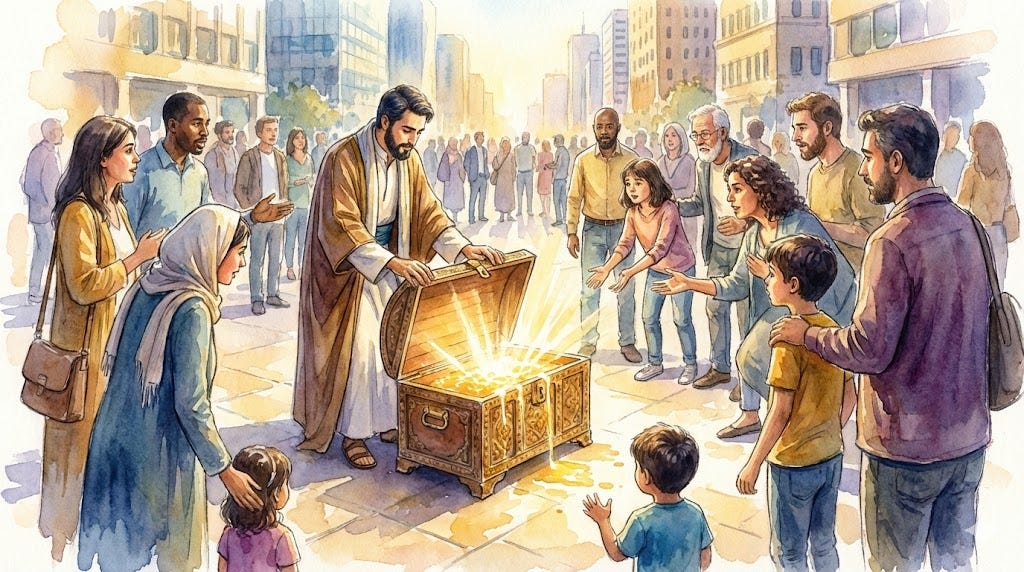
Perhaps a different framing will help.
Imagine you possessed a treasure — something of immense value, something that could benefit everyone who encountered it, something that the world desperately needs.
Now imagine you hid that treasure.
You kept it locked away.
You let no one see it, no one benefit from it, no one even know it existed.
What would we say about such a person?
We would say he was selfish.
We would say he was hoarding.
We would say he had failed in his responsibility to share what he had been given.
You possess a treasure.
You possess Makarim al-Akhlaq — or at least, you have access to the teachings that produce it.
You possess connection to the Ahl al-Bayt — to a lineage of wisdom that has transformed everyone who has genuinely encountered it.
You possess a tradition — of scholarship, of ethics, of spirituality — that is among the richest humanity has ever produced.
And you live in a society that is starving.
Starving for meaning.
Starving for guidance.
Starving for examples of how to live well in a world that offers endless options but no direction.
They need what you have.
And you have the freedom to share it.
Not through lectures.
Not through arguments.
Not through pamphlets or debates.
Through your life.
Through the demonstration of noble character that makes people ask:
“What is the source of that?
Where does that come from?
How can I have what he has?”
This is the opportunity.
This is what your ancestors could not do — because they were hunted, because they were hiding, because survival consumed all their energy.
You can do it.
You have the freedom they prayed for.
Do not squander it.
Do not hide the treasure.
Do not mistake social discomfort for persecution.
Do not use Taqiyyah as an excuse for cowardice.
Lower the Shield.
Let the Kernel shine.
And let the world see what fourteen centuries of devotion to the Ahl al-Bayt actually produces — in character, in conduct, in the lived reality of a human being transformed by faith.
Conclusion: The Defensive Movement Complete
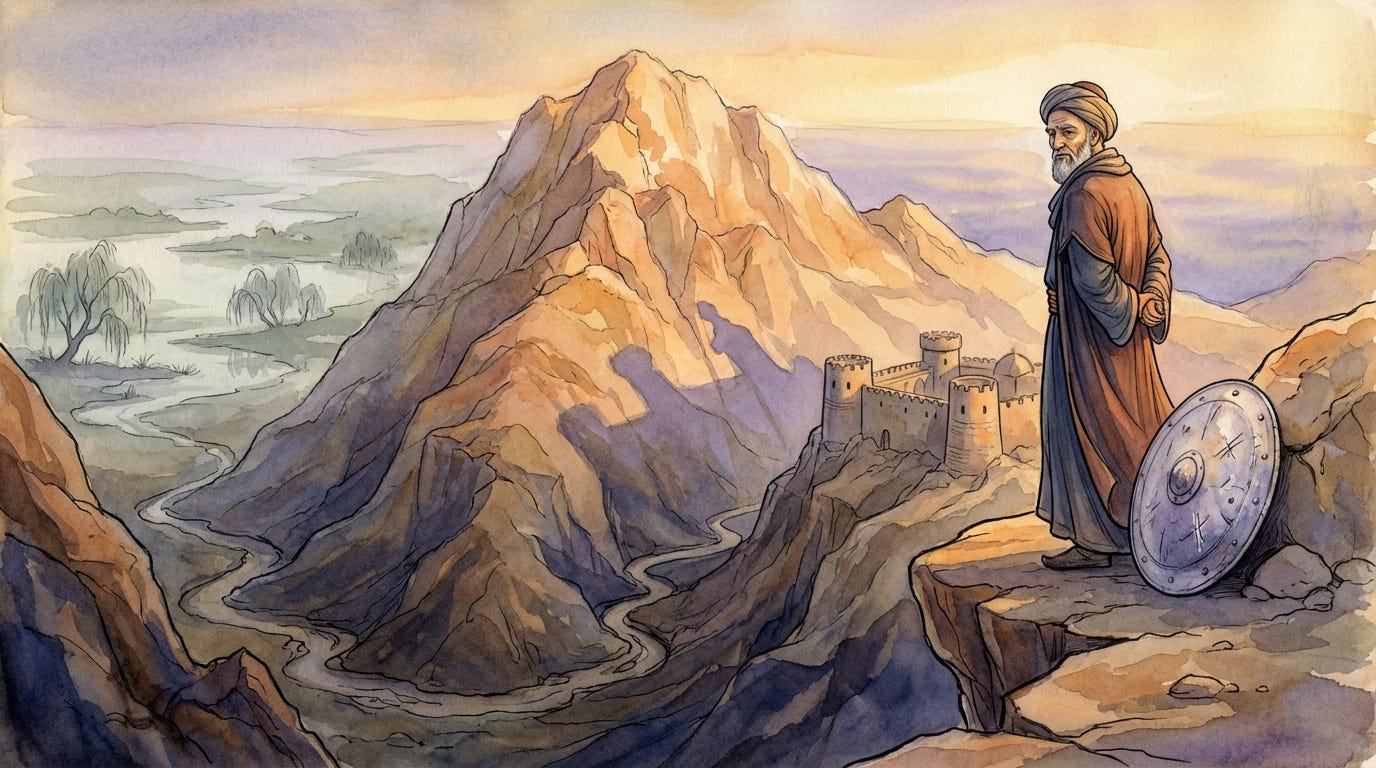
We have reached the end of a journey.
A journey that began six sessions ago, when we first took up the question of how the believer protects himself and his community during the long night of the Imam’s Occultation.
Tonight, that journey reaches its completion.
Let us stand on this summit and survey what we have traversed.
The Arc Recalled
Session 55: Forging the Shield
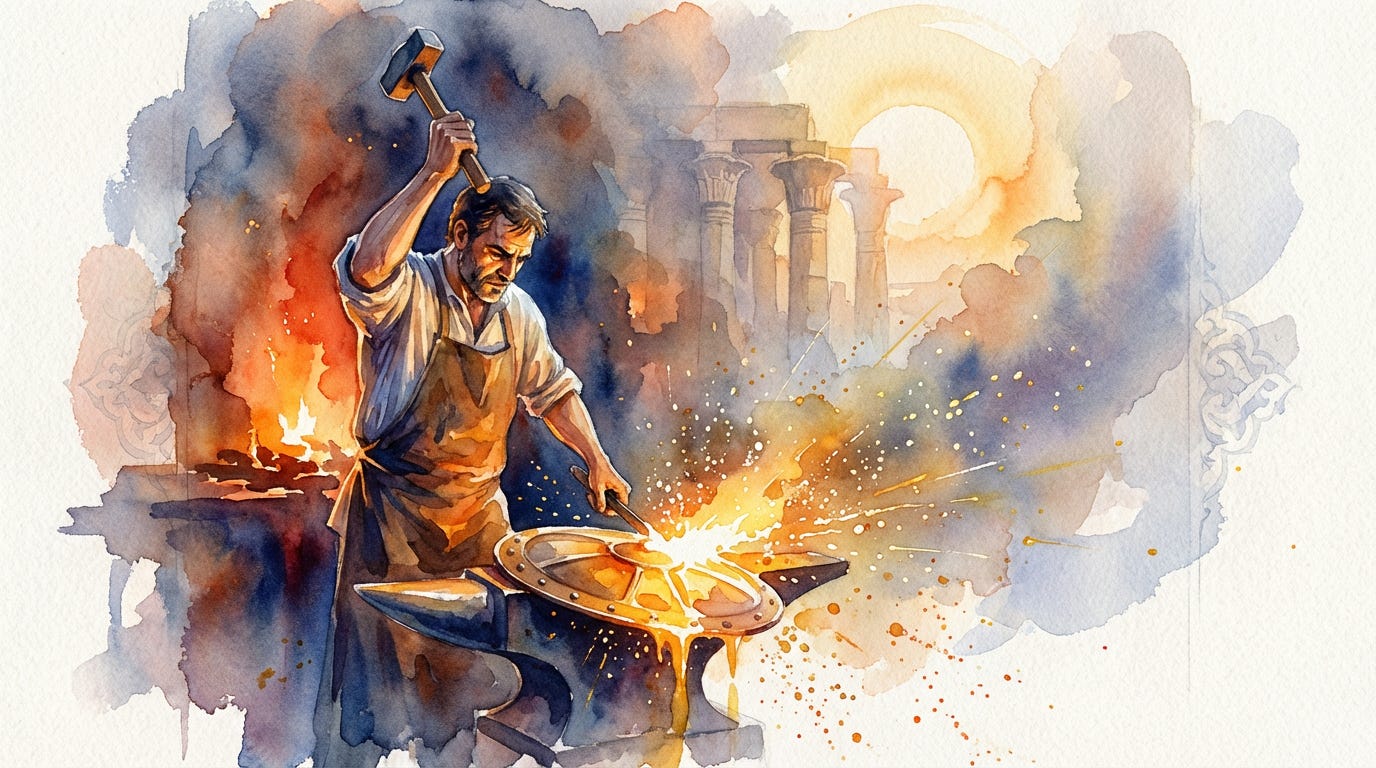
We began by understanding what Taqiyyah actually is — not the slander of Islamophobes who imagine a doctrine of universal deception, but a precise dispensation with specific conditions.
We traced its Quranic foundations — the Believer in Pharaoh’s household, who concealed his faith to protect himself and guide his people; Ammar ibn Yasir, who spoke words of disbelief under torture while his heart remained firm.
We established its conditions: genuine threat, proportionate response, protection of the greater good.
We distinguished it absolutely from Nifaq — from hypocrisy, which conceals disbelief beneath a mask of faith.
Taqiyyah conceals faith to protect it.
Nifaq conceals its absence to exploit others.
The Shield was forged.
Session 56: The Shield in Action
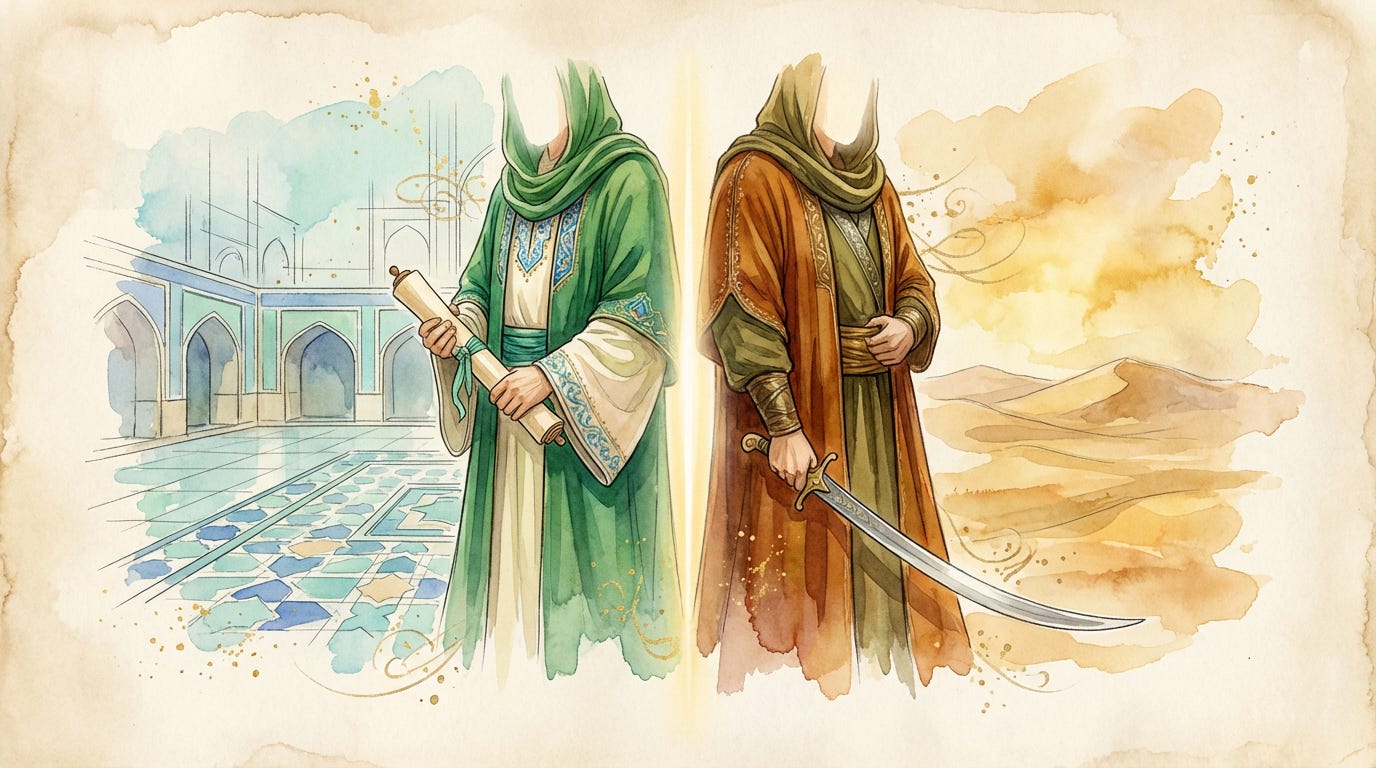
We traced how the Shield was wielded across history — from the era of the Imams through the Safavid transformation to the present day.
We witnessed the spectrum of response in the sons of Imam Ali — Imam Hasan’s strategic patience, Imam Husayn’s revolutionary sacrifice — and understood that both are valid, both are necessary, both serve the preservation of truth in different circumstances.
We examined “Heroic Flexibility” — the principle that permits tactical concession without strategic surrender, that allowed the Islamic Republic to engage in diplomacy like the JCPOA without abandoning its principles.
And a question emerged: if the Shield permits so much flexibility, what are its limits?
What can it not cover?
Sessions 57-58: The Theology of Warfare
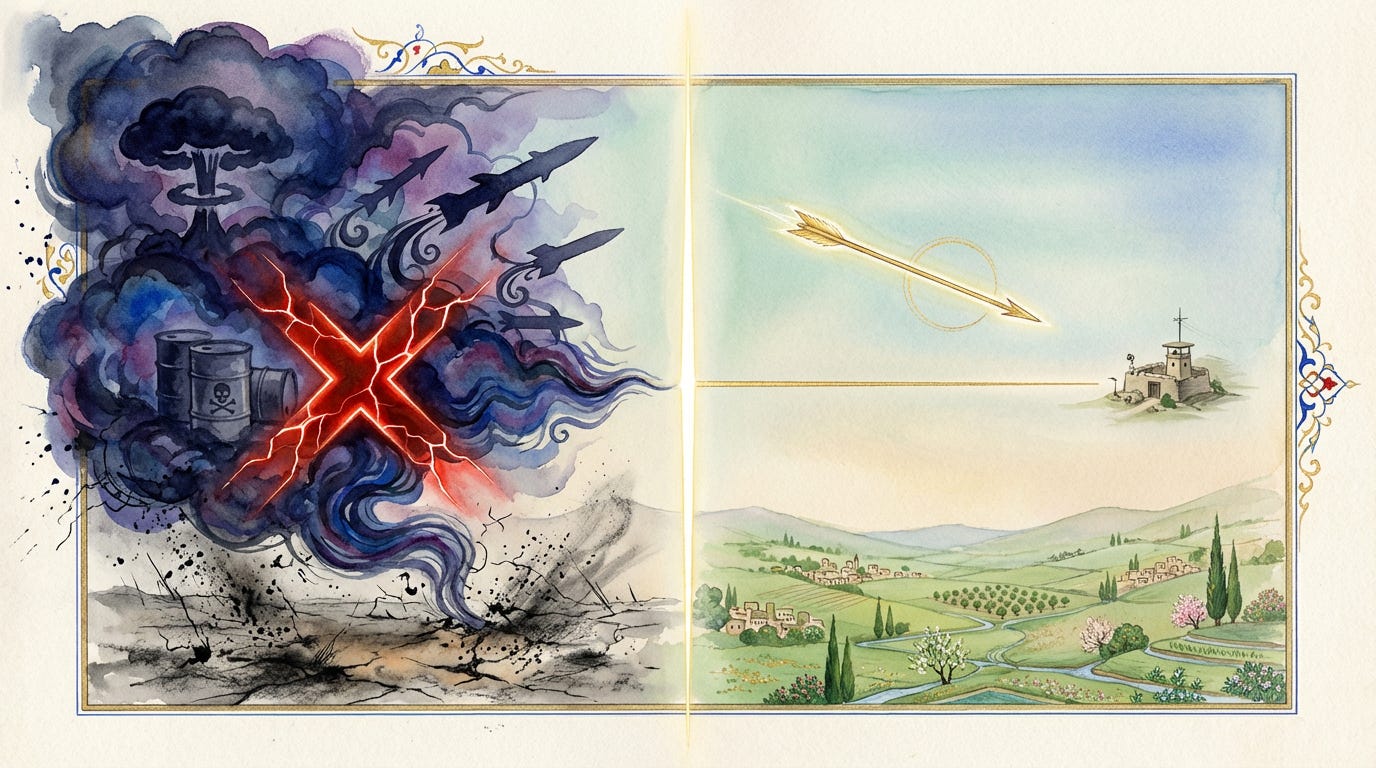
We descended into those limits and found the Theology of Warfare.
We established that certain weapons — nuclear, chemical, biological, any weapon that is indiscriminate, uncontrollable, and residual in its harm — fall under absolute prohibition.
The Quran commands deterrence, not annihilation.
The Prophet forbade poisoning lands.
The classical jurists codified this as an absolute rule that even necessity cannot override.
We examined Imam Khamenei’s Fatwa — the Triad of Prohibition covering production, stockpiling, and use — and found it confirmed by the consensus of the maraji’ across Qom and Najaf.
We traced the Precision Doctrine and witnessed how the prohibition shaped actual policy — Mass Precision instead of Mass Destruction, Operation Martyr Soleimani as a “slap” rather than a massacre.
And we answered the accusation that haunts every discussion: the Fatwa cannot be Taqiyyah, because Taqiyyah conceals a truth that exists, and there is no hidden truth here.
The sources yield only one conclusion: prohibition.
Session 59: The Poison Identified
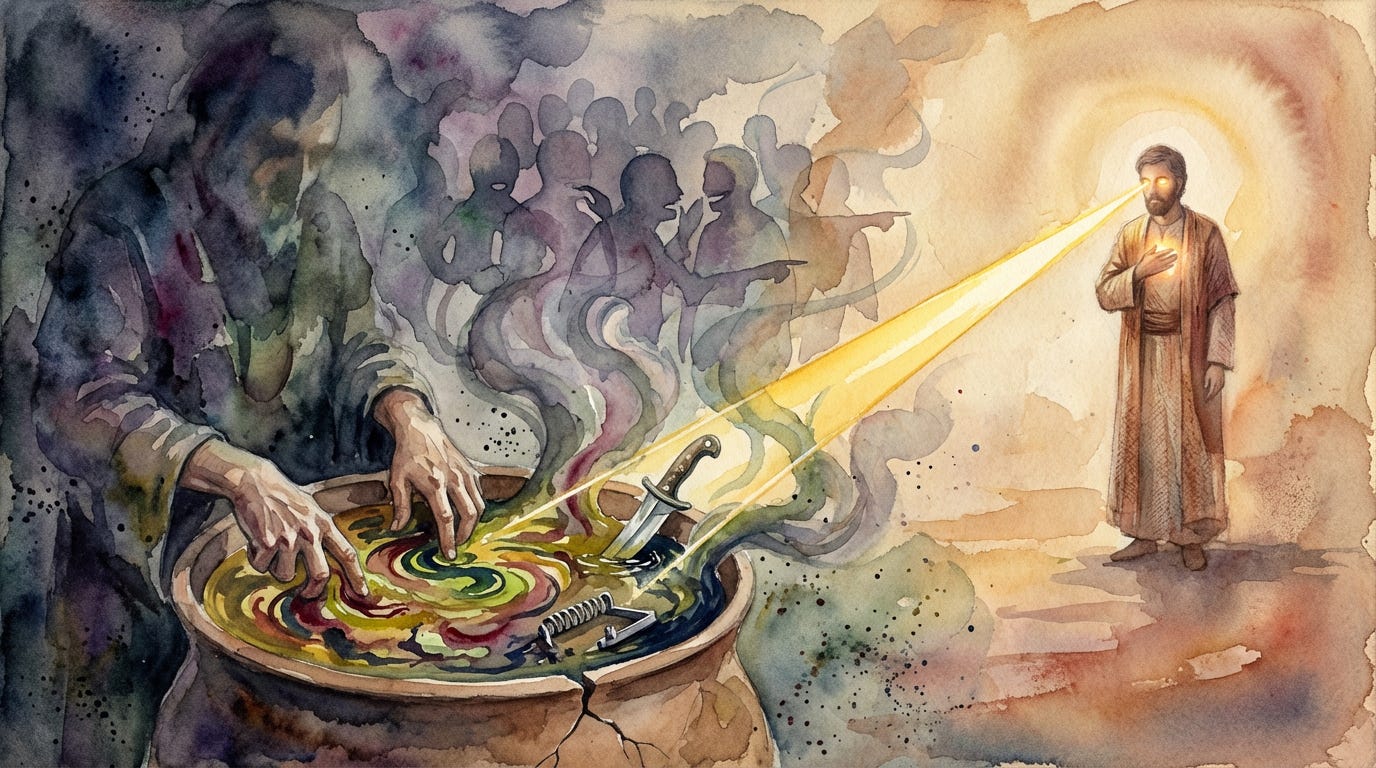
We crossed the bridge from physical poison to information poison — and found the same principles applying.
Disinformation is indiscriminate, uncontrollable, residual. It operates like chemical weapons in the cognitive domain.
Imam Khamenei named it precisely: the chemical weapons of the Soft War.
We established the Quranic framework — the right of the oppressed to speak out, the declaration that Fitna is worse than killing, the obligation to verify before acting.
We traced the distinction between legitimate protest and forbidden sedition — I’tiraz versus Ighthisash, the reformer versus the destroyer.
We heard the classical sources — Sharh al-Lum’ah demanding that grievances be heard before any question of force, Imam Ali commanding that rulers create space for criticism, Sermon 50 revealing the mechanism of Fitna: “A handful from this and a handful from that, and they are mixed.”
We witnessed the pattern in history — Siffin, Imam Hasan’s army, Mukhtar’s betrayal — and recognised it in our own time, in the events that plagued the Islamic Republic of Iran in January 2026.
We heard the scholars speak with one voice: security is the red line, criticism is a gift but conspiracy is a dagger, the duty of the believer is Basirah.
The poison was identified.
Session 60: The Antidote Applied
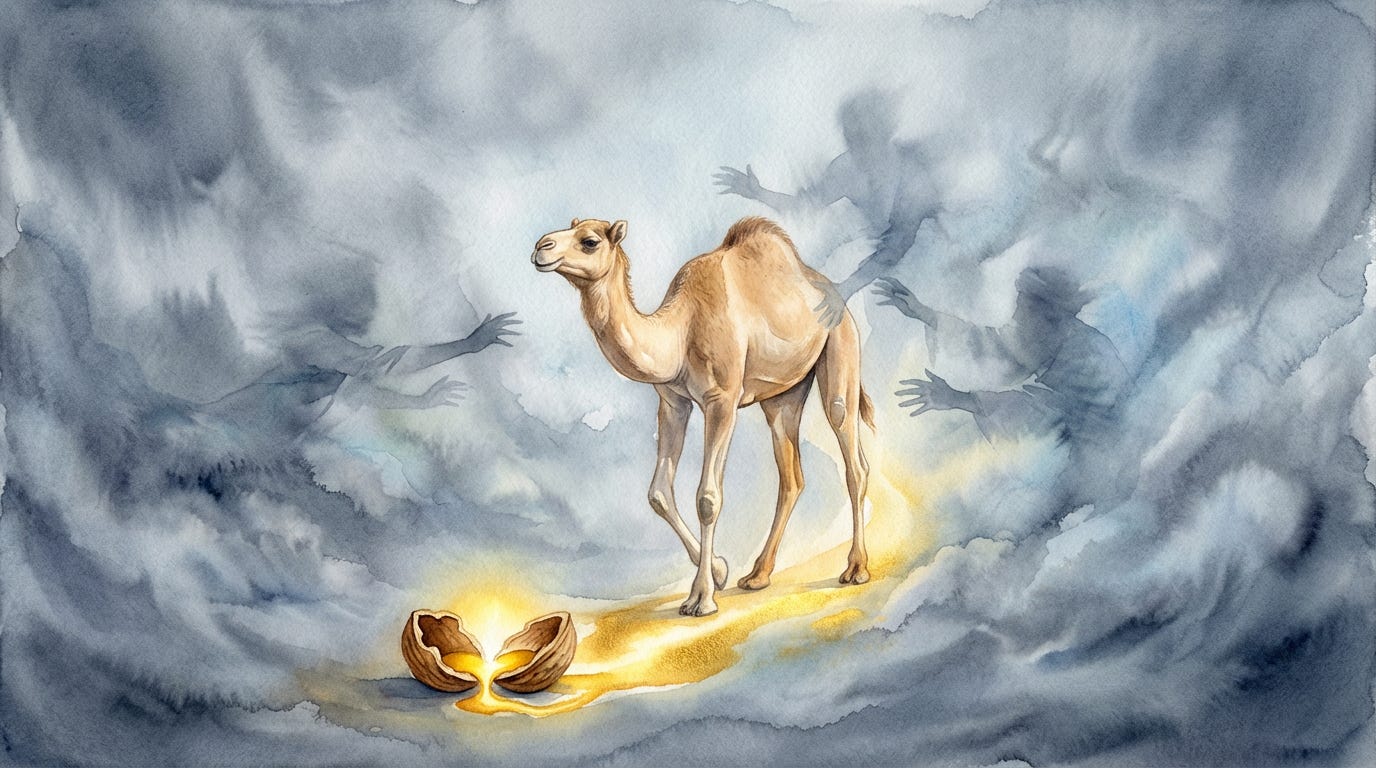
Tonight, we applied the antidote.
We heard Imam Ali’s counsel of the Baby Camel — how to make ourselves useless to the corrupt without withdrawing from society.
Strategic uselessness: no back to be ridden, no udder to be milked.
We distinguished the two types caught in Fitna — the instigators who knowingly poison, deserving justice and severity; the manipulated who unknowingly drink, deserving mercy and education.
We examined Makarim al-Akhlaq — the Noble Character — and understood that this, not concealment, is the believer’s primary mode.
The Prophet was sent to perfect noble character, not to hide it.
The Shell protects the Kernel, but the Kernel must eventually shine.
And we addressed the Western question directly: the classical dispensation has largely lifted for those of us who live in freedom.
What replaces it is not nothing — it is the greater obligation to demonstrate.
We owe visibility, excellence, engagement, patience.
We hold a treasure the world needs.
We must not hide it.
What We Have Learned
Six sessions. One continuous teaching.
Let us crystallise what we have learned:
The Shield is Real
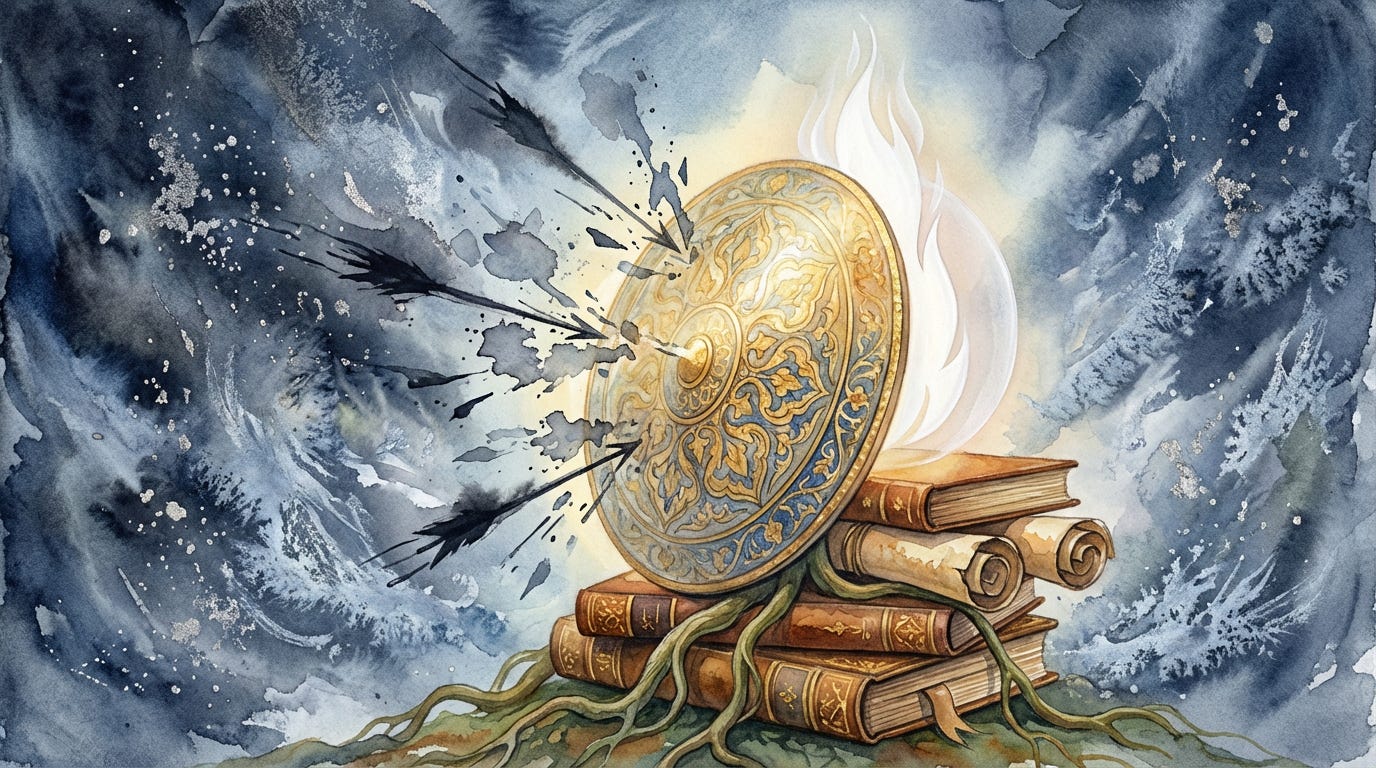
Taqiyyah is a legitimate dispensation, grounded in Quran and hadith, practiced by the Imams, preserved by the scholars.
It is not deception; it is protection.
The Shield has Limits
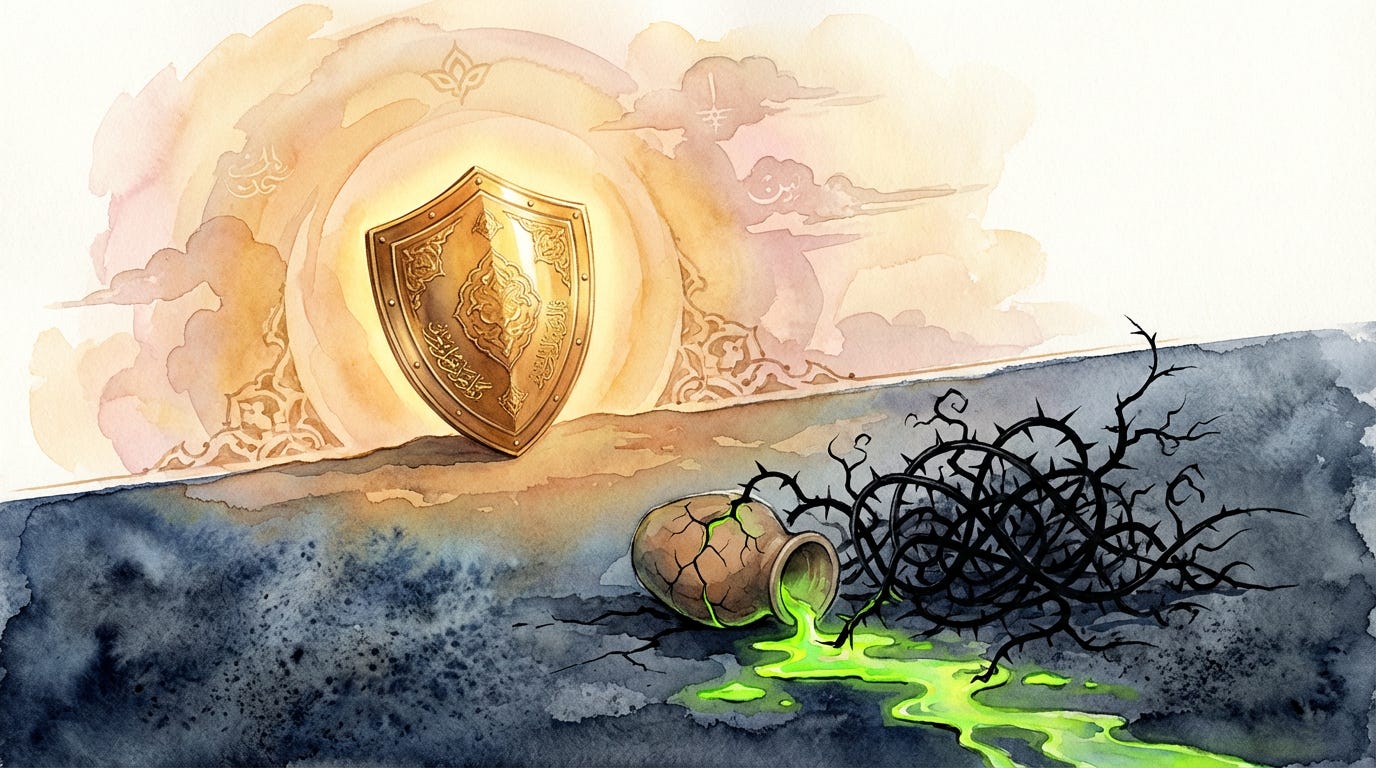
It cannot cover everything.
Certain weapons are forbidden absolutely — those that poison land.
Certain actions are forbidden absolutely — those that poison minds through deliberate Fitna.
The Shield protects; it does not permit becoming the evil you oppose.
The Shield is not the Goal
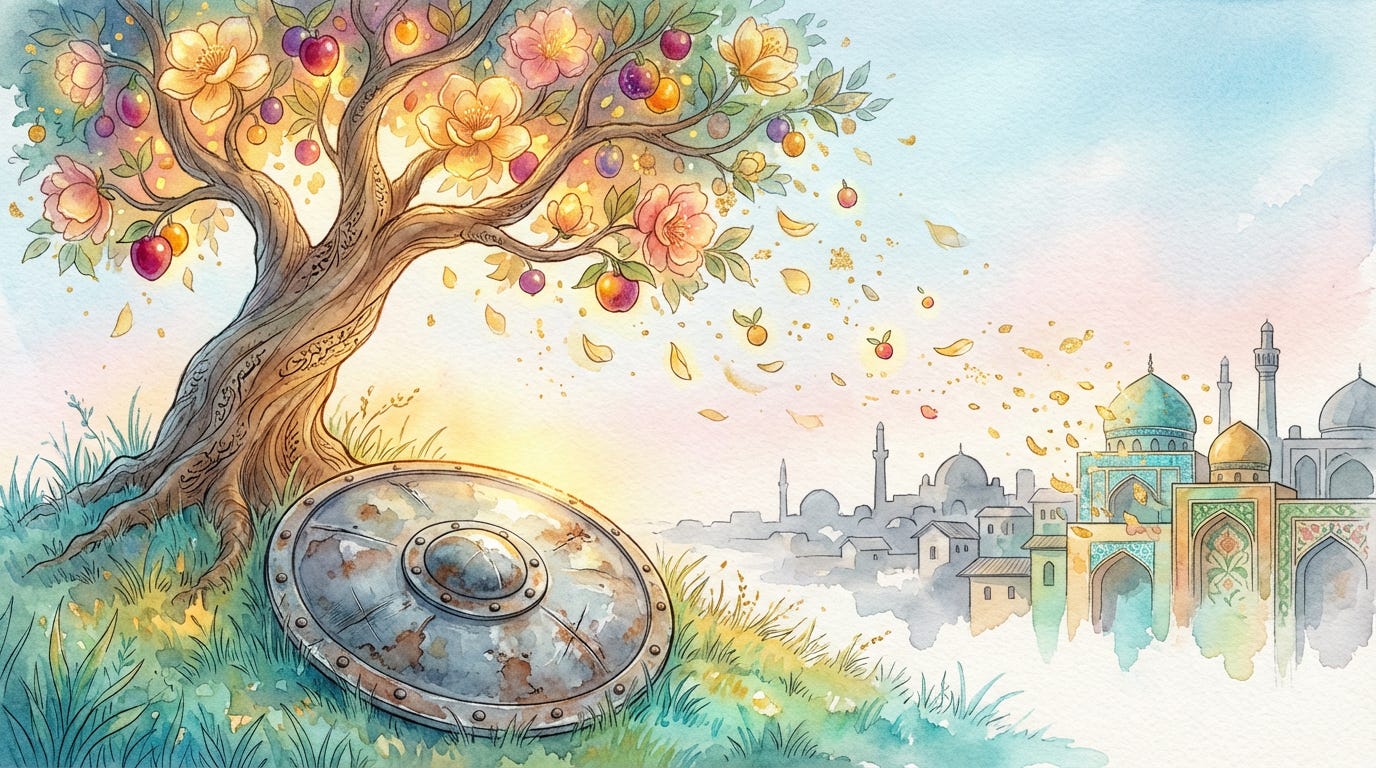
Protection is the means, not the end.
The goal is Makarim al-Akhlaq — noble character, demonstrated openly, transforming the world through lived faith.
The Believer must Discern
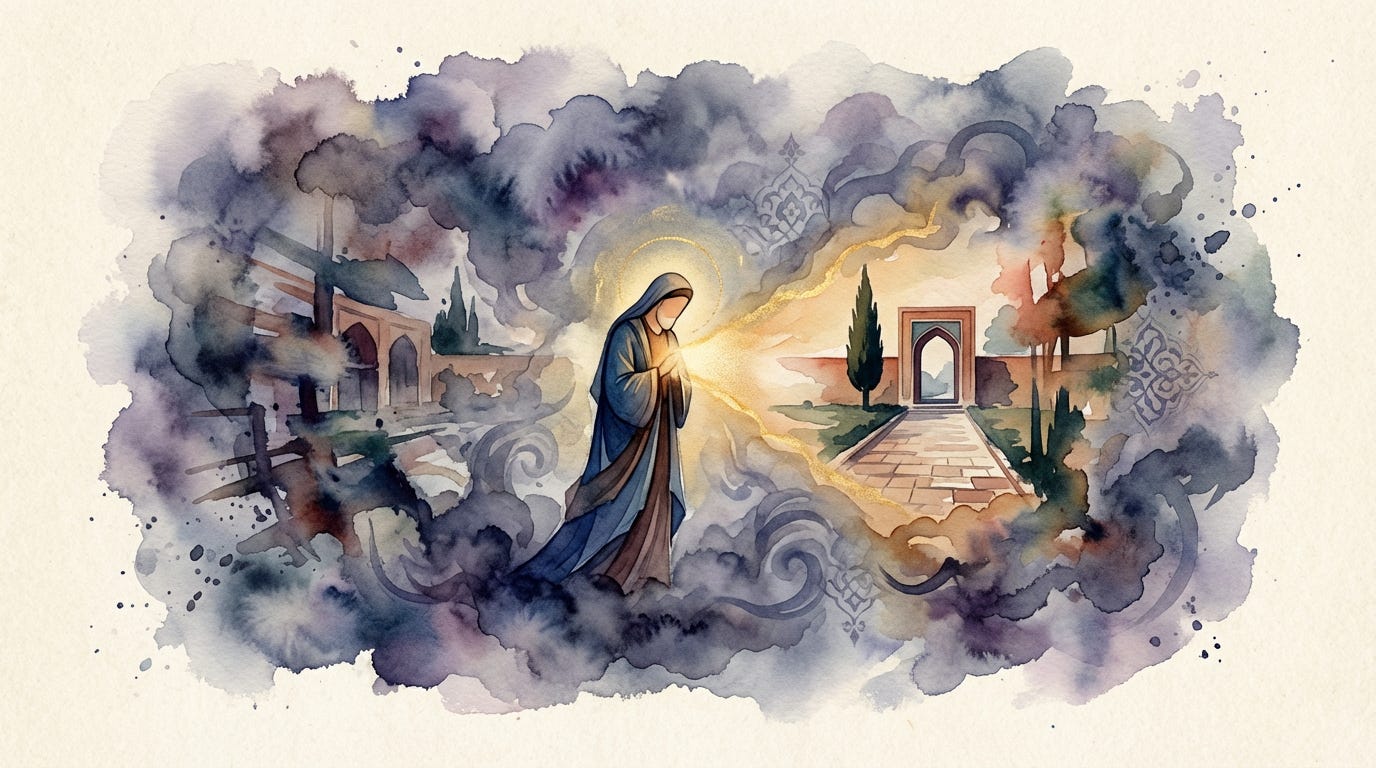
In the fog of Fitna, when truth and falsehood are mixed, the believer needs Basirah — insight, the eye of the heart.
Without it, even good intention becomes an instrument of destruction.
The Believer must Navigate
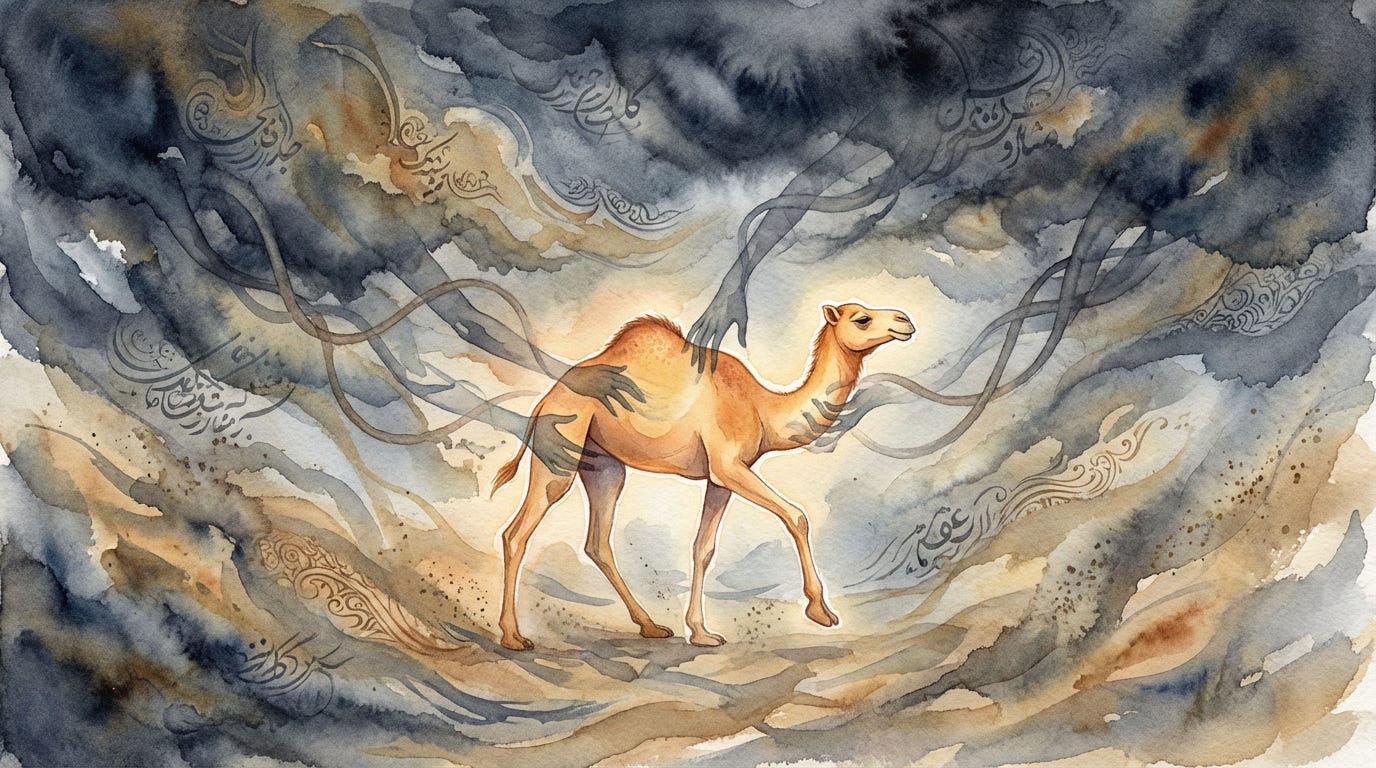
When Fitna rages, the Baby Camel shows the way: be useless to the corrupt.
Do not give your back to be ridden.
Do not offer your udder to be milked.
Survive with integrity intact.
The Believer must Demonstrate
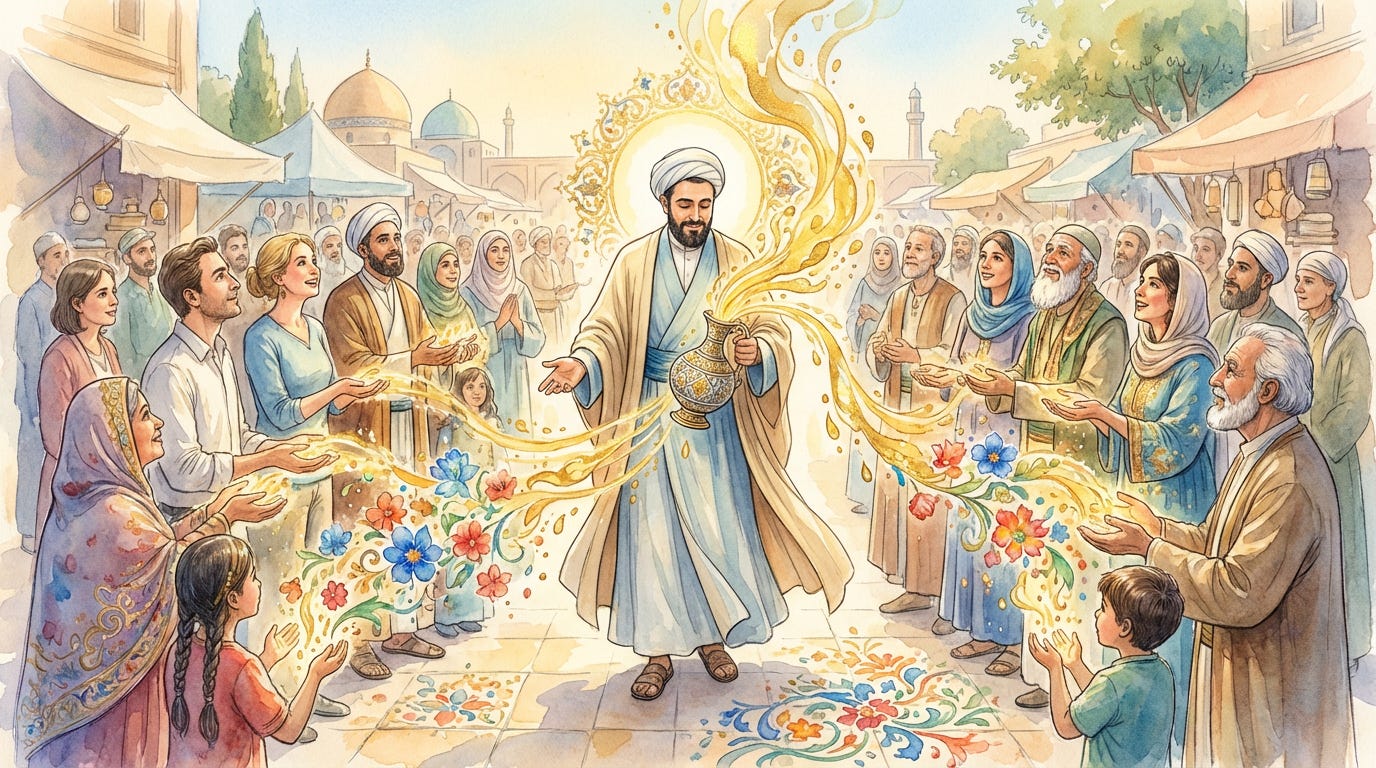
When conditions permit — when persecution lifts, when freedom exists — the primary mode reasserts itself.
The Kernel must shine.
The treasure must be shared.
The world must see what Islam actually produces.
The Defensive Movement Complete
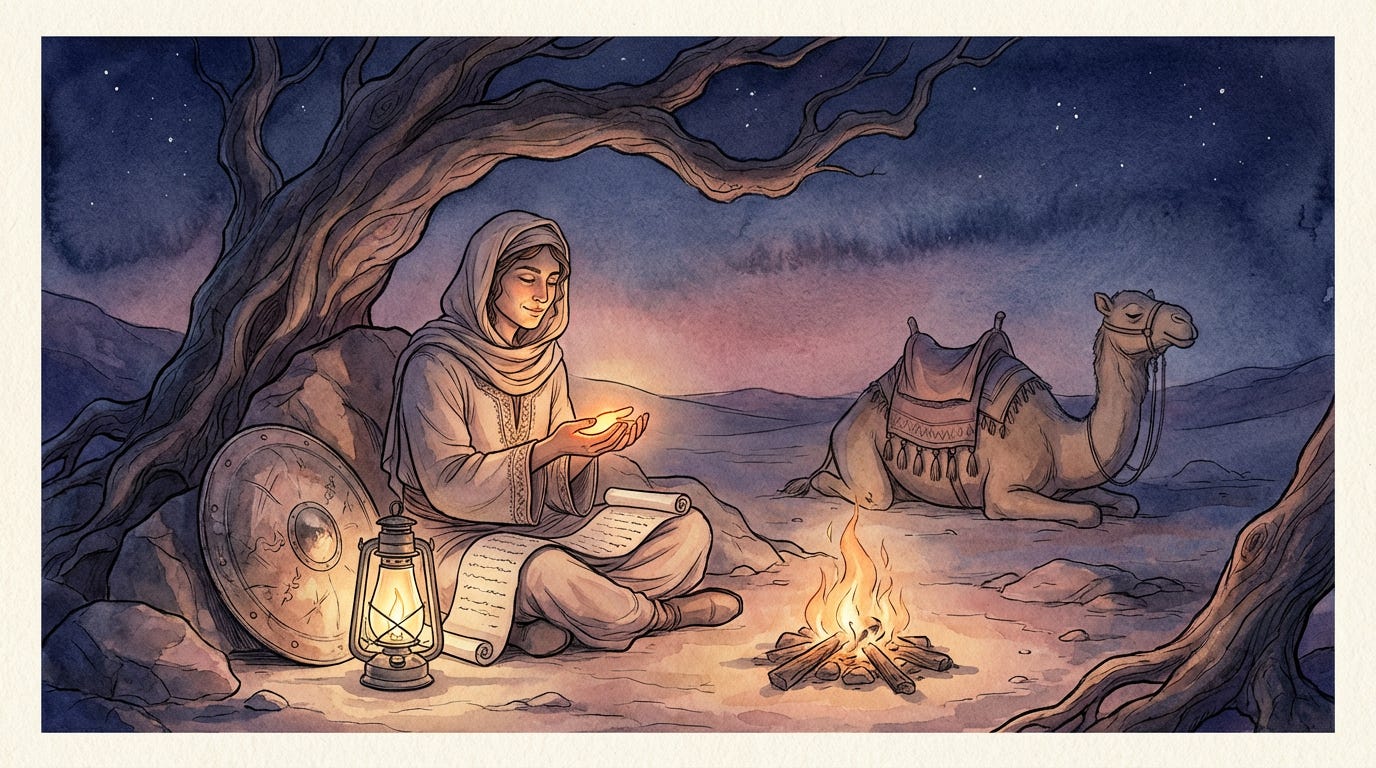
We have completed the Defensive Movement.
We know what to reject — the false claimants, the distorted expectations.
We know how to protect — the Shield, its conditions, its proper use.
We know the limits — the weapons forbidden, the lines that cannot be crossed.
We know how to recognise danger — the characteristics of poison, physical and informational.
We know how to navigate — strategic uselessness, discernment, patience.
We know when to emerge — when protection gives way to demonstration, when the Shell yields to the Kernel.
This is the complete teaching of defence. For now.
This is what the believer needs to survive the Occultation without losing his soul.
What Comes Next
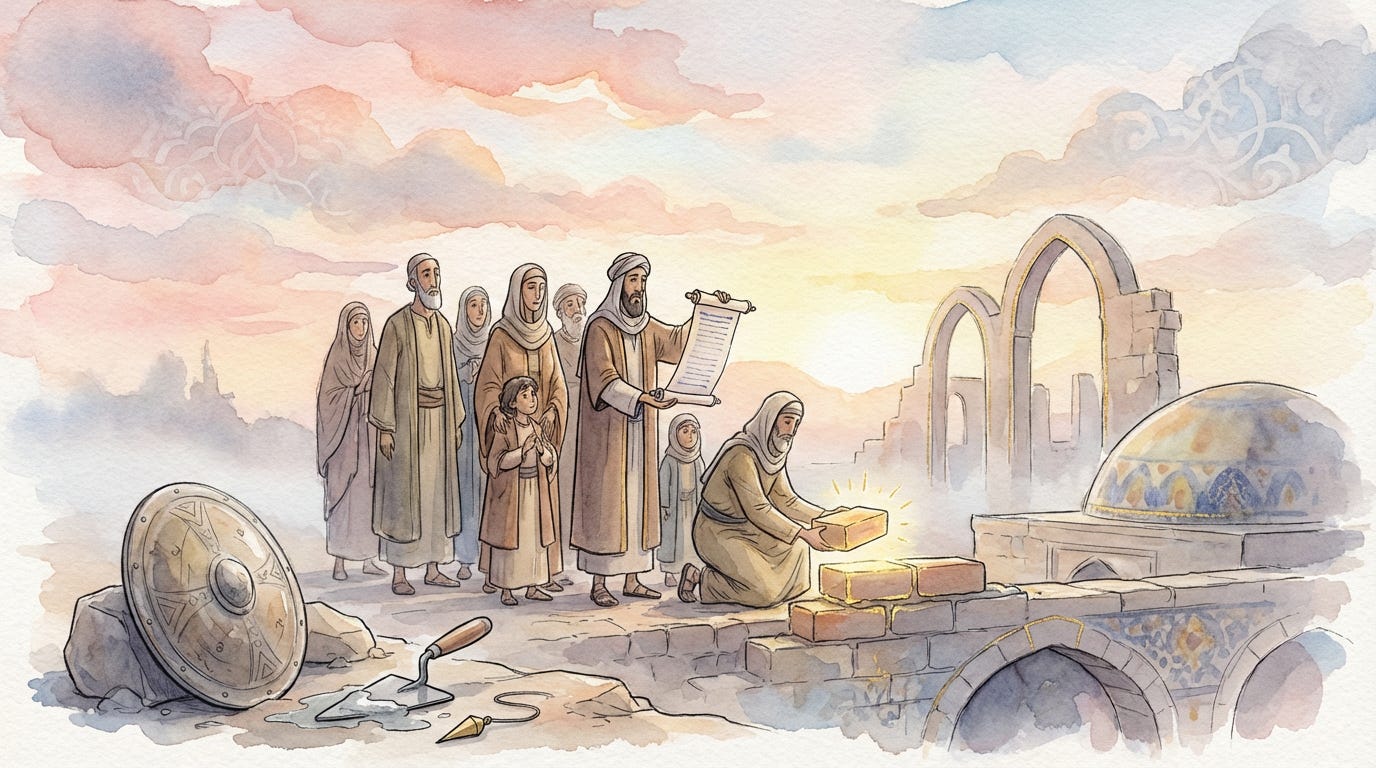
But survival is not the goal.
Defence is not the purpose of existence.
The believer is not called merely to endure until the Imam returns.
He is called to prepare — to build, to create, to establish conditions worthy of the Imam’s appearance.
What does the believer construct while waiting?
What institutions does he build?
What character does he cultivate?
What society does he work toward?
What would make the Imam proud to claim us when he appears?
These questions have answers.
And those answers are the subject of what comes next.
The Constructive Movement begins — God willing — in Session 61.
We have learned to defend.
Now we learn to build.
A Supplication-Eulogy for Those Who Emerge Into Light and Demonstrate
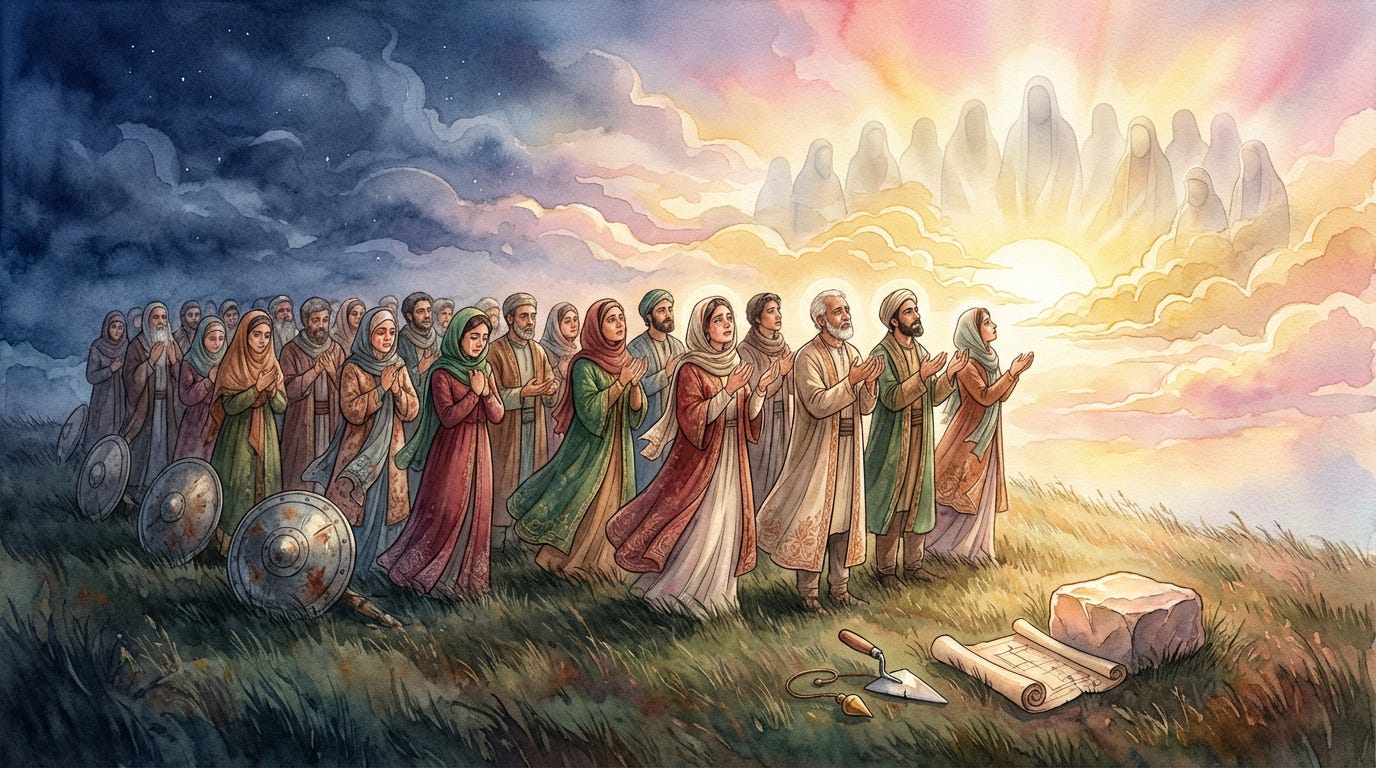
In the Name of God, the Most Merciful, the Most Compassionate
O Lord of the Dawn,
You who bring forth the living from the dead and the dead from the living,
You who cause the morning to break and the darkness to flee,
You who have promised that truth will be made manifest and falsehood will perish —
We have dwelt in the teachings of protection.
We have learned the ways of the Shield.
We have studied how to survive the night.
Now the night shows signs of ending.
Now the dawn approaches.
Now You call us to emerge — not because all danger has passed, but because something higher beckons.
Grant us the courage to lower the Shield.
Grant us the strength to let the Kernel shine.
Grant us the Makarim al-Akhlaq — the noble character — that makes our lives a proof and our conduct a message.
O Lord, we are afraid.
The Shield has become familiar. The defensive crouch is comfortable. The shadows feel safe.
To emerge is to be seen. To be seen is to be judged. To be judged is to risk failure.
What if we demonstrate — and what we demonstrate is our own inadequacy?
What if we let the Kernel shine — and the light reveals how far we fall short?
What if the world sees us as we are — and what we are is not worthy of what we represent?
We are afraid, O Lord.
But we know that fear is not an excuse.
We know that our ancestors faced death and did not flinch.
We know that the opportunity we have been given — the freedom they prayed for — cannot be squandered because we are nervous about awkward conversations.
So we ask You:
Do not remove the fear — perhaps we need it to keep us humble.
But grant us courage that is greater than the fear.
Grant us conviction that overwhelms the hesitation.
Grant us love for You that makes the opinions of others small.
We remember tonight those who demonstrated when demonstration was costly.
We remember the Prophet, peace be upon him and his family, who stood in Makkah and declared truth when truth meant exile, persecution, and war.
He did not hide. He did not calculate the odds. He did not wait for conditions to improve.
He demonstrated — and his demonstration changed the world.
We remember Ali, who never concealed his nature, whose justice was so visible that it made him enemies, whose excellence was so manifest that the mediocre could not tolerate it.
He demonstrated — and his demonstration echoes through fourteen centuries.
We remember Fatimah, who stood in the Mosque of Madinah and spoke truth to those who had stolen her rights, who let her grief and her argument be heard, who did not hide behind the walls of her home when injustice demanded witness.
She demonstrated — and her sermon still burns in the hearts of those who hear it.
We remember Husayn, who chose Karbala over comfortable obscurity, who took his family into the desert to make a point that could not be made in any other way.
He demonstrated — with his blood, with his sacrifice, with his refusal to give legitimacy to what was illegitimate.
And his demonstration shattered the false stability of Yazid’s claim forever.
We remember Zaynab, who stood in the court of the murderer and spoke — captive, bereaved, surrounded by those who had butchered her family — and who demonstrated that chains cannot bind the spirit, that defeat cannot silence the truth, that the apparent victor is sometimes the true loser.
She demonstrated — and her words still echo in every hussainiyyah, in every Muharram, in every gathering where her story is told.
O Lord, we are not them.
We do not claim their stations. We do not presume to their courage.
But we ask You: let us follow in their way.
Let our lives be demonstrations — small ones, humble ones, but real.
Let our honesty demonstrate that Islam produces honest people.
Let our generosity demonstrate that Islam produces generous people.
Let our patience demonstrate that Islam produces people who can bear hardship with dignity.
Let our justice demonstrate that Islam produces people who treat others fairly even when no one is watching.
Let our excellence demonstrate that Islam produces people who do their work with Itqan — with mastery, with care, with the knowledge that You see every detail.
O Lord, we stand at a threshold.
Behind us: the Defensive Movement. The Shield. The survival strategies. The long night of protection.
Before us: the Constructive Movement. The building. The creating. The preparation for the Dawn.
We have learned to survive.
Now teach us to build.
We have learned to protect the Kernel.
Now teach us to let it flourish.
We have learned the ways of patience.
Now teach us the ways of action.
We turn, as we always turn, to the one for whom we wait.
Imam Al-Mahdi, may our souls be his ransom.
The Imam of our Age.
The one whose appearance will end the night and establish the Day.
O Lord, we do not merely wait for him.
We prepare for him.
We try — however imperfectly — to build a world worthy of his coming.
We try to be a community he would recognise as his own.
We try to cultivate the character that would make him proud to lead us.
When he appears, let him find us ready.
Not merely surviving — but flourishing.
Not merely protected — but radiant.
Not merely defensive — but constructive.
Let him find that we used the time of his Occultation not merely to endure, but to build.
Let him find that the teachings of his forefathers — the Makarim al-Akhlaq they came to perfect — have taken root in us, have transformed us, have made us vessels worthy of the light he brings.
O Lord, hasten his appearance.
The night has been long. The trials have been many. The enemies have been relentless.
But we do not despair.
We know that dawn follows night — always, inevitably, by Your decree.
We know that the promise is true — that truth will prevail, that falsehood will perish, that justice will be established on the earth.
We know that he is coming — and that our task is to be worthy of his arrival.
So we work. We build. We demonstrate. We prepare.
And we wait — actively, constructively, with our hands engaged and our hearts attached to his appearance.
And may the peace and blessings of God be upon Muhammad,
The greatest demonstrator,
The one who showed humanity what a human being could become,
The one whose character was so luminous that even his enemies testified to it,
The one about whom God said: “You are upon an exalted standard of character.”
And upon the Family of Muhammad —
Upon Fatimah, who demonstrated that grief could be transformed into testimony.
Upon Ali, who demonstrated that power could be wedded to justice.
Upon Hasan, who demonstrated that patience could be its own form of victory.
Upon Husayn, who demonstrated that sacrifice could shatter false legitimacy forever.
Upon Sajjad, who demonstrated that even a prisoner could be free, that even a survivor of massacre could rebuild.
Upon Baqir and Sadiq, who demonstrated that knowledge could be preserved and transmitted even under hostile rule.
Upon Kadhim, who demonstrated that prison walls cannot contain the spirit.
Upon Ridha, who demonstrated that one could walk in the court of power without being corrupted by it.
Upon Jawad, Hadi, and Askari, who demonstrated faithfulness in narrowing circumstances, who kept the flame alive when the wind sought to extinguish it.
And upon the Hidden Imam —
Who demonstrates, even now, that God does not abandon His creation,
Who demonstrates, through his very existence, that the promise is true,
Who will demonstrate, when he appears, that all the waiting was worthwhile,
That all the patience was justified,
That all the building will find its completion in the justice he establishes.
O God, connect us to them.
Let their demonstration inspire ours.
Let their courage strengthen ours.
Let their light illuminate our path as we step out of the shadows and into the dawn.
We have completed the Defensive Movement.
We step now toward the Constructive.
Not because we have mastered defence — we remain learners, always.
But because the time has come to build.
The time has come to demonstrate.
The time has come to prepare — actively, visibly, constructively — for the one whose appearance we await.
O Lord, accept this from us.
Forgive our shortcomings.
Correct our errors.
And let the work we have done in these sessions be a service to Your cause, a benefit to those who read it or hear it, and a preparation for the Day when Your proof emerges and establishes justice on the earth.
Amen, O Most Merciful of the Merciful.
Amen, O Lord Sustainer of the Universes.
And from Him alone is all ability and He has authority over all things.