

In His Name, the Most High
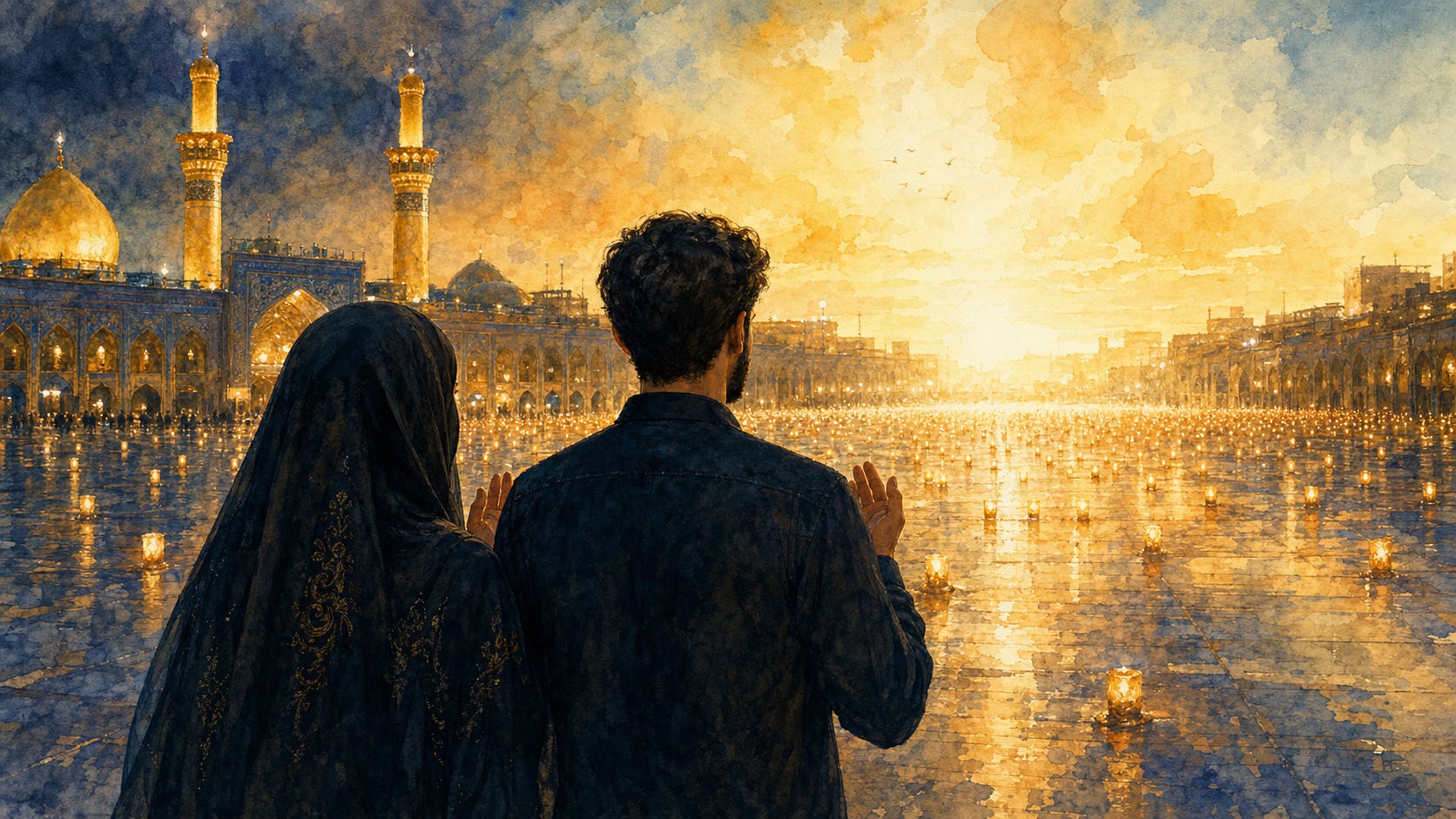
اَلسَّلاَمُ عَلَيْكَ يَا أَبَا عَبْدِاللَّهِ
وَعَلَى الْأَرْوَاحِ الَّتِي حَلَّتْ بِفِنَائِكَ
عَلَيْكُمْ مِنَّا جَمِيعًا سَلاَمُ اللَّهِ أَبَدًا مَا بَقِينَا وَبَقِيَ اللَّيْلُ وَالنَّهَارُ
وَلا جَعَلَهُ اللَّهُ آخِرَ الْعَهْدِ مِنَّا لِزِيَارَتِكُمْ
اَلسَّلاَمُ عَلَى الْحُسَيْنِ
وَعَلَى عَلِيِّ بْنِ الْحُسَيْنِ
وَعَلَى أَوْلَادِ الْحُسَيْنِ
وَعَلَى أَصْحَابِ الْحُسَيْنِ
Peace be upon you, O Aba Abdillah (O Husayn),
and upon the souls who have gathered in your courtyard.Upon you, from us all, is the peace of God—forever,
for as long as we remain and as long as night and day endure.And may God never make this our last pledge to visit you.
Peace be upon al-Husayn,
and upon Ali, son of al-Husayn,
and upon the children of al-Husayn,
and upon the companions of al-Husayn.— Adapted from Ziyarat Ashura
Video of the Majlis (Sermon/Lecture)
We Have Come Back to the Grave
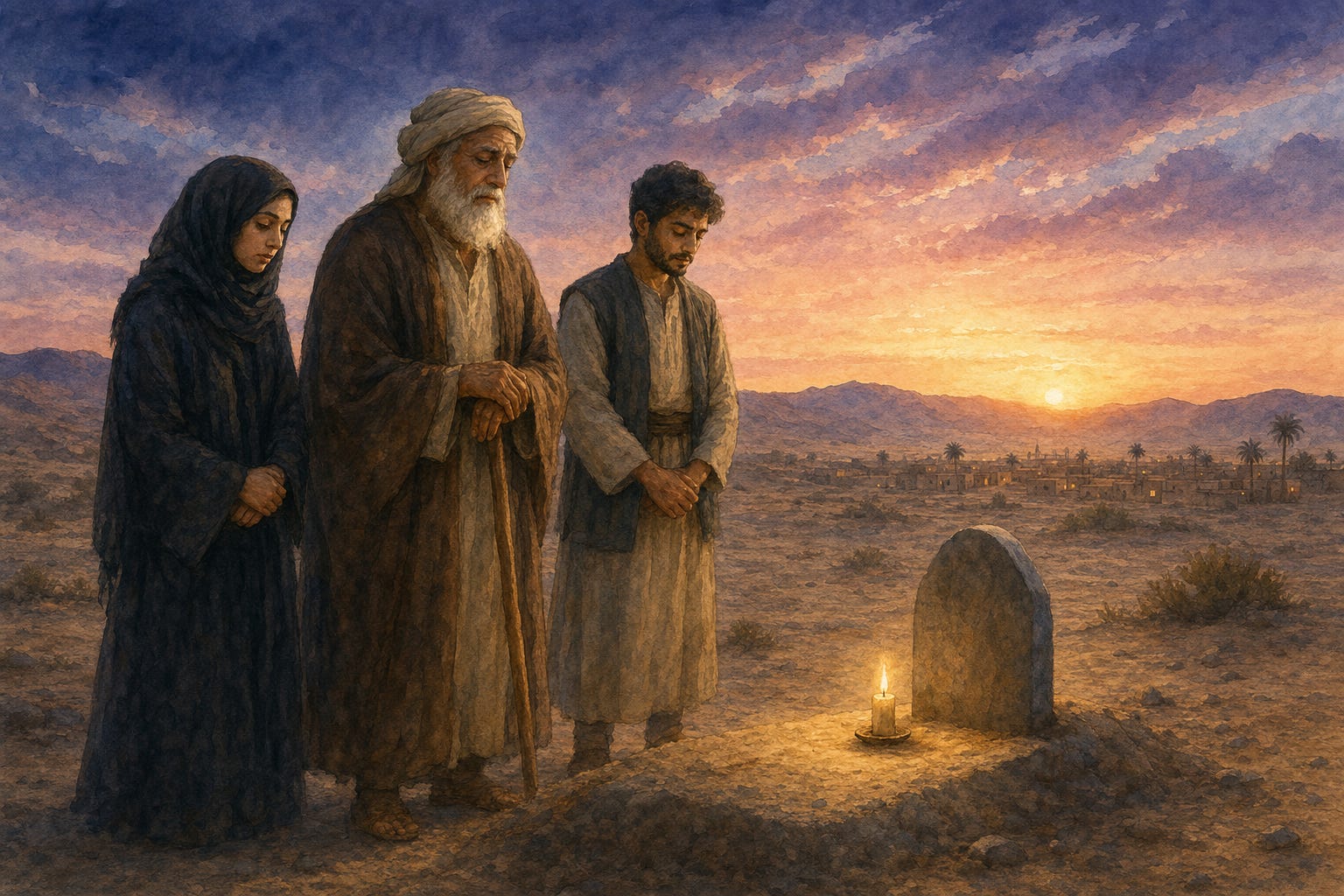
Last night we walked.
Two of us set out across a desert behind a blind old man — Jabir, the son of Abdullah al-Ansari, the first pilgrim — and we followed his careful, sightless feet all the way to the grave of our beloved Imam Husayn, peace and blessings be upon him; and somewhere on that road, you may have felt it — the imagined voice of the Awaited Imam that carries our maqtal, the voice that had been broken since the noon of the tenth, stood up and came home.
We ended the fourteenth night on a road, with a staff leaning forward on the stone, pointing the way.
And tonight the road arrives.
Tonight is the night of Arbaeen — its eve; at this very dawn the fortieth day breaks, and the longest road in the world reaches its end at a single grave.
Forty days ago the sky fell.
Tonight we have come back.
So I want to tell you, at the very top, what kind of night this is — because it is not like the others.
For fourteen nights we have come, again and again, to a death.
Night after night the maqtal has laid the family of the Prophet, peace and blessings be upon them, in the ground before us, one by one, and we have wept, and the weeping was right.
But tonight is not a night of a death.
Tonight we have come to a homecoming.
The caravan comes home to the grave.
The believer comes home to the covenant.
And the whole series comes home to where it began — to a single candle on a grey stone — and closes the circle.
Here is the takeaway of the night, and it is the gentlest one I have given you, and the most demanding, because it is about the rest of your life: we are the letter the Imam of the Age is still writing.
Every believer is a drop of ink.
Every community is a page.

And the covenant is renewed every single morning.
For fourteen nights we have been proving that the chain of witness is real and unbroken — from Abel, the first man wronged for his faith, down through the prophets and the Imams to a child in a dungeon and the martyrs of our own decade.
We have called the chain unbroken.
Tonight I am going to show you the last thing about it, the thing that turns all the history into something you do tomorrow before breakfast: the chain is not only behind you.
It runs through you.
And it is renewed at dawn.
Two Covenants, and the Difference Between Them
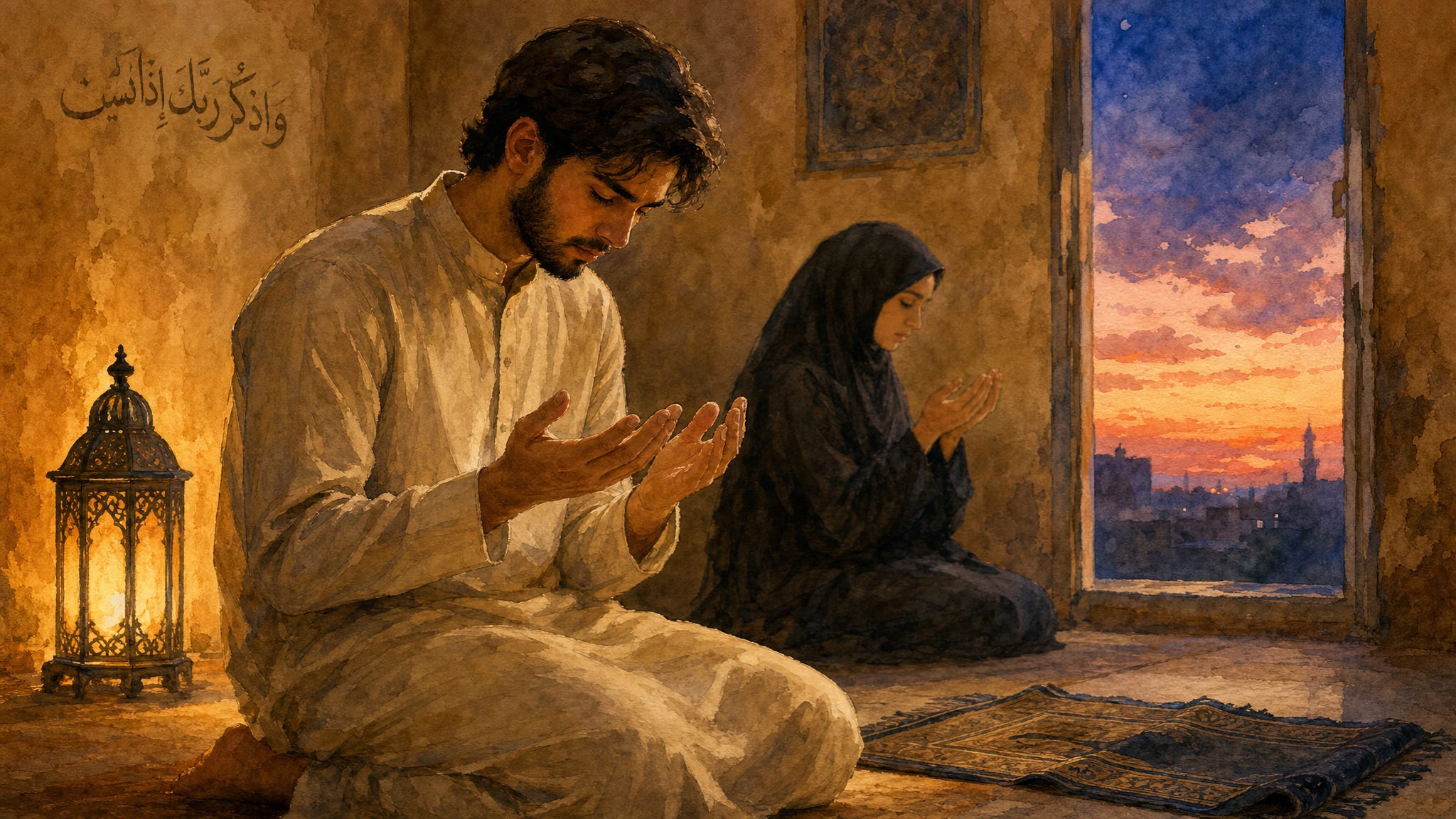
Before we begin, I have to clear up one small thing, gently, because our own community blurs it all the time — and on the night it matters most, I want it clean in your hands.
There are two texts that gather around these days, and they are not the same text.
The first is Duʿa al-ʿAhd — the Supplication of the Covenant, taught by Imam Jaʿfar al-Sadiq, peace and blessings be upon him, and kept for us in the Mafatih al-Jinan.
And here is the thing to hold: it is a daily supplication.
A morning prayer.
The believer recites it every dawn — every single morning of his life, including this one — to renew his covenant with God and with the Awaited Imam.
It is an every-morning prayer that happens to land, this one morning of the year, at the very moment its covenant comes due.
The tradition tells us that whoever recites it for forty mornings is counted among the helpers of the one who will rise — and hear the forty in that, on the eve of the fortieth day.
The second is Ziyarat al-Arbaʿeen — the dedicated visitation of the 20th of Safar.
This one is the Arbaeen text proper.
It is preserved in the Mafatih, and it is narrated — and I want you to hear the chain, because the chain is itself part of tonight’s theme — by Safwan al-Jammal, who heard it from his master Imam al-Sadiq, peace and blessings be upon him, and it comes down to us through the Tahdhib al-Ahkam of Shaykh al-Tusi.
So hold the two: the daily covenant is the dawn renewal; the Arbaeen visitation is the fortieth-day arrival.
And the morning of Arbaeen — the dawn this very night is opening onto — is the one morning of the year the two become a single act.
We keep its eve tonight, together, and renew the covenant before that dawn.
And one more, to close the night with — the same one we open every night with: the closing lines of Ziyarat Ashura, the greeting to the souls in the courtyard and the pledge to stand with Imam Husayn until the Imam appears.
That is our living pledge, and we will say it together at the very end.
Three texts, then: a daily covenant, a fortieth-day visitation, and a standing pledge.
But before any of them — before there was an Arbaeen, before there was a Karbala, before there was a you — there was a covenant older than all of it.
We begin there.
The First Covenant, Renewed

Open the 7th chapter of the Qur’an, the Chapter of the Heights, at the 172nd verse, and listen to the oldest scene in the history of the human soul:
وَإِذْ أَخَذَ رَبُّكَ مِنْ بَنِي آدَمَ مِنْ ظُهُورِهِمْ ذُرِّيَّتَهُمْ وَأَشْهَدَهُمْ عَلَىٰ أَنْفُسِهِمْ أَلَسْتُ بِرَبِّكُمْ ۖ قَالُوا بَلَىٰ شَهِدْنَا ۚ أَنْ تَقُولُوا يَوْمَ الْقِيَامَةِ إِنَّا كُنَّا عَنْ هَٰذَا غَافِلِينَ
“And when your Lord brought forth from the children of Adam, from their loins, their descendants, and made them bear witness over their own souls: ‘Am I not your Lord?’ They said: ‘Yes — we bear witness.’ Lest you should say on the Day of Resurrection: ‘We were unaware of this.’”
— Qur’an, Surah al-Aʿraf (the Chapter of the Heights) #7, Verse 172
I have read this verse to you before — it was the floor we stood on in the second night, the oldest covenant on earth.
But tonight I need you to hear one word in it that we let slip past us before, and it is the word the whole of this series has been built on.
When God gathers every soul that will ever live and asks the one question —
Am I not your Lord?
— look at the verb He uses for what He does to them:
wa ashhadahum — He made them bear witness.
And look at the word they answer with:
balā, shahidnā — Yes; we have borne witness.
Do you see it?
The very first thing every human being ever did — before you had a body, before you had a name, before time had started for you — was bear witness. Shahidnā.
You are a shahid before you are anything else.
The witness is not something we have been trying to become across these fifteen nights.
It is something we have been trying to remember.
The whole series has been a recovery of the oldest memory there is.
And now I can tell you what Duʿa al-ʿAhd actually is.
It is not a new promise.
It is the renewal, every single morning, of the promise you already made before you were born.
Listen to the heart of it — the believer, at dawn, putting the covenant back on his own neck:
اللَّهُمَّ إِنِّي أُجَدِّدُ لَهُ فِي صَبِيحَةِ يَوْمِي هَذَا وَمَا عِشْتُ مِنْ أَيَّامِي عَهْدًا وَعَقْدًا وَبَيْعَةً لَهُ فِي عُنُقِي لَا أَحُولُ عَنْهَا وَلَا أَزُولُ أَبَدًا.
“O God, on the morning of this day, and for as long as I live of my days, I renew for him a covenant, a pledge, and an allegiance upon my neck, from which I shall never turn away and which I shall never abandon.”
— Duʿa al-ʿAhd, the Supplication of the Covenant (Mafatih al-Jinan)
Every morning.
On the morning of this day, and for as long as I live.
The covenant of al-Aʿraf is not a thing that happened once in pre-eternity and was filed away.
It is a thing you re-sign at every dawn.
And — because nothing in this religion ever lets the word witness go for long — listen to where that same supplication ends: it asks God to place the believer among the helpers and defenders of the Imam, and among
al-mustash-hideen bayna yadayh — those who bear witness, who are martyred, in his presence.
The covenant prayer itself is shot through, from the first line to the last, with shahada.
You renew the covenant of the witness, every morning, with your own mouth.
What The Covenant Actually Is: An Allegiance
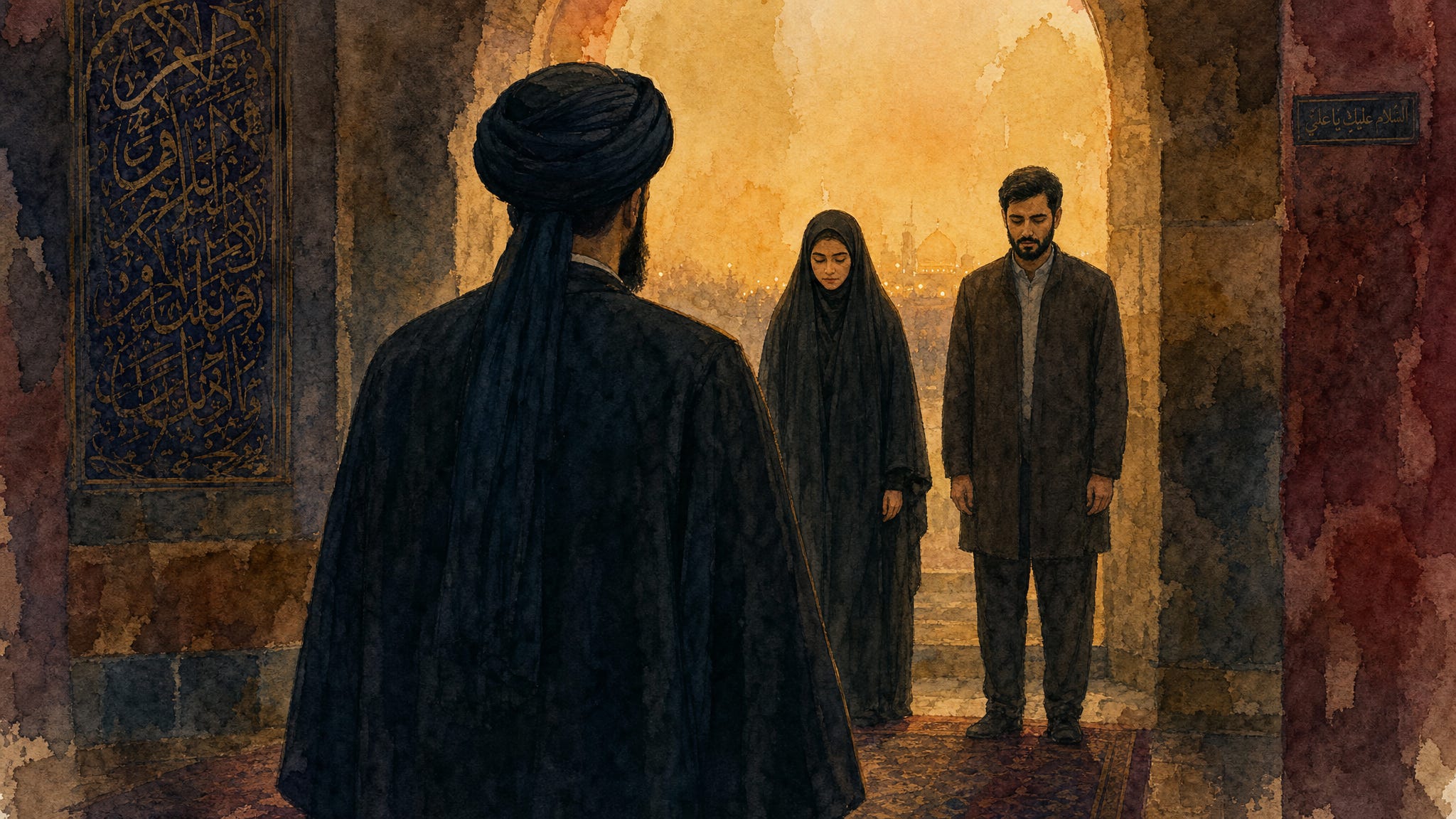
Now hear the three words again, because the middle one and the last one are heavier than we usually let them be:
ʿahdan wa ʿaqdan wa bayʿah — a covenant, a contract, and an allegiance.
Bayʿah.
The pledge of the hand. Duʿa al-ʿAhd is, in the plainest possible terms, the believer’s daily renewal of his oath of allegiance to the Imam of the Age, may our souls be his ransom and may God hasten his return.
And here I have to say something carefully, because it is the living edge of our faith and I will not blur it.
The Imam of the Age is in his occultation; we cannot put our hand in his hand.
So in his absence, that same allegiance — the same bayʿah, flowing through the same channel — is held by the one who guards the Imam’s cause in our time: the Wali al-Faqih, in our own day Imam Sayyed Mujtaba al-Husayni al-Khamenei, may God protect him.
This is the living end of the very chain we traced on the eleventh night — the chain in which Sayyedah Zaynab, peace and blessings be upon her, did not carry the Imamate but guarded it; the chain in which the line is kept, and protected, and handed forward, until the appointed hour.
The hand we cannot reach reaches us through the one who keeps the trust.
And because I can hear the honest question forming —
What does it even mean to give allegiance?
Is this not the very thing tyrants demand?
— let me answer it plainly, the way we have answered it across this series.
We have built this answer slowly: it is the covenant-verse of the second night and the fourteenth,
“among the believers are men who were true to their covenant with God”;
it is the lesson of the tenth night, that the Imamate is a covenant, not a crown — held by divine designation, not by bloodline or by force.
Put it all together and it comes to this:
Allegiance, in our tradition, is not blind obedience, and it is never coercion.
It is the binding of oneself to the axis of truth.
It is allegiance to God first; then to the Proof that God appointed; then, in the Proof’s absence, to the guardian who keeps that Proof’s cause alive.
And notice what that means about the man you pledge to:
You give your allegiance to him only because he is bound to the truth.
The moment he leaves the truth, the allegiance does not follow him — it follows the truth.
This is the exact opposite of the tyrant’s demand.
The tyrant says:
Be loyal to me, and I will define the truth.
The covenant says:
Be loyal to the truth, and measure even your guardian against it.
That is why this allegiance is the only one in the world that leaves a man free. We will come back to that word — free — before the night is over. It is the hinge the whole ending turns on.
Know The Truth, And You Will Know Its People
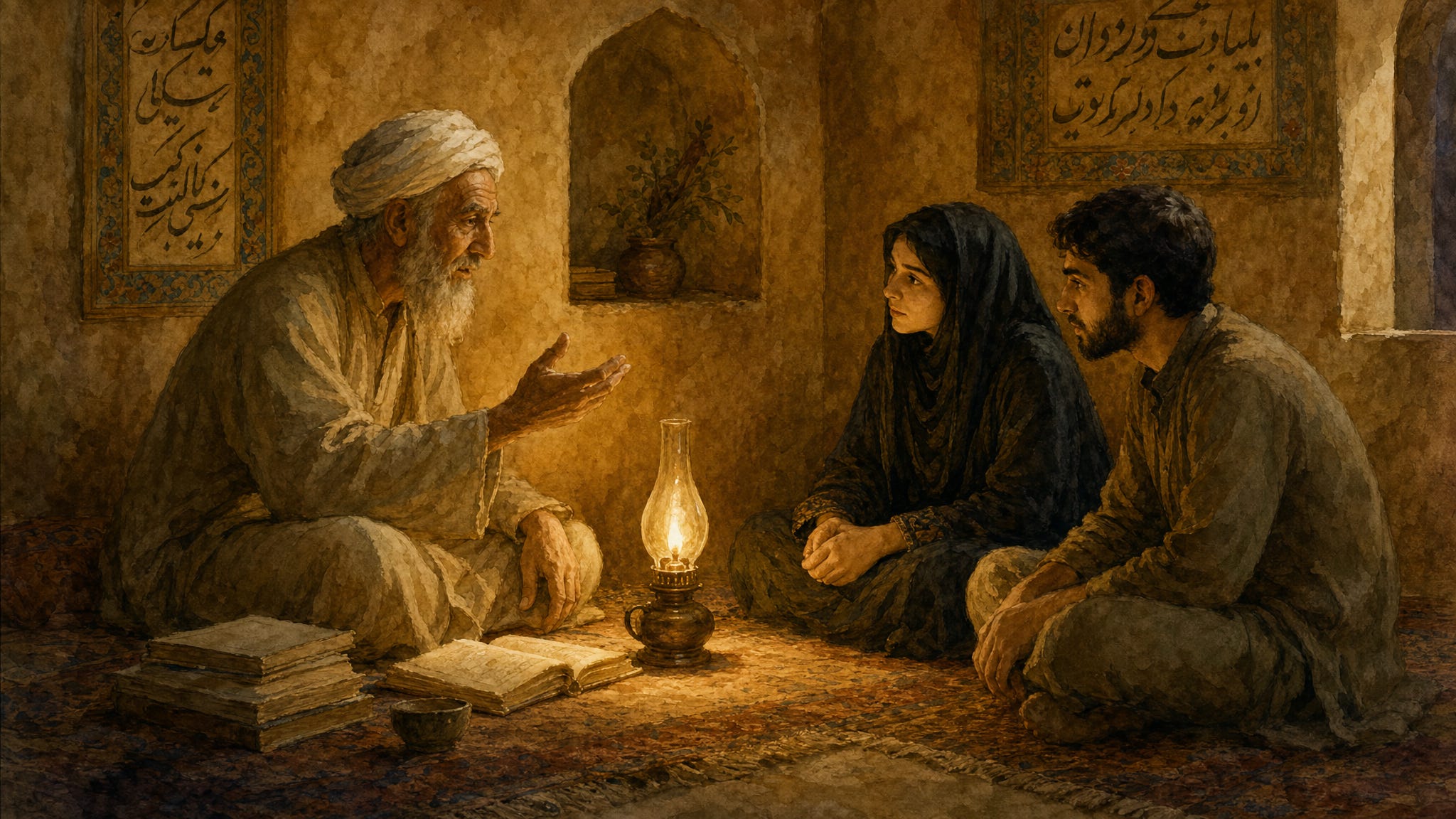
But there is a danger hidden right here, and I will not leave you standing at the edge of it.
If allegiance follows the truth — if you must measure even your guardian against the truth — then everything rests on one thing: that you actually know the truth.
And on this, our tradition turns the whole instinct of our age on its head.
The instinct of the age is: find the confident voice, and follow him, and take your truth from him.
Hear, first, the word of the Prophet, peace and blessings be upon him, his family and his righteous companions, about the one man in whom the truth and the person were never once at odds:
الْحَقُّ مَعَ عَلِيٍّ وَعَلِيٌّ مَعَ الْحَقِّ، لَا يَفْتَرِقَانِ حَتَّىٰ يَرِدَا عَلَيَّ الْحَوْضَ.
“The truth is with Ali, and Ali is with the truth; the two shall never part until they return to me at the Pond.”
— The Prophet Muhammad; Shaykh al-Saduq, al-Khisal (and al-Kulayni, al-Kafi, vol. 1)
The truth and the man, one thing, to the very end — that is the criterion.
And now hear how the Commander of the Faithful, Imam Ali, himself, peace and blessings be upon him, taught his companion al-Harith to use that criterion — al-Harith, who in the confusion after the Prophet was doing exactly what so many do now: trying to find the truth by asking which men were on which side.
إِنَّ دِينَ اللَّهِ لَا يُعْرَفُ بِالرِّجَالِ، بَلْ بِآيَةِ الْحَقِّ، فَاعْرِفِ الْحَقَّ تَعْرِفْ أَهْلَهُ.
“The religion of God is not known by men, but by the sign of the truth; so know the truth, and you will know its people.”
— Imam Ali ibn Abi Talib, to al-Harith al-Hamdani; Shaykh al-Mufid, al-Amali
Do you hear the correction?
The religion of God is not known by men — but by the sign of the truth.
You do not find the truth by first choosing the men and then trusting whatever they say.
You come to know the truth first — and then the truth shows you its people.
Not follow the man to find the truth, but know the truth to find the man.
That single reversal is the whole distance between a covenant and a cult.
So the covenant lays a duty on every one of us, and it is a duty of learning.
You have to come to know the truth — really know it — and that means you cannot pick it up as rumour, from a confident stranger with a large following on a screen.
The truth of this religion is deep water, and it is learned the way deep things have always been learned: patiently, from those who have actually gone down into it — from qualified, God-fearing scholars who took the years to learn it.
And here a gentle word — the same one we spoke on the twelfth night, because the danger is real:
Not everyone who climbs a pulpit is a scholar.
There are imposters — men who wear the dress of learning for money, or for fame, or for a following, and who will sell you a confident answer they do not have.
But our tradition gave us the marks of the true one, and they are the opposite of what the age rewards: the real scholar guards himself before he guards you; his learning has made him humble, not loud; and he is never too proud to say the four words the Commander of the Faithful called half of all knowledge — “I do not know.”
Learn from that one.
And be wary — gently, without bitterness — of the one who is never uncertain and always for sale.
Because here is where it all comes home.
When you have done the work — when you have learned the truth from those who truly carry it — you will not be lost about where to give your allegiance.
The truth will have shown you its people.
You will know the axis you are bound to, and you will know, in the absence of the Imam, who it is that guards his cause.
That recognition is not a leap in the dark; it is the fruit of knowing the truth.
And the full account of it—what the Wilayat al-Faqih, the guardianship of the jurist, actually is, where it comes from, and why it is the natural end of everything we have said tonight—is an ocean far too deep for the hours left to us on this final night.
To rush it here would be to wrong it.
So I will only say this: we will take it up properly, in its own right, in a dedicated course of study that continues our work beneath the Lantern of the Path.
For those who wish to come, the door will be open, and the pace will be measured—because the truth is learned slowly, over years, not swallowed in a single night.
But for this night, at this grave, it is enough to know that the chain has not been cut, that the guardianship is held in trust by the Wali al-Faqih of our time, Imam Sayyed Mujtaba al-Husayni al-Khamenei, may God protect him, and that the allegiance we renew at dawn flows through him until the Imam of the Age returns.
That is the fruit of knowing the truth.
The rest—we will walk together, in due time.
And The Ground Is Firm
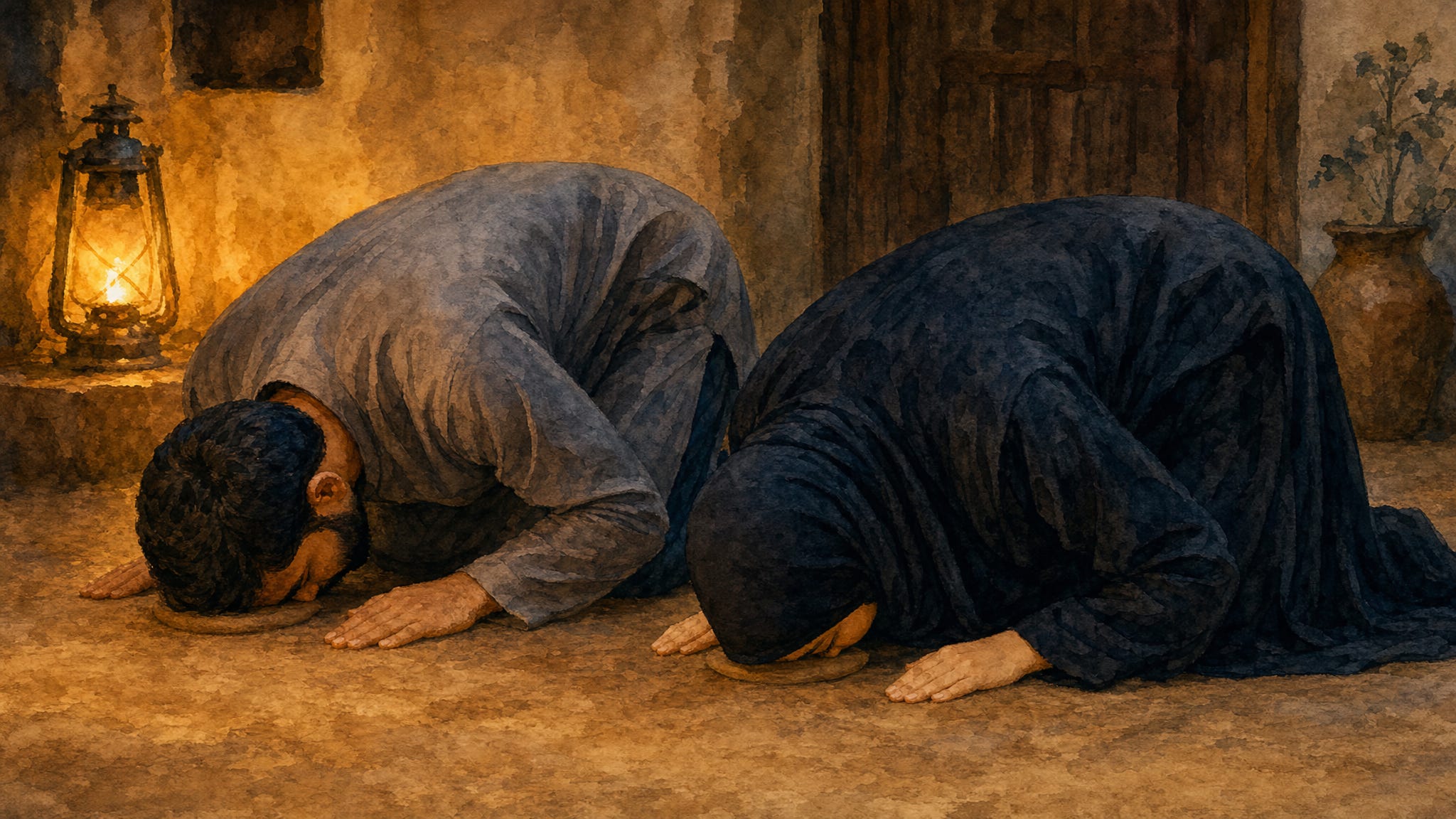
One last thing about Point One, and then we walk out of the dawn and onto the road.
You may be wondering — all this weight on the fortieth day, all this on the visitation of Arbaeen; but is the practice itself solid, or is it something the centuries grew fond of?
Let me set your feet on rock.
The Arbaeen visitation does not rest on any story or any later fondness.
It rests on the Imam’s own word.
Imam Hasan al-Askari, peace and blessings be upon him, taught — and Shaykh al-Tusi preserved it in his Tahdhib and his Misbah — that the believer is known by five marks:
عَلَامَاتُ الْمُؤْمِنِ خَمْسٌ: صَلَاةُ الْخَمْسِينَ، وَزِيَارَةُ الْأَرْبَعِينَ، وَالتَّخَتُّمُ فِي الْيَمِينِ، وَتَعْفِيرُ الْجَبِينِ، وَالْجَهْرُ بِبِسْمِ اللَّهِ الرَّحْمَٰنِ الرَّحِيمِ.
“The signs of a believer are five: the fifty-one units of prayer; the visitation of Arbaeen; wearing the ring on the right hand; placing the forehead upon the earth; and saying ‘Bismillah ir-Rahman ir-Rahim’ aloud.”
— Imam Hasan al-Askari; Shaykh al-Tusi, Tahdhib al-Ahkam, vol. 6, p. 52 (hadith 122); also Misbah al-Mutahajjid and Mafatih al-Jinan (the fifty-one being the seventeen obligatory units and the thirty-four recommended)
Five marks of a believer — and one of them is simply this: that he comes to Imam Husayn on the fortieth day.
The visitation you keep tonight is not decoration.
It is one of the five things by which the faith itself recognises you.
The covenant, made visible on the body.
These Are Not Empty Rituals
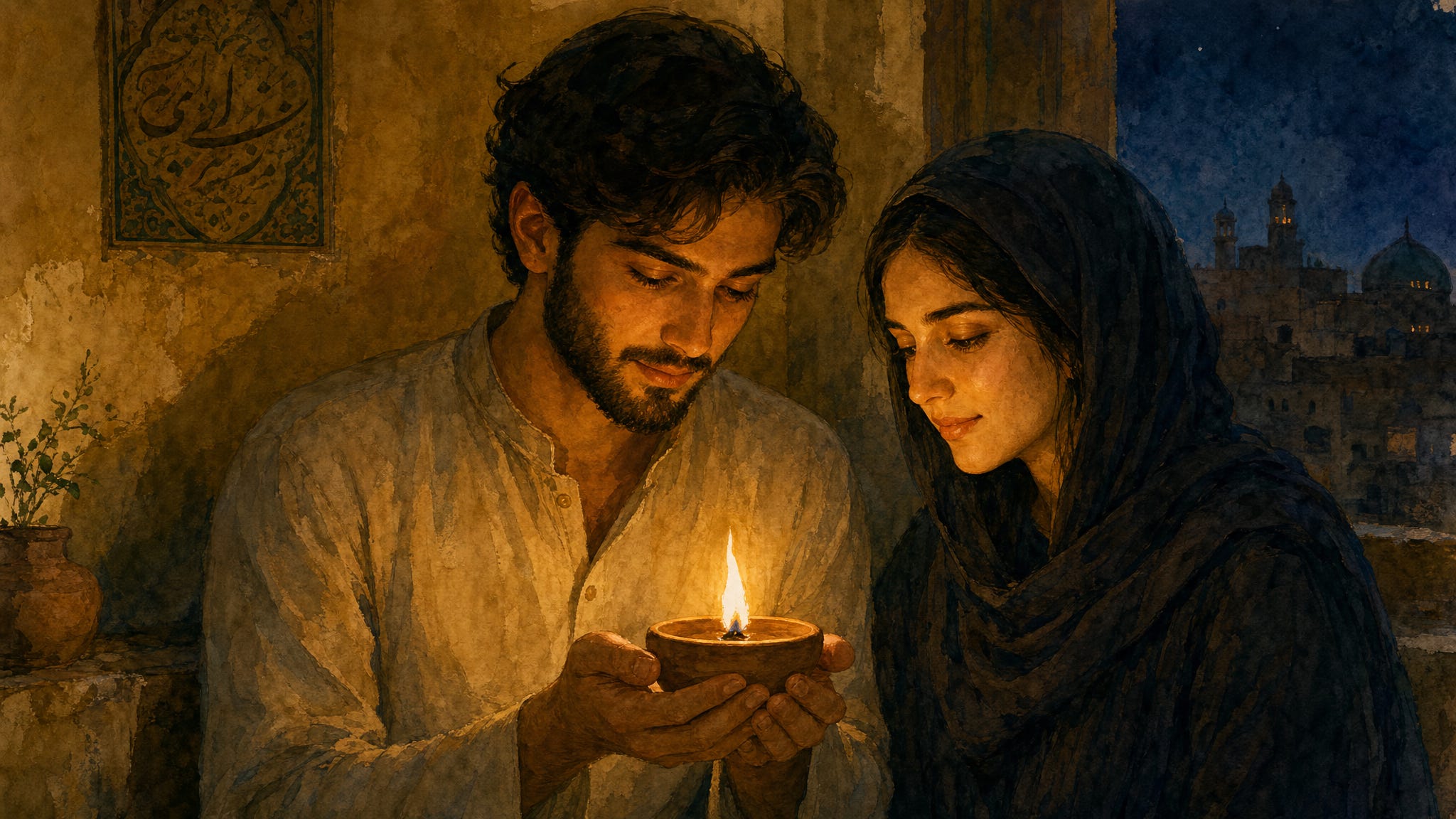
And now I have to stop, because I know exactly how those five marks can sound to an ear taught to be suspicious of religion.
Fifty-one units of prayer.
A ring on a particular hand.
A word said out loud.
A forehead in the dust.
To that ear this is the whole problem with religion in one list — arbitrary, inherited, mechanical; the “things my parents did” that mean nothing.
If that were what these were, they would deserve to be set down.
So let me be as clear as I can be: in this religion nothing we are asked to do is arbitrary, and nothing is mindless.
Hear it from the Commander of the Faithful, Imam Ali, peace and blessings be upon him:
فَلَمْ يُرْسِلِ الْأَنْبِيَاءَ سُفَهَاءَ، وَلَمْ يُنَزِّلِ الْكُتُبَ هَذَراً، وَلَمْ يُكَلِّفِ الْعِبَادَ عَبَثاً.
“He did not send the prophets foolishly, nor reveal the Books in vain, nor lay worship upon His servants as an empty burden.”
— Imam Ali ibn Abi Talib, Nahj al-Balagha
And if you fear that mindless inherited habit is what this religion is, hear how the Qur’an itself speaks of exactly that — of the people who do a thing only because their fathers did:
وَإِذَا قِيلَ لَهُمُ اتَّبِعُوا مَا أَنزَلَ اللَّهُ قَالُوا بَلْ نَتَّبِعُ مَا أَلْفَيْنَا عَلَيْهِ آبَاءَنَا ۚ أَوَلَوْ كَانَ آبَاؤُهُمْ لَا يَعْقِلُونَ شَيْئًا وَلَا يَهْتَدُونَ.
“And when it is said to them, ‘Follow what God has revealed,’ they say, ‘No — we follow what we found our fathers doing’ — even though their fathers understood nothing, and were not guided.”
— Qur’an, Surah al-Baqarah (the Chapter of the Cow) #2, Verse 170
The Qur’an makes your objection for you — it condemns religion-without-understanding harder than any secular critic ever has, and it ties the fault to the one thing this faith will not tolerate: the refusal to use your reason.
And then, so no one ever mistakes the outward act for the point, God says something staggering about the very greatest sacrifice a pilgrim can offer:
لَن يَنَالَ اللَّهَ لُحُومُهَا وَلَا دِمَاؤُهَا وَلَٰكِن يَنَالُهُ التَّقْوَىٰ مِنكُمْ.
“Their flesh will not reach God, nor their blood — but what reaches Him is the God-consciousness from you.”
— Qur’an, Surah al-Hajj (the Chapter of the Pilgrimage) #22, Verse 37
The meat does not reach God.
The blood does not reach God.
The outward act, by itself, reaches nothing at all.
What reaches Him is what the act builds in you.
And there is the key to the whole religion: every practice we are given is a vehicle, and the cargo is the making of a human being.
The form is never the point; the form is the means.
So the five signs are not five boxes to tick.
They are five instruments, each shaped to work one specific change in the soul.
Let me show you — quickly, because you will feel the sense of each the moment it is named.
One — The Fifty-One Units Of Prayer
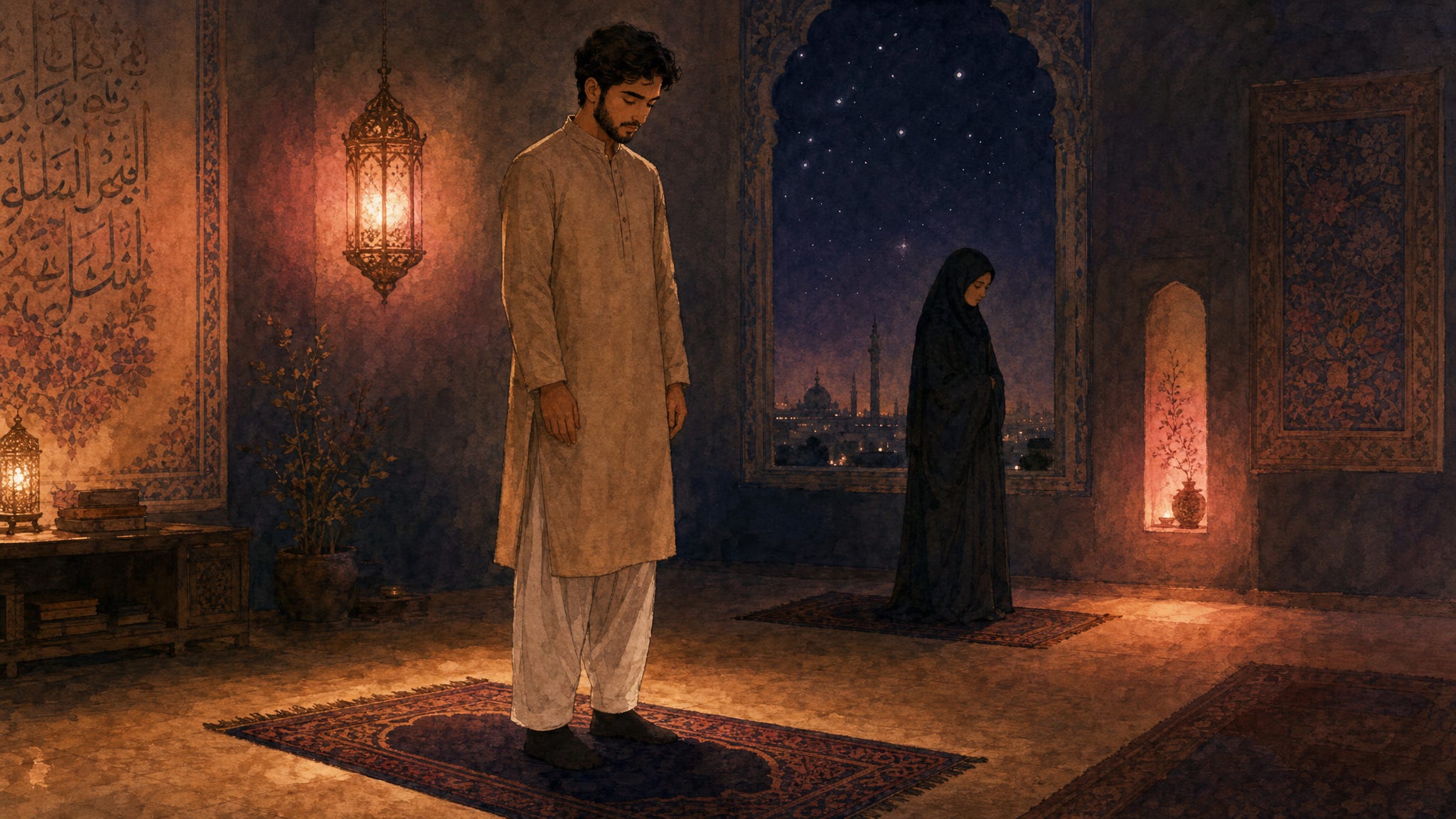
A believer is known not by doing the minimum, but by wanting more of God than the minimum requires.
Seventeen of those units are obligatory, the duty every Muslim owes.
But the sign is fifty-one — because the other thirty-four are voluntary, the ones no one is punished for leaving.
And that is precisely the point: fear can drive anyone to the minimum; only love gives the overflow that was never required.
God Himself says why:
وَمَا يَتَقَرَّبُ إِلَيَّ عَبْدِي بِشَيْءٍ أَحَبَّ إِلَيَّ مِمَّا افْتَرَضْتُ عَلَيْهِ، وَإِنَّهُ لَيَتَقَرَّبُ إِلَيَّ بِالنَّافِلَةِ حَتَّىٰ أُحِبَّهُ.
“My servant draws near to Me with nothing more beloved to Me than what I have made obligatory upon him — and My servant keeps drawing near to Me with the voluntary acts until I love him.”
— Hadith Qudsi (the tradition of Qurb al-Nawafil); al-Kulayni, al-Kafi
The Commander of the Faithful named three kinds of worshipper: the one who worships for reward is a merchant; the one who worships from fear is a slave; and the one who worships out of gratitude and love is free.
The extra thirty-four are the worship of the free.
Two — The Visitation Of Arbaeen
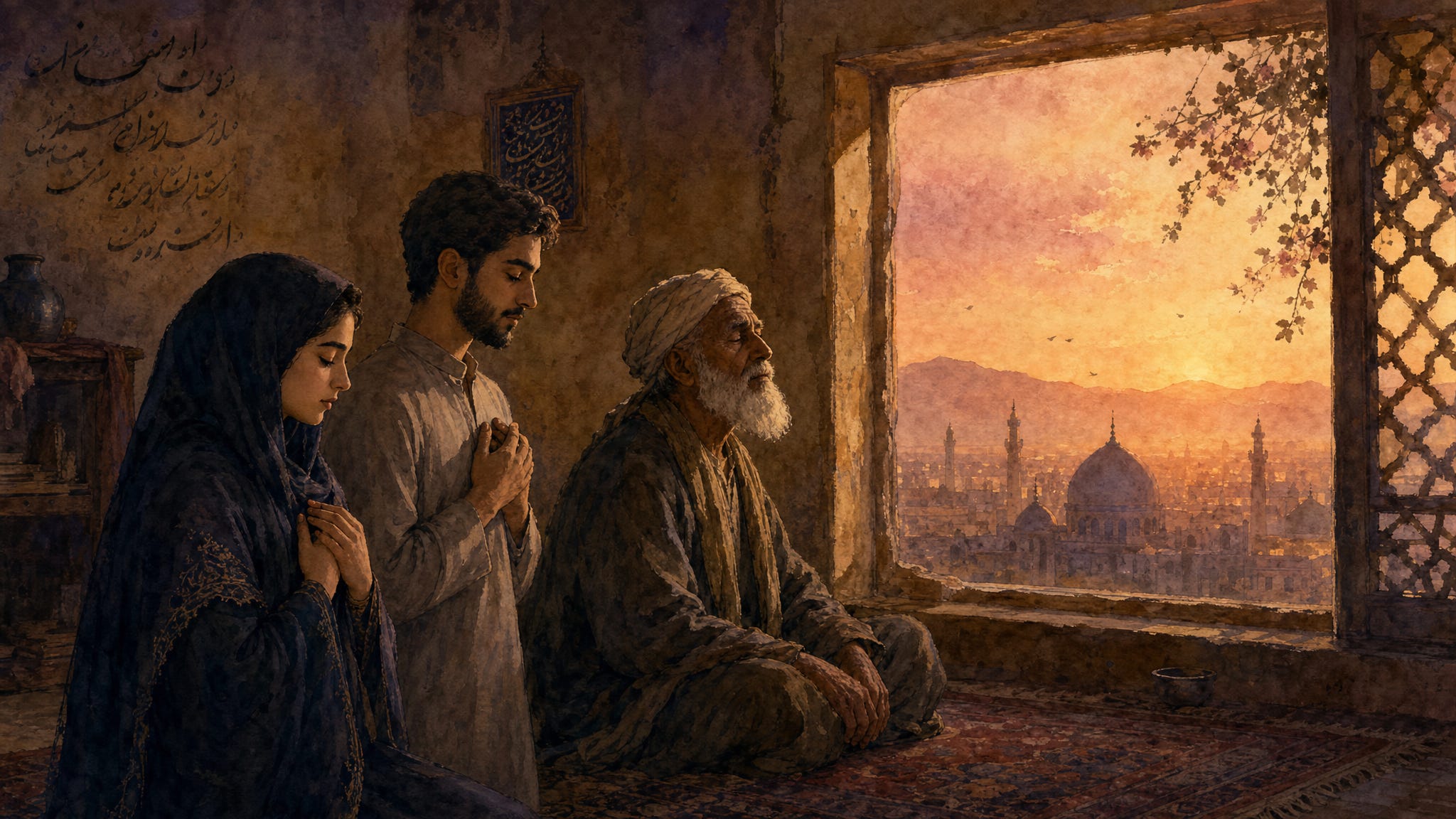
— and here I must shut a door that has been left dangerously open.
A believer is one who does not forget — who keeps the covenant of witness alive and renews his allegiance to the one who stood for the truth.
That is the sign.
But hear me carefully, because this is where people go wrong, and where the enemies of this path would love us to go wrong: this is a visitation of the heart, measured by intent — not a feat of the legs, measured in miles.
The sign is not “walk to Karbala or you are no believer.”
God lays on no soul more than it can bear; a sign that required a plane ticket to Iraq would shut out the poor, the sick, the imprisoned, and the one a border keeps away — and could never be the sign of a believer.
You keep the ziyarah wherever you stand: you recite the visitation with your face and your heart turned toward Imam Husayn, and that is the ziyarah, whole and complete.
We saw it with our own eyes only last night — Jabir, old and blind, who could not have walked that road in his youth let alone his age, is the first pilgrim and the template for us all; and the Imam told us plainly that your whole pilgrimage may be to cross your own living-room to the place where you pray.
The walk of twenty million is one beautiful form of the ziyarah; it is not the definition of it.
The definition is the turning of the heart — and that door is open to every believer on earth, on any carpet, in any condition.
And the scholars see how deep the sign runs: Ayatullah Jawadi-Amoli notes that in this very hadith the Imam sets two pillars side by side — prayer, the pillar of the Book, and the visitation of Arbaeen, the pillar of the Household — the two things the Prophet left us and told us never to let part.
Three — The Ring On The Right Hand
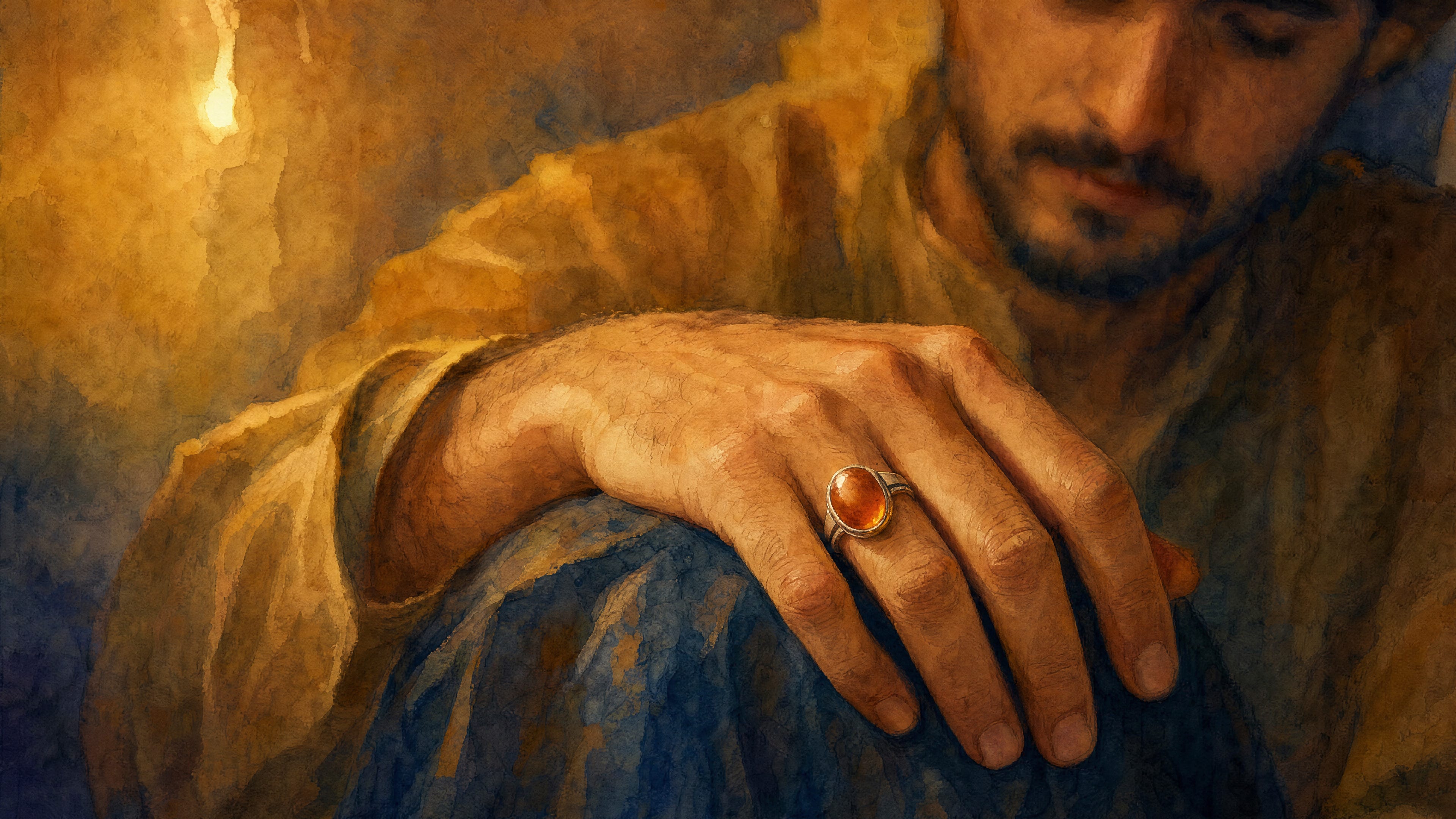
A believer’s faith is not confined to the grand gesture; it shows in the smallest, most constant detail of the body — even which hand wears a ring.
It seems the smallest of things — and that is the wisdom of it: a faith that lives only in the great moments is not yet faith; faith is what has soaked into the ordinary, down to a ring on a hand.
And it is the right hand — the hand of action — so the reminder sits on the very instrument you act with.
Imam al-Kadhim, peace and blessings be upon him, gave the reason:
لِأَنَّهُ كَانَ إِمَامَ أَصْحَابِ الْيَمِينِ بَعْدَ رَسُولِ اللَّهِ صَلَّى اللَّهُ عَلَيْهِ وَآلِهِ… وَهُوَ عَلَامَةٌ لِشِيعَتِنَا يُعْرَفُونَ بِهَا.
“…because he was the leader of the Companions of the Right after the Messenger of God… and it is a sign for our followers, by which they are known.”
— Imam Musa al-Kadhim; Shaykh al-Saduq, ʿIlal al-Sharaʾiʿ
Four — The Forehead In The Dust
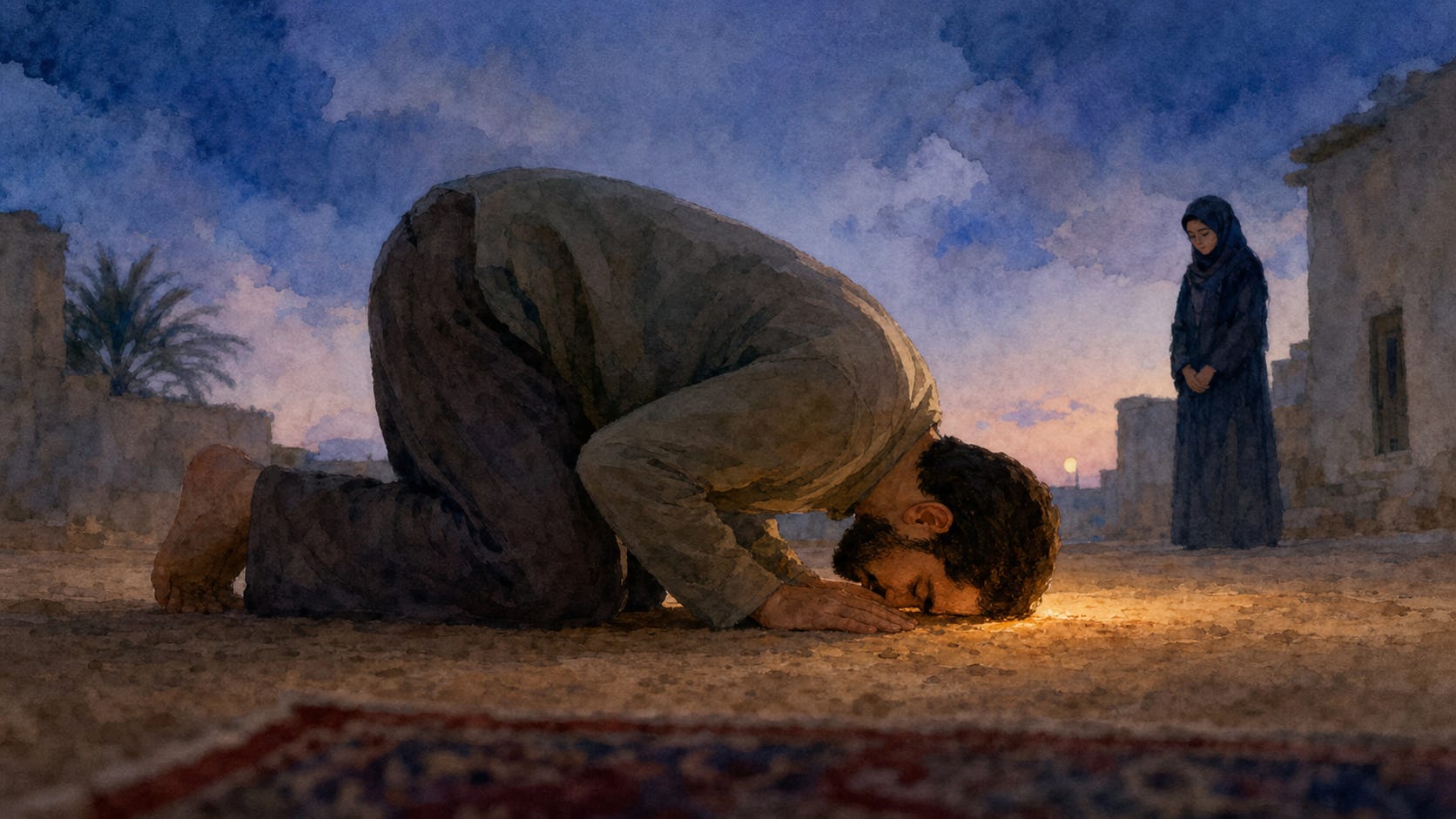
A believer brings the highest part of himself down to the humblest thing there is — his brow to the bare earth — because a worship that does not lower the ego is no worship at all.
You cannot press your forehead into the dust, five times a day, every day, and still nurse an arrogant heart; the body drills the soul.
And notice what we are told to prostrate upon — bare earth, not carpet, not silk, not gold.
Imam al-Sadiq, peace and blessings be upon him, gave a reason so rational it should quiet every cynic:
لِأَنَّ السُّجُودَ خُضُوعٌ لِلَّهِ عَزَّ وَجَلَّ، فَلَا يَنْبَغِي أَنْ يَكُونَ عَلَىٰ مَا يُؤْكَلُ وَيُلْبَسُ، لِأَنَّ أَبْنَاءَ الدُّنْيَا عَبِيدُ مَا يَأْكُلُونَ وَيَلْبَسُونَ، وَالسَّاجِدُ فِي سُجُودِهِ فِي عِبَادَةِ اللَّهِ عَزَّ وَجَلَّ، فَلَا يَنْبَغِي أَنْ يَضَعَ جَبْهَتَهُ فِي سُجُودِهِ عَلَىٰ مَعْبُودِ أَبْنَاءِ الدُّنْيَا.
“Because prostration is submission to God — so it is not fitting that it be upon what is eaten or worn; for the children of this world are slaves to what they eat and what they wear. And the one prostrating is in the worship of God, so let him not place his forehead upon what the children of this world worship.”
— Imam Jaʿfar al-Sadiq; Shaykh al-Saduq, ʿIlal al-Sharaʾiʿ
Hear how deep that cuts — and how it rhymes with everything this series has said about the arrogant and the enslaved.
The world makes people slaves of what they eat and wear.
When you refuse to lay your forehead on those things and lay it on the plain earth instead, you are declaring, with your body, that you are no one’s slave but God’s.
The humblest act in the religion is also its most defiant.
Five — Saying Bismillah Aloud
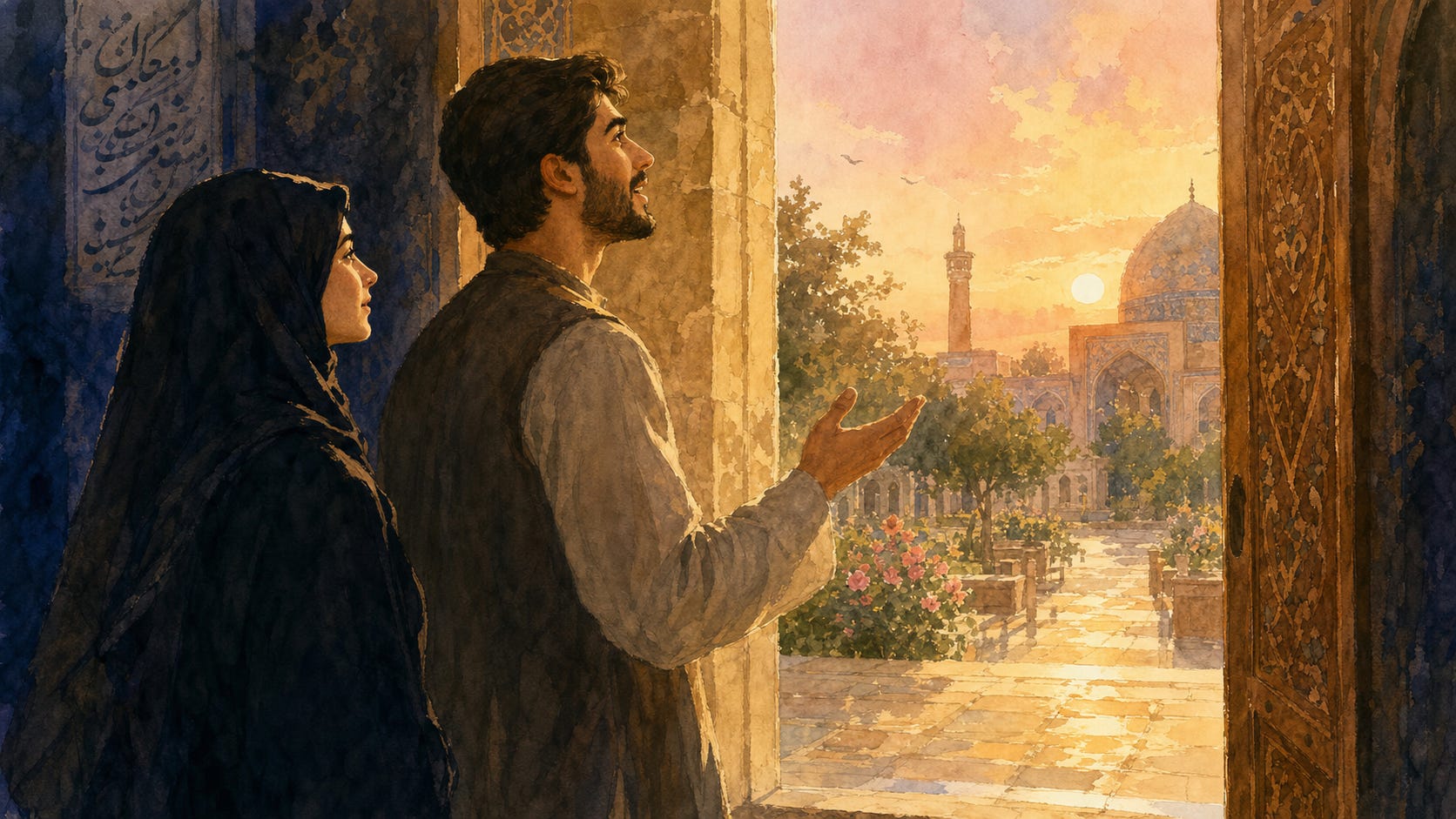
A believer is not ashamed to name God out loud; he begins everything, openly, in the name of God — refusing to make his faith a private embarrassment.
Others may whisper it or drop it; the believer says it plainly, so that the first word of the act is God’s, and everyone can hear that it is.
Imam al-Rida, peace and blessings be upon him, wrote to the caliph al-Ma’mun:
مِنْ مَحْضِ الْإِسْلَامِ الْإِجْهَارُ بِبِسْمِ اللَّهِ الرَّحْمَٰنِ الرَّحِيمِ فِي جَمِيعِ الصَّلَوَاتِ.
“Among the pure essence of Islam is the saying of ‘Bismillah ir-Rahman ir-Rahim’ aloud in all the prayers.”
— Imam Ali al-Rida, from his letter to al-Ma’mun (ʿUyun Akhbar al-Rida)
And of all the words to say aloud, it is the one that names God as Rahman and Rahim — the All-Compassionate, the All-Merciful.
The believer’s first public word is not fear, and not law; it is mercy.
That is what he wants the world to hear him begin with.
So put the five together and look at what you actually have.
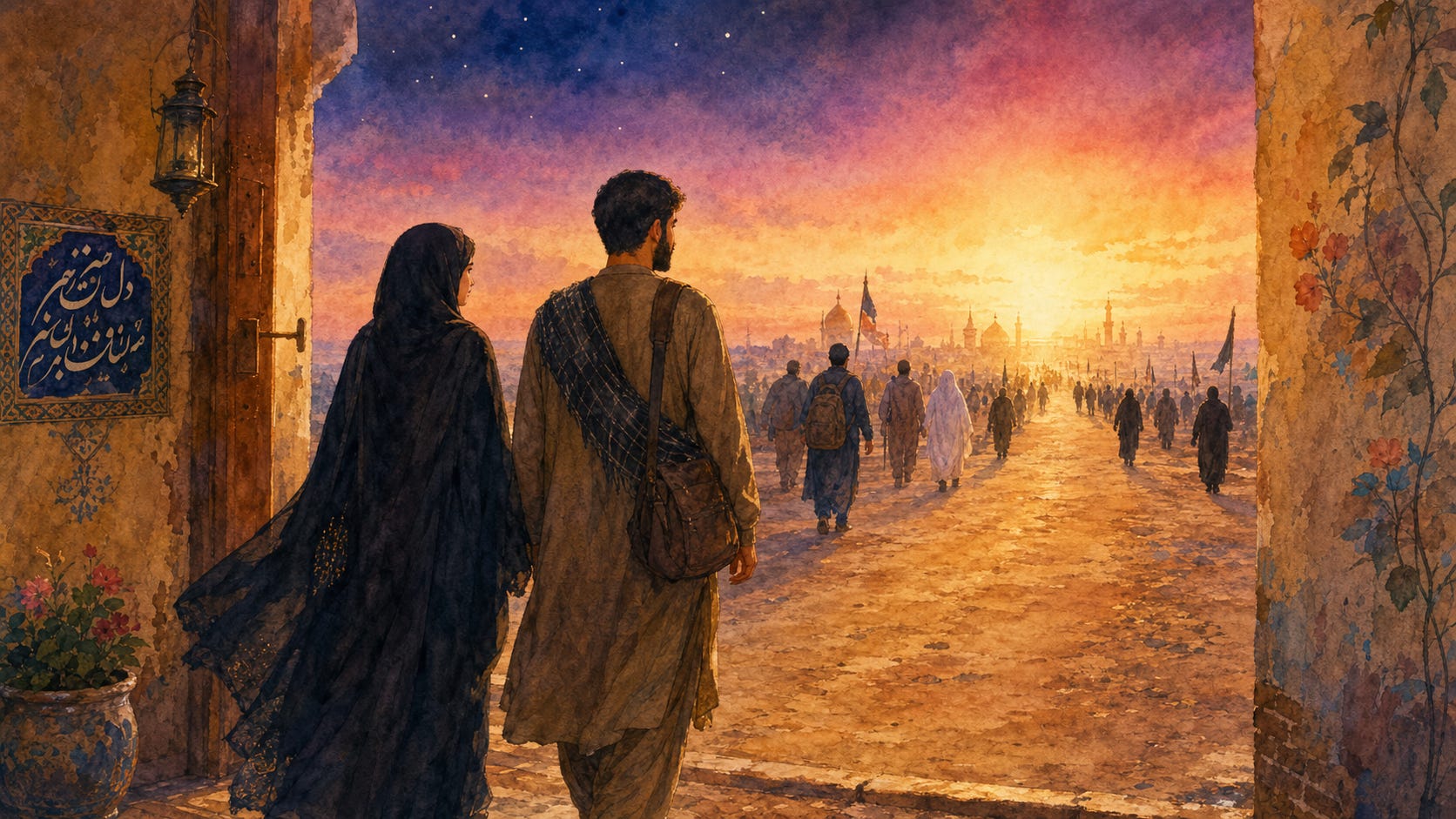
These are not a checklist of arbitrary acts.
They are a portrait of one life turned wholly toward God — love beyond duty, loyalty that will not forget, devotion in the smallest thing, the ego brought to the ground, and God named openly as the first word of everything.
That is not “mindless dogma.”
It is the most reasoned, most examined way of being a human being that has ever been offered — and it is what the fortieth day, and the covenant we renew at dawn, are made of.
So the chain we traced from Abel is not only behind us.
It is a lived thing — a reasoned discipline, never a rote habit, as we have just seen — it is daily, and it is happening in you, at dawn, on your own neck, whether you ever noticed it or not.
And once a year, that private dawn-covenant stands up, and walks.
Arbaeen: The Covenant That Walks
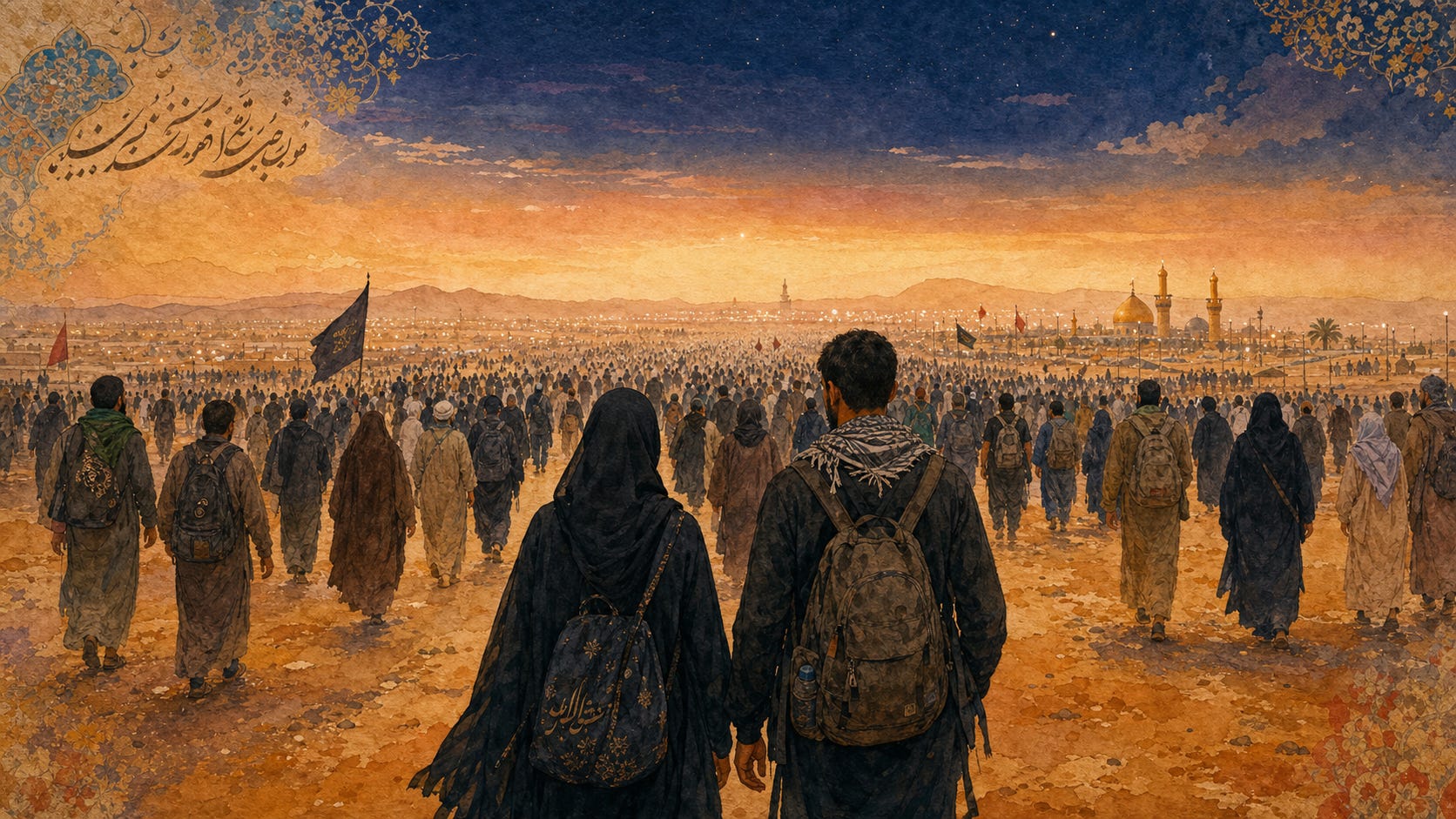
Tonight, as we sit here, the largest gathering of human beings anywhere on the face of the earth is on a road.
Tens of millions of people — more than the population of whole nations — are walking from Najaf to Karbala, on foot, on these very days, toward a single grave.
And millions more are walking with them in spirit — from London, from Rochdale, from Dearborn, from Sydney; from this carpet, tonight. And here is a thing worth saying plainly: it is the largest peaceful gathering on the planet, and hardly a single newspaper in the language most of us are sitting in has ever bothered to understand it.
The world’s biggest act of love, and it is nearly invisible to the world.
What is it?
What are all those feet doing?
They are praying.
That is the theology beneath the walk, and it is the whole of Point Two: the body itself becomes the supplication.
On the twelfth night we learned the word murābata — the holding of the line, the guarding of the seam, as a grade of worship.
On the thirteenth we learned the grades of witness.
And here, on the road to Karbala, is the whole ummah living both of them at once, with its feet — the frontier held by walking, the witness borne by arriving.
The visit is not tourism.
The visit is a pledge.
And the words of that pledge are the closing of the Arbaeen visitation itself — listen to what the pilgrim says when his hand finally touches the grave:
اللَّهُمَّ إِنِّي أُشْهِدُكَ أَنِّي وَلِيٌّ لِمَنْ وَالاهُ وَعَدُوٌّ لِمَنْ عَادَاهُ… وَنُصْرَتِي لَكُمْ مُعَدَّةٌ حَتَّىٰ يَأْذَنَ اللَّهُ لَكُمْ، فَمَعَكُمْ مَعَكُمْ، لَا مَعَ عَدُوِّكُمْ.
“O God, I take You as my witness that I am a friend to whoever befriends him, and an enemy to whoever shows him enmity… and my help is made ready for you until God grants you leave. So I am with you — with you — not with your enemies.”
— Ziyarat al-Arbaʿeen (Mafatih al-Jinan)
I take You as my witness.
Even the visitation begins by bearing witness.
My help is made ready for you until God grants you leave.
That is not a tourist’s sigh at a shrine.
That is a soldier reporting for duty across thirteen centuries.
I am with you — with you — not with your enemies.
That is the covenant of the dawn, walked into a road and spoken over a grave.
Twenty million people, this week, are saying that sentence with their whole bodies.
The Chain Of The Scribes
And let me ask you something we almost never ask.
How do we even have these words?
You, sitting on a carpet in the West, in a century the Imams never saw — how is it that you can open a small book and read the very supplication Safwan heard from Imam al-Sadiq’s own mouth?
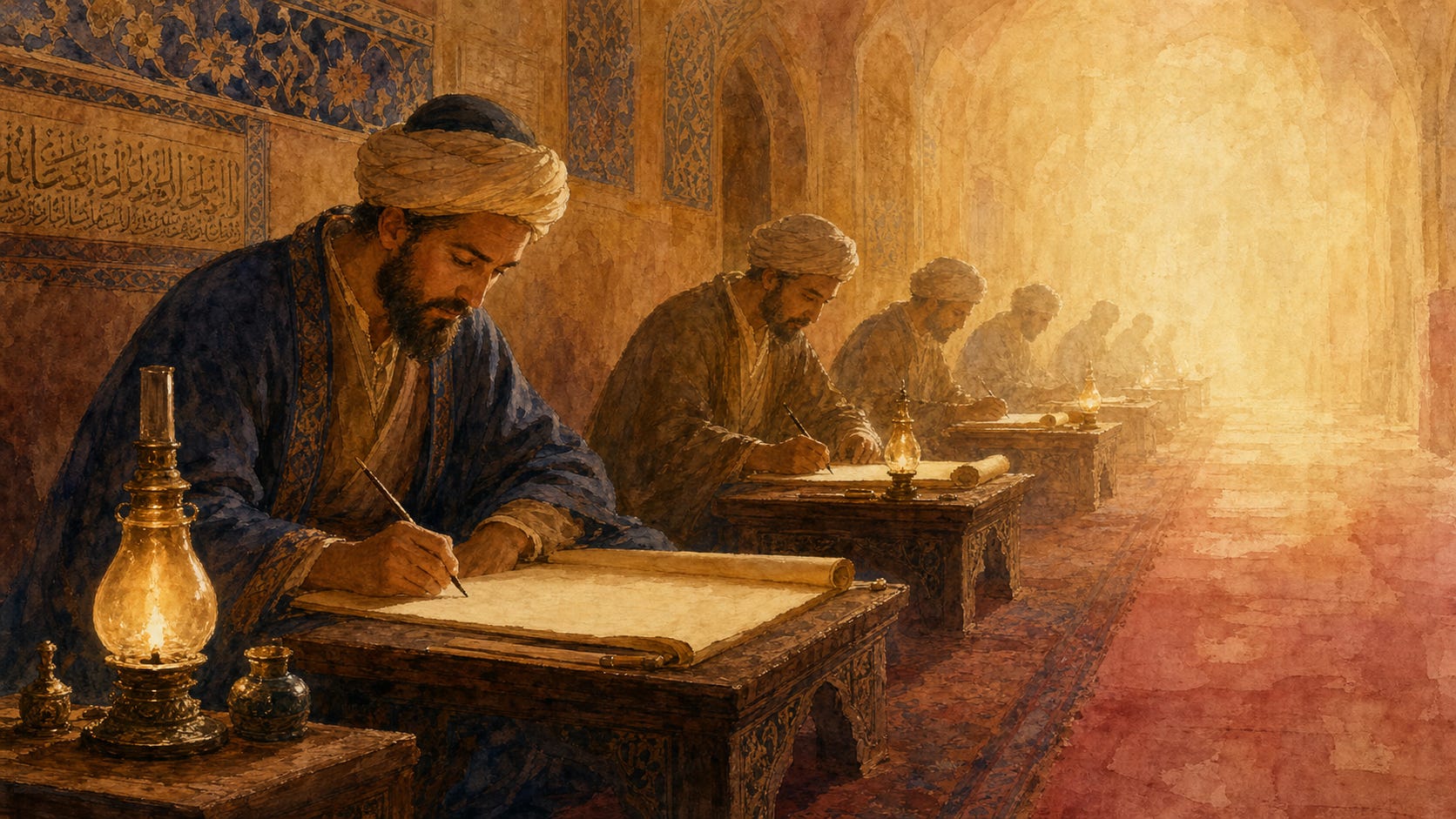
Because between him and you stood a chain of men bent over desks — and that chain is one of the quiet miracles of our history.
Go back to its beginning.
In the year 329 of the Hijra, the last of the four special deputies passed, and the Greater Occultation began.
The Imam did not die — we have said it all night, he is alive — but he withdrew behind the veil, and a community that had always been able to send a question and receive an answer suddenly could not.
And the danger of that hour was a precise one: not that the Imam would be lost — he cannot be — but that his guidance, the teaching of the second of the two weighty things, might be scattered and lost to a people who could no longer sit at his feet.
Hear what the Messenger of God, peace and blessings be upon him and his family, left in our hands:
إِنِّي مُخَلِّفٌ فِيكُمُ الثَّقَلَيْنِ: كِتَابَ اللَّهِ، وَعِتْرَتِي أَهْلَ بَيْتِي؛ وَإِنَّهُمَا لَنْ يَفْتَرِقَا حَتَّىٰ يَرِدَا عَلَيَّ الْحَوْضَ.
“I am leaving among you the two weighty things: the Book of God, and my kindred, the people of my house; and the two shall never part until they return to me at the Pond.”
— The Prophet Muhammad; Shaykh al-Saduq, Maʿani al-Akhbar (by the golden chain, through Imam al-Sadiq from his fathers, from Imam Ali)
The two shall never part — you heard those very words earlier tonight, spoken of Imam Ali and the truth; here they are again, spoken of the Book and the Household, inseparable, the Prophet held two fingers together to show it.
And when Jabir al-Ansari — the same blind old Jabir who was our first pilgrim last night — rose and asked, “and who is your kindred?”, the Prophet named them one by one: Ali, al-Hasan, al-Husayn, and the Imams from the line of al-Husayn to the Day of Resurrection — the last of them the very Imam who is, tonight, in his occultation.
So this was the task a generation of scholars took onto their own backs: to keep a whole people’s grip on that rope through the long centuries of absence, so that the Book and the Household could never be prised apart in our hands.
And they were not random men, and this is not a story we are guessing at — we are telling it in full, week by week, on Wednesday evenings, in our Mahdawiyyah series within the Lantern of the Path (the details, as always, at truthpromoters.com). We have already sat with the generation that preserved the tradition when the light was hidden; with Shaykh al-Mufid, the Beneficial One, who gave the school its backbone of reason; and with the two brothers of Baghdad — Sayyed al-Radhi, who gathered the scattered words of the Commander of the Faithful into the Nahj al-Balagha that sits on your shelf, and his elder brother Sayyed al-Murtadha, whom they named ʿAlam al-Huda, the Banner of Guidance, who carried the whole school on his shoulders for a generation, and who spent himself and his wealth keeping its students fed.
And soon we will sit with Shaykh al-Saduq, who tells us himself that, troubled to his heart by the doubts spreading about the occultation, he was moved after seeing the Master of the Age to compose a book that would settle the matter — and so he wrote Kamal al-Din, the Perfection of Religion, to steady his community in the absence of its Imam.
And to Shaykh al-Mufid, something happened that we must not pass over — because it is the very heart of what tonight has been about.
He did not only labour for the Hidden Imam from afar.
The Hidden Imam wrote back.
There survive letters — tawqiʿat, signed replies — that reached Shaykh al-Mufid from behind the veil, addressed to him by name:
“To the upright brother and the rightly-guided friend, al-Shaykh al-Mufid.”
And in one of them, the line I want you to carry home tonight:
فَإِنَّا نُحِيطُ عِلْماً بِأَنْبَائِكُمْ، وَلَا يَعْزُبُ عَنَّا شَيْءٌ مِنْ أَخْبَارِكُمْ.
“For indeed We encompass, in full knowledge, all the tidings of you; and nothing of your affairs is hidden from Us.”
— A tawqiʿ of the Imam of the Age to Shaykh al-Mufid; al-Tabarsi, al-Ihtijaj
Do you hear what that does to the whole story of the scribes?
These men were not scribbling in the dark, abandoned, hoping someone was still there.
The very Imam whose guidance they were preserving was watching over them — holding the rope from his side of the veil while they held it from ours.
Nothing of your affairs is hidden from Us.
That is the occultation in a single sentence: not an absence — a hidden presence.
The Imam we have said, all night, is alive — is also near.
And they did it at a cost, and through the coming and going of empires.
When the Seljuk armies fell upon Baghdad, they put the Shia quarter of al-Karkh to the torch and burned its libraries to ash.
And here is the thing you must not miss tonight: the very book I read to you an hour ago — the Tahdhib, where our Ziyarat of Arbaeen and the five signs of the believer are both preserved — is the work of Shaykh al-Tusi, the student of those two brothers, whose own library was among the ones that burned.
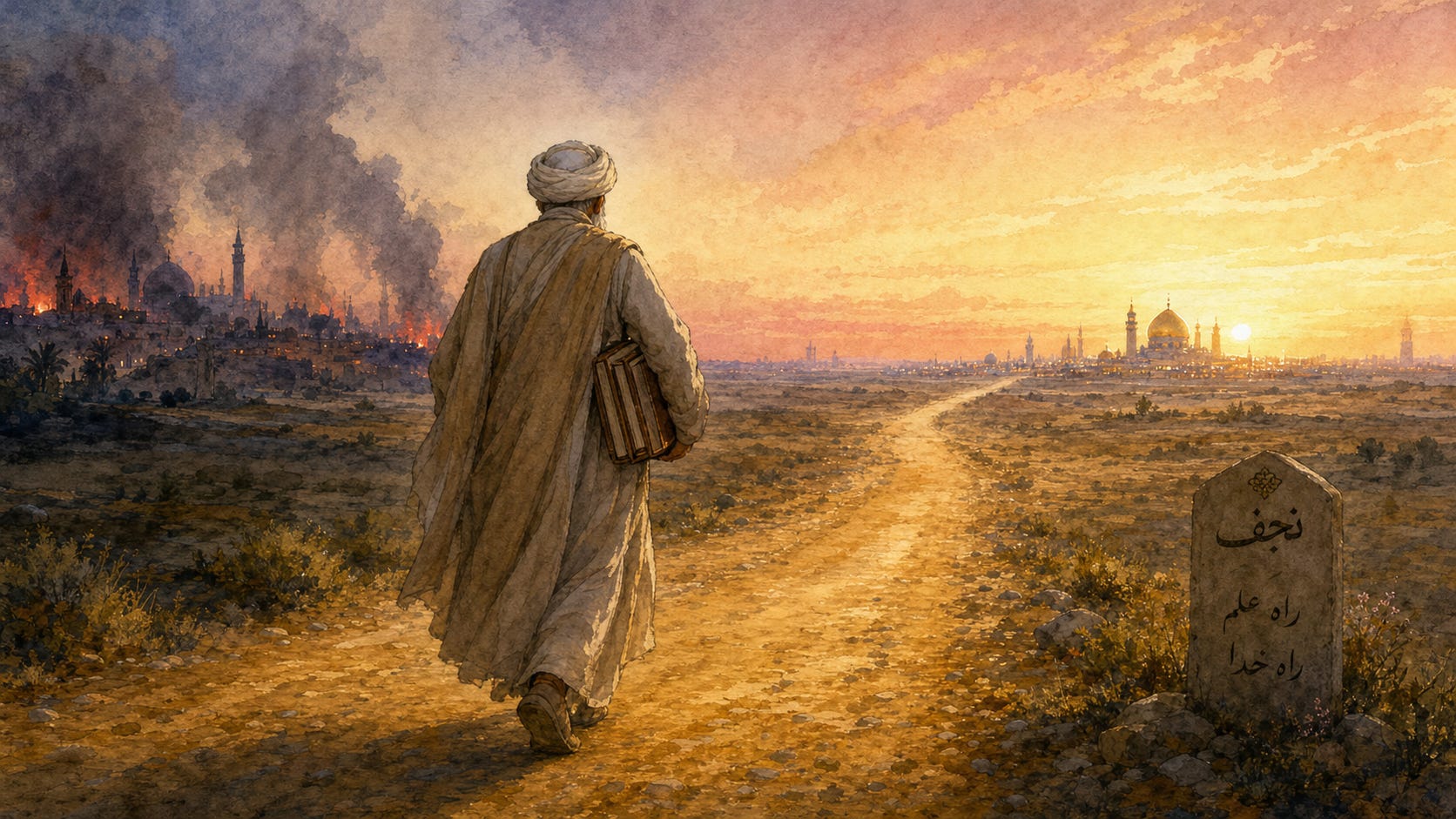
He gathered what he could carry, walked south, and began again in a small town called Najaf — the town from which, this very week, twenty million people are walking toward Karbala.
They burned his books; he built the school that made the road.
The rope did not break.
And it kept not breaking.
Allamah al-Majlisi gathered the oceans of tradition into the Bihar al-Anwar; Shaykh al-Hurr al-ʿAmili bound the narrations of the law; and Shaykh Abbas al-Qummi pressed the whole tradition of supplication into the one small book — the Mafatih al-Jinan — that sits in your home tonight.
Remember the thirteenth night — the scholar’s ink against the martyr’s blood?
These men are that ink.
The chain of witness runs straight through the chain of the scribes.
So when you open the Mafatih tonight and read the words of Arbaeen, know exactly what you are holding: the far end of a rope that a thousand careful hands, across a thousand years and through the fire of empires, refused to let fray.
The Whole Of It, On A Rhythm: The Five Practices
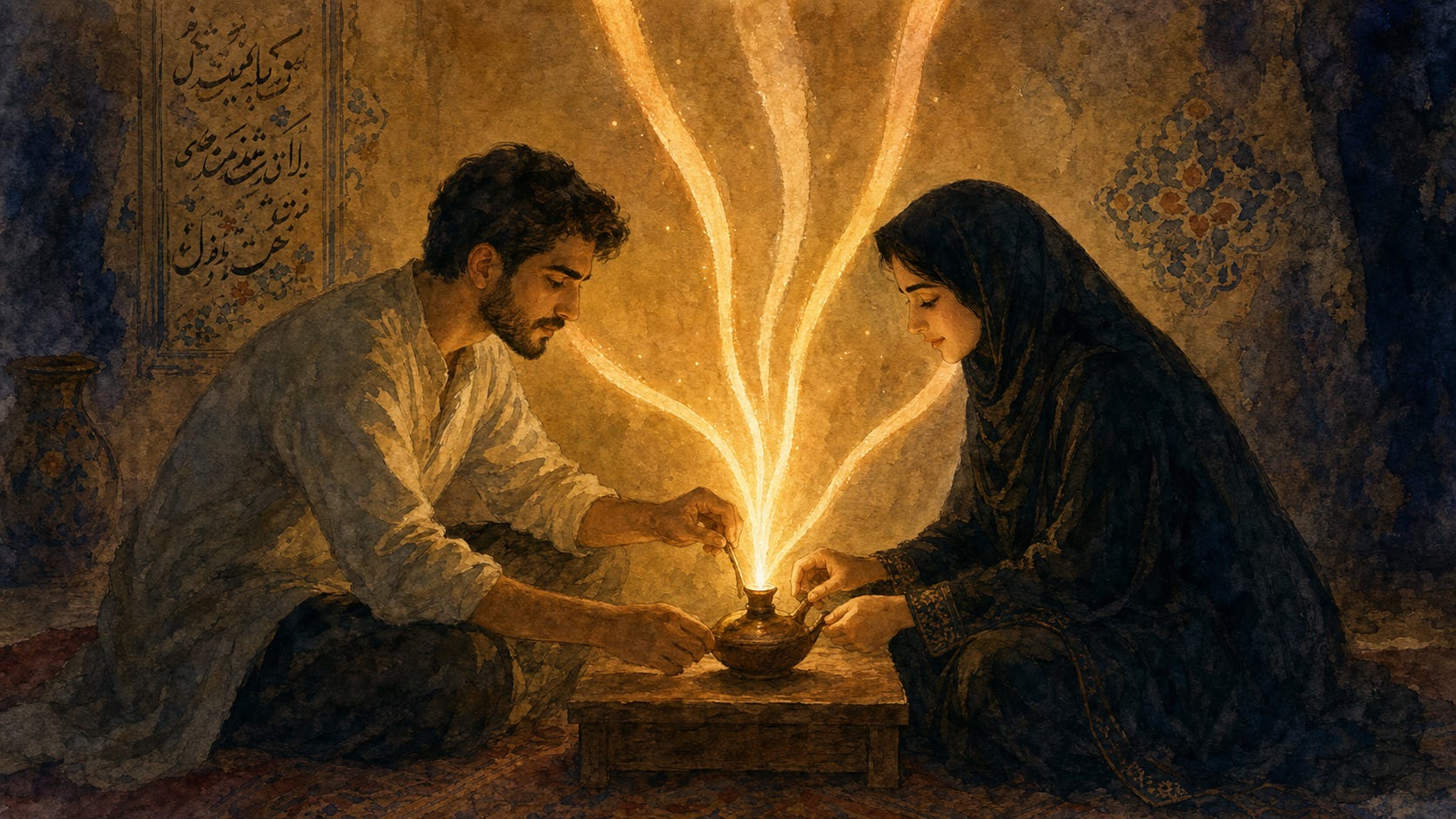
And here, on the last night, I can finally give you the thing this entire series has quietly been building toward.
Because the covenant is not only an annual walk and a daily dawn.
It is a rhythm — a whole life’s worship, set to a measure you can actually keep.
We have touched each of these on its own night; tonight I gather them into one breathing whole, the way you would gather five lit things into one lamp.
The believer is formed by five practices:
Every morning — Duʿa al-ʿAhd — the daily covenant we have just renewed.
Five times a day — the testimony itself, La ilaha illa Allah — there is no god, but God, said in the obligatory prayers between fifteen and eighteen times in each prayer, around sixty-five times across the day.
We learned on the tenth night what that is: the daily refusal of every false lord of the heart.
Negation first — there is no god — the chamber swept of every idol, the inner Pharaoh, the inner Caesar, the inner Yazid; and then the affirmation — but God.
Sixty-five times a day you clear the throne-room of the soul and name its only rightful King.
Every Thursday night — Duʿa Kumayl — the prayer Imam Ali, peace and blessings be upon him, taught to Kumayl ibn Ziyad, in which the believer asks for the one thing that makes a scattered life whole:
حَتَّىٰ تَكُونَ أَعْمَالِي وَأَوْرَادِي كُلُّهَا وِرْدًا وَاحِدًا، وَحَالِي فِي خِدْمَتِكَ سَرْمَدًا.
“…so that my deeds and my devotions may all become a single devotion, and my standing in Your service may be everlasting.”
— Duʿa Kumayl (Mafatih al-Jinan; al-Tusi, Misbah al-Mutahajjid)
Every Friday, and on each of the four Eids — Duʿa al-Nudbah — in which we recall the word of the Prophet, peace and blessings be upon him, his family and his righteous companions, to Imam Ali, peace and blessings be upon him:
وَالْإِيمَانُ مُخَالِطٌ لَحْمَكَ وَدَمَكَ كَمَا خَالَطَ لَحْمِي وَدَمِي.
“And faith is mingled with your flesh and your blood, just as it is mingled with my flesh and my blood.”
— The Prophet Muhammad to Imam Ali; Shaykh al-Saduq, al-Amali; carried in Duʿaa al-Nudbah
— the mukhalata, the witness worked so deeply into a person that it becomes the very fibre of him.
In the Pure Ones that mingling is intrinsic; in us it is cultivated — and these five practices are how it is cultivated.
And every Arbaeen — the fortieth day — Ziyarat al-Arbaʿeen — the visitation we keep tomorrow.
Five practices: daily, daily, weekly, weekly, and once a year.
And now hear the verse that crowns the whole of it — the prayer of Abraham, peace and blessings be upon him, that the Prophet himself was commanded to declare, and that gives the five practices their single orientation:
قُلْ إِنَّ صَلَاتِي وَنُسُكِي وَمَحْيَايَ وَمَمَاتِي لِلَّهِ رَبِّ الْعَالَمِينَ لَا شَرِيكَ لَهُ ۖ وَبِذَٰلِكَ أُمِرْتُ وَأَنَا أَوَّلُ الْمُسْلِمِينَ
“Say: My prayer, my rites of sacrifice, my living and my dying are for God, the Lord of the worlds. He has no partner. With this I have been commanded, and I am the first of those who submit.”
— Qur’an, Surah al-Anʿam (the Chapter of the Cattle) #6, Verses 162–163
Do you see what the five practices are for?
They are not five separate duties to be ticked off.
They are five hands shaping one thing: a whole life turned into a single act of witness.
My prayer, my sacrifice, my living, and my dying — all of it, one thing, for God.
The Thursday prayer asks for it — that my devotions may become a single devotion.
This verse declares it.
And the five-practice rhythm, kept across the years, is how an ordinary, non-infallible believer is slowly built into it.
That is believer-formation.
That is what Arbaeen is the annual high-tide of.
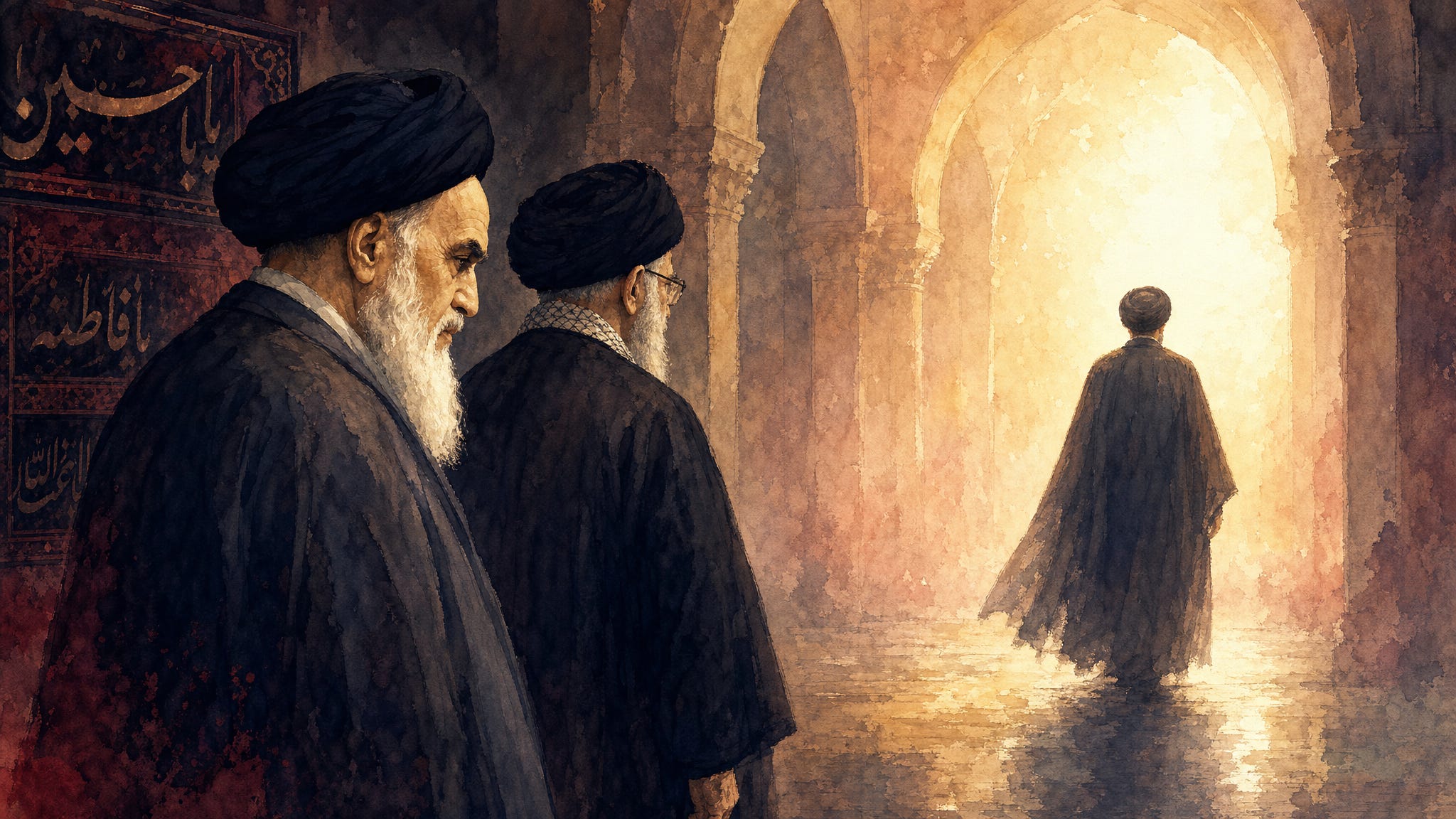
And it is the same chain — the perfected human at the end of the road we are all walking — that runs, by God’s protection, through Imam Khomeini, through Imam Khamenei, may God rest both their pure souls, and through the living guardian of our own time, Imam Sayyed Mujtaba Khamenei, may God protect him, until the appointed hour.
That is the witness, lived.
Not declared once and shelved — lived, on a rhythm, by tens of millions, this week, while we sit here.
You are already in it.
So now there is only one question left, and the whole series has been walking toward it:
Now that you know — what will you do, between tonight and next Muharram?
The Closing Call
I am going to ask you to carry five things home.
Not five new things — five things you already own, because you earned them across these nights.
Let me hand them back to you, named, so you cannot put them down.
One: We Know The Word
Martyr means witness.
We took it back from the people who use it to mean victim, and from the people who use it to mean killer, and from the people who make it a beautiful poster emptied of its blood.
We will not let it be stolen, hollowed, or made into decoration.
We know what the word means now.
Guard it.
Two: We Know The Chain

From Abel in the field to a child in the dungeon of Sham to the martyrs broadcast into our phones, it is one chain.
We have hung the links on it ourselves and felt it take the strain.
We will recognise its links when they appear — even when the newspapers call them something else.
Three: We Know Our Frontier
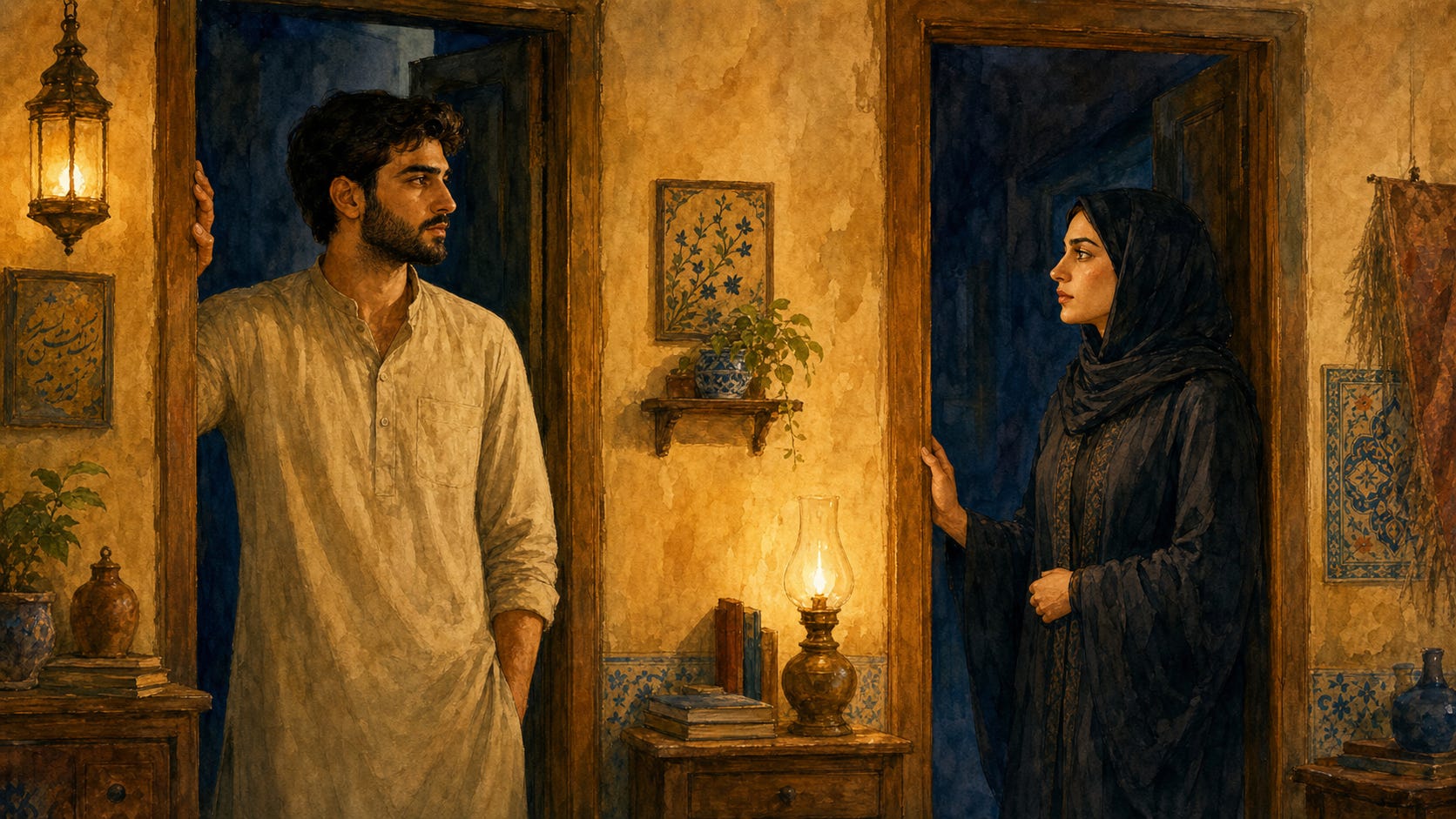
Every one of us has one.
It is not always a battlefield.
It is at your desk, in your home, in the marriage you are fair inside of, in the income you keep clean, in the quiet refusal in your own chest to bow to a thing you were told to bow to.
We learned on the twelfth and the fourteenth nights: the empire begins in the heart, and so does the resistance.
We will stand at our frontier — the one that has our name on it.
Four: We Know The Supplication
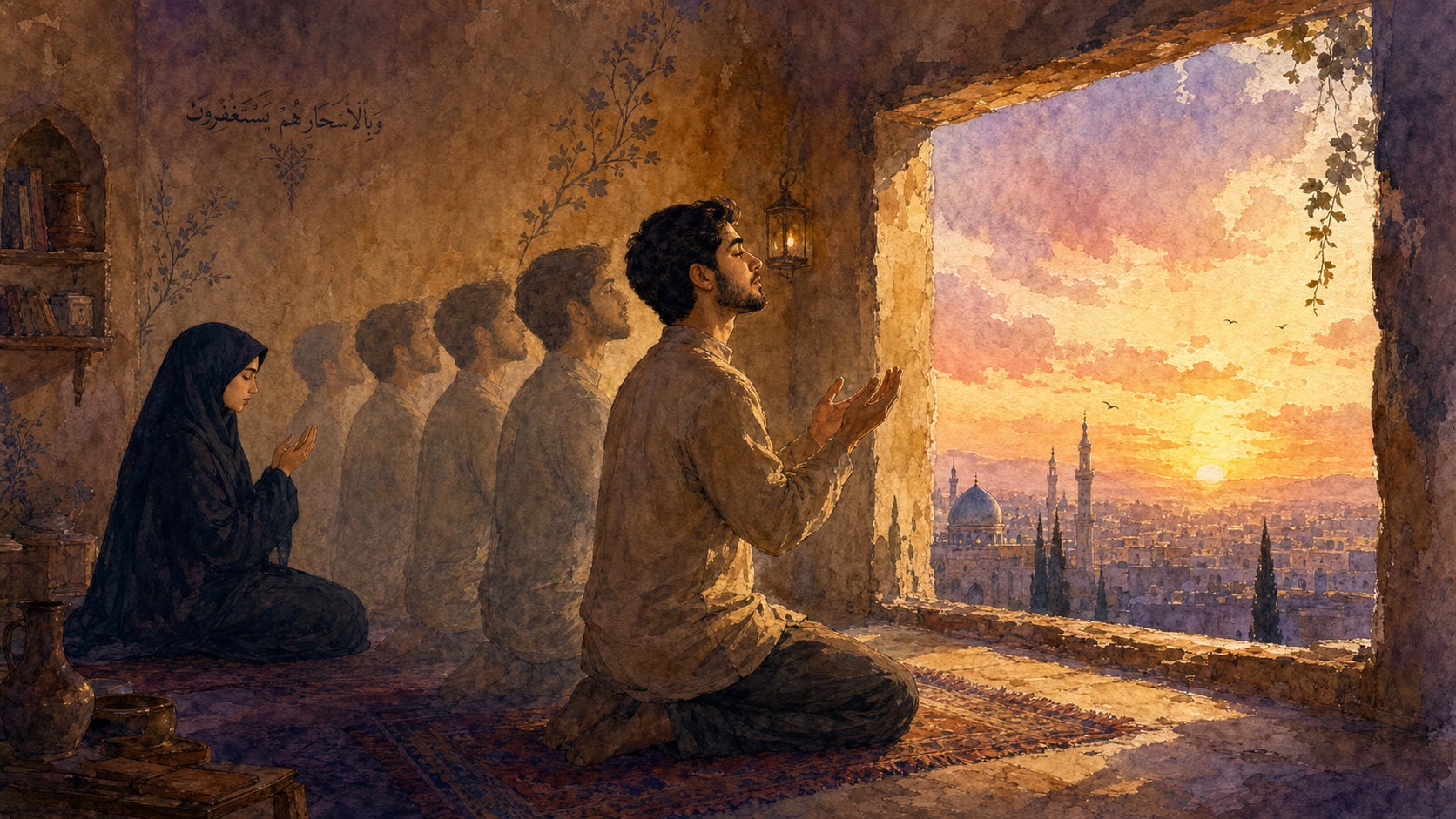
The covenant, every morning.
We are in the chain whether we notice it or not — and it is better, by far, to notice.
So renew it at dawn.
Five: We Know We Will Be Asked
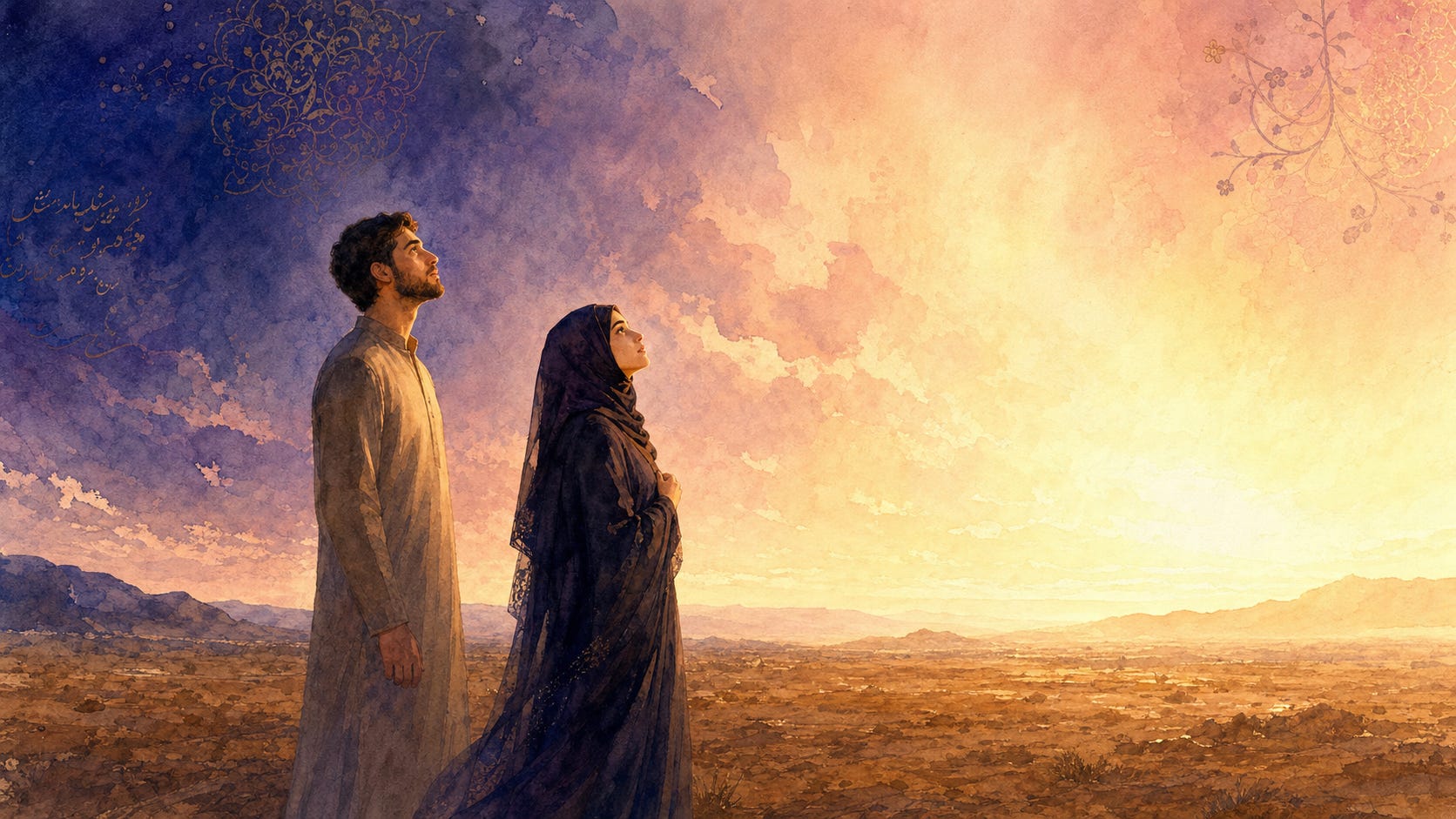
The Imam sees.
The Imam waits.
And the Prophet, peace and blessings be upon him, his family and his righteous companions, has told us that he rejoices when we learn.
We will be asked — where is your brother? — and tonight, for the first time in this whole series, we are going to be able to answer.
And now, having handed you the five, let me turn — for the last time in fifteen nights — and face you fully, because a series does not end with a list.
It ends with a heart.
Let me say three last things, and let them be warm, because we have earned warmth.
We Love All; We Disavow Only Arrogance
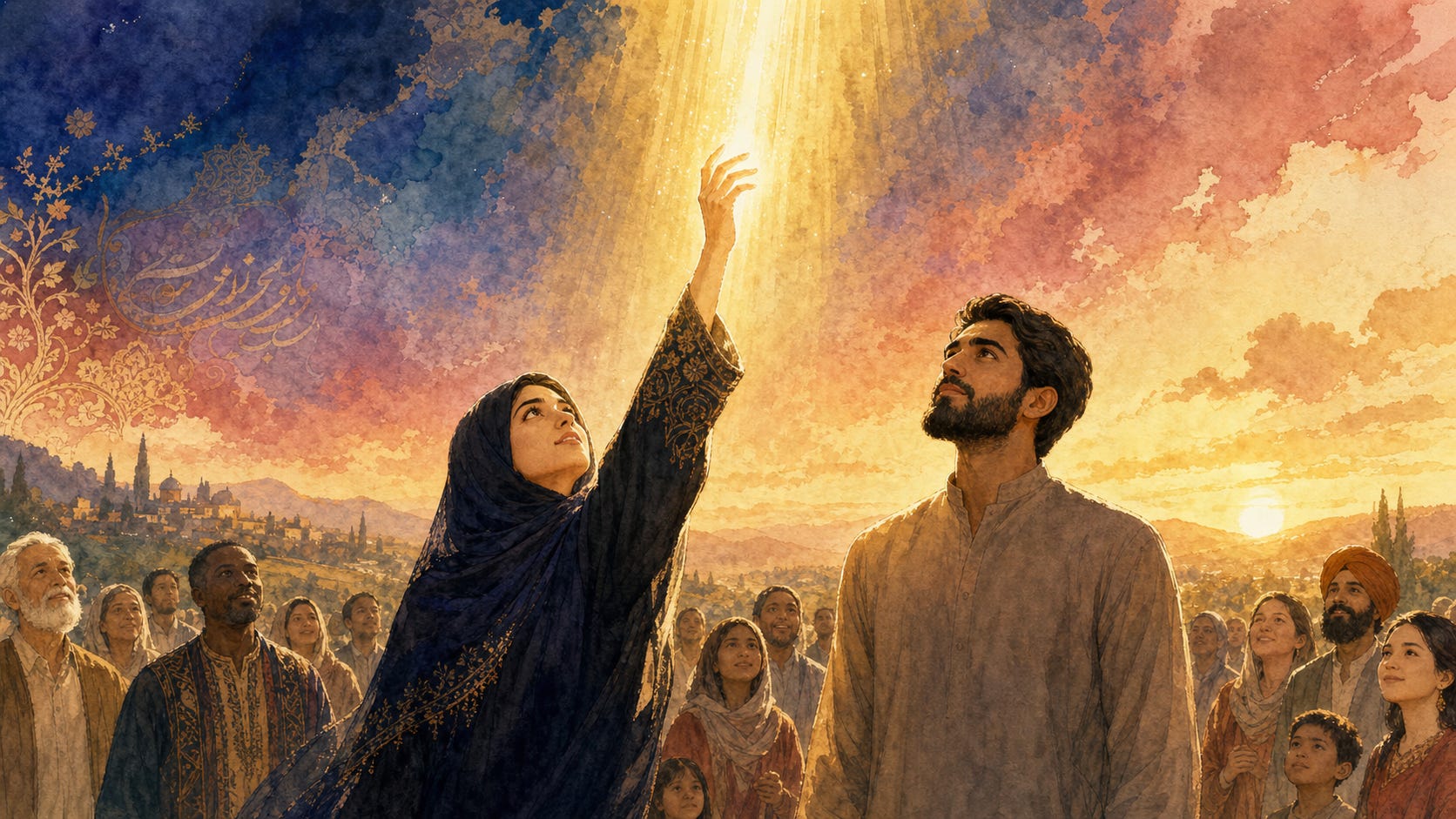
Across this whole series we have traced a single fault-line — the Qur’an’s own fault-line — between the mustakbirīn and the mustadhʿafīn: the arrogant who exalt themselves over the servants of God, and the oppressed whom they grind down.
I named it in full on the fourteenth night, and I am not going to re-open that argument tonight.
Tonight I want only its warm and luminous heart, so that no one ever mistakes us:
We are against no people.
We love all of humanity.
Every soul on this earth is the creation of God, and we are commanded to love what God creates and what God loves.
We do not have an enemy among the peoples of the world — not by nation, not by faith, not by race, not anyone.
Our quarrel is with one thing only: the Satanic arrogance, the istikbar, that sets itself against the Truth and works to enslave the servants of God.
We disavow the throne, never the person.
And we disavow it for the sake of the very people it tramples.
And here is the freedom hidden inside that.
Hear the verse:
لَا إِكْرَاهَ فِي الدِّينِ ۖ قَدْ تَبَيَّنَ الرُّشْدُ مِنَ الْغَيِّ ۚ فَمَنْ يَكْفُرْ بِالطَّاغُوتِ وَيُؤْمِنْ بِاللَّهِ فَقَدِ اسْتَمْسَكَ بِالْعُرْوَةِ الْوُثْقَىٰ لَا انْفِصَامَ لَهَا
“There is no compulsion in religion. The right way has become clear from error. So whoever rejects the false lord and believes in God has grasped the firmest handhold, which never breaks.”
— Qur’an, Surah al-Baqarah (the Chapter of the Cow) #2, Verse 256
One verse, and it does two things at once.
No compulsion — we never force a soul.
And whoever rejects the tāghūt, the false lord, the arrogant tyrant, and holds to God, has grasped the handhold that never breaks.
To reject the arrogant is not hatred — it is how a human being becomes free.
And listen to the Commander of the Faithful himself, peace and blessings be upon him, writing to his own son:
وَلَا تَكُنْ عَبْدَ غَيْرِكَ وَقَدْ جَعَلَكَ اللَّهُ حُرًّا.
“And do not be the slave of another, for God has made you free.”
— Imam Ali ibn Abi Talib, Nahj al-Balagha, Letter 31 (to Imam al-Hasan)
God has made you free.
This is the whole of our politics in nine words.
We refuse to be the slaves of any man, any throne, any empire, any market, any false lord — because we are already the servants of God, and a servant of God is the freest creature there is.
We are slaves of God alone, and that is the only freedom there is.
Now — there are people who tell the world that this religion of ours is something dark; that it is harsh, that it is after some monstrous law, that it wishes the world ill.
I am not going to argue with them tonight.
I am not going to spend the last night of this series defending us against a caricature, because to argue with a lie is to give it air it has not earned.
I am going to do something better.
I am going to show you what this religion actually is, in three small windows, and let the beauty be the answer.
The First Window
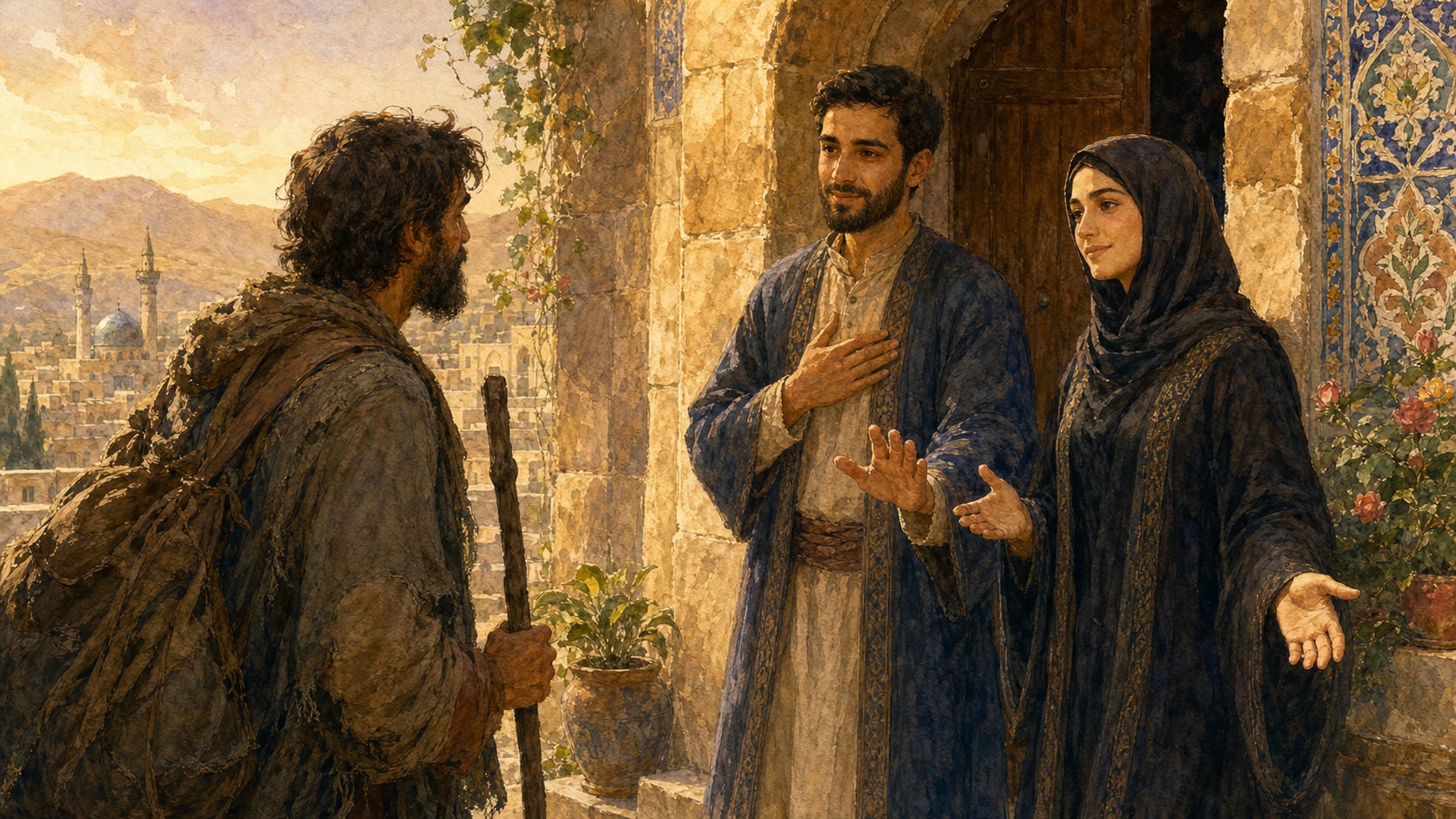
You think you know what salaam means — peace be upon you — the thing we say a hundred times a day until it slides past like a habit.
Hear what it actually is. Imam al-Baqir, peace and blessings be upon him, was asked by his companion Sulayman:
Do you know who the Muslim is?
And the Imam answered:
الْمُسْلِمُ مَنْ سَلِمَ الْمُسْلِمُونَ مِنْ لِسَانِهِ وَيَدِهِ… إِنَّ الْمُؤْمِنَ مَنِ ائْتَمَنَهُ الْمُسْلِمُونَ عَلَىٰ أَمْوَالِهِمْ وَأَنْفُسِهِمْ، وَالْمُسْلِمُ حَرَامٌ عَلَى الْمُسْلِمِ أَنْ يَظْلِمَهُ أَوْ يَخْذُلَهُ أَوْ يَدْفَعَهُ دَفْعَةً تُعَنِّتُهُ.
“The Muslim is the one from whose tongue and hand other people are safe… and the believer is the one whom people trust with their wealth and their lives. And it is forbidden for a Muslim to wrong his brother, or to abandon him, or to push him away in a way that hurts him.”
— Imam Muhammad al-Baqir, al-Kafi, vol. 2 (al-Kulayni)
That is what peace be upon you means.
It is not a hello.
It is a covenant of safety.
When I greet you with salaam, I am telling you, in the oldest currency there is:
You are safe from me.
My tongue will not harm you and my hand will not harm you.
I will not wrong you, and I will not abandon you.
You can put your life in my hands.
That is the burden carried in the word we throw at each other so lightly.
Peace be upon you means I will take a bullet for you.
That is the religion they tell you to be afraid of.
The Second Window
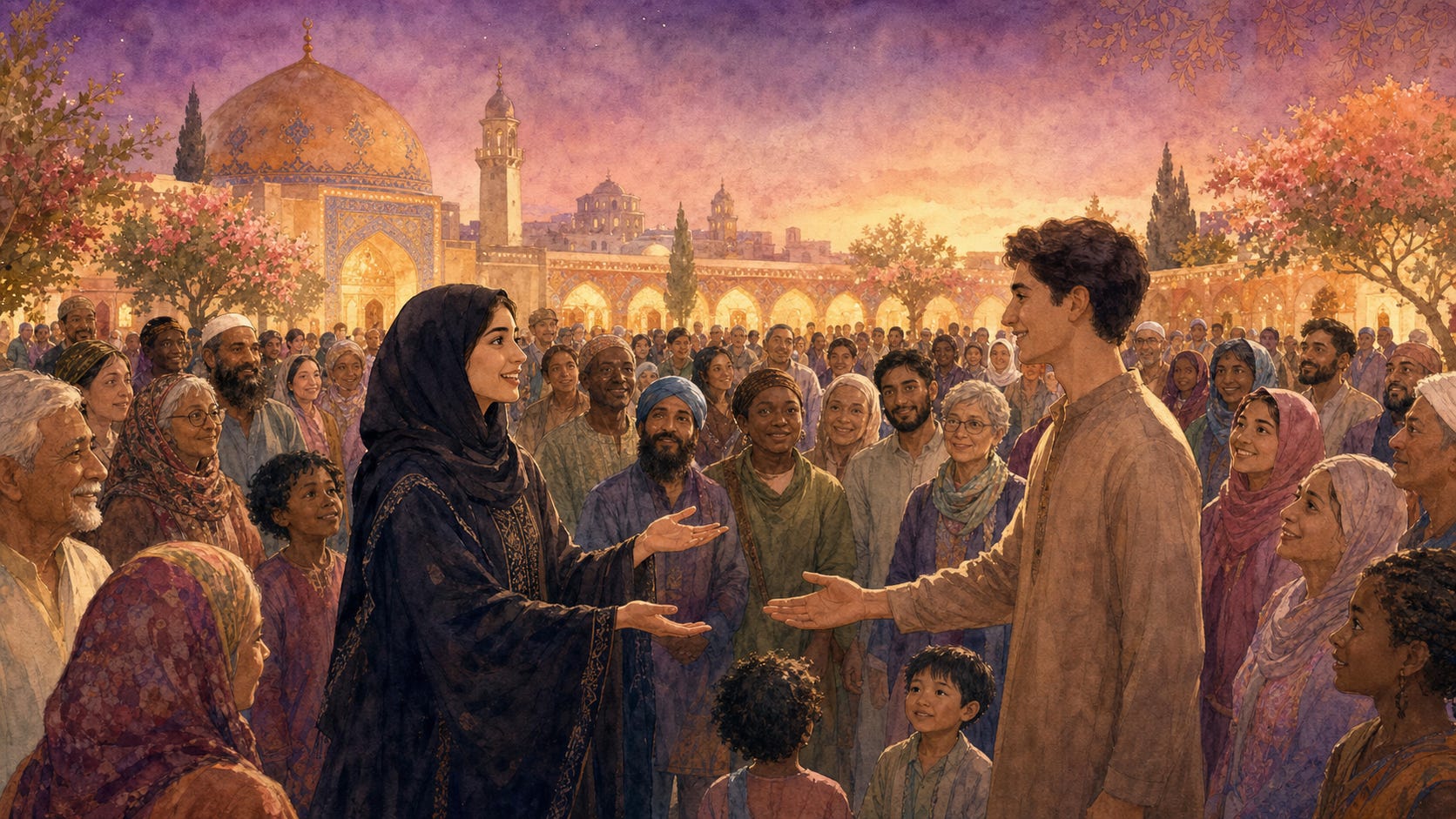
Imam Ali, peace and blessings be upon him, wrote to Malik al-Ashtar, the governor he was sending to Egypt, the most famous letter on just rule in our whole tradition — and at its heart he tells him how to see the people he will govern:
فَإِنَّهُمْ صِنْفَانِ: إِمَّا أَخٌ لَكَ فِي الدِّينِ، وَإِمَّا نَظِيرٌ لَكَ فِي الْخَلْقِ.
“For they are of two kinds: either a brother to you in religion, or your equal in creation.”
— Imam Ali ibn Abi Talib, Nahj al-Balagha, Letter 53 (to Malik al-Ashtar)
Hear what that does to the question this whole series is built on.
Where is your brother? — God’s first question to the first man.
Who is your brother?
Imam Ali answers it for all time: everyone.
The one who shares your faith is your brother in religion; and every other human being who has ever lived is your equal in creation — which is only another word for brother.
There is no human being on this earth who is not the brother of the question.
Where is your brother?
He is everyone.
He is the person beside you right now.
The Third Window

And this is the one I promised you, the truth that frees.
We do not want to convert anyone.
We have no interest in coercing a single soul.
We are Truth Promoters — that is the whole of our work, it is even our name: we hold the truth up, and we let it do what the truth does.
And what does the truth do?
Hear it in three voices, across three traditions, because the truth has been saying the same thing in every tongue God ever gave a prophet.
Hear it first in the Psalms of David, peace be upon him:
וְאֶתְהַלְּכָה בָרְחָבָה כִּי פִקֻּדֶיךָ דָרָשְׁתִּי.
وَأَتَمَشَّى فِي رَحْبٍ لِأَنِّي طَلَبْتُ وَصَايَاكَ.
“And I will walk at liberty, for I have sought Your precepts.”
— Psalms 119:45 (Masoretic Hebrew; Arabic: Smith–Van Dyke)
Hear it then from Jesus, the son of Mary, may our souls be his ransom, and may God hasten his return:
καὶ γνώσεσθε τὴν ἀλήθειαν, καὶ ἡ ἀλήθεια ἐλευθερώσει ὑμᾶς.
وَتَعْرِفُونَ الْحَقَّ وَالْحَقُّ يُحَرِّرُكُمْ.
“And you shall know the truth, and the truth shall make you free.”
— The Gospel of John 8:32 (Koine Greek; Arabic: Smith–Van Dyke)
And hear it, at the last, in the Qur’an — where the freedom and the truth are the same handhold we held a moment ago:
لَا إِكْرَاهَ فِي الدِّينِ ۖ قَدْ تَبَيَّنَ الرُّشْدُ مِنَ الْغَيِّ
“There is no compulsion in religion; the right way has become clear from error.”
— Qur’an, Surah al-Baqarah (the Chapter of the Cow) #2, Verse 256
The Psalmist walks free because he sought God’s word.
Jesus says the truth itself liberates.
The Qur’an forbids compulsion because the truth needs none.
Three traditions, one sentence:
The truth sets you free — and so we never have to force it.
We just hold it up.
That is what it means to honour another tradition without conflating it with our own — to say:
We share this much; the truth is one; and where our roads part, we are honest about the parting, and we never raise a hand.
The best answer to everyone who says our faith is darkness is simply to light the lamp and let them see by it.
The Door Stays Open
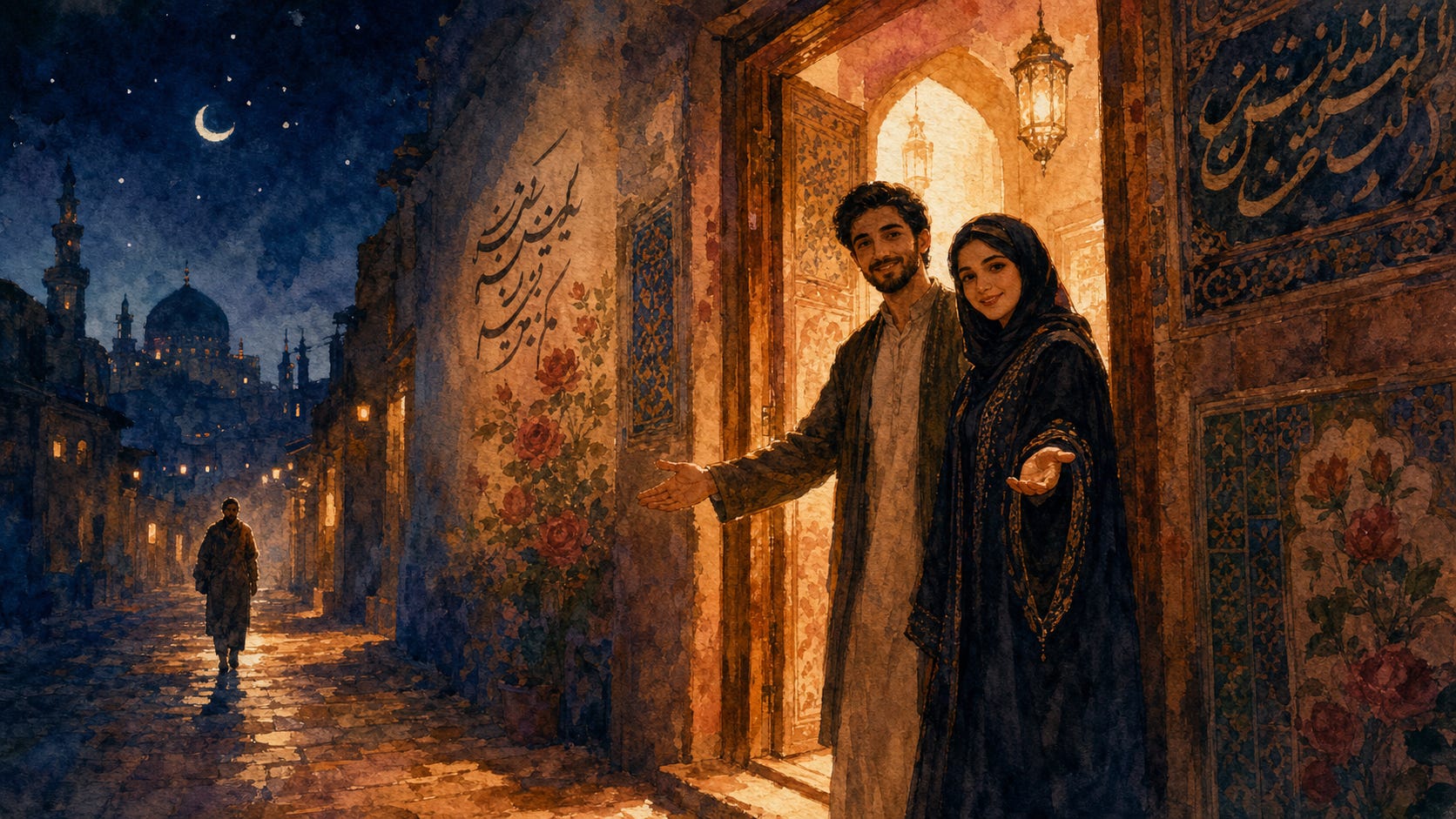
This is the fifteenth night, and so it is the last — for now.
And I do not want it to end the way a film ends, where the lights come up and everyone goes home and it is khalas, finished, done.
Because all fifteen of these nights are one thing.
One body of work.
One argument, built link by link.
And I want you to be able to walk back through it whenever you need it — so it is all there, gathered, at reflections313.com and at truthpromoters.com.
Go back and walk the road again.
And more than that: I want this to be the beginning of something, for any of you who want it to be.
If something we said tonight, or on any of these nights, has caught in you — or if something you heard somewhere else has confused you, or troubled you, and you do not know who to ask — then ask us.
Reach out.
We have a channel, and we have a door, and it is open.
I will tell you honestly: we do not have all the answers.
I can say that with complete certainty — we do not have all the answers.
But we will not leave you holding the question alone.
We will look.
We will research it.
And where it is beyond us, we will take it to our teachers — to the scholars of the Hawza in Qom, who taught me, and who are still, by God’s kindness, only a message away.
There is no compulsion in any of this.
No one is selling you anything and no one is recruiting you.
But if you have a question, we would love to hear it.
The door stays open.
We would rather walk on with you than wave goodbye.
We Must Rise
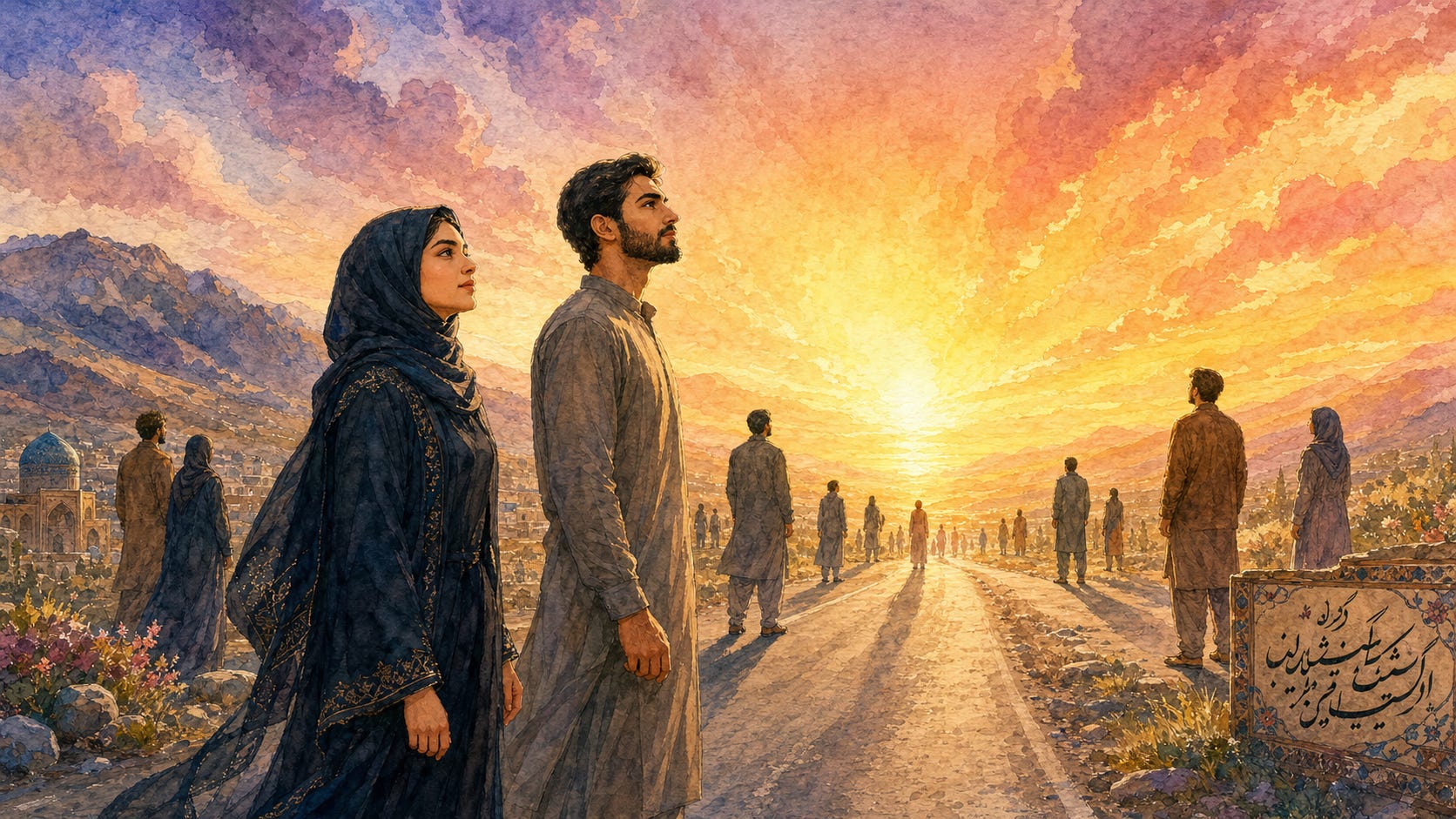
And so we come to the end. I will not lie to you about Arbaeen: it is heavy.
Forty days of grief reach their full weight tonight, and they should.
But hear what we have actually been doing across these fifteen nights — we have been packing.
We have been provisioning ourselves for a journey.
And the Qur’an tells us, on the road of pilgrimage itself, what to pack:
وَتَزَوَّدُوا فَإِنَّ خَيْرَ الزَّادِ التَّقْوَىٰ ۚ وَاتَّقُونِ يَا أُولِي الْأَلْبَابِ
“And take provision — but the best provision is God-consciousness. So be conscious of Me, O people of understanding.”
— Qur’an, Surah al-Baqarah (the Chapter of the Cow) #2, Verse 197
We have learned the map.
We have walked the path.
We have packed the only provision that lasts.
And there is only one thing left to do with all of it.
We must rise.
That is not my phrase.
It was the cry of an entire people, only weeks ago, when we laid our beloved leader to rest.
When Imam Sayyed Ali Khamenei, may God rest his pure soul, was carried to his grave beside Imam al-Ridha, peace and blessings be upon him, in Mashhad — on the 9th of July, on the very eve of the martyrdom of Imam Zayn al-Abidin — twenty million people walked his body to the earth, and the answer they gave their grief was not to lie down.
It was to rise.
Qiyam lillah — to rise for God.
And we gathered, that same week, for The Unbroken Trust, and we said it there too.
It is the Qur’an’s own command:
قُلْ إِنَّمَا أَعِظُكُمْ بِوَاحِدَةٍ ۖ أَنْ تَقُومُوا لِلَّهِ مَثْنَىٰ وَفُرَادَىٰ
“Say: I admonish you with one thing only — that you rise for God, in twos and singly.”
— Qur’an, Surah Sabaʾ (the Chapter of Sheba) #34, Verse 46
In twos and singly.
Together — and alone.
The twenty million on the road, and the single believer at his own frontier in his own home.
The same rising.
The walk to Karbala is the qiyam lillah — the rising for God, performed with the feet.
Two things changed us this year, and I want you to take them both home: we buried our leader and learned what it is to rise; and we walked, the two of us, through the whole theology of witness — and a thing learned this deeply must move us closer to God, or it was not truly learned.
So let us rise.
And let us rise with our brother.
Because now we can answer the oldest question.
For fourteen nights that question has closed the night — where is your brother? — asked the way God first asked it, as an accusation, over a body in a field.
Tonight we ask it one last time, and it is not an accusation anymore.
Where is your brother?
And the answer comes back, at last, without effort, reflexively, the way you know where your own hand is: he is exactly where he should be.
He is beside us on the road.
His hand is in our pocket.
We did not pass him by, and we did not leave him in the field.
We are walking together — to Imam Husayn.
That is the answer fifteen nights were for.
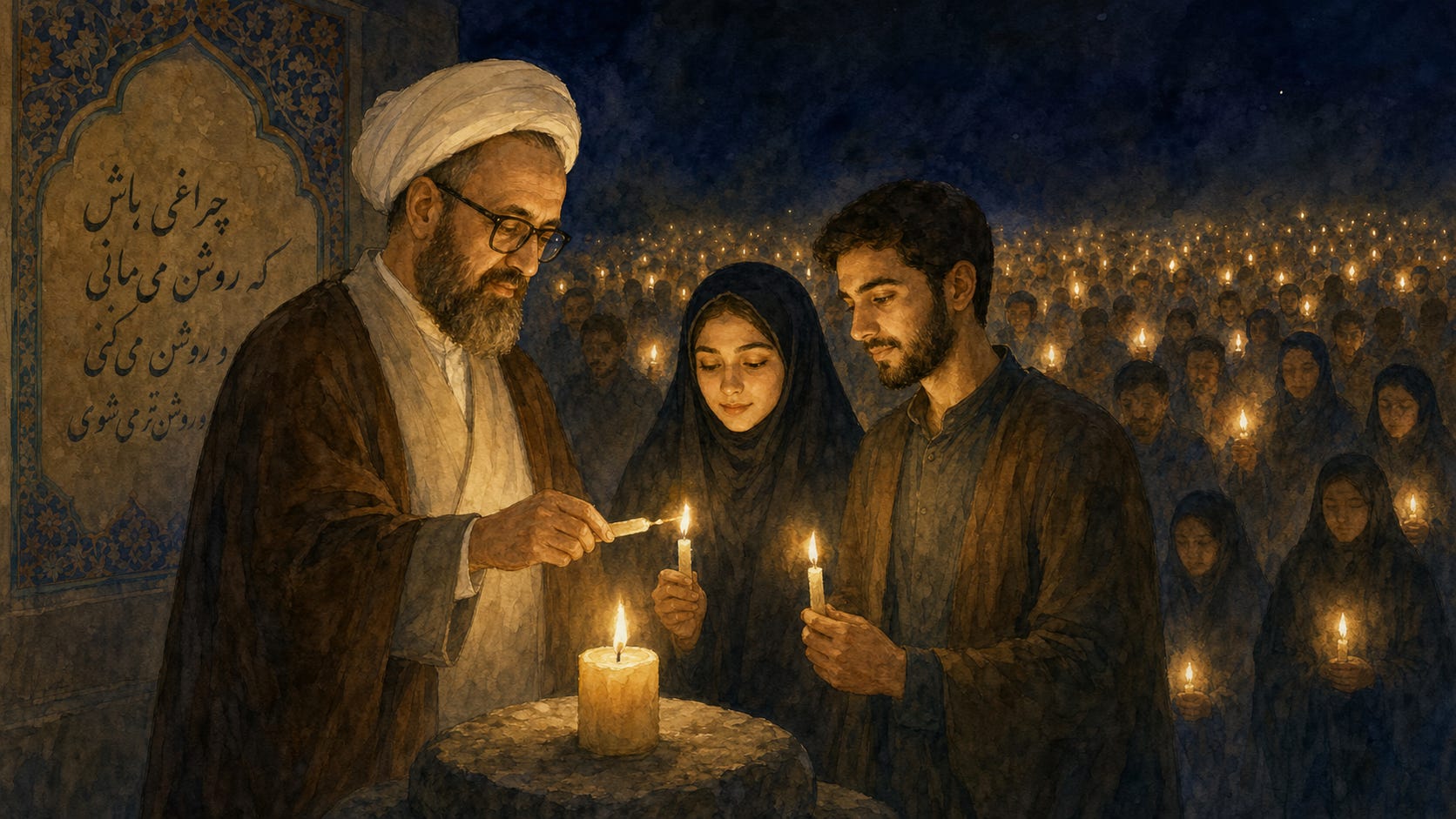
The candle has burned, every one of these nights, on the grey stone in front of you.
One small flame, alone, for fifteen nights.
And the master Shaheed Mutahhari told us what a candle is for:
The candle burns in order to illuminate.
We are the candles now.
The light we received across these fifteen nights was not given to us to keep.
The only proof that the light was ever received — the only proof — is the light we give.
So tonight, watch the stone.
The one flame is not alone anymore.
Until the Imam Rises
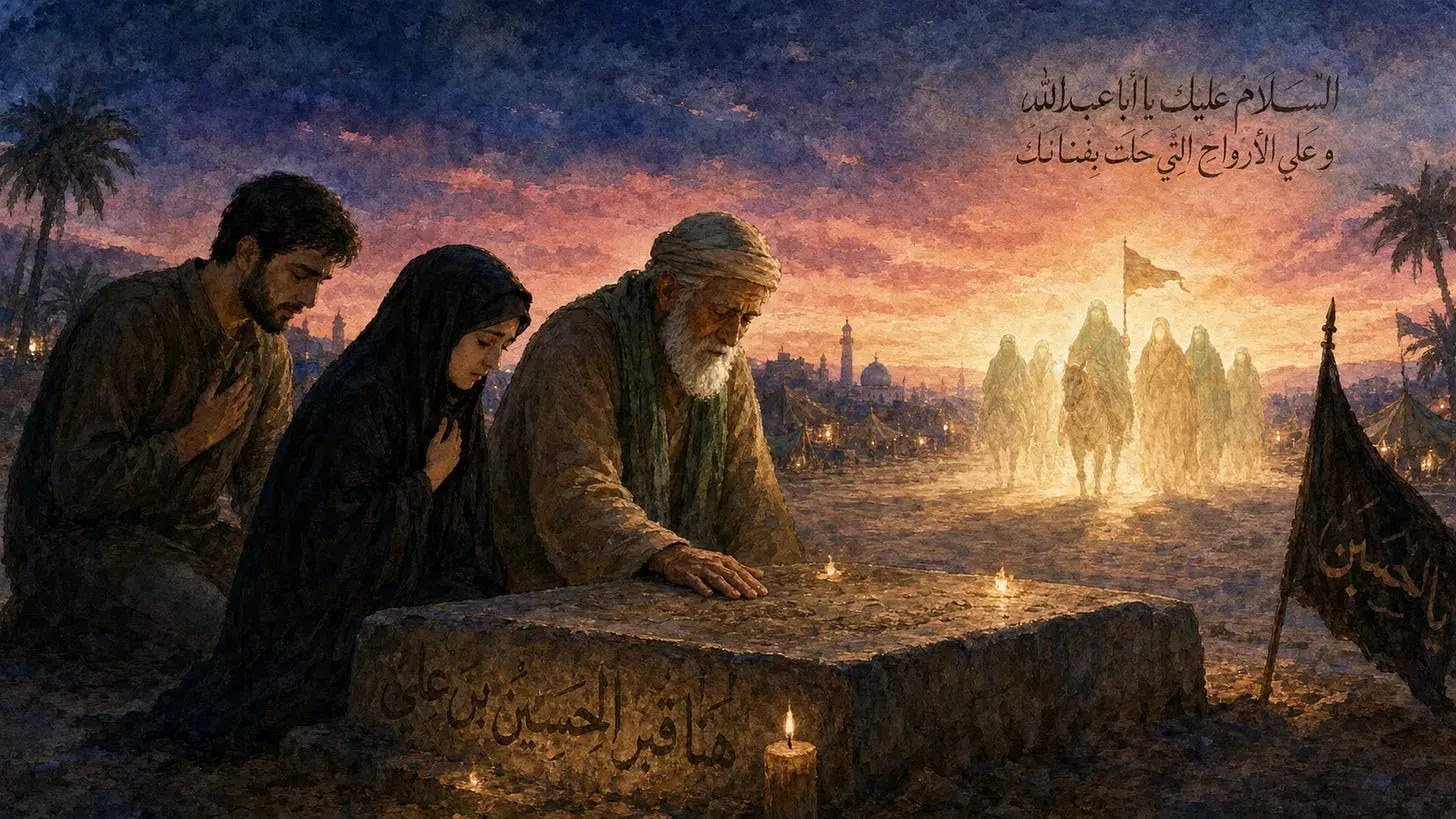
So tonight the maqtal does not take us down to a death.
For the first time in fifteen nights, it takes us to a homecoming.
There was a road that began, forty days ago, with one blind old man and the friend who steadied him — and tonight that road arrives.
The first pilgrim’s hand comes down on the grave; the caravan of the freed household turns its face back toward Karbala; and the living and the dead stand in the same place again.
And there, at the grave, on the fortieth day, the maqtal stops being a telling and becomes a liturgy: we renew the covenant, together, out loud, and the tears we weep are not the end of anything — they are the seal of a covenant freshly renewed.
And the voice that will carry you there is the voice you have come to know across all these nights — the Mahdi-Maqtal-Voice, an imagining, in clear English, of the voice of the Imam of our Age, our living Hidden Imam, speaking to us from behind the veils; not a living man’s voice, but a vessel for his words.
It is the voice that broke on the tenth night at the trampling, and that came home four nights ago at Jabir’s grave.
Tonight, for the first time in the whole series, it is whole from the very first word — because tonight is not a death; it is the homecoming it had been waiting for.
So let the candle stand, as it has stood on the grey stone through every one of these fifteen nights.
But watch it tonight — because tonight, at last, it does not stand alone.
One small flame will catch from it, and then another, and then another, until a handful of humble lights burn beside it, leaning their brightness together into the dark.
The one flame, on the last night, becomes many.
Come with me, then — for the fifteenth and last time — back to the grave, on the fortieth day.
Segue to Maqtal (Lamentation)
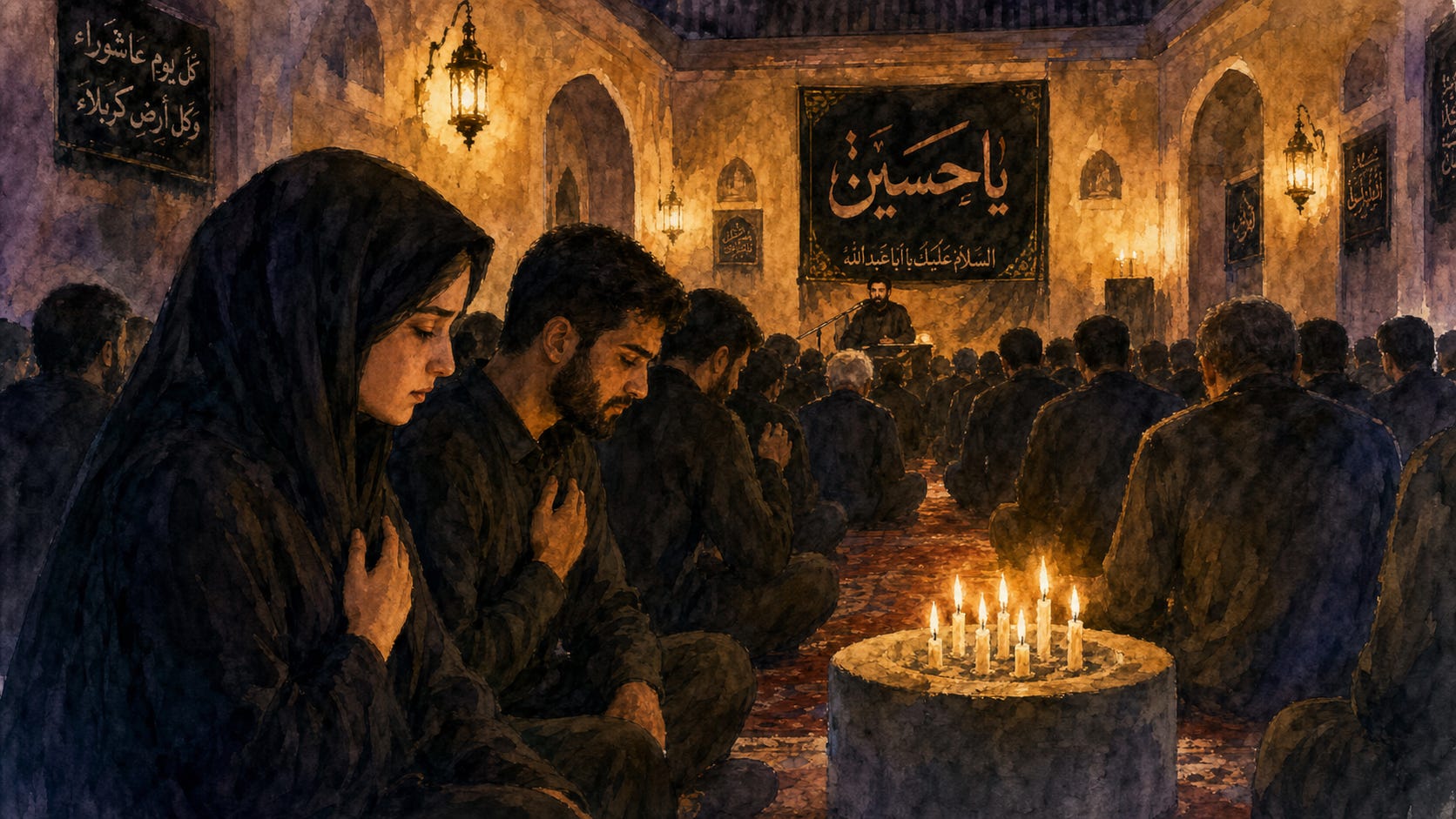
Maqtal (Lamentation) for the Fifteenth Night — the Fifth and Final Night of Arbaeen, the night of the twentieth of Safar 1448 — “Until the Imam Rises.”
Supplication
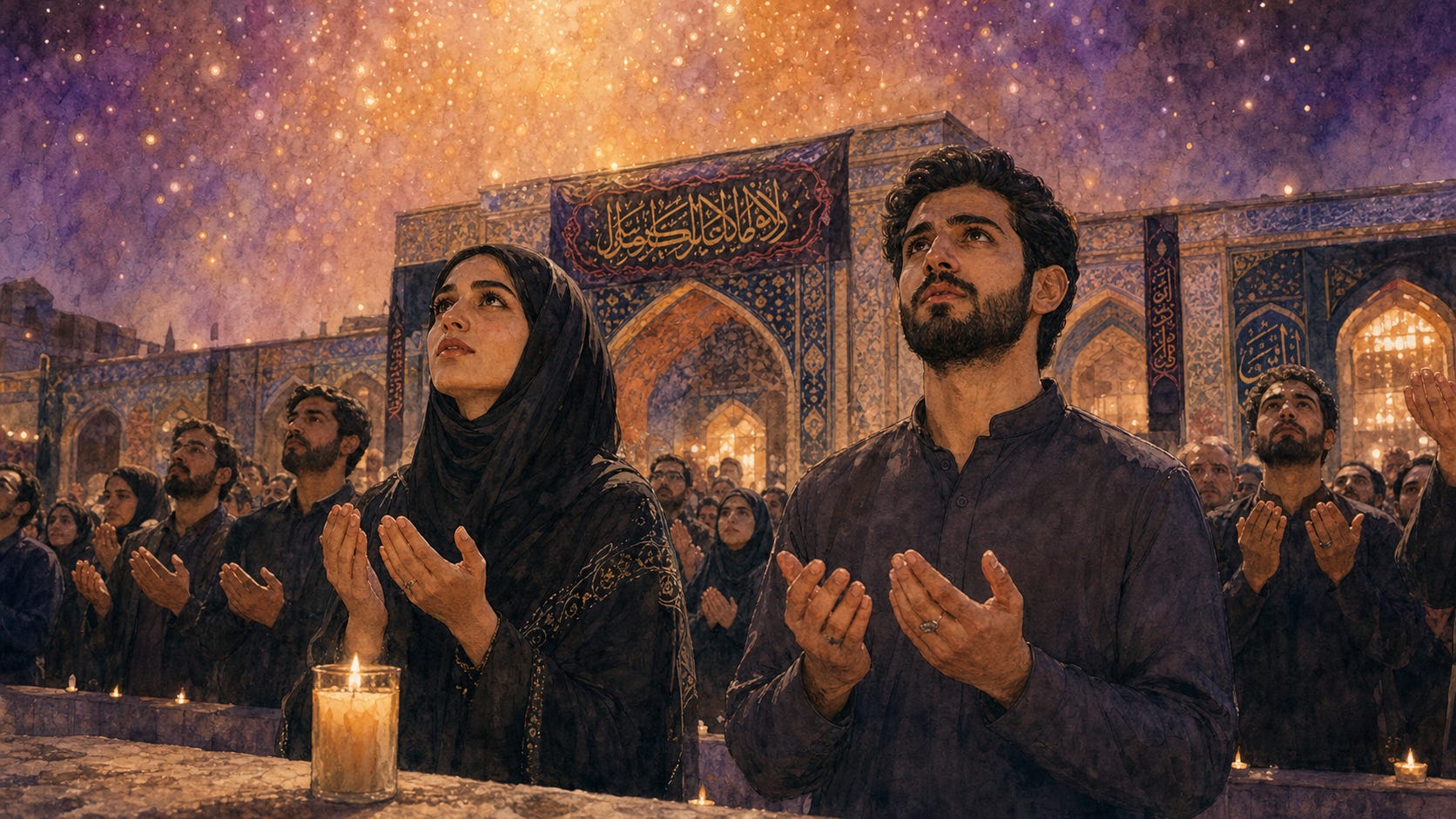
We have renewed the covenant at the grave.
The candle is still burning on the grey stone, and beside it now a handful of small flames burn with it.
Now, before we rise to go out into the night — for the last time in this series — we turn our faces back to God, and we lift our hands.
O God — we have nowhere to go but to You, and no one to ask but You, and no words enough except the ones You have placed upon the tongues of Your friends.
O God — by the right of the souls that alighted in the courtyard of Husayn; by the right of the covenant You took from us before we had bodies, and the covenant we renew at every dawn — accept from us this gathering, and these fifteen nights, and make them not the last of our covenant with the People of the House.
O God, send Your peace and blessings upon our Master Husayn, the Master of Witnesses; and upon Sayyedah Zaynab, who carried the witness out of the field and into the courts; and upon Imam Zayn al-Abidin, who held the line with a whispered prayer; and upon al-Abbas at the river, and Ali al-Akbar, and Qasim, and the children of Karbala, and the companions who would not leave, and the little Sayyedah Ruqayyah in the ruin of Sham, and Muslim the ambassador in Kufa — peace and blessings be upon them all.
O God, and upon the witnesses of our own lifetime, whom we have learned to recognise for what they are — Imam Khomeini, and Shaheed Mutahhari, and Beheshti, and Mufatteh, and al-Sadr and Bint al-Huda, and al-Hakim, and Sayyed Abbas, and Hajj Imad, and Sayyed Hassan, and Hajj Qasem, and Hajj Abu Mahdi, and our beloved Imam Sayyed Ali Khamenei, struck down in our own year — may God rest their pure souls, all of them, and gather us with those they loved.
O God, preserve for us the guardian of the affair, the Wali al-Faqih of our time, Imam Sayyed Mujtaba al-Husayni al-Khamenei — may God protect him; strengthen him, guide him, and keep him firm upon the path until the appointed hour.
O God, and the ones no one counted — the children of Gaza, and of Lebanon, and of Yemen, and of Iraq, and of Syria, and of Bahrain, and of Kashmir, and of every place on this earth where a candle is still burning so that the rest of us can see — gather them to You, and do not let their light have been given in vain.
O God, make us of those who rise — mathnā wa furādā — in the crowd and alone; on the road to the shrine, and at the frontier of our own homes, for Your Face alone.
Make our prayer, and our sacrifice, and our living, and our dying, for You, the Lord of the worlds.
And keep us, every morning of the life that remains to us, true to the covenant on our necks —— until the Imam of the Age rises, may our souls be his ransom and may God hasten his return, and finds us where he left us: standing.
Let us, O God, before we leave this room — recite the three verses we recite at the close of every gathering.
إِنَّا لِلَّهِ وَإِنَّا إِلَيْهِ رَاجِعُونَ
“Indeed, we belong to God, and to Him we return.”
— Qur’an, Surah al-Baqarah (the Chapter of the Cow) #2, Verse 156
وَسَيَعْلَمُ الَّذِينَ ظَلَمُوا أَيَّ مُنقَلَبٍ يَنقَلِبُونَ
“And the wrongdoers will soon know at what goal they will end up.”
— Qur’an, Surah al-Shu’araa (the Chapter of the Poets) #26, Verse 227
حَسْبُنَا اللَّهُ وَنِعْمَ الْوَكِيلُ
“God is sufficient for us, and He is the best of guardians.”
— Qur’an, Surah Aal Imran (the Chapter of the Family of Imran) #3, Verse 173
And our final pledge tonight —
O God — we will not cease.
By Your mercy, we shall remain steadfast:
on every Wednesday and every Saturday,
beneath the Lantern of the Path,
seeking to learn,
seeking to earn our way,
seeking to live by the light of the teachings
and by the trust You have bestowed upon us
through Muhammad, Your Chosen One,
through the Pure Ahl al-Bayt,
and through the noble scholars,
the honoured bearers of this inheritance.We shall endure in service,
striving to prepare the ground
and to pave the way
for the return of our Master, may our souls be his ransom, and may You, our beloved Lord, hasten his return.We shall remain, in his absence, loyal —
without excuse,
without exception,
without wavering —
to the Leader,
Imam Sayyed Mujtaba al-Husayni al-Khamenei.We shall labour without rest,
and we shall supplicate without weariness,
with longing hearts and ardent prayers,
for the return of the Master of the Age, may our souls eternally be his ransom.O God, accept from us our small offering,
make firm our steps upon this path,
and do not sever us
from the banner of loyalty,
from the road of service,
and from the hope of return.
We will not cease.Amen, O Lord Sustainer of the Universes.
Amen, O Most Merciful of the Merciful.
And from Him alone is all ability, and He has authority over all things.