

In His Name, the Most High

ذَٰلِكَ الْكِتَابُ لَا رَيْبَ ۛ فِيهِ ۛ هُدًى لِّلْمُتَّقِينَ
الَّذِينَ يُؤْمِنُونَ بِالْغَيْبِ وَيُقِيمُونَ الصَّلَاةَ وَمِمَّا رَزَقْنَاهُمْ يُنفِقُونَ
“That is the Book, in which there is no doubt, a guidance for the God-fearing.
Those who believe in the unseen, and establish the prayer, and spend out of what We have provided them.”
— Qur’an, Surah al-Baqarah (the Chapter of the Cow) #2, Verses 2 and 3
The First Thing on the List
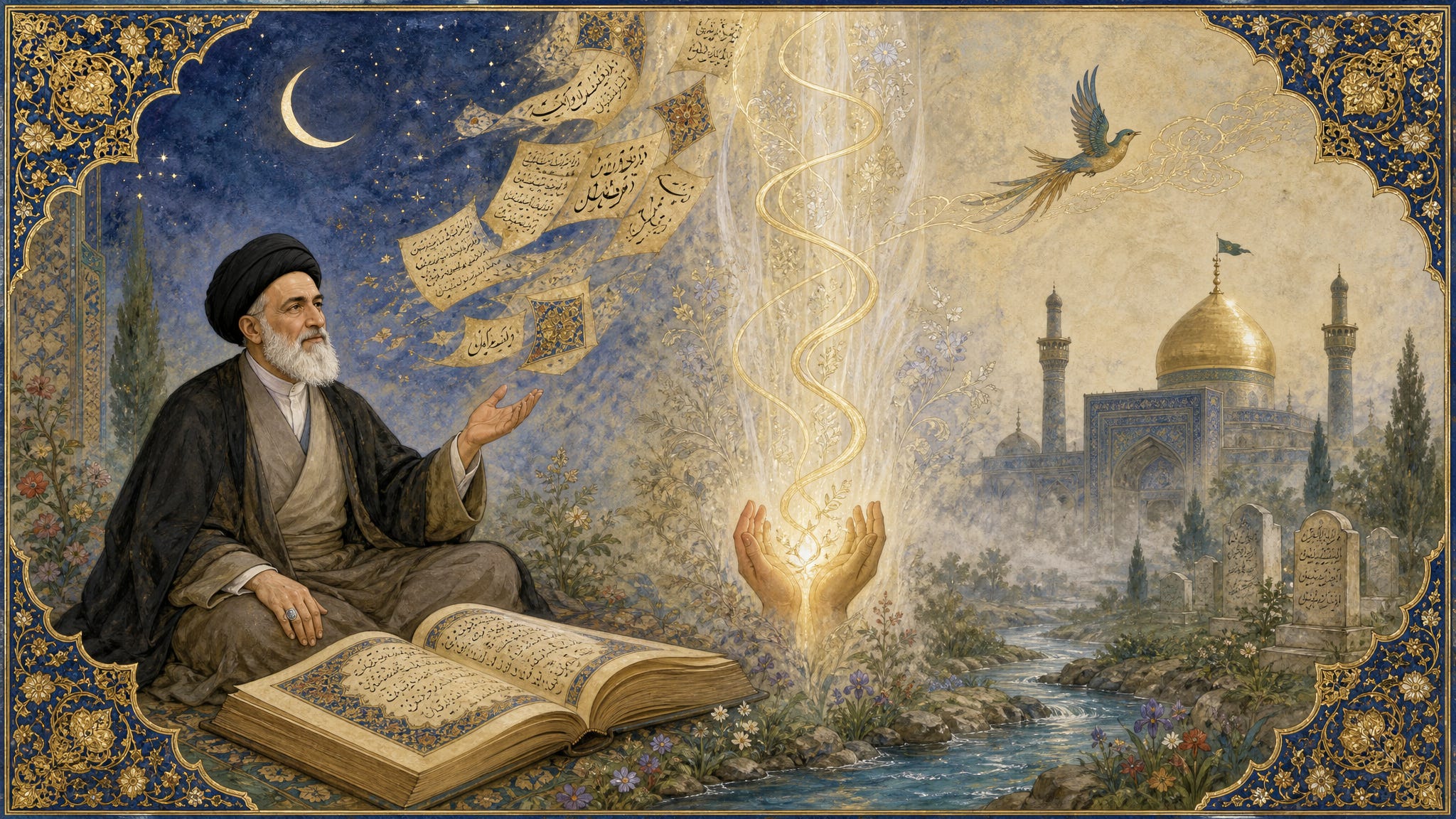
That is the third verse of al-Baqarah, the Cow — the second chapter of the Qur’an, and its longest.
Allamah Sayyed Muhammad Husayn Tabataba’i, may God rest his pure soul — a scholar of the last century whose commentary on the Qur’an is the one this tradition has leaned on more than any other — opens his treatment of this chapter by telling us something about how it arrived:
لَمَّا كَانَتِ السُّورَةُ نَازِلَةً نُجُوماً لَمْ يَجْمَعْهَا غَرَضٌ وَاحِدٌ
“Since the chapter came down in instalments, no single purpose gathers it.”
— Allamah Sayyed Muhammad Husayn Tabataba’i, al-Mizan fi Tafsir al-Qur’an, on Surah al-Baqarah (the Chapter of the Cow) #2
It did not come down in one sitting.
It arrived in pieces, over years.
So when we take a verse from it, we are taking one instalment out of a long conversation.
And this instalment is a list.
The Book is a guidance for the God-fearing — and then God tells us what a God-fearing person looks like, and He begins the list.
Look at what He puts first.
Not the prayer.
Not the giving.
Those are on the list, and they come second and third.
The first thing on the list is this:
Those who believe in the unseen.
Before you stand for anything.
Before you give anything away.
There is a prior thing, and everything after it stands on top of it — that you take seriously what is real when you cannot see it.
Now. I want you to hold that verse for the next hour, because tonight we are going to do something very ordinary with it.
We are going to talk about people standing at graves.
Nobody Can Tell You Why
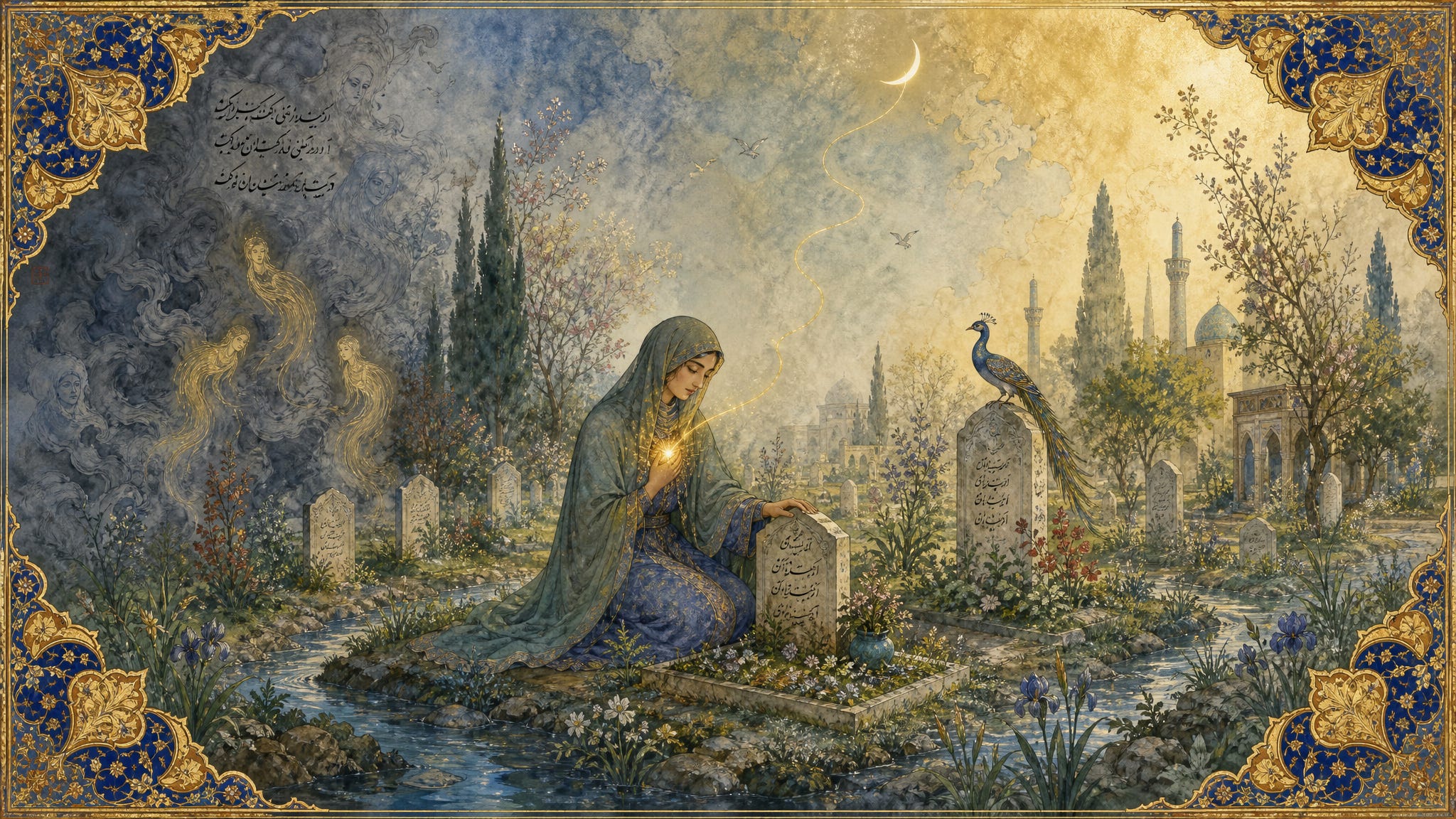
People go.
They have always gone.
They go on a Thursday, or on the anniversary, or on a morning when something has gone wrong and they cannot say what.
They tidy the stone.
They pull up whatever has grown there.
They sit down on the ground next to it and they talk — sometimes out loud, mostly not.
And here is the thing I want to put in front of you before we open a single book.
Ask them why, and almost nobody can tell you.
You will get:
It felt right.
You will get:
She would have wanted me to.
You will get:
I just needed to go.
Those are not answers.
Those are a person telling you honestly that they do not have one.
And there is a harder half to this, and I would rather say it than pretend it is not in the room.
There is a way of explaining the whole thing that costs you nothing to believe.
It goes like this: the visit is for the living.
It is grief doing its work.
The stone is a focus, the journey is a ritual, the talking is a way of processing a loss — and none of it goes anywhere, because there is nobody there to receive it.
That explanation is available to every one of us.
Some of you have used it.
Some of you have had it used on you.
So the question for tonight is not should we go.
Everybody goes.
The question is whether anything is happening when we do.
Video of the Sermon (Majlis/Lecture)
Recap — What We Carry Forward
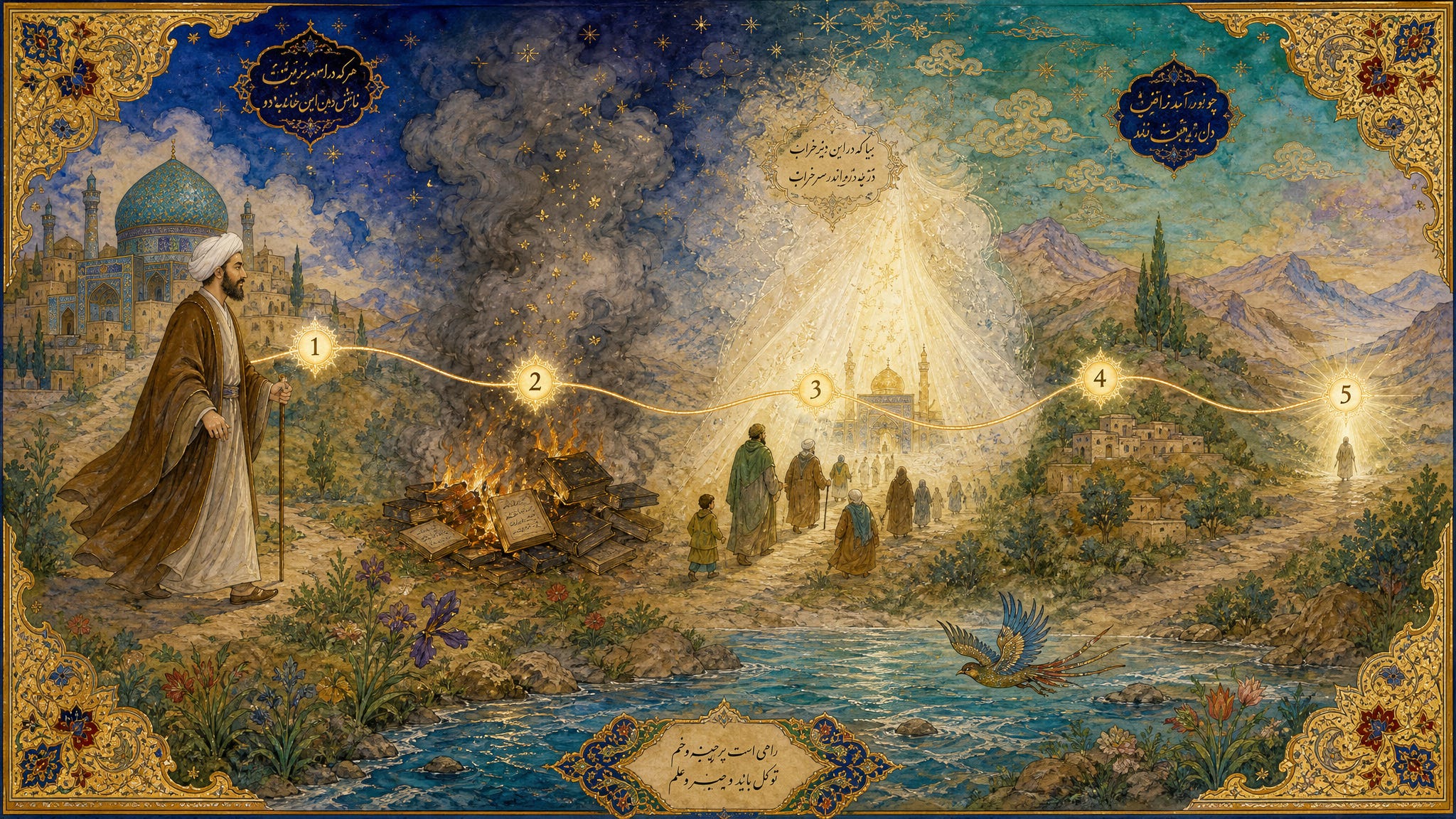
We have been in this sub-series for four weeks and we are in the fifth.
We asked why a scholar would leave the capital of the Muslim world and go and live in a village.
We asked what happened to the books when they burned them, and what could not be burned.
And last week we asked why Najaf — why that ground, of all the ground there is.
We found that the grave was hidden on purpose.
That it was given back to the community one man at a time, over a lifetime, by people who turned up.
And that the ground itself was chosen.
Hold on to that last one.
We are going back to it tonight, and it is going to look different when we get there.
One other thing, and then we begin.
Some of you sat with us at Arbaeen and heard a whole night on Jabir ibn Abdullah al-Ansari — the companion who walked to that grave forty days after the killing.
I am not going to tell you that story again.
I am going to lean on it once, later, and you will know exactly where you are.
They Take Comfort in You
Two Men Thought This Needed a Chapter
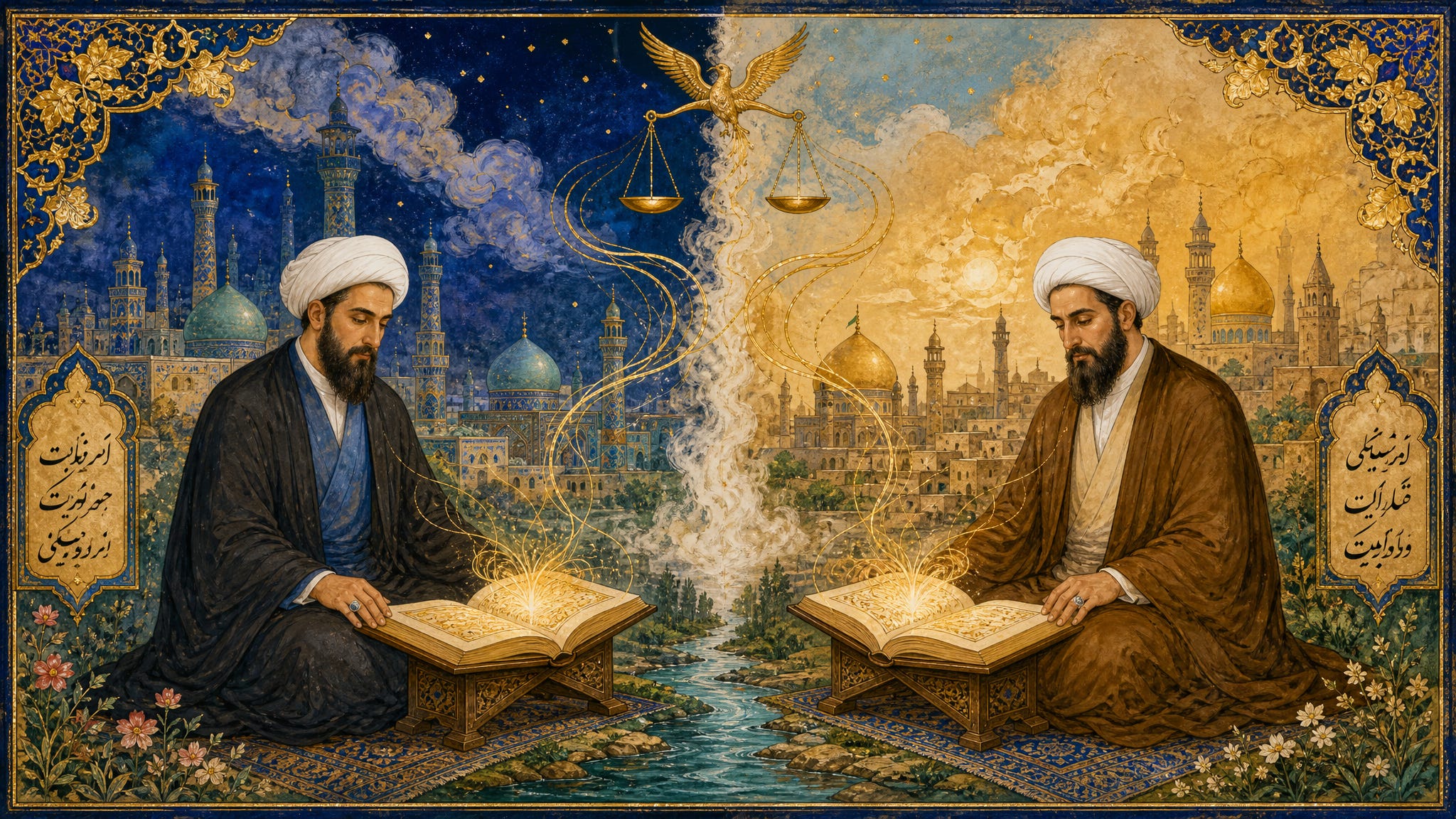
Here is the first thing, and it is not a hadith.
It is a fact about a bookshelf.
Shaykh al-Kulayni — the man who gathered al-Kafi and who we visited in Session Sixty-Three, the earliest of the great collections of our narrations, put together in the tenth century — has a chapter in it called:
Visiting of the Graves.
Ibn Qulawayh — a scholar of Qom from the same century, who wrote a book called Kamil al-Ziyarat, an entire collection about visitation and nothing else — has a chapter in it called:
The Merits of Visiting the Believers, and How It Should Be Done.
Two men.
Two cities.
Two books that do not depend on each other.
And both of them stopped and said:
This needs a chapter of its own.
That is worth a moment before we read a word of what is inside them.
Whatever this practice is, it was not an accident of custom that the scholars tolerated.
It was a subject.
Somebody sat down and gathered what was said about it.
Now let us open one.
The First Hadith in the Chapter
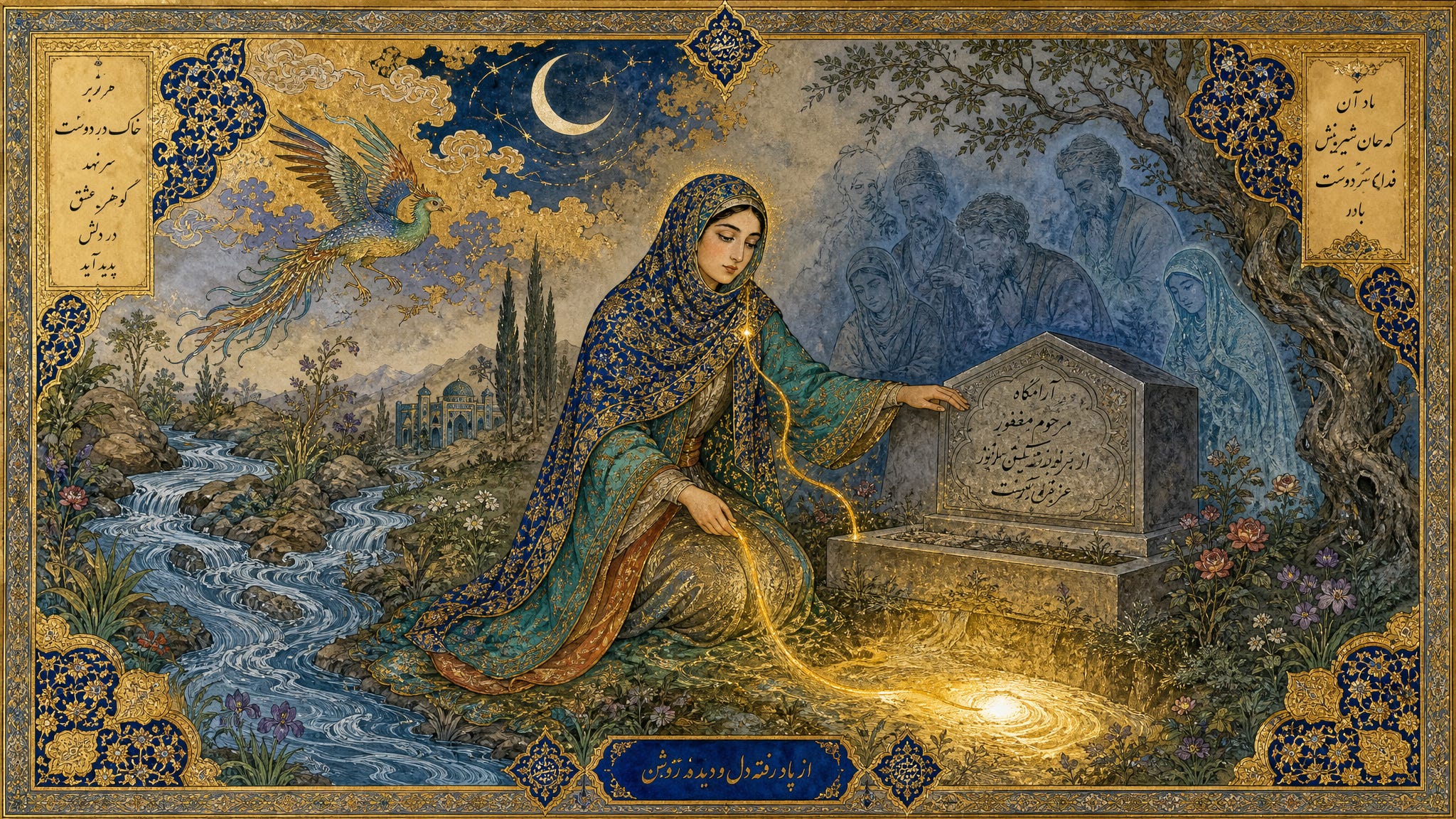
Al-Kafi opens the chapter with this.
Imam al-Sadiq, peace and blessings be upon him, on visiting the graves:
إِنَّهُمْ يَأْنَسُونَ بِكُمْ فَإِذَا غِبْتُمْ عَنْهُمُ اسْتَوْحَشُوا
“They take comfort in you; and when you are absent from them, they are left desolate.”
— Shaykh al-Kulayni, al-Kafi, Volume 3, the Book on Dying People, the chapter on Visiting of the Graves, first hadith
Eight words in the Arabic.
And notice what they do.
I asked you a question ten minutes ago — is anything happening when we go — and the very first line of the chapter answers it by turning it round.
You were asking whether the visit does anything for you.
He is telling you what it does for them.
The word he uses is ya’nasun.
It comes from uns — company, intimacy, the ease of being with someone.
It is the opposite of being alone in a room.
And the word at the other end, istawhashu, is its exact opposite: to be left in desolation, the way a place feels when everyone has gone.
They take comfort in you. And when you stay away, they feel it.
I want to be careful here, because this is the hinge of the whole evening and I do not want to decorate it. He does not say the visit is good for your character. He does not say it is a healthy way to grieve. Both of those things may well be true and neither of them is what he said.
He said: they take comfort in you.
The Word Has a Prayer of Its Own
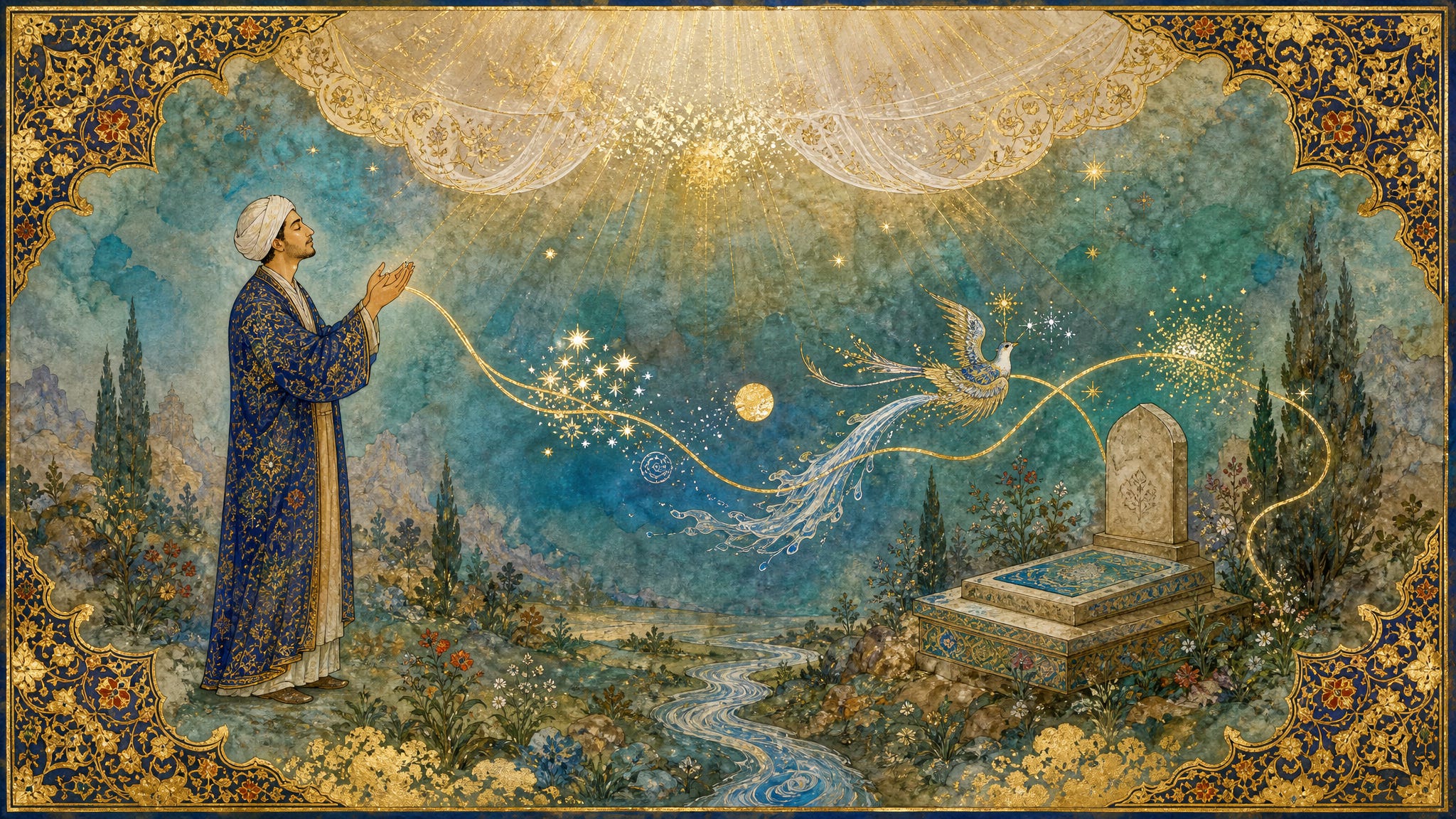
Before we leave that second word, I want to show you one thing, because I think it settles the question of whether any of this is a figure of speech.
Istawhashu.
The root is wahshah.
Desolation.
The fear of being left somewhere on your own.
There is a prayer in our tradition named after that word.
It is called Salat al-Wahshah — the prayer of the desolation.
It is also called the prayer of the night of burial.
And it carries a third name, which is the one I want you to keep hold of:
Salat al-Hadiyyah. The gift prayer.
You pray it on the first night.
The night they go into the ground.
And I am not going to describe it to you in my own words, because you should see where it comes from.
This is the ruling itself, as it stands in the book:
وَهِيَ رَكْعَتَانِ يَقْرَأُ فِي الْأُولَى بَعْدَ الْحَمْدِ آيَةَ الْكُرْسِيِّ إِلَى ﴿هُمْ فِيهَا خَالِدُونَ﴾ وَفِي الثَّانِيَةِ بَعْدَ الْحَمْدِ سُورَةَ الْقَدْرِ عَشْرَ مَرَّاتٍ، وَيَقُولُ بَعْدَ السَّلَامِ: اللَّهُمَّ صَلِّ عَلَى مُحَمَّدٍ وَآلِ مُحَمَّدٍ وَابْعَثْ ثَوَابَهَا إِلَى قَبْرِ فُلَانٍ
“It is two units. In the first, after the opening chapter, he recites the Verse of the Throne, up to ‘they will abide in it forever’; and in the second, after the opening chapter, the Chapter of Ordainment ten times. And he says after the salutation: O God, send blessings upon Muhammad and the family of Muhammad, and send the reward of it to the grave of so-and-so.”
— Ayatollah Sayyed Muhammad Kazim al-Yazdi, may God rest his pure soul, the jurist of Najaf, in al-Urwa al-Wuthqa, the manual of law our seminary students still work through, in the chapter on the prayer of the night of burial
That is not out of a book of devotions.
That is out of a book of law.
Now let me walk you through it, because every piece of it is doing something.
Two units, like any other prayer.
In the first, after the opening chapter, the Verse of the Throne — and notice the ruling did not stop there.
It said up to they will abide in it forever.
اللَّهُ لَا إِلَٰهَ إِلَّا هُوَ الْحَيُّ الْقَيُّومُ ۚ لَا تَأْخُذُهُ سِنَةٌ وَلَا نَوْمٌ ۚ لَّهُ مَا فِي السَّمَاوَاتِ وَمَا فِي الْأَرْضِ ۗ مَن ذَا الَّذِي يَشْفَعُ عِندَهُ إِلَّا بِإِذْنِهِ ۚ يَعْلَمُ مَا بَيْنَ أَيْدِيهِمْ وَمَا خَلْفَهُمْ ۖ وَلَا يُحِيطُونَ بِشَيْءٍ مِّنْ عِلْمِهِ إِلَّا بِمَا شَاءَ ۚ وَسِعَ كُرْسِيُّهُ السَّمَاوَاتِ وَالْأَرْضَ ۖ وَلَا يَئُودُهُ حِفْظُهُمَا ۚ وَهُوَ الْعَلِيُّ الْعَظِيمُ
لَا إِكْرَاهَ فِي الدِّينِ ۖ قَد تَّبَيَّنَ الرُّشْدُ مِنَ الْغَيِّ ۚ فَمَن يَكْفُرْ بِالطَّاغُوتِ وَيُؤْمِن بِاللَّهِ فَقَدِ اسْتَمْسَكَ بِالْعُرْوَةِ الْوُثْقَىٰ لَا انفِصَامَ لَهَا ۗ وَاللَّهُ سَمِيعٌ عَلِيمٌ
اللَّهُ وَلِيُّ الَّذِينَ آمَنُوا يُخْرِجُهُم مِّنَ الظُّلُمَاتِ إِلَى النُّورِ ۖ وَالَّذِينَ كَفَرُوا أَوْلِيَاؤُهُمُ الطَّاغُوتُ يُخْرِجُونَهُم مِّنَ النُّورِ إِلَى الظُّلُمَاتِ ۗ أُولَٰئِكَ أَصْحَابُ النَّارِ ۖ هُمْ فِيهَا خَالِدُونَ
“God! There is no god except He, the Living, the Everlasting. Neither slumber overtakes Him, nor sleep. To Him belongs everything in the heavens and everything on earth. Who is he that can intercede with Him except with His permission? He knows what is before them, and what is behind them; and they cannot grasp any of His knowledge, except as He wills. His Throne extends over the heavens and the earth, and their preservation does not burden Him. He is the Most High, the Great.
There is no compulsion in religion. Right guidance has become clear from error. So whoever rejects false gods and believes in God has taken hold of the most trustworthy handhold, one that never breaks. And God is Hearing, Knowing.
God is the Guardian of those who believe. He brings them out of darkness into the light. And those who disbelieve — their guardians are the false gods, bringing them out of the light into darkness. Those are the companions of the Fire; they will abide in it forever.”
— Qur’an, Surah al-Baqarah (the Chapter of the Cow) #2, Verses 255 to 257
Now, before we go on — some of you have just counted.
And some of you reading this later will count too, and think: hold on.
The Verse of the Throne is one verse.
It ends at He is the Most High, the Great.
Why are we still going?
Good question, and it deserves a straight answer, because there is no argument here to have.
The Verse of the Throne is one verse.
That is not their position and this is not ours — it is the same position.
Allamah Tabataba’i says so in al-Mizan, and notice who he says already knew it:
تَسْمِيَةُ هَذِهِ الْآيَةِ بِآيَةِ الْكُرْسِيِّ مِمَّا قَدِ اشْتَهَرَتْ فِي صَدْرِ الْإِسْلَامِ حَتَّى فِي زَمَانِ حَيَاةِ النَّبِيِّ صَلَّى اللَّهُ عَلَيْهِ وَآلِهِ وَسَلَّمَ حَتَّى فِي لِسَانِهِ كَمَا تُفِيدُهُ الرِّوَايَاتُ الْمَنْقُولَةُ عَنْهُ صَلَّى اللَّهُ عَلَيْهِ وَآلِهِ وَسَلَّمَ وَعَنْ أَئِمَّةِ أَهْلِ الْبَيْتِ عَلَيْهِمُ السَّلَامُ وَعَنِ الصَّحَابَةِ
“The naming of this verse as the Verse of the Throne was something already well known in the earliest period of Islam — even in the lifetime of the Prophet, may God bless him and his family, and even upon his own tongue, as the reports transmitted from him, may God bless him and his family, and from the Imams of the People of the House, peace be upon them, and from the Companions, make clear.”
— Allamah Tabataba’i, al-Mizan fi Tafsir al-Qur’an, on Surah al-Baqarah (the Chapter of the Cow) #2, Verse 255
This verse.
One of them.
And carrying that name in the Prophet’s own lifetime, on his own tongue — reported from him, from the Imams of his household, and from the Companions.
So what are the other two doing here?
The prayer does not say read the Verse of the Throne.
It says read the Verse of the Throne and keep going — as far as they will abide in it forever.
That is an instruction about how much to recite on this particular night.
It was never a claim about where the verse ends.
So if you were taught it is one verse, you were taught correctly.
And if you have recited the three of them all your life, you were taught correctly too.
You were given a recitation, not a different Qur’an.
In the second, after the opening chapter, the Chapter of Ordainment, ten times.
بِسْمِ اللَّهِ الرَّحْمَٰنِ الرَّحِيمِ
إِنَّا أَنزَلْنَاهُ فِي لَيْلَةِ الْقَدْرِ
وَمَا أَدْرَاكَ مَا لَيْلَةُ الْقَدْرِ
لَيْلَةُ الْقَدْرِ خَيْرٌ مِّنْ أَلْفِ شَهْرٍ
تَنَزَّلُ الْمَلَائِكَةُ وَالرُّوحُ فِيهَا بِإِذْنِ رَبِّهِم مِّن كُلِّ أَمْرٍ
سَلَامٌ هِيَ حَتَّىٰ مَطْلَعِ الْفَجْرِIn the name of God, the Most Merciful, the Especially Merciful
“Indeed We sent it down on the Night of Ordainment.
And what will show you what is the Night of Ordainment?
The Night of Ordainment is better than a thousand months.
In it the angels and the Spirit descend, by the leave of their Lord, with every command.
It is peaceful until the rising of the dawn.”— Qur’an, Surah al-Qadr (the Chapter of Ordainment) #97, Verses 1 to 5
And when you have finished and given the salutation, you say this, and you put their name into it.
It was in the ruling you just heard; I want it on its own so that you leave here with it:
اللَّهُمَّ صَلِّ عَلَى مُحَمَّدٍ وَآلِ مُحَمَّدٍ وَابْعَثْ ثَوَابَهَا إِلَى قَبْرِ فُلَانٍ
“O God, send Your blessings upon Muhammad and the family of Muhammad, and send the reward of this to the grave of so-and-so.”
— Ayatollah Sayyed Muhammad Kazim al-Yazdi, may God rest his pure soul, al-Urwa al-Wuthqa, the chapter on the prayer of the night of burial
Now hold it against the hadith we have just read.
He said they are left in desolation.
And there is a prayer sitting underneath that word, for the one night when it is at its worst.
I want to be careful about where that prayer comes from, because it matters more than the prayer does.
A jurist does not make rulings.
He finds them.
He has no authority to legislate and he would be the first man in the room to tell you so — that authority is God’s, and it reaches us through His Messenger and through the Imams of his household, and through nobody else at all.
So when Ayatollah Sayyed al-Yazdi writes this prayer into a book of law, he is not issuing it.
He is passing it on.
And this is what he is passing on.
Sayyed Ibn Tawus carries it in Falah al-Sa’il, from Hudhayfah ibn al-Yaman, from the Messenger of God, peace and blessings be upon him, his family and righteous companions:
لَا يَأْتِي عَلَى الْمَيِّتِ سَاعَةٌ أَشَدُّ مِنْ أَوَّلِ لَيْلَةٍ فَارْحَمُوا مَوْتَاكُمْ بِالصَّدَقَةِ
“No hour comes upon the dead harder than the first night. So show mercy to your dead with charity.”
— Sayyed Ibn Tawus, Falah al-Sa’il, from Hudhayfah ibn al-Yaman, from the Messenger of God
Stop there for a second, because I nearly walked past it.
The first instruction is not the prayer.
It is charity.
Give something on their behalf.
And the prayer is what the report offers to the one who cannot find the means.
Now, I know what some of us will do with that, because I would be tempted to do it myself.
We will hear if you cannot find the means and think: well, I can.
I will send something.
That is my part done.
So let me shut that door before anybody walks through it.
Somebody asked Imam al-Sadiq straight out whether a person can pray on behalf of someone who has died.
نَعَمْ حَتَّى إِنَّهُ لَيَكُونُ فِي ضِيقٍ فَيُوَسِّعُ اللَّهُ عَلَيْهِ ذَلِكَ الضِّيقَ ثُمَّ يُؤْتَى فَيُقَالُ لَهُ خُفِّفَ عَنْكَ هَذَا الضِّيقُ بِصَلَاةِ فُلَانٍ أَخِيكَ عَنْكَ
“Yes. So much so that he may be in a tightness, and God widens that tightness for him. Then he is come to, and it is said to him: this tightness was lightened for you by the prayer of so-and-so, your brother, on your behalf.”
— Shaykh al-Saduq, Man la Yahduruhu al-Faqih, Volume 1, hadith 554, from Umar ibn Yazid
Hear the end of that again.
He is told whose prayer it was.
Somebody is in a difficulty you cannot see, in a place you cannot reach, and it eases — and they are told your name.
And in the same hadith, the Imam says this:
إِنَّ الْمَيِّتَ لَيَفْرَحُ بِالتَّرَحُّمِ عَلَيْهِ وَالاِسْتِغْفَارِ لَهُ كَمَا يَفْرَحُ الْحَيُّ بِالْهَدِيَّةِ تُهْدَى إِلَيْهِ
“The dead one rejoices at mercy being sought for him, and forgiveness being asked for him, just as the living rejoices at a gift given to him.”
— Shaykh al-Saduq, Man la Yahduruhu al-Faqih, Volume 1, hadith 554
So the prayer is not the poor man’s substitute for a gift.
In a hadith about praying for the dead, the word the Imam reaches for is hadiyyah — a gift, of the kind a living person is glad to receive.
It is the same word that gives this prayer its third name.
And a few lines later, in the same chapter, he sets out what actually reaches a person in the grave:
يَدْخُلُ عَلَى الْمَيِّتِ فِي قَبْرِهِ الصَّلَاةُ وَالصَّوْمُ وَالْحَجُّ وَالصَّدَقَةُ وَالْبِرُّ وَالدُّعَاءُ وَيُكْتَبُ أَجْرُهُ لِلَّذِي يَفْعَلُهُ وَلِلْمَيِّتِ
“Prayer, and fasting, and pilgrimage, and charity, and righteousness, and supplication enter upon the dead in his grave — and the reward of it is written for the one who does it, and for the dead.”
— Shaykh al-Saduq, Man la Yahduruhu al-Faqih, Volume 1, hadith 557
Look at that list.
Charity is on it.
So is the prayer.
They are not alternatives to one another.
They are one list, and every item on it goes in.
And read the last clause again, because it is not how giving normally works.
Give a man a gift and you have less than you had.
This one is written for him and for you.
Nothing left your hands.
So give the charity.
And pray the two units.
The report offers the prayer to the one who cannot find the means.
It does not withdraw it from the one who can.
That is why the third name for it is the gift prayer.
Not because it is what you send when you can afford nothing better — but because a gift is what the Imam called it.
Two Formulas, and What a Jurist Is For
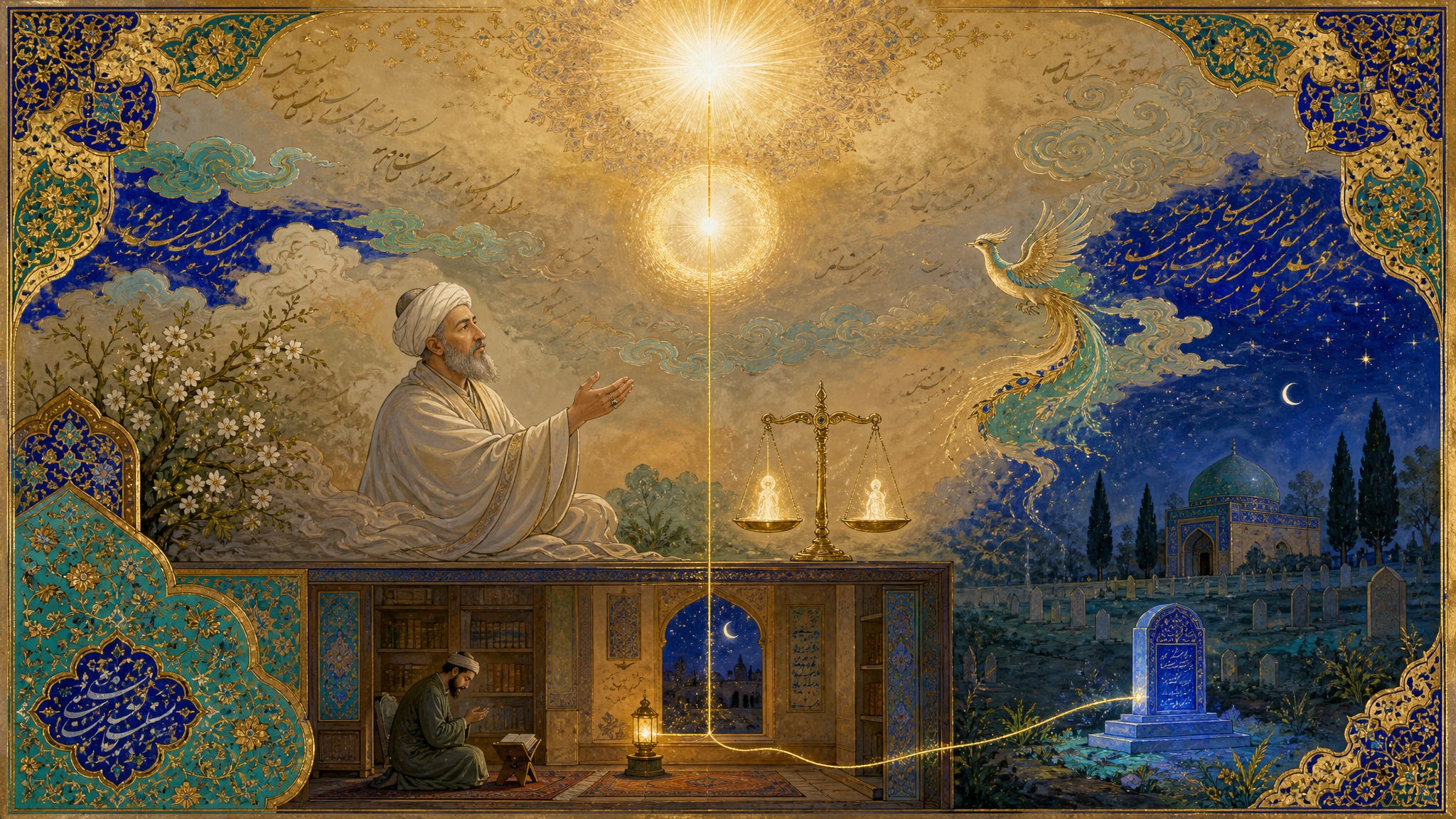
Now I have to show you the next line of that report, because if I do not, one of you will find it on your own and think we hid it.
It goes straight on and gives you the prayer.
And it is not the same prayer we just read out of the law book.
فَإِنْ لَمْ تَجِدُوا فَلْيُصَلِّ أَحَدُكُمْ رَكْعَتَيْنِ يَقْرَأُ فِي الْأُولَى بِفَاتِحَةِ الْكِتَابِ مَرَّةً وَقُلْ هُوَ اللَّهُ أَحَدٌ مَرَّتَيْنِ وَفِي الثَّانِيَةِ فَاتِحَةَ الْكِتَابِ مَرَّةً وَأَلْهَاكُمُ التَّكَاثُرُ عَشْرَ مَرَّاتٍ وَيُسَلِّمُ وَيَقُولُ اللَّهُمَّ صَلِّ عَلَى مُحَمَّدٍ وَآلِ مُحَمَّدٍ وَابْعَثْ ثَوَابَهَا إِلَى قَبْرِ ذَلِكَ الْمَيِّتِ فُلَانِ ابْنِ فُلَانٍ
“And if you cannot find the means, then let one of you pray two units. He recites in the first the Opening of the Book once, and ‘Say: He is God, One’ twice; and in the second the Opening of the Book once, and ‘Rivalry in worldly increase distracted you’ ten times. Then he gives the salutation and says: O God, send blessings upon Muhammad and the family of Muhammad, and send the reward of it to the grave of that deceased one, so-and-so son of so-and-so.”
— Sayyed Ibn Tawus, Falah al-Sa’il, from Hudhayfah ibn al-Yaman, from the Messenger of God
So look at what we have.
The law book: the Verse of the Throne — Ayat al-Kursi, and the Chapter of Ordainment — Surah al-Qadr — ten times.
The report: the Chapter of Sincerity — Surah al-Ikhlas — twice, and the Chapter of Rivalry — Surah al-Takathur — ten times.
Two units either way.
Two different sets of chapters.
So what is that about?
And I want to stay with that question, because the answer to it is worth more to you than the prayer is.
Somebody has to sit with those reports.
Not one of them — all of them.
Every book that carries them, and the chains they come through, and the men in those chains, and what else those men narrated and whether they were trusted; the wording, and whether it carries the sense it appears to carry; what the Qur’an says around it; and what every other ruling in that area already requires.
There is an entire science for doing that properly — usul al-fiqh, the principles by which a ruling is derived — and it takes a lifetime to learn and another lifetime to use.
And at the end of that, the man who has done that work says: this one.
He has not invented anything.
He has weighed what he was given, and told you which way it comes down.
And here is the part I do not think many of us have ever had said to us plainly.
When you act on his ruling, the correctness of it is not on you.
It is on him.
You are a mukallaf — a person under obligation — and your obligation is discharged by following a qualified man properly.
His is not discharged so easily.
Which leaves one question, and it is the only one that really matters.
Who stands behind him?
وَأَمَّا الْحَوَادِثُ الْوَاقِعَةُ فَارْجِعُوا فِيهَا إِلَى رُوَاةِ حَدِيثِنَا فَإِنَّهُمْ حُجَّتِي عَلَيْكُمْ وَأَنَا حُجَّةُ اللَّهِ عَلَيْهِمْ
“As for the newly occurring events, refer regarding them to the narrators of our hadith, for they are my proof upon you, and I am the proof of God upon them.”
— Shaykh al-Saduq, Kamal al-Din wa Tamam al-Ni’mah, Volume 2, Chapter 45, hadith four; from the letter of the Imam of our Age to Ishaq ibn Ya’qub
Read the chain of that sentence backwards and you will see what you are standing in.
God.
Then the Imam, who is God’s proof over the scholars.
Then the scholars, who are the Imam’s proof over you.
Then you.
It is not a committee.
It is not a guess.
It is not a man in Najaf or Qom deciding what he feels about a hadith on a Tuesday.
It is a line, and the far end of it is held by the man this entire series is about — the one you cannot go and visit.
And that letter is not incidental to us.
We opened Session Sixty-Three - When the Light Was Hidden with it, and we spent the whole of the following week on the scholar in Baghdad who received letters from the same hand.
If you have not heard those two, go back to them, because that sentence is the reason the words marja’ and mujtahid mean anything at all.
Now come back to where we started, and notice what has not moved.
Two reports.
Two formulas.
And underneath both of them, one fact that neither of them disturbs:
there is a prayer for the night of the burial.
Whichever chapters you are told to recite, you stand up on the hardest night there is, and you send them something.
The difference is in the measures.
The point was never in the measures.
And look at what the prayer is actually made of.
You are not there.
You cannot be there.
It is the middle of the night, they are in the ground, the earth has gone back over them, and there is nothing left that you can do with your hands.
So you stand up in your own house.
And you pray two units.
And you send it to them.
And you do it on the night the Messenger of God said is the hardest one there is.
You do not give a night a prayer of its own if the word is only a figure of speech.
He Went Every Week
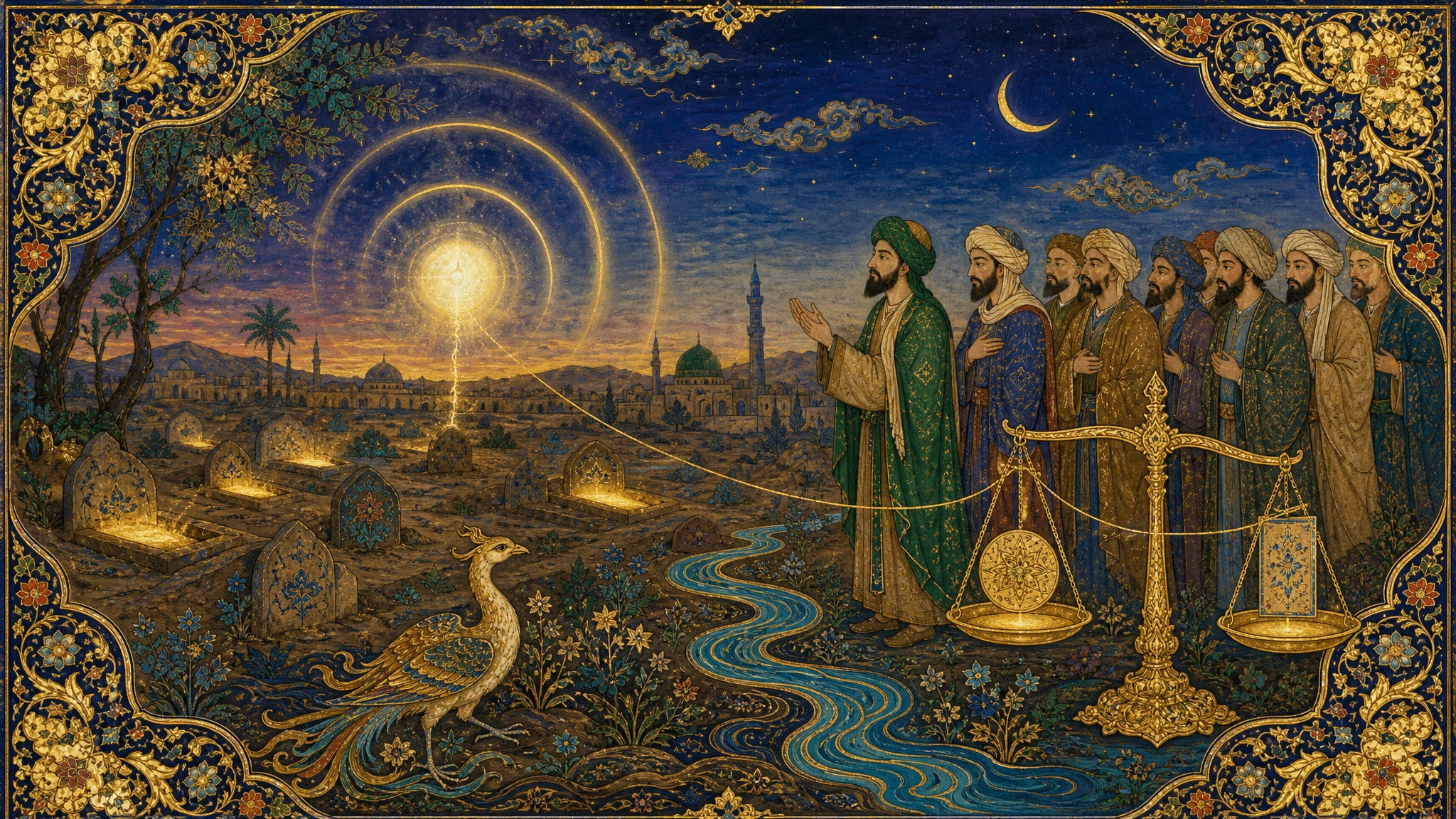
Now, if that is what the visit is, you would expect to find it in the life of the man who is our example — the one we are all trying to follow.
You do.
كَانَ رَسُولُ اللَّهِ (ص) يَخْرُجُ فِي مَلَإٍ مِنَ النَّاسِ مِنْ أَصْحَابِهِ كُلَّ عَشِيَّةِ خَمِيسٍ إِلَى بَقِيعِ الْمَدَنِيِّينَ فَيَقُولُ ثَلَاثاً — السَّلَامُ عَلَيْكُمْ يَا أَهْلَ الدِّيَارِ — وَثَلَاثاً — رَحِمَكُمُ اللَّهُ — ثُمَّ يَلْتَفِتُ أَصْحَابَهُ وَيَقُولُ هَؤُلَاءِ خَيْرٌ مِنْكُمْ فَيَقُولُونَ يَا رَسُولَ اللَّهِ وَلِمَ آمَنُوا وَآمَنَّا وَجَاهَدُوا وَجَاهَدْنَا فَيَقُولُ إِنَّ هَؤُلَاءِ آمَنُوا وَلَمْ يَلْبِسُوا إِيمَانَهُمْ بِظُلْمٍ وَمَضَوْا عَلَى ذَلِكَ وَأَنَا عَلَى ذَلِكَ شَهِيدٌ وَأَنْتُمْ تَبْقَوْنَ بَعْدِي وَلَا أَدْرِي مَا تُحْدِثُونَ بَعْدِي
“The Messenger of God would go out, in a crowd of people from among his companions, every Thursday evening, to the Baqi’ of the people of Madinah. And he would say three times: peace be upon you, O people of these dwellings. And three times: may God have mercy on you.
Then he would turn to his companions and say: these are better than you.
And they would say: O Messenger of God, why? They believed and we believed. They struggled and we struggled.
And he would say: these believed, and did not dress their faith in wrongdoing, and they went on that — and to that I am a witness. And you remain after me, and I do not know what you will bring about after me.”
— Ibn Qulawayh, Kamil al-Ziyarat, the chapter on the Merits of Visiting the Believers, sixth hadith, from Safwan al-Jammal
Every Thursday evening.
Not on an anniversary.
Not when somebody died.
Every week, on the same evening, out with a crowd of his companions, to the graveyard of the people of Madinah.
And then he turns round and says a sentence to the living that I would like you to sit with.
These are better than you.
And when they push back — reasonably, I think — with we believed as they believed, we fought as they fought, he does not soften it.
He explains it.
They finished.
They came through with their faith not mixed up with wrongdoing, and they went out on that, and I saw it.
And you remain after me, and I do not know what you will bring about after me.
That is the difference.
Not that they were better people.
That their account is closed and yours is open.
Every Thursday, he walked out to be reminded of it.
And His Daughter Did the Same, Twice a Week

عَاشَتْ فَاطِمَةُ بَعْدَ أَبِيهَا خَمْسَةً وَسَبْعِينَ يَوْماً لَمْ تُرَ كَاشِرَةً وَلَا ضَاحِكَةً تَأْتِي قُبُورَ الشُّهَدَاءِ فِي كُلِّ جُمْعَةٍ مَرَّتَيْنِ الْإِثْنَيْنِ وَالْخَمِيسَ فَتَقُولُ هَاهُنَا كَانَ رَسُولُ اللَّهِ هَاهُنَا كَانَ الْمُشْرِكُونَ
“(Sayyedah) Fatimah lived after her father for seventy-five days. She was never seen smiling, and never seen laughing. She would come to the graves of the martyrs twice every week — on Mondays and on Thursdays — and she would say: here stood the Messenger of God. Here stood the polytheists.”
— Shaykh al-Kulayni, al-Kafi, Volume 3, the chapter on Visiting of the Graves, third hadith
Seventy-five days.
Never seen smiling.
Twice a week.
And then that last line, which I would ask you not to walk past.
She is at Uhud.
She is standing on the ground where they buried the men who were killed there, and her father is dead, and she has seventy-five days left.
And what she does is point.
Here stood the Messenger of God.
Here stood the polytheists.
She is not only visiting.
She is keeping the account of the day straight, out loud, at the place where it happened.
She is saying: this is where he was.
That is where they were.
Do not let anyone tell you it was otherwise.
That is what the visit is for her.
It is testimony.
And the reason I put her next to her father and not somewhere else in the evening is this: she is not inventing a practice.
He went out on Thursdays.
She goes out on Mondays and Thursdays.
She went because he went.
And the Same Ground, in Our Own Time
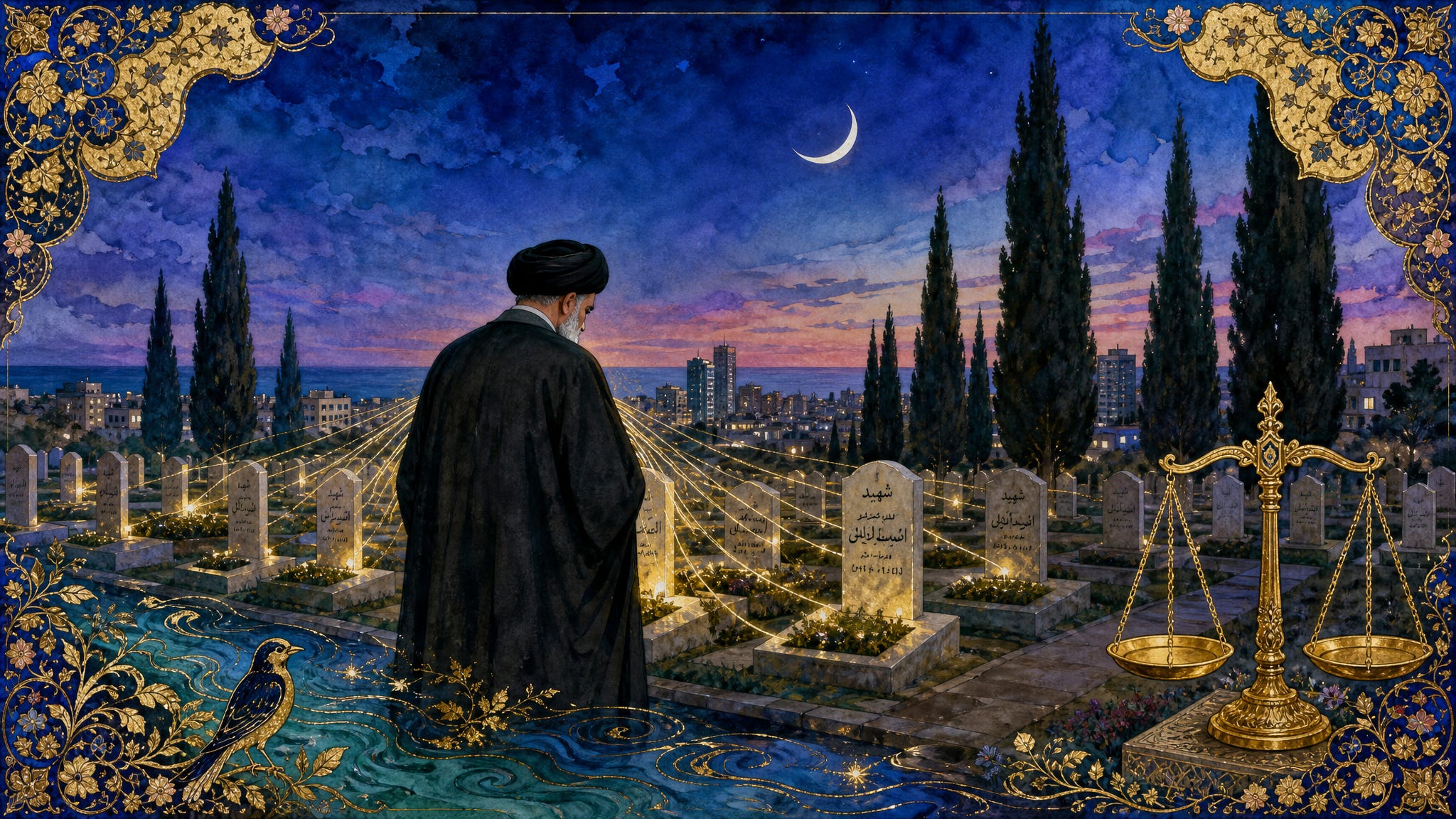
She goes to the graves of the martyrs.
So did a man of our own century, and he was asked once what it did to him.
The martyred leader of the Islamic Resistance, Sayyed Hassan Nasrallah, may God rest his pure soul:
مِنْ أَعْظَمِ مَا يُؤَثِّرُ فِي نَفْسِي زِيَارَةُ مَقَابِرِ الشُّهَدَاءِ ، وَكَأَنَّ الشُّهَدَاءَ يُقَدِّمُونَ لَكَ رِسَالَةً ، وَلِسَانُ الْحَالِ وَإِنْ لَمْ يَكُنْ لِسَانَ الْمَقَالِ يَقُولُ : يَا أَيُّهَا الْمُتَبَقُّونَ
“Among the things that affect me most is visiting the cemeteries of the martyrs. It is as though the martyrs put a message to you — and the tongue of their state, though it is not the tongue of speech, says: O you who remain behind.”
— Sayyed Hassan Nasrallah, from a speech on Martyrs’ Day, Beirut
He stops there.
I am going to stop there too.
So What Do You Actually Do

Let us be practical, because a principle you cannot act on tonight is a principle you will have forgotten by Friday.
Three things.
The first is that you stand, and you greet.
السَّلَامُ عَلَى أَهْلِ الدِّيَارِ مِنَ الْمُؤْمِنِينَ وَالْمُسْلِمِينَ رَحِمَ اللَّهُ الْمُسْتَقْدِمِينَ مِنَّا وَالْمُسْتَأْخِرِينَ وَإِنَّا إِنْ شَاءَ اللَّهُ بِكُمْ لَاحِقُونَ
“Peace be upon the people of these dwellings, from among the believers and the Muslims. May God have mercy upon those of us who have gone ahead, and those who are to come after. And we, if God wills, are joining you.”
— Shaykh al-Saduq, Man la Yahduruhu al-Faqih, Volume 1, hadith 533, from Jarrah al-Mada’ini
I want to show you where you are standing in that sentence.
Those of us who have gone ahead, and those who are to come after.
Not them and us.
One line of people.
Some of them are further along it than you are, and some of them have not been born.
And you are asking for mercy on the whole line, from inside it.
And some of you are going to recognise that shape, because we spent three sessions on it this summer.
مِنَ الْمُؤْمِنِينَ رِجَالٌ صَدَقُوا مَا عَاهَدُوا اللَّهَ عَلَيْهِ ۖ فَمِنْهُم مَّن قَضَىٰ نَحْبَهُ وَمِنْهُم مَّن يَنتَظِرُ ۖ وَمَا بَدَّلُوا تَبْدِيلًا
“Among the believers are men who have been true to their covenant with God. Among them are those who have fulfilled their pledge — and among them are those who are still waiting. And they have never changed in the least.”
— Qur’an, Surah al-Ahzab (the Chapter of the Confederates) #33, Verse 23
That is the verse we opened The Unbroken Chain with, on the night we spoke about the martyrdom of our leader, Imam Sayyed Ali Khamenei, may God rest his pure soul.
It was the verse his own account put out to the world on the day he was taken. It was his farewell.
And look at what it does.
It puts the believers into two groups, and it does not rank them.
Those who have fulfilled their pledge — the ones who have finished.
And those who are still waiting — the ones who have not.
One covenant.
Two positions on the same road.
And nobody in either group has changed by so much as a degree.
Now go back to the greeting.
Those of us who have gone ahead, and those who are to come after.
It is the same sentence.
Every time you stand at a graveyard and say those words, you are saying his farewell verse — except that you are saying it in the second person, out loud, to the people it is about.
And if you want to hear that verse properly opened, go back to The Unbroken Chain, and then to The Unbroken Testimony and The Unbroken Trust .
I am not going to give it a fourth tonight.
I am only pointing out that it has been standing behind this greeting the whole time, and none of us noticed.
The second thing is smaller and I like it very much.
A companion asked Imam al-Sadiq how he should put his hand on the graves of the believers.
And the Imam did not describe it.
He turned to face the qibla, pointed at the ground, and put his hand on it.
That is the whole hadith.
He showed him.
And the third thing is that none of this is obscure, and you do not need me for it.
Open Mafatih al-Jinan — the book of supplications most of you have on a shelf at home — at the chapter of visitations, and there is a section called the visitation of the graves of the believers.
It is all in there.
The greeting.
The hand on the grave, facing the qibla.
And a note from Sayyed Ibn Tawus, a scholar of Baghdad from eight hundred years ago, that when you intend to visit the people of faith, it is fitting that it be on a Thursday.
A Thursday.
He is telling you, in a prayer book, to do what the Messenger of God did every week.
And there is one more thing in that section, from the same scholar.
It is the sentence he tells you to say once your hand is on the grave.
اللَّهُمَّ ارْحَمْ غُرْبَتَهُ وَصِلْ وَحْدَتَهُ وَآنِسْ وَحْشَتَهُ وَآمِنْ رَوْعَتَهُ وَأَسْكِنْ إِلَيْهِ مِنْ رَحْمَتِكَ رَحْمَةً يَسْتَغْنِي بِهَا عَنْ رَحْمَةِ مَنْ سِوَاكَ وَأَلْحِقْهُ بِمَنْ كَانَ يَتَوَلَّاهُ
“O God, have mercy upon his being far from home. Attend to his being alone. Be company for his desolation. Make him safe from his terror. Settle upon him a mercy from Yourself by which he needs the mercy of no one besides You. And join him to the one he gave his loyalty to.”
— Sayyed Ibn Tawus, Misbah al-Za’ir, carried in Mafatih al-Jinan, in the chapter of visitations, the section on the visitation of the graves of the believers
Wa anis wahshatah. Be company for his desolation.
Some of you will have caught that already.
Anis is from uns — the same root as ya’nasun, the word Imam al-Sadiq used at the top of the chapter.
Wahshatah is from wahshah — the same root as istawhashu, the word at the other end of the very same sentence.
Both of them.
Both words out of the first hadith of the chapter, sitting in the supplication you say at the graveside.
In the same clause.
One of them asking God to cancel the other.
The hadith named the problem.
The prayer book puts the answer in your mouth and your hand on the ground while you say it.
Lessons for Our Time
The Going Is Not for You
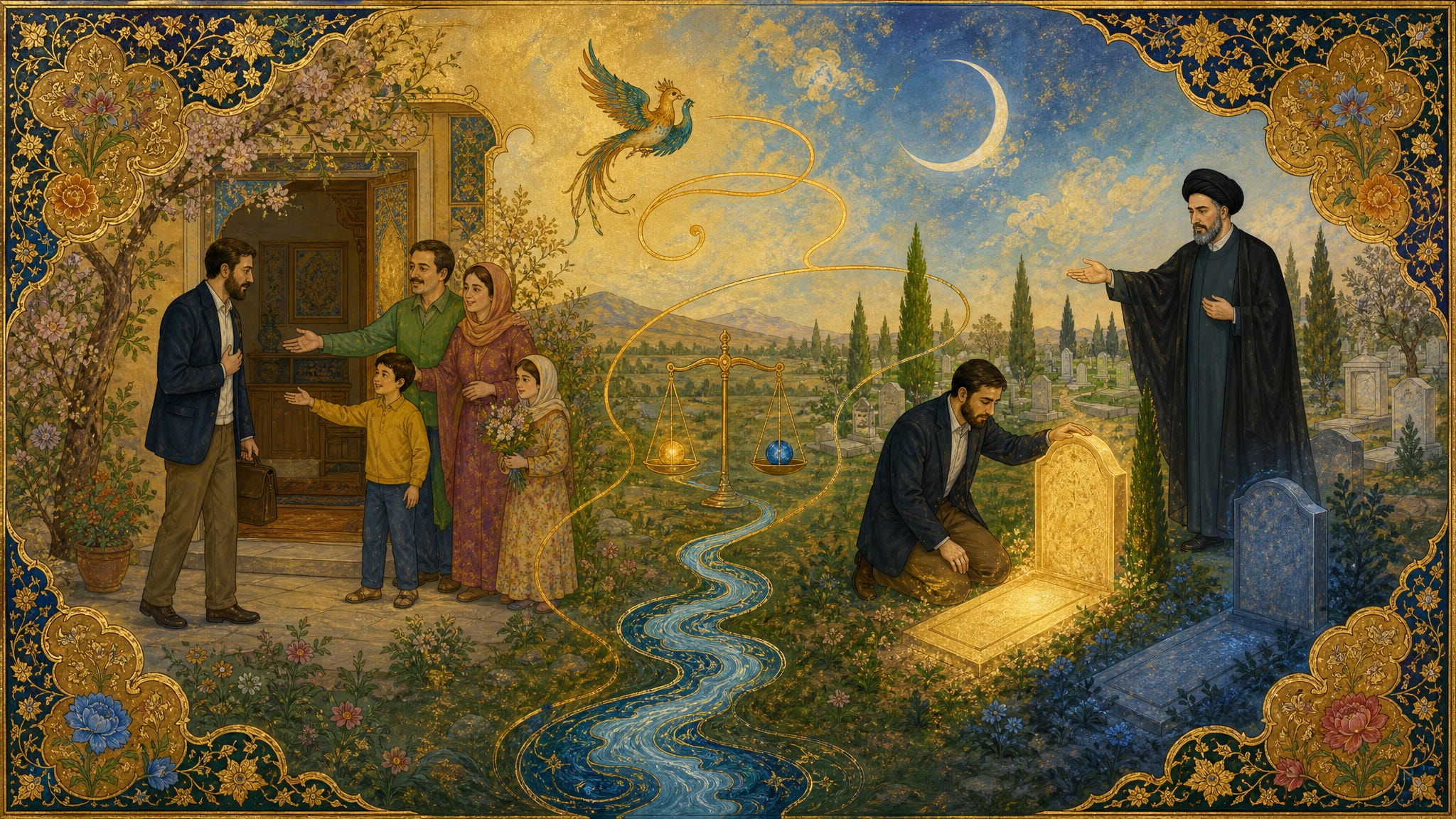
Every instinct you have says the visit is grief management.
That it is a thing the living do for themselves, and the dead are the occasion for it rather than the point of it.
The first hadith in the chapter says the opposite.
They take comfort in you; and when you are absent from them, they are left desolate.
And a scholar of our own era reached for the very same word, answering a question of law.
The great scholar and teacher, Ayatollah Sayyed Muhammad Husayn Fadhlullah, may God rest his pure soul, was asked whether the dead wait for the people they love. He wrote:
أَنَّ الْمَيِّتَ يَأْنَسُ وَيُسَرُّ بِزَائِرِهِ حَالَ مَوْتِهِ ، كَمَا كَانَ يُسَرُّ بِزِيَارَتِهِ لَهُ حَالَ حَيَاتِهِ
“That the dead one takes comfort in his visitor and is gladdened by him in his death, just as he used to be gladdened by his visit in life.”
— Ayatollah Sayyed Muhammad Husayn Fadhlullah, in answer to a question on visiting the dead
Just as he used to be gladdened by his visit in life.
That is the whole thing, and it is very plain.
You know how to do this already.
You have an uncle you visit.
You know what it is to knock on a door and be glad you came and gladder that he was glad.
Nothing about that has changed.
The address has changed.
You go to his home.
You speak to him.
You pray for him.
And because he has gone on ahead of you, you ask him to speak for you.
Go. And the Two Ways This Goes Wrong
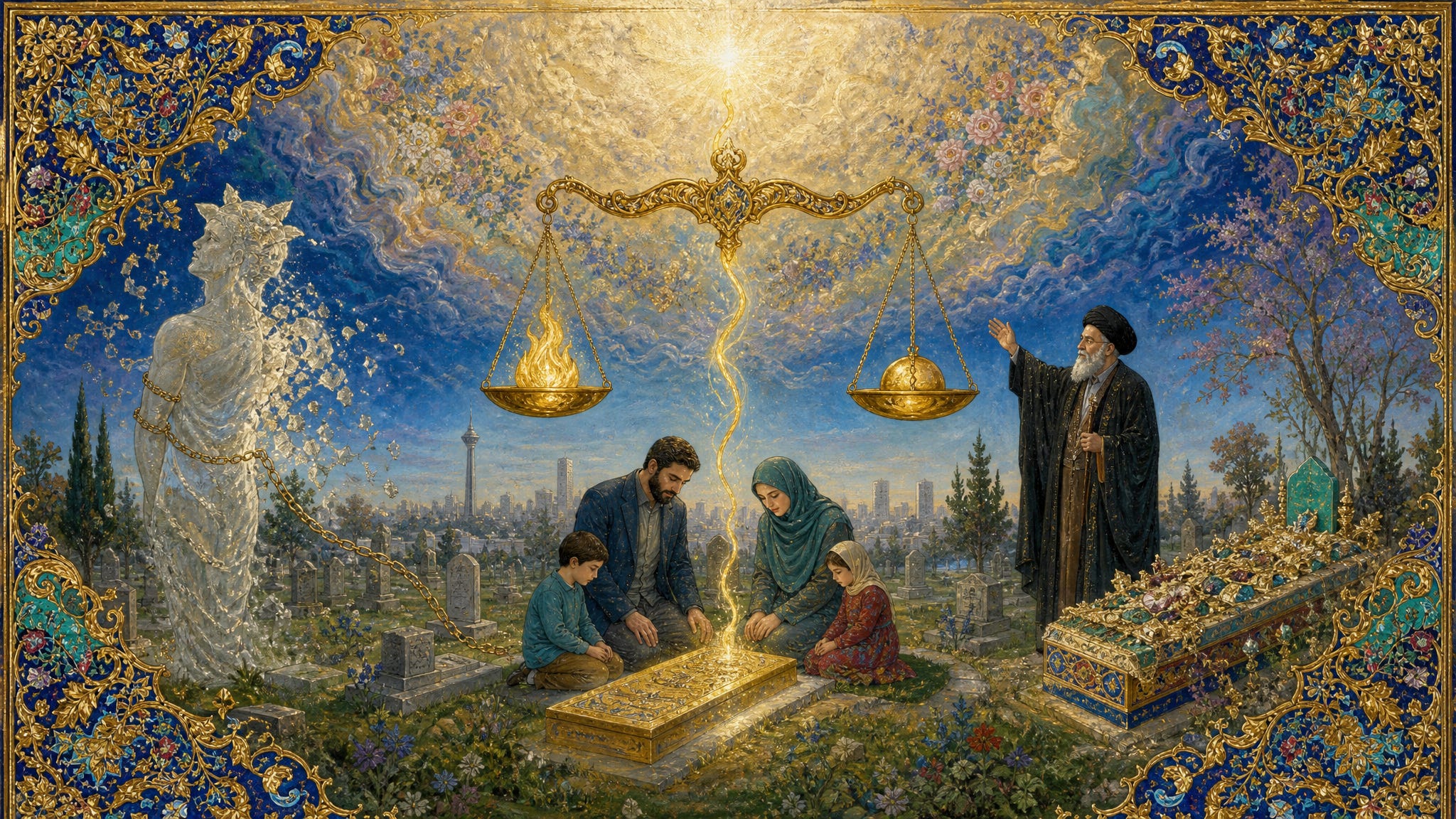
So go.
Go regularly, take the children, and do not wait for a death to make it an occasion.
And now I have to be careful with a word, because I am about to hand you one that can be turned against the thing I am asking for.
Make it a habit.
The problem with that word is that in ordinary English a habit is precisely a thing that runs without you.
Ask a smoker.
Half the time he does not notice that he is smoking.
That is what a habit does — it takes the act, and it removes the person from it.
And we say this about the prayers as though it were a compliment.
My prayers are a habit now.
They should not be.
A prayer you perform while you are somewhere else has had the one thing taken out of it that made it a prayer.
So let me give you the correction from the same man who gave us the last one.
Writing on the chapter of al-Takathur — the chapter about being distracted by piling things up — Ayatollah Sayyed Muhammad Husayn Fadhlullah begins:
زِيَارَةُ الْقُبُورِ لَيْسَتْ مُجَرَّدَ عَادَةٍ اجْتِمَاعِيَّةٍ ، بَلْ هِيَ عِلَاجٌ رُوحِيٌّ يَكْسِرُ فِينَا صَنَمِيَّةَ الدُّنْيَا ، وَيُذَكِّرُنَا بِأَنَّ كُلَّ مَا نَتَصَارَعُ عَلَيْهِ هُوَ زَائِلٌ ، وَأَنَّ الْمَوْقِفَ الْحَقِيقِيَّ أَمَامَ اللَّهِ
“Visiting graves is not merely a social custom. It is a spiritual remedy that shatters within us the idol-making of this world, and reminds us that everything we struggle over is passing away, and that the real standing is before God.”
— Ayatollah Sayyed Muhammad Husayn Fadhlullah, Min Wahy al-Qur’an, on Surah al-Takathur #102, Verse 2
Not merely a custom.
And the Arabic word he refuses there — ‘ada — is the word for a custom and the word for a habit, both.
He denies it before we can misuse it.
So here is the test, and it is not the one you would expect.
The test is not whether you can do it without thinking.
The test is whether you feel it when you don’t.
A habit you drop is a habit you forget.
This is the other kind.
The kind whose absence unsettles you.
And there is a second way this goes wrong, and it is the opposite fault.
Not thoughtless — inflated.
In that same answer about the dead waiting for us, having just told us that they take comfort in the visitor, he adds:
وَلَكِنْ لَمْ يَرِدْ فِي الْأَخْبَارِ مَا يُفِيدُ اسْتِحْبَابَ زِيَارَةِ الْقُبُورِ يَوْمَ الْعِيدِ بِخُصُوصِهِ
“But nothing has come in the reports that establishes the recommendation of visiting the graves on the day of Eid specifically.”
— Sayyed Muhammad Husayn Fadhlullah, in the same answer on visiting the dead
Read that twice.
He has just told you the dead are gladdened by you.
And in the next breath he tells you that the thing half of us assume is recommended is not established.
He affirms it, and he refuses to inflate it, in one answer.
That is what you are owed from a pulpit, and it is what I owe you.
The thing that stands, and the thing that does not, from the same mouth.
A practice that needs no exaggeration is a practice you can trust.
The Back of Kufa
He Looked at the Ground and Asked for It

Last week we said the ground at Najaf was chosen.
I want to show you the choosing.
Sayyed Ibn Tawus — the same scholar of Baghdad I mentioned a moment ago — wrote an entire book to establish where the Commander of the Faithful is buried.
It is called Farhat al-Ghari.
And in it he carries this, with its chain, from Ahmad ibn Habbab:
نَظَرَ أَمِيرُ الْمُؤْمِنِينَ (عَلَيْهِ السَّلَامُ) إِلَى ظَهْرِ الْكُوفَةِ فَقَالَ : مَا أَحْسَنَ ظَهْرَكَ وَأَطْيَبَ قَعْرَكَ ، اللَّهُمَّ اجْعَلْ قَبْرِي بِهَا
“The Commander of the Faithful looked out toward the back of Kufa and said: how good is your surface, and how sweet your depth. O God, make my grave there.”
— Sayyed Ibn Tawus, Farhat al-Ghari, printed pages 32 and 32
Two words, side by side, and they are doing something.
Your surface.
And your depth.
He is looking at a piece of open ground outside a city and he is seeing both of it at once — what it looks like, and what it will hold.
And then he asks for it.
That is not a man being buried somewhere.
That is a man choosing.
He Came Back from Siffin and Stood There
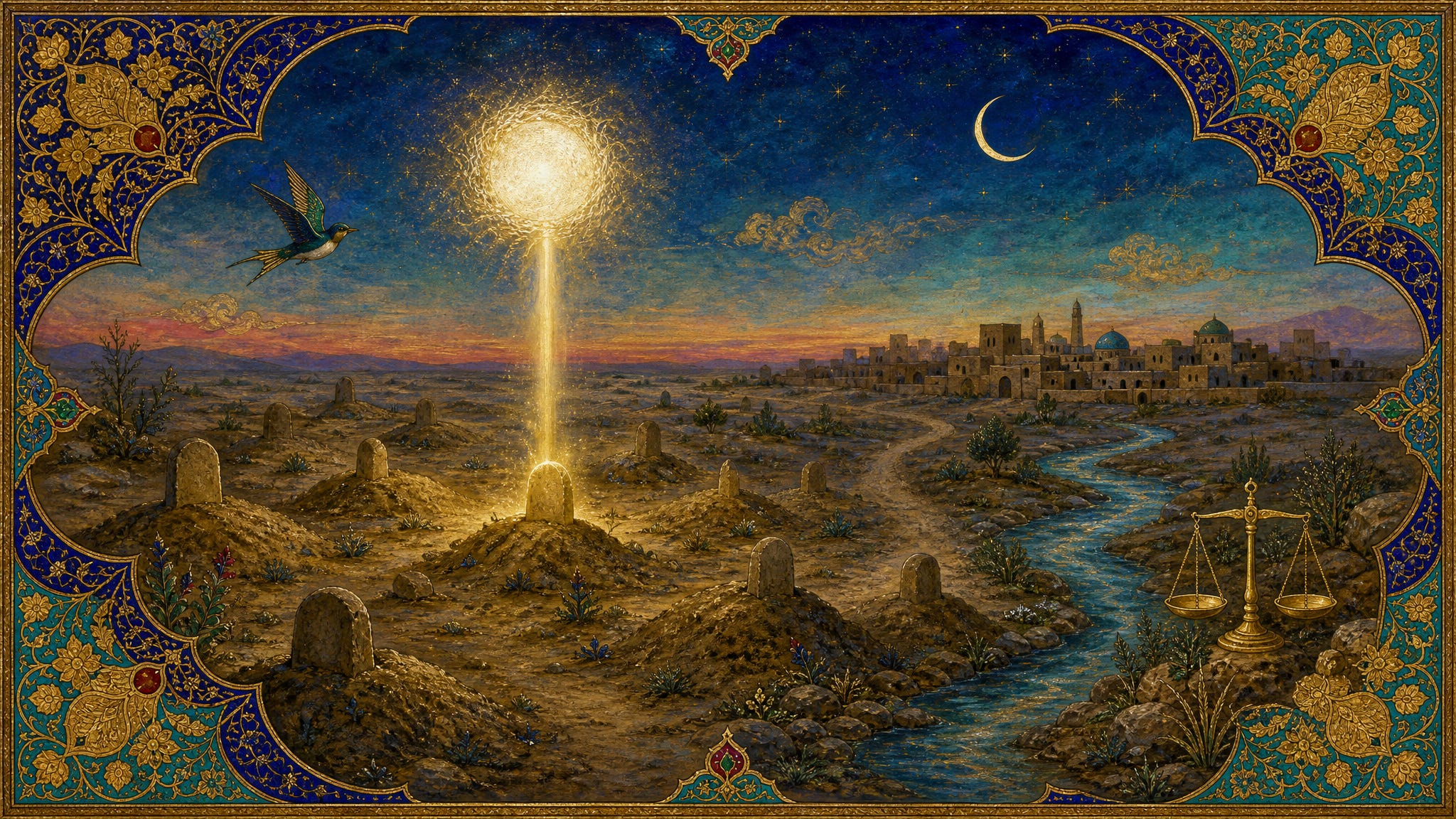
Now hold that, because he goes back to that ground, and we have what he said when he did.
This one is in Nahj al-Balagha — the collection of his sermons and letters and sayings gathered by Sayyed al-Radhi, a scholar of Baghdad of the tenth century, whom some of you last met with us a good while ago.
And the compiler does something I want you to notice.
Before he gives you a word of what was said, he tells you where the man had just come from.
وَقَدْ رَجَعَ مِنْ صِفِّينَ فَأَشْرَفَ عَلَى الْقُبُورِ بِظَاهِرِ الْكُوفَةِ :
يَا أَهْلَ الدِّيَارِ الْمُوحِشَةِ ، وَالْمَحَالِّ الْمُقْفِرَةِ ، وَالْقُبُورِ الْمُظْلِمَةِ ، يَا أَهْلَ التُّرْبَةِ ، يَا أَهْلَ الْغُرْبَةِ ، يَا أَهْلَ الْوَحْدَةِ ، يَا أَهْلَ الْوَحْشَةِ ، أَنْتُمْ لَنَا فَرَطٌ سَابِقٌ ، وَنَحْنُ لَكُمْ تَبَعٌ لَاحِقٌ .
أَمَّا الدُّورُ فَقَدْ سُكِنَتْ ، وَأَمَّا الْأَزْوَاجُ فَقَدْ نُكِحَتْ ، وَأَمَّا الْأَمْوَالُ فَقَدْ قُسِمَتْ . هَذَا خَبَرُ مَا عِنْدَنَا ، فَمَا خَبَرُ مَا عِنْدَكُمْ ؟
“Having returned from Siffin, he looked out over the graves at the back of Kufa, and said:
O people of the desolate dwellings, and the empty places, and the darkened graves. O people of the dust. O people of estrangement. O people of loneliness. O people of desolation. You have gone on ahead of us, and we are following behind you.
As for the houses — they have been lived in. As for the wives — they have remarried. As for the wealth — it has been divided.
This is the news of what is with us. So what is the news of what is with you?”
— Nahj al-Balagha, gathered by Sayyed al-Radhi, Saying one hundred and thirty
He has just come back from Siffin.
Not a defeat and not a victory — a war that ended in an arbitration instead of a resolution, and left his own camp split down the middle.
And on the road home, he stops at the graveyard.
Look at what he tells them.
He does not comfort them.
He gives them the news, and the news is brutal.
Your houses have other people living in them.
Your wives have married again.
Your money has been shared out.
Everything you spent your life holding has been let go of, and it took no time at all.
And then he asks them a question.
This is the news of what is with us.
So what is the news of what is with you?
And he stops.
And the Answer, from the Other Book
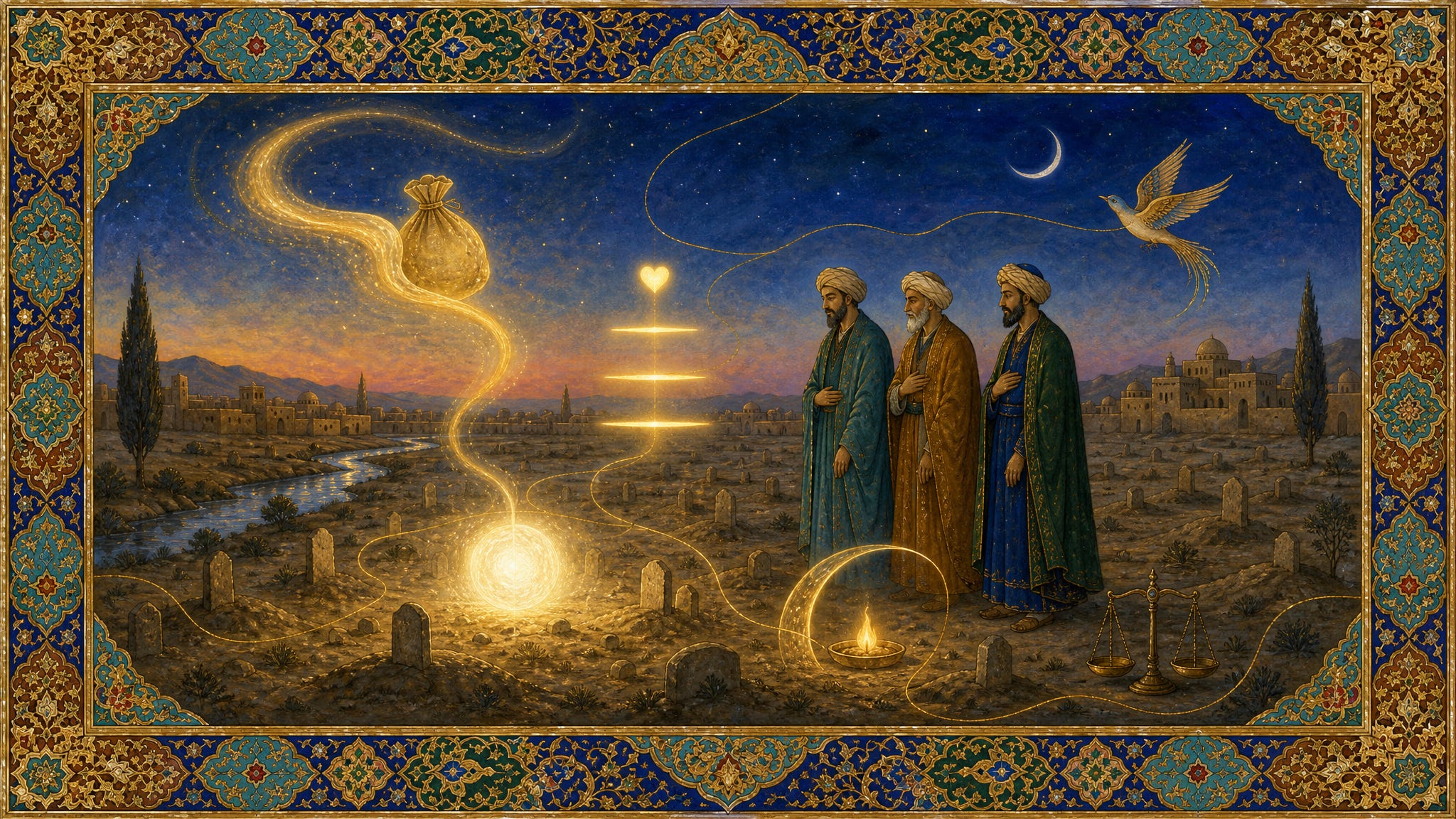
That is where Nahj al-Balagha leaves it.
But the same address is carried in Kamil al-Ziyarat as well — the same scene, a different line of transmission — and that version carries what happened next.
He turns to the companions who came out with him:
أَمَا وَاللَّهِ لَوْ يُؤْذَنُ لَهُمْ فِي الْكَلَامِ لَقَالُوا : لَمْ يُتَزَوَّدْ مِثْلُ التَّقْوَى ، خَيْرُ الزَّادِ التَّقْوَى
“By God — if they were given permission to speak, they would say: nothing was ever provisioned like the fear of God. The best provision is the fear of God.”
— Ibn Qulawayh, Kamil al-Ziyarat, the chapter on the Merits of Visiting the Believers, seventh hadith
One book gives you the question.
The other gives you the answer.
And the answer is the last line of a verse most of you have said this week —
وَتَزَوَّدُوا فَإِنَّ خَيْرَ الزَّادِ التَّقْوَىٰ ۚ وَاتَّقُونِ يَا أُولِي الْأَلْبَابِ
And take provision, for the best provision is the fear of God. And fear Me, O you of understanding.
— Qur’an, Surah al-Baqarah (the Chapter of the Cow) #2, Verse 197
Now I have to stop, because I have just translated a word for you the way it is almost always translated, and I want to take it back.
Taqwa.
Every English rendering you will ever pick up gives you fear.
And it is not wrong, exactly.
It is just that in English, fear means one thing, and it is the wrong thing.
When we say fear in English we mean the thing you feel on a dark stairwell.
Fright.
Alarm.
The animal response that makes you want to be somewhere else.
That is not what this word is doing.
Somebody once asked Imam al-Sadiq about the verse that tells us to have taqwa of God as He truly deserves — and asked him, in effect, what that even means.
Listen to the answer:
يُطَاعُ فَلَا يُعْصَى ، وَيُذْكَرُ فَلَا يُنْسَى ، وَيُشْكَرُ فَلَا يُكْفَرُ
“That He be obeyed and not disobeyed. That He be remembered and not forgotten. That He be thanked and not denied.”
— Shaykh al-Saduq, Ma’ani al-Akhbar, on the meaning of fearing God as He should truly be feared
Read that again and notice what is missing.
He is asked what it is to have taqwa of God as He deserves, and the answer has three parts, and not one of them is fright.
Obeyed.
Remembered.
Thanked.
The root of the word is not a root about being afraid.
It is a root about guarding — putting something between yourself and harm. Taqwa is not the tremble.
It is the care.
And if you want to know where fear sits in this religion, the sixth Imam sorted it for us:
إِنَّ الْعُبَّادَ ثَلَاثَةٌ : قَوْمٌ عَبَدُوا اللَّهَ عَزَّ وَجَلَّ خَوْفاً فَتِلْكَ عِبَادَةُ الْعَبِيدِ ، وَقَوْمٌ عَبَدُوا اللَّهَ تَبَارَكَ وَتَعَالَى طَلَبَ الثَّوَابِ فَتِلْكَ عِبَادَةُ الْأُجَرَاءِ ، وَقَوْمٌ عَبَدُوا اللَّهَ عَزَّ وَجَلَّ حُبّاً لَهُ فَتِلْكَ عِبَادَةُ الْأَحْرَارِ وَهِيَ أَفْضَلُ الْعِبَادَةِ
“Worshippers are three. A people who worshipped God out of fear — that is the worship of slaves. And a people who worshipped God seeking the reward — that is the worship of hired men. And a people who worshipped God out of love for Him — that is the worship of the free. And that is the best of worship.”
— Shaykh al-Kulayni, al-Kafi, Volume 2, the Book of Belief and Disbelief, the chapter on Worship
Fear is on the list.
It is at the bottom of it.
And the Commander of the Faithful said the same thing with the third rung named differently:
إِنَّ قَوْماً عَبَدُوا اللهَ رَغْبَةً فَتِلْكَ عِبَادَةُ التُّجَّارِ ، وَإِنَّ قَوْماً عَبَدُوا اللهَ رَهْبَةً فَتِلْكَ عِبَادَةُ الْعَبِيدِ ، وَإِنَّ قَوْماً عَبَدُوا اللهَ شُكْراً فَتِلْكَ عِبَادَةُ الْأَحْرَارِ
“A people worshipped God out of desire — that is the worship of merchants. And a people worshipped God out of dread — that is the worship of slaves. And a people worshipped God out of gratitude — that is the worship of the free.”
— Nahj al-Balagha, gathered by Sayyed al-Radhi, Saying 237
Gratitude.
Which is the third thing on Imam al-Sadiq’s list —
that He be thanked and not denied.
So what is this word actually asking of you?
You know somebody you love.
A parent, your husband or wife, a friend you would not want to lose.
And there is a thing you would never do, and if I asked you why, you would not say
Because I am frightened of them.
You would say:
Because I could not stand to be the reason they were hurt.
There is a kind of carefulness that only exists inside love.
It is not smaller than fear.
It is far larger, and much harder, and it does not go away when the danger does.
That is the word.
And now hear the answer again.
He asked them what the news was.
And what they would say, if they were allowed to say it, is: bring the only thing that travels — and it is not your terror.
It is the care you took, because of who you loved.
What That Ground Is
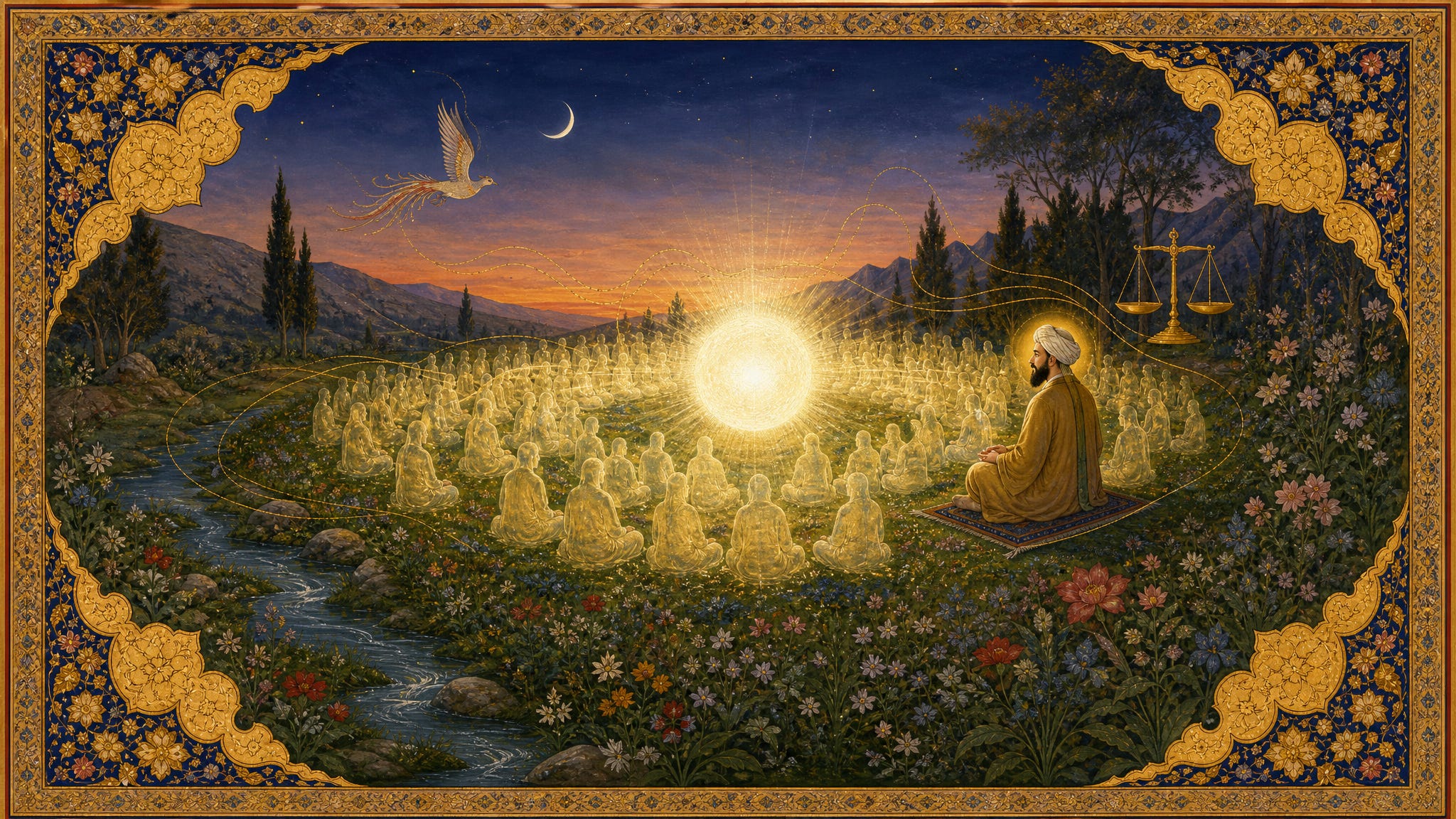
So what is that ground?
There was a man called Habbah al-Urani, a companion of the Commander of the Faithful who used to walk out with him into the desert.
And he tells this:
خَرَجْتُ مَعَ أَمِيرِ الْمُؤْمِنِينَ (عَلَيْهِ السَّلَامُ) إِلَى الظَّهْرِ ، فَوَقَفَ بِوَادِي السَّلَامِ كَأَنَّهُ مُخَاطِبٌ لِأَقْوَامٍ ، فَقُمْتُ بِقِيَامِهِ حَتَّى أَعْيَيْتُ ، ثُمَّ جَلَسْتُ حَتَّى مَلِلْتُ … فَقُلْتُ : يَا أَمِيرَ الْمُؤْمِنِينَ ، إِنِّي قَدْ أَشْفَقْتُ عَلَيْكَ مِنْ طُولِ الْقِيَامِ ، فَرَاحَةَ سَاعَةٍ . فَقَالَ لِي : يَا حَبَّةُ ، إِنْ هُوَ إِلَّا مُحَادَثَةُ مُؤْمِنٍ أَوْ مُؤَانَسَتُهُ . قُلْتُ : وَإِنَّهُمْ لَكَذَلِكَ ؟ قَالَ : نَعَمْ ، وَلَوْ كُشِفَ لَكَ لَرَأَيْتَهُمْ حَلَقاً حَلَقاً مُحْتَبِينَ يَتَحَادَثُونَ . فَقُلْتُ : أَجْسَامٌ أَمْ أَرْوَاحٌ ؟ فَقَالَ : أَرْوَاحٌ . وَمَا مِنْ مُؤْمِنٍ يَمُوتُ فِي بُقْعَةٍ مِنْ بِقَاعِ الْأَرْضِ إِلَّا قِيلَ لِرُوحِهِ : الْحَقِي بِوَادِي السَّلَامِ ، وَإِنَّهَا لَبُقْعَةٌ مِنْ جَنَّةِ عَدْنٍ
“I went out with the Commander of the Faithful to the open ground, and he stopped in Wadi al-Salam, as though he were speaking with people. I stood while he stood, until I was worn out. Then I sat down until I grew weary. Then I stood again until it came over me as it had the first time. Then I stood and gathered my cloak and said: Commander of the Faithful, I am concerned for you, standing so long. Rest an hour.
And he said to me: Habbah — this is nothing but the conversation of a believer, or his company.
I said: and are they like that?
He said: yes. And if it were unveiled for you, you would see them in rings upon rings, seated, talking with one another.
I said: bodies, or spirits?
He said: spirits. And no believer dies in any spot of the earth but it is said to his spirit: join Wadi al-Salam. And it is a piece of the Garden of Eden.”
— Shaykh al-Kulayni, al-Kafi, Volume 3, the chapter on the Spirits of the Believers, first hadith
I want you to see the picture before you take the doctrine out of it.
A man stands still for so long that his companion gets tired watching him.
Sits down.
Gets up again.
And finally says, in the way you would say it to someone you love: please, sit down.
And the answer is: I am talking to someone.
Rings upon rings, seated, talking with one another.
That is not a graveyard.
That is a gathering.
And Where Is It

Someone else asked the obvious question.
إِنَّ أَخِي بِبَغْدَادَ وَأَخَافُ أَنْ يَمُوتَ بِهَا . فَقَالَ : مَا تُبَالِي حَيْثُمَا مَاتَ ، أَمَا إِنَّهُ لَا يَبْقَى مُؤْمِنٌ فِي شَرْقِ الْأَرْضِ وَغَرْبِهَا إِلَّا حَشَرَ اللَّهُ رُوحَهُ إِلَى وَادِي السَّلَامِ . قُلْتُ لَهُ : وَأَيْنَ وَادِي السَّلَامِ ؟ قَالَ : ظَهْرُ الْكُوفَةِ
“My brother is in Baghdad, and I am afraid he will die there.
And he said: what does it matter to you where he dies? There is no believer in the east of the earth or its west but that God gathers his spirit to Wadi al-Salam.
I said to him: and where is Wadi al-Salam?
He said: the back of Kufa.”
— Shaykh al-Kulayni, al-Kafi, Volume 3, the chapter on the Spirits of the Believers, second hadith
The back of Kufa.
He looked out at the back of Kufa and asked God to put his grave there.
He came home from Siffin and stood at the graves at the back of Kufa and gave them the news.
And when a man asks where the believers are gathered, the answer is: the back of Kufa.
Three books.
One phrase.
A Man in Living Memory
And I do not want to leave this in the tenth century, because there are people who have done this in a way that would shame most of us, and one of them is remembered in a book written by a teacher of ours.
Ayatollah Muhsin Araki, may God protect him, wrote a memoir of his father.
In it he records something told to him by Hajj Aqa Mujtaba Araki — a man who had studied alongside his father — and it is about Mujtaba’s own father, Mirza Habibullah.
Two fathers in one sentence; keep them apart.
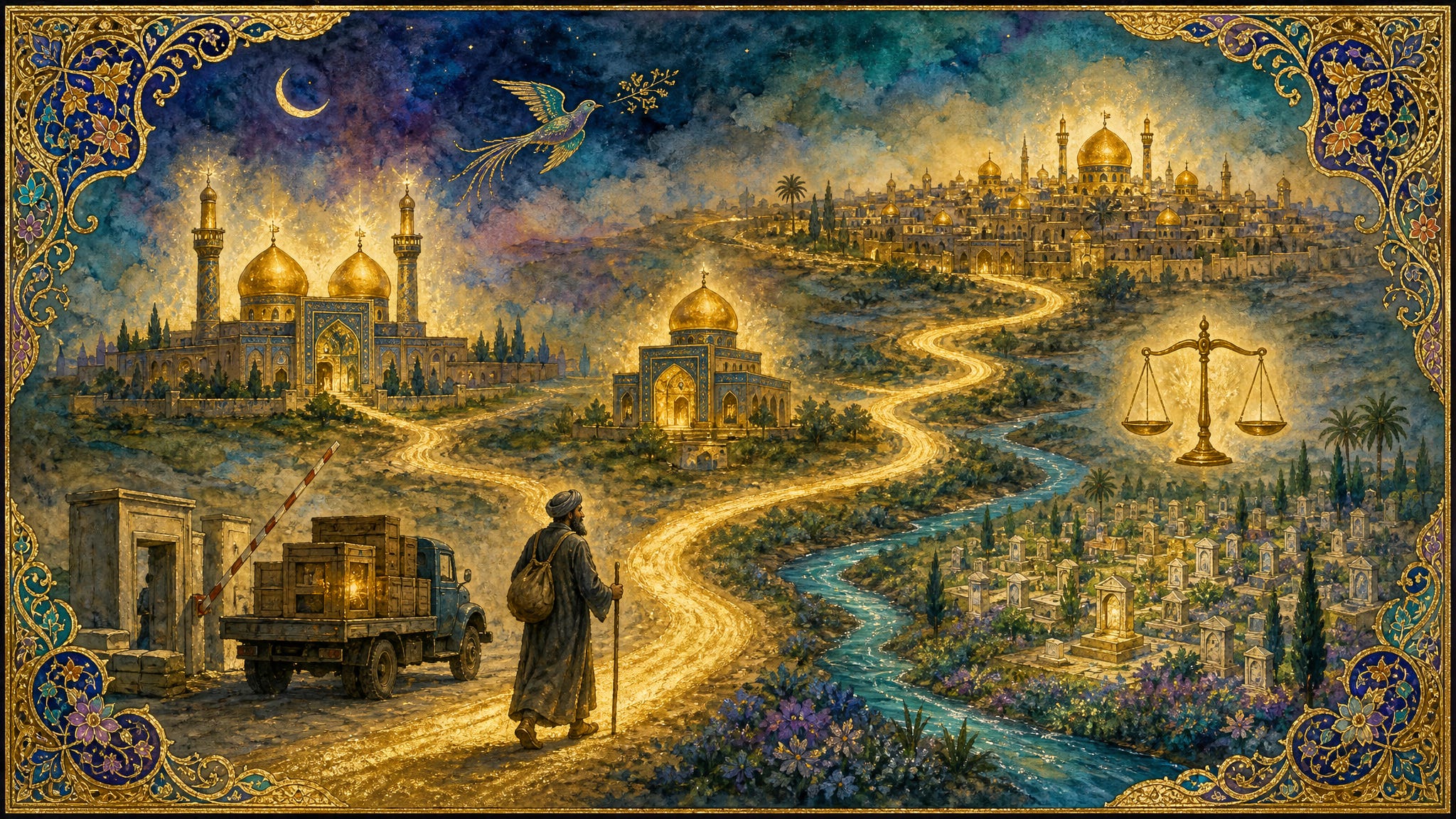
Mirza Habibullah wanted to reach Iraq, and the border was shut to him.
So he hid himself inside a concealed crate on one of the big lorries carrying tea into Iraq, and he was smuggled across in it, and he came out of it in Baghdad.
From there he was given the visitation of the two Imams at Kazimayn.
Then Karbala.
And after he had stood with the Master of the Martyrs, he set out for Najaf —
وَ همۀ آن مسیر را با پای پیاده طی طریق میکنند
“and he covered that entire route on foot.”
— Ayatollah Muhsin Araki, Dar Maktab-e Pedar, printed pages 113 to 114
A man gets himself into a country in a tea crate.
And then he walks it.
And his son records one more detail, which I did not expect to find and which settles our geography from a living family’s memory: that as you come into Najaf, the first thing there is, is the graveyard of Wadi al-Salam.
It is still true.
You can check it yourself.
One Paragraph About Something I Am Not Going to Open
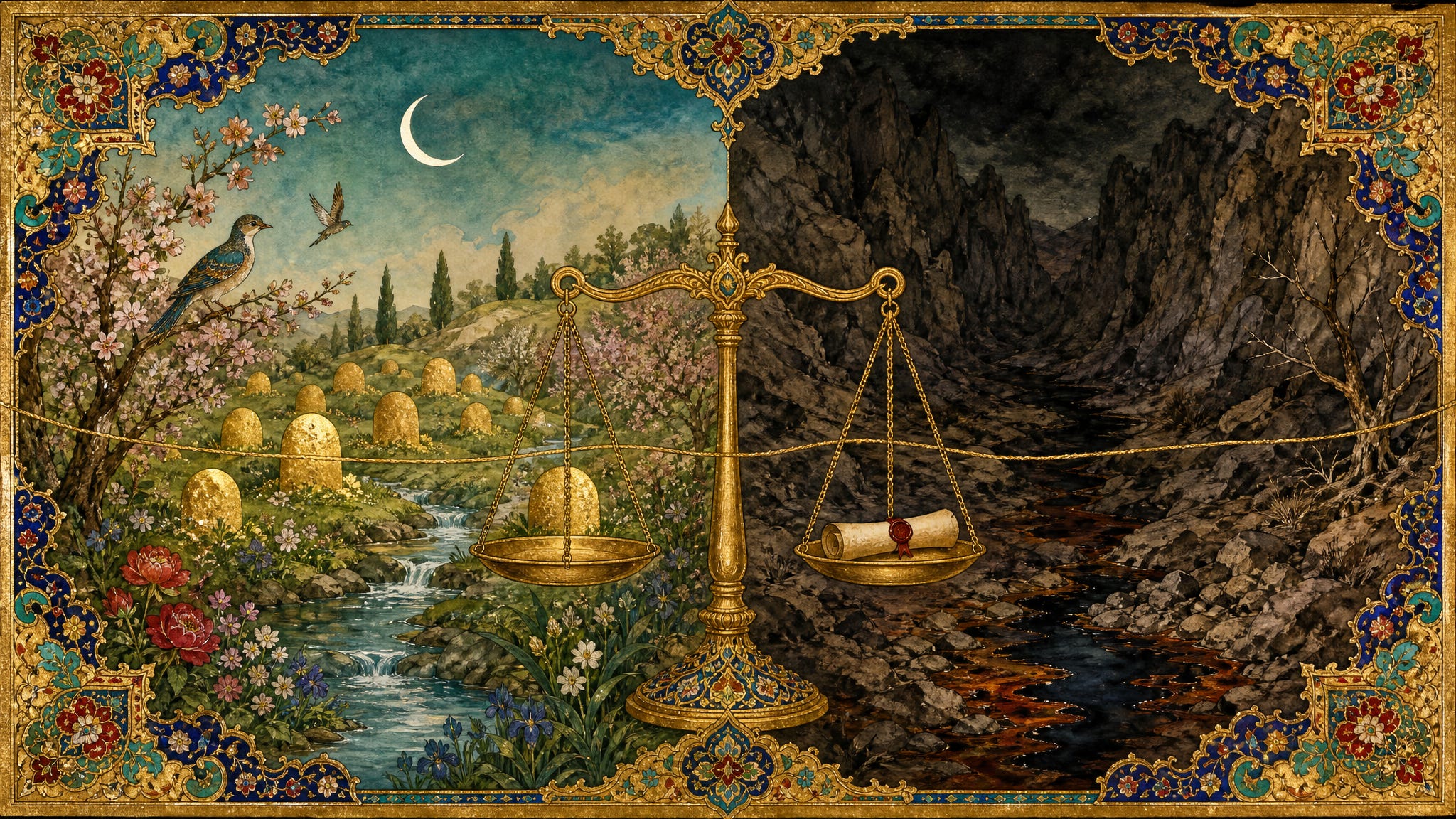
There is one more thing in these chapters and I am going to mention it and then refuse it, deliberately, in front of you.
Shaykh al-Kulayni does not put the chapter on the spirits of the believers on its own.
Immediately after it he puts a chapter on the souls of the unbelievers.
And in it, the Commander of the Faithful:
شَرُّ مَاءٍ عَلَى وَجْهِ الْأَرْضِ مَاءُ بَرَهُوتَ ، وَهُوَ الَّذِي بِحَضْرَمَوْتَ
“The worst water on the face of the earth is the water of Barahut — and it is the one in Hadramawt.”
— Shaykh al-Kulayni, al-Kafi, Volume 3, the chapter on the Souls of the Unbelievers, 4th hadith
Hadramawt is in the south of Yemen.
And there is a report in the same book that puts both of them — the gathering of the believers and that valley — in a single answer.
Now.
There is a great deal in these books about where the dead are between now and the Rising.
It is not a set of ghost stories, and it is not decoration.
It is a doctrine, and a doctrine needs an evening of its own to be taught properly, rather than a few minutes borrowed off the back of another subject.
God willing, we will give it one.
I am not going to open it tonight.
The only reason I have said the name at all is this: so that when you hear that the believers are gathered at Wadi al-Salam, you do not hear it as a pleasant thing said about a cemetery.
The books are not being sentimental.
They are drawing a map with two ends on it, and they put the two chapters next to each other so you could not miss it.
Lessons for Our Time
You Are Not Inventing This
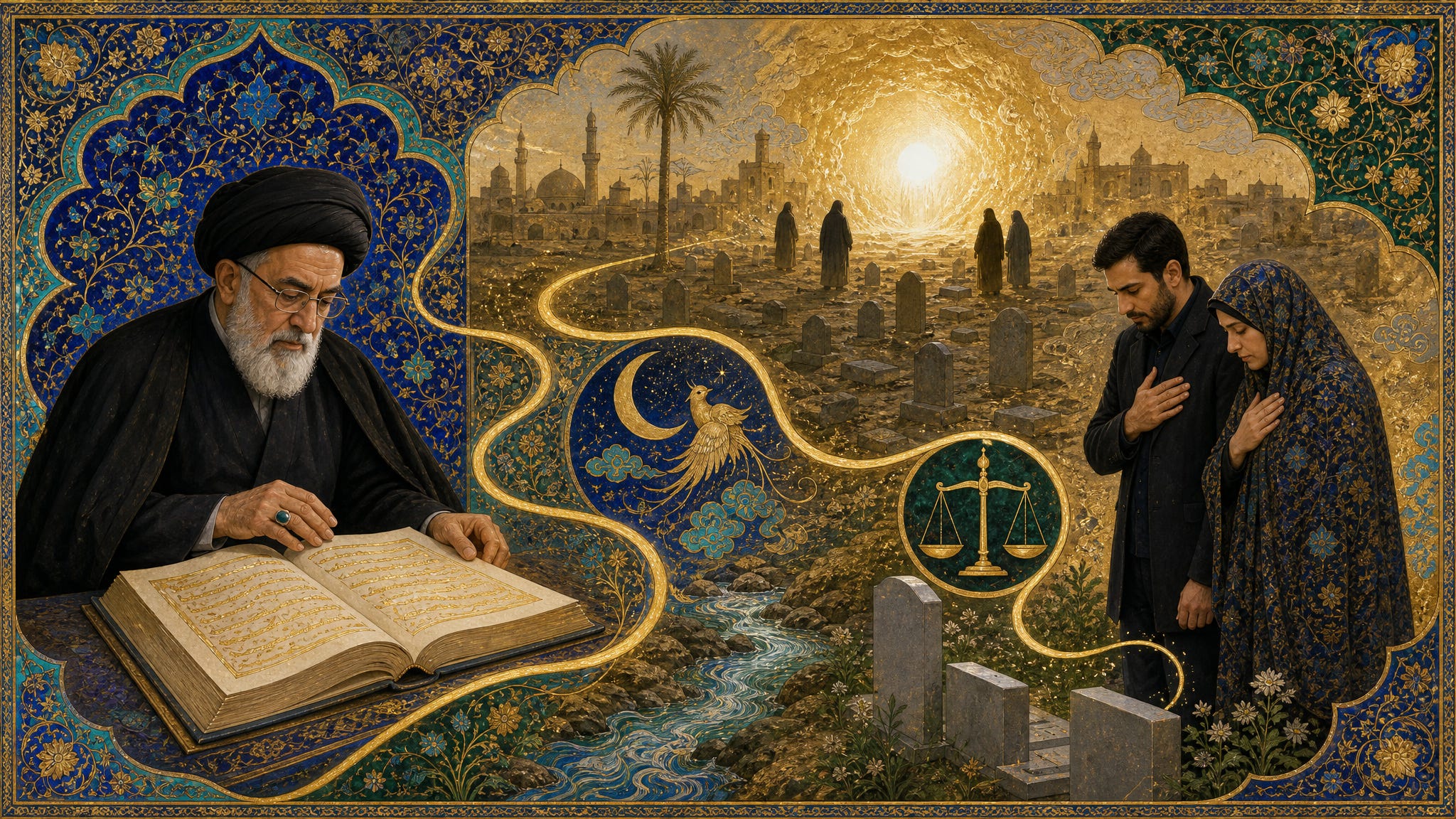
He chose the ground.
He stood on it.
He spoke to it.
When you go, you are not doing something your grandmother started.
You are doing a thing the Commander of the Faithful did on the road home from Siffin.
And it is not only devotion, either.
It is in the manual.
One of the most senior maraji’ of our own time, who has since passed on — Ayatollah Sayyed Abu al-Qasim al-Khu’i, may God rest his pure soul — wrote Minhaj al-Salihin, which is not a book of spirituality.
It is the book of rulings that a scholar writes so that ordinary people know what to do.
And in the list of recommended acts after a burial, numbered, in sequence:
الْخَامِسُ وَالثَّلَاثُونَ : زِيَارَةُ قُبُورِ الْمُؤْمِنِينَ وَالسَّلَامُ عَلَيْهِمْ
“The thirty-fifth: visiting the graves of the believers, and greeting them.”
— Ayatollah Sayyed Abu al-Qasim al-Khu’i, Minhaj al-Salihin, on the recommended acts following burial
Number 35.
Not a custom the scholars put up with.
An item on a numbered list, in a book of law, written to be lived by.
Going Was Never the Point

Now I have to correct something you may have heard from me or from someone else, because it is the kind of line that sounds good from a pulpit and happens to be false.
The line is:
We have never had it easier and we have never gone less.
It is not true.
More of us go now than ever went before.
Flights, roads, visas and money have put Najaf and Karbala within reach of people who, two generations ago, would have died in this country without ever seeing them.
That is a mercy, and I am not going to stand here and turn it into a complaint.
But here is the thing.
Going was never what it was about.
The Qur’an does not tell us to travel.
It tells us whom to follow.
لَّقَدْ كَانَ لَكُمْ فِي رَسُولِ اللَّهِ أُسْوَةٌ حَسَنَةٌ لِّمَن كَانَ يَرْجُو اللَّهَ وَالْيَوْمَ الْآخِرَ وَذَكَرَ اللَّهَ كَثِيرًا
“There is for you in the Messenger of God a beautiful example — for whoever hopes in God and the Last Day, and remembers God much.”
— Qur’an, Surah al-Ahzab (the Chapter of the Confederates) #33, Verse 21
Allamah Tabataba’i takes the word apart for us:
الْأُسْوَةُ الْقُدْوَةُ وَهِيَ الِاقْتِدَاءُ وَالِاتِّبَاعُ … وَالتَّعْبِيرُ بِقَوْلِهِ «لَقَدْ كَانَ لَكُمْ» الدَّالُّ عَلَى الِاسْتِقْرَارِ وَالِاسْتِمْرَارِ فِي الْمَاضِي إِشَارَةٌ إِلَى كَوْنِهِ تَكْلِيفاً ثَابِتاً مُسْتَمِرّاً
“The uswa is the qudwa, and it is the taking of someone as a model, and following him… And the expression there has been for you, which indicates settledness and continuance in the past, is a pointer to its being a fixed and continuing obligation.”
— Allamah Tabataba’i, al-Mizan fi Tafsir al-Qur’an, on Surah al-Ahzab (the Chapter of the Confederates) #33, Verse 21
Following someone.
Taking after them.
Doing as they did.
And not a thing that happened once — a standing obligation that does not lapse.
And look at who it is for.
He says the verse names those three conditions to show us something:
لِلدَّلَالَةِ عَلَى أَنَّ التَّأَسِّيَ بِرَسُولِ اللَّهِ خَصْلَةٌ جَمِيلَةٌ زَاكِيَةٌ لَا يَتَّصِفُ بِهَا كُلُّ مَنْ تَسَمَّى بِالْإِيمَانِ … وَمَعَ ذَلِكَ ذَكَرَ اللَّهَ كَثِيراً فَكَانَ لَا يَغْفُلُ عَنْ رَبِّهِ
“To show that taking the Messenger of God as one’s model is a beautiful and pure quality, which not everyone who is called a believer is described by… and along with that he remembered God much, so that he was not heedless of his Lord.”
— Allamah Tabataba’i, al-Mizan, on the same verse
He was not heedless of his Lord.
Which is exactly where we were twenty minutes ago, with the smoker.
And we do not need a chain of reasoning to connect that verse to tonight, because going to the graves is one of the things he did.
Every Thursday evening.
We read it earlier.
So follow his example and go to the graves are not two sentences.
They are one.
Now the part I actually want you to take home.
If you cannot go — because of money, or a body that will not make the journey, or a border, or a passport, or a job that will not release you, or people at home who need you more — that is not a failure on your part.
It is not a lesser grade of this religion.
What is asked of you is that you keep them in your heart and in your mind and that you follow them.
Say the ziyarah after your prayers.
Say it in the day when they come to mind.
A man or woman who reads the ziyarah every morning in London, Toronto, Martinique, Nairobi, Jakarta or anywhere across the world, is not doing a reduced version of the thing.
He is doing the thing.
And none of this should sound strange to you, because you already do it.
You greet a house when you walk into it. God tells us to:
فَإِذَا دَخَلْتُم بُيُوتًا فَسَلِّمُوا عَلَىٰ أَنفُسِكُمْ تَحِيَّةً مِّنْ عِندِ اللَّهِ مُبَارَكَةً طَيِّبَةً
“And when you enter houses, greet one another with a greeting from God, blessed and good.”
— Qur’an, Surah al-Nur (the Chapter of Light) #24, Verse 61
And Imam al-Baqir was asked what that means:
هُوَ تَسْلِيمُ الرَّجُلِ عَلَى أَهْلِ الْبَيْتِ حِينَ يَدْخُلُ ، ثُمَّ يَرُدُّونَ عَلَيْهِ ، فَهُوَ سَلَامُكُمْ عَلَى أَنْفُسِكُمْ
“It is the man’s greeting to the people of the house when he enters — and then they return it to him. That is your greeting upon yourselves.”
— Shaykh al-Saduq, Ma’ani al-Akhbar, on the meaning of a man’s greeting upon himself
Notice how the Imam defines it.
Not by the greeting.
By the answer.
And there is nothing in your week that is stranger than that.
You pick up a phone.
You send a message.
You cannot see the person.
You have never once, in your whole life, doubted that somebody was on the other end.
Think of a grandmother in a village a long way from here, who gets a message from a grandchild.
Or hears their voice for a minute.
Her face changes.
You have all seen it.
She lights up, and for that minute the aches go, and the knees and the back and the long day are all somewhere else.
And she has not seen anybody.
She has been spoken to, by someone she loves, who is not in the room.
We who hold that death is not the end hold exactly the same thing about our dead.
It Does Not Matter Where You Die

And take the practical sentence out of tonight, because it was said to a man who was worried sick.
My brother is in Baghdad and I am afraid he will die there.
What does it matter to you where he dies?
Some of you have people buried in four countries.
Some of you have a father in a grave you have seen twice.
Some of you are quietly frightened about where you are going to be put, and whether anybody will come.
Five words from the Imam:
What does it matter where he dies.
Not because the ground is nothing.
We have spent forty minutes tonight on a piece of ground that a man asked God for by name.
But because the gathering is not done by the burial party.
The One With No Grave
The Other Way of Reaching
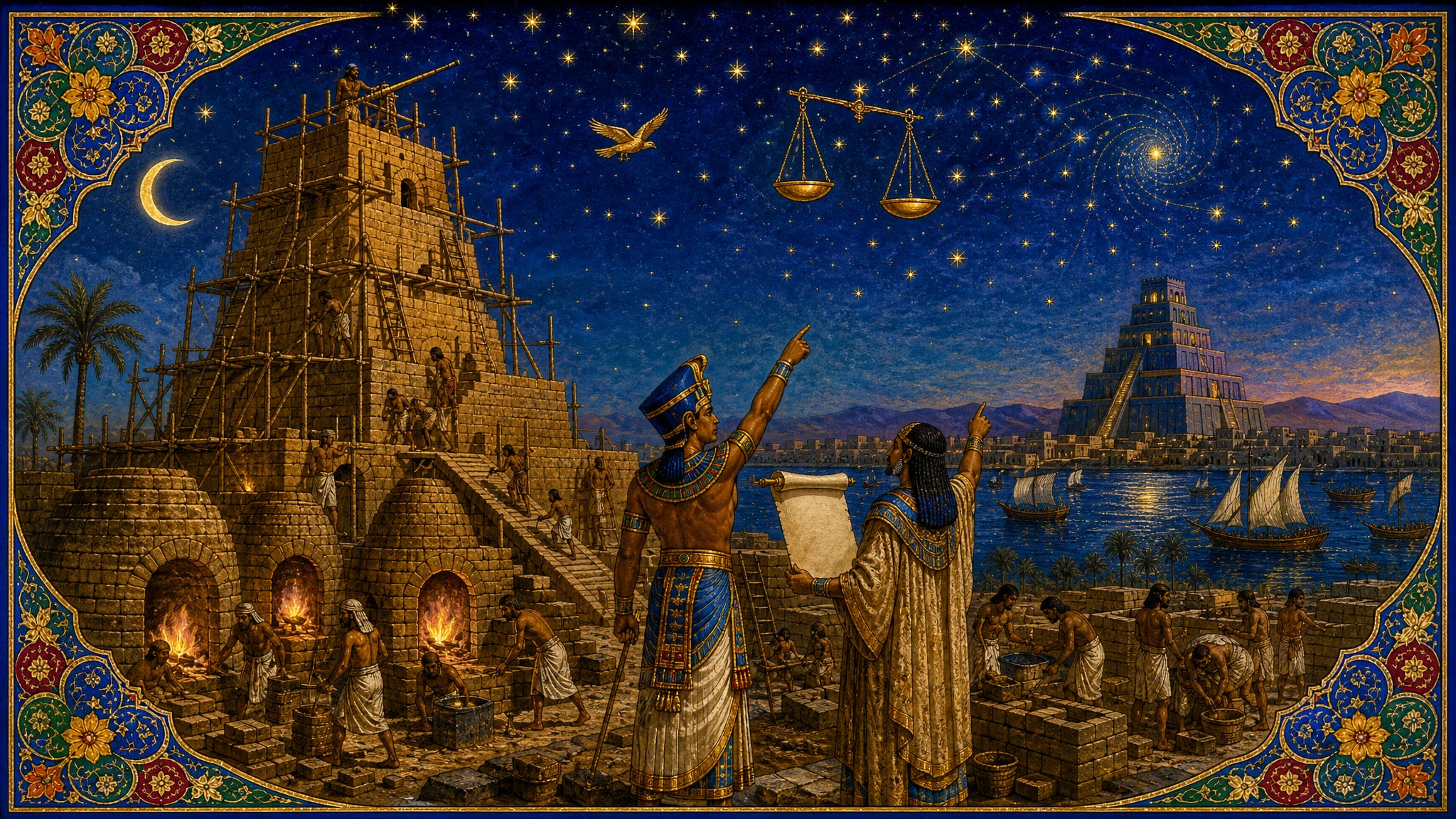
Everything tonight has gone in one direction, and I want to show you the other one before we finish, because there is a way of trying to reach what you cannot see that the scriptures treat very differently.
It is a tower.
וַיֹּאמְרוּ הָבָה נִבְנֶה־לָּנוּ עִיר וּמִגְדָּל וְרֹאשׁוֹ בַשָּׁמַיִם וְנַעֲשֶׂה־לָּנוּ שֵׁם
“And they said: come, let us build ourselves a city and a tower, and its top in the heavens; and let us make ourselves a name.”
— Biblia Hebraica Stuttgartensia, Genesis, chapter 11, verse 4
Let me be exact with you about something before anyone repeats it wrongly on my behalf.
The Qur’an names Babel (Babylon in the modern nomenclature) once — in Surah al-Baqarah — the Chapter of the Cow, verse 102 — and what it names it for is sorcery, not a tower.
وَاتَّبَعُوا مَا تَتْلُو الشَّيَاطِينُ عَلَىٰ مُلْكِ سُلَيْمَانَ ۖ وَمَا كَفَرَ سُلَيْمَانُ وَلَٰكِنَّ الشَّيَاطِينَ كَفَرُوا يُعَلِّمُونَ النَّاسَ السِّحْرَ وَمَا أُنزِلَ عَلَى الْمَلَكَيْنِ بِبَابِلَ هَارُوتَ وَمَارُوتَ ۚ وَمَا يُعَلِّمَانِ مِنْ أَحَدٍ حَتَّىٰ يَقُولَا إِنَّمَا نَحْنُ فِتْنَةٌ فَلَا تَكْفُرْ ۖ فَيَتَعَلَّمُونَ مِنْهُمَا مَا يُفَرِّقُونَ بِهِ بَيْنَ الْمَرْءِ وَزَوْجِهِ ۚ وَمَا هُم بِضَارِّينَ بِهِ مِنْ أَحَدٍ إِلَّا بِإِذْنِ اللَّهِ ۚ وَيَتَعَلَّمُونَ مَا يَضُرُّهُمْ وَلَا يَنفَعُهُمْ ۚ وَلَقَدْ عَلِمُوا لَمَنِ اشْتَرَاهُ مَا لَهُ فِي الْآخِرَةِ مِنْ خَلَاقٍ ۚ وَلَبِئْسَ مَا شَرَوْا بِهِ أَنفُسَهُمْ ۚ لَوْ كَانُوا يَعْلَمُونَ
And they followed what the devils pursued during Solomon’s reign —and Solomon was not faithless but it was the devils who were faithless—teaching the people magic and what was sent down to the two angels at Babel, Harut and Marut, who would not teach anyone without telling [him], ‘We are only a test, so do not be faithless.’ But they would learn from those two that with which they would cause a split between man and his wife—though they could not harm anyone with it except with Allah’s leave. They would learn that which would harm them and bring them no benefit; though they certainly knew that anyone who buys it has no share in the Hereafter. Surely, evil is that for which they sold their souls, had they known!
— Qur’an, Surah al-Baqarah (the Chapter of the Cow) #2, Verse 102
The tower story is in the Hebrew scripture.
I am not merging the two, and neither should you.
But the Qur’an has a tower of its own, and it is built by a man we know very well.
فَأَوْقِدْ لِي يَا هَامَانُ عَلَى الطِّينِ فَاجْعَل لِّي صَرْحًا لَّعَلِّي أَطَّلِعُ إِلَىٰ إِلَٰهِ مُوسَىٰ
“So kindle for me, O Haman, a fire upon the clay, and make me a tower — that I may look upon the God of Moses.”
— Qur’an, Surah al-Qasas (the Chapter of the Narration) #28, Verse 38
Pharaoh, to his minister, Haman.
And Allamah Tabataba’i pauses on the first phrase, because it is oddly technical for a sentence about theology:
الْمُرَادُ بِالْإِيقَادِ عَلَى الطِّينِ تَأْجِيجُ النَّارِ عَلَيْهِ لِصَنْعَةِ الْآجُرِّ الْمُسْتَعْمَلِ فِي الْأَبْنِيَةِ
“What is meant by the kindling of fire upon the clay is the raising of the fire upon it, for the making of the fired brick that is used in buildings.”
— Allamah Tabataba’i, al-Mizan, on Surah al-Qasas (the Chapter of the Narration) #28, Verse 38
Brick-making.
That is the phrase.
Now go back one verse in the Hebrew.
Before they say a single word about the name, they stop to tell you what they intend to build it out of.
וַיֹּאמְרוּ אִישׁ אֶל־רֵעֵהוּ הָבָה נִלְבְּנָה לְבֵנִים וְנִשְׂרְפָה לִשְׂרֵפָה וַתְּהִי לָהֶם הַלְּבֵנָה לְאָבֶן וְהַחֵמָר הָיָה לָהֶם לַחֹמֶר
“And they said, each to his neighbour: come, let us make bricks, and burn them thoroughly. And the brick was to them for stone, and the bitumen was to them for mortar.”
— Biblia Hebraica Stuttgartensia, Genesis, chapter 11, verse 3
Two towers.
Two tyrants.
And both accounts stop, in the middle of a story about reaching heaven, to tell you that they fired the clay first.
I am not telling you they are the same event.
I am telling you the texts noticed the same thing.
And the commentary offers two readings of what Pharaoh actually wanted, and the second is the one that should make us uncomfortable.
Perhaps he imagined God as a body sitting in some layer of the sky, and thought that from high enough he might see Him — or perhaps he was throwing dust in his people’s eyes and knew exactly what he was doing.
Or perhaps — and Allamah Tabataba’i takes this one seriously:
وَيُمْكِنُ أَنْ يَكُونَ الْمُرَادُ أَنْ يَبْنِيَ لَهُ رَصَداً يَتَرَصَّدُ الْكَوَاكِبَ فَيَرَى هَلْ فِيهَا مَا يَدُلُّ عَلَى بِعْثَةِ رَسُولٍ أَوْ حَقِّيَّةِ مَا يَصِفُهُ مُوسَى (عَلَيْهِ السَّلَامُ)
“And it is possible that what was intended was that he should build himself an observatory, to watch the stars, and see whether there is in them anything indicating the sending of a messenger, or the truth of what Moses describes.”
— Allamah Tabataba’i, al-Mizan, on the same verse
An observatory.
A high place to watch the sky from, and find out whether there was anything in what Moses was saying.
Sit with that one.
A man wants to know about the unseen.
So he builds an instrument, and he builds it upward, and he builds it out of fired brick, and he pays for it out of the treasury of a country he is grinding into the dirt.
And the Building Comes Down from Underneath
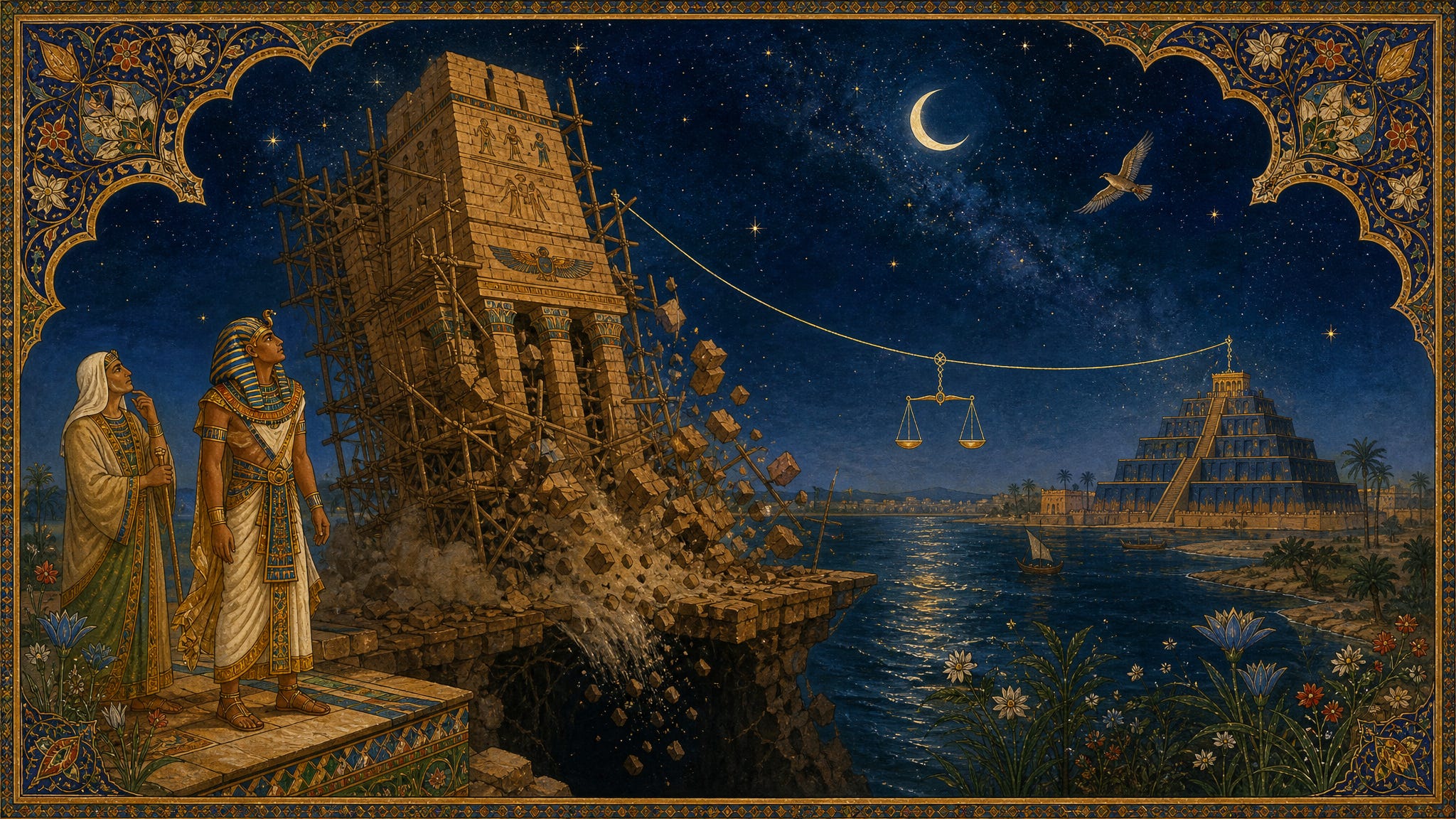
And here is what the Qur’an says happens to that kind of building.
قَدْ مَكَرَ الَّذِينَ مِن قَبْلِهِمْ فَأَتَى اللَّهُ بُنْيَانَهُم مِّنَ الْقَوَاعِدِ فَخَرَّ عَلَيْهِمُ السَّقْفُ مِن فَوْقِهِمْ وَأَتَاهُمُ الْعَذَابُ مِنْ حَيْثُ لَا يَشْعُرُونَ
“Those before them schemed, and God came at their building from the foundations, and the roof fell upon them from above them, and the punishment came at them from where they did not perceive.”
— Qur’an, Surah al-Nahl (the Chapter of the Bee) #16, Verse 26
Allamah Tabataba’i gives us the picture in a single comparison, and it is the best sentence I read this week:
كَمَنْ يَتَّقِي أَمَامَهُ وَيُرَاقِبُهُ فَيَأْتِيهِ الْعَدُوُّ مِنْ خَلْفِهِ ، فَاللَّهُ سُبْحَانَهُ يَأْتِي بُنْيَانَ مَكْرِهِمْ مِنْ نَاحِيَةِ قَوَاعِدِهِ وَهُمْ مُرَاقِبُونَ سَقْفَهُ ، فَيَنْهَدِمُ عَلَيْهِمُ السَّقْفُ لَا بِهَادِمٍ يَهْدِمُهُ مِنْ فَوْقِهِ بَلْ بِانْهِدَامِ الْقَوَاعِدِ
“Like one who guards what is in front of him and keeps watch on it, and the enemy comes at him from behind. God, glorified be He, comes at the building of their scheme from the side of its foundations while they are watching its roof — so the roof collapses upon them: not by a demolisher who pulls it down from above, but by the collapse of the foundations.”
— Allamah Tabataba’i, al-Mizan, on Surah al-Nahl (the Chapter of the Bee) #16, Verse 26
Nobody knocked the tower down.
There was nothing underneath it.
The One You Cannot Go To
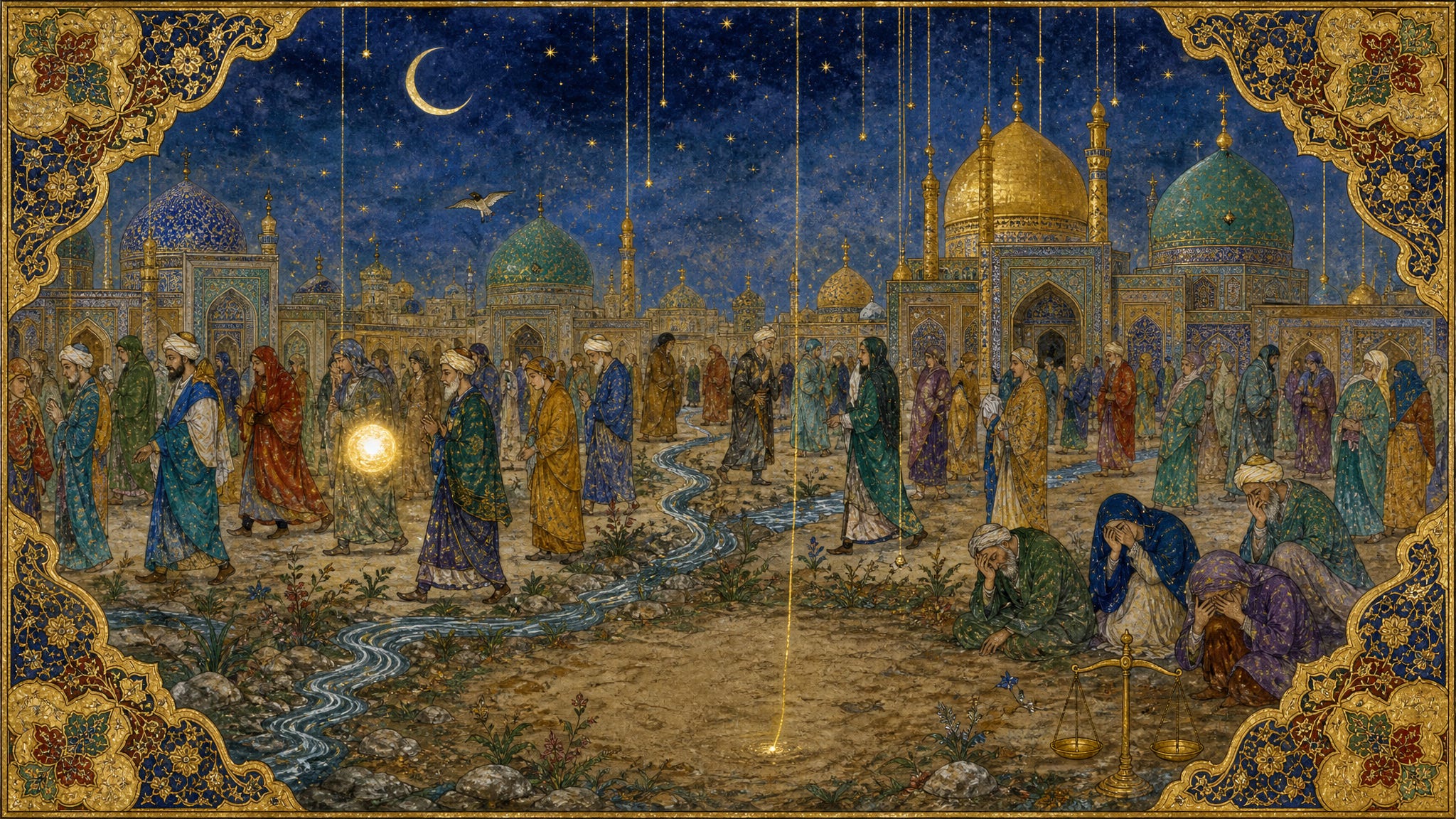
Now I want to bring the whole evening back to one place.
Look at what we have been doing for the last hour.
We have had a chapter.
We have had a greeting to say.
We have had a hand laid on a stone, facing the qibla.
We have had a Thursday evening, and a woman going twice a week, and a valley behind Kufa with a name, and a man in a tea crate walking the last leg of the road.
Every single one of those things has an address.
That is what a grave is, when you strip the marble off it.
It is not a monument.
It is an address.
It is the thing that lets you know where to stand.
And there is one of them who does not have one.
No grave.
No stone.
No ground you can go to, no direction you can face, nowhere to stand and say peace be upon you and know that you are in the right place.
You can go to his grandfather at the back of Kufa.
You can go to his grandfather at Kazimayn, and at Tus, and at Samarra.
Every one of them can be visited, and thousands of people visited them this week.
And the one who is alive has nowhere.
I have said that word quickly and I want to stop on it, because it is the most important word in this section — and some of you hearing this are not Muslim, and have no reason at all to know what we mean by it.
When we say the last of them has no grave, we are not saying that his burial place was lost.
We are not saying nobody wrote down where they put him, or that the records perished, or that the site is disputed.
We are saying that he has not died.
He was born, in a house in Samarra, and he did not die, and he is alive now, and he will be here when the world has need of him.
That is not poetry.
It is not a delicate way of saying his memory lives on.
We mean it flatly, and I am not going to soften it for anybody.
And if that strikes you as a strange kind of claim, let me point out that you may already hold one very like it.
وَمَا قَتَلُوهُ يَقِينًا
بَل رَّفَعَهُ اللَّهُ إِلَيْهِ ۚ وَكَانَ اللَّهُ عَزِيزًا حَكِيمًا
“And they did not kill him — certainly not.
Rather, God raised him to Himself. And God is Mighty, Wise.”
— Qur’an, Surah al-Nisa (the Chapter of Women) #4, Verses 157 and 158
Jesus, the son of Mary, may our souls be his ransom and may God hasten his return.
Not killed.
Not crucified.
Raised, and alive, and returning.
Every Muslim in this room believes that about him — and a great many of the Christians who may be listening believe something very close to it.
So nobody is being asked tonight to accept a new species of claim.
We are saying that we hold the same kind of thing about one more man.
Now — the word for it is ghaybah.
In English it usually comes out as occultation, which helps nobody, or as absence, which is simply wrong.
It is not absence.
It is anonymity.
Absence means he has gone.
Anonymity means he is here and you do not know which one he is.
Absence puts distance between us; anonymity puts him closer than we are comfortable with.
Absence leaves you nothing to do but wait.
Anonymity leaves you everything to do.
And that is not a modern gloss on an old idea.
Muhammad ibn Uthman al-Umari — the second of the four men through whom this community reached the Imam in the years the door was still open — said this:
وَاللَّهِ إِنَّ صَاحِبَ هَذَا الْأَمْرِ لَيَحْضُرُ الْمَوْسِمَ كُلَّ سَنَةٍ يَرَى النَّاسَ وَيَعْرِفُهُمْ وَيَرَوْنَهُ وَلَا يَعْرِفُونَهُ
“By God, the master of this affair attends the season every year. He sees the people and he knows them — and they see him, and they do not know him.”
— Shaykh al-Tusi, Kitab al-Ghayba, from Muhammad ibn Uthman al-Umari
Read the second half of that again, because the whole doctrine is sitting in four words.
And they see him.
Not he is far away.
Not he is in some other realm.
They see him.
Every year.
And they walk past.
So when I say he has nowhere, hear it correctly.
He has no grave, because he has not died.
He has no address, because he is not at one address.
And he is hidden — not behind some veil God has dropped over the world, but behind our own not knowing him when he is standing in front of us.
There is a supplication that half of you have recited without ever asking what it is for.
It is called Du’a al-Nudbah — the supplication of lamentation — and it is recited on the four Eids and on Fridays.
And when you take it apart, what it is is the prayer of people who have somewhere to send their grief and nowhere to take their feet.
It is a prayer said by people standing in the one place they cannot stand.
And the Verse Comes Back

We started tonight with a list, and the first thing on it.
Those who believe in the unseen.
And the sixth Imam was asked about that verse.
About that exact phrase.
And this is what he said:
مَنْ آمَنَ بِقِيَامِ الْقَائِمِ (عَلَيْهِ السَّلَامُ) أَنَّهُ حَقٌّ
“Whoever believes in the rising of the Qa’im — that it is true.”
— Shaykh al-Saduq, Ma’ani al-Akhbar; carried by Allamah Tabataba’i in al-Mizan, on Surah al-Baqarah #2, Verse 3
I am going to leave that exactly where he left it.
We opened on believing in what you cannot see.
And we are closing on the one you cannot go to.
Lessons for Our Time
The Tower, and the Cure
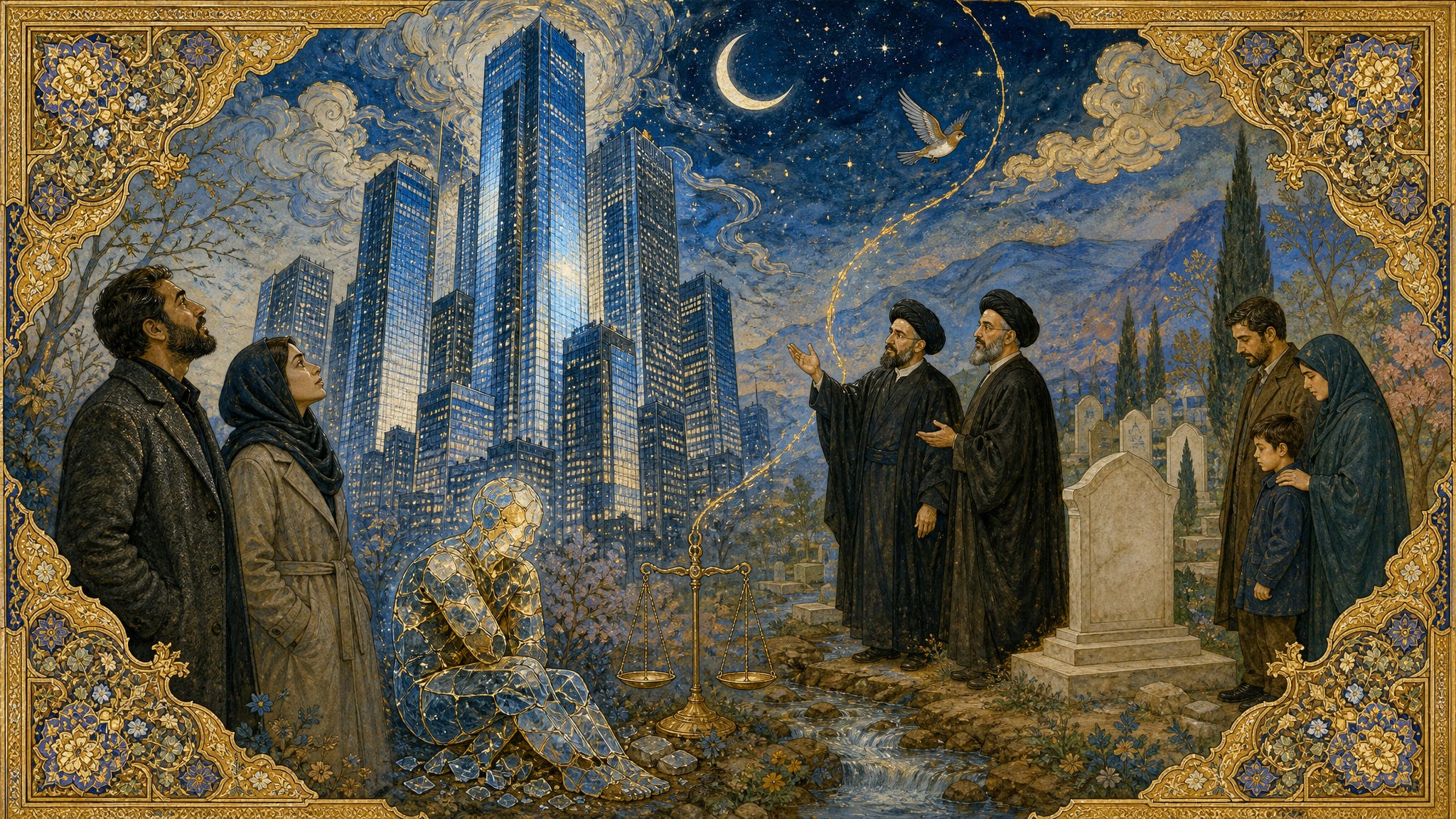
Every age builds its tower.
Ours is better made than Pharaoh’s and it is pointed in the same direction, and the instrument keeps improving and the distance does not close.
But I do not want to leave that as a complaint about the modern world, because two scholars of our own time named the actual disease, and they named it in almost the same word.
The martyred leader, Imam Sayyed Ali Khamenei, may God rest his pure soul, teaching on Imam al-Baqir’s instruction to increase the remembrance of death, said this:
مَا هُوَ عِلَاجُ هَذَا الِانْبِهَارِ ؟ ذِكْرُ الْمَوْتِ
“What is the cure for this dazzlement? The remembrance of death.”
— Imam Sayyed Ali Khamenei, in a meeting with officials of the Islamic Republic, Tehran, 23 June 2015
And before he says it, he does something I want you to copy.
He refuses the easy sermon.
Wealth and children, he says, are the adornment of the life of this world — and nobody has ever been rebuked for owning wealth, or for having children, or for making a family.
What harms us is the runaway craving; the dazzlement; the thing that drags a man to a fork in the road and takes the wrong turning, so that he does not give where he should give and does not sacrifice where he should sacrifice.
That is honest teaching.
He will not let you mistake the warning for a condemnation of your ordinary life.
And Ayatollah Sayyed Muhammad Husayn Fadhlullah, whom we heard from twice tonight, named the same illness with the other word.
I read you his sentence an hour ago.
Hear the middle of it again:
بَلْ هِيَ عِلَاجٌ رُوحِيٌّ يَكْسِرُ فِينَا صَنَمِيَّةَ الدُّنْيَا
“Rather, it is a spiritual remedy that shatters within us the idol-making of this world.”
— Sayyed Muhammad Husayn Fadhlullah, Min Wahy al-Qur’an, on Surah al-Takathur #102, Verse 2
The dazzlement.
And the idol.
One of them names the cure — the remembrance of death.
The other names the medicine.
And the medicine is the thing we have been talking about all evening.
A Grave Is an Address
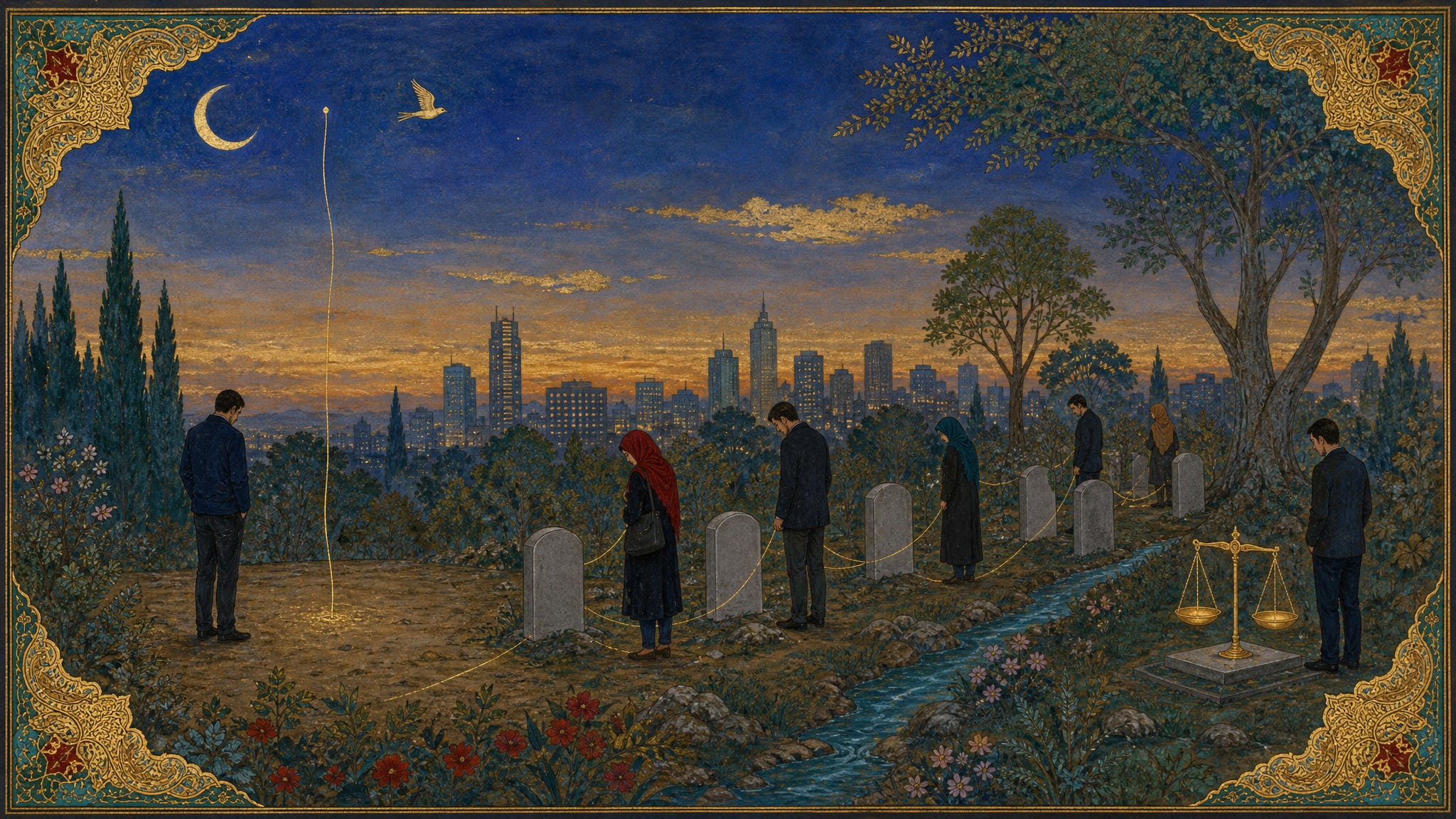
Do not let anybody tell you the stone is the point.
The stone is not the point.
Being findable is the point.
That is why a grave matters — not because there is anything holy about marble, but because it is the one thing that tells the living where to stand.
And that is why the one with no grave is a wound, and not a technicality.
And You Are Standing Between the Two
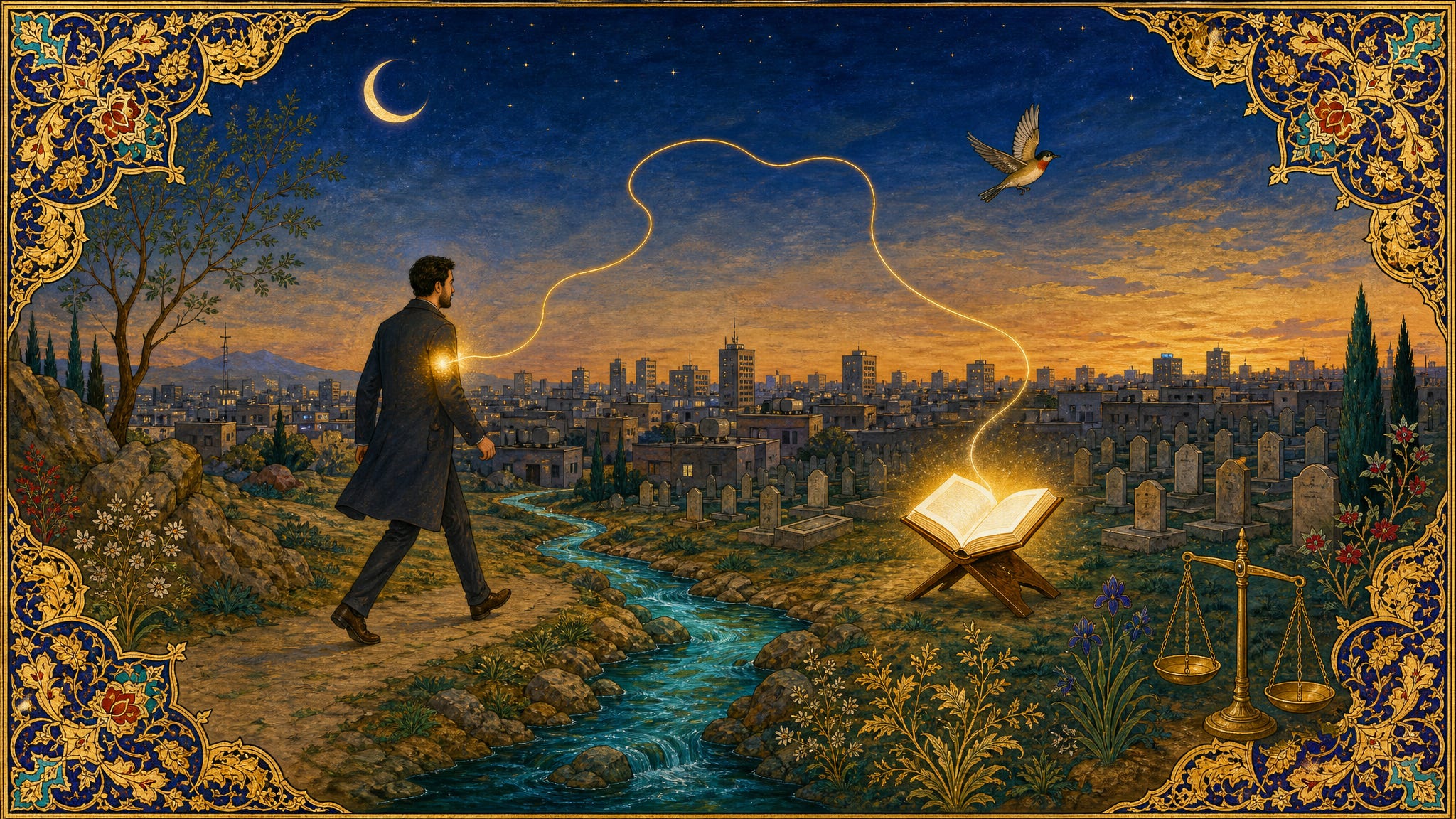
Go back to the greeting one last time.
May God have mercy upon those of us who have gone ahead, and those who are to come after.
Allamah Tabataba’i, on our verse tonight, notices something in the way it is built.
God calls them God-fearing — and then calls the Book a guidance for them.
Which means there must be two.
There is a first guidance, before the Book, that made them God-fearing in the first place — the soundness of what God put in a person before anybody taught them anything.
And then there is the Book, given to them after, as an honour.
وَبِالْجُمْلَةِ الْمُتَّقُونَ وَاقِعُونَ بَيْنَ هِدَايَتَيْنِ ، كَمَا أَنَّ الْكُفَّارَ وَالْمُنَافِقِينَ وَاقِعُونَ بَيْنَ ضَلَالَيْنِ
“In sum: the God-fearing stand between two guidances, just as the unbelievers and the hypocrites stand between two misguidances.”
— Allamah Tabataba’i, al-Mizan fi Tafsir al-Qur’an, on Surah al-Baqarah (the Chapter of the Cow) #2, Verses 2 and 3
I will tell you what those two are tonight.
The first guidance is the thing that makes a man get up on a Thursday and walk out to a graveyard without being able to explain why.
And the second is what he is given when he arrives.
Conclusion - Key Takeaways
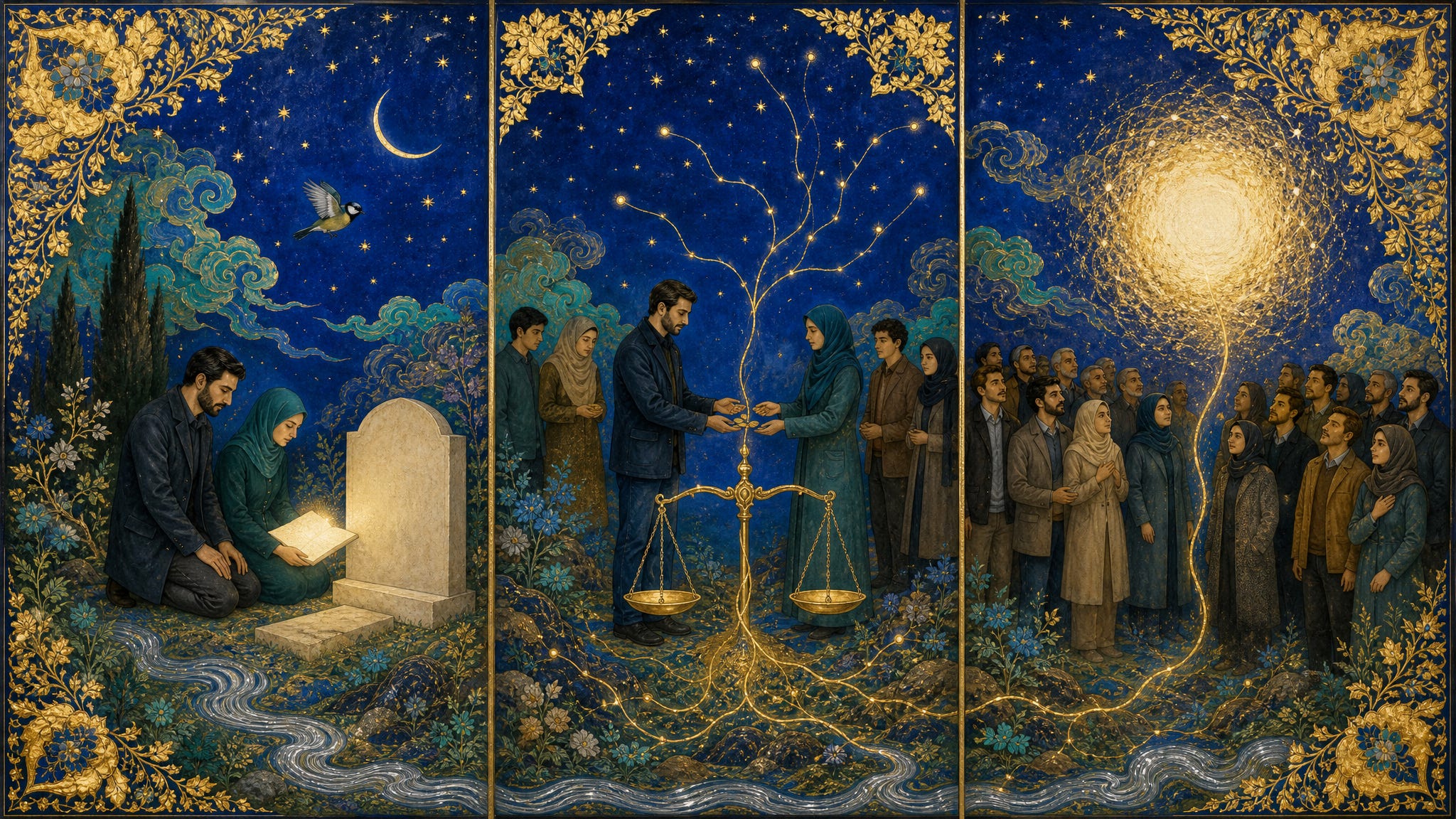
Three sentences to take with you, and they are not mine.
They take comfort in you.
How good is your surface, and how sweet your depth.
This is the news of what is with us. So what is the news of what is with you?
One is about the dead.
One is about the ground.
One is a question that has been waiting for an answer since a man came home from Siffin.
And they are three books, and one piece of earth, and one man who is buried beside it.
Now three things to do — because a talk that leaves you nothing to do on Thursday was an hour of entertainment.
The first is: go.
Stand at the grave.
Face the qibla, put your hand on the ground, and say the greeting —
May God have mercy upon those of us who have gone ahead, and those who are to come after.
You are not calling to them from outside.
You are standing in a line and asking for mercy on the whole of it from somewhere in the middle of it.
And none of this is obscure and none of it needs me: it is in the prayer book that is already on your shelf, in the chapter of visitations, with a note beside it, eight hundred years old, suggesting a Thursday.
The second is: when you cannot go, do not do nothing.
The hardest hour a person has is the first night in the ground.
And what we are told to do about it is not to feel something.
It is to act.
Give charity on their behalf.
Pray two units and send the reward to them by name.
And do not let yourself pick one and call it done — prayer and charity sit on the same list, in the same hadith, and every item on that list goes in, and the reward is written twice: once for them, and once for the one who did it.
Nothing leaves your hands.
And when we found that two scholars, centuries apart, had written the measures of that prayer down slightly differently, we did not step around it.
We used it.
Because the difference in the measures is exactly where you can see what a jurist is — a man with no authority whatever to legislate, whose entire work is to find what was already given and hand it on, and who stands, at the top of his chain, on a proof appointed by a man with no grave.
The measures differ.
That there is a prayer does not.
And the third is: believe in the one you cannot go to.
Every other address tonight can be found.
Al-Baqi’ can be found.
The back of Kufa can be found.
Najaf can be found, and thousands of people found it this week.
His cannot.
Not because it was lost, and not because nobody wrote it down.
Because he has not died.
He is not absent.
He is unrecognised.
He sees the people, and they do not know him, and they walk past him.
And the first item on the list we opened with tonight — before the standing, before the giving — is that you take seriously what is real when you cannot see it.
That is not the soft end of this religion.
It is the load-bearing wall.
The sixth Imam was asked what that item means, and he did not answer with a definition.
He answered with a living man and a morning that is coming, and he said it is true.
So hold the shape of the evening.
The first two points were about people you can reach and cannot hear.
The third was about someone you can neither reach nor hear — and who hears you perfectly well.
And every one of them is waiting on the same thing from us.
That we keep turning up.
Eulogy - The Messenger of God at al-Baqi’
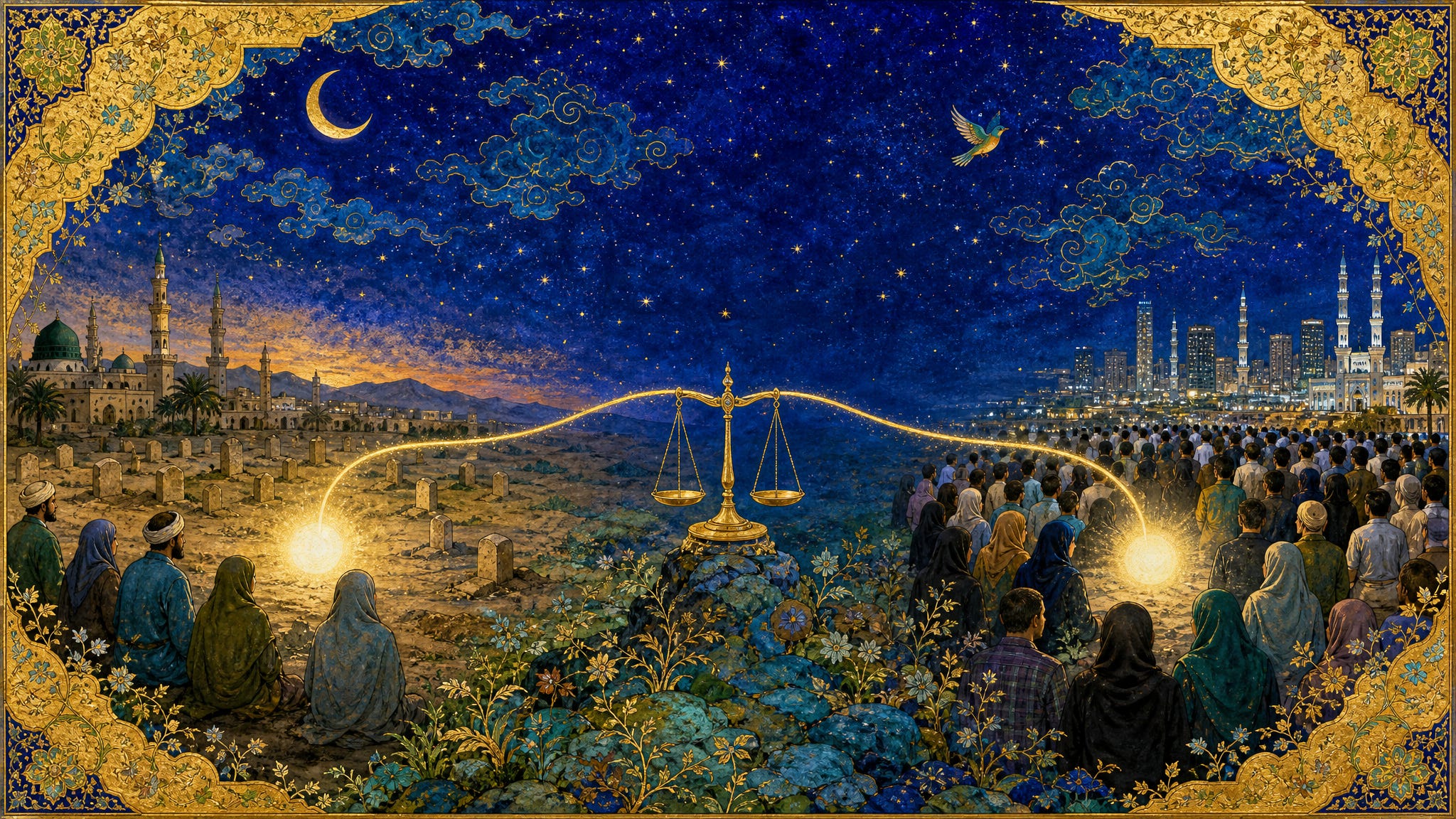
I read you something at the beginning of tonight.
I am going to read it to you again, and I would like you to hear the end of it differently.
كَانَ رَسُولُ اللَّهِ (ص) يَخْرُجُ فِي مَلَإٍ مِنَ النَّاسِ مِنْ أَصْحَابِهِ كُلَّ عَشِيَّةِ خَمِيسٍ إِلَى بَقِيعِ الْمَدَنِيِّينَ فَيَقُولُ ثَلَاثاً — السَّلَامُ عَلَيْكُمْ يَا أَهْلَ الدِّيَارِ — وَثَلَاثاً — رَحِمَكُمُ اللَّهُ — ثُمَّ يَلْتَفِتُ أَصْحَابَهُ وَيَقُولُ هَؤُلَاءِ خَيْرٌ مِنْكُمْ فَيَقُولُونَ يَا رَسُولَ اللَّهِ وَلِمَ آمَنُوا وَآمَنَّا وَجَاهَدُوا وَجَاهَدْنَا فَيَقُولُ إِنَّ هَؤُلَاءِ آمَنُوا وَلَمْ يَلْبِسُوا إِيمَانَهُمْ بِظُلْمٍ وَمَضَوْا عَلَى ذَلِكَ وَأَنَا عَلَى ذَلِكَ شَهِيدٌ وَأَنْتُمْ تَبْقَوْنَ بَعْدِي وَلَا أَدْرِي مَا تُحْدِثُونَ بَعْدِي
“The Messenger of God would go out, in a crowd of people from among his companions, every Thursday evening, to the Baqi’ of the people of Madinah. And he would say three times: peace be upon you, O people of these dwellings. And three times: may God have mercy on you.
Then he would turn to his companions and say: these are better than you.
And they would say: O Messenger of God, why? They believed and we believed. They struggled and we struggled.
And he would say: these believed, and did not dress their faith in wrongdoing, and they went on that — and to that I am a witness. And you remain after me, and I do not know what you will bring about after me.”
— Ibn Qulawayh, Kamil al-Ziyarat, the chapter on the Merits of Visiting the Believers, sixth hadith
The first time you heard that, it was information.
He went every Thursday, and here is the proof.
Hear it now as the last thing he says.
You remain after me. And I do not know what you will bring about after me.
He is standing in a graveyard, and the people in the ground are settled, and the people standing next to him are not.
And he is not able to tell them how it turns out.
Now I want to be careful with that sentence, because there is a way of hearing it that is wrong, and I have heard it said the wrong way.
He is not saying he did not know we were coming.
He knew.
He said so out loud, and he left instructions about it, and he left them with the Commander of the Faithful.
يا عليّ، اقرأهم منّي السلام من لم أر ولم يروني، واعلمهم أنّهم إخواني الّذين أشتاق إليهم. فليلقوا علمي إلى من يبلغ القرون من بعدي
“O Ali — convey the salutation from me to those I have not seen and who have not seen me. And let them know that they are my brothers, the ones I long for. And let them deliver my knowledge to whoever reaches the generations after me.”
— Shaykh al-Saduq, Fadail al-Shia, the chapter on the Virtues and Standing of Ali and Those Who Follow Him, first hadith
There are three things in that and every one of them is about you.
The first is that he sent a greeting forward.
Not a prophecy.
Not a warning.
A salaam — the same word he said three times over the ground at al-Baqi’, now turned the other way down the road, at people who had not been born.
The second is what he calls them.
Not my community.
Not the ones who come later.
My brothers.
And then the thing that ought to stop us where we stand:
The ones I long for.
And the third is how he identifies them.
Not by their names.
Not by their century.
By this:
Those I have not seen and who have not seen me.
That is the address on the envelope.
And every one of us in this hall is at it.
So put the two sentences side by side.
I do not know what you will bring about after me.
That is about our conduct.
Convey the salutation from me to those I have not seen and who have not seen me.
That is about our existence.
He was never in doubt about the second.
He is telling the men in front of him that he cannot see the outcome.
He is not telling them there is nobody out there.
And you already knew he was not talking into an empty world, because of the first thing we read tonight.
They take comfort in you.
If the ones in the ground can register a visitor arriving, then the man standing over them is not the only person present.
Now take his description of us one step further, because it does not stop with him.
Those I have not seen and who have not seen me.
We opened this evening on a list, and on the first thing on it.
Those who believe in the unseen.
And we closed the third point on a man who is alive tonight, who has no grave, who sees the people and is not known by them.
We have not seen the Messenger of God.
And we have not seen the Imam of our own age.
It is the same description twice, and we are standing inside it.
And when the sixth Imam was asked what that first item on the list actually means — those who believe in the unseen — he did not give us a definition.
You heard what he gave.
He gave us a living man, and he said that his rising is true.
So the greeting had an address after all, and the address was ours.
And it came with work attached.
Let them deliver my knowledge to whoever reaches the generations after me.
That is not a sentiment.
It is a job, and it was handed to people he had never met, on the strength of nothing except that they would believe him without seeing him.
So do not let it be said that the Messenger of God did not know about us.
He knew.
He sent his salaam ahead of him, down fourteen centuries, into a room he would never walk into and faces he would never look at — and it has arrived, and we are the ones it was addressed to.
What he did not know is what we would do with it.
That is the only part that was ever left to us.
And it is still open.
And he said he was longing to meet us.
Segue to the Maqtal
Maqtal (Lamentation) for the Thirteenth Session of the Architecture of Guidance
Supplication
In His Name, the Lord of the Martyrs, the Unseen and the Truthful
O God, send blessings upon Muhammad and the family of Muhammad.
O God, we ask You for the martyred leader, Imam Sayyed Ali Khamenei — may God rest his pure soul — that You raise his station, and gather him with those he loved, and accept from him what he gave.
O God, protect the living leader, Imam Sayyed Mujtaba Khamenei — may God protect him — and steady his hand, and put barakah in his years, and let him see with his own eyes what he has spent his life preparing for.
O God, we ask You for our own dead. For the ones in this city and the ones in villages most of us will never see. For the ones whose graves we visit and the ones whose graves we have never once stood at.
Let it be said to their spirits: join Wadi al-Salam.
Have mercy upon those of us who have gone ahead, and those who are to come after.
And make us of those who go.
O God, hasten the relief of our master, the Imam of our Age — may our souls be his ransom — the one with no grave, the one nobody can visit.
Let us be among those who see him.
And if we are not, then let it be said of us, on the day the ground gives up what is in it, that they were people who kept turning up.
Amen, O Lord Sustainer of the Universes
Amen, O Most Merciful of the Merciful
And from Him alone is all ability and He has authority over all things.